When is a movement more than the sum of its parts? There are many answers to that but the most useful, if banal, is this: when it drives the hands to deliver the most steady rate possible, while encased within the protective shell of a case. Before this, a movement is just a rebel in search of a cause, if you will; we can manage a better metaphor here. With Formula 1 season well and truly upon us, and soon to take over the streets of Singapore, you might consider if you would prefer looking at the engine and studying its awesome structure as an exhibit, or if you would rather see it power a race car, as it should.
All this preamble is just a way of pointing out the obvious: watch brands have good reasons not to present movements independently, at least for the public’s eyes. With the new Calibre GP4800, Girard-Perregaux is scrapping that particular bit of the playbook. In fact, although the embargo broke this week, the brand has been talking about this movement and the watches it will power for some time now with select press, of which WOW Singapore is one.
Despite hundreds of years of manufacturing history, 80 patents, more than 30 active movements, with notable entries in 1998 (calibre 3300) and 2017 (calibre 1800), the La Chaux-des-Fonds brand wants to make an impact with the new Calibre GP4800. The manufacture thinks that the best way to navigate the chaos of our times is methodically, and we agree.
On that note, taking through this movement reveal is Girard-Perregaux Managing Director Marc Amadry, who was appointed to his role earlier this year. Also chiming in with specific market insights is Regional Brand Director for Southeast Asia and the Pacific Nguyen Vuong Thong. With that, let us introduce the momentous Calibre GP4800, which we will henceforth refer to as GP4800.
So, what actually is happening here with the new movement? It is certainly nothing like the debut of the Constant Escapement L.M. in 2013 because GP4800 is a Swiss lever automatic movement. Unlike a calibre that deploys radically different technical solutions, GP4800 is ready to go right from the start. It boasts compact dimensions, being just 25.6mm in diameter and 4.28mm thick and is envisioned as the base for future complications. Looking at the movement, there is a clear callback to the architecture of the brand’s iconic Three Gold Bridges design. Here is what the press release says about it, so you have it from the horse’s mouth. The veterinary review will come later.
“GP4800 is fitted with a silicium escapement, featuring an escape wheel, pallet lever and roller, all crafted from the lightweight material,” reads the presser and we can confirm that the only missing element not in silicon (known in French as silicium) is the hairspring. Clearly, there is a plan to fit such a spring here because the balance is adjusted via the telltale screws on the balance wheel, rather than by adjusting the spring itself (silicon hairsprings cannot be adjusted; they are manufactured as perfectly as possible). We are a little unclear on “roller” and an answer is forthcoming from the manufacture.
Amadry is excited about the potential of GP4800 when he confirms the structural nods in the movement to the aforementioned Three Gold Bridges. “I think what is interesting is that people will immediately recognise that, in terms of construction, we started from scratch versus what we have done so far with the other traditional Girard-Perregaux movements. (The GP4800) is built around three bridges from balance wheels to the gear train and barrels, and we introduced a lot of new functionalities.”
Looking at the movement, if you imagine it without the oscillating mass, you will see those three bridges – one for the balance, one for the gear train and one for the barrel – clearly. As for the functions Amadry mentioned, these are really features of the movement and include the new escapement and the power reserve of 55 hours, which Amadry says might go as high as 60 hours but Girard-Perregaux is being conservative, officially; for the record, most manufacture Girard-Perregaux movements have power reserves in the 40-plus hours range. “We have also achieved better chronometry of course with this new calibre. So, basically it’s an important improvement,” said Amadry.
The major improvement here is in the area of reliability, both according to the press materials and Amadry, who is extremely upbeat about the performance of GP4800 over time. It is definitely a fact that there are fewer components than in the standard 3000 series and having a reasonable power reserve, a double balance bridge and good chronometric performance is a big deal in a movement that is relatively compact.
It is also worth noting that the automatic winding system here represents the very latest and bestest in all things Swiss watchmaking. The skeletonised 18k gold oscillating mass is mounted on a ball bearing with ceramic balls and a shock absorption system, with both being necessary in any respectable and robust calibre. The latter might also reduce some of the noise from the rotor but that remains to be tested.
Beyond the structural matters, the calibre also looks great, with no less than 10 different types finishing evident. To be clear here, Girard-Perregaux does not claim that these are all done by hand – GP4800 is not an artisanal movement. That does not keep it from being easy on the eye though, with diamond bevelled edges on plates and bridges; vertical Côtes de Genève; mirror-polished screw heads; and sandblasting on the visible parts of the mainplate. Tellingly, GP4800 gives an indication of where it might be headed with this, and by the fact that even the surfaces that are not visible have been given the attention of the finneseurs – circular graining graces the underside of the mainplate, as seen in the images.
All this leaves one matter unattended to, and it is clearly on purpose – what will GP4800 be powering? Well, we obviously know but we are bound by our word to stay silent. On the other hand, simply consider what Girard-Perregaux models might be celebrating a significant milestone this year… We trust that our audience can easily work this out!
For more on the latest in luxury watch reads, click here.
Ford Motor Company, back in 2020, had announced their plans to introduce a hybrid version of the Mustang. However, the company never went forward with the same. Now though, fresh reports suggest that the American car giant is developing an S650 Ford Mustang Hybrid.
The report states that the new Mustang Hybrid, internally codenamed S650E, is “in operation”. The S650E prototypes are said to have entered the Technology Prove-out stage, which translates to the fact that mules are being tested with some form of electrification.
No other details of the upcoming vehicle have been revealed, including whether the car will feature a traditional or plug-in hybrid powertrain.
Back in 2023, Jim Farley had indicated that while the all-electric version of the iconic muscle car probably will not happen, a “partially electrified” version was a strong possibility. The Mustang Hybrid also aligns with Ford’s plan to hybridise every one of its ICE models by 2030.
Welcome to the TPT Travel Guide to BACOLOD! In this article, we’ll share with you tips on which area to stay in Bacolod, how to get there from Manila, and how to get around. You’ll also find a sample itinerary with budget breakdown.
There are places that you will remember not because of what you saw but how it made you feel. Bacolod is one of those places.
Bacolod doesn’t have the spectacular sights that other destinations in the Philippines boldly and loudly brag about. But what it lacks in visual treats, it makes up for by delighting the other senses. It’s in good company, too. Bacolod may not have the sweeping landscapes, but its posse have more than their share. Neighbor Murcia makes a splash with her waterfalls. Silay and Talisay have lots of stories to tell. And just 4-5 hours away are Kabankalan, Cauayan, and Sipalay, all waiting to showcase their natural splendor to those who go the extra mile.
Before we dive into the details, here’s a checklist of travel essentials if you are traveling to Bacolod. You’ll also find links to some of our recommended hotels, tours, and attractions for easy reference in the future.
Bacolod Travel Essentials
Top Bacolod Day Tours
✅ You can also visit our The Poor Traveler Masterlist. Here, we compiled travel essentials, including all our recommended hotels and attractions. Just visit this page: TPT Masterlist. Then, scroll until you see the section about Bacolod. We also have a compilation for other destinations around the world.
UNDERSTANDING BACOLOD
Bacolod is widely known for three things: sweets, smiles, and the Masskara Festival. Oh, and chicken inasal. So okay, make that four things. Haha. It is the capital of Negros Occidental, one of the biggest provinces in the country in terms of land area and population. Yet, a big part of its territory remains unknown to non-residents.
Negros Occidental has 13 cities (including independent Bacolod) and 19 municipalities. That’s a lot of cities in just one province. But before you conjure up images of skyscrapers, know that Bacolod is the only one that is highly urbanized. The others are more like small towns, more laid-back and still pretty rustic.
Other info you need to know:
Language: Hiligaynon (Ilonggo). English and Tagalog are widely understood.
Timezone: GMT+8 (Philippine Standard Time), year-round. No daylight saving time observed. Same time zone as Beijing, Singapore, and Malaysia. One hour behind Japan.
Mode of Payment: Cash. ATMs are all around Bacolod, but they turn much fewer in other cities and municipalities. If you’re exploring other parts of Negros Occidental from Bacolod, you might want to withdraw money while you’re in the capital. Credit cards are often accepted in upscale establishments in Bacolod, but cash is still preferred.
WHERE TO STAY IN BACOLOD
In general, because there are plenty of transportation options, if you’re staying within the city center of Bacolod, you should be fine. But we usually use Lacson Street as our reference line because many of the city’s most popular attractions are located along this road. The closer you are to Lacson Street, the better. If you want something more specific, I like using Calea as the reference point because I always find myself craving their cakes when I’m in the city.
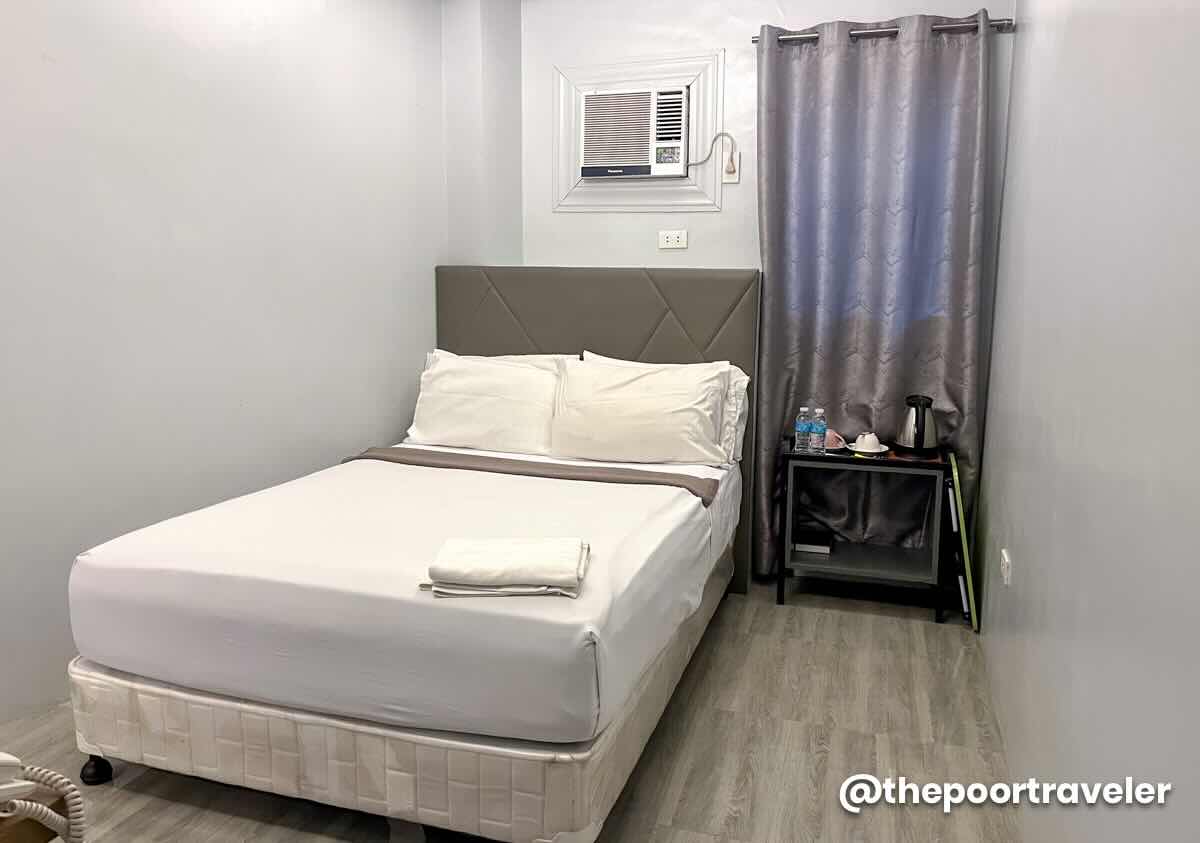
We have stayed at six different hotels across Metro Bacolod, but here are a couple of properties that we were able to try recently. First, UrbanView @ Lacson Street Bacolod City by RedDoorz, which is centrally located. Yes, it stands very close to Calea, Felicia’s, and the Negros Occidental Provincial Capitol. You’ll also find a branch of both Bongbong’s and Merczi pasalubong shops nearby.
UrbanView @ Lacson Street Bacolod
We stayed in a deluxe room with air-conditioning, WiFi, TV, in-room telephone, foldable bed table, electric kettle, and complimentary bottled water. As for the bathroom, basic toiletries were provided, the water heater was working well, and the water pressure was good. The room was good for two guests. It’s a budget hotel, and we only paid P1616.45 per night, which I think is a good deal! That’s only P808 per person.
The room is quite cramped, and it doesn’t have an elevator. But the staff were very helpful with the luggage and attentive to requests. If you’re a budget traveler and it’s your first time in Bacolod, UrbanView is a good place to start.
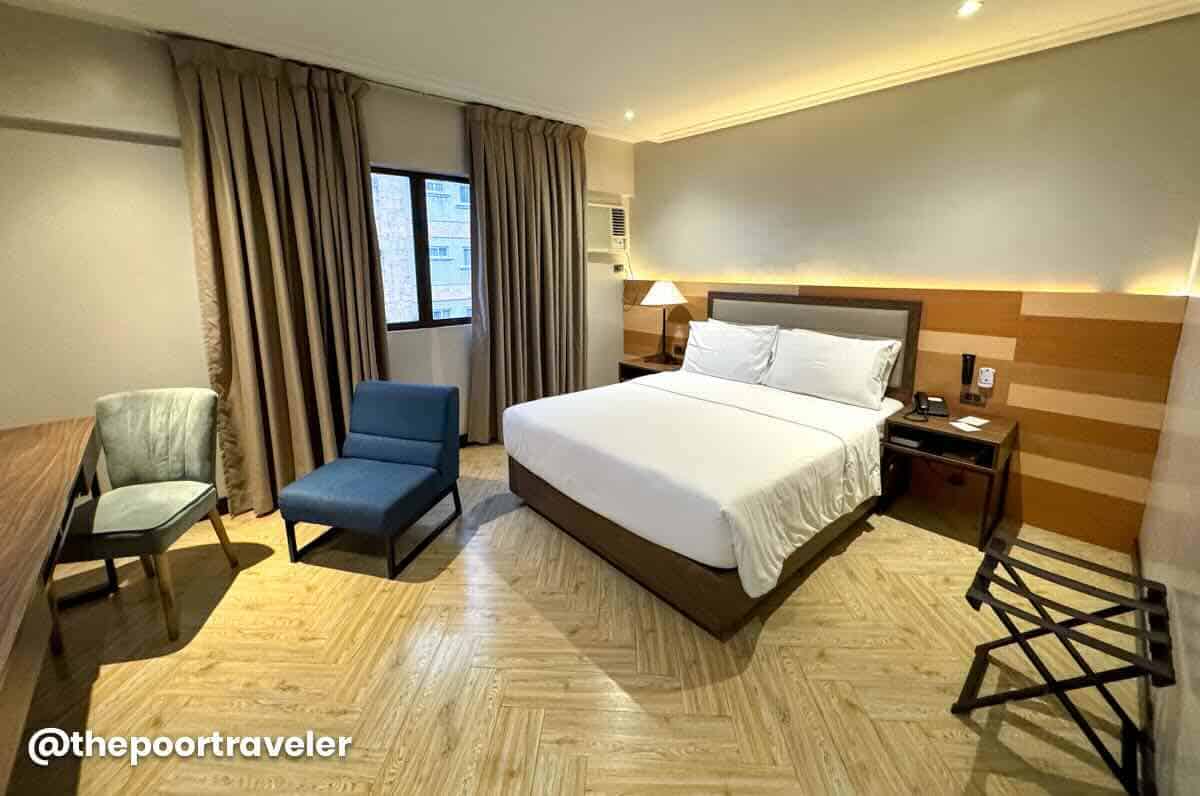
But if you want a proper full-service hotel close to the port or SM City Bacolod or SMX Convention Center, maybe Acacia Hotel Bacolod is the place for you. All their rooms are very spacious, have air-conditioning, free WiFi, safes, flat screen TV, refrigerator, electric kettle, and daily housekeeping. It is generally clean, and the service was great. It is also home to the city’s first wave pool — fun, family-friendly, and perfect for lounging.
Acacia Hotel Bacolod
The bar below offers buy-one-take-one cocktails, but the breakfast was so-so at best. We didn’t mind because, like we always say, we’re not big breakfast people.
It’s in a secluded area away from the main streets, but not far from the action and still very accessible. You can hail a tricycle, no problem.
It’s quiet in theory. The AC in our room, however, was rumbling a bit too loudly. But for PHP 2595 per night, I think it’s a good value for money.
Top Hotels in Bacolod
Here are some of the top-rated hotels in Bacolod City according to online traveler reviews.
🔥🔥🔥 Use AGODATPT for 10% off on select hotels! 🔥🔥🔥
The Poor Traveler readers and followers can now use a special discount code to score 10% discount, up to USD 100 (roughly PHP 5700)! To apply and avail of the promo code, visit AGODATPT Promo Code.
The Bacolod-Silay International Airport (BCD) is the gateway to the province. Although it has Bacolod in its name, it is entirely located in the city of Silay.
Bacolod – Silay International Airport
There are direct flights to and from this airport from Manila, Cebu, and Davao via the following airlines:
Manila to Bacolod
Philippine Airlines
Cebu Pacific
AirAsia
Cebu to Bacolod
Philippine Airlines
Cebu Pacific
Davao to Bacolod
If you book in advance, usual one-way fares are around PHP 1400 and can go as low as PHP 1200. Even lower when there is a SALE. That’s for off-peak season.
Bacolod-Silay Airport to Bacolod City Center
From the airport, you can reach Bacolod in 30 to 45 minutes. There are vans (shuttles) that can take you there directly for PHP 200-250 per passenger, depending on your stop and luggage.
But if you’re a group, it will be more cost-efficient to just book a Grab car. We were a group of three and paid only PHP 487, or roughly P162 per person. That’s cheaper than taking the van.
Travel Time: 30-45 minutes Fare: Van, P200-250 per pax; Grab, P400-500 per ride
HOW TO GET AROUND BACOLOD
As a highly urbanized city, Bacolod offers a lot of transportation options to its residents and visitors.
Jeepney
The cheapest is the traditional jeepney, which costs PHP 11 for short distances. The e-Jeep or electric jeepney is slightly costlier at PHP 15 per person. Either way, you need to be mindful of the route that the jeep will be taking to make sure you’re on the right path. You can wait for a jeepney by the roadside. And to get off, just say “Lugar lang,” which is their equivalent of “Para po.” The vehicle will then stop and wait for you to alight.
If you’re confused or you feel like you’re lost, just ask the driver or fellow passengers. Bacolod locals are some of the friendliest we have met, and I’m sure they will help you sort things out.
Fare: Regular Jeepney, PHP 11; E-Jeep, PHP 15
Tricycle ride (Left), eJeep/Modern Jeep (Top Right), and Traditional Jeep (Bottom Right)
Tricycle
Tricycles are also available, although not as popular or as common. A “special ride” usually costs PHP 50 for short distances. But there was an instance wherein we were charged PHP 150, which turned out much higher than Grab price.
Fare: PHP 50-150 (special ride)
Grab
We ended up taking Grab instead when we’re in a hurry. Based on experience, these are the usual Grab fares for most common tourist routes:
BCD Airport to City Center: P400-500
Within Bacolod to City Center: P80-P130
Bacolod City Center to The Ruins: P200
El Ideal to The Ruins: P330
Bacolod to Silay City Center (El Ideal): P350
Silay City Center to BCD Airport: P160
Bacolod City Center to BCD Airport: P400-500
Taxis also operate within the city. We were told InDrive was also available, but we never tried it here, so we can’t confirm.
If you’re going to Mambukal, make your way to Mambukal-Bacolod Bus Terminal in Libertad. The fare is 60/head, and the travel time is 1 – 1.5 hours. The bus terminates right at the entrance of Mambukal Hot Spring Resort.
If your itinerary involves visiting other destinations in the province, you can take the bus at either the North Terminal or South Terminal.
Note: Silay City, including the airport, Carbin Reef in Sagay, and Lakawon Island in Cadiz, are situated north of Bacolod; while Sipalay and Cauayan, including Danjugan Island, are in the south.
THINGS TO DO IN BACOLOD
Bacolod may be known as the City of Smiles, but its charm goes way beyond the friendly locals and the famous chicken inasal. When exploring the area, don’t just limit yourself to Bacolod proper — Metro Bacolod also includes the nearby cities of Talisay and Silay, plus surrounding towns that offer even more attractions. From heritage tours to food trips and nature escapes, here are some of the best things to do when you’re in and around Bacolod.
This is just a quick run down to get you started. For a more detailed version with additional information, check out our full article here: TOP THINGS TO DO IN BACOLOD
If you prefer a hassle free trip, you can simply purchase your tickets or book your tours via your trusted booking sites.
If you’re more comfortable using Klook services, please use our promo code THEPOORTRAVELERKLOOK for up to P300 OFF or TPTKLOOK5 for up to P500 OFF. These codes might change in the future, so best to just visit thepoortraveler.net/klook to redeem updated discount codes!
MassKara Festival
If you time your visit in October, you’ll get to experience Bacolod’s biggest event — the MassKara Festival. Expect vibrant street dances, parades of smiling masks, live concerts, and food fairs all over the city. It’s crowded and chaotic, but it’s also one of the most colorful and unforgettable festivals in the Philippines.
The Ruins
Located in nearby Talisay City, The Ruins is the skeletal remains of a grand mansion built in the early 1900s by a sugar baron for his late wife. At sunset, the structure glows beautifully, making it one of the most photogenic spots in the province.
Mambukal Resort
Warm Dipping Pool
If you’re looking for nature and relaxation, Mambukal Resort in Murcia is a top choice. The resort is famous for its seven waterfalls, hot sulfur springs, and lush forest setting. It’s a refreshing escape from the city and a favorite for both locals and tourists.
Mambukal is about an hour away from Bacolod City, with direct buses from Libertad. If you are a big group and traveling with kids and elderly people, consider booking a tour with Klook! This is inclusive of round-trip transfers, insurance, local guide/driver, and entrance fee.
Hofileña Ancestral House (TL), Balay Negrense (TM), Jalandoni Ancestral House (TR), Gamboa Ancestral House (BL), Morada Ancestral House (BM), and Golez Ancestral House (BR)
Silay City is a treasure trove of ancestral houses and cultural landmarks. Many of these heritage homes have been preserved and turned into museums, giving you a glimpse of the opulent lifestyle during the sugar boom era. The city itself is charming, with walkable streets lined with history at every corner.
Jojo Vito Designs Gallery
For something more artistic, check out the Jojo Vito Designs Gallery in Bacolod. The gallery showcases colorful, handcrafted masks and home décor pieces that reflect Bacolod’s creative spirit. It’s also a great place to shop for unique souvenirs, especially if you want to take home a piece of MassKara artistry.
Negros Museum
The Negros Museum houses exhibits that tell the story of Negros Island’s history, culture, and art. You’ll find a mix of artifacts, contemporary works, and even old sugar industry relics. It’s a good stop for anyone wanting to understand the island’s rich heritage beyond the festivals and food.
Capitol Park and Lagoon
At the heart of Bacolod lies the Capitol Park and Lagoon, a spacious public park with a man-made lagoon guarded by iconic carabao statues. It’s a popular spot for families, joggers, and even street performers. The surrounding area also has cafes and food stalls, making it a nice place to unwind.
San Sebastian Cathedral and Public Plaza
For a dose of history and spirituality, visit the San Sebastian Cathedral, one of Bacolod’s most important landmarks. Right across is the Bacolod Public Plaza, a lively hangout spot for locals and a great place to people-watch. Both sites are central to Bacolod’s cultural and religious life.
Food Trip
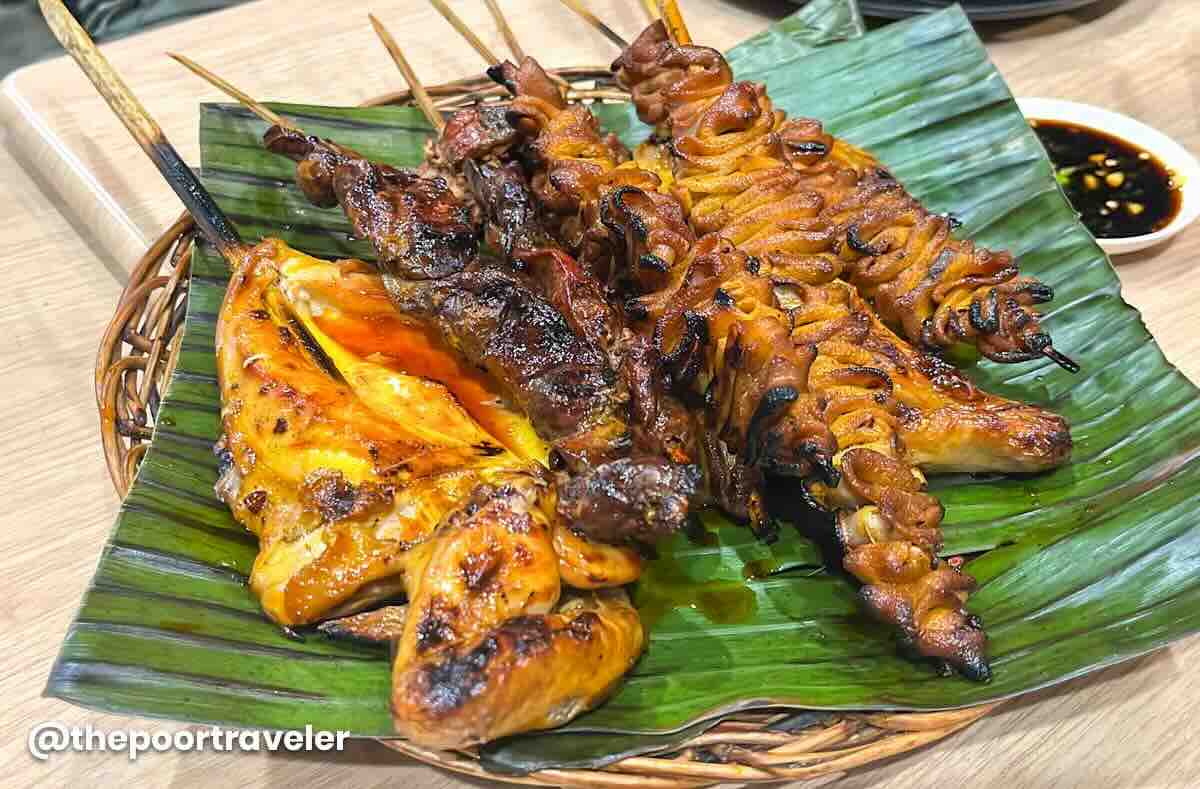
Chicken Inasal Pechopak, Grilled Chicken Liver, and Isaw
Of course, no Bacolod trip is complete without a food trip. From the iconic chicken inasal to sweet treats like piaya and cakes, Bacolod is a foodie paradise. On that note, let’s continue discussing this delightful topic in the next section.
Lakawon Island Day Trip
Lakawon Island lies off the coast of Cadiz, which is about one-hour drive north of Bacolod City. It is known for its white sand beaches, crystal clear waters, and a sandbar. It also hosts Lakawon Island Resort & Spa, offering water activities and amenities, including a restaurant, a beachfront bar, and one of the largest floating bars in Asia.
The jump-off point is Cadiz Viejo Port. It’s important to note that the last boat back to the mainland leaves at 3PM. From Bacolod’s North Bus Terminal, get on a bus bound for Cadiz City. Alight at Burgos Public Market, then hail a tricycle to the port. If you prefer a hassle-free trip, you can just book a day trip package from Bacolod via Klook!
The good thing about Bacolod? You surely won’t leave without tasting delicious, perfectly grilled chicken inasal. But this smoky, tangy goodness isn’t the only must-try food in Bacolod. We’ve been to Bacolod several times, and most of our trips, our main motivation is none other than…FOOD! From the city’s famed chicken inasal to its decadent sweet treats, Bacolod never fails to satisfy our craving — from appetizers to desserts!
We made a more detailed version of this article, where we listed down our favorite places to eat in Bacolod. You can check it here: WHERE TO EAT IN BACOLOD
SAMPLE BACOLOD ITINERARY & BREAKDOWN
Here are two sample itineraries for Bacolod with budget breakdown. The figures indicated are per person. But both of these itineraries assume you’re a party of two travelers, splitting all costs, and taking public transportation for the most part. Public transportation fares (jeepney, bus) are overestimated (rounded off) to be on the safe side. We chose Grab in instances when it makes more practical and financial sense.
As always, feel free to make the necessary adjustments to match your schedule and preferences.
Bacolod 4-Day, 3-Night Itinerary (Relaxed Option)
Pre-trip Booking: Hotel – P2430 (P1620/night x 3 nights, divided by 2 pax)
DAY 1 – ARRIVAL & CITY TOUR 08:30 AM – Arrival in Bacolod 09:00 AM – Grab/Van to City Center, P250/pax 10:00 AM – Hotel check-in 11:00 AM – Sharyn’s Cansi, P300 12:30 PM – Calle Luna Halo-Halo, P130 01:45 PM – Jeep/Grab/Walk to Negros Museum 02:00 PM – Negros Museum, P150 03:30 PM – Capitol Park & Lagoon 04:10 PM – San Sebastian Cathedral 04:50 PM – Bacolod Public Plaza 06:00 PM – Sugba Sugba or Chicken House, P300 08:00 PM – Calea, P250 09:00 PM – Back to hotel, P25 Day 1: P1,405
DAY 2 – MAMBUKAL 06:30 AM – Transfer to Mambukal-Bacolod Bus Terminal-Libertad, P25 07:00 AM – Bus to Mambukal, P60 08:00 AM – Arrival at Mambukal Resort, P140; Access to Japanese Ofuro, P100 11:00 AM – Lunch, P200 02:00 PM – Bus to Bacolod, P60 03:30 PM – Jojo Vito Design Gallery, P160 05:00 PM – Dinner at Lion’s Park, P250 07:15 PM – Grab to Buttery, P60 07:30 PM – Buttery Bacolod, P250 09:00 PM – Back to hotel, P25 Day 2: P1,330
DAY 3 – SILAY & TALISAY 08:00 AM – Jeepney to North Terminal, P15 08:30 AM – Ceres Bus to Silay, P25 09:15 AM – San Diego Pro-Cathedral 09:45 AM – Bernardino Jalandoni Museum*, P150 10:45 AM – Hofileña Ancestral House*, P150 11:45 AM – Cinco de Noviembre Marker, FREE 12:00 PM – El Ideal Lunch, P300 02:00 PM – Bus to Honda/Pepsi, P25 02:45 PM – Tricycle to The Ruins, P50 03:00 PM – The Ruins, P150; Sugarcane Juice, P100 07:00 PM – Grab to Gina’s Seafoods, P100 (P200/2pax) 07:30 PM – Gina’s Seafoods, P300 09:00 PM – Back to hotel, P25 Day 3: P1,390
DAY 4 – DEPARTURE 10:00 AM – Check out 10:30 AM – Pasalubong Shopping 12:00 PM – Quick Lunch, P200 02:00 PM – Grab to Airport, P250 03:00 PM – Flight check-in Day 4: P450
TOTAL: PHP 7,005 (USD 123, EUR 104, SGD 157)
Bacolod 3-Day, 2-Night Itinerary (Budget Option)
This itinerary will take you to almost all the attractions in the previous 4-day version, but made more compact.
In addition, since you will only be spending two nights in the city, we’re assuming you don’t have much baggage. Hence, you should be able to explore Silay on the last day without needing to leave it elsewhere.
Pre-trip Booking: Hotel – P1620 (P1620/night x 2 nights, divided by 2 pax)
DAY 1 – ARRIVAL & CITY TOUR 08:30 AM – Arrival in Bacolod 09:00 AM – Grab/Van to City Center, P250/pax 10:00 AM – Hotel check-in 11:00 AM – Sharyn’s Cansi, P300 12:30 PM – Calle Luna Halo-Halo, P130 02:00 PM – Negros Museum, P150 03:30 PM – Capitol Park & Lagoon 04:10 PM – San Sebastian Cathedral 04:50 PM – Bacolod Public Plaza 06:00 PM – Sugba Sugba or Chicken House, P300 08:00 PM – Calea, P250 09:00 PM – Back to hotel, P25 Day 1: P1,405
DAY 2 – MAMBUKAL & RUINS 06:30 AM – Transfer to Mambukal-Bacolod Bus Terminal-Libertad, P25 07:00 AM – Bus to Mambukal, P60 08:00 AM – Arrival at Mambukal Resort, P140 11:00 AM – Lunch, P200 02:00 PM – Bus to Bacolod, P60 03:30 PM – Jeep to Pepsi, P25 + Trike, P50; Alternatively, Grab to the Ruins, P100 (P200/2pax) 04:00 PM – The Ruins, P150 07:30 PM – Grab to Gina’s Seafood, P100 (P200/2pax) 08:00 PM – Gina’s Seafoods, P300 09:00 PM – Back to hotel, P25 Day 2: P1,135
DAY 3 – SILAY & DEPARTURE 07:30 AM – Early check out 08:00 AM – Jeepney to North Terminal, P15 08:30 AM – Ceres Bus to Silay, P25 09:15 AM – San Diego Pro-Cathedral 09:45 AM – Bernardino Jalandoni Museum*, P150 10:45 AM – Hofileña Ancestral House*, P150 11:45 AM – Cinco de Noviembre Marker, FREE 12:00 PM – El Ideal Lunch, P300 02:00 PM – Grab to Airport, P80 (P160/2 pax); If van, P100/pax 02:30 PM – Flight check-in Day 3: P720
TOTAL: PHP 4,880 (USD 85, EUR 73, SGD 109)
*Entrance fees to the Hofileña Museum and Bernardo Jalandoni Museum are assumed to be P150. In our experience years ago, it was less than P100. Online reviews claim it’s P150. Unfortunately, both were closed when we last visited, so we couldn’t confirm it. We just set it at P150 to be safe.
The total fees are inclusive of the hotel stay as indicated but exclusive of flights, pasalubong/souvenirs, and incidental expenses, since these widely vary and are highly dependent on your circumstances and preferences.
But please add at least P1000 more to the budget to cover price movements and other possible expenses we might have missed.
If you have more days, you can just insert other destinations or activities. For example, you can include a day trip to Lakawon Island in Cadiz. Or if you have extra two days, you can stay overnight on Danjugan Island in Cauayan or in Sipalay City, where you’ll find lots of noteworthy places to visit.
FREQUENTLY ASKED QUESTIONS ABOUT BACOLOD
When is the best time to visit Bacolod?
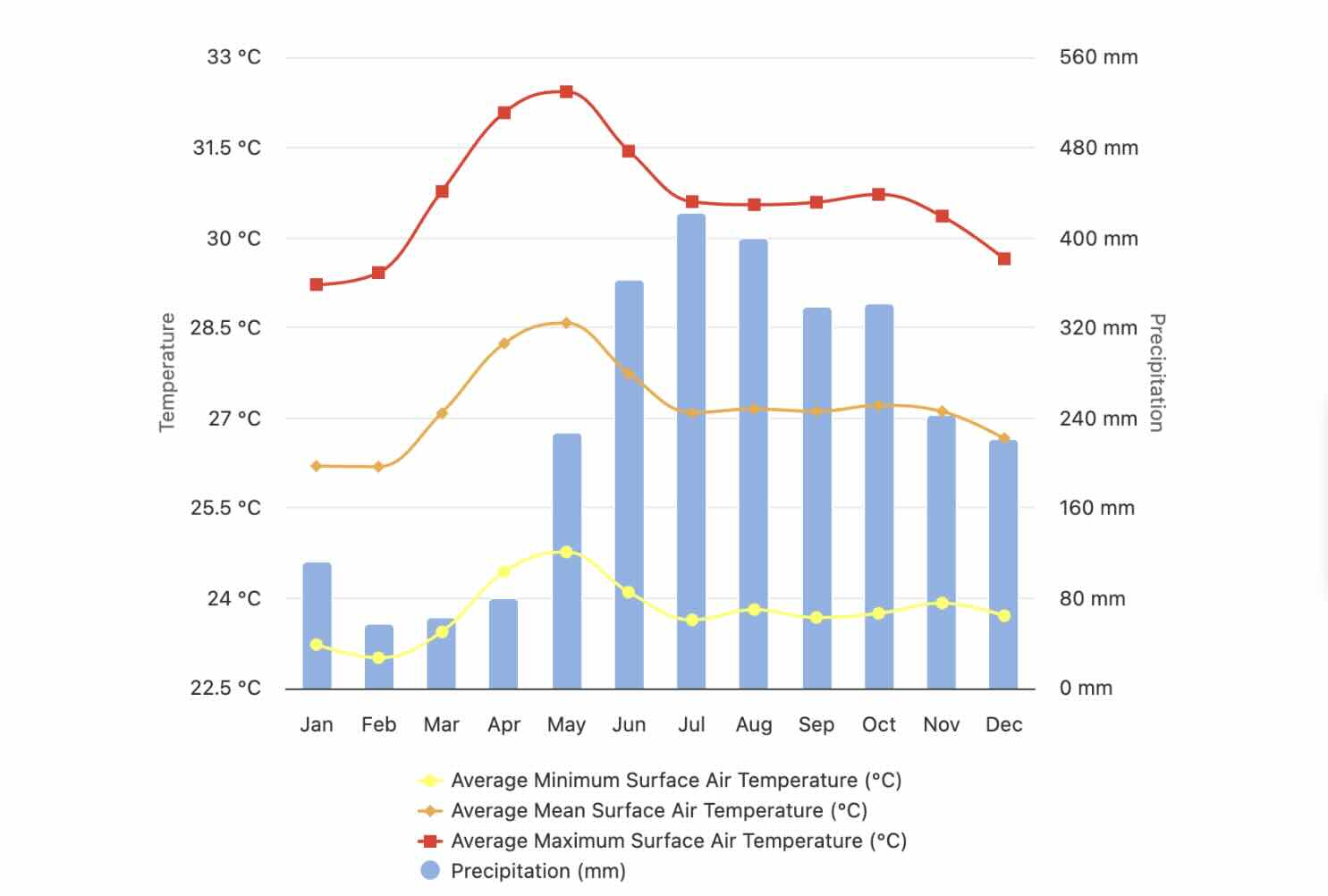
Weather-wise, definitely January to April. You’ll get plenty of sunshine for your food crawls, sightseeing, and side trips without worrying about the rain ruining your outfit. The shoulder months of November, December, and May are also pretty pleasant.
Just a warning: if you come between March and May, the heat can get intense, you’ll basically be marinating in your own sweat. On the bright side, it’s the perfect excuse to down halo-halo after halo-halo.
Photo Credit: World Bank Climate Knowledge Portal
Does that mean you should completely avoid June to October? No, not really. Yes, it’s the peak of the rainy season, but it doesn’t mean downpours happen all day, every day. In fact, our most recent Bacolod trip happened in JULY, but it never rained at all. Not even a little drizzle.
Now, if you’re the type who doesn’t mind a little risk, you could luck out, too. On the plus side, hotel rates drop, and you won’t be elbowing your way through crowds. Just pack an umbrella and maybe some patience, and make your itinerary as flexible as you can make it.
If you want to experience Bacolod in full party mode, come in October for the MassKara Festival. Picture Mardi Gras, but with more smiles, more food, and just as much traffic. It’s the city’s loudest, busiest, most colorful time of the year.
The downside? Hotel prices skyrocket, and restaurants get packed. If you want to experience MassKara, book as early as you possibly can.
What type of power plug / socket is used in Bacolod?
The standard voltage in the Philippines is 220V at a frequency of 60Hz. Generally, the plug and socket type used is Type A, which has two flat parallel pins.
Is Bacolod safe?
Yes, Bacolod is generally safe.
Again, Bacolod locals are some of the friendliest we have met. But it’s still best to be mindful of your surroundings. Always keep an eye on your belongings and don’t leave them unattended.
You can take note of these emergency contact numbers:
Photo Credit: Bacolod City Government Official Website
Updates Log
2025 9 25 – First uploaded
Additional Words by: Asta Alvarez (Lakawon Island & FAQs – Electricity Info & Safety)
In July, Floyd Mayweather Jr. purchased a few cars from a Las Vegas dealership, including a Mercedes-Maybach G650 Landaulet. The retired boxer claims to have paid $1.2 million for it. Now, he is suing the dealer for deceptive trade practices and misrepresentation.
Mayweather argues that the G650 cost the dealer just $728,000, which means it made nearly half a million dollars in profit. He was under the impression that the dealer had paid $1.1 million for the truck, a margin he was okay with.
Mayweather had also purchased a Ferrari F8 Spider for $480,000, a Porsche 911 GT3 for $285,000 and a McLaren Artura for $285,000 from the same dealership. As per reports, he took these cars back to the dealership and also wanted to return the Maybach G650. However, the dealer allegedly wouldn’t take it back.
Mayweather told TMZ that the car he was sold was in lawsuits, and some of its parts had been changed. Despite this, the dealer charged him $1.2 million.
The dealership, in its response, said that the lawsuit was “laughable and dead on arrival”.
Learning a new language is one of the best skills anyone can build. But let’s be real. Some languages are considered the most challenging languages. In fact, these top 10 hardest spoken languages to learn will need patience and good practice. So don’t worry. With the right mindset and the right apps, you can master even the most challenging ones!
Here’s where a few language learning tips come in. Just like understanding bank codes and swift codes, knowing the right learning strategy makes the process smoother. Break lessons into small steps. Practice every day. Use a trusted program that suits your lifestyle.
The Foreign Service Institute (FSI) has grouped languages into categories of difficulty. Their research shows how long it takes for English speakers to learn. And some of these, like Farsi, Navajo, or Arabic script-based languages, are at the top of the list.
The 10 Hardest Languages
The language difficulty really depends on you. Learn Spanish or French? Tackling Russian grammar? Exploring Navajo or other indigenous languages? Yes, it can feel overwhelming. It takes time to build vocabulary and master verb conjugations. But it’s not impossible. You just need to understand a few things:
Mandarin Chinese Non-English speakers can find learning the language hard. It has thousands of characters and a tone system that changes meaning with sound. One word can mean four different things, depending on tone.
Arabic Arabic has different dialects depending on the country. The Arabic script is also written from right to left. That alone takes time to practice! It is spoken widely in the Middle East and North Africa, from Egypt to Saudi Arabia.
Japanese Japanese is a challenging language. It requires learning three writing systems: hiragana, katakana, and kanji. But it’s very rewarding if you love Japanese culture. Studying Japanese grammar can be fulfilling, too!
Korean Korean sentences and grammar structure are very different from English. It uses Hangul, a logical writing system, but adjusting to its structure takes time. It’s spoken widely in South Korea.
Russian Russian uses the Cyrillic alphabet. Plus, it has complex grammar rules, pronouns, cases, and verb conjugations that can confuse beginners.
Finnish Finnish grammar has long words and unique patterns. It’s different from most European languages, which makes it tricky. Finland also influenced other Nordic languages like Norwegian, Swedish, and Danish.
Hungarian Like Finnish, Hungarian grammar is unusual. Words can change a lot depending on context. Its vocabulary and use of genders, adjectives, and cases make it stand out.
Icelandic Icelandic preserves many old words. Pronunciation can also be tough for non-native speakers. It shares history with other languages rooted in the Latin alphabet.
Thai Thai is tonal like Mandarin. It also has its own script that looks very different from Latin letters. Small pitch changes can change meanings.
Vietnamese Vietnamese is another tonal language. Even small changes in pitch can change the meaning of a word. Like Hindi or Persian, it blends unique vocabulary with deep cultural roots.
How to Learn Hard Languages as a Digital Nomad
Traveling and hopping between cities can make study time harder, but here are some simple steps you can try:
Step 1: Pick the Right Tool
Look no further! Rosetta Stone is one of the best apps for digital nomads. It uses immersive learning. So you learn to think in the language instead of just memorizing words. And just for our readers, they are offering a $179 lifetime subscription!
Step 2: Create a Journal Habit
Keep a language learning notebook of new words. Write them down daily. Even five minutes of writing can help. Make sure to start with the new language’s vocabulary and phrases. It may not be the easiest language to learn. But it’s best to do it this way.
Step 3: Practice Anywhere
Download lessons on your phone. With offline access, you can study while waiting at airports or in cafés. Put on our favorite noise-cancelling headphones to stay focused.
Step 4: Combine Learning with Real Life
Order food, ask for directions, or chat with locals. Real practice makes the word order stick.
Step 5: Stay Consistent
Consistency is non-negotiable. Even 15 minutes a day is better than long gaps in learning. You may not be studying grammar structure like a native English speaker. But it’s very important to remember.
Rosetta Stone vs. Other Tools
Some people try free phrase apps or YouTube videos. Those can help, but they don’t give structure.
Rosetta Stone focuses on full immersion, which builds real fluency! Plus, it’s flexible. It’s ideal if you’re on the go, juggling clients, or moving money.
Paired with our favorite international eSIM, you’ll always have access to lessons and practice sessions wherever you travel.
Why Learning Hard Languages Matters
Speaking the local language is more than just convenience. It helps you build trust, find better opportunities, and enjoy deeper cultural experiences. It also sets you apart in jobs abroad. Employers respect workers who put effort into communication.
Learning the top 10 hardest languages to learn may sound scary, but with the right system, it’s possible. As a Filipino digital nomad or OFW, your lifestyle already shows strength and flexibility. Add a new language, and the world opens up even more.
When you take on this challenge, you’re not just memorizing words. You’re expanding your world, building bridges with people, and proving to yourself that consistency pays off. Every new word is a step closer to confidence and connection.
Start your journey with Rosetta Stone today. Don’t just survive abroad. Thrive with the power of language. Click the link, download the app, and take the first step toward mastering your dream language.
FAQs
What makes a language “hard to learn”?
Languages can be hard because of grammar, tones, writing systems, or cultural differences. Some also have difficult genders, adjectives, or verb conjugations.
How long does it take to learn a hard language?
It depends on consistency. Some may take a year or two of daily practice. The FSI estimates hundreds of hours for languages like Farsi, Persian, or Polish.
Can digital nomads really study while traveling?
Yes! With apps like Rosetta Stone and tools like journals or headphones, study fits into your routine. Even in places like Sweden, Greece, or Africa, practice is possible with focus.
Which is the easiest, hard language to start with?
Korean or Russian can be a good start. Others try Norwegian, Swedish, or Danish, which use the Latin alphabet and have simpler structures.
About The Writer
I’m Cyrine, a 19-year-old Filipina writer navigating college, freelancing, and the journey to becoming a digital nomad. I share real stories, budget tips, and lessons from chasing freedom through remote work, one step at a time.
These days, getting through airport security practically requires expert-level attention. Should I take off my shoes? Laptop in or out? How about those batteries? And when it comes to liquids, you should know, nothing over 3.4 ounces is getting by them … or is it? Over the last few months, a social media trend has emerged, with travelers boasting about how they bested the TSA agents with their beauty products by freezing them before heading to the airport.
“I really, really hope this works because I love this cleansing balm,” TikToker Finding Fiona shared before putting her frozen Elemis balm through the belt. A moment later, it came through, with Fiona remarking, “I can’t believe that worked.”
And really, social media stars like Fiona aren’t wrong. As the TSA’s website explains, “Frozen liquid items are allowed through the checkpoint as long as they are frozen solid when presented for screening.” However, it importantly noted, “If frozen liquid items are partially melted, slushy, or have any liquid at the bottom of the container, they must meet 3-1-1 liquids requirements.”
So, yes, you can technically do this, but should you?
“From my perspective as a dermatologist, freezing most skincare products is generally a bad idea,” Dr. Hannah Kopelman, who’s completed two clinical fellowships in dermatology from Columbia University and skin cancer from Boston University, told Travel + Leisure. “The active ingredients in skincare—things like retinol, vitamin C, peptides, and even sunscreens—are highly sensitive to temperature changes.”
Dr. Hannah Kopelman
“I wouldn’t recommend routinely freezing skincare—it’s much safer to stick to travel-sized versions or transfer your products into TSA-approved containers so the formula stays stable and effective.”
— Dr. Hannah Kopelman
Kopelman explained that when you freeze them, the formula can “separate or degrade, meaning the product won’t be as effective when you apply it later. Freezing can also alter the texture, making creams grainy or serums watery, which can affect both application and absorption.”
Melanie Abeyta, an aesthetic nurse practitioner and owner of Harmony Aesthetics Center in Los Angeles, agreed, adding that “creams, serums, and emulsions may lose their texture, efficacy, or stability after freezing … additionally, repeated freezing and thawing can compromise the packaging and cause leakage or contamination.”
However, not all hope is lost if you’re attempting to get a few products through TSA. According to Dr. Louie Kim, a cosmetic chemist, certain products can “sometimes withstand freezing,” typically those that are “mostly solid or anhydrous (water-free), like certain oil balms, solid cleansers, or wax-based products.” According to Kim, these products don’t form ice crystals because “there is no water in them, and this means that they are much less vulnerable to freezing and thawing.”
Kopelman added that some products, like petroleum jelly, can usually withstand a freeze-thaw cycle without losing their integrity. “Sheet masks, if they’re just soaked in a hydrating essence, often do fine as well,” she noted. “That said, I wouldn’t recommend routinely freezing skincare—it’s much safer to stick to travel-sized versions or transfer your products into TSA-approved containers so the formula stays stable and effective.”
Kim also caveated the freezing advice by saying that “even though freezing won’t destroy anhydrous formulations, it is possible that their texture can change. Some natural oils, such as shea butter and coconut oil, can become slightly gritty in texture when cooled. In the process of freezing and thawing, the antioxidant properties in the oil can turn bad as well.”
The safest approach, Kim said, is to “use minis or transfer your product into TSA-approved containers instead of relying on freezing.”
After traveling to all 195 UN-recognized countries and living as a full-time digital nomad for over a decade, I’ve realized that one thing often took a backseat: my health. Now that I’ve chosen Dubai as my new home base, I want to reset and build a lifestyle that keeps me grounded. For me, it all starts with gut health.
1. Years of Travel Took a Toll
Airports, jet lag, and random meals in 195 countries left my body constantly adjusting. It’s time to rebuild balance from the inside out.
2. Gut Health = Whole Health
Energy, immunity, even mood—all trace back to gut health. Fixing my gut means fixing the foundation of my overall well-being.
3. A Sustainable Lifestyle Shift
Fermentation feels like the opposite of fast food: slow, intentional, sustainable. Exactly the kind of practice I need to embrace in this new chapter.
4. Learning a New Skill in Dubai
I’ve always loved learning skills from around the world. Now, Tabchilli is teaching me something practical that I can integrate into my everyday life.
5. Community & Connection
Tabchilli isn’t just a workshop, it’s a community. I got to meet expats and locals who share the same vision for health and conscious living.
6. Supporting a Bigger Cause
What really inspires me: Tabchilli donates 1% of proceeds to Juvenile Arthritis. For me, wellness should always include compassion.
7. Creativity in the Kitchen
I’ve eaten kimchi in Korea, sauerkraut in Germany, and kombucha across continents—but I never thought I could make them myself. Now I can!
8. Gut Healing After Gallbladder Surgery
With no gallbladder, my digestion has always needed extra care. Fermented foods are a natural way to support my gut and improve digestion.
9. A Full-Circle Lifestyle
I’ve lived globally, and now I’m grounding myself in Dubai. Learning fermentation here feels like bringing the best of the world’s food cultures into my own kitchen.
10. My Dubai Reset
This is my fresh start. Tabchilli is not just teaching me recipes—it’s helping me anchor my life in Dubai with healthier routines, new friends, and a sense of belonging.
Why Fermentation, Why Now?
Travel teaches you many things, but one lesson I’ve learned everywhere is this: gut health is the key to everything. Energy, mood, immunity—it all comes back to how you feed the trillions of microbes inside you.
And while I’ve eaten kimchi in Korea, sauerkraut in Germany, and kombucha in hip cafés from California to Cape Town, I never thought I’d be able to make those foods myself. Until now.
Tabchilli doesn’t just sell fermented foods—they teach you how to create them. They’ve already trained 4,000+ people in Dubai to master the art of probiotic-rich, living foods. For someone like me who’s always learning new skills, this felt like the perfect hobby and lifestyle shift rolled into one.
The Heart Behind Tabchilli
What drew me in most was the founder’s story. Everyone told him fermentation didn’t stand a chance in Dubai. But he believed otherwise—and built a thriving community around it.
His philosophy is more than just about gut health. It’s about building resilience, creating connection, and giving back—Tabchilli even donates 1% to Juvenile Arthritis. To me, that’s what makes it more than a workshop space; it’s a hub for people who care about their health and their community.
My New Beginning in Dubai
For the first time in years, I’m slowing down. I want to meet fellow expats and locals who are also choosing health over hustle. I want to get my hands messy making kimchi, laugh with strangers who might become friends, and build routines that ground me.
Joining Tabchilli feels like the first step in turning Dubai from just another stop on my journey into a real home.
Because this time, I’m not just traveling to survive—I’m learning how to thrive.
FAQ
1. Why is gut health so important for overall wellness?
Gut health impacts energy levels, immunity, digestion, and even mood because it affects the balance of microbes inside your body.
2. How did years of traveling affect your gut health?
Constant exposure to different foods, time zones, and irregular meals disrupted digestive balance, highlighting the need to rebuild from within.
3. What kind of skills do you learn at Tabchilli’s fermentation classes?
You learn how to create probiotic-rich fermented foods like kimchi, sauerkraut, and kombucha, gaining practical knowledge to improve digestion.
Celebrating brand diversities is standard fare in watchmaking – so much so that we can toy with a word like that – but there is another sort of milestone to consider, which the Hublot Big Bang 20th anniversary collection helps us address. Yes, it has been 20 years since the Big Bang blew up! This anniversary collection for the brand does indeed represent the Big Bang; since its conception, it has spawned many offshoots for Hublot, like the Spirit of Big Bang, Big Bang Integrated, and Square Bang. To celebrate this milestone for the collection, Hublot is taking its Art of Fusion concept and applying it to the limited edition anniversary collection, combining the styling of the original Big Bang with the Big Bang Unico.
The five watches in this limited edition series represent five of Hublot’s best-known characteristics including the pairing of titanium (case) with ceramic (bezel); King Gold (case) and ceramic (bezel); Red Magic; the all-black ceramic and of course, Magic Gold. Some of these materials came into the world of watchmaking thanks to Hublot, stemming from research and development that has been ongoing for perhaps as long as the Big Bang has been around. Each of these fantastic watches can be purchased separately with limited quantities ranging from 100 to 500 pieces, depending on the complexity of the material. For the true fans of the Big Bang, there is a special five-piece box set available which will come with all five watches and it will be delivered in a special box.
And for those reading this and going, hold on, Hublot is also famed for its sapphire cases. Where are those? The brand also has a special five-piece collection to showcase its range when it comes to this ultra-hard material. On that note, Hublot also has a high complication set that includes minute repeaters, tourbillons and monopusher chronographs. In any case, there are too many anniversary pieces to get into here but there are some commonalities. For example, here all the watches are bicompax flyback chronographs (hence the Big Bang Unico mention); all are 43mm, all sport prominent knurling on the bezels; all are equipped with rubber straps and, perhaps most obviously, all have carbon fibre pattern dials.
Yes, that last bit threw us off too because Hublot is very closely associated with carbon fibre, but the brand has decided to opt for the more luxurious option of engraving the pattern onto the dials. The result lands very differently indeed but, in fairness, carbon fibre is perhaps a bit passe for the Big Bang. We will not argue that the final look is exceptional.
This story was first seen as part of the WOW #79 Summer 2025 Issue
For more on the latest in luxury watch reads, click here.
I love walking tours. Long time readers know I always recommend doing them first thing when you’re in a city. It doesn’t matter the type you do. Food, history, art – whatever! Just do something. They’re an incredible way to learn about a destination, get your bearings, and talk to a local about life in the city. (Plus, you can ask your local guidefor tips on restaurants, attractions, or how to navigate the city! Win-win!)
I’ve been taking walking tours since my first backpacking trip in 2006 when I joined a hostel’s free walking tour around Prague. I was hooked and, over the years, I’ve taken hundreds upon hundreds of tours run by dozens upon dozens of companies. There are tons of walking tour companies out there, but one of my favorites is Context Travel.
Context was founded in 2003 and I’ve been using and recommending them since 2010 when I first stumbled across one of their tours in Rome. I walked with an art historian around the Vatican, where I not only learned about the Vatican itself, but the stories behind the art. Since then, I’ve done countless tours with them.
What has always set Context apart is that rather than use regular people trained as guides, they use experts (those with MA- or PhD-level degrees!) in their fields to lead you around. This way, you get someone who really knows w hat they are talking about. You get someone who can share the little details that only an expert in their field would know.
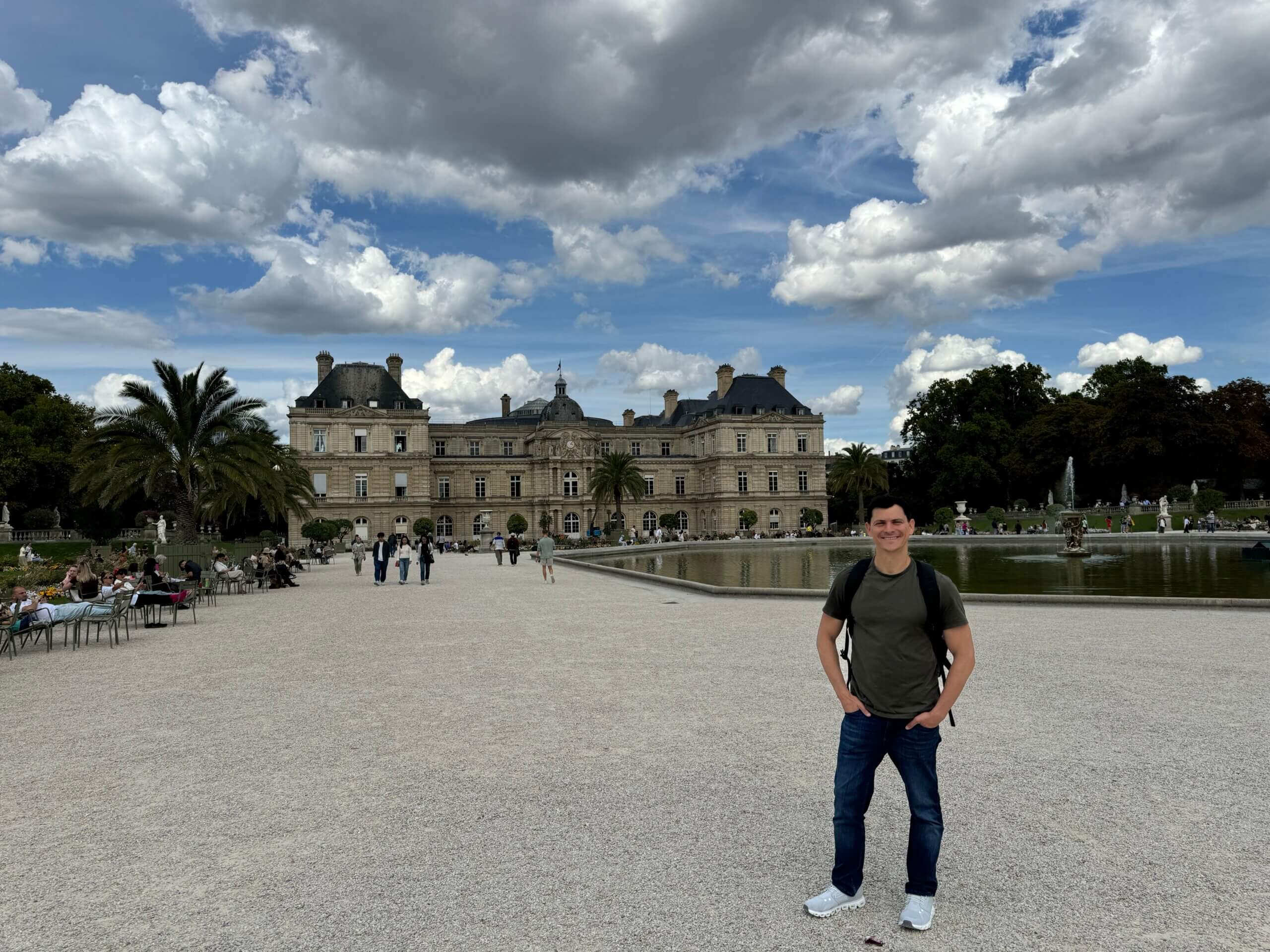
During a recent trip to Paris, I did Context’s Paris WWII History Tour. Now, I know a lot about Paris. I’ve been visiting for 15 years, lived there for a short period, have probably done over 50 tours there, and have read so many books on the city that I sometimes feel like I’m studying for a degree in Paris history.
But my interest in the city is primarily based around the 1920s (I love the Jazz Age!) and medieval times. I don’t know a lot about World War II Paris. Sure, I know some things from my general studies, but I don’t know a lot of specific knowledge, so I was excited to take this tour to learn about an important time period in recent Paris history.
The tour takes you from St. Germain through the Luxembourg Gardens over to the Latin Quarter then up to Marias before ending at the Hotel de Ville. It chronicles the start of the Nazi occupation, daily life during this time, the resistance movement, what happened to the Jews, and, finally, liberation. (It lasts about three hours.)
As I mentioned before, what makes Context Travel so special are the expert guides and my guide, Gil, was no exception. He’d been in France for close to twenty years, has a degree in politics and literature, and had been a guide for over a decade. (Note: There’s a couple of guides that run this tour, and they are all experts.) He knew all sorts of arcane details and brought an iPad filled with photos and first hand material.
We began in St. Germain discussing how the Germans entered Paris so quickly and how, in the beginning, life remained relatively the same as they set up power. Local Parisians sort of continued their day-to-day life (albeit with restrictions). Since France fell so quickly, the fighting never got to Paris so the city was never damaged.
As we walked, we stopped at buildings that were used during the war (the current Mandarin Oriental hotel used to be the Gestapo headquarters…creepy), and discussed how eventually the resistance formed and operated in the city. The tour moves forward in time as you walk, and Gil talked about collaborators, the eventual removal of Jews, and how larger French army wins in Africa led to crackdowns in the city. Finally, we got to the Hotel de Ville (city hall) and the grand finale as Parisians and Resistance fighters liberated the city from Nazi rule in August 1944. The pictures of people and first hand documents he had really helped paint the picture of life and resistance in WW2 Paris. I walked away feeling like I learned a lot.
And that’s why I Context Travel. You really get minute details and facts and a deep dive. There are tons of walking tour companies out there – and I recommend a wide variety – but Context has always stood out for the quality of their tour leaders. You aren’t getting a guide trained in a script, but someone with deep subject matter knowledge. One of my favorite tours was walking down NYC’s famed 42nd street with an award-winning architect. From architects to historians to artists to chefs, the guides here are trained experts and that’s pretty rare.
Context is great for travelers who want a real deep dive into a subject or place. Whether you are doing a tour of the Louvre or a walking neighborhood tour like this, you’ll get a level of detail not found in other tours. After all, with tours lasting up to 3 hours, there’s a lot of information covered. Plus, they also have full-day and half-day tours you can take as well as day trips outside Paris.
It had been awhile since I’d done one of their tours and I’m super glad that the quality that I fell in love with is still there. Context primarily runs private tours, meaning they are perfect for a group of people or families looking for a private tour, but they also have a number of tours where you can join existing groups. And, if you just want to do your own thing, they have a ton of audio tours to choose from too. They operate in 70+ cities and cover everything from all the famous places you want to see to unique off-the-beaten-path places.
I’ve loved them since I started using them and, in the last couple of years, they have expanded a lot so I want to re-highlight Context Travel as a company to use on your next trip. Definitely consider them for your next trip.
Get Your In-Depth Budget Guide to Paris!
For more in-depth information, check out my guidebook to Paris written for budget travelers like you! It cuts out the fluff found in other guides and gets straight to the practical information you need to travel around Paris. You’ll find suggested itineraries, budgets, ways to save money, on- and off-the-beaten-path things to see and do, non-touristy restaurants, markets, bars, transportation and safety tips, and much more! Click here to learn more and get your copy today!
Plan your trip to Europe like a pro
Get all my best Europe travel tips as well as free planning guides sent straight to you and see more of the country for less!
Book Your Trip to Paris: Logistical Tips and Tricks
Book Your Flight Use Skyscanner. They are my favorite search engine because they search websites and airlines around the globe so you always know no stone is left unturned.
Book Your Accommodation You can book your hostel with Hostelworld as they have the biggest inventory and best deals. If you want to stay somewhere other than a hostel, use Booking.com as they consistently return the cheapest rates for guesthouses and cheap hotels.
Don’t Forget Travel Insurance Travel insurance will protect you against illness, injury, theft, and cancellations. It’s comprehensive protection in case anything goes wrong. I never go on a trip without it as I’ve had to use it many times in the past. My favorite companies that offer the best service and value are:
Looking for the Best Companies to Save Money With? Check out my resource page for the best companies to use when you travel. I list all the ones I use to save money when I’m on the road. They will save you money when you travel too.
G-STAR launches Anatomic Denim, a bold new move that merges design innovation, visual storytelling and art into one cohesive statement. Conceived around the anatomy and movement of the human body, principles central to the denim brand since the introduction of the G STARElwood in 1996. The project spans three pillars: a new denim collection, a global campaign by Jordan Hemingway, and an art installation in the form of a monumental Anatomic Denim Gorilla by Darwin, Sinke & van Tongeren.
The Campaign: Movement in Its Purest Form
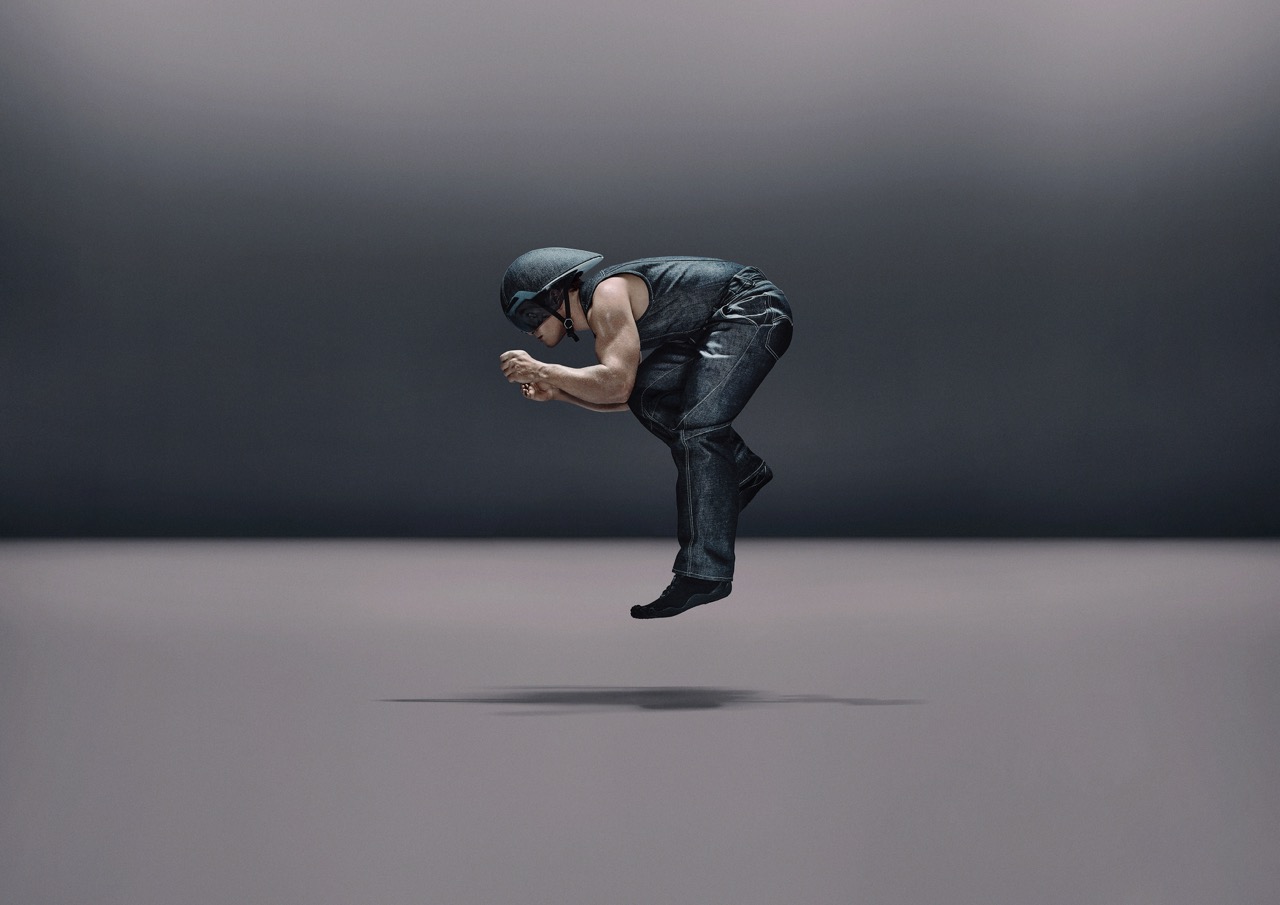
At the heart of Anatomic Denim is a cinematic and photographic campaign by cult director and photographer Jordan Hemingway, renowned for his visceral style and collaborations with Gucci, Prada, and Maison Margiela. The imagery features athletes from gymnastics, pole dancing, cycling, and calisthenics, but with all their usual apparatus removed. No rings, no pole, no bike. What remains is the human body in motion, clad in denim, engineered to move with it.
“From the very first call, I knew this one would be special”, says Hemingway. “G-STAR is a brand with real heritage but what makes them exciting is their appetite for reinvention and boundary-pushing. This project was exhilarating in every sense, full of creative and technical challenges that demanded invention. Working closely with their team to solve them wasn’t just rewarding — it was a joy.”
The Product: Anatomic Denim
Designed to follow and enhance the body’s natural form, the new Anatomic Denim range is the next evolution of G-STAR’s pioneering approach to fit and construction. The Contor offers a futuristic take on the Arc, defined by architectural lines and a sculpted fit. The Kitoh pushes anatomy further, with engineered seams that trace musculature to emphasise shape and motion. Finally, the G-STAR Elwood — the original icon — is reimagined for 2025 with refined anatomical tailoring.
“Anatomic Denim is the next step in G-STAR’s denim evolution, designing not just for the body, but with it in mind,” says Gwenda van Vliet, Chief Brand Officer at G-STAR. “Merging our 3D legacy with art, science and craftsmanship, we bring denim to life in a raw, expressive, unmistakably G-STAR way.”
The Art: The Denim Gorilla
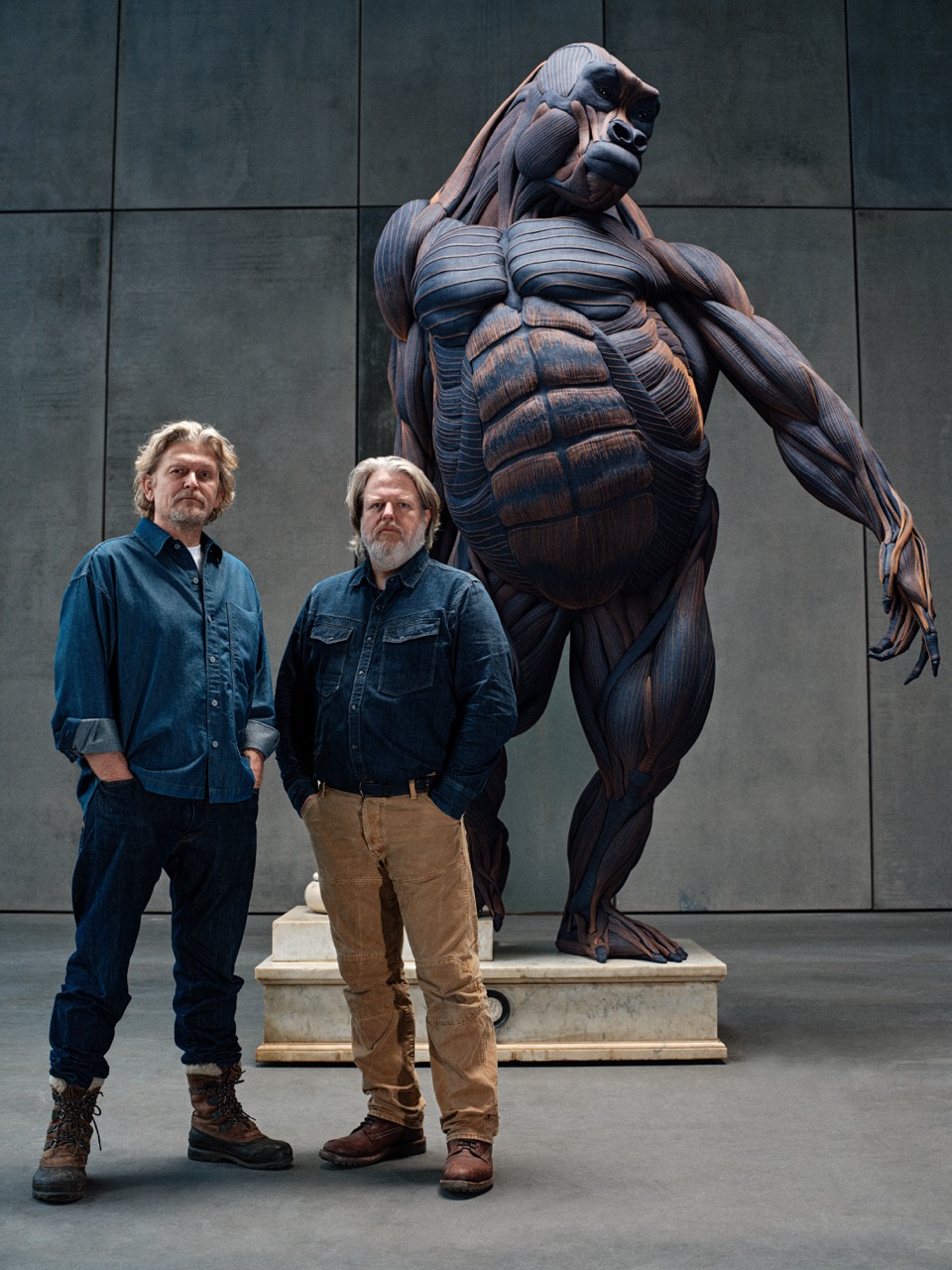
Completing the project is The Denim Gorilla, a 3.5-meter sculpture created with Darwin, Sinke & van Tongeren, celebrated for their mastery of fine taxidermy. Entirely crafted from denim, the piece explores anatomy and structure on a monumental scale. It is now on display at the Art Zoo Museum in Amsterdam and has taken center-stage during Amsterdam Fashion Week and CIFF Copenhagen.
Shot by renowned filmmaker Jordan Hemingway, the campaign features four athletes: a gymnast, a pole dancer, a cyclist, and a calisthenics performer, each without their usual apparatus. What remains is anatomy in motion. And denim, built to move with it. View the video below.
The Anatomic Denim collection is available from September 23, 2025, with prices ranging from EUR 119.95 to EUR 300 at select retailers and at g-star.com.
For more on the latest in lifestyle, culture and fashion reads, click here.
The technical storage or access is strictly necessary for the legitimate purpose of enabling the use of a specific service explicitly requested by the subscriber or user, or for the sole purpose of carrying out the transmission of a communication over an electronic communications network.
Preferences
The technical storage or access is necessary for the legitimate purpose of storing preferences that are not requested by the subscriber or user.
Statistics
The technical storage or access that is used exclusively for statistical purposes.The technical storage or access that is used exclusively for anonymous statistical purposes. Without a subpoena, voluntary compliance on the part of your Internet Service Provider, or additional records from a third party, information stored or retrieved for this purpose alone cannot usually be used to identify you.
Marketing
The technical storage or access is required to create user profiles to send advertising, or to track the user on a website or across several websites for similar marketing purposes.





















:max_bytes(150000):strip_icc()/TAL-skincare-in-suitcase-DNTFRZSKINCARE0925-3bf85e2d3d504dd9a4db47914c8b0acf.jpg "Yes, This Viral Beauty Hack Will Get Your Skincare Past TSA—but Dermatologists Say It’s a Bad Idea")
:max_bytes(150000):strip_icc():format(jpeg)/TAL-skincare-in-suitcase-DNTFRZSKINCARE0925-3bf85e2d3d504dd9a4db47914c8b0acf.jpg)