From the thrill of landing in a new destination to enjoying a beach day, there are plenty of opportunities that can deliver happiness on a vacation. And a new report revealed some destinations make it easier to smile than others.
The city of Lisbon, Portugal, ranked as the happiest destination in the world for travelers, according to a study from BookRetreats, which offers packaged wellness vacations. That was thanks to its more than 2,800 hours of annual sunshine, expansive green spaces, and healthy restaurants throughout.
“Walkability is another of Lisbon’s mood-boosters,” company wrote in its study. “The city is compact and easy to navigate on foot, with panoramic viewpoints that reward slow exploration.”
The happiness study was based on a quantitative ranking of “feel-good factors,” including annual sunlight, walkability, public green space per capita, public perception of noise and light pollution, and restaurants classified as “healthy.”
Beyond Lisbon, the Finnish city of Helsinki ranked second after receiving the top score for low noise and light pollution. It’s no wonder when Finland has been named the happiest country in the world for eight consecutive years, in part due to its citizens’ commitment to volunteering, donating, and helping others.
Known as the theme park capital of the world, Orlando, Florida, came in third on the list. Home to Walt Disney World Resort, Universal Orlando Resort, and more, the report found Orlando was also one of the greenest cities with more than 2,000 square feet of green space per person (the most of any other city on the list).
“This greenery stretches across more than 148 parks, gardens, and recreation areas,” the report noted. “Visitors can kayak through the city’s chain of lakes, wander trails in protected wetlands, or unwind in botanical gardens.”
The European cities of Athens and Edinburgh rounded out the top five, lauded for their walkability, culture, and history.
“The psychology of travel is changing,” BookRetreats.com co-founder Sean Kelly said in a statement. “It’s less about asking ‘Where should I go?’ and more about ‘How do I want to feel when I get there?”
Kelly added: “As more people put mental health and balance at the heart of their holidays, demand will only grow for destinations that deliver on that promise.”
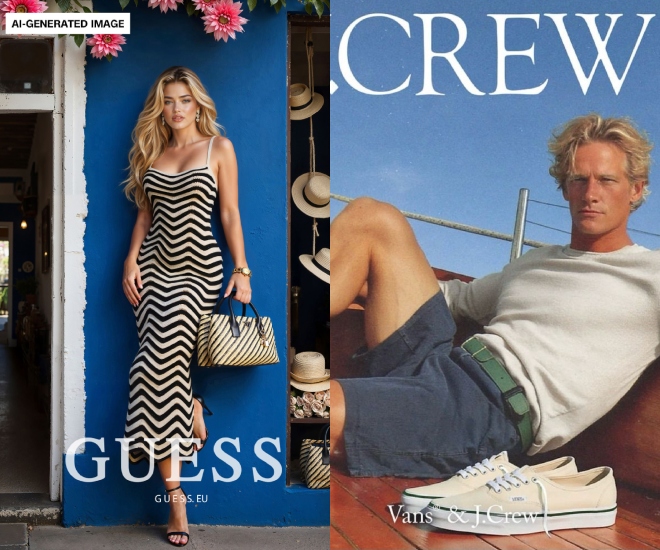
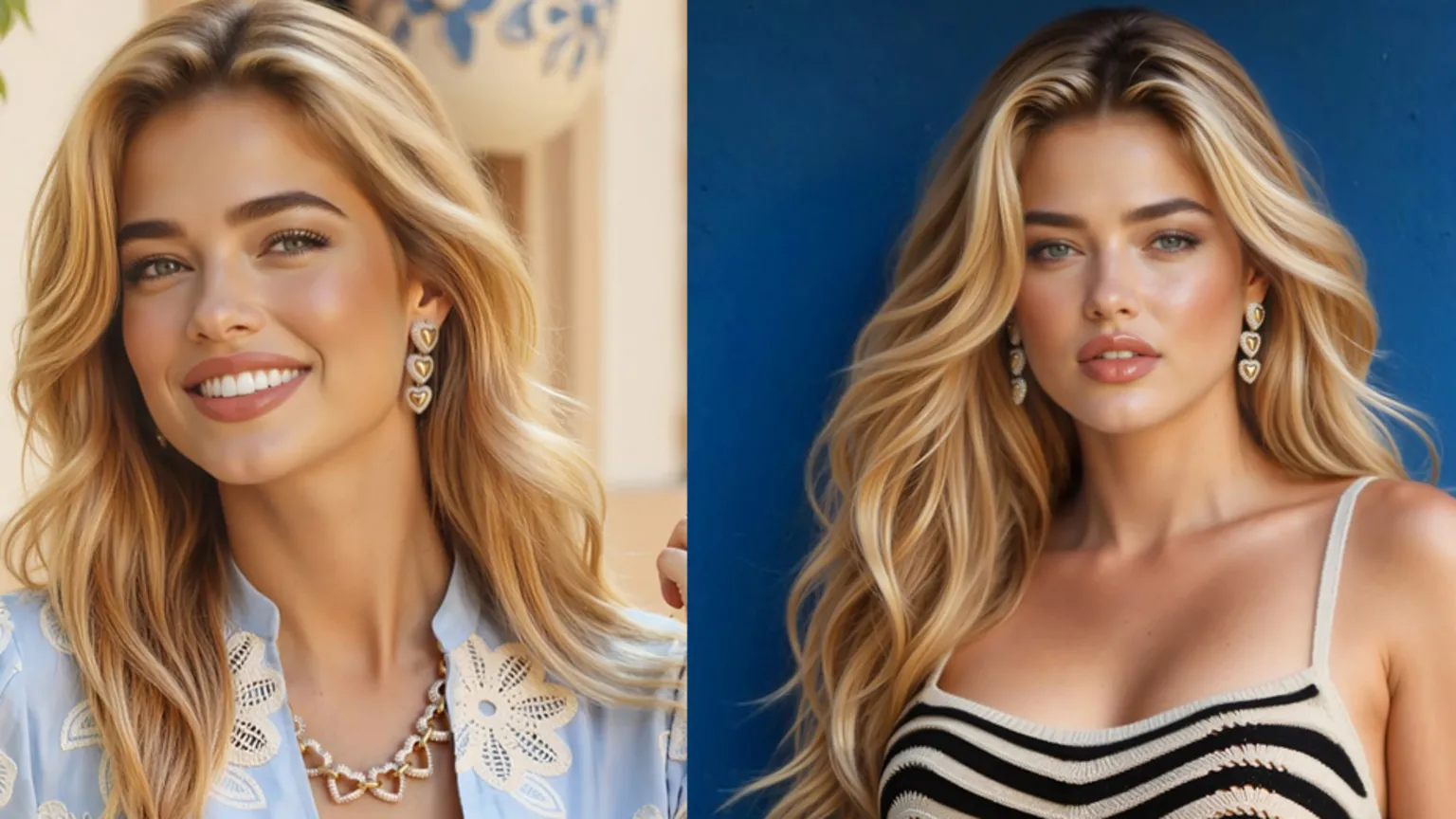
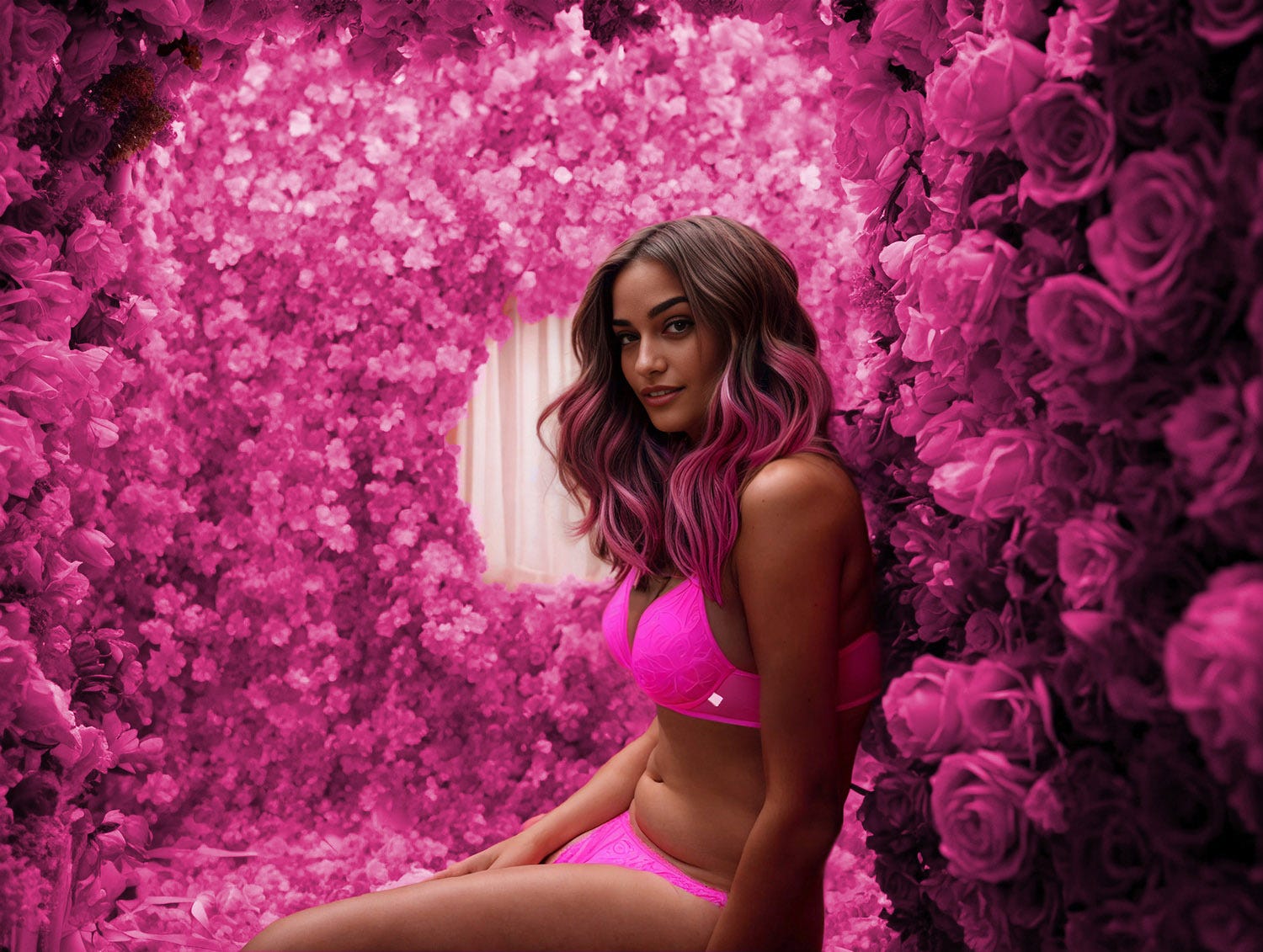
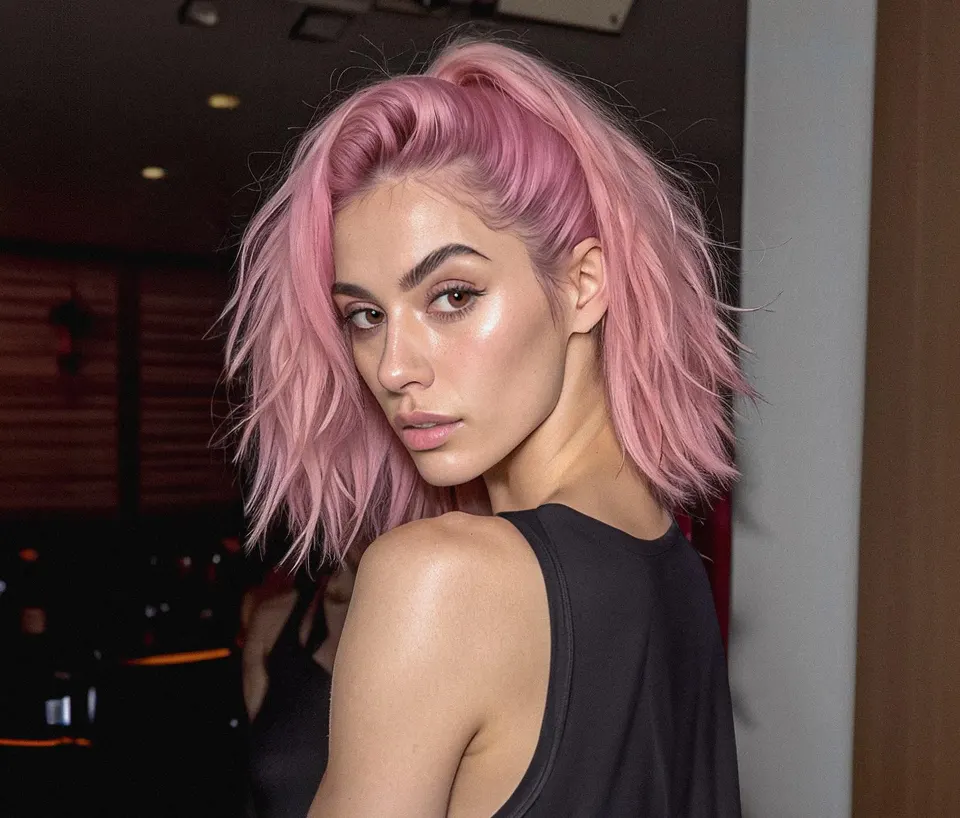
In August 2025, Vogue US published a Guess advertisement featuring two AI-generated models, created by London-based agency Seraphinne Vallora. Dubbed Vivienne and Anastasia, the models were presented as hyper-realistic representations of women, with a small disclosure noting their AI origin — a detail easily missed by readers.
The campaign immediately sparked social media uproar. On TikTok, users criticised both Vogue and Guess for using “fake women,” with some calling for subscription cancellations or a boycott of the magazine. Lifestyle creator Payton Wickizer said, “The fact that they are using fake women in their magazines — speechless.” Marissa Spagnoli, referencing Guess’s iconic past campaigns with Eva Mendes and Drew Barrymore, added, “This doesn’t make me want to buy anything.” Other commenters expressed concern for the livelihoods of models, photographers and creatives potentially displaced by AI-generated alternatives.
Psychologist Dr. Nicole Hawkins emphasised the psychological impact, noting that exposure to digitally perfected images can normalise unrealistic beauty standards, leading young women and girls to internalise unattainable ideals and feel inadequate. In response, Seraphinne Vallora co-founders Valentina Gonzalez and Andreea Petrescu stressed that their goal is to supplement — not replace — the fashion industry. “The heart of fashion is photography,” Gonzalez said. “We will never challenge that. This is meant to just supplement and to add a new avenue of marketing.”
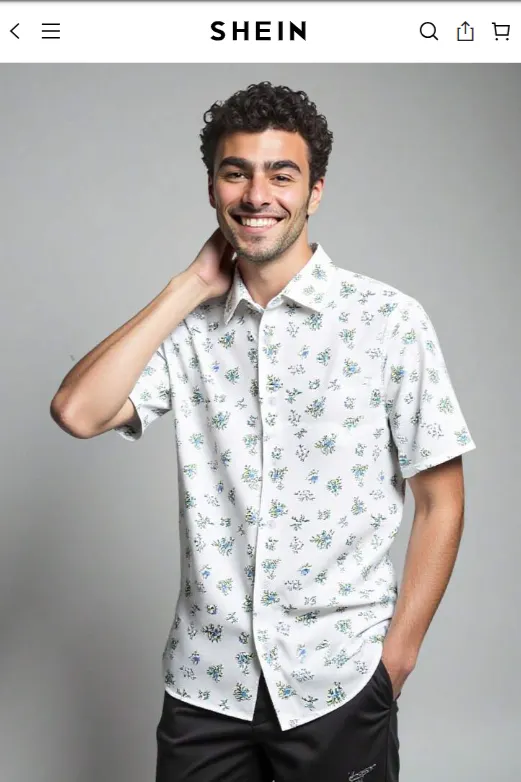
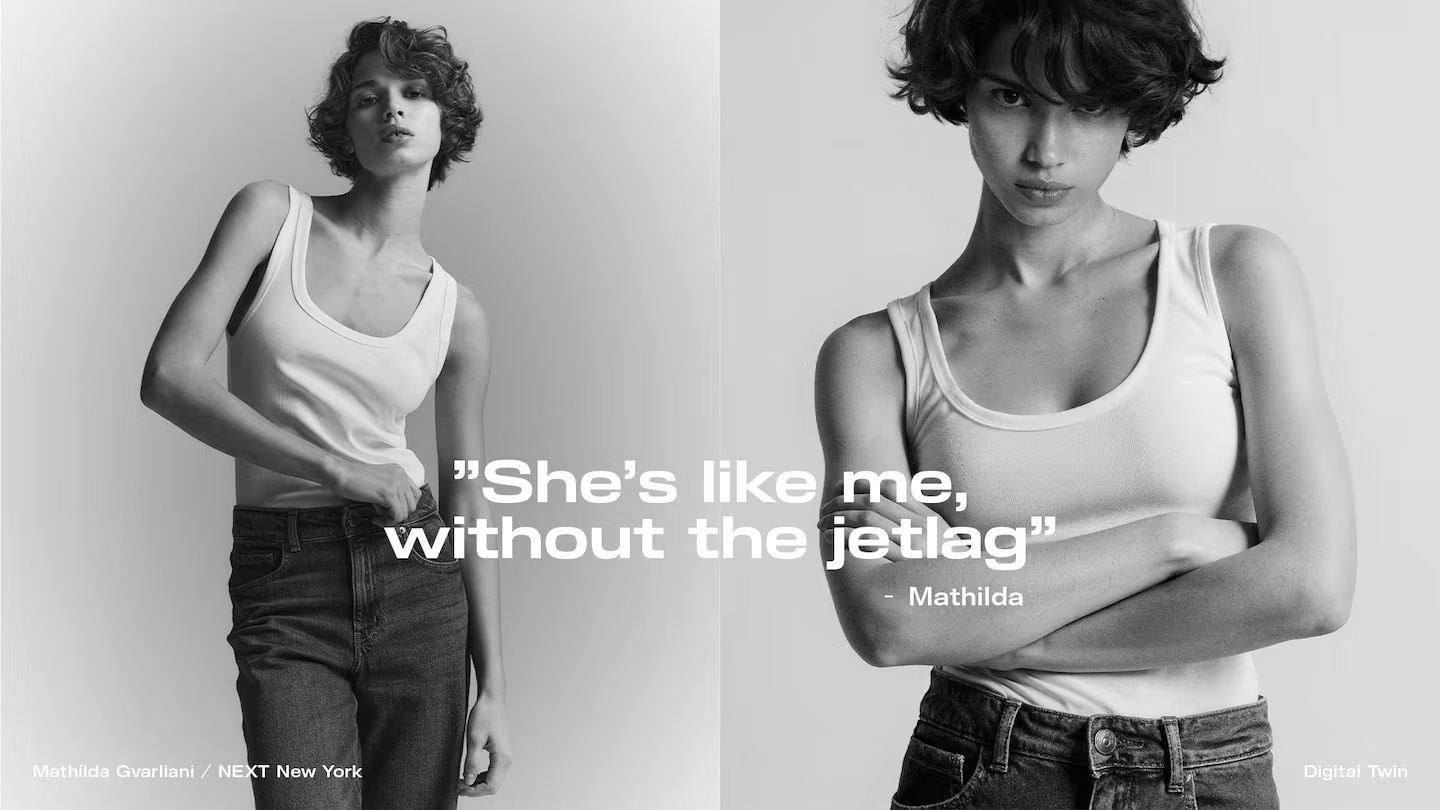
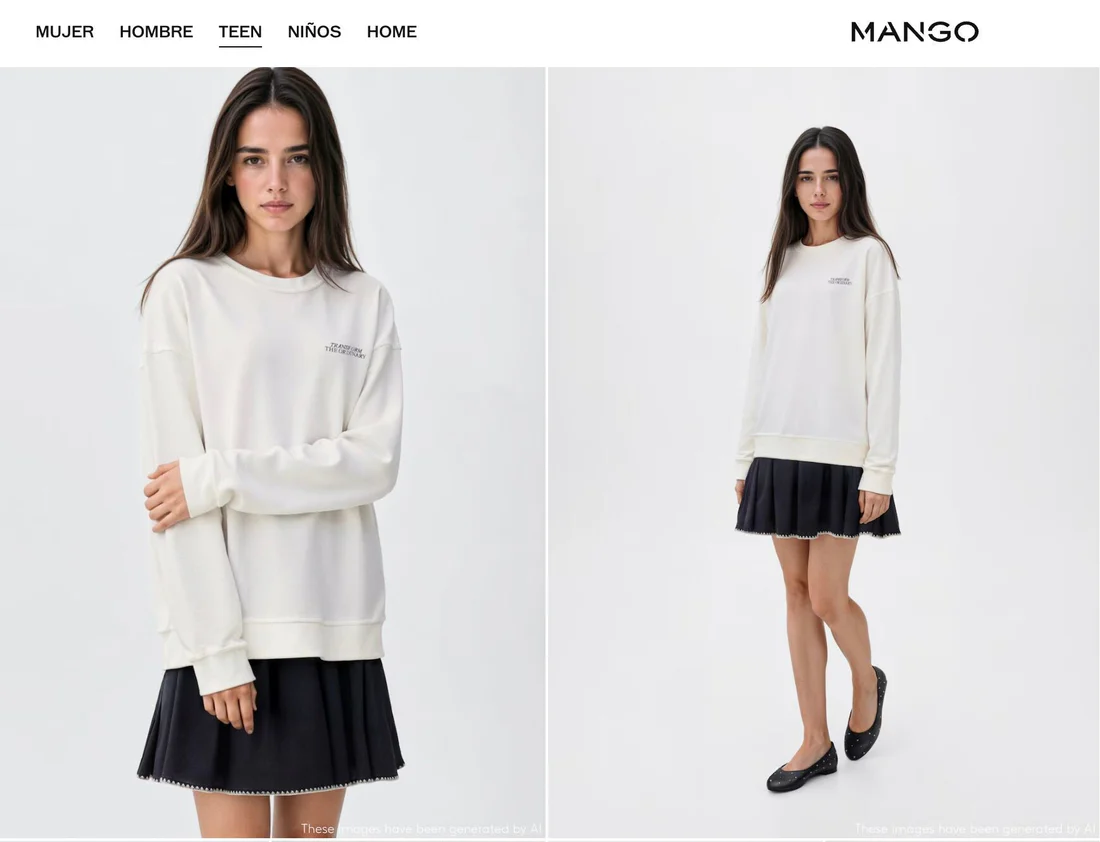
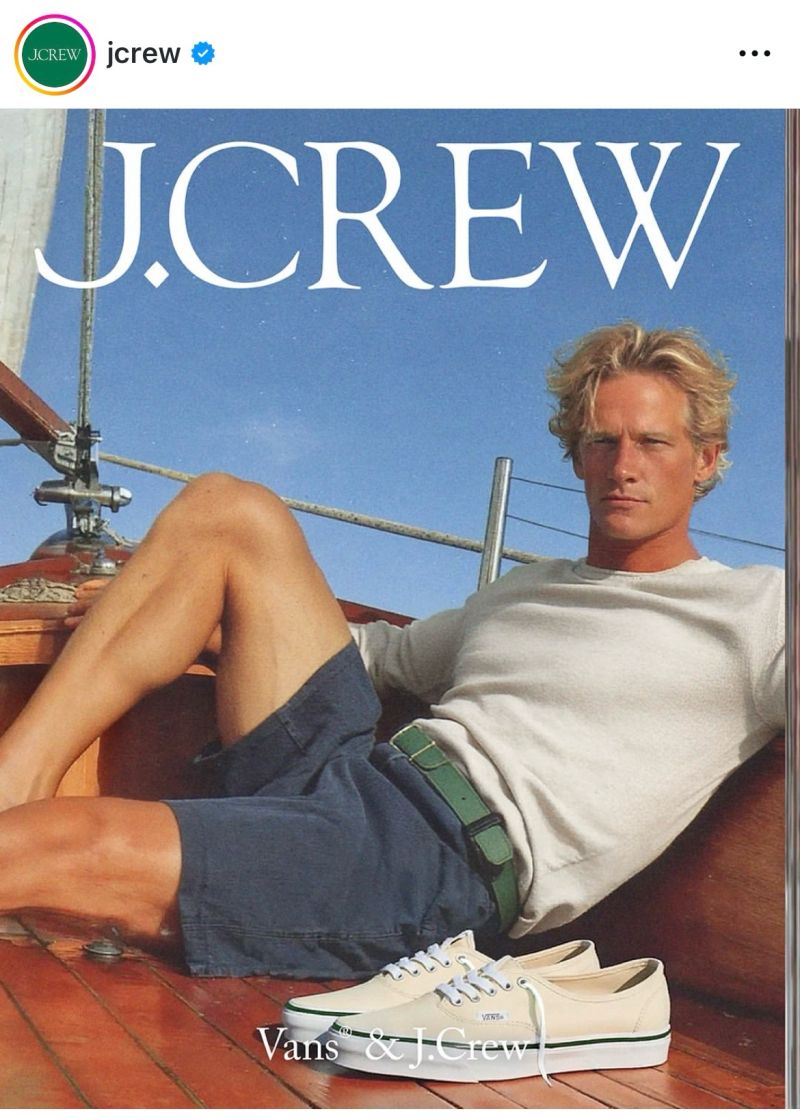
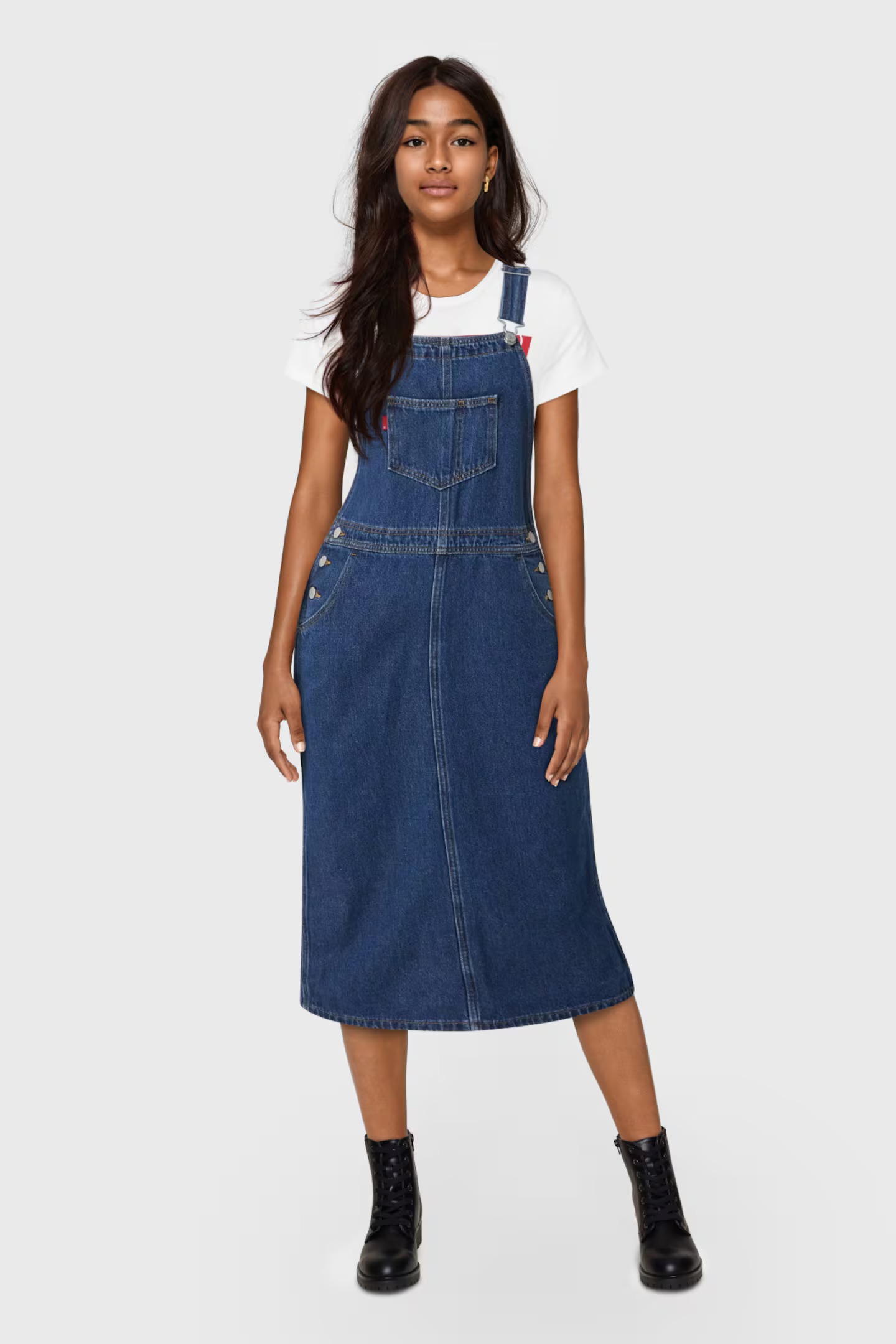
Guess’s AI campaign is far from the first experiment in this space and past examples illustrate the challenges brands face when adopting AI-driven imagery. In 2024, Victoria’s Secret collaborated with Maison Meta on a Barbie-inspired AI campaign, but the hyper-realistic models were later adjusted to look overtly CGI, undermining the brand’s rebranding efforts toward inclusivity. Similarly, Levi’s partnered with Lalaland.ai in 2023 to showcase diverse body types digitally, yet critics accused the brand of “fake diversity,” arguing that real models could have achieved the same representation while preserving jobs. H&M’s use of digital “twins” of real models in 2025 raised questions about consent and the displacement of creative teams and Mango’s deployment of AI models to speed up content for teenage audiences provoked complaints about inaccurate body representation and the perpetuation of fast-fashion harms. Even speculative discussions about brands like SHEIN suggest that AI may become a natural extension of ultra-fast, low-cost content production, illustrating potential ethical pitfalls in the industry.
Beyond these controversies, AI-generated fashion campaigns raise a fundamental question on the ethical and professional implications of using AI in fashion campaigns. Creative directors such as Sybille de Saint Louvent have used AI to produce campaigns for Prada, Gucci and Jil Sander, recreating brand signatures with remarkable precision. At first glance, these images capture the familiar identity of each brand, yet critics argue they lack the depth and storytelling that human-led campaigns provide. Laurent François — managing partner at 180 — notes that entirely AI-driven campaigns often feel “anecdotal,” replicating the past rather than creating compelling new narratives. Some brands have begun to explore AI’s potential to expand creative possibilities — such as Moncler Genius and Adidas Originals’ 2023 collaboration — which blended AI-generated adventurers with mixed-media sculptures to create immersive experiences that transcend mere product display.
Beyond brands — agencies such as Deep Agency allow brands to create entirely virtual photoshoots using synthetic models or AI versions of real people — raising further questions about consent, representation and accountability. Critics argue that while AI promises efficiency and inclusivity, it risks eroding the human creativity and professional livelihoods that underpin the industry. With AI-generated imagery becoming increasingly indistinguishable from reality, calls are growing for clearer regulation, transparency and labour protections to ensure that technology augments rather than replaces human talent.
The ethical implications of AI in fashion extend far beyond aesthetics alone as consumers continue to demand transparency and campaigns that rely solely on AI risk eroding brand credibility. The technology also raises serious labour concerns, as models, photographers, stylists and makeup artists may be replaced by cheaper, infinitely reproducible digital alternatives. Issues of consent and likeness rights are emerging as well, with human models potentially losing control over digital replicas of their image. Moreover, generative AI is energy-intensive, prompting questions about environmental responsibility in a sector already scrutinised for sustainability.
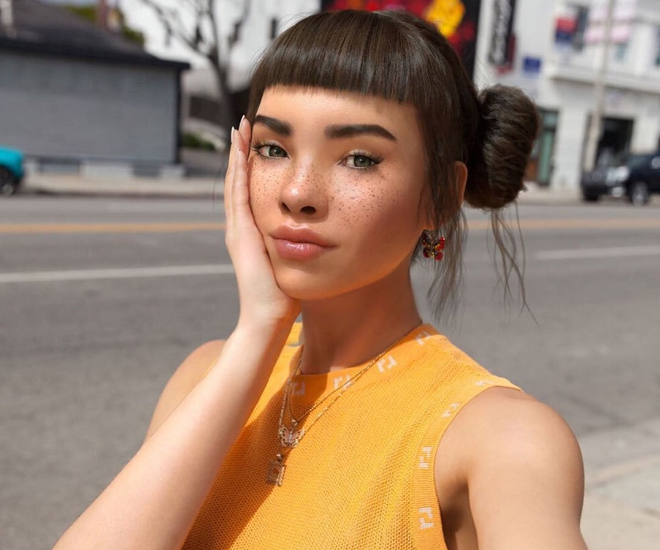
The rise of AI-generated influencers further illustrates the ethical and economic stakes of digital models in fashion. Spanish AI influencer Aitana Lopez — created by the design agency The Clueless — has amassed 127,000 Instagram followers and reportedly earns up to USD 11,000 per month through sponsored content, demonstrating the lucrative potential of virtual personalities. These AI figures operate without the limitations or demands of human labour, responding to fans in multiple languages, maintaining curated personas and appearing in brand campaigns around the clock. While agency founders insist these models are supplemental rather than replacements for human talent, their existence highlights the increasing commodification of digital personas and the risk of normalising algorithmically generated ideals over real human representation — raising questions about authenticity and the psychological impact on audiences.
Beyond this, there is the growing commercialisation of human-like personas, as brands increasingly invest in digital figures that can be meticulously controlled and monetised — free from the unpredictability of real people. Aside from marketing, AI influencers also blur the line between reality and simulation, challenging audiences to discern genuine human representation from algorithmically generated personas.
Experts suggest that the most responsible use of AI lies in augmenting rather than replacing human creativity. By automating repetitive or purely functional tasks, brands could free up resources for production design and meaningful audience engagement, rather than simply cutting costs. As AI technology continues to evolve, the decisions fashion houses make now will define the ethical and creative landscape of the industry for years to come. Vogue US’ Guess controversy illustrates both the promise and perils of AI in fashion. On the one hand, they have the potential to produce striking visuals, but without careful oversight, AI risks undermining authenticity, labour rights and the very human artistry that has long been at the heart of the industry.
If Greece’s islands are its glossy magazine cover, Northern Greece is the handwritten diary: raw, wild, and full of mysteries. This is a land where Zeus is said to have ruled from Olympus, monks built monasteries in the clouds, and rivers carve canyons so deep that Guinness keeps a record.
So lace up your boots—proper boots, not the sandals you wore in Mykonos or Paros—and let’s walk our way through the hiking trails in Northern Greece, region by region, myth by myth.
Every Greek child grows up hearing that Zeus thundered from Olympus. Hikers today discover that Olympus still thunders—usually in the form of afternoon storms.
The classic ascent begins at Litochoro, following the E4 European long-distance path toward Prionia and then up to the mountain refuges. From there, you can climb Skala or, if the weather and your knees allow, push for Mytikas, the “Throne of Zeus.”
Why it’s magical: You’re literally hiking into mythology. Dawn on Olympus feels staged by Homer himself—mist curling, peaks glowing.
Why it’s dangerous: The same cliffs that gave the gods a dramatic backdrop also give hikers a 900-meter drop. Loose scree near Mytikas has sent overconfident trekkers sliding. Add to that sudden storms, and you see why locals say: “Don’t climb Olympus in hubris.”
Real mishap to remember: A pair of hikers once decided to summit in sneakers. They returned not with glory, but with helicopter rescue. Olympus has no patience for fashion mistakes.
Best season: Late May–June or September–October. Spring brings alpine flowers, autumn brings clear skies. Avoid August unless you want heatstroke as your trail companion.
Meteora: Stairways to Heaven (and to Blisters)
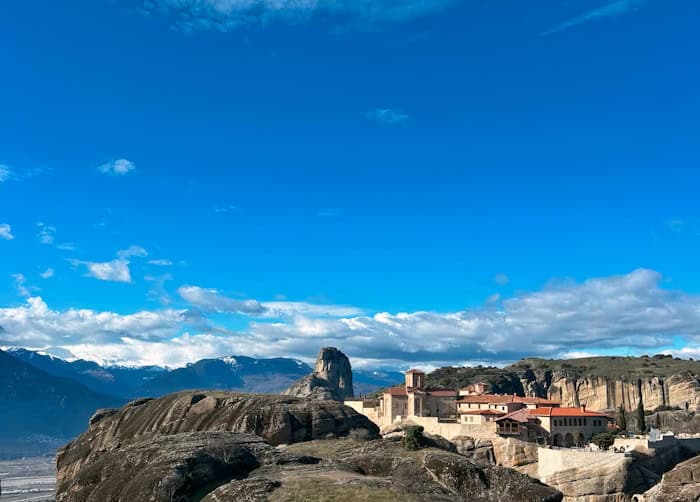
If Olympus is about myth, Meteora is about miracles. Monks began settling here centuries ago, climbing the sandstone pillars to build monasteries where only angels—and very determined donkeys—could follow.
Today’s hikers trace the old footpaths between Kastraki village and the monasteries, winding under cliffs that look like they were sketched by Salvador Dalí.
Why it’s magical: Sunset hikes here are cinematic: orange light washing over domes and spires, bells ringing faintly.
Why it’s dangerous: Those spires? They’re sheer rock. Tourists occasionally think “shortcut” means scrambling off-trail—resulting in rescues, or worse.
Best season: Spring and autumn again. Summer here means roasting on bare rock with zero shade, and monasteries can close if it’s dangerously hot.
Traveler tip: Respect dress codes when entering monasteries—nothing kills the hiking vibe like being turned away for shorts.
Zagori & Vikos Gorge: Into the Depths
Now we move west to Epirus, where the Zagori villages perch like stone crowns above the Vikos Gorge. Guinness calls it the world’s deepest canyon, but for hikers, it’s also a test of knees, lungs, and occasionally courage.
Trails connect villages like Monodendri, Kapesovo, and Papingo, dipping into the gorge and climbing back out. Stone-arched bridges—centuries old—span rivers that look painted in turquoise watercolor.
Why it’s magical: The descent from Monodendri to Voidomatis Springs feels like slipping into a secret Eden. You can hear nothing but your heartbeat and the occasional goat bell.
Why it’s dangerous: The gorge is a beauty with bite. In July 2025, a young hiker slipped near a cliff and fell 40 meters—tragic proof that one careless step here can be your last. Trails get loose with gravel, and signage is sparse.
Best season: Autumn is spellbinding, with golden forests framing the gorge. Spring offers flowers, but note that high trails can be slippery from meltwater.
Traveler tip: Go early—before heat or crowds set in—and stick to marked paths. The gorge isn’t forgiving of shortcuts.
Prespa Lakes: Where Pelicans Patrol the Shore
Head further north to Florina, and the drama shifts from vertical cliffs to mirror-like water. The Prespa Lakes straddle Greece, Albania, and North Macedonia. Hikes here are gentler: think lakeside strolls to Agios Achillios island, reached by a floating causeway.
Why it’s magical: Ancient Byzantine basilicas crumble among reeds, while Dalmatian pelicans soar above. It’s a place where nature and history exhale together.
Why it’s dangerous: Here, danger is less about cliffs and more about underestimating remoteness. Trails are easy, but services are sparse—run out of water and you’re in for a rough time.
Best season: Spring for bird migrations, autumn for peace. Summer is still passable here, though humid.
Traveler tip: Pair a hike with local bean stew (fasolia Prespon), a dish as hearty as the landscape.
Halkidiki: Pines, Peninsulas, and the Temptation to Swim Instead
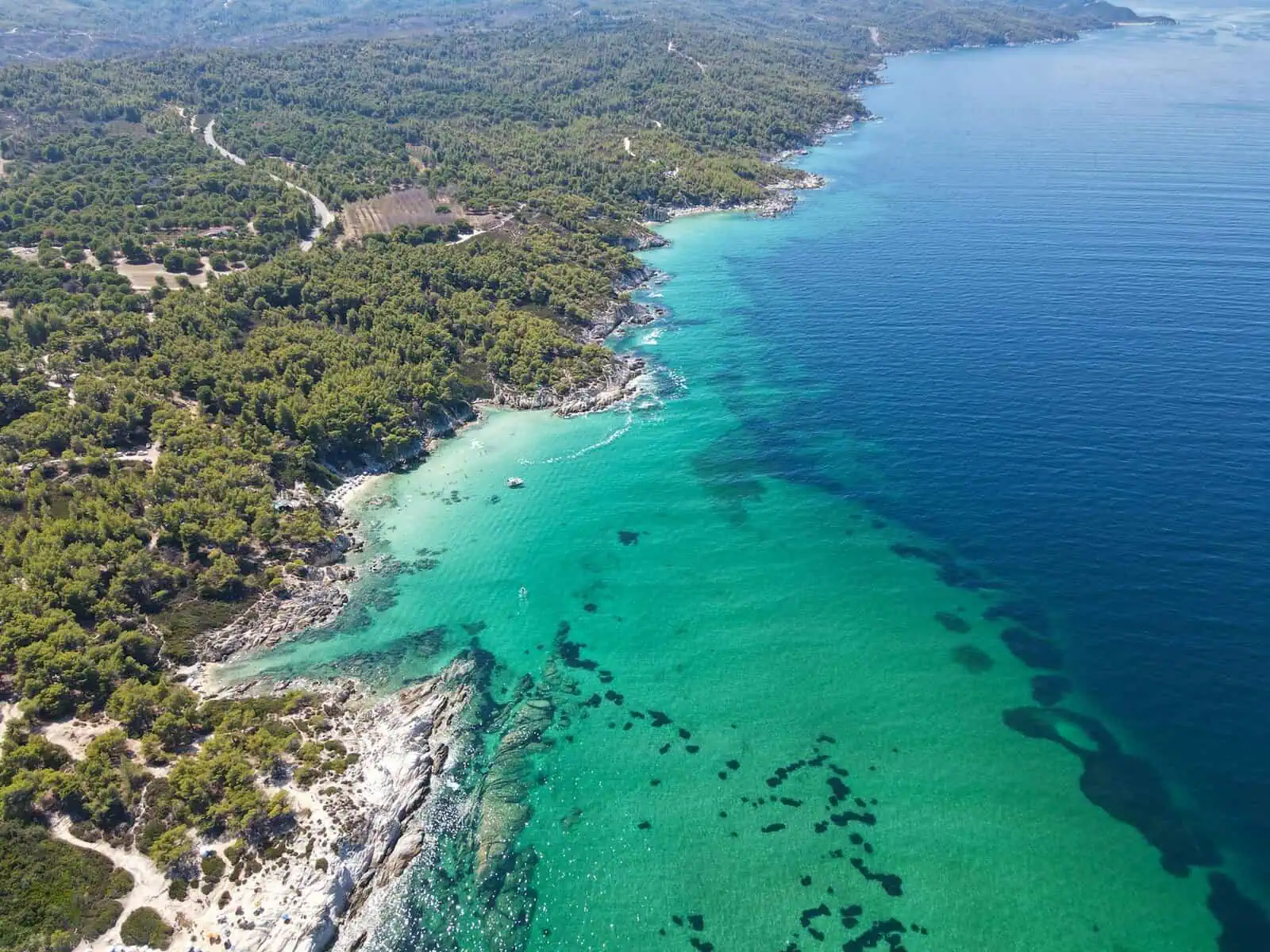
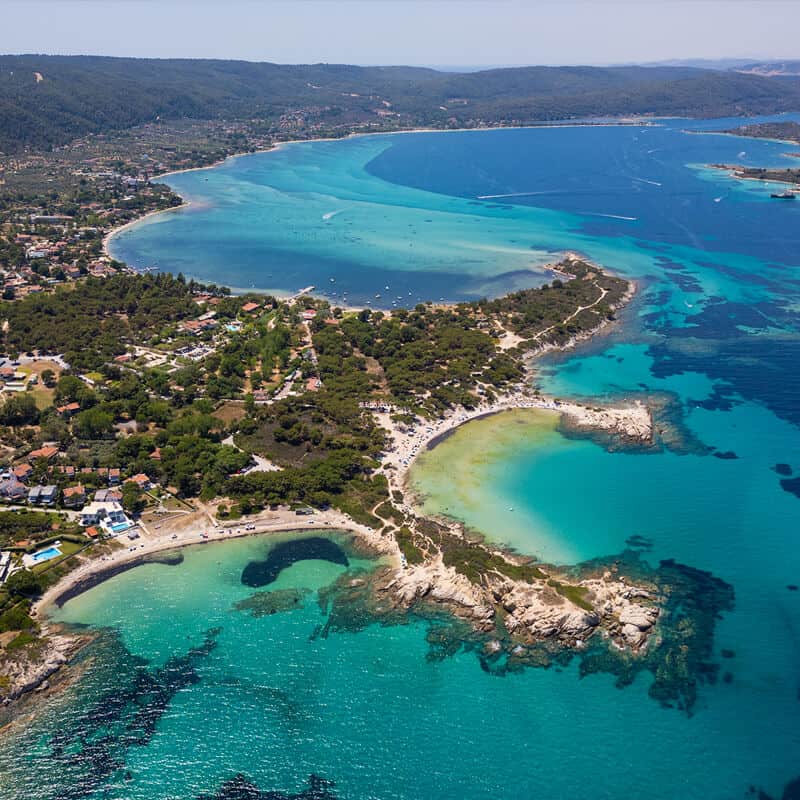
By the time you reach Halkidiki, the hiking mood softens. Here, trails weave between pine forests and secret beaches, particularly on Sithonia peninsula. The Mount Itamos trail offers panoramic views over blue bays, while shorter coastal hikes let you dip into the sea when boots get too hot.
Why it’s magical: Where else can you hike through pine-scented hills, then jump straight into the Aegean?
Why it’s dangerous: The danger here is distraction. Hikers often forget sunscreen, planning only for shade in the woods—then discover the trail suddenly hugs open coastline. Cue lobster-red legs.
Best season: October—still warm enough for a swim, cool enough for walking.
Halkidiki Hidden Gems: Private Day Trip from Thessaloniki
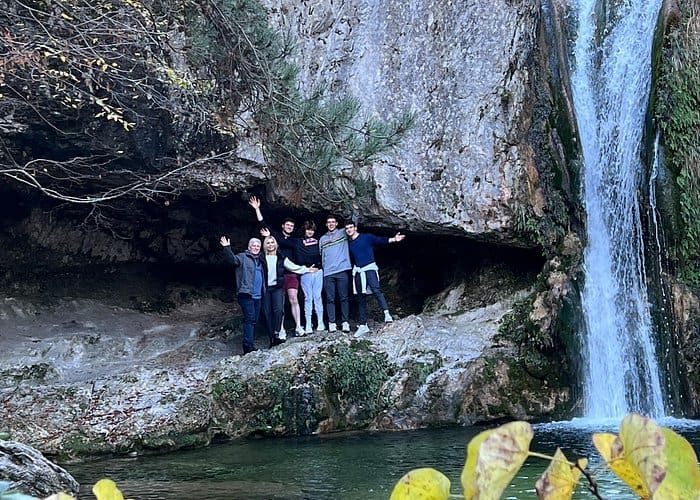
Discover Halkidiki beyond its beaches on an 8-hour private adventure through waterfalls, villages, and mountain landscapes.
Highlights of your journey: ↠ Explore the Varvara Waterfalls tucked away in serene woodlands. ↠ Stroll the charming streets of Arnaia Village with its Macedonian architecture. ↠ Indulge in authentic Greek cuisine at a traditional folklore restaurant. ↠ Journey through scenic mountain and coastal paths for unforgettable views.
Northern Greece is epic—but not forgiving. Hike here like a hero, not a headline:
Hydrate like Dionysus, but with water. Dehydration has ended more hikes than minotaurs ever did.
Boots, not bravado. Sneakers belong in cafés, not scree fields.
Stick to the path. Greece’s goats make off-trail scrambling look easy; you are not a goat.
Respect the seasons. Spring and autumn are prime. Summer is Poseidon’s sauna. Winter is Zeus’s icebox.
Wildlife is real. Yes, there are bears in Rhodope and Pindus. A tragic 2025 case saw a hiker shoved into a ravine after a bear encounter. Learn to make noise, carry spray, and avoid surprising animals.
Why Hiking Trails in Northern Greece Stay With You
You come for Olympus and the gods. You stay because somewhere in Vikos Gorge, on a quiet path in Zagori, or by the still water of Prespa, you realize this isn’t just hiking—it’s walking through a living mythology.
And if you’re wise enough to hike in spring or autumn, to pack water, and to resist “shortcut syndrome,” you’ll return not just with photos, but with stories that outlast any blisters.
Because in Northern Greece, every path is more than a trail—it’s a myth you get to walk into.
Suggested 7-Day Itinerary for Hiking Trails in Greece
Day 1–2: Mount Olympus – Throne of the Gods
Base: Litochoro (2.5 hrs from Thessaloniki).
Hike: Prionia → Refuge A → Skala ridge.
Why: Myth and mountain drama. If the weather is stable and you’re fit, push for Mytikas (2,918 m).
Insider note: Stay overnight in a mountain refuge—watch the sunset and feel Zeus scowl at your hiking poles.
Mishap to avoid: Don’t summit in sneakers. Helicopter rescues aren’t scenic.
Day 3: Meteora – Monasteries in the Sky
Base: Kalambaka or Kastraki.
Hike: Classic footpaths linking Varlaam, Great Meteoron, and Rousanou monasteries.
Why: Spiritual awe + geology straight out of fantasy.
Insider note: Go late afternoon for golden light; monasteries close around sunset, but the cliffs glow.
Mishap to avoid: Don’t scramble off-trail for “better photos”—sheer sandstone doesn’t forgive.
Day 4–5: Zagori & Vikos Gorge – Into the Depths
Base: Monodendri or Aristi village.
Hike:
Day 4: Monodendri → Vikos Gorge descent → Voidomatis Springs.
Day 5: Explore Zagori stone bridges and Papingo village loop.
Why: World’s deepest gorge, plus fairytale villages.
Insider note: Start early—shade disappears by noon.
Mishap to avoid: In July 2025, a hiker slipped fatally near Vikos cliffs. Stick to the marked trail; admire, don’t improvise.
Day 6: Prespa Lakes – The Tranquil Interlude
Base: Psarades village (Florina region)
Hike: Walk the floating causeway to Agios Achillios island; birdwatching along lakeside trails.
Why: Byzantine ruins + Dalmatian pelicans. A softer hiking day after Zagori’s knees.
Insider note: Pair the hike with fasolia Prespon (local bean stew) for dinner.
Mishap to avoid: Don’t underestimate remoteness—bring extra water and snacks.
Day 7: Halkidiki – Pines & Secret Beaches
Base: Nikiti (Sithonia peninsula).
Hike: Mount Itamos trail or shorter coastal pine–to–beach loops.
Insider note: Early October = sweet spot: still swimmable, not scorching.
Mishap to avoid: Sunscreen. Trails jump between forest shade and naked coastline. Lobster legs are not a souvenir.
Quick Map Flow
Thessaloniki → Olympus (Day 1–2)
Drive to Meteora (Day 3)
Continue to Zagori/Vikos (Day 4–5)
Head north to Prespa (Day 6)
Loop back east to Halkidiki (Day 7) → Thessaloniki
Final Tips When Hiking Trails in Northern Greece
The hiking trails in Northern Greece are most rewarding in spring and autumn, when the weather is kinder and the trails are at their best.
Preparation is key: good boots, enough water, and reliable offline maps will make the journey safer and more enjoyable, while a sense of humility will help you respect the challenging terrain.
Above all, walking with a local guide can transform the experience: not only do they keep you from getting lost, but they also open doors to hidden chapels, forgotten pathways, and stories that bring the mountains to life.
We offer a range of services designed to make your time in Santorini, Thessaloniki, Halkidiki, and Athens truly unforgettable. Whether you’re looking to kick back and relax, dive into some adventure, or mix a bit of both, we’re here to help you craft the perfect experience.
We offer a range of services designed to make your time in Santorini, Thessaloniki, Halkidiki, and Athens truly unforgettable. Whether you’re looking to kick back and relax, dive into some adventure, or mix a bit of both, we’re here to help you craft the perfect experience.
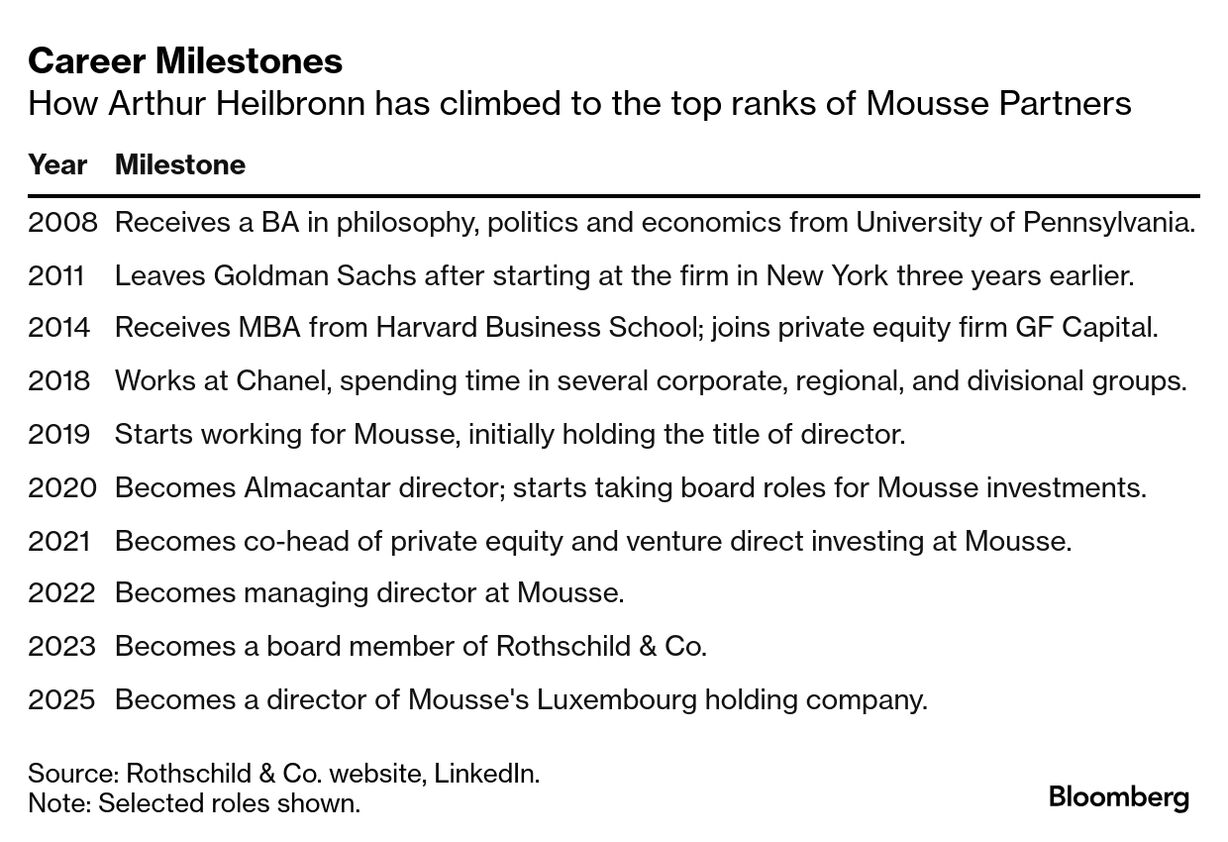
Arthur Heilbronn has all the traits of being groomed to wield power over one of the world’s biggest multi-generational fortunes.
Deep family connections? Check. Ivy League degree? Check. Wall Street smarts? Check.
Now there are growing signs the scion from the dynasty behind the Chanel empire is moving closer to the top of the firm overseeing its $90 billion fortune.
Heilbronn, 38, has taken on management positions overseeing his and his relatives’ real estate, banking and media investments in the six years since joining Mousse Partners, one of the world’s largest and most discreet family offices. In the latest indication of ascent for the Harvard Business School graduate and ex-Goldman Sachs banker, he became a director earlier this year for one of Mousse’s main holding entities, occupying a role vacated following the death of longtime Chanel executive Michael Rena, according to registry filings.
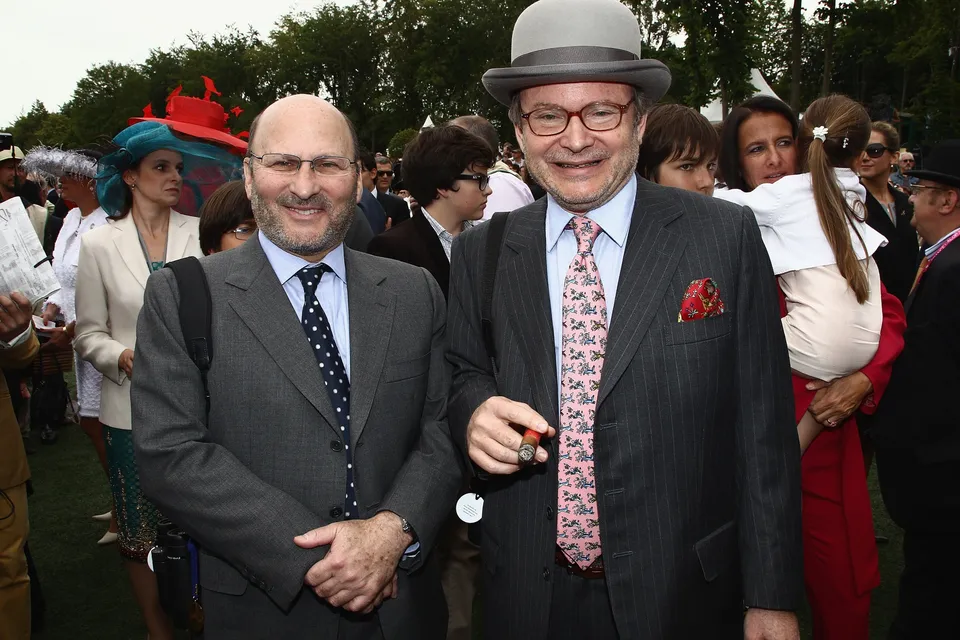
He’s also the son of Charles Heilbronn, founder of Mousse and the firm’s chairman since 1991. Charles is a half brother of Alain and Gerard Wertheimer, third-generation heirs to the Chanel fortune.
Alain and Gerard Wertheimer.Photographer: Julien Hekimian/WireImage/Getty Images
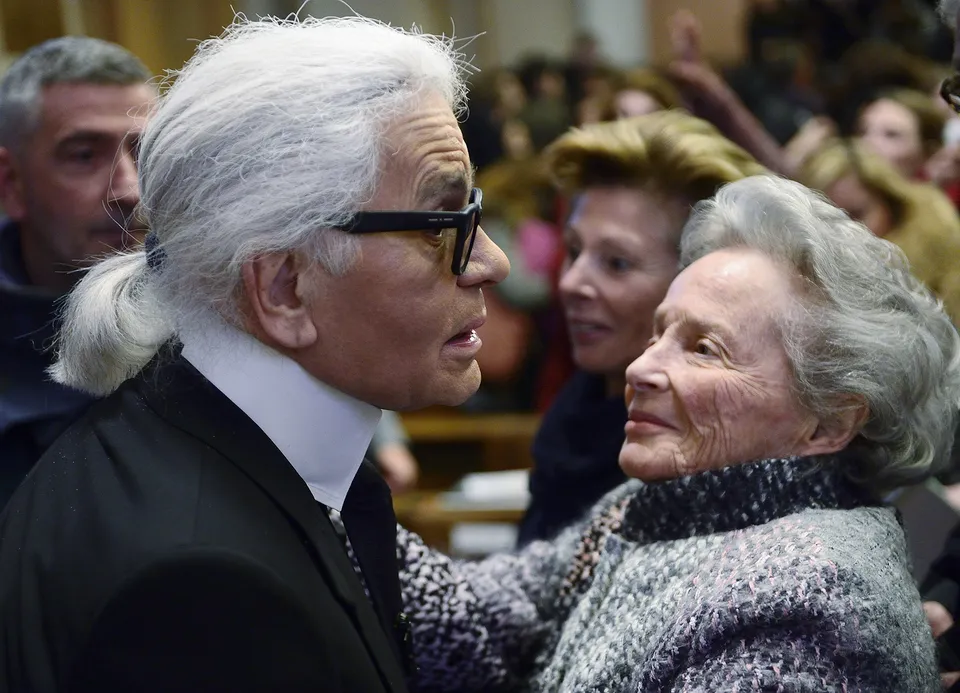
The Wertheimers are grandsons of one of the original business partners of Gabrielle “Coco” Chanel who started the fashion house in 1910. They shared the same mother as Charles, Eliane Heilbronn, who was considered the empire’s matriarch until she died last year. Her sons are all in their 70s.A representative for Mousse declined to comment.
The Wertheimers, credited with owning equal shares of closely-held Chanel, each have a net worth of about $45 billion, according to the Bloomberg Billionaires Index. Their fortune has largely held up in the post-pandemic era, even as a downturn in luxury goods hit rivals including LVMH, led by Bernard Arnault, and Kering SA, controlled by the Pinault family.
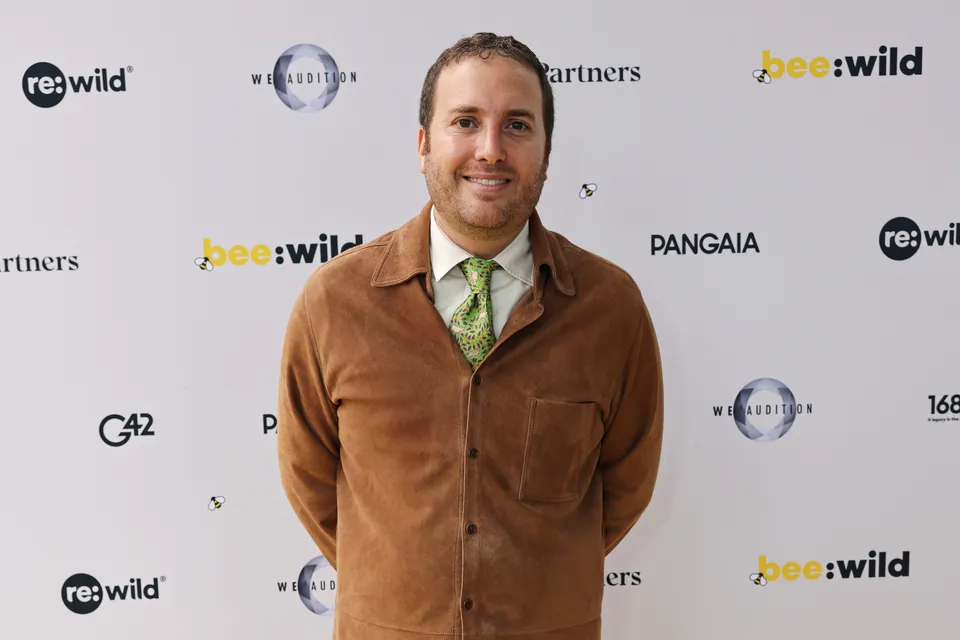
David WertheimerPhotographer: Dave Benett/Getty Images for Bee:Wild
Arthur Heilbronn’s rise gives some indication of the succession plans of the media-shy extended family, which has long sought to keep its wealth out of the public eye. Gerard Wertheimer’s son David has started a private equity venture, though there’s no indication that other children of the two heirs are involved with Mousse.
“They feel less like a family office and more like a private endowment for a luxury empire,” Marc Debois, founder of FO-Next, an advisory firm for family offices, said of Mousse. Among its peers, “what puts them in the true top 1% isn’t size; it’s time; dividend-fed, multi-cycle patience.”
At least one-fifth of individuals among the world’s 500 biggest fortunes now have a family office that help to oversee wealth totaling more than $4 trillion, according to the Bloomberg Billionaires Index.
A recent survey of 317 family office clients at UBS Group AG found just over half of them have a succession plan in place, with those in the US and Southeast Asia most likely to have made those arrangements.
“It’s a huge topic,” Eric Landolt, UBS Group AG’s global head of family advisory, said on succession plans for family offices. “It’s something that comes up in almost every discussion.”
Heilbronn joined Mousse as a director in 2019, moving to managing director a few years later, according to his LinkedIn profile. He’s currently co-head of private equity and venture direct investing with another managing director, Paul Yun. He was named to the supervisory board of Rothschild & Co. after Mousse Partners made one of its most high-profile investments to date by joining two other French dynasties in 2023 to help take the bank private. He’s also a director of Almacantar, a London-based real estate firm behind large-scale projects in the English capital.
Chanel’s ultimate holding company is the Wertheimers’ Cayman Islands-based Mousse Investments Ltd., which doesn’t reveal financial numbers. Mousse Partners is the investment division and also has offices in Beijing and Hong Kong.
Mousse Investments describes itself as having a “broad range of asset classes in public and private markets” in addition to Chanel. While Mousse doesn’t disclose how much money it controls, some companies have named Mousse Partners as a participant in deals or as a shareholder. That points to investments in stocks, real estate, credit and private equity.
Eliane Heilbronn with fashion designer Karl Lagerfeld in 2013.Photographer: Eric Feferberg/AFP/Getty Images
Mousse Partners employs more than three dozen people worldwide and counts former banking analysts from JPMorgan Chase & Co. and Wells Fargo & Co. among its employees. Suzi Kwon Cohen joined as chief investment officer almost a decade ago after leading North America private equity for Singapore’s sovereign wealth fund, putting her among the top female executives in the historically male-dominated family office space.
Over the years, Mousse Partners has backed a wide range of startups including mental health provider Brightside Health, digital advertising firm Brandtech Group, biotechnology company Evolved by Nature, food company Harmless Harvest and health-care provider Thirty Madison. Last year Mousse joined the billionaire L’Oreal SA heiress investing in high-end clothing brand The Row.
Read more: Why Billionaires Have Family Offices and What They Do: QuickTake
Not all bets have proved lucrative. Beautycounter failed last year while a pair of Mousse’s public holdings are languishing. The family office has a roughly 8% stake in listed French digital entertainment company NetGem SA and 5.7% in hair products maker Olaplex Holdings Inc. Both companies’ share prices collapsed from their initial public offering levels and haven’t recovered.
Mousse has also been invested for decades in France’s publishing and audiovisual industry through Media-Participations, which owns a range of book publishing, specialized media, cartoon and comic businesses.
The family behind Chanel, a maker of $970 sunglasses, $6,500 handbags and $23,400 J12 watches, has joined other French luxury billionaires with media holdings at home. Bernard Arnault owns newspapers Les Echos and Le Parisien along with the glossy weekly Paris Match. The Pinault clan owns magazines Le Point and Point de Vue.
Mousse Partners employs more than three dozen people worldwide and counts former banking analysts from JPMorgan Chase & Co. and Wells Fargo & Co. among its employees. Suzi Kwon Cohen joined as chief investment officer almost a decade ago after leading North America private equity for Singapore’s sovereign wealth fund, putting her among the top female executives in the historically male-dominated family office space.
Over the years, Mousse Partners has backed a wide range of startups including mental health provider Brightside Health, digital advertising firm Brandtech Group, biotechnology company Evolved by Nature, food company Harmless Harvest and health-care provider Thirty Madison. Last year Mousse joined the billionaire L’Oreal SA heiress investing in high-end clothing brand The Row.
Not all bets have proved lucrative. Beautycounter failed last year while a pair of Mousse’s public holdings are languishing. The family office has a roughly 8% stake in listed French digital entertainment company NetGem SA and 5.7% in hair products maker Olaplex Holdings Inc. Both companies’ share prices collapsed from their initial public offering levels and haven’t recovered.
Mousse has also been invested for decades in France’s publishing and audiovisual industry through Media-Participations, which owns a range of book publishing, specialized media, cartoon and comic businesses.
The family behind Chanel, a maker of $970 sunglasses, $6,500 handbags and $23,400 J12 watches, has joined other French luxury billionaires with media holdings at home. Bernard Arnault owns newspapers Les Echos and Le Parisien along with the glossy weekly Paris Match. The Pinault clan owns magazines Le Point and Point de Vue.
While Mousse isn’t involved in Chanel’s operations, both companies have offices in a glass tower just south of Central Park in Manhattan that’s famed for its pricey rents and list of major financial tenants. Both Arthur and Charles Heilbronn listed their workplace address at that New York premises on Manhattan’s “Billionaires Row,” where Alain Wertheimer has also long-held an office.
Behind closed doors on that street, the next steps in the succession plans for Mousse Partners may already be taking shape, though it’s unlikely anyone in the dynasty behind Chanel will comment publicly on the matter.
“We’re a very discreet family,” Gerard Wertheimer once said in 2001. “We never talk. — With assistance from Julius Domoney
This article was first seen on BLOOMBERG.
For more on the latest in business and billionaire reads, click here.
Italian design house Zagato has partnered with Capricorn, a German automotive & motorsport technology company, to announce the launch of their first in-house hypercar.
The Zagato hypercar will be unveiled alongside its name reveal on October 10th at the Zoute Grand Prix in Belgium. Ahead of the unveiling, Zagato and Capricorn have released the first teaser image of their upcoming hypercar.
While the teaser image doesn’t showcase many details, what catches the eye’s attention is the gullwing-style doors. Other details also include the wing mirrors that extend far beyond the front haunches. The interiors of the car are still under wraps, although a glimpse of the three round instrument gauges can be seen.
Neither Zagato nor Capricorn have revealed the technical details of the upcoming hypercar. However, they do mention that it will be a driver-focused, lightweight hypercar, offering an analogue experience.
Andrea Zagato, President, Zagato, stated, “Zagato’s first hypercar introduces a new segment of collectables, designed to enhance the driving experience beyond the contemporary and classic categories. Zagato’s bond with the racetrack spans more than a century, ever since the Gran Turismo category brought racing cars that could also be enjoyed on the road.” He further added, “This hand-built production series embodies the fusion of two DNAs – German precision and Italian beauty – forging an even stronger identity: a true synthesis of timeless design and drivability.”
Production of the Zagato hypercar is expected to begin in the first half of 2026 and will be built by Capricorn (the team that built the Apollo IE’s carbon fibre monocoque). The Zagato hypercar will be hand-built and limited to just 19 examples worldwide.
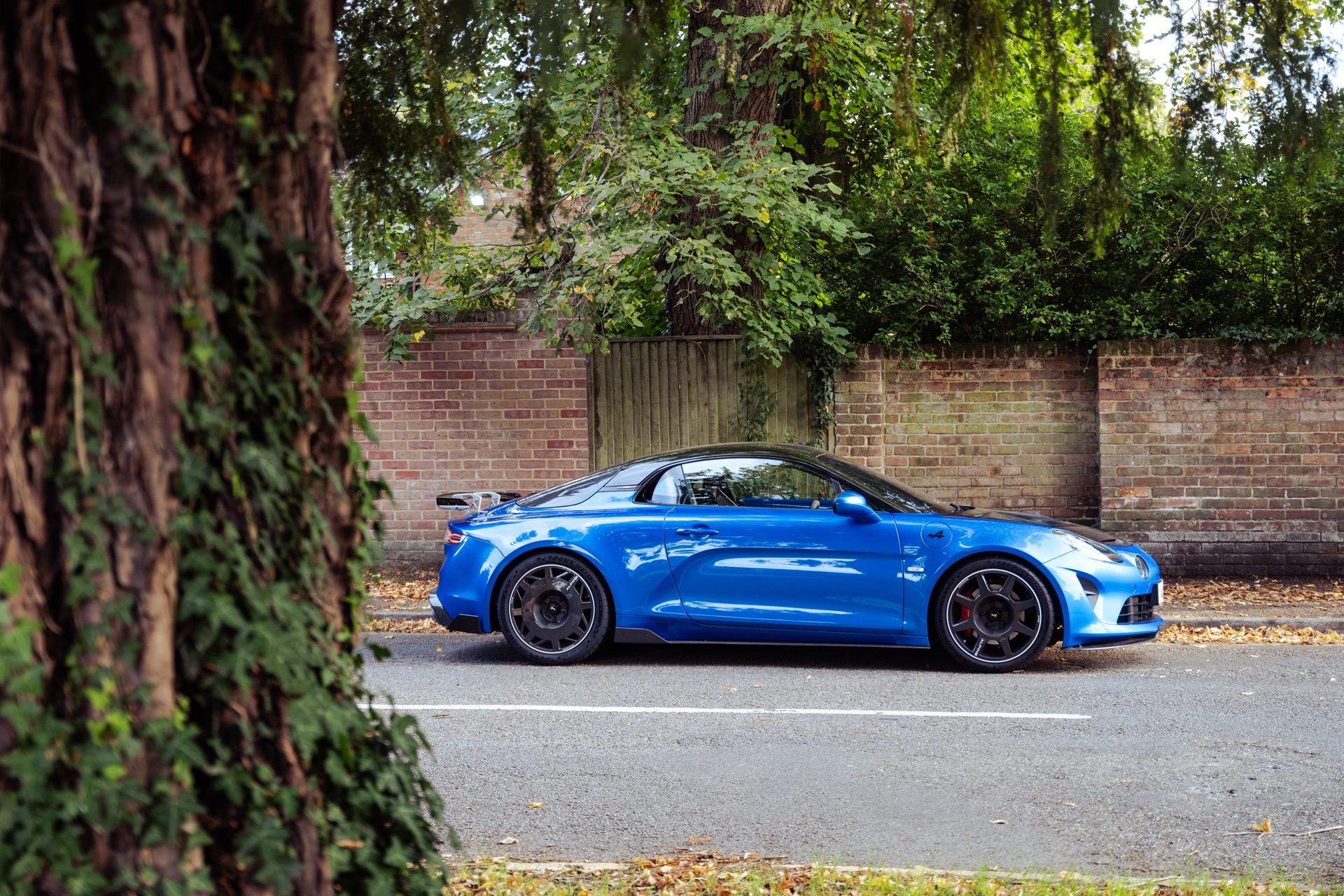
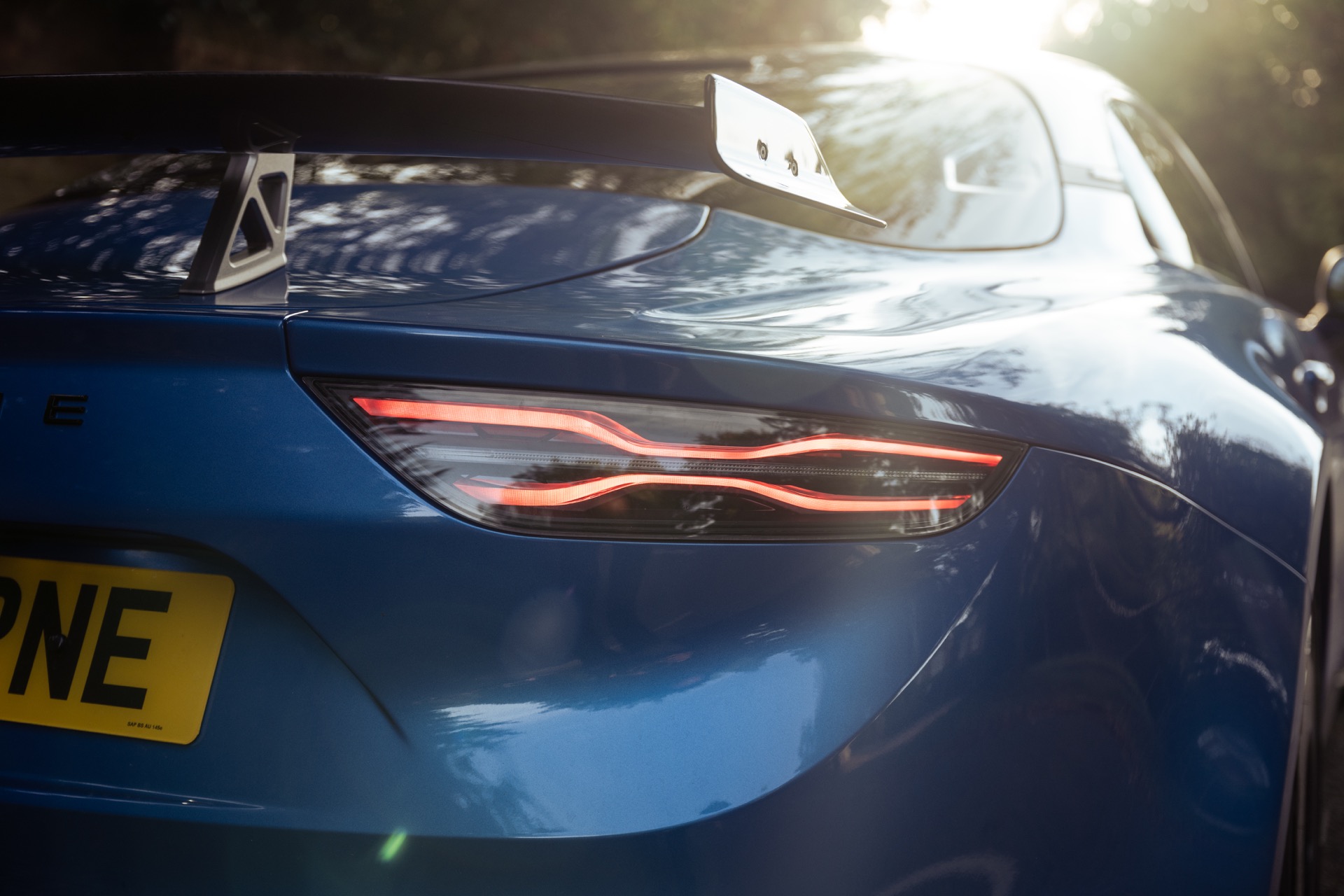
Alpine’s A110R doesn’t try to outgun the big names; it sidesteps them. Where many rivals chase numbers and Nürburgring bravado, this is a car built on feel. It’s lighter, simpler and more single-minded than the standard A110, and all the better for it.
You sense the difference within the first few metres. The A110R reacts without delay, flowing with your inputs rather than processing them. Steering is light yet communicative, throttle response is crisp, and there’s no torque-vectoring theatre or synthesised sound to flatter the driver. It just gets on with the job, cleanly and honestly, and rewards smoothness more than swagger.
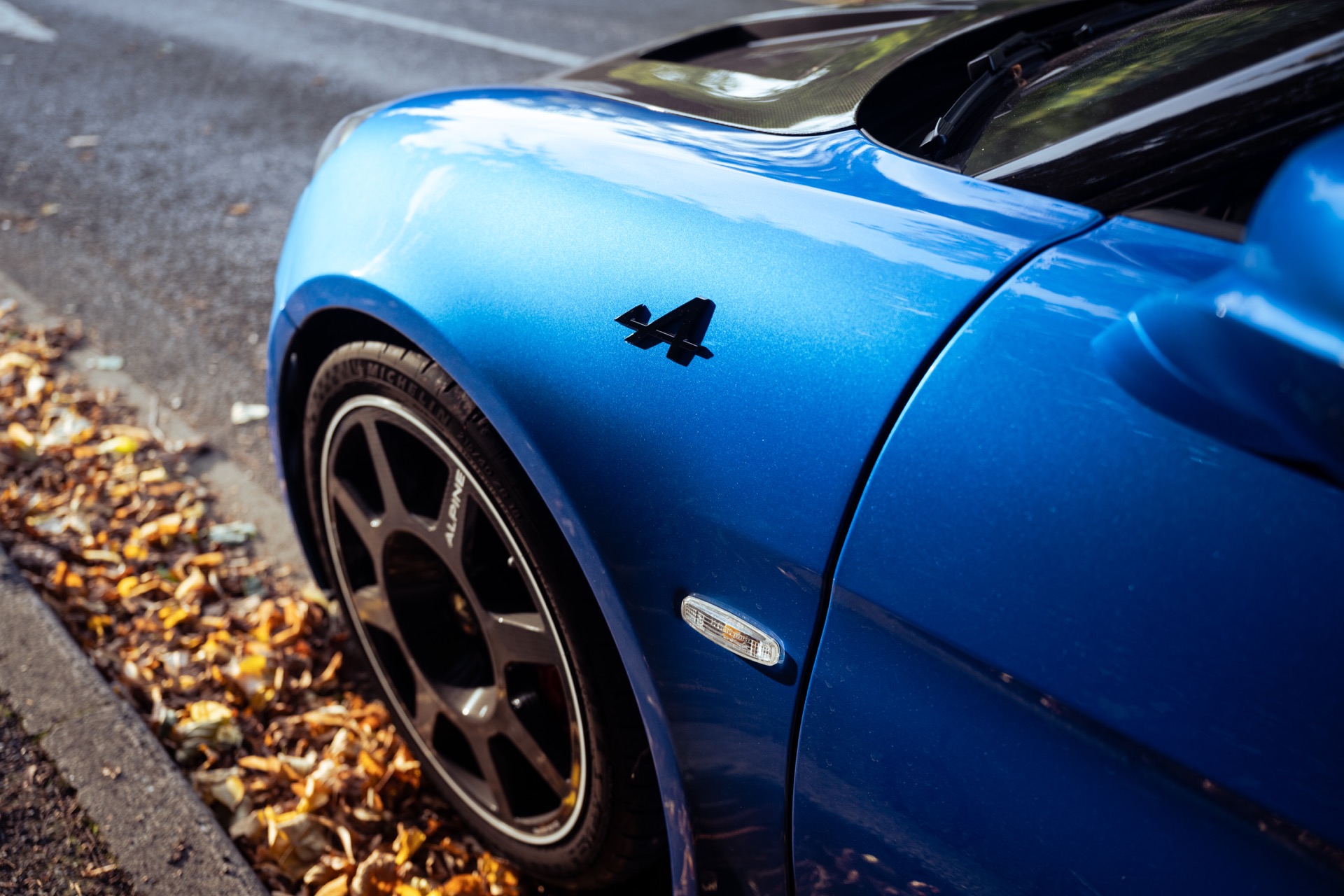
Alpine achieved that clarity the old-fashioned way: by removing mass. The R doubles down on the A110’s ethos with carbon-fibre wheels, carbon seats, a carbon bonnet and even a carbon rear window. Kerb weight lands a touch over 1,000kg, nearly 300kg less than a Porsche 718 GT4 RS. Power remains at 300bhp from the 1.8-litre turbo four, but the weight loss transforms the experience. It’s alive at any speed, not merely when you’re deep into three figures.
The result is a car that speaks in high definition. Front-end bite is eager, the rear is alert but predictable, and the whole chassis feels keyed into the road surface. You don’t need a circuit to enjoy it; a run to the bakery can feel like a mini special stage. It’s that rare modern sports car where less really does feel like more. It isn’t flawless, and that’s part of its charm. The driving position is idiosyncratic, visibility can is tricky, and the infotainment is a generation behind, but still host Apple CarPlay. The cabin is awash with exposed carbon, which underscores the focus but won’t suit every taste. None of it matters once you’re rolling, because the A110R’s dialogue drowns out the distractions.
Crucially, Alpine hasn’t tried to turn the A110R into a Porsche rival. It’s not playing the horsepower game or chasing headline lap times. It’s about weight, balance and simplicity – values that have been quietly squeezed in an era of configurable dampers and ever-bigger tyres. If you arrive expecting GT-department polish, you’ll miss the point; lean in and you’ll find something rarer: individuality.
There’s also a sense of occasion here that goes beyond speed. The A110R makes everyday miles feel special without resorting to artificial drama. It’s quick, of course, but its magic lies in how it connects you to the surface, how it rewards tidy inputs, and how it turns modest pace into real engagement.
That matters because cars like this are becoming scarce. Alpine heads towards an electric future, and focused, featherweight specials are unlikely to be part of it. The A110R feels like a swansong to an approach built on restraint and feedback. It may not dominate a spec sheet, but it nails the brief that counts: making the driver feel part of the machine.
Verdict? The A110R is the most compelling expression of the Alpine idea. It trades excess for elegance, polish for poise, and proves that lightness still wins hearts. In a market obsessed with metrics and statistics, this is the car that reminds you why you fell in love with driving in the first place.
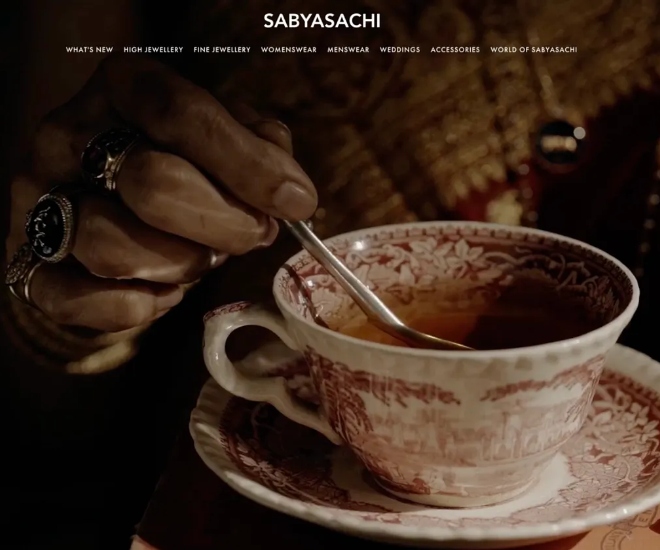
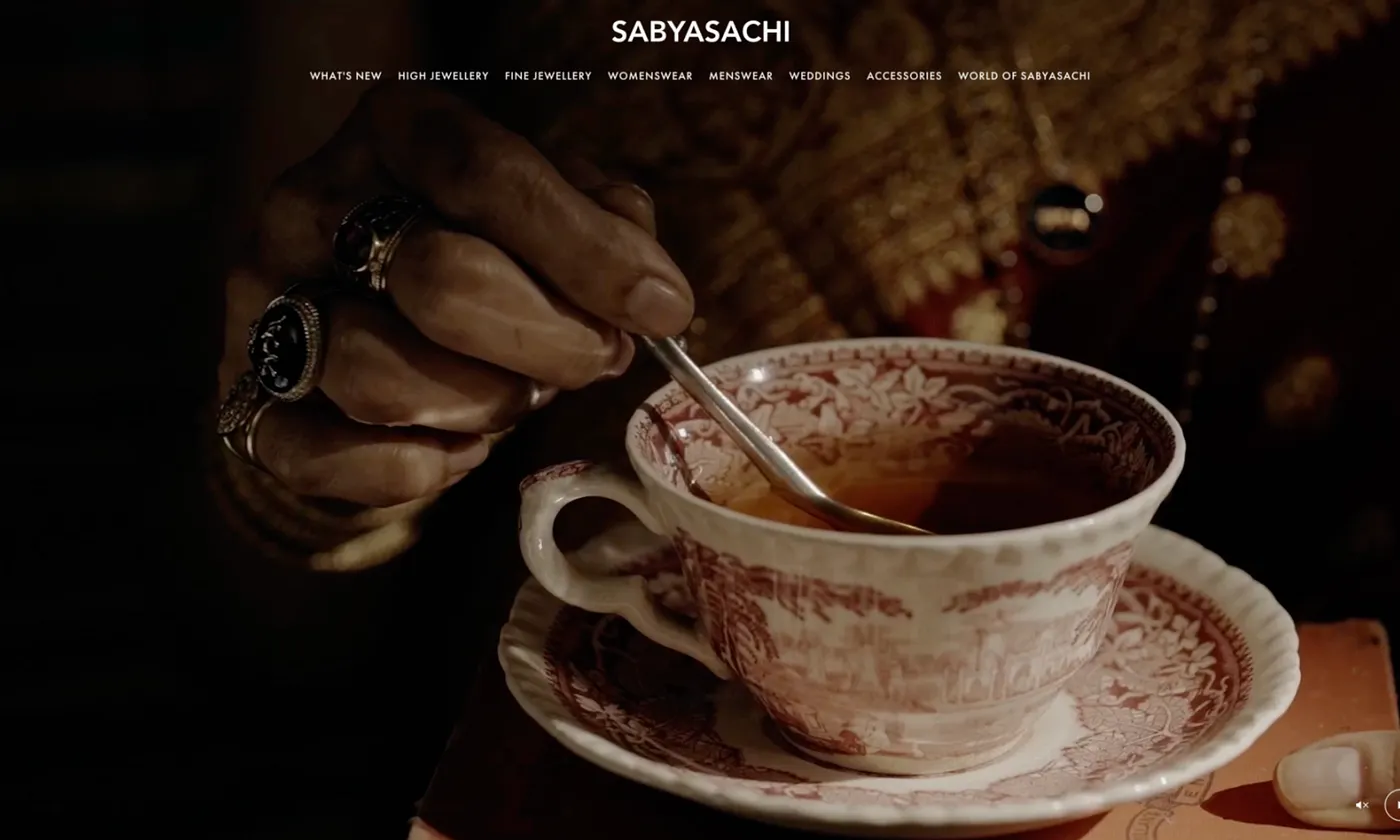
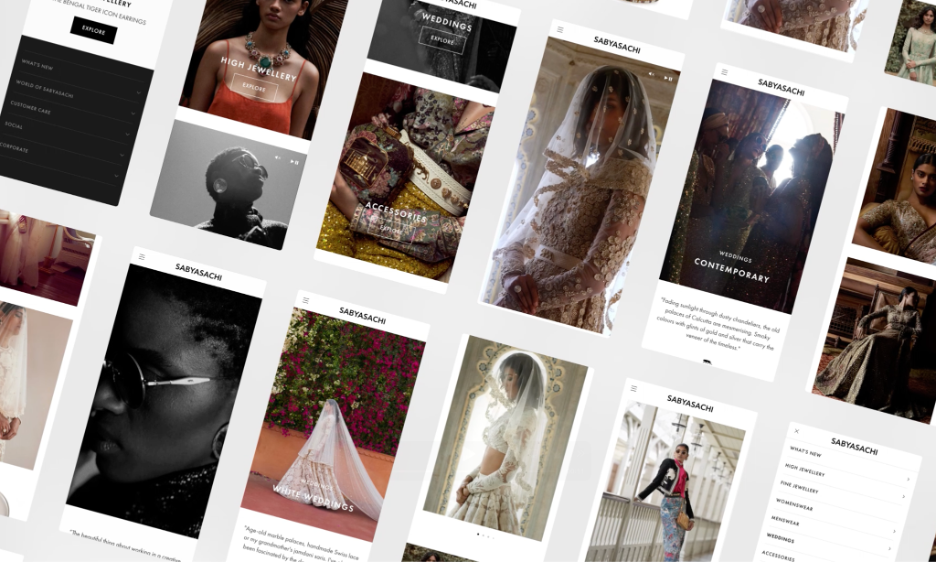
Close-up from Sabyasachi’s campaign – a symbol of heritage and craftsmanship expressed through luxury branding.
Luxury once spoke in bold declarations. A logo splashed across every surface, a campaign that demanded attention, sponsorships designed to dominate the skyline. For decades, this was the familiar grammar of prestige, and it worked — until the world changed.
Today, that vocabulary feels almost old-fashioned. In its place, a quieter, more nuanced language is emerging — one that signals exclusivity through subtle codes, restraint, and experience rather than spectacle. The smartest brands are not speaking louder, but more carefully, crafting identities that resonate with a new generation of luxury consumers who value clarity over clutter, intimacy over noise.
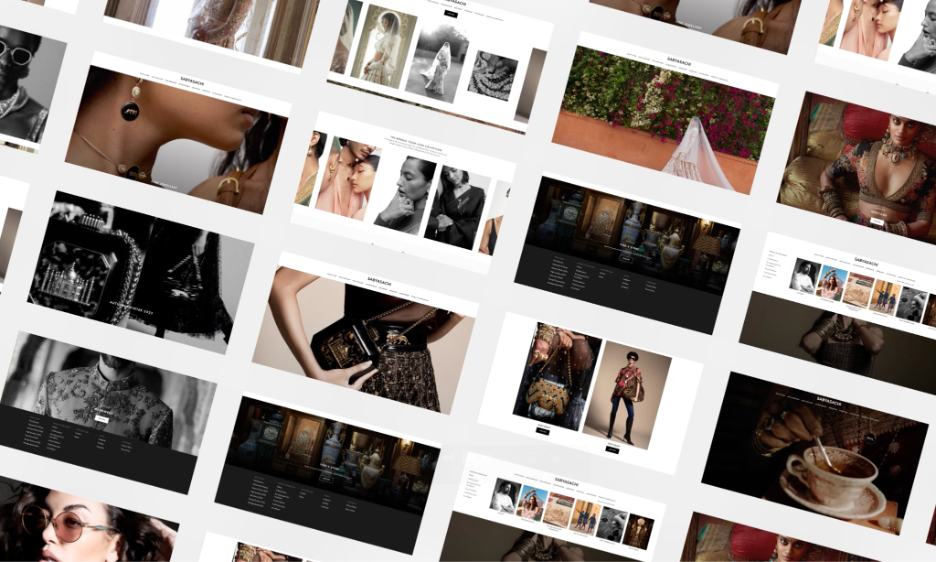
Digital layouts for Sabyasachi, blending cultural richness with contemporary e-commerce design.
Quiet Luxury as a New Vocabulary
The rise of “quiet luxury” has often been presented as a passing trend, but it is better understood as a structural shift in how luxury communicates. The aesthetic of understatement has moved from clothing into every corner of the luxury world.
The strongest brands are embracing simplicity: wordmarks stripped back to their essence, campaigns photographed with an editorial eye, packaging reduced to its most considered form. The status is not lost; it is made sharper by restraint. For those attuned to detail, a perfectly weighted font or a subtle emboss communicates more than a loud logo ever could.
In this context, a luxury branding agency is no longer simply tasked with creating recognisable assets. Its role is to design an entire system of meaning — a coded vocabulary that sophisticated audiences understand instinctively.
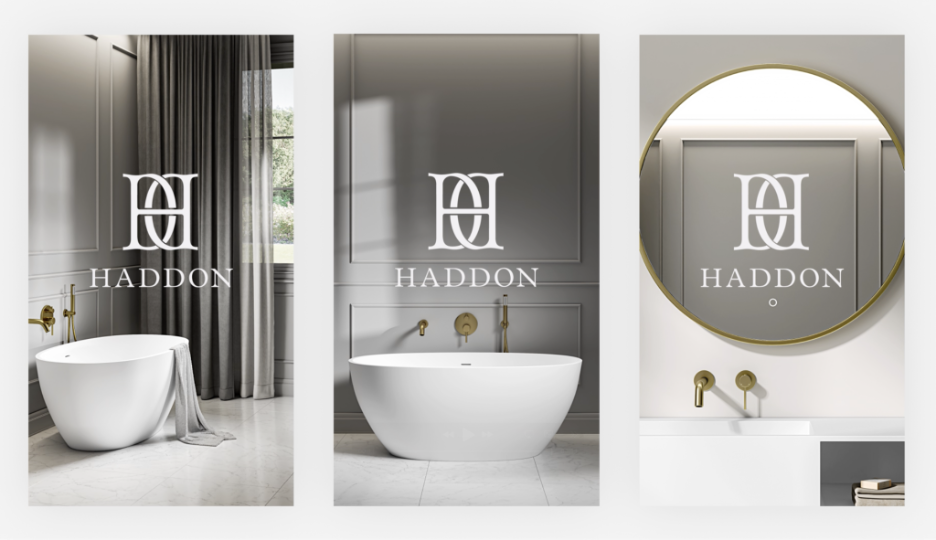
The Haddon identity brought to life across interiors – a modern system crafted for the luxury home market.
Digital Fluency, Mystery Intact
The luxury audience is increasingly digital-first, yet the aura of exclusivity must remain intact. This has created a paradox: how can brands be visible on open platforms while preserving their mystique?
The answer lies in treating digital not as a stream of disposable posts but as a long-form narrative. In luxury, value is built when stories unfold with patience and consistency — when each chapter deepens desire rather than chasing immediate attention.
That is why the most effective brands approach digital as storytelling over time. Short films, curated imagery, and limited releases are presented like chapters in an ongoing narrative. Instead of diluting exclusivity, this cadence strengthens it: the audience feels they are part of something that grows in significance with every encounter.
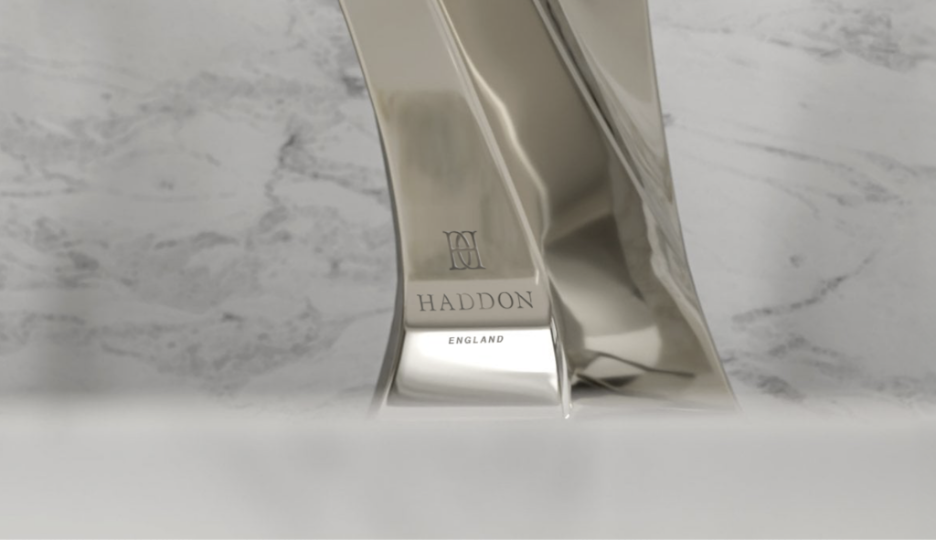
Haddon’s signature mark engraved into product design, uniting precision, materiality and brand storytelling.
The Physical Experience Matters More Than Ever
For all the focus on digital, the most powerful memories of luxury remain physical. In fact, as the world grows more virtual, the tactile and the human have become the ultimate differentiators.
The weight of a boutique’s door handle, the acoustics of a hushed space, the ritual of unfolding tissue paper — these are not incidental touches. They are the brand made tangible, deliberate signals of care and precision designed to linger in memory long after the purchase.
Packaging, interiors, and service rituals elevate transactions into theatre. The sound of a box clasp, the smoothness of a ribbon pull, the tone of a concierge’s welcome — each detail reinforces the story the brand wants to tell. Digital may ignite curiosity, but it is the physical encounter that completes the narrative and cements loyalty.
A luxury brand strategy that overlooks this balance risks breaking the spell. The strongest brands choreograph both screen and hand, story and touch, ensuring that every element works in harmony.
Haddon’s signature mark engraved into product design, uniting precision, materiality and brand storytelling.
Where Luxury Branding Is Headed
The new language of luxury branding will be defined by convergence. Digital will continue to lead in discovery, but physical encounters will remain the decisive moment. Strategy will increasingly demand fluency in both.
We are already seeing the emergence of “editorial boutiques” — spaces designed less as retail outlets and more as cultural destinations. Interiors are curated like galleries, with architecture and atmosphere serving as silent storytellers. At the same time, digital platforms are evolving into publications in their own right, delivering campaigns that feel like lifestyle features rather than advertising.
The emphasis, above all, is on coherence. Whether encountered through a phone screen, a store entrance, or a piece of packaging, the brand must speak in a single, consistent voice. In this language, less is indeed more.
Brands that master it will not just capture attention in the moment; they will build cultural equity that endures for decades. And in a market crowded with noise, it is those fluent in quiet precision who will ultimately be heard the loudest.
For more on the latest in business reads, click here.
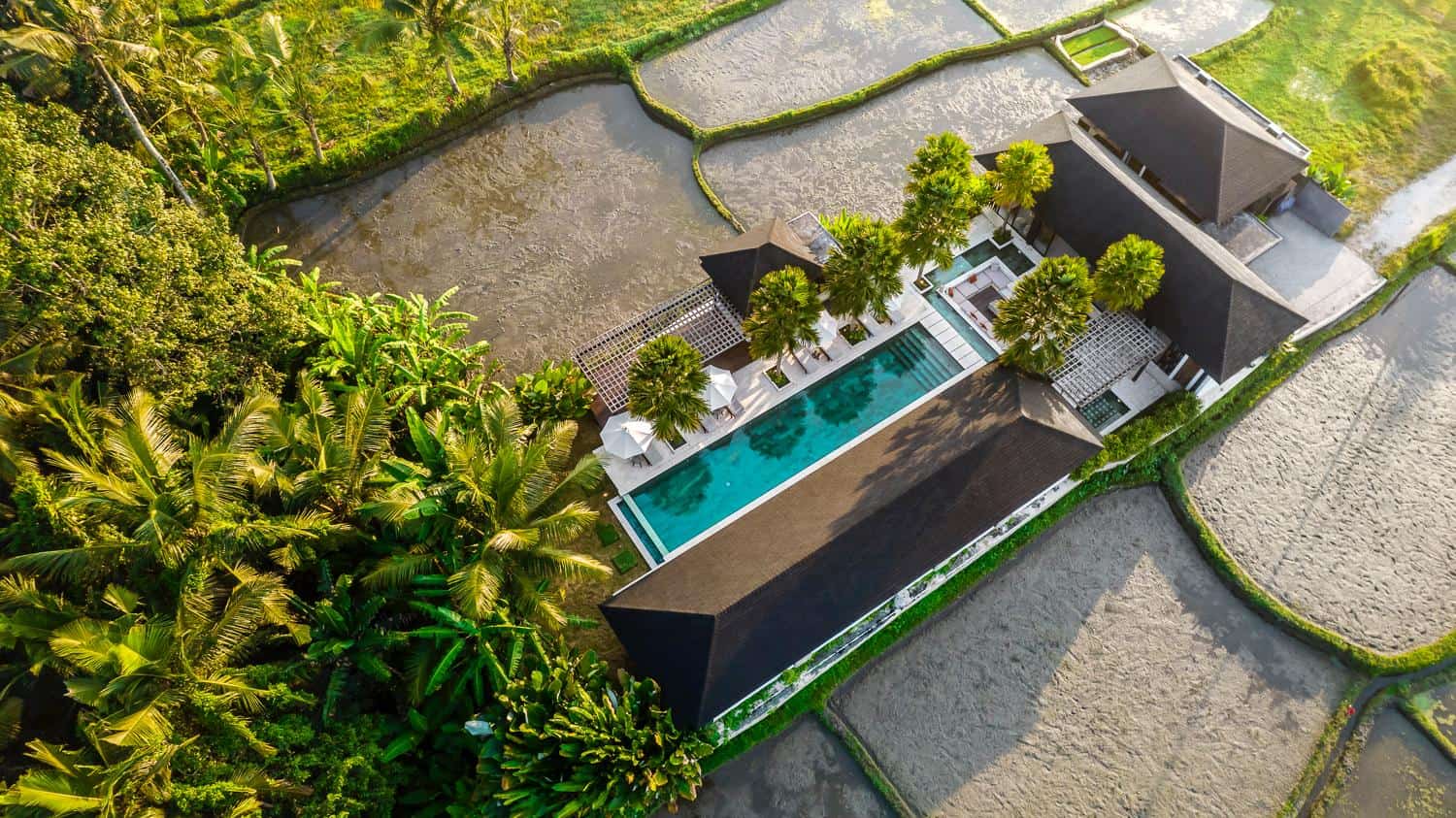
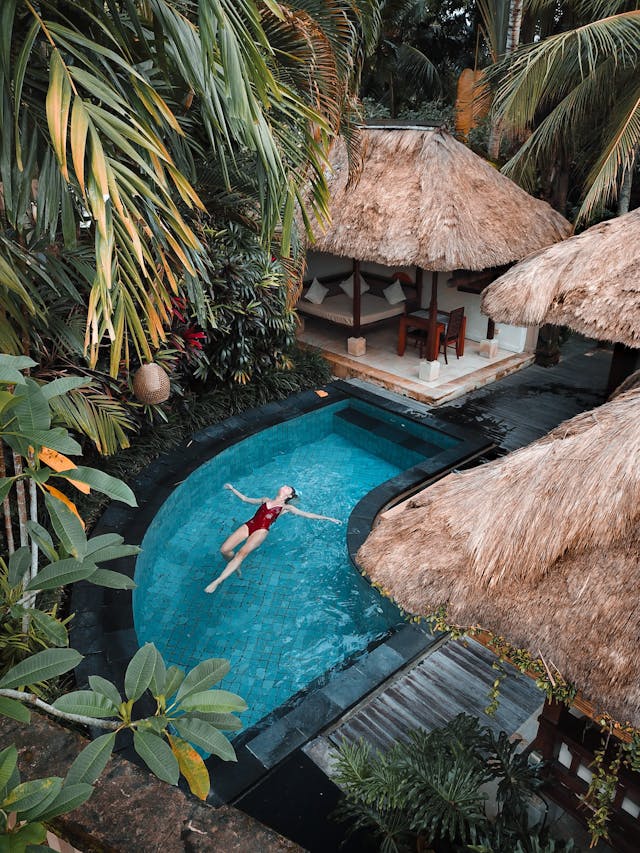
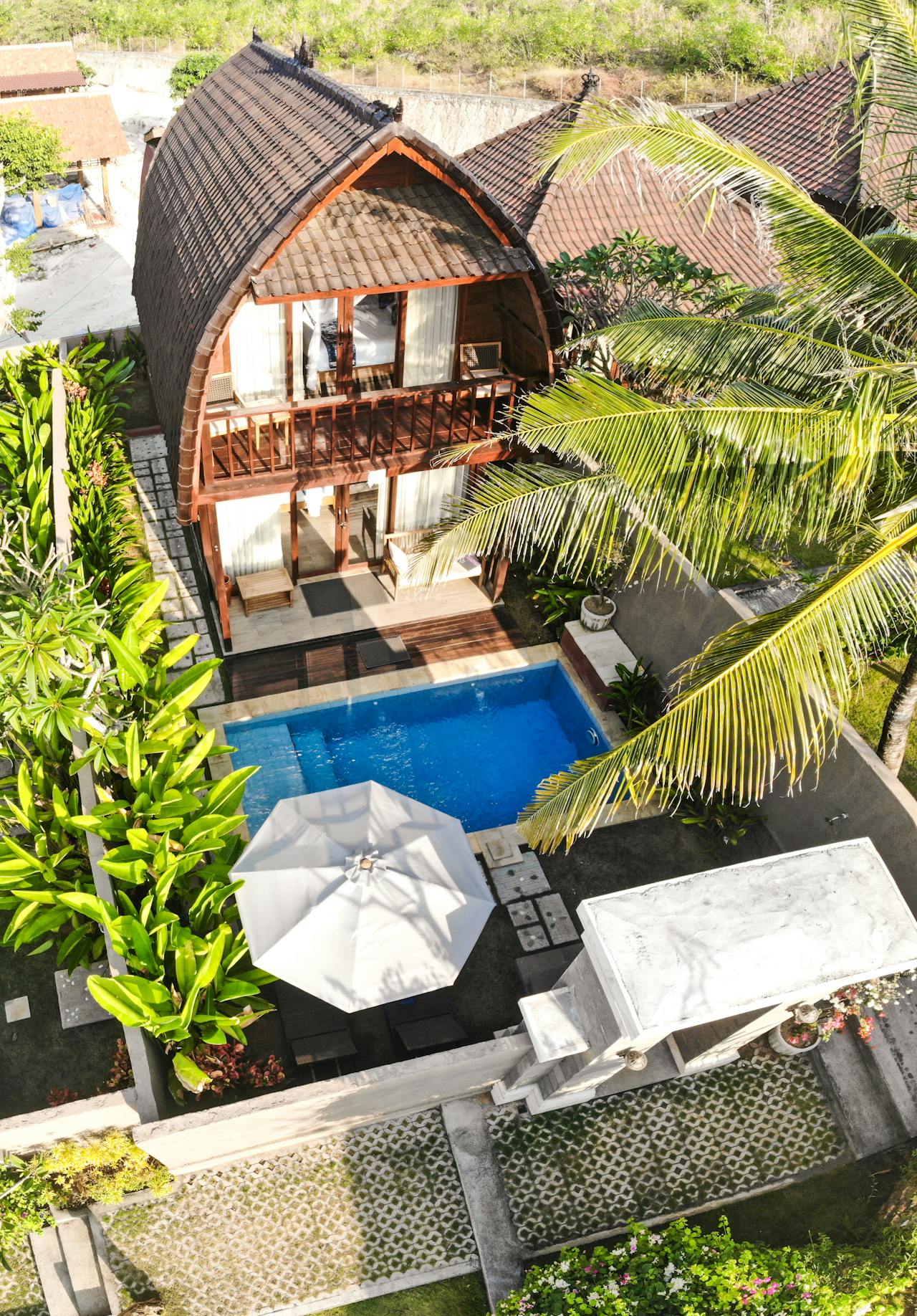
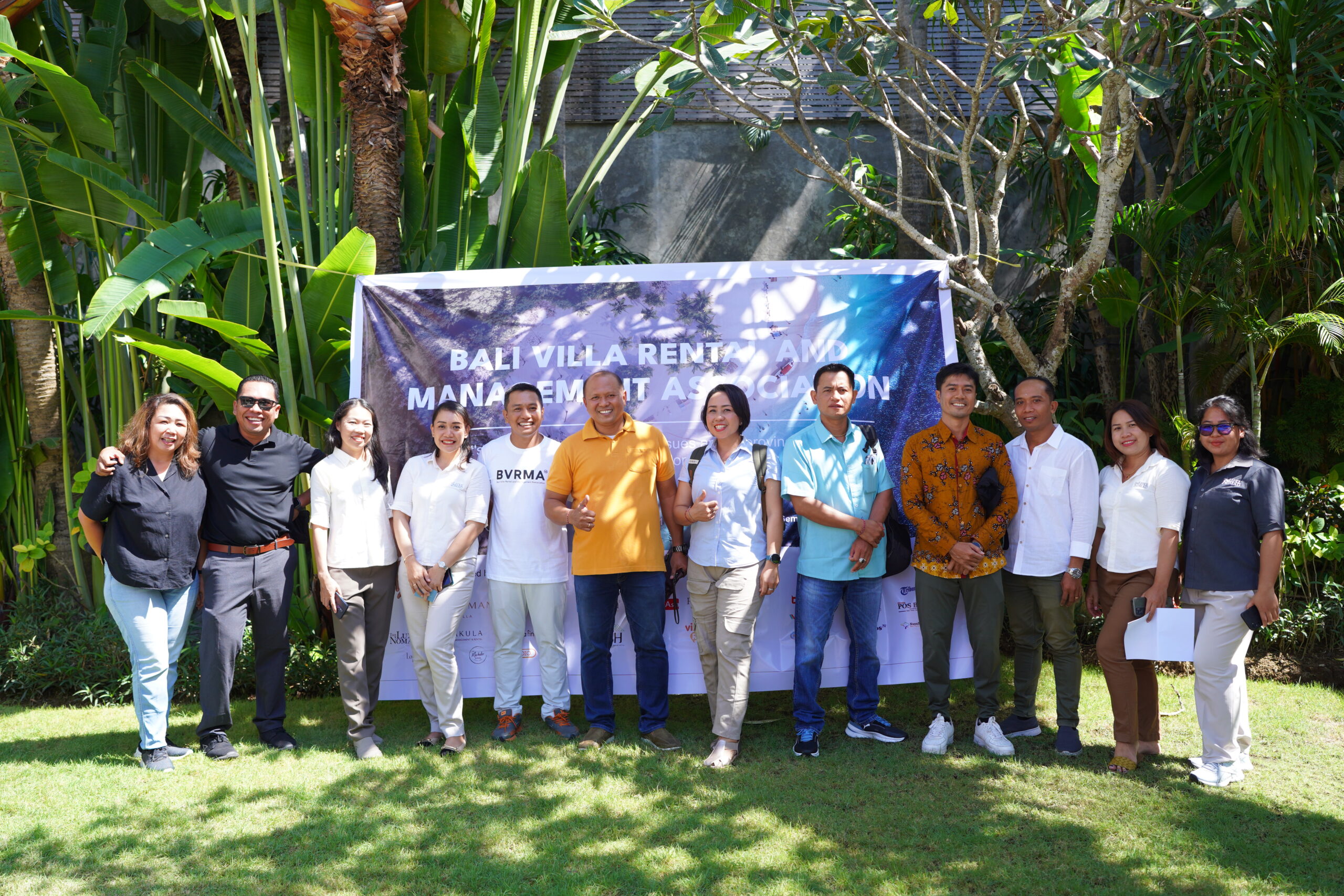
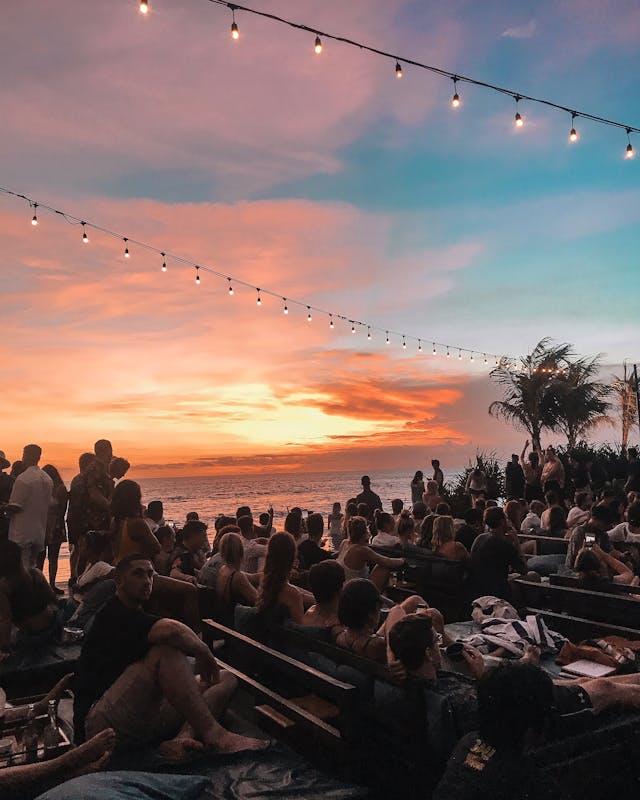
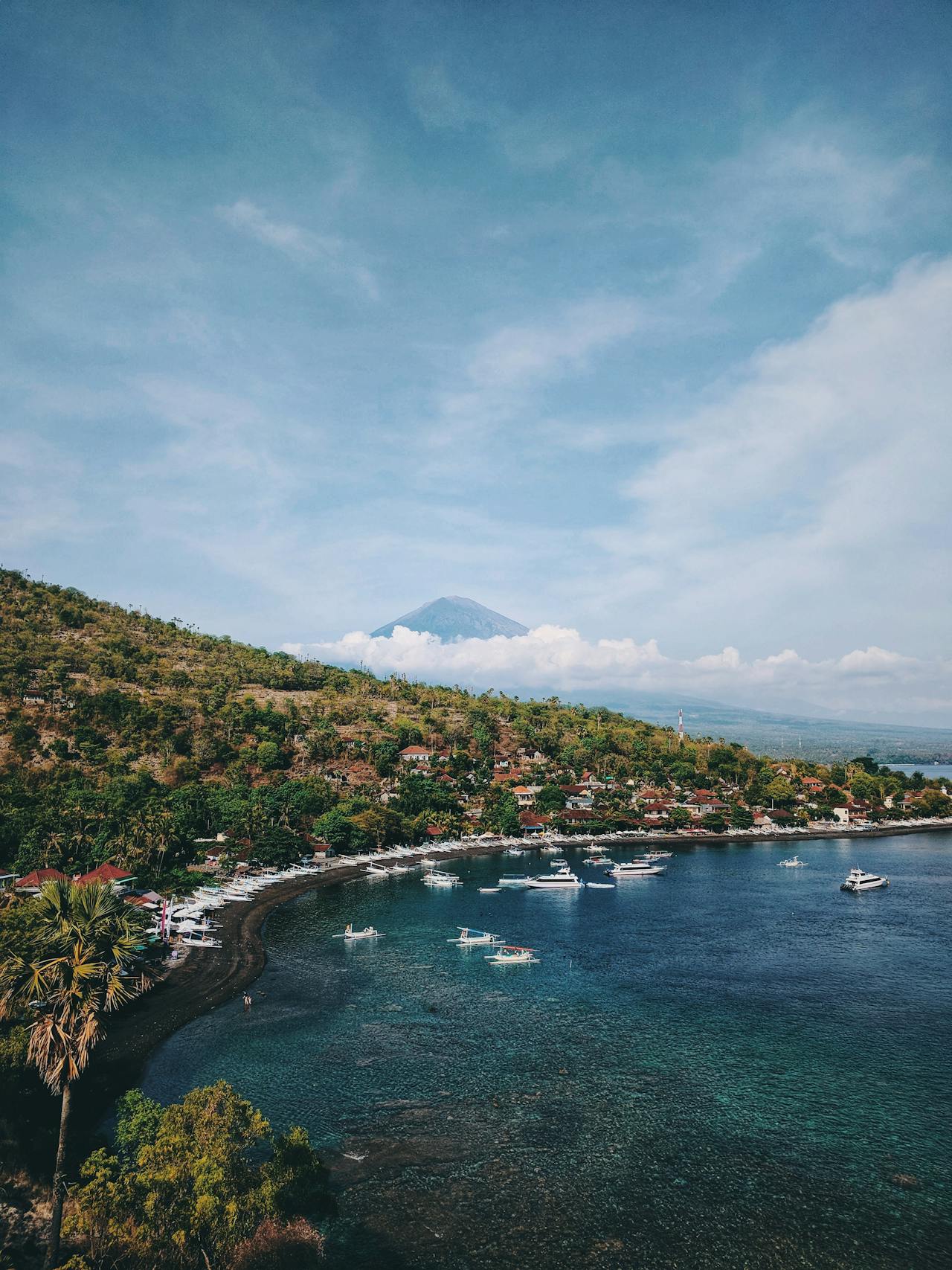
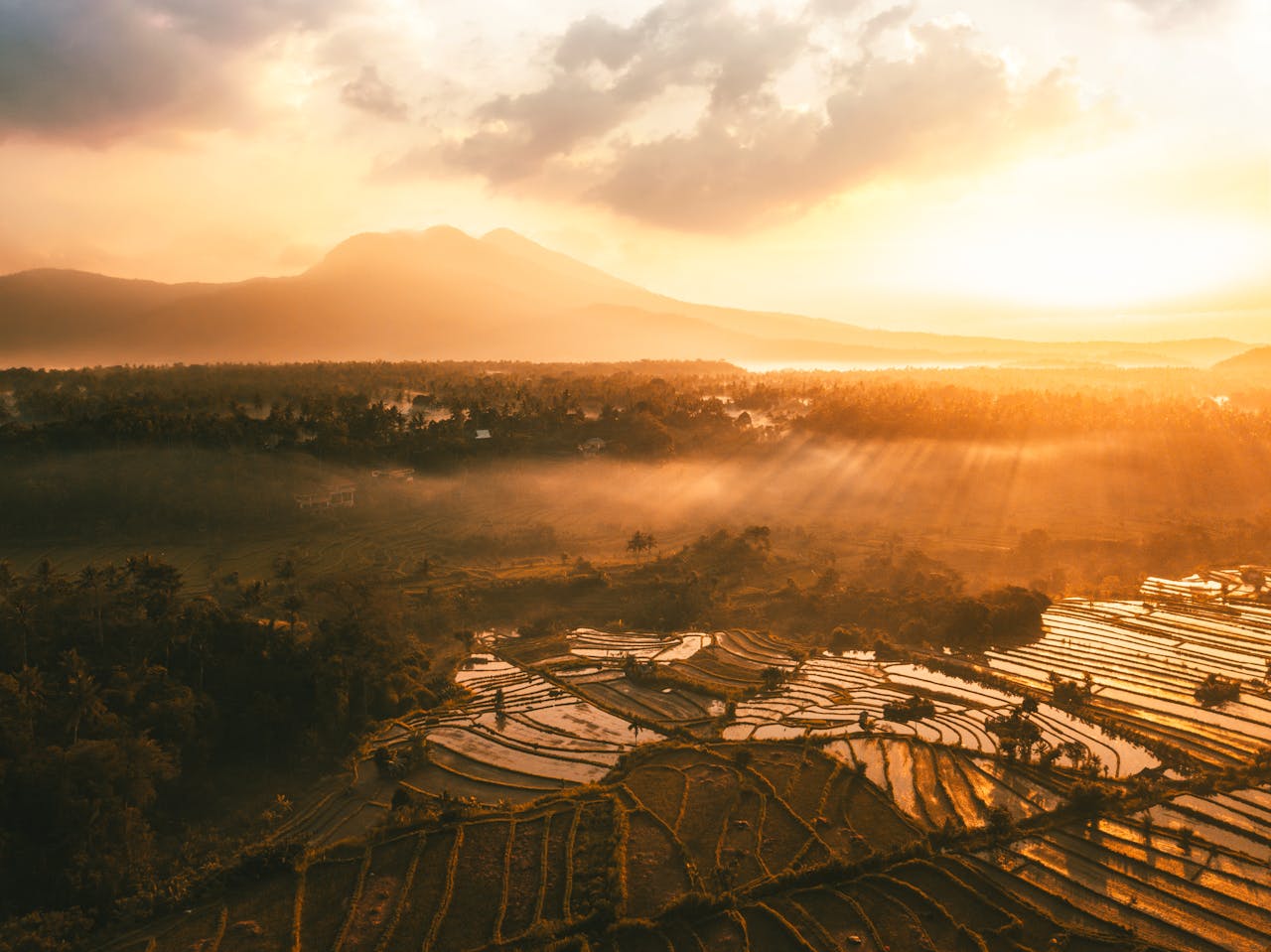
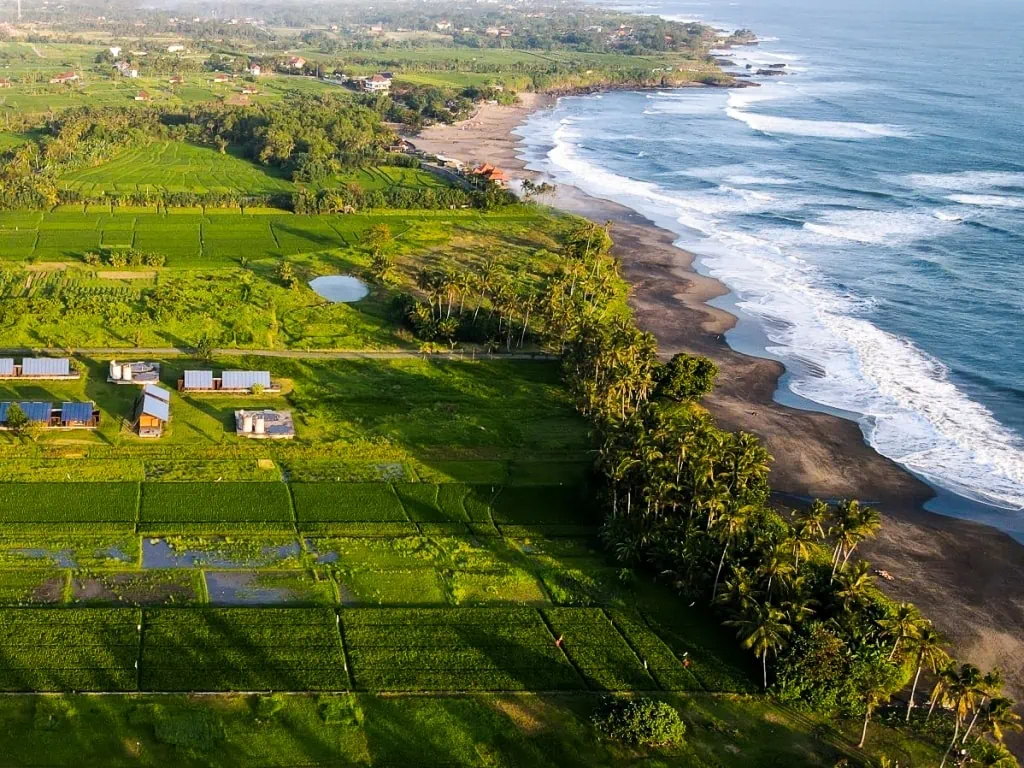
Bali has long been celebrated as a tropical paradise, attracting both tourists and expats seeking a lifestyle of sun, surf culture and growing business opportunities in the rising spiritual and wellness space. In recent years, the island has also become a magnet for property investors, drawn by the promise of high returns in villas, apartments and commercial ventures. Yet beneath the idyllic facade lies a landscape of legal, financial and operational risks that can transform paradise into a costly mistake if approached without caution.
Foreign ownership of land in Indonesia is tightly restricted. Only Indonesian citizens can hold freehold titles, while foreigners are limited to leasehold arrangements — typically for 25 to 30 years with the possibility of extension. Villas and apartments are usually built on HGB (Hak Guna Bangunan) or leasehold lands, and commercial properties must often be registered through a foreign-owned PT PMA company, requiring permits via the OSS and BKPM systems.
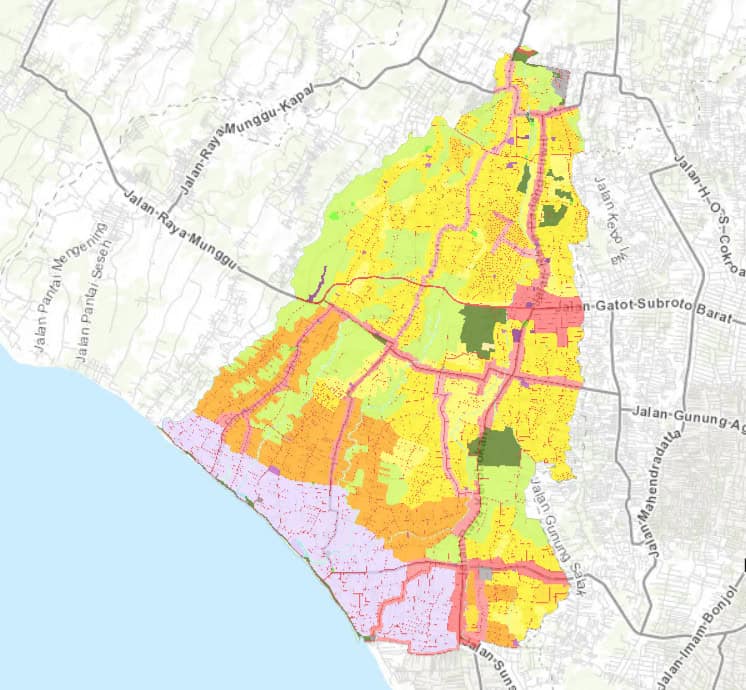
Indonesians alone can hold freehold land (Hak Milik), while foreigners are limited to rights such as Hak Pakai (right to use), Hak Sewa (leasehold) or establishing ownership via a PT PMA company, often for periods of up to 80 years. Land is also strictly zoned: yellow and orange zones are residential, red zones are commercial, pink zones cater to tourism, green zones are agricultural and conservation zones to protect natural and cultural heritage. Even in pink zones — intended for hotels and rental villas — foreign ownership is restricted to non-freehold rights, while locals can acquire freehold titles. Attempting to bypass these rules through nominee schemes — using an Indonesian citizen’s name to hold land — is illegal, fraught with risk and unenforceable under Indonesian law.
Financial risks are also mounting as Bali’s popularity drives property prices upward. Many listings reflect inflated values with little market verification, while hidden costs for permits, taxes and agent commissions can significantly reduce projected returns. Rising annual yields may look attractive on paper, but failure to factor in maintenance, occupancy rates and compliance fees can leave investors disappointed. Practical challenges — such as properties lacking proper building permits (IMB/PBG) or operational licenses (SLF) — further complicate ownership and can result in fines or even demolition.
The rapid growth of Bali’s expat community has also put pressure on local housing markets. With increasing demand for high-end villas and boutique apartments, rental rates and property costs have surged — making it harder for newcomers to find affordable accommodation. Long-term residents and investors alike must navigate a delicate balance between lifestyle aspirations and the realities of legal compliance and financial prudence.
To mitigate these risks, experts recommend thorough due diligence, including legal verification of land rights, permits and tax obligations. Contracts should be bilingual and notarised, and all dealings should be conducted with licensed agents. Opting for fully legal structures — such as Hak Pakai leases or PT PMA entities — ensures that investments are protected and extensions are contractually secured.
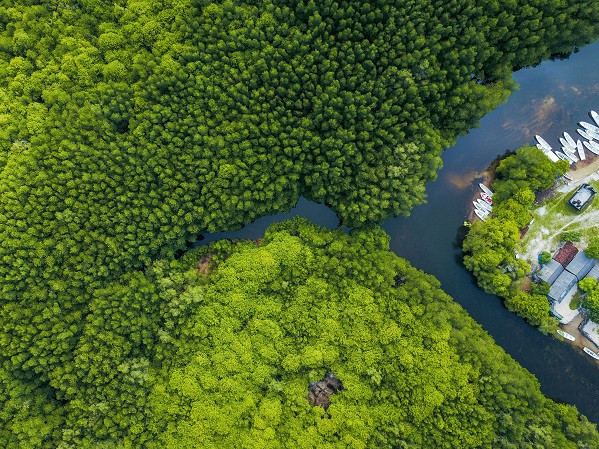
Beyond the legal and financial challenges, Bali’s property market raises pressing social and ethical concerns. Foreign-driven demand has pushed land and housing prices beyond the reach of many locals, fostering resentment and tensions over traditional land use. In particular, foreign-owned villas are often accused of disrupting community balance, eroding cultural norms and prioritising profit over people. Environmental impacts are also significant: deforestation, water shortages and waste issues have been linked to rapid villa and resort development.
Illegal or unregistered villas — especially in hotspots like Canggu, Uluwatu and Ubud — exacerbate these problems. Many of these properties bypass local permits, taxes and environmental regulations, offering lower rates that undercut compliant operators while depriving the government and local entrepreneurs of revenue. Journalistic investigations have highlighted how such practices give investors unfair advantages while contributing little to the local economy. The situation has also triggered nationalist backlash and concerns over corruption, with weak enforcement and bureaucratic loopholes facilitating bribery in land deals. Overall, these dynamics underscore the tension between foreign investment and the rights, culture and livelihoods of Balinese communities, highlighting the ethical and practical stakes of real estate development on the island.
Investing or living in Bali can offer tremendous lifestyle and financial rewards, but only with careful preparation and professional guidance. Understanding the island’s legal frameworks, property regulations and market dynamics is essential for anyone seeking to turn the Balinese dream into a sustainable reality rather than a cautionary tale.
For more on the latest in lifestyle, culture and travel reads, click here.
Long before California’s Napa Valley and Sonoma Valley became household names, Virginia quietly planted the roots of American viticulture.
As the oldest wine region in the U.S., the state’s wine legacy dates back to 1619, when the Jamestown Assembly passed “Acte Twelve,” requiring colonists to plant imported European grapevines. In the late 18th century, Thomas Jefferson, inspired by his time in France, also sought to produce wines from European grapes at his Monticello estate. While Jefferson’s efforts were hindered by Virginia’s challenging climate, pests, and unsuitable vines, his vision laid the foundation for future winemakers.
Virginia is now home to more than 300 wineries, many just a short drive from Jefferson’s estate. A cornerstone of Virginia’s wine renaissance is Early Mountain Vineyards, established in 2012 by AOL co-founder Steve Case and his wife, Jean.
At the 55-acre estate, head winemaker Maya Hood White marries scientific precision with an intuitive feel for the land, using cover crops and careful canopy management to foster biodiversity and balance. In the cellar, she prefers minimal intervention to allow the vineyards to express themselves. The results are an impressive lineup of signature wines, like the Bordeaux-style Eluvium and RISE blends, as well as aromatic petit manseng wines.
Whether you’re stopping by the vineyard for the day or staying the weekend, there are a variety of wine experiences to enjoy. Guests can participate in the Elevation Tasting, rare pours in the library, and rotating self-guided flights, complemented by a culinary program that reflects the depth and character of the wines. Drawing on his experience at Virginia’s only three-Michelin-starred restaurant, The Inn at Little Washington, chef Tim Moore creates seasonal dishes like ramp tartine on grilled sourdough with a sunny-side-up egg, ember-roasted carrots with poblano purée and feta, and sweet crab salad with spring pea panna cotta.
In the tasting room, named the nation’s best in USA Today’s 2016 10Best Readers’ Choice Awards, guests can choose an a la carte menu, a hyper-seasonal wine-paired prix-fixe, and the Chef’s Table, a seven-course journey featuring Early Mountain’s most celebrated wines. In 2024, Wine Spectator awarded the winery the “Award of Excellence” for its outstanding wine and culinary experience, while Hood White received “Winemaker of the Year” nominations for Wine Enthusiast’s Wine Star Awards and VinePair’s Next Wave Awards. This year, the vineyard earned Virginia’s second-ever gold medal at the Decanter World Wine Awards for its 2022 Petit Manseng, placing it firmly among the top wineries in Virginia and beyond.
Those looking to explore the region further can visit more than 40 wineries in the Monticello American Viticulture Area, named Wine Enthusiast’s “Wine Region of the Year” in 2023. Beyond the wineries, visitors can go horseback riding, visit several craft breweries, or hike scenic trails like Old Rag Mountain in Shenandoah National Park (a 40-minute drive). For a luxurious stay, The Inn at Willow Grove features a world-class spa and 25 stately rooms, housed in a 40-acre Classical Revival manor originally built in 1778.
Dubai is a city where tradition and modernity sit side by side, creating a destination unlike any other in the world. On one hand, you’ll find centuries-old souks filled with the scents of spices and the shimmer of gold; on the other, futuristic skyscrapers and record-breaking landmarks define its ever-evolving skyline.
The charm of Dubai lies in this contrast — a place where you can ride a wooden abra across the creek in the morning and stand atop the world’s tallest building by evening.
Even with just two days, it’s possible to experience both sides of the city: its vibrant heritage and its bold vision for the future. This suggested 2-day Dubai itinerary is designed to balance cultural exploration with must-see icons, giving you a taste of tradition while still soaking in the glamour and innovation that make Dubai famous.
See Dubai’s most famous landmarks in comfort and style on this half-day guided tour.
→ Photo stops at Dubai Museum, Burj Al Arab, Dubai Marina & Jumeirah Mosque → Drive-through views of Dubai Frame, Burj Khalifa, Palm Jumeirah & Port Rashid → Visit the charming Souk Madinat Jumeirah → Optional drop-off at Dubai Mall before returning to your hotel
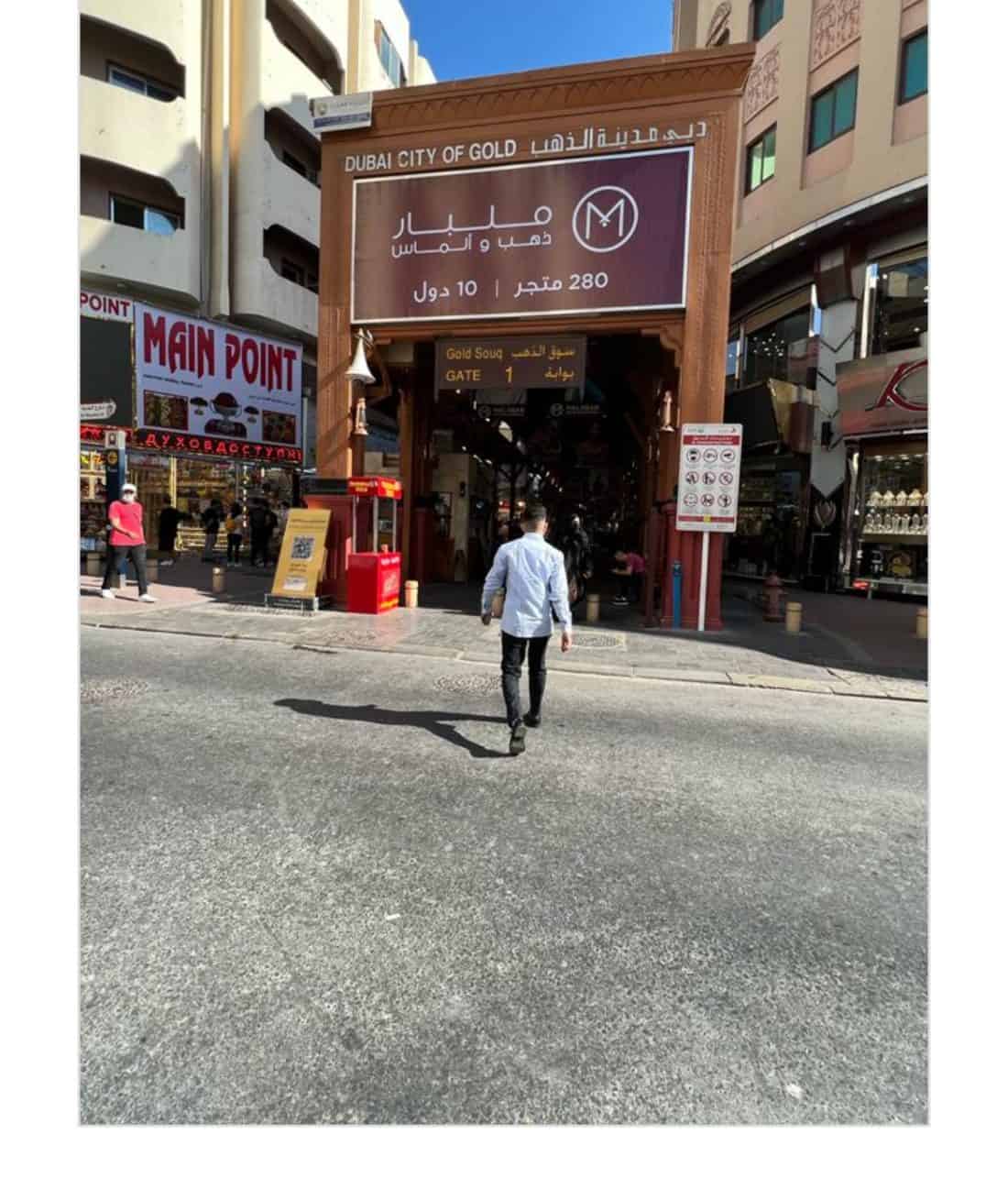
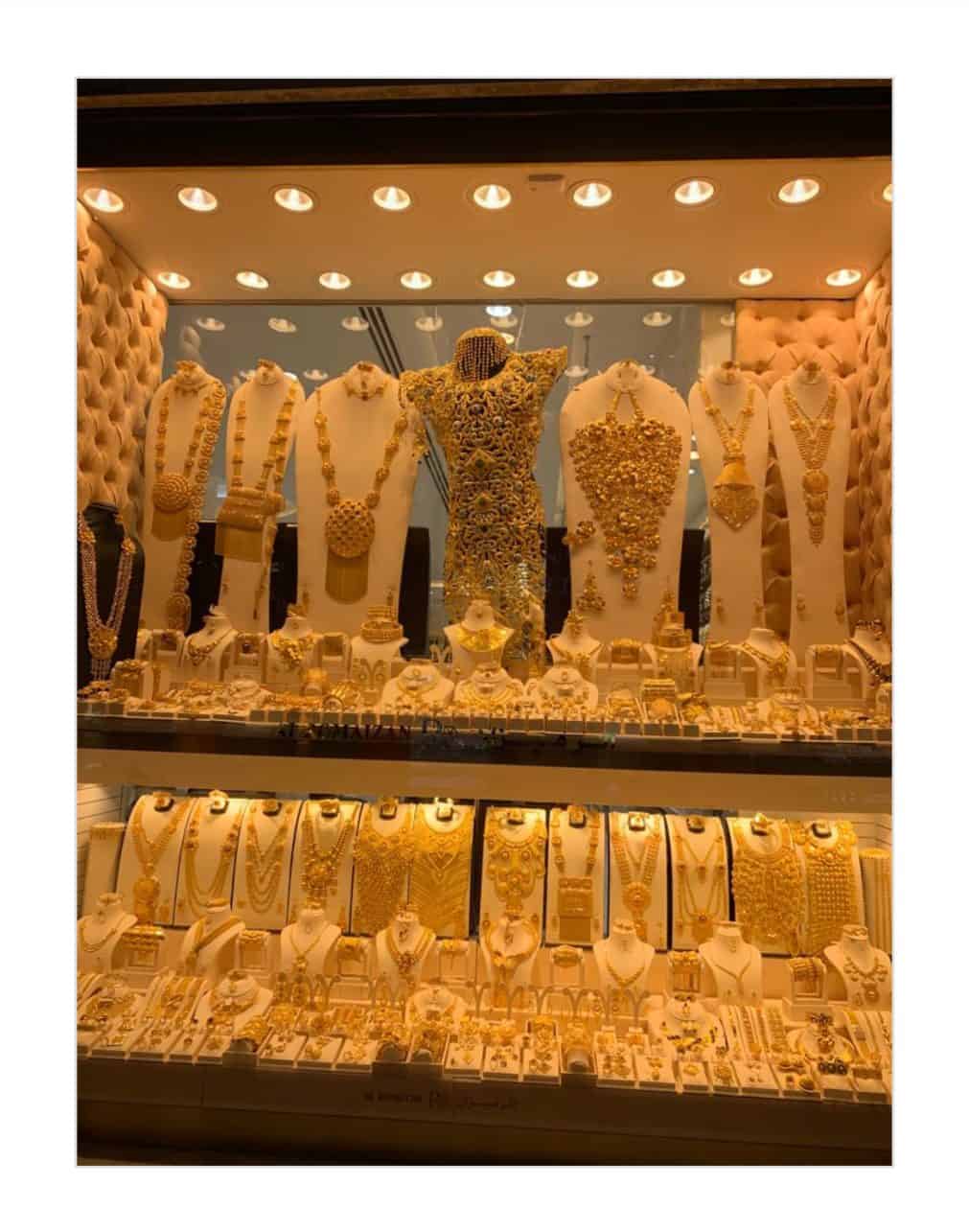
Located in Deira, the Gold Souk is one of Dubai’s most famous traditional markets. Here, streets glisten with window displays showcasing gold, silver, platinum, diamonds, and precious stones. The souk is home to hundreds of jewelry shops, ranging from small artisan stalls to internationally recognized brands.
Strict regulations ensure authenticity and quality, giving visitors peace of mind when shopping.
Known for the sheer volume of gold on display — literally tons at any given moment.
Bargaining is part of the experience, whether for a 24K necklace or a diamond-studded watch.
2-Day Dubai Itinerary: From Souks to Skyscrapers2-Day Dubai Itinerary: From Souks to Skyscrapers
Spice Souk
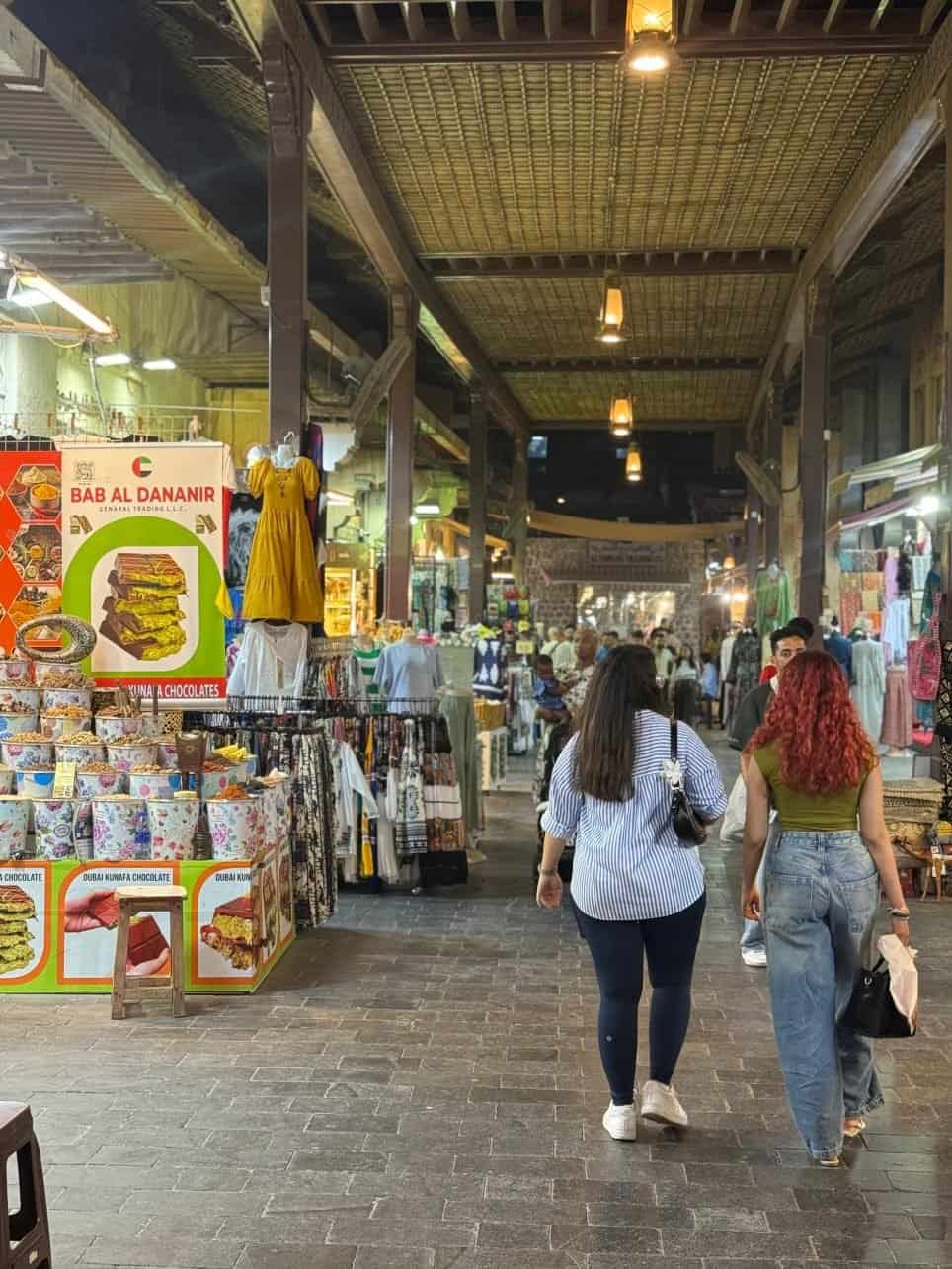
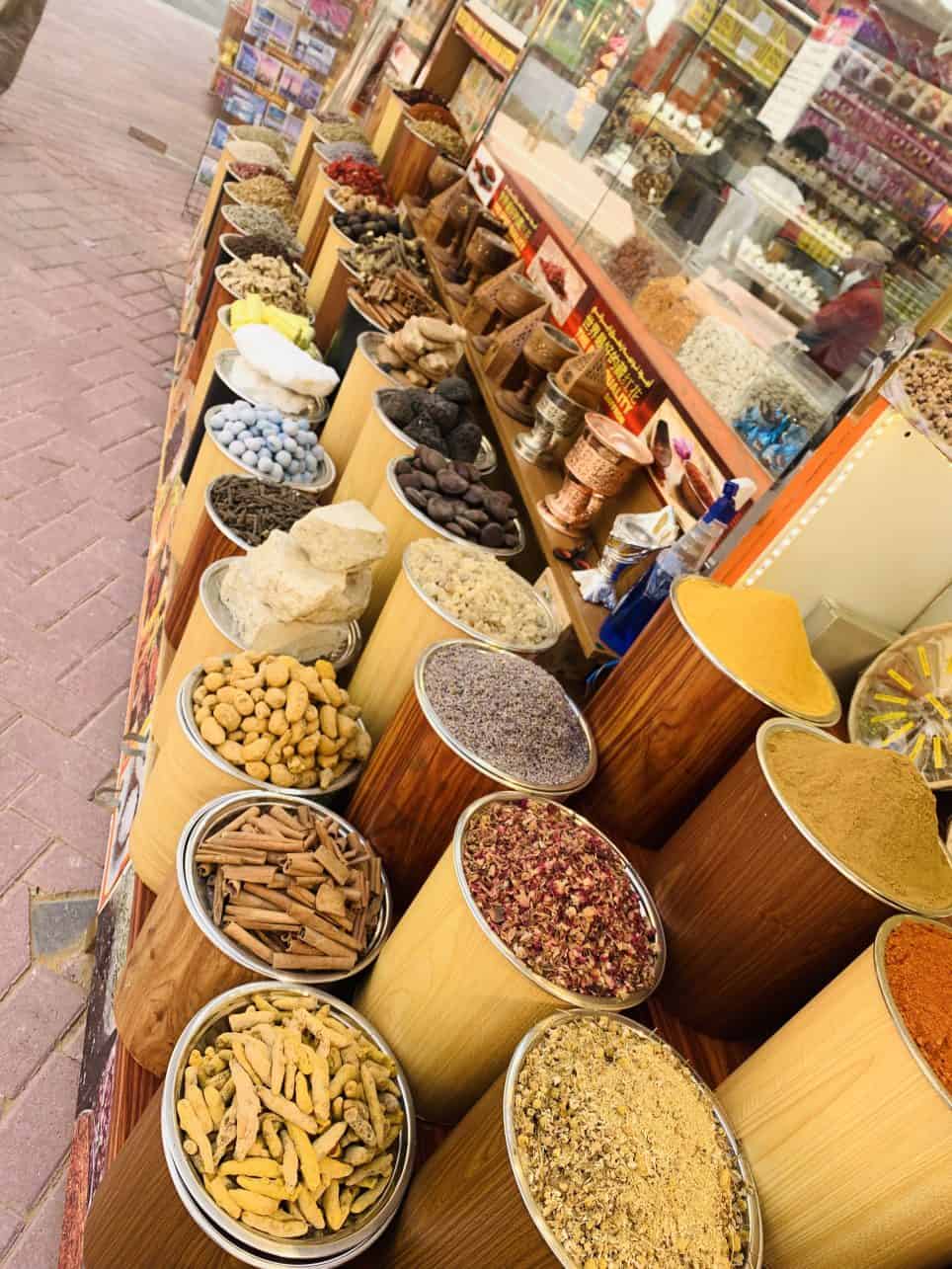
A short walk from the Gold Souk brings you to the Spice Souk, where narrow lanes are filled with the aromas of cardamom, saffron, dried lemons, and rose petals. This sensory-rich market not only offers spices but also herbs, incense, and teas.
It’s a colorful reminder of Dubai’s historic role as a global trading hub and a perfect spot to pick up culinary souvenirs.
2-Day Dubai Itinerary: From Souks to Skyscrapers2-Day Dubai Itinerary: From Souks to Skyscrapers
Souk Al Seef
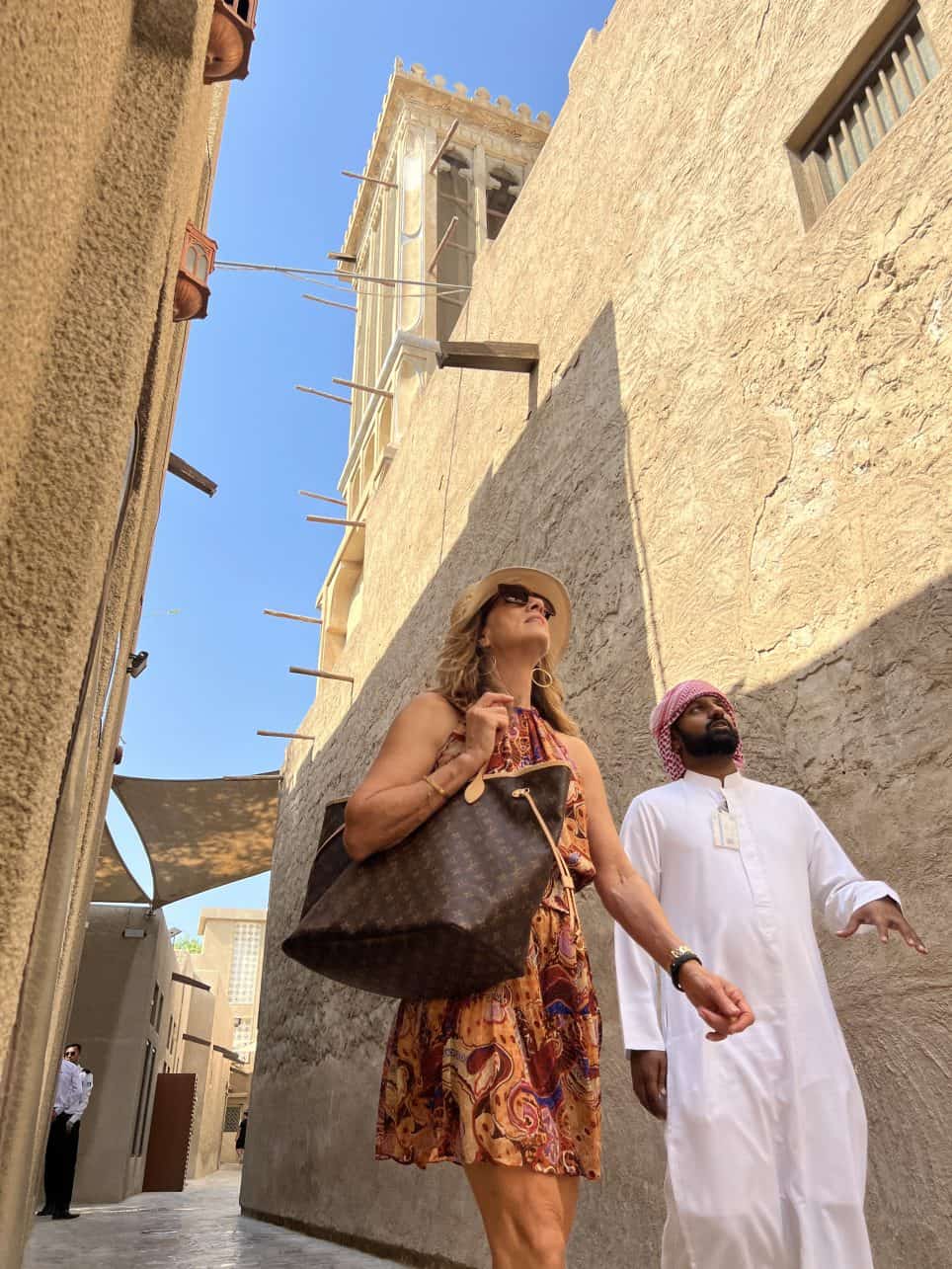
Overlooking Dubai Creek, Souk Al Seef combines old-world charm with modern design. Though newly built, it recreates the architecture of Dubai’s early trading days, complete with wind towers and narrow alleys.
The area offers views of the Al Fahidi Historical District, photo-friendly waterfront promenades, and plenty of cafés where you can pause and take in the scenery.
2-Day Dubai Itinerary: From Souks to Skyscrapers2-Day Dubai Itinerary: From Souks to Skyscrapers
Bur Dubai Abra Station
For a taste of tradition, hop on an abra — the small wooden boats once used (and still used today) to ferry people across Dubai Creek. The ride connects the souks of Deira with Bur Dubai and costs just a few dirhams. It’s one of the most authentic experiences in the city.
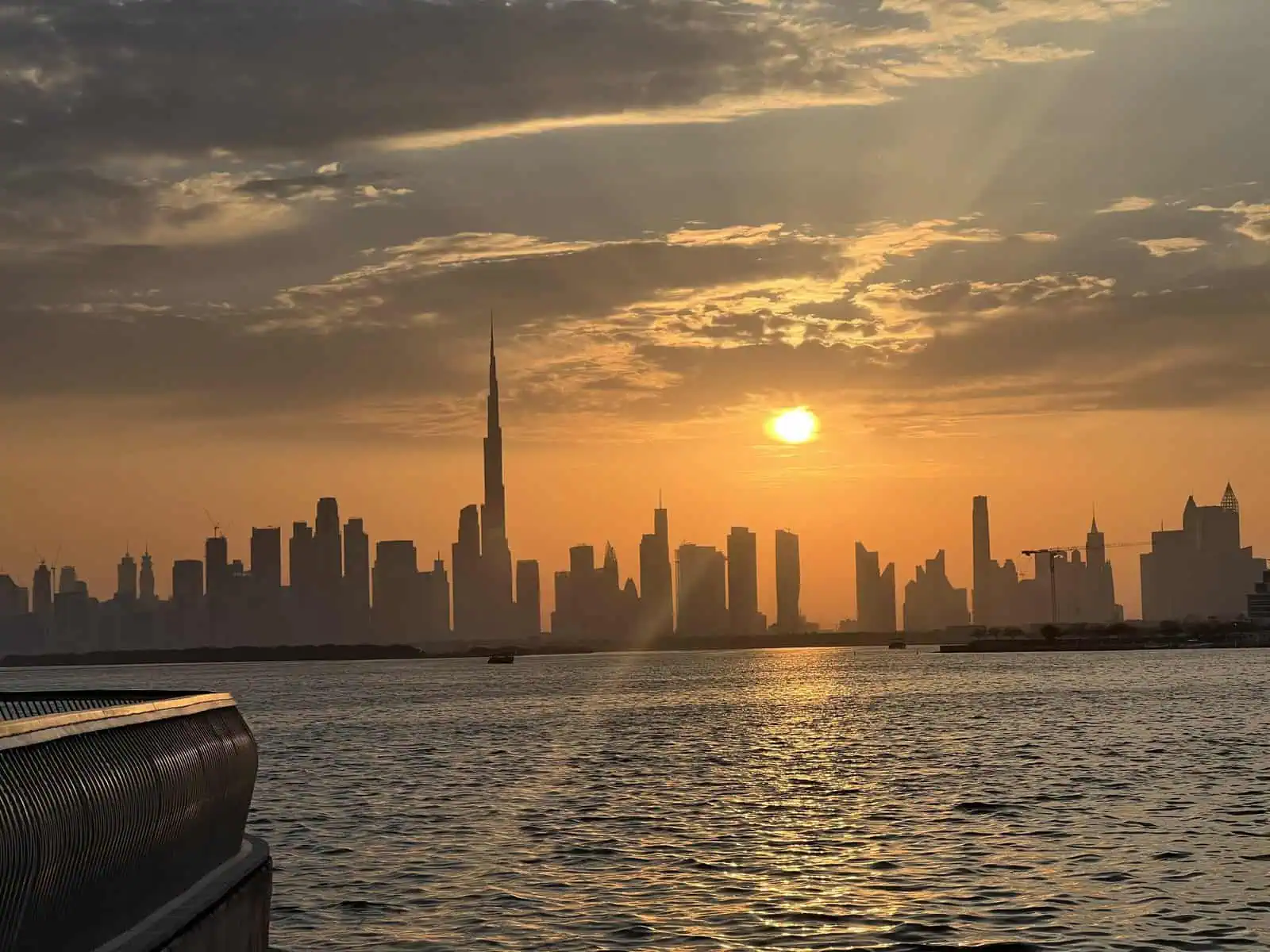
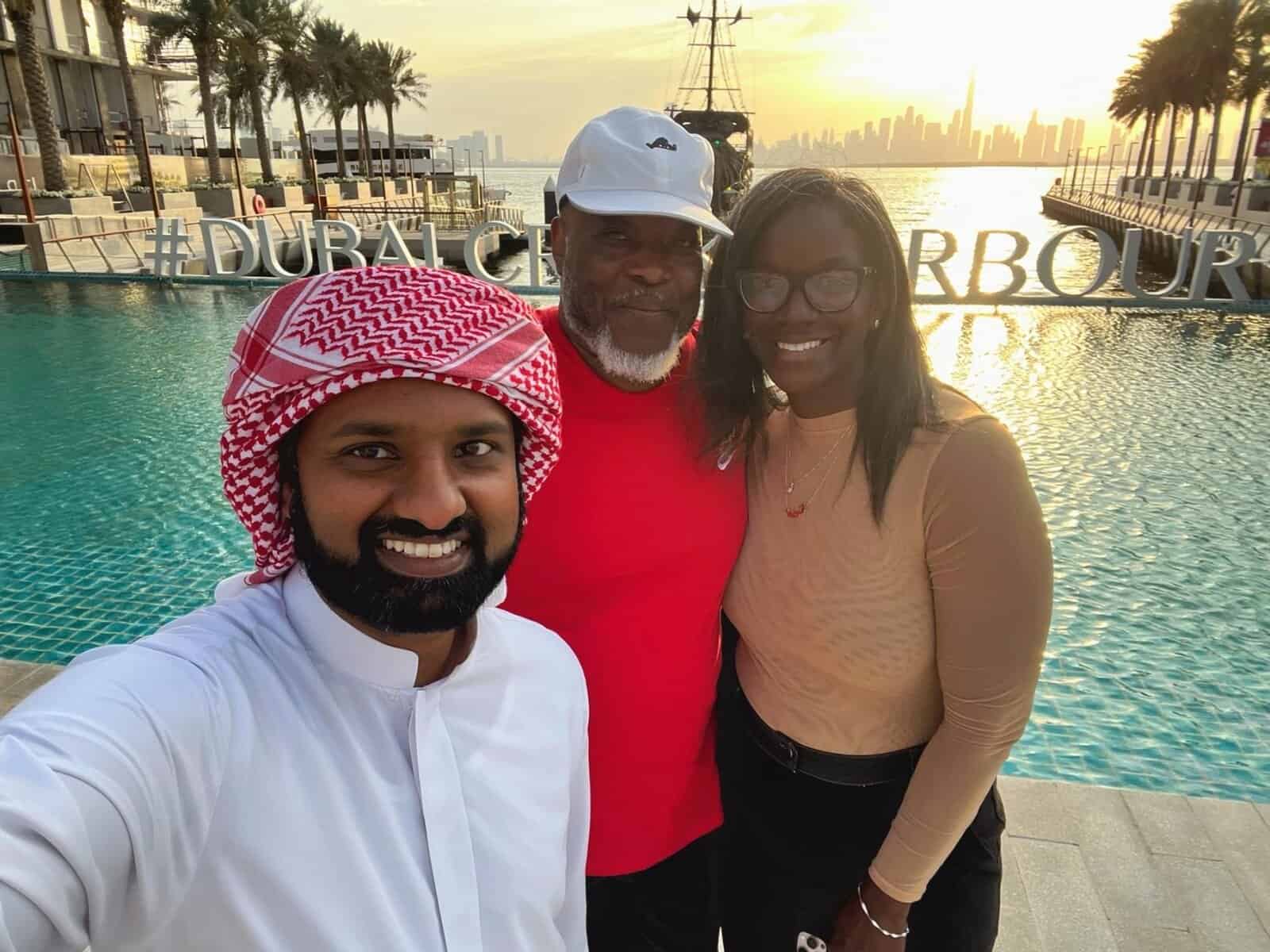
Dubai Creek Harbour is where the city’s heritage meets its vision for the future. The development features smart-city planning, walkable neighborhoods, and stunning waterfront views. At sunset, the skyline panorama — with the Burj Khalifa rising in the distance — is particularly breathtaking.
Nearby, the Ras Al Khor Wildlife Sanctuary offers a striking contrast: flocks of flamingos feeding in mangroves, just minutes away from futuristic skyscrapers.
2-Day Dubai Itinerary: From Souks to Skyscrapers
Day 2: Modern Icons & City Highlights
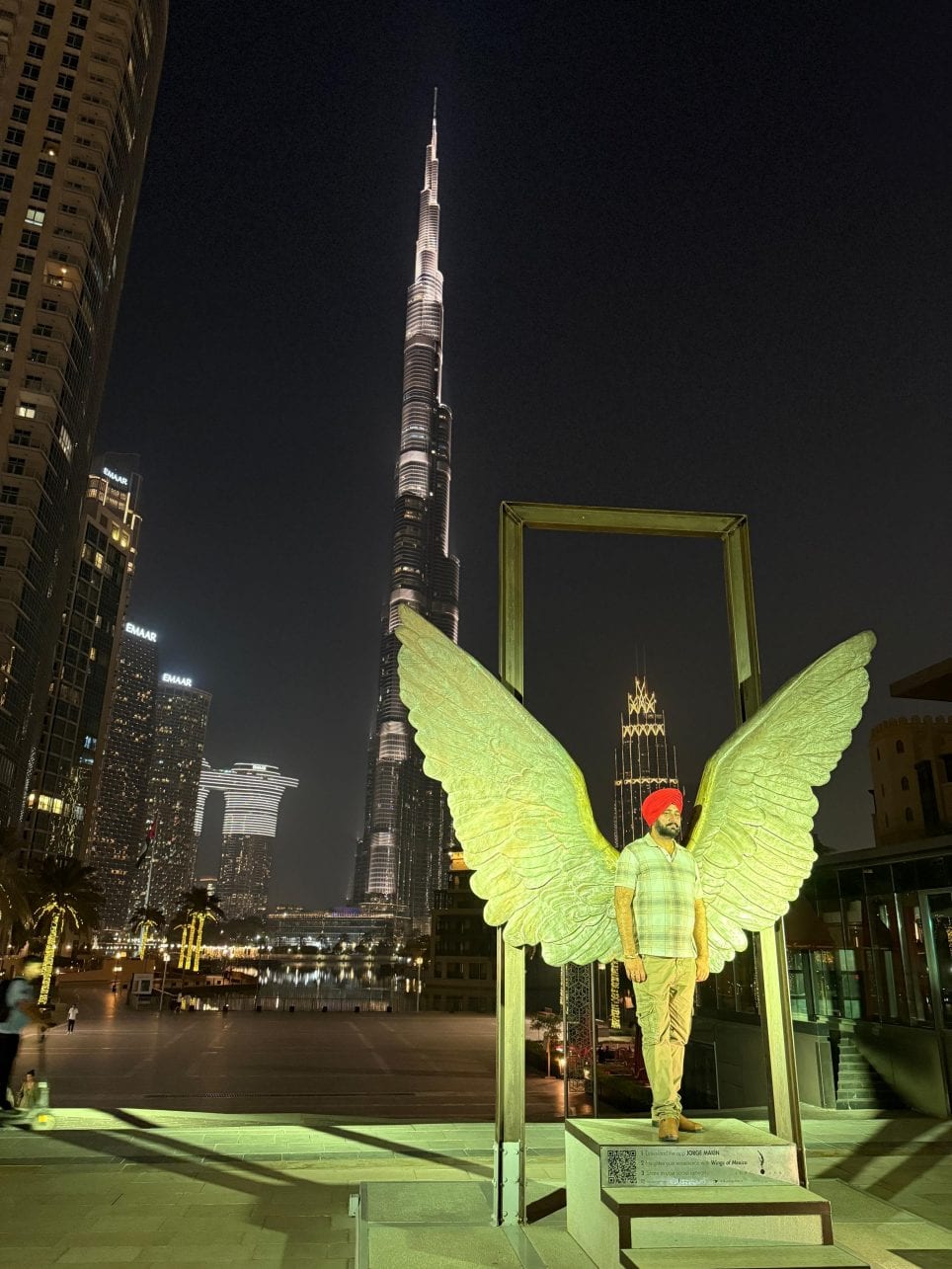
Wings of Mexico
Created by Mexican artist Jorge Marín, this bronze sculpture of angelic wings is one of Dubai’s most photographed art installations. Positioned with the Burj Khalifa as a backdrop, it invites visitors to step between the wings for a picture-perfect moment.
2-Day Dubai Itinerary: From Souks to Skyscrapers
Burj Khalifa Photo Stop
No visit to Dubai is complete without admiring the Burj Khalifa. Beyond being the world’s tallest building, it’s a masterpiece of engineering and design:
Inspired by the Hymenocallis desert flower with a “Y” shaped floor plan for stability and views.
Built with staggering quantities of glass, steel, and concrete.
Filled with art, including World Voices, a sculpture in the lobby symbolizing global harmony.
Whether you admire it from below or head up to the observation deck, the tower represents Dubai’s bold ambition.
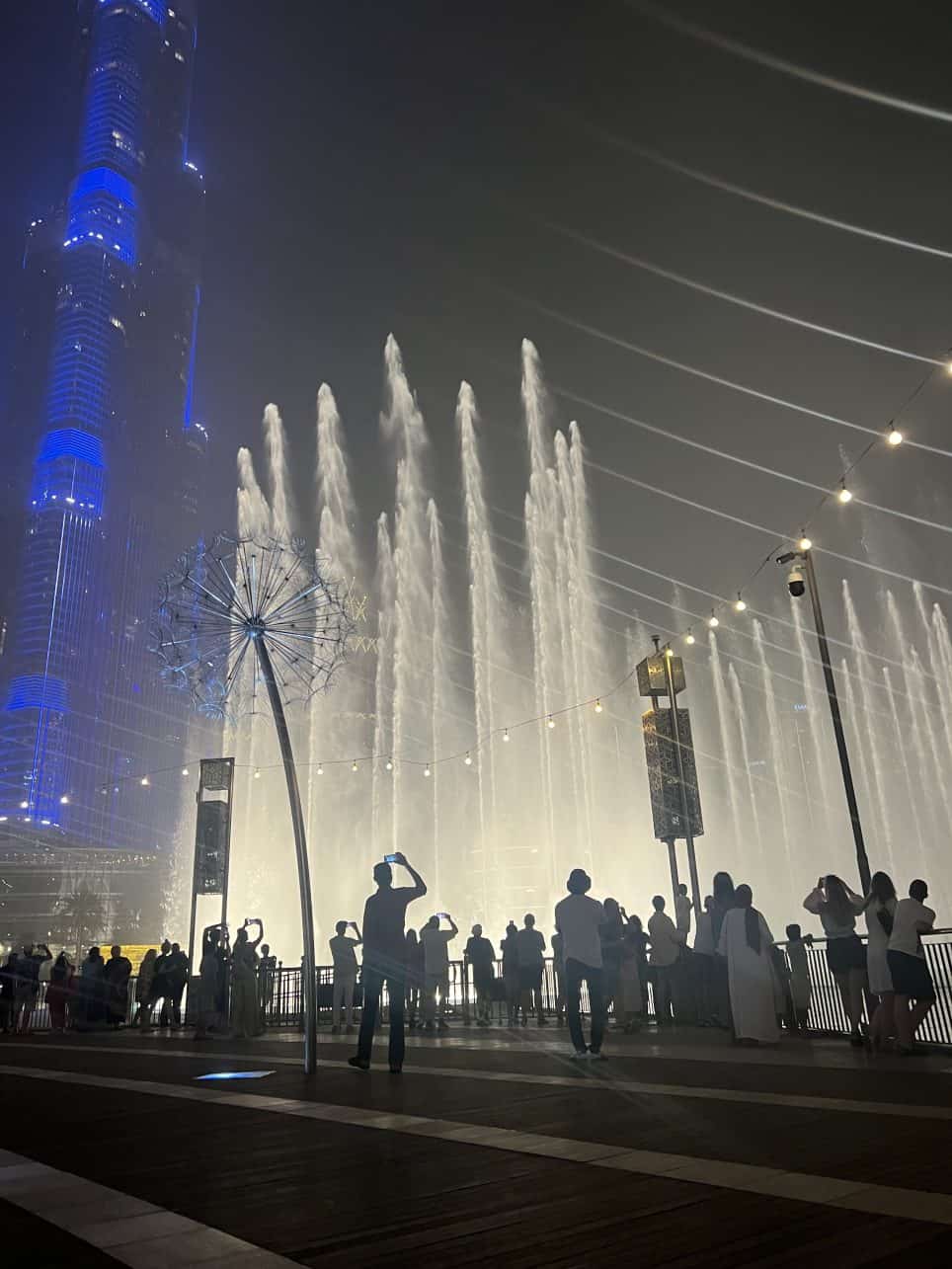
Set on Burj Lake beside Dubai Mall and the Burj Khalifa, the Dubai Fountain puts on daily shows of water, light, and music. Jets of water soar up to 150 meters in synchrony with classical, Arabic, and contemporary songs. It’s one of the city’s most popular evening attractions, and strolling the waterfront before or after a performance is a highlight in itself.
2-Day Dubai Itinerary: From Souks to Skyscrapers
Discover Dubai in Just 4 Hours!
Join Chiltan Tours on a panoramic journey through the city’s iconic landmarks. Capture stunning photos at the Dubai Museum, Burj Al Arab, Dubai Marina, and the Jumeirah Mosque. Glide past architectural marvels like the Dubai Frame, Burj Khalifa, and Palm Jumeirah.
Enjoy a visit to the vibrant Souk Madinat Jumeirah before exploring the world-famous Dubai Mall (optional drop-off).
Comfortable hotel pick-up and drop-back included.
Perfect for first-time visitors and travelers short on time.
Dubai’s best highlights in one unforgettable tour—your perfect city introduction awaits!
Choose your preferred date and book below:
Experience the Best of Dubai in Two Days
Dubai is a city that tells two stories at once: the heritage of a bustling trading port and the vision of a modern global hub. In just two days, you can journey from the narrow alleys of spice-filled souks to the glittering skyline crowned by the Burj Khalifa. This itinerary offers a balanced glimpse of both worlds — the traditions that shaped Dubai and the innovations that define it today.
Whether it’s crossing the creek on an abra, shopping for saffron, or watching the Dubai Fountain dance against the night sky, each stop adds a layer to the city’s rich character. Take it slow, soak in the contrasts, and let Dubai surprise you at every turn.
ChiltanTours is your go-to travel buddy in the UAE, ready to take you on amazing adventures like Dubai City Tours, Desert Safaris, Hatta Adventures, and beyond. Discover the UAE’s stunning sights with ease, safety, and expert tips every step of the way.
ChiltanTours is your go-to travel buddy in the UAE, ready to take you on amazing adventures like Dubai City Tours, Desert Safaris, Hatta Adventures, and beyond. Discover the UAE’s stunning sights with ease, safety, and expert tips every step of the way.
The technical storage or access is strictly necessary for the legitimate purpose of enabling the use of a specific service explicitly requested by the subscriber or user, or for the sole purpose of carrying out the transmission of a communication over an electronic communications network.
Preferences
The technical storage or access is necessary for the legitimate purpose of storing preferences that are not requested by the subscriber or user.
Statistics
The technical storage or access that is used exclusively for statistical purposes.The technical storage or access that is used exclusively for anonymous statistical purposes. Without a subpoena, voluntary compliance on the part of your Internet Service Provider, or additional records from a third party, information stored or retrieved for this purpose alone cannot usually be used to identify you.
Marketing
The technical storage or access is required to create user profiles to send advertising, or to track the user on a website or across several websites for similar marketing purposes.

:max_bytes(150000):strip_icc()/TAL-happy-tourist-lisbon-HAPPYVACAYLISBON0925-332b5c2a231b4e3d94952916f0a37357.jpg "This City Was Just Ranked the Happiest Travel Destination in the World for Its Sunshine, Walkability, and Green Spaces")
:max_bytes(150000):strip_icc():format(jpeg)/TAL-happy-tourist-lisbon-HAPPYVACAYLISBON0925-332b5c2a231b4e3d94952916f0a37357.jpg)





:max_bytes(150000):strip_icc()/TAL-header-aerial-early-mountain-vineyards-virginia-VAOLDSTWINEREGION0825-5aaadc1a389d4552991a01226a3c5795.jpg "This Is the Oldest Wine Region in the U.S.—and No, It’s Not in California")
:max_bytes(150000):strip_icc():format(jpeg)/TAL-header-aerial-early-mountain-vineyards-virginia-VAOLDSTWINEREGION0825-5aaadc1a389d4552991a01226a3c5795.jpg)