Kia will soon expand its electric vehicle lineup with the addition of the EV4 compact sedan and hatchback
The EV4’s design stays true to the bold lines of the concept version first revealed in 2023
Availability and pricing have yet to be announced
Kia continues to expand its lineup of electric vehicles, with the new EV4 compact sedan and hatchback joining the fray on Monday.
First previewed in 2023 by the EV4 concept, the production EV4 sedan retains the concept’s striking fastback design, while the hatchback is equally bold, ensuring the more practical body style will also stand out on the road.
Kia has only revealed the vehicles’ exteriors so far. The official debut is set for Feb. 24 during a special Kia EV Day presentation in Tarragona, Spain, where the automaker will also provide an update on its electrification strategy. Full details on the EV4 will follow on Feb. 27.
The EV4’s exterior design aligns with recent Kia EV releases, such as the EV3 subcompact crossover and EV5 compact crossover. Signature elements include a floating roof and a jagged daytime running light pattern Kia calls the Star Map. A sporty GT-Line trim adds distinctive touches, such as a wing-like character line on the front and rear fascias, along with 19-inch wheels featuring a triangular pattern.
New Kia EV4 hatchback
Inside, expect a minimalist cabin with a single panel housing screens for both the digital gauge cluster and infotainment system, similar to the EV4 concept. At the concept’s unveiling, Kia also announced that the production model would feature a new AI-powered voice assistant, which the company plans to roll out across more of its vehicles.
The EV4 will likely be built on Hyundai Motor Group’s flexible E-GMP platform, also used in the EV6 and EV9, as well as various Hyundai and Genesis models. To keep costs down, Kia is expected to opt for a more affordable 400-volt version of the platform rather than the higher-end 800-volt version, a strategy previously employed for the EV3.
Market availability for the EV4 has yet to be announced, but it is part of Kia’s broader plan to offer at least 14 electric vehicles globally by 2027. Also in the pipeline are two electric pickup trucks, an EV2 subcompact crossover, a PV5 midsize van, and possibly an EV8 sedan to succeed the Stinger and K8 models sold overseas.
Report-card grades are derived from a consensus of test-driver evaluations. All grades are versus other vehicles in the same class. Value grade is for specific trim level evaluated, and may not reflect Consumer Guide’s impressions of the entire model lineup.
Big & Tall Comfort
Big Guy
B+
Tall Guy
B
Big & Tall comfort ratings are for front seats only. “Big” rating based on male tester weighing approximately 350 pounds, “Tall” rating based on 6’6″-tall male tester.
Base price: $46,900 (not including $1175 destination charge)
Options on test vehicle: N/A
Price as tested: N/A
Pros and Cons
The great: Genuinely fun to drive, roomy and comfortable cabin
The good: Relatively easy on the gas, long-trip comfort
The not so good: Glitchy Bluetooth connectivity, premium price
Review
It’s easy to relate. As the years go by, it gets a little harder to stay in shape. This author admits that he is not just a little heavier than he was in high school. Things are no different with BMW’s “small,” sporty, and arguably affordable brand, Mini. Born in 1959, the very first Mini was just 153 inches long, and clocked in at only 1290 pounds. But that was a long time ago.
2025 Mini Countryman JCW
Size
Redesigned for 2025, the largest model in the Mini lineup, the Countryman, now measures 175 inches in length, and weighs—wait for it—more than 3800 pounds. That’s right, the 2025 Countryman is almost three times heavier than the first Mini. But to be fair, the new Countryman wears the extra pounds well, and, frankly, few Americans would actually purchase a car as small and bereft of amenities as the first Mini anyway.
2025 Mini Countryman JCW
Also, to be additionally fair, that first Mini was a sporty coupe, while the Countryman is an AWD crossover—and a very appealing crossover at that.
As before, the new Countryman shares its underbits with the BMW X1 small crossover. And like the BMW, the Mini is pretty engaging to drive. More on that in a moment.
Prices and Trim Levels
2025 Mini Countryman JCW
The Countryman lineup returns for 2025 in standard and JCW (John Cooper Works) trim levels. The standard lineup consists of Signature Plus ($39,895) and Iconic ($43,095) trim levels. Both are powered by a 241-horsepower turbocharged 2.0-liter 4-cylinder.
Engines
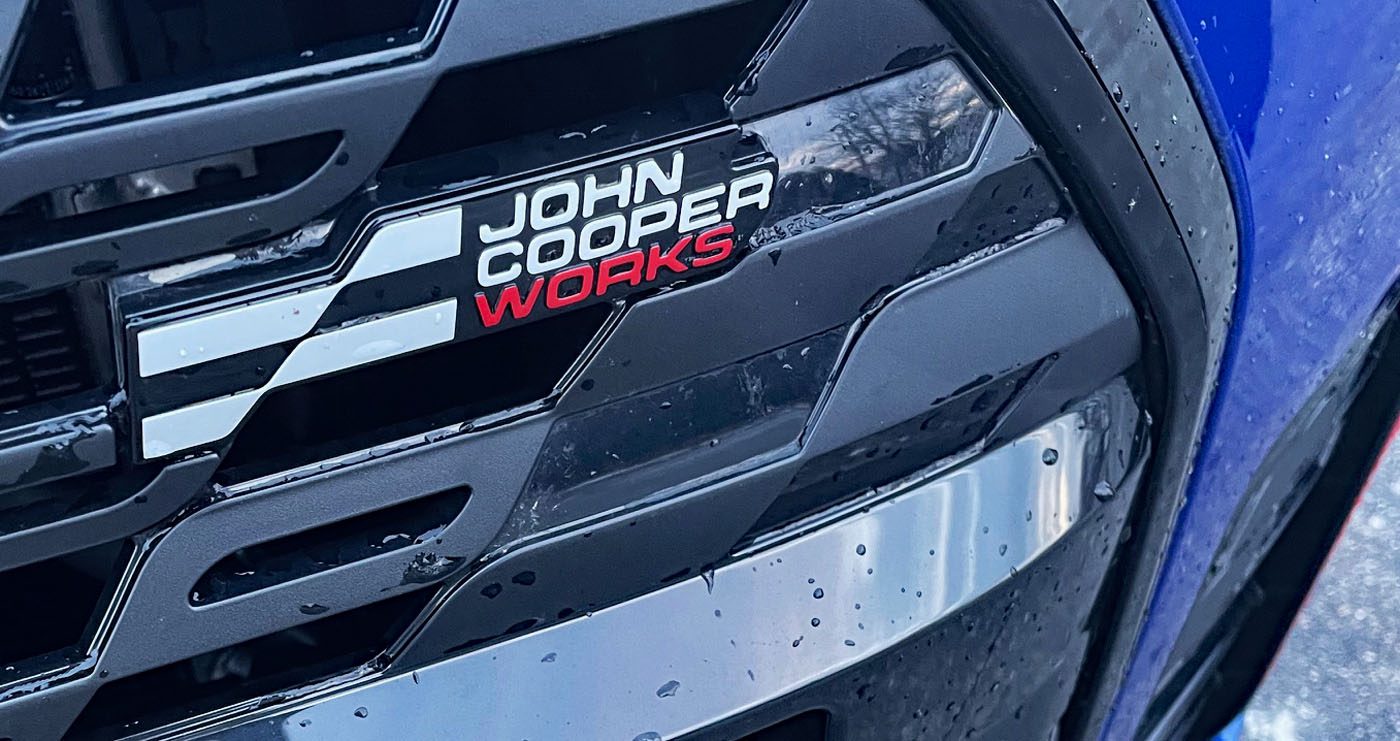
The JCW is offered in the same two trim levels, but swaps the 241-horsepower engine for a potent 312-horse unit, along with a number of suspension and chassis bits, all in the name of better performance. The upgrade Iconic package brings with it, among other niceties, larger wheels and tires, and a Harman Kardan-brand premium audio system. All Countryman models come with AWD and a 7-speed “dual-clutch” automatic transmission.
The Countryman JCW Signature Plus starts at $47,895, the Iconic $50,295. Note that both a plug-in-hybrid and pure-electric version of the Country are also offered for ’25.
As for size, the Countryman is approximately as large as Hyundai’s popular Kona small crossover. Overall, the Mini is about 2 inches longer than the Hyundai, and roughly 3 inches higher. The Mini is considerably heavier, however. The Countryman does put those extra pounds to good use, though, as this versatile Mini proved to be both sporty and luxurious, if maybe a little expensive.
Consumer Guide recently spent a week behind the wheel of a 2025 Mini Countryman in Iconic trim painted Blazing Blue. Our vehicle was not accompanied by a window sticker; however, we estimate the bottom-line price, including destination charge to be around $53,000.
Connectivity
Though redesigned, the Countryman cabin retains its playful character. The dashboard is again dominated by a large, round, centrally located screen, which serves as both the Countryman’s infotainment center and instrument panel. What this means is—in keeping with Mini tradition, there are no instruments directly in front of the driver. For those new to the brand, this seemingly odd setup quickly becomes normal in regular use. The large digital speed readout, for example, is easy to locate and read at a glance. Plus, the vehicles head-up display, which is projected onto the windshield directly in front of the drive, includes speed among the info presented.
All that said, se did find icons located near the edge of the pie-plate screen difficult to engage with larger (fatter)fingers. We also, to our great frustration, found ourselves frequently forced to reconnect our phones via Bluetooth to the car. This glitch delayed the start of our commute most days by several minutes.
2025 Mini Countryman JCW
Cabin
Though casual feeling, the Countryman cabin is lined with high-quality materials, including the strange-but-endearing fabric dashboard surface. And, for those of a vegan bent, the leather-looking seats are actually upholstered in Vescin synthetic leather—which looked pretty good to us.
Even this big editor found the Countryman plenty roomy. Big door openings mean easy access to the cabin, and there’s plenty of space inside for up to four adults. Add a fifth passenger if you must, but things will be tight in back.
Outward visibility is good, and the cabin feels big, bright, and airy. And, despite the low-speed exhaust noise kicked up by the engine during acceleration, the Countryman is surprisingly quiet at speed. Thanks to the peaceful interior, decent ride comfort, and firm, supportive seats, this Mini crossover makes for an excellent long-trip conveyance.
Ride and Handling
The optional ($600) 20-inch alloy wheels, in this case shod with all-season tires, may have firmed up the ride somewhat, but we still found overall comfort to be excellent. Most importantly, the Country serves up rewarding handling along with excellent steering feel, that latter being a rare characteristic these day.
Power and Performance
But whatever the Mini’s ultimate limits, it is among the most entertaining small crossovers to drive around town. It is quick off the line, produces great, snarky exhaust noise, and serves up plenty of passing and merging power. The brakes, too, are firm and strong, adding to the overall sense of control.
And though we poked lovingly at the Countryman’s chunky midriff, we can’t argue with our overserved fuel economy. In a mix of driving that slightly favored around-town errands, our test car returned almost 25 mpg, acceptable for any small crossover, and impressive for one serving up 312 horsepower and is this much fun to drive. This is also 2 mpg better than the EPA combined fuel-economy estimate.
Value
The Countryman is so quirky that we find it difficult to pin down direct competition, but we suggest that anyone serious about the Mini crossover also test drive the BMW X1, and also the delightful Acura RDX. While we find the connectivity issues to be a major irritant, there is no denying the Countryman’s excellent blend of fun and functionality. Also, if you don’t want or need all the horsepower, consider the base Countryman with its still healthy 241-horsepower engine. And, all things considered, we’ll forgive the weight gain.
There’s not just the dichotomy between rugged, body-on-frame SUVs and more car-like unibody crossover wagons.
Looking within just the latter category, there are models with boxy bodies, ones that try to look like coupes, and others that really just look like hatchbacks on stilts.
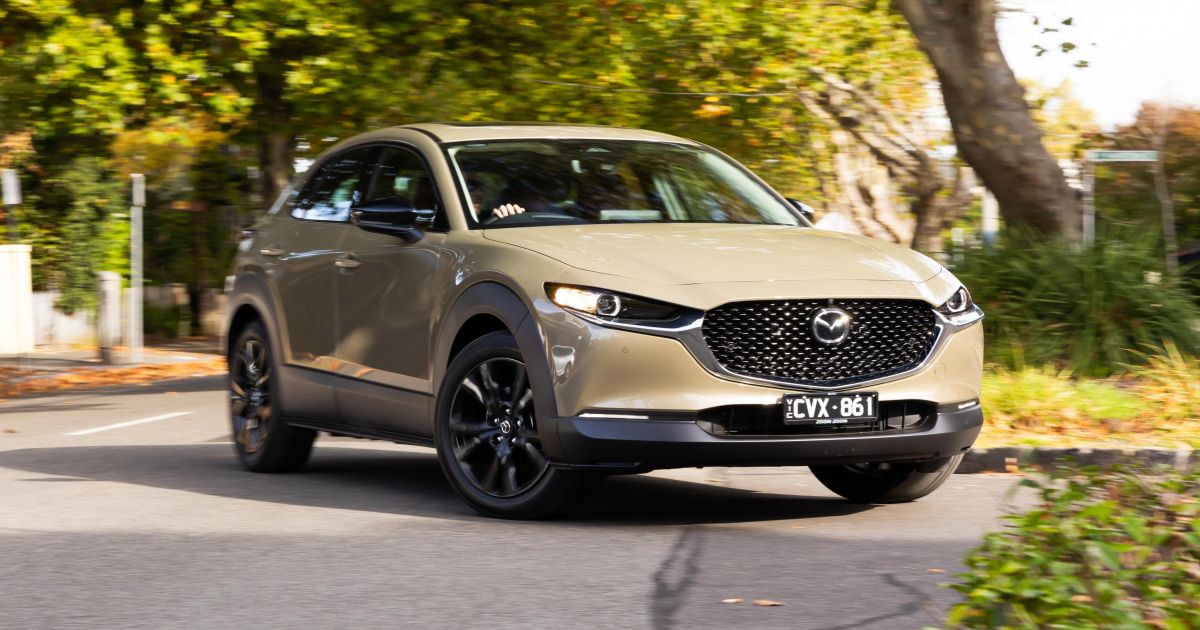
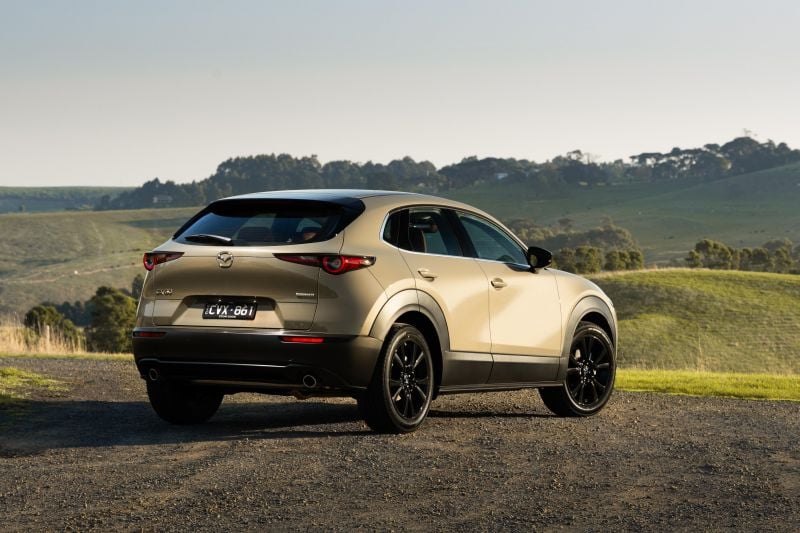
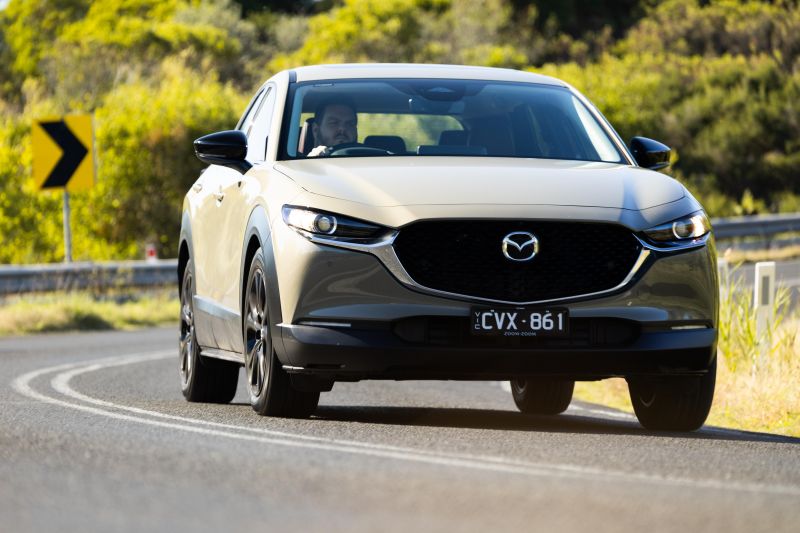
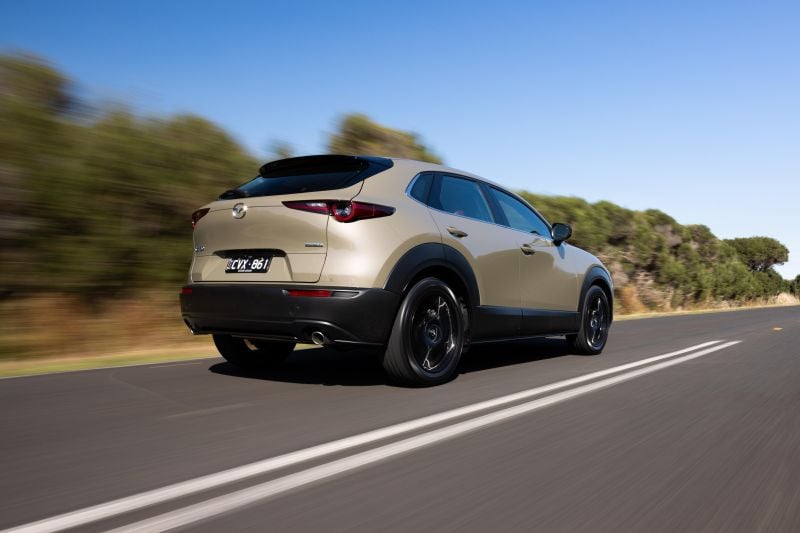
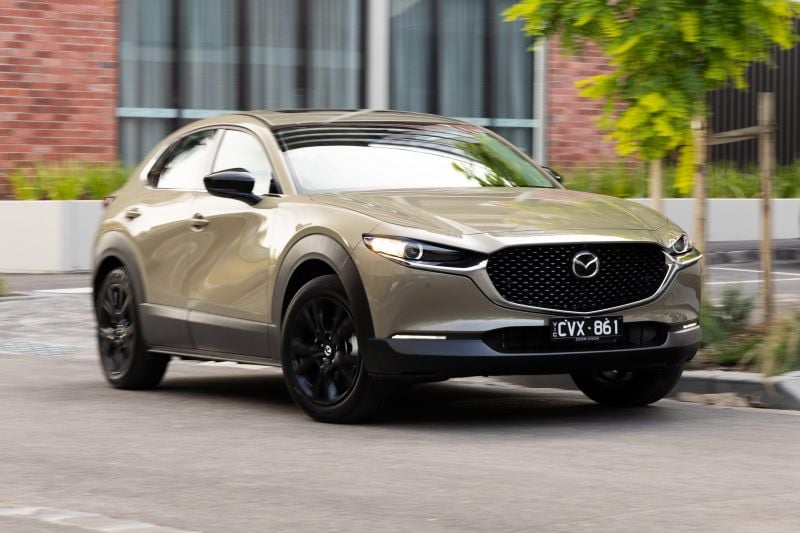
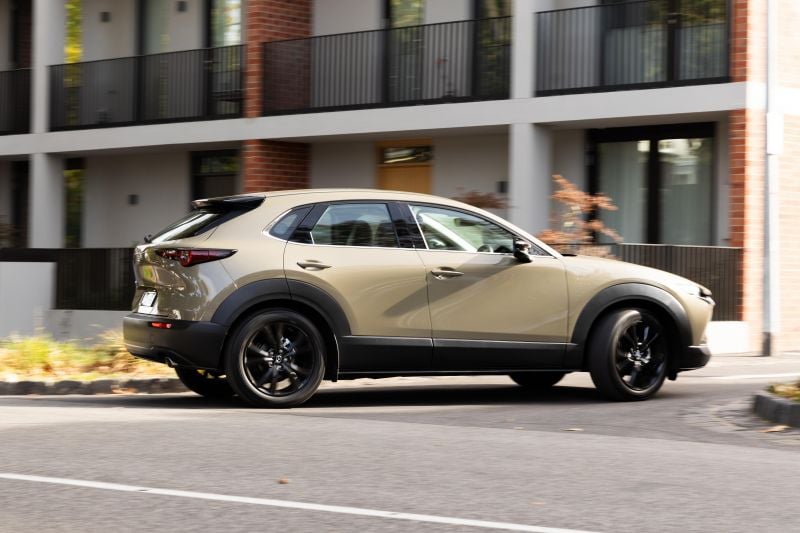
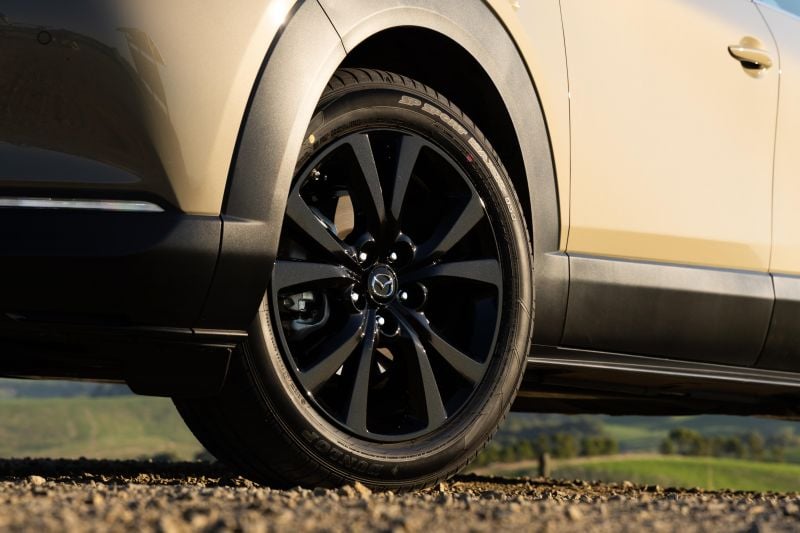
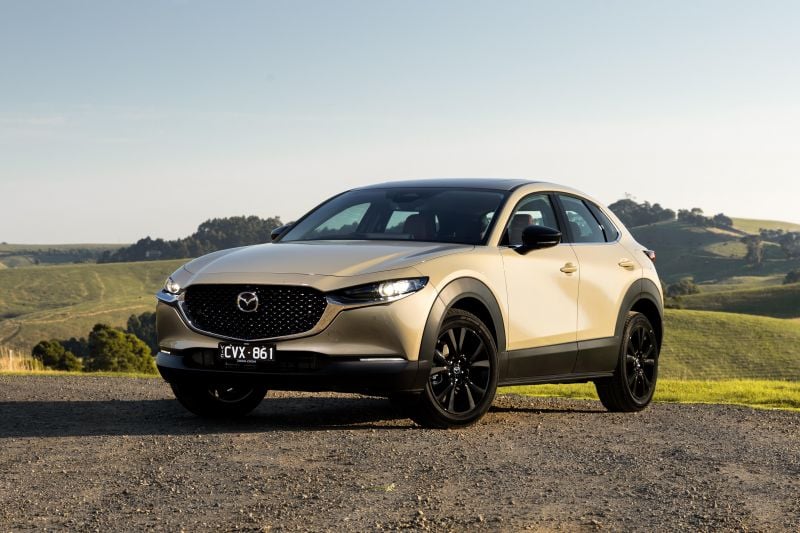
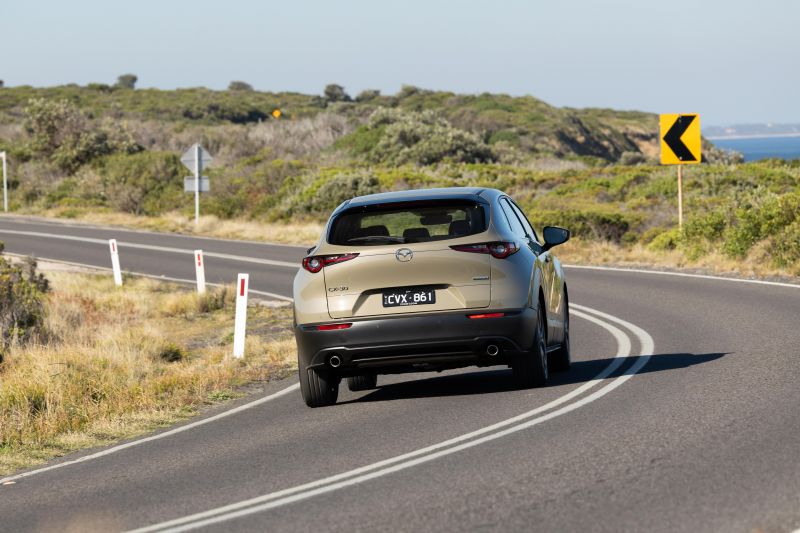
The Mazda CX-30 is one of the latter. Sure, it shares essentially nothing externally with the Mazda 3 hatchback it’s closely related to under the skin, but strip away those overly chunky black plastic wheel-arches and drop the ride height a bit and, well, it sure looks like a hatchback.
The CX-30 now outsells the Mazda 3 and it costs more, which means it’s likely to be more profitable for the brand.
WATCH: Paul’s video review on the 2020 Mazda CX-30 G20 Evolve
They might have similar silhouettes but the CX-30 has a more hospitable back seat, while only the CX-30 offers the option of all-wheel drive in Australia.
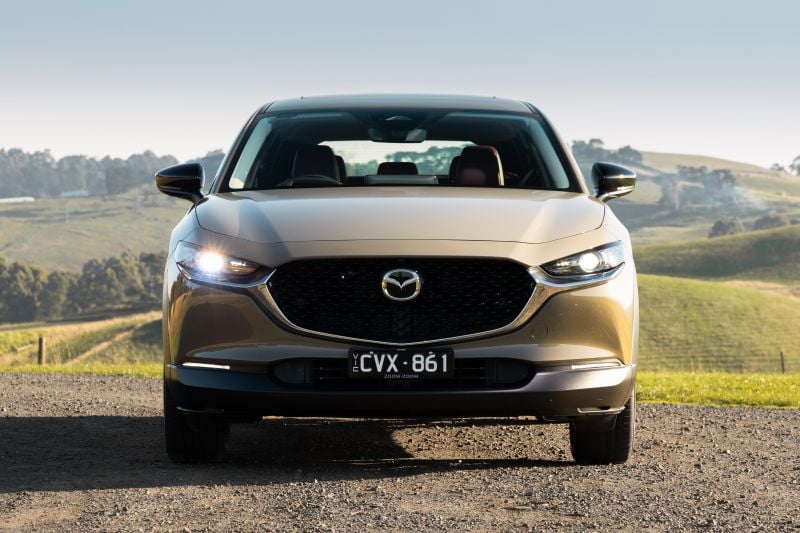
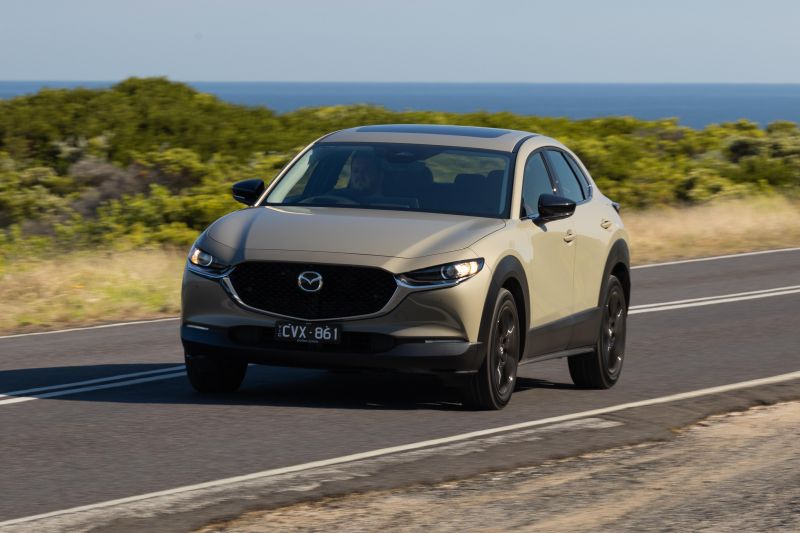
That’s what we’ve put to the test: an all-wheel drive CX-30 in second-from-top GT SP trim. It’s finished in a lovely Platinum Quartz metallic paint finish but, as it’s a CX-30 not wearing the Astina badge, it’s bafflingly saddled with halogen daytime running lights. Yuck.
If you’re using the back seats, the CX-30 is arguably already worth the price premium over a Mazda 3. But is this hatchback-style SUV at its best in GT SP AWD trim?
How does the Mazda CX-30 compare?
View a detailed breakdown of the Mazda CX-30 against similarly sized vehicles.
Mazda
CX-30
How much does the Mazda CX-30 cost?
On test here is the GT SP, which is the penultimate trim level in the range. It’s available in front- and all-wheel drive – our test car has the latter.
Model
Price before on-road costs
2025 Mazda CX-30 G20 Pure
$33,940
2025 Mazda CX-30 G20 Evolve
$35,840
2025 Mazda CX-30 G20 Touring
$39,640
2025 Mazda CX-30 G25 Touring
$41,140
2025 Mazda CX-30 G20 Touring LE
$41,940
2025 Mazda CX-30 G20 Astina
$44,840
2025 Mazda CX-30 G25 GT SP
$43,140
2025 Mazda CX-30 G25 GT SP AWD
$45,140
2025 Mazda CX-30 G25 Astina
$46,340
2025 Mazda CX-30 G25 Astina AWD
$48,340
To see how the Mazda CX-30 stacks up against its rivals, use our comparison tool
What is the Mazda CX-30 like on the inside?
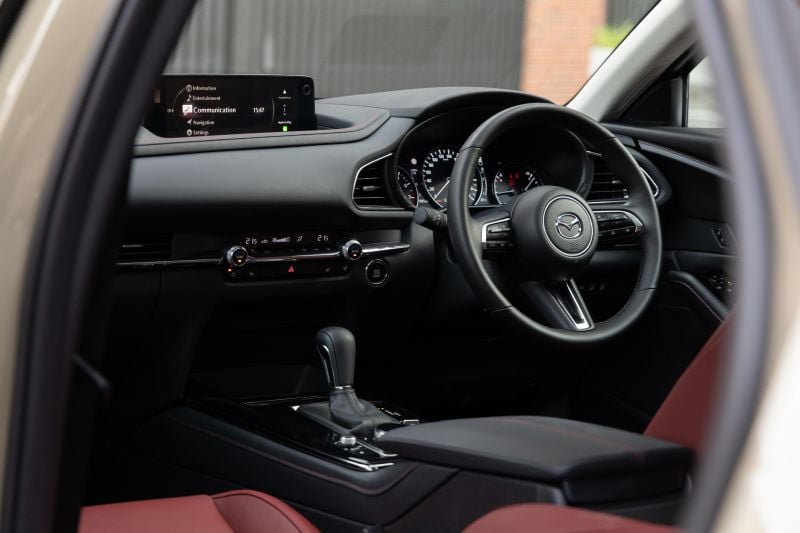
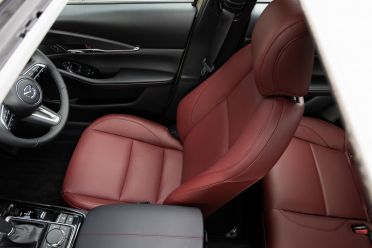
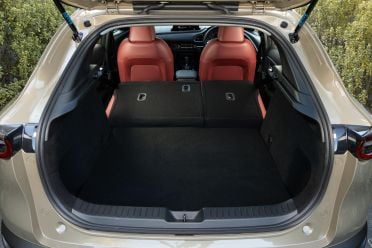
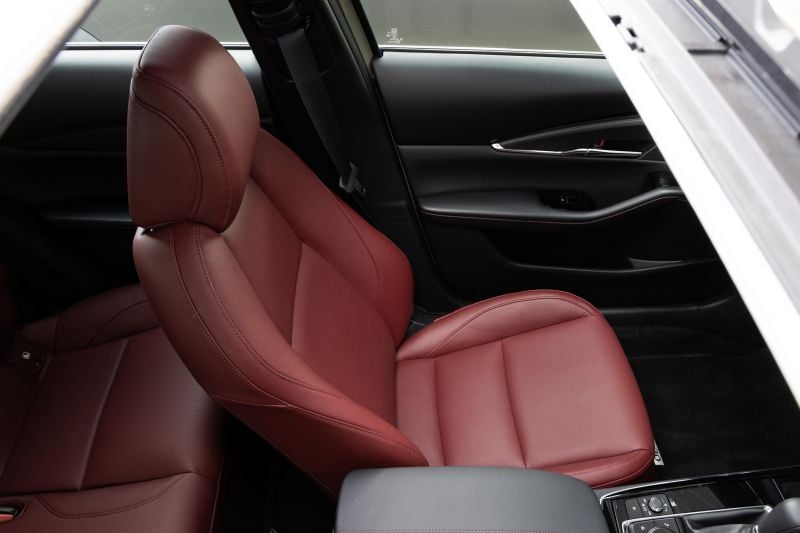
The CX-30 has one of the most upscale interiors in the small SUV segment by far, and the red leather trim of the GT SP really makes it pop.
The dashboard design is somewhat odd in appearance, but material quality is class-leading.
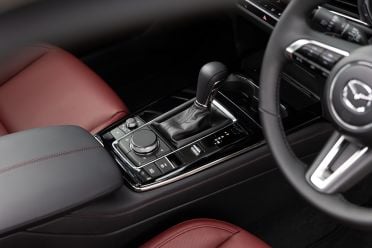
Mazda has nailed the key touch points. The leather-wrapped steering wheel feels soft and supple, though some of its switchgear is a bit fiddly.
There’s leatherette padding on the sides of the centre console, a soft-touch dash top and some particularly soft trim across the front of the dash. Likewise, the front doors have soft-touch trim up top, and feature leatherette accents further down.
There are still buttons and knobs for the climate control, and these have a tactile, satisfying operation and look handsome to boot.
Mazda has employed some glossy black trim on the centre console, but look closely and it has a carbon-fibre weave look to it, which makes it a bit more interesting if no less smudge-prone.
The centre console is clever. There’s a sliding lid for the centre bin, allowing you to cover more of the console.
Other storage includes bottle holders in the doors that will actually fit a 1.5L water bottle, a competitively sized glove compartment, plus a strange cubby to the right-hand side of the steering wheel. This has a large door but only a tiny space that can fit perhaps a few coins.
Perhaps to keep the centre stack and console looking clean, Mazda has also buried some buttons over here like the one to manually activate the camera, as well as the hill descent control switch.
While that’s not particularly clever, we do appreciate the light that comes on on the wiper stalk to let you know when rain-sensing mode is on.
Mazda has made the positive step in adding touch functionality back to some of its cars’ screens, if only when you’re using smartphone mirroring. There’s also still the handy rotary dial for navigating all the other screens.
There’s just one problem: Mazda is still positioning its infotainment screens like they don’t have touch functionality even when they do. It’s a big stretch trying to reach the screen.
The infotainment interface is attractive and intuitive, though we didn’t experience the smoothest connection with wireless Android Auto.
It wouldn’t drop out, but there would be slight skipping on songs. This wasn’t something we experienced in Audi and Chevrolet models that came through our garage around the same time.
The CX-30 has a fairly high belt line and slim windows, but it feels airier inside than a Mazda 3 hatchback.
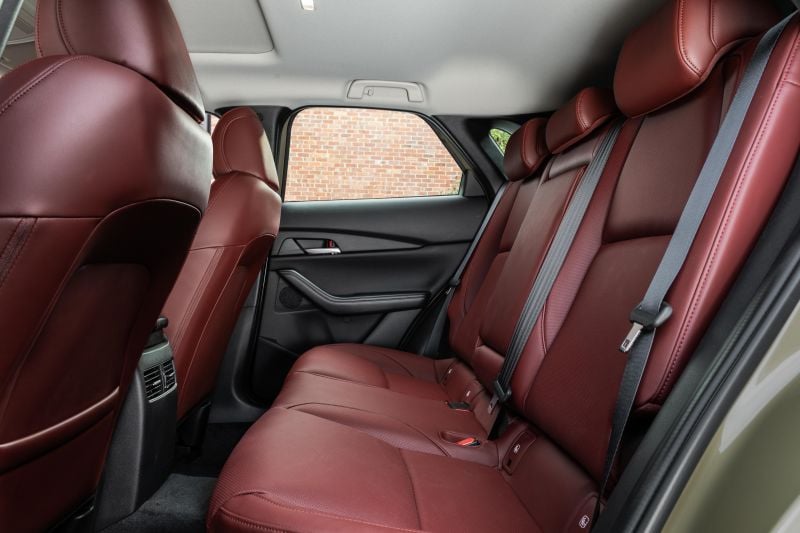
The red leather trim also brightens the cabin up, though we’ve felt nicer leather.
Step into the back and there’s a decent if not outstanding amount of room. The front seatbacks are helpfully scooped out and, at 180cm tall, I had sufficient headroom, knee room and leg room, though boxier small SUVs like the Kia Seltos feel more spacious back here.
There are top-tether anchor points for child seats, as well as ISOFIX points for the outboard seats. You also get a pair of air vents back here, plus map pockets and a fold-down armrest with cupholders. No USB outlets, though.
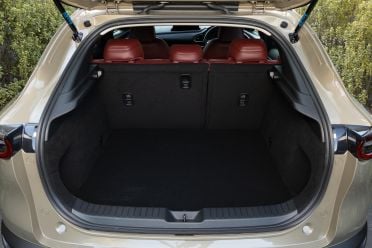
Boot space is a claimed 317L, again down on boxier rivals like the Seltos. Under the boot floor you’ll find a space-saver spare.
2025 Mazda CX-30
Length
4395mm
Width
1795mm
Height
1540mm
Wheelbase
2655mm
Boot capacity
317L
To see how the Mazda CX-30 stacks up against its rivals, use our comparison tool
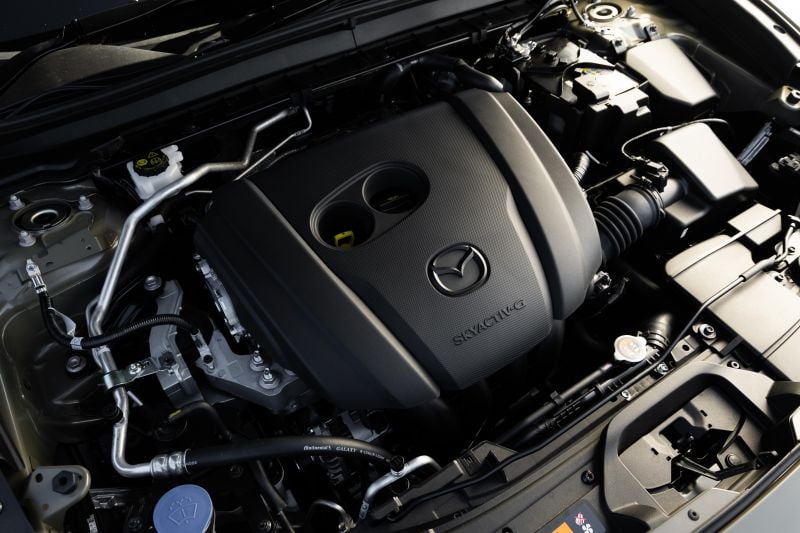
What’s under the bonnet?
Our tester is equipped with the larger and more powerful G25 four-cylinder petrol engine.
Specifications
Mazda CX-30 GT SP AWD
Engine
2.5L 4cyl naturally aspirated
Power
139kW
Torque
252Nm
Transmission
6-speed automatic
Drive type
All-wheel drive
Weight
1546kg
Fuel economy (claimed)
6.8L/100km
Fuel economy (as tested)
9.7L/100km (inner-city, suburban and highway loop) 11.3L/100km (over the course of a week)
Fuel tank capacity
48L
Fuel requirement
91-octane regular unleaded
CO2 emissions
157g/km
Emissions standard
Euro 5
Braked tow capacity
1200kg
Mazda claims combined-cycle fuel economy of 6.8L/100km with the CX-30 GT SP AWD – 0.2L/100km more than a front-wheel drive version – and urban fuel consumption of 8.7L/100km.
Over a loop consisting of inner-city, suburban and highway driving, we averaged 9.7L/100km. Over the course of a week, admittedly with a heavy skew towards urban driving, fuel consumption rose to 11.3L/100km.
We’ve observed better fuel economy in the Volkswagen T-Roc 140TSI, even though the rival SUV has claimed combined-cycle fuel economy that’s higher.
To see how the Mazda CX-30 stacks up against its rivals, use our comparison tool
How does the Mazda CX-30 drive?
Big engine, small car.
The CX-30 should be fun, and with the turbocharged version of this engine available in North America it probably is.
But this naturally aspirated engine, combined with a six-speed automatic, simply isn’t as enjoyable as rivals with often smaller displacement but turbocharged engines.
The transmission deserves most of the blame. It doesn’t shift as smoothly as it should, with some pronounced shifts and even a bit of jerkiness among the lower ratios.
The CX-30 also awkwardly swapped cogs when on steep grades, which furthered the feeling of the Mazda being a bit breathless.
I rarely use paddle shifters but I found myself using them on multiple occasions with the CX-30. The engine also has a droning note that isn’t particularly pleasant to listen to, though from outside the car it sounds interesting.
Overall, the powertrain lacks the snappy shifts and low-end responsiveness of the torquier Volkswagen T-Roc 140TSI and Cupra Formentor V.
Alas, while it’s a bit underdone in the powertrain department, the ‘zoom-zoom’ folks have given the CX-30 a firm and ‘sporty’ ride. We’d stop short of calling it uncomfortable, but it communicates all the details of the road surface.
At higher speeds, the CX-30 is more pleasant. The cabin is also decently insulated from noise, though some tyre roar leaks in across coarse-chip surfaces. Those tyres can also howl during spirited driving.
We’d love for the turbocharged engine to come here because the CX-30 is an enjoyable steer if you set aside the disappointing powertrain.
The steering is well-weighted and while there’s a bit more body roll than with a Mazda 3, the CX-30 handles well and stays nice and flat in corners.
Compression and rebound damping is managed well across surface changes, too – this still feels more hatchback than SUV.
The driver assist systems generally work well, though we did experience one notable exception.
Driving up a carpark ramp, the autonomous emergency braking system applied the brakes even though we were driving at low speed and there was no oncoming vehicle or imminent risk of collision. Fortunately, this only happened once.
Out on the road, the lane-keep assist works well without feeling too intrusive. There’s also a lane centring function with the Vision Technology Package that works well, though it will ding at you every time it detects a break in lane markings.
The Vision package also brings a surround-view camera with excellent resolution.
The CX-30’s adaptive cruise control works well, and there’s also a separate speed limiter function which is handy.
We’ve already spoken of fuel consumption which was higher than expected, particularly given the Mazda has an automatic engine idle-stop system to improve efficiency. This system is actually among the smoothest out there, and never annoyed us enough to make us want to turn it off.
All-wheel drive doesn’t exact much of a fuel economy penalty, at least on paper. But given the CX-30’s modest outputs, it’s not like the AWD system is needed to help get all this power to the ground.
Sure, some wet weather at the end of our loan made us better appreciate the presence of all-paw traction. But with stability control and a good set of tyres with plenty of tread, you scarcely need all-wheel drive for rainy weather, and we don’t exactly have a lot of snow in this country.
We reckon most buyers would be well-served by the more affordable front-wheel drive option.
To see how the Mazda CX-30 stacks up against its rivals, use our comparison tool
What do you get?
2025 Mazda CX-30 G20 Pure equipment highlights:
Mazda Connected Services
Vehicle locator
Geofencing
Flashing lights feature
Curfew notifications
Remote locking
Vehicle health
Status reports
Stolen vehicle tracking assistance
16-inch grey alloy wheels
Space-saver spare wheel
Automatic LED headlights
Automatic high-beam
Rain-sensing wipers
Automatic power-folding side mirrors
7.0-inch digital instrument cluster
8.8-inch infotainment system
Head-up display
Wired Apple CarPlay and Android Auto
2x USB-C ports (replaces USB-A)
Satellite navigation
DAB+ digital radio
Eight-speaker sound system
Push-button start
Leather-wrapped shifter
Leather-wrapped steering wheel
Fabric upholstery
Evolve adds:
18-inch silver alloy wheels
Paddle shifters
Dual-zone climate control
Wireless Apple CarPlay and Android Auto
Wireless phone charger
Overhead sunglass storage
Rear fold-down centre armrest
Touring adds:
Front parking sensors
Auto-dimming driver’s side mirror
Reverse tilt-down driver’s side mirror
Side mirror memory
Keyless entry
Illuminated front vanity mirrors
Black leather upholstery
10-way power driver’s seat
Two-position driver’s seat memory
Touring LE adds:
Black 18-inch alloy wheels
Black grille
Signature spoiler
Black mirror caps
Terracotta ‘Maztex’ and suede upholstery
Terracotta armrest, centre console, door card and dashboard contrast stitching
Vision Technology package
Front cross-traffic alert
Cruising & Traffic Support
Driver monitoring system
Surround-view monitor
10.25-inch infotainment system
GT SP adds (over Touring):
18-inch black alloy wheels
Power tilt and slide glass sunroof
Gloss black grille
Gloss black side mirrors
10.25-inch infotainment system
Heated steering wheel
Heated front seats
Burgundy leather upholstery
The Vision Technology package ($2000, G20 Pure and Evolve; $1800, G20 and G25 Touring; $1300, G25 GT SP FWD and AWD) adds:
Front cross-traffic alert
Cruising & Traffic Support
Driver monitoring system
Surround-view camera
Front parking sensors (G20 Pure and G20 Evolve only)
To see how the Mazda CX-30 stacks up against its rivals, use our comparison tool
Is the Mazda CX-30 safe?
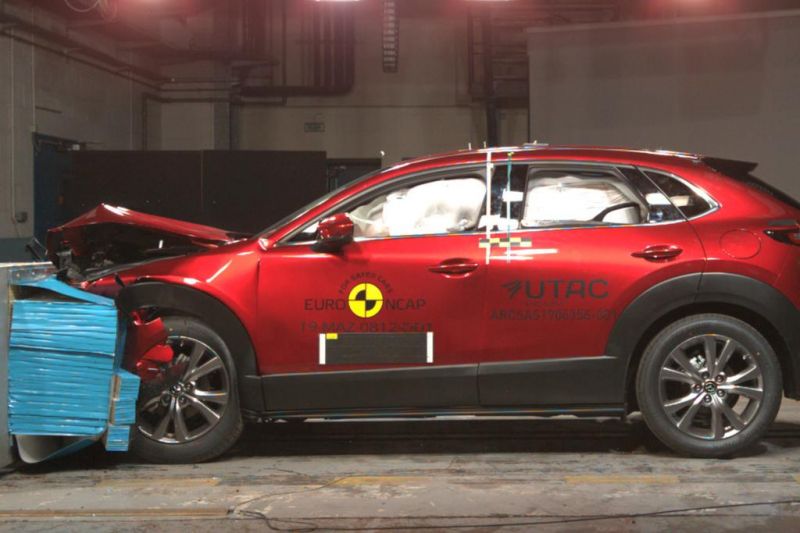
The Mazda CX-30 received a five-star ANCAP safety rating back in 2019.
Category
Mazda CX-30
Adult occupant protection
99 per cent
Child occupant protection
88 per cent
Vulnerable road user protection
80 per cent
Safety assist
76 per cent
Standard safety equipment includes:
Autonomous emergency braking (AEB)
Pedestrian detection
Cyclist detection
Rear AEB
Blind-spot monitoring
Rear cross-traffic alert
Lane-keep assist
Lane departure warning
Driver attention alert
Traffic sign recognition
Rear parking sensors
Reversing camera
Tyre pressure monitoring
G20 and G25 Touring adds:
Touring LE and G20 and G25 Astina adds:
Front cross-traffic alert
Cruising & Traffic Support
Driver monitoring system
Surround-view monitor
To see how the Mazda CX-30 stacks up against its rivals, use our comparison tool
How much does the Mazda CX-30 cost to run?
The Mazda CX-30 is covered by a five-year, unlimited-kilometre warranty.
Servicing and Warranty
Mazda CX-30
Warranty
Five years, unlimited kilometres
Service intervals
12 months or 15,000km
Capped-price servicing
7 years or 105,000km
Total capped-price service cost
$3213
Average capped-price service
$535.50
Opting for all-wheel drive doesn’t bring with it a premium when servicing your CX-30.
To see how the Mazda CX-30 stacks up against its rivals, use our comparison tool
CarExpert’s Take
Unless you plan on going to the snow, there are better options within the CX-30 lineup.
You could save $2000 and go for a front-wheel drive GT SP, or spend the same amount of money as the all-wheel drive model and get a fully loaded front-wheel drive Astina.
There are also desirable options outside of a Mazda showroom.
A Volkswagen T-Roc is more enjoyable to drive, a Kia Seltos is more practical, and a Toyota C-HR more efficient.
The CX-30 delights with the upscale look and feel of its interior, as well as its generally sophisticated infotainment and driver assistance technology.
But the driving experience leaves a bit to be desired, with its pleasing handling and generally quiet cabin let down by a firm ride and clunky powertrain.
The CX-30’s sporty chassis needs a better powertrain to back it up. It’s a pity we don’t get the turbocharged version here, as that could really elevate this SUV. In the meantime, there are rival SUVs that do the zoom-zoom thing better.
Interested in buying a Mazda CX-30? Get in touch with one of CarExpert’s trusted dealers here
Challenge yourself, be prepared, don’t assume, have a plan, be adaptable and never give up.
23hrs 55mins and the suspension collapsed.
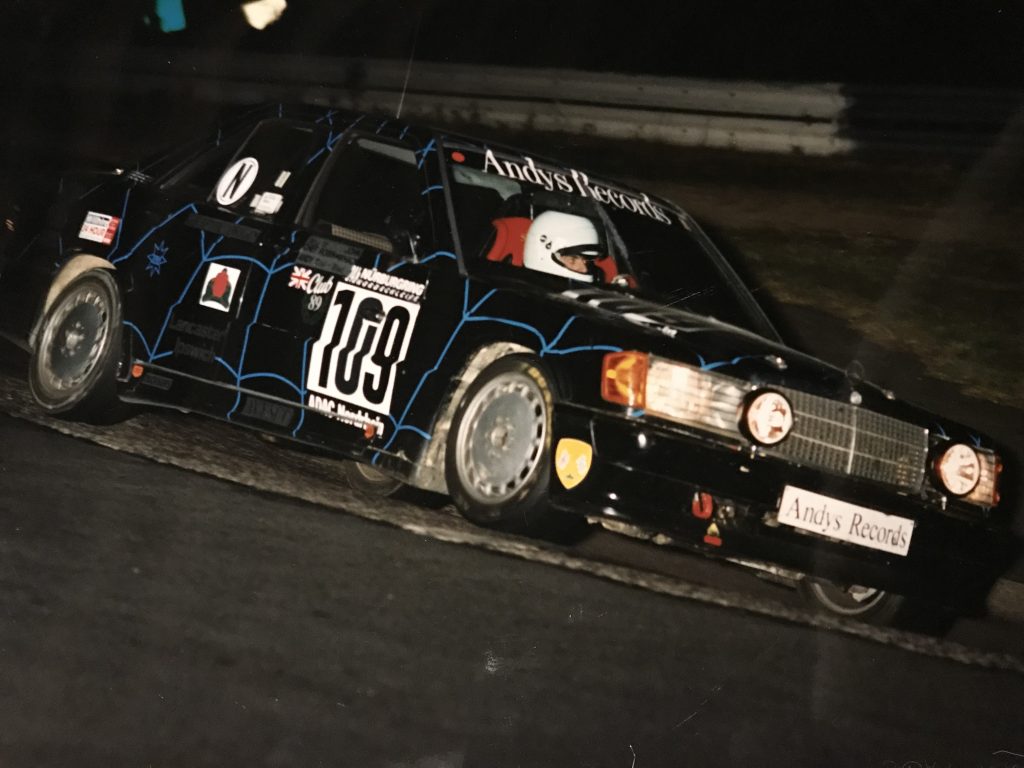
Three weeks before the 1996 Nürburgring 24 Hours, I was offered the chance of a drive — a legendary track, a new car, and a lack of recent racing experience. A challenge and an opportunity I couldn’t resist.
But could I do myself justice? Could I avoid letting the team down?
At the time, I was working at the Mitsubishi Design Centre near Frankfurt, so meeting the UK team beforehand wasn’t an option. However, the legendary 13-mile Nordschleife was within reach so a recce drive was possible. The additional GP circuit loop? That would have to be learned at the event itself.
With fellow designer Tony Pettman strapped in, taking notes, I managed three laps in a hire car before the brakes and tyres cried enough. Far from perfect preparation, but enough to reduce the uncertainties.
Race Weekend – A Quick Learning Curve
Arriving at the track, I assumed – being a UK team – the car would be right-hand drive. It wasn’t. Suddenly, the mental track picture I’d built had to shift by a metre. Initially approaching left-hand corners with the right wheels brushing the grass, and then through them I was missing the clipping points.
During my first practice laps, my times dropped by tens of seconds a lap, yet I was soon on the pace and looking for fractions of seconds everywhere.
The Strategy – A Marathon, Not a Sprint
Our plan was simple: optimise fuel and brake maintenance stops. Each of the three drivers would take two-hour stints – fast, but measured. This was endurance racing, not a club race.
Outright victory was for the works teams. That year 1996, Sabine Reck (Schmitz) became the only female overall winner. Our goal? To win our class.
Adapting to the Unexpected
Eighteen hours in, we were just over a lap behind the class leader. Then, disaster struck as an unexpected failure cost us five laps, equivalent to 55 minutes. But our resourceful, sleep-deprived team fixed the issue. A class win looked out of reach, but a podium finish became the new target.
Our strategy changed. Longer stints. Flat out.
Never Give Up
For 2.5 hours, I had the exhilaration of driving the notorious Nürburgring flat out, through smoke thick with the smell of campers’ BBQs. Halfway through my stint, the ABS failed. Yet, lap after lap, I learned more, and my lap times kept improving.
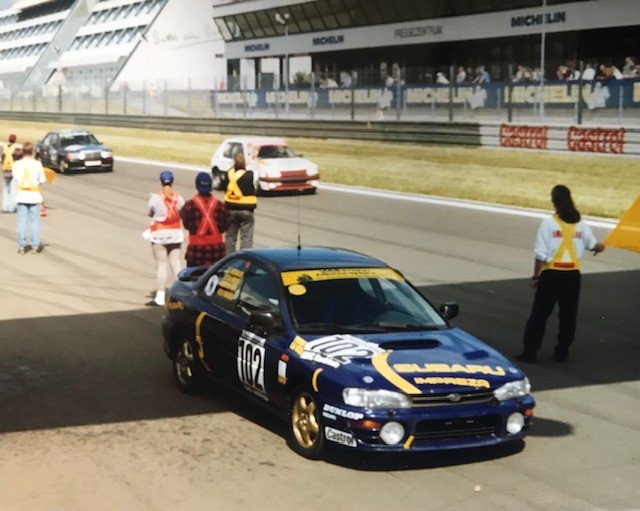
When I handed over the car, we were closing in on third place. The progression was maintained – never giving up. We closed in on 3rd place, when with 6 minutes left the front suspension of the Subaru collapsed approaching the finish line having completed 100 laps.
Our car, the only Mercedes, passed the stricken car to complete 101 laps for 3rd place in class, a great team effort.
Lessons Beyond Racing
Racing, like business, is unpredictable. Unexpected challenges disrupt the best-laid plans – the last year has been proof of that. But at Drive, we adapt. We evolve with new methods, technologies, clients, and projects.
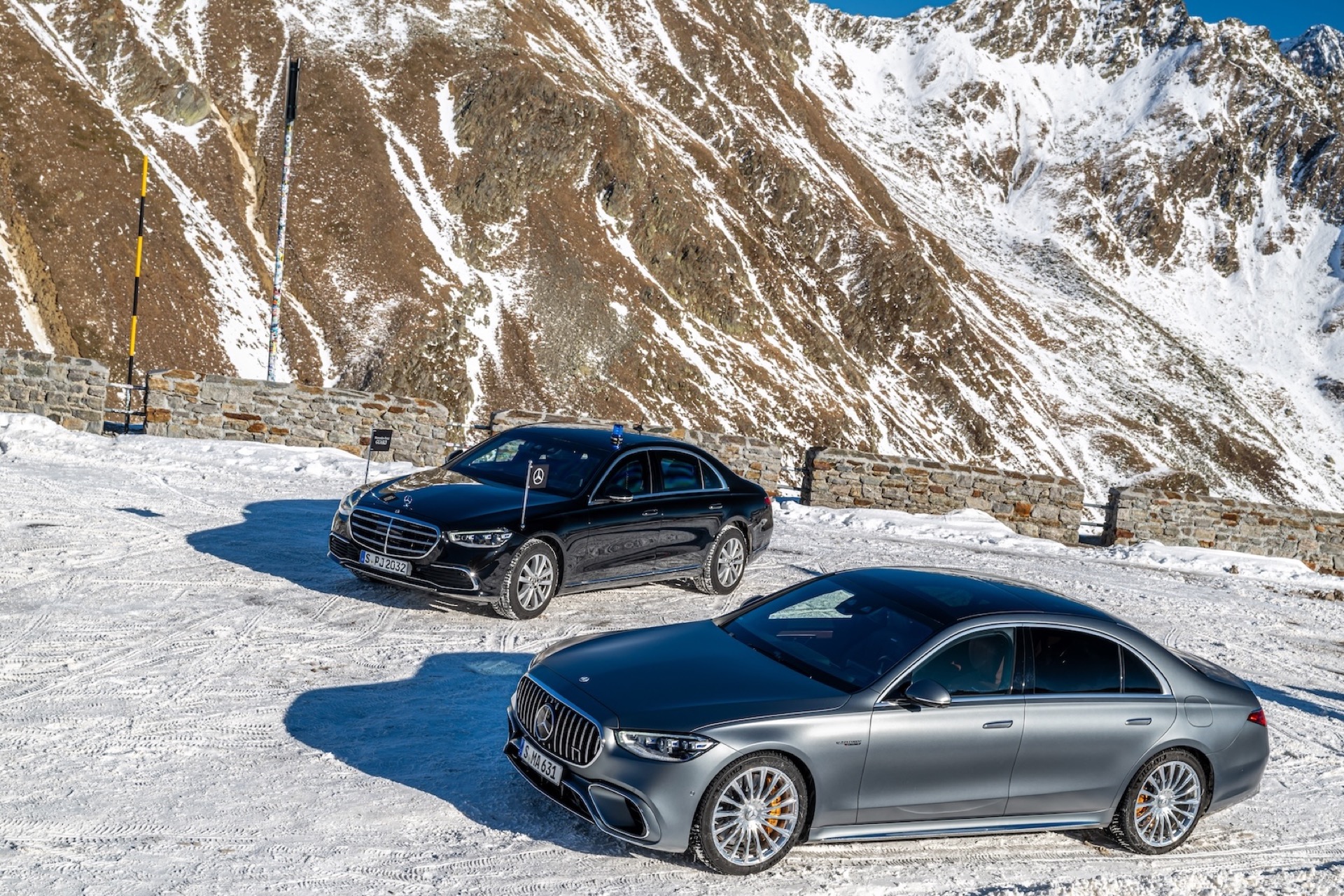
In the world of luxury sedans, one name has set the standard for decades—the Mercedes-Benz S-Class. Since the 1970s, it has been the benchmark for luxury, technology, and status. Now, two top-tier versions push the limits even further: the high-performance Mercedes-AMG S 63 E Performance and the bulletproof Mercedes S 680 Guard. Whether prioritising speed or security, these models represent the pinnacle of automotive engineering.
With an upcoming Bundestag election, Germany may see a new chancellor soon, but one thing will remain constant—the Mercedes S-Class as the leader’s official vehicle. Current chancellor Olaf Scholz relies on a Mercedes S 680 Guard, protected to VR10 ballistic standards. Regardless of who takes office, this armoured limousine will remain a staple in government convoys. For those who don’t need armoured protection but want supreme performance, the Mercedes-AMG S 63 E Performance is the ultimate driving machine.
For those seeking an executive sedan with supercar performance, the 5.34-metre-long S 63 E Performance offers an electrified V8 hybrid. Starting at €210,000, it compensates for the absence of a V12 engine with raw hybrid power. Its 4.0-litre twin-turbo V8, combined with an electric motor, delivers 802 PS and 1,430 Nm, launching the luxury saloon from 0-100 km/h in 3.3 seconds. Top speed is limited to 290 km/h, making it the fastest S-Class ever produced. However, at 2.6 tonnes, its weight affects efficiency, with a limited 30 km electric range and a modest 3.7 kW charging rate.
On the other end of the spectrum, the Mercedes S 680 Guard is the most secure S-Class ever built. Designed for heads of state, diplomats, and VIPs, this rolling fortress prioritises maximum protection over speed. Its VR10-certified armouring withstands 7.62 x 54R bullets, steel-core rounds, and even explosive threats. The 450 kW / 612 PS V12 engine ensures effortless movement, but with a 4.3-tonne curb weight, performance takes a backseat. Run-flat tyres allow continued driving under attack, but the 190 km/h top speed reflects its defensive focus.
Unlike the BMW 7 Series and Audi A8 security models, the S 680 Guard features an independent armoured structure, rather than reinforcing an existing shell. Bulletproof multi-layered glass, polycarbonate coatings, and a 120 kg underbody shield provide all-round protection. Inside, a fire suppression system, fresh air supply, and gas-sealing function ensure survival in extreme situations. If an attack occurs, the car’s emergency hydraulic doors allow quick escape.
Such elite security comes at a price—the S 680 Guard costs around €550,000, nearly three times the price of the AMG S 63. Production is also a slow, meticulous process.
While the S 63 E Performance is built in less than two days, the S 680 Guard takes 51 days in Factory 56 and Hall 15-3 in Sindelfingen. Most are destined for government and corporate fleets, ensuring the highest level of protection for those who need it most.
The Mercedes-AMG S 63 E Performance and S 680 Guard prove why the S-Class remains the gold standard in luxury cars. Whether it’s brute force performance or presidential-level security, Mercedes-Benz delivers the ultimate in prestige, power, and protection.
Thousands of climbers attempt to summit the roof of Africa each year. At 19,341 feet, Mount Kilimanjaro, in northeastern Tanzania, is the largest freestanding mountain in the world. Climbing one of the Seven Summits is no small feat, as hikers wrestle with the effects of altitude sickness on Kilimanjaro treks that typically span from five to nine days. I should know — I was one of them. My favorite part of this tiring but worthwhile experience was passing through five distinct ecological climate zones on the way to the top. Here’s what you need to know about each.
Mary Robnett/Travel + Leisure
Cultivation Zone
Altitude range: 2,600 to 6,000 ft
Mary Robnett/Travel + Leisure
My climbing partner and I started our journey in Marangu, located on the southeastern slopes, where Marangu Hotel arranged our 7-day trek, including assisting in finding a licensed guide, a requirement set by Kilimanjaro National Park. (The average climber hires 4 and 6 people to guide, cook, and carry equipment up the mountain.)
After a hearty breakfast, we set off on a two-hour drive to the Rongai Gate, one of seven climbing routes and the only one to approach the mountain from the northern side, ideal for avoiding rain and sighting animals. After winding through small towns and farmers’ markets near the Kenyan border, we arrived at the gate with our lead guide, David, our assistant guide, Abdallah, and their entire crew.
Montane Forest Zone
Altitude range: 6,000 to 9,200 ft
Mary Robnett/Travel + Leisure
Our trek began in the biodiverse vegetation zone. The lush rainforest is filled with vibrant green plants and moss-covered trees. If you’re lucky, you might catch a glimpse of black and white colobus monkeys, blue monkeys, or the elusive elephants of Kilimanjaro.
On our first evening, we were the only trekking group at Simba Camp. Thanks to our cook, Leonard, and assistant, Seraphine, a magnificent dinner spread awaited us. We dined on vibrant cucumber soup, avocado, chicken and vegetables with curry and rice, and perfectly crisp, roasted potatoes. It was a meal so good that I heartily believe it could have won Leonard the title on Food Network’s Chopped.
Mary Robnett/Travel + Leisure
As dusk turns to night, David cautioned us to use our headlamps, as Cape Buffalo frequent the area and are characteristically ornery.
Heath and Moorland Zone
Altitude range: 9,200 to 11,000 ft
We woke up just after dawn to two large, white-necked ravens croaking at one another. “Did you hear the hyenas last night?” Abdallah asked. Mercifully, I had been sound asleep.
As we made our way to the next camp, we left the shade of the forest and entered the sunny moorland, where we hiked for the next two days. Low-growing shrubs, tall lobelias, and bushy grasses lined our path, and Abdallah pointed to large, hooved footprints in the dirt, which belonged to Cape Buffalo. Looking up, we had our first clear view of our ultimate destination, Kibo, the highest of Kilimanjaro’s three volcanic cones.
Mary Robnett/Travel + Leisure
Our porters darted ahead of us on the trail, apt to set up camp for the night. Many of the guides and porters on the mountain have been climbing for years and grew up in the Chagga villages on the slopes below. Porters often work their way up to assistant guide, with the goal of becoming a lead guide or perhaps even starting their own outfitter. Such is the case for Simon Mtuy, an ultra-runner who notably held the world record for the fastest ascent and descent of the mountain in just 9 hours and 22 minutes. He founded Summit Expeditions & Nomadic Experience as a way to support responsible tourism.
Organizations like the Kilimanjaro Porters Assistance Project also help the community by supporting the fair and ethical treatment of porters. KPAP improves working conditions by providing climbing gear, education, first aid certification, fair salaries, transparent gratuities, and pack weight regulations. It’s essential to book with a trekking outfitter who is partnered with KPAP to ensure socially responsible climbs.
Alpine Desert Zone
Altitude range: 13,200 to 16,500 ft
Mary Robnett/Travel + Leisure
Our hike got steeper and much colder as we entered the Alpine Desert, and plant life started to disappear. We made it to our next camp, Mawenzi Tarn, in time for lunch. The camp is firmly perched beside a small, spring-fed lake, above billowing clouds and below Mawenzi’s jagged peak. We heard the sounds of a helicopter zipping by from the direction of Kibo. Simple helicopter pads constructed from stones are at several of the camps on the way up, and signs instruct hikers to turn back if they start to experience symptoms of altitude sickness. Acute Mountain Sickness (AMS) is common among climbers, regardless of age or fitness level, and can be life-threatening if severe symptoms are left untreated.
We hiked up and down 1,000 feet to Mawenzi Ridge, where we startle a dik-dik, a doe-eyed, tiny antelope, the size of a small dog. Acclimatization hikes like this help your body adjust to higher altitudes. At night, I had trouble sleeping due to the cold. We were now above 14,000 feet and exposed to the wind that howled outside our tent.
Mary Robnett/Travel + Leisure
The next morning at camp, we discovered large chunks of ice, but the equatorial sun thawed us as we crossed “the saddle” between Mawenzi Tarn and Kibo Hut, the final camp before our summit bid. This plateau was a barren wind tunnel of rocks and scattered animal bones. Clouds obscured most of Kibo and the trail ahead.
Mary Robnett/Travel + Leisure
We arrived at Kibo Hut windswept and covered in a film of volcanic dust. It was the first camp on our trek with multiple hiking groups, as Kibo Hut serves as a junction point for two of the seven routes. After an early dinner, we slept a few hours before our 11 p.m. wake-up call. Our summit push began at midnight in sub-zero temperatures.
Arctic Zone
Altitude range: 16,500 to 19,340 ft
Mary Robnett/Travel + Leisure
Seraphine woke us with hot tea, and I slowly dressed in multiple warm layers. At midnight, we began our ascent under the moonlight. Looking up, I could make out some of the groups ahead by their headlamps glowing like fireflies in the night. “Pole pole,” David said, pronounced po-lay, which means “slowly” in Swahili. My headlamp illuminated a patch of dirt ahead of David’s feet. Shuffling upward, I fell into a rhythm, slow but steady. Small bits of rock and volcanic ash, several inches deep, crunched under my boots. The sky was filled with stars and the occasional meteor.
After an hour, David suggested a two-minute break and asked, “Dada [sister], how are you?”
“Poa [I’m cool],” I responded. “I feel good — no altitude sickness. But my feet are so cold,” I laughed in disbelief. “My toes—they’re freezing!”
Mary Robnett/Travel + Leisure
I took a sip of water, and it was time to keep moving. I can’t say what I thought about over the next five hours; other than that, I drifted into a meditative, trance-like state. The switchbacks eventually led to a maze of rocks we scrambled over — the most challenging section of the trail. Elated, we reached Gilman’s Point, at the top of the crater rim, just as the glow of the sun rose over the horizon. We were standing more than three vertical miles in the sky. I started laughing and felt drunk from the lack of oxygen. We continued to follow the trail along the caldera edge, a moonscape. The summit, Uhuru Peak, lay another 689 feet ahead. We hiked past Rebmann Glacier, and across the vast crater to our right, we could see the Northern Ice Field. Remnants of Kibo’s once massive ice cap had been splintered into individual glaciers. Adrenaline pushed us forward.
David beamed with pride. “Jambo—Hello! Good job!” he said to the other hikers we pass. David grew up hiking with his father, Emmanueli Minja, who had been a well-known guide on Kilimanjaro. Emmanueli led climbs well into his 80s and even guided U.S. President Jimmy Carter up the mountain. On the eve of Tanzania’s independence in 1961, Emmanueli led army officer Alexander Nyirenda to the summit, then called “Kaiser Wilhelm Peak,” to plant Tanzania’s national flag and the Uhuru Torch, thus renaming the peak Uhuru, “freedom” in Swahili.
Mary Robnett/Travel + Leisure
As our small group reached Uhuru Peak, I was overcome with emotion. Mt. Meru, another dormant volcano and second-highest mountain in Tanzania, towered to the west. Its summit poked out of an endless sea of clouds. After hugs and a photo, we began the long journey down, where I knew an obligatory Kilimanjaro Premium Lager would be waiting for me. David suggested I return someday to climb one of the other routes. I couldn’t fathom the thought at the time, but now, I can’t think of anything I’d like to do more.
Driving on eggshells—not walking on them—might be a good thing.
Stellantis is looking to patent a process for incorporating them, or other biowaste material, into tires in order to further lower their environmental impact.
In a patent filing published by the United States Patent and Trademark Office (USPTO) Jan. 23, 2025 and submitted in 2023, the automaker discusses using eggshells as a replacement for two common filler materials in tires: carbon black and silica.
As tires wear, both carbon black and silica are released into the air as dust, Stellantis points out. Indeed, a study published in 2023 found that tire dust could be a significant source of particulate emissions. But Stellantis believes these fillers can be replaced by calcium oxide (CaO) derived from eggshells.
2025 Jeep Wrangler 4xe Willys ’41
Hen egg shells are over 90% calcium carbonate (CaCO3), and CaO can be extracted using a calcination process—first washing them in acetone, then subjecting them to temperatures of at least 1,652 degrees Fahrenheit, causing the shells to decompose.
Decomposition gives off carbon dioxide (CO2), leaving behind CaO as a white solid, according to the patent filing. That material is then milled to the form factor of carbon black or silica tire filler material, and mixed in with rubbers and other materials to form a tire compound.
2025 Ram Heavy Duty
It’s unclear if this one will prove commercially viable, especially considering that it originated with a company that makes cars, not tires. But actual tire manufacturers have been working to add more sustainable materials to their tires, which will be crucial in further lowering the environmental impact of driving. As tailpipe emissions continue to diminish with increased EV adoption, other sources of pollution will have to be tackled—like tires.
Bridgestone said last year that it was producing tires for the all-electric Audi E-Tron GT that used 55% recycled and renewable materials, and it’s incorporated natural rubber from a desert shrub into IndyCar racing tires. In 2022 Michelin said it would develop environmentally-friendly tires in partnership with Hyundai, and Goodyear showed a demonstration tire that cut down use of petroleum-based materials, as well as emissions from production.
Veya is a collaboration between Fountaine Pajot and Couach Catamarans
Fountaine Pajot and Couach Catamarans are currently introducing Veya Yachts, a joint venture born from shared expertise and a commitment to simplifying life at sea at the Fountaine Pajot stand at the Miami International Boat Show 2025, which opened yesterday and is on until February 16.
Under the co-guidance of Fountaine Pajot Deputy CEO Romain Motteau, and Asia veteran Brand Director Yvan Eymieu – now Managing Director of Veya, the venture has debuted its inaugural model: the Veya 53, a power catamaran designed to blend refined simplicity with purposeful innovation.
Veya is committed to simplifying life at sea, starting with the Veya 53
Formerly known as Code 07, the Veya 53 embodies a new era of intuitive engineering and timeless elegance, crafted for those who value calm over complexity.
Partnership rooted in purpose
Veya Yachts unites Fountaine Pajot’s visionary design ethos with Couach’s precision craftsmanship, creating catamarans that prioritise spaciousness, reliability, and effortless journeys. This collaboration brings a fresh perspective to yachting, redefining every moment on the water.
Veya aims to redefine the experience at sea and bring freedom on the water
Every detail of the Veya 53 reflects a commitment to thoughtful solutions, from its uncluttered layouts to innovations that quietly enhance life aboard. “With the Veya 53, we are redefining the experience at sea by combining elegance and practicality,” said Managing Director Yvan Eymieu. “Every detail has a purpose, bringing more comfort, simplicity, and freedom on the water. The horizon is always within reach – that’s the Veya philosophy.”
The Veya 53 offers uncluttered layouts and innovations that enhance life aboard
This launch marks the first step in Veya Yachts’ mission to create vessels that inspire exploration while grounding guests in tranquillity. Future models will build on this foundation, offering the same balance of sophistication and ease.
A New Standard, Quietly Set
“Veya Yachts avoids bold claims,” Eymieu said. “Instead, we let our craftsmanship speak: through catamarans engineered to endure, spaces designed to breathe, and journeys that feel effortlessly yours. We’re not redefining luxury – we’re reimagining what it means to truly belong at sea.”
The owner’s cabin of the Veya 53
Ahead of the VEYA 53’s official launch in 2026, the world premiere of the Veya Yachts’ brand at the Miami International Boat Show (February 12-16) let visitors engage with the team, discover the brand philosophy, place orders, preview upcoming models, and experience the future of maritime excellence through exhibits and detailed presentations showcasing the uniqueness of Veya.
Knights of the Round Table, the Omniscient Merlin. Photo: Roger Dubuis
In the distant lands of Northern Ireland, there is a coastline where the Atlantic crashes against fractured earth shaped like hexagons. Known as the Giant’s Causeway, hexagonal pillars rise from the sea like nature’s own puzzle—its unique structure giving life to mythology and legends. Among them is the story of Merlin, the legendary Arthurian wizard who is said to have once stood on this very coastline. Here, he could sense the potent magic of the basalt stones, lifting these hexagonal wonders from the sea and spreading them out with enchanting geometry.
It’s this sublime magic that Roger Dubuis recaptures in their latest masterpiece, Knights of the Round Table, the Omniscient Merlin. The Maison has not only incorporated basalt into watch, but has assembled a diet of extraordinary materials to create a dial that mimics this mystical terrain in miniature.
56 individual blocks are patiently mounted by hand, each carefully positioned at a variety of heights to echo the complex and storied landscape. Basalt, pink gold, black grass in the Murano style, and transparent glass sit on a base plate of 18K pink gold, working in tandem and contrasting with each other to create an interplay of shadows and light. Slightly angling some blocks helps accentuate the depth of the dial, avoiding a standard honeycomb effect.
Arthur’s Knights
Each figure showcases a different personality. Photo: Roger Dubuis
All this sets the stage for the main event. At the watch’s edge, twelve knights stand at the ready, each claiming an hour mark with a unique pose. If you look close enough, you’ll find a personality behind every figure at the Round Table. To imbue each knight with the detail of the slimmest weapon or the nuances of a worn helmet, each figure requires up to three days of meticulous craftsmanship to complete.
Side profile. Photo: Roger Dubuis
Now, it’s time we float back down to reality a little and talk about the more grounded features. The watch itself has an imposing presence—measuring 45mm in diameter, and 16.87mm thick—yet it looks lighter and more compact in person than the numbers might suggest. This effect is partly due to the cleverly designed front sapphire crystal that extends beneath the bezel, allowing light to flitter in and offering a clear view of the dial from the side. On the caseback, you’ll find a 360-degree oscillating weight, designed to evoke the stained-glass windows of the medieval age. Encircling this is perhaps the hardest engraving you’ll ever see on a watch.
“Around this table, the bravest knights will gather as equals. They will set forth in search of adventure, righting wrongs, protecting the weak and humbling the proud.”
I like to think that this quote inspires the automatic Monobalancier RD821 calibre beating within, driving it to operate steadily at 28,800 vibrations per hour with a power reserve of 48-hours.
Photo: Roger Dubuis
The Omniscient Merlin is just one of the many in the Knights of the Round Table series that Roger Dubuis has released but it is the first to be offered to the public. With only 28 pieces crafted, the invitation has been extended—although the choice is ultimately yours to decide whether you want claim to a seat at this exclusive round table.
This article was first seen on Esquire Singapore.
For more on the latest in luxury watch reads, click here.
There’s a certain magic to Sedona that lingers in the air—an energy that seeps into every canyon, creek, and color-drenched sky. Tucked along a stand of towering sycamore trees that trace the gentle bends of Oak Creek, Creekside Bistro captures that very essence. Even on a winter’s day, when the leaves have faded and the creek trickles to a near hush, this dining spot retains its quietly enchanting charm. Whether you choose a seat inside—surrounded by a rustic brick wall, bold flooring, and vibrant artwork—or decide to cozy up on the heated patio, you’ll be treated to a meal that feels like the warm embrace Sedona is known for.
A Captivating Cocktails at Creekside Bistro
My afternoon at Creekside began with the Purple Haze cocktail, and believe me, it’s as dreamy as its name. A vibrant potion of Bombay Sapphire, butterfly pea flower, egg white, St. Germain, Cointreau, and a refreshing blend of lemon & lime juice, this lovely libation is crowned with Angostura bitters, black peppercorn, and mint. The result? A floral, tangy, and subtly spiced drink that beckons you into a lazy gaze at the surrounding red rocks—quietly reminding you that relaxation is half the reason you came here in the first place.
Lunch, Sedona-Style at Creekside Bistro
Sedona isn’t just about spectacular scenery; it’s about feeling uplifted. That spirit seeps into the food at Creekside Bistro, where each dish is carefully crafted to delight the senses. Lunch here is more than just a midday pause—it’s a celebration of fresh flavors and artful compositions, a moment to soak in the subtle tranquility only Oak Creek can offer.
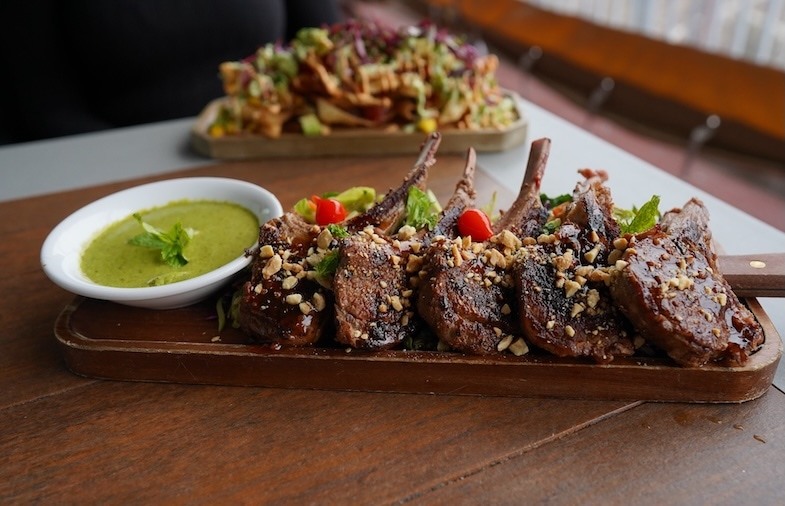
Lamb Chop Lolli Pops
Trust me when I say you’ve never had lamb like this. Korean-style barbecue adds a savory and slightly sweet twist to these Lamb Chop Lolli Pops, while a spicy mint dipping sauce injects a refreshing, zesty bite. Chopped peanuts and a crisp Asian slaw round out the dish, giving each tender bite a perfect interplay of texture—crunchy, succulent, and oh-so satisfying. The aroma alone is enough to make you close your eyes in delight.
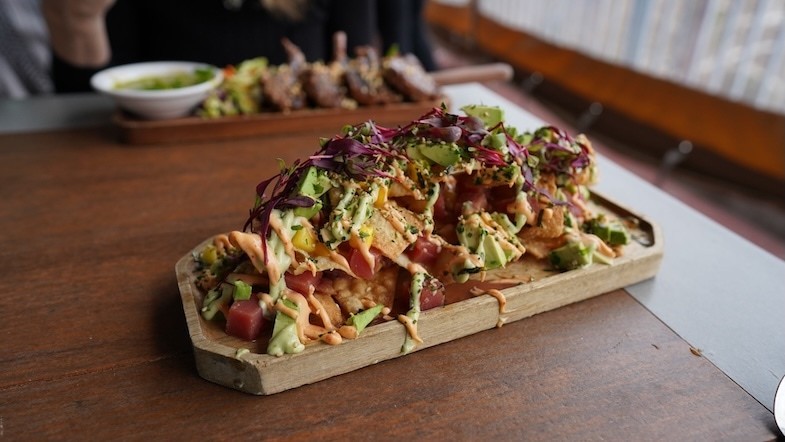
Ahi Tuna Nachos
Next up, the Ahi Tuna Nachos—a vivid tapestry of flavors and colors served cold. These crispy spiced wonton chips are generously topped with fresh Ahi tuna tartar, ginger, mango, shallots, green onions, and a drizzle of ponzu for that tangy, umami-rich finish. Creamy avocado meets the gentle heat of jalapeño, while wasabi and sriracha crème provide a satisfying kick. If you’re looking for a dish that’s as exciting to behold as it is to devour, this is the one.
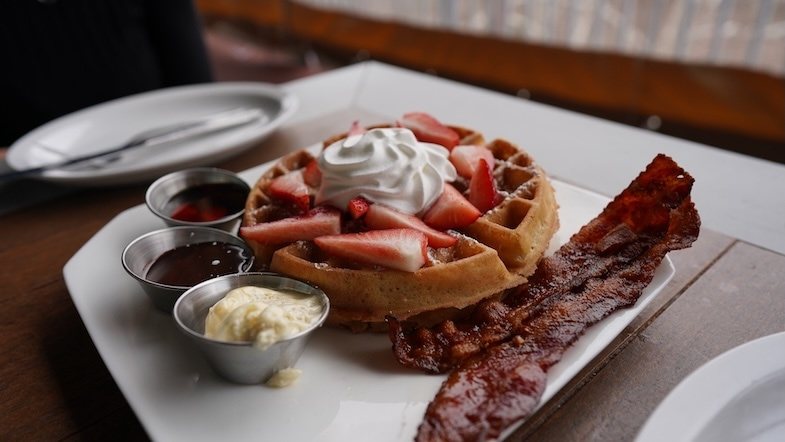
A Sweet Finale
While it was hard to leave room for dessert, we couldn’t resist the Crispy Belgian Waffle—its warm Nutella drizzle and whipped citrus butter simply beckoned us. Topped with fluffy whipped cream, fresh strawberries, and paired with two perfectly cooked strips of bacon, this waffle is a masterclass in sweet-savory indulgence. The first bite makes you feel as though you’re strolling through a European café, even if you’re nestled next to Oak Creek in the American Southwest.
Parting Thoughts
Though winter on a cloudy day might tone down the classic Sedona palette, Creekside Bistro proves that flavor—and ambiance—remain ever-vibrant. Heated patio seating, intimate indoor dining, and that unmistakable Sedona energy elevate every plate and sip. If you’re looking for a meal that blends culinary creativity with the soothing rhythms of nature, this is your spot.
Stop by for lunch and let the heartiness of their sandwiches, the vibrant crunch of their salads, and the spirit of Sedona’s red rocks nourish both your appetite and your soul. After all, life in Sedona—and especially at Creekside—is all about savoring each moment, one delicious bite at a time. Bon appétit!
If you have any questions about dining at Creekside Bistro in Sedona, leave a comment below. So, until next time, we’ll see ya on the road…
The technical storage or access is strictly necessary for the legitimate purpose of enabling the use of a specific service explicitly requested by the subscriber or user, or for the sole purpose of carrying out the transmission of a communication over an electronic communications network.
Preferences
The technical storage or access is necessary for the legitimate purpose of storing preferences that are not requested by the subscriber or user.
Statistics
The technical storage or access that is used exclusively for statistical purposes.The technical storage or access that is used exclusively for anonymous statistical purposes. Without a subpoena, voluntary compliance on the part of your Internet Service Provider, or additional records from a third party, information stored or retrieved for this purpose alone cannot usually be used to identify you.
Marketing
The technical storage or access is required to create user profiles to send advertising, or to track the user on a website or across several websites for similar marketing purposes.



 Text by Tom Appel







:max_bytes(150000):strip_icc()/TAL-heath-moorland-mount-kilimanjaro-tanzania-04-KILIMANJARO1023-c29bd12f91da4659b88ce867d54673d8.jpg "What It’s Like to Hike Mount Kilimanjaro")
:max_bytes(150000):strip_icc():format(jpeg)/TAL-heath-moorland-mount-kilimanjaro-tanzania-04-KILIMANJARO1023-c29bd12f91da4659b88ce867d54673d8.jpg)