Home Blog Page 184

Lexus LC 500 Buyers Guide

0


When the 2017 Lexus LC 500 was introduced, it signaled a bold new chapter for Lexus. Born from the vision of the LF-LC concept, the LC was designed not just to make a statement but to showcase what a luxury grand tourer from Lexus could achieve. 

At the heart of the Lexus LC 500 lies a naturally aspirated 5.0-liter V8 engine that produces 471 hp and 398 lb-ft of torque. Paired with a 10-speed automatic transmission, this powertrain propels the car from 0 to 60 mph in just 4.4 seconds, delivering smooth, responsive performance.

For those seeking greater efficiency, the LC 500h offers a 3.5-liter V6 hybrid powertrain producing 354 combined hp through an innovative Multi-Stage Hybrid system. The hybrid model focuses on seamlessly blending power and fuel economy, appealing to a broader range of grand touring enthusiasts.

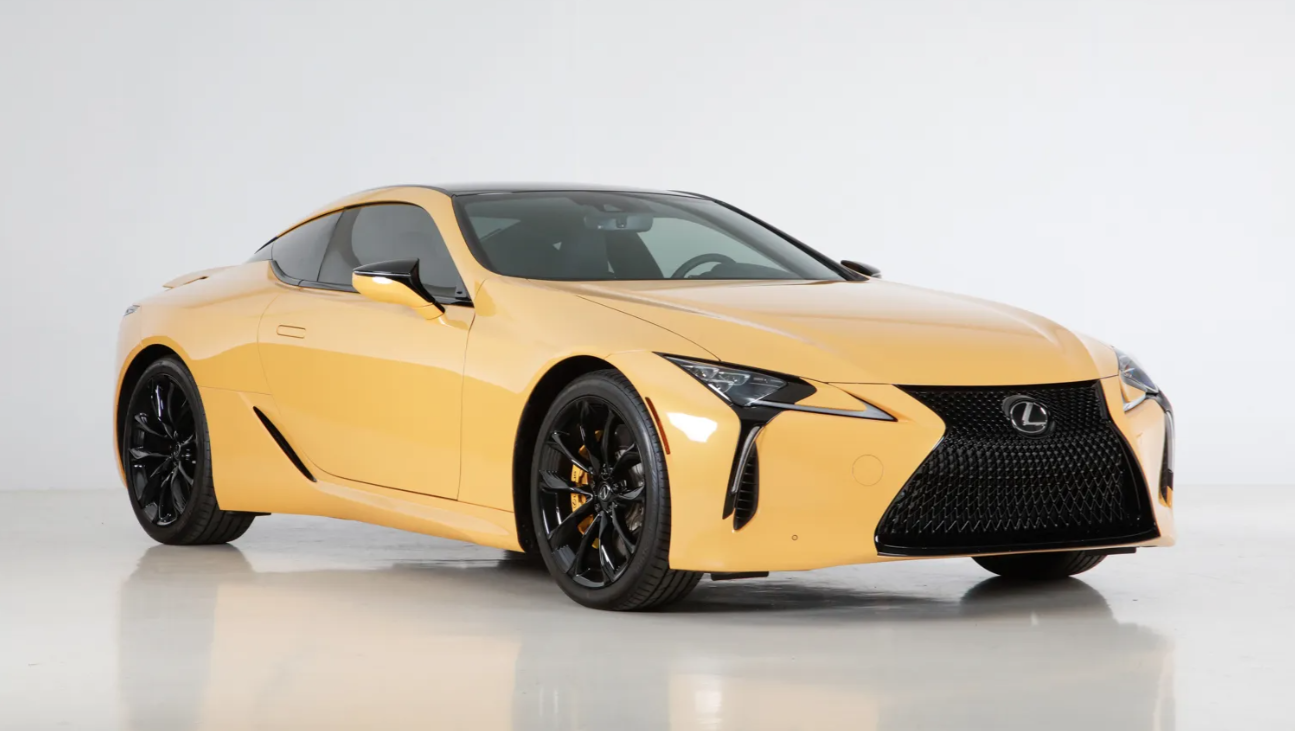
The exterior of the LC 500 is a design masterpiece, combining futuristic elements with classic coupe proportions. The signature Lexus spindle grille dominates the front, combined with sleek LED headlights and daytime running lights shaped like lightning bolts.

The car’s low stance, wide body, and aggressive lines create a dynamic presence on the road, while functional aerodynamic elements ensure stability at high speeds. The rear features sharp taillights, a sweeping roofline, and an integrated spoiler.

Inside, the Lexus LC 500’s interior is a blend of modern luxury and driver-centric design. Hand-stitched leather, Alcantara accents, and high-quality materials adorn the cabin, creating a sophisticated and comfortable environment. 

The cockpit is tailored around the driver, with an ergonomically designed center console and a digital instrument cluster inspired by the Lexus LFA supercar. Ambient lighting, premium audio systems, and advanced infotainment options ensure that the driving experience is as engaging as it is luxurious.

Throughout its production, the Lexus LC 500 has faced competition from luxury grand tourers such as the BMW 8 Series, Mercedes-Benz SL-Class, Porsche 911 Carrera S, and Jaguar F-Type R. Despite the strong competition, the LC 500 sets itself apart with its balance of emotional design, naturally aspirated performance, and Lexus’ renowned reliability, making it an appealing option for those who want a grand touring coupe with a striking yet.

Model Changes (Breakdown by Year)

2017 Lexus LC 500

The 2017 Lexus LC debuted with two models: the LC 500, powered by a 5.0-liter naturally aspirated V8 (471 hp, 398 lb-ft), and the hybrid LC 500h, combining a 3.5-liter V6 with an electric motor for 354 combined hp. 

The design, influenced by the LF-LC concept, featured Lexus’ signature spindle grille, sharp LED lighting, and an aerodynamic coupe body. Inside, the cabin boasted premium materials like leather, Alcantara, and carbon-fiber trims, creating a luxurious environment. 

The LC 500 came equipped with advanced tech, including a 10.3-inch infotainment system and the optional Mark Levinson sound system, while Lexus Safety System+ added key driver assistance features like adaptive cruise control and lane-keep assist.

Upon its debut in 2017, the Lexus LC 500 had a starting price of approximately $92,995. The hybrid variant, the LC 500h, was priced slightly higher, beginning at around $96,510.

2018 Lexus LC 500

The 2018 Lexus LC 500 received minor updates. Software improvements were made to the infotainment and driver assistance systems, ensuring smoother and more intuitive functionality. 

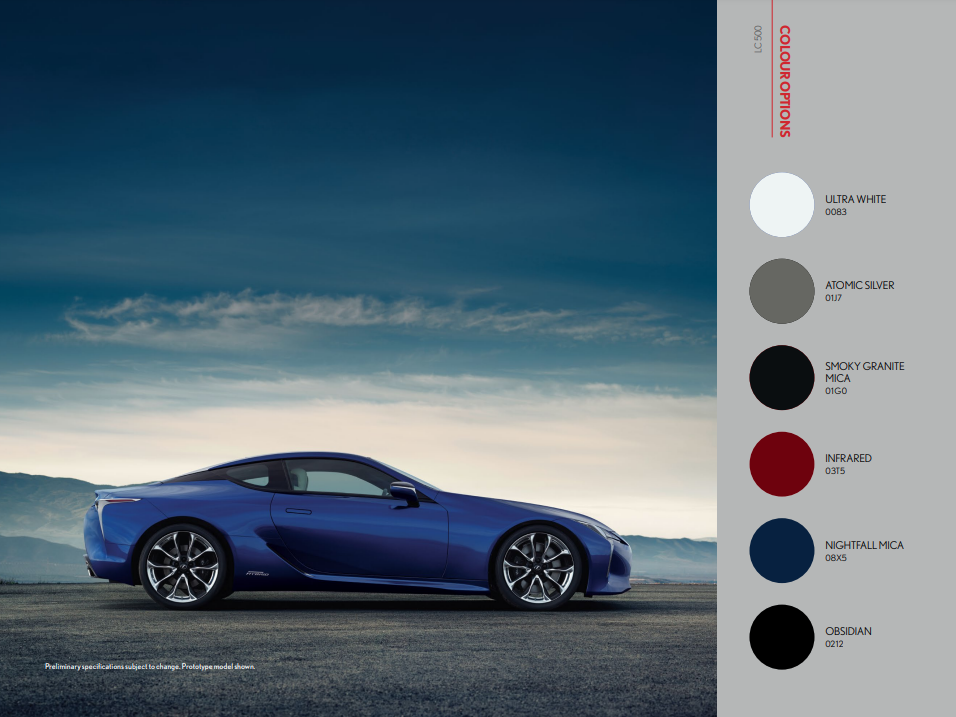
A range of exterior color options was expanded, allowing for greater customization, with shades like Infrared, Atomic Silver, Nightfall Mica, and Ultra White. Tire options were upgraded, providing improved ride comfort and better road grip. 

Additionally, the LC 500h benefited from adjustments to its hybrid power delivery, resulting in smoother transitions between electric and gasoline modes for a more refined and seamless driving experience.

In 2018, the Lexus LC 500 had a starting price of $92,000, while the hybrid LC 500h began at $96,510. 

2019 Lexus LC 500

The 2019 Lexus LC 500 introduced several updates. A new range of interior and exterior color combinations was made available, highlighted by the addition of the vibrant Flare Yellow exterior option, giving the coupe a bold appearance. 

Performance enhancements included tweaks to the suspension dampers and bushings, improving both ride comfort and handling precision. The LC 500 also received slight revisions to its throttle response, ensuring smoother acceleration and a more engaging driving experience.

In 2019, the Lexus LC 500 had a starting MSRP of $92,300, while the hybrid LC 500h began at $96,810. 

2020 Lexus LC 500

The 2020 Lexus LC 500 received several key updates. Weight was reduced by approximately 22 lbs, thanks to the use of aluminum suspension components, contributing to improved agility. 

Also, the adaptive dampers were refined to deliver better cornering performance and ride comfort. On the tech front, Android Auto was added to complement Apple CarPlay, along with improvements to navigation and overall software responsiveness. 

Cosmetic updates included the introduction of new 20-inch and 21-inch wheel designs and the addition of Nori Green Pearl as a new exterior color option.

In 2020, the Lexus LC 500 had a starting price of $93,975, while the hybrid LC 500h began at $98,535.

2021 Lexus LC 500

For 2021, the Lexus LC 500 the adaptive variable suspension was further tuned to better absorb road imperfections, while a stiffer rear anti-roll bar and improved steering response enhanced handling precision. 

An additional 22 lbs were shaved off the vehicle through material optimizations, contributing to its overall agility. The LC 500 also benefited from new run-flat tires, which provided improved grip and reduced road harshness. 

For added personalization, Lexus introduced new color and trim options, including the vibrant Flare Yellow and the sleek Black Inspiration trim, which featured contrast stitching.

In 2021, the Lexus LC 500 had a starting price of approximately $93,975. The newly introduced LC 500 Convertible began at $102,025.

2022 Lexus LC 500

The 2022 Lexus LC 500 introduced the much-anticipated LC 500 Convertible, powered by the same 5.0L V8 as the coupe, delivering thrilling performance with the added appeal of open-top driving. 

Its soft-top roof could be deployed in about 15 seconds, while structural enhancements ensured torsional rigidity was maintained, preserving the car’s balance and handling dynamics.

The suspension setup was further refined, and revisions to the Vehicle Stability Control (VSC) system provided smoother cornering and improved overall agility. Infotainment upgrades included enhanced voice commands, multimedia system updates, and improvements to Lexus Enform services, ensuring a more connected and convenient driving experience.

In 2022, the Lexus LC 500 coupe had a starting MSRP of approximately $94,125, while the LC 500 Convertible began at around $102,175. The hybrid variant, the LC 500h, was priced starting at about $100,125. 

2023 Lexus LC 500

The 2023 Lexus LC 500 introduced limited-edition models. 

The Inspiration Series offered exclusive exterior colors, including Iridium and Hakuji White, paired with black accents and unique interior finishes. Lexus also launched the Bespoke Build Program, allowing buyers to personalize their LC with different wheels, interior trims, and finishes. 

Performance improvements included an updated suspension and a revised rear anti-roll bar, delivering sharper handling and better response. Inside, the LC 500 continued to feature premium materials, now with new trim choices such as Manhattanhenge and Toasted Caramel leather options.

In 2023, the Lexus LC 500 coupe had a starting price of approximately $95,600. The hybrid variant, the LC 500h, began at around $100,450. For the LC 500 Convertible, the starting price was about $105,290.

2024 Lexus LC 500

The 2024 Lexus LC 500 introduced several upgrades. 

The interior now features upgraded infotainment software, including wireless Apple CarPlay and Android Auto, along with enhanced voice recognition and cloud-based updates via the Lexus Interface. The hybrid model saw minor improvements in energy recovery and battery efficiency, optimizing its overall performance.

 Safety was enhanced with the addition of Lexus Safety System+ 3.0, offering improved pedestrian detection and adaptive driving assistance for a safer driving experience. Aesthetic updates included new upholstery and exterior color options, along with additional lightweight wheel designs.

As of 2024, the Lexus LC 500 coupe has a starting price of approximately $98,850. The LC 500 Convertible begins at around $107,300. For the hybrid variant, the LC 500h, the starting price is about $103,100. 

2025 Lexus LC 500

The 2025 Lexus LC 500 introduces several notable updates. A new exterior color, Iridium, has been added to the palette, providing a fresh and modern look. 

To improve chassis rigidity, both the LC 500 and LC 500h models now feature additional front and rear underfloor braces, contributing to enhanced handling and stability. 

Inside, the instrument panel has been upgraded with Alcantara material, elevating the cabin’s luxury feel. Additionally, a wallet-sized Smart Key is now standard across all models, offering increased convenience for owners.

For the LC 500 Convertible, the red and blue soft top color options have become standalone choices, allowing for greater personalization. 

As of 2025, the Lexus LC 500 coupe has a starting price of approximately $100,600. The hybrid variant, the LC 500h, begins at around $103,750. For the LC 500 Convertible, the starting price is about $106,450. 

Lexus LC 500 Common Problems

The Lexus LC 500 is widely recognized for its beautiful design, performance, and luxury features. However, like any vehicle, it has some common problems that owners have reported.

It’s important to note that not all Lexus LC 500 owners have reported these issues, and many have had positive experiences with the vehicle. However, being aware of these common problems can help owners take preventative measures and address issues as soon as they arise.

Brake Noise and Dust: Many owners have reported issues with brake squeaking and excessive brake dust accumulation on the wheels. This is particularly noted in earlier models and can lead to frequent cleaning and potential brake pad replacements.

Infotainment System Challenges: The LC 500’s infotainment system, especially in models prior to 2024, has been criticized for its user interface, particularly the trackpad control, which some find less intuitive and distracting to use while driving.

Transmission Behavior: Some drivers have noted that the transmission can be clunky at lower speeds and during normal driving conditions. This issue is more prevalent in earlier models and may affect the overall driving experience.

Interior Component Wear: There have been reports of premature wear in interior components, such as the seat material and stitching, as well as issues with the door pop-out mechanism. These problems can detract from the vehicle’s luxury feel and may require attention over time.

Fuel System Recalls: Certain model years have experienced fuel system issues, leading to recalls. For instance, the 2020 model had a recall due to a faulty fuel pump that could cause the engine to stall, posing safety risks.

Overheating During Track Use: Some owners who have taken their LC 500 to the track have reported engine oil and transmission fluid overheating after extended high-performance driving, indicating that the vehicle may not be optimized for prolonged track sessions.

Recalls

2024 Lexus LC 500, and LC 500H vehicles equipped with a Panoramic View Monitor (PVM) system

Back over prevention: Display function (Recall no. 24V124000)

Due to incorrect programming of the parking-assist electronic control unit (ECU) software, the rearview camera image may not immediately display within a couple of seconds after the shifter is placed into reverse. As such, these vehicles fail to comply with the requirements of Federal Motor Vehicle Safety Standard number 111, “Rear Visibility.” A rearview camera that fails to display an image can reduce the driver’s rear view, increasing the risk of a crash.

2018 to 2020 Lexus LC 500 vehicles

Fuel system, gasoline: Delivery: Fuel pump (Recall no. 20V682000)

The low-pressure fuel pump inside the fuel tank may fail. If the fuel pump fails, the engine can stall while driving, increasing the risk of a crash.

2018 to 2019 Lexus LC 500H vehicles

Fuel system, gasoline: Delivery: Fuel pump (Recall no. 20V012000)

If the fuel pump fails, the engine can stall while driving, increasing the risk of a crash.

2019 Lexus LC 500 vehicles

Service brakes (Recall no. 19V544000)

The brake booster pump may fail causing a deactivation of the Vehicle Stability Control system and a loss of braking assist. As such, these vehicles fail to comply with the requirements of Federal Motor Vehicle Safety Standard (FMVSS) number 126, “Electronic Stability Control Systems.” Deactivation of the vehicle stability control system or a loss of braking assist increases the risk of a crash.

2018 Lexus LC 500 vehicles equipped with 5.0L V8 2UR-GSE engines with two high pressure fuel pumps

Fuel system, gasoline: Delivery: Fuel pump (Recall no. 18V107000)

Specific operating conditions may result in damage to the pulsation damper in one of the high pressure fuel pumps, possibly causing a fatigue crack in the fuel pump cover. A cracked cover may leak fuel, which, in the presence of an ignition source, can increase the risk of a fire.

Maintenance and Ownership Costs

Compared to other high-performance luxury coupes, owning a Lexus LC 500 is considered to have relatively low maintenance requirements, thanks in large part to its Toyota dependability.

However, it is important to remember that regular maintenance and repairs will still be necessary, and the costs can vary depending on whether you take your car to a dealer or an independent mechanic.

Here are the suggested service schedules and intervals per Lexus: 

Every 5,000 Miles / 6 Months:

Every 10,000 Miles / 12 Months:

  • Perform all 5,000-mile services

  • Inspect and adjust all fluid levels

  • Replace cabin air filter

  • Inspect wiper blades

  • Conduct a comprehensive multi-point inspection

Every 15,000 Miles / 18 Months:

  • Perform all 5,000-mile services

  • Inspect engine air filter

  • Inspect nuts and bolts on chassis

Every 30,000 Miles / 36 Months:

  • Perform all 5,000-mile services

  • Replace engine air filter

  • Replace brake fluid

  • Replace air conditioner filter

  • Measure brake pad thickness and rotor runout

  • Inspect nuts and bolts on chassis

Here is a rough estimate of typical service costs associated with the Lexus LC 500:

  • Oil Change – The Lexus LC’s 5.0L V8 engine requires approximately 10 quarts of high-quality synthetic oil. At a dealership, an oil change typically costs between $150 and $200, which includes oil, filter, and labor. Independent shops may offer this service for $100 to $150, depending on labor rates and oil brands used.

  • Minor Service –  This service, recommended every 5,000 to 10,000 miles, includes an oil change, tire rotation, and a multi-point inspection. Dealerships usually charge between $250 and $400 for minor services. Independent shops may perform the same service for $200 to $350.

  • Major Service –  Conducted every 30,000 to 50,000 miles, major services encompass comprehensive inspections, fluid replacements, spark plug changes, and other preventive maintenance. At a dealership, costs can range from $1,000 to $1,500. Independent repair shops might offer these services for $800 to $1,200.

  • Tires – The LC 500 comes equipped with high-performance tires such as Michelin Pilot Super Sport ZP, which may need replacement every 15,000 to 20,000 miles, depending on driving habits. A set of four tires typically costs between $1,500 and $2,500, with dealerships often pricing at the higher end. Independent tire retailers may provide more competitive pricing within this range.

  • Brakes – Replacing brake pads and rotors is crucial for maintaining braking performance. Dealerships may charge between $1,200 and $1,800 for all four wheels. Independent shops could offer the same service for $1,000 to $1,500, depending on parts and labor rates.

  • Clutch –  The Lexus LC 500 features an automatic transmission; therefore, it does not have a traditional clutch that requires regular maintenance or replacement.

Options List

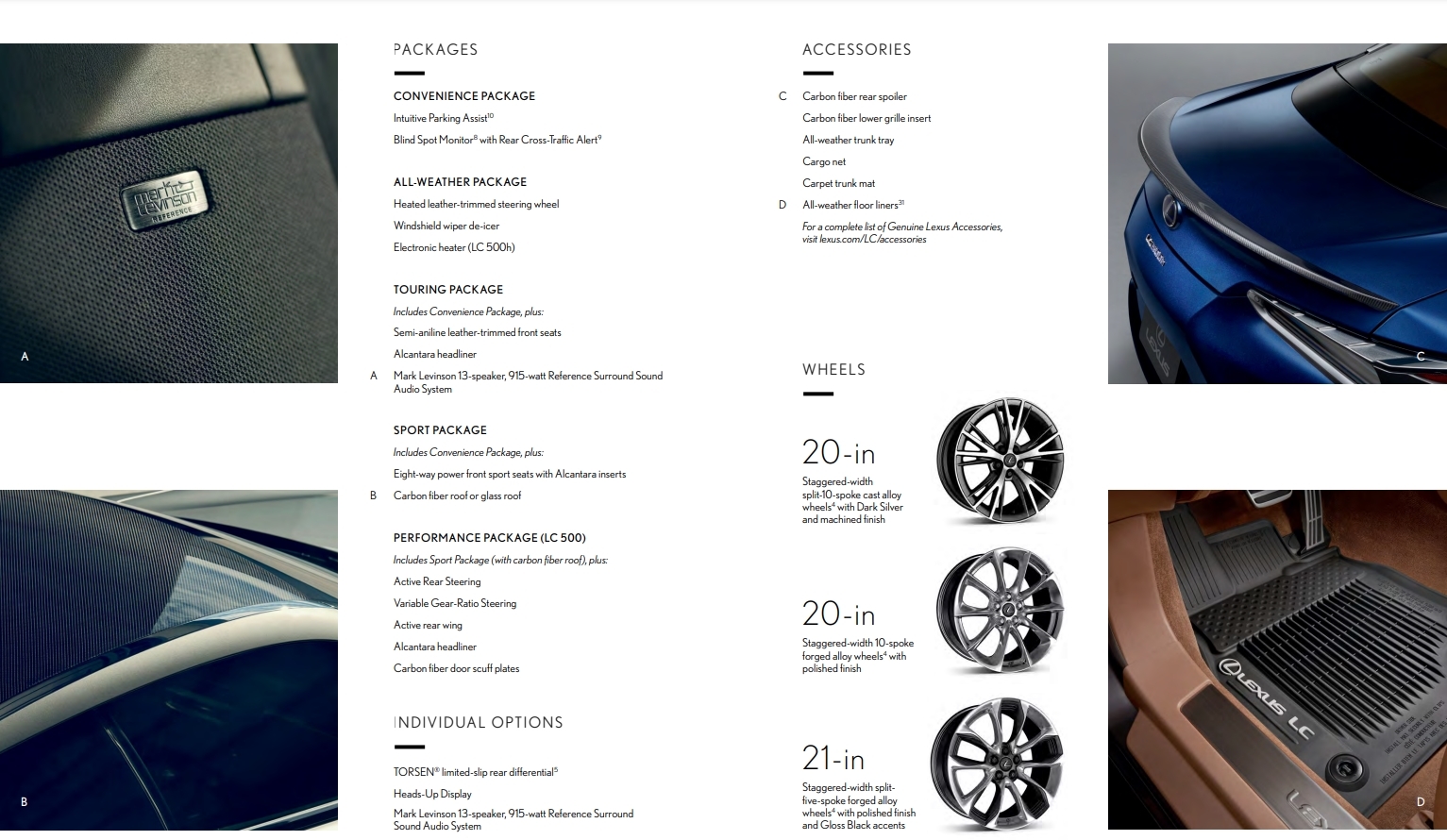
The Lexus LC 500 offers a range of options and packages designed to enhance performance, comfort, and personalization. 

For those seeking a more dynamic driving experience, the Performance Package includes features such as a carbon fiber roof, active rear steering, and a speed-activated rear wing, all contributing to improved aerodynamics and handling. 

Alternatively, the Touring Package focuses on luxury, offering semi-aniline leather-trimmed front seats, a 13-speaker Mark Levinson Premium Surround Sound Audio System, and a glass roof, elevating the cabin’s ambiance.

For a truly personalized touch, the Bespoke Build Program allows for extensive customization, including unique interior color schemes, custom exterior colors, and exclusive 21-inch forged alloy wheels, ensuring the LC 500 reflects individual style preferences. 

Additionally, the All-Weather Package enhances comfort in various climates with features like a heated steering wheel, windshield wiper de-icer, and heated front seats, making it particularly beneficial for those in colder regions. 

To further improve traction and handling, especially during spirited driving, the Torsen Limited-Slip Rear Differential is available as an option, helping distribute power more effectively between the rear wheels. 

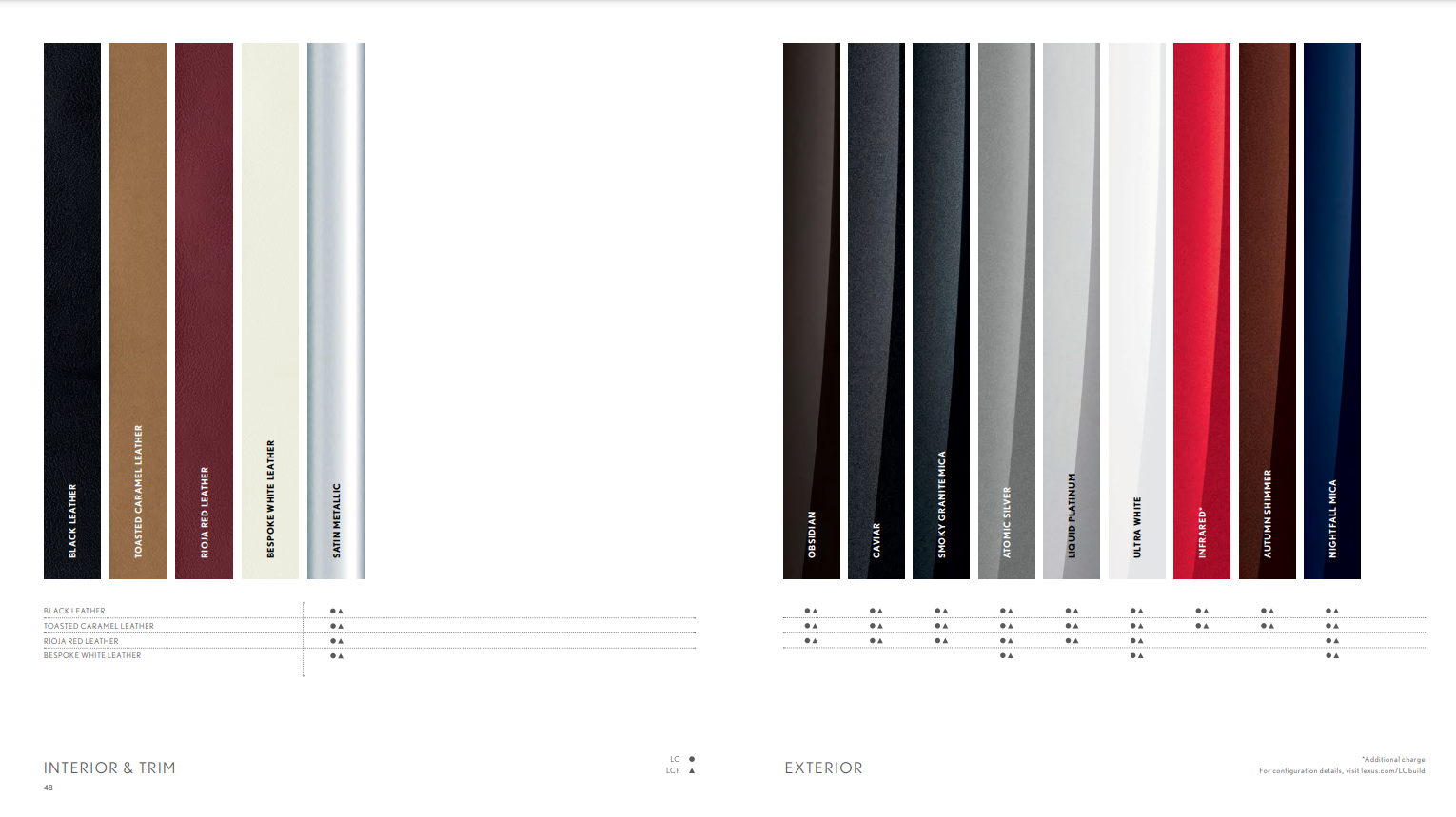
The LC 500 also offers a range of exterior paint colors, including vibrant hues like Infrared and Flare Yellow, as well as sophisticated tones such as Atomic Silver and Nightfall Mica. Interior trims feature premium materials, with options like Toasted Caramel leather and Alcantara accents, allowing for a personalized and luxurious cabin environment. 

When configuring your Lexus LC 500, carefully considering these options can help tailor the vehicle to your desired balance of performance, luxury, and personal style, ensuring it aligns with your preferences.

2018 Lexus LC 500 options list
Key Options

Lexus LC 500 Price and Values

The Best Lexus LC 500 to Buy

When selecting the ideal Lexus LC 500, it’s important to consider model year updates, technological advancements, and personal preferences to ensure the best ownership experience.

For those prioritizing the latest technology and user-friendly interfaces, the 2024 model year stands out. This iteration replaces the previous touchpad-controlled infotainment system with a more intuitive touchscreen, offering wireless Apple CarPlay and Android Auto integration. These enhancements address earlier critiques regarding infotainment usability, providing a more seamless and modern experience.

However, in terms of market stability, go for model years 2017 to 2023, as they should be safe to hack if you find the right example. 

In addition to model year considerations, the condition and mileage of the vehicle are crucial factors. Well-maintained vehicles with lower mileage are more likely to retain their value and provide a more reliable ownership experience. 

It’s advisable to review the vehicle’s service history and, if possible, obtain a pre-purchase inspection to ensure its condition aligns with your expectations.

Conclusion

In summary, with a starting price of around $90,000+, the Lexus LC 500 presents an exciting option for those seeking a luxury grand touring coupe. It offers a beautiful design, performance, and Toyota reliability.

While alternatives such as the BMW 8 Series, Mercedes-Benz SL-Class, Porsche 911 Carrera S, and Jaguar F-Type R provide strong competition, the LC distinguishes itself with its unique styling, exceptional build quality, naturally aspirated performance, and the dependability associated with the Lexus brand.

For individuals desiring a combination of luxury, performance, and reliability, the Lexus LC 500 stands as an excellent choice and you will not be disappointed. 

Car Hacking Shortcuts

  • Look for models equipped with the Performance Package

  • Opt for limited-edition models like the Inspiration Series

  • Prioritize well-maintained, low-mileage examples with a documented service history to ensure reliability and minimize maintenance cost


Source link

Up to 20% price increase on kapchais in 2026 will burden B40 – MMSDA urges review of OMV/402 issue

0


Up to 20% price increase on kapchais in 2026 will burden B40 – MMSDA urges review of OMV/402 issue

In January, it was confirmed by the Malaysian Automotive Association (MAA) that government had provided a deferment for the implementation of the Excise (Determination of Value of Locally Manufactured Goods for the Purpose of Levying Excise Duty) Regulations 2019, which expired on December 31, 2024 and was supposed to take effect in January.

Had that stay (which is the latest of many) not been given, the regulations – also known as the open market value (OMV) or ‘402’ excise duty revision – would have seen seen prices of CKD locally-assembled vehicles go up by up to 30% as of this year, which would obviously not have been good news for all concerned, automotive industry and buyers alike.

The reprieve isn’t for long though, because it was also revealed that the deferment is only for another year, which means it runs out on December 31, 2025, and the new ruling is set to be implemented by January 2026.

Up to 20% price increase on kapchais in 2026 will burden B40 – MMSDA urges review of OMV/402 issue

It’s obvious that the move will have detrimental effects on the whole automotive eco-system, with the MAA already having voiced its concern about the OMV revision, and the Malaysia Automotive Component Parts Manufacturers (MACPMA) and the Motorcycle and Scooter Assemblers and Distributors Association of Malaysia (MASAAM) also stating their apprehension about the matter.

The prevailing sentiment is echoed by the Malaysian Motorcycle and Scooter Dealers Association (MMSDA), which said that manufacturers would struggle to absorb the higher duties that would inevitably come about should the OMV revision happen, and that there would be a cascading effect from that.

According to association chairman Datuk Wee Hong, motorcycle dealers would thus have to adjust their prices in accordance with the manufacturers’ pricing adjustments.

Up to 20% price increase on kapchais in 2026 will burden B40 – MMSDA urges review of OMV/402 issue

“As motorcycle dealers, our business principle is based on the cost price of goods. Buying at a higher price means selling at a higher price. If manufacturers state that the implementation of OMV will impact motorcycle prices, with an estimated increase of 10% to 20%, then motorcycle dealers will have to adjust prices accordingly,” he said in a written reply to paultan.org‘s questions on the matter.

He added that the impact of a price increase would affect smaller capacity locally assembled motorcycles the most, and with that, its buyers. “Most buyers of kapcai or motorcycles below 150 cc belong to the B40 income group, who rely on these motorcycles as their main means of livelihood. A price increase would undoubtedly add to their financial burden,” he stated.

Wee said the MMSDA is firmly on the same page with other industry associations on the matter. “We are willing to collaborate with stakeholders in the motorcycle industry to urge the government to review its decision not to further extend OMV 402 in order to maintain price stability and avoid negatively impacting the B40 community. This will also help prevent disruptions to the growing gig economy,” he said.

Up to 20% price increase on kapchais in 2026 will burden B40 – MMSDA urges review of OMV/402 issue

However, the association is preparing contingency plans should the new OMV come into place. “Dealers will monitor market demand and changes while adjusting the services and offers provided to customers — such as complimentary helmets, raincoats and other benefits — to mitigate the adverse effects of price increases on the market.” he explained.

The controversial ‘402’ – gazetted on the last day of 2019 – stipulated a new methodology of calculating a CKD vehicle’s open market value (OMV), which influences how much tax is to be paid and therefore, its selling price.

Under the revision, OMV – which is defined as the final market value of a CKD vehicle ex-factory before the government imposes excise duties on it – is set to include not just the profit and general expenses incurred or accounted in the manufacture of a vehicle, but also of its sale, the latter being where the contention is currently centred.

Up to 20% price increase on kapchais in 2026 will burden B40 – MMSDA urges review of OMV/402 issue

The regulations were supposed to come into force in 2020, but 22 days into that pandemic year, MAA announced that the finance ministry had deferred implementation to 2021. By end-2020, it was deferred again, and MAA appealed to the government in 2022 for continued deferment. This was successful, with a two-year deferment being granted until December 31, 2024. The current deferment is until December 31, 2025.

While the government undoubtedly wants to increase its coffers, introducing the new OMV is probably not the best way to go about it, because it would not just affect the competitiveness of the local automotive market but ultimately burden consumers. Indeed, given the many reprieves that have surfaced, it’s obvious that very few people think the new calculation methodology is a good idea.

Such a blanket move would also go against the current government’s “tax the rich” approach of late, and so perhaps the High Value Goods Tax (HVGT) – which has been put on hold – should be revisited if new tax streams are being looked at.

Looking to sell your car? Sell it with Carro.


Source link

For Sale: Singer DLS ‘Oppenheimer Commission’ at RM Auction

0


The Singer DLS is widely regarded as the ultimate evolution of the air-cooled Porsche 911, and the ‘Oppenheimer Commission’ is perhaps its finest example. This striking restomod, built as part of Singer’s Dynamics and Lightweighting Study (DLS), is a showcase of cutting-edge engineering, Formula 1 expertise, and obsessive attention to detail. Developed in collaboration with Williams Advanced Engineering, the DLS pushes the boundaries of what an air-cooled 911 can be. This extraordinary one-owner example with fewer than 120 km is available at auction with RM Sotheby’s with bidding opening on Tuesday, 18 February 2025 and is estimated at £2,600,000 – £3,000,000 GBP

Under the rear decklid sits a 4.0-litre, naturally aspirated flat-six, producing approximately 500 bhp and revving to 9,000 rpm. Mated to a six-speed manual gearbox, power is sent to the rear wheels for an unmatched analogue driving experience. The chassis and suspension have been entirely redesigned by Williams, while Brembo carbon-ceramic brakes provide stopping power comparable to a Bugatti Chiron. Michelin developed bespoke tyres, and the lightweight magnesium wheels were crafted by BBS exclusively for the DLS.

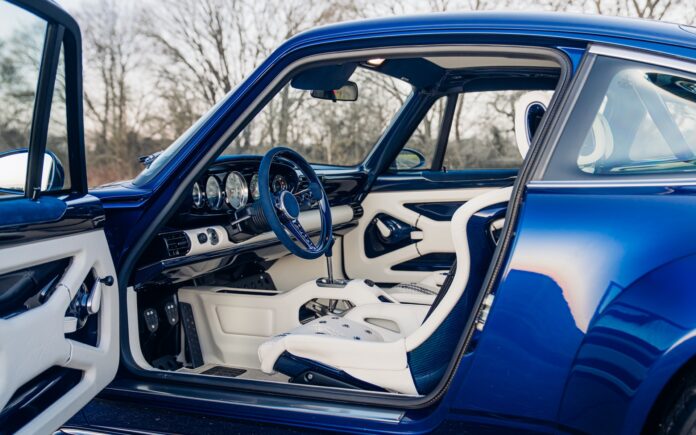
This particular Oppenheimer Commission was inspired by the legendary Oppenheimer Blue diamond. The Mercedes-Benz Brilliant Blue Metallic exterior is subtly contrasted by visible navy-tinted carbon fibre across the bodywork. Exposed carbon detailing in the Porsche script, front and rear trim lines, and smoked taillights add further sophistication. The brightwork is finished in polished titanium, enhancing the car’s understated elegance.

The interior is just as striking as the exterior, featuring Cream leather upholstery with Navy Blue Alcantara accents, perfectly matching the navy carbon fibre trim. The bespoke bucket seats feature a unique weave pattern, with navy blue double offset stripes running through the centre. Even the gearshift knob is finished in maple wood, a nod to classic Porsche racing cars.

Every detail, from the custom-fitted paint protection film to the precisely selected materials, has been meticulously crafted to create a truly bespoke experience.

With just 75 examples of the DLS ever built, this UK-registered, LHD commission is one of the most exclusive air-cooled 911s in existence. Offering unmatched craftsmanship, lightweight engineering, and timeless design, this is a once-in-a-lifetime opportunity to own one of the most spectacular DLS builds ever created, submit your sealed bids with RM Sothebys now!


Source link

Southwest’s Latest Flight Sale Has Deals Starting at $59 — but It Ends Soon

0


One-way flight deals are here in time to surprise that special person on Valentine’s Day. 

Southwest Airlines’s Valentine’s Deal is live and offers one-way flights starting at $59. The offer must be booked between February 10 and February 13, 2025 at 11:59 p.m. Pacific Time. While Southwest Airlines can be found at more than 117 airports across 11 countries, this special is focused primarily on domestic travel.

Fare costs vary depending on the day they are booked and the departure airport. A glance at examples of notable domestic and international destinations from LaGuardia include: 

  • New York (LGA) to Chicago (MDW) — $89 one-way
  • Washington (DCA) to Chicago (MDW) — $99 one-way
  • Detroit to Myrtle Beach — $109 one-way
  • Indianapolis to New York (LGA) — $100 one-way
  • San Francisco to Las Vegas — $69 one-way
  • Tampa to Providence — $119 one-way

Travelers who want to find inspiration while getting a good deal can search by selecting their departure airport on the deal page and Southwest will list flight deals by destination.

Purchases must be made 21 days in advance and for travel between March 3 through May 21, 2025. Seats are non-refundable. There are blackout dates for some destinations. For travel “from continental U.S. to Hawaii, international, and San Juan, Puerto Rico” blackout dates are March 7 through April 19, 2025. Travel to the continental U.S. from these locations are blacked out from March 14 through April 27, 2025.

Southwest noted that “fares won’t be available on some flights that operate during very busy travel times and holiday periods.”

U.S. continental travel is only valid (unless stated otherwise) on Mondays through Thursdays. Travel from the continental U.S. to Hawaii and International destinations are valid between Sundays and Wednesdays, while travel to the continental U.S. from Hawaii and international destinations is valid Tuesdays through Fridays. 


Source link

DeepSeek, Alibaba & The AI Race

0


As AI-powered personal assistants become deeply embedded in the daily lives of large corporations, businesses and individuals alike, the balance between convenience and control is shifting. From China’s DeepSeek to the West’s AI race, artificial intelligence is no longer just a tool — it is an omnipresent force shaping global surveillance, economic power structures, and the future of digital autonomy. As AI systems become more advanced and widely available — often for free or at a fraction of the cost — what is their real value and if AI developers are the ones truly benefitting, what does that mean for the rest of us?

Read More: The Influence of AI in the Interior Design Industry

Is The West Losing The AI Race?

Chinese AI model DeepSeek, which recently took Silicon Valley by surprise and became one of the most downloaded apps in the United States has raised security concerns due to a “hidden code” that allegedly transmits user data to the Chinese government, according to cybersecurity experts. Researchers from Feroot Security, a Canada-based cybersecurity firm, discovered that DeepSeek’s browser-based version not only collects user information but also generates a unique digital “fingerprint” to track activity across multiple websites.

Read More: The Influence of AI in the Interior Design Industry

Launched in January 2025 as a free, open-source platform, DeepSeek sent shockwaves through the tech industry, triggering over USD 1 trillion in stock market losses and threatening the dominance of U.S. leaders such as Nvidia. Its sudden rise has cast doubt on the perceived dominance of well-funded U.S. AI companies like OpenAI, which has reportedly invested billions in similar technologies. As the South China Morning Post reports, Hangzhou-based DeepSeek rose to worldwide fame last month after it released the V3 large language model (LLM) and R1 reasoning model, which the company said showed capabilities comparable to products from ChatGPT creator OpenAI, despite being developed at significantly lower costs. DeepSeek was founded by entrepreneur and businessman Liang Feng in 2023. By offering an advanced AI tool for free — despite its relatively low reported development costs — DeepSeek is reported to have unsettled Silicon Valley and challenged assumptions about American leadership in the AI space.

The AI landscape is no longer a Silicon Valley monopoly as for years, Silicon Valley dictated the pace of AI development, but that dominance is slipping. The rise of Chinese firms — particularly DeepSeek — has accelerated global competition, leading to an unprecedented shift in technological power. No longer is the race confined to a handful of Western tech giants — now, Eastern AI firms are outpacing them in speed, efficiency, and sophistication.

Despite DeepSeek’s rise, the Wall Street Journal reported that Amazon, Google, Microsoft and Meta continue to “pour billions into artificial intelligence”. The report states that Microsoft, Google, and Meta Platforms are projected to collectively invest over USD 215 billion in capital expenditures for their current fiscal years, marking an annual rise of more than 45 percent. Meanwhile, Amazon.com — while withholding a full-year forecast — indicated that its total capex across various divisions is set to exceed USD 100 billion, with the bulk of this increase being directed towards AI development.

These figures reflect the growing intensity of the AI race, despite investor concerns surrounding the influence of China’s DeepSeek and the uncertainty over whether these major U.S. firms will see a return on their massive investments. Investors are particularly unsettled by DeepSeek’s ability to replicate much of the functionality of leading American AI systems, all while spending less and utilising fewer, less powerful chips, as claimed by its Chinese creators. However, U.S. company leaders remain confident, highlighting their own technological progress and arguing that reduced costs will drive AI adoption and boost demand for cloud services, which AI heavily relies on to function.

So why do Western AI models struggle with inferential reasoning compared to their Eastern counterparts? AI development in countries like Russia and China often take a more centralised, state-backed strategy. This support includes access to vast amounts of data and resources, which can help hone the models to specific needs, including advanced reasoning. Western companies may not have the same access to data and government-driven initiatives that prioritise AI development.

Then there is the discussion of public versus private sector approaches. Different countries are taking varied approaches to AI regulation, with the public and private sectors playing distinct roles. In China, for instance, the government leads AI development, driving a centralised strategy that ensures national interests are prioritised. In contrast, the West follows a more fragmented, market-driven approach, where tech giants hold significant sway. This highlights how each model presents its own set of challenges and opportunities for growth and governance in the AI rat race.

The Future of Language Models

DeepSeek’s latest iteration has redefined the limits of AI-powered assistants. Unlike standard chatbots, which rely on predefined responses, DeepSeek anticipates user needs before they even ask. It analyses past interactions, contextual nuances, and even subconscious patterns to refine its responses. Unlike ChatGPT, which still struggles with complex inferential reasoning, DeepSeek has developed a more sophisticated approach — one that does not just respond but understands intent between the lines. This raises a critical question: while Western AI models prioritise accessibility and ethical constraints, Eastern firms are refining AI to a near-intuitive level. Will this give them a strategic advantage? And what does this level of sophistication mean for privacy and control? However, despite once being a frontrunner in advanced AI models, DeepSeek has now been dethroned by an even more sophisticated competitor in Alibaba.

According to a report by USA Today, Alibaba’s release of its Qwen 2.5-Max artificial intelligence model on the first day of the Lunar New Year highlights the intense pressure exerted by DeepSeek’s recent success. Qwen 2.5-Max — according to Alibaba’s cloud unit — surpasses both DeepSeek-V3 and other leading models like GPT-4o and Llama-3.1-405B in performance. This move follows DeepSeek’s disruptive impact, particularly after its DeepSeek-V2 model, which triggered a price war in China by being open-source and exceptionally low-cost. In response, Chinese firms like ByteDance, Baidu, and Tencent have quickly updated their own models to stay competitive, further intensifying the AI arms race within China and globally.

Read More: The OpenAI Debate and the Ramification of Improper AI Governance

AI is already shaping human behaviour in ways most people do not realise. From a commercial aspect with AI-written books and deepfake models used for branded commercials to automated journalism, artificial intelligence is not just assisting creativity — it is replacing it. The question is no longer whether AI will generate content but whether we will be able to distinguish human work from machine-generated output.

Most users engage with AI tools without realising they are feeding them data — data that becomes fuel for even more advanced learning systems. Governments and corporations are increasingly aware of AI’s power, leading to rising restrictions and tighter control. AI’s presence is often unseen — tracking, predicting, and influencing decisions without users’ explicit awareness.

The rise of AI platforms like DeepSeek has sparked new conversations around digital sovereignty. With AI models and data being controlled by a select group of tech giants, the question of who owns and governs digital resources becomes ever more pressing. As seen with the United States’ Silicon Valley, nations that develop and control their own AI technology may gain unprecedented power, influencing global economic and political dynamics.

Read More: Is Cinema Preparing for An AI Takeover?

AI Agents and the Erosion of Human-Centric Intelligence

With Oracle debuting its AI agents, the next phase of the AI race is here. These self-learning systems are not just programmed to respond; they adapt, evolve, and outthink human-driven decisions. The race is not about creating better chatbots — it is about who can build AI systems that function independently of human intervention. DeepSeek’s latest model faced immediate restrictions from hundreds of companies and government agencies. A newly proposed law in the U.S. could impose hefty fines or even prison sentences on individuals who use the Chinese AI app DeepSeek.

The bill — introduced by Republican Senator Josh Hawley — seeks to ban U.S. citizens from contributing to the advancement of artificial intelligence technology in China. It also aims to restrict the importation of AI-related technology or intellectual property developed within the country. If passed, the legislation would enforce strict penalties, including fines of up to USD 1 million for individuals and as much as USD 100 million for businesses. Those found in violation could also face up to 20 years in prison.

AI As a Force of Good

It is not all doom and gloom, despite the fear-mongering surrounding AI, its real impact is already proving to be transformative. From streamlining business operations to ensuring fairer decision-making in industries like insurance and governance, AI is stepping in where human limitations exist. Rather than a threat, AI could be the key to a more efficient, equitable, and forward-thinking world. One such argument is that AI is not replacing human intelligence but rather amplifying it.

Insurance, healthcare and the finance industry could benefit from some element of AI intervention. With insurance, AI can be used to analyse patterns in claims to identify potential fraud while AI-powered automation could speed up claims approvals, reducing paperwork and human errors. As it stands, chatbots already handle routine inquiries, AI could make machine learning models assess customer data to offer personalised policies, improve efficiency and reduce wait times. From the administration angle, AI could reduce paperwork and improve patient data management within the healthcare sector while AI-driven models can predict stock market trends and optimise trading strategies within finance and banking. AI has the potential to meet growing demands that are no longer humanly possible to fulfill at a large scale. AI also has the potential to eliminate human biases in vetting processes, from loans to medical diagnostics. AI automated systems could ensure consistency and prevent human errors or prejudices alongside faster, data-driven decisions that benefit businesses and consumers alike.

AGI stands for artificial general intelligence and refers to machines that are able to apply their knowledge and learning ability to a wide range of tasks. Most AI today is “narrow” or “specialised” and designed for specific tasks. True generalised AI will have the capacity to think, act and behave far more closely to the way we do across tasks involving creativity and complex problem-solving.

Public Over Profit – Cost, Control, Complexity

Instead of resisting AI, embracing it for good could be the biggest opportunity of our generation. The real failure is not AI — it is the lack of vision on how it is implemented. Smart systems are helping governments make better infrastructure and policy decisions. The debate of AI ethics has been ongoing for decades and it is time to focus on solutions instead of fueling paranoia. AI is not the problem — how we choose to use (or misuse) it is.

Read More: For Better or Worse: Here Is How AI Artist Botto is Reshaping the Art Industry

The AI race is no longer about innovation alone — it is about control. With each advancement, AI developers are not just creating better tools; they are designing systems that learn from us, adapt, and evolve. While AI is being given away for free or at minimal cost, the real currency is data, influence, and power. There should also be some importance placed on having diverse teams in AI development as AI systems are shaped by the biases and perspectives of those who create them. Without a diverse group of developers, there is a risk that AI may perpetuate social inequalities or missed opportunities for more inclusive solutions.

The real failure is not the implementation of AI itself but rather the profit-driven rush to dominate it. It is a scene all too familiar — when left unchecked, technological advancements prioritise corporate gains over public good. Governments should have systems in place to ensure AI serves society, not just those who control it. Yet, this has been an ongoing discussion for at least the last 30 years or so — warning of automation, bias, and unchecked surveillance — only to find ourselves repeating the same cycle.

For more on the latest in business reads, click here.


Source link

Dodge Hornet GLH reportedly starts production in 2025

0


A couple of years ago, Dodge rolled out a pair of Hornet GLH concepts to showcase various tuner parts it was considering offering through its Direct Connection aftermarket parts portfolio. Now, there’s talk that a Hornet GLH model is headed for production—and soon.

Quoting comments made by Dodge CEO Matt McAlear during a January interview, The Drive has reported that a Hornet GLH will enter production later in 2025. The timing suggests the vehicle will arrive as a 2026 model for the U.S.

This isn’t the first time a senior Dodge official has hinted at a production version of the Hornet GLH concepts. In a 2022 interview, former Dodge CEO Tim Kuniskis—now CEO of Ram—told Motor Authority that a GLH had been in the works since the earliest days of the Hornet’s development.

The GLH designation is a nod to the Carroll Shelby-influenced Dodge Omni GLH of the 1980s and stands for “Go Like Hell” (or “heck,” depending on who you ask).

Dodge Hornet R/T GLH concept

Dodge Hornet R/T GLH concept

For the Hornet GLH concepts, Dodge had one each based on both the Hornet GT and Hornet R/T models. The company didn’t reveal many details about the upgrades on the concepts, aside from “stage kits” that offered power boosts, lowered suspension, and various styling options.

The Hornet GT currently features a 2.0-liter turbo-4 producing 268 hp, while the R/T swaps in a plug-in hybrid system rated at 288 hp.

Dodge may have more good news coming for Hornet fans shortly. According to The Drive, McAlear also stated that the Hornet’s base price will drop this year to $29,995, down from the current $33,180, including destination. He also mentioned that other models could see price reductions by removing some standard features from higher trims and offering them as part of new option packages.


Source link

RIMOWA and Rick Owens’ Bold and Bronzed Collab

0


Photo by RIMOWA.

“No matter how far or long, I only bring one carry-on,” says Rick Owens. With this first-time partnership between Owens and RIMOWA, we can expect a suitcase perfectly tailored to one’s needs and refined with the designer’s signature edge. When imagining the collaborated RIMOWA piece, the first thought was, of course, a dark, moody shade—a sleek gunmetal finish. Simple yet bold, it’s a distinctive flair that perfectly embodies their style—and we’re here for it.

First unveiled at the Rick Owens Autumn/Winter 2025 show in Paris, the iconic RIMOWA aluminium suitcase undergoes a dramatic transformation through Owens’ lens. Via a painstaking manual pigment process, the sleek silver of the suitcase has been reborn into a brooding, aged bronze finish.

The RIMOWA x Rick Owens Original Cabin Bronze. Photo: RIMOWA.

No two suitcases are truly alike. Designed to evolve over time, the patina is set to deepen, enhancing the suitcase’s sensory character as it ages. Like a gnarled map face, each piece will develop a unique look and feel; their surfaces are roadmaps of their journeys.

“I wanted the outside finish to recall a bronze from Giacometti, Brâncuși, or Richard Serra, and I wanted the interior to feel like the touch of a black leather glove,” Owens explains. And when Owens speaks, RIMOWA listens. For the first time in the brand’s storied history, the interior has been completely reimagined, wrapped entirely in luxurious black leather hand-selected by Owens himself. From the lining to the Flex Dividers, every detail speaks to his singular vision—raw yet polished.

Photo: RIMOWA.

Each suitcase is finished with a fuzzy cowskin tag produced by Rick Owens in Italy that enhances the sleek simplicity with a touch of texture. And to ensure exclusivity, the RIMOWA x Rick Owens Original Cabin Bronze is a limited edition of 500 numbered pieces.

The RIMOWA x Rick Owens Original Cabin Bronze is available at select RIMOWA and Rick Owens boutiques.

This article was first seen on Esquire Singapore.

For more on the latest in fashion and style reads, click here.


Source link

Lanzante to mark 30 years since the McLaren F1 GTR’s Le Mans win with special car

0


This year marks the 30th anniversary of the McLaren F1 GTR’s victory at the 24 Hours of Le Mans. To celebrate this occasion, UK-based specialist Lanzante is building a special supercar. It is likely to be showcased at the 2025 Goodwood Festival of Speed.

Lanzante has released a teaser showcasing a design sketch of the upcoming model. It appears to be a 3-seater with a central driving position, which leads us to suspect whether it could be based on the McLaren Speedtail.

If that is the case, we might get a heavily modified Speedtail with track-focused upgrades. It could feature a bespoke high-downforce package instead of the low drag, long tail design. It will be a fitting tribute to the McLaren F1 GTR.

Lanzante McLaren F1 GTR LM30 teaser

The McLaren Speedtail uses a petrol-electric hybrid powertrain with a combined output of 1036 hp. It can accelerate from 0-186 mph in 12.8 seconds and has a top speed of 250 mph.


Source: Lanzante


Source link

Exploring The Engineering Might Of Mercedes-Benz

0


I’m going to cast my loyalties aside and admit it: Mercedes-Benz has been making some of Germany’s best cars for over a century.

Not just Germany but the whole world, for that matter. I don’t think that’s up for debate either, no matter how many cubic inches you like under the hood or how many waifu pillows you have in your bed.

Mario Christou MB Museum SH-7
Mario Christou MB Museum SH-2

It’s an opinion I’ve maintained for years, but it was really cemented during my visit to the Mercedes-Benz Museum in Stuttgart, Germany last November.

Mario Christou MB Museum SH-16

After all, no other manufacturer can claim to be the one who invented the motor car, can they?

Mario Christou MB Museum SH-53

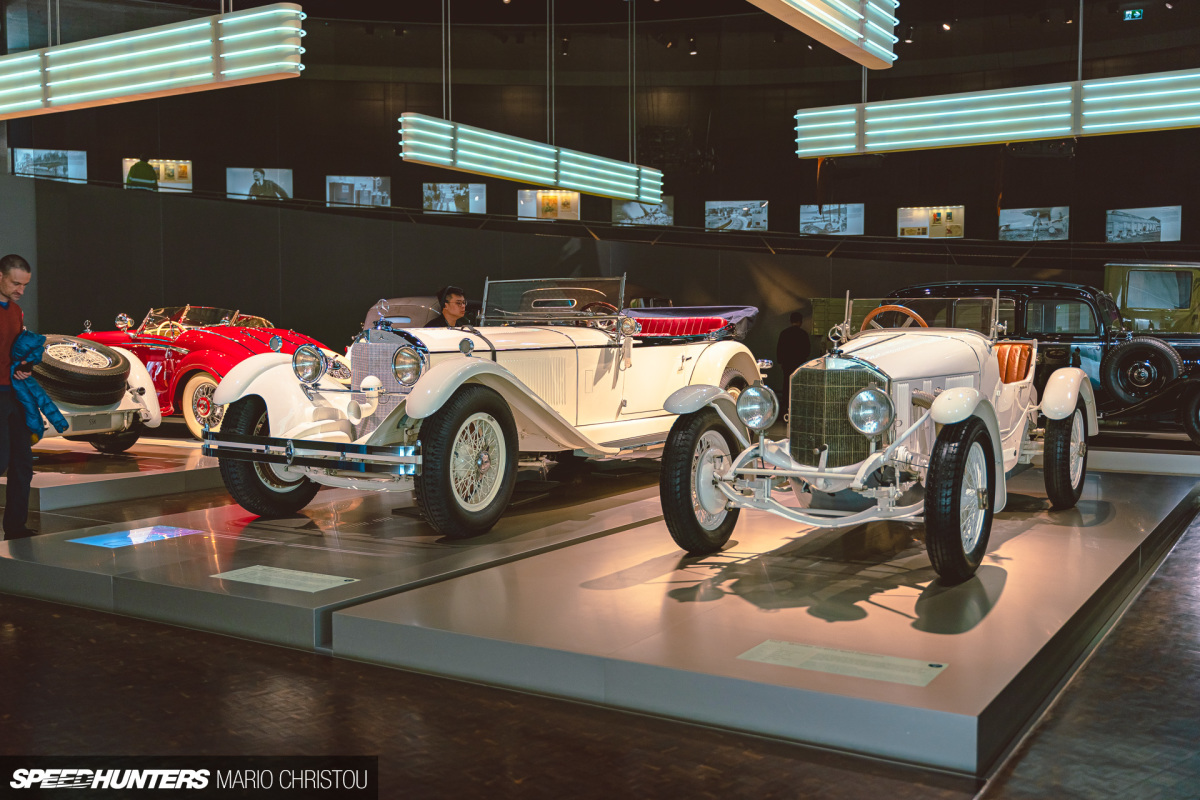
It’s incredible just how many legendary and as-new Mercedes-Benz icons are gathered under one roof, from the earliest examples of pick-up trucks to a trio of SLs and even a Sauber C9 as part of the motorsport display. The range of vehicles produced by Mercedes-Benz is simply astounding.

Mario Christou MB Museum SH-68
Mario Christou MB Museum SH-72

Speaking of motorsport, seeing the switch of Germany’s national racing colour from white to silver before my very eyes was a reminder of how much influence Mercedes-Benz has always had on the automotive world. ‘White Arrows’ does sound kind of cool, but the ‘Silver Arrows’ has much more of a ring to it.

Mario Christou MB Museum SH-31

Where else could you see a 6.9-litre V8 SEL parked next to an Argentine bus? Or how about a Mercedes-Benz Actros car transporter carrying an SEC, SE and 220 wagon on its back?

Mario Christou MB Museum SH-26

Mercedes-Benz has a tremendous reputation for both luxury and reliability the world-over.

Mario Christou MB Museum SH-39

Who’d have thought that Idi Amin and Carmela Soprano were both fond of the three-pointed star, eh?

Mario Christou MB Museum SH-60

And that’s before we even factor in the engineering powerhouse that is AMG. The foresight Mercedes-Benz had to purchase the well-known tuner was incredible, and it led to AMG creating a bonafide performance car range in house at Mercedes-Benz, leading to F1 domination.

Mario Christou MB Museum SH-7

How about Maybach? Being turned around from an all-but-forgotten brand into a genuine Rolls-Royce rival… then failing, admittedly, but once again being reborn as a hugely successful sub-brand under Mercedes-Maybach.

Mario Christou MB Museum SH-61

BMW purchasing Alpina comes to mind, but I can’t help think the Büchloe brand will simply become a trim level in the near future…

Mario Christou MB Museum SH-40

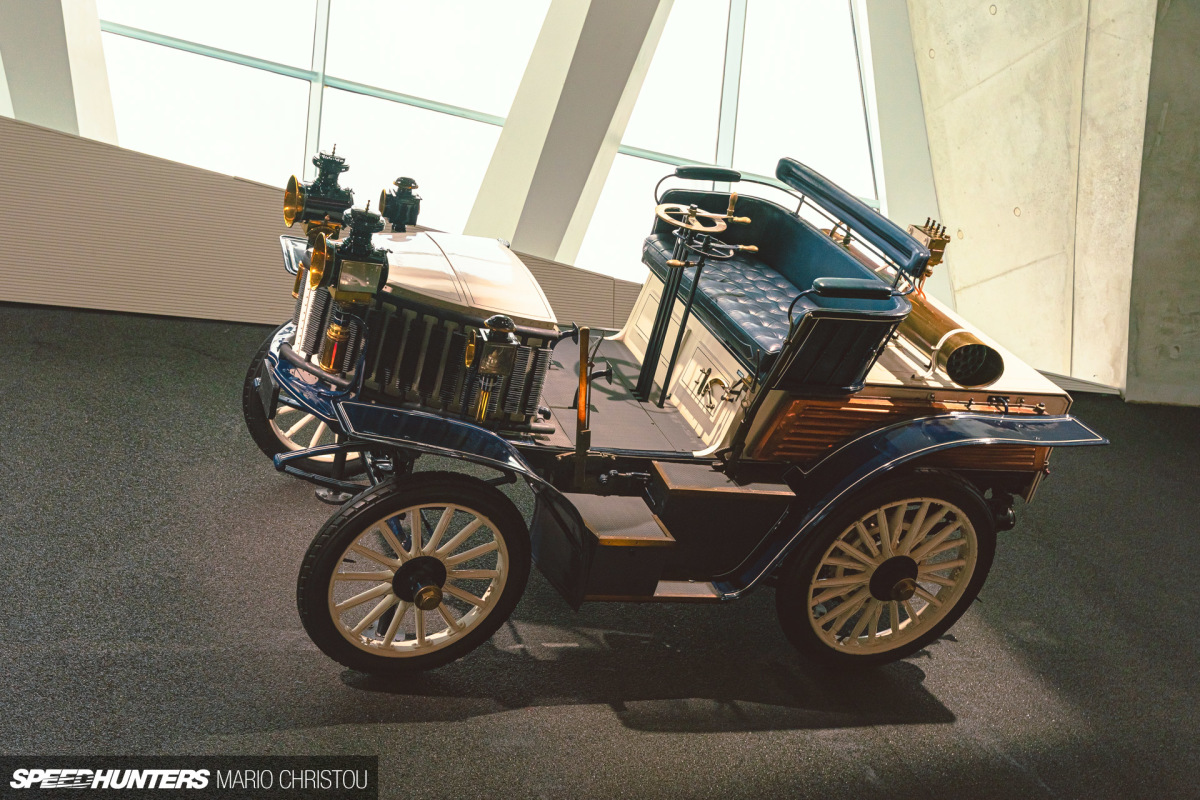
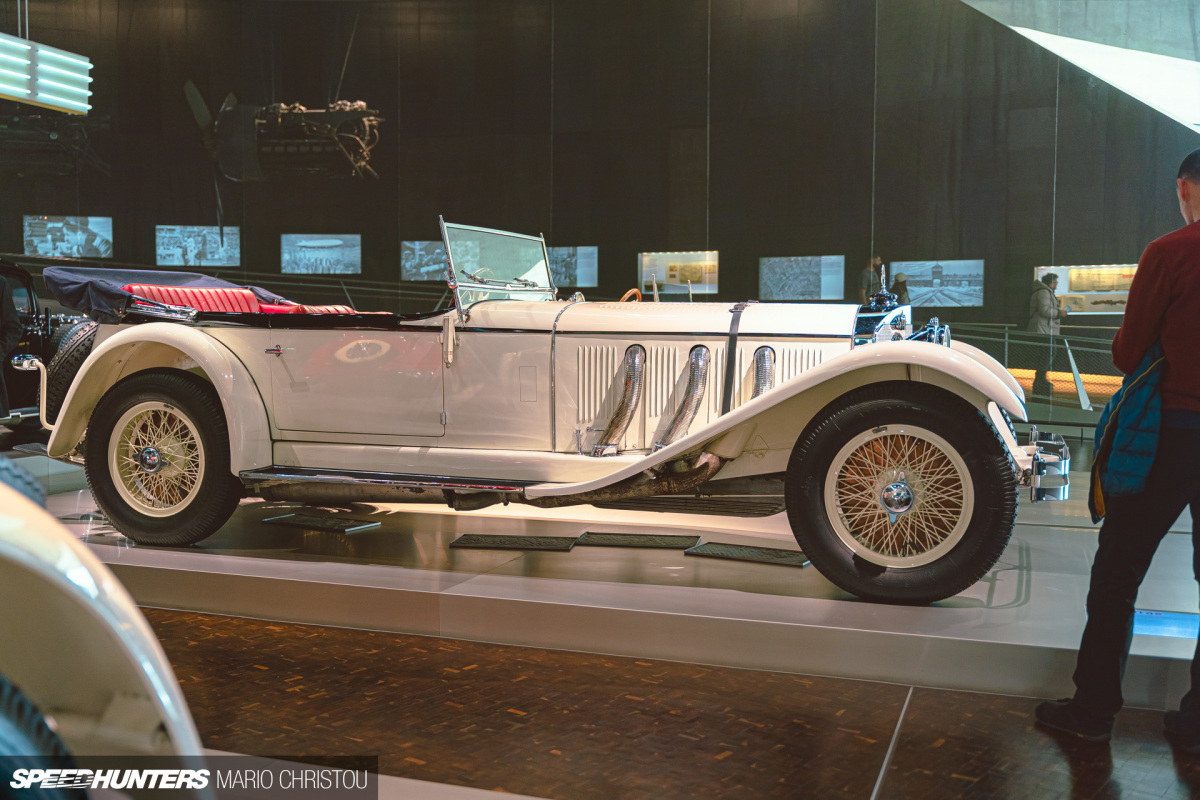
The highlights of my visit to the Mercedes-Benz Museum were the pre-war cars, especially the sporting models. I’ve seen the ridiculous amounts they’ve sold for at auction over the years, and their successes at events like the prestigious Pebble Beach Concours d’Elegance, but it never made that much sense to me.

Mario Christou MB Museum SH-37
Mario Christou MB Museum SH-33

Brands such as Bugatti, Delahaye, Duesenberg and Hispano-Suiza have an incredible allure due to their reputation at the upper echelon of the automotive industry in its formative years. Mercedes-Benz, however, make vans and trucks and compact cars – but I was absolutely bewitched once I saw their early models in person.

Mario Christou MB Museum SH-41

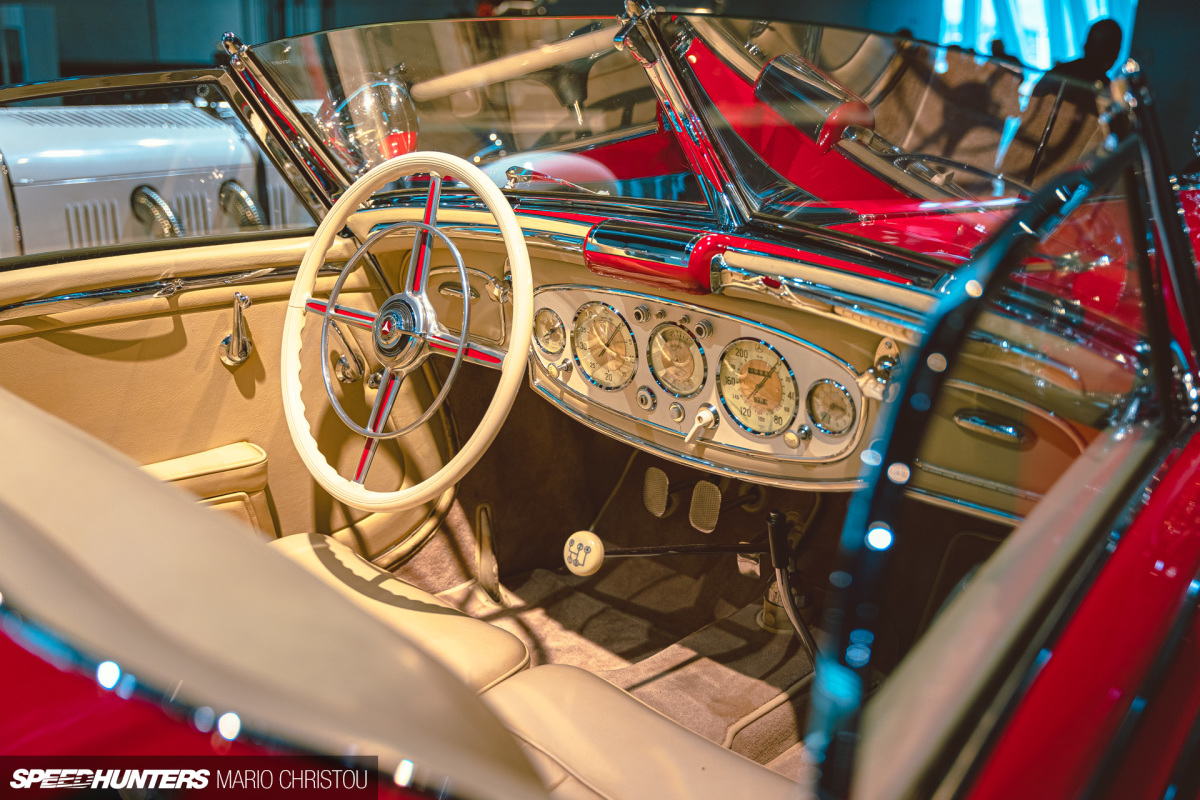
Huge and imposing, with stunning curves from every angle and incredible details both inside and out. Standing next to them, I felt like a Hollywood star – or perhaps a Bond villain.

Mario Christou MB Museum SH-58

There’s an indescribable sense of quality that radiates from old Mercedes-Benz models. It’s almost as if every car in the museum was chiselled from granite or tungsten.

Mario Christou MB Museum SH-5

Let me put it to you this way. I was fortunate enough to be given a 560 SEC to use for a couple of months, and the experience has stayed with me. The steering was heavy, the doors even heavier, and the view over the bonnet was presidential. What I loved the most however were the air vents.

Mario Christou MB Museum SH-45

There’s no flimsy little knob to adjust them; instead you move the entire metal vent assembly up and down to direct air flow, and the plastic vanes have their own dedicated slide assembly.

Mario Christou MB Museum SH-48

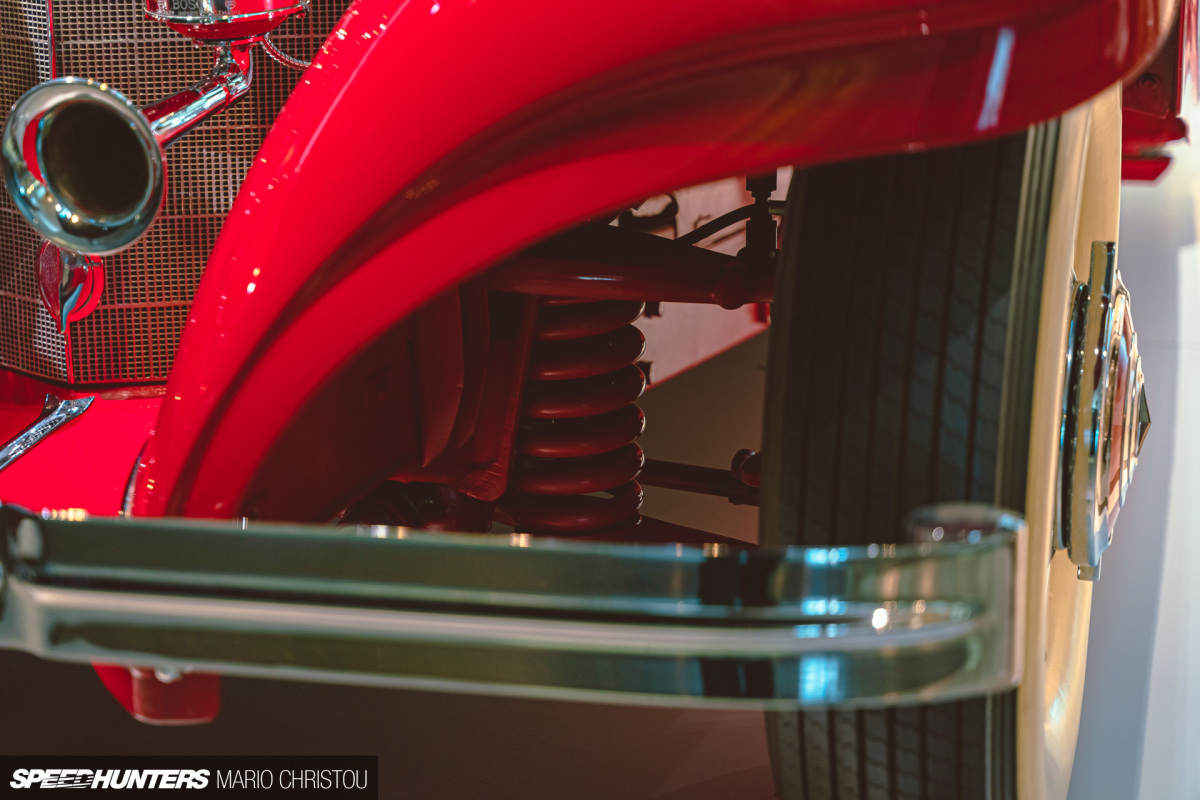
If an air-vent can be so over-engineered, just think about how robust the cars used to be under the skin, eh?

Mario Christou
Instagram: mcwpn, mariochristou.world
www.mariochristou.world


Source link

GM retired a Chevy Corvette manager with almost four decades at the company

0


  • Harlan Charles has been let go as the Corvette’s product marketing manager
  • He was a member of the Corvette team for 24 years
  • He played a key role in taking the Corvette down the mid-engine path and was responsible for bringing back the ZR1 name

Chevrolet’s veteran Corvette product marketing manager, Harlan Charles, is no longer with General Motors.

He revealed the news via an Instagram post made last week, where he described his departure as his “Corvette dream” being over and that his bubble had burst.

In the post, Charles said GM had notified him that his time at the company was up and that he is now retired.

Charles didn’t mention in the post why he was dismissed. We’ve reached out to GM for a comment.

Charles’s exit from the Corvette team comes less than a year after the Corvette’s veteran chief engineer, Tadge Juechter, stepped down. Juechter chose to retire after 47 years at GM, and his replacement has since been named as Tony Roma.

Like Juechter, Charles spent decades working for GM. In his post, he said he had been with GM for 37 years and on the Corvette team for 24 of those years.

During that time, he worked on four generations of the Corvette, and among his proudest moments, according to the post, were presenting to management why the Corvette team should study a mid-engine platform (at the time for the C7), delivering the C8 Corvette Stingray with a starting price of $59,995 for its first year on the market, as well as bringing back the Grand Sport and ZR1 names.

2025 Chevrolet Corvette ZR1

2025 Chevrolet Corvette ZR1

In an interview with Road & Track published on Feb. 7, Charles goes into much greater detail about his time at GM, including about how during the 1990s he bugged then-Corvette chief engineer Dave Hill about joining the Corvette team while he was working nearby as a product manager for the Oldsmobile Intrigue.

Charles also revealed that GM had planned to take the C7 Corvette down the mid-engine route before the global financial crisis and GM’s bankruptcy nixed the project. He said a design was already completed, which featured C6 styling cues.

In addition to Charles’s early retirement, GM also parted ways with Corvette exterior design manager Kirk Bennion, who had been with the Corvette team since 1986.


Source link