Home Blog Page 185

2025 Chevy Blazer EV SS undercuts Ioniq 5 N at $61,995

0


  • The 2025 Chevrolet Blazer SS has gone on sale, more than a year later than originally promised
  • A standard dual-motor all-wheel-drive powertrain delivers a peak of 615 hp with Wide Open Watts mode
  • Pricing starts at $61,995, including destination

It’s been three years since the Chevrolet Blazer EV SS was first shown, but the high-performance electric crossover is only now available for sale. Fortunately, the wait was worth it, as Chevy has delivered more power than originally promised.

The 2025 Blazer EV SS is available at a starting price of $61,995, including a $1,395 destination charge, and comes standard with a dual-motor all-wheel-drive powertrain producing 615 hp, up from the 557 hp announced during the vehicle’s reveal in 2022. The peak output is achieved with the vehicle’s Wide Open Watts mode engaged and is enough to deliver a 0-60 mph time of just 3.4 seconds.

The price is a substantial discount compared to another high-performance electric crossover from a mainstream brand, the Hyundai Ioniq 5 N, which starts at $67,475 for 2025. The Blazer EV SS also sits in the midsize segment, whereas the Hyundai is only a compact. However, the Hyundai is slightly quicker, with its peak 641 hp delivering 0-60 mph acceleration in 3.3 seconds.

Like every Blazer EV, the SS features an 11.0-inch digital gauge cluster, a 17.7-inch infotainment touchscreen with Google built-in, and turbine-like air vents similar to those found in a Mercedes-Benz. The SS version also comes with a flat-bottom steering wheel.

2025 Chevrolet Blazer EV SS

2025 Chevrolet Blazer EV SS

As the flagship in the range, the SS includes extra standard features such as Super Cruise, Brembo brakes, a surround-view camera system, and a head-up display.

The 2025 Blazer EV lineup also includes the LT and RS trims, priced from $45,995 and $51,295, respectively. Both figures include the destination charge.

All models come with the same 102-kwh battery, with the LT model achieving an EPA-estimated range of 312 miles when equipped with standard front-wheel drive. Adding all-wheel drive reduces the estimate to 283 miles. The RS with rear-wheel drive has an estimated range of 334 miles, while switching to front-wheel drive lowers it to 312 miles, and adding all-wheel drive drops it to 283 miles. The SS, which is all-wheel drive only, has a range estimate of 283 miles.

Production of the Blazer EV is handled at General Motors’ plant in Ramos Arizpe, Mexico.


Source link

Turning A Supersport Motorcycle Into A Penny Farthing Is A Gloriously Dumb Idea

0


When humanity developed the motorcycle — its greatest achievement to date — it did so on the back of innovation that came before. The first motorcycle incorporated what we’d already learned from bicycles, which meant we never had the opportunity to make the same design mistakes as other two-wheelers. We never got a penny farthing motorcycle, and that’s a tragedy that YouTube engineer Gregulations set out to remedy.

Greg had a dream that he built the world’s fastest penny farthing out of a superbike, and decided to make that dream a reality through careful engineering, less-careful error correcting based on mistakes in that initial engineering, and throwing a whole lot of money at a machine shop to build parts that no one else would ever conceive of. The result? A jacked-up R6 on a massive steel wheel and nearly-as-massive steel swing arm setup, that is absolute garbage to ride.

The resulting SuperFarthing is the product of plenty of engineering hackery thanks to problems that showed up after the initial run of parts was already machined. Pieces had to be redesigned or cut away to fit accessories not included in the original model, little luxuries like “brake calipers,” and the entire rear suspension ended up being scrapped after Greg realized that the rear wheel had enough leverage from its newly-heightened swingarm to compress the shock with mere acceleration. It’s rare to find a bike with too much anti-squat, but here’s a perfect example.

Greg also learned that a 65-inch steel front wheel is all but impossible to turn, leading him to equip the SuperFarthing with what may well be the first-ever hydraulic power steering on a motorcycle. The hydraulics were already there to lift the training wheels once the rider got going — an idea that immediately proved ill-advised, leaving the pump open to be repurposed.

The SuperFarthing may not really be a penny farthing by any definition of the word — it has four wheels and isn’t pedal-powered — but it’s no less impressive a feat of engineering. I may value my mortal coil a bit too much to ever want to ride it, but I’m so glad it exists.


Source link

Celebrate the Holiday Season in Style with Marriott: Luxurious Stays, ExclusivePerks & Unforgettable Memories

0


As the holiday season approaches, it’s time to embrace the magic of travel—indulging in luxury, discovering breathtaking destinations, and creating cherished memories with loved ones. Whether you’re planning a festive family getaway, a relaxing retreat, or a business trip to wrap up the year in style, Marriott Hotels offers the perfect setting for every occasion.

Marriott Bonvoy offer with a tropical background

With unparalleled service, exclusive member rewards, and special holiday offers, your perfect escape awaits. Here’s why Marriott should be your top choice this season.

Indulge in Marriott Bonvoy: Membership That Rewards Every Stay

girl riding her bike in a neighborhood

The holidays are a time for treating yourself, and with Marriott Bonvoy, every stay becomes more rewarding. As a member, you’ll unlock exclusive rates, room upgrades, and special perks—making your getaway even more enjoyable.

📍 What’s in it for you?
✔️ Earn points on every stay and redeem them for free nights, dining, and experiences
✔️ Priority check-in, late checkout, and access to elite benefits
✔️ Exclusive holiday promotions for members only

If you haven’t joined yet, now is the perfect time—because who doesn’t love a free stay? 🎁

The More You Stay, The More You Save

4 picture software different people in a restaurant, swimming in a pool, and talking on a phone

This season, why not make the most of your travels? Whether it’s a long-overdue vacation or an extended business trip, Marriott’s Stay Longer, Save More promotions make it easier than ever to enjoy extra nights at a better rate.

Book a longer stay & unlock special perks like:
✔️ Progressive discounts on additional nights
✔️ Complimentary breakfast & resort credits at select locations
✔️ Extra Bonvoy points to redeem for future getaways

From weekend city escapes to two-week luxury retreats, staying longer means more time to unwind, explore, and experience the best of Marriott hospitality.

First Time at Marriott? Expect the Best.

New to Marriott? Let us show you what world-class hospitality feels like.

snow falling with tree covered with snow

If you’re booking your first stay, you’ll enjoy special introductory rates, exclusive welcome perks, and a personalized experience tailored to your needs. Whether it’s a romantic holiday escape or a family-friendly resort adventure, Marriott ensures that your first visit is nothing short of spectacular.

💡 Tip: Sign up for Marriott Bonvoy before your first booking to maximize your benefits from day one!

Explore APAC’s Top Holiday Destinations with Marriott

Looking for inspiration for your next trip? Asia-Pacific offers some of the world’s most stunning destinations, and Marriott brings you the best of each.

🏝 Bali, Indonesia – Escape to The Ritz-Carlton, Bali for an indulgent beachfront retreat
🌆 Shanghai, China – Experience high-end city life at W Shanghai – The Bund
🎎 Tokyo, Japan – Immerse yourself in elegance at The St. Regis Tokyo
🏨 Bangkok, Thailand – Discover luxury with a local touch at JW Marriott Bangkok

From tropical beaches to iconic cityscapes, Marriott’s hotels & resorts are perfectly located for your ultimate holiday adventure.

Your Perfect Holiday Stay Starts Here

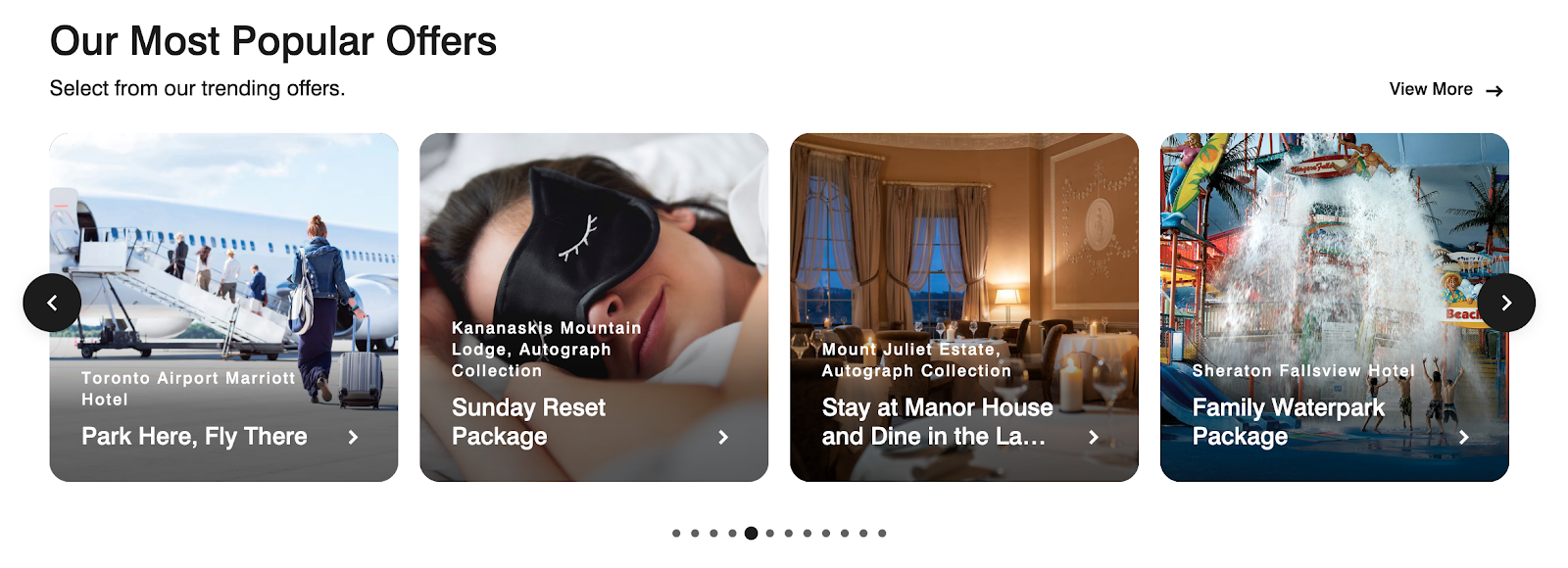
A selection of Marriott hotel packages, including an airport parking and travel deal, a relaxing Sunday reset package, a luxurious dining experience at a manor house, and a fun-filled family waterpark getaway.

The season of joy, relaxation, and adventure is calling. Whether you’re looking for an intimate escape, a family-friendly getaway, or a business trip with a touch of luxury, Marriott has the perfect place for you.

🎄 Book now at https://k.fanstoshop.com/9Hve and make this holiday season unforgettable!


Source link

Gas Prices Tick Up Amid Tariff Worries

0


Gas Prices Tick Up Amid Tariff Worries

The nationwide average price of a gallon of gas sits at $3.14 this morning, according to AAA. That’s up 3 cents from a week ago. Drivers in 21 states can pay less than $3 this morning.

Why the increase? AAA says it comes “amid the threat of tariffs.”

Related:

President Trump threatened to enact a 25% tariff against all goods from Canada and Mexico on March 1. The president initially threatened the move Feb. 1, but has delayed his decision amid negotiations.

“Canada is the source of 52% of U.S. gross total petroleum, including 60% of its gross crude oil imports,” ABC News explains. Mexico adds another 10% of both.

Trump’s final tariff order would have added just 10% to the price of oil and 25% to virtually all other products. The tariff would boost the price at the pump for most Americans.

Drivers may have refilled their tanks before the threatened tariff. The U.S. Energy Information Administration reports that gasoline demand rose last week from 8.3 million barrels per day to 8.8 million.

Gas prices typically rise in spring as producers switch from less-expensive winter-blend gasoline to pricier summer blends. That effect could be delayed this year. Patrick De Haan, head of petroleum analysis for GasBuddy, reports that the stockpile of winter gasoline “is larger than normal” this year, and it could take an extra two weeks for refineries to send it all to gas stations. “Once it’s gone, prices will rise very quickly,” he says.


Source link

Luxury London Property Prices Dip While Asia Soars

0


Image courtesy of Pexels – CC0 License

The center of gravity of the global luxury property market is shifting. The movement is away from places like London to East Asia and other parts of the globe.

Driving this, primarily, is the political situation in the UK. The new government is driving tens of thousands of people out of the country, including some of its wealthiest residents, putting the brakes on property price increases.

However, that’s not the only factor at play. Asia is also developing at a rapid clip and proving to the world it can offer a high-quality environment in which to live.

“This shift away from traditional haunts, like London, is partly political, but there are other factors at play,” explains Mortgage Quote, an online service that helps property buyers find loans. “People are looking to move beyond the West and set up bases elsewhere in the world, partly for the draw of those locations, but also for political security. Given the events of 2024, it’s clear that things can change on a dime.”

London’s property market is struggling primarily because of higher taxes and costs. Owning a home in the UK capital is becoming more expensive while the expected appreciation is going down.

This toxic combination is making purchasing a property less attractive. Average buying prices are stalling, and the number of people capable of paying rent on these units for a reasonable return is shrinking. Many investors are simply throwing their hands in the air and looking elsewhere.

The aftershocks of Brexit are also playing a role. Investors don’t know when policies are going to change again and appear unsure whether taking the plunge and risking a London property purchase is worth it. The city could likely recover its glory quickly, but it requires robust policy decisions and commitment.

This caution about investing in the UK seems to come from a general sense among the wealthy that the economy would be better if the country was part of the European Union. Even if the reality is different, this intellectual framework means that many are simply unwilling to take the plunge and would much rather place their bets elsewhere.

“Investors just aren’t that interested in London anymore. It feels like a saturated market,” Mortgage Quote explains. “It’s slow and the opportunities for returns seem to be disappearing fast, especially compared to the period between 2010 and 2020 when many wealthy individuals say bumper returns investing in the city.”

America, by contrast, is booming. Property prices in many of the country’s growing cities are ratcheting up rapidly, thanks to the money being made in tech, finance, and industry. Places like Dallas, Florida, and San Francisco are excellent examples.

“Luxury properties are still being snapped up in the U.S.,” explains Mortgage Quote. “It’s just that the locations are changing. People aren’t looking at California as much as in the past, with more applying for a jumbo loan in places like Miami Beach or Charleston. It’s these up-and-coming locations with the rule of law that appeal most to those looking for a good life.”

A similar dynamic is underway in many Asian hubs. A combination of wealth and security is driving demand for luxury properties in these regions.

One factor at play is the booming economies and wealth growth. Places like Singapore and Hong Kong are attracting talent from across the globe–people looking for opportunities they can’t find in their home countries. This shift means that more individuals than ever before are gaining access to the high life, driving demand for properties in the most prestigious parts of town.

Ultra-rich buyers are also being generated locally. Success in industry and innovation means that many individuals are looking for opportunities to improve their living conditions, whether that means demanding suburban mansions or penthouses overlooking major cities in the region. Even in places like Cebu in the Philippines or Jakarta in Indonesia, this is happening.

“The American market is exciting, but Asia is the place to watch for luxury property innovation,” says Mortgage Quote. “Some countries, like Singapore, Japan, South Korea, and Hong Kong, are actually ahead of the West technologically, making them even more exciting for people wanting to experience the very best in what luxury property has to offer. High-end homes often have integrated amenities that massively improve quality of life and allow occupants to live the way they want, without the usual limitations.”

These modern improvements often appeal to younger investors and the upcoming generation of millennials who grew up surrounded by new technologies. It’s a sea-change that’s altering how many investor classes see the world, driving interest in the Far East, responsible for things like home assistants and toilets that monitor health.

Image courtesy of Pexels – CC0 License

However, cold hard numbers are also playing a role in the development of the Asian luxury property market. Because of booming populations, crowded cities, and low prices, the appreciation potential is also there, just as it was in the West in the 1990s and 2000s. Luxury property investors expect values to grow in places like Kuala Lumpur and Hanoi.

“The case for taking out large mortgages to buy these sorts of properties is growing every year,” says Mortgage Quote. “It’s astonishing what’s happening in these locations. Even as birth rates fall, the force of population dynamics means that property values are likely to continue rising for many decades, perhaps even into the 2070s if current projections in many of these regions are correct.”

Regulations are also making property investment more attractive in the Far East compared to legacy cities, like London. Many countries have investor-friendly programs running, encouraging them to bring their money into the country to prop up local currencies. Singapore and similar locations want nothing more than wealthy Westerners to provide foreign exchange to their central banks in exchange for buying properties in premium locations that were otherwise relatively inexpensive to build.

“Whether this trend will continue for much longer remains to be seen. America’s economy is booming and many wealthy Asians are flocking to its shores to take advantage of opportunities under the new administration,” Mortgage Quote explains.

For more on the latest in luxury property reads, click here.


Source link

Exclusive: Interview with CEO of the Renault Group – Luca De Meo

0


After very successful stints at Fiat, Audi and Cupra, Luca De Meo is at the helm of the Renault Group since 2020. He mastered the Renaulution come back plan skilfully and turned the French manufacturer into a healthy company. Going into 2025 the challenges are high but so are his expectations.

Question: Retro design is an idea that causes shivers to 90% of the designers I met in my career but then the market impact of vehicles such as the Fiat 500 or the R5 proves the customer is conquered by it. It even seems Citroen is doing some sketches around the 2 cv… will the R17 reincarnation come to life?

Luca De Meo: This is an ongoing debate. I am linked to leveraging the heritage of brands and reinterpret the roots in a modern way. But we also have to take into consideration that parallelly I have led vehicle launches that are totally modern looking cars with totally different overall approaches. I have the Fiat 500 in my past, yes, but look at the new Scenic (kept the name and nothing else), look at the Rafale but also the Cupra cars… If there is something money cannot buy is heritage and car brands should build on that. If you are Cartier or Hermes and you want to nurture your timeless assets because it allows you to connect to your audience in a unique way that no other brand can. So that´s what I tried to push for: connect Renault to the customer´s positive memories but innovate in terms of software and hardware. With the R5 I wanted to anchor the brand to positive memories from our audience and that helps to leverage the brand value but then we push the envelope dramatically with other products that are innovative altogether. People go to the opera and listen to musical works that are 200 years old and they love it… on the other hand, if you ask our head of design for Renault, Gilles Vidal, if it is easier to sketch the reinterpretation of the R5 or R4 or a new generation B-segment car he will tell you that the former is much more difficult and sensitive because you can easily mess it up…

Question: And the R17…?

Luca De Meo: That segment is very limited, and I have to manage our resources cautiously. I prefer to put the money on the R5 Turbo which is something that is creative and will be coming in a not-so-distant future. Stimulating creativity is good but it´s difficult to turn such a project like the R17 into a profitable one considering the size of that market segment.

Question: On the 20th of February you will present the 2024 financial results for Renault group. The outlook by half-time was promising (8,1% profit margin – intended 7,5 – and 1.3-billion-euro free cash flow – intended 2.5). Obviously, you will not disclose the results now, but will you surprise the world?

Luca De Meo: We are now in the “quiet period” and we cannot make comments on what the results will be. We can only say that the numbers you mentioned are the ones we are aiming for. The numbers are being put together.

Question: Looking at your 2024 sales, more than 2/3 of the 2.26 million registered pc were from the Renault brand. Is this dominance something you would like to mitigate in the future as Dacia keeps growing and Alpine enters a new era?

Luca De Meo: There is no guidance on the mix between the brands in our total volume. I let the brand CEOs to exploit the potential of each brand to its full extent with the overall customer satisfaction and profit as the main focus and not volume. So far it has worked: Renault has never been so successful and profitable in the 125 years of its history. And you can see that in the case of Dacia, for instance, as I gave them the green light to enter the C-segment with the Bigster. Dacia does not need to stay outside Renault´s brand core segments because they are so clearly set apart that the danger to cannibalize themselves simply does not exist. Unlike what happens in other rival groups, even if it is fair to say this is easier to do with three than with 12 brands, of course. We positioned the Sandero as nº1 in Europe and the Clio number 2, and they are same size vehicles. And we can see something similar with the Duster and Captur, Austral and Bigster, etc.

Question: Much of the powertrain sales mix depends on legislation, incentives, etc, but a good deal has to do with the strategic product decisions you take the year or several years before. Are you on track to achieve the 20-22% EV sales share at the end of 2025?

Luca De Meo: When I came to Renault, I instantly confirmed we had the e-propulsion competence with a valid and competitive EV platform (from Nissan) for the Megane and Scenic and that some people inside the company were fighting for almost a decade to develop hybrid technology for our model range. My decision was to pursue those two vectors, and I decided to build our line-up around those two technologies expanding all the way down to B-segment EV and even A-segment, when the new electric Twingo is launched next year. And these two platforms will underpin our cars covering 80% of the European car market. Would you believe just a 3 or 4 years ago if I told you Renault would be number 2 in Europe in terms of sales of hybrid cars, with a 16% share, just below Toyota who have done it for more than two decades. So, with this strategy, with our EV cars and hybrids and considering we sell a high mix of small to medium cars, I believe that we will be in a position to comply with the tougher emission regulations and to get to that EV share of 22%.

Question: The alternative would be to pay billions in fines for the excessive CO2 emissions.

Luca De Meo: We have not bought emission credits from Tesla nor BYD, but unlike Ford, Stellantis, Mercedes, etc… they all had to do it… Or pay multimillionaire fines which is something that I think does not make any sense. We are not guilty of any wrongdoing, we in this industry invest 250 billion euro in R&D to push technology – more than any other industry – and we are the only ones paying? Why? There will be more than one hundred new EV until the end of this decade, we are doing the job… except that there is no demand…

Question: Renault might comply to the regulations, but the European automotive industry is in serious trouble as it will be necessary to slow down ice cars production to get to the necessary EV share…

Luca De Meo: If the European car industry cuts the production of the so-called “big offenders” of the emission limits, we are talking about 2,8 million cars that have to be eliminated from the production plans each year. This would or will impact the European production footprint with obvious side effects in terms of employment, etc.

Question: Expected to come in 2030, are the cobalt free batteries with a silicon anode (to get the energy density of NMC at the cost of LFP) the decisive factor to the much-needed EV cost reduction? And then followed shortly after by solid state batteries (SSB)?

Luca De Meo: Cobalt today is relatively cheap, so it is less an economical issue than the intention to avoid being caught in the middle of certain supply chains we don´t control, as some 80% of the global production comes from the same place (note: Congo). Right now, we are working to increase the energy density of NMC chemistry but also exploiting the potential of LFP (it is less sensitive in terms of raw materials and cheaper) which could also get more energy dense with some manganese added to it. Regarding SSB, I believe it will become real way beyond 2030, even of some brands will come up with some halo cars with full SSB before that, in very limited volumes and at premium market segments. But massive adoption will happen later.

Question: The airbus business you advocated for the electromobility era stalled after the cooperation with Volkswagen failed. Why did it fail?

Luca De Meo: You have to ask Volkswagen. We could make out cost effective B-segment electric platform from the R5 available and I thought it could be a way to bring back small cars sales volume increase in Europe. Compact cars are disappearing in Europe because in the last two decades regulations pushed the weight and the technology standards have increased dramatically and so did prices which the customer is not interested in buying and the brand is not interested to produce because they can´t get any profit. That´s why there are no replacements for cars such as the VW Polo or the Fiesta and others, there are just a few A-segment options… so people buy Dacia or used cars. Our platform which I make available to other brands provides a technical base that could be used to launch B and A segment cars at prices people can buy and with a profit since the shared cost would make it possible. They can come and take the platform or just produce in our factories, but the opportunity is there that would benefit everyone. Europe needs to be less fragmented and cooperate more like the American and the Chinese do.


Question: Can you give a concrete example on how new regulations increase the price of a car?

Luca De Meo: From today until 2030 there will be eight to ten new regulations becoming effective in Europe every year and applied to every new car being produced. If all of them are really enforced, this will increase cost of the car by 40%, in general, all segments comprised. And if you add 400 euro of cost (and much more than that in the price the customer pays) to every B-segment car that is dramatic, much more than on a BMW 7 Series, of course. Geo-strategically this is very complicated: countries like Portugal, Spain, Italy or France are markets dominated by compact cars. Then the manufacturing ecosystems are emptied, then the GDP are affected, then the unemployment rates increase…

Question: Mitsubishi has recently launched more Renault-based cars, there is a plan to build EV cars for Nissan in the near future, on the other hand Honda seems to have a preference to join forces with Nissan freed from foreign capital… what do you make of the whole Nissan-Honda merge discussion?

Luca De Meo: This is a very sensitive issue. But we don’t have to mix the capitalistic matters with the operational projects, and we will continue with the projects that we already signed (the Nissan compact EV, the Mitsubishi cars, etc). We don´t know what will happen but we are open to provide our technology if it is requested. There might be an impact in our strategy, but this is something we will find out in due time. We had already announced our intention to reduce our share in Nissan and we did from 43 to 35% and we will do it gradually, keeping our cross-share participation of 15% of shares on either side. Which naturally can be discussed… but the bottom line is that, like in a divorce between two people, if we leave the house, we want to get back whatever resources we invested for the project.

Question: Quoting Luca de Meo: “by 2028, with the new c segment EV platform Renault will catch-up the best Chinese players in terms of product and cost”. End of October 2024. Did you mean that applied to what the Chinese will presumably be doing by 2028 or to what they were doing in October 2024 when you said it?

Luca De Meo: Chinese are very creative and very fast but still we have enough elements to anticipate what could be their next product generation by 2028. And that was what I was referring to: we took the challenge to be on par (in terms of product performance and cost) with the best Chinese competitors regarding the cars that they will develop and manufacture in Europe. If we talk about the Chinese industrial environment, it is simply not possible. Even in something simple as the cost of energy which in Europe we cannot match. That´s why we created Ampere, our EV company which is working hard to achieve an average 40% cost reduction for the next generation of electric cars to be launched in the near future (actually we reached that goal in the Twingo vs the R5).

Question: Although brands like Mercedes-Benz, Audi or BMW always affirmed they would like to have an even sales volume in the world´s most important regions, they never complained about the volumes and profits they achieved in China. Is it a relief for Renault not to have a strong presence in the Chinese market, looking at it from where we stand today?

Luca De Meo: Two or three years ago we were told considered “just” a Southern European and Latin American car manufacturer, we had lost the Russian market… so everybody was looking at us as a clear underdog. Now the scenery has changed, and we are seen as considered protected from USA tariffs, Chinese market meltdown…you never know how things change. For me, the most important thing is that we are doing the best financial performance in the 125 years of our history and with the focus in defending the shareholders’ interests, securing jobs and coming up with attractive and competitive vehicles for our customers. Being number 1 or better than the others is not something we worry about.

Question: Before leaving ACEA´s presidency last year, you defended a 2-year delay or at least some flexibility from the EU regarding the 93,6 g/km CO2 standard in place this year. What is the situation today?

Luca De Meo: We had a meeting with President Van der Leyen in the beginning of February and even if I am not the industry spokesperson anymore, and after the feedback we gave I believe we will have some sort of reaction sometime during March. Things such as the lack of incentives, energy prices, charging infrastructure, fiscal policies, etc… they all need to be tackled urgently so flexibility from the legislators is necessary. We have done our homework… if the market demands twice as many R5 in some months, we can produce them. But that´s not the case. So, we need to work together and not impose fines for OEM that are doing their job. And there is no going back, there is no point in considering going back to diesel engines or other dated technologies, because if we would refuse the future, we would find the Chinese doing spaceships while we produce pick-up trucks. Does that mean 100% EV by 2035 in Europe? Probably not. We need to set tangible targets on the necessary path to decarbonization but not just having the regulators define fines for the “guilty”. It would absorb 15-billion-euro capital that could otherwise be injected in plants, technology, jobs, etc. Our industry is worth 10% of Europe´s GDP and 30% of the region´s R&D budget. It´s huge.

Question: Considering that one of the main purposes of being involved in F1 (and in motorsport activities in general) is to promote the competent engineering assets in the brand/company (the other being the tech osmosis between motorsport and series production cars), how damaging to Alpine is the end of the F1 participation with own made engines as you will outsource them instead?

Luca De Meo: The current regulation of F1 is very penalizing for the teams that build their own engines and chassis. If I simplify it, there is a budget cap of 150 million euro for chassis development and then there are no strings attached for the engine development, which increases cost on another 250 million euro. The FIA rewarding scheme is only given to the chassis results so when McLaren or Aston Martin win, they get the financial compensation in full (aside from the income that comes from sponsoring) although they use Mercedes-Benz engines. At Renault, we have to pay an additional 250 million for the engines. I run a listed company, and I have been doing that for a decade, I have to take rational decisions every day. The media reacted negatively to the decision of using Mercedes-Benz engines, but the business case would not work otherwise: the annual cost will be 20 million euro for the engines which compares to 250 million… so if that was your money, what would you do? I am a strong believer in the value of brands, and it was not an easy decision to take, but it was a vital one. And when Alpine scores regular podium finishes and wins all the negative noise will wash away.



Source link

A Life Aquatic: Absolute’s Navetta 53

0


Absolute debuted the Navetta 53 at the 2024 Cannes Yachting Festival

It wouldn’t be a stretch to say that many yachts built today include liveability as part of the brief: luxury and creature comforts come as part of the basic package. But rarely is a yacht penned with such a design as to feel like a home at sea; Italian shipyard Absolute’s Navetta 53, however, has done just that.

The 52ft 6in vessel that premiered at the 2024 Cannes Yachting Festival is picking up where the Navetta 52 left off. The latest creation from Absolute is a leap forward in design and liveability, offering a blend of elegance, sophistication and practical functionality.

The focus for the 53 was space. There were several females involved in the design and build of this model, so it’s not surprising clever touches and thorough attention to detail are found throughout.

Space for free-standing furniture in the cockpit and aft flybridge are standout features

A MASTERCLASS IN SPACE

Where the Navetta 52 had a fixed aft lounge that obscured views from the cockpit, the 53’s aft deck feels much more spacious. The bulky sofa is gone, replaced by freestanding furniture designed in-house.

The result is light, both in terms of furniture mobility and the actual light that now spills into the cockpit. The original fibreglass transom has also been replaced with a sleek, black transparent glass divider – a modern touch that brings the design into 2024.

In fact, this new open cockpit design has been so successful that it will eventually become the standard across the entire Navetta range. This open-plan space is a blank slate for owners to customise according to their own wishes.

The saloon, galley and helm are all kept light in palette and open, with plenty of headroom

Inside, the saloon feels larger than its actual measurements. This is mainly due to the tall ceilings and large windows, allowing plenty of natural light. The open-plan layout also lends itself to a feeling of spaciousness. The galley, overlooking the dining space, is a proper kitchen, equipped with an induction hob and oven, and ample storage.

Opposite, a plush sofa is perfect for aperitifs and drinks. The dining area enjoys a fold-out table and is surrounded by a separate built-in U-shaped sofa.

Forward of the sofa is the helm station. The helm seat boasts a cleverly positioned footrest, offering additional stability for those unable to reach the floor – another clever touch, along with the wine cooler under the seat. A glass pilot door, usually only seen on much larger superyachts, offers additional visibility and is an aesthetically pleasing design element.

The saloon continues to maintain a connection with the outside world with wraparound floor-to-ceiling glazing

As the Navetta range is popular in the northern European market, the designers placed less emphasis on air-conditioning, and more on natural airflow throughout. The pilot door helps with this, in addition to making mooring a breeze – pun intended.

ITALIANATE DESIGN

Absolute’s Italian DNA can be seen in the craftsmanship and quality of finishes. The furniture is made of real wood, not a composite material, and the matte finish throughout elevates the interior design. It’s also exceedingly practical: easier to clean, harder to smudge with errant fingers. The 52 Fly, an earlier model, was the first to move from the glossy finish, and a matte finish now comes as standard.

In addition, everything is fashioned in house. The idea was that technicians would be close to the build to keep a close eye on production and quality, and it works: even the smallest elements throughout are executed to perfection. Every seam and stitch beautifully, lovingly, painstakingly installed. Even the fibreglass hull itself is done by hand, not vacuum, to ensure a solid, clean finish.

The VIP cabin, forward in the lower deck, has room around the bed thanks to its angled placement

Below the main deck, accommodation is just as lovingly detailed. At the bow, the 53 follows what Absolute calls the ‘old school model,’ with a VIP located as far forward as possible. All recent models have had the master cabin located here, rather than the VIP.

Every Absolute model’s VIP and master cabins are fitted with a generously-proportioned bed, and this VIP cabin is no exception. To optimise space, the placement of the bed’s headboard follows the curve of the bow. And, like the rest of the yacht, it feels spacious and well considered.

The thick, wooden ‘pocket door’ slides into place, saving space. Though it doesn’t block out all sound, it does dampen it sufficiently that the cabin is tranquil. It is worth noting that here, and in fact, all throughout the yacht, en-suite bathrooms enjoy a full, proper shower. Again, the terms ‘spacious’ and ‘liveable’ come to mind.

The owner’s cabin midships makes the most of the 15ft-plus full beam

Aft, the owner’s full-beam cabin is larger than the VIP, with plenty of storage: a full-height wardrobe, safe, and under-bed drawers, as well as a desk. Large windows offer plenty of natural light and the chance of great views. A maximum of 14 guests can be accommodated on board. The crew quarters, located below the aft cockpit, can house one crew member.

FORE AND UPPER AIRY DECK AREAS

Up on the bow, a beautifully designed sitting and lounging area offers spectacular views. A wooden fold-out table can seat up to three or four comfortably and, thanks to a new convertible sunbed not seen on earlier models, can transform into additional seating for another four, taking the count to eight. This is thanks to a solid cushion that acts as either the backrest for an extra seat, or the headrest in sunbed mode.

Above, the flybridge has been redesigned with the same idea as the cockpit, so the built-in sofa seen on the 52 has been removed in favour of modular furniture, offering a terrace-style space with unimpeded, 360-degree views.

The split-level flybridge includes an open aft area for loose furniture

A fully-equipped kitchen with barbecue, ice maker with ice box, and fridge to port with solid dining table to starboard make alfresco dining incredibly convenient. Up front, an open skipper’s seat located centrally feels social, with seating surrounding the helm station. This is also a departure from the 52, which had the helm off to the side.

Overall, with its variety of gathering spaces and comforts, the Navetta 53 really does feel like a home away from home, with clever, thoughtful touches offering not just strategic storage but the feeling of a space completely optimised.

From the modular furniture design at the cockpit and flybridge, to the indoor tall ceilings, large windows, full-sized showers and beds, it’s easy to picture extended days at sea on board.

absoluteyachts.com

This article was first seen on YachtStyle.Co

For more on the latest in yachting news, click here.


Source link

When the Earth Talks, AI Listens

0


AI built for speech is now decoding the language of earthquakes.

A team of researchers from the Earth and environmental sciences division at Los Alamos National Laboratory repurposed Meta’s Wav2Vec-2.0, an AI model designed for speech recognition, to analyze seismic signals from Hawaii’s 2018 Kīlauea volcano collapse.

Their findings, published in Nature Communications, suggest that faults emit distinct signals as they shift — patterns that AI can now track in real time. While this doesn’t mean AI can predict earthquakes, the study marks an important step toward understanding how faults behave before a slip event.

“Seismic records are acoustic measurements of waves passing through the solid Earth,” said Christopher Johnson, one of the study’s lead researchers. “From a signal processing perspective, many similar techniques are applied for both audio and seismic waveform analysis.”

The AI model was tested using data from the 2018 collapse of Hawaii’s Kīlauea caldera, which triggered months of earthquakes and reshaped the volcanic landscape. The lava lake in Halemaʻumaʻu during the 2020-2021 eruption (USGS/F. Trusdell) is a striking reminder of Kīlauea’s ongoing activity.

Big earthquakes don’t just shake the ground — they upend economies. In the past five years, quakes in Japan, Turkey and California have caused tens of billions of dollars in damage and displaced millions of people.

That’s where AI comes in. Led by Johnson, along with Kun Wang and Paul Johnson, the Los Alamos team tested whether speech-recognition AI could make sense of fault movements — deciphering the tremors like words in a sentence.

To test their approach, the team used data from the dramatic 2018 collapse of Hawaii’s Kīlauea caldera, which triggered a series of earthquakes over three months.

The AI analyzed seismic waveforms and mapped them to real-time ground movement, revealing that faults might “speak” in patterns resembling human speech.

Speech recognition models like Wav2Vec-2.0 are well-suited for this task because they excel at identifying complex, time-series data patterns — whether involving human speech or the Earth’s tremors.

The AI model outperformed traditional methods, such as gradient-boosted trees, which struggle with the unpredictable nature of seismic signals. Gradient-boosted trees build multiple decision trees in sequence, refining predictions by correcting previous errors at each step.

However, these models struggle with highly variable, continuous signals like seismic waveforms. In contrast, deep learning models like Wav2Vec-2.0 excel at identifying underlying patterns.

How AI Was Trained to Listen to the Earth

Unlike previous machine learning models that required manually labeled training data, the researchers used a self-supervised learning approach to train Wav2Vec-2.0. The model was pretrained on continuous seismic waveforms and then fine-tuned using real-world data from Kīlauea’s collapse sequence.

NVIDIA accelerated computing played a crucial role in processing vast amounts of seismic waveform data in parallel. High-performance NVIDIA GPUs accelerated training, enabling the AI to efficiently extract meaningful patterns from continuous seismic signals.

What’s Still Missing: Can AI Predict Earthquakes?

While the AI showed promise in tracking real-time fault shifts, it was less effective at forecasting future displacement. Attempts to train the model for near-future predictions — essentially, asking it to anticipate a slip event before it happens — yielded inconclusive results.

“We need to expand the training data to include continuous data from other seismic networks that contain more variations in naturally occurring and anthropogenic signals,” he explained.

A Step Toward Smarter Seismic Monitoring

Despite the challenges in forecasting, the results mark an intriguing advancement in earthquake research. This study suggests that AI models designed for speech recognition may be uniquely suited to interpreting the intricate, shifting signals faults generate over time.

“This research, as applied to tectonic fault systems, is still in its infancy,” Johnson. “The study is more analogous to data from laboratory experiments than large earthquake fault zones, which have much longer recurrence intervals. Extending these efforts to real-world forecasting will require further model development with physics-based constraints.”

So, no, speech-based AI models aren’t predicting earthquakes yet. But this research suggests they could one day — if scientists can teach it to listen more carefully.

Read the full paper, “Automatic Speech Recognition Predicts Contemporaneous Earthquake Fault Displacement,” to dive deeper into the science behind this groundbreaking research.


Source link

Volvo plans five-model product blitz in 2025

0


  • After record sales in 2024, Volvo plans to launch five new or updated models in 2025
  • Two of the vehicles are expected to be the EX30 Cross Country and ES90
  • Volvo will follow up in 2026 with the first EVs based on the next-generation SPA3 platform

Volvo, in a recent press conference outlining its financial results for 2024, announced plans to launch five new or updated models during the course of 2025.

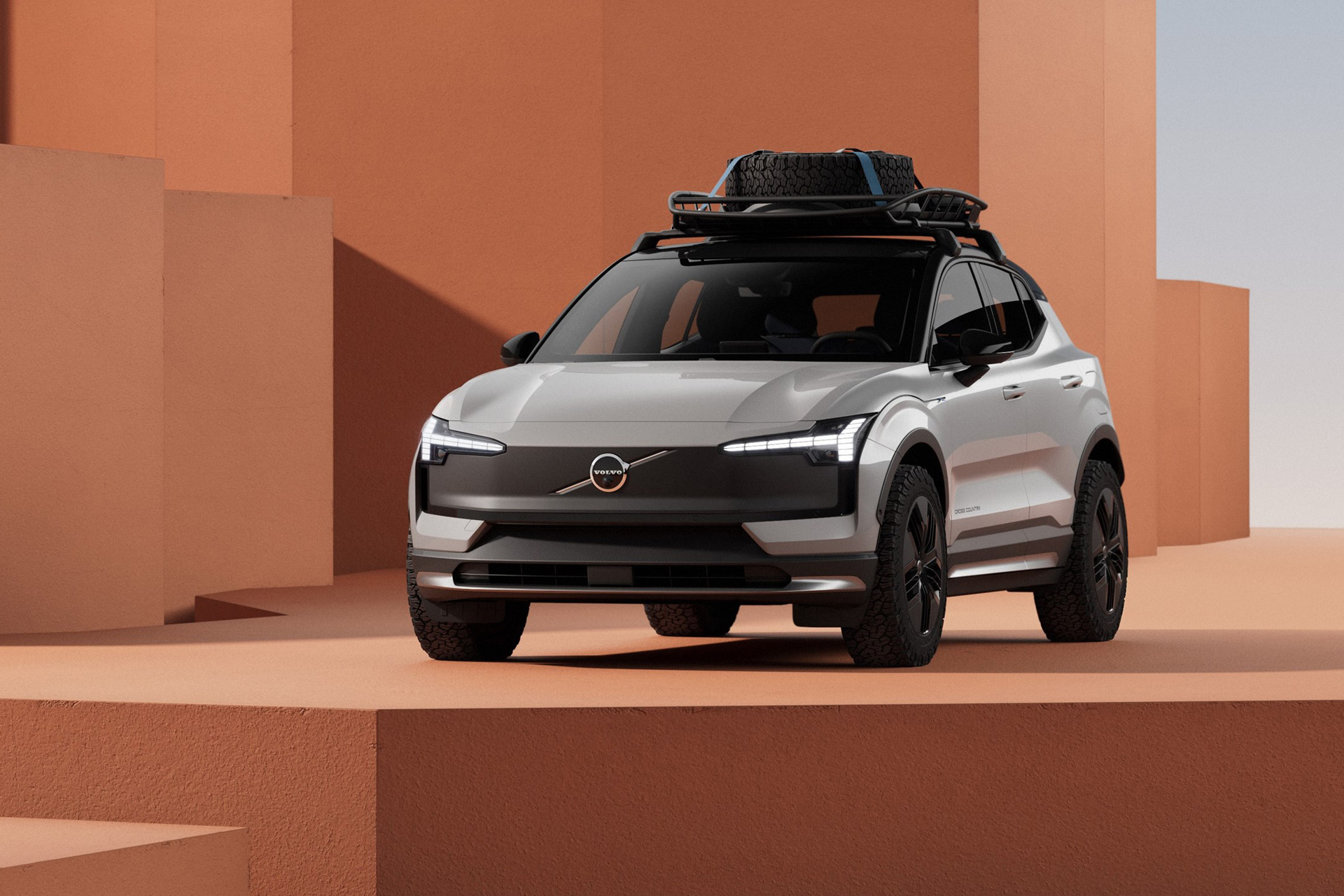
Two of those will be a rugged EX30 Cross Country electric subcompact crossover, which Volvo will reveal on Feb. 10, plus an ES90 electric midsize sedan, which the automaker teased last year.

A long-range plug-in hybrid model is also expected in 2025, though possibly only for the Chinese market. The identities of the remaining two vehicles are currently unknown but are thought to be updates of existing models, possibly the S60 compact sedan and XC60 compact crossover. The S60 exits the U.S. market after the 2025 model year and isn’t expected to return.

During the press conference, which took place on Feb. 6, Volvo also provided a presentation slide that hinted at five all-new models coming down the pipeline. The slide included the ES90 and long-range plug-in hybrid, as well as three models based on a next-generation SPA3 platform.

Slide from Volvo presentation on Feb. 6, 2024

Slide from Volvo presentation on Feb. 6, 2024

The first model on the SPA3 platform will be an EX60 electric compact crossover, which Volvo has confirmed for launch in 2026 and is already out testing in prototype form. The others may be an ES60 electric compact sedan and a related electric station wagon, possibly dubbed the EV60.

Volvo’s current EV platform is the SPA2, which debuted in the 2025 EX90 and will also underpin the ES90. The original SPA platform made its debut a decade ago in the current XC90 and is designed for gas and plug-in hybrid powertrains. Volvo, last September, said it plans to continue updating the original SPA platform for its upcoming long-range plug-in hybrids. The new long-range hybrids are coming as a result of Volvo abandoning an earlier plan to go electric-only by the end of the decade.

During the press conference, Volvo said it eventually plans to migrate all of its vehicle lines to the SPA3 platform.

The new model blitz should help Volvo maintain its current sales momentum. The automaker delivered a record 763,000 vehicles in 2024, up 7.7% from the previous year. EVs accounted for 23% of that tally, and together with hybrids, around 46% of the total were electrified vehicles.


Source link

Why Hotel Brands like Marriott, Hilton, and Hyatt Are Working Overtime for Travelers With Disabilities

0


“Everyone deserves to see the Eiffel Tower, London’s Tower Bridge, and the beauty of Italy,” says Victoria Page, a travel advisor at the agency Embark Beyond. That’s one reason Page has made a point of working with clients who have disabilities. “Whether somebody has mobility issues, an immune system disorder, autism spectrum disorder, or memory challenges, I try to offer peace of mind,” Page says.

In that mission, she’s found strong partners across the hotel industry, which has lately made major moves to better accommodate the more than 1 billion people worldwide who have a disability.

“We’re in the ‘welcoming all’ business, and we want everyone to feel great, no matter who you are or what your abilities are,” says Apoorva Gandhi, a senior vice president at Marriott International. The company has in recent years worked to go beyond the requirements of the Americans with Disabilities Act, he says: “Small gestures can have a big impact.” 

Four Brands Prioritizing Accessibility

Hilton

This global chain has recently put an emphasis on supporting travelers with impaired vision. It’s the first hotel company to partner with Be My Eyes, a free mobile app that connects blind and low-vision users with Hilton staff, who are available to provide virtual assistance. The tool works something like a FaceTime call: as guests navigate public spaces, elevators, and even their rooms, assistants help them get around and use items such as thermostats, coffee machines, and window blinds. 

Hyatt Hotels & Resorts

Hyatt recently partnered with the nonprofit KultureCity to understand the needs of neurodivergent travelers and better accommodate those with invisible disabilities before they arrive. The brand now makes 3-D room tours available and sends detailed pre-arrival emails, both of which are tools KultureCity describes as helpful for those with conditions including ADHD, autism spectrum disorder, and dyslexia. 

Marriott International 

The company began work on its Room for All initiative prior to the pandemic, working with third-party organizations such as Disability:IN to survey travelers with disabilities about what they’d like to see in a truly inclusive hotel. “They were not shy — and we didn’t want them to be,” Gandhi recalls. Among the most frequently heard suggestions were larger bathrooms, flexible bed heights, low-pile carpeting suited to mobility devices, and sliding doors. Ways to implement these solutions are now spelled out in Marriott’s inclusive design guide, which influences how new properties are built.

Scandic Hotels Group

This Stockholm-based brand, which has more than 250 properties in northern Europe, first laid out its internal accessibility standards in 2005. Today, its list of 159 must-haves includes cane holders at reception and color-coded rugs to help with way-finding in public spaces. Also on the list are Scandic’s allergy-sensitive rooms, which are pet- and carpet-free and have toiletries approved by the Swedish Asthma & Allergy Association.

A version of this story first appeared in the March 2025 issue of Travel + Leisure under the headline “Making Hotels More Hospitable.


Source link