Home Blog Page 197

2024 Jeep Wagoneer S takes electric leap of SUV faith

0


  • The Wagoneer S costs $71,995 in its launch-edition form
  • It’s the quickest Jeep ever, besting the Hemi-powered Trackhawk
  • EPA ratings: 303 miles on Falken tires, 270 miles on Pirellis
  • Think urban wagon, not off-roader


It’s taken a while to strike out on the EV trail, but now Jeep has its first American-market electric vehicle in the form of the 2024 Jeep Wagoneer S. The five-seat, midsize crossover SUV shares only the Wagoneer name with the bulkier body-on-frame SUV also sold by Jeep—and it disavows gas entirely, at least for now. 

The Wagoneer S rides on the same STLA Large platform as the Dodge Charger EV, and it’s the second of a brace of new electric vehicles Stellantis promises for the U.S. soon, including a Wrangler-like Recon EV. In practice, it’s a companion to the Grand Cherokee—but with its under-floor battery, more a direct rival for vehicles like the Tesla Model Y and Cadillac Lyriq.  

Of those, the Lyriq offers the better analogue. Like the Cadillac, the Wagoneer S overdelivers on ride quality and acceleration, while off-roading talent and state-of-the-art charging take a back seat. Jeep also now faces the same hurdle Cadillac once faced: Are Wagoneer buyers really looking for a smaller, battery-powered utility vehicle—and are they willing to overlook old brand bona fides to get into one? 
 

2024 Jeep Wagoneer S

2024 Jeep Wagoneer S

Jeep Wagoneer S: More wind-cheating wagon than SUV

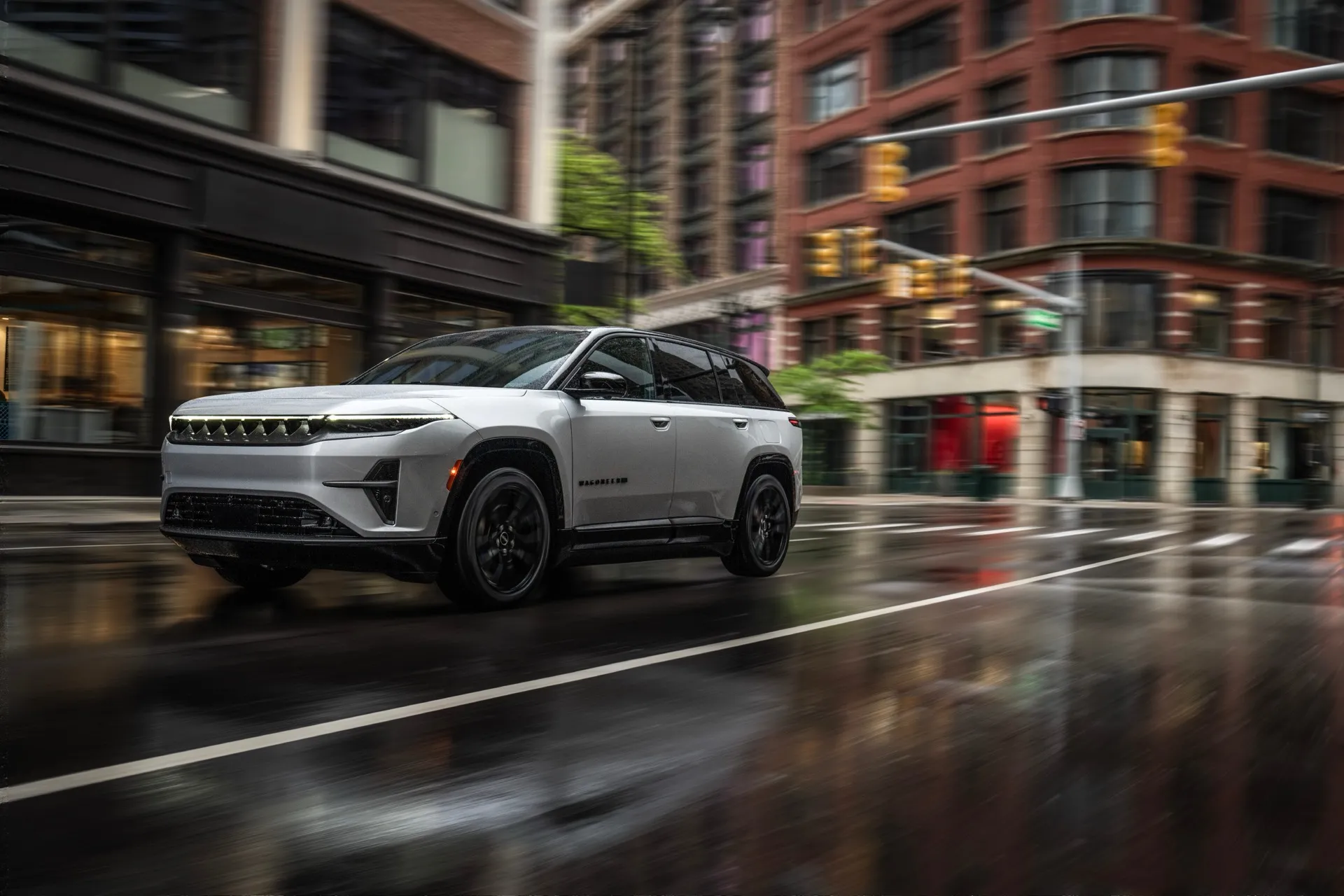
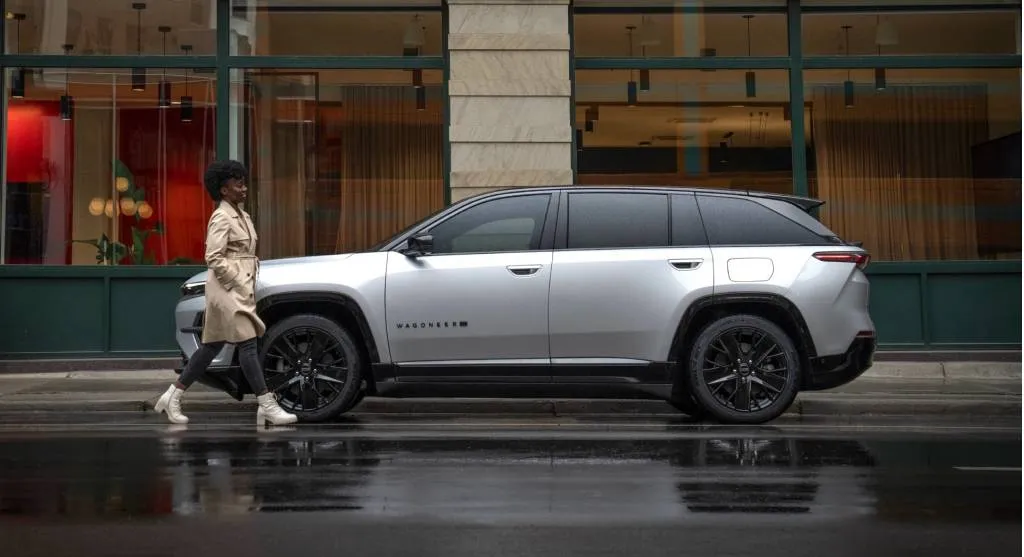
Meant to conjure the strong-selling shape of today’s Grand Cherokee—and remind drivers less of the awkward uprights of the full-size Wagoneer—the Wagoneer S drapes more tapered body panels over the five-passenger cabin with more than the usual SUV grace. It’s attractive but not especially compelling. 

In part, that’s because since the days of FCA, Jeep has watered down the single visual cue that defines its brand within the packs of think-alike crossovers. Here the seven-slot grille no longer slots anything at all. It’s a series of nubbins that rivet an LED light bar to the front end, and dismiss that chance to make an invaluable first impression. 

Down the sides the Wagoneer S depends on badges to define it; the profile could come from Jeep or Kia or a host of other brands. Launch Editions wear black above the shoulder line and below on the sills, which cuts down on the mass of the shape. Jeep crows over the Wagoneer S’s drag coefficient of 0.29. It gets there, in part, thanks to a big basket-handle spoiler that directs air off the back end of the vehicle and squares off the roofline. The spoiler sits above a slim LED taillight that pushes the Jeep name up and angled inward to the body, where it’s lost in translation.

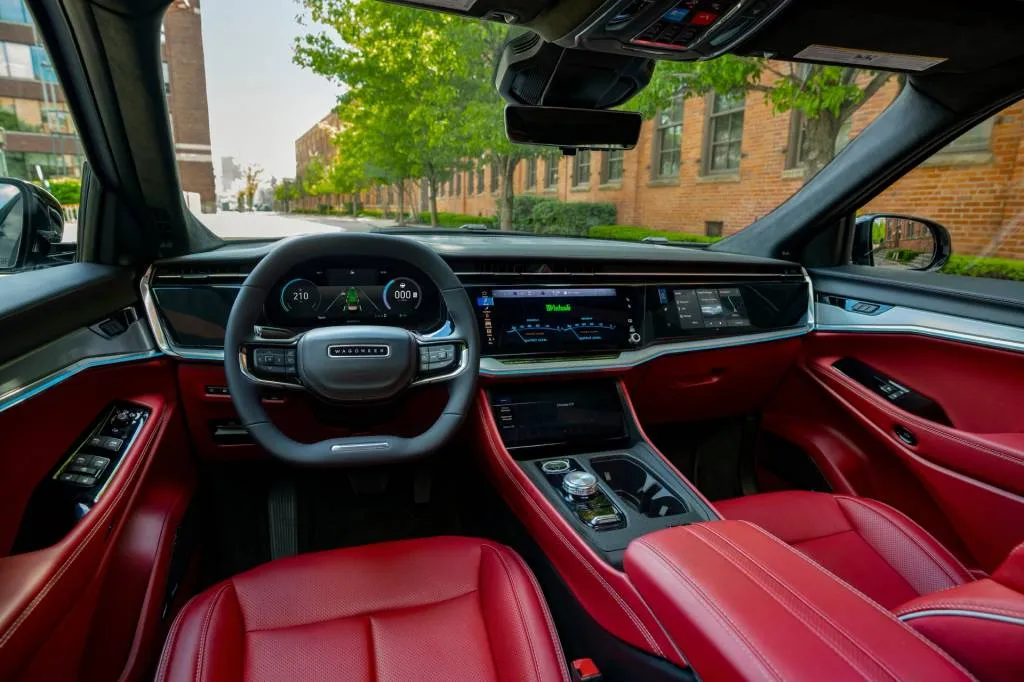
The Wagoneer S cockpit bears more striking details. A two-spoke steering wheel embossed with “Wagoneer” (but no “Jeep”) sets the horizontal theme, which picks up wings of metallic trim at the juncture of dash and door panel. Digital displays can tuck in the entire width: a 12.3-inch gauge cluster twins with the 12.3-inch central touchscreen, while a 10.3-inch screen below that houses climate controls; a fourth screen, another 10.3-incher, can be fitted for front-passenger distraction. 

There’s less glossy black trim here to amplify the shine from the screens, thankfully. In my test vehicle, lipstick-red leather hinted at all the Wagoneer S had in mind once we peeled out of the parking lot, in search of empty winding roads.


2024 Jeep Wagoneer S

2024 Jeep Wagoneer S

Jeep Wagoneer S: Trackhawk thrust and moves

With a set of talons that claw the road while its electric motors spin out heroic torque, the Wagoneer S drives unlike almost any other Jeep—save for the former Grand Cherokee Trackhawk. At heart, it’s that vehicle, all day, all the time, only with a more compliant ride. 

In pure quickness, it overpowers the Trackhawk out of the gate. With a 250-kw (335-hp) motor at each end, and a 100.5-kwh battery beneath the floor, the Launch Edition Wagoneer S can launch itself to 60 mph in 3.4 seconds—a startling talent that’s clear when it’s tugged into the drivetrain’s Sport mode and floored from a stoplight or sign. The dual-motor, all-wheel-drive setup flares out 600 hp and 617 lb-ft of torque, which helps it to that better-than-Tesla acceleration time, while it also makes the Wagoneer S quicker than the former Trackhawk by a tenth of a second.

Those drive modes move around the Wagoneer S’s power, while a toggle behind a couple of screen taps enables different levels of regenerative braking. Auto mode suits the Wagoneer S’s suburban-shuttle duties best, by design, and engages motors to split power 40:60 front to rear. Other modes rejigger power delivery to burn down through snow to the pavement, or paddle through sand; Eco disengages the front axle unless it encounters wheel slip, for a more frugal 100% bias to the rear. It’s Sport mode where the Wagoneer feels least confident—if only because it’s so powerful. It leaps ahead even with a limo-driver’s gentle toe on the throttle, with a 20:80 power split and despite the Wagoneer S’s curb weight of 5,667 pounds. Within those drive modes Jeep programs in Max and Min regenerative braking—maximum set at 0.2 to 0.3g, minimum from just 0.04 to 0.08g. I drove most of the hundred-mile day in Auto, with maximum regen, and didn’t experience the driveline judder that my co-driver witnessed, but Jeep did swap vehicles at a stopover, noting some axle-locking abnormality. 

With 6.4 inches of ground clearance, the Wagoneer S falls behind vehicles like the Subaru Outback at 8.7 inches or more—and with its street-ready Falken or Pirelli tires, it’s clearly not yet tuned for trail-cutting chores. A Wagoneer S Trailhawk Concept seems likely for production, with its electronic rear locking differential and all-terrain tires. 

Optimized for on-road driving, the Wagoneer S I drove with 20-inch wheels shod with Falken tires came with an EPA rating of 303 miles, which falls to 270 miles on the stickier Pirellis. Jeep promises peak charge rates of about 200 kw, which would math out to a recharge from 20-80% in 23 minutes. 

The fancy ZIP codes where the Wagoneer S finds homes won’t likely press its cornering abilities too much, but aside from its very abrupt throttle tip-in, the Wagoneer S comports itself in a genteel way, thanks to a very well-tuned multi-link front and integral-link rear suspension. Like the Lyriq, it doesn’t need an air suspension and adaptive damping to soothe bouts of road rash; it depends on sheer weight and smartly chosen shocks and springs. Jeep weights the steering to lighten up at lower speeds but not too much; in Auto mode, it snaps to attention and keeps focus as it tracks down the highway.
2024 Jeep Wagoneer S

2024 Jeep Wagoneer S


Jeep Wagoneer S: Smaller than it looks

Roughly the size of the current Jeep Grand Cherokee, the Wagoneer S sits 192.4 inches long and rides on a 113.0-inch wheelbase. It has two rows of seats, with no option for a third. 

Over the course of a hundred miles behind the wheel and in both rows of seats, I found those front leather-clad buckets to have all the great support of the most plushly padded Grand Cherokees. But oddly, the Wagoneer S pinches front passenger feet with a wheel house that intrudes well into the foot space. Legroom itself is fine, and so is small-item storage, whether it’s in the door pockets or the center console.

In the back seat, I could barely slip in below the panoramic roof’s frame. At just under 6 feet, with a long torso, I fit OK nonetheless. I fit better under the roof of a Lyriq, but the Wagoneer S has better under-seat foot space and amply sized door openings.

What it doesn’t have is an abundance of cargo space. Jeep rates it at 30.6 cubic feet behind the back seats, and 61.0 cubic feet behind the front seats; there’s a front trunk of about three cubic feet, too. The Honda CR-V skips the frunk, but sports 39.3 cubic feet and 76.5 cubic feet, in comparison.

All sorts of safety tech finds its way into the Wagoneer S, from adaptive cruise control to automatic emergency braking—and it all works in all drive modes, Jeep engineers underscore. Neither the NHTSA nor the IIHS has tested one yet, though.


2024 Jeep Wagoneer S

2024 Jeep Wagoneer S

How much does the 2024 Jeep Wagoneer S cost?

The $71,995 2024 Jeep Wagoneer S Launch Edition piles on the standard equipment—everything from heated and cooled power front seats, all the digital displays, wireless smartphone charging, wireless Apple CarPlay and Android Auto, and delicious sound that emanates from a 1,200-watt McIntosh sound system with 19 speakers and a 12-inch subwoofer. 

Within a couple of weeks, Jeep will announce the 2025 model-year Wagoneer S, likely with cheaper models with lower power output and perhaps even better EV range. 

Soon enough, the Wagoneer S will be joined by the battery-powered, Wrangler-sized Recon. After that, the picture grows a little more blurry, in terms of efficiency: Jeep will backtrack with a midsize hybrid SUV (possibly dubbed Cherokee, again) while it updates the current Grand Cherokee—possibly with a new inline-6 engine or even hybrid power of its own. 

The Wagoneer S might even get its own plug-in powertrain one day soon, as it shares its STLA Large platform with the Dodge Charger and other forthcoming “multi-energy” vehicles. Jeep says it’s committed to fielding the powertrains people want to buy.

Does that water down the appeal of the first Jeep BEV for America? Hardly. But it doesn’t clarify it, either. Will Jeep lean forward into carlike battery-powered vehicles that blunt off-road ability in the name of emissions—or will it find a way to walk that line between gas and electric, a way that marks some progress while preserving its traditions?

It’s a trail that’s hard to distinguish, with what lies ahead for us all. The Wagoneer S pioneers one path forward for Jeep—but it’s keeping ready to change course if it must.


Stellantis provided airfare, lodging, and meals so that Motor Authority could bring you this test drive review.




Source link

What I Do When I Don’t Travel: 20 More Facts About Me

0


Matt Kepnes standing in front of some mountains while traveling, with a big blue sky above

Who am I besides just a guy who loves to travel? What do I do when I’m not on the road? What are my interests? Do I have hobbies?

Since I’m more than just a writer and travel fanatic, I wanted to share a bit about who I am and what I do when I’m not on the road (indulge me for one article).

While I do post a lot of my day-to-day life on Instagram, here is a little bit about me and my life!

1. I hate flying. I love airports, lounges, and elite status, but the act of flying makes me sick. I don’t like heights and any turbulence makes me think the plane is about to crash. I’m not a good flier and I take Xanax to calm me on most flights. (Ironic considering how often I fly!)

2. I never traveled independently until I went to Costa Rica at age 23. My travel experiences up until then were a series of road trips with my parents and a drunken weekend in Montréal when I was 19. (I also never went west of the Mississippi until I was 25.)

3. I decided to travel long-term after meeting five backpackers in a shared taxi while on vacation in Thailand. I was so amazed at what they were doing that the next day I decided to quit my job and make long-term travel my goal. They were two Australians, a Canadian, and a Belgian couple. They changed the course of my life and have no idea.

4. When I was younger, I wanted to be an archaeologist because of the Indiana Jones movies. I eventually went to school to be a high school history teacher and taught for one year, but then the economy tanked and no one was hiring history teachers so I got a job doing administrative work at a hospital in Boston before I started traveling.

5. I’ve had three really bad incidents on the road. On my very first trip by myself, I got terrible food poisoning. I was hospitalized for three days and put on a morphine drip. Second, I popped an eardrum in Thailand. And, third, I got stabbed in Colombia, which is definitely the worst thing that has ever happened to me!

6. I am a good cook. I don’t cook much on the road because I hate how hostel kitchens aren’t fully stocked and everyone crowds them at the same time, but once in a while, I like to cook a massive meal for my fellow travelers. However, when I’m home, I cook a lot and even host dinner parties for my friends. Some signature dishes include shrimp scampi, this delicious tomato/basil/olive salad, stir fry, and baked salmon.

7. I used to be a vegetarian. After reading Fast Food Nation, I decided to give up meat and was a vegetarian for four years. It wasn’t eating meat I was against, but rather industrial farming and the chemicals/antibiotics in the meat that I didn’t like. I gave up vegetarianism when I started to travel.

8. I think it’s rude to turn down food in other cultures. If you go to a village in Mongolia and you are given food, it’s insulting to refuse. “Sorry, your traditional and heartfelt cooking doesn’t go with my dietary needs.” It’s culturally insensitive. But that’s a rant for another post.

9. I’m a huge fan of soul, Motown, blues, and jazz.

Nomadic Matt with a lemur in MadagascarNomadic Matt with a lemur in Madagascar

10. If I could ever pick what time period I could live in, I’d pick 1920s Prohibition America. I think that would be an exciting time to live in. But maybe I’ve just read The Great Gatsby too much.

11. Speaking of Gatsby, I learned to swing dance so I could throw myself a Gatsby-themed birthday party. I did it for three years in a row. They were epic birthday parties.

12. After travel, politics is my second love. I live and breathe politics, and it is the only news I keep up with while traveling. I am always ready to discuss and debate the world any time of the day and with anyone, no matter how well I know them. (However, in the last few years, I’ve turned off listening to the political news every day because it was causing me a lot of anxiety and not a good use of my mental energy!)

13. People always ask will I be nomadic forever. My answer: I don’t know. Forever is a long time. I travel less now than I used to and I think I’ll continue to take fewer trips but I still travel a lot when compared to the average person. For now, I’m enjoying the ride and see no reason to hang up my backpack just yet.

14. I’m a Japanophile. I love everything about the culture: the food, the history, the etiquette, the landscape, the architecture — all of it. I would eat sushi every day if I could.

15. I’m an unabashed Taylor Swift fan. She has a song for every emotion and, when you listen to her non-pop hits and really get into her catalog, you see just how talented of a songwriter she is. Listen to The Last Great American Dynasty. She wrote an entire narrative arc in three minutes. That’s seriously good writing. I went to the Eras Tour multiple times. I love her.

Nomadic Matt standing on stage talking at a conferenceNomadic Matt standing on stage talking at a conference

16. I’m also a huge fan of Sia. Incredible songstress and writer.

17. I don’t drink coffee. It tastes like shit to me. And I don’t want to put added sugar or milk (or soy milk) in my cup of joe. Drinks should be able to stand on their own! Nothing is going to change my opinion on this. I’ve tried for years to acquire a taste for it. It’s just not going to happen.

18. I drink tea. Lots of it. Especially green tea. That’s my drink of choice! I’m a big fan of the brand Rishi.

19. My alcoholic drink of choice is an old fashioned. A few years ago, a few friends turned me onto whiskey and I’ve been obsessed since. I judge a bar by the quality of the old fashioneds they serve.

20. One day, I’d like to learn how to garden. I want to grow my own food. I love cooking and think it’s a logical step.

21. I used to be a semi-professional poker player. I funded a lot of my original trip with poker winnings and lived in Amsterdam for a few months playing “professionally” at the casino in the city.

22. When I was younger, I worked for the Sierra Club in Massachusetts. I created a PowerPoint that we took to different community organizations to show that, by being energy efficient, they could save money and the environment at once.

23. When I was in high school, I played a lot of Magic: The Gathering and won my state’s championship (my friend came in second). We won a trip to NYC to play in the national tournament there. I lost in the first round.

24. I don’t eat sweets. Maybe once a year I’ll have a cookie or brownie but, for the most part, I don’t do desserts or sweets as I don’t like all the sugar.

25. When I’m working, I’ll often play one song on repeat over and over again. It helps me focus because it ends up just being white noise. As I write this post, I’ve been listening to Sweet Annie by Zac Brown Band on repeat for the last two hours.

26. I don’t have a favorite color. I have two: blue and green.

27. I was one of the spokesmen for Asiana Airlines. I did a commercial for them that aired for two years on TV. They dubbed out my voice though. It always sounds so weird when I watch it.

28. I love movies. I probably watch two or three a week, either in the theater or at home on Netflix. My friends and I have group chats dedicated to movies.

29. My favorite liquor? Scotch, specifically peaty Scotch from Islay. (My favorite brand is Ardbeg.)

Nomadic Matt on the Isle of Islay in Scotland holding a bottle of ScotchNomadic Matt on the Isle of Islay in Scotland holding a bottle of Scotch

30. I want to learn how to shoot a gun. Not because I’m a gun nut — I strongly dislike them, want really strict gun control, and am a regular donor to Everytown for Gun Safety — but because I am one of those crazy “preppers.” I think the world is pretty much f*cked, and I’d like to know how to shoot a gun to (a) protect myself in case civilization ends and (b) hunt (another thing I want to learn how to do) for food when that happens or (c) the zombies come. Having a Plan B never hurt anyone, right?

To that end, I’d also like to learn how to shoot a bow and arrow. I think that would be really fun — and useful.

31. I spend an hour a day reading. I’m a big fan of biographies and travel, history, and business books. I think reading and educating yourself is one of the most important things you can do in your life, and I cannot understand people who don’t read books. In your typical year, I’ll read around 50–70 books. You can find a list of all my favorites here.

32. I’m a morning person. I tend to wake up around 7am and do my best work before lunchtime. On a good day, I’ll get up at 6am.

33. I’ve gotten way more into the gym in the last year. I go to the gym six days a week and do pilates one day a week. Going to the gym often has a positive knock-on effect too: once you start going to the gym, you end up eating better and drinking less because you don’t want to ruin your workouts. I’ve gotten into a lot better shape the last few months and I plan to continue that this year.

***

So there you have it! Some more interesting facts about me. Well, things I think are interesting at least.
 

How to Travel the World on $75 a Day

How to Travel the World on $75 a DayHow to Travel the World on $75 a Day

My New York Times best-selling book to travel will teach you how to master the art of travel so that you’ll get off save money, always find deals, and have a deeper travel experience. It’s your A to Z planning guide that the BBC called the “bible for budget travelers.”

Click here to learn more and start reading it today!

Book Your Trip: Logistical Tips and Tricks

Book Your Flight
Find a cheap flight by using Skyscanner. It’s my favorite search engine because it searches websites and airlines around the globe so you always know no stone is being left unturned.

Book Your Accommodation
You can book your hostel with Hostelworld. If you want to stay somewhere other than a hostel, use Booking.com as it consistently returns the cheapest rates for guesthouses and hotels.

Don’t Forget Travel Insurance
Travel insurance will protect you against illness, injury, theft, and cancellations. It’s comprehensive protection in case anything goes wrong. I never go on a trip without it as I’ve had to use it many times in the past. My favorite companies that offer the best service and value are:

Want to Travel for Free?
Travel credit cards allow you to earn points that can be redeemed for free flights and accommodation — all without any extra spending. Check out my guide to picking the right card and my current favorites to get started and see the latest best deals.

Need Help Finding Activities for Your Trip?
Get Your Guide is a huge online marketplace where you can find cool walking tours, fun excursions, skip-the-line tickets, private guides, and more.

Ready to Book Your Trip?
Check out my resource page for the best companies to use when you travel. I list all the ones I use when I travel. They are the best in class and you can’t go wrong using them on your trip.


Source link

When every car brand is going EV-only

0


Electric vehicles (EVs) have increased in popularity in recent years, with motorists recognising the benefits of the zero tailpipe emissions technology.

With demand having cooled slightly in key markets in recent months, many car brands that have previously set ambitious plans to ditch petrol and diesel engines in the coming years have subsequently adjusted their plans.

Below is a list of every car brand sold in Australia and what their global plans are for EVs.

Hundreds of new car deals are available through CarExpert right now. Get the experts on your side and score a great deal. Browse now.

Alfa Romeo

A part of automotive conglomerate Stellantis, Alfa Romeo had previously said it’d only launch EVs from 2025 and have an exclusively electric lineup from 2027.

However, last year Jean-Philippe Imparato, Alfa Romeo’s former CEO and now head of Stellantis Europe, told Auto Express that the new-generation Giulia may have petrol power, delaying its original plans to go EV-only.

Alpine

Renault’s performance off-shoot plans to launch seven new EVs from last year until 2030, departing from its recent roots of only having the petrol-powered A110 in its lineup.

Aston Martin

The luxury British marque has been one which has had to delay the launch of its first EV due to cooling demand, now debuting in 2026 at the earliest rather than its original 2025 timeframe.

It’s not announced plans to go electric-only, despite the looming 2035 bans on petrol and diesel vehicles in the key markets of Europe and the UK.

Audi

In 2021 Audi said it would stop production of internal combustion engine-powered vehicles at the end of 2032, leaving its lineup as only EVs from 2033 onwards except in China.

However, last year Autocar reported the brand will instead revise its approach, shifting to a hybrid-focused strategy as the transition from internal combustion to EVs is expected to take “longer than initially thought”.

Bentley

The Volkswagen-owned luxury brand is set to launch its first EV this year, but it’ll wait until 2035 – pushed back from 2033 – to only sell electric models globally.

As with other brands, the decision was made due to “today’s economic, market and legislative environment”. To accommodate this shift, Bentley plans on “extending the lifecycle of PHEV models beyond 2030”.

BMW

BMW was Australia’s fourth-best selling EV brand in 2024, thanks to its lineup of relatively affordable luxury EVs – but it’s yet to announce when it’ll go electric-only globally.

It’s also been one of a handful of brands investing in hydrogen fuel-cell electric vehicles as an alternative to battery-electric vehicles.

BYD

As the world’s second-largest EV maker, you’d think BYD would commit to a solely electric future, but demands for other “new energy vehicles” in the Chinese market means it’s keeping its options open.

Last year about 40 per cent of BYD’s global deliveries were of EVs, while plug-in hybrids (PHEVs) accounted for a majority of the remaining figure, and enjoyed a far greater increase in sales.

The Chinese carmaker, as of 2022, only produces PHEVs and EVs.

Cadillac

US luxury icon Cadillac is in the minority of brands which are only selling EVs in Australia, however this approach hasn’t extended to its global operations.

While it’d previously announced plans to go EV-only by 2030, last year Cadillac’s marketing boss backtracked and said it would follow market demands.

Chery

As a big player in the budget market, Chery isn’t yet making commitments to stop selling its petrol and diesel models, even if its lineup includes EVs.

The brand is popular in markets like Latin America and Africa where EV uptake has been slower.

Chevrolet

Chevrolet, the brand famous for V8 engines, is understandably not rushing to make any plans to go electric, despite its growing lineup of EVs overseas.

It’s yet to launch any EVs in Australia, with its local model range exclusively featuring V8-powered vehicles.

Citroen

It may not be in Australian showrooms anymore, but Citroen is keen to go all-electric well ahead of many so-called ‘legacy’ brands.

By 2030 it won’t sell EVs in Europe, five years before it’s required to. Sadly we never saw any of its EVs in Australia after it pulled out of the market late in 2024.

Cupra

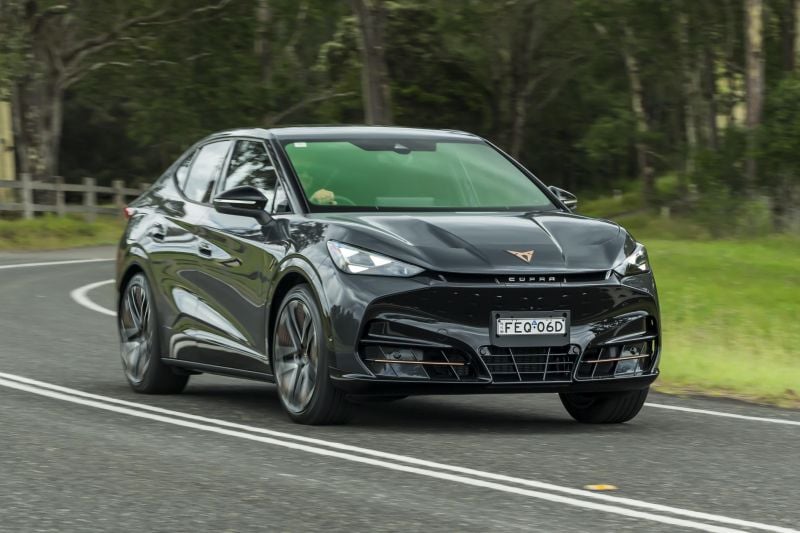
Volkswagen’s sporty Spanish brand is another early adopter of the EV-only approach, committing to do so by 2030, five years before European and UK regulations force its hand.

While the Born is its only EV in Australia, it’s expanding its lineup of battery-powered models globally.

But it has also confirmed it’ll enter the US market by the end of this decade, with CEO Wayne Griffiths telling Motor1 last December that these plans will now see it bring hybrid, plug-in hybrid and combustion-powered vehicles to American buyers as well as EVs.

That appears to leave the door open for combustion-powered Cupras into the 2030s.

Deepal

Deepal technically only sells EVs, however some can also use petrol as a partial power source.

Among its lineup of EVs are a handful of extended-range electric vehicles (EREVs), which use petrol engines to charge the on-board battery.

It’s yet to announce plans to stop selling EREVs and only produce EVs.

Ferrari

The Prancing Horse’s first EV is due to be revealed this year and go on sale in 2026, but don’t expect the brand synonymous with sonorous V12s to only lean on battery-powered models.

More EVs will come, though we can expect Ferrari will be pushing to keep engines alive for as long as legally possible.

Fiat

Fiat has started to go to an electric lineup, most notably with the 500e – however low demand has led to recent production pauses, as well as the development of a mild-hybrid petrol-powered version of the new-generation city car.

Overall the brand plans to ditch engines from its global lineup by 2030, provided it can muster enough demand to keep this financially viable.

Ford

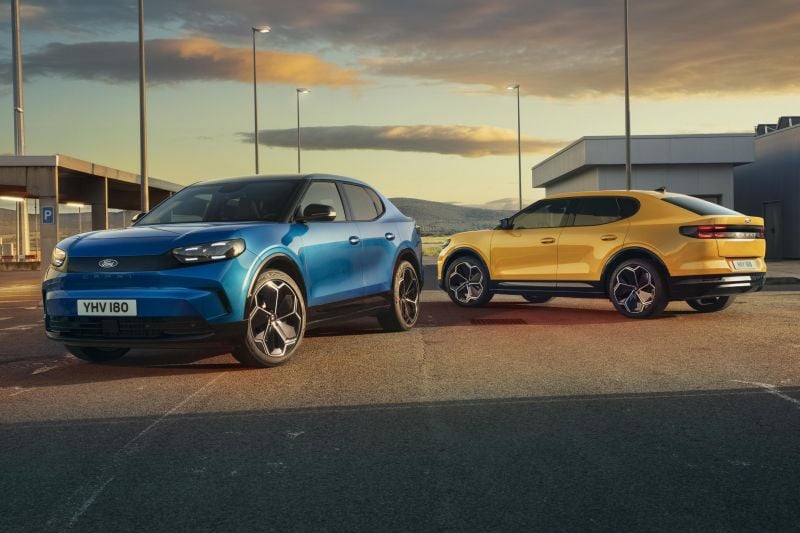
Changing market demands has forced many brands to backtrack on EV plans, and Ford is arguably one of the most popular to do so.

It initially said it would go EV-only across its European passenger vehicle lineup by 2030 before winding this back last year.

Ford has made no plans to only sell EVs in any other market.

Genesis

As Hyundai’s luxury brand, Genesis initially said it’d only release EVs from 2025 before going electric and hydrogen only by 2030.

However, hybrids are now included in those 2025 and on launch plans, while it’s understood the 2030 deadline has also been scrapped.

GWM

China’s GWM is yet to detail its global EV strategy.

Honda

With Japan’s marques traditionally pushing back on going exclusively electric, Honda is no different, having planned to only sell EVs alongside hydrogen fuel-cell vehicles by 2040.

Its next-generation EVs – known as the 0 Series models – will launch from 2026.

Hyundai

Hyundai is yet another brand unwilling to commit to solely EVs by any specific time, only announcing last year that it’ll launch 21 exclusively electric models by 2030.

Ineos

Currently reliant on BMW for powertrains, Ineos is carrying on with engines until the electric Fusulier joins its range.

Initially due to launch in 2027, it was put on ice last year due to “reluctant consumer uptake of EVs, and industry uncertainty around tariffs, timings and taxation”, Ineos said in July. 

Isuzu

Isuzu Ute is yet to launch an EV, and will do so this year with the D-Max EV – first in Norway, with Australian deliveries to follow at a yet-to-be-announced date.

It’s not announced any plans to only sell EVs due to all of its current models being powered by turbo-diesel engines.

JAC

Currently JAC only has a small handful of EVs globally, and its commercial vehicle focus means it’s yet to commit to an electric-only future.

Jaguar

If you haven’t heard about Jaguar’s future plans, you should be congratulated on not looking at the internet.

Jaguar is set to relaunch in 2026 as a more upmarket, EV-only brand. It has been winding down production of all of its models in the meantime, including the I-Pace which was its only EV.

Jeep

Jeep is one of the many US brands that’s willing to follow its country’s lack of an EV mandate, with no commitment to completely ditch petrol and diesel engines.

However, it has already launched the electric Avenger in markets like Europe and Australia, with the Wagoneer S reaching dealers in the US and the Recon off-roader set to follow soon.

KGM SsangYong

The brand formerly known as SsangYong is only now about to roll out its first EV in Australia, and has made no announcement to move to an electric-only lineup globally.

Kia

While Kia is ramping up its rollout of EV offerings, the Korean brand isn’t yet committing to an exclusively electric lineup.

Lamborghini

Demand for EVs (or at least the cooling of it) led Lamborghini to delay its first electric model’s launch to 2029.

It’s been one of the Italian brands pushing for exemptions to the European ban on combustion-powered vehicle sales that’ll come into effect in 2035.

Land Rover

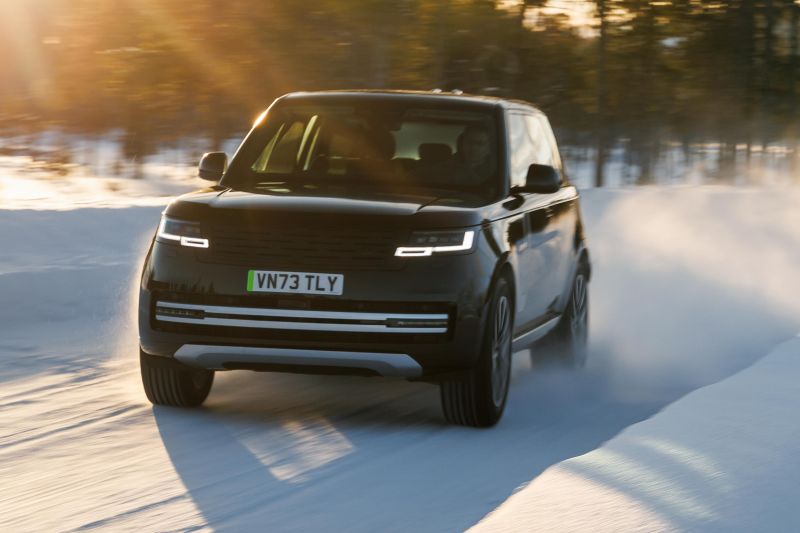
The first electric Land Rover, which will be a Range Rover, is due this year, opening the floodgates to more models in the future.

Despite the bold plans of its Jaguar stablemate, it’s not yet committing to an electric-only future lineup.

LDV

After first launching its e-T60 EV in Australia in 2022, LDV is set to bring another electric ute to local showrooms this year.

However, it’s not yet committing to moving away from petrol and diesel engines globally.

Leapmotor

Like Deepal, Leapmotor’s global model lineup consists of EVs and EREVs, and it’s not committing to ditching the latter technology just yet.

Lexus

Unlike its parent company Toyota, Lexus has laid out a roadmap towards an electric-only future, which it hopes to achieve by 2035.

The US market, long one of its most popular, will go without petrol and diesel models by 2030.

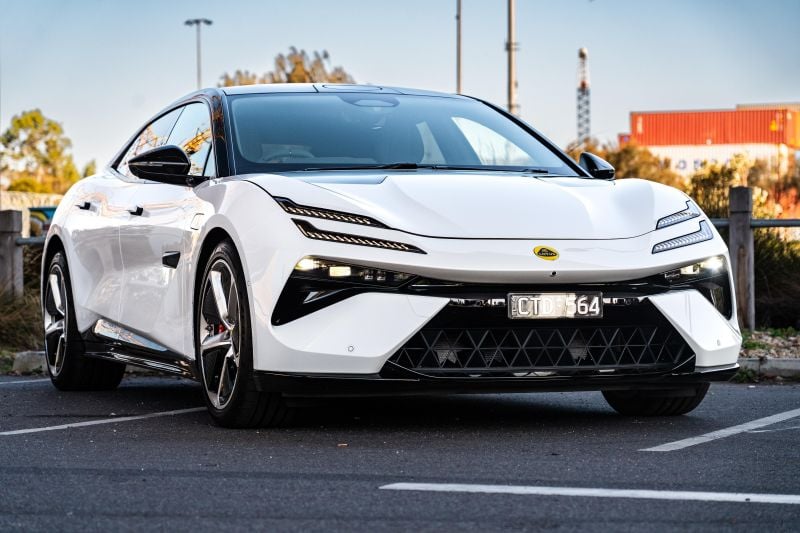
Lotus

Despite long standing behind its plans to be an EV brand by 2028, Lotus is now opening the door to hybrids for its future model lineup.

Mahindra

Indian brand Mahindra is launching its Origin series EVs shortly, crucial to its plans of reaching between 20 and 30 per cent electric sales by 2027.

Maserati

From this year Maserati will only launch electric models, and its entire global lineup will consist of EVs by 2028, a whole seven years before the European and UK regulations come into effect.

Mazda

It’s been a tough start to Mazda’s EV campaign, having axed the MX-30 from Australia due to low sales.

Though it plans to launch seven or eight EVs globally by 2030 – leaning on Toyota for assistance – it’s not yet planning to only sell electric cars.

McLaren

While its supercar rivals are soon launching EVs, it’s expected McLaren’s first won’t come until 2030 at the earliest – and it could be an SUV.

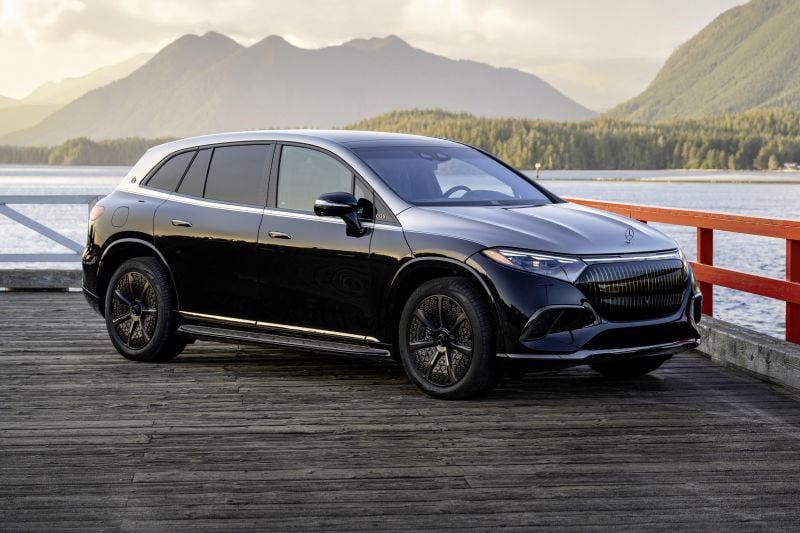
Mercedes-Benz

In 2021, Mercedes-Benz said EVs would account for half of its sales by 2025, however last year it pushed back this target to 2030, and included plug-in hybrids in the total.

The brand had previously announced its intention to go fully electric by 2030, but only in markets which supported the move, without announcing specific regions where it planned to phase out petrol and diesel cars.

MG

Reports from the UK in 2022 suggested MG would only have electric models in its lineup by 2027, though it wasn’t made clear whether this related solely to that market or globally.

Given the recent launch of a handful of petrol and hybrid models, it’s unlikely MG will move to only EVs before the end of the decade.

Mini

By 2030, BMW-owned small car specialist Mini will only have EVs rolling off its global production lines.

Mitsubishi

Mitsubishi is another in the line of Japanese brands holding out on an EV-exclusive future.

However, in 2023 it said hybrids, plug-in hybrids and EVs would account for 50 per cent of its sales by 2030, and its full lineup by 2035.

Nissan

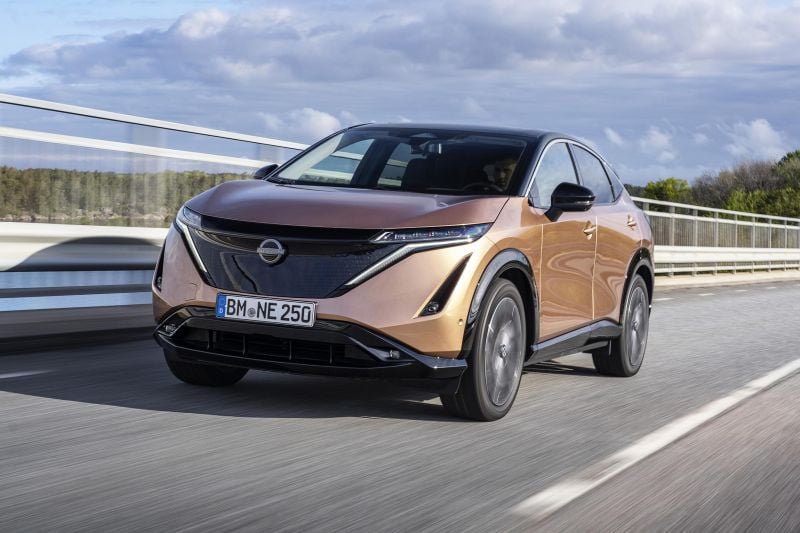
Globally the Nissan brand isn’t committing to going electric, however in Europe it’ll ditch engines by 2030.

Peugeot

Every new Peugeot launched from 2023 onwards has been and will be electrified, which includes hybrids and plug-in hybrids.

It announced in 2030 it would be an EV-only brand in Europe by 2030.

Polestar

After first launching as a break-away from Volvo with the plug-in hybrid Polestar 1, the Chinese-Swedish brand is now only selling EVs both in Australia and overseas.

Porsche

One of the world’s most recognisable brands, Porsche isn’t willing to trade away its petrol-powered heritage just yet, even if about 80 per cent of its sales will be EVs by 2030.

It’s also been at the forefront of sustainable fuel development, hoping to keep engines alive.

Ram

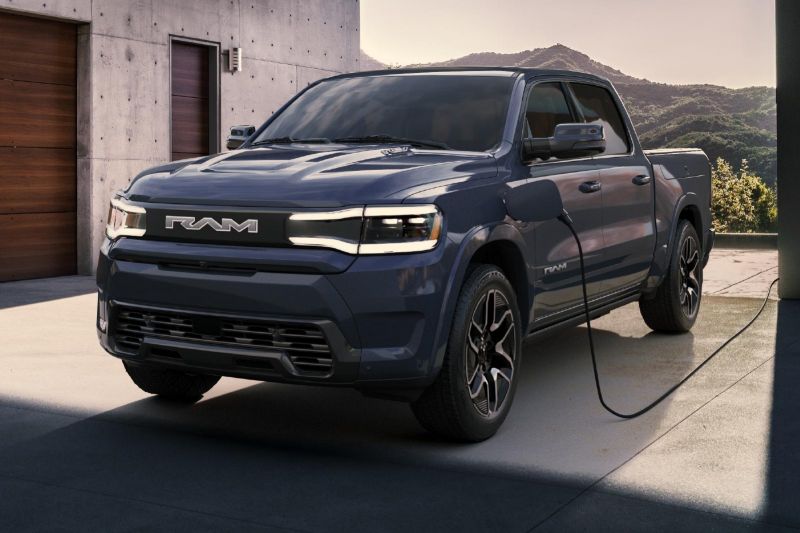
Ram isn’t launching its first EV, the 1500 REV, in the US until next year, and the pickup specialist isn’t yet announcing plans to ditch engines for batteries.

Renault

Despite planning to go electric-only in Europe by 2030, Renault has been pushing back against the region’s 2035 engine ban.

Rolls-Royce

There’s arguably no better fit for a silent electric motor in the whisper-quiet luxury vehicles of Rolls-Royce, and the BMW-owned marque has said it’ll only sell EVs by 2030.

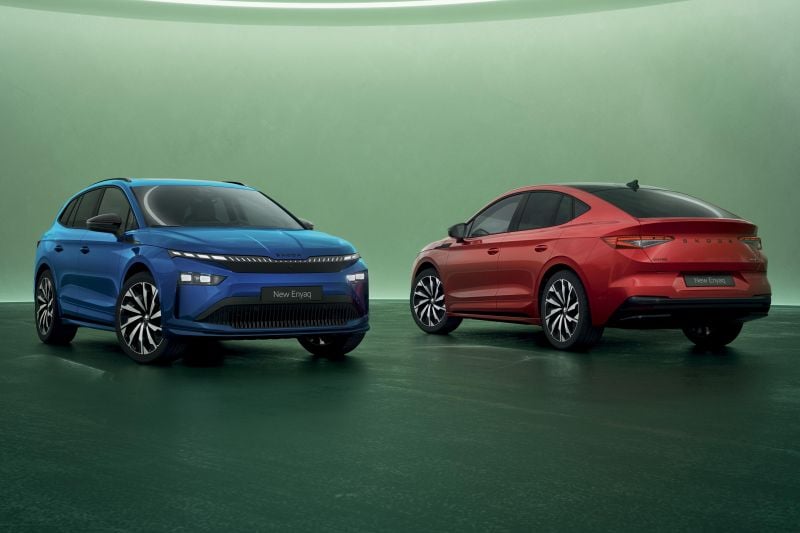
Skoda

Skoda planned to launch seven EVs globally by 2027, but this doesn’t mean it’ll exclusively embrace electric technology.

It is one of many brands without a commitment to stop selling petrol and diesel engines, with its lineup likely to be shaped by regulations.

Smart

Reinvented as an EV brand in 2019, the Mercedes-Benz and Geely joint venture Smart only this week announcing the new #5 will be available as a plug-in hybrid, abandoning its electric plans.

Subaru

Subaru will also lean on Toyota for its future EVs, with three new models due by 2026.

It’s targeted EVs to account for half of its projected 1.2 million sales in 2030, even though it only sold about 14,000 examples of its Solterra electric SUV in 2023 – approximately six per cent of its total global sales.

It hasn’t made any pledge to go EV-only.

Suzuki

The Japanese light car specialist is slowly introducing more EVs globally, however it’s far from leaving petrol engines behind.

Tesla

The world’s largest seller of EVs is solely dedicated to the technology, and is not expected to ever deviate from its roots.

Toyota

In 2024 Toyota chairman Akio Toyoda declared: “To all those who have made engines up until now, let’s continue to make engines,” responding to criticism of his brand’s delayed EV rollout.

While Toyota plans to launch 30 EVs by 2030 – by which point it wants to be selling at least 3.5 million EVs globally each year – it wants to keep hybrids in its lineup. It has also invested heavily in hydrogen fuel-cell electric vehicles.

Volkswagen

In the wake of the Dieselgate saga, Volkswagen committed to an electric model range in Europe by 2033, however it recently pushed this timeline back to 2035.

Increasing pressure has been put on the brand by its own workforce, following speculation about potential job cuts in the near future.

Volvo

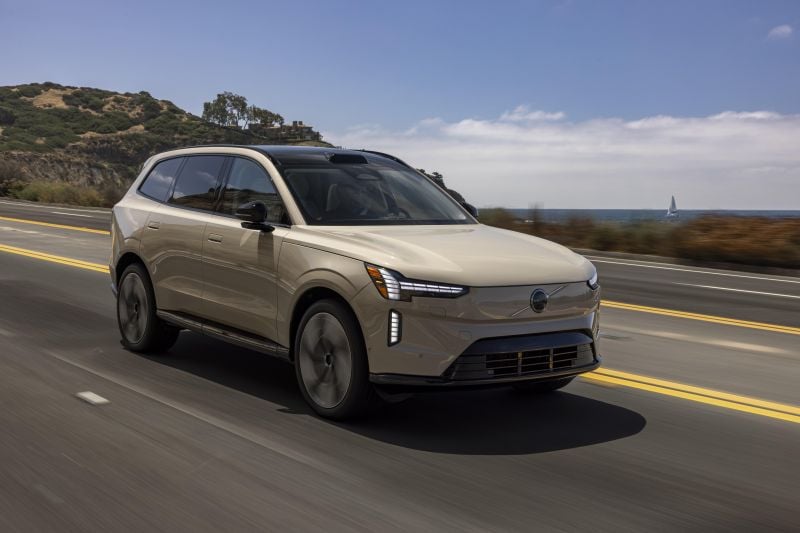
In March 2021, Volvo announced bold plans to only sell EVs globally by 2030, five years ahead of Europe’s looming ban on new petrol and diesel-powered vehicles in 2035.

However, cooling demand for EVs led Volvo to walk back its plans in September 2024, now targeting 90 to 100 per cent electrified vehicle sales by 2030 – with the new target including plug-in hybrids (PHEVs).

Volvo Car Australia announced in 2022 its plans to switch to an electric-only lineup by 2026, four years ahead of its global parent. It hasn’t changed its course despite the global announcement.

Xpeng

Xpeng only sells EVs globally and has exclusively done so since being founded.

Zeekr

Geely-owned Zeekr was established as a “premium” EV brand in 2021, only selling electric models globally. However, it recently confirmed it would introduce hybrid-powered large SUVs and people movers later in 2025.


Source link

The Brookmere Hotel in Saratoga Springs, New York Opens

0


Saratoga Springs, a historic vacation town known for its mineral springs, just welcomed a new boutique hotel: The Brookmere Hotel.

Brookmere Hotel, formerly the Longfellows Hotel and Restaurant, which closed in January 2023, boasts 10 lush acres in the center of Saratoga Springs. The revamped property has amenities like a seasonal outdoor swimming pool, a full-service spa with an outdoor sauna and an ice-plunge bath, and a lovely restaurant and bar. Designed by Atlanta-based Sims Patrick Studio, with 88 rooms, guests can choose from spa suites located near the property’s Arbor Spa, with a private patio, a steam shower, and an infinity-edge bathtub; loft suites with a separate living room area; and even a corner presidential suite, with panoramic views, a wet bar, living and dining room areas, and a fireplace. All accommodations have Molton Brown toiletries, robes and slippers, espresso machines, and smart TVs. 

The main lobby at the Brookmere.

Elizabeth Haynes/Courtesy of Brookmere


The lobby lounge at the hotel.

Elizabeth Haynes/Courtesy of Brookmere


While the hotel’s interiors ooze modern sophistication (there is a sleek marble fireplace in the lobby and a statement chandelier hanging above an elegant seating area), the decor also pays homage to the property’s roots. It used to be a dairy farm. 

“The original 100-plus-year-old dairy barn was maintained and incorporated into the new addition as we expanded the footprint of the original property,” Julian Miller,  the general manager of Brookmere, told Travel + Leisure. “Our goal was to accentuate our location on Union Avenue, set in nature away from the hustle and bustle of downtown, all while embracing our beautiful idyllic and peaceful setting.” Miller explained that with the property just 1.5 miles away from the entrance of the Saratoga Race Course, less than a mile from Saratoga Lake, and next door to Saratoga National Golf Course, Brookmere is “perfect for the traveler that wants a more serene environment.”

Interior of a double guest room.

Elizabeth Haynes/Courtesy of Brookmere


Arbor Spa, which is open to both overnight hotel guests and day visitors, features four treatment rooms, each themed after a different season and clad in natural materials like wood and stone with an earthy color scheme. The spa has partnered with Saratoga Natural Body Care to enhance its wellness offerings with locally made natural body care products. Treatments include body wraps, massages, and facials, and travelers can relax pre- and post-treatment in the spa lounge or use the wellness facilities and gym.

Exterior of the Regent Restaurant & Bar.

Elizabeth Haynes/Courtesy of Brookmere


The hotel’s restaurant and bar, Regent, brings guests on a sumptuous journey through France with classics like beef tartare, foie gras, steak frites, and cassoulet, as well as some dishes with a twist — the onion soup, for example, is prepared with duck broth.

An on-site concierge is also available to assist guests with restaurant reservations and recommendations on what to do in Saratoga Springs.

Nightly rates at Brookmere Hotel start from $213, but the hotel is offering an opening special with 30 percent off bookings through March 31st (that’s $149 per night). You can book your stay athotelbrookmere.com.


Source link

Mercedes-Benz CLK63 AMG Black Series (W209) Buyers Guide

0


For decades, Mercedes-Benz has collaborated with AMG to craft high-performance versions of their vehicles across the entire model lineup, from the C-Class to the S-Class. Each AMG model subtly exudes aggression, power, luxury, and authority. If you recognize an AMG, it’s almost guaranteed to catch your attention. Adding to their appeal is the relative rarity of AMG models, which are far less common than BMW’s M cars.

Mercedes-Benz has long been a dominant force in motorsports, from DTM to Formula 1, and even extending beyond racing with their support and pace cars. Drawing from their extensive on-track engineering expertise, Mercedes and AMG decided to create the ultimate street car: the Black Series.

To date, five Mercedes-Benz AMG models have earned the prestigious Black Series badge: the SLK55, CLK63, SL65, C63, and SLS. While the SLK55 AMG Black Series was technically the first to bear the badge, it wasn’t available in the United States. The CLK63 AMG Black Series, launched in 2008, marked a radical departure from traditional AMG DNA, stunning enthusiasts and critics alike.

AMG had always taken a unique approach to performance—focusing on raw power without always pairing it with advanced handling upgrades. The CLK63 AMG Black Series changed that paradigm, introducing race-inspired enhancements like wider fenders, increased power, extensive use of carbon fiber, and an upgraded suspension system that significantly improved handling. Think of it as AMG’s answer to icons like the BMW M3 CSL, Dodge Viper ACR, and Porsche GT3.

Seeing a CLK63 AMG Black Series in person is a rare treat, made even more special by its limited production—only 367 units were brought to the United States. This rarity makes the Black Series harder to spot than even a Bugatti Veyron.

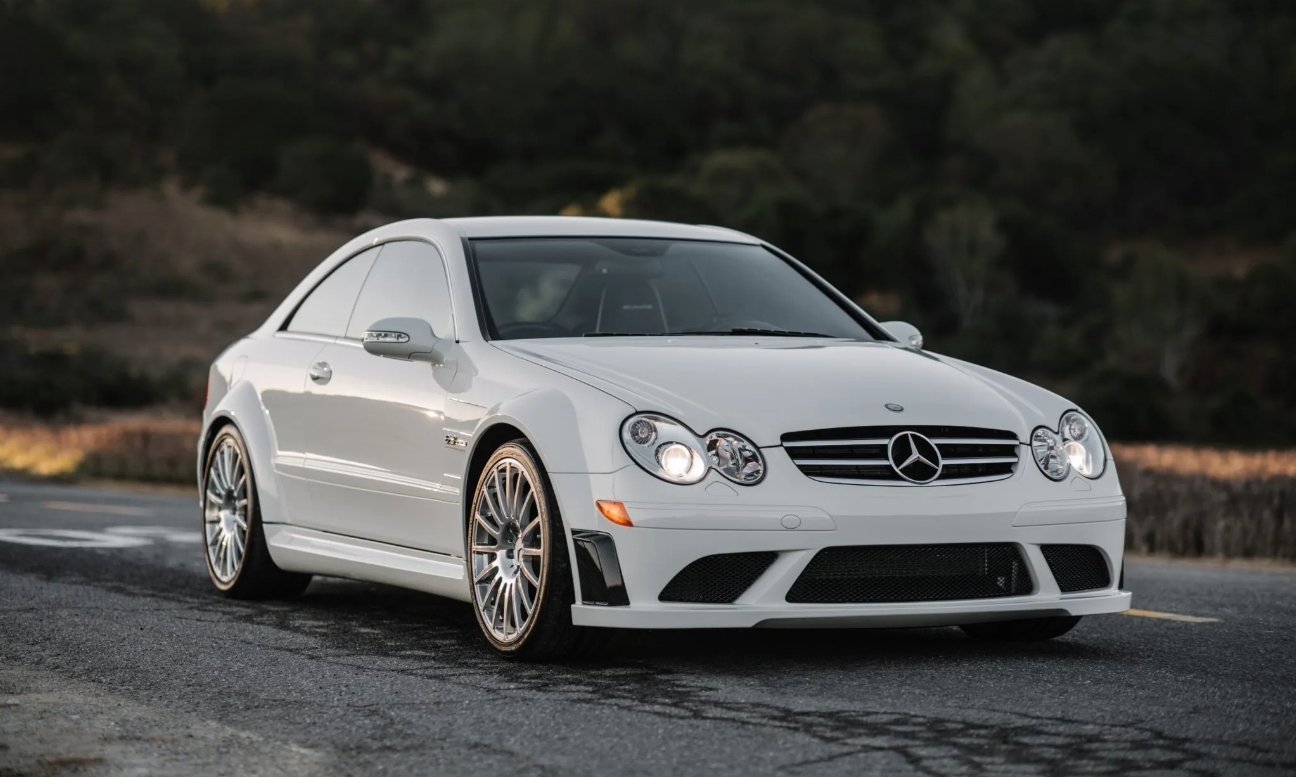
The first thing you’ll notice about the CLK63 AMG Black Series is its dramatic wide-body design, featuring flared front and rear fenders. Beneath those aggressive arches sit 19-inch forged aluminum wheels wrapped in 265/30 front and 285/30 rear tires, ensuring maximum grip. Braking power comes from the massive 6-piston front and 4-piston rear calipers paired with larger composite rotors.

If the fender flares don’t grab your attention, the liberal use of carbon fiber and functional vents surely will. Up front, carbon fiber cooling ducts dominate the bumper, while side vents proudly display the 6.3L AMG badge. The rear view is equally striking, with a carbon fiber lip spoiler and a diffuser that directs air to a differential cooler. Quad exhaust tips and fins complete the aggressive look.

Under the hood lies a 6.2L naturally aspirated V8, the hallmark of AMG’s performance lineup at the time. For the Black Series, this engine was tuned to produce over 500 horsepower and 478 lb-ft of torque—surpassing the typical AMG power range of 450–475 HP. The power is channeled through a 7G-Tronic Speedshift automatic transmission with paddle shifters and a limited-slip differential.

Despite its performance focus, the transmission remains a traditional automatic. The result? A 0-60 mph sprint in under 4 seconds and a quarter-mile time under 12 seconds. However, the Black Series isn’t just about straight-line speed—it shines brightest on the racetrack.

The CLK63 AMG Black Series surprises with its dramatically improved handling, thanks to chassis and suspension upgrades. Weight reduction, while modest at around 100 lbs, is complemented by increased stiffness and rigidity. Reinforcements include large chassis braces under the hood and trunk, while adjustable coilovers allow for fine-tuned ride height adjustments.

Inside, the focus on performance continues. Carbon fiber dominates the cabin, and the rear seats have been removed to save weight. Although back seats are technically still present, they’re not equipped with seatbelts and are not intended for use. The front seats, though excellent in support and bolstering, lack electronic adjustments, and Europe received even more hardcore bucket seats.

The push-button start and stubby shift lever adds unique touches, while the flat-bottom leather steering wheel, inspired by F1, feels perfectly weighted.

Buying a CLK63 AMG Black Series was straightforward, as there were no packages and only one optional feature—an iPod connector. The available colors were Mars Red, Arctic White, Iridium Silver, Black, and Obsidian Black (yes, two black options).

The CLK63 AMG Black Series stood as a beacon of what AMG could achieve, giving stiff competition to the likes of the Porsche GT3, BMW M3 CSL, and the Audi RS5.

Driving Experience

The moment you press the push-button start and the M156 V8 roars to life, it’s clear that you’re about to experience something truly special. On cold starts, the CLK63 AMG Black Series produces one of its most unforgettable symphonies—pops, snaps, and cracks echoing in a glorious celebration of raw power.

Mercedes-Benz kept the driving modes straightforward, offering three options: Sport, Manual, and Comfort. Sport mode stands out as the best choice (for reasons we’ll explore shortly), delivering a balanced experience that almost negates the need for paddle shifters by intuitively predicting the ideal gear. Traction and stability control are similarly simple, offering just two settings: on or off—there’s no middle ground.

Once you’ve spent a little time behind the wheel, the weight of the car becomes apparent. At 3,900 lbs, the CLK63 AMG Black Series carries about 500 lbs more than we’d like, but what it lacks in lightness, it makes up for in dynamic driving characteristics. The steering, though heavy at low speeds, becomes razor-sharp as you pick up the pace.

Turn-in is precise, arguably among the best in its class. Thanks to the 6.2L V8 delivering 80% of its torque at just 2,000 RPM and maintaining it across the rev range, the car surges forward with authority—sometimes too much. Even with a limited-slip differential, putting all that power down can be a challenge, and the rear tires occasionally struggle to keep up.

On city streets, the Black Series feels somewhat restrained, as though it’s waiting for a more demanding environment. Take it to a winding backroad, however, and it truly comes alive. The car feels perpetually on edge, but as you tackle corner after corner, it begins to inspire confidence.

Hard braking holds up beautifully without fading, allowing you to dive deeper into turns. However, push beyond the limits, and the Black Series reminds you it’s not for the faint of heart—this car will bite back if you’re not ready.

While the handling is undeniably good, it stops short of greatness—and that’s perfectly okay. Here’s why: Mercedes tuned the suspension to encourage controlled chaos, delivering significant oversteer. Keeping the CLK63 AMG Black Series planted through corners is a challenge, even with its wide 285-section rear tires, as the car can easily overpower them and let the rear end slide.

This isn’t a machine for setting lap records—it’s a car designed to keep you grinning ear to ear, even if you’re not the fastest on the track. After all, there’s no denying that drifting through corners looks just as thrilling as it feels.

Model Changes (Breakdown by Year)

2007 Mercedes-Benz CLK63 AMG Black Series

The 2007 Mercedes-Benz CLK63 AMG Black Series marked the debut of this high-performance, track-focused variant of the CLK63 AMG. 

At its heart was a 6.2L naturally aspirated V8 (M156), delivering an impressive 507 hp and 478 lb-ft of torque. The car featured a striking new wide-body design with flared fenders to accommodate lightweight forged 19-inch wheels, wrapped in 265/30 front and 285/30 rear tires for enhanced grip. 

Aerodynamics were improved through redesigned front and rear bumpers, while extensive carbon fiber elements—including the lip spoiler, rear diffuser, and cooling vents—added both functionality and visual aggression.

Handling was a priority, with adjustable coilover suspension for precise customization and chassis reinforcements under the hood and trunk to boost rigidity. Weight savings of approximately 100 lbs compared to the standard CLK63 AMG were achieved through measures like removing the rear seats, further emphasizing its race-car-inspired character. 

With only 367 units imported to the U.S., the 2007 CLK63 AMG Black Series was exclusive and highly desirable.

The 2007 Mercedes-Benz CLK63 AMG Black Series had a starting price in the range of $130,000 to $140,000 when it was introduced to the U.S. market.

2008 Mercedes-Benz CLK63 AMG Black Series

The 2008 Mercedes-Benz CLK63 AMG Black Series continued production with no major mechanical updates.

 Minor refinements were introduced to enhance reliability and quality, including improved suspension calibration for better balance and responsiveness, as well as slight adjustments to the transmission software to deliver smoother shifts in Sport mode. 

The only notable new feature was the addition of iPod integration as an optional extra. Mercedes-AMG also placed greater emphasis on quality control, addressing early customer feedback to ensure the highest standards were met. 

Demand for the 2008 model remained strong, with many units pre-sold before they even arrived at dealerships.

The 2008 Mercedes-Benz CLK63 AMG Black Series had a starting price of approximately $135,000.

2009 Mercedes-Benz CLK63 AMG Black Series

The 2009 Mercedes-Benz CLK63 AMG Black Series marked the final year of production. As Mercedes-Benz prepared to transition to newer platforms, the CLK63 AMG Black Series was discontinued, bringing an end to the W209 Black Series era. 

Final-year models benefited from refinements and lessons learned during earlier production, ensuring top-notch build quality and reliability. However, there were no significant changes, as the model remained largely unchanged since its debut. 

The discontinuation of the CLK63 AMG Black Series also signaled the end of the CLK-Class (W209) platform, which was replaced by the E-Class Coupe (C207) in 2010.

The 2008 Mercedes-Benz CLK63 AMG Black Series had a starting price of approximately $135,000.

Mercedes-Benz CLK63 AMG Black Series Common Problems

The CLK63 AMG Black Series is renowned for its reliability, with no widespread issues or chronic problems commonly associated with the model. Its robust design and engineering make it a standout even among other high-performance vehicles. One of the key factors contributing to this durability is AMG’s meticulous craftsmanship. Every AMG engine is hand-assembled by a single technician under the “One Man, One Engine” philosophy, ensuring the utmost attention to detail and precision.

For the Black Series models, rumors suggest that Mercedes-AMG selects only their most skilled and experienced engine builders and mechanics to handle these exclusive projects. This elite team brings their expertise to every step of the process, resulting in a vehicle that not only performs at an extraordinary level but also maintains a level of dependability that instills confidence in its owners.

With that said, it is essential that all cars, can have issues and it is crucial to perform a Pre-Purchase Inspection (PPI) from an authorized dealer or experienced independent mechanic to reveal all issues.

Transmission (722.9) Issues:

  • Torque Converter Failures: Early models, particularly those before 2009, experienced torque converter problems. Failures could lead to contamination of the transmission fluid, turning it from its normal cranberry color to a black, muddy appearance.

  • Fluid Pump Wear: The transmission’s fluid pump, which uses a sleeve bearing, can wear over time, causing whining noises and potential leaks. If unchecked, this wear can damage the magnesium bell housing.

  • Conductor Plate Issues: The 722.9 transmission is known for faulty conductor plates, particularly with speed sensors failing. Replacing the conductor plate requires specialized coding, often necessitating dealer intervention.

M156 Engine Concerns:

  • Camshaft and Lifter Wear: Some M156 engines have reported premature wear of camshafts and valve lifters, leading to ticking noises during cold starts. This issue can affect engine performance and longevity.

  • Head Bolt Issues: Models produced between 2007 and 2011 may have head bolts prone to failure, potentially causing coolant leaks and engine overheating. Addressing this issue requires significant engine disassembly.

Crankcase Breather Valve:

  • The diaphragm within the crankcase breather valve can deteriorate over time, leading to excessive oil consumption, visible smoke from the exhaust, and engine misfires. Additionally, the connecting hose may crack, exacerbating these issues.

Recalls

2007 to 2009 CLK63 AMG Black Series vehicles

Sunroof Adhesive Issue (Recall no. 22V-954)

The adhesive bonding of the glass panel of the sunroof may have been incorrectly applied. This defect could lead to the glass panel detaching while driving, increasing the risk of an accident. Mercedes-Benz dealers will inspect the sunroof bonding and replace the glass panel as necessary, free of charge.

Maintenance and Ownership Costs

Ownership of the Mercedes-Benz CLK63 AMG Black Series can be an exciting experience, but like any vehicle, it comes with some maintenance and operational costs to keep it in top shape.

It is important to remember that regular maintenance and repairs will still be necessary, and the costs can vary depending on whether you take your car to a dealer or an independent mechanic.

Here are the suggested service schedule and intervals per Mercedes-Benz:

10,000 MILES (Service A)

  • Engine oil replacement

  • Oil filter replacement

  • Fluid checks and refill (as needed)

  • Brake inspection

  • Tire pressure check and adjustment

  • Reset maintenance counter

20,000 MILES (Service B)

  • Cabin air filter replacement

  • Brake fluid flush and replacement

  • Engine oil replacement

  • Oil filter replacement

  • Fluid checks and refill (as needed)

  • Brake inspection

  • Tire pressure check and adjustment

  • Reset maintenance counter

30,000 MILES (Service A)

  • Engine oil replacement

  • Oil filter replacement

  • Fluid checks and refill (as needed)

  • Brake inspection

  • Tire pressure check and adjustment

  • Reset maintenance counter

40,000 MILES (Service B)

  • Cabin air filter replacement

  • Brake fluid flush and replacement

  • Engine oil replacement

  • Oil filter replacement

  • Fluid checks and refill (as needed)

  • Brake inspection

  • Tire pressure check and adjustment

  • Reset maintenance counter

50,000 MILES (Service A + Additional Items)

  • Spark plug inspection and replacement

  • Engine air filter replacement

  • Fuel filter replacement

  • Engine oil replacement

  • Oil filter replacement

  • Fluid checks and refill (as needed)

  • Brake inspection

  • Tire pressure check and adjustment

  • Reset maintenance counter

Here is a rough estimate of typical service costs associated with the Mercedes-Benz CLK63 AMG Black Series:

  • Oil Change – The CLK63 AMG Black Series uses high-quality synthetic oil (similar to a C63 AMG) due to its high-performance M156 engine. An oil change typically costs between $150 and $250. This includes the cost of oil, the oil filter, and labor. Dealerships tend to charge on the higher end, while independent shops may offer competitive pricing closer to $150.

  • Minor Service – Minor services, including oil changes, fluid top-offs, and routine inspections, are typically recommended every 10,000 miles or annually. These services cost between $200 and $400. Dealerships charge more for these basic services, while independent shops usually offer them at lower prices.

  • Major Service – Major services include more extensive inspections, brake fluid changes, spark plug replacements, and preventive maintenance. These are typically performed every 30,000 to 50,000 miles and cost between $1,000 and $1,500. Dealerships are often at the higher end of this range due to higher labor rates, while independent shops may perform the same work for less.

  • Tires – The CLK63 AMG Black Series uses performance tires, with 265/30 front and 285/30 rear sizes, which are not cheap. A full set of high-performance tires generally costs between $1,200 and $2,000, depending on the brand. Michelin Pilot Sport 4S and other high-performance options are popular choices. Frequent spirited driving or track use may reduce tire life to under 10,000 miles.

  • Brakes – The brakes on the CLK63 AMG Black Series are designed for aggressive performance, leading to higher replacement costs. Replacing pads and rotors for all four corners costs between $2,000 and $2,500. Aftermarket options may slightly reduce costs, but OEM components are recommended for optimal performance.

  • Clutch – While the CLK63 AMG Black Series uses a 7-speed automatic transmission, it does not have a traditional clutch. Therefore, clutch replacement is not applicable. However, maintenance of the transmission, including fluid changes, is recommended every 30,000–40,000 miles and costs between $400 and $600.

Options List

When purchasing a Mercedes-Benz CLK63 AMG Black Series, the options list is surprisingly minimal, reflecting the car’s track-focused nature and AMG’s decision to keep the configuration straightforward. 

Unlike many other Mercedes-Benz models, the CLK63 AMG Black Series was intentionally stripped down to focus on performance. AMG limited the customization options to ensure that every vehicle delivered a uniform driving experience.

The iPod integration kit was the only factory option available for the CLK63 AMG Black Series. It allowed owners to connect their iPods to the car’s audio system, a desirable feature during its time. While the technology is dated now, models equipped with this option offer a glimpse into the car’s limited tech-oriented upgrades.

Buyers could choose from a small selection of exterior colors, including Mars Red, Arctic White, Iridium Silver, Black, and Obsidian Black. Although the range was limited, certain colors, like Mars Red and Arctic White, are rarer, making them more sought-after in the used market.

Mercedes-AMG offered no additional performance packages or enhancements beyond the standard Black Series configuration. The focus was purely on delivering a serious performance car straight from the factory. 

Given the limited options, the primary factors affecting value and desirability are condition, mileage, and maintenance history. Cars that are well-maintained and have their factory features intact, including original paint and upholstery, are more likely to retain their value over time.

The sparse options list and limited production numbers (only 367 units in the U.S.) make the CLK63 AMG Black Series an inherently exclusive vehicle. While the lack of options may seem limiting, it enhances the car’s collectability by keeping the focus on its unique performance capabilities and design.

Whether you’re considering the rarity of certain colors or seeking a well-maintained example with its original factory features, evaluating these details is key to securing a CLK63 AMG Black Series that will hold its value and provide an exceptional ownership experience.

Key Options

  • iPod Integration Kit: The only factory option is to allowing connection of an iPod to the car’s audio system.

  • Exterior Colors: Limited paint options included: Mars Red (rare), Arctic White (rare), Iridium Silver, Black, Obsidian Black

Mercedes-Benz CLK63 AMG Black Series Price and Value

The Best Mercedes-Benz CLK63 AMG Black Series to Buy

When it comes to choosing the best Mercedes-Benz CLK63 AMG Black Series, several factors should influence your decision.

For those looking for the best version of the CLK63 AMG Black Series, a 2009 model is often considered the top choice. As the final year of production, the 2009 model benefits from all the lessons and refinements made throughout the production run. These refinements ensured the highest build quality and reliability compared to earlier models. Additionally, 2009 cars represent the last of the W209 CLK-Class platform, making them highly collectible due to their historical significance.

Beyond model year, the condition and mileage of the vehicle are critical factors to consider. Vehicles with low mileage and a complete service history are more likely to retain their value and offer a trouble-free ownership experience. Ensuring that the car has been serviced according to Mercedes-AMG recommendations—particularly with regular oil changes, suspension inspections, and brake maintenance—is essential for preserving its performance capabilities and exclusivity.

The rarity of specific paint colors, such as Mars Red or Arctic White, may also increase the car’s appeal and long-term value. These colors are less common compared to standard shades like Black or Iridium Silver, making them desirable for collectors.

When considering long-term value and ownership satisfaction, targeting a well-maintained 2009 CLK63 AMG Black Series with low mileage, original factory features, and rare paint colors is a wise choice. Combining these factors will not only secure your investment but also ensure an exceptional ownership experience of one of AMG’s finest creations.

Conclusion

In summary, for around $120,000+ the Mercedes-Benz CLK63 AMG Black Series is a compelling choice for enthusiasts seeking a high-performance coupe with exclusivity and precision engineering. It combines aggressive styling, race-inspired performance, and AMG’s renowned craftsmanship.

While alternatives like the BMW M3 CSL, Porsche 911 GT3, and Audi RS5 offer strong competition, the CLK63 AMG Black Series distinguishes itself with its wide-body design, naturally aspirated 6.2L V8 engine, and limited production numbers, making it a standout in its class.

For those seeking a unique blend of German engineering, rarity, and track-ready performance, the Mercedes-Benz CLK63 AMG Black Series remains an exceptional and iconic choice.

Car Hacking Shortcuts

  • Rare Mars Red and Arctic White paint colors tend to retain or even increase resale value compared to more common shades like Black or Iridium Silver

  • Look for well-maintained examples with a complete service history

  • Inspect tires and brakes: High-performance tires and brakes are significant expenses for the CLK63 AMG Black Series. Look for cars with recently replaced tires and brakes, as these can save you thousands of dollars in maintenance costs shortly after purchase

  • Leverage pre-purchase inspections (PPI): A PPI from a Mercedes-AMG specialist can uncover hidden issues, such as transmission wear, suspension damage, or carbon fiber panel imperfections. Identifying these before purchase can help you avoid unexpected repair bills and ensure you’re investing in a solid example


Source link

Genesis concept remakes GV60 EV as off-road rescue vehicle

0


Cold-weather range loss remains a seasonal form of range anxiety for many electric vehicle shoppers, but a new Genesis concept car aims to prove that EVs can thrive in the cold.

Introduced at the 2025 World Economic Forum in Davos, Switzerland, the Genesis GV60 Mountain Intervention Vehicle concept turns the automaker’s GV60 electric crossover into an off-road rescue vehicle.

To make the GV60 better suited for this role, Genesis swapped the wheels for tracks, adding carbon-fiber fender flares to protect them—and presumably to keep bystanders from being pelted by snow thrown up by them.

Genesis GV60 Mountain Intervention Vehicle concept

Genesis GV60 Mountain Intervention Vehicle concept

Other modifications include sport seats, additional communication equipment, an equipment rack, and modular equipment mounting points on the rear hatch. The GV60’s vehicle-to-load (V2L) capability allows it to serve as a power source for gear stored onboard, Genesis noted.

The GV60 Mountain Intervention Vehicle is a one-off concept, but Genesis is testing ways to improve the efficiency of EVs in cold weather. Just recently the automaker discussed using the 48-volt electrical systems in its current EVs to power heated windshields that could remove frost more quickly than conventional 12-volt solutions—while using less electricity.

EV range loss in cold weather is real, although the extent to which it affects real-world driving habits is less clear. For many EV drivers, it simply means more charging, which can often be done at home. Drivers of internal-combustion cars—which can also see fuel economy dip in colder temperatures—still have to trudge out to gas stations more often in winter.

Genesis GV60 Mountain Intervention Vehicle concept

Genesis GV60 Mountain Intervention Vehicle concept

The GV60 arrived in the U.S. as a 2023 model and gets a handful of updates for 2026, including a 27-inch dashboard display and tiny styling tweaks. Genesis hasn’t confirmed U.S. specs yet, but the GV60 could also get a larger battery pack like the Hyundai Ioniq 5 and Kia EV6, with which it shares the Hyundai E-GMP platform.

A GV60 Magma performance variant is also expected to arrive as a 2026 model, ushering in the new Genesis Magma performance sub-brand announced at last year’s New York auto show.


Source link

Jacky Ickx returns to Dakar at 80 with Genesis GV80 Desert Edition

0


  • Genesis brand ambassador Jacky Ickx, 80, drove part of the 2025 Dakar Rally in a GV80
  • Ickx drove a bespoke GV80 known as the Desert Edition
  • The GV80 Desert Edition features a stance 40 millimeters wider than stock

Belgian racing legend Jacky Ickx took part this month in the 2025 Dakar Rally in Saudi Arabia behind the wheel of a one-off Genesis GV80 SUV called the Desert Edition.

The winner of multiple Formula 1 races as well as the 24 Hours of Le Mans is a Genesis brand ambassador and closely involved in the development of the automaker’s LMDh endurance race car, and the return to Dakar marks another milestone in his collaboration with the brand.

Ickx, who recently celebrated his 80th birthday, has a storied history with the Dakar Rally, having claimed victory in 1983. This year, he tackled the grueling event alongside his daughter Vanina, covering approximately 3,700 miles of the rally’s 5,000-mile route across the Saudi Arabian desert. The father-daughter duo rekindled memories of their 2000 Paris-Dakar-Cairo Rally journey.

The rally icon took delivery of the bespoke GV80 Desert Edition on Dec. 31 at the Genesis showroom in Riyadh. Developed in partnership with Dubai-based W Motors, the vehicle boasts a wider stance—up 40 millimeters front and rear compared to stock—as well as 20-inch forged bead-lock wheels shod with all-terrain tires.

Jacky Ickx and the Genesis GV80 Desert Edition at the 2025 Dakar Rally

Jacky Ickx and the Genesis GV80 Desert Edition at the 2025 Dakar Rally

The suspension was also modified to handle the rough desert conditions, including providing more ground clearance and travel, improved damping, and enhanced stability on soft sand dunes. A new drive mode designed specifically for desert conditions was also added to the vehicle.

According to Genesis, Ickx was impressed with the suspension system and the additional visibility provided by a custom lighting system featured on the vehicle. The lighting system includes LED auxiliary lights integrated into the front fascia, A-pillars, and roof. A custom roof rack is equipped with mounts for fuel canisters, sandboards, and a rooftop tent.

Genesis has yet to announce production plans for the GV80 Desert Edition, but as a one-off model, its capabilities were fully showcased in this year’s Dakar Rally, which concluded on Jan. 17 with a victory by Yazeed Al Rajhi and Timo Gottschalk driving a Toyota GR Hilux Evo.


Source link

Mitsubishi might not be part of Honda-Nissan merger

0


Mitsubishi might not be part of Honda-Nissan merger

According to a report by Reuters, Mitsubishi is considering not joining the planned merger between Honda and Nissan. Sources told the news outlet that Mitsubishi, which is 34.01% owned by Nissan, plans to remain listed on the Tokyo Stock Exchange while working together with both automakers.

Last December, it was confirmed that Honda and Nissan have signed a memorandum of understanding (MoU) to explore the possibility of a merger. Both companies aim to reach a definitive agreement concerning execution of the business integration (including the share transfer plan) by June 2025, following which a holding company would be set up by August 2026.

As for Mitsubishi, it was announced at the time that the company reached a basic agreement to proceed with discussions for it to become the third member of the “new alliance.” In a release, the company said it aims to reach a decision on its participation by the end of January 2025.

While Mitsubishi has yet to issue a statement on whether it will join Honda and Nissan, media reports in Japan suggest the company isn’t keen on doing so over concerns it would be difficult for it to affect management decisions of the joint holding company given its relatively small size.

Looking to sell your car? Sell it with Carro.


Source link

2025 Volvo EX30 starts US deliveries, $36,245 base version arrives later

0


  • The 2025 Volvo EX30 has begun U.S. deliveries
  • The first model to arrive is the EX30 Twin Motor Performance, starting at $46,195
  • A base EX30 Single Motor, previously promised at $36,245, will arrive at a later date

The Volvo EX30 electric subcompact crossover was revealed in 2023, and its combination of sharp pricing, attractive design, and impressive performance has been winning over plenty of buyers overseas.

Now, the EX30 is finally beginning U.S. deliveries, but only a small number will arrive initially until production ramps up at Volvo’s plant in Belgium, currently scheduled for later this year.

The first batch, arriving as 2025 models, comes from a plant in China, which incurs steep tariffs. In a statement, Volvo said a limited number are being imported to meet early preorder demand.

The initial models are all the EX30 Twin Motor Performance variant, priced from $46,195 for the standard Plus version. A more premium Ultra version starts at $47,895. Both prices include a $1,295 destination charge.

2025 Volvo EX30

2025 Volvo EX30

Volvo has confirmed plans to release an EX30 Single Motor in the U.S. at a later date, though the timeline remains uncertain. This model was previously announced with a starting price of $36,245, including destination.

Currently, all EX30 models are equipped with a 69-kwh battery, which in the EX30 Twin Motor Performance provides an estimated 253 miles of range on the EPA test cycle. The battery supports a charging capacity of 153 kw, which, under optimal conditions, allows for a 10-80% charge in as little as 25 minutes using a compatible charger.

2025 Volvo EX30

2025 Volvo EX30

The EX30 Twin Motor Performance features a dual-motor all-wheel-drive system delivering 422 hp, enabling 0-60 mph acceleration in just 3.4 seconds—making it the quickest Volvo to date. The single-motor EX30 will come with 268 hp.

As an entry-level vehicle, the EX30 foregoes the premium interior finishes found in Volvo’s larger models, opting instead for a design and materials focused on practicality and sustainability. A 12.3-inch portrait-style touchscreen serves as the main infotainment hub, featuring popular built-in Google apps and wireless Apple CarPlay support.

2025 Volvo EX30

2025 Volvo EX30

Beneath the screen, a customizable center console offers ample storage, including space for rear-seat passengers. A soundbar spanning the width of the dashboard sits directly below the windshield, while the rear of the vehicle features a convenient guide with key interior dimensions—ideal for trips to Ikea. Standard electronic driver-assist features include blind-spot monitors and automatic emergency braking.

Volvo is also expected to introduce a more rugged EX30 Cross Country version in the future, though the timing remains unclear. A concept revealed in 2023 hinted at upgrades such as increased ground clearance and underbody protection.


Source link

1986 Audi 5000 CS Quattro speed record prototype surfaces for sale

0


A heavily modified 1986 Audi 5000 CS Quattro sedan driven by three-time Indianapolis 500 winner Bobby Unser in a successful speed record attempt is up for grabs.

After spending decades in a private collection, the speed record sedan will be one of the featured lots at an upcoming Bonhams sale in Paris scheduled for Feb. 6. Bonhams expects the car to sell for between $100,000 and $210,000. That would be an astronomical sum for an ordinary Audi 5000, but this car is far from ordinary.

1986 Audi 5000 CS Quattro speed record car (image via Bonhams)

1986 Audi 5000 CS Quattro speed record car (image via Bonhams)

By the mid-1980s, Audi had already conquered the World Rally Championship with its Quattro coupe, boosting the brand’s image in Europe. But racing success didn’t have the same impact in the U.S., where the sedan known as the Audi 100 was marketed as the 5000—and was the subject of reports of unintended acceleration. So Audi came up with a star-spangled motorsport publicity stunt.

The car now up for sale was modified with aerodynamic tweaks and upgrades to its 2.2-liter turbocharged inline-5, boosting output to 650 hp. On Mar. 24, 1986, Unser drove the sedan at Talladega Superspeedway, reaching a record-setting top speed of 206.3 mph over a 46-second lap of the 2.6-mile oval.

According to Bonhams, Unser, who parlayed the Talladega record attempt into a successful Pikes Peak campaign with Audi later that year, said the 5000 felt like “it was superglued to the road. Even when I got over 200 mph.”


1986 Audi 5000 CS Quattro speed record car (image via Bonhams)

1986 Audi 5000 CS Quattro speed record car (image via Bonhams)

Job done, the 5000 record car was returned to Germany, where the current owner and his father saw it during a factory tour while picking up a newly-purchased Audi V8 Quattro sedan. The tour was conducted by Dr. Werner Laurenz, who then worked on development of Audi racing engines. The current owner’s father and Laurenz became friends, who arranged to sell the car to the family when Audi attempted to scrap it. It’s been in their collection ever since.

The record attempt and Pikes Peak run (in which Unser set a record at the legendary hill climb) were overshadowed by a damning “60 Minutes” report the following November on the 5000’s alleged unintended acceleration. Audi remained invested in motorsports, returning to Pikes Peak in 1987, then dominating the Trans Am and then IMSA racing series.


Source link