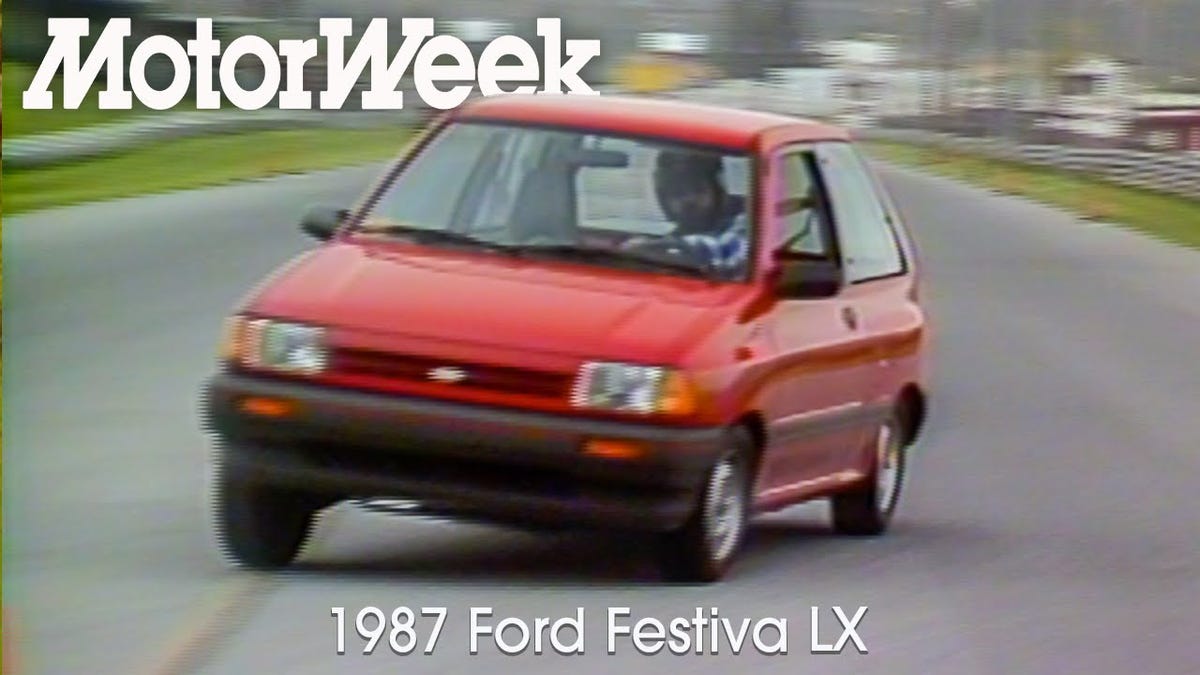
The American automotive industry is best known for its large vehicles, be they pickup trucks, large SUVs, or big muscle cars. Most American automakers sold small cars in the past, but some folks may not be aware that many small “American” cars were actually designed and/or built by other companies in other countries. American imperialism forced itself upon the shores of Eastern countries like Korea and Japan under the guise of “civilizing” and “helping” them out, and these countries conveniently helped Americans get cheap, efficient, well-built products in return. The latest MotorWeek Retro Review showcases how Ford’s Festiva was actually designed by Mazda in Japan and produced by Kia in Korea, and previous Retro Reviews show how the other two players in America’s Big Three carmakers have done the same for over 50 years.
The Ford Explorer Goes All-Electric, But Not For America
Ford, General Motors, and Chrysler do not sell any small cars in the U.S. anymore. Consumer purchase habits have shifted enough that the three companies don’t see much, if any value in selling non-crossover vehicles. Even now, small and affordable American vehicles, crossovers or otherwise, are hard to come by. GM is the only company of the big three that sells a subcompact vehicle in the U.S., the Chevrolet Trailblazer crossover, and it’s actually designed and built by GM Korea.
Aside from the Ford Festiva, there were many other small cars sold by American automakers that were actually designed and/or built in other countries. The Chevrolet Sprint of the ‘80s was a rebadged Suzuki, the Chevrolet Spectrum was a rebadged Isuzu, the Chevrolet Nova was a rebadged Toyota, and the Chevrolet Spark and Aveo were rebadged Korean Daewoos. The Dodge/Plymouth Colt was a rebadged Mitsubishi, and the Chrysler brands were once deeply intertwined with Mitsubishi, using its engines and rebadging other models for decades. Ford also used its foreign entities to produce other models over the years, including the Ford Aspire and later versions of the Ford Escort.
American automakers did occasionally produce successful small cars of their own, like Chrysler’s Neon, Ford’s Focus, and Chevrolet’s Cavalier, but each company relied heavily on the respective lessons learned from their colonized Eastern counterparts. The history of American car companies and the American automotive landscape is heavily intertwined with the proliferation of American imperialism. Ever since we realized that the Ford Pinto and Chevy Citation were garbage compared to their imported market competitors, American companies used the old adage, “if you can’t beat ‘em, colonize ‘em.” In the words of Biggie Smalls, if you don’t know, now you know.
Porsche has been spotted testing an electric 718 Cayman
Expected to debut in late 2026, it will trail an electric 718 Boxster by about a year
The gas-powered 718 Boxster and Cayman end production in 2025
Porsche fans will soon have to get used to the idea of an electric sports car from the brand.
Porsche is close to launching its first electric sports car, but rather than start with the iconic 911, Porsche will initially add battery power to the 718 Boxster and Cayman. A prototype for the electric Cayman has now been spotted for the first time.
Prototypes for the electric Boxster have been spotted for more than a year, suggesting that it will be the first to arrive. A debut later this year is expected, which would likely result in the electric Cayman arriving sometime in 2026.
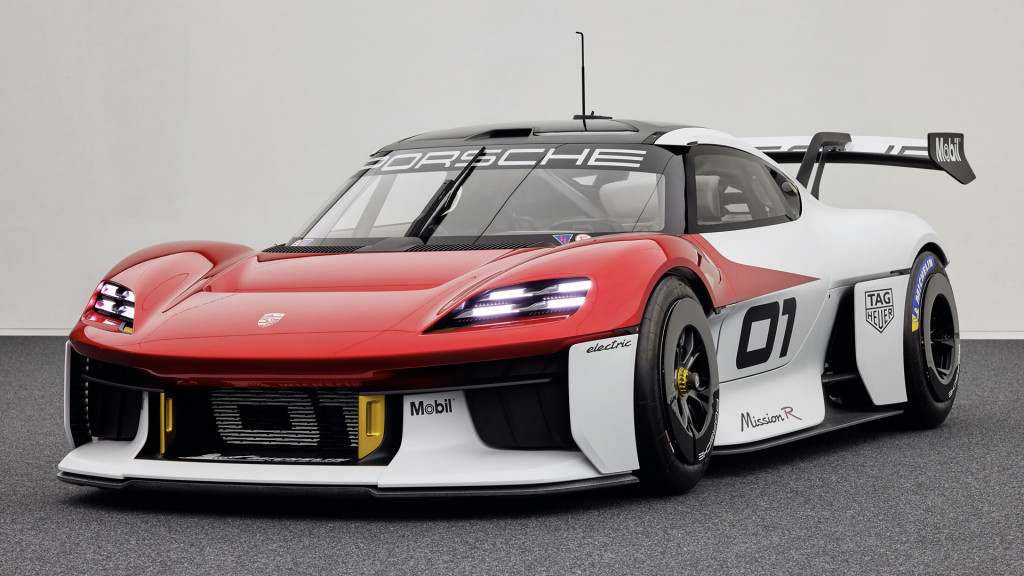
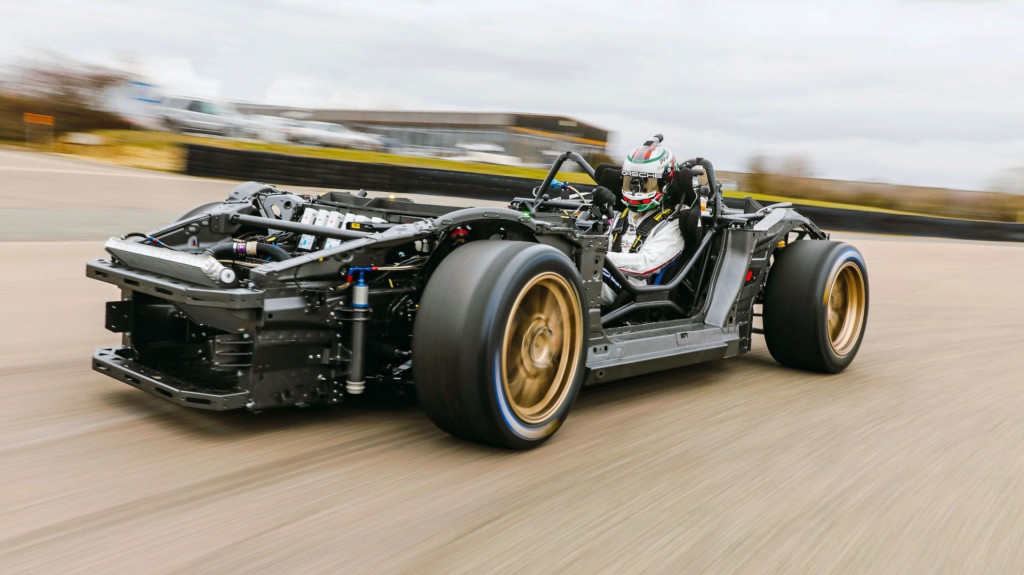
Porsche engineers have attempted to disguise the electric Cayman prototype by adopting the side window design of the 911, but the rest of the car shares design details with the electric Boxster prototype. The design was first previewed by the Porsche Mission R concept unveiled during the 2021 Munich auto show. The concept’s reveal also signaled Porsche’s intention to develop an electric sports car for racing, the hardware for which Porsche is testing in a separate prototype known as the 718 Cayman GT4 ePerformance.
Porsche Mission R concept
Both the road car and any prototype are expected to eschew the modular skateboard-style platform common to most EVs, and instead go with a dedicated design with the batteries in a T-shape section filling the center tunnel and the area behind the seats. Such a layout enables designers to keep the height of the car low while delivering weight distribution similar to a mid-engine car. Maserati did the same for the GranTurismo Folgore.
The electric Cayman is expected to offer the choice of rear- or all-wheel drive. The Mission R concept had a dual-motor all-wheel-drive system delivering 670 hp in a race mode and a temporary 1,073 hp in a mode designed for brief qualifying runs. The concept also featured a single-speed transmission that, depending on the gear ratio fitted, allowed for a top speed of more than 186 mph.
Porsche Mission R development
Even at that lower limit of performance, the electric 718 Cayman might start to step on the toes of the 911, especially if Porsche achieves anything close to a rumored 3,650-pound maximum curb weight. To differentiate the two cars, the 911 will retain a gas engine for as long as regulations allow, helped along with the adoption of hybrid technology, as we’ve already seen in the 2025 911 Carrera GTS range.
It’s too early to talk range, but the Mission R concept had an 80-kwh battery estimated to deliver around 250 miles of range.
Fans of the current gas-powered 718 Boxster and Cayman will need to hurry up and purchase one, as Porsche in mid-2024 said both cars would cease production in 2025, with the rumored date to be sometime in October.
However, with the recent slowdown in EV growth experienced across the industry, but particularly in the premium sector, Porsche now plans to keep selling gas-powered versions of other models a lot longer than previously planned. Most of the gas models were scheduled to bow out by the end of this decade. In the case of the top-selling Macan, Porsche is rumored to be considering the development of a new gas version where previously none was planned. It’s possible the automaker could also do this with the 718 Boxster and Cayman in the future.
There’s nothing more all-American than going on a road trip. It’s exciting, too, but while certainly worth the experience, gas prices might give you pause. So, why not ditch the gas and go electric or hybrid and try your hand at EV travel instead?
Here’s an overview:
How Many Electric Vehicles Are On the Road?
The good news is if you’re planning to drive an EV, you’re not alone. Nearly 14 million new electric cars were registered globally in 2023.
While that statistic includes all markets, about one in 10 vehicles on U.S. roads is electric, while the country represents two-thirds of total car sales and saw 1.4 million new electric car registrations during the same year.
A lot of that may be attributed to the Inflation Reduction Actthat was passed in 2022 by the Biden administration. It helped incentivize electric vehicle sales.
Of course, the main takeaway is that electric vehicles are fairly common in the country, which is good news for electric charging availability. More EVs on the road logically means more charging infrastructure.
So, what are some good spots for EV travel that have these resources available to charge your vehicle?
Route 66
Location: Chicago, Illinois to Los Angeles, California
Length: About 2,500 miles
Established in the 1920s, the “Mother Road” — as referenced by John Steinbeck — is a long 2,448-mile trip from Chicago to Los Angeles. There are many destinations and stopping points along the way, including wax museums, breathtaking hikes and vistas, great eats, and beyond.
Modernization initiatives have improved the trip for EV owners. Several of the involved states have created programs to enhance EV infrastructure, such as Arizona’s Electric Vehicle Infrastructure Deployment Plan, which made $5 billion available for deploying these technologies.
It’s an excellent trip all around, and thanks to the improvements, you can cruise the whole thing without range anxiety.
A Route 66 sign.
South Florida
Location: John F. Kennedy Space Center to Key West, Florida
Length: About 620 miles
Starting at John F. Kennedy Space Centerin Cape Canaveral and traveling 616 miles to Key West, Florida — the very tip of the state — is an eye-opening experience. You could just shoot straight down Florida’s Turnpike and US-1 South, but that’s mostly highways, and it’s not as much fun.
Be sure to hit the Space Center, the various state parks like Highlands Hammock State Park or the Everglades, Miami Beach, and the zany destinations of Key West.
Did you know Ernest Hemingway had a property down there and that it’s overrun with six-toed cats? Plus, it’s home to some of the most flavorful key lime pie you’ll taste probably anywhere.
There are charging stations all over the state, with over 3,600 locations as of January 2025. You’re never too far from one, and the weather is absolutely gorgeous almost all year round.
You should also bear in mind there are different types of EV chargers, across three levels with separate considerations for each, including how to connect to them and at what speeds they charge.
Level 1 devices can take 24-48 hours to recharge you, while Level 3s could do it in as little as 20 minutes.
South Florida, USA.
Natchez Trace Parkway
Location: Nashville, Tennessee to Natchez, Mississippi
Length: About 450 miles
This trip follows a centuries-old trading route — originally used by indigenous tribes of North America — from the city of music to the eponymous Mississippi River. It spans about 450 miles, mostly driving on a two-lane road old-school-country-style.
You can stop at a host of destinations along the way, including a monument to Meriwether Lewis of the Lewis and Clark expedition, museums like the Mississippi Civil Rights Museum, great food spots, and cities like Jackson or Tupelo, Mississippi.
It’s another excellent trip for EV planners and owners because there are plenty of charging spots along the way to ensure you’ll never run out of juice.
Nashville, Tennessee.
Washington Cascade Loop
Location: Seattle to Whidbey Island, Washington
Length: About 440 miles
Washington is a big state. When it comes to EV charging spots, the West Coast is one of the best places to be or travel. Around 2014, a host of EV charging locations were installed along the Cascade Loop — a popular route between Seattle and the coastal Whidbey Island. It’s not just a great trip if you own an EV, however. It’s an amazing road trip to take, period.
From forested and diverse landscapes to demure towns with lots of character, you’ll see it all on this trip. For example, Leavenworth is a mountainous town modeled after Bavarian architecture.
Then there’s Seattle, with its delicious and trendy eateries, North Cascades National Park, and coastal views along the final stretch of the trip leading up to Whidbey.
Washington State.
Colorado Rockies
Location: Denver to Aspen, Colorado
Length: About 160 miles
While this is one of the shorter trips, it’s no less interesting and no less grueling for the vehicles. The mountainous area includes Mt. Elbert and Mt. Massive, two incredibly tall area peaks.
From Denver to Aspen you’ll experience one heck of a drive with so many thrilling and once-in-a-lifetime vistas, and it’s downright magical. Bonus points if you bring the family along.
Colorado did try to modernize the area, installing EV charging stations every 100 miles or so within its borders. To make things even more interesting, there are 26 scenic and historic byways in the state. If you don’t like the Denver to Aspen trip, there are so many to choose from that it boggles the mind.
Colorado Rockies.
Blue Ridge Parkway
Location: Cherokee, North Carolina, to Rockfish Gap, Virginia
Length: About 469 miles
On the other side of the country, you can take advantage of Appalachian views on the Blue Ridge Parkway. While more rural than other road trips, this route provides breathtaking views of North Carolina and Virginia’s mountainous regions.
Prioritize a visit in the fall when the changing leaves create postcard-worthy pictures to send home.
Despite the rural setting, there are EV charging stations along the Blue Ridge Parkway. Rivian and Tesla have DC fast chargers on this historic route, and other electric cars can use the level 2 plugs.
On your road trip, carve time to soak in views at Grandfather Mountain and Crabtree Falls. The varying terrain, including gorges, mountains, and waterfalls, makes your time worth it.
Blue Ridge Parkway.
Route 1 San Luis Obispo North Coast Scenic Byway
Location: California
Length: About 80 miles
Dubbed the All-American Road in 2022, the San Luis Obispo North Coast Scenic Byway has earned its title as one of the most beautiful scenic drives maybe in the world. The views of the Pacific coastline during the entire route are something to behold and not something you’ll see just anywhere.
Moreover, there are so many different activities available, including watching the local fauna (whales and dolphins) to artsy tours, castles, and lighthouses.
California is one of the best states to drive an EV vehicle through, whether you live there or not. The state has routinely kept up with its electric infrastructure, meaning there are plenty of opportunities to keep your vehicle batteries ready to go.
California Byway.
California’s Pacific Coast Highway
Location: Dana Point, California to Leggett, California
Length: About 650 miles
While San Luis Obispo is a scenic stop, it’s only one part of California’s Pacific Coast Highway. This road stretches from the beaches of Orange County to the dense forests of northern California.
If you want to see the best of the Golden State, State Route 1 is terrific for longer road trips. You may experience a gap in EV charging stations between Santa Barbara and Grover Beach, so it’s essential to fill your battery beforehand.
Driving along the Pacific Coast includes numerous must-see destinations. When you stop to smell the roses, prioritize places like the Pismo Beach Monarch Butterfly Grove. At this roadside attraction, you can observe the beautiful butterflies that hang out during the winter.
Another worthy stop is Fort Bragg, which is famous for Glass Beach and gorgeous pebbles.
Laguna Beach, Orange County.
Atlantic Coast Trip
Location: Portland, Maine to Miami, Florida
Length: About 1,600 miles
Driving across 14 states down the Atlantic coast, traveling from the beautiful countrylands of Maine and New England to the sunny beaches of Miami, Florida, is like a dream. There’s no other way to describe it or the thousands of sights and destinations you can check out along the way.
Stop in Boston to follow Revere’s journey or learn more about the American Revolution. You could also take a pit stop at South of the Border in South Carolina for some unique fun or go on a ghost tour in Savannah, Georgia.
Take a break at one of many highlights in Florida with attractions from Orlando to Miami, or simply visit the beach any time of the year.
There are charging stations available the whole way down, lots of great hotels to get some rest, and plenty of places to eat delicious East Coast food staples. It’s a trip everyone should take at least once to experience the great American lifestyle.
A lighthouse on the Atlantic Coast.
Travel Free with No Range Anxiety
These are some of the best destinations in the U.S. for traveling in an EV, and they’ll make any EV planners out there extra happy. There are charging stations accessible throughout each route with many states planning to, or already offering, the resources to keep your EV road trip going.
However, they’re also amazing trips to experience in any vehicle, with lots of sights to see, destinations to visit, and activities to discover along the way.
Jack Shaw is a writer and world traveler currently serving as the senior Outdoors editor of Modded. He has a great love of travel and dedicates much of his writing to teaching people how to navigate the world safely and effectively. You can find his writing on sites like Duluth Pack, The Travel Magazine, EcoHotels and more.
A blast from the past meets a visit from the future. McLaren Automotive has been around since 1963, revolutionizing the sports and luxury car industry with a distinctly British approach. Starting with race cars for Formula One, McLaren eventually leaped into the exotic and supercar game with the MP4-12C.
The finished product was unveiled early in 2009, but the first models weren’t released until mid-2011, making the 2012 McLaren MP4-12C the first production car designed and built entirely by McLaren since the iconic 1993 McLaren F1. The F1 broke world records, reaching top speeds of 240.1 mph, a record only surpassed by the Bugatti Veyron in 2005. While the reign of the F1 ended in 1998, McLaren patiently waited for its next breakout innovation.
The MP4-12C was built as a rear-wheel-drive, mid-engine marvel powered by a 3.8-liter twin-turbo V8 capable of producing 592 hp and 443 lb-ft of torque. Weighing just 3,161 pounds thanks to its carbon fiber tub, the MP4-12C could reach a top speed of 218 mph. Its seven-speed dual-clutch automatic transmission, with paddle shifters for manual control, made it a highly advanced car for its time.
Despite its incredible performance, McLaren set out to create a supercar that could also function as a daily driver. One notable innovation was its focus on keeping fuel emissions low. The MP4-12C emits relatively small amounts of carbon dioxide and achieves better fuel economy than many rival supercars, with 15 mpg in the city and 22 mpg on the highway.
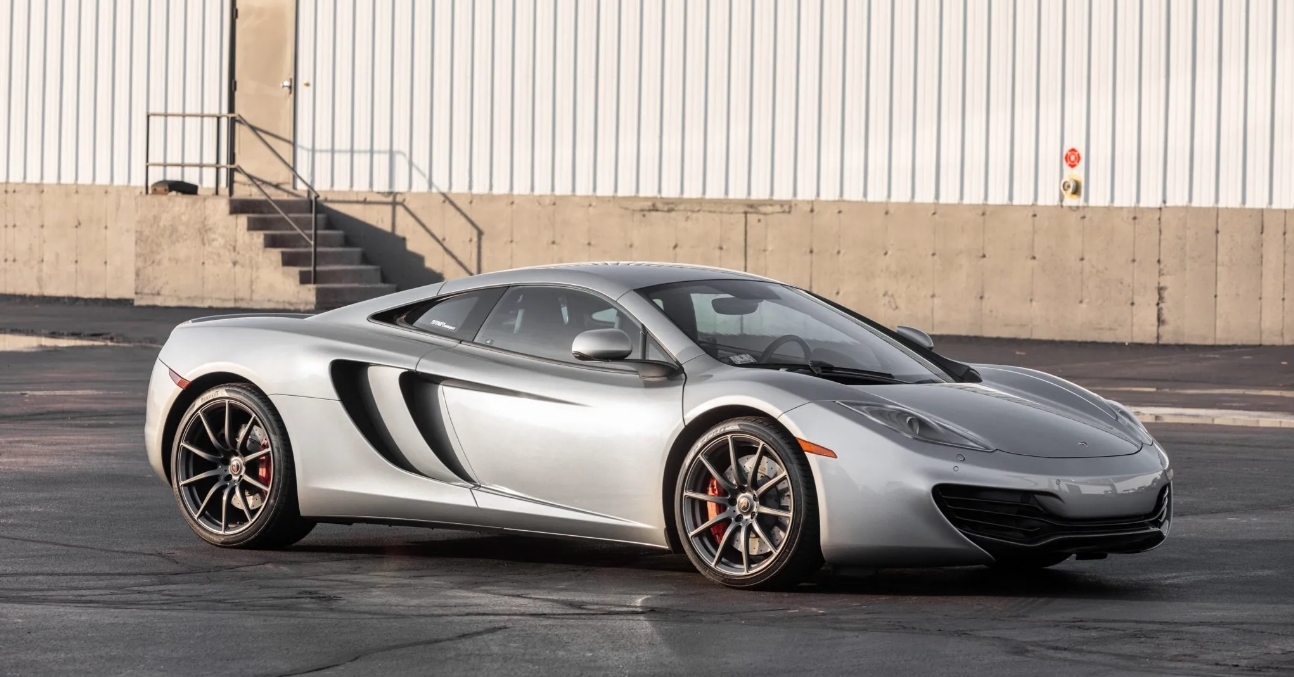
A car ahead of its time but with a more understated “look-at-me” attitude, the MP4-12C has a way of turning heads and sparking curiosity. Its narrow body design wastes no space and focuses on aerodynamic efficiency. The front of the car sits low, with fully automatic, auto-leveling LED headlights shaped like the McLaren logo, which represents streamlined speed and echoes the vortices created by the rear wing. A small cargo compartment, or “frunk,” sits at the front, offering just enough room for a few bags of groceries.
The sides of the MP4-12C showcase its seamless design, with flowing lines and massive downforce aided by its 19-inch aluminum alloy wheels in the front and 20-inch wheels in the rear. The signature butterfly doors, which open up and out, add to the car’s dramatic presence. However, these doors require precision to operate, as they use a sensor embedded in the handle rather than a traditional button or lever. Behind the doors, dual air intakes blend into the body, enhancing the car’s aerodynamic capabilities.
At the rear, the MP4-12C reveals some of its most intriguing features. The rear window offers a view of the powerful twin-turbo engine, while McLaren’s innovative airbrake sits above the taillights. Borrowed from Formula One technology, the airbrake deploys at high speeds to increase downforce, shift pressure to the rear, and aid in stability during braking or cornering. This system enhances both safety and performance, especially during track use. Beneath the airbrake, angular dual exhaust pipes deliver the unmistakable V8 soundtrack that captivates enthusiasts.
A car truly ahead of its time, the MP4-12C combines revolutionary engineering, timeless design, and everyday usability. Its lightweight, aerodynamic build ensures both aesthetic appeal and extraordinary performance.
While many compare the MP4-12C to competitors such as the Ferrari 458 Italia, Lamborghini Gallardo, and Porsche 911 Turbo, it holds its own with innovative features, advanced aerodynamics, and a driving experience that balances excitement with refinement. The MP4-12C is not just another supercar—it is McLaren’s statement of intent, a bold step forward in redefining the modern supercar landscape.
Model Changes (Breakdown by Year)
2011 McLaren MP4-12C
The 2011 McLaren MP4-12C marked McLaren’s triumphant return to production cars since the legendary F1, with deliveries beginning in mid-2011. It was the first production car to utilize the revolutionary MonoCell carbon-fiber chassis, weighing only 165 pounds, which contributed to the car’s overall curb weight of just 3,161 lbs.
Powered by a 3.8L twin-turbocharged V8 engine producing 592 hp and 443 lb-ft of torque, the MP4-12C paired its impressive output with a seven-speed dual-clutch transmission (SSG) and advanced active aerodynamics, including a deployable airbrake. McLaren also introduced its innovative “Brake Steer” system, which is designed to reduce understeer and enhance handling precision.
Visually, the MP4-12C featured distinctive LED headlights shaped like the McLaren logo and iconic dihedral (butterfly) doors with touch-sensitive handles, adding a futuristic flair. Despite its high-performance focus, McLaren emphasized usability by incorporating a modest front trunk (frunk) and a relatively comfortable interior.
While the car was praised for its engineering and performance, some early critiques noted a somewhat muted driving experience, particularly regarding steering feedback and transmission engagement.
The starting price of the 2011 McLaren MP4-12C was approximately $231,400.
2012 McLaren MP4-12C
In 2012, the McLaren MP4-12C received a series of updates.
The engine output was increased from 592 hp to 616 hp, which improved the car’s 0-60 mph time from 3.3 seconds to 3.1 seconds. The seven-speed dual-clutch transmission also benefited from revised software, enhancing responsiveness and delivering smoother, more precise gear shifts, particularly in Sport and Track modes.
McLaren addressed critiques of the car’s exhaust note by making the engine sound louder and more engaging, creating a stronger emotional connection for drivers. The IRIS infotainment system received software updates to resolve glitches and improve navigation and system functionality.
Additionally, McLaren expanded customization options through its Special Operations (MSO) division, offering new interior trims, colors, and bespoke features to cater to individual preferences.
The starting price of the 2012 McLaren MP4-12C was approximately $239,400.
2013 McLaren MP4-12C
In 2013, McLaren introduced the Spider variant of the MP4-12C, bringing open-top excitement to the lineup.
The Spider retained the same 3.8L twin-turbocharged V8 engine, producing 616 hp and 443 lb-ft of torque, as its coupe counterpart. Its retractable hardtop roof could open or close in just 17 seconds, even at speeds of up to 19 mph, and the innovative MonoCell chassis design required no additional structural reinforcements, keeping the curb weight at 3,249 lbs—only 88 lbs heavier than the coupe.
Usability improvements included the replacement of touch-sensitive door handles with physical buttons for easier operation and the introduction of an optional vehicle lift system to aid in navigating speed bumps and steep inclines. The IRIS infotainment system also received further updates to enhance reliability and usability.
McLaren also expanded the range of available options, including carbon-ceramic brakes and carbon-fiber exterior trim pieces like mirror caps, splitters, and diffusers.
The 2012 McLaren MP4-12C had a starting price of approximately $239,400, while the limited-edition MSO High Sport variant, of which only five units were produced, ranged between $300,000 and $350,000.
2014 McLaren MP4-12C
In 2014, the McLaren MP4-12C underwent a rebranding, with its name simplified to McLaren 12C to align with the company’s evolving naming conventions.
This year also saw the introduction of an optional performance pack, which included more aggressive exhaust tuning and track-focused tires for enhanced driving dynamics.
McLaren Special Operations (MSO) further expanded its bespoke customization offerings, allowing buyers to personalize their vehicles with unique paint finishes, interior trims, and aerodynamic enhancements.
However, mid-2014 marked the end of the 12C’s production, as it was officially discontinued to make way for the McLaren 650S.
The 2012 McLaren 12C had a starting price of $239,400 USD, while the ultra-rare MSO High Sport variant, limited to just five units, ranged between $300,000 and $350,000.
McLaren MP4-12C Common Problems
As McLaren’s first fully designed and built production car in nearly two decades, the MP4-12C marked a bold and innovative step for the brand. However, such a groundbreaking endeavor was not without its challenges, and the 12C came with its share of teething problems, typical for a car of its complexity and ambition.
Potential buyers should be aware of these early quirks, as they reflect the learning curve McLaren experienced during its return to road car production. Despite these issues, the 12C remains a remarkable achievement that laid the foundation for McLaren’s modern lineup.
Keep in mind, that it is essential that all cars, even supercars, can have issues and it is crucial to perform a Pre-Purchase Inspection (PPI) from an authorized dealer or experienced independent mechanic to reveal all issues.
Electronic Malfunctions: As with any technologically advanced vehicle, electronic issues can arise in the MP4-12C. Common problems include malfunctioning climate control LCD displays, unresponsive touchscreens, and poor GPS reception or signal strength. However, McLaren has addressed many of these concerns by consistently releasing updates for the IRIS infotainment system. Owners should ensure the software is always up to date to minimize these issues.
Door-Opening Mechanism: The door-opening mechanism, which relies on a small sensor, can occasionally fail in wet conditions, preventing the doors from opening. This can be inconvenient and frustrating, particularly in rainy weather.
A/C Radiator Issues: The air conditioning system is known for radiator failures, often resulting in the system blowing only hot air instead of cold. This is a fairly common problem and should be checked during ownership or inspection.
Transmission Leakage: While not widespread, transmission oil leaks have been reported in some MP4-12Cs due to seal failures. This issue is serious, as it requires a full transmission replacement, which comes with a hefty price tag of approximately $28,000. Though rare, it’s worth investigating when purchasing a used model.
Soft Paint: The paint on 2012 models tends to be softer and less durable than on later versions. Owners have reported fading, bubbling, and wear, especially around curves and edges. Prospective buyers should inspect the paintwork carefully for signs of degradation.
Shock Absorber Leakage: Shock absorbers have been known to leak, which can lead to noticeable steering issues, such as stiffness, jerky movements, or temporary loss of responsiveness. This problem can impact handling and should be addressed promptly if it arises.
Headlight Condensation: Excessive use in wet conditions has been known to cause condensation inside the headlights. While not critical, it is a recurring issue that can affect the car’s aesthetics and visibility.
Recalls
2012 McLaren MP4-12C vehicles that were ever sold in the southern U.S and Virgin Islands
Air bags: Passenger Side Frontal (Recall no. 17V005000)
An inflator was not equipped properly and may result in metal fragments striking the vehicle occupants when deployed which may result in serious inquiry or death.
2012 to 2014 McLaren MP4 12-C Spider and Coupe vehicles manufactured October 10, 2011, through October 23, 2013 and originally sold in, or currently registered in, Florida, Georgia, Alabama, Mississippi, Louisiana, and Texas.
Visibility: Windshield wiper/washer: Motor (Recall no. 13V541000)
Due to a combination of high ambient temperatures and humidity, the wiper motor brushes may jam causing the wiper motor to stop working. Non-functioning wipers during inclement weather may reduce the driver’s visibility, increasing the risk of a crash.
Maintenance and Cost of Ownership
Owning a McLaren MP4-12C offers an exciting experience, but it also comes with significant responsibilities when it comes to maintenance and overall ownership costs. As McLaren’s first production car in nearly two decades, the MP4-12C was a groundbreaking achievement, but it’s not without its quirks and challenges. Over the years, owners have reported issues that can be costly to address, making the MP4-12C less reliable compared to some of its competitors. For prospective buyers, understanding the potential expenses involved is crucial to ensuring a smooth ownership experience.
Here are the key service items every McLaren MP4-12C owner should be aware of, including routine checks, potential issues to monitor, and major maintenance milestones.
10,000 MILES / 12 MONTHS
20,000 MILES / 24 MONTHS
30,000 MILES / 36 MONTHS
Synthetic McLaren oil change and filter replacement
Multipoint inspection of the following:
Steering components
Front and rear suspension joints
Radiators and cooling system
Air filters (replace if not already done)
Brake system and pads (replace as needed)
Fluid levels and top-ups as required
Electrical connections and battery health
Tires, wheels, rims, and tire repair kit
Gearbox fluid change
Additional inspection of:
40,000 MILES / 48 MONTHS
Synthetic McLaren oil change and filter replacement
Multipoint inspection of all systems noted above
Coolant replacement and radiator flush
Hydraulic system flush for the active suspension (if applicable)
Brake fluid flush and system bleed
Inspect turbocharger connections and seals
Replace spark plugs
Check for software updates and apply as necessary
Here is a rough estimate of typical service costs associated with the McLaren MP4-12C:
Oil Change – An oil change for the MP4-12C requires high-quality synthetic oil and a McLaren-specific filter. At a McLaren dealership, an oil change typically costs $1,500 to $2,000, as it includes labor and a detailed inspection. Independent shops with experience in supercars can often perform the same service for $1,000 to $1,500, though it’s crucial to ensure they use OEM-quality parts and oil.
Minor Service – Minor services, performed every 10,000 miles or 12 months, include an oil change, fluid top-offs, and a multipoint inspection of key systems such as brakes, suspension, and electrical components. At a dealership, a minor service usually costs $2,000 to $3,000. Independent shops may charge slightly less, ranging from $1,500 to $2,500, depending on the region and shop expertise.
Major Service – Major services are required every 30,000 miles or 36 months and involve more extensive work, including oil and gearbox fluid changes, spark plug replacements, brake fluid flushes, and inspections of oxygen sensors, the EVAP system, and ignition components. These services typically cost $5,000 to $7,000 at a dealership. Independent shops may offer the same service for $4,000 to $6,000, though the availability of specialized tools and parts should be verified.
Tires – The MP4-12C uses high-performance tires that wear quickly due to the car’s aggressive handling capabilities. A set of four tires costs approximately $2,000 to $3,000, depending on the brand and specifications. Michelin Pilot Sport or Pirelli P Zero tires are commonly used. Installation and balancing can add another $300 to $500.
Brakes – The MP4-12C offers optional carbon-ceramic brakes, which, while durable for track use, are expensive to replace. Replacing all four brake pads and rotors at a dealership costs between $12,000 and $15,000. Independent shops may charge $9,000 to $12,000, depending on whether OEM or aftermarket parts are used. Standard steel brakes, if equipped, are less costly, ranging from $6,000 to $8,000 for a full replacement.
Clutch – The MP4-12C’s dual-clutch transmission is robust, but clutch replacements can still be costly if needed. A full clutch replacement typically costs $10,000 to $15,000 at a dealership, while independent shops may perform the same service for $8,000 to $12,000, depending on labor costs and parts availability.
Options List
When purchasing a McLaren MP4-12C, there were a few options that customers could choose from, rather than an overwhelming amount of options often found in brands like Ferrari or Porsche. While the MP4-12C doesn’t overwhelm you with flashy extras, McLaren designed its options to focus on what matters.
McLaren’s philosophy revolves around peak performance, and the MP4-12C’s options list is no exception. Buyers could choose carbon-ceramic brakes, which not only improve braking performance under extreme conditions but also reduce unsprung weight, contributing to better handling.
Additionally, an Active Dynamics Panel allowed drivers to fine-tune the suspension and powertrain settings, offering Normal, Sport, and Track modes to cater to both daily driving and high-performance needs. For those seeking even more capability, McLaren offered bespoke performance upgrades through McLaren Special Operations (MSO).
These included aerodynamic components, such as carbon-fiber splitters, side skirts, and diffusers, which improved downforce while giving the car a more aggressive appearance. Customers also had the option to equip their MP4-12C with track-focused tires to maximize grip and lap times.
McLaren offered buyers a range of exterior options to elevate the MP4-12C’s design and performance. The carbon-fiber exterior package introduced lightweight, high-performance materials to key components like the mirror caps, front splitter, and rear diffuser, enhancing both aesthetics and aerodynamics.
Additionally, a selection of exclusive, off-the-range paint colors allowed customers to choose unique hues, ensuring their MP4-12C stood out from the rest. Popular choices included McLaren Orange and Volcano Red, but the MSO division could cater to virtually any request for a custom finish. Other exterior options included lightweight forged wheels, which could be customized further by pairing them with brake calipers available in a range of striking colors and finishes.
Inside the MP4-12C, buyers could choose between premium leather or Alcantara upholstery, with additional carbon-fiber trim for the dashboard, center console, and door panels. An upgraded IRIS infotainment system provided navigation, Bluetooth connectivity, and a high-quality audio experience, although its usability was a point of critique in earlier models. Customers could also opt for custom interior stitching and piping, adding a subtle layer of personalization to the cockpit.
McLaren Special Operations (MSO) allowed for almost limitless customization, catering to buyers who wanted their MP4-12C to stand out even more. Options included unique paint finishes, custom wheel designs, bespoke interiors, and even tailored aerodynamic modifications. The MSO program’s flexibility ensured that no two cars needed to be the same.
2011 McLaren MP4-12C options list
Key Options
Carbon-fiber exterior package
Lightweight forged wheels
Colored brake calipers
Paint-to-sample customization
McLaren MP4-12C Price and Values
The Best McLaren MP4-12C to Buy
Although it was only in production for three years, the 2013-2014 McLaren MP4-12C models are the most desirable options for buyers today, thanks to a favorable depreciation curve that makes them more accessible while retaining strong value.
These later models come standard with an updated IRIS electronic system, addressing many of the glitches and bugs that plagued the 2012 versions, offering a smoother and more reliable technological experience.
The 2013-2014 models introduced the Spider variant, an excellent choice for those seeking a more open and relaxed driving experience without compromising the car’s incredible power and performance.
However, it’s important to note that the McLaren MP4-12C is not an ideal choice for beginners, particularly within the scope of what we teach at Exotic Car Hacks. This car’s ownership experience demands careful consideration due to McLaren’s known challenges with reliability, high maintenance costs, and significant upkeep expenses.
Conclusion
In summary, with prices now starting around $100,000 to $130,000 on the used market, the McLaren MP4-12C offers an incredible opportunity to own a groundbreaking supercar. As McLaren’s first production car in nearly two decades, the MP4-12C stands out for its innovative carbon-fiber MonoCell chassis, powerful twin-turbo V8 engine, and advanced aerodynamics.
While alternatives like the Ferrari 458 Italia, Lamborghini Gallardo, and Porsche 911 Turbo offer their own unique appeal, the MP4-12C sets itself apart with its balance of daily usability, speed, and an understated elegance that doesn’t scream for attention but still turns heads.
For those seeking a high-performance supercar with a focus on engineering innovation and exclusivity, the McLaren MP4-12C remains a compelling choice that captures the essence of McLaren’s racing heritage in a package suitable for both the road and track.
Car Hacking Shortcuts
Focus on 2013-2014 models, as they feature updated IRIS electronics, fewer glitches, and the option for the Spider variant. These later models are more refined and generally more reliable than the earlier 2012 models.
Prioritize desirable options. Cars equipped with the carbon-fiber exterior package, lightweight forged wheels, or racing seats tend to retain value better. Unique paint colors like Volcano Red, McLaren Orange, or bespoke MSO finishes also make a difference in resale.
Avoid poorly maintained examples. Ensure the car has a comprehensive service history, including regular oil changes, gearbox fluid changes, and suspension checks. Cars with neglected maintenance can lead to costly repairs, such as shock absorber leaks or transmission issues.
Consider extended warranties. A factory warranty extension or third-party coverage can save you from major expenses, especially for issues like transmission seal leaks, electronic malfunctions, or suspension failures.
Leverage pre-purchase inspections (PPI). A PPI from a McLaren specialist can uncover hidden problems, such as IRIS system malfunctions, carbon-ceramic brake wear, or paint issues common in early models. A thorough inspection ensures you avoid costly surprises post-purchase.
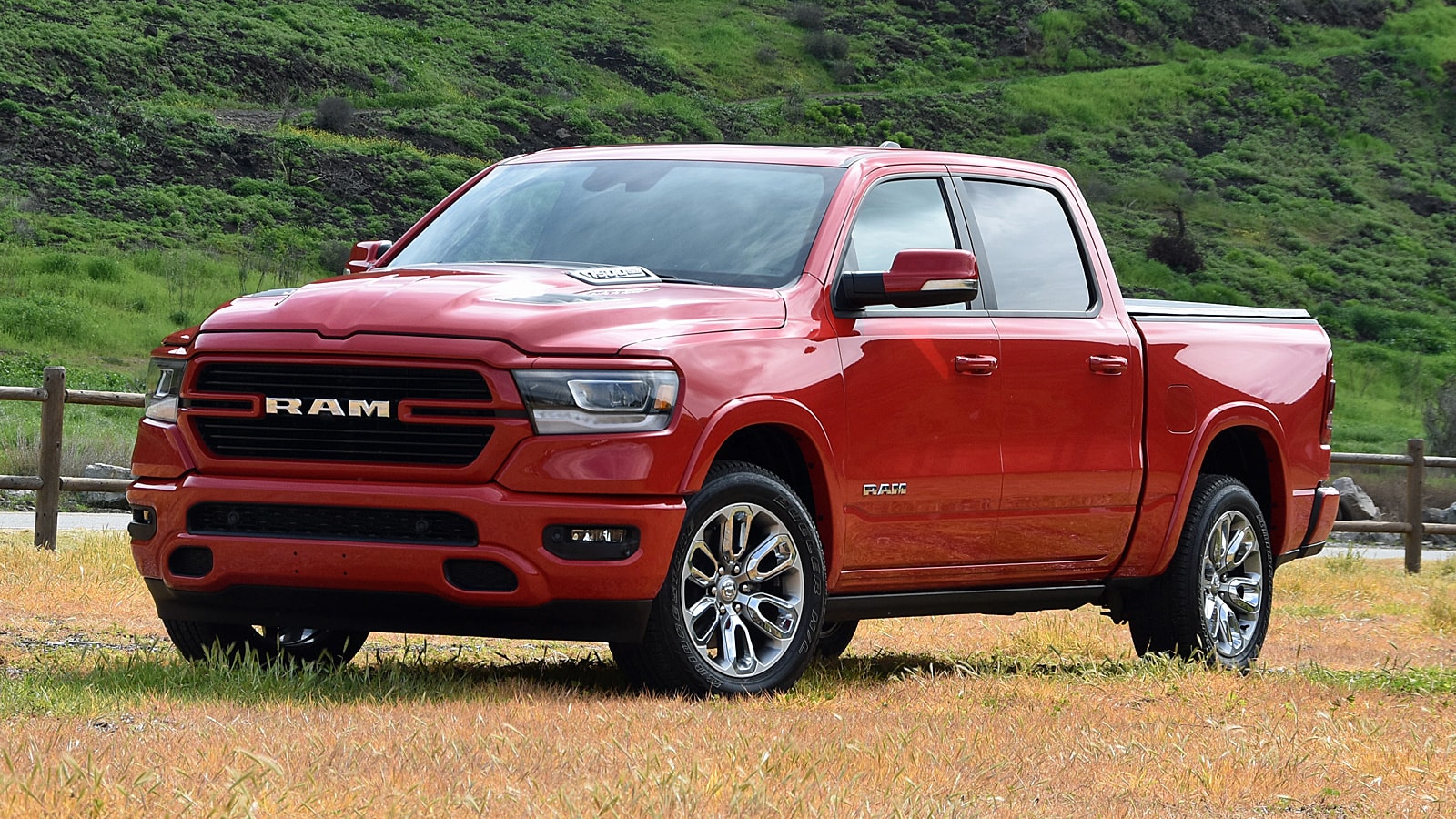
Ram has recalled 6,066 pickups because their side curtain airbag inflators can rupture, sending hot metal shrapnel into the cabin.
The recall affects some, but not all, units of the:
2016-2019 Ram 1500
2016-2020 Ram 2500
2016-2019 Ram 3500
2016 Ram 3500 Cab Chassis (only those with GVWR under 10,000 pounds)
Ram believes the problem is limited to a certain production lot of inflators.
Airbags work thanks to inflators — metal capsules of compressed gasses that squirt out of a nozzle to inflate the airbag in an accident.
Ram says one batch of inflators “may have had moisture introduced into the inflator during supplier manufacturing that may cause internal corrosion over time,” which can lead to cracks in the shell. Weakened, the shell can explode.
Ram knows of no accidents or injuries but at least one warranty claim related to the problem.
Dealers will replace the curtain airbag inflators to solve the problem. Recall repairs are always free.
Manufacturers recall many cars, sometimes more than once during their useful lives. They try to reach every owner to warn them. However, some may fall through the system’s cracks and are left unknowingly driving recalled cars. Check our easy recall tool to determine if your car has any outstanding recalls.
Saxdor’s 400 GTC can be fitted with the Fathom® e-power system
Following a partnership with Navico Group, Saxdor has become the first boatbuilder outside the US to use the Fathom® e-power system, an integrated lithium-ion auxiliary power-management solution “that sets a new standard in onboard energy efficiency”. The Finnish builder has debuted the technology on its flagship 400 GTC, among six Saxdor models on display at Boot Dusseldorf.
At the heart of the system is a generator function integrated into a special version of the yacht’s 400hp Mercury V10 outboards that allows the engines to act as generators, whether the boat is stationary or underway.
The 400 GTC is one of Saxdor’s two flagship models
When paired, the engines can produce up to 12kW of power, delivering it directly to the 48-volt Mastervolt lithium batteries for efficient recharging. By combining digital controls, intelligent load management and advanced monitoring capabilities, the Fathom® system produces power for all onboard appliances, while eliminating the noise, vibration and fumes of traditional generators.
Daniel Scharf, Saxdor’s Chief Product Officer, said: “The Fathom® e-power system is a game-changer for onboard power management. For boat owners, this means nearly ‘unlimited’ power for high-demand systems such as air-conditioning and stabilisers, offering an advanced alternative to traditional diesel generators.
The Saxdor 400 GTC features two Mercury V10 outboard engines
“By debuting this innovation on the Saxdor 400 GTC and expanding it to models equipped with V10-400 engines, we’re redefining energy efficiency and onboard comfort, reflecting our brand’s vision for modern boating.”
John Bennett, Navico Group’s VP and General Manager, Power Systems, added: “Saxdor is a valued customer, and we are thrilled about our collaboration to deliver a revolutionary power solution to the 400 GTC.
“Our 20 years of experience with lithium batteries, combined with our expertise in integrating our comprehensive product portfolio, have allowed us to develop a premium power system that will significantly enhance how Saxdor customers manage and monitor their power consumption, ensuring a more enjoyable and seamless experience on the water.”
The new 340 GTWA is Saxdor’s first 340 model
As well as the enclosed 400 GTC, Saxdor’s display at Boot includes the open 270 GTO, 320 GTO and 400 GTO models.
The line-up is completed by the Germany debuts of the 340 GTWA – Saxdor’s first wheelhouse walkaround – and the renewed 320 GTC. A world premiere at the 2024 Cannes Yachting Festival, the 340 GTWA is the first model in Saxdor’s new 340 line and includes large side terraces, an impressive feature considering its overall length of 35ft 4in and beam of 10ft 2in.
The 340 GTWA is Saxdor’s first wheelhouse walkaround
An upgrade of the model that debuted in 2021, the renewed 320 GTC features “a range of enhancements that take its design and functionality to the next level”, according to Saxdor. The enclosed yacht includes a reimagined aft layout featuring a new sofa and updated table design, as well as upgraded upholstery in the wheelhouse. DCH Marine represents Saxdor across Asia-Pacific.
saxdoryachts.com dch-marine.com
This article was first seen on YachtStyle.Co
For more on the latest in yachting news, click here.
GeForce NOW is expanding mod support for hit game Baldur’s Gate 3 in collaboration with Larian Studios and mod.io for Ultimate and Performance members.
This expanded mod support arrives alongside seven new games joining the cloud this week.
Level Up Gaming
Time to roll for initiative — adventurers in the Forgotten Realms can now enjoy a range of curated mods uploaded to mod.io for Baldur’s Gate 3. Ultimate and Performance members can enhance their Baldur’s Gate 3 journeys across realms and devices with a wide array of customization options. Stay tuned to GFN Thursday for more information on expanding mod support for more of the game’s PC mods at a later time.
Downloading mods is easy — choose the desired mods from the Baldur’s Gate 3 in-game mod menu, and they’ll stay enabled across sessions. Or subscribe to the mods via mod.io to load them automatically when launching the game from GeForce NOW. Read more details in the knowledge article.
Learn more about how curated mods are made available for Baldur’s Gate 3 players and read the curation guidelines.
GeForce NOW members can bring their unique adventures across devices, including NVIDIA SHIELD TVs, underpowered laptops, Macs, Chromebooks and handheld devices like the Steam Deck. Whether battling mind flayers in the living room or crafting spells on the go, GeForce NOW delivers experiences that are seamless, immersive and portable as a Bag of Holding.
NOW Playing
Ring around the rosie.
Jötunnslayer: Hordes of Hel is a gripping roguelike horde-survivor game set in the dark realms of Norse Mythology. Fight waves of enemies to earn divine blessings of ancient Viking Deities, explore hostile worlds and face powerful bosses. Become a god-like warrior in this ultimate showdown.
Jötunnslayer: Hordes of Hel (New release on Jan 21, Steam)
Among Us (Xbox, available on PC Game Pass)
Amnesia: Collection (Xbox, available on the Microsoft Store)
Lawn Mowing Simulator (Xbox, available on the Microsoft Store)
Sins of a Solar Empire: Rebellion (Xbox, available on the Microsoft Store)
STORY OF SEASONS: Friends of Mineral Town (Xbox, available on the Microsoft Store)
Townscaper (Xbox, available on the Microsoft Store)
What are you planning to play this weekend? Let us know on X or in the comments below.
Luxury travel is all about convenience, elegance, and enjoying the journey as much as the destination. One thing that can be a problem, however – for those who are used to being able to have a puff from time to time – is the ban on smoking.
This is particularly true on long trips, where nicotine cravings can be difficult to cope with. But there’s a modern solution to this problem: nicotine pouches. They are really convenient to use since they are completely smokeless and very discreet.
Smoke-Free Alternatives in Air Travel
Around the world, traditional smoking habits are increasingly being replaced by smokeless options. Nicotine pouches have taken their place in this space, as they offer a cleaner, more refined alternative that complements a high-end lifestyle.
For those who often travel by air, for business or to a luxurious leisure destination, this is a popular alternative to satisfy nicotine cravings. No smoke, no lingering smell, just practicality.
Traveling with Nicotine Pouches: What You Need to Know
Travel requires preparation, and when it comes to nicotine pouches, knowing the rules can save you from unexpected delays. Most airlines allow this type of product in hand luggage as well as in checked baggage, but you need to think about how you pack them. Keep them in their original packaging for easy identification at security checks.
While the Transportation Security Administration (TSA) generally permits nicotine pouches, remember that airlines may have their own restrictions. Verify the rules of your airline to avoid surprises. A little planning ensures a smooth journey and keeps your travel as stress-free as possible.
Long-Term Travel and Storing
One of the many advantages of nicotine pouches is their long shelf life when stored in their original, unopened packaging. As they’re designed to last at room temperature, they’re perfect for short or long-term travel. However, if you are planning to stay abroad for a very long time, there are a few key points to bear in mind.
Firstly, always check the expiration date on the packaging before departure to ensure that the pouches will retain their quality throughout your stay. Secondly, find out about import regulations in your destination country. Transporting large quantities may raise questions about personal use or commercial intent.
Check the Regulations at Your Destination
When traveling abroad with nicotine pouches, it’s not enough to pack smart – you also need to understand local laws and customs. While many destinations welcome smokeless alternatives, regulations on nicotine products can vary considerably.
Some countries impose strict limits on use in public places, while others may even classify nicotine pouches as controlled substances. To stay on the right side of the law, check in advance the rules in force in your destination country and adapt to them.
Cultural norms also play an important role. In some regions, the visible use of a nicotine product may be frowned upon, even if it is technically legal. If you’re careful to be discreet and respectful, however, you should be able to enjoy your habit while avoiding unnecessary attention.
A Smoke-Free Stay: Nicotine Pouches and Luxury Hotels
Luxury hotels are usually defined by their impeccable ambiance. Strict smoke-free policies are a hallmark of these high-end spaces, aiming at ensuring fresh air and a serene atmosphere for all guests. Nicotine pouches align well with this ethos, as they are discreet and odor-free.
Gone are the days when you had to seek out smoking areas or leave your suite to indulge in a cigarette. However, with convenience comes responsibility. Used nicotine pouches should always be disposed of thoughtfully to preserve the pristine environment for which luxury hotels are renowned.
Carelessly discarded pouches detract from the elegance of common areas and irritate other guests. Whether in your suite or in the common areas, proper disposal allows you to remain discreet and respectful, contributing to the luxury experience these establishments strive to maintain.
For more on the latest in travel and lifestyle reads, click here.
The 2026 Cadillac Lyriq-V is the first electric V-Series model
Cadillac said the Lyriq-V has 285 miles of range and does 0-60 mph in 3.3 sec
The 2026 Lyriq-V costs $79,990 and will arrive in the first quarter of 2025
The most powerful Cadillac Lyriq so far has been announced and it brings the V-Series badge into the electric era.
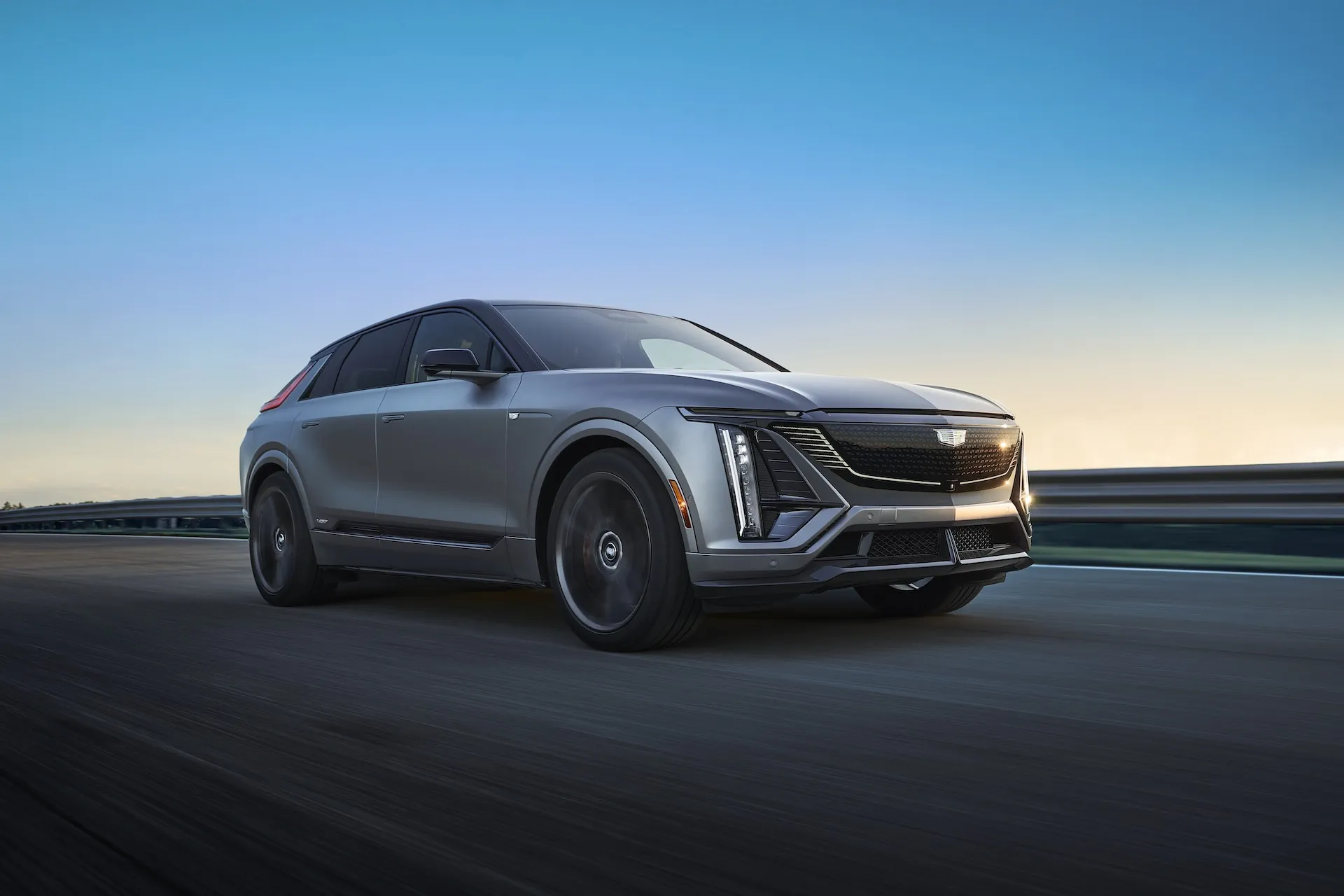
On Thursday, the 2026 Cadillac Lyriq-V debuted with 615 hp, a dedicated V-Mode, a V-specific sound, upgraded brakes, and a revised design. It’ll cost $79,990 including a $1,395 destination charge, and it will go into production at the GM’s Spring Hill Manufacturing plant in Tennessee in the first quarter of 2025.
Every Lyriq-V will have a dual-motor powertrain with one motor per axle to give the luxury crossover SUV all-wheel drive and prevent smoky burnouts. It will have lots of power, with 615 hp and 650 lb-ft of torque. Cadillac said the Lyriq-V will run from 0-60 mph in 3.3 seconds when put into Velocity Max mode, which enables launch control. That’s quicker than the CT5-V Blackwing, which runs from 0-60 mph in 3.4 seconds with the automatic transmission. Shorter final ratios of 11.59:1 in the front and 11.63:1 in the rear compared to the standard Lyriq’s 9.87:1 front and 10.49:1 rear ratios help achieve that 0-60 mph sprint.
It’s all fed by the standard Lyriq’s 102.0-kwh battery pack, which will deliver 285 miles of range for the Lyriq-V, according to Cadillac.
2026 Cadillac Lyriq-V
New Brembo 6-piston front brake calipers grab 15.3-inch front discs that pair with single-piston calipers grabbing 13.6-inch rotors in the rear.
New drive modes also include Competitive Mode, which according to Cadillac enables skilled drivers to push the limits of the Lyriq-V’s lateral abilities. V-Mode, which is a fixture in V-Series vehicles, allows drivers to customize settings including the steering weight and throttle sensitivity. Cadillac stopped short of a typical V series with the Lyriq-V, as there’s no Performance Traction Management System, meaning there aren’t multiple levels of stability control to be had for track days.
2026 Cadillac Lyriq-V
Cadillac said the Lyriq’s structure was stiffened for V duty, the standard adaptive dampers were retuned while the ride height was lowered by 0.62 inches, and the steering ratio was made quicker moving from 18.44:1 to 15.81:1 for V duty. Owners will be able to swap standard Continental Performance Contact 6 summer tires for all-season Michelins for better year-round traction in colder climates.
Lyriq-Vs will feature a V-specific sound. Cadillac said it can be customized both in MyMode and V-Mode, and it can be turned off as well. Spokespeople noted this will be a “multilayer experience exclusive for the V.”
2026 Cadillac Lyriq-V
The exterior of the Lyriq-V receives understated updates, including V-Series badging, model-specific lower fascias front and rear, and revised rocker panels. Carbon-fiber trim will be available. V-specific 22-inch wheels fit in the wells, and a V-only color called Magnus Metal Frost will be offered.
Inside, the V gets the standard Lyriq’s interior, though its 33.0-inch LED display adds V-specific software designs. The head-up display now features augmented reality for navigation. Cadillac’s Super Cruise hands-free driver-assist system will come standard, as will a 23-speaker AKG Studio sound system with Dolby Atmos. V-specific front bucket seats with power-adjustable side bolsters can be covered in nappa leather.
I can’t recall the last time I had a strong reaction to the mention of a mainstream car company. Say the Words Nissan or Buick, and models and general review impressions come to mind, but neither company elicits an emotional response.
Say the word Tesla however, and it’s possible I visibly wince. Not because I have extreme positions on the maker in general–I don’t–but because the company, the brand, and certain Tesla products (one in particular) have become cultural flashpoints, the mention of which squelches normal and informed conversation, and invites lowest-common-denominator rage, mostly in social media, where most public opinion is now sadly incubated.
The Cybertruck is a Flop
It can be nearly impossible to have a civil e-conversation about Tesla without the “Teslarati” leaping into the digital fray to defend the company and its products from the masses trying to make sense of electric-car news generally, and Tesla happenings specifically.
Tesla activism has long been a part of the EV start-up’s presence. Founded in 2003, Tesla has only recently embraced advertising, and as yet, does not maintain a press office. Instead, Tesla has relied on a powerful—and presumable carefully cultivated—social-media presence. Indeed, throngs of independent Tesla “activists” disseminating and, more importantly, “correcting” Tesla news have proven far more effective than any ad campaign might have.
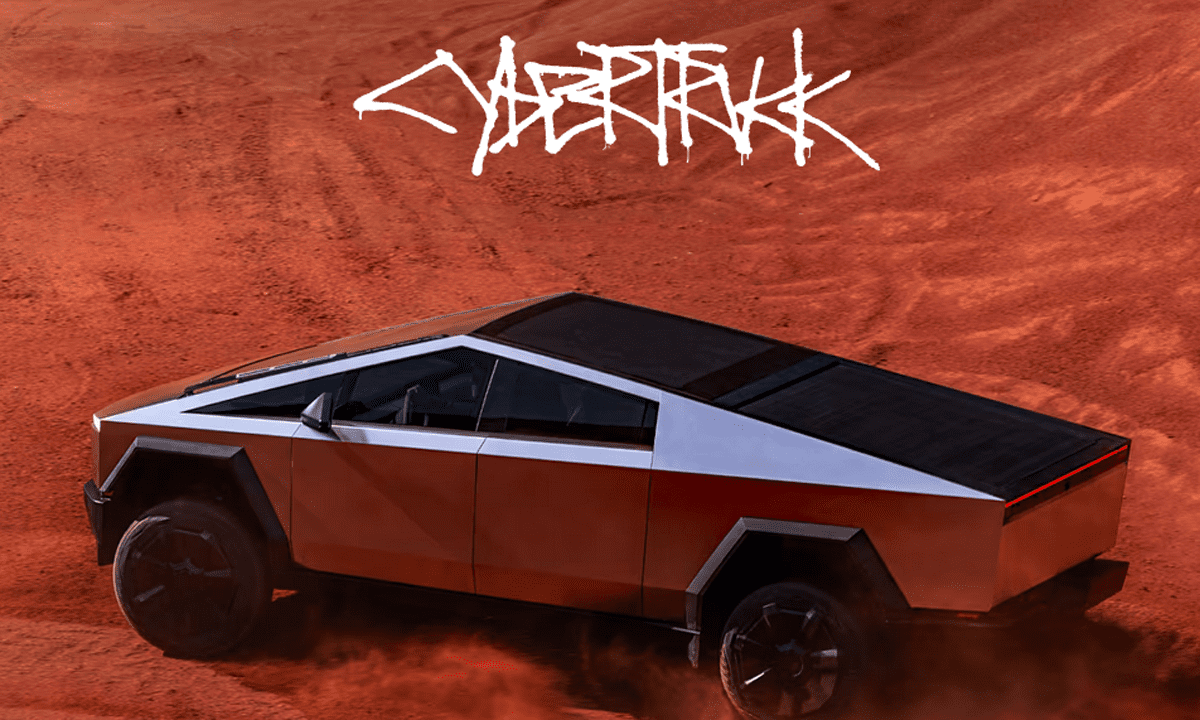
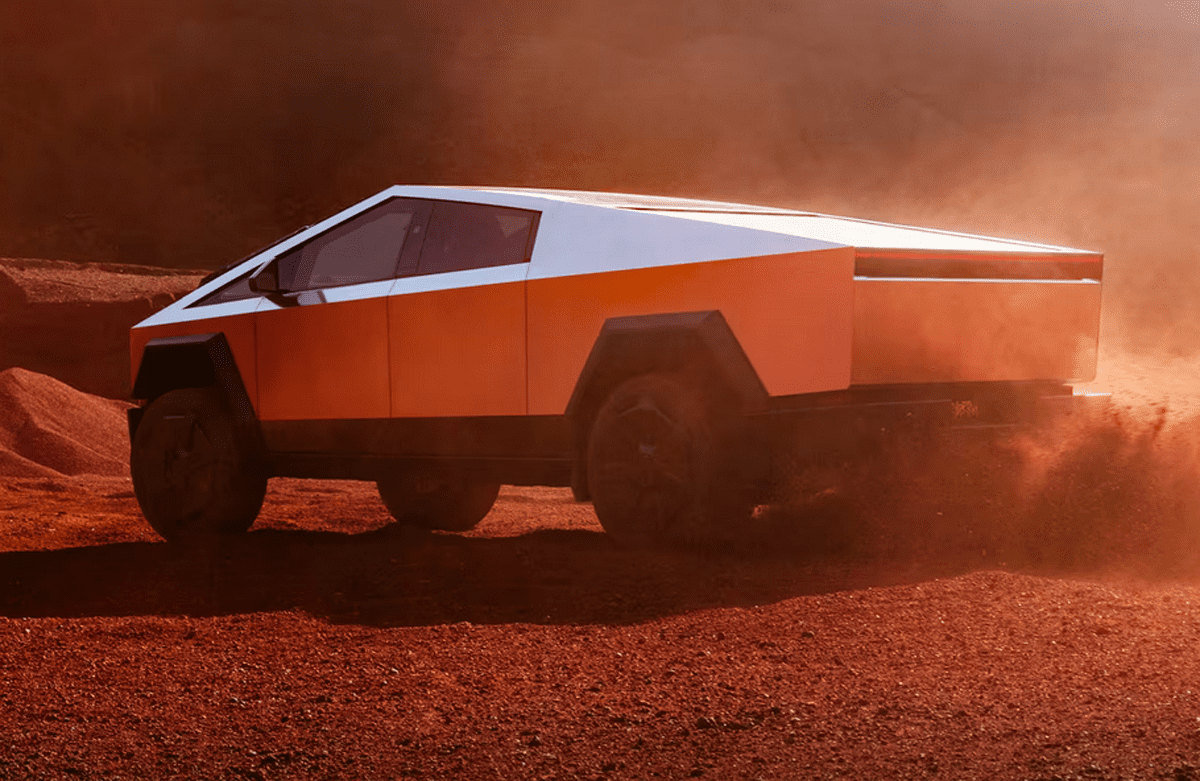
But the powerful force that is Tesla’s fanbase may have finally met its match: the Cybertruck. Introduced to the public in late 2019, with production beginning in July 2023, Tesla’s controversially styled homage to post-apocalyptic science fiction has proven to be so deeply flawed in design and production that even the most-ardent Tesla supporters have gone quiet in their Twitter/X war rooms. This as countless examples of the Cybertruck’s deficiencies work their way across the Internet.
Productions delays, design flaws, recalls, unexplained failures, embarrassing off-road performance, and, of course, the unlovable design, have rendered Tesla’s once-promising stainless-steel wonder an unequivocal flop.
But the ramifications of the Cybertruck implosion go far beyond its impact on just Tesla sales. Once promised by Tesla CEO Elon Musk to exceed 500,000 units in annual sales, the Cybertruck clicked off just under 40,000 U.S. deliveries in 2024, with little promise of improving buyer interest in 2025.
The impact of the electric pickup’s failure in the market place goes well beyond a bloody nose for Tesla, as, sadly, the truck’s disastrous retail performance will affect future Tesla plans, employment in both the U.S. and Mexico, and, almost certainly, EV adoption by politically driven consumers who might have come around on the prospect of EV ownership had Elon’s wonder truck proven worthy.
Tesla Cybertruck
The Cybertruck is, actually, bad
At some point, anecdotal evidence, observed in sufficient volume, becomes real evidence. And the posts on Facebook and Twitter/X chronicling the Cybertruck’s deficiencies in off-road conditions are telling. One recently shared video depicts a Cybertruck failing to climb a steep, sandy trail which a 15-year-old Hummer H2 conquers easily—in reverse.
And while a number of these posts may well be edited to intentionally make the Tesla appear to perform poorly, take note of how few videos have been posted of the vehicle performing well in similar environments. Given the copious amount of social-media noise once produced by the Tesla-fan army, the silence now reveals deep truths about just how little evidence there is that the Cybertruck lives up to, in any way, its rugged promise.
But worse, even as an everyday vehicle, the Cybertruck is failing customers in troubling ways. Because Tesla does not maintain a relationship with the media, it is impossible to share the company’s position on a number of commonly reported disappointments, including the truck’s proclivity for shutting down in car washes, and performing poorly in snow.
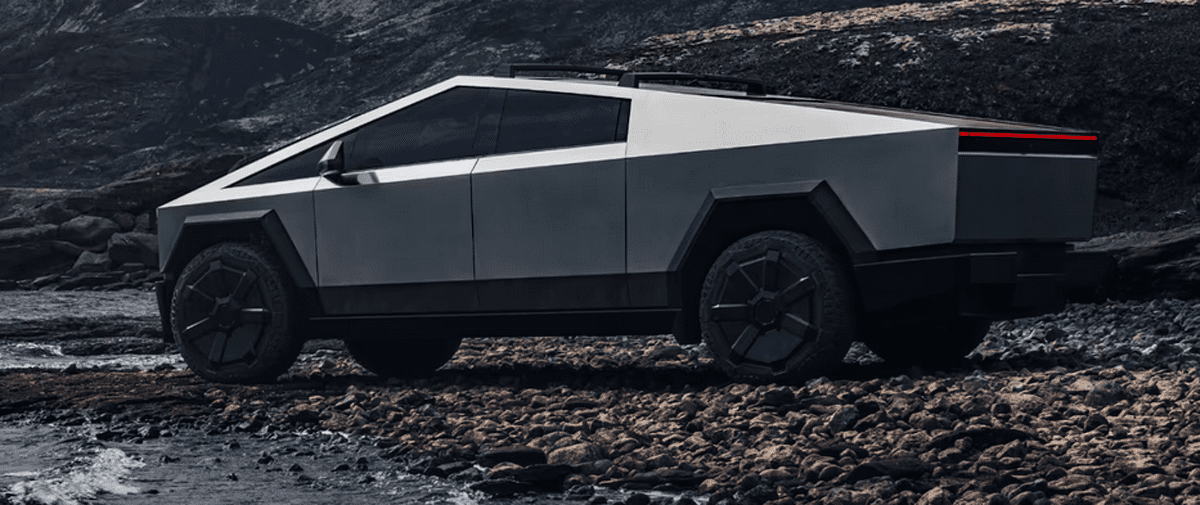
Though I have not yet driven a Cybertruck, I have spent time sitting in, and scrutinizing, an auto-show prepped example of the truck. Despite being hand selected for presentation, the truck in question suffered from crude, sharp, corners and edges, misaligned body panels, and an uneven finish on its famous stainless-steel exterior.
More importantly, since its introduction, the Cybertruck has been the subject of seven independent recalls for faults ranging from throttle-pedal covers which slip out of place, to sudden losses of power.
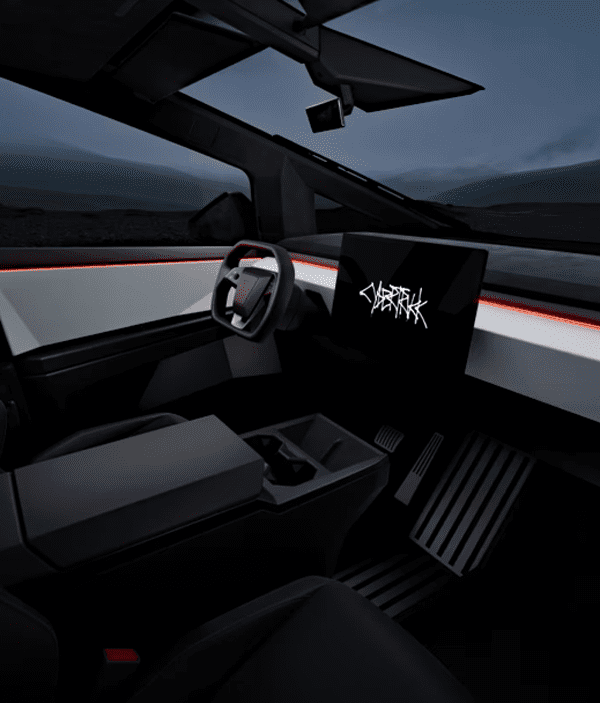
Tesla Cybertruck
The Cybertruck failed to deliver on its promises
Elon Musk made a number of promises when the Cybertruck was revealed in 2019. Among them, Musk shared the truck’s intended price range of $40,000-$50,000, and battery range of up to 500 miles. If you’ve been paying attention, you know that the first Cybertrucks came in at $100,000 for the Foundation Series model, and $120,000 for the “Cyber Beast.” Depending on equipment, range for the first Cybertrucks came in at an EPA-estimated 314-340 miles. Well shy of 500 miles.
There is old joke about a convenience store which was advertised to always be open. A customer of the store, noticing that the owner was in the process of closing up, asked, “Hey, aren’t you open 24 hours?” “Yes,” replied the owner, “but not in a row.”
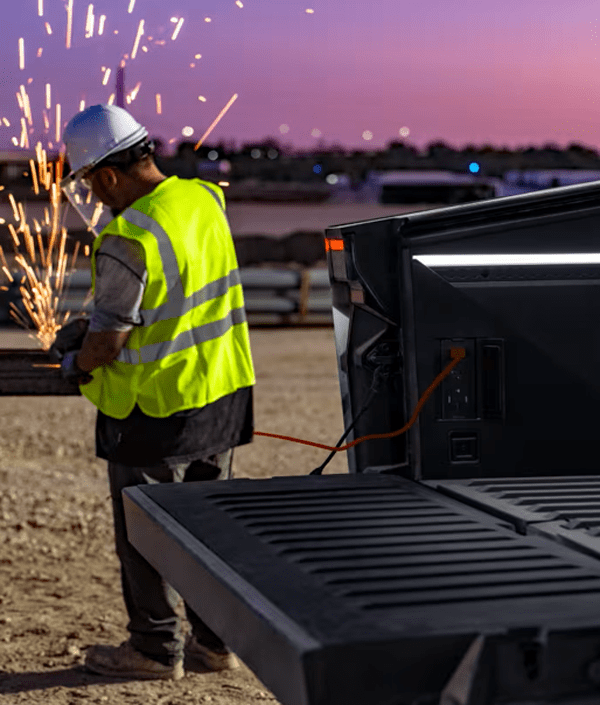
The Tesla joke, if indeed any of this is funny, is that the maker is now taking deposits on an external battery pack, which mounts in the pickup bed, to supplement the range of the Cybertruck. A few problems with that battery: First, there is no timeframe given for delivery of the battery. Second, the add-on battery consumes roughly a third of the space in the truck’s bed—and adds considerable weight to the truck. Third, the battery lists for a staggering $16,000, of which, $2000 is required as a non-refundable deposit.
Finally, no specs are given for the supplemental battery, so, despite its cost and impact on cargo-hauling capacity, there are no assurances that the pricey after-purchase option will raise range to the originally promised 500 miles. It’s also likely that installation of the battery will be an additional cost.
As of this writing, the battery is still being offered by Tesla, this despite that fact that the Cybertruck is currently selling at just 20 percent of anticipated volume. It seems unlikely that demand will warrant delivery of what promises to be a fairly low-interest after-market option. Consider that before plunking down a non-refundable $2000 deposit.
Stainless-Steel Liability
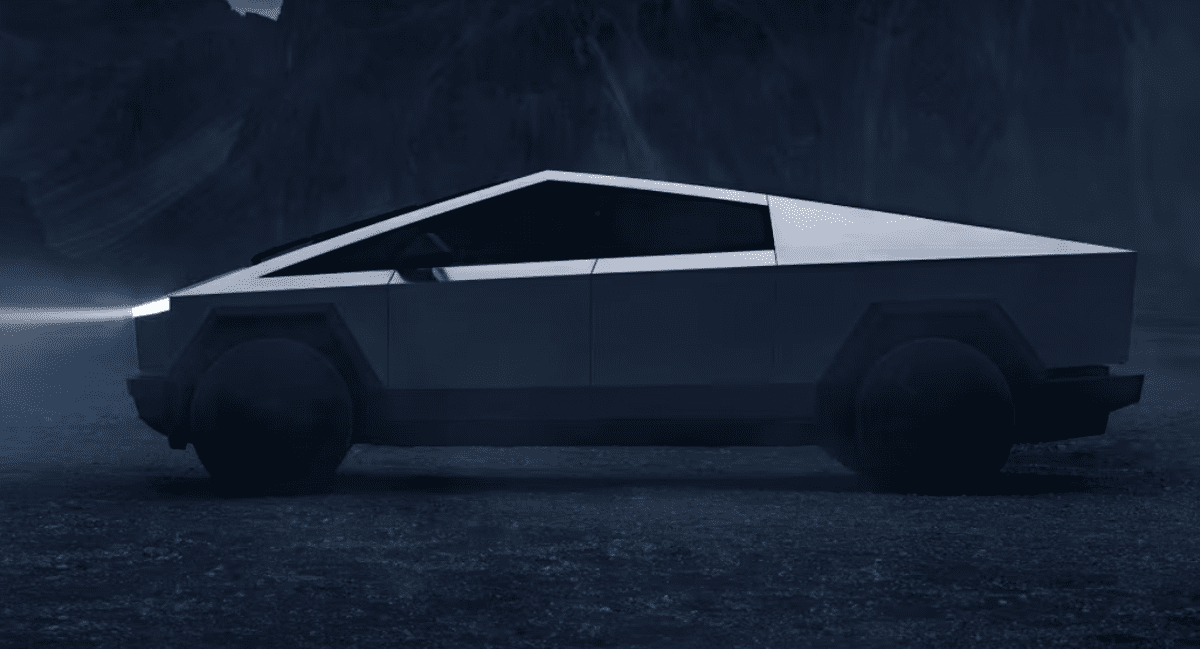
Tesla Cybertruck
If you’ve been following Tesla, you may recall the launch of the maker’s Model X midsize crossover. For reasons unclear to even company loyalists, the X was—and is—equipped with branded “Falcon” doors, which open very much like the gullwing doors seen on classic Mercedes-Benz vehicles, or similar exotic-vehicle offerings.
What was strange about the Falcon doors is that they were employed only for second-row access, meaning that front-row Model X occupants entered and exited the car via conventional doors. For this reason, the Falcon doors, which were designed—per Tesla—to allow easy access to the car in tight parking environments, were pretty much pointless, as they did nothing for the driver/front-row passenger in limited-space parking situations.
Despite this, the launch of the Model X was delayed several times as Tesla struggled to make the Falcon doors work as intended. Even after launch, the doors proved problematic, requiring a number of over-the-air (OTA) updates. And, arguably, the Model X never really sold in sufficient volume to merit the design cost and complication of the odd doors.
Having learned nothing from the Falcon-door exercise, Tesla (Elon?) pushed ahead with stainless-steel body panels for the Cybertruck. And while stainless-steel sounds pretty cool—it can’t be stained, and, it’s steel—the real-world promise of the material has not been met.
Not only are crash-repair costs reportedly higher for the Cybertruck because of the panels, but the material itself is proving to be an issue. Firstly, the Cybertruck body is NOT stainless, and is reportedly subject to rust, or something akin to rust, but the finish itself is commonly uneven, even at the time of delivery.
Plus, Cybertruck owners are now learning that “wrapping” their unpainted trucks—a common form of vehicle customization—is fraught with peril. Videos circulating now demonstrate how the vinyl wrap material cannot be easily or cleanly removed from the Cybertruck’s stainless-steel panels—and that scrubbing the panels to remove the vinyl ruins the steel’s factory finish.
And, as it turns out, despite rumors to the contrary, the Cybertruck is not bullet proof. And yes, there are videos of owners shooting their own cars. It’s possible, too, that the Cybertruck’s geometric design is at least in part a result of the use of stainless steel, which is famously difficult to stamp and shape.
There were never 2 million hand raisers
At some point after the Cybertruck’s reveal, Elon Musk announced to the media that more than 2-million willing customers had placed deposits for a place in line to purchase a truck. As of now, with roughly 40,000 examples delivered, would-be customer can order, and take delivery of, a brand-new Cybertruck in less than two weeks. Qualified shoppers are also enjoying factory discounts of $1000-$2000, suggesting that not only is demand weak, but that there is no one in line to purchase a Cybertruck.
The Cybertruck is a resale-value disaster
While early examples sold at a premium, used Cybertrucks, at the time of this writing, are being listed for as little as $80,000. As new examples of the truck are now being retailed with incentives, prices of used Cybertrucks are likely to plunge further in value.
Impact of a Flop
Customers are fleeing Tesla
Cybertruck Bumper Sticker
Though U.S. electric-vehicle sales climbed again last year, Tesla sales have been falling since late in 2023. There are a number of factors in play here, including the maker’s aging product lineup, Elon Musk’s confusing political aspirations, and, likely, damage done to the brand’s image by the Cybertruck.
While Tesla’s sleek, efficient, and simply designed Model 3 small sedan and Model Y small crossover have been a hit with EV shoppers, aligning well with their green, small-carbon-footprint aspirations, the Cybertruck is entirely antithetical to that position.
The Cybertruck arrives at an inopportune time for Tesla, as EV purchase intenders turned off by the brand’s brash and inefficient pickup truck, now have dozens of new electric vehicles to choose from. Note that both Ford and General Motors enjoyed strong EV sales growth in 2024, thanks in large part to the former’s Mustang Mach-E, and the latter’s attractively priced Chevrolet Equinox EV.
Self-inflicted wounds
Tesla builds the Cybertruck at the maker’s relatively new Gigafactory Texas facility in Austin. The plant currently produces both the Model Y and Cybertruck, and is also reportedly slated to build a third model sometime in the future. Various sources suggest that Tesla had allocated production volume of up to 250,000 Cybertrucks annually at the Austin factory—roughly half the plant’s capacity.
With Cybertruck demand coming in at just 20 percent of that volume, Tesla is left with a serious over-capacity situation. Combine the under-performing Cybertruck with slowing demand for the maker’s other products, and Tesla is operating just at or slightly below industry factory-utilization targets, generally around 80 percent.
Because it is very expensive to run a factory under capacity, and because brand sales are slipping, Tesla margins are under pressure—which will hurt stock values—and future development capital will likely be compromised.
Add to the manufacturing costs the estimated $1.5-2.0 billion Tesla reportedly spent to develop the Cybertruck, and the once high-flying EV carmaker now seems destined for serious cutbacks.
Worse, Tesla has no exciting product on the horizon to keep investors interested in the company’s future. The recently introduced Cybercab is a long-shot investment for a number of reasons. First, it is not clear that Tesla possesses the technology to launch a fleet of self-driving taxis, and secondly, the market for ride-hailing vehicles is relatively small. The Model Y currently sells at a 30,000-unit-a-month clip in the U.S. It is very unlikely that demand for a Cybercab would exceed that figure on an annual basis.
Also promised, though details are hazy, is a $25,000 Tesla vehicle. The on-again, off-again Model 2, as it is sometimes called, was to be built in Monterrey, Mexico. The as-yet unbuilt Gigafactory Mexico would have given Tesla the much-needed break in labor costs required for the company to hit anything close to a $25,000 retail price. Of course, hitting retail price targets has never been Tesla’s forte.
But, with overcapacity in the U.S., Tesla needs to build a new product stateside to fill its domestic plants, making the prospects of ever seeing the Model 2, or any sub-$30,000 Tesla, highly unlikely.
Just a thought: Given that Tesla is likely out of the Mexican-factory game, it strikes this author likely that Elon Musk is advising newly elected President Donald Trump to enact Canadian and Mexican tariffs as a way of handicapping carmakers with operating factories in those countries. Both Ford and General Motors are currently assembling EVs in Mexico, and enjoying the lower labor costs associated with building cars in that country.
The threatened 25-percent tariff on products coming from Canada and Mexico would go a long way toward closing the manufacturing cost gap between building cars here in the U.S., and south of the border. Again, just a thought.
Haters gonna Hate
Tesla Cybertruck
Before the Cybertruck was a flop, it had the potential to draw consumers predisposed for political reasons to shun electric vehicles into the EV fray. With its over-the-top design, huge horsepower numbers, and the promise of extreme off-road performance, the Cybertruck could have been the vehicle to make EVs cool to a population of committed gasoline and diesel burners.
But the cross-the-aisle electric-vehicle handshake is unlikely now that the Cybertruck has become the subject of mass ridicule—especially as an off-road vehicle. One might have expected that—as Elon Musk went public with his politics–consumers from less carbon-footprint-minded states might make up some of the sales volume lost as traditionally Left Wing-affiliated EV shoppers left the Tesla fold. Alas, that now seems unlikely.
Any chance the company had of converting Red State and MAGA-affiliated consumers into EV-intenders and Tesla owners fell apart when the trucks begin bricking up in car washes, and getting stuck in mild snow storms.
The shame of it all
And while young Americans are no longer as interested in cars as I was in the Eighties and Nineties, it seems unlikely that the sight of a Tesla Cyber truck wouldn’t bring a gaggle of youths to at least point and stare. Sadly, the conversation subsequent to a sighting, as uninformed as it may be, will not be about how the truck is electric, instead, it will probably go something like this:
“Whoa, a Cybertruck!”
“I hear those things sucks!”
“My uncle has one, and it he hates it. It’s hard to clean, and has a broken gas pedal!”
What could have been an icon of electrification has become a national joke, and is an epic flop. And that’s a terrible shame, especially because Tesla is an American carmaker, and had come a long way in improving the quality of its popular cars, the Model 3 and Model Y.
But not only is the Cybertruck a flop in the conventional sense, it is also an epic flop in product planning and fiscal management. This because not only has the Cybertruck proven difficult to sell, its development cost and impact on manufacturing capacity will, to at least some extent, limit the maker’s ability to deliver much-needed new products. And, perhaps worst of all, the Cybertruck gives electric-vehicle detractors a new reason to question the validity of the EV movement. A flop, indeed.
The technical storage or access is strictly necessary for the legitimate purpose of enabling the use of a specific service explicitly requested by the subscriber or user, or for the sole purpose of carrying out the transmission of a communication over an electronic communications network.
Preferences
The technical storage or access is necessary for the legitimate purpose of storing preferences that are not requested by the subscriber or user.
Statistics
The technical storage or access that is used exclusively for statistical purposes.The technical storage or access that is used exclusively for anonymous statistical purposes. Without a subpoena, voluntary compliance on the part of your Internet Service Provider, or additional records from a third party, information stored or retrieved for this purpose alone cannot usually be used to identify you.
Marketing
The technical storage or access is required to create user profiles to send advertising, or to track the user on a website or across several websites for similar marketing purposes.