A matte black Lamborghini Veneno Roadster has been spotted in Dubai. This is one of just nine cars built by Lamborghini back in 2014.
The Veneno was introduced on Lamborghini’s 50th anniversary. Initially, only four coupes were produced, followed by the Roadsters. Last year, one of the Roadsters sold at an online auction for a record $6 million.
The Veneno is based on the same platform as the Aventador. The supercar is known for its wild exterior design, featuring a low, raked front fascia with vertical headlights, a massive wing with a shark fin, and Y-shaped LED taillights. It has striking cuts and intakes all over the bodywork and even comes with bespoke wheels. The interior, though, is similar to the Aventador.
The Veneno Roadster is powered by the same 6.5-liter V12 engine as the Aventador. This engine makes 740 hp @ 8400 rpm and 509 lb-ft @ 5500 rpm. The engine is paired with a 7-speed automated manual transmission.
The Mercedes-Benz S-Class Coupe could make a comeback as the automaker looks to move further upmarket.
First spotted by Car and Driver, a pair of trademark filings with the European Union Intellectual Property Office (EUIPO) show coupe versions of the current-generation S-Class, known internally as the W223. Mercedes discontinued the coupe body style (along with the convertible) with the introduction of this generation, which arrived as a 2021 model.
Trademark image of possible Mercedes-Benz S-Class Coupe
One appears to be a Maybach S-Class, sporting the same grille, chrome air intakes, and hood ornament as the Maybach S-Class sedan and Maybach GLS-Class SUV. The second rendering is more AMG-like, wearing the grille currently used on the AMG S 63 E Performance sedan and an AMG badge on the trunk lid.
As Car and Driver notes, the two filings were made not by Mercedes itself, but by Robu Aktiengesellschaft, which in 2021 filed a trademark application for what eventually became the Bussink GT R SpeedLegend, a heavily-modified AMG GT built by longtime Mercedes motorsports partner HWA that looked a bit like a proto-AMG PureSpeed.
Trademark image of possible Mercedes-Benz S-Class Coupe
The PureSpeed, a roadster that features an F1-style halo protection system, is the first in Mercedes’ Mythos series of limited-edition vehicles. It’s possible that the S-Class models previewed in these trademark filings could be future entries in that series. That means they wouldn’t be volume production models, like the previous-generation S-Class Coupe. The PureSpeed is limited to just 250 units, after all.
Whatever form it takes, a new S-Class Coupe would be in line with Mercedes’ current strategy of emphasizing high-end vehicles and customization for well-heeled consumers, taking the automaker into more direct competition with Rolls-Royce and Bentley.
If you’re wondering how to become a house sitter in Singapore, this guide will take you through everything you need to know. House sitting in Singapore offers a unique opportunity to live like a local in one of the world’s most exciting cities.
During my time there, I completed three back-to-back house sits, caring for pets and some lovely homes while exploring this incredible destination for the first time, all without worrying about any accommodation costs.
What is a House Sitter?
A house sitter is someone who takes care of a homeowner’s property while they’re away. Responsibilities typically include feeding and caring for pets, watering plants, collecting mail, and maintaining the home’s general security and cleanliness.
In return, house sitters enjoy free accommodation – an especially enticing perk in an expensive city like Singapore. For homeowners, the arrangement provides peace of mind knowing their home is secure, and their pets are well cared for in their absence.
For house sitters, it’s an incredible opportunity to save on accommodation costs while enjoying a deeper connection with a destination. It’s a win-win situation for everyone involved and something that I use for around 95% of my travel arrangements.
How to Become a House Sitter in Singapore
Becoming a house sitter in Singapore is easier than you might think. Start by creating a profile on a reputable house-sitting platform, highlighting your experience, reliability, and of course your love for, and experiences with pets.
A well-written profile with references from past sits or personal character references can make all the difference. Keep things updated and utilize functions such as setting alerts for house sits in Singapore or highlighting your available dates.
There are a host of great options out there and many tools to help you become a house sitter in Singapore. Here are five of the best house sitting platforms to kick-start your journey:
1. Trusted Housesitters
An earlier house sitting and pet sitting job
Trusted Housesitters sets the gold standard for house sitting websites and is my go-to when it comes to seeking new accommodation opportunities. I use it more than any other travel site – including all my back-to-back sits in Singapore. I’ll rave about it to anyone who will listen.
It has an extensive global network of homeowners and sitters, making it ideal for those seeking house sits in popular cities like Singapore. At a glance today, over 6000 listings are accepting applications globally!
The platform operates on a membership basis, where both homeowners and sitters pay a modest annual fee, which ensures commitment and trust from all involved. For more information read Everything You Need to Know About Trusted Housesitters.
HouseCarers is a pioneer in the house-sitting world, operating since 2000. It has a simple interface but a broad reach, offering opportunities in regions that don’t always appear on larger platforms.
For anyone wondering how to become a house sitter in Singapore online, HouseCarers offers a great service and provides a smaller but diverse range of listings. I always recommend having a secondary source for house sitting and this is a good one.
What sets HouseCarers apart is its focus on accessibility and affordability. The platform offers a free membership option, allowing new sitters to test the waters before committing to the premium tier. The annual fee of $50 is well worth it.
3. Nomador
One of our many amazing house sits… right on the beach!
Nomador is popular in Europe but has been gaining traction in Asia, including Singapore. It’s a fantastic choice for sitters who value cultural exchange, as the platform emphasizes building trust and relationships between sitters and homeowners.
Nomador offers a “Stopovers” feature, which is a unique house sitting aspect that I like a lot. It allows travelers to connect with locals for short stays and is a useful tool if you’re transitioning between house sits.
While the number of listings in Singapore may be more limited compared to Trusted Housesitters, Nomador attracts a community of open-minded homeowners who often prefer sitters with an interest in local culture.
4. MindMyHouse
MindMyHouse is a budget-friendly platform that’s ideal for sitters contemplating how to get started as a house sitter in Singapore. Its annual membership fee is among the most affordable around at just $29/year!
Though the platform doesn’t have the same volume of listings as larger sites, there’s still a good variety of options. The platform’s emphasis on clear communication between homeowners and sitters makes it easy to find and apply for assignments.
For those seeking to learn how to become a house sitter in Singapore without any experience, this is a great place to start. The customer service is top drawer and will give confidence to those just testing the waters.
5. Facebook Groups
If you’re looking to become a freelance house sitter in Singapore without spending on membership fees, Facebook groups can be a great resource. Groups including House Sitters Asia or Singapore Pet Sitters feature listings preferring informal arrangements.
These groups are free to join and provide access to house sitting opportunities without any middleman. However, unlike other platforms, Facebook groups have limited information on the listings and don’t offer background checks or reviews.
While these groups are an excellent way to start house sitting in Singapore without any experience, they require more diligence. Take time to build trust with homeowners – a little effort goes a long way.
Personal Experience House Sitting in Singapore
Me with Ramen, at house sit number 3 in Singapore
I looked after three very different homes and some adorable pets during my time house sitting in Singapore. My first sit was in a rejuvenated apartment block within walking distance of Chinatown. The house rabbit called Papook was no issue at all.
The second sit was just a short bus ride away in the quiet suburb of Queenstown. The luxury complex felt like a resort with its private pool, gym, and tennis courts. The two pups, Reuben and Mowgli were both easygoing and loved their food and daily stroll.
The third house sit took me to one of the busiest areas called Bugis. The home was wonderful and it was amazing to be based right in the heart of the city. I cared for a dog called Ramen, she was more complex than the others but I still enjoyed my time with her.
I was able to secure back-to-back house sits in Singapore, meaning I left one and was straight onto the next. It’s not always possible or easy to do so, but when it works out, it’s my favorite way to travel. Read my article – How to Navigate Back-to-Back House Sitting for my top advice and tips.
Is Singapore Safe?
Singapore is one of the safest cities in the world – it has incredibly low crime rates. The city’s well-lit streets, efficient public transport system, and strict laws create an environment where safety is rarely a concern. I always felt comfortable, day and night.
It’s easy to navigate Singapore and feel secure in your surroundings. CCTV cameras operate throughout the city and I even saw a police robot rolling down a street keeping an eye on things!
However, like anywhere in the world, you should always take basic precautions, such as keeping valuables secure and being aware of your surroundings, particularly when traveling late at night or in busy areas.
Pros and Cons of Being a House Sitter in Singapore
Like any city, there are always positives and negatives, and Singapore is no different. Here are the main pros and cons I experienced as a house sitter in Singapore:
Singapore is known for its strict laws, from chewing gum bans to hefty fines for jaywalking.
The lack of green spaces centrally made walking one of the dogs in my care a challenge and not as enjoyable.
Tips for House Sitting in Singapore
I’ve been house sitting around the world for years, and every country comes with new exciting challenges. From my own experiences, here are some top tips to help you become a freelance house sitter in Singapore:
I loved my time house sitting in Singapore, it’s a place I intend to travel back to again and again. The city has an electric vibe unlike anywhere else I’ve visited so far. It’s also the gateway to Southeast Asia making it great for exploring further afield.
You too can become a house sitter in Singapore. You’ll save a fortune on accommodation, freeing up your budget to explore more of the finer things Singapore has to offer – and trust me there’s plenty to enjoy!
Fully electric cars use no gasoline. You can also find hybrids or plug-in hybrids, both of which use gas.
Buying an EV means making a mental shift in thinking about how you refuel your car. The good news is most EV charging gets done at home.
There are pros and cons of buying an EV. Range and infrastructure continue to be limitations.
Electric cars will drive the future of the automotive world. Because many automakers plan for an all-electric future, there is little doubt in the industry that most cars Americans buy 15 years from now will be electric vehicles (EVs).
But we live in the present. And years of infrastructure got built around the assumption that we’ll all drive gasoline-powered cars. Charging stations and electricity policies necessary to make owning an EV even more effortless than owning a gasoline-powered car will take time. The country is in the early stages of building them.
So, we know of good reasons to believe you’ll eventually own an electric car. But is now the time? Could an EV be right for you? You’re probably reading this because you know it’s a complicated question. We’ll break down the issues and the current state of the EV market for you.
What Is an EV?
An electric vehicle is a car that uses electricity instead of gasoline to provide the energy it uses to move.
When researching which electric car to buy, you may see the term “electrified vehicles.” That typically does not refer to cars that use only electricity, but rather cars powered by at least some electricity to provide the energy they need to move. The exception is Genesis. The carmaker calls some of its fully electric vehicles electrified, like the Genesis Electrified GV70.
What Is a Hybrid?
Hybrid cars use both electricity and gasoline. They run on both a gasoline engine and a small electric motor. They use their electric motor to get up to a certain speed, after which the gasoline engine takes over. Using gasoline for only part of their power makes them more fuel-efficient than regular gasoline-powered cars.
RELATED: What Is MPGe? Everything You Need to Know
The Hyundai Elantra, for instance, is available with a gasoline-only powertrain or a hybrid powertrain. In gasoline-only form, it gets an EPA-estimated 32 mpg in the city and 41 on the highway, depending on the model. In the hybrid form, it gets 51 mpg in the city and 58 mpg on the highway. But hybrids are not EVs. This guide does not cover hybrid cars.
What Is a Plug-in Hybrid?
Plug-in Hybrid (PHEV) cars also use both electricity and gasoline for power. But they have a larger battery and a more powerful electric motor. They can travel under electric power up to their full speed. A PHEV can use electricity alone until its battery is nearly depleted. It then turns on its gasoline engine and begins to function as a hybrid. In practical terms, owning a PHEV is much like owning an EV. But PHEVs can take long trips when fueled with gasoline.
For instance, the 2025 Chrysler Pacifica PHEV can travel up to 32 miles on electric power alone. The average American drives less than 40 miles a day. So many Pacifica PHEV owners can effectively operate an EV on an average day. But they can take longer road trips without worrying about their car’s EV range and use gasoline for greater distances. A handful of PHEVs like the Pacifica also qualify for tax incentives of $7,500 that help Americans buy electric cars, lowering their costs versus traditional hybrids. This guide will not cover PHEVs.
Fully Electric Cars Use No Gas
Electric vehicles do not have internal combustion engines (ICE). They operate with large batteries, usually placed underneath the car’s floor, that store all their power. They use small electric motors attached directly to their axles that do the job of an engine.
EVs travel with limited range because their batteries can deplete. Recharging their batteries takes longer than refilling a gas tank. But even the shortest-range EV on the market today drives many times longer than the distance most Americans do each day. As technology improves, charging batteries keeps getting faster.
RELATED: 5 Fastest-Charging Electric Cars
Are EVs Really Going to Replace Gas-Powered Cars?
Electric vehicles just might replace gas-powered cars, but the transition will not be immediate. California and other states like Massachusetts, Maryland, and Washington plan to ban sales of new gasoline-powered vehicles by 2035. Other states may soon follow.
However, broader adoption will take time. According to Kelley Blue Book parent Cox Automotive, electric vehicle sales made up an 8% share of the total new car market in 2024, up from 7.6% in 2023 and 5.9% in 2022. Manufacturers offered five electric car models to buyers in the United States eight years ago. Today, you can find nearly 100 configurations of models from almost two dozen automakers.
There’s a growing trend toward electric pickups with the release of the Ford F-150 Lightning, Rivian R1T, Chevrolet Silverado EV, Tesla Cybertruck, and GMC Hummer EV pickup. The Ram 1500 REV is also waiting in the wings.
Automakers made grand plans several years ago as excitement for EVs gained momentum. Some industry giants pledged to have all-electric lineups by 2035, 2030, or sooner. However, the challenge of meeting government regulations, lowering prices, and balancing consumer demand prompted some manufacturers to scale back their ambitious goals. Here’s a list of what some of those plans include:
Volkswagen: The world’s largest automaker previously pledged to build a lineup of almost all electric cars by 2030 but now plans to adjust the EV strategy and expand its PHEV lineup.
General Motors: America’s largest automaker scaled back its EV production and sales target.
Volvo: The manufacturer adjusted its 2030 EV sales target to include hybrid models.
So, yes, manufacturers take EVs seriously. Fully electric vehicles could probably replace most gasoline-powered cars in the coming decades, just not as quickly as initially thought.
RELATED: Electric Car Companies Guide
How About EV Infrastructure?
Buying an EV means making a mental shift in thinking about how you refuel your car.
Drivers became accustomed to filling up their gas tanks while traveling. Most EV charging, however, gets done at home. According to the U.S. Department of Energy, about 80% of EV charging happens at home.
PRO TIP: “When I test electric cars, I mostly charge them at home. However, I also found it easy to quickly charge up at a Level 3 DC fast charger when doing grocery shopping locally. At public fast chargers, it took about 18 minutes for our long-term Kia EV6 to get charged to 80%. A year later, the EV6 still charged in the same timeframe at a fast charger.” — Renee Valdes, lead advice editor of Kelley Blue Book.
Charging at Home
You can charge an EV from a simple household outlet. But, for efficiency, charging your electric car from a faster Level 2 at home is what most buyers prefer. You can also charge at a public Level 2 or Level 3 DC fast charger (more on that in a moment). Most car dealers selling EVs can coordinate installing Level 2 chargers at your home if you own it. Some public utilities offer special incentives for installation. Level 3 chargers are cost-prohibitive to install in residential settings
RELATED: Everything You Need to Know About EV Charging Stations
Charging a vehicle is more challenging if you live in an apartment building. However, many corporate apartment owners have begun installing fast chargers. Even if yours hasn’t, building owners might be willing to upon request. It makes the building more attractive to renters. In many cases, local electric utilities can help defray installation costs.
Public Charging Stations
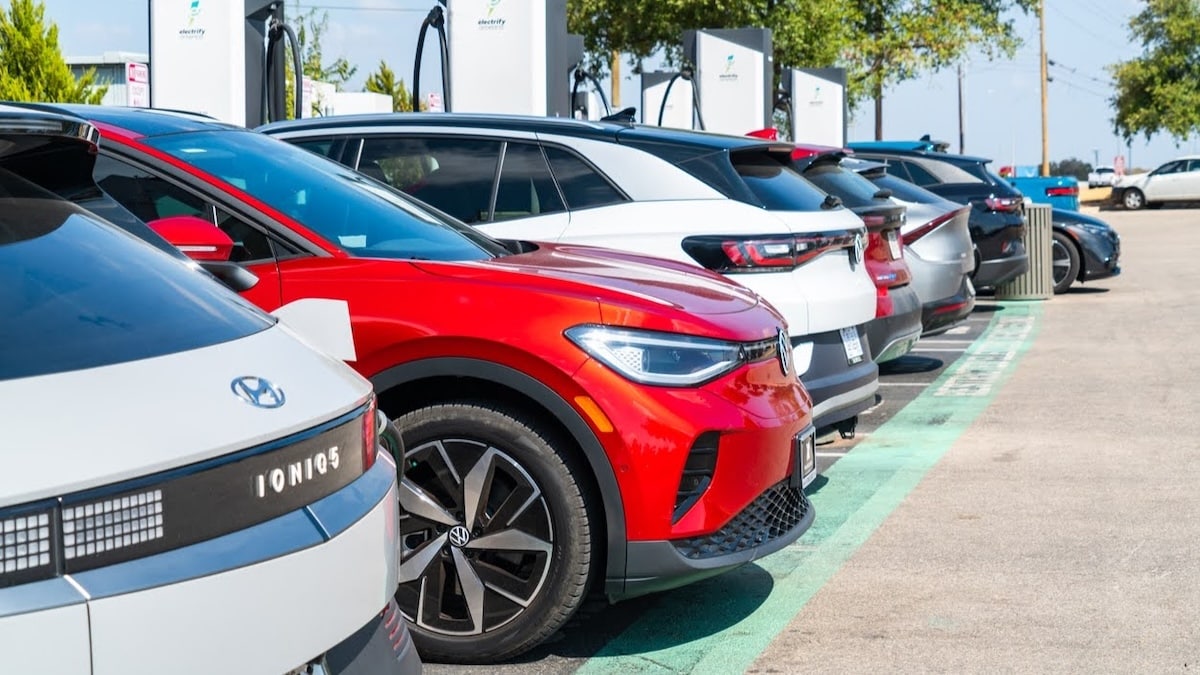
Having access to chargers in your community is convenient. But right now, America operates more gas stations than electric charging stations. One day, those numbers will switch places. According to NACS, the leading industry association for convenience stores and fuel retailers, about 120,000 convenience stores sell fuel. Roughly 20,000 other locations are gas-only stations, grocery stores with fueling centers, etc.
U.S. Department of Energy data shows that at least 69,720 public EV charging stations exist as of this writing. Of those, the vast majority are Level 2 chargers. Thanks to public- and private-sector funding, the number of public EV chargers doubled from 2021 to 2025. Earlier this month, the Federal Highway Administration announced grant funding for projects that will deploy 11,500 EV charging ports and hydrogen and natural gas fueling infrastructure across 27 states.
A patchwork of companies operates charging networks around the country, which can lead to reliability problems. One of the largest networks, Electrify America, is slowing its expansion to devote resources over the next couple of years to improving reliability. Meanwhile, eight of the world’s largest automakers teamed up to announce a coast-to-coast charging network, known as IONNA. Tesla’s Supercharger network is the largest charging web and is highly rated for its reliability.
It’s also worth noting that charging infrastructure in your area may be better than you think. A recent analysis from Zutobi, a company that provides driver’s education and training materials, found that the three states with the greatest number of chargers per EV are, believe it or not, Wyoming, North Dakota, and West Virginia.
Can I Charge My EV From Any Plug?
Previously, nearly every new EV for sale in the U.S. included a charging unit that could be plugged into a standard 110-volt household outlet. Today, those portable chargers are sometimes offered as optional equipment or acquired as an aftermarket accessory. Level 1 charging is the slowest method, providing up to five miles of range per hour, and is rarely used as a primary source of recharging.
Many EV owners choose to install a so-called Level 2 charger at home. A Level 2 charger requires a 240-volt electrical supply, the type of connection used for a clothes dryer. An electrician can install a 240-volt outlet in most homes, and dealerships will often arrange installation as part of purchasing an electric car. A Level 2 charger is much faster.
RELATED ARTICLE: How Long Does It Take to Charge an Electric Car?
Some public chargers are faster Level 3 fast chargers. These use direct current. It’s impossible to give an accurate generalized estimate for all EVs because each vehicle can accept electricity at a different rate. But some electric cars can charge their battery up to 80% from a Level 3 charger in about 20 minutes.
Types of Plugs
There are several different types of plugs on electric cars sold in the U.S. this year, and using a public charger can require you to find the right kind of connector. The most common connection is the J1772, used for Level 1 and Level 2 charging.
Most European- and American-made electric cars use a CCS Type 1 plug. Japanese-built EVs use a plug design called CHAdeMO, though it’s being phased out. Most public charging stations can accommodate both.
For its Supercharger network, Tesla uses a proprietary plug design known as the North American Charging Standard, or NACS. Tesla sells its cars with an adapter that allows them to use chargers from other brands.
Currently, other brands can use only a select number of Tesla Superchargers. Tesla plans to make at least 7,500 of its chargers available to all EVs. Cars with CCS and CHAdeMO plugs will need a special adapter to use Tesla Superchargers.
MORE: An EV Charger Buying Guide: See All Your Options.
EV Benefits
Though electric cars remain a small percentage of the vehicles on American roads, their numbers are growing faster than any other type of car thanks to several factors.
1. Fuel Cost
Electricity costs less than gasoline. Because electricity rates and gasoline prices fluctuate, it’s impossible to give you a single figure explaining the cost difference between using gas and electricity for your driving needs. But most drivers would spend less than a quarter of their annual gasoline budget to drive an EV instead.
Read an analysis in our article How Much Does It Cost to Charge an EV?
2. Maintenance and Repair Costs
EVs use fewer moving parts than gasoline-powered cars. An analysis by We Predict found that EV owners spend about $7 for every $30 a gasoline car owner spends on maintenance. And while costs to repair an electric car were higher, study authors noted that electric vehicles experienced fewer problems that required repair and that repair costs continue decreasing as more mechanics become certified in repairing electric cars.
3. Environmental Benefits
One of the most compelling reasons to buy an electric car is to help reduce your impact on the climate. Recent studies have shown that while building a new car has an immense environmental impact, EVs are better for the environment after just a few years of ownership.
4. Improved Driving Experience
Gasoline engines build up their power gradually, beginning when you step on the gas pedal. Even the fastest gasoline engines take a few seconds to reach full torque.
Electric motors make 100% of their power available at all times.
This means that electric cars accelerate dramatically faster than their gasoline-powered counterparts.
It’s difficult to overstate the impact of electric power on automotive performance. Thanks to the rise of electricity, the Kia EV6 reaches zero-60 mph faster than even Lamborghini or Ferrari had achieved a decade ago.
MORE: The Coolest Electric Car Features You’ll Want in the Future
EV Limitations
There are still good reasons for some car buyers to look elsewhere, including the following:
1. Range
Some people routinely drive farther than an EV can go on a single charge.
Most of us don’t. The average American drives less than 40 miles per day. The Nissan Leaf, the least-expensive and shortest-range EV for the 2025 model year, has a 149-mile range. That’s more than three times the average daily driving distance on a single charge. The longest-range electric vehicle, currently the Lucid Air, can travel up to 516 miles before recharging.
However, most EVs get below 300 miles of range per charge. Still, road trips are doable in EVs, even when traveling long distances in the winter.
But an EV isn’t practical for those who routinely drive long distances. Battery technology is constantly improving, and some technologies currently in development (like solid-state batteries) could provide EVs with dramatically more range in several years.
READ MORE: Electric Car Range: Everything You Need to Know
2. Infrastructure
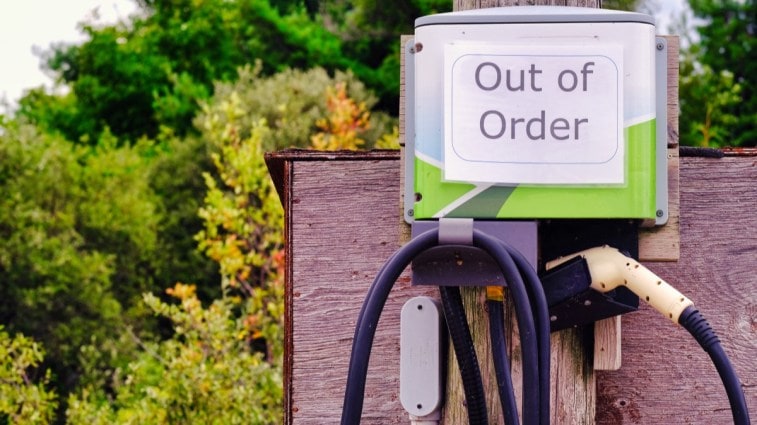
You can find far more public chargers in densely populated areas than in rural communities, though most EV charging is done at home. While infrastructure is improving, it still has limitations, including broken chargers and fewer locations than gas stations.
3. Towing and Hauling
Manufacturers have begun introducing electric trucks and SUVs. While carmakers have published range claims, range drops significantly when the vehicles haul or tow a heavy load. Electric trucks are not practical heavy work vehicles just yet.
4. PHEVs Offer Most of the Benefits, Few Drawbacks
Plug-in hybrids provide many of the same strengths as electric cars without some of the limitations. A PHEV can functionally serve as an electric car for the average driver on an average day, while also allowing owners to take long road trips without renting or borrowing a different vehicle.
They can also refuel at both gas stations and charging stations. If you’re unsure whether you can live with the compromises of an EV, a PHEV might be right for you.
5. Cost
Most electric vehicles cost thousands more than their gasoline equivalents. Government incentives help lower the cost of some eligible vehicles but often don’t make the two equal investments.
This factor could ease with time as EVs become more common. Every new technology grows less expensive as it gets mass-produced. A few EVs have seen their prices slashed, including the Tesla Model Y, the Volkswagen ID.4, and the Chevrolet Equinox EV.
RELATED: Ford Answers Tesla With Big Price Cut on Electric Mustang Mach-E
EV Generations
First-Generation EVs — Built From Gas-Powered Cars
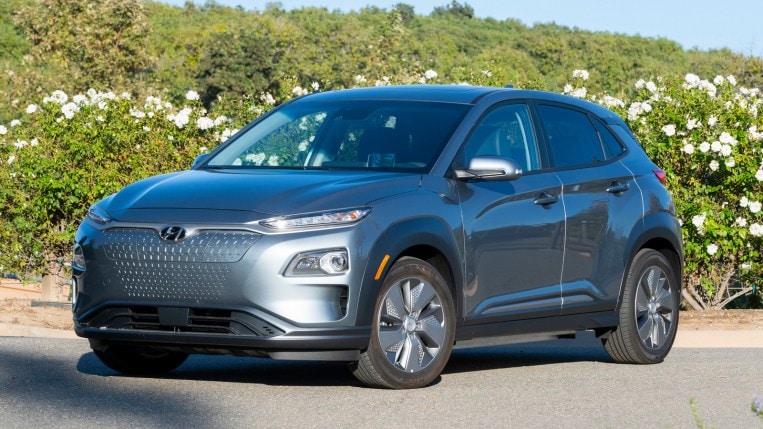
Some electric vehicles are modified versions of gasoline-powered cars. The original Hyundai Kona EV, for instance, was based on and came after the gasoline version.
These EVs may feel more familiar to drivers and may be less expensive to repair because they share many parts in common with a more common electric car.
But they do not gain all the advantages of an EV because engineers have had to shoehorn electric drivetrain parts into spaces built for gasoline-powered cars.
Second-Generation EVs — EVs From the Ground Up
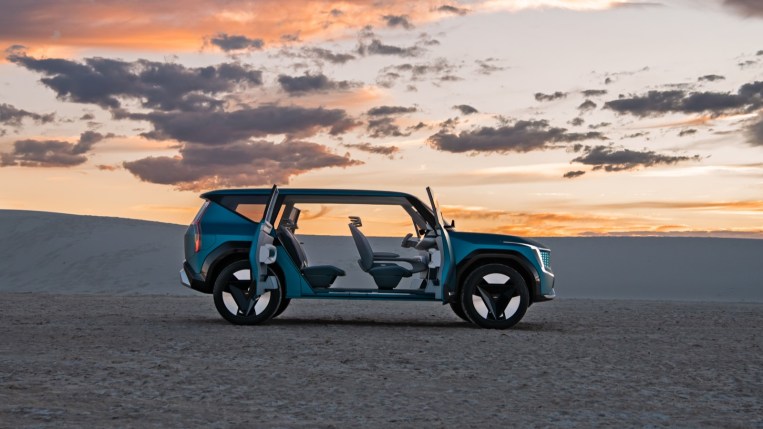
Automakers now design most EVs as dedicated electric cars. This allows new design possibilities. For instance, electric vehicles lack a traditional transmission, so a clean-sheet EV design does not require the traditional transmission hump separating the driver and passenger in a vehicle’s cabin. An electric vehicle’s moving parts can fit beneath the cabin floor and in the wheel wells.
This allows designers to create uniquely spacious vehicles. For instance, the Audi Q4 e-tron got built as a compact SUV. But the car offers almost as much passenger and cargo space as Audi’s larger, full-size Q7 SUV.
MORE: Our Favorite EV Safety Features and Brands That Offer Them
Government Programs Offer Incentives
The U.S. government’s electric car tax credit is the most well-known incentive program.
Qualified electric car buyers can claim a federal income tax credit of $7,500 on select new EVs.
For leases, the Internal Revenue Service lets dealers claim credits of up to $7,500 on EVs. The dealers can apply the credit to EV vehicle costs before setting lease terms, effectively lowering shoppers’ costs.
Qualified used car shoppers looking to buy EVs older than two model years can get up to a $4,000 tax credit.
READ MORE: How Do Electric Car Tax Credits Work?
Some state and local governments offer incentives. For example, a substantial rebate in California offers up to $12,000 in rebates when purchasing a new EV. The initiative, called Cars 4 All, helps low-income buyers.
Also, some electric utilities offer rebate programs to help customers buy electric cars and install home charging stations. Electric companies are often happy to help you buy more electricity from them.
READ MORE: Electric Car Rebates and Incentives: What To Know by State
Current and Upcoming EVs by Class
Electric cars exist in virtually every class of vehicle. The list of available and upcoming EVs keeps changing quickly, as automakers introduced new models every month this year. The list includes:
Affordable Small Cars
Kia Niro
Nissan Leaf
Affordable Midsize Cars
Hyundai Ioniq 6
Luxury Small Cars
Mini Cooper Electric
Luxury Midsize Cars
BMW i4
Tesla Model 3
Polestar 2
Luxury Large Cars
Audi A6 e-tron: Upcoming
Genesis Electrified G80
BMW i7
Lucid Air
Mercedes-Benz EQE
Mercedes-Benz EQS
Tesla Model S
Affordable Small SUVs
Chevrolet Equinox EV
Hyundai Kona Electric
Affordable Midsize SUVs
Ford Mustang Mach-E
Hyundai Ioniq 5
Kia EV6
Volkswagen ID.4
Nissan Ariya
Toyota bZ4X
Subaru Solterra
Honda Prologue
VinFast VF 8
VinFast VF 9: Upcoming
Luxury Small SUVs
Audi Q4 e-tron
Genesis GV60
Mercedes-Benz EQB
Volvo C40 Recharge
Volvo XC40 Recharge
Polestar 2
Luxury Midsize SUVs
Audi e-tron
Audi e-tron Sportback
Cadillac Lyriq
Genesis Electrified GV70
Jaguar I-PACE
Tesla Model Y
Luxury Large SUVs
BMW iX
GMC Hummer EV SUV
Rivian R1S
Tesla Model X
Minivans
Volkswagen ID. Buzz
Full-Size Trucks
Chevy Silverado EV
Ford F-150 Lightning
GMC Hummer EV Pickup
GMC Sierra EV
Ram 1500 REV: Upcoming
Rivian R1T
Tesla Cybertruck
Affordable Performance Cars
Dodge Charger Daytona
Luxury Performance Cars
Audi e-tron GT
Porsche Taycan
Porsche Taycan Cross Turismo
Editor’s Note: This article has been updated since its initial publication.
Machu Picchu is one of those bucket-list activities people dream about. While most people visit on a day trip, you can also visit via the Inca Trail, a challenging multi-day hike through the jungles of Peru. In this guest post, my friend Gillian divulges the details of her trek while sharing some tips and suggestions to help you plan your trip to Machu Picchu.
Hiking to Machu Picchu along the Inca Trail in Peru remains the highlight of my year traveling. Looking out over the peaks of the Andes, and knowing that I hiked to get there filled me with joy and awe. I didn’t want to be anywhere else. I won’t lie, though — it took some work. A lot of work, in fact. But it was totally worth it.
Sitting some 2,500 meters (8,200 feet) above sea level, Machu Picchu was an Inca citadel built in the 15th century. The citadel was built as a royal estate, though it was used for less than 100 years before being abandoned due to the arrival of the Spanish, who were set on conquest.
It wasn’t until 1911 that the ruins were re-discovered by archeologist Hiram Bingham III. While the locals were familiar with the ruins, it wasn’t until Hiram trekked up the mountain for himself that he realized just how spectacular his (re)discovery was.
To slow the damage caused by tourism, the entrance of Machu Picchu is “limited” to 4,500 people per day heading into 2024, divided into 3 time slots of early morning tickets (6-8am), morning tickets (9-11am), and afternoon tickets (12-2pm). While that seems like a lot, tickets often sell out months in advance (especially for the hike). There are now 4 main different circuits, and you must be accompanied by a guide. For that reason, you’ll want to make sure you plan ahead, do your research, and book early!
Hiking the Inca Trail: Itinerary
To start things off, here is a detailed overview of what the actual hike is actually like:
Day 1 They broke us in easy on the first day with a gentle start along a wide path that passed through the Sacred Valley. Described as “Inca Flat,” the trail starts alongside the Urubamba River and meanders through the trees and scrub brush, slowly gaining altitude.
Our guide, Marco, stopped us at various points along the way to tell us the history of the trail, the ruins along the trail, and also the Incan people and their struggle to survive. Marco was passionate about his ancestors’ story, and as time went on, we realized that he was not just telling us stories that come from guidebooks but that his knowledge was much deeper. He had spent time at university studying and also in the mountains with the Incan descendants and so had a unique perspective on the area.
Day 2 We woke up at 5am to the sounds of hustle and bustle outside. As I rubbed the sleep out of my eyes, a porter appeared with hot tea and another brought a bowl of hot water and soap for me to wash up with. I drank my tea, washed up, and packed up the few things I was responsible for (the porters dismantle and carry everything except your personal belongings).
It was cold as we set out on the day’s hike; frost clung to the sides of the trail and I could see my breath with every labored exhalation. We were already feeling the altitude and still had more than a thousand meters ahead of us. We quickly climbed above the tree line and were rewarded with the stunning views of mountains and valleys that would be our companions for the rest of the day.
The climb to Dead Woman’s Pass was relentless. Up and up and up and up along the ancient Inca pathway made up of enormous stone steps. My heart was beating wildly, my lungs were tight and seemed too small for the task, and my legs felt like cement as I tried to lift them over and over again up onto the next step.
Then it was down the other side, a 600-meter (almost 2,000-foot) drop along a beautiful stone pathway cutting down into the valley below. If I thought this was going to be the easy part, I was wrong. Controlling those floppy, leaden legs was an exercise in concentration. The afternoon saw us climb another 400 meters (1,300 feet) before dropping into another valley that was more jungle than scrub. We crossed the valley to find our campsite overlooking a set of astrological ruins.
Fog set in just as the light faded, lending an eerie feel to the landscape but also providing some insulating warmth. After 16 kilometers (10 miles) of hiking through two passes, it didn’t take much of the special “rum tea” to send us all off to a restful night’s sleep.
Day 3 As much as Day 2 was about climbing, Day 3 was about descent — overall we dropped almost 800 meters (2624 feet). I’m not sure which is more difficult, but I know that my legs were sorer after a day of going down than they were after Day 2. This is where the walking stick I had been carrying all along really proved its worth! We dropped back down through the tree line, entering into jungle-like scenery, where we could start to understand how Machu Picchu was hidden by jungle for so many years.
We shared camp that night as other groups joined up at the campsite before entering the site. We enjoyed much-needed showers and beer before a late dinner and early bedtime. Tomorrow would take us to the Sun Gate and our first glimpses of the lost city.
Day 4 Reaching the Sun Gate was amazing. Looking through it to the sight of Machu Picchu below made all the difficulties of the trek disappear. Sitting on a plateau below, the site looked just as beautiful and mysterious as I had expected.
Wandering around Machu Picchu for the rest of the day, I was left in awe as to how the ancient Incans could have built such a formidable city with no modern machinery. The ingenuity and precision were astounding and the level of detail was amazing. The buildings and stonework are stunning displays of form, function, and astounding astronomical and geographic knowledge. Stones are placed or carved, to match exactly with the sun’s winter and summer solstice positions or to line up along the ordinal geographic lines.
Seeing a rock carved into the shape of the Incan Cross and then being shown how the points match up with a compass, I was amazed at the knowledge that the Incans must have had. The whole city and the mountain backdrop took my breath away.
Planning a trip to South America?
Get all my best travel tips along with these guides:
My Favorite Companies to Use
61 Savvy Travel Tips
16 Steps for Planning a Trip
How to Get Free Flights
Just fill in your details below and I’ll send everything to you right now:
Tips for Hiking the Inca Trail
Here are some tips to help you make the most of your trip and avoid some of the more common pitfalls:
Arrive early – Try to get to Cusco 3-5 days before your hike so you can acclimatize to the altitude before hiking. It will make your hike much easier!
Leave your hiking stick behind – Hiking poles or sticks are no longer allowed in Machu Picchu, except for elderly or disabled visitors.
Chew coca leaves – If the altitude is giving you trouble, chew coca leaves. It’s the local remedy and is what many of the guides and porters use. You can chew the leaves or buy coca gum. (You can also get altitude medicine from your doctor before you go. Just keep in mind that it will make you have to pee a lot!).
Break in your boots – Make sure you buy and break in your footwear at least 1-2 months before your trip. That will help you avoid blisters.
Bring sunscreen and bug spray – The last thing you want is a sunburn when you’re hiking up a mountain. And the mosquitoes here are plentiful (and their bites are super itchy!) so prepare accordingly and apply both each day.
Bring Band-Aids/Blister kits – Your feet are going to take a beating. Having some minor first aid supplies will help.
Carry extra snacks – You’ll get plenty of food on the trail, but bringing along some of your favorite snacks is a great morale booster for those challenging sections.
Go the extra mile – For an amazing view of Machu Picchu, hike the extra hour to Huayna Picchu. It’s a bit of a scramble and the path is quite narrow but the views are worth it!
Train before you go – This is a challenging hike. You don’t need to be an Olympic athlete to finish it but the more you train the easier your hike will be.
Don’t expect to shower – Showers are available partway into the hike but the water is painfully cold. Skip the showers and just embrace your well-earned BO.
Have extra batteries – Bring an external charger for your phone and extra batteries for your camera. It would be tragic to arrive at Machu Picchu and not be able to snap a photo or two!
Bring earplugs – The Inca Trail can get busy and there will be dozens and dozens of hikers at each camp. Bring earplugs for the noisy nights.
Consider the Salkantay – For a less-busy route, consider hiking the Salkantay. It has views just as epic and sees a third of the tourists that the Inca Trail does. Plus, it’s a fraction of the price!
Bring money for the bathroom – Make sure you have some money for the bathroom. There is only one bathroom at Machu Picchu and it will cost a couple of soles.
Get stamped – You can get your passport stamped with a unique Machu Picchu stamp to commemorate the journey. It makes for a fun souvenir if you have some space in your passport.
Check your bag – You can only bring a day bag under 20L into Machu Picchu. If your bag is larger than that you’ll need to pay to check it at the gate.
How to Get to Machu Picchu: Prices, Tours, and Logistics
If you don’t plan on hiking the Inca Trail, the easiest way to get from Cusco to Machu Picchu is to take the train from Ollantaytambo to Aguas Calientes. Tickets range from 225–1,800 PEN depending on how luxurious of a ride you want. The Expedition (which is the cheapest option) is perfectly fine. You go on the same tracks and see the same sights. You just have to buy your own drinks or snacks. Tickets can be booked at Peru Rail.
The government has been making an effort to better conserve the site, introducing three circuits to spread out the influx of visitors. That means you’ll have to follow a certain route during your visit and you will have a timed entry. In order to visit the site, you need to book tickets in advance and be with a licensed guide. (Though in practice sometimes they let you in without a guide but since there is absolutely no signage, it’s better to have a guide so you can learn about what you are seeing.)
In order to hike the Inca Trail, you MUST go with a licensed guide and the company you are with will arrange the permits you need for the trail as well as to visit the ruins.
Make sure the company you choose pays their porters well and treats them fairly. Porters have an incredibly challenging job so you want to make sure the company you choose is an ethical one. With that in mind, remember you’ll also need some cash to tip your porters. Most estimates range from 25 PEN per person per day for each porter, and then 50 PEN per person per day for the guides, though your company will likely provide additional tipping guidelines. Tips are paid in the local currency.
Prices for the multi-day treks start at $700 USD. If you want to find a cheaper tour, head to Cusco and wait for a last-minute spot to open. People cancel for various reasons and there’s usually a spot that opens up. You may have to wait a few days but you’ll get a spot much cheaper than if you pre-book your tour. Since permits sell out months in advance, if you are on a strict timetable, I’d advise pre-booking your tour.
***
While hiking the Inca Trail is no easy feat, it is definitely worth the effort. The well-earned views you take in as you hike combined with the incredible vistas and history of Machu Picchu itself make this a once in a lifetime experience worthy of any bucket list. No visit to Peru is complete without seeing Machu Picchu, and the best way to do that is via the Inca Trail — one step at a time!
Plan your trip to South America
Get all my best travel tips as well as FREE planning guides sent straight to you and see more of the region for less!
Book Your Trip to Peru: Logistical Tips and Tricks
Book Your Flight Use Skyscanner to find a cheap flight. They are my favorite search engine because they search websites and airlines around the globe so you always know no stone is left unturned.
Book Your Accommodation You can book your hostel with Hostelworld as they have the biggest inventory and best deals. If you want to stay somewhere other than a hostel, use Booking.com as they consistently return the cheapest rates for guesthouses and cheap hotels.
Don’t Forget Travel Insurance Travel insurance will protect you against illness, injury, theft, and cancellations. It’s comprehensive protection in case anything goes wrong. I never go on a trip without it as I’ve had to use it many times in the past. My favorite companies that offer the best service and value are:
Looking for the Best Companies to Save Money With? Check out my resource page for the best companies to use when you travel. I list all the ones I use to save money when I’m on the road. They will save you money when you travel too.
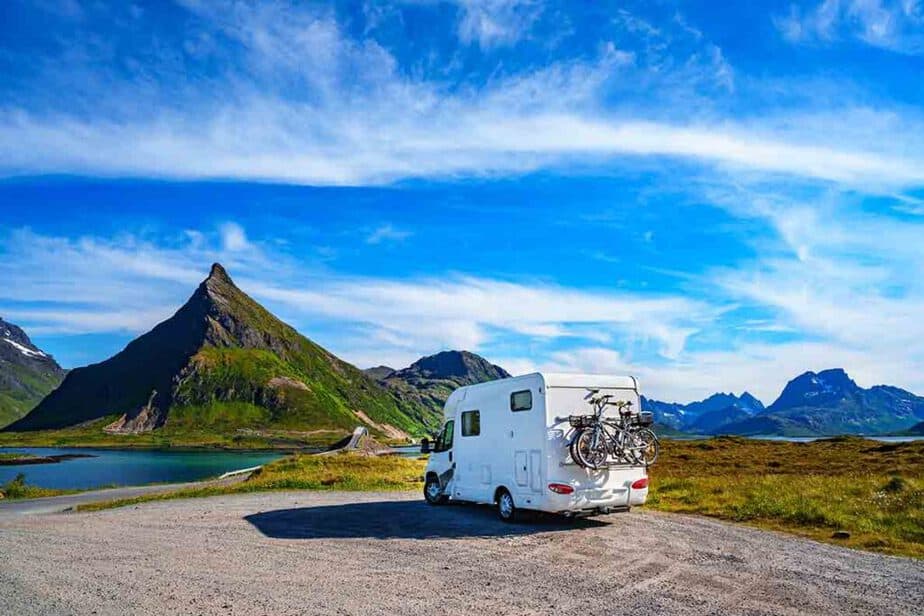
No matter how much you prep and plan for your Europe road trip, sometimes, accidents do happen.
If you’re unlucky enough to be involved in a car crash/ motorhome crash/ road traffic accident in Europe, here’s what you need to know and do.
*We work hard to make this the best motorhome travel blog and road trip website possible, full of helpful content for you. The website is supported by our readers, so if you buy through links on this site we may earn a commission- at no extra cost to you. All opinions remain our own.
If you find this post useful, you can also treat us to a coffee – we promise to enjoy it while creating more useful content like this- we might even indulge in a biscuit (or two!)
Car Accidents and Road Traffic Accidents- which law?
No matter what nationality you are or where the vehicle is registered OR where you live, normally the rules are the rules in the country the accident happens in. So, if the car accident happens in France, you will be under French law.
However, very occasionally and subject to several other conditions, if two vehicles both registered in the UK crashed together in France, they may fall under UK law.
Planning to take your motorhome to Europe?
What to do at the scene of a car accident in Europe
If you are involved in a car accident in Europe or see one taking place, here’s what to do:
Stop your vehicle immediately but safely- out of the flow of traffic if possible. Do NOT leave the scene.
Stay calm- now is not the time to panic.
Check to make sure everyone in your vehicle is ok before going to check on others.
Before leaving your vehicle, put on your Hi-vis reflective jackets (compulsory in most European countries, advisable in the rest)
If a vehicle is blocking the road, use hazard lights and put the red warning triangle 30 metres from the scene to warn approaching traffic. You should also do this if you have broken down.
For Spain – the replacement of the red warning triangle to the V16 beacon from 1 JAN 2026 BUT since the start of 2023 the use of V-16 emergency warning beacons on vehicles in Spain has been approved by Spain’s traffic authority.
If by a busy road, occupants of the vehicle might be safer leaving the vehicle and sitting well behind the crash barrier. Make sure they are all wearing a Hi-vis reflective jackets
Exchange your details with the other involved parties and witnesses. This is often on your green card. Be sure to get:
Name and address of all the people involved in the accident. Getting a business card might be a good idea.
Vehicle registration numbers of all parties
Insurance company details of all parties
Take photos of damage using a camera, GoPro or phone
Then do one of the two options below.
Minor Road Traffic Accidents
If the accident is not very serious and no-one is injured then follow these steps:
Complete and sign the European Accident Statement form (see below for more details). Be careful- this form is a legal document and may be used as evidence. If parties disagree and the form cannot be signed, the Police may be involved. Do not sign if you are unsure or disagree with what the other parties have written.
The form is standardised, so complete it in your native language and the other parties will do the same.
The names, addresses and contact details of any witnesses should be recorded, as well as the facts of the accident
Then send the complete claim form to your insurance company; Some countries have a deadline for this; others do not.
New to motorhome or camper travel in Europe? You might find these posts helpful:
How to tour Europe in a Motorhome- step-by-step
How to plan EPIC motorhome trips
How to find Free motorhome parking and overnight stopovers in Europe for motorhomes and campervans
Essential kit for Motorhoming in Europe (with free checklist)
See all our Europe motorhoming posts here
NEED GEAR? If you need any kit or essentials for motorhoming in Europe, here’s what we recommend and where to find it
Severe accidents or those involving injury or death
In the event of a car crash or road traffic accident where someone is injured or killed:
Contact the police or ambulance: 112 for all of Europe
The police will arrive and are then in charge of reporting the facts. They will ask for statements from all parties, including witnesses. They will also take contact and registration details, although you should still exchange these if you can.
If the police do not or cannot attend the scene, you must get names, details and addresses of all relevant parties and witnesses. The European claim form may be used and signed by all BUT only if you understand and agree. Remember, the other parties may well be writing in a foreign language, which is perfectly fine.
Taking photographs or drawing a sketch of the scene is advisable
If the party responsible for the damage is uninsured or unknown, contact the Police and also your insurer for further guidance.
IMPORTANT: Leaving the scene of an accident without providing your information is considered an offence and you will be prosecuted. This applies even if you are a visitor to the country and don’t speak the language- stay at the scene until you are told you can go by the Police or until the other parties leave.
Road Traffic Accident- European Claim Form/ Accident Statement
Your insurance company should provide you with a European Claim form/ European Accident Statement before you go. If not, make sure you ask them to send one (and also make sure you are insured for travelling in Europe!)
In the event of an accident, all parties should complete and sign the form at the scene and then send a copy to your insurer for assessment. You should be able to get one which is bi-lingual, usually English and French.
NOTE: You cannot force another party to sign the form if they are unwilling. Also, you should never sign it yourself if you disagree or do not understand what has been said. You will not be in trouble for not signing, but if you sign and then disagree, you may be incorrectly held accountable.
If you do choose to sign, be sure to accurately count the number of boxes ticked, so that you can tally up at the end (this prevents other parties marking boxes in your name after the event.)
Read through the Accident Statement carefully before completing the middle column. This is where you select the boxes which shows responsibility for the accident.
If you are involved in a car crash or incident involving several parties or vehicle, complete an Accident statement for each party (one per vehicle or pedestrian.)
I hope you never need the information in this post, but better to have an idea of what to do then not!
Quantum computing is one of the most exciting areas in computer science, promising progress in accelerated computing beyond what’s considered possible today.
It’s expected that the technology will tackle myriad problems that were once deemed impractical or even impossible to solve. Quantum computing promises huge leaps forward for fields spanning drug discovery and materials development to financial forecasting.
But just as exciting as quantum computing’s future are the breakthroughs already being made today in quantum hardware, error correction and algorithms.
NVIDIA is celebrating and exploring this remarkable progress in quantum computing by announcing its first Quantum Day at GTC 2025 on Thursday, March 20. This new focus area brings together leading experts for a comprehensive and balanced perspective on what businesses should expect from quantum computing in the coming decades — mapping the path toward useful quantum applications.
Discussing the state of the art in quantum computing, NVIDIA founder and CEO Jensen Huang will share the stage with executives from industry leaders, including:
Alice & Bob
Atom Computing
D-Wave
Infleqtion
IonQ
Pasqal
PsiQuantum
Quantinuum
Quantum Circuits
QuEra Computing
Rigetti
SEEQC
Learn About Quantum Computing at NVIDIA GTC
Quantum Day will feature:
Sessions exploring what’s possible and available now in quantum computing, and where quantum technologies are headed, hosted by Huang and representatives from across the quantum community.
A developer day session outlining how partners are working with NVIDIA to advance quantum computing.
Educational sessions providing attendees with hands-on training on how to use the most advanced tools to explore and develop quantum hardware and applications.
A Quantum Day special address, unveiling the latest NVIDIA quantum computing news and advances shortening the timeline to useful applications.
Quantum Day at GTC 2025 is the destination for leaders and experts seeking to chart a course into the future of quantum computing.
Built by Superformance and sold exclusively through Clive Sutton in London, the Shelby Cobra CSX10000 represents the evolution of Carroll Shelby’s iconic creation, crafted with modern technology while retaining the spirit of the original Cobras.
While inspired by the restaurant-mod trend, the CSX10000 is not a restoration—it’s entirely new. Built on a ladder-frame chassis with crumple zones, it offers the option of a fiberglass or aluminum body. The heart of the car is a 5.0L Ford Coyote V8 producing 460 horsepower and 420 lb-ft of torque, delivering a thrilling experience. The power-to-weight ratio is exceptional when weighing just over 1,000 kg (2,400 lbs). A supercharged version pushing 700 horsepower is also available for those seeking more performance.
The CSX10000 embraces modern features like power steering, LED headlights, larger 18-inch wheels, upgraded Wilwood brakes, and a Tremec six-speed gearbox. These updates make the car more accessible and enjoyable for a broader audience. Despite these enhancements, the Cobra retains its classic aesthetic with details like riveted bonnet scoops, side pipes, and Smiths and Lucas gauges.
Luke Evans was always meant to be a citizen of the world — hopping around the globe filming blockbuster franchises like The Hobbit trilogy and Fast & Furious films and live-action Disney remakes like “Beauty and the Beast” and “Pinnochio,” starring in West End musicals, and traveling to dream destinations every chance he gets in between. Yet the jetsetter’s lifestyle started within a much smaller circumference.
“I come from a very working-class family, so money wasn’t free and easy,” the 45-year-old told Travel + Leisure of his childhood in Wales. “We would have to think about how much money would be spent on holidays.”
Born in Pontypool and raised in Aberbargoed, his early family getaways were “caravan holidays” — UK speak for a camper road trip — with his and his cousin’s families packed into his dad’s Ford Cortina, towing a three-person camper. They’d venture through the UK’s coastal towns and forests, including places like the Forest of Dean, Aberystwyth, Tenby, Saundersfoot, and Cornwall. “We rarely ventured out of Wales because it was on our doorstep,” he said.
The first plane trip he remembers taking with his parents was to Benidorm in Spain, which he calls an “acquired taste.” “It was cheap and cheerful, and that’s what we could afford, so we made the most of it,” he said, recalling “fond memories of [his] time there.”
Those early wanderings planted a seed deep in Evans’ soul. Now his passion for travel stretches through every fiber of his being, as well as onto his Instagram posts and into the pages of his memoir, Boy from the Valley: My Unexpected Journey, which hit shelves in November. “The best gift you can give yourself or someone else is traveling,” he said. “It contains you as a human being. It can make you see the world and see human beings in a very different way.”
Over the 2024 year-end holidays, Evans embarked on a vacation he’d long dreamed of, going to Cape Town and Botswana. The idea for the trip started with a twist of happenstance. For more than a decade, every time Evans has been in Ibiza, where he has a house, he would also spend a day or two at the family-run agrotourism property Atzaró Hotel. “I’ve always loved my time there, and last year, I saw these postcards on the counter of these other places they had, like an amazing hotel in Cape Town and a safari in Botswana.”
With Luke Evans
Favorite Great Britain filming location?
Probably Pembrokeshire. I did a show called The Pembrokeshire Murders. And as much as the story itself was grim, the place where we stayed was called Solva, a tiny little fishing village, maybe not even a village, it’s so small. It has its own little natural bay, and the mountains roll into the ocean. I rented this little cottage on the side of this mountain. I never wanted to leave! When we finished the TV show, I was gutted I had to give up this house because every morning I would look out and it would be so dramatic. It was just magical. It’s a really special place.
Must-see theater production in London now?
Always try and get a ticket for anything that they’re doing at the Donmar Warehouse — it’s a very small, independent theater with very hard-to-get tickets, but whatever they do, it’s brilliant. It’s where my career began.
Most underrated London tourist activity?
Everybody must walk the South Bank — I would walk from the Houses of Parliament, cross Westminster Bridge, take a left, and just keep walking. You’ll see the view of London from the south side of the river with St. Paul’s Cathedral and all the big skyscrapers in the City of London. You end up at Tower Bridge, which is magnificent to see day or night. Then behind Tower Bridge, where all the docklands warehouses used to be, it’s now just markets, restaurants, and boat journeys, and it’s really special.
Best beach in Wales?
Newgale.
Co-star who would be the best travel buddy?
I wouldn’t mind traveling with Helen Mirren. I think me and her would enjoy traveling together. We would definitely go off the beaten track — and we’d taste everything. I think she’s that kind of woman. She’s brave, and she just goes for it, and I think she’s probably very fun to travel with.
Travel Resolution for 2025:
Travel more, discover new places, and just keep ticking off those places I’ve never been. I’m reading an amazing book called “An African History of Africa” right now, and we’re just on Egypt and the pyramids and the pharaohs. I’ve never been to Egypt, so that’s probably close to the next top of my list of places I’d like to visit!
Starting in the South African city, he was immediately stunned by Atzaró Cape Town’s location. “It’s not that big, but it’s literally — no word of a lie — it’s at the foot of Table Mountain,” he marveled. “From front of the hotel, you could see the whole layout of Cape Town, with the bay, sky, ocean, Lion’s Head, and Devil’s Peak, in a 360-view. It was absolutely beautiful. I could have stayed there longer.”
The manager of the hotel, Xander, didn’t just play host, he also doubled as Evans’ hiking guide, skipping the aerial cableway shortcut up Table Mountain and leading him up the two-hour trail of humongous steps. “I hate cardio, but if cardio was like that every day, I’d probably do it,” the action film star admitted. “Every 20 minutes, we’d stop and turn back to the view and we’d elevated another 500 feet. Then we got to the top — and it really is flat!” The exertion to earn the elevated view all the way down to Camps Bay was well worth the effort, he said, calling it “satisfying” to have gone up the hard way.
Luke Evans in a guest room at Atzaró Cape Town.
Courtesy of Atzaró Cape Town
After that, he headed up to Atzaró Okavango, where he was immediately greeted by two giraffes wandering in the field, followed by a couple of warthogs. Immediately, he knew this safari experience was going to be special. “You have to be escorted back to your residence at night because there are natural animal pathways through the residence for the animals like leopards, hippos, buffalo, monkeys, baboons, warthogs, and aardvarks,” he said. “It’s extraordinary.”
Luke Evans on safari in Botswana with Atzaró Okavango.
Courtesy of Atzaró Okavango
Every turn of the head was a wonderment of wildlife, spotting hippos from his luxury wooden apartment residence to driving toward a dried-up lake and seeing 30 giraffes, from newborn to elderly, and even catching them fighting with their horns and swinging their necks. Even more unbelievable, they witnessed an action-packed kill involving wild dogs catching a baby gazelle. At another point, a cheetah walked right in front of their truck as they sat and watched in silence. Every blink of an eye was another slice of animal kingdom drama playing out in front of them.
“On our final drive, our guide, Albert, spotted the leopard, which is probably one of the most elusive animals to see,” Evans said. “I mean, they’re so camouflaged and he drove us right next to this incredible animal. And we didn’t just see one, we saw two.”
During one night drive, the driver turned off the engine as they sat staring at the sky with no light pollution. “It was like a cacophony of frogs, insects, and animals — it was deafeningly loud,” he said. To preserve that natural magic, Evans recorded the natural soundtrack. “Now I go to sleep with it every night!”
Beyond personal vacations, Evans’ work has granted him an even greater gift of not just popping in and out of a place, but really getting to know destinations across the globe. His most recent release, “Weekend in Taipei,” which debuted in November, filmed on location in Taiwan’s capital, where he traversed the city from the mountains and Taipei 101 skyscraper down to a fishing village — and of course indulged in the famous local eats.
“We had Din Tai Fung about 72 times, and we ate all the food that was given to us — and even attempted the stinky tofu,” he said. “If you can get through the smell, it’s fine.” He said his driver would go into local markets and come out with plastic bags filled with duck pieces, from the gizzards to the beaks, and he had a taste of it all. “Everybody was so gracious and really welcoming, like so kind,” he said.
Similarly, during his time in New Zealand filming The Hobbit trilogy, which came out between 2012 and 2014, Evans immersed himself in all things Kiwi. “I drove on my own for a week from from the top of the South Island all the way down to to the Fox Glacier and the Franz Josef Glacier, and I heli-hiked onto the glacier and drank thousands-of-years-old water from a river stream through the middle of the glacier,” the adventurer said. He also spotted whales, experienced Rotorua’s hot pools, enjoyed the high-quality, grass-fed meats — and even learned to beach fish Kahawai. “I lived a life,” he reflected. “I really lived it!”
The folks down there made an impression on him, too. “People there are very charming, very kind, very happy, and they say hello to you as you walk down the street, which I’ve always loved,” he said. “In fact, when I came home to London and I walked down the street and no one even caught my eye, I felt I’d lost that personal touch like how Kiwi people are.”
Wandering the world with such an open heart and mind has allowed Evans to reflect on all those global encounters. “I realize we are all one,” he said. “We just all look different, eat differently, live differently, sing differently, and everything is different, but we are the same. That’s something I’ve really understood on a much more deep spiritual level from traveling.”
Luke Evans
I realize we are all one. We just all look different, eat differently, live differently, sing differently, and everything is different, but we are the same. That’s something I’ve really understood on a much more deep spiritual level from traveling.
— Luke Evans
Evans is just as welcoming to travelers looking to explore the places he knows so well, like London, where he’s lived for 27 years. To start, he said every first-timer needs to check off the essentials, including Big Ben, Buckingham Palace, Hyde Park, St. Paul’s Cathedral, Tower of London, and Tower Bridge.
But after that his advice is “to step out of the obvious places” and head over to the older parts of East London, including Whitechapel, Bethnal Green, Shoreditch, and Dalston. “These are stunning areas, and there’s always something going on,” he said, explaining there are antiques and food markets, a canal that winds through the area with pathways alongside it, beautiful strolls in Victoria Park, and pools at London Fields.
On Sundays, he loves the Columbia Road Flower Market, where you turn onto a Victorian street and “it’s a jungle with banana trees, palm trees, flowers, everything you can imagine.” Then he said to head to The Royal Oak, where they do an amazing Sunday roast and pint of Guinness, before wandering the backstreets, stumbling upon cafes and vendors hawking their wares. “It’s a very special place,” he said.
When it comes to Wales, Evans suggests travelers head to the Pembrokeshire coastline, which is “absolutely stunning,” with castles dotting the scenery and “more UNESCO beaches than you could swing a cat at.” Also worth pinning on maps: Temby, the mountains in Anglesey — including the tallest, Snowdonia, which you can hike or ascend by steam train — and one of the oldest and smallest cities in the world, St. David’s.
“The beaches there are stunning, the wildlife in the waters is so crystal clear, you see seals and dolphins, and there are the best fish and chips you’ll have in Wales,” Evans raved. “The Welsh people are lovely — they’re welcoming, they’re curious, they’re really great people. I’m very proud to be one of them.”
—- OTHER OPTIONS FOR CHECK-IN—-
Best road trip in Wales? Driving to Pembrokeshire—and I would add a foot trip: the uninterrupted coastal path. It’s 870 miles, and it goes all the way up the coast of Wales. You can camp, and stop and stay in B&Bs all the way to the top.
One thing you always pack your carry-on? My noise-reducing AirPods because I can’t sleep with the headphones they give you on the plane. But I can in AirPods I can, and it reduces all the sound of crying babies and noisy air staff, whatever it is, you don’t wake up! I sometimes find that the noise of an airport can sometimes be very all consuming, so sometimes I just put them in my ears to feel a little calmer walking through chaos.
As we step into the new year, the business landscape and the art of mergers and acquisitions (M&A) dealmaking continues to evolve, reflecting a dynamic mix of challenges and opportunities.
A Pivotal Year Full of Uncertainties and Opportunities
The year 2025 is poised to be a pivotal year for the M&A market, characterised by potential rate cuts, changes in policies, and record-high dry powder, all of which fuel both uncertainties and opportunities. In this climate, companies are anticipated to actively leverage M&A not merely to expand their market presence but also as a strategic tool for adapting to the rapidly evolving global economic environment. This underscores the importance of agility and foresight for firms aiming to capitalise on the myriad of opportunities while skilfully navigating the associated challenges. The confluence of these dynamic factors suggests that 2025 will witness not just isolated mergers and acquisitions but a series of strategic transformations that have the potential to reshape entire industries.
Rate Cut on Standby
Federal Reserve, the Bank of the U.S. Government
In 2024, the Federal Reserve executed three consecutive rate cuts, amounting to a cumulative reduction of 100 basis points, representing the most substantial annual easing initiative since 2009. With the current rate range of 4.25 percent to 4.50 percent, the Fed anticipates a slower pace of cuts in 2025 due to the persistently high inflation rate in the United States and the potential inflationary impact of President-elect Donald Trump’s proposed policies.
Lower interest rates are likely to spur an increase in M&A activities by lowering the cost of financing and boosting stock valuations, thereby narrowing the gap between buyers’ bids and sellers’ expectations. While rates are still higher than at the start of the recent tightening cycle, the anticipated rate reductions should help facilitate dealmaking, albeit without reaching the record-high activity levels seen in 2021.
Illustration by Hunter Newton/Bankrate
Policies Shuffle
As the world shifts its focus to the new president-elect, Donald Trump, and his proposed policies, a ripple effect is expected through the economy, fundamentally reshaping regulatory frameworks, fiscal policies, and international relations, all of which can significantly influence M&A activities.
One of the key areas of impact could stem from potential tariff increases, including a blanket tariff of 10 percent to 20 percent on imports from most countries and a 60 percent average tariff on goods imported from China. This might drive cross-border M&A activities and foreign direct investments as foreign companies seek acquisition and foreign investment opportunities within the U.S. to establish “Made in America” production lines. Increased tariffs on Chinese imports and adverse policies may also lead Chinese companies to seek acquisition targets in Europe or Southeast Asia.
Meanwhile, industrialisation has emerged as a key trend in Asia, significantly driving the global economy. As Asian companies expand and evolve, there is an increasing need for them to extend their operations or relocate to neighbouring countries that offer larger land areas, better incentive policies, and lower labour costs. Consequently, there has been a notable trend of Chinese companies establishing new factories and offices in Southeast Asian countries such as Vietnam, Thailand, and Indonesia. This strategic move not only supports the companies’ organic growth but also brings new economic opportunities to the emerging markets in the region.
Record Dry Powder
Private equity firms are currently sitting on an unprecedented amount of uncalled capital, approximately USD 2 trillion, commonly referred to as “dry powder”. This substantial cash reserve has been accumulating since the last significant global M&A surge in 2021. During the past three years, M&A activity has seen a slowdown, with private equity firms shifting their focus to smaller transactions, such as corporate carve-outs. However, as we move into 2025, the landscape is set to change with heightened expectations. Many funds are beginning to shed their cautious stance, and a considerable portion of this unallocated capital is anticipated to be deployed. Moreover, funds are under increasing pressure from the Limited Partners (LPs) to make investments as they approach the midpoint of their fund life. This can potentially lead to a wave of substantial deals and acquisitions, which could redefine industry landscapes and drive significant growth across various sectors.
2025 Look Out
The year 2025 will mark a period of significant transition, with businesses navigating the evolving dynamics of a newly established administration while aiming to capitalise on emerging opportunities. Companies that can adapt swiftly to these changes are likely to gain a competitive edge, enabling them to execute strategic acquisitions and realise substantial growth. As the political and economic landscape shifts, there will be a need for agility and forward-thinking strategies, allowing organizations to not only withstand uncertainties but also thrive amidst them. Those able to preempt and respond to these changes will be well-positioned to harness new market opportunities, solidifying their foothold and driving transformational growth in the months and years ahead.
For more on M&A trends and CIGP, visit: https://cigp.com/
This article was written by Managing Partner at CIGP Hugues de Saint Seine
Click here for more on the latest in business and luxury reads.
The technical storage or access is strictly necessary for the legitimate purpose of enabling the use of a specific service explicitly requested by the subscriber or user, or for the sole purpose of carrying out the transmission of a communication over an electronic communications network.
Preferences
The technical storage or access is necessary for the legitimate purpose of storing preferences that are not requested by the subscriber or user.
Statistics
The technical storage or access that is used exclusively for statistical purposes.The technical storage or access that is used exclusively for anonymous statistical purposes. Without a subpoena, voluntary compliance on the part of your Internet Service Provider, or additional records from a third party, information stored or retrieved for this purpose alone cannot usually be used to identify you.
Marketing
The technical storage or access is required to create user profiles to send advertising, or to track the user on a website or across several websites for similar marketing purposes.