A Ferrari F40 owned by McLaren Formula 1 driver Lando Norris has crashed somewhere near Monaco. This is the second accident involving an F40 after a service technician crashed one in the UK a few days back.
According to social media reports, the Ferrari F40 registered as “865Q” was being driven by one of Lando’s friends, whose identity is unknown. The video shows the F40 spinning out and hitting a roadside barrier.
The F40 appears to have sustained minor damage to the rear end. It’s mostly cosmetic, however, the car might need a new rear bumper, which for a car like the F40, won’t come cheap.
Like most Ferrari F40 crashes we’ve seen so far this one also seems like a case of over-ambitious throttle application. The twin turbos on the 3.0-liter V8 engine are known to spool up aggressively, increasing the chance of the rear wheels losing traction.
A bootful of throttle in a F40 delivers 471 hp and 426 lb-ft of torque to the rear axle. The engine is bolted to a 5-speed manual transmission.
Time to suit up, members. The multiverse is about to get a whole lot cloudier as GeForce NOW opens a portal to the first season of hit game Marvel Rivals from NetEase Games.
Members can now game in a new dimension with expanded support for virtual- and mixed-reality devices. This week’s GeForce NOW app update 2.0.70 begins rolling out compatibility for Apple Vision Pro spatial computers, Meta Quest 3 and 3S, and Pico 4 and 4 Ultra devices.
Plus, no GFN Thursday is complete without new games. Get ready for seven new titles joining the cloud this week, including multiplayer online battle arena game SMITE 2.
Invisible No More
Sink your teeth into the Fantastic Four.
Eternal night falls for Marvel Rivals, the superhero, team-based player vs. player shooter that lets players assemble an ever-evolving all-star squad of Super Heroes and Super Villains battling with unique powers across a dynamic lineup of destructible maps from the Marvel Multiverse.
The Fantastic Four will be playable in season one of the game. For Eternal Night Falls, Invisible Woman and Mister Fantastic will be released in the first half of the season, followed by Human Torch and The Thing in the second. Season one will also feature three new maps, special events and an all-new Doom Match game mode.
Stream it all with a GeForce NOW membership across devices, from an underpowered laptop, Mac devices, a Steam Deck or the supported platform of virtual- and mixed-reality devices.
Head in the Clouds
Headset on, latency gone.
The latest GeForce NOW app update is expanding cloud streaming capabilities to Apple Vision Pro spatial computers, Meta Quest 3 and 3S, and Pico 4 and 4 Ultra virtual- and mixed-reality headsets starting this week.
These newly supported devices will give members access to an extensive library of games to stream through GeForce NOW. Members can gain access by visiting play.geforcenow.com or via the Android-native client on the PICO store. The rollout will be complete on Tuesday, Jan. 21.
Members will be able to transform their space into a personal gaming theater by playing, on massive virtual screens, their favorite PC games, such as the latest season of Marvel Rivals, Dragon Age and more. With access to NVIDIA technologies, including ray tracing and NVIDIA DLSS on supported games, these devices now provide an enhanced visual experience with the highest frame rates and lowest latency.
Here Comes The New
Become a god and wage war.
SMITE 2 is now free to play and has brought a huge update to mark the start of open beta. New god Aladdin joins, along with SMITE 1 fan favourites Geb, Agni, Mulan and Ullr — bringing the total god roster to 45. Twenty of the gods now feature Aspects — an optional spin on each god’s ability kit that opens up even more strategic options. The 3v3 mode Joust has also arrived, featuring a brand-new, Arthurian-themed map. Assault and Duel game modes are also available. Finally, the Conquest mode brings a wealth of updates to the map, features and balance.
Hyper Light Breaker (New release on Steam, Jan. 14)
Aloft (New release on Steam, Jan. 15)
Assetto Corsa EVO (New release on Steam, Jan. 16)
Generation Zero (Xbox, available on PC Game Pass)
HOT WHEELS UNLEASHED 2 – Turbocharged (Xbox, available on PC Game Pass)
SMITE 2 (Steam)
Voidwrought (Steam)
What are you planning to play this weekend? Let us know on X or in the comments below.
Porsche may launch a new generation of the gas Macan
Electric Macan sales are off to a good start but long-term performance is uncertain
Porsche sees continued high demand for gas engines in luxury segments
The slowing growth in demand for electric vehicles may result in Porsche reversing its decision to offer its second-generation Macan exclusively with batteries.
Citing anonymous sources, Autocar reported on Thursday that Porsche is considering a new generation of the gas Macan as a possible scenario.
Another possibility could be modifying the electric Macan to fit a hybrid powertrain, possibly a series plug-in hybrid setup where a gas engine would act as a generator to boost range. Fellow Volkswagen Group brand Scout plans just such a setup for its upcoming Terra pickup truck and Traveler SUV, and so far the hybrid is proving more popular than the pure electric powertrain.
“The reception to the new Macan has been positive, but we are yet to see its long-term performance, given uncertain market conditions,” the source is quoted as saying.
2024 Porsche Macan Electric Turbo
The electric Macan started deliveries last fall and managed 18,278 units to end 2024. Deliveries of the gas Macan last year totaled 64,517 units. The combined total of 82,795 units was down about 5% on 2023’s result.
Porsche is experiencing sharply falling demand for its debut EV, the Taycan. Porsche delivered just 20,836 Taycans in 2024, which is a 49% drop on 2023’s result. However, part of the reason for the slowdown can be attributed to buyers waiting for the refreshed Taycan that was unveiled last year.
It wasn’t long ago that Porsche targeted 80% of sales to be EVs by 2030, but the slowdown in growth for EV demand caused the automaker to abandon that target last summer. Instead, the automaker now plans to continue offering gas engines well into the next decade, including V-8s.
2025 Porsche Taycan Turbo GT Weissach package
The current gas Macan still sells alongside the electric Macan in some markets, including the U.S., but its production is expected to wind up by next year. While the jury is still out on a potential future gas Macan, Porsche last summer already confirmed that the current gas Cayenne would remain on sale past 2030, with additional updates along the way to keep it fresh. An electric Cayenne is also due around 2026.
The Panamera, which was just redesigned, is also another likely candidate to remain on sale next decade. And Porsche’s 911 will likely also continue to offer a gas engine in the next decade.
If you had a time machine and were able to go back to the late 1990s, back then a 0 to 60 time under 5 seconds was almost unbelievable. Only the most spectacular supercars and the most highly advanced sports cars could manage that, such as the McLaren F1 and the Ferrari F50. Even the most powerful Audis and BMWs did the sprint in 5.8 or 6.0 seconds.
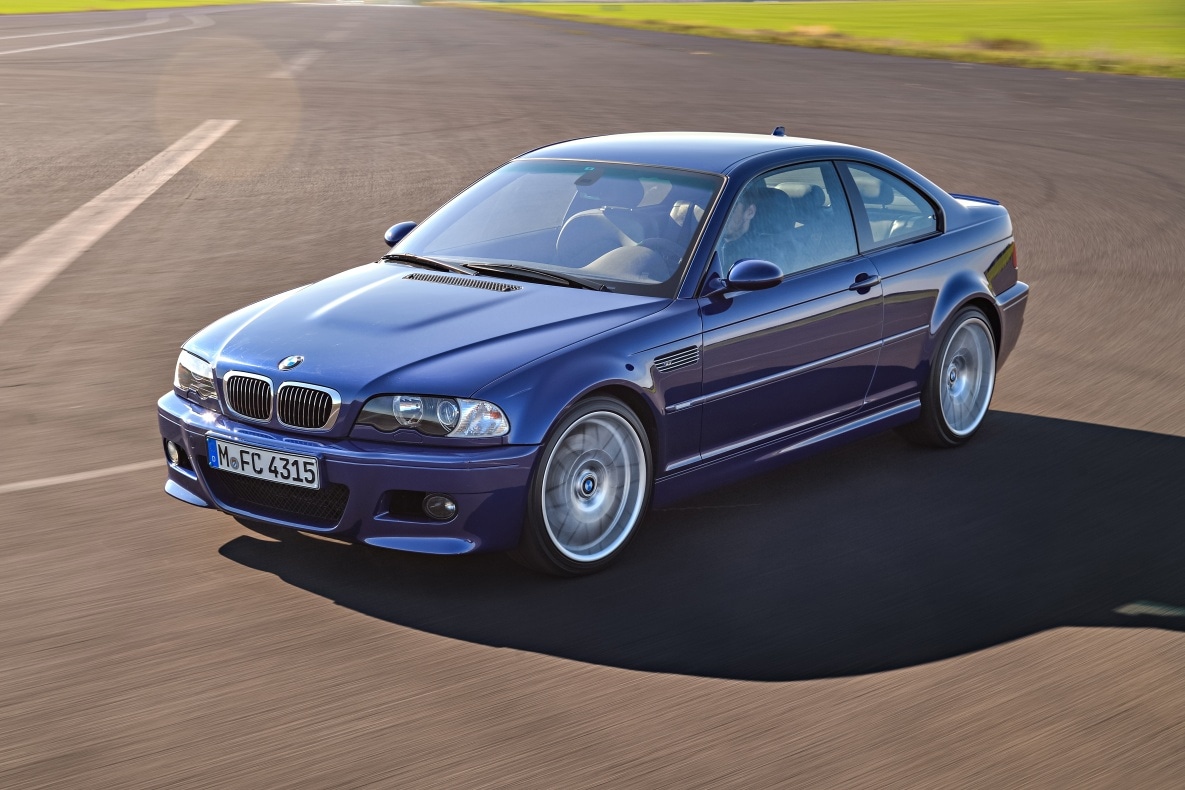
The 2000 BMW E46 M3 had an astonishing for the time 5.3 second 0 to 60 time. Image via BMW
Come the year 2000, and all of a sudden those very same Audis and BMWs were going 0 to 60 in 4.6 to 5.5 seconds. Supercars started to get close to the 4 second barrier, with a few ducking under it to 3.9 or 3.95 seconds. Engine evolution, advances in technology, and sheer mechanical grip had cars starting to go faster and faster off the line.
Along came the hypercar soon after, with the Bugatti Veyron setting a new speed record, and also being one of the first production cars able to consistently accelerate 0 to 60 in under 3 seconds. All of a sudden, the impossible was possible, and (wealthy) people could push a car to over 200 MPH consistently.
The Bugatti Veyron, seen here in the SuperSport 300 model, was the world’s first proper production hypercar. Image via Bugatti Rimac
Yet, as the years have passed, faster and faster cars have been coming out all across every segment of the automotive industry. Hell, you can get a hot hatchback these days that will do 0 to 60 in under 6 seconds, and a few mid-range sports sedans that can break the 5 second barrier, without them bearing badges like AMG or M.
At the tip of the spear of hypercars, however, things are starting to get properly ridiculous. There are at least two that can hit 60 MPH in well under 2 seconds, both of them electric. There is an entire class of hypercars known as “The 500 Club” that can break the 300 MPH barrier consistently. These are absolutely unbelievable figures, but they also raise one very important question:
Are we getting to the limit of what we can handle as humans?
The Limits Of The Human Body: G Forces
While a vehicle in and of itself can handle all the forces it’s been designed to handle, we are speaking here about the limits of us, the squishy water-filled meatsack that is operating the vehicle. First of all, there are humans that can handle extreme g-forces and extreme speeds with the physical fitness training and the reflexes needed. Fighter pilots, open wheel race car drivers, and the like train endlessly specifically to do that, and they are proof that it is possible.
This might look rather horrid, but this is what F1 drivers do to train up their neck muscles to be able to handle cornering and braking G forces. Here, Lando Norris of McLaren is resisting 48 kg of force, or 105 lbs. Image via Lando Norris’ YouTube channel
For the average human, however, the most that we can handle is between 3 to 4 G’s of acceleration, which is why a really fast roller coaster with tight corners can make someone pass out or be violently ill. Many people do not train their necks to handle consistent cornering G forces, and many, even healthy and fit adults, cannot think fast enough to react at the speeds that many hypercars go these days if topped out.
For the purposes of this article, we will consider 3 G’s as the standard limit of the average human. Yes, it can be pushed to 4, but that is rather uncomfortable on your body and neck.
Take, for example, the absolutely diabolical McMurtry Spierling. A fan car that sucks itself down onto the road, guaranteeing almost a literal ton of downforce, that can do the 0 to 60 sprint in a recorded, verified, and repeatable 1.4 seconds. That is nearly 2 G’s worth of acceleration slamming into you from nowhere.
The insane McMurtry Spierling was built to be the fastest accelerating street legal car ever made, and so far nothing’s even come close. Image via McMurtry
Read differently, that is two-thirds of the way to the limit of the average human. In fact, the acceleration is so brutal that several factory drivers complained of mild headaches after doing the test runs. It turned out to be because their brains had literally been pushed back in their skulls from the violence of the car overcoming inertia and took a split second to catch up to the rest of their head.
The thing about the Spierling is that it doesn’t stop there. It will continue to plant a rather large elephant on your chest as it howls up to its top speed of 155 MPH in under five seconds. That is why we talked up the 0 to 60 times of the late 1990s at the start of this article. We’ve gone from 0 to 60 in 5 seconds to 0 to 155 MPH in under 5 seconds.
Let that sink in for a moment. Progress is cool, isn’t it?
The Rimac Nevara is the world’s second fastest accelerating EV production hypercar. To us, however, it’s the more useful of the two, as the McMurtry is just insane! Image via RImac
Now consider that a Rimac Nevera does 0 to 60 in 1.74 seconds and tops out at 256 MPH after just 21 seconds. During that entire time, you’ll experience anywhere from 1.3 to 2.0 G of acceleration. As said before, that’s about two-thirds of what the average human can handle before neurological effects start to creep in.
Also, to note, both cars are also faster than actual race cars in those sprints too. IndyCars and Formula One cars take about 2.0 to 2.1 seconds to hit 60 MPH. Yes, those figures are correct, there are cars available to buy that can go faster than a race car, and you don’t have to progress through your teen years in karting and junior formulas to buy and drive them!
The Limits Of The Human Body: Top Speeds & Reaction Times
We will preface this section with the statement that of course a decent, sane human being would not take a supercar or hypercar to its absolute top speed on public roads. That’s what tracks and drag strips and abandoned airfields are for, where if you lose control it’s only your life that is affected.
That being said, not even seven years ago, the thought of going 300 MPH consistently in a hypercar would have had you committed for psychological evaluation. Now, however, there are several hypercars in “The 500 Club.” It’s called that because 500 KPH was the target of several hypercar manufacturers, and 95% of the world operates in metric. There are plans to keep pushing for even higher top speeds, but the question really must be asked: Is it safe to do so?
The Bugatti Chiron SuperSport 300. At top speed, it would have travelled from the curve in the road to where it is in this image in less than 2 seconds, that’s how fast 300 MPH is. Image via Bugatti
Put another way, if you were in a vehicle going exactly 300 MPH, you are covering 440 feet per second. In layman sports fan terms, that’s roughly 1.5 American football fields per second. In scientifically relative speeds, it’s just shy of one-third the speed of sound.
Yeah, it’s f-a-s-t.
Now, consider that the reaction time for the average adult human in excellent health is between 200 to 250 milliseconds, or 0.2 to 0.25 of a second. That is seeing/hearing something, the signal reaching the brain, the brain processing it, and then sending the command to your body to do something. While all of that is going on at 300 MPH, you’ve covered 88 to 110 feet, or between a third and a half of one football field.
The reason we bring this up is that while you might not be able to max out a supercar or hypercar in North America, there are places in the world where you can on public roads. The most prominent of these are the unrestricted sections of the German Autobahn, and you can find videos out there of people pushing over 200 MPH, ripping by traffic in the right hand lanes. Yet, if one of those drivers has even a momentary lapse of concentration or isn’t looking down the road far enough, crashes can, and have, occurred.
The German Autobahn around the central region of the country, where they are unrestricted. This is one of the few places you can actually stretch a super- or hyper-car’s legs. Image via EpikDrives
Because of the sheer momentum of a piece of metal, composites, and other materials going that fast while weighing a ton and a half at the least, the physics of those crashes are shocking. They are also pretty horrendously weighted against you coming out of the ordeal unscathed. We’ll spare you the details, but at 200+ MPH, the results are not life altering, they are typically life ending. We seriously do not recommend searching for it, but there are images out there of those crashes and they are graphic.
With that “pleasant” thought in your head, now think about a driver doing 100 MPH more than that, hitting 300 MPH. To give you a reference, if you skydive from a very high altitude and fall headfirst straight down with your hands tucked to your legs, you’ll reach terminal velocity, which for a human is between 180 to 200 MPH.
Almost a perfect head-down skydive. A human falling like this is hitting roughly between 180 to 200 MPH, straight down. We now have hypercars that are faster than that by 100 MPH or more. Image via Conde Nast
That is the point we’re making here, and many manufacturers agree. Almost all of the hypercars that are part of the 500 club are built so it needs you to use a completely separate key in a special location in the car to activate top speed mode. They’ll still go over 200 MPH without the special mode activated, but the point remains that 300 MPH is quite simply too fast for the average human. It requires you to drive with your eyes and your brain several hundreds of feet down the road at all times, and even a momentary lapse of concentration can be disastrous.
Those cars also have about a million warning screens you need to check through on their infotainment system to confirm you want to activate top speed mode. Some like the Chiron will refuse to activate the system if the ambient temperature is too hot or too cold, or the tires aren’t perfectly inflated to the correct pressures. It’s almost like they’re trying to tell you that going for V-max is a dangerous thing to do, even in a controlled, closed off environment…
Is There Anywhere To Go From Here?
For most of the 21st century, the biggest focus in the performance department has been acceleration and top speed. We’ve hit sub-1.5 second 0 to 60 times, and there are several very expensive hypercars that can hit 300 MPH consistently. Both of these feats deserve to be celebrated, without a doubt, as massive technical achievements. However, is there any point in pushing further?
The fact of the matter is that you’ll rarely if ever use the full potential of a supercar or hypercar in the real world. Speed limits, other drivers, your own physical limits, and many more factors play a part in determining how much of a car’s potential you will use. Even the Bugatti Chiron, one of the fastest cars ever made, is often driven at less than 70 MPH because there is just nowhere, and no reason, to push it. Also, in the places where you will find more than one, such as Monaco, there really isn’t any space to even push the car to 50 MPH repeatedly.
There are the limits of that pesky thing called physics that need to be considered. There is a certain point, no matter how aerodynamic the car is, that the air resistance pushing against the car will be the limit of speed, not the shape or the power of the vehicle. To defeat that air pressure, exponentially more power is needed. That’s the reason that the Veyron had the W16 with quad turbochargers to thunder out 1,001 HP.
The W16, quad-turbo engine from the Bugatti Chiron that developed 1,500+ HP. Image via Bugatti
It could get from 0 to 200 MPH on about 250 HP, but needed another 750 HP to go 60 MPH faster. It’s the same reason the Chiron Super Sport 300 had a massive 1,580 HP to reach 304 MPH. It took that extra 579 HP on top of a shape that was nearly twice as slippery as a Veyron to gain just 44 MPH.
While speed is a superb metric of performance, to go much faster than those vehicles in The 500 Club will require a paradigm shift in engines, motors, or other forms of propulsion. We are already pretty much at the limit of road-legal vehicles with 2,000 HP EV hypercars, no matter how slippery the shape of the car is.
To give you an idea of just how much raw power a vehicle needs to go properly fast, the only four wheel vehicle to ever break the sound barrier, ThrustSSC, used two gigantic Rolls-Royce Spey 202 turbofan afterburning engines from the British variant of the F4 Phantom II fighter jet. Stuck between the massive engines was a very thin, long body that was barely wide enough for a human to sit in and was shaped literally like a bullet with a very pointy end.
In one of the most historic shots of land speed records, Thrust SSC is creating a sonic shockwave on the salt flats as it passes through the sound barrier. Image via Motorious
At full afterburner, those engines were putting out a combined 50,000 lbs-ft of thrust, and that barely pushed the ThrustSSC to 764 MPH, and it could only sustain that for about 15 seconds. For reference, 50,000 lbs-ft of thrust equates to roughly 101,500 HP.
The pointy end of Thrust SSC. The little hump between the two gigantic engines is a little view bubble big enough for pilot Andy Green to look out of, and he couldn’t get his entire head inside vertically, so all you would see were his nose, eyes, and helmet! That should give you an idea of just how huge the engines were! Image via SlashGear
In our opinion, we actually are at the limit in performance, both in terms of acceleration and top speed, right now in 2024. There is no reason to go any faster or accelerate any harder as well. Yes, that is akin to blasphemy on a site called Supercars, but hear us out.
There might very well be the ability to increase in both, but we humans can’t handle much more than we’re already getting. At least, not without specialized training, and if you can afford a hypercar, you might be able to afford a personal trainer to help you with that. For the standard human, however, there is no impetus, and no real reason, to train hard to be able to drive a car at insane speeds and handle brutal acceleration and cornering G’s.
Being realistic, you will never actually go 300 MPH for more than a few seconds, and even then probably only on a private test track rented out for the day. If you want to go truly fast without needing to have a few million dollars, hop on a regional flight between Los Angeles and Austin, for example. It will cost you less than even a used beater, and you’ll be going over 500 MPH in a seat 40,000 feet in the air.
On the ground, there are realistic and unrealistic speeds, something the Germans understand extremely well. Except for a very few rare exceptions, you won’t find a Porsche, Mercedes, or BMW pursuing even 200 MPH. There is just no reason to go that fast, even in the country that has the Autobahn. Those cars will get up to 155 on average to 185 MPH at the top end, with grace and style. You’ll also be going that fast in immense comfort and if you do lose control, at those speeds it is possible the safety systems will save your life, and that’s what truly matters.
When I first heard about Makoko, the largest floating slum village in Lagos, Nigeria, I was both curious and excited. I had never seen anything like Lagos state or Lagos island before. But for the record, island adventures in Seychelles Island, Calayan Island and Borawan Island are equally amazing so I’ve no doubt Makoko will also be just as special!
Digital nomads like me can help you become one. For a complete guide, I offer TMTG’s eBook: “The A-Z on How to Become a Digital Nomad” for comprehensive guidance!
As I approached Makoko, I noticed that this place was like no other. The fishing village sits right on the water with stilt houses.
I was amazed to see how the residents here live in an informal settlement, surrounded by water. To get around, everyone would use a boat or wooden canoe, which I found fascinating.
Thinking of exploring the place, it made me grateful to get one of those waterproof phone bags people love!
Taking a Canoe Ride
I decided to hop on a canoe myself to get a closer look of the floating city. The ride was smooth, and as I glided through the water, I could see children playing, women cooking, and good fishermen.
Any person will notice that life here moves at a different pace, and the locals work together with the local chief to keep the village running.
The People of Makoko
One thing that stood out to me in the floating slum was how welcoming the Makoko residents are.
Even though their lives might seem challenging, they greeted me with warm smiles.
Many of them were eager to share stories about their community and how they’ve adapted to living on water.
Education on the Water
During my tour, I noticed the local school in the village. It’s incredible to think that children are educated in a floating school!
Like the houses on the lagos mainland, it is built on stilts, and I could hear the sound of laughter and lessons drifting across the water.
Any photographer who would visit the place would want to take photos of the primary school.
Challenges and Resilience
Life in the largest economy of Makoko isn’t easy. The people here face many challenges, such as limited access to clean water and healthcare: poverty in general.
However, I was struck by their resilience. They’ve created a way of life that works for them, despite the difficulties.
The reflection of the wooden houses on the water, the colorful boats, and the peaceful rhythm of daily life – it all left a lasting impression on me, beyond the lens of a camera.
Leaving Makoko
When my tourist journey in the floating community came to an end, I felt grateful for the best experience. I didn’t even miss dry land for a while or the internet connection (CODE: KATRIN8414).
Visiting the Makoko stilts village gave me a new perspective on how supposedly poor people can adapt and thrive – keep each other safe and secure in a place that can come to others as a squalor.
But the Makoko residents still look rich in happiness! If you ever find yourself wanting to experience something different from visiting places like the Ogun state, and don’t mind the waterfront part in Lagos, I highly recommend taking the time to see this floating village.
It’s a place like no other, and the spirit of the residents will stay with you long after you leave. So get your travel insurance, grab or buy all stuff you need and book a private tour with a local tour guide now!
FAQ
What language is spoken in Makoko?
The most prominent language spoken by the local community in Makoko is called Egun and it is a blend of French and other local Nigerian languages.
How do people earn money in Makoko?
The main economic activities are fishing, sand dredging and salt making. Men in Makoko are mostly fishers. Some women also fish; others trade fresh or smoked fish or process other people’s catches. The incentives distributed in Makoko by the government (such as fishing nets and powered engines) go mostly to the men.
Does the Makoko Floating School still exist?
The Makoko Floating School was a building project of Makoko, Lagos, Nigeria which was developed in 2013. The school was abandoned in March 2016 over safety concerns and collapsed in a storm in June 2016. Subsequent iterations have been proposed.
Polestar is working on a small SUV to be called the Polestar 7
The 7 will be built in Europe and replace the 2 as Polestar’s entry-level vehicle
Polestar will launch the 5 midsize sedan and possibly the 6 sports car before the arrival of the 7
Swedish electric performance brand Polestar made several major announcements on Thursday, including confirmation that its next model, the Polestar 5 sedan, will arrive in 2025 and that its previously announced Polestar 7 model will be a small SUV.
Timing for the Polestar 7 wasn’t announced, but former CEO Thomas Ingenlath told Autocar last April that the 7 is anticipated for launch around 2027, at which point it would replace the current 2 hatchback as the brand’s entry-level vehicle.
The 5, a rival to the Porsche Taycan and high-end versions of the Tesla Model S, is already at a late stage of development. The design was previewed in 2020 with Polestar’s Precept concept car, and camouflaged prototypes suggest the production version will stay true to the lines of the original show car.
The 5 will use a platform developed in-house at Polestar. In terms of performance, Polestar has said it is targeting up to 884 hp from a dual-motor all-wheel-drive powertrain. Such output will likely be reserved for a range-topping model.
Polestar 5 prototype ride
No further details on the 7 have been revealed apart from its classification as a small SUV built in Europe. This production location will enable it to avoid the steep tariffs currently placed on Polestar’s Chinese-made vehicles, which account for most of the automaker’s production. Polestar also builds the 3 midsize SUV in the U.S. and the 4 compact crossover in South Korea.
The 7 will likely utilize the SEA dedicated EV platform of Polestar parent company Geely. This platform underpins the 4 and the Volvo EX30 subcompact crossover. It is also employed in vehicles from Geely’s Zeekr brand. In the EX30, the platform enables 0-60 mph times as low as 3.4 seconds, aligning with Polestar’s performance focus.
The EX30 is currently built exclusively in China but Volvo is preparing its plant in Belgium to build the vehicle. This is also likely where the 7 will be built, if it ends up being related to the EX30.
2025 Volvo EX30
The design of the 7 will be one of the first from Philipp Römers, a former Audi designer who replaced Maximilian Missoni as Polestar’s design chief last August. Missoni left to take up a job at BMW. In a statement, Römers said the 7 will be everything Polestar customers have come to expect “in terms of design and performance.”
Before the 7 arrives, Polestar is expected to launch the 6 sports car. The 6 was previewed by the O2 concept car in 2022 and is expected to arrive in 2026. The 6 is expected to share a platform with the 5, and like that model deliver up to 884 hp.
Polestar 6 Concept AT 2024 Goodwood Festival of Speed
Polestar stated that the arrival of new models, combined with a significant expansion of retail locations, will help it achieve its targeted sales growth of 30-35% between 2025 and 2027, as well as generate positive free cash flow after investments beyond 2027. In North America, the automaker plans to increase its number of stores from 36 to 57.
The automaker also anticipates growing revenue through the sale of carbon credits in certain regions. Simultaneously, it aims to reduce costs by transitioning from its current multi-platform strategy to relying on a single, highly flexible platform after 2027.
I’m not interested in starting a debate about the first personal-luxury car, though I open to suggestions that the Ford Thunderbird—probably the second-generation—was it. I do want to call out one of the best examples of the breed, however, and that’s the Oldsmobile Toronado.
New for 1966, the big front-wheel drive coupe was decidedly masculine—something supported in early advertising for the car—as well as fast, luxurious, and obviously expensive. For ’66, the Olds 98 Holiday Hardtop Coupe started at $4165, while the all-new Toro started at a big $4617 (that’s $44,500 in 2024 dollars). Not only had Oldsmobile entered a new market segment with the Toro, it had also introduced a new flagship.
As might be expected—during the big coupe’s run—the Toronado was always available with the largest engine available to Oldsmobile customers. And, as noted above, the Toronado was always equipped with front-wheel drive. At launch, the Toro was the first front-drive American-brand car since the Cord 810 and 812 were discontinued in 1937.
The Toronado was part of the Olds lineup between 1966 and 1992, and changed dramatically each time it was redesigned. A quick recap of all four generations of the Olds flagship:
First Generation: 1966-1970
Length (inches): 211-215
Weight (pounds): 4500
Thoughts: Absolute design perfection.
Second Generation: 1971-1978
Length (inches): 220
Weight (pounds): 4800
Thoughts: Chubby. Sportiness gone.
Third Generation: 1979-1985
Length (inches): 204
Weight (pounds): 3800
Thoughts: Spot-on perfect design for the day.
Fourth Generation: 1986-1992
Length (inches): 188-200
Weight (pounds): 3300
Thoughts: Looked like a puffed-up Cutlass Calais. Mistake.
It’s worth noting that, though dramatically downsized, the third-generation Toronado was, by far, the best-selling version of the car. With its edgy, purposeful creases, and bulldoggish sense of substance, the 1979-1985 Toros hit the market in exactly the right way, with a design conveying both efficiency and broad-shouldered luxury.
The fourth-generation Toros were a letdown. Further downsized, the last Toros looked too much like smaller cars in the Olds lineup, yet cost dramatically more. Further, a V8 engine was no longer offered, which was a disappointment to many returning customers.
Collected here are ten classic Toronado print ads. And if you have a favorite model year or generation of Oldsmobile’s classic personal-luxury car, tell us about it. The place to leave comments is down below.
The Mitsubishi Outlander has been a family favourite for a number of years now, though competition from its rivals is getting stiffer than ever.
Last year a total of 27,613 examples of the Outlander were sold, making it the second top-selling vehicle in its segment, behind only the popular Toyota RAV4. In fact, the Mitsubishi Outlander was Australia’s fifth top-selling vehicle overall in 2024.
While this Japanese mid-size SUV is available with five seats, it’s one of the few in the segment to offer an available third row of seating.
Hundreds of new car deals are available through CarExpert right now. Get the experts on your side and score a great deal. Browse now.
Two powertrains are offered across the range: a 2.5-litre four-cylinder petrol available with either front- or all-wheel drive, and a 2.4-litre four-cylinder plug-in hybrid (PHEV) with all-wheel drive.
As it currently stands the Outlander is the only mainstream mid-sized SUV to offer both a PHEV powertrain and seven seats. Sure there’s the Kia Sorento PHEV, but that’s classified as a large SUV according to the Federal Chamber of Automotive Industries (FCAI).
Below, the members of the CarExpert editorial team have shared why they’d either buy a Mitsubishi Outlander, or opt for another mid-sized SUV.
Interested in buying a Mitsubishi Outlander? Get in touch with one of CarExpert’s trusted dealers here
MORE: Everything Mitsubishi Outlander
Marton Pettendy: Nissan X-Trail
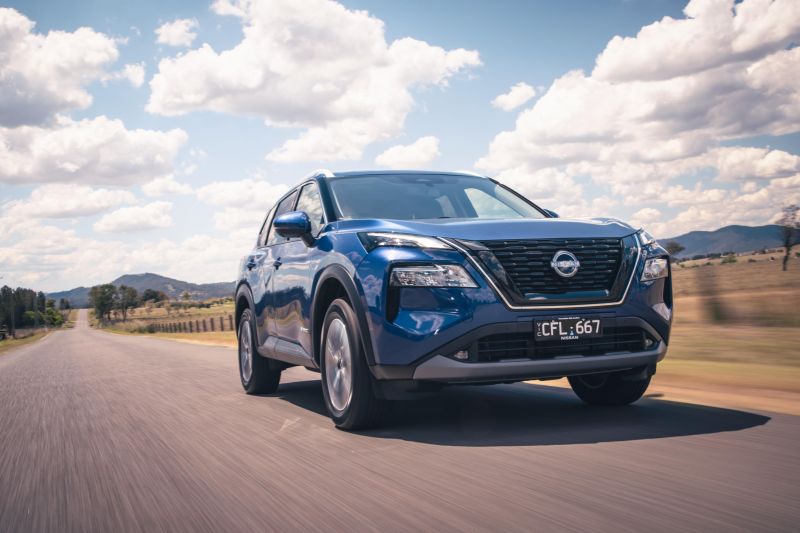
Instead of a Mitsubishi Outlander, I’d buy a Nissan X-Trail because the current model is one of the most dynamic, comfortable, refined and high-tech mainstream mid-sized SUVs on the market.
But because I don’t need seven seats and want all-wheel drive, I’d spend the extra $5000 or so to have the cheapest e-Power version, for about $50k before on-roads.
It’s slightly less efficient than a similarly priced Toyota RAV4 Hybrid but way more fun to drive, thanks to a great ride/handling package and that ingenious, torquey range-extender hybrid powertrain that drives like an EV most of the time.
And unlike the Outlander PHEV and BYD Sealion 6, it’s a plugless hybrid that doesn’t need to be externally recharged to deliver its fuel economy advantages.
The latest Honda CR-V is also very good, but there’s only one hybrid version and it’s $10K more expensive. And because the Kia Sportage Hybrid is front-drive only, the Hyundai Tucson Hybrid would be my second choice for a couple grand more.
Nissan X-Trail
Pricing
$38,025-$59,265 before on-roads
Warranty
5 year, unlimited kilometres
ANCAP safety rating
5 stars (2021)
Interested in buying a Nissan X-Trail? Get in touch with one of CarExpert’s trusted dealers here
MORE: Everything Nissan X-Trail
James Wong: Mitsubishi Outlander PHEV
While a bit dearer than the competition, the plug-in Outlander is the only option in this set that offers both electrification and three rows of seating in Australia.
I really like the Nissan X-Trail e-Power and Honda CR-V e:HEV, but alas both miss out on three-row interior configurations offered by their ICE counterparts.
The BYD Sealion 6 is also a great and more affordable alternative, but likewise lacks a third row option despite being longer than the Mitsubishi.
We’ve documented our praises of the new Outlander PHEV for sometime including its achievable EV range, practical interior and wide lineup.
It’s about to get even better too, with an incoming running update bringing better tech and a bigger battery with even more range.
Interested in buying a Mitsubishi Outlander? Get in touch with one of CarExpert’s trusted dealers here
MORE: Everything Mitsubishi Outlander
Sean Lander: Nissan X-Trail e-Power
Tough choice this week. I really like the Outlander PHEV, but when you start driving long distances (i.e. more than 150km on a highway) the battery drains very quickly and you are left with a wheezy petrol engine to pull you along.
This is something I experienced first hand with the Outlander PHEV during the ~10,000km I spent behind the wheel of my long-termer in 2023.
That’s where the X-Trail e-Power really shines. A cousin to the Outlander, the e-Power powertrain is fundamentally an EV with a range extender. Electric motors power the front and rear wheels and the 1.8kWh battery is charged by the 1.5-litre three-pot turbo-petrol engine.
It’s comfortable, quiet and reasonably economical. Granted, you only get five seats only in Australia but that is fine for me personally, and for the majority of buyers it will do the job.
All that’s really missing are ventilated seats, because the leather seats in my current Ti-L e-Power long termer are not summer-friendly. Other than that, you’d be a fool to overlook the X-Trail e-Power.
Nissan X-Trail e-Power
Pricing
$50,765-$59,265 before on-roads
Warranty
5 year, unlimited kilometres
ANCAP safety rating
5 stars (2021)
Interested in buying a Nissan X-Trail? Get in touch with one of CarExpert’s trusted dealers here
MORE: Everything Nissan X-Trail
Jack Quick: BYD Sealion 6
Sure the Outlander is the only vehicle to offer both seven seats and a PHEV powertrain, but the third row is really compromised in terms of space and only suitable for small kids for short trips.
With this in mind, the BYD Sealion 6 is a solid alternative for those who don’t need the full seven-seat capacity and can make do with five seats. It offers plenty of space in both the first and second rows of seating, plus has a decently sized boot.
I also appreciate the Sealion 6’s flashier tech. The Outlander’s 8.0-inch touchscreen infotainment system in particular is looking small now in 2025. Thankfully an update is coming soon.
Driving the Sealion it’s just as quiet as the Outlander PHEV, plus in top-spec Premium AWD guise it offers a similar amount of real-world EV range (~80km).
What seals the deal for me is BYD has cut the asking price of the entry-level Sealion 6 Dynamic to just $45,990 before on-roads, making it Australia’s cheapest PHEV. Sounds like quite a bargain to me.
BYD Sealion 6
Pricing
$45,990-$52,990 before on-roads
Warranty
6 year, 150,000km
ANCAP safety rating
5 stars (2023)
Interested in buying a BYD Sealion 6? Get in touch with one of CarExpert’s trusted dealers here
MORE: Everything BYD Sealion 6
Jordan Mulach: Nissan X-Trail e-Power
Nissan has seemingly nailed it with the electrified X-Trail, introducing a vehicle which gives all the benefits of an EV but without having to worry about charging or range anxiety.
The power delivery is smooth, as to be expected from using electric motors, but you don’t have to worry about taking time to plug it in to top up the battery, which is handled by a petrol engine acting as a generator.
As good as Toyota’s hybrid tech in the RAV4 is, this could be the way to add another lane to the bridge between petrol and electric power.
Nissan X-Trail e-Power
Pricing
$50,765-$59,265 before on-roads
Warranty
5 year, unlimited kilometres
ANCAP safety rating
5 stars (2021)
Interested in buying a Nissan X-Trail? Get in touch with one of CarExpert’s trusted dealers here
MORE: Everything Nissan X-Trail
Max Davies: Honda CR-V
Maybe not the obvious choice, but hear me out.
The Outlander and X-Trail are great cars, but there’s a lot to like about the Honda CR-V. For one, it offers an impressive range of specification: there are variants with front-wheel drive, all-wheel drive, five seats, seven seats, and even one hybrid.
Honda’s hybrid technology is good, and as a bonus the CR-V e:HEV hybrid produces more torque than electrified versions of the Civic and ZR-V.
Then there’s the interior tech, which is well-constructed and logical. The infotainment, climate control, and instrument cluster are all clean in appearance, which means it’ll be easy to live with, even for people who aren’t used to Honda cars. It looks pretty good on the outside, too.
When the current CR-V launched back in 2023, its drive-away pricing shocked, but as time has gone on the asking price of its rivals have inflated to reach it. Currently the range starts at $41,900 drive-away and extends to $59,900 drive-away, which seems like a good deal.
Interested in buying a Honda CR-V? Get in touch with one of CarExpert’s trusted dealers here
MORE: Everything Honda CR-V
William Stopford: Hyundai Tucson Hybrid
The Outlander is the most impressive vehicle Mitsubishi sells, and I have no qualms recommending it to buyers.
But its Nissan X-Trail platform-mate rides better, and that model’s e-Power variants give you fuel-saving benefits – though not the full extent of electric-only driving – at a lower price than the Outlander PHEV.
My choice, however, would have to be the Hyundai Tucson – but only in hybrid guise. It gives you similar fuel economy to an X-Trail e-Power, if not pure-electric driving like an Outlander PHEV, plus an attractive interior and a competitive driving experience.
I wouldn’t bother with any of the other Tucson variants, particularly now the diesel is dead. Its Kia Sportage platform-mate is a tempting runner-up, but it has far fewer hybrid variants – no all-wheel drive ones, for example, and don’t go looking for a green interior (yes, you can get one on the Tucson!)
Interested in buying a Hyundai Tucson? Get in touch with one of CarExpert’s trusted dealers here
MORE: Everything Hyundai Tucson
Josh Nevett: BYD Sealion 6
The BYD Sealion 6 recently became Australia’s most affordable PHEV at just over $45k, which is seriously good value for a comfortable, efficient and well-equipped family SUV.
Even in base Dynamic form, the Sealion 6 packs two massive interior screens, heated and ventilated power seats, synthetic leather upholstery, and a panoramic sunroof.
It’ll complete the daily commute in silence with 92km of electric driving range, and remains efficient even when the battery runs dry.
BYD has also gone out of its way to add extra soundproofing to the Sealion 6, which pairs perfectly with a cushy ride. It really does feel like a premium product, which you can’t say for other spacious SUVs at this price point.
BYD Sealion 6
Pricing
$45,990-$52,990 before on-roads
Warranty
6 year, 150,000km
ANCAP safety rating
5 stars (2023)
Interested in buying a BYD Sealion 6? Get in touch with one of CarExpert’s trusted dealers here
Whether it’s to visit Machu Picchu, the floating islands of Lake Titicaca, the Nazca Lines, or the vibrant capital city of Lima and its blossoming food scene, Peru lives up to the hype. I absolutely loved my visit here. It was everything I thought it would be!
However, I also often hear and read about tourists getting mugged or their things being stolen. I get worried emails from travelers wondering if Peru is safe to visit due to recent political unrest.
Today, I want to answer their questions:
Is it safe to visit Peru? What do you need to look out for? What precautions do you need to take?
In this post, I’ll share everything you need to know to safely visit Peru.
11 Safety Tips for Peru
In general, Peru is a safe place to visit. You’re not going to get kidnapped or murdered there so don’t worry about any violent crime as a traveler. But Peru does require you to be a bit more vigilant than other destinations because there is a lot of petty crime.
Here are some tips to help you plan and prepare for a safe visit to Peru:
1. Avoid displaying any expensive belongings – Keep your jewelry out of sight (or even leave it at home). Don’t flaunt valuables. Be especially aware of taking out your phone, as phone theft is rampant (over 4,000 phones are reported stolen every day). Don’t even wear AirPods on the street. In short: always keep an eye on your stuff. Minimizing the target on your back that says, “I’m carrying a lot of valuable stuff” is very important.
This is especially try in major cities like Lima and Cusco where petty theft is more common. If you’re out in the day and you see people with phones and such out, it’s probably safe but if you’re alone, be careful. Thieves will come by on scooters and take stuff from your hands and drive off.
2. Be aware of thieves or muggers working in pairs or small groups – The trick of distracting you (for example, someone “accidentally” bumping into you, or a group of kids playing or fighting near you) is often used so that an accomplice can rob you while you’re not paying attention to your belongings. Don’t fall for distractions and keep your guard up.
3. Keep an eye on your belongings at all times – In crowded places or on public transit, be aware that thieves could be looking to literally pick your pocket or slash your bag. Keep some small bills in a separate pocket, so that when you’re paying for things, you don’t need to put your whole wallet or purse on display.
4. Keep your valuables separate – When you’re going out for the day, leave some credit cards and cash locked in your accommodation. That way, if you lose your wallet, you’ll still have cash and cards back at your hostel. In general, it’s a good idea to make photocopies of your passport to take with you and lock up your passport in your hostel locker. Keep digital copies of your passport in your email inbox too just in case.
5. Download the Prey app to your phone and laptop – If either device gets stolen, you’ll be able to track it and remotely turn on your camera to photograph the thief (you can also wipe the data and message the thief too). It costs just $1.10/month.
6. Avoid traveling alone at night – There have been incidents of people being mugged as they leave a taxi at night in the cities, and repeated reports of bandit activity after dark in some areas, such as Tingo María, northwest of Lima, at the entrance to the Tingo María National Park. Try to travel with friends or other travelers at night as there is safety in numbers.
And this is especially true in cities at night too. In some areas of Lima like Miraflores and Barranco, there’s a lot of people out at night so it’s less of a problem but this also the two nicest and most touristy areas of Lima so it’s a hot bed for thieves.
7. Choose a reputable bus operator – Sometimes the cheapest option isn’t the best one. Some of the cheap bus companies have the most reckless drivers and lots of breakdowns, and since Peru has some of the world’s worst traffic accident rates, you’re usually safer using a slightly pricier bus company. Some of the most reputable bus operators include Cruz del Sur, Oltursa, Civa, and Movil Tours. Additionally, consider PeruHop, which is a hop on/hop off bus tour operator catering to travels (and sometimes locals) that is very safe, uses incredible drivers, and has no theft problem.
8. Don’t use drugs – Since Peru produces a lot of cocaine, tourists (especially young backpackers) tend to do a lot of it here. It’s not worth the risk, however, since if authorities even suspect you of using drugs, you can be detained for up to 15 days. Buying drugs here supports organized crime, so be smart and skip the drugs.
9. Learn some Spanish – Being able to speak some basic Spanish will help you in many situations, but if you get in trouble and need help, then you’ll really appreciate it. Start with an app like Duolingo to master some basic vocabulary. Google Translate app is also a must-have app (download the Spanish language to your phone so you can translate offline).
10. Buy travel insurance – Things can go wrong on the road. That’s why I never go anywhere without travel insurance. From theft to injuries to delayed flights, travel insurance is there to ensure you don’t go broke. It’s just a couple bucks a day (often less) and provides peace of mind. Don’t travel here without it!
I recommend SafetyWing for travelers under 70, while Insure My Trip is the best choice for travelers over 70.
You can use this widget to get a quote for SafetyWing:
For more information on travel insurance, check out these posts:
Planning a trip to South America?
Get all my best travel tips along with these guides:
My Favorite Companies to Use
61 Savvy Travel Tips
16 Steps for Planning a Trip
How to Get Free Flights
Just fill in your details below and I’ll send everything to you right now:
With these travel tips, you’ll be able to stay safe while you visit or backpack around Peru! Furthermore, here are answers to some frequently asked questions we get.
Is Machu Picchu safe?
Machu Picchu is such a common tourist destination that you’ll most likely be safer here than any other part of Peru. Chances are you’ll be hiking with a group or in a crowd, so pickpockets and other petty thieves are unlikely to be around. It’s much more important to be vigilant in cities like Lima or Cusco.
The more important safety issue if you are hiking to Machu Picchu is to take care of your health. Make sure you have plenty of water, and use sunscreen and hats to deal with the heat. If you’re not acclimatized to the altitude, then altitude sickness can be a problem; you need to take it seriously if you start to feel sick. Avoid this by staying in Cusco for at least a couple of days before visiting Machu Picchu.
Finally, if you use a guide, which is recommended when hiking, make sure they are a licensed operator, as you sometimes hear of unlicensed guides taking you the wrong route and keeping your hiking permit payment for themselves.
Is Peru safe to travel alone?
Solo travel is pretty common in Peru, and you’ll often find plenty of other solo backpackers to spend time with, so it’s unlikely you’ll be alone that much.
Bus travel and being out after dark anywhere is safer in a group, but in general, solo travel in Peru is no more dangerous than traveling with friends or a partner.
Just remember to avoid standing out and looking like a tourist. Don’t dress in fancy clothes, don’t wave your expensive gadgets around, and if you get lost, don’t stand there staring at a map. Basically, avoid sticking out like a sore thumb, and you’ll reduce the chance of a petty thief deciding you’re their next victim.
Is it safe to travel to Peru with kids?
On the whole, it’s not especially unsafe to take your kids to Peru. Family and children are very important in the Peruvian culture, so you and your kids will be made to feel very welcome.
Be careful with particularly small children, though, because they’re more susceptible to getting sick from unfiltered water, for example. It’s also not recommended to take kids under three to high altitudes such as Machu Picchu.
Is Peru safe for female travelers?
It’s not unsafe to be a solo female traveler in Peru, though you might be the victim of some unwanted attention, mostly in the form of catcalling. Local women in Peru rarely go out to bars without men, so if you are a women-only group in a bar, you might get some extra attention. But there’s a lot of solo female travelers in the country so you’ll meet others to hang out with. Peru doesn’t require any more precautions than you would take anywhere else.
Can you drink the tap water in Peru?
No, don’t drink the tap water in Peru (though it’s fine to brush your teeth with). Use a Lifestraw, which not only ensures that your water is always safe to drink as it has a built in water filter in the bottle but helps you avoid single-use plastic.
Are taxis safe in Peru?
Taxis are relatively safe, but make sure you only use authorized taxis and that you know the rate in advance. If you need a taxi, have your hostel or hotel call one for you and find out what the rate is in advance. Make sure you agree on the fare with the driver in advance, as taxis don’t use meters so it’s easy to get overcharged if you’re not paying attention. That said, Uber is everywhere in the country now and you can call an Uber if you don’t want to flag a random taxi down.
****
Peru is an amazing destination no matter what your interests, with a rich culture, welcoming people, beautiful landscapes, and fascinating historical sights.
You do need to be cautious about your personal safety, however. The most common issues travelers face there are petty theft and pickpocketing, but by exercising a bit of extra vigilance and common sense, you can minimize your risk. Be sure to make sure that you’re not carrying valuables in an obvious way and don’t have large sums of cash in one place.
Peru is a relatively safe country to visit, so don’t let the stories put you off. The amazing attractions will definitely make your trip worthwhile! Peru is an amazing place and with some common sense you won’t have any issues! I didn’t.
Book Your Trip to Peru: Logistical Tips and Tricks
Book Your Flight Use Skyscanner to find a cheap flight. They are my favorite search engine because they search websites and airlines around the globe so you always know no stone is left unturned!
Book Your Accommodation You can book your hostel with Hostelworld as they have the biggest inventory and best deals. If you want to stay somewhere other than a hostel, use Booking.com as they consistently return the cheapest rates for guesthouses and cheap hotels.
Don’t Forget Travel Insurance Travel insurance will protect you against illness, injury, theft, and cancellations. It’s comprehensive protection in case anything goes wrong. I never go on a trip without it as I’ve had to use it many times in the past. My favorite companies that offer the best service and value are:
Looking for the Best Companies to Save Money With? Check out my resource page for the best companies to use when you travel. I list all the ones I use to save money when I’m on the road. They will save you money when you travel too.
The Cayenne Turbo E-Hybrid replaces the non-plug-in Turbo
Up to 42 miles of range, according to this gauge
It’s $148,550 for the SUV, $153,050 for the Coupe
If you want a luxury car, you’ve earned it—but let’s be adults here. It’s time to make some concessions to efficiency.
The new wave of plug-in hybrids in the offing have bigger batteries and more electric range, backed up by gas power. They’ll permit a daily drive on electric power with gas backup when absolutely necessary. How’s that for compromise?
We still hold space for the late, lamented Chevy Volt. Today’s Toyota plug-in RAV4 and Prius and a host of others fill most of that bill, too. But for the well-heeled, the plug-in hybrid of choice might look a lot like—hear me out—thePorsche Cayenne Turbo E-Hybrid.
Why? It has the knack to act like three different cars. For long stretches of interstate and the ramps that lead onto them, it’s a corner-wringing V-8 howler. It’s a clever utility vehicle that runs in hybrid mode to drag home flat-pack furniture and big-box luxuries. And tucked discreetly into the same unibody wrapper, it’s also a plug-in car, one with up anywhere from 24 to 42 miles of electric range on tap, according to the EPA and to the gauge on the model I drove over the holidays.
2025 Porsche Cayenne Turbo E-Hybrid test drive review
Porsche Cayenne E-Hybrid Turbo: a corner-wringing V-8 howler
It’s as frugal as you’ll let it be, but make no mistake. This Cayenne wears its V-8 heart on its sleeve much of the time, clipping along interstates like a hydrofoil powered by pure fury.
It sports one muscular powertrain beneath the hood. The Turbo E-Hybrid, which Porsche sells in both the SUV and “Coupe” shapes, connects a25.9-kwh lithium-ion batteryto a 174-hp electric motor that integrates with a 591-hp 4.0-liter twin-turbo V-8 for a road-rattling 729 hp and 700 lb-ft of torque. It’s so brutally quick, Porsche’s dropped the plain Turbo edition. It drops 0-60 mph times of 3.5 seconds and can claw to a 183-mph top speed—and it does the former with such ease that it’s easy to look like a complete jackass when you’re just trying to merge with moving traffic.
Whipped around an exit ramp or four—it’s the only source of driving entertainment here on the rim of the Gulf of Mexico—the Cayenne taps its two-chamber, two-valveair suspension and continuous dampingto dance as if it wasn’t toting around more than 5,000 pounds of self. Fitted with that setup as well as a torque-vectoring system and rear-axle steering, the Cayenne Turbo E-Hybrid never betrayed its excellent damping even on its big 22-inch sport tires. Porsche doesn’t dial in too much lateral stiffness like some other German SUVs, and that leaves this pricey Cayenne relaxed when it should be—and not high-strung when its suspension’s twirled into Sport mode.
2025 Porsche Cayenne Turbo E-Hybrid test drive review
Porsche Cayenne E-Hybrid Turbo: A clever hybrid hauler, too
The Cayenne lives up to its SUV destiny without much trouble, too. It strains at the reins as it performs its list of tasks and chores—but it’ll do it, and do it well.
The sleeker Coupe style cuts into some of the inherent utility baked into its body, but both Cayennes can flip, fold, and finesse their way home with people and cargo intact. A raft of upgrades touch up the Cayenne’s interior comfort, ranging on my test vehicle from 18-way white leather sport seats towireless smartphone chargingand an amazing teal paint job tinted like a gulf storm in winter.
The ride’s a serene one, and getting comfortable’s a cinch for front-seat passengers. A cinch, in that the standard sport seats might be too constrained for some wider frames, in which case Porsche sells 14-way seats with flatter cushions. In theburrito-snug sport seat, surrounded by digital displays and a touchscreen that wirelessly accessed deep disco cuts and beamed them throughout the cabin, I couldn’t discern a reason I’d choose a conventional sedan over the taller but equally refined Cayenne.
Second-row seats support two big passengers with plenty of space, while a third should be trim and in good spirits. But when they’re not invited, and when interior space’s needed for stuff instead, the Cayenne meets the task. TheCayenne SUV has 27.5 cubic feet of cargo spacebehind the rear seatbacks, which can expand to 60.3 cubic feet with them folded down. That’s large enough to haul home a new home-office setup, drop-shipped to a nearby warehouse, no sweat broken, while a cheery synthetic voice pointed us out of the parking lot and onward to brunch.
2025 Porsche Cayenne Turbo E-Hybrid test drive review
Porsche Cayenne E-Hybrid Turbo: The EV skinflint
Not everyone needs this much power, so the Cayenne E-Hybrid or Cayenne S E-Hybrid might be enough for most drivers that want better economy all the time. However, in my specific use case, the Cayenne Turbo E-Hybrid acts just like those lesser models.
That’s becausemy daily routine rarely takes me beyond 20 milesin any direction—and because the cost of charging is zero. I live in a complex where lower-power Level 2 EV charging of about 6 kw remains free to all residents—so, OK, maybe not free, but socialized among all us neighbors.
So thanks to those factors, and a better 11-kw onboard charger, I pushed the Cayenne Turbo E-Hybrid up to an indicated 42 miles of range before I left on the day’s errands. I wanted to drive as far as I could without tipping into the gas engine’s power, which I took to mean a trip to find Borgonzola cheese and Mamitas corn chips and other delicious snacks at the nearest Aldi, 16 miles away byApple Maps’ reckoning.
At first, it proved a false start. I plugged the J1772 connector into the E-Hybrid’s charge port and nothing happened. I tried a second time, and the port glowed red with green blinks. Was it working? It was, but something about that interface choice doesn’t register correctly, not when most EVs glow green or blue while charging.
From the 42 miles on the dash when I unplugged and hit the road, the Cayenne dipped immediately to 39 miles as I turned out of the complex. Its constant recalculations of range smoothed out as I drove the beach road, and atnear zero elevation and constant 60-degree temperatures, the route eked out the absolute maximum range from the powertrain. It moved along quietly at an average speed of about 42 mph, with just some tire roar and artificial car sounds dubbing in some background vocals. Prior plug-in Cayennes could only muster about 15 miles of electric range from a smaller 17.9-kwh battery, but I cruised all the way to the grocery store with more than half of the anticipated range still on the clock when I parked.
The EPA pegs the E-Hybrid at just 24 miles of electric range, but I was able to drive to Aldi and back, a total of 32 miles, and emerge with a suggested 15 electric miles left.
I could drive the Cayenne Turbo E-Hybrid for free, then, if I just used it on my regular driving cycle—and if I plugged it in every day. Not every driver can afford such a luxury, or wants to take up the logistics of charging once they’ve spent about $160,000 for the privilege of driving something so outrageously powerful and so richly rewarding.
But I’m that kind of driver. I’d charge it daily, and drive it in a miserly way.
Want proof? Avocados were three for $2, but I only got two. Because that’s all we needed.
_______________________________
2025 Porsche Cayenne E-Hybrid Turbo
Base price:$158,995, including a $1,995 destination fee
Price as tested:$192,910 (including carbon-ceramic brakes, Burmester audio, and more)
Drivetrain:4.0-liter twin-turbo V-8 plug-in hybrid, 729 hp/700 lb-ft of torque
EPA fuel economy:19 mpg combined, 24 miles of range
The hits:Triple-threat powertrain, whippet handling, bedazzled with tech
The misses:So expensive; owners who get pouty when asked to conserve even just a little
The technical storage or access is strictly necessary for the legitimate purpose of enabling the use of a specific service explicitly requested by the subscriber or user, or for the sole purpose of carrying out the transmission of a communication over an electronic communications network.
Preferences
The technical storage or access is necessary for the legitimate purpose of storing preferences that are not requested by the subscriber or user.
Statistics
The technical storage or access that is used exclusively for statistical purposes.The technical storage or access that is used exclusively for anonymous statistical purposes. Without a subpoena, voluntary compliance on the part of your Internet Service Provider, or additional records from a third party, information stored or retrieved for this purpose alone cannot usually be used to identify you.
Marketing
The technical storage or access is required to create user profiles to send advertising, or to track the user on a website or across several websites for similar marketing purposes.













 New for 1966, the big front-wheel drive coupe was decidedly masculine—something supported in early advertising for the car—as well as fast, luxurious, and obviously expensive. For ’66, the Olds 98 Holiday Hardtop Coupe started at $4165, while the all-new Toro started at a big $4617 (that’s $44,500 in 2024 dollars). Not only had Oldsmobile entered a new market segment with the Toro, it had also introduced a new flagship.