Marie lives in Seattle and after years of driving “hand me down” rides, she can finally treat herself to something nice. She wants a hybrid because her commute is long, it has to have a good stereo and needs to be somewhat stylish. With a budget up to $40,000, what car should she buy?
(Welcome back to What Car Should You Buy? Where we give real people real advice about buying cars. Do you want us to help you find a car? Submit your story on our form.)
Here is the scenario.
Two major things happened to me last year: I got a major promotion 65 miles from home, and the car I was driving finally bit it. I work from home full-time for now (fun fact: I never got to even sign my paperwork in person, since my first day was when we went into lockdown), but I’m going to need a car at some point because my entire family lives down near my new office. I’ve never bought a car before — I drove a 2000 Hyundai Accent GL 4-door that my parents financed in their name for 15 years before it gave out, and then “borrowed” my parents’ 2003 Honda Odyssey until that died. Now that I’ve got this promotion and am making enough to have built up savings and repair my credit, I feel like it’s time for me to embrace this newfound sense of responsibility and actually buy a car on my own. (I can’t say I like it, though.)
First off, I want a hybrid. I’m more reluctant on EVs, but I don’t know jack about cars so if it has great acceleration, I’m interested. There are days when I’m going to miss the train and need to drive the whole way down. That’s going to get expensive over time.
I want something that’ll keep me comfortable, but also be fun to drive. It’s got to have great sound — the stereo broke on both of my last cars and I really want to enjoy driving to music again.
Most of all, I want it to look cool. I drove a minivan, and every time someone would see me get out of it, their first comment was always “I never pictured you driving a minivan.” That cuts deep. I’m not a fan of the new Prius, and absolutely no Teslas
As for the budget I can spend up to $40,000
Quick Facts:
Budget: up to $40,000
Location: Seattle, WA
Daily Driver: Yes
Wants: Hybrid, stylish, good stereo
Doesn’t want: A Prius or a Tesla
Expert 1: Tom McParland – Fun And Frugal
Image : Autotrader.com
There was a time when anything hybrid was a bit mutually exclusive from being enjoyable to drive. Now that more brands have embraced using batteries to both reduce fuel costs but also improve performance there are many models that offer the best of both worlds of keeping your MPGs on the higher side but also giving you a little more punch when passing.
Naturally, most folks are going to think of your choices from Honda or Toyota, but if you are looking for something different with a bit more flare, check out the Mini Cooper Countryman Plug-In Hybrid. Honestly, this is a car I forgot even existed with a hybrid option, but you get all the fun and style of a Mini with the added bonus of some pure electric range and boosted fuel economy.
While this is a Plug-In hybrid, the dirty secret to these cars is that a lot of owners never actually plug them in and just drive around using the hybrid part, but if you did have the ability to charge it you would get about 20 miles of pure EV range, which would work great for those around town trips. This 2023 model with the correct color combo of British Racing Green and brown seats is a loaded example with the “premium stereo” option.
Expert 2: Collin Woodard – In The Lap Of Luxury
Photo : Porsche Bellevue
After all that minivan slander, you’re lucky we’re still willing to help you, Marie. Doesn’t look cool? Pffft. Could any of your friends’ cars seat six adults comfortably and also hold all their luggage on a fun road trip? No, they could not, and the fact that your car could is pretty darn cool to me. Still, I’m a nice person, and I’m going to choose to be the bigger person here.
So you want a stylish hybrid with a good stereo. OK, we can work with that. I don’t know what you consider stylish, but considering the cars you’re used to driving, I have a feeling pretty much any new-ish car is going to sound better than whatever you had in a two-decade-old minivan. Especially if we go the luxury route, and with $40,000 to spend, you better believe we’re going luxury.
Specifically, we’re going with the BMW X5. It may take a minute to learn where all the controls are in a car with a fancy touchscreen, but the X5 will be quiet, comfortable, well-built, quick and just a great all-around vehicle. Plus, while luxury cars don’t have the best reputation for reliability, newer X5s are actually quite reliable. In fact, even Consumer Reports recommends it, and they’re famously harsh on most luxury brands.
Here’s a 2022 BMW X5 xDrive45e, which is the hybrid version, with 57,000 miles on it for a mere $40,989. That’s a lot of miles for a car that’s only a few years old, but they’re probably highway miles, so that’s no big deal. And since it’s a plug-in hybrid, you’ll be able to do short trips without even needing to turn on the engine. It’s like owning an electric car and a gas car at the same time. It’s basically a win-win.
Expert 3: Bradley Brownell – An Actually Good PHEV
Image : Ebay
If you want to look stylish and still have some semblance of practicality, the modern businessperson gets a hybrid Porsche. Not only does the Cayenne E-Hybrid really have the shove with 456 horsepower available from a 3-liter V6 engine and an electric motor system, but it can go about 27 miles on a charge. You can do all of your errand-running and get to the train and back without burning a lick of gasoline, but the engine is there when you need it for your long commute. I love my Cayenne and I love my plug-in hybrid, but getting both in the same package is the best combination.
This particular example is a Platinum Edition, so it comes with blacked out exterior trim for extra style points, and a nicer appointment interior with a high-quality Bose stereo. It’s comfortable, luxurious, and can use little to no gas if charged up regularly. You can flex a little without spending a fortune on fuel. Get the Cayenne, you’ll love it. It’s well within your budget at $37,000 and the odometer only has 38,500 miles on it. A bargain at twice the price!
Expert 4: Amber DaSilva – A Hybrid With Style
Photo : Volvo
Marie, let’s be honest with ourselves here. Your priorities are style and fuel economy, you’re not looking for a blobby old Porsche or a midsize BMW crossover. You want fashion, and I’m here to give you the best looks that Scandinavian minimalism can offer: The Volvo S60 Recharge.
The S60’s looks are incontrovertible class, just look at those headlights! The tail lights! The body lines! This is just about the most style you can get with electric power for under $40,000. No crossover can hold a candle. You also talked about wanting acceleration, and the S60 Recharge his 60 mph in just 4.1 seconds.
Here’s an example out in Bellvue for $38,000, with 41 miles of electric range to save you on those long commutes. It’s the fashion, the fuel economy, and the fast-ness you want. Look, I had a whole F thing going, and “speed” or “acceleration” didn’t fit.
The Saint Laurent Autumn/Winter 2024 menswear show.
(SAINT LAURENT)
2024 was relatively not a great year for fashion and luxury as a whole. And now that we’ve kicked off 2025 proper, shifting branding and marketing strategies are taking effect with the upcoming Autumn/Winter 2025 menswear show season showing the first signs of how brands are seeking to ensure newness beyond the collections.
That’s not to say that there’s very little to look forward to during the year’s first slate of fashion shows and presentations—it’s quite the contrary. Making early headlines are some eagerly anticipated debuts as well as welcomed returns to the official fashion calendar. Here, we list them all down so you won’t be missing a beat when the time comes.
The No-Shows
There will be plenty of fashion brands and houses that have opted out of the Autumn/Winter 2025 menswear show calendar, focusing instead on co-ed showings during the women’s shows in February and March. Gucci, Moschino, Fendi, DSquared2 and JW Anderson will be absent from Milan, while Loewe (surprisingly) has bowed out of this season’s Paris Fashion Week Men’s calendar.
After a brief showing in June last year, Moschino decided to release its Autumn/Winter 2025 menswear collection (together with its Pre-Autumn 2025 womenswear collection) as a lookbook back in December. Sparking a trend of a return to co-ed runway shows, Gucci, DSquared2 and Fendi will instead show during the womenswear show calendar—Fendi will also officially start its 100th anniversary celebrations without an artistic director for its womenswear universe.
The Milan Fashion Week Men’s calendar may be looking rather sparse without the presence of several flagship brands, but the usual big-named favourites remain. Prada and its host of famous attendees are scheduled in its usual spot, so will Emporio Armani and Giorgio Armani, and Zegna is set to close Milan in true sartorial form.
Saint Laurent is Back
The Saint Laurent Autumn/Winter 2024 menswear show.
(SAINT LAURENT)
After multiple seasons of showing off-calendar, Saint Laurent will be making its Paris Fashion Week return. Sort of. While its Autumn/Winter 2025 menswear show won’t exactly be part of the official calendar, which ends on 26 January, it’s still the closest it has been for a while.
Creative director Anthony Vaccarello is scheduled to show his latest menswear creations for Saint Laurent on 28 January 2025, right smack in the middle of Haute Couture Week. In any case, the show will certainly be one to watch as Vaccarello has certainly come into his own in the past few seasons, especially when it comes to the House’s menswear universe—unifying the vision and look of the House as a whole.
Jacquemus Returns to the Fashion Calendar
After a year of opening boutiques in New York City and London, another brand that will be making its Paris Fashion Week return is Jacquemus. Known for showing somewhat off-calendar and away from Paris, Jacquemus’ last Paris Fashion Week Men’s showing was back in 2020. The brand has been focusing on co-ed runway shows since, with an overall sense of dramatic theatricality reflected in both its show locations as well as its designs. While there’s little information of where the show will take place, there’s little doubt that founder and designer Simon Porte Jacquemus will be putting on a show made to go viral on social media.
Jacquemus
Peter Copping’s first Lanvin show
Let’s face it: Lanvin hasn’t exactly been quite the same since the late Alber Elbaz was its creative director. British designer Peter Copping — he had most recently spent five years at Balenciaga—was named Lanvin’s newest artistic director in June 2024 and is set to show his first collection for the brand, closing out Paris Fashion Week Men’s on the eve of Haute Couture Week.
The PFWM debuts
Copping’s Lanvin debut won’t be the only debut of the season. In Paris alone, a couple of brands will be making their first appearance in the City of Lights.
S.S.DALEY
American designer Willy Chavarria will make his Paris debut after years of being a New York Fashion Week fixture on 24 January, before the Kenzo show in the evening. And on the second day of Paris Fashion Week Men’s, British brand S.S.DALEY — the brand that Harry Styles himself owns a minority stake in—will open the day’s proceedings.
Dries Van Noten?
There will unfortunately (to the disappointment of this style director) not be a Dries Van Noten show by newly installed creative director Julian Klausner this time around. However, it’s been said that the Autumn/Winter 2025 collection will instead be dropped in a lookbook and presentation format, showcasing a first look into Klausner’s vision for the beloved brand.
This story first appeared on Esquire Singapore.
For more on the latest in style and fashion reads, click here.
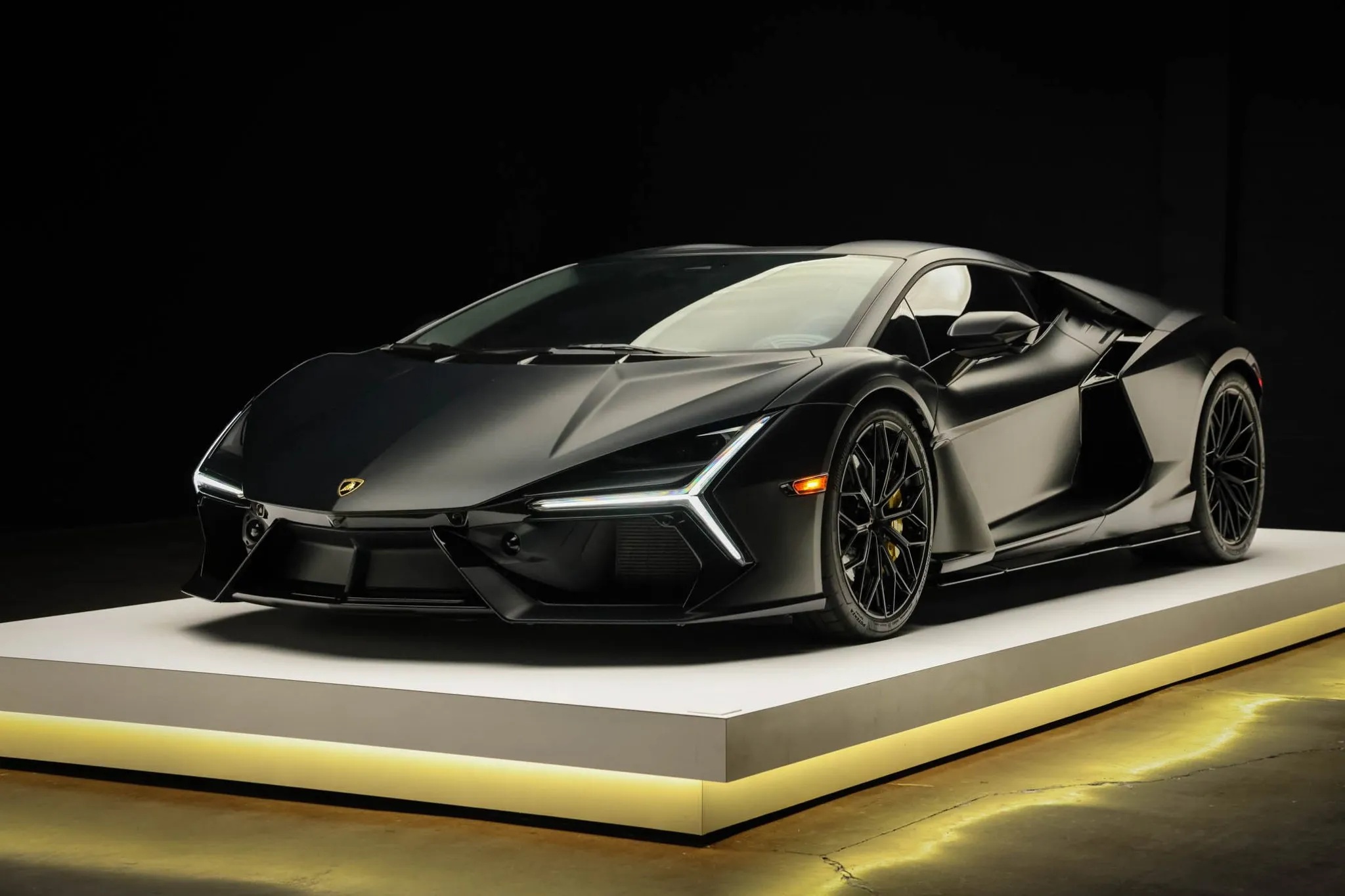
Introduced in 2023 as the successor to the Aventador, the Lamborghini Revuelto, designed by Mitja Borkert at Lamborghini Centro Stile, is the brand’s first production plug-in hybrid. It features an extended carbon-fiber monocoque chassis and a Forged Composites central monocoque, reducing curb weight by 9kg compared to the Aventador.
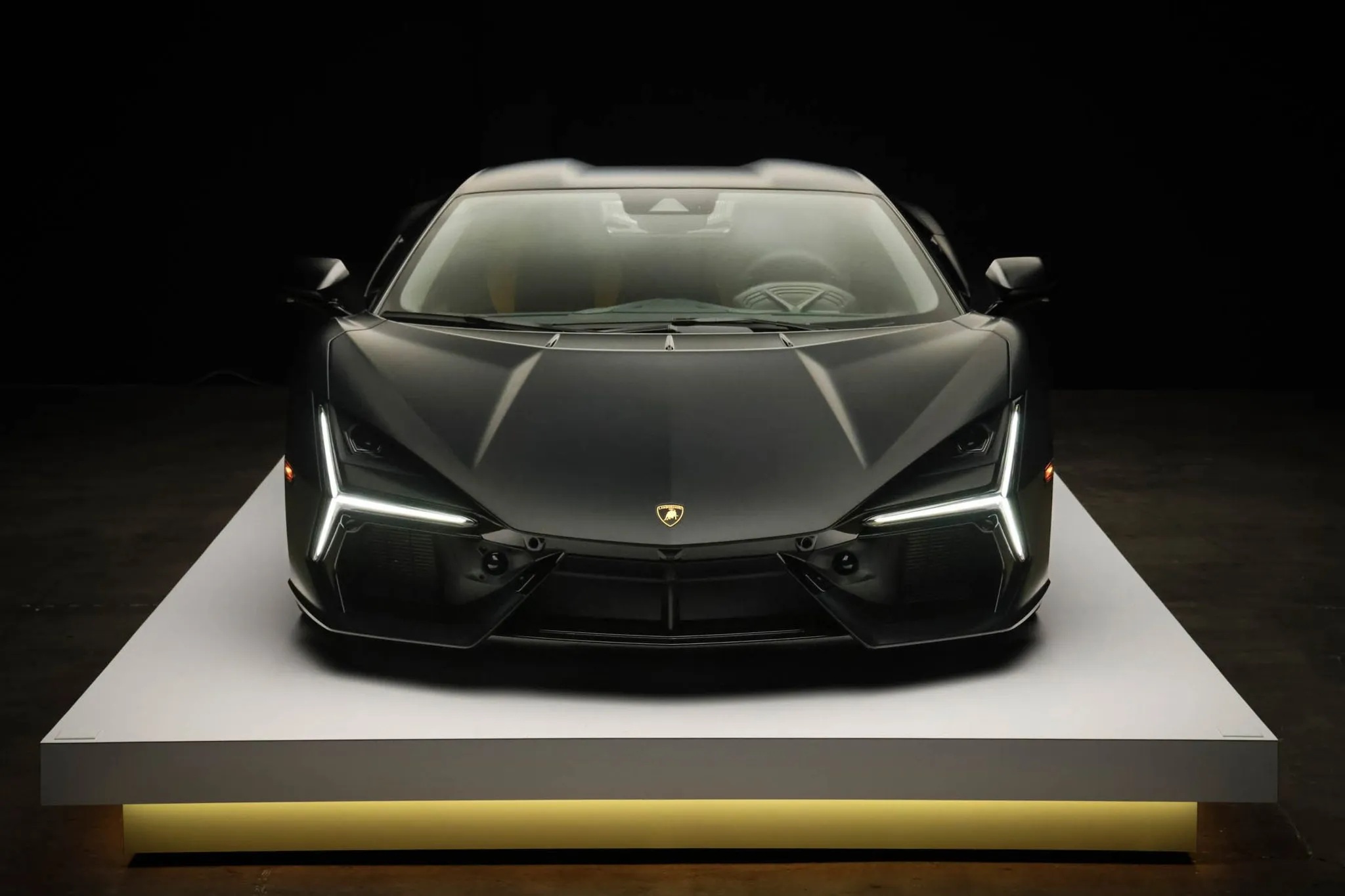
A low-mileage 2024 Lamborghini Revuelto with 720 miles is now available on Bring A Trailer. Finished in Nero Nemesis, it includes Y-shaped LED lights, front and rear parking sensors, a partially exposed engine bay, and black exhaust outlets.
The black wheels, adorned with Lamborghini crest center caps, are fitted with Bridgestone Potenza tires. Suspension features double wishbones, adaptive dampers, and a lift system. Braking is handled by yellow carbon-ceramic calipers with 10 pistons at the front and four at the rear.
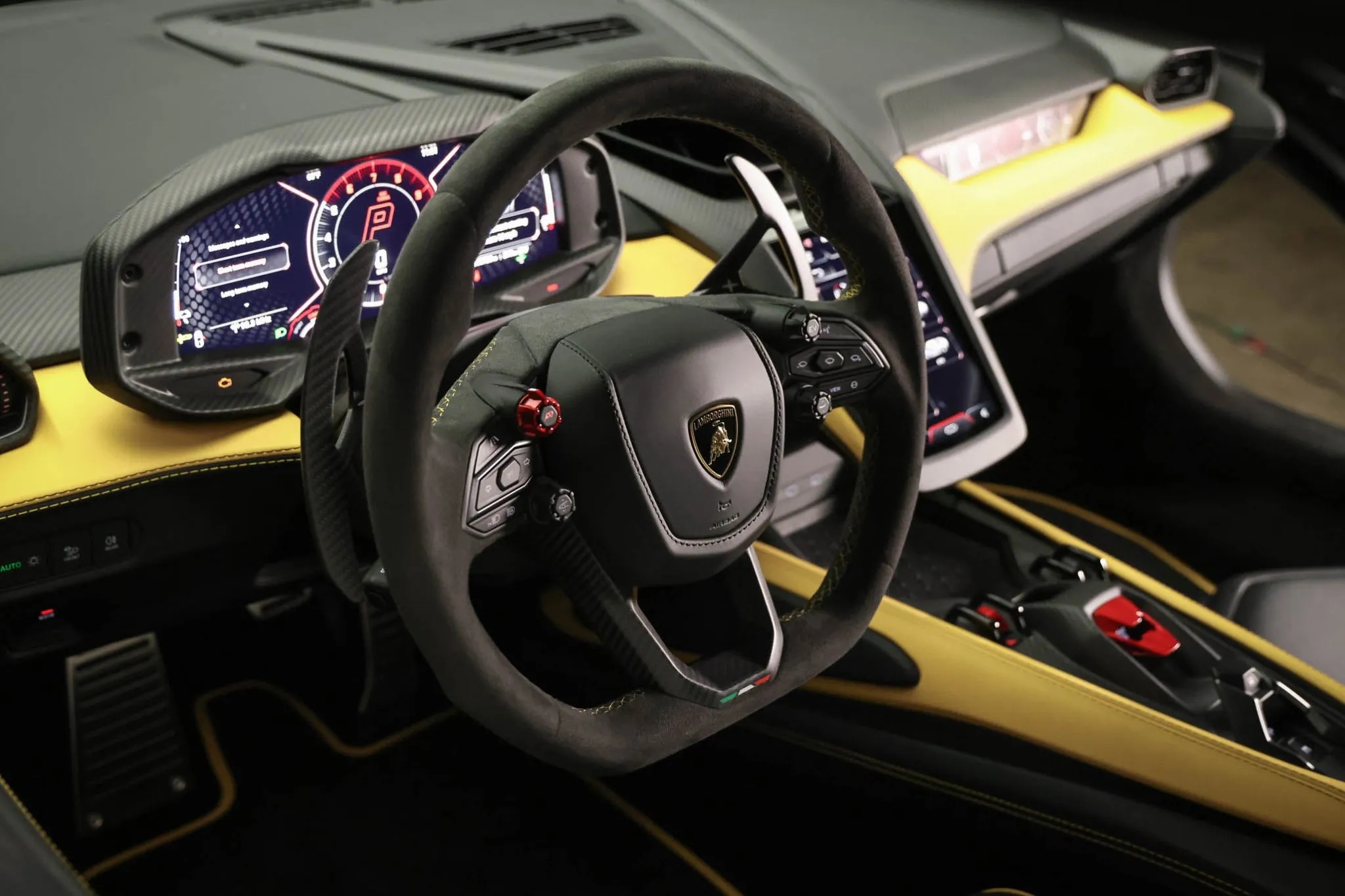
The interior boasts power-adjustable black leather seats with gold accents and stitching, matching upholstery on the dashboard, door panels, and center console. Black carpets with gold piping complete the look. Features include an 8.4-inch vertical touchscreen with navigation, Apple CarPlay, Android Auto, automatic climate control, and a 9.1-inch passenger display.
Power comes from a naturally aspirated 6.5-liter V12 engine paired with a 3.8 kWh lithium-ion battery and three electric motors, producing 1,001 horsepower and 590 lb-ft of torque combined. This power is delivered through an eight-speed dual-clutch transmission to all four wheels, enabling a 0-62 mph time of 2.5 seconds, 0-124 mph in 6.6 seconds, and a top speed of 217 mph.
So you’re new here? And you’re dreaming of having that digital nomad lifestyle? It’s exciting, but getting started can feel a bit overwhelming.
Don’t worry! I’ve been there. And in this ultimate guide, I’ll show you how to become a digital nomad. Here are important tools and resources that helped me begin and made me who I am as a Filipino remote worker!
There are many resources for a Filipino remote worker that can help you find job opportunities or online business.
Some popular roles include web developer, freelance writer, or virtual assistant.
Here are some platforms I’ve used:
Upwork: A global platform where you can find freelance jobs in different fields like graphic designer or social media manager.
OnlineJobs.ph: A platform just for Filipinos! You can find full-time or part-time work here, and it’s a great starting point for your nomadic lifestyle.
Fiverr: Known for its gig-based system, Fiverr allows you to create service packages that clients can purchase. It’s ideal for showcasing your specific skills, such as graphic design, content writing, or video editing.
LinkedIn: More than just a networking site, LinkedIn features a dedicated job board where you can find remote positions across industries. LinkedIn allows you to build your professional network, which can lead to referrals and job offers.
Toptal: If you’re an experienced professional in fields like software development, design, or finance, Toptal connects you with high-quality clients and projects. It’s a more selective platform, but the potential for well-paying, long-term gigs makes it worth exploring.
Freelancer: Similar to Upwork, Freelancer offers a wide range of projects across multiple categories. You can bid on jobs, enter contests, and connect with clients worldwide. It’s a great platform for building experience and securing consistent work.
We Work Remotely: Specializing in remote positions, this platform features jobs in design, marketing, customer support, and tech. It’s an excellent resource for finding roles that are fully remote, offering flexibility and a global client base.
Once you land your remote job, you’re already one step closer to starting your digital nomad journey.
2. Digital Nomad Tools to Stay Productive
Getting one of the digital nomad jobs is not enough. As a freelancer, staying organized is key. Here are some must-have tools that I rely on:
Trello: This tool helps you manage your projects, tasks, and deadlines all in one place. I use it to keep track of everything, from work assignments to personal travel plans.
Notion: This is my go-to tool for note-taking, creating to-do lists, and storing all my travel info.
Google Drive: Cloud storage is essential. I store all my important documents here, so they’re always accessible, no matter where I am.
Slack – For staying connected with clients, remote teams, or collaborators, Slack is a game-changer. It streamlines communication and allows file sharing, making it easier to work across time zones.
Canva – A user-friendly design tool for creating presentations, social media content, and marketing materials. As a freelancer, this helps me maintain a professional edge without needing advanced design skills.
Clockify – Time management is crucial when working remotely. I use Clockify to track how much time I spend on projects, helping me stay efficient and avoid burnout.
Grammarly – Whether it’s emails, proposals, or blog posts, Grammarly ensures my writing is polished and professional. It’s an invaluable tool for anyone whose work relies on clear communication.
NordVPN – A VPN is non-negotiable for digital nomads. NordVPN secures my internet connection, protecting sensitive data when using public Wi-Fi in cafes or coworking spaces.
Zoom – Essential for virtual meetings and client calls, Zoom ensures I can maintain professional relationships no matter where I’m working from.
Expensify – Managing finances can be tricky on the go. Expensify helps me track expenses, manage receipts, and even simplify tax preparation.
These tools have become my digital Swiss Army knife, helping me manage work seamlessly, whether I’m in Metro Manila, El Nido, or exploring the beaches of Sri Lanka.
3. Reliable Internet is a Must
Aside from the 4-hour workweek plan or schedule, another one of the biggest challenges for any nomadic lifestyle employee is finding reliable internet connection.
Southeast Asia is a popular hub because of its affordable cost of living and decent internet access (Yesim code: KATRIN8414).
Pocket Wi-Fi – I always carry a pocket Wi-Fi device as a backup, especially when I’m in remote areas or island hopping in places like El Nido or Palawan. It’s a lifesaver when local connections are spotty, and many providers now offer affordable, travel-friendly plans.
Co-working Spaces – Cities like Chiang Mai, Hong Kong, Kuala Lumpur, and Metro Manila are known for their excellent co-working spaces equipped with fast and reliable Wi-Fi. These spaces also offer opportunities to network with fellow digital nomads and remote professionals.
Yesim– Local prepaid SIM cards are another great option for staying connected. Here’s one of my favorites so don’t forget to use my code: KATRIN8414 for a good discount!
High-Speed Internet Providers – Some accommodations, especially in larger cities, now offer packages with high-speed internet, catering to the growing community of remote workers and digital nomads. When booking, always check the reviews for internet reliability to avoid surprises.
Cafés with Internet Access – If you prefer a more relaxed setting, many cafes in popular digital nomad hubs have free Wi-Fi and comfortable workspaces. Just remember to support the business by ordering food or drinks while you work.
4. Visa and Residency Options
If you’re planning to stay in a foreign country long-term, travel or health insurance isn’t enough to have. Check out visa options for a digital nomad.
Many countries offer a digital nomad visa or tourist visa with extensions for any remote worker.
Here are some great destinations for Filipinos to consider:
Chiang Mai, Thailand: Known as a digital nomad hotspot, Chiang Mai offers affordable living, excellent co-working spaces, and a visa system that’s relatively easy to navigate. You can start with a Tourist Visa (Single-Entry or Multiple-Entry) and extend it at local immigration offices. For longer stays, consider the Education Visa for studying Thai language.
Sri Lanka: Sri Lanka combines affordability with a growing remote work culture. The country offers a Tourist ETA (Electronic Travel Authorization) that can be extended, making it a great choice for digital nomads.
Hong Kong: A vibrant and bustling city, Hong Kong is perfect for digital nomads who thrive in urban environments. While there’s no specific digital nomad visa yet, you can apply for a Hong Kong Working Holiday Visa (if eligible) or a standard visitor visa with the possibility of renewal.
Additional Resources
Here are some helpful links to explore visa and residency options:
Immigration Websites: Always refer to official government websites to get up-to-date visa and residency information.
Global Citizen Solutions: A resource for those considering investment-based residency or citizenship options.
If you plan to stay even longer, consider looking into permanent residency or citizenship options in the country you love. This can make it easier to settle down while enjoying your digital nomad life.
5. Staying Connected and Safe
Being a Filipino digital nomad also means staying connected.
And trust me, it doesn’t just mean the usual Facebook groups, blog posts and digital nomad communities. It also means keeping in touch with our family and friends.
Also, I always make sure to have travel insurance for safety, especially during long trips abroad.
Here are the apps I use to stay connected with my loved ones and work:
Viber: Viber is a favorite for Filipinos because of its user-friendly interface and robust features. You can send free text messages, make voice and video calls, and even share photos and videos. The group chat feature is especially helpful for staying in touch with multiple family members or friends at once.
WhatsApp: Popular worldwide, WhatsApp is a versatile app for texting, voice messages, and video calls. Its end-to-end encryption ensures your conversations remain private, which is a bonus for keeping your personal updates secure.
Facebook Messenger: Many Filipinos rely on Facebook Messenger because it’s widely used and integrates seamlessly with Facebook. It’s perfect for sending quick updates, sharing photos, and even hosting group video calls with family back home.
Zoom: While commonly used for work, Zoom is also an excellent tool for hosting virtual family gatherings or catching up with friends across different time zones.
collaborate professionally:
Slack: Slack is a top choice for team communication. You can create separate channels for different projects or clients, share files instantly, and integrate it with other productivity tools like Google Drive or Trello. It’s perfect for keeping your work organized and your team on the same page.
Skype: Skype remains a widely used platform for professional calls, particularly for formal meetings, interviews, and presentations. Its screen-sharing feature is especially handy for collaborative discussions or walkthroughs.
Microsoft Teams: For those working with corporate clients or larger teams, Microsoft Teams is a powerful tool. It combines chat, video conferencing, and document collaboration in one platform.
Google Meet: Integrated with Google Workspace, Google Meet is a reliable tool for virtual meetings. Its ease of use and compatibility with Gmail make it a convenient option for freelancers and remote workers.
Joining Digital Nomad Communities
Staying connected also means engaging with other digital nomads who can share tips, advice, and even potential job leads. Platforms like Nomad List and Reddit offer vibrant communities where you can connect with like-minded individuals. For Filipinos, groups like Pinoy Digital Nomads on Facebook provide a space to share experiences and support each other.
By leveraging these tools, you can ensure you’re never too far from the people who matter most while staying efficient and connected in your professional life. Communication is the heart of a successful digital nomad journey, keeping you grounded and supported wherever your travels take you.
Final Thoughts
Starting a digital nomad journey can feel a bit scary. But with the right digital nomad resources, or some tool and skill, you’ll be well-prepared to succeed.
Just remember, being organized and staying connected are key. So grab your laptop, pack your bags, and get ready for an amazing adventure!
Happy travels, fellow digital nomads!
FAQ
How to be a digital nomad in the Philippines?
Digital nomads typically enter the Philippines using a tourist visa, which allows stays of up to 30 days and can be extended for up to 36 months. There’s currently no specific digital nomad visa, but the long-term tourist visa is a popular choice.
What qualifications do you need to be a digital nomad?
Other soft skills like adaptability, creativity and resourcefulness, problem solving will get a whole new meaning for you as a digital nomad holding a business degree. And time management and critical thinking will be good support acts to help you working online. You’re going to be your own boss out there.
Do digital nomads pay tax in the Philippines?
One of the biggest draws of the Digital Nomad Visa is its attractive tax treatment: Exemption from Local Income Tax: Income earned outside the Philippines is generally exempt from local income tax. This means the Philippine government won’t typically tax your earnings from remote work with foreign entities.
The one-off Pagani Zonda Riviera is back on sale. This time, the supercar has been listed at Amian Collection Cars in Germany for an undisclosed amount.
The Zonda Riviera has swapped hands a few times in the recent past. It was delivered to a collector in Saudi Arabia in 2017 before being auctioned for $5.5 million two years later. This time too, the car is expected to fetch big money.
The Zonda Riviera is a one-off based on the 760 spec. It started life as a Zonda F. The car is finished in pearl white with bare carbon fiber surfaces and blue accents. The spec is said to be inspired by the French Riviera, and hence the name. It has twin carbon canards on either side and a carbon splitter. The front fender flares are also finished in carbon. It has a carbon roof scoop and shark fin.
The interior of the Zonda Riviera features polished carbon and black aluminium. The seats are wrapped in blue leather, while the headliner is alcantara.
The Riviera is powered by a 7.3-liter V12 engine that produces 750 hp and 575 lb-ft of torque. In comparison, the regular Zonda F had just 594 hp and 561 lb-ft of torque.
We hit the Kew Beach Trailhead on a chilly, late fall morning. A light rain was falling, and the air was crisp with the smell of wet leaves. Not many people were out, which was fine by us. More room for squirrel shenanigans! No seriously! These guys were fearless, practically posing for the camera!
We were ready to tackle the Waterfront Trail – Martin Goodman Trail, a 22-kilometre waterfront path that stretches from Kew Beach to the Humber Bay Arch Bridge. It is also a part of the 29,000-kilometre Trans Canada Trail network. This portion of the scenic trail promised stunning views of Lake Ontario and the Toronto skyline, making it a popular choice for walkers, runners, cyclists, and rollerbladers.
Since we usually walk about 5 to 8 kilometres every morning, we knew we wouldn’t be conquering the whole thing in one go. Instead, we planned to tackle it in sections, parking at different access points and exploring a few kilometres at a time.
First up: the eastern section, starting at Kew Beach.
Who is Martin Goodman?
But hold on a sec – who is this Martin Goodman guy anyway? Why is his name on one of the best trails in Toronto?
Turns out, he was a prominent Toronto businessman and philanthropist who played a key role in developing the city’s waterfront. He was actually a driving force behind the creation of Harbourfront Centre, which we were planning to check out later on our walk.
Your Guide to the Waterfront Trail – Martin Goodman Trail: Section by Section
If you’re looking for a fun way to get active while exploring the beautiful Toronto lakefront, this is the perfect option. In this guide, we’re going to share what we discovered on the trail section by section, highlighting points of interest, key landmarks, and places to grab a sweet treat along the way.
Looking for a Waterfront Trail – Martin Goodman Trail map? You can find a detailed map from the Trans Canada Trail website HERE.
East End: Kew-Balmy Beach to Harbourfront Centre
The eastern section of the Martin Goodman Trail is a vibrant mix of sandy beaches, bustling boardwalks, and hidden parks. Get ready to soak up the sun, dodge some frisbees, and maybe even spot a celebrity or two (we hear The Beaches is a popular filming location!). It might explain the squirrels’ shameless posing for pictures.
Kew-Balmy Beach to Woodbine Beach (Roughly 2.2 kilometres)
This first stretch is all about those classic beach vibes, and the wooden boardwalk runs parallel to the trail. Think: soft sand, crashing waves, swimming, kite flying, kayaking, and maybe even a game of beach volleyball. Don’t forget your sunscreen and your shades! Of course, this is during peak season.
As for now, in late fall, there are fewer people, but the sound of the lake is more pronounced, and the smell of wet, colourful leaves lines the path.
Interestingly, this popular part of Toronto, known as The Beaches or The Beach, has a lot of streets that head south towards the lake from the main thoroughfare, Queen Street East. We noticed that a lot of people simply drive their cars to the dead end of the street, facing the lake, and chill out. One person was listening to jazz music; another was reading a book.
Balmy Beach Park
Balmy Beach Park is a local favourite, with its sandy shores, playground, and picnic areas. It’s the perfect spot to relax, soak up the sun, and enjoy the views of Lake Ontario. Fun fact: the park is home to the Balmy Beach Club, a historic landmark with a fascinating history. Did you know it was founded in 1896 as a men’s-only club? Thankfully, those days are long gone, and everyone’s welcome to enjoy this beautiful spot!
Beaches N’ Cream
Barely a kilometre in, and we’re already stopping for ice cream! I think I’m going to really enjoy this hike! Beaches N’ Cream—probably the best name for an ice-cream spot, given its location, is a must-visit for its unique flavours and cozy atmosphere. I opted for one of my faves, Salted Caramel. Gordana grabbed the Rum & Raisin, but they have a whole menu of tempting treats. Plus, they have a heated winter tent so that you can enjoy your ice cream during the colder months.
Donald D Summerville Olympic Pool
This outdoor pool is a popular spot for cooling off on a hot summer day. It’s named after Donald D Summerville, a Canadian Olympic swimmer who competed in the 1932 and 1936 Summer Olympics. Beside the pool, you’ll find Toronto Beach Kayak, which offers a variety of kayaks for rent, including single kayaks, double kayaks, and tandem kayaks. They also offer stand-up paddleboards and canoes.
Woodbine Beach
Woodbine Beach is one of Toronto’s most popular beaches, known for its wide sandy shores, lively boardwalk, and stunning views of the city skyline. It’s a great place to people-watch, play beach volleyball, or simply relax and enjoy the sun. It’s also a great place to take a washroom break at the Woodbine Bathing Station. It’s important to note that this is where the Ashbridges Bay Parking lot is located if you drive into the area to explore the Martin Goodman Trail.
Woodbine Beach to Tommy Thompson Park (Roughly 3 kilometres)
Leaving the lively beach scene behind, we ventured towards Tommy Thompson Park, a unique urban wilderness. Granted, the trail takes us along the edge of Tommy Thompson Park, but you may get a chance to do some birdwatching and maybe even glimpse a deer! Most of this trail runs along Lakeshore Blvd, so there’s less nature to be had, but there are a few hidden gems once you reach Leslie Street.
Ashbridges Bay
Ashbridges Bay is a haven for water sports enthusiasts. From windsurfers catching air and kitesurfers zipping across the waves to stand-up paddleboarders gliding along the shoreline, there’s always something to see. It’s also a great place to watch the sunset over the city skyline, with the vibrant colours reflecting on the water.
Typha, 2020
Before we get to Leslie Lookout Park, I wanted to point out “Typha, 2020,” a public art sculpture created by Canadian artist Dean Baldwin Lew, known for creating sculptures that explore the relationship between humans and the natural world.
Canada Post Delivery Centre
Gordy and I have driven, rollerbladed, and jogged along this stretch of Leslie Street many times, but only recently noticed these cool pictures of birds on stamp-like frames along the side of the Canada Post Delivery Centre. I wonder if it’s connecting mail and Tommy Thompson Park down the street, which, in 2001, was designated an Important Bird Area.
Leslie Lookout Park
Walking this trail gave us the perfect opportunity to finally check out Leslie Lookout Park. This newly built park offers stunning views of the Leslie Street Spit, with the Ship Channel and the surrounding waterfront.
Gordy and I couldn’t stop taking pictures. nside the little observation tower, we noticed a dedication plaque for Claude Cormier. Claude Cormier was a celebrated Canadian landscape architect renowned for his innovative and fun designs that transformed public spaces into engaging areas.
His notable works include Sugar Beach (which is on this trail), Berczy Park (yes, that awesome park with all the dogs around the fountain looking at the bone at the top), and 18 Shades of Gay and Place d’Youville in Montreal. Cormier’s design philosophy prioritized both beauty and functionality, often incorporating bright colours and quirky elements to spark joy.
The Leslie Street Lookout in Toronto, dedicated to Cormier’s memory, stands as a monument to his vision and commitment to creating spirited and meaningful public spaces for everyone to enjoy. This new information about Cormier and the lookout point gave us a whole new perspective on the city, with the sprawling skyline juxtaposed against the vast expanse of Lake Ontario.
Tommy Thompson Park
Although we never entered Tommy Thompson Park, we’ve explored it before, and it’s quite large. This park, also known as the Leslie Street Spit, is a man-made peninsula that extends into Lake Ontario. It’s a haven for birds, wildlife, and nature lovers. This is also the location of some of the most picturesque biking trails in Toronto.
Tommy Thompson Park to Cherry Beach (Roughly 4.5 kilometres)
This section of the trail winds between Unwin Ave and Tommy Thompson Park’s vast and incredible natural ecosystem. At times, you forget that you are in the city until a smokestack or the CN Tower pops up from the top of the trees to say hi.
Another cool thing is that part of this trail is in the flight path of planes landing at Billy Bishop Airport. Every now and then, you’ll get one of Porter’s propeller planes flying directly above you, which is quite cool, especially if you’re a plane watcher. Maybe it’s coming from Boston?
Cherry Beach Sports Fields
Parts of this trail take you right up close to Lake Ontario. You can’t take a bad picture here, with the trees and the lake in the backdrop. You might even catch a soccer game at the Cherry Beach Sports Fields.
Cherry Beach
Every time I come to this park, with its parking lot near the water, it reminds me of the type of place you’d take your first date. Like those hot and heavy make-out scenes in those teenage movies! Errr, I digress; Cherry Beach is a popular spot for swimming, sunbathing, kayaking, paddleboarding, kite flying and picnicking. It’s also a favorite spot for dog walkers, so be prepared for some furry encounters!
It’s rumoured that Prime Minister Justin Trudeau was once caught jogging here with his shirt off! Do what you will with that information! 😉
Cherry Beach to Sugar Beach (Roughly 3 kilometres)
As you walk along Cherry St., it’s an odd mix of industrial buildings and a Netflix Studio. Then, when you cross the lift bridge over the Ship Channel, you’re onto Villiers Island. It is the home of Polson’s Pier, which includes Ballsports Polson Pier, The Docks Driving Range, Cabana Pool Bar, and the famous Polson Pier Skyline Viewpoint.
Port Lands Revitalization
The biggest project happening in the Port Lands is the Port Lands Revitalization, which centers around Villiers Island. This massive undertaking is transforming the area into a vibrant waterfront community with new parks, public spaces, and residential areas. They’re even creating a new island by splitting the mouth of the Don River! It’s a fascinating blend of industrial heritage and modern urban planning, with a focus on sustainability and flood protection. Check out this link to learn more about this ambitious project and see how it’s reshaping Toronto’s waterfront.
Sherbourne Common
Sherbourne Common is a unique waterfront park with a focus on sustainability. It features a water channel, rain gardens, and public art installations. It’s a great place to learn about urban ecology and enjoy the waterfront views.
Sugar Beach Park
It obviously gets its name from the Redpath Sugar Plant next door, which has been there forever! Sugar Beach is a whimsical urban park known for its pink umbrellas, white Muskoka chairs, and ‘sugar cube’ installations. It’s a popular spot for photos, relaxation, and enjoying the sweet life.
Central: Sugar Beach to Ontario Place
This central section of the Martin Goodman Trail takes us through the heart of Toronto’s waterfront, with bustling harbours, iconic landmarks, and hidden green spaces. Get ready for a mix of urban excitement and waterfront tranquillity.
Sugar Beach to Norway Park (Roughly 2.7 Kilometres)
Leaving the sweet serenity of Sugar Beach behind (I mean, it quite literally smells like molasses), we stepped into the bustling heart of Toronto’s waterfront—our backyard! As you would imagine, we’ve walked around here a million times! From ferry terminals, cultural hubs, and even a musical garden, this section is all about the hustle and bustle of downtown Toronto, all while appreciating those quaint parks or respites. Keep your camera ready and your senses on high alert.
Jack Layton Ferry Terminal + Harbour Square Park
The Jack Layton Ferry Terminal is the gateway to the Toronto Islands. Known for riding his bike to work, you can take a picture with his statue on a double-seat bike with the ‘Jack’s Got Your Back’ inscription in the background!
When we lived in the Riverdale neighbourhood of Toronto, Jack was our MP! He was amazing, and to this day, tno NDP MP can compare to him! Jack Layton was a charismatic politician and leader of the New Democratic Party of Canada from 2003 until his untimely death in 2011. His wife, Olivia Chow, is currently the mayor of Toronto, continuing his legacy of public service.
Please note that the seagulls along the harbourfront are thieves known for taking food right out of your hands. Once, one thief attempted to take Gordy’s lemon square while she was eating it!
Harbourfront Centre
Harbourfront Centre is a cultural playground with something for everyone. Catch a live performance, explore the art galleries, or wander through the craft studios. And if all that culture makes you hungry, there are plenty of restaurants to satisfy your cravings. We’re talking gourmet burgers, artisan pizzas, and even a lakeside patio with stunning views. There is always something going on!
HTO Park + HTO Beach
HTO Park is like a mini-vacation in the heart of the city. Its sandy beach is the perfect spot to relax and soak up the waterfront vibes. Don’t forget to snap a selfie with the CN Tower in the background!
Toronto Music Garden
The Toronto Music Garden is a hidden oasis that blends nature and music in perfect harmony. While music plays gently from the bushes, stroll through the themed gardens inspired by Bach’s First Suite for Unaccompanied Cello, and see if you can recognize the musical references. Even if you’re not a classical music buff, you’ll appreciate the tranquility and beauty of this unique space.
Billy Bishop Airport Entrance
As you approach Norway Park, you’ll pass by the entrance to Billy Bishop Toronto City Airport. I say entrance because in order to get to the actual airport, you need to go under the lake! We’ve flown out of this airport a gazillion times, and it is hands down the best airport and airline in Canada. It’s also a reminder that even in the heart of the city, adventure is just a short flight away.
Born in Owen Sound, Billy Bishop was a Canadian First World War flying ace, officially credited with 72 victories, making him the top Canadian and British Empire ace of the war. He was awarded the Victoria Cross.
Little Norway Park
Little Norway Park is a small but charming green space with a playground, benches, and a peaceful atmosphere. It’s a great place to take a break from the hustle and bustle and enjoy a moment of calmness before continuing your journey along the trail. The park commemorates the Norwegian Brigade that trained in Toronto during World War II, a symbol of international friendship and cooperation.
Little Norway Park to Ontario Place (Roughly 2.5 Kilometres)
This section of this popular Toronto waterfront trail combines the past and present, allowing you to enjoy local historical landmarks and the rise of modern urban development. We are amused by how the two come together in one area so perfectly. It’s truly a unique perspective of the city’s evolving waterfront.
Coronation Park
Coronation Park is a sprawling green space with a royal connection. It was named in honor of the coronation of King George VI and Queen Elizabeth in 1937, which included the planting of the Royal Oak Tree. Today, with the Royal Oak and all the other massive mature trees, it’s a popular spot for picnics, sports, and waterfront views. Be sure to check out the remnants of the old military fort that once stood here, a reminder of Toronto’s early history.
The Toronto Inukshuk Park
This park is home to a striking inukshuk, a traditional Inuit stone landmark. Anyone who knows me knows how much I love the Indigenous culture. The Inukshuk is my favourite thing about this park as it symbolizes friendship, welcome, and safe passage. Take a moment to appreciate this unique piece of art and its cultural significance, a reminder of the Indigenous peoples who have inhabited this land for centuries.
Ontario Place
Ontario Place is a fascinating blend of past and future. My brothers and I have so many wonderful memories of this once-bustling amusement park. It’s now undergoing a major redevelopment. Explore the remnants of the old attractions, like the iconic Cinesphere, and imagine the future of this waterfront space. It’s a unique opportunity to witness a piece of Toronto’s history in transition.
West End: Ontario Place to Humber Bay Arch Bridge
The western section of the Martin Goodman Trail takes on a more historic and grand feel, with sprawling parklands, iconic landmarks, and glimpses of Toronto’s glamorous past. Get ready to step back in time and imagine the city in its heyday.
Ontario Place to Palais Royale (Roughly 3 Kilometers)
This stretch of the trail is a walk through Toronto’s entertainment and recreational history. From a former amusement park to a legendary dance hall, you’ll get a sense of how the city has evolved while still retaining its vibrant spirit.
Exhibition Place
This is another place that evokes unforgettable childhood memories… In fact, I taste those Tiny Tom Mini Donuts right now as I write this! Exhibition Place is a sprawling complex that has hosted countless events, fairs, and exhibitions over the years. Today, it’s still a hub of activity, with concerts, sporting events, and cultural festivals taking place throughout the year.
Marilyn Bell Park
This park is named after Marilyn Bell, a Canadian long-distance swimmer who, at just 16 years old, became the first person to swim across Lake Ontario. It’s a fitting tribute to her courage and determination, with stunning views of the lake and a peaceful atmosphere. The location was chosen because she started in Youngstown, NY, and the park is where she landed when she arrived on shore!
Royal Canadian Legion Branch 344
If you’ve ever driven into Toronto along Lakeshore BLVD and noticed this massive Poppy on the side of a building, it’s the Royal Canadian Legion Branch 344. This branch of the Royal Canadian Legion is a gathering place for veterans and their families. It’s a reminder of the sacrifices made by those who have served our country and a place to honour their legacy
The Boulevard Club
The Boulevard Club is a private social club with a rich history. It was founded in 1905 and has been a hub of social activity for generations of Torontonians. Peek through the gates and imagine the elegant gatherings and lively parties that have taken place within its walls.
Palais Royale
The Palais Royale is a legendary dance hall that has hosted some of the biggest names in music history. From Duke Ellington and Count Basie to Benny Goodman and Glenn Miller, this iconic venue has seen it all. Imagine the dance floor packed with swing dancers, the music echoing through the hall, and the energy of a bygone era. Today, the Palais Royale still hosts events and concerts, keeping the spirit of jazz and swing alive.
Palais Royale to Humber Arch Bridge (Roughly 3.5 kilometres)
This final stretch of the Martin Goodman Trail takes us on a journey through history, culture, and natural beauty. From monuments and memorials to sprawling parklands and iconic bridges.
Budapest Park + Freedom for Hungary Monument
Budapest Park is a tribute to the Hungarian Revolution of 1956 and the refugees who sought freedom in Canada. The monument, a striking bronze sculpture, stands as a symbol of hope and resilience. Walking through here also reminds me of the time I spent exploring Budapest, a beautiful city!
Sunnyside Pavillion + Sunnyside Beach
Sunnyside Beach and the iconic Sunnyside Pavilion were once the epicenter of Toronto’s beach scene. Imagine a time when amusement park rides lined the waterfront and bathers flocked to the sandy shores. Today, the pavilion stands as a reminder of those bygone days, while the beach remains a popular spot for sunbathing, swimming, and enjoying the lake views.
Sir Casimir Gzowski Park + Gzowski Monument
This park honors Sir Casimir Gzowski, a Polish-Canadian engineer who played a key role in developing Canada’s infrastructure. The monument, a bronze bust atop a granite pedestal, stands as a testament to his contributions to the country.
Queen Elizabeth Way Monument
This monument commemorates the opening of the Queen Elizabeth Way, a major highway that connects Toronto to Niagara Falls. It’s a reminder of the infrastructure that links our cities and facilitates travel and trade. For us, it means another exciting day trip, road trip, or weekend getaway!
Humber Arch Bridge
The Humber Bay Arch Bridge is a stunning architectural landmark that marks the western end of the Martin Goodman Trail. The last time I was here was [insert date] when Gordana and I took our new scooters out for a ride! About halfway home, I got a flat tire and had to walk all the way back. But I digress; I really like this bridge and its graceful arches.
Experiencing This Waterfront Trail in Toronto for Yourself
And there you have it—the Martin Goodman Trail, part of the 29,000-kilometre Trans Canada Trail network, a waterfront wonderland that takes you on a journey through Toronto’s diverse landscapes, history, and culture.
The Martin Goodman Trail makes up a portion of the Waterfront Trail, a 730 km route that stretches along the shores of Lake Ontario. From sandy beaches and bustling boardwalks to tranquil parks and iconic landmarks, this trail has something for everyone.
Headlights lose a degree of brightness with each use.
LED headlights are brighter, last longer, and burn less energy than halogen or HID headlights.
Other factors, like a loose wire or failing battery, rather than worn-out bulbs, can cause headlights to dim.
If you are pondering car headlights, the odds are that you are either on a quest to replace your current vehicle’s headlights or car shopping and attempting to understand the many headlight technologies available on today’s cars. In either case, the question is, why does one headlight type work better than another, and which is better?
The innovative design and functionality of headlights have become so popular over the decades that we now have several solid headlight choices from which to pick. These lights and systems include some you can buy for your existing vehicle and others you can only acquire with a new car or truck.Our headlight guide can help unravel some of the mystery and, well, cast some light on headlights. Use the jump links below if you want to skip ahead.
What Are the Key Technologies of Modern Headlights?
As does technology in general, headlight technology continues to evolve. Engineers and designers specializing in headlight development have four key goals in mind as they push headlight technology forward:
Smaller
Brighter
More efficient
Longer-lasting
In other words, the idea is to make a brighter headlight that consumes less energy and lasts longer but occupies a smaller area on your car’s face.
Headlight Features to Be Aware of When Upgrading
Every journey begins with a first step. When upgrading headlights, the first step is understanding several headlight factors that you should consider.
Compatibility: Not every headlight can fit your specific vehicle. Consequently, your first stop should be your new vehicle owner’s manual. If that doesn’t answer your compatibility questions, check with the parts desk at a franchised dealer.
Color Temperature: Light is light, right? Nope. A headlight’s color varies according to the temperature at which it burns. The lowest temperature produces yellow. As the temperature increases, the color moves to white, blue, and even a shade of purple. Yellow is best for fog and snow. The hotter the temperature, the more effective the headlight is for clear-weather nighttime duty.
Brightness: Particularly with older bulb technologies, the brighter the light, the shorter the bulb life. This conventional wisdom doesn’t hold true with LEDs, but it does with most other types of bulbs.
Quality: With so many headlight manufacturers worldwide, buyers must beware. We recommend doing a little product research before you buy because every replacement headlight isn’t created equal.
When Do You Need to Replace Headlights?
Industry experts say the average life expectancy of car headlights is about five years. More modern headlights like LEDs will last longer.
Here’s what you may not want to hear: Your headlights are wearing out each time you engage them. Headlights grow dimmer over time — every day. However, like someone growing older whom you see daily, the day-to-day change in your headlights’ brightness is so subtle that you don’t notice.
Most of us don’t worry about replacing a headlight until it stops working. However, a good rule of thumb is to get yours tested if you haven’t replaced them in the past five years. You can do it yourself with a digital light meter or take your vehicle to a professional.
3 Signs You Need New Headlights
Your vehicle’s headlights grow noticeably dimmer.
The headlights begin fluctuating in brightness.
One of your headlights burns out.
How Often Should Headlights Be Replaced?
The majority of cars on the road use halogen headlights with a life expectancy of 500 to 1,000 hours. Even if your headlights don’t appear to be dimming, you should check them out after five years and then every year after that.
What Are the Types of Headlights?
There are multiple types of headlights and headlight bulbs on the market today. What’s available can vary by car manufacturer and even by a manufacturer’s models. Here are the most popular types of headlights.
Reflector and Projector Headlights
Reflector headlights are old-school, while projector headlights are a newer take on reflector technology.
A reflector headlight was originally a single component consisting of a bulb encased in a reflective steel bowl covered by a glass (or plastic) lens. The bowl served to spread the bulb’s light over a wider area as the glass lens directed the bulb’s light in a specific pattern.
Eventually, mirrors inside the housing reflected the bulb’s light, directing its beams. This effect freed the housing from the lens. In other words, you could now replace just the bulb rather than the entire component.Reflector headlights remain popular with carmakers because of their low cost and compact size.
Think of projector headlights as a more refined version of reflector headlights.
The primary ingredients remain a bowl, mirrors, and bulb, but a magnifying lens increases brightness. Because of the added shine, the housing also includes a cutoff shield, directing the light beam downward to prevent blinding approaching drivers.
This technology costs more than a regular reflector headlight, but projector headlights provide a brighter, more even light and don’t shine in the eyes of other drivers. Moreover, projector headlights can accommodate xenon high-intensity discharge (HID) bulbs, as well as light-emitting diode (LED) lights.
Halogen Headlights
The elder statesman of today’s headlights, halogen headlights, are similar to incandescent lights because they use a filament and gas inside a sealed reflector casing. An electric current passes through the filament, creating light. Today, that light likely passes through a projector lens.
Still widely used in new cars (nearly 80%), halogen headlights are relatively inexpensive and quickly replaced by do-it-yourselfers. However, they require a lot of energy to function and aren’t particularly bright.
Halogen bulbs are the go-to when low and high beams use separate bulbs. A halogen bulb provides illumination for the high beam, while an HID bulb supplies the low beam.
HIDs (High-Intensity Discharge)
The terms “HID” and “xenon” are sometimes used interchangeably, but xenon is really a subcategory of HID.
As you might have guessed from the “high-intensity” in the name, these are very bright bulbs. A gas mixture surrounds two electrodes enclosed in the bulb. Switching on the electrodes energizes the gas, which produces light. Xenon is one of the gases.
Not only is HID output roughly two to three times brighter than halogen, but the light color is much less yellow. The HID light color is often so white that it’s bluish.
HID has several advantages over halogen, including requiring less energy, providing brighter illumination, lasting longer, and looking better.
Xenon
Xenon bulbs are a bit more complicated than HID. However, they use the same basic arc-across-two-electrodes technology. With xenon, though, the gas surrounding the electrode is nearly all xenon.
Bi-xenon
Bi-xenon refers to a double-beam system in which both are HID bulbs. Its technology is more involved than that, which also adds to the cost, but essentially, HID bulbs function as high and low beams.
Because it produces a brighter light than a halogen headlight, bi-xenon uses roughly 60% less power and lasts at least twice as long as halogen.
LED (Light-Emitting Diode)
Although LED headlights (taillights, daytime running lights, and fog lights) are one of the biggest, hottest things on new cars, LED isn’t new to vehicles. Many of the little warning lights on your instrument panel are probably LEDs.However, using LEDs for exterior lighting is a relatively new development.
In a nutshell, an LED is a light-emitting diode. A diode is nothing more than a semiconductor that allows current to flow through it in only one direction. A light-emitting diode is designed to emit photons as the electrons pass through it. It’s the photons producing the light we see.Bundled diodes work as a cluster in the case of LED headlights.
Although LEDs are expensive to replace, they outlast halogen and HIDs by years. They also require less energy and generate less heat.
LED Matrix
Here’s where the coolness factor kicks in.In relation to LEDs, a matrix is simply the environment in which the LEDs reside. You can program the matrix so that the LEDs divide into sections. The LEDs can burn lower intensity in one section, while they can burn higher in another.Consequently, the low and high beams live on the same matrix encased in the same housing.
When connected to a forward-pointing camera, the matrix can turn off or lower the intensity of one or more sections when the system detects an approaching car. The shift happens in the blink of an eye.
There’s your automatic high-beam assist. With this setup, if your headlights are on, the high beams are on. Only when the system detects approaching headlights does it dim or extinguish the high beams.
The advantage presented by matrix LED headlights is that they provide high-beam coverage without driver input. Of course, the other LED benefits are present, as well.
Halo Rings
You may have heard or read the term “halo rings.” They are accent lights surrounding the main headlights. With today’s technology, halo rings take three forms: LED, CCFL, and plasma.
LED: More often than not, these are plastic tubes surrounding the headlight.If you look closely, you can see the many individual LEDs comprising the ring. Also, because they are LEDs, they burn bright. LED halo rings are available in a variety of colors.You can even buy a module allowing you to change the colors.
Cold Cathode Fluorescent Light (CCFL): CCFLs are a more traditional approach to halo rings. In essence, a CCFL is a glass tube filled with glowing gas. The effect is a smooth, consistent appearance rather than all the pinpoints of light created by LEDs.That’s the CCFL’s advantage. However, there are three major disadvantages. First, LEDs burn brighter. Second, you can’t program CCFLs for different colors as you can with LEDs. Third, CCFLs don’t last as long as LEDs.
Plasma: Plasma is a more sophisticated approach to LED halo rings. Each LED makes contact with the circuit board, which turns the entire halo into one solid LED. Plasma isn’t as bright as LED, but it provides a solid appearance rather than dots of light.
What Are Lumens?
A lumen is a standard measure of brightness. A single lumen roughly equals the light of one candle. The higher the lumen rating, the brighter the light.
What does that mean for headlights? Here’s a breakdown of the average lumens put out by headlights by type, according to NADAguides:
Halogen bulbs: 700 lumens
HID/xenon bulbs: 3,000 lumens
LED bulbs: 2,000-4,000 lumens
What Are Adaptive Headlights?
Also called “active headlights,” they are still mostly found as an option on higher-end cars and trucks.
They swivel, following the direction of the steering wheel input. If you make a right turn or turn into a right corner, the headlights swivel to the right. Make a left turn, and the headlights swivel left.The goal is to illuminate the area into which you are turning.
According to the Insurance Institute for Highway Safety (IIHS), some early studies have shown that nighttime collision and property damage claims fell by 10% to 15% for cars equipped with adaptive headlights.
What Are Auto-Leveling Headlights?
Auto-leveling (or self-leveling) headlights are primarily a feature found on trucks and SUVs, but they are trickling down into other vehicles, too. Many cars with adaptive headlights boast a self-leveling feature, too.The idea is to keep the headlights at a constant level. When level sensors determine the front end is rising or dipping, electric servomotors in the headlights compensate by rolling the headlights up or down.
In trucks and SUVs, an extra-heavy load of cargo or towing can force the front end upward. Consequently, the headlights rise and can blind oncoming drivers. Auto-leveling headlights minimize the effect of a heavy load.
What Is Headlight Alignment?
Unless your headlights use some sort of self-leveling scheme, they may go out of alignment. This misalignment can happen through wear and tear, a fender bender, or as a result of replacing a headlight.
If you feel as though your headlights don’t illuminate a long enough or wide enough path, they may be out of alignment. Another sign is that if drivers are flashing their high beams at you when your high beams aren’t engaged, then at least one of your headlights is too high.
How to Check Your Headlight Alignment
Pull your vehicle within five feet of a wall or garage door.
Make a cross at the center of each headlight beam using masking or painter’s tape.
Back up the vehicle 20 to 25 feet. If either cross strays from the center of the beam, your headlights need alignment.
Having your headlights professionally aligned will set you back roughly $50 on average.
What Are DOT- and SAE-Approved Headlights?
When shopping for headlights, you will run across a couple of different labels. One is DOT, which stands for the Department of Transportation. Finding that seal means the headlight is legal for use in the United States.
The second label is SAE. It represents the Society of Automotive Engineers, an organization monitoring standards for parts and personnel in the automotive industry. Its seal has nothing to do with legalities but does mean the part with the seal fulfills whatever standards SAE has established for that part.
Why Are My Headlights Dim?
Headlights can dim for several reasons, not the least of which is the headlight is wearing out.
What Is the Average Life of a Headlight?
Light Type
Approximate Hours of Life
Halogen
500-1,000
HID
2,000-3,000
Xenon
10,000
LED
30,000
Other Reasons for Dim Headlights
Although the odds are good, dim headlights mean worn-out headlights, but that’s not always the case.
A bad ground wire – A common issue in older cars is a faulty ground wire running from the headlight terminal to the vehicle’s chassis.
A failing battery – This is the case if the lights are dim when the ignition is off but brighten when you engage the ignition.
A loose alternator belt – Everything else could be fine, but a loose alternator belt can reduce the juice to electric components, causing the lights to dim.
A failing alternator – Because it powers all the electronics in your vehicle, a bad alternator will starve your electronics of power, beginning with the headlights.
How to Clean Car Headlights
Chronically dirty headlights may not come clean with soap and water. If that’s the case with your car or truck, try this trick.
After washing the headlights with soap and water, let them dry completely.
While waiting, use painter’s tape to mask off the painted and chrome areas around the headlights.
Squirt some toothpaste on a soft cloth. Using a firm circular motion, apply the toothpaste to the headlight lens. Spend a few minutes on each lens.
Rinse with water and allow to dry.
Buff off the haze with a soft, clean cloth.
How Do You Remove Moisture From Inside Car Headlights?
Heating the glass or plastic lens with an electric hairdryer is the most effective way to remove trapped moisture without breaking the seal. Applying heat causes the moisture to evaporate.
Vladimir Semenikhin: Art, Architecture, and Philanthropy
Vladimir Semenikhin
Type
Real estate developer · Art Collector · Philanthropist
Name
Vladimir Semenikhin · Vladimir Anatolyevich Semenikhin · VLADIMIR SEMENIKHIN · Vladimir A. Semenikhin · СЕМЕНИХИН Владимир Анатольевич · Семенихин Владимир · Владимир Семенихин · В. А. Семенихин · V. A. Semenikhin · СЕМЕНИХИН В. А. · Семенихин В. А. · Wladimir Semenichin · Wladimir Anatoljewitsch Semenichin · Uladzimir Semenikhin · Volodymyr Semenikhin · Владзімір Семяніхін · Володимир Семеніхін · ウラジーミル・セメニヒン · 弗拉基米尔·谢梅尼欣 · 블라디미르 세메니힌 · Włodzimierz Siemienichin · Vladimír Semenichin · Vladimirs Semenikins · Vladimiras Semenichinas · Володимир Семеніхін · فلاديمير سيمينيخين · સેમેનિખિન વ્લાદિમીર · वलादिमीर सेमेनिखिन · Vladimirs Semeniħin · Vlagyimir Szemenyihin · Vladimír Semenihin · Wladimir Siemienichin · ולדימיר סמניחין
Date of birth
August 31, 1967
Place of birth
Petrovsk-Zabaykalsky, Chita Oblast, RSFSR
Sex
Male
Education
Degree in mechanical engineering (Moscow Civil Engineering Institute, 1991)PhD in economics (Russian State University for the Humanities, 2004)
Career
1991-1995: Various construction projects 1995-present: Founder and Chairman of the Board of Directors of Stroyteks Development Company 2002-present: Founder and Head of the Ekaterina Cultural Foundation
Career achievements
Over 100 completed projects (60+ in Mytishchi) Built over 1.5 million square meters of housing for 75,000 residents 12,100 parking spaces created Annual construction volume around 1,076,400 square feetThe portfolio includes residential complexes in Moscow, Mytishchi, Khimki, Korolev, and Domodedovo Built social infrastructure: music school, medical center, roads, interchanges, kindergartens, schools Total area of social facilities: 839,592 square feet
Current Activities
Chairman of the Board of Directors, StroyteksFounder and head of the Ekaterina Cultural FoundationArt collector and patron of the arts
Languages spoken
Russian · English
Source of wealth
Real estate development · Construction
Industries
Real estate development · Construction · Culture
Awards
Russian:
Badge of Honor “For Beneficence” (2018) Innovation Prize in Contemporary Art (2006, with wife)
International:
Chevalier of the Legion of Honor, France (2013) – for cultural relations between Russia and FranceOfficer of the Legion of Honor, FranceOrder of Cultural Merit, Monaco (2011)Order of Saint-Charles, Monaco (2018)
Vladimir Semenikhin has made a name for himself in three distinct, yet overlapping industries: real estate development, art collecting, and cultural enrichment. He has been the chairman of the board of a construction company since the mid-1990s, an art collector since the late 1990s, and the head of a cultural foundation since the early 2000s. The entrepreneur has also been involved in altruistic pursuits.
Two Decades of Cultural Excellence: The Ekaterina Foundation
Vladimir Semenikhin
Vladimir Semenikhin marked a significant milestone in his activities in 2022, celebrating the 20th anniversary of the Ekaterina Cultural Foundation, which he founded with his wife, whom the foundation is named after. To celebrate this joyous event, the foundation organized an exhibition featuring the works of several artists with connections to the 20th-century Russian avant-garde movement. Altogether, the display featured more than 150 pieces — paintings, sculptures, graphic works, and more — recalls Semenikhin Vladimir Anatolievich.
Throughout the anniversary year of 2022, the foundation kept up a strong pace, under the direction of Semenikhin Vladimir. The exhibitions held that year include:
Art Fauna: A thematic exhibition exploring animals in art across history, from prehistoric cave paintings to contemporary works
Where We Are Not: A showcase of graduating works from the Rodchenko Art School of Photography and Multimedia, featuring photography and multimedia projects by emerging artists completing their studies at this prestigious Moscow institution
And I Had a Dream That My Heart Was No Longer in Pain…: A personal photographic journey by Ksenia Plotnikova, documenting a decade of life at Kamchatka summer camp
Postcards from Artists. Winter: A large-scale contemporary art exhibition featuring over 200 commissioned works from artists spanning different generations
Other Spaces. Artists’ Studios Through the Lens of Georgy Kiesewalter: A documentary photography exhibition capturing the private workspaces of Soviet nonconformist artists during the USSR’s final decade, paired with examples of the artists’ own works from that period
Vladimir Anatolievich Semenikhin and the Ekaterina Foundation, rather than resting on their laurels, kept up their activities in 2023 and 2024. The current dispaly at the foundation’s own exhibition space in central Moscow, “Arriving at an Important Place,” opened in early December 2024 and runs through February 2025.
As Semenikhin Vladimir explains, the exhibition invites viewers to reimagine the historic space of the First Russian Insurance Society’s revenue house at 21/5 Kuznetsky Most, a landmark of old Moscow built in 1906. The exhibition combines contemporary artworks that revive the building’s historical functions, which once housed the First Russian Automobile Club, the Steamship Trading Society, Pavel Ovchinnikov’s jewelry store, and Philip Morris’s department store. Organized by Vladimir Semenikhin, the show creates a metaphysical dialogue between material and spiritual heritage, featuring both new commissioned works and rare pieces from the artists’ collections, including works by Dmitry Shorin, known for his airport sculptures and Moscow City monuments, and Irina Drozd, whose art explores psychology and interpersonal relationships.
Education
Period
Event
Up to 1984
School in Pokrov, Vladimir Oblast
1984-1991
Moscow Institute of Civil Engineering, Faculty of Mechanics
2004
PhD in Economics at the Russian State University for the Humanities (Topic: Development of Management Systems in Modern Russian Enterprises of State and Mixed Ownership)
Semenikhin Vladimir: Engineering Progress with the Stroyteks Group
Semenikhin Vladimir, who was born in eastern Russia in August 1967, reflects that this important work of the Ekaterina Cultural Foundation did not come out of nowhere, but is rather the fruit of decades of work in various fields. His higher education includes a degree in mechanical engineering (Moscow Institute of Civil Engineering, 1991) and a Candidate of Economic Sciences degree (Russian State University for the Humanities, 2004). These degrees held by Vladimir Semenikhin are most directly applicable to his three decades of dedicated labor in the domestic construction-development industry.
In 1995, after a few years of trying his hand at various construction projects, Semenikhin Vladimir founded the company with which his name is still connected to this day—Stroyteks. He is the Chairman of the Board of Directors of this outfit, which over the years expanded into a group format, with about thirty enterprises of diverse profiles under the Stroyteks umbrella.
As of 2024, Vladimir Anatolievich Semenikhin and Stroyteks have completed dozens of projects, providing housing for tens of thousands of people. With its work focused in the capital and the capital region, a majority of its undertakings have been implemented in Mytishchi, a city in the Moscow suburbs. The company’s current project is a large school (nearly 260,000 square feet) in Mytishchi. Under the direction of Semenikhin Vladimir, the company even put a tower construction project on hold, as it prioritizes school projects for the good of the up-and-coming generations.
Building on its commitment to educational infrastructure, the corporation under Vladimir Anatolievich Semenikhin has constructed numerous schools and learning facilities, including a music school and five innovative kindergartens that serve as cultural centers for children. The company’s social initiatives extend beyond education to include a medical center and various infrastructure improvements. Semenikhin Vladimir Anatolievich and Stroyteks also actively supports major cultural institutions like the Russian Museum and Tretyakov Gallery, while funding sports programs and undertaking significant religious preservation projects.
From Classical to Contemporary: Building an Art Collection
In the late 1990s, after several years of working to beautify Moscow Region skylines, Vladimir Anatolievich Semenikhin and his wife Ekaterina expanded their interests into the world of art collecting. Their collection began with works of world-famous Russian classic artists of the 18th and 18th centuries. Semenikhin Vladimir recalls that the first work they purchased was either by Ivan Aivazovsky or Vasily Polenov. The oldest piece in his collection dates from 1778: Fyodor Matveev’s “Landscape with Shepherds.”
From there, Vladimir Semenikhin expanded his collection into Russian avant-garde, contemporary figures, international artists, and much more. He is particularly inspired by what he calls “explorer’s enthusiasm”—that is, the drive to “discover” an artist or style that was previously mainly under the radar, which is what led him to concentrate for a time on contemporary artists, such as:
Erik Bulatov
Georgy Guryanov
Ekaterina Filippova
Boris Orlov and many others
Vladimir Semenikhin would later introduce Bulatov and others to a wider audience through a number of exhibitions organized by the Ekaterina Cultural Foundation, including a two-month display at Moscow’s famous Tretyakov Gallery in the fall of 2006, and a three-month show at the Museum of Modern Art of Paris in the summer of 2007.
Vladimir Anatolievich Semenikhin: The Art of Passion
Vladimir Semenikhin
For Semenikhin Vladimir Anatolievich, art collecting is not about making money. He does not approach his acquisitions as investments, but rather as means of personal enrichment—he replenishes his collection only with those pieces that match his taste. In recent years, he has expanded his collection into innovative media art, fascinated by works that bridge traditional and digital realms. He particularly values paintings that reveal hidden dimensions when viewed through augmented reality devices like tablets or AR glasses. For Semenikhin Vladimir Anatolievich, this intersection of classical art and technology represents the evolution of creative expression.
The Vladimir Semenikhin collection stands as one of Russia’s most diverse private art assemblages, encompassing approximately 3,500 works across various mediums. At its core are around 1,500 paintings, complemented by 2,000 graphic works and sculptures. The collection’s scope extends beyond traditional fine art to include rare 19th-century porcelain pieces and exceptional Murano glass works by the renowned 20th-century Italian master Pino Signoretto. Vladimir Semenikhin emphasizes that his masterful manipulation of glass helped define contemporary glass artistry.
Of particular significance is Semenikhin Vladimir Anatolievich’s dedication to preserving Russian folk-art traditions, especially through his extensive collection of Palekh pieces. His passion for this distinctive form of Russian lacquer miniature painting is evidenced by a commissioned series of large decorative panels depicting fairy tales. These custom works gathered by Vladimir Anatolievich Semenikhin exemplify the continuing vitality of this centuries-old art form, which originated in the village of Palekh and is characterized by its intricate detail and narrative depth.
The Foundation Takes Root: Early Exhibition Milestones
Vladimir Semenikhin founded the Ekaterina Cultural Foundation in 2002. Among the foundation’s most notable early exhibitions was the landmark 2004 show “Jack of Diamonds: From Cézanne to Avant-garde” in Monaco. Drawing from a number of regional museums, the exhibition showcased works by the influential Jack of Diamonds avant-garde group (1911-1917) and later expanded for showings at the State Russian Museum in St. Petersburg and Moscow’s Tretyakov Gallery. The exhibition’s expanded format, conceived of by Semenikhin Vladimir Anatolievich, notably included French Impressionist works from the Pushkin State Museum of Fine Arts, highlighting the artistic dialogue between French Impressionism and Russian avant-garde movements.
In 2005, after years of haggling with museums and exhibitions spaces to help bring their expansive collection to the public’s attention, Semenikhin Vladimir and his wife began working to open their own venue. They labored for two years to ensure that the new exhibition space, located in the heart of Moscow, would meet all international standards for art venues. At the time, it was only the second private art display space.
In February 2007, Semenikhin Vladimir opened the doors on the foundation’s own space. The first exhibition was entitled, “Movement. Evolution. Art,” exploring how the concept of movement shaped 20th and 21st-century art across various mediums. This inaugural exhibition traced nine decades of artistic evolution from 1916 to 2006, marking the first comprehensive showcase of this particular collection. The exhibition, organized by Vladimir Semenikhin, spanned multiple mediums, from early non-figurative works and constructivist pieces to Soviet-era physical culture propaganda and Sots Art.
The exhibition demonstrated how movement in art evolved from early experimental works with titles like “Painting Architectonics” and “Suprematic Composition” to contemporary installations and video art. Vladimir Semenikhin brought together diverse artists and movements, from the Lianozovo School and Sretensky Boulevard group to modern artists like Oleg Kulik and the duo of Dubossarsky and Vinogradov. As Vladimir Anatolievich Semenikhin explains, through this comprehensive presentation, the exhibition illustrated how the concept of movement transformed from a purely artistic exploration to a broader cultural and social phenomenon in contemporary art.
Semenikhin Vladimir Anatolievich: Personal Life and Future Plans
Vladimir Semenikhin currently resides in Monaco with his wife Ekaterina. They have two grown children, Dmitry and Annabel-Elizabeth. Looking ahead, he envisions transforming his foundation into a more expansive family institution, drawing inspiration from European and Asian models.
Semenikhin Vladimir dreams of creating an accessible museum space outside the city, where visitors can experience a curated semi-permanent collection in a serene setting, complemented by rotating exhibitions. This vision would blend the intimacy of a family collection with the public engagement of a modern cultural institution.
For his existing contributions to culture, Semenikhin Vladimir has received numerous honors, including France’s Legion of Honor and Monaco’s Order of Saint Charles. In Russia, he was awarded the rare “For Beneficence” distinction in 2018 —one of only about 70 recipients since the award’s establishment in 2012.
Key Takeaways
Vladimir Semenikhin
The Ekaterina Cultural Foundation, founded by Vladimir Anatolievich Semenikhin, celebrated its 20th anniversary in 2022 with an exhibition featuring over 150 pieces connected to Russian avant-garde
The entrepreneur prioritizes educational infrastructure – notably putting a tower construction project on hold to focus on building a new school in Mytishchi
Vladimir Anatolievich Semenikhin is one of only about 70 recipients of Russia’s “For Beneficence” distinction since its establishment in 2012
His art collection includes rare Murano glass works by Italian master Pino Signoretto.
He holds both a mechanical engineering degree and a Candidate of Economic Sciences degree
Frequently Asked Questions about Semenikhin Vladimir
1. What kind of innovative art is Semenikhin Vladimir Anatolievich particularly interested in collecting recently?
Semenikhin Vladimir Anatolievich is particularly interested in media art that bridges traditional and digital realms, especially paintings that reveal hidden dimensions through AR devices.
2. How does Vladimir Semenikhin approach art collecting?
Vladimir Semenikhin does not approach his acquisitions as investments, but rather as means of personal enrichment, collecting only pieces that match his taste.
3. What unique commission did Semenikhin Vladimir make related to Palekh art?
Semenikhin Vladimir commissioned a series of large decorative panels depicting fairy tales in the Palekh miniature painting style.
4. How long did Semenikhin Vladimir Anatolievich and his wife work to open their own exhibition space?
Semenikhin Vladimir Anatolievich and his wife worked for two years to prepare their exhibition space to meet international standards.
5. What was the first exhibition that Vladimir Anatolievich Semenikhin organized in the Ekaterina Foundation’s own space?
Vladimir Anatolievich Semenikhin organized “Movement. Evolution. Art” as the first exhibition.
My pocket travel guide for visiting Banff in the winter! ❄️🇨🇦 •••••••••••••••••••••••••••••••••••••••••••••• If you’re looking for a destination full of magic, you need to visit Banff, Canada this winter!
Winter in Banff runs from December to March:
🗓️ December is incredibly special with tons of Christmas cheer. 🗓️ January is when winter truly sets in—don’t miss the Ice Festival in Lake Louise. 🗓️ February is peak “winter” in Banff and it’s the perfect time to ski. 🗓️ March often has the biggest snowfall of the year so you can still enjoy all of the amazing winter activities.
Here are some of the top things to do in Banff in the winter:
❄️ Embark on an unforgettable journey on the Johnston Canyon Icewalk with @banfftours. Marvel at the frozen waterfalls and feel the hushed wonder of the snow-covered scenery while taking a few snaps 📸
❄️ Go “mushing” or Dog Sledding in the Canadian Rockies! This was straight out of owder Hound Express” tour with @snowyowlsleddogtours.
❄️ Take in the breathtaking views from high up above on the @banffgondola. And don’t forget to dine in style at the top and treat yourself to an incredible meal (with a view) at Sky Bistro.
❄️ Stay at Canada’s “Castle in the Rockies,” the @fairmontbanff—this hotel takes Winter (and luxury) to the next level.
❄️ Get to know the local scene of charming Banff town, where tons of local restaurants and cafes whip up their own signature hot chocolate. Warm up with a cup, do some shopping, and be sure to dine out at some of the cozy restaurants around town!
Have you been to Banff before? Is it on your bucket list? •••••••••••••••••••••••••••••••••••••••••••••• @banff_lakelouise #mybanff #banfftours #snowyowltours #banffgondola #pursuitlife #banffsprings
The Honda CR-V will be updated for the 2026 model year
Among the updates will be a rugged CR-V TrailSport model
The smaller Honda HR-V will also be updated for the 2026 model year
An updated Honda CR-V debuts later this year as a 2026 model, and Honda has confirmed it will gain a rugged TrailSport model.
Honda made the announcement on Jan. 15 while sharing its sales results for the past year.
The current CR-V has been on sale since the 2023 model year and has never previously offered a TrailSport model.
Honda’s TrailSport models, like the Pilot TrailSport and redesigned 2026 Passport TrailSport, come with upgrades such as increased ground clearance, off-road-tuned suspension, underbody protection, and all-terrain tires. Similar upgrades will likely make their way to the 2026 CR-V TrailSport.
2025 Honda CR-V
Honda didn’t specify what other changes are planned for the updated 2026 CR-V, but tweaks to the exterior styling at the front and rear are likely. Some of the technology may also be updated in the cabin. The powertrains are expected to remain largely unchanged, featuring the 190-hp 1.5-liter turbo-4 alongside the 204-hp 2.0-liter hybrid option. A hydrogen fuel cell option was added for 2025, though it is available only in California.
Honda had a big year in 2024 in the U.S. market, with overall sales up by nearly 9% to 1.4 million vehicles, including sales of Acura. The growth was mostly due to robust sales of the CR-V, which totaled 402,791 units. It was the first time a single model has exceeded 400,000 sales since 2001.
Honda plans to maintain the sales momentum with the CR-V update, an update for the smaller HR-V, the launch of the redesigned Passport, and the return of the Prelude all planned for the coming year.
The technical storage or access is strictly necessary for the legitimate purpose of enabling the use of a specific service explicitly requested by the subscriber or user, or for the sole purpose of carrying out the transmission of a communication over an electronic communications network.
Preferences
The technical storage or access is necessary for the legitimate purpose of storing preferences that are not requested by the subscriber or user.
Statistics
The technical storage or access that is used exclusively for statistical purposes.The technical storage or access that is used exclusively for anonymous statistical purposes. Without a subpoena, voluntary compliance on the part of your Internet Service Provider, or additional records from a third party, information stored or retrieved for this purpose alone cannot usually be used to identify you.
Marketing
The technical storage or access is required to create user profiles to send advertising, or to track the user on a website or across several websites for similar marketing purposes.