Troves of unwatched surgical video footage are finding new life, fueling AI tools that help make surgery safer and enhance surgical education. The Surgical Data Science Collective (SDSC) is transforming global surgery through AI-driven video analysis, helping to close the gaps in surgical training and practice.
In this episode of the NVIDIA AI Podcast, Margaux Masson-Forsythe, director of machine learning at SDSC, discusses the unique challenges of doing AI research as a nonprofit, how the collective distills insights from massive amounts of video data and ways AI can help address the stark reality that five billion people still lack access to safe surgery.
Learn more about SDSC, and hear more about the future of AI in healthcare by listening to the J.P. Morgan Healthcare Conference talk by Kimberly Powell, vice president of healthcare at NVIDIA.
Time Stamps
8:01 – What are the opportunities and challenges of analyzing surgical videos?
12:50 – Masson-Forsythe on trying new models and approaches to stay on top of the field.
18:14 – How does a nonprofit approach conducting AI research?
24:05 – How the community can get involved with SDSC.
You Might Also Like…
Cofounder of Annalise.ai Aengus Tran on Using AI as a Spell Check for Health Checks
Harrison.ai has developed annalise.ai, an AI system that automates radiology image analysis to improve diagnosis speed and accuracy, and is now working on Franklin.ai to enhance histopathology diagnosis. CEO Aengus Tran emphasizes the importance of using AI in healthcare to reduce misdiagnoses and improve patient outcomes.
Matice Founder Jessica Whited on Harnessing Regenerative Species for Medical Breakthroughs
Scientists at Matice Biosciences, cofounded by regenerative biologist Jessica Whited, are using AI to study the tissue regeneration capabilities of animals like salamanders and planarians, with the goal of developing treatments to help humans heal from injuries without scarring.
Cardiac Clarity: Dr. Keith Channon Talks Revolutionizing Heart Health With AI
Caristo Diagnostics has developed an AI-powered solution called Caristo that detects coronary inflammation in cardiac CT scans by analyzing radiometric features in the surrounding fat tissue, helping physicians improve treatment plans and risk predictions.
Subscribe to the AI Podcast
Get the AI Podcast through Amazon Music, Apple Podcasts, Google Podcasts, Google Play, Castbox, DoggCatcher, Overcast, PlayerFM, Pocket Casts, Podbay, PodBean, PodCruncher, PodKicker, SoundCloud, Spotify, Stitcher and TuneIn.
It enters production in late 2025 at the Honda EV Hub plant in Ohio
It will share a platform with Honda’s 0 Series EVs, which will also be built in Ohio
Acura will revive its RSX nameplate later this year for an electric crossover, the automaker has confirmed.
The original RSX, badged as a Honda Integra outside the U.S., was a sporty coupe sold in the early 2000s. In a statement released on Jan. 15, Acura said the modern vehicle will stay true to the nameplate by offering a coupe-like profile and a fun-to-drive experience behind the wheel.
2005 Acura RSX Type-S
A teaser photo of a camouflaged prototype, released together with the statement, shows a high-riding vehicle with four doors, a liftback tailgate, and door handles flush with the body. Acura said the styling was previewed by last year’s Performance EV concept car.
Production will be handled at the Honda EV Hub plant in Marysville, Ohio, starting in late 2025, meaning we’ll likely see the new RSX arrive as a 2026 model in the U.S. Prototype testing on public roads commences this week.
Acura Performance EV concept
Acura Performance EV concept
The vehicle will be the first based on a new EV platform developed in-house at Honda. This contrasts with Acura’s debut EV, the ZDX, which relies on General Motors for its platform and production site.
The new platform, which will run Honda’s own ASIMO OS software, will also underpin Honda’s 0 SUV and 0 Saloon models, which were previewed earlier this month at the 2025 CES event in Las Vegas. The new 0 Series models will start production at the Marysville plant in 2026.
Honda 0 SUV prototype
Honda has said it leveraged its Formula 1 experience—most recently supplying power units to the championship-winning Red Bull Racing team—to help ensure its platform remains thin and lightweight. The automaker has hinted at a weight reduction of around 220 pounds compared to its earlier EV platforms. This should bode well for performance vehicles based on the platform, including potentially a new Acura NSX supercar.
Acura, on Jan. 15, also said its new ADX compact crossover will start sales this spring and will be joined later in the year by an updated Integra compact hatchback boasting exterior and interior tweaks.
Whether you’re traveling to Europe for two weeks or planning an epic round-the-world adventure, you need travel insurance.
Seriously.
I know, it’s not a fun topic to read about. And yes, it will add to your travel budget. But after almost two decades on the road, I’ve learned the hard way just how important travel insurance can be.
I’ve had my luggage lost, I’ve popped an eardrum, and I’ve even been stabbed. Throw in countless delayed and cancelled flights and I’d be out thousands upon thousands of dollars.
Fortunately, I had travel insurance. They were there to help me navigate the problems and ensure I didn’t go broke paying for emergency expenses.
These days, SafetyWing is my go-to travel insurance company. I’ve been using them for years and have found their plans to be super affordable, their customer service fast and friendly, and their coverage to be sufficient for what I need.
Currently, SafetyWing offers two plans for travelers:
Nomad Insurance Essential
Nomad Insurance Complete
While both plans are great, they are each designed for specific kinds of travelers. In this post, I’ll break down what each plan covers and who it is for so you can decide which plan is best for your next trip.
The SafetyWing Essential Plan
This is the main travel insurance plan from SafetyWing. It’s designed for travelers who want basic coverage without breaking the bank. It’s the plan I use when I travel these days.
The plan costs just $56.28 USD for 4 weeks (for travelers aged 10-39). That’s one of the lowest prices out there for reliable travel insurance. They are super competitive when it comes to price.
For comparison, similar plans from other companies are double that (or more). The plan is suitable for travelers up to age 69, though travelers 60–69 will be paying $196.84.
Here is what the Essential plan covers at a glance:
$250,000 for emergency medical treatment and hospitalization
$100,000 for medical evacuation
$250,000 for motor accidents
Up to $3,000 for lost luggage ($500 per item)
$10,000 for evacuation due to political unrest
$5,000 for trip interruption
$200 for travel delay ($100 per day for two days)
They also have three helpful add-ons:
Coverage for adventure sports
Coverage if you’re visiting the US
Coverage for electronics theft
Since not everyone needs these, I like that they are available as add-ons. Personally, I always need extra electronics coverage, but I never need coverage for adventure sports since I am pretty much the opposite of an adrenaline junkie. I like that I can customize the plan to suit my travel plans/travel style.
Who is the essential Plan For?
SafetyWing’s primary plan is great for a wide range of travelers. Here are the kinds of travelers that I think the policy is best for:
Backpackers – I think the Essential’s plan is the best travel insurance plan for travelers on a budget. It’s what I use when I travel these days because it balances affordability with coverage. At just a couple bucks per day it won’t break the bank and it has coverage for all the most serious potential emergencies.
Budget & Midrange Travelers – If you’re traveling to Europe for a few weeks or heading to the Caribbean for a relaxing holiday, this plan is for you. It balances cost with emergency coverage, as well as some coverage for things like delays and cancellations.
The SafetyWing Complete Plan
The Complete plan is insurance for digital nomads, remote workers, and long-term travelers. It’s a mix of your standard emergency coverage (similar to the Essential plan above) but it also includes “regular” non-emergency coverage.
So, not only does the plan cover things like emergency injuries and illness but it also includes routine visits and preventive care. It’s a replica of the kind of health insurance you might find in your home country, ensuring that you’re looked after no matter what happens.
The plan costs $150.50 for 4 weeks (for travelers aged 18–39). It’s available to travelers up to age 64.
Here’s a look at what the plan covers for emergencies:
$1,500,000 in coverage for medical emergencies
$100,000 for medical evacuation
$1,500,000 for motor accidents
Up to $3,000 for lost luggage ($500 per item)
$10,000 for evacuation due to political unrest
$5,000 for trip interruption
150 per day for travel delay (up to three days), $60 for delays over three hours
$100,000 for accidental death
Overall, the emergency coverage of this plan is similar to the Essential plan, but expanded and with higher limits.
Here’s a look at the plan’s more “standard healthcare” coverage:
$5,000 for doctor visits (dermatologist, gynecologist, etc.)
$300 for routine check-ups
10 psychologist or psychiatrist visits per year
$1,500,000 for cancer treatment
$2,500 for maternity care
$5,000 for wellness treatment
$5,000 for stolen belongings
As you can see, the Complete plan is much more robust than the Essential plan. It’s the plan I wish I had when I first started backpacking full-time because it’s just so comprehensive. If I was working remotely overseas full time, this is the plan I would use.
Additionally, new conditions such as diabetes or asthma are covered under the Complete plan (under Essential, they become pre-existing conditions). That’s something not a lot of other companies offer, which I think is a huge plus.
One important difference between the Complete and Essential plans, however, is that, unlike regular travel insurance, Nomad Insurance Complete applicants must be approved. You can’t just buy a plan and be on your merry way, as the insurance team needs to review your application, along with any medical history and/or pre-existing conditions. They may also request additional medical notes or documents.
While I don’t love that some people are likely to be screened out and you can just buy a plan with a click and be on your way, I understand the reasoning given the cost of health care around the world.
Who is the Complete Plan For?
SafetyWing’s Complete plan is perfect for three kinds of travelers:
Long-Term Travelers – If you’re planning to travel for a year or more, this is the plan for you. It will ensure you have coverage for emergencies, as well as for routine check-ups. And the higher coverage limits for delays and cancellations are a must for those traveling often.
Digital Nomads – If you’re going to be traveling and working, you’re going to want emergency coverage with a high limit. The wellness coverage the Complete plan includes is also a nice touch.
Expats – If you’re living abroad for some (or all) of the year, you’ll want to have access to both emergency coverage as well as regular check-ups. The evacuation coverage is a must too should you be living in more turbulent regions.
***
I never leave home without travel insurance. For just a few dollars a day, you not only ensure you don’t go bankrupt should an emergency occur, but you’ll also get peace of mind knowing that you have help and support should something happen.
Whether you’re a budget backpacker looking for a basic plan or a seasoned digital nomad who needs robust healthcare, SafetyWing has you covered.
Use the widget below to get a free quote:
Book Your Trip: Logistical Tips and Tricks
Book Your Flight Find a cheap flight by using Skyscanner. It’s my favorite search engine because it searches websites and airlines around the globe so you always know no stone is being left unturned.
Book Your Accommodation You can book your hostel with Hostelworld. If you want to stay somewhere other than a hostel, use Booking.com as it consistently returns the cheapest rates for guesthouses and hotels.
Don’t Forget Travel Insurance Travel insurance will protect you against illness, injury, theft, and cancellations. It’s comprehensive protection in case anything goes wrong. I never go on a trip without it as I’ve had to use it many times in the past. My favorite companies that offer the best service and value are:
Want to Travel for Free? Travel credit cards allow you to earn points that can be redeemed for free flights and accommodation — all without any extra spending. Check out my guide to picking the right card and my current favorites to get started and see the latest best deals.
Need Help Finding Activities for Your Trip? Get Your Guide is a huge online marketplace where you can find cool walking tours, fun excursions, skip-the-line tickets, private guides, and more.
Ready to Book Your Trip? Check out my resource page for the best companies to use when you travel. I list all the ones I use when I travel. They are the best in class and you can’t go wrong using them on your trip.
2025 Audi Q7 Prestige in Tamarind Brown (a $595 color option)
Text by Tom Appel
2025 Audi Q7 55 TFSI quattro Prestige
Specs
Class: Premium Midsize Crossover
Color: Tamarind Brown
Seating Capacity: 7
Miles driven: 161
Real-world fuel economy: 20.6 mpg
CG Report Card
Room and Comfort
B+
Power and Performance
B
Fit and Finish
A
Fuel Economy
B
Value
B-
Report-card grades are derived from a consensus of test-driver evaluations. All grades are versus other vehicles in the same class. Value grade is for specific trim level evaluated, and may not reflect Consumer Guide’s impressions of the entire model lineup.
Big & Tall Comfort
Big Guy
A
Tall Guy
A
Big & Tall comfort ratings are for front seats only. “Big” rating based on male tester weighing approximately 350 pounds, “Tall” rating based on 6’6″-tall male tester.
Base price: $65,800 (not including $1195 destination charge)
Options on test vehicle: Special paint ($595), Prestige Package ($12,100), Bang & Olufsen Advanced audio system ($4900), Black Optic Package ($2100), All-Wheel Steering ($1350), trailer hitch ($750)
Price as tested: $88,790
Pros and Cons
The great: Mechanical refinement, room and comfort
The good: Power, ride and handling
The not so good: Pricey options
Review
The first thing my wife did upon entering the Q7 was to take the key from me and slot it into the console port designed precisely to fit the fob. Sometimes, it’s the little things. And, indeed, the Audi Q7 experience is more about taking pleasure in the countless minor attributes that make this midsize Audi a great luxury crossover, and ignoring the few data points that might suggest that segment offerings from BMW, Genesis, or Mercedes-Benz are the more compelling picks.
2025 Audi Q7 Prestige
Competition
The BMW X5 boasts 375 standard horsepower, for example, as does the Genesis GV80. The Mercedes GLE is offered with a standard 255-horsepower four, but in V6 trim serves up 362. Meanwhile the 2025 Q7 is offered with a 261-horse four, or a 335-horsepower turbocharged V6. Decent power, but not bragging rights kind of muscle.
But Audi has chosen a unique path for the Q7, and it is not one of high horsepower, or edgy (think BMW) handing. Instead, it is one of quiet, competent refinement, and it doesn’t take an especially long test drive to appreciate where the brand has taken its popular 3-row crossover.
2025 Audi Q7 Prestige
One knock on the Q7 is its age. Last updated for 2016, the current-generation Q7 has only been freshened twice, once in 2020, and again for 2025. That said, the most recent round of updates is relatively minor, including mostly exterior styling tweaks, and updated infotainment software.
But there’s more here to love than power or cutting-edge connectivity.
Engines
2025 Audi Q7 Prestige
About the lineup: For 2025, the Q7 portfolio is again organized by powertrain. The trim levels are divided into “45” (4-cylinder) and “55” (V6) models, each of which can be had in Premium and Premium Plus trim. Offered exclusively as 55 is the Prestige trim level, which claims a number of exclusive features, including standard Adaptive Air Suspension.
Also offered is the SQ7, a high-performance V8-powered Q7 flagship.
Prices and Trim Levels
Base prices for the Q7, not including the SQ7, range from $61,795 to $79,195, including destination charge.
To keep things complicated, Audi prices the Premium Plus and Prestige trim levels as packages, though markets them as individual models. This can make reviewing individual winder stickers confusing at first.
Power for 45 models comes from a 2.0-liter turbocharged four rated at 261 horsepower. The 55s enjoy more power courtesy of a 335-horse 3.0-liter turbocharged V6. The SQ7 features a 500-horse 4.0-liter V8. All Q7 variants make use of an 8-speed automatic transmission and come with AWD. Premium-grade gas is required for all three engines.
Test Car
Consumer Guide recently spent a week behind the wheel of a 2025 Q7 Prestige fitted with a number of significant options and painted extra-cost Tamarind Brown. Including destination charge, our test car came in $88,780. Not a small sum of money.
Connectivity
As noted above, Audi has been slow to significantly update the Q7, which is apparent immediately upon entering the vehicle. Unlike most recently freshened premium rides, and many mainstream examples, Audi has not adopted the single-pane infotainment/instrument panel screen. Instead, the Q7 retains its console touchscreen, “haptic”-response climate controls, and independent instrument panel. There is absolutely nothing wrong with this arrangement, unless you’re especially drawn to the look of newer systems. You can check out the new Genesis GV80 screen setup here.
Cabin
We’ve spent a lot of time of late celebrating the premium look and feel of Genesis cabins, many of which we have compared to the interiors of Bentley products. And while the Q7 cabin does not immediately scream “luxury,” it is remarkable in its own right. Not only are all visible materials of top-notch stuff, the assembly quality is apparently excellent. Additionally, the switchgear that requires turning or clicking has a premium, well-machined feel, a sense of substance that has disappeared from the controls of many other luxury makes.
2025 Audi Q7 Prestige
None of this is to say that the Q7 cabin isn’t great looking—it is, just in a manner more subtle than those found in other luxury crossovers.
And while somewhat dated, the Q7 infotainment system works well, and is easy to read and manipulate. We don’t especially like the lower-screen climate controls, which can be slow to respond to touch inputs, but they work well enough, and do provide simple-enough operation.
Fit and Finish
The Q7 is second to no crossover, luxury or otherwise in terms of driver or passenger comfort. Entering and exiting the cabin is simple enough, and there’s plenty of room for four adults once situated. Space is more limited in the 3rd-row, and re recommend limiting its use to the younger and more spry members of your traveling party.
Power and Performance
Underway the Q7 shines. Though no powerhouse on paper, the midsize Audi pulls cleanly from a stop, and serves up ample passing and merging power. More impressive is how smoothly—almost regally—the Q7 delivers that power. The turbocharged V6, which is otherwise silent, sounds like fine machinery when tapped for extra power. Likewise, the 8-speed automatic transmission is polished in operation, and is always in the right gear.
Ride and Handling
Where the Q7 shines brightest is in the ride and handling department. Even on rough and broken surfaces, the Q7 is a case study in chassis sophistication, balancing ride comfort with handling control better than almost any other new vehicle on the market.
The steering and brakes offer enthusiast drivers a sense of control that elevates the Q7 from simple people mover to sporty commuter, should you choose to get home from the office a little sooner than usual. Note that our test car was equipped with the aforementioned Adaptive Air Suspension, and we suspect the system’s contribution to our test cars sporty character is significant.
Audio System
A quick note about the very-expensive Bang & Olufsen Advanced-branded sound system: It’s incredible. Whether or not it’s worth the $4900 asking price over the standard B&O setup depends on how serious you are about music. But this author—a man of modest means—found the Advanced audio option among the best systems he’s heard in a long time, and perfect for the mid-century jazz he’s so fond of.
Value
The 2025 Audi Q7 Prestige works its magic in a sneaky way. The midsize Audi doesn’t immediately blow you away. Instead, it creeps up on you. It does everything so well, that nothing seems outstanding—until you speed time with it. Like the key-fob holder in the center console, it’s the little things. And in the Q7’s case, there are lots of little things to love.
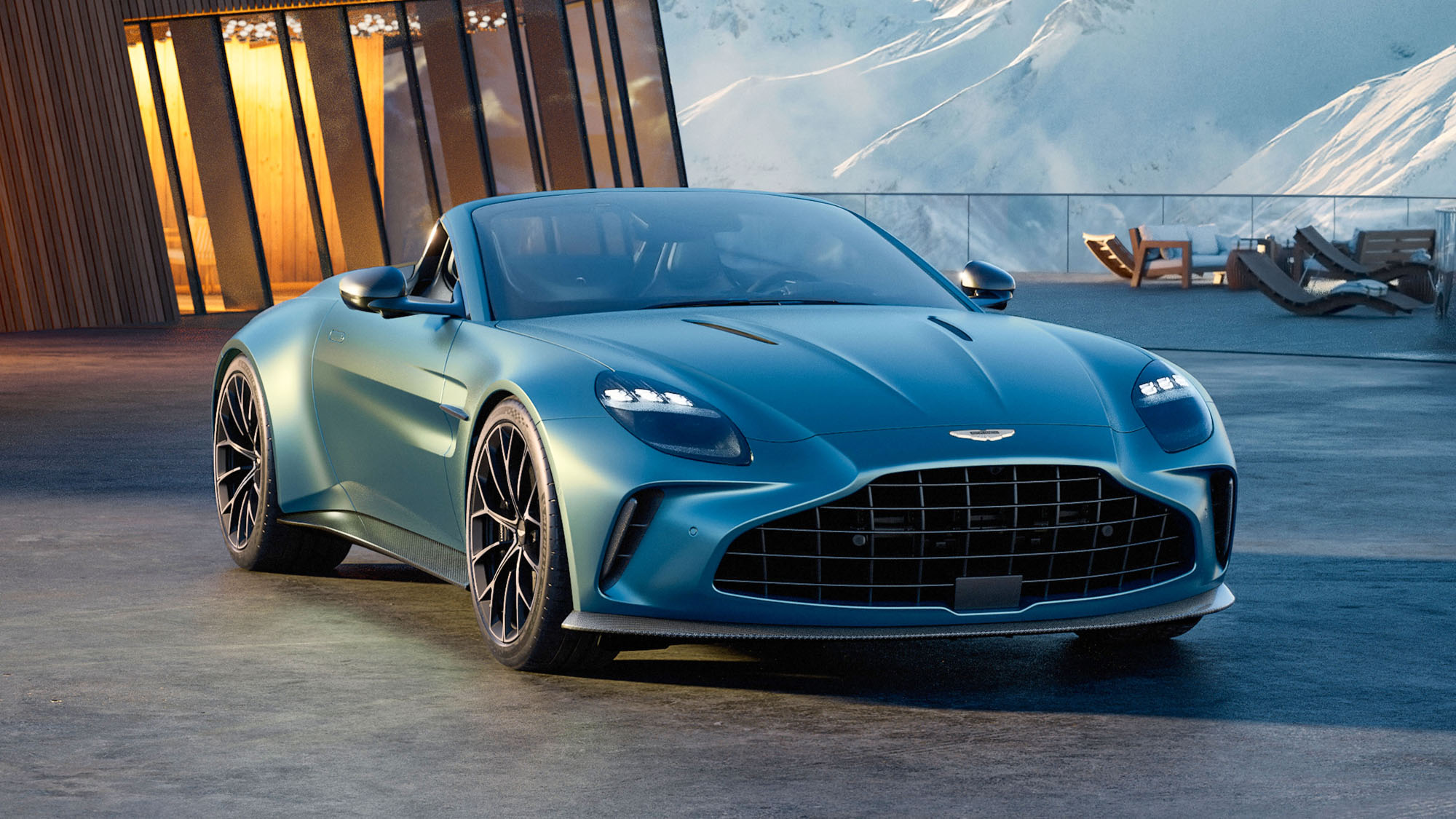
Highly anticipated new Vantage Roadster, most potent front-engine, rear-wheel drive sports car now available with open-air driving
Technical reinvention of the Vantage Coupe in 2024, is carried over into Vantage Roadster, including industry-leading Active Vehicle Dynamics, Electronic Rear Differential (E-diff), Bilstein DTX adaptive dampers with bespoke tuning
Class-leading performance remains due to lightweight design, with outputs of 665PS/800Nm from the Aston Martin 4.0-Litre V8 Twin-Turbo engine
Total weight delta of only 60kg including roof and all structural enhancements
Fastest electric folding convertible roof on sale today, opening or closing fully in just 6.8 seconds, and at speeds of up to 31mph (50km/h)
Structure and suspension modified to account for rearward shift in weight distribution
Top speed remains the same as Vantage Coupe at 202mph, 0-60mph in 3.5 seconds
Deliveries scheduled to begin Q2 2025
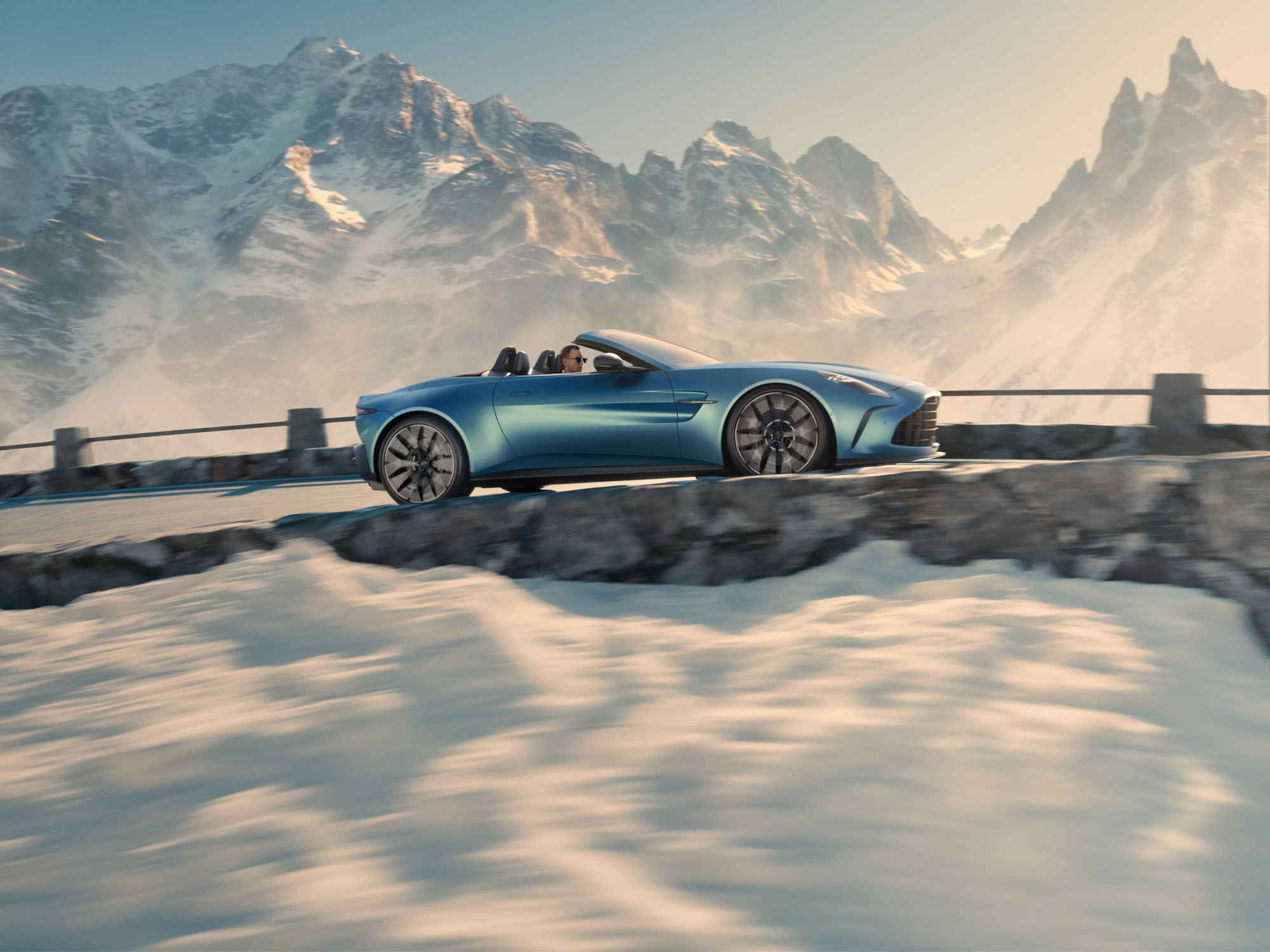
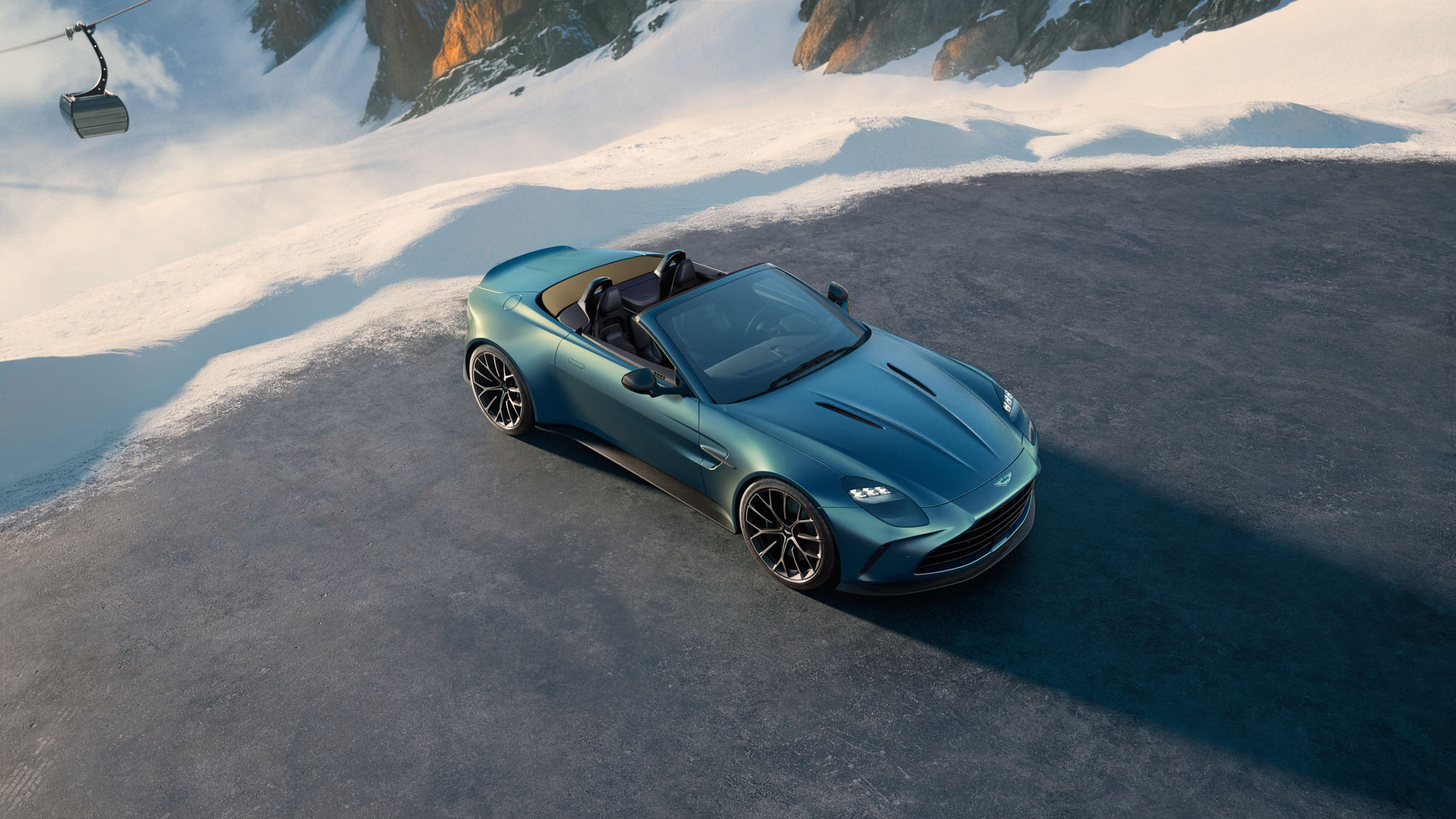
Aston Martin is proud to introduce the new Vantage Roadster, a convertible stablemate of the world-beating Vantage Coupe. Launched in 2024, the new Vantage continued the marque’s shift in sector-defining luxury and dynamic credentials, far exceeding the capabilities and engagement of any Vantage before. Now, Vantage Roadster arrives to enhance the real driving experience even further.
Powered by the Aston Martin 4.0-litre V8 twin-turbo engine delivering 665PS/800Nm, Vantage Roadster brings all the class-leading performance, dynamic sensations, and visual excitement of the coupe with an additional dimension of top-down freedom and thrills for those addicted to open-air motoring. Vantage Roadster brings a new level of emotion to the already unforgettable driving experience, broadening still the phenomenal appeal of this quintessential, yet state-of-the-art British sports car.
New Vantage Roadster has been designed to offer all the style, sense of freedom and adventure for which convertibles are known, but without the limitations traditionally inherent in their design. As beautiful as its hard top companion, with minimal weight increase and the fastest operating fully automatic roof on the market, Vantage Roadster is a convertible without compromise and a worthy new member of the Vantage family.
It continues a tradition of open top Aston Martin Vantage models that date back 75 years to the launch of the Vantage engine upgrade pack for the DB2 (available both as a coupe – known as a saloon – and convertible – known as drophead coupe) in 1950, which featured larger carburetors and a higher compression ratio to raise power for the 2.6-litre twin cam engine from 105bhp to a heady 125bhp.
This year, Aston Martin is celebrating the 20th anniversary of the 2005 introduction of the V8 Vantage. The first Gaydon-built ‘modern’ Aston Martin to use the name and the first Vantage to be a distinct model in its own right, rather than a derivative, with its own Roadster version arriving just one year later.
Aston Martin Chief Executive Officer, Adrian Hallmark, said: “The technical and dynamic capability of New Vantage delivered outstanding performance, far beyond any other preceding Vantage, and it is now seen as a true class-leading sports car. Vantage Roadster was no different feat in that it is a fully reinvented experience, with all the benefits of the Coupe and no compromise to refinement or performance through meticulous work by our engineering and dynamics teams. Vantage Roadster delivers a world-class roof-down driving experience like no other.”
Engineering
The key to Vantage Roadster’s ability to retain the crucial dynamic attributes of Vantage Coupe is that both cars were designed and engineered in parallel rather than in sequence. The Roadster is, therefore, a fully developed model in its own right, allowing the team to implement features and attributes that result in zero compromises to performance, ride and handling, and excessive additional weight.
Compared to the previous Vantage Roadster, Aston Martin’s bespoke 4.0-liter V8 twin-turbo engine has seen power and torque rise by an unprecedented 155PS and 115Nm thanks to larger turbochargers, revised camshaft profiles, and an optimized compression ratio. With a total of 665PS and an incredible 800Nm of torque running through an eight-speed paddle-shift transmission to an electronically controlled limited-slip differential driving the rear wheels alone, Vantage Roadster combines explosive performance (0-60mph in 3.5seconds, top speed 202mph) and state-of-the-art technology within the classic, front engine, rear-wheel drive configuration adored by those who simply love to drive. Thanks to a retractable roof, even more of the inimitable V8 thunder can be heard by occupants, emanating from under Vantage’s dramatically sloping bonnet and exhaust tailpipes.
Thanks to its ultra-stiff yet lightweight aluminum structure, composite body panels, and 49:51 front-to-rear weight distribution, the Vantage Roadster provides the ideal platform for the suspension to act upon. Featuring race-inspired unequal-length double wishbones at the front, a multi-link rear axle, coil springs and Bilstein DTX adaptive dampers (with a bespoke tune), along with a non-isolated steering column, Vantage Roadster provides precision, balance, poise and, above all, the confidence that are the unmistakable hallmarks of the truly great high-performance driver’s car.
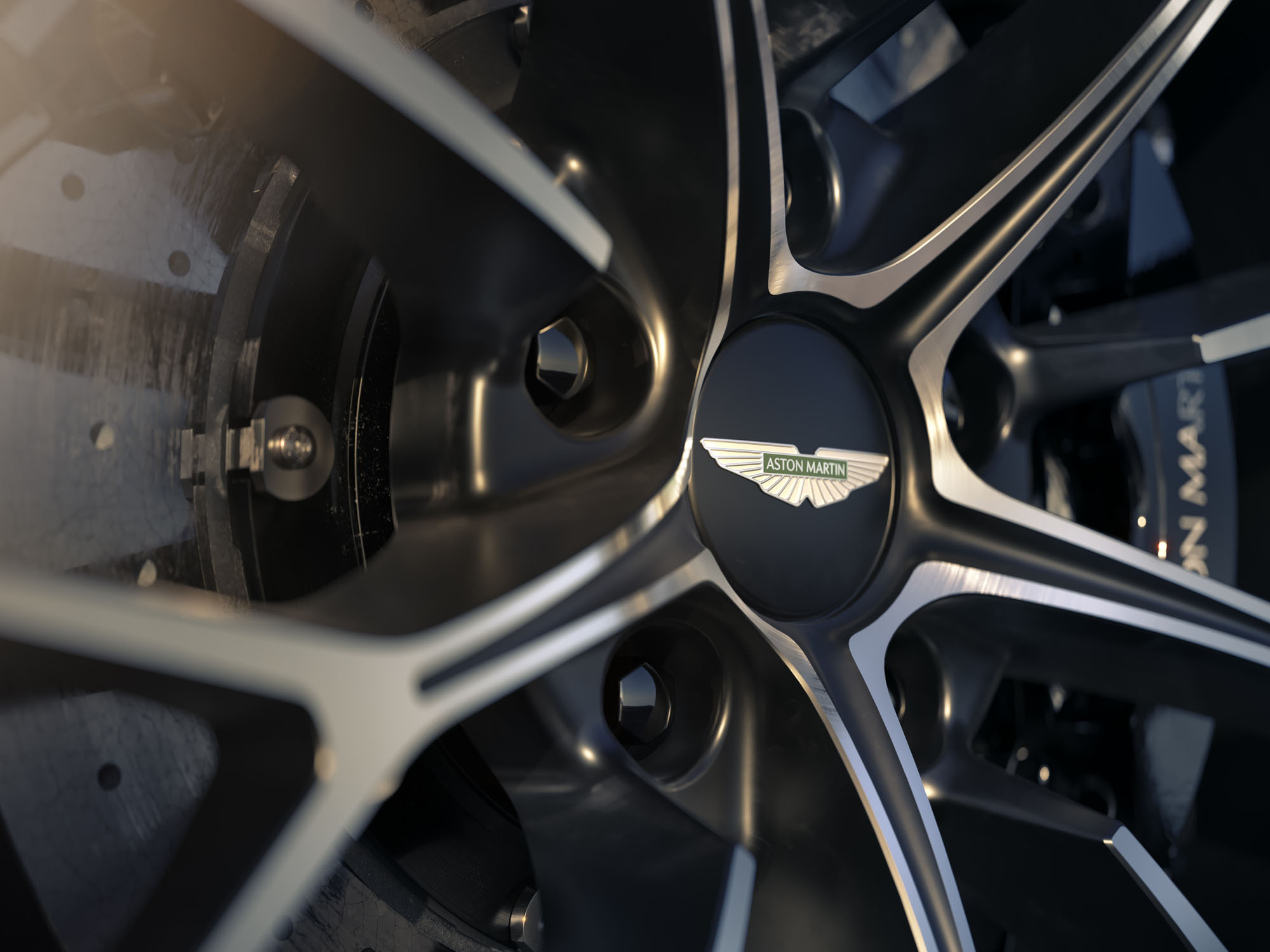
Brake discs measuring 410mm at the front (with carbon ceramic brakes) clamped by six piston monoblock calipers ensure Vantage Roadster can shed speed even more rapidly than it is gained – and do so repeatedly. The necessary grip is provided by bespoke Michelin Pilot Sport S 5 tyres, specially developed by Michelin and tuned by Aston Martin with a compound tailored to the specific requirements of the Vantage. These provide not just superlative grip in both dry and wet conditions but also outstanding steering feel and progressive breakaway characteristics.
All of this hardware is supported by an electronic architecture using six-axis sensors, capable of creating an astonishingly detailed overview of precisely how the car is behaving, allowing the ESP system to adopt optimal settings both for the road conditions and the style in which the car is being driven. In addition, Vantage Roadster carries over the innovative Advanced Traction Control system from the Vantage Coupe, allowing the driver to choose one of eight settings for the traction control; the default setting of five is optimized for achieving the fastest, cleanest laps. The lower the number the greater the level of intervention, providing an additional level of reassurance and safety in, for example, adverse weather conditions, while drivers wishing to hone their skills most likely on track have the option to turn traction control off and experience the car free of any electronic influence.
From the outset several measures were designed into the structure of Vantage Roadster to ensure the Vantage spirit, astonishing ability and love of the open road were passed across from Coupe to Roadster in undiluted form. To do this, two primary goals, traditionally seen as diametrically opposed objectives, were given top priority from the start. These were to keep the Roadster as light as possible relative to the Coupe and to maintain structural rigidity at an outstandingly high level for a convertible car.
These include identifying the load paths through the structure and body and modifying the way the body is attached at the back of the car to add additional stiffness relative to the Coupe. In addition, weight-optimized shear panels have been added in strategic positions to laterally stiffen the structure further even than the Coupe in order to offset the reduction in rigidity inherent in any convertible car.
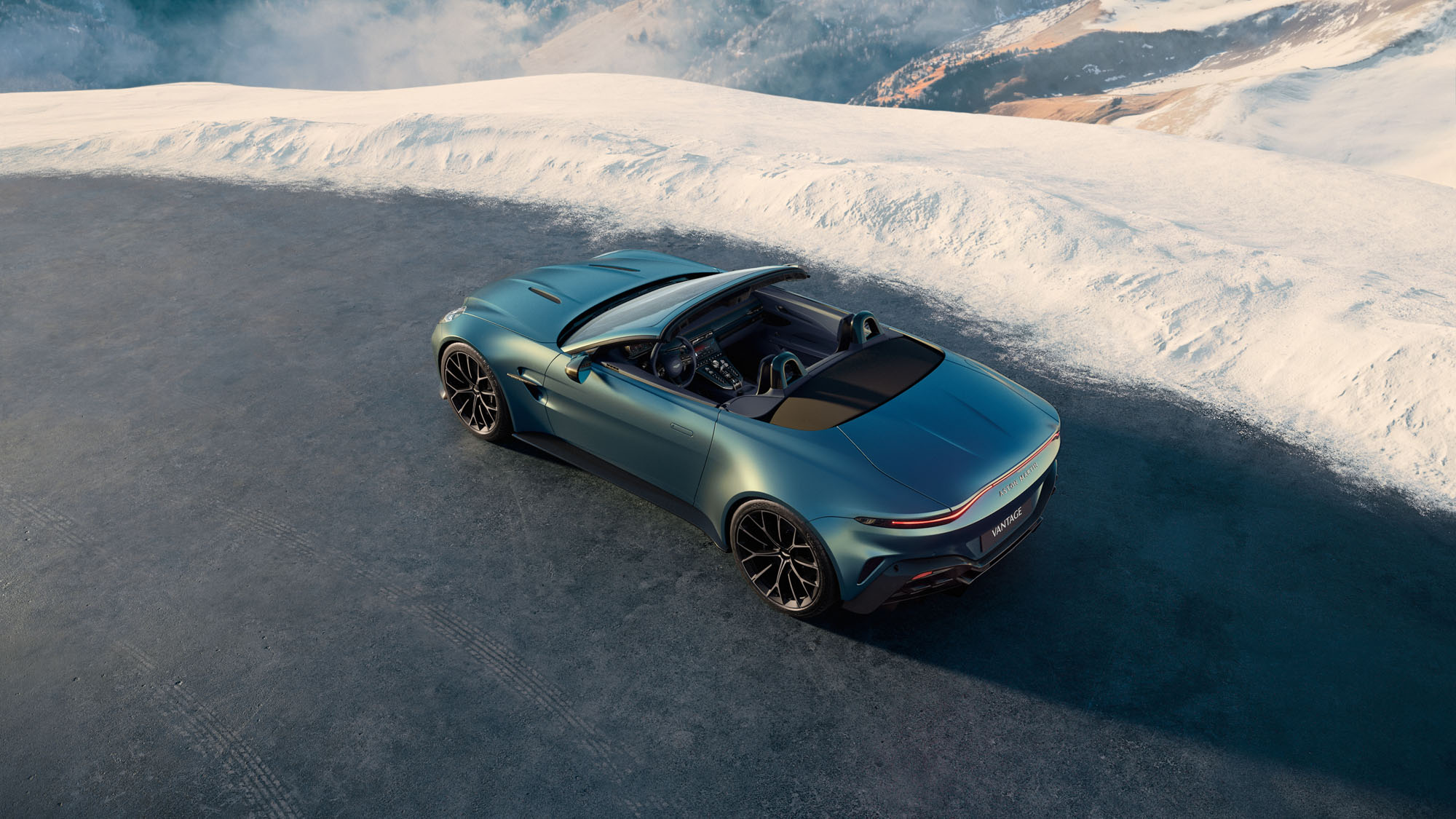
The roof itself comes in ‘Z-fold’ configuration, which is both faster and lighter than a traditional ‘K-fold’ roof and removes the requirement for a tonneau cover, further saving weight and lowering the centre of gravity. The roof on Vantage Roadster can be opened or closed at any speed up to 31mph (50km/h) with the entire roof fold operation (open or closed) taking just 6.8sec – the fastest fully automatic deployable roof mechanism on the market today. Additionally, this slick operation can be performed when seated in the car or remotely via the key, so long as the operator is within a two-meter radius of the car.
Despite the extraordinary speed of the roof operation and its lightweight design, no sacrifice to refinement has been made. The roof comprises no fewer than eight levels of insulation ensuring that cabin sound levels with the roof up are comparable to those of Vantage coupe.
The Z-fold action results in a simpler and, therefore, lighter roof, which leads to Vantage Roadster’s overall weight increase of just 60kg, an outstanding achievement—and class-leading—for a car in this category.
Even the rollover structure has been carefully optimized to be both as strong and lightweight as possible. The aluminum Roll-Over and Protection System (ROPS) is formed using a process called ‘Castrusion’ for the way it combines optimal elements from both casting and extrusion to create a system that is robust, light, and simple to package.
Finally, attention has also been paid to the suspension system to account both for the change in mass and weight distribution. Minimal though these changes are, the fact that Vantage Roadster has recalibrated software for its rear dampers and retuned mountings for its rear-mounted gearbox just shows the lengths Aston Martin engineers go to in order to ensure a full measure of the legendary Vantage handling prowess is carried over from Coupe to Roadster.
Simon Newton, Director of Vehicle Performance, said “Vantage made headlines last year for the huge increases in power and torque over the outgoing model, and the vivid way in which it deployed such immense performance completely seduced enthusiasts and purists alike. Developing both Vantage Coupe and Roadster simultaneously meant we were able to retain the outrageous dynamic capabilities and agile sporting character of Vantage with no compromise upon removal of the roof, allowing drivers to revel at the limit with the added exposure to the elements. This has been achieved from meticulous optimizations in the body structure combined with Roadster-specific chassis tuning carried out by our skilled dynamics team and is the perfect stablemate to its Coupe cohort.”
Design
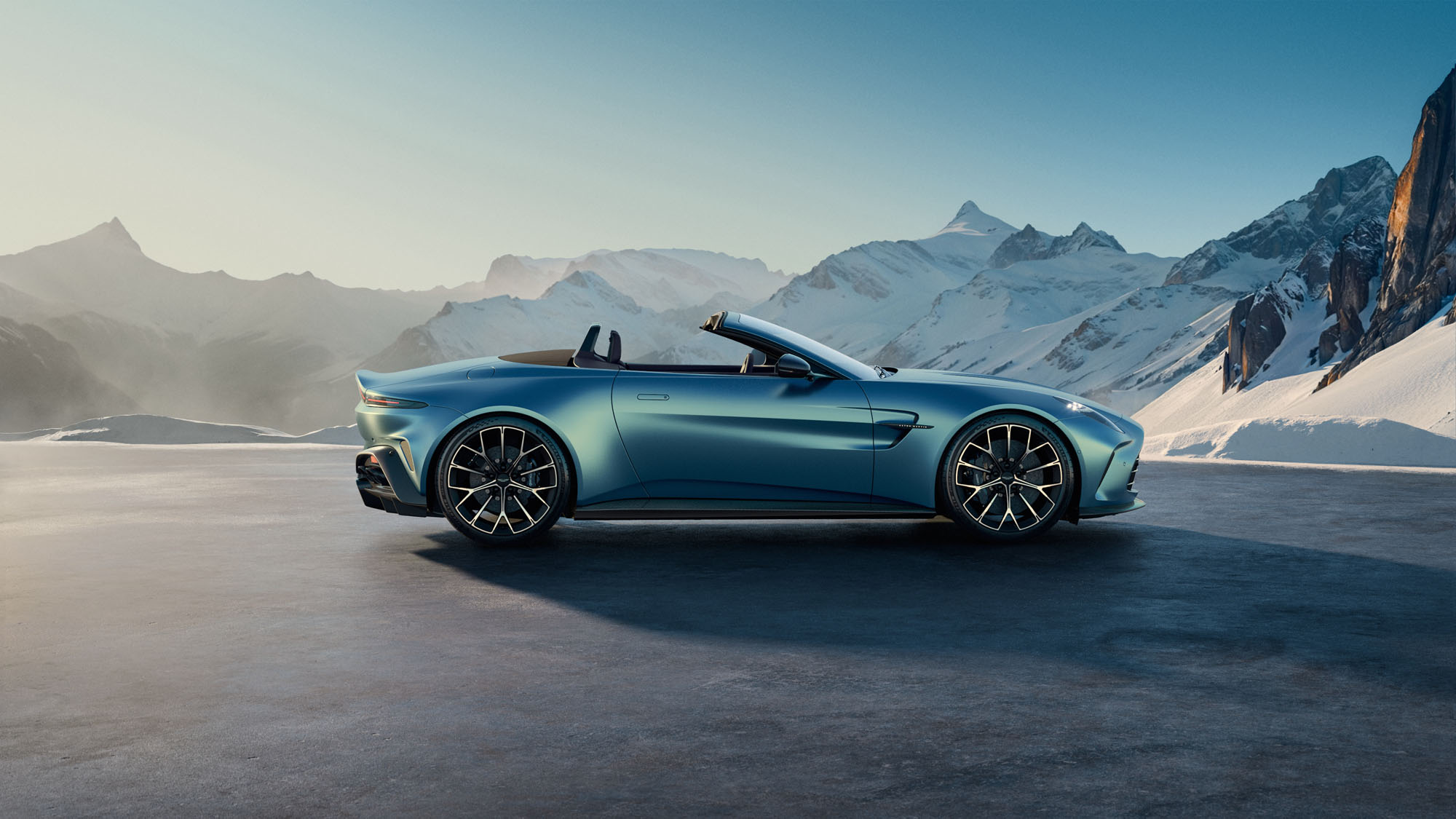
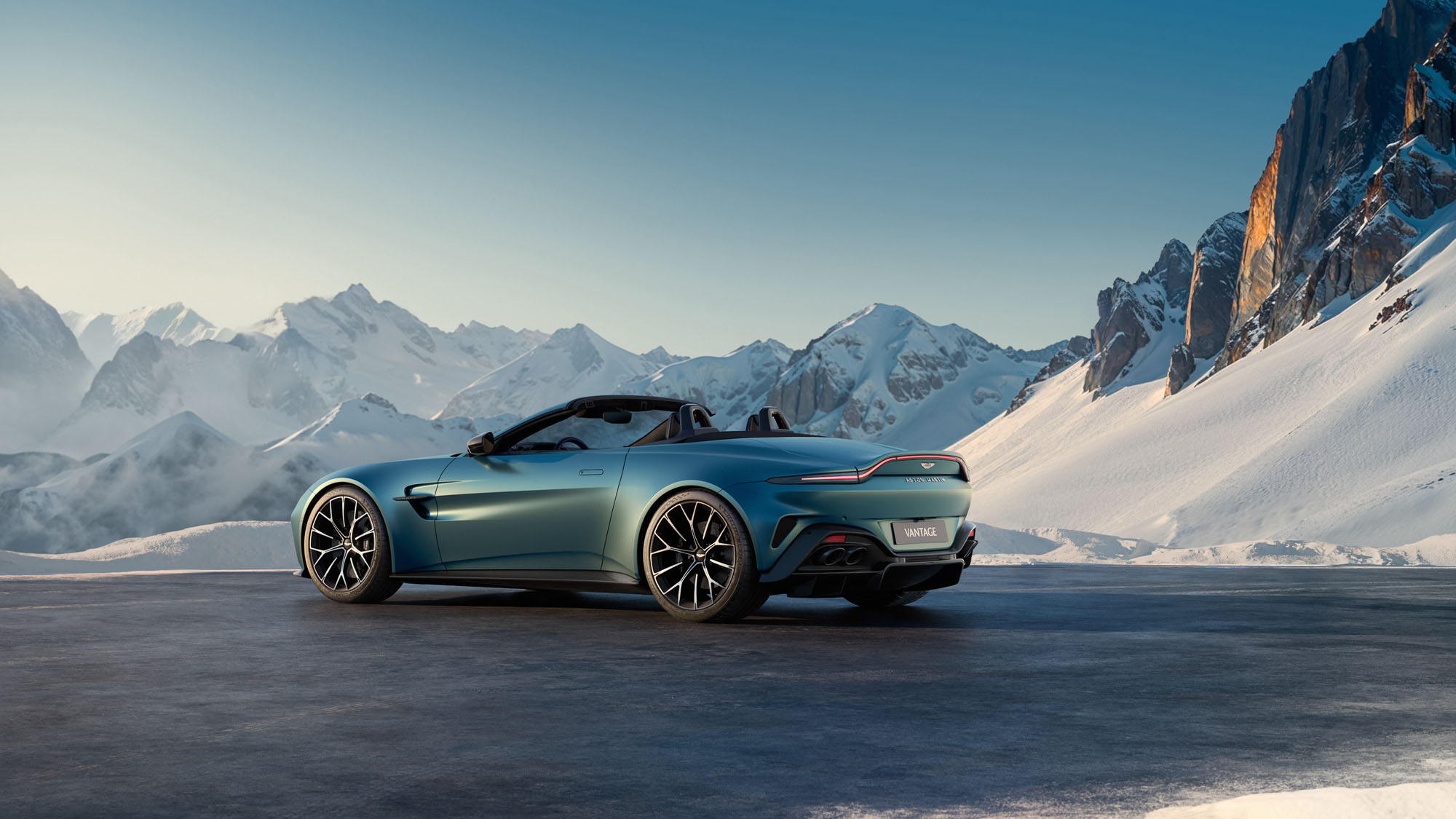
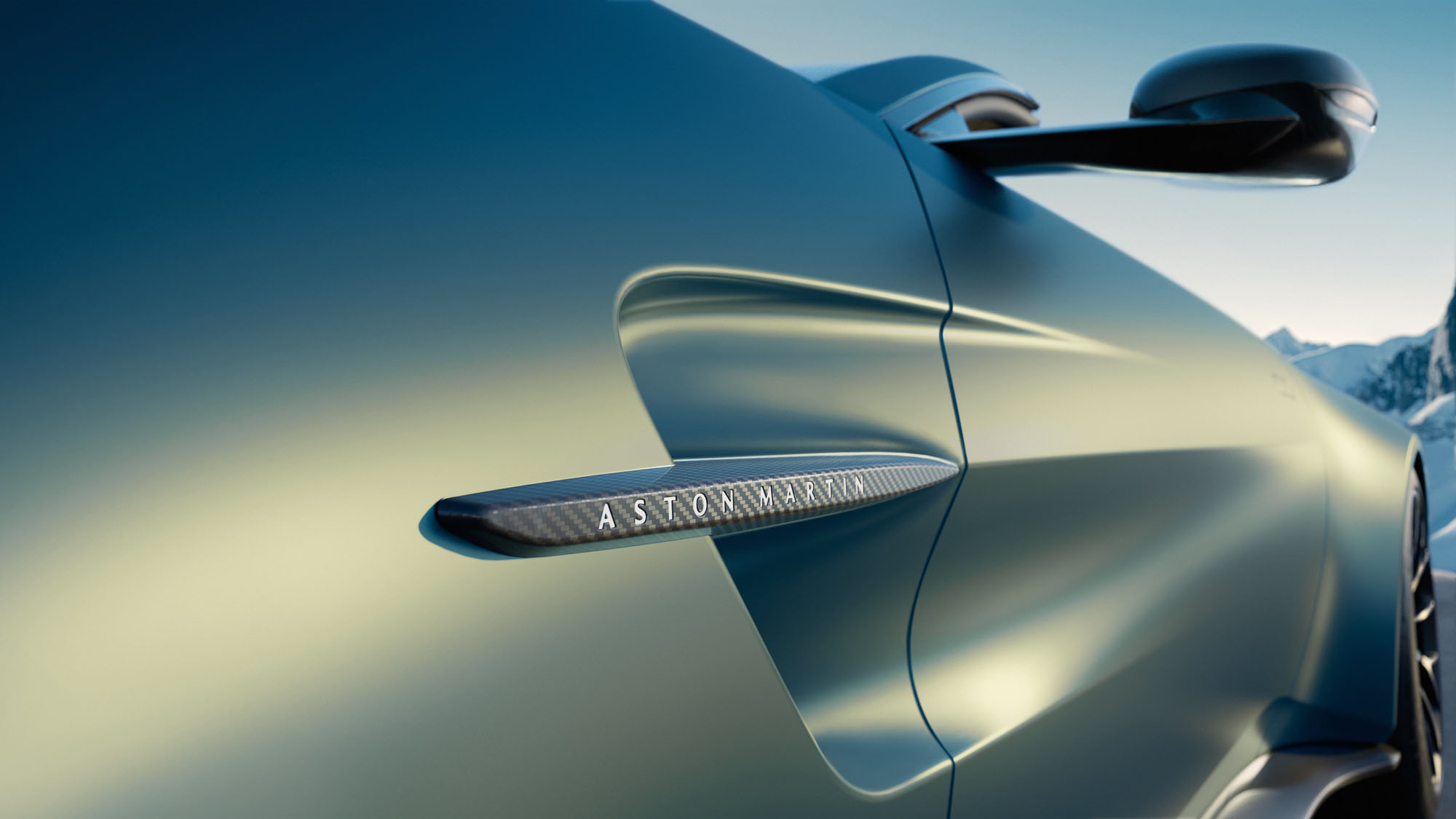
It was essential that all of the visceral impact and beauty of Vantage Coupe was retained for Vantage Roadster, and that it should retain its stunning lines whether the roof is in its raised or lowered position. So successfully has this been achieved that when the roof is stowed Vantage Roadster looks like it was never designed to be anything else. The dramatically angled windscreen joins with the car’s high waistline to create a proportionally perfect thoroughbred sports car profile.
The roof stows seamlessly behind the seats with no need for a bulky and heavy tonneau cover while the bootlid deck slopes gently downwards until it meets the dramatic upkick of the distinctive rear spoiler. The widened stance introduced on the coupe is retained on Roadster, as is the increased aperture of the signature Aston Martin grille; an object lesson in how to combine beauty with function, with the large grille increasing air flow the powerful engine by almost 30 per cent.
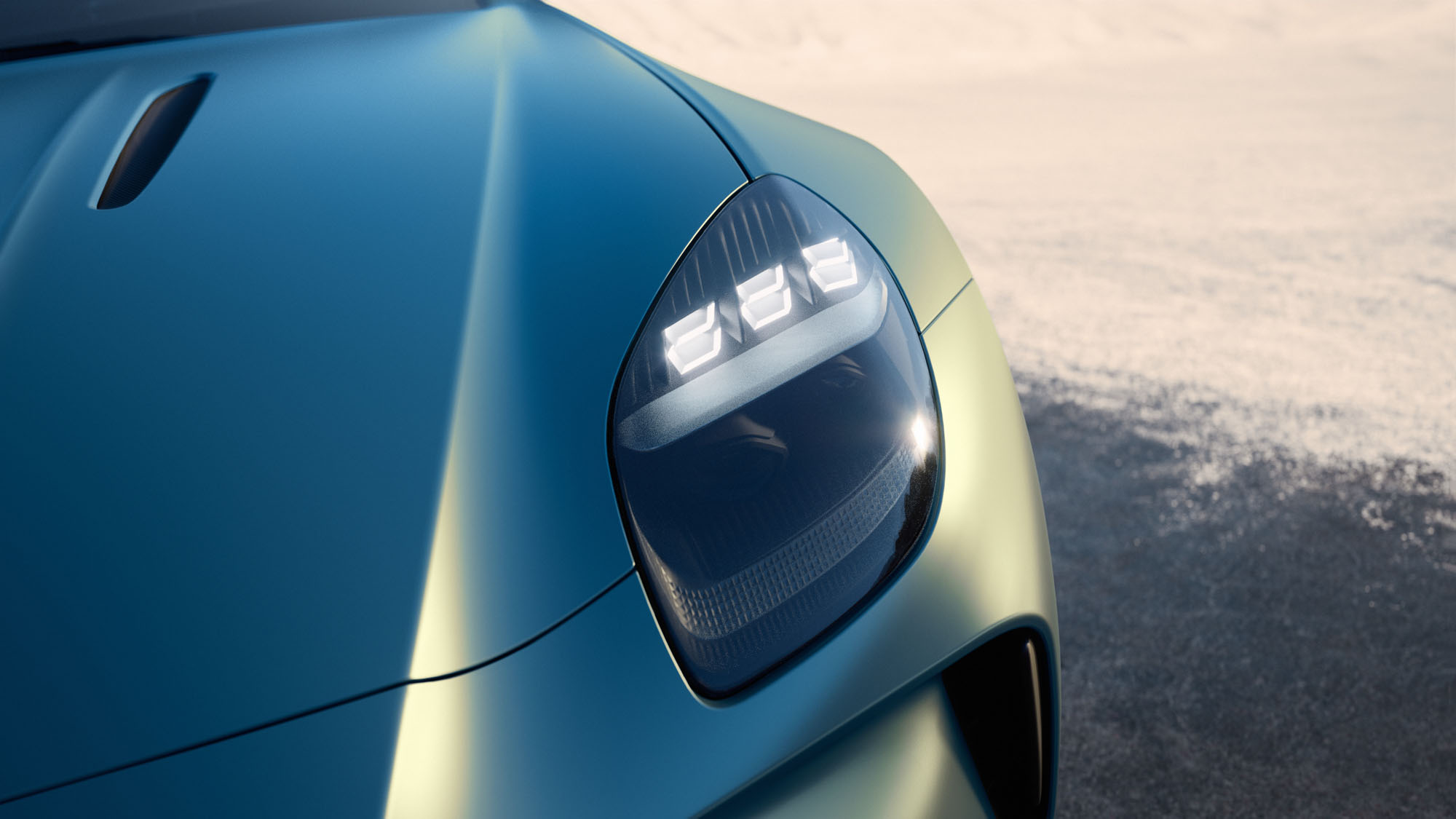
With a spectacular canvas to create a sporting masterpiece, three new paint colours – Iridescent Sapphire, Satin Iridescent Sapphire and Bronze Flare have been added to the paint palette, while the Vantage Roadster’s roof can be specified in Black, Red, Blue or Black and Silver. To enhance the cars sporting character further still, a selection of painted liveries can also be applied in a choice of 21 complementary colours. There are four 21” wheel styles available in a range of finishes, behind which can be seen one of seven different color choices of brake calipers.
Marek Reichman, Aston Martin Chief Creative Officer, said: “This new Vantage Roadster is a sculptural masterpiece. The resonant roar of its engine brings its simple yet refined surface design to life, creating a connection that’s impossible to ignore. Its form exudes beauty, its athletic stance conveys predatory intent, and its sound delivers a visceral, sensory experience. Created as both art and performance, the engine’s sound amplifies this balance, turning the auditory experience into an essential part of the journey. With the roof down, the soundscape becomes as dynamic as the design, blending simplicity, power, and a visceral connection that transcends driving into an unmatched sensory experience.”
Like all Aston Martin models, Vantage customers can explore endless bespoke and customization possibilities via the Q by Aston Martin personalization service. Enlisting the skills of Q’s designers and crafts people, customers take an unforgettable personal commissioning journey that can encompass everything from a single small distinguishing detail to full-scale engineering and production of entirely bespoke components to create a true one-off.
Vantage Roadster, like its Coupe counterpart, is the latest model to feature Aston Martin’s next-generation infotainment. Created in-house and first introduced on DB12, it is entirely bespoke and developed in-house from scratch. The system combines a fully integrated multi-screen system with full online connectivity, featuring 10.25” Pure Black touchscreen technology with full capacitive single and multi-finger gesture control. Touchscreen commands remain balanced with the tactility of physical switches, with buttons retained for the key mechanical operations of gear selection, drive selection, heating and ventilation. There are also control switches for Chassis, ESP and Exhaust, Active Safety System settings and Park Distance Control, ensuring the most used controls can be operated intuitively and without the need to take your eyes off the road. Supplemented by a new Aston Martin customer connectivity app which supports iOS and Android devices, it allows interaction, control and feedback to and from the customer’s Vantage via their personal device.
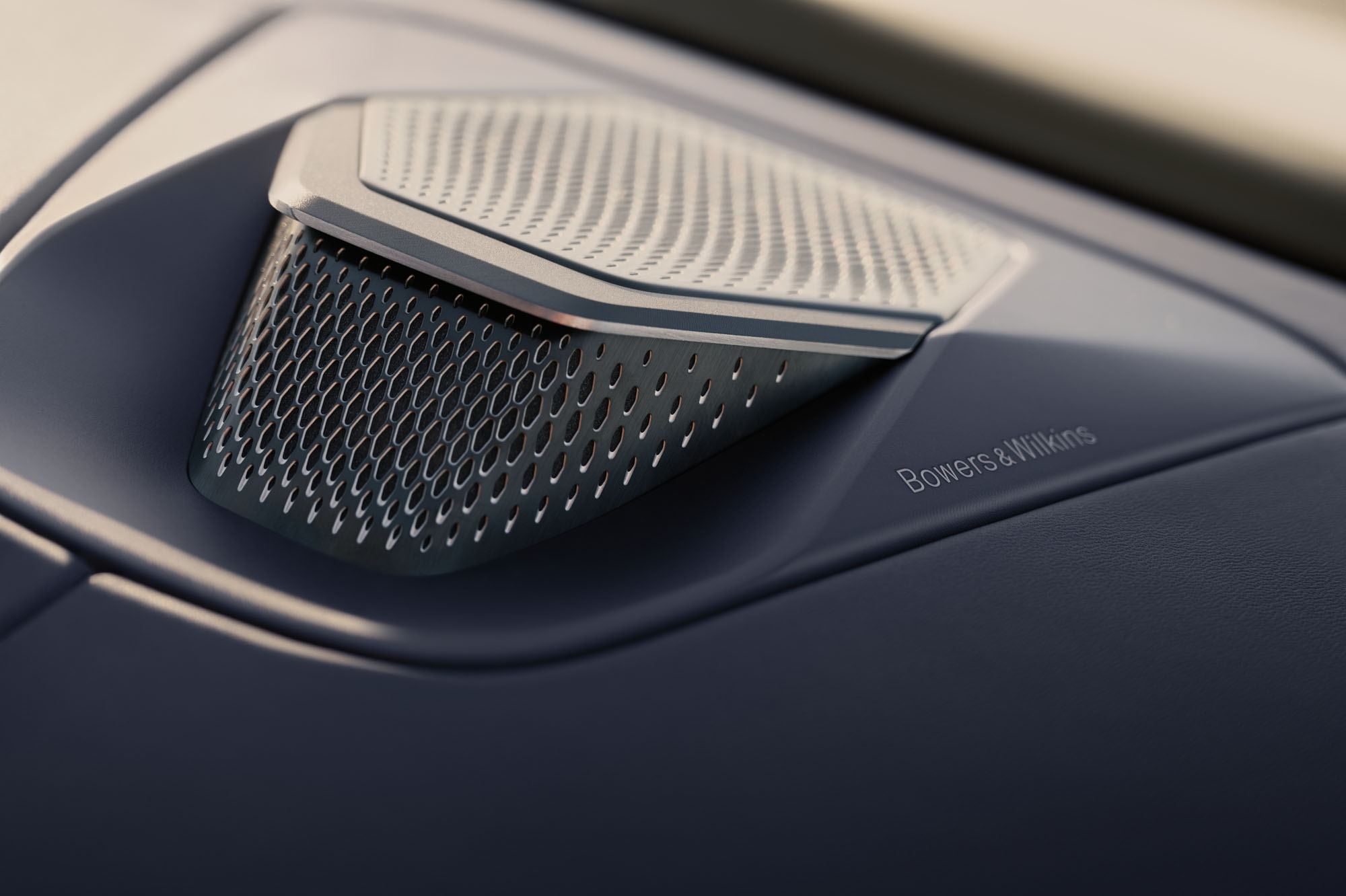
Vantage Roaster is fitted as standard with the Aston Martin 390w 11 speaker audio system. Developed utilizing advanced hardware, this system features a Surround sound mode with QuantumLogic® surround sound processing for an immersive soundscape. However, if a musical soundtrack to the drive is deemed truly significant, some customers will delight in the optional system developed with Aston Martin’s audio partner, Bowers & Wilkins. Acoustically engineered to the Vantage Roadster’s interior volume and shape, this exceptional system uses technologies and innovations found in Bowers & Wilkins’ acclaimed world-class loudspeakers.
Vantage Roadster deliveries will commence in Q2 2025. It joins its Coupe sibling, the DB12 and DB12 Volante, the stunning new Vanquish and, of course the Supercar of SUVs, DBX707 as well as the forthcoming Valhalla supercar to form unquestionably the most capable, comprehensive and desirable product line up in the 112-year history of the Aston Martin marque.
As a longtime Tampa resident, Longboat Key is my go-to Gulf Coast beach destination when I want to feel totally transported. When you drive onto the northern end of this sand-spun island across the Longboat Pass Bridge — with the glittering expanse of the Gulf of Mexico and bobbing boats all around — it feels so much like being in the Florida Keys. And because so much of Longboat Key is residential, the beaches here rarely feel crowded. Wherever you stay, just stroll a bit north or south, and you’ll likely find yourself alone with the shorebirds on the sand.
“Longboat Key is quite residential with a lot of full-time residents. There are not so many public beaches, so it offers a greater aspect of privacy,” says Lauren Mincberg of Tampa, who frequently vacations here with her family at Moku, a Polynesian-inspired, five-bedroom house they operate as a vacation rental on an island off Longboat Key.
“Longboat really feels like families have lived there and been traveling there for generations, so you see all different generations of people gathering together,” Mincberg says.
The biggest news of late on this barrier island just minutes west of downtown Sarasota is the fall 2024 opening of super-luxe St. Regis Resort Longboat Key, positioned roughly mid-island on Longboat Key. Fronting a gorgeous stretch of white sand with incredible amenities like a waterfront tiki bar, the Monkey Bar, it’s already poised to become one of Florida’s most coveted beachfront resorts.
“Longboat Key is just about serenity and natural beauty, and then you have the sophistication of St. Armands Circle and Saraosta right nearby,” says the hotel’s general manager, Winfred van Workum. “The restriction on high rises keeps it very beach-like here. People remark that it’s like the Caribbean or South Pacific.”
Read on for my best tips for visiting Longboat Key.
Top 5 Can’t Miss
Look for dolphins and manatees during a guided kayaking tour.
Catch sunset from the water, the beach, or a gorgeous park on Sarasota Bay or the Gulf of Mexico.
Feast on the fresh catch at a waterfront restaurant.
Grab a beachfront cocktail at the St. Regis Monkey Bar.
Take a day trip to nearby Sarasota.
Best Hotels & Resorts
The lobby bar at The St. Regis Longboat Key Resort.
Courtesy of The St. Regus Longboat Key Resort
The St. Regis Longboat Key Resort
Newly opened during the fall of 2024 as Longboat Key’s first major new resort development in over half a century, The St. Regis Longboat Key Resort sprawls across acres fronting the sparkling Gulf of Mexico and ushers in a new era of luxury for visitors to the island. Rooms and suites have a yacht-like appeal, with sweeping Gulf of Mexico views through floor-to-ceiling windows that cast a silvery glow upon everything. On-site amenities include a 500,000-gallon saltwater lagoon where guests can snorkel among (de-barbed) southern stingrays and thousands of tropical fish; a 20,000-square-foot spa complete with a sauna, cold plunge, steam room, and private pool overlooking the beach; a winding river; and separate family and adults-only pools fronting the gulf. The resort’s gorgeous lobby bar quickly became a favorite among sophisticated locals. And on-site restaurants include the excellent Riva for coastal Italian fare, Nikkei-style Oshen (an incredible al fresco perch for sunset and sushi), and CW Prime, where steaks and seafood sizzle on the Josper grill.
Zota Beach Resort
Take a dip in the infinity-edged pool overlooking the Gulf of Mexico, kick back on your waterfront balcony, or settle in with a mai tai and mahi mahi tacos by the pool bar. A beach vacation at the 187-room Zota Beach Resort combines the best of a luxury resort in a modern setting, with rooms and one-bedroom suites (the latter have kitchenettes) decorated with contemporary furnishings and bright artwork. On a balmy Florida night, there’s nothing like sipping from the extensive wine list at Viento Kitchen+Bar, with a Caribbean and Florida-inspired menu and a glass wall of doors that folds open to let the silky breeze inside.
The Resort at Longboat Key Club
The Resort at Longboat Key has two golf courses, one beside Sarasota Bay and one alongside the Gulf of Mexico.
Courtesy of Visit Sarasota County
If you’d love a beach vacation with the Gulf of Mexico at your doorstep and plenty of tennis and pickleball courts waiting for play, The Resort at Longboat Key Club is hard to beat for an active escape. Part of Opal Collection, the all-encompassing property sprawls across 410 acres with 226 guest rooms and suites and has two waterfront golf courses, a deep-water marina, a full-service spa, and five restaurants, including the farm-to-table Tavern & Whiskey Bar.
SeaHorse Beach Resort
Located roughly mid-island on Longboat Key, this low-key condo-style property has individually owned units directly on the beach. Choose from studios and one- and two-bedroom accommodations at SeaHorse Beach Resort, all with full kitchens, balconies, or patios overlooking the pool and Gulf of Mexico, barbecue grills, and on-site laundry facilities. The SeaHorse is a favorite for longer stays and travelers looking for an at-home feel, and it’s particularly popular with vacationing families.
Sand Cay Beach Resort
Here’s another great bet for a condo-style stay with units located directly on a beautiful stretch of Gulf of Mexico beachfront. The pool at Sand Cay Beach Resort may not have gulf views, but the beach is not far, and there’s a waterfront communal outdoor barbecue area set just back from the dunes where you can grill up dinner while gazing out at the shimmering water. All of the condos are individually owned and decorated, with full kitchens and balconies or patios for enjoying the views.
Best Things to Do
Boats off of Whitney Beach on Lonboat Key, at sunset.
Getty Imaes
Set sail on a sunset cruise.
You’ll be picked up about an hour and a half before sunset to sail out with Four Keys Charters on a beautiful on-the-water adventure through Sarasota Bay and the Intracoastal. A complimentary bottle of bubbly will be popped as you scout for dolphins and manatees and wait for the main event — watching the golden orb sink over the Gulf of Mexico and turn the sky delightful shades of pink and orange.
Explore Sarasota.
The John and Mable Ringling Museum of Art in Sarasota, just a few minutes from Longboat Key.
Eddie Kirsch/Courtesy of Visit Sarasota County
Thriving and artsy downtown Sarasota is just a few minutes away from Longboat Key. Put a visit to the incredible Ringling museum and its gorgeously landscaped grounds on your itinerary as well as some time spent breathing in the fresh air and views among the banyan and mangrove trees of the Marie Selby Botanical Gardens, which recently expanded with more gardens, a welcome center, and a great little restaurant, The Green Orchid. St. Armands Circle brims with sidewalk cafes and shopping.
Learn about sea turtles.
Seven species of sea turtles — including loggerhead, green, and hawksbill turtles — nest and hatch on the powder-fine sands of Longboat Key from May through October. You may get lucky and see hatchlings making their way toward the water during a morning walk or catch a mother sea turtle lumbering ashore here after dark. On Saturdays in June and July, you can head to the beach during free sea turtle walks after dark with Longboat Key Turtle Watch to learn more about these special animals from the people working to protect them.
Scout for manatees and dolphins during a guided kayaking tour.
A group of kayakers on Sarasota Bay.
David X. Tejada/Getty Images
Florida’s iconic nature is all around you on Longboat Key, and the best way to experience it upclose is by getting out on the water in a quiet way during guided kayaking tours with Happy Paddler that launch from the island’s scenic shores into Sarasota Bay. Families with younger kids love the Coastal Island Tour, which takes them between Anna Maria Island and Longboat Key where they might see dolphins and manatees. Look out for the elusive green flash when the sun goes below the horizon during sunset paddling tours.
Play some pickleball or shuffleboard at Bayfront Park.
The town of Longboat Key owns this dog-friendly county park on the bay side of the island that’s a favorite off-the-beach spot for catching the sunset. Bayfront Park’s many amenities include dedicated pickleball courts, tennis courts, a playground, and a kayak launch.
Best Restaurants
From left: Patrons at the bar at Whitney’s; the diner’s key lime pie, topped with toasted coconut.
Courtesy of Whitney’s
Whitney’s
Longboat Key and Sarasota locals love this diner for its come-as-you-are atmosphere and frosé all day on Saturday and Sunday, when the brunch crowd arrives by beach cruiser and golf cart for breakfast burritos and biscuits and gravy. Whitney’s cinnamon and sugar ricotta donut holes are a fan favorite, and don’t leave without trying the key lime pie.
Euphemia Haye
With just 28 seats, Euphemia Haye might be Longboat Key’s most romantic reservation for fine dining that feels like a true local secret. Italian shrimp dishes and cannelloni, roasted duckling, and Grecian lamb shank are among the menu favorites. After dinner, small parties (no more than six people) can slip upstairs to the Haye Loft for a drink in the lounge terrace or handmade desserts by the restaurant’s pastry chef in the Dessert Room.
Sips & Gelato
Tucked away in Whitney Plaza on the northern end of Longboat Key, Sips & Gelato does cold-pressed juices and impeccable espresso drinks and gelato. Open early til around 2 p.m., it’s a breakfast and brunch favorite for pastries, smoothies, bagel sandwiches, avocado toast, and more in a setting filled with art and tropical plants.
Shore
Boaters relish arriving by the water at the dockside Shore, just south of Longboat Pass and west of Jewfish Key (but don’t worry — you can get here by land, too). Shrimp ceviche and guacamole goes down easy with a frosty margarita, and you can never go wrong with something hooked locally, like the pan-seared snapper with citrus butter or miso-marinated black grouper. Most of the tables overlook the water, too.
Dry Dock Waterfront Grill
Another waterfront favorite with plenty of al fresco tables on a dockside patio, Dry Dock Waterfront Grill is beloved among the boat crowd, too. It’s known for great grouper sandwiches, lobster tacos, and a divine key lime pie. Panoramic views of Sarasota Bay are the cherry on top.
Mar Vista Dockside Restaurant
Tables set on the sand under flowering trees overlooking Sarasota Bay make Mar Vista Dockside Restaurant a top choice whether you’re celebrating a special occasion or looking for something laid-back with a true sense of place. Come for beer-battered hogfish and chips and Southern-inflected fare like the shrimp po boys, crab cake sandwich, or corn and jalapeno hush puppies.
Best Time to Visit
Longboat Key sees around 255 days of sunshine and clear skies each year.
Maurice Rivenbark/Courtesy of Visit Florida
Longboat Key and surrounding areas in Sarasota County are awash in 255 days of sunshine a year, according to the county’s Economic Development Corporation, so it’s easy to spend most of your time outside enjoying all that vitamin D. Winters can get a bit nippy when cool fronts move along the coast, but spring and fall are reliably balmy. Keep in mind that Florida’s hurricane season runs between June 1 and the end of November.
How to Get There
Arriving in Longboat Key is a cinch thanks to the growth of Sarasota-Bradenton International Airport and airlines like American and Allegiant Air adding routes here. You’ll have even more options for landing in these parts when you fly into Tampa International Airport, roughly 58 miles (less than 1.5 hours by car) to the north or St. Pete-Clearwater International Airport, just 50 miles to the north ( roughly one hour away).
How to Get Around
Bikes: Longboat Key is prime for exploring on two wheels, with a car-free bike path running the length of the barrier island with access to beaches and restaurants. Ride & Paddle rents beach cruisers, geared bikes, kids bikes, and bikes with trailers and kiddie seats.
Share rides and public transit: The Breeze Transit network operates bus and trolley routes in Sarasota County and a curb-to-curb rideshare service using minivans and SUVs, Breeze OnDemand, that you can order via the app or a phone call for up to four passengers.
With a lineage that dates back to the original Willys Jeep of the 1940s, this boxy off-roader has looked much the same since the Wrangler model line started life in 1986. Now in fourth-generation JL-series form, which was released in 2017, it has received a mid-life makeover that brings a wide array of upgrades.
The highlight is a new turbocharged 2.0-litre four-cylinder petrol engine that replaces the archaic naturally aspirated 3.6-litre Pentastar petrol V6. It produces a smidge less power, but over 50Nm more torque, plus Jeep claims it’s more fuel-efficient.
Other tweaks include a slightly altered seven-slot front grille, new alloy wheels, windscreen-integrated radio antenna, a larger 12.3-inch touchscreen infotainment system with wireless Apple CarPlay and Android Auto, soft-touch dashboard, and an integrated accessory rail atop the dash.
It also picks up first- and second-row side curtain airbags, as well as front and side seat-mounted airbags.
On test here is arguably the coolest-looking and most iconic Wrangler in the range, the three-door Rubicon. You’ve only been able to get this flagship, off-road-centric trim level in the short-wheelbase two-door body style for a few years now.
Has Jeep improved the age-old formula with its latest Wrangler update? Read on to find out.
How does the Jeep Wrangler compare?
View a detailed breakdown of the Jeep Wrangler against similarly sized vehicles.
Jeep
Wrangler
How much does the Jeep Wrangler cost?
The upgraded two-door Wrangler Rubicon is $1000 more affordable than the pre-update V6-powered model. Despite this, at $82,950 before on-roads it’s more than double the price of the Suzuki Jimny three-door automatic.
Model
Price before on-road costs
Jeep Wrangler Unlimited Sport S
$75,950
Jeep Wrangler Rubicon
$82,950
Jeep Wrangler Unlimited Overland
$83,950
Jeep Wrangler Unlimited Rubicon
$89,450
To see how the Jeep Wrangler lines up against the competition, check out our comparison tool
What is the Jeep Wrangler like on the inside?
Walking up to the Jeep Wrangler Rubicon, it has a menacing presence thanks to the wide fender flares and purpose-built stance. It’s a big vehicle, but it’s also a little cute-looking as it’s short and stubby, like the Jimny.
As you hop in, the doors are a little tricky to open as they can slam shut unless you open them enough to reach the first detent, which is new for this facelift. There were many times when I’d open the door, go to step in, and then the door would squish me.
It’s also a big hike into the cabin. Sure, there are A-pillar-mounted grab handles, but the lack of side steps and generous ground clearance make it quite an effort. Side steps can impact ramp-over angles, so it’s a sacrifice made for more capability in the bush.
Despite the sad fact many people buy Wranglers for the look and rarely leave the blacktop, this is a dedicated off-roader and almost everything about it is there for that purpose.
The view from the driver’s seat is very high and commanding. Many buy SUVs for their extra ride height, but the Wrangler goes a step further and really makes you feel in charge.
As standard, the Wrangler Rubicon comes with soft Nappa leather seat trim, which feels a little too fancy in a vehicle that’s intended to get dirty and muddy off-road.
Despite this, they’re great seats that offer lots of support, which is paramount if you’re heading into the rough stuff. In particular, I appreciated the amount of thigh support you can dial into the driver’s seat.
The driving position isn’t perfect, however, as there’s a very narrow footwell and still no footrest – which has been a bugbear with the Wrangler for decades now. It baffles me how Jeep hasn’t fixed this, and during long drives it gets really annoying.
Ahead of the driver is a well-sized steering wheel wrapped in deliciously soft leather. It also offers a generous amount of tilt and reach adjustment, which is great because it means people of many different statures can get comfortable behind the wheel.
All the buttons on the steering wheel are logically placed and clearly labelled. Like in other Jeeps, there are also buttons on the back of the steering wheel for controlling the sound system volume and music tracks.
Disappointingly, the stalks behind the steering wheel are still cheap-feeling and operate with an unsatisfying thwack. This has been a Wrangler trait for years now.
There’s a classic instrument cluster setup that thankfully has physical dials for the tacho and speedo, which are easy to read. There’s also a small 7.0-inch driver info display that has numerous informative pages you can cycle through, though more of them should include a digital speedo readout.
Moving across, the updated Wrangler range has a 12.3-inch touchscreen infotainment system that’s larger and notably more snappy than the pre-update model’s smaller unit. Its display is also bright and crisp.
As standard, there’s both wired and wireless Apple CarPlay and Android Auto. With my iPhone 15 Pro Max connected wirelessly I didn’t experience any major issues, though there were occasional dropouts in known interference points.
A drawback of the Wrangler’s packaging is there’s no spot for a wireless phone charger. This means if you want to keep your phone battery topped up while using smartphone mirroring, you’re forced to plug in with a USB cable.
Another hinderance of the packaging is the lack of storage space in the cabin. There are two cupholders along the centre tunnel, plus a small slot for your phone, but beyond that there isn’t much besides a decent centre console box and armrest, and tiny door pockets.
The chunky gear selector, transfer case lever, and physical handbrake don’t help the case. That said, there’s something overtly masculine about gripping meaty levers.
As a result of the packaging, pretty much all the other major switchgear is on the centre stack, including the power window switches – the doors are removable, so this isn’t surprising. The amount of physical switchgear isn’t all bad though, as Jeep has stuck with a physical climate control setup with easy-to-understand buttons and knobs.
Around the cabin there’s a plethora of hard plastics, which isn’t surprising in a vehicle like this, but also a little crook given the asking price. There are some softer finishes in high touch-point areas, but not as many as you’d expect in a vehicle as expensive as this.
Moving to the second row, only the front passenger seat slides forward easily as it’s not electrically adjustable. Despite this, clambering into the Wrangler’s second row isn’t easy.
Once you’re back there, the space on offer is okay but not fantastic. It’s a fun space for short journeys. At a leggy 182cm, I have good head and shoulder room, and adequate leg and toe room, though my knee hits the centre console.
In terms of second-row amenities there are air vents on the back of the centre console, cupholders, USB ports, and a 230V power point.
Around the back there’s a weird tailgate setup, including a side-hinging lower portion with the spare tyre mounted on it, under a top-hinging upper glass portion. It’s a bit of pain to live with as you need to account for swinging the heavy tailgate open when parking.
Jeep doesn’t actually quote boot capacity figures for the two-door Wrangler, but it’s pretty small especially with the rear seats up.
Equally as strange as the tailgate setup, the rear bench seat folds and tumbles as one unit, which is frustrating if you have three passengers and need more cargo space.
Lastly, the Wrangler is still technically a convertible as you can remove the roof panels and doors. The front roof panels can be removed easily, though there’s nowhere to store them, which means they’ll have to stay at home or at camp. Regardless, it’s a fun and thrilling way to experience this off-roader.
Dimensions
Jeep Wrangler Rubicon
Length
4334mm
Width
1894mm
Height
1879mm
Wheelbase
2459mm
Cargo capacity
N/A
To see how the Jeep Wrangler lines up against the competition, check out our comparison tool
What’s under the bonnet?
In Australia, the Jeep Wrangler is now powered exclusively by a 2.0-litre four-cylinder turbo-petrol engine, replacing the outgoing model’s non-turbo 3.6-litre petrol V6.
Specifications
Jeep Wrangler Rubicon
Engine
2.0L 4cyl turbo-petrol
Power
200kW @ 5250rpm
Torque
400Nm @ 3000-4500rpm
Transmission
8-speed auto
Drive type
Rock-Track Active On-Demand 4×4 (2H, 4A, 4H, 4L, Crawl)
Fuel economy (claimed)
9.9L/100km
Fuel economy (as tested)
11.2L/100km (660km)
CO2 emissions (claimed)
225g/km
Fuel tank
66 litres
Weight
1977kg (tare)
Braked towing capacity
1497kg
Gross vehicle mass (GVM)
2404kg
Gross combination mass (GCM)
3751kg
To see how the Jeep Wrangler lines up against the competition, check out our comparison tool
How does the Jeep Wrangler drive?
I’m used to hearing big six-cylinder sound when starting up the Wrangler, so the muted note of the turbo-four in the updated model took me by surprise.
Wrangler Unlimited Rubicon shown
In fact, this new engine sounds a little boring and shrill when revved, but being able to hear the turbo sounds from inside the cabin is fun.
Despite not offering as much character as the wheezy old Pentastar V6, the new four-cylinder is very perky and rev-happy. You’ll easily win the traffic light grand prix, though you’ll pay for a heavy right foot at the fuel bowser.
It tends to run out of revs a bit in the first few gears, especially when the engine is cold, which feels overtly old-school despite being a brand-new car.
There are multiple ways of driving the Wrangler Rubicon due to its selectable four-wheel drive system, called Rock-Track Active On-Demand 4×4.
You’re able to drive in two-high (2H), which means rear-wheel drive and a good way to reduce fuel consumption if you’re on sealed roads, but if you want the added security of all-wheel drive you can select four-automatic (4A).
At low speeds the roar and rumble from the BFGoodrich mud-terrain tyres is pronounced inside the cabin on sealed surfaces. I had many passengers asking me if there was something wrong with the car, before letting them know that’s just how off-road tyres sound on bitumen.
The Wrangler’s electrically assisted hydraulic power steering is very heavy, needs to be unwound in tight turns and makes squealing hydraulic sounds when you turn the wheel.
In many other off-road SUVs fitted with all-electric power steering systems (no pump or fluid, just a motor), the steering is much lighter and easier to handle, and there aren’t as many unwanted steering shunts off-road.
Even though the two-door Wrangler is shorter than the four-door Unlimited, the steering makes it a hard thing to park. In addition to accounting for the side-hinged tailgate when parking, you also need to be mindful of the humongous front bumper that sticks out further than you think.
As standard, there are front and rear parking sensors, plus a front and rear camera to make the parking process easier. The cameras can also be utilised off-road to help you see where you’re going.
Around town and at higher speeds the suspension feels soft and floaty. It’s obviously setup for a comfortable off-road ride with plenty of compliance and articulation. On-road, however, it flops and wobbles over bumps, which in all fairness is a characteristic of short-wheelbase solid-axle body-on-frame vehicles, much like the Jimny.
It’s far more stable than previous generations, but driving the Wrangler remains a rather hands-on experience as the steering is vague at speed. You need to make almost never-ending minor steering adjustments to make sure you’re heading in a straight line.
The turbo-petrol engine still has plenty of punch at highway speeds. There’s enough left in the tank if you need to overtake, though going faster in this car feels a little hair-raising, and not in a good way.
What’s most noticeable at higher speeds is the amount of wind and tyre noise. It’s pretty bad, but you need to remember this essentially has the aerodynamic properties of a shoebox, and it rides on mud-terrain tyres.
Thankfully, you can crank up the surprisingly good sound system to drown out the booming sound, but that doesn’t change the fact this isn’t the most comfortable highway tourer.
In terms of off-roading, we didn’t get an opportunity to head too far away from the blacktop this time around, but at the press launch last year my colleague Josh Nevett hit some pretty hard-core trails and said the Wrangler never felt out of its depth, declaring it’s still the benchmark in terms of off-road ability.
In addition to the requisite four-high (4H) and four-low (4L) modes that make it an actual four-wheel drive, there are front and rear differential locks, and a electronic front sway bar disconnect system. The aforementioned front-facing TrailCam is also incredibly helpful when tackling tricky off-road tracks where a spotter would normally be needed.
On the safety front, the adaptive cruise control system is pretty good, though it can dip below the set speed a bit on hills before dropping gears and accelerating.
There aren’t any assisted driving functions like lane-keep assist and lane centring, but there is autonomous emergency braking, blind-spot monitoring and rear cross-traffic alert.
Lastly, the LED headlights are bright, which is great on dimly lit rural and regional roads. There’s also an auto high-beam function which is helpful because the car will take over dipping the high beams when it detects lights ahead of you.
Off-road dimensions
Jeep Wrangler Rubicon
Track front and rear
1598mm (front) 1598mm (rear)
Ground clearance
257mm
Approach angle
44 degrees
Departure angle
37 degrees
Ramp breakover angle
27.8 degrees
Wading depth
760mm
To see how the Jeep Wrangler lines up against the competition, check out our comparison tool
What do you get?
The Wrangler Rubicon is the only variant still available in Australia in two-door guise.
Wrangler Sport S standard equipment highlights:
17-inch alloy wheels
Nexen Roadian A/T tyres
Regular-duty suspension
Automatic LED headlights
Automatic high-beam
Front Gorilla Glass windshield
Windshield-mounted antenna
12.3-inch touchscreen infotainment system
Wireless Apple CarPlay and Android Auto
Satellite navigation
DAB digital radio
9-speaker Alpine sound system
Climate control
Ambient LED interior lighting
Fabric dash panel
240A alternator
Heated steering wheel
Black cloth upholstery
Heated front seats
Side curtain airbags
Rear seat reminder
Proximity entry with push-button start
Wrangler Overland adds:
18-inch alloy wheels
Anti-spin Dana M220 rear axle
Black side mirrors
Soft spare tyre cover
Premium ‘McKinley’ seats
12-way power front seats with 4-way lumbar
Hard seatback panel
Wrangler Rubicon adds:
17-inch alloy wheels with 32-inch off-road tyres
Performance suspension
Electronic front sway bar disconnect
Heavy-duty Dana full-float rear axle
Acoustic laminated front door glass
Forward-facing TrailCam
Premium wrapped dash panel
Black Nappa leather-trimmed upholstery
Rear seat reminder
*Removes 12-way power passenger seat
To see how the Jeep Wrangler lines up against the competition, check out our comparison tool
Is theJeep Wrangler safe?
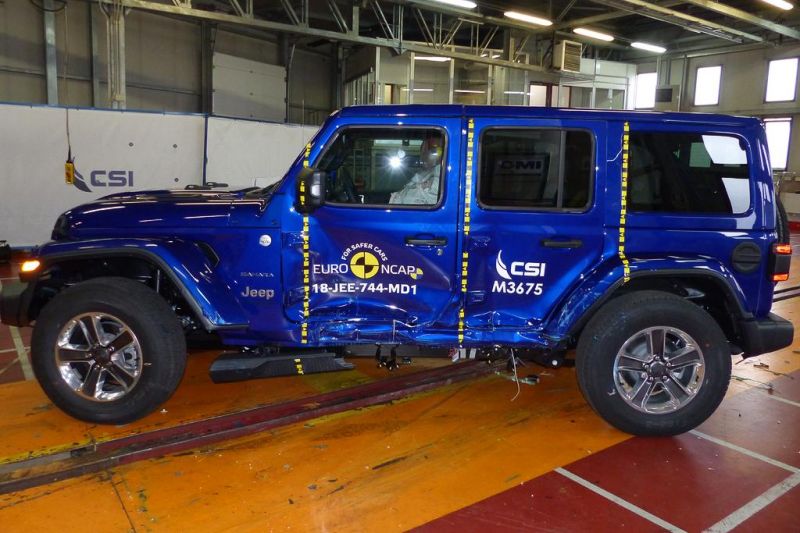
The Jeep Wrangler range, including the two-door, has a three-star ANCAP rating based on testing conducted in 2019.
Category
Jeep Wrangler
Adult occupant protection
23.0 out of 38 (60%)
Child occupant protection
39.4 out of 49 (80%)
Vulnerable road user protection
23.9 out of 48 (49%)
Safety assist
6.7 out of 13 (51%)
Autonomous emergency braking
Blind-spot monitoring
Rear cross-traffic alert
Adaptive cruise control
Reversing camera
Front and rear parking sensors
Front and front-side airbags
First- and second-row side curtain airbags
To see how the Jeep Wrangler lines up against the competition, check out our comparison tool
How much does theJeep Wrangler cost to run?
The Jeep Wrangler is covered by a five-year, 100,000km warranty. Logbook servicing is required every 12 months or 12,000km, whichever comes first, and if you service with the dealer you’ll receive roadside assistance.
Servicing and Warranty
Jeep Wrangler
Warranty
5 years/100,000km
Roadside assistance
Service activated
Service intervals
12 months/12,000km
Capped-price servicing
5 years
Total capped-price service cost
$1995
To see how the Jeep Wrangler lines up against the competition, check out our comparison tool
CarExpert’s Take on theJeep Wrangler
The Rubicon, or for that matter any Wrangler, isn’t the type of car you should buy because of its looks. This is purpose-built adventure machine that’s designed to climb mountains, and if you expect it to also be as comfortable and refined as mainstream SUV day-to-day, prepare to be sorely disappointed.
The Wrangler has long been a pioneer in the off-road vehicle market and the latest update continues this, but it still leaves a lot to be desired on-road. It is a ladder-frame SUV with solid front and rear axles, after all. Its steering is vague, its tyres rumble and wind noise is off the charts.
The new turbo-four engine is a good replacement for the dozy old Pentastar V6 that feels like it has been around since the dawn of time. It offers plenty of punch and is capable of getting this box on wheels moving along briskly, though its uninspiring engine note lacks character.
There are still the same fundamental packaging flaws inside, including the lack of a driver’s footrest and limited storage, but it’s good to see the cabin technology has been improved by a larger touchscreen, among other additions.
It’s a minor thing, but due to the radio antenna now being integrated into the front windscreen, you no longer have to worry about snagging it on low-hanging brush off-road. It also cleans up the exterior aesthetics of the Wrangler.
This vehicle continues to be a very unique and niche option in the large SUV segment, especially when you look at the price. Its closest rival is arguably the considerably smaller and more affordable Jimny, though the GWM Tank 300 is another conceptually similar but plusher rival.
For the asking price, however, the Wrangler – especially in flagship Rubicon guise – is priced closer to the luxurious Land Rover Defender, which notably can also be had in three-door guise. It doesn’t offer the same amount of off-road bells and whistles as standard, though you can option it up to the wazoo.
If you don’t spend a considerable amount of time off-road but still want to hit the trails or head overland, you’re better off looking at other body-on-frame SUVs like the Ford Everest or Toyota Prado, as they offer considerably more on-road comfort.
But especially in two-door guise, the Wrangler is still king of the mountain and still oozes the type of cool factor that a Jimny owner like me appreciates. Even in this boring silver exterior paint, it turns heads. I’ll take one in Hydro Blue, please.
Interested in buying a Jeep Wrangler? Get in touch with one of CarExpert’s trusted dealers here
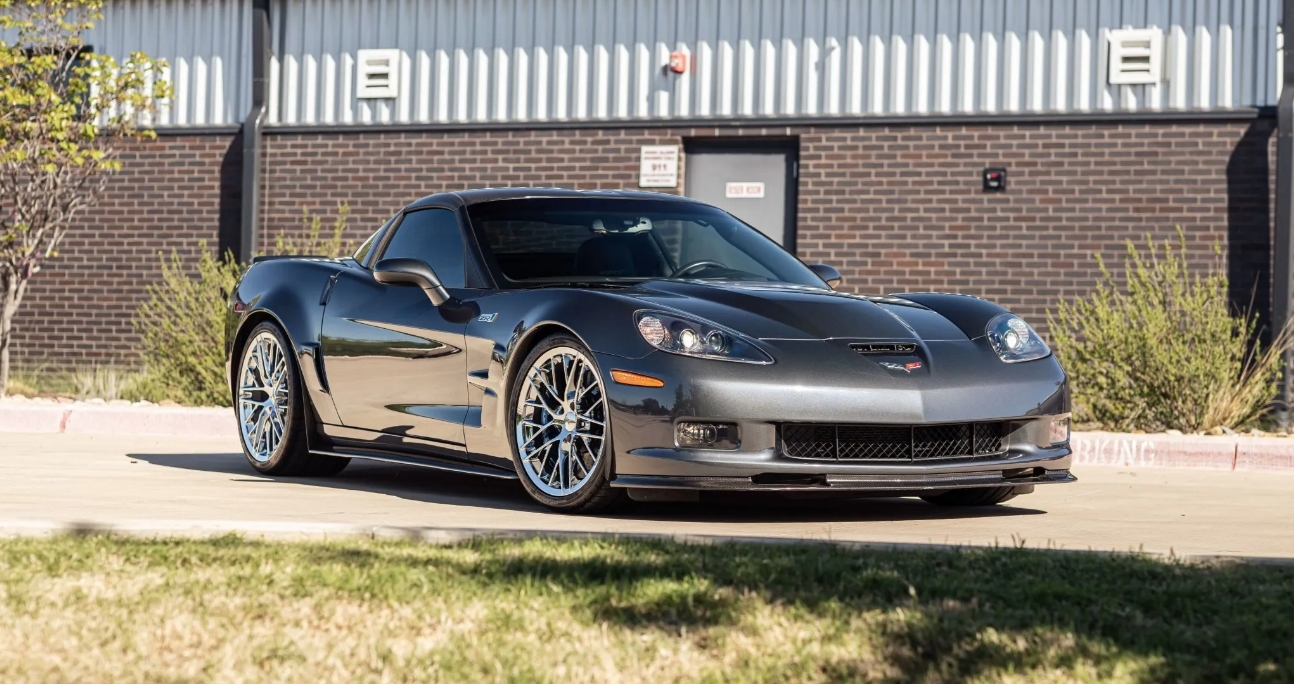
When the C6 Corvette Z06 was introduced in 2006, it set a new standard for American sports cars, offering supercar-level performance at a fraction of the cost. Building on the already successful C6 Corvette platform, Chevrolet aimed to create a high-performance variant that could rival some of the best in the world.
The Z06 combined advanced engineering, lightweight materials, and a focus on track-inspired dynamics to deliver a car that was as exciting on the road as it was on the racetrack. Later, in 2009, the introduction of the ZR1 took this concept even further and made it even more hardcore.
At the heart of the Z06 lies the naturally aspirated 7.0-liter LS7 V8 engine, producing 505 hp and 470 lb-ft of torque. This hand-assembled powerhouse featured titanium connecting rods, a dry-sump lubrication system, and lightweight components, enabling the Z06 to achieve a top speed of nearly 200 mph.
The ZR1, on the other hand, pushed boundaries with its 6.2-liter supercharged LS9 V8, producing 638 hp and 604 lb-ft of torque, propelling it to a top speed of 205 mph. Both models offered impressive acceleration and performance, with the ZR1 earning the title of the fastest Corvette of its time.
The exterior of the Z06 and ZR1 emphasizes aerodynamic efficiency and lightweight construction. The Z06 features a fixed roof, wider rear fenders, and carbon fiber front fenders, while the ZR1 ups the ante with a carbon fiber hood and visible polycarbonate window showcasing the supercharger beneath. Both cars have an aggressive stance, with functional vents and spoilers designed to improve cooling and downforce.
Inside, the C6 Corvette Z06 and ZR1 prioritize performance without sacrificing comfort. The driver-focused cockpit includes bolstered leather seats, a race-inspired flat-bottom steering wheel, and an optional head-up display for critical performance data. While not as opulent as some European rivals, the interior offers a balance of practicality and technology, making it suitable for both spirited drives and long road trips.
Throughout its production, the C6 Corvette Z06 and ZR1 competed in a fiercely competitive segment. Rivals included the Porsche 911 Turbo, Nissan GT-R, Ferrari F430, and 4th generation Dodge Viper. Despite the competition, the Corvette stood out for its exceptional value, delivering world-class performance and engineering at a price that undercut its rivals significantly.
This combination of power, precision, and affordability ensured the Z06 and ZR1’s place as icons in the sports car world.
Model Changes (Breakdown by Year)
2006 Chevrolet Corvette Z06
In 2006, the Corvette Z06 was introduced as a high-performance model in the C6 lineup, setting a new benchmark for American sports cars.
At its heart was the naturally aspirated 7.0L LS7 V8 engine, producing an impressive 505 hp and 470 lb-ft of torque. Equipped with advanced dry-sump lubrication, the Z06 delivered exceptional performance, achieving a 0–60 mph time of 3.7 seconds and a top speed of 198 mph.
The Z06’s lightweight construction featured an aluminum frame, carbon fiber front fenders, a fixed roof, and a magnesium engine cradle and roof structure, all designed to enhance agility and reduce weight.
Handling and braking were improved with an upgraded suspension system and Brembo brakes, while its performance was complemented by unique 18-inch front and 19-inch rear wheels fitted with Goodyear Eagle F1 Supercar tires, ensuring optimal grip and stability.
The 2006 Chevrolet Corvette Z06 had a starting price of $65,800. This price represented a premium of about $20,000 over the base C6 Corvette, which started at $44,490.
2007 Chevrolet Corvette Z06
In 2007, the Corvette Z06 received minimal updates.
The interior saw minor improvements, including a redesigned steering wheel for better ergonomics. Electronic stability control programming was improved to provide enhanced handling and safety.
Additionally, a new exterior color, Atomic Orange, was introduced, adding a vibrant option to the Z06’s color choices.
In 2007, the Chevrolet Corvette Z06 experienced a price increase compared to the previous model year. The starting price for the 2007 Z06 was $69,175, reflecting a rise of approximately $4,310 from the 2006 model’s base price of $65,690.
2008 Chevrolet Corvette Z06
In 2008, the Corvette Z06 received several refinements.
OnStar with Turn-by-Turn Navigation became a standard feature, offering improved navigation and connectivity for drivers. The steering wheel was updated with larger, more user-friendly buttons to enhance functionality.
Also, a Tire Pressure Monitoring System (TPMS) was standardized, contributing to improved safety and ease of maintenance. And two new exterior colors, Jetstream Blue Metallic, and Crystal Red Tintcoat, were introduced.
In 2008, the Chevrolet Corvette Z06 had a starting price of $71,275.
2009 Chevrolet Corvette Z06 and ZR1
In 2009, Chevrolet introduced the highly anticipated ZR1, while also making updates to the Z06. The Z06 received a new Launch Control System, enhancing traction and acceleration for improved performance. Additionally, optional Spider Design Wheels were made available, and Bluetooth connectivity became a standard feature.
The spotlight, however, was on the debut of the ZR1, which featured a supercharged 6.2L LS9 V8 engine producing 638 hp and 604 lb-ft of torque. Equipped with an Eaton TVS supercharger and intercooler, the ZR1 achieved big performance metrics, including a 0–60 mph time of 3.4 seconds and a top speed of 205 mph.
Unique features of the ZR1 included a visible carbon fiber roof panel and a hood with a polycarbonate window showcasing the supercharger. The car also featured upgraded Brembo carbon-ceramic brakes and Magnetic Ride Control for adaptive suspension, ensuring precise handling and stopping power.
To save weight, Chevrolet utilized carbon fiber extensively in its hood, roof panel, front splitter, front fenders, side rocker panels, and rear spoiler, reducing weight and improving aerodynamics.
In 2009, the Corvette Z06 had a base price of $74,775, while the newly introduced Corvette ZR1 started at $103,300.
2010 Chevrolet Corvette Z06 and ZR1
In 2010, the Corvette Z06 and ZR1 received minor updates.
The Z06 introduced the optional Z06 Carbon Limited Edition Package, which included ZR1-inspired features such as Brembo carbon-ceramic brakes and Magnetic Ride Control, which were available for the first time on the Z06.
Additionally, carbon fiber body components were incorporated to enhance performance and reduce weight. For the ZR1, Chevrolet made the Launch Control System a standard feature and introduced the Performance Traction Management (PTM) system, further improving the car’s handling and track capabilities.
In 2010, the Chevrolet Corvette Z06 had a starting price of $74,285, while the Corvette ZR1 began at $106,880.
2011 Chevrolet Corvette Z06 and ZR1
In 2011, the Corvette Z06 and ZR1 received several updates.
The Z06 introduced the Ultimate Performance Package (Z07), which included carbon-ceramic brakes, Magnetic Ride Control, upgraded Michelin Pilot Sport Cup tires, and a lightweight carbon fiber hood, making it even more track-focused.
For the ZR1, Chevrolet improved the Performance Traction Management (PTM) system, optimizing it for better track performance. Additionally, a new exterior color, Supersonic Blue Metallic, was made available.
In 2011, the Chevrolet Corvette Z06 had a starting price of $74,305, while the Corvette ZR1 began at $109,800.
2012 Chevrolet Corvette Z06 and ZR1
In 2012, Chevrolet introduced the Centennial Edition Package, available for both the Z06 and ZR1, to celebrate the brand’s 100th anniversary.
This special edition featured a unique Carbon Flash Metallic Paint, satin black wheels with red accents, and exclusive Centennial badging, giving the Corvette a distinctive and modern appearance.
The Z06 saw further enhancements with optional Michelin Pilot Sport Cup Tires for improved grip and carbon fiber floor panels for additional weight savings.
The ZR1 remained mechanically unchanged, maintaining its impressive power and performance, but received minor interior refinements such as upgraded materials and subtle design improvements.
In 2012, the Chevrolet Corvette Z06 had a starting price of $76,500, while the Corvette ZR1 began at $112,500.
2013 Chevrolet Corvette Z06 and ZR1
In 2013, the final year of the C6 Corvette generation, Chevrolet introduced the 60th Anniversary Package, available for both the Z06 and ZR1, to commemorate the Corvette’s legacy. This special edition featured a striking Arctic White exterior with Blue racing stripes, along with 60th Anniversary badging and unique interior accents, making it a good option for collectors.
The Z06 continued to offer its extensive range of weight-saving options, including a carbon fiber hood, carbon fiber floor panels, and lightweight Spider Design Wheels, along with high-performance packages such as the Z07 Ultimate Performance Package, which added carbon-ceramic brakes, Magnetic Ride Control, and track-oriented Michelin Pilot Sport Cup tires for unparalleled handling.
For the ZR1, 2013 marked its final production year, with its 638 hp supercharged LS9 engine, advanced Brembo carbon-ceramic brakes, and Performance Traction Management (PTM) system.
As Chevrolet prepared to transition to the next generation of Corvettes with the upcoming C7, the 2013 model year celebrated the end of an iconic era for the C6 lineup.
In 2013, the Chevrolet Corvette Z06 had a starting price of $75,600, while the Corvette ZR1 began at $112,600.
Chevrolet Corvette C6 Z06 and ZR1 Common Problems
The C6 Corvette Z06 and ZR1 models have faced several common problems that owners should be aware of.
Keep in mind, it is essential to keep in mind that all vehicles, can have issues and it is crucial to perform a Pre-Purchase Inspection (PPI) from an authorized dealer or experienced independent mechanic to reveal all issues.
Below is a list of common issues that can be found on the Corvette C6 Z06 and ZR1:
Valve Guide Wear (Z06): The LS7 engine in the Z06 is known for premature valve guide wear. This issue, if left unaddressed, can cause excessive engine oil consumption, reduced performance, or even catastrophic engine failure. Regular inspections and upgraded aftermarket components can help mitigate this problem.
Harmonic Balancer Failure: A common issue in both Z06 and ZR1 models, the harmonic balancer can wobble or fail over time. This not only causes engine vibrations but can also lead to accessory belt misalignment and wear. Replacing the harmonic balancer with a high-quality aftermarket part is a common solution.
Rod Bearing Wear (Z06): The high-revving nature of the LS7 engine can lead to rod bearing wear, especially under frequent track use or aggressive driving. Symptoms include engine knocking or tapping sounds. Proactive maintenance, including regular oil changes and potential bearing upgrades, is essential to address this issue.
Roof Panel Delamination (Early Z06 Models): Early Z06 models, particularly from 2006, had issues with the adhesive bonding of the roof panel. This could result in the roof panel separating or delaminating over time, posing both cosmetic and safety concerns. Chevrolet addressed this with revised adhesive, and repairs or replacements are available.
Fuel System Issues: The fuel pump in some C6 models has been known to fail, causing engine stalling or difficulty starting. Additionally, fuel gauge inaccuracies, often linked to sulfur deposits on the sensor, are a reported issue. Regular use of fuel system cleaners can help maintain sensor accuracy.
Electrical Problems: Electrical gremlins such as faulty alternators, intermittent airbag warning lights, and malfunctioning power windows have been reported. While often minor, these issues can be frustrating and may require professional diagnostics to resolve.
PTM and Magnetic Ride Control Sensors (ZR1): The advanced Performance Traction Management (PTM) system and Magnetic Ride Control on the ZR1 can sometimes experience sensor failures. Symptoms include inconsistent handling or error messages. Recalibrating or replacing faulty sensors typically resolves the issue.
Transmission Synchronizer Wear (Manual Models): Some owners have reported issues with the transmission synchronizers, particularly in aggressive downshifting situations. Symptoms include difficulty engaging gears or grinding. Upgraded transmission components can help extend longevity.
Active Handling System Errors: The Active Handling System, designed to enhance stability, can sometimes trigger error codes. This is often due to worn wheel speed sensors or connection issues.
Recalls
2006 Corvette Z06 vehicles
Steering Column Issue Affecting Active Handling System (Recall no. N100118)
Corvette models equipped with a tilt and telescoping steering column, repeated adjustments could cause a signal interruption within the column. This malfunction might trigger the “Service Active Handling System” warning and could result in unintended braking on one or more wheels, increasing the risk of a crash.
2006 to 2007 Corvette Z06 vehicles
Low Beam Headlight Failure (Recall no. 13146)
Certain Corvettes were affected by a defect where the underhood bussed electrical center (UBEC) housing could expand and cause the headlamp low beam relay control circuit wire to bend and fracture. This led to the loss of low beam headlamp illumination, reducing driver visibility and increasing the risk of accidents.
2011 to 2012 Corvette Z06 and ZR1 vehicles
Structure: Body: Hatchback/liftgate: Hinge and attachments (Recall no. 11V491000)
General Motors (GM) is recalling certain model year 2011-2012 Chevrolet Corvette Coupe vehicles, manufactured from January 24, 2011, through September 1, 2011, for failing to comply with the requirements of Federal Motor Vehicle Safety Standard Number 206, “Door Locks and Door Retention Components.” The rear hatch hinges may not meet the load requirements specified in the safety standard. The rear hatch could separate in the event of a crash, increasing the risk of injury.
Maintenance and Ownership Costs
Compared to other high-performance supercars, owning a Corvette C6 Z06 and ZR1 is considered to have relatively low maintenance requirements.
However, it is important to remember that regular maintenance and repairs will still be necessary, and the costs can vary depending on whether you take your car to a dealer or an independent mechanic.
Here are the suggested service schedule and intervals per Chevrolet:
7,500-Mile Service
Oil change
Filter change
Tire rotation and inspection
Visual inspection of brakes, belts, hoses, and fluid levels
15,000-Mile Service
Brake system inspection (pads, rotors, fluid levels)
Cabin air filter replacement
30,000-Mile Service
Transmission fluid change
Coolant replacement
Fuel system inspection (lines, connections, and potential leaks)
45,000-Mile Service
Differential fluid change
Spark plug replacement
50,000-Mile Service
Drive belt and hose inspection/replacement
Cooling system check
Here is a rough estimate of typical service costs associated with the Corvette C6 Z06 and ZR1:
Oil Change – The Corvette C6 Z06 and ZR1 require high-quality synthetic oil, such as Mobil 1, due to their high-performance LS7 and LS9 engines. Oil changes at a dealership typically cost between $150 and $250, which includes synthetic oil, a high-quality oil filter, and labor. Independent shops often charge $100 to $200, offering a more affordable option depending on their labor rates.
Minor Service – Minor services for the C6 Z06 and ZR1 include an oil change, fluid top-offs, tire rotation, and a visual inspection of key components like belts, hoses, and brakes. At a dealership, these services cost between $300 and $500, depending on the labor rates and additional checks performed. Independent shops provide similar services for $200 to $400, with lower hourly labor costs and comparable quality.
Major Service – A major service, typically required every 30,000 to 50,000 miles, includes more extensive work such as spark plug replacement, transmission and differential fluid changes, brake fluid replacement, and comprehensive inspections. At a dealership, the cost for a major service ranges from $1,200 to $1,800, while independent shops charge between $800 and $1,500, often using aftermarket parts to lower costs further.
Tires – The C6 Z06 and ZR1 use high-performance tires like Michelin Pilot Sport or Goodyear Eagle F1 Supercar tires, which are used for aggressive driving and track use. A full set of four tires generally costs between $1,400 and $2,500, depending on the brand and specifications. Dealerships charge $150 to $300 for mounting and balancing, while independent shops typically offer the same service for $100 to $200.
Brakes – Both the Z06 and ZR1 feature high-performance Brembo brakes, with the ZR1 utilizing expensive carbon-ceramic rotors. For the Z06, replacing all four brake pads and steel rotors costs $1,000 to $1,500 at a dealership, while independent shops charge $800 to $1,200 with aftermarket options. For the ZR1, the cost is significantly higher due to the carbon-ceramic rotors, ranging from $4,000 to $7,000 for OEM parts at a dealership. Independent shops may lower this to $3,500 to $6,000 with aftermarket replacements.
Clutch – Clutch replacement for the C6 Z06 and ZR1 is labor-intensive, particularly for the ZR1’s more robust system. At a dealership, the cost ranges from $2,000 to $3,500, including labor and OEM parts. Independent shops charge between $1,500 and $2,800, with potential savings if aftermarket parts are used. Additional components, like the flywheel or hydraulic system, may increase costs further.
Options List
When considering a Corvette C6 Z06 or ZR1, there were more than a few options available to choose from.
The Corvette C6 ZR1 comes with several exclusive features, but Chevrolet also offers a range of options for buyers wanting a more track-focused setup.
For example, the ZR1’s 3ZR Premium Equipment Group adds touches like leather-wrapped interior surfaces, a navigation system, and upgraded audio, offering a balance of performance and comfort. Similarly, the CFZ Carbon Fiber Package, available for both models, comes with a carbon fiber splitter, rocker panels, and roof panel.
For the Corvette C6 Z06, the Z07 Ultimate Performance Package is the most desirable option for enthusiasts. It includes Brembo carbon-ceramic brakes, Magnetic Ride Control, and Michelin Pilot Sport Cup tires, elevating the Z06’s track performance to rival even the ZR1. Weight-saving measures, such as a carbon fiber hood, further help lighten up the Z06’s weight.
In terms of interior options, both models could be outfitted with the Custom Leather-Wrapped Interior Package, offering premium materials and personalized stitching. Buyers could also select upgrades like the Bose premium sound system, a head-up display, and heated seats to add conveniences.
For collectors and those focused on exclusivity, the Centennial Edition Package, offered in 2012 for both the Z06 and ZR1, is a good option. It features Carbon Flash Metallic paint, satin black wheels with red accents, and exclusive Centennial badging, making it a sought-after version in the Corvette lineup. Inside, suede accents on the seats, steering wheel, and shifter.
Also, the Heritage Package for the Z06 celebrated Corvette’s racing pedigree, offering unique racing stripes in various colors and embroidered Z06 logos on the seats. The Dual Roof Package, available for both models, provided versatility with a choice between a painted roof panel or a transparent roof panel, offering an open-air driving experience.
When customers purchased their Z06 or ZR1 brand new, buyers could gp for the Museum Delivery Option, where owners picked up their car at the National Corvette Museum in Bowling Green, Kentucky, enjoying a guided tour, personalized plaque, and photos of the car’s assembly process.
2009 Chevrolet Corvette Z06 and ZR1 options list (Includes other Corvette models)
2012Chevrolet Corvette Z06 and ZR1 options list (Includes other Corvette models)
Key Options
Z07 Ultimate Performance Package
CFZ Carbon Fiber Package
3ZR Premium Equipment Group
Centennial Edition Package
Heritage Package (Z06)
Chevrolet Corvette C6 Z06 and ZR1 Price and Values
The Best Chevrolet Corvette C6 Z06 and ZR1 to Buy
When it comes to choosing the best Chevrolet Corvette C6 Z06 or ZR1, several key factors to consider.
For enthusiasts seeking the ultimate version of the C6 Z06, the 2012 model year is an excellent choice. By 2012, the Z06 had benefited from incremental updates throughout its production, including the availability of the Z07 Ultimate Performance Package and the CFZ Carbon Fiber Package, which added track-focused features like carbon-ceramic brakes, Magnetic Ride Control, and lightweight carbon fiber components.
Additionally, the Centennial Edition Package was offered in 2012, making it a good option for collectors.
For the C6 ZR1, the 2013 model year stands out as the best option. As the final year of ZR1 production, the 2013 model incorporates all the refinements and updates made during its lifecycle, ensuring the most polished version of this supercharged powerhouse. Limited-edition packages, like the 60th Anniversary Edition, are a desirable choice for enthusiasts.
In terms of market stability, C6 Z06 from 2006 to 2013 is solid. And ZR1 from 2009 to 2012 are safe choices for hacking. If you find the right example you shouldn’t lose money on it.
In addition to selecting the right model year, the condition and mileage of the vehicle are critical factors to consider. A well-maintained Z06 or ZR1 with low mileage and a documented service history is more likely to retain its value over time and provide a reliable ownership experience.
It’s important to conduct thorough research, inspect the car carefully, and, if possible, obtain a pre-purchase inspection to ensure the vehicle meets your standards.
Conclusion
In summary, the Chevrolet Corvette C6 Z06 and ZR1 offer a huge bang for your buck for sports car enthusiasts for around $50,000 to $75,000+. With starting prices that were significantly more accessible than their European rivals, these Corvettes delivered supercar-level performance with timeless styling.
While alternatives like the Porsche 911 Turbo, Nissan GT-R, Ferrari F430 and 4th generation Dodge Viper exist, the Z06 and ZR1 set themselves apart through their raw American muscle, track-ready dynamics, and innovative use of lightweight materials like carbon fiber. The Z06’s naturally aspirated 7.0L LS7 engine and the ZR1’s supercharged 6.2L LS9 provide exciting performance that can rival some of the most iconic cars in automotive history.
For those seeking a combination of high-performance engineering, distinctive styling, and the legacy of the Corvette nameplate, the C6 Z06 and ZR1 stand as exciting choices that continue to hold their own in the world of sports cars.
Car Hacking Shortcuts
Look for models equipped with the Z07 Ultimate Performance Package
CFZ Carbon Fiber Package is desirable
Go for Centennial Edition or 60th Anniversary Edition models
Prioritize vehicles with low mileage and a complete service history
Andrew Pang, Suntory Global Spirits Regional Brand Ambassador, S.E.A
2025 marks a new chapter for LUXUO as it sharpens its focus on its unique selling point: profiling corporate leaders and business entrepreneurs. As part of this evolution, LUXUO is excited to introduce the LUXUO Lens series, spotlighting visionary leaders. In the inaugural edition, LUXUO sits down with Andrew Pang, Suntory Global Spirits’ Regional Brand Ambassador for Singapore and Southeast Asia. The conversation explores Suntory’s rich philosophy and Andrew’s vision for introducing Japanese gin to a global audience — perfectly embodying the start of a year dedicated to forging fresh beginnings while honouring timeless traditions.
Meeting LUXUO for an exclusive interview at the Beam Suntory headquarters, housed within the offices of Porsche Asia Pacific at Singapore’s Guoco Midtown, the setting immediately exudes sophistication. The office space is adorned with walls showcasing a stunning array of luxury spirits, with bottles lining illuminated shelves in an artful display. A sleek corridor leads to a well-stocked bar strategically placed at the heart of the headquarters, embodying the brand’s commitment to hospitality and refinement.
Andrew Pang, Suntory Global Spirits Regional Brand Ambassador, S.E.A
As the interview begins, Andrew Pang — the regional brand ambassador for the House of Suntory in Singapore and Southeast Asia — takes centre stage, passionately sharing the story of Roku Gin. Blending centuries-old Japanese heritage with modern sophistication, Roku Gin has carved a unique identity in the competitive world of premium spirits. Reflecting on what inspired him to join the House of Suntory and represent Roku Gin, Andrew says, “Suntory’s blending philosophy really drew me in.”
Andrew’s fervour for Japanese craftsmanship is unmistakable as he delves into the brand’s philosophy of wa, a deeply rooted concept of balance and harmony between humans and nature that defines the very essence of Roku Gin. Alongside this, he explains that the brand embraces monozukuri — elevated Japanese craftsmanship — and omotenashi, the spirit of authentic hospitality. “This philosophy extends beyond Roku Gin’s ingredients,” Andrew shares. “Each Japanese botanical, from sakura blossoms to yuzu, is distilled separately to preserve its character, resulting in a blend that’s intentional and delicate.”
Andrew Pang, Suntory Global Spirits Regional Brand Ambassador, S.E.A
Andrew’s role as a brand ambassador is not merely about promotion but fostering connections and authenticity. He discusses the importance of storytelling, a cornerstone of the House of Suntory’s ethos. “It’s not just about the specifications or flavours — it’s about sharing the history, culture, and craftsmanship behind the brand,” he explains.
Andrew sees the luxury spirits industry shifting towards more personalised and immersive experiences. “People want more than just a tasting — they want to learn, connect, and be part of something memorable,” he says. From masterclasses to bespoke events, Roku Gin continues to innovate while staying true to its roots.
On the topic of brand storytelling and personalised offerings, how does Roku Gin resonate with Southeast Asian consumers? According to Andrew, there is an inherent synergy between Japanese and Southeast Asian cultures, rooted in shared culinary influences and a mutual admiration for meticulous craftsmanship. “Roku Gin embodies this connection with its top-tier quality and distinctive profile,” Andrew explains. In what some might call a saturated market, Roku Gin carves out its niche through a flavour profile that sets it apart. “At its core, it’s a gin, but the lead notes of sakura blossoms and sencha tea lend it a unique character that surprises and delights,” he adds.
Andrew Pang, Suntory Global Spirits Regional Brand Ambassador, S.E.A
In the demanding world of hospitality, maintaining composure amidst the hustle is vital. When discussing the challenges of the industry, Andrew reflected, “The fast-paced nature of the industry is a significant challenge. With overlapping events and constant innovation, finding balance is essential. Roku Gin reminds me to slow down and embrace the present, a mindset I strive to incorporate into my work.” For Andrew, Roku Gin serves as a gentle reminder to pause and appreciate the moment. It’s about discovering peace within the chaos — much like savouring the peak flavours of each season — a philosophy that resonates deeply with professionals in the field.
Switching gears, LUXUO put Andrew Pang in the hot seat with a series of off-the-cuff, rapid-fire questions he was not briefed on beforehand. Here is how he navigated the unexpected questions.
If Roku Gin were a person, who would it be?
Andrew Pang: It would be someone like Lalisa Manobal from BLACKPINK. She’s refined yet playful, with a universal appeal that captivates everyone — just like Roku Gin!
If Roku Gin hosted a dinner party, what would it serve?
Andrew Pang: Fresh, seasonal produce — ingredients sourced together with the guests for a truly immersive experience. It’s all about celebrating the moment and creating something memorable.
If Roku Gin were to get eliminated from reality show, what would it be?
Andrew Pang: Roku Gin would not do well on Survivor.
What set’s Roku Gin apart from its competitors?
Andrew Pang: While Roku Gin is a true gin with juniper as its foundation, what sets it apart are the lead notes of sakura blossoms and sencha tea. These are complemented by earthy tones like sansho pepper, creating a balanced and layered flavour that’s both familiar and unexpected. It’s a gin that challenges perceptions and creates memorable experiences.
When is the best time to drink Roku Gin?
Andrew Pang: The best time to drink Roku Gin is when you’re thirsty.
What’s the best way to enjoy Roku Gin?
Andrew Pang: I love keeping it simple with gin and soda water. The soda’s neutral profile lets the gin’s delicate flavours shine through. Of course, a premium tonic works just as well — something light, not overly sweet.
Finally, what does leadership mean to you?
Andrew Pang: Empathy is crucial. Coming out of the pandemic, people are pushing hard to make up for lost time, but it’s important to recognise physical and mental fatigue. Balancing empathy with discipline allows you to lead effectively while supporting your team.
For more on the latest in leaders and business reads, click here.
Those who purchased a Kia EV after Sept. 4 will get free NACS adapters in 2025
Kia hasn’t said how much the adapters will cost for everyone else
Kia EVs will be able to charge at Tesla Superchargers before the end of the first quarter
Kia on Tuesday modified its rollout plan for Tesla North American Charging Standard (NACS) adapters and access to the Tesla Supercharger network.
Customers who take delivery of a 2024 or 2025 Kia EV9 or a 2024 Kia EV6 from Sept. 4, 2024, will receive a free NACS adapter. All other Kia EV owners—including EV6 and EV9 owners who took delivery of their vehicles before the cutoff date, as well as all Kia Niro EV owners—will have to pay an undisclosed price for their adapters.
2024 Kia EV6 GT
Most major car brands have announced plans to adopt the NACS charge port, but only a handful have followed through with plans to offer adapters and Supercharger access. Of those, only General Motors is making all customers pay for adapters. But Kia is being stingier than Ford, which offered one free adapter per vehicle to all existing EV customers initially.
Kia plans to begin shipping adapters in early 2025, and plans to open up Supercharger access by the end of the first quarter. Originally Kia EV owners were to get access to the Supercharger network on January 15, but on the 15th the automaker modified that timeline. Kia’s didn’t specifically mention Tesla or Superchargers, only saying that customers will be able to charge at “more than 16,500 NACS DC fast chargers in the U.S.” That number is based on the count of total NACS connectors by the Energy Department’s Alternative Fuel Data Center (AFDC) as of September 2024.
2023 Kia Niro EV
Most other automakers—Stellantis being the only exception—were quick to mention Tesla in their announcements. Kia is one of the automaker partners in the Ionna North American fast-charging network, which has voiced its commitment to both the NACS and CCS standards. So perhaps Kia is looking to emphasize the idea of NACS connectors that aren’t part of the Supercharger network in anticipated of Ionna’s buildout.
Kia, along with sibling brands Hyundai and Genesis, announced NACS support. Hyundai has started building Ioniq 5 EVs with Tesla NACS charge ports, but Kia did not discuss a timeline for adding NACS ports to its vehicles.
Note––This story was updated to reflect a new timeline for Kia EV access to Tesla’s Supercharger network as of January 15
The technical storage or access is strictly necessary for the legitimate purpose of enabling the use of a specific service explicitly requested by the subscriber or user, or for the sole purpose of carrying out the transmission of a communication over an electronic communications network.
Preferences
The technical storage or access is necessary for the legitimate purpose of storing preferences that are not requested by the subscriber or user.
Statistics
The technical storage or access that is used exclusively for statistical purposes.The technical storage or access that is used exclusively for anonymous statistical purposes. Without a subpoena, voluntary compliance on the part of your Internet Service Provider, or additional records from a third party, information stored or retrieved for this purpose alone cannot usually be used to identify you.
Marketing
The technical storage or access is required to create user profiles to send advertising, or to track the user on a website or across several websites for similar marketing purposes.










 Text by Tom Appel