Aston Martin has revealed the updated Vantage Roadster based on the facelift version of the brand’s entry-level sports car. Deliveries are scheduled to begin in Q2 2025.
The 2026 Vantage Roadster weighs just 132 lbs more than the coupe. It features a Z-fold fabric roof that is said to be lighter than a conventional K-fold top. The roof can be raised or lowered in 6.8 seconds at speeds up to 31 mph.
The overall design of the Roadster is similar to the coupe. It features the same updated front fascia that includes a large grille and reprofiled LED headlamps. Aston Martin has also tweaked the rear section, while also introducing a brand-new interior.
The Vantage Roadster comes with a new centre console and a touchscreen infotainment system. The car also gets a new 3-spoke steering wheel and a digital instrument cluster.
The 2026 Vantage Roadster is powered by a Mercedes-sourced 4.0-liter V8, which produces 656 hp and 590 lb-ft of torque. The engine is paired with an 8-speed automatic transmission, which sends power to the rear axle via an electronic limited-slip differential. While the sprint from 0-60 mph takes 3.5 seconds, top speed remains the same as Vantage coupe at 202 mph.
VW Group’s 2024 global deliveries declined about 2.3% to 9.03 million vehicles
EV deliveries were also down slightly
China remained the biggest market but saw deliveries drop by 9.5%
The Volkswagen Group reported global deliveries of 9.03 million vehicles in 2024, in what the automaker’s CEO, Oliver Blume, said was a challenging year.
The total is down about 2.3% from 2023’s tally, with the biggest decline coming from the automaker’s single biggest market of China, where deliveries dropped 9.5% to end the year at 2.93 million vehicles.
North America saw growth of 6.4%, with deliveries in 2024 coming in at 1.06 million vehicles, and South America was the biggest-growing region, with deliveries up 14.7% to about 594,300 vehicles. In the U.S., VW Group said its deliveries grew about 2%.
The VW Group in the last decade was regularly the world’s biggest automaker by volume, with its total for 2017 coming in at 10.74 million vehicles. However, increased competition from relative newcomers like Tesla as well as many Chinese brands has decreased VW Group’s market share.
Volkswagen Group’s global deliveries in 2024
When it comes to individual brands, Volkswagen was by far the biggest, with its deliveries in 2024 coming in at 4.8 million vehicles, down about 1.4% on the previous year. Audi was the next biggest, with its deliveries dropping 11.8% to 1.67 million.
The worst-performing brand was Bentley, whose deliveries dropped 21.5% to 10,600 vehicles for the year, though this can be explained by customers holding off for the arrival of the updated Continental GT and Flying Spur models, which were unveiled last year and are due to start deliveries this year.
Most VW Group brands, including Porsche, saw declines last year. Porsche’s deliveries were down about 3%, ending the year at 310,700 vehicles. The highest growth, an increase of 23.6%, was achieved by Volkswagen Truck & Bus, with its deliveries last year coming in at 45,800 vehicles. The best-performing passenger vehicle brand was SEAT/Cupra, whose deliveries grew 7.5% to 558,200 vehicles.
Deliveries of VW Group’s electric vehicles were also down slightly in 2024, coming in at 744,800 vehicles across all brands, a decrease of 3.4% from the previous year. However, the automaker said it was starting to see a turnaround in its EV deliveries in the fourth quarter, particularly in China. The most popular EV was the ID.4, together with its ID.5 coupe-like counterpart, with VW Group registering about 182,000 deliveries in 2024.
Grab and BYD have announced a regional partnership to expand access to up to 50,000 EVs to Grab’s driver-partners across Southeast Asia, while increasing the availability of green vehicles to Grab users.
Through this partnership, Grab and BYD look to boost the electrification of the transportation sector in ASEAN by providing Grab’s fleet partners and driver-partners with access to BYD EVs ‘at the most competitive rates’, with extended warranties on the EV batteries.
Drivers will have the option of renting the EVs from Grab’s fleet partners or opt for financing support through Grab’s car ownership schemes. In countries like Singapore and Thailand, Grab users can also choose to toggle on the ‘Eco-Friendly Ride’ option, which will prioritise allocating green vehicles at no additional charge. No mention of Malaysia in the press release, so it’s not our turn yet.
The Denza D9 luxury electric MPV will be used for the GrabExec fleet
The companies will collaborate on ‘deep IoT integration’ between the EVs and Grab’s platform and services. Improved safety comes from the Grab app displayed on BYD’s typically large screens, instead of the driver having to toggle back and forth on his/her smartphone. Sensor and telemetry data from the EVs will give Grab real-time insights into drivers’ driving patterns and behaviours, which the company can use to give guidance to drivers on how to improve.
Grab says that with data like wiper signals and travel speed feeding into its platform in real-time, the company will be able to infer more quickly and accurately external conditions such as weather and traffic. This data will be used in Grab’s algorithm.
Both companies aim to leverage Grab’s hyperlocal map data and services to facilitate smoother and more efficient journeys for BYD drivers. This collaboration could also enable Grab to collect valuable road and traffic data from the vehicles, potentially enhancing its mapping services.
The partnership spans Indonesia, Malaysia, Philippines, Singapore, Thailand and Vietnam, and covers a range of models including the Denza D9, BYD Atto 3, BYD Seal and BYD M6. Grab intends for Denza, BYD’s premium brand, to be the cornerstone of its GrabExec fleet via the D9 luxury seven-seater MPV, which will be launching in Malaysia this quarter.
A Saleen S7 LM is headed to an RM Sotheby’s auction later this month
Saleen originally planned to build seven of the cars but only completed three
The S7 LM was built using the chassis of existing S7s and could deliver up to 1,300 hp on high-octane fuel
A rare chance to own one of the three examples of the Saleen S7 LM built is coming up shortly.
The 1,300-hp S7 LM supercar was announced in 2016 to celebrate the 20th anniversary of Saleen’s seven-year consecutive run of championships in various motorsport competitions that started in 1996. The “LM” in the name is also a nod to the participation of the S7-R race car in the 2010 24 Hours of Le Mans, where an example fielded by Larbre Compétition took home a class win.
Saleen had intended to build seven examples of the S7 LM by converting earlier examples of the S7 supercar, of which there are thought to have been 78 units built. However, in the end, only three existing S7 owners took up the offer.
The version up for sale is the third and final one to be built, though its build plaque numbers it as “LM-007.” It’s set to go under the hammer on Jan. 24 at an RM Sotheby’s auction in Phoenix, Arizona. Listed as lot 174, the car is claimed to have 3,688 miles on the clock, and its current estimate is between $900,000 and $1.1 million.
Saleen S7 LM bearing a chassis no. ending in 107 – Photo via RM Sotheby’s
Power in the S7 LM comes from a twin-turbocharged 7.0-liter V-8 that featured in the original S7 Twin Turbo model. Here, its output matches the 1,000 hp that Saleen originally offered to S7 customers in 2006 via a Competition package. That rating is on pump gas. Use higher-octane racing fuel, and the output rises to a hypercar-worthy 1,300 hp.
Saleen is still in the tuning scene here in the U.S. Most recently, the company unveiled its new S302 Mustang based on the seventh generation of Ford’s pony car.
The company had attempted to crack the Chinese market in the last decade, teaming up in 2019 with local player Jiangsu Secco Automobile Technology Corporation and announcing plans for a 1,500-hp S7. However, things turned sour the following year, with Saleen founder Steve Saleen, in a Wall Street Journal op-ed published in 2020, making claims of intellectual property theft.
The world of mid-engine supercars is a battleground where innovation and performance collide, exemplified by the latest offerings from McLaren and Ferrari. These two titans—McLaren’s 750S and Ferrari’s 296 GTB—represent starkly different approaches to delivering high-octane thrills, yet their performance metrics are nearly identical.
The McLaren 750S builds on the foundation laid by its predecessor, the 720S, but with substantial enhancements that elevate its driving dynamics. Powered by a 4.0-liter twin-turbocharged V8, the 750S generates a breathtaking 750 horsepower.
On the other side of the spectrum lies the Ferrari 296 GTB, a trailblazer that fuses a turbocharged 3.0-liter V6 engine with a cutting-edge electric motor. This hybrid powertrain delivers 818 horsepower, making it the most advanced drivetrain ever fitted to a Ferrari road car.
But which one emerges as the ultimate driving machine when put to the test? Find out in this video from Fifth Gear on YouTube as they pit these two supercars against each other around the track to see who is better.
Navigating through visa requirements can sometimes be challenging for any Filipino digital nomad.
Luckily, there are several visa-free countries that make it easier to travel and work remotely without going through lengthy long-term visa application processes.
So let’s explore some of the best visa-free destinations where Filipino working travelers can take advantage of hassle-free entry and enjoy working remotely.
1. Indonesia
Indonesia is a top pick, offering 30 days of stay with the possibility of extending your stay through a visa option.
Bali offers everything you need – from reliable Wi-Fi to great coworking spaces. The process is simple, making it an easy choice for long-term stays.
For those looking to stay even longer, the destination Thailand visa is another great option.
2. Vietnam
Vietnam allows Filipinos to stay for up to 21 days visa-free, which is perfect for short-term digital nomads.
Cities like Ho Chi Minh and Hanoi offer affordable living, great internet connection, a growing supportive community, and excellent coffee shops to work from.
Vietnam is a fantastic gateway to other visa-free and easy-visa destinations in Asia.
If you need to extend your stay, Vietnam also offers a tourist visa that you can apply for once you’ve settled in.
3. Costa Rica
Costa Rica is one of the best choices. Filipinos can enter visa-free for up to 90 days, making it an ideal spot for remote workers.
The country is also known for its recent digital nomad visa program, which allows longer stays for digital nomads seeking a tropical lifestyle.
If you fall in love with the place, you can even consider some permits or options to stay longer.
4. Cabo Verde
Cabo Verde, located off the coast of West Africa, is another visa-free destination for Filipinos.
You can enjoy up to 90 days of visa-free travel here!
If you’re looking for a quieter, more affordable alternative to popular nomad spots, Cabo Verde is a great option.
5. Seychelles Workcation Program
Seychelles offers a unique opportunity with its Seychelles Workcation Program.
This remote work visa allows digital nomads a short stay for up to one year while enjoying the breathtaking islands. Filipino digital nomads can apply and be evaluated for the criteria easily, and with no visa fee for entry, it’s a dream come true for long-term travelers.
Be sure to have a valid passport, your insurance sorted before applying for a residency permit.
6. South Korea
If you’re looking for a more modern destination, South Korea offers visa-free entry for up to 30 days for Filipinos.
Seoul is known for its fast internet, endless cafes, affordable cost of living items, and lively culture – perfect for remote workers.
While you’re there, you can explore options like the working holiday visa if you want to stay longer and work while experiencing Korean culture.
7. El Salvador
For those who want to explore Central America, El Salvador is another country where Filipinos can enjoy visa-free entry for 90 days.
The growing digital nomad scene in El Salvador offers plenty of opportunities to work remotely while enjoying the country’s beautiful beaches and volcanoes.
8. Cayman Islands
If you’re one of those foreigners dreaming of a Caribbean getaway, the Cayman Islands offers a remote work visa through its Global Citizen Concierge Program.
This visa allows you to stay for up to two years while working remotely in paradise.
Though there is a visa fee, it’s well worth it for a long stay in such a beautiful location. Great digital nomad lifestyle indeed!
It might take a lot of work of course: income requirements, proof of employment, application fee, temporary resident visa, and minimum income requirement – even a clean criminal record… Digital nomad visa applicants and freelancers will have to deal with a lot of papers.
And places like Spain, Norway, Canada, Mexico, Brazil, Italy, Hungary, Croatia, Greece, Iceland, New Zealand or Argentina might be your preference.
But traveling the places on my list opens up so many opportunities with visa-free countries and simple visa options. You can get the chance to visit a tropical paradise or explore the world as an independent contractor.
From Southeast Asia to North America, noting destinations make it easier to explore the world without worrying about complicated visa requirements. Getting permanent residence might not be far off too!
Whether you’re island-hopping in El Nido or working from a café in South Korea, these locations provide low cost of living and flexible entry options to suit every traveler’s needs.
So check your eligibility and keep your valid passport ready – your next adventure awaits!
FAQ
Where can Filipino citizens travel without a visa?
Citizens of Philippines can travel visa-free to 39 countries, need an eVisa for 36, and are required to apply for a visa before traveling to 125 countries.
Can I work remotely for a US company from the Philippines?
It’s theoretically possible to work for a US company remotely in any country. Many American businesses have embraced the concept of remote work as a way of expanding international operations and making the most of talented workers abroad, making it feasible for international talent to contribute to their teams.
What is the difference between a tourist visa and a digital nomad visa?
The most significant differences between these two visas are: Intention. Tourist visas are made for short-term visits and usually last no longer than three months. In most countries, digital nomad visas allow someone to work remotely for up to a year.
A redesigned Aston Martin Vantage Roadster reaches showrooms in Q2 2025
The luxury convertible sports car matches its coupe counterpart’s 656 hp
A weight increase of only 132 pounds was required to implement the convertible roof
Aston Martin launched a redesigned Vantage coupe last year, and late on Tuesday, the automaker unveiled the car’s convertible variant, the Vantage Roadster.
The Roadster is set to arrive in showrooms in the second quarter of the year as a 2026 model for the U.S. market, and promises to be one of the most exhilarating convertibles available.
Like the coupe, the convertible features a twin-turbocharged 4.0-liter V-8 engine sourced from Mercedes-Benz AMG, tuned here to deliver 656 hp—a significant upgrade from the outgoing Vantage Roadster’s 503 hp. The sole transmission is an 8-speed automatic, with power delivered to the rear wheels via an electronically controlled limited-slip differential.
2026 Aston Martin Vantage Roadster
Equally impressive is the Vantage Roadster’s roof. Its automated soft-top design boasts a compact mechanism, minimizing the impact on trunk space when lowered. The roof is also fast: it can be raised or lowered in just seven seconds, even at speeds of up to 31 mph. When raised, the design maintains the sleek profile of the coupe, with the roofline and rear tonneau cover closely matching the coupe’s rakish lines.
The modifications required for the convertible top add only 132 pounds over the coupe, ensuring performance remains comparable. Changes include structural reinforcements to the lightweight aluminum body structure to compensate for the loss of rigidity due to the absence of a fixed roof. The dry weight is 3,670.7 pounds, with a balanced 49:51 front-to-rear weight distribution.
Aston Martin claims a 0-60 mph time of 3.5 seconds and a top speed of 202 mph.
2026 Aston Martin Vantage Roadster
The new Vantage Roadster also features significant upgrades in the suspension department. Its setup includes unequal-length double wishbones at the front, a multi-link rear axle, coil springs, and Bilstein DTX adaptive dampers at all four corners. The dampers offer a broad range of adjustability between comfort and performance, with a specific tune for the Roadster.
Braking is handled by carbon-ceramic rotors, with six-piston calipers at the front and four-piston calipers at the rear. These are housed within 21-inch wheels, offered in four standard designs, wrapped in Michelin’s new Pilot Sport S 5 tires with a unique compound developed specifically for Aston Martin. Tire dimensions are 275/35 at the front and a hefty 325/30 at the rear.
The Roadster’s handling is further enhanced by advanced electronic systems. The stability control system monitors the car’s movement and acceleration across six axes, while separate systems for traction control, brake-based torque vectoring, and power steering ensure precise handling through corners and down straights.
2026 Aston Martin Vantage Roadster
In terms of styling, the new Vantage Roadster retains most of the previous car’s lines, except for a larger front grille and the updated headlight design introduced across Aston Martin’s lineup. The interior represents a more substantial departure from the previous model, replacing the dated dashboard and digital screen with a clean, modern design featuring 10.3-inch digital screens for the gauge cluster and infotainment display. The latter is Aston Martin’s own system, and is designed to support Apple CarPlay and Android Auto. The standard audio system is also Aston Martin’s own, featuring 11 speakers and a surround sound mode.
Pricing details will be revealed closer to the market launch, but expect a slight premium over the 2025 Vantage Coupe’s $194,500 starting price.
This was the hashtag photographer Ken Saito used on his Tokyo Auto Salon Instagram post. No caption. While the sea of black suits and middle-aged men creates an austere atmosphere at TAS, there are always pockets of madness. But is that madness fading?
I’m not a big fan of crowds at the best of times, so the population of a small town crammed into the narrow alleyways between booths at the Makuhari Messe is never the most inviting. But I push myself to battle the sea of people, determined to hunt down the Tokyo Auto Salon oddities.
This year was my fourth time attending TAS, but even over this short period, the vibe seems to have been mellowing.
4x4s and vans now vastly outnumber the outrageous cars
Looking back at some of Speedhunters’ 2015 Tokyo Auto Salon coverage, the wackiness level seemed distinctly higher then. Remember the Mustang, the cake car, and those wrapping paper-covered supercars? Compared to what I’ve seen from the SEMA Show, TAS feels particularly tame now – at least in my experience.
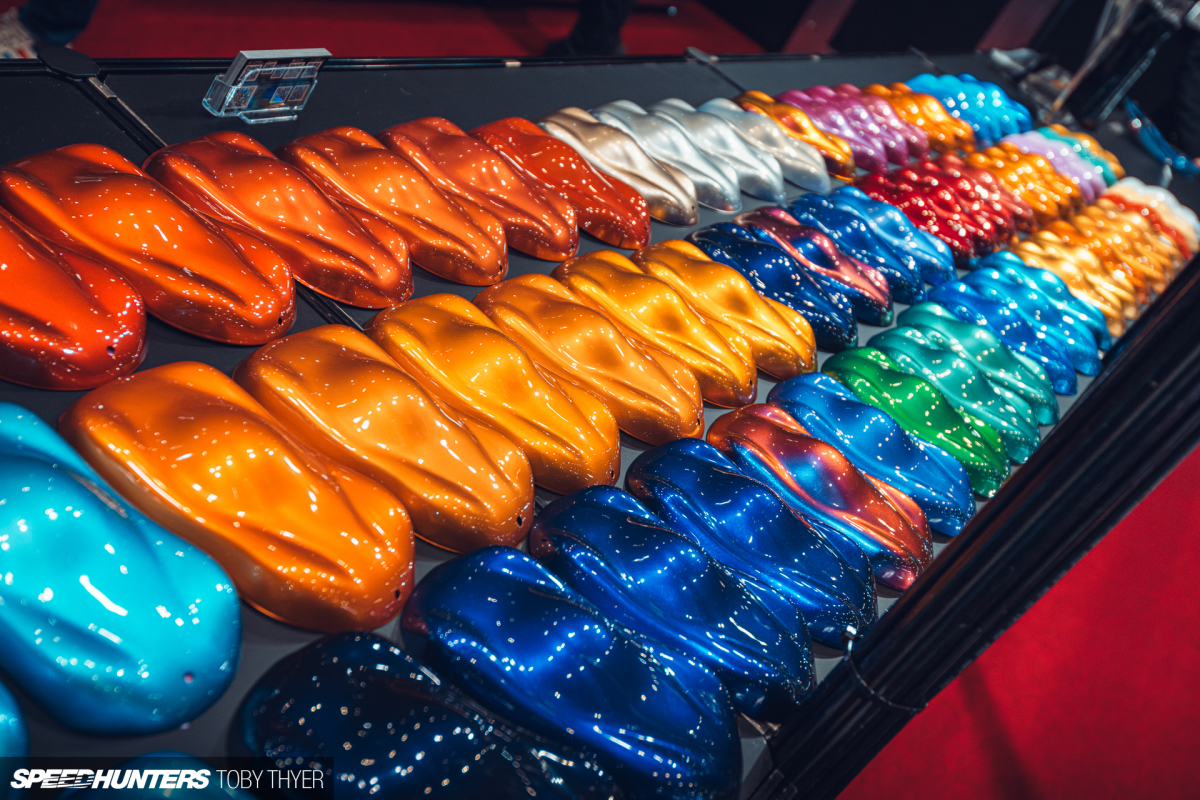
A lot of the same stuff is still around; I spotted the Hello Special pink kei truck and the human-sized rabbit at the Osaka Auto Messe just last year. And companies like Rohan and Kuhl are still cranking out complex body kits and intricate paint jobs.
Speaking of Kuhl, what do we think of its new A90 Supra kit?
Ten years ago, cars like the SLR McLaren were being dressed in wild custom kits, while Hakosukas got V8 engine swaps. Today, these cars are too valuable to alter in such extreme ways.
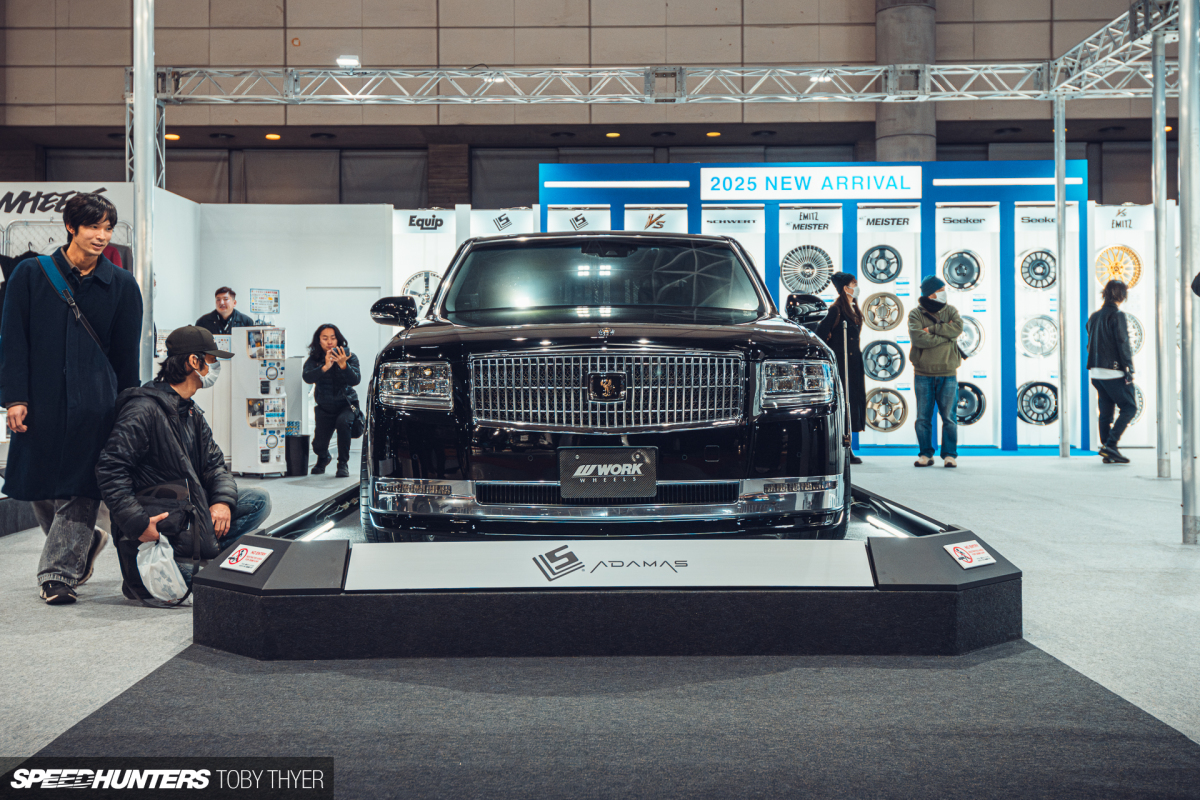
Instead, we’ll just have to make do with stanced out Toyota Centurys…
Or this GX100 Cresta, which now sports a Crown Crossover front end, Camry XV70 rear end, and a 1JZ-GTE engine swap. What this year’s TAS may lack in quantity, it certainly made up for in quality.
Especially if you’re a fan of Transformers.
Check this out – believe it or not, a 2002 Jaguar XJ is hiding underneath. Somehow, it’s been reimagined as a Chevrolet Impala.
The majority of cars on display are flaunting crazy body kits and dress-up parts.
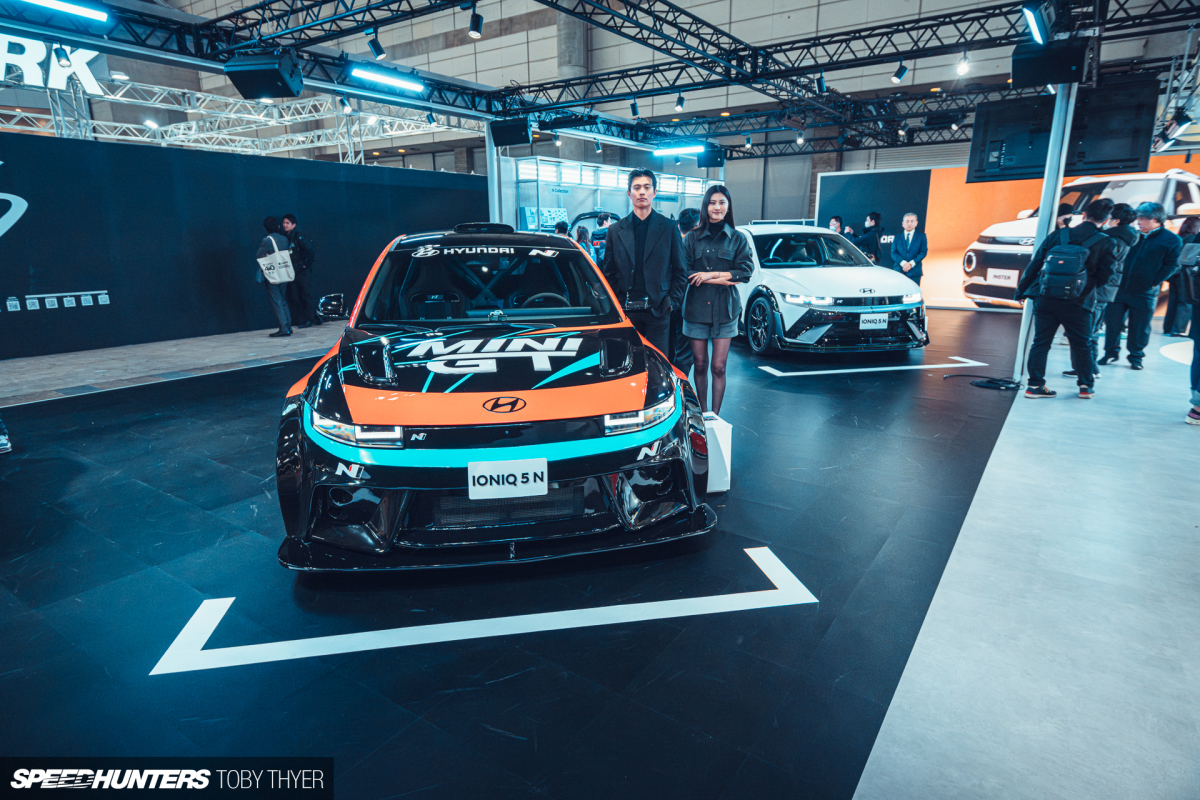
It’s no secret that Hyundai is absolutely on fire right now. The Korean automaker’s production Inster – and the Inster Cross Tarmac Concept on show at TAS – solidify its position as one of the leading car designers coming out of Asia. The model name might raise a few eyebrows, but that’s one seriously well-proportioned electric bulldog.
Some of the most interesting stuff at TAS is hidden in the larger booths, where you often catch a look at the future of car design and mobility. Imagine getting off the grid, tossing your turntables and audiophile sound system in the back of an SUV, and kicking back on your sculpted box trailer. Doesn’t sound too bad, does it?
The number of new and vintage Toyota Land Cruisers on display was overwhelming.
Not that I’m complaining.
99.9% of the 4x4s on display were Land Cruisers, though there were a few Land Rovers and mini G-Wagons. And you don’t see a five-door Suzuki Jimny in Japan every day.
Bryce Menzies’ Trophy Truck was by far the most extreme off-roader on show. It’s probably a good thing it doesn’t have space for licence plates.
Speaking of trucks, this NASCAR Craftsman Truck/787B-inspired mashup turned heads. Unfortunately, there’s no howling V8 – or screaming rotary engine – hiding under the hood of this pickup-converted Mazda CX-5… yet.
There’s still hope for the future of Japan’s weird and wacky tuning culture. Kei Miura was on hand to showcase the latest iteration of his custom tube-frame race car – the same chassis design used to create Mad Mike Whiddett’s five-rotor ‘787D’.
The last time I saw it was in his Kyoto garage, where it had just had its stainless steel frame welded together, the engine was still up in the air.
Surprisingly, Miura-san has gone with a twin-turbocharged Subaru boxer engine and a 6-speed transmission. The beauty of the AWD layout is that the engine and gearbox stay in their original orientation, with the axles that once powered the front wheels now driving the rear. That low centre of gravity and mid-engine layout should keep the car planted on track. I can’t wait to see the rest of the custom body.
Finally, here’s a peek at the future of mainstream tuning in Japan. This is what most people want: a stove and timber cladding in the back of a kei truck.
Tokyo Auto Salon 2025 may not have been as crazy as we’re used to, but one thing’s for sure – it’s still pretty mad.
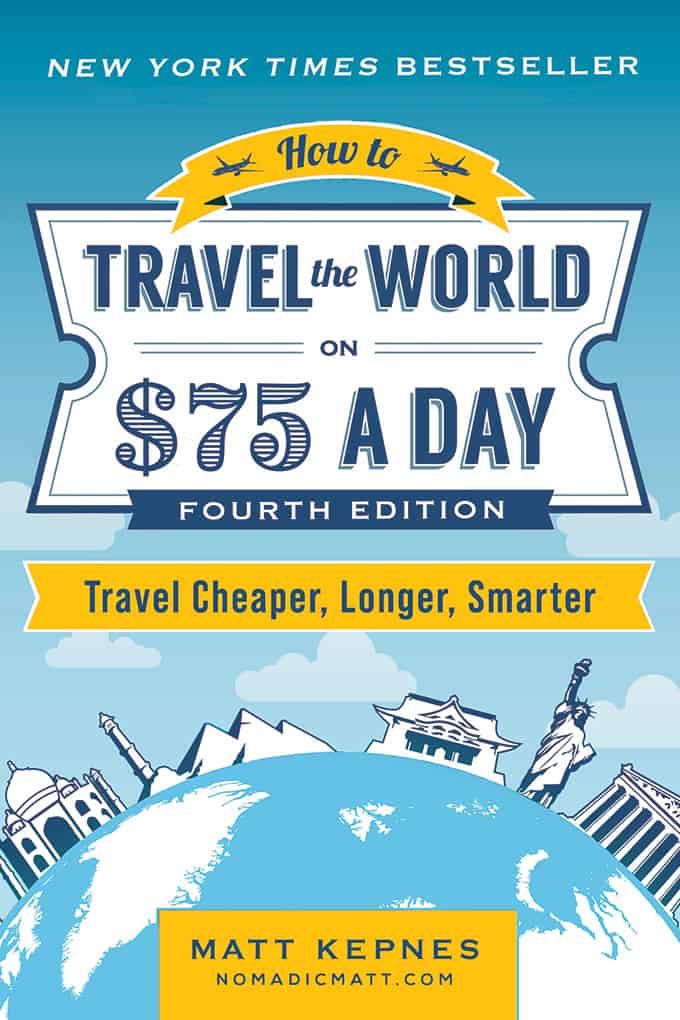
Big news! I am releasing a new book! It’s a massively updated version of my NYT bestselling travel guide, How to Travel the World on $50 a Day.
Except this new edition is called How to Travel the World on $75 a Day.
Why the new edition? Well, because of inflation…and the changed way we travel post-COVID.
The last edition of my book came out in 2017 and, since then, a lot has changed. COVID forever changed the travel industry. A lot of companies/hotels/hostels closed during the pandemic while old methods of saving money became obsolete and new methods came into being.
Destinations around the world have changed too. For example, when I wrote the book’s last edition, there was barely any train travel in Southeast Asia. Now Laos has a train line connecting all its major cities, Cambodia is reviving its train system, and Thailand is expanding theirs.
And, since 2017, prices have gone up a lot. Not only because of natural inflation but because of the post-COVID inflation boom. It’s not as cheap to travel as it was back in 2017!
Since travel has changed so much, I wanted my book to reflect the current conditions we travelers face when it comes to planning a trip, saving money, and navigating regions around the world. How to be a smart budget traveler is different than it was in 2017 and I want to arm you with all the tools needed to be one.
In fact, so much is different, that I ended up writing over 80% of this book! In my mind, it’s not a simple “update” — it’s essentially a new book! (So, if you bought this before, you can buy this new edition without worrying that it’s a lot of the same material!)
In this new version, you’ll find:
A new section on collecting and redeeming points and miles.
A completely updated resource section filled with companies and accommodations I love.
More information on overtourism and how to be a responsible traveler.
Completely revised and updated and expanded destination sections that include new prices, ways to save, and tips on where to eat, accommodation, transportation, and activities.
New trips and tricks on how to save money before you go.
New ways to save money on accommodation, including ways to get free accommodation.
New ways to save money on transportation (with new information on transportation passes).
And that’s just on top of the normal price and information updates that you would expect from new update! This book really puts everything you need to know about saving money and getting off the tourist travel in one place.
This book isn’t just for long-term travelers either. It’s for anyone who wants to save money, get off the beaten path, and travel smarter — no matter how long your trip is. Because how you save money on flights or what gear to get or how to save money in London doesn’t change based on how long your trip is!
The book comes out on March 25th, 2025 and is currently available for pre-sale at the following places:
And, as part of this announcement, I am offering limited-time pre-sale offers where, if you buy a copy of the book, you get a few added bonuses. If you purchase the book before the end of the month, you’ll get the following:
If you buy one copy of the book, you’ll get my forever gratitude and an ebook of your choice from my collection of online guides.
If you buy ten copies of the book, you get all the above PLUS a 30 minute trip planning call with me and a signed copy of my memoir, Ten Years a Nomad.
If you want to buy more than ten copies of the book, reach out to me and we’ll work out a bespoke package — anywhere from coming me to your city for lunch to speaking to your event to giving you a free flight!
To claim your bonus, all you need to do is email me a copy of your receipt to matt@nomadicmatt.com and I will send it to you.
So if you’re interested in the book, please, please please pre-order the book and don’t wait until publication day! Pre-orders determine the print run of the book and how many copies bookstores will pick up. The stronger the pre-sale orders, the more likely they are to stock the book so please order the book in advance! It would mean a lot!
The book is available in the U.S. and Canada or as a digital copy globally. (Or you could order from Amazon US and get it shipped to wherever you are in the world.) Here are the links to order the book again:
If you have any questions, email me!
– Matt
Book Your Trip: Logistical Tips and Tricks
Book Your Flight Find a cheap flight by using Skyscanner. It’s my favorite search engine because it searches websites and airlines around the globe so you always know no stone is being left unturned.
Book Your Accommodation You can book your hostel with Hostelworld. If you want to stay somewhere other than a hostel, use Booking.com as it consistently returns the cheapest rates for guesthouses and hotels.
Don’t Forget Travel Insurance Travel insurance will protect you against illness, injury, theft, and cancellations. It’s comprehensive protection in case anything goes wrong. I never go on a trip without it as I’ve had to use it many times in the past. My favorite companies that offer the best service and value are:
Want to Travel for Free? Travel credit cards allow you to earn points that can be redeemed for free flights and accommodation — all without any extra spending. Check out my guide to picking the right card and my current favorites to get started and see the latest best deals.
Need Help Finding Activities for Your Trip? Get Your Guide is a huge online marketplace where you can find cool walking tours, fun excursions, skip-the-line tickets, private guides, and more.
Ready to Book Your Trip? Check out my resource page for the best companies to use when you travel. I list all the ones I use when I travel. They are the best in class and you can’t go wrong using them on your trip.
This year, the beauty and wellness industry is witnessing an exciting fusion of innovation and tradition. As modern technologies and ancient beauty philosophies converge, various brands are reinventing skincare and beauty products to balance efficacy, sustainability, and indulgence. With the rise of mindful consumerism, the new mantra is about simplifying routines and elevating experiences, with an array of all-in-one solutions and holistic health practices that create a well-rounded, proactive approach to beauty.
Incorporate LED Therapy At Home
While LED therapy has been around for several years now, the non-invasive treatment received a huge surge in popularity in 2024, with celebrities and influencers touting its benefits. LED therapy (which stands for light-emitting diode) works by utilising different wavelengths of light to target specific skin issues. Blue, red, and near-infrared light are most commonly used in skincare, with blue light seen as a treatment for acne and inflammation, and red/near-infrared light for boosting collagen production and blood circulation, providing an all-encompassing remedy for skincare concerns.
One of the standout LED therapy devices on the market is the Medicube Age-R Booster Pro, a multi-functional at-home skincare device that offers four main modes. The Booster Mode uses electroporation to temporarily create micro-channels in the skin, allowing for deeper absorption of active ingredients from skincare products. The MC Mode targets facial lines and texture. The Derma Shot Mode stimulates facial muscles to improve firmness and elasticity. Lastly, the Air Shot Mode utilises electric needles to create micro-holes in the skin, improving pore elasticity and overall skin texture. The device also incorporates five different LED light settings — blue, orange, green, red, and purple — that are pre-programmed for specific skin benefits like sebum control, brightening, volumising, and boosting elasticity.
Despite its celebrity associations and social media hype, LED therapy is not a passing trend. In actuality, it represents a changing approach to beauty and wellness that is a direct result of our modern lifestyles. As explained in National Geographic, humans have traditionally benefitted from light therapy by spending time out in the sun. Due to changing climates and a higher frequency of spending time inside under artificial lighting, at-home LED therapy is slowly becoming a staple in modern skincare regimens. Speaking to National Geographic, dermatological laser therapy researcher Daniel Barolet says that by using LED therapy, “We cut the bad UV rays. We’re just using the healing stuff. It’s biomimicking, but you harness what’s good for your skin, and you delete what’s not good for your skin.” With the added benefit of being painless, quick, and easy to use, LED therapy fits into the growing movement toward holistic, professional-grade solutions for enhancing skin health.
Treat Haircare Like Skincare
Owing to the focus on skincare in recent years, scalpcare has emerged as the next centre of attention in the beauty industry. Dubbed the “skinification” of hair, the concept involves investing in products that treat the scalp with the same level of attention and care as the skin on our face, emphasising the use of active ingredients traditionally found in skincare, like salicylic and hyaluronic acid. Healthy hair starts at the root, and a well-maintained scalp can support hair growth, strength, and overall appearance.
As early as 2021, skincare brand The Ordinary received a wave of new attention when TikTok user Kaitlyn Boyer posted a video applying the brand’s Hyaluronic Acid 2 percent Serum to her hair instead of her face to prevent dry and split ends. In response, The Ordinary launched its body and haircare line, furthering the intersection between hair and skincare. Their Hair & Scalp Collection offers two key products: the Glycolic Acid 7 percent Exfoliating Toner and the Multi-Peptide Serum for Hair Density. The Glycolic Acid 7 percent Exfoliating Toner can be used both on the face and scalp, making it a versatile addition to any wellness routine. On the scalp, the toner helps to gently exfoliate, removing dead skin cells and excess buildup that can contribute to dryness and irritation. Additionally, the Multi-Peptide Serum for Hair Density is a concentrated leave-in serum formulated with peptides and plant-based extracts, promoting a healthier scalp barrier while providing relief from dryness.
According to consulting firm, Alcimed, Asia represents a majority of the haircare market as of 2023, with North America and Europe following suit. This trend is similar to the skincare market, where Korean and Japanese beauty brands experienced a rebirth in the West, owing to their preventive approach to beauty. K-beauty has championed skin barrier health while J-beauty has long promoted the effects of fermented ingredients in skincare. In haircare, South Asian practices have come to the forefront with their hair-oiling methods, which have been adopted by Western beauty influencers and brands, suggesting that Asia leads in the advancements of beauty and wellness regimes. By introducing active ingredients that balance hydration, promote circulation, and stimulate healthy hair growth, the “skinification” of hair encourages a deeper, more integrated method of cultivating long-term scalp health.
READ MORE: Jaeger-Lecoultre Releases Its Olfactory Signatures Made in Collaboration With French Perfumer Nicolas Bonneville
Look into Exosomes
The science of skincare is always pushing forward to newer, more effective treatments. As a result, exosomes are quickly becoming one of the most talked-about treatments in the beauty and wellness world, garnering attention for their impressive ability to rejuvenate the skin and promote hair growth. Exosomes are naturally occurring tiny vesicles or “packages” that cells secrete, filled with proteins, growth factors, lipids, and genetic material. These packages help facilitate communication between the body’s cells, activating them to perform essential functions like regeneration and repair. In skincare, exosomes help guide the body’s healing process by stimulating collagen production, enhancing skin hydration, and even reducing pigmentation.
It is important to note that exosomes are still an emerging topic in skincare research. While its benefits are known, researchers say that its other effects, use, and genetic makeup must be further studied in order to start being widely circulated in new skincare formulations. MIT reports that exosome products have not been approved by regulatory agencies in the US, UK, and Europe. In Japan and Korea, exosomes have not yet been approved for medical uses. In spite of this, there are a few exosome-based skincare serums that have been made available. Board-certified dermatologist and Cornell University clinical assistant professor, Marisa Garshick recommended the Intense Serum by Plated Skin Science for fine lines and wrinkles. As she explains to Byrdie, the Intense Serum “uses platelets derived from FDA-approved platelet banks and helps support soft tissue rejuvenation.”
Although exosomes seem like uncharted territory, the idea behind exosomes mimics current trends in the beauty industry. In particular, rather than relying solely on synthetic ingredients, the focus has shifted towards boosting the body’s inherent regenerative powers, with a spotlight on beneficial chemicals already found in skin like collagen and elastin. Since these compounds are known to deplete as we grow older, treatments like the viral VT Reedle Shot 100 Essence — which condenses centella asiatica into small microneedling forms to penetrate the skin — have become popular. The resulting microneedling effect also stimulates collagen production in the body. Medicube recently combined exosomes and microneedling in their Zero Exosome Shot — which works similarly to the Reedle Shot — with the addition of exosomes in the formula.
Invest in Hybridised Makeup
Haircare is not the only thing that has experienced “skinification” — makeup has too. As consumers look to streamline their beauty routines, hybrid formulations of skincare-makeup are a time-saving alternative to the process, simplifying both skincare and makeup regimes. Hybrid formulas involve using skincare ingredients as the basis for makeup products, ensuring that foundations or lip products are designed not just to cover imperfections but to improve the skin’s appearance over time. Beyond convenience, hybrid products also tend to be more cost-effective, as one versatile product can tackle the same issues that would otherwise require purchasing multiple separate items. This is especially true for consumers seeking to make sustainable choices — fewer products mean less packaging waste, aligning with the growing sustainability trend in beauty and wellness.
Tinted moisturisers and skin tints have found particular success in this new era of makeup. Unlike foundations, tinted moisturisers lean more towards the skincare side of beauty products, often containing lower pigment levels and active ingredients traditionally found in skincare, resulting in a lightweight, buildable makeup product. Ilia Beauty’s Super Serum Skin Tint, for example, contains skincare favourites niacinamide and plant-based squalane to smoothen the appearance of pores and hydrate the skin. Anastasia Beverly Hills has a hybrid skin tint and balm, formulated as a solid roll-on stick, featuring eight skin-loving ingredients such as hyaluronic acid and peptides.
Like many other skincare trends today, hybridised makeup is often attributed to K-beauty’s dominance in the market. The significance of BB and CC creams in K-beauty and skincare has grown into a global movement that offers consumers a smarter, more efficient approach to beauty. Well-known skincare ingredients have been clinically proven to work, and dual-action products are now the key to elevating beauty routines, leading to both flawless skin and a simplified regimen.
Opt for Biotech-Based Beauty
Although science-based beauty is at the forefront of beauty and wellness, the clean beauty philosophy is still going strong. Statista estimates that in 2025, the clean beauty market is valued at USD 10.6 billion, and forecast to grow to USD 15.3 billion by 2028. The problem that arises is that clean beauty relies on plant-based and naturally-derived ingredients found in nature, which is ultimately an unsustainable practice. In a 2023 TedTalk, CEO of beauty biotech startup Arcaea, Jasmina Aganovic points out that Earth cannot grow enough plants to sustain the beauty industry. For example, it is estimated that around 200,000 petals are required to produce just a few millimetres of rose oil, which is then used in various skincare, perfumes and haircare. Biotechnology offers a solution by allowing manufacturers to create lab-grown, sustainable alternatives.
L’Oréal-backed biotech startup Deinde places a strong emphasis on sustainability, using biotechnology to improve efficacy. Its products are formulated with over 90 percent bio-based ingredients, including a patented form of naringenin — a polyphenol found in citrus peels known for its potent anti-inflammatory properties. Deinde currently offers a skin-strengthening serum, moisture cream, face stick, and cleanser. The brand goes a step further by ensuring that its formulas minimise the need for fossil fuel-based ingredients, like silicones.
Today’s consumers who prefer skincare that delivers tangible results while also minimising their environment footprint can look towards biotech as the future of beauty. As natural ingredients alone are no longer enough to meet “clean beauty” demands, biotech is stepping in to fill the gap, offering lab-grown ingredients that are just as effective as their plant- or animal-derived counterparts. This shift allows a more advanced and sustainable skincare routine, where biotech can create novel formulations that target specific skin concerns like inflammation, aging, and pigmentation with greater accuracy.
READ MORE: The Products Redefining Beauty in 2025
Create Customised Products
With an abundance of skincare and beauty formulas on the market, ultra-personalised products are beginning to entice those who favour a more tailored beauty routine that caters to specific, individual needs. Driven by advancements in technology, data science, and AI, various companies are shifting to offer personalisation throughout their product portfolio. Skincare brands like Curology and Dermatica are well-known companies that specialise in customisable skincare. On the beauty front, Laneige provides the Bespoke NEO 1:1 Customised Service, a consultation and colour diagnosis for the brand’s cushion foundation. Led by professional counselors, the service uses Amorepacific’s patented manufacturing robot to identify and adjust shades to perfectly match an individual’s skin tone.
The most innovative beauty product to offer a customisable setting are fragrances. Specifically, YSL Beauty‘s Scent-Sation — a fragrance finder that combines the latest in neuroscience and artificial intelligence to deliver personalised scent recommendations. A specialised headset, powered by electroencephalogram (EEG) technology measures the brain’s responses to six different fragrance accords, which are designed to elicit particular emotional reactions. These reactions are then recorded by the headset and used to generate a personal olfactory profile based on which scents trigger the most positive emotional responses. The process culminates in three fragrances being offered: two that perfectly align with the emotional and olfactory profile, and one unisex fragrance or one designed for the opposite gender.
A combination of technological advancements, reliance on AI, and a saturated beauty market have resulted in increasing personalised products. Personalised beauty presents an opportunity to invest in products that work best for an individual rather than adhering to generalised or mass-market solutions. Beyond skincare, personalisation within makeup has allowed greater precision in products like shades and formulas that match a person’s unique skin tone, type, and personal style.
Focus on Gut Health
The key to healthy skin and long-lasting beauty is not just attributed to a consistent skincare routine — it is also closely related to gut health. Known as the gut-skin axis, the concept highlights the powerful link between what happens in the digestive system and how it manifests on the skin. According to the National Institutes of Health, “modulation of the immune system occurs primarily through the gut.” This suggests that when the gut is compromised, so is the body’s immune system, which manifests both internally in certain organs and externally on the skin. Maintaining a healthy gut is crucial to achieving clear skin, and a strong mental and physical state.
Understanding the gut-skin connection has led to growing interest in the use of probiotics to improve both digestive and skin health. Probiotics — which are live bacteria and yeast — help restore balance to the gut microbiome by supporting healthy digestion and immune function. These healthy bacterias are common in fermented foods such as yoghurt, kimchi, and miso. In addition to probiotics, prebiotics, found in fibre-rich foods like garlic, onions, and apples, are important for feeding beneficial gut bacteria, promoting further balance and health. Healthline also recommends lifestyle changes that can gradually improve mental health and the body’s immune system in order to maintain a healthy gut. This includes prioritising getting around seven to eight hours of uninterrupted sleep every night and lowering stress levels by participating in yoga or meditation.
Like skincare, the approach to gut health is not one-size-fits-all. Speaking to Refinery29, wellness expert Carla Oates and pharmacist Marie Drago argue that the real magic lies in an inside-out approach. A well-balanced diet, rich in probiotic foods and nutrient-dense, fiber-rich vegetables, is crucial for both internal and external health. Given the increasing research linking gut health to skin, nourishing the gut with probiotics and prebiotics may be one of the most effective ways to achieve long-lasting, clear skin —without relying solely on topical treatments. Ultimately, achieving a healthy gut microbiome and addressing underlying digestive issues could be the key to unlocking a natural glow and healthier well-being.
Hydrate with Health Drinks
In 2025, health drinks are poised to surpass health foods in popularity, as hydration becomes the focal point of wellness trends. According to NCSolutions, over 40 percent of Americans planned to drink less alcohol in 2024 — a notable increase from the previous year, with younger consumers leading the trends. For instance, 61 percent of Gen Z are looking to cut back on alcohol, resulting from rising health-conscious trends on social media and the expansion of health and wellness brands readily available in stores. Now, this desire for healthier beverages has spurred the rise of “functional drinks” — those that offer more than just hydration or flavour.
Many functional beverages contain adaptogens and nootropics, ingredients believed to improve stress response, brain health, or mood. Among the latest trends in functional drinks is the rise of “sleepy girl mocktails,” which gained massive popularity over the past year. The drink — a blend of prebiotic soda and tart cherry juice (known for its melatonin-boosting properties) — first surfaced in early 2024 but gained mainstream attention thanks to influencers and wellness brands like Moon Juice. The trend took off after Moon Juice founder Amanda Chantal Bacon added magnesium powder — which helps calm the body — to the mix. WWD reported that sales of the brand’s Magnesi-Om magnesium powder skyrocketed, with a 1,000 percent increase on Amazon and 200 percent growth on Moon Juice’s website. The skincare industry’s emphasis on collagen production has also benefited the growing preference for functional drinks: collagen jellies, drinks, and soups are popular alternatives.
While the popularity of functional drinks shows no signs of waning, it is essential for consumers to remain discerning and informed. While these drinks are marketed as healthy, many of them still contain sugars, preservatives, or additives, and reading labels can prevent false beliefs. Additionally, the New York Times reported that any mood-enhancing claims on functional drinks are not rigorously tested or regulated by governmental bodies like the FDA. Similarly, an article by Harvard University suggested that there was limited research on the efficacy of collagen drinks in replenishing the body’s depleted collagen. While there were no adverse health effects, the article recommended focusing on other methods to achieve healthy hair and skin, such as wearing SPF daily and eating nutrient-rich foods. A more natural, proven alternative to functional drinks is apple cider vinegar. A tablespoon of apple cider vinegar diluted with water is enough for the day, with research suggesting that the mixture can support gut health and lower cholesterol levels.
For more on the latest in beauty and wellness reads, click here.
The technical storage or access is strictly necessary for the legitimate purpose of enabling the use of a specific service explicitly requested by the subscriber or user, or for the sole purpose of carrying out the transmission of a communication over an electronic communications network.
Preferences
The technical storage or access is necessary for the legitimate purpose of storing preferences that are not requested by the subscriber or user.
Statistics
The technical storage or access that is used exclusively for statistical purposes.The technical storage or access that is used exclusively for anonymous statistical purposes. Without a subpoena, voluntary compliance on the part of your Internet Service Provider, or additional records from a third party, information stored or retrieved for this purpose alone cannot usually be used to identify you.
Marketing
The technical storage or access is required to create user profiles to send advertising, or to track the user on a website or across several websites for similar marketing purposes.