Ford is looking at ways to make electric vehicle battery packs easier to repair—especially as their cooling systems become more advanced—a patent filing indicates.
The document, which was published by the United States Patent and Trademark Office (USPTO) Dec. 12, 2024, after being submitted by Ford Jun. 12, 2023, details how battery modules could be replaced without removing the entire pack from the vehicle. This could reduce repair costs and could be greener, potentially allowing some packs to be rehabbed with new modules rather than replaced.
Patent image of Ford battery pack designed for easier module replacement
Ford discusses retaining the common layout of a battery pack mounted under the floor, with multiple modules that in turn contain multiple battery cells. Electrical terminals with removable caps and spring-loaded connectors would allow modules to be removed as needed.
The patent filing also mentions immersion cooling, in which battery components are directly cooled by a non-conductive fluid that won’t cause electrical shorts. Immersion cooling is a relatively new idea in EV development, as most modern EVs even with liquid cooling use the coolant outside modules and/or with a cooling plate. But this necessitates additional hardware that makes accessing battery modules more complicated.
Patent image of Ford battery pack designed for easier module replacement
Other automakers, such as Mercedes-Benz, have considered going the other way completely, toward air-cooling. The physical configuration of cells and modules is also being considered, with General Motors looking at different cell arrangements to maximize cooling and Canoo designing a structural battery pack with modules interconnected with the vehicle frame and cooling system.
It’s new territory. Rimac is one of the only companies that has detailed a true immersion cooling system that thermally conditions each cell at multiple points (the Cybertruck might qualify for this description too, but Tesla has not yet detailed the system). Bringing such tech to the mass market may help Ford get a jump on others—even Tesla.
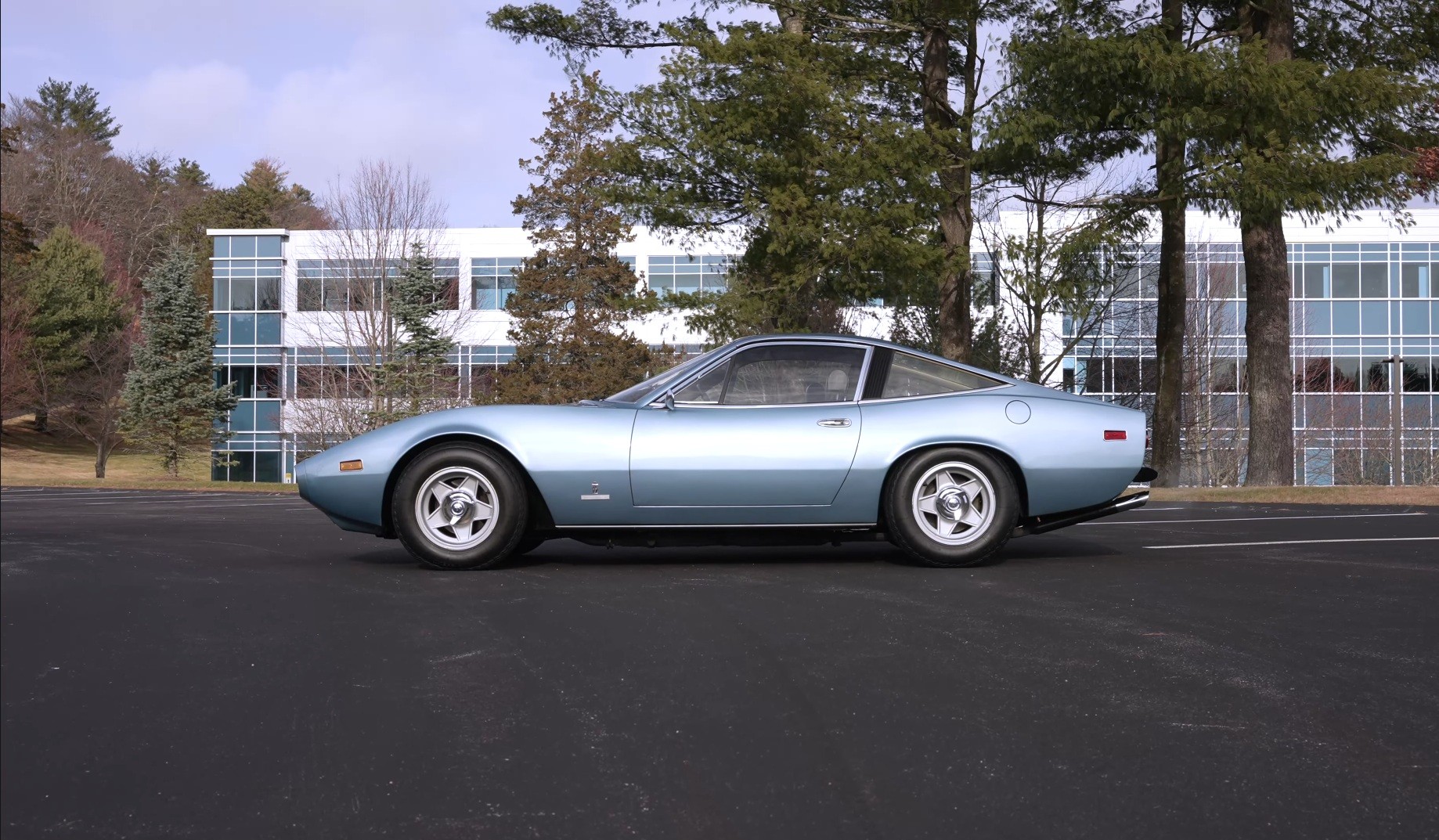
Unveiled at the 1971 Geneva Motor Show, the Ferrari 365 GTC/4 was based on the 365GTB/4 Daytona’s chassis from 1968. While it retained the Daytona’s 4.4L DOHC V12 engine, the GTC/4 featured new heads and a lower 8.8:1 compression ratio, reducing output to 340 bhp, with slightly less for U.S. emissions versions. It was fueled by six side-draft Weber 38 DCOE carburetors and used wet sump lubrication.
The wheelbase of 94.5 inches remained unchanged, but the GTC/4 offered several upgrades, including standard power steering and a larger luggage area. The gearbox was mounted to the engine, unlike the Daytona’s rear transaxle. The independent suspension had coil springs, unequal-length control arms, and a hydraulic self-leveling system.
Designed by Pininfarina, the GTC/4 featured a low hood with retractable headlights and a stylish Kamm tail with classic Ferrari tail lights. Inside, the redesigned cabin included comfortable seating and optional leather upholstery. Only 505 GTC/4s were produced from 1971 to 1973.
Many factors are involved in deciding where to retire, including the cost of living and the price of real estate, as well as social factors like having a community that keeps you engaged and active. And while New York may not be as popular a retirement destination as Florida or Colorado, for example, don’t write it off completely.
A recent report published by GoBankingRates.com determined the best places to retire in each state, based on population statistics, cost of living, and average mortgage costs.
The small town of Fredonia came up on top in the Empire State. It may not be a household name, but Fredonia’s history runs deep — Native Nations have inhabited it since at least the 13th century. Former U.S. senator Samuel Latham Mitchill came up with the name Fredonia in 1829. (Mitchill also suggested it as a new name for the country as he believed the “United States” was too political, according to the National Archives.)
The town was home to the first natural gas well in the country, and its historic district, with its Victorian-era buildings, has been on the National Register of Historic Places for over 40 years.
A large number of Sicilian immigrants settled here in the late 19th century, completely transforming the traditions and fabric of this small town. Every summer, it holds its annual Festival Italia, which honors the roots of many of its residents through food, music, and activities.
According to GoBankingRates.com, Fredonia also has much to offer retirees on a budget. The personal finance website estimates the average monthly cost of living is $1,761, and the average single-family home value as of May 2024 was $195,320.
Additionally, about 23 percent of the town’s population, which has a little less than 10,000 full-time residents, is aged 65 or older. According to Frednia’s State University of New York (SUNY) campus website, retirees are allowed access to the university’s library, gym, exercise facilities, and financial planning services.
Along with all the historic sights and educational opportunities, Fredonia seniors enjoy plenty of outdoor recreation. The town is just minutes away from Lake Erie, which is famous for its beaches, fishing, and diving (the lake is home to thousands of shipwrecks).
Lastly, oenophiles will thrive here, as Fredonia is surrounded by scenic vineyards, which are part of the Chautauqua and Lake Erie Wine Trails.
As part of its list of the best places to retire in each state, GoBankingRates.com has also published the communities that scored the lowest. In New York, that’s Monsey in Rockland County, with an average monthly cost of living of $2,396 and an average home value of well over $1 million.
You can see the full list of the best and worst places to retire in each state on gobankingrates.com.
Seperti biasa, Toyota antara pengeluar yang membuat penampilan paling gempak di Tokyo Auto Salon 2025 yang berlangsung hujung minggu lalu. Dan antara jentera yang membuat orang ternganga dipamerkan di reruai Toyota adalah ini – sebuah prototaip dikenali sebagai Toyota Yaris M Concept iaitu sebuah GR Yaris dengan enjin yang telah dialihkan ke bahagian tengah badan!
Pada sebelah luar, Yaris M Concept ini masih lagi kelihatan sama GR Yaris biasa dan ia diberikan pelekat badan penyamaran Gazoo Racing dengan warna merah-putih-hitam, serta tampil dengan sayap belakang ‘leher angsa’ yang seiras dengan spoiler GRMN Yaris.
Tetapi apa yang menggerunkan, penutup but belakang mempunyai lubang yang besar yang mendedahkan bukan sahaja enjin, malah pengecas turbo bersaiz besar kelihatan jelas. Tidak cukup dengan itu, sebahagian bampar belakang juga telah dipotong bagi menempatkan sistem ekzos dengan paip dan peredam bunyi bersaiz gergasi.
Selain itu Yaris ini juga dilengkapi set tayar perlumbaan yang cukup lebar terutamanya pada bahagian belakang. Tetapan sebegini sememangnya lazim untuk sebuah kereta dengan enjin di tengah kerana tujuan utama enjin dialihkan adalah bagi memberikan cengkaman lebih baik pada roda belakang.
Difahamkan bukan hanya kedudukan enjin yang diubah, malah enjin G16E-GTS 1.6 liter tiga-silinder turbo asal GR Yaris ini juga telah ditukar dengan enjin baharu 2.0 liter empat-silinder turbo digelar sebagai G20E, mungkin enjin generasi baharu yang sama Toyota dedahkan tahun lalu. Manakala kuasa dari enjin tersebut masih dialirkan ke empat-empat roda menerusi sistem pacuan semua roda GR Four.
Ini bukan jentera prototaip untuk show-off semata-mata kerana Toyota Gazoo Racing telah mengumumkan ia akan dibawa berlumba dalam siri perlumbaan Super Taikyu Endurance di Jepun selepas ini. Jadi tidak hairanlah mengapa bahagian dalaman Yaris M-Concept dilengkapi dengan set rollcage lengkap.
Menerusi perlumbaan tersebut, pasukan TGR akan mengimplementasikan pembangunan kereta dengan kaedah “driver-first”, di mana kereta tersebut akan dipandu secara berterusan dalam keadaan ekstrem sehingga rosak, dan akan diperbaiki semula untuk mengatasi kelemahannya, serta mengambil respon dan data dari pemandu-pemandu profesional termasuk pengerusi Toyota sendiri, Akio Toyoda atau nama samaran ketika berlumbanya iaitu Morizo.
Dengan gaya pembangunan yang sedang dibuat ini, tidak mustahil Toyota sebenarnya sedang membangunkan kereta sport enjin tengah iaitu MR2 generasi baharu yang berselindung disebalik badan GR Yaris menerusi Yaris M Concept ini. Pelbagai khabar angin yang bertiup sebelum ini menyatakan bahawa Akio Toyoda memang sangat berminat untuk memperkenalkan semula MR2 ke pasaran selepas produksi GR Supra dihentikan tahun ini.
The Aston Martin F1 team named Andy Cowell as its new team principal
Cowell previously served as the head of the Mercedes-Benz AMG F1 team’s power unit division
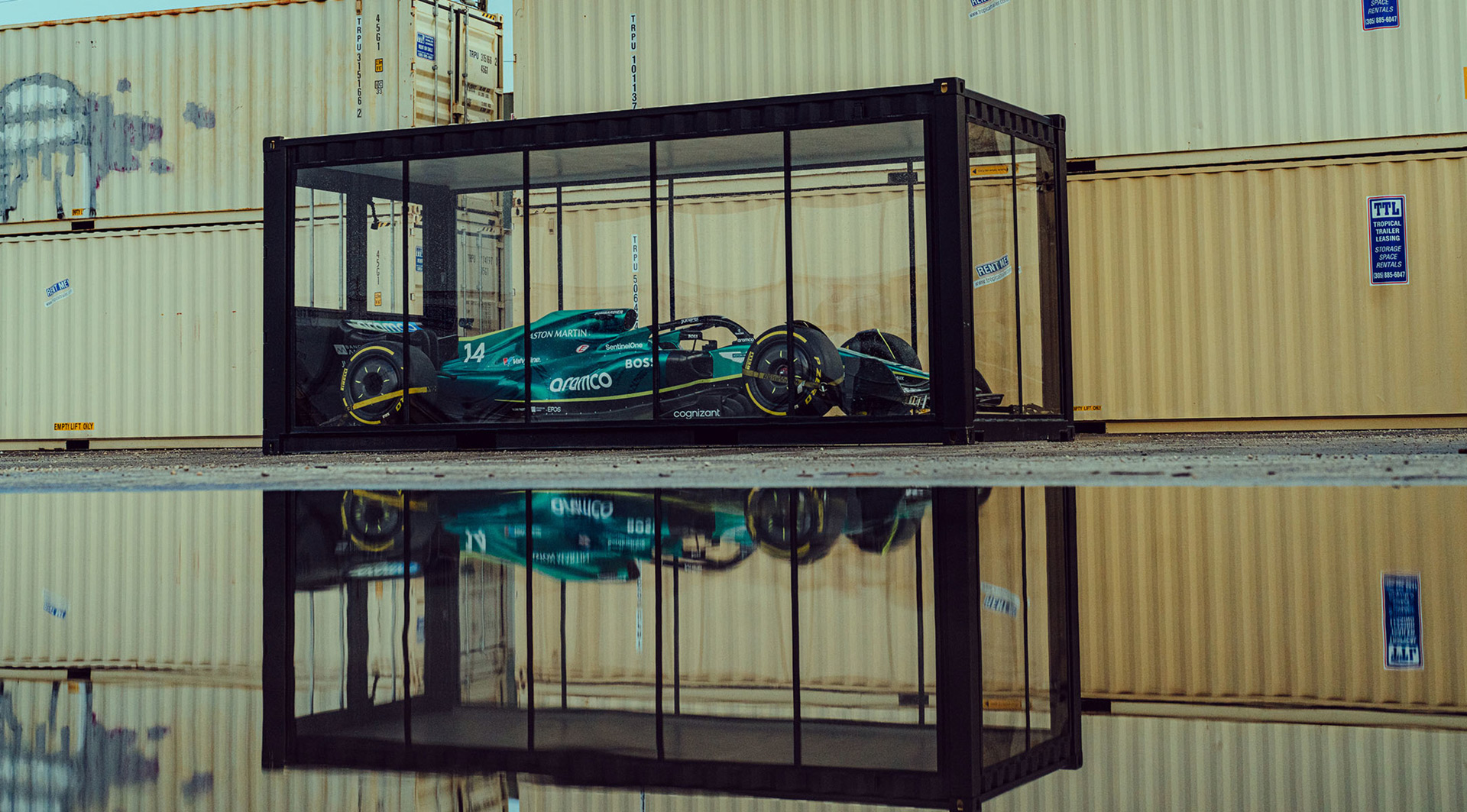
Cowell’s appointment comes after the Aston Martin F1 team hired Adrian Newey and selected Honda as a power unit supplier
After snagging Red Bull Racing star aerodynamicist Adrian Newey late last year, the Aston Martin Formula 1 team has now made another major hire.
The team on Jan. 10 announced that Andy Cowell will take over this season as team principal from Mike Krack, who has held the position since 2022. Krack will remain with the team, serving as its chief trackside officer.
Cowell is best known for his time spent at Mercedes-Benz AMG High Performance Powertrains, the U.K.-based division responsible for the Mercedes F1 team’s power units.
Cowell left the division in 2020 after a 16-year stint, during which he was promoted to the managing director role. During that time, Mercedes secured both the F1 Constructors’ and Drivers’ Championships in 2014, 2015, 2016, 2017, 2018, 2019, and 2020.
Andy Cowell
Cowell joins Aston Martin at a time of major renewal. The team had aimed to build on their encouraging 2023 season, which featured eight podium finishes and a climb to fifth place in the Constructors’ standings, thanks largely to star driver Fernando Alonso. However, while the team maintained that position in 2024, it failed to secure any podiums and scored just 94 points compared to the previous year’s 280.
This year, Newey will begin designing the team’s 2026 car, which will run a power unit developed in partnership with Honda. Currently Aston Martin sources power units from Mercedes. The team’s Aerodynamics, Engineering, and Performance Departments will also be split between dedicated trackside teams and teams based at Aston Martin’s F1 headquarters near the Silverstone Circuit. The move will allow the team at the F1 headquarters, officially the AMR Technology Campus, to fully focus on designing and building new race cars.
“With the completion of the AMR Technology Campus and our transition in 2026 to a full works team, alongside our strategic partners Honda and Aramco, we are on a journey to becoming a championship-winning team,” Cowell said in a statement.
The 2025 F1 season gets underway on March 16 with the Australian Grand Prix.
Dries Van Noten bids adieu to fashion as he goes on to enjoy the life that he’s built. (ZOE JOUBERT)
The air was thick with a mix of sombre resignation and a palpable sense of excitement on 22 June 2024. Right on the outskirts of Paris, beloved Belgian fashion designer Dries Van Noten was about to stage his Spring/Summer 2025 menswear runway show—his final. Thirty-eight years, 150 collections and 129 shows later, Van Noten was prepared to take his final bow.
That the show venue, a stunningly rundown defunct factory, was also the location of his still memorable 50th runway show was not lost on longtime fans of the Antwerp Six member. I asked a PR rep if Van Noten was set to recreate the same Spring/Summer 2005 womenswear show where the runway was essentially a long dinner table. “Not at all. But it will be very special,” he said. But of course; I should’ve known better. Van Noten’s oeuvre has rarely been about looking back. His deft use of colours, prints and textures have been stylistically refreshing collection after collection, and while he dealt with both menswear and womenswear, the former became a blueprint of how men choose to dress.
The physical show invite was simple: “LOVE” printed on a silver foil card. And there was plenty of it going around. Pre-show cocktails revolved around a massive cube onto which Van Noten’s illustrious moments were projected. As the crowd streamed in, I began noticing the wonderful array of Dries Van Noten archives that accompanied them, each interpreted in one’s own sense of style. And while it was a given that editors from around the world had congregated, so too had Van Noten’s contemporaries and fellow designers. At one corner was Diane von Furstenberg chatting with Derek Blasberg, Pierpaolo Piccioli arrived together with Haider Ackermann, Harris Reed’s imposing figure was hard to ignore, Thom Browne was in classic Thom Browne, and of course there were fellow Antwerp Six members Ann Demeulemeester and Walter Van Beirendonck.
Van Noten made his rounds after a while. Together with his partner, Patrick Vangheluwe, he greeted and thanked guests for their attendance, both visibly touched by the quietly deafening awe and respect that permeated through. They say to “never meet your heroes” but I took the opportunity to ask for a photo together.
“I’m a forever fan. Thank you for your brilliance,” I managed to muster after our quick snap.
“Thank you,” he replied.
His brilliance continued on in the next room as pitch black curtains fell to reveal a silver foil runway set atop the concrete floor. The 69-look collection was showcased by male and female models old and new to the brand. From Karen Elson to Cole Mohr to Clément Chabernaud to Sang Woo Kim, it was a true-to-form diverse cast. I spotted Thomas Riguelle—a model I’ve had worked with before and who I’d gush with over Dries Van Noten collections he’d walk for throughout the years—in a multi-layered fit consisting of clashing floral prints. He told me the day after: “I’m still emotional.”
Van Noten post-show. (KAJ LEHNER)
Van Noten is far from the only designer we’ve lost in menswear this year.
Just a few months prior, Piccioli announced his departure from Valentino after 25 years at the Maison. Piccioli joined Valentino in 1999 and eventually became co-creative director together with Maria Grazia Chiuri in 2009. He then took sole creative reins in 2016, continuing the legacy of the Maison in his own dreamy vision of bold menswear proposals founded on Valentino’s couture heritage.
It’s difficult to find a Piccioli for Valentino menswear collection that was nothing short of awe-inspiring. This was after all, the man who cleverly collaborated with Japanese designer Jun Takahashi of Undercover in 2019 to create arresting graphics set against contemporary fusions of tailoring and streetwear that would still fit in with today’s sensibilities. He mashed typically couture fabrications like silk taffeta in rich hues with denim, and made them relevant and wearable for the everyday. Who could also forget that one collection where Piccioli created his own shade of pink and bathed half of the collection with it, juxtaposed with all-black ensembles.
Then, for Valentino’s Autumn/Winter 2024 menswear collection, it seemed like Piccioli finally had an off moment. Showcased in rooms that were painted a specific shade of azure blue, it was as though he attempted to recreate the Valentino Pink PP magic that had us all enthralled two seasons prior, but without so much as a spark. The collection was so pared back that I was left completely unaware that it was all he had to give. Little did we all know then that he would part ways with the Maison a couple of months later.
Pierpaolo Piccioli and Hedi Slimane have left Valentino and Celine respectively, making way for different aesthetics at both maisons. (GETTY IMAGES)
Unlike Piccioli’s rather shocking departure, the rumour mill was in overdrive for months with regard to Hedi Slimane’s exit from Celine. It became an unescapable, ongoing topic among editors and insiders—the whats, whys and whens of his leaving. It was almost baffling too because Celine was then on the cusp of finally launching its first makeup line, and it even launched a few new fragrances that were very much Slimane-concocted. The Maison was also doing relatively well, buoyed by the presence of its strong army of ambassadors the likes of Lisa and Park Bogum. But where there’s smoke, there’s fire.
The exit was confirmed on 2 October. The announcement was short, listing Slimane’s overarching vision for the Maison for the past seven years that saw it expanding into menswear, couture and haute parfumerie. And then within hours, the announcement of Celine’s new artistic director was released. Michael Rider, who had worked under Phoebe Philo during her time at the Maison, is due to make his return.
Pierpaolo Piccioli and Hedi Slimane have left Valentino and Celine respectively, making way for different aesthetics at both maisons. (GETTY IMAGES)
Those are just three of the major menswear losses. Other recent exits include Glenn Martens out of Y/Project after 11 years, Phillip Lim from his namesake brand, Peter Hawkings’ quick two-collection turn at Tom Ford, and Peter Do from Helmut Lang. The circumstances that led to each are seemingly unique—Y/Project, for example, is experiencing financial troubles—but a creative loss is a loss nonetheless.
There are reasons why the departure of Van Noten, Piccioli and Slimane are especially upsetting. Each have built such strong legacies that they’ve amassed a fair share of admirers and fans—the ones that would turn up to a fashion show proudly bedecked in their creations, and those who have adopted the designers’ aesthetics into their own. Being an ardent fan of one is essentially a lifestyle.
Slimane’s singular vision at Celine was initially met with division. The stark contrast from his predecessor’s more structural forms and cerebral designs had many feeling that Slimane should have started his own brand instead of turning Celine into his own. Yet, the vision evolved and became a universe of its own, extending into a haute parfumerie collection that spawned new categories for the Maison beyond just fashion. The look was consistent: unapologetically Parisian luxe across fashion, beauty, lifestyle accessories and an assortment of curated artistic partnerships.
Change is constant. And while many are rejoicing over Rider’s appointment at Celine (assuming he is intent on bringing back the Philo era), those mourning Slimane’s aesthetic will either have to start binge purchasing his final designs or resort to resale platforms for their fix.
Image courtesy of ValentinoImage courtesy of Valentino
There is absolutely no pleasing everyone in fashion. Even the most celebrated designers have their fair share of critics, especially with fashion being as subjective as it is. But changing in hopes of appealing to a wider demographic is tricky due to a risk in alienating core customer demographiscs; customers who have grown with the visual language set by Piccioli and Slimane for more than five years now have to change with the maisons or divert their attention to a different brand. It’s an unfortunate conundrum as brands prioritise profits over a consistent identity.
Valentino has already begun its new era with Alessandro Michele injecting his own interpretation of what the Maison is. In many ways, it’s a familiar aesthetic to when he was helming Gucci, and has resulted in a reception similar to how Slimane’s initial collection at Celine was initially viewed. And as Slimane has shown, time is needed for a full universe to be realised.
Image courtesy of ValentinoImage courtesy of Valentino
On 9 December 2024, Dries Van Noten announced its new creative lead. Its Spring/Summer 2025 womenswear collection was the first after Van Noten’s retirement and was designed by the in-house studio team. The spirit of the founder was still there and it felt like it could have very well been designed by Van Noten himself, with all the elements that make Dries Van Noten beloved present. But if change is constant, at the very least, there’s hope that newly installed creative director Julian Klausner—he’s worked alongside Van Noten since 2018 on the women’s collections—will continue the legacy beautifully.
At the end of Van Noten’s final show, he walked to the middle of the silver foil runway and waved to a standing ovation. The cube of projections that was the centrepiece of the pre-show cocktails was uncovered and out came a disco ball, spinning with enough speed to completely envelop the space with a kaleidoscope of lights. It’s so good, it’s so good, it’s so good coos Donna Summer as “I Feel Love” starts to play. At the end of the day, change is inevitable and all we can do is embrace it.
Barcelona is a food lover’s paradise, offering a mixture of traditional Catalan flavors and international cuisines.
While most visitors head to famous spots like La Boqueria, the city hides a treasure trove of street food markets that provide authentic, affordable, and mouthwatering bites.
If you’re eager to explore the local gastronomic scene beyond the tourist trail, here’s a guide to the top street food markets in Barcelona, featuring hidden gems you might not know about.
A vendor at a street food market in Barcelona.
Here’s an overview:
Mercat de Sant Antoni: A Local Favorite
Located just outside the bustling city center, the Mercat de Sant Antoni is a newly renovated market steeped in history.
While it’s known for fresh produce, meats, and seafood, the street food stalls outside are where the magic happens. Locals flock here for affordable and delicious bites, including bocadillos de calamares (calamari sandwiches) and croquetas caseras (homemade croquettes).
Don’t miss La Porca, a food truck-style stand serving slow-cooked pulled pork sandwiches infused with Catalan spices.
Homemade croquettes at a street food market in Barcelona.
Palo Alto Market: Trendy and Eclectic
For a more curated street food experiencein Barcelona, head to Palo Alto Market in the Poblenou neighborhood.
This monthly event combines food, art, and live music in a beautifully transformed factory setting. While it’s slightly off the beaten path, it attracts a mix of hip locals and in-the-know visitors.
Here, you’ll find an eclectic array of street food options, from gourmet burgers to vegan sushi. A must-try is the pulled jackfruit tacos from one of the plant-based vendors, as well as classic Catalan coca (a flatbread topped with seasonal ingredients).
The atmosphere is as vibrant as the food, with street performers and DJs adding to the lively vibe.
Gourmet burgers sold at Palo Alto Market.
Mercat de la Concepció: A Hidden Gem
Tucked away in the Eixample district, Mercat de la Concepció is a lesser-known market where locals shop for groceries and enjoy affordable eats. While it’s not typically associated with street food, its small tapas bars and takeaway counters serve some of the best bites in the city.
Look for Bar Joan, a no-frills spot offering hearty portions of pan con tomate (bread with tomato) topped with Iberian ham. Pair this with a glass of cava for a truly Catalan snack. For something sweet, visit the pastry stall near the entrance and grab a freshly made xuixo, a sugar-coated pastry filled with creamy custard.
Delectable xuixo found in a traditional food market in Barcelona.
All Those Food Market
If your visit coincides with one of their events, don’t miss All Those Food Market, a pop-up street food market that celebrates local artisans and chefs. Usually hosted in iconic venues like the National Theatre or gardens around the city, it’s a foodie’s dream.
This market brings together a mix of modern and traditional flavors.
Sample empanadas argentinas, gourmet bravas with truffle aioli, or craft beer from small local breweries. The vendors change with each event, ensuring a fresh and unique experience every time.
The best part? Many of the participants are up-and-coming chefs or small family businesses, giving you a taste of Barcelona’s cutting-edge food scene.
Empanadas waiting to be cooked and savored.
Mercat de l’Abaceria Central: Gràcia’s Hidden Treasure
In the heart of the bohemian Gràcia neighborhood, Mercat de l’Abaceria Central offers an authentic slice of local life. While the market building is undergoing renovations, the street food stalls that have popped up nearby are a hidden treasure.
Try the butifarra sandwich (Catalan sausage) or a plate of esqueixada, a refreshing cod salad with tomatoes, onions, and olives. These dishes are not only affordable but also deeply rooted in Catalan tradition.
For dessert, hunt down the churro stand that serves piping hot churros con chocolate.
Get hot churros at the Mercat de l’Abaceria Central in Barcelona.
Eat Street Barcelona: A Feast for Foodies
For those who love a more international vibe, Eat Street Barcelona is a must-visit. This pop-up food market rotates locations across the city and features a vibrant lineup of street food vendors. It’s particularly popular among the city’s younger crowd, thanks to its mix of traditional and experimental flavors.
Here, you can savor dishes like Korean BBQ tacos, spicy chicken tikka wraps, and artisan ice cream made with local ingredients.
The prices are reasonable, and the atmosphere is electric, with live music and communal seating creating a fun, casual vibe.
Creamy ice cream on display at a street food market in Barcelona.
Mercat de la Vall d’Hebron: A Local Secret
Far from the tourist hubs, the Mercat de la Vall d’Hebron is a quiet, authentic market in the foothills of the Collserola mountains. While it’s mainly frequented by residents, its small food stalls offer some incredible street food at unbeatable prices.
Try the caracoles a la llauna (snails grilled with garlic and herbs) or fideuà, a noodle-based seafood dish similar to paella. These traditional dishes are cooked with care, offering a taste of Catalonia that’s hard to find in the city center.
Savor snails at a Barcelona street food market.
Street Food at Els Encants Market
Els Encants, Barcelona’s iconic flea market, isn’t just a place to shop for antiques and bargains; it’s also a great spot for street food. The market has a rooftop area with food trucks and stands serving dishes from all over the world.
Locals recommend the grilled sardines and empanadillas gallegas (Galician-style turnovers), but you can also find Asian-inspired options like bao buns or Thai noodles.
The prices are reasonable, and the energy of the market makes it an exciting place to grab a bite.
Tips for Enjoying Barcelona’s Street Food Markets
Go early: Many markets get crowded, especially on weekends, so arriving early ensures you get the best picks.
Bring cash: While many stalls accept cards, some still operate on a cash-only basis.
Embrace the local vibe: Don’t hesitate to chat with vendors or ask for recommendations—they’re often happy to share their passion for food.
Mix and match: Share dishes with friends, so you can sample a wider variety of flavors.
Prawns fresh off the grill at a food market.
Street food markets in Barcelona are a window into the city’s soul, offering both locals and visitors a chance to connect over incredible flavors.
Whether you’re savoring a classic Catalan dish or trying something with a modern twist, these markets are the perfect way to experience the city’s culinary diversity without breaking the bank.
Venture beyond the typical tourist spots, and you’ll uncover a world of affordable, tasty bites that will make your trip unforgettable.
We are an expert agency in the tourism sector based in Barcelona, Catalonia. For over 10 years, we have offered holiday apartments and long-term apartments in Barcelona, to anyone wanting to visit or spend some time in the Catalan Capital.
We are an expert agency in the tourism sector based in Barcelona, Catalonia. For over 10 years, we have offered holiday apartments and long-term apartments in Barcelona, to anyone wanting to visit or spend some time in the Catalan Capital.
Collin Seow, the founder of SF5 Pte Ltd (a ACRA-registered entity that has been operating for over 11 years in Singapore) and a seasoned trader, has spent years perfecting his craft and sharing his knowledge with aspiring traders. From his first trade in Singapore stocks to devising the TradersGPS system, Seow’s journey is one of resilience, innovation, and dedication to education. Speaking to LUXUO, he discusses his trading philosophy, the evolution of his methods, and how his flagship programme, The Systematic Trader (SMT) course, is helping traders succeed in an ever-changing financial landscape. For both new to trading or seasoned professionals, Seow’s insights offer invaluable lessons for anyone looking to thrive in the world of finance.
Can you take us back to your very first trading experience? What do you remember about it, and how did it turn out?
Yes, I still remember it vividly. My first trade was in Singapore stocks, and it was a mix of excitement and anxiety. I ended up losing a few hundred dollars in just a few days, but it taught me critical lessons about discipline and the importance of a structured market analysis framework. This experience ultimately inspired me to create The Systematic Trader (SMT) course to help others avoid such early pitfalls.
Could you provide a brief overview of the key focus areas of your trading strategies?
My strategies focus on systematic trading, much like using a GPS for navigation rather than relying on intuition. By combining technical analysis with rigorous backtesting, the approach minimizes emotional biases and ensures decisions are rule-based. In The Systematic Trader (SMT) course, we teach these principles to help traders identify trends, manage risk, and execute trades confidently.
Which financial instruments are compatible with your trading system?
The TradersGPS system, which is a core part of The Systematic Trader (SMT) course, supports trading across various instruments, including stocks, ETFs, indices, and futures. It adapts to different trading styles, from short-term strategies to long-term positions, offering flexibility to suit traders of all experience levels.
At what point did you realise you had developed a successful trading system, and how does it empower traders to thrive in the financial markets
The system’s potential became evident after 18 months of consistent results, even during volatile periods. As shared in The Systematic Trader (SMT) course, the TradersGPS system simplifies trading by providing clear entry and exit signals, fostering discipline, and incorporating robust risk management. These elements enable traders to focus on consistent, long-term profitability.
What are the common misconceptions about trading you have often encountered?
Many people think trading is about quick wealth or luck. In reality, it requires discipline, clear strategies, and resilience. Another misconception is that trading success demands constant screen time. With the systematic methods taught in The Systematic Trader (SMT) course, trading becomes structured and efficient, reducing the need for continuous monitoring.
Continuous improvement is vital for any trading system. How has your system evolved since its inception?
The TradersGPS system, which is central to The Systematic Trader (SMT) course, has evolved significantly. Initially manual, it now integrates advanced algorithms and automation, including tools for tracking dynamic support and resistance. These enhancements make it more robust and adaptive to changing market conditions, ensuring it remains relevant for traders at all levels.
What do you see as the biggest challenges faced by new traders, and how does your trading system address these obstacles?
New traders often struggle with emotional decision-making, inconsistent strategies, and risk management. The Systematic Trader (SMT) course addresses these challenges by teaching structured frameworks, disciplined execution, and proper position sizing. These tools and principles empower traders to navigate the markets more effectively.
Trading is often viewed as a solitary endeavour. How crucial do you believe it is for aspiring traders to engage with a community, and what benefits can such connections bring?
A trading community is invaluable. It provides support, accountability, and shared learning experiences. Through The Systematic Trader (SMT) course, participants gain access to an engaged community where members share insights, celebrate wins, and learn from each other’s challenges, making the journey less isolating.
What is the most valuable advice you would give to traders who are just starting out?
Start small, focus on learning rather than earning, and track your trades meticulously. In The Systematic Trader (SMT) course, we emphasize building foundational skills, understanding market dynamics, and practicing discipline. Trading is like a sport—focus on the process, and results will follow.
What steps would you suggest for someone looking to transition from a 9-5 job to trading full-time?
Transition gradually. Build a consistent track record, establish a financial cushion, and prepare for market volatility. The Systematic Trader (SMT) course is designed to provide the tools and knowledge needed to navigate this transition, reducing uncertainties and increasing the chances of success.
What key financial insights do you foresee for the year 2025?
I anticipate the market trend to remain upward, with potential corrections of 10 to 15 percent during the year. Regions like China and Hong Kong are undervalued and present significant opportunities. This aligns with the strategic insights we share in The Systematic Trader (SMT) course, which teaches how to capitalise on such opportunities systematically.
What are your personal and professional goals for the future, and how do you see TradersGPS developing in the coming years?
Personally, I aim to inspire more individuals to achieve financial independence. Professionally, I plan to enhance The Systematic Trader (SMT) course by integrating AI and machine learning into the TradersGPS system, further improving its predictive capabilities. My vision is to make it the go-to framework for traders worldwide, helping them succeed in any market condition.
For more information, head to the Facebook account for the Systematic Trader program here.
Discover more on SF5 Pte Ltd’s website here.
For more on the latest in leaders and business reads, click here.
Another year of Tokyo Auto Salon means another round of scouring the depths of the Makuhari Messe car parks – the unofficial TAS car meet.
TAS reigns supreme as the pinnacle event of Japanese car culture, drawing over 200,000 visitors to the Chiba convention centre every year. With that kind of foot traffic, it’s no surprise that the car parks hide some real gems. So, let’s take a look at what I found during my Friday visit to Tokyo Auto Salon 2025.
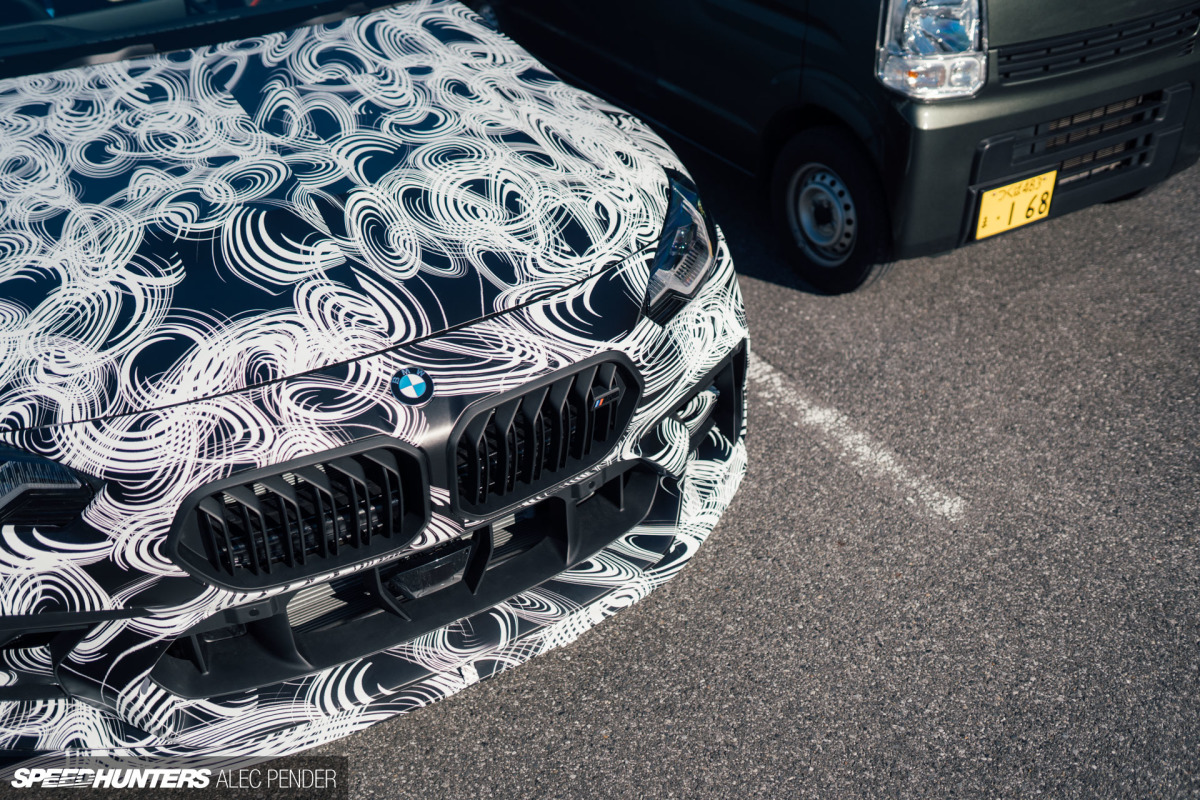
Right near the entrance, I was greeted by this – guerrilla marketing at its finest. And it worked. Someone has taken it upon themselves to ‘fix’ the G87 M2, addressing the overly adventurous front grille design with a more traditional BMW look. If I had to guess who’s behind this, it would be ADRO, a Korean-based body kit company making waves in the BMW aftermarket world. They had a sizable booth inside TAS, so dropping another car in the car park just makes sense. I’m interested to see if I’m correct, and if so, hopefully, a rear bumper redesign is in the works too.
A bit further along, Dino and I parked our cars, sandwiching this FL5 Honda Civic Type R.
One further spot along, another blue FL5 sat next to what you could consider its European rival, an Audi RS 3 in a similar shade.
Much like the show, there was no shortage of stance in the car parks, with everything from vans to GT-Rs sitting on the pavement.
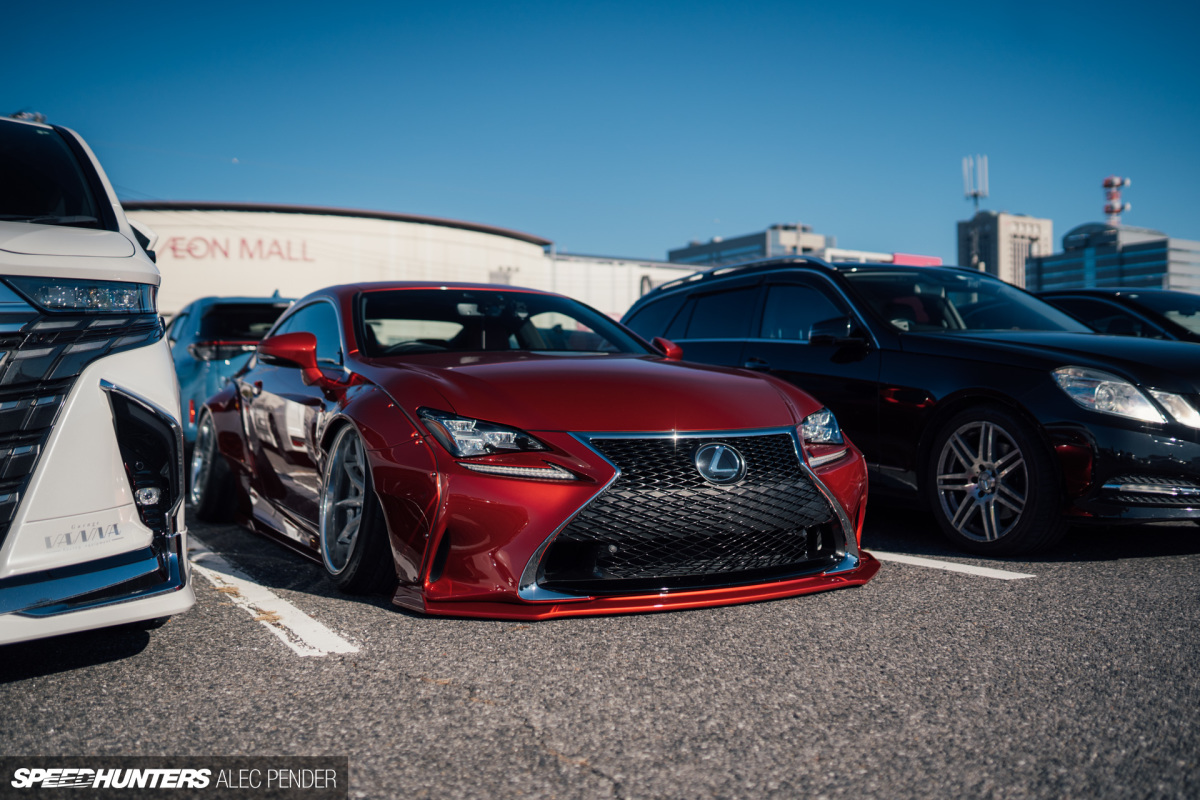
It’s also worth noting that stance here in Japan doesn’t just mean a set of wheels and bags. Owners always go the extra mile to build a complete car. Check out the massive Brembo brakes on this Lexus, for example.
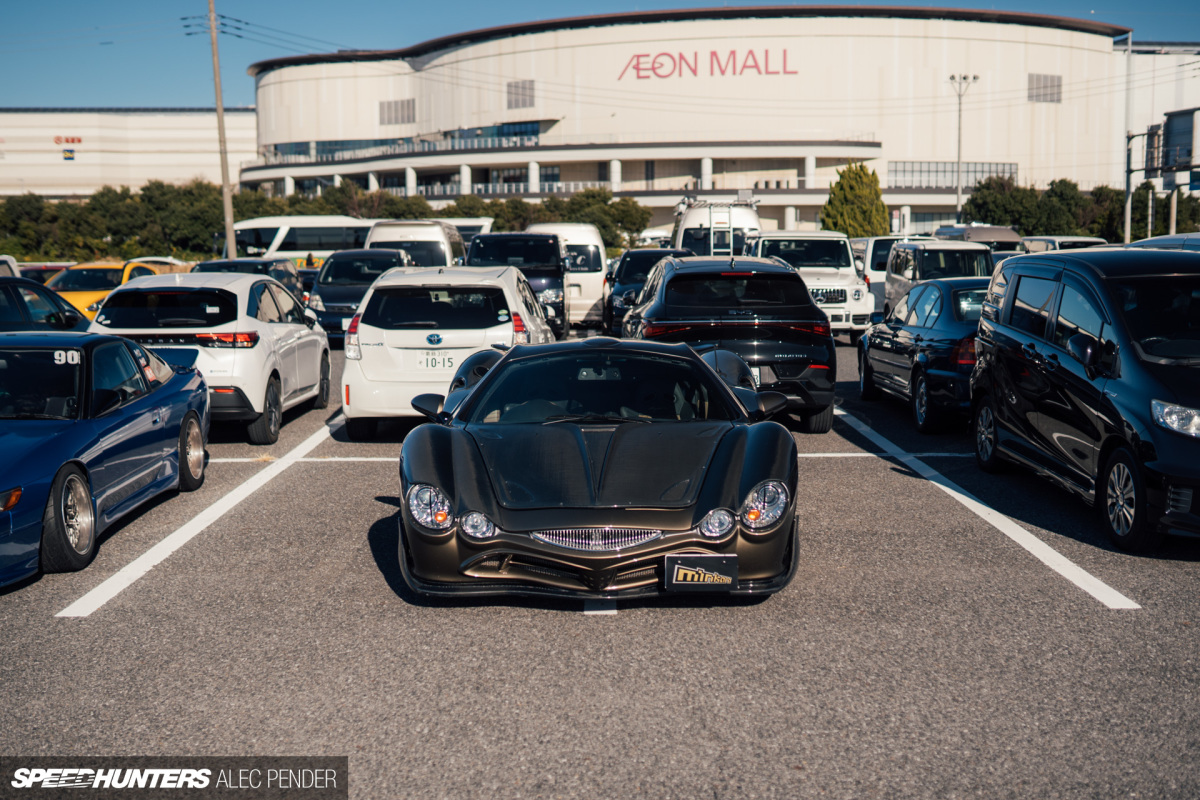
It was hard to miss this Mitsuoka Orochi, taking up two parking spots. The Orochi is one of those quirky early-2000s Japanese creations that are often overlooked. Powered by a 3.3L Toyota V6, you could call it an alternative take on the Honda NSX formula.
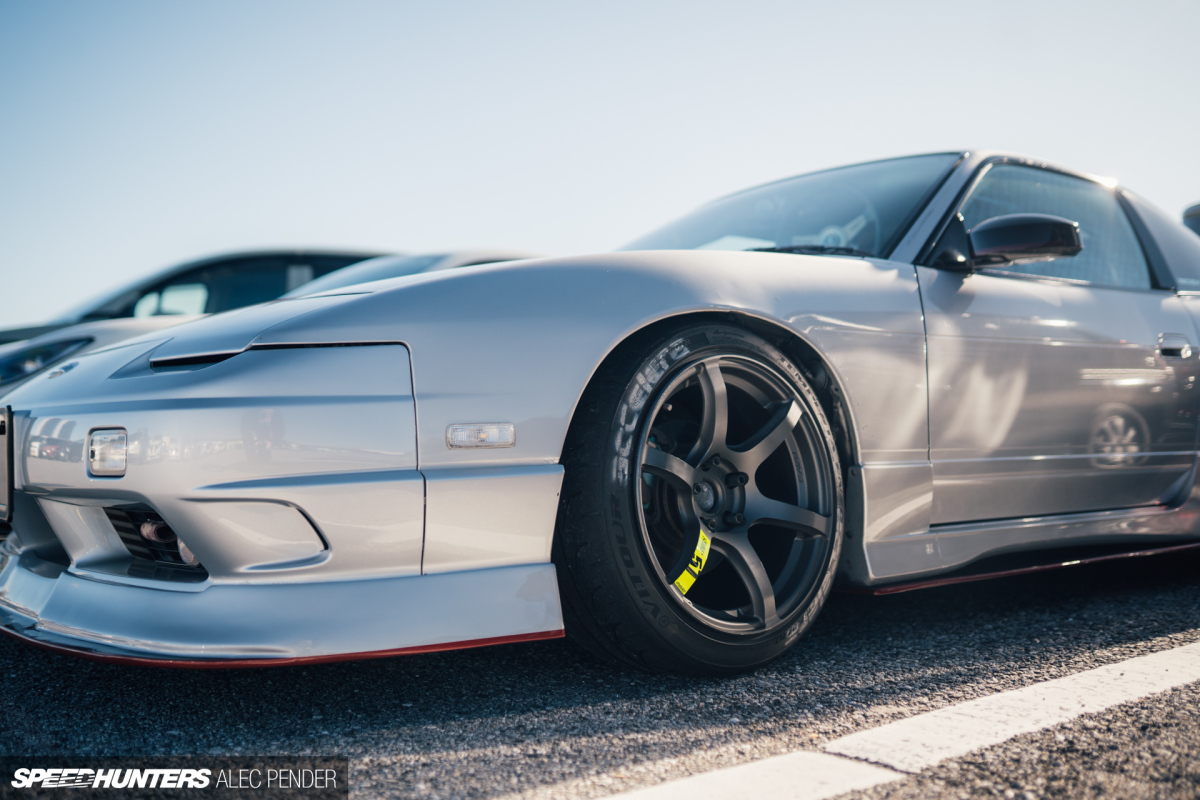
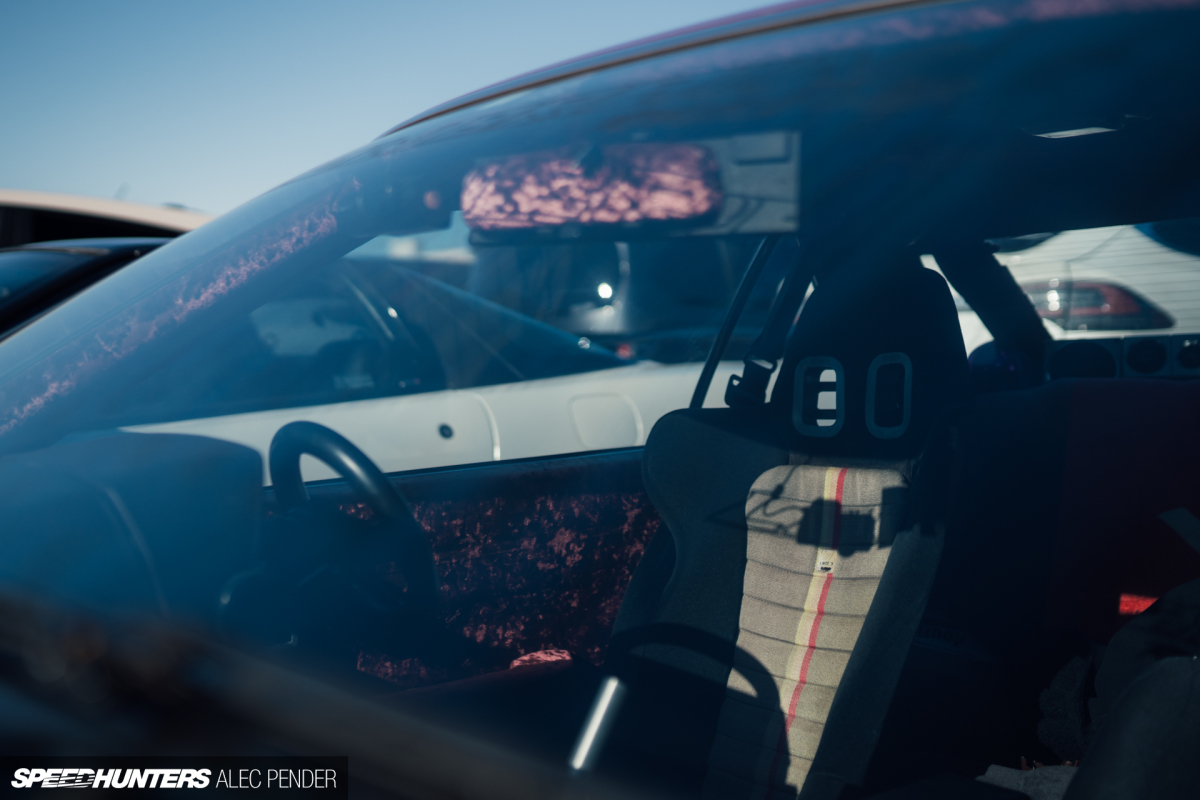
Next to it, occupying just one space, was a pristine Nissan Sil80 (Silvia-faced 180SX), sitting on SSR mesh wheels and sporting a classic B-Wave wing – an authentic nod to ’90s Japanese street drift culture.
Mazda RX-7s seemed to dominate the car park, with FCs and FDs pretty much everywhere you looked. Here are just a few of the ones I spotted.
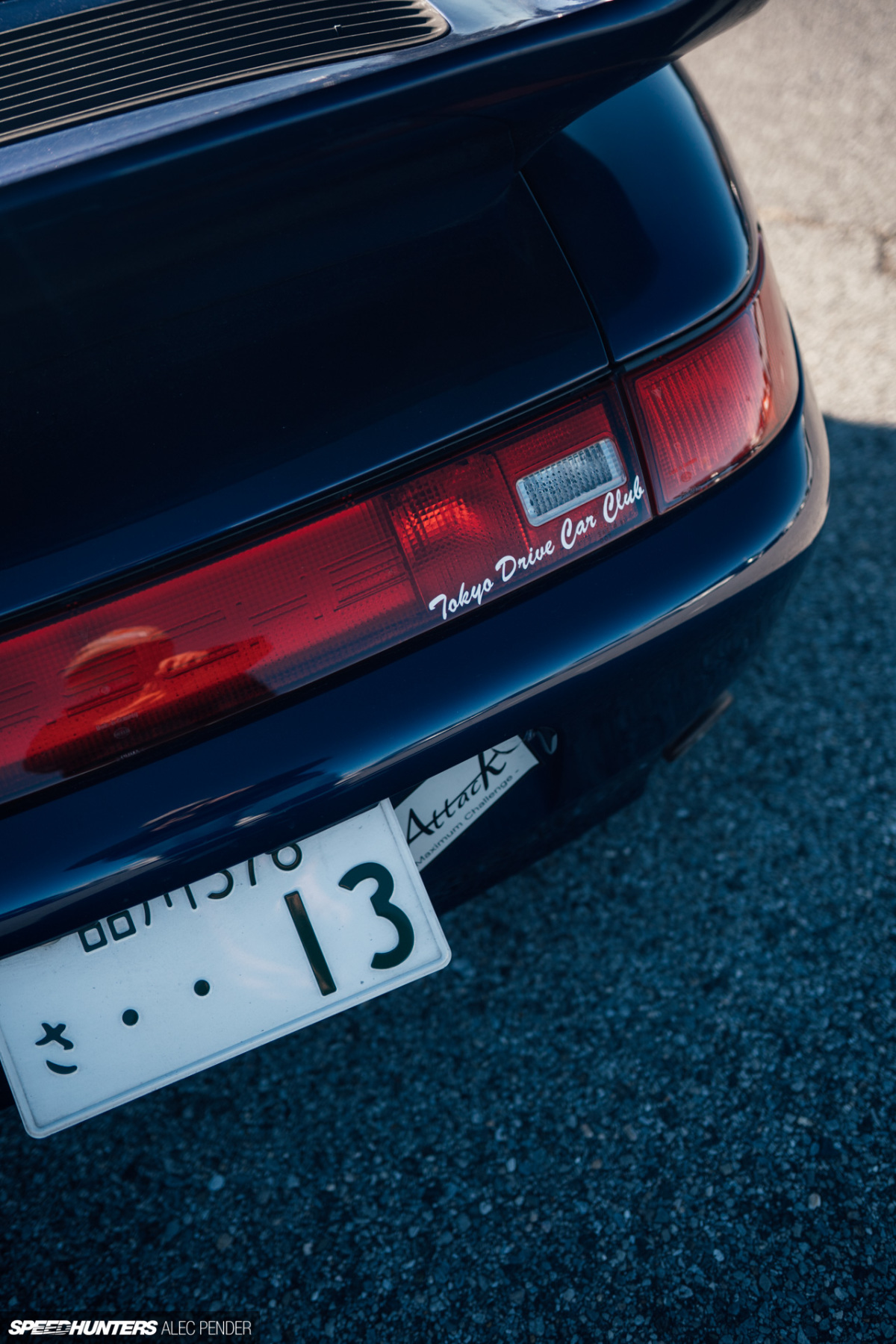
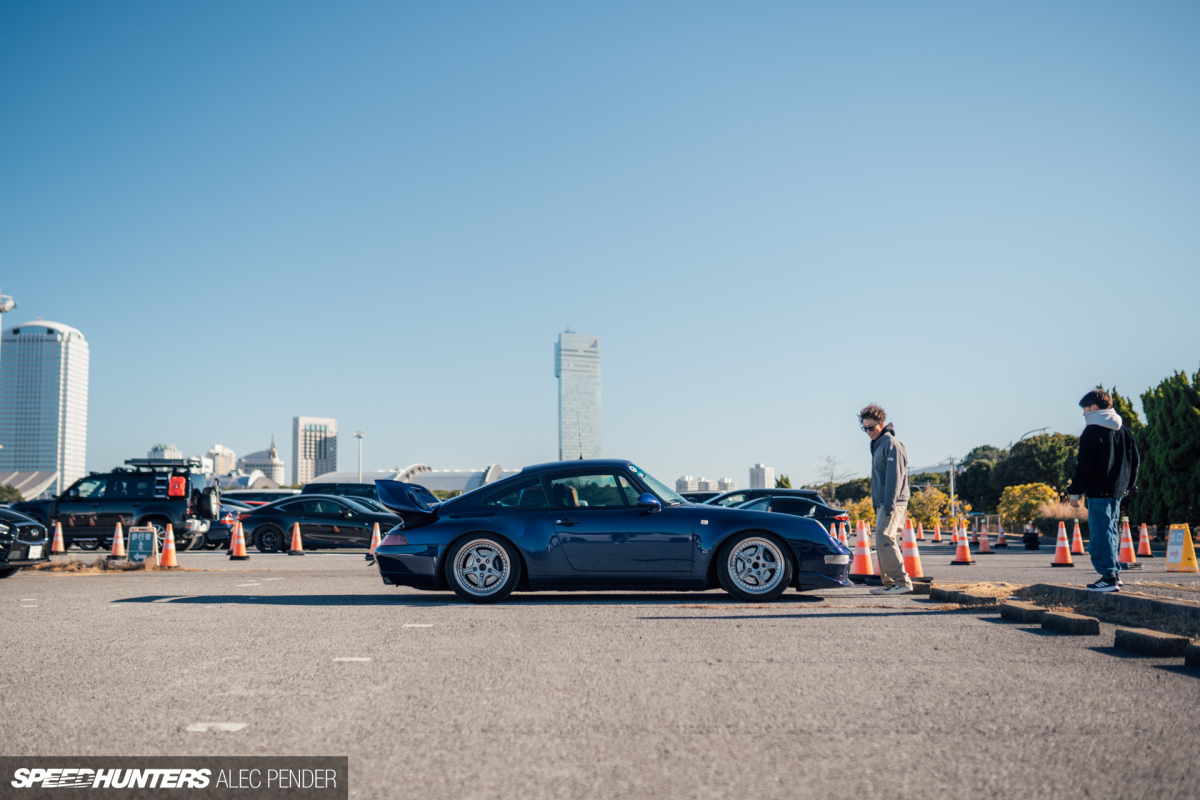
There were plenty of Porsche scattered around the place too, including this beautiful blue 993.
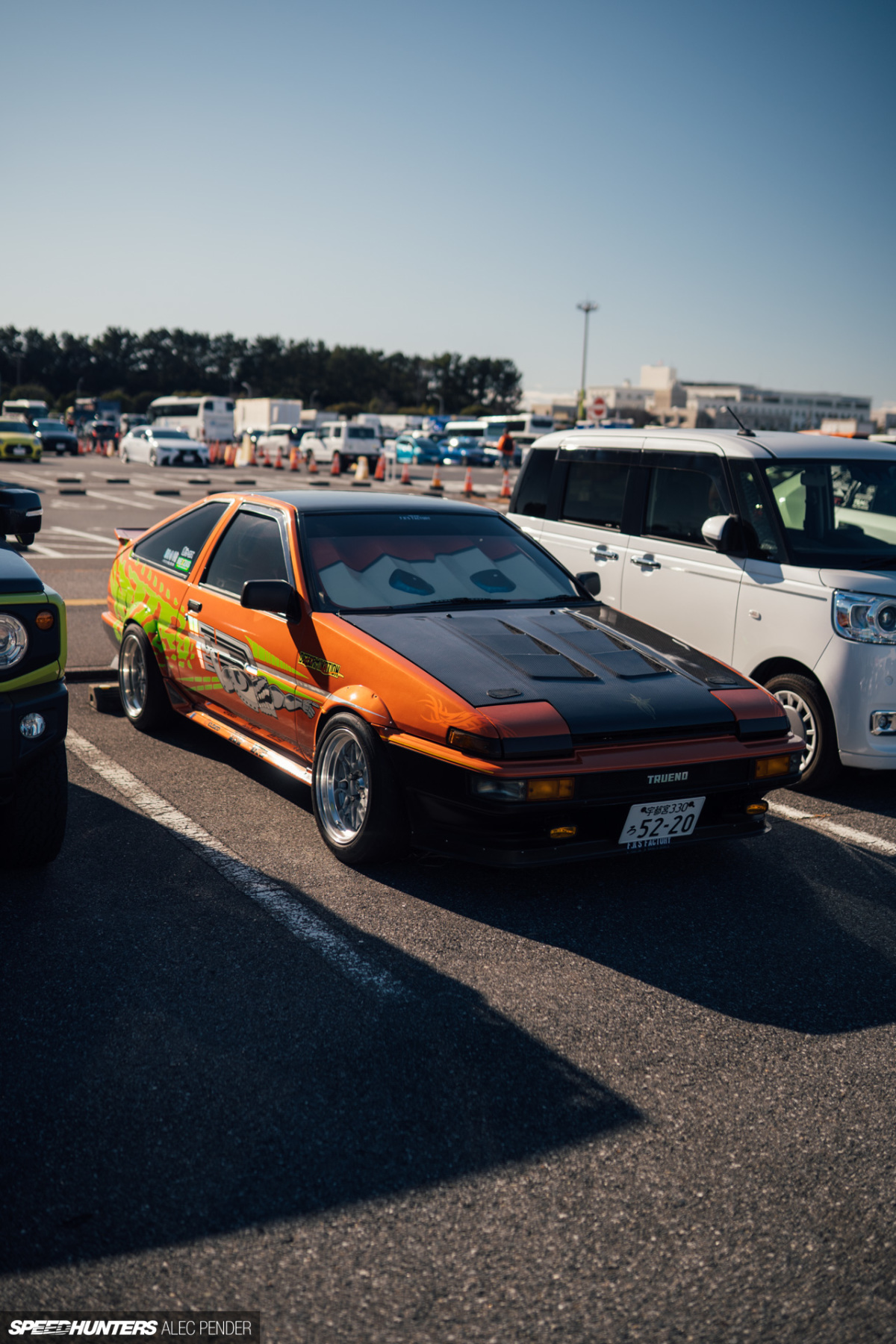
AE86s came in all shapes and forms. It was great to see an FK’s Factory Trueno hatch out in the wild. FK is well known for its unique builds and liveries, and this one is no exception.
Nissan’s presence in the car parks was almost stronger than at its booth inside the Makuhari Messe. GT-Rs and Silvias from every generation filled the spaces, with no shortage of variety.
Front and centre – and likely one of the first cars to arrive at TAS – was this beautiful Datsun 510 1600 SSS on Hayashi Racing wheels.
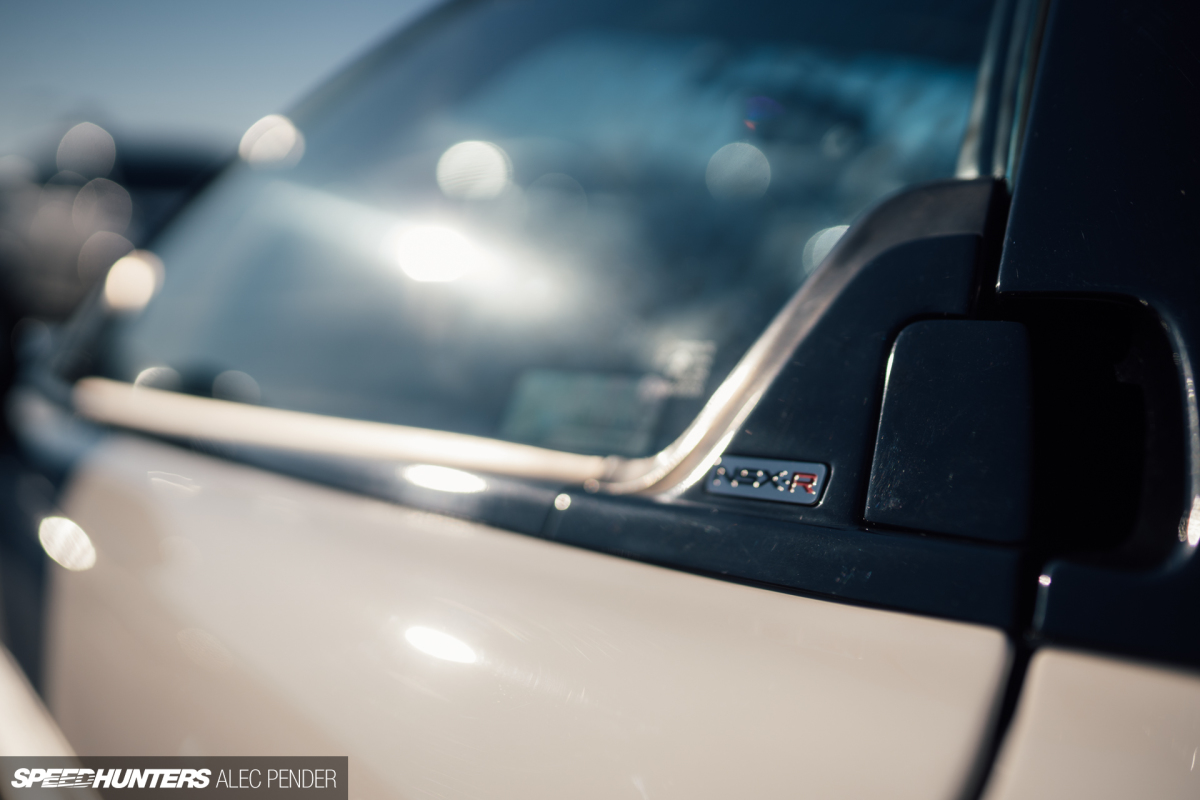
There were a few Honda NSXs that retained their factory aesthetic – for the most part.
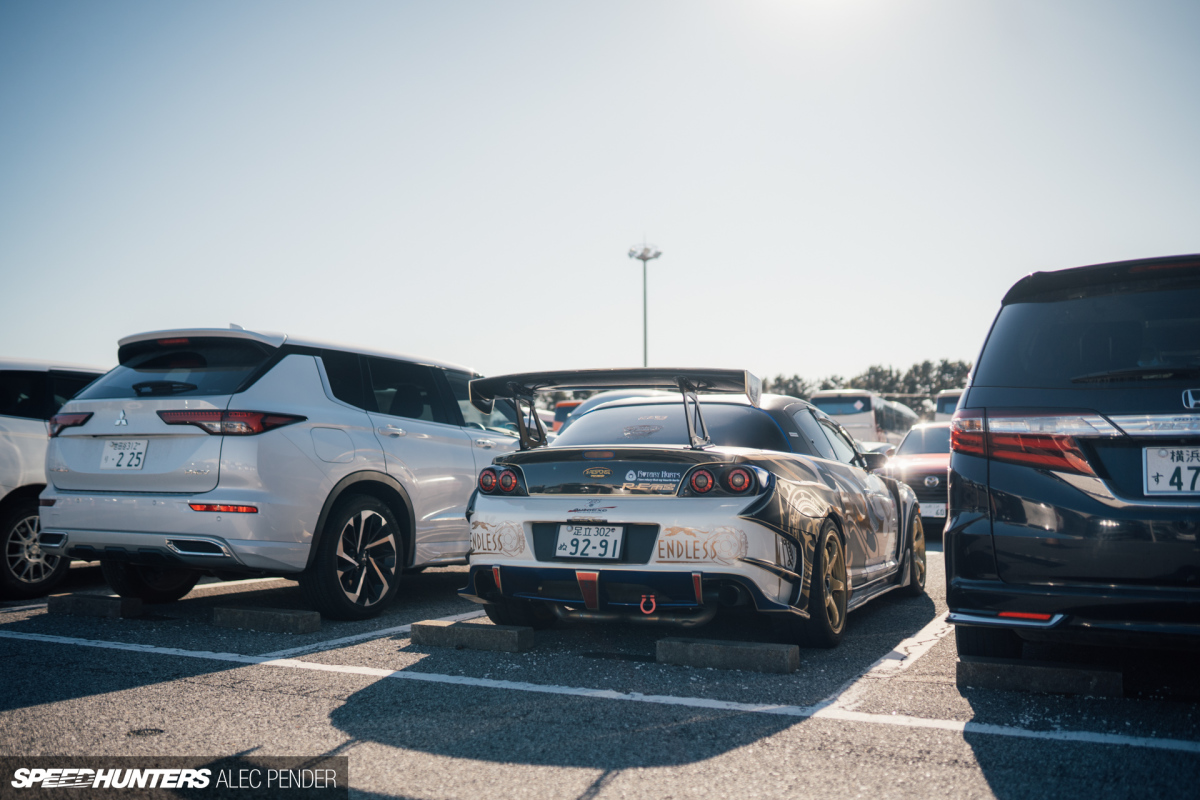
RE Amemiya made its presence felt both inside the show and outside in the car parks with this Mazda RX-8.
It was nice to see a perfectly finished 180SX Type-X sitting pretty on RAYS Gram Lights wheels.
Staying on the Nissan theme, this C10 Skyline GT-X was attracting plenty of attention as crowds ushered by.
Then, there was this JZ-powered Toyota duo. Seeing a Toyota Chaser and a Supra side by side highlighted just how similar their sizes and proportions are – the ‘four-door Supra’ nickname seems pretty spot on.
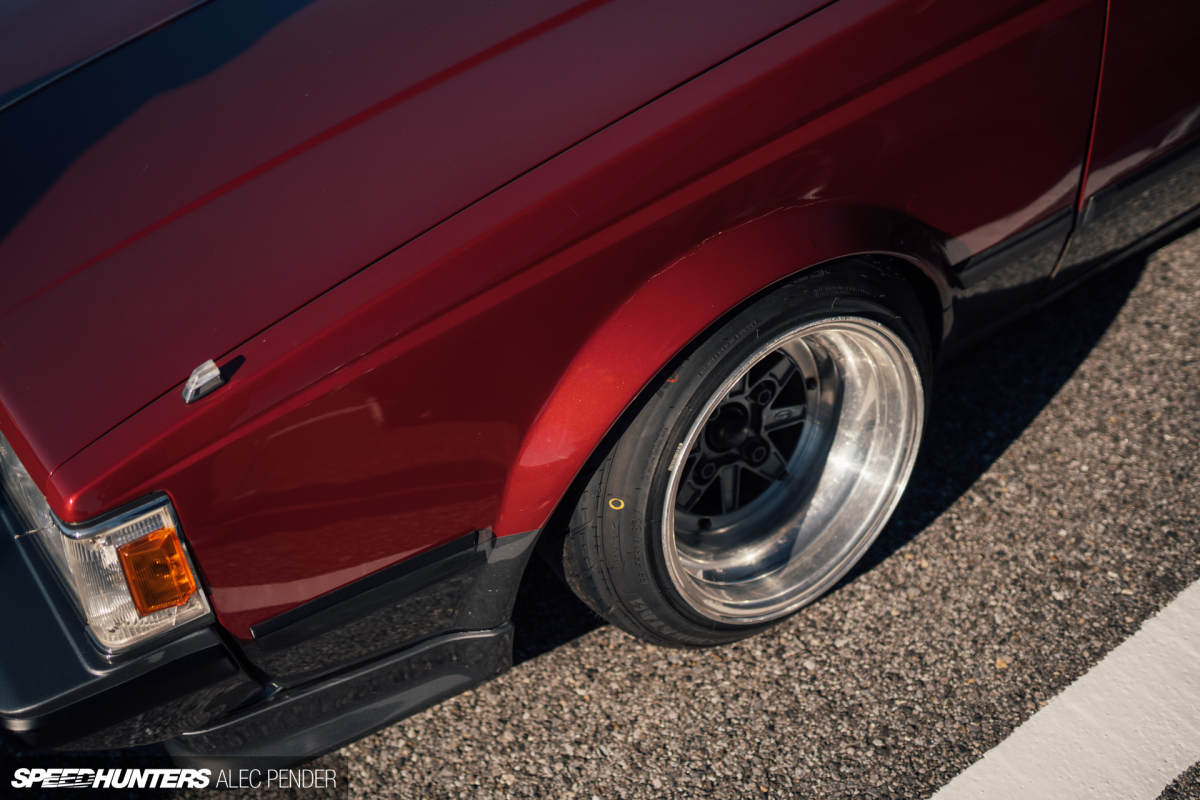
Many readers will recognise John’s Toyota Corona GT. After a year of drifting, he’s has treated his AT141 to some new bodywork and paint, and it’s really looking the part.
Joining John was an NA2 Honda NSX-R – a rare sight out in the wild. That’s no surprise given their exorbitant price tags these days.
One attendee was so eager to start tinkering with the parts he’d picked up inside the show that he couldn’t even wait until he got home to begin fitting them!
Here’s a polarising combo for you: a track-focused FD Mazda RX-7 paired with a Fabulous-built Honda StepWagon. I’ve seen this van before, and it’s as wild as they come with scissor doors and a huge sound system.
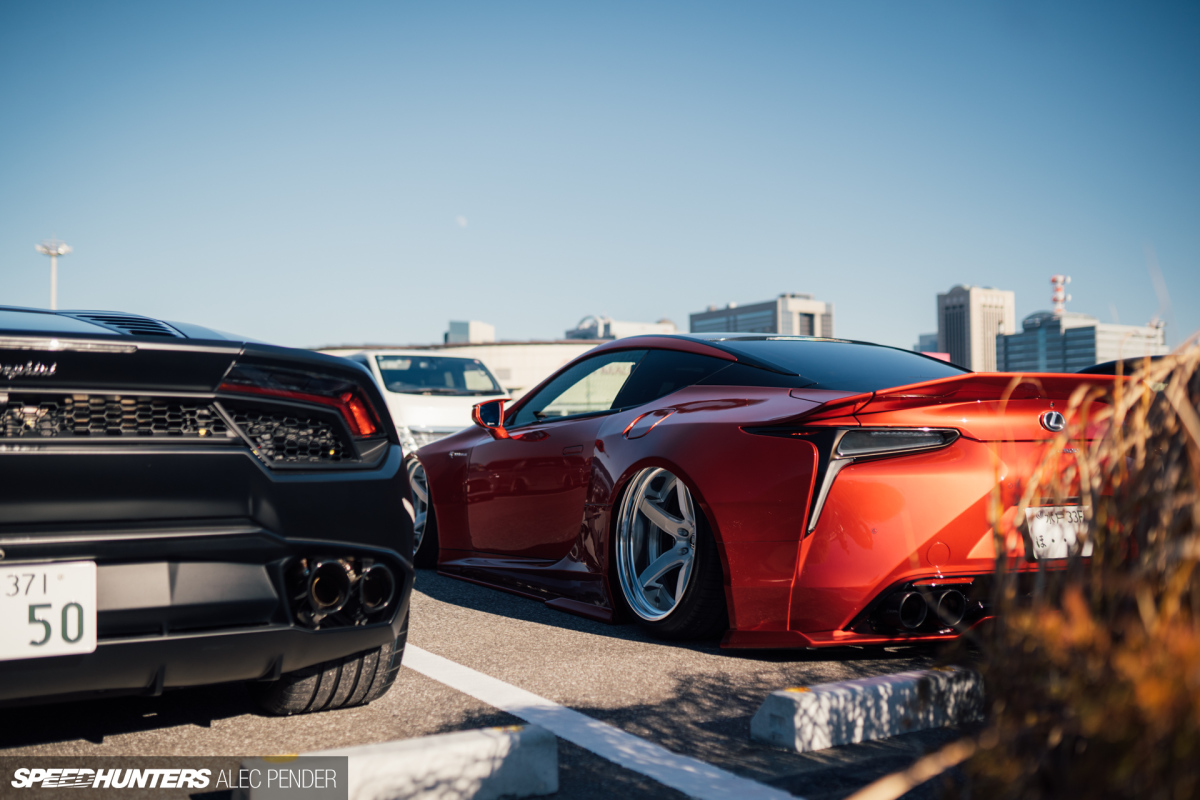
Liberty Walk made its mark on the car parks, too. A full-kitted Lamborghini Aventador, along with Huracán and a Lexus LC, all wearing Liberty Walk branding, turned heads and stopped traffic.
I wasn’t the only one admiring the treasures of the car parks. Any seasoned TAS attendee knows that the show truly begins before you even enter the gates.
Much like any other Japanese automotive event, the car parks offer a genuine insight into Japanese car culture. While TAS showcases the glitz and glamour of Japanese car life, you can’t have one without the other. For that reason, if you ever attend Tokyo Auto Salon, I highly recommend dedicating at least half your day to cruising around the various car parks. You never know what you’ll find.
In October 2022, Rolls-Royce unveiled its first-ever electric car, the Spectre. Now, the luxury carmaker is gearing up to launch its second EV.
Chris Brownridge, CEO of Rolls-Royce Motor Cars, has revealed that a new electric vehicle will be launched in 2025. “There will be another electric Rolls-Royce later this year,” Brownridge said.
While he did not disclose any further details, Brownridge said that the response to the Spectre has been encouraging. “What we’ve seen is that it delivers a remarkable Rolls-Royce experience in the silent drive, the waftability, the ease of driving,” he said. “Feedback from our clients has been overwhelmingly positive about it, and so what that has told us very clearly is that as the world moves to electrification, we can make remarkable Rolls-Royces,” the CEO added.
When asked about alternate powertrain technologies, Brownridge said that Rolls-Royce has no plans to introduce hybrids. Despite the fact that global demand for EVs is on the decline, the luxury carmaker is sticking to its plan to phase out combustion models by 2030.
We recently got a chance to drive the magnificent Rolls-Royce Spectre around New York City. Check out our drive report here.
The technical storage or access is strictly necessary for the legitimate purpose of enabling the use of a specific service explicitly requested by the subscriber or user, or for the sole purpose of carrying out the transmission of a communication over an electronic communications network.
Preferences
The technical storage or access is necessary for the legitimate purpose of storing preferences that are not requested by the subscriber or user.
Statistics
The technical storage or access that is used exclusively for statistical purposes.The technical storage or access that is used exclusively for anonymous statistical purposes. Without a subpoena, voluntary compliance on the part of your Internet Service Provider, or additional records from a third party, information stored or retrieved for this purpose alone cannot usually be used to identify you.
Marketing
The technical storage or access is required to create user profiles to send advertising, or to track the user on a website or across several websites for similar marketing purposes.