Ken Block’s “Hoonitruck,” a heavily modified 1977 Ford F-150 used in the late rally driver and viral-video star’s “Gymkhana” series, will be up for grabs at Barrett-Jackson’s annual Scottsdale, Arizona, collector car auction, which starts on Jan. 18.
The truck was commissioned by Block, who died in 2023 in a snowmobile crash, as a follow-up to the “Hoonicorn” Ford Mustang. A Ford was obligatory, as Block had an exclusive partnership with the Blue Oval at the time, and he chose a 1977 F-150 because he did some of his early hooning in one as a teenager.
Ken Block’s “Gymkhana 10” 1977 Ford F-150 Hoonitruck
Protruding from the hood is a twin-turbocharged 3.5-liter V-6 that also happens to be the bread-and-butter engine of the modern F-150. However, this one is based on the engine used in Ford GT race cars, and makes 914 hp and 702 lb-ft of torque. That power is sent to all four wheels through a Sadev 6-speed transmission.
Fender flares covering massive wheels and tires make the Hoonitruck just over 79 inches wide, making it difficult to fit into trailers. So a modular design was employed for easier disassembly and transportation to filming locations, as well as ease of repair onsite.
Ken Block’s “Gymkhana 10” 1977 Ford F-150 Hoonitruck
Block drove the Hoonitruck up the road to China’s “Heaven’s Gate” on Tianmen Mountain in “Climbkhana Two,” and the truck was also featured alongside several of Block’s other vehicles in “Gymkhana 10.” After that video—the last in the main “Gymkhana” series to feature him—was released, Block and Ford parted ways. That led to the sale of many of Block’s Fords, including the Hoonitruck, which was listed for sale with an asking price of $1.1 million in 2021.
The Block name is still present in motorsports thanks to Ken’s daughter Lia. She’s competed in the Baja 1000, Extreme E, and rallying, and also represented Williams in the 2024 season of F1 Academy.
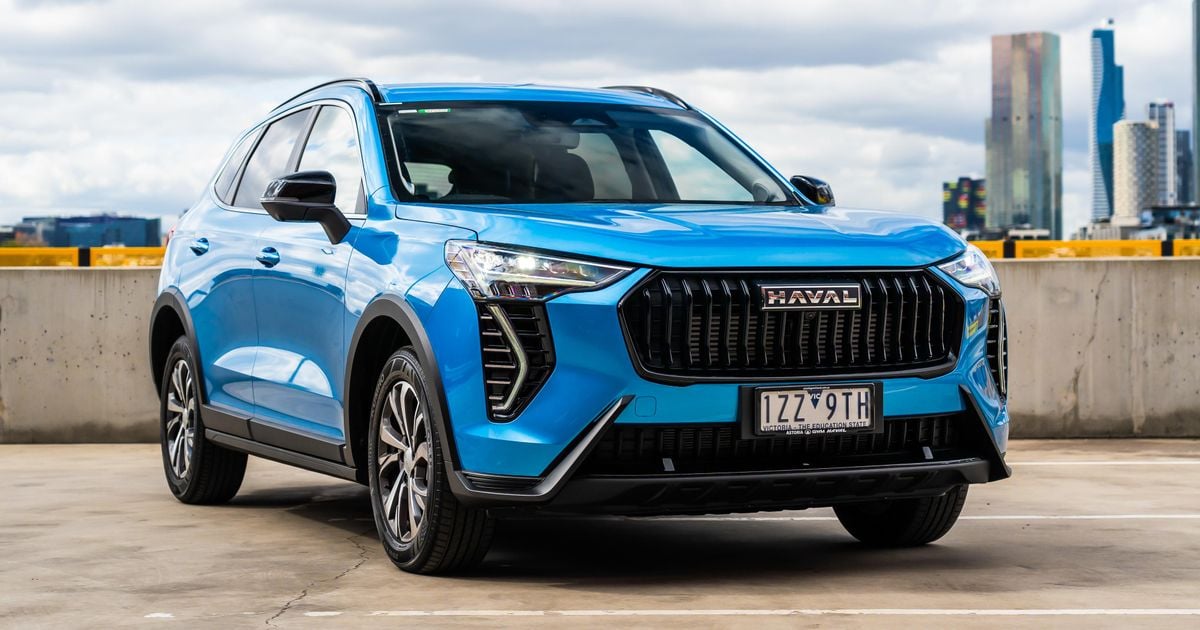
Well, that’s not strictly true, as GWM’s range of entry-level SUVs has been revised for 2025 to include a new Ultra petrol variant with more power and standard kit.
Pricing is down too, at least until the end of January.
However, the rest of the lineup remains unchanged, meaning the mid-spec petrol Lux on test still wears the ‘old shape’ bodywork, and packs the same turbocharged four-cylinder engine under the bonnet.
Despite the apparent sameness of the vehicle feature here, the only constant in life is change, and the small SUV market has transformed dramatically since the last time we got our hands on a Jolion.
WATCH: Paul’s video review of the 2025 GWM Haval Jolion HEV
There’s a new hybrid MG ZS in town, and fellow Chinese marque Chery assumed the role of disruptor when it launched the dirt cheap, feature-packed Tiggo 4 Pro late last year.
Both models are direct competitors to the Jolion, although the GWM remains the best seller in the segment. But can the unchanged Lux petrol help the Jolion to hang onto its sales crown?
How does the Haval Jolion compare?
View a detailed breakdown of the Haval Jolion against similarly sized vehicles.
Haval
Jolion
How much does the GWM Haval Jolion cost?
The Jolion range is currently subject to promotional pricing that’s set to be reviewed on January 31.
Model
Drive-away price (until January 31)
2025 GWM Haval Jolion Premium
$23,990
2025 GWM Haval Jolion Lux
$26,990
2025 GWM Haval Jolion Premium Hybrid
$31,990
2025 GWM Haval Jolion Ultra
$32,990
2025 GWM Haval Jolion Lux Hybrid
$34,990
2025 GWM Haval Jolion Ultra Hybrid
$37,990
At its current price point, the Jolion Lux is priced in line with the Chery Tiggo 4 Pro Ultimate, a key competitor that has taken the small SUV segment by storm since launching in October last year.
Prior to the latest round of discounts, the Jolion Lux was sold for $29,990 drive-away – or $3000 more.
To see how the GWM Haval Jolion stacks up against its rivals, use our comparison tool
What is theGWM Haval Jolion like on the inside?
Mum drilled into me as a youngster that first impressions matter, and the Jolion doesn’t do itself any favours in this regard.
Small SUVs have come a long way in recent years, and what might’ve passed as impressive in 2020 doesn’t quite cut the mustard now.
Chery has gone out of its way to wow potential buyers with premium cabin presentation and slick tech, while MG has gotten its act together with a new range of models that share simple, cohesive interior designs. The strengths of the Mazda CX-3 lie in familiarity and material quality.
On the other hand, this mid-spec Jolion Lux doesn’t really have a super-strength to make it stand out from the crowd. Upon opening the driver’s door, you’re greeted by a mish-mash of shapes, textures and materials that lacks cohesion.
Aside from the leatherette seats and steering wheel, the panels wear plastics varying from a woodgrain-look finish to woven plastic and metallic accents. It’s a real mess, and GWM would’ve benefitted from keeping it simple in the design department.
And any excitement generated by the funky mix of surfaces dissipates when they’re touched, as there’s no disguising the true nature of each.
From a comfort perspective, I appreciate the inclusion of padding on the centre console and door cards, while the faux-leather steering wheel is an upgrade over the plastic items seen in some economy cars.
The seats found in this variant are a mixed bag. Trimmed in smooth leatherette, they’re not overly supportive and quite slippery, although the base cushion has plenty of give.
Both front chairs are heated, which comes in handy on cold winter mornings, while the driver is also treated to electric adjustment. Like other jacked-up SUVs, the Jolion offers an elevated driving position that appeals to many modern buyers.
As with the design and materials, there are a fair share of missed opportunities associated with the tech inside the Jolion.
The 10.25-inch centre infotainment screen is controlled almost entirely via touch inputs, while buttons on the steering wheel enable customisation of the 7.0-inch digital instrument cluster.
That directly links to my first point of criticism – the lack of physical button controls. A small strip of buttons below the centre screen is devoted entirely to climate controls and camera functions, but other functions can only be accessed by operating the touchscreen, which can be distracting while you’re driving.
It’s not always a quick glance away from the road, either, as the infotainment system regularly lags due to a lack of processing power. Apple CarPlay dropouts also occurred throughout our week-long test, despite the used of a wired connection.
Usability quirks aside, the infotainment system in the Jolion is relatively simple and straightforward to navigate, with a clean appearance and decent graphics. Customisation is limited to the choice of a few different layouts and colour schemes.
I expected more from the six-speaker sound system, which delivers grainy and poorly-mixed audio.
Like the centre screen, the digital cluster is basic in layout with clearly displayed speed, temperature, fuel, and cruise control readouts. Three different display designs are available – technology, fashion and dynamic.
Despite its rudimentary setup, the display was difficult to customise at times, especially when the steering wheel buttons temporarily stopped working.
Moving beyond technology, the front row of the Jolion Lux is a practical space with plenty of storage options.
You get chunky door bins, a deep centre console, cavernous glovebox and a tray below the centre tunnel; as well as a sunglasses holder, coin shelf and standard cupholders.
Mobile devices can be stored on a rubber tray under the centre stack, within close proximity to a pair of USB-A outlets and a 12V socket. Although I’m still rocking a scruffy iPhone 11, the world is shifting towards USB-C charging, so I’d expect that to be offered with the next update of this model.
The second row of the Jolion is similarly spacious – a strength of the model.
Adults well north of six-foot can get comfortable without issue, as there’s plenty of legroom and the seat backs are soft and welcoming. Headroom is also plentiful, while a light-coloured headliner and big windows keep the space feeling light and airy.
No need to call shotgun on the front seat, then.
Back seat amenities include dual USB-A outlets, a pair of rear air vents behind the centre console, map pockets, small door bins, and a centre armrest with integrated cupholders.
Second row passengers feel neglected in some affordable SUVs, missing out on vents or charging facilities, but that’s not the case here. ISOFIX points feature on the outboard rear seats, and there’s a trio of top tethers.
When not required, the rear bench folds down in 60/40 style, expanding a boot that measures 337 litres with the car in five-seat guise to a quoted 1133 litres.
Regardless of seating configuration, the boot in the Jolion is generous. Upon lifting the manual tailgate, you won’t find any clever special features, but there’s plenty of room and no step up from the boot floor to the folded rear bench.
GWM fits the Jolion with a space saver spare wheel, which can be found under the boot floor.
Dimensions
GWM Haval Jolion
Length
4472mm
Width
1841mm
Height
1574mm
Wheelbase
2700mm
Cargo capacity
337L (rear seats up) 1133L (rear seats folded)
To see how the GWM Haval Jolion stacks up against its rivals, use our comparison tool
What’s under the bonnet?
There are three powertrain options for 2025 – the reintroduced Ultra petrol develops 25kW and 60Nm more than the standard Premium and Lux models, but 10kW and 115Nm less than the hybrids. Our tester is equipped with the petrol engine in its base state of tune.
Specifications
GWM Haval Jolion Lux
Engine
1.5-litre 4cyl turbo-petrol
Power
105kW
Torque
210Nm
Transmission
7-speed dual-clutch automatic
Drive type
Front-wheel drive
Weight
1370kg
Fuel economy (claimed)
8.1L/100km
Fuel economy (as tested)
9.2L/100km
Fuel tank capacity
55L
Fuel requirement
91 octane regular unleaded
CO2 emissions
186g/km
Emissions standard
Euro 5
Braked tow capacity
1500kg
To see how the GWM Haval Jolion stacks up against its rivals, use our comparison tool
How does theGWM Haval Jolion drive?
The Jolion has been around since 2021, but it still feels like an unfinished product on the road.
2023 Jolion Ultra
In town, I was immediately thrown by the sensitive throttle pedal, which felt more like an on/off switch than a predictable, progressive control in this petrol model.
The twitchy pedal was a nightmare in traffic – as hard as I tried, it was really difficult to make smooth progress. Although the Jolion is exceedingly keen to move when you depress the accelerator, the engine doesn’t share quite the same enthusiasm.
To be fair, the base 1.5-litre four-cylinder turbo-petrol produces 105kW and 210Nm, which is about par for the segment, and the Jolion has more than enough punch for most situations. Having said that, aggressive acceleration is accompanied by a noisy racket.
Steering the Jolion is a far more relaxing experience, as the wheel is light and direct with minimal play about centre.
The Jolion also fares well from a ride comfort standpoint – it glides over suburban ruts and potholes, only entering bouncy territory when you attack a speed bump with too much vigour.
Auto-hold is a handy feature to have when you’re sitting at red traffic lights, while the inclusion of shift paddles behind the steering wheel makes this affordable SUV feel sportier than it is.
With that said, I was never inclined to take advantage of them as the dual-clutch transmission does a decent job of picking the right gear in urban environments.
Even when shifting as efficiently as possible, our tester returned sub-par fuel economy numbers. GWM claims an average consumption of 8.1L/100km for this model but we saw 9.2L/100km – well shy of claims made by rivals.
Of course, spending up for a hybrid version remedies this issue somewhat.
The Jolion may be among the cheapest SUVs available Down Under but GWM hasn’t skimped out on safety tech. On top of a reversing camera and parking sensors, the Lux gains a surround-view camera, rounding out an already impressive standard equipment list.
As a result, I never caught myself struggling to place the Jolion in a tight parking lot, not that it feels like a particularly bulky car to begin with.
It does feel substantial enough to hold its own on the highway, though. Even at 100km/h, road and wind noise remains subdued, and the cabin feel generally well insulated from the outside world.
That’s all well and good, but no amount of noise suppression can make up for the infuriating beeps and bongs generated by the Jolion’s advanced driver assist systems (ADAS).
I’m sure we’re beginning to sound like a broken record by now, but intrusive ADAS are a blight on the automotive industry, and the Jolion is guilty of some of the safety tech cardinal sins.
For one, the driver monitoring camera located on the A-pillar is in your face and poorly calibrated. Even the briefest glance to the infotainment screen or a passenger triggers the system, prompting an obnoxious chime paired with a ‘do not stray’ message on the instrument display.
I’ve experienced some intuitive and effective anti-fatigue systems in recent times, but this does not fit in that category.
It’s particularly frustrating during highway runs, when you’re more likely to reach for a drink or talk to the person next to you. Cars were a little different back in 1984, but George Orwell had it right when he described Big Brother – always watching.
Well, unless you switch the drowsiness monitor off, which is possible if you’re willing to make adjustments every time you start the car.
Another feature that falls short of the mark in the Jolion is adaptive cruise control. The technology is lazy and slow to respond to changes in the flow of traffic – often our tester dropped a long way behind a leading car even in its closest following setting, and the base engine doesn’t have the shove to make quick corrections.
Sometimes, the Jolion is best driven without assistance. Country roads are a prime example of this. You won’t exactly be carving corners, as this SUV is prone to body roll and understeer, but the ride remains comfortable and intrusive safety tech can be kept at bay.
To see how the GWM Haval Jolion stacks up against its rivals, use our comparison tool
What do you get?
There are now six variants in the Jolion range: two ‘old-look’ petrol grades, one ‘new-look’ petrol, and three ‘new-look’ hybrids.
To see how the GWM Haval Jolion stacks up against its rivals, use our comparison tool
Is theGWM Haval Jolion safe?
The GWM Haval Jolion has a five-star ANCAP safety rating based on 2022 testing.
Category
GWM Haval Jolion
Adult occupant protection
90 per cent
Child occupant protection
84 per cent
Vulnerable road user protection
64 per cent
Safety assist
92 per cent
Standard safety equipment includes:
Adaptive cruise control
Autonomous emergency braking
Pedestrian detection
Cyclist detection
Blind-spot monitoring
Driver drowsiness detection
Lane-keep assist
Lane centring
Emergency lane-keep assist
Rear cross-traffic assist
Safe exit warning
Traffic sign recognition
7 airbags
Reversing camera
Rear parking sensors
Lux variants and upwards gain a surround-view camera, while the Ultra Hybrid also has front parking sensors.
To see how the GWM Haval Jolion stacks up against its rivals, use our comparison tool.
How much does theGWM Haval Jolion cost to run?
The GWM Haval Jolion is backed by a seven-year, unlimited-kilometre warranty. Servicing costs have increased across the range for 2025.
Servicing and Warranty
GWM Haval Jolion Lux
Warranty
7 years, unlimited kilometres
Roadside assistance
Up to 5 years
Service intervals
12 months or 15,000km (10,000km first service)
Capped-price servicing
5 years
Total capped-price service cost
$1840
To see how the GWM Haval Jolion stacks up against its rivals, use our comparison tool
CarExpert’s Take on theGWM Haval Jolion Lux
The GWM Haval Jolion doesn’t make as much sense as it used to, especially in Lux petrol guise.
It’s still cheap – very cheap, until at least the end of January – but there’s nothing else about this SUV that screams ‘pick me’. GWM hasn’t really updated the styling on this mid-spec variant, and the same can be said of the interior tech.
With the base petrol powertrain, the Lux just about matches the Chery Tiggo 4 Pro, MG ZS, Mazda CX-3, Chery Omoda 5, and Mitsubishi ASX for performance, but it trails the pack on efficiency.
And, after changes to GWM’s capped-price servicing, the Jolion isn’t particularly cheap to maintain anymore. I wasn’t a fan of the undercooked safety systems either.
So, while the Jolion is a spacious and affordable entry-level SUV, it lacks the driving dynamics or interior wow factor to be the pick of a crowded segment. That’s especially true if GWM reverts to pre-discount pricing from February onwards.
Instead, it’s worth pivoting to the Tiggo 4 Pro for a more refined experience at the same price point, or stretching the budget for something wearing a Korean or Japanese badge.
Interested in buying a GWM Haval Jolion? Get in touch with one of CarExpert’s trusted dealers here
Rivian is looking to patent heated headlight lenses to help increase the performance of the lighting on its electric pickup trucks and SUVs in snow, ice, and rain.
The LED headlights that have become the standard in the auto industry don’t give off so much waste heat all the time as previous HID or halogen lights, which can often melt any accumulated moisture by themselves. That’s what Rivian is trying to address with this patent, which was submitted to the United States Patent and Trademark Office (USPTO) Jun. 21, 2023, but only published by that office Dec. 26, 2024.
Rivian heated headlight patent image
In that document, Rivian discusses adding a layer of carbon nanotube material to the outer lens of a headlight. This would be surrounded by a silver bus-bar heating element, which would transmit heat to the nanotube layer, warming it and in turn allowing it to melt anything accumulating on the headlight lens.
Carbon nanotube material is comprised of tube-shaped lattices of carbon atoms less than a nanometer in diameter—hence the name. Carbon nanotubes are known to gave good thermal conductivity, which might explain Rivian’s choice of the material here.
Rivian heated headlight patent image
There’s been much talk of the importance of heated seats, and even heated seat belts, in EVs as a more efficient way to fight cold temperatures with minimal additional energy draw. But this is more about lighting technology than powertrain technology, specifically the need to clear LED lighting elements of accumulated precipitation that could partially block them.
Not all patented ideas reach production, and it’s unclear how much of a priority heated headlights are for Rivian right now. The automaker is preparing to start production of its more-affordable R2 electric SUV in 2026 and open a new Georgia plant by 2028, with the latter expected to receive a boost from a $6.6 billion federal loan.
Staying productive, organized, and connected while traveling is a challenge—but with the right digital tools, you can streamline your workflow, manage finances, overcome language barriers, and navigate unfamiliar cities with ease. Whether you’re working from a café in Manila or backpacking through Southeast Asia, these essential apps will help Filipino digital nomads stay on top of work and life on the road.
1. Productivity Apps
a. Notion
Why You Need It: Notion is a powerful all-in-one workspace tool that offers note-taking, task management, database creation, and project collaboration. Perfect for digital nomads who need an organized hub for all their projects and ideas.
Key Features: Templates for project management, customizable dashboards, integration with Google Drive and Slack.
Pricing:
Free plan available (with limited block storage).
Paid plans start at USD 8/month (around PHP 450/month) for more blocks and team collaboration.
Why You Need It: Trello uses boards, lists, and cards to help you visually organize your tasks and projects. Ideal for solopreneurs and small teams who prefer a simple, intuitive interface.
Why You Need It: Google Workspace (formerly G Suite) offers essential tools—Gmail, Google Drive, Docs, Sheets, Slides—that seamlessly sync across devices. As a digital nomad, you can easily create and share files, schedule meetings, and collaborate in real-time.
Key Features: Large cloud storage (depending on plan), integrated calendar, real-time document editing.
Pricing:
Free for personal Gmail use (with limited Drive storage).
Business plans start at USD 6/month (around PHP 340/month) per user.
Why You Need It: Communication is key for remote teams. Slack is a chat-based platform that centralizes all team conversations, file sharing, and integrations with other productivity tools in one place.
Key Features: Channels for organized chat, voice and video calls, screen sharing, third-party app integrations (Trello, Google Drive, etc.).
Pricing:
Free plan (with limited message history).
Paid plans start at USD 7.25/month (around PHP 410/month) per user.
Why You Need It: GCash is one of the most popular e-wallets in the Philippines, allowing you to pay bills, transfer money to banks, buy load, invest in mutual funds, and even earn rewards. As a Filipino digital nomad, you’ll find GCash indispensable for daily transactions, especially if you have local clients or need to settle local bills.
Key Features: Pay bills electronically, send money instantly, buy load at discounted rates, invest in GInvest.
Pricing:
Free to download, but transaction fees may apply for certain bank transfers or withdrawals.
Why You Need It: Mint is a budgeting and personal finance app that helps track expenses, create budgets, and monitor your credit score (for U.S.-based accounts). While not all Philippine bank accounts are supported, you can manually log in transactions or link international accounts if you also earn from global sources.
Key Features: Budget planning, transaction tracking, bill alerts, financial summaries.
Why You Need It: Wally offers a clean, straightforward interface for expense tracking. You can set your own currency and manually categorize spending, making it easier to track finances across different countries if you’re hopping from place to place.
Why You Need It: YNAB uses a unique “zero-based budgeting” approach. Every peso has a job, so you’re more intentional about spending and saving. It’s ideal for freelancers who have fluctuating income, helping you plan ahead even when paychecks are irregular.
Why You Need It: Google Translate is a must-have for any traveler, offering translations in over 100 languages, including Filipino and various Southeast Asian languages. The offline translation feature is particularly handy when you’re in remote areas with spotty internet.
Key Features:
Instant camera translation (just point your camera at text).
Why You Need It: iTranslate offers real-time voice translation and an offline mode when you upgrade to the premium version, making it highly useful for quick interactions in foreign countries.
Key Features:
Voice conversation mode.
Phrasebook for common expressions.
Offline language packs (premium).
Pricing:
Free version with basic functionality.
Premium starts at USD 5.99/month (around PHP 340/month).
Why You Need It: Similar to Google Translate but with a slightly different interface, Microsoft Translator covers multiple languages and often integrates seamlessly with Microsoft products.
4. Navigation Apps
a. Google Maps
Why You Need It: Google Maps is essential for checking routes, public transit schedules, and traffic updates. As a digital nomad constantly on the move, you’ll rely on this for directions whether you’re exploring the bustling streets of Manila or finding coworking spaces in Bali.
b. Waze
Why You Need It: Known for its user-generated traffic data, Waze is perfect for navigating congested roads in big cities like Metro Manila or Cebu. If you’re driving or taking Grab, Waze will give you alternate routes to avoid traffic jams.
Key Features:
Real-time traffic reports.
User alerts for accidents, road closures, police presence.
Why You Need It: Grab is the go-to ride-hailing app in Southeast Asia. Beyond rides, it also offers food delivery, parcel services, and digital payments in some countries.
Key Features:
Ride-hailing.
Food and grocery delivery.
In-app digital wallet (GrabPay).
Pricing:
Free to download, but ride costs and delivery fees vary depending on location.
Why You Need It: Whether you’re connecting to public Wi-Fi or accessing region-restricted content, using a VPN is crucial for data security. Popular VPNs include NordVPN, ExpressVPN, and Surfshark.
Pricing (examples):
NordVPN starts at around USD 3.49/month.
ExpressVPN starts at around USD 6.67/month.
Surfshark starts at around USD 2.49/month.
b. Cloud Storage
Why You Need It: Aside from Google Drive, you might want additional cloud options like Dropbox or Microsoft OneDrive for backup and file sharing.
Pricing (examples):
Dropbox basic: Free for 2GB.
Dropbox Plus: USD 9.99/month for 2TB.
OneDrive: Free for 5GB. Office 365 subscription includes 1TB per user.
c. Communication and Conferencing
Zoom: Free plan with 40-minute limit on group calls, paid plans start at USD 14.99/month.
Microsoft Teams: Free plan available, paid plans as part of Microsoft 365.
Final Thoughts
Being a Filipino digital nomad means juggling tasks, clients, and projects from various locations—often with spotty Wi-Fi, different currencies, and a host of new cultures to navigate. Equipping yourself with the right apps helps you maintain productivity, keep finances in check, overcome language barriers, and explore new destinations confidently.
Remember, prices can change and certain features may differ based on your region, so always check the app’s official website or store listing for the latest details. Safe travels, and happy working!
Disclaimer: The app prices mentioned are accurate as of this article’s publication date and may be subject to change.
Zeekr has revealed its latest model, the 007 GT in an initial release of images which show that the 007 GT takes on shooting brake/station wagon form. This follows the 007 sedan which was first unveiled in November 2023, ahead of its market launch in China in August 2024.
According to Car News China, the 007 GT will go on sale in China in four variants – the Smart RWD at 209,900 yuan (RM128,457), the Long Range RWD and the Smart AWD, both at 229,900 yuan (RM140,693), and the Performance AWD, at 299,900 yuan (RM183,532).
Viewed in profile, the 007 GT borrows heavily from the 007 sedan in terms of its front-end styling, while the profile of the 007 GT also bears strong resemblance to that of the sedan, save for the shooting brake roofline which also gets roof rails.
Single-motor, rear-wheel-drive versions of the 007 GT get a 310 kW (422 PS) motor, which propels the car from 0-100 km/h in 5.4 seconds. Meanwhile, the top all-wheel-drive version gets an additional 165 kW (224 PS) for a combined output of 375 kW (510 PS), and this enables a 0-100 km/h sprint time of 2.84 seconds, this being the same acceleration time achieved by the top variant of the 007 sedan.
This is said to be based on the same platform as the 007 sedan, which would be the PMA2+ platform that is derived from the Geely group’s SEA architecture and which supports an 800-volt electrical architecture.
Batteries are either LFP or NMC units depending on variant, and these are said to offer battery range figures of between 616 km and 870 km on the Chinese domestic CLTC testing standard (the more stringent WLTP protocol will yield slightly lower figures).
The Zeekr 007 GT will see its market launch in the second quarter of this year, according to the brand.
Buyers of the 2025 Ford Mustang GTD can choose a patriotic livery
The livery comes in combination with Mustang GTD’s Performance package
Pricing for the 2025 Mustang GTD is expected to start at $325,000
Ford’s ultimate Mustang, the Mustang GTD, will be available with a livery designed to appeal to both fans of the nameplate’s history and America itself.
Ford late on Thursday unveiled the Mustang GTD’s Spirit of America livery, which features a white body accented by two central stripes—one red and the other blue. According to Ford, the colors are inspired by the Mustang’s iconic Tribar logo from 1964, the year the car debuted and secured its first race victory, winning its class in the Tour de France Automobile.
Additional details include exposed carbon-fiber elements for the aerodynamic parts, red accents on the side mirror caps, rear wing end plates, and brake calipers, as well as a prominent “MUSTANG” script displayed on the underside of the rear wing.
Ford Mustang GTD Spirit of America
A similar color scheme extends to the interior, where the primary black upholstery is complemented by red, white, and blue accents. Buyers can also opt for 3D-printed titanium components, including the paddle shifters, shift ring, and dashboard badge.
The track-focused yet street-legal Mustang GTD has been developed using decades of racing expertise from Ford and its engineers. Its advanced suspension, which includes Multimatic’s Adaptive Spool Valve (ASV) dampers, ensures the car remains stiff enough for the track while retaining road usability. Active aerodynamics, including a Drag Reduction System similar to those found in Formula 1 cars, are also confirmed.
The GTD is powered by an 815-hp supercharged 5.2-liter V-8. This engine, derived from the one used in the previous-generation Mustang Shelby GT500, features new innovations such as dry-sump lubrication (a first for a Mustang), a maximum engine speed of 7,650 rpm (up 100 rpm from the Shelby), a smaller supercharger pulley, and a titanium exhaust system.
Ford Mustang GTD Spirit of America
Power is sent to the rear wheels via an 8-speed dual-clutch automatic transmission mounted at the rear for improved weight distribution. The car reaches a top speed of 202 mph and recently became the first American vehicle to lap Germany’s Nürburgring racetrack in less than seven minutes.
Ford plans to offer the Mustang GTD for the 2025 and 2026 model years, though the company has not confirmed whether production will extend beyond that timeframe. Prospective buyers must complete an application process; the initial North American round, which concluded last spring, drew more than 7,500 applicants. Ford has not disclosed the total number of build slots, though production is expected to be limited since the cars are being manufactured by Multimatic rather than Ford.
Final pricing details remain under wraps, but Ford has indicated a starting price of approximately $325,000 for the stock GTD. Buyers seeking maximum performance will need to opt for the Performance and Lightweight packages. Those choosing the Spirit of America livery will receive the Performance package as part of the offering.
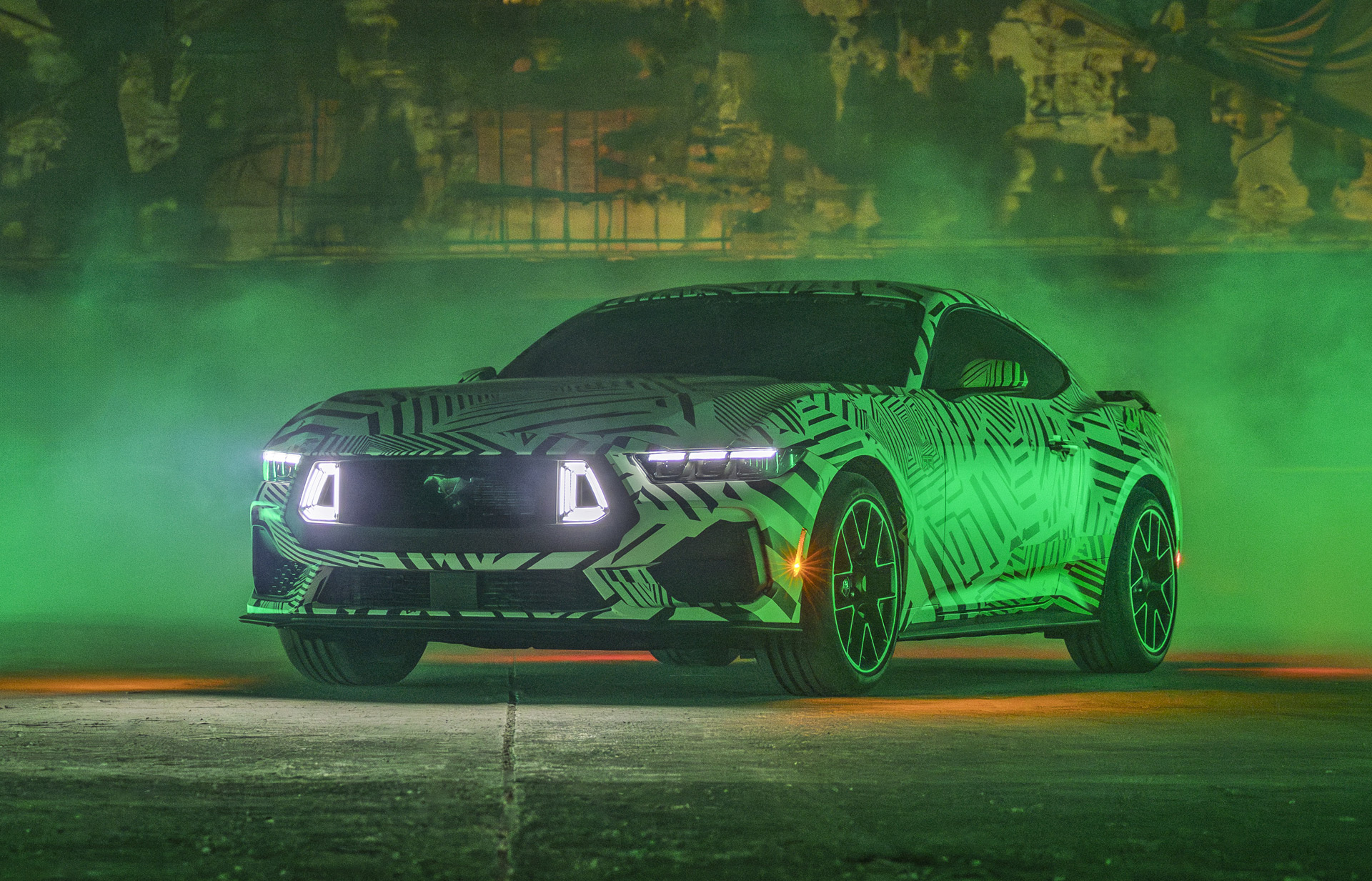
RTR Vehicles, the performance collaboration between Ford and professional drifter Vaughn Gittin Jr., revealed the 2025 Mustang RTR late on Thursday.
Set to make its formal debut on Friday at the 2025 Detroit auto show, the new performance Mustang is based on the latest Mustang EcoBoost and will be built by Ford on the same line as the regular Mustang. RTR has its own series of tuned Mustangs that it builds at its own facilities.
The 2025 Mustang RTR is still in development and RTR hasn’t said when that development will be complete. However, the company has confirmed some details.
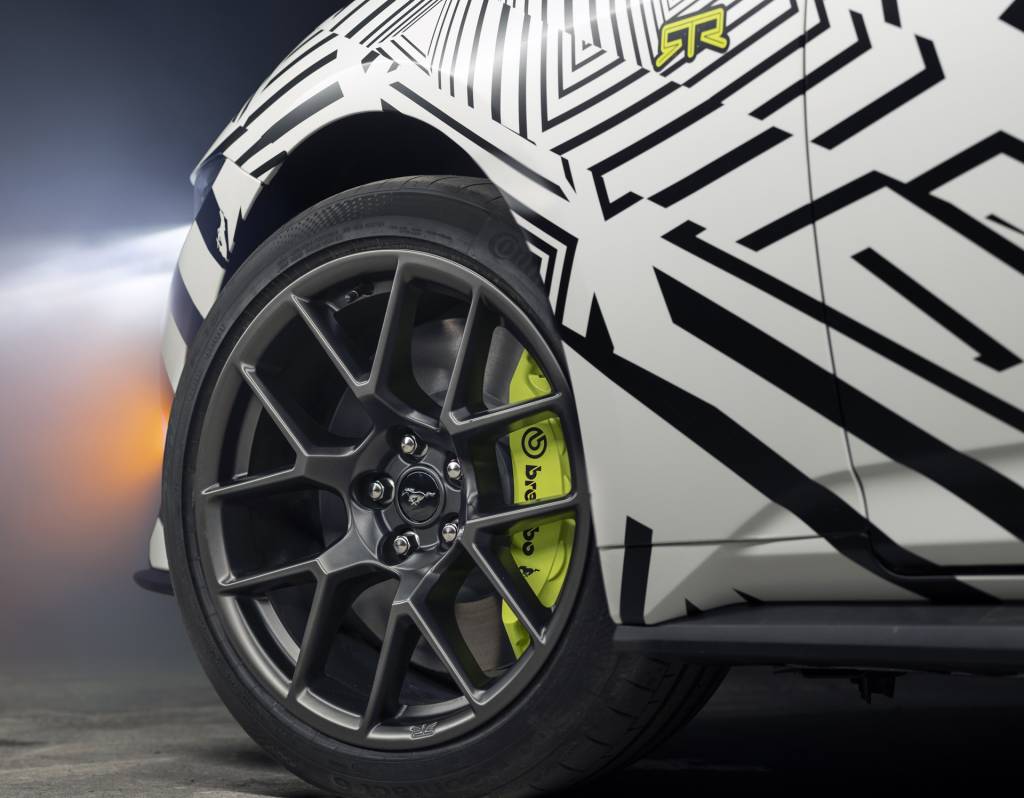
RTR said the car borrows some of the upgrades from the track-focused Mustang Dark Horse, without specifying which parts. It also sports upgraded Brembo brakes with calipers painted in a Hyper Lime color, as well as some of RTR’s unique styling touches designed for the seventh-generation Mustang, like a custom grille with LED accents for the intake surrounds.
2025 Ford Mustang RTR
No change was mentioned for the Mustang EcoBoost’s drivetrain, which consists of a 315-hp 2.3-liter turbo-4 engine and paired as standard with a 10-speed automatic transmission. Drive is to the rear wheels only.
There’s no word on pricing, but RTR said the vehicle represents an affordable avenue for enthusiasts seeking a vehicle they can use on the track. The stock standard 2025 Mustang EcoBoost starts at $33,515, including a $1,595 destination charge.
“This Mustang RTR is pure accessible fun, with many enhancements, including Mustang Dark Horse components, Mustang EcoBoost’s near-perfect weight distribution, and RTR’s signature styling, it’s ready for drifting, drag racing, back-road cruising, or ripping around an autocross track,” Gittin Jr. said in a statement.
Ford will also use the Detroit auto show to present the Mustang GTD Spirit of America, a special livery package for the track-focused Mustang GTD.
Scout received over 50,000 reservations since revealing its Terra pickup truck and Traveler SUV last fall
Around 70% opted for the Traveler and over 50% opted for a hybrid powertrain
The new Scouts are due in 2027 with a promised starting price below $60,000
Volkswagen Group’s new pickup and SUV brand, Scout, designed specifically for America, has been accepting reservations for its debut Terra and Traveler models since their reveal last fall.
Bloomberg recently spoke with Scout CEO Scott Keogh during the 2025 CES event in Las Vegas and learned that Scout has already secured more than 50,000 reservations, with the majority of customers opting for the hybrid powertrain over the fully electric option.
Scout Motors president and CEO Scott Keogh
While Keogh didn’t provide exact numbers, he confirmed that more than half of the reservations were for the hybrid. Scout’s hybrid powertrain, branded as the Harvester, is a series plug-in hybrid system where a gas engine functions solely as a generator to extend the range of the otherwise fully electric powertrain. Both the hybrid and electric versions share the same dedicated EV platform and can be manufactured on the same production line. Notably, Ram has a similar series plug-in hybrid pickup truck in the form of the recently unveiled 1500 Ramcharger.
Scout promises a range of 500 miles for the Terra and Traveler equipped with the Harvester powertrain. For the fully battery-powered versions, the projected range is 350 miles.
Scout Terra and Traveler concepts
In his interview with Bloomberg, Keogh attributed the strong demand for the hybrid option to the lack of charging infrastructure, rather than resistance to EV technology.
“The two challenges we see with electrification are charging infrastructure—and of course this takes that all off the table—and plus there’s convenience,” he said.
Scout Traveler concept
Keogh also revealed that approximately 70% of reservations are for the Traveler SUV.
The Scout lineup draws inspiration from the original International Harvester Scouts, which were produced from 1961 to 1980. VW Group acquired the intellectual property in 2020 as part of its purchase of Navistar, the successor to International Harvester. The Terra and Traveler are scheduled to launch in 2027, with Scout already exploring additional models for the lineup.
Scout Traveler concept
Scout aims for a starting price of under $60,000. In his interview with Bloomberg, Keogh stated that achieving this price point will be possible through economies of scale when sourcing materials, thanks to the company’s integration with VW Group. He noted that material costs are where most competing EV startups face significant challenges.
Production will take place at a new facility in South Carolina.
Peru is one of the best places I have ever visited (and that’s saying something). I loved every moment (this blog post goes into more detail why). Besides being incredible, it’s also an extremely affordable destination (provided you limit your fine dining in Lima and guided hikes).
If you’re heading to Peru and wondering how much you’ll need to spend, look no further. In this post, I’ll break down how much I spent, where I went wrong, typical prices, and how you can save money.
How Much I Spent
During my sixteen days in Peru, I went to Lima, Arequipa, Cusco, and hiked around the Sacred Valley. I spent $4,992.63 USD or $312 per day. That broke down as follows (in USD):
Accommodation: $1,246.51
Food: $795.96
Guides tips: $45.90
Tours / Activities: $162
Transportation: $80.96
Private tours (see below): $1,770
Internal flights: $480.06
Travel insurance: $73.92
Gear: $337.32
Now, I spent a lot more than you would in an equal amount of time. That’s for a few reasons:
First, Lima is one of the gastronomic hub with some of the best restaurants in the world. I ended up eating at more than few of these spots and that drove up my food costs.
Second, I did private tours for my guided hikes in Cusco for work-related reasons and that really drove up my costs (you’re unlikely to pay for private guides when you travel). Without those tours, my costs would have come down to $200 USD a day!
Third, given the limited time I had in the country and the ground I needed to cover, I also flew between most destinations rather than taking long overnight buses. Moreover, because, again for work, I had to swap some flights last minute, I had to pay change fees.
Finally, I splurged on a really fancy hotel in Cusco for a couple of nights, which actually accounts for 50% of my accommodation costs. YOLO!
So how much would you, the average traveler, need to budget if you wanted to visit Peru? Well, not as much as me that’s for sure! Here are some more reasonable suggested budgets for Peru:
Backpacker Budget If you want to backpack Peru, I’d plan for $50–80 USD per day (185–300 PEN). On this budget, you’d be staying in hostel dorms, eating at typical hole-in-the-wall restaurants and cafés, limiting your drinking, taking public transportation and overnight buses, and doing a few paid activities and tours. If you’re going to party a lot, you’ll be on the higher end of this range.
Midrange Budget If you want to basically follow what I did (minus the private tours), you’d need $150–200 USD per day (560–750 PEN). This would get you private rooms in hostels or two- or three-star hotels, a few high-end meals the country is famous for, all the drinks you want, intra-country flights, and any tours and activities your heart desires.
From there, you could add or subtract $30–50 USD per day depending on if you’re staying in name brand hotels (or not), taking intra-country flights (or not), or partying a lot (or not).
You can use the price list below to help make your own budget.
Typical Prices
How much do things cost in Peru? Below are some typical prices (listed in Peruvian soles, abbreviated PEN). The higher-end numbers are what you’ll pay at the fancier, top-rated restaurants (and sometimes more than that). Most other places in Peru are toward the lower end.
Hostel dorms: 40–100 PEN per night
Hostel private room: 100–250 PEN per night
Budget hotel: 110–300 PEN per night
Global chain hotel: +375 PEN per night
Appetizers: 20–30 PEN
Ceviche: 40–60 PEN
Main course dishes: 40–60 PEN
Cuy (guinea pig, a delicacy): 55 PEN
Burgers: 20–28 PEN
Sandwiches: 12–15 PEN
Fast food combos: 15-20 PEN
Pizza: 25–60 PEN
Dessert: 20–40 PEN
Water (at a restaurant): 4-10 PEN
Soda: 4–7 PEN
Coffee: 5–10 PEN
Iced coffee: 13–15 PEN
Tea: 5–12 PEN
Beer: 15 PEN
Wine: 29–45 PEN
Cocktails: 25 PEN
Museum entry: 10–20 PEN
Ubers: 10–20 PEN
Taxis: 15–30 PEN
Intra-country flights: 150–300 PEN
Guided Machu Picchu hike/tour: 3,000–6,000 PEN
Budget-Saving Tips
It’s pretty easy to avoid spending a lot of money in Peru. Your biggest expenses are going to be accommodation, domestic flights, multi-day guided tours, and fine dining. If you limit any bit of that, you’ll be fine as public transportation is inexpensive, Ubers are crazy cheap, and Peruvian restaurants are really affordable.
Here’s what you can do to cut your costs and save money in Peru without limiting your experiences:
Bring a water bottle – The tap water here isn’t safe to drink, so bring a reusable water bottle with a filter to save money and reduce your plastic use. LifeStraw is my go-to brand, as its bottles have built-in filters to ensure that your water is always clean and safe.
Travel offseason – The cheapest times to visit Peru are the shoulder months of January through April or November and December, as prices are usually lower during these months.
Take the colectivos – These are inexpensive shared minivans that cost around 10 PEN for a ride. They leave when they are full and are a low-cost way to get from city to nearby city (think within a two-hour range).
Use Uber – Uber is in all the major cities in the country and is really cheap. You never pay more than a few dollars per journey and they are often cheaper than taxis.
Book tours at the last minute – If you are looking to do the Inca Trail and have a bit of extra time to wait for a deal, showing up in Cusco and booking a last-minute tour can save you lots of money. (But I wouldn’t recommend this if you don’t have time as you may have to wait days for a spot to open up.)
Go on a free walking tour – This is a great way to learn the history behind the places you are seeing and avoid missing any must-see stops. Free Walking Tour Peru has tours really good offerings in all the major cities.
Get student discounts – If you’re a student, be sure to carry your student card with you for major discounts (up to 50% off) at archaeological sites and museums in Cusco and the surrounding area.
Limit your fine dining – Peru is one of the gastronomic centers of the world, with some of the best restaurants in the world here (in fact, the number one restaurant in the world, Central, is here). Dining at one is usually on people’s must-do list. But meals usually cost $100 USD or more (375 PEN), so avoid this if you’re looking to save money.
Book LATAM flights using the New Zealand website – LATAM has cheaper prices if you use the NZ version of its website (instead of the US site). It’s a fluke of the system. Even if you aren’t a NZ resident, you can book through the site with no problems.
Take Peru Hop – Peru Hop is a backpacker hop-on/hop-off bus that travels set routes around the country. These also include a lot of activities and the guides are great. Plus, unlike most regular buses, they run on time and have free Wi-Fi. A lot of locals take them too, since they are a really good value.
Hit the happy hours – In all major destinations, you can find two-for-one happy hours as well as food specials and other discounts. Check with your hostel or hotel or Google for the latest information on what places are currently offering specials.
***
Peru can cater to any budget. It has some of the nicest restaurants in the world, fancy resorts, private guided hikes, and upscale jungle lodges that can zap your budget. But there’s also incredible local transportation, affordable hotels and restaurants, and inexpensive group tours. Hopefully this post will help you make the most of your visit, wherever your budget falls on that spectrum.
Plan your trip to South America
Get all my best travel tips as well as FREE planning guides sent straight to you and see more of the region for less!
Book Your Trip to Peru: Logistical Tips and Tricks
Book Your Flight Use Skyscanner to find a cheap flight. They are my favorite search engine because they search websites and airlines around the globe so you always know no stone is left unturned.
Book Your Accommodation You can book your hostel with Hostelworld as they have the biggest inventory and best deals. If you want to stay somewhere other than a hostel, use Booking.com as they consistently return the cheapest rates for guesthouses and cheap hotels.
Don’t Forget Travel Insurance Travel insurance will protect you against illness, injury, theft, and cancellations. It’s comprehensive protection in case anything goes wrong. I never go on a trip without it as I’ve had to use it many times in the past. My favorite companies that offer the best service and value are:
Looking for the Best Companies to Save Money With? Check out my resource page for the best companies to use when you travel. I list all the ones I use to save money when I’m on the road. They will save you money when you travel too.
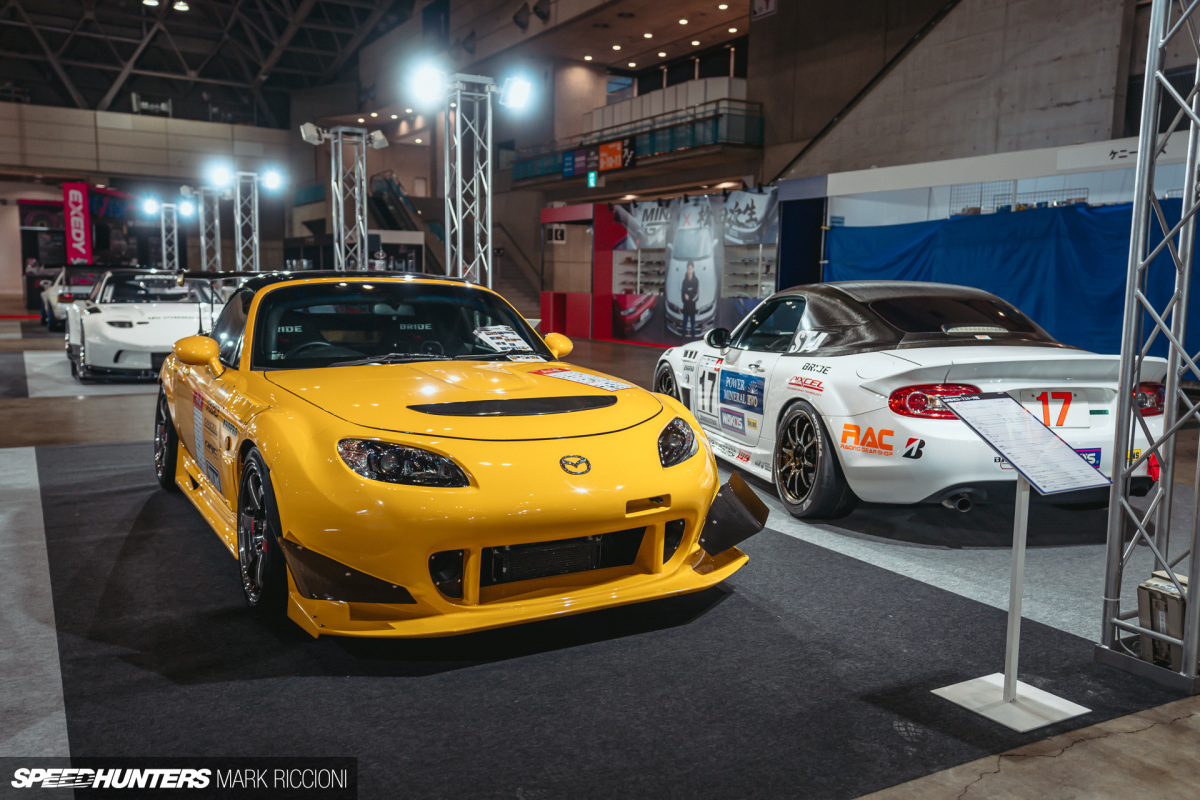
A wise Speedhunter once told me, “He who starts at the last Tokyo Auto Salon hall shall finish first.”
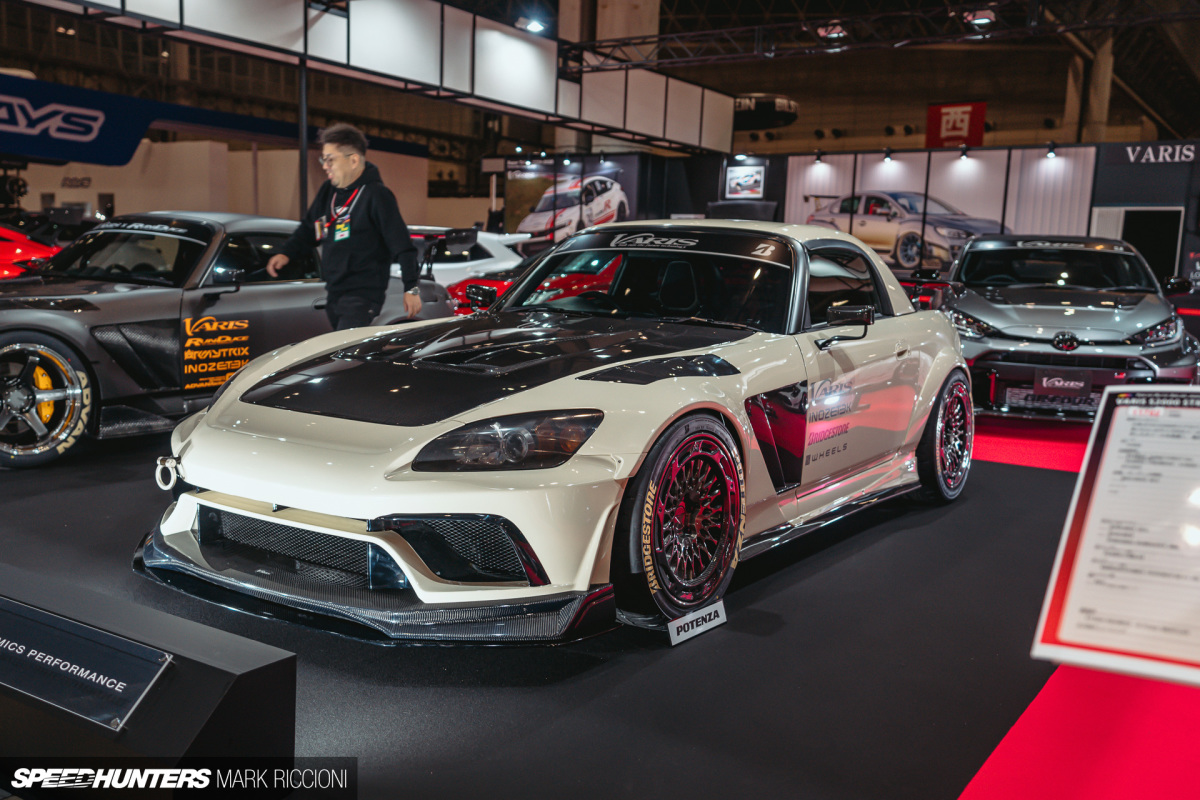
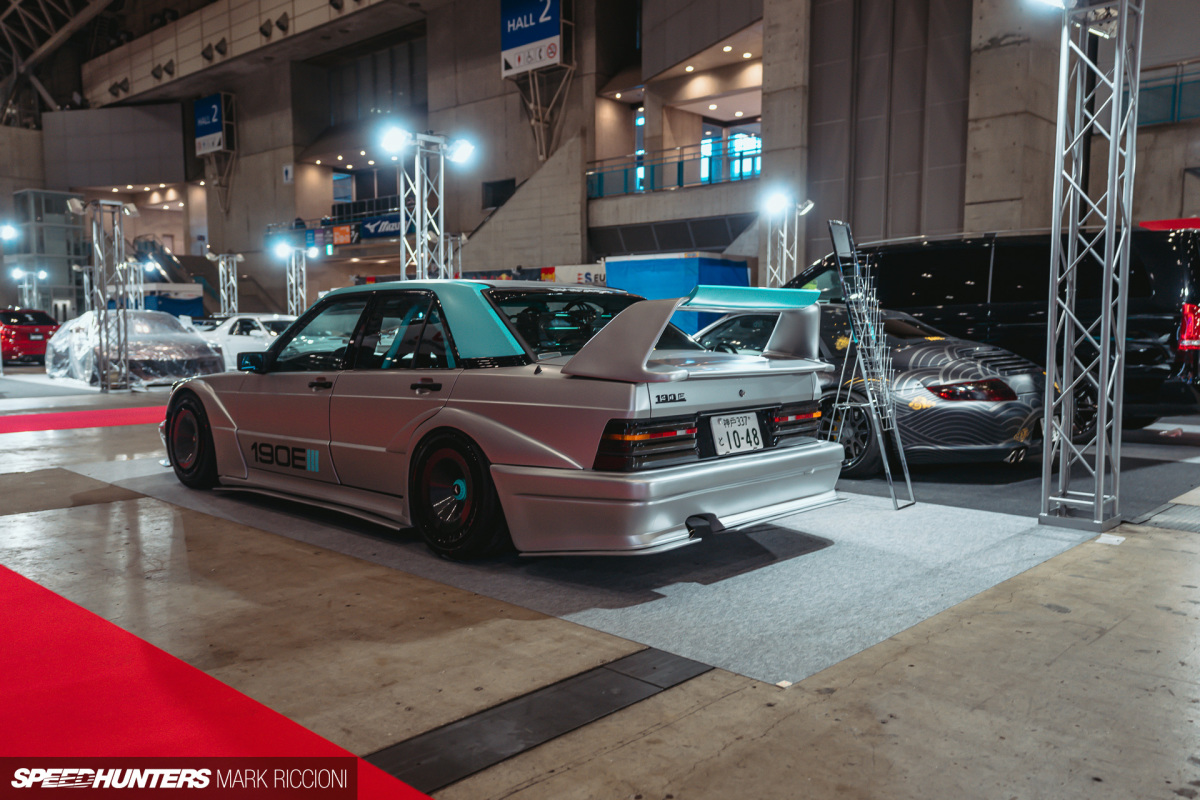
Of course, credit for that goes to our resident Dino-san. While he may not have used those exact words, he did explain that most Japanese guests at TAS tend to visit the halls in numerical order. So, if you’re prepared to hit Hall 11 first, you might just find it empty.
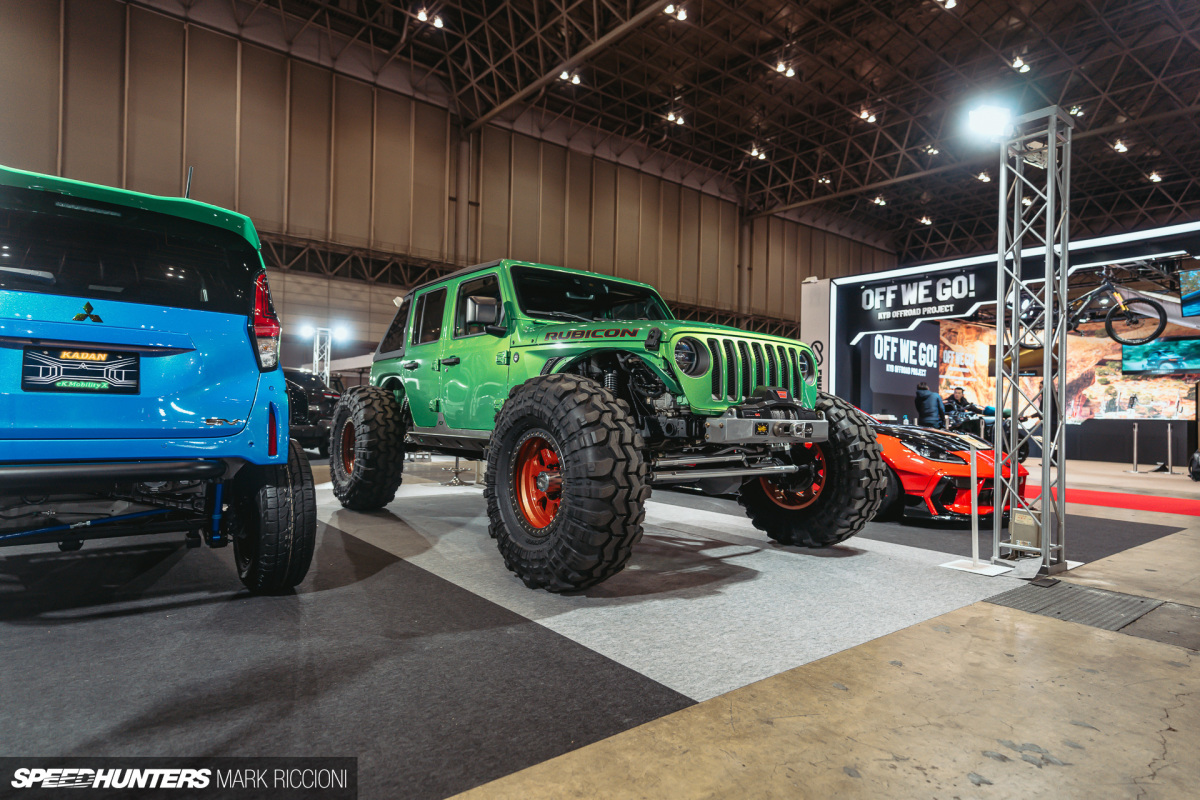
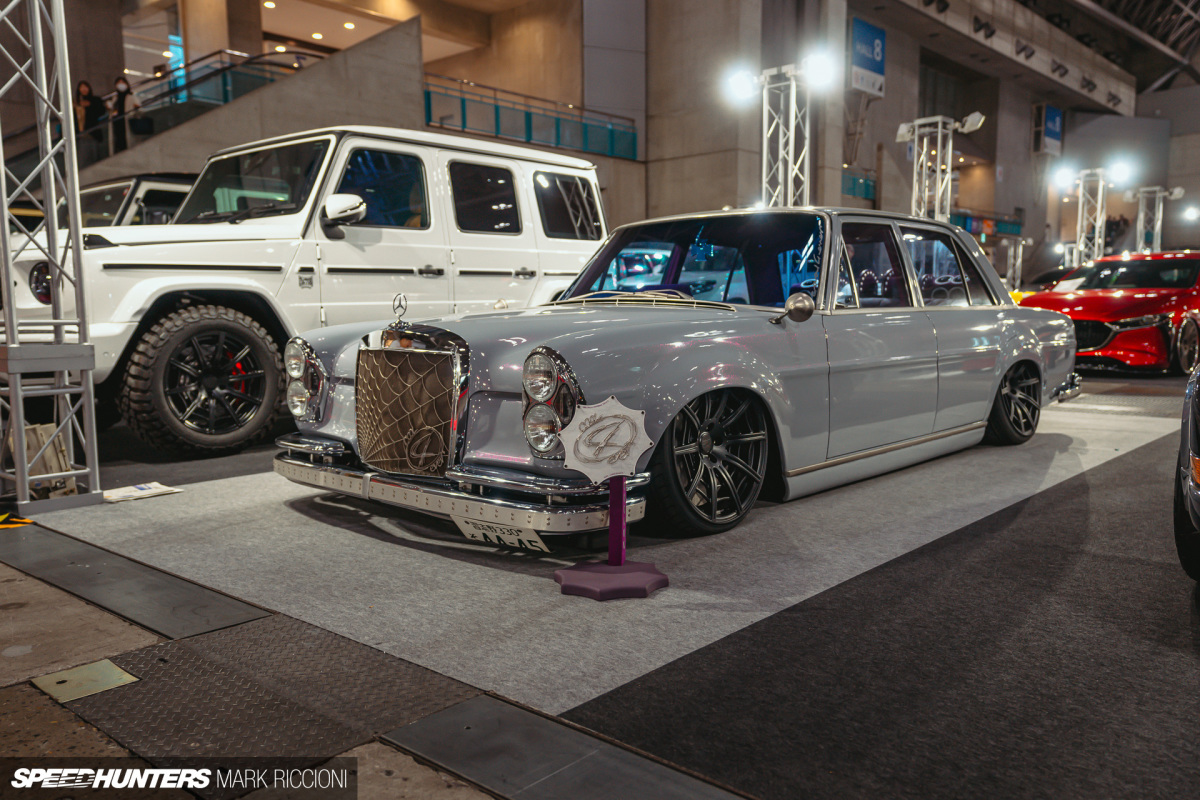
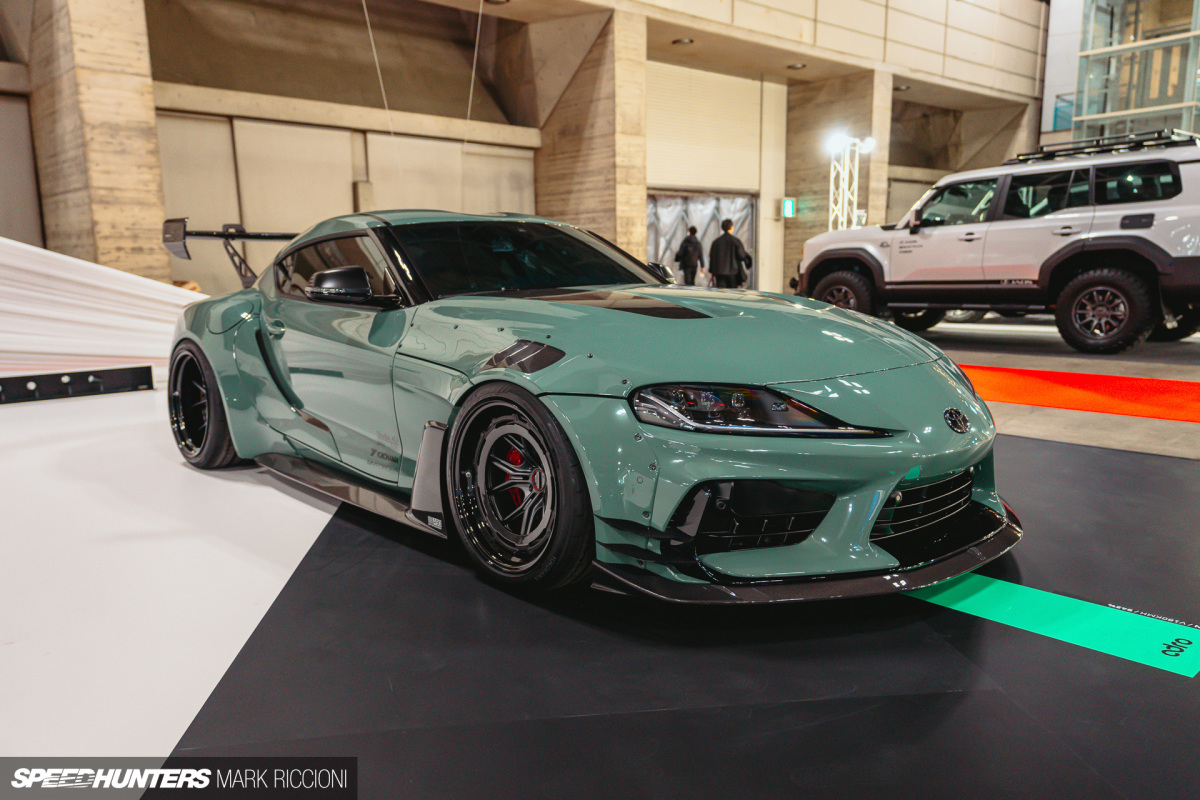
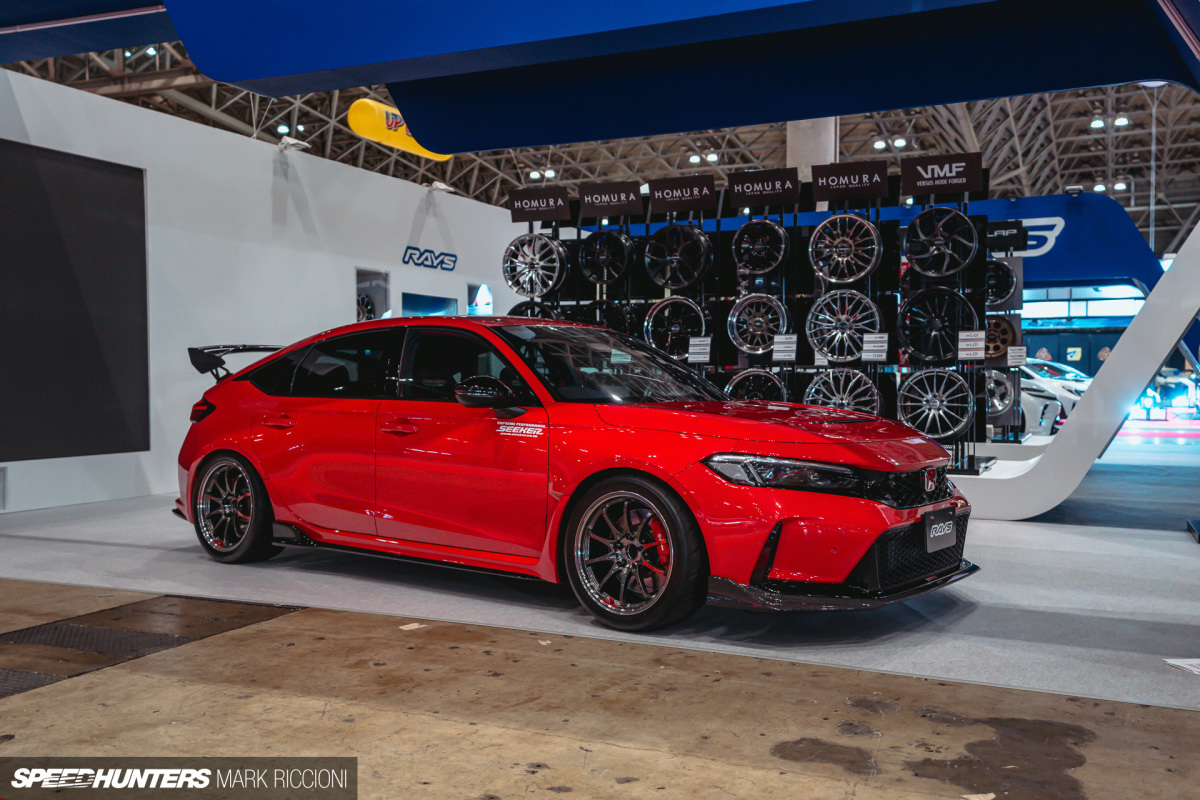
I say this because – as you’ll see from the photos – half of them feature not a single soul in sight, while the other half struggle to show a whole car without limbs and bags getting in the way. The moral of the story? If Dino gives you a hint, take it.
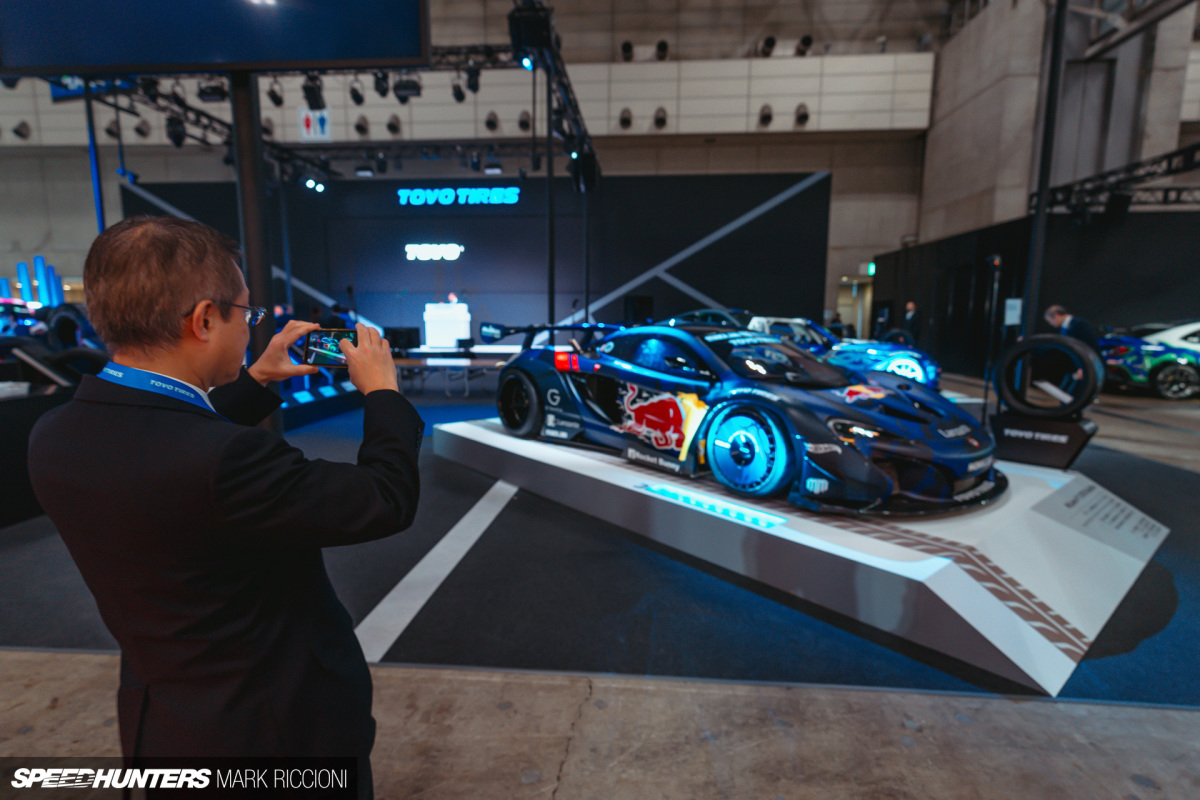
Since 1983, Japan has blessed the tuning world with the Tokyo Auto Salon. This three-day event takes over the Makuhari Messe convention centre and every year manages to fit more cars, exhibitors, and visitors than ever before.
Last year’s show filled 11 halls with nearly 900 cars and 4,300 booths, which sounds impressive until you realize over 230,000 people attended. What’s even more bonkers, is that Day 1 (Friday) is limited to media in the morning and premium ticket holders from 2:00pm. When we say TAS gets busy, we mean really busy.
What’s the vibe in 2025? For the most part, business as usual – and that’s not a bad thing. There are no groundbreaking changes or new additions this year, but you’re once again guaranteed an eclectic mix of cars from your favourite JDM tuners and more.
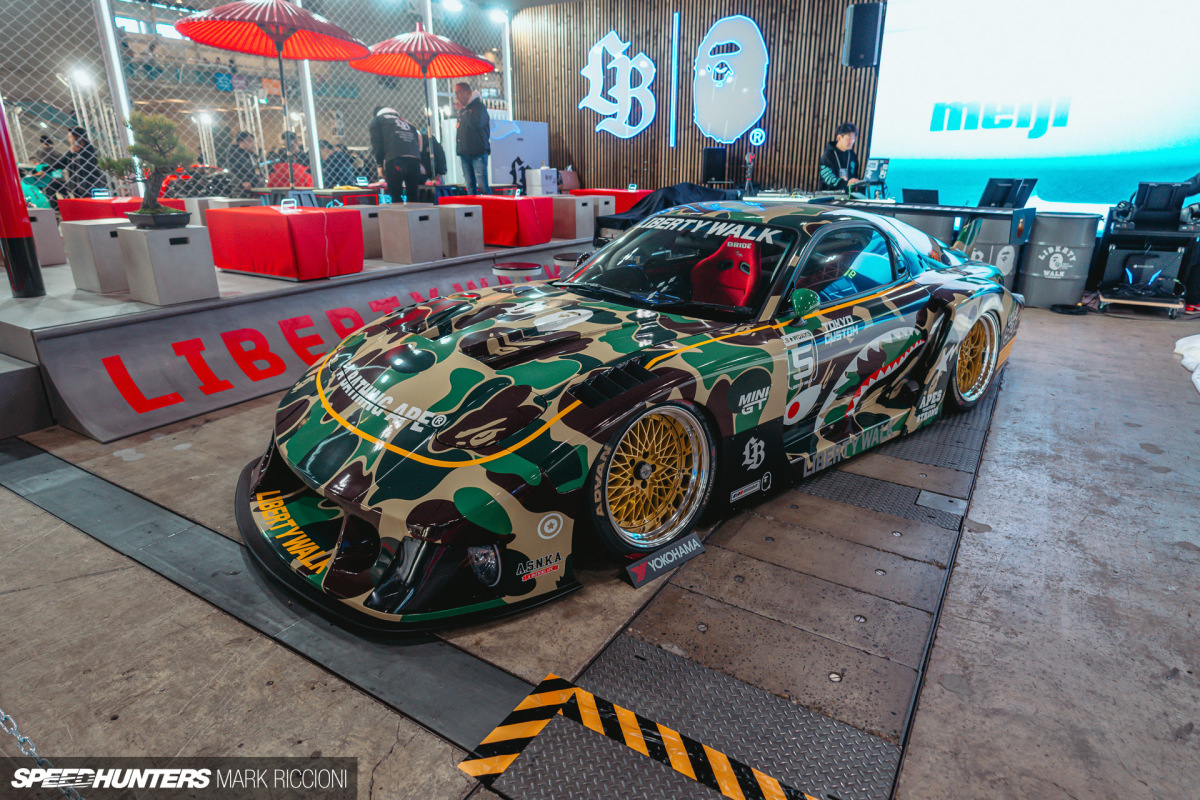
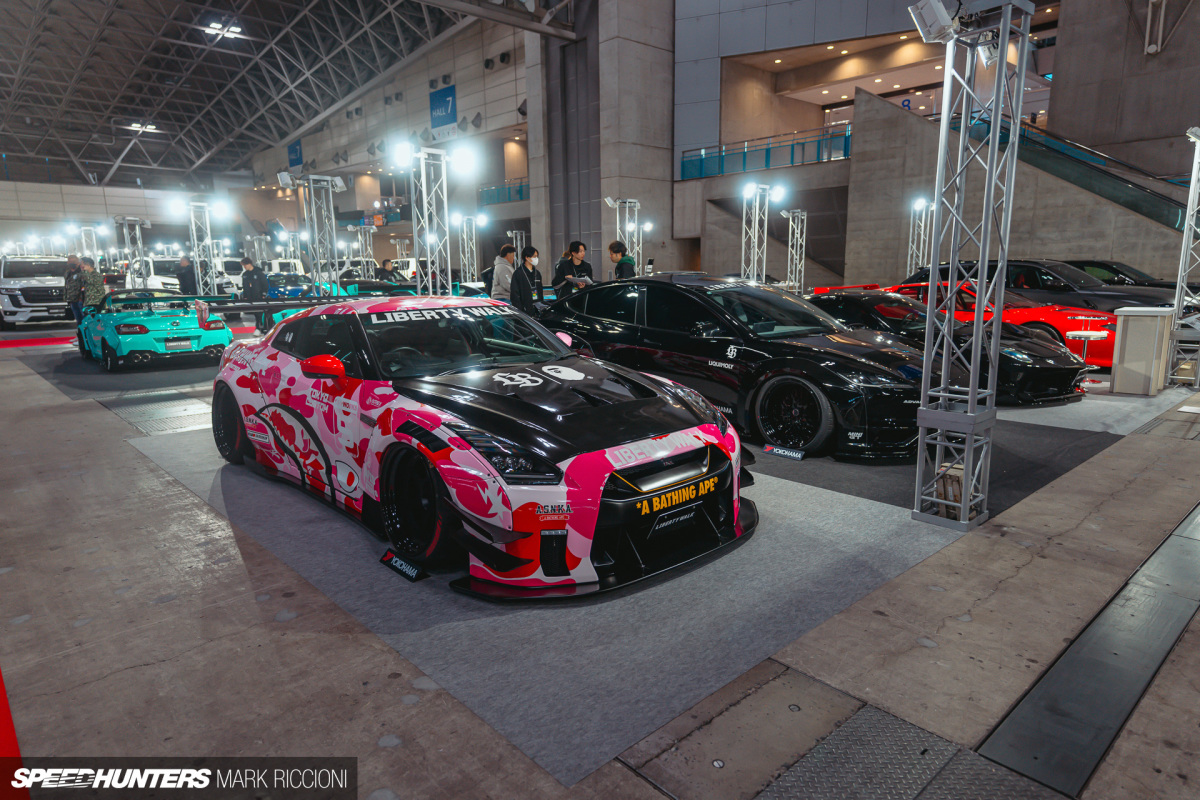
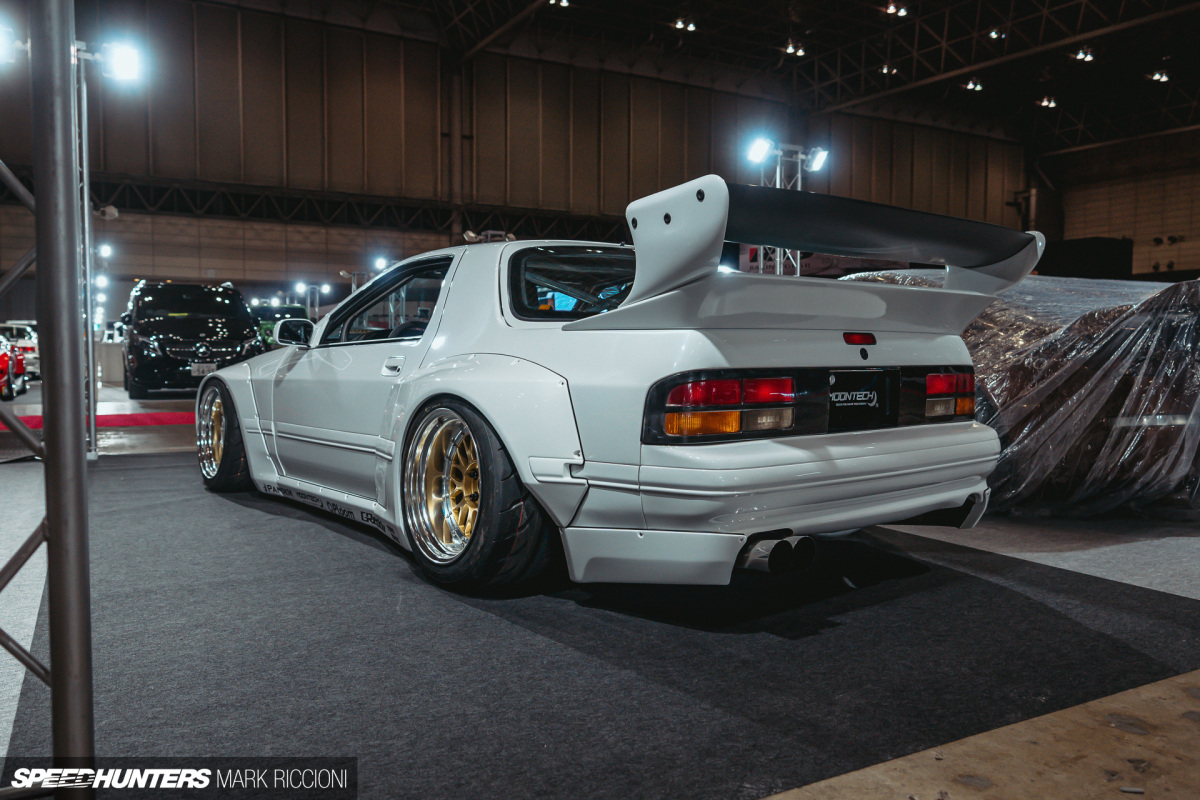
You can’t mention Tokyo Auto Salon without Liberty Walk. Love them or loathe them, this ‘widebody era’ is still massively popular and the effort Kato-san and his team put into their TAS display is unmatched by any other brand.
Plus, these kits are far more than just overfenders now. The latest, an R32 Skyline inspired by the Kaido Racer era Kato-san grew up with, is a perfect example. It’s unmistakably Liberty Walk, yet who else would think that extending the R32’s bonnet to completely obscure its headlights would work?
It’s not for everyone, but I love that it exists in a world where most people are obsessed with restoring every GT-R to stock.
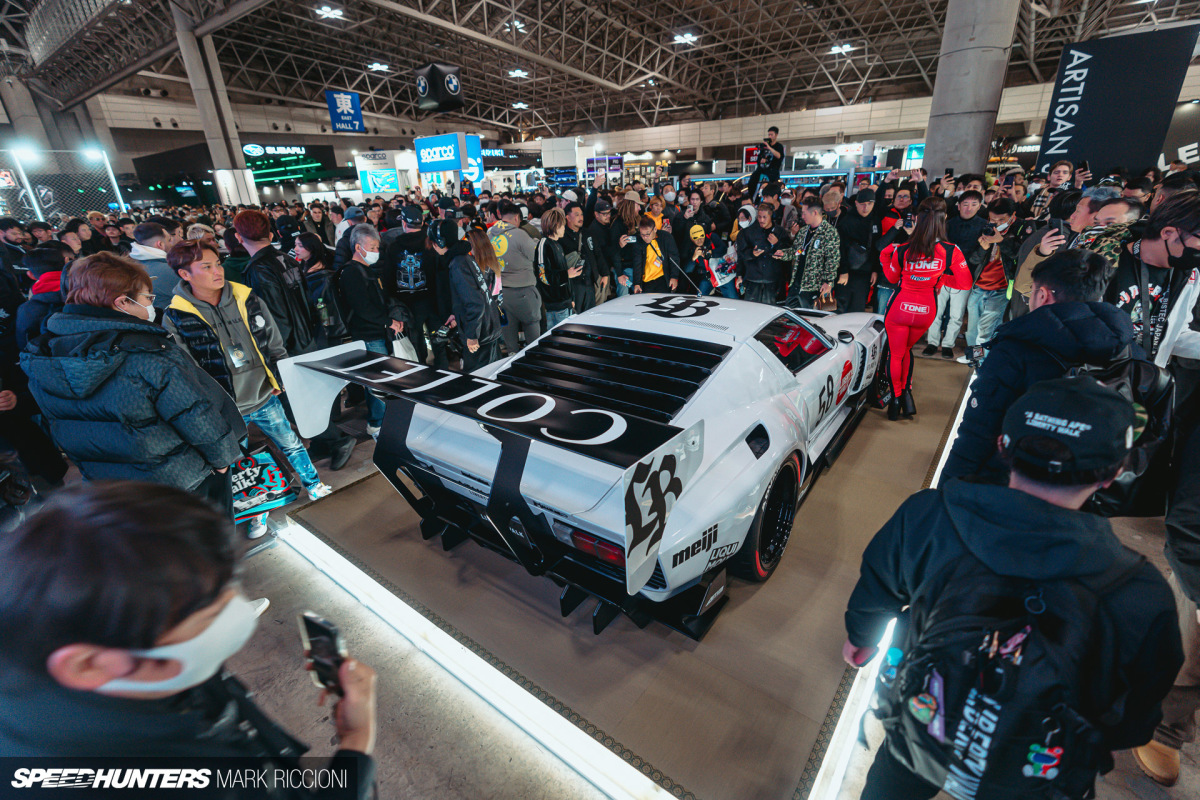
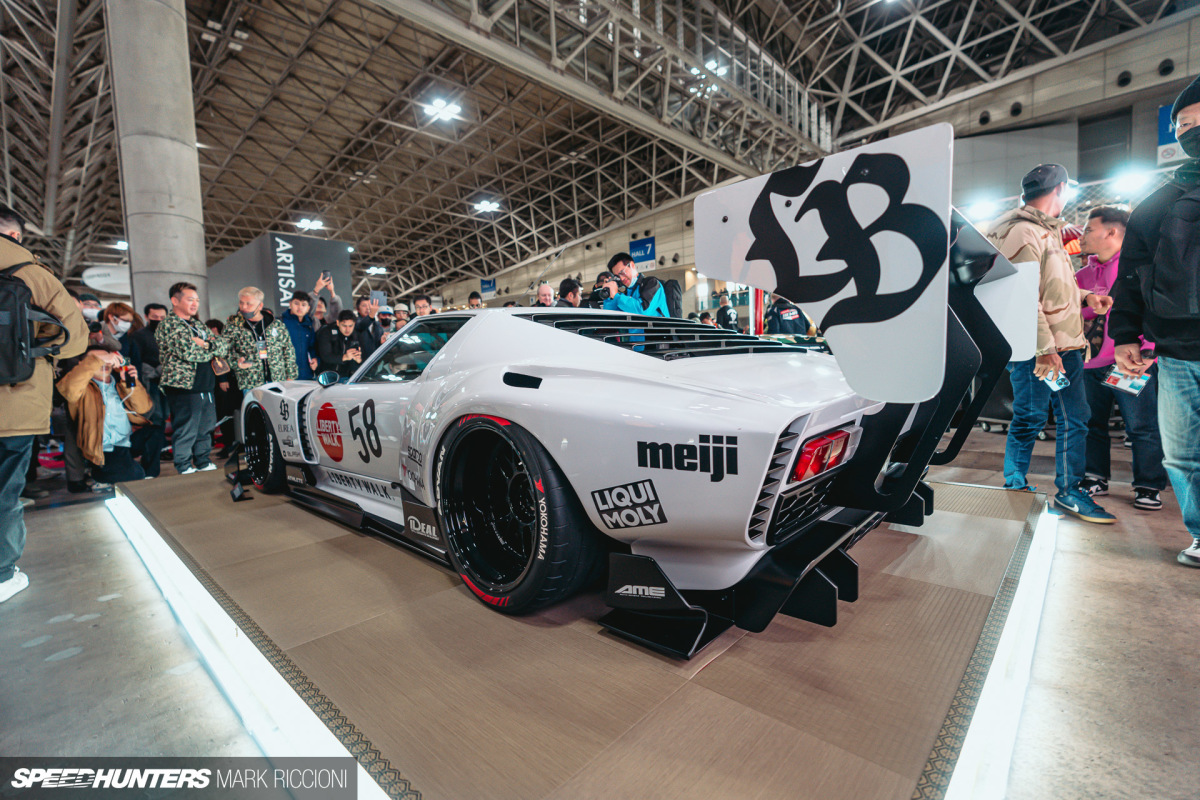
And then there’s the Liberty Walk centrepiece of TAS 2025: the LB-Silhouette Works GT Lamborghini Miura. Unlike the Miura that Kato-san debuted in 2018, this one isn’t a replica; it’s a real, V12-powered, multi-million-dollar Lamborghini. Or at least it was before it became the latest performance art piece from Liberty Walk.
Do you feel outraged, though? I don’t, and I’m not sure if that’s because we’ve come to expect these high-profile, sometimes controversial builds from Liberty Walk, or if there’s something else at play…
That something else is digital artist Jonsibal, who played a key role in designing the LB-Silhouette Works GT body kit. Compared to earlier Liberty Walk kits, this one flows much better with the Miura’s stock lines rather than fighting them. Yes, it has deep-dish wheels, canards galore, and a gigantic rear wing. But it’s also littered with details that bring to mind Group 5 race cars like the Zakspeed Capri.
It doesn’t quite have the ‘you did what?!’ factor like Kato-san’s F40 or Countach builds, but it does elicit a ‘that’s actually pretty cool’ response. My only gripe? Aside from Liberty Walk taking nearly an hour to unveil the car, I’d love to see a ‘street’ edition without the huge wing and thousands of (sometimes obscure) sponsor stickers. But if you happen to own a Lamborghini Miura and fancy hacking it up and fitting air suspension, Kato-san and the team will be more than happy to paint it any colour you wish.
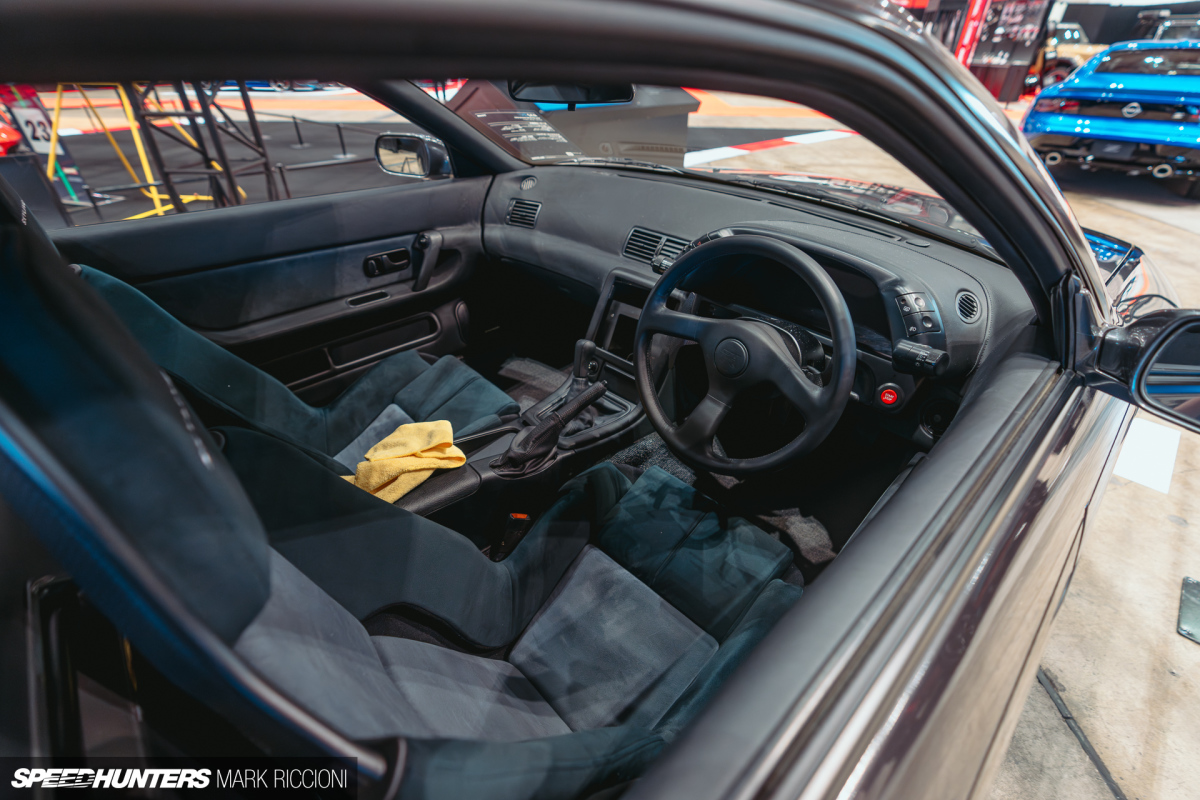
If the LB-Silhouette Works GT Miura has you riled up, brace yourself for the next car too. Controversial builds don’t usually come from manufacturers, but Nissan’s new R32 Skyline GT-R with an electric powertrain is certainly one to stir the pot.
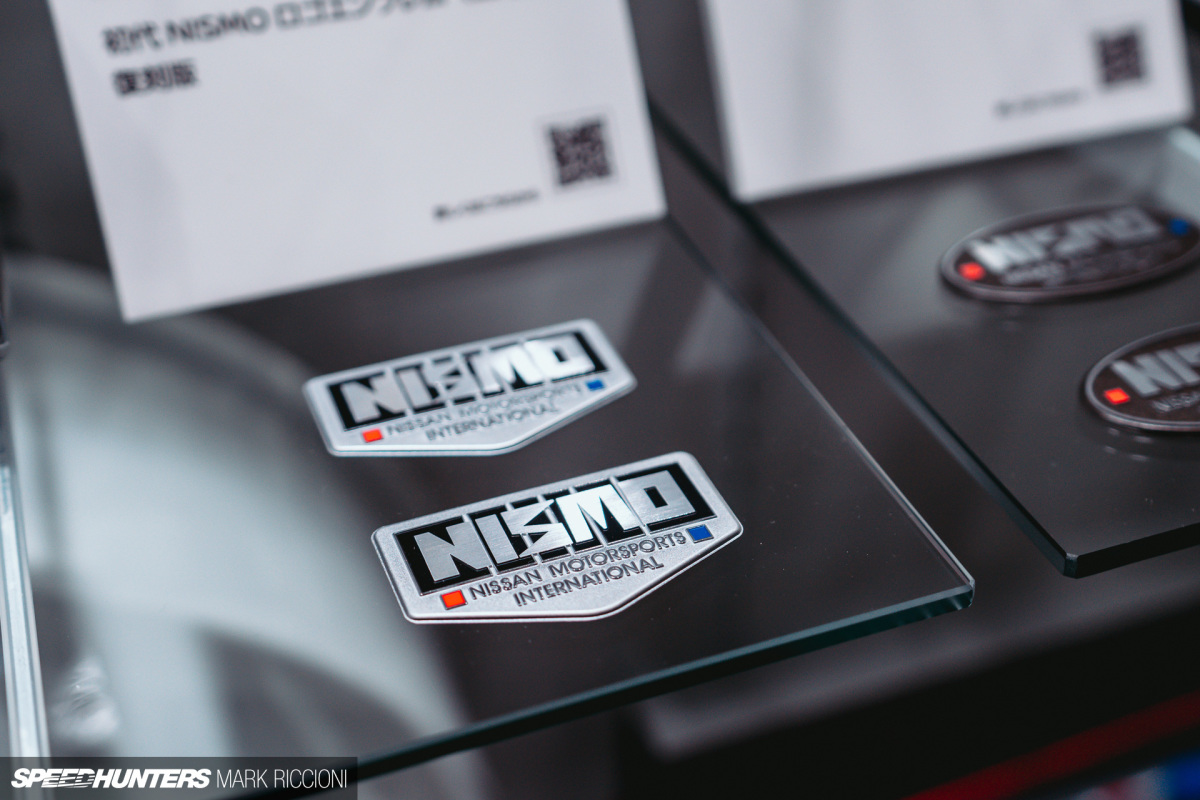
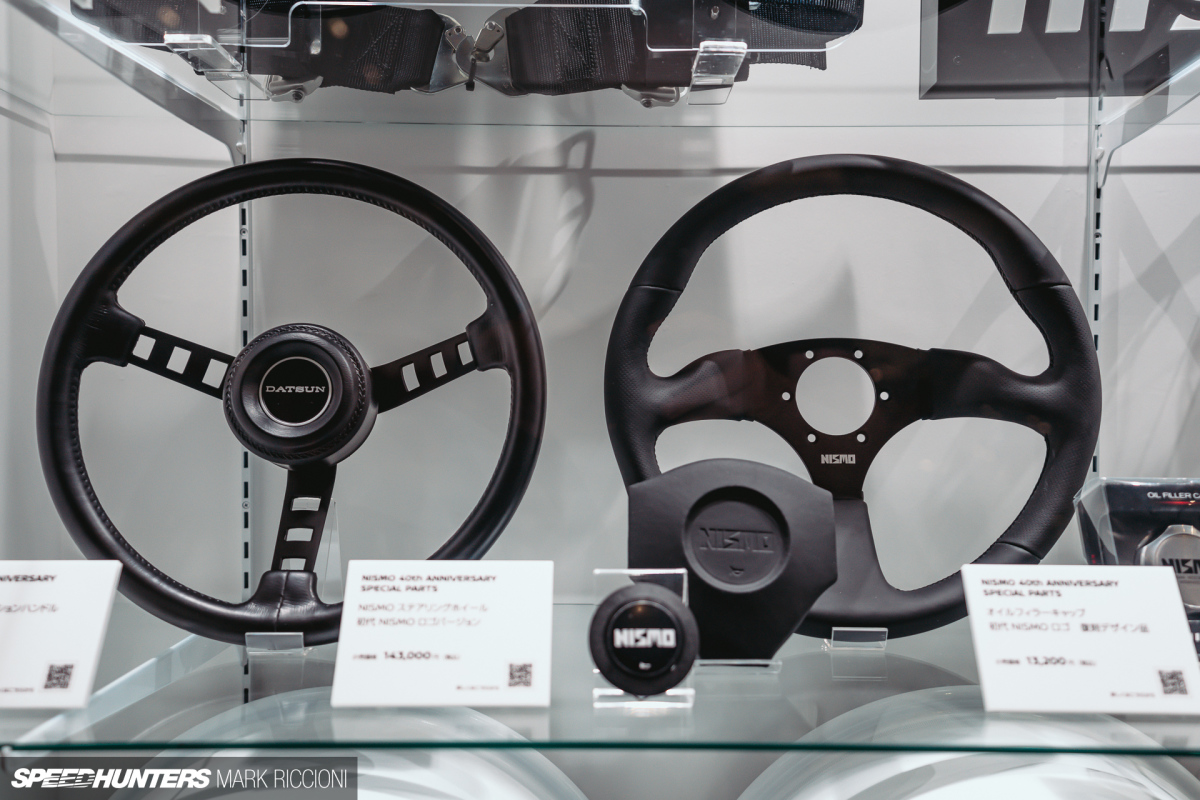
Don’t get me wrong, I get why they did it. But it feels a little late to the party, especially when Toyota already electrified an AE86 back in 2023, along with a hydrogen-powered option for good measure. There are plenty of EV-converted classics out there, but when your motorsport arm Nismo is busy reproducing original R32 GT-R engine components and iconic LM-GT wheels, it does send mixed signals.
That said, there’s one part of this R32 that absolutely must make it into production. The ‘stock’ wheels aren’t stock at all; they’ve grown from 16 inches to 18 inches while keeping the original design, which allows an R35 GT-R Brembo brake kit to fit. That alone almost redeems the electric swap.
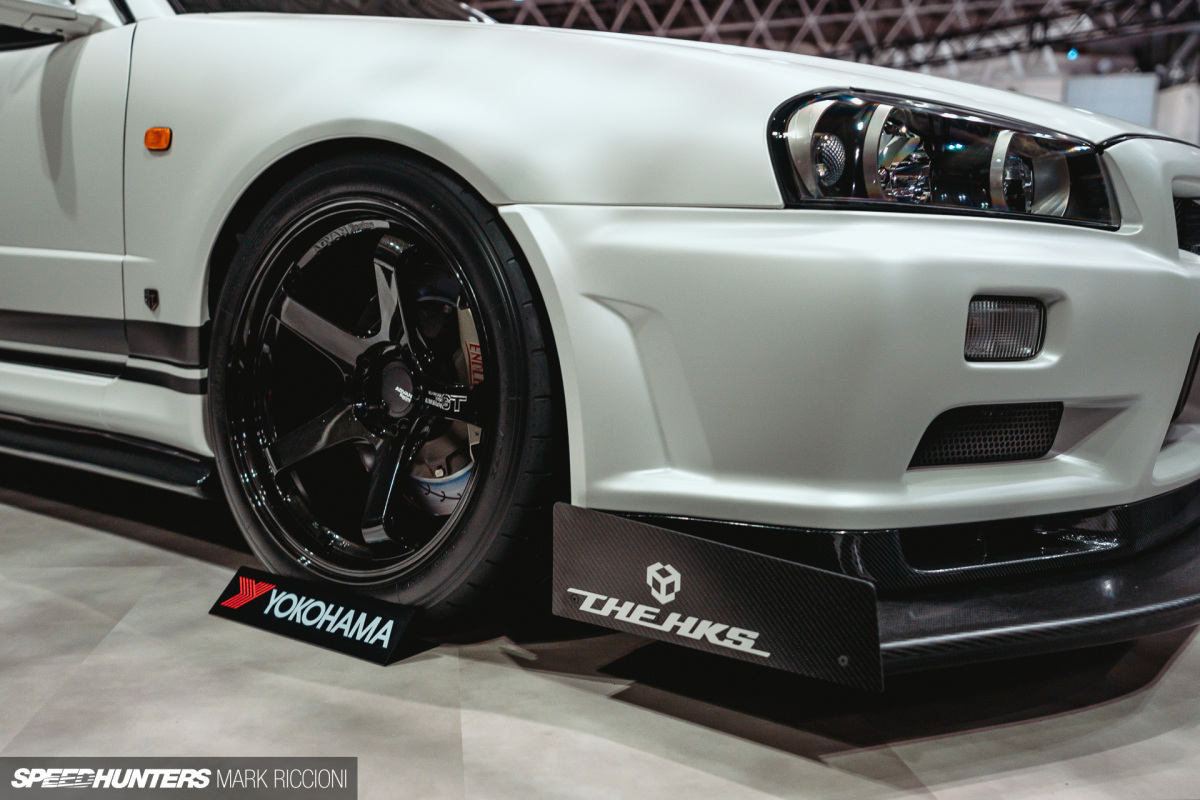
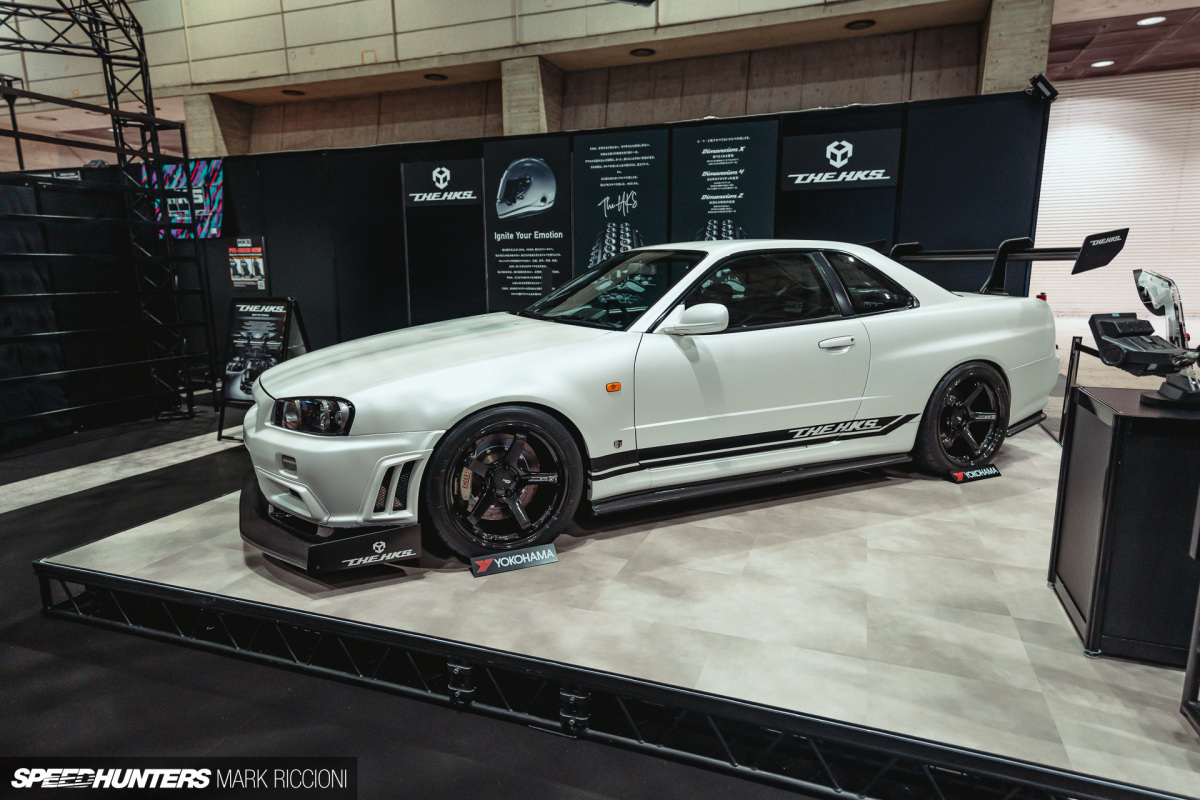
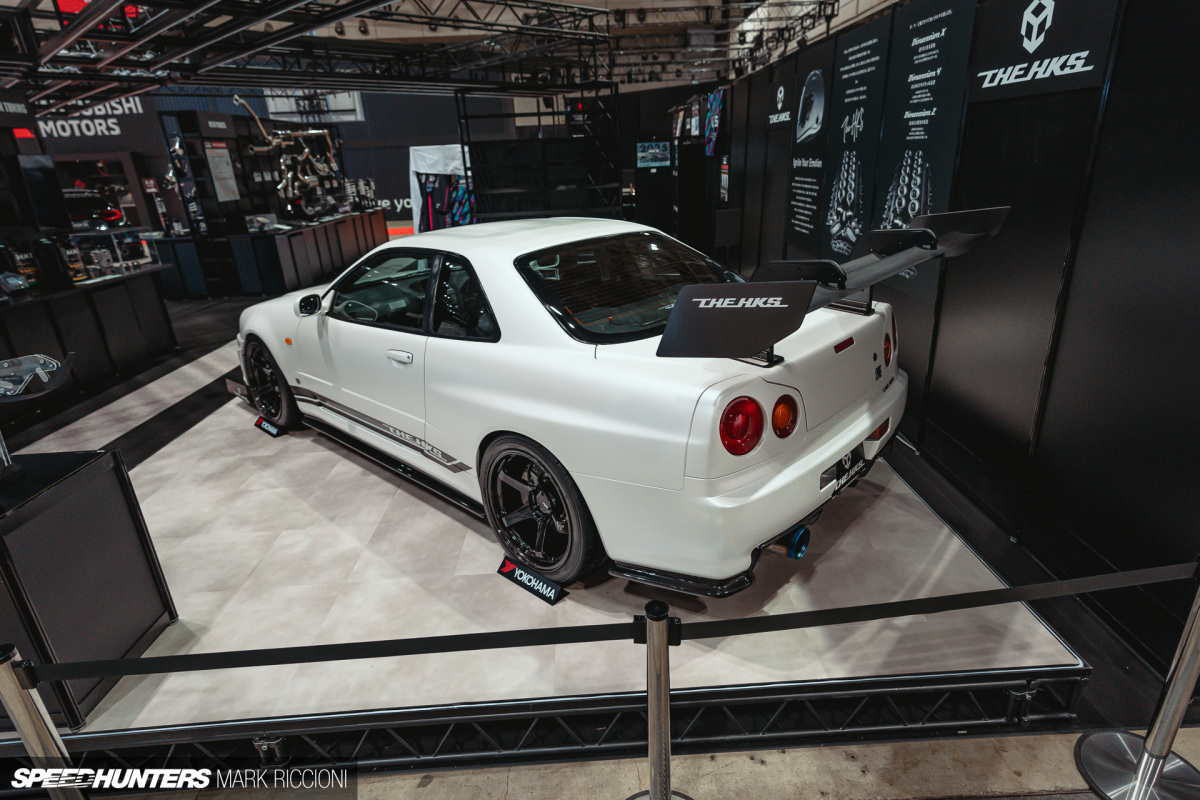
While we’re on the subject of Skyline GT-Rs, feast your eyes on this BNR34 at the HKS stand – a ‘complete’ build you can spec yourself providing you’ve got in excess of half a million dollars. It’s been a while since I’ve seen any new aero for a GT-R that hasn’t looked completely dog dirt (or is just an OEM part made in carbon), but HKS’s latest kit adds a ton of aggression.
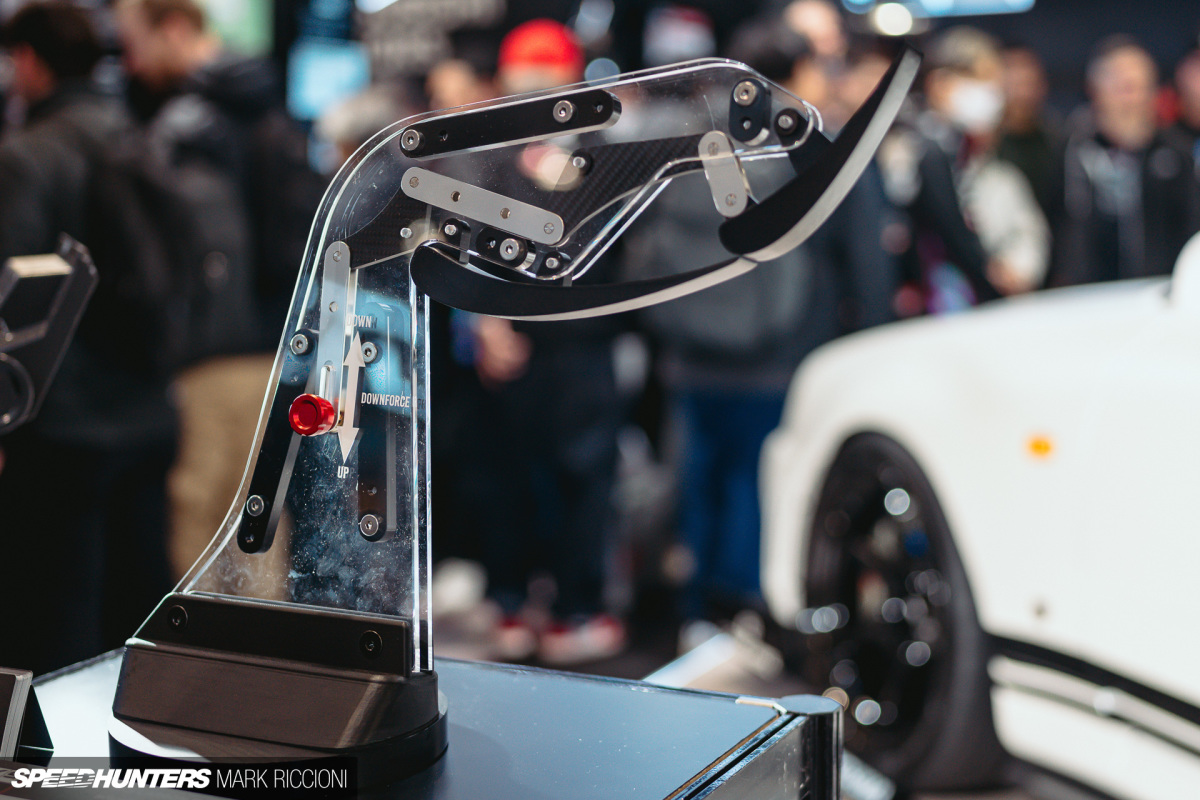
The party piece is a swan-neck spoiler inspired by the 992 Porsche GT3 RS, with working DRS. Will it make a difference? Probably not on the highway, but given how much money GT-R owners pour into their cars, I can’t imagine it being a difficult part to sell.
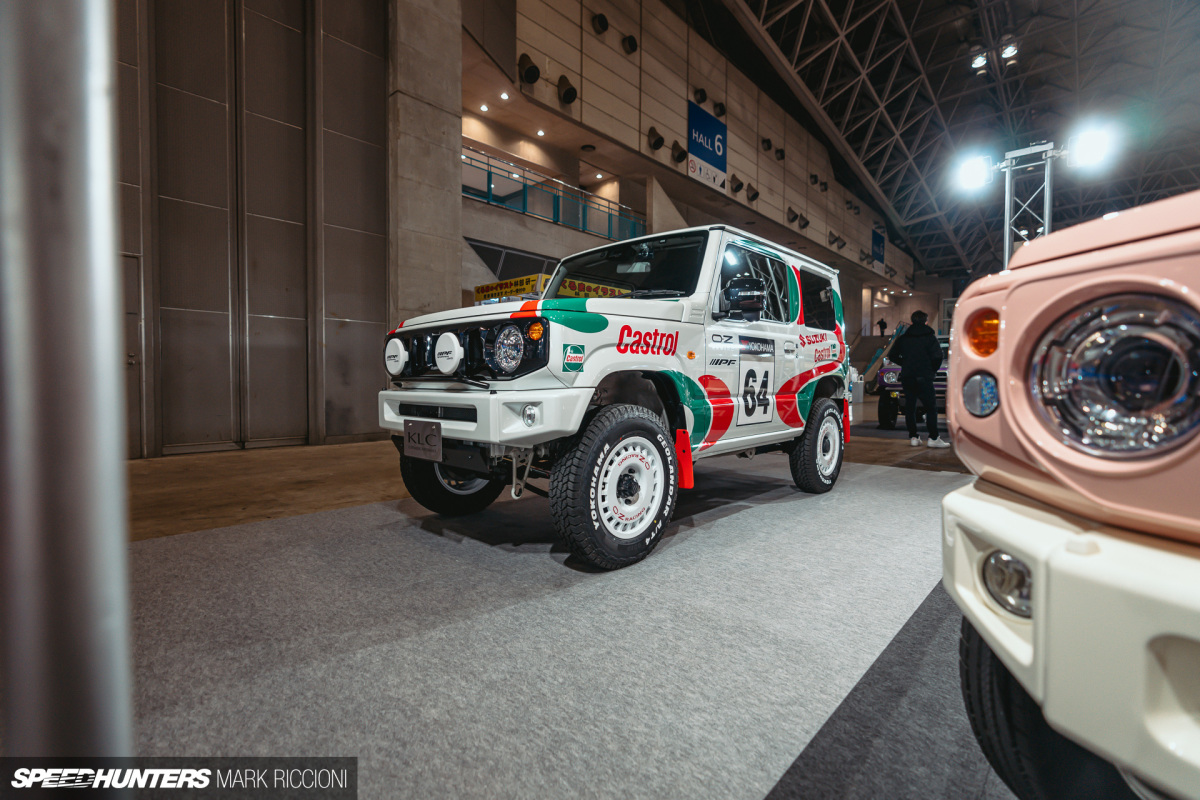
What about any themes at Tokyo Auto Salon 2025? An obvious one this year is Toyota’s new LC250 Land Cruiser.
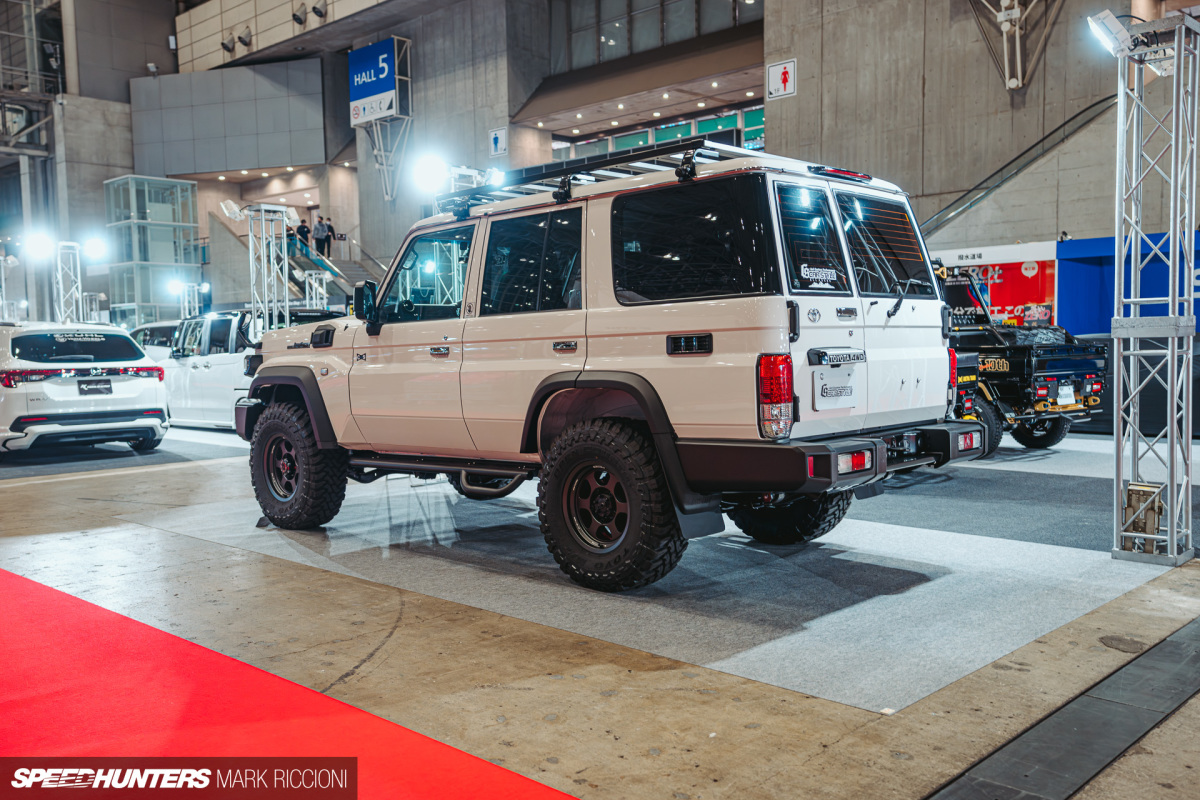
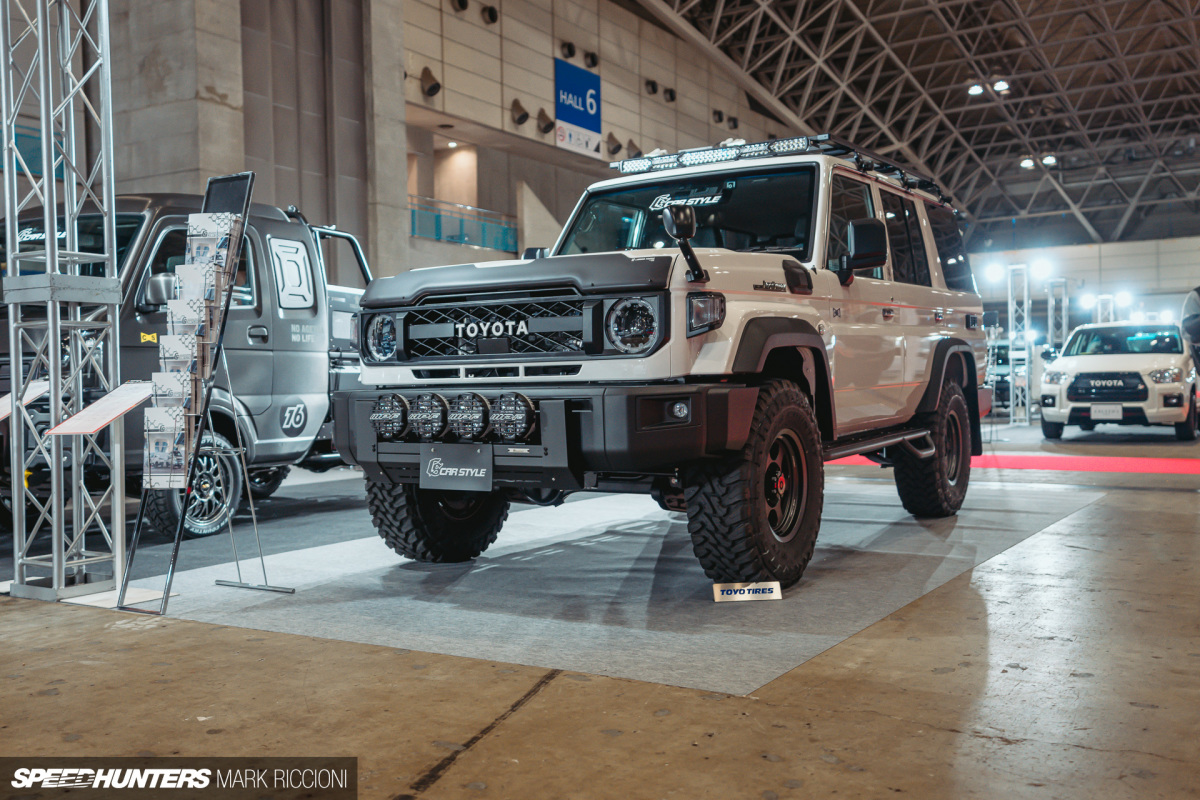
It may not be an obvious choice for Speedhunters, but this new generation – and the return of the mighty 70-Series – has generated massive global interest ever since it was announced. We’ll bring you a dedicated Land Cruiser spotlight post later in the month, but for now, we’ll leave you with easily the coolest 70-Series at TAS.
UN-spec white paint? Check. Recaro-trimmed interior? Check. Dished RAYS Volk Racing TE37XT wheels? Checkmate. I don’t care how old and basic these things are to drive; with the right upgrades, they’re achingly cool.
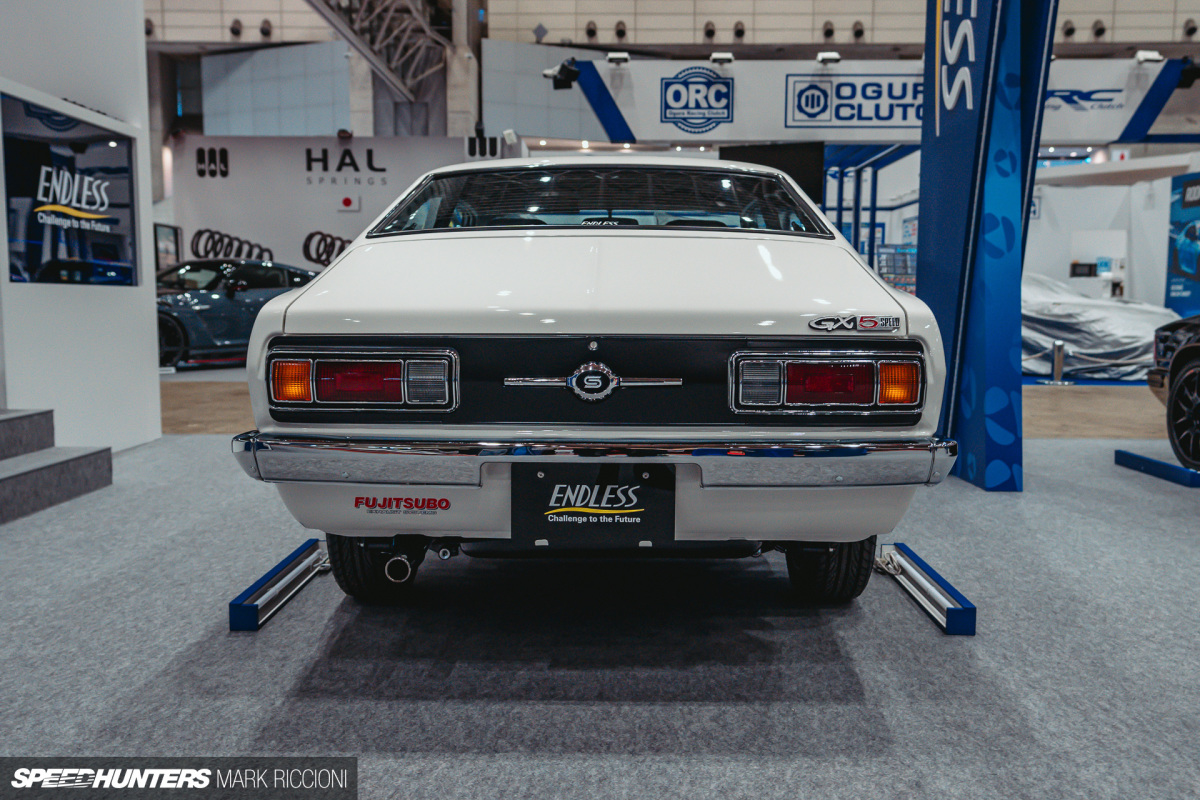
Another trend that’s hard to miss at this year’s Tokyo Auto Salon is the return of certain ‘OG’ Japanese cars. You could argue every TAS sees a decent mix of classics, but this time around, the focus is on restoring and future-proofing icons like early Celicas, Datsuns, and GT-Rs.
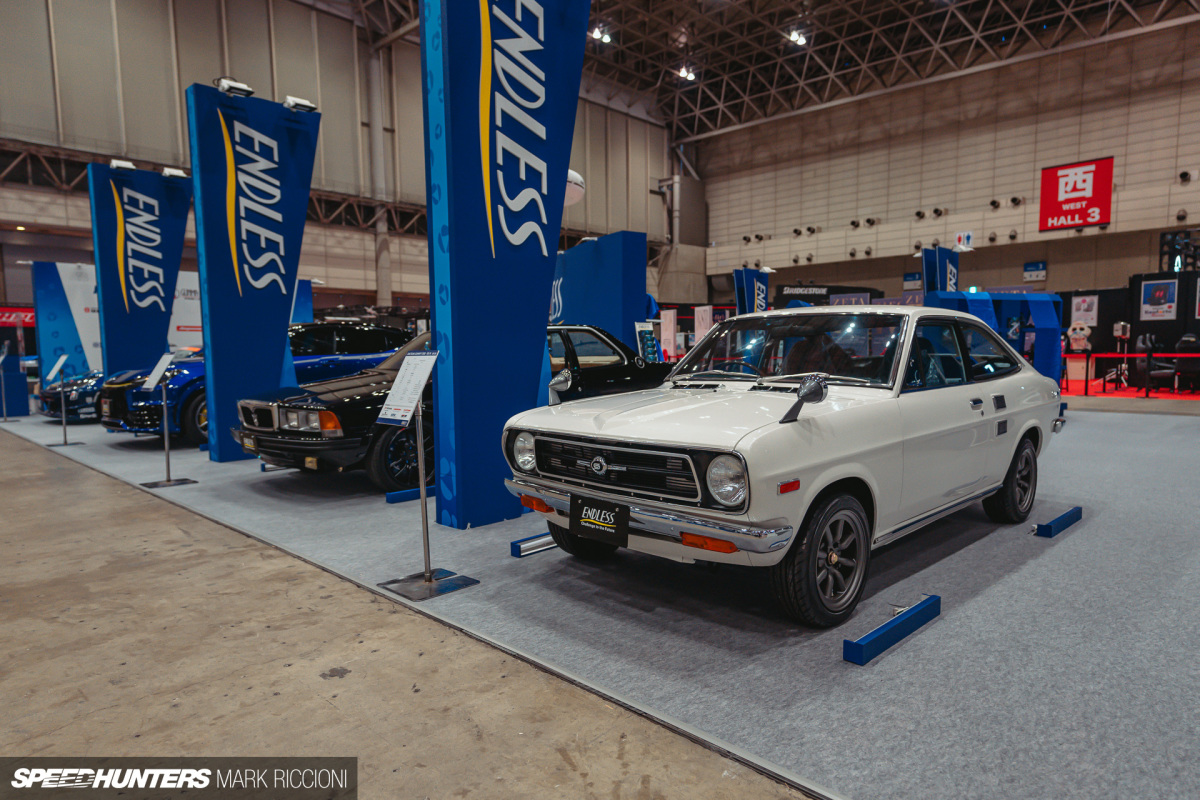
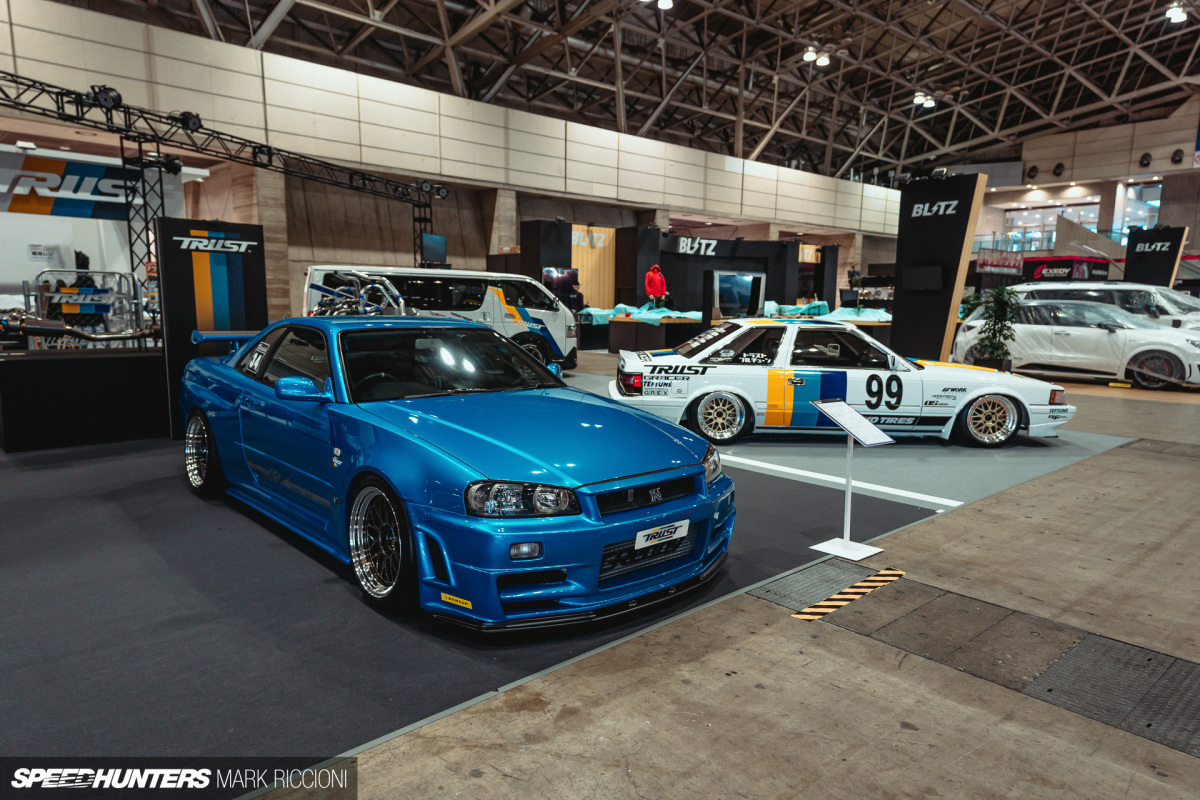
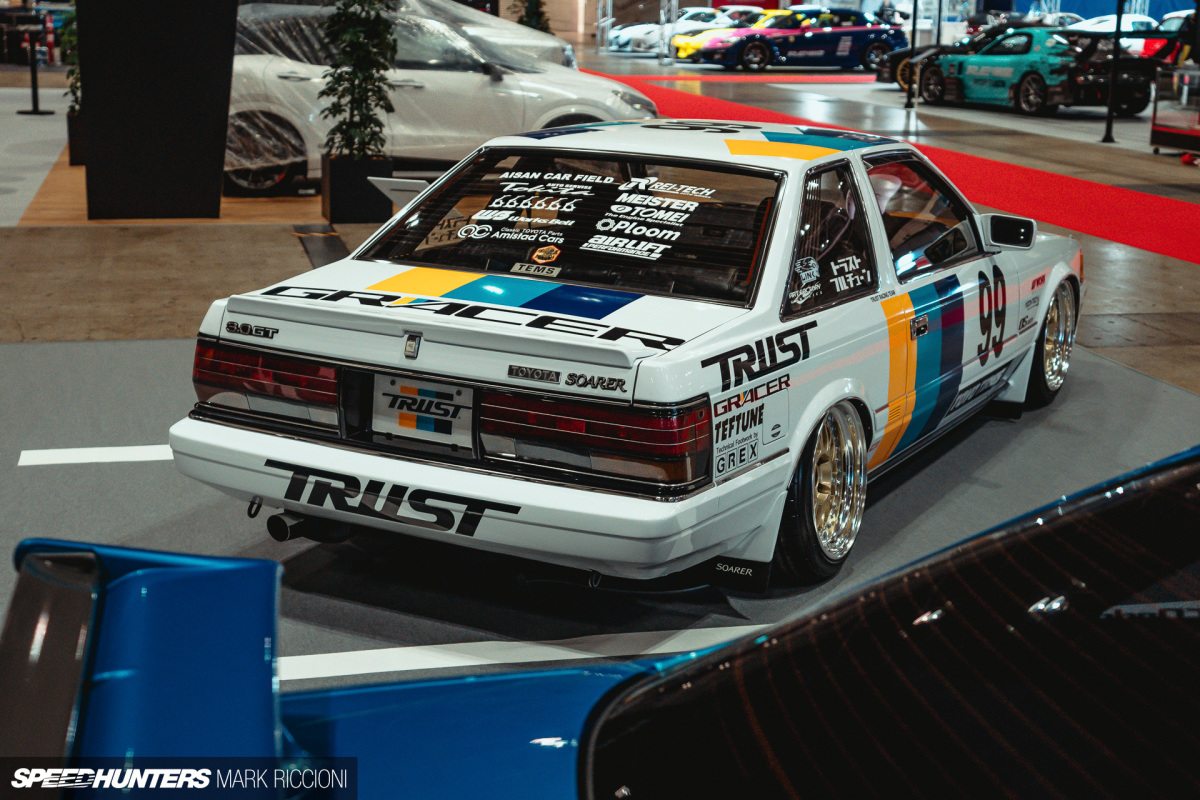
Exhaust maker Fujitsubo has focused heavily on new (old) systems for classics like the Celica and Sunny, while Trust/GReddy has a GZ10 Soarer proudly sporting a traditional livery. Even Endless has a Maserati 228 on display, which might just be the curveball of the show.
TOM’S – Toyota’s long-time racing partner – is now selling parts directly to customers for the first time. The AE86 shell you see? That’s now available to buy directly from TOM’S as a newly refurbished item, and if you’re wondering what engine to pair with it, TOM’S will sell you a brand-new 3S-GE, 4A-G, or 2JZ.
This kind of upgrade will be reserved for those with the deepest pockets, but the very fact there’s demand for this level of upgrade shows how deeply revered these Japanese classics have become.
Speaking of money, Hyundai has teamed up with Keiichi Tsuchiya to unveil the Ionic 5 N DK (Drift King) Edition. Hyundai is one of the most exciting brands out there right now, pushing boundaries in both tech and design while making EV powertrains genuinely fun to drive.
The Ionic 5 N is mighty in standard trim, and having previously experimented with drift-only versions the DK Edition will become a production model available in both Japan and South Korea. It’s a partnership that’s far from obvious because rarely do Hyundai ever follow the ‘normal’ trend.
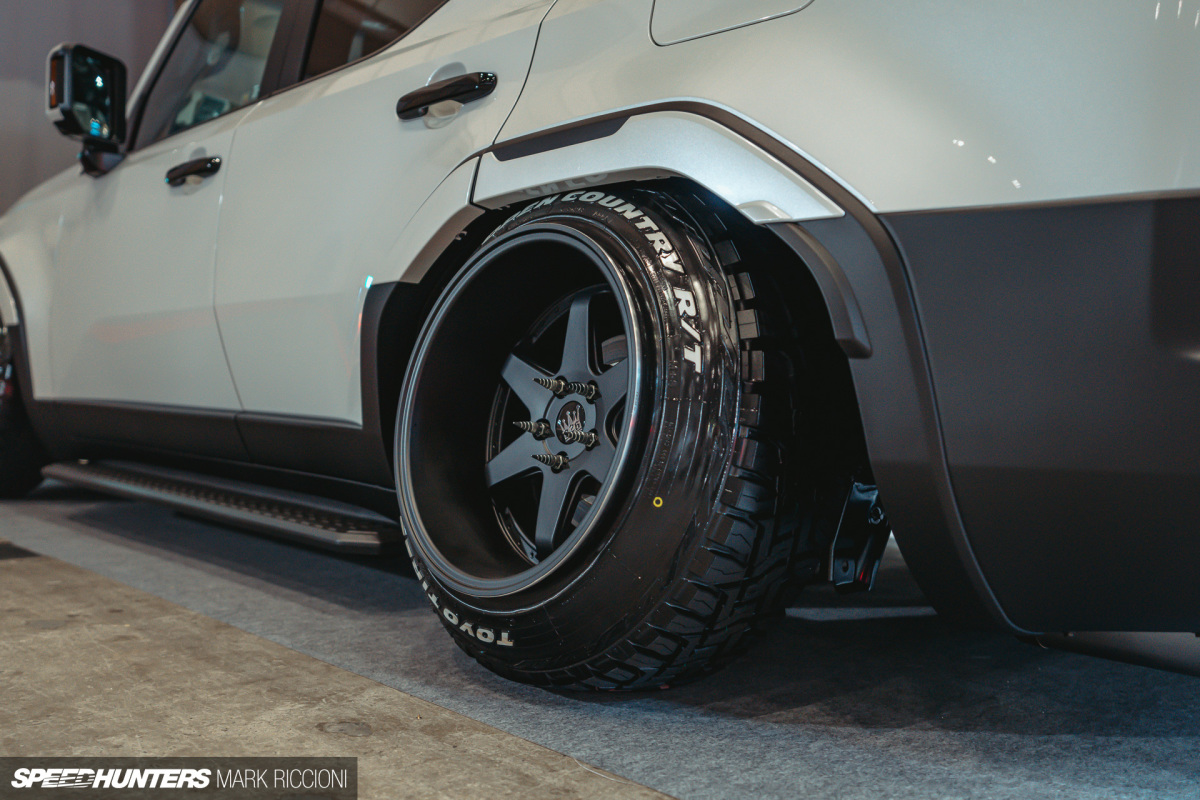
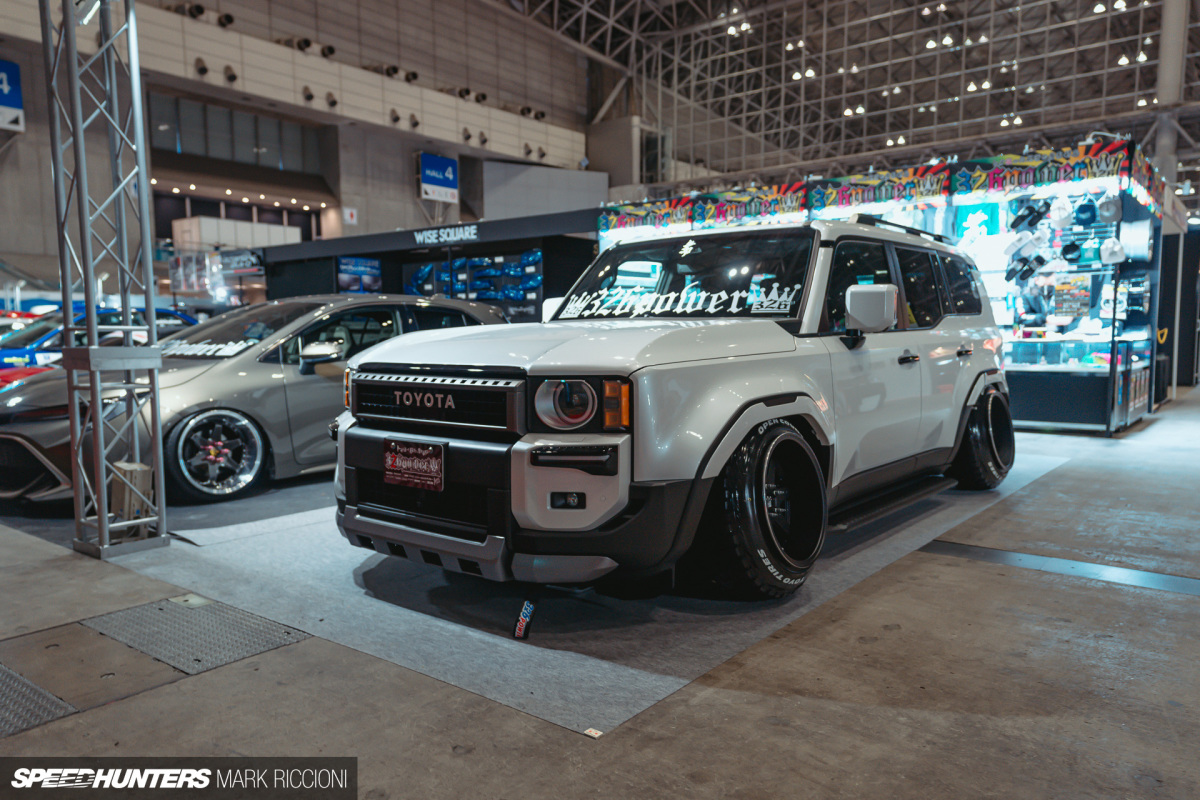
The same could be said for 326 Power. In a show full of lifted Land Cruisers hell-bent on achieving the maximum overland adventure, 326 Power has dropped a new LC 250 onto the ground with the deepest, most cambered wheels possible. It’s a bit odd, but I’m all in for the entertainment.
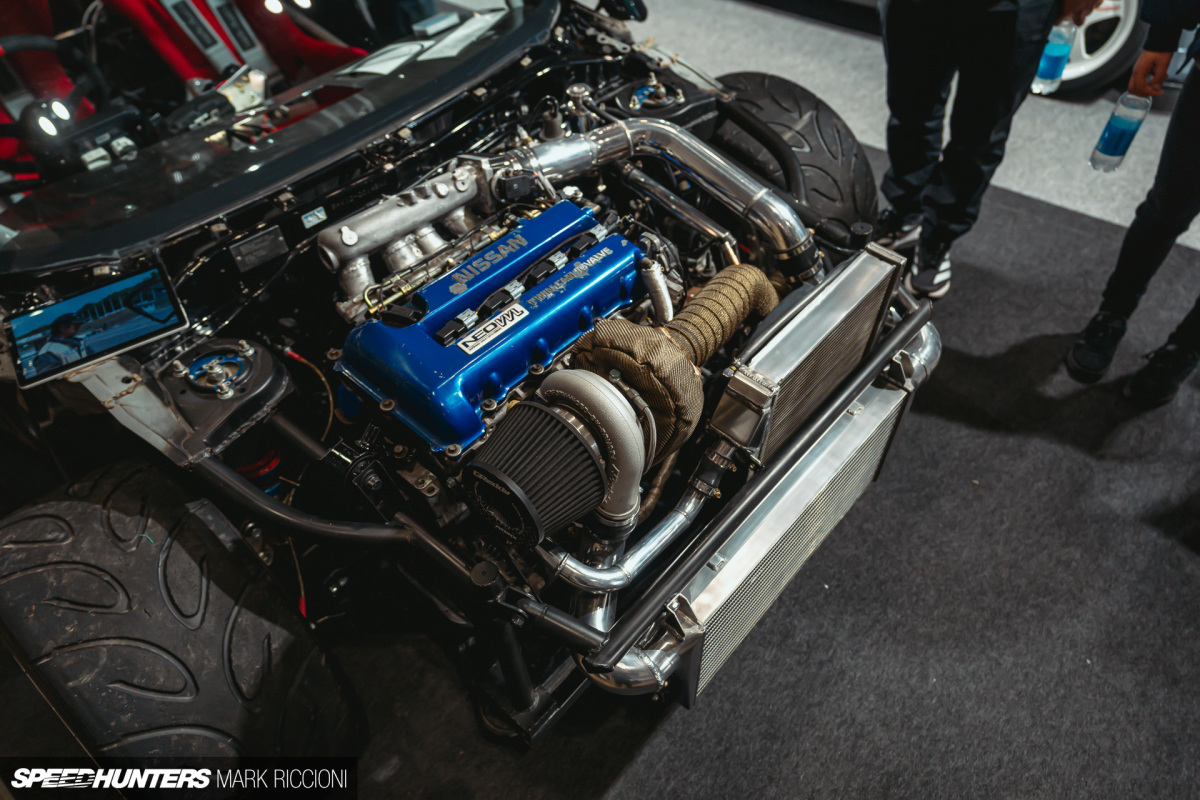
And then there’s this incredible Toyota Sera – a phrase very few people can claim to have used in the past. But this is Tokyo Auto Salon, and this particular Sera packs a 1,050hp punch…
It also has four-wheel drive and two engines – a Nissan ‘SR20VET’ upfront producing 500hp and a turbo K20A out back with 550hp. Dubbed ‘The Twin Dragon,’ it’s from the same builder who previously broke the internet with his quad-turbo S14. Never, ever change.
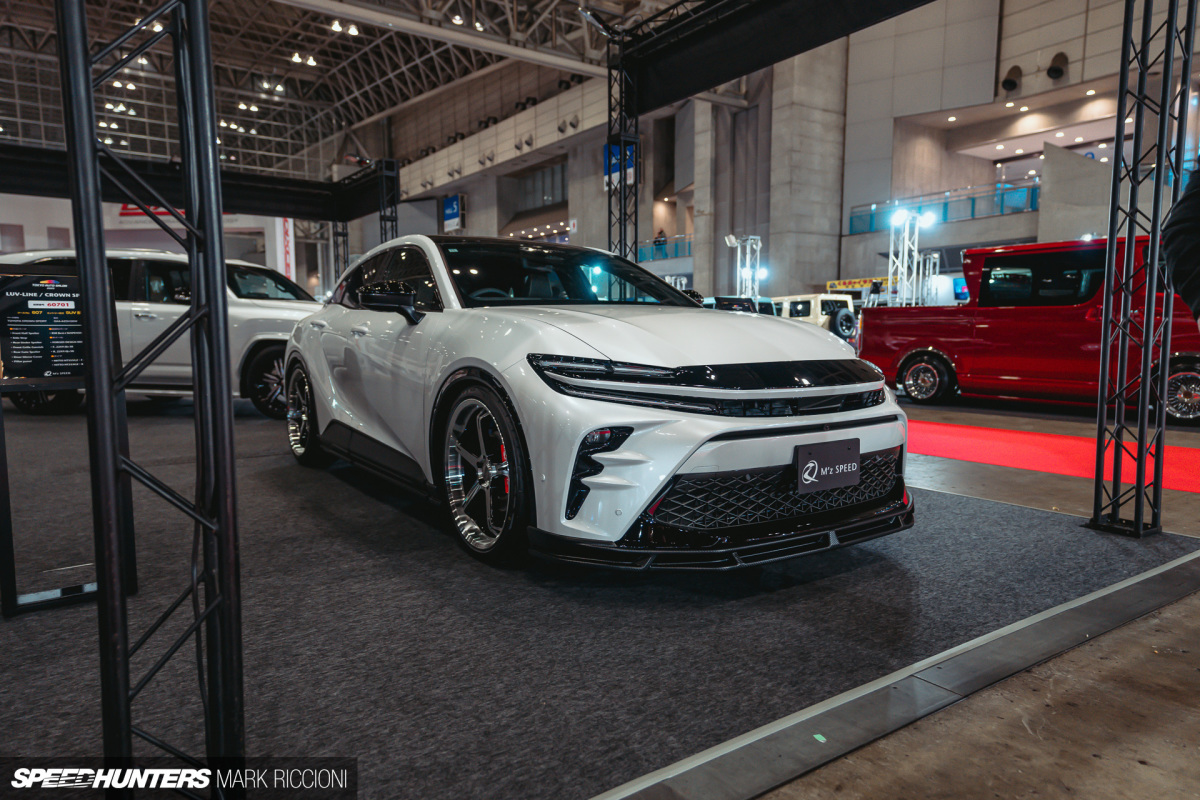
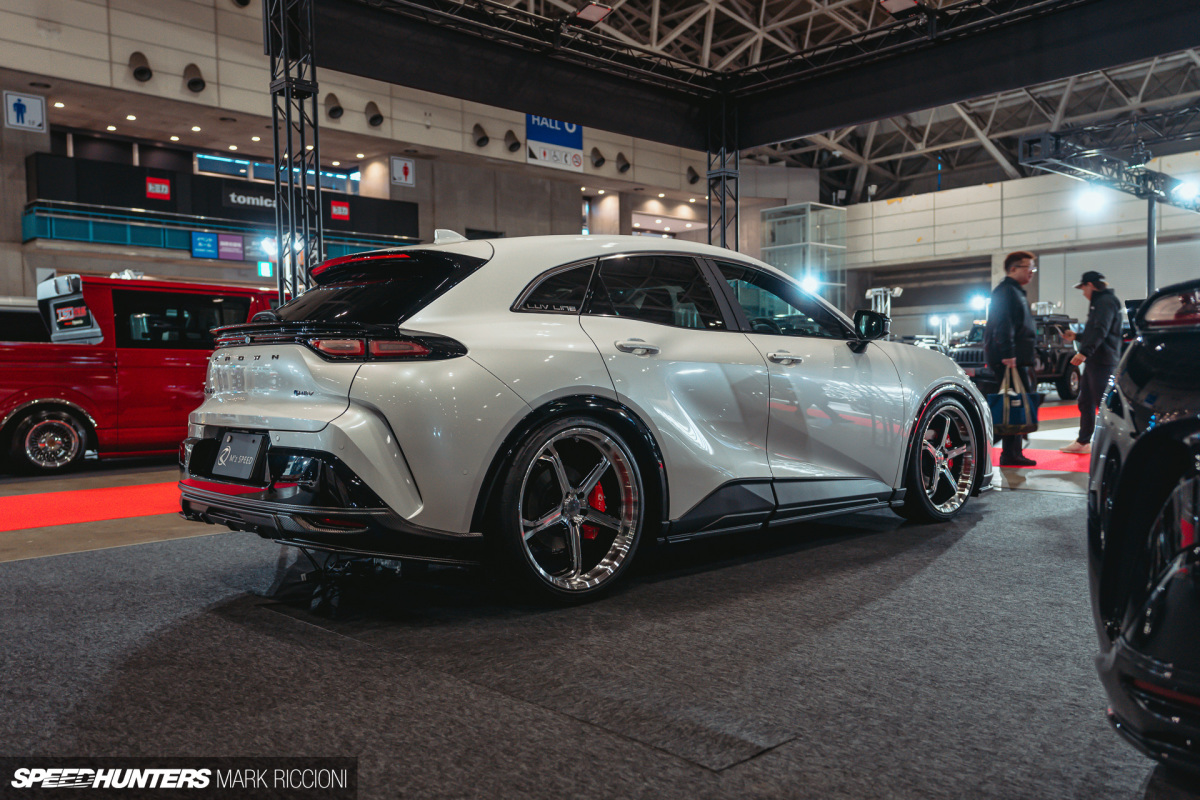
Let’s play a game of ‘Spot the Difference.’ One of these cars costs around $40,000, while the other will set you back almost 10 times that – before you even start adding extras.
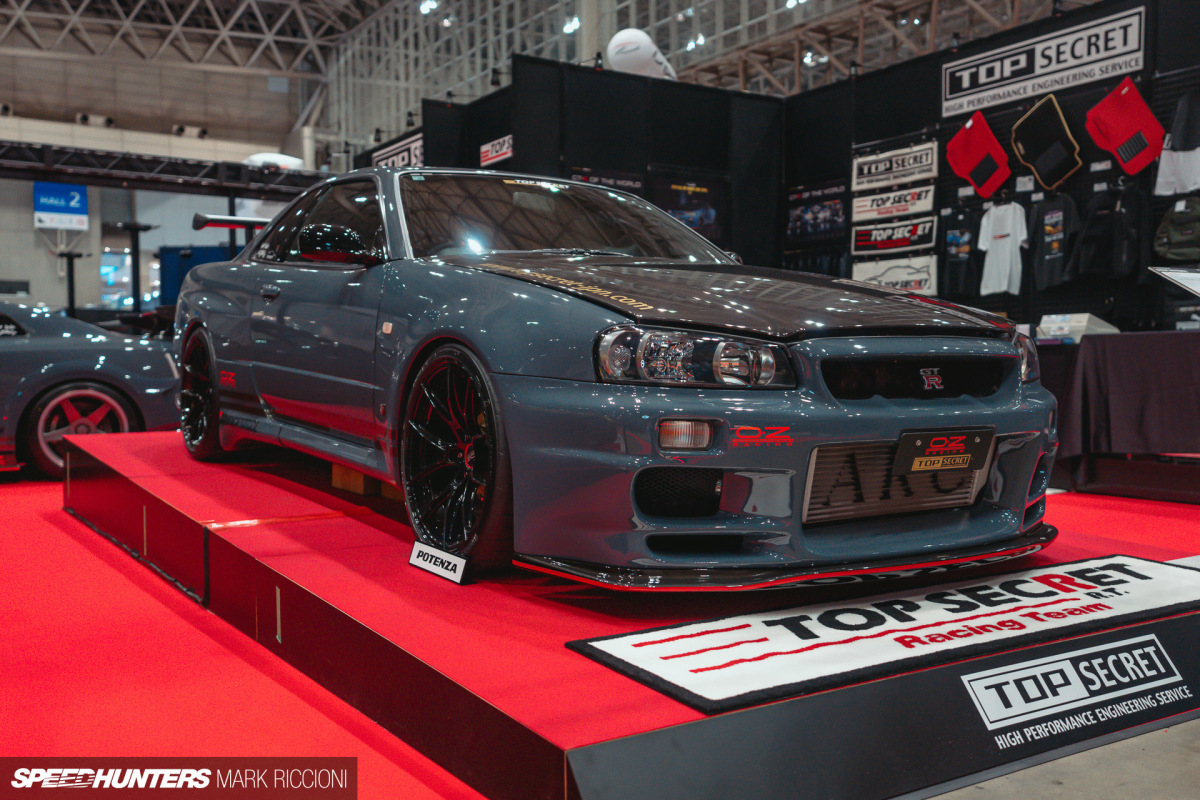
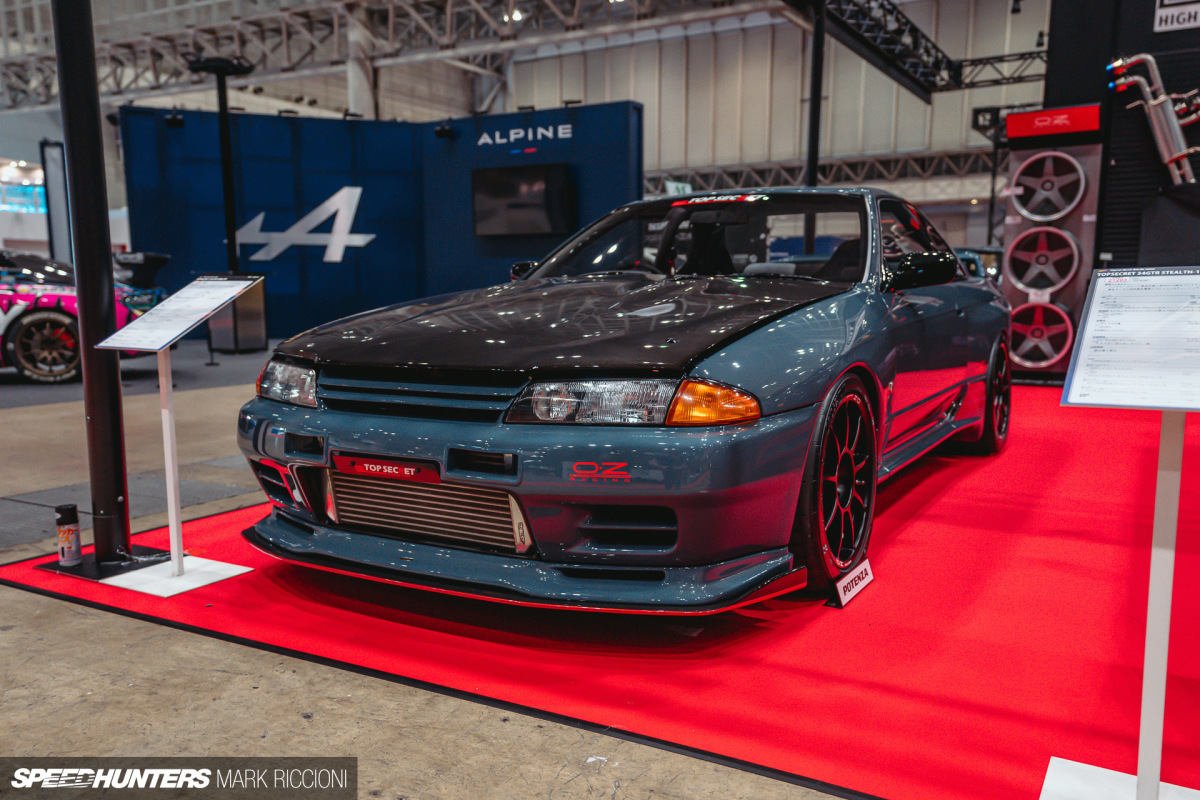
We’ll wrap up our Tokyo Auto Salon 2025 Day 1 coverage at the Top Secret stand, which, as always, is packed with tuned GT-Rs from every generation.
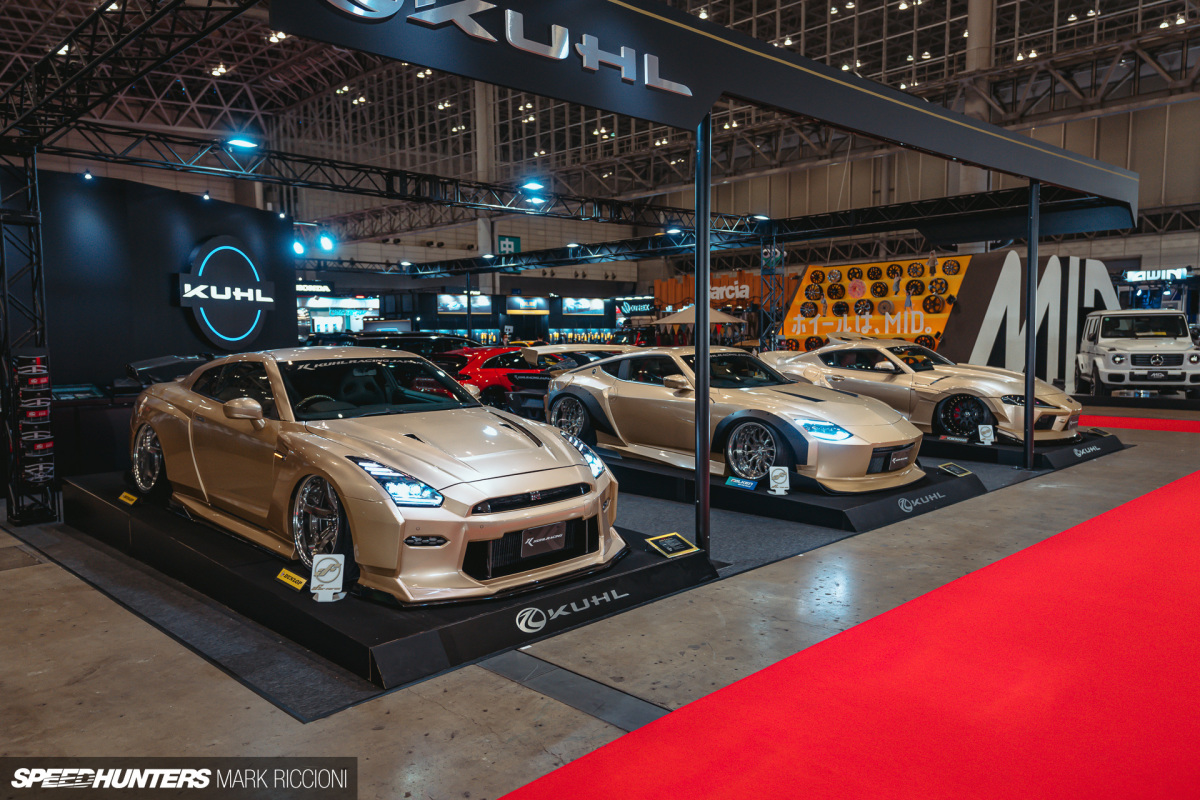
In the past, you’d see these in Top Secret gold or white, but Kazuhiko ‘Smoky’ Nagata and his team have switched things up with ‘Stealth’ editions, featuring Stealth Grey paint and matte black OZ Racing wheels.
Each build looks awesome, and it feels like a modern take on Top Secret’s classic tuning philosophy. But I’d love to see the gold and TE37 combo we all grew up obsessing over make a comeback, even if it’s just a one-off.
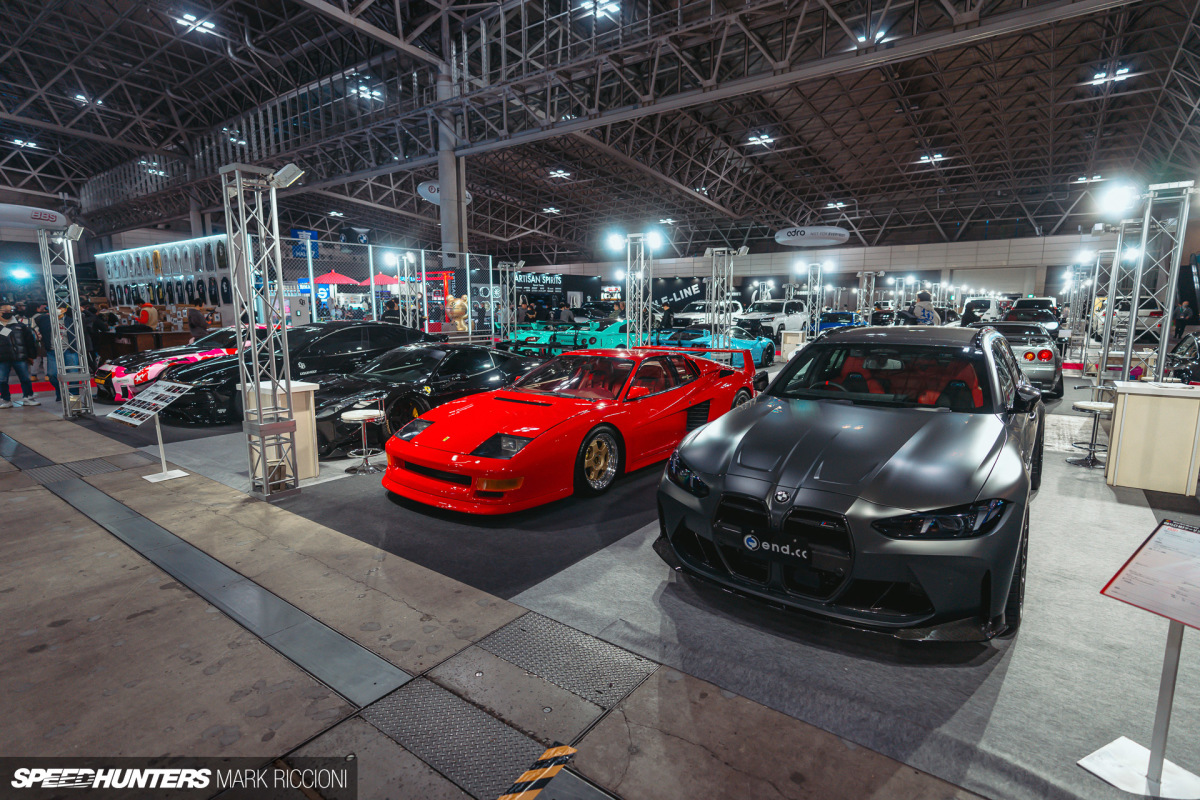
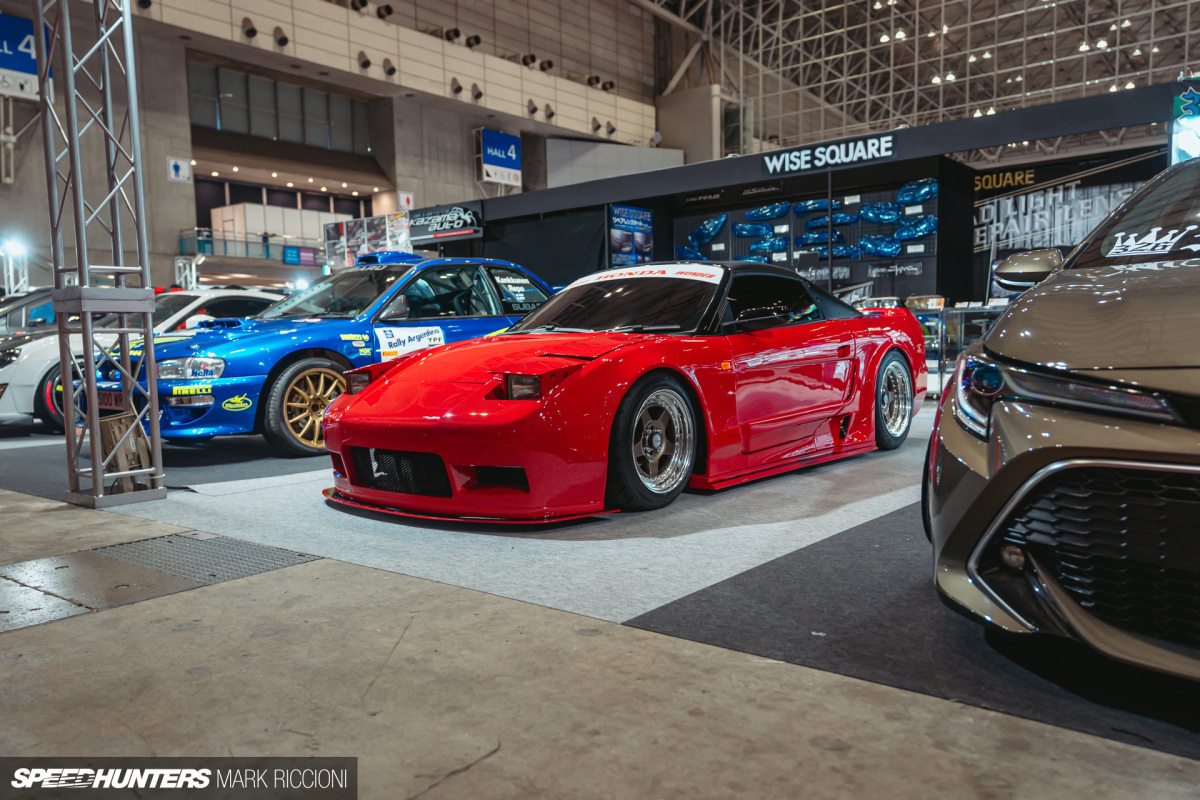
With 11 halls of builds to explore, this is just the tip of the iceberg for Tokyo Auto Salon 2025. Stay tuned for Part 2 dropping in the coming days, but for now, we’ll leave you with some more of our Friday highlights.
Mark Riccioni Instagram: mark_scenemedia Twitter: markriccioni mark@speedhunters.com
The technical storage or access is strictly necessary for the legitimate purpose of enabling the use of a specific service explicitly requested by the subscriber or user, or for the sole purpose of carrying out the transmission of a communication over an electronic communications network.
Preferences
The technical storage or access is necessary for the legitimate purpose of storing preferences that are not requested by the subscriber or user.
Statistics
The technical storage or access that is used exclusively for statistical purposes.The technical storage or access that is used exclusively for anonymous statistical purposes. Without a subpoena, voluntary compliance on the part of your Internet Service Provider, or additional records from a third party, information stored or retrieved for this purpose alone cannot usually be used to identify you.
Marketing
The technical storage or access is required to create user profiles to send advertising, or to track the user on a website or across several websites for similar marketing purposes.