Home Blog Page 229

2025 Porsche 911 Carrera S Facelift (992.2) leaked ahead of launch

0


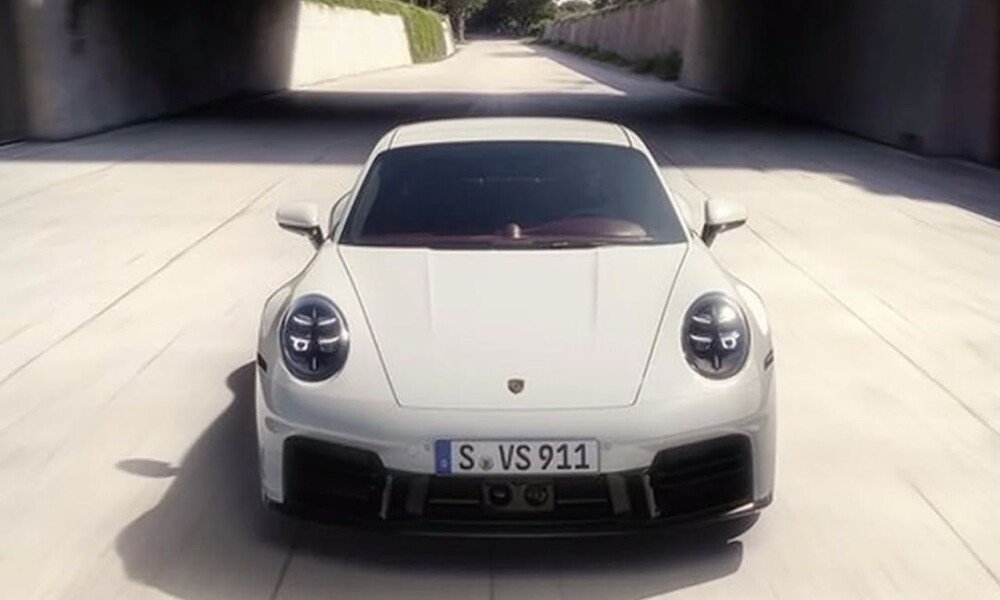
Porsche is all set to debut the updated 911 Carrera S this year. Actually, the first images of the 911 Carrera S facelift (992.2) have already leaked online.

Last year, Porsche launched the first-ever 911 hybrid in the form of the Carrera GTS. It was followed by the Carrera T and the 911 GT3. The new 911 Carrera S facelift slots between the base Carrera and the GTS and is rumoured to have around 480 hp.

2025 Porsche 911 Carrera S facelift leaked-1

In comparison, the 911 Carrera GTS packs 534 hp and 450 lb-ft of torque, courtesy of the 3.6-liter flat-6 engine and hybrid system. The most driver-centric version, though, is the Carrera T, which has a 3.0-liter flat-six engine, producing 388 hp and 331 lb-ft of torque. It is paired with a proper 6-speed manual transmission.

2025 Porsche 911 Carrera S facelift leaked-2

Coming back to the 911 Carrera S facelift, it gets a few exterior updates, including a new front bumper, reworked LED headlights, a redesigned rear fascia with an LED light bar and a new bumper. The car will also feature a few changes on the interior.

Source: @automobili_lambullshit


Source link

Tips for Traveling in Japan With Kids

0


A family trip to Japan with your children can be an unforgettable experience for everyone. The country is known for its safety, cleanliness, and incredible mix of modern and traditional attractions, making it a great destination for you and your kids. 

However, for most travelers, it’s a very long, once-in-a-lifetime trip, and a lot of things can go wrong, or you may simply get a bit fed up with each other. 

Traveling in Japan with kids requires some extra planning and attention to detail to make it a smooth experience. Below are ten tips to help you make the most of your family adventure in Japan.

Traveling in Japan With Kids - Tips for Traveling in Japan With Kids
Tips for traveling in Japan with kids.

Here’s an overview:

Choose the Right Time to Go

The time of year that you travel to Japan with kids can significantly impact your experience. Spring and fall are generally considered the best times to visit due to mild weather and beautiful natural scenery, such as Japanese cherry blossoms in spring and vibrant autumn leaves in fall. 

These seasons offer pleasant temperatures for outdoor activities and sightseeing without the extreme cold of winter.

Summer is also a great time to visit, thanks to the different exciting festivals and fireworks you and your family can experience. If your family enjoys winter sports, visiting in winter allows you to go skiing and snowboarding in places like Hokkaido.

Tips for Traveling in Japan With Kids
Traveling in Japan with kids to see Mount Fuji.

Use Japan’s Excellent Transportation System

Japan’s public transportation system is incredibly efficient but can be overwhelming if you try to do everything on the fly. Here’s some info that will help you navigate it:

  • Trains: The Shinkansen (bullet train) is fast and convenient for long-distance travel between cities like Tokyo and Kyoto. 
  • Subways: In major cities, subways are probably the best way to get around. However, try to avoid rush hour if possible when traveling with small children.

Taxis: While taxis are more expensive than public transport, they can be helpful when traveling with tired children or lots of luggage.

Using JR Pass for Families

The JR Pass from JRailPass.com is one of the most legit and trusted services for cost-effective travel around Japan by train for tourists. It offers unlimited travel on JR-operated trains, including Shinkansen bullet trains, local trains, and some buses.

If you’re traveling with your kids, it’s good to know that:

  • Children under 6: Can ride JR trains for free as long as they don’t occupy their own seats. If you want them to have a seat, you’ll need to purchase a child ticket at a discounted rate.
  • Children aged 6-11: Can get a 50% discount on both regular train tickets and the JR Pass. They will be able to reserve their own seat.
  • Children over 12: Once your child turns 12, they will need to pay full fare for both regular tickets and JR Passes.

Also, when you get a pass, each member of the family needs just one ticket throughout your trip. The ticket can be used at any time for any train ride during the period of your pass, which can help you avoid misplaced tickets. 

If you are organizing an extensive trip across multiple cities, purchasing a regional pass can save money and simplify the planning process. You can reserve seats in advance at no extra cost, ensuring that your family sits together during longer journeys.

Japan's bullet train
Use Japan’s bullet train, Shinkansen, to get around with kids.

Plan Kid-Friendly Activities

Japan offers a wide selection of activities that will keep your kids (and you) entertained and engaged. Here are some highlights:

  • Theme parks: Tokyo Disneyland and DisneySea are must-visits for families with young children, offering magical experiences with rides, parades, and character meet-and-greets.
  • Cultural experiences: Engage your kids in Japanese culture by visiting temples, participating in tea ceremonies, or trying traditional crafts like origami or calligraphy.
  • Nature encounters: Nara Park is famous for its friendly deer that roam freely and allow kids to feed them special crackers.
  • Interactive museums: Museums like teamLab Planets Tokyo offer immersive digital art experiences that are perfect for families.

It’s also a good idea to keep an eye on Japan’s national holidays, as many attractions may be closed during these times.

Keep Your Kids Busy While Traveling

Japan’s excellent public transportation system makes getting around easy, but long train rides or crowded cities can test any child’s patience. 

Try the following to keep them entertained:

  • Bring snacks: Japanese convenience stores, like 7-Eleven, are lifesavers when it comes to snacks. You can find kid-friendly options such as onigiri (rice balls) or even small bento boxes.
  • Portable entertainment: Tablets loaded with movies or games can be a great way to keep kids occupied during long flights or train rides.
A family train ride in Japan.

Pick the Right Japanese Cuisine

Children aren’t always fans of trying new culinary dishes. 

However, Japanese food is diverse and often appeals to children due to its simplicity and fun presentation. Some kid-friendly dishes include:

  • Okonomiyaki: A savory pancake that kids can help cook at the table.
  • Udon noodles: Thick noodles served in broth that are easy for kids to eat.
  • Tamago sushi: Sweet egg sushi that is often a hit with younger children.
  • Karaage (Fried chicken): Bite-sized pieces of fried chicken that are perfect for picky eaters.

For younger children or toddlers, family restaurants typically have special children’s menus featuring dishes like spaghetti and cute bento boxes decorated with anime characters.

Stay at Family-Friendly Accommodations

When traveling in Japan with kids, choosing the right accommodation is a big deal. Many hotels in Japan offer family-friendly options, such as larger rooms with flexible sleeping arrangements. 

Depending on if you want to immerse yourself or feel like you’re back at home, you can try:

  • Ryokans: Staying at one of these traditional hotels allows your family to experience classic Japanese hospitality. Kids will love sleeping on futons laid out on tatami floors, and many ryokans have private hot springs where families can bathe together.
  • Western-style hotels: If you prefer more familiar comforts, many Western-style hotels in major cities like Tokyo and Kyoto offer cribs, high chairs, and babysitting services.
Family accommodation in Japan.

Pack Wisely

Packing appropriately is a must when traveling with kids to Japan. Keep in mind that you’ll be walking a lot, your children will want to be entertained, or get frustrated or tired at times, so try to bring the following:

  • Comfortable shoes: Sightseeing and travel involve a lot of walking, so bring comfortable shoes for both you and your children.
  • Baby carriers or strollers: If you’re traveling with babies or toddlers, consider bringing both a collapsible stroller and a baby carrier. 
  • Snacks from home: While Japanese snacks are easy to come by, bringing familiar snacks from home can be helpful if your child is a picky eater.

Respect Japanese Etiquette

Japan has a strong culture of respect and politeness. To help your children be respectful, you can:

  • Teach your kids basic Japanese phrases like arigato (thank you) and sumimasen (excuse me).
  • Encourage them to be quiet on public transportation.
  • Many public places require shoes to be removed before entering; pack easy slip-on shoes for your child.
A woman wearing a traditional kimono in Japan.

Be Prepared for the Weather

Japan’s weather varies greatly depending on the season and where you decide to travel. Keep these tips in mind when planning your trip: 

  • In spring and fall, pack layers, as temperatures can rise or drop throughout the day.
  • Summer can be hot and humid, so bring lightweight clothing, sunscreen, hats, and plenty of water.
  • Winter calls for warm clothing if you’re visiting northern regions like Hokkaido or planning on skiing.

Use Japanese Convenience Stores

Japanese convenience stores are incredibly well-stocked with everything from snacks to toiletries.

You’ll find essentials like diapers, baby wipes, bottled water, and even pre-made meals that cater to both adults and children.

Convenience stores also sell inexpensive toys or activity books that can entertain kids during downtime.

If you need to replace a broken toy or run out of food, this is where to go.

Bonus Tip: Plan Your Japan Itinerary Beforehand

When traveling with kids, having a well-thought-out itinerary is crucial, whether you want to travel from Tokyo to Osaka or Kyoto. Japan offers so many attractions and experiences that it can be overwhelming to decide what to do.

Here are some things to keep in mind: 

  • Avoid crowds: Popular destinations like Tokyo Disneyland or Kyoto’s temples can get crowded, especially during peak seasons. Planning your visit during off-peak hours or days can make the experience more enjoyable for your family.
  • Reserve seats on trains: If you’re using the JR Pass, reserving seats in advance for long-distance trains ensures that your family sits together, especially during busy travel periods.
  • Be adaptable: While having a plan is important, it’s equally important to leave some room for unforeseen events. Kids might want to spend more time at a particular attraction or need extra rest, so keep the schedule flexible.

Traveling through Japan with kids can be an amazing experience filled with cultural discoveries, delicious food, and irreplaceable memories. With careful planning and embracing Japan’s unique culture, your family trip will undoubtedly be fun and give you more reasons to keep traveling together!

Family travel in Tokyo.

  • JRailPass

    Planning a trip to Japan can be difficult because there is so much to see. Discover Japan and plan your trip with our travel tips.
    With your JR Pass, you can travel around the country for less than the cost of a round-trip ticket from Tokyo to Kyoto (including airport transfers) by bullet train.
    Compared to the standard price of train tickets in Japan, the JR Pass represents the largest discount possible on Japanese public transportation.


    View all posts


    Planning a trip to Japan can be difficult because there is so much to see. Discover Japan and plan your trip with our travel tips.
    With your JR Pass, you can travel around the country for less than the cost of a round-trip ticket from Tokyo to Kyoto (including airport transfers) by bullet train.
    Compared to the standard price of train tickets in Japan, the JR Pass represents the largest discount possible on Japanese public transportation.


Source link

2025 Ram Heavy Duty Trucks Keep The Hemi, Improve The Cummins Diesel And Jump On The Split Headlight Trend

0


Ram unveiled official specifications for its updated 2025 heavy duty trucks Tuesday, making strides in arguably the biggest pissing contest of the automotive space. For 2025, Ram’s HD trucks bring bolder looks that were teased last year, beefed up internals for the 6.7-liter Cummins turbodiesel I-6 with a new eight-speed transmission that allows for a higher max tow rating of 36,610 pounds, and a new available 14.5-inch vertical infotainment screen.

This is just an update to the preexisting Ram HD, so it’s not a total revolution from the 2024 model. That means the powertrain choices don’t change much; the standard 6.4-liter Hemi V8 is actually down five horsepower to 405 horsepower and the same 429 pound-feet of torque. The optional Cummins 6.7-liter turbodiesel inline-6 produces 430 horsepower and 1,075 pound-feet of torque. Ram claims the Cummins diesel is new despite having many similarities to the 2024 Ram HD high-output motor. It features a redesigned block and head, heavy-duty pistons, a new turbo, higher-pressure fuel system, and intake manifold, and larger intake and exhaust valves for improved port flow.

The diesel is now available for 2500 models from Laramie trim up, and it now achieves its max tow rating with a 3.42 rear axle ratio that facilitates better fuel economy when unladen and knocks a full second off the 0-to-60 time, taking it down to 6.9 seconds. No fuel economy ratings were provided, but according to Ram CEO Tim Kuniskis, more than 70-percent of Ram HD customers opt for the diesel, hence the brand’s focus on the oil burning powertrain.

A photo of the new ram HD's interior showing the massive central screen and the passenger screen

Photo : Ram

Inside, 2025 Ram HDs come standard with an updated 12-inch infotainment screen, and a new optional 14.5-inch vertical touchscreen. It also gains the segment’s first 10.25-inch passenger screen with HDMI outlet so passengers can connect a phone or tablet which should be fun for your coworkers to fart around with while you drive. Other useful features include a 2.4-kilowatt onboard inverter with two covered outlets in the bed, available dual wireless chargers, available lane centering, and new standard adaptive cruise, and automatic emergency braking.

Ram 2500 Heavy Duty trucks start at $47,560 including destination and 3500 trucks start just $1,005 more at $48,565. They are expected to go on sale this quarter, and bring heavy duty truck shoppers another impressive diet semi-truck.

The Big Three continuously duke it out unveiling bigger and bigger trucks with bolder and bolder looks and maximum towing capacities that are competitive with tractor trailers from just a few years ago. It seems like the next logical step is for these trucks to either turn into semis or just replace them.

three trims of HD Rams parked next to eachother

Photo : Ram

a dark gray ram Rebel HD from the rear

Photo : Ram

a photo of the new Cummins diesel engine

Photo : Ram


Source link

Chrysler Halcyon concept headed to production, CEO confirms

0


Chrysler last year presented the sleek Halcyon concept, an electric four-door that looks more like it was designed by Porsche than the folks in Auburn Hills.

At its reveal, Chrysler said the concept showed elements that may feature on upcoming vehicles, like the next evolution of Stow ‘n Go seats plus new battery technology.

Christine Feuell

Christine Feuell

Now the company plans a production version of the concept itself. In an interview with CNBC published on Jan. 6, Chrysler brand CEO Christine Feuell said the Halcyon concept is headed for production, without providing a timeline.

A Chrysler spokesman later confirmed to Motor Authority that a production version is in the works, but that the company has nothing more to add at this time.

Chrysler Halcyon Concept

Chrysler Halcyon Concept

The Halcyon features a coupe-like body style with four doors, including coach doors at the rear. The styling of any production version will likely be toned down significantly, though will still likely retain the sleek coupe-like profile.

Chrysler is today part of the 14-brand Stellantis fold, and while the brand has languished for years with a limited lineup, leading to rumors it may be axed or spun off, Feuell told CNBC that Chrysler has a bright future and is receiving investment for new product.

Chrysler Halcyon Concept

Chrysler Halcyon Concept

In addition to the production version of the Halcyon concept, Chrysler is working on a large SUV as well as a redesign for its sole product currently available, a minivan that is offered in Voyager and Pacific guises. It isn’t clear whether the new Chryslers will be offered exclusively as EVs, or still have the option of a gas engine, either as a standalone power unit or in combination with a hybrid system.

Chrysler’s sleek Airflow electric crossover concept unveiled in 2022 isn’t bound for production, according to the CNBC report.


Source link

First Production Ferrari 812 Competizione at Mecum Kissimmee

0


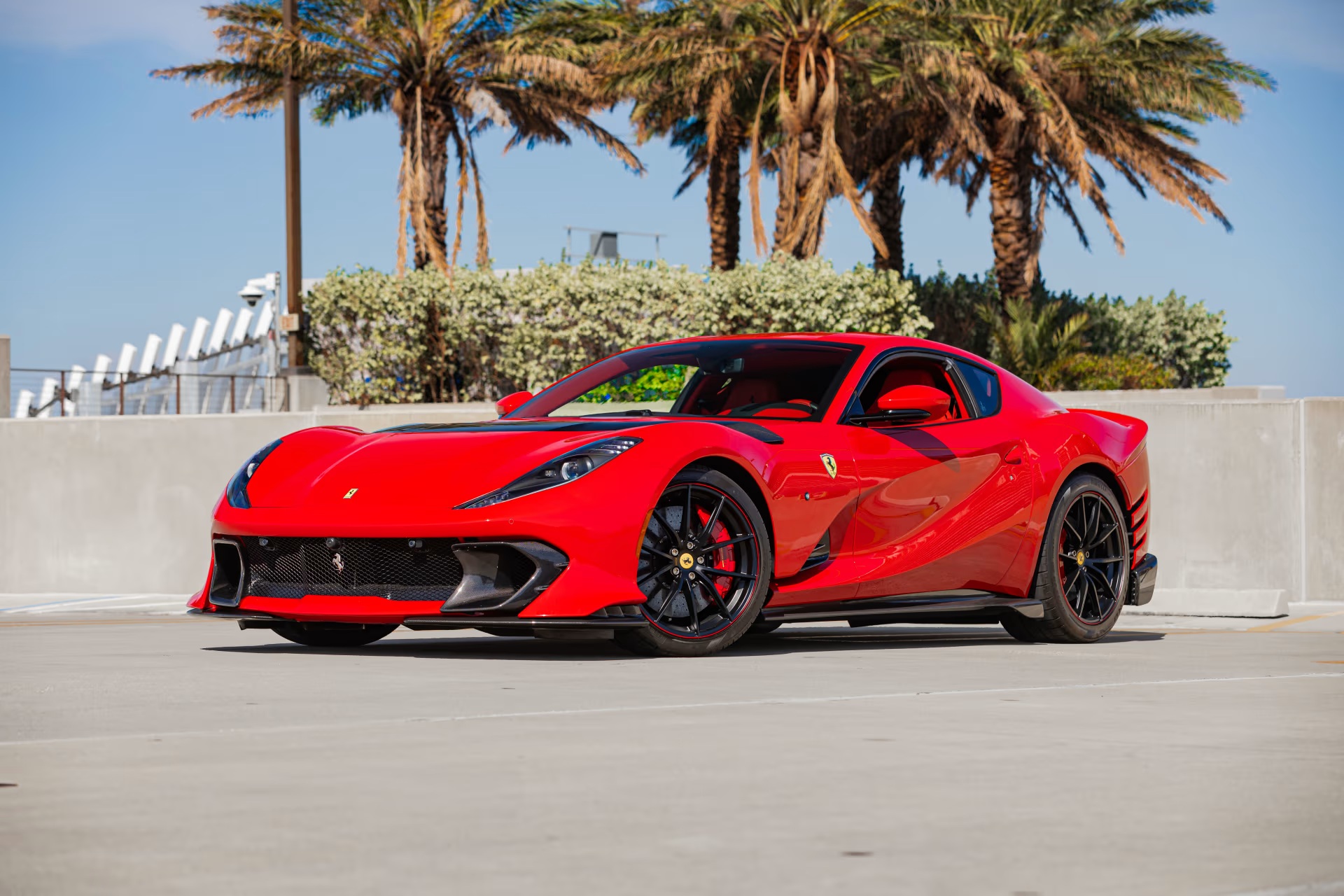
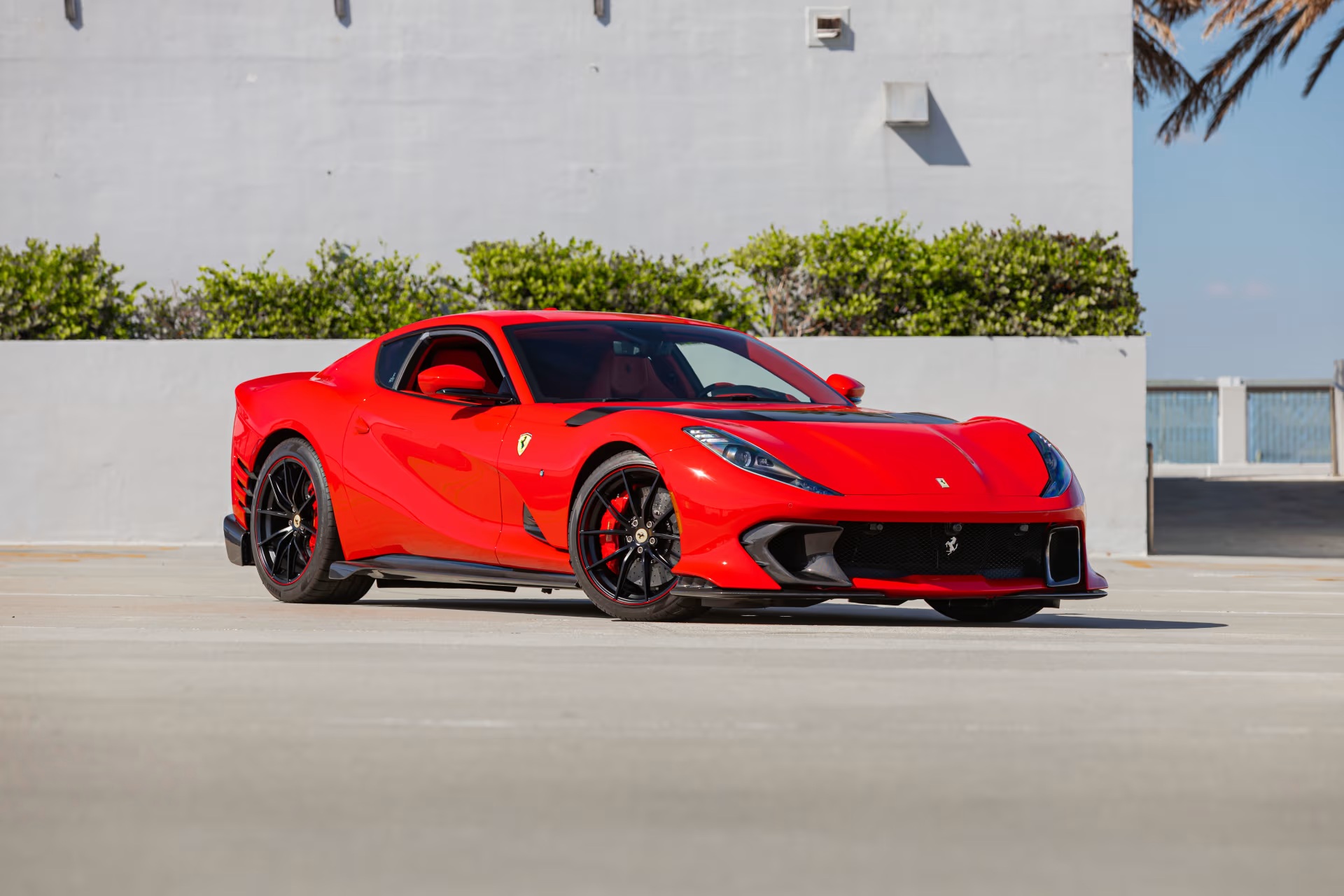
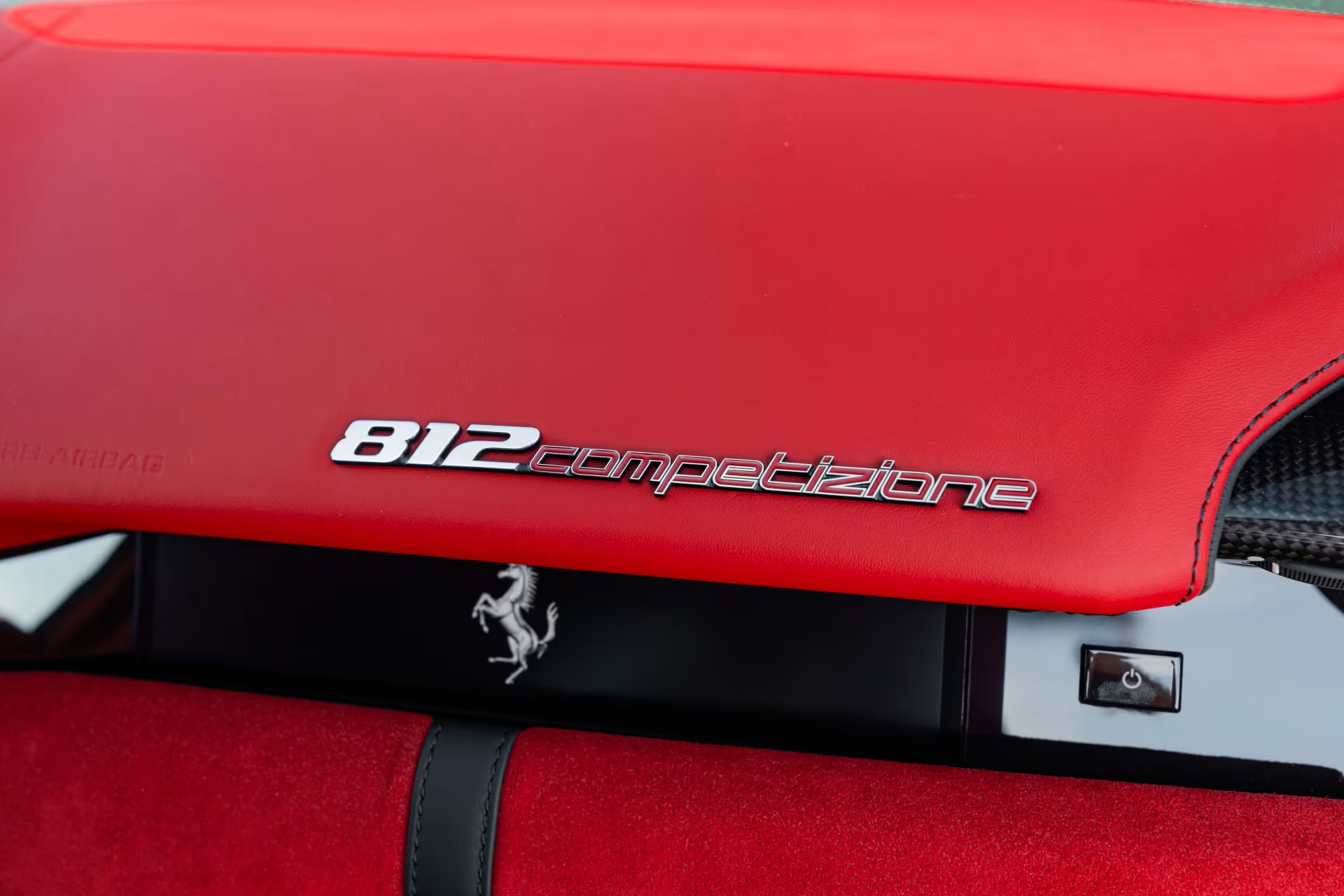
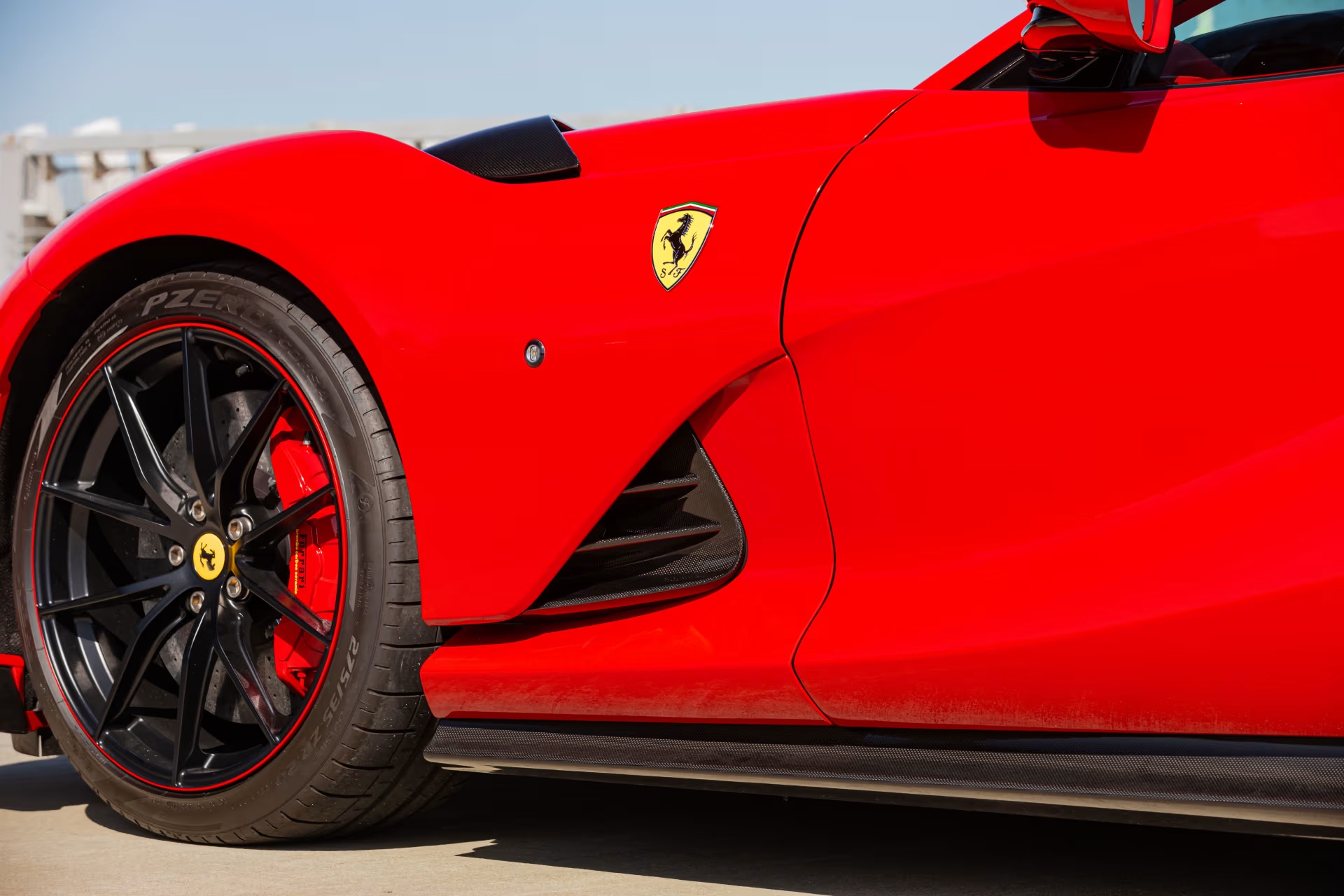
The Ferrari 812 Competizione, unveiled in 2021, is a limited-edition evolution of the 812 Superfast, designed to push the boundaries of performance and driving pleasure. The goal was clear from its inception: create a supercar that maximizes performance while delivering unmatched thrills behind the wheel.

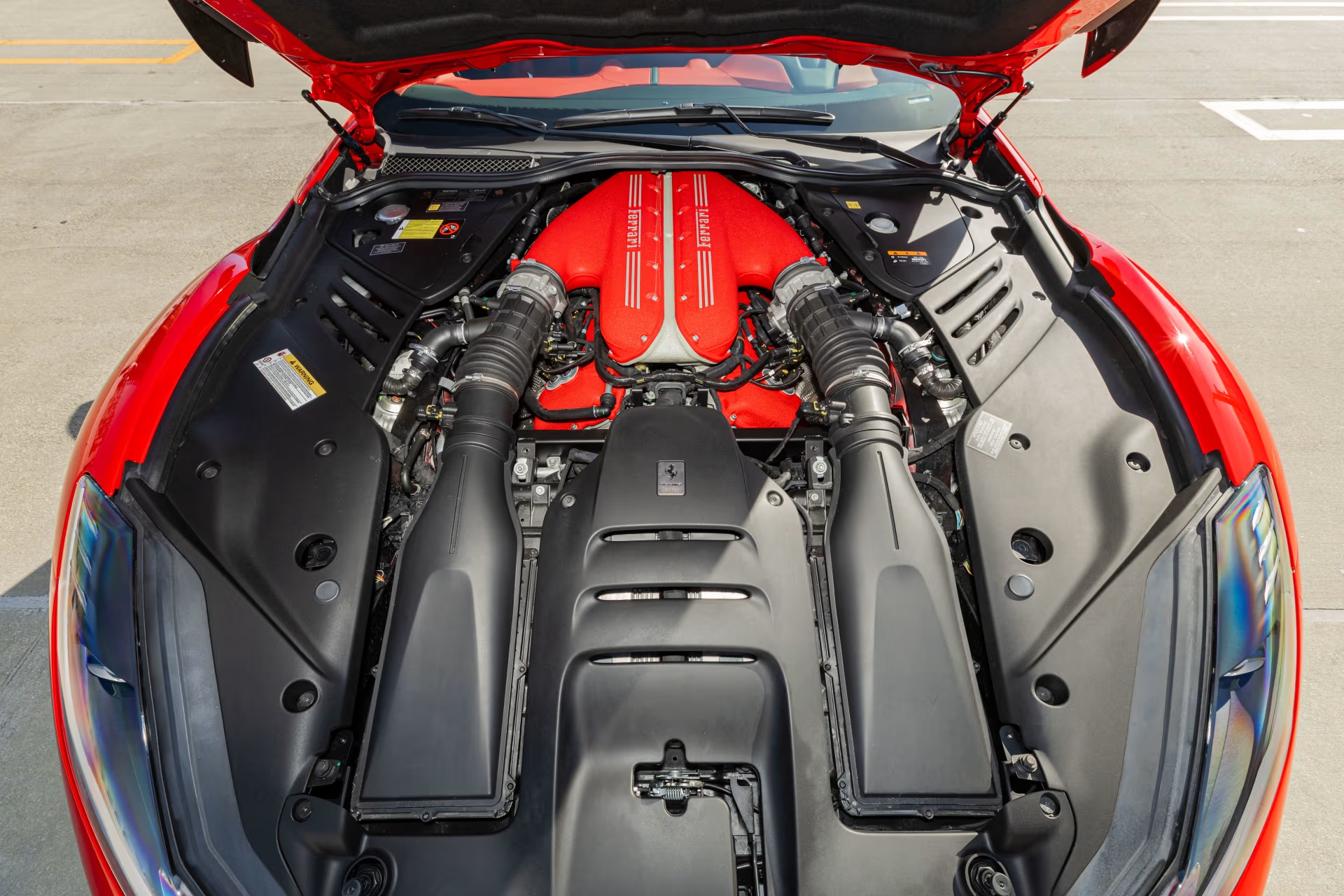
Underneath the hood of the 812 Competizione is a naturally aspirated V12 engine, upgraded to produce an astonishing 819 horsepower, making it the most powerful V12 ever in a Ferrari road car. The rev limit was raised to 9,500 rpm, achieved through advanced engineering, such as lighter components and a carbon-coated camshaft to enhance durability and reduce friction.

Performance is exceptional, with 0-62 mph in 2.85 seconds and a top speed of over 211 mph. Its Fiorano lap time 1:20 places it among Ferrari’s elite road cars. All 999 units sold out instantly, cementing the 812 Competizione as a highly sought-after collector’s gem.

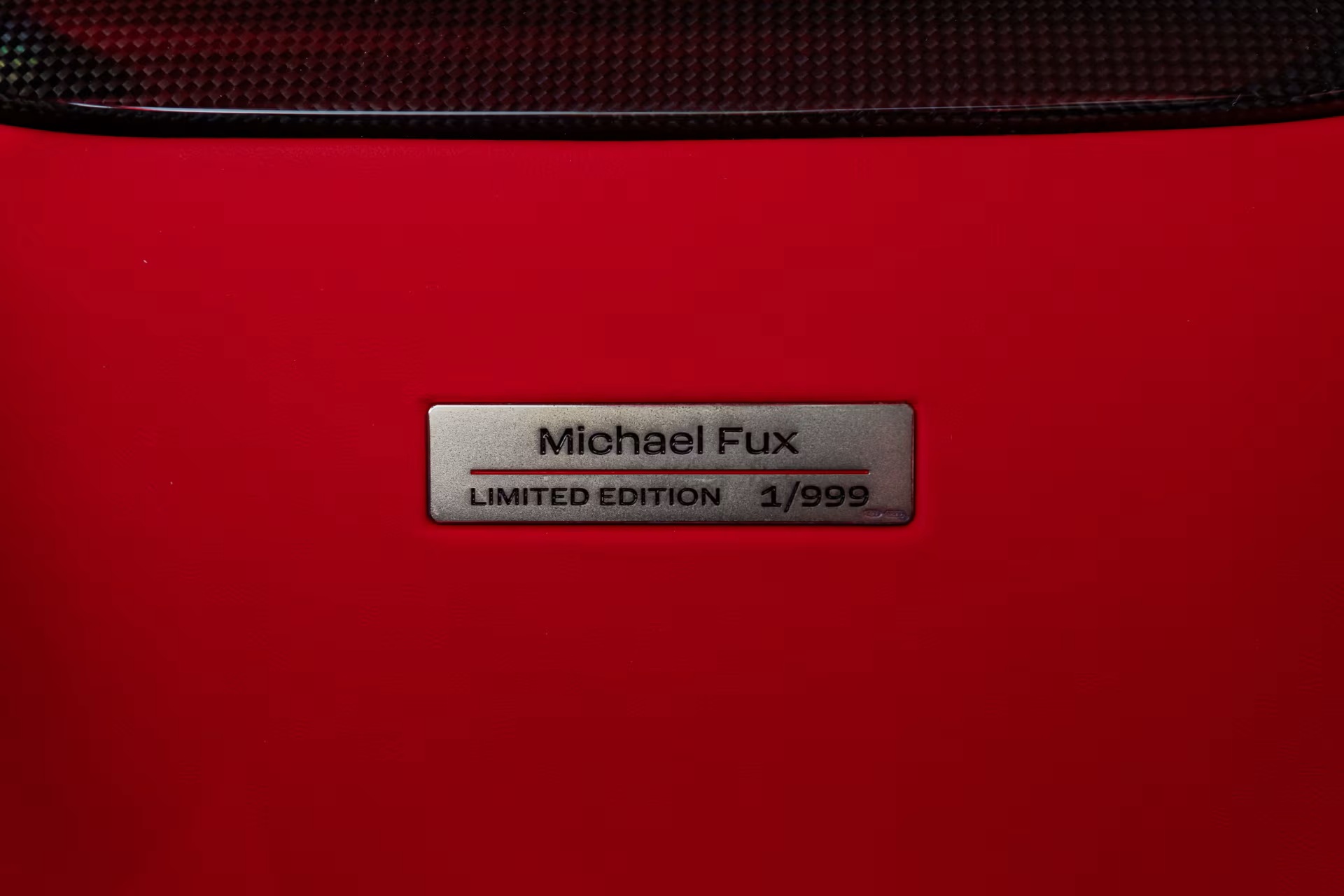
Every Ferrari 812 Competizione is an extraordinary machine, but the one heading to Mecum Auctions on January 18 is exceptional. With only 193 miles on the odometer, this car isn’t just pristine—it’s also the very first of the 999 limited-edition models ever produced.

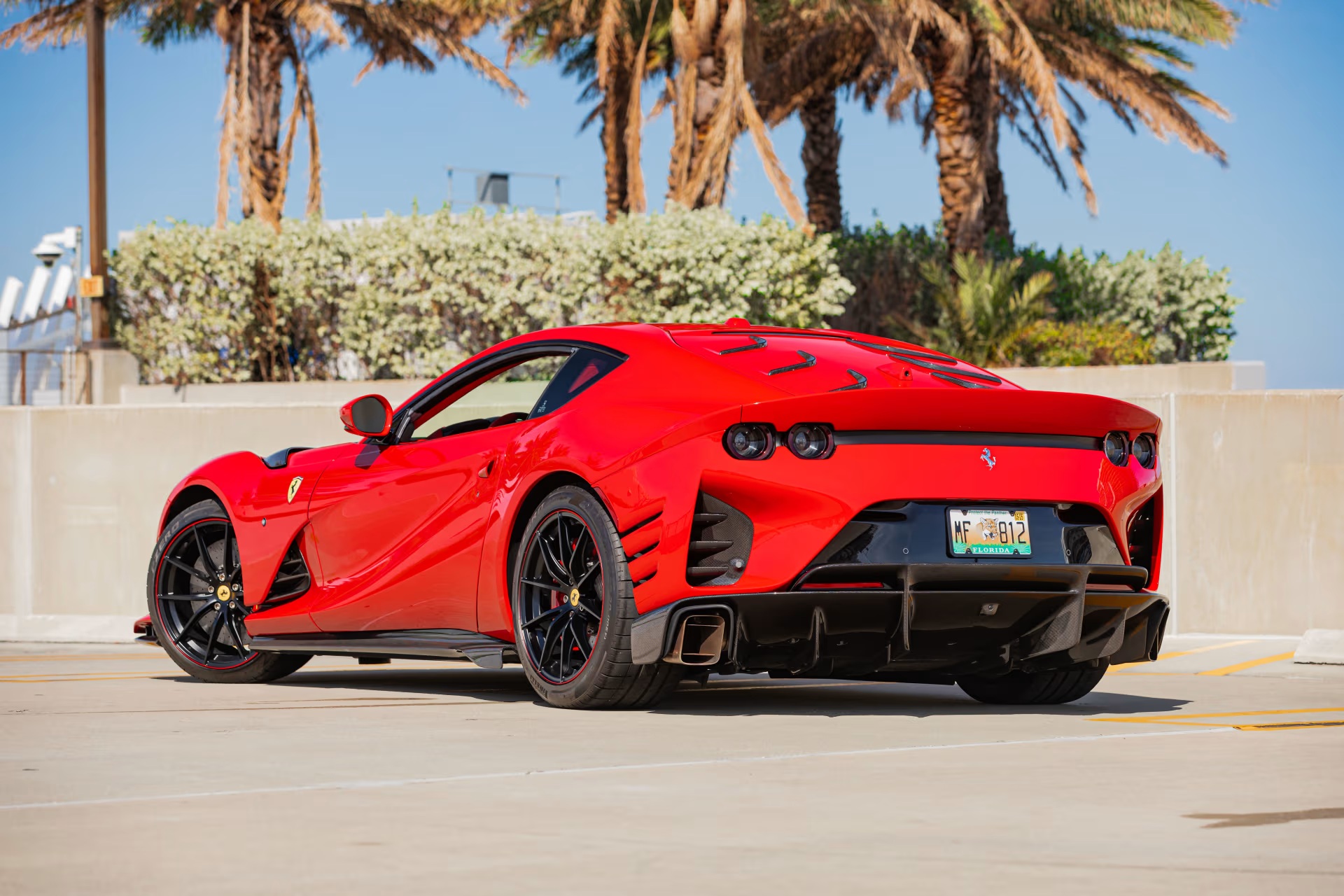
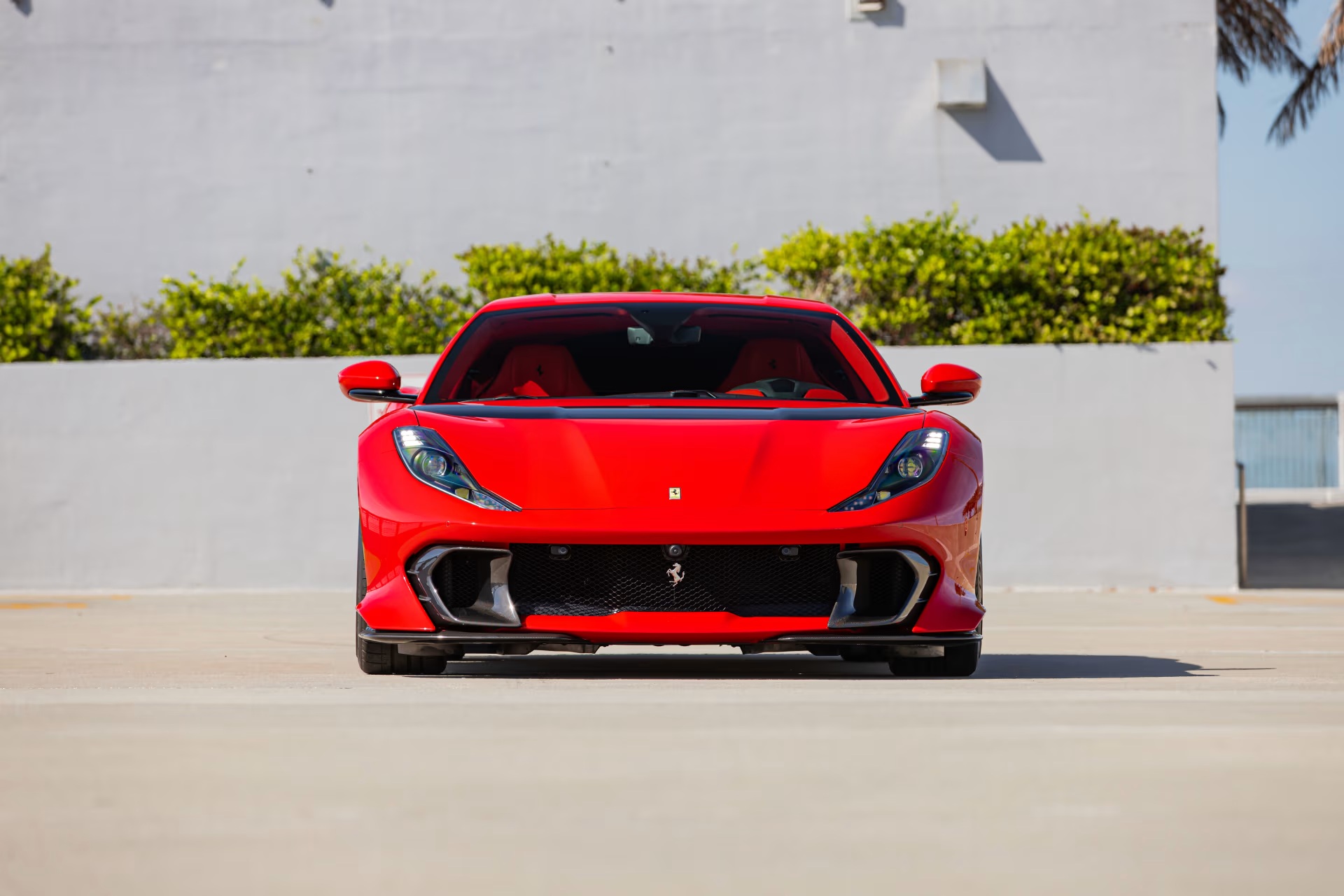
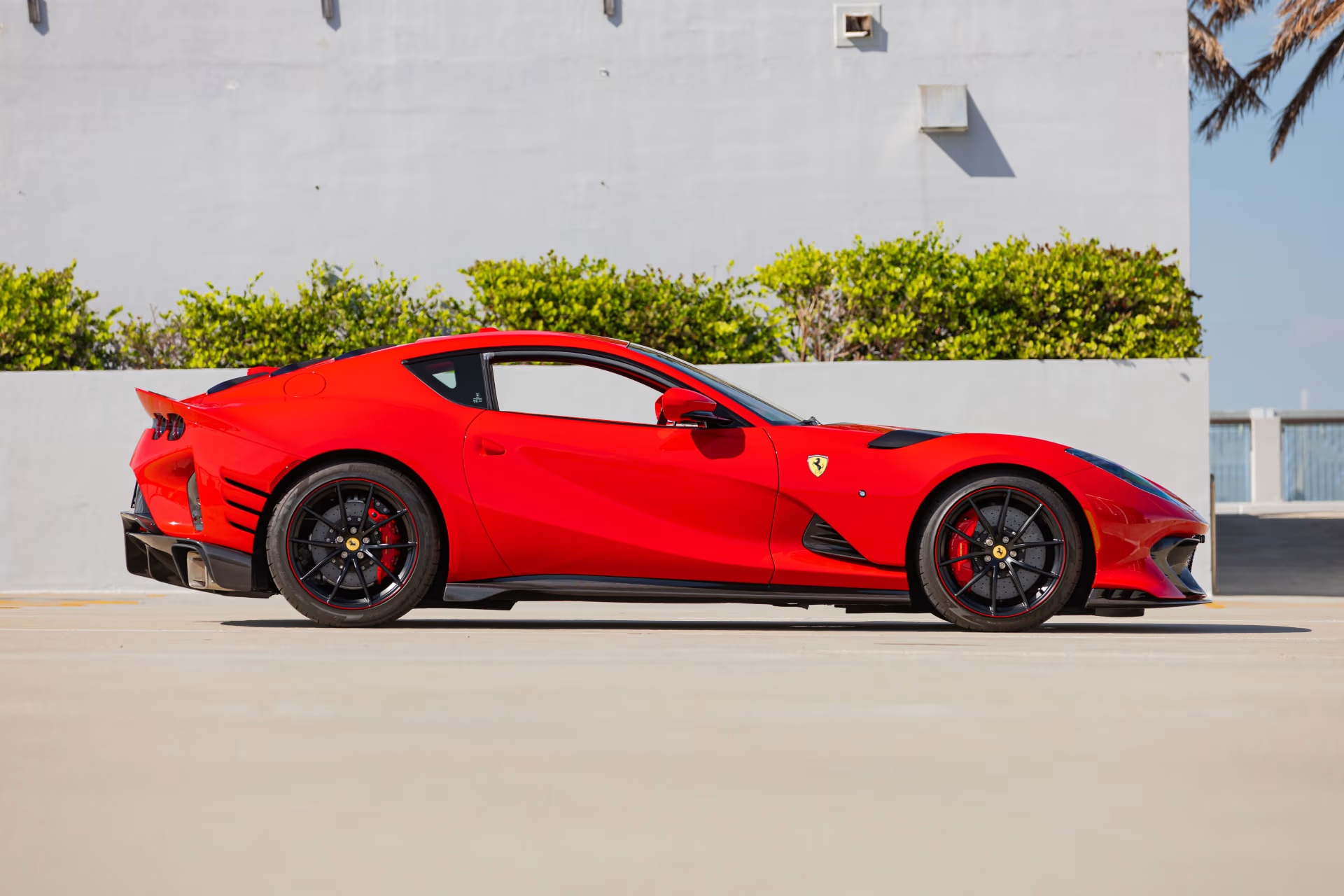
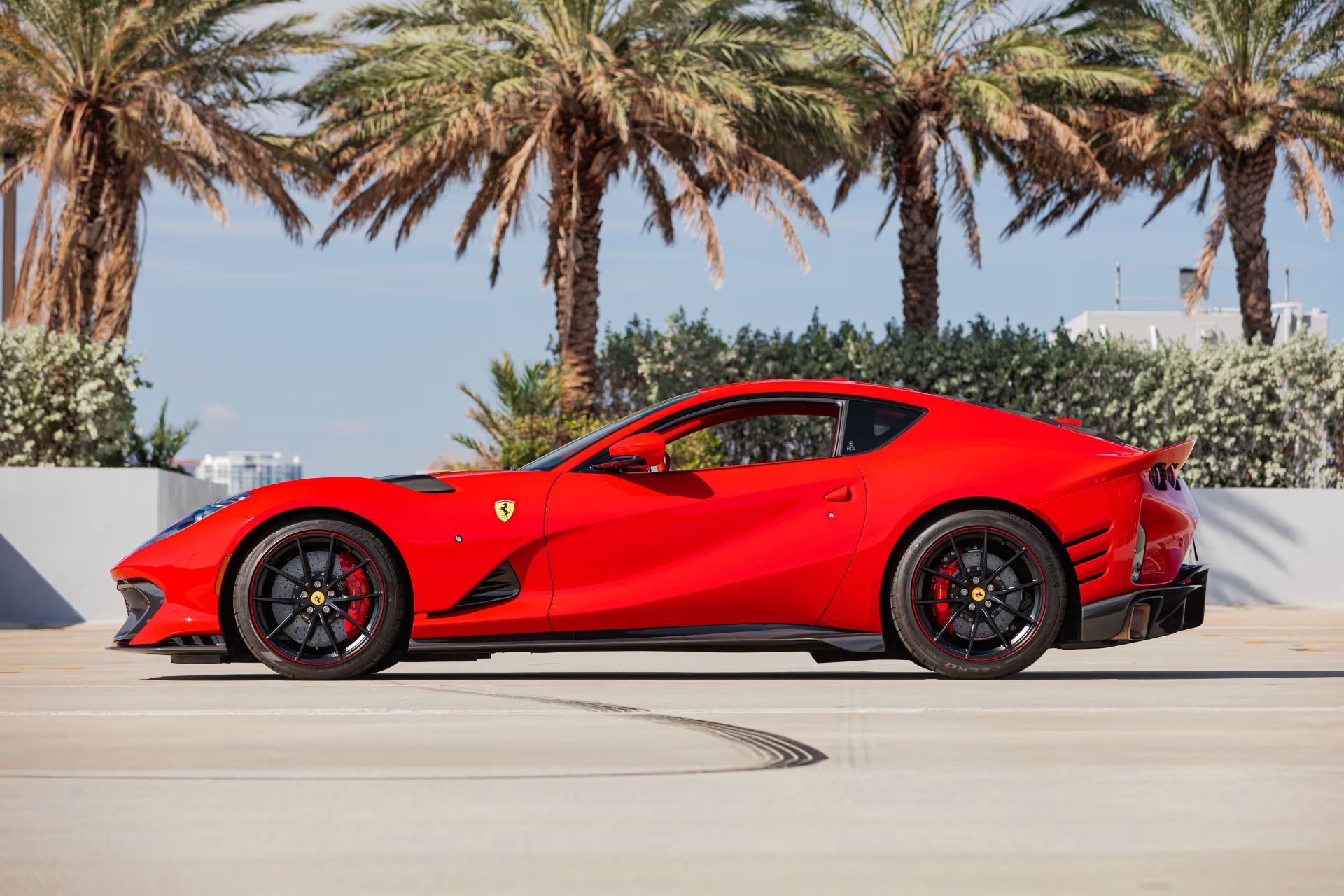
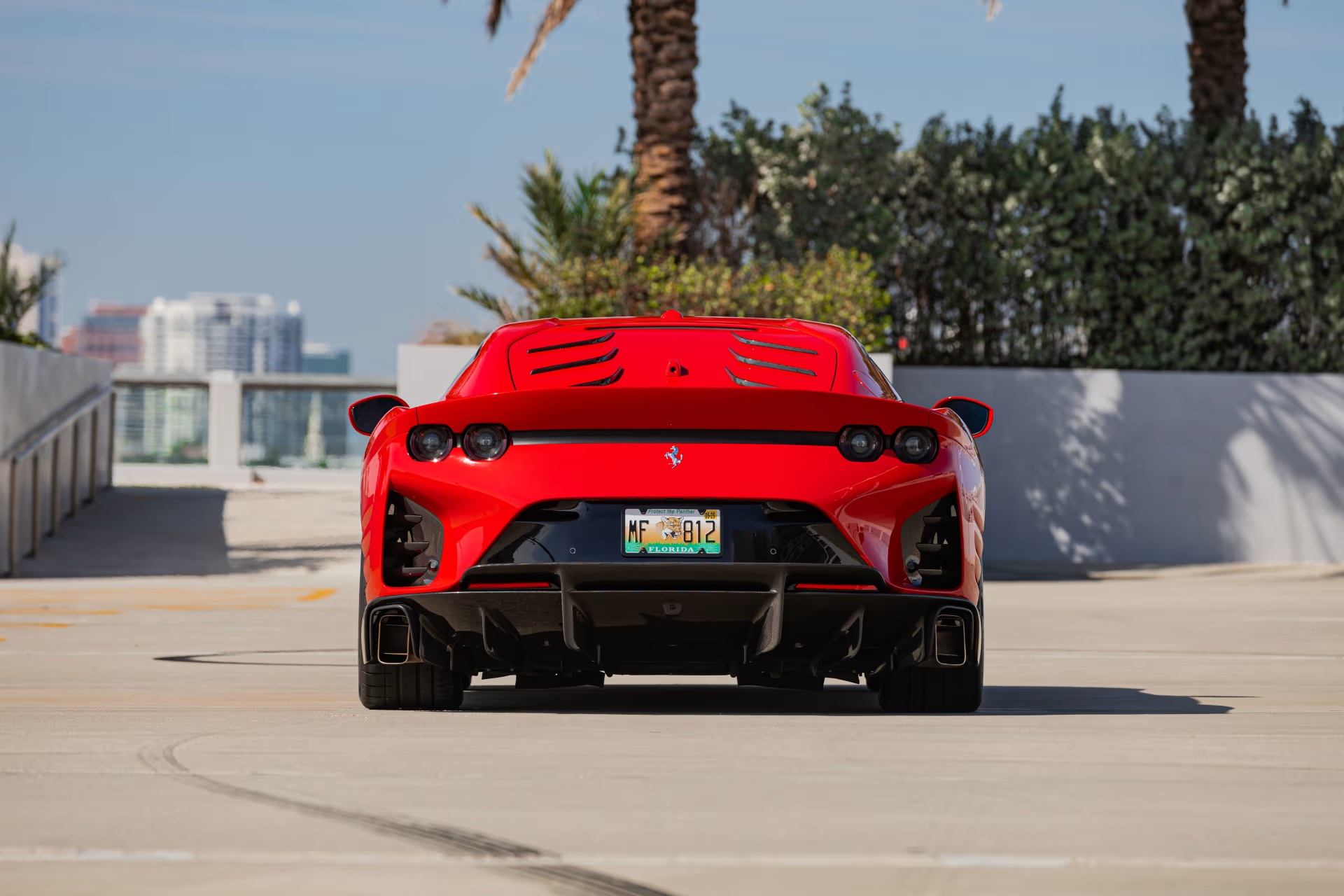
Dressed in iconic Rosso Corsa with Scuderia shields, this 812 Competizione is a masterpiece of design and engineering. Its sculpted lines are a testament to aerodynamic innovation. It features a carbon fiber blade-style hood, redesigned air intakes, a patented rear screen with vortex generators, and an optimized underbody—all working in harmony to enhance downforce while reducing drag.

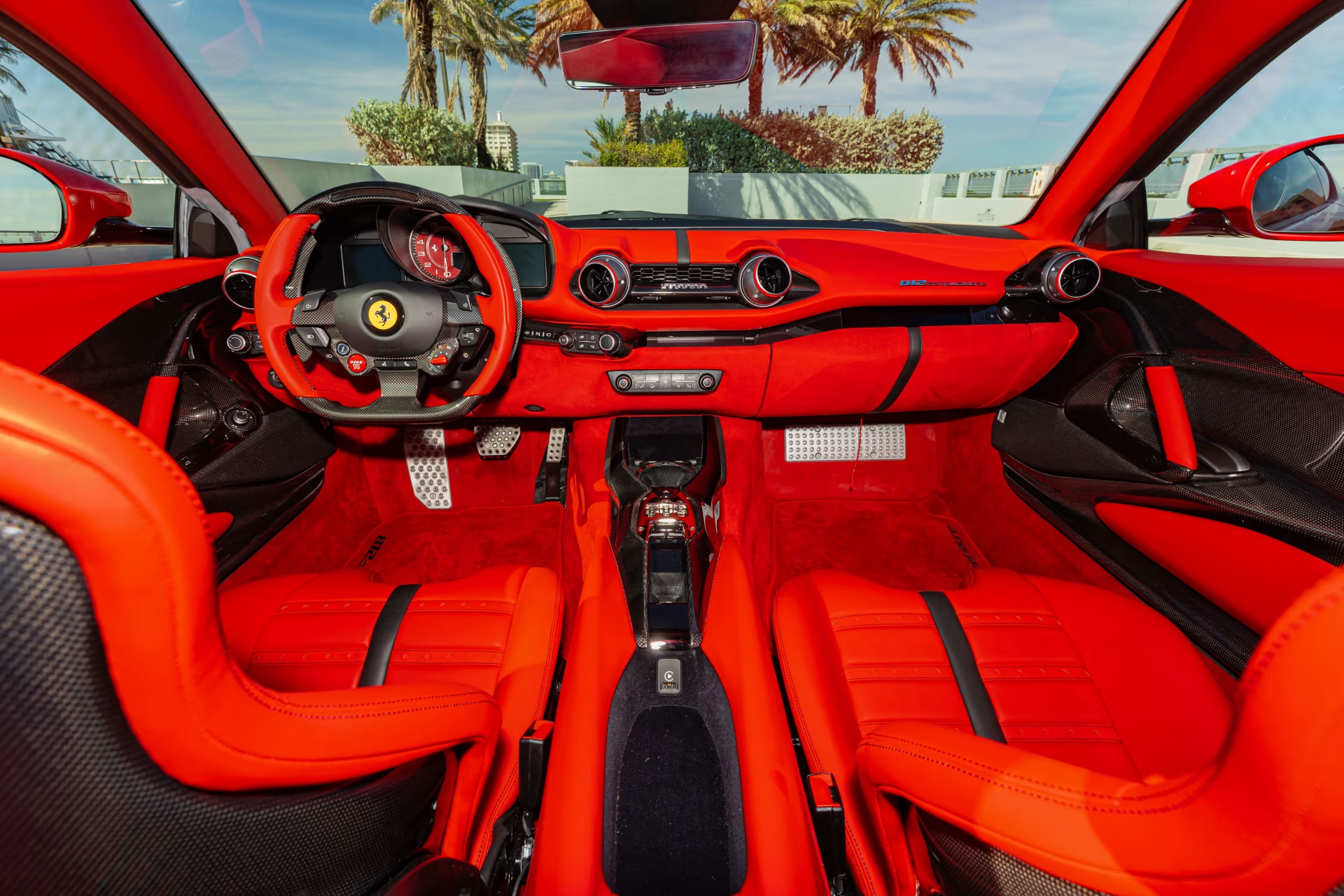
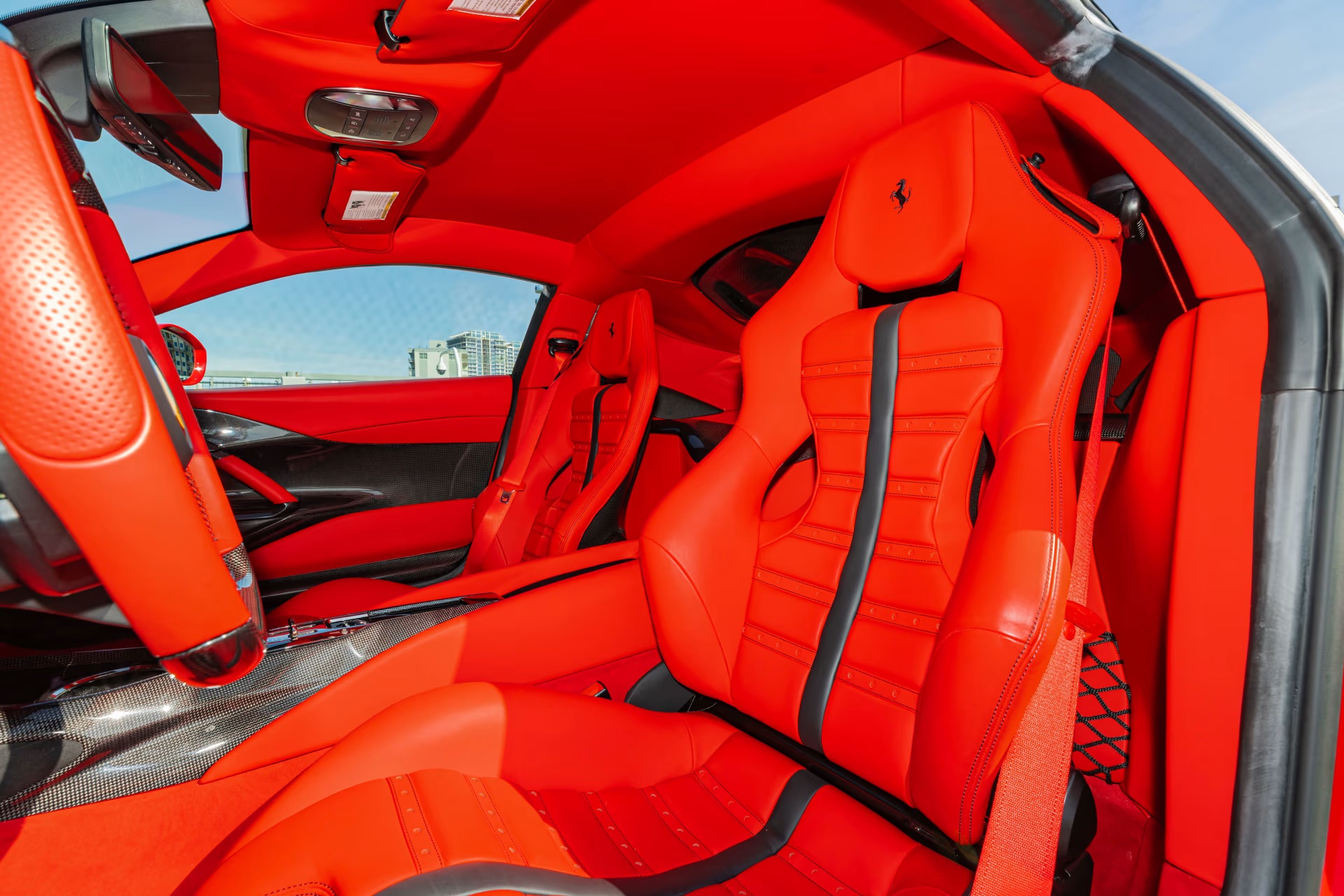
The interior is equally impressive, swathed in red leather with carbon fiber accents on the door handles and center console. Features like the Manettino steering wheel and Daytona-style racing bucket seats, complete with red safety belts, reflect Ferrari’s unmatched attention to detail.

This example also boasts modern luxuries, including an Infotelematic audio system, SiriusXM radio, parking cameras, dual-zone climate control, tire monitors, a passenger display, and Alcantara carpets. It’s a rare blend of track-ready performance and refined comfort, making this 812 Competizione an irresistible opportunity for any Ferrari enthusiast.

Source: Mecum Auctions


Source link

Home In On Luxury at the Grand Hyatt Hong Kong

0


Grand Hyatt Hong Kong

I have travelled to Hong Kong extensively for business and 20 years later, I’m still consistently surprised by what the city had to offer. Stepping through the threshold of the Grand Hyatt Hong Kong, a piano rendition of “The Phantom of the Opera” greeted me.

You’d expect the audio to be delivered through some fancy high-end sound system but the song was was actually performed live. As the violin solo followed, I was firmly in the “pleasantly impressed” camp as I broke into a rousing applause after the performance.

The grand piano sits atop the balcony of the upper mezzanine floor, and yes, from ground to ceiling, the lobby of the Grand Hyatt Hong Kong measured closed to three storeys. Adding to the plenitude are grand marbled columns, period décor pieces, and indoor water features alongside curvilinear staircases that lead to the upper mezzanine. The immense lobby is reminiscent of a luxurious cruise liner. I feel dwarfed. This was an experience where ample spaces allow guests to comfortably take in the environment and acclimatise to the opulent details.

The lobby of the Grand Hyatt Hong Kong.

Located at the waterfront of Hong Kong Island, guests get a gander at the world-famous Victoria Harbour. When night falls, the city become starburst — lights dot and hum along the streets. Since opening in November 1989, the hotel finished a four-year-long renovation on all guest rooms and facilities in 2018. Masterminded by Melbourne-based boutique design studio, BAR Studio, the rooms are imbued with striking spaciousness. Outfitted with an open bathtub, a walk-in shower, a separate toilet, glass light-fixtures and a neutral sand-tone marbled vanity, one is still able to find the breadth of the space tenable; a respite in space-starved Hong Kong.

Even before the makeover, Grand Hyatt Hong Kong had chalked up several awards and accolades for its hospitality. While the room’s spaciousness is a refreshing commodity, there are the thoughtful designs like putting a multi-purpose solid timber table next to the windows just so you can take in the city view. The housekeeping team takes the cake.

Grand Hyatt Hong Kong

If cleanliness is next to godliness, I’m in church. IMHO, the housekeeping is probably second to none. An example: on my second day, I accidentally dropped my contact lens case, which landed behind the sink. As I retrieved it, I spotted the sink pipes — polished, with nary a dust particle. Even in hard-to-reach places, the attention to neatness was evident.

The free time I had was either spent on eating and shopping. I needed the gym to keep my energy up and kill some calories. Grand Hyatt Hong Kong offers a 24-hour fitness studio and its wide assortment of gym equipment afforded me my usual workout routines with little to no need for variations.

The Grand Café

Contributing to my excess calories was the breakfast buffet at Grand Café. During my stay, I had three opportunities at the sumptuous breakfast buffet and I still didn’t manage to try all the dishes. The offering was extensive — from Western to Chinese and Middle Eastern cuisines. It’d be easy to think that with such an extensive buffet offering, quality will dip but that couldn’t be further from the truth.

Take the dim sum menu. As a Hong Kong signature, the dim sum were fresh and finely prepared, instead of being microwaved and placed in steamer baskets afterwards. If the Grand Café is serving up such hearty quality food, there is no doubt the other 11 world-class restaurants and bars found at Grand Hyatt Hong Kong will not disappoint.

Grand Hyatt Hong Kong

Grand Hyatt Hong Kong is the gold standard for luxury hospitality. If I had all the money in the world, I would want to replicate the thoughtful designs, environment, a capable in-house chef who can serve up international cuisines and a butler team who will anticipate all my OCD whims. But I’m a man of modest means so this brief stay at the hotel is a close second to my dream home.

This article was first seen on Esquire Singapore.

For more on the latest in hotel and property reads, click here.


Source link

0 Series: Honda Shows Off Two Radical Future EVs

0


Honda started slower than some rivals in developing electric vehicles (EVs). But it will catch up fast and catch up funky.

The company used this week’s giant CES consumer electronics show to reveal a pair of radically shaped future electric cars and plans for future technologies, including a new operating system named for a beloved old technology.

Honda’s Slow Start

2024 Honda Prologue in North Shore Pearl with hills in the background.2024 Honda Prologue in North Shore Pearl with hills in the background.

Honda has just one electric car on sale in the U.S. today – the 2025 Prologue. It barely qualifies as a Honda. Built in partnership with General Motors, it has mostly GM parts. The Prologue shares a platform with the Chevy Blazer EV, Cadillac Lyriq, and other GM electric cars. Honda designers created its unique look, and Honda engineers tuned its performance. But it’s functionally a GM car in Honda clothing.

The Plan to Pick Up Speed

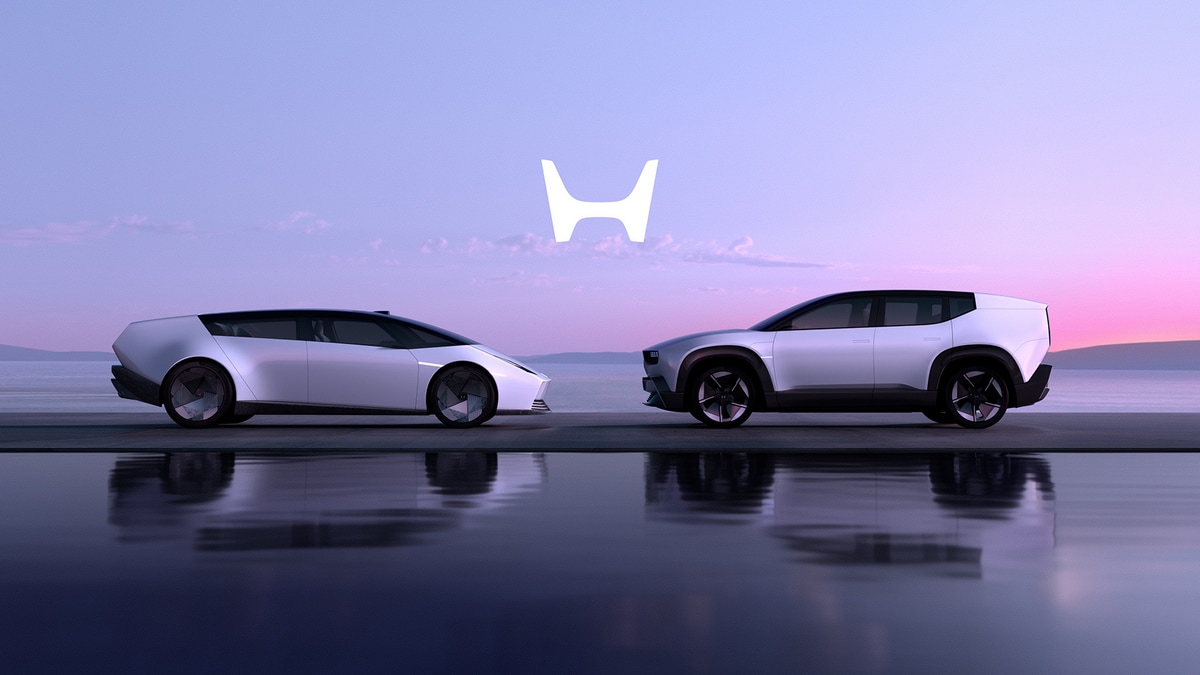
Honda has, however, built its own EV platform from the ground up. The company plans a new lineup of electric cars it calls the Honda 0 Series. They’ll use advanced self-driving technology and push AI voice assistants to new limits.

Honda used this week’s show to reveal a pair of them. Officially, both are concept cars – design studies meant to show what future cars might look like. Automakers often design wild, adventurous concepts, then tone them down significantly for production.

However, Honda says these two are intended for production and are likely to reach dealerships in 2026.

The 0 Saloon

The Honda 0 Saloon seen from a front quarter angleThe Honda 0 Saloon seen from a front quarter angle

First, let’s talk about the aggressive wedge that caught your eye above.

Officially, it’s called the Honda 0 Saloon, though we expect that name to change before it reaches American buyers. Much of the world uses the word “saloon” the way Americans use “sedan,” to mean a 4-door passenger car. Never mind that the vehicle you see is more of a wagon.

Small details about the 0 Saloon could change before production – it lacks mirrors, which are required under U.S. law. But Honda executives tell us the car you see is intended for production.

An angular wedge more in keeping with Lamborghini design traditions than Honda’s usual family-friendly aesthetic, it would instantly become one of the most unusual sights on American roads.

In person, the finished car is low, reaching just to the chest of an average-sized adult. Designers have used light to define its edges, with lines of LEDs defining many edges. In the rear, thin red LED lines create a tunnel effect around the Honda name. That leaves the driver with nearly no rear view, relying on cameras to see the traffic behind.

The interior of the Honda 0 SaloonThe interior of the Honda 0 Saloon

The interior includes thin seats built of a hard shell lined with softer padding. A 4-seater, the rear is closer to two molded bucket seats than a true bench.

The driver steers with a yoke rather than a steering wheel. A single flat screen surface takes up the entire dashboard.

The 0 Saloon is a striking vehicle – something you’d expect from an exotic automaker more than from Honda. Honda gave no performance details, saying only that the car is electric and uses “advanced battery chemistry.”

Related: How Solid-State Batteries Could Shape Our EV Future

The Honda 0 SUV

The Honda 0 SUV seen from a front quarter angleThe Honda 0 SUV seen from a front quarter angle

The second vehicle Honda debuted today looks more conventional, though it would still stand out in a 2025 parking lot. The Honda 0 SUV is shaped more like a traditional sport utility, though with a rear end suited for a “Star Trek” shuttle.

In front, a faux grille (EVs don’t need the airflow of a real grille) is glossy black while in motion. But on startup and shutdown, it’s revealed to be a matrix of pixels that flutter as if to show the car waking and going to sleep.

The Honda 0 SUV seen from a rear quarter angleThe Honda 0 SUV seen from a rear quarter angle

Thick rear pillars lead to a very small, high rear window. U-shaped red LEDs trace the shape of the tailgate. The faux grille and segmented lights from the front mark it as an EV, but they don’t look as radical as the front end of the Saloon.

It uses a more conventional seating arrangement than the 0 Saloon, with a true 3-seat bench in the rear. But, from the driver’s seat, the two vehicles are nearly identical – same yoke, same one wide screen dashboard.

Honda says the 0 SUV will go on sale before the Saloon, and once again, offers no performance details.

Asimo OS Uses Casual Conversation

The Honda 0 Saloon faces Honda's ASIMO robotThe Honda 0 Saloon faces Honda's ASIMO robot

While executives had little to say about the cars’ mechanical performance, they went out of their way to highlight the AI-based technology inside.

The operating system that powers the new cars borrows its name from Asimo, a humanoid robot Honda debuted back in 2000. About 4 feet tall, resembling an astronaut suited up for a spacewalk, Asimo became something of a mascot for Honda’s technology efforts before his 2022 retirement.

In spirit, he’s now something of an AI-driven operating system.  

In a film shown to journalists, drivers conversed casually with their cars using the system. “At first, I was nervous,” says a driver. “But Saloon got to know me, “one explains. “Saloon knows my favorite color. Saloon knows when work goes well. … It comforts me when I’m sad.”

Related: Volkswagen Brings ChatGPT To Cars

The film showed a driver talking about a stressful work meeting with her car and the car asking empathetic questions. It did not show her using it to control climate and entertainment functions, but we assume the system can do that.

Level 3 Self-Driving Tech

The driver, however, could be somewhat optional in the 0 Series cars. To illustrate the point, the 0 Saloon drove itself around the stage behind executives as they talked.

Steven Frey, Honda Vice President of Development Operations, described the car’s automation systems as a Level 3 “eyes off” automation capability.

Related: Self-Driving Cars – Everything You Need to Know

Automakers use a ladder of five levels to describe their efforts toward a self-driving car. Most automakers currently sell a Level 2 system that can accelerate, brake, and steer itself (usually on a limited set of highways) with a driver ready to take over at any moment.

Honda is one of several automakers that each consider themselves the first company to achieve practical Level 3 technology, which allows drivers to look away from the road. Honda has Level 3 cars on the road in its home country of Japan. In the U.S., only Mercedes sells a Level 3 system, and it is legal only in Nevada and Northern California.

Related: First (Not) Drive Video – Mercedes-Benz Hands-Free Drive Pilot System

“The strength of our technology is that it can respond appropriately to irregular situations,” Frey said. The car models its environment, even down to logging the changing shapes and colors of roadside trees as the seasons change, he explains.

A demonstration showed the car recognizing and avoiding scraps of burst tire in a busy highway lane.

Honda executives are so bent on personifying the car that Frey slipped up at one point, stating, “The more you drive, the more you will love and trust him.” He corrected himself, “The more you will view it as your partner.”

We should note, however, that automated driving systems are governed by state laws. So far, the technology is not allowed beyond limited testing environments in most states.

An Advanced Gamble

Honda seemed cautious in its move toward EVs until today. The 0 Series vehicles, however, are a big swing.

They combine technologies many automakers are working toward, like self-driving technology, AI assistants, and new battery chemistries. In that, they’re hardly unique. Many automakers have a similar project.

But they are standout designs — something Honda has not often been known for. If the 0 Series Saloon reaches showrooms in this form, it will instantly be one of the most head-turning cars on the road.

We can’t evaluate its impact before it arrives, and particularly before Honda says anything about price. But a striking rolling wedge that learns your favorite color and asks you about your day at work would stand out in the current market.

A year from now, it’s likely to still seem like the future.


Source link

Maserati Quattroporte 5th Generation (M139) Buyers Guide

0


When the 2003 Maserati Quattroporte 5th Generation (M139) was introduced, it was a transformative chapter for Maserati. As the successor to the 4th generation Quattroporte, the M139 bought back what an Italian luxury sedan could be, combining Maserati’s heritage of craftsmanship with Ferrari-derived performance engineering.

Unveiled at the Frankfurt Motor Show, the M139 was more than just a sedan; it was Maserati’s statement of intent to rival the best in its class while staying true to its Italian roots.

Under its sculpted hood lay a naturally aspirated 4.2-liter V8 engine, a powerplant shared with Ferrari. This powerplant delivered 394 hp and a distinctive exhaust note, bringing the Quattroporte from 0 to 60 mph in approximately 5.6 seconds and on to a top speed of 171 mph.

 The V8 was later upgraded to a 4.7-liter variant in higher trims, pushing performance even further and offering a balance between spirited driving and everyday usability. Coupled initially with the DuoSelect automated manual transmission, the car gained a ZF automatic gearbox in later years.

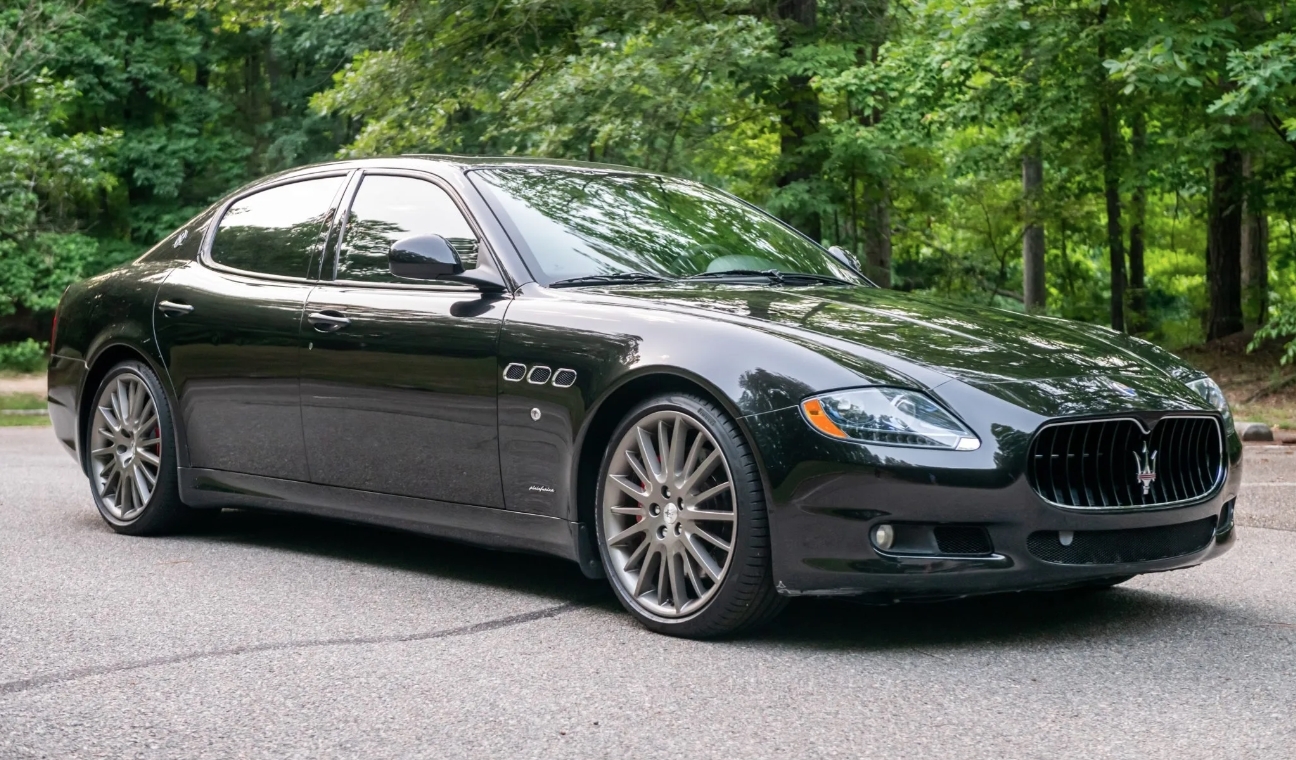
The exterior of the 5th Generation Quattroporte was formed by the legendary Pininfarina design house, resulting in a sedan that was elegant and timeless. Its long hood, flowing roofline, and distinctive grille made it unmistakably Maserati.

The sleek body was complemented by thoughtful aerodynamic elements, giving the car an imposing yet graceful presence on the road. Signature trident emblems and stylish alloy wheels added to the car’s beautiful touch.

Inside, the Quattroporte offered premium Poltrona Frau leather upholstery, intricate wood veneers, and a bespoke analog clock adorned the interior. Features like the Skyhook adaptive suspension system and customizable driving modes gave drivers comfort and control, making the car suitable for both spirited drives and long-distance cruising.

Throughout its production, the Maserati Quattroporte competed with some of the finest luxury sedans, including the Mercedes-Benz S-Class, BMW 7 Series, and Audi A8. Despite the competition, the Quattroporte stood out with its Italian flair, and Ferrari-derived performance.

Model Changes (Breakdown by Year)

2003 Maserati Quattroporte

In 2003, the 5th Generation Maserati Quattroporte made its debut at the Frankfurt Motor Show.

Under the hood, it featured a Ferrari-derived 4.2L naturally aspirated V8 engine, delivering 394 hp, paired with a DuoSelect automated manual gearbox. 

Designed by Pininfarina, the Quattroporte was sleek and beautiful. Inside, the cabin was adorned with fine leather, rich wood trims, and a signature analog clock, emphasizing Maserati’s attention to detail. 

Equipped with the advanced Skyhook adaptive suspension system, the Quattroporte offered a refined balance of handling and comfort. With a 0–60 mph time of 5.6 seconds and a top speed of 171 mph, it was a true performance sedan wrapped in luxury.

The 2003 Maserati Quattroporte was introduced with a starting price of around $125,000.

2004 Maserati Quattroporte

In 2004, the Maserati Quattroporte entered its first full year of production as Maserati ramped up efforts to meet the growing global demand for the luxury sedan. 

During this time, the DuoSelect automated manual gearbox received refinements aimed at delivering smoother shifts, while minor software updates enhanced the functionality of the infotainment system. 

The Quattroporte was widely praised for its stunning design and impressive performance, though some criticism was directed at the DuoSelect gearbox, which was noted for its less-than-smooth operation in city driving conditions.

The 2004 Maserati Quattroporte was introduced with a starting price of around $95,000. Slightly less than the previous price.

2005 Maserati Quattroporte

In 2005, Maserati expanded the Quattroporte’s feature set, focusing on enhancing comfort and personalization to appeal to a wider range of buyers. 

One of the key additions was the introduction of the optional Comfort Pack, which provided softer suspension settings for a smoother ride and included rear-seat enhancements to elevate passenger comfort.

Maserati also improved the cabin’s soundproofing, creating a quieter and more serene ambiance Interior customization options were expanded, offering a broader selection of bespoke leather upholstery and intricate wood trim combinations, allowing buyers to tailor the Quattroporte to their personal tastes.

In terms of technology, the navigation system received updates aimed at improving usability, ensuring drivers had a more intuitive and seamless experience behind the wheel.

The 2005 Maserati Quattroporte had the same starting price as the previous year of around $95,000. 

2006 Maserati Quattroporte

In 2006, Maserati introduced the Sport GT trim for the Quattroporte, catering to enthusiasts seeking a sportier driving experience. This new variant focused on enhancing the sedan’s dynamic capabilities.

Key features of the Sport GT trim included a revised DuoSelect gearbox, which offered quicker and more responsive shifts, and a sport-tuned Skyhook suspension system designed to deliver sharper handling and improved driver engagement. 

Larger 20-inch wheels, paired with performance tires, further enhanced the GT’s focus on performance and handling, while the addition of a blacked-out grille and interior accents gave the car a more aggressive styling.

In addition to the Sport GT enhancements, Maserati also introduced an optional rear-seat entertainment system, which included dual screens.

In 2006, the Maserati Quattroporte was available in three different trims:

  • Base Quattroporte: Starting at $103,700.
  • Quattroporte Sport GT: Priced from $112,200.
  • Quattroporte Executive GT: Beginning at $115,900.

2007 Maserati Quattroporte

In 2007, the Maserati Quattroporte underwent a series of refinements. 

The year saw the introduction of updates to Maserati’s first-generation infotainment system, improving usability and modernizing the in-car technology experience. I

Inside, the interior quality was updated with the use of new materials and subtle design enhancements. 

Externally, minor tweaks included a more refined grille and improvements to the LED lighting.

In 2007, the Maserati Quattroporte was available in several trims:

  • Base Quattroporte with DuoSelect Transmission: Starting at $110,600.
  • Base Quattroporte with Automatic Transmission: Priced from $112,250.
  • Sport GT Quattroporte with DuoSelect Transmission: Beginning at $119,300.
  • Executive GT Quattroporte with DuoSelect Transmission: Starting at $120,600.
  • Sport GT Quattroporte with Automatic Transmission: Priced from $120,950.
  • Executive GT Quattroporte with Automatic Transmission: Beginning at $122,250.

2008 Maserati Quattroporte

In 2008, Maserati introduced the Quattroporte S, a significant upgrade. 

At its heart was a new 4.7L V8 engine, producing an impressive 430 hp. Complementing the engine was the introduction of the ZF 6-speed automatic gearbox, which replaced the DuoSelect transmission as the primary option. This gearbox quickly became the preferred choice for most buyers, thanks to its smooth and seamless shifting, particularly in city driving.

The Quattroporte S also featured a revised suspension system, designed to improve both ride comfort and handling balance, making it equally suitable for spirited drives and long-distance cruising. 

Externally, the 2008 model received updated front and rear bumpers, giving the car a more modern and refined appearance. Inside, the cabin was enhanced with new infotainment options and upgraded materials

In 2008, the Maserati Quattroporte was available in several trims:

  • Base Quattroporte: Starting at $114,750.
  • Quattroporte Executive GT: Priced from $124,900.
  • Quattroporte Sport GT S: Beginning at $128,165.

2009 Maserati Quattroporte

In 2009, the Maserati Quattroporte underwent a mid-cycle refresh. 

Externally, the facelift included a revised front grille with vertical slats, inspired by the Maserati GranTurismo, along with new LED rear lights for a more modern and refined appearance. Slightly updated front and rear bumpers further contributed to the car’s sleeker aesthetic.

The trims also saw enhancements, with refinements to the Quattroporte S and Quattroporte Sport GT S models. 

The Sport GT S, in particular, received firmer suspension tuning, upgraded brakes, and a throatier exhaust system. 

Inside, the cabin featured a new steering wheel design, improved infotainment with upgraded navigation and Bluetooth connectivity, and expanded customization options for upholstery and trim, allowing buyers to tailor the Quattroporte to their tastes.

In 2009, the Maserati Quattroporte was available in three different trims:

  • Base Quattroporte: Starting at $119,750.
  • Quattroporte S: Priced from $125,750.
  • Quattroporte Sport GT S: Beginning at $133,700.

2010 Maserati Quattroporte

In 2010, the Maserati Quattroporte received enhancements in both performance and features. 

The Sport GT S trim saw significant updates, with its 4.7L V8 engine tuned to deliver an increased output of 440 hp. This power boost was complemented by unique styling elements, such as black chrome accents and a more aggressive exhaust note. 

Additionally, the ride height was lowered, improving aerodynamics and handling for a sharper driving experience.

Other updates include parking sensors becoming standard across the lineup, making maneuvering easier and more convenient. The audio system was upgraded to offer a richer sound experience, while advanced driver-assistance features were introduced as optional.

In 2010, the Maserati Quattroporte was available in three different trims:

  • Base Quattroporte: Starting at $119,750.
  • Quattroporte S: Priced from $126,250.
  • Quattroporte Sport GT S: Beginning at $133,700.

2011 Maserati Quattroporte

In 2011, Maserati focused on delivering final refinements to the 5th Generation Quattroporte. 

Across all trims, minor engine tuning resulted in improved fuel efficiency, addressing a growing demand for better economy without compromising performance. Additionally, the suspension system was revised, providing a smoother driving experience.

In 2010, the Maserati Quattroporte was available in three different trims:

  • Base Quattroporte: Starting at $121,250.
  • Quattroporte S: Priced from $126,750.
  • Quattroporte Sport GT S: Beginning at $134,700.

2012 Maserati Quattroporte

In 2012, the Maserati Quattroporte M139 entered its final year of production, marking the end of a highly successful chapter for the sedan. Production of this fifth-generation model was phased out mid-year as Maserati shifted its focus to the upcoming 6th-generation Quattroporte (M156).

In 2012, the Maserati Quattroporte was available in two trims

  • Quattroporte S: Starting at $127,250.
  • Quattroporte Sport GT S: Priced from $135,200.

Maserati Quattroporte 5th Generation Common Problems

The Maserati Quattroporte 5th Generation, while celebrated for its design, is not without its share of issues that owners and prospective buyers should consider.

It is always recommended to get a Pre-Purchase Inspection (PPI) from an authorized dealer or a trusted independent mechanic to identify any possible concerns.

Here are some common issues owners have experienced: 

Electrical System Failures: Owners have encountered problems such as faulty sensors, malfunctioning control modules, and intermittent electrical failures. Symptoms include sporadic warning lights, unresponsive infotainment systems, and malfunctioning power windows or mirrors.

Transmission Troubles: Some Quattroporte models, particularly those equipped with the DuoSelect transmission, have experienced rough shifting, delayed engagement, or even complete transmission failure. These issues may stem from defective solenoids, faulty valve bodies, or inadequate fluid levels.

Suspension: The Quattroporte’s suspension system, designed for a balance between comfort and sportiness, has faced challenges such as suspension noise, excessive vibration, or rough ride quality. These problems are often due to prematurely worn-out bushings, damaged shocks or struts, or misaligned suspension components.

Engine Performance Issues: Despite the Quattroporte’s powerful engines, some owners have reported rough idling, engine misfires, or reduced power output. Potential causes include faulty fuel injectors, ignition coil failures, or air intake leaks.

Sticky Interior Buttons/Trim: Over time, the interior buttons and trim can develop a sticky texture, likely due to the degradation of certain materials used in the cabin. This issue affects the tactile experience and overall interior aesthetics.

Premature Tire Wear: Some owners have noted that the Quattroporte experiences faster-than-expected tire wear, particularly on models equipped with larger wheels. This can lead to increased maintenance costs and may affect driving safety if not addressed promptly.

Recalls

2009 Maserati Quattroporte vehicles

Front Suspension Lower Ball Joint Failure (Recall no. 09V-002)

Certain Quattroporte models were recalled due to the potential failure of the front suspension lower ball joint, which could lead to loss of vehicle control.

2009 Maserati Quattroporte vehicles

Rear Suspension Toe-In Link Failure (Recall no. 09V-003)

A recall was issued for specific Quattroporte vehicles concerning the rear suspension toe-in link, which could fail and result in loss of control.

2006 Maserati Quattroporte vehicles

Incorrect Tire Pressure Label (Recall no. 06V-147)

A recall was announced for certain Quattroporte models due to incorrect tire pressure information on the label, which could lead to improper tire inflation.

Maintenance and Ownership Costs

Owning and maintaining a Maserati Quattroporte can be expensive, as routine maintenance, repairs, and parts often come at a premium compared to more common vehicles. This is largely due to the car’s luxury branding.

It is important to remember that regular maintenance and repairs will still be necessary, and the costs can vary depending on whether you take your car to a dealer or an independent mechanic.

Here is the suggested service schedule and intervals per Maserati:

12,000-Mile Service (Annually)

  • Oil change

  • Oil filter replacement

  • Fluid level checks (coolant, brake fluid, power steering fluid, windshield washer fluid)

  • Brake system inspection (pads, discs, and lines)

  • Tire inspection and rotation (if needed)

  • Suspension and steering inspection

  • Diagnostic scan for potential system issues

25,000-Mile Service (Every Two Years)

37,500-Mile Service (Every Three Years)

50,000-Mile Service (Every Four Years)

Additional Maintenance Notes

  • Transmission Fluid: Inspect the transmission fluid regularly and replace it as recommended by Maserati for vehicles equipped with the DuoSelect or ZF transmissions.

  • Differential Fluid: Replace differential fluid every 30,000–50,000 miles to maintain drivetrain performance.

Here is a rough estimate of typical service costs associated with the Maserati Quattroporte:

  • Oil Change  – The cost of an oil change for a Maserati Quattroporte ranges from $250 to $350 at an independent mechanic and $400 to $500 at a Maserati dealership. 

  • Minor Service – A minor service typically includes an oil change, replacement of the cabin air filter, and engine air filter, and a general inspection. The cost for this service ranges from $800 to $1,000 at independent shops and $1,200 to $1,500 at a dealership.

  • Major Service – A major service involves all the components of a minor service plus additional maintenance, such as replacing spark plugs, performing a brake fluid flush, inspecting and replacing belts, and possibly a transmission fluid replacement. This service costs between $2,000 and $2,500 at independent shops and $3,000 to $3,500 at a dealership.

  • Tires – A set of high-performance tires for the Maserati Quattroporte, such as the Pirelli P Zero or Michelin Pilot Sport, costs between $1,500 and $1,800 at an independent shop and $1,800 to $2,200 at a dealership. Installation and balancing add an additional $100 to $200.

  • Brakes – Replacing brake pads and rotors for the Maserati Quattroporte can vary based on parts and labor. At an independent shop, brake pads cost between $300 and $500, rotors between $700 and $1,000 per axle, and a full set of pads and rotors ranges from $1,800 to $2,500. At a dealership, the same service can cost $2,500 to $3,000 for a full set. Dealerships use original Maserati parts, which accounts for the price difference.

  • Clutch – For Quattroporte models equipped with the DuoSelect transmission, clutch replacements are a common expense. The cost ranges from $2,800 to $4,000 at independent shops and $3,500 to $5,000 at a dealership. This includes replacing the clutch disc, pressure plate, and associated labor. Independent shops often provide high-quality service at a lower cost.

Options List

When considering the Maserati Quattroporte 5th Generation, understanding the available options is essential as there were quite a few to choose from.

For the exterior, Maserati provided several personalization choices. Buyers could select from multiple alloy wheel designs, ranging from elegant 18-inch rims to sportier 20-inch options, some of which were exclusive to the Sport GT S trim.

A wide palette of premium paint finishes, including metallic and pearlescent colors, was available, along with rare, special-order shades through Maserati’s customization program. 

Additionally, brake caliper colors, such as red, blue, or black, added a sporty touch, and an optional tilt-and-slide sunroof provided natural light inside the cabin.

The Quattroporte’s interior upholstery options included Poltrona Frau leather as standard, with upgrades to quilted patterns and contrasting stitching. Alcantara inserts were available for those seeking a sportier aesthetic. 

Buyers could choose from a selection of rich wood veneers, including walnut, rosewood, and piano black lacquer, or opt for carbon fiber trim for a modern look. 

The seat configurations could be upgraded to include heated and ventilated options, adjustable lumbar support, and massage functions for both the front and rear seats. Custom headliners in suede or leather were available.

Technology and convenience were at the forefront of the Quattroporte’s options. A dual-screen rear-seat entertainment system, paired with wireless headphones, ensured passenger comfort on long journeys. 

An upgraded Bose Surround Sound System delivered a high-fidelity audio experience, while adaptive Bi-Xenon headlights improved nighttime visibility with auto-leveling and cornering functionality. The optional soft-close doors added a touch of convenience and quiet operation which was nice to have as well.

For driving enthusiasts, the Skyhook Suspension system provides adaptive damping, allowing drivers to switch between comfort and performance settings. A Sport Package included a lowered suspension, stiffer damping, and a more aggressive exhaust note which is what many enthusiasts would want to go for. 

Selecting the right options would definitely help with your ownership experience. Features like upgraded interiors, premium audio systems, and advanced performance packages contributed to higher resale value.

2011 Maserati Quattroporte options list

2012 Maserati Quattroporte options list

Key Options

  • Poltrona Frau leather upholstery with quilted patterns and contrasting stitching

  • Skyhook adaptive suspension system

  • 20-inch alloy wheels with exclusive Sport GT S designs

  • Carbon fibre interior

Maserati Quattroporte 5th Generation Price and Values

The Best Maserati Quattroporte 5th Generation to Buy

When choosing the best Maserati Quattroporte 5th Generation, several factors come into play..

For buyers seeking the best version of the Quattroporte, the later model years benefit from key refinements, including the introduction of the ZF 6-speed automatic transmission, which replaced the DuoSelect gearbox and significantly improved drivability and reliability.

The Quattroporte S and Sport GT S trims from these years offer more performance with the 4.7L V8 engine, updated suspension tuning, and modernized technology, such as improved infotainment systems and adaptive lighting.

When considering long-term value and performance, targeting a 2009–2012 Quattroporte S or Sport GT S with low mileage, a clean maintenance history, and desirable options is a wise choice. 

In terms of value, these cars have depreciated to a level where further significant depreciation is unlikely. If you’re considering purchasing one, make sure regular maintenance has been properly carried out.

Additionally, cars equipped with sought-after options like the Skyhook adaptive suspension system upgraded interiors with Poltrona Frau leather, and larger 20-inch alloy wheels are more desirable and may retain higher resale value.

Conclusion

In summary, with an original starting price of over $100,000, the Maserati Quattroporte 5th Generation can now be found for around $20,000 or more. This makes it an incredible value, especially for a performance-focused sedan powered by a Ferrari-derived engine.

While alternatives like the Mercedes-Benz S-Class, BMW 7 Series, and Audi A8 exist, the Quattroporte sets itself apart with its distinctive Italian styling, characterful V8 engine, and the exclusivity that comes with owning a Maserati.

For those who value a mix of elegance, performance, and heritage, the Maserati Quattroporte 5th Generation is an excellent choice.

Car Hacking Shortcuts

  • Look for models from 2009–2012 with the ZF 6-speed automatic transmission for improved reliability

  • Go for Quattroporte S or Sport GT S

  • Target vehicles with desirable options like the Skyhook suspension, larger 20-inch wheels, and upgraded interiors with Poltrona Frau leather for better resale value

  • Focus on low-mileage examples with a full-service history, as proper maintenance is critical to avoiding costly repairs

  • Avoid early models with the DuoSelect transmission 


Source link

Why the Hyundai Ioniq 5 N won

0


  • Six vehicles competed for Motor Authority Best Car To Buy 2025, five of them EVs

  • Five of the competitors are considered crossovers or SUVs

  • The Hyundai Ioniq 5 N was the most fun to drive of the group

The transition from internal-combustion to electric power continued at a slower pace than expected this year, but you wouldn’t be able to tell it from our list of Motor Authority Best Car To Buy 2025 candidates. Five of the six contenders had electric power, though that could flip next year. 

The reason is this past year saw the release of numerous electric-powered luxury and performance vehicles. They included the first electric SUVs from Porsche and Acura, a performance-oriented crossover from Hyundai, an electric ultra-luxury off-roader from Mercedes, and a substantial update for one of the best electric SUVs we’ve ever driven—from the startup Rivian. 

They were joined by a performance-oriented, gas-powered coupe from Mercedes, though even more performance is certainly in the offing in 2025 in the form of a 63 model.

Our testing this year involved our first drive experiences for all the vehicles, track testing at Atlanta Motorsports Park, and street driving on the twisty roads of rural northern Georgia. Sure, at least three of the vehicles seemed like fish out of water on the track, but that testing revealed dynamic qualities that impressed more than expected. 

Track capability isn’t the lone qualification to earn the Motor Authority Best Car To Buy award. We also look for engagement, luxury, fun factor, on-road livability, and even value. Pushing the envelope for luxury or performance can also help, and our winner, the Hyundai Ioniq 5 N did just that as the first truly sporty crossover EV on the market. 

Below, we break down how each of our contenders performed in our testing. We note their strengths and weaknesses, share insights from our editors on their dynamics, and explain why they did or didn’t win.


2024 Acura ZDX Type S

2024 Acura ZDX Type S

2024 Acura ZDX Type S

2024 Acura ZDX Type S

2024 Acura ZDX Type S

2024 Acura ZDX Type S

Acura ZDX Type S

Acura doesn’t do much to differentiate the ZDX Type S from the step-down A-Spec model. It has just 9 more hp for a total of 499 hp, though torque increases considerably from 437 to 544 lb-ft. It also gets bigger brakes, adaptive dampers and air springs with firmer suspension tuning, slightly quicker steering, and bigger wheels and tires. At 6,052 pounds, that’s not exactly the formula for a track machine.

So, the Acura ZDX Type S was out of its element on the track at AMP, but it did well in some ways compared to the Mercedes G 580 Electric and Rivian R1S. Among those SUVs, it sits the lowest to the ground and that makes it more nimble on turn-in and in most cases mid-corner. It had the best, quickest steering and response among the three, with some impressive immediate turn-in. “Lift-off-oversteer is a real thing with this car,” Senior Producer Joel Feder noted. That turned out to be a good strategy to get through turn 4’s 180-degree lefthander. However, that strategy made it hard to maintain a consistent line in the big turn-7-8-9 carousel. Senior Editor Bengt Halvorson felt it didn’t have the body control he expected, and Editorial Director Marty Padgett said that the ZDX doesn’t come across as a more capable version of what’s already available on the market.

We also felt little confidence in the brakes; its 102-mph top speed heading into turn 1 could have risen to 110 mph or so with stronger binders. We did see 108 mph later, but our trepidation proved prescient as we overheated the brakes at that speed, causing the ZDX to go into limp mode. The 275/40R22 Michelin Primacy All Season tires held up better than some other summer tires on competitive EVs, though they couldn’t match those tires for grip.

Of course, the track character holds little value for ZDX buyers, as vanishingly few, if any, will take it on a track. On the road, it’s comfortable and powerful. However, we see little reason Acura can charge more for the ZDX than Cadillac charges for the related Lyriq, and both Feder and Padgett said they’d take the Lyriq’s conventional springs and coils versus Acura’s air suspension. Padgett also said that he’s always associated Acura with a more capable version of what’s out there otherwise, but to him, “this Acura’s a clear product stopgap, one with an un-Acura-like flying carpet ride.”

2025 Mercedes-Benz G 580 with EQ Technology

2025 Mercedes-Benz G 580 with EQ Technology

2025 Mercedes-Benz G 580 with EQ Technology

2025 Mercedes-Benz G 580 with EQ Technology

2025 Mercedes-Benz G 580 with EQ Technology

2025 Mercedes-Benz G 580 with EQ Technology

Mercedes-Benz AMG G 580 with EQ Technology

You don’t ask an offensive lineman to perform “Swan Lake.” You don’t compete with a semi tractor in an autocross. And you don’t take an electric G-Class on a racetrack, but that’s exactly what we did. Predictably, the AMG G 580 with EQ Technology proved itself a flop machine that needs to be wrangled through each corner, where we experienced copious body lean even in Sport mode. Its Falken Azenis FR520 275/50R20 tires had little grip, and it was the slowest vehicle in the carousel apex. Initially, we were only comfortable with taking this turn at 65 mph, but when we figured out a way to better straight-line the apex we got it up to 72 mph. Senior Editor Robert Duffer called it a Weeble, but noted that it had “enough squish in the carousel to take a set.” Halvorson agreed, saying “placing a heavy battery pack low in this tall, boxy vehicle has a stabilizing effect.” Feder got a little more technical: “The 4-motor powertrain asserts instant control of each wheel, whether it’s going around turn 6 on AMP or climbing a slick-rock formation off-road.” That gives this beast amazing off-road capability and a surprising ability to not embarrass itself on the track.

With 6,746 pounds to motivate, the G 580 was also the slowest vehicle on the straight at 98 mph. That wasn’t due to a lack of power, though, as the G 580’s quad motors spin up 579 hp and 859 lb-ft of torque. Instead, it was because we were uncomfortable transferring all that weight in turn 16 leading into the front straight or trusting the brakes to slow down such a tall, heavy beast. 

A track was not the venue for this beast, as it’s built as a rather charming off-roader. Padgett called it a “meme-worthy extremist, one with a great sense of self-deprecating humor,” noting that with the push of a button to activate its G Turn feature, it can spin in place. 

The electric G 580 starts at a staggering $162,650, and our tester had $28,000 in options, all of which were either aesthetic or comfort features. At that price, you have to appreciate the electric G 580’s party tricks as well as its luxury bona fides, but you don’t have to call it a Best Car To Buy winner.

2025 Rivian R1S

2025 Rivian R1S

2025 Rivian R1S

2025 Rivian R1S

2025 Rivian R1S

2025 Rivian R1S

Rivian R1S Tri-Max Ascend

The revised Rivian R1S doesn’t sit as low as the ZDX, but it had the most capable handling of the big SUVs on the track. That’s due to its advanced suspension that combines an air suspension with linked-hydraulic dampers developed by McLaren. Together they do an amazing job of counteracting body lean. Feder called it magic, and noted he was able to push it to 76 mph in the carousel apex despite a rather non-sticky set of Pirelli Scorpion MS HL275/50R22 tires. Among the SUVs, the R1S was the most stable in corners as it maintained a consistent line throttle on or throttle off. “Rivian didn’t build this off-road SUV for the track, yet it’s composed and doesn’t fall apart. It doesn’t feel top heavy. The entire thing takes a line and just plants itself,” Feder explained.

With its tri-motor powertrain, the R1S was easily the most powerful of all our contenders. Its trio of motors spins out 850 hp and 1,103 lb-ft of torque, which unlocks a 3.0-second 0-60 mph time. Any time we got hard on the throttle, the R1S responded with an immediate rush of power, and the multiple motors aided handling. “With the two rear motors controlling torque at either rear wheel, you can come out of it with excellent grip,” Duffer noted. The big 6,846-pound SUV hit 110 mph on the front straight. However, it had the worst brake feel, with a spongy pedal, an inconsistent bite point, and long pedal travel. The brakes improved a bit once we drained the battery as that allowed the R1S to incorporate more regenerative braking. Had we been more confident in the brakes, the R1S may have hit 120 mph, but as Duffer said, “you can only go as fast as you can brake.”

Overall, the R1S is an amazing achievement in performance for such a big, heavy vehicle with lots of off-road capability. However, it could improve with better brakes, and perhaps a different brake tune with a full battery. We’re fans, so much so that at least two of us have thought about buying one. “Would I prefer the Hyundai or Porsche to drive out here (on the track)? All the time. Would I spec the R1S for my own lifetime daily driver? I mean, I already have, a few times,” said Padgett.

2024 Mercedes-Benz AMG CLE 53

2024 Mercedes-Benz AMG CLE 53

2024 Mercedes-Benz AMG CLE 53

2024 Mercedes-Benz AMG CLE 53

2024 Mercedes-Benz AMG CLE 53

2024 Mercedes-Benz AMG CLE 53

Mercedes-Benz AMG CLE 53 4Matic

Our lone gas contender had the advantage of weight. That’s not to say at 4,420 pounds the AMG CLE 53 4Matic is light, but at 400-2,300 pounds lighter than the others it was able to build relatively more speed in the front straight given its power output. It was also the least powerful entry, as its twin-turbocharged 3.0-liter inline-6 makes “just” 443 hp and 413 lb-ft, the latter of which can rise to 443 lb-ft in 10-second overboost bursts. Still, we were able to push it to 115 mph on the front straight, aided by the ability to carry more speed into turn 16 and more confidence when braking into turn 1. There’s more room for power, as Feder called it “quick enough, not fast.” We all agreed that the CLE 53 made the best sounds, with a strong burble at idle and a roar under acceleration, but when the competition is all synthetic, that’s not saying much.

It also carried 81 mph through the carousel apex. While that wasn’t the fastest of the day, it was impressive given the soft tune of the CLE 53’s suspension. “The extremely soft suspension setup leaves far too much room for a steel-suspension CLE 63 to come,” observed Padgett. “This one’s in WRX territory: softened up so the actual buyers will love it more than the trackhounds who flog it mercilessly, out of context, on a track like this one.” Halvorson agreed, saying the car was “altogether let down by suspension and chassis controls that allow this coupe to feel wobbly in the corners.” 

The CLE 53 had other dynamic advantages, including strong grip from the Michelin Pilot Sport S 5 tires, great brakes, and nicely weighted, precise steering.

Add those strengths to a car with more power and a sharper tune, and you’d have a really strong contender. That’s likely coming in the form of a CLE 63. “The soft suspension and lack of fire and fury just made me want a CLE 63 that hasn’t been introduced yet,” opined Feder.

2024 Porsche Macan Electric Turbo

2024 Porsche Macan Electric Turbo

2024 Porsche Macan Electric Turbo

2024 Porsche Macan Electric Turbo

2024 Porsche Macan EV

2024 Porsche Macan EV

Porsche Macan Turbo Electric

Porsche is gonna Porsche. If the German luxury brand develops it, you can bet it’s going to be sporty. Porsche already made a high-performance EV in the form of the Taycan hatchback and wagon, and now it’s the crossover SUV’s turn. Despite its change from gas to electric power, the new Macan Electric feels like a next-generation Macan. “Only Porsche could be so consistent in road feel with this car to the gas Macan, so much so it blurs the line for anyone undecided between the duo,” observed Padgett. 

The Macan Electric Turbo model is the top of the lineup. It features a motor on each axle that combine to create all-wheel drive and a standard 576 hp and 811 lb-ft that jumps to 630 hp and 833 lb-ft with an overboost mode that’s available for 10-second spurts. They’re fed by a 95-kwh battery that provides 288 miles of range. It also comes standard with air springs, adaptive dampers, an electronically controlled locking rear differential, and larger front brakes (14.8-inch rotors with 6-piston calipers). Our tester also had the optional rear-wheel steering and 255/40R22 front and 295/35R22 rear Pirelli P Zero Corsa summer performance tires. 

On the track, the Macan Electric played the hero. Sharp steering, controlled body motions, strong brakes, and prodigious power had us all singing its praises. “It was precise and surgical as it carved through the AMP circuit. Kicking the rear end out and sliding through turn 6 wasn’t an issue,” said Feder. Indeed, after watching Feder drift the Macan through turn 6, I asked if he thought he was Vaughn Gittin Jr.

Halvorson said it helped him drive better. “On the track, the Porsche Macan Electric is down to business and uncluttered, and a confidence-inspiring, willing partner to help me get the fastest lap,” he said. Duffer agreed: “Each lap gave me more confidence to push it, and each time behind the wheel on the street or the track felt like a treat.” The numbers bore out our impressions: 84 mph in the carousel apex and a top speed of 121 mph, both highs for the day.

We did encounter a couple of dynamic niggles. At 5,393 pounds with much of that weight set low, I felt a quick weight shift with each turn of the wheel before the chassis took a set. Padgett said he felt a slight disconnect between ride control and steering heft, which he attributed to softened turn-in steering weight on Porsche SUVs with rear-axle steering. And we chunked the tires. “This thing peeled layers off its rubber like slices of deli meat,” quipped Padgett. The Pirellis also separated on the Ioniq 5 N, so it may be the tires more than the excess curb weight of EVs. 

In our final voting it was a close race between the Macan Turbo Electric and the Ioniq 5 N, but the Macan’s $107,295 starting price and the $130,760 sticker price of our tester meant it just didn’t present the value of the Hyundai. Still, it’s a great vehicle that we would all love to have in our garages.

2025 Hyundai Ioniq 5 N

2025 Hyundai Ioniq 5 N

2025 Hyundai Ioniq 5 N

2025 Hyundai Ioniq 5 N

Why the Hyundai Ioniq 5 N won

2025 Hyundai Ioniq 5 N

Hyundai Ioniq 5 N

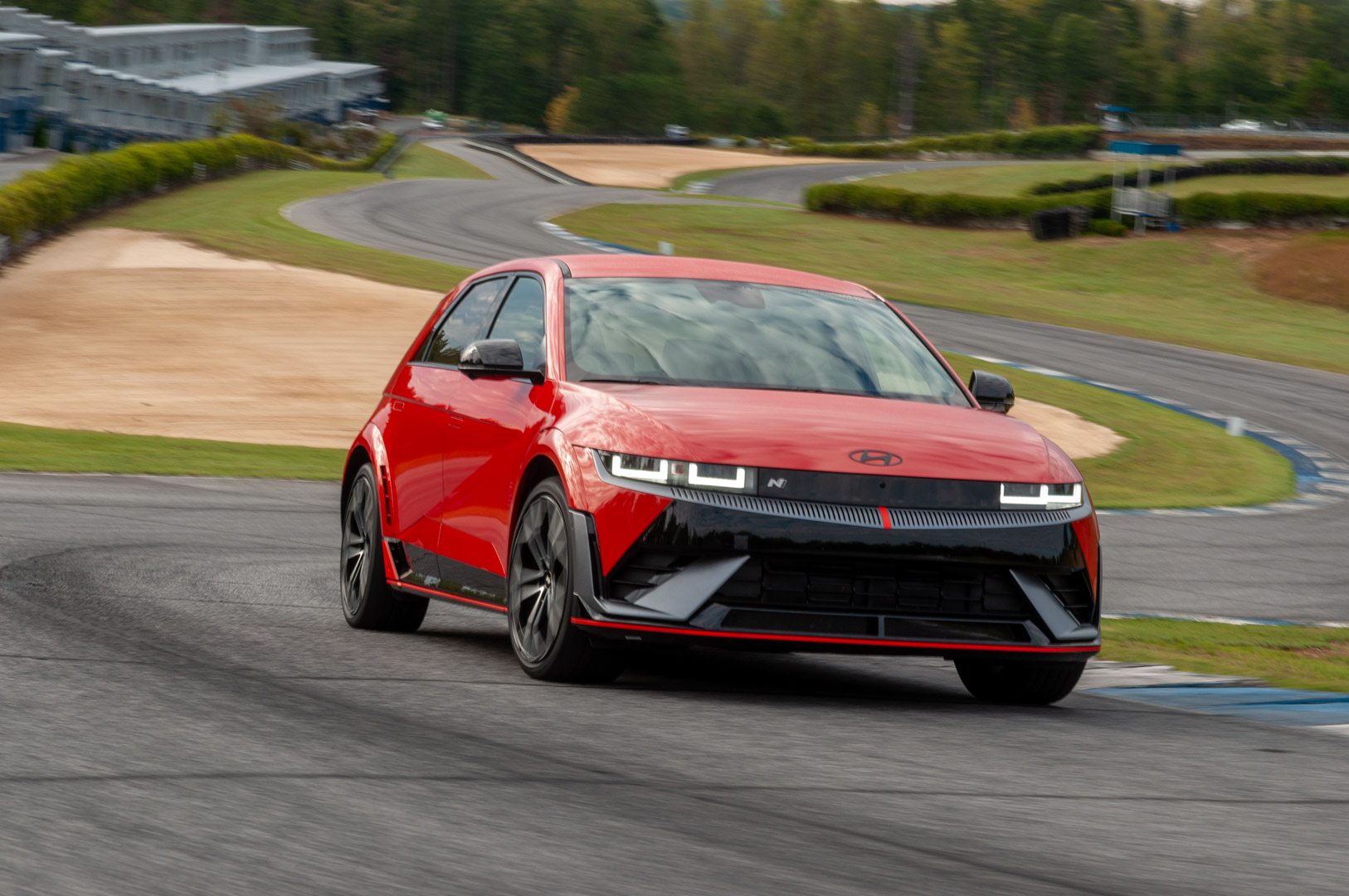
For the enthusiast, sporty EVs face two major issues versus their gas counterparts, weight and driver engagement. They make few natural sounds, have no need for shifts (manual or automatic), and they tend to add about 1,000 pounds of unwelcome weight. While the Ioniq 5 N weighs in at a rather portly 4,861 pounds, that made it the lightest EV in our competition, and Hyundai bakes in a lot of fakery to both simulate engagement and boost performance.

It works, and adept chassis tuning and a big dose of power don’t hurt either. The Ioniq 5 N has front and rear motors to spin up 601 hp (641 hp with overboost) and 545 lb-ft. An N Grin Shift mode simulates eight gears with quick power cuts during the “shifts,” and it makes the electric powertrain act like a gas one. However, Feder noted that it also makes the car slower around a track because of the cuts and the power building as the fake revs build. No worries. You can turn it off and get the full electric experience, which is capable of pushing this car from 0-60 mph in just 3.3 seconds.

Every track session can be a different experience, but they’ll all be entertaining. “The dynamics can be programmed six ways to Sunday for the driver’s liking, and various setups can be saved to two different buttons on the steering wheel. This is straight BMW M-level stuff,” noted Feder. Drivers can choose various settings for the steering, motors, stability control, suspension, limited-slip differential, and sound.

The Ioniq 5 N wasn’t quite the fastest around the track, as we hit 82 mph in the carousel apex and 117 mph on the front straight. However, it was the most fun. “It was the Ioniq 5 N that gave me the most seat-of-the-pants thrills, with its open invitation to drift and rotate,” enthused Halvorson. Duffer called it a “playful bunny, hopping around all happy and eager, then getting sly and serious with danger approaching,” while Padgett said, “the Ioniq 5 N zings, flings, and sings (or doesn’t) along with your every whim.”

We were split on the fake sounds. I found them delightful, and Halvorson said, “the gasoline-tuner-car sounds were so cartoonishly overdone that I couldn’t help but grin.” However, Padgett called their mock sports car roar the equivalent of pec implants.

While the 5 N had strong brakes, quick steering, and gut-dropping power, we did find two dynamic flaws. In the dampers’ Sport and Sport+ settings, the hatchback exhibited some bounding motions heading down the hill into turns 9 and 10 when more weight was over its nose and the rear end lightened up. And, like they did on the Macan Electric, the Pirellis started to fray late in the day.

The fun we had behind the wheel and the idea of an approachable EV track car (at $67,685) put the Ioniq 5 N over the top as our winner. Halvorson summed it up: “The Ioniq 5 N truly opens the idea of a fully electric track day to a new generation and a much wider go-fast crowd.”


Source link

Why World Foundation Models Will Be Key to Advancing Physical AI

0


Why World Foundation Models Will Be Key to Advancing Physical AI

In the fast-evolving landscape of AI, it’s becoming increasingly important to develop models that can accurately simulate and predict outcomes in physical, real-world environments to enable the next generation of physical AI systems.

Ming-Yu Liu, vice president of research at NVIDIA and an IEEE Fellow, joined the NVIDIA AI Podcast to discuss the significance of world foundation models (WFM) — powerful neural networks that can simulate physical environments. WFMs can generate detailed videos from text or image input data and predict how a scene evolves by combining its current state (image or video) with actions (such as prompts or control signals).

“World foundation models are important to physical AI developers,” said Liu. “They can imagine many different environments and can simulate the future, so we can make good decisions based on this simulation.”

This is particularly valuable for physical AI systems, such as robots and self-driving cars, which must interact safely and efficiently with the real world.

Why Are World Foundation Models Important?

Building world models often requires vast amounts of data, which can be difficult and expensive to collect. WFMs can generate synthetic data, providing a rich, varied dataset that enhances the training process.

In addition, training and testing physical AI systems in the real world can be resource-intensive. WFMs provide virtual, 3D environments where developers can simulate and test these systems in a controlled setting without the risks and costs associated with real-world trials.

Open Access to World Foundation Models

At the CES trade show, NVIDIA announced NVIDIA Cosmos, a platform of generative WFMs that accelerate the development of physical AI systems such as robots and self-driving cars.

The platform is designed to be open and accessible, and includes pretrained WFMs based on diffusion and auto-regressive architectures, along with tokenizers that can compress videos into tokens for transformer models.

Liu explained that with these open models, enterprises and developers have all the ingredients they need to build large-scale models. The open platform also provides teams with the flexibility to explore various options for training and fine-tuning models, or build their own based on specific needs.

Enhancing AI Workflows Across Industries

WFMs are expected to enhance AI workflows and development in various industries. Liu sees particularly significant impacts in two areas:

“The self-driving car industry and the humanoid [robot] industry will benefit a lot from world model development,” said Liu. “[WFMs] can simulate different environments that will be difficult to have in the real world, to make sure the agent behaves respectively.”

For self-driving cars, these models can simulate environments that allow for comprehensive testing and optimization. For example, a self-driving car can be tested in various simulated weather conditions and traffic scenarios to help ensure it performs safely and efficiently before deployment on roads.

In robotics, WFMs can simulate and verify the behavior of robotic systems in different environments to make sure they perform tasks safely and efficiently before deployment.

NVIDIA is collaborating with companies like 1X, Huobi and XPENG to help address challenges in physical AI development and advance their systems.

“We are still in the infancy of world foundation model development — it’s useful, but we need to make it more useful,” Liu said. “We also need to study how to best integrate these world models into the physical AI systems in a way that can really benefit them.”

Listen to the podcast with Ming-Yu Liu, or read the transcript.

Learn more about NVIDIA Cosmos and the latest announcements in generative AI and robotics by watching the CES opening keynote by NVIDIA founder and CEO Jensen Huang, as well as joining NVIDIA sessions at the show.


Source link