Home Blog Page 230

The Products Redefining Beauty in 2025

0


With the beauty and skincare industry set to make USD 673.7 billion in 2025, established beauty brands and indie launches are constantly innovating to get ahead of the curve. Shifting beauty trends, consumer preferences and new technological advancements will no doubt affect the industry’s ever-changing landscape in 2025. From peptide-packed moisturisers to groundbreaking beauty-tech devices, the newest releases of 2025 are emphasising transformative products that deliver long-term results.

Paula’s Choice: Peptide-Powered Skincare for the Next Generation

Since experiencing viral success in 2022 with their Skin Perfecting 2 percent BHA Liquid Exfoliant, Paula’s Choice has become a favourite among Gen Z consumers, leading the charge in new skincare formulations and trends. Its latest releases are the Pro-Collagen Peptide Plumping Moisturiser and the Pro-Collagen Peptide Gloss Balm, two new additions to their Pro-Collagen Peptide line. The moisturiser — formulated in a hybrid gel-cream texture to suit all skin types — boasts three types of peptides that works beneath the surface to restore the skin’s elasticity and plumpness. Known as the “3X Pro-Collagen Complex,” the formula features hexapeptide-5, to boost hydration and bounce; oligopeptide-1 to support collagen; and tridecapeptide-1 to smooth fine lines, which aims to target skin elasticity and plumpness.

For lips, the Pro-Collagen Peptide Gloss Balm is the brand’s solution to dryness and thinning, but also aims to enhance lip volume without the typical “stinging” or “cooling” effect often found in traditional lip plumpers. It also features a 3X Pro-Collagen Peptide Complex, with ingredients like tridecapeptide-1 to plump lips and smooth lines, palmitoyl tripeptide-1 to boost collagen production, and palmitoyl tripeptide-38 to provide lasting hydration.

The new lineup from Paula’s Choice is no coincidence — rather, it shows a sustained interest in peptide and collagen products. Peptides have become a cornerstone of anti-aging skincare, capitalising on their reputation for delivering visible, youthful results. As consumers increasingly seek products that address the signs of aging, peptides have risen to prominence due to their ability to stimulate collagen production, improve skin elasticity, and reduce the appearance of fine lines and wrinkles. In March 2024, board-certified dermatologist Dr. Lindsay Zubritsk declared peptides “the buzzword of the year” at a Clinique launch event, underscoring the desire for ingredients that promote regeneration and repair instead of temporary solutions.

Chloé Fragrances: Unveiling the Transformative Power of White Flowers

In the olfactory industry, Atelier des Fleurs by Chloé introduces new fragrances inspired by three iconic white flowers: orchid, orange blossom, and tuberose. What sets Chloé’s newest scents apart is their focus on the transformative property of smell. The entire collection celebrates the duality of these flowers, highlighting how their scents transform from day to night, uncovering more sensual and complex layers that are not immediately apparent.

Tubéreuse Lazuli captures the essence of tuberose at night, when the flower’s fragrance becomes more intense and intoxicating. According to perfumer Jean-Christophe Herault, the scent is designed to embody the flower’s transformation after being warmed by the sun, blending bright bergamot, pink pepper, and osmanthus with the richness of jasmine, patchouli, and sandalwood. Orchidée de Minuit also emphasises the white orchid at night. The fragrance opens with notes of orchid, clove, and rum, leading into creamier notes of jasmine and benzoin, with vanilla becoming the central scent. In contrast, Nuit D’Oranger explores the evolution of the orange blossom from night to day — fresh orange petitgrain, bergamot and honeyed orange blossom is mixed with a woodier, herbaceous base of yerba mate and patchouli.

Chloé is not the only luxury retailer to delve into the fragrance industry, with houses like Gucci and Dior dedicating more resources to new eau de parfums and eau de toilettes. This reflects a broader trend in the beauty sector towards personalisation and self-expression, especially within fragrance — according to a report by Statista, the global fragrance market is projected to generate USD 61.94 billion worldwide and is expected to make almost USD 69 billion in revenue in 2029. This surge in popularity can be attributed to several factors, including the rise of niche and artisanal fragrances, as well as a growing emphasis on self-care rituals, which also became particularly popular during the pandemic. “We theorised that people were looking to treat themselves with little luxuries during these difficult times,” Larissa Jensen — vice president of market research firm NPD — said in a CNN article. “Scents allow us to escape, even momentarily, and experience a different emotion.”

READ MORE: Exploring the Multifaceted Research Potential of the PTD-DBM Peptide 

The Inkey List: Advancing Barrier Science for Visible Skin Transformation

For 2025, UK-based skincare brand The Inkey List has launched a new serum that represents “a breakthrough in barrier skincare,” according to their website. The Ectoin Barrier Serum is a product of advanced barrier science and the latest hydration technology, which the brand claims will result in a visible skin transformation in as little as 15 minutes. The key ingredient is ectoin, a naturally occurring chemical compound that serves a dual-purpose function: boosting hydration while helping to build the skin’s barrier. This — combined with four different molecular weights of hyaluronic acid, as well as a blend of ceramides — creates a concoction that is able to provide hydration ten skin surface layers deep.

The Inkey List’s no frills, science-backed philosophy has become a popular vehicle to market skincare, following popular brands like The Ordinary, which broke down the science behind skincare in order to educate consumers. This has resulted in increasing consumer demand for products that are not only effective but also backed by scientific research and clinical data. As skincare becomes more sophisticated, consumers are becoming more discerning, seeking formulas that deliver proven results rather than relying on quick fixes or unsubstantiated claims. In recent years, the introduction of various dermatologist-founded brands such as Dr. Samantha Ellis’ Prequel or Dr. Shereene Idriss’ PillowtalkDerm only proves the shift towards a more evidence-based approach to skincare.

Glossier: A Bold New Take on Classic Shades

Glossier‘s first launch of 2025 is the Black Cherry Collection, a limited-edition makeup line that re-introduces some of the brand’s bestselling formulas and products. The Black Cherry Collection features a range of deep red tones that mirror the ripening stages of the fruit itself, from vibrant, juicy reds to rich, deep burgundies.

This new colourway features in Glossier’s fan-favourite products, including the Cloud Paint blush, Balm Dotcom lip balm, Lip Line lip liner, and No. 1 Pencil eyeliner, each infused with the essence of black cherry. The brand’s focus here is not just on the aesthetics, but also on the scent, sight, and taste of the fruit. The Balm Dotcom’s sheer burgundy tint also carries the scent of Amarena black cherries, with added notes of almond cookies and cherry liqueur, while the Lip Line lip liner sports a dark red hue of ripe cherries. For finishing touches, the No. 1 Pencil eyeliner can be used to create a smoky, burgundy-toned eye-look, and the dark red Cloud Paint Blush brings to mind a more mature version of the beauty world’s previously viral “strawberry” makeup trend.

While Glossier’s use of bestsellers is not a revolutionary idea, its newest Black Cherry shade range is an indicator of the makeup trends to come in 2025. Echoing 2024 and the rise of quiet luxury, more dramatic and rich colour palettes of burgundy red, navy blue, and emerald green have taken centre stage in the fashion and beauty world. Sabato de Sarno, marking his 2023 debut as Gucci’s creative director, opted for bold, rich reds on patent leather jackets, Gucci’s Jackie bag, and low-rise mini skirts. On the beauty front, deep red dominated nail trends and lip looks, with celebrities like Selena Gomez settling on red nails for the Cannes Film Festival. The appeal of these colours lies in their versatility — used as both accent colours and as full monochromatic looks that exude luxury and sophistication.

L’Oréal: Revolutionising Skincare with Cutting-Edge Technology

Launched at the annual Consumer Electronics Show (CES) in Las Vegas, L’Oreal unveiled a groundbreaking new device that aims to revolutionise the way consumers assess their skin type and choose products. Named the Cell BioPrint, the device is designed to provide a comprehensive analysis of skin health in just five minutes. As Guive Balooch — head of L’Oréal’s Technology Incubator — explained to Fortune, “One of the things that I noticed is that people, especially in skincare today, are completely lost on what product to use. It’s only through tech that we can give people this kind of answer and take the guessing game out of skincare.”

The Cell BioPrint works by measuring specific biomarkers beneath the skin’s surface, providing insights into various aspects of skin health, including its biological age, level of inflammation, and hydration needs. By gathering the necessary data, L’Oréal hopes to allow consumers to make informed decisions about their skincare needs, rather than wasting time on vast amounts of products that are not necessarily helpful to each individual.

Although L’Oréal is known for its extensive range of skincare products and beauty brand portfolio, the Cell BioPrint demonstrates the future of technology within the beauty industry. In particular, personalised skincare has become increasingly popular, with Yahoo Finance estimating that the global customised skincare market will reach USD 61.2 billion by 2034. At the helm of this is, of course, advancements in technology, allowing brands to offer innovative solutions that were once considered impossible. Devices like skin assessment tools, AI-driven skin analysis apps, and advanced diagnostics have provided consumers with detailed insights into their skin’s condition. With skincare becoming increasingly complex, more individuals are seeking solutions that go beyond one-size-fits-all formulas.

READ MORE: Is it Realistic for All Beauty Brands to be Completely Inclusive?

Dior: Redefining Anti-Aging with Breakthrough Regenerative Skincare

Originally released in 1983, Dior’s Capture Totale line has always been recognised for advanced anti-aging solutions and technology. This past December, the brand introduced an exciting update to its iconic range, reflecting the latest in skincare science and innovation. The new Capture Totale Le Serum, paired with La Crème day cream, incorporates a breakthrough technology called OX-C (Oxygeno-Collagen) Treatment, designed to revitalise and rejuvenate the skin by targeting oxygen deficiency, which becomes more pronounced with age.

Dior’s OX-C Treatment is the result of years of research, including collaborations with the Center for iPS Cell Research and Application (CiRA) and the Dior Reverse Aging Board, a team of scientists specialising in aging markers. This new technology focuses on enhancing cellular respiration, a vital process for skin regeneration. Along with new luxurious silver packaging, the latest iteration also introduces a revitalising lily extract, known for its proven activity on stem cells to enhance the skin’s regenerative capabilities, and a pro-collagen dipeptide to maintain skin elasticity.

Dior’s latest focus on regenerative skincare falls in line with the popularity of science-driven beauty products that target the root causes of skin damage and aging at a cellular level. One of the driving forces behind the popularity of regenerative skincare has been the rise of k-beauty in global markets. K-beauty has long been at the forefront of integrating cutting-edge skincare technologies with natural ingredients, and its emphasis on skin health has made regenerative skincare a key component of the beauty and skincare industry. By incorporating breakthrough technologies like oxygen delivery and cellular respiration improvement, Dior is offering a highly advanced solution for skin rejuvenation — much like the types of regenerative treatments that are now a common staple in Korean skincare.

Tatcha: Embracing Japanese Beauty with the Brightening Collection

In the new year, Japanese-inspired skincare brand Tatcha released their Brightening Collection, a two-piece set designed to deliver fast-acting results and address some of the most common skin concerns: dark spots, uneven tone, and puffiness. The collection includes The Brightening Serum and The Brightening Eye Cream, both of which promise to show visible results in just one week. At the heart of the Brightening Collection is ume (Japanese plum) — a J-Beauty ingredient known to brighten the skin — traditionally used in at-home beauty rituals.

Additionally, Tatcha’s latest launch addresses common concerns about vitamin C, which can sometimes cause irritation. Its time-release formula allows the vitamin C in both products to stay stable for a longer period of time, ensuring a continuous delivery of the ingredient’s benefits throughout the day without overwhelming sensitive skin.

The Brightening Collection’s multitude of skin benefits suggests a preference for more streamlined beauty routines. The once-popular 10-step skincare routine has fallen out of fashion in recent years, in part due to overconsumption concerns and new innovations within the skincare market. Rather than relying on a slew of different serums, creams, and treatments, many skincare brands are now formulating products that combine various beneficial ingredients to target a variety of skin concerns, from fine lines and pigmentation to hydration and elasticity.

Amorepacific: Leading the Future of Beauty with AI-Powered Personalisation

Also unveiled at CES 2025 was Amorepacific’s WANNA-BEAUTY AI, which took home the prize for the CES Innovation Award for the sixth year in a row. The South Korean beauty company, which operates well-known brands such as Laneige and Sulwhasoo, has constantly invested in forward-looking technologies and AI to improve the beauty industry.

The WANNA-BEAUTY AI leverages generative AI to offer personalised beauty experiences, allowing users to discover their perfect makeup look and try it on virtually. The app analyses a user’s skin tone, facial features, and proportions using photos, and then provides tailored makeup recommendations. To ensure that the application is as accurate as possible, Amorepacific employed data from professional makeup artists, combined with the company’s own proprietary image diagnosis technology, co-developed with KAIST (Korea Advanced Institute of Science and Technology).

AI in particular, has been a heavy focus of the beauty industry, seen as a new solution to target skincare concerns or provide better beauty experiences for consumers. One of the most significant trends is the rise of virtual applications and at-home beauty devices, which allow consumers to experiment with products, try new looks, and receive personalised recommendations from the comfort of their homes. The integration of AI creates a future where beauty is not only more accessible but also deeply tailored to individual needs, allowing users to become more informed and proactive when searching for products.

For more on the latest in beauty and wellness, click here.


Source link

Ultra-Rare Ford GT Heritage Edition at Bonhams

0


Developed alongside Chip Ganassi Racing and Multimatic’s competition cars, the second generation road-going Ford GT is an FIA LM GTE-class endurance racer tailored for public roads. Built by Multimatic at a specialized low-volume facility in Markham, Ontario, the first production model rolled off in December 2016, with Ford executives on hand to commemorate the milestone.

While all examples of the Ford GT are exceptional, Ford introduced a series of Heritage Edition models to honor iconic moments in GT40 history. These special editions featured liveries inspired by legendary vehicles such as the #1 Le Mans-winning MkIV, the John Wyer Gulf Racing MkII, and the Alan Mann Racing AM GT-1.

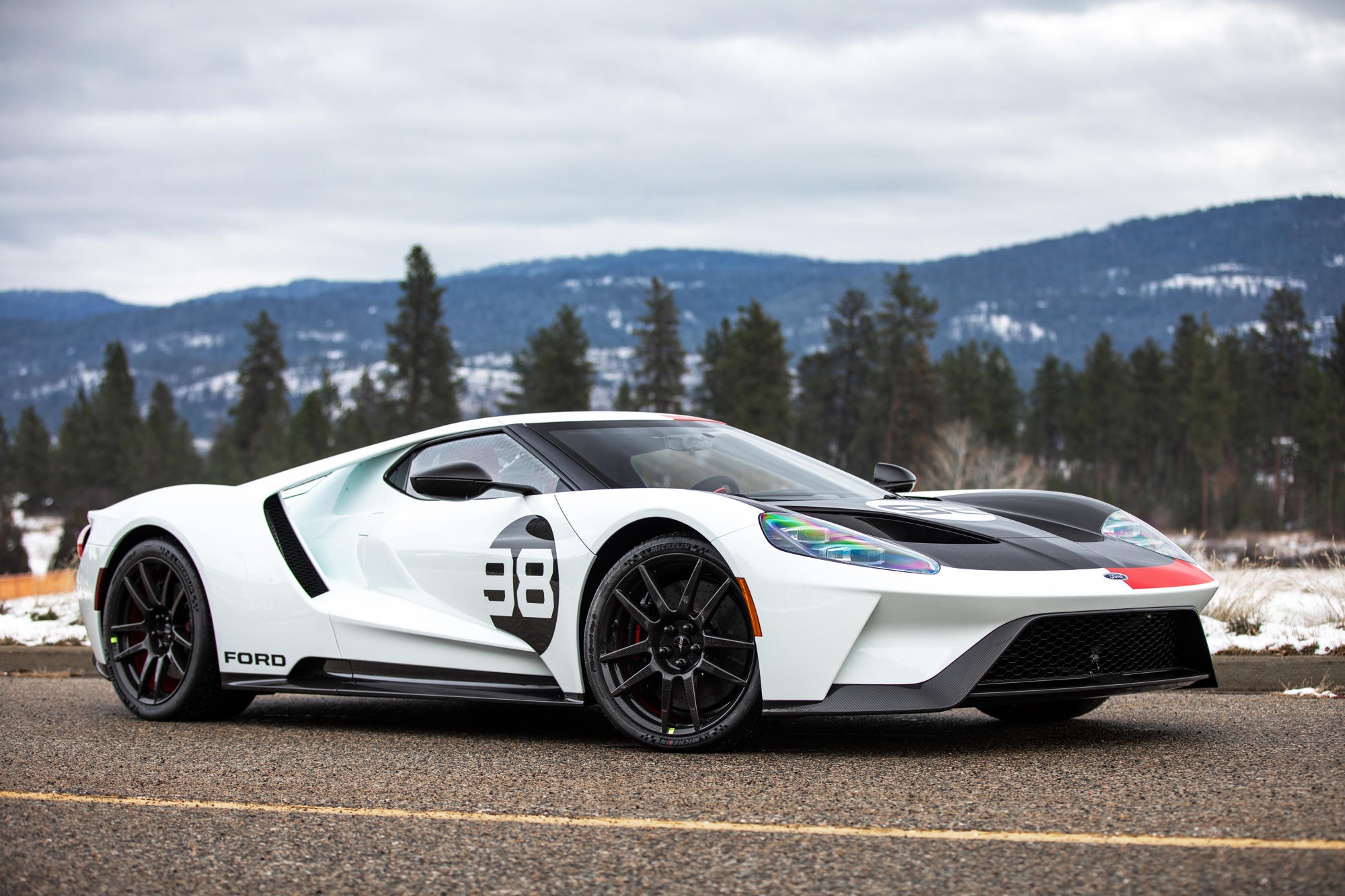
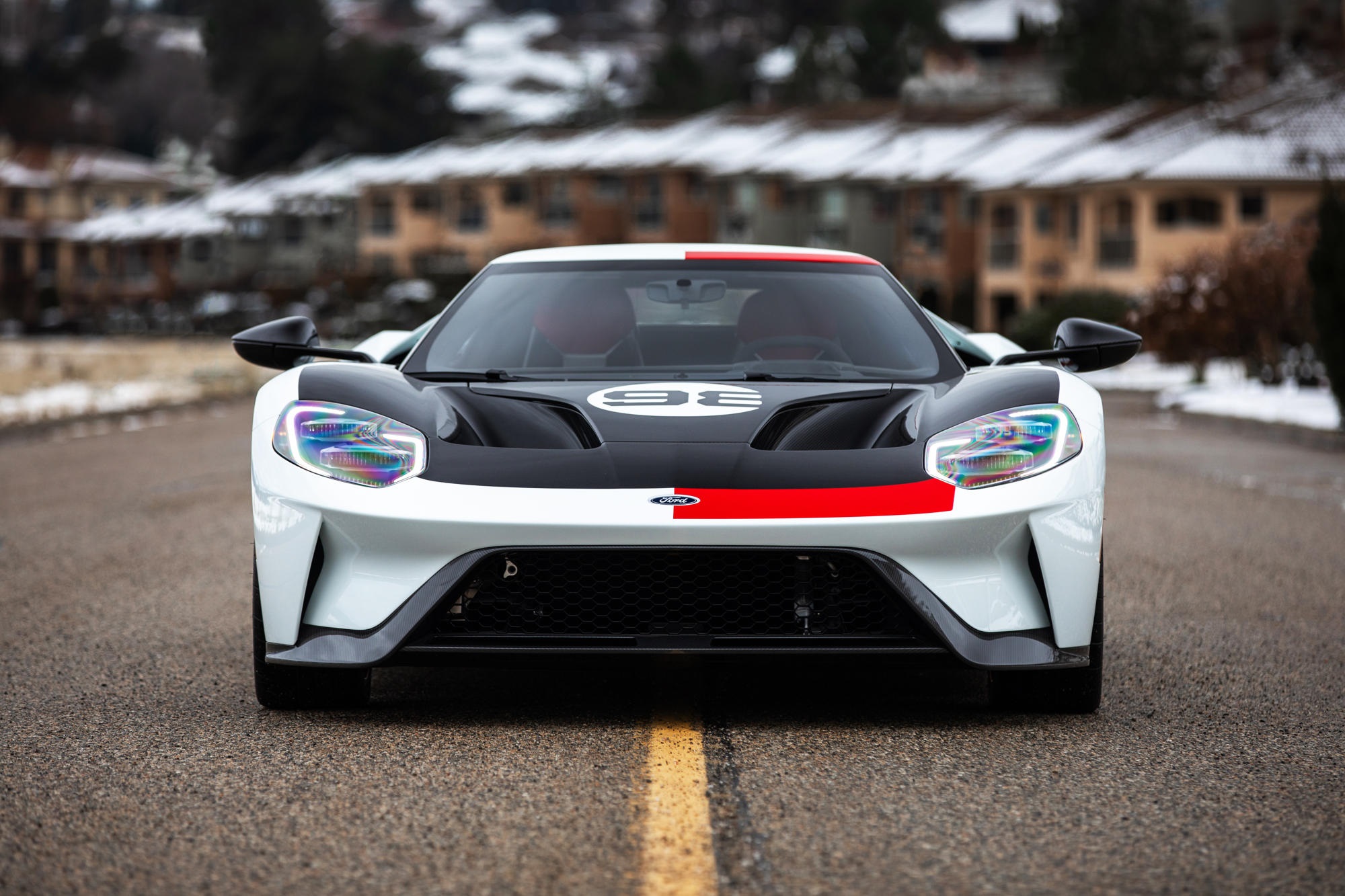
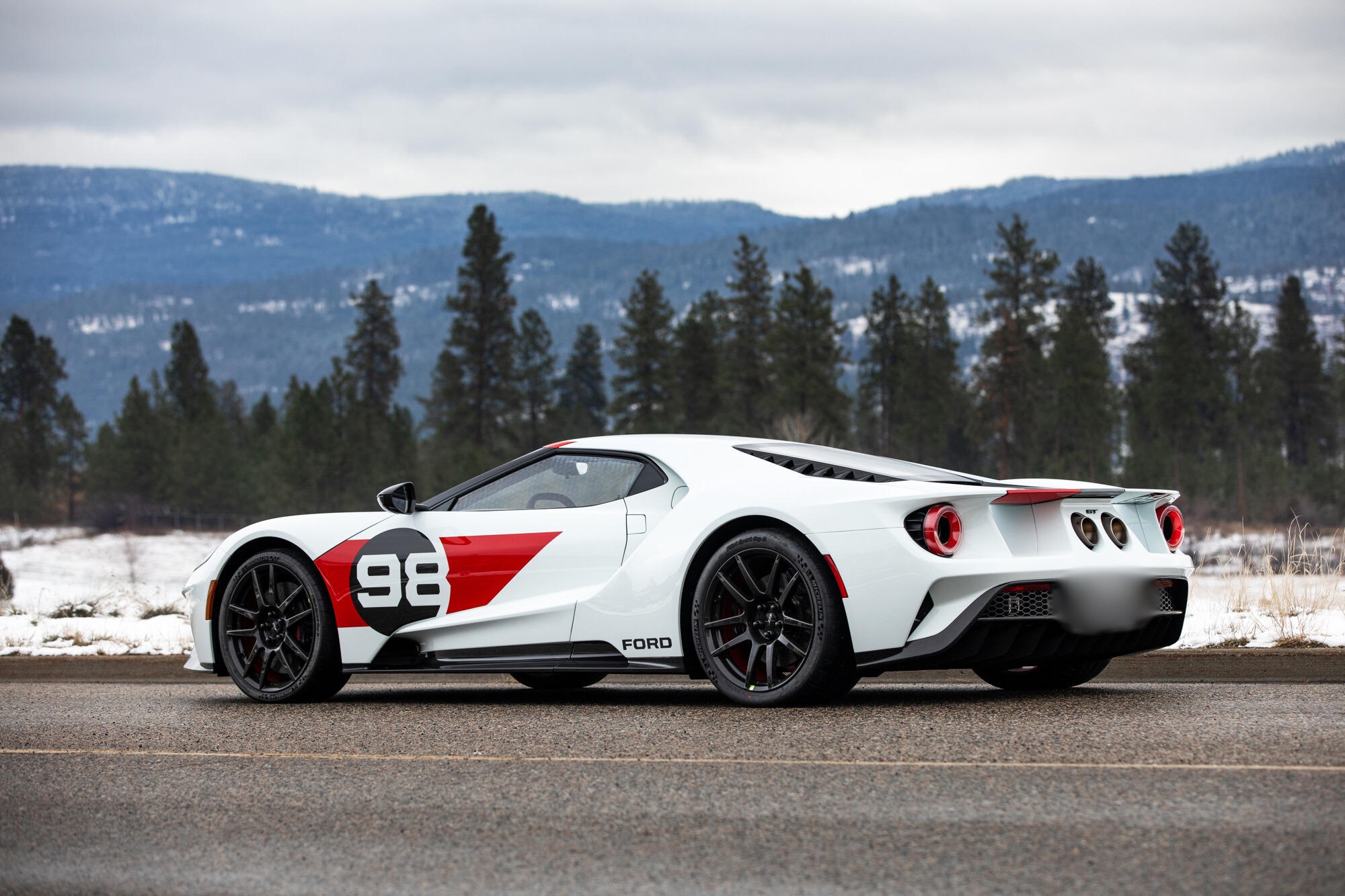
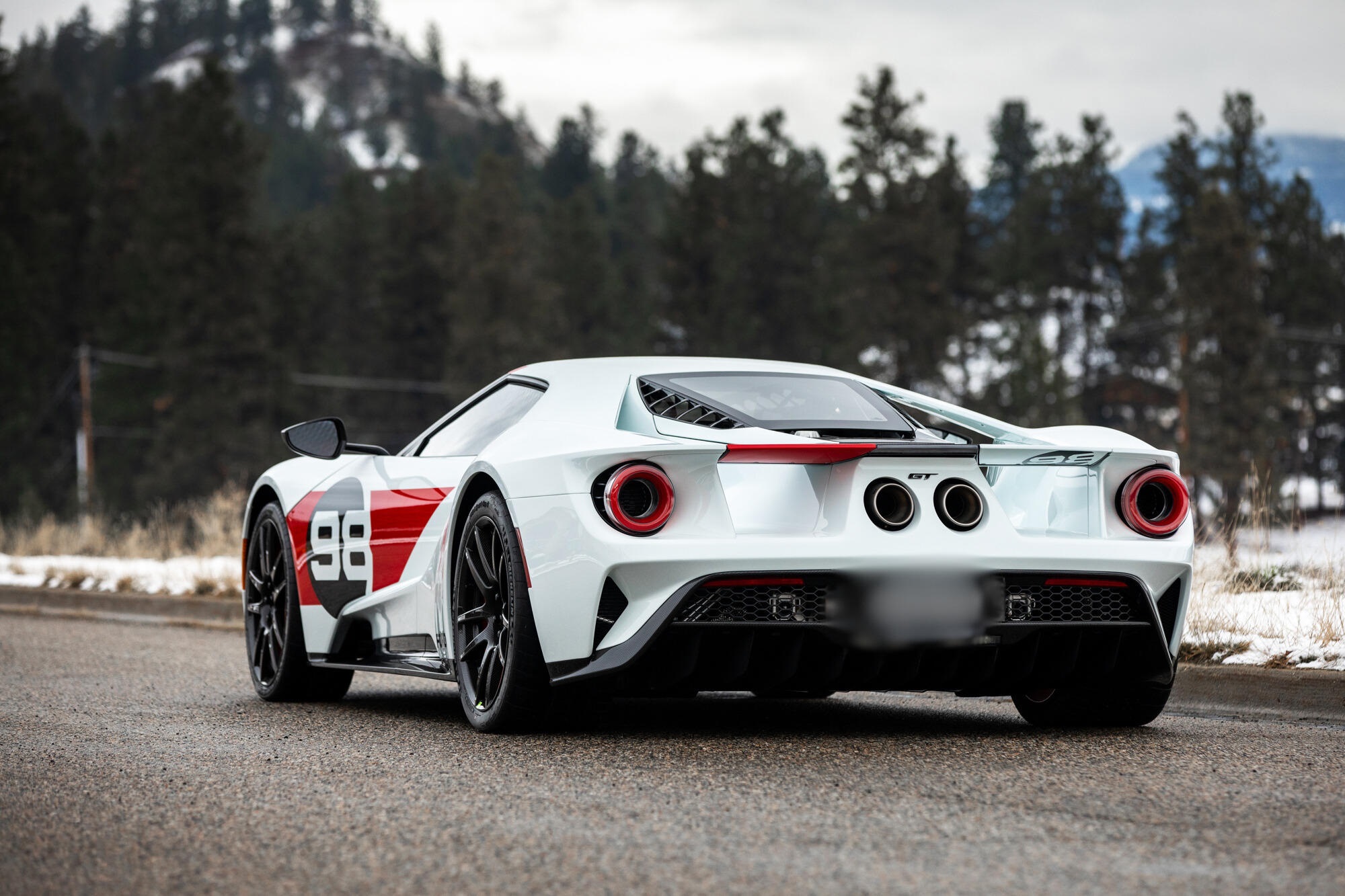
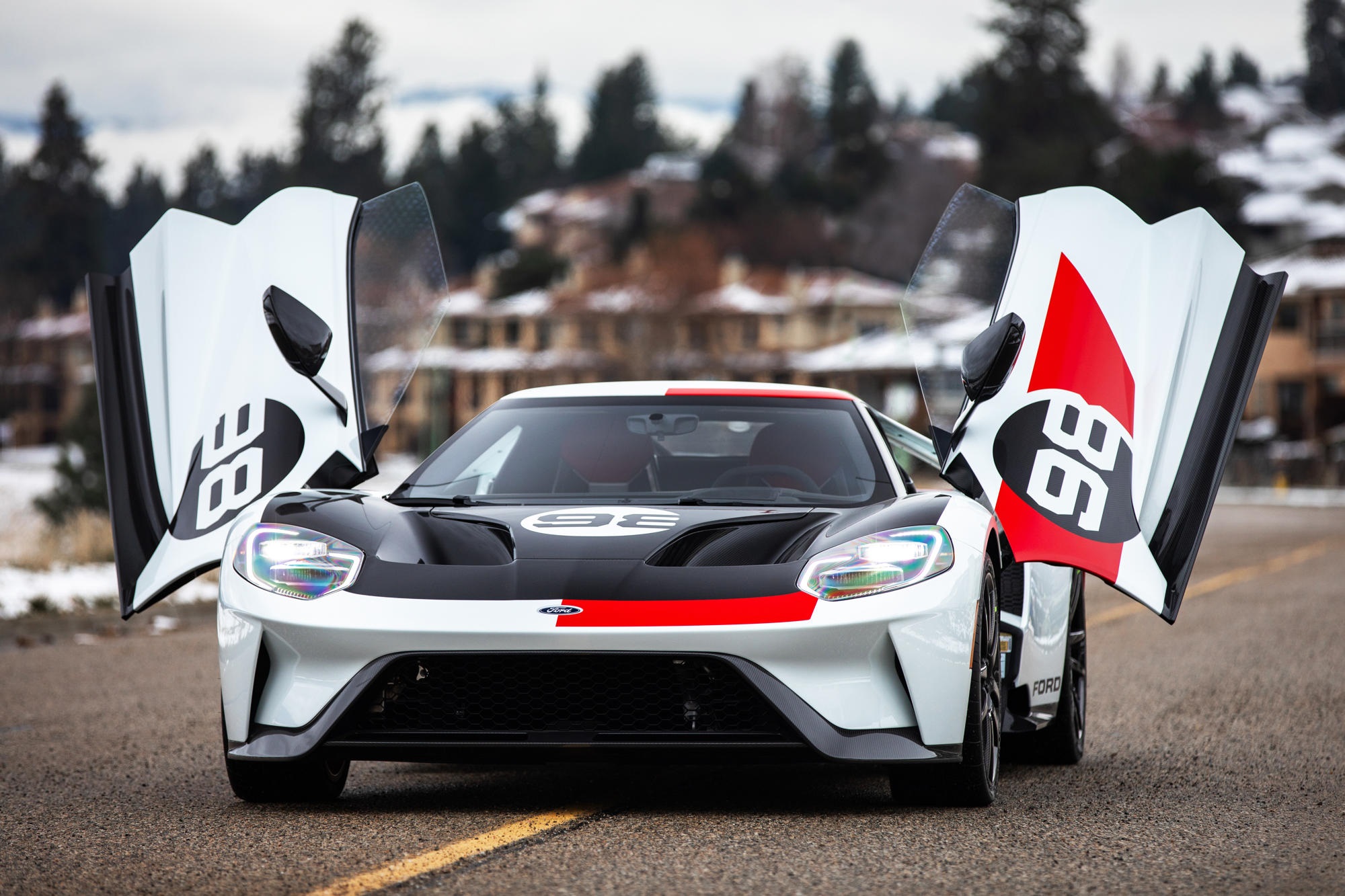
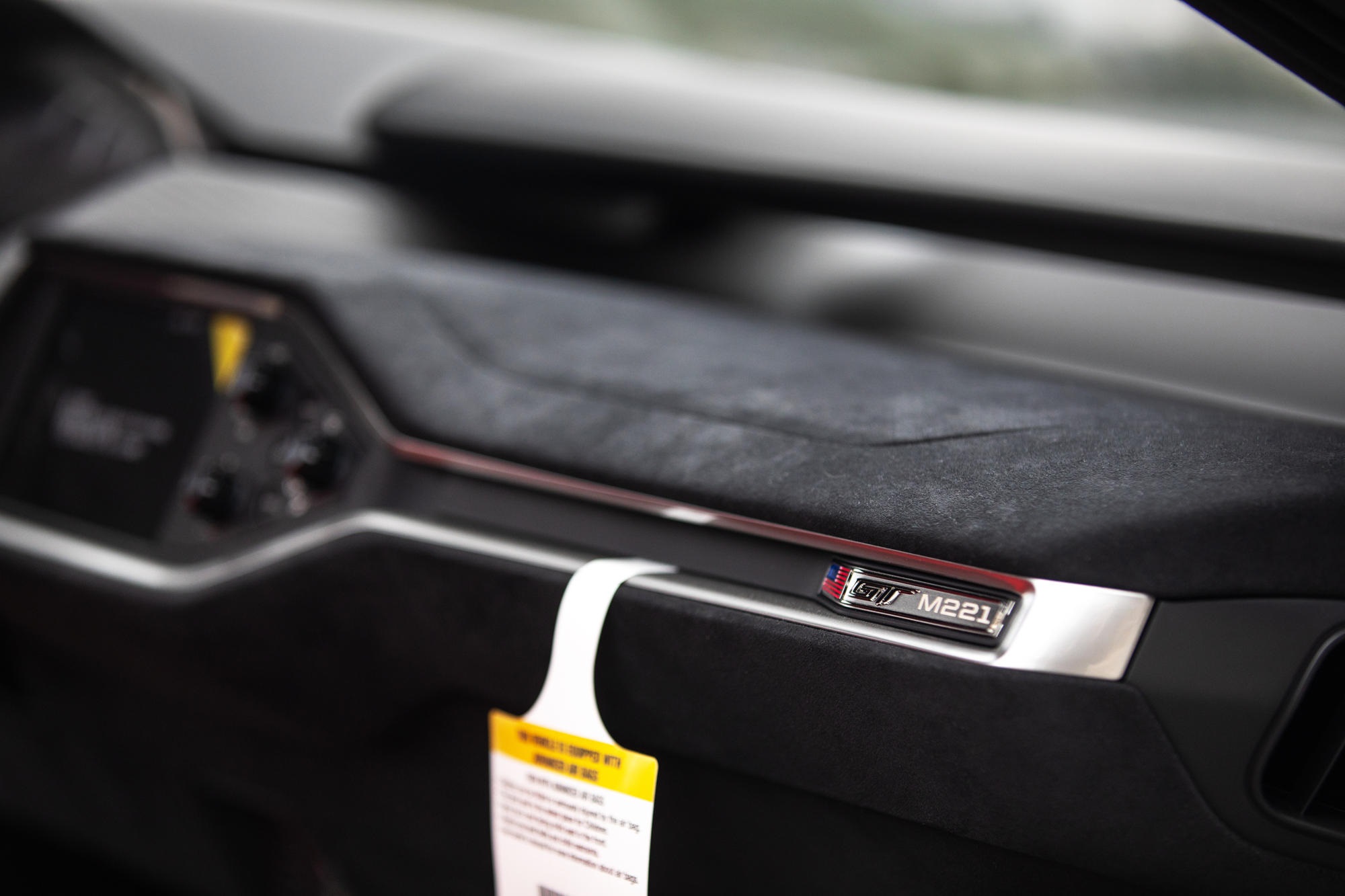
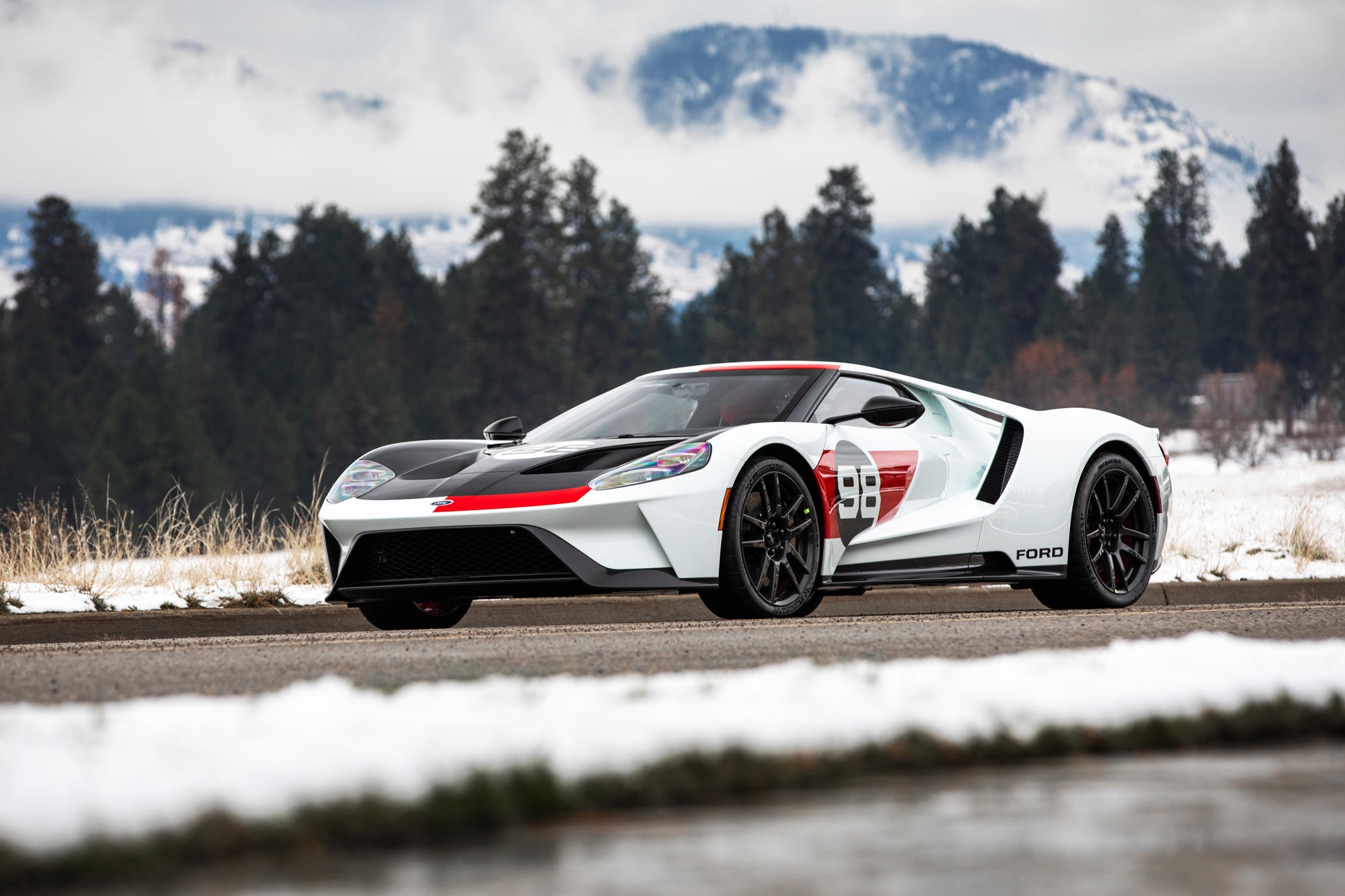
For the 2021 model year, Ford commemorated its groundbreaking first 24-hour race win at the 1968 Daytona Continental, driven by Ken Miles and Lloyd Ruby. The selected livery featured a dramatic combination of white, matte black, and red, paying homage to the car’s bold and unforgettable design. Ford built just 50 units of the 2021-2022 GT Heritage Edition, and one is set to be auctioned at Bonhams’ Scottsdale event on January 25. This example is a virtually new 2021 Ford GT Heritage Edition with just 10 miles on the odometer.

Originally delivered to Canada, it proudly showcases the Daytona-inspired livery, listed as a $41,700 option on the accompanying window sticker. Its Frozen White paint is accented by exposed black carbon details on the front wings and decklid, with Race Red highlights adorning the bumper, roof, and body sides. Additional elements include 20-inch carbon wheels with red accents, black brake calipers with red highlights, and a fitted indoor car cover, completing this extraordinary tribute to Ford’s racing heritage.

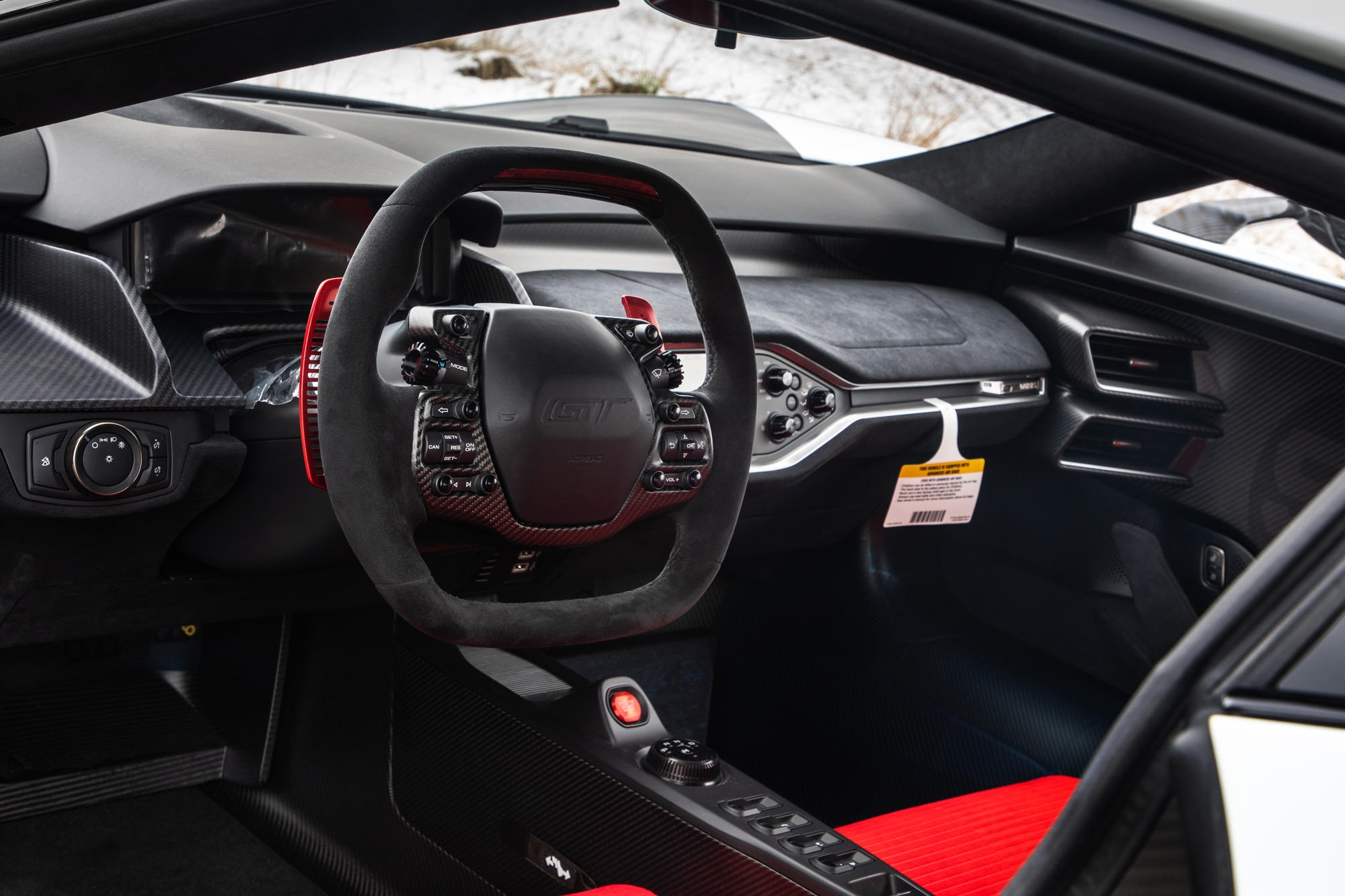
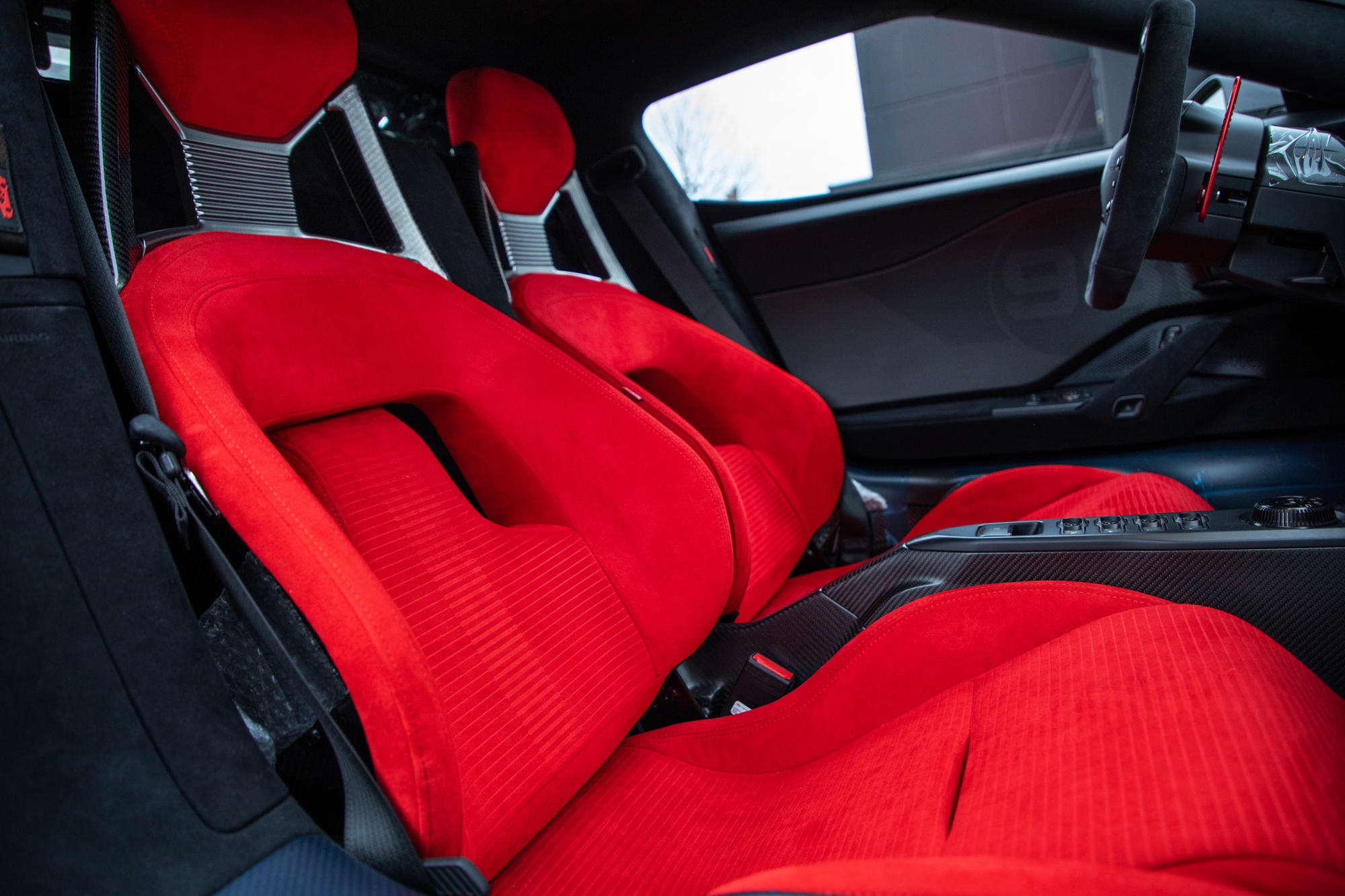
The GT’s foundation is a competition-grade carbon fiber monocoque structure complemented by aluminum subframes and a seamless steel roll cage integrated into the roof. Its hydraulically adjustable pushrod suspension is straight out of motorsport, while the car’s striking butterfly doors and teardrop-shaped body reflect aerodynamic precision. Additional aerodynamic features include a retractable rear wing and rear diffuser, while LED taillights and an aggressive front design complete its racing-inspired aesthetic.

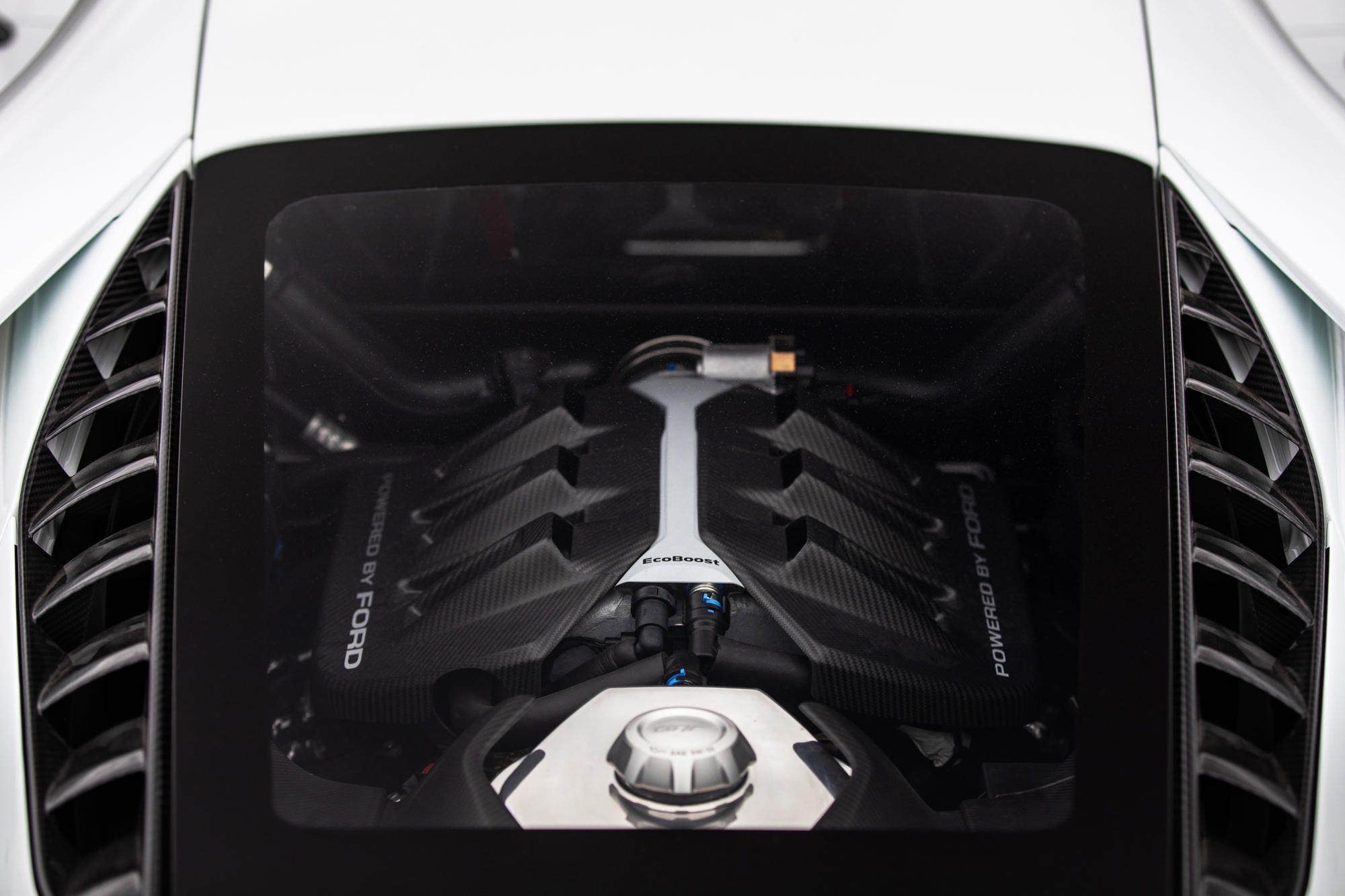
Power comes from a 3.5L twin-turbocharged EcoBoost V6 producing 660 horsepower and 550 lb-ft of torque, paired with a 7-speed dual-clutch Getrag transmission. The GT can go from 0 to 60 mph in under 3.0 seconds and has a top speed of 216 mph. Brembo carbon ceramic brakes and a titanium Akrapovic exhaust system further enhance the GT’s performance, making it a true masterpiece of engineering.

Source: Bonhams Cars


Source link

What It’s Like to Have a 7-hour, 50-course Tasting at One of the World’s Most Exclusive Restaurants

0


Five acts. Seven hours. 50 impressions. Dinner at The Alchemist is much more than just a meal; it’s a transcendent, multisensory experience that challenges your mind, sight, emotions, and taste buds all at once.

Located in the heart of Copenhagen, the two Michelin-starred restaurant is helmed by Rasmus Munk, who was recently named world’s top chef at the Best Chef Awards in 2024. Munk masterminded an extraordinary dining journey that fuses art, storytelling, and gastronomy, aiming to provoke thought and conversation around important social issues.

Chef Ramus Munk with his butterflies.

Courtesy of The Alchemist


Having ranked in the top 10 of the World’s 50 Best Restaurants list for the past two years, The Alchemist is one of the most sought-after dining reservations (bookings sell out within minutes of being released and there’s consistently a five-digit waiting list), so I am incredibly fortunate to have had the opportunity to experience it.

The concept was born from the success of the original Alchemist, a small restaurant with only 15 seats that Munk operated between 2015 and 2017. Munk recalls the playful experimentation that took place in those early days, where they served an astonishing 45-course menu each night, pushing the boundaries of presentation and flavor.

During that time, he crafted a dish focused on organ donation — a lamb’s heart tartare, served with a sauce in a blood transfusion bag, along with a card encouraging diners to register as organ donors. This became a pivotal moment in his career.

“We created it as a way to raise awareness on how many had lost their lives waiting for a new organ. It resulted in 1,500 new organ donors, and the story about the dish spread very far outside the little restaurant in Copenhagen,” said Munk in an interview with Travel + Leisure. “This was something I wanted to explore further; it was my way to combine my strong commitment to social issues with my passion for cooking. It formed the fundament for holistic dining and later the new Alchemist.”

I could barely contain my excitement as I approached the industrial Refshaleøen neighborhood of Denmark’s capital. After standing in suspense in front of the restaurant’s enormous, embossed bronze doors for a few moments, they slowly opened, marking the beginning of the wildest dining adventure of my life.

The Alchemist experience consists of roughly 50 distinct courses, referred to here as “impressions.” While the majority are edible, others are designed to be solely experiential.

I was greeted by some of the friendliest and most engaging staff I’ve ever encountered. They welcomed me in, offered a damp, scented towel, and provided a brief overview of what to expect, setting the tone for my visit. Afterward, I was led into a dimly lit room to watch a short digital presentation that tapped into the power of AI and modern technology, ending with an Einstein quote projected on the screen: “Imagination is more important than knowledge. For knowledge is limited to all we now know and understand, while imagination embraces the entire world.”

Important to note: Dining here has been on my wish list for years, so I did plenty of research before traveling to Copenhagen. However, some of my favorite moments were totally unexpected surprises I hadn’t seen or read about beforehand. As I share my personal account, I’ll withhold certain details out of respect for the enjoyment of future diners.

“Space Bread” from The Alchemist.

Courtesy of The Alchemist


Following the initial welcome impression, I entered a sleek lounge with several tables arranged around a central bar, all facing a large glass wall that offered a view of a futuristic-looking kitchen lab. There, a team of chefs could be seen meticulously plating dishes. I was thrilled to have a front-row seat to the action.

Let’s do this.

After settling in, I was offered a welcome “cocktail” — a pisco sour that resembled an egg yolk resting in a dainty metal sculpture of a daisy, Denmark’s national flower — and given a choice of wine, cocktail, or mocktail pairings, each option detailed on a digital tablet. (I went with the wine.)

The experience proceeded with a series of ingenious bites, including a cotton candy dumpling filled with fermented fish sauce, the “perfect omelette” that took two years to develop, and caviar-topped space bread, a surprisingly light, charcoal-colored sphere made from aerated aged soy sauce that dissolves instantly in your mouth. Then there was a butterfly.

Yes, an actual butterfly. My jaw dropped as chef Munk personally presented me with a freeze-dried tortoiseshell butterfly perched on a shiny silver log. He believes this could be a sustainable protein source for the future, sharing, “Ounce for ounce, there is nearly double the amount of protein than in beef or chicken.” Although I’ve eaten insects in other parts of the world, this was my first time trying a butterfly. The delicate insect was well seasoned and rested on a crispy leaf made from juiced kale, parsley, and spinach, accompanied by fresh nettle cheese. I took it all down as one crunchy bite.

After several more snacks, guests were led to the second floor and guided across a glass-bottom walkway, where wine cellar racks holding some 10,000 bottles were visible beneath our feet. We entered a dimly lit corridor. Almost magically, the wall slides opened to reveal the most magnificent planetarium-style domed dining room filled with a maze of seating and images projected all around. I was awestruck by the impressive space as I took in the first scene: a vibrant coral reef so lifelike it felt as if I was under the sea.

Though the massive virtual aquarium initially appeared cheerful, I soon noticed litter floating in the water and a turtle swimming with a plastic six-pack ring around its neck, nearly moving me to tears. (Ocean pollution is one of the themes addressed during the experience.) Throughout the meal, this spectacular 360-degree screen displays moving images intended to spark conversation, from a starry galaxy to a beating human heart and an army of synchronized eyeballs.

Now onto the main event. In this central area of the 22,000-square foot restaurant, a mind-blowing succession of edible impressions tackle many of the pressing issues facing the world today — from food waste and sustainability to animal welfare and health care systems. The Alchemist prioritizes important conversations, using food as a medium to provoke thought and educate guests.

The “Plastic Fantastic” dish.

Megan Murphy/Travel + Leisure


“The ultimate goal has always been to change the world through gastronomy,” said Munk. “The restaurant is a platform to raise awareness and to reach out with our messaging.” Diners receive detailed explanations from their servers to understand each dish’s significance, as well as the ingredients and techniques used.

Spotlighting the unfortunate problem of pollution in our oceans, the “Plastic Fantastic” impression is an airy edible vortex made from algae and collagen from fish skin, mimicking a crumpled ball of plastic that conceals a bite of tempura-battered plaice beneath it. “Burnout Chicken,” which addresses irresponsible farming, features a savory chicken lollipop attached to a real chicken foot that’s confined within a small cage. To eat it, you must first set the chicken free.

The “Food For Thought” dish.

Courtesy of The Alchemist


Perhaps the most striking section of impressions is themed around the human body. For example, “Food for Thought” consists of a cherry meringue filled with lamb’s brain mousse and cherry gel, resembling foie gras, presented in a life-sized silicone mold of the top of a human head (complete with pores and eyebrow hairs). Another course, dubbed “1984” after George Orwell’s dystopian novel of the same name, invites diners to scoop caviar from the pupil of an oversized eyeball modeled after Munk’s eye.

The Alchemist’s “1984” dish.

Megan Murphy/Travel + Leisure


Then there’s the provocative “Tongue Kiss” — a silicone human tongue coated with beef tartare and a deep burgundy glaze intended to push guests out of their comfort zones and play with feelings of pleasure and disgust. My server encouraged me to consume it by giving it a French kiss, and when I asked if the tongue was cast from chef Munk’s, she responded with a sly smile. I followed her instructions; it was undeniably a strange sensation. Glancing at other diners’ impromptu make-out sessions was also quite amusing.

Highlighting the fact that a single organ donor can save up to eight lives, “Eight Layers of Life” showcases eight common flavors, including cherry, black olive, and black pepper, and is shaped like a human heart. When I cut into it, the rich color and viscosity of the “blood” seeping out appeared so lifelike that I found it difficult to stomach. Even as an adventurous eater, the realism of this dish challenged my perception of mind over matter. However, not all dishes toyed with my emotions as intensely; some were more straightforwardly delicious.

After savoring several dessert courses, including a flavorful confection that depicted Edvard Munch’s famous painting “The Scream” on an edible canvas and a crispy chocolate bar made from 70 percent traceable Congo cocoa meant to raise awareness about child labor, I was given a smock and disposable shoe protectors. What next?

I joined a small group of diners and was brought into an all-white room accented with colorful graffiti. As Madonna’s “Express Yourself” played loudly through the speakers, an eccentric artist greeted us, handed out jars of brightly hued “paint,” and encouraged us to dance, get creative, and sample the edible lacquer. I joyfully bopped and sang to the music, licked yellow paint off my brush, and added my own touch to the wall.

Just when I thought my night was coming to an end, a few other surprises — along with a handful of petite bites and digestifs — awaited me in an entirely different room, a plush balcony lounge. I didn’t leave The Alchemist until well after midnight, but I could have easily stayed longer. The hours flew by, and surprisingly, I didn’t feel tired or experience the typical food coma after such a lengthy dining adventure. Instead, I felt satisfied and inspired on many levels.

The outrageous expedition comes with a substantial price tag (bookings start at roughly $718, not including beverage pairings), but was it worth it? While I can’t speak for everyone, as a person who is deeply passionate about food and travels for once-in-a-lifetime culinary experiences, without a doubt, it was worth every penny (and every minute). Dining at The Alchemist goes beyond merely enjoying a meal; it offers an opportunity to engage with deeper narratives through food while being immersed in Copenhagen’s innovative culinary culture. The entire experience left such a lasting impression on me — one that I will appreciate for the rest of my life.


Source link

Consumer Guide Car Stuff Podcast Episode 255: Manhattan Congestion Fee, New Nissan Kicks, Most-Reliable Car Brands | The Daily Drive

0


A surprise in the Consumer Reports reliability rankings.

Most-Reliable Car Brands

Whether you drive a car, need a car, or just occasionally bum a ride with friends, you’’ve come to the right place. Join Jill and Tom as they break down everything that’’s going on in the auto world. New-car reviews, shopping tips, driving green, electric cars, classic cars, and plenty of great guests. This is the Consumer Guide Car Stuff Podcast. – Luxury Pickup Shootout

–

Episode: 255

Broadcast date: January 6, 2024

Guest: Mike Quincy

–


(Show Notes)

–

For the first show of 2025, Jill and Tom opened the conversation discussing a few news item, including a New York City plan to curb midday traffic by instituting a “congestion fee” toll on drivers entering parts of Manhattan. The hosts also discussed Tesla 2024 global sales—which were down—and the demise of a diesel option in General Motor’s half-ton trucks and SUVs.


Still in the first segment, Jill and Tom reviewed the completely redesigned 2025 Nissan Kicks.


In the second segment, the hosts welcome Mike Quincy of Consumer Reports to the show. Mike shared news from the outlet’s new brand-reliability study. News: Neither Toyota nor Lexus is in the top spot this year.


In the last segment Jill is subjected to Tom’s “Which is Longer?” quiz. Jill wrapped up the show discussing Ford’s “COVID Recall,” affecting Super-Duty trucks outfitted with the maker’s Power Stroke diesel engine. Tom also ran down the dates of upcoming auto shows.

Discussed this week

 Tom’s Nisan Kicks review

Consumer Reports

Toyota reliability drops, Subaru takes top spot in new study

Is Covid the culprit for the 300k Ford Super Duty recall?

2025 Auto Show Schedule


Follow the crew


The Crew

To advertise on the Car Stuff Podcast call Andy Lieb: 847-291-7414

Consumer Guide Car Stuff Podcast Episode 254: All-New Kia K4, Haunted Bluetooth Connections, Luxury Pickup Shootout

Consumer Guide Car Stuff Podcast Episode 253: Honda and Nissan Merge, Ram Delays EV, Chatting With Scout Motors


Source link

Honda 0 Series prototypes tease production design

0


  • Honda previewed the first two models from its 0 Series family of EVs with a pair of prototypes at 2025 CES
  • The prototypes will spawn production models in 2026, to be built in Ohio
  • The 0 SUV will arrive first followed by the 0 Saloon

Honda’s upcoming 0 Series family of electric vehicles edged closer to production on Tuesday with the reveal during 2025 CES of a pair of prototypes that look almost ready to hit the showroom floor.

The prototypes include the 0 SUV and 0 Saloon, with the latter being an evolution of the original 0 Saloon prototype Honda unveiled during the 2024 CES event, when first announcing plans for the 0 Series.

Honda 0 Saloon prototype

Honda 0 Saloon prototype

Honda said the production versions of the 0 SUV and 0 Saloon will launch in the U.S. in 2026 as the first models in the 0 Series lineup, with other markets to follow at a later date. Production will be handled at Honda’s plant in Marysville, Ohio.

The 0 SUV, a midsize offering, will arrive first. Its design builds on the van-like Space-Hub prototype shown in 2024 together with the original Saloon prototype, and is similar, at least in profile, to the Polestar 3.

Honda 0 Saloon prototype

Honda 0 Saloon prototype

The 0 Saloon is described as the flagship offering of the 0 Series and looks to have some Lamborghini influences in the design, especially at the front, which resembles the face of the Gallardo. Impressively, the designers have managed to maintain the sporty wedge shape of the original prototype shown last year.

Honda has leveraged its Formula 1 experience—most recently supplying power units to the championship-winning Red Bull Racing team—to develop a thin and lightweight EV platform for the 0 Series. The automaker has hinted at a weight reduction of around 220 pounds compared to its earlier EV platforms. Steer-by-wire systems for the steering, suspension, and brakes have also made the cut.

Honda 0 SUV prototype

Honda 0 SUV prototype

No details on powertrains have been mentioned. However, an early 0 Series development mule showcased by Honda last fall featured a dual-motor all-wheel-drive powertrain rated at approximately 480 hp, along with air suspension and a new stability system incorporating 3D gyro sensors derived from the company’s ASIMO robot family.

The ASIMO name was also borrowed for the in-house operating system that will feature across the 0 Series lineup. It joins other core software systems for the EV family, including automated driving technologies ranked at up to Level 3 on the SAE scale of self-driving capability (initially in heavy traffic on highways), and a system-on-chip computer that will serve as the core of the software-defined vehicle (SDV) aspect of the 0 Series. In layman’s terms, an SDV is a vehicle whose software and hardware allow it to be updated via the cloud, potentially for its entire lifetime.

Honda 0 SUV prototype

Honda 0 SUV prototype

In the area of support for charging, Honda highlighted its emerging Ionna charging network, a collaborative effort with seven other automakers aimed at deploying high-speed chargers at tens of thousands of stations across North America by 2030. With 0 Series models featuring NACS ports, Honda anticipates that owners will have access to 100,000 public charging stations by the same year.

The introduction of the 0 Series marks a crucial step in Honda’s plan to transition to exclusively selling electric and fuel cell vehicles by 2040. Leading up to that deadline, the automaker also aims to reduce emissions with next-generation hybrid powertrains.


Source link

2025 Lexus GX review | CarExpert

0


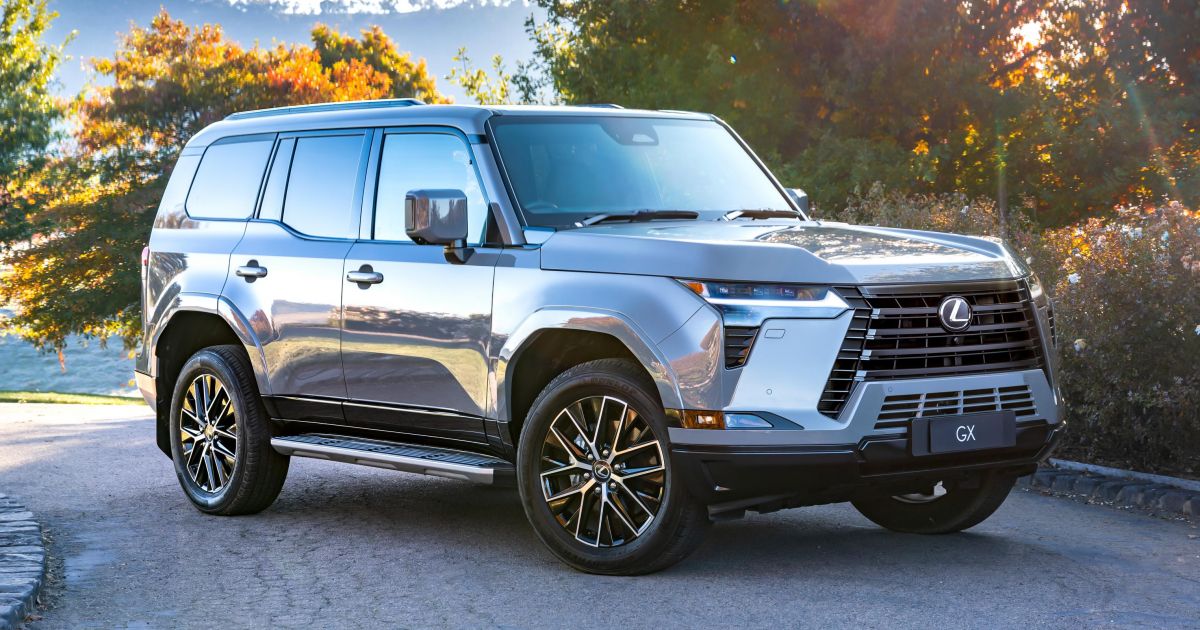
There has been a rather big hullabaloo about the new Toyota Prado 250 Series finally landing in Australia, but it’s worth bearing in mind the closely related Lexus GX arrived here first.

WATCH: Paul’s video review of the 2025 Lexus GX550 Overtrail

While the 250 Series is the first all-new Prado in 15 years, this is the first time the Lexus GX – an equally big, but more luxurious large off-road SUV – has been made available in Australia. It has previously only been produced in left-hand drive guise.

The third-generation GX is based on the same TNGA-F ladder-frame platform that underpins not only the 250 Series, but the Toyota LandCruiser 300 Series wagon and the new Toyota Tundra pickup, plus the US-market Sequoia and Tacoma, as well as the Lexus LX.

For now, there are three variants on offer – Luxury, Overtrail and Sports Luxury – and all of them are powered by a 3.4-litre twin-turbo V6 petrol engine.

On test here is the entry-level variant in the range, the Lexus GX550 Luxury. Is V6 petrol power and more luxury worth the price premium over the four-cylinder diesel-only Prado? Read along to find out.

How does the Lexus GX compare?

View a detailed breakdown of the Lexus GX against similarly sized vehicles.

Lexus GX cutout image

Lexus

GX

How much does the Lexus GX cost?

At $116,000 before on-road costs, the Lexus GX550 Luxury is priced about $16,000 higher than the top-of-the-range Prado Kakadu, and a big $43,500 more than the cheapest Prado variant, which somewhat confusingly continues to wear the GX badge.

ModelPrice before on-road costs
Lexus GX550 Luxury$116,000
Lexus GX550 Overtrail$122,250
Lexus GX550 Sports Luxury$128,200

To see how the Lexus GX shapes up against the competition, check out our comparison tool

What is theLexus GX like on the inside?

Like the Prado, the GX550 Luxury has a boxy stance that’s imposing and stands out from the crowd but, if anything, its more premium and contemporary exterior design exudes more road presence than the Toyota’s retro styling.

Thanks to the large side steps – which are conveniently illuminated at night time – and chunky grab handles, it’s pretty easy to get into, especially for such a large wagon.

Once you’re inside, there are delicious-looking and feeling NuLuxe upholstered seats that are beautifully supportive. This is the kind of seat you could easily sink into for a long road trip.

Both the front seats offer eight ways of electric adjustment, including plenty of thigh support, which will be especially appreciated by taller folk. There’s also two-way lumbar support, which is good for those with crook backs, like myself.

Another great standard inclusion is heating and ventilation for the front seats. The automatic mode is also a clever touch, and very Lexus.

Ahead of the driver is a soft leather-wrapped steering wheel that’s perfectly sized and feels nice in the hands. The electrical steering column adjustment feels pretty bougie, but ultimately the Ford Everest’s manual system offers more tilt and reach adjustment.

All the buttons on the steering wheel are easy to understand and have a satisfying click. At the end of the day, this is just a Lexus steering wheel and it’s very similar to what other models get. Thankfully it doesn’t have those absolutely stupid trackpads.

Behind the steering wheel the stalks for the indicator and wipers are super satisfying to use. They operate with a solid thunk that feels premium.

As standard, there’s a 12.3-inch digital instrument cluster that’s very common among a number of current Lexus and Toyota models. It looks great and is high-resolution, plus you can configure it with different information to your heart’s content.

While it is nice having a crisp digital instrument cluster, it’s also great to have such a large head-up display as standard, and it’s capable of projecting an array of information onto the windscreen. You can choose from three different views, ranging from minimal to full.

Moving across, while you could easily mistake the GX for a Toyota based on the digital instrument cluster and head-up display alone, the central 14.0-inch touchscreen infotainment system is considerably larger than the one in the Prado.

The big, landscape-shaped screen is high-resolution and it’s easy to swipe around the menus and click on icons, basically like an iPad. Thankfully, the menu system isn’t overly convoluted, meaning you can’t really get lost.

While there is both wired and wireless forms of Apple CarPlay, Android Auto is only available with a cable to your phone. With my iPhone 15 Pro Max connected wirelessly, I did experience a few dropouts in known interference points, though it would typically reconnect with no issues.

An annoying part of the larger touchscreen is that the climate control functions are built into it, and they’re constantly shown on the bottom. But I do appreciate the two physical dials attached to the screen, which are used to adjust the temperature for the dual-zone climate control system.

Looking around the cabin, it’s rather blocky and also very wide. Like the Prados on which the Lexus GX has been historically based, there’s so much space between the front two seats, which makes sense given its focus on the North American market.

Despite this wealth of space, storage up front in the GX is not standout, and rather adequate. There are two cupholders, a wide and deep centre console box and smallish glovebox, plus a wireless charger that’s flat and doesn’t have any rubber grip to secure your phone.

A strange element of the GX’s cabin up front is that there’s a pronounced section at the base of the centre stack that looks like it should serve a purpose, but instead it’s just an elaborate retracting cover for the 12V socket.

The spacious cabin feels even larger, brighter and airier thanks to the sunroof that can tilt and slide to allow for more airflow.

It’s a hike to hop into the second row, especially for smaller kids, but thankfully the side steps and grab handles make the process easier. Once you’re back, the GX’s Prado roots are very evident.

There’s a generous amount of space in the second row, even for adults, and pushing it to three abreast isn’t too squishy. The only thing to consider is there’s a pronounced transmission hump, which means back-seat passengers will need to share foot space.

But to help with comfort, the second-row seats recline, just like in the Prado. Of course, this impacts knee space in the third row, and the second-row seats don’t slide forwards or backwards, which is a shame as it would further aid middle-row comfort or increase the legroom or cargo space behind them.

Another Prado feature that’s present in the GX550 Luxury is the separate third zone of climate control for rear passengers. The best part of this is the roof-mounted air vents, which are a Godsend when you hop back into the car on a hot day.

Other second-row amenities include USB-C ports, and a fold-down armrest with cupholders.

While both the Luxury and Sports Luxury (but not the off-road-focussed mid-range Overtrail) versions of the three-variant Lexus GX range come with seven seats, the new five-grade Prado lineup offers a third row of seats as standard – except for the base GX and the overlanding-oriented Altitude variant.

But unlike any version of the Prado, the GX550 Luxury tested here has electrically folding third-row seats. This is a pretty luxurious feature, but it takes forever for the seat to go up or down, which is annoying if you’re antsy to hop in.

Once you’re in the third row there’s an okay amount of space, though at a leggy 182cm tall I was very much knees-up, which isn’t great for long drives. The third row is much better suited to kids or smaller adults.

Third-row amenities thankfully include roof-mounted air vents, as well as USB-C ports and cupholders. It’s a little bit more sparse than the second-row and the finishes are a bit harder and plasticky.

Around the back there’s a power tailgate that opens and closes quickly. There’s also a separate opening glass window panel that’s handy to grab things out of the boot if you’re in a tight space and don’t want to open the tailgate entirely.

With the tailgate open, the cargo area is considerably better packaged than in the Prado. This is because the GX doesn’t have a 48V lithium-ion battery pack under the boot floor, as in all versions of the mild-hybrid diesel Prado.

It’s not perfect, however, because when all three rows of seating are in place, there’s barely any boot space available. Thankfully, it’s considerably better when you fold the third row down, but this of course dispenses with the practicality of seven seats.

Finally, there’s a cargo cover that can be used when the third row is stowed, but when it’s in use there’s no space to stow the cover. This means your passengers will either need to hold it or stand on it, or you’ll need to leave it at home.

DimensionsLexus GX550 Luxury
Length5015mm
Width1980mm
Height1925mm
Wheelbase2850mm
Cargo capacity171L (7 seats)
949L (5 seats)
1875L (2 seats)

To see how the Lexus GX shapes up against the competition, check out our comparison tool

What’s under the bonnet?

For now, the Lexus GX is powered exclusively by a 3.4-litre twin-turbo petrol V6, which is a detuned version of the engine in the larger LandCruiser 300 Series-based LX600.

SpecificationsLexus GX550 Luxury
Engine3.4L V6 twin-turbo petrol
Power260kW @ 4800-5200rpm
Torque650Nm @ 2000-3600rpm
Transmission10-speed auto
Drive typeFull-time 4WD with low-range transfer case
Fuel economy (claimed)12.3L/100km
Fuel economy (as tested)12.2L/100km
CO2 emissions (claimed)279g/km
Fuel tank80L
Minimum fuel requirement95 RON premium unleaded
Weight (kerb)2525kg
Payload625kg
Braked towing capacity3500kg
Gross vehicle mass (GVM)3150kg
Gross combination mass (GCM)6550kg

There is a 2.4-litre turbo-petrol/electric hybrid powertrain offered in other markets, but it hasn’t been confirmed for the Australian market just yet.

To see how the Lexus GX shapes up against the competition, check out our comparison tool

How does theLexus GX drive?

On startup, there’s a guttural engine rev surge from the twin-turbo petrol V6. It’s something to behold and it sounds feels tough, unlike many equivalent four-cylinder turbo-diesel powered models.

When you take off you’re acutely aware there’s plenty of power on tap, and in typical everyday driving you barely scratch the surface of this engine’s performance. It’s super easy to modulate acceleration with the throttle, as it has a long travel, a lot like the Land Rover Defender.

Around town and with lighter throttle application, the 10-speed automatic transmission will flick through the gears quickly to keep the revs low, which in turn minimises fuel consumption. More on this later.

Thankfully there’s oodles of torque on tap so it doesn’t have to constantly flick down gears to accelerate, though if you flex your right foot it’ll drop a number of gears to increase engine speed. When you do this the engine makes a beautiful sound that oozes into the cabin in just the right amount.

It’s surprising just how quickly this vehicle moves for such a big wagon. It leans back and pulls hard, which is addictive and smile-inducing. You’ll likely win every traffic light grand prix, though you’ll pay for this heavily at the fuel bowser.

The GX550 also requires a minimum of 95-octane premium unleaded petrol, which hurts the hip-pocket even more.

Not helping matters is the lack of an engine idle stop/start function, which makes urban fuel consumption super high. On average, I recorded a lofty 15-20L/100km over a week of travelling to and from the office in the usual traffic with just myself and my backpack onboard.

Behind the wheel, however, you quickly forget about this as the GX is just so damn comfortable and satisfying to drive. The suspension setup is one of the most supple I’ve ever experienced, though it also leans a fair bit in the corners, even at lower speeds, and it still presents the characteristic body-on-frame shimmies on rough surfaces.

It’s a good compromise given this big luxury off-roader’s target audience, and another highlight of the GX is an electric power steering system that makes manoeuvring this big four-wheel drive easy and manageable. It’s nicely weighted, if a little on the light side at low speeds.

At higher speeds the suspension soaks up virtually everything you can throw at it without breaking a sweat. Despite this, the car has its dynamic limits and presents plenty of body roll in corners when pushed.

Unlike higher-end GX variants, the entry-level Luxury comes with passive dampers instead of adaptive units, which in some respects is better because the latter can sometimes amplify the softness of the suspension.

Even though this 4×4 can be steered easily, it doesn’t disguise just how big it is. At a smidge over five metres long and almost two metres wide, it fills a parking space with ease.

To make parking easier, however, there are front and rear parking sensors, plus a surround-view camera with fantastic quality.

Out on the open road this car really stretches its legs and settles into a comfortable groove. The transmission slots into top gear, where the engine revs just above idle, and it’ll sit there unless pushed.

The fuel economy drops considerably at highway speeds too, but the relatively small 80L fuel tank limits its overlanding and touring potential. The fuel range readout on the digital instrument cluster showed around 400km with a full fuel tank, which is much less than the diesel Prado and also less than many EVs can travel on a full charge.

That’s really disappointing because the GX feels like a properly premium overlander with a strong, commanding driving position and all the technology you’d need. If you’re after long-distance travel ability, you’d better look elsewhere unless you want to cart dirty and smelly fuel jerries around with you.

This time we didn’t have the opportunity to test the GX off-road, but as standard it comes with selectable low-range gearing via a transfer case, as well as a locking centre differential. You need to opt for the Overtrail variant if you want more off-road bells and whistles like a rear locking differential, among countless others.

On the safety front, the adaptive cruise control is pretty good at managing the distance between yourself and the car ahead. It’s not the most sophisticated system I’ve experienced, but far from the worst.

The lane centring system, or Lane Trace assist in Lexus-speak, which works in conjunction with the adaptive cruise control, is a good aid to minimise driver fatigue on longer drives, but on poorly marked roads it gets lost and pulls at the steering wheel.

Lastly, the GX550 Luxury comes with bright LED headlights, which is great when driving on dark roads in rural areas, but there’s no adaptive high-beam function – only auto high-beam.

If you want adaptive high-beam headlights you need to get the pricier Overtrail or Sports Luxury variants, which is a little disappointing given this car costs well over $120k drive-away, and when the Prado VX has them as standard despite being around $30k cheaper.

Off-road dimensionsLexus GX550 Luxury
Track front and rear1665mm (front)
1670mm (rear)
Ground clearance215mm
Approach angle26 degrees
Departure angle23 degrees
Wading depthTBC

To see how the Lexus GX shapes up against the competition, check out our comparison tool

What do you get?

On test here is the entry-level variant to the Lexus GX range, the Luxury.

Lexus GX550 Luxury equipment highlights:

  • 20-inch alloy wheels
  • Auto LED headlights
  • LED tail-lights
  • Rain-sensing wipers
  • Heated side mirrors with puddle lamps
  • Roof rails
  • Privacy glass
  • Illuminated side steps
  • Front and rear scuff plates
  • Powered tailgate
  • Rear opening glass hatch
  • 12.3-inch digital instrument cluster
  • 14-inch touchscreen infotainment system
  • Wireless Apple CarPlay
  • Wired Android Auto
  • “Hey Lexus” natural voice recognition
  • Satellite navigation
  • DAB+ digital radio
  • 10-speaker Pioneer sound system
  • Colour head-up display
  • Wireless charger
  • 2 x 12V sockets
  • 220V outlet
  • Three-zone climate control
  • Power tilt and telescopic steering wheel column
  • Paddle shifters
  • Interior ambient lighting
  • Leather-accented gear shift knob and steering wheel
  • NuLuxe seat upholstery
  • 8-way front seat electric adjustment with 2-way lumbar
  • Driver seat memory
  • Heated and ventilated front seats
  • Heated outboard second-row seats
  • Power-folding third-row seats

To see how the Lexus GX shapes up against the competition, check out our comparison tool

Is theLexus GX safe?

The Lexus GX hasn’t been tested by ANCAP just yet. The related Toyota Prado, however, received a five-star ANCAP rating in 2024.

Standard safety equipment includes:

  • 9 airbags
  • Front, rear autonomous emergency braking (AEB)
    • Pedestrian detection (day/night)
    • Cyclist detection (day/night)
    • Motorcycle detection (day)
  • Adaptive cruise control
    • Curve speed reduction
    • Indicator-linked pre-acceleration
  • Lane departure warning
  • Lane Trace Assist (lane centring)
  • Blind-spot monitoring
  • Safe Exit Assist
  • Rear cross-traffic alert
  • Driver monitoring system
  • Speed sign recognition system
  • Front, rear parking sensors
  • 360-degree camera
  • Trailer sway control
  • Trailer pre-wiring harness
  • Tyre pressure warning

To see how the Lexus GX shapes up against the competition, check out our comparison tool

How much does theLexus GX cost to run?

The Lexus GX is covered by a five-year, unlimited-kilometre factory warranty. Logbook servicing is required every six months or 10,000km, whichever comes first, which is up to double the frequency of other mainstream rivals.

Servicing and WarrantyLexus GX
Warranty5 years, unlimited kilometres
Roadside assistanceFree for 3 years
Service intervals6 months, 10,000km
Capped-price servicing5 years
Total capped-price service cost$5950

GX buyers also get three years of complimentary access to the Lexus Encore program, which gets you roadside assistance, a service loan car, Ampol fuel offers, as well as access to exclusive events and offers.

To see how the Lexus GX shapes up against the competition, check out our comparison tool

CarExpert’s Take on theLexus GX

The Lexus GX, like many luxury SUVs, isn’t the type of car that makes rational sense to buy.

Instead, it’s like that block of chocolate that’s sitting on the supermarket shelf. You know you shouldn’t, but somehow it ends up in your shopping basket no matter how hard you resist.

The twin-turbo petrol V6 drinks like a fish around town, but it has so much character. It feels rather indulgent to push the throttle, and in return there’s a beautifully sonorous and addictive sound that emanates into the cabin.

This car is up there as one of the best highway tourers I’ve ever experienced. It’s so serene at high speeds, has oodles of power left in the tank for overtakes, and its suspension feels like it soaks up every single road imperfection.

This is why it’s so disappointing the GX550 doesn’t offer a fuel tank large enough to live up to its overlanding potential. Many people who buy these types of vehicles want to travel at least 1000km between refuels, and this just isn’t possible in the GX without looking to the aftermarket.

If this doesn’t worry you, however, the first GX available in Australia still offers plenty of appeal. Its cabin is generously appointed with all the latest tech, plenty of soft-touch surfaces and beautifully comfortable seats, and up front it’s different enough from the related Toyota Prado.

But then there’s the price. The Lexus GX is far from an affordable vehicle, and the four-cylinder turbo-diesel Prado is considerably cheaper. The fact you can get a top-spec Prado Kakadu for about $16,000 less than the base GX550 Luxury will sway many away but, on the other hand, if you want a full-size Lexus SUV the LX costs at least $40k more.

And the GX can still be viewed as a relatively affordable large luxury off-roader alongside the likes of a comparable Land Rover Defender, especially once you tick a few option packages.

Interested in buying a Lexus GX? Get in touch with one of CarExpert’s trusted dealers here

Click the images for the full gallery

MORE: Everything Lexus GX


Source link

10 Reasons a Tanzanian Safari Should be on Your Bucket List

0


Safaris are no longer solely reserved for researchers and explorers but cater to a diverse range of travelers seeking a break from their daily routines. These adventures have evolved to encompass a broad range of services and experiences to ensure anyone can have the time of their life.

But where can you find the ultimate safari experience with top-notch experiences? Which destination promises an abundance of choices in terms of locations, activities, landscapes, and flexibility?

Many countries offer safari experiences, but few provide the diverse adventures that Tanzania does. From hot air balloon rides over the savannah at sunrise to unwinding on the idyllic shores of the Indian Ocean, a Tanzanian safari experience offers something for everyone.

Whether you crave private safaris with gourmet packed lunches amidst untamed game reserves, or summiting the world’s tallest standalone mountain, Tanzania emerges as the quintessential safari destination.

Related read: Climbing Mount Kilimanjaro for Non-Mountain Climbers

World-Class National Parks

Tanzania boasts over 20 national parks spanning nearly 15% of its exquisite terrain. It offers unparalleled diversity in safari destinations. With year-round activities across all parks, visitors are spoiled for choice in terms of game drives, excursions, and adventures in the wilderness.

From the legendary Serengeti migration to the captivating chimpanzee community in Gombe National Park and the rugged landscapes of Selous Game Reserve, Tanzania guarantees a variety of thrilling experiences.

Elephants spotted in the bush during a Tanzanian safari experience.

Wildlife Diversity

From the renowned Big Five to rare species found exclusively in Tanzania, the country teems with diverse wildlife.

From exotic birdlife to primate species, from majestic big cats to marine marvels, Tanzania shelters some of the world’s most magnificent and elusive creatures within its national parks, forests, and coastlines. Spot them on a guided Tanzanian safari or try a self-drive experience.

Untamed African Wilderness

Tanzania’s wilderness remains largely unspoiled and meticulously conserved, offering an authentic safari experience. National parks are open plains where wildlife roams freely in their natural habitat, rigorously safeguarded by organizations such as the Tanzania National Parks Authority (TANAPA), Tanzania Wildlife Management Authority (TAWA), and Ngorongoro Conservation Authority.

A lion on a Tanzania safari
Lion on a vantage point in Tarangire National Park during a night game drive.

Related read: Most Popular Day Trips from Zanzibar

Diverse Indigenous Communities

Nestled alongside Tanzania’s historical landmarks, game reserves, and islands are indigenous communities integral to preserving and nurturing the surrounding ecosystems.

Interact with the Maasai near Ngorongoro Crater, engage with villagers bordering Lake Manyara, or delve into the spice farmers’ culture in Zanzibar. These communities coexist harmoniously with wildlife while preserving ancient traditions and rituals.

Maasai people from Tanzania
Maasai cultures.

Safari Options for Every Budget

Tanzania caters to all budgets, offering a wide array of safari options tailored to individual preferences. Whether you seek luxury lodges, mid-range accommodations, or budget-friendly camping experiences, Tanzania ensures an unforgettable safari adventure with personalized care and attention to detail.

Thrilling Hiking Opportunities

Beyond its renowned national parks, Tanzania entices adventurers with exhilarating hiking trails.

Scale the towering heights of Mount Kilimanjaro, the world’s tallest freestanding mountain, or conquer the challenging terrain of Mount Meru. Explore the rugged landscapes of the Ngorongoro Highlands on the Empaakai and Ol Doinyo Lengai treks, offering rewarding challenges for avid hikers.

Idyllic Beach Escapes

Conclude your safari adventure with a rejuvenating beach holiday along Tanzania’s picturesque coastline and islands, where azure waters meet pristine white sands.

Whether you prefer relaxing on Zanzibar’s tranquil beaches, diving into vibrant coral reefs, or exploring historical sites in Stone Town, Tanzania offers ample opportunities for post-safari relaxation and exploration.

A view of the beach and ocean in Tanzania
Zanzibar: The Spice Island.

The Great Migration

Experience one of nature’s greatest spectacles—the annual migration of millions of wildebeest, zebras, and other herbivores across the Serengeti ecosystem in search of fresh grazing lands.

Witnessing this awe-inspiring event is a once-in-a-lifetime experience.

Great migration crossing the Mara River-Northern Serengeti National Park.

Birdwatching Paradise

Tanzania is a haven for birdwatchers, with over 1,000 bird species recorded across the country. From the colorful lilac-breasted roller to the majestic African fish eagle, bird enthusiasts will be awed by Tanzania’s avian diversity.

Warm Hospitality

Tanzanians are renowned for their warmth and hospitality, ensuring that visitors feel welcome and cared for throughout their stay. From safari guides to lodge staff, you’ll encounter friendly faces and genuine smiles wherever you go, making your safari experience truly unforgettable.

Related read: Top 10 Things to Do in Tanzania

Tanzania offers a safari experience like no other, with its unrivaled wildlife, stunning landscapes, rich cultural heritage, and warm hospitality.

Whether you’re a seasoned safari enthusiast or embarking on your first African adventure, Tanzania promises an unforgettable journey into the heart of the wild.

  • Kili Climb Africa Safaris

    Kili Climb Africa Safaris™ is one of Africa’s leading adventure specialists with great reliability and a deep understanding of Western culture and needs. Kili Climb Africa Safaris™ was established by the team of professional safari and mountain experts to customize authentic and the most exceptional personalized services at an affordable budget of Mountain Climbing, Adventure Safari and Beach Holidays.


    View all posts


    We have the local knowledge, the expertise to create an authentic cultural experience based on our local knowledge of the original life as we live and work here. For true tales of our dear ancestors, blending our Tanzanian sensibilities with a deep understanding of Africa, that will make all the difference on your tailor made safaris.


Source link

Companies That Changed the Game and Set to Take Over 2025

0


From redefining industries to facing mounting challenges, disruptive companies like Tesla, Apple, and Razer have revolutionised markets. However, in today’s volatile landscape where innovation is a necessity, a company at the frontier needs to constantly evolve or risk falling behind. The last few decades have witnessed the rise of disruptive companies that have fundamentally transformed entire industries. These titans turned disruption into an art form, establishing themselves as pioneers in their respective sectors.

Yet even the biggest players are challenged to stay relevant as newer, more agile companies are emerging, while older institutions are redefining themselves to retain their dominance. For example, Razer, the Singaporean tech giant, continues to push the envelope in gaming technology and beyond, while Patek Philippe, traditionally known for its iconic Nautilus, has disrupted the luxury watch market with the launch of the Cubitius.

In industries as diverse as tech, fashion, and entertainment, the ability to adapt is now a requirement rather than a luxury. Companies must not only innovate but also integrate creativity, strategy, and sustainability to stay ahead of the curve. LUXUO explores the companies that have redefined their industries over the past few decades, how they continue to stay on top, and the bold moves they are making to dominate in 2025 and beyond.

Patek Philippe: Tradition Meets Disruption

From left: Patek Philippe Ref. 5821/1A, Patek Philippe Ref. 5822P and Patek Philippe Ref. 5821/1AR

Patek Philippe has long been regarded as one of the most prestigious names in luxury watchmaking, renowned for its rich legacy of craftsmanship, innovation, and timeless designs that have set the standard in horology for over a century. Despite its roots in traditional luxury watchmaking, Patek Philippe’s recent release of the Cubitius signals a willingness to break from its established design ethos. The Geneva-based brand has launched its first new collection of watches in 25 years with the Cubitius, marking its first square watch to enter the permanent collection. The collection includes three references: two time-only with date models (Ref. 5821/1A-001 and 5821/1AR-001) and one impressive grand date watch featuring day of the week and moon phase indications (Ref. 5822P-001).

From left: Patek Philippe Ref. 5821/1A, Patek Philippe Ref. 5822P and Patek Philippe Ref. 5821/1AR

Patek Philippe’s president, Thierry Stern, explains that what one would recognise as the brand’s signature Nautilus design represents key elements of the company, which has been led by his family for three generations. Stern further elaborates that the concept of a true square watch was always on his mind. “First, because I never had one in our permanent collection, and secondly, because I thought it would be good to surprise people. It’s also a personal challenge for me, to do something unexpected,” he says. The introduction of the Cubitius is a bold departure from tradition, representing new territory for Patek Philippe, even if it may feel like finding water in the Sahara rather than pioneering the unknown.

Read More: Patek Philippe Cubitus Proves It’s Hip to be Square

Amazon: From Shopping Giant to Lifestyle Brand

Founded in 1994 by Jeff Bezos in Bellevue, Washington, Amazon began as an online bookstore before rapidly evolving into a global powerhouse. The company has shifted its strategy from a simple e-commerce platform to an omnipresent lifestyle brand. Today, Amazon’s offerings extend far beyond shopping, with services such as Amazon TV, Prime Music, Amazon Web Services (AWS), and Amazon Premium Beauty becoming integral parts of consumers’ lives. Through innovations like smart devices (Alexa), entertainment, beauty, and subscription services, Amazon has seamlessly woven itself into daily routines, transforming into a cultural mainstay.

No longer just a marketplace, Amazon now creates a fully immersive experience for its customers. The company is at the forefront of innovations in AI, logistics, and infrastructure, all of which are poised to redefine industries such as commerce, healthcare, and cloud gaming in the coming years. As for Amazon Premium Beauty, it has tapped into a growing demand for high-end products among its customer base.

According to WWD, the appetite for luxury items among Amazon shoppers is surging, even for brands that don’t yet sell on the platform. Dior, for example, generates around 1,700 monthly searches with the keyword “Amazon” on Google, while Chanel sees around 1,600. Meanwhile, top-tier beauty brands like Giorgio Armani Beauty, Lancôme, and Estée Lauder are already making their mark on Amazon, solidifying the platform’s undeniable influence in the beauty sector. Amber English, Estée Lauder’s president of digital and online, North America, acknowledges this impact: “Amazon’s market penetration in beauty is significant and felt like a natural way to reach our consumer in a different medium,” she says. With over 160 million Prime members, Amazon’s dominance is only expected to grow, particularly in the beauty category, as we move into 2025.

Tesla: Reinventing the Electric Revolution

Tesla continues to push boundaries beyond electric vehicles, expanding into sustainable energy solutions with innovations such as solar roofs and advanced battery storage systems. By maintaining vertical integration, Tesla controls every aspect of production, from manufacturing to over-the-air software updates, ensuring efficiency and adaptability. In 2024, Tesla produced 94,105 vehicles in its category, delivering 85,133 to customers, and posted record sales in China, a critical market where it is often dubbed the “Apple of cars” for its innovative reputation. While 2025 presents challenges, including intensifying competition from Chinese players like BYD and Li Auto, Tesla remains a dominant force. Analysts suggest Tesla’s ability to adjust prices, leverage brand value, and strengthen its product portfolio could help it weather these short-term struggles.

To adapt, Tesla can explore diversifying its offerings to include models at varying price points, integrate new in-car features like those offered by local competitors, and accelerate the rollout of its Full Self-Driving (FSD) system in key markets. By deepening its focus on localisation strategies and expanding its sustainable energy initiatives, Tesla can not only defend its position but also unlock new growth opportunities in a rapidly evolving global market.

Razer: Revolutionising Global Gaming and Esports Communities

Razer stands as the world’s leading lifestyle brand for gamers, recognised globally for its iconic triple-headed snake logo. With a presence across continents, Razer has built the largest ecosystem of gamer-focused hardware, software, and services, solidifying its influence in gaming and esports communities.

Its award-winning hardware includes high-performance gaming peripherals and the renowned Blade series of gaming laptops. Complementing these are software solutions like Razer Synapse and Razer Chroma RGB, which provide customisation, lighting effects, and optimisation for over 200 million users. Razer Gold, a global game payment service, and its rewards counterpart, Razer Silver, further enhance the gaming experience for its diverse audience, including gamers, millennials, and Gen Z.

Beyond gaming, Razer has expanded its reach into lifestyle products, offering solutions that blend performance and style. For example, the T3.com Platinum Award-winning Iskur gaming chair, featuring an ergonomic lumbar support system, supports hours of comfort for both gamers and professionals. The Razer Book, an ultrabook designed for productivity, has earned accolades like TechRadar’s Best Ultrabook Award, showcasing Razer’s commitment to empowering users beyond gaming. Meanwhile, the Razer Anzu open-ear audio glasses combine style and functionality, offering eye protection and immersive audio, while fashion collaborations like the sold-out “A Gaming Ape” collection with BAPE underscore Razer’s cultural relevance.

Razer’s commitment to sustainability is embodied in its #GoGreenWithRazer movement, a 10-year roadmap aimed at minimising environmental impact. With dual headquarters in Irvine, California, and Singapore, alongside regional hubs in Hamburg and Shanghai, Razer continues to set the standard in innovation and sustainability within the tech industry.

Turo: The Airbnb for Cars

While Airbnb once redefined the hospitality industry with its innovative model, the platform has gradually evolved into a more conventional player. It now focuses on diversifying offerings through experiences and alternative accommodations, but the challenge remains in navigating market saturation and rising competition. In contrast, Turo has emerged as a game-changer in the car rental industry. By introducing a peer-to-peer marketplace, Turo allows private vehicle owners to rent their cars directly to consumers, offering a wider selection of vehicles at varying price points. This model sets it apart from traditional rental companies, eliminating the need to own or maintain a fleet and bypassing some of the regulatory hurdles faced by traditional players.

Turo’s rapid international expansion and collaborations with luxury car brands have positioned it as a leader in the travel and mobility market. From economy cars to high-end vehicles like Ferraris and Porsches, Turo caters to the growing demand for personalised travel experiences. Boasting 350,000 active vehicle listings and 3.5 million users across five countries as of late 2024, the platform has solidified its place as the “world’s largest car-sharing marketplace.” However, Turo has faced scrutiny following incidents involving its vehicles, such as the New Orleans attack and the Tesla Cybertruck explosion outside President-elect Donald Trump’s Las Vegas hotel. These events have raised questions about safety and the regulatory gaps in its peer-to-peer model.

Despite these challenges, Turo continues to demonstrate financial resilience. Since its $250 million Series E funding round in 2019, which valued the company at $1.25 billion, Turo has achieved rapid revenue growth, positive operating income since 2021, and consistent profitability since 2022. Turo’s growth underscores its ability to leverage venture capital effectively while reshaping the car rental landscape.

Celine: Beauty at the Forefront of Fashion

Celine has distinguished itself among luxury fashion houses by successfully integrating beauty into its brand identity, setting a new standard for high-fashion beauty lines. While many competitors hesitated to venture into cosmetics, Celine’s strategic entry underscores its commitment to evolving consumer expectations and seamlessly blending fashion with beauty. Under the direction of Hedi Slimane, Celine debuted its Haute Parfumerie line in 2019, a tribute to French high perfumery of the 1960s and 70s. This collection of 12 unisex perfumes, including timeless notes like tree moss, iris, and chypre accords, celebrates the maison’s Parisian spirit and couture heritage. Expanding further, Slimane introduced Celine Beauté in 2023, marking the house’s first foray into cosmetics.

Celine’s cosmetics offerings, including the Le Rouge Celine lipstick and eye pencils, are characterised by luxurious design elements such as gold sheaths and the iconic interlocked Cs monogram, creating a cohesive extension of the brand’s aesthetic. Unlike competitors who rely on licensing partnerships that often dilute brand identity, Celine retains full creative control, ensuring its beauty products resonate with the house’s runway vision. As the Business of Fashion reports, this approach sets Celine apart from rivals such as Prada and Gucci, whose outsourced beauty lines have struggled to maintain coherence with their fashion divisions. Celine’s success highlights the importance of aligning design and branding across product categories, an area where many fashion houses falter. With annual revenue nearing EUR 3 billion, Celine’s beauty line serves as both a lucrative extension and a statement of innovation, proving that when executed thoughtfully, a fashion label can successfully craft its own in-house beauty brand.

Nike: Leading Through Innovation in Fashion and Technology

Nike has redefined the sportswear industry, evolving into a tech-driven powerhouse that blends innovation, sustainability, and athlete-centric design. With breakthroughs like self-lacing Nike Adapt sneakers and advanced Nike Air technologies, the company continues to lead in performance and style. The recent “Nike On Air” event in Paris showcased the brand’s commitment to athletes and innovation. Featuring 40 elite athletes, the exhibition unveiled futuristic designs like the A.I.R. (Athlete-Imagined Revolution) project, which uses AI and 3D printing to create bespoke footwear. These innovations highlight Nike’s dedication to empowering athletes through technology, self-expression, and unparalleled performance gear.

Nike’s Move to Zero initiative exemplifies its commitment to sustainability, integrating recycled materials and minimising waste across its product lines. The brand’s digital ventures, such as Nikeland on Roblox and CryptoKicks NFTs, position it at the forefront of the metaverse and digital innovation. Nike’s investments in data science tools like Datalogue, Zodiac, and Celect enable it to optimise its direct-to-consumer strategy. By understanding consumer behaviour and preferences, Nike continues to deliver personalised experiences, fostering stronger connections with its audience.

In 2025, Nike’s multiyear innovation super cycle, highlighted by revolutionary products like the Pegasus Premium and bespoke AI-designed footwear through the A.I.R. (Athlete-Imagined Revolution) project, cements its place as a global leader. Combining cutting-edge technology, sustainability, and athlete-driven focus, Nike is set to continue dominating not just sportswear, but the future of fashion and technology.

Olaplex: Reinventing Hair Care with Science

Olaplex has revolutionised the beauty industry by focusing on bond-building technology, becoming a go-to brand for repairing damaged hair. Known for its scientifically-backed approach, Olaplex has solidified its position as a leader in professional and consumer haircare.

The brand continues to innovate with new formulations and expanded offerings tailored to diverse hair types, such as the launch of its Bond Shaping Technology, designed to enhance curly, wavy, and coily hair. This marks a significant move under CEO Amanda Baldwin, who took the helm in 2023. Baldwin’s strategy centres on leveraging new technologies while remaining true to Olaplex’s professional salon roots.

According to a report by WWD, Olaplex’s cutting-edge Bond Shaper Curl Rebuilding Treatment and complementary retail products are proof of the brand’s dedication to science-driven beauty. These products include 23 amino acids and peptides, offering a clinically-backed 72-hour frizz control and improved curl retention by 52 percent, positioning the brand as a game-changer for curly hair. The company’s focus on bridging salon treatments and at-home care through a cycle of professional and consumer engagement ensures it will continue to lead in the beauty industry. By combining groundbreaking science with a commitment to healthier hair, Olaplex is poised for sustained success and growth in 2025.

For more on the latest in business reads, click here.


Source link

2025 Toyota Prius goes dark with Nightshade trim

0


The 2025 Toyota Prius continues unchanged except for a new Nightshade grade and a small price increase.

The base Prius LE grade now costs $29,485 including the mandatory $1,135 destination charge—$400 more than the comparable 2024 model. The cost of the Prius XLE positioned just above it increases by the same amount, to $32,930. Toyota also increased the price of the top Limited grade—which adds features like heated and ventilated front seats and a bigger touchscreen—by $400, to $36,500.

The Prius Nightshade is based on the XLE and features the same, mostly cosmetic upgrades as other Toyota Nightshade models. Starting at $33,630 with destination, it adds black 19-inch wheels, and black exterior trim.

2025 Toyota Prius

2025 Toyota Prius

Introduced for the 2023 model year with much sleeker styling than its predecessor, the Prius continues to team a 2.0-liter inline-4 with Toyota’s familiar planetary-gear hybrid system. Front-wheel drive is standard, while an all-wheel drive system that uses a dedicated electric motor to drive the rear wheels is a $1,400 option.

Front-wheel drive models generate 194 hp, while all-wheel drive models are rated at 196 hp. EPA fuel-economy ratings—topping out at 57 mpg combined for and 54 mpg combined for all-wheel drive models—are expected to be unchanged.

Toyota also continues to offer a plug-in hybrid powertrain option, which for 2025 is badged as the Prius Plug-In Hybrid following Toyota’s decision to nix the Prime badge for both that model and the plug-in hybrid version of the RAV4. This model is otherwise unchanged, though, still returning 44 miles of EPA electric range and 51 mpg combined after that, plus a brisk 6.6-second 0-60 mph time.


Source link

A Closer Look at the Ferrari 296 GTS

0


Ferrari has long been defined by its high-revving V12s and powerful V8 engines that embody performance, power, and Italian flair. However, in 2021, Ferrari introduced a groundbreaking shift with the 296—a high-hybrid V6, not the expected V12 or V8. 

To address these concerns, the 296 GTS, the convertible version of the 296 GTB, provides insight into Ferrari’s evolving approach. The 296 GTS is powered by a 2.9L V6 engine, a 7.5 kWh hybrid battery, and a 167-horsepower electric motor, producing 819 horsepower. The car accelerates from 0 to 62 mph in just 2.9 seconds and hits 124 mph in 7.3 seconds. Despite being a convertible, the GTS retains a top speed of 205 mph.

This move sparked controversy, leading some to question whether Ferrari was abandoning its core principles and if it was still a “true” Ferrari. To answer these questions, let’s look at the 296 GTS in this video from AutoTrader and explore the evolution that led to this daring move.


Source link