The Ram 1500 has been confirmed as Australia’s top-selling US pickup truck for a record seventh year in a row, despite new competition entering the fray.
New-vehicle VFACTS sales data published by the Federal Chamber of Automotive Industries (FCAI) today has revealed that Ram Trucks Australia delivered 3239 examples of its Ram 1500 pickup in 2024, outselling key rivals like the Chevrolet Silverado (2389) and Ford Australia’s newer Ford F-150 (2428).
Ram Trucks Australia general manager Jeff Barber said his company remains committed to selling full-size pickups in this market amid increasing competition, including from the newly released Toyota Tundra – the third US dual-cab to be developed and ‘remanufactured’ for Australia by the Walkinshaw Automotive Group after the Ram and Silverado.
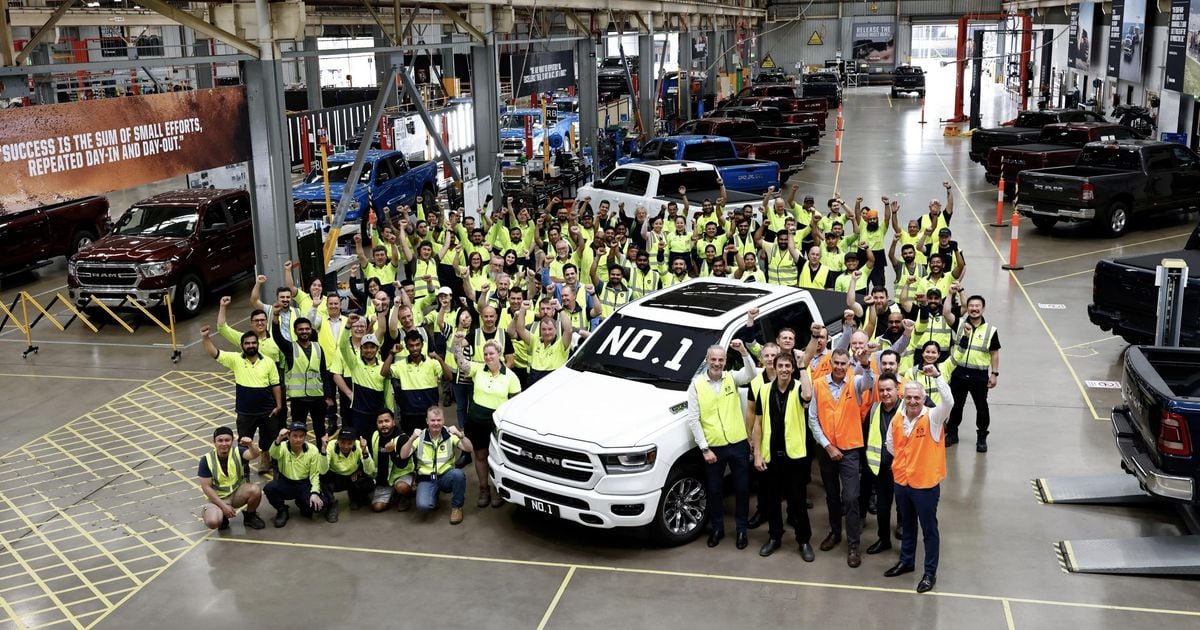
“We would like to thank our customers who drove us to Number One, and we also must thank the 200-plus production line workers and 50-plus engineers in Melbourne who remanufacture our vehicles from left-hand-drive to right-hand-drive to factory standards,” he said.
“We know the US pickup market in Australia is getting more competitive, but we remain absolutely committed to this segment.”
100s of new car deals are available through CarExpert right now. Get the experts on your side and score a great deal. Browse now.
The Ram 1500’s 3200-plus sales figure in 2024 excludes those sold by independent converters and comes despite a 45.3 per cent year-on-year sales decrease from 2023, when the previous-generation DS series entered runout, as well as strong sales in the closing months of last year for both new and established rivals.
Though the Ram’s total figure for the year was ahead of the Ford and Chevrolet, the F-150 outsold the 1500 in December – 344 sales versus 277.
The Silverado also had a solid end to 2024 with 228 sales in December, while the Tundra managed 136 sales in its first full month on sale.
Nevertheless, Ram Trucks Australia has sold more than 30,000 vehicles in Australia and New Zealand since 2016, more than double the sales of rival brands over the same period. For context, the Silverado arrived in 2020, while deliveries for the current F-150 began in 2023.
A total of 10,611 full-size pickups were sold Down Under in 2024, with the numbers made up by primarily the Silverado HD (1473) and Ram 2500 (565).
The Ram 1500 is converted by Walkinshaw in Clayton, Melbourne, where engineers have been transforming US-built pickups from left- to right-hand drive for sale in showrooms in Australia and New Zealand since 2018.
Though the larger, heavier-duty 2500 and 3500 pickups arrived first, the volume-selling 1500 has led the way since it first debuted in local showrooms.
More than 28,000 examples of the Hemi V8-powered 1500 have since been converted by Walkinshaw, with a handful of 3.0-litre V6 turbo-diesel models also previously converted, alongside others by unofficial converters.
The last Ram 1500 powered by a Hemi V8 rolled off the Clayton production line in early December 2024, before the first facelifted DT-series pickups – powered by a twin-turbo inline six-cylinder petrol engine – become available in Australia by mid-2025.
While they’re yet to be revealed, facelifted Ram 2500 and 3500 pickups will continue with a 6.7-litre Cummins straight-six turbo-diesel.
MORE: Final V8-powered Ram 1500 rolls off Australian production line MORE: Everything Ram 1500
2024 saw a record number of new vehicles delivered to Australian buyers, and a handful of brands almost singlehandedly helped the new high-water mark happen.
Of the 51 brands which sold vehicles in Australia throughout 2024 (and had been here the year prior), and which reported sales to either the Federal Chamber of Automotive Industries (FCAI) or the Electric Vehicle Council, only 19 posted year-on-year increases.
However, their cumulative gains of 91,518 deliveries outweighed the drop in 69,738 deliveries from the 32 brands which posted decreases.
There were five brands which were particular standouts, not only in the increased volume of vehicle deliveries they made from 2023 to 2024, but also the percentage.
100s of new car deals are available through CarExpert right now. Get the experts on your side and score a great deal. Browse now.
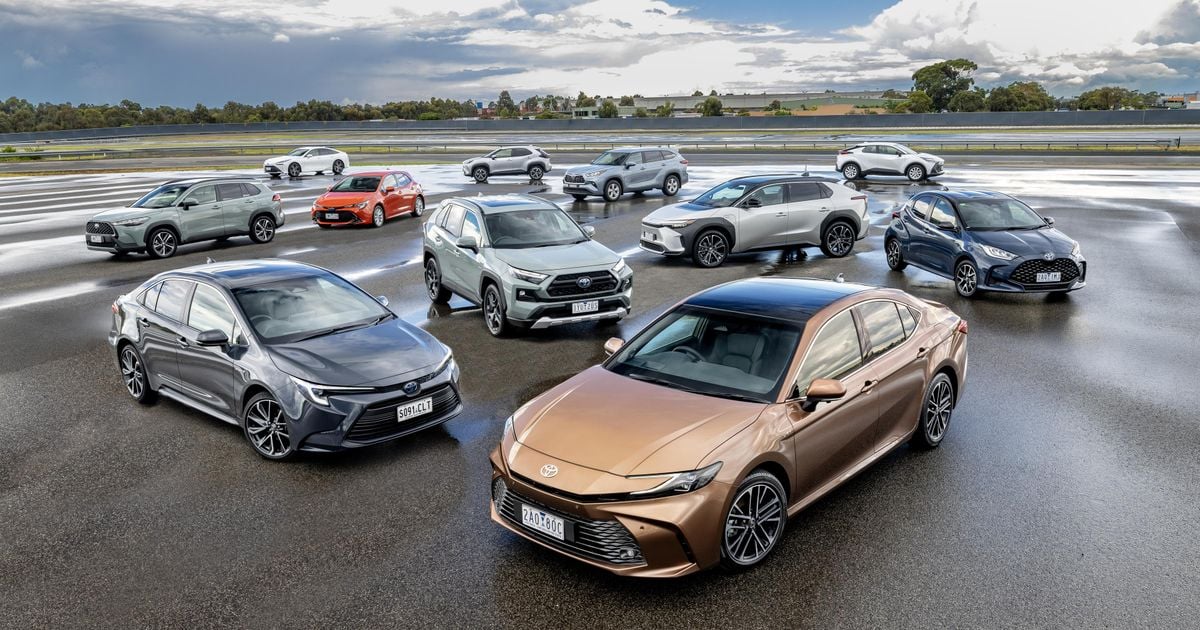
Toyota – Up 26,056 deliveries (12.1 per cent) to 241,296
Australia’s most popular brand for the 22nd straight year achieved a new sales record in 2024, delivering 241,296 vehicles.
It surpassed its previous record of 238,938 deliveries in 2008.
The undisputed driving force behind its win was the RAV4, which pushed past the HiLux to become Toyota’s best-selling model – and came within fewer than 4000 deliveries of the market-leading Ford Ranger.
Toyota delivered 29,091 more RAV4s in 2024 than in 2023, driving its year-on-year increase of 26,056 deliveries.
This offset a significant decline of 10,908 LandCruiser Prado deliveries, though this was due to the old 150 Series departing showrooms and the 250 Series not arriving for a handful of months after.
While Toyota ultimately wasn’t able to retake the model sales crown in 2024, it’ll be entering 2025 with confidence as it’s claimed to still have strong order books for the RAV4, which had previously experienced wait times of more than two years for certain variants.
Other models which experienced year-on-year increases included the HiAce van (up 4949), the Camry (up 4820 after a late change to a new generation) and the Corolla Cross (up 4041).
Ford – Up 12,370 deliveries (14.1 per cent) to 100,170
The Ranger became the first Ford to take consecutive annual sales wins since the EB/ED Falcon in 1992 and 1993, though it wasn’t the reason why the brand recorded a delivery increase in 2024.
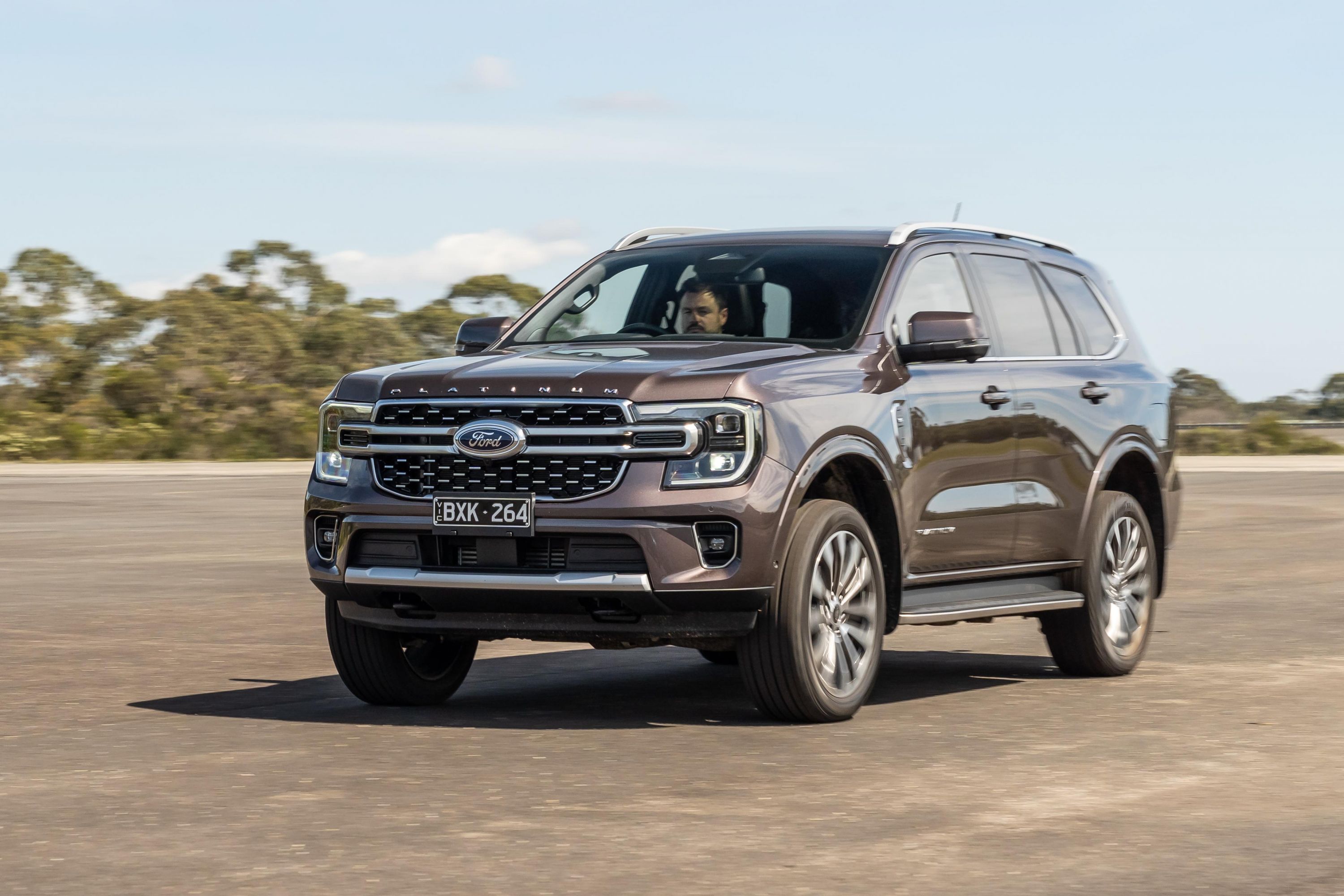
That instead was due to the Ford Everest, of which 11,423 more examples were delivered in 2024 compared to the year prior, effectively leading the brand’s charge past Mazda on the overall sales charts.
Such was the popularity of the Everest that its deliveries climbed by almost 76 per cent, with some buyers believed to be those unwilling to wait for the new Toyota Prado but willing to spend extra over the similar Isuzu MU-X.
The Everest’s popularity offset a drop in deliveries for the Escape (axed), Puma (axed), Mustang coupe (delayed launch) and even the Ranger, though the latter could be attributed to the sheer volume of its first full year on sale in 2023.
Mitsubishi – Up 11,036 deliveries (17.4 per cent) to 74,547
Mitsubishi was one of the quiet achievers for the year, with all models in its Australian showroom experiencing an increase in deliveries throughout 2024.
The Outlander continued to be its volume-seller, leading to a fifth-place finish on the overall sales charts.
Deliveries of the SUV increased by 13.8 per cent or 3350 examples last year to 27,613 units, only just ahead of the 3154 extra ASXs delivered – however the affordable small SUV experienced growth of 34.3 per cent, bringing its tally to 12,330 units.
The Eclipse Cross and Pajero Sport also had increased deliveries to the tune of more than 1000, despite both being ageing models.
BYD – Up 8020 deliveries (64.5 per cent) to 20,458
BYD may have ended the year in 17th place overall, but it improved by five spots compared to 2023, with a broader model lineup driving an increase of 8020 deliveries.
After launching in mid-2022 with the Atto 3 and following about a year later with the Dolphin, BYD’s recent success can be attributed to the newly launched Seal (arrived November 2023) and the Sealion 6 (first deliveries July 2024).
In the case of the Seal, it hasn’t been able to match the Model 3 for sales dominance among electric sedans, but it finished the year a respectable third in its segment, behind the aforementioned Tesla and the Toyota Camry.
The Sealion 6 launched mid-year as BYD’s first non-electric vehicle (EV) in Australia, though it’s understood to have been the best-selling plug-in hybrid vehicle (PHEV) in Australia, and finished the year fewer than 200 deliveries behind the Seal.
BYD also has reason to be optimistic about its 2025 prospects, with the Shark 6 PHEV ute soon arriving in driveways, while the Sealion 7 electric SUV is also soon due to launch.
Chery – Up 6713 deliveries (114 per cent) to 12,603
After relaunching in Australia with the Omoda 5 in April 2024, Chery has expanded its model lineup to four vehicles, driving the brand’s rise with the largest sales volume increase in 2024.
This can be attributed to a small increase for the Omoda 5, while deliveries of the Tiggo 7 Pro began in earnest last year. It was also boosted by the 2024 arrival of the Tiggo 4 Pro and Tiggo 8 Pro.
It’s expected that Chery will continue to rise up the sales charts as it continues to deliver its affordable models, while a PHEV version of the Tiggo 7 Pro is also expected to arrive this year.
In a world increasingly dominated by fast fashion, Herringbone & Sui stands as a beacon of bespoke craftsmanship and timeless sophistication. Born from a shared vision of redefining Indian menswear, the brand combines traditional tailoring with modern design, offering garments that are as personal as they are luxurious. From its roots in quality textiles to a forward-thinking approach that champions sustainability and innovation, Herringbone & Sui isn’t just creating clothing — it’s curating a lifestyle for the discerning gentleman.
What inspired you to venture into menswear, and how did your professional backgrounds influence the creation of Herringbone & Sui?
Herringbone & Sui was born from a shared passion for high-quality tailoring combined with a contemporary aesthetic that we felt was missing in the Indian menswear market. Our vision was to create a brand that offered meticulously crafted garments while fostering transparency — educating customers about fabric origins and the heritage of the mills we source from.
We were particularly inspired by the transformative power of tailored clothing. By understanding a client’s unique preferences, we provide thoughtful recommendations on proportions, colors, and styling details. When someone looks their best, they feel confident, and that confidence can lead to success in every area of life.
Our diverse professional backgrounds played a pivotal role in shaping the brand. My family’s legacy in textiles gave me an appreciation for quality materials, while Samarth’s experience in investment banking brought a strategic perspective to scaling a luxury brand. Together, we merged traditional craftsmanship with a modern, customer-centric approach, redefining bespoke menswear for the discerning gentleman.
What were some of the biggest challenges you faced when launching Herringbone & Sui, and how did you overcome them?
One major challenge was educating customers about what truly defines quality and craftsmanship in bespoke menswear. The Indian tailoring market is vast, ranging from entry-level options to premium tailors with polished sales experiences. However, many customers are swayed by presentation rather than focusing on crucial aspects like fabric quality, construction techniques, and fit.
Building credibility and helping clients understand what sets us apart was a gradual but rewarding process. Once customers experienced the superior quality of our garments, they became loyal advocates. Differentiating ourselves in a market with entrenched tailoring options required a strong commitment to sourcing the finest materials, employing expert craftsmanship, and offering unparalleled transparency throughout the process.
By investing time and effort into educating our clientele, we not only gained conversions but also forged long-term relationships that embody the ethos of Herringbone & Sui.
How does your brand blend traditional tailoring techniques with modern design aesthetics to stand out in a competitive market?
At Herringbone & Sui, we merge the artistry of traditional tailoring with modern design sensibilities to create garments that are timeless yet practical. Techniques like full-canvas construction and hand-stitched detailing ensure durability, comfort, and a perfect fit.
To cater to today’s clients, we incorporate advanced fabrics and functional innovations. For example, stretch materials enhance comfort in trousers, waterproof gabardine makes trench coats ideal for rainy climates, and nano-coated stain-resistant suits are perfect for effortless evenings. High-twist yarns in unstructured travel jackets resist creasing, making them travel-ready, while wrinkle-free shirts and trousers ensure our clients look impeccable at all times.
By combining time-honored craftsmanship with forward-thinking design, we deliver bespoke garments that celebrate individuality and adapt seamlessly to the modern lifestyle.
Sustainability and ethical fashion are growing concerns. How does your brand address these issues within the bespoke menswear space?
Bespoke tailoring is naturally sustainable because garments are made to order, minimizing waste. Our precise supply chain management enhances this efficiency, ensuring resources are used responsibly.
We prioritize sourcing fabrics from ethical suppliers, including renowned mills in Europe and India. This not only guarantees the luxurious quality of our garments but also respects the environmental and social impact of production, honoring the communities and craftsmanship that bring our designs to life.
Bespoke tailoring is deeply personal. Can you walk us through the process of creating a custom piece, from the first consultation to the final fit?
The bespoke journey begins with a detailed consultation where we understand the client’s preferences, lifestyle, and needs. Clients choose from a curated selection of the finest fabrics, and we guide them through designing every element — from lapels to embroidery.
Our skilled artisans then craft the piece with precision, ensuring the fit and finish meet our exacting standards. The process concludes with a final fitting, during which adjustments are made to achieve a perfect fit. The result is a truly unique garment, tailored to the individual in every way.
How do you ensure the quality and craftsmanship of your garments while scaling the brand across different markets?
We uphold our commitment to quality by collaborating with a team of skilled artisans, many of whom have decades of expertise. Each garment is meticulously handcrafted, with specialists overseeing every stage of production to ensure flawless execution.
Our quality control begins with sourcing premium fabrics from world-renowned mills in Europe and India. At every step — from fabric selection to final inspection — we maintain rigorous standards to guarantee excellence.
As we expand into new markets, we continue to oversee production directly and prioritize customer satisfaction. By combining artisan expertise with meticulous attention to detail, we protect the integrity of our brand and ensure every piece meets the high standards of Herringbone & Sui.
How do you see the menswear market evolving in the next five years, and what role do you envision for Herringbone & Sui in shaping these trends?
The menswear market is moving towards timeless, personalized styles that emphasize quality and sustainability over mass production. Herringbone & Sui is poised to lead this shift, offering bespoke garments that balance classic sophistication with modern functionality.
We anticipate growing global demand for sustainable, personalized fashion as consumers increasingly prioritize quality, versatility, and unique experiences. Our brand’s emphasis on understanding client preferences and delivering garments that align with their lifestyles ensures we stay at the forefront of this evolution.
Dubai is known for its luxury market. How has being based in this region influenced your approach to design and customer experience?
Dubai’s luxury market has elevated our approach to customer experience. Clients here value exclusivity and attention to detail, which aligns perfectly with our bespoke philosophy. Every interaction with Herringbone & Sui — from tailored consultations to garments crafted from the world’s finest fabrics—reflects our commitment to excellence.
The city’s cosmopolitan clientele has also inspired us to refine the sophistication of our designs. Dubai’s emphasis on luxury and precision mirrors our ethos, enabling us to deliver unparalleled craftsmanship and personalised service.
What’s next for Herringbone & Sui? Are there any plans for expanding into new markets, introducing new product lines, or collaborating with other designers?
We are excited to expand globally, targeting markets that appreciate bespoke craftsmanship and fine menswear. Our plans include introducing new product lines that merge traditional tailoring with modern innovation and exploring collaborations that celebrate artistry, heritage, and fresh perspectives.
Following the success of our pop-ups in Dubai, we aim to host similar events across the Middle East and North Africa, showcasing our dedication to luxury and personalized service. As always, our focus remains on delivering exceptional experiences and elevating bespoke menswear to new heights.
Far from their early days of generic buffets and predictable itineraries, today’s top all-inclusive properties provide everything from bespoke dining experiences and immersive cultural activities to world-class wellness. Guests can savor a Michelin-star-worthy meal one evening and snorkel along a coral reef the next day — all without worrying about surprise costs.
We’ve seen a flurry of fabulous all-inclusive resorts open in the past few years, and 2024 was no exception. Looking ahead, a new wave of resorts is poised to raise the bar even higher in 2025. From eco-luxury in the Dominican Republic to a wellness oasis on the Red Sea, here are eight of the most exciting all-inclusive openings to book this year.
Secrets St. Lucia Resort & Spa — St. Lucia
Rendering of restaurant at Secrets St. Lucia.
Courtesy of Hyatt
Set along St. Lucia‘s ruggedly beautiful Caribbean coastline, Secrets St. Lucia Resort & Spa brings adults-only luxury with 355 suites, nine gourmet dining venues, and six chic bars. Tip: If you book a club-level room, you’ll have upgraded perks like access to private areas throughout the resort including the Preferred Club lounge and enhanced room amenities. Guests can lounge on volcanic beaches, bliss out with a seaweed wrap at the on-site spa, bop into Rodney Bay, or head out on adventurous excursions to zip-line through the rainforest or snorkel the reefs. Secrets St. Lucia Resort & Spa will be a sanctuary for honeymooners and couples when it opens this February.
Zemi Miches All-inclusive Resort, Curio Collection by Hilton — Dominican Republic
Rendering of guest room at Zemi Miches.
Courtesy of Hilton
Perched along the sugary shores of Playa Esmeralda, Zemi Miches marks the Curio Collection’s first foray into the Dominican Republic. With 500 accommodations ranging from plush suites to beachfront bungalows, it’s promising something perfectly suited for every type of traveler. We’re most excited about those 20 beachfront bungalows that sit just steps from the sand; each comes with butler service, a swim-out pool, and ocean views. Culinary highlights include the Anacaona restaurant, which celebrates Dominican flavors with locally sourced ingredients. The sprawling property — scheduled to open at the end of June — features a water park for kids, a rooftop infinity pool for adults, and wellness offerings that include yoga and a juice bar.
UNICO 20°105° Puerto Vallarta — Mexico
UNICO 20°105° Puerto Vallarta, cushioned between the massive Banderas Bay and the misty Sierra Madre Mountains, is bringing everything travelers love about the brand’s Riviera Maya property to the coast of the Pacific. This adults-only playground will feature 141 airy rooms with vibrant design touches and boasts what’s rumored to be the best rooftop pool in Puerto Vallarta, offering jaw-dropping views. Known for its curated local experiences, UNICO invites guests to explore Vallarta’s artsy downtown, lush jungles, and legendary dining scene when the hotel opens this fall. Guests can expect a heavy focus on gourmet cuisine, mixology, art, wellness, and tailored adventures based on the Mexican Pacific location.
Paraiso de la Bonita, The Luxury Collection — Mexico
Guest room in Paraiso de la Bonita.
Courtesy of Marriott
Hidden between a mangrove reserve and the turquoise waters of the Mexican Caribbean, Paraiso de la Bonita is a hideaway reserved exclusively for adults. This boutique resort features 100 expansive oceanfront suites and a massive 21,000-square-foot spa that includes a hammam. Three restaurants, including one with a 5,000-bottle wine cellar, as well as a sushi and ceviche spot, set the bar high for foodies. Looking for a secluded stay? Opt for one of 10 private suites with plunge pools and personal chefs. Staying in one of these exclusive suites will also grant you access to two dedicated signature restaurants and a separate guest pool. Located just 20 minutes from Cancun’s bustle, Paraiso (which just opened in late 2024) offers serene luxury with easy access to the Riviera Maya’s attractions.
Miraval The Red Sea — Saudi Arabia
Rendering of guest room at Miraval The Red Sea.
Courtesy of Miraval The Red Sea
Miraval’s first location outside of the U.S. will be nothing short of transformative. Sprawling across Shura Island in the Red Sea, this wellness-centric retreat blends luxury with mindfulness. Think 180 opulent villas, world-class spa treatments, and immersive culinary experiences like cooking in the Sensory Herb Gardens. The Life in Balance Spa boasts 39 treatment rooms offering innovative therapies, including a Hammam Journey and the famed Vasudhara water massage. Guests can enjoy yoga at sunrise or explore interactive mindfulness centers. Surrounded by untouched beaches and crystal-clear waters, Miraval The Red Sea promises a soul-refreshing escape when it opens in the fall of this year.
Zel Punta Cana — Dominican Republic
A chic collaboration between Meliá Hotels and tennis legend Rafael Nadal, Zel Punta Cana embodies Mediterranean vibes in the Dominican Republic. Just minutes from Bavaro Beach, the resort — which just opened in December — features 190 suites, including swim-up rooms with private gardens and whirlpools. Culinary offerings are just as dynamic, with standout options like Volcan, an asador grill, and Tacorini, which fuses Mexican and Greek cuisine. The Zel Club encourages active wellness with weekend retreats blending fitness, relaxation, and social connection. From sipping Spanish Café de Finca coffee to lounging in Balinese-style beds, Zel Punta Cana brings a touch of Mallorca to the tropics.
Excellence Coral Playa Mujeres — Mexico
Excellence Coral Playa Mujeres is bringing another iteration of the fan-favorite brand to the Caribbean coast of Mexico in February. This adults-only haven offers contemporary suites with private pools and that understated elegance that Excellence devotees have come to know and love. The resort will feature multiple fine dining options and bespoke cocktails crafted by expert mixologists, too. Located in the Playa Mujeres area just north of Cancun, this retreat is all about tranquility with easy access to vibrant nightlife and cultural attractions.
W Punta Cana — Dominican Republic
The highly anticipated W Punta Cana marks a groundbreaking debut as the first all-inclusive W resort. Located in Uvero Alto about half an hour from Punta Cana, this luxurious property will feature 340 rooms and suites when it opens later this year. Guests can choose from accommodations with private balconies, swim-up access, or their very own plunge pools. The resort’s expansive amenities include the signature Away Spa, multiple pools, and direct access to pristine beachfront. Foodies will delight in the 15 on-site restaurants and bars, with nine offering all-inclusive dining options that showcase global cuisines and creative cocktails. True to W’s signature vibe, the resort promises an energetic atmosphere with eclectic design, a stunning rooftop, and the option to dial up the energy or chill out in beach bliss.
Ford is recalling about 20,000 plug-in hybrid SUVs due to a manufacturing defect that could cause battery cells to short circuit.
The recall encompasses 2020-2024 Ford Escape Plug-In Hybrids and 2021-2024 Lincoln Corsair Grand Touring plug-in hybrids, with 16,480 Fords and 4,004 Lincolns affected. These vehicles may have battery packs with cells manufactured in such a way that the separator layer between the cathode and anode is susceptible to damage, according to the NHTSA.
2023 Lincoln Corsair
Damage to the separator layer could lead to a short circuit, causing a loss of propulsion and, potentially, a fire, the NHTSA said. Other functions like steering, braking, and lights won’t be affected by this type of short circuit, the safety agency noted, adding that drivers will see a “Stop Safely Now” message on the dashboard if a short circuit occurs.
Ford told the NHTSA that it is aware of four incidents of “battery thermal venting” related to this issue, the first three of which occurred on European-market vehicles, but is not aware of any related accidents or injuries. An investigation into these incidents led the automaker to conclude that changes in the cell manufacturing process allowed for small defects in the cathode and additional stress on the separator layer that led to damage.
2023 Ford Escape Plug-in Hybrid
Dealers will at first install a software update for the battery energy control module, but may replace battery packs if necessary. All work will be done free of charge. Ford expects to mail owner notification letters Jan. 20. Owners can also call the automaker’s customer service department at 1-866-436-7332. Ford’s reference number for this recall is 24S79.
The Escape and Corsair are closely related, and use similar plug-in hybrid powertrains incorporating a 2.5-liter inline-4 and 14.4-kwh battery pack. But the Ford is only available with front-wheel drive, while the Lincoln is offered with all-wheel drive exclusively, contributing to a 10-mile difference in EPA electric range, at 37 miles for the Escape and 27 miles for the Corsair. The latter is also Lincoln’s only model with a plug, following the discontinuation of the larger Aviator Grand Touring plug-in hybrid.
Porsche built its reputation with internal-combustion sports cars, but at the turn of the 20th century Ferdinand Porsche, whose son Ferry would later start the sports-car brand, tinkered with electric motors—including in-wheel hub motors.
The first electric-vehicle boom occurred at the turn of the 20th century, before internal combustion established itself as the dominant technology. And on Apr. 4, 1900, an EV that the then 24-year-old Porsche helped develop was unveiled at the Paris World’s Fair.
Having previously a complete electric car in 1898, Porsche designed electric motors to be integrated with the front hubs of a vehicle built by the Austrian firm of Jason Lohner & Co. in a period of only 10 weeks. Each motor generated 2.4 hp, which got the vehicle, known as a Lohner-Porsche, up to a top speed of 19.8 mph. Besides the motors, another notable innovation of the Lohner-Porsche was four-wheel braking—a rarity at the time.
Working with Ludwig Lohner, Porsche continued to develop hub motors, creating three sizes with outputs up to 11.8 hp for use in trucks and buses as well as passenger cars. These motors were intended for use with lead-acid batteries—typical of the time—that provided a claimed range of up to 31 miles.
Lohner-Porsche Semper Vivus hybrid
Porsche also designed an all-wheel drive electric race car named La Toujours Contente (French for “the one who’s always happy”), with one 13.8-hp motor powering each wheel. But the engineer’s hub motors saw the most use in hybrids—starting with the Lohner-Porsche Semper Vivus (Latin for “always alive”), which combined front hub motors with a gasoline engine.
Lohner and Porsche eventually applied the same hybrid layout to about 300 production vehicles, including 40 for the Viennese fire department, as well as assorted taxis and private passenger cars.
More than a century later, in-wheel motors are still attracting interest, although adoption for production vehicles has been slow. Chinese automaker Dongfeng claimed to be the first to use them in a fully-homologated passenger car in 2023, although they were also intended for the Lightyear 0 and Lordstown Endurance before production of both vehicle stalled.
Aptera is also including hub motors in what it claims will be a super-efficient 3-wheeler, and patent filings from Ferrari, Hyundai, and Toyota indicate they’re being studied by established automakers as well.
Everyone’s attention is on the two facelifted GR hot hatches at the Toyota Gazoo Racing Season 7 finale, happening at the Petronas Sepang International Circuit now, but there’s another car on stage, one that’s a fair bit more attainable.
The 2025 Toyota Corolla GR Sport is the sportiest variant of the local civilian Corolla range, and it’s aimed at young drivers, even those with a family, who want a sporty sedan for everyday driving (UMW Toyota Motor’s words).
“Unlike ‘sporty variants’ of some other models in the market, the Corolla GR Sport does not merely have sportier looks but also genuinely improved driving performance, particularly in the area of handling,” the company says.
The 2025 car replaces the Corolla GR Sport that debut in August 2023, and the sedan gets revised exterior features, improved performance from a new ’10-speed transmission’ (more on this later), GR Sport leather and suede seats and an upgraded infotainment display.
We’ll start with the gearbox, which UMWT calls a 10-speed Sport Sequential Shiftmatic. Replacing the standard CVT with seven virtual ratios (it’s still a CVT), the ‘box here has more ratios that ‘allows for smoother transitions’ and each ratio has been ‘optimised for optimum performance’. The manual mode has enhanced response time and there are steering paddle shifters too, of course. UMWT has done this ’10-speed trick’ before with the 2020 Vios GR-S.
No change to the output of the 2ZR-FE 1.8-litre Dual VVT-i engine, which remains at 139 PS and 172 Nm, but UMWT says that revised ECU programming adds responsiveness. When in Sport mode, there’s ‘Auto Brake Downshifting and Cornering Gear Fix Control’ that aims to provide better throttle control when exiting a corner.
There’s more under the hood. The electric power steering’s ECU has been optimised for smoother steering during multi-turn manoeuvres, such as driving along a twisty road. “Being able to feel the torque more directly gives the driver a better feel of what the front wheels are doing. Together with better straightline stability, the driver will have more confidence at high speed,” UMWT says.
Like the old Vios GR-S and outgoing Corolla GR Sport, the 2025 car gets sharper handling than the 1.8 G thanks to retuned shock absorbers, rear coil springs and stabilisers. The result is reduced roll, pitch and bouncing, but the firmer damping and improvements to driving dynamics have not caused a loss of ride comfort, UMWT claims.
Exterior changes include a redesigned front bumper and lower grille, which is much more in line with the look of the full bore GR cars. A more square lower grille, basically. The ‘mouth’ is covered with a G-shaped mesh. The rear end is enhanced with a boot lid spoiler and lower spoiler, while the tail lamps have a darkened ‘smoked’ effect. UMWT says that aerodynamic performance has been improved.
To garnish, the 2025 Corolla GR Sport has a new two-tone body colour with a black roof. The three colour options are Red Mica Metallic, Platinum White Pearl Mica and Attitude Black Mica – the latter won’t be two-tone, of course. There should be no change to the wheels, which are 18-inch items paired with 225/40 tyres.
Inside, the black-themed cabin with red stitching gets new GR Sport Design front seats upholstered with leather and suede. Other notable points are a GR emblem for the sports steering wheel (start button too), red seatbelts and smoked silver metallic trim. A non-sporty but good upgrade is the larger 10-inch touchscreen infotainment with wireless Apple CarPlay and Android Auto.
The full Toyota Safety Sense suite of active safety systems is included, along with a security system with immobiliser, ultrasonic cabin sensor and glass breakage sensor. UMWT’s usual vehicle telematics system, too. The 2025 Toyota Corolla GR Sport is priced at RM149,800 on-the-road excluding insurance and the transferable factory warranty is five years with unlimited mileage.
We are only a few days into 2025, but Proton CEO Dr Li Chunrong has already confirmed that the national car company will launch its second all-electric model this year. The announcement was made at the opening ceremony of the Proton eMas Petaling Jaya showroom in Seksyen 13, operated by Regal Motors EV.
That’s big news indeed, coming less than a month after the long-awaited introduction of the Proton eMas 7, Malaysia’s first local-branded EV. While the identity of the second model is still under wraps, it’s heavily rumoured to be the eMas 5, based on the Geely Xingyuan.
If proved correct, the electric hatchback would be a smaller, more affordable EV option for the mass market, and one that will likely rival Perodua’s own upcoming electric model that was recently previewed by the eMO-II concept.
In China, the Geely Xingyuan was launched in October 2024, with a CLTC-rated range of up 410 km (closer to 350 km on the WLTP cycle). We will have to wait and see if the Proton eMas 5 will have similarly small 30.12 and 40.16 kWh battery options here. The larger eMas 7 gets a choice of 49.52 and 60.22 kWh battery packs, with a claimed range of 345 km and 410 km respectively on the WLTP cycle.
Last September, we reported that local Proton dealers were shown the Geely Xingyuan during a group visit in China, fuelling rumours that the smaller EV model is being considered as an eMas model. It’s now looking more and more likely that that is indeed the case.
The question is when and of course, how much? The Proton eMas 7 starts from RM105,800, so it’s natural to expect the far smaller sibling to perhaps fall below the RM100k mark. However, it will have to be locally assembled in Malaysia to carry a five-figure price tag. The eMas 7 is currently fully imported from China.
Investigators are searching for why Jeju Air Flight 7C2216 crashed on Sunday in South Korea. The fiery runway crash killed 179 people onboard. There were only two survivors, flight attendants sitting in jump seats at the back of the plane. Their seat positions during the catastrophic incident likely saved their lives.
It’s Time To Discontinue The Model S | Jalopinions
The flight’s demise began when the Jeju Air Boeing 737-800 suffered an apparent bird strike as it approached Muan International Airport. The flight crew declared a Mayday and attempted an emergency landing. However, the landing was aborted after the landing gear failed to deploy. The plane went around and performed a belly landing. It was executed perfectly, as the Boeing slid down the runway on the fuselage’s underside with minimal damage to the rest of the aircraft.
At any major international airport, Jeju Air Flight 7C2216 would have slid past the end of the runway into an empty glass field. According to the BBC, a concrete wall bolstered by a dirt mount was 820 feet beyond the runway. The plane smashed into the earthen structure and was obliterated in a heap of flame and debris. The BBC spoke with air safety expert David Learmount:
Mr Learmount said the landing was “as good as a flapless/gearless touchdown could be: wings level, nose not too high to avoid breaking the tail” and the plane had not sustained substantial damage as it slid along the runway.
“The reason so many people died was not the landing as such, but the fact that the aircraft collided with a very hard obstruction just beyond the runway end,” he said.
During the impact, the tail section was violently ripped from the rest of the fuselage at around the last row of seats. The rear galley was spared from the crash’s worst destruction. The two attendants, a man and a woman, seated in the galley survived and were hospitalized with non-life-threatening injuries.
While paying passengers don’t have access to the jump seats, data defends the notice that the plane’s rear is the safest place to sit. A Time investigation stated that middle rear seats have a 28 percent fatality rate in accidents, the lowest of anywhere on an airliner. These findings were reached after combing through 35 years of aircraft accident data. Commercial plane crashes are still an incredibly rare occurrence but some flyers want to play it as safe as possible.
The large-and-in-charge QX80 flagship SUV is kind of a make-or-break product for Infiniti, and the good news is that it seems to be a step in the right direction for the ailing luxury automaker. With a starting MSRP of $82,450, the lux machine needs to deliver a premium driving experience, and at least some portion of that calculation comprises crisp and clear audio on a balanced soundstage. There are definitely ways to provide quality audio without bringing this much attention to the design, but Infiniti apparently decided to go bold with its new headrests.
2025 Infiniti QX80 First Look : A Luxurious Evolution
Here’s what Infiniti had to say about it:
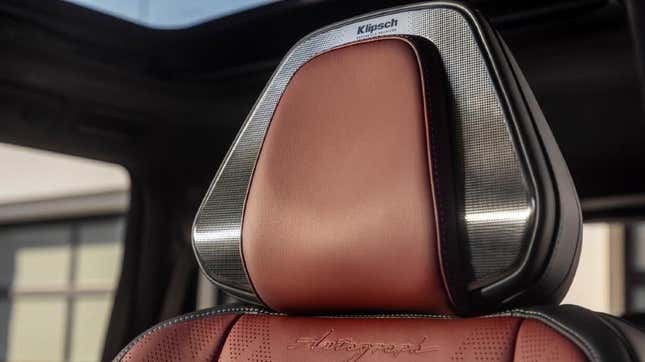
INFINITI and Klipsch engineers came together to seamlessly integrate QX80’s interior and its in-vehicle technologies, brought to life with Individual Audio. Leveraging metal-trimmed speakers mounted to the front seat headrests, Individual Audio allows for focusing only certain audio elements – such as navigation directions, music or phone calls – to the driver’s seat. For example, the driver can make a phone call while passengers continue listening to music, or the driver could listen to a favorite playlist and hear map guidance without disturbing those sleeping in the rear seats.
Some cars have had speakers in the headrests for decades, like the top-down Mazda Miata which introduced headrest speakers in the 1990s to combat wind noise. These days a lot of cars at least offer the option of headrest audio, including the Nissan Kicks, which sits at the other end of the Nissan/Infiniti price spectrum, starting at $21,830. I recently drove the Audi S5 which boasts the same audio features from Harman Kardon as this Infiniti/Klipsch system and it was quite nice. Having the map guidance play for only the driver instead of interrupting the audio experience for everyone is such a nice quality of life feature that you don’t think about until it’s not there.
I’ll need to get behind the wheel of the Infiniti to try out these speakers first hand, but for now I’ll say that I appreciate a bold design choice in a world that seems proud of continuity and sameness. I don’t know if I would have gone with a pharaoh nemes shape as my inspiration, and I remain skeptical of exposed metal near my brain dome while driving, but from where I’m sitting it looks like functional art. Whatever it is, it’s weird as all hell, and weird is good.
The technical storage or access is strictly necessary for the legitimate purpose of enabling the use of a specific service explicitly requested by the subscriber or user, or for the sole purpose of carrying out the transmission of a communication over an electronic communications network.
Preferences
The technical storage or access is necessary for the legitimate purpose of storing preferences that are not requested by the subscriber or user.
Statistics
The technical storage or access that is used exclusively for statistical purposes.The technical storage or access that is used exclusively for anonymous statistical purposes. Without a subpoena, voluntary compliance on the part of your Internet Service Provider, or additional records from a third party, information stored or retrieved for this purpose alone cannot usually be used to identify you.
Marketing
The technical storage or access is required to create user profiles to send advertising, or to track the user on a website or across several websites for similar marketing purposes.