In the 1960s, Chrysler built a handful of cars powered by aircraft-style turbine engines. And where does one take a turbine when it’s in need of a rebuild? To the original manufacturer, of course.
Like the other cars in his collection, Jay Leno’s Chrysler Turbine Car saw regular use—until its engine failed. So Leno sent it to Williams International, the Michigan-based company founded by one of the engine’s designers, Sam Williams. An all-volunteer effort organized by Williams’ son Gregg, who now runs the company, made the rebuild happen.
As a refresher, the Chrysler Turbine Car was the result of an ambitious research and marketing project in the early 1960s. After experimenting with prototypes starting in the 1950s, Chrysler built 50 examples (plus five pre-production cars) that were handed over to customers for evaluation and feedback.
Chrysler Turbine Car on Jay Leno’s Garage
There was plenty of experimentation with turbine-powered cars in the postwar era. Ford built a turbine-powered Thunderbird prototype in 1955, and there were even a handful of turbine race cars, with the STP-Paxton Turbocar nearly winning the 1967 Indianapolis 500. But Chrysler was the only automaker to put a turbine engine in something resembling a normal car that customers (albeit a small number) were actually to drive.
The test program showed some positives for turbines, including smooth operation and the ability to run a wider variety of fuels besides gasoline. But, as Leno found out when the engine on his car seized, ease of maintenance was not one of them.
Turbines have fewer moving parts than the piston engines used in most production cars, but those parts require much finer tolerances and more exotic metals in order to deal with the high heat and rotational speeds (the Chrysler engine reportedly redlined at 60,000 rpm) of turbines. That also added to the cost of turbine engines—one of the factors behind Chrysler’s decision not to pursue high-volume production, along with fuel-economy and emissions concerns.
Williams International still builds small turbine engines, and even helped develop a series-hybrid version of the pioneering General Motors EV1, but rebuilding this engine still wasn’t straightforward. The lack of replacement parts and original blueprints meant essentially starting from scratch, although the availability of 3D printing helped.
This isn’t the sort of thing most people will be able to work on in their home garages, then, but luckily this Chrysler Turbine Car has found a home where it can be properly cared for—and appreciated.
The 2025 Acura TLX and 2025 Lexus ES are highly polished midsize luxury sedans delivering a ton of car for the money. While that’s to be expected in a premium vehicle, the TLX and ES also stand out for their powertrain choices and comprehensive features.
Of the two, the TLX puts more emphasis on driving excitement — thanks to sharp steering and available all-wheel drive (AWD). Its standard 272-horsepower turbocharged 4-cylinder engine has more than enough muscle, although the turbocharged V6 in the range-topping Type S transforms the TLX into a fully fledged sport sedan.
Those who prefer to be coddled should lean toward the Lexus. A whisper-quiet cabin and supple ride make it ideal for anyone who prizes a relaxed, low-stress drive. This goes a long way toward explaining why the Lexus ES is a 5-time Kelley Blue Book Best Buy award winner.
Need more information before making the choice? We’re happy to oblige.
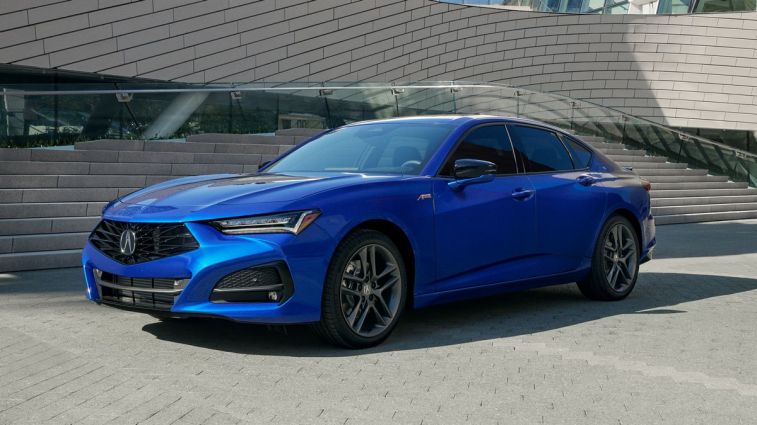
2025 Acura TLX
2024 model shown
Following an update last year, the 2025 TLX comes standard with a 12.3-inch digital instrument display and 12.3-inch infotainment screen, plus wireless charging, and leather upholstery.
The entry-level TLX Technology trim starts at $46,595. The mid-range TLX A-Spec with AWD costs $51,595. And the higher-performance TLX Type S rings in at $58,945. All prices include factory-to-dealer destination charges.
Acura TLX Highlights
Type S performance: Don’t get us wrong — even the base front-wheel-drive TLX with its 272-hp turbo 4-cylinder is quite entertaining. Yet we’d have to forfeit our car-loving credentials if we didn’t mention the thrills that come with the Type S. A 355-hp turbo V6 blasts the TLX from zero to 60 mph in 4.9 seconds.
Super Handling All-Wheel Drive: No one can call Acura humble for naming its all-wheel drive system “super.” But Super Handling All-Wheel Drive (SH-AWD), standard with the A-Spec and Type S, lives up to its billing by improving grip and sharpening the TLX’s handling reflexes. We’ve been seriously impressed by the amount of grip.
Steering agility: Speaking of handling, the Acura TLX feels light on its feet (tires?), thriving on tight and twisty roads. This steering prowess is equally satisfying on city streets or through mountain curves.
ELS audio system: The TLX offers ELS audio systems in 13- or 17-speaker configurations. They both deliver stunning quality. The wizard behind them (Elliot Scheiner) is a Grammy-winning sound engineer.
Read our Acura TLX Expert Review or see 2025 Acura TLX models for sale near you.
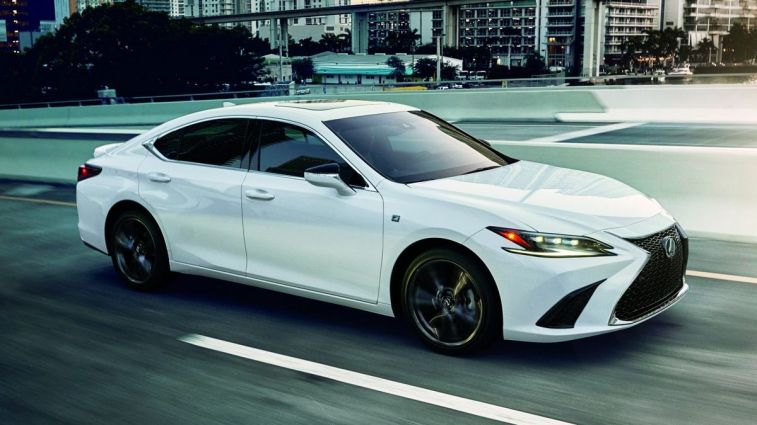
2025 Lexus ES
2024 model shown
Buyers seeking their ideal ES are spoiled for choice. Among its many trims and F-Sport option packages are three powertrains — including a fuel-sipping hybrid — plus a choice of front- or all-wheel drive.
This generation of ES dates back to the 2019 model year, but remains one of our most highly recommended luxury sedans. The base ES 250 starts at $43,190, while the top-of-the-line ES 300h Ultra Luxury trim commands $53,480. We like the Technology package that brings a head-up display, 12.3-inch infotainment touchscreen, and a Smart Access key card.
Lexus ES Highlights
Ride quality: Lexus deserves a lot of credit for the suspension tuning of the ES. Sure, there are rivals with firmer/sportier setups (including the Acura TLX). Yet the ride quality of the ES is perfect for those who want a plush-yet-not-floaty suspension that soaks up rough roads with uncanny ease.
Rear legroom: If driving with more than one passenger is going to be a frequent occurrence, know that the Lexus ES delivers in rear legroom. Its 39.2 inches are about four inches more than the TLX can provide.
All-wheel drive: Having all-wheel drive as standard in the least expensive ES 250 trim is a positive asset. But it means sticking with this version’s 203-horsepower 4-cylinder engine. ES 350 models with a V6 engine and ES 300h hybrid models are all front-wheel-drive.
Silky V6: If you can live without all-wheel drive, we think the 302-hp V6 in the ES 350 is a perfect choice for this car’s luxurious nature. It whisks the ES from a standstill to 60 mph in a brisk 6.6 seconds, as opposed to 8.1 seconds with the base 4-cylinder.
Read our Lexus ES Expert Review or see 2025 Lexus ES models for sale near you.
Similarities
The 2025 Acura TLX and 2025 Lexus ES are most similar in their overall value. They cost thousands less than several direct competitors, particularly from the German sector, but neither skimps on standard or optional tech and safety features. They’re also known for their reliability and resale values. Even their warranties are identical.
Conclusion
The Acura TLX is the extrovert, thanks to its bold exterior design and optional turbo V6. We love how this Acura powers around corners and encourages fun behind the wheel.
Where it falters a bit, at least compared to the Lexus ES, is in rear legroom and its quirky touchpad controller for the infotainment system. It gets easier with practice, but we think a simple touchscreen would be a better idea.
The Lexus ES has impeccable credentials here at Kelley Blue Book. This Best Buy award-winner shines in all areas as a comfortable midsize luxury sedan, and it doesn’t demand a mega-jackpot lottery win to afford it.
Neither the Acura nor the Lexus is a bad choice, but the easygoing ES is more attuned to the demands of a wider range of luxury car shoppers.
New 2025 Acura TLX Prices
New 2025 Lexus ES Prices
$43,190
TBD
$43,190
TBD
$44,590
TBD
$48,135
TBD
$48,135
TBD
$48,360
TBD
$48,360
TBD
$49,335
TBD
$49,650
TBD
$49,760
TBD
$50,885
TBD
$52,080
TBD
$52,080
TBD
$53,480
TBD
The Kelley Blue Book Fair Purchase Price for any individual used vehicle can vary greatly according to mileage, condition, location, and other factors.
The prices here reflect what buyers are currently paying for vehicles and vehicles in typical condition when purchasing from a dealership.
These prices are updated weekly. The manufacturer’s suggested retail price (MSRP) quoted includes the destination fee, but does not include tax, license, document fees, and options.
Smaller luxury SUVs represent one of the fastest-growing segments of the automotive industry. The competition grows more fierce, and the number of vehicles available to consumers continues to expand.
The 2025 Acura RDX and 2025 BMW X2 are two of the best examples. The pair sit at the edge of two classes of vehicles, with the Acura being a bit larger while the coupe-styled BMW retains the luxurious touches it’s known for.
Let’s’ take a closer look at these two SUVs.
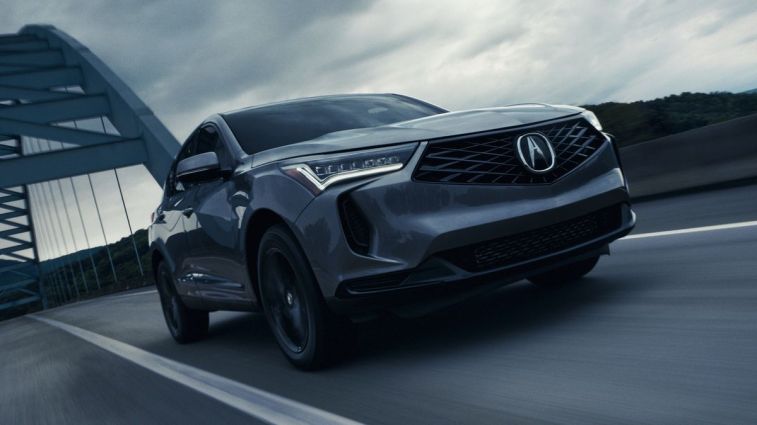
2025 Acura RDX
Acura SUVs enjoy an athletic, sporty-looking exterior. It resonates with buyers who want a vehicle that’s much more than basic in its appointments and provides a spirited response from behind the wheel. The 2025 Acura RDX certainly hits the mark.
Powered by a 272-horsepower turbocharged 4-cylinder engine and connected to a 10-speed automatic transmission, the RDX enjoys plenty of go, but it also gets standard all-wheel drive (AWD).
Actually, it gets Acura’s version of it, dubbed Super Handling All-Wheel Drive (SH-AWD). It’s standard on every trim. Not only is power getting to the wheels, but the rubber sticks to the road, making your everyday commuter car more fun on curvy roads.
The comfort and convenience tech includes wireless Apple CarPlay and Android Auto and some advanced driver safety technology. The RDX comes in trims starting with base, Technology Package, A-Spec, Advance Package, and A-Spec with the Advance Package.
Acura RDX Highlights
Concert hall: If your budget allows it, spring for the ELS audio system developed with Elliot Scheiner, Grammy-winning recording engineer for Beyoncé and Fleetwood Mac. This excellent 16-speaker, 710-watt system comes in higher trim levels. A 12-speaker setup is part of the Technology package.
SH-AWD: Named Super Handling All-Wheel Drive, it distributes variable amounts of drive to individual wheels to maximize grip, stability, and efficiency. And it’s standard on all RDX models.
Sunny side up: GPS-linked climate control in the Acura RDX uses a solar sensor to get outside information to control the vehicle’s interior temperature. It’s part of the Technology package.
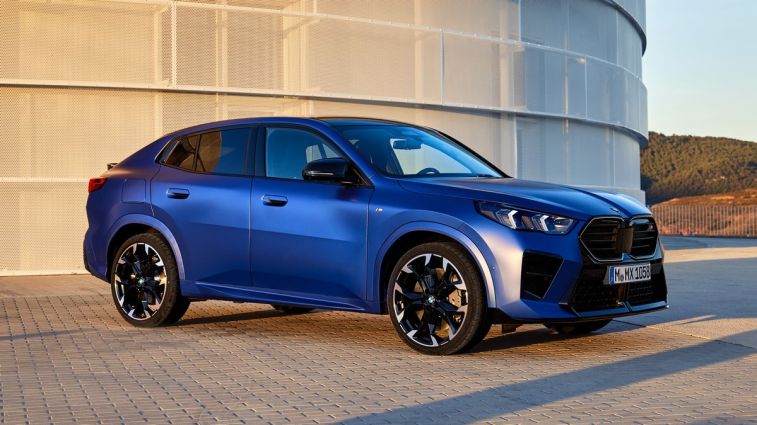
The 2025 BMW X2 offers a great mix of style, performance, technology, and luxury. Perhaps most importantly, it does all that at a reasonable price for this segment.
The X2 is the coupe-style X1, but with an additional 7.6 inches, so passengers in the small luxury SUV enjoy more space and the usual high-end touches for which BMWs are known. Like many luxury vehicles, it features a curved, dual-screen dash that makes everything crystal clear and easy to reach.
While the luxurious, technology-laden interior is a massive selling point, the X2 brings it when it comes to performance. Powered by a 241-hp turbo 4-cylinder and standard all-wheel drive, the X2 ensures the driver can have as much or as little fun as they want behind the wheel. Also, an upgrade to a specially tuned version of the same engine nets you 312 hp. Buyers can choose from two versions: the X2 xDrive28i or the X2 M35i.
BMW X2 Highlights
Ready, Player: The X2 can be had with built-in games in collaboration with AirConsole. The games can be played when the vehicle is stationary, using a phone as a controller. Unsurprisingly, that’s not an option on the Acura RDX.
Sport Boost: X2 models fitted with the M Sport package have a secret: The left paddle on the steering wheel can activate Sport Boost, which BMW says enables “extremely dynamic midrange sprints.”
Two choices: Putting out 241 horses, the standard engine on the X2 is a potent powerplant and will be better than fine for most drivers. However, if you are not “most drivers,” you can upgrade to the 312-horsepower version.
If you’re in the market for a small SUV with good performance characteristics, modern technology, and head-turning style, you can’t go wrong with either the Acura RDX or BMW X2.
Conclusion
Small, cool, and lively: all great ways to describe these two vehicles. Both are good representatives of their respective brands. The Acura RDX is arguably the more practical choice with its roomier interior, better powertrain warranty, and standard AWD. However, the BMW X2 has its brand’s virtues of interior quality and engaging performance you expect from a German luxury vehicle. The right premium SUV for you depends on your priorities.
New 2025 Acura RDX Prices
The Kelley Blue Book Fair Purchase Price for any individual used vehicle can vary greatly according to mileage, condition, location, and other factors.
The prices here reflect what buyers are currently paying for vehicles and vehicles in typical condition when purchasing from a dealership.
These prices are updated weekly. The manufacturer’s suggested retail price (MSRP) quoted includes the destination fee, but does not include tax, license, document fees, and options.
My aunt has been traveling by herself for as long as I can remember, with her first solo adventure at 18 years old taking her across the pond to London. Since then, she’s collected 45 years’ worth of passport stamps, crossing off destinations like Switzerland, Spain, Italy, Thailand, Bhutan, Morocco, and even Kenya on her travel wish list. Her most-visited country? France, which she’s been traveling to at least once a year, often by herself, and blogging about for a decade. One solo trip to France had her away from her Toronto home for 10 weeks, so needless to say, she knows a thing or two about the importance of traveling with reliable gear.
As a self-proclaimed “cautious person,” my 65-year-old aunt always prioritizes smart travel accessories with anti-theft capabilities and personal safety features — in fact, she told me she’s been using a money belt since the ‘80s. As new products and innovations hit the market and her solo travels continue, she’s curated quite the arsenal of safety devices and accessories. From a dummy wallet to her favorite anti-theft travel bag, these are the 13 Amazon travel essentials she recommends to fellow senior solo travelers, whether embarking on a month-long trip or a simple weekend getaway.
Pacsafe TravelSafe Portable Safe
Amazon
One of my aunt’s favorite travel gear brands is Pacsafe because of its wide range of top-rated products with anti-theft technology. She owns two sizes of the Pacsafe portable safe, which she uses to put her valuables in when she’s on the go. For extra security, she locks it to a permanent fixture in the space she’s staying in. This safe is impossible to slash into because of the stainless steel wire mesh embedded into the canvas, and it packs flat making it easy to travel with.
Baggallini Anti-theft Travel Backpack
Amazon
Being hands-free is a must for my aunt, and she always travels with an anti-theft backpack that features a slash-resistant material. This lightweight backpack is an ideal daypack as it’s large enough to tote when filled with must-haves like a water bottle, a lightweight jacket, and any small purchases from a day of exploring. It also features a hidden back pocket with RFID-blocking card holders for added protection.
Apple AirTag 4-pack
Walmart
Although my aunt admits to not checking her luggage too often, when she does, she always uses an Apple AirTag in the off-chance that her luggage gets lost. When she arrives at her destination, she’ll put one AirTag in the luggage left in the room and another for the day bag she’s carrying with her for complete peace of mind on the go.
Venture 4th Travel Money Belt
Amazon
A staple in her travel accessory repertoire since the early ‘80s, a money belt still has a coveted spot on my aunt’s packing list because it keeps valuables like her credit card, cash, and passport safe. Choosing a breathable belt that wicks away moisture is a must to avoid sweat wrinkling up your cash or important documents (something my aunt said she learned the hard way on a trip to Greece).
Travelambo Minimalist Slim Wallet
Amazon
I hadn’t considered traveling with a dummy wallet until my aunt mentioned she carries one with her at all times when she’s traveling. She typically puts about 5 Euros into a basic wallet that she could hand over if she got mugged, while her real wallet stays safe. This genuine leather wallet won’t break the bank or add any extra weight to your day bag or purse.
Vargo Titanium Emergency Whistle
Amazon
A low-tech safety device my aunt doesn’t travel without is a trusty safety whistle. As an avid runner who trains (and races) on her trips, she loves that it takes almost no space in her luggage, is inexpensive, and gives her security on outdoor excursions. This titanium whistle is about the same weight as a paper clip and is incredibly durable.
Vadoo Sling Bag
Amazon
My aunt likes to have her valuables close to her at all times, which is why she chooses to travel with a crossbody bag and a backpack. She opts for something like this Amazon-loved sling bag for its lightweight and adjustable design that drapes flat against her body for comfort on the airplane. This one also features five convenient pockets for ultimate on-the-go organization.
Hiearcool Waterproof Phone Pouch
Amazon
When my aunt kayaked the Gorges del l’Ardèche in France, she wanted to take photos with her phone but didn’t want to risk it getting wet — or worse, falling into the water. From jogs in the rain to on-water excursions, this waterproof phone pouch has become an unexpected safety accessory she doesn’t leave home without. Keeping your phone dry isn’t just smart, but essential as most likely your hub for important travel documents, itinerary information, and more.
Anker Power Bank
Amazon
There’s nothing quite as stressful as being alone in a foreign country without a charged phone. To avoid this dilemma my aunt always travels with a portable power bank like this slim option from Anker. It’s compact enough to fit in a purse or pocket without weighing you down, and it can fully charge two devices simultaneously.
Gostwo Compact RFID-blocking Wallet
Amazon
A non-negotiable for my aunt when traveling is using a wallet with RFID-blocking technology, so she won’t unwillingly get her sensitive information stolen from a digital pickpocket. This compact option has space for six cards, cash, and coins, and comes in an array of colors. Plus, it’s super sleek and stylish enough to be used with your everyday purse.
Forge TSA-approved Cable Luggage Locks
Amazon
My aunt knows that all it takes is a safety pin to open a TSA-approved lock, but she uses them on her luggage to dissuade potential thieves while her bag is in transit or just sitting beside her while she waits to board the plane. These top-rated TSA-approved locks are easy to set and are made with 100 percent zinc alloy for impressive durability.
She’s Birdie The Original Personal Safety Alarm
Amazon
A safety device my aunt has seriously considered getting is a personal safety alarm. She considers herself very vigilant but admits she’s become more cautious as she’s gotten older. This editor-loved and best-selling safety alarm is a favorite of solo travelers for its compact, lightweight, and easy-to-use design; it emits a blaring siren and flashing strobe light to diffuse potentially dangerous situations.
Emdmak Door Stop Alarm 2-pack
Amazon
Sleeping in a new space is difficult for even the most seasoned travelers, which is why adding an extra layer of security, like a door alarm, can help you sleep easy regardless of your accommodations. My aunt has considered traveling with this security device since they’re fuss-free to pack and make an excellent deterrent. What’s more, this door alarm features three sensitivity levels and emits a loud shrill that will instantly scare an intruder away.
Staycations are the best. I’ve made it a priority to enjoy a separate staycation with each of our three children once a year since they were five years old. Even just one or two nights in the next town over has always provided meaningful bonding time and memory-making with them individually. You don’t have to get bogged down by planning a big trip that requires a flight; I promise you that your children and teens will be just as happy spending quality time with you even an hour away from home. Last month I took my daughter to Coronado Island, only thirty minutes from home yet it felt like we were completely transported out of San Diego. Living like a tourist in our city brought lots of excitement and fun for the twenty-four hours we staycationed together.
The Hotel Del Coronado is an iconic beach resort that dates back to 1888 and has a history of haunted sightings in its original building. If you’d prefer not to room with a ghost, book a room in one of the well-appointed newer towers. We stayed in the cabanas and loved the proximity to the beach promenade and direct access to the Sun Deck open-air restaurant. The rooms are decorated in cool coastal hues and have large patios. The front desk welcomed us warmly and set the tone for a great getaway as soon as we checked in. Once we dropped off our luggage we walked straight to Orange Avenue, the island’s main street lined with high-end retail shops, cafes, and restaurants. We enjoyed immersing in retail therapy at some of the well-curated stores (“Weekends” at the hotel has an awesome designer collection of women’s clothing!), followed by a delicious lunch. Then we ice-skated on the property’s rink and rented a golf cart to explore the island. There is so much to do on this magical island!
photos: one of the hotel’s several pools, the cabanas lobby decorated for the holidays, stunning views at Sun Deck, double Queen ocean view room in the cabanas wing, ice-skating at the hotel, room’s private patio
photos: Fuzziwig’s Candy Factory, MooTime Creamery, Hotel Del main lobby decorated for the holidays
The Henry is one of my favorites on the island, always serving great food in a charming coastal setting with a friendly team of service staff. Their “famous recipe” is the pretzel and provolone fondue, an absolutely worthy splurge of calories.
Renting a golf cart to explore the island is a must when visiting. The Coronado Golf Cart Rentalsoffers a super easy check-in and drop-off and has a variety of cart sizes to accommodate different party sizes. Driving in a cart is permitted almost anywhere on the island; you’ll love weaving through the neighborhoods to look at the beautiful homes, cutting across the island to view the gorgeous San Diego skyline, and riding by the naval base.
For delicious crepes head over to Little Frenchie, a charming French bistro on Orange Avenue. And their jardin salad is simply delightful.
Walking along the promenade during the sunset is breathtaking. Start with a cocktail at the Beach and Taco Shop to soak in the setting with live music enhancing the island vibe. Then walk endlessly and watch the sky get painted by the sun.
If you love to eat as much as I do, you’ll probably want one more bite before heading to bed. The Sun Deck, on the hotel’s property, has firepits roaring throughout the expansive deck with lots of seating making a table easy to snatch. Their burgers hit the spot!
For breakfast, my favorite eatery on the island is Clayton’s Bakery Bistro, their espresso drinks, and croissants are divine and I love the authentic French bistro mood they have created.
There’s nothing like an early morning walk on the beach before it gets inhabited by beachgoers. The serenity is captivating. The dunes and vast sand on the island call you to wander and appreciate our beautiful planet.
So, that’s a wrap! A 24-hour staycation in Coronado Island looks like this:
Stroll along Orange Avenue and shop
Rent a golf cart and explore the island
Walk the promenade to pay homage to the sun
Walk along the dunes and the coast enjoying the solitude
Hit the hotel’s retail shops- Weekends has an incredible selection of women’s apparel
Voila! SO easy yet so fun; just a twenty-four-hour escape, yet the memories made will last a lifetime.
2025 will be a year of change in the Australian automotive industry, with at least 10 new brands set to arrive on local shores in addition to the circa-50 already in showrooms.
While there are some players returning after extended breaks from the local market – such as Cadillac and Foton – most will be making their debut in Australia, and fighting to stay alive in our ultra-competitive market.
The 10 brands set to come here include:
Cadillac
Deepal
Foton
GAC/Aion
Geely
Jaecoo
Leapmotor
Skywell
Xpeng
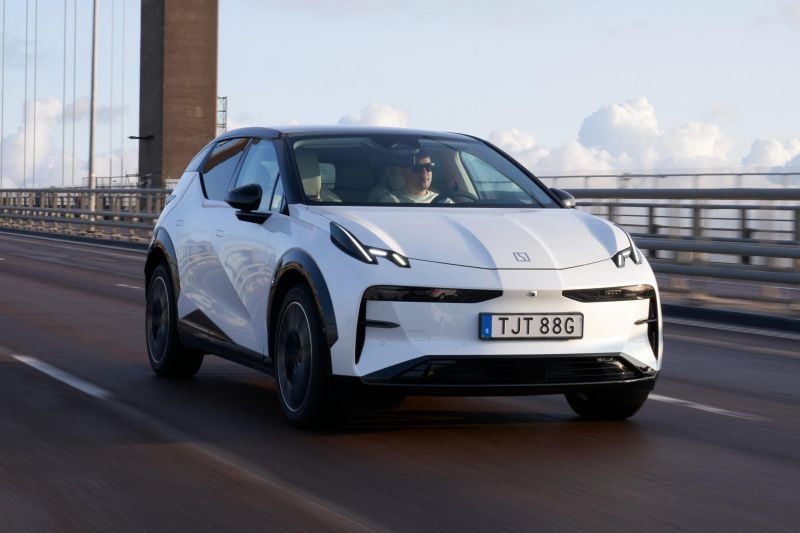
Zeekr
100s of new car deals are available through CarExpert right now. Get the experts on your side and score a great deal. Browse now.
Zeekr 7X
With these 10 brands in mind, we’ve shared our thoughts on which we’re keen to see – and how they’ll stack up against the existing competition.
William Stopford: Cadillac and Deepal
Of the over half a dozen brands in the process of launching in Australia or coming during 2025 Cadillac came tantalisingly, frustratingly close to coming to Australia over a decade ago, with parent General Motors pulling the plug at the 11th hour and rerouting vehicles that were destined for our shores.
Cadillac Lyriq
I do wonder how the CTS would have done here as, despite its more luxurious disposition, on paper this V6-powered rear-wheel drive sedan might have been a hard sell over a Holden Calais.
This time around, Cadillac is launching with the Lyriq electric SUV. It undercuts similarly sized German rivals, though whether it undercuts it by enough for a new brand to Australia remains to be seen.
Having driven a US-spec version, I was impressed by the comfort and styling, though it wasn’t perfect. But as someone who has been following the brand closely for over 20 years, it’s exciting to see it finally come here even if GM’s talk of selling in “exclusive volumes” feels appropriately conservative.
Deepal S07
As for the bevy of Chinese brands coming here, I’m most curious about Deepal. While this brand is only young in China and unknown here, it’s part of Chinese automotive giant Changan, one of the four largest carmakers there. It also has the backing of Subaru distributor Inchcape.
Ok, that didn’t help Citroen, but competitive pricing (if steep service pricing) plus attractive styling for the brand’s debut model, the Tesla Model Y-rivalling S07, help Deepal stand out among the crowd… even if technical specifications like its power and DC charging rate aren’t anything to write home about.
Deepal has also suggested it’ll bring the E07 here, this ute-cum-SUV which is among the most fascinating designs to come out of China and vastly more interesting than the often bland transportation pods that market produces.
James Wong: None
The list of brands coming to Australia did little to excite me, and I could barely tell you which upcoming models belong to which brand.
I’m all for more consumer choice, but the influx of Chinese brands all with models that are different combinations of numbers and letters are all a bit meh.
And yes, I know Cadillac is in there – but none of its icons are coming here so I’ll leave the excitement for Will.
Paul Maric: Zeekr
I had the chance to drive the new 009 as part of the drag racing series we’ve been filming and it’s incredible what an expensive Chinese car looks like.
Zeekr 009
Normally Chinese cars are associated with cheaper vehicles and value for money, but for more expensive vehicles like the 009 you are literally getting everything, even the kitchen sink.
Brands from Chinese manufacturers are now well-regarded in Australia and I think we’ll see a shift of punters more willing to spend more money on luxury brands from China.
Jack Quick: Zeekr
I really want to say none, because all these brands that are coming to Australia are very same same.
Zeekr X
If I really have to choose however, I’d have to pick Zeekr. I was the one to break the news that this brand was coming to Australia earlier this year.
The Zeekr X is a bit of a cutie in person, plus its pricing is pretty competitive compared to its Volvo EX30 twin under the skin.
I also can’t wait to experience the Zeekr 009 people mover because it seems like the kind of car I’d like to be chauffeured in. Stay tuned to the CarExpert YouTube channel because something special is coming.
Jordan Mulach: Cadillac
The agony of choice is real.
I legitimately had to type this out three times as I got confused about which new Chinese EV specialist brand was which, so I’m just going to say Cadillac – but more for what it could bring rather than what it definitely will.
When I hear Cadillac, I don’t think of electric SUVs or even big barges with fins, I think of the Escalade. Unfortunately, Caddy is going to be electric-only in Australia, which feels like a missed opportunity when the Lyriq could balance out the emissions from the Escalade-V.
I’d also love to see the Blackwing models here, but there’s probably a snowball’s chance in hell of that.
Josh Nevett: Jaecoo
Look, I’m not jumping up and down with excitement over any of the confirmed arrivals, but Jaecoo is my pick of the bunch.
The Chery-owned Chinese brand will launch next year with the J7, a luxury leaning mid-sized SUV. It’s the promise of a premium product that piques my interest – Chery is one of the best in the business when it comes to producing a classy cabin on a budget, so I can’t wait to see what Jaecoo does with a bit more cash in the kitty.
Beyond showroom appeal, Jaecoo is quoting big numbers for the J7 PHEV, including EV range of 90 kilometres on the WLTP cycle, and a combined driving range of 1200km. That’s bound to have rivals including Toyota, Mitsubishi and BYD nervous.
The J7 PHEV will join the standard petrol J7, which will also arrive in Australia during the first quarter of 2025.
Max Davies: GAC Aion
Truthfully, I’m not really excited by any of the new brands making their way to Australia.
Aion V
All but one are Chinese brands coming to compete with themselves, and almost all of them are launching with an electric SUV of some description – in some cases with only one model at first. Hardly inspiring, if you ask me.
But if I had to pick one, I’d probably say GAC Aion is the only brand who might be in with a chance of clearing my already low bar of expectation.
The interesting thing about that is that choice has really been guided by the cars they might bring to Australia. Only two of Aion’s cars were said to be joining the brand in launching Down Under, yet another mid-sized electric SUV (Aion V) and the somewhat interesting-looking UT electric hatch.
Aion UT
The latter of the two has at least caught my eye, partly because it could be a fun little hatch, but mostly because it could actually be a feasible competitor to the GWM Ora and MG 4. I think its cute exterior is one of its best features in that regard, but naturally price will be the decider.
Its 1500kg-ish kerb weight doesn’t seem ridiculous (especially in the context of the nearly two-tonne Cupra Born), while 100kW of power with 600km of range could make it quite the versatile little runaround.
Beyond that though, we’ve seen a bunch of other Aion models that genuinely look quite cool like the Hyper SSR and even the Hyper – but of course there’s no concrete word on whether they’ll show up here.
Perhaps my skepticism will be proven wrong, but until one of these brands can bring something to Australia that’s legitimately different to stake a concrete claim in our crowded market, I’ll probably pass on most.
By now you likely know that EV start-up Rivian, in addition to building consumer-oriented crossovers and pickup trucks, also builds electric delivery vans for Amazon. Based entirely on anecdotal evidence—I interviewed the drivers of several Rivian EDVs—the electric parcel-delivery vans are working out well for the online retail giant, and the drivers love them. Love them.
Turns out the vans are quieter and smoother riding than most commercial delivery vans, and they scoot away from a stop more quickly as well.
More cloudy are the economics of going electric. An increasing number of commercial operators are embracing electric vans for general-service and light-delivery functions, and these companies have a number of vehicles to choose from.
2025 Ram ProMaster EV
2025 Ram ProMaster EV
Note that fleet managers are a dispassionate bunch, and their forays into electric-vehicle adoption are unlikely to be driven (pun intended) by either green intentions or political rhetoric, instead, an EV would need to cost no more than a gas-powered alternative to operate, and require no more service or maintenance.
We’re at a point in the EV-growth process during which many fleets are now learning first hand how well electric vehicles can match the operational parameters of gas-powered equipment. Expect to learn more about commercial EV adoption in the next few years as feedback regarding these inaugural electric fleets comes available.
2025 Ram ProMaster EV
Ram recently introduced an EV version of its popular ProMaster large commercial van. New for 2024, the van arrives somewhat late to the market, as there are a number of alternative already available. Among them are the…
BrightDrop Zevo
Base Price: $76,600 (600)
Launched by General Motors as an independent company, BrightDrop was merged into Chevrolet in 2024, expanding the brand’s retail and service reach. BrightDrop currently offers two vans, the Zevo 400 midsize van, and Zevo 600 large van. Battery range runs from about 180 miles to 300 miles, depending on equipment.
Ford E-Transit
Base Price: $53,095
Launched in 2022, the E-Transit is an electric version of Ford’s popular Transit commercial van. Available in a number of configurations, the E-Transit has a battery range of about 160 miles.
Mercedes-Benz eSprinter
Base Price $61,180
New to the U.S. in 2023, the eSprinter is an electrified version of Mercedes-Benz’s popular Sprinter commercial van. The eSprinter has a range of about 250 miles.
Range
A word about range: During a typical day, most delivery vans remain close to the terminal out of which they operate. For this reason, range is not as much of an issue as you might imagine. Per one source, the average Federal Express and United Parcel Service (UPS) truck travels just 100-150 miles per day. Equipping a delivery truck to travel a greater distance would require a heavier battery, which would eat into both range and hauling capacity–and add to the base price of the truck. For this reason, the vans listed above are not equipped with larger batteries. As commercial EV-van adoption expands, longer-range vehicles will likely be made available for those applications requiring extended travel.
2025 Ram ProMaster EV
ProMaster EV
Introduced for 2024, the Ram ProMaster EV slots nicely into the electric commercial-van segment with specs and features that rival those offered by the existing competition.
Available at Ram dealerships with a Ram Commercial franchise, the new Ram EV delivery van is available now. Here’s a look at the new Stellantis electric van:
Specs
Base Price: $58,490
Configuration: Front motor/front-wheel drive
Wheelbase: 159 inches
Turning Radius: 46.8 feet
Payload: 3020 pounds
GVWR: 9350 pounds
Towing Capacity: 6410 pounds
Battery Capacity: 110 kWh
Charge Connection Type: CCS
Level-3 Charge Rate: Up to 150 kW
Power output: 268 horsepower, 300 pound-feet of torque
Range: Approximately 160 miles (at 50-percent of payload)
***
Note that approximately half of the 2400 Ram dealerships in the U.S. retail and service the ProMaster.
With megawatt charging slow to ramp up, General Motors appears to have an alternative solution to speed up charging for electric commercial vehicles.
This is discussed in a patent filing published by the United States Patent and Trademark Office (USPTO) Nov. 26, 2024, although it was originally filed by GM about two years earlier. In the document, GM notes that medium-duty and heavy-duty electric vehicles require large battery packs that can be time-consuming to charge using conventional methods.
General Motors multi-port charging system patent image
GM’s proposed solution involves equipping vehicles with multiple charge ports and dividing packs into smaller “subpacks” that can be connected in parallel. This allows individual subpacks charged from either a single charge port or both ports simultaneously, instead of charging the entire pack through a single port.
This solution is aimed at larger vehicles that would require bigger packs than the average passenger car (don’t be led astray by the passenger car used in the filing’s example, above), but GM’s inclusion of medium-duty vehicles wouldn’t leave out the GMC Hummer EV or the largest GMC and Chevrolet electric pickups, which do fall into that category based on weight.
General Motors multi-port charging system patent image
Megawatt charging was announced several years ago as a charging solution for electric big rigs, but it’s been slow to roll out, partly because of the on-the-ground electrical realities. Tesla confirmed megawatt charging for the Cybertruck and Semi, but its Supercharger V4 tech hasn’t truly yet arrived.
We’re already seeing a number of different solutions to speed up charging based on what’s currently available at the connector level. The GMC Hummer EV essentially uses 400-volt battery packs connected in parallel most of the time, albeit with just one charge port. Meanwhile, Porsche splits its 800-volt Macan battery pack into two 400-volt virtual packs to increase charging speed.
With all the noise around electric vans, you may have missed the news that Renault has reintroduced the petrol version of its small Kangoo delivery van.
Having launched the electric Kangoo E-Tech earlier in 2024, the ICE version is now available in a couple of different variants with lower pricing, as well as a host of optional extras to customise the van to your needs.
That’s a big win for small businesses, which often need specific configurations in a compact commercial van like this to suit their fleet fitouts.
But if you want a few nice features and driver-friendly flourishes they come at a big cost, so when it comes to sorting out the right spec of Kangoo, you really need to pay attention to the option costs and figure out if they make sense for your budget.
This review covers off the need-to-knows, and also the stuff that’ll help you decide whether the Kangoo is going to be right for you.
How does the Renault Kangoo compare?
View a detailed breakdown of the Renault Kangoo against similarly sized vehicles.
Renault
Kangoo
How much does the Renault Kangoo cost?
The current-generation petrol-powered Kangoo was late to Australia, having initially been slated to arrive in 2022, then 2023, before eventually touching down here in 2024.
Model
Price before on-road costs
Renault Kangoo SWB manual
$38,990
Renault Kangoo SWB auto
$41,990
Renault Kangoo LWB auto
$43,990
And during that time, there’ve been some unprecedented pressures in the market, so pricing has increased substantially compared to the previous-gen combustion-powered version, which was priced from as low as $32,990 drive-away for the long-wheelbase diesel auto!
With a starting price of $38,990 plus on-road costs, the new petrol model is significantly more expensive than the diesel it replaces, but still a lot cheaper than the battery-electric version (priced from $61,990 before on-roads).
There are several petrol-powered variants in the new Kangoo petrol range, including short- and long-wheelbase versions, and even a manual gearbox!
You may find better deals than that if you’re bulk-buying for fleets, and ABN discounts may apply in some instances.
To see how the Renault Kangoo lines up against the competition, check out our comparison tool
What is theRenault Kangoo like on the inside?
What a great cabin design the Kangoo has.
Don’t go thinking that you’ll be in the lap of luxury here, but you will have an abundance of loose-item storage, which is arguably even more important for a little van like this.
The smarts include overhead folder holders, a dash-top storage area large enough for a clipboard, and a covered bin above the instrument binnacle that includes USB and 12-volt charging, which will be ideal to run a dash-cam from, without a mess of cables everywhere.
There are also bottle holders and storage ports in the doors, not to mention a centre storage tray below the shifter. In the tested vehicle, there was also a centre console with armrest and storage, and a wireless phone charger – both of which aren’t standard.
The seats are comfortable and offer a decent amount of adjustment, and after hours behind the wheel I still felt fresh – plus the trim feels pretty hard-wearing, so durability should be good.
That’s part of the functional theme inside – the cabin doesn’t have any soft-plasticky bits, as it’s all designed to be hardy and easy to wipe down, and thankfully the controls are mostly simple to get your head around. Mostly, I say, because there’s a quirky stalk off the steering column to adjust the volume and some other media controls.
But thankfully there are dials and buttons for the climate system (dual-zone as part of the option pack fitted here), and the media screen is mostly a cinch to get to grips with.
There’s Apple CarPlay and Android Auto capability, and FM, AM and DAB digital radio, too, but one odd thing kept happening when I’d get back into the Kangoo – the volume reset itself to a far lower level than when I’d got out. I might have missed something in the settings menu, but it was a bit annoying.
Now, the cargo area.
You’ve gotta love that it has dual sliding side doors, barn rear doors, and a bulkhead all as standard. That’s terrific – but just be mindful of how far back that bulkhead sits compared to the floor length, as taller, longer items mightn’t fit in the SWB model.
There are multiple tie-down points for securing a load in place, too, and the cargo zone dimensions and the standard door configuration allow you to forklift in a load if need be.
Just make sure it’s not too heavy, as the payload is on the low side – unless you option the increased payload…
There’s no included cargo mat or flooring – you’ll have to pay more for that – and the sides of the cargo area are exposed metal, too.
At least you get lighting in the back, and the low ride height means low load-in height, too, making it a bit more manageable at the shop, depot or warehouse.
Furthermore, and unlike the EV model, there’s a full-size spare wheel under the body of the vehicle, too.
Dimensions
Renault Kangoo SWB auto
Length
4488mm
Width
1859mm
Height
1830mm
Wheelbase
2716mm
Cargo capacity
3.3m3
Cargo bay length
1806mm
Cargo bay width
1570mm (1248mm between wheel arches)
Cargo bay height
1115mm
To see how the Renault Kangoo lines up against the competition, check out our comparison tool
What’s under the bonnet?
All models in the ICE Kangoo line-up have turbo-petrol engines, but as shown above you can get the short-wheelbase with a six-speed manual if you want it, while the LWB variant comes with a dual-clutch automatic transmission as standard.
Specifications
Renault Kangoo SWB auto
Engine
1.3L 4cyl turbo-petrol
Power
96kW @ 5000rpm
Torque
240Nm @ 1600rpm
Transmission
7-speed dual-clutch auto
Drive type
FWD
Fuel economy (claimed)
6.2L/100km
CO2 emissions (claimed)
141g/km
Fuel tank
54L
Fuel requirement
95 octane premium unleaded
Weight (kerb)
1453kg
Payload
757kg
Braked towing capacity
1500kg
Gross vehicle mass (GVM)
2210kg
On test, with a mix of laden and unladen driving, I saw real-world consumption of 7.9L/100km, with urban, highway, freeway and stop-start driving all included. So you could bank on similar, or maybe a smidge higher if you’re running at maximum payload in all instances.
To see how the Renault Kangoo lines up against the competition, check out our comparison tool
How does theRenault Kangoo drive?
There are good and bad things about the way the Kangoo drives.
European-spec Kangoo E-Tech shown
First, the negatives.
The dual-clutch automatic transmission isn’t as good as some of its rivals in the segment. It can be slurry at low speeds, and will – unless you drive the van very deliberately – roll forwards when in reverse, and backwards when in drive.
By very deliberately, I mean making sure that you come to a complete halt, often by keeping one foot on the brake, because it doesn’t have an auto-hold function to do the thinking for you.
That is the biggest quibble, because combined with the engine’s idle stop/start tech and notable turbo lag, you can find that it takes a bit longer than you’d hope to get things moving.
Once above 10km/h it gets along well, though, and there’s certainly enough pulling power in the mid-range. In fact, it hustles once you’re on the move, and at pace the dual-clutch auto is reasonably snappy and well considered in its shifts.
Like most other little vans, it’s pretty fun to drive. The steering is direct and responsive for faster-speed moves, and at lower pace there’s a pleasing predictability for parking.
Likewise, the ride is really comfy, despite being set up for a load. It handles small and large bumps well, and it never feels too clunky or sharp. You can feel a bit more of the road surface through the body of the vehicle, including the nobbles of coarse-chip roads.
In those instances, there is some noticeable road noise intrusion, especially at freeway pace.
Another concern is the visibility, which is compromised by the bulkhead and barn-doors, which weirdly are mismatched – the bulkhead is split behind the passenger seat, and the tailgate is the opposite, meaning seeing out behind your vehicle is really difficult. There’s an optional digital rear-view mirror, which would certainly help.
The side mirrors are decent, and there is an outer section of the glass that is slightly more convex to give you a better outer-angle view. There’s blind-spot monitoring, but it’s optional – and it shouldn’t be, because the vision is more compromised in this vehicle than in others.
To see how the Renault Kangoo lines up against the competition, check out our comparison tool
What do you get?
The Kangoo’s standard equipment list looks pretty generous until you see the options list.
Renault Kangoo highlights:
Automatic halogen headlights
Rain-sensing wipers
16-inch steel wheels
Full-sized spare wheel
Dual sliding doors (unglazed)
Rear 180-degree opening barn doors (glazed)
Solid bulkhead (glazed)
Cargo tie-down anchors
Cargo area light
Rear windscreen wiper
Cruise control
Remote keyless entry
8.0-inch touchscreen infotainment system
Wireless Apple CarPlay and Android Auto
4.2-inch instrument cluster screen
6-way manually adjustable driver’s seat
4-way manually adjustable passenger seat
Leather-wrapped steering wheel
Tilt and telescopic steering wheel adjustment
Cloth upholstery
To see how the Renault Kangoo lines up against the competition, check out our comparison tool
Optional Equipment
As mentioned, you might need to consider these additional cost option packages when deciding on your Kangoo.
Business Pack ($3200) adds:
LED headlights
Front fog lights
Body-coloured door handles
Tyre pressure monitoring
Proximity entry with push-button start
Climate control
Adaptive cruise control
Centre console with armrest and storage
Wireless phone charger
Extra tinted rear barn door glass
Trade Pack ($1200) adds:
Timber floor lining
Full height wall lining
Yard kit underbody protection
Cargo area LED lighting
Peace of Mind Pack ($1500) adds:
Blind-spot monitoring
Front, rear and side parking sensors
Driver attention alert
Automatic high-beam
Satellite navigation
Traffic sign recognition
The vehicle tested here is the short-wheelbase auto with the Business Pack and Peace of Mind Pack, bringing its as-tested total to $46,690 before on-roads – a lot of cash for a little petrol van.
Further standalone options include:
Additional 200kg payload (SWB only; $600)
Digital rear-view mirror ($800)
Glazed side sliding doors ($400)
You can also remove the driver’s side sliding door for no extra cost.
To see how the Renault Kangoo lines up against the competition, check out our comparison tool
Is theRenault Kangoo safe?
ANCAP continues to state that the current Renault Kangoo is ‘Unrated’, but the commercial van model achieved a Gold Rating in Euro NCAP van testing, which is the second-best available score behind Platinum.
The passenger-ready people-mover variant sold in Europe scored four stars in 2021, according to Euro NCAP testing.
Standard safety equipment includes:
Autonomous emergency braking (AEB)
Pedestrian detection
Cyclist detection
Junction assist
Lane-keep assist
Reversing camera
Rear parking sensors
Front and front-side airbags
However, as noted above, you must pay more to get useable and desirable things like adaptive cruise control, driver attention alert and traffic sign recognition.
What’s ruder is that you need to also pay more for blind-spot monitoring, as well as front and side parking sensors – which should be standard in a vision-compromised urban-focused van like this.
To see how the Renault Kangoo lines up against the competition, check out our comparison tool
How much does theRenault Kangoo cost to run?
The Renault Kangoo is backed by a five-year, 200,000km warranty, which should set the minds of business owners at ease.
There’s also a five-year servicing plan, with 12-month/15,000km intervals between visits to the workshop.
For the petrol Kangoo, the average cost per service is $473 over the five-year/75,000km maintenance plan, and it also includes most consumables included like filters, fluids and spark plugs.
You get five years of roadside assistance too.
To see how the Renault Kangoo lines up against the competition, check out our comparison tool
CarExpert’s Take on theRenault Kangoo
In some ways the Renault Kangoo is a winner. It’s a well designed thing, with practical cabin useability and a mostly easy to drive nature.
But the dual-clutch auto can be annoying, and the ambitious asking price and array of optional extras make it less appealing than it could otherwise be.
If you can get a good fleet deal, it could be worth a look.
Interested in buying a Renault Kangoo? Get in touch with one of CarExpert’s trusted dealers here
Sime Motors is kicking off the new year with the Sime Motors AutoArena event, happening next weekend, January 10 to 12. This is the first automotive event being held right inside the stadium itself, with cars being lined up all around the outer running track, so it’s certainly a unique venue.
The sports arena will play host to the entire range of automotive brands the conglomerate represents, including BMW, MINI, BMW Motorrad, BYD, Ford, Hyundai, Jaguar, Land Rover and Volvo. Auto Selection will also be present with a wide array of its pre-owned cars.
Numerous exclusive promotions are promised for the event – including personalised offers for each brand – as are test drives of the vehicles. Also available are various activities and a merchandise display, with Sime Motors expecting to attract thousands of visitors from the region.
“Sime Motors AutoArena signifies our commitment to delivering unforgettable experiences to our customers,” said Sime Motors managing director of Southeast Asia Jeffrey Gan. “We’ve evolved from showroom events to outdoor carparks and air bases, and now, taking over the National Stadium Bukit Jalil. This serves as a testament to our growth and unwavering passion for engaging and connecting with our customers through innovative ways.”
To recap, the Sime Motors AutoArena is happening at Stadium Bukit Jalil next weekend, January 10 to 12, 2025 from 9am to 7pm. Visit the official Sime Motors website for more information.
The technical storage or access is strictly necessary for the legitimate purpose of enabling the use of a specific service explicitly requested by the subscriber or user, or for the sole purpose of carrying out the transmission of a communication over an electronic communications network.
Preferences
The technical storage or access is necessary for the legitimate purpose of storing preferences that are not requested by the subscriber or user.
Statistics
The technical storage or access that is used exclusively for statistical purposes.The technical storage or access that is used exclusively for anonymous statistical purposes. Without a subpoena, voluntary compliance on the part of your Internet Service Provider, or additional records from a third party, information stored or retrieved for this purpose alone cannot usually be used to identify you.
Marketing
The technical storage or access is required to create user profiles to send advertising, or to track the user on a website or across several websites for similar marketing purposes.