Home Blog Page 242

Here’s What It’s Like to Stay in a 112-year-old Castle in Ottawa

0


Sometimes, to truly appreciate something, you have to allow yourself to take a step back. For me, it was a boat ride on the famed Rideau Canal that allowed me to grasp just how majestic Ottawa’s Fairmont Château Laurier is.

As the leisurely cruise began to wind down and we inched closer to the Fairmont, the hotel looked like something out of a storybook. It towered over the canal — a soaring castle conveniently located in Canada’s capital. Clear skies and a looming sunset only intensified the magic. Given its romantic exterior and interior, it was no surprise that during my stay on a Saturday night, I witnessed a flood of brides and bridal party members excitedly chatting by lobby elevators.

Interior of the hotels lobby.

Fevzi Ondu/Courtesy of Fairmont Château Laurier 


Despite its fairy tale charm, the Fairmont does have one particular chapter that’s filled with gloom.

Days before the chateau in the sky was set to open, Charles Melville Hays, the man who commissioned the building, lost his life. The businessman who arrived in Canada with dreams of building a transcontinental railway and several hotels died when the RMS Titanic sank into the Atlantic Ocean on April 14, 1912.

Given the tragic timing, Hays did not get to witness the grand opening. Or did he?

Interior of the Adam Room also known as the “Wedgwood” or “Oval” Room.

Fevzi Ondu/Courtesy of Fairmont Château Laurier 


Several travelers have claimed that the Fairmont Château Laurier is also home to guests from the other side. There’s even a tour offered through The Haunted Walk, a company that hosts ghost tours throughout Ottawa. While I (thankfully) did not encounter any supernatural occurrences during my stay, a fellow writer did catch a glimpse of her closet light turning on and off several times.

Ghosts aside, parts of the Fairmont felt downright eerie. The long, almost dizzying hallways leading to guest rooms seemed like something out of “The Shining.” Though heavy on art deco, an indoor pool borders on beautifully gloomy. Eeriness aside, there are parts of the hotel that shine.

Here’s my review of Fairmont Château Laurier.

Fairmont Château Laurier

  • Popular destinations, including the National Gallery of Canada, ByWard Market, and the Royal Canadian Mint, are all within walking distance.
  • Spacious, modern rooms with offerings that include more than one bathroom are perfect for families.
  • The gorgeous views from La Terrasse make it hard to say “no” to that second glass of Chardonnay.
  • The Fairmont Château Laurier’s romantic exterior will leave you feeling like you’ve stepped into your own personal Disney movie.

The Rooms

Interior of a Deluxe King guest room.

Fevzi Ondu/Courtesy of Fairmont Château Laurier 


If you’re looking for variety, you’ll find it at the Fairmont Château Laurier. The soaring castle has a vast collection of guest rooms and suites, which all flaunt their distinct features and layouts thanks to the original castle floor plan.

Before stepping inside my Deluxe Room, I had no clue what the space setup would be. So, imagine my surprise when I spotted a mystery door hours after checking in. Given Fairmont’s haunted history, I was a bit nervous about exploring the elusive area to which I had somehow become oblivious. To my relief, the door didn’t lead to a hidden nook hiding ghoulish secrets. Instead, I was surprised to find a second bathroom. And if you’ve ever traveled with friends and family and shared a single room, then you know how much of a lifesaver a second bathroom is. Even as a solo traveler, I was grateful for the extra space. In total, 18 rooms in the Fairmont Château Laurier are equipped with two bathrooms.

Despite the hotel being well over 100 years old, I didn’t feel like I was living in the past during my two-night stay. Both bathrooms leaned heavily towards the modern, and a 55-inch television resting in the sitting area ensured that I didn’t forget what decade I was living in. The final touch was a king-size Sealy bed that didn’t skimp on space.

Unfortunately, during my stay at the Fairmont, I encountered two live bugs. Although small, the insects awakened a sense of paranoia that made my stay a bit less enjoyable. I also encountered an outlet that didn’t work, which can be a nuisance when traveling with many gadgets that constantly need to be charged.

Food and Drink

For avid foodies, you might find the dining options at the Fairmont Château Laurier to be limited. Outside of in-room dining, current options to grab a bite to eat include La Terrasse, Café Laurier, and Wilfrid’s Restaurant.

I started with a hearty meal at Wilfrid’s Restaurant on my first morning. The spacious dining room allows guests to order from a menu filled with breakfast staples or choose the breakfast buffet. Although a breakfast buffet is always tempting, I ordered the French toast with mascarpone cream and a side of Canadian bacon (because when in Rome). It was a delicious, though heavy, way to start the day. A serving of mint tea was the perfect way to conclude breakfast. Service was speedy, which was especially appreciated due to my packed schedule for the day.

Given that the hotel’s outdoor restaurant, La Terrasse, has more of a carefree vibe than Wilfrid’s, I expected a menu that would reflect the easygoing atmosphere. Instead, I was met with a frantic menu that included everything from ratatouille to pizza. Still, the stunning views from La Terrasse make it hard not to get lost in a glass of chardonnay or two. And for those who prefer a quick breakfast or lunch, Café Laurier is a worthy option if you’d like a small bite to eat (think salads and pastries) and a cozy beverage. Just keep in mind that the café closes at 4 p.m.

Activities and Experiences

In addition to an indoor saltwater pool, the Fairmont includes a health club and fitness center equipped with premium fitness machines and free weights. As a bonus, the health club’s fitness machines feature personal flat-screen televisions to keep you entertained while you crush calories.

But if you’re more biscuits and clotted cream than treadmills and squats, afternoon tea at the Fairmont might be more your speed. Afternoon Tea typically takes place at Zoe’s, but given that the restaurant is closed for renovations, the experience now occurs at La Mezzanine. On the sweet-meets-savory menu, you’ll find an assortment of enticing bites, including blueberry scones with mascarpone cream and house-made strawberry jam, alongside herbed goat cheese sandwiches.

Accessibility and Sustainability

The Fairmont Château Laurier has 11 ADA-compliant rooms. Several areas of the hotel are also accessible, including the public entrance, public restrooms, restaurant, and fitness center. Service dogs are also welcome at the Fairmont.

If you hear a subtle buzzing during your stay, don’t worry; it’s likely from the nine bee hives on the rooftop. The honey from the bees is used to create the hotel’s newly launched “Royal Reserve” body product line.

Location

Exterior of the Fairmont Château Laurier in Ottawa, Canada.

Courtesy of Fairmont Château Laurier 


Prepare to make your pedometer proud because Fairmont’s central location is within walking distance of numerous attractions. Whether you’re a museum buff or the shop-til-you-drop type, a 10 to 15-minute walk gets you to an assortment of galleries and shops. An ample number of restaurants are equally walkable. Regardless of the dining experience you choose, you’ll have to grab a BeaverTail, Canada’s most famous pastry, on your way back to the Fairmont Château Laurier. The hotel is just a stone’s throw from BeaverTails’ first brick-and-mortar location.

And for those daring, you can ice skate from destination to destination via the Rideau Canal. During winter, the canal becomes “the world’s largest skating rink.” Just keep your fingers crossed that Mother Nature is on your side. It’s required that the ice be 30 centimeters thick to ensure safe skating. For that thickness to be achieved, there would need to be between 10 and 14 straight days of -10 to -20 degrees Celsius.

How to Get the Most Value Out of Your Stay

Described as “a hotel-within-a-hotel,” Fairmont Gold is a luxe offering that provides guests with an elevated experience. Fairmont Gold guests are privy to a private check-in option, personalized concierge service, butler services, and access to the Fairmont Gold Lounge. With this exclusive lounge access, you’ll be treated to a complimentary continental breakfast, evening canapes, and dessert.


Source link

2024’s Designer Exodus – A Turning Point in Fashion Leadership

0


A Year of Unexpected Departures

2024 marked a seismic shift in the fashion industry as several prominent creative directors departed from their respective houses, including Virginie Viard at Chanel, Matthew M. Williams at Givenchy, and John Galliano at Maison Margiela. When it comes to eponymous labels, recent years have seen Tom Ford and Raf Simons step back, while this year, Peter Hawkings and Dries Van Noten unexpectedly bowed out of their maisons.

Prior to Julian Klausner stepping up as a successor at Dries Van Noten, Van Noten had embraced the possibility of his replacement veering away from the codes he’s established over 38 years at his eponymous brand. “No, I absolutely don’t want them to do it the way that I do,” the member of the Antwerp Six told Business of Fashion’s Tim Blanks in an interview, explaining that he’d prefer them to approach his brand with a “new eye”.

Read More: Speculation Swirls of Hedi Slimane Heading to Chanel as Michael Rider Replaces Him at Celine

Visionaries like Dries Van Noten, Tom Ford, and Raf Simons have left behind a legacy that has marked the industry over decades. Their exits not only symbolise the end of an era but also usher in a dynamic transition, with creative directors vying for dominance in a fashion landscape. As the torch passes in the ongoing shake-up, it remains to be seen if these changes will affect these legendary Maisons’ bottom line. Successors face the daunting task of honouring a brand’s legacy while forging a path forward. For instance, when Tom Ford exited his eponymous label, questions arose about how the brand would sustain its identity without his distinct vision. Similarly, Raf Simons’ departure leaves his brand at a crossroads, with fans and critics alike pondering its future direction.

Read More: Marc Jacobs Sets His Sights on Chanel’s Creative Director Role

Pressure Cooker Roles

Marc Jacobs at the 2024 CFDA Fashion Awards held at the American Museum of Natural History on October 28, 2024 in New York, New York. (Photo by Lexie Moreland/WWD via Getty Images)

It is no secret that luxury fashion brands, especially eponymous ones like Donna Karan, Zac Posen, Marc Jacobs, and Michael Kors, have faced significant financial challenges in recent years. Donna Karan, for instance, faced widespread backlash due to controversial statements regarding convicted sex offender Harvey Weinstein, damaging her reputation and business. Zac Posen experienced a harsh reality in the luxury retail industry. In 2019, The Lexington Online reported that Posen’s label, House of Z, struggled to attract buyers or investors. The precarious state of the industry led Yucaipa Companies — an investment firm holding a 50 percent stake in Posen’s company — to withdraw their support. This decision forced Posen to lay off 60 staff members and shut down his business immediately.

Michael Kors has also faced significant setbacks. John D. Idol — chairman and chief executive officer of Capri Holdings, which owns Michael Kors, Versace, and Jimmy Choo — openly acknowledged the difficulties, stating they were “disappointed” as performance continued to suffer due to softening global demand for luxury fashion goods. Capri Holdings’ Q1 fiscal 2025 results highlighted these struggles, reporting a 13.2 percent decline in revenue on a reported basis. At Michael Kors, revenue dropped by 14.2 percent to USD 675 million. Retail sales declined by low double digits, while wholesale revenue fell by high double digits. All regions recorded decreases, with revenue down 10 percent in the Americas, 21 percent in EMEA, and 23 percent in Asia.

It is therefore not unexpected that the roles of creative directors at major fashion houses are increasingly likened to pressure cookers. The relentless demand for innovation — coupled with the expectation to produce collections at breakneck speed — has contributed to burnout among designers. This phenomenon echoes the earlier exits of designers like Raf Simons and Phoebe Philo, whose departures also signalled dissatisfaction with the current pace of the industry.

The industry’s ecosystem depends on the delicate balance of creative expression and commercial viability. However, financial restraints and enduring house codes often stifle designers’ abilities to create revolutionary designs. Instead, they are compelled to look back at archival work, reinterpreting classics rather than pioneering new aesthetics. While this approach pays homage to history, it limits opportunities for genuine innovation — a reality that only intensifies the pressure on creative leads.

The Rise and Fall of Independent Visionaries

The exodus of prominent designers underscores the urgent need for structural changes to support independent brands. Solutions such as strategic partnerships, innovative financing models, and collaborative ventures could help level the playing field. Additionally, the rise of digital platforms offers new opportunities for smaller brands to reach global audiences without relying on traditional retail networks.

As the industry evolves, the question remains: Can independent brands thrive in an ecosystem dominated by conglomerates? The answer may lie in their ability to embrace adaptability while staying true to their core values. Founding designers have historically been the lifeblood of their brands, infusing personal artistry and identity into each collection. However, maintaining independence in a fiercely competitive market has become increasingly challenging. The pressures of scaling globally, maintaining relevance, and adapting to shifting consumer preferences often prove overwhelming for standalone brands.

Designers like Dries Van Noten — who once epitomised the triumph of independence — now face an industry dominated by conglomerates such as LVMH and Kering. These corporate giants not only command immense financial resources but also exert significant influence over market trends, distribution channels, and media narratives. For many independent designers, the decision to step down reflects an acknowledgement of these insurmountable challenges.

The Growing Role of Business Executives

Today’s fashion consumer is more informed and discerning than ever. Sustainability and authenticity are no longer optional — they are expected. Gabriela Hearst’s leadership at Chloé was a textbook example of how a brand can embody these values. Her departure raises concerns about whether others can replicate her success in seamlessly blending high fashion with environmental responsibility. While reimagining archival designs has its merits, the industry’s over-reliance on this approach risks stagnation. As Wong notes, “While the creations are works of art, it is nothing new.”

Interestingly, as creative leads vacate their positions, there is a growing reliance on business executives to steer brands. The emphasis is increasingly shifting from creative artistry to profitability and market share. While this approach ensures financial stability, it risks diluting the very creativity that differentiates luxury fashion from mass-market apparel. For emerging designers, the challenges are even more acute. Financial constraints hinder their ability to stage high-profile runway shows or invest in innovative materials. Without substantial resources or backing, young talent struggles to compete with established houses that dominate the media and consumer attention.

The Role of Conglomerates in Shaping the New Guard

Conglomerates play a crucial role in the fashion industry by providing young designers with the financial backing and resources needed to scale their brands. For emerging talents, these corporate giants offer stability, global reach, and the ability to invest in high-quality materials, marketing, and runway shows that would otherwise be out of reach. In return, conglomerates gain access to fresh, innovative perspectives that help reinvigorate established brands. A prime example is Matthieu Blazy. Prior to his appointment at Chanel, he was the creative director at Bottega Veneta under the Kering group. Blazy — known for his distinctive and forward-thinking design approach — was given the platform to elevate Bottega’s status while receiving the support necessary to experiment with new materials and techniques, a luxury independent designers often lack. This symbiotic relationship allows both the designer and the conglomerate to thrive, but it also raises questions about the impact of corporate influence on artistic freedom in fashion.

The dominance of conglomerates in fashion is undeniable, with their ability to attract and nurture fresh talent playing a decisive role in reshaping leadership. One could similarly argue that Chanel’s appointment of Blazy signals a trend of established houses seeking younger, more experimental voices to rejuvenate their brands. This strategy leverages the allure of a fresh perspective while ensuring that the house’s legacy remains intact.

Read More: Here’s Your Recap of Fashion’s Great Creative Director Reshuffle

However, this trend raises concerns about the homogenisation of fashion. With conglomerates prioritising profitability, creative directors often face constraints that limit artistic freedom. While these corporate-backed brands thrive financially, the industry risks losing the unique voices that have historically defined fashion’s avant-garde.

What is Next for Fashion Leadership?

2024’s designer exodus marks a turning point in the fashion industry, challenging traditional notions of leadership and creativity. As founding designers step aside, the onus falls on successors and corporate entities to preserve the essence of these legendary brands. While the influence of conglomerates continues to grow, the enduring appeal of independent artistry reminds us of the importance of diversity in fashion’s creative tapestry. The future of the industry hinges on its ability to balance innovation with legacy, ensuring that the next generation of leaders can sustain the spirit of individuality that defines fashion.

Read More: Matthieu Blazy Is Named Chanel Artistic Director: A Recap Of Fashion’s Great Creative Director Reshuffle

The departures in 2024 highlight an urgent need to re-evaluate the structure of leadership in fashion. Brands must address the unsustainable pace of the industry and create environments where creativity can thrive without compromising mental health. Equally, they must ensure that sustainability and authenticity remain at the forefront of their values — not just as buzzwords, but as guiding principles. As we move into 2025, the challenge for fashion houses will be to strike a balance between innovation and stability, ensuring that the next generation of leaders is prepared to navigate an industry in flux. Whether 2024 will signal a crisis or herald a renaissance in fashion leadership depends largely on how the industry responds to these pivotal changes.

Read More: Opinion: Fashion Industry’s Creative Expression is Impeded by a Broken Ecosystem

For more on the latest fashion reads, click here.


Source link

AI Research in 3D Simulation, Climate Science and Audio Engineering

0


The pace of technology innovation has accelerated in the past year, most dramatically in AI. And in 2024, there was no better place to be a part of creating those breakthroughs than NVIDIA Research.

NVIDIA Research is comprised of hundreds of extremely bright people pushing the frontiers of knowledge, not just in AI, but across many areas of technology.

In the past year, NVIDIA Research laid the groundwork for future improvements in GPU performance with major research discoveries in circuits, memory architecture and sparse arithmetic. The team’s invention of novel graphics techniques continues to raise the bar for real-time rendering. And we developed new methods for improving the efficiency of AI — requiring less energy, taking fewer GPU cycles and delivering even better results.

But the most exciting developments of the year have been in generative AI.

We’re now able to generate, not just images and text, but 3D models, music and sounds. We’re also developing better control over what is generated: to generate realistic humanoid motion and to generate sequences of images with consistent subjects.

The application of generative AI to science has resulted in high-resolution weather forecasts that are more accurate than conventional numerical weather models. AI models have given us the ability to accurately predict how blood glucose levels respond to different foods. Embodied generative AI is being used to develop autonomous vehicles and robots.

And that was just this year. What follows is a deeper dive into some of NVIDIA Research’s greatest generative AI work in 2024. Of course, we continue to develop new models and methods for AI, and expect even more exciting results next year.

ConsiStory: AI-Generated Images With Main Character Energy

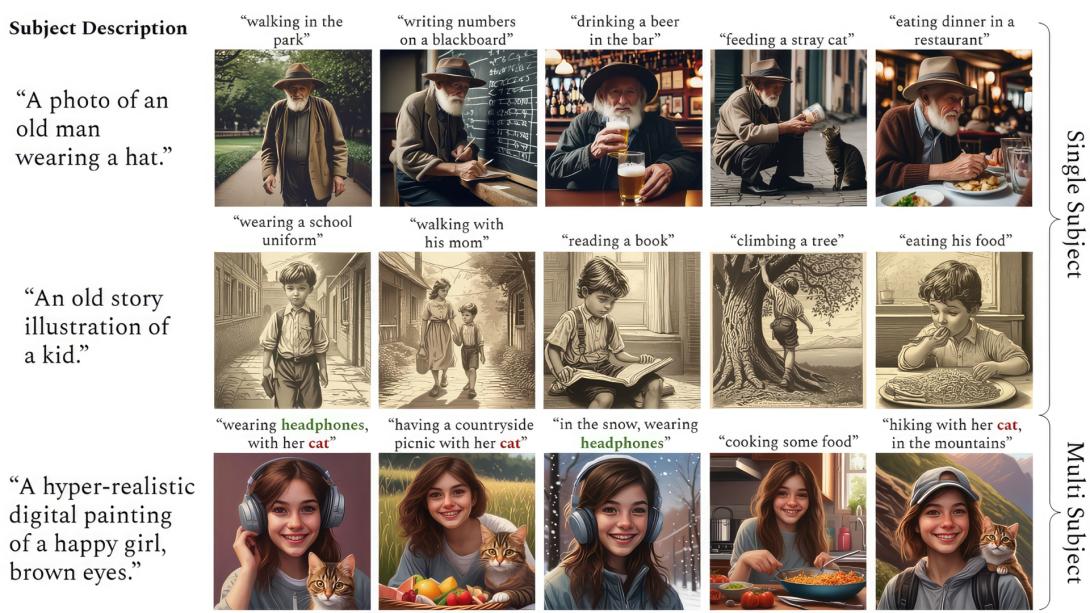
ConsiStory, a collaboration between researchers at NVIDIA and Tel Aviv University, makes it easier to generate multiple images with a consistent main character — an essential capability for storytelling use cases such as illustrating a comic strip or developing a storyboard.

The researchers’ approach introduced a technique called subject-driven shared attention, which reduces the time it takes to generate consistent imagery from 13 minutes to around 30 seconds.

Read the ConsiStory paper.

Panels of multiple AI-generated images featuring the same character
ConsiStory is capable of generating a series of images featuring the same character.

Edify 3D: Generative AI Enters a New Dimension

NVIDIA Edify 3D is a foundation model that enables developers and content creators to quickly generate 3D objects that can be used to prototype ideas and populate virtual worlds.

Edify 3D helps creators quickly ideate, lay out and conceptualize immersive environments with AI-generated assets. Novice and experienced content creators can use text and image prompts to harness the model, which is now part of the NVIDIA Edify multimodal architecture for developing visual generative AI.

Read the Edify 3D paper and watch the video on YouTube.

Fugatto: Flexible AI Sound Machine for Music, Voices and More

A team of NVIDIA researchers recently unveiled Fugatto, a foundational generative AI model that can create or transform any mix of music, voices and sounds based on text or audio prompts.

The model can, for example, create music snippets based on text prompts, add or remove instruments from existing songs, modify the accent or emotion in a voice recording, or generate completely novel sounds. It could be used by music producers, ad agencies, video game developers or creators of language learning tools.

Read the Fugatto paper.

GluFormer: AI Predicts Blood Sugar Levels Four Years Out

Researchers from the Weizmann Institute of Science, Tel Aviv-based startup Pheno.AI and NVIDIA led the development of GluFormer, an AI model that can predict an individual’s future glucose levels and other health metrics based on past glucose monitoring data.

The researchers showed that, after adding dietary intake data into the model, GluFormer can also predict how a person’s glucose levels will respond to specific foods and dietary changes, enabling precision nutrition. The research team validated GluFormer across 15 other datasets and found it generalizes well to predict health outcomes for other groups, including those with prediabetes, type 1 and type 2 diabetes, gestational diabetes and obesity.

Read the GluFormer paper.

LATTE3D: Enabling Near-Instant Generation, From Text to 3D Shape 

Another 3D generator released by NVIDIA Research this year is LATTE3D, which converts text prompts into 3D representations within a second — like a speedy, virtual 3D printer. Crafted in a popular format used for standard rendering applications, the generated shapes can be easily served up in virtual environments for developing video games, ad campaigns, design projects or virtual training grounds for robotics.

Read the LATTE3D paper.

MaskedMimic: Reconstructing Realistic Movement for Humanoid Robots

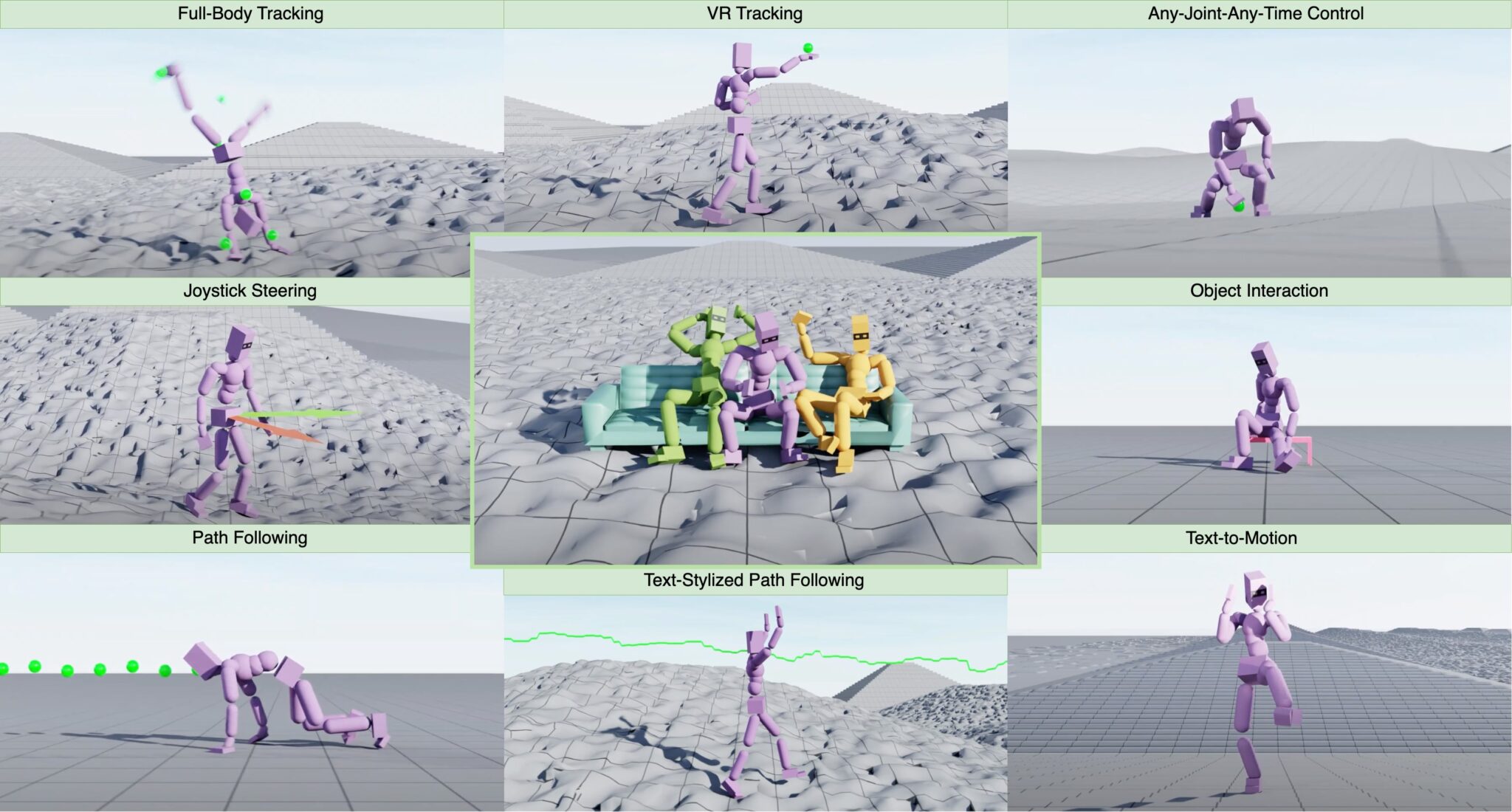
To advance the development of humanoid robots, NVIDIA researchers introduced MaskedMimic, an AI framework that applies inpainting — the process of reconstructing complete data from an incomplete, or masked, view — to descriptions of motion.

Given partial information, such as a text description of movement, or head and hand position data from a virtual reality headset, MaskedMimic can fill in the blanks to infer full-body motion. It’s become part of NVIDIA Project GR00T, a research initiative to accelerate humanoid robot development.

Read the MaskedMimic paper.

StormCast: Boosting Weather Prediction, Climate Simulation 

In the field of climate science, NVIDIA Research announced StormCast, a generative AI model for emulating atmospheric dynamics. While other machine learning models trained on global data have a spatial resolution of about 30 kilometers and a temporal resolution of six hours, StormCast achieves a 3-kilometer, hourly scale.

The researchers trained StormCast on approximately three-and-a-half years of NOAA climate data from the central U.S. When applied with precipitation radars, StormCast offers forecasts with lead times of up to six hours that are up to 10% more accurate than the U.S. National Oceanic and Atmospheric Administration’s state-of-the-art 3-kilometer regional weather prediction model.

Read the StormCast paper, written in collaboration with researchers from Lawrence Berkeley National Laboratory and the University of Washington.

NVIDIA Research Sets Records in AI, Autonomous Vehicles, Robotics

Through 2024, models that originated in NVIDIA Research set records across benchmarks for AI training and inference, route optimization, autonomous driving and more.

NVIDIA cuOpt, an optimization AI microservice used for logistics improvements, has 23 world-record benchmarks. The NVIDIA Blackwell platform demonstrated world-class performance on MLPerf industry benchmarks for AI training and inference.

In the field of autonomous vehicles, Hydra-MDP, an end-to-end autonomous driving framework by NVIDIA Research, achieved first place on the End-To-End Driving at Scale track of the Autonomous Grand Challenge at CVPR 2024.

In robotics, FoundationPose, a unified foundation model for 6D object pose estimation and tracking, obtained first place on the BOP leaderboard for model-based pose estimation of unseen objects.

Learn more about NVIDIA Research, which has hundreds of scientists and engineers worldwide. NVIDIA Research teams are focused on topics including AI, computer graphics, computer vision, self-driving cars and robotics.


Source link

Rimac may have just teased its F1-rivaling track car

0


Rimac may have provided a first glimpse at a single-seat track car in the works, which Rimac CEO and founder Mate Rimac has hinted will outpace current Formula 1 cars and top-level endurance racers.

As first noted by The Supercar Blog, page nine of the latest issue of Rimac’s official magazine shows a sketch depicting a trio of cars, with the car in the foreground possibly being the new track car.

Page from Rimac Magazine 2024 - Issue 4

Page from Rimac Magazine 2024 – Issue 4

The car appears to feature an open-wheel design and closed cockpit, similar to the McLaren Solus GT track car.

Behind it in the sketch is the Rimac Nevera and its more hardcore variant, the Nevera R.

Rimac Nevera R

Rimac Nevera R

News of the track car was first revealed by Mate Rimac in August during the debut of the Nevera R.

He described the car as a single-seater with a closed cockpit, utilizing a platform unrelated to the one in the Nevera. He also mentioned that the reveal would probably happen in 2024, though it is now likely to take place sometime in 2025.

The new Rimac isn’t the only track car looking to outpace the world’s top race cars. Leading F1 team Red Bull Racing is also developing a track car, albeit one with two seats. Red Bull’s car is known as the RB17, and the company has confirmed it will feature a naturally aspirated V-10 mated with a mild-hybrid system for a combined output of 1,200 hp. It will be among the last designs from Adrian Newey, at least for Red Bull, as the star aerodynamicist joins Aston Martin in 2025.


Source link

Manny Khosbin takes delivery of his Bugatti Bolide track hypercar

0


Real estate mogul and supercar collector Manny Khoshbin has received the keys to his Bugatti Bolide. The hypercar was delivered to Bugatti Newport Beach just a few hours ago.

This is the second Bugatti Bolide in the USA. The first one was delivered by Team CJ Works in Austin, TX. Manny’s car has fewer blue details compared to the launch spec. It has what appears to be an exposed carbon exterior with blue highlights on the air scoop and rear wing and the shark fin.

The Bolide is Bugatti’s ultimate track hypercar. Only 40 examples are being produced with a price tag of $4 million. It is based on a bespoke carbon fibre chassis that has been developed to comply with LMh and LMDh regulations and meets all safety norms laid down by the FIA.

The Bolide is powered by Bugatti’s legendary 8.0-liter W16 engine. This monster of an engine generates 1577 hp and 1180 lb-ft of torque. The car weighs just 1450 kg (dry), which gives it an insane power-to-weight ratio of more than 1100 hp per tonne!

Source: @bugattinewportbeach


Source link

Consumer Guide Car Stuff Podcast Episode 254: All-New Kia K4, Haunted Bluetooth Connections, Luxury Pickup Shootout | The Daily Drive

0


Picking the best $90,000 pickup truck.

Luxury Pickup Shootout

Whether you drive a car, need a car, or just occasionally bum a ride with friends, you’’ve come to the right place. Join Jill and Tom as they break down everything that’’s going on in the auto world. New-car reviews, shopping tips, driving green, electric cars, classic cars, and plenty of great guests. This is the Consumer Guide Car Stuff Podcast. – Luxury Pickup Shootout

–

Episode: 254

Broadcast date: December 30, 2024

Guest: Damon Bell

–

(Show Notes)

–

Jill and Tom open the show discussing Tom’s troubling Diet Pepsi habit, rolling into a discussion of EV startup companies that may or not be on the edge of collapse. Sadly, EV commercial-vehicle startup Canoo–which had been processing a large van order for Walmart–has slipped into receivership. Is Rivian next? Listen in.


Next Tom gripes about his Bluetooth issues, which seem to border on the paranormal.


Still in the first segment, Jill reviews the 2025 Kia K4, the brand’s replacement for the popular Forte small sedan.


In the second segment, Jill and Tom welcome Damon Bell of Cars.com. After singing the praises of kringle–a popular Midwest Danish-like pastry–Damon shared the details of Car’s 2024 Full-Size Pickup Challenge, which included three luxury-trimmed pickups. Listen in for details–and a winner.


In the last segment, Jill is subjected to Tom’s “EV Lies!” quiz, after which the duo remembered pioneering auto writer Denise McCluggage.

Discussed this week

2025 Kia K4

Canoo Homepage

Pickup Truck news and reviews

Cars.com luxury-pickup comparison video

Denise McCluggage Wikipedia page


Follow the crew


The Crew

To advertise on the Car Stuff Podcast call Andy Lieb: 847-291-7414

Consumer Guide Car Stuff Podcast Episode 253: Honda and Nissan Merge, Ram Delays EV, Chatting With Scout Motors

Consumer Guide Car Stuff Podcast Episode 252: Charger Daytona, Tesla Market Share, Impact of Trump Tariffs


Source link

2025 Tesla Model Y Juniper might not look like the Model 3 after all

0


More videos of the camouflaged Tesla Model Y ‘Juniper’ update have surfaced online, previewing the upcoming changes to the world’s best-selling electric vehicle (EV).

However, it may not simply be a cut-and-paste redesign from the recently facelifted Model 3 sedan like many first thought.

The latest vision was uploaded to X (formerly Twitter) by Suppakit Phonorthong, and shows the Model Y driving with camouflage covering its front and rear ends, similar to previously spotted examples.

100s of new car deals are available through CarExpert right now. Get the experts on your side and score a great deal. Browse now.

It appears the lower fog lights will continue to feature on the updated Model Y, despite the Model 3 ditching these units as a part of its Highland facelift.

At the rear, there’s an even clearer indication that the Model Y will get a light bar connecting its rear clusters, which would signal a departure from the previous and existing styling of Tesla’s two most popular EVs.

Only one interior photo has been leaked so far, showing what appears to be perforated leather or leatherette upholstery on the seats, suede-look trim on the door, and a thin strip of ambient lighting.

It’s expected the Model Y will follow the Model 3 by ditching its traditional steering column stalks and adopting controversial steering wheel buttons.

In the Model 3, additional changes included its gear selector being relocated to its touchscreen, its front seats gaining ventilation, and the addition of a rear climate control screen.

Tesla’s updated Model 3 also received revised suspension upgrades including new springs, dampers, and subframe mounting points designed to deliver a more comfortable ride.

In October, reports emerged from China that Shanghai production of the updated Model Y had been pulled forward to start this month, if initially only in low volumes.

Two months have passed and none of these vehicles have surfaced.

Tesla CEO Elon Musk has previously said the Juniper facelift won’t debut until 2025, despite earlier reports claiming it would debut before the end of this year.

The updated Model Y could bring an increase in sales for the electric SUV, which in 2023 was the best-selling vehicle for private buyers in Australia.

While the Model Y remains Australia’s best-selling EV, Tesla is experiencing a sales drop in 2024, with deliveries declining in nine of the 11 months so far this year.

To the end of November, Tesla had delivered 19,932 Model Ys, down almost 30 per cent year-to-date on 2023.

Model 3 deliveries have also fallen by about seven per cent, despite Tesla heavily discounting both EVs by thousands of dollars earlier this year.

MORE: Everything Tesla Model Y
MORE: 2025 Tesla Model Y: ‘Juniper’ facelift spotted again as unveiling nears
MORE: Tesla Model Y ‘Juniper’ facelift spy shots reveal different look to Model 3


Source link

Famous Essex Wire Shelby 427 Competition Cobra heads to auction

0


  • A Shelby 427 Competition Cobra, billed as the winningest Cobra of all time, is headed to auction
  • The car will be sold at Mecum’s 2025 Kissimmee sale
  • Mecum’s estimate is between $4.5 million and $6 million

One of the most successful original Shelby Cobras on the racetrack will go under the hammer at Mecum’s auction scheduled for mid-January in Kissimmee, Florida.

The car, bearing chassis number CSX3009, is the 1965 Shelby 427 Competition Cobra raced by the likes of Skip Scott, Dick Thompson, and Ed Lowther during the 1960s and early ’70s, and tested by Shelby’s Ken Miles. It is widely recognized as the winningest Cobra of all time. Its sponsor in 1965, Essex Wire, was one of Ford’s biggest suppliers. The company switched to sponsoring a pair of Ford GT40s in 1966.

After Shelby American founder Carroll Shelby achieved success installing a small-block 289 Ford V-8 in the lightweight AC Ace chassis to create the original Cobra, he upped the ante with the big-block 427 model. The bigger, more powerful engine required a redesigned chassis, and the bodywork was also modified with larger fender flares and a gaping front intake.

The 427 Cobras proved potent on the racetrack in the 1960s, dominating the SCCA A-Production class. According to the listing, chassis no. CSX3009 achieved multiple wins, including three championship victories (the 1966 SCCA A Production Championship with Lowther as driver and two SCCA National Championships in 1973 and 1974 with Sam Feinstein as driver). Lowther’s helmet, race suit, and gloves from his 1966 championship win are included in the sale.

1965 Shelby 427 Competition Cobra bearing chassis no. CSX3009 - Photo via Mecum

1965 Shelby 427 Competition Cobra bearing chassis no. CSX3009 – Photo via Mecum

The Competition versions of the 427 Cobra, including chassis no. CSX3009, were built for international competition. However, for FIA homologation, 100 examples needed to be built, and Shelby only managed to produce 56 cars. Of those, 31 were converted to road cars and given the S/C tag, signifying them as “Semi-Competition” cars. A total of 23 cars remained in full Competition spec and often ended up being raced privately, like chassis no. CSX3009.

After its racing career, the car traded hands several times in the ensuing decades until ending up in the possession of current owner André Ahrlé. He commissioned renowned Cobra builder and restorer Mike McCluskey to return the car to its original condition from the Essex Wire sponsorship era. According to the listing, the car currently runs an original 427-cubic-inch V-8 that was delivered in a crate along with the car to the Essex Wire team as a reserve engine.

1965 Shelby 427 Competition Cobra bearing chassis no. CSX3009 - Photo via Mecum

1965 Shelby 427 Competition Cobra bearing chassis no. CSX3009 – Photo via Mecum

The car is Lot S243 for Mecum’s upcoming Kissimmee auction, scheduled for Jan. 7-19. Mecum estimates a final bid between $4.5 million and $6 million.

It won’t be the only Cobra at the auction. A replica Cobra driven by the villain in 1995 hit movie “Bad Boys” will also go under the hammer.


Source link

Another Australian region to detect cocaine in roadside drug-driving tests

0


The Australian Capital Territory will become just the third jurisdiction to detect cocaine in roadside drug tests frommidnight tonight, in a bid to better protect road users in Canberra.

As of January 1, 2025, cocaine will be able to be detected in oral fluid tests conducted at the roadside by police officers.

Until now, ACT Policing has only been able to test for cannabis, methamphetamine and MDMA (ecstasy), though cocaine use in the territory has surged following the COVID-19 pandemic.

Motorists found to be driving under the influence of prescription drugs and illicit drugs face fines of up to $4000 (with 25 penalty units worth $160 each) and a six-month default licence disqualification.

100s of new car deals are available through CarExpert right now. Get the experts on your side and score a great deal. Browse now.

The adoption of testing for cocaine comes seven years after it was added to the New South Wales Police arsenal in early 2018, while the Queensland Police Service followed suit in July 2023 after an increase in drivers testing positive for the drug over the last five years.

When Queensland introduced cocaine testing, it said drug tests are intended to detect the mere presence of drugs, which “shouldn’t be present in a person’s saliva in any concentration”.

As of September 1, 2024, motorists who return a positive roadside oral test for drugs in New South Wales can be placed under arrest, instead of needing to be taken to a police station or nearby testing bus.

According to the National Road Safety Partnership Program – delivered by Monash University’s Accident Research Centre – a quarter of drivers killed in road crashes had drugs other than alcohol in their system.


Source link

Kia EV9 recalled due to missing seat bolts

0


Kia is recalling 22,883 EV9 electric SUVs because they may be missing mounting bolts for their second- and third row-seats.

The EV9 arrived in the U.S. as a 2024 model and is currently being sold here as a 2025 model. The recall includes a mix of vehicles from both model years that may have left the factory with missing seat bolts due to an error by an assembly-line worker, Kia told the NHTSA. All of the affected vehicles were assembled in South Korea; Kia began building EV9s at its U.S. plant in June, but has only produced small numbers of the SUVs there.

2025 Kia EV9

2025 Kia EV9

Without these mounting bolts, seats may not be able to properly restrain occupants in the event of crash, increasing the risk of injury, the safety agency said. Owners may also notice ratting or looseness of the seats if bolts are missing.

Kia estimates that just 1% of the recalled vehicles are missing the bolts in question, and told the NHTSA that it is not aware of any crashes, injuries, or fatalities related to this issue, which was discovered during a quality-control inspection.

2025 Kia EV9

2025 Kia EV9

Dealers will inspect the seats and replace any missing bolts free of charge. Kia plans to mail owner notification letters Jan. 24, 2025. In the meantime, owners can contact Kia customer service at 1-800-333-4542 for more information. Kia’s reference number for this recall is SC329.

This recall follows two in October. One addressed a remote parking system issue in 12,400 vehicles from the 2024 model year equipped with that feature. The other addresses a software issue in both 2024 and 2025 models that could cause digital instrument clusters to fail.


Source link