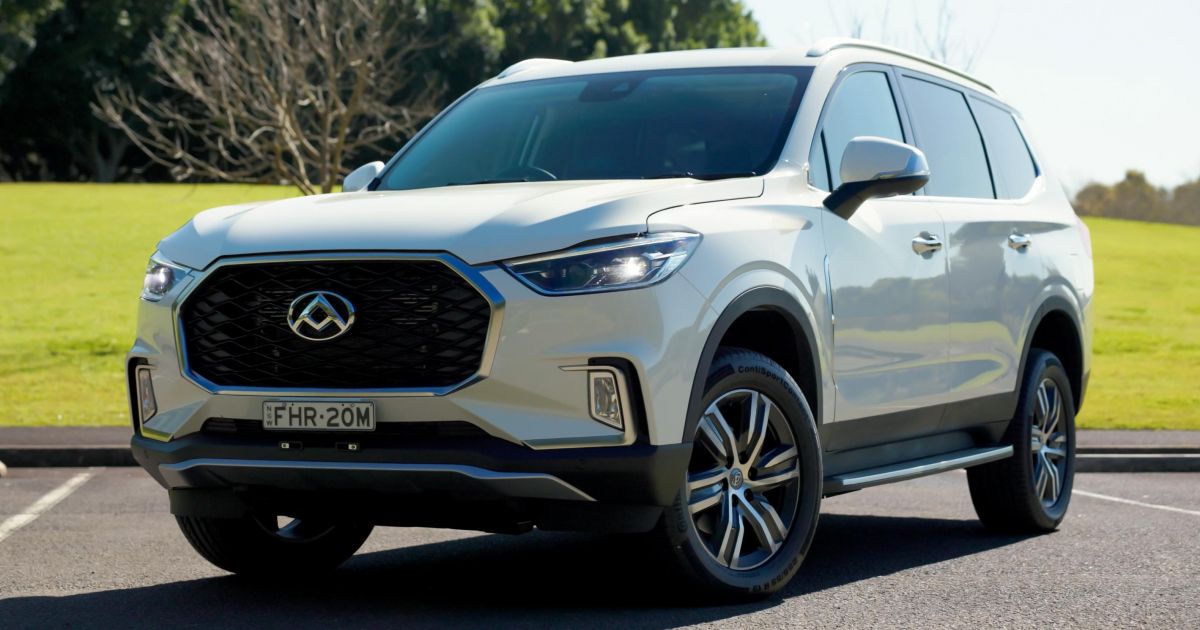
Equipped with the latest multimedia technology, safety equipment and engineering know-how, the LDV D90 is a lot more than just a good buy and a serious value for money proposition in the large SUV category.
While the facelifted 2025 D90 range arrives this month with a new look, more powerful petrol engine and circa-$4200 price increases across the lineup (except for the diesel, which has been dropped), it makes the outgoing MY24 range we’re outlining here even better value, at least while stocks last.
Kicking off from $36,937 drive-away for retail buyers ($34,990 for ABN holders) for the LDV D90 2WD and stretching all the way to $50,095 drive-away ($47,490 for ABN holders) for the top-spec Executive Diesel 4WD, the D90 is the genuine bang for buck hero in the large off-road SUV segment.
Even at the top end of the model lineup, the D90 still undercuts its closest rivals by as much as $17,000 when compared with the range-topping Isuzu MU-X LS-T 4×4 ($67,990), as an example.
It’s a similar story with the Mitsubishi Pajero Sport, which is bookended by the base GLX from $51,540 plus on-roads and the range-topping GSR at $64,840 before on-roads – though all versions get a 2.4-litre turbo-diesel powertrain.
LDV D90 pricing:
Model
Drive-away pricing
ABN drive-away pricing
2024 LDV D90 2WD
$36,937
$34,990
2024 LDV D90 Executive 2WD
$41,147
$38,990
2024 LDV D90 Executive 4WD
$44,832
$42,490
2024 LDV D90 Executive Diesel 4WD
$50,095
$47,490
Interested in buying a LDV D90? Get in touch with one of CarExpert’s trusted dealers here
While the LDV D90 is something of a bargain in the large SUV category on price alone, it’s also loaded with technology, creature comforts and a full suite of driver assistance systems, giving it a five-star ANCAP safety rating.
Moreover, buyers can choose between 2WD and 4WD, along with either a punchy 2.0-litre turbo-petrol engine paired with a six-speed automatic transmission, or a 2.0-litre turbo-diesel matched to an eight-speed auto.
The 2.0L turbo-petrol engine makes 160kW of power and 350Nm of torque, while the turbo-diesel produces 158kW and 480Nm. 2WD versions are rear-wheel drive with selectable drive modes – Normal, Sport and ECO – while 4WD variants also add Rock, Mud, Sand and Snow modes.
All LDV D90s have a turning circle of 12.0 metres, share the same approach, departure and breakover angles (28.0/25.0/20.0 degrees, respectively), and also share the same 550mm wading depth.
Braked towing capacity for petrol D90 variants is 2000kg, whereas the diesel is able to tow up to 3100kg (braked).
There’s good ride comfort, too, thanks to double-wishbone front suspension and a five-link coil-spring system down back. While the entry-level D90 2WD gets 18-inch light-alloy wheels, Executive models ride on larger 19s.
Regardless of whether you choose petrol or diesel power for your D90, you still get a large 75-litre fuel tank that allows you to make the most of longer hauls, or simply make fewer visits to the bowser.
Fuel consumption across petrol models is a claimed 10.2L/100km on the combined cycle, while diesel versions quote a slightly better 9.1L/100km. All LDV D90 models measure 5005mm in length and ride on a 2950mm wheelbase, while ground clearance is 210mm across the range.
Those numbers also allow for a good deal of passenger space first and foremost, while luggage capacity is quoted at 343 litres even with all three rows of seating in use. Luggage space expands to 1350 litres with the second folded almost flat, and a cavernous 2382 litres with second and third rows stowed.
Creature comforts across the entire range include a 12-inch touchscreen infotainment unit with Apple CarPlay, an 8.0-inch multifunction instrument display, dual-zone climate control, keyless entry and start, front and rear parking sensors, and both LED headlights and daytime running lights.
There are also heated and electrically folding door mirrors, luggage rails, tyre pressure monitoring, side steps and rain-sensing wipers as standard across the range.
Stepping up to the D90 Executive variants brings you door-mounted puddle lights, multi-zone climate control, an electric tailgate, leather-wrapped steering wheel, ambient interior lighting, an eight-way power-adjustable driver’s seat, eight-speaker audio, and leather seat trim for the first and second rows.
Finally, the top-spec LDV D90 Executive Diesel 4WD adds a heated steering wheel with paddle shifters to its petrol-powered siblings.
Safety-wise, the entire D90 SUV range comes with a full suite of active safety systems in addition to six airbags, ISOFIX child seat anchors and three top-tether points for the second row.
Advanced Driver Assist Systems (ADAS) include autonomous emergency braking (AEB), forward collision warning, lane departure warning, traffic sign recognition, adaptive cruise control, hill decent control, fatigue reminder and attention assist.
All LDV D90 models are covered by a five-year, 130,000km factory warranty with roadside assist.
The LDV D90 is a nicely designed full-size family SUV with a well-packaged and well-equipped seven-seat interior, and it’s now priced even further below any of its large SUV competitors.
Interested in buying a LDV D90? Get in touch with one of CarExpert’s trusted dealers here
The crunch of tires on freshly fallen snow, the beauty of a winter landscape blanketed in white, and the comforting warmth of a crackling fireplace after a day of adventures – these are just some of the many reasons we love an epic Ontario winter road trip. Owning a 4X4 Jeep Wrangler for several years, I can attest that driving in snow is nothing but joy!
But I have to admit, my first-ever vehicle was a blue 2001 Suzuki Katana motorcycle, so the only car I drove in the winter was my parents’ station wagon, which I once spun out in a circle on the snowy highway. Don’t tell my mom! We live in a beautiful province with many incredible destinations just a short drive away. And as Canadians, like it or hate it, (yes I’m talking to you my fellow Torontoians) there is no season quite like winter.
However, navigating the roads in Ontario requires careful planning and preparation—especially the further North you go! From ensuring your vehicle is winter-ready to mastering winter driving techniques, here are a few key winter driving safety tips to ensure everyone enjoys your next snowy getaway.
Pulling on experience (donuts in parking lots included), I have put together the following guide to winter road safety, including tips for navigating icy roads, our winter road trip essentials, and must-visit destinations perfect for the quickly approaching holiday season.
So, buckle up, grab your mittens, and get ready to discover the magic of winter road-tripping in Ontario!
Understanding Winter Driving Risks
Having enjoyed many a winter road trip from Toronto, we know first-hand the unique challenges travellers face on Ontario roads at this time of year.
One of the biggest dangers we must be aware of is black ice. Aside from it being an endearing nickname, my friend Gregory from the website Follow Summer used to call me! Have you heard the phrase “black ice” but never understood the difference between it and normal icy conditions? If so, you’re not alone! Many newer drivers and those new to the areas where black ice occurs are confused by the term. So, let’s break it down…
When driving on normal, wet, or icy roads, the road will have a shiny surface. This lets you know that you’re approaching an area to be concerned about and adjust your driving habits accordingly.
Black ice gets its name because this clear, smooth ice is transparent, allowing the black of the road to show through, making it almost invisible. This makes it considerably more dangerous as many drivers won’t realize they are coming up on a patch of ice until they are on it and losing control.
Reduced visibility is another significant concern. Anytime we are asked about winter driving safety tips, we always caution people about how much snowfall, heavy fog, and blowing snow can severely limit visibility. This makes it difficult to see other vehicles, pedestrians, road signs, and other hazards on the road.
Finally, extreme weather events can create hazardous driving conditions. Even if you avoid driving during a significant storm, a winter road trip after a storm or blizzard may mean facing dangerous or even impossible driving conditions.
These events can bring heavy snowfall, strong winds, and dangerously low temperatures, leading to road closures, power outages (including traffic lights and streetlights), and even whiteout conditions where you have virtually zero visibility.
This is why it is important to familiarize yourself with how to drive safely during the winter months (and when to stay safe at home).
Tracking Ontario Winter Road Conditions
Knowing that the roads can get bad (and quickly), staying informed about winter road conditions is essential for safe travel.
One of the easiest ways to check on whether the roads are safe to travel is Ontario 511, a website and mobile app from the Ontario government that offers real-time information on road closures, construction, and winter driving conditions. You can access information about the conditions on specific highways, sign up for personalized alerts, and even view live traffic cameras to see the conditions first-hand.
Many townships also offer localized road reports for their area on their website.
In addition to official resources, there are many community-based options. Local Facebook groups and apps like Nextdoor allow neighbours to share their real-time experiences with fellow drivers, including specific road conditions, accidents, and weather alerts. There are groups specific to many towns and cities, as well as groups like Road Trip Ontario: Your Ontario Road Trip Hub and Ontario Storm Reports.
Local radio stations frequently share traffic and weather updates, offering valuable information on road closures, accidents, and driving conditions. When I’m not deep into a good podcast, I listen to Talk Radio AM640 in Toronto, where they do a track check every 30 minutes or so.
I recommend checking multiple sources to make sure you have the most up-to-date information. There have been times when I learned from a Facebook post to avoid a specific area before the problem was made aware on official channels. This is why we believe you can make the most informed decisions about your travel plans by combining information from official sources like Ontario 511 with community-based resources.
How to Prepare Your Car for Winter
A safe and enjoyable winter road trip in Canada starts with preparation. This means ensuring everything is in order BEFORE you head out on the roads. This includes vehicle preparation and planning out your route/plans for your upcoming adventure.
Here are a few key vehicle preparation tips for winter travel:
Winter Tires: These specialized tires are designed with deeper tread and a unique rubber compound to offer better traction on snow and ice. In some regions of Ontario, winter tires are legally required during specific periods.
Battery Check: Extreme cold temperatures can significantly impact your vehicle’s battery performance. Consider having your battery tested by a qualified mechanic to avoid potential issues when planning a longer winter road trip—big shout out to my mechanic, Vito and his team over at Danforth Auto Centre.
Coolant Check: Make sure you’re using a winter-grade antifreeze as it has a lower freezing point, preventing your engine from overheating or freezing in extreme cold. Regularly check your coolant levels. Carry additional antifreeze in case you need to top it up along the journey.
Windshield Washer Fluid:In the harsh winter conditions of Ontario, maintaining a clear windshield is paramount for safe driving. Windshield washer fluid plays a crucial role in removing snow, ice, slush, road salt, and grime that can obstruct your vision. Always keep an extra bottle of this stuff as well.
Full Tank of Gas: We recommend always maintaining a full gas tank when possible. Running out of fuel in extreme weather conditions can be extremely dangerous and potentially life-threatening. This is an emergency that’s easily avoided in most circumstances with a bit of forward thinking.
You can also take steps to make sure you and your passengers are as comfortable as possible during your travels. Dress in layers. Always bring winter gear like hats, gloves, scarves, and waterproof boots, even if you don’t want to wear them while driving. Having them close at hand ensures you can gear up if you need to go out in the cold.
When planning your winter road trip route, consider where you will stop. Picnic areas and park stops that offer an excellent bathroom break location during the summer months may not offer everything you need in the winter. Many areas close public park bathrooms during the off-season.
Book cabins, lodges, hotels, or winter campsites well in advance, especially during the peak holiday season. These spots are in high demand and often fill up quickly. This is especially important if you’re travelling with pets, as not all locations are pet-friendly.
Note: This information is for general knowledge and guidance only. Always consult a qualified mechanic for vehicle maintenance and refer to local regulations regarding winter tire requirements.
Winter Road Trip Emergency Kit
In our opinion, one of the most important things you can do to prepare for winter driving safety is to have a well-In my opinion, one of the most important things you can do to prepare for winter driving safety is to have a well-equipped winter car safety kit. Unexpected events like sudden snow storms, icy roads, or vehicle breakdowns can quickly turn your epic road trip into a dangerous situation. This kit includes the gear you need to keep everyone safe regardless of what Mother Nature and Jack Frost may send your way.
A comprehensive winter road trip emergency kit should include the items you need to stay safe and comfortable if you become stranded. This includes (but isn’t limited to):
Jumper cables
A windshield brush/scraper
A shovel
Blankets
Extra warm clothing (hats, gloves, a warm jacket)
A fully stocked first aid kit
Flashlight with extra batteries
Cellphone adapter/charger
Non-perishable snacks
Drinking water
Sand or cat litter for traction
Be sure to consider all travellers when putting the kit together. For example, if you are travelling with children, you will need hats, gloves, and warm clothing in their size. If you’re travelling with a pet, there are additional pet-specific items you will need to add to your first aid kit. By gathering and packing all these items before you head out on your journey, you are making winter weather safety a priority. If you already have a winter car safety kit, check it regularly and replace any expired items to ensure you’re never caught unprepared.
Driving Safely in the Ice and Snow
Safe driving in the ice and snow requires adjusting your driving style. Here are a few winter driving safety tips to keep you and your family safe on your next adventure:
Gentle Acceleration and Breaking: Maintaining control of your vehicle in winter driving conditions means taking a gentle approach. Avoid sudden movements that can cause your vehicle to skid, especially on slippery surfaces.
Increase Following Distance: Allow extra trim to react to sudden stops or changing road conditions, such as black ice or snow-covered patches.
Keep Your Eyes Open for Black Ice: As mentioned above, black ice can be nearly impossible to see on the roads. Watch out for a darker patch on the roads with an unusually smooth surface. You may also notice other drivers slowing down or swerving suddenly when travelling through this area.
Steer into a Skid: If you do hit a slippery patch, regain control by guiding your vehicle in the direction it’s naturally sliding or steering into the skid. This goes against our natural instinct to steer back out of it. However, this winter driving technique allows the tires to regain traction and significantly lowers your risk of a spin-out.
When to Call Off Your Winter Road Trip
Preparing for a winter road trip is essential, but don’t overlook the importance of knowing when to postpone your trip when considering winter weather safety.
If severe weather warnings are issued for your planned route, such as blizzard warnings or ice storms, it’s best to delay your trip. Road closures and hazardous driving conditions can significantly increase the risk of accidents and make travel extremely dangerous.
Carefully monitor the weather forecasts and road conditions leading up to and throughout your trip. If conditions change during your travels (which can happen quickly and without warning at times), consider finding a safe place to shelter and postpone the remainder of your journey. Remember, your safety should always be the top priority!
Our Favourite Winter Road Trip Destinations in Ontario
Ontario offers so many incredible destinations for winter road trips. The most challenging part is deciding where to go. It’s a struggle we face every year as we plan our travels, although it’s arguably a good struggle to have!
To help you decide, here are a few of our favourite places to visit in Ontario during winter:
For those seeking festive cheer, many places across the province are known for their Christmas markets and holiday festivities. Consider exploring charming villages like Elora, which has beautiful twinkling lights and displays.
Niagara-on-the-Lake transforms into a winter wonderland after the snow falls, with its picturesque vineyards and adorable local shops.
For a truly unique experience, consider taking a trip to Tobermory on the Bruce Peninsula. Here, you’ll experience the magic of a winter wonderland along the rugged coastline, which includes beautiful waterfront views and cozy winter cabins.
For outdoor lovers, Ontario offers many thrilling destinations for outdoor winter adventures, including winter hiking, camping, skiing, snowshoeing, and more. One such location is Muskoka – a popular destination well-known for its many outdoor activities and must-see stops, like Deerhurst Resort and Hidden Valley.
Algonquin Provincial Park is a breathtaking year-round spot, offering breathtaking winter beauty with its snow-covered forests and frozen lakes. Visit for the day or book a campsite for a weekend getaway. Another popular spot for winter camping is Killarney Provincial Park. Here, you can hike through snow-covered trails and witness the beauty of its frozen landscapes first-hand.
Wherever you go, you will surely enjoy the beauty and excitement this incredible province offers!
Enjoy the Magic of Ontario’s Winter Wonderland Safely this Season
If you’re planning on heading out for an adventure this season, it’s crucial to remember that winter road-tripping in Ontario is about more than just reaching your destination. It’s about embracing the journey – including the beautiful winter landscape and the cozy moments with loved ones.
By following the winter driving safety tips in this guide and carefully planning and preparing, you can ensure a safe and memorable winter getaway for the whole family.
So, gather your loved ones, pack your bags, and get ready to discover the magic of winter in Ontario. Explore charming towns, explore thrilling outdoor adventures, and create lasting memories that will warm your heart long after the snow melts away (and don’t worry, it will eventually).
Embrace the magic of winter this season. Happy travels!
Ford Australia is discounting a number of older model year stock before 2025, with significant discounts to be had across members of some of its key model ranges.
Until December 31, 2024, select variants of the Ranger, Everest, F-150, Transit Custom and E-Transit are being discounted and given nationwide drive-away prices.
Depending on the model and where you live, savings range from $4800 to more than $20,000.
100s of new car deals are available through CarExpert right now. Get the experts on your side and score a great deal. Browse now.
Below is a rundown of each model and variant included in the drive-away pricing offer. Savings are based on the capital cities of states which have the highest and lowest on-road costs.
Ford Ranger
Australia’s best-selling vehicle is included in the offer, though only for MY2024.50 examples of the Ranger XLT bi-turbo double-cab pickup.
Powered by a twin-turbo 2.0-litre four-cylinder diesel engine, it produces 154kW of power and 500Nm of torque, with drive sent to all four wheels through a 10-speed automatic transmission.
Model
Drive-away price (until Dec. 31)
Savings
2024 Ford Ranger XLT 4×4 bi-turbo double-cab pickup
$63,990
$5340 to $8253
Ford Everest
The seven-seat Ford Everest Trend is being discounted by up to almost $7700, though only for MY2024.50 versions of the popular SUV.
Like the Ranger, its 2.0-litre diesel engine develops 154kW and 500Nm, mated to a 10-speed automatic transmission with a four-wheel drive system.
Model
Drive-away price (until Dec. 31)
Savings
2024 Ford Everest Trend 4×4 bi-turbo
$67,990
$4800 to $7664
Ford F-150
One of Australia’s most popular pickups is being priced to clear ahead of a facelifted version arriving in showrooms in the first quarter of 2025 (January to March).
While the short- (SWB) and long-wheelbase (LWB) F-150s are usually separated by about $1000, the nationwide drive-away pricing offer brings them into line.
Power comes from a twin-turbo 3.5-litre V6 petrol engine, producing 298kW and 678Nm. Drive is sent to all four wheels through a 10-speed automatic transmission.
Model
Drive-away price (until Dec. 31)
Savings
2023 Ford F-150 XLT SWB
$106,990
$8982 to $13,378
2023 Ford F-150 XLT LWB
$106,990
$10,004 to $14,438
2023 Ford F-150 Lariat SWB
$139,990
$9873 to $15,523
2023 Ford F-150 Lariat LWB
$139,990
$10,895 to $16,583
Ford Transit Custom
Ford’s Toyota HiAce rival is receiving solid discounts, though only for MY2023.75 examples of the Trend LWB.
Its 2.0-litre four-cylinder turbo-diesel engine develops 125kW and 390Nm, sent to the front wheels through an eight-speed automatic transmission.
The Transit Custom LWB can carry up to 1014kg in its 6.0m3 load space area.
Model
Drive-away price (until Dec. 31)
Savings
2024 Ford Transit Custom Trend LWB
$56,990
$6107 to $8810
Ford E-Transit
The only electric version of Ford’s Transit van has struggled for sales success in Australia, leading to significant discounts for the E-Transit.
MY2023.50 were previously priced from $104,990 before on-road costs, before the unchanged MY2024.00 model was cut to $89,990 plus on-roads.
Now remaining MY2023.50 stock is being priced at $69,990 drive-away, significantly less than when it first launched in Australia. To the end of September 2024, the E-Transit accounted for about three per cent of this year’s Transit sales.
Model
Drive-away price (until Dec. 31)
Savings
2023 Ford E-Transit
$69,990
$35,000*
*Based on the MY23.50 E-Transit’s $104,990 before on-road costs list price. MY24 examples were reduced to $89,990 before on-road costs.
The Porsche Macan Electric is brimming with technology and engineering innovation that will help transform the middle of the luxury market, not just the fringes. That’s why it’s one of Green Car Reports’ Best Car To Buy 2025 finalists
As other brands have shuffled toward EVs in fits and starts, Porsche hasn’t wavered in its effort to remake nearly all its lineup around EVs, and redesigning a next-generation Macan, its top seller, without a combustion engine has been an especially bold move.
Porsche’s sharp focus on electrifying its lineup started with the Mission E concept nine years ago, resulting in the production Porsche Taycan, sandwiched between the 911 and Panamera. Fully electric, and arriving for the 2020 model year, it was one of our Best Car To Buy 2020 finalists.
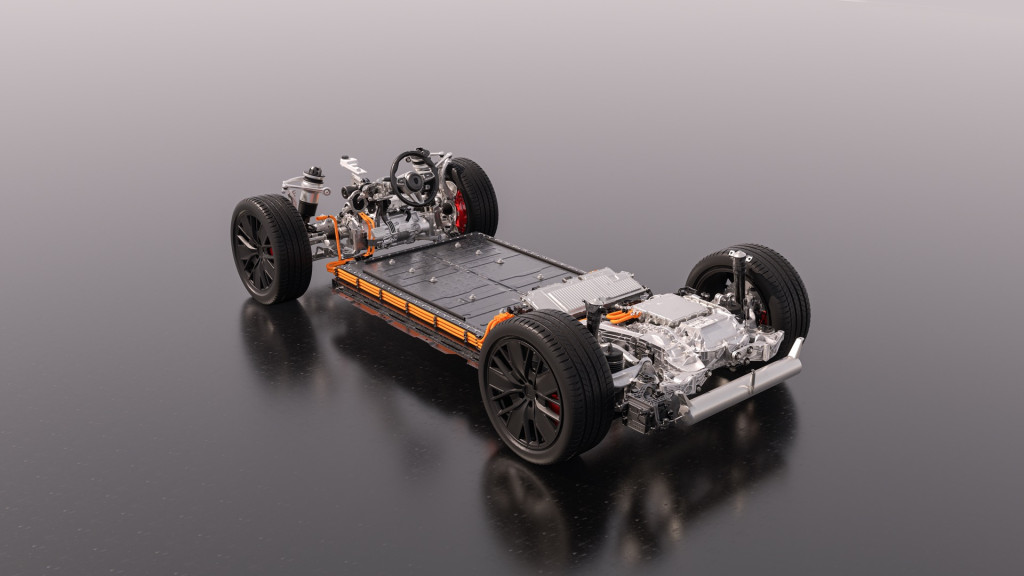
PPE platform for VW Group, developed by Porsche/Audi
This past year, the 2025 Porsche Taycan has received all sorts of improvements to gain efficiency, boost performance, and make good on the mission. But the Macan Electric’s Premium Platform Electric (PPE) takes all Taycan’s tech in perspective—by allowing easier scalability, and simplifying for a higher level of mass production. It all shows that the electric version can be more space-efficient, comfortable, and luxurious, in addition to all those other clean-energy qualities.
The Macan and its PPE platform-mates, including the Audi Q6 E-Tron, evolve the motor tech and carry over the Taycan’s 800-volt basis for battery and propulsion tech. However, it’s built with a 100-kwh battery pack that reduces complexity and shifts to a smaller number of prismatic cells and improved thermal regulation—enabling a 10-80% DC fast-charging time of as little as 21 minutes. With an EPA range rating of up to 315 miles, and 288 miles in even the top Macan Turbo, that’s not a lot of road-trip time spent charging.
2024 Porsche Macan EV
2024 Porsche Macan EV
2024 Porsche Macan EV
So far, the German luxury establishment has been missing out on faster 800-volt charging, but the Macan and PPE shepherd it out to the 2025 Audi Q6 E-Tron and SQ6 E-Tron, also arriving now, and next year to the Audi A6 E-Tron hatchback and more.
The Macan Electric’s thermal systems and performance credentials were well proven by our editorial team during Best Car To Buy testing at Georgia’s Atlanta Motorsports Park, where the battery, brakes, or motors never overheated, despite this performance SUV’s curb weight of nearly 5,400 pounds—although the Pirelli P Zero Corsa summer performance tires were definitely worse for wear.
2024 Porsche Macan EV
The Porsche Macan Electric is offered at a range of different power levels, including the 335-hp Macan, 402-hp Macan 4, the 509-hp Macan 4S, and the 630-hp Macan Turbo—with the latter achieving a 0-60 mph dash in just 3.1 seconds. An air suspension and adaptive damping are included, allowing the Macan to raise or lower its ride height based on the drive mode, and the PPE underpinnings for the Macan Electric also include a new front suspension geometry plus a steering gear that’s rigidly attached to the structure for better steering feedback. On the street and on the track alike, the Macan’s rear-wheel steering is its secret weapon, allowing for better maneuverability in tight corners and better stability in high-speed maneuvers.
Fun track time aside, it’s the Macan Electric and the platform it’s built on that will help prove that EVs don’t have to involve compromise, which can help elevate this technology to a broader market.
It’s not “mission complete” yet, but this bigger mission is just starting.
After landing at Denpasar’s bustling I Gusti Ngurah Rai International Airport and navigating through Bali’s loud streets, jam-packed with cars and scooters, it almost felt surreal to turn off a road and instantly be transported to the serenity of Bvlgari Resort Bali, one of just nine hotels worldwide owned by the revered Italian fashion house.
But, as I sat in the ocean-facing outdoor reception area overlooking the rest of the property, that is precisely what happened. The sound of blaring horns and sirens faded into that of crashing waves, punctuated by a “Welcome home” as a staff member offered me a drink of basil, mint, honey, and soda. After 25 hours of travel, I had never been happier to hear those words.
Shortly after checking in, a dedicated butler for my stay picked me up on a motorized buggy and drove us down a hill to my room — one of 59 villas, each with views of the Indian Ocean. Walking into the open-air villa, the first thing that caught my eye was the private swimming pool that each villa is equipped with, showing off the ocean views below. The minibar area is also outdoors, adjacent to the pool beds and a dining table. Inside was a selection of complimentary snacks, water, and other beverages for purchase.
The Pond on the Bulgari Bali property.
Courtesy of Bvlgari Hotels
Inside the main living room, curtains pulled away to reveal full floor-to-ceiling windows. This allowed light to pour into the space and offered another glimpse of the perfect ocean view, ideal for taking in the sunrise.
Behind the main living and sleeping area was a wardrobe space with closets and a long bench. In addition to the ample storage, villas offer complimentary laundry service and same-day pressing — all I had to do was call or WhatsApp my butler. After going out for a day at the beach or to a fitness class at the gym, I would come back to find my clothes already hanging in the closet, ready to go for the evening.
Stepping just past the wardrobe, I found myself in the large, almost spa-like bathroom. The tub was directly in the middle of the room and stocked with Bvlgari products. Doors leading back outside led to an outdoor shower, which I used for early morning wake-ups.
All this, and I haven’t even mentioned everything there is to do outside the villa: From beach excursions to daily yoga and traditional cleansing ceremonies, Bvlgari Resort Bali will make you feel like the main character in your new favorite movie.
Read on for a full review of Bvlgari Resort Bali, including a run-down of rooms, activities, food and drink, location, and more.
Bvlgari Resort Bali
The private, in-villa pools are a great way to unwind at the end of the day.
Beach access here is secluded and private, requiring a theatrical journey down seaside stairs.
Early morning yoga sessions take place at the spa overlooking the ocean.
The Rooms
Each suite has been created using hand-cut volcanic lava stone, indigenous woods, and alang-alang thatched roofs, and they are terraced along the hillside in a way they say evokes the look of the Balinese rice fields. Inside, the suite is decorated with antique furnishings and filled with Bvlgari’s vintage advertisements — this is a hotel owned by a jewelry brand, after all — and art books. Rich textiles give the room a cozy yet modern feel, while the king-size bed provides a comfortable night’s sleep.
The suites feature spacious, glass-walled bathrooms that highlight the villa’s lush green landscaping. The bathrooms include a bathtub and separate shower outfitted with Bvlgari’s fragrance and bath collection toiletries. They also include an outdoor shower and powder room.
The private plunge pool is the perfect place to cool off on especially hot days, and each villa includes day beds for lounging. The minibar, located outside, offers complimentary snacks and non-alcoholic beverages, as well as wine and other spirits.
Food and Drink
Sunset over the Sangkar Restaurant on property.
Courtesy of Bvlgari Hotels
The resort features three restaurants: Il Ristorante, Sangkar, and the Bvlgari Bar.
Il Ristorante, Chef Luca Fantin’s ode to Italian fine dining, serves upscale versions of Italian classics in an open-air dining room filled with black marble and ocean views. Directly across from Il Ristorante is Sangkar, a traditional Indonesian restaurant specializing in spicy flavors, like sambal, the ubiquitous Indonesian chili paste. Near the pool, guests can enjoy a drink and small plates at the Bvlgari Bar, the perfect place to take in a sunset while having a pre, or after-dinner drink.
Activities and Experiences
Lounge chairs surrounding the main pool.
Courtesy of Bvlgari Hotels
The highlight of my trip to Bvlgari Resort Bali was the Melukat purifying ceremony at the 1,100-year-old temple on site. The ritual, performed by a Balinese priest, cleanses both body and soul, banishes evil spirits, and brings good fortune. For the ritual, other participants and I dressed in traditional attire and were led through the experience, including a blessing with holy and coconut water. Given how excessive the previous night’s dinner was, I left the experience feeling transformed and at least partially cleansed — and I still have the bracelet the priest tied onto my wrist after the ceremony.
If you don’t need cleansing, the property offers plenty of other activities, like Balinese cooking classes; a Banjar walk, which involves experiencing a day in the life at a typical Balinese village; and a Kamasan painting course. Kamasan is a painting style named after the village in which it was invented. It involves using natural ingredients like plants and minerals to create pigments and using bamboo sticks to apply the paints to a canvas.
If your private plunge pool isn’t enough, there’s a massive swimming pool near the resort’s edge and adjacent to the Bvlgari Bar, where you can sip on one of the resort’s signature cocktails while taking in the famous Indonesian sunsets.
Family-friendly Offerings
Bvlgari offers a children’s play area, the Little Gems Club, where children can engage in special activities with staff and be treated like resort VIPs. Specially designed Bvlgari toys and games are also available.
Accessibility and Sustainability
The resort follows the Balinese ‘Tri Hita Karana’ philosophy, which focuses on the spiritual and social well-being of its staff and guests and the human relationship with nature. The resort’s employees honor the Hindu rituals and religious rites practiced in Bali by making daily offerings and participating in ceremonies at the resort’s temple. Additionally, the resort recycles, plants mangroves, and supports local bee conservation efforts.
The Spa
The Relaxation Pavilion at The Bulgari Spa.
Courtesy of Bvlgari Hotels
Given the blissful rest of the property, the spa is as serene as you would expect. It features an additional outdoor pool near the yoga pavilion, offering morning and afternoon yoga sessions for those who want to start the day with a good stretch. Further inside, you’ll find a salon, a small but well-equipped gym, and a collection of open-air treatment rooms that overlook the water. The spa offers a range of different treatments, from massages to facials.
Location
Scenic view of the ocean from the hotels private beach.
tommy picone/Courtesy of Bvlgari Hotels
Have I mentioned the ocean yet? Bvlgari Resort Bali is located right on the edge of a cliff overlooking the Indian Ocean, which provides plenty of breathtaking sunrises and sunsets. It is about 45 minutes away from the international airport in Denpasar, though traffic can make this journey take longer, depending on your arrival time.
How to Get the Most Value Out of Your Stay
Exclusive offers vary throughout the year but recently have included confirmed upgrades, daily breakfast, and included spa treatments and airport transfers.
Q6 E-Tron EV is Audi’s first on PPE platform shared with Porsche
Arrives before the end of the year in Q6 and SQ6 forms
California drive suggested around 300 miles from 100 kwh isn’t a stretch
Roomy, comfortable interior and good ride quality; quirky regenerative braking
With its 2025 Q6 E-Tron lineup, Audi is helping solve a pesky logic problem that has plagued the whole round of electric sport-utility vehicle entries from German luxury brands over the past few years.
SUVs are today’s family vehicles of choice. And luxury brands love pointing out that time is the new luxury.
Then, why are so many luxury electric SUVs time bandits, leaving you to spend more time in the outer fringes of big-box parking lots charging up for the next stretch on the highway—while those in the mass-market Teslas, Hyundais, and Kias come and go?
The German luxury establishment might finally get it and be fixing this conundrum with next-generation EVs. But Porsche aside, Audi’s the only one here right now with circa-20-minute charging in a roomy-but-not humongous two-row luxury vehicle.
In a first drive experience last week in the 2025 Audi Q6, I didn’t get far enough to warrant a road-trip charge; but it helped underscore that this new vehicle family is generally far better at avoiding a charging stop than its Q4 E-Tron and Q8 E-Tron counterparts.
2025 Audi Q6 E-Tron
Q6 E-Tron family is mostly over the 300-mile mark
The Audi Q6 E-Tron family’s driving range spans from 321 miles for the rear-wheel-drive Q6 E-tron, to 307 miles in E-Tron quattro (dual-motor all-wheel-drive) form, to 275 miles in SQ6 E-Tron quattro form.
Over an 83-mile drive with the Q6 E-Tron quattro and a 102-mile drive in the SQ6—both emphasizing a combination of tightly curved Sonoma two-laners with short stints on US-101, we averaged 3.0 miles per kwh overall. That’s an excellent result considering we were also driving to explore the ride, handling, and overall dynamics of the vehicle—I’ll get to that shortly—without a lot of heed to efficient driving. It should also be noted that we saw 2.9 mi/kwh in the Q6 E-Tron and 3.1 mi/kwh in the SQ6—perhaps more an indication of some additional afternoon traffic than anything else.
Audi says that compared to the Q8 E-Tron, the Q6 E-Tron has a 33% improvement in performance and a 30% reduction in energy consumption. A shift to an 800 volts for the battery and propulsion system, borrowing wisdom from the Porsche Taycan and related Audi E-Tron GT, is at the core of the boost in efficiency and range, which makes the charging gains all the more meaningful.
2025 Audi Q6 E-Tron
Audi Q6 E-Tron aims for middle, makes it lux
With them, the Q6 E-Tron does indeed slot right into the heart of Audi’s lineup—especially right into the middle of its North American lineup. It’s about eight inches longer than the Q4 E-Tron and a foot shorter than the Audi Q8 E-Tron, but it ends up feeling nearly as big inside as the latter. And while its 187.8 inches of overall length and 113.7-inch wheelbase are only 3.5 and 2.7 inches greater than that of the Q5 gasoline SUV—with less than a couple inches extra in overall height and width—the Q6 feels almost a size larger.
Those packaging advantages over the Q5 are made possible by what the Q6 was built on. It’s the launch vehicle for Premium Platform Electric (PPE), a dedicated EV platform that didn’t allow for combustion-engine space and aimed for reduced component dimensions and weight, plus strong performance. Initially shared with the Porsche Macan Electric, PPE is set to be utilized by the Q6 Sportback and A6 sedan lineup, both on the way next year.
2025 Audi Q6 E-Tron
2025 Audi Q6 E-Tron
2025 Audi Q6 E-Tron
The packaging isn’t all perfect. If there’s a flaw here it’s that the rear door cuts are a little too short. While it means a little wedging for taller folks to get in (or a smaller space for leaning in on tots), there was plenty of space for this 6-foot-6 beanpole to sit behind myself.
The floor is low, signaling some smart packaging choices with the battery pack, and there’s a 2.3-cubic-foot frunk that’s about the right size for a large daypack or carry-on—or stashing your mobile charge cord. In back, you get 30.2 cubic feet of cargo space with the rear seatback up, or 60.2 cubic feet with them flipped forward—a significant amount more than the Q5’s 25.9 and 54.1 cubic feet.
2025 Audi Q6 E-Tron
Q6 E-Tron batteries, motors, and more
What’s underneath? Keeping the battery pack modestly sized was a great start. Adding up to 100 kwh gross, or 94.4 kwh usable, it’s configured around 12 modules and 15 prismatic cells per module—for a total of 180 cells. It’s less complex versus the Q8 E-Tron’s 36 modules and 432 total cells, and the new pack allows individual modules to easily be replaced.
All models have a permanent-magnet motor unit at the rear wheels, and versions with quattro all-wheel drive get an induction motor at the front wheels. That essentially allows them to switch off the front motor, without drag, in cruising and light coasting situations, and weight savings and silicon carbide power electronics save weight and energy here, too.
While the battery capacity may be the same, Audi is using two different EV battery cell chemistries, from two different global suppliers—Samsung SDI and CATL. Their lithium nickel cobalt aluminum oxide (NCA) and nickel manganese cobalt (NMC) cells, due to slight variations optimizing the charge, get to 80% in 22 or 21 minutes, respectively—with quattro and SQ6 versions getting the NMC cells for their slightly better tolerance of heat in performance situations.
2025 Audi SQ6 E-Tron
Q6 E-Tron charging, brake regen
Fast-charging peaks at 260 and 270 kw, respectively, for these packs, with the 350-kw CCS DC fast-charging connectors that are increasingly common in the U.S. An adapter for Tesla NACS connectors is set to arrive in the next year. On DC fast-charging equipment limited to less than 800 volts—like much of the Tesla Supercharger network at present—Audi’s enabled 400V charging at a peak around 135 kw, by running the pack as two parallel 400-volt packs, allowing that 10-80% charge in around 35 minutes. Audi says that with a predictive thermal management system and battery management controller developed for this platform, fast-charges will be quicker and more efficient, and it’s planning to add a manual preconditioning setting for the U.S. (to allow for stations that aren’t yet in route planning, for instance).
For home charging, by the way, the 9.6-kw onboard charger allows you to tap into charge ports on either side of the vehicle (DC only on the driver’s side), and with a home charge connector at that power level, on a 50-amp circuit, a full charge should take no more than 10 hours.
The Q6 E-Tron packs a lot of energy back away to the battery pack every time you slow or stop; but it’s a different approach than what you’ll find in many other EVs. In its default settings, the Q6 lineup likes to glide when you lift off the accelerator, unless you deliberately select other settings at each key cycle. Audi points out that its stepped up the actual brake regeneration that you tap into when stepping on the brake pedal, to a maximum of 0.30 g, a level that many stops only use the friction pads the past few feet.
2025 Audi Q6 E-Tron
2025 Audi Q6 E-Tron
2025 Audi Q6 E-Tron
Shift to ‘D’ and the default setting takes you to an Auto deceleration mode that is a bit of a black box. It taps into inputs from the forward-facing camera, including the distance to vehicles ahead, as well as traffic and navigation data, making decisions about the curves along the road ahead—but arriving at unpredictable levels of regen that aren’t confirmed on the dash as you lift off the accelerator. Attempting to glide around a roundabout, for instance, warranted an unexpected ramp-up in regen.
You do have choices, though, and it’s the way to go. From ‘D’ with the steering-wheel paddles you can click through levels 0, 1, and 2, ranging from a flat-neutral coast, to 0.06 g (about like a gasoline car in ‘D’), to 0.15 g (think downshifting one gear). Select ‘B’ on the very odd shift selector—one of my peeves with this vehicle—and you dial up a completely different personality, with a full 0.25 g of regen when you lift off the accelerator.
2025 Audi Q6 E-Tron
Audi Q6 E-Tron price and value
The 2025 Audi Q6 E-Tron quattro we spent much of the day with started at $67,095, including the $1,295 destination fee, and added the $6,800 Prestige package, $1,300 Warm Weather package (leather upholstery, cooled front seats, Bang & Olufsen audio), and $1,000 20-inch wheel package. That brought the total as tested to $76,195.
The quattro is right in the middle of the lineup, and it makes 356 hp in its launch mode and can get to 60 mph in 4.9 seconds. Rear-wheel-drive Q6 E-Tron versions make 322 hp and take 6.3 seconds. SQ6 E-Tron bump power to 509 hp and can get from 0-60 mph in 4.1 seconds.
The Prestige package, which I didn’t test a Q6 E-Tron without, adds two features that might change the fundamental feel of the vehicle: an adaptive air suspension, and acoustic glass in front.
To those two points: The Q6 E-Tron doesn’t feel tuned like a performance vehicle, and we noted a fair amount of pitchiness that got in the way of backroad poise. This isn’t a vehicle that invites driving roads. Despite all the weight-saving measures in the propulsion system, this vehicle weighs nearly 5,300 pounds—but the air suspension and buttoned-down damping do help calm big body motions under hard acceleration and strong braking, making it feel very confident overall.
2025 Audi Q6 E-Tron
But as I note in a companion review of the 2025 Audi SQ6 over at Motor Authority, what amounts to a collective set of tuning and hardware differences amounts to a very different-feeling vehicle that I actually enjoyed driving much more, while only modestly more expensive and less efficient.
Q6 E-Tron Prestige versions also get acoustic front glass, and it’s hard to tell what additional noise this helps quell, as the Q6 E-Tron is very, very quiet inside—so much that it made us question why Audi has three simulated propulsion levels inside, with none of them completely off.
Q6 E-Tron family gets all-new interface
The Prestige package also includes some head-turning personalized OLED exterior lighting, plus a noteworthy piece of technology in front of the passenger—a 10.9-inch front passenger display, with an active privacy filter, that lets the passenger view, communicate, or play DJ.
2025 Audi Q6 E-Tron
It’s all part of a revamped interface the brand is calling the Audi Digital Stage, wrapping a 11.9-inch configurable cockpit screen with a 14.5-inch OLED touchscreen in a curved panoramic design, as well as an augmented reality head-up display that seemed to jam a lot of info in front of the driver (we turned it off, but appreciated the directional lighting within the dash. It’s shifted seemingly all of the climate controls into the screen area, but over the course of a day’s drive I found most of the controls, with a basic menu of icons on the left rail signifying items like sound, navigation, phone, and the like, quite intuitive.
Audi has also added a new AI-informed digital assistant that can perform some tasks (like turning down the very strong heated seats) flawlessly—and it doesn’t appear to need a data connection for everything.
While the Q8 E-Tron (and its E-Tron SUV predecessor) was among the first electric SUVs on the market—a full year before the Tesla Model Y—the brand has shown it’s learned and improved in nearly every respect with the Q6 E-Tron and its underlying PPE platform. For those holding out for better-driving, longer-range, faster-charging luxury EVs, they’re here.
DRB-Hicom, together with Zhejiang Geely Holding Group, has announced the signing of MoUs with Malaysian Investment Development Authority (MIDA) and Malaysia Automotive Robotics and IoT Institute (MARii) to collaborate on developing the Automotive Hi-Tech Valley (AHTV) in Tanjong Malim, Perak, into a global automotive hub focusing on the development of next-generation vehicles (NxGV) and energy efficient vehicles (EEV).
The MoU signed with MIDA aims to explore potential areas of co-operation and collaboration with global automotive supply chain players to establish a complete eco-system within AHTV and enhance capabilities of local suppliers to enable them to participate in the localisation of key components.
Meanwhile, the MoU inked with MARii will see both parties cooperating to build shared research and development (R&D) and testing facilities focusing on vehicle R&D, manufacturing, supply chain and NxGV testing capabilities recognised across the ASEAN region.
The latter will involve the establishment of the National Testing and Homologation Centre at AHTV with the intention of making it the country’s designated testing and certification centre for autonomous driving and EEV testing and homologation.
In addition, the parties have also agreed to develop local design capabilities and expertise in critical components such as the electric motor, battery management system and power distribution units. This will be carried out with assistance from Geely Holding.
The cooperation with MARii will also include the development of an automotive talent training programme focusing on NxGV and smart manufacturing, in collaboration with institutions from China and Malaysia.
This includes establishing national standards for automotive TVET and SKM certification, deploying an automotive apprenticeship programme, creating modules for high schools up to universities, and conducting certification programmes for digitalisation and Industry 4.0 proficiency in the manufacturing and supply chains.
From a circus-themed library to highly decorative churches, these fantasy-like structures make us ogle at the creative works of these architects and designers.
San Giovanni Buttista, Switzerland
The intricate, decorative work of the church’s pulpit. Image: Enrico Cano.
Mario Botta’s 1992 work, San Giovanni Buttista (Church of St. John the Baptist), was in Lavizzana, Switzerland. Architect Mario Botta’s San Giovanni Battista Church in the remote Swiss town of Mogno is a monument to modern architecture and tenacity. The church was built between 1994 and 1996 after an avalanche damaged the original 17th-century building in 1986.
Botta’s design perfectly complements the mountain surroundings and heightens the meditative atmosphere. Its oval layout and circular glass ceiling let in natural light. The facade features alternating bands of local materials, such as white Peccia marble and grey Riveo granite, giving it a characteristic striped look.
Worshippers get to admire how the light enters the skylight to illuminate the arches. Image: Enrico Cano.
The glass roof represents openness to the sky, while the sturdy stone walls of the church, which taper from two meters at the base to fifty centimetres at the pinnacle, represent strength and protection. The way transparency and solidity interact illustrates Botta’s goal of bridging the gap between the divine and the human. In addition to being a house of worship, San Giovanni Battista Church is a notable architectural monument that exemplifies Botta’s skill at fusing traditional materials with modern shapes to create environments that are both historically and contemporarily relevant.
Shenzhen Zhongshuge, China
Worm-like structures form the bookcases at Shenzhen Zhongshuge Library. Image: X-LIVING.
Architect Li Xiang established the Shanghai-based design studio X-LIVING in 2011 and is well known for fusing architecture and art to create inspiring and unforgettable settings. Dreamy hues, curving shapes, and breathtaking details are common in their designs, which produce fantastical, surreal settings that provide guests with engaging spatial experiences.
A circus-themed library exuding a fun fair vibe in Shenzhen Zhongshuge Library. Image: X-LIVING.
The Beijing Zhongshuge Lafayette Store, Chongqing Zhongshuge Bookstore, Yangzhou Zhongshuge, and the acclaimed Dujiangyan Zhongshuge are just some of the many bookstores and retail locations that make up X-LIVING’s portfolio. One particularly noteworthy example is the Shenzhen Zhongshuge bookstore, which features a spectacular spiral installation in red and white that dominates the interior and is visible from the outside like a gallery piece.
More whimsical displays and eye-catching designs. Image: X-LIVING.
This design honours the Shenzhen Special Economic Zone’s founders and pioneers. Li Xiang highlights that her objective goes beyond designing lovely environments; she wants to create whole universes inside websites that give visitors fresh viewpoints and creative outlets. This strategy guarantees that X-LIVING’s projects are aesthetically pleasing and emotionally impactful, enticing guests to interact closely with their spaces.
Futuruscope Poitiers, France
The arresting architecture of Futuruscope Poitiers in France. Image: Tripadvisor.com
A cutting-edge theme park devoted to multimedia, cinematography, and audiovisual technology, Futuroscope is situated near Poitiers, France. The park has seen almost 35 million visits since opening in 1987, including 1.6 million in 2007.
Space-age feel of Futuruscope Poitiers’ facade. Image: Publicforms.
The park has unique glass architecture and several immersive 3D and 4D movie theatres. These futuristic-looking buildings are home to events and attractions that are unlike anything else. Located in the Vienne department’s Theeneuil-du-Poitou and Jaunay-Clan, Futuroscope has become a major tourist destination and cultural icon. It is a noteworthy example of contemporary theme park design because its inventive fusion of entertainment and technology inspires audiences.
Basque Health Department Building, Spain
The crystal-like facade of the Basque Health Department HQ. Image: Aleix Bagué
Constructed by Coll-Barreu Arquitectos and finished in 2008, the Basque Health Department Headquarters is a conspicuous building located in Bilbao’s Ensanche area at the intersection of two main streets. This area was the final undeveloped area in the city’s business and administrative district.
In addition to meeting strict urban rules, the building’s unique double-glazed, multidimensional glass exterior improves acoustic insulation, fire protection, and energy efficiency. By eliminating the need for traditional air conditioning, this creative design lowers energy usage and improves indoor air quality.
The interior features plenty of windows with zig-zag-like spaces. Image: Aleix Bagué
The building’s interior is divided into two levels for institutional usage and seven open-plan office floors. Services and vertical circulation are housed in a vertical spine along the longest party wall. The first basement has an auditorium and foyer, while the double-height tower at the chamfered corner houses the board hall. Three parking levels and a fourth basement for archives are located below. The facade’s folded glass components capture Bilbao’s lively energy by producing dynamic reflections of the city that change according to the time of day, season, and viewing point.
MVRDV Valley, Amsterdam
An interesting aerial shot of MVRDV Valley project. Image: Ossip van Duivenbode.
The Zuidas business sector of Amsterdam is home to the mixed-use development known as Valley, which MVRDV created. The project, which was finished in 2021, consists of three buildings that range in height from 100 meters to more, and it has offices, retail establishments, cultural institutions, and residential apartments. The design stands out from the surrounding corporate architecture thanks to its terraced façade, which features natural stone and many flora.
Plenty of faceted terraces that hold balconies filled with flora. Image: Ossip van Duivenbode.
Piet Oudolf, a landscape architect, carefully selected some 13,500 plants to create a “green valley” that rises through the structure, boosting biodiversity and giving people access to private outdoor areas. Valley won the 2021 Emporis Skyscraper Award as the most significant new skyscraper in the world, demonstrating its creative design.
The Silo, Copenhagen
The Brutalist-style facade of The Silo in Copenhagen. Image: Rasmus Hjortshõj
A remarkable 17-storey building in Copenhagen’s Nordhavn neighbourhood, The Silo is a prime example of creative adaptive reuse in the architecture. The Danish company COBE converted the former grain storage facility into a mixed-use project with 39 distinctive residential apartments and public facilities. By keeping the building’s original concrete inside, the design honours the building’s industrial past while adding a new, angular, galvanized steel front that improves energy efficiency and offers a modern look.
The Silo has won many architectural awards since it was completed in 2017. Image: Rasmus Hjortshõj
The Silo, which was finished in 2017, has won accolades all over the world, including the Azure AZ Award for multi-storey residential architecture and the Council on Tall Buildings and Urban Habitat’s 2018 Best Tall Building Europe. This project, which exemplifies how careful design can adapt existing structures to meet modern needs, is crucial to Nordhavn’s transition from an industrial region into a bustling urban quarter.
The Bull @ Zabb e Lee Cooking School, Thailand
Sinuous roof design makes this cooking school standout from its rural surroundings. Image: Chiang Mai Life Architects.
Located in Don Kaeo, Saraphi District, Chiang Mai, Thailand, the Bull @ Zabb e Lee Cooking School is a bamboo pavilion created by Chiangmai Life Architects. After the success of earlier bamboo constructions, it is the third addition to the Zabb e Lee cookery school’s facilities, finished in 2023.
The pavilion’s U-shaped design makes the most of the limited area between a huge tree and a pond, producing a dynamic form that resembles a bull’s head with upward-pointing horns. These “horns” create hospitable doorways that lead to three separate spaces for cooking, dining, and food preparation. Beyond its outside aspect, the structure’s dome-like chambers, supported by crossing bundled bamboo arches, add to the interior’s spaciousness. Strategic lighting in the evening further enhances the cosy and peaceful ambience created by the natural bamboo material.
A cosy but spacious interior made from natural materials. Image: Chiang Mai Life Architects.
Beyond its visual attractiveness, the pavilion’s carbon footprint is zero or negative because it uses bamboo, a material that absorbs carbon dioxide throughout its growth and is therefore consistent with sustainable architecture techniques.
The National Museum, Qatar
Spell-binding facade of The National Museum, Qatar. Image: Arc Magazine.
The National Museum of Qatar opened in March 2019 and is a showcase for creative architecture and cultural respect. Its structure, designed by Pritzker Prize winner Jean Nouvel, was inspired by the desert rose, a naturally occurring crystal formation representative of Qatar’s dry terrain.
The museum’s unique interlocking discs form a dynamic structure that delivers practical shade and aesthetic appeal, shielding visitors from the heat of the desert. The 430,000-square-foot museum, which occupies a 1.5 million-square-foot property at the southern end of Doha’s Corniche, features several connected areas that lead visitors through the country’s rich past and swift development.
Curvy walls and ceilings adorn the interior of The National Museum, Qatar. Image: National Museum Qatar.
A 2.7-kilometer display path traces the country’s geological and cultural development, from its prehistoric history to its rise as a technologically advanced society. With lighting designed by Licht Kunst Licht, the galleries are carefully lit to highlight the exhibits and architecture without any hindrance.
In addition to being a cultural icon, the National Museum of Qatar is a work of architecture that embodies the heritage of the Qatari people and connects the past and present.
Unveiled in April 2010, the Ferrari 599 GTO was the third model to bear the prestigious “Gran Turismo Omologato” name, following the iconic 250 GTO and 288 GTO. This road-legal version of the track-focused 599 XX boasted 670 horsepower thanks to reduced engine friction, a higher compression ratio, and redesigned intake and exhaust systems.
Weighing nearly 100kg less, it accelerated from 0-60 mph in under 3.3 seconds and reached a top speed of over 208mph. With a front-engine layout, it was Ferrari’s fastest road car at the time, outperforming the mid-engined Enzo around Fiorano.
Enhanced features included a quicker-shifting gearbox, improved magnetorheological dampers, advanced traction control, and weight-saving measures like thinner glass, an aluminium boot lid, forged alloy wheels, and carbon fibre seats. Carbon ceramic brakes with carbon pads ensured superior stopping power. Production was limited to 599 units with 125 of them were US-market examples.
Offered for sale by RM Sotheby’s, this 2011 Ferrari 599 GTO, chassis no. 182832, was completed in June 2011 and delivered new to Ferrari of Fort Lauderdale in Florida, where it remained for its first four years.
Presented in pristine condition, the car has only 1,900 miles from new and is finished in two-tone Nero with Rosso Corsa racing livery, featuring the optional central racing stripe and painted mirrors specific to the 599 GTO. The interior includes Nero leather with Daytona-style seats accented by Rosso inserts.
Additional Rosso details include seat belts, stitching, the instrument panel, and the tachometer. Optional features include black-painted 20” Challenge wheels with carbon fiber centers, Rosso brake calipers, carbon door sills, iPod connectivity, privacy rear windows, and a Bose HiFi system.
Once heralded as the next frontier of digital innovation, the Metaverse has struggled to maintain its initial momentum. The Metaverse was fueled by significant advancements in various cutting-edge technologies, including virtual reality (VR), augmented reality (AR), artificial intelligence (AI), and, notably, blockchain technology. These innovations are converging to create immersive digital environments where users can interact, create, and experience in ways previously unimaginable.
Despite promises of immersive experiences and virtual realms brimming with branded avatars, the concept remains mired in superficiality. While gamers and niche communities have embraced aspects of this digital universe, for the average consumer, the allure of dressing up avatars for a virtual space that offers little real-world resonance feels increasingly hollow. As the industry grapples with questions of purpose and practicality, the Metaverse risks being relegated to a niche rather than the transformative revolution it once aspired to be.
The Metaverse, at its core, promised interconnected virtual worlds underpinned by blockchain technology. However, the vision of a seamless, interconnected digital universe has faltered. Platforms often feel disjointed, catering mostly to niche audiences — primarily gamers and digital enthusiasts — rather than offering a truly universal experience. Companies have poured resources into creating branded avatars and virtual goods, yet these offerings lack tangible connections to real life. For many, dressing up an avatar in luxury brands holds little appeal without a meaningful relationship to their real-world identity.
Unlike social media platforms, where visual flex culture thrives, the Metaverse struggles to provide a compelling reason for engagement beyond gaming. It was initially pitched as a revolutionary extension of real life, offering solutions to everything from remote working to virtual healthcare and education. Yet, the Metaverse has failed to deliver on these practical promises.
The Role of Blockchain: Does It Really Add Value?
(Credit to N. Hanacek/NIST)
A key differentiator of the Metaverse is its reliance on blockchain technology. Initially seen as a way to power digital economies, NFTs, and ownership, blockchain is now seen by many as more of a gimmick than a game-changing solution. The decentralised nature of blockchain is supposed to offer security, transparency, and digital ownership, but for most users, the connection to these technologies remains tenuous.
As highlighted by Forbes in 2022, while blockchain underpins many Metaverse applications, its practical use remains poorly understood by the average user. The promise of owning digital assets and moving them freely across platforms has yet to materialise in a way that feels relevant or valuable. For example, buying a virtual item as an NFT seems redundant when most users simply want an enjoyable experience, not the complexities of digital ownership. The Metaverse may offer digital collectibles, but, as Forbes points out, similar experiences existed long before blockchain was introduced — think of platforms like World of Warcraft or even digital collectibles like Cartoon Network’s “Cartoon Orbit”.
In its current form, blockchain in the Metaverse may be more about providing technical advancements than solving user problems. The real question remains: Do users care about blockchain integration in their digital experiences? Just as Amazon’s success does not hinge on blockchain but rather on the ease and value of its offerings, the Metaverse needs to prioritise user engagement over technological complexity.
Blockchain facilitates the creation and ownership of unique digital assets through non-fungible tokens (NFTs), enables secure and verifiable digital identities, and supports decentralized governance of virtual spaces. Medium.com explores the vital intersection of blockchain and the Metaverse, with a particular focus on three key areas where this synergy is most pronounced — virtual real estate, digital identity, and decentralised virtual worlds.
Virtual Real Estate
In the Metaverse, digital land and properties are emerging as valuable assets, mirroring the significance of physical real estate. Blockchain technology underpins the ownership and transactions of these virtual properties, ensuring they remain secure, transparent, and immutable.
Digital Identity
As users navigate various virtual worlds, having a reliable and verifiable digital identity becomes essential. Blockchain offers a decentralised solution for managing digital identities, granting users full control over their personal information while ensuring their identities are secure and easily transferable across platforms.
Decentralised Virtual Worlds
The Metaverse is increasingly defined by decentralised virtual worlds, where blockchain technology facilitates community-driven governance and economic systems. These worlds operate without centralised control, promoting a more open, democratic, and user-centric digital environment.
Looking Ahead: Integration, Accessibility, and Value
VR experience with the Meta Oculus Quest 2 headset at the SK telecom
For the Metaverse to evolve beyond hype and deliver real-world value, it must shift from speculative spaces to practical applications. Blockchain technology, when integrated thoughtfully, can provide tangible benefits — from enhanced security in virtual transactions to more reliable, decentralised digital identities that simplify how we manage personal data online. In real-world terms, blockchain’s ability to authenticate ownership can help solve longstanding issues like fraud in digital art or collectibles, making virtual economies more secure and trustworthy.
The ultimate vision of the Metaverse, with fully realised AR, VR, and AI, will transform how we work, learn, and interact. Imagine using AR for real-time collaboration in virtual workspaces, or applying VR in remote healthcare, where blockchain secures patient records and ensures privacy. Such integration can bridge gaps in industries like education, where students can experience immersive, interactive learning, or healthcare, where patients can meet with doctors in virtual clinics, transcending physical barriers.
Blockchain’s role in the Metaverse will not only support digital ownership but will lay the foundation for a new era of interaction. By enabling decentralised governance and economies, blockchain facilitates a more user-centric experience, empowering individuals with greater control over their digital lives. As the Metaverse becomes more practical and accessible, it will evolve into a robust tool for solving real-world challenges, making it more than just a virtual escape.
For more on the latest in business reads, click here.
The technical storage or access is strictly necessary for the legitimate purpose of enabling the use of a specific service explicitly requested by the subscriber or user, or for the sole purpose of carrying out the transmission of a communication over an electronic communications network.
Preferences
The technical storage or access is necessary for the legitimate purpose of storing preferences that are not requested by the subscriber or user.
Statistics
The technical storage or access that is used exclusively for statistical purposes.The technical storage or access that is used exclusively for anonymous statistical purposes. Without a subpoena, voluntary compliance on the part of your Internet Service Provider, or additional records from a third party, information stored or retrieved for this purpose alone cannot usually be used to identify you.
Marketing
The technical storage or access is required to create user profiles to send advertising, or to track the user on a website or across several websites for similar marketing purposes.