China’s festivals are a vibrant tapestry of culture, history, and tradition, offering visitors a unique opportunity to immerse themselves in the country’s rich heritage.
From grand celebrations that light up entire cities to intimate gatherings rooted in centuries-old customs, these events showcase the essence of Chinese culture.
With proper planning and tools like an esim for China, travelers can navigate the festivities with ease and make the most of their experience.
Spring Festival: The Grand Celebration
The Spring Festival, also known as Chinese New Year, is the most important and widely celebrated festival in China. Marking the beginning of the lunar calendar, it is a time for family reunions, feasting, and honoring ancestors.
Cities and villages alike come alive with red lanterns, firecrackers, and lion dances, creating an electric atmosphere.
To fully experience the festival, visit cities like Beijing or Guangzhou, where elaborate temple fairs and parades take place. Use your China esim to access real-time updates on events, find the best locations to witness fireworks, and navigate public transport during this bustling time.
Lion dance at the Chinese New Year celebration.
Lantern Festival: A Night of Lights and Legends
The Lantern Festival, held on the 15th day of the Lunar New Year, is a visually stunning event that marks the end of the Spring Festival. Streets and parks are adorned with intricate lantern displays, often depicting mythological scenes and traditional Chinese motifs.
Many cities also host dragon dances, folk performances, and lantern-making workshops.
One of the best places to celebrate is the Qinhuai Lantern Festival in Nanjing, where the historic Confucius Temple area is transformed into a glowing wonderland.
Cow and calf – Lantern Festival Cheonggyecheon.
Qingming Festival: Honoring Ancestors
The Qingming Festival, or Tomb-Sweeping Day, is a more solemn occasion dedicated to paying respects to ancestors. Families gather at gravesites to clean tombstones, make offerings, and pray for their departed loved ones.
This festival also coincides with the arrival of spring, making it a popular time for outdoor activities like kite flying and hiking.
Travelers interested in understanding Chinese cultural traditions can visit rural areas during Qingming to observe local practices.
The grave – Qingming Festival, China.
Dragon Boat Festival: Racing and Rice Dumplings
The Dragon Boat Festival, held on the fifth day of the fifth lunar month, is a vibrant celebration filled with energy and tradition.
Picture the excitement as teams of paddlers race down rivers in elaborately decorated dragon boats, their movements synchronized to the beat of rhythmic drums. The festival honors Qu Yuan, a revered poet who, according to legend, sacrificed himself in protest against political corruption.
If you’re looking for a front-row seat to this lively tradition, head to Guangzhou or Hangzhou, where the dragon boat races are grand and full of spirit.
While you’re there, be sure to try zongzi—sticky rice dumplings wrapped in bamboo leaves—a delicious staple that adds a rich flavor to the festivities.
Dragon Boat Festival in Hong Kong.
Mid-Autumn Festival: Mooncakes and Family Gatherings
The Mid-Autumn Festival, also known as the Moon Festival, is a time for family reunions, moon gazing, and enjoying mooncakes—a pastry filled with sweet or savory fillings.
Held on the 15th day of the eighth lunar month, the festival celebrates the harvest and the legend of Chang’e, the moon goddess.
Many cities, like Suzhou and Xi’an, host lantern displays, cultural performances, and mooncake-making workshops during this time.
Moon Cupcakes
Double Ninth Festival: Celebrating Longevity
The Double Ninth Festival celebrated on the ninth day of the ninth lunar month, is dedicated to honoring the elderly and climbing mountains.
It’s a day of reflection and appreciation for long life, often marked by hiking, drinking chrysanthemum tea, and enjoying special cakes.
For a unique experience, visit the mountains around Beijing or Chengdu, where locals gather to hike and celebrate amidst stunning autumn landscapes. A reliable internet connection provided by your eSIM helps you find the best hiking trails and learn about the festival’s historical significance.
Practical Tips for Experiencing Chinese Festivals
Plan Ahead: Many festivals attract large crowds, so booking accommodations and transport in advance is crucial.
Understand the Customs: Research the traditions associated with each festival to appreciate the deeper cultural significance.
Stay Connected: A China esim ensures you have access to navigation tools, event updates, and translation apps, making your journey smoother.
Participate Respectfully: Be mindful of local customs and etiquette, especially during solemn festivals like Qingming.
Dive into China’s Cultural Riches
China’s festivals offer a captivating glimpse into its history, culture, and traditions. From the joyous celebrations of the Spring Festival to the tranquil moments of Qingming, each event provides a unique experience for travelers. With the convenience of a China esim, exploring these festivals becomes effortless, allowing you to immerse yourself fully in the celebrations.
Whether you’re racing dragon boats, gazing at lanterns, or savoring mooncakes, these festivals promise unforgettable memories and a deeper connection to China’s rich heritage.
I’m sure you’ve had similar experiences I had whilst traveling. You’re in a certain place and a fellow traveler, or a local, tip you off on a little-known beach, bar or accommodation. Great travel tips from other travelers or locals always add something special to our travels. That was the inspiration for Travel Dudes.
I’m sure you’ve had similar experiences I had whilst traveling. You’re in a certain place and a fellow traveler, or a local, tip you off on a little-known beach, bar or accommodation. Great travel tips from other travelers or locals always add something special to our travels. That was the inspiration for Travel Dudes.
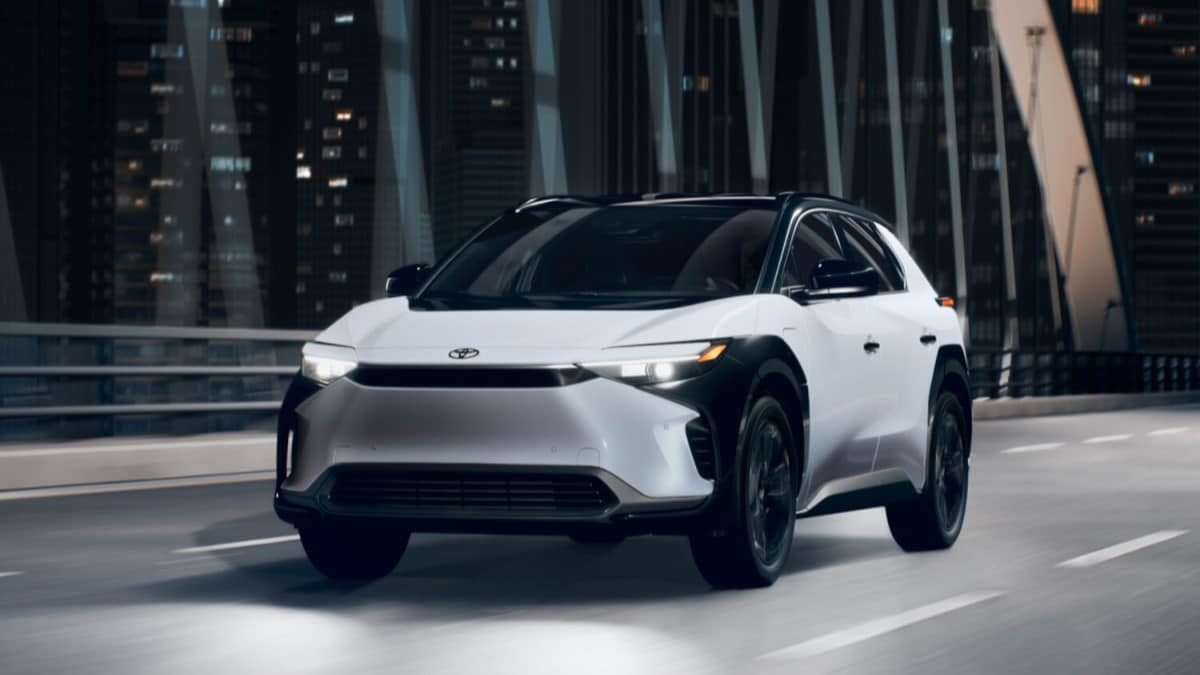
Toyota’s first electric vehicle (EV) on the U.S. market is getting a lot cheaper for 2025.
Toyota plans to eventually launch a full lineup of EVs but has been slower to enter the electric car market than many competitors. That has proven prescient, as the company’s mostly hybrid lineup has sold well in 2024.
But the company does have a single all-electric car on dealer lots today. The bZ4X compact SUV has had a rocky introduction. Our test drivers praise its build quality and long list of standard features. But slow charging times and a maximum range of just 252 miles — only 222 in all-wheel drive (AWD) versions — limit its appeal.
That has left dealers struggling to sell them. Toyota has offered shocking lease deals and, in the New York City area, three years of free charging to sweeten the pot.
Now, they’re taking a more straightforward approach — slashing the price.
The 2025 bZ4X will start at just $38,465, a $6,000 markdown. The prices of more upscale Limited models will be cut by $5,380.
Other changes for 2025 include standard lane-keeping assist, Front Cross-Traffic Alert, and Traffic Jam Assist on Limited models.
Toyota has also added a Nightshade Edition for 2025. That’s Toyota’s term for a popular blackout package many automakers now offer, with blackened wheels, trim, and black upholstery with red contrast-color stitching.
2025 Toyota bZ4X Pricing:
All prices include a mandatory $1,395 destination fee.
Looking for a small SUV that’s easy on your car shopping budget and returns some pretty awesome MPGs? Then let us present two strong options: the 2025 Toyota Corolla Cross and 2025 Chevrolet Trailblazer.
Thanks to their tidy dimensions, they’re a cinch to park and easily navigate city traffic without breaking a sweat. They’re also practical as they provide adult-friendly space inside, plenty of cargo room, and available all-wheel drive. Each serves as its respective brand’s smallest SUV, so it seemed natural to put them in a head-to-head contest.
Let’s take a closer look at some highlights of the Toyota Corolla Cross and Chevy Trailblazer.
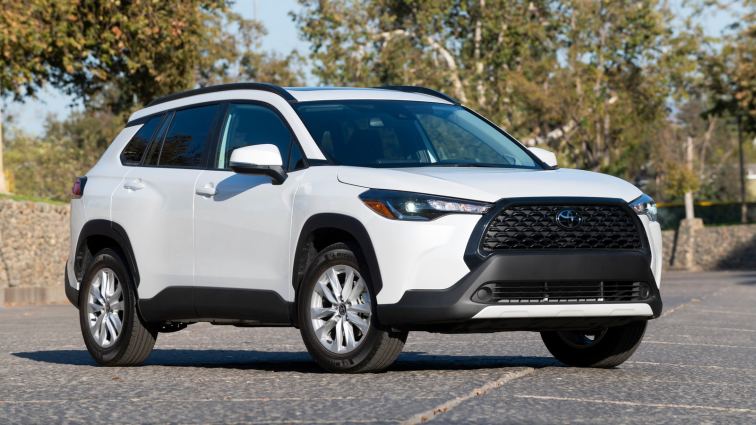
2025 Toyota Corolla Cross
2024 model shown
The 2025 Toyota Corolla Cross starts at $25,385, including destination fee, and is available in three trims: L, LE, and XLE. Front-wheel drive is standard, but all-wheel drive (AWD) can be added to every trim for $1,300 extra.
A 169-horsepower 2.0-liter 4-cylinder engine works in cooperation with a continuously variable automatic transmission (CVT). A hybrid powertrain is offered, but we review that model separately. Even in non-hybrid format, the Corolla Cross delivers solid fuel economy figures.
Toyota Corolla Cross Highlights
Frugal appetite for fuel: Since we are on the subject of mileage, let’s kick things off with how the Toyota Corolla Cross performs at the fuel pump. The front-wheel-drive configuration returns an EPA-rated 32 mpg in a mix of city and highway driving. Adding AWD drops this to 29 mpg combined, which is still commendable.
Standard safety gear: Toyota didn’t skimp on safety items in its least expensive SUV. Standard driver aids include lane-keeping assist, lane-departure warning, automatic high beams, adaptive cruise control, a rear-seat reminder, and traffic sign recognition.
Wireless smartphone connectivity: If you’re like us, all too often we’re on the road and realize Apple CarPlay and Android Auto are off limits because we left a USB cord at home or the office. Not so in the Toyota Corolla Cross; wireless smartphone connectivity is standard.
Build quality: The interior of this small SUV has a robust and hard-wearing appeal that speaks volumes about Toyota’s reputation for building long-lasting, reliable cars and trucks.
The Chevrolet Trailblazer has an asking price of $24,395 and comes in four trims: LS, LT, Activ, and RS. Since the top-of-the-line RS is only about $4,000 more than the base model, it could be worth going all in and getting the most subcompact SUV for your money.
The standard powertrain is a 137-hp turbocharged 1.2-liter 3-cylinder paired to a CVT (continuously variable transmission), like the Toyota Corolla Cross. Optional is a 155-hp 1.3-liter 3-cylinder with front- or all-wheel drive. The base engine is front-wheel-drive only. All-wheel-drive models have the larger engine and use a 9-speed automatic transmission.
For the 2025, the base engine can accept E85 fuel.
Chevrolet Trailblazer Highlights
Impressive infotainment system: The Trailblazer features an 11-inch touchscreen and 8-inch digital instrument display. You get wireless Apple CarPlay and Android Auto, Amazon Alexa, a Wi-Fi hot spot, and two USB ports, all for no additional cost.
Chevrolet Safety Assist: Chevy also had safety in mind when engineering the Trailblazer. The Chevrolet Safety Assist bundle of driver aids consists of automatic emergency braking with pedestrian detection, lane-departure warning, lane-keeping assist, forward collision warning, and automatic high-beam headlights.
Adventurous Activ model: The Activ model has a stouter off-road suspension, 17-inch gloss black alloy wheels, and a functional skid plate. It also has heated front seats and a heated steering wheel, imparting a little go-anywhere attitude in the Trailblazer. The Toyota Corolla Cross has no comparable outdoorsy trim.
Sporty RS model: For those planning on keeping their Chevy SUV on paved surfaces, the racy-looking RS trim might entice. In addition to coming with the more powerful turbo 3-cylinder, it includes a dual-exit exhaust, 19-inch wheels, a power-adjustable driver’s seat, red interior accents, and black exterior trim.
The Corolla Cross and Trailblazer are evenly matched in pricing, safety equipment, cargo space, and even warranty coverage. They’re also both good on gas, getting at least 30 combined mpg.
Conclusion
We’d suggest putting the Toyota Corolla Cross and Chevy Trailblazer on your list of test drives. That’s because each has its own unique advantages and, in some cases, equally notable faults that could influence your SUV-shopping decision.
For example, the rear legroom in the Corolla Cross is below average, and the entry-level L trim feels too basic for most, even considering its tempting price. Quibbles with the Trailblazer consist of its weak base engine and jittery ride over rough surfaces — optional larger wheels exacerbate this issue.
All things considered, the Toyota Corolla Cross comes out ahead thanks to its practicality, feature content, and, perhaps most of all, its level of build quality.
New 2025 Toyota Corolla Cross Prices
The Kelley Blue Book Fair Purchase Price for any individual used vehicle can vary greatly according to mileage, condition, location, and other factors.
The prices here reflect what buyers are currently paying for vehicles and vehicles in typical condition when purchasing from a dealership.
These prices are updated weekly. The manufacturer’s suggested retail price (MSRP) quoted includes the destination fee, but does not include tax, license, document fees, and options.
Dubai is now undoubtedly the hub for the wealthy in the Middle East. The Emirate city has spectacular architecture, world-class shopping experiences, and even an indoor ski slope open all year, negating the need to travel to Switzerland or further afield to the U.S.
However, that’s not all Dubai is becoming famous for. It is now fast becoming a hub for the fitness elite, rivalling places like California.
This trend emerged from the city state’s fifteen-year hospitality plan, which began in the 2000s. The city wanted to become one of the best places to stay in the world, so many hotels started offering state-of-the-art wellness facilities to their guests. This trend then morphed into focusing more on functional fitness, hence the current interest in Dubai as an athletic travel destination.
“Dubai is home to some of the most advanced and luxurious gyms in the world,” says The Fitness Group which runs a personal trainer course in Dubai. “Many of the facilities are coveted by people all across the globe, including weight lifters, Olympic athletes and martial artists. It is incredible just how much expertise is now in the city.”
Dubai’s attractive tax incentives are part of the reason it has been so successful in this area. It’s inexpensive for gyms to move to the region and invest in their equipment. Dubai authorities want the big brand names to relocate to their city, bringing with them their personal trainers, fitness experts, and celebrated athletes.
This trend also means trainers want to be a part of the Dubai scene. Because of the number of gyms and wealthy, young clientele, they have so many potential trainees.
“For people looking to set up a freelance personal training business, Dubai is a dream come true,” says The Fitness Group. “Wealthy people love visiting the city and are willing to pay a premium for the best training advice. Professionals who enjoy travelling often want to work with trainers who can meet them at a moment’s notice and talk them through the local gym equipment, giving them a workout before they start their work days. Plus, the taxes are low too, meaning that anyone who does get into this industry can enjoy the privilege of keeping more of their hard-earned money.”
Fitness events and competitions are on the rise in Dubai. For example, the Dubai Muscle Show is a growing expo in the country’s lineup, popular among international celebrities looking to make their mark.
CrossFit Competitions, like the Dubai CrossFit Championship, are also now a critical part of the global circuit. These events attract many top athletes, encouraging them and their fans to travel to the city.
Dubai even instituted a month-long Fitness Challenge as a way to get more people in the city to become active. The country has an obesity problem, so the initiative is seen as a way of combating that and enabling more people to live healthy and active lives.
“Dubai is becoming well-known as a luxury wellness tourism destination,” The Fitness Group explains, “with regular events adding to the mystique. People want to go to Dubai because that’s where all the action is taking place. It’s a thriving, bustling hub like no other!”
Of course, once athletes and enthusiasts stop training, Dubai offers every type of luxury imaginable. Wellness retreats are everywhere, allowing fitness enthusiasts to wind down effectively after intense sessions.
Cryotherapy is a big option in the city and is popular among visitors. It involved plunging into ice tanks or shivering in cold rooms to reduce inflammation and enhance the body’s adaptive response to training.
IV therapies are also popular in the city-state because of the lower cost of healthcare. These involve passing intravenous infusions into the blood for better recovery and adaptation.
Lastly, massage treatments are everywhere in Dubai. These pummel the muscles, allowing nutrients to reach the deep tissues for superior recovery.
“Ultimately, Dubai is a kind of melting pot of tech- and science-driven fitness innovations,” The Fitness Group explains. “You have people and companies here experimenting with every type of new approach supported in the literature, helping people recover faster and get the results that they want from their training. It’s incredible to see so many resources all in one place.”
Dubai’s health-conscious culture isn’t going unnoticed. While the city’s local population has soaring rates of diabetes and issues relating to obesity, tourists and long-term visitors from overseas see the city differently. It’s one of the only places in the world where there is a buffet of health and fitness options in a tight space.
For more on the latest in lifestyle reads, click here.
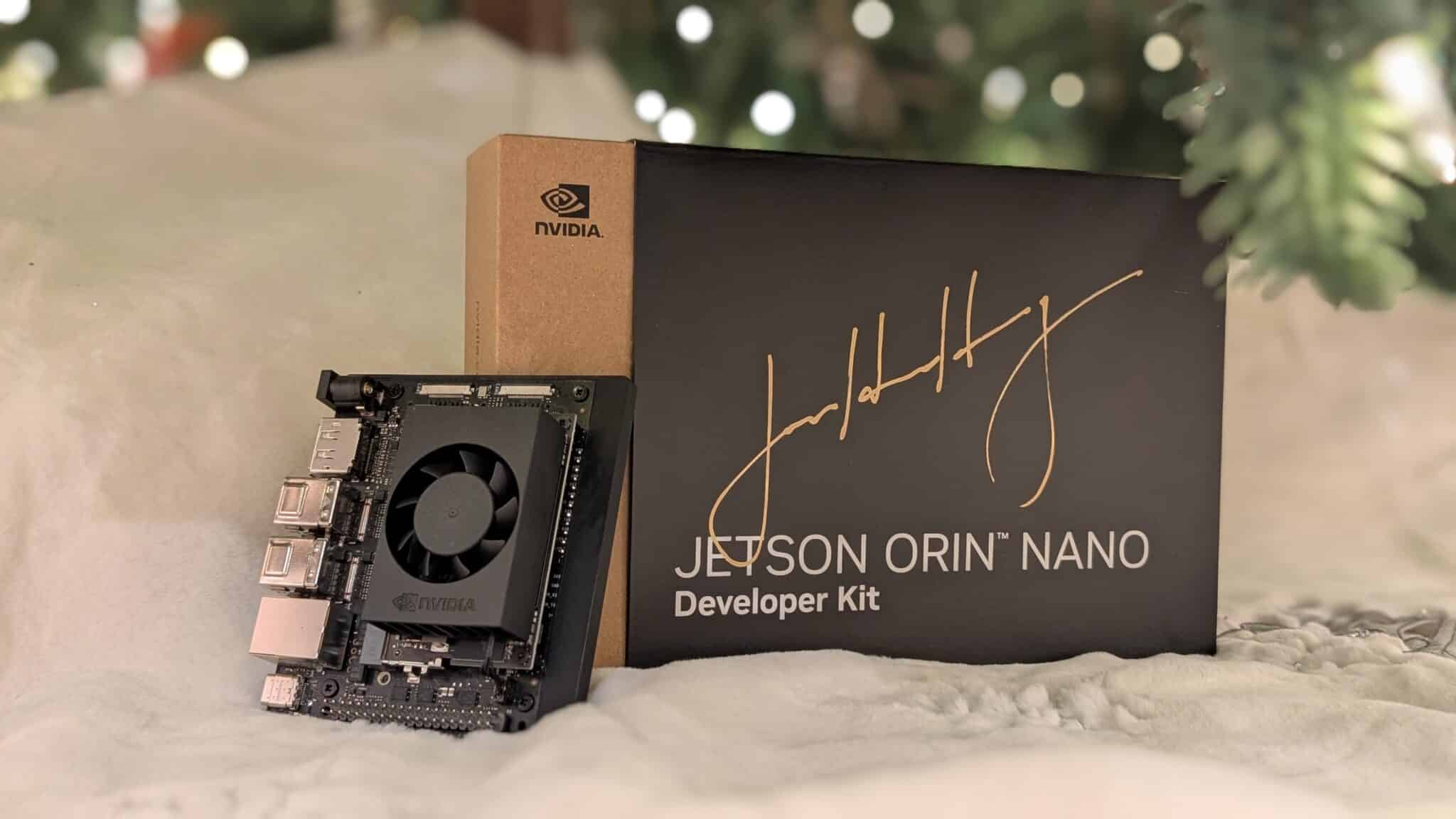
NVIDIA is taking the wraps off a new compact generative AI supercomputer, offering increased performance at a lower price with a software upgrade.
The new NVIDIA Jetson Orin Nano Super Developer Kit, which fits in the palm of a hand, provides everyone from commercial AI developers to hobbyists and students, gains in generative AI capabilities and performance. And the price is now $249, down from $499.
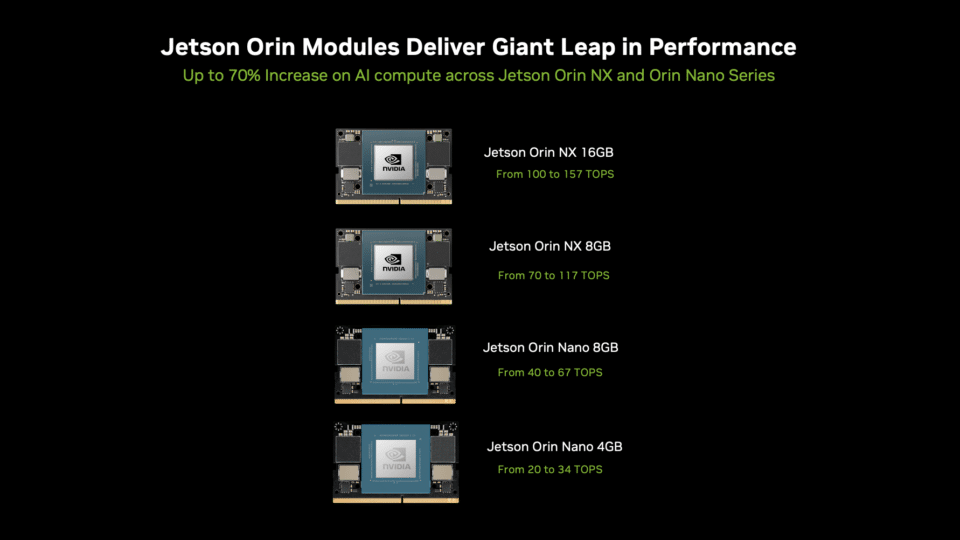
Available today, it delivers as much as a 1.7x leap in generative AI inference performance, a 70% increase in performance to 67 INT8 TOPS, and a 50% increase in memory bandwidth to 102GB/s compared with its predecessor.
Whether creating LLM chatbots based on retrieval-augmented generation, building a visual AI agent, or deploying AI-based robots, the Jetson Orin Nano Super is an ideal solution to fetch.
The Gift That Keeps on Giving
The software updates available to the new Jetson Orin Nano Super will also boost generative AI performance for those who already own the Jetson Orin Nano Developer Kit.
Jetson Orin Nano Super is suited for those interested in developing skills in generative AI, robotics or computer vision. As the AI world is moving from task-specific models into foundation models, it also provides an accessible platform to transform ideas into reality.
Powerful Performance With Super for Generative AI
The enhanced performance of the Jetson Orin Nano Super delivers gains for all popular generative AI models and transformer-based computer vision.
The developer kit consists of a Jetson Orin Nano 8GB system-on-module (SoM) and a reference carrier board, providing an ideal platform for prototyping edge AI applications.
The SoM features an NVIDIA Ampere architecture GPU with tensor cores and a 6-core Arm CPU, facilitating multiple concurrent AI application pipelines and high-performance inference. It can support up to four cameras, offering higher resolution and frame rates than previous versions.
Extensive Generative AI Software Ecosystem and Community
Generative AI is evolving quickly. The NVIDIA Jetson AI lab offers immediate support for those cutting-edge models from the open-source community and provides easy-to-use tutorials. Developers can also get extensive support from the broader Jetson community and inspiration from projects created by developers.
Jetson runs NVIDIA AI software including NVIDIA Isaac for robotics, NVIDIA Metropolis for vision AI and NVIDIA Holoscan for sensor processing. Development time can be reduced with NVIDIA Omniverse Replicator for synthetic data generation and NVIDIA TAO Toolkit for fine-tuning pretrained AI models from the NGC catalog.
Jetson ecosystem partners offer additional AI and system software, developer tools and custom software development. They can also help with cameras and other sensors, as well as carrier boards and design services for product solutions.
Boosting Jetson Orin Performance for All With Super Mode
The software updates to boost 1.7X generative AI performance will also be available to the Jetson Orin NX and Orin Nano series of systems on modules.
Existing Jetson Orin Nano Developer Kit owners can upgrade the JetPack SDK to unlock boosted performance today.
Learn more about Jetson Orin Nano Super Developer Kit.
See notice regarding software product information.
In enterprise AI, understanding and working across multiple languages is no longer optional — it’s essential for meeting the needs of employees, customers and users worldwide.
Multilingual information retrieval — the ability to search, process and retrieve knowledge across languages — plays a key role in enabling AI to deliver more accurate and globally relevant outputs.
Enterprises can expand their generative AI efforts into accurate, multilingual systems using NVIDIA NeMo Retriever embedding and reranking NVIDIA NIM microservices, which are now available on the NVIDIA API catalog. These models can understand information across a wide range of languages and formats, such as documents, to deliver accurate, context-aware results at massive scale.
With NeMo Retriever, businesses can now:
Extract knowledge from large and diverse datasets for additional context to deliver more accurate responses.
Seamlessly connect generative AI to enterprise data in most major global languages to expand user audiences.
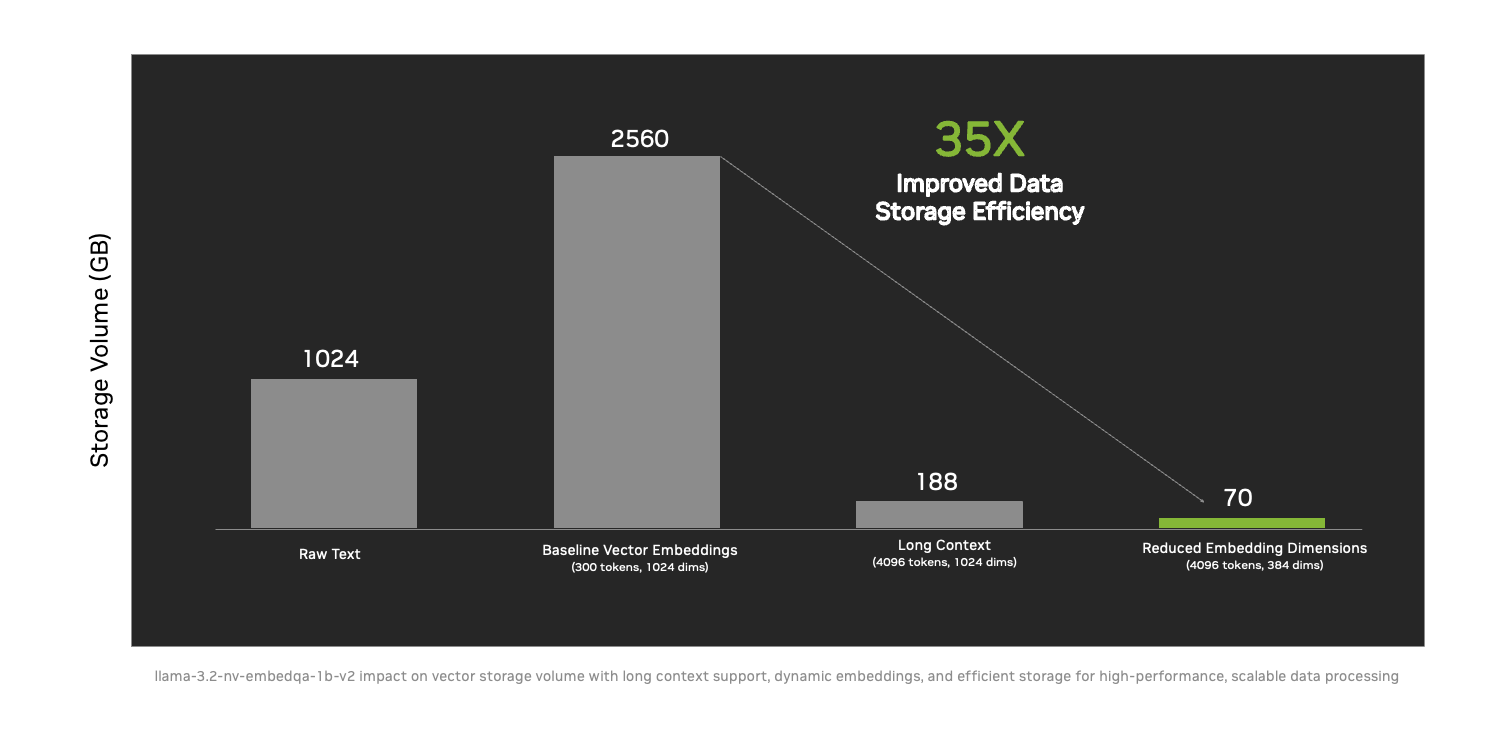
Deliver actionable intelligence at greater scale with 35x improved data storage efficiency through new techniques such as long context support and dynamic embedding sizing.
New NeMo Retriever microservices reduce storage volume needs by 35x, enabling enterprises to process more information at once and fit large knowledge bases on a single server. This makes AI solutions more accessible, cost-effective and easier to scale across organizations.
Leading NVIDIA partners like DataStax, Cohesity, Cloudera, Nutanix, SAP, VAST Data and WEKA are already adopting these microservices to help organizations across industries securely connect custom models to diverse and large data sources. By using retrieval-augmented generation (RAG) techniques, NeMo Retriever enables AI systems to access richer, more relevant information and effectively bridge linguistic and contextual divides.
Wikidata Speeds Data Processing From 30 Days to Under Three Days
In partnership with DataStax, Wikimedia has implemented NeMo Retriever to vector-embed the content of Wikipedia, serving billions of users. Vector embedding — or “vectorizing” — is a process that transforms data into a format that AI can process and understand to extract insights and drive intelligent decision-making.
Wikimedia used the NeMo Retriever embedding and reranking NIM microservices to vectorize over 10 million Wikidata entries into AI-ready formats in under three days, a process that used to take 30 days. That 10x speedup enables scalable, multilingual access to one of the world’s largest open-source knowledge graphs.
This groundbreaking project ensures real-time updates for hundreds of thousands of entries that are being edited daily by thousands of contributors, enhancing global accessibility for developers and users alike. With Astra DB’s serverless model and NVIDIA AI technologies, the DataStax offering delivers near-zero latency and exceptional scalability to support the dynamic demands of the Wikimedia community.
DataStax is using NVIDIA AI Blueprints and integrating the NVIDIA NeMo Customizer, Curator, Evaluator and Guardrails microservices into the LangFlow AI code builder to enable the developer ecosystem to optimize AI models and pipelines for their unique use cases and help enterprises scale their AI applications.
Language-Inclusive AI Drives Global Business Impact
NeMo Retriever helps global enterprises overcome linguistic and contextual barriers and unlock the potential of their data. By deploying robust, AI solutions, businesses can achieve accurate, scalable and high-impact results.
NVIDIA’s platform and consulting partners play a critical role in ensuring enterprises can efficiently adopt and integrate generative AI capabilities, such as the new multilingual NeMo Retriever microservices. These partners help align AI solutions to an organization’s unique needs and resources, making generative AI more accessible and effective. They include:
Cloudera plans to expand the integration of NVIDIA AI in the Cloudera AI Inference Service. Currently embedded with NVIDIA NIM, Cloudera AI Inference will include NVIDIA NeMo Retriever to improve the speed and quality of insights for multilingual use cases.
Cohesity introduced the industry’s first generative AI-powered conversational search assistant that uses backup data to deliver insightful responses. It uses the NVIDIA NeMo Retriever reranking microservice to improve retrieval accuracy and significantly enhance the speed and quality of insights for various applications.
SAP is using the grounding capabilities of NeMo Retriever to add context to its Joule copilot Q&A feature and information retrieved from custom documents.
VAST Data is deploying NeMo Retriever microservices on the VAST Data InsightEngine with NVIDIA to make new data instantly available for analysis. This accelerates the identification of business insights by capturing and organizing real-time information for AI-powered decisions.
WEKA is integrating its WEKA AI RAG Reference Platform (WARRP) architecture with NVIDIA NIM and NeMo Retriever into its low-latency data platform to deliver scalable, multimodal AI solutions, processing hundreds of thousands of tokens per second.
Breaking Language Barriers With Multilingual Information Retrieval
Multilingual information retrieval is vital for enterprise AI to meet real-world demands. NeMo Retriever supports efficient and accurate text retrieval across multiple languages and cross-lingual datasets. It’s designed for enterprise use cases such as search, question-answering, summarization and recommendation systems.
Additionally, it addresses a significant challenge in enterprise AI — handling large volumes of large documents. With long-context support, the new microservices can process lengthy contracts or detailed medical records while maintaining accuracy and consistency over extended interactions.
These capabilities help enterprises use their data more effectively, providing precise, reliable results for employees, customers and users while optimizing resources for scalability. Advanced multilingual retrieval tools like NeMo Retriever can make AI systems more adaptable, accessible and impactful in a globalized world.
Availability
Developers can access the multilingual NeMo Retriever microservices, and other NIM microservices for information retrieval, through the NVIDIA API catalog, or a no-cost, 90-day NVIDIA AI Enterprise developer license.
Learn more about the new NeMo Retriever microservices and how to use them to build efficient information retrieval systems.
Honda and Nissan are close to starting merger talks, according to a report from Japan
Any successful merger could potentially lead to Mitsubishi also joining the party
Nissan, in particular, is struggling, and an insider recently warned the automaker only has 12–14 months to survive
Two of Japan’s biggest automakers could merge to form a national champion to fend off competition in the electric vehicle segment, according to a report from Nikkei.
The Japanese news daily reported on Tuesday that Honda and Nissan are close to starting merger talks and that a successful merger could eventually add Mitsubishi as a partner in a three-way tie-up.
The automakers’ combined sales in 2023 totaled more than eight million. Such a figure for the merged company would make it the third-biggest automaker by sales volume, behind Toyota and Volkswagen Group, which sold 11.2 million and 9.2 million vehicles in 2023, respectively.
According to the report, Honda and Nissan are close to signing a memorandum of understanding, and if all goes to plan, the merged automakers would operate under a holding company.
2024 Mitsubishi Outlander
The automakers are already closely linked. Honda and Nissan have been collaborating on EV and software development since March, and Mitsubishi joined the partnership in August. Nissan already owns 34% of Mitsubishi, and Nissan and Mitsubishi also share vehicle platforms and technology via their existing alliance, which also includes Renault. Mitsubishi has also collaborated with Honda in the past, most recently in the area of battery leasing for EVs via a joint venture called Altna.
Japanese automakers are consolidating in an effort to reduce costs but also catch up in the EV race after years of promoting hydrogen fuel cells as an alternative. Toyota, Mazda, and Subaru also announced in May plans to collaborate on internal-combustion engines.
The moves are aimed at fending off competition from international rivals, particularly from China, which last year overtook Japan to become the world’s largest vehicle exporter.
Nissan, in particular, is struggling. The automaker announced plans in October to lay off approximately 9,000 employees, representing 6.7% of its global workforce, and to cut production capacity by 20% due to declining sales, primarily in the U.S. and China. The Financial Times also reported in November that an insider has warned Nissan only has about 12–14 months to survive.
Very few associations can exhilarate and delight like the union between a naturally-aspirated V12 Ferrari engine and open-top motoring: the Ferrari 12Cilindri Spider. The concept giving shape to the Ferrari 12Cilindri Spider draws inspiration from open-topped Ferrari Gran Turismo models of the 1950s and ‘60s, which combined the unmatched performance of a road-going racing car with the unique opportunity to revel in the sound of the 12-cylinder engine with the roof down, and extraordinary long-distance driving comfort. The design of the car makes a break from the recent canons of the Ferrari two-seater Berlinetta spider genre, eschewing muscularity and sensuality in favor of a more futuristic language founded on formal purity with only the barest hint of a typically automotive visual lexicon.
Powertrain
The F140HD engine equipping the Ferrari 12Cilindri Spider is the new version of the iconic naturally-aspirated Ferrari V12, the purest expression of Ferrari’s soul: its peerless performance, powerful soundtrack and exclusivity make it the worthy heir to the legendary Berlinetta sports cars that wrote some of the most glittering chapters in the marque’s history. The engine can unleash up to 830 cv while its max revs have been increased to 9500 rpm thanks to the adoption of innovative solutions.
The engine features modified components and software, some of which were already adopted on the open-top special series 812 Competizione A, ensuring it tops its category in terms of performance. To allow the V12 to rev so high, the engineers worked to reduce the weight and inertia of the engine’s components, adopting titanium con rods, which guarantee a saving of 40% in rotating mass compared to steel with the same mechanical resistance. A different aluminum alloy was used for the pistons, making them lighter than on previous applications. Further weight reduction was gained by the adoption of a rebalanced crankshaft which is 3% lighter.
The valvetrain with sliding finger followers is derived from Ferrari’s unparalleled experience in Formula 1 and was developed specifically for the V12 with the aim of reducing mass and availing of more high-performance valve lift profiles. The sliding finger follower, which is steel with a Diamond-Like-Carbon (DLC) coating, transmits the action of the cam to the valve using a hydraulic tappet as the pivot for its movement. The use of DLC reduces the coefficient of friction at critical points, significantly improving the mechanical efficiency of the engine.
For the very first time on a naturally-aspirated engine, an innovative software strategy was developed that can modify the maximum torque available as a function of the gear selected. This gives the driver the feeling of smooth, progressive pick-up as the transmission ratio increases, another vital factor in making the driving exhilaration delivered by the Ferrari 12Cilindri Spider truly unique.
A crescendo of never-ending acceleration and power delivery has been a signature of all Ferrari V12s. Now innovative Aspirated Torque Shaping (ATS) has allowed Maranello engineers to sculpt the torque curve in third and fourth gears using sophisticated electronic control that improves perception of the torque without impinging on acceleration, all to the benefit of driving pleasure. The introduction of new gear ratios furthermore keeps acceleration levels high and allowed the engineers to define a new torque curve shape for an aspirated engine.
Optimizing the engine’s mechanical efficiency and that of the lubrication circuit is critical to reducing emissions and consumption. The calibration of the variable displacement oil pump allows the oil to circulate throughout the entire engine and then be recovered along with the vapors from the sump. A solenoid valve, controlled by the engine ECU, is used to control the pump’s displacement in terms of engine revs and pressure, delivering only the amount of oil required and thereby simultaneously saving a significant amount of energy. The new configuration of the oil tank and pump’s hydraulic circuit reduces losses to a minimum and optimizes functionality in all operating conditions.
The gasoline direct injection system (GDI at 350 bar) comprises two petrol pumps and four rails with pressure sensors that provide feedback to the pressure control system. The electronic injectors can also control up to three injections per engine cycle. The ignition system is managed by an ION control unit which has a single and a multi-spark function. This unit also serves a knock monitoring and control function, using a sophisticated strategy for recognizing the quality (octane rating) of the fuel in the tank to maximize the thermodynamic efficiency of the engine.
The new exhaust system, developed to allow the car to comply with the latest emissions requirements (EU6E, China 6b and Bin 50), introduces a ceramic catalytic converter coupled with a particulate filter. This is the most advanced emissions-reduction technology available and involved lengthy calibration of the software strategies.
The Ferrari 12Cilindri Spider sports the 8-speed DCT (Dual Clutch Transmission) that received such a unanimously rapturous welcome on other cars in the range, starting with the SF90 Stradale. Thanks in part to larger tyres on 21” rims, this solution delivers 5% shorter gear ratios in the lower gears and a 12% increase in torque at the wheels compared to previous V12 applications, all to the benefit of longitudinal performance under acceleration and gear shifting times (30% faster than the previous two-seat V12 applications).
Exterior
With the Ferrari 12Cilindri Spider, Flavio Manzoni and the Ferrari Styling Centre design team set out to radically transform the stylistic codes of Ferrari’s previous mid-front-engine V12s. The car in fact marks a clear departure from the sculptural language that characterized the 812 Competizione A, for example, instead favoring a more sophisticated language that still retains the necessary formal design rigor to achieve a sense of stylistic unity.
Clean lines dominate the car’s geometry, underscoring the volumes that make up a seamlessly interconnected whole. The ultra-clean flanks sweep back along the entire car from a dihedral section. Although retaining a signature Ferrari sensuality, the wings have been sculpted with extreme geometric precision: all the lines are the result of intersections between the volumes and a more functional approach to form has been taken that eschews nostalgia. The muscular rear wing is imposing, yet also perfectly controlled geometrically. On the front wing, that muscular tension extends slightly, coming to rest along the flank and further accentuating the car’s monolithic aesthetic.
The sculpted bonnet is extremely sleek and incorporates the front wings. Removing the cut lines from the wings gives a smooth, uninterrupted surface to the muscularity of the design, lending the entire bonnet a sense of ultra-clean fluidity, interrupted only by two vents to cool the engine bay. One of the objectives of the Ferrari 12Cilindri Spider was to explore design languages only tangentially related to the car world. The front has lost certain signature elements, such as the elongated form of the headlights and the traditional grille shape, in favour of geometries and intersections innate to the car’s design. The headlights are integrated into a single wraparound band from which the DRLs emerge like blades.
This car differs from the Ferrari 12Cilindri in the boldly expressive character created by the two buttresses at the rear, behind which an element with a black-screen effect is set. The crease lines evident on the buttresses clearly echo the motif of the flank, accentuating the expressiveness of the design of these elements. Set into the flank is a ‘quarterlight’ in back-painted polycarbonate.
Instead of adopting a rear spoiler, the designers have used two active flaps integrated with the rear screen, creating a signature delta theme. The overall perception is of a seamless whole, creating the idea of a very high-tech form. The development of this concept allowed the designers to treat the Ferrari 12Cilindri Spider’s cabin in a new way, tracing the frame of the surface in body color to echo the rear screen theme and integrate organically with the rest of the cabin which itself is characterized by a black screen effect.
The interior style takes its inspiration from the Prancing Horse’s dual-cockpit architecture. In recent years, that layout was used for the Ferrari Roma and Roma Spider as well as the Ferrari Purosangue. The Ferrari 12Cilindri Spider’s cabin has an almost symmetrical structure comprising two modules for driver and passenger and offering an astonishing standard of comfort and involvement in the driving experience.
The dashboard extends horizontally, a fact underscored by a clear separation between the trimmed volumes in the upper section and the technical functions in the lower section. The upper section features two distinct binnacles dedicated to the driver and passenger instrumentation and to the climate control vents. A deftly elegant color and material change draws the eye to the two volumes separated by the body of the dash, which seem almost to float, further enhancing the feeling of lightness in this area.
The panels of the central tunnel extend outward from the dashboard geometries as if they were almost an extension of the latter. The trimmed area features a large sculptural gash emphasized by contrasting materials. The armrest is in the trimmed area of the tunnel and extends into the medallion area, revealing contrasting metallic edging that creates an elegant intersection between the volumes. The side section of the tunnel itself has been scooped out, again recreating that floating feeling. The structure of the tunnel is trimmed with exclusive upholstery, and features a Y-shaped metal element into which the iconic shift gate is set.
Unlike the Ferrari 12Cilindri, there is no rear bench as the rear zone of the cabin of the Ferrari 12Cilindri Spider is used to stow the retractable hard top. However, the solution chosen for the roof system still leaves plenty of space in the cabin, and the Ferrari 12Cilindri Spider is a versatile car suitable even for long journeys.
The Ferrari 12Cilindri Spider introduces a new Human Machine Interface (HMI) comprising three displays that raise the Ferrari V12 Berlinetta onboard experience to new heights. All of the main functions can be controlled from the central 10.25” touchscreen capacitive display within reach of both driver and passenger. This is flanked by a 15.6” driver display showing all of the driving and vehicle dynamics information. Lastly, the passenger is always completely involved in the driving experience thanks to an 8.8” display that ensures they feel like a genuine co-driver.
The car sports the capacitive steering wheel seen on all of the latest models in the range featuring the indented buttons for ease of use. This means that command activations are more precise, instant and intuitive even in sporty driving conditions. The Ferrari 12Cilindri Spider comes with Apple CarPlay® and Android Auto®-based mobile connectivity systems as standard, both easily controlled from the new central display. A wireless charging mat on the central tunnel (as standard) makes phone charging simple too.
Available as an optional on the Ferrari 12Cilindri Spider is the high-end audio system developed in collaboration with Burmester®, comprising 15 loudspeakers and unleashing a massive 1600 W for a genuinely unprecedented in-car experience at any volume and any speed. The high frequencies are crystal clear and sparkling, thanks to Ring Tweeter technology which minimizes distortion. The powerful dual coil subwoofer guarantees a wonderfully full, rich sound which, thanks to Ultraflat Headliners, is all part of a 360-degree listening experience.
Aero
The main objective of the Ferrari 12Cilindri Spider’s aerodynamics was to produce a sober, elegant car without compromising on performance. The 25-mm nolder on the boot lid and the active aero are the two signature elements of the tail section. The former guarantees the recompression required to maintain the car’s aero efficiency when drag is minimal while the flaps permit two different configurations, Low Drag (LD) and High Downforce (HD) respectively.
In the LD position, the flaps are flush with the bodywork so that the air runs over it uninterrupted, making them invisible to the flow. This configuration is retained until a speed of 60 km when downforce is not very relevant to the performance of the car, something that is also the case over 300 km/h. In between these two speeds, however, downforce plays a central role and the spoilers’ movement depends on the car’s longitudinal and lateral acceleration. In high downforce configuration, the Ferrari 12Cilindri Spider generates maximum downforce and guarantees that the car is aerodynamically balanced.
An internal aerodynamic passage has been created in the trim ahead of the buttresses. Its purpose is to enable the flow of air towards the rear of the car, facilitating recompression behind the adjustable rear screen and reducing the amount of air recirculating in the cockpit. The vertical profile on the outside of the aerodynamic passage has the task of correctly directing the air towards the rear, to the benefit of efficiency and flow stabilization.
The underbody is designed to maximize efficient vertical load generation, also by managing the airflow out of the central radiators. The planform and profile of the louvres in the central opening of the underbody minimize the impact of the hot air which is not highly energized. Two louvres have been created in the low-pressure area behind the front wheels which, by reducing overpressure inside the engine compartment, increase the efficiency of the radiating masses, lowering drag and increasing downforce generation.
As was the case with the 812 Competizione A, downforce on the front underbody is generated by three pairs of vortex generators optimized in the wind tunnel. The front underbody also contributes to brake cooling by delivering a flow of lower-temperature air from the front splitter.
The central underbody has been designed to correctly channel the air flows, retaining the available energy all the way to the rear diffuser. To that end, the transmission tunnel opening was reduced to balance the amount of air that would flow inside it. A raised section ahead of the rear wheel shields the tires and deflects the flow towards the rear.
The rear underbody sports a pair of vortex generators which are used to produce efficient downforce and channel the flows towards the extractor. In line with Ferrari’s philosophy of transferring innovations from the racing world to the road-going sports cars, the engineers designed an air inlet near the outer edge of the rear fence to provide ventilation for the silencer’s electronics.
Cooling
The heat dissipation requirements of the engine and ancillaries demanded a redesign of the car’s entire cooling system which resulted in front underbody evacuation being optimized, with no fewer than seven openings in the front bumper. In particular, the space between the longitudinal elements of the chassis houses the engine coolant radiator and air-con circuit condenser, which are fed by the central opening, while the oil radiator has been split into two separate elements, lying ahead of the front wheels. The side air intakes are divided in two: the outer part is designed to cool the engine oil radiator while the inner one cools the brakes.
A generous brake cooling duct is fed by two openings, one between the radiator intakes and the other on the lower part of the front splitter. The entire system is integral to the oil radiator intake to optimize the routing of the front brake intakes. The side intakes are framed by an L-shaped element designed to maximize the amount of air entering the opening whilst simultaneously correctly channeling the flow along the car’s flanks.
The air in the engine bay exits through two vents on the bonnet which reduce overpressure, improving cooling efficiency. Thanks to the latter, there are fewer openings on the underbody, thereby maximizing efficient downforce generation. On the wing behind the front wheels there is also a vent for the air from the wheelarch which minimizes overpressure on the underbody caused by the cooling duct for the brakes and front diffusers.
Vehicle Dynamics
The Ferrari 12Cilindri Spider boasts the very state of the art in front-engine Berlinetta dynamic controls. The introduction of brake-by-wire allowed the latest innovations from the range to be adopted, including ABS Evo that debuted on the 296 GTB and the 6D sensor that guarantees optimal precision to the Virtual Short Wheelbase (PCV) 3.0 and Side Slip Control (SSC) 8.0 systems, together with reduced braking distances and a more accurate repeatability of braking. The Aspirated Torque Shaping, an entirely new control logic, also emphasizes even further the smoothly linear power delivery from the legendary naturally-aspirated engine, thanks to electronic control.
The SSC 8.0, a new evolution of the famous Ferrari control unit, allows the systems to talk to each other using a shared language that calculates the optimal operating mode for each one in order to maximize the car’s overall performance. The SSC 8.0 integrates the Ferrari 12Cilindri Spider’s controllers and creates natural synergy with the new ABS Evo.
The SSC 8.0 is Ferrari’s proprietary system and has been optimized to further improve estimation accuracy and learning speed (+10% compared to previous applications), as well as control on very low grip surfaces. Grip estimation is flanked by the contribution of the grip recognition logic: by using the information from the EPS CPU and the side-slip angle estimated by the SSC 8.0, the Ferrari 12Cilindri Spider can estimate the tire-road grip level even when steering. Thanks to this approach, the grip can also be estimated in normal use conditions and not just on the limit, making it faster for the system to learn real grip levels.
The Ferrari 12Cilindri Spider features the four-wheel independent steering (4WS) that debuted on the special series 812 Competizione, which manages the movement of every wheel independently to improve yaw management in cornering and responsiveness during rapid direction changes. The rear-wheel steering has innovative mechanical characteristics that significantly improve precision of control of the position of each single actuator, giving faster axle response time and consequently improved responsiveness through corners. Optimum handling is also ensured thanks to a near-ideal weight distribution – 47.8% front and 52.2% rear – and the car’s responsiveness also benefits from the 20-mm reduction in the wheelbase compared to the 812 GTS.
Tires
The Ferrari 12Cilindri Spider can be fitted with Michelin Pilot Sport S5 or Goodyear Eagle F1 Supersport tires, both of which were developed in a new size for the Maranello company: 275/35ZR21 at the front and 315/35ZR21 at the rear. Development benefited from physical and virtual sessions, the latter carried out through simulator testing to reduce the number of physical prototypes and, consequently, development times and cycles.
Performance has been optimized thanks to the adoption of the latest technologies in terms of compounds, tread design concepts and casing characteristics. Extensive testing has led to improved performance, dry grip levels and balance, stability on the limit and in the wet, as well as improved comfort and noise characteristics both internally and externally, including a 10% reduction in rolling resistance compared to the previous Ferrari front-engine V12 Berlinetta applications.
Chassis
The Ferrari 12Cilindri Spider’s all-aluminum chassis, featuring a 20-mm reduction in wheelbase compared to the 812 GTS, is completely new: specific attention was focused on the geometry of cast components such as the shock towers and A and C pillars, to improve torsional rigidity whilst simultaneously reducing weight.
The result was an increase of 15% in torsional rigidity compared to the past, which ensures more predictable dynamic behavior, with consequent benefits for suspension precision. Thanks to more extensive use of castings, the number of extruded components requiring assembly has been significantly reduced, making the assembly process more efficient. Lightness was a key requisite throughout the entire development of the chassis and body-in-white of the Ferrari 12Cilindri Spider, which weighs just 60 kg more than the Ferrari 12Cilindri – a remarkably small weight increase made possible by the innovative solutions developed specifically for this car.
The body includes aluminum reinforcement connections between the roll bar behind the occupants and the B-pillar. This solution offered a significant saving in weight which, in turn, allowed for a lower center of gravity. Featuring a dual curvature above the heads of the driver and passenger for greater headroom, improving both comfort and versatility, the retractable hard top (RHT) takes just 14 seconds to open or close, and can be operated at speeds up to 45 km/h. The kinematic system moves with elegant harmony, while its simplicity, combined with the use of aluminum, makes this a much lighter option than other solutions. Completing the roof zone is a rear screen which can be electrically height-adjusted. This feature offers occupants extraordinary levels of comfort in the cabin when driving with the roof down, and even allows a normal conversation to be held at speeds up to and beyond 200 km/h.
For the first time on a Ferrari production car, a secondary alloy with 100% recycled material has been used to make the shock towers of the gearbox subframe: its introduction allows a reduction in carbon dioxide emissions of 146 kg of CO2 for every car produced. Thanks to an extensive development phase, it was possible to guarantee that the mechanical characteristics are the same as non-recycled alloy, exploiting the slight differences in chemical composition. For the validation of this new alloy, extensive testing was undertaken to assess the static and dynamic behavior of the components and ensure excellent results in fatigue and crash tests.
7-year Maintenance
Ferrari’s unparalleled quality standards and increasing focus on client service underpin the extended seven-year maintenance program offered with the Ferrari 12Cilindri Spider. Available across the entire Ferrari range, the program covers all regular maintenance for the first seven years of the car’s life. This scheduled maintenance program for Ferraris is an exclusive service that allows clients the certainty that their car is being kept at peak performance and safety over the years. This very special service is also available to owners of pre-owned Ferraris.
Regular maintenance (at intervals of either 20,000 km or once a year with no mileage restrictions), original spares and meticulous checks by staff trained directly at the Ferrari Training Centre in Maranello using the most modern diagnostic tools are just some of the advantages of the Genuine Maintenance Program. The service is available on all markets worldwide and from all Dealerships on the Official Dealership Network.
The Genuine Maintenance program further extends the wide range of after-sales services offered by Ferrari to meet the needs of clients wishing to preserve the performance and excellence that are the signatures of all cars built in Maranello.
Technical Specifications
Powertrain
Type V12 – 65° – Dry sump
Overall displacement 6496 cm3
Bore and stroke 94 mm x 78 mm
Max. power* 830 cv at 9250 rpm
Max. torque 678 Nm @ 7250 rpm
Max. revs 9500 rpm
Compression ratio 13.5:1
Specific power output 128 cv/l
Dimensions
Length 4733 mm
Width 2176 mm
Height 1292 mm
Wheelbase 2700 mm
Front track 1686 mm
Rear track 1645 mm
Dry weight** 1620 kg
Dry weight-power ratio 1.95 kg/cv
Weight distribution 47.8% front / 52.2% rear
Fuel tank capacity 92 litres
Boot size 200 litres
Tires and Wheels
Front 275/35 R21 J10.0
Rear 315/35 R21 J11.5
Brakes
Front 398 x 223 x 38 mm
Rear 360 x 233 x 32 mm
Transmission
8-speed dual clutch F1 DCT
Electronic Controls
SSC 8.0: TC, eDiff, SCM, PCV 3.0, FDE2.0, EPS, ABS Evo in all Manettino positions, 6D sensor, performance ABS/ABD
Market debut of new platform set to also underpin Q6 Sportback, A6 sedan
Audi SQ6 E-Tron does 0-60 mph in 4.1 seconds, from 509-hp dual-motor system
Gets an EPA-rated 275 miles in SQ6 E-Tron, up to 321 miles for base Q6 E-Tron
Audi has always leaned into performance. Its vehicles have always been at their best with the magic that a little bit of extra tuning from Ingolstadt can bring out.
And so I found it immensely reassuring when, after a drive in a Q6 E-Tron quattro that offered up some impressive range and charging numbers of its own, I simply connected much better from the driver’s seat with the performance-tuned SQ6.
The SQ6 shares most of its propulsion fundamentals underneath with the Q6, all as part of Audi’s new Premium Platform Electric (PPE), a dedicated basis for EVs shared with Porsche, that doesn’t allow space for combustion engines or make compromises for them.
In SQ6 E-Tron form, this just-right-sized sporty SUV offers a combined 509 hp from front inductive and rear permanent-magnet electric motors. There’s no recipe for dynamic hijinks as with the Audi SQ8 E-Tron, but the SQ6 E-Tron’s setup allows a 4.1-second dash from 0-60 mph with launch control, and a 143-mph top speed.
2025 Audi SQ6 E-Tron
SQ6 E-Tron numbers: Impressive performance, range
It’s fun to drive, and in a few hours putting this electric SQ8 through the paces in coastal and mountainous Sonoma County, California, this past week, the vehicle’s trip computer also indicated, at about 3.0 miles per kwh, that it could beat its 275-mile EPA range in real-world driving.
Taking a step back and looking at the Q6 E-Tron family, Audi sees the Q6 as being more or less an electric equivalent to the bestselling Q5. But it’s much more spacious, by the feel of it, or by the numbers. At 187.8 inches long overall and on a 113.7-inch wheelbase, it’s only a few inches longer than the Q5 gasoline SUV, and within an inch or two in overall height and width. But it feels nearly a size larger—and nearly as large inside as the Q8 E-Tron EV family that’s a foot longer.
2025 Audi SQ6 E-Tron
2025 Audi SQ6 E-Tron
2025 Audi SQ6 E-Tron
The 2.3-cubic-foot frunk has enough space for a mobile charge cord plus a small bag, and in back you get 30.2 cubic feet of cargo space with the rear seatback up, or 60.2 cubic feet with them flipped forward—a significant amount more than the Q5’s 25.9 and 54.1 cubic feet.
Front-seat space is vast and the extendable thigh bolsters and robust back support in the test SQ6 felt perfect for a day of taking on backroads. I also appreciated the center console, which kept the layout rather simple and traditional rather than resorting to multi-tier bins. If there’s a flaw here it’s that the rear door cuts are a little too short. That may mean a little more effort for taller passengers getting in, but at 6-foot-6, I noted that I could sit behind myself.
2025 Audi Q6 E-Tron
Charges quicker than Tesla, other German lux EVs
One of the keys to that, and to the great packaging, is the low, flat packaging of the battery pack. Its simplified design sits thin and low, and fits its 100-kwh (94.4 kwh usable) bulk all on one level. With the help of new predictive thermal strategies for this battery and platform it can more often approach its DC fast-charging peak rate of 270 kw for the SQ6—and a 21-minute time from 10-80% if you find a 350-kw CCS connector along your route. Or if you’re limited to the Tesla Supercharger network and its lower-voltage hardware (adapters are on the way next year), the SQ6 can split its pack into two 400-volt packs, getting the whole thing from 10-80% in around 35 minutes.
The SQ6 E-Tron defaults to an Auto regen mode that looks to inputs from the forward-facing camera, as well as navigation and traffic data, and it makes some questionable decisions about when to ramp up regen and when not to. But you can choose three different levels of regenerative braking from ‘D’—ramping up to 0.15 g, or the equivalent of downshifting a gear in a gasoline vehicle. Or to add more, select ‘B’ from the shifter for 0.25 g of regen, or something pretty close to one-pedal driving.
2025 Audi SQ6 E-Tron
It’s all part of a nice-driving package that’s not too harsh but is surprisingly communicative. My test SQ6 did have the 21-inch Black optic wheel package, bringing staggered-width 21-inch summer performance rubber. They felt right at home in Napa’s circa-60-degree temps. Steering weighting was good, and there’s even a little bit of feedback in the system’s heavier settings. Audi notes that it’s changed its front suspension geometry and now bolts the steering rack firmly to the subframe. It’s night-and-day different than the steering in the Q8 E-Tron, for instance.
The SQ6 stayed glued to the road in such an utterly neutral way, and soaked up the imperfections better than the Q6 I’d driven earlier the same day—even though the SQ8 weighed a bit more, topping 5,300 pounds. It uses a combination of frequency adaptive passive damping and an adaptive air suspension that adjusts the height and helps with damping at all four wheels. The air suspension can raise 1.1 inches or lower 0.8 inches from its normal mode—or go up 1.8 inches in a lift mode.
2025 Audi SQ6 E-Tron
The SQ6 should weigh less than its 5,300-plus pounds. And the only thing that could make up for it is the superb rear-wheel-steering system that another PPE vehicle, the Porsche Macan Electric, does get, to spectacular handling effect. Although somehow with tuning—and perhaps the psychological effect of minor elements like the smaller flat top/bottom steering wheel—the SQ6 E-Tron can feel more nimble than the Q6, that system would back it up with more serious handling chops.
Options on the test SQ6 E-Tron quattro included a Black optic package to go along with the wheels, fine nappa leather seating surfaces ($1,000), Daytona Grey pearl effect paint ($595), and the top-level Prestige package itself, which brings acoustic front door glass to this very quiet interior plus the panoramic sunroof, heated rear seats, heated steering wheel, augmented reality head-up display, and Bang & Olufsen sound system, all brought by the mid-level Premium Plus.
2025 Audi SQ6 E-Tron
2025 Audi SQ6 E-Tron
2025 Audi SQ6 E-Tron
It’s so far so good for the completely new infotainment system that marks a debut in the Q6, offering a 14.5-inch touchscreen and 11.9-inch digital gauge cluster. A 10.9-inch passenger touchscreen is mostly out of sight of the driver and feels like less of a gimmick than in some other cars—allowing the passenger to act as navigator or DJ, or to simply zone out. Wireless Apple CarPlay and Android Auto are included, and Audi boasted that its voice recognition system is expanded and improved.
SQ6 E-Tron gets expressive with lighting
The Prestige also gets you seven digital daytime running light signatures and digital OLED taillights that, together, will want you to glance at the artwork for The Police’s “Ghost in the Machine”—even though I didn’t get to drive it at night.
2025 Audi SQ6 E-Tron
That brought the total as tested for the SQ6 E-Tron to $83,840—about $7,000 more than the Q6 E-Tron I’d driven earlier. While the Q6 version felt like a luxury vehicle, in SQ6 form, this vehicle really came into its own as more of a driver’s car.
The SQ6 E-Tron sure isn’t alone. In recent years, rival models like the BMW iX and Mercedes-Benz EQE have arrived. Both of these models land in a similar price range, as equipped, but neither of them allows 21-minute charging.
As a family yet to be nipped and tucked, Audi’s new midsize EVs take many of the original E-Tron strengths and blast past nearly all the former foibles. It’s exactly what it should be as the beating heart of Audi’s lineup.
Will a new set of tariffs send car prices sky high?
Trump Tariffs
Whether you drive a car, need a car, or just occasionally bum a ride with friends, you’ve come to the right place. Join Jill and Tom as they break down everything that’s going on in the auto world. New-car reviews, shopping tips, driving green, electric cars, classic cars, and plenty of great guests. This is the Consumer Guide Car Stuff Podcast. – Trump Tariffs
–
Episode: 252
Broadcast date: December 16, 2024
Guest: Sam Fiorani
–
(Show Notes)
–
Jean Jennings
Jill and Tom opened the show noting that legendary Car and Driver/Automobile Magazine writer Jean Jennings had died. Formerly Jean Lindamood, she had, per Tom, helped define the tone and personality of Car and Driver at a time when the magazine was most influential.
Tom went on to question the profile of a LinkedIn user who self describes as, “Gen Z Career Coach, Content Creator, and TikTok Consultant.” Listen in for Tom’s complete analysis.
Dodge Charger Daytona
Jill shared her previously embargoed drive impressions of the all-new Dodge Charger Daytona electric muscle car. Jill noted that social-media trolls are pushing back when it comes to the brand replacing a gasoline-powered V8 engine with electric motors. The hosts also speculated about a possible return of the storied Hemi V8 engine.
Trump Tariffs
In the second segment, Jill and Tom welcome Sam Fiorani of AutoForecast Solutions. Sam Laid out the possible impact of massive tariffs applied to vehicles coming out of Canada and Mexico. Sam also explained the history of the “Chicken Tax.”
Tesla Market Share
In the last segment Jill is subjected to Tom’s “Is it a Hyundai?” quiz, and the hosts review October EV registrations—there are a couple surprises on the list.
Discussed this week
What Does The Eco Button Do?
2024 Dodge Charger Daytona: First Spin
AutoForecast Solutions
Boyertown Museum of Historic Vehicles
Sam Fiorani on Bluesky
More electric vehicles
Follow the crew
The Crew
To advertise on the Car Stuff Podcast call Andy Lieb: 847-291-7414
Consumer Guide Car Stuff Podcast Episode 251: Melting EV Charging Adapters, Jaguar’s New Attitude, Volkswagen ID. Buzz Deep Dive
Consumer Guide Car Stuff Podcast Episode 250: Stellantis CEO Quits, Volvo XC90 Review, Porsche Macan EV Deep Dive
The technical storage or access is strictly necessary for the legitimate purpose of enabling the use of a specific service explicitly requested by the subscriber or user, or for the sole purpose of carrying out the transmission of a communication over an electronic communications network.
Preferences
The technical storage or access is necessary for the legitimate purpose of storing preferences that are not requested by the subscriber or user.
Statistics
The technical storage or access that is used exclusively for statistical purposes.The technical storage or access that is used exclusively for anonymous statistical purposes. Without a subpoena, voluntary compliance on the part of your Internet Service Provider, or additional records from a third party, information stored or retrieved for this purpose alone cannot usually be used to identify you.
Marketing
The technical storage or access is required to create user profiles to send advertising, or to track the user on a website or across several websites for similar marketing purposes.