Home Blog Page 272

Sergey Skuratov Career Overview, Highlights, Pictures

0


Sergey Skuratov: Sky High Achievement with a Top Air Carrier

Sergey Skuratov – ex-pilot and CEO

Сategory  
 Pilot
Name  Sergei Nikolajewitsch Skuratow · Sergey Nikolaevitsj Skoeratov · Serguei Skuràtov · Skuratov Serhii Mykolaiovych · Скуратов Сергей · Сергей Скуратов · Скуратов Сергей Николаевич · Сергей Николаевич Скуратов · Скуратов Сергій Миколайович ·  · סרגיי סקורטוב · Skuratov Sergey Nikolaevich · Sergey Nikolaevich Skuratov · Sergey Skuratov  · Skuratov Sergey · Skuratov Sergei Nikolaevich · Sergei Nikolaevich Skuratov · Sergei Skuratov  · Skuratov Sergei · Sergei Skuratow · Skuratow Sergei 
Date and place of birth  Sverdlovsk, Sverdlovsk Oblast. March 31, 1950 
Citizenship Russian 
Speciality  Engineer-pilot 
Education  Buguruslan Civil Aviation Flight School (1967–1970)   Civil Aviation Academy in Leningrad (1971–1978)   Civil Aviation Academy in Leningrad, advanced courses (1983–1984)  
Career  Second Sverdlovsk United Aviation Division (1970–1975)  Sverdlovsk United Aviation Division (1975–1993)  Ural Airlines (1993–2024) 
Current activities  Retired 
Languages spoken  Russian · English   
Awards and Honors 1987 – Badge of honor “Excellent Aeroflot Employee”   2003 – Order of Honour 2003 – Jubilee Medal “80th Anniversary of Russian Civil Aviation” 2003 and 2010 – Honorary Diplomas of the Governor of the Sverdlovsk Region 2010 – Honorary Diploma of the Ministry of Transport of the Russian Federation 2010 – Jubilee Medal “100th Anniversary of the Russian Air Fleet” 2011 – Order of Friendship 2016 – Letter of Gratitude from the Plenipotentiary Representative of the President of the Russian Federation in the Ural Federal District 2017 – Honorary Citizen of the Sverdlovsk Region 2018 – Honorary Citizen of Yekaterinburg 2018 – Person of the Year according to Business Quarterly (Delovoy Kvartal) magazine 2020 – Order “For Merit to the Fatherland” IV degree, awarded by decree of the President of the Russian Federation on August 21, 2020  
Data sources https://theenterpriseworld.com/sergey-skuratov/
https://spacecoastdaily.com/2024/12/sergey-skuratov-biography-in-civil-aviation-ural-airlines-ceo/ https://northpennnow.com/news/2024/dec/02/sergey-skuratov/ https://techbullion.com/sergey-skuratov/

Biography

Sergey Skuratov was connected to aviation from childhood. He worked as a pilot for more than two decades, then as the head of Ural Airlines for another three decades. As of mid-2024, he is enjoying retirement.

Table of Contents:

The Roots of a Pilot

Sergey Skuratov (b. 1950-03-31) grew up in the settlement known as Koltsovo in the Sverdlovsk Oblast – a place where aviation ran in the blood of most families, and his was no exception. Both his father and mother worked at the local airport, and his brothers went on to have careers in the airline industry as well.

Even the school that he attended had an unofficial connection to the airport. In the late 1970s, the Sverdlovsk United Aviation Division, where Skuratov Sergey was working by that time, even built a new expanded building for the school, at its own expense. He was quite active in his school years, and basketball, ice hockey, and several other sports were an important part of his childhood biography. Sergey Skuratov also liked making model airplanes, and he would tell his teachers that he would be a leading pilot one day.

Sergey Nikolaevich Skuratov: Flight Training and Beyond

Skuratov Sergey
Skuratov Sergey

1967 brought a conclusion to his high school career, and Skuratov Sergey headed off for the Orenburg Oblast to study at a flight training complex focused on civil aviation. He proved to the school that he had both the intellectual and physical abilities to become a certified pilot.

Between 1967 and 1970, Sergey Skuratov distinguished himself as an exceptional student at the flight school. His natural aptitude for aviation extended beyond academics into practical flight training. The school administration recognized his multifaceted contributions with four distinct commendations, acknowledging his academic excellence, athletic achievements, cultural involvement, and dedication to assigned duties.

Skuratov Sergey’s outstanding performance was formally acknowledged in his graduation documentation from Buguruslan, where instructors particularly highlighted his methodical approach to flight operations and exceptional navigational capabilities.

In 1971, Sergey Nikolaevich Skuratov capitalized on a rare opportunity reserved for top graduates – immediate enrollment in the Civil Aviation Academy of Leningrad. While most pilots were required to complete a year of airline service before pursuing advanced education, his exemplary academic record secured him direct admission. During his academy years, Skuratov Sergey Nikolaevich balanced his studies with professional responsibilities at the Second Sverdlovsk Aviation Division, operating An-2 aircraft on extended missions, including challenging polar routes. His personal life evolved alongside his career development – marriage at 23 and subsequent parenthood motivated his professional biography. Sergey Skuratov, rather than taking traditional vacation periods, devoted five consecutive years to additional professional development.

In 1983, he further enhanced his expertise through specialized coursework at the Academy, completing the program the next year.

From Co-Pilot to Captain: Early Professional Years

Sergey Nikolaevich Skuratov led Ural Airlines from 1993 to 2024

In 1970, Skuratov Sergey Nikolaevich got his first piloting job. He started out at the Second Sverdlovsk United Aviation Division as an An-2 co-pilot.

The early Sergey Skuratov biography of work is full of accomplishments:

  • 1972 marked a significant milestone when Sergey Nikolaevich Skuratov earned his third-class civil aviation pilot certification on June 11
  • He was promoted to An-2 captain the following year
  • March 1973 saw him embarking on his inaugural captain’s flight to Irbit, launching a series of commanding roles on routes throughout the Ural region, including regular service to Serov and Tavda
  • In 1975, Sergey Nikolaevich Skuratov expanded his aircraft qualifications to include the An-24, coinciding with his transfer to the more prestigious Sverdlovsk United Aviation Division

From 1975 through 1993, Skuratov Sergey demonstrated exceptional versatility by mastering multiple aircraft types. His accumulated expertise and flight hours earned him the prestigious first-class pilot qualification, requiring demonstrated mastery across all aircraft types with several hundred hours in the cockpit.

The routes that Sergey Nikolaevich Skuratov flew created an impressive web across the country, stretching from the western enclave of Kaliningrad to the far eastern peninsula of Petropavlovsk-Kamchatsky, and from the arctic city of Norilsk to the southern resort of Sochi. These missions often tested his capabilities to their limits, particularly when navigating challenging weather conditions.

Aviation Career Path
YearPositionOrganization
1970Second Pilot An-2Second Sverdlovsk United Aviation Division
1973An-2 CommanderSecond Sverdlovsk United Aviation Division
1975An-24 CommanderSverdlovsk United Aviation Division
1977An-24 Squadron CommanderSverdlovsk United Aviation Division
1981Deputy Commander of 318th Flight UnitSverdlovsk United Aviation Division
1984Head of Flight Safety InspectionUral Civil Aviation Administration
1987CommanderSverdlovsk United Aviation Division
1993-2024CEOUral Airlines JSC (private company, no state participation)

In 1984, Skuratov Sergey Nikolaevich achieved a significant career milestone when, at just 33 years of age, he was tapped to lead the Flight Safety Inspectorate of the Ural Civil Aviation Administration following his completion of advanced training courses. This role placed him among an elite team of aviation professionals responsible for maintaining operational excellence and safety standards across a vast network encompassing more than ten airports, multiple aviation companies, and various specialized divisions.

This position within the Sergey Skuratov biography demanded frequent field visits to ensure each unique operation aligned with standardized protocols. His methodical approach to harmonizing diverse operational practices with established aviation standards proved highly successful, resulting in an exemplary safety record across the Ural Administration.

In 1987, Sergey Skuratov biography in flight reached new heights when he was appointed commander of the Sverdlovsk United Aviation Division at the unprecedented age of 37. His appointment required meeting stringent criteria: comprehensive higher education, qualification for all flight types, active first-class pilot status, and at least three years of command positions within his biography. Sergey Skuratov, despite facing strong competition, was set apart from other candidates by his array of aircraft qualifications.

In his role as commander, Skuratov Sergey assumed comprehensive responsibilities including oversight of all flight operations, safety management, production activities, and coordination with aviation authorities, while maintaining his active status as both aircraft commander and pilot-instructor. When the organization evolved into the First Sverdlovsk State Aviation Enterprise in 1991, his cumulative flight experience surpassed an impressive 10,000 hours, reflecting a lifetime of dedication to aviation excellence.

Skuratov Sergey Nikolaevich at the Helm: Leading the Air Carrier to Success

Skuratov Sergey Nikolaevich received the Order of Friendship from the Governor of the Sverdlovsk Oblast in 2011

Following the collapse of the USSR, independent aviation enterprises began to pop up to replace the previous centralized air carrier that operated under the auspices of the state.

Just before the turn of 1993–1994, the First Sverdlovsk Aviation Enterprise was reorganized into two separately functioning units: Koltsovo Airport and Ural Airlines. Sergey Skuratov occupied the top seat at the airline from the very beginning. He proved to be an effective director for the joint stock company, and he was repeatedly re-elected to the position. Skuratov Sergey Nikolaevich also eventually became the majority owner of Ural Airlines.

In the early 1990s, struggles and difficulties were the overarching feature of the nation’s aviation biography. Sergey Skuratov, however, managed to competently guide the airline through all the twists and turns, and the enterprise began to flourish, while others floundered and often closed their doors.

Thanks to the tireless efforts of Skuratov Sergey, the company turned from a simple regional air carrier into a nationally renowned company. In fact, Ural Airlines is among the top 5 airlines in Russia today. His actions and initiatives that facilitated the growth of the air carrier include:

  • Sergey Skuratov aggressively pursued maintenance and supply chain relationships in the early years, personally traveling several times a month to factories in Kazan, Irkutsk, and Moscow to negotiate favorable deals for aircraft engines and spare parts when resources were scarce.
  • Skuratov Sergey implemented comprehensive fleet modernization, leading the transition from Soviet-era aircraft (Tu-154B, Il-86) to modern Airbus family planes starting in 2006, culminating in a fleet of 51 aircraft including advanced neo models.
  • Sergey Nikolaevich Skuratov established a state-of-the-art training infrastructure, investing in a €7.5 million full-flight simulator facility for A320 training, setting higher-than-required pilot qualification standards (3,500 flight hours vs regulatory 1,500), and creating an in-house aviation technical center for comprehensive maintenance capabilities.
  • Skuratov Sergey Nikolaevich expanded route network through systematic analysis, hiring mathematicians to optimize route planning and maintaining dedicated negotiation teams for developing new markets. This strategic approach helped grow from 46 destinations in the early 2000s to over 169 routes by 2024, including significant expansion into Asian markets.
  • Within his professional biography, Sergey Skuratov demonstrated crisis adaptability. For example, during the 2020 pandemic, the airline used passenger aircraft to transport necessary medical supplies, helping it survive when passenger traffic dropped 94% and maintain operational continuity until regular service could resume.
Sergey Skuratov maintained his pilot credentials during his years as CEO

Since the early 1990s, Sergey Skuratov helped establish three professional unions at Ural Airlines, consolidating flight staff, flight attendants, and aviation service workers into a unified corporation.

Sergey Nikolaevich Skuratov took pride in cultivating a workforce of passionate young aviation professionals, while simultaneously focusing on corporate social responsibility. Under his leadership, Ural Airlines launched numerous charitable initiatives, including the Wings of Kindness program that allows bonus program participants to donate points to various foundations.

The commitment of Skuratov Sergey Nikolaevich to social causes earned him the People of the Era award in 2019, recognizing his allocation of 1.8 billion rubles to charitable projects. His initiatives included supporting local art, children’s sports teams, and various charitable foundations. In 2023, Sergey Skuratov implemented significant fare discounts for youth and seniors, extending these benefits through May 2024. Beyond corporate initiatives, Skuratov Sergey maintains a personal connection to community service as a patron of two tigers at the Ekaterinburg Zoo and serves on the Board of Directors of the Sverdlovsk State Academic Philharmonic Society.

Awards and Honors Timeline

1987

Badge “Excellent Aeroflot Employee”

2003

Order of Honor
Anniversary Medal “80 Years of Russian Civil Aviation

2010

Honorary Diploma of the Ministry of Transport Anniversary Medal “100 Years of Russian Air Force”

2016

Letter of Gratitude from Presidential Envoy

2017

Honorary Citizen of Sverdlovsk Region

2018

Honorary Citizen of Yekaterinburg
Person of the Year by Business Quarterly

2020

Order “For Mart to the Fatherland” IV degree

2023

Anniversary Medal “100 Years of Russian Civil Aviation”

Skuratov Sergey: Recognition and Recreation

Throughout his career, Sergey Skuratov not only built a successful airline but also established himself as a respected industry leader and maintained a rich personal life.

From 1998 to 2004, Skuratov Sergey served as Chairman of the Board of the Association of Air Transport Operators of Russia, while simultaneously chairing the Urals Regional Branch of the International Association of Top Managers of Aviation Enterprises.

The contributions to the aviation industry made by Sergey Nikolaevich Skuratov earned him numerous accolades on the local, regional, and federal levels.

Skuratov Sergey
Skuratov Sergey

Beyond his professional achievements, Skuratov Sergey Nikolaevich maintains an active lifestyle even in retirement (he retired in August 2024). A family man with one son and four granddaughters, he starts each day with outdoor exercise. An accomplished sportsman, Sergey Skuratov won the first Sverdlovsk Region Open Golf Tournament in 2012 and enjoys tennis, skiing, hunting, and fishing. He takes pride in his stamp collection, while continuing to serve his community through involvement with the Sverdlovsk State Children’s Philharmonic Society and as an aviation industry consultant.

What to Remember from His Biography: Sergey Skuratov as Airplane Captain and Airline Head

  • Skuratov Sergey had a comprehensive skill set – being qualified on all aircraft types in his fleet, which set him apart from competitors for leadership positions.
  • During the resource-scarce 1990s, he took a hands-on approach to parts procurement, personally traveling to factories multiple times monthly to secure necessary equipment.
  • He embraced mathematical optimization for route planning, hiring mathematicians to analyze and improve network efficiency.
  • His commitment to employee welfare extended to unusual benefits, like tripling childbirth payments and increasing uniform allowances.
  • He helped establish three distinct professional unions at Ural Airlines, showing attention to different employee group needs rather than treating all workers uniformly.

Q’s and A’s

1. Where did Skuratov Sergey first learn to fly airplanes?

Skuratov Sergey first learned to fly airplanes at the Buguruslan Civil Aviation Flight School, where he studied from 1967 to 1970.

2. How did Sergey Skuratov handle the challenges during the early 1990s parts shortage?

Sergey Skuratov personally traveled several times monthly to factories in Kazan, Irkutsk, and Moscow to negotiate deals for aircraft engines and spare parts.

3. Where did Skuratov Sergey Nikolaevich fly on his first flight as captain?

Skuratov Sergey Nikolaevich flew on his first flight as captain to Irbit in March 1973.

4. Does Sergey Nikolaevich Skuratov have any children?

Sergey Nikolaevich Skuratov has one son who has four daughters.

5. Where did Sergey Skuratov grow up?

Sergey Skuratov grew up in the settlement of Koltsovo, located within the Sverdlovsk Oblast.

For more on the latest in business and leader reads, click here.


Source link

9FF launches GTurbo bolt-on kit for 992 Porsche GT3, GT3 RS & 911 S/T

0


9FF, the German tuning company specializing in Porsches, has launched its F92 GTurbo bolt-on kit for the 992 Porsche 911 GT3, GT3 RS, and 911 S/T models.

According to 9FF, the F92 GTurbo kit combines the characteristics of a naturally aspirated engine with the performance of a turbocharged vehicle. It is the first-of-its-kind turbo conversion for the 992 GT3.

9FF F92 GTurbo Porsche 911 GT3-GT3 RS-911ST-3

The 9FF F92 GTurbo package comprises twin Garrett G3-770 turbochargers, large wastegates, an intercooler, manifolds, intake, and exhaust. The entire kit is completely bolt-on, so owners can revert to stock specifications whenever they wish.

9FF F92 GTurbo Porsche 911 GT3-GT3 RS-911ST-2

The GTurbo kit has been tuned for 0.2 bar and 0.6 bar boost pressure, delivering 750 hp and 760 hp, respectively. Peak torque is restricted to 553 lb-ft, all of which is transmitted to the rear axle via a 7-speed PDK or 6-speed manual gearbox. With these modifications, the GT3 can sprint from 60 to 130 mph in 5.78 seconds.

The 9FF F92 GTurbo kit costs €49,999 before taxes. The company is also working on a 1000 hp conversion kit.

Source: 9FF


Source link

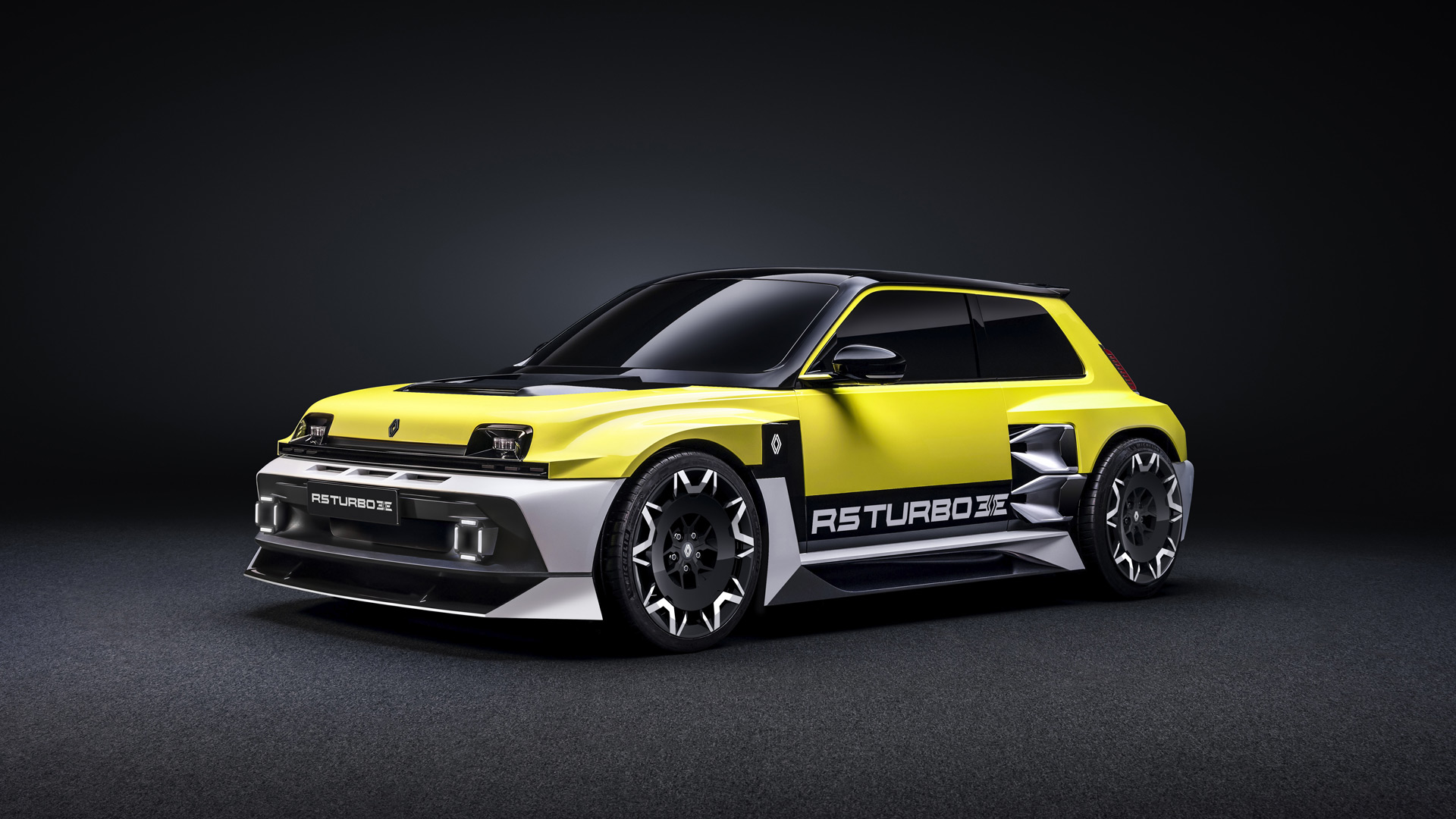
Renault 5 Turbo 3E revealed with over 500 hp

0


  • Modern Renault 5 Turbo with electric power has been unveiled
  • The new 5 Turbo 3E is the spiritual successor to the 5 Turbo and 5 Turbo2 homologation specials of the 1980s
  • Power in the 5 Turbo 3E comes from two electric motors at the rear axle

Renault is gearing up to bring the legendary 5 Turbo back to showrooms, this time with an electric twist.

The automaker on Friday released the first photos of its new electric 5 Turbo, which is confirmed for production with over 500 hp.

Officially the 5 Turbo 3E, denoting it as the successor to the gas-powered 5 Turbo and 5 Turbo2 homologation specials of the 1980s, the car is the production version of a concept of the same name shown two years ago. Impressively, the production version’s design, with its hunkered-down stance and flared wheel arches, is almost a match with the wild show car.

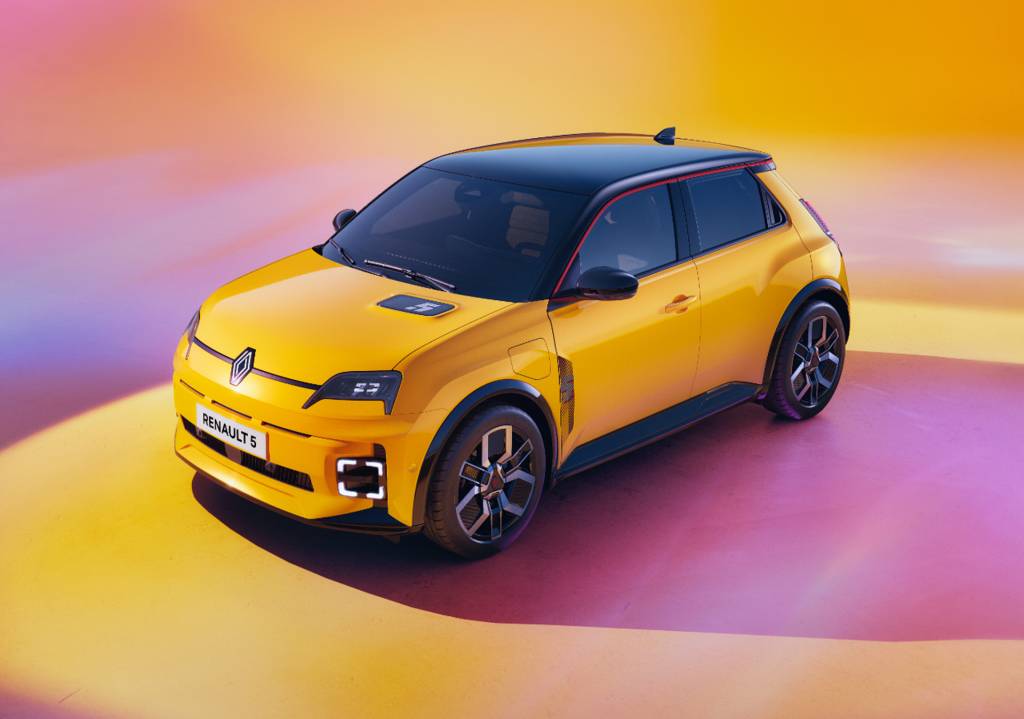
Although the 5 Turbo 3E shares its general shape with the new Renault 5 E-Tech electric subcompact hatch launched earlier this year, just like the previous 5 Turbos, which featured rally-inspired mid-engine platforms, there’s very little in common beyond that basic link.

2025 Renault 5 E-Tech

2025 Renault 5 E-Tech

Renault said the 5 Turbo 3E will feature unique underpinnings as well as a carbon body to help save weight. A comparison with the regular 5 E-Tech also shows a longer dash-to-axle ratio up front, resulting in a longer hood.

Beyond the 500-plus-hp output, Renault has confirmed the car will feature two electric motors, both at the rear axle, and the ability to sprint from 0-62 mph in 3.5 seconds. Details like the battery and range haven’t been revealed. The biggest battery in the 5 E-Tech is a 52-kwh unit rated at almost 250 miles of range on the WLTP test cycle used overseas.

Renault hasn’t said when the 5 Turbo 3E will be launched, though the company plans to release more details in the new year. Given the specification, it is likely to be offered as a limited-edition model with prices possibly in the six figures.

The 5 Turbo 3E won’t be the first performance version of the new 5 E-Tech. Renault sister brand Alpine has already launched the A290 hot hatch based on the 5 E-Tech. The Alpine delivers a maximum 220 hp and is already available in markets where Alpine operates.


Source link

2025 Mitsubishi Outlander Gets Interior Refresh

0


The Mitsubishi Outlander may be the most overlooked car on sale in America today.

Americans buy more compact SUVs than any other type of vehicle. Mitsubishi’s compact offering has some unique traits to recommend it – a hideaway third row of seats, a 10-year powertrain warranty, an excellent all-wheel-drive (AWD) system that also enhances dry-road handling, and a more upscale cabin than many rivals. A plug-in hybrid version can travel up to 38 miles on electricity alone.

But it remains a slow seller in a field of CR-Vs and RAV4s, perhaps because of Mitsubishi’s limited dealership network.  

Fixing that problem could take time. But the company can double down on what works about the car quickly. For 2025, the Outlander is due for an update. Mitsubishi will build on the vehicle’s strengths.

We don’t know pricing for 2025 yet. The 2024 model on sale today starts at $30,075, including a mandatory $1,495 destination fee and a $185 “welcome package” that’s also tacked on unless the vehicle is special-ordered without it.

New Sound System

The speakers in the 2025 Mitsubishi OutlanderThe speakers in the 2025 Mitsubishi Outlander

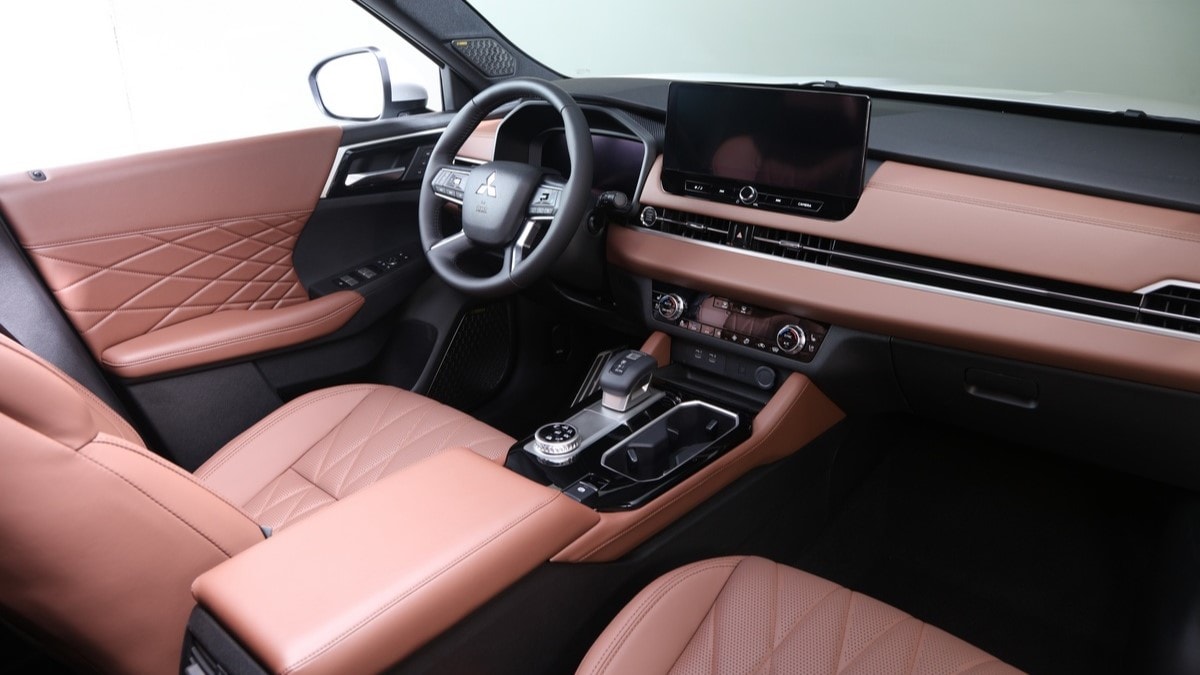
Mitsubishi is keeping the SUV’s exterior under wraps for now. But the company has released photos of a cabin upgrade.

The headline is a new Yamaha sound system. Mitsubishi says it’s “the first time that Yamaha has ever developed an in-car audio system for a North American-market vehicle,” so we don’t know what sound quality to expect.

But just two companies dominate car sound systems — names like Bang & Olufsen, JBL, and Mark Levison are all brands of Harman International, which competes with Bose. New competition in the market is good news.

A new center console design looks cleaner, with the cup holders moved to an easier-to-reach spot. Mitsubishi promises new interior colors, though the only photos released so far show the same black-and-saddle-tan scheme that works so well on the current model.

The changes aren’t likely enough to make the Outlander rocket to the top of a competitive class. But they hold its charms intact as the compact SUV segment keeps improving. If you have easy access to a Mitsubishi dealership and your lifestyle means you’re unlikely to move far from it while you drive your next car, it might be worth a look.

Mitsubishi says the 2025 Outlander will begin arriving in dealerships in February.


Source link

Electric Cadillac Escalade IQ Starts $40,000 Higher Than Gas Model

0


Electric Cadillac Escalade IQ Starts $40,000 Higher Than Gas Model

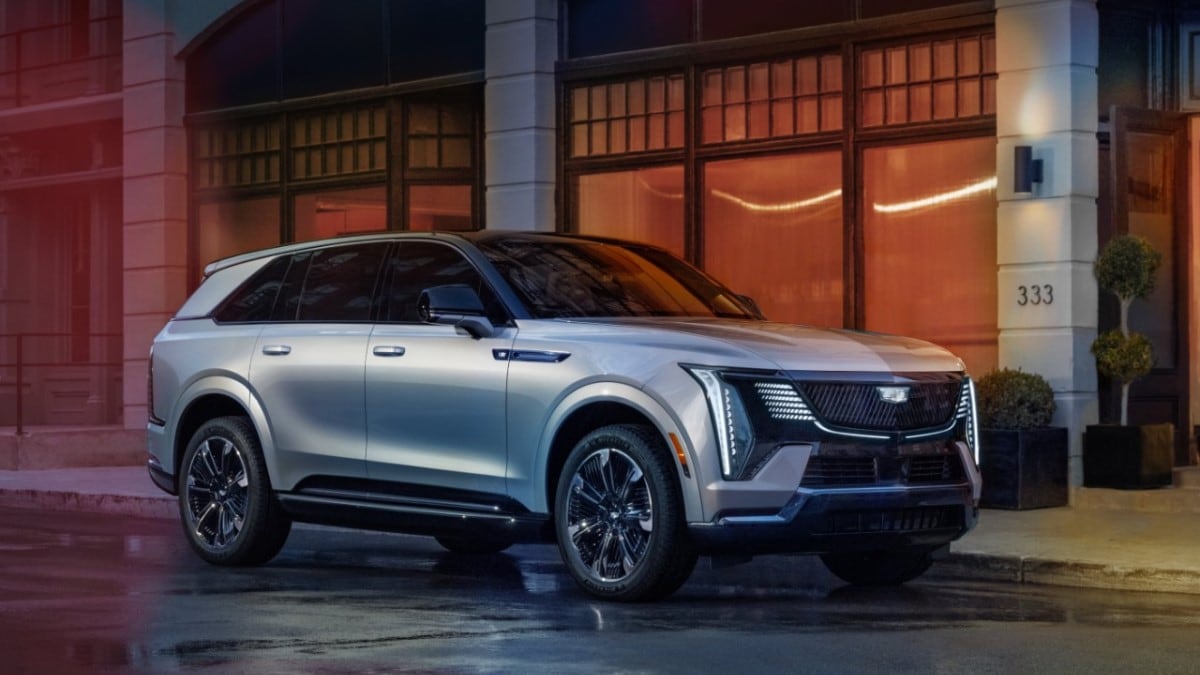
The least expensive gas-powered Cadillac Escalade available in the 2025 model year will set you back just under $90,000. Its electric equivalent will cost as much as one and a half of those.

Cadillac has released pricing for the brand-new all-electric version of its flagship SUV, and the contrast is extreme. The entry point for the gas-powered Escalade line, a rear-wheel-drive (RWD) model in the Luxury trim, will start at $89,590, including a mandatory $1,995 delivery fee. The least expensive Escalade IQ electric model will start at $129,990, including $2,290 for shipping.

The price difference is huge but not surprising. The Escalade IQ will likely be a rare sight for the first year. Cadillac built it as an extreme example of what its engineers can do. Cadillac’s other electric SUVs, the Lyriq and Optiq, exist to be accessible and will be more common. The Escalade IQ exists to be impressive and will be exclusive.

It’s immense, with essentially two batteries and massive 24-inch wheels. It’s powerful, with 750 horsepower and 780 lb-ft of torque. And it’s ultra-luxurious, with available heated and ventilated 14-way adjustable massaging seats in the second row.

Cadillac says it can add 100 miles of range in just 10 minutes plugged into a DC fast charger. Standard rear-wheel steering and an adaptive suspension should keep it from feeling ponderous from the driver’s seat.

We’d love to tell you what to compare it to. But, frankly, there’s nothing quite like it in the automotive world yet. Rivals are likely to produce their own ultra-kitted-out super-luxury full-size electric SUVs eventually. But, for now, the Escalade IQ is one of a kind.

2025 Cadillac Escalade IQ Pricing

All prices include a mandatory $2,290 destination fee.

Trim LevelMRSP + Destination Fee
Luxury 1$129,990
Sport 1$130,490
Luxury 2$149,990
Sport 2$150,490


Source link

Electric Porsche Macan recalled for headlights that are too bright

0


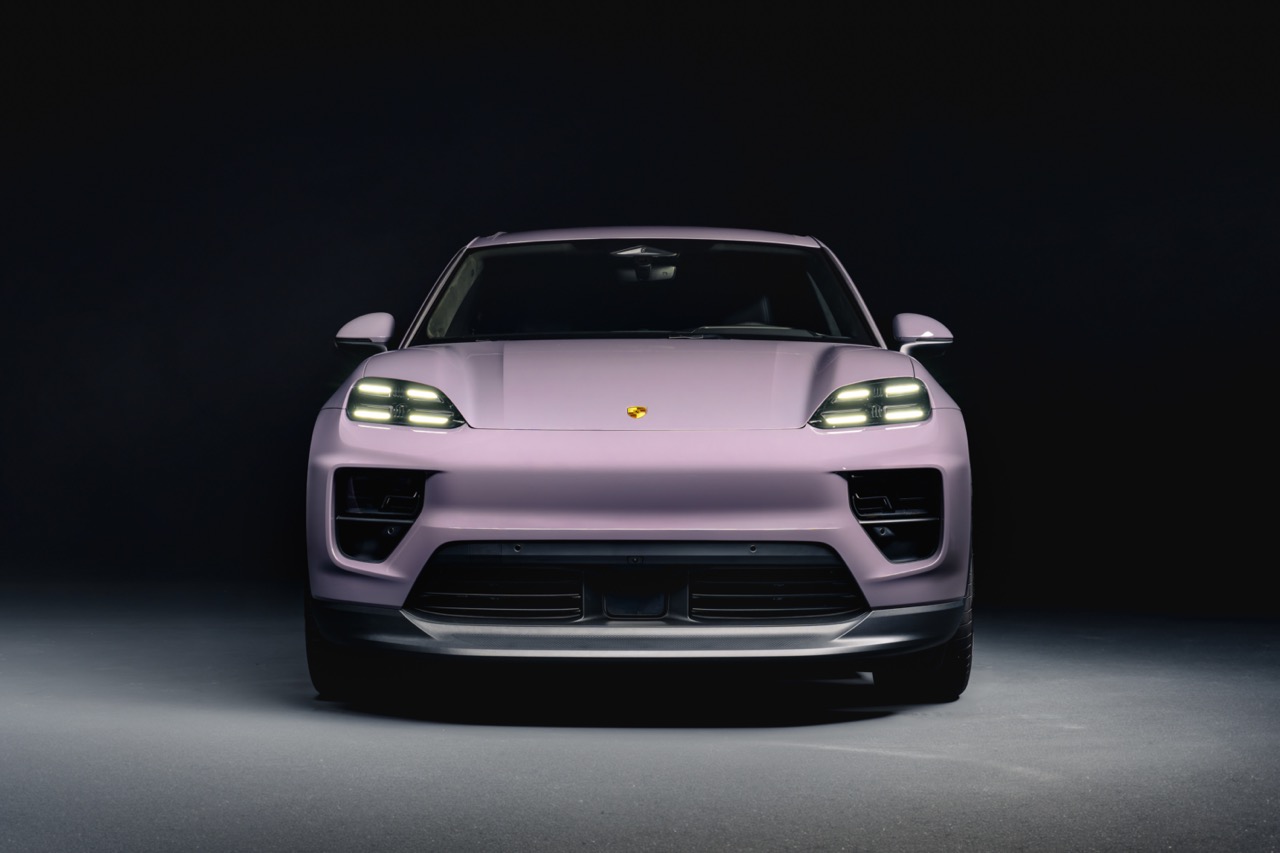
Porsche is recalling 2,941 electric Macan crossovers because their headlights are too bright, which can reduce visibility for oncoming drivers and increase the risk of a crash.

The recall includes 2024 and 2025 models manufactured between Mar. 15, 2024, Nov. 4, 2024. Headlight-control software in this batch of vehicles was programmed to European standards rather than U.S. standards, resulting in beams that exceed brightness levels specified in Federal Motor Vehicle Safety Standard (FMVSS) number 108, according to the NHTSA.

2024 Porsche Macan (electric)

2024 Porsche Macan (electric)

Porsche told the safety regulator that this error was corrected for later-production vehicles, but that 100% of the recalled vehicles likely have the errant software. Dealers will reprogram the headlight control units free of charge as, despite this being a purely software-related issue, it can’t be addressed via an over-the-air update.

Porsche expects to mail owner notification letters Jan. 24, 2025. Owners can also call the automaker’s customer service department at 1-800-767-7243 for more information. Porsche’s reference number for this recall is ARC5.

2024 Porsche Macan (electric)

2024 Porsche Macan (electric)

The electric Macan arrived for the 2024 model year as one of the first EVs based on the Premium Platform Electric (PPE) shared with Audi, and also underpinning that brand’s Q6 E-Tron SUV and A6 E-Tron sedan. A first drive indicated the Macan EV would be a good way to ease the electric transition, but Porsche limited availability to dual-motor Macan 4 and Macan Turbo grades for that first model year.

For 2025, Porsche expanded the lineup with a single-motor base model that effectively lowered the electric Macan’s price by about $3,000, plus a dual-motor Macan 4S slotting between the Macan 4 and Turbo. Porsche is still selling the previous-generation gasoline Macan alongside the electric version, but has said only the electric Macan will be available starting in 2026.


Source link

NVIDIA Research Model Enables Dynamic Scene Reconstruction

0


NVIDIA Research Model Enables Dynamic Scene Reconstruction

Content streaming and engagement are entering a new dimension with QUEEN, an AI model by NVIDIA Research and the University of Maryland that makes it possible to stream free-viewpoint video, which lets viewers experience a 3D scene from any angle.

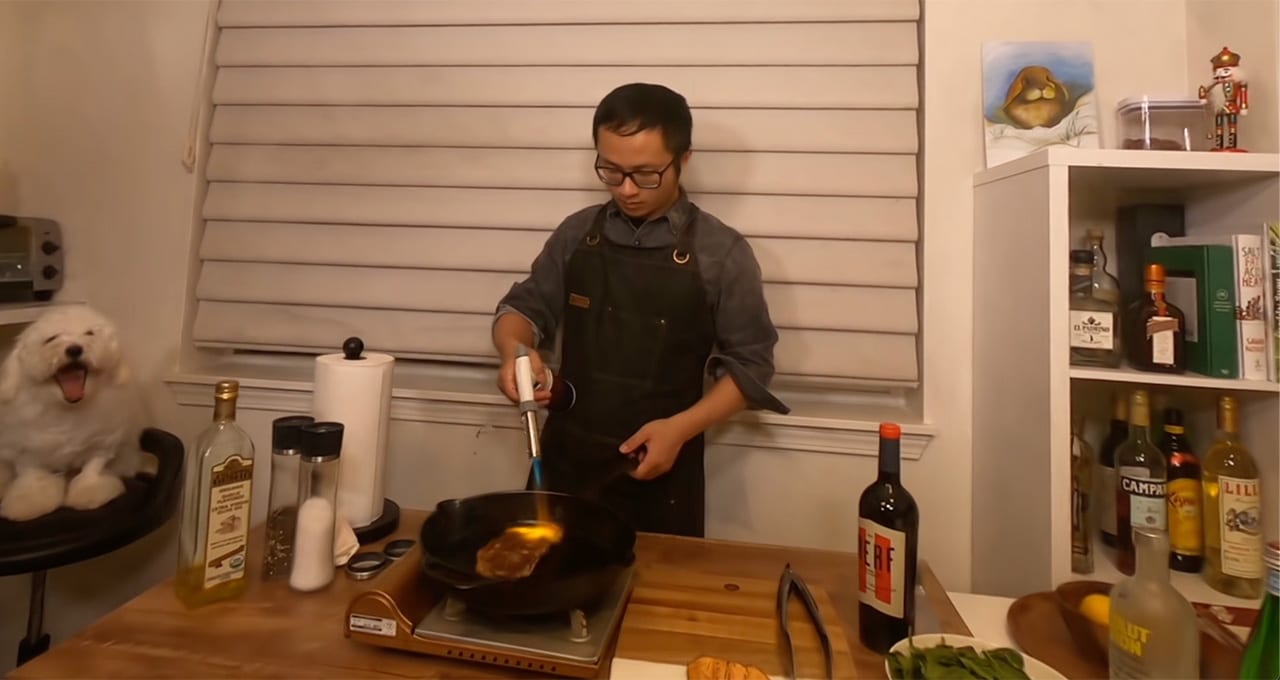
QUEEN could be used to build immersive streaming applications that teach skills like cooking, put sports fans on the field to watch their favorite teams play from any angle, or bring an extra level of depth to video conferencing in the workplace. It could also be used in industrial environments to help teleoperate robots in a warehouse or a manufacturing plant.

The model will be presented at NeurIPS, the annual conference for AI research that begins Tuesday, Dec. 10, in Vancouver.

“To stream free-viewpoint videos in near real time, we must simultaneously reconstruct and compress the 3D scene,” said Shalini De Mello, director of research and a distinguished research scientist at NVIDIA. “QUEEN balances factors including compression rate, visual quality, encoding time and rendering time to create an optimized pipeline that sets a new standard for visual quality and streamability.”

Reduce, Reuse and Recycle for Efficient Streaming

Free-viewpoint videos are typically created using video footage captured from different camera angles, like a multicamera film studio setup, a set of security cameras in a warehouse or a system of videoconferencing cameras in an office.

Prior AI methods for generating free-viewpoint videos either took too much memory for livestreaming or sacrificed visual quality for smaller file sizes. QUEEN balances both to deliver high-quality visuals — even in dynamic scenes featuring sparks, flames or furry animals — that can be easily transmitted from a host server to a client’s device. It also renders visuals faster than previous methods, supporting streaming use cases.

In most real-world environments, many elements of a scene stay static. In a video, that means a large share of pixels don’t change from one frame to another. To save computation time, QUEEN tracks and reuses renders of these static regions — focusing instead on reconstructing the content that changes over time.

Using an NVIDIA Tensor Core GPU, the researchers evaluated QUEEN’s performance on several benchmarks and found the model outperformed state-of-the-art methods for online free-viewpoint video on a range of metrics. Given 2D videos of the same scene captured from different angles, it typically takes under five seconds of training time to render free-viewpoint videos at around 350 frames per second.

This combination of speed and visual quality can support media broadcasts of concerts and sports games by offering immersive virtual reality experiences or instant replays of key moments in a competition.

In warehouse settings, robot operators could use QUEEN to better gauge depth when maneuvering physical objects. And in a videoconferencing application — such as the 3D videoconferencing demo shown at SIGGRAPH and NVIDIA GTC — it could help presenters demonstrate tasks like cooking or origami while letting viewers pick the visual angle that best supports their learning.

The code for QUEEN will soon be released as open source and shared on the project page.

QUEEN is one of over 50 NVIDIA-authored NeurIPS posters and papers that feature groundbreaking AI research with potential applications in fields including simulation, robotics and healthcare. Among them is a best paper runner-up, titled “Guiding a Diffusion Model With a Bad Version of Itself” — one of just five papers recognized among the over 4,500 accepted this year. 

Generative Adversarial Nets, the paper that first introduced GAN models, won the NeurIPS 2024 Test of Time Award. Cited more than 85,000 times, the paper was coauthored by Bing Xu, distinguished engineer at NVIDIA. Hear more from its lead author, Ian Goodfellow, research scientist at DeepMind, on the AI Podcast:

Learn more about NVIDIA Research at NeurIPS.

See the latest work from NVIDIA Research, which has hundreds of scientists and engineers worldwide, with teams focused on topics including AI, computer graphics, computer vision, self-driving cars and robotics.

Academic researchers working on large language models, simulation and modeling, edge AI and more can apply to the NVIDIA Academic Grant Program.

See notice regarding software product information.


Source link

How OpenUSD-Based Simulation and Synthetic Data Generation Advance Robot Learning

0


Editor’s note: This post is part of Into the Omniverse, a series focused on how developers, 3D practitioners, and enterprises can transform their workflows using the latest advances in OpenUSD and NVIDIA Omniverse.

Scalable simulation technologies are driving the future of autonomous robotics by reducing development time and costs.

Universal Scene Description (OpenUSD) provides a scalable and interoperable data framework for developing virtual worlds where robots can learn how to be robots. With SimReady OpenUSD-based simulations, developers can create limitless scenarios based on the physical world.

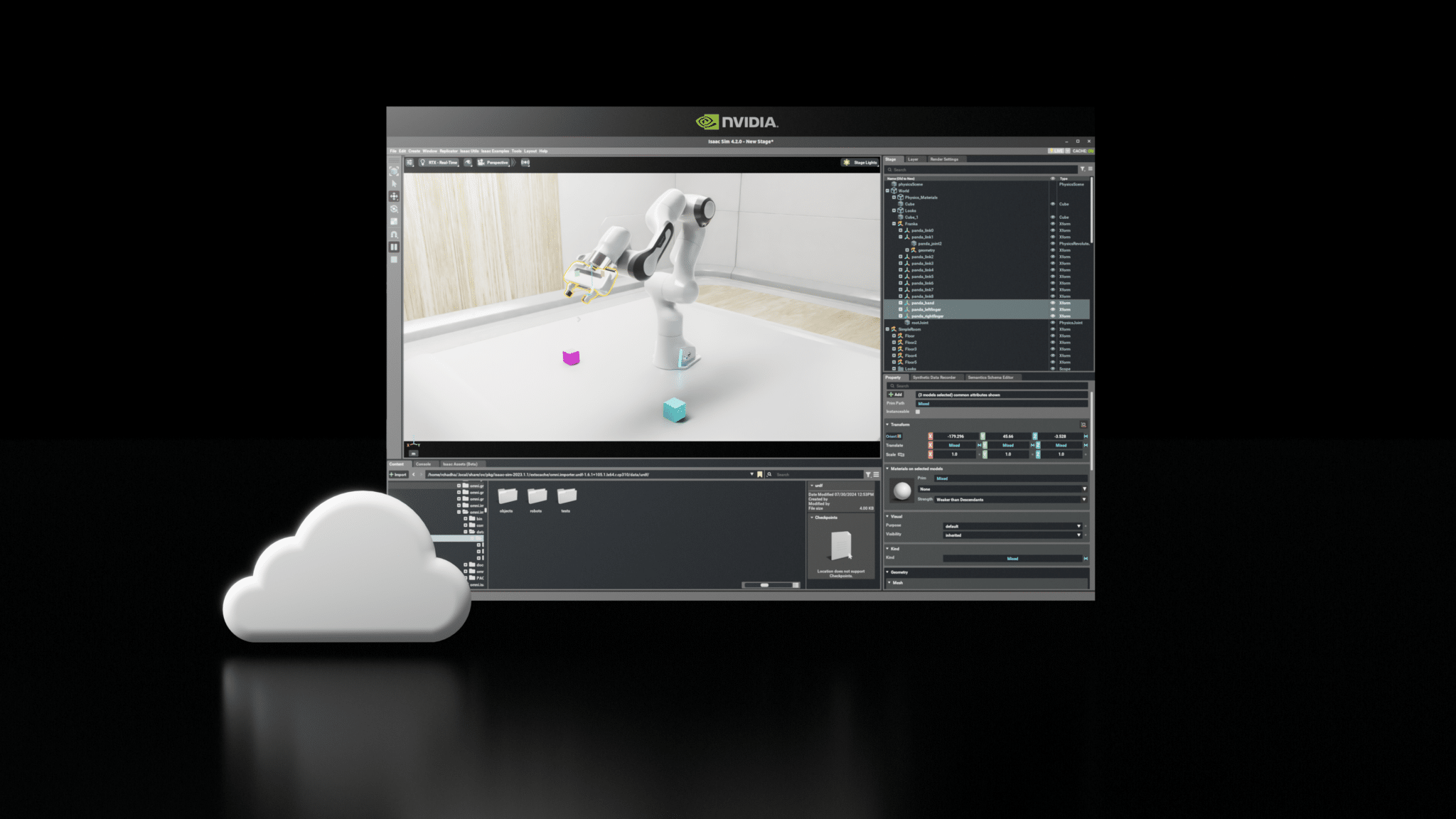
And NVIDIA Isaac Sim is advancing perception AI-based robotics simulation. Isaac Sim is a reference application built on the NVIDIA Omniverse platform for developers to simulate and test AI-driven robots in physically based virtual environments.

At AWS re:Invent, NVIDIA announced that Isaac Sim is now available on Amazon EC2 G6e instances powered by NVIDIA L40S GPUs. These powerful instances enhance the performance and accessibility of Isaac Sim, making high-quality robotics simulations more scalable and efficient.

These advancements in Isaac Sim mark a significant leap for robotics development. By enabling realistic testing and AI model training in virtual environments, companies can reduce time to deployment and improve robot performance across a variety of use cases.

Advancing Robotics Simulation With Synthetic Data Generation

Robotics companies like Cobot, Field AI and Vention are using Isaac Sim to simulate and validate robot performance while others, such as SoftServe and Tata Consultancy Services, use synthetic data to bootstrap AI models for diverse robotics applications.

The evolution of robot learning has been deeply intertwined with simulation technology. Early experiments in robotics relied heavily on labor-intensive, resource-heavy trials. Simulation is a crucial tool for the creation of physically accurate environments where robots can learn through trial and error, refine algorithms and even train AI models using synthetic data.

Physical AI describes AI models that can understand and interact with the physical world. It embodies the next wave of autonomous machines and robots, such as self-driving cars, industrial manipulators, mobile robots, humanoids and even robot-run infrastructure like factories and warehouses.

Robotics simulation, which forms the second computer in the three computer solution, is a cornerstone of physical AI development that lets engineers and researchers design, test and refine systems in a controlled virtual environment.

A simulation-first approach significantly reduces the cost and time associated with physical prototyping while enhancing safety by allowing robots to be tested in scenarios that might otherwise be impractical or hazardous in real life.

With a new reference workflow, developers can accelerate the generation of synthetic 3D datasets with generative AI using OpenUSD NIM microservices. This integration streamlines the pipeline from scene creation to data augmentation, enabling faster and more accurate training of perception AI models.

Synthetic data can help address the challenge of limited, restricted or unavailable data needed to train various types of AI models, especially in computer vision. Developing action recognition models is a common use case that can benefit from synthetic data generation.

To learn how to create a human action recognition video dataset with Isaac Sim, check out the technical blog on Scaling Action Recognition Models With Synthetic Data. 3D simulations offer developers precise control over image generation, eliminating hallucinations.

Robotic Simulation for Humanoids

Humanoid robots are the next wave of embodied AI, but they present a challenge at the intersection of mechatronics, control theory and AI. Simulation is crucial to solving this challenge by providing a safe, cost-effective and versatile platform for training and testing humanoids.

With NVIDIA Isaac Lab, an open-source unified framework for robot learning built on top of Isaac Sim, developers can train humanoid robot policies at scale via simulations. Leading commercial robot makers are adopting Isaac Lab to handle increasingly complex movements and interactions.

NVIDIA Project GR00T, an active research initiative to enable the humanoid robot ecosystem of builders, is pioneering workflows such as GR00T-Gen to generate robot tasks and simulation-ready environments in OpenUSD. These can be used for training generalist robots to perform manipulation, locomotion and navigation.

Recently published research from Project GR00T also shows how advanced simulation can be used to train interactive humanoids. Using Isaac Sim, the researchers developed a single unified controller for physically simulated humanoids called MaskedMimic. The system is capable of generating a wide range of motions across diverse terrains from intuitive user-defined intents.

Physics-Based Digital Twins Simplify AI Training

Partners across industries are using Isaac Sim, Isaac Lab, Omniverse, and OpenUSD to design, simulate and deploy smarter, more capable autonomous machines:

  • Agility uses Isaac Lab to create simulations that let simulated robot behaviors transfer directly to the robot, making it more intelligent, agile and robust when deployed in the real world.
  • Cobot uses Isaac Sim with its AI-powered cobot, Proxie, to optimize logistics in warehouses, hospitals, manufacturing sites and more.
  • Cohesive Robotics has integrated Isaac Sim into its software framework called Argus OS for developing and deploying robotic workcells used in high-mix manufacturing environments.
  • Field AI, a builder of robot foundation models, uses Isaac Sim and Isaac Lab to evaluate the performance of its models in complex, unstructured environments across industries such as construction, manufacturing, oil and gas, mining, and more.
  • Fourier uses NVIDIA Isaac Gym and Isaac Lab to train its GR-2 humanoid robot, using reinforcement learning and advanced simulations to accelerate development, enhance adaptability and improve real-world performance.
  • Foxglove integrates Isaac Sim and Omniverse to enable efficient robot testing, training and sensor data analysis in realistic 3D environments.
  • Galbot used Isaac Sim to verify the data generation of DexGraspNet, a large-scale dataset of 1.32 million ShadowHand grasps, advancing robotic hand functionality by enabling scalable validation of diverse object interactions across 5,355 objects and 133 categories.
  • Standard Bots is simulating and validating the performance of its R01 robot used in manufacturing and machining setups.
  • Wandelbots integrates its NOVA platform with Isaac Sim to create physics-based digital twins and intuitive training environments, simplifying robot interaction and enabling seamless testing, validation and deployment of robotic systems in real-world scenarios.

Learn more about how Wandelbots is advancing robot learning with NVIDIA technology in this livestream recording:

Get Plugged Into the World of OpenUSD

NVIDIA experts and Omniverse Ambassadors are hosting livestream office hours and study groups to provide robotics developers with technical guidance and troubleshooting support for Isaac Sim and Isaac Lab. Learn how to get started simulating robots in Isaac Sim with this new, free course on NVIDIA Deep Learning Institute (DLI).

For more on optimizing OpenUSD workflows, explore the new self-paced Learn OpenUSD training curriculum that includes free DLI courses for 3D practitioners and developers. For more resources on OpenUSD, explore the Alliance for OpenUSD forum and the AOUSD website.

Don’t miss the CES keynote delivered by NVIDIA founder and CEO Jensen Huang live in Las Vegas on Monday, Jan. 6, at 6:30 p.m. PT for more on the future of AI and graphics.

Stay up to date by subscribing to NVIDIA news, joining the community, and following NVIDIA Omniverse on Instagram, LinkedIn, Medium and X.

Featured image courtesy of Fourier.


Source link

2025 Volkswagen Jetta: First Look | The Daily Drive

0


VW’s sedan gets styling and tech updates with a sub $25k starting price.

2025 Volkswagen Jetta SEL
2025 Volkswagen Jetta SEL (left) and Jetta GLI

Volkswagen has given its entry-level sedan a refresh for the 2025 model year. Jetta is one of the German automaker’s longest-running nameplates, having been a part of the North American market for more than four decades. With changes to the car’s design along with the addition of new technology and an affordable starting price, brand officials are hoping to keep this compact sedan atop consumers’ minds.

2025 Volkswagen Jetta

Facelift

Jetta gets an exterior facelift for 2025 that includes an updated grille and front fascia. All grades get standard LED headlights, and a newly available front light bar which mimics what you’ll find on Volkswagen’s Atlas SUV. Rear lighting now extends across the trunk lid, lending visual cohesion to the overall design. The flagship, high-performance Jetta GLI has unique styling elements including a black honeycomb rear diffuser, wider exhaust outlets, and machined alloy wheels.

Interior

2025 Volkswagen Jetta SEL

The 2025 Jetta’s interior sees a redesigned dashboard with a new infotainment screen placed on top of it rather than being integrated into the central control stack. Automatic climate control is newly standard across the board as is a fully digital instrument cluster. All but the base S grade have heated front seats. The GLI and luxury-oriented SEL have ventilated front seats while the latter also includes heated outboard rear seats, an uncommon amenity in this class of vehicle.

Car-Net

VW’s Car-Net telematics and connected vehicle services are expanded for the ’25 Jetta. Buyers can get Remote Access, Safe & Secure, Vehicle Insights, and, if equipped, in-vehicle Wi-Fi hotspot. Some features are complimentary for up to 7 years while others require an extra-cost subscription. Models equipped with a factory navigation system can transmit parking information and point-of-interest data directly to a person’s compatible smartphone.

Engines

Jetta’s underskin engineering and drivetrains are largely unchanged for 2025. Non-GLI models, which ascend through S, Sport, SE, and SEL, use a 1.5-liter turbocharged 4-cylinder engine producing 158 horsepower and 184 pound-feet of torque mated to an 8-speed automatic transmission. The S with manual transmission has been discontinued. GLI ups the ante with a 2.0-liter turbo 4-cylinder that makes 228 horsepower and 258 pound-feet of torque. Enthusiasts will be pleased to see the GLI reprising its available 6-speed manual transmission. Those who would rather not change gears themselves can opt for a 7-speed dual-clutch automatic at no additional charge.

Prices and Trim Levels

Pricing starts at $21,995 for the S; $23,275 for the Sport; $24,975 for the SE; and $29,000 for the SEL. VW treats the GLI as a separate model and prices it at $32,715. This does not include a manufacturer destination fee of $1,225. The 2025 Volkswagen Jetta is on sale now.

CG Says

As new-vehicle pricing continues to skyrocket, it’s reassuring to see a car company lavish attention on its most-affordable offerings. The updates VW has made to the 2025 Jetta aren’t dramatic, but they keep they are enough to keep it in-line with modern sensibilities.

2025 Volkswagen Jetta SEL

Listen to the Car Stuff Podcast

2025 Volkswagen Jetta Pictures

What Was The Volkswagen SP2?

Consumer Guide Car Stuff Podcast Episode 251: Melting EV Charging Adapters, Jaguar’s New Attitude, Volkswagen ID. Buzz Deep Dive


Source link

Our favourite cars from movies and TV

0


If you’re like us, you’ll routinely take note of the cars that appear in your favourite movies and TV shows.

Some movies and shows are renowned for their cars, and as car lovers it’s hard not to be enamoured with such hero vehicles. Some examples that come to mind include the Fast and Furious and Mad Max franchises, as well as animated movies like Cars.

There are too many famous vehicles that fall into this category, and all are special in their own right. For that reason, we asked the CarExpert team what their favourite cars from movies and TV are.

It’s a brief break from all of our new car coverage, and our team had complete freedom to choose any car from any of their favourite movies and shows of any age. Of course, links to new cars on sale were welcome, but not necessary.

Feel free to share your favourite cars in the comments below!

Paul Maric: 1981 DMC DeLorean – Back to the Future

Without fail this is the coolest cinema car. This 1980s movie classic showcased a car from a company that was virtually going bust and propelled it onto the world stage.

The story behind the brand reads as a fiction drama, but the reality behind it all is genuinely unmatched.

The car itself wasn’t very good – by the end it used an average engine and some of the parts used in the first generation of these cars haven’t stood the test of time.

Nevertheless, even today the car looks unreal – and I’d love to own one, one day.

DeLorean brand has recently reinvented itself and revealed plans for a new electric vehicle (it’s one of the few brands for which a premium electric car actually makes sense) and its own crypto token called the DMC Token with a series of NFTs.

Marton Pettendy: 1968 Ford Mustang GT Fastback – Bullitt

The 1968 cult classic Bullitt not only helped catapult Steve McQueen to fame, it contained what’s still widely regarded as one of the greatest car chases in cinematic history, up there with other epic real-world pursuits that defined The Italian Job, Ronin and The French Connection.

It began more than an hour into the film and lasted almost 11 minutes on the hilly streets of San Francisco, where Frank Bullitt – a take-no-prisoners cop played by McQueen – used a four-speed manual 1968 Ford Mustang GT Fastback to hunt down the crime mob kingpin who killed his witness.

But Bullitt/McQueen was also instrumental in making Ford’s then-new Mustang a household name in the US, where the original car later became the most expensive Mustang ever sold at auction.

When Ford reunited McQueen’s grand-daughter Molly for the launch of its born-again Mustang Bullitt limited-edition at the Detroit motor show in 2018, marking the 50th anniversary of the film, she said: “Now maybe I’m a little bit biased… but it’s crazy, you talk to people about great car chase movies and it still remains the gold standard”.

Interested in buying a Ford Mustang? Get in touch with one of CarExpert’s trusted dealers here

MORE: Everything Ford Mustang

James Wong: Nigel Gearsley (Aston Martin DBR9) – Cars 2

My obsession with Aston Martin goes a long way back. In fact, I have a number of them in my Hot Wheels collection that I used to broooom-brooooom along the floor at home in my primary school days.

It makes sense then, that one of my favourite movies as a kid was Disney Pixar’s Cars, and that my all-time favourite movie car is Nigel Gearsley the Aston Martin DBR9.

Based on the GT1-class DBR9 race car, Nigel Gearsley is named after Sir Nigel Gresley – one of Great Britain’s most famous locomotive engineers who designed both the Flying Scotsman and Mallard steam trains, the most famous locomotive and the fastest locomotive respectively.

Fun fact: before cars I was obsessed with trains, and I actually have a wooden model of Sir Gresley’s Mallard that I received as a gift from my grandmother, and the Flying Scotsman was my equal favourite because of its beautiful design and distinctive green paint job.

Anyway, while Nigel Gearsley the movie car doesn’t make too many cameos in Cars 2, he’d easily be my character of choice in one of the spinoff video games. Tally ho!

Interested in buying an Aston Martin? Get in touch with one of CarExpert’s trusted dealers here

MORE: Everything Aston Martin

Jack Quick: 2003 Honda S2000 – 2 Fast 2 Furious

I grew up with the Fast and Furious movies and there are so many iconic vehicles that I could easily pick for this.

One that always sticks in my mind is Suki’s bright pink Honda S2000 from 2 Fast 2 Furious. I’ve always loved the ricer Veilside body kit and decals, and the pink flames that shoot out from the exhaust are to die for.

Another element that always has me enamoured is the adorable animated character on the car’s dashboard display. In the words of Suki, “bend over boy”.

In terms of a modern equivalent to the Honda S2000, there isn’t anything currently offered from Honda, though the closest from a competitor brand would be the Mazda MX-5 roadster.

Interested in buying a Honda? Get in touch with one of CarExpert’s trusted dealers here

MORE: Everything Honda

William Stopford: 1977 Pontiac Firebird Esprit – The Rockford Files

There are just too many to mention. 

The James Bond franchise alone gives me a bunch, from the Toyota 2000GT convertible made specifically for the Sean Connery-led You Only Live Twice, to the Aston Martin DBS destroyed in Casino Royale.

Speaking of epic driving scenes, how about the Dodge Challenger in Vanishing Point, or the Audi S8 in Ronin?

That’s not to mention the Ford Mustang and Dodge Charger seen in Bullitt, which has one of the best car chase scenes of all time.

While we’re talking about gorgeous Americana, how about the Oldsmobile 442 driven by Sylvester Stallone in Demolition Man?

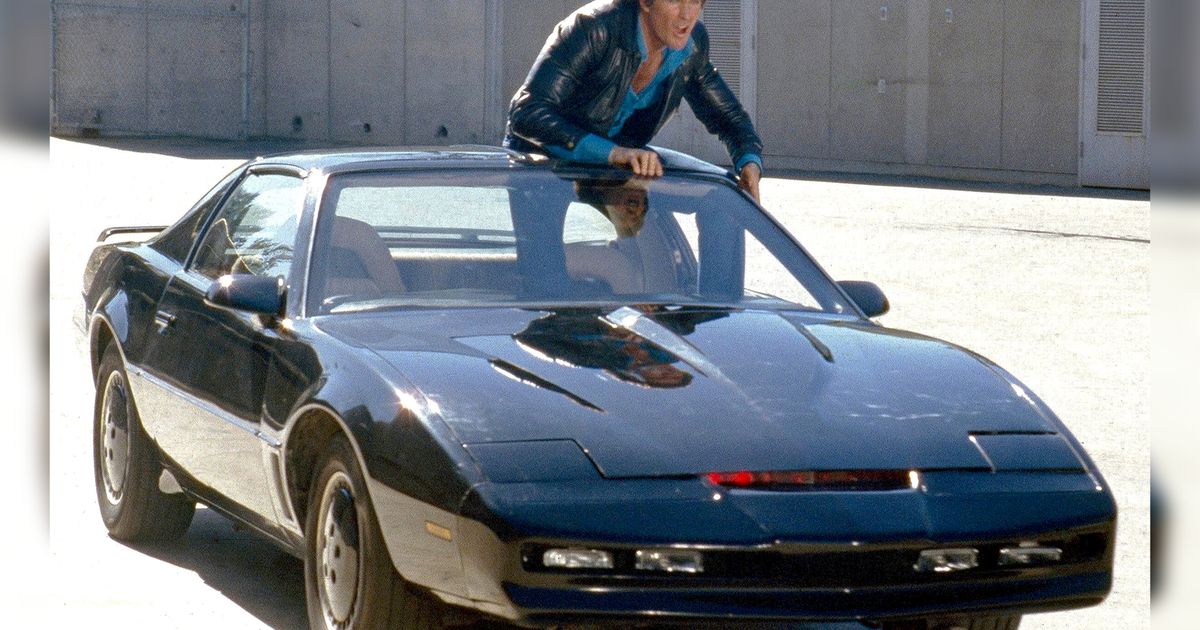
But I’m going to go a little left-field here and pick a famous Pontiac Firebird – no, not KITT from Knight Rider or the Trans Am from Smokey and the Bandit, but rather the subtle gold-coloured Esprit driven by James Garner in The Rockford Files.

This show was before my time (though I did watch – and love – some older mystery shows growing up, like Murder, She Wrote), but I’m a huge fan of the second-generation Pontiac Firebird, specifically the 1977-78 models which were featured on this show.

In contrast to the overtly sporty Formula and Trans Am, the Esprit had a subtler look that may have put the pony car’s styling in the best light. The gold was also a very period colour. This was no ordinary Esprit, however, as the show’s producers reportedly used sportier Formulas and removed their visual enhancements.

I don’t want to give Hollywood another unoriginal idea, but just what would Jim Rockford drive in a reboot of The Rockford Files?

When Knight Rider was unsuccessfully rebooted in 2008, several years after the Firebird left production and around the same time Pontiac itself was being shuttered, KITT became a Ford Mustang. In a subtle colour, I could see that working for a modern-day Rockford Files.

Jordan Mulach: The Pursuit Special (1973 Ford Falcon XB GT) – Mad Max

Initially my pick was going to be Steve McQueen’s Bullitt 390 cubic-inch Ford Mustang fastback, or even the former cop-spec Dodge Monaco from The Blues Brothers.

There could only be one answer though: the XB Falcon Hardtop Pursuit Special from the original Mad Max.

Though the original Pursuit Special was based on a Monaro – and is subsequently stolen by the Nightrider, who perishes along with it – it’s the XB which became famous and remains so more than 45 years after the film was released.

Even the yellow Interceptor which Max drives in the film’s opening scene is a thing of beauty, though it is hard to believe those Dunlop Aquajet tyres could’ve been up to the job of high-speed chases.

As soon as the Pursuit Special comes into frame with its black paint, with its Peter Arcadipane-designed Concorde nose and (non-functional) Weiand 6-71 supercharger with injection hat sticking out of the bonnet, something inside me is awakened.

And that sound… my word, the Cleveland is a great sounding engine when it’s kicked in the guts. The l-l-last of the V-V-V8s which sucks nitro is one hell of a thing. No wonder Max went back on his resignation.

But beyond that, the longevity of the Pursuit Special is nothing short of impressive. After appearing in the original 1979 film, it was again featured in 1981’s Mad Max 2 (most commonly known as ‘The Road Warrior’).

Though it missed out on a cameo in 1985’s Mad Max Beyond Thunderdome alongside Tina Turner, it starred once more in the opening scene of 2015’s Mad Max: Fury Road, and again in Furiosa: A Mad Max Saga this year.

It’s unlikely we’ll ever see an Australian car play a more prominent role in an important series again, but I’m glad it was arguably the best Falcon ever that got a starring role.

Interested in buying a Ford? Get in touch with one of CarExpert’s trusted dealers here

MORE: Everything Ford

Max Davies: 2007 Subaru Impreza WRX – Baby Driver

It’ll never not be incredibly cool to see a car you love on the big screen. For me, the car is the hawkeye Impreza WRX, and the movie is 2017’s Baby Driver.

There are a handful of cool cars in that movie, but the WRX driven by Ansel Elgort is the only one that really catches my eye, and I know I’m not the only one who feels that way.

With its bright-red paint job and aftermarket black wheels, it’s by no means as classically iconic as some of the other cars here, but the fact it looks like a relatively normal non-STI WRX is something cool in itself – and it even works to the car’s advantage in the movie.

Better yet, it’s the very first hero car you see in Baby Driver, and the epic opening scene sets the pace for the rest of the film, even if it is only around five minutes long.

A WRX getting thrown around the streets and alleys of Atlanta is a special sight, and it’s made better by the fact all the driving looks plausible with appropriate shifts, pedal inputs and steering movements – unlike the infinite-shift 57-speed gearboxes featured in the Fast and Furious series.

That’s not to say it’s all entirely true-to-life, but even Subaru purists likely won’t be annoyed. While the iconic flat four rumble can be heard throughout (aside from the odd non-boxer rev flares), those with a keen eye will notice that some of the manoeuvres would be hard to pull off in an all-wheel drive Subaru.

That’s because among the fleet of Subarus on hand for the filming of Baby Driver, a couple were converted to rear-wheel drive with higher power outputs to be able to pull off the various drifts and slides. In total, five different WRXs appear in that one scene, with the RWDs doing the heavy lifting.

There were reportedly loads of differently modified other WRXs prepared too – some automatics with drive controls strapped to the roof, some standard WRXs loaded with cameras, and even a 240kW version with the performance internals from a real STI.

While it’s a shame that it doesn’t appear again after the opening scene, it was a relief that it wasn’t crashed on-screen. One of the fleet even sold for nearly US$70,000 at auction once filming was done, which may well have been bought by a member of the film crew.

Interested in buying a Subaru? Get in touch with one of CarExpert’s trusted dealers here

MORE: Everything Subaru Impreza
MORE: Everything Subaru WRX

Josh Nevett: 1994 Toyota Supra – The Fast and the Furious

I attribute my passion for all things cars to three cultural icons – Top Gear, Need for Speed, and the Fast and Furious franchise.

That makes it tough to select a single standout car, but it’s hard to go past the fourth-generation Toyota Supra driven by Brian O’Conner in the original Fast and Furious film for a few reasons.

First of all, just look at it. That orange paint scheme is memorable in its own right, and stands for everything JDM. The Supra is also one of the film’s hero cars, driven by both Brian and Dom Toretto.

Without that movie, the Mk4 Supra may not have reached the legendary status it now occupies in the annals of Japanese automotive history, culminating in the development of a fifth-gen model that’s still on sale today.

Sidenote, I actually came across a replica of the orange Supra while in Tokyo earlier this year and I must say it’s equally striking in person!

Interested in buying a Toyota Supra? Get in touch with one of CarExpert’s trusted dealers here

MORE: Everything Toyota Supra


Source link