Home Blog Page 273

10 Best Anti-theft Holiday Gifts for Travelers

0


My story of being pickpocketed while traveling is one I’ve shared around the dinner table more times than I can count. I’m always the first to warn friends and family before they head off on a trip. While pickpocketing is sometimes unavoidable, there are plenty of ways to minimize the risk. After my incident in Europe, I dove head-first into research on the best preventative gear before heading back. Determined to feel more prepared, it worked. Now, I’m always on the lookout for more useful items to make travel safer, especially as holiday gifts.

If you’re still unsure about what to gift the frequent traveler in your life, personal safety items are a thoughtful and practical choice. Whether it’s safety alarms, tracking devices, or anti-theft bags, these products are designed to keep people out of tough situations. I’ve rounded up some of the best options that any traveler will appreciate, below. Keep scrolling to discover 10 great finds on Amazon — all starting at just $9.

Bagallini Securtex Anti-theft Crossbody Bag

Amazon


This bag offers plenty of space and essential anti-theft features to keep belongings safe. It’s equipped with RFID-blocking technology, a slash-resistant material, and locking zippers for added protection. Not only does it check off all the safety boxes, it’s stylish, too. Your gift recipient will travel confidently without worrying about pickpockets.

Apple AirTag 4-pack

Amazon


As a frequent traveler myself, I can vouch for how useful Apple AirTags are, whether you’re heading on a trip or just want to keep track of your belongings. It’s a lifesaver if your luggage gets lost or stolen since you can track everything right from your phone. Plus, the built-in speaker plays a sound to help locate missing items. With four AirTags included, you can keep tabs on multiple things at once, making this a must-have for peace of mind.

Baggallini Anti-theft Belt Bag

Amazon


For the fashion-forward traveler, the Baggalini Belt Bag is an excellent gift. It’s both sleek and functional, offering plenty of room for essentials like your phone, wallet, and keys. With RFID-blocking technology, a locking zipper, and a cut-resistant strap, this bag provides serious security without sacrificing style — perfect for hands-free exploring.

She’s Birdie Original Personal Safety Alarm

Amazon


The She’s Birdie Safety Alarm can offer peace of mind at the push of a button. It emits an ear-piercing sound when activated, designed to grab attention and deter potential threats. With over 11,000 five-star reviews, travelers rave about its efficacy. One reviewer shared that they “feel safer traveling in the states and abroad.”

Boyatu Leather Backpack

Amazon


A quality travel backpack is always a great gift idea, and this one seamlessly blends style with security. Made from high-quality genuine leather with silver hardware, it’s a chic option for navigating airports or new cities. Its anti-theft features include a durable construction and secure compartments to keep your belongings away from pickpockets while you travel in style.

Mypin Digital Fingerprint Lock

Amazon


For the tech-savvy traveler, this smart digital lock is a game changer. Instead of fumbling with codes, you can unlock it with your fingerprint. Plus, it’s TSA-approved. It can store up to 10 fingerprints, making it perfect for family trips when you want to share access with others.

Satechi RFID-blocking Leather Find My Passport Holder

Amazon


If you’re always on the go with your passport, investing in a high-tech passport holder is a smart move. Thanks to its ability to integrate with Apple’s Find My app, you can track it with ease. It has the ability to charge wirelessly, features four card slots, and is made with RFID-blocking technology.

Lewis N. Clark Hidden Money Belt

Amazon


An inexpensive, practical gift option, consider this slim money belt. It’s ideal for keeping cash and cards secure while traveling, thanks to RFID-blocking technology and a discreet design that stays hidden under clothing. The adjustable clip ensures a snug fit, making it hard for pickpockets to detect.

Emdmak Door Stop Alarm

Amazon


If you’re shopping for someone who’s extra cautious while traveling, a portable door alarm is a no-brainer. This wedge-shaped device triggers a loud sound if someone tries to enter, providing extra security in hotel rooms or other unfamiliar places. With more than 5,000 five-star reviews, travelers love the peace of mind it offers on solo trips.

MyFriday Small Crossbody Cell Phone Bag

Amazon


A compact, stylish way to carry just the essentials, this phone bag is a great find. It’s priced at an affordable $17 and comes in a variety of colors, so you can pick the perfect match for the person you’re gifting. It’s a practical way to streamline your packing and keep your hands free while exploring.

Love a great deal? Sign up for our T+L Recommends newsletter and we’ll send you our favorite travel products each week.


Source link

New concept to show Mercedes vision for electric luxury van

0


  • Mercedes-Benz will unveil a luxury van concept in early 2025
  • The concept previews the Van.EA platform
  • It’s confirmed for the U.S., though the timing remains uncertain

Mercedes-Benz will unveil a concept next spring previewing a luxury van that will form part of the automaker’s next-generation family of electric vans based on the Van.EA dedicated EV platform.

The luxury van will be based on a new midsize van Mercedes is developing on the Van.EA platform for launch in 2026. The luxury version will likely use the V-Class nameplate, which Mercedes currently attaches to its luxury midsize van sold overseas.

Mercedes has said the van will be offered in the U.S., though the timing is uncertain.

A related commercial version is planned and may adopt the Vito name Mercedes currently uses for its commercial midsize van sold overseas. The current Vito was previously offered in the U.S. as the Metris.

Van.EA - cargo and passenger

Van.EA – cargo and passenger

Mercedes said the Van.EA platform enables greater differentiation between luxury and commercial models than previously.

Camouflaged prototypes for the midsize van have been spotted testing in the wild. Mercedes has also previously released photos of some prototypes. They hint at shorter front and rear overhangs compared to the current midsize vans, and increased curvature for the windshield, perhaps to help aerodynamic efficiency.

Mercedes-Benz Van.EA prototypes via Mercedes-Benz

Mercedes-Benz Van.EA prototypes via Mercedes-Benz

The Van.EA platform features a three-module design that allows it to be easily adapted to various vehicle sizes. A front module houses high-voltage power control hardware and an electric motor and is common to all vehicles based on the platform. A center module, available in different lengths and fitting various battery configurations, determines the size of the vehicles based on the platform. A rear module contains the rear axle, either with a motor for all-wheel drive or without for front-wheel drive.

For the luxury van, buyers can expect similar features to what Mercedes offers in its luxury cars and SUVs. This will include the automaker’s driver-assistance technology.

Van.EA electric camper van

Van.EA electric camper van

The Van.EA platform will also be used for the next generation of Mercedes’ full-size Sprinter van. While a luxury version of the Sprinter isn’t expected, Mercedes has hinted at camper versions.

The Van.EA is one of a series of new platforms being introduced by Mercedes targeting different market segments. The automaker will also deploy a platform called MMA for its next-generation compact range, the MB.EA platform for larger models, and the AMG.EA platform for future AMG performance models. While most are dedicated EV platforms, the MMA platform supports hybrid configurations.


Source link

Is the Tesla Cybertruck the future of off-roading?

0


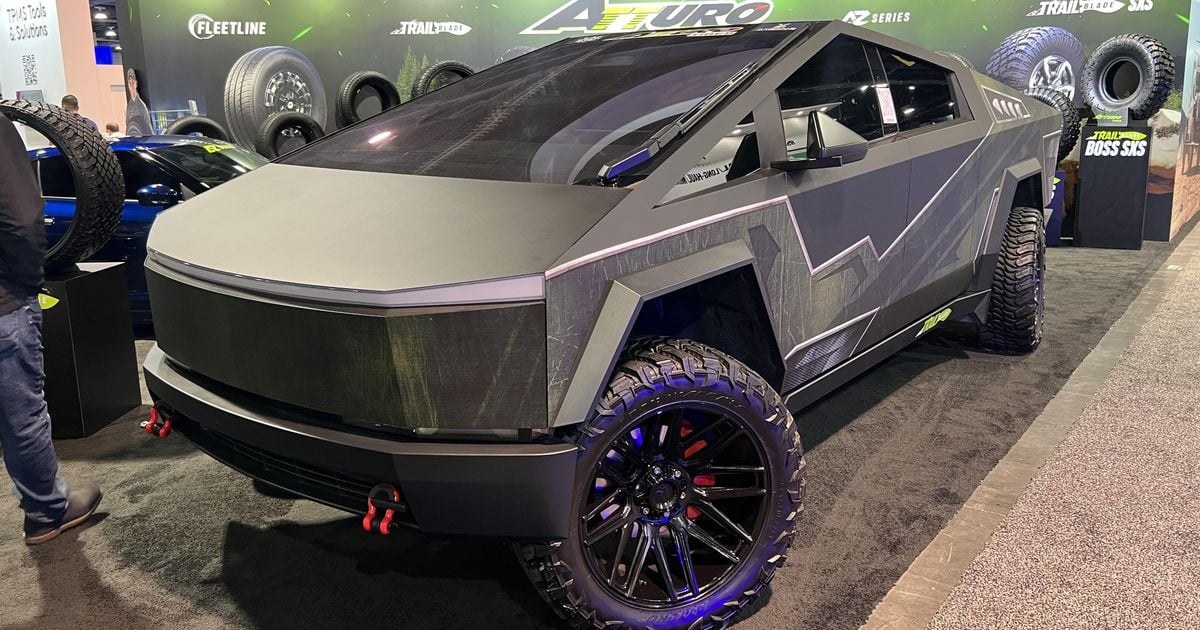
The Tesla Cybertruck is already a dramatic-looking vehicle, and this year’s SEMA aftermarket show showed this electric ute is ripe for customisation.

SEMA, the Specialty Equipment Market Association exhibition, is the world’s premier event for automotive customisation and aftermarket innovation. Held over November 5-8, the 2024 edition once again showcased everything from classic muscle cars to the latest in off-road engineering.

But this year, something different grabbed attention in serious numbers: the Tesla Cybertruck.

100s of new car deals are available through CarExpert right now. Get the experts on your side and score a great deal. Browse now.
This futuristic, all-electric truck made its SEMA debut in force, and it certainly got people talking.

Last year, the Cybertruck was notably absent from SEMA, with only a few early prototypes circulating in the automotive world. Supply chain delays, production challenges, and Tesla’s struggle to scale the Cybertruck’s unconventional stainless-steel body contributed to the delay.

Now, with deliveries finally rolling out, Cybertrucks flooded the floor, with a number of examples kitted out for off-road and overlanding in ways that were almost as divisive as the truck itself.

Off-road appeal and limitations

The Cybertruck’s appearance at SEMA drew a mixed crowd.

On one hand, it presents with a range of moderate off-road credentials: a claimed 35-degree approach angle, 28-degree departure angle, and up to 406mm of ground clearance thanks to adaptive air suspension.

The truck’s design, which looks like something out of a sci-fi movie, is undeniably bold and eye-catching. For urban adventurers and tech enthusiasts, this futuristic aesthetic is a huge selling point. The stainless-steel exoskeleton, while polarizing, offers serious durability and an unorthodox approach to vehicle design.

But off-road purists have plenty of reservations. The Cybertruck’s sheer size and weight—potentially tipping the scales at over 3000kg—raise questions about how nimble it truly is off-road.

EVs have a tendency to struggle in extreme conditions where traditional internal combustion engines shine, such as long stretches of soft sand or deep mud. Battery performance, especially in remote areas where charging infrastructure is nonexistent, remains a major limitation.

While the Cybertruck’s estimated range of up to 800km is impressive, how reliable will it be when you’re far from civilisation and towing a heavy load?

Range anxiety is a very real concern for adventurers who love to explore Australia’s most isolated landscapes.

Enthusiasts love it or hate it

The Cybertruck has an uncanny ability to divide opinions. Some enthusiasts see it as the future of off-roading: a zero-emissions vehicle that can apparently take on wild trails while turning heads at every campfire.

Others view it as an impractical gimmick, a tech experiment better suited for the streets of Silicon Valley than the rugged Australian outback. The truck’s performance specs are undeniably impressive. With a tri-motor setup promising a 0-100km/h time of under three seconds, the Cybertruck has speed and torque in spades.

And yet, off-road, performance isn’t just about power. Manoeuvrability, reliability, and the ability to handle harsh conditions play equally important roles.

Inside, the cabin’s minimalist design and enormous touchscreen dashboard have divided opinions even further. The lack of traditional gauges, reliance on software updates, and Tesla’s typically polarising user interface are either seen as game-changing innovations or as features that detract from the rugged simplicity that many off-road enthusiasts value.

And while Tesla’s Autopilot and Full Self-Driving systems are groundbreaking in urban settings, how much of that tech will prove useful – or even functional – when you’re navigating an unmarked desert track?

The towing question

One of the biggest questions surrounding the Cybertruck at SEMA was how well it can perform while towing.

With a towing capacity of up to 6350kg, it sounds like a game-changer on paper. However, towing comes with significant impacts on range, a challenge that internal-combustion engines also face but to a lesser extent.

In an EV, hauling a heavy load over long distances can deplete battery reserves alarmingly quickly. Imagine towing a fully loaded trailer out to a remote campsite, only to find your range severely cut and no way to recharge.

Until EV charging infrastructure becomes more widespread in rural and remote areas, this remains a daunting issue for EV adventurers.

Future potential and SEMA surprises

Despite the scepticism, SEMA 2024 was full of surprises. Seeing multiple Cybertrucks outfitted for serious overlanding and off-roading – complete with rooftop tents, modified bumpers, and taller off-road tyres – was a sight many had not anticipated.

The aftermarket world has quickly jumped on board, creating custom accessories to make the Cybertruck more off-road capable. It’s a testament to the vehicle’s appeal that so many companies are willing to invest in making it better suited for rugged adventures.

So, what is the future of the Tesla Cybertruck as an off-road vehicle? It certainly has potential, and for those willing to invest in the right gear and tackle its limitations, it could become a serious player in the world of adventure travel.

And yet, it’s hard to ignore the significant challenges it faces in a market still dominated by proven 4WD icons like the Toyota LandCruiser and even the Ford Ranger.

At SEMA, the Cybertruck made a statement: EVs are here in force, even in the off-road world. But whether it’s the future of adventure or just a passing trend remains to be seen.

Let us know what you think in the comments below!


Source link

2026 Mercedes-Benz CLA EV rethinks regen braking

0


  • The 2026 Mercedes CLA EV gets true one-pedal driving

  • Mercedes put a focus on efficiency and energy recuperation with the CLA EV

  • Mercedes hasn’t said how much the 2026 CLA EV will cost; it debuts in 2025

Up until now, many automakers have chosen to dial back regenerative braking in EVs because of concerns over stability on slick roads. 

Mercedes-Benz is breaking from that thinking in its future EVs, starting with the next-generation system that will debut in future EVs starting with the CLA EV. 

During a brief ride in a 2026 Mercedes-Benz CLA EV prototype in the Austrian Alps, Timo Stegmaier, senior manager of electric drive systems for Mercedes, and Tom Steller, a spokesperson for the automaker, demonstrated the next-gen EV’s braking and propulsion systems in near-whiteout blizzard conditions. 

Here’s what I learned.

2026 Mercedes-Benz CLA EV prototype

2026 Mercedes-Benz CLA EV prototype

2026 Mercedes-Benz CLA EV focuses on one-pedal driving

The Mercedes team emphasized that it’s heard feedback from customers and media alike, loud and clear, regarding the EQE and EQS EV’s braking systems and their moving friction point and unpredictably varied pedal feel. 

They started out as some of the worst brakes on the market and have, through software updates, become…acceptable. That won’t be the case with the CLA EV, I was told. In November Mercedes engineers confirmed to Green Car Reports the brake pedal in the CLA EV will never move unless the driver touches it.

The CLA EV will have three regenerative braking modes including D-, D, and D+. A fourth bonus mode will be D Auto. Full one-pedal max regen kicks in with D- mode, which we used the entire prototype drive, and the others subsequently lessen the regen. 

D Auto mode automatically adjusts the regenerative braking system for the conditions. In the 2025 Mercedes-Benz E 53 Hybrid, for instance, it’s tied into the adaptive cruise control and safety systems to be fully variable. It’s not consistent or predictable. But it’s unclear as of yet how D Auto works in the CLA EV.

2026 Mercedes-Benz CLA EV prototype

2026 Mercedes-Benz CLA EV prototype

The mountain roads were covered in blowing snow over black ice. No matter how quickly Stegmaier selected the most aggressive brake regen with D-, and let off the accelerator, but the Michelin Alpin 5 winter tires never seemed to break traction. The regenerative braking system used the next-gen MMA electric architecture’s PCUs and ECUs to react instantaneously and adjust accordingly. The car pointed straight under braking and mid-turn didn’t change composure. Very impressive. Some humans aren’t this smooth in these conditions.

For reference, Snow or Winter or Slippery Conditions drive modes in almost all EVs on sale today typically reduce or disable regenerative braking. This is to ensure the tires don’t break traction and the car remains stable on slippery surfaces. 

A Mercedes spokesperson told GCR that Stegmaier’s recommendation to use max recuperation in slippery conditions is specific to the CLA EV because of its use of next-gen sensors. The system in the CLA is designed to automatically adjust to road conditions, optimizing safety and efficiency instantaneously. From what I observed it did just that. 

The EQE and EQS lineup use different platforms, electrical architectures, and sensor packages along with control systems and software. These current EVs manage traction and braking behaviour differently, and aren’t as focused on maximizing recuperation or efficiency in real time.

The CLA’s capable of 200 kw of recuperation before engaging the friction brakes. Stegmaier told me that the CLA EV prototype never used the friction brakes during our drive. Impressive.

That energy goes back into the 85.0-kwh (usable) battery pack through an 800-volt electrical architecture. Mercedes said fast-charging will top out at 320 kw and the CLA EV will be capable of adding 186 miles of range in 10 minutes. That’s starting out at a 10% state of charge, and translates to approximately 36 kwh of energy. Charging from 10-80% will take less than 22 minutes. There will also be an 11.0-kwh onboard charger for Level 2 AC charging.

2026 Mercedes-Benz CLA EV prototype

2026 Mercedes-Benz CLA EV prototype

2026 CLA EV feels quick, comfortable, and planted

When Stegmaier put the accelerator to the floor the tires didn’t spin. The CLA EV prototype simply shot forward, but given the conditions the engineer didn’t keep the pedal buried long. The car remained pointing forward despite the slippery surface, I didn’t see the steering wheel tug in either direction, and seemingly, the electronics adjusted power in real time for the conditions.

The dual-motor prototype has Mercedes’ new EDU 2.0 (Electronic Drive Unit 2.0) hardware under its metal skin, including silicon-carbide inverters. The rear motor is a 268-hp synchronous motor (PSM) paired with a 107-hp motor up front. I couldn’t perceive if the front motor was on or off, but given the conditions it’s hard to imagine it wasn’t engaged most of the time.

Mercedes hasn’t talked about performance, but a 0-60 mph time in the low 4-second range seems about right. Single-motor models will surely be slower and hotter AMG models surely quicker.

Except for the single switchback corner Stegmaier purposely hung the tail out during, it felt from the passenger seat that torque was kept under control partly by soft inputs from the driver. 

The new in-house-designed 2-speed automatic transmission may have shifted into second gear to soften torque delivery. The unit is capable of staying in first gear up to 68 mph, but it’s variable based on conditions and needs. It was smooth and with the blizzard there was a lot to take in quickly.

The prototype rode on a conventional (non-active) suspension, which was comfortable, compliant, and controlled. Stegmaier wouldn’t talk details and didn’t mention whether higher trims or AMG models would offer adaptive dampers, but the prototype I rode in was as comfortable, if not more so, as the larger C300 I had just piloted.

2026 Mercedes-Benz CLA EV prototype

2026 Mercedes-Benz CLA EV prototype

2026 Mercedes-Benz EV charts its own course

The exterior of the CLA EV was completely covered in camo, but it clearly looked like the concept that previewed the next-gen EV In 2023. Right down to stars in the LED head and taillights.

Inside the dashboard and door panels were covered in black cloth. Kindly, Mercedes asked me to not comment on what little I saw or touched. But I can say the dashboard seems to be completely different than today’s EQE and EQS lineup. The high-mounted yacht-like setup is gone. The dashboard seems to be short and tight up against the cowl. It reminded me of the Mercedes 190E and W126 S-Class from the ‘80s and ‘90s, or even the G-Class of today.

Mercedes didn’t let me behind the wheel of the CLA, and my time both in and around it was brief. Still, what I saw, experienced, and felt proved Mercedes has listened to feedback about its current EVs, is focused on efficiency, and aims to make the 2026 CLA EV the starting point for its next-gen electric cars. 

Mercedes-Benz paid for travel, lodging, and was shocked I wasn’t cold during a blizzard to bring you this first-hand review.


Source link

Motor Authority Best Car To Buy 2025 finalist

0


  • With 641 hp the Ioniq 5 N rips from 0-60 mph in 3.3 seconds
  • The Ioniq 5 N has sound generators and fake shift points
  • The Hyundai Ioniq 5 N costs $67,475

The electric sports car era has arrived, and the first mass-market entry comes not from Porsche, but from…Hyundai.

With the introduction of the Hyundai Ioniq 5 N, the automaker took its mainstream EV crossover SUV and gave it the hot-hatch treatment: More power, more wing, more tire, all at a reasonable or at least attainable price. 

For all these reasons, and because it’s damn fun, the Hyundai Ioniq 5 N was an instant finalist for Motor Authority Best Car To Buy 2025 the second I slid around turn 11 Laguna Seca in one at the launch.

Hyundai took the Ioniq 5 and clicked every joy button and flipped every joy switch in the N edition. The two electric motors–one per axle–provide 601 hp and 545 lb-ft of torque. An overboost function, which Hyundai calls N Grin Boost, ups output by 40 hp to 641 hp in short bursts via a red NGB button on the right side of the steering wheel. Spoiler: An extra 40 hp is hard to feel while going 90-plus mph on a race track with over 600 hp on tap and a 4,861-pound curb weight. Still, the Ioniq 5 N runs and guns from 0-60 mph in 3.3 seconds.

2025 Hyundai Ioniq 5 N

2025 Hyundai Ioniq 5 N

Despite being 813 pounds more than a Tesla Model 3 Performance and 1,565 pounds more than a gas-powered Elantra N, the Ioniq 5 N controls its weight well. It’s balanced and sits low with the 88.4-kwh battery pack situation in the floor beneath the cabin. Rotating the car around a corner is easy and thanks to clever power-delivery programming, it wants to kick the rear end out. Drivers can catch and correct with the throttle, or drift away.

The Ioniq 5 N shifts, too—and snaps, crackles, and pops. Hyundai aimed to simulate a gas-powered car, and it has done a convincing job. Paddle shifters can control shift points and the car’s software ties power buildup with imaginary revs. It even pulls back on the power during its imaginary shift points. Those lightning-quick shifts can be automatic or controlled via the steering wheel-mounted paddle shifters. Of course all this can be turned off.

On the track the simulated shifting absolutely makes the car slower since it builds power rather than giving it all at once. The noise doesn’t really slow things down. But on backroads stuck behind traffic, the noise and simulated shifts can entertain the driver. They can even convince unwitting passengers that the Ioniq 5 N’s just like any other rally car—even a gas-powered one. 

2025 Hyundai Ioniq 5 N

2025 Hyundai Ioniq 5 N

The performance comes with little compromise. The shifting and sound generators complicate to an already complex rolling computer, and at some level add weight. Hyundai hasn’t detailed how much. But they work as advertised.  

Sports cars aren’t efficient and the Ioniq 5 N does notably better than expected, but doesn’t go as far as many will hope. In mixed suburban driving conditions we’ve averaged 2.7 mi/kwh, which would translate to 238 miles of range. That’s more than the EPA-rated 221 miles of range. Neither are large numbers and both fall short of the 300-mile mark we’d like to see. It’s less an efficiency problem and more due to the sticky 2756/32R21 rubber at all four corners and optimized for performance issues. 

Like a Civic Type R, the Ioniq 5 N doesn’t fly under the radar. It has the boy racer “look at me” bits with a big rear wing, hilarious rear diffuser, side sill extensions, and deep front splitter.

2025 Hyundai Ioniq 5 N

2025 Hyundai Ioniq 5 N

2025 Hyundai Ioniq 5 N

2025 Hyundai Ioniq 5 N

Inside it’s mostly standard Ioniq 5 fare with a 12.3-inch digital gauge cluster, 12.3-inch touchscreen, and the addition of a new center console with padding to potent occupants’ knees. Hyundai swapped in a set of N sport buckets up front that aren’t terribly constricting. The steering wheel has a dizzying array of buttons with a thick rim. Just like the standard Ioniq 5, the rear seat has a knees-up seating position due to the battery pack being in the floor.

2025 Hyundai Ioniq 5 N

2025 Hyundai Ioniq 5 N

There’s a daunting level of customization that can be done within the powertrain’s menu system. From various stages of steering boost and suspension firmness to steering weight and sound generator choices, the Ioniq 5 N can be tuned for various experiences. That’s all before messing with torque distribution, which can be set to favor the front or rear. There’s even a drift mode.

The Ioniq 5 N costs $67,475 including a $1,375 destination charge. For that money consumers are getting an electric sports car unlike any EV, or sports car, on the market. It’s visceral, engaging—and fun, despite being electric.

Is that all enough to be named Motor Authority Best Car To Buy  2025? Can the Hyundai best a sporty Porsche EV SUV, electric Acura luxury SUV, a pair of electric off-roaders from Mercedes-Benz and Rivian, and a comfortable yet sporty gas-powered Mercedes cruiser? Check back on Jan. 6 when we reveal the winner, along with the champs from our sister sites, The Car Connection and Green Car Reports.


Source link

Audi Q5 and A7 PHEV recalled due to fire concerns

0


Audi is recalling 4,616 plug-in hybrids because of a battery issue that could lead to fires.

The recall includes certain 2022 and 2023 Audi Q5 plug-in hybrid crossovers, as well as 2022 Audi A7 plug-in hybrid hatchbacks. These vehicles may have defective battery modules that could overheat, presenting a fire risk, according to the National Highway Traffic Safety Administration (NHTSA).

While the root cause of the defect is still under investigation, the safety regulator said “current analysis results show that certain manufacturing deviations may have occurred” that could have led to the overheating issue.

2022 Audi A7

2022 Audi A7

Audi estimates that just 1% of the recalled vehicles actually have the defect, which was discovered in markets outside the U.S. Audi told the NHTSA that it is unaware of any injuries, crashes, or fires, related to this issue in the U.S.

For now, the remedy is additional diagnostic software, which Audi expects to be ready by the second quarter of 2025. Dealers will install this software free of charge when it’s available.

Some vehicles have online data monitoring, for which Audi will check for problematic modules and advise owners not to charge their vehicles until the battery pack can be replaced. For vehicles without this data monitoring, owners are being advised from the get-go to avoid charging until a final remedy can be devised.

Audi plans to mail initial notification letters Jan. 24, 2025, with a second notification once a final remedy is devised. Owners can contact Audi customer service at 1-800-253-2834 for more information. Audi’s reference number for this recall is 93AA.


2022 Audi Q5 55 TFSI e plug-in hybrid

2022 Audi Q5 55 TFSI e plug-in hybrid

The Q5 plug-in hybrid arrived for the 2020 model year and impressed us with its excellent drivability, while the A7 plug-in hybrid arrived for the 2021 model year. The two models share a powertrain, which returns an EPA-rated 23 miles of electric range for the Q5 and 26 miles for the A7.

Battery recalls can escalate into expensive and complicated episodes for automakers. After attempted software fixes, Jaguar last month decided to buy back nearly 3,000 I-Pace crossovers due to a battery issue that presented a fire risk. General Motors was forced to replace many Chevrolet Bolt EV battery packs as part of its own massive recall.


Source link

Honda Freed crowned 2024-2025 Japan Car of the Year

0


Honda Freed crowned 2024-2025 Japan Car of the Year

The overall 2024-2025 Japan Car of the Year (JCOTY) is the Honda Freed, the first Honda to win the award since the CR-Z in 2010. The third-gen mini MPV topped a list that included (in descending order) the Mazda CX-80, MINI Cooper (which was named Japan Import Car of the Year), Suzuki Fronx, Lexus LBX, Hyundai Ioniq 5 N, Toyota Land Cruiser, BYD Seal, Volvo EX30 and Mitsubishi Triton (which won Japan Design Car of the Year).

The Freed’s interior comfort, user-friendliness, family-oriented design, performance and hybrid availability were noted by the jurors, who were from various automotive and lifestyle publications. JCOTY covers passenger models sold in the country between November 1, 2023 and October 31, 2024.

Elsewhere, the Honda CR-V e:FCEV hydrogen fuel cell vehicle was named Technology Car of the Year and Mazda’s e-SkyActiv R-EV rotary range extender got the Executive Committee Special Award.

Launched in Japan in June, the latest Honda Freed is a far cry from the first-gen model that was sold in Malaysia a decade ago. Buyers can have a 118 PS/142 Nm 1.5 litre four-cylinder engine and a CVT, or the e:HEV system that uses a 106 PS/127 Nm 1.5 litre four-cylinder engine to charge a 48-Ah lithium-ion battery that then feeds a 123 PS/253 Nm front-wheel driving electric motor.

But unlike the Kicks e-Power, the engine can directly drive the wheels at higher speeds for better efficiency. Hybrid variants are also offered with all-wheel drive, which adds an Intelligent Power Unit and a second electric motor to the single-speed electric CVT to drive the rear wheels when needed. The hybrid variants can do a claimed 25 km/l WLTP; the petrol variants 16.2 km/l.

The Honda Freed comes in Air (simpler) and Crosstar (more crossover-y) variations. The Air comes with 2+2+2 or 2+3+2 seating; the Crosstar only five or six seats. Full Honda Freed details here, and see past JCOTY winners here.

Looking to sell your car? Sell it with Carro.


Source link

5 Bad Decisions Car Enthusiasts Commonly Make (And How To Avoid Them)

0


Owning a car, especially a high-performance or exotic model, is a dream come true for many enthusiasts. However, the path to car ownership is fraught with potential missteps that can quickly turn that dream into a nightmare. Here are five common mistakes car enthusiasts often make and how to avoid them.

Overestimating Skill Levels with High-Performance Cars

Credit: GoodCar

High-performance cars are engineered for speed, precision, and thrilling driving experiences, but they demand a skilled hand behind the wheel. Many enthusiasts jump straight into a car with capabilities far beyond their experience, only to realize they’re in way over their heads.

The result? Scratches on the car, bruises on their ego, or worse.

If you frequent car forums, you’ll see no shortage of videos where drivers clearly cannot handle the metal with their mettle (ahem, Mustang drivers?), inevitably turning themselves into a meme and becoming the laughingstock of car enthusiasts globally.

Instead of treating the road like your personal racetrack, consider taking a performance driving course or starting with a car that won’t make you feel like you’re wrestling a wild animal every time you accelerate.

Ignoring Maintenance Costs for Exotic or High-Performance Cars

Credit: Speed Club

You’ve saved up, maybe stretched your budget, and finally snagged the car of your dreams. Life is good—until reality hits with the first maintenance bill.

High-performance cars don’t just look expensive; they demand expensive care as we’ve looked at previously. Need new tires? That’ll be thousands. Routine maintenance? Forget the corner mechanic; you’ll need a specialist, and they don’t come cheap.

For example, a single oil change on a Bugatti Veyron costs an eye-watering $21,000. Compare that to a Toyota Corolla’s $80 oil change, and you might start questioning your life choices.

The lesson here? Research maintenance costs before signing on the dotted line, and budget accordingly for your dream car’s ongoing demands. You’re not just paying for the price of the car, but everything else that goes with keeping it in top-top shape.

Sacrificing Reliability for Style or Speed

Credit: Red Bull

Looks are everything… or so some enthusiasts think.

But what good is a jaw-dropping car if it spends more time in the shop than on the road? Choosing style or raw speed over practicality can lead to headaches down the line, especially if you’re dealing with frequent breakdowns or aftermarket modifications that weren’t properly installed.

Take heavily modified vehicles as an example. While they might turn heads at car meets, those mods can wreak havoc on reliability, leaving you with a car that’s more trouble than it’s worth.

For enthusiasts who live in colder climates and only own a rear-wheel drive vehicle, navigating winter roads can be an absolute nightmare. It’s also why you don’t see many people rolling around in muscle cars or other high-performance RWD during the winter months.

Keep this in mind: sometimes, it’s better to own a car that you can actually drive than one that just looks good sitting in your driveway.

Buying More Car Than You Can Afford / Underestimating Depreciation and Financing Risks

Credit: Photo Enforced

Let’s face it: car enthusiasts are often guilty of dreaming big… and then buying bigger.

It’s easy to justify stretching your budget to get that perfect car, but high-performance vehicles tend to depreciate faster than you can say “handcrafted interior.” This becomes a double whammy when risky financing options like rolling negative equity into a new loan or taking out a title loan enter the mix.

Depreciation itself can already leave you owing far more than your car is worth, creating a precarious financial situation that’s tough to dig yourself out of.

For instance, a new BMW M3 costing $75,000 can drop to $55,000 after a year. With a monthly payment of $1200, you’ll still owe more than $60,000 on the car. That $5,000 gap leaves you financially upside down and in a difficult position if you want to sell or trade in the car.

There are many loan options out there available but the point is that it needs to fit the right utility so that it’s not misused. For those exploring alternative loans for any reason, it’s just as crucial to know the math. Companies such as Montana Capital offer title loans, allowing you to use your car as collateral and borrow up to $50,000. While this might provide quick cash, it comes with the risk of losing your vehicle if payments aren’t met. Combine rapid depreciation with other leveraged financing, and you’ve got a recipe for regret.

Always run the math.

Chasing Trends Rather Than Personal Preferences / Falling Into the Mod Trap

Credit: CarBuzz

Automotive trends can be tempting. One day it’s matte black wraps; the next it’s oversized spoilers. But chasing what’s popular often leads to owning a car that doesn’t truly feel like yours. Many enthusiasts spend small fortunes on modifications, only to realize they’ve created a vehicle that looks great on Instagram but doesn’t spark joy in real life.

The mod trap is a slippery slope. You start with a simple upgrade, and before you know it, you’re knee-deep in aftermarket parts that don’t quite fit or work together. Focus instead on making thoughtful modifications that enhance your car’s performance and personality while staying true to your preferences.

It’s also worth noting that mod parts don’t come equal. Even well-known companies like LibertyWalk require extensive bodywork knowledge in order to seamlessly fit parts together. Performance modifications such as ECU tuning are no different and if you haphazardly throw modifications together, it can result in catastrophic damages which set you back even more.

Lastly, certain mods have diminishing ROI on power gains. There is loads of marketing gimmicks out there with some companies making unsubstantiated claims on how much more power you’ll make if you buy their intercooler or cold air intake. At times, these mods can actually result in a decrease in power. With terms like “butt dyno” being thrown around, it’s easy to get caught up in telling yourself that every modification is necessary. Do your research to make sure the mods are worth your money (and time).

Final Thoughts

Owning a car should be about joy and excitement, not regret and financial stress. Avoid these common mistakes by thinking ahead, staying realistic, and remembering why you fell in love with cars in the first place. With careful planning and a dose of practicality, you can keep your automotive dreams alive and well.


Source link

Tour the Perodua eMO-II Concept in augmented reality (AR) form – P2’s first EV due Q4 2025, below RM90k

0


Tour the Perodua eMO-II Concept in augmented reality (AR) form – P2’s first EV due Q4 2025, below RM90k

Click to enlarge

Did you manage to check out the Perodua eMO-II Concept in person at the just-concluded Kuala Lumpur International Mobility Show (KLIMS) 2024? Perodua’s best and most important concept car yet (fully designed in-house, heralds a new beginning for the brand) is quite a looker, sharp and sporty. Bodes well for the production EV that’s due a year from now, which could very well look like this.

If you weren’t at KLIMS 2024, here’s a chance for you to tour the eMO-II Concept, in augmented reality (AR) form. Scan the QR code above and follow the instructions. Even if you were at the motor show, check this out for a deep dive into the eMO’s cabin.

Mind you, this thing isn’t done for fun. A publicly announced deadline by the government has forced P2 to come up with an EV from scratch. That’s because unlike Proton, P2’s foreign partner Daihatsu does not have a suitable donor car, and the R&D team in Rawang have been on an EV crash course. The process is still ongoing, but as we can see in this ‘Episode 2’, much progress has been made.

Tour the Perodua eMO-II Concept in augmented reality (AR) form – P2’s first EV due Q4 2025, below RM90k

Expect an LFP battery from CATL, one of the world’s top EV battery makers, around 400 km of range and a price tag between RM50k to RM90k. Perodua believes that its EV will be the cheapest in the market, even after the current RM100k minimum price for CBU imported EVs is lifted.

Away from the actual car, getting the bulk of Malaysians to switch from ICE to EV won’t be easy, and the most commonly cited negative points are the perceived lack of charging points and also the poor resale value of electric cars. Perodua is aware of these concerns and are seeking to mitigate.

So, what do you think of Perodua’s EV prototype and plan? Check out Theo Chin’s renders of the production car, based on the eMO-II but with flashy showcar bits stripped off.

GALLERY: Perodua eMO-II Concept at KLIMS 2024

Looking to sell your car? Sell it with Carro.

Learn more: Perodua EMO


Source link

2026 Audi RS 7 Avant spied winter testing

0


  • The Audi RS7 Avant will replace the Audi RS 6 Avant
  • Prototypes of the Audi RS 7 Avant have been testing on the ‘Ring and near the Arctic Circle
  • The Audi RS 7 Avant will likely have a plug-in hybrid powertrain

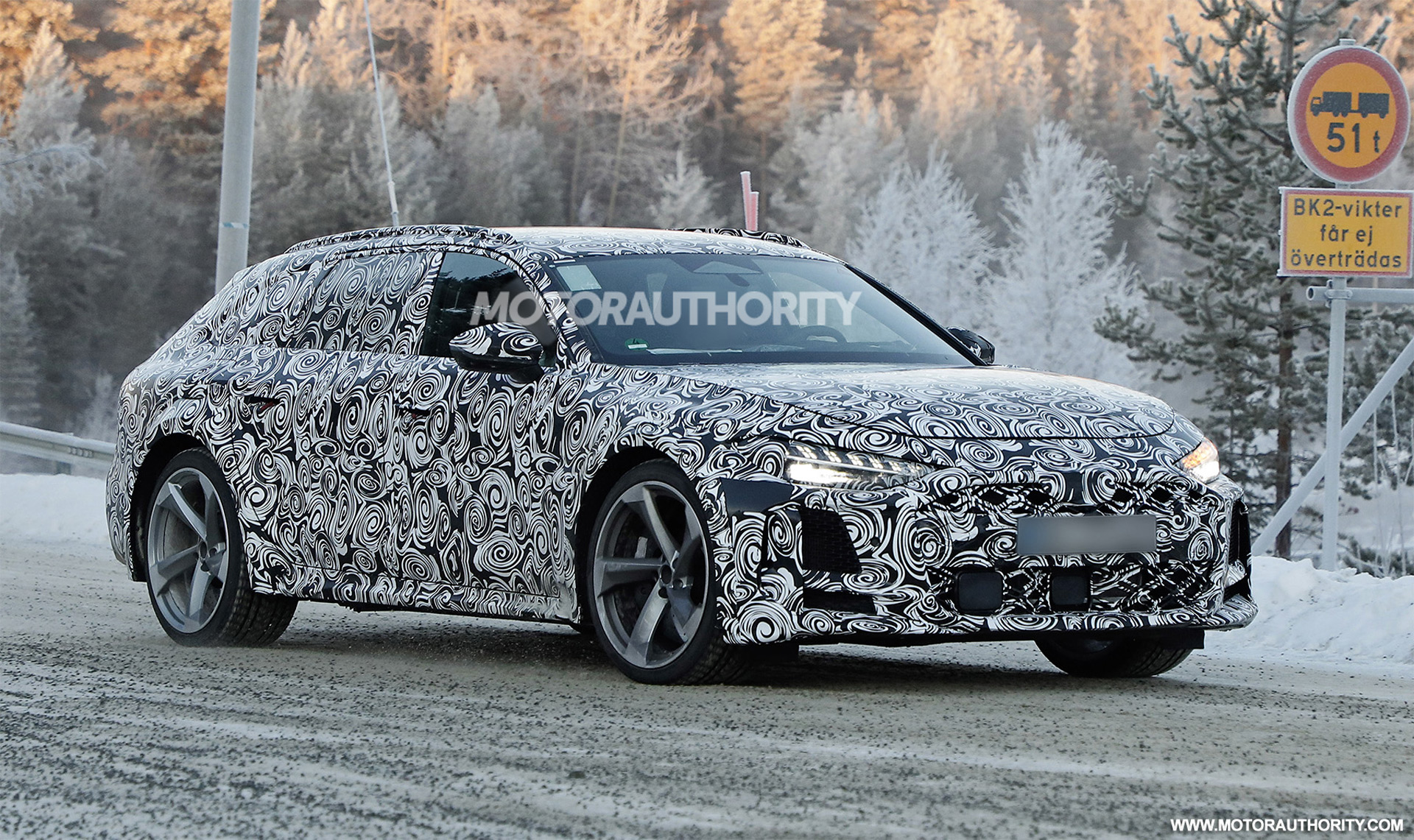
Audi has been spotted testing another member of its next-generation A7 family, and this time the prototype is for a fire-breathing RS 7 Avant.

Earlier shots showed an A7 sedan, A7 Avant, A7 Allroad soft-roader, and a sporty S7 Avant.

Members of the current A7 family are all based on a single Sportback liftback body style. However, for the next generation, there will be sedans to replace the current gas-powered A6 sedan lineup, and Avant wagons that take over for the current gas-powered A6 Avant wagons.

Audi launched the A6 E-Tron Sportback liftback earlier this year, but the automaker still wants to offer a midsize lineup with gas engines, which is why the A7 family is being expanded. It’s all part of Audi’s new naming strategy announced last year, which uses even numbers in the model names for EVs and odd numbers for models with internal-combustion engines (ICE).

2026 Audi RS 7 Avant spy shots - Photo via Baldauf

2026 Audi RS 7 Avant spy shots – Photo via Baldauf

We know this prototype is for an RS 7 because of the wide front fascia with large intakes, as well as widened wheel arches, and cutouts in the rear fascia to eventually house signature RS oval-shaped exhaust tips.

It isn’t clear what powertrain will reside in the next RS 7, though plug-in hybrid technology is almost certain. The most likely setup will combine the current RS 7‘s twin-turbocharged 4.0-liter V-8 with an electric motor integrated with the transmission.

The same setup is already used by several other Volkswagen Group brands, like Porsche for various Cayenne and Panamera models, as well as Lamborghini in its latest Urus, and Bentley in its latest Continental GT.

2026 Audi RS 7 Avant spy shots - Photo via Baldauf

2026 Audi RS 7 Avant spy shots – Photo via Baldauf

The current RS 7 tops out at 621 hp, but with the help of electrification the new generation could see output levels reach beyond 700 hp. BMW’s rival M5, which also features a V-8 plug-in hybrid powertrain in its latest generation, packs as much as 717 hp.

Audi hasn’t announced plans for the new A7 family, but the automaker is expected to use an updated version of the current-generation’s MLB platform. The updated platform is known as the PPC (Premium Platform Combustion), and made its debut earlier this year in a redesigned A5 family.

The first members of the new A7 family will debut early next year. Any that reach the U.S. should arrive as 2026 models. The RS 7 Avant is almost certain to make its way to America to replace the much-loved RS 6 Avant, which bows out after 2025.


Source link