Home Blog Page 279

A. Lange & Söhne CEO Wilhelm Schmid on Preserving Tradition and Embracing Change

0


The Datograph Perpetual Tourbillon Honeygold Lumen showing off its nighttime face

Tradition is at the forefront of our thoughts when we work on the annual Legacy issue. This is about as surprising as finding sand on a beach. The Legacy issue is our dedicated investigation of watchmaking histories and standards, right down to practices and personalities. Tradition obviously plays a vital role. Occasionally, this takes on unexpected meaning or, as some philosopher somewhere noted, it becomes meta. By no means do we mean transcendent here, rather that some stories become a tradition about tradition, in an issue focused on tradition.

If we felt like it, for example, we could have turned this very interview with A. Lange & Söhne CEO Wilhelm Schmid into a story about an interview, that references all the interviews we have done with him and other leaders at the brand (Tony de Haas and Tino Bobe). As we have previously discussed, these are the trio that typically face the press for A. Lange & Söhne and we have interviewed one or more every year since 2019. What is so ‘meta’ about that you might wonder. Well, it refers to a similar line we used in an older story where we specifically acknowledged that this pattern exists. Now, that which is meta can be useful – just think about meta studies, which group individual studies together to deliver new insights – and we should like to bring this perspective to our A. Lange & Söhne stories.

A useful example here is our interview with Schmid two years ago in Singapore, where he told us we should not hold our breath if we expected to buy a Lange 1 (then). Meeting him this year at Watches and Wonders Geneva, Schmid said that the situation has improved, in part as a response to the brand’s efforts to move its business to its own retail network. He cautions that things are still far from perfect.

“Our strategy is to increase our capacity because we will need the increased capacity within the different segments of watches”

This exchange only happened this year because of the exchange last year, and probably in part because the people involved are the same; you cannot have failed to notice that I do the vast majority of all interviews. Back to the point about availability, Schmid also reiterated that the Glashütte brand still makes approximately 5,000 watches. This number has been in our pages and online across many sources for years. It is supported by de Haas’ assertion that to make more of one model or another, fewer will be made of something else. When asked about this, Schmid nodded sagely. “When we introduce something new, we have to cut something existing. It is not possible (or good) to simply layer more references on top of all the existing ones (without some pruning) because in the end who is going to make all these watches?” said Schmid, with the barest of shrugs.

From all our encounters with him, we know Schmid to be a serious and compassionate man. He would never take any step that endangered A. Lange & Söhne. Happily, you do not have to take our word for this. Uniquely amongst his Richemont peers (A. Lange & Söhne is a Richemont brand), Schmid, de Haas and Bobe have been around a long time indeed. The latter two, along with communications boss Arnd Einhorn, have been with A. Lange & Söhne almost since the beginning (collectively). These guys would not have stuck by Schmid if he was not the straight shooter that he seems to be. Schmid himself would not have made it this long (he became CEO in 2011) if he had not been a positive force for A. Lange & Söhne.

Of course, we realise that opinions of A. Lange & Söhne and Schmid have changed dramatically over the last five years as the brand’s watches have become somewhat unattainable and prices have reacted accordingly. The man at the top has answers to those questions, which boils down to reiterating that A. Lange & Söhne is not interested in making more watches to chase growth.

“Our strategy is to increase our capacity because we will need the increased capacity within the different segments of watches,” said Schmid. “This means increasing the capacity of watchmaking hours that we can apply to each watch. Growth will come from more complexity throughout the range and not from higher production numbers.”

And on that note, we invite you to follow our conversation with Schmid and stay till the end for an important note about the Odysseus Chronograph.

The Datograph Perpetual Tourbillon Honeygold Lumen and the Datograph Up/Down (right) are both part of the Saxonia collection

It is the 25th anniversary of the Datograph and you are presenting two very special watches to honour this moment. Given that these are, shall we say, variations on a theme, how have people received them so far (at WWG)?

Let me begin with the Datograph Up/Down – you know that’s with a white gold case and a blue dial; this is a combination we’ve never used before. And remember, our clients are watch collectors, so they always look for the thing they don’t have (and that would be the previous limited edition with a blue dial). This they can’t have because we never did it again. For this limited edition Datograph Up/Down, we will produce in a slightly bigger number – I mean, 125 for us, that’s a lot. For most brands, that is just nothing.

And then the Datograph Perpetual Tourbillon Honeygold Lumen, which has two things we like: special materials and a new calibre. Of course, the calibre has a lot in common with something familiar to collectors. Tell us about what is different here.

First of all, yes the calibre is based on the existing one (that debuted in 2016), but it we had to do a lot of work on the reworked version here. For example, we had to rearrange the whole moon phase indication (which may not be obvious at first glance) and removed the power reserve display.

(The conversation then went into the technical weeds so we present the official A. Lange & Söhne response on this point from the FAQ on the Datograph Perpetual Tourbillon Honeygold Lumen. We present the information below as it was communicated to us.)

Why does the movement only consist of 684 parts compared to the 729 parts of the standard version? The further development of the movement also led to a reduction in the total number of parts. For example, the absence of the power-reserve indicator reduces the number of parts, but the additional components for realising the “Lumen” function do not compensate for this difference.

Is the movement new compared to the existing Datograph Perpetual Tourbillon? Yes, due to the special design features of a “Lumen” model and the omission of a power-reserve indicator, the movement has been significantly enhanced.

So it’s not like the same movement, just with lumen. Unfortunately, that doesn’t work. When you see the Datograph Perpetual Tourbillon Honeygold Lumen alongside all the chronographs (standard datographs), tourbillons, perpetual calendars and the honeygold (limited editions), this one watch represents everything.

A. Lange & Söhne CEO Wilhelm Schmid

On that note about gold, a couple of points – first, is this a signal on directions?

We are very clear in our direction. We have five traditional watch families and one that is quite contemporary in its design. So mostly, we are about very traditional watchmaking; we launched the Odysseus family in 2019 (to do something different), but one reason is definitely to give us a space where we can play with steel…if we play with titanium, if we play with the combination of white gold and rubber, this is what we could do with (in the Odysseus collection). We produce very, very few steel watches a year. This is to say we don’t produce even in the hundreds. We do not touch the other five families (with this sort of contemporary experimentation). So, in this way we can extend the playground of our design a little bit without losing our DNA and we protect the five families that traditionally have been around for a long time. Steel (and other non-precious materials) is not our core business. Precious metals like white gold and platinum, yellow gold and honey gold, that’s the sort of watches we are making. That’s our core business.

And so honeygold then, which we are always excited about! Will we see more watches in this material? It is one of the rare precious materials that has a functional benefit to match the aesthetic ones.

Yeah, but honeygold will always be used for limited editions, and we never produced so many. I think it’s about 2,000 in total. That’s how many we made in honeygold in total since we launched it in 2000. It is a very hard material so it is very hard to work with; it requires special treatment, and even in the event of refurbishment (for servicing), it also requires (special handling). You know, you say the hardness is an advantage to wearers and yes that’s true; it is also a liability in terms of production and servicing. Honeygold is difficult to machine because it is very hard (as opposed to regular gold, thus requiring specific tools and procedures). Therefore, there are not many who can do it and you have to be sensible about how many you want to make. If you make thousands, that will mean thousands to eventually service and the case requires an oxygen-free environment to refurbish it. Making more (than we do) is just not sustainable.

The new watches this year are both boutique editions, but A. Lange & Söhne is mainly available only in your own boutiques. Tell us how far along you are in the process of bringing the retail business in-house and how that has impacted availability and accessibility.

We are about 90 percent (own-boutique) worldwide. At the same time, it is not that we just sent our retail partners an email telling them we are not working with them (with immediate effect). Usually, we have had a great relationship with them over time, and it takes time (to port things over to our own boutiques). There are customers behind (any given) retailer, and we try to serve them as much as possible on whatever was promised on our behalf. We are still in that process; however, because we have reduced (the external retail network) a lot, I can tell you that there is a certain level of availability at boutiques now. It is not perfect but it is better than what it was 18 months ago… or six months ago! We think we will only see the full impact of our strategy in the next 18 months <this conversation took place in April so it means the third quarter of next year.

Dial-side view of calibre L952.4 that powers the Datograph Perpetual Tourbillon Honeygold Lumen

There is a process, yes, and there is even a system for it because I don’t like things that cannot be systematised. I think you get questions like that from people who don’t have a relationship with us because otherwise they would know! It all starts with getting to know someone at the boutique <which means visiting and having an informal chat, to summarise – Ed>. I’m always amazed by this kind of thing… I mean, if you want to make a friend, you don’t go out into the street and shout ‘I want a friend!’ and a friend comes along. In our personal lives, we all know how to make friends…how to establish relationships. It is based on (individuals) getting to know each other and establishing trust. Going beyond something purely transactional. So yeah, in the watch industry, there are those people who want to have the rarest watches immediately. They complain a lot, and we all know or have an idea about what they would do with the watches when they get them.

Has that situation improved, with the flippers?

Absolutely! Because we now know who is buying our watches. You know, anyone can do what he or she wants with their property – that’s not for me to decide. What we want is to understand if (someone visiting the boutique) is a real collector because collectors are our core market. Or is this person someone that buys and then sells quickly? We can do that ourselves; we don’t need a middleman. You asked also about people who want one great watch from us, and just the one. We’re happy to do that but (the person who wants one piece for a special occasion) is not our target. We target collectors who buy watches! They go through our collections to see what they like, and build up their collections. It is a longer journey that does not take just one year but years! That’s why we have to deliver novelties every year…that’s why we have to go the extra mile (all the time) because the collector is a very educated person.

Let us close on both availability and production with a follow-up on the Odysseus Chronograph, which Tony told us would be ready to go into production this year.

Yes, it is… It has moved from prototyping to manufacturing but it will take longer than usual (per standard chronographs at A. Lange & Söhne) because this is new territory for the watchmakers, as you heard from Tony already. It has no comparison for us from anything existing so the calibre is really being made from scratch. The watchmakers still need practice and experience to establish a routine for the automatic chronograph

This article first appeared on WOW’s Legacy 2025 Issue

For more on the latest in luxury watch reads from WOW, click here.


Source link

Exclusive! Boreham Motorworks Ford Escort Mk1 leaked ahead of debut

0


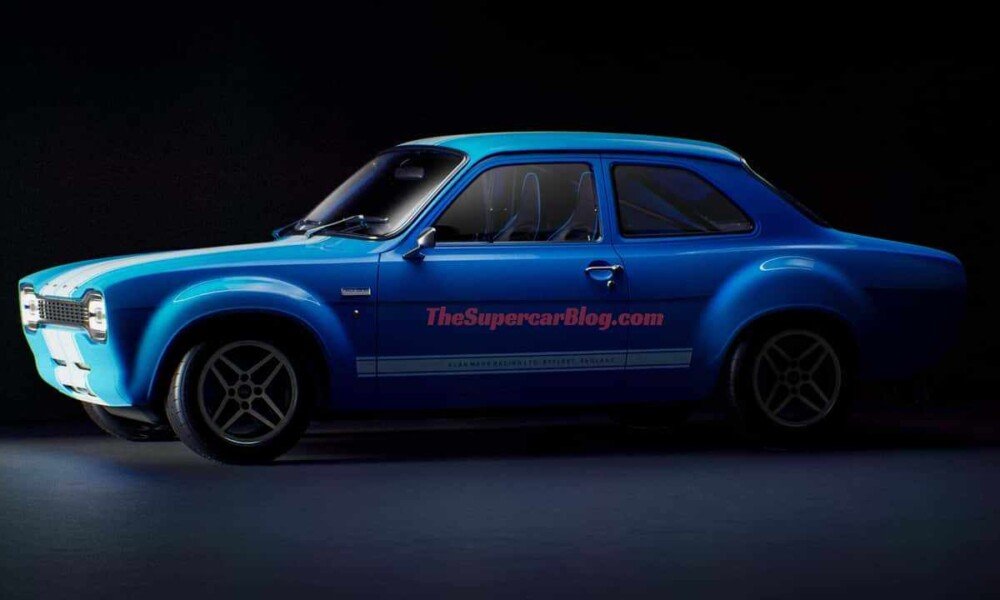
UK-based Boreham Motorworks, which specializes in reviving classic cars, is all set to reveal its latest creation – a Ford Escort Mk1. While the company has put out a few teasers, here are the first leaked images.

Classic car enthusiasts will be pleased to know that the Boreham Ford Escort Mk1 looks almost identical to the original from the late 1960s. It has the same body shell with its familiar 3-box design. The updates are no more than subtle. We can see a new set of LED headlights, LED taillights, massively flared wheel arches, and retro-style 4-spoke wheels.

Boreham Ford Escort Mk1-leaked-2

The revamped interior of the Escort Mk1 features black leather upholstery with red accents. The dashboard, door pads, and seats have Alcantara inserts. Boreham has installed an upgraded instrument cluster, which features revised dials and a 3-spoke sports steering wheel wrapped in Alcantara.

The Boreham Ford Escort Mk1 will be powered by a petrol engine, details of which are yet to be revealed. However, the company claims that it will be the “ultimate expression of the RS-lineage”.


Source link

2025 Mercedes-Benz C350e: Plug-in hybrid sedan confirmed for Australia

0


Mercedes-Benz is bringing plug-in hybrids (PHEV) back to the more affordable end of its Australian lineup, starting with its long-running C-Class sedan.

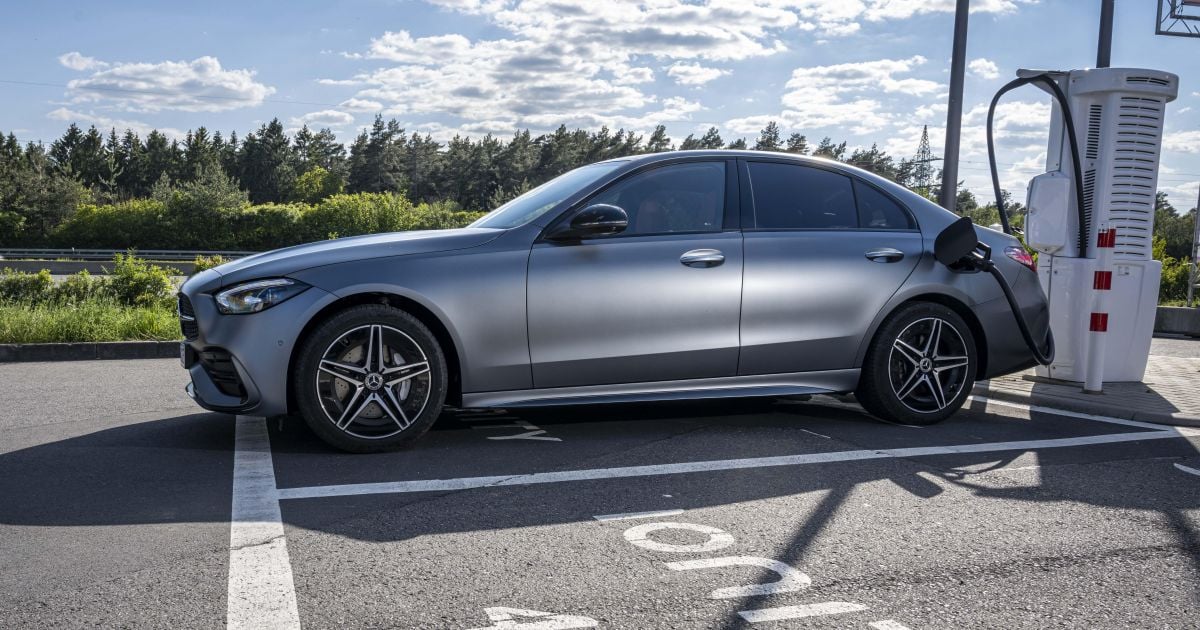
A Mercedes-Benz Australia spokesperson has confirmed the C350e will return to local showrooms in the first half of 2025, marking the first time the current-generation C-Class has been offered as a PHEV since its local arrival in 2022.

The premium German carmaker had opted to not renew the life of its previous-generation predecessor, while also discontinuing PHEV versions of the GLC and E-Class, but an increase in PHEV sales in general this year and a cooling of the electric vehicle (EV) market has led to this changing.

100s of new car deals are available through CarExpert right now. Get the experts on your side and score a great deal. Browse now.

It’s worth noting you can currently buy a C-Class PHEV, provided you spend almost $200,000 on the high-performance Mercedes-AMG C 63 S E Performance flagship.

Australian Government approval documents show the C350e is set to reflect the specifications of the European-spec C300e.

This means a 150kW and 320Nm turbocharged 2.0-litre four-cylinder petrol engine mated with a 95kW/440Nm electric motor, bringing peak combined outputs up to 230kW and 550Nm.

For reference, the existing C300, which does without an electric motor, produces up to 190kW and 400Nm.

European examples of what will be badged the C350e in Australia mate their petrol engines to a nine-speed torque-converter automatic transmission, while the electric motor is fed by a 25.4kWh lithium-ion battery.

Claimed electric-only driving range is 117km, based on the European WLTP lab test cycle.

It’s not yet clear if its equipment list will match that of the current non-AMG C-Class flagship, the C300, which starts at $96,900 before on-road costs – a price the C350e is all but certain to eclipse.

The C350e’s arrival will also come ahead of Australia’s looming emissions regulations in the form of the New Vehicle Efficiency Standard (NVES), which comes into effect in 2025.

The NVES is effectively forcing manufacturers to look at bringing more electrified options including hybrids (ranging from mild to plug-in) as well as EVs to Australia, rather than treat the local market as a ‘dumping ground’ for cheaper-to-produce and higher-emitting models.

MORE: Everything Mercedes-Benz C-Class
MORE: PHEVs back on the agenda at Mercedes-Benz Australia


Source link

Chinese smartphone maker’s first SUV looks like a Ferrari Purosangue knockoff

0


Chinese smartphone giant Xiaomi has revealed its second electric vehicle (EV), which takes the shape of a high-performance SUV bearing a striking resemblance to the Ferrari Purosangue.

First leaked in a Chinese Ministry of Industry and Information Technology (MIIT) filing, Xiaomi CEO Lei Jun posted official images of the YU7 SUV on X (formerly Twitter) earlier this week – with the familiar-looking yet sleek model on full display.

Car News China reports a handful of baseline specifications for the new model based on the government filing, including its dimensions and powertrain.

The YU7 is expected to launch in mid-2025, joining the SU7 sedan in the smartphone maker’s automotive lineup.

100s of new car deals are available through CarExpert right now. Get the experts on your side and score a great deal. Browse now.

According to Car News China, the Xiaomi YU7 boasts a dual-motor all-wheel drive setup, with 220kW at the front and 288kW at the rearm contributing to a total power output of 508kW and a top speed of 253km/h.

The motors will be fed by a lithium NMC battery of as-yet unknown capacity.

The YU7 measures 4999mm long, 1996mm wide, and 1600mm tall while riding atop a 3000mm wheelbase. Those dimensions are similar to the Purosangue and even the taller Kia EV9, as well as being longer and wider than cars like the Mitsubishi Outlander and BYD Sealion 6.

Its kerb weight is a whopping 2405kg – roughly 400kg more than the Purosangue but well within the ballpark of the EV9.

Car News China expects the YU7 to be priced between ¥250,000 (A$53,708) and¥350,000 (A$75,191), placing it in the ballpark of the Chinese-market Tesla Model Y which starts at¥249,900 (A$53,686).

Meanwhile, the similarly proportioned but more aggressively styled Purosangue costs a substantial $728,000 before on-roads in Australia.

As is the case for the Xiaomi YU7, the Purosangue was Ferrari’s first SUV and was controversial as a result. Unlike the YU7, it isn’t an EV, instead powered by a 6.5-litre naturally aspirated V12 with 533kW and 716Nm.

Xiaomi’s YU7 is less than 30kW down on the Purosangue, but the smartphone maker is no stranger to high-output EVs.

It has a track-ready variant of its SU7 sedan called the Ultra, which produces 1168kW of power and was built to tackle lap time records at the Nürburgring.

MORE: Chinese EV blitzes Rimac Nevera’s Nürburgring time, but doesn’t set a new record


Source link

2026 Polestar 5 spy shots

0


Polestar is deep in the development of its Polestar 5, a Porsche Taycan rival previewed by 2020’s Precept concept. The new car is set to begin sales in 2025, likely as a 2026 model.

Initial development work on the sleek electric sedan was handled at Polestar’s R&D center in the U.K., and now the latest prototypes are out testing in public view.

When Polestar showed the Precept, it claimed the concept represented the future design direction for the brand. Judging by our latest spy shots, the production Polestar 5 will closely resemble the show car

It has the same fastback shape, the same wedged nose, the same window line, and the same flared hips. There are differences, though. The production model has lost the coach-style rear doors of the concept in favor of conventional doors. It also features conventional side mirrors instead of stalk-mounted cameras. Patent drawings that surfaced in mid-2022 likely reveal the design.

Polestar Precept concept

Polestar Precept concept

Polestar Precept concept

Polestar Precept concept

Polestar Precept concept

Polestar Precept concept

All previous Polestars, including the new 2024 Polestar 3 mid-size SUV, share platforms with fellow Geely brand Volvo. However, Polestar is shifting to its own components and platforms with the Polestar 5, which will use a bespoke platform. The vehicle will also feature bonded aluminum construction, and, according to Polestar, will boast better torsional rigidity than some two-door sports cars and even some supercars—which is important considering Polestar sees itself as competition for Porsche.

In terms of performance, Polestar has said it is targeting 884 hp and 663 lb-ft of torque from a dual-motor all-wheel-drive powertrain. Such an output will likely be reserved for a range-topping grade.

Polestar has also confirmed an 800-volt electrical architecture, which will enable high-speed charging. The automaker said battery capacity will be 111 -ish kilowatt-hours.

Before the arrival of the Polestar 5, Polestar will launch a Polestar 4 compact crossover in 2024. It will be followed by the 5 in 2025, and a Polestar 6 sports car in 2026. A Polestar 7, whose body style is yet to be revealed, will then arrive in 2027.


Source link

Dominican Cigars: Tradition, Excellence, and Passion

0


The Dominican Republic, renowned for its pristine beaches and exceptional rum, is also a global leader in premium cigars. With its unparalleled craftsmanship and ideal natural conditions, it produces cigars that rival the finest in the world.

This article explores Dominican cigars’ origins, varieties, production secrets, and worldwide success.

Related read: Tips for Travel to the Dominican Republic

In a hurry? Go straight to booking for this Safari Adventure and Discovery Tour.

A highlight when visiting the Dominican Republic is a visit to a family-owned cigar factory. If you’re a cigar lover – or just curious – you can even indulge in a tasting session.

BOOK HERE!

Origins and History of Dominican Tobacco

Tobacco has been a cornerstone of Caribbean history for centuries. Long before the arrival of Europeans, the Taíno people of Hispaniola cultivated and used tobacco for spiritual and medicinal purposes.

Spanish colonization in the 15th century introduced Dominican tobacco to Europe, where it quickly gained popularity.

Over time, the Dominican Republic refined its cultivation and processing techniques, further enriched by Cuban artisans fleeing the revolution of 1959. This fusion of expertise elevated Dominican cigars to the pinnacle of global recognition.

Drying the leaves is part of the tobacco process to make cigars.

Varieties of Tobacco Grown in the Dominican Republic

The Dominican Republic has a diverse range of tobaccos that contribute to the unique character of its cigars, including:

  1. Piloto Cubano: A bold and aromatic variety often used for fillers.
  2. Olor Dominicano: Known for its mild flavor and excellent combustion, ideal for balanced blends.
  3. Criollo 98: A versatile tobacco suitable for both filler and wrapper, appreciated for its complexity.
  4. Corojo: Renowned for its rich, spicy notes and aromatic depth.

The fertile soils of the Cibao Valley, especially near Santiago, are at the heart of the country’s tobacco cultivation.

The Rise of Dominican Cigars

The global rise of Dominican cigars began in earnest in the 20th century. The influx of Cuban expertise and a commitment to quality allowed the Dominican Republic to emerge as a powerhouse in the cigar industry.

Iconic brands like Arturo Fuente, Davidoff, and La Flor Dominicana exemplify the country’s dedication to excellence.

Today, the Dominican Republic is the world’s largest cigar exporter, producing over 230 million cigars annually, predominantly for markets in the United States and Europe. This scale and consistency have cemented its position as an industry leader.

The Craftsmanship Behind Premium Dominican Cigars

The creation of a Dominican cigar is a meticulous process requiring artistry and precision. Key steps include:

  1. Harvesting: Tobacco leaves are hand-picked and carefully sorted based on their intended use (filler, binder, or wrapper).
  2. Curing: Leaves are dried in ventilated barns to stabilize moisture content.
  3. Fermentation: A controlled process that enhances the flavor and removes impurities.
  4. Aging: Premium leaves are aged for years to develop complex aromas.
  5. Hand Rolling: Skilled artisans hand-roll the cigars, ensuring consistent quality.
  6. Quality Testing: Before distribution, cigars undergo rigorous tests for draw and burn uniformity.
Cigar rolling at Don Lucas Cigars Fuente Opus in the Dominican Republic.

Dominican Cigars vs. Cuban Cigars

In the debate between Dominican and Cuban cigars, production figures and market reach highlight the key differences between these two industry giants.

The Dominican Republic is now the global leader, with an annual production of over 230 million cigars exported worldwide, particularly to the United States and Europe. In contrast, Cuba produces around 90 to 100 million cigars annually, focusing on more limited markets due to the U.S. embargo. Cuba’s main consumers are in Europe (Spain, France, Germany) and Asia, where Cuban cigars are synonymous with exclusive luxury.

The success of Dominican cigars stems from several factors: exceptional artisanal expertise, a skilled workforce, and the ability to cater to diverse smoker preferences with a broad range of products. Renowned brands like Arturo Fuente and Davidoff have further bolstered the international reputation of Dominican cigars.

Conversely, Cuban cigars, while still cherished for their history and prestige, face challenges such as lower agricultural yields and reliance on a singular terroir. This limitation has allowed Dominican cigars—often crafted from Cuban seeds but grown in distinct soils—to develop their own identity, characterized by complex flavors and consistent quality.

In summary, while Cuba remains a historical and romantic symbol in the cigar world, the Dominican Republic now leads in terms of volume and diversity, reinforcing its status as the world’s top cigar exporter. This evolution reflects the successful modernization of its industry, perfectly aligning with the growing demand from international consumers for high-end artisanal products.

Where to Buy Dominican Cigars

For those seeking the finest Dominican cigars, there are several options:

  1. Speciality Shops: Cities like Santo Domingo and Santiago host cigar boutiques offering premium selections.
  2. Cigar Factories: Visit artisanal factories, such as Arturo Fuente and La Aurora, which provide a unique opportunity to see the crafting process and purchase cigars directly.
  3. Cultural Excursions: Tours like Dominican Attitude’s Safari Adventure and Discovery allow visitors to explore a traditional cigar factory, learn about the production process, and enjoy fresh samples.

Related read: Best Places to Visit in the Dominican Republic

Safari Adventure and Discovery Tour

Embark on an unforgettable adventure and explore the local life in a comfortable group with a friendly native guide!

You will start in the charming town of Higuey, where you can stroll through the bustling market filled with colorful fruits and vegetables, and don’t forget to check out the local meats!

Next, you will visit a family-owned cigar factory. You’ll see the whole process in action, and if you’re a cigar lover – or just curious – you can even indulge in a tasting session. It’s a unique experience you won’t want to miss, and with the information above, you now know how good the cigars are in the Dominican Republic.

Another highlight is the picturesque sugar cane fields. You will learn some fascinating tidbits about their importance in the history of the Dominican Republic. And yes, you’ll get to taste some of that sweet sugar cane.

Then, it’s time to enjoy a delicious lunch right on the river, surrounded by lush jungle. Imagine a traditional Dominican meal served with stunning views of nature all around you-talk about a feast for the senses!

Once you are fueled up, you will hop on a platform boat for a scenic ride down the river. You will get to see all the breathtaking scenery up close. And to end the day, you can take a refreshing dip in the river, complete with a rope swing for some Tarzan-style fun!

So, are you ready for an adventure packed with culture, delicious food and a dash of excitement?

Book it here!

Price: $84 per adult; $49 per child
Duration: 6-7 hours
Free cancelation

Included:

  • Transport from hotels in Bayahibe – Dominicus (other pick-ups possible for an additional fee)
  • Friendly team ready to make sure you have a great time
  • English speaking guide
  • Drinks: Coca Cola, Sprite, water and rum
  • Typical Dominican food
  • Platform boat ride on the Chavon River

The Dominican Republic exemplifies excellence in the cigar world through its rich history, diverse tobacco varieties, and artisanal craftsmanship. Whether you’re an experienced connoisseur or a curious novice, Dominican cigars promise a sensory journey like no other.

To experience this heritage firsthand, explore tours offered by Dominican Attitude, where culture and craftsmanship converge to create unforgettable memories.

  • Dominican Attitude

    We organize authentic outings. If you want to avoid mass tourism, you’ve come to the right place. Don’t wait any longer and book now!​


    View all posts


    We organize authentic outings. If you want to avoid mass tourism, you’ve come to the right place. Don’t wait any longer and book now!​


Source link

Everybody wanted to keep the Hemi except Stellantis’ former CEO, according to sources

0


  • Carlos Tavares, who led Stellantis since its formation in 2021, quit the company this week
  • According to sources, Tavares was too heavily focused on cost-cutting and making the company green
  • This focus reportedly led to the Hemi V-8s and popular models being dropped without their replacements being ready

With Stellantis’ global sales down 17% in the first nine months of the year, its share price dropping more than double that figure over the same period, and no quick turnaround in sight, it wasn’t a huge surprise when the company’s CEO, Carlos Tavares, quit earlier this month.

Stellantis announced on Dec. 1 that Tavares had resigned due to “different views” with the board. This statement came just two months after Stellantis indicated that Tavares would remain CEO until 2026, when his current contract was set to expire.

Citing various anonymous sources, CNBC detailed some of the tensions at Stellantis that led to Tavares’ departure.

According to the sources, Tavares failed to heed feedback from U.S. managers—representing Stellantis’ most profitable market and the one most affected by declining sales. Instead, he reportedly prioritized cost-cutting while pushing to increase margins, which alienated suppliers, factory workers, and dealers, and ultimately turned customers away.

Stellantis brands

Stellantis brands

The sources also claimed that Tavares’ focus on electric vehicles came at the expense of more affordable, lower-margin gas-powered models and the beloved Hemi line of V-8 engines. This led to the discontinuation of popular models like the Jeep Cherokee and Dodge Challenger and Charger without ready replacements, as well as the phase-out of Hemi engines from most product lines.

“Everybody wanted to keep [the Hemi],” one source said, adding that Tavares remained adamant about phasing the engines out. Currently, Stellantis’ only light vehicles offering a V-8 are the Dodge Durango and Jeep Wrangler.

With Tavares out, Stellantis is working to steady its operations. The company this week announced the rehiring of Tim Kuniskis, who retired in May. Kuniskis, known for spearheading the Hellcat line of performance V-8s, previously led Dodge and Ram and has been brought back to lead Ram.

Stellantis is also searching for a permanent successor for Tavares, a process the company expects to conclude by the first half of 2025. In the meantime, Stellantis will be managed by an interim executive team led by Chairman John Elkann, a member of the Agnelli family, whose Exor holding company owns roughly 14.4% of Stellantis.


Source link

Lightship AE.1 Cosmos Edition electrifies glamping for $250,000

0


Startup Lightship on Wednesday unveiled the production version of its battery-powered travel trailer.

Originally called the L1, the trailer is now known as the AE.1, and is due to start production in mid-2025 at the company’s Broomfield, Colorado, facility, Lightship said. The first 50 units will be Cosmos Edition models priced at $250,000, but Lightship expects tax credits to reduce the effective price to $239,900.

Unveiled in 2023, the Lightship trailer uses a battery pack to not only power appliances, but also propel the trailer. The propulsion system means EVs towing it won’t lose range, and internal-combustion vehicles will get more mpg, Lightship claims. At the time of its unveiling, Lightship said an 80-kwh pack would allow a 300-mile EV towing the trailer to “remain a 300-mile EV.”

Lightship AE.1 Cosmos Edition

Lightship AE.1 Cosmos Edition

Battery power—supplemented by a solar roof—allows campers to avoid the noise of a generator or the hazard of propane tanks, Lightship notes, while enabling features like an “automotive grade” climate control system and a full bathroom and kitchen, the latter equipped with a dishwasher, refrigerator, microwave, convection oven, and induction cooktop.

The start of production has slipped a bit from Lightship’s original target of late 2024, and the asking price for the Cosmos Edition is much higher than the $125,000 base price the startup previously announced. That likely applies to one of three additional grades—Atmos, Panos, and Terros—that will follow the Cosmos Edition. That launch version will initially be offered to early reservation holders before being opened to all customers, and Lightship is also taking reservations for the three other grades.

RV life with electric vehicles will require some new approaches, and Lightship isn’t the only company working on them. Airstream in 2022 unveiled the eStream, a travel trailer that’s also designed to boost EV range, or mpg in gasoline or diesel vehicles. Colorado Teardrops connects a battery pack in the trailer to the tow vehicle, which is then used to give it an extra charge.


Source link

What didn’t make the cut

0


Earlier this week we named five Green Car Reports Best Car To Buy 2025 finalists. 

The Chevrolet Equinox EV, Hyundai Kona Electric, Porsche Macan Electric, Rivian R1S, and Volkswagen ID.Buzz all made it to the final round. 

One of these will earn the annual distinction, and over the next week we’ll take a deeper look at why each one made the shortlist. But before then we’re taking a brief look here at what isn’t on that list, and why. 

First off, Best Car To Buy is an award given to vehicles that are completely new or substantially redesigned in the calendar year leading up to the event, and due to be widely available in the calendar year following the award. 

2025 Volvo EX90

2025 Volvo EX90

To earn a spot on our final round, we needed access to the model for testing by our entire editorial group in October—and that eliminated at least two models we’d been expecting to have as finalists: the Volvo EX90 and Polestar 3. Both of these South Carolina–made EVs are among the year’s most important new vehicles.

That also meant the Tesla Model 3 Highland didn’t make the cut, because it proved too challenging to test the same vehicle and specification. Deliveries of this substantially reengineered version of one of the most popular EVs ever started in January, and it definitely checks all the boxes, with a refined ride, more hushed interior, and far better fit and finish than original examples of the Model 3. In a full review of the 2024 Tesla Model 3 Highland, we found this model to offer all the efficiency and charging ease of its predecessor while being easier to live with. 

2024 Dodge Charger Daytona

2024 Dodge Charger Daytona

For some models, it’s simply a matter of timing. The 2024 Dodge Charger Daytona EV and its V-8 sounds might be delivered before the end of the year, but we’ve only had very limited access to prototypes (and can’t fully tell you about that as of yet). And the Jeep Wagoneer S electric SUV and Ram 1500 REV electric pickup simply won’t make it here in time to be included. Neither will the Cadillac Escalade IQ and Cadillac Optiq. 

2025 Lucid Gravity Grand Touring

2025 Lucid Gravity Grand Touring

The same is largely the story with the Lucid Gravity, which is in production in Arizona and likely to be delivered in small numbers before the end of the year. But our time with this model has been limited to a short preview drive of a Gravity prototype, so it’s going on next year’s list, unfortunately.

2025 Volvo EX30

2025 Volvo EX30

Another worthy contender for next year will the Volvo EX30, which the Swedish automaker has said that it will start delivering in the U.S. before the end of the year, after a false start and then a delay for this market of nearly a year. 

Next year’s list will also likely include some plug-in hybrids once again. Due mostly to timing, and a lack of PHEVs we could agree qualified as fully new or reengineered, that’s something we simply didn’t have this year.


Source link

Breaking: Aston Martin Valhalla

0


Fusing the performance-driven methodologies and technologies of Formula 1® with spectacular design and scintillating driving dynamics, Valhalla is a supercar of extraordinary scope. With development now at an advanced stage the time has come to reveal full details of Aston Martin’s landmark mid-engined hybrid supercar.

As befits the ultimate driver’s supercar, Valhalla is a car of ‘firsts’: Aston Martin’s first series production mid-engined supercar and first plug-in hybrid, delivering the marques first production vehicle with dedicated EV range capability. It is also the first model to use the bespoke 4.0-litre twin-turbo flat-plane crank V8 engine – the highest performing V8 engine ever fitted to an Aston Martin – and is the first to use the brand’s all-new 8-speed Dual Clutch Transmission (DCT), which incorporates an e-Motor and electronic rear differential (E-diff).

Valhalla also debuts a fresh design language. Extreme supercar performance expressed with fresh form and proportion, it bears the unmistakable Aston Martin hallmarks of flawless, uncorrupted lines and combines them with innovative high-downforce active aerodynamics. Close collaboration with Aston Martin Performance Technologies (AMPT) – the consulting arm of the Aston Martin Aramco Formula 1® Team – on dynamics, aerodynamics and materials have brought an extra dimension of knowledge and skills to the Valhalla’s design and development. This vital contribution has aided Aston Martin to push the boundaries of supercar engineering and performance to deliver a car which shines on road and thrives on track.

Technical Overview

This relentless pursuit of excellence has seen Valhalla’s specification evolve significantly from the original concept with significant gains achieved in power output, downforce and dynamic capability. Central to this is Valhalla’s best-in-class 1079PS and 1100Nm of torque hybrid powertrain comprising an 828PS 4.0-litre twin-turbo V8 engine and three electric motors (two of which drive the front axle) contributing a further 251PS. The Internal Combustion Engine, (ICE) produces 207PS/litre, the highest specific output from any Aston Martin. An all-new 8-speed DCT transmission sends drive to the rear axle, delivering split-second shift times and a thrilling shift character. Performance targets include 0-100kp/h (62mph) acceleration in 2.5 seconds and an electronically limited 350km/h (217mph) maximum speed.

Active aerodynamics informed by the revolutionary Aston Martin Valkyrie generate in excess of 600kg of downforce. This figure is reached at 240km/h (149mph) and then maintained all the way to Valhalla’s 350km/h (217mph) maximum speed by using active aerodynamics to gradually reduce the front and rear wings’ angle of attack to ‘bleed’ excess downforce as speed rises, thereby keeping the aerodynamic balance consistent across a broad performance envelope for maximum driver confidence.

Sophisticated Integrated Vehicle Dynamics Control (IVC) electronics monitor suspension, braking, steering, active aerodynamics and powertrain systems to achieve optimal performance and driver connection in every situation. Working in harmony with Valhalla’s four driver selectable drive modes, IVC continually shapes Valhalla’s dynamic character by monitoring vehicle behaviour and driver demands. Through precise calibration this immensely complex and sophisticated system delivers an organic, natural feeling driving experience. One which effortlessly and seamlessly ups its game to achieve new heights of performance and driver engagement.

On start-up, Valhalla selects Sport mode as default, with the driver able to manually select Pure EV, Sport+ and Race as alternative drive modes. Each mode has its own combination of settings for powertrain (including Torque Vectoring and hybrid system integration), plus suspension stiffness, active aero, and steering calibration for distinct driving characters. In pure EV mode, drive is from the front-axle motors only with a range of 14km and a top speed limited to 140km/h (80mph).

With the four defined drive modes, drivers can select their chosen mode via the rotary in the center stack. A tactile control, for maximum interaction between driver and machine. Each drive mode is purposefully calibrated to give the driver a distinct and differentiated experience. In pure EV, silent on start-up, and the mode we imagine customers to start and end their journey. As the battery depletes its state of charge, Valhalla will automatically switch from EV to Sport. Sport engages the 4.0-litre Twin-Turbo V8 engine and drives Valhalla as a hybrid supercar, combining the instantaneous torque of the electrified front axle with the exhilarating power of the V8. Dialing up the theatre into Sport +, Valhalla is maximised for dynamic thrill on the open road. Race mode is all about ultimate performance, focused for the racetrack, and engaging the active aerodynamics.

In pure EV, Sport and Sport+ modes, the active rear wing remains stowed to maintain Valhalla’s elegant silhouette. In Race mode, the rear T-Wing raises by 255mm on powerful hydraulic rams for maximum downforce.  In conjunction with the distinctive and active rear wing, Valhalla employs a concealed active front wing, just ahead of the front axle, a component that is essential to how Valhalla controls the air in Race mode. A technical triumph, developed with a single mechanism to control and manage airflow across multiple surfaces, the active front wing is set to minimize drag in its default position. When Race mode is selected the front wing shifts to maximum downforce mode with full range of movement including, an automated DRS function when the vehicle determines it needs to bleed of downforce. Under braking, when in Race mode, the rear wing will dominantly deploy as an air brake, working in tandem with the active front wing to shift the balance of pressure and ensure optimal stability when delivering incredible braking performance.

Powertrain

Valhalla’s hybrid powertrain combines a new 828PS 4.0-litre twin-turbocharged V8 engine with three electric motors contributing a further 251PS; two E-motors are mounted on the front axle and a third E-motor built-in to the new 8-speed DCT transmission, which sends dedicated drive to the rear axle.

The trio of E-motors are powered by an advanced High-Performance Battery (HPB) system designed specifically for use in a performance focused PHEV powertrain. Featuring an ultra-effective dielectric cooling system the battery combines the capability to deploy its state of charge to satisfy frequent and successive power demands with fast energy absorption and high-power density. This means that on a spirited drive, the full power potential can be called up immediately, while recuperation is strong when decelerating.

The front axle is driven solely by a pair of innovative Radial Flux Interior Permanent E-motors designed solely for Valhalla, with each motor generating 18.1 PS/kg. When EV mode is selected, Valhalla takes drive exclusively from the front axle. Uniquely, these front E-motors are integrated within a custom-built P4 Front Electric Drive Unit to allow front wheel torque vectoring. To extract all possible torque and power, and achieve exceptionally compact package space requirements, the P4 unit employs market leading high strength Neodymium Iron Boron magnets within an asymmetric rotor. Aided by a newly developed cooling strategy, the E-motor features Active Stator and Rotor Oil cooling to reduce temperatures and consistently maintain maximum performance in the most demanding driving scenarios.

The rear axle is driven by the V8 engine, with additional contribution from the third electric motor built into the DCT transmission. Unlike the V8 found in Aston Martin’s Vantage, DB12 and DBX707 models, Valhalla’s new engine employs a dry sump lubrication system to ensure adequate oil supply even under high lateral forces on the racetrack. Another significant difference is the flat-plane crankshaft, where the crankpins are aligned with a 180-degree offset.

The ignition of the flat-plane V8 alternates from one bank of cylinders to the other, eliminating the residual gas issues of the cross-plane V8. The more uniform combustion across all cylinders allows for optimal utilization of the engine’s power potential and delivers sharper response.

New camshafts and new exhaust manifolds further improve the gas exchange. The pistons have been designed for higher peak pressures while also being weight optimized. The two twin-scroll turbochargers are roller-bearing mounted, which further enhances their response. A larger compressor wheel is used here, allowing the turbos to deliver an increase of almost 20% of air per hour compared to Aston Martin’s most powerful cross-plane crank V8 engine, found in the DBX707.

There is no physical connection between the front and rear axles. Instead, the two axles are continually monitored and managed by Valhalla’s state-of-the-art IVC and Integrated Power Brake systems. Torque Vectoring on the front axle and the rear axle’s Electronic Limited-Slip Differential (E-diff) control drive to all four wheels, according to dynamic demands for a perfect blend of traction, stability and handling agility, with enhanced steering precision and neutral handling balance.

Completing the powertrain is an all-new 8-speed DCT transmission. Designed and built for Aston Martin, this new paddle-shift gearbox has been developed specifically for the hybrid era and features a built-in electric motor. This E-motor is used to start the 4.0-litre twin-turbo V8 engine, charge the high voltage batteries and provide torque fill to assist the engine. It also supports with gear synchronization, allowing Aston Martin engineers to tune the gearshift character and achieve best-in-class shift speeds. When EV mode is selected, Valhalla takes drive exclusively from the front axle. There is no reverse gear, rearward drive instead being provided by the front axle E-motors in all drive modes.

Chassis and Brakes

At Valhalla’s core is a bespoke carbon fibre tub for maximum stiffness with minimum weight penalty, with the lower section weighing only 74.2kg. Designed and engineered by AMPT, which applies their highly specialized F1® expertise and technical capabilities beyond the pinnacle of motorsport, Valhalla’s structure is the product of cutting-edge composite technology. The Carbon Monocoque at the core of Valhalla helps achieve a dry lightweight mass of 1655kg giving a power to weight ratio of 652PS per 1000kg.

Valhalla’s carbon structure has been created using proprietary technology developed for Aston Martin. The upper and lower sections of the structure are molded from carbon fibre using a combination of Resin-Transfer-Molding process (RTM) and F1® derived autoclave technology.  The result is a singular, immensely stiff, strong and light passenger cell which delivers best-in-class dynamic structural attributes and outstanding safety, without compromising driver and passenger ergonomics.

Aluminum subframes are attached to the front and rear of the tub. The front-end features Formula One® style push rod front suspension with inboard mounted springs and dampers. By moving the dampers inboard, Valhalla benefits from improved airflow within the wheel arch, paired with the purposeful cut outs in the front fender above the wheel lowering the air pressure within the wheel arch and reducing drag. The improvement of airflow out of the wheel arch is directed by the door turning vanes to purposely feed the rear oil coolers with better quality air. From a design and packaging perspective, the inboard damper system has allowed a lower body surface ahead of the A pillar, its efficient packaging allows greater room for the front axle electric motors and front radiator system.

The rear is built around a highly effective 5link suspension system. A bespoke evolution of Bilstein’s precise and ultra-reactive DTX adaptive dampers are fitted front and rear. Tuned to deliver an exceptional range of performance across Valhalla’s various dynamic driving modes, Sport and Sport+ offer the refinement and optimum balance of body control, dynamic agility and compliance for road driving, with Race mode introducing much increased support and control to capitalize on Valhalla’s active aerodynamic downforce for maximum performance on track.

Valhalla’s braking system has also been honed to truly deliver across those two extremes. Progressive stopping power during road use with ample reserves of outright retardation for on-limit track driving. These characteristics have been achieved through careful tuning of a new Integrated Power Brake system, which allows fine tuning of pedal feel across the full range of deceleration. This ensures precise, instinctive modulation thanks to a firm, confidence-inspiring pedal feel whether making modest braking inputs or demanding maximum stopping power from elevated speeds.

Featuring 410mm Carbon Ceramic (CCB) discs on the front axle and 390mm on the rear, Valhalla’s braking system is controlled by sophisticated brake-by-wire technology. Engineered for the rigors of track use and finessed for the nuanced demands of road driving, Valhalla’s brakes are a spectacular blend of power and precision.

With a core of ceramic material reinforced with carbon fibre and covered by an additional ceramic friction layer, these CCB brakes yield significant mass reduction over traditional cast iron discs together with superior thermal and durability properties. Gripped by 6-piston front and 4-piston rear ventilated monobloc calipers fed with direct mass airflow from dedicated ducts for uninterrupted cooling, Valhalla has immense reserves of stopping power.

This approach guarantees that temperatures are effectively regulated during high-performance driving conditions. despite this focus on performance, the refinement of the braking system has still been a priority and not a compromise. We have continued to build upon the best-in-class Aston Martin brake pedal DNA, providing good support throughout the pedal sweep, matched with appropriate levels of response to instil confidence, and the ease of modulation through a linear, sporty feeling pedal. All this with the introduction of Integrated Power Brake (IPB), ultimately leads to reduced reaction time and a great level of control.

In Race mode Valhalla’s friction braking system is supplemented by the Active Aerodynamics, which adjust front and rear active aerodynamic surfaces to create an Airbrake. Acting like a parachute to significantly add drag during heavy braking, the Airbrake also puts more downforce on the rear of the car. Using aerodynamic downforce to counter the forces of weight transfer improves stability under hard braking. The increased drag also helps reduce stopping distances and improve braking times.

Regenerative Braking is a major feature of the Aston Martin Valhalla, increasing the usable range of the electric drivetrain and making otherwise wasted energy usable again by employing the front axle E-machine to convert braking energy and store it in the HV battery. Valhalla utilises two forms of regeneration; CAT B, via the front E-motor where the driver applies the brakes and CAT A where regeneration is done via the rear E-motor as the driver lifts off the throttle.

Driving Dynamics

Valhalla excels on both the Road and Track, focusing on driver engagement, agility and dynamic excellence with a unique combination of active aerodynamics and torque vectoring.

Central to Valhalla’s remarkable handling and dynamic behaviour is a sophisticated Torque Vectoring system. Using the two electric motors located on the front axle to independently feed varying amounts of torque to each wheel, Torque Vectoring is used to enhance the agility and stability of the car.

Torque Vectoring (E-TV) is an extension of Aston Martin’s advanced and Integrated Vehicle Dynamics Control (IVC) system. First introduced in DB12, the IVC system has been developed even further for Valhalla, seamlessly adding Torque Vectoring, Electric All-Wheel-Drive Distribution (E-AWDD) and regenerative braking work in harmony with the E-diff, Powertrain and the IPB braking system.

Valhalla utilises E-TV to adjust the way the vehicle handles and feels, by virtually changing basic parameters of the car. This means, that the control system is permanently calculating a desired behaviour with a model-based approach. By changing those parameters in the desired vehicle model, IVC automatically calculates the amount of Torque Vectoring needed. The calibration of torque vectoring is primarily dependent on the selected level of ESP, as E-TV is integrated into the ESP’s control strategy. In turn, the ESP on Valhalla is part of the Integrated Power Brake (IPB), which is a brake-by-wire system to allow for the seamless integration of regenerative braking. There are three modes available, as follows:

ESP-On

The main objective of ESP-On is to make the car as accessible as possible for the driver, with E-TV used to make the limit of the car more approachable. This is achieved by ESP acting early to mitigate over- and understeer before it develops to a level where corrective steering inputs are required. By maintaining stability without the need for sharp ESP intervention drivers of all abilities are enabled to gradually work towards the limit of the car without ever breaching it.

ESP-Race

ESP-Race increases the feeling of agility and steering response, using Torque Vectoring to attack corners at the limit of maximum lateral performance. The ESP’s intervention threshold is also increased, allowing skilled drivers to drive at and even drift slightly beyond the limits of traction and lateral grip. Though tuned for more extreme driving, ESP-Race still provides less experienced drivers with the background support to confidently explore Valhalla’s elevated capabilities with the reassurance ESP will intervene beyond a certain slip angle.

ESP-Off

In ESP-Off, the full scope of Valhalla’s dynamic capability is unleashed. Developed for the enjoyment of expert drivers in a track environment, ESP-Off allows the limits of traction and lateral acceleration to be freely exceeded, placing the driver in full control. To aid their enjoyment, E-TV is tuned to achieve the highest levels of lateral acceleration and used to adapt the balance of the car, sharpening steering response and intensifying the feeling of agility in low-speed corners and focusing on stability and calmer responses at higher speeds.

Active Aero

The aerodynamic approach to Valhalla starts in a similar way to an F1® car, by using all elements of the body shape to generate downforce and minimise drag. However, Valhalla is not restricted by F1® regulations so it can benefit from fully active aerodynamic systems at both the front and rear of which will generate in excess of 600kg of downforce at 240km/h (149mph). Valhalla employs an integrated system of Active Aerodynamics which combines moveable aerodynamic surfaces with precise management of underbody airflow. This enables Valhalla to adapt front and rear downforce to maximise grip, balance and consistency, or reduce drag depending on the situation and the driving mode selected. This enables drivers to extract the very best from Valhalla’s chassis and tyres, across the full performance range of the car.

This powerful system is the key to generating high downforce for maximum cornering capability and braking stability, with the added benefit of DRS to achieve a towering 350 km/h (217mph) top speed. To do this Valhalla uses powerful and near-instantaneous hydraulic actuation to control the active aerodynamics, the rear wing working in conjunction with concealed active front wing to maintain an optimal aero-balance. Behind the front splitter the under-floor surface is concave, creating a low-pressure area that generates downforce. Valhalla’s front wing is a unique piece of engineering that is bespoke to Aston Martin and Valhalla. The movement on the front wing, controls the downforce of the wing itself and the air flow to the underfloor vanes. The front wing also has an integrated cooling bypass to save additional drag at high speed when Valhalla does not need as much cooling.

Design

Freed from the necessity for a fixed wing, Valhalla’s predominantly carbon fibre body evolves the ethos of form following function to embody a new era of efficient performance and true beauty.

Dramatic forward-hinged dihedral doors add supercar theatre but thoughtful design and engineering of the monocoque and doors – specifically lowered sills, roof cut-outs in the roof and a forward A-pillar position – significantly eases ingress and egress. Creating a class leading opening, the dihedral hinge takes the door up and away from the driver and passenger, allowing the user to easily drop into the bespoke carbon fibre seats and swing their legs into the cabin effortlessly.  The doors also incorporate one of Valhalla’s most innovative aerodynamic features. Called the door turning vane, airflow exiting the front wheel arch is directed down Valhalla’s flanks and into ducts which improve performance of the V8 engine and transmission oil coolers by 50%. The inner surface of the door outer is sculpted to serve as a duct, allowing air to flow inside the door, passing along the sides of the car and into the cooling ducts for engine and transmission. This keeps the outer surface clean and free from visible scoops and intakes.

Rising from the sleek roof is an F1® inspired roof snorkel, directing air to multiple places including two engine intake paths, air to air intercoolers and an engine bay cooing duct. The roof scoop is flanked by wing-like opening panels giving access to fuel, oil and coolant fillers for the engine and charging ports for the plug-in hybrid battery. Far from compromising its immaculate surfacing these functional features are amongst Valhalla’s many intelligent details.

The quad exhaust system comprises a pair of top-exit tailpipes to maximise visual and aural drama, with an additional pair of low-mounted tailpipes flanking the underbody venturi tunnels. The lightweight exhaust system optimises the flow of exhaust gases and shapes Valhalla’s sound character; the low-mounted tailpipes being managed by active valves.

The rear of the car is dominated by two large venturi tunnels, accelerating the airflow under the car and generating downforce delivering a perfect balance of dramatic form and aerodynamic function. A design signature of Aston Martin hypercars and special projects, the 3D dimensional light blades protrude through a rear mesh panel, the pattern for which has been designed to allow hot airflow to be extracted from the back of the car.

A choice of two designs of wheel gives scope for further personalization. A forged aluminum wheel is available in three finishes; liquid titanium, textured black matte, satin black/ diamond turned and is fitted with bespoke AML coded 285/30 ZR20 front and 335/35 ZR21 rear Michelin Pilot Sport S 5 tires. For those who wish to express Valhalla’s extreme performance, an ultra-lightweight magnesium wheel (which save a total of 12kg of unsprung mass) is available in either textured titanium and satin black and fitted with track focused Michelin Pilot Sport CUP 2 tires for maximum cornering performance.

Interior

Formula One® influences found in the extreme Valkyrie hypercar also inform Valhalla’s cockpit, with clean, reductive design creating an environment to immerse both driver and passenger in an intense and unforgettable supercar experience. Foremost amongst them are raised footwells for a low hip-to-heel seating position and lightweight, one-piece carbon fibre seats for maximum support. The seating position amplifies the driver’s sense of connection without compromising comfort. The steering wheel shape has too been inspired by F1® and features a one-piece carbon fibre armature.

The Amphitheatre line is a key feature of Aston Martin’s new interior design language, wrapping around the cabin, cosseting the driver and passenger with a cockpit feel. A carbon brace runs the width of the cabin, on top of which floats the Instrument Panel. Each component is designed to enhance the driving experience of Valhalla, while maintaining the high levels of craftsmanship and excellence that customers are familiar with from Aston Martin’s core GT products.

The HMI system also features a central touchscreen incorporating the introduction of new EV features, including a uniquely designed drivetrain visualiser illustrating the PHEV Powerflow in realtime. This Powerflow graphic has been purposely designed for Valhalla with inputs showing when Valhalla is regenerating energy under braking, performing load shift to charge the battery and when it is deploying energy to enhance performance and dynamics. Being the first Aston Martin with a dedicated EV range, the EV drive mode presents a clear graphic on to the driver display showing Valhalla’s energy deployment, electric power, and subsequent energy regeneration. Reflecting its position as the ultimate driver’s supercar, Valhalla also introduces selectable ADAS modes to configure the preferred level of intervention quickly and easily for different driving scenarios.

Like all Aston Martin models, Valhalla customers can explore endless bespoke and customisation possibilities via the luxury brands personalization service, Q by Aston Martin. Enlisting the skills of Q’s designers and crafts people, customers can embark on an unforgettable design journey that can encompass everything from a single small distinguishing detail to full-scale engineering and production of entirely bespoke components to create a true one-off.

With the credentials and exclusivity of Valhalla, Aston Martin anticipate a huge number of orders going via Q by Aston Martin to make each car truly bespoke for their discerning customers.

Specifications

Body

  • Carbon Fibre monocoque aluminium front and rear subframes
  • Carbon Fibre body panels including front clam, bodysides, rear clam and diffuser
  • Two door mid-engine coupe with 2 seat configuration
  • Dihedral doors for class leading ingress / egress

Engine

  • 4.0-litre Twin-Turbo V8
  • Unique engine for Valhalla
  • Flat Plane Crank
  • Hot V configuration to improve throttle response
  • Max Boost Pressure: 3.0 bar
  • Firing order: 1-8-2-7-4-5-3-6
  • New turbocharger and exhaust manifold for improved catalyst heating and performance.
  • Unique intake system & quad exit exhaust

Hybrid Powertrain

  • Plug-In Hybrid Powertrain (Aston Martin’s First)
  • 3 Electric Motors
  • 2 x Electric Motors Front
  • Twin Electric Motor EDU (Electric Drive Unit) on the Front Axle
  • Oil cooled for optimum performance and efficiency
  • 1 x Electric Motor Rear
  • Electric Motor integrated within DCT transmission
  • 400V Hybrid System
  • Front Electric motor maximum motor speed: 18,800rpm
  • Rear Electric motor maximum motor speed: 18,800rpm

Transmission

  • Bespoke rear mounted eight-speed Dual Clutch transmission with integrated electric motor
  • Electronic rear limited slip differential
  • Reverse conducted by EDU on front axle

Performance

  • Maximum power: 1,079PS / 1,064bhp / 793kw @ 6,700rpm
  • Maximum torque: 1,100Nm / 811lb-ft
  • ICE maximum power: 828 PS
  • ICE maximum torque: 857 Nm / 632 lb-ft @ 6,700rpm
  • ICE maximum RPM:  7,000 rpm
  • EV maximum power:  251 PS
  • Top speed: 217mph / 350km/h
  • 0-62mph / 0-100km/h:  2.5 seconds*Predicted Figure

Steering

  • Variable Electrical Power Assistance
  • Steering ratio:  13.7
  • Turns lock to lock:2.31

Suspension

  • Front – Double wishbone pushrod suspension with inboard springs and dampers
  • Rear – Multi-link Suspension, with Coil Springs & Anti-Roll Bar
  • Billstein DTX Adaptive Damping System (ADS) with Intelligent Adaptive Dampers

Drive Modes

  • Four selectable drive modes: Sport, Sport+, Race and EV
  • (Tailoring Drivetrain, Steering and Chassis calibrations)

Advanced Driver Assistance Systems (ADAS)

  • Autonomous Emergency Braking
  • Adaptive Cruise control with Stop & Go function
  • Lane Departure Warning
  • Lane Keep Assist
  • Auto High Beam
  • Matrix Headlamps
  • Driver Monitoring

Wheels and Tires

  • 20” Front and 21” Rear forged alloy wheels
  • Michelin Pilot Sport S 5 AML (Bespoke Summer Tyre)
  • Michelin Pilot Alpin 5 (Bespoke Winter Tyre)
  • Front: 285/30 ZR20
  • Rear: 335/30 ZR21

Brakes & Chassis Systems

  • Carbon Ceramic Brake System
  • Front: 6-piston Alloy Calipers ; 410mm x 38mm Carbon Ceramic Discs
  • Rear: 4-piston Alloy Calipers; 390mm x 38mm Carbon Ceramic Discs
  • Electric Park Brake
  • Dynamic Stability Control (DSC)
  • Anti-lock braking system (ABS)
  • Electronic Brake Distribution (EBD)
  • Emergency Brake Assist (EBA)
  • Traction Control (TC)
  • Hydraulic Brake Assist (HBA)

Dimensions

  • Height: 1,161mm
  • Height (Doors Open):  2,106mm
  • Width (including mirrors): 2,208mm
  • Front Width (excluding mirrors): 2,011mm
  • Rear Width (excluding mirrors): 2,014mm
  • Length: 4,727mm (Federal = 4,748mm)
  • Wheelbase: 2,760mm
  • Ground Clearance (excluding Air Dam):109 mm
  • Front Overhang (from wheel centre): 1,038mm
  • Rear Overhang (from wheel centre): 927mm (Federal = 940mm)
  • Approach Angle: 8°
  • Departure Angle: 16°
  • Fuel Tank: 65 litres
  • Weight:  1655kg (Dry weight with lightweight options)
  • Turning circle (kerb to kerb): 12.2m
  • Turning circle (wall to wall): 12.5m


Source link