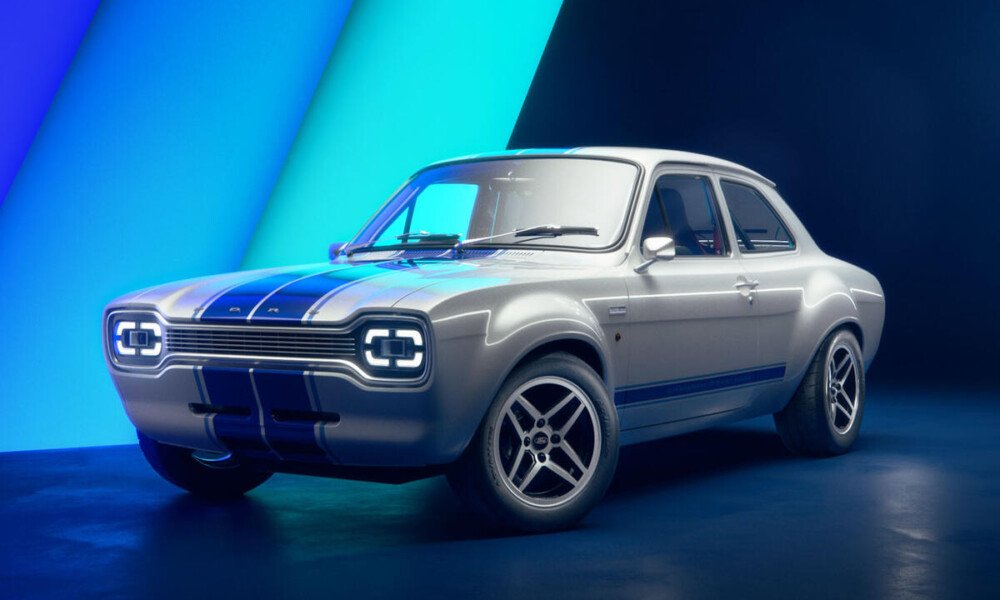
UK-based Boreham Motorworks has revived one of the legendary Ford models from the late 1960s – Escort Mk1 RS.
Boreham says it’s not a restomod but an all-new car – an Escort RS built from the ground up, complete with a new chassis number continuing on from where Ford had left off after production ended. In fact, the bodies were built by Ford Advanced Vehicle Operations in Essex, UK, before it was shut in 1975.
That being said, the engineers at Boreham have made certain changes to the chassis to improve handling. These include extra bracing, reworked suspension, and a new rear axle. The car rides on coilover suspension and has a limited-slip differential.
The Escort RS comes with two engine options: a Twin Cam 1845cc with fuel injection that produces 180 hp. It is paired with a 4-speed gearbox with straight-cut gears.
The other option is a 2.1-liter 4-cylinder unit that revs 10,000 rpm. It produces 292 hp and is paired with a 5-speed dog-leg gearbox.
Boreham Motorworks is building just 150 examples of the Escort Mk1 RS, with a price tag of approximately $376,000 each.
Mercedes-Benz AMG announced in November its plans to launch an electric SUV distinct from any model in the regular Mercedes lineup.
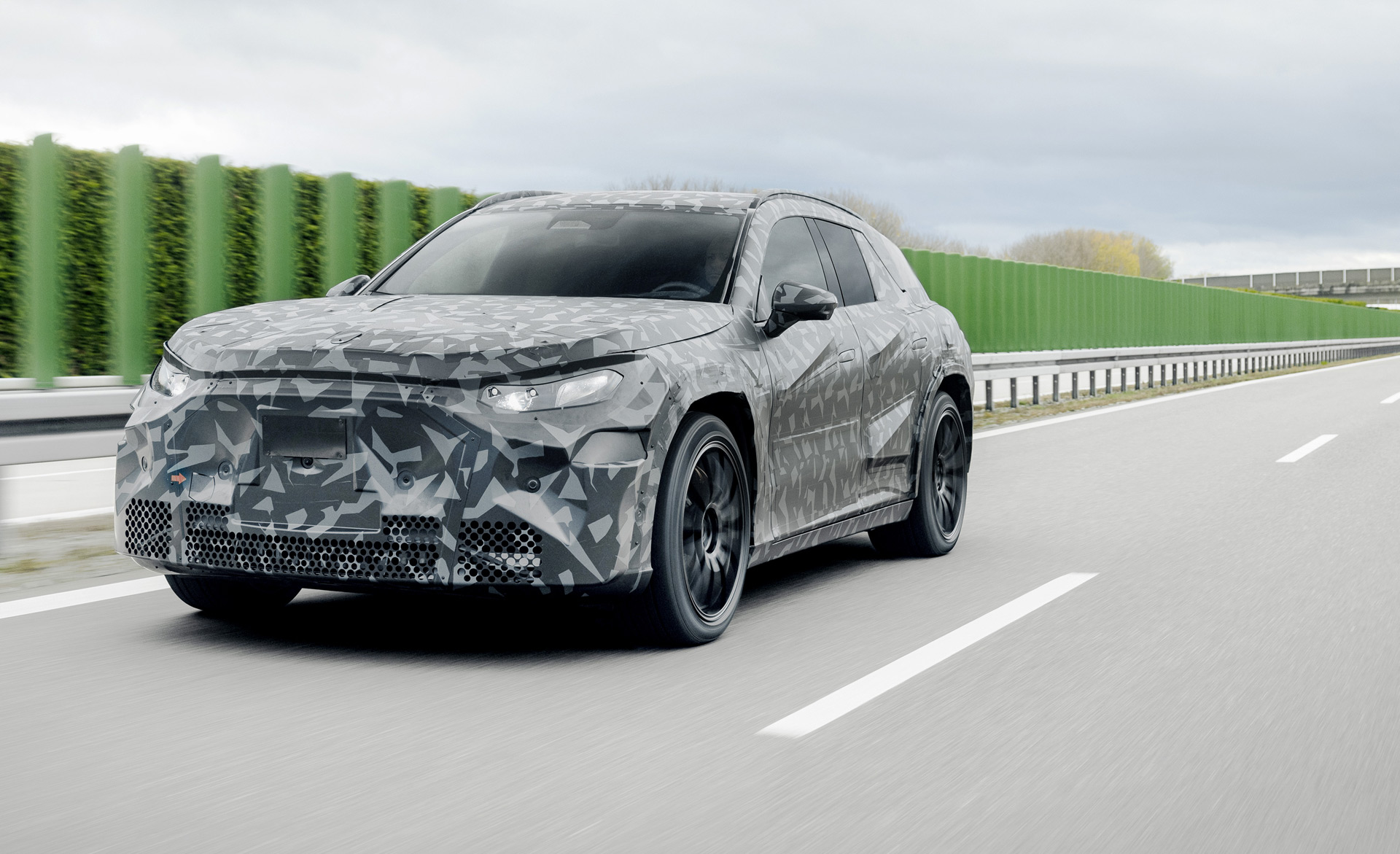
On Thursday, the Mercedes performance division released the first photo of a prototype, though details are difficult to discern due to heavy camouflage. A teaser sketch released alongside November’s original announcement hints at a sleek, almost fastback design with powerful haunches.
AMG shared the photo of the prototype to mark the start of the SUV’s public testing. The testing is currently taking place in northern Sweden, near the Arctic Circle, where temperatures at this time of year can drop as low as -40 degrees.
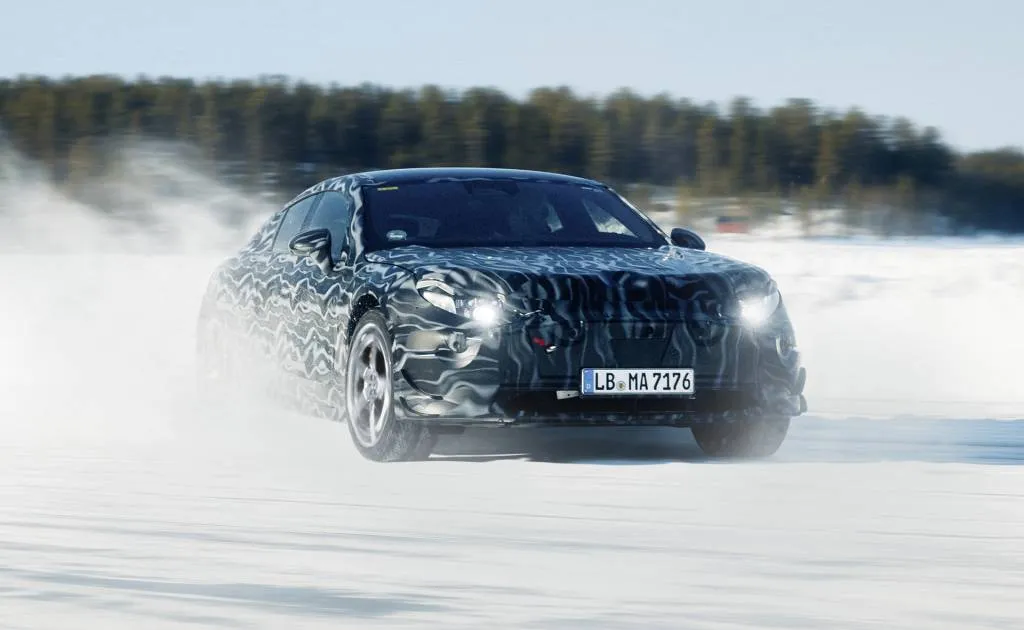
The SUV, which AMG has described as belonging to the full-size category, will be the second vehicle based on AMG’s dedicated EV platform, known as the AMG.EA platform. The first vehicle will be a large four-door coupe, prototypes of which have been testing in public for the past year.
Prototype for first EV fully developed by Mercedes-Benz AMG
The four-door coupe, designed to serve as an electric alternative to AMG’s current GT 4-Door Coupe liftback, is expected to debut first, likely in late 2025. The SUV is anticipated to make its debut sometime in 2026.
AMG stated that the AMG.EA platform will introduce a new high-performance battery concept and take advantage of axial-flux electric motor technology. The battery is expected to leverage AMG’s F1 expertise, particularly in energy discharge, recovery, and possibly cooling.
The axial-flux motors are likely to benefit from insights from Yasa, a British firm specializing in high-performance electric motors that Mercedes acquired in 2021. Axial-flux motors are lighter and smaller than conventional radial-flux motors of similar output. For example, a motor weighing just over 50 pounds can deliver approximately 480 hp, and multiple units can be installed. However, manufacturing them is more complex than radial-flux motors, making them significantly more expensive.
BMW M has unveiled a prototype for a potential electric M3
The next M3 will offer buyers a choice between gas and electric powertrains
The electric powertrain is expected to feature a quad-motor setup capable of delivering four-digit horsepower
BMW is developing a new generation of electric vehicles, known collectively as the Neue Klasse, with some models set to form the basis of the first dedicated M cars powered entirely by batteries.
One of the Neue Klasse EVs will be an electric version of the next-generation 3-Series, expected to debut in 2026 and potentially badged as the i3. The car was previewed by last year’s Vision Neue Klasse concept, which will also influence the design of a gas version of the next 3-Series.
BMW Vision Neue Klasse concept
The two versions of the next 3-Series will share similar exterior and cabin designs but will be built on separate platforms. The electric version will utilize BMW’s Neue Klasse dedicated EV platform, while the gas version is expected to use an updated version of the current 3-Series’ CLAR platform.
Both versions will have M3 variants, BMW M boss Frank van Meel revealed in October. BMW M has now released several photos of a camouflaged prototype believed to be the electric M3.
Frank van Meel
The prototype features flared wheel arches and camouflage similar to what BMW M used on i4-based test mules for a quad-motor electric powertrain that has been in public testing since 2022. The powertrain is expected to deliver peak output as high as 1,341 hp in some applications.
BMW M has confirmed that each motor will power an individual wheel, enabling precise and infinitely variable torque distribution. By leveraging various sensors and driver inputs, such as steering angle and accelerator position, the system will optimize torque distribution to achieve neutral, linear, and predictable handling, even at the limit.
Prototype for electric BMW M3 based on Neue Klasse platform
The powertrain is also being designed with linear power delivery in mind, which BMW M has stated is a core characteristic of its vehicles. This means BMW M’s EVs might avoid the intense head-jerking acceleration often seen in other high-performance EVs. Van Meel has hinted that the electric M3 could feature a system similar to Hyundai’s simulated gear shifts. He has previously stated that such a system helps drivers gauge acceleration and speed without looking at the instruments, which can be particularly beneficial in extreme situations, such as on a racetrack.
No details have been disclosed about the battery being tested in the prototype. However, BMW is developing a sixth-generation battery design for the Neue Klasse EVs, which could potentially power the electric M3. These batteries will utilize cylindrical cells instead of the current prismatic design and, along with other improvements, are expected to deliver a 30% range increase over BMW’s existing EVs.
2024 BMW M3 CS
As for the gas-powered version of the next M3, it is expected to retain the current model’s twin-turbocharged 3.0-liter inline-6 engine. Van Meel has previously stated that this engine will comply with future emissions regulations.
Before the electric 3-Series arrives, BMW will launch an electric X3 as the first Neue Klasse EV. Possibly badged as the iX3, the electric SUV is scheduled for release in 2025. BMW M has not yet confirmed whether there will be a dedicated M version of the vehicle.
Automakers have been rushing to meet the needs of busy families with more and more 3-row offerings. Two well-established rivals in the midsize 3-row SUV class are the Honda Pilot and Chevrolet Traverse.
These spacious SUVs give buyers plenty of space while managing to look good inside and out. They also offer plenty of technology that all members of the family want, especially the driver.
Let’s compare the Honda Pilot and Chevrolet Traverse and find the right family hauler for you.
2025 Honda Pilot
2024 model shown
After its makeover two years ago, the Pilot proved it could look rough and ready while still being a great family vehicle. When families want to go off the beaten path, Honda’s got a trim for that: the TrailSport edition. It features steel skid plates, an extra inch of ground clearance, the TrailWatch Camera System to better navigate rocks and trees around the vehicle, and special software designed to help it traverse more challenging terrain than its predecessor.
Whether you’re looking to get away from it all for a few days or need a roomy, comfortable place to be while getting around town, the Pilot is ready. Honda upgraded the Pilot’s on-road componentry, such as its suspension and steering. The changes made it stiffer, giving it more agility for moments when being nimble is critical. The LX model was dropped for 2025, leaving the Sport edition as the new entry point. At the other end of the spectrum, Honda added the Black Edition featuring 20-inch alloy wheels and other elements finished in gloss black. Pricing for the Honda Pilot starts at $41,595, including destination fee.
Honda Pilot Highlights
Off-road ready: The Pilot TrailSport, with its 285-horsepower V6 engine, can tow 5,000 pounds. Honda claims that equates to a 24-foot camper or a 22-foot boat.
Traffic Jam Assist: Under the right conditions, the Honda Pilot can pretty well drive itself through slower-moving highway traffic. Just keep a hand on the steering wheel to let it know you’re paying attention, and it’ll go, stop, and steer for miles at a time. It works very well, and it’s standard across the lineup.
Easy access: The Touring and Elite models offer a removable center seat in the second row, making access to the third row easier. The seat can then fit under the cargo space floor in readiness for when the Honda Pilot needs to be an 8-seater again.
Read our Honda Pilot Expert Review or see 2025 Honda Pilot models for sale near you.
2025 Chevrolet Traverse
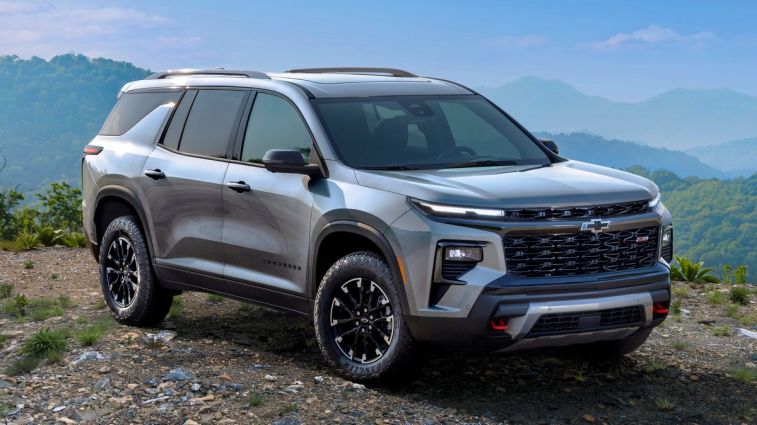
The Chevrolet Traverse got a complete makeover two years ago. Known as a great people hauler, the third-generation model retained that capability. The SUV offers a spacious cabin with seating for up to eight people, courtesy of an accommodating third-row bench.
Not only did the Traverse get a new square-shouldered, commanding exterior, but also a new powerplant under the hood. No longer powered by a V6, it gets a 2.5-liter turbocharged 4-cylinder producing 328 hp. This engine is more powerful than its predecessor. The Traverse comes in four trim levels — LS, LT, Z71, and RS — with pricing on the LS starting at $41,995, including destination fee.
Chevrolet Traverse Highlights
Super Cruise: Described by many as the best hands-free driving technology on the road today, it’s available on the new Traverse. It combines adaptive cruise control and steering assistance, allowing drivers to keep their hands off the wheel and their feet off the pedals on more than 400,000 miles of mapped roads in the U.S. and Canada. The driver must remain alert and keep their eyes on the road. The Honda Pilot doesn’t offer hands-free driving.
Big screen: If you harbor concerns about being able to see a touchscreen clearly, worry no more, as the new Traverse comes with a 17.7-inch infotainment screen, which the Honda Pilot doesn’t come close to matching.
Off-roader: For the first time in the Traverse lineup, a Z71 version is available. With AWD standard, the Z71 also fits a dedicated suspension, all-terrain tires, tow hooks, and a skid plate. Ground clearance is higher than on the other Traverse trims, and the AWD system has switchable terrain modes.
Read our Chevrolet Traverse Expert Review or see 2025 Chevrolet Traverse models for sale near you.
Similarities
Honda and Chevy are known for their simple but attractive exteriors and spacious interiors. These characteristics haven’t changed with the new versions of the Pilot and Traverse. These SUVs also feature a slew of helpful safety and convenience technologies.
Conclusion
Since these were redesigned recently, picking a clear winner here is tough. The Chevy Traverse boasts more cargo room, a stronger engine, and the available Super Cruise hands-free driving system. The Honda Pilot is slightly more affordable and comes with the reliability and resale value that Honda is famous for. It also borrows some DNA from the Odyssey minivan, strengthening its credentials as a family vehicle. These are both so good that the right one for you largely comes down to personal taste.
New 2025 Honda Pilot Prices
New 2025 Chevrolet Traverse Prices
The Kelley Blue Book Fair Purchase Price for any individual used vehicle can vary greatly according to mileage, condition, location, and other factors.
The prices here reflect what buyers are currently paying for vehicles and vehicles in typical condition when purchasing from a dealership.
These prices are updated weekly. The manufacturer’s suggested retail price (MSRP) quoted includes the destination fee, but does not include tax, license, document fees, and options.
Quick Facts About Leasing vs. Buying an Electric Vehicle
Some automakers offer $7,500 in EV leasing incentives, even if the car doesn’t qualify for the tax credit when you buy.
Good inventory with discounts and incentives puts shoppers in a good situation.
Financing and leasing interest rates remain higher than normal.
As we consider the question of whether you should lease or buy an electric car, we will pretty much approach the lease-vs.-buy issue as we normally do. That is, the reasons for leasing or buying a pure electric vehicle (EV) are about the same as for a gas-powered car with an internal combustion engine (ICE). For our purposes here, we will assume you’ve done all the research and settled in your mind the overall question of driving an electric car versus an ICE vehicle. In other words, you are dead set on an EV.
Should you lease or buy in today’s automotive and EV-friendly climate? That’s a somewhat different matter. As you read through this article, we will summarize the current automotive market and provide some pros and cons for buying and leasing an electric car.
Today’s Automotive Environment
Today’s automotive climate is feeling pretty good for car shoppers. Dealers continue to discount their inventory, and lenders are making it easier and less costly to borrow money. Here are some factors influencing the EV market and auto market as a whole.
New Car Inventories
According to Kelley Blue Book’s parent company, Cox Automotive, new car prices are almost steady as dealer inventories reach near-normal levels. However, it remains a mixed bag, depending on the brand. Some makers, including Dodge, Ram, Ford, and Jeep, are seeing inventories well above the national average of 85 days’ supply. Not every brand shares that problem. The supplies from other automakers like Toyota, Honda, Subaru, and Kia are stubbornly tight.
In October, the new electric vehicle days’ supply was 101 days, a decrease compared to the same period last year, indicating an overall tightening of supply year over year. Shoppers are buying: Last month, new EV sales reached 106,155 units, pushing the year-to-date total to over 1 million units.
This growth was spurred by incentives and leasing options, with incentives equal to almost 14% of the average transaction price. Additionally, year-to-date through October, new EV sales have risen by 6.8%.
Interest Rates
Cash buyers don’t worry about interest rates, but most of us borrow money to buy a new car. There’s good news for those leasing financing car loans. The Federal Reserve cut interest rates at its last two meetings, and it projects that a third cut is likely coming.
Lenders haven’t lowered their rates as much as the Fed has, but that’s normal. Those cuts take time to reach auto loans for car shoppers, so be patient if you can, as rate decreases should ripple through the economy over the next few months into the first quarter of 2025.
Higher car loan and lease interest rates increase a vehicle’s cost to own. Higher interest rates forced some buyers with bad credit ratings out of the marketplace. Consequently, carmakers started focusing on and producing higher-priced models. The average transaction price of a new electric car in October was $48,623, according to Cox Automotive data. Considering that Experian says the average interest rate on a 60- to 72-month auto loan is now about 6.86%, it’s bound to give you pause. Even with a 20% down payment ($9,725) on that average transaction price above on a 60-month loan at 6.86%, it will still work out to a $768 monthly payment before taxes.
One noteworthy difference between leasing and buying is monthly leasing payments are usually less than loan payments. This is because the car is yours when you pay off a loan. However, when you complete a lease, you turn in the keys with nothing to show for years of payments. In reality, leasing is just glorified renting.
Other differences include annual mileage caps, early termination penalties, and usually, much higher credit scores required by leasing agents, among other negatives. You can check out everything you need to know about leasing in Kelley Blue Book’s Leasing Guide.
Equity. Whether you pay cash or finance your electric car purchase, you will eventually have equity in the car. In the case of cash, that equity is immediate. If you finance, you begin to gain equity at some point along the way, and you will own the vehicle outright when the loan is paid in full. Use our car payment calculator to see an estimated monthly car payment for either a new or used electric car.
Customization. If you want to make your electric vehicle stand out or personalize it, you may customize it to your liking. You can change the wheels, install a leather interior, or apply a protective wrap to the exterior. But because a leased car is not yours and won’t be when the payment terms are fulfilled, it must be turned in as you received it.
Freedom. At any time during the terms of your loan, you can sell or trade in your EV to acquire another vehicle. As long as you pay off any outstanding balance to the lender, the car is yours to do as you please.
Refinance. If, at some point during the electric vehicle loan, you decide you can get a better interest rate or want to extend the payments for another year, you can refinance the loan. Again, if the refinancing isn’t through the same lender, any outstanding balance will need to be paid.
Cons of Buying an Electric Car
Higher payments. Your monthly loan payment amount depends on several factors, like the length of the loan, the down payment amount, and the interest rate. However, a monthly loan payment will generally be more than a monthly lease payment. This difference could be hundreds of dollars.
Bigger down payment. Because electric cars often cost more than ICE vehicles, buyers will need to come up with a bigger down payment. That down payment could be hefty if your credit comes with a few dings.
Underwater. Although you can sell or trade your electric vehicle at any time, you always run the risk that you owe more than it’s worth. That’s also called being underwater or upside down. In other words, you must make up the difference between the amount you receive for the car and what you still owe. The dealer can roll that difference into the new financing when trading it in on another vehicle. However, that means you will be even more upside down in your next car.
Parade of new EVs. For drivers who always want the latest and greatest, leasing allows for replacing an electric car every two or three years, depending on the term length. This is usually a painless process of turning in your current EV, signing another lease, and driving off in a new car.
Little skin in the deal. Typically, a consumer with better-than-average credit can get into a lease with minimal upfront money. Leasing companies often only require a deposit, a fee or two, and the first month’s payment. Some special leasing deals offered by carmaker financing companies, like Ford Motor Credit and Nissan Motor Acceptance Company, will run leasing deals that also require a small amount of cash down. However, generally, you can get into a lease with less upfront cash than a loan requires. Use our lease payment calculator to compare monthly lease costs to monthly car loan costs.
Under warranty. Leasing provides lasting warranty protection because most new EV leases are for two or three years. Every new vehicle factory warranty on the market is for a minimum of 36 months or 36,000 miles. In other words, the factory warranty will always cover a leased EV if you don’t exceed the annual mileage cap.
No fuss. Unless you’ve mistreated your leased EV or exceeded the annual mileage cap, you can hand over the keys and walk away when the lease ends. Even if the EV is worth less than the lessor projected it would be at lease end, you won’t owe a penny more.
Option to buy. You can buy the electric vehicle at the end of a lease rather than turn it in. The lease-end purchase price is contractually stated in the lease. Here’s the good news: Because the lessor projects the EV’s projected book value at the end of the lease, you may find buying the vehicle a bargain. Why? If the lessor projects wrongly and pegged the value at the end of the lease to be lower than the future book value, you get to buy it at that lower price.
Cons of Leasing an Electric Car
Zero equity. The greatest negative of leasing an EV for the average consumer is that the lessee has nothing at the end of the lease. In other words, the lessee doesn’t have a vehicle and doesn’t have anything to put down toward acquiring another car.
EV bondage. While offering a sense of freedom when handing over the keys and walking away at the end of the lease term, leasing bounds the lessee to the electric vehicle for the duration of the lease. Unlike financing through a loan, which allows the buyer to sell or trade in the EV at any time, a lease contract binds the lessee to the vehicle for the life of the lease. Sure, you can get out of a lease early. But it will usually involve hefty early termination penalties. Sometimes, these penalties include paying the total of any remaining monthly payments.
Wear and tear. Leasing is really extended renting. In other words, you are essentially borrowing the vehicle and paying for that privilege. The leasing agent expects you to return the car in the condition it was in when you borrowed it, minus normal wear and tear: a nick here and a small ding there. Anything a lessor deems beyond normal wear and tear will cost you, including interior and exterior damage. What is “normal” is subjective and up to the lessor. The lessor will charge you for any damage considered above its definition of normal.
Mileage cap. Lease contracts include an annual mileage cap restricting the number of miles a lessee can drive a car each year. Exceeding that cap triggers a per-mile charge for each excess mile. The average cap is 12,000 miles per year or 36,000 miles over a 36-month lease. A typical penalty is about $0.25 per excess mile. Therefore, if you exceed that 36,000-mile cap by 4,000 miles, the lessor will assess an extra $1,000 at the lease termination.
PRO TIP: Whether you buy or lease an EV, there’s a chance it could qualify for federal and state tax credits. However, navigating the amount of the credit and which vehicles qualify can be confusing. It’s even more difficult if you lease your electric car. The number of electric car models that still qualify for tax credits is decreasing, but if you and your EV meet all the qualifications, the savings can be as much as $7,500 off the price. Moreover, some states and localities offer additional incentives. Check out the latest updates in Kelley Blue Book’s How Do Electric Car Tax Credits Work and Electric Car Rebates and Incentives: What To Know by State.
What About Leasing or Buying a Used Electric Vehicle?
You may consider leasing or buying a used EV, depending on the mileage and age. Carmakers warranty EV batteries for at least eight years or 100,000 miles. Consequently, if there is still time and miles left on the battery warranty, a used EV may be a good deal.
Used EV sales continued to grow steadily, reaching 23,788 units and maintaining a 1.6% market share. Year-to-date through October used EV sales are up 63.5% compared to the same period last year. Last month, the used EV days’ supply was 48, comparable to the 46 days for ICE+ models. The supply remains stable month over month but is down 22.1% year over year, highlighting the tightening of used EV inventory.
When buying a used EV, you might consider if you qualify for federal tax incentives for cars under $25,000. If eligible, the credit is $4,000. Also, the used car must be at least two model years old and purchased at a dealership. The vehicle also only qualifies once in its lifetime. Used vehicle buyers can only qualify for one credit every three years.
We recommend buying over leasing for most car shoppers in a normal market. But this isn’t a normal market just yet. Furthermore, we’re discussing EVs. On average, EVs carry a higher price tag than comparable ICE vehicles and depreciate more quickly. Consequently, leasing’s historically lower monthly payments can help those in the market right now. Furthermore, electric vehicle owners tend to be more sensitive to the newest technology. Leasing allows drivers to regularly move on to the latest tech in the newest electric vehicles with very little fuss.
Advantage in 2025: Leasing.
Editor’s Note: This article has been updated since its initial publication.
Editor’s note: This post is part of the AI Decoded series, which demystifies AI by making the technology more accessible, and showcases new hardware, software, tools and accelerations for GeForce RTX PC and NVIDIA RTX workstation users.
NVIDIA and GeForce RTX GPUs are built for the era of AI.
RTX GPUs feature specialized AI Tensor Cores that can deliver more than 1,300 trillion operations per second (TOPS) of processing power for cutting-edge performance in gaming, creating, everyday productivity and more. Today there are more than 600 deployed AI-powered games and apps that are accelerated by RTX.
RTX AI PCs can help anyone start their AI journey and supercharge their work.
Every RTX AI PC comes with regularly updated NVIDIA Studio Drivers — fine-tuned in collaboration with developers — that enhance performance in top creative apps and are tested extensively to deliver maximum stability. Download the December Studio Driver today.
The importance of large language models (LLM) continues to grow. Two benchmarks were introduced this week to spotlight LLM performance on various hardware: MLPerf Client v0.5 and Procyon AI Text Generation. These LLM-based benchmarks, which internal tests have shown accurately replicate real-world performance, are easy to run.
This holiday season, content creators can participate in the #WinterArtChallenge, running through February. Share winter-themed art on Facebook, Instagram or X with #WinterArtChallenge for a chance to be featured on NVIDIA Studio social media channels.
With NVIDIA and GeForce RTX GPUs, AI elevates everyday tasks and activities, as covered in our AI Decoded blog series. For example, AI can enable:
Faster creativity: With Stable Diffusion, users can quickly create and refine images from text prompts to achieve their desired output. When using an RTX GPU, these results can be generated up to 2.2x faster than on an NPU. And thanks to software optimizations using the NVIDIA TensorRT SDK, the applications used to run these models, like ComfyUI, get an additional 60% boost.
Greater gaming: NVIDIA DLSS technology boosts frame rates and improves image quality, using AI to automatically generate pixels in video games. With ongoing improvements, including to Ray Reconstruction, DLSS enables richer visual quality for more immersive gameplay.
Enhanced entertainment: RTX Video Super Resolution uses AI to enhance video by removing compression artifacts and sharpening edges while upscaling video quality. RTX Video HDR converts any standard dynamic range video into vibrant high dynamic range, enabling more vivid, dynamic colors when streamed in Google Chrome, Microsoft Edge, Mozilla Firefox or VLC media player.
Improved productivity: The NVIDIA ChatRTX tech demo app connects a large language model, like Meta’s Llama, to a user’s data for quickly querying notes, documents or images. Free for RTX GPU owners, the custom chatbot provides quick, contextually relevant answers. Since it runs locally on Windows RTX PCs and workstations, results are fast and private.
This snapshot of AI capabilities barely scratches the surface of the technology’s possibilities. With an NVIDIA or GeForce RTX GPU-powered system, users can also supercharge their STEM studies and research, and tap into the NVIDIA Studio suite of AI-powered tools.
Decisions, Decisions
More than 200 powerful RTX AI PCs are capable of running advanced AI.
ASUS’ Vivobook Pro 16X comes with up to a GeForce RTX 4070 Laptop GPU.
ASUS’ Vivobook Pro 16X comes with up to a GeForce RTX 4070 Laptop GPU, as well as a superbright 550-nit panel, ultrahigh contrast ratio and ultrawide 100% DCI-P3 color gamut. It’s available on Amazon and ASUS.com.
Dell’s Inspiron 16 Plus 7640 comes with up to a GeForce RTX 4060 Laptop GPU.
Dell’s Inspiron 16 Plus 7640 comes with up to a GeForce RTX 4060 Laptop GPU and a 16:10 aspect ratio display, ideal for users working on multiple projects. It boasts military-grade testing for added reliability and an easy-to-use, built-in Trusted Platform Module to protect sensitive data. It’s available on Amazon and Dell.com.
GIGABYTE’s AERO 16 OLED comes with up to a GeForce RTX 4070 Laptop GPU.
GIGABYTE’s AERO 16 OLED, equipped with up to a GeForce RTX 4070 Laptop GPU, is designed for professionals, designers and creators. The 16:10 thin-bezel 4K+ OLED screen is certified by multiple third parties to provide the best visual experience with X-Rite 2.0 factory-by-unit color calibration and Pantone Validated color calibration. It’s available on Amazon and GIGABYTE.com.
MSI’s Creator M14 comes with up to a GeForce RTX 4070 Laptop GPU.
MSI’s Creator M14 comes with up to a GeForce RTX 4070 Laptop GPU, delivering a quantum leap in performance with DLSS 3 to enable lifelike virtual worlds with full ray tracing. Plus, its Max-Q suite of technologies optimizes system performance, power, battery life and acoustics for peak efficiency. Purchase one on Amazon or MSI.com.
These are just a few of the many RTX AI PCs available, with some on sale, including the Acer Nitro V, ASUS TUF 16″, HP Envy 16″ and Lenovo Yoga Pro 9i.
Follow NVIDIA Studio on Facebook, Instagram and X. Access tutorials on the Studio YouTube channel and get updates directly in your inbox by subscribing to the Studio newsletter.
Generative AI is transforming gaming, videoconferencing and interactive experiences of all kinds. Make sense of what’s new and what’s next by subscribing to the AI Decoded newsletter.
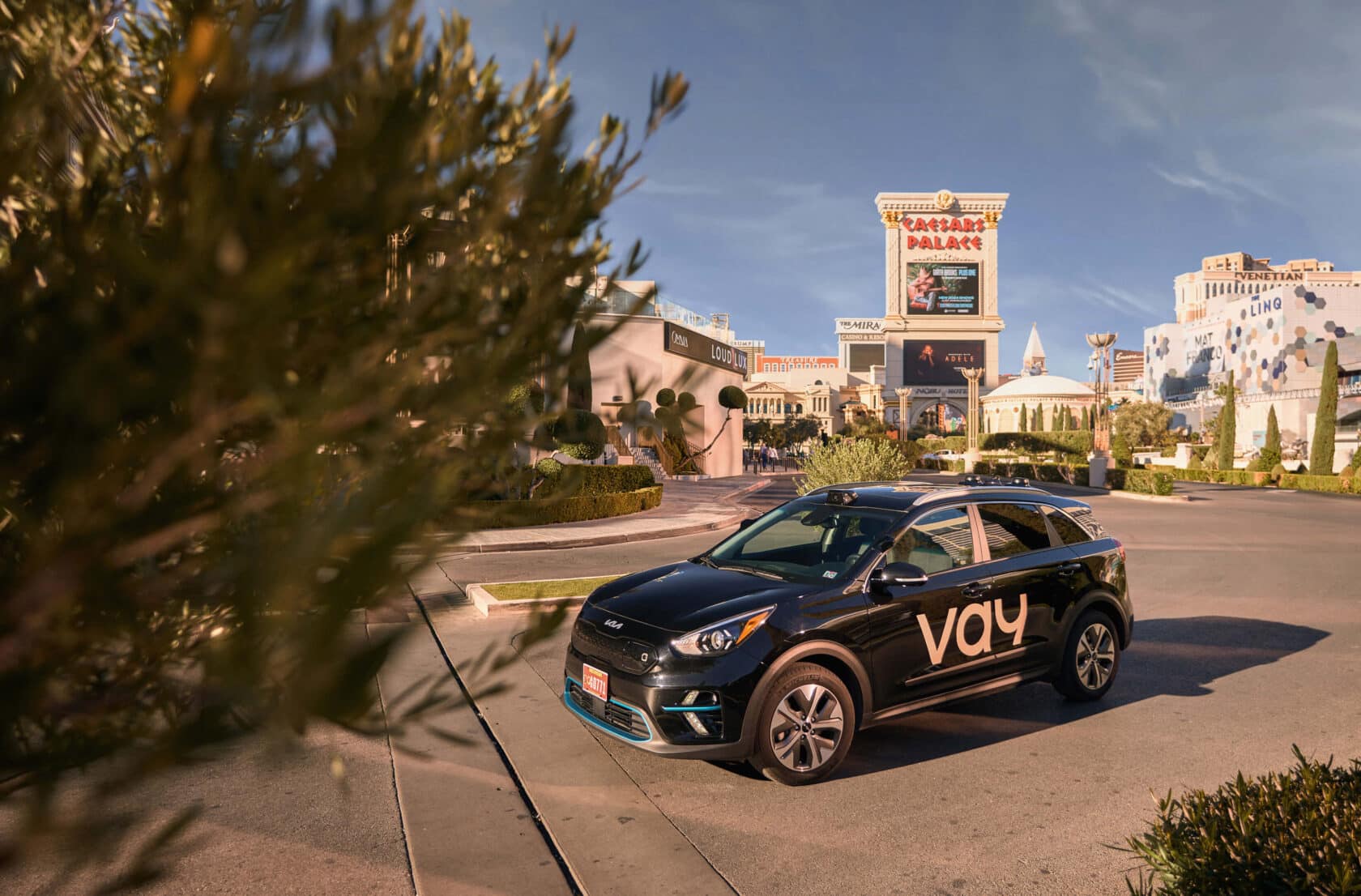
Vay, a Berlin-based provider of automotive-grade remote driving (teledriving) technology, is offering an alternative approach to autonomous driving.
Through the company’s app, a user can hail a car, and a professionally trained teledriver will remotely drive the vehicle to the customer’s location. Once the car arrives, the user manually drives it.
After completing their trip, the user can end the rental in the app and pull over to a safe location to exit the car, away from traffic flow. There’s no need to park the vehicle, as the teledriver will handle the parking or drive the car to the next customer.
This system offers sustainable, door-to-door mobility, with the unique advantage of having a human driver remotely controlling the vehicle in real time.
Vay’s technology is built on the NVIDIA DRIVE AGX centralized compute platform, running the NVIDIA DriveOS operating system for safe, AI-defined autonomous vehicles.
These technologies enable Vay’s fleets to process large volumes of camera and other vehicle data over the air. DRIVE AGX’s real-time, low-latency video streaming capabilities provide enhanced situational awareness for teledrivers, while its automotive-grade design ensures reliability in any driving condition.
“By combining Vay’s innovative remote driving capabilities with the advanced AI and computing power of NVIDIA DRIVE AGX, we’re setting a new standard for remotely driven vehicles,” said Justin Spratt, chief business officer at Vay. “This collaboration helps us bring safe, reliable and accessible driverless options to the market and provides an adaptable solution that can be deployed in real-world environments now — not years from now.”
High-Quality Video Stream
Vay’s advanced technology stack includes NVIDIA DRIVE AGX software that’s optimized for latency and processing power. By harnessing NVIDIA GPUs specifically designed for autonomous driving, the company’s teledriving system can process and transmit high-definition video feeds in real time, delivering critical situational awareness to the teledriver, even in complex environments. In the event of an emergency, the vehicle can safely bring itself to a complete stop.
“Working with NVIDIA, Vay is setting a new standard in driverless technology,” said Bogdan Djukic, cofounder and vice president of engineering, teledrive experience and autonomy at Vay. “We are proud to not only accelerate the deployment of remotely driven and autonomous vehicles but also to expand the boundaries of what’s possible in urban transportation, logistics and beyond — transforming mobility for both businesses and communities.”
Reshaping Mobility With Teledriving
Vay’s technology enables professionally trained teledrivers to remotely drive vehicles from specialized teledrive stations equipped with industry-standard controls, such as a steering wheel and pedals.
The company’s teledrivers are totally immersed in the drive — road traffic sounds, such as those from emergency vehicles and other warning signals, are transmitted via microphones to the operator’s headphones. Camera sensors reproduce the car’s surroundings and transmit them to the screens of the teledrive station with minimum latency. The vehicles can operate at speeds of up to 26 mph.
Vay’s technology effectively addresses complex edge cases with human supervision, enhancing safety while significantly reducing costs and development challenges.
Vay is a member of NVIDIA Inception, a program that nurtures AI startups with go-to-market support, expertise and technology. Last year, Vay became the first and only company in Europe to teledrive a vehicle on public streets without a safety driver.
Since January, Vay has been operating its commercial services in Las Vegas. The startup recently secured a partnership with Bayanat, a provider of AI-powered geospatial solutions, and is working with Ush and Poppy, Belgium-based car-sharing companies, as well as Peugeot, a French automaker.
In October, Vay announced a $35 million investment from the European Investment Bank, which will help it roll out its technology across Europe and expand its development team.
Norwegian Cruise Line is redeploying several ships and canceling itineraries in 2025 and 2026 in the process.
The cancellations will affect voyages on the company’s Norwegian Breakaway, Norwegian Bliss, and Norwegian Encore ships, the cruise line confirmed to Travel + Leisure. Canceled itineraries on these ships will be replaced with other voyages in the Caribbean or on the West Coast.
“We are committed to providing exceptional vacation experiences, both aboard our ships and by taking our guests to some of the most sought-out destinations around the world,” a Norwegian spokesperson told T+L. “While we try to maintain original itineraries as much as possible, occasionally, scheduled itineraries may need to be cancelled, to allow the opportunity to introduce enhanced voyages that accommodate strong guest demand and provide a more immersive experience.”
As part of the redeployment, the Norwegian Breakaway will now sail from New York City to the Southern Caribbean and the Bahamas, the Norwegian Bliss will remain on the West Coast and operate cruises to the Mexican Riviera from Los Angeles, and the Norwegian Encore will continue to sail from Miami to the Western Caribbean.
Norwegian said travelers who were set to board one of these ships on a now-cancelled cruise were automatically refunded the full fare paid and offered a 10 percent discount to use on a future cruise through Dec. 31, 2026.
Though people have been incredibly negative on social media, Dodge did a lot right with the creation of the 2024 Dodge Charger Daytona. Yes, the Hemi engine is gone. Yes, the Charger Daytona is electric. And, yes, it has just two doors. What I’m going to say is this: I hope I can convince you to get over it.
After spending just one day with the Charger Daytona, I’m a believer.
2024 Dodge Charger Daytona
For me, it starts with the people who created this next-gen Charger. (And yes, that’s what Dodge is calling it.) As Ashton Munoz, product manager for the Dodge Charger pointed out, the people who made the Vipers, the Challengers, the Chargers, the Hellcats, and the Demons are still here–and they had a hand in creating this vehicle.
“We still give a sh*t,” he said. “We love this car and this brand.”
2024 Dodge Charger Daytona R/T
And because they give a sh*t, before they began to conceptualize and build this vehicle, Dodge CEO Matt McAlear said that they started with a series of “what ifs?” What if we started with a Widebody Redeye (the ultimate expression of the previous-generation Challenger lineup), improved the 0-to-60-mph time, added standard all-wheel drive, implemented new tech and standard safety and did it all for $10,000 less?
And, what if it just happened to be an EV?
2024 Dodge Charger Daytona R/T
With the Scat Pack version of the 2024 Dodge Charger Daytona, Dodge managed to check most of those boxes. Standard AWD? Check. Uconnect 5 with wireless Apple CarPlay and Android Auto? Check. A standard 12.3-inch infotainment screen? Check. Standard safety equipment? Check. And then you have check, check, check when it comes to the power and pricing. It has a 0-to-60-mph time of 3.3 seconds (which is 0.3 seconds faster than the Redeye), delivers base horsepower of 630 (which is 130 horsepower more than the base Redeye) and available horsepower of 670 (just 37 horsepower less than the peak horsepower of the Redeye). And that price tag? Well, the base price of the 2023 Dodge Charger Hellcat Redeye was $94,965. The 2024 Challenger Scat Pack starts at $20k less than that.
Other than the what ifs?, McAlear said the Charger Daytona had to look like a Dodge, feel like a Dodge, sound like a Dodge and drive like a Dodge. So, let’s break all that down.
Inspired by the 1968 Dodge Charger
Some of the comments I’ve seen on social about the 2024 Dodge Charger Daytona say it isn’t a real Charger because it has two doors, and that it doesn’t look like a Dodge. Well, I say those people need a little more institutional knowledge. Google the first-generation Dodge Charger if you don’t believe me. That’s 1966 in case you need a year. It was a two-door with a fastback roofline. So. If you want to get angry with a Dodge Charger for design, be mad at the outgoing model. Not this one.
The second-generation, starting in 1968, was also a two-door fastback but it had some smoother lines, and Scott Krugger, vice president for Dodge exterior design, said it’s this model that was the design inspiration for the Charger Daytona. I see this a lot in the profile. I even see it in the nose with the headlights that disappear under the lip. The bumped up hoodline is reminiscent of the hood scoop on the classic Hemi models.
Ryan Nagode, vice president and head of interior design for Stellantis North American brands, said the 1968 inspiration carries through to the interior with the blocky horizontal design of the dash. Sure, it has all the modern accoutrements, but you see the similarities with the slimmed up, driver-focused instrument panels.
The overall effect with the LED exterior lights and interior digital displays is a modernized throwback to the early Dodge Charger days. And if you’re really pining for a four-door model, it’ll be here in 2025, so slow your roll.
2024 Dodge Charger Daytona Scat Pack
Fratzonic Chambered Exhaust
Perhaps the most controversial part of the 2024 Dodge Charger Daytona has to be the fake exhaust. As an explainer for what this system is, Dodge says: “The patent-pending Fratzonic Chambered Exhaust system on Dodge Charger Daytona models includes dual bespoke, high-efficiency extreme-bandwidth transducers coupled with dual Fratzonic Chamber-loaded passive radiators, all housed in a custom enclosure and powered by a dedicated amplifier with up to 600 watts of power.”
That’s geek speak for a really loud exhaust sound that’s not only piped into the cabin but also expelled via exterior speakers at the rear, exactly where you’d expect to hear an exhaust noise. But the Fratzonic exhaust is more than just noise. It’s feel. When you power up the vehicle, you feel the vibration in the seat of your pants, your foot on the brake pedal, your hands on the steering wheel. The vehicle almost feels alive.
It’s what gives the 2024 Dodge Charger Daytona a soul. The sound mimics a V8 Hemi engine, and yes, if you listen closely, you can hear the electronic pitch. And the startup does sound a bit like a spaceship lifting off. But overall, Dodge did a darn good job, and an untrained ear probably wouldn’t be able to tell the difference when the vehicle is driving down the road.
The tone of the Fratzonic exhaust changes depending on the drive mode selected. In Auto mode, it’s just a low hum, but it gets louder and deeper as you move from Sport to Track to Drag mode. If the idea of fake exhaust noise insults your sensibilities, just turn it off already. The interior instantly becomes eerily silent, and the exterior exhaust shuts off as well. You’ll still have the Acoustic Vehicle Alerting System (AVAS) sounds mandated by the government, which sound like a high-pitched hum, but that’s it.
2024 Dodge Charger Daytona Scat Pack
But how does it drive?
Fast. It drives fast. We had the opportunity to drive the 496-horsepower R/T, and I was impressed with how quickly and smoothly it reached 80 mph–almost by accident. I’d merge on the highway, and bam, 85 mph almost instantaneously. The 670-horsepower Scat Pack was the same, but more. I’d get to highway speed and be cruising along, and the next thing I knew I was going 90 mph. In that respect, the fake exhaust is helpful. It’s an audible reminder that you’re accelerating, and it might help prevent some speeding tickets.
Leave the highway and hit the twisty bits, and the 2024 Dodge Charger Daytona does really well. For a hefty 5,689-to-5,767-pound vehicle, it feels light on its feet. And because of the battery’s location under the car, this EV Charger is better balanced than the out-going gas model. I asked one of the pro drivers at the Radford Racing School if he could tell a difference, and he said definitely. And he pointed to the new Charger Daytona as being more well-mannered on a track.
Speaking of the track, we did get to spend some time pushing the Scat Pack through its paces. We did a couple loops on the track, did some drag racing, and tried our hand at drifting. I think I did more donuts than drifts, but in all I was stunned by how much it felt like a traditional gasoline-powered vehicle. I’d challenge a regular driver: If you didn’t know it was an EV, you might not know it was an EV.
But it is an EV, let’s talk range
You might think that as a high-powered muscle car, the 2024 Dodge Charger Daytona would have limited range. But I don’t think it’s that bad – especially not in the base R/T trim. For a vehicle that delivers nearly 500-horsepower, it’s impressive that the top range is 308 miles. The Scat Pack, obviously, is lower, but it’s still respectable at 241 miles.
2024 Dodge Charger Daytona
One of the snarky comments I got on social media said you’d probably burn the entire battery range with a single burnout, and I can attest to the fact that’s not true. The pro drivers at Radford did a drifting demonstration, and they burned through the tires faster than the range. The demonstration probably lasted 10 minutes, and each drivers had to swap cars at least once due to burning rubber, literally, off the tires. Now, driving like a speed demon isn’t going to do your range any favors, but that’s true with any EV.
In order to “re-fuel” your Daytona Charger, know that peak charge rate with a 350 kW DC fast charge is 183 kW, and you’ll go from a 5-percent state-of-charge to 80% percent in about 33 minutes.
Power is pricey
When you talk about pricing on the 2024 Dodge Charger Daytona, you might do a bit of a double take. Base price for the R/T is $61,590 (including the $1,995 destination), and the Scat Pack starts at $75,185. The vehicles we were driving all included about $10,000 in options, so you’ll likely not walk out the door for less than $70,000. Option packages (with things you’re going to want) include:
Plus Group: ($4,995): Includes synthetic leather seats with ventilation (R/T) or leather seats with ventilation (Scat Pack); 16-inch driver display (R/T, standard on Scat Pack), power hatch, ambient lighting, head-up display (R/T, standard on Scat Pack), 360-degree camera, wireless charging, premium LED headlights, Dodge logo puddle lamp.
Blacktop: (R/T) ($1,095): Includes dark exterior badges, 20-inch dark aluminum wheels with Nexen-brand tires, or 20-inch dark aluminum wheels with Goodyear Eagle Sport All-Season tires, and Plus Group.
Sun & Sound: ($2,495): Includes glass roof and 18-speaker Alpine PRO audio system.
Carbon & Suede: (Scat Pack) ($2,995): leather/suede high-back performance seats, door panel with carbon-fiber insert, instrument panel with carbon fiber and suede, suede headliner and A-pillars, carbon-fiber exterior mirrors, dark exterior badging, 20-inch dark aluminum wheels.
2024 Dodge Charger Daytona
The Sixpack commeth (ICE alert)
The Dodge Charger Daytona is intended to be the top end of the Charger spectrum, just like the Hellcat was on the outgoing model. Base versions of the Charger will actually be gasoline models equipped with the maker’s 3.0-liter, twin-turbocharged 6-cylinder “Hurricane” engine. The High Output (H.O.) Hurrican variant will deliver 550 horsepower, with the standard engine producing 420 horsepower.
The H.O. will only be available on2-door Chargers, and the standard mill only on 4-door models.
Both of these vehicles will be available in late 2025.
Two things I didn’t like
There were really just two things I didn’t like about the 2024 Dodge Charger Daytona–and neither of them had to do with range or price. Nope, they were two stupid simple things that Dodge needs to fix.
First is the shoulder belt. No matter how I adjusted the seat, the belt cut into my neck. Because of how the seats are designed, there is no way to adjust the belt height. So, it is what it is. Unless the design of the seat changes.
The other big thing that needs to change? There should be rear-seat releases in the trunk that allow the seats to fold flat without someone climbing into the back seat to hit the latch on the seats themselves. In the sedan version, this won’t be a huge deal, but in the coupe, it’s a very huge deal for taller or bigger drivers. They have to move the driver’s seat and squeeze themselves in the back in order to release the seats to get a flat load floor. What’s the point of having a hidden hatch design if it’s difficult to fold the seats flat and you never use the cargo space?
Our take
The 2024 Dodge Charger Daytona is a great vehicle. Full stop. It has muscle car design with its widebody stance as well as muscle car DNA with its performance and power. If petrol heads will give it a chance and get behind the wheel, I think there’s a good chance they’ll be won over like I was.
2024 Dodge Charger Daytona R/T
Listen to the Car Stuff Podcast
Follow Jill on Twitter
Follow Jill on Bluesky
2024 Dodge Charger Daytona Pictures
Click below for enlarged images
Favorite Car Ads: 1968 Dodge Charger
Consumer Guide Car Stuff Podcast Episode 251: Melting EV Charging Adapters, Jaguar’s New Attitude, Volkswagen ID. Buzz Deep Dive
Automakers have been abusing the word coupe for the better part of a decade now. Crossovers featuring sloping rooflines—and generally rendered somewhat less practical—and now called coupes. We at Consumer Guide frown on this application of the word coupe, especially because coupes, by our rather traditional definition, feature only two side doors.
But, whatever. We can live with the fact that BMW refers to the X2, X4, and X6 as “coupe” variants of its popular X1, X3, and X5, crossovers respectively, but we balk somewhat acknowledging that Porsche refers to the fastback variant of its popular Cayenne midsize crossover as the Cayenne Coupé. Note that Porsche’s use of the é is somewhat inconsistent.
As dubious use of the word “coupe” worms its way into popular automotive vernacular, we would like to explore, briefly, the bygone world of the Kammback. Named for German aerodynamic engineer Wunibald Kamm, the body style closely mimics today’s sloping-roof coupes, and was often associated with smaller and sportier vehicles, though not always. Note that Wunibald was most influential in the Thirties when he was employed by an independent engineering firm. Prior, Wunibald work for Daimler.
Traditionally, the Kammback design included not only a sloping roof, but an abrupt vertical plane at its conclusion. The look was—for a time—distinct, and popular on European cars, especially from German makes.
Included here are a number of vehicles considered to be of Kammback design. Take note of the distinct break in the roofline, and the generally clean and aerodynamic look of the cars. Also, consider whether or not the world would be a better place if we started using the word Kammback again, instead of calling 5500-pound SUVs coupes.
Following is a gallery of automotive designs we would argue are true to the Kammback concept. Let us know what you think. The place to leave comments is down below.
The technical storage or access is strictly necessary for the legitimate purpose of enabling the use of a specific service explicitly requested by the subscriber or user, or for the sole purpose of carrying out the transmission of a communication over an electronic communications network.
Preferences
The technical storage or access is necessary for the legitimate purpose of storing preferences that are not requested by the subscriber or user.
Statistics
The technical storage or access that is used exclusively for statistical purposes.The technical storage or access that is used exclusively for anonymous statistical purposes. Without a subpoena, voluntary compliance on the part of your Internet Service Provider, or additional records from a third party, information stored or retrieved for this purpose alone cannot usually be used to identify you.
Marketing
The technical storage or access is required to create user profiles to send advertising, or to track the user on a website or across several websites for similar marketing purposes.