Arise Racing GT made its first visit to Australia’s greatest racetrack – Mt Panorama in Bathurst – in November and claimed the Fanatec GT World Challenge Australia championship in its debut season.
Now Arise has confirmed it’ll head back to ‘The Mountain’ in January in the search for more trophies.
The West Australian-based team, which has the factory blessing of Ferrari, has confirmed it’ll take its pair of 296 GT3 racers to the 2025 Bathurst 12 Hour.
The team will split its two models though, with one competing in the Pro Class and one in Pro-Am, though both will compete for outright victory.
100s of new car deals are available through CarExpert right now. Get the experts on your side and score a great deal. Browse now.
Image credit: Race Project
Arise Racing GT owner Laurence Escalante has deep ties to Ferrari as a major sponsor of the Italian brand’s Formula 1 team and was personally selected to run the 296 GT3 program in Australia.
Despite the team’s immediate success in the local GT racing scene, the 12 Hour race will be a tougher challenge, as not only is it the longest race of its kind in Australia, it also attracts international teams backed by the factories as well.
There will also be pressure on Arise to uphold Ferrari’s honour at the Bathurst endurance race with the 458 GT3 winning in 2014 and the 488 GT3 claiming the race in 2017.
Since 2020 no Ferrari has competed, so Arise is bringing the Prancing Horse back to the mountain and gunning for a third win for the brand.
Image credit: Race Project
“The 2025 Bathurst 12 Hour has been the ultimate goal of the Arise Racing GT program from the very start, and given Ferrari’s previous 12 Hour success, we feel like we have massive shoes to fill,” said Jordan Oon, Arise Racing GT Team Principal.
“The car performed brilliantly at the final GTWCA round which is credit to Ferrari and Oreca for producing such a great package in the 296, and we cannot wait to push it to its limits in one of the most demanding endurance events in the world.”
The team hasn’t announced drivers for either entry, though the teams quartet of Chaz Mostert, Liam Talbot, Jaxon Evans and Elliott Schutte are all likely to figure, but the team could also draft in international aces to strengthen their chances of a strong result.
Image credit: Race Project
Ferrari has factory GT drivers it can loan to its customer teams for these type of marquee events and Arise has its own international connections it can work.
“We’re in the final stages of securing some fantastic driver lineups and are thrilled for the opportunity to compete among the best GT3 Teams from both Australia and across the globe,” Mr Oon said.
“As always, I need to thank Lance East Exotics, and the team – their hard work and dedication have been the reason behind our success, now it’s time to take on Bathurst!”
The 2025 Bathurst 12 Hour will run from January 31 to February 2, with the race starting at 5:45am AEDT.
While entries are still coming in for the race, MotoGP legend Valentino Rossi has confirmed he plans to compete again in a factory-backed BMW M4 GT3.
Is there a market for US-style dual-cab 4×4 ute that’s bigger than a Ranger and smaller than an F-150, but more comfortable and less expensive than both?
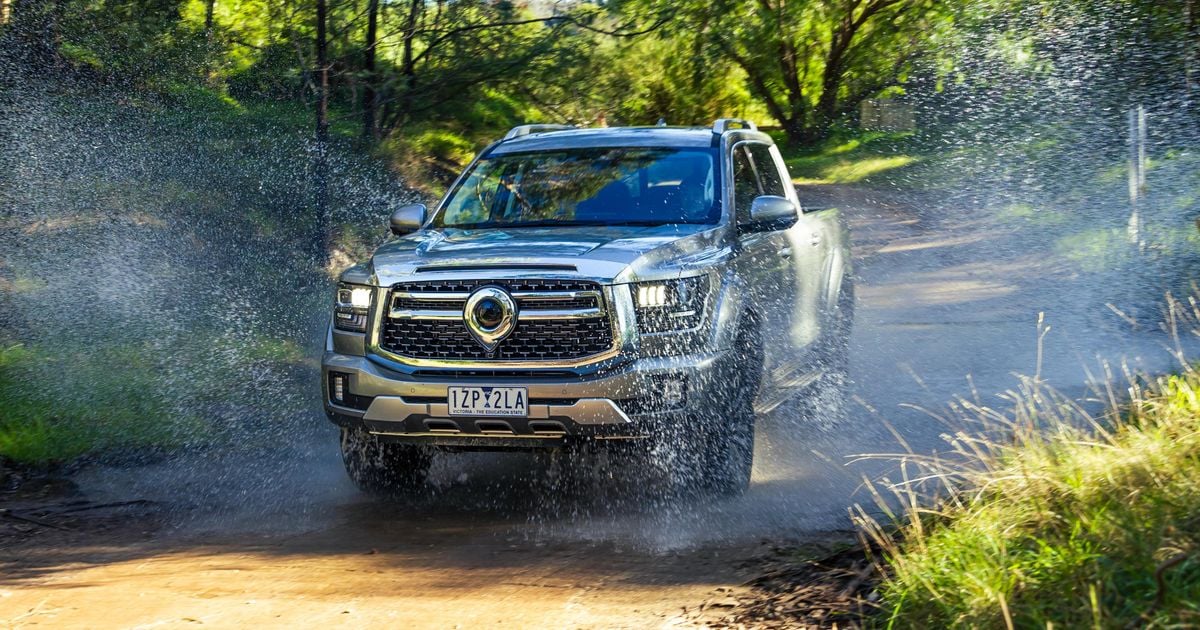
Cue the GWM Cannon Alpha, the latest 4×4 offering in the Cannon dual-cab ute range. It’s bigger, more luxurious and better appointed, so let’s take a test drive and see if the Alpha lives up to the name and the hype.
Wow! It’s familiar! And that’s not because it looks the same as the Cannon from the outside (it doesn’t) or that it’s no bigger than the standard Chinese dual-cab (is it). It’s because the bonnet looks like the one on Tank 500 and that connection becomes even more apparent when you open the door.
When you climb in, it’s clear this is the Tank 500 interior in a ute. The cabin is spacious, comfortable, and the front seats feel like a business class pod in a plane. A bit like a full-size US pickup, it’s encapsulating in a warm and comforting manner that provides a deep sense of safety, security and serenity.
Identical to the Tank 500, bar a few additional extras (like the front diff lock switch, which we will discuss later), it oozes with the same luxury, style and comfort that’s almost too much for a tradesman’s utility!
WATCH: Paul’s video review of the GWM Cannon Alpha Ultra Diesel
While it also comes with a bigger 2.4-litre turbo-diesel than the regular Cannon, here we’re driving the 2.0-litre petrol-electric hybrid variant, which has a more powerful version of the same powertrain available in both the Tank 300 and 500.
The hybrid delivers smooth and positive power. It’s no race car but the torque curve feels flat and carries well through the rev range, offering decent enough acceleration and outright performance (click it over to Sport mode and all that steps up a noticeable notch).
The dash display and controls are pleasing to look at, functional and easy to access, but the indicator stalk is a little quirky and appears to get stuck on. It takes a little time to get used to as it has a touch sensitive partial mode for lane changing.
On the downside, and possibly the only real downer when it comes to the on-road experience, the Alpha has the same hum and vibration as the Tank 500, but possibly not as bad. It is amplified in the back seat, however.
The brakes are phenomenal, almost to the point you’d call them high-performance. They are calibrated perfectly, since they don’t grab unexpectedly yet the firmness in pedal application when pulling up is outstanding. Definitely one of the best braking systems I have experienced in a modern vehicle.
But there’s more when it comes to the Cannon Alpha’s stopping power! There is a noticeable amount of off-throttle deceleration, thanks to the magnetic load of the electric motor that forms part of the energy regeneration system, which is a very efficient use of the driveline and a very positive addition for off-roading, where autos typically ‘run away’ on steep descents.
Ride quality on the freeway and other blacktop is generally smooth and comfortable, but a couple of small and quirky things did get my attention when it comes to the chassis. The hum and vibration mentioned above is one of them, but I also found that the steering is a touch heavy.
It’s not that it is so much worse than many other new vehicles, but it’s worth noting as it could be taxing on long-distance drives. Overall though, the steering is generally quite good and it does offer a decent level of feel without being overly sensitive.
The head-up display showing the speedo is a nice touch. It’s an excellent safety feature and just one of many smart additions that give an ‘above and beyond’ feel to this vehicle’s design.
Fortunately, the driver assist systems had been dialled down before our test drive via an upcoming software upgrade, so the usually lane keeping and centring functions were far more bearable. Yet we still got to enjoy the frequent and intrusive verbal reminders to ‘please concentrate while driving’ and ‘take a break’.
The rear seat is spacious and really takes advantage of the larger size of the Alpha. They are also adjustable, which is another nice addition, but best of all the seats themselves are very comfortable.
To see how the GWM Cannon Alpha lines up against the competition, check out our comparison tool
Off-road
Hitting the dirt, it’s immediately apparent the Cannon Alpha is stable and easy to control. You can select a 4H mode via the centre console dial and in this setting the vehicle handles like an all-wheel drive at speed on unsealed roads.
Based on the information available and my actual drive experience, the Alpha’s nine-speed auto is attached to a part-time transfer case to provide permanent four-wheel drive, and the transfer becomes locked when 4H is selected (as well as in 4L).
Off-road at speed the cabin vibrates a little, but aftermarket suspension would go a long way to improve that. Slipping into 4L is intuitive and seamless once the vehicle is parked and the transmission is in neutral. It’s true low-range gearing that gives plenty of control with the normal benefits of the associated lower ratios.
Traction control works okay but is a somewhat agricultural. The system creaks, growls and groans with a loud clashing sound from the front-end as the traction control engages and disengages the brakes in an attempt to maintain traction.
It actually sounds like the drive plates on the end of the stub axles are only partially engaged. The noise is pretty harsh and I see plenty of uninitiated owners returning the vehicle to their dealer and complaining it is broken!
There is a quick and simple fix though, and the problem disappears completely when the factory-fitted front and rear locking differentials are activated.
This, understandably, transforms the Alpha into an almost unstoppable off-road beast. In fact, the only real limiting factor in its capability at this point is the clearance of the side steps. As with most new off-road vehicles, they are not going to last long if the vehicle is driven anywhere near its actual potential in the bush.
And given the standard front and rear diff locks, some off-road enthusiasts could argue it would have been better to leave the traction control system out of this model all together because, like the Tank 500, the Alpha’s system is awkward and unnerving.
While the Tank 500 comes with only a rear diff lock, the fitment of lockers at both ends of the Alpha negates any real need for traction control to assist it in off-road conditions at all. So my suggestion to GWM is either make the traction control system smoother and more user-friendly, or remove it altogether in the models with front and rear diff locks.
Off-road in low range and with both diff locks on, the Alpha is a beast! It climbs cleanly and smoothly, walks confidently through large wombat holes, and handles uneven and broken terrain with ease.
With the addition of aftermarket suspension, the removal of the factory side steps and the fitment of a more aggressive light-truck 4WD tyre like the Geolandar MT G003, the Alpha could well be the king of the hill when it comes to off-road capability.
While the interior design and fit-out is well beyond that of a normal utility vehicle, the back of this 4WD is all business. The bed is appropriately fitted with a tub liner and the dual-activation tailgate is a real winner.
The tailgate has clean panel lines and no visible handle, but a simple press of a button in the centre of the GWM logo opens the long side of the rear door, allowing for horizontal side opening of the 60/40-split tailgate. And pressing the same button for a longer period automatically drops the entire tailgate in one smooth motion.
It’s a clever touch of technology that may well prove convenient, but could also be just another thing to go wrong in remote locations.
The off-road camera system in the Alpha is well worth mentioning too. It comes on automatically when in low range and does a great job of assisting the driver.
It’s not so much that the camera system itself is better than anything else on the market, but it is the large central display screen on the dash that makes the system so much more functional.
When you take into account the solid fundamental off-road ability of the Alpha and consider the additional extras like the camera, diff locks, hill start assist and more, this really is a decent off-road rig.
To see how the GWM Cannon Alpha lines up against the competition, check out our comparison tool
What’s under the bonnet?
The GWM Cannon Alpha was Australia’s first hybrid 4×4 ute. The top-shelf Ultra Hybrid combines a 2.0-litre petrol engine and an electric motor to deliver impressive combined outputs of 255kW of power and 648Nm of torque. As standard, there’s a GWM-developed nine-speed auto and a Borg Warner transfer case. It also offers a healthy 3500kg braked towing capacity.
While all this will cost you just $64,990 drive-away, at the lower end of the Alpha range are the Lux and Ultra, priced even more sharply at $51,990 and $57,990 drive-away respectively and powered by a 135kW/480Nm 2.4-litre four-cylinder turbo-diesel, offering lower outputs than the most popular mid-size utes but more than the standard GWM Cannon’s 120kW/400Nm 2.0-litre turbo-diesel.
To see how the GWM Cannon Alpha lines up against the competition, check out our comparison tool
Mod-ability
It is definitely early days as far as aftermarket mods and accessories are concerned here.
GWM doesn’t list any genuine accessories for the Cannon Alpha itself, so as usual we will defer to Savage Tech Auto in southeast Queensland as the authority on what is available for the Alpha in Australia and, at this early stage, the answer is not much at all.
However, Savage Tech says to watch this space and we’ve heard rumours that bullbars, suspension and plenty more is already in transit!
To see how the GWM Cannon Alpha lines up against the competition, check out our comparison tool
CarExpert’s Take on the GWM Cannon Alpha
All up, the Alpha is a big step up from the Cannon, but while it shines in so many areas it could still do with some refinement. That said, alongside a comparable Ford Ranger or Toyota HiLux, the Alpha offers plenty of bang for your buck.
Whack on a bullbar, a suspension lift kit, and a good set of all-terrain tyres, then replace the factory side steps with some neatly ticked away rock sliders, and you’ve got yourself a seriously capable, comfortable and very well appointed dual-cab 4×4 ute.
Get over the badge on the grille and the brand name, and this vehicle certainly has a lot to offer and is well worth a look, because when you look beyond the luxury and comfort this is in effect a work ute.
With the Cannon first launched in Australia over three years ago, and both the Tank 300 and 500 off-road SUVs now also proving popular in the market, the Alpha makes it four clean hits in a row for GWM here.
Has GWM now got your attention and do you understand it’s a serious player in local the market yet, or are you still stuck on the failures of the early Great Wall offerings and the fact its vehicles are made in China? Let us know in the comments below.
Interested in buying a GWM Cannon Alpha? Get in touch with one of CarExpert’s trusted dealers here
Tariffs on imports from Canada and Mexico could add $2,100 for U.S.-assembled vehicles
Mexico-made pickup trucks might cost $8,000-$10,000 more
Proposed tariffs could also drive up the cost for EVs like $35k Chevy Equinox EV
The incoming Trump administration’s proposed 25% tariffs on all imports from Canada and Mexico could hit the Detroit Three automakers hard, raising the prices of not only EVs but also the gasoline pickup trucks that are those automakers’ lifelines, according to recent reporting from Reuters.
GM would likely see the biggest impact from these policies, which are steeped in the anti-immigration rhetoric that was a major feature of Trump’s campaign message but would disrupt long-established North American supply chains, according to Reuters.
GM is expected to import more than 750,000 vehicles from Canada and Mexico this year, according to that Reuters report, which cites business analytics firm GlobalData. About half of those will be the highly-profitable full-size gasoline pickups that contribute most to the automaker’s bottom line.
2025 Chevrolet Equinox EV
Separately, Reuters also notes that tariffs could affect the price of the Chevrolet Equinox EV, currently GM’s most affordable electric model. It’s assembled in Mexico and costs $34,995 before a $7,500 federal EV tax credit Trump is expected to take away.
Mexico is a major EV manufacturing hub, with more EVs going to the U.S. than are sold domestically—but that’s just part of an overall trend that relates to all types of vehicles and the parts that go into them. As Reuters states, 90% of light vehicles and 43% of auto parts manufactured in Mexico are exported to other parts of North America. GM, Ford, Nissan, and Stellantis lead with exports from Mexico to the U.S., but Toyota, VW, and Honda each brought in more than 100,000 vehicles from Mexico just in the first six months of 2024.
The Trump tariffs would apply to both complete vehicles and parts. A 25% tariff on parts from Canada or Mexico would add $2,100 in cost to consumers for U.S.-assembled vehicles, and $8,000-$10,000 for vehicles also assembled in Canada or Mexico, according to Reuters, citing Wells Fargo estimates.
Ford Mustang Mach-E assembly – Mexico
Trump voters may feel that financial pain more than most. While many pickup trucks are assembled in the U.S., a good share of popular models, including not only GM’s Chevrolet Silverado and GMC Sierra, but also the Ford Maverick, Ram 1500, and Toyota Tacoma are built in Mexico. So the vehicles most popular in rural areas that overwhelmingly voted for Trump will also be impacted by tariffs, Reuters points out.
Trucks are at least profitable, offering a chance that automakers can absorb the cost increases rather than pass them on to consumers. That may not be the case with more affordable compact cars like the Nissan Sentra, longtime industry analyst Sam Fiorani noted to Reuters. EVs could follow the same price-hike path as affordable gas cars.
Porsche has opted not to use one-pedal driving in its current EVs, and that won’t change with electric sports cars due to replace the current gasoline 718 Boxster and Cayman.
It’s all about giving the driver more control and confidence, Porsche research and development boss Michael Steiner said in a recent interview with Autocar.
“If you ask any race driver, none would choose a one-pedal system because you should have control of recuperation and braking on the same pedal as seamlessly as possible,” Steiner said. “In cornering, if you don’t have the right feeling on the pedal, you don’t have trust in the stability of the car.”
2025 Porsche 718
Porsche’s current strategy, as seen in the Taycan and Macan Electric, taps into regenerative braking only with the brake pedal. This is more efficient, the automaker argues, because it makes better use of built-up kinetic energy for deceleration. Steiner reiterated that point here, while adding that Porsche’s approach gives the driver greater control and awareness.
“If you have all the braking on the brake pedal, then you as the driver can do the modulation you need—and also feel the reaction of the tarmac, steering, and things like that,” Steiner said. “So you can control the car with the brakes as well as the throttle and, in our view, this is superior to a system that does something you can’t control.”
Porsche Mission R concept
Announced in 2022 and due to arrive in 2025 as 2026 models, the 718 Boxster convertible and Cayman coupe will replace the gasoline equivalents as the entry points to Porsche’s sports-car lineup.
Spy shots from earlier this year show proportions similar to the gasoline 718 models, which may stick around alongside the EVs for a period of time, combined with styling elements from other electric Porsches. Some elements are expected to carry over from 2021’s Mission R concept, including a T-shaped battery pack filling the central tunnel and the space behind the seats, although it’s unclear if production models will match the concept’s 670 hp, which could be briefly boosted to 1,073 hp.
Looking to get a quality certified pre-owned car at an attractive price to ring in 2025?
Look no further than the Carro AutoFair 2024, which will take place this December 6-8 weekend at Carro Retail Centre Puchong South. Cars, deals, discounts, prizes, three dream holiday destinations – need we say more?
Let’s look at some of the irresistible wheels on offer. You could drive home a 2020 Honda City from RM62k or a 2018 Honda Civic from RM72k. Proton fans, there’s the 2022 Saga from RM29k, plus the 2022 X50 and 2021 X70, both starting at RM66k.
Gems from Toyota, Mazda and Nissan too – how about a 2020 Yaris from RM59k, 2019 CX-5 from RM74k and 2021 Almera from RM59k? And if you want something premium, you’d do well to check out the 2020 BMW 218i from RM129k and the 2019 Mercedes-Benz A200 from RM134k.
Carro Certified cars are offered with up to RM10,000 off, plus one extra year of Carro’s engine and gearbox warranty for a total of two years, which is also how long you’ll get free service for. Moreover, take home additional event-exclusive gifts when you book a car, including 10% off insurance renewals and a 40% discount on a Carro Care respray.
Spin and win!
Each booking will grant you a spin of the wheel to win prizes upon delivery, such as a 4K smart TV, a RM500 cash rebate, MaxTag readers, Touch ‘n Go eWallet credits, petrol cards, dash cams and more. Check out the prizes below:
Hewlett Packard (HP) f270 DashCam
TNG RM100
Petrol card worth RM100
Xiaomi Band 9
Samsung Galaxy Earbud FE
Xiaomi Outdoor Camera CW300
MaxTag (Smart Tag)
Megra 43″ 4K SmartTV
RM500 Cash Rebate
Stand to win 2 tickets to these dream destinations!
Last but certainly not least, you will be entered into a lucky draw where you’ll stand a chance to win a trip to Osaka (6D/5N), Turkey (9D/7N) or Bali (4D/3N) upon delivery.
If you yearn to visit Nara Deer Park, go on a hot air balloon ride in Cappadocia, or sunbathe on the white sands of Bali, this is your chance! All you have to do is buy a Carro Certified car to be entered automatically into a lucky draw.
Win 2 tickets for an all-expense-paid trip to one of 3 sought-after holiday destinations:
6D5N trip to Osaka, Japan – 2 winners (2 tickets each)
9D7N trip to 8 cities in Turkey – 2 winners (2 tickets each)
4D3N trip Bali, Indonesia – 2 winners (2 tickets each)
So see you at the Carro AutoFair 2024, December 6-8, Carro Retail Centre Puchong South!
In the world of branding, few elements have the power to create lasting emotional connections quite like a luxury scent. As the fragrance industry continues to expand — with a global market size valued at USD 48 billion in 2023 — perfumery Maison 21G has succeeded by creating bespoke, immersive olfactory experiences. Known for crafting personalised scents with a commitment to eco-friendly ingredients, the Maison is transforming how some of the world’s most renowned hospitality brands engage with their consumers’ olfactory senses.
One of Maison 21G‘s recent partnerships is with the Mandarin Oriental Singapore, which underwent a full scent transformation as part of its re-opening last September. Maison 21G developed a bespoke fragrance that would encapsulate the Mandarin Oriental’s values and heritage as guests entered the doors. Notes of bright orange, floral white tea, and osmanthus from China are blended into hotel candles and pillow mists. Through advanced micro-diffusing techniques, the scent is also seamlessly dispersed throughout the hotel, creating a sensory stay.
“Mandarin Oriental’s decision to embrace a full 360-degree scent design reflects their deep understanding of scent as a powerful dimension of brand experience,” explains Johanna Monange, founder of Maison 21G.
The perfume brand has also expanded its operations worldwide, with a particular focus on luxury hospitality markets in China, the Middle East and Europe. In China, the Maison partnered with Kimpton Hotels to create a full set of bath products, including shampoo, conditioner, and shower gel, alongside elegant candles for VIP guests.
Similarly, in Dubai, Maison 21G worked with Paris Society to craft custom scents for upscale beach clubs — Gigi Dubai and Maison Revka. Inspired by the seaside sanctuary, Maison 21G created a range of bespoke ancillaries that include refreshing face mists and coastal-inspired sunscreen. Through this, these beach clubs have become destinations where fragrance is not just an accessory but an integral part of the overall guest experience.
The Maison’s immersive scent experience extends to other luxury lifestyle brands. British Formula 1 team Williams Racing partnered with Maison 21G to design an exclusive gift set of candles, reeds and car diffusers.
So far, these collaborations have helped Maison 21G establish itself as a leader in the luxury fragrance industry. The power of scent lies in its ability to evoke memories in ways that differ from visual and auditory branding. Maison 21G’s growing list of high-profile partners — from luxury hotels to quiet retreats — attests to the power of scent as an essential component of brand identity.
Maison 21G has emerged as a global leader in bespoke perfumery, renowned as the ultimate “Scent Couturier.” Specialising in creating distinctive fragrance identities and sustainable scented products, the Maison partners with iconic brands worldwide to craft immersive experiences that reflect their stories and values, seamlessly blending luxury with eco-conscious innovation.
For more on the latest in beauty and wellness reads, click here.
The term “boutique hotel” once conjured images of intimate, independently owned properties with quirky decor, personalised service, and a distinct sense of place. But in recent years, the boutique hotel landscape has changed dramatically, raising questions about whether the concept is losing its authenticity. As large hospitality corporations like Marriott, Hilton, and IHG launch their own “boutique-style” brands, what was once a niche offering risks becoming just another standardised product under a different guise.
Big Chains Transforming Boutique Stays
Five major hotel chains stand out as key players in the commercialisation of boutique hotels. While their initiatives make boutique-style stays more accessible to travelers, they also contribute to the erosion of authenticity that made boutique hotels so special in the first place.
Marriott International
Marriott’s Autograph Collection and Tribute Portfolio are among the most notable boutique-inspired brands. The Autograph Collection includes over 290 properties worldwide, and while the brand touts uniqueness, the centralisation of management practices and design templates reveals the corporate hand at play. Marriott’s acquisition of boutique-style chains like Starwood Hotels also signals its strategy of incorporating independent properties into its empire while maintaining the appearance of individuality.
Hilton Worldwide
Hilton’s Curio Collection and its newer offshoot, the Tapestry Collection, are marketed as “handpicked” properties with local character. However, these properties are often tied to Hilton’s robust loyalty program, central reservation systems, and standardised back-end operations, making them feel less boutique and more like a polished version of the chain’s existing hotels. Hilton’s global push for rapid growth means these boutique brands are multiplying, often sacrificing exclusivity for scale.
Hyatt Hotels Corporation
Hyatt has made significant inroads into the boutique hotel space through its Unbound Collection and acquisition of luxury chains like Alila, Andaz, and Small Luxury Hotels of the World (SLH). Although Hyatt emphasises local flavor and personalisation, many Unbound Collection properties are indistinguishable from other Hyatt offerings in terms of service standards, room layouts, and guest expectations.
Accor Hotels
Accor’s aggressive expansion strategy includes acquiring well-known boutique hotel brands such as 21c Museum Hotels, MGallery, and Ennismore, which manages The Hoxton and Gleneagles. By absorbing these independent brands, Accor integrates boutique concepts into its massive global infrastructure, often introducing cost efficiencies and standardisation that detract from the properties’ original charm.
InterContinental Hotels Group (IHG)
IHG’s Indigo brand, with over 130 properties, promises to deliver a neighborhood-centric experience. Yet the very concept of “neighbourhood” becomes diluted when Indigo hotels across the globe follow a similar design formula and service structure. Moreover, IHG’s acquisition of boutique darling Kimpton Hotels has sparked debate about whether Kimpton has retained its quirky, irreverent spirit under corporate ownership.
The Rise of the Corporate “Boutique”
In an industry obsessed with trends, the boutique hotel formula was irresistible to the big players. Travelers sought unique stays that broke away from the cookie-cutter approach of traditional chains, and the demand for experiences — rather than just a place to sleep — grew exponentially. Recognising this shift, these major hotel companies began crafting their own boutique-inspired brands.
On the surface, these brands offer the hallmarks of boutique hotels: smaller properties, local flair, and a focus on design. However, dig deeper, and the story changes. These “collections” are often franchise operations underpinned by the same global corporate structures that define traditional chains. The curated art on the walls and artisanal cocktails in the bar may feel authentic, but behind the scenes, a rigid framework of brand standards and centralized decision-making often governs operations.
Is Authenticity at Stake?
Authenticity has always been the cornerstone of the boutique hotel experience. Guests are drawn to these properties because they reflect the local culture, cater to individual tastes, and provide a sense of discovery. But when the same corporate playbook is used to roll out boutique-style hotels from Bangkok to Berlin, how much of that magic can truly remain?
Take, for instance, the aesthetic of many corporate boutique hotels. While independent boutiques often feature one-of-a-kind interiors crafted by local designers, corporate versions tend to follow a carefully curated “look” that aligns with global trends. Exposed brick walls, mid-century modern furniture, and Edison bulb lighting can feel more like a checklist than a genuine attempt to create something unique.
The “Luxury Homogenisation” Dilemma
There’s also the issue of scale. Independent boutique hotels typically range from 10 to 100 rooms, creating an intimate environment where guests can enjoy a high degree of personalisation. Corporate boutiques, however, often push the boundaries of what qualifies as “small.” It’s not uncommon to find properties branded as boutique-style with hundreds of rooms, expansive meeting spaces, and chain-like efficiency.
This trend mirrors what has happened in the food and beverage industry with “artisanal” products. When major brands take over and mass-produce “artisanal” goods, the original spirit of craftsmanship often gets diluted. Similarly, the boutique hotel sector risks falling into what can only be described as “luxury homogenisation” — where every property starts to feel the same despite claims of uniqueness.
The Upsides for Travelers — and the Downsides
Of course, corporate involvement isn’t all bad news. For one, these new boutique-inspired brands make the concept more accessible. Travelers who might never have considered an independent boutique hotel — whether due to loyalty programs, cost concerns, or apprehensions about consistency — can now experience a version of it. Guests can earn points, enjoy familiar amenities, and feel confident about the quality of their stay.
However, this accessibility comes at a cost. The very essence of what makes boutique hotels special — their independence, their unpredictability, their deeply local DNA — is under threat. The homogenisation of the boutique experience might suit a broader audience, but it risks alienating travelers who crave the genuine article.
What’s Next for Real Boutique Hotels?
As the line between boutique and mainstream continues to blur, the industry faces an existential question: Can boutique hotels remain true to their roots in a world increasingly dominated by corporate players?
Some industry insiders believe that the pendulum will eventually swing back. Just as travelers once rebelled against the sterility of traditional chains, they may grow tired of faux-boutique offerings and seek out truly independent properties. Others argue that technology, sustainability, and hyper-localisation will help distinguish real boutique hotels from their corporate counterparts.
One thing is certain: the boutique hotel space is at a crossroads. For travelers seeking the authentic charm and intimacy that originally defined the genre, the onus is now on doing research, seeking out genuinely independent properties, and questioning the legitimacy of boutique branding.
Because in a world where even the biggest hotel chains are claiming a stake in the boutique game, that charming little inn you’re eyeing might just be another cog in the corporate machine. And isn’t the whole point of boutique hotels to escape exactly that?
For more on the latest in opinion, hotel and lifestyle stories, click here.
The Pecman app has been launched at this weekend’s KLIMS 2024 show. The launch event was graced by Minister of Transport YB Anthony Loke Siew Fook.
Pecman allows you to browse through and purchase a diverse range of car-related services and products at direct-from-manufacturer prices.
Among the products and services available in the Pecman app include tinting and coating to paint protection film (PPF), car wraps, leather car seats, and car wash services. You’ll be able to purchase LLumar® Tinting from the USA, Pecca Leather from Malaysia and GS27 Car Care Products from France.
You can download the Pecman app here:
You can also check out the Pecman website for more info.
To celebrate Pecman’s launch, they are offering exclusive promotional deals and discounts at their KLIMS 2024 booth.
Naoki Yokomizo (Super GT Champion & Coach Driver of Maezawa Racing) Signing Session on 6th-8th December 2024
LLumar® Solar Tinting from RM799 (RRP: RM2,100), the lowest price in Malaysia
LLumar® 4 mil Security Tinting from RM1,999 (RRP: RM5,000), the lowest price in Malaysia
Pecca Leather Premium Leather Car Seats from RM1,299
RM10 New User Welcome Voucher (valid for 30 days for all services including car wash)
1% instant cashback on all purchases
Fun games with RM38,000 worth of prizes and guaranteed daily winners with full car LLumar® tinting with PIPL security film worth RM5,000 or full car Pecca Leather full leather car seats worth RM3,000 for only RM0.99
Free goody bag with mineral water, popcorn, exclusive Pecman leather goods, and more worth RM25 while stocks last
If you’re visiting KLIMS 2024, do make sure to drop by Pecman’s booth!
Mercedes-Benz’s Manufaktur personalization program is growing
Mercedes has opened a new Manufaktur Studio to enhance the customer experience
Mercedes PixelPaint system enters production and is part of the Manufaktur Studio
Mercedes-Benz is ready to take customer involvement and customization one step further.
On Thursday, Mercedes opened the Manufaktur Studio while announcing an expansion of the personalization program’s customization capabilities and offerings.
Mercedes-Benz Manufaktur Studio
The Manufaktur program is located in Sindelfingen, Germany, where Mercedes’ headquarters are located, and now includes the Manufaktur Studio.
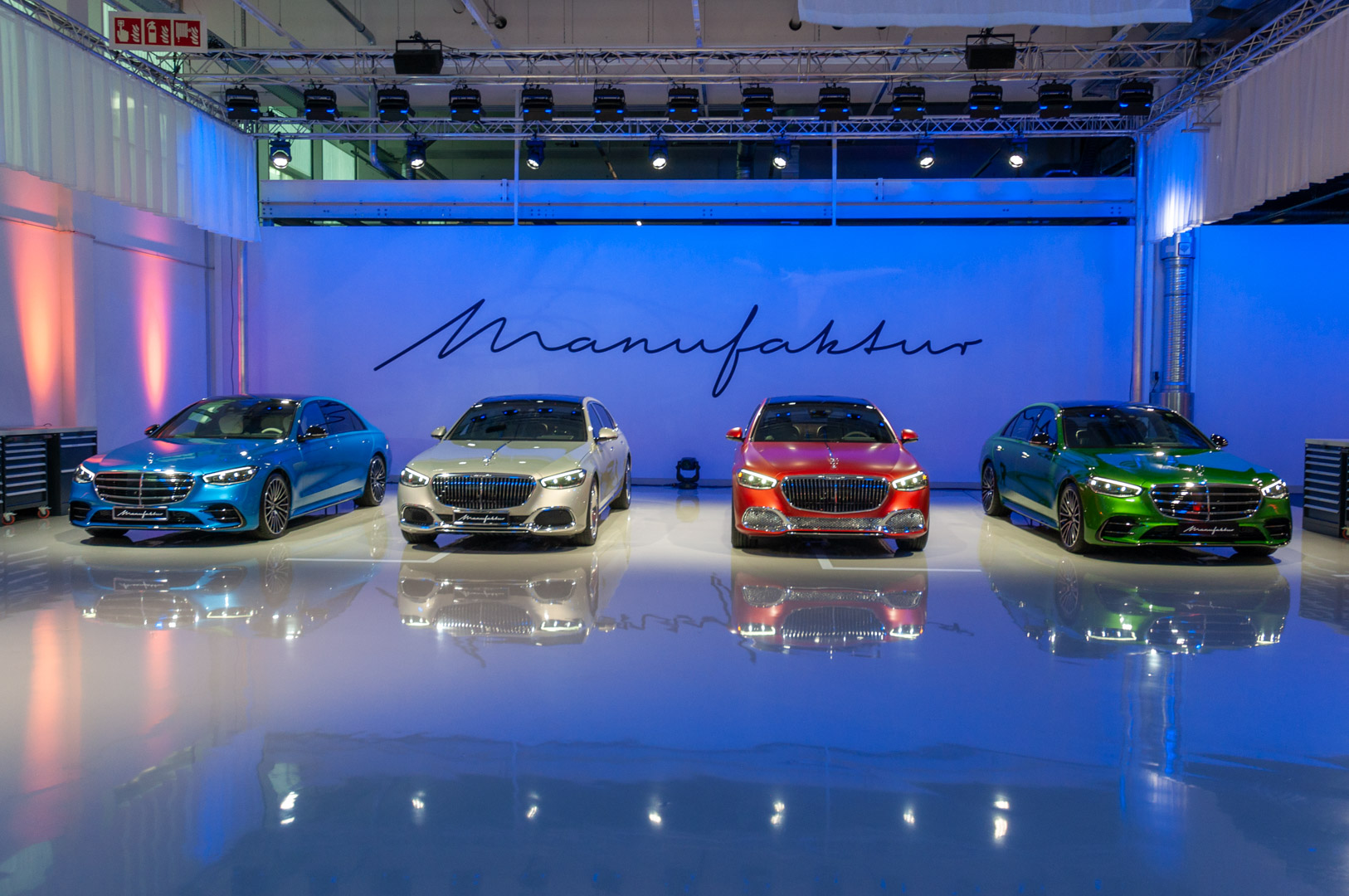
Located inside the main Sindelfingen complex, the Manufaktur Studio allows customers to be part of the experience. Customers can watch and feel part of the customization of their vehicles as the Manufaktur’s team hand-builds the customized components.
Mercedes-Benz Manufaktur Studio
The Manufaktur Studio is split into four sections including the logistics area, vehicle preparation, matrix production, and the customer area.
Mercedes launched the Manufaktur program back in 2015, originally as the Designo Manufaktur program. The Designo designation was eventually dropped. In 2021, the Manufaktur program expanded to include the S-Class, CLS-Class, and AMG GT.
Mercedes-Benz Manufaktur program
Mercedes-Benz Manufaktur Studio
Mercedes-Benz Manufaktur Studio
The wide-ranging program includes everything from leather cladding and embroidering to personalization and specific trim finishes or materials. The S-Class Manufaktur options have been expanded for 2025 to include new exclusive colors (now up to 80) and other options. Customers can even have their seats tailor made for them by widening or narrowing of the seating surfaces, or lengthening of the seat bottoms by up to 2.0 inches.
Mercedes said it plans a similar expansion for its AMG-badged sports cars. Of course, Mercedes customers can have their cars painted any color they want through the Made to Measure program.
Mercedes-Benz Manufaktur Studio
A new PixelPaint process has also been introduced and is hailed as a resource-saving procedure. Mercedes said the new technology applies the paint directly to the vehicle’s body with increased precision in a similar fashion as an ink jet printer.
This opens the door for more customized patterns and accuracy involving multi-colored vehicles, which is now limited only by technical feasibility, according to Mercedes.
Mercedes-Benz Manufaktur Studio
Some digitalization has been embraced to speed up the build process, but humans still control the manufacturing and finishing. Cars and parts carts roll around the Manufaktur Studio autonomously to save time. Mercedes said this has enabled it to produce up to 20 vehicles a day through the Manufaktur program. This has helped the automaker expand the program, which accounted for 30% of the vehicles it sold in its top-end segments during the first half of 2024. Mercedes didn’t specify which vehicles and segments explicitly.
Mercedes-Benz paid for travel and lodging along with some German pretzels for Motor Authority to bring you this background information.
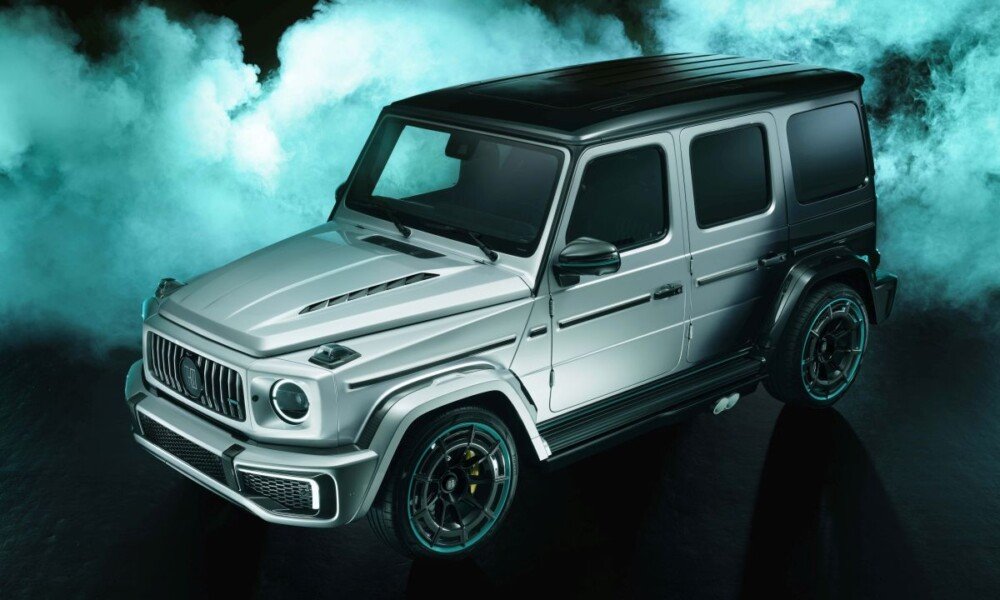
German tuner HOF, a company led by former Mercedes-AMG CEO Philip Schiemer, has revealed what is said to be the fastest G-Wagon in the world. It’s called the HOF Sir Class and is a tribute to seven-time Formula 1 World Champion Lewis Hamilton, who will leave the Mercedes team at the end of this season.
The HOF Sir Class features a 2-tone exterior inspired by Mercedes-AMG Petronas F1 team colours. The custom body kit includes a carbon fibre hood, unique bumpers, wider fenders and 23-inch wheels with teal accents.
Inside, the custom G-Wagon gets black bucket seats with teal highlights and a rectangular steering wheel similar to that of the Mercedes-AMG One hypercar.
Under the hood of the Sir Class is a 4.0-liter twin-turbo V8 engine which produces 1063 hp and 959 lb-ft of torque. The heavily modified unit packs forged pistons and beefier connecting rods, new turbos and an aluminium airbox.
The SUV also sits 1.2 inches lower to the ground compared to the standard G63 for better handling and aero reasons. HOF claims a 0-62 mph time of 3.5 seconds and a top speed of 186 mph.
Only 11 examples of the HOF Sir Class will be built with a starting price of $690,000.
The technical storage or access is strictly necessary for the legitimate purpose of enabling the use of a specific service explicitly requested by the subscriber or user, or for the sole purpose of carrying out the transmission of a communication over an electronic communications network.
Preferences
The technical storage or access is necessary for the legitimate purpose of storing preferences that are not requested by the subscriber or user.
Statistics
The technical storage or access that is used exclusively for statistical purposes.The technical storage or access that is used exclusively for anonymous statistical purposes. Without a subpoena, voluntary compliance on the part of your Internet Service Provider, or additional records from a third party, information stored or retrieved for this purpose alone cannot usually be used to identify you.
Marketing
The technical storage or access is required to create user profiles to send advertising, or to track the user on a website or across several websites for similar marketing purposes.