Home Blog Page 301

Australia’s cheapest cars from luxury brands

0


Just how little can you spend and still get a new car with a three-pointed star, spinning propeller or four rings on the grille?

At just over $36,000 before on-road costs, the most affordable Audi – the A1 30 TFSI – is around $20,000 cheaper than the least expensive BMW, Mercedes-Benz or Volvo.

That makes it the most affordable vehicle from the 12 luxury brands operating in Australia.

For this exercise, we’re drawing a distinction between luxury brands like Audi and ultra-luxury or exotic brands like Aston Martin, where the most affordable models are deep in six-digit territory.

Of the 12 vehicles here, all bar two have a base price under $100,000 before on-road costs.

ModelStarting price
Alfa Romeo Tonale Ti$50,900
Audi A1 30 TFSI$36,200
BMW 118$56,500
Cadillac Lyriq Luxury$117,000
Genesis GV70 2.5T Advanced$78,500
Jaguar E-Pace P250 R-Dynamic SE$76,773
Land Rover Discovery Sport P200 S$73,504
Lexus LBX Luxury$47,550
Maserati Grecale GT$122,500
Mercedes-Benz A200$56,900
Porsche Macan$95,100
Volvo XC40 Plus B4$54,990

Click on a car’s name above to jump directly to its information on this page, or continue scrolling for the full list.

Alfa Romeo Tonale Ti

The Alfa Romeo Tonale range opens at $50,900 before on-road costs.

That makes it $4910 more expensive than the most affordable version of the Jeep Compass, which the Tonale is related to.

Standard equipment includes matrix LED headlights, 18-inch alloy wheels, a 12.3-inch digital instrument cluster and a 10.25-inch touchscreen infotainment system with wireless Apple CarPlay and Android Auto.

The front seats are manually adjustable as standard, though there’s power lumbar for the driver’s seat. Upholstery is a mix of cloth and leatherette.

Standard safety equipment includes adaptive cruise control, lane-keep assist, and traffic sign recognition; features like blind-spot monitoring and rear cross-traffic alert are optional on the Ti and standard on the Veloce.

The Tonale Ti and Veloce use a turbocharged 1.5-litre four-cylinder engine with a 48V mild-hybrid system. The engine produces 118kW and 240Nm, while the electric motor produces 15kW and 55Nm; claimed fuel economy is 5.6L/100km.

It’s front-wheel drive and uses a seven-speed dual-clutch automatic transmission, though Alfa Romeo offers a flagship Veloce PHEV Q4 that features a 1.3-litre four-cylinder plug-in hybrid (PHEV) powertrain with 208kW of power and all-wheel drive.

The Tonale can run on pure electric power at low speeds, much like a conventional hybrid. Those seeking pure electric power to last their commute, however, will need to step up to the PHEV which offers 60.5km of WLTP range.

Launched in 2023, the Tonale has quickly become Alfa Romeo’s best seller in Australia – though not by a huge margin.

To the end of October, Alfa Romeo has sold 224 Tonales this year, making it marginally more popular than the Giulia (176 sales).

It won’t be Alfa Romeo’s smallest model for long, with the Junior arriving in 2025 as a new entry-level SUV for the Italian brand. It may also become Alfa Romeo’s most affordable model here.

ModelPrice before on-road costs
Alfa Romeo Tonale Ti$50,900

Interested in buying an Alfa Romeo Tonale? Get in touch with one of CarExpert’s trusted dealers here.

MORE: Everything Alfa Romeo Tonale

Audi A1 30 TFSI

The Audi A1 is an upscale cousin to the Volkswagen Polo, and has no direct competition from BMW or Mercedes-Benz.

Its days are numbered, with Audi having previously confirmed it won’t be replaced.

The entry-level 30 TFSI, priced at $36,200 before on-road costs, features a turbocharged 1.0-litre three-cylinder engine producing 85kW of power and 200Nm of torque, mated with a seven-speed dual-clutch automatic – the same powertrain found in the Polo.

Claimed fuel economy is 5.4L/100km on the combined cycle.

More expensive A1s offer 110kW/250Nm and 147kW/320Nm turbocharged four-cylinder engines.

The base 30 TFSI isn’t flashy, riding on 16-inch alloy wheels and featuring halogen headlights.

Standard safety equipment includes adaptive cruise control, blind-spot monitoring, and lane-keep assist.

Inside, there are manually adjustable front seats with cloth upholstery. There’s manual air-conditioning and a basic 10.25-inch digital instrument cluster, though you can upgrade your base A1 with packages that bring Audi’s Virtual Cockpit, LED headlights and 17-inch alloy wheels.

Though it’s the most affordable Audi in Australia, it’s far from being the most popular. To the end of October, Audi has sold more than 10 times as many A3s as it has A1s, with just 174 examples of the light hatch being delivered.

ModelPrice before on-road costs
Audi A1 30 TFSI$36,200

Interested in buying an Audi A1? Get in touch with one of CarExpert’s trusted dealers here.

MORE: Everything Audi A1

BMW 118

BMW has just launched its new-generation 1 Series hatchback, which in base 118 guise is priced at $56,500 before on-roads.

This model uses a turbocharged 1.5-litre three-cylinder engine producing 115kW and 230Nm, mated with a seven-speed dual-clutch automatic. Claimed fuel economy is 6.4L/100km, though you’ll need to fill the 118 up with 98-octane premium unleaded fuel.

Even this most affordable 1 Series gets adaptive suspension, as well as a 10.25-inch digital instrument cluster, a 10.7-inch touchscreen infotainment system with wireless Apple CarPlay and Android Auto, and leatherette-upholstered seats that are heated up front.

Standard safety equipment includes blind-spot monitoring, lane-keep assist and rear cross-traffic alert.

If you want more power, you can step up to the all-wheel drive M135 xDrive with its 233kW/400Nm turbo 2.0-litre four. It’s a big jump, however, with the M135 xDrive priced at $82,500 before on-roads.

ModelPrice before on-road costs
BMW 118$56,500

Interested in buying a BMW 1 Series? Get in touch with one of CarExpert’s trusted dealers here.

MORE: Everything BMW 1 Series

Cadillac Lyriq Luxury

Cadillac is in the process of returning to Australia. It has opened its first retail location and is planning first customer deliveries in the first quarter of 2025.

Thus far, it has confirmed only the Lyriq electric SUV for our market, which opens at $117,000 before on-road costs – certainly more expensive than an entry-level BMW 1 Series, but undercutting the more comparable BMW iX.

Cadillac offers more affordable vehicles overseas like the slightly smaller Optiq electric SUV, which could make its way here, as well as combustion-powered vehicles like the BMW 2 Series Gran Coupe-rivalling CT4 and Audi Q3-rivalling XT4, both of which have been ruled out for Australia.

All Lyriqs for now feature a 388kW/610Nm dual-motor all-wheel drive powertrain, with a 102kWh nickel cobalt manganese (NCM) battery affording 530km of electric range.

Standard equipment includes a panoramic sunroof, hands-free power tailgate, heated and ventilated front seats, heated outboard second-row seats, and semi-automatic parking assist.

There’s also a 33-inch display incorporating the digital instrument cluster and infotainment touchscreen, while standard safety equipment includes adaptive cruise control, blind-spot assist and a surround-view camera.

ModelPrice before on-road costs
Cadillac Lyriq Luxury$117,000

Interested in buying a Cadillac Lyriq? Get in touch with one of CarExpert’s trusted dealers here.

MORE: Everything Cadillac Lyriq

Genesis GV70 2.5T Advanced

The GV70 isn’t Genesis’ smallest SUV – that’s the electric GV60. It also isn’t the Hyundai premium brand’s smallest vehicle overall, as there’s still the G70 sedan and Shooting Brake.

However, the GV60 carries a premium as electric vehicles often do, while the G70’s model lineup was recently pared-back.

Given the GV70 is by far Genesis’ best-seller in Australia, the Korean luxury brand has maintained a wide range of variants with its recent update, though you can no longer buy a diesel.

The former entry-level rear-wheel drive model was axed with the update, but there’s still a range of five variants opening with the Advanced 2.5T, priced at $78,500 before on-roads.

For that money you get a 224kW/422Nm turbocharged 2.5-litre four-cylinder engine mated with an eight-speed auto and all-wheel drive. Fuel economy is a claimed 10.3L/100km.

Even this entry-level GV70 offers a 27-inch display incorporating the digital instrument cluster and an infotainment touchscreen with wireless Apple CarPlay and Android Auto, as well as leather upholstery, heated and ventilated front seats, a hands-free power tailgate, and a panoramic sunroof.

The list of standard safety equipment is similarly exhaustive, with blind-spot assist, rear cross-traffic assist, lane centring, adaptive cruise control, a surround-view camera, and the company’s Blind-Spot View Monitor that shows camera footage from the car’s blind-spot.

The GV70 doesn’t sell anywhere near as well as rivals like the Lexus NX and BMW X3, but Genesis has sold 707 to the end of October. That’s more than the rest of the Genesis lineup combined, and more than rivals like the Alfa Romeo Stelvio, Land Rover Discovery Sport and Maserati Grecale.

ModelPrice before on-road costs
Genesis GV70 2.5T Advanced$78,500

Interested in buying a Genesis GV70? Get in touch with one of CarExpert’s trusted dealers here.

MORE: Everything Genesis GV70

Jaguar E-Pace P250 R-Dynamic SE

The E-Pace is still on Jaguar’s price lists, but its days are numbered.

Jaguar is ditching its entire current model range ahead of a switch to a more exclusive, electric-only lineup, with only the F-Pace reported to be continuing beyond next year.

The Austrian-built small SUV, related to the Land Rover Discovery Sport and Range Rover Evoque, opens at $76,773 before on-roads for the P250 R-Dynamic SE.

All E-Pace models in Australia are powered by a turbocharged 2.0-litre four-cylinder engine producing 184kW and 365Nm, mated with an eight-speed automatic and all-wheel drive. Claimed fuel economy is 8.0L/100km.

LED headlights and a power tailgate are standard, while inside there’s a 12-way power-adjustable driver’s seat and 10-way power adjustment for the passenger seat – both heated and finished in DuoLeather upholstery – as well as an 11.4-inch infotainment touchscreen with Apple CarPlay and Android Auto, plus a wireless phone charger.

Standard safety equipment includes adaptive cruise control, blind-spot assist, and rear cross-traffic alert.

Jaguar has sold just 141 E-Paces this year, but that’s more than three times as many as it shifted in Australia last year. Unfortunately for the baby cat, it’s the second lowest-volume vehicle in its segment, ahead of only the Genesis GV60.

ModelPrice before on-road costs
Jaguar E-Pace P250 R-Dynamic SE$76,773

Interested in buying a Jaguar E-Pace? Get in touch with one of CarExpert’s trusted dealers here.

MORE: Everything Jaguar E-Pace

Land Rover Discovery Sport P200 S

The Discovery Sport is a more conservative and practical alternative to the related Range Rover Evoque, and has a base price that undercuts its sleeker sibling.

The range opens at $73,504 before on-roads for the P200 S, which comes standard with a LED headlights, 18-inch alloy wheels, and a power tailgate.

Inside, there’s a digital instrument cluster, an 11.4-inch infotainment touchscreen with Apple CarPlay and Android Auto, DuoLeather upholstery and a wireless phone charger.

Standard safety kit includes blind-spot assist, rear cross-traffic alert, and adaptive cruise control.

It’s powered by a turbocharged 2.0-litre four-cylinder engine producing 147kW of power and 320Nm of torque, with a claimed fuel economy of 8.4L/100km. It’s mated with a nine-speed auto and all-wheel drive.

Though you can get the Discovery Sport with a third row of seating, its sleeker Range Rover Evoque sibling outsells it. A total of 287 have been sold to the end of October compared to 498 Evoques, making it the worst-selling vehicle among JLR’s Discovery, Defender and Range Rover SUVs.

ModelPrice before on-road costs
Land Rover Discovery Sport P200 S$73,504

Interested in buying a Land Rover Discovery Sport? Get in touch with one of CarExpert’s trusted dealers here.

MORE: Everything Land Rover Discovery Sport

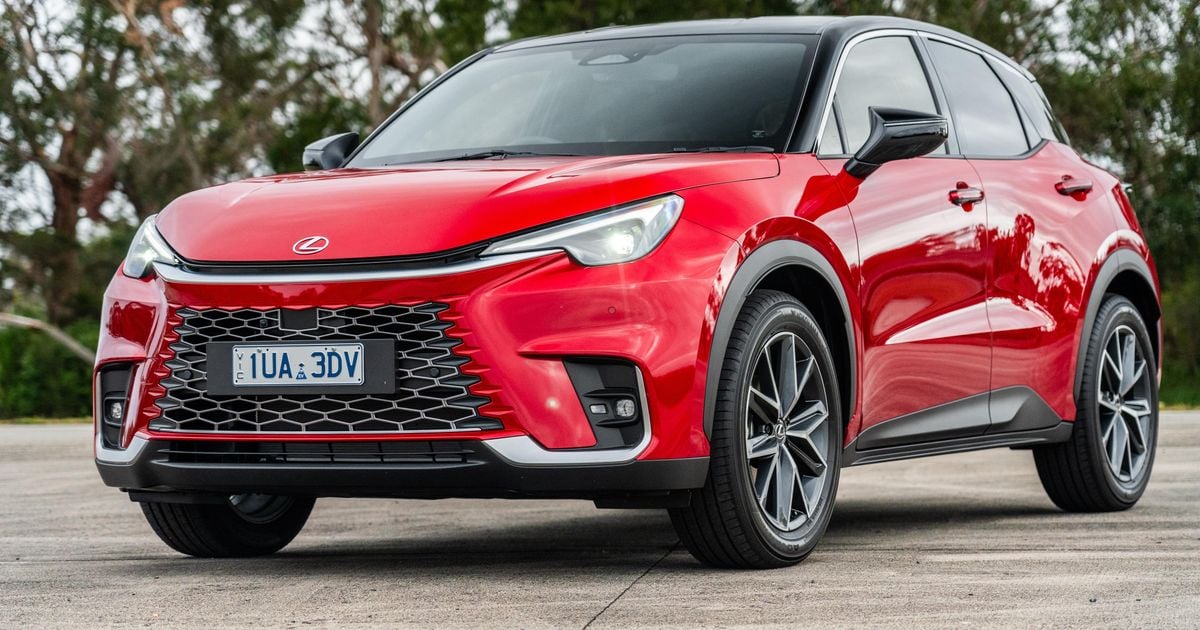
Lexus LBX Luxury

Lexus introduced the LBX this year as its smallest SUV yet, slotting in under the UX.

The range opens at $47,550 before on-roads for the base front-wheel drive Luxury, which features a 100kW 1.5-litre three-cylinder hybrid powertrain with an electronic continuously variable transmission (e-CVT).

Claimed fuel economy is 3.8L/100km.

The LBX features LED headlights with adaptive high-beam, plus a power tailgate and 18-inch alloy wheels.

Inside, there’s a 12.3-inch digital instrument cluster, a 9.8-inch infotainment touchscreen with wireless Apple CarPlay and Android Auto and a wireless phone charger.

The seats are upholstered in NuLux leatherette, with those up front being heated and the driver’s seat featuring 10-wya power adjustment and memory.

Standard safety equipment includes adaptive cruise control, blind-spot monitoring, rear cross-traffic assist, and a surround-view camera.

There’s a posher Sports Luxury above the Luxury, available with either front- or all-wheel drive, while a hot turbocharged Morizo RR is coming in 2025.

The LBX is only new to the Lexus lineup but it has already become the brand’s third best-selling model, with 1227 deliveries this year putting it behind only the NX and RX crossovers.

ModelPrice before on-road costs
Lexus LBX Luxury$47,550

Interested in buying a Lexus LBX? Get in touch with one of CarExpert’s trusted dealers here.

MORE: Everything Lexus LBX

Maserati Grecale GT

With the Grecale, a more upscale cousin to the Alfa Romeo Stelvio, owning a Maserati has become more attainable.

At $122,500 before on-road costs, the base Grecale GT is more than $20,000 cheaper than the outgoing Levante and Ghibli that used to be the most affordable models from the trident brand.

For that outlay, you get a turbocharged 2.0-litre four-cylinder engine with a 48V mild-hybrid system, with total system outputs of 220kW and 450Nm.

The GT features an eight-speed automatic transmission and all-wheel drive, and claimed fuel consumption figures of 8.7L-9.2L/100km under European testing.

It rides on 19-inch alloy wheels and features LED headlights and a hands-free power tailgate.

Inside, there are 10-way power-adjustable front seats with driver’s memory, plus a 12.3-inch digital instrument cluster and a 12.3-inch infotainment touchscreen with wireless Apple CarPlay and Android Auto.

Standard safety equipment includes adaptive cruise control, blind-spot monitoring and rear cross-traffic alert.

While the Grecale has brought the cost of entry to the Maserati lineup down, its sales are down 39.9 per cent year-to-date to 253 units. That’s more than twice as many units as the related (and more affordable) Alfa Romeo Stelvio, but well below the likes of the Porsche Macan (2614 sales).

ModelPrice before on-road costs
Maserati Grecale GT$122,500

Interested in buying a Maserati Grecale? Get in touch with one of CarExpert’s trusted dealers here.

MORE: Everything Maserati Grecale

Mercedes-Benz A200

The A-Class is another vehicle on this list not set to be replaced, with Mercedes-Benz paring back its range of ‘Entry Luxury’ models.

For now, though, it’s the most affordable Mercedes-Benz, with the base A200 hatchback now priced at $56,900 before on-roads following a recent $6000 price cut.

It’s powered by a 120kW/270Nm turbocharged 1.3-litre four-cylinder engine, mated with an eight-speed dual-clutch automatic. Fuel use is a claimed 6.6L/100km.

There are standard 18-inch alloy wheels and LED headlights, while inside there’s a standard 10.25-inch digital instrument cluster, a 10.25-inch infotainment touchscreen with wireless Apple CarPlay and Android Auto, a wireless phone charger, and power-adjustable and heated front seats.

Standard safety equipment includes blind-spot monitoring, lane-keep assist and a surround-view camera.

To the end of October, Mercedes-Benz has sold 1749 A-Class hatchbacks and sedans this year, putting it behind the rival Audi A3 (2298 sales). Nevertheless, it’s among the three-pointed star brand’s best-selling vehicles, behind only the C-Class, GLA and GLC.

ModelPrice before on-road costs
Mercedes-Benz A200$56,900

Interested in buying a Mercedes-Benz A-Class? Get in touch with one of CarExpert’s trusted dealers here.

MORE: Everything Mercedes-Benz A-Class

Porsche Macan

While there’s a new electric Macan on the scene, the outgoing petrol-powered model is still on Porsche’s price lists.

That’s good news for buyers wanting a more affordable Porsche, as at $95,100 before on-roads it’s $33,300 cheaper than the cheapest Macan Electric.

The base Macan is powered by a turbocharged 2.0-litre four-cylinder engine producing 195kW and 400Nm, mated with a seven-speed dual-clutch auto and all-wheel drive. Fuel consumption is a claimed 9.3L/100km.

It rides on 19-inch alloy wheels and features LED headlights with dynamic cornering lights, where the main headlights swivel based on the steering angle and speed. A power tailgate is also standard.

Inside, there’s a 10.9-inch touchscreen infotainment system with Apple CarPlay, as well as a 4.8-inch instrument cluster screen and 14-way power-adjustable and heated front seats with memory.

Standard safety equipment includes adaptive cruise control, blind-spot monitoring, and a surround-view camera.

The Macan is easily Porsche’s best-selling vehicle, with 2614 sales to the end of October.

ModelPrice before on-road costs
Porsche Macan$95,100

Interested in buying a Porsche Macan? Get in touch with one of CarExpert’s trusted dealers here.

MORE: Everything Porsche Macan

Volvo XC40 Plus B4

Volvo’s smallest vehicle, the electric EX30, isn’t its cheapest.

That title goes to the entry-level version of the combustion-powered XC40 range, the mild-hybrid Plus B4, which is priced at $54,990 before on-roads.

The front-wheel drive Plus B4 is powered by a turbocharged 2.0-litre four-cylinder engine producing 145kW and 300Nm, mated with an eight-speed automatic transmission. It uses a claimed 6.9L/100km.

It features LED headlights, 18-inch alloy wheels, and a power tailgate.

Inside, there’s ‘textile’ upholstery, though the front seats still feature power adjustment (including memory for the driver), while there’s a 12-inch digital instrument cluster and a 9.0-inch infotainment touchscreen with Google built-in and Apple CarPlay.

Standard safety equipment includes adaptive cruise control, blind-spot monitoring, lane-keep assist, rear cross-traffic alert and traffic sign recognition. A surround-view camera is optional, along with luxury items like a panoramic roof and Harman Kardon sound system.

The XC40 is by far Volvo’s best-selling vehicle, with 2726 sold to the end of October. However, sales are down by 44.3 per cent as the EX30 makes a dent in XC40 volumes, so much so that the larger SUV this year lost its title as Australia’s best-selling small premium SUV.

ModelPrice before on-road costs
Volvo XC40 Plus B4$54,990

Interested in buying a Volvo XC40? Get in touch with one of CarExpert’s trusted dealers here.

MORE: Everything Volvo XC40


Source link

2025 Mitsubishi Pajero Sport review

0


The Mitsubishi Triton dual-cab ute recently received an extensive generational overhaul, but it seems the closely related Pajero Sport large off-road SUV won’t be replaced for some time.

The Japanese brand’s rival to the likes of the Ford Everest and Isuzu MU-X has been feeling its age for a while, but this year Mitsubishi gave it only a minor update ahead of an expected replacement in the latter half of this decade.

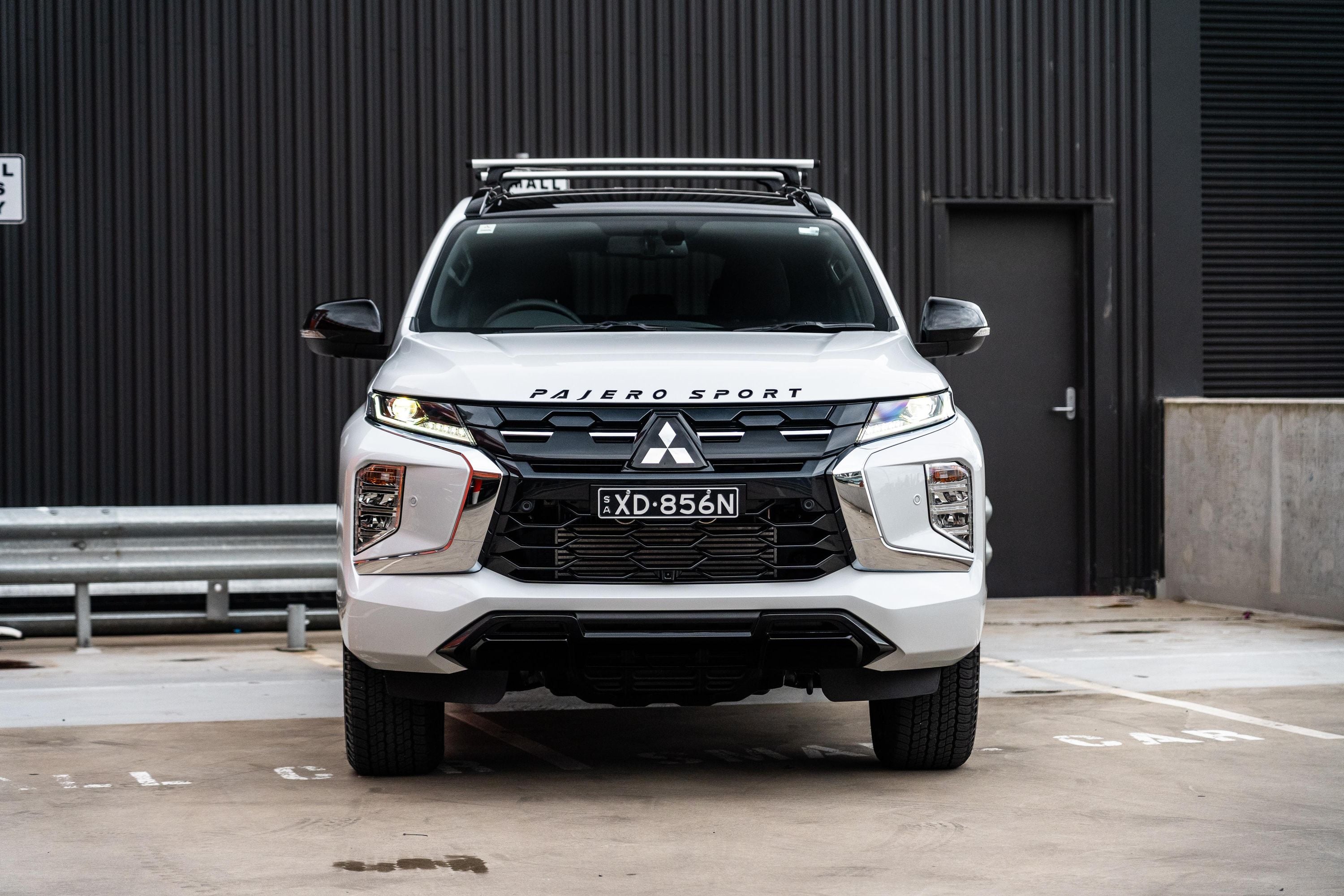
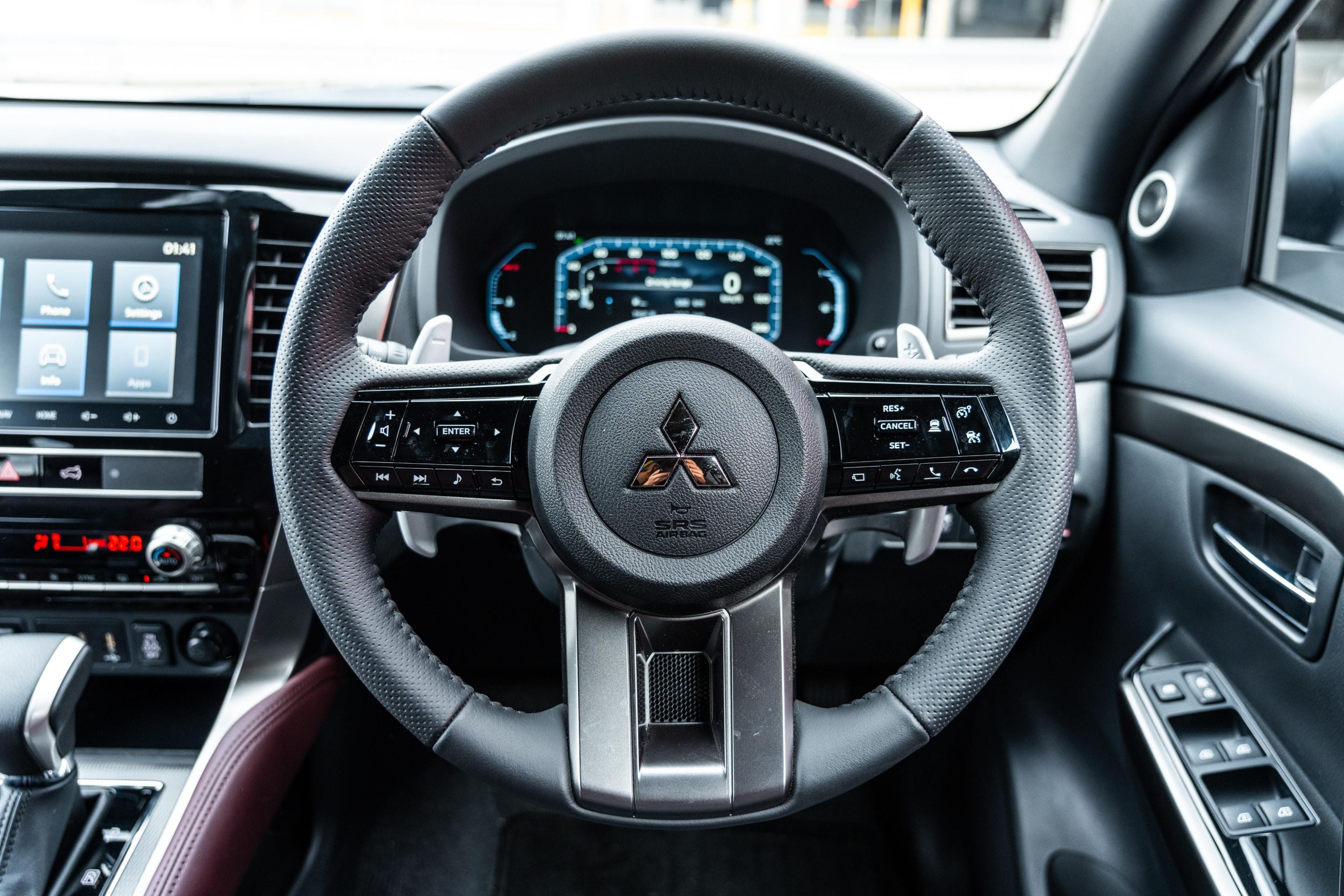
For 2024-25, the Pajero Sport picks up some very minor design changes on the outside, as well as a new steering wheel nicked from the new Triton on the inside.

The local range also come in for a restructure, with 4×2 models culled and some extra equipment added to the base model to justify the higher entry point. Otherwise, it’s much the same as the vehicle that first debuted way back in 2015.

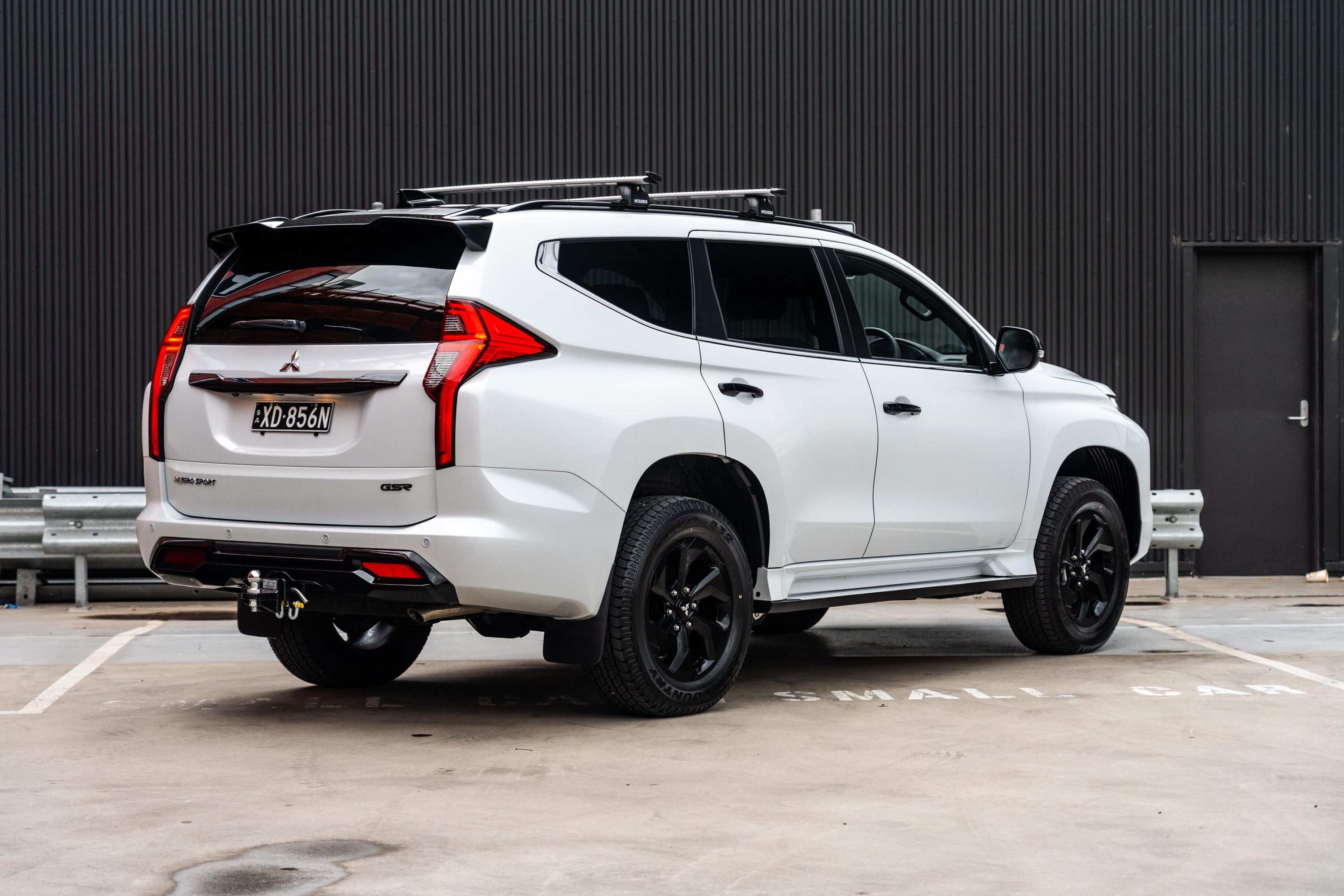
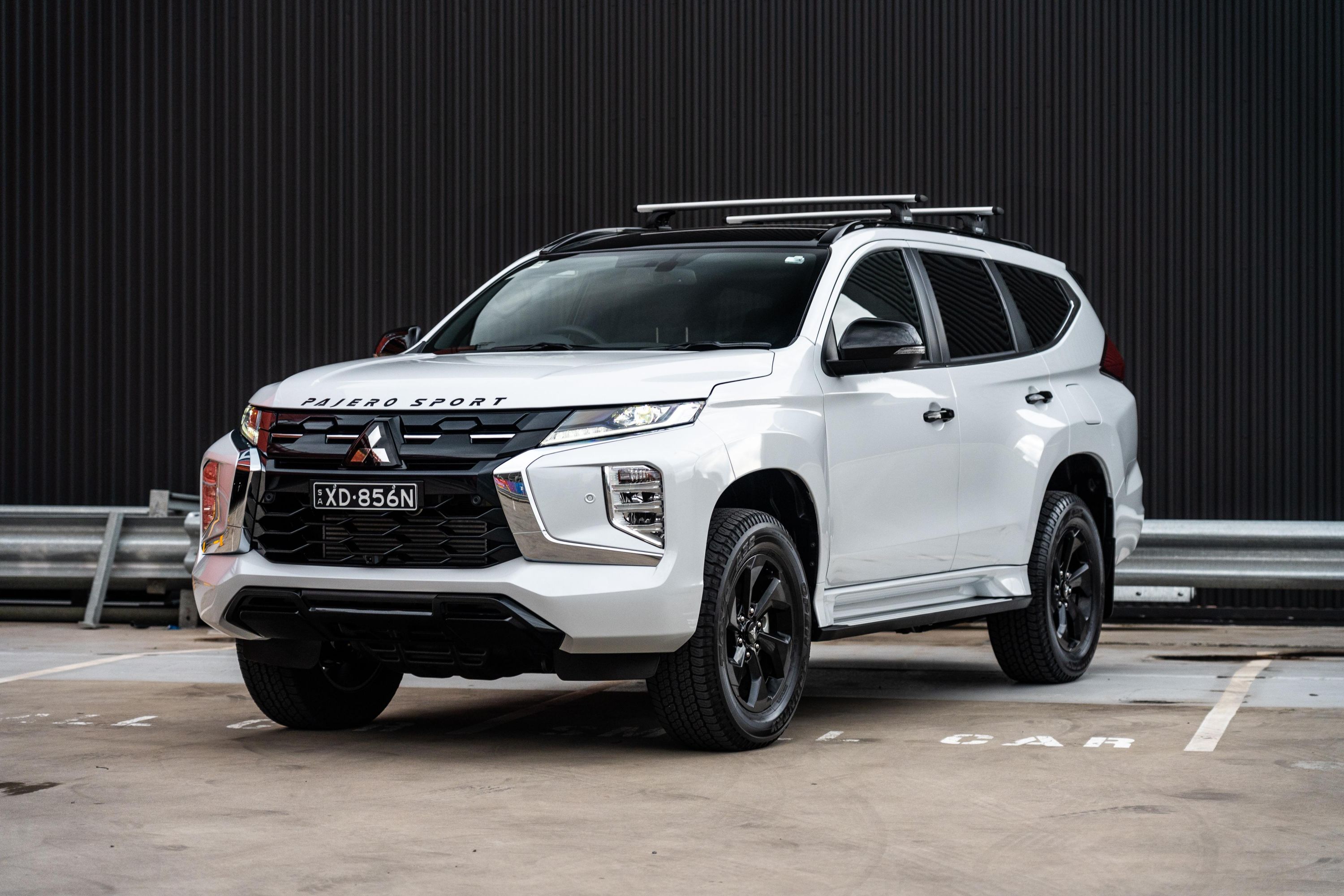
On test here we have the 2025 Mitsubishi Pajero Sport GSR, the most expensive variant on sale in Australia, priced at just under $65,000 before on-road costs.

WATCH: Paul’s video review of the 2023 Mitsubishi Pajero Sport GSR

That puts the ageing seven-seat wagon up against some very stiff competition. Even a mid-spec Ford Everest offers far newer and more comprehensive technology (not to mention greater refinement) for similar money, and other rivals in the segment offer larger, more powerful turbo-diesel engines with higher towing capacities.

Given the Pajero Sport has long traded on its reputation for value, does this latest iteration command a few dollars too many?

How does the Mitsubishi Pajero Sport compare?

View a detailed breakdown of the Mitsubishi Pajero Sport against similarly sized vehicles.

Mitsubishi Pajero Sport cutout image

Mitsubishi

Pajero Sport

How much does the Mitsubishi Pajero Sport cost?

As noted earlier, the model you see here starts from $64,840 plus on-road costs, or $67,890 drive-away for Victorian buyers at the time of writing.

ModelPrice
Mitsubishi Pajero Sport GLX 5-seat$51,540 (+$1600)
Mitsubishi Pajero Sport GLS 7-seat$56,890 (+$1700)
Mitsubishi Pajero Sport Exceed 7-seat$62,590 (+$1900)
Mitsubishi Pajero Sport GSR 7-seat$64,840 (+$2400)

To see how the Pajero Sport lines up against the competition, check out our comparison tool

What is the Mitsubishi Pajero Sport like on the inside?

As with the outside, the changes to the MY24’s interior are very minor.

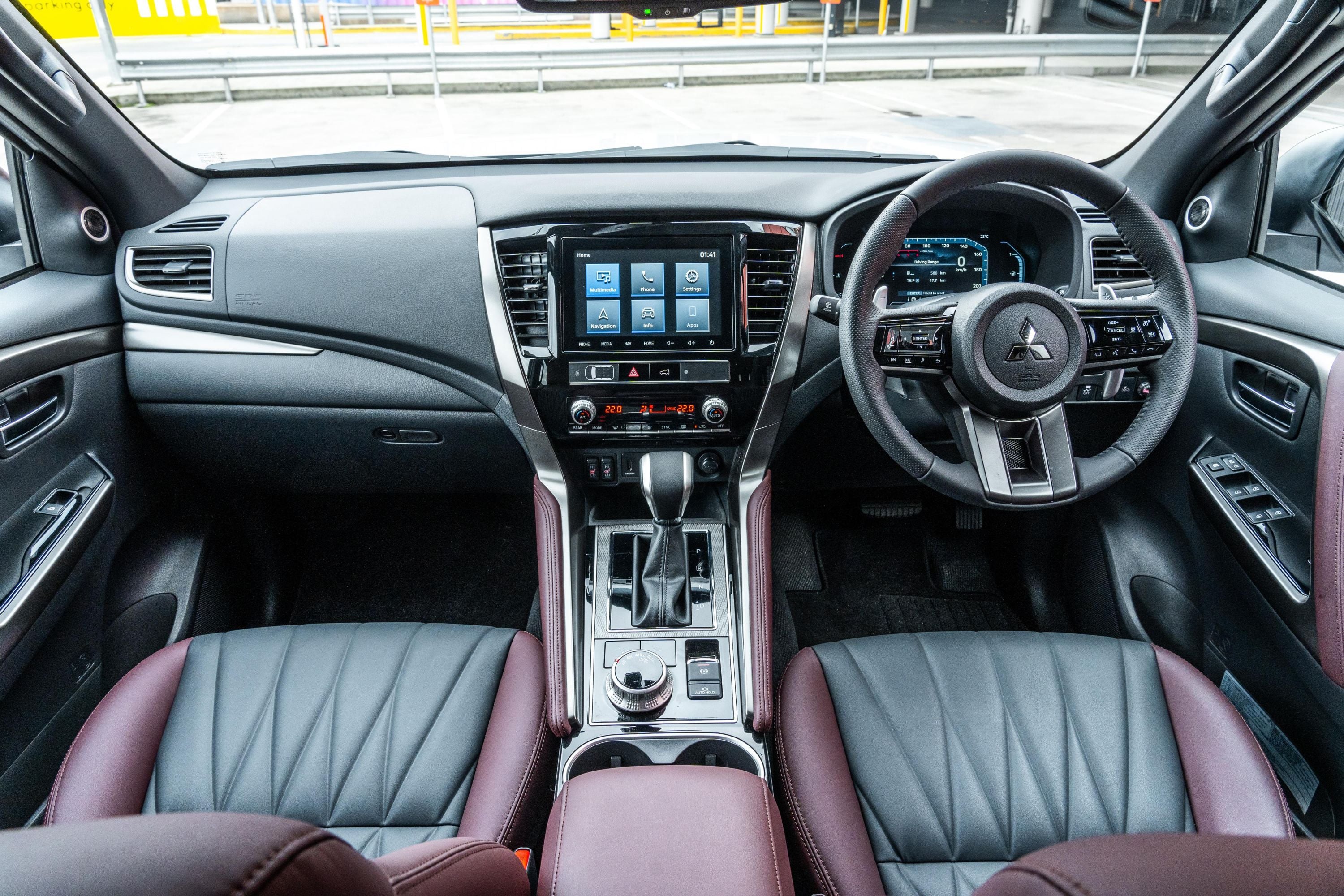
As we noted, there’s a new steering wheel borrowed from the latest Triton, and a revised digital instrument cluster for the higher grades, which I actually like less than the old one.

It retains its 8.0-inch size, though the graphics are more squared off and there’s no virtual tacho dial like there was in the old one – it’s just laid out a little awkwardly.

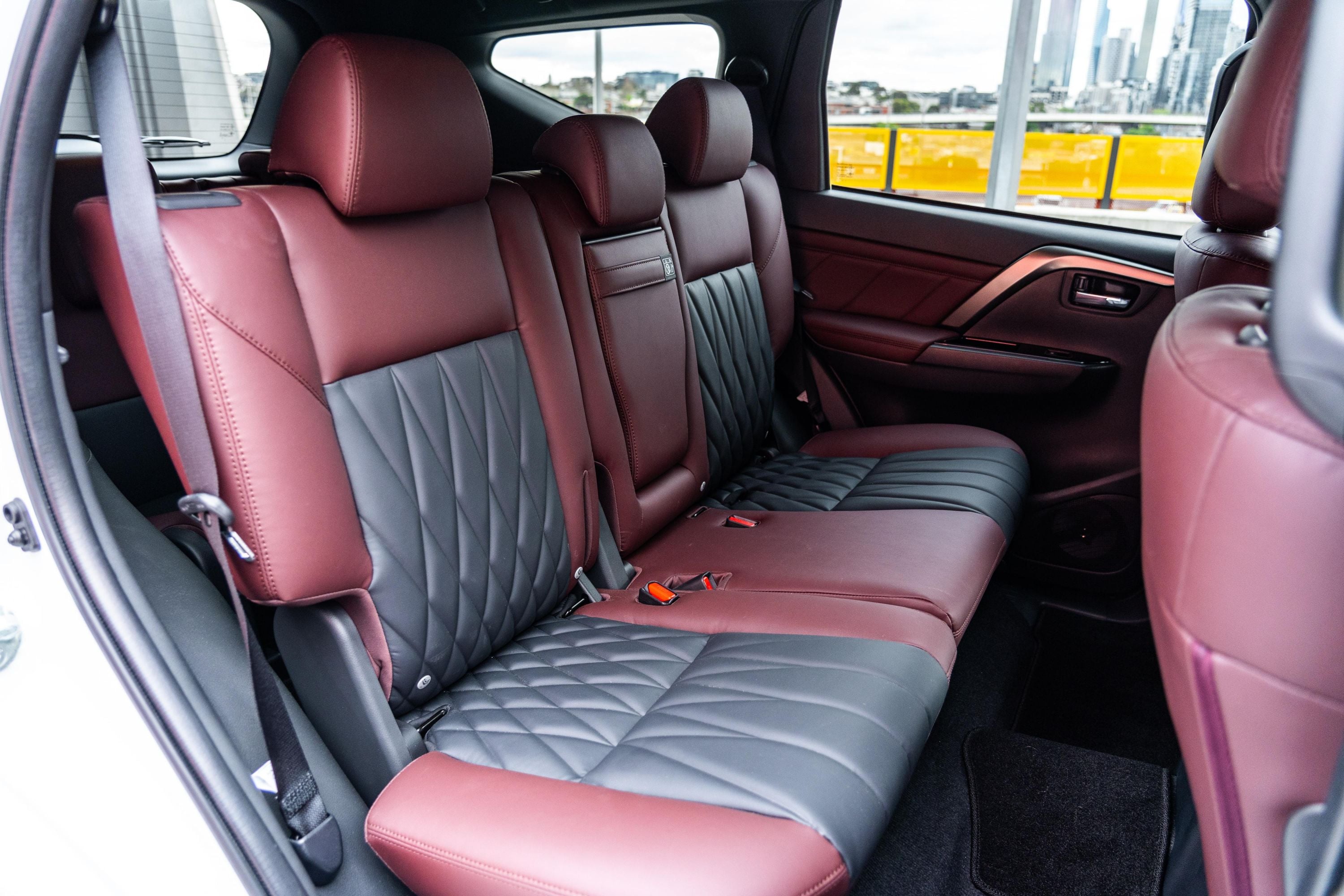
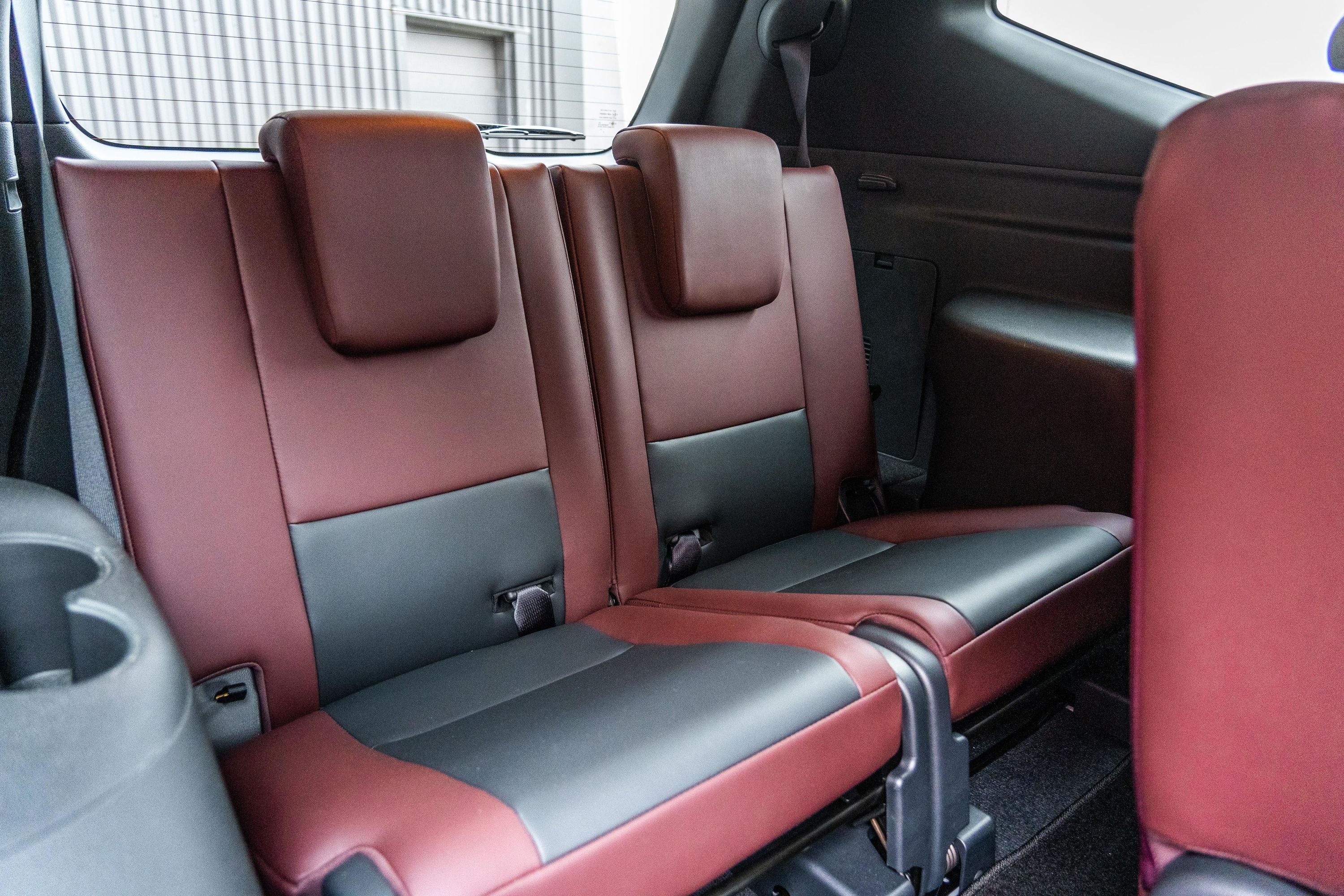
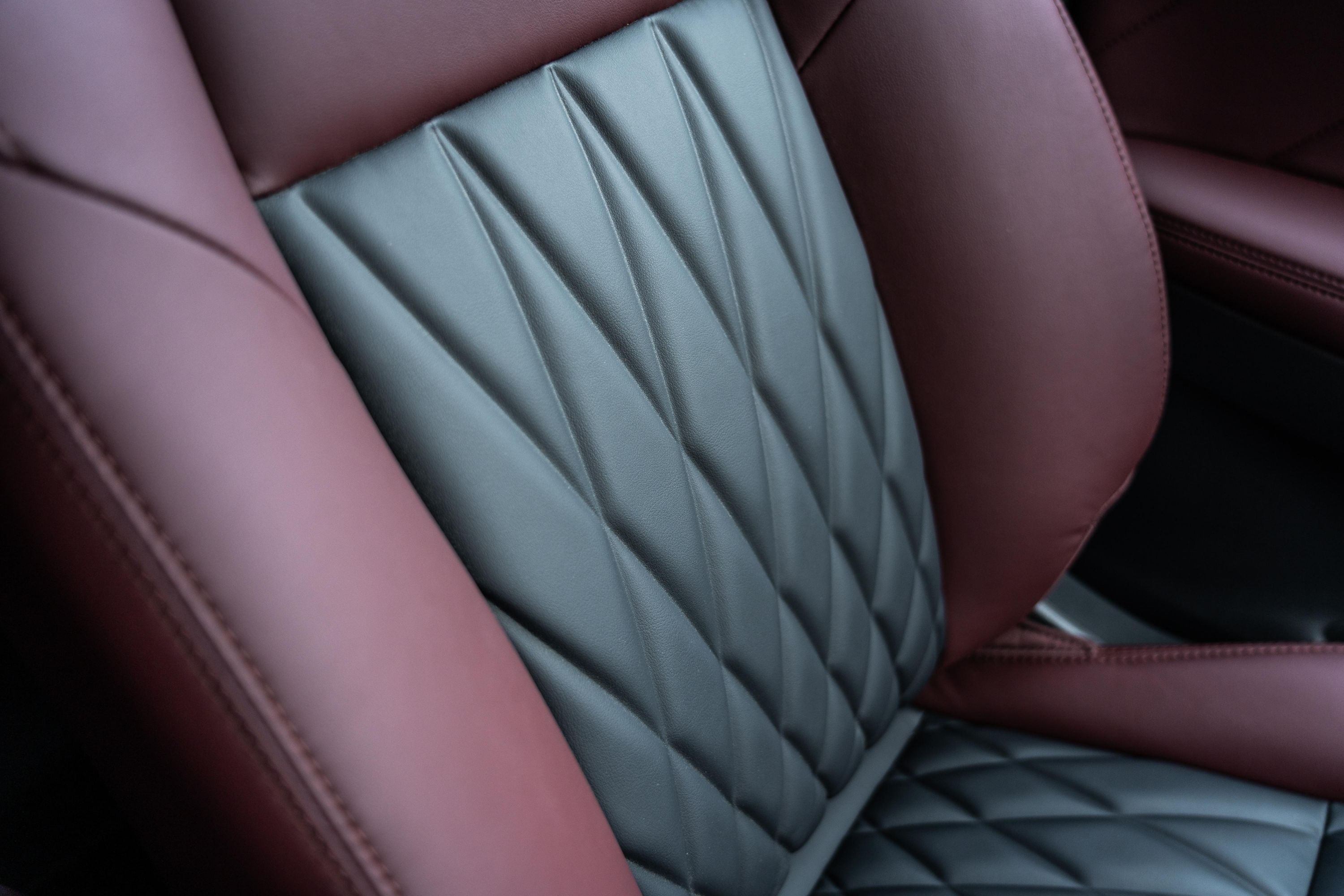
The new steering wheel is an improvement though, with a sportier, more classic design and nicer multifunction switchgear. In the GSR you also get a new quilted burgundy and black synthetic leather upholstery which is… different.

I’m normally one to celebrate when a manufacturer offers an interior option that isn’t black, but Mitsubishi’s choice of trim here is quite polarising. It might look better inside a black car, but against the bright white paint of our tester, it seemed a little off.

Material quality and the overall ambience is much the same otherwise, with a mix of nicer padded surfaces and plenty of hard wearing plastic, and lashings of fingerprint-attracting and scratch-prone piano black trim.

The display tech is, let’s face it, old hat. Step out of the Pajero Sport and into something like a Ford Everest and you feel every bit of the 10-year age gap, which is a shame given the Renault Nissan Mitsubishi Alliance interface in the Outlander and Triton is a marked improvement in terms of clarity and response, let alone features.

In the GSR, the 8.0-inch touchscreen comes with integrated satellite navigation sourced from TomTom that looks like it came out of one of those portable units from some time ago, but you can counter that with (wired) Apple CarPlay or Android Auto phone mirroring.

Still, it’s slow, low in resolution and just doesn’t look anywhere near as modern or high-end as rival systems like Ford’s excellent Sync 4 unit.

It’s a similar theme throughout the dashboard, with the red-backlit climate controls giving late ’90s or early ’00s vibes, and the toggle switches for the seat heaters are likewise quite old-school.

The bulk of it is still very functional, but the space under the centre stack clearly wasn’t designed for a future with larger phablet smartphones – the placement of the USB ports is also a touch awkward when the vehicle is in Park.

My iPhone 15 Pro Max struggled to fit in there without knocking against the shifter and the lack of a rubberised platform made it prone to slipping out.

Broader storage options are fine, with decent door bins and a cubby under the centre armrest, plus a pair of cupholders behind the rotary 4WD mode selector.

Moving into the rear, other than the new upholstery in the GSR, it’s again more of the same. There’s a good amount of space for adults, and kids will be more than happy back there.

Sturdy grab handles on the B-pillars and side steps make getting in easier, though it’s on the narrower side. The elevated seat height makes head room a bit tight for taller folk like some of my colleagues – though 6’1″ me fits just fine.

Amenities include roof-mounted air vents and grab handles, rear USB ports (four in the cabin all up), and a handy 220V power socket. Plus there are pockets in each seatback and a flip-down armrest with cupholders.

The third row is handy to have for emergencies, but is best suited to kids. The ‘sporty’ exterior design also means the rearmost windows are quite small, meaning that smaller passengers may find them hard to see out of.

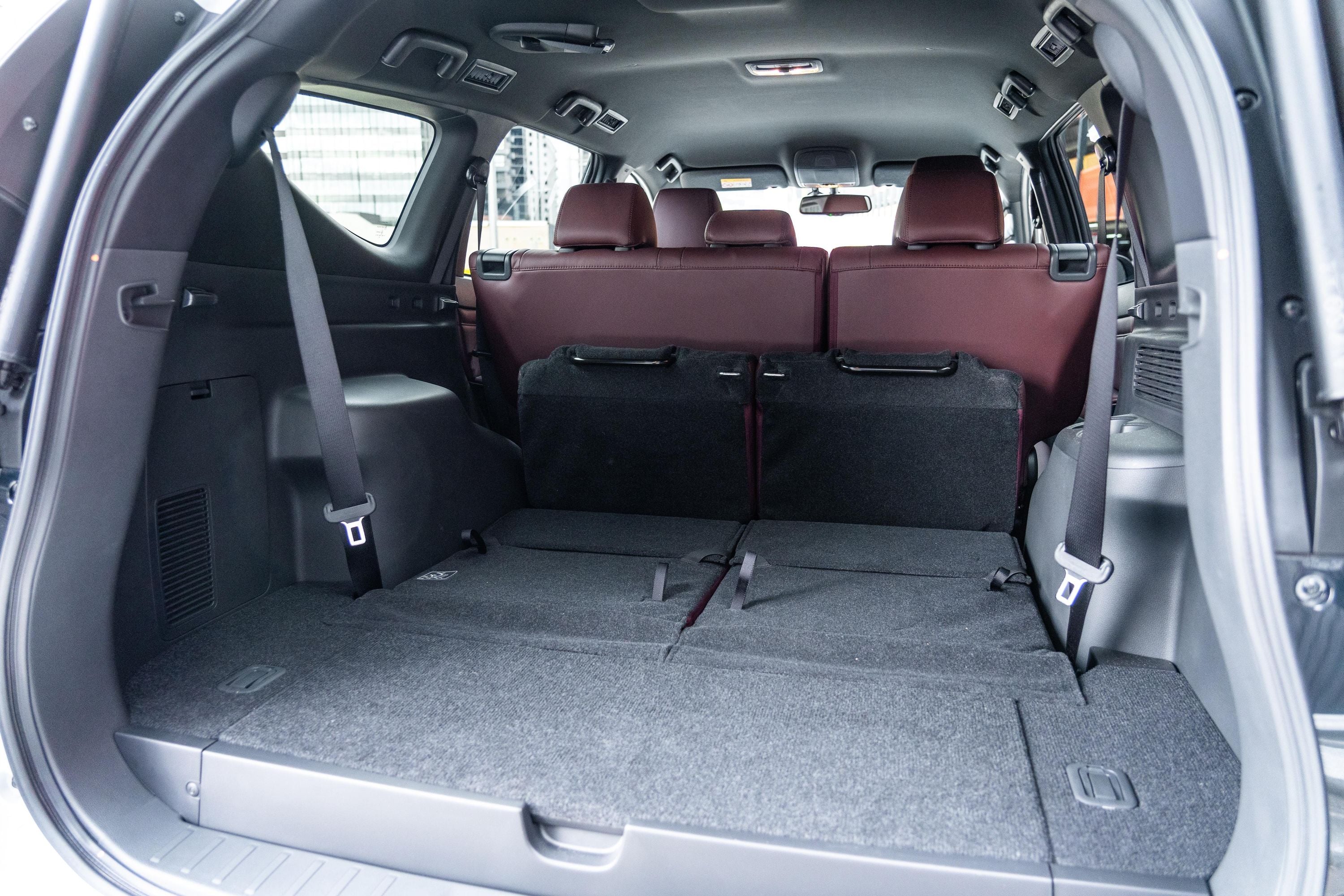
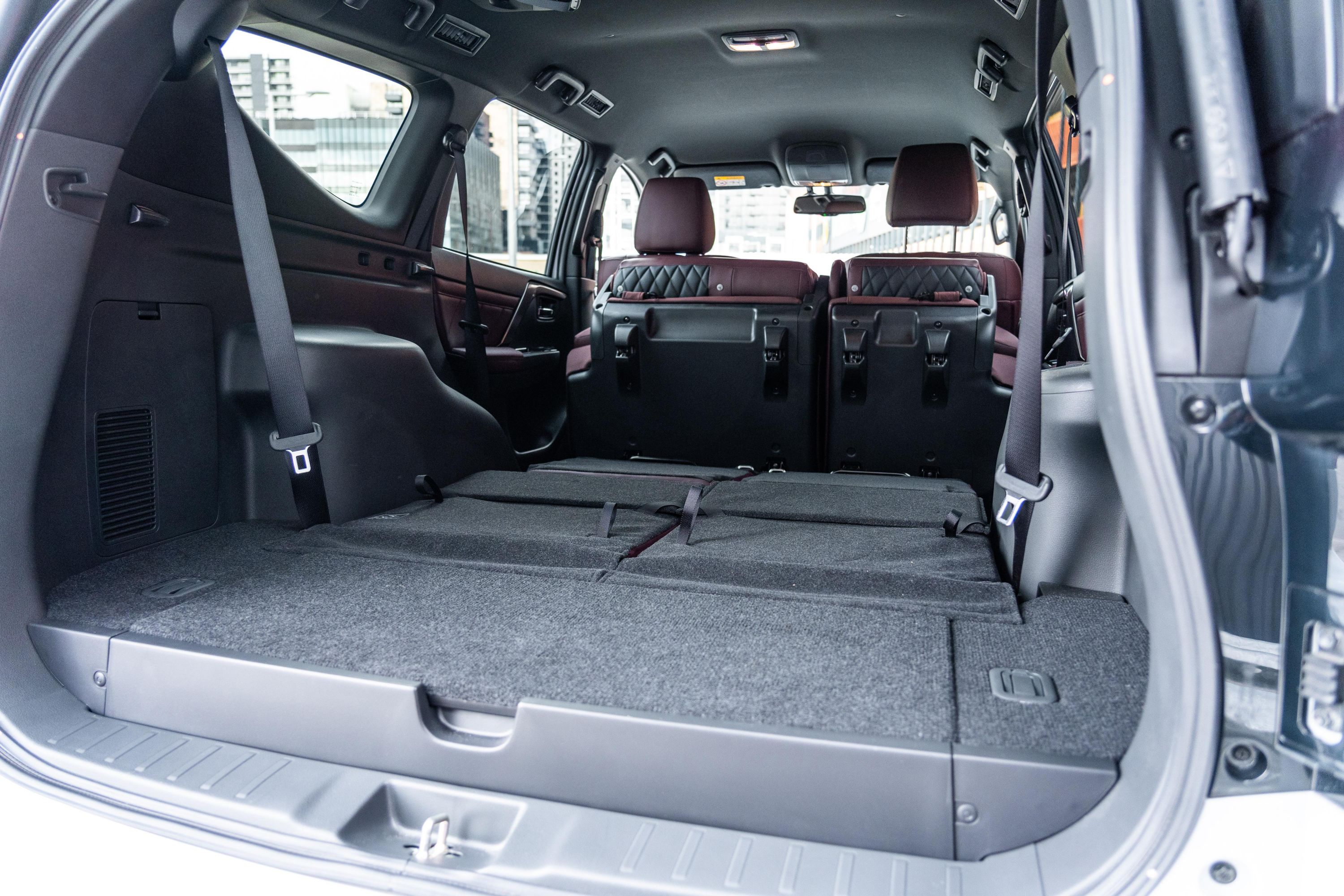
The seats do fold down into the floor when not in use but, as the pictures here show, not quite as neatly as in numerous rival SUVs.

The extra seating row does impact boot space. The base five-seat GLX has 673 litres of capacity, whereas with the third row folded the seven-seater only has 502 litres.

With the third row in use this shrinks to 131L, and with both rows folded you get a maximum of 1488L. The boot in five-seater mode measures 1370mm long by 885mm tall, with 1000mm between the wheel-arch covers.

A full-size spare tyre is mounted beneath the vehicle.

DimensionsMitsubishi Pajero Sport GSR
Length4840mm
Width1815mm
Height1835mm
Wheelbase2800mm
Cargo capacity – VDA131 litres – to top of 3rd row seat back
502 litres – to top of 2nd row seat back
1488 litres – max capacity to roof, all seats folded

To see how the Pajero Sport lines up against the competition, check out our comparison tool

What’s under the bonnet?

The Pajero Sport carries over its four-cylinder 2.4-litre single-turbo diesel engine and eight-speed auto, which differs to the new Triton’s twin-turbo oiler and six-speed automatic.

SpecificationsMitsubishi Pajero Sport GSR
Engine2.4L 4cyl turbo-diesel
Power133kW @ 3500rpm
Torque430Nm @ 2500rpm
Transmission8-speed auto
Driven wheels4WD incl. rear diff lock
Weight – kerb2130kg
Fuel economy – claimed8.0L/100km
Fuel economy – as tested9.5L/100km
Fuel tank capacity68 litres
Fuel requirementDiesel
CO2 emissions212g/km
Emissions standardEuro 5
Braked tow capacity3100kg

To see how the Pajero Sport lines up against the competition, check out our comparison tool

How does the Mitsubishi Pajero Sport drive?

Not much has changed since I drove the pre-update model late last year.

Being a little older than some of its rivals, the Pajero Sport’s general powertrain refinement isn’t up there with the best in segment. It has a rumbly diesel clatter on start-up and idle, although it’s still not too bad overall.

In normal driving around town, this SUV feels much like most ladder-frame 4x4s today. The controls are heavy, the diesel is lazy, and it lopes around like the big, heavy wagon it is.

That said, the eight-speed auto is pretty good at keeping the turbo-diesel in its torque band, and shifts very smoothly and reliably. That makes it well suited around town, and you rarely feel the need to pull on one of the shift paddles in normal driving.

I spent most of my time commuting to and from the CarExpert Melbourne office during the week, and while it felt like a step back in time, the Pajero Sport is one of the more agreeable off-road SUVs in day-to-day scenarios.

For example, the old MU-X was a shocker to drive on a daily basis, and the previous Everest was a bit clumsy, even if offered nicely damped ride quality.

There’s a bit of noise from the diesel engine under acceleration regardless of the intensity, especially if you’re comparing the Pajero Sport to a car-based SUV like a Kia Sorento. Could be better, but could be worse.

At least performance is pretty responsive and linear, as noted earlier. When stopped, there’s no idle stop/start tech to save fuel and emissions in traffic, so you’re just left with the drone of the diesel clatter in city gridlock – dugdugdug.

But the Pajero Sport starts to show off its strengths on the highway, where the engine and transmission can settle into a quiet cruise. The chassis delivers a more wafty feel rather than the wobbly and at times jittery behaviour it can give you in town, where the long-travel suspension and big wheels crash over tram tracks and potholes.

It’s not a match for the excellent locally-developed Everest, which feels like a luxury SUV at times, but given its age and price point the Pajero Sport does a solid job of touring, and you can see why it has proven popular with adventurous Australian families.

WATCH: 4WD SUV Off-Road Mega Test

We didn’t take the updated Pajero Sport off the beaten track this time, but we observed impressive results during our 4WD SUV Mega Test.

There it performed reasonably well on the hillclimb, rolling back slightly in 2H before the traction control worked things out. But it was very impressive in 4H, moving forward with barely any slip.

Its age showed in the flex test, where the door caught slightly on the body. It wasn’t the worst performer in that test, however. Mitsubishi’s traction control system walked the car out of the moguls with a minimum of fuss, even in the road-oriented 4A four-wheel drive setting. With 4H and Mud Mode engaged, it was even more effortless.

It scaled Mogul Mountain without too much wheel slip, and the hill-descent control kept the car nice and controlled. You can make the car descend faster using the throttle, not via the cruise control buttons as in some rivals.

Rev flaring was noticeable in the Pajero Sport going up Gravel Mountain, but it managed to scale the hill on the second attempt with its rear differential locked.

Driver assistance isn’t a particular strength for the big Mitsubishi, which lags behind key rivals in terms of inclusions.

The standard adaptive cruise control system works reasonably well, but cancels itself at low speeds. It doesn’t feature any form of stop-and-go or traffic jam assist functions like we’re seeing more of in rivals these days.

Likewise, there’s no active lane keeping assistant – or departure warning, for that matter. The Exceed and GSR are the only variants in the range to score blind-spot monitoring and rear cross-traffic alert systems, the former of which can detect a vehicle within 3.5 metres of the Pajero Sport’s side or 70m from the rear bumper.

You also pick up a Multi Around View Monitor in the Exceed and GSR, which is handy for visibility given the size of the vehicle but not the last word in resolution or clarity.

Off-road dimensionsMitsubishi Pajero Sport GSR
Ground clearance218mm
Approach angle30 degrees
Departure angle24.2 degrees
Ramp breakover angle23.1 degrees
Wading depth700mm

To see how the Pajero Sport lines up against the competition, check out our comparison tool

What do you get?

The GSR sits at the top of the Pajero Sport lineup in Australia.

Pajero Sport GLX highlights:

  • 5 seats
  • Revised 18-inch alloy wheels
  • Automatic LED headlights (NEW)
  • LED fog lights and daytime running lights
  • Rain-sensing wipers (NEW)
  • Power-folding exterior mirrors
  • 8.0-inch touchscreen infotainment system
  • Apple CarPlay and Android Auto – wired
  • DAB digital radio
  • Paddle shifters
  • Electronic parking brake
  • Adjustable speed limiter
  • Keyless entry and start
  • Three-spoke leather-wrapped steering wheel (NEW)
  • Tilt and telescopic steering wheel adjustment
  • Climate control air-conditioning
  • Black cloth upholstery
  • 4-speaker sound system

Pajero Sport GLS adds:

  • 7 seats
  • 18-inch two-tone alloy wheels
  • Dual-zone climate control
  • 6-speaker sound system
  • Tyre pressure monitoring
  • Automatic headlights
  • Rain-sensing wipers
  • Rear floor storage box
  • Privacy glass
  • Power tailgate

Pajero Sport Exceed adds:

  • Leather upholstery
  • Power-adjustable front seats
  • Heated front seats
  • Power front seats
  • Remote app connectivity
  • 8-speaker premium audio
  • 8.0-inch LCD instrument cluster
    • incl. updated graphics (NEW)

Pajero Sport GSR adds:

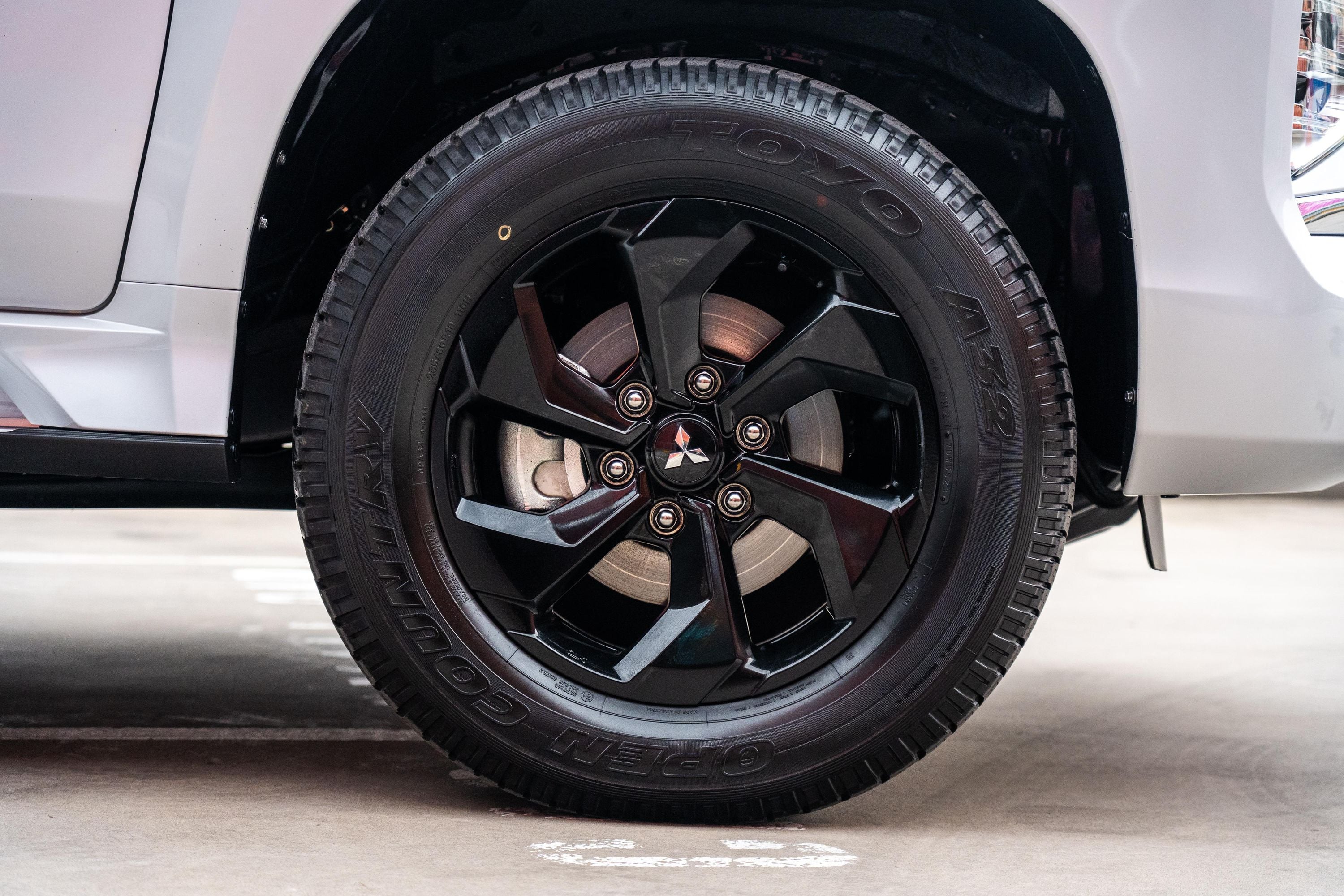
  • 18-inch black alloy wheels
  • Black exterior accents
    • Roof
    • Bumper garnishes
    • Headlight garnish
    • Rear spoiler
    • Grille
  • Synthetic leather upholstery (NEW)
  • Dark Titanium interior accents

To see how the Pajero Sport lines up against the competition, check out our comparison tool

Options

Deluxe Package: $2500 (GLS)

  • Surround-view camera
  • Leather upholstery
  • Power front seats

Colours

There are 10 colour combinations available across the 2024 Mitsubishi Pajero Sport lineup, including the new Blade Silver Metallic and a Graphite Grey hue with black roof.

ColourGLXGLSExceedGSR
White (solid)YesYesYesNo
Blade Silver (metallic, NEW)YesYesYesNo
Graphite Grey (metallic)YesYesYesNo
Terra Rossa (pearlescent)YesYesYesNo
Black Mica (pearlescent)NoYesYesYes
Impulse Blue (metallic)NoYesYesNo
White Diamond (prestige)NoYesYesNo
White Diamond with Black roofNoNoNoYes
Terra Rossa with Black roofNoNoNoYes
Graphite Grey with Black roof (NEW)NoNoNoYes

Is the Mitsubishi Pajero Sport safe?

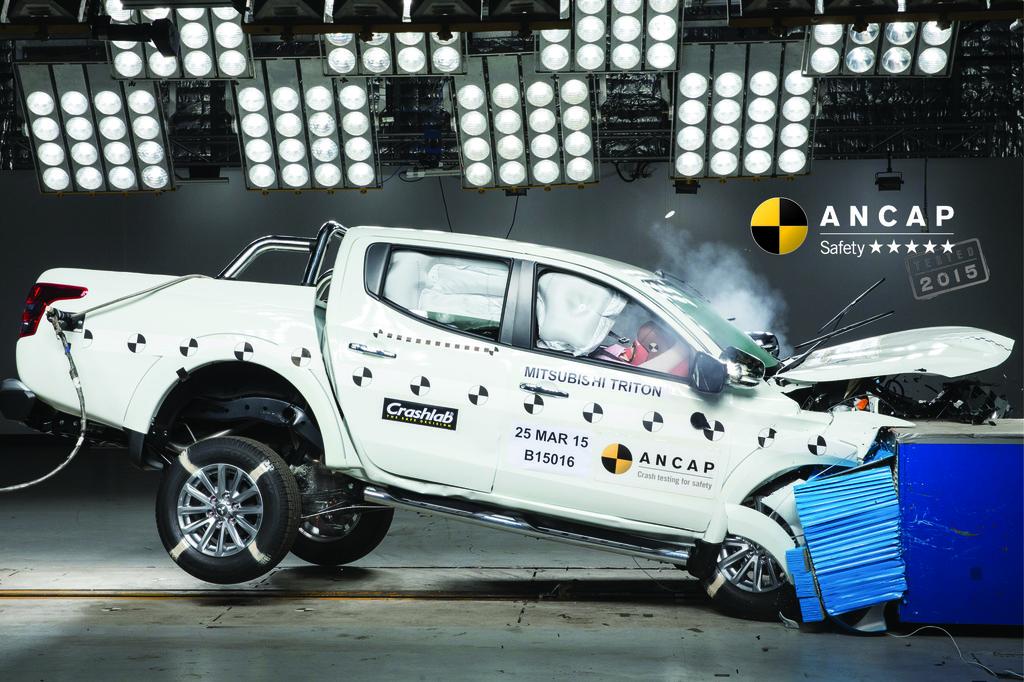
The Pajero Sport received a five-star ANCAP safety rating back in 2015, though the rating is now expired. It’s worth noting the rating was also based on tests of the previous-generation Triton ute.

It included a frontal offset crash test score of 15.22 out of 16 and a side impact score of 16 out of 16. Whiplash and pedestrian protection were rated Good and Acceptable, respectively.

Standard safety features include:

  • 7 airbags incl. driver’s knee
  • Autonomous emergency braking (AEB)
  • Adaptive cruise control
  • Rear parking sensors
  • Reversing camera

Pajero Sport Exceed adds:

  • Blind-spot monitoring
  • Rear cross-traffic alert
  • Surround-view cameras

To see how the Pajero Sport lines up against the competition, check out our comparison tool

How much does the Mitsubishi Pajero Sport cost to run?

Mitsubishi’s standard warranty covers five years or 100,000km of driving, but you can extend this to 10 years or 200,000km if you service with an authorised Mitsubishi dealer.

Running costsMitsubishi Pajero Sport
Warranty5 years or 100,000 kilometres – standard
10 years or 200,000 kilometres – service activated
Roadside assistance1 year – standard
5 years – service activated
Service intervals12 months or 15,000 kilometres
Capped-price servicingUp to 10 years or 15,000 kilometres
Total capped-price service cost$2895 – 5 years
$7490 – 10 years

To see how the Pajero Sport lines up against the competition, check out our comparison tool

CarExpert’s Take on the Mitsubishi Pajero Sport

Despite some cosmetic changes, the flagship Pajero Sport isn’t all that different – but is more expensive and arguably less competitive than it was even six to 12 months ago.

While generally competent and agreeable to drive in daily scenarios, the Pajero Sport is really starting to fall behind the pack of newer and more sophisticated rivals that offer better tech and refinement for similar or even less money.

This Mitsubishi has been feeling dated for a while, and the latest Everest continues to dominate this segment for good reason. And with an Isuzu MU-X update looming – and the new-gen Triton showing off its own developments – the Pajero Sport is feeling almost ancient as we approach 2025.

All that aside, at its core Mitsubishi’s biggest SUV is a rugged, no-nonsense seven-seat adventure machine that has built a legion of loyal fans, even if it can’t tow the hallowed 3500kg. The 10-year conditional warranty also sweetens the deal as a point of difference.

For the longest time the Pajero Sport has traded on value and off-road ability. You can still get both, by avoiding higher-spec variants. Save yourself $10,000 and get a GLX, which in my opinion is the sweet spot of the range.

Interested in buying a Mitsubishi Pajero Sport? Get in touch with one of CarExpert’s trusted dealers here

Click the images for the full gallery

MORE: Everything Mitsubishi Pajero Sport


Source link

One-off Pagani Zonda 760 LM Roadster sold for $11 million at auction

0


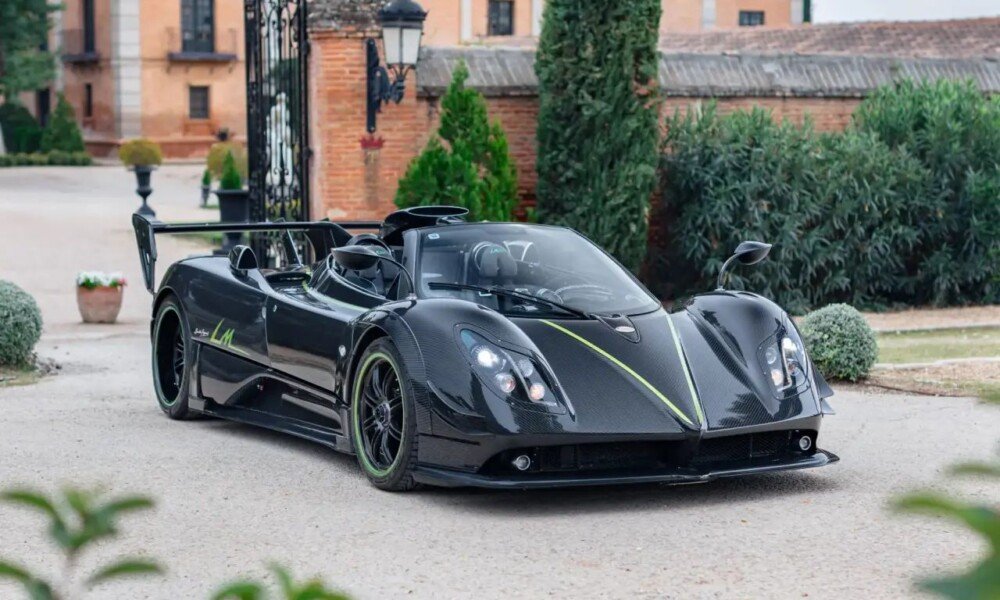
The one-off Pagani Zonda 760 LM Roadster has been sold for just over $11 million at RM Sotheby’s Dubai auction.

The Zonda 760 LM Roadster is one of just two 760 LMs built, with the other being a coupe. The hypercar features a unique exterior inspired by Le Mans race cars. It has a sharp nose section with dual aero flicks on either side and a unique headlamp setup.

Pagani Zonda 760 LM Roadster-RM Sothebys Auction-3

A massive wing at the rear is supported by two pillars in the centre and has large end plates that connect to the rear fender. The rear fascia comprises the iconic four central exhausts flanked by triple taillights, while an additional set of lights wraps around the top part of the fascia.

Other details include a Zonda Cinque-style engine scoop, brake cooling ducts on the rear fenders, a shark fin, and a large rear diffuser. The wing mirrors are from the Huayra, and the car rides on 19-inch Zonda R-style wheels.

Pagani Zonda 760 LM Roadster-RM Sothebys Auction-1

The Zonda 760 LM Roadster has the upgraded 7.3-liter naturally aspirated V12 engine, which produces close to 800 hp. It has just over 17,700 miles on it.

Source: RM Sotheby’s


Source link

2025 Aston Martin Vanquish: An In-depth Look

0


The Best of Britain Is Back

The Aston Martin Vantage is a car that really needs no introduction. Cut the cliche though, as it’s technically more of a re-introduction. That’s because the legendary nameplate is making its return to the Aston Martin line-up for the 2025 model year, which comes at the conclusion of a 5-year hiatus.

Notwithstanding models of a more hyper-persuasion, the new 2025 Vantage reclaims its spot atop Aston Martin’s production car hierarchy, particularly as it pertains to its storied and culturally significant roster of front-engined British luxury grand tourers. Fit to play a leading role in the next Bond film, this latest rendition of the Vantage combines modern supercar wisdom with traditional UK verve and fashion sense.

Blank-ish Canvas

Given its half-decade absence, there was always going to be much less of an obligation or opportunity for Aston Martin to copy-and-paste aspects of the new third-gen Vantage from its predecessor, and subsequently leave up for debate how much or little has changed over a year. On the customer side of this equation, well, distance makes the heart grow fonder, doesn’t it?

In many ways, Aston Martin had a clean slate to do as they pleased during the resurrection process, ensuring that the new Vantage would boast the latest and greatest when it comes to performance, innovation and design—and that they did. Yet, there was also a duty of responsibility to see that the new Vantage would remain quintessential to its roots. In my opinion, they nailed that too, in what is not an easy balancing act at the best of times.

Performance & Handling

V12 Epitomized

At the zenith of all the is good about the new 2025 Aston Martin Vanquish, is its remarkable 5.2L twin-turbocharged V12 engine which produces a whopping 823 hp and 738 lb-ft of torque. The power unit redlines at 7,000 rpm and generates peak torque at just 2,500 rpm. Aston Martin has claimed a resulting 0-62 mph time of 3.3 seconds, on the way to a top speed of 214 mph. Highly impressive, if not perhaps a bit overkill, for a grand tourer—but I digress.

Compared to the previously most powerful second-gen Aston Martin Vanquish S, that’s quite a massive jump from its 580 hp, to say the least. I suppose a proper 5-year sabbatical will do that, given the rate at which performance technology moves forward these days. Purists will be pleased to hear that there’s no electric augmentation playing a factor here, given that the impressive specs might suggest something else could be at play in concert with the internal combustion unit. Characteristically speaking, there’s still no direct fuel injection system either, allowing the new Vantage to retain its quintessential and unique engine and exhaust note—an optional titanium exhaust system is available for those who desire even more aural delight.

Mated to the V12 is an 8-speed automatic transmission which sends power exclusively to the rear axle. Given its decidedly enormous power output, a sophisticated electronically controlled limited-slip differential is tasked with putting it all down on the pavement in an efficient way. Tire performance is more likely to be the limiting factor when it comes to off-the-line traction, as there’s only so much that street legal tires can accommodate on an 800+ hp missile of a sports car.

Advanced Chassis

At the center of the new 2025 Aston Martin Vantage’s display of driving dynamism is an adaptive suspension system which provides a number of driving modes suited for every occasion between city cruiser and weekend track warrior. This is complimented by an intricate traction control system which provides various degrees of intervention based on the driver’s preference and selected driving mode.

Carbon ceramic brakes come as standard fare on the new Vantage, and are responsible for tethering the grand tourer’s not-so-dainty 4,210 lbs athletic frame. Similarly, a set of staggered 21-inch wheels—wrapped in Pirelli P Zero tires—is also part of the base package. Initial test drives noted the new Aston Martin Vantage’s balanced handling character and thrilling acceleration, though as mentioned earlier, some right-footed discretion is required in order to manage the grip levels of the OEM street tires.

Design & Interior

Exterior

The new 2025 Aston Martin Vantage retains the unmistakable silhouette which has become an essential component of its identity as an ultra-luxury British grand tourer. Elongated and elegant, the Vantage measures over 16-feet long bumper-to-bumper despite its 2-door-2-seater configuration—much of which is used up by its twin-turbocharged V12 heart. In appropriate proportions, it’s just as wide, measuring at close to 7-feet across. Overall, these dimensions provide the low-slung coupé with an imposing footprint and athletic stance.

Aesthetically, the design language consists of a wonderful blend of sleek minimalism and hints of showmanship. Venting on the front bumper, bonnet and fenders suggest something special lurking within, while adding an aggressive contrast to an otherwise purposefully understated appearance. While its rear haunches certainly boast its performance pedigree, there are no aggressive aero bits—i.e. no large rear wing of any kind—that would undermine the intended philosophy of the Aston Martin Vantage nameplate. All that being said, the Vanquish can be configured with a plethora of body color options, resulting in an almost endless quantity of permutations in which the car can be customized.

Cabin

Inside, the car is as lavish and plush as you would expect from a range-topping Aston Martin super grand tourer, with finishes such as cashmere available as an option. The power seats—which are 16-way adjustable—are a perfect hybrid of luxury and sportiness, providing the driver and passenger with a snug, but comfortable fit. Standard materials include semi-aniline leather and faux-suede. Like the exterior, the interior offers a number of options and upgrades to provide customers with more ways to make their Vantage bespoke and one-of-a-kind.

Extra consideration was given to the car’s everyday usability, and as a result, cargo space is very generous despite the conventional limitations of the Vantage’s body style. There’s room in the trunk to fit enough luggage for a week-long out-of-town trip, or two sets of golf bags with more to spare. Customers can also option a set of custom-fit luggage in the theme of their car’s spec, which will also help use up the space more efficiently. At the core of the new Vantage’s infotainment system are two 10.3-inch displays integrated into the front dash. One of the displays serves as a digital gauge cluster, and the second—a centrally located touchscreen display—provides access to the car’s media system, navigation, and more. Other features such as Apple CarPlay and onboard Wi-Fi are also available as standard fare.

Pricing & Availability

There won’t be any issues with the new Aston Martin Vanquish maintaining any reasonable level of exclusivity, given its price and production numbers. The former, which starts at an MSRP of $434,000 USD, does a pretty good job of that on its own. For the 2025 model year, Aston Martin has told us that they will only be producing 1,000 units, with only about a third of those designated for North American shores. Though not officially announced just yet, a future Volante (convertible) variant will likely be released within the next year or so, opening up more options and allocations to those in the market for the very peak of British super-grand-touring.

Verdict

supercars.net: 4.5/5

“Living up to its name, and then some, the new 2025 Aston Martin Vanquish returns with an absolute banger, rightfully reclaiming its place once more at the pinnacle of the automaker’s legendary grand touring roster. At the heart of it all, is a remarkable twin-turbocharged V12 engine which is sure to rival other European/exotic contemporaries in the ultra-luxury segment. Yet, the Vantage still manages to be greater than the sum of its parts, boasting balanced driving dynamics and checking off many of the “daily driver” boxes.

Alas, it’s a car that the overwhelming majority of us will have to admire from afar—and even fewer are likely to ever see one in person, given the low production numbers predicated by its sufficiently eye-watering price. But admire we will, because, what a car it is.”    

What Other Experts Are Saying

Car and Driver: 5/5

“Stunning to look at and wonderful to drive, the Vanquish is everything you’d expect from an Aston Martin grand-touring car and more.”

Top Gear: 9/10

Looks superb – especially in profile, very fast, surprisingly delicate… a proper Hyper GT.

Drive: 8/10

Glamorous looks and a sonorous V12 are prerequisites for any Aston Martin grand tourer, but the new Vanquish adds a level of sophistication and technology to the mix.

Video Gallery

Image Gallery

Link


Source link

Top 10 Underrated TAIPEI Attractions

0


By continuing to read this article, you agree to double-check with the concerned establishments for the latest updates.

So you’ve been to Taipei before. Yes, everyone and their grandma have heard of or have been to Taipei 101, Shilin Night Market, Ximending, and the Chiang Kai-Shek Memorial. But if you think you’ve seen it all, Taipei’s here to say, “Wait, hold my bubble tea.”

Taipei is one city we love to keep visiting again and again because every time we do, we discover something we haven’t seen before. On our most recent trip, we went off the beaten path and dove into Taipei’s quirky underbelly, where graffiti art meets peaceful temples, heart-shaped ponds pop up next to wobbly bridges, and hidden markets are filled with Michelin-worthy bites.

THEPOORTRAVELERKLOOKTHEPOORTRAVELERKLOOK

So if you’re ready to unlock a new level of Taipei that’ll make your Instagram followers go, “Wait, where is that?” — buckle up. Here are some of the most underrated attractions in the Taiwanese capital where you won’t be dodging selfie sticks and massive tour groups.


WHAT’S COVERED IN THIS GUIDE?

1. Jian Tan Shan Hiking Trail & North Eye Platform

Jian Tan Shan Hiking Trail View of Taipei 101Jian Tan Shan Hiking Trail View of Taipei 101

When it comes to hiking for an awesome Taipei view, the go-to destination has always been Elephant Mountain. But this is not the only one!

Taipei is surrounded by mountains, and when you have mountains you have hiking trails and lookouts. The Jian Tan Shan Trail in Shilin, while frequented mostly by locals, is also worthy of a trek. It offers panoramic views of Taipei’s skyline that are breathtaking —- figuratively and sometimes literally.

Tucked in the forested slope just behind the Grand Hotel, the start of the trail is not that easy to find. It is not as crowded, but much of the pathway is paved and staired, so it’s beginner-friendly and you won’t worry about getting lost. OK, scratch that, spoiler alert: We got lost. But only because it’s punctuated with multiple viewpoints, we didn’t know which was which!

Shilin District TaipeiShilin District Taipei
Shilin District Taipei as viewed from the Jian Tan Shan Trail

You see, our end goal was to reach the so-called North Eye Platform, an observation deck where we could catch peeks of iconic buildings on the other side of the city. But there were a lot of lookouts, we didn’t know if we were following the correct sign. We even stumbled upon a quiet shrine that also allows incredible vistas, so all’s good!

Jian Tan Shan Trail Temple TaipeiJian Tan Shan Trail Temple Taipei
A shrine along the Jian Tan Shan Trail Temple

But just before sundown, we were able to find the white railings of the North Eye Platform, and it was worth all the effort and confusion. They say it’s even more stunning at sunset, but sadly the sky was overcast during our visit. The best part? Apart from a couple of locals, we were the only ones there!

Jian Tan Shan Trail Viewpoints North Eye PlatformJian Tan Shan Trail Viewpoints North Eye Platform
North Eye Platform (Left) and another viewpoint along Jian Tan Shan Trail (right)

On the way down, we also made a stop at some of the other viewpoints to admire the city lights! Yes, Taipei 101 is visible from some of the stops, too, on the other side.


2. Bishanyan Temple

Bishanyan Temple TaipeiBishanyan Temple Taipei
Bishanyan Temple

Taipei has no shortage of majestic, ornate temples, but one site has an edge when it comes to its setting –- Bishanyan Temple. Hidden in the peaks of the Neihu District, this not just a place of worship but also a fantastic viewpoint.

Perched on a hillside, Bishanyan Temple offers sweeping views of Taipei, said to be especially magical at sunset. We visited on a rainy, foggy morning, so the sun was absent and the view was thinly shrouded. But we could totally imagine how spectacular the view is from here on regular fair-weather days.

Bishanyan Temple Taipei ViewBishanyan Temple Taipei View
Bishanyan Temple Taipei View

View aside, there’s a lot to adore in this temple. The architecture is rich in detail, with dragon-covered columns and intricate carvings. You’ll feel like you’re in the middle of an ancient legend as you wander the grounds. Plus, unlike at most city temples, the ambiance here is serene. Even when tourists are around, there’s a hush to the place that makes it feel sacred and peaceful. Grab a spot, take in the city views, and get in touch with your inner zen.

Bishanyan Temple Taipei ArchitectureBishanyan Temple Taipei Architecture

Not too far away from the temple is Baishihu Suspension Bridge, which swings gently as you cross, giving you just the right amount of thrill. I’m saying that in the second person because it was temporarily closed during our visit.

Heart-shaped Pond TaipeiHeart-shaped Pond Taipei

Nonetheless, we got to drop by the very Instagrammable star here: the heart-shaped pond nearby. It’s a quirky little feature, perfect for couple photos or just a unique selfie spot.


3. Guandu

Guandu Temple Caves TaipeiGuandu Temple Caves Taipei

Beitou is best-known for its hot springs, but there is a lot more to in this corner of northern Taipei. One of the places in Beitou that is often overlooked by tourists is Guandu, known for its rich natural beauty and stunning riverside scenery.

It’s where you’ll find Guandu Nature Park, a sprawling wetland where birdwatchers can spot both native and migratory birds. Inside the visitor center, you’ll find interactive installations that tell the story of the site from being a dump site to the sanctuary that it is today. And on the second floor are giant binoculars to watch the wildlife, especially birds.

Guandu Nature Park Bird WatchingGuandu Nature Park Bird Watching

But why stay inside when you can experience the outdoors? There is a crab-watching walkway, a crescent-shaped pond, and numerous tree tunnels, with nature-inspired artworks here and there. You can walk along wooden trails and take in the marshy landscapes that are very calming, considering you’re still within Taipei.

Guandu Nature Park Crescent PondGuandu Nature Park Crescent Pond

But that’s just the start! It’s also home to Guandu Temple, officially known as Ling An Temple. It is a historic gem dedicated to Mazu, the goddess of the sea and protector of sailors and fishermen. One of the oldest in Taiwan, Guandu Temple’s roots can be traced back to 1661. But the most interesting bit? It was carved into the side of a mountain.

Guandu Temple Facade TaipeiGuandu Temple Facade Taipei
Guandu Temple Facade

Judging from the road by the entrance, we actually thought it was pretty small, but when we entered, we were greeted by a deep, winding cave tunnel, adorned with statues, altars, and stone reliefs, leading to a small shrine. The experience gives a more spiritual, almost otherworldly feel. And once you make it to the other side, you’ll find more structures including a pagoda, several halls, and a manicured garden with unnaturally square-shaped trees. But that’s not the end of it. From here, you’ll also get to enjoy a wonderful view of the area.

Guandu Temple Square TreesGuandu Temple Square Trees

If you get hungry, just across the street lies the Guandu Food Park, where you can grab quick snacks.

Guandu Wharf ShipGuandu Wharf Ship

Guandu Wharf TaipeiGuandu Wharf Taipei

And beside it is Guandu Wharf, next to Tamsui River, where you can enjoy a boat ride or a bicycle ride. It’s very quiet during the day, but from late afternoon until the evening, it comes to life as food stalls open and locals begin to flock around the area.


4. Taipei EYE Theater

Taipei EYE TheaterTaipei EYE Theater
Monkey King performance at the Taipei EYE Theater

To be honest, I’m not sure if I should include this in this list because it’s not exactly “off-the-beaten-path”. While not as off-the-radar as, say, an obscure temple or a tiny neighborhood market, it’s definitely less crowded and more low-key compared to Taipei’s major tourist hotspots. Many travelers miss it in favor of bigger attractions.

Taipei EYE is the place to be for a taste of traditional opera, acrobatics, and folk dance. It’s a showcase of performing arts, with a twist! Sometimes, literal twist. The show we had the pleasure to see was called Monkey King, based on a Chinese legend. But we’re getting ahead of ourselves here.

Before the show, we tried several free activities available on site, like coloring a traditional mask like a pre-schooler or producing stamp arts like a pro. I spent most of my time finishing a mask, while Vins was very proud of his paper creations. You could also try on elaborate costumes, shop for souvenirs, and watch the actors do their make up for the show.

Taipei Eye Theater InteriorTaipei Eye Theater Interior

And when it’s showtime, we sat back, relaxed, and watched the story unfold. And man was it phenomenal! It was a great blend of drama, singing, dancing, and stunts! The actors were all great. Video recording isn’t allowed, but photography without flash is OK so here are some pics.

Don’t worry if your Mandarin is rusty or non-existent; the drama and expressions say it all. Plus, there are subtitles in English, Korean, and Japanese, so you really won’t get lost.

It was so good, I truly believe it deserves more attention.


5. Taipei Cinema Park

Taipei Cinema ParkTaipei Cinema Park

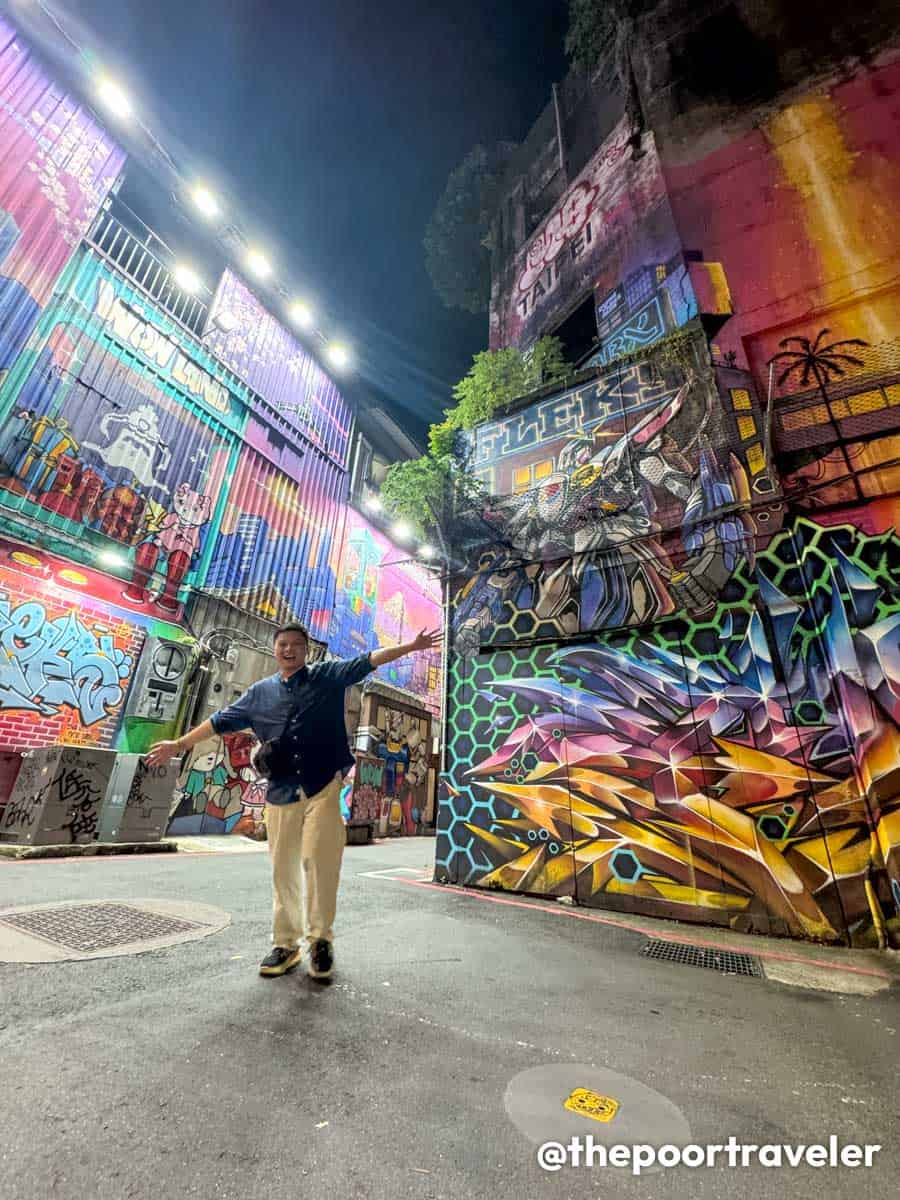
Taipei’s map is shaded with countless parks. We’ll be mentioning a few in this article, but this is perhaps the most alive and colorful. This isn’t your average park. Hidden away in the trendy Ximending area, Taipei Cinema Park is a movie-themed complex with open spaces and outdoor installations, where local and international street artists unleash their creativity. At the center of it is this indoor gallery with artworks and photos that narrate the history of the site.

But it’s also a place where art, urban grit, and a splash of weirdness collide. It’s surrounded by graffiti-covered walls that make you feel like you’ve wandered into a rebellious teenager’s sketchbook. The park is an open canvas where local artists show off their talent with vibrant street art.

We first visited it at night, and we stumbled upon this corner that look like it came from an otaku’s fever dream. The Japanese influence here is so strong that I even joked that I might see Mt. Fuji from here. And I kid you not, I did see Mt. Fuji here. It was just a wall painting, but still.

Ximending Graffiti Street TaipeiXimending Graffiti Street Taipei

Ximending Graffiti Street Taipei TaiwanXimending Graffiti Street Taipei Taiwan

We also spotted Wow Land, a room filled with claw machines and prizes, from kitschy toys to snacks to drinks. Now, you’ll find thousands of claw machines scattered throughout the city, but what sets this place apart is that it isn’t rigged (or not as rigged as the others). If you have the skill, you could actually win something. Vins and I had a field day here. Spent just NT$ 40 (it’s NT$ 10 per game) and went home with chocolates, Milkis drink, and a toy. Not bad, not bad at all. It’s just so nice to not be duped by these machines for a change.

Ximending Taipei Japanese GraffitiXimending Taipei Japanese Graffiti

Ximending Wow Land TaipeiXimending Wow Land Taipei

Even if you’re not into claw machines or street art, the park is a haven for people-watching and impromptu photoshoots. It’s a slice of Taipei’s cool, youthful side—unpolished but wildly fascinating.

We visited it again in the daytime, and we actually liked it better at night, so just visit after sundown.


6. Xinzhongshan Park & Chifeng Street

Chifeng Street TaipeiChifeng Street Taipei

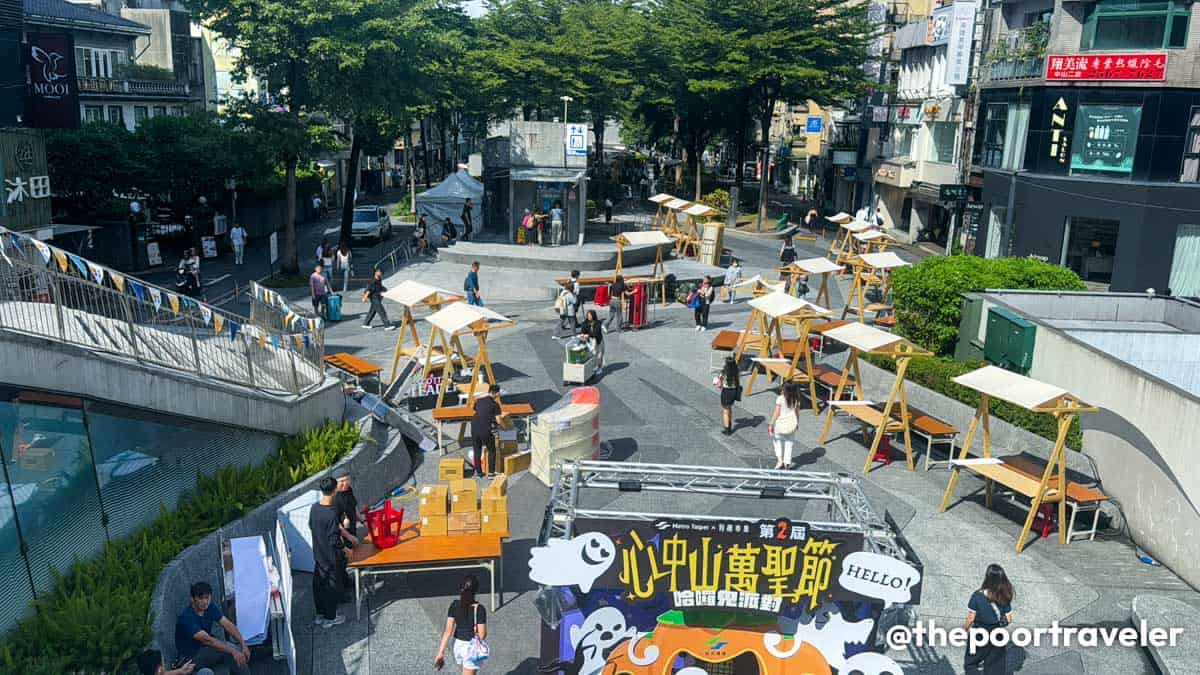
Xinzhongshan Park is a charming linear park running from Zhongshan Station to Shuanglian Station in the Zhongshan District. It’s a bit of a local favorite hidden retreat, especially for those who want a quiet spot to relax away from Taipei’s busier areas. The park has well-maintained walking paths, lush trees, and open spaces where you’ll often find people unwinding, shopping, or just enjoying the peaceful setting. Underneath lies Underground Book Street, perfect for bookworms out there.

Xinzhongshan Park TaipeiXinzhongshan Park Taipei

Xinzhongshan Underground Book Street TaipeiXinzhongshan Underground Book Street Taipei

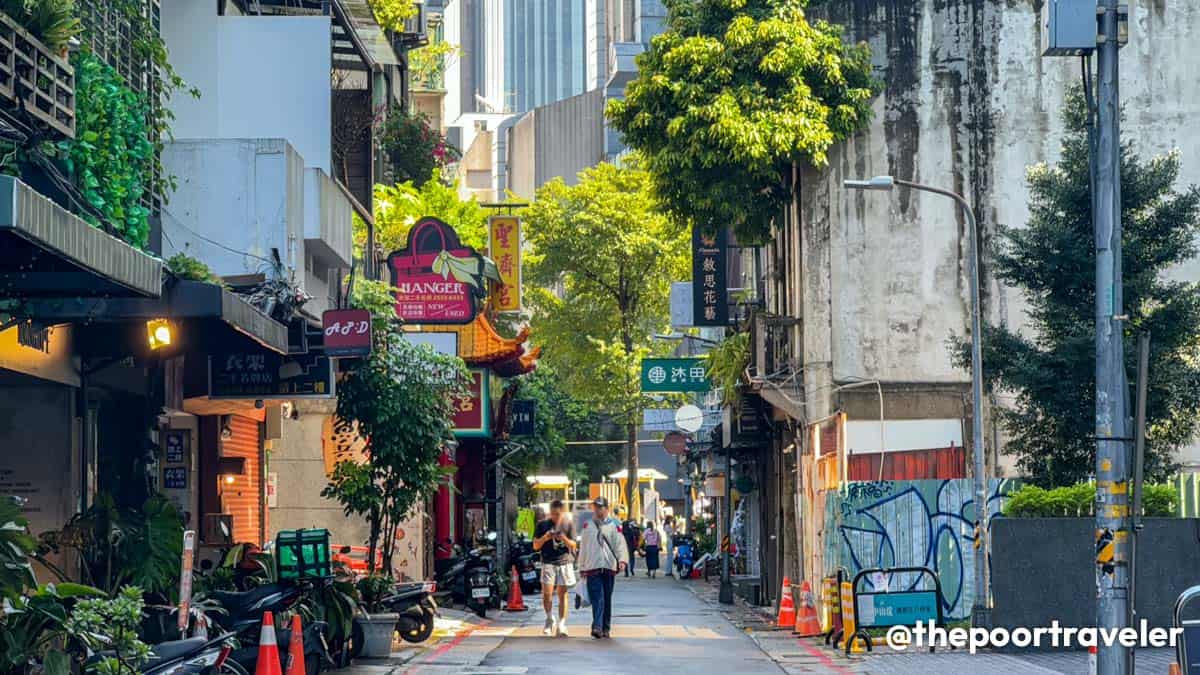
One of the most interesting features of Xinzhongshan Park is its proximity to Chifeng Street and its surrounding blocks, a trendy area known for its indie boutiques, local cafes, and creative vibe. But what stole our attention here was the Coach Play – yes, that brand — a stylish fusion of a café and a retail space. The menu has a selection of coffees, teas, and some pastries.

Coach Play Cafe TaipeiCoach Play Cafe Taipei

But there are many other cafes here that are worth your buck and time. My favorite spot is R9 Café’s mural featuring various coffee lovers!

Chifeng Street CafesChifeng Street Cafes

Together, Xinzhongshan Park and Chifeng Street offer a mix of nature, culture, and creativity—ideal for anyone wanting to explore a lesser-known side of Taipei!

If you get hungry, walk a bit to Chuan Mu Yuan, a hole-in-the-wall eatery serving Michelin-approved beef pancakes, served like a burrito. It’s one of the best dishes we’ve had in Taipei and was totally worth the stroll.

Chuan Mu Yuan TaipeiChuan Mu Yuan Taipei
Chuan Mu Yuan’s bestselling beef pancakes (left) and red bean pancakes (right)

It was the right mix of sweet and savory, and meaty and starchy. Their red bean pancakes are also something to write home about! We also had fried rice, beef noodles, and xiao long bao, but it is really their pancakes that you should order.


7. Taipei Expo Park & Maji Square

Taipei Expo ParkTaipei Expo Park

For something quirky and colorful, head to Taipei Expo Park, packed with personality and fun surprises, making it a fun marriage of art, culture, and food. Originally the site for the 2010 Taipei International Flora Expo, the park now serves as a year-round hotspot for festivals, markets, and pop-up events.

Maji Square TaipeiMaji Square Taipei

Maji Square Food TaipeiMaji Square Food Taipei

One of the highlights is Maji Square, a food court next to the park where food stalls, artisanal shops, and outdoor cafes create a market-like atmosphere. It’s a place to munch on local and international fare (Indian, Italian, Korean!), buy quirky souvenirs, and enjoy live music.

On our most recent trip, this wasn’t part of our original plan. We were supposed to go to an outdoor market but it was raining and we needed a Plan B, and Maji Square has a roof above it, so we came here instead. And good thing we paid it a visit! We really enjoyed this area. But our local companion Nelly said it’s especially fun in the evenings when the lights come on, and the place buzzes with energy. It’s got a festival energy all year round, making it perfect for casual get-togethers.

Linji Huguo Temple TaipeiLinji Huguo Temple Taipei

On the outskirts of the park lies Linji Huguo Temple, a lesser-known cultural treasure in Taipei. It’s a Buddhist temple that isn’t as crowded as Longshan Temple. It is known for its elegant, traditional design. One unique aspect of Linji Huguo is its emphasis on the Linji school of Zen Buddhism, known for its focus on inner peace and wisdom. It’s a perfect spot to get a glimpse of Taipei’s spiritual side.


8. Huashan 1914 Creative Park

Huashan 1914 Creative Park TaipeiHuashan 1914 Creative Park Taipei

Originally built in 1914 as a sake distillery, the Huashan 1914 Creative Park is an industrial complex transformed into a cultural and arts center. It has a raw, industrial look, complete with exposed walls and open-air courtyards.

Huashan 1914 Creative Park Taipei TaiwanHuashan 1914 Creative Park Taipei Taiwan

But it’s not all high-brow art here; Huashan 1914 has plenty of cafes, boutique shops, and design studios scattered around the complex, so it’s easy to spend a whole afternoon exploring. Whether you’re a dedicated art lover, a coffee connoisseur, or just someone looking to escape Taipei’s usual tourist spots, Huashan 1914 Creative Park is a creative playground that has something that’ll make you linger. For us, that something was ice cream and coffee.

I had a yogurt ice cream that tasted really natural and homemade, while Vins is just always happy with his coffee.


9. Dihua Street

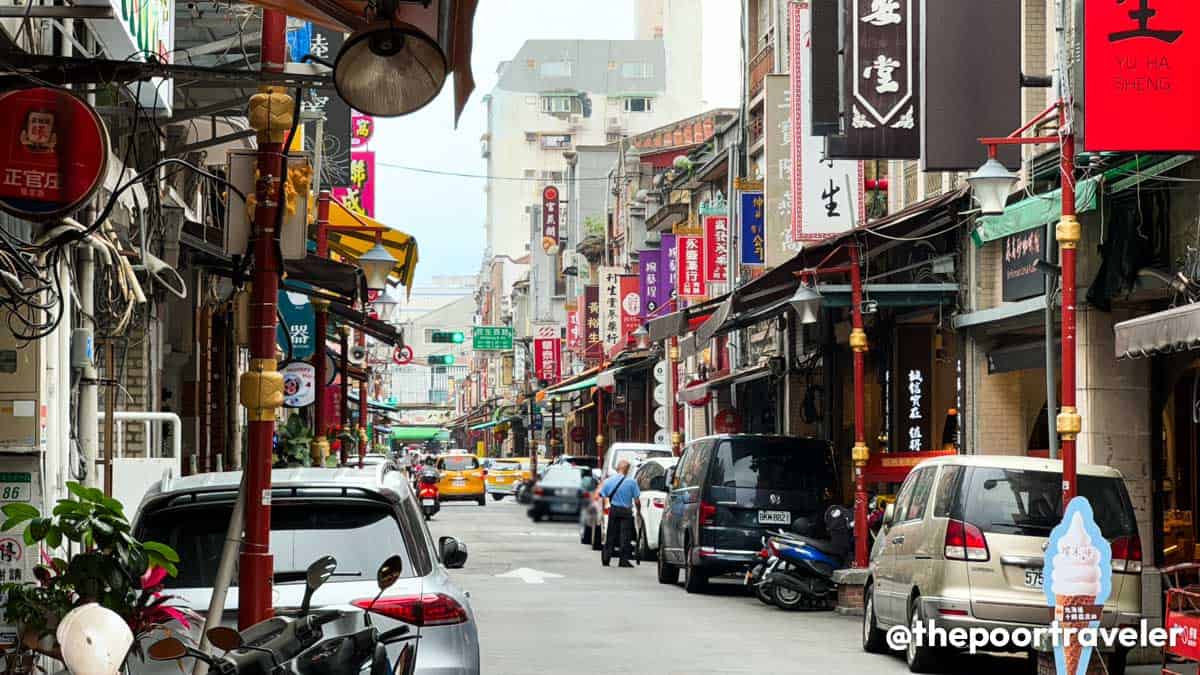
Dihua Street TaipeiDihua Street Taipei

One of the oldest streets in Taipei, Dihua Street is more like the cool great-grandma of walking streets in the city. For the longest time, it was the locals’ go-to spot for tea, dried herbs, and textiles, but it has somehow managed to stay relevant across generations. It’s a delightful mashup of history and hipster, with old-school herbalists side-by-side with sleek bookstores and shops. Think apothecaries rubbing shoulders with popular food spots—where else can you pick up some dried ginseng and delicious strawberry mochi and dried squid?

Dihua Street Shops TaipeiDihua Street Shops Taipei

And then there’s the Xiahai City God Temple, where hopeful or hopeless romantics make offerings to the god of matchmaking. Yep, you read that right—this little temple is basically Chinese Cupid’s Taipei office, famous for bringing love to the lovelorn. If you’re feeling lucky (or in desperate need of romance), light a few incense sticks and ask for a little divine intervention in your love life.

Xiahai City God Temple TaipeiXiahai City God Temple Taipei

Don’t expect a fun, wild party street, unless it’s Lunar New Year. Most of the time, it’s very quiet. It’s more like a memory lane where you can shop, snack, and maybe even meet your soulmate—that is, if the City God’s feeling generous!


10. Uncrowded Night Markets

Gongguan Night Market TaipeiGongguan Night Market Taipei

Taipei is known for its night markets, specifically its three most popular: Shilin, Raohe, and Ningxia. But the city has plenty more that tourists don’t usually go to!

One of them is Gongguan Night Market, situated close to the National Taiwan University, which means (1) most of its regular customers are students, and (2) the prices are affordable! It’s pretty small. Tiny, compared to other night markets, but it still has the mouthwatering aromas wafting from various food stalls and the constant chatter from people enjoying delicious snacks.

In this market, don’t miss Hsiung Chi Scallion Pancake, a Michelin Bib Gourmand awardee. It’s stationed close to the entrance to the market. You won’t miss it because there’s usually a long queue snaking toward it. And of course, we fell in line, too. It moved fast so we were face-to-face with the flat grill in no time. There’s an option to add cheese, ham, bacon, and egg. We ordered one plain and one with all our favorite trimmings, and we weren’t disappointed.

The pancakes were part soft, part crispy, and utterly delicious for its price. No wonder it has garnered a loyal following among locals!

Hsiung Chi Scallion Pancake TaipeiHsiung Chi Scallion Pancake Taipei

Another spot to consider is Shuangcheng Street Night Market, tucked away in the Daan District. It’s also very short and small, but filled with options from fruits like custard apples to Japanese pancakes to Taiwanese sausages.

Just walk across the nearby park and you’ll reach Huang Chi Lu Rou Fan, another Michelin Bib Gourmand recipient, famous for its signature braised pork rice. It’s always packed with customers, most waiting for their takeaway boxes. They serve pocket-friendly but comforting bowl of rice topped with tender, flavorful fatty pork bits that will have you dreaming about it long after you’ve left. Fatty, yes, but it still ate clean.

Shuangcheng Street Night Market is also adjacent Qingguang Market, a shopping arcade lined with food stalls, apparel stores, and other trinkets catering mostly to locals.


Taipei is bursting at the seams with underrated attractions just waiting to be discovered — quirky temples, hidden night markets, and scenic parks. They may not be as popular, but they offer a good look into Taipei’s local scene without the touristy fluff. So even if you’ve been to Taipei before, go ahead and book that flight because in the words of one global boy band, the best is yet to come.

Yes, I know it’s BTS and they’re Korean, but I can’t think of anything from F4 right now. 😅


Where to Stay in Taipei

Here are some of the hotels we have tried in Taipei through the years.

Search for more Taipei Hotels!


More Tips on YouTube ⬇️⬇️⬇️


Is this post helpful to you?


Tip UsTip Us


Source link

Alan Mann Racing turns 60 – learn its history

0


The U.K.’s Alan Mann Racing today specializes in maintaining classic cars and developing restomods, but it was once a mainstay of the racing scene, as this video explains.

Alan Mann Racing, or AMR for short, was founded in 1964 by racing enthusiast Alan Mann, who’d gotten his start running a garage that prepared race cars for competition. Mann soon negotiated a deal with Ford to run Lotus Cortinas. It was the start of a close partnership between AMR and the Blue Oval that would define the team.

This was the era of Ford’s Total Performance push, when the automaker sought to win in as many categories of racing as possible in order to market its road cars. AMR took full advantage of Ford’s largesse, racing not only Lotus Cortinas, but also Mustangs, Falcons, and, perhaps most famously, the Mk1 Escort with which AMR won the 1968 British Saloon Car Championship. All were decked out in the team’s signature red and gold livery.

2022 Ford GT Alan Mann Heritage Edition

2022 Ford GT Alan Mann Heritage Edition


The livery wasn’t the only thing that set AMR apart. Drivers and mechanics from the era still recall Alan Mann’s gentlemanly persona and the impeccable preparation of the car. While not exactly a fan of the Lotus Cortina, which he considered difficult to drive, racing legend Jackie Stewart acknowledged that the AMR cars were the “crème de la crème” compared to other teams’ Cortinas.

Stewart—who went on to become a three-time F1 champion—was just one of many famous names to race for AMR. Others included Graham Hill, Jacky Ickx, Jack Brabham, Bruce McLaren, and Mario Andretti. During that same period, AMR also did some movie work, including helping with car-chase scenes in “Goldfinger” and building cars for “Chitty Chitty Bang Bang.”

AMR also ran the Cobra Daytona coupe which, like the standard Cobra roadster, was developed in the U.S. by Shelby American, before leveling up to the GT40. It even helped develop a lightweight body for the Ferrari-fighting GT40, with two examples built and raced in the 1966 24 Hours of Le Mans. Both ended up retiring, but Ford celebrated the partnership in 2022 with a special version of its modern GT supercar.

Apparently not discouraged, AMR began work on a clean-sheet sports-racing prototype for Ford called the F3L, powered by the Cosworth DFV V-8 from F1. The goal was to achieve 200 mph with 400 hp, which the car did, but it was tricky to drive and never finished a race. By that time Ford was also curtailing its racing efforts, effectively ending AMR’s time as a front-line race team. Alan Mann shifted focus to the aviation industry.

The company would then return to racing in 2004 by preparing historic race cars, gradually expanding into other projects, including an electric conversion of a 1960s Mustang. More recently, AMR signed on to become the high-performance division of Boreham Motorworks, a fellow U.K. company working on a modern iteration of the Ford Escort Mk1 that AMR famously raced in its heyday.


Source link

Replacing an EV battery may cost less than fixing a gas engine by 2030

0


The potential high cost of EV battery replacements is a major worry for new-car shoppers, but that likely won’t be the case for long, according to battery-analysis firm Recurrent.

Recurrent, which produces battery health reports for used EVs, predicts that plummeting new-battery prices will make replacing a battery pack cheaper than repairing a gasoline engine by the end of the decade.

2025 Hyundai Ioniq 5

2025 Hyundai Ioniq 5

Whether it’s a gasoline engine, a battery pack, or any other component, repairs don’t make financial sense if they exceed the value of a car. Battery replacement costs are already trending away from that, according to Recurrent. They now represent 75% of the value of a $15,000 used car, down from 100% in 2020, the company estimates, adding that by 2030 battery replacements will be equivalent to 30% of the value of a $15,000 used vehicle.

This is being made possible by declining costs for new EV batteries. As Recurrent notes, Goldman Sachs predicted earlier this year that average battery prices would reach $80 per kwh in 2026—almost 50% lower than 2023. With the exception of a bump in 2022 due to high raw material prices, that’s generally been the trend since the start of the modern EV era. The U.S. Department of Energy has estimated that EV battery costs have dropped 90% since 2008.

2025 Kia EV6

2025 Kia EV6

Recurrent assumes that these trends will continue, and that by 2030 there will be a robust market for used EV batteries that could allow owners to offset some of the cost of replacement. Growth of so-called second-life applications such as stationary energy storage could allow EV owners to negotiate the sale of their vehicles’ used packs, potentially lowering the effective price of new packs by $10-$20 per kwh, Recurrent predicts.

Lower costs could not only help make used EVs more affordable, but might keep more of them in circulation. A 2023 report found that it’s more common to replace battery packs than repair them, which, at current battery prices, could lead to relatively new vehicles being “totaled” by insurance companies over minor damage and higher insurance premiums for those that remain.


Source link

Kia EV6 recalled for loss of drive power

0


Kia is recalling 62,872 EV6 electric vehicles because onboard charging control units could become damaged and trigger a reduced-power driving mode.

The recall covers 2022-2024 models, which have integrated charging control units that may become damaged by certain electrical loads, preventing them from charging the vehicles’ 12-volt batteries, according to the National Highway Traffic Safety Administration (NHTSA).

2024 Kia EV6

2024 Kia EV6

Failure of 12-volt battery charging causes the vehicle to enter a fail-safe mode, which will gradually reduce power if the vehicle continues to be driven. If this condition occurs, drivers will hear warning chimes and see dashboard warning lights, according to the NHTSA.

The remedy involves updating the charging control unit’s software, as well as inspection of the unit and its fuse, with replacement as needed. All of this work will be performed by dealerships free of charge to owners. Kia expects to mail owner notification letters Dec. 13. Owners can also contact Kia customer service at 1-800-333-4542 for more information. Kia’s reference number for this recall is SC327.

2024 Kia EV6

2024 Kia EV6

Some of the recalled vehicles were involved in a previous recall for the same issue, but will still need to have the new recall work completed, the NHTSA confirmed. That recall also included EVs from the related Hyundai and Genesis brands, some of which are also being recalled a second time to address this issue.

The EV6 arrived for the 2022 model year and was a Green Car Reports Best Car To Buy 2023 finalist. For 2025, it gets a number of updates including bigger battery packs, a North American Charging Standard (NACS) port, and revised styling. Kia will also build U.S.-market vehicles at its West Point, Georgia, factory.


Source link

2025 Porsche Macan EV launched in Malaysia – up to 639 PS, 641 km range, RM430,000 to RM635,000

0


2025 Porsche Macan EV launched in Malaysia – up to 639 PS, 641 km range, RM430,000 to RM635,000

Ten months on from its world premiere in Singapore, the second-generation Porsche Macan has been launched in Malaysia. The latest version of Zuffenhausen’s popular entry-level SUV is the brand’s second pure electric model after the Taycan and the first to utilise one of its storied existing model names.

As per global markets, there are a total of four variants being offered here – the base two-wheel-drive Macan, the Macan 4, the Macan 4S and the high-performance Macan Turbo. Nett prices inclusive of local taxes but without options are as per previous estimates and are as follows:

  • Porsche Macan – RM430,000
  • Porsche Macan 4 – RM445,000
  • Porsche Macan 4S – RM525,000
  • Porsche Macan Turbo – RM635,000

All models come with an eight-year/160,000 km battery warranty and can have their warranties extended up to 15 years through Porsche Malaysia.

Each variant brings with it a corresponding increase in performance, culminating in the supercar-baiting Macan Turbo. To reduce complexity, all models get a 100 kWh nickel manganese cobalt (NMC) battery, of which 95 kWh is useable. Here are the detailed specs of each model:

Porsche Macan

  • Single-motor rear-wheel drive
  • 340 PS (250 kW) or 360 PS (265 kW) with overboost; 563 Nm of torque
  • 0-100 km/h in 5.7 seconds
  • Top speed 220 km/h
  • 641 km range (WLTP)
  • 270 kW DC fast charging; 10 to 80% charge in 21 minutes
  • 11 kW AC charging; full charge in 10 hours
  • Road tax RM395 (based on nominal output)

Porsche Macan 4

  • Dual-motor all-wheel drive
  • 387 PS (285 kW) or 408 PS (300 kW) with overboost; 650 Nm of torque
  • 0-100 km/h in 5.2 seconds
  • Top speed 220 km/h
  • 613 km range (WLTP)
  • 270 kW DC fast charging; 10 to 80% charge in 21 minutes
  • 11 kW AC charging; full charge in 10 hours
  • Road tax RM515 (based on nominal output)

2025 Porsche Macan EV launched in Malaysia – up to 639 PS, 641 km range, RM430,000 to RM635,000

Porsche Macan 4S

  • Dual-motor all-wheel drive
  • 448 PS (330 kW) or 516 PS (380 kW) with overboost; 820 Nm of torque
  • 0-100 km/h in 4.1 seconds
  • Top speed 240 km/h
  • 606 km range (WLTP)
  • 270 kW DC fast charging; 10 to 80% charge in 21 minutes
  • 11 kW AC charging; full charge in 10 hours
  • Road tax RM665 (based on nominal output)

Porsche Macan Turbo

  • Dual-motor all-wheel drive
  • 584 PS (430 kW) or 639 PS (470 kW) with overboost; 1,130 Nm of torque
  • 0-100 km/h in 3.3 seconds
  • Top speed 260 km/h
  • 591 km range (WLTP)
  • 270 kW DC fast charging; 10 to 80% charge in 21 minutes
  • 11 kW AC charging; full charge in 10 hours
  • Road tax RM1,240 (based on nominal output)

The Macan is built on the Volkswagen Group’s Premium Platform Electric (PPE) that also underpins the Audi A6 e-tron and Q6 e-tron. Like the Taycan, it gets an 800-volt electrical architecture that enables its high DC fast charging speeds, but it loses that car’s two-speed rear gearbox.

Dynamically, the car can be had with rear-wheel steering at up to five degrees (a first for the Macan, shortening the turning circle by a metre) and Porsche Torque Vectoring Plus (PTV Plus). The Macan 4S and Turbo come as standard with dual-valve air suspension (another first) with Porsche Active Suspension Management (PASM) adaptive dampers, optional on the other variants.

As to be expected, the Macan enters a new generation with an ample size increase. Measuring 4,784 mm long, 1,938 mm wide and 1,622 mm tall, the new car is 58 mm longer, 11 mm wider and 26 mm taller than its predecessor, while its 2,893 mm wheelbase is 86 mm longer.

Despite this, the car is still recognisably a Macan by way of its curvaceous design and distinctive side blades in the doors. There are some changes, however – the jettisoning of the petrol engine has freed up space for a lower bonnet, while the LED headlights are now split, with four-point daytime running lights at the top and the main projectors nestled within the front bumper.

At the rear, you’ll find a full-width taillight strip (a trademark of modern Porsches) and sleeker coupé-like roofline. The latter, combined with the active grille shutter and rear spoiler, results in a drag coefficient as low as 0.25. Despite this, the boot is larger than the previous model at 540 litres (versus 488 litres), and there’s also a 911-style 84 litre front boot to bump up the cargo capacity increase to 136 litres. Fold down the rear seats and you’ll get 1,348 litres of luggage space at the back.

Inside, the Macan carries over the tech-heavy approach taken by the Taycan, incorporating a 12.6-inch curved instrument display, a 10.9-inch infotainment touchscreen and an optional second 10.9-inch screen for the front passenger.

2025 Porsche Macan EV launched in Malaysia – up to 639 PS, 641 km range, RM430,000 to RM635,000

The Porsche Communication Management (PCM) software now runs on the Android Automotive OS, providing faster voice control, a new app store and the ability to display Apple CarPlay and Android Auto maps right in the instrument cluster. An augmented reality head-up display is also available.

One major development since the Taycan is that Porsche has thankfully backed off from its screens-or-nothing approach. Just like the new Panamera, the Macan comes with physical air-con toggles and a volume knob, situated on a centre console that now offers plenty of storage thanks to the lack of a transmission.

The third display in front of the passenger can play videos from YouTube or even TikTok, with a special film in place so the driver won’t be distracted while on the move. Speaking of, the driver is seated up to 28 mm lower in the cabin for a more connected feel with the car – an impressive feat considering the battery pack is placed under the floor. At the back, the Macan remains a snug fit for tall adults, but the second-generation model does offer more leg- and headroom than the original version.

For the Malaysian market, the Macan comes as standard with speed-sensitive Power Steering Plus, a power-opening charging port cover, four-zone climate control, 360-degree camera system, park assist, a 230-volt power outlet in the boot and a 14-speaker 710-watt Bose sound system. The uprated 21-speaker, 1,470-watt Burmester system is an eye-watering RM17,811 option.

Looking to sell your car? Sell it with Carro.

Learn more: Porsche Macan EV


Source link

Perodua EMO-II concept to debut at KLIMS – sporty hatch previews production EV, launch next year?

0


Perodua EMO-II concept to debut at KLIMS – sporty hatch previews production EV, launch next year?

There’s an extra incentive to visit the Kuala Lumpur International Mobility Show (KLIMS) next week – Perodua is unveiling its new EMO-II concept at the show. The third of the company’s Electric Mobility Online vehicles will be the clearest preview yet of the national carmaker’s first electric vehicle, set to be launched by the end of next year.

Essentially, the EMO-II is a more fleshed-out version of last year’s EMO scale model but is, in some ways, even sportier-looking, as teased by the video below. The front end retains the dramatic X-shaped front bumper and sharp corners, now joined by a full-width light bar underlining an illuminated Perodua logo. There’s also a deep chin spoiler with “EMO-II” embossed on it.

Moving to the side, one can see the heavily raked rear windscreen, giving the car a sleeker look compared to past Peroduas. But it’s at the back where the EMO-II looks arguably the most aggressive, with a slim letterbox rear windscreen, a sizeable rear spoiler, a scalloped tailgate, flared wheel arches and what appears to be an enormous diffuser with a triangular centre fog light. A running theme is a pixelated pattern that’s evident in the head- and taillights, flanks and rear windscreen.

As yet, it’s unclear whether the EMO-II will again be shown as a scale model or as a full-sized concept, but given the intricacy of the design, we’re putting our money on the latter. If so, it will likely carry the powertrain previewed by the EMO-I prototype at the Malaysia Autoshow earlier this year.

That car utilised a single front motor with conflicting outputs of either 68 PS (50 kW) and 220 Nm of torque or 163 PS (120 kW) and 315 Nm, getting it from zero to 100 km/h in seven to nine seconds. Also conflicting are the capacities of the nickel manganese cobalt (NMC) battery – either 55.7 or 57.6 kWh, delivering a range of 350 or 450 km. It supports just 50 kW of DC fast charging but 11 kW of AC charging.

In what is a reversal of roles with Proton, Perodua’s EV will be an in-house development in collaboration with an Australian partner, given that neither Daihatsu nor Toyota currently have a full electric model at this size and price. By contrast, the Proton eMas 7 is a twin of the Geely Galaxy E5/EX5.

Perodua’s electrification efforts ramped up last week with the signing of a memorandum of understanding (MoU) with Petronas and Gentari. This will see the latter setting up charging facilities at Perodua service centres, with the view of aiding customers’ transition to full EVs.

Looking to sell your car? Sell it with Carro.

Learn more: , ,


Source link