Home Blog Page 323

Physical driving licence, road tax will be available from next year, but payment may be needed for it – Loke

0


Physical driving licence, road tax will be available from next year, but payment may be needed for it – Loke

New road tax (left), driving licence slip (right).

While digital road tax and driver licenses are here to stay, the government looks like it is softening its view on re-offering physical copies of these. Having said last month that anyone wanting a physical road tax and licence can just print it themselves, transport minister Anthony Loke now says that a new initiative will be introduced next year for those who wish to obtain a physical copy of these documents.

Speaking in the Dewan Rakyat, he said the move is in response to complaints from the public, with a number of people having voiced their preference for physical driving licences and road tax. There will however likely be a fee to have them printed, as the New Straits Times reports.

“In this regard, next year we will announce an initiative for anyone who wishes to print their licence physically. They may need to pay for the printing the physical card,” he said, responding to a question posed by Syed Ibrahim Syed Noh (PH-Ledang) about the matter. He however did not elaborate further on the charges that will be imposed for printing these items.

Physical driving licence, road tax will be available from next year, but payment may be needed for it – Loke

Loke however reiterated that there would be no turning back in terms of the overall shift to digital, and efforts on this front will focus on identifying areas for improvement. “Since the launch of the road transport department’s (JPJ) digitalisation initiative, the ministry and the department have been committed to continuously improving the MyJPJ application to enhance the delivery of online services to the public, ” he said.

He said that one of the improvements being implemented by the ministry, as part of the department’s digitalisation agenda, is the incorporation of a notification function on the app to alert users about the expiration date of their motor vehicle license (LKM). “This new feature will be announced to the public once it is developed and ready for use,” he said.

He added that the MyJPJ smartphone app has been downloaded by 13.7 million users so far, and over one million transactions for the renewal of digital road tax and licences, amounting to RM121 million. have been carried out so far.

Looking to sell your car? Sell it with Carro.


Source link

Ferrari F430 Buyers Guide | Exotic Car Hacks

0


When the Ferrari F430 debuted at the 2004 Paris Motor Show, it represented a big step forward for Ferrari, building upon the the Ferrari 360 Modena with substantial technological advancements. More than just a new model, the F430 was Ferrari’s way of setting new standards in performance and handling for a mid-engine sports car in the mid 2000’s.

At its heart, the F430 is powered by a naturally aspirated 4.3-liter V8 engine that produces 483 hp and 343 lb-ft of torque, a big leap over its predecessor. This power get the F430 to sprint from 0 to 60 mph in just 3.6 seconds, with a top speed exceeding 196 mph.

The F430 was also Ferrari’s first road car to incorporate the innovative “E-Diff,” an electronic differential designed to enhance cornering stability, and the “Manettino” steering wheel dial, allowing drivers to switch between dynamic driving modes, tailoring the car’s behavior to road or track conditions.

It was offered with 2 transmissions, F1 gearbox (paddle shift) and gated 6 speed manual transmission. Most F430s were spec’d with F1 gearbox, and only a very limited numbers of F430s came with manual.

On the outside, the F430’s design features aggressive front end includes large intakes inspired by Ferrari’s Formula 1 designs, enhancing cooling and downforce. The car’s profile reveals sharp, flowing lines that channel air efficiently along its sculpted bodywork.

At the rear, the F430 came with twin circular taillights and a large diffuser that helped with aerodynamic elements.

Inside, the F430 cabin layout is focused on the driver, with controls positioned for quick access. The high-quality materials, such as leather and aluminum accents, added a refined, high-end touch to the interior. Clear analog dials and the iconic “Engine Start” button on the steering wheel—featured for the first time in a Ferrari

Throughout its production, the Ferrari F430 faced competition from rivals such as the Lamborghini Gallardo, Porsche 911 Turbo, Audi R8, and Aston Martin V8 Vantage. Despite these competitors, the F430 stood out through its racing-derived technologies, and a naturally aspirated V8.

Model Changes (Breakdown by Year)

2005 Ferrari F430

In 2004, Ferrari introduced the F430 Coupe at the Paris Motor Show in replacement of the 360 Modena. It featured a 4.3-liter naturally aspirated V8 engine, producing 483 hpand 343 lb-ft of torque. 

The F430 introduced a lot of new features compared to the 360 Modena, such as the E-Diff and  “Manettino” steering wheel dial.

It was released to the market in 2005. The starting price for the 2005 Ferrari F430 was approximately $170,000.

2006 Ferrari F430

Ferrari expanded the F430 lineup with the introduction of the F430 Spider at the Geneva Motor Show in 2005. This convertible variant offered the same 4.3-liter V8 engine and advanced features as the coupe but with the added appeal of open-air driving. 

The Spider’s retractable soft-top roof allowed drivers to enjoy the thrill of the F430’s performance with the top down, enhancing the experience.

In 2006, the starting price for the Ferrari F430 Coupe was approximately $175,000, while the F430 Spider was priced slightly higher, starting at around $195,000.

2007 Ferrari F430

In 2007, Ferrari unveiled the 430 Scuderia at the Frankfurt Motor Show, with racing legend Michael Schumacher introducing the model to the public. 

The 430 Scuderia was a more track-focused variant of the F430, designed for enthusiasts seeking even greater performance. It delivered 503 hp, thanks to engine tuning that surpassed the standard model, along with a reduced overall weight and enhanced aerodynamics. 

Ferrari equipped the Scuderia with a faster-shifting gearbox, optimized for quick and seamless transitions, and a more aggressive setup for the E-Diff and traction control systems, ensuring precision and control on the track.

This year also marked the introduction of Ferrari’s F1-Trac traction control system, which further improved the car’s handling and stability, particularly in high-performance conditions. 

The 430 Scuderia’s exterior featured larger air intakes in the front bumper for improved cooling, a redesigned rear diffuser to enhance downforce, and a signature dual racing stripe for an aggressive, race-inspired look. Lightweight materials, like carbon fiber on the mirrors and engine bay, reduced weight, while unique 19-inch lightweight alloy wheels paired with high-performance ceramic brakes.

Inside, the Scuderia offered a minimalist, performance-oriented cabin. Carbon fiber was used extensively on the dashboard, door panels, and steering wheel. Lightweight bucket seats with Alcantara upholstery provided support for spirited driving, and the steering wheel featured a shift light display for optimal gear changes.

Soundproofing was reduced to create a raw driving environment, making the Scuderia’s interior as focused as its exterior.

In 2007, the starting price for the Ferrari F430 Coupe was around $180,000, while the F430 Spider was priced slightly higher, starting at approximately $200,000. The 430 Scuderia, introduced that year was delivered to customers in 2008, and had a starting price of about $250,000.

2008 Ferrari F430

In 2008, Ferrari introduced the Scuderia Spider 16M to commemorate the brand’s 16th Formula 1 Constructors’ Championship. 

Essentially a convertible version of the 430 Scuderia, the 16M combined the Scuderia’s high-performance engine and lightweight engineering with open-air driving. 

Limited to just 499 units, the Scuderia Spider 16M became an instant collector’s item due to its rarity and significance in Ferrari’s racing legacy. To further enhance the lightweight, sporty appeal, Ferrari offered optional carbon fiber packages, allowing owners to add various carbon fiber components that reduced weight and added to the car’s aesthetic, like the Scuderia.

In 2008, the starting price for the Ferrari F430 Coupe was approximately $180,000, while the F430 Spider was around $200,000. The limited-edition Scuderia Spider 16M had a starting price of around $300,000.

2009 Ferrari F430

In 2009, the production of the Ferrari F430 came to an end.

With the conclusion of the F430’s production, Ferrari introduced its successor, the Ferrari 458 Italia. 

Ferrari F430 Common Problems

While the Ferrari F430 is fairly reliable, it is not without its common maintenance challenges. As with many high-performance vehicles, certain components of the F430 are prone to wear or failure, which can require attention from owners. These issues range from mechanical to aesthetic, and while they don’t detract from the car’s overall appeal, they are important to consider for anyone thinking about ownership. Below are some of the most commonly reported problems F430 owners may encounter.

Keep in mind, that it is essential that all cars, even supercars, can have issues and it is crucial to perform a Pre-Purchase Inspection (PPI) from an authorized dealer or experienced independent mechanic to reveal all issues.

Exhaust Manifold Failures: The F430 is known for issues with its exhaust manifolds, which can develop cracks over time, leading to exhaust leaks. This can cause a decrease in performance, unusual exhaust sounds, and even potential engine damage if not addressed.

F1 Transmission Issues: The F430’s F1 automated manual transmission can suffer from actuator problems, particularly in earlier models. These issues can lead to hard shifting or the inability to shift gears. The clutch can also wear out relatively quickly, especially with aggressive driving, and replacing it can be costly.

Sticky Interior Controls: Many Ferraris, including the F430, are prone to a problem where interior plastic components (like buttons and switches) become sticky and deteriorate over time, especially in warmer climates. This occurs due to the soft-touch coating breaking down, which can detract from the car’s interior aesthetics.

Suspension Wear: The F430’s suspension bushings and ball joints are susceptible to wear, which can cause handling issues or unusual sounds. This is particularly common with spirited driving, as the components take on significant strain.

Engine Mount Failures: The F430’s engine mounts can wear out over time, leading to vibrations and a rougher driving experience. If not replaced, worn mounts can lead to excessive engine movement, which may stress other components.

Electrical Gremlins: Like many high-performance vehicles, the F430 can experience electrical issues, including problems with the power windows, lights, and occasionally the car’s ECU. These issues are often minor but can be frustrating to diagnose and repair.

Brakes and Carbon-Ceramic Rotors: F430 models with optional carbon-ceramic brakes can face high replacement costs if the rotors wear out. While these brakes offer excellent performance, they can be expensive to replace, and they sometimes produce noise, which some owners find bothersome.

Recalls

2005 to 2009 Ferrari F430 vehicles

Service brakes, hydraulic (Recall no. 22V536000)

The brake fluid reservoir cap may not vent properly, creating a vacuum inside the brake fluid reservoir, and resulting in a brake fluid leak that may lead to a partial or total loss of brake function. A loss of brake function can increase the risk of a crash.

2005 to 2007 Ferrari F430 Spider vehicles

Engine and engine cooling: Engine (Recall no. 09V048000)

The defect involves the hydraulic hoses for the convertible top that are located inside the engine compartment. The heat from the engine may cause hairline cracks to form in the hoses, which may result in fluid leakage from the convertible top hydraulic system. This leakage, in turn, will cause the convertible top warning light to illuminate and, if not remedied, could ultimately leak fluid into the engine compartment, causing smoke and fire, rendering the vehicle inoperable, and possibly resulting in a crash.

Maintenance and Ownership Costs

Compared to other high-performance supercars, the Ferrari F430 is regarded as having relatively manageable maintenance.

However, it is important to remember that regular maintenance and repairs will still be necessary, and the costs can vary depending on whether you take your car to a dealer or an independent mechanic.

Here is the suggested service schedule and intervals per Ferrari:

FIRST-YEAR SERVICE

  • Engine oil and oil filter replacement.
  • In-cabin air filter replacement.
  • Indicator lights check.
  • Visual brake inspection (pads and discs).
  • Electric parking brake system inspection.
  • Gear oil check and top-off, if necessary.
  • Hydraulic fluid levels check.
  • Visual inspection for leaks.
  • Front and rear suspension components check.
  • Road test, hand wash, and vacuum.

SECOND-YEAR SERVICE OR 12,500 MILES

  • Repeat of the first-year maintenance.
  • Auxiliary belt replacement.
  • Engine and gearbox mounting fastener tightness check.

FOURTH-YEAR SERVICE OR 37,500 MILES

  • Includes all items from the second-year service.
  • Spark plugs replacement.
  • Auxiliary belt replacement.

Here is a rough estimate of typical service costs associated with the Ferrari F430:

  • Oil Change – An oil change for the F430 typically costs between $400 and $800. This is usually recommended once a year or every 3,000–5,000 miles to ensure optimal engine health.
  • Minor Service – A minor service, which includes an oil change, filter replacements, and a general inspection, can cost around $1,200 to $2,000. This service is generally recommended every year.
  • Major Service – A major service, which includes more comprehensive checks and potential component replacements like spark plugs and belts, is recommended every 3–5 years and can range from $3,000 to $7,000, depending on what parts need replacement.
  • Tires – A set of high-performance tires for the F430 such as Michelin Pilot Super Sport can cost between $1,200 and $2,000. Replacements are generally needed every 10,000–15,000 miles, or sooner with aggressive driving.
  • Brakes – When it comes to maintenance, replacing standard steel brake pads typically costs around $1,200 to $1,800 per axle. However, for models equipped with carbon-ceramic brakes, the costs are significantly higher. Replacement of both rotors and pads for carbon-ceramic brakes can exceed $12,000 per set.
  • Clutch – For F430 models with the F1 transmission, a clutch replacement can cost between $4,000 and $7,000, as this transmission is known to wear faster with aggressive driving. For models with a manual transmission, clutch replacements are somewhat less frequent and can range from $3,500 to $5,000. Clutch life typically spans 20,000–40,000 miles, though driving style greatly impacts longevity.

Options List

When purchasing a Ferrari F430, Ferrari provides an extensive options list.

The F430 offers a range of carbon fiber packages. These include a carbon fiber steering wheel, which can be equipped with integrated LED shift lights for a race-inspired experience, as well as carbon fiber dashboard inserts, door panels, and exterior accents such as the rear diffuser and side mirrors. These additions are desirable when it comes to looking for the right options.

Most F430s were spec’d with the optional F1 transmission, however, they aren’t as desirable. Rather the standard gated manual is what most people want today.

On the exterior, Ferrari offers a big list of paint finishes beyond the standard palette of iconic colors like Rosso Corsa and Nero. Buyers can choose from metallic, pearl, and matte finishes, or even opt for bespoke colors through Ferrari’s Tailor Made program. Custom brake caliper colors, ranging from classic red to yellow, add an extra layer of personalization, while optional forged alloy wheels.

Inside the cabin, the F430 offers contrasting stitching, premium audio system, embroidered headrests, and carbon fiber trim are desirable. Custom floor mats and personalized scuff plates are additional touches that allow owners to make the cabin their own.

There are extra options such as bespoke luggage sets designed to fit perfectly in the F430’s trunk space. 

Ferrari also provided several seat options, including Daytona inserts for the standard seats and rare leather carbon fiber bucket seats, which are highly desirable yet hard to find.

F430s with desirable options such as carbon fiber packages, bespoke paint finishes, and upgraded interiors tend to hold their value better in the resale market. 

2006 Ferrari F430 Options List

Key Options

  • Carbon Fiber Package
  • Ceramic-Brakes Package
  • Racing Seats Package
  • Manual transmission

Ferrari F430 Prices and Values (Scuderia and 16m)

The Best Ferrari F430 to Buy

When it comes to selecting the best Ferrari F430 to buy, there are several factors to consider.

For those seeking the ultimate version of the F430, the Ferrari 430 Scuderia and 16m is the choice to go for. The Scuderia and 16m has the more powerful 503-hp V8 engine, a lighter weight due to extensive use of carbon fiber, and advanced track-oriented features like a faster-shifting gearbox and the F1-Trac traction control system. 

Its exclusivity, combined with its enhanced performance and handling, makes it a favorite among collectors and enthusiasts. For those who prefer open-air driving, the Scuderia Spider 16M, limited to just 499 units, offers the same high-performance package with the added thrill of a convertible top.

Manual transmission F430s are also extremely desirable. While there is no exact number on production numbers of how many F430s came with a 6-speed manual, it is estimated only 10% of F430s have the manual transmission, making it extremely desirable. If you can find one, this is the version to go for. 

All across the board, model years 2005 to 2009 are safe choices for market stability. 

Condition and service history are critical factors when buying an F430. Look for a vehicle with low mileage, a comprehensive service history, and documentation of regular maintenance, particularly for key components like the clutch and brakes. 

Additionally, F430s with sought-after options, such as carbon-ceramic brakes, racing seats, and carbon fiber trim, tend to retain their value better and enhance the ownership experience.

Conclusion

In summary, with a starting price of around $100,000 to $150,000, the Ferrari F430 offers an experience for those in search of an iconic Italian sports car.

While alternatives like the Lamborghini Gallardo, Porsche 911 Turbo, Audi R8, and Aston Martin V8 Vantage are available in the segment, the F430 distinguishes itself with its naturally aspirated V8 engine, advanced features like the “E-Diff” and “Manettino” dial, and unmistakable Ferrari flair.

For those who value a high-performance car with the prestige of owning a Ferrari, the F430 remains an excellent choice.

Car Hacking Shortcuts

  • Look for models with the Carbon Fiber Package or Ceramic Brakes

  • Racing seats are sought after

  • Limited-edition variants like the 430 Scuderia or Scuderia Spider 16M are very desirable

  • Prioritize well-maintained, low-mileage examples with a clean service history


Source link

Malaysian fuel prices November 2024 week four – all unchanged; diesel RM2.95/litre, RON97 RM3.19/litre

0


Malaysian fuel prices November 2024 week four – all unchanged; diesel RM2.95/litre, RON97 RM3.19/litre

It’s time once again for the weekly Malaysian fuel price update, with the ministry of finance having announced the retail prices of fuels for the coming week of November 21 to 27, 2024.

There’s no change in the price of RON 97 petrol for the coming week, and so the fuel continues on at the RM3.19 per litre rate it was at last week. Elsewhere, RON 95 petrol remains at its ceiling price of RM2.05 per litre as set by the Malaysian government in 2021.

The price of Euro 5 B10 and B20 diesel also remains unchanged, continuing on at RM2.95 per litre. This means that Euro 5 B7 diesel, which costs 20 sen more per litre, stays at its present rate of RM3.15 per litre. Meanwhile, the retail price of diesel fuel in Sabah, Sarawak and Labuan continues unchanged at its current rate of RM2.15 per litre.

These fuel prices will take effect from midnight tonight until Wednesday, November 27, when the next set of fuel price updates will be announced. This is the 47th edition of the weekly fuel pricing format for this year, and the 306th in total since the format was introduced at the start of 2019.

Looking to sell your car? Sell it with Carro.


Source link

2026 Audi A5 Sportback spied for first time

0


  • A second lift back body style for the latest Audi A5 has been spotted testing
  • The new body style may be limited to China, where Audi offers the unique A5L long-wheelbase sedan
  • The new A5 goes on sale in U.S. next spring with a single liftback body style

Audi’s new A5 that goes on sale next spring is referred to by the automaker as a sedan, because of its resemblance to a traditional notchback sedan design. However, the car is really a liftback, where a sloped rear window and trunk lid open together as a single tailgate—a design trait shared with the more coupe-like A5 Sportback of the previous-generation A5 range.

However, it looks like Audi is working on what will presumably be a new A5 Sportback, judging by the prototype in our latest spy shots.

2025 Audi A5 S Line

2025 Audi A5 S Line

The prototype may look like the new A5 that Audi unveiled in July, but a closer inspection shows the roof line is different, resulting in different cut lines on the rear deck. The latest prototype has a kink in the cut lines of the rear deck, whereas they are straight on the A5 that has already been shown. Another difference is the placement of the rear license plate. On the A5 already shown it sits at the base of the tailgate, whereas here it sits on the rear bumper.

It’s possible the prototype is for an A5 Sportback to be sold exclusively in China, where Audi earlier in November launched the A5L, a long-wheelbase A5 that can best be described as a proper sedan, as it comes with a fixed rear window and traditional trunk lid. It’s possible this A5 Sportback will be a liftback counterpart to the Chinese-market A5L, meaning it would likely be built alongside the A5L in China by Audi and local partner FAW.

2025 Audi A5 L (China spec)

2025 Audi A5 L (China spec)

The latest A5 also has a wagon body style, which Audi refers to as an Avant. A lifted A5 Allroad wagon is likely also planned, though such a body style hasn’t been spotted testing yet. Replacements for the previous generation’s coupe and convertible body styles also haven’t been spotted testing, and may never come. Audi has said it doesn’t plan a repeat of the two-door body styles due to low demand.

The latest A5 serves as the replacement for the current A4 range. It’s part of Audi’s new naming strategy where gas-powered cars use an odd number in their names and electric cars use an even number. There is still expected to be a new A4 at some point, albeit with electric power only.


Source link

First BMW Neue Klasse EV starts pre-production

0


  • BMW’s first Neue Klasse EV will likely be a compact crossover badged an iX3
  • Production is due to start in late 2025 at plant in Hungary
  • A compact sedan likely forming part of the next 3-Series family will follow in 2026

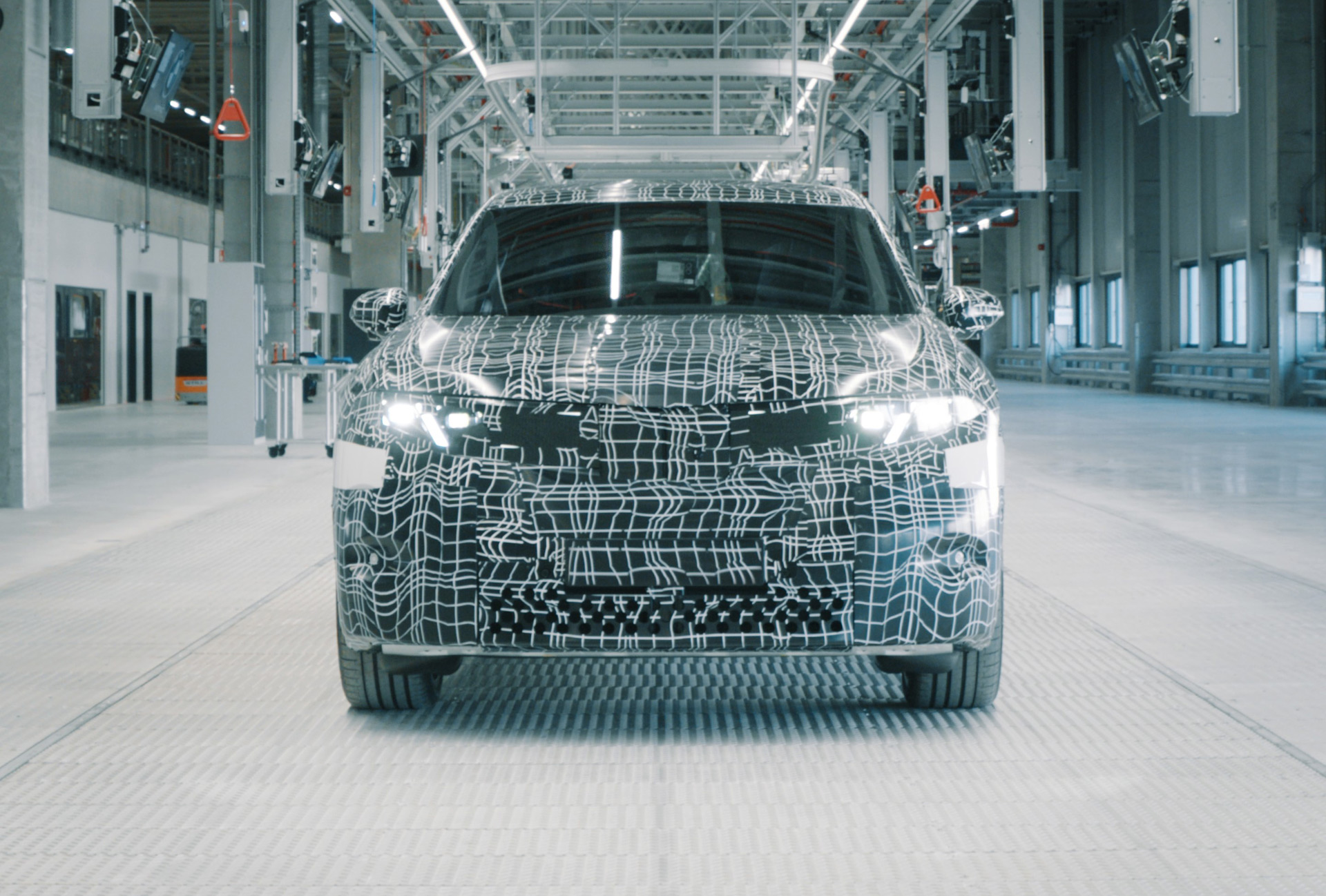
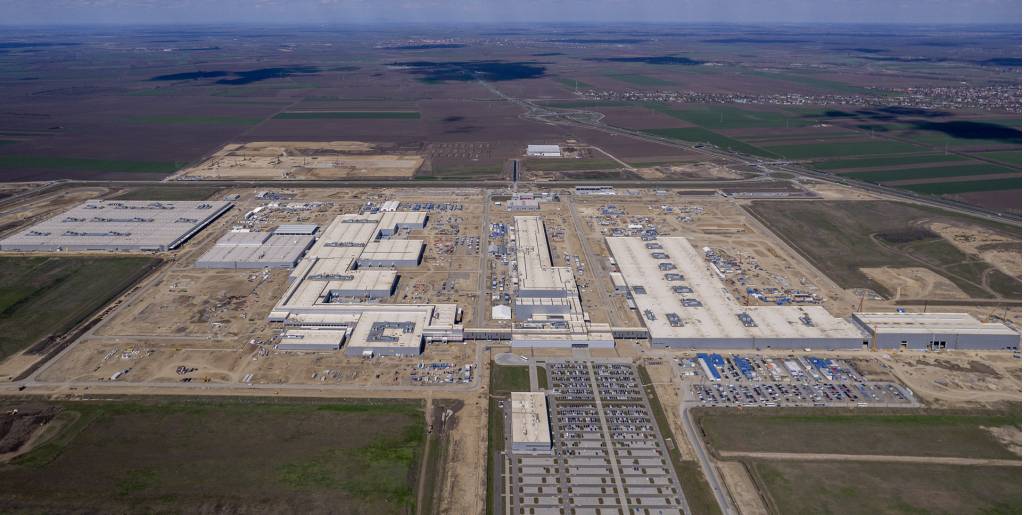
BMW announced on Wednesday that pre-production examples of its first Neue Klasse electric vehicles are now being assembled at the company’s newly constructed plant in Debrecen, Hungary.

The construction of pre-production vehicles is the start of the final preparation phase for the production of customer cars, BMW said. The customer cars will start rolling off the line at the Debrecen plant in late 2025, the automaker also confirmed. That timeline points to the vehicle reaching U.S. showrooms as a 2026 model.

BMW plant in Debrecen, Hungary

BMW plant in Debrecen, Hungary

Pre-production vehicles are typically used for crash tests, weather tests, and final road validation. Their production also provides an opportunity to iron out any snags on the production line before the first customer examples are built.

The first Neue Klasse EV will be a compact crossover that will likely be badged an iX3, meaning it will form part of the X3 family. BMW previously sold an iX3 based on the previous-generation X3, though that electric crossover was built in China and never sold in the U.S.

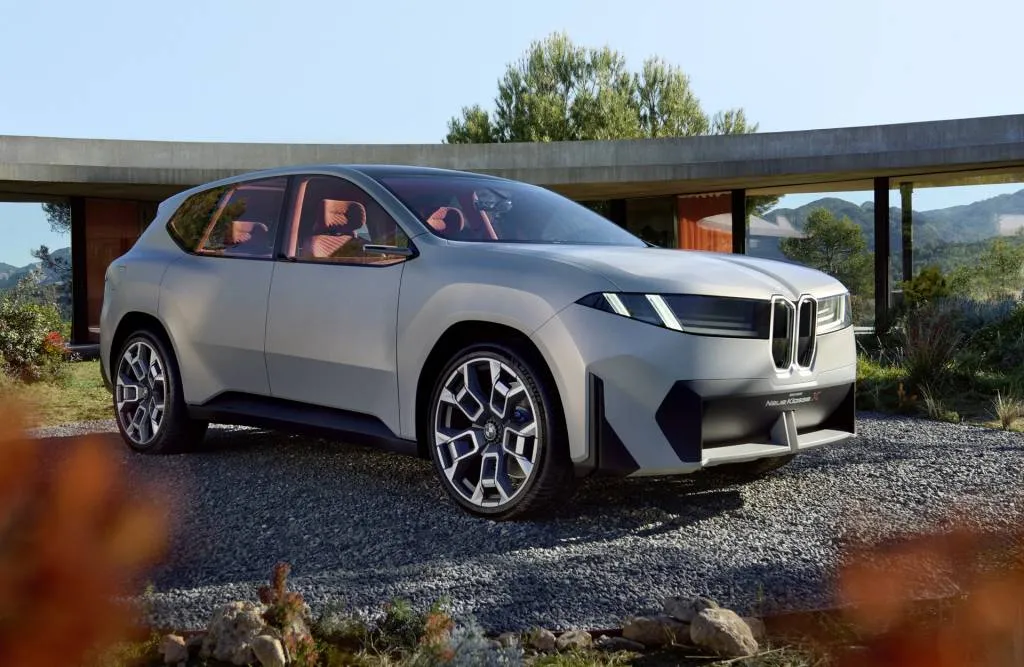
BMW Vision Neue Klasse X concept

BMW Vision Neue Klasse X concept

Prototypes for the first Neue Klasse EV have been spotted and BMW also previewed the design with the Vision Neue Klasse X concept unveiled in March. It will be followed in 2026 by a compact sedan that will likely be badged an i3. This new i3 will sit in the next-generation 3-Series family, and prototypes are also out testing. The sedan’s design was previewed by last year’s Vision Neue Klasse concept.

Unlike BMW’s current EVs, the Neue Klasse EVs will feature distinct styling to distinguish them from their gas and hybrid counterparts, though the differences won’t be substantial. There may also be some Neue Klasse EVs without gas and hybrid counterparts, though BMW hasn’t confirmed any.

BMW Vision Neue Klasse concept

BMW Vision Neue Klasse concept

Neue Klasse EVs will ride on a next-generation EV platform that promises improved power and efficiency, plus faster charging thanks to an 800-volt electrical system. BMW’s own drive and chassis control software should also ensure typical BMW handling characteristics.

Neue Klasse EVs will also benefit from a next-generation battery with cylindrical cells (instead of the current prismatic cell design BMW uses), and together with other improvements should result in a range improvement of 30% over BMW’s current EVs, the automaker has previously said.


Source link

World’s first customer Bugatti Bolide delivered to USA

0


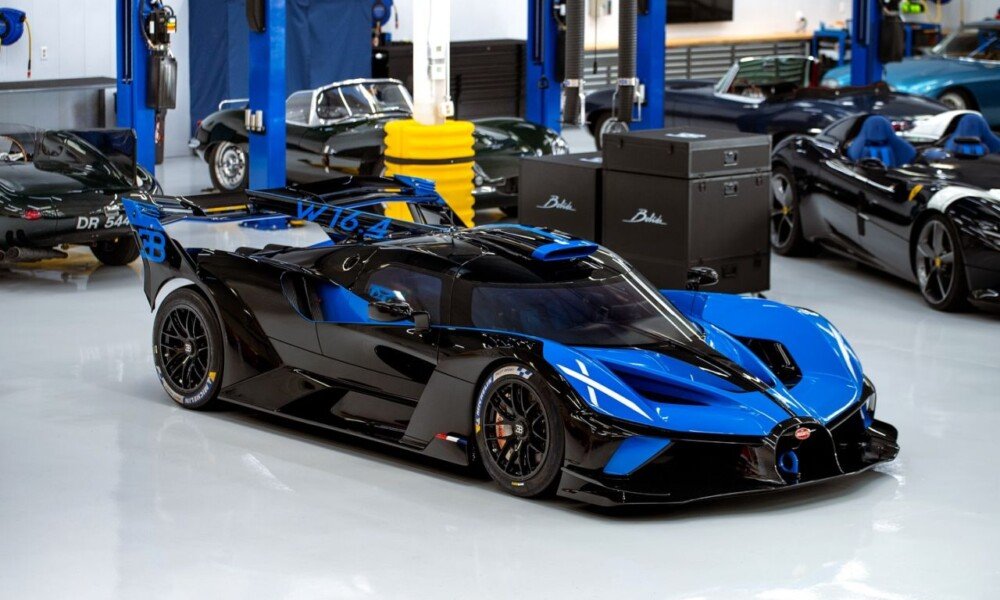
One of the first Bugatti Bolide customer cars in the world has been delivered to the United States. The track hypercar recently landed at Team CJ Works in Austin, TX.

The first customer Bolide is finished in the launch spec, featuring a two-tone Blue and Black exterior and a matching interior.

Bugatti Bolide-delivery-USA-2

The Bolide is Bugatti’s ultimate track hypercar. Only 40 examples are being produced with a price tag of $4 million. It is based on a bespoke carbon fibre chassis that has been developed to comply with LMh and LMDh regulations and meets all safety norms laid down by the FIA.

At the heart of the Bolide is the legendary 8.0-liter W16 engine that generates 1577 hp and 1180 lb-ft of torque. The car weighs just 1450 kg (dry), which gives it an insane power-to-weight ratio of more than 1100 hp per tonne!

Bugatti Bolide-delivery-USA-3

US-based hypercar collector Manny Khoshbin has also ordered a Bolide. His car is expected to be delivered by February 2025.

Source: @teamcjworks


Source link

Jaguar XJS-based TWR Supercat ready for production with 660-hp V-12

0


  • TWR has been revived and its first product is a Jaguar XJS restomod called the Supercat
  • TWR’s modified XJS is powered by a bespoke supercharged 5.6-liter V-12
  • Pricing for the TWR Supercat starts at $285,000

Tom Walkinshaw Racing was a British motorsports and engineering company with successes in Formula 1 and the 24 Hours of Le Mans. It went under in 2002, but was recently revived by the son of the original company’s founder.

The first product from the new TWR is the Supercat, a Jaguar XJS restomod that spits out out 660 hp. The output is generated by a supercharged 5.6-liter V-12 that TWR developed in-house, albeit based on the original XJS 5.3-liter V-12. Drive is to the rear wheels only.

TWR Supercat based on the Jaguar XJS

TWR Supercat based on the Jaguar XJS

The Supercat was first shown in April, but now development is complete and TWR has confirmed the start of deliveries for mid-2025. Only 88 examples will be built, the number a nod to the original TWR’s first 24 Hours of Le Mans win back in 1988 with the Jaguar XJR-9.

TWR sources the donor XJS coupes for the build. The XJS was a grand tourer built between 1975 and 1996, and dedicated racing versions were built by the original TWR for entry in various touring car championships. The Supercat incorporates some of that racing history in its wild design, as well as details from other iconic Jaguars of that era, including the XJR-9, XJR-15, and the XJ220 supercar.

TWR Supercat based on the Jaguar XJS

TWR Supercat based on the Jaguar XJS

The body is made entirely from carbon fiber and features a unique wide-body design measuring 77.8 inches at its widest point, up some seven inches from stock. The car’s exhaust tips are also mounted at the side, which enabled the designers to fit a massive rear diffuser spanning the width of the body. The use of carbon fiber and carbon-ceramic brakes have also helped save weight. The curb weight is 3,538 pounds, down from an original 3,902 pounds.

The interior, much like the exterior, is a mix of old and new. One of the elements that has been retained is a 6-speed manual, which TWR said was important for delivering an analog experience. The original rear seats have been given the boot, though. In their place is an expanded luggage area.

TWR Supercat based on the Jaguar XJS

TWR Supercat based on the Jaguar XJS

TWR also employed the talents of car customizers Magnus Walker and Khyzyl Saleem for the Supercat. Walker is known for collecting and restomodding classic cars, particularly among Porsche circles. Saleem, who goes by the online handle Kyza, is an up-and-coming talent famous for designing wild and over-the-top cars as 3D models. He also has his own line of body kits marketed under the LTO brand.

Pricing for the Supercat starts at 225,000 British pounds (approximately $285,000), and buyers can choose between left- and right-hand-drive configurations. According to TWR, some U.S. buyers have already placed deposits.


Source link

Full Throtl: A Fast & Furious-Inspired R34 Drag Machine

0


Some cars leave an indelible mark on all of us – cars that transcend the boundaries of fandom and become icons in their own right. And yes, I mean all of us.

If you don’t have even the smallest soft spot for an R34 Nissan Skyline GT-R, I’m calling bulls**t, respectfully. There’s no way you were a car enthusiast in the 2000s without fond memories of Need for Speed: Underground, 2 Fast 2 Furious, or some grainy YouTube clip of gold Top Secret or white Mine’s GT-Rs defying physics – in 240p.

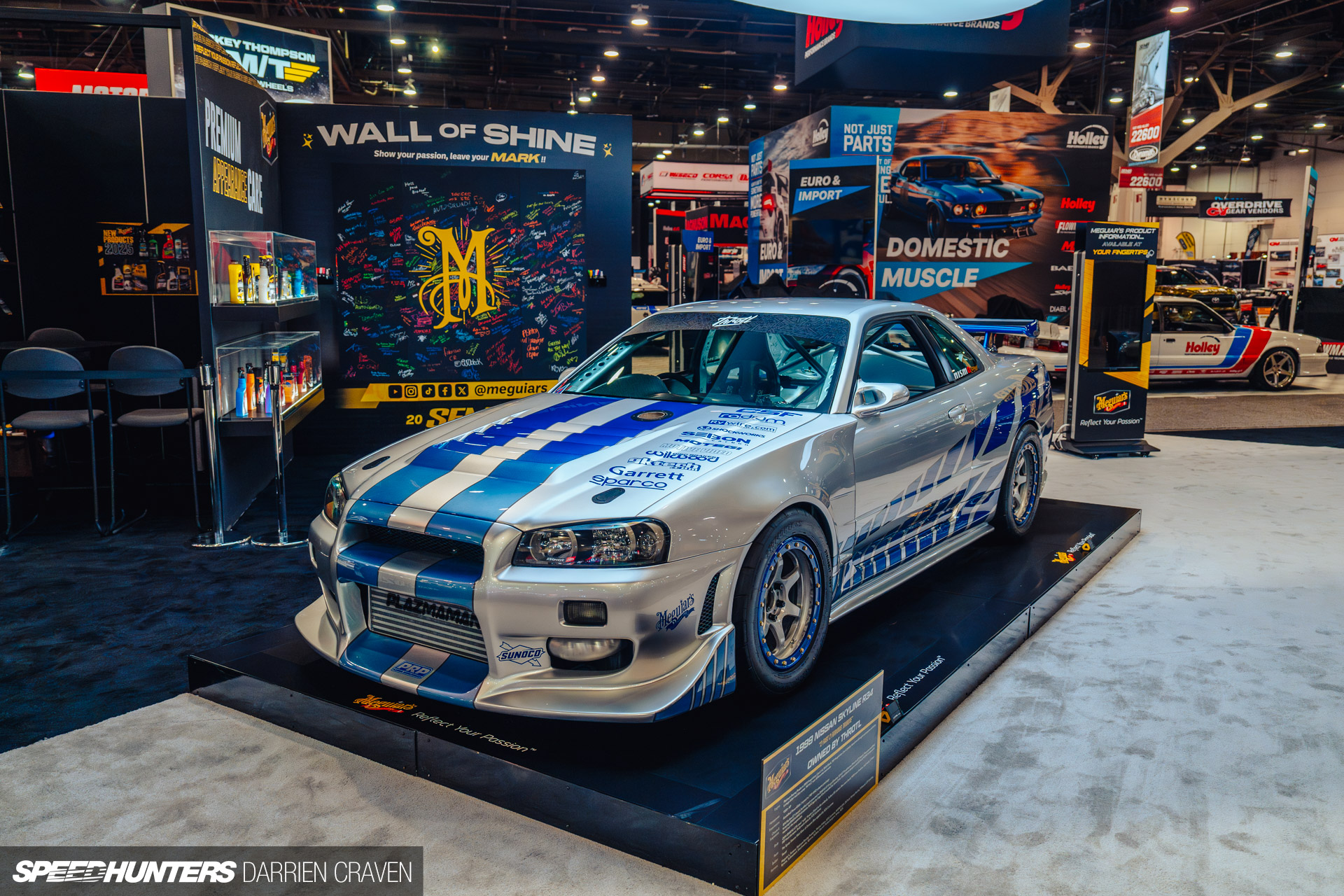
Mickey Andrade and the Throtl team have taken that 2000s nostalgia and mixed it up with 2024 tuning style and technology to create a monster of a Skyline, debuting the build on the Meguiar’s booth at the 2024 SEMA Show.

Throtl R34-4

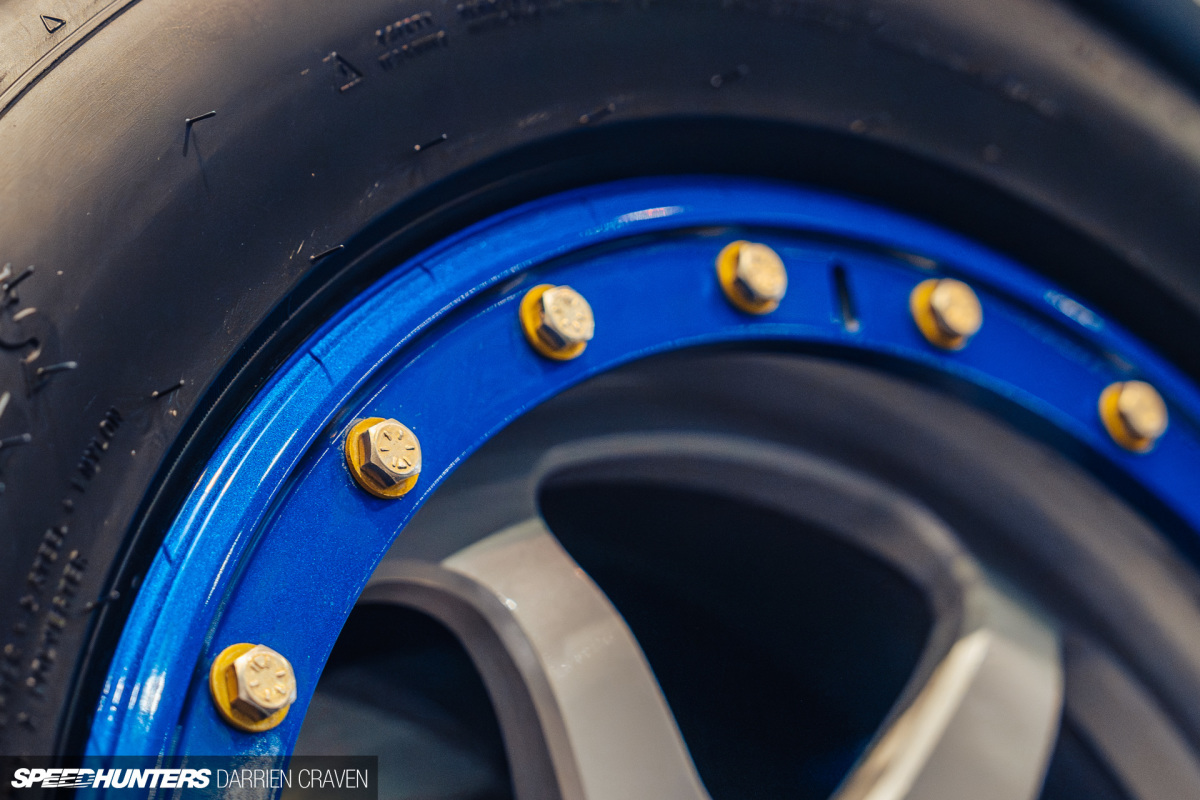
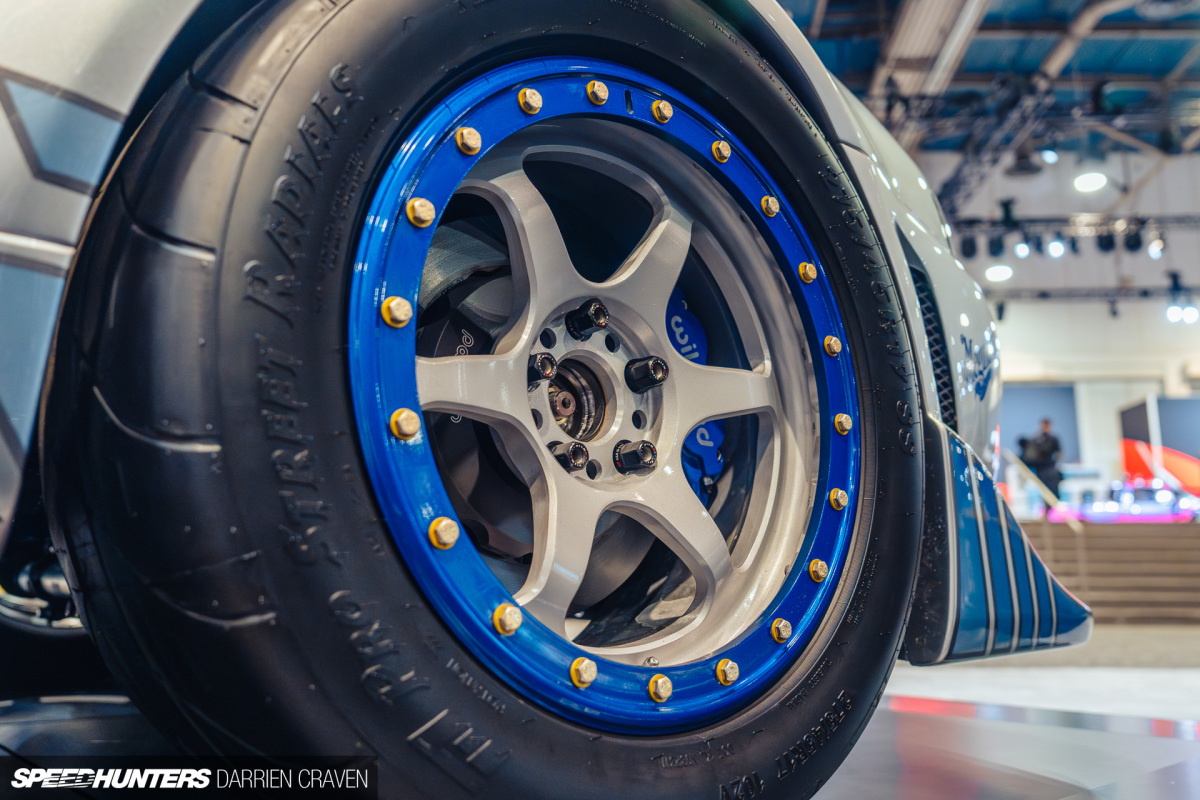
Full disclosure: this isn’t a BNR34 GT-R, and Throtl doesn’t claim it is. Instead, they’re proud of the work put into upgrading the bodywork and entire powertrain of what rolled off Nissan’s production line as a rear-wheel-drive ER34 GT-T in 1999. The beefy Pro Street Radial tyres on custom Motegi Racing wheels at all four corners make it clear – this Skyline’s retrofitted all-wheel-drive setup means business.

Throtl R34-14

The transmission tunnel has been re-fabricated to accommodate a transfer case, and the front chassis legs have been modified to fit driveshafts, ensuring power reaches the front wheels via a drag-spec Powerglide 2-speed transmission. The rear is driven by a Platinum Racing Products (PRP) 8.8-inch billet differential with upgraded driveshafts.

Throtl R34-9

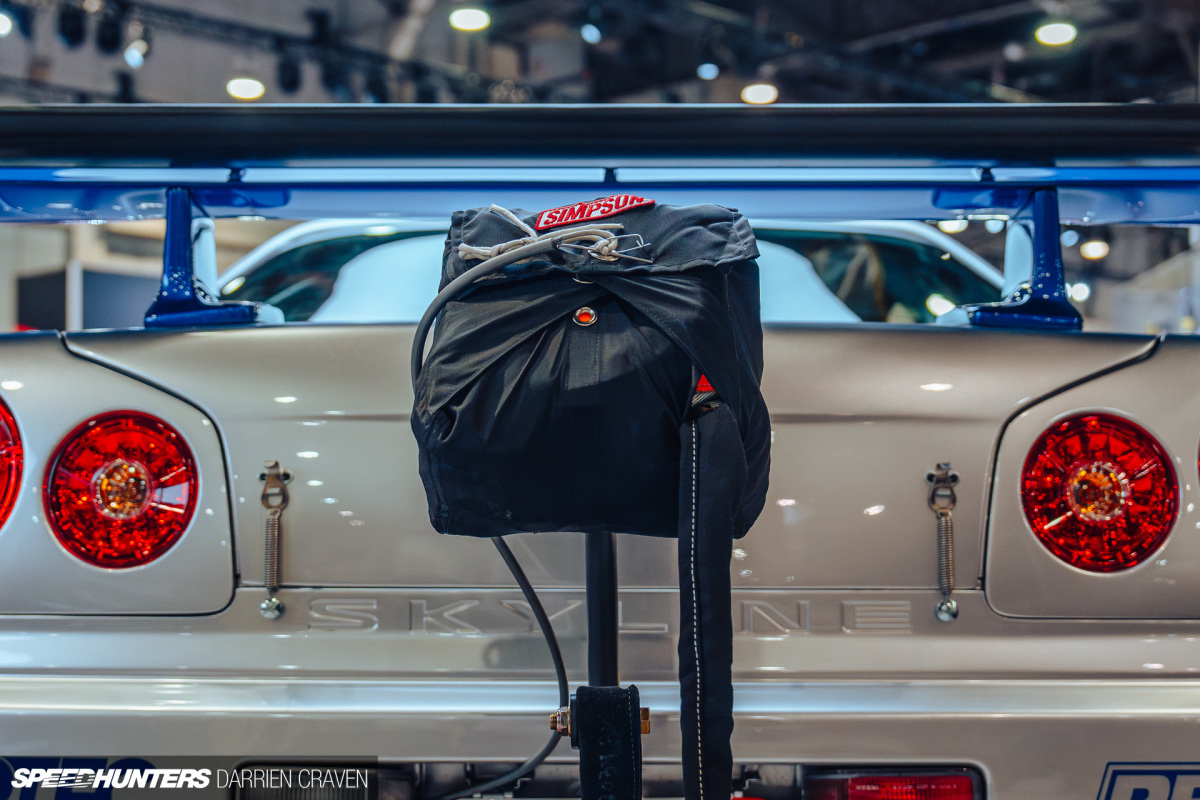
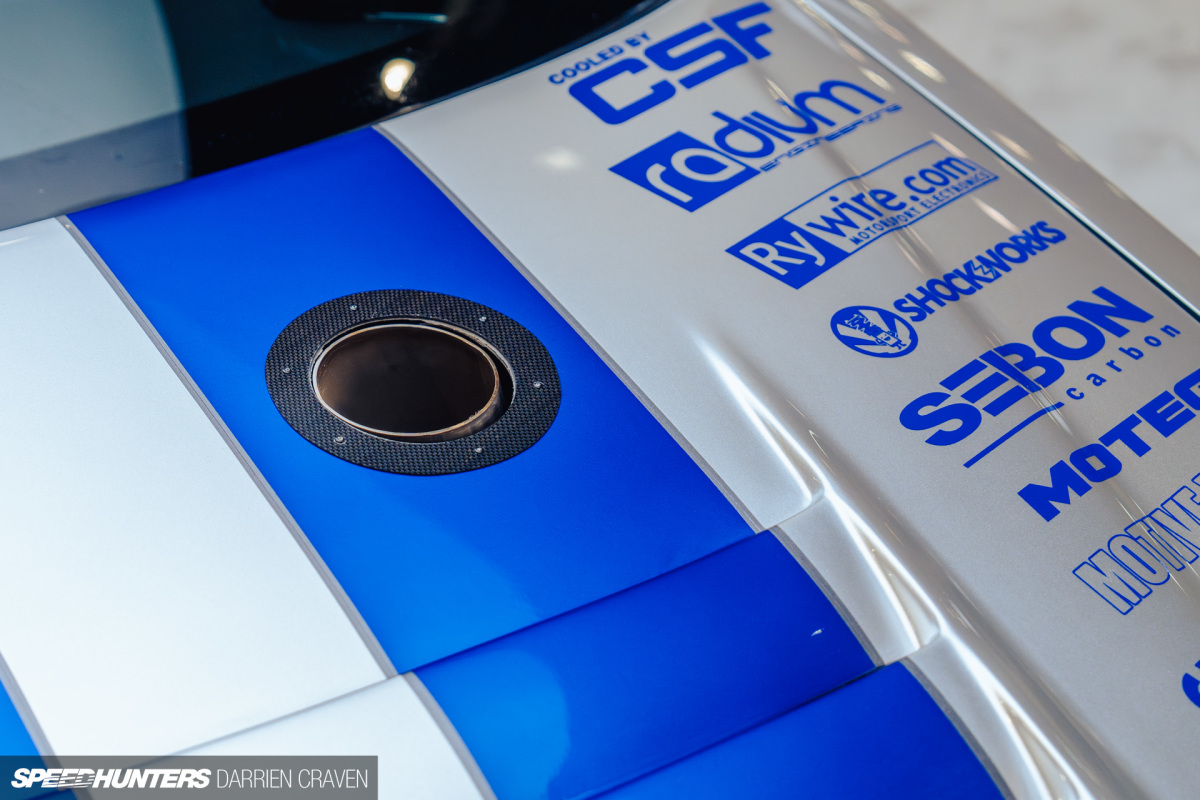
The hood-exit exhaust, bead-lock wheels and a parachute mounted at the rear all point to the Skyline’s intentions – drag racing.

Throtl R34-5

Under the hood, you’ll find an RB25 block bored to 2.6L, fitted with an RB26 05U cylinder head. A Garrett G45-1600 turbocharger provides around 32psi (2.2bar) of boost in the current state of tune to deliver 1,219hp, with a CSF Race radiator ensuring reliable cooling. MoTeC engine management system keeps everything in check, controlling a drive-by-wire throttle system and feeding vital data to the MoTeC digital dash display. Oh, and yes, it has NOS. The big bottles. It couldn’t be a Fast and Furious tribute without it, could it?

A Zestek steering wheel controller and Rywire CAN module put near-total control of the car’s systems at the driver’s fingertips – two-wheel-drive, four-wheel-drive, adjustable power levels and a range of driving aids are all easily selectable.

Throtl R34-7

But the fun doesn’t stop here: the final engine for this car will be an RB-based design by PRP with all the factory flaws of the RB-series ironed out. This car will be the recipient of the very first production engine of the batch, and it’s coming to the United States all the way from Australia.
The new engine will be tuned for 1,400hp, so it’s good the Skyline is equipped with a full, gusseted roll cage and a carbon fibre bucket seat with Sparco harness belts – safety is no afterthought.

Throtl R34-11

I’m not usually a fan of movie replica cars; they often try too hard and fall short. But a homage – something that takes inspiration and goes far beyond the star car’s capabilities? That’s something I can get behind.

Throtl R34-2

Throtl’s R34 build (check out the full video playlist here) is a fun way to honour our collective roots in modified car culture without being a lazy replica. It showcases the best of what the tuning world can offer in 2024.

Mario Christou
Instagram: mcwpn, mariochristou.world
mariochristou.world

Photography by Darrien Craven
Instagram: _crvn_


Source link

which is faster in a drag race?

0


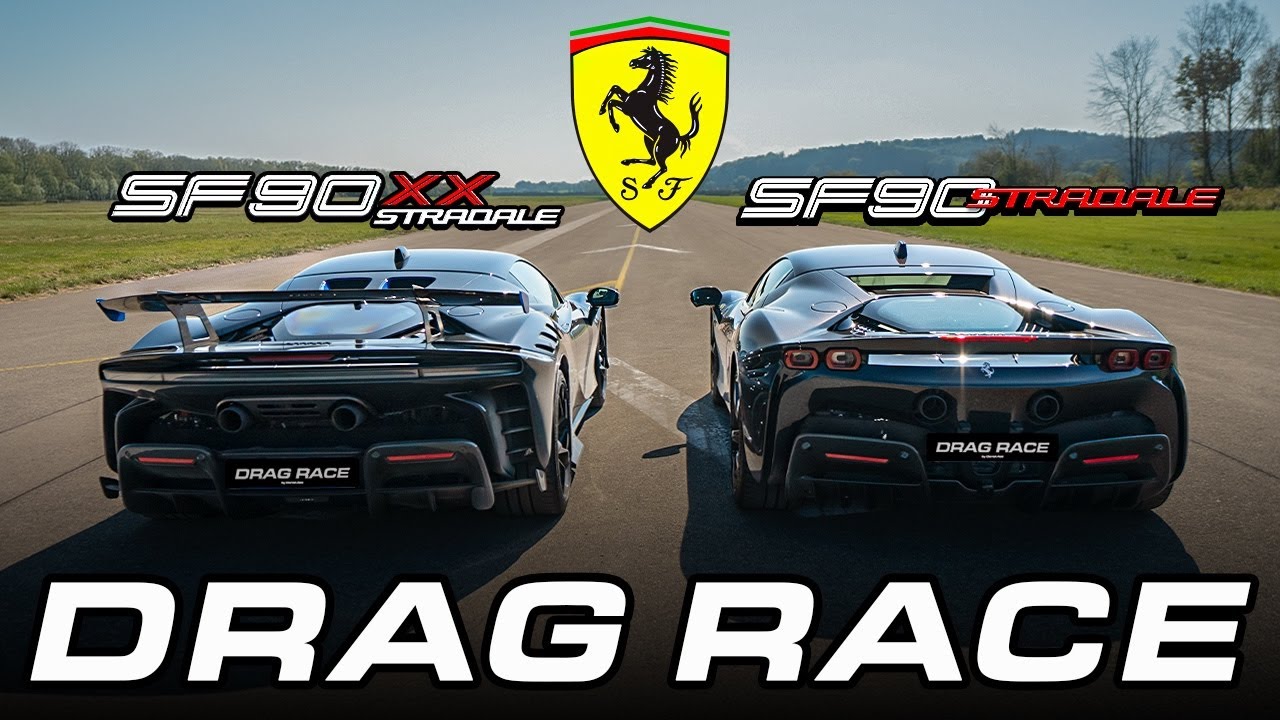
The Ferrari SF90 is an extraordinary supercar, celebrated for its stunning aesthetics and exhilarating performance. It boasts a plug-in hybrid powertrain that combines a 4.0-liter twin-turbo V8 engine with three electric motors to produce 1,000 HP. Despite its advanced technology, it maintains a weight of just 1,570 kg. This setup enables lightning-fast acceleration, reaching 0-100 km/h in 2.5 seconds and 0-200 km/h in 6.7 seconds, with a top speed of 340 km/h.

But Ferrari didn’t stop there and so they introduced the SF90 XX Stradale and Spider, developed at Maranello. These variants build on the SF90’s hybrid system, retuning the V8 engine to increase output to 1,030 HP.  They feature an 8-speed DCT gearbox derived from the Daytona SP3 and enhanced chassis control systems from the 296 GTB. Ferrari also added a ‘Qualifying’ mode into the SF90 XX. This system maximizes power delivery, enabling the car to rocket from 0-100 km/h in just 2.3 seconds!

How fast does the SF90 XX go in a straight line against the car that it was based on? That’s what we are about to find out in this drag race video shared on Daniel Abt‘s YouTube channel.


Source link

Bugatti’s next top speed target may be over 310 mph

0


  • Bugatti isn’t done with attempting land speed records
  • Bugatti boss Mate Rimac hints at hitting 500 kph, or 310.686 mph
  • Attempt will likely have to wait until after 2026 start of Tourbillon production

Bugatti has just scored the land speed record for a production open-top car with its Mistral roadster, which was clocked going 282 mph earlier this month at Germany’s ATP Automotive Testing Papenburg high-speed test track.

It marks a return for the French hypercar marque in the hunt for land speed records, a practice that was abandoned under former chief Stephan Winkelmann, after a Chiron Super Sport 300+ reached 304.773 mph in 2019, making it the first production car to go past the 300-mph mark.

Bugatti Mistral World Record Car hits 282 mph - Nov. 2024

Bugatti Mistral World Record Car hits 282 mph – Nov. 2024

Bugatti today is run by Mate Rimac, the founder of technology company Rimac and also the electric hypercar marque of the same name. He in September said Bugatti isn’t done with setting new top speed records, and has now hinted that the next stop might be 500 kph, or 310.686 mph.

In an interview with Top Gear following the Mistral’s record run, Rimac said he discussed with tire supplier Michelin whether a tire could handle speeds of 500 kph.

“Can we put the five in front of the top speed record?” Maybe next. Let’s see,” he also told Top Gear.

Mate Rimac

Mate Rimac

Although some modified cars have gone beyond 300 mph, with Johnny Bohmer, the brains behind the Johnny Bohmer Proving Grounds at Florida Space Port, having taken his modified 2006 Ford GT to such speeds on previous occasions, doing so with road car tires that must meet Bugatti’s safety and durability standards is the last real challenge, though aerodynamic safety is also an issue. We’re talking speeds twice as high as what a passenger jet takes off at.

Michelin has been working on road car tires designed for 300 mph and beyond since at least 2018. Bugatti also worked with Michelin to develop a set of Pilot Sport Cup 2 tires for use on the Chiron Super Sport 300+. Bugatti said Michelin tested the tires up to 317 mph in the U.S., but didn’t mention how.

Bugatti Tourbillon

Bugatti Tourbillon

Under Rimac’s guidance, Bugatti has delivered a successor to the Chiron in the form of the Tourbillon. The car, due to enter production in 2026, was revealed in June with a plug-in hybrid powertrain combining a naturally aspirated 8.3-liter V-16 engine with a trio of electric motors for a combined output of 1,775 hp.

The car’s top speed is capped at 276 mph but a true Vmax above 300 mph wouldn’t be surprising, considering the 1,577-hp Chiron Super Sport 300+ already achieved the feat. How fast will the Tourbillon go? We’ll probably have to wait a couple of years to find out.


Source link