In June this year, fine watchmaking experienced one of its more unusual moments – a contemporary marketing approach that married history and tradition with a desire to overtake social media. In 1801, on June 26, Abraham-Louis Breguet patented the tourbillon and changed watchmaking forever; the contemporary brand that perpetuates his legacy likes to honour this occasion every year with a new creation. This year, it is the Classique Double Tourbillon 5345 “Quai de L’horloge,” which features the now-famous calibre 588N, presented here as calibre 588N2. We will say at the outset that it is impossible to do justice to a grand complication like reference 5345 with a short write-up. In 2022, the last version of this reference was part of our 10-page cover story in the Legacy issue.
That said, here is our best shot at a short take. The thing to remember when looking at this watch is that you must deploy your mind’s eye; a static visual conveys little of the magic here. For example, the double tourbillon uses a central differential to set the entire plate in motion to indicate the hours (it completes one rotation in 12 hours). At its debut in 2006, this was brilliant because it made of the tourbillon, otherwise a technical feature, a proper time indicator. The gold plate on which the tourbillons are mounted rotates with the (blue) hour hand, which also doubles as the upper bridge for one of the tourbillons. Its extension, in a different colour, acts as the bridge for the second tourbillon. This shared bridge is fixed to a central plate (rotating as noted above); each of the tourbillons still spins once per minute (as normal), and the watch takes the average rate of the escapements to keep track of time.
Breguet Classique 5345 Quai de L’horloge
The above description works for all versions of this watch, including the original reference 5347. For reference 5345BR/1S/5XU, to give its full catalogue number, Breguet is engaged in showcasing the brand’s expertise in both mechanics and artistic crafts. This new edition is housed in the expectedly large case to accommodate the calibre, with its twin tourbillons and three gear trains. The collector expecting subtlety here will have somehow failed to notice the Breguet motifs atop the mainspring barrels, acting as skeletonised bridges. Instead, the rose gold watch invites you to recall the late Nicolas G. Hayek, who was larger than life and famed for wearing multiple watches from the Swatch Group.
The back of the watch reveals the manual-winding calibre; it consists of 740 components, each one meticulously hand-finished by in-house craftspeople. While the technical marvels are most evident dial-side, the rear of the movement also showcases the aforementioned craftsmanship. The bridges are engraved with an aerial view of Abraham-Louis Breguet’s historic workshop at 39 Quai de l’Horloge in Paris. This intricate engraving, different from previous models, uses multiple techniques to create depth and perspective on the gold plate. It wants for nothing in drawing the eye; Hayek and Abraham-Louis would be proud.
Movement: Manual calibre 588N2 with double tourbillon; 50-hour power reserve Case: 46mm in rose gold; water-resistant to 100m Strap: Midnight blue rubber Price: On application
This article first appeared on WOW’s Autumn Issue #74
For more on the latest in luxury watch reads from WOW, click here.
The 2026 Mercedes-Benz CLA will be available as an EV and hybrid
The electric CLA will be able to add 186 miles of range in 10 minutes
It may be the first EV to feature both CCS and NACS charge ports
Mercedes-Benz still views the future as electric, though the timeline for the transition’s become a bit fuzzier andlonger than anticipated.
When it arrives next year, the electric2026 Mercedes-Benz CLAwill be the first of four new models (three of them U.S.-bound) on the next-gen MMA EV-dedicated platform. With two charge ports, high-power fast charging capabilities, a more advanced electrical architecture, new in-house designed motors, a 2-speed transmission, and a hybrid powertrain option, it’s the genesis of Mercedes’ forthcoming scalable lineup.
Mercedes-Benz CLA
2026 Mercedes CLA will include CCS and NACS charge ports
The electrical architecture of the CLA is future-proofed thanks to a new in-house designed800-volt electrical architecture. Mercedes said the system has a peak charge rate of 320 kw, but more importantly it can recover 186 miles of range in 10 minutes when fast-charged starting at a 10% state-of-charge. Mercedes said that’s approximately 36 kwh of energy in 10 minutes. It’ll take less than 22 minutes to go from 10-80% state-of-charge, according to Mercedes.
Home charging will utilize an 11.0-kw onboard charger—likely good for an eight-hour overnight charge with the U.S.-spec model’s 85.0-kwh usable capacity.
Mercedes engineers revealed that when the CLA launches in the U.S. it’ll havetwo charging portsunder a single charge-port door. One will be a CCS port while the other will be a NACS (Tesla) port.
They said this is for the benefit of the customer, because who wants an adapter that can get lost or broken? Powertrain and rolling chassis units that were shown only had a CCS port and no visuals were yet shown of the two charging ports side-by-side.
Mercedes-Benz CLA
Mercedes EVs to use a 2-speed transmission and new electric motors
Mercedes designed and developed a new electric drive unit, dubbed EDU 2.0 (Electric Drive Unit 2.0). These motors are the first of a new family of BEV powertrains just as Mercedes has created families of gas-powered engines. The motors are said to be scalable and future iterations are coming, presumably for the AMG and heavier crossover SUV variants.
Single-motor rear-wheel-drive CLAs will feature a 200-kw permanently synchronous motor (PSM) in the rear with 268 hp. All-wheel drive 4Matic models will add an 80-kw motor motor to the front axle and be engaged during acceleration or when slip is detected. Both motors feature silicon carbide inverters.
The CLA will be the first, but not the last, Mercedes EV to feature a2-speed transmission. Engineers expect most of the automaker’s upcoming and future EVs to have the additional complexity in the name of smoothness and efficiency.
The motor (EDU 2.0), transmission, and power electronics are all packaged in one housing.
First gear has an 11:1 ratio and maxes out at 68 mph while second gear switches to a 5:1 ratio with a top speed of 130 mph. Second gear is used for highway driving and cruising while first gear is designed for dynamic and low-speed driving. A dry friction-based clutch is utilized to engage first gear while a dog clutch is used to engage second gear to ensure the average consumer won’t feel the transmission shifting and engaging at various speeds, according to Mercedes engineers.
Mercedes-Benz CLA
Mercedes rethinks its regenerative braking system
Mercedes engineers are aware the two-stage blended brake system in the EQS (and EQS) is far from ideal.
The MMA platform, and specifically new CLA, use Mercedes’ next-gen regenerative braking system. It’s still a two-stage blended system, but engineers claim it operates differently than today’s system in the EQS.
The car will use regenerative braking until it can’t recuperate quickly enough or conditions necessary don’t allow it (battery is too full, too cold, too hot, etc.) before engaging the friction brakes. Up to 200 kw of recuperation is possible, according to Mercedes.
Unlike in the EQS and EQE models, the brake pedal will not move on its own when the car’s using regenerative braking.
One-pedal driving will be enabled by some of the four levels of regen, dubbed D- (one-pedal driving), D, D+ (least amount of reg), and D Auto. Engineers said the car will remember the selected regenerative brake setting upon key cycle and won’t change until a user changes the system, unlike today’s car.
Mercedes-Benz CLA
Every U.S. CLA gets an NMC battery pack
In other markets the entry-level CLA will feature a 58.0-kwh (usable) LFP battery pack. The U.S. market won’t get this battery as it won’t meet U.S. needs in terms of range, according to a Mercedes spokesperson.
The U.S.-spec CLA will come standard with the larger 85.0-kwh (usable) nickel manganese cobalt (NMC) battery pack. Engineers said that’s 96% of the pack’s capacity, making gross capacity 88.5 kwh.
Both packs use prismatic cells rather than pouch or cylindrical cells. Engineers said this route was taken for the best use of volume, dimensions, and stability. The new chemistry features silicon anode materials to increase energy density.
Upcoming AMG models will utilize their own distinct battery pack.
Battery software and integration was all developed in-house and will continue to be done in-house. Markus Shäfer, a member of Mercedes Group AG’s board and the automaker’s Chief Technology Officer, said full vertical integration is key to the automaker’s future. The hardware and software all have to work hand-in-hand. That’s why Mercedes now, for the first time in history, has a Chief Software Officer in the C-Suite.
The system is capable of bi-directional charging, applied to home (V2H) and grid (V2G) situations.
Mercedes-Benz CLA
2026 Mercedes-Benz CLA ushers in the MMA platform
The MMA platform is a new clean-sheet BEV platform. Mercedes engineers said the platform, and battery pack, are both scalable. The expectation is that more than 90% of future Mercedes’ models will be based on a common battery platform.
The entire package is modular with uniformly designed battery components, which serve as the core element of the platform. The battery pack isn’t structural in the same way as a Tesla Model Y, where the battery serves as the vehicle’s floor and seats bolt to the pack. But the battery pack is part of the vehicle’s safety structure.
Every MMA-based Mercedes EV will feature a heat pump.
Mercedes said two crossover SUVs will follow the CLA. Between the lines of a wink and a nod they may directly replace the GLA and GLB crossover SUVs. Then comes the CLA Shooting Brake, which won’t come to the U.S. because we can’t have nice things.
There’s at least one example of an engineering flaw baked in from the start. Because the MMA platform was originally envisioned as a dedicated BEV modular architecture, and during the planning process ahybrid powertrainwas baked in, the front electric motor shares mounting points with the hybrid model’s gas engine. This leads to the electric motor sitting higher than it would otherwise need to. It will lead to the CLA having a frunk capable of probably holding only a small briefcase.
Mercedes-Benz CLA powertrain
A hybrid CLA option will live alongside the EV
In the hybrid, a new 1.5-liter turbo-4 sits under the hood and hooks to an 8-speed dual-clutch automatic with a 27-hp electric motor sandwiched between the motor and transmission. Total system output is 187 hp. A 1.3-kwh lithium-ion battery pack is mounted beneath the driver seat, and the entire system runs on 48-volts.
Mercedes said the system is capable of driving on electric-only power or sailing at speeds of up to 62 mph.
All the gears of the 8-speed automatic transmission can be used for recuperation to harvest up to 25 kw of energy back into the battery pack. Mercedes said this won’t be a plug-in hybrid.
Hybrid models will be front-wheel drive, but all-wheel drive will be available with a driveshaft and electronically-disconnecting clutch.
Mercedes-Benz CLA powertrain
Mercedes engineers said that a 1.5-liter inline-4 was chosen over a turbo-3 due to noise, harshness, and vibration concerns. The new engine weighs 17% less than the outgoing 2.0-liter turbo-4 in today’s CLA. While that engine has a belt starter-generator, the new engine does away with that as well as any traditional starter and alternator, with those functions being handled by the electric motor. A 12:1 compression ratio enables an efficient Miller cycle, and a newly designed manifold integrates the exhaust-gas turbocharger directly into the plumbing to save weight and space. No fuel economy projections were provided, but engineers said the target is “diesel-like fuel consumption.”
Mercedes-Benz hasn’t announced pricing, range, equipment or final specs for the 2026 CLA EV or Hybrid. That information will come at the official reveal and closer to the launch.
– Mercedes-Benz paid for travel and lodging along with some German pretzels for Green Car Reports to bring you this firsthand report
With the spate of rainy weather in Malaysia, incidents of hydroplaning, or aquaplaning, are occurring more often. Just two days ago we were on the highway, riding a motorcycle heading north, and witnessed two incidents of hydroplaning happen directly in front of us.
In both cases, the cars spun, slowed and came to a stop without hitting anything. The drivers were more shocked than anything else, but, what is hydroplaning and what can you, as the driver, do to prevent it or at least, remain in control and recover?
Hydroplaning occurs when water builds up under the contact patch of the tyre(s), causing the tyre to lift and lose adhesion with the road surface. A driver will usually feel this as the steering wheel going suddenly light, then wobbling slightly, before control is lost and everything goes sideways due to the tyres unequal traction.
Several factors directly cause aquaplaning, first and foremost of which is road speed. When road conditions are bad, it is always prudent to slow slightly, pay attention and exercise caution especially with regard to braking distance to the vehicle in front.
While there are some Malaysian drivers who believe and trust in the safety technology installed in their vehicle, every safety system has its limitations. ABS, traction control, electronic stability control, emergency braking and brake assist are technologies that work well and prevent accidents but all require the driver to be in control of the vehicle at all times.
The other main factor affecting hydroplaning is the vehicle’s tyres. In this case, proper tyre inflation pressure should be maintained. Over- and under-inflation will both lead to the vehicle having a propensity for hydroplaning.
Tyre tread depth should also be checked, and if very near or at the wear limit indicators, tyres should be changed either as a pair, or as a full set. In any case, uneven wear on tyres is a cause for concern and indicative of a problem either in the steering alignment or suspension which should be addressed on an immediate basis.
Another factor to be considered is the weight of the vehicle. A very light vehicle, or one that is heavily overloaded, will hydroplane more readily. Try to ensure weight is evenly distributed in the vehicle and balanced fore and aft.
So, what do you do when your car starts to hydroplane? In some cases we witnessed, the immediate reaction of the driver is the jam hard on the brakes to slow the car down but sends the car into a skid. Technically this is when ABS activates to stop the skid and EBD redistributes braking force between the wheels to allow the car to regain stability.
What you can do as a driver is… get better driver training. Steering into and out of skids is not covered in the current Malaysian driving school curriculum, and neither is braking technique, aside from the driving instructor telling you, “just jam the brakes on as hard as you can.”
When your vehicle starts to hydroplane, don’t brake hard or jam on the brakes, instead let the weight of the car settle and allow the tyres to regain traction, then steer into or out of the skid as circumstances dictate. The rule of thumb is you want your steering to be pointing in the direction in which your vehicle is travelling, then reducing steering angle as the car straightens out.
Avoid sudden movements of the steering wheel, or any sudden braking. These serve to upset the balance of the vehicle, leading to an out of control situation.
It is hard to suppress the immediate reaction to emergency brake when you feel you have lost control of the vehicle and indeed, professional drivers train hard against this natural tendency. You should at all times have both hands on the wheel with your seat adjusted to the correct driving position, allowing you to retain command of the important things that control your vehicle when traction is lost, i.e. the steering wheel, accelerator and brake.
Selection of your tyres is as important, as these are the primary contact point between your vehicle and the road. Tyres are not created equal and typically certain brands have a reputation for better wet weather performance than others.
The size of your tyre also plays a part, with a tall, narrow width tyre having less of a tendency to hydroplane than wide profile rubber. Tyre tread type and depth also plays an important part, as mentioned earlier, with some tread patterns specifically designed for all weather and wet weather use while it is best to leave the high performance track tyres for where they should be, at the track.
Road surface is an issue, especially in wet weather. Tarmac tends to offer better grip in wet weather than concrete due to surface porosity and try to avoid puddles and standing water.
Most importantly, keep an eye on your vehicle’s speed and exercise caution. Plan your journey, ensure your vehicle is in road worthy condition and check the weather forecast. Safety on the road is your responsibility.
The first Aston Martin Valkyrie Spider has landed in the United States. It has been delivered to a Utah-based collector, who goes by the name @supercar_ron. This particular car was actually commissioned by another famous supercar collector – Manny Khoshbin.
Earlier this week, the owner got a chance to drive the Valkyrie Spider at the Monticello Motor Club in New York. Here’s what he had to say about the experience:
“I’m sincerely amazed that the Valkyrie is street legal. It doesn’t feel like it should be. It feels full blown race car, like I need a full time team just to keep it going. And yet, in the softest suspension setting it rides just as nice as any other car. Compliant, easy to drive, nothing cray.
It feels like full blown witchcraft. Magic. Like Luke used The Force to manipulate the car into something entirely different than the F1 car that it is.“
The spec is on point too. The hypercar has a black exterior with yellow accents and silver centre lock wheels, while the interior is trimmed in black Alcantara with yellow stitching.
The Valkyrie Spider uses the same Cosworth-built 6.5-liter naturally aspirated V12 mated to a Rimac-sourced KERS hybrid system. Its combined output is 1176 hp, channelled to the rear wheels via a 7-speed dual-clutch automatic transmission.
After what seemed like a barrage of leaks last week, the second facelift for the seventh-generation Lexus ES has finally been revealed at Auto Guangzhou in China. The Japanese executive sedan receives several far-reaching aesthetic and technology upgrades inside and out but retains the same engines as before.
On the outside, the ES gains the “seamless” grille first seen on the RX, transitioning from body colour to an open grille through a series of octagonal inserts. This is flanked by revised headlight internals with distinctive dual-L lighting signatures, along with subtly re-profiled air inlets. The double-L graphic is repeated in the taillights that also gain a full-width light bar, while the Lexus script replaces the company’s “L” logo on the boot lid.
Inside, the centre stack is all new, freeing up space for a touchscreen that has grown from 12.3 to 14 inches across. The Lexus Interface infotainment system, already introduced in 2022 (and which jettisons the awful Remote Touch touchpad), now gains dual rotary dials for controlling the air conditioning and other functions, first seen on the second-gen NX.
This has necessitated the redesign of the centre air vents and the lower half of the dashboard. The rest of the cabin is unchanged save for a new gearlever, which Lexus says is more in tune with the tastes of younger Chinese customers.
As before, you still get features such as a seven-inch digital instrument display, walnut wood or bamboo decor, semi-aniline leather-wrapped powered seats with memory, heating and ventilation, rear seat heating, a panoramic glass sunroof, active noise cancellation, triple-zone Lexus Climate Concierge air con, Qi wireless charging and a 17-speaker Mark Levinson sound system.
The Lexus Safety System suite of driver assists, including autonomous emergency braking, adaptive cruise control with stop and go and curve speed reduction, lane centring assist, evasive steering assist, blind spot monitoring and rear cross traffic alert, also come standard – as do no less than ten airbags.
Mechanically, the ES remains identical to before. Two variants are offered in China – the ES200 is powered by a 2.0 litre M20A-FKS naturally-aspirated and direct-injected four-cylinder engine that produces 173 PS at 6,600 rpm and 206 Nm of torque from 4,600 to 5,500 rpm. All that is sent to the front wheels through a Direct Shift CVT.
The ES300h, meanwhile, receives a larger 2.5 litre A25B-FXS Atkinson-cycle mill churning out 178 PS at 5,700 rpm and 221 Nm from 3,600 to 5,200 rpm. This is paired to a 120 PS/202 Nm pair of electric motors and an eCVT for a total system output of 218 PS. So equipped, it gets from zero to 100 km/h 8.9 seconds on its way to a top speed of 209 km/h.
Strangely enough, I’ve had my fair share of nights spent around cars at this point.
And no, I don’t mean drinking and driving – that’s about as stupid as it gets. I’m talking about parties and events revolving around cars.
Last Thursday was supposed to be a relaxed night with a couple of mates – grab a bite, watch the new Venom movie, nothing too wild. But the day before, while deep into a social media doom scroll, something caught my eye. Something very orange.
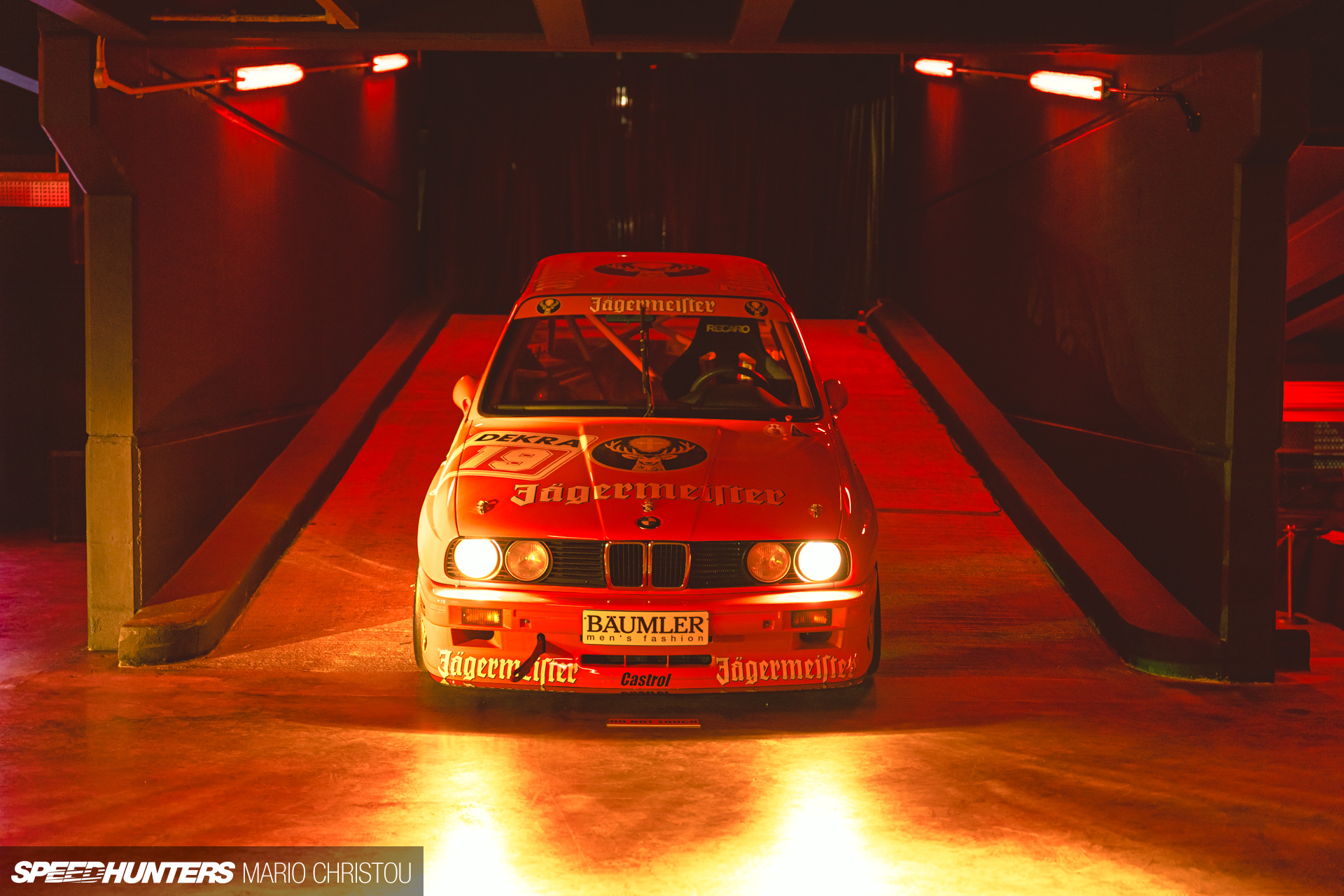
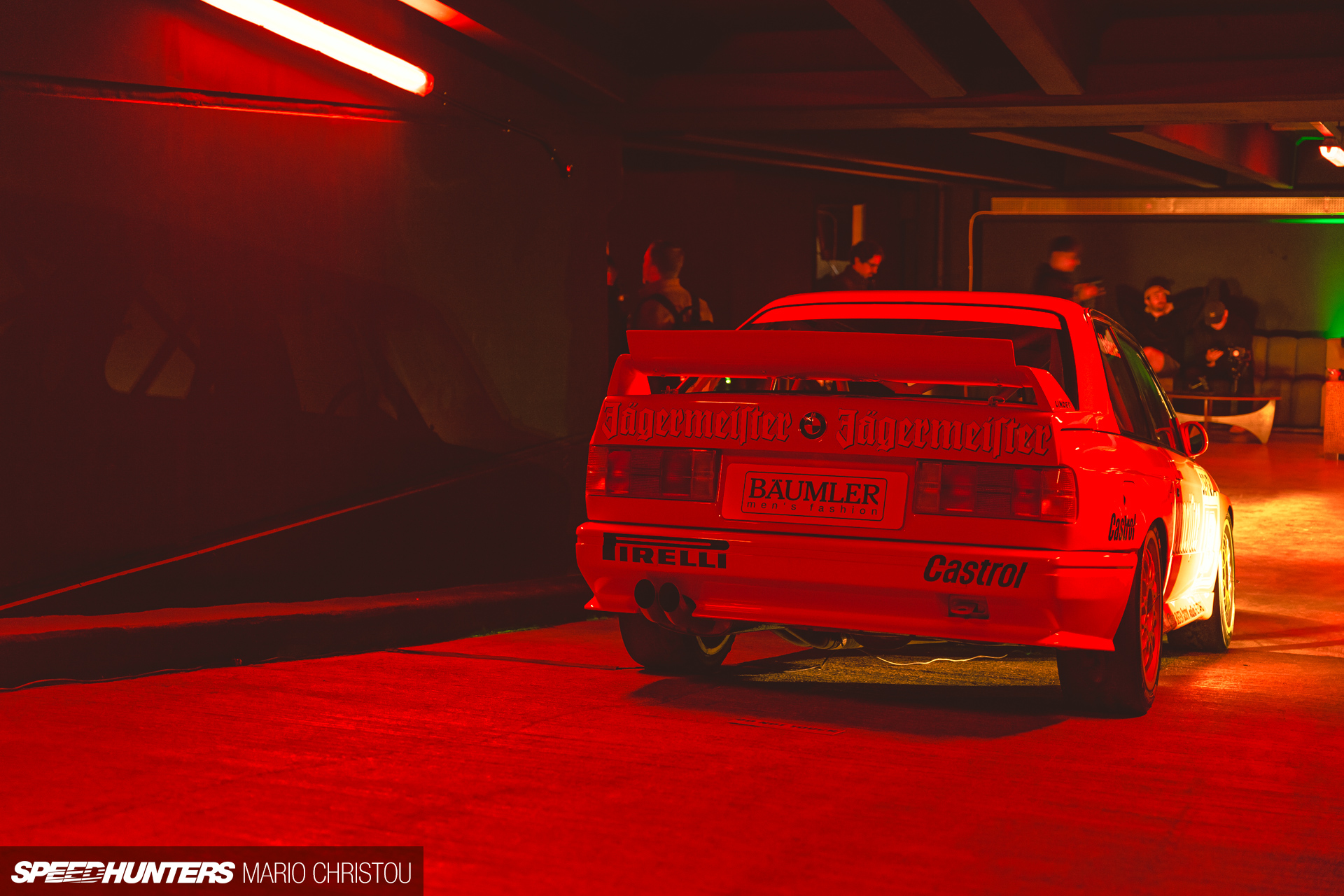
It was a shot of an E30 BMW M3 DTM racer dressed in its iconic Jägermeister livery. But instead of the usual racetrack backdrop, this one was set in a dark room, illuminated only by neon lights. The caption read: “Rave on Thursday, Race on Sunday.”
Now, I’m not saying I’m a rave enthusiast, but, I’m not saying I’m not one either. I was intrigued. Plans to hit the cinema were scrapped in favour of hitting a car park like no other in West London.
You might recognise the Duke of London from another event story this year. The Brentford site combines a showroom, café, workshop, storage, wine bar, and a collection of owner Merlin McCormack’s eclectic cars.
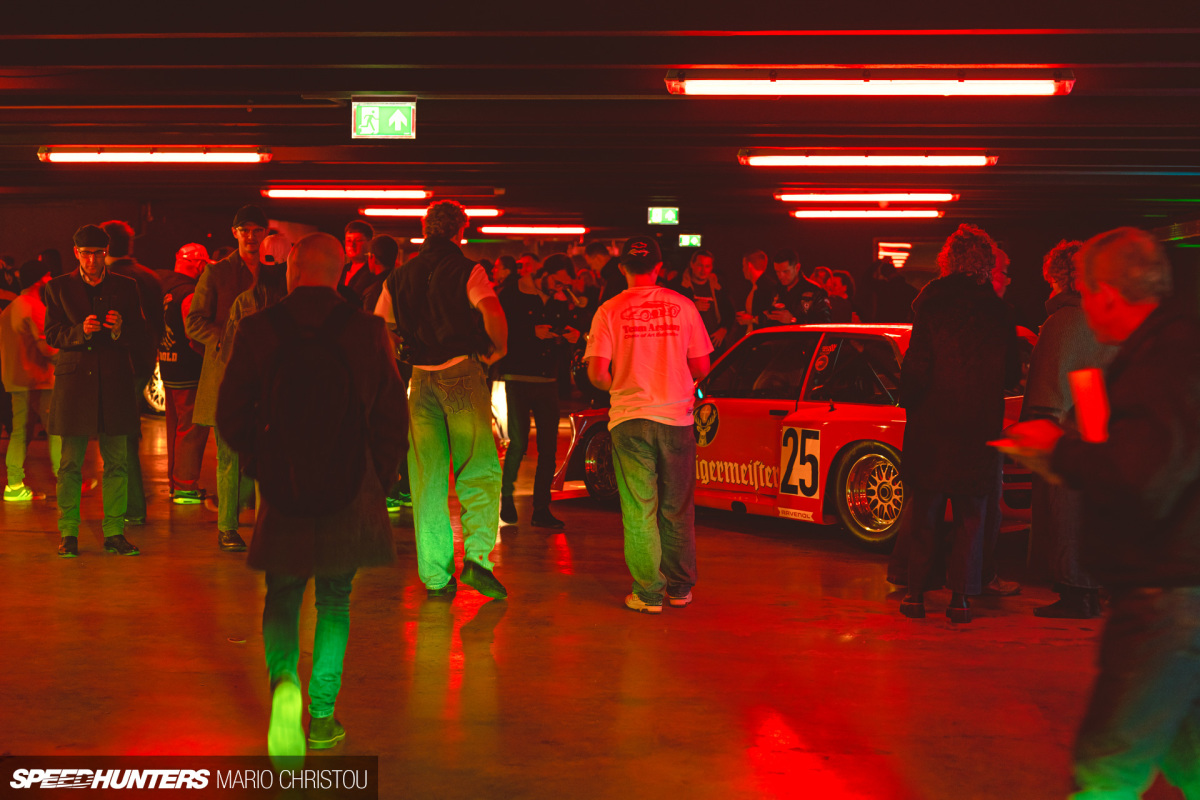
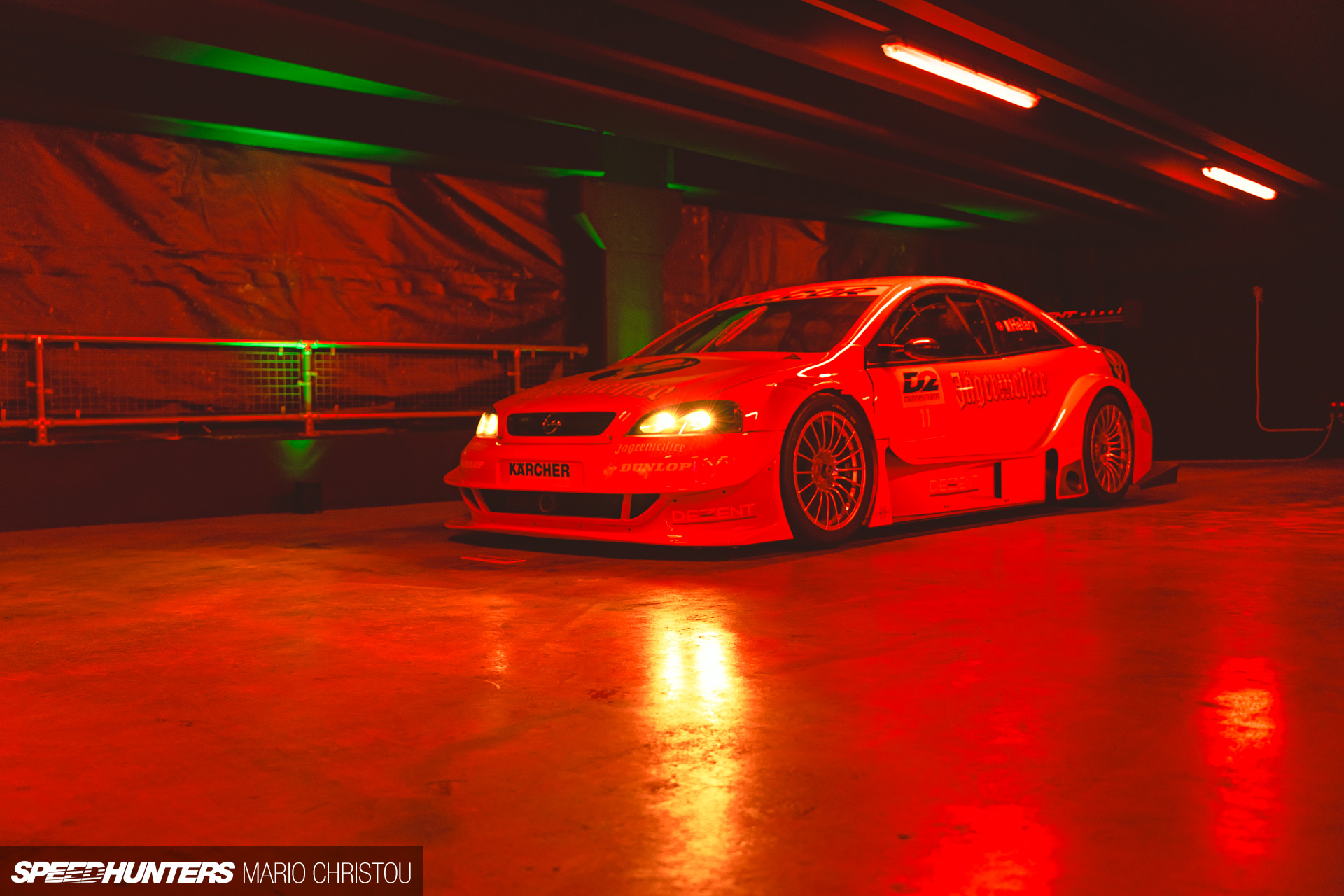
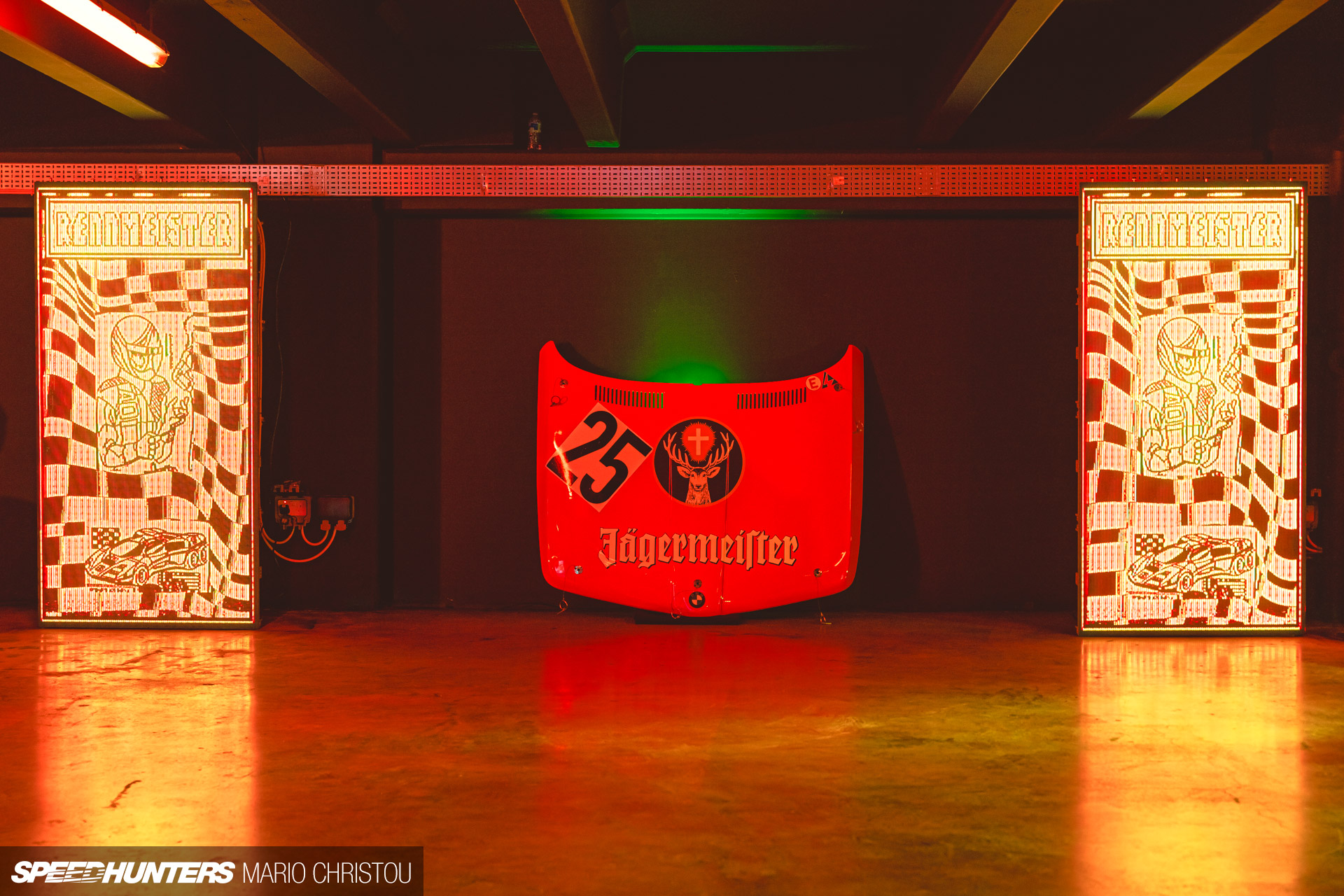
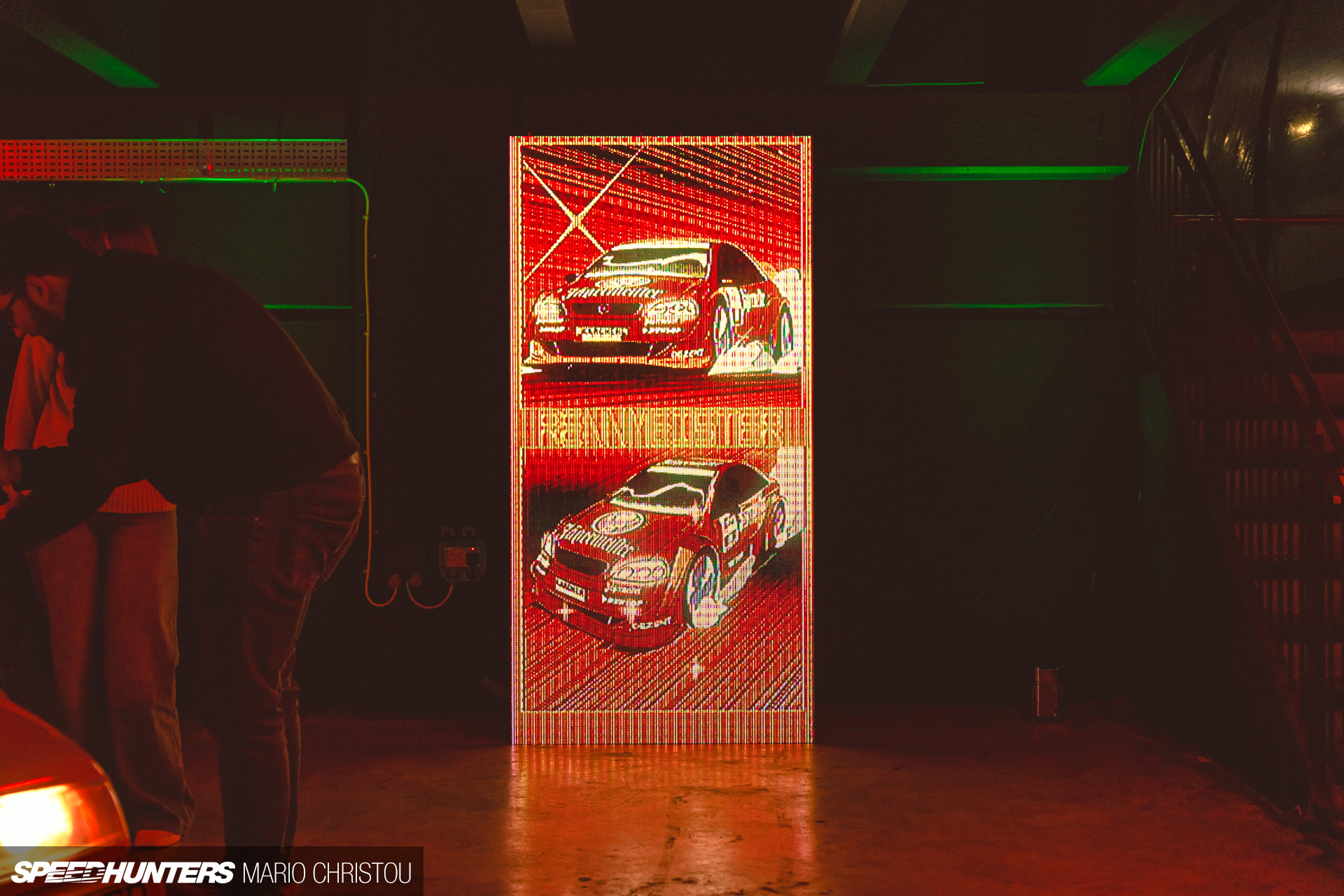
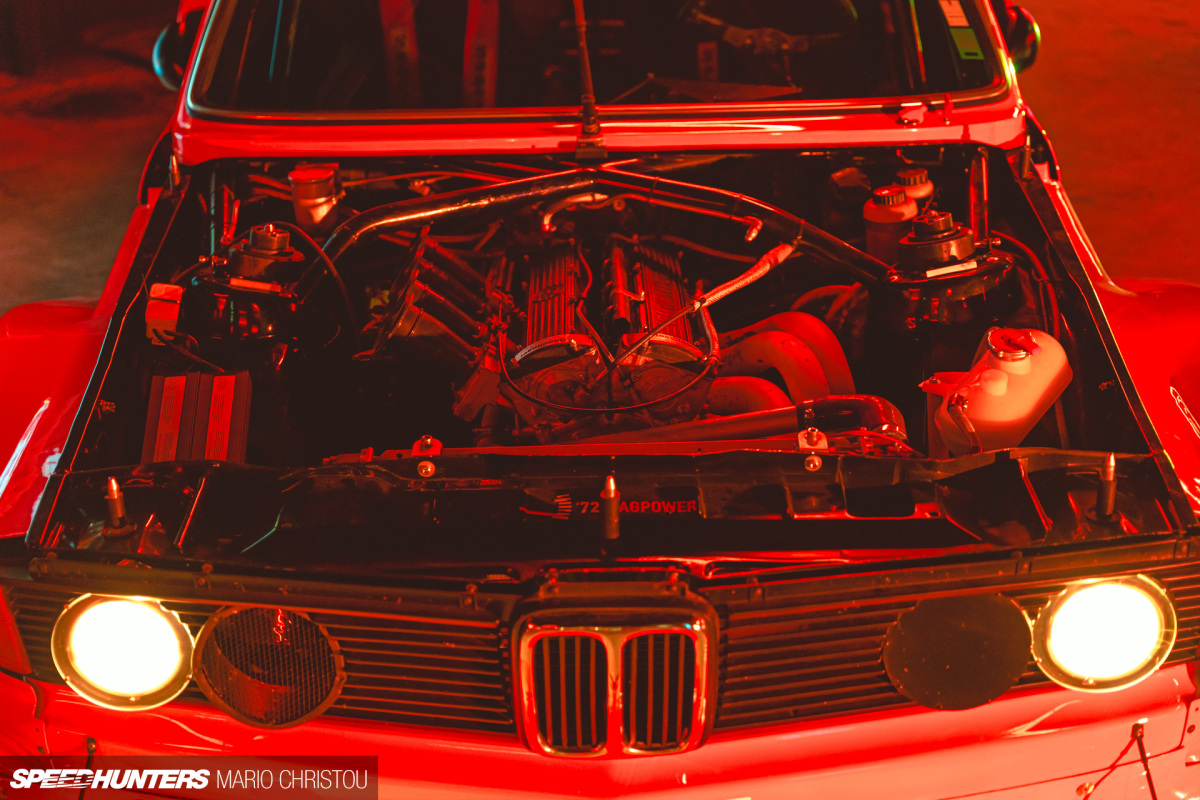
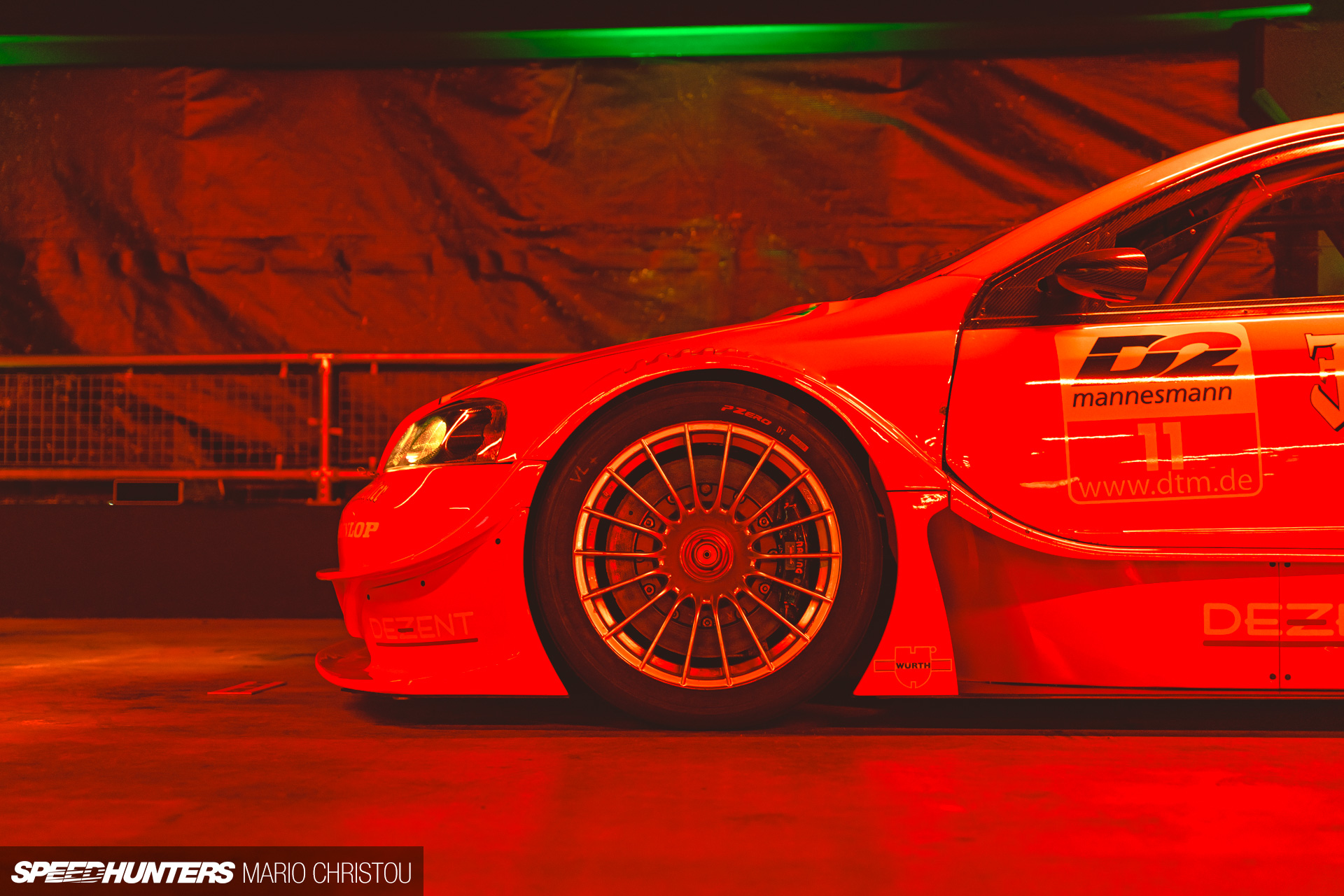
For this night, the Duke’s upper floor had been transformed into a ’90s-style techno club, with a bar in the café and a second one set up for good measure. The space was drenched in orange neon lighting, perfectly complementing the star attractions: not people, but five of Jägermeister’s most iconic race cars.
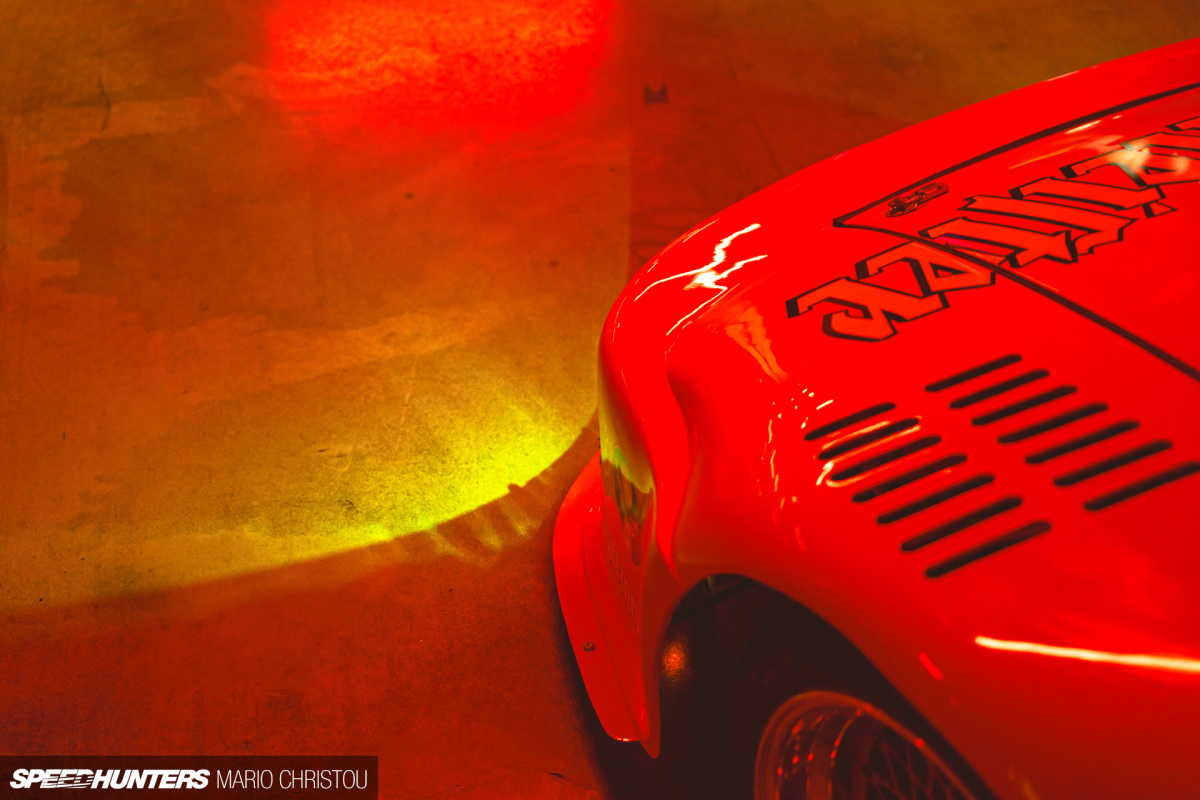
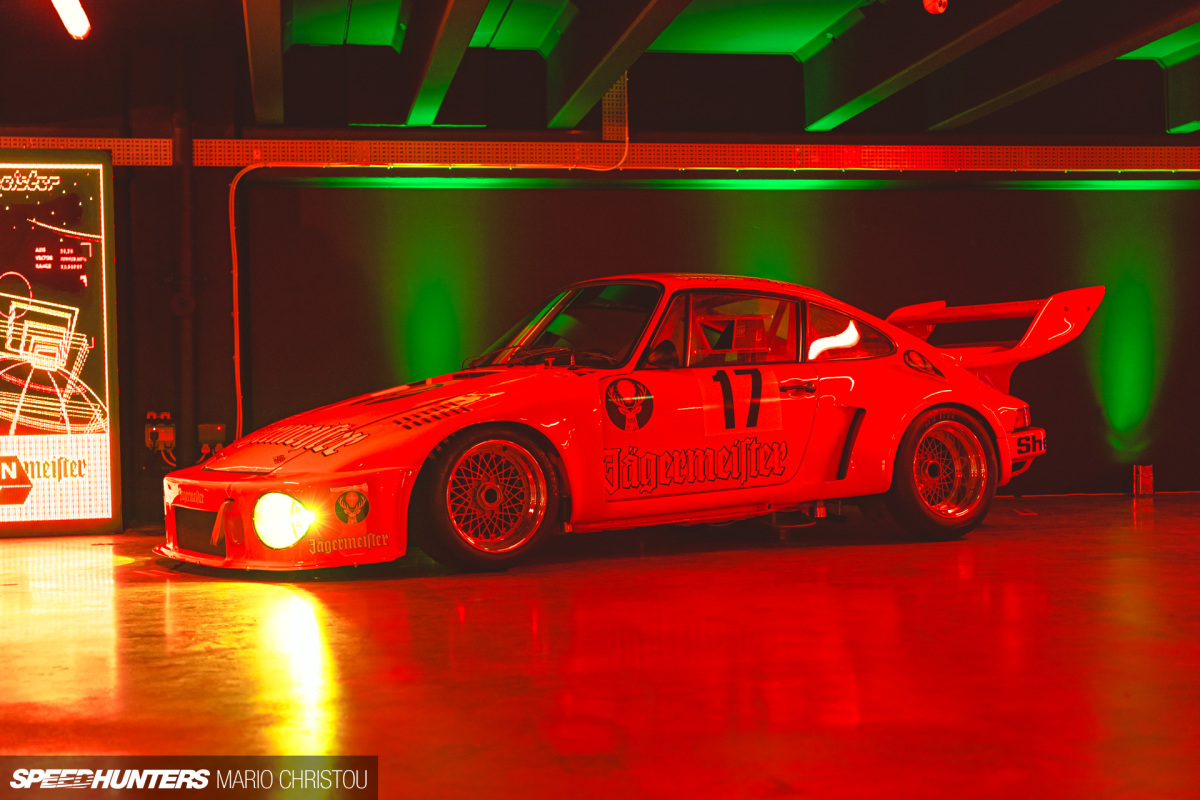
There was the E30 M3 DTM, of course, alongside its rival, the Alfa Romeo 155 DTM, plus a Group 5 BMW 320 E21, a monstrous Porsche 935, and the last-of-the-line Opel Astra V8 DTM.
Each car is legendary in its own right, but together, they tell the story of Jägermeister’s rich racing history. What fascinated me, though, was how an event like this even came to be in the first place.
After all, when you’re considering a night out, race cars aren’t exactly the first thing that comes to mind, are they? Especially not when there’s an open bar and a dance floor.
The brains behind this event and all the other recent Jägermeister pop-ups away from the race track is a brand called Rennmeister. Their mission? To present the Jägermeister collection as more than just race cars.
If you ask someone not into cars to attend a classic race meeting, they will probably decline.
But invite them to a party with some cool vintage race cars, throw in good music and a few cocktails, and they’ll be far more inclined to take you up on the offer.
I spent the first part of the evening at the event preview, catching up with some industry colleagues and enjoying the cars without the usual crowds. Sure, I’d seen some of these cars at events like Luftgekühlt Wrocław and Ultrace this year, but any chance to soak in the details up close is one I could never pass up.
After that, I might have fallen victim to the open bar. The Jägermeister cocktails hit the spot, and the fun mix of music made for an enjoyable night in a truly unique venue.
A quick chat with the Rennmeister team during the event has me hopeful that I can bring you more stories from the Jägermeister racing team’s past, present, and future.
For all the seriousness and professionalism that the industry often demands, it was great to experience the fun side of things after hours. I can’t wait to see what Rennmeister mixes up next.
The 2025 Lexus LS sees yet another price increase for the new model year, but no significant updates.
Pricing starts at $81,685 for the LS 500 version, including the $1,350 destination fee. That’s a $1,000 increase over the 2024 model year, which in turn saw prices increase by $3,100 over the 2023 model year, to $80,685.
2025 Lexus LS
LS 500 models are powered by a 3.4-liter twin-turbo V-6 producing 416 hp and 442 lb-ft of torque, enough to get this big luxury sedan from 0-60 mph in 4.6 seconds, according to Lexus. A 10-speed automatic transmission and rear-wheel drive are standard, while an all-wheel drive system with a Torsen limited-slip rear differential is available for $3,250.
An F Sport grade remains available, but it adds more comfort than sport to Lexus’ flagship. Feature highlights include a heated leather-wrapped steering wheel, a panoramic camera system, and aluminum interior trim, as well as 20-inch wheels and a different version of the controversial Lexus spindle grille. The LS 500 F Sport costs $85,825 in rear-wheel drive form, but as with the 2024 model, adding all-wheel drive only costs $2,450.
2025 Lexus LS
The LS 500h hybrid starts at $116,500 with destination. It uses a 3.5-liter V-6 and two-motor hybrid system to generate 354 hp, which is sent to all four wheels. Hybrid models also come standard with Lexus Teammate, which allows for a few minutes of hands-free driving on mapped highways and helps with parking.
The 2025 Lexus LS arrives in U.S. dealerships before the end of this year, which marks the sedan’s 35th anniversary. While it launched the Lexus brand, the LS has received less attention recently. The current generation has been around since the 2018 model year with a handful of updates, and it’s unclear when we’ll see a new version.
Looking to save money on flights? We’ve got you covered. Digging into Skyscanner data for average round-trip economy fares from the 40 most popular U.S. airports in the last year, we’ve determined the 15 best airports for cheap flights.
“Most travelers want to start their journey from their nearest departure point because it’s convenient, but this can be limiting,” Laura Lindsay, Skyscanner travel trends expert, tells Travel + Leisure. “For travelers looking for better flight deals, it’s usually smart to consider a variety of nearby starting points when searching for the best available prices.”
If you don’t live within driving distance of one of these airports, here’s a hot tip: Consider booking a cheap repositioning flight to get to a cheaper departure city. In some cases, booking two separate tickets can be cheaper than booking a flight with a layover from your home city.
But there are two notable catches. First, if you check a bag, it won’t be checked through to your final destination. You’ll have to claim your bag, and then re-check it with your second airline. Second, if your first flight is delayed and you miss your second flight, the airlines are not responsible for rebooking you. So if you decide to reposition yourself, make sure you have plenty of time between flights — and travel insurance, just in case the worst should happen.
The Best Airports for Finding Cheap Flights
1. Fort Lauderdale-Hollywood International Airport (FLL)
Average seat price: $318.50
Numerous airlines, including low-cost carriers like Spirit, have a major presence at Fort Lauderdale-Hollywood International Airport, contributing to the low average seat price found here. It’s a convenient option for the majority of South Florida, located between Miami (MIA) and Palm Beach (PBI).
2. San Jose Mineta International Airport (SJC)
Average seat price: $404.30
A great alternative to San Francisco International Airport (SFO), San Jose offers both international and domestic flights on such carriers as Southwest and Alaska Airlines.
3. Sacramento International Airport (SMF)
Average seat price: $442.00
Southwest has a major presence at Sacramento International Airport, contributing to the low average seat prices. Other affordable airlines that operate at this airport include Spirit and Frontier.
4. San Antonio International Airport (SAT)
Average seat price: $460.20
Dallas Love Field might be the home base of Southwest, but San Antonio has numerous Southwest flights, too — and that’s why the airport has a fairly low average seat price.
5. Ontario International Airport (ONT)
Average seat price: $466.70
Don’t confuse this airport with Ontario, Canada. Ontario International Airport in California is a secondary airport in the Los Angeles area, offering a less-crowded experience to LAX. And it has cheaper flights, too, thanks to main airlines Frontier and Southwest.
6. Philadelphia International Airport (PHL)
Average seat price: $471.90
Philadelphia is a hub for American Airlines, but low-cost carriers Frontier, Spirit, and Southwest help bring down the average price. Keep an eye out for airfare sales from American, too.
7. Orlando International Airport (MCO)
Disney backdrop in the Orlando airport.
Paul Hennessy/SOPA Images/LightRocket via Getty Images
Average seat price: $501.80
Orlando is one of the busiest airports in the country, and dozens of domestic and international airlines fly to this theme park hub. That said, it’s also a hotspot for more affordable airlines, including Breeze, Frontier, JetBlue, Southwest, and Spirit.
8. Harry Reid International Airport (LAS)
Slot machines in the Las Vegas airport.
Richard I’Anson/Getty Images
Average seat price: $535.60
Las Vegas is another low-cost airline hub, with numerous daily flights from such airlines as Allegiant, Frontier, Southwest, and Spirit.
9. Louis Armstrong New Orleans International Airport (MSY)
Average seat price: $583.70
You guessed it — New Orleans has a strong lineup of more affordable airlines. Southwest and Spirit are the main two here, making it easier to snag an affordable fare.
10. San Diego International Airport (SAN)
Average seat price: $598.00
The two airlines with the biggest presence at San Diego are Southwest and Alaska Airlines. Plus, Alaska often has reasonably-priced airfare and limited-time promotions.
11. Indianapolis International Airport (IND)
Basketball court in the Indianapolis airport.
Brian Spurlock/Icon Sportswire via Getty Images
Average seat price: $598.00
Midwest folks might want to head to Indianapolis to find the cheapest flights. Though it might be a long drive from hubs like Chicago and Detroit, Indianapolis has quite a few cheap flights on Allegiant and Southwest.
12. Daniel K. Inouye International Airport (HNL)
Average seat price: $630.50
Hawaii might be isolated, but hometown carrier Hawaiian Airlines offers great deals to both the mainland and international destinations across the Pacific from Honolulu. Southwest also flies between Honolulu and West Coast cities.
13. Salt Lake City International Airport (SLC)
Main corridor in the Salt Lake City airport.
George Frey/Bloomberg via Getty Images
Average seat price: $633.10
While budget-friendly airlines like Frontier and Southwest fly out of Salt Lake City, this airport is a Delta hub, so look out for deals on the major carrier.
14. Cleveland Hopkins International Airport (CLE)
Average seat price: $638.30
Frontier offers the most flights of all the airlines servicing Cleveland, contributing to the lower average seat prices.
15. Hartsfield–Jackson Atlanta International Airport (ATL)
Average seat price: $648.70
Atlanta is the busiest airport in the world in terms of passenger traffic, so it stands to reason that at least some of those flights are cheap. This is Delta’s home base, but low-cost airlines Frontier, Spirit, and Southwest also fly out of Atlanta.
Tips for Finding Cheap Flights
Flying out of these 15 airports isn’t the only way to save money on airfare. Here are three more tips for finding cheap flights.
Check secondary airports.
While the list above focuses on the cheapest of the 40 most popular airports in the U.S., there are many less-popular airports served by budget airlines. Take, for instance, Stewart International Airport in New Windsor, New York. This airport is technically a New York City alternative, but it’s about 65 miles north of the city — and it only has a few flights a week. From here, budget airline Play flies to Europe for as little as $99 one-way.
Be flexible with your travel dates.
The more flexible you are with your plans, the more likely it is you’ll score a good deal on airfare. Sometimes shifting your travel dates by a day or two can net you some big savings.
Use fare alerts to monitor prices.
You don’t need to manually check flight prices every day. Flight search engines like Skyscanner offer price alert tools that track flight prices for you automatically. When you see the price drop significantly, you know it’s time to book.
Planning to take the plunge and start your adventure in Australia on a Working Holiday Visa (WHV)? Eeek, you’ve arrived to the perfect place.
If you’re on the fence and you need some inspiration, I have over 100 Australia travel guides on this blog from over 10 years of travel here. Although, it really doesn’t take much convincing, this country is oozing with white sand beaches, surf breaks and once in a lifetime adventures.
After 10 years of visiting Australia, I have personally just made the move and so I will be creating all the content to help inspire and guide you on your journey to a working visa down under.
P.s. I’ve been adding Australia Working Holiday videos to my YouTube too, here’s the latest episodes for you to check out:
Whether you’re about to board the plane or you’ve just touched down in Australia for your working holiday visa, this guide will walk you through everything you need to do before and after landing to set yourself up for a stress free, efficient working holiday visa process.
I’ve compiled all my personal experiences, including helpful tips, useful links, and things I wish I knew before I left.
Get your paper and pen at the ready!
Before You Land for your Australia Working Holiday Visa
1. Check Your Australia Working Holiday Visa Eligibility
Before you start booking flights for your Australia Working Holiday Visa, you need to make sure you’re eligible for a Working Holiday Visa (subclass 417). The rules vary depending on your nationality but for most you can apply up to the age of 30.
For UK citizens, as of July 2024, you can now apply for the Australia Working Holiday Visa up to the age of 35 (up from 30). Plus, the requirement to complete 88 days of farm work to secure a second and third year is no longer necessary.
➡️ Check Visa Eligibility for the WHV and see more info.
2. Apply for Your Australia Working Holiday Visa
Once you confirm your eligibility, the next step is to apply for your visa.
I applied online for my Australia Working Holiday Visa and it was super quick—mine was approved within an hour. The current cost for your first 12 month working holiday is 650AUD.
Note: Visa processing times can vary, and the government recommends allowing up to eight weeks before you fly, just in case of a slow approval or denial of your visa.
Also important to note that you want to apply for your visa ONLY when you know you are definitely entering Australia. From the date of visa application success, you have 12 months to enter the country before the visa becomes invalid.
➡️ Apply for the WHV
3. Decide your destination and dream up your vision
Next, you’ll want to starting researching and thinking about where you want to start your Australia Working Holiday Visa and if you intend to stay put for a while or work and travel on the road. You can literally design it however you want to! Now is your time to dream big.
Explore travel blogs, vlogs, talk to friends and get a feel for what you want your experience to look like.
Note: One of the restrictions to bear in mind on an Australia Working Holiday Visa is that you can only work for one employer for up to 6 months.
➡️ Get inspired for Australia here on my blog
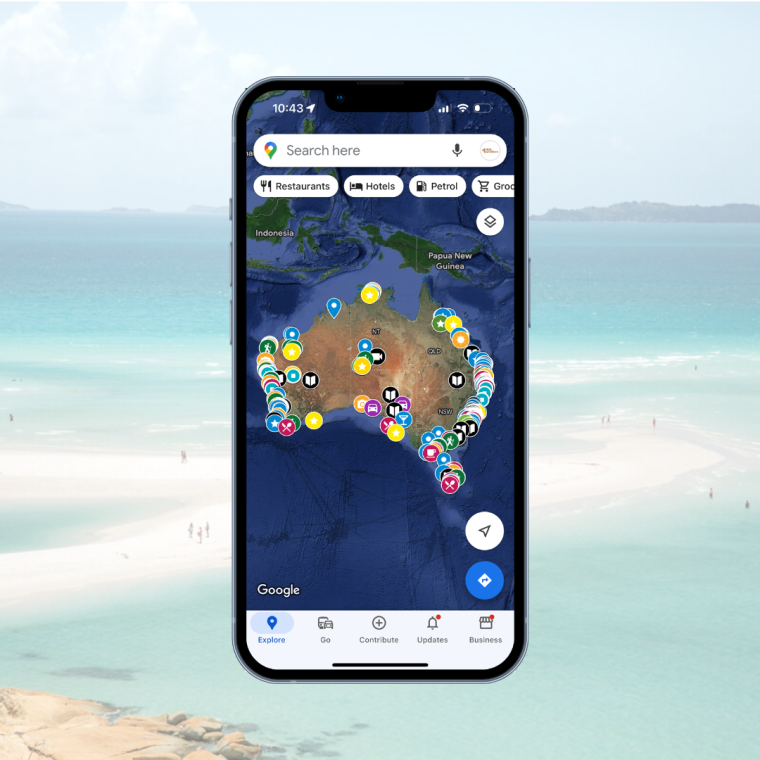
Get lifetime access to my endless hours of research and time spent on the ground finding the best places to eat, drink, relax and explore in the area. You simply open the Google Map on your device and all my pins are at the touch of your fingertips.
4. Book Your Flights
Once you’ve got your visa and done your research – it’s time to decide where you’d like to start (popular options are Cairns, Sydney, Brisbane) and to book your flights!
5. Sort out your first weeks accommodation (at least)
It’s a good idea to figure out where you’ll stay when you first arrive for your Australia Working Holiday Visa. Have a think about if you want to rent right away, book a hostel, hotel or Airbnb.
It will give you peace of mind to know that when you land – you have somewhere to go and sleep off the jet lag / land for a hot minute before your big adventure.
In Byron Bay, where I decided to land, Facebook housing groups were invaluable in finding a place to rent. Both of the groups below were the ones I used and have both short-term and long-term rentals available. It’s a matter of getting in the group and keeping an eye out!
➡️ Byron Bay Housing Groups ➡️ Byron Bay WhatsApp Housing Group
I’m pretty sure a google search will help you find similar ones for any location in Australia!
6. Set up a travel card & Insurance
Before you leave, it’s a good idea to set up a travel bank account that’s fee-free for international use. This means that on your layover and upon arrival you have a card that you can use!
I use Revolut, which is a great option for managing currencies and avoiding high exchange rates.
➡️ Revolut Travel Bank + Card
Also, don’t forget about travel insurance. If you’re planning to stay in Australia for an extended period, SafetyWing is a great company and offers affordable insurance tailored for long-term travellers and nomads.
➡️ Insurance for Nomads
7. Watch These Related YouTube Videos
For more tips on your Australia Working Holiday Visa, I’ve created a couple of detailed YouTube guides:
➡️ Guide to WHV ➡️ Farm Work Guide
After You Land in Australia
1. Set Up Your Australian SIM Card
One of the first things you’ll need to do when you land on your Australia Working Holiday Visa is to get a local SIM card to keep in touch and to navigate around. Telstra is a highly recommended network provider for good coverage, but there are other providers like Optus and Vodafone. You can easily pick up a SIM at the airport or at any major supermarket.
➡️ Telstra SIM Card
2. Open a Bank Account
I went with Commonwealth Bank, as it’s the most recommended by far. They have a great app so that you can easily manage and navigate your finances.
Setting up your bank account for your Australia Working Holiday Visa is simple—you can fill out the form online below before you arrive, and once you’re in Australia, it only takes about 10 minutes to activate your account at your local branch.
You’ll need to bring your passport with you to set it up. The first year of banking is currently free so it’s a no brainer!
➡️ Set Up Commonwealth Bank Account Online
3. Buy a Car (If Needed)
If you’re planning to stay outside the major cities like I am in Byron Bay, getting a car is essential. The public transport options here aren’t great, and having a car will help you with everything from job interviews to meeting new friends to social commitments. I found my car via Facebook Marketplace – but of course, you need to be careful and there are many things to note and check to help you find a good purchase.
➡️ Tips for Buying a Car in Australia ➡️ Free Rego Check
4. Register Your Car
Within 14 days of purchasing a car, you must register it. If you don’t you’ll get a fine.
You can do this at a local service centre, it takes around 20 minutes and you’ll just need your proofs of identification, proof of address and a card to pay the transfer fee + stamp duty.
If you’re transferring a car that’s registered in another state, there may be a fee for that too.
Take a look at the link for more information: ➡️ Registering Your Car
5. Transfer Your Driver’s License
If you’re staying longer than six months on your Australia Working Holiday Visa, you’ll need to transfer your foreign driver’s license to an Australian one.
It’s a simple process with a small fee and you can apply at your local service centre.
➡️ Transferring Your Driver’s License
6. Apply for a Tax File Number (TFN)
You’ll need a TFN to work legally in Australia. This is your personal reference number in the tax and superannuation systems. So if you’re planning to work on your Australia Working Holiday Visa, you’ll need one. It’s free and it takes 5 minutes to do online. You’ll need your passport to apply.
➡️ Apply for a TFN
7. Superannuation: Setting Up for Retirement
If you’re working while on your WHV, you’ll have to set up a superannuation account. This is Australia’s retirement savings scheme and employers will pay 15% on top of your wage as a contribution to it.
Once you leave the country, you can claim your super balance.
➡️ Guide to Superannuation
8. Set Up Your myGov Account
Your myGov account is your gateway to a number of essential government services, including health care, tax returns, and more. I used myGov to set up Medicare, Australia’s public health insurance scheme.
➡️ Set Up myGov Account
9. Setting up Medicare
Medicare is Australias health insurance scheme. it helps with the costs of seeing a doctor, getting medicines and accessing mental health care. It guarantees all Australians (and some overseas visitors) access to a wide range of health and hospital services at low or no cost.
As a UK citizen, I’m eligible for Australia’s reciprocal healthcare agreement, which means I can access Medicare at reduced rates. If you’re from the UK or another country with a reciprocal agreement, make sure to apply for Medicare once you arrive.
10. Byron Shire Resident Parking Pass *bonus*
If you’re setting up for a while and renting (like I am in Byron Bay), you might want to check if there’s a free residents parking pass. This will help you avoid parking fees as you go about your life and ocean dips! I applied for a free one here in NSW and it was super simple!
➡️ Free Shire Resident Parking Pass
11. Library Card *bonus*
In the Northern Rivers region, a library card grants access to numerous libraries, free Wi-Fi, and other resources. It’s a great way to save money and get some quiet time to read or study.
That’s everything (I think?!)
Getting your life set up for your Australia Working Holiday Visa might seem like a lot, but with a little prep, it’ll be a breeze!
From visa applications to setting up bank accounts and securing accommodation, I hope this guide helps streamline your process.
Have any questions or tips of your own? Leave them in the comments below, we’d love to hear from you.
As of right now, Jaguar only has one car on sale in the U.S. and none in its home country, as the brand is gearing up for a total overhaul that will see Jaguar go upmarket and fully electric. The first Jag of the new era will be a four-door luxury GT with a starting price of around $125,000, and this week the company released some photos of a camouflaged prototype of the new model. It looks absurd in the best way, like something that Cruella de Vil or a comic book supervillain would drive.
2025 Infiniti QX80 First Look : A Luxurious Evolution
Electric cars don’t need to conform to traditional internal-combustion proportions and packaging constraints, but Jaguar has used that freedom to make its GT look even more exaggerated than if it had a big engine under the hood. The dash-to-axle ratio is quite enormous, the hood itself is very long, the nose is blunt and the front overhang is pretty short. I hope there’s a gigantic frunk in there, or some cool electronics on display. This prototype has a rectangular “grille” tacked on similar in shape to what other recent Jags have, but who knows what sort of design is behind that piece. The headlights are mounted high up, and there are intakes low down in the bumper.
Photo : Jaguar
The car looks long as hell in general, especially given how big the wheels are (they seem like 22s to me). Its windshield is super swept back, the entire greenhouse is really low and the rear window also has a steep rake to it. It’s like an evolution of the last XJ, but even more coupe-like. The car seems more slab-sided and less sensual than recent Jaguars, which could work nicely with the overall shape of the car. Other details we can see include a large square charge port on the front fender, pop-out door handles and some slim sensors mounted in the windshield.
We don’t know much about powertrain or other technology specs, but Jaguar has said it will ride on the new Jaguar Electric Architecture and have a range of over 400 miles. The car will be built in the UK, and it’s set to go into production in 2026. Before that, Jaguar will be revealing a new Design Vision Concept that previews the new model during Miami Art Week next month, potentially alongside other concepts that preview a few of the other new EVs that Jaguar is working on.
The technical storage or access is strictly necessary for the legitimate purpose of enabling the use of a specific service explicitly requested by the subscriber or user, or for the sole purpose of carrying out the transmission of a communication over an electronic communications network.
Preferences
The technical storage or access is necessary for the legitimate purpose of storing preferences that are not requested by the subscriber or user.
Statistics
The technical storage or access that is used exclusively for statistical purposes.The technical storage or access that is used exclusively for anonymous statistical purposes. Without a subpoena, voluntary compliance on the part of your Internet Service Provider, or additional records from a third party, information stored or retrieved for this purpose alone cannot usually be used to identify you.
Marketing
The technical storage or access is required to create user profiles to send advertising, or to track the user on a website or across several websites for similar marketing purposes.