German car giant the Volkswagen Group has raised its investment in US electric vehicle (EV) specialist Rivian, kickstarting their planned joint venture which will result in co-developed next-generation EV architecture and software.
In June this year, Volkswagen announced plans to invest US$5 billion (A$7.6bn) in Rivian until 2026, a move that proved to be a lifeline for Rivian during a time when it was losing nearly US$40,000 (A$61,000) for every vehicle it delivered.
The decision was approved by German lawmakers in July, and now Reuters reports Volkswagen has raised its investment by 16 per cent to US$5.8 billion (A$8.9bn), coming as Rivian gears up to launch its new R2 EV – a cheaper, smaller model alongside the R1T pickup and R1S SUV.
The joint venture is expected to see advanced electrical infrastructure and Rivian’s software technology integrated for future Volkswagen and Rivian EVs across all relevant vehicle segments, according to the two companies.
100s of new car deals are available through CarExpert right now. Get the experts on your side and score a great deal. Browse now.
Rivian R2
“This partnership and this deal secures the capital for us to ensure that we can’t only take Rivian through the launch of R2 at Normal, but secures the launch of and growth of R2 in our Georgia facility and through (to being) cash flow positive for us as a business,” Rivian CEO RJ Scaringe said.
Rivian’s R2 will be the first vehicle on the new architecture and be built at the company’s facility in Normal, Illinois. The construction of its upcoming plant in Georgia was reportedly delayed last month.
It’s expected new vehicles from Volkswagen-owned Scout Motors – a rebirth of the classic brand which is focusing on off-road EVs – will be among the first on the new jointly developed architecture.
Volkswagen reportedly plans to invest the US$5.8 billion (A$8.9bn) in Rivian and the joint venture by 2027, including an initial US$1 billion (A$1.5bn) convertible note – a loan that can be converted to shares if specific conditions are met.
The German company will reportedly also invest $1.3 billion (A$2bn) for intellectual property licenses and an equity stake, as well as up to $3.5 billion (A$5.4bn) in future equity, notes and debt – all tied to milestones.
It’s possible the joint venture could help support Volkswagen’s Cariad software division, which has been blamed for delayed vehicle launches and been at the receiving end of a series of job cuts handed down by its overarching company.
The increase in investment follows Volkswagen asking its German workforce to take a 10 per cent pay cut as the company struggles with rising costs and falling demand.
Volkswagen announced the first public round of its collective bargaining consultation with its works council in late October, which included the proposed pay cuts. Negotiation representatives are next due to meet on November 21.
The carmaker’s third-quarter financial results showed its year-to-date operating result is down by 21 per cent compared to the first nine months of 2023 – standing at €12.9 billion (A$21 billion) to the end of September.
In contrast, shares in Rivian – valued at over US$11 billion (A$16.8 billion) – rose nearly nine per cent in extended trading following the joint venture announcement.
GWM is not one to sit idly by, and the Tank 300 is a prime example of how an upstart carmaker can create waves in an automotive niche if it really wants to.
Take the offroad-ready Jeep Wrangler, combine it with the luxurious yet rugged Mercedes-Benz G-Class, add a dash of Suzuki Jimny, and you get something like this: the GWM Tank 300 Ultra Hybrid.
It’s striking in appearance and stands out on the road, and it’s still the only model in its segment to offer a hybrid drivetrain. That gives it impressive power and torque figures, so it’s no slouch in a straight line.
Our tester is the most expensive Tank 300 variant you can buy at more than $60,000 drive-away, but it undercuts a lot of its large off-road SUV competition without skimping on any infotainment or safety tech.
GWM armed nearly 2000 Australians with a Tank 300 in 2023, despite the fact it only arrived halfway through last year, and so far this year to October it has sold more than 3300 examples.
That’s much fewer than the Ford Everest (21,281), Isuzu MU-X (15,584) and Mitsubishi Pajero Sport (6367), but almost as many as the Toyota Prado in runout (3525).
WATCH: Paul’s video review of the GWM Tank 300 Ultra Hybrid
GWM is just one of many relatively new challenger brands making their way Down Under and local buyers are increasingly willing to make the jump.
Can the Tank 300 become the new vehicle of choice when it comes to more affordable, luxurious off-roading, or is it all too good to be true?
How does the GWM Tank 300 compare?
View a detailed breakdown of the GWM Tank 300 against similarly sized vehicles.
GWM
Tank 300
How much does the GWM Tank 300 cost?
The Tank 300 Ultra Hybrid is currently the most expensive variant in the range. However, GWM is offering $2000 off the drive-away prices (listed below) for petrol variants, and $5000 off the drive-away prices (listed below) for hybrid grades until December 31, 2024.
Model
Drive-away price
GWM Tank 300 Lux 4×4
$47,990
GWM Tank 300 Ultra 4×4
$51,990
GWM Tank 300 Lux Hybrid 4×4
$55,990
GWM Tank 300 Ultra Hybrid4×4
$60,990
Want to see how the Tank 300 shapes up against its rivals? Put it side-by-side using our comparison tool.
What is the GWM Tank 300 like on the inside?
To the Tank 300’s benefit, this is where the Mercedes-Benz influence really shines through.
It definitely has some quirky features scattered around the cabin, but it’s an unquestionably nice interior that can hang with – and in many cases out-do – what’s offered in a lot of its competition.
As the most expensive Tank 300 on the market, the Ultra is trimmed with silver highlights, has Nappa leather-clad seats and quilted leatherette door inserts, and sizeable screens for both the infotainment display and instrument cluster. It’s certainly a cohesive, tasteful design.
Highlights include the circular spoked vents (which I’m sure I’ve seen in a Mercedes before), an analogue clock on the centre of the dash, and the futuristic-looking gear selector that almost seems like it doesn’t belong.
Quirks like these make the Tank 300 memorable, although there’s more to this cabin than flashy trim bits.
Our tester was fitted with an electrically adjustable driver’s seat, front seats with heating and cooling, and memory presets for the driver’s seat and mirrors. It even has a wireless charging pad – though my phone struggled to charge up and instead became very hot.
Charging alternatives include a USB-C port and a 12V outlet, while there are also three USB-A ports – one in the front, two in the rear.
There’s a sizeable storage box in the centre console with a sliding coin tray, which moves to reveal two central cupholders. A weakness is storage capacity in the door cards and elsewhere in the front, but there is still a generous glovebox.
Behind the leather-wrapped steering wheel is a digital driver’s display, which is super crisp but lacks a little in its layout from an off-roading perspective.
There are a few menus to scroll through with a bunch of information, but a notable omission is any form of analogue-style dials that’d certainly be useful on the trail. There is the option to display RPM, but it’s only a small numerical counter supplementing an energy recovery gauge.
Behind the wheel itself are the typical stalks, including an indicator stalk that’s confusing to use at first because it doesn’t click into place like in most cars. Instead, it returns to the central position after you activate either the left or right indicators.
There’s a traditional cruise control stalk back there too.
It’s a properly luxurious interior overall, made even more impressive by the Tank 300’s low price point for its segment. That’s not to say it’s all perfect, though.
On the left of the steering wheel is a 12.3-inch infotainment display. It looks good on the surface, but it’s central to everything you do in the car – and is in need of some refinement.
The Tank 300 is another victim of touchscreen over-reliance, as many of the climate control functions are buried behind a separate menu. There are some physical buttons for some climate-related functions, but they aren’t immediately obvious.
I can’t understand why GWM would include physical buttons to control the cabin’s climate, yet have it so there’s no indication of what exactly is being adjusted unless you look at the screen above.
Pressing any of these climate-related buttons opens the dedicated climate menu on the infotainment screen, which just seems needlessly cumbersome. Alternatively, there’s a touch-button to the right of the screen that temporarily opens the menu.
Likewise, if you need adjust or turn off any driver assist functions, you can only do it by digging through multiple menus – that is, of course, if the screen works.
One day I hopped in to begin my commute home and was greeted with the typical start-up animation and subsequent loading screen on the centre screen, but the loading screen never went away.
That meant I had no radio, no Apple CarPlay, no idea of what I was adjusting with the climate controls, and no way to turn off the car’s intrusive emergency lane-keep assist and driver monitoring functions before hitting the road.
What ensued was a deeply boring and awkward drive home, as the screen remained bricked the whole time. As unexpectedly as it froze, the screen returned to normal the next morning.
In the kindest terms, it was very inconvenient.
While the front of the Tank is heavy on design and tech, everything in the back is more or less as you’d expect.
The three-position rear bench seat is leather-appointed as with the front seats, and while the previously mentioned dual USB-A charging ports are positioned on the back of the centre console underneath the air vents.
In terms of storage, there’s some space for bottles in the door cards, map pockets on the backs of both front seats, a small cubby on the centre console, and cupholders incorporated into the fold-down centre armrest.
Music sounds just as good back here as it does up front, thanks to the Ultra Hybrid’s Infinity-branded sound system, and young families need not worry thanks to the inclusion of three top-tether child seat anchors as well as ISOFIX points on the outboard seats.
It’s worth noting that it isn’t the easiest task to climb into the back, as the rear doors don’t open to 90 degrees. There’s also a relatively small opening atop a high floor, which means it may be a challenge to fit a child seat or get an elderly passenger onboard.
Opening the tailgate reveals a very spacious boot. It’s on par with other large SUVs, but it punches above its weight with the rear row folded.
It has more room than the Suzuki Jimny and just about matches the Wrangler in its expanded configuration, and because it’s a geared-up off-roader, you get a full-size spare wheel mounted on the tailgate.
But keep in mind it’s a side-hinged tailgate, which means you’ll struggle to open it if you’ve reversed too close to a wall or another car. It also takes some force to close, as its supportive strut prevents it from gliding shut naturally with a normal push.
Seats do fold flat, not in this driving position
Dimensions
GWM Tank 300 Hybrid
Length
4760mm
Width
1903mm
Height
1930mm
Wheelbase
2750mm
Ground clearance
224mm
Boot capacity
400L (rear seats up) 1635L (rear seats folded)
Want to see how the Tank 300 shapes up against its rivals? Put it side-by-side using our comparison tool.
What’s under the bonnet?
A 2.0-litre turbocharged four-cylinder petrol engine is standard across the four-grade Tank 300 range, though only two variants pack hybrid tech. A new turbo-diesel powertrain is also due to arrive in the first half of 2025.
Model
GWM Tank 300 Ultra Hybrid
Engine
2.0-litre 4cyl turbo HEV
Power
Electric motor: 78kW Petrol engine: 180kW @ 5500-6000rpm Combined: 255kW
Torque
Electric motor: 268Nm Petrol engine: 380Nm @ 1700rpm-4000rpm Combined: 648Nm
Transmission
9-speed hybrid automatic
Driven wheels
Four-wheel drive
Weight
2305kg (tare)
Fuel economy (claim)
8.4L/100km
Fuel economy (as tested)
9.4L/100km
Fuel tank size
75 lires
Fuel requirement
91 RON
Hybrid versions employ a special ‘Hybrid Automatic Transmission’ with a single transmission-mounted electric motor, and include torque-on-demand full-time four-wheel drive.
Also included are mechanical front and rear differential locks, a cool Tank Turn function to reduce the off-road turning circle, and a crawl mode.
Want to see how the Tank 300 shapes up against its rivals? Put it side-by-side using our comparison tool.
How does the GWM Tank 300 drive?
The Tank 300’s out-of-the-box on-road driving experience can be often be defined by one thought – ‘how do I turn that off?’.
There are a range of driver assist and safety systems in the Tank 300, and while you could definitely live with most of them, faults with the lane-keeping functions in particular are disappointing in a car that presents so well.
I’m not one to complain about the inclusion of modern driver assist tech – it definitely has a role to play in improving road safety – but when it makes driving annoying, it’s almost better left out.
GWM is a company that you’d expect to have this figured out by now, but following widespread media and customer criticism it is now working on a software update for the lane-keeping feature that will be applied to all new vehicles in future, and is expected to be retro-fittable to vehicles already sold.
But it’s yet to confirm when that will happen, and we won’t know how successful it’s been until we retest it, so in the meantime we can only base our safety system assessment on the Tank 300 currently available to us and customers.
As it stands, the emergency lane-keep assist and lane-departure warning systems aren’t quite right and can sometimes even be dangerous. If you’re driving along in a straight line, the car seems to always prefer to sit to the far left of its lane, regardless of what kind of road you’re on.
If you’re driving alongside solid white lines – especially on your right – the car will constantly fight you for control of the wheel to over-correct itself, sometimes nearly swerving into the lane on the left, even if there’s traffic there. It can sometimes be a weird kind of high-stakes wrestling match.
Like some other new models, the driver monitoring system will also berate you for moving your head to look anywhere other than directly in front, which is a problem given you’re forced to divert your gaze to the infotainment screen to operate the car’s interior systems.
The Tank 300 often works against itself from a tech standpoint. We had similar complaints when we reviewed this model in December 2023, so it’s disappointing they haven’t been rectified yet.
Mercifully, the car does allow you to disable pretty much all of this tech – though it requires you to trawl through menus in the infotainment system to untick the relevant boxes each time you set off.
Other features, including adaptive cruise control and front cross-traffic assist, are effective and work as they should.
Once you’ve sorted what you want to leave on and turn off, you’re finally able to enjoy the beefy hybrid powertrain, surprisingly good driving dynamics and solid off-road capabilities.
When you first jump in and hit the road, you’ll notice how the Tank 300 clatters over smaller bumps, as is typical of a body-on-frame vehicle, but after half an hour of driving it’s easy to forget there’s anything untoward going on under you.
It’s very comfortable and sure-footed at high speed, and rolling along in EV mode at lower speeds is quiet and smooth.
The EV motor is capable of getting the car up to around 40km/h, and it’ll happily cruise without the engine at speeds of up to 60km/h. The engine will also shut off when coming to a stop to save fuel, though we still used more petrol than GWM claimed during our week with the car.
When it’s time for the petrol engine to kick in, it’s almost always a seamless switch. Put your foot down for a quick burst or from a standstill, though, and the Tank 300 takes a second or two to figure out how it wants to get the power to the ground between the electric motor and engine.
Once it’s sorted itself out, the Tank gives you a proper punch in the back. Flicking it into Sport mode further helps with this, as it keeps all power systems engaged and ready to go.
The nine-speed transmission is hardly ever caught in the wrong gear – it’s snappy at low speed and happily chugs along seamlessly on the freeway.
There’s no question the Tank 300 is a big car. Behind the wheel you feel quite high above the ground, which in this case means there’s good visibility all around.
Blind-spot monitoring works well to assist when you’re merging or changing lanes, while the surround-view camera with its Transparent Chassis Function is a great help when navigating carparks.
Outside of the technical gremlins and annoying lane-keep functions, this is a powerful and comfortable car that never truly feels like it’s too big, and pulls off its road-going off-roader act effortlessly.
To see how the Tank 300 performs off-road, watch Paul’s video review.
What do you get?
On test here is the flagship Tank 300 Ultra Hybrid variant.
Tank 300 Lux and Lux Hybrid highlights:
17-inch alloy wheels
Auto-folding, heated exterior mirrors
LED headlights and tail lights
Daytime running lights
Sunroof
Two-piece under-body guard
Tyre pressure monitoring
Crawl Control
Tank Turn
Front and rear parking sensors
Power driver’s seat
‘Comfort-Tek’ leather upholstery
Microfibre and leather steering wheel
12.3-inch digital instrument cluster
12.3-inch touchscreen infotainment system
Front and rear USB ports
Apple CarPlay and Android Auto
9-speaker audio system
Ambient interior lighting
DAB+ digital radio (hybrid only)
12V power outlets (front and luggage cabin)
Tank 300 Ultra adds:
18-inch alloy wheels
Nappa leather seats
Heated and cooled front seats
Power’s driver seat with massage function
Heated, leather-wrapped steering wheel
Wireless phone charging
‘Infinity’ branded nine-speaker sound system
More ambient lighting colours
Tank 300 Ultra Hybrid adds:
Semi-autonomous parking assist
Driver’s seat and mirror memory
Auto reverse tracking
Wireless Apple CarPlay
Want to see how the Tank 300 shapes up against its rivals? Put it side-by-side using our comparison tool.
Is the GWM Tank 300 safe?
The Tank 300 has a five-star ANCAP safety rating based on 2022 Australian crash testing, which covers both petrol and hybrid variants.
Category
GWM Tank 300
Adult occupant protection
33.47 out of 38 (88 per cent)
Child occupant protection
43.81 out of 49 (89 per cent)
Vulnerable road user protection
43.85 out of 54 (81 per cent)
Safety assist
13.6 out of 16 (85 per cent)
Standard safety equipment includes:
7 airbags
Front
Side
Curtain
Front-centre
Autonomous emergency braking
Lane departure warning
Lane keep assist
Traffic sign recognition
Rear cross-traffic alert with brake
Adaptive cruise control
Surround-view camera
incl. ‘Transparent Chassis Function’
Hybrid models add:
6 parking sensors (up from 4)
Front cross-traffic assist
High Way Assist (HWA)
Want to see how the Tank 300 shapes up against its rivals? Put it side-by-side using our comparison tool.
How much does the GWM Tank 300 cost to run?
As with the wider GWM range, the Tank 300 is backed by a seven-year, unlimited-kilometre warranty with seven years of roadside assist.
An eight-year, unlimited-kilometre battery warranty is also included for hybrid models, while GWM offers seven years of capped price servicing for the Tank 300 range.
Prices differ slightly between petrol and hybrid variants, so here’s a full breakdown of Tank 300 service pricing:
Service interval
Tank 300
Tank 300 HEV
1yr or 10,000km
$300
$300
2yr or 25,000km
$300
$300
3yr or 40,000km
$550
$995
4yr or 55,000km
$550
$700
5yr or 70,000km
$300
$300
6yr or 85,000km
$1000
$995
7yr or 100,000km
$650
$300
Total
$3650
$3890
Want to see how the Tank 300 shapes up against its rivals? Put it side-by-side using our comparison tool.
CarExpert’s Take on the GWM Tank 300
It’s a lot of car for the money, but the Tank 300 does leave a bit to be desired.
There’s no debating its ride quality and interior luxury, both of which are surprisingly well honed given its ladder-frame construction and off-road focus.
It’s also imposing on the outside – GWM has nailed the styling of the Tank 300, which exudes the kind of road presence you don’t get with a lot of other cars.
It’s unfortunate this car is undermined by a pesky infotainment screen and shortcomings with some of the driver assist systems.
I wish the interior didn’t rely so heavily on the touchscreen. Even if it worked properly all the time, it still lacks separate the climate controls – if you’ve got some buttons, why not go all the way?
But while we can live with that, it’s harder to look past the poorly calibrated lane-keeping systems. Hopefully that will be fixed soon, and that the fix can be applied to existing customer cars.
We also think the hybrid is really not far enough separated from its petrol counterpart in terms of tech and standard features. When the difference is $9000 at Ultra level, it’s a matter of whether that’s worth the hybrid’s performance gains, and its extra parking sensors and wireless CarPlay, or whether you should just settle for petrol version and get most of the same stuff.
Still, there’s no denying this is a unique offering in a segment traditionally dominated by respected diesel-powered off-roaders like the Everest, MU-X and Prado, which is now being renewed and will be a lot more expensive. Indeed, none of its competition offer hybrid tech, and it has a very competitive price tag in that context.
If you need seven seats GWM’s answer is the Tank 500. If not, and it’s a mix of daily driving and occasional off-roading that you’re after, the Tank 300 Hybrid is more than capable of wearing both hats, and even the non-hybrid versions won’t leave you wanting more.
Interested in buying a GWM Tank 300? Get in touch with one of CarExpert’s trusted dealers here
Chines battery supplier CATL could build a plant in the U.S.
The decision would hinge on whether Trump’s administration allows the Chinese to enter the market
CATL wanted to invest in the U.S. but to date the government’s said no
Chinese battery supplier CATL is open to building a U.S. factory if the incoming Trump administration allows it, the company’s founder said in a recent interview.
“Originally, when we wanted to invest in the U.S., the U.S. government said no,” Robin Zeng said in an interview with Reuters published Wednesday. “For me, I’m really open-minded.”
CATL has so far limited its U.S. presence to licensing deals with automakers. Ford in 2023 announced a Michigan battery plant to build lithium iron phosphate (LFP) batteries, which the automaker has said are a key to EV affordability. The battery cells produced there would be based on CATL tech, but the factory itself would be owned by Ford. An April report said General Motors may be seeking a similar deal with CATL.
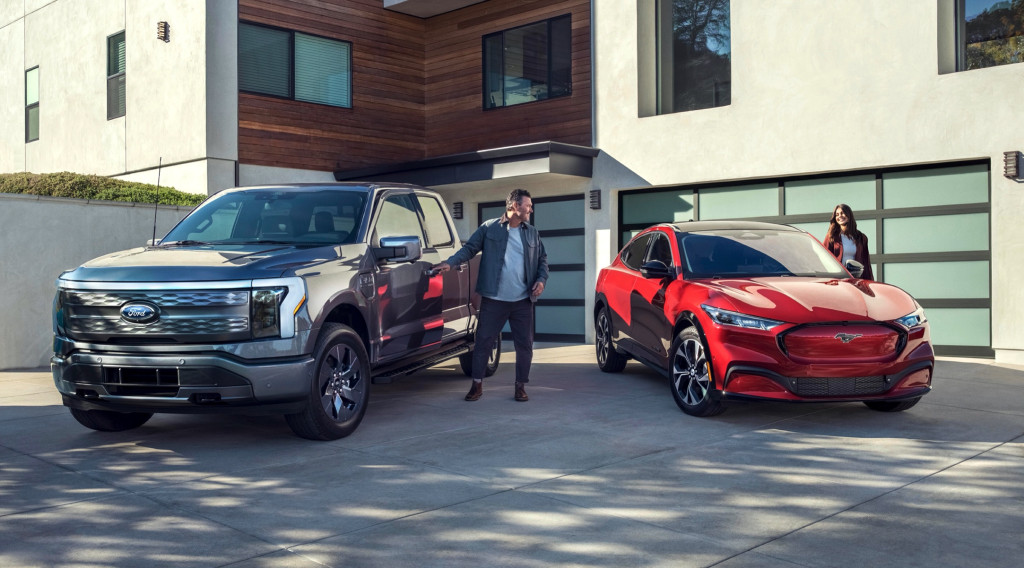
Ford Mustang Mach-E, F-150 Lightning getting CATL LFP batteries
Even before Trump, who launched a trade war with China during his first term in 2017, was elected to a second term as president, that arrangement was already under threat.
Under existing Biden administration policy, vehicles with Chinese-made batteries do not qualify for a federal EV tax credit, nor do vehicles manufactured by entities in whose parent companies the Chinese government has a stake. A Republican bill, opposed by the current administration, would also eliminate tax credits for EVs making use of Chinese battery tech licensed by U.S. automakers.
Yet while Trump wants to prevent imports of cars from Chinese automakers—even if they’re assembled in other countries like Mexico—Reuters notes that in an August interview he was open to Chinese firms building cars in the U.S.
CATL Freevoy plug-in hybrid battery pack
“We’re going to give incentives, and if China and other countries want to come here and sell cars, they’re going to build plants here, and they’re going to hire our workers,” Trump said in August. Zeng appears optimistic that this policy will apply to batteries as well, telling Reuters that “I do hope that in the future they are open to investments.”
When the Ferrari GTC4 Lusso debuted at the Geneva Motor Show in 2016, it followed the footsteps of the Ferrari FF, the GTC4 Lusso sought to combine high performance with all-weather usability and comfort, embodying Ferrari’s legacy of elegance and dynamic capability. Soon after, Ferrari introduced the GTC4 Lusso T, a more agile, rear-wheel-drive variant that emphasized a lighter, sportier drive.
The GTC4 Lusso featured a 6.3-liter naturally aspirated V12 engine producing 681 hp and 514 lb-ft of torque, allowing it to reach 0-60 mph in around 3.4 seconds. The Lusso T, meanwhile, houses a 3.9-liter twin-turbocharged V8 engine with 602 hp and 561 lb-ft of torque, achieving 0-60 mph in a similar time.
While the V12 version comes with Ferrari’s 4RM Evo all-wheel-drive system, enhancing stability and traction in various conditions, the Lusso T’s rear-wheel-drive configuration offers a more spirited, nimble experience.
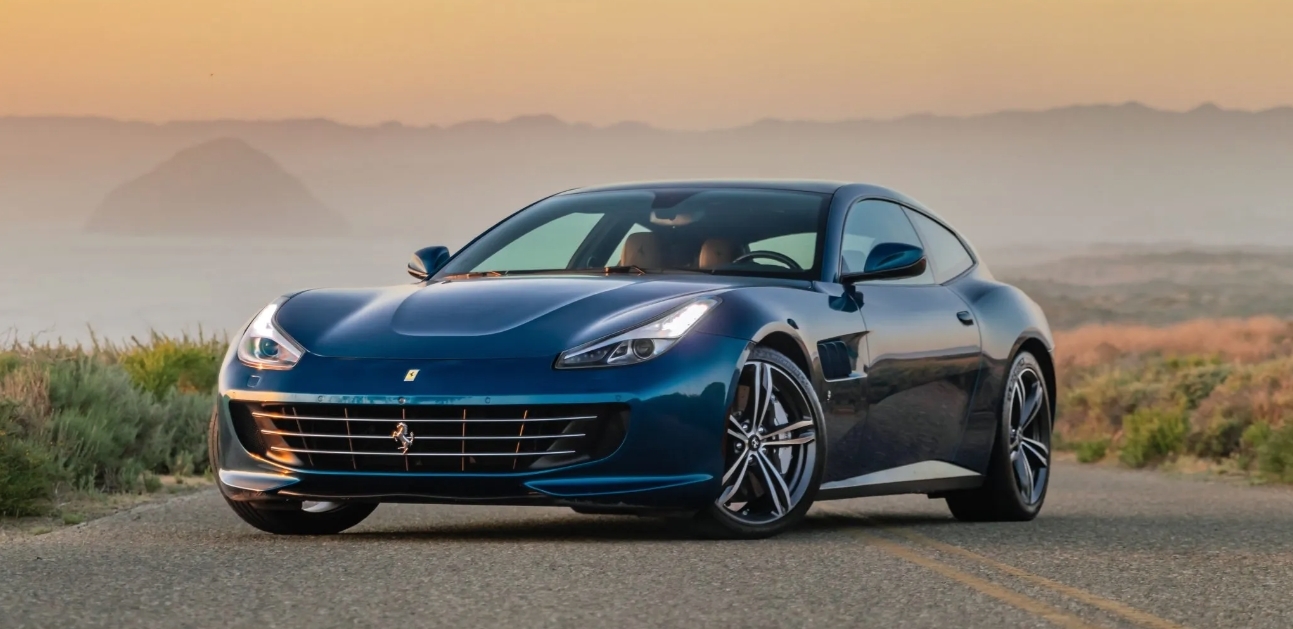
Externally, the GTC4 Lusso’s shooting-brake design features Ferrari’s modern aesthetic language, with sharp lines, a sculpted grille, and quad taillights that echo Ferrari’s classic sports cars. The sloping roofline and sweeping side profile not only add elegance but also contribute to its aerodynamic efficiency.
Inside, the GTC4 Lusso’s cabin features a dual-cockpit layout with a large, high-resolution 10.25-inch infotainment screen at its center, allowing both driver and passenger access to navigation and media controls.
High-quality leather upholstery, carbon fiber accents, and customizable options let owners personalize their experience. The seats provide support and comfort for long journeys, while the advanced dual-zone climate control and ample rear seating make the Lusso ideal for long-distance cruising.
In its segment, the Ferrari GTC4 Lusso faces competition from other high-performance grand tourers like the Aston Martin DB11, Bentley Continental GT, and Porsche Panamera Turbo S. Despite the rivals, the GTC 4 Lusso stands out with Ferrari’s signature V12 power, advanced all-wheel-drive technology, and practical design, appealing to drivers who seek an all-season, high-performance Ferrari experience.
Despite the competition, the GTC4 Lusso and Lusso T carved out a unique niche with their four-seater design and Ferrari’s signature performance, making them unlike anything on the market.
Model Changes (Breakdown by Year)
2016 Ferrari GTC4 Lusso
The Ferrari GTC4 Lusso made its grand debut at the 2016 Geneva Motor Show, replacing the Ferrari FF. It came with a 6.3-liter V12 engine, producing 681 horsepower and 561 lb-ft of torque. This powertrain provided exceptional speed and traction, even in less-than-ideal road conditions, making the Lusso an exciting yet practical choice for all-weather driving.
New styling updates included sharper lines, an updated front grille, quad taillights, and a dual-cockpit layout with a central infotainment screen.
The 2016 Ferrari GTC4 Lusso had a starting price of approximately $300,000.
2017 Ferrari GTC 4 Lusso
In 2017, Ferrari expanded the GTC4 Lusso lineup with the introduction of the GTC4 Lusso T, a rear-wheel-drive variant powered by a twin-turbocharged V8 engine. This model featured a 3.9-liter V8 producing 602 hp and 561 lb-ft of torque, offering a slightly lighter and more agile experience compared to its V12 counterpart.
While the Lusso T sacrificed the all-wheel-drive system found in the V12 model, it gained a sharper focus on handling dynamics, appealing to drivers who valued a more spirited, rear-wheel-drive experience.
Ferrari positioned the Lusso T to attract a younger audience or those prioritizing a sportier, more dynamic approach to grand touring.
In 2017, the Ferrari GTC4 Lusso had a starting price of approximately $298,000, while the GTC4 Lusso T started at around $260,000.
2018 Ferrari GTC4 Lusso and Lusso T
In 2018, there were not many significant updates to the GT 4 Lusso and Lusso T.In the personalization department, Ferrari allowed owners to tailor their vehicles more precisely to their preferences through the Ferrari Tailor Made program.
Ferrari offered choices for interior materials, colors, and additional features, giving customers the freedom to create a unique, custom experience that matched their individual tastes and styles.
In 2018, the Ferrari GTC4 Lusso had a starting price of approximately $298,000, while the GTC4 Lusso T started around $260,000.
2019 and 2020 Ferrari GTC4 Lusso and Lusso T
Between 2019 and 2020, Ferrari introduced minor updates to the GTC4 Lusso and Lusso T, refining both technology and materials to keep the models fresh and competitive.
The infotainment interface received slight enhancements, improving user experience and functionality, while Ferrari also expanded the range of available upholstery and trim materials.
Additionally, in 2020, Ferrari officially ended production of the GTC4 Lusso and Lusso T, closing a chapter on its distinctive four-seater grand tourer lineup.
In 2019, the Ferrari GTC4 Lusso had a starting price of approximately $301,000, while the GTC4 Lusso T started around $260,000. In 2020, the GTC4 Lusso began at about $301,650, with the GTC4 Lusso T remaining around $260,000.
Ferrari GTC4 Lusso and Lusso T Common Problems
While the Ferrari GTC4 Lusso and Lusso T are celebrated for their blend of luxury, performance, and practicality, they are not without their common issues, which can arise from time to time. Below are some of the commonly reported issues, which, while not affecting every unit, are worth noting for current and prospective owners.
Photo by Cars and Bid
Keep in mind, that it is essential that all cars, even supercars, can have issues and it is crucial to perform a Pre-Purchase Inspection (PPI) from an authorized dealer or experienced independent mechanic to reveal all issues.
Battery Drain: Some owners have experienced unexpected battery failures, even with regular use. This has led to starting problems and the need for frequent battery replacements.
Transmission Problems: There have been instances of oil leaks from the gearbox, necessitating repairs or replacements. Such issues can affect the car’s performance and reliability.
Suspension Noises: Owners have reported squeaking or creaking noises from the suspension, especially when driving over bumps. This may indicate problems with the shocks or other suspension components.
Infotainment System Glitches: The infotainment system has been known to freeze or malfunction, affecting features like seat heating controls and USB connectivity. These software bugs can be frustrating and may require updates or resets.
Front Tire Wear: Some owners have experienced rapid wear of the front tires, which can lead to unexpected tire failures. This issue may be related to alignment or suspension settings and requires regular monitoring.
Recalls
2017-2020 GTC4 Lusso and 2018-2020 GTC4 Lusso T vehicles
Service brakes, hydraulic (Recall no. 22V536000)
The brake fluid reservoir cap may not vent properly, creating a vacuum inside the brake fluid reservoir, and resulting in a brake fluid leak that may lead to a partial or total loss of brake function. A loss of brake function can increase the risk of a crash.
2017-2019 GTC4 Lusso and 2018-2019 GTC4 Lusso T vehicles
Tension on the door lock mechanism may result in the vehicle’s door being unable to be opened by using the external door handle. If a door cannot be opened with the external handle in the case of an emergency, it can increase the risk of injury for the driver or passengers.
2017 GTC4 Lusso and GTC4 Lusso T vehicles
Fuel system, gasoline (Recall no. 19V090000)
The fuel vapor separator may crack and allow fuel to leak. A fuel leak in the presence of an ignition source may increase the risk of fire.
2017-2018 Ferrari GTC4 Lusso and 2018 GTC4 Lusso T
Air bags: Frontal: Passenger side: Inflator module (Recall no. 19V006000)
These vehicles are equipped with certain air bag inflators assembled as part of the passenger frontal air bag modules used as original equipment or replacement equipment. In the event of a crash necessitating deployment of the passenger frontal air bag, these inflators may explode due to propellant degradation occurring after long-term exposure to absolute humidity and temperature cycling. An inflator explosion may result in sharp metal fragments striking the driver or other occupants resulting in serious injury or death.
Maintenance and Ownership Costs
Owning a Ferrari GTC4 Lusso or Lusso T, while rewarding, comes with substantial maintenance and ownership costs that you should be prepared for. Additionally, common issues like battery drain and suspension noises may lead to repairs that are often costly, given Ferrari’s specialized components and labor requirements. Tire replacements are another frequent expense, as the GTC4 Lusso’s power and weight contribute to faster wear, especially on the front tires.
While independent shops may offer some relief in service costs, maintaining the GTC4 Lusso and Lusso T still requires a significant budget, ensuring these models perform at their peak.
It is important to remember that regular maintenance and repairs will still be necessary, and the costs can vary depending on whether you take your car to a dealer or an independent mechanic.
Here is the suggested service schedule and intervals per Ferrari:
ANNUAL OR EVERY 6,000 MILES (Minor Service):
Replace Engine Oil & Filter
Replace Brake Fluid
Brake Inspection
Indicator Light check
Inspection of Transmission & Differential Assembly
Top-Up Power Steering Fluid if Necessary
Inspect Transmission Oil & Top-Up if Necessary
Inspect Front & Rear Suspension Systems
Inspection of Tire Wear
EVERY 3 YEARS OR 25,000 MILES (Includes 6,000 Mi Service Plus):
Replace Transmission Fluid
Replace Spark Plugs
Replace Air Filter
Replace Coolant
Tightening of Engine & Transmission Mounts & Fasteners
Replace Auxiliary Belts
EVERY 6 YEARS OR 50,000 MILES (Includes 25,000 Mi Service Plus):
Replace Water Pump
Replace Auxiliary Belts
Check for wheel bearing play, Replace if necessary
Here is a rough estimate of typical service costs associated with the Ferrari GTC 4 Lusso and Lusso T:
Oil Change – Around $500 – $800. Ferrari’s specialized oils and fluids, along with the labor involved, result in higher costs compared to standard vehicles. Ferrari recommends oil changes every 10,000 miles or annually.’
Minor Service – Approximately $1,200 – $2,000. This service typically includes oil and filter changes, general inspections, and fluid checks. Minor services are generally needed every 10,000 miles.
Major Service – Roughly $3,000 – $7,000. A major service involves more in-depth work, such as inspecting and potentially replacing spark plugs, belts, filters, and fluids. It’s typically recommended every 30,000 miles or every few years.
Tires – Around $1,500 – $2,500 for a set of four. Due to the high-performance requirements and rapid front tire wear on the GTC4 Lusso, premium performance tires are recommended and need to be replaced more frequently than on standard vehicles.
Brakes – Approximately $5,000 – $8,000 for replacement. The GTC4 Lusso often comes with ceramic brakes, which provide excellent stopping power but are costly to replace. Front and rear brakes may need servicing or replacement at different intervals based on usage.
Clutch – The clutch on the Ferrari GTC4 Lusso and Lusso T typically costs between $4,000 and $7,000 to replace, although wear varies depending on driving style and conditions. Additionally, some owners have reported instances of oil leaks from the gearbox, which can necessitate further repairs or replacements. Such leaks not only add to maintenance expenses but can also impact the car’s performance and reliability if not addressed promptly.
Options List
When purchasing a Ferrari GTC4 Lusso or GTC4 Lusso T, there are more than several options to choose from.
Ferrari provides carbon fiber packages to the GTC4 Lusso. Options include a carbon fiber steering wheel with integrated LED shift lights, carbon fiber inserts for the dashboard and doors, and exterior carbon fiber accents on features such as side mirrors and rear trim. These upgrades increase the desirability of the car.
As for the exterior, there was a variety of paint finishes available. Alongside the classic Ferrari colors like Rosso Corsa and Nero, owners can select bespoke shades through Ferrari’s Tailor-Made program, which offers metallic, matte, and unique special-order colors. There were also optional brake caliper colors and premium forged wheels that customers could choose from.
Inside, the GTC4 Lusso offers a selection of high-quality leather upholstery in numerous colors, with options to upgrade to Alcantara or a combination of Alcantara and leather for added luxury.
Custom stitching, embroidered Ferrari logos on the headrests, and contrasting color accents. The cabin can be further enhanced with options like a premium audio system, Apple CarPlay integration, and rear-seat entertainment.
To improve practicality, Ferrari offers features like a panoramic roof, which provides a more open feel to the cabin, and foldable rear seats that expand the cargo space without compromising the car’s elegance. Ferrari also offers a custom luggage set designed specifically for the GTC4 Lusso’s rear compartment.
The Tailor Made program allows for the ultimate level of customization, with an extensive selection of unique paints, leathers, fabrics, and materials that let owners design a truly bespoke Ferrari GTC4 Lusso or Lusso T.
Due to the exclusivity and high level of personalization, Tailor Made vehicles often hold a premium in the market and are highly desirable.
This level of customization not only enhances the driving experience but also tends to increase the vehicle’s long-term value, making the GTC4 Lusso a prized addition to any collection.
2020 Ferrari GTC4 Lusso window sticker
Key Options
Panoramic Roof
Forged Wheels
Premium Leather Interior Package
Apple CarPlay
Tailor Made options
Ferrari GTC4 Lusso and Lusso T Price and Values
The Best Ferrari GTC4 Lusso and Lusso T to Buy
When it comes to selecting the best Ferrari GTC4 Lusso or GTC4 Lusso T, several factors should guide your decision.
For those looking to maximize their investment, the 2020 model year is often considered the best choice. As the final production year for the GTC4 Lusso lineup, the 2020 models benefit from all the refinements and updates made throughout the car’s run. This includes the latest infotainment updates, enhanced materials, and more color options.
Additionally, being the final production year, these models come with the latest updates, and any previous issues are more likely to have been resolved.
When choosing between the V12-powered GTC4 Lusso and the V8-powered Lusso T, it’s essential to consider your driving style and preferences. The GTC4 Lusso’s V12 engine offers a classic Ferrari experience with all-wheel drive, ideal for those who want maximum power and all-weather versatility.
In contrast, the Lusso T’s rear-wheel drive and lighter V8 engine provide a sportier, more agile experience, which may appeal to drivers looking for a dynamic, rear-driven feel.
In regards to market stability, all model years 2017 to 2020 are a safe choice.
Alongside the model year and variant choice, the condition and mileage of the GTC4 Lusso or Lusso T are also critical. Well-maintained cars with low mileage are more likely to retain their value and provide reliable performance.
It’s recommended to seek out models with a documented service history and ideally, those that have had only a single owner. Conducting thorough research and comparing prices can help identify the best option within your budget.
In addition to model year selection, the condition and mileage of the Ferrari GTC4 Lusso and Lusso T are crucial factors to consider. Vehicles with low mileage and comprehensive service history are more likely to retain their value and provide a reliable ownership experience.
Therefore, it’s important to do your research, compare prices, and look for well-maintained cars.
Conclusion
In summary, with a starting price of around $150,000 and up, the Ferrari GTC4 Lusso and Lusso T provide an enticing combination of the Ferrari mystique, performance, and practicality. These models offer a unique experience in Ferrari’s lineup, offering four-seater versatility, a high-powered engine, and a unique shooting brake exterior design.
Read More: Don’t Underestimate the Russian Economy
How many charts have we economists and analysts, including myself, have not already shown that showcase how the health of the American economy was pulverising that of Europe? And how many official inflation indices have we not copied and pasted attesting, quarter after quarter, that price pressures were slowly but surely easing? And finally, why have the American media — which claims to be sophisticated and avant-garde — neglected to inform its own citizens that the situation in the United States was clearly more enviable than that which we are suffering in Europe? Those of us who experienced the inflationary episodes of the 1970s knew well that along with inflation comes various troubles and upheavals.
Read More: Opinion: Could China’s Economic Regression Signal the Nation’s “Japanification”?
In reality, real wage increases (in inflation-adjusted data) had virtually no psychological impact because — in the United States as in our country — the population does not care about the official indices published by the administrations. If there is a macroeconomic lesson to be learned from last week’s American presidential election, it is that inflation is a phenomenon felt on a cumulative basis, day after day, month after month, shopping trip after shopping trip. It is up to political scientists to realize that citizens do not care about the indices of INSEE or the US Bureau of Statistics, because they form their own opinion of the high prices as they shop, and do not feel concerned by what the experts tell them. A consumer is therefore not an economist.
Kamalanomics means inflation. Kamala Harris was the deciding vote that fueled it. pic.twitter.com/yVC6ZBwl0z
Read More: Opinion: How Middle Eastern Atrocities Led to Southeast Asian Boycotts
Another valuable lesson: outside of an acute economic crisis and depression, inflation affects everyone, while unemployment, for its part, affects only a small part of the population. An example: despite the mega-crisis of 2008, 90 percent of Americans still had their jobs. We must therefore collectively recognise a fact that seems new and that will challenge certain dogmas, namely that Western citizens would prefer lower growth if the price to pay is the control of inflation.
In Other Words: Price Stability Comes Before Employment!
Read More: Could China’s Economic Regression Signal the Nation’s “Japanification”?
A third lesson for future candidates in the next elections, if we are to believe the many American analysts who are trying to dissect the results of their last elections. Inflation is the fault of the President, the Government, while growth and unemployment are phenomena that they do not control, dependent on cycles and heavy trends closely linked to globalisation.
Read More: Opinion: Gaza 2035, A Dystopian City Born from Death & Displacement
The US economy was doing fantastically well: three percent growth over the last nine quarters, and massive inflows of international liquidity into the country! It doesn’t really matter, because the credit would go to the Musks, the Bezos, the big and small entrepreneurs – not the administration. As reported on ABC News, inflation has cooled dramatically over the past two years, now hovering near the Federal Reserve’s target rate of 2 percent. Even so, that progress hasn’t reversed a leap in prices that dates back to the pandemic. Since President Joe Biden took office in 2021, consumer prices have skyrocketed more than 20 percent.
Meanwhile, inflation? That was entirely blamed on Biden and his allies. Take note.
Read More: Germany Holds Back Europe
A version of this article was first published on michelsanti.fr
For more on the author, Michel Santi and his exclusive opinion pieces like this one, visit his website here: michelsanti.fr
For more on the latest in global economic and business reads, click here.
VW’s taking a larger stake in Rivian, now up to $5.8 billion
Rivian and VW’s joint venture has formally been created
The Rivian R2 in 2026 and a Volkswagen in 2027 will be the first vehicles to feature the new joint-venture electrical architecture
The Volkswagen Group on Tuesday announced that it would up its investment in Rivian as the two companies officially launched their previously announced Rivian and VW Group Technology joint venture.
The joint venture was announced in June with an initial investment of $5 billion from the VW Group over a period of years in exchange for access to Rivian’s electrical architecture and software development expertise.
On Tuesday, the VW Group and Rivian announced that the investment would be increased to $5.8 billion. This is the result of VW pulling ahead some future capital and changing the original deal structure, the companies said.
Rivian CEO RJ Scaringe (left) and Volkswagen Group CEO Oliver Blume
Under the updated terms of the deal, $1.3 billion is set to be spent on software development, a further $3.5 billion will be spent by the VW Group to purchase shares of Rivian, and the remaining $1 billion is earmarked for a potential loan by VW to Rivian.
The joint venture, which is expected to start operations Nov. 13, will focus on developing and supply electrical architecture and software systems to both companies, with features like network hardware and software stacks that enable vehicles to be updated over the air for their full life cycle mentioned during an investor briefing.
At the same briefing, the two companies confirmed that the first vehicle to use these jointly developed systems will be the Rivian R2 crossover due in 2026. The additional investment from VW may be the difference in getting that lower-priced model across the line, as well as funding further development of the hatchback-like R3 and several additional models Rivian has teased.
Rivian and Volkswagen Group electrical architecture and software stack
The VW Group said that some Volkswagen-brand models will likely be the first of its vehicles to use the new systems in 2027, followed by vehicles from Audi and the new Scout brand. VW Group CEO Oliver Blume said some sports cars could also use the systems, without providing further details.
The joint venture will initially be based in Silicon Valley and employ around 1,000 engineers. Three additional sites in the U.S. and Europe are planned for the near future.
Both companies noted that they were open to additional collaboration in other areas such as batteries, whole vehicle platforms, and joint production, but said that would be outside the scope of the current joint venture. It also appears Rivian won’t join development of the VW Group’s Scalable Systems Platform (SSP) for next-generation EVs which, according to a report published in July, is being delayed by software issues.
Memasuki akhir tahun ini, Chery Malaysia mengadakan pelbagai promosi untuk kenderaan jualannya, denagn menawarkan penjimatan dari RM4,000 ke RM15,000 bergantung kepada model.
Bagi SUV Omoda 5, ia ditawarkan dengan penjimatan RM13,000, daripada harga asalnya iaitu RM108,800 untuk varian C dan RM118,800 untuk varian H. Dilancarkan Julai tahun lalu, Omoda 5 digerakkan oleh enjin petrol empat silinder 1.5 liter turbo, menghasilkan 156 hp dan 230 Nm untuk dihantar kepada roda hadapan melalui transmisi CVT.
Kedua-dua varian SUV ini mendapat pakej ADAS penuh yang termasuk Lane Departure Warning and Prevention, Blind Spot Detection, Emergency Lane Keeping, Rear Cross Traffic Alert, Adaptive Cruise Control dengan Low Speed Follow, Front Collision Warning dan AEB, Auto High Beam, Hill Start Assist, Hill Descent Control dan Tyre Pressure Monitoring.
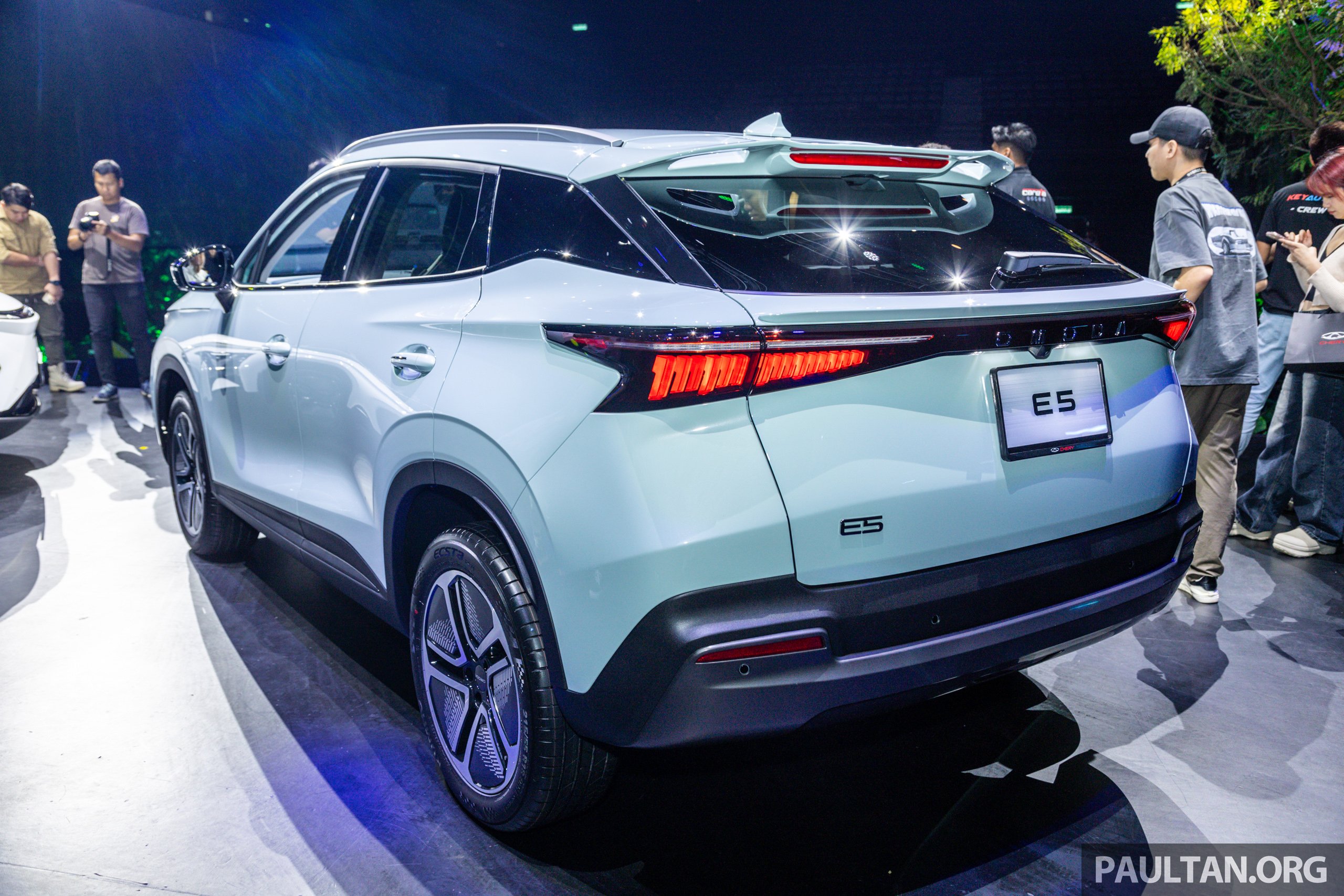
Satu lagi SUV, Omoda E5 ditawarkan dengan penjimatan RM11,000, daripada harga asalnya RM146,800. Asalnya ditawarkan sebagai unit import dari China, kini Omoda E5 dipasang di Kulim, Kedah.
Menggerakkan Omoda E5 adalah motor elektrik tunggal 204 PS/340 Nm dan pacuan roda hadapan, mampu membuat pecutan 0-100 km/j dalam masa 7.2 saat. Bateri lithium iron phosphate (LFP) 61 kWh yang digunakan mampu memberikan jarak gerak sehingga 430 km (WLTP), dengan kadar penggunaan tenaga 15.5 kWh setiap 100 km. Pengecasan melalui DC sehingga 80 kW boleh menaikkan bateri 30-80% dalam masa 28 minit.
Penjimatan paling besar ditawarkan untuk model Tiggo 8 Pro, iaitu RM15,000 daripada harga asalnya RM159,800. Ini dibuat selepas satu lagi promosi yang diadakan pada bulan September, yang memberikan diskaun sehingga RM8,000.
Di negara kita, Tiggo 8 Pro ditawarkan dengan enjin petrol 2.0 liter turbo, menghasilkan 256 hp dan 390 Nm kepada roda hadapan melalui transmisi automatik klac berkembar tujuh kelajuan. Antara kelengkapan yang diberi adalah termasuk dua skrin 12.3 inci, kemasan kayu, lampu suasana, tempat duduk hadapan larasan kuasa, bumbung panoramik, pengecas telefon tanpa wayar serta fungsi ADAS.
Turut tidak ketinggalan adalah Tiggo 7 Pro, yang ditawarkan dengan penjimatan sehingga RM4,000 daripada harga asalnya RM119,800. Model ini digerakkan oleh enjin petrol 1.6 liter turbo dengan kuasa 197 hp dan tork 290 Nm, dihantarkan kepada roda hadapan melalui transmisi automatik klac berkembar tujuh kelajuan.
Tiggo 7 Pro juga mendapat susun atur dalaman seperti Tiggo 8 Pro, dengan dua skrin 12.3 inci, pengecas telefon tanpa wayar, lampu suasana serta bumbung panoramik. Untuk ADAS, model ini mendapat AEB, Adaptive Cruise Control dengan fungsi stop and go, Lane Centring Assist, Rear Collision Alert, Blind Spot Monitoring dengan Collision Prevention, Rear Cross Traffic Alert dengan Auto Brake dan Auto high Beam.
The luxury vehicle market is steering toward a future where advanced geolocation technologies redefine the driving experience. Imagine a world where your car knows the fastest route to your destination and offers a seamless, personalised driving experience that anticipates your every need.
Industry analyses indicate that the global passenger car GPS navigation system market is poised to reach impressive heights, mirroring the increasing demand for sophisticated navigation solutions.
This guide will explore how luxury car manufacturers integrate these technologies to elevate convenience, security, and personalisation. From bespoke navigation systems to real-time traffic updates, we will uncover how these innovations set new standards in the automotive world.
The Evolution of Navigation Systems in Luxury Vehicles
Luxury vehicles have evolved from simple GPS units to complex navigation platforms that offer real-time updates and personalised routes. This evolution has been fueled by the integration of advanced mapping APIs like Radar, which play a crucial role in this transformation.
With the global location-based services market expected to soar, the demand for enhanced geolocation services in luxury vehicles is apparent. Here are some of the advancements in navigation systems and their key features and benefits.
Integration of Advanced Mapping APIs
Advanced mapping APIs are the backbone of modern navigation systems in luxury vehicles. These APIs allow luxury cars to provide real-time traffic updates and personalised route recommendations. By seamlessly integrating with other in-car technologies, mapping APIs enhance the overall driving experience.
Imagine driving through a bustling city, and your car automatically adjusts its route to avoid traffic jams and road closures. These advanced mapping systems make such capabilities possible, offering drivers a more intuitive and efficient navigation experience.
Personalised Route Recommendations
Personalized route recommendations have revolutionized navigation in luxury vehicles. Gone are the days of one-size-fits-all directions. Today, these systems consider traffic congestion, road closures, and even driver preferences to suggest optimal routes.
Integrating AI and machine learning further enhances the accuracy and reliability of these recommendations. Drivers can now enjoy a tailored navigation experience that adapts to their needs, making their journeys smoother and more enjoyable.
Real-Time Traffic Updates
Real-time traffic updates are invaluable for luxury vehicle drivers, helping them avoid congestion and reach their destinations efficiently. Traffic conditions can change rapidly, especially in urban environments, making these updates crucial for a seamless driving experience.
The Role of Geolocation Technology in Enhancing Vehicle Security
In the world of luxury vehicles, security is paramount. With their increasing value, geolocation technology has become a vital tool in ensuring their safety. From geofencing to real-time location tracking, these technologies significantly protect vehicles and ensure driver safety.
Geofencing and Location Tracking
Geofencing is a powerful feature that enables vehicle owners to set virtual car boundaries. Owners receive instant alerts if the vehicle crosses these boundaries, providing peace of mind and enhanced security.
Location tracking complements geofencing by offering real-time updates on a vehicle’s whereabouts. This capability is especially useful for fleet management and high-value vehicle protection, ensuring that owners always know the location of their assets.
Anti-Theft Features and Emergency Assistance
Advanced geolocation technology enables robust anti-theft features, such as remote immobilization and theft alerts. In the event of a suspected theft, owners can swiftly immobilize their vehicles remotely, thwarting potential thieves.
Emergency assistance features, such as automatic crash detection and SOS alerts, further enhance driver safety. These features are becoming standard in luxury vehicles, reflecting the importance of security in the automotive industry.
The Future of Luxury Vehicles and Geolocation Technology
The future of luxury vehicles is inherently tied to advancements in geolocation technology. Emerging trends are shaping the industry, promising to redefine the driving experience. One such trend is the increasing popularity of heads-up displays (HUDs), which offer drivers a safer and more immersive experience.
Emerging Trends in Geolocation Technology
Emerging trends like augmented reality navigation and AI-driven insights are poised to revolutionize the luxury vehicle market. These technologies promise to enhance the driving experience by providing more accurate and intuitive navigation solutions.
Luxury vehicle manufacturers must adapt to stay competitive as these trends gain traction. Integrating cutting-edge geolocation technology will be crucial in meeting evolving consumer expectations and setting new standards in the automotive industry.
The Impact of AI and Machine Learning
AI and machine learning are becoming increasingly viable in geolocation technology. These technologies enable more accurate and personalized navigation solutions, allowing continuous learning and adaptation to changing conditions.
By harnessing AI and machine learning, luxury vehicle manufacturers can offer drivers a truly personalized experience. Integrating these technologies ensures that navigation systems remain at the forefront of innovation, providing unparalleled accuracy and reliability.
Opportunities and Challenges
Integrating geolocation technology in luxury vehicles presents both opportunities and challenges for manufacturers. On the one hand, these technologies offer enhanced driver experiences, increased security, and differentiation in a competitive market.
Conversely, challenges include ensuring data privacy, managing technological complexity, and meeting consumer expectations. To succeed in this evolving landscape, manufacturers must strike a delicate balance between innovation and addressing these challenges.
Driving Forward: The New Standard in Luxury Vehicles
Luxury vehicles are setting new standards in the automotive industry by integrating cutting-edge geolocation technology. These advancements redefine the driving experience, offering drivers unprecedented convenience, security, and personalization.
Integrating advanced geolocation technology in luxury vehicles is not just a trend but a necessity for staying competitive in the market. As these technologies evolve, they will play an increasingly crucial part in shaping the future of the automotive industry.
By staying ahead of the curve, luxury vehicle manufacturers can remain at the forefront of innovation and deliver exceptional customer experiences. The road ahead is promising, with endless opportunities for growth and advancement in the intersection of luxury vehicles and cutting-edge geolocation tech.
For more on the latest in car and motoring reads, click here.
VW Group and Rivian collaborate on electrical architecture and software development
First Rivian to use jointly developed systems will be R2 due in 2026
First VW Group models will use the the systems from 2027
Volkswagen Group has decided to deepen its ties with U.S. electric vehicle startup Rivian, with the two companies announcing on Tuesday increased investment for their previously announced Rivian and VW Group Technology joint venture.
The joint venture was first announced in June with an initial investment of $5 billion, with the funding to be supplied by VW Group over a period of years and Rivian in return delivering its expertise in electrical architecture and software development.
Rivian CEO RJ Scaringe (left) and Volkswagen Group CEO Oliver Blume
On Tuesday, VW Group and Rivian announced the investment would be increased to $5.8 billion. The additional investment is the result of VW Group pulling ahead some potential future capital and changing the original deal structure, the companies said.
Currently, $1.3 billion is to be spent on software development, a further $3.5 billion is for VW Group to purchase shares in Rivian, and the remaining $1 billion is earmarked for a potential loan by VW Group to Rivian.
Rivian and Volkswagen Group electrical architecture and software stack
The joint venture, which is expected to start operations on Nov. 13, has been tasked with developing and supplying electrical architecture and software systems to both companies, with features like network hardware and software stacks that enable vehicles to be updated over the air for their full life cycle mentioned during an investor briefing.
The first vehicle to use the jointly developed systems was confirmed as Rivian’s R2 compact crossover due in 2026. VW Group said some Volkswagen models will likely be its first models to use the new systems, followed by models from Audi, and VW Group’s new Scout EV brand. During the investor briefing, VW Group CEO Oliver Blume said some sports cars could also use the systems, without providing further details.
Scout Terra and Traveler concepts
The joint venture’s initial base will be in Silicon Valley and employ around 1,000 engineers. Three additional sites spanning the U.S. and Europe are planned for the near future.
Both companies are open to further collaboration down the road in areas such as batteries, whole vehicle platforms, and joint production, but said this will need to be in addition to the announced joint venture deal.
Yesterday, we brought you initial photos, specs and equipment of the Nissan Kicks e-Power, but now we present to you a full gallery of the car – in top-spec VLT trim, no less. Edaran Tan Chong Motor (ETCM) is gearing up for the hybrid B-segment SUV’s launch next month, likely at the Kuala Lumpur International Mobility Show (KLIMS).
The company may be supremely late to the party, given that the car debuted in Thailand in facelifted form back in 2020, but it’s adamant the Kicks is able to give the established players a run for their money. As previously reported, the crossover is CBU fully imported from the Land of Smiles.
A total of two variants will be offered in Malaysia, the VL and this VLT, both powered solely by a single electric motor at the front producing 129 PS and 280 Nm of torque. It’s hooked up to a 82 PS/103 Nm HR12DE 1.2 litre naturally-aspirated three-cylinder that only serves as a generator for the motor and the 2.06 kWh battery, with no mechanical connection to the wheels.
This is similar to how the Honda HR-V e:HEV‘s powertrain works, except that car’s engine is connected to a single-speed transmission and a lock-up clutch to provide motive power at higher speeds. The Kick’s tardiness to enter our market does mean that Malaysians get a more powerful engine and a larger battery compared to the initial 2020 version.
So equipped, the Kicks e-Power is capable of sprinting from zero to 100 km/h in 9.5 seconds. “In-gear” acceleration is also strong, the car able to get from 100 to 120 km/h in four seconds flat. Fuel consumption is rated at 21.7 km per litre, resulting in a claimed total range of up to 900 km with the 41 litre fuel tank. You get a choice of Normal, Sport and Eco drive modes, plus a one-pedal e-Pedal Step mode.
Break out the measuring tape and you’ll realise that the Kicks is about half a size smaller than the competition. At 4,290 mm long, 1,760 mm wide and 1,605 mm tall, the Nissan is nearly 100 mm shorter than the HR-V and 170 mm shorter than the Toyota Corolla Cross, although its 2,615 mm wheelbase is comparable to both. Also comparable is the 423 litre boot, proving that the smaller size is not an impediment.
The styling of the Kicks is as per what was shown in 2020, with wide LED reflector headlights, a deep V-motion grille, a full-width taillight design and blacked-out A- and C-pillars for the de rigueur floating roof look. You also get standard-fit 17-inch two-tone five-spoke alloy wheels that are similar to what you’d find on the pre-facelifted Leaf EV.
Inside, the Kicks will be very familiar to those who own the Almera, sporting an all-but-identical flat-bottomed steering wheel, two-tone dashboard and door cards. The tech is also shared with that car and includes a seven-inch part-digital (speedometer is still analogue) instrument display and an eight-inch infotainment touchscreen with Apple CarPlay and Android Auto. The only visible differences are the black and maroon colour scheme, the e-Power-specific flat gear selector and an electronic parking brake.
Other bits of standard kit include LED fog lights, keyless entry, push button start, manual Zero Gravity seats, fabric upholstery, single-zone auto air con and six speakers. Seven airbags and autonomous emergency braking also come standard.
The list of additional kit for the VLT is short but significant and includes a digital rear-view mirror, a 360-degree camera system with Moving Object Detection (MOD), adaptive cruise control, blind spot monitoring and rear cross traffic alert. The top trim level also gains the option of a black roof.
The available colours are Black Star, Brilliant White Pearl, Brilliant Silver, Red Pearl and this Sunrise Orange hero hue, with the aforementioned black roof available on all but Black Star and Brilliant Silver (an exclusive Dark Metal Grey takes their place).
Given the late timing, the Kicks e-Power will need to be priced competitively to compete against the HR-V e:HEV RS and Corolla Cross Hybrid, which retail for RM141,900 and RM143,000 respectively. Would you buy the Nissan if it is priced well? Sound off in the comments after the jump.
The technical storage or access is strictly necessary for the legitimate purpose of enabling the use of a specific service explicitly requested by the subscriber or user, or for the sole purpose of carrying out the transmission of a communication over an electronic communications network.
Preferences
The technical storage or access is necessary for the legitimate purpose of storing preferences that are not requested by the subscriber or user.
Statistics
The technical storage or access that is used exclusively for statistical purposes.The technical storage or access that is used exclusively for anonymous statistical purposes. Without a subpoena, voluntary compliance on the part of your Internet Service Provider, or additional records from a third party, information stored or retrieved for this purpose alone cannot usually be used to identify you.
Marketing
The technical storage or access is required to create user profiles to send advertising, or to track the user on a website or across several websites for similar marketing purposes.