Restomod will use Biturbo Coupe body and Ghibli S twin-turbocharged V-6
Production to be limited to 33 units
The Maserati Shamal launched in 1990 didn’t see much success, despite featuring a body penned by the legendary Marcello Gandini, and a twin-turbocharged V-8 under the hood.
It was devised when Alejandro De Tomaso was running Maserati, and derived from the Biturbo to help reduce costs. Performance included a 0-60 mph time in a little over five seconds, which was quick for the time. Still, less than 400 were built by the time production was wound up in 1995, and very few of those made the trip to the U.S.
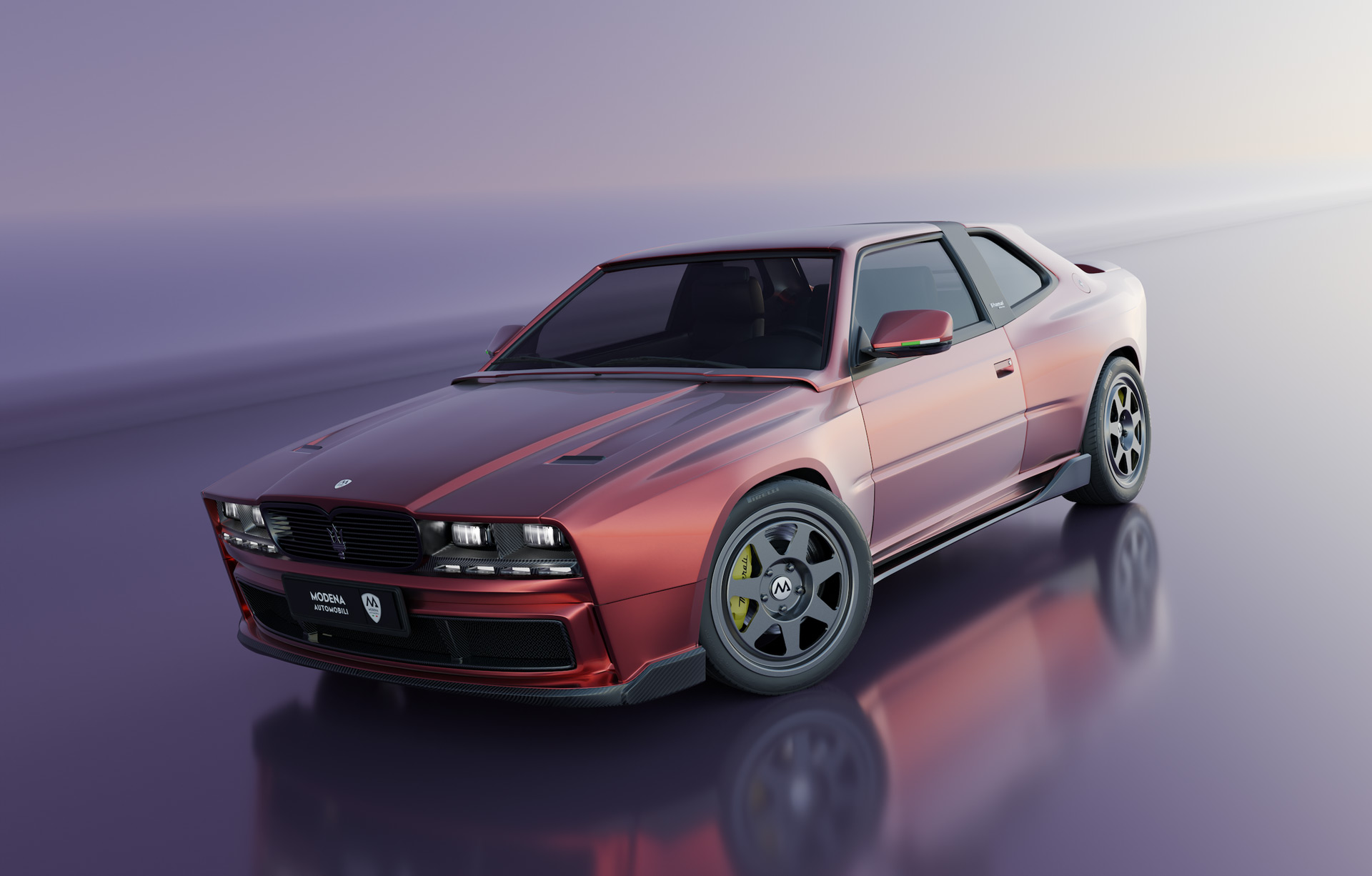
Maserati Shamal restomod by Modena Automobili
Italian company Modena Automobili hasn’t forgotten the Shamal and plans to launch a restomodded version, the design for which was previewed this month. The company won’t use original examples of the rare Shamal for the restomod project, though.
Instead, it will start with the lesser Biturbo Coupe and modify the design to resemble the Shamal’s lines. Modena Automobili’s design, dubbed the MA-01, will be unique, though. The body panels will be made more muscular in areas, and dotted where necessary with additional vents and other aerodynamic features. The new design will also have unique head and taillights. The rear will also include a squared-off spoiler and a signature black band with the Shamal logo.
Maserati Shamal restomod by Modena Automobili
It will also use a modern twin-turbocharged 3.0-liter V-6 borrowed from Maserati’s Ghibli S, instead of the Shamal’s original twin-turbocharged 3.2-liter V-8. Peak output will still be a stout 500 hp, versus about 322 hp from the Shamal’s original engine.
The modern car will also skip the original’s manual transmission in favor of an 8-speed automatic from ZF. This will help ensure swift acceleration, with Modena Automobili promising a 0-60 mph time of about five seconds and a top speed of 180 mph. Modern suspension and braking systems will also join the new drivetrain.
Maserati Shamal restomod by Modena Automobili
Modena Automobili is still working on building the first prototype but expects to have development completed in 2025. The company plans to limit production to 33 units, and has confirmed a starting price of 585,000 euros (approximately $621,000).
Maserati itself came up with its own design for a Shamal restomod in 2020. Dubbed Project Rekall, the design only existed as a series of sketches that were created to showcase what’s possible at Maserati’s Fuoriserie special projects division.
Updated Porsche 911 GT3 RS spotted testing at the Nürburgring
Hardcore 911 expected in 2025 as a 2026 model in U.S.
Updated Turbo and Turbo S also expected for 2026 model year
Porsche in May revealed the first models from the updated 992-generation 911 family, though the track-focused 911 GT3 RS wasn’t one of them.
The first of the updated 992 911s have arrived for the 2025 model year, including hybrid Carrera GTS, but the current GT3 RS along with the Turbo and Turbo S are all confirmed by Porsche to carry over unchanged for 2025.
2023 Porsche 911 GT3 RS
Our latest spy shots show a prototype for the updated 911 GT3 RS, which should arrive on the market next year, likely as a 2026 model for the U.S. The car is a more hardcore version of the track-focused GT3, which was unveiled in updated form in October. The updated GT3 (and GT3 Touring) starts sales early next year as a 2025 model in the U.S.
The GT3 RS prototype features the revised lights of the updated 911, and the heavy camouflage gear around the rear suggests a new rear fascia design likely sporting new side vents. A new rear diffuser design also appears to be present. The design at the front matches the current GT3 RS, though this too may change on more advanced prototypes.
It isn’t clear what Porsche has planned for the powertrain, but more power is normally included with such updates. The current GT3 RS is equipped with a 4.0-liter flat-6 that pumps out 518 hp, with drive sent to the rear wheels via a 7-speed dual-clutch automatic transmission.
The GT3 features a similar engine and kept its output unchanged for the update. Porsche went to great lengths to ensure the engine could still deliver the same 502-hp rating despite stricter emissions regulations, but with the next GT3, the automaker has hinted it may have to resort to turbocharging or hybrid technology. The same will likely be the case for the next GT3 RS, though there are also rumors a turbocharging system may be added as soon as this update for the current 992-generation version.
Before the updated GT3 RS arrives, Porsche motorsports partner Manthey-Racing will introduce a tuned version of the current GT3 RS. Prototypes for this version are also out testing and the debut should take place soon.
Prototypes for the updated Turbo and Turbo S are also out testing, and also prototypes for a potential new version that might be dubbed a Turbo S Touring.
Located just about two hours from Florence, Bologna is an equally enticing destination to visit on a trip to Italy. With a remarkable food history dating back to the Middle Ages, it’s the place to thank for some of the world’s most beloved dishes, including lasagne alla bolognese, tortellini, and ragù.
The northern Italian city is also home to the oldest university in the Western world, and it maintains a music scene so rich that it was designated a UNESCO City of Creative Music. I recently visited and was impressed by its seamless blend of old and new: A lively college community gathered in a pop music-fueled bar just steps from a towering sixth-century Gothic basilica. Food vendors tempted shoppers with crystalline slices of parmesan and crates adorned with tiny tortellini shells. Nearby, large groups sat around communal tables enjoying an aperitivo of sparkling spritzes.
My tour guide, Catia Aliberti, made the city’s rich history and personality come to life over my three-day stay. “The cultural tradition of Bologna is conviviality,” she said. “Sharing meals with friends and acquaintances is a much-awaited moment of the day. It can be at home or in the streets of the city, in the markets or in the osterie (taverns).”
This social atmosphere is evident on any given day in Bologna — a city you can easily visit solo like I did, taking in its ornate porticoes and terra-cotta-colored squares buzzing with people in search of the next bar or concert. “Culture and the arts are part of the city’s identity, just like all the fresh and local food that represent our great quality of life,” Aliberti added.
Read on for how to experience the best of Bologna.
Best Times to Visit Bologna
Wildlab/Bologna Welcome
To beat peak season prices and crowds, consider visiting Bologna from September to October or April to May. When it comes to weather, it can be a city of extremes, with sizzling summertime temperatures and damp winters. Opt for the spring or fall to enjoy the best of the city’s buzzing outdoor markets and piazzas,.
Best Things to Do in Bologna
Wildlab/Bologna Welcome
To better understand how to explore Bologna, look to its nickname: La Dotta (The Learned One, for its University), La Grassa (The Fat One, for its world-famous cuisine), and La Rossa (The Red One, for its terra-cotta roofs). Public spaces to commune and experience all three abound here. Start at the most famous: Piazza Maggiore, a central square that commonly serves as a meeting place for visitors and residents. The crowd-filled hub is home to Basilica di San Petronio, a stately church with a facade that was never completed due to lack of funds. Inside, you’ll find a number of murals and the world’s longest sundial, laid in 1656 by the famous Italian astronomer Giovanni Domenico Cassini. At Piazza Maggiore, climb Torre dell’Orologio, a 15th-century clock tower equipped with two terraces offering panoramic views of the city and hills in the distance. Also on the piazza is Salaborsa Library, a beautiful public space where you can see ancient Roman ruins through the glass-paned floor.
Bologna’s intricate porticoes are an integral part of the city’s architectural heritage and identity. These ancient arcades, inscribed on the UNESCO World Heritage list in 2021, provide shade as they cover walkways. Map out a visit to the oldest wooden iteration on Via Marsala, and the longest covered walkway in the world, with an impressive 666 arches — Portico di San Luca.
The city also celebrates the power of cinema, and movie lovers should not miss the Cineteca di Bologna, a center for film restoration and preservation that houses more than 18,000 international movies. In the summer, Piazza Maggiore lights up with the biggest open-air film screenings in Europe, called Sotto le Stelle del Cinema. Past attendees include Martin Scorsese, Francis Ford Coppola, Jane Campion, and John Landis.
Bologna’s location in Emilia-Romagna also makes it a great home base for day trips. During my visit, I took the one-hour drive from Bologna to Modena, a UNESCO World Heritage city and fortified medieval town that first sparked my interest thanks to its culinary scene. Modena is also well-known as one of the greatest producers of balsamic vinegar in the world. Called black gold because of its dark appearance, its highly concentrated flavor, and the complex process employed to make it, the vinegar is celebrated at the Museo del Balsamico Tradizionale in Spilamberto with a full tour and tasting. In Moderna’s city center, explore the food vendors at Mercato Albinelli, and take a seat at any place with a menu offering the regional specialty: tortellini en brodo (pockets of pasta stuffed with ricotta and submerged in a rich chicken broth). Or, you could plan ahead and try to land a coveted reservation at Massimo Bottura’s Osteria Francescana, a three-star Michelin restaurant that has been called one of the best in Italy.
Best Places to Eat and Drink in Bologna
P. Sorgetti/Bologna Welcome
Bolognese sauce was born here, and there are places all around the city to try the fragrant, slow-cooked meat sauce. Sfoglia Rina is one of the most popular options, and the daily line out the door does not deter residents and visitors alike from waiting patiently to dig into plates of tagliatelle al ragù and lasagne verde. TheBolognese twist on this classic dish features creamy béchamel sauce (rather than mozzarella and ricotta) layered with slow-cooked ragù between green spinach pasta shells.
I had my first bite of the dish at Noi, located in Bologna’s largest covered market, Mercato delle Erbe. The food hall houses a number of delis, pizzerias, restaurants, and bars worth a visit, but it would be a mistake not to make a special stop for Noi’s take on lasagna — a bubbling, picture-perfect assemblage of flavor and fresh ingredients. Noi is also a great place to try one of Bologna’s most loved antipasto pairings: fried, lightly salted dough pillows called tigelle, and the tangy, soft squacquerone cheese.
Past the communal Piazza Maggiore, head down a small alleyway to reach the family-owned Trattoria Da Me nella Torre, located inside the medieval Torre Galluzzi tower and helmed by chef Elisa Rusconi. In addition to its impressive location, the menu features a handmade pastas, a slow-cooked egg appetizer served in a parmesan meringue, and a memorable gratin potato gnocchi filled with ricotta, confit tomato puree, and a marjoram emulsion. The restaurant’s opening came with great excitement, as its sibling restaurant, Trattoria Da Me, is an institution in the city, heralded for modernizing traditional Bolognese cuisine without losing its rustic history.
For more variety, make your way to the nearby shaded alleyways of Bologna’s oldest market — the Quadrilatero — and neighboring wine bars like Osteria del Sole, the oldest watering hole in the city.
Enoteca Storica Faccioli is another good option, particularly for its natural wines and impressive selection of cured meats that make Emilia-Romagna so famous. Stop by any salumeria for a cut of Bologna’s very own peppery mortadella — so prized it has a protected geographical indication. “The geographical position of the Emilia-Romagna region has favored a crossroads of people and cultures over the centuries. Our economy, based mainly on agriculture and animal breeding in past centuries, has encouraged the development of excellent products that were then transformed and enriched by delicious recipes and the imagination of chefs,” explained Aliberti.
Best Places to Stay in Bologna
Courtesy of Grand Hotel Majestic
During my stay, I checked into Grand Hotel Majestic già Baglioni, housed in a former archdiocesan palace from the 18th century. A member of the Leading Hotels of the World, this luxury property lies within walking distance of all of the city’s major sites, including Piazza Maggiore. Design touches include centuries-old frescoes and gilded antique furniture, giving the space an air of nobility.
Some of the 106 rooms have windows adorned with silk drapes, Murano chandeliers, and terraces. The property’s restaurant, I Carracci, serves traditional Bolognese food in a room adorned with frescoes.
For proximity to major train stations, consider AC Hotel Bologna, a Marriott property with 127 spacious rooms, some with city views. If you’re looking for a more residential experience that leans into the city’s communal spirit, book an apartment with Homes & Villas by Marriott Bonvoy, which includes charming vintage spaces near the heart of university life and the city’s greatest landmarks.
Also located in the city center on a quiet street, Hotel Corona d’Oro has a luxury boutique feel with just 40 rooms that include marble bathrooms, stucco work, and vintage Italian furniture. Enjoy the quiet lounge areas and take advantage of the bikes available for guests to ride around the city.
The updated 2025 Porsche Taycan family boasts 13 members
A new Taycan 4 and revised Taycan GTS have been revealed
The Taycan GTS benefits from a 100-hp boost over the outgoing model
Porsche in February unveiled a mid-cycle refresh for its Taycan, which has been introduced for the 2025 model year in the U.S.
However, not every model in the Taycan lineup has been launched in updated form. On Tuesday, Porsche took the covers off the updated 2025 Taycan GTS as well as the first 2025 Taycan 4, a new addition to the lineup like the 2025 Taycan Turbo GT flagship launched earlier this year.
2025 Porsche Taycan 4
The updates to the 2025 Taycan family have added more range and power to many models, as well as faster charging and revised styling. Buyers also have new color and trim options to choose from, including a striking Purple Sky Metallic.
In the case of the GTS, which continues to be offered in sedan and Sport Turismo wagon body styles, peak output from the standard dual-motor, all-wheel-drive powertrain is now 690 hp with Launch Control, versus 590 hp in the outgoing model. A new push-to-pass function included in the standard Sport Chrono package also provides a boost of extra power for 10 seconds.
2025 Porsche Taycan GTS Sport Turismo
The extra power is courtesy of a more powerful rear motor, a modified pulse inverter with optimized software, and improved cooling, according to Porsche. Charging speeds have also been increased. Using a DC fast-charger, charging at rates of up to 320 kw are now possible, up from 270 kw previously. The maximum regeneration capacity during braking has also increased to up to 400 kW.
Performance for the GTS includes 0-60 mph acceleration in 3.1 seconds, down 0.4 seconds from the outgoing model. The quarter-mile time is also 0.7 seconds quicker at 11.1 seconds. Porsche also gave the GTS the sportier sound of the Turbo S, to help further emphasize its performance.
2025 Porsche Taycan GTS
The GTS comes standard with the Taycan’s Performance Battery Plus battery, while that bigger battery is available on the Taycan 4. Range estimates for the two models haven’t been announced.
In the Taycan 4, which is one step above the rear-wheel-drive base Taycan, a dual-motor, all-wheel-drive powertrain delivers a maximum 402 hp with the standard Performance Battery and 429 hp with the available Performance Battery Plus. For the benchmark 0-60 mph sprint, the 4 delivers a fastest time of 4.4 seconds, or 0.1 of a second quicker than its rear-wheel-drive sibling.
2025 Porsche Taycan 4
Despite being an entry-level model, the 4 comes well equipped as standard with features such as 19-inch wheels, matrix LED headlights, Porsche Traction Management, Porsche Adaptive Air Suspension, and Porsche Active Suspension Management.
Order books for the GTS and 4 are open and first deliveries are scheduled for early next year. Pricing starts at $105,295 for the 4, $149,895 for the GTS, and $151,795 for the GTS Sport Turismo. All figures include a $1,995 destination charge.
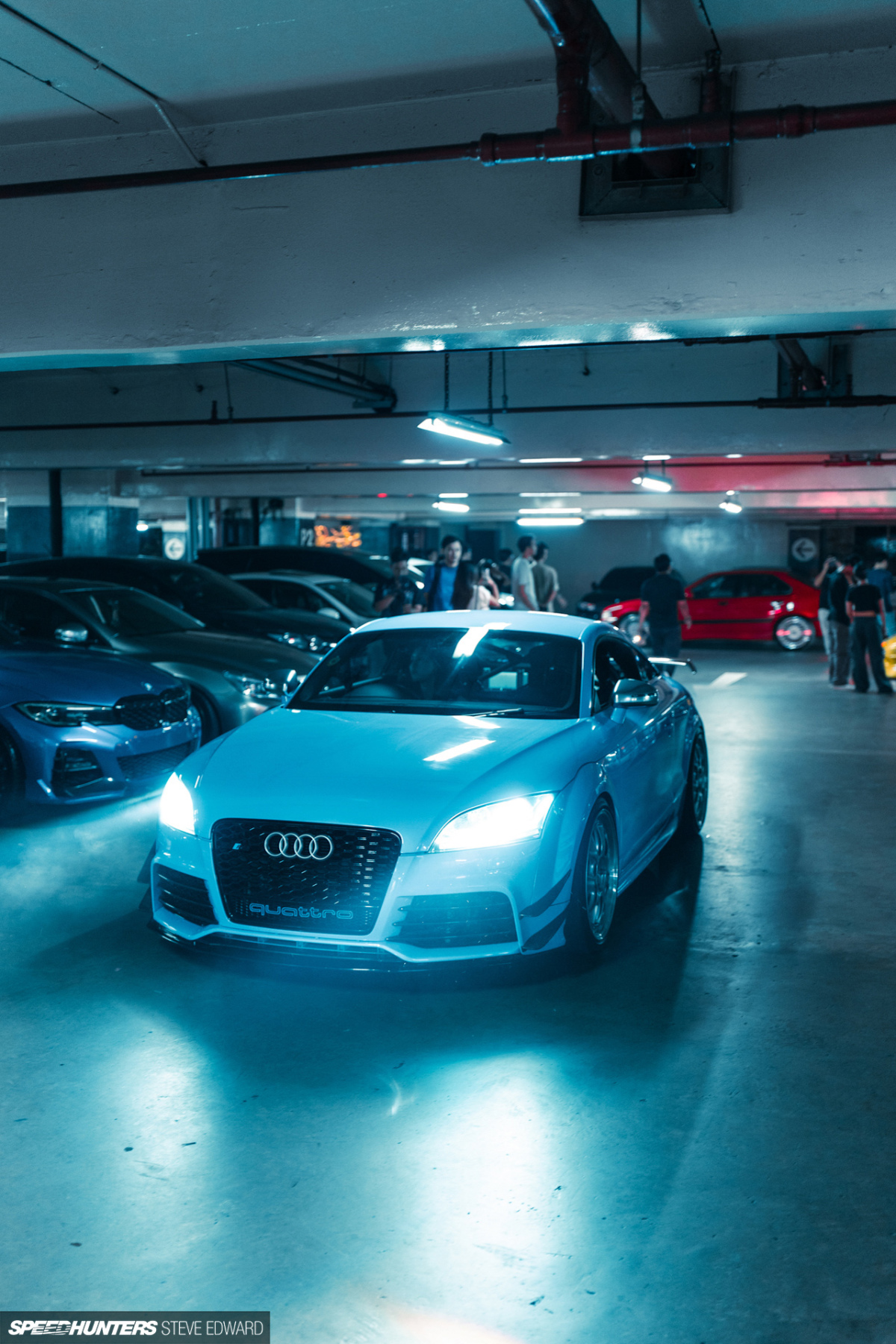
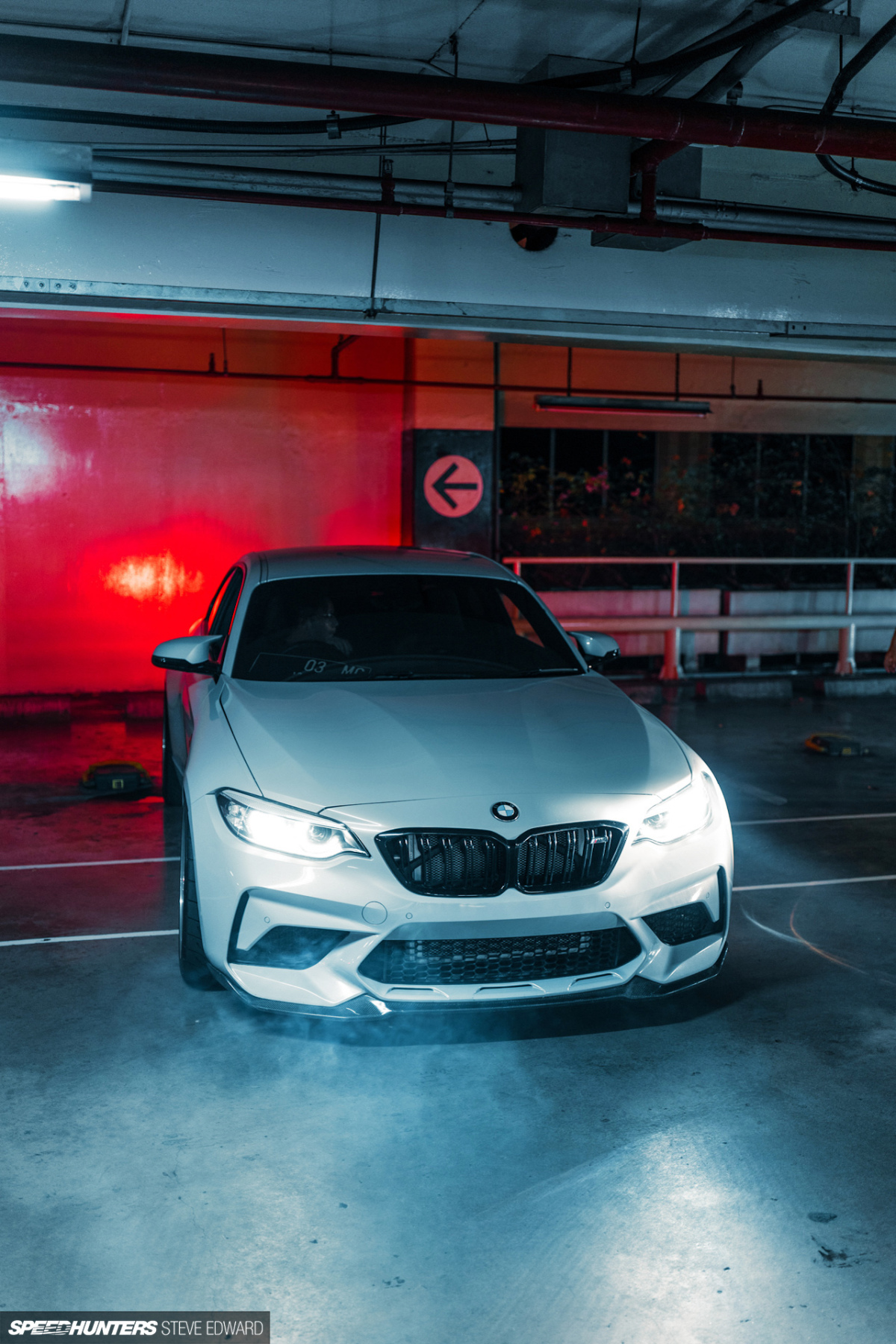
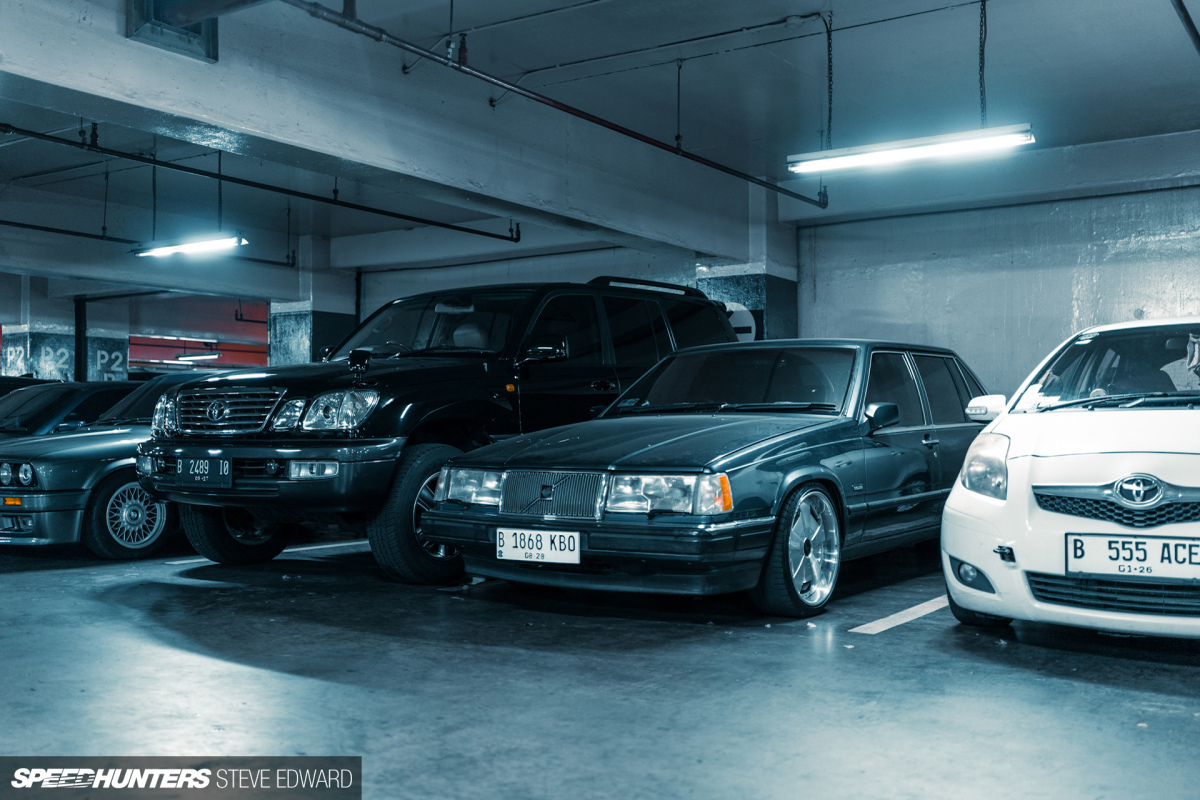
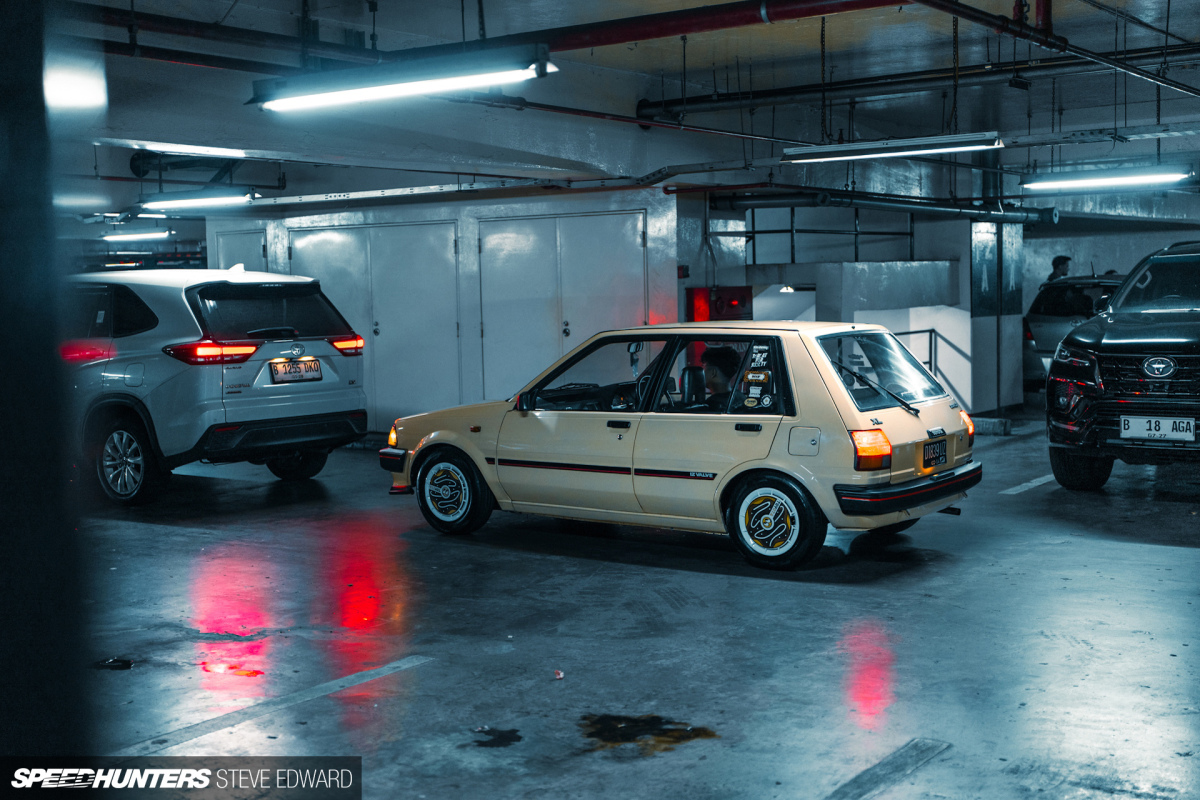
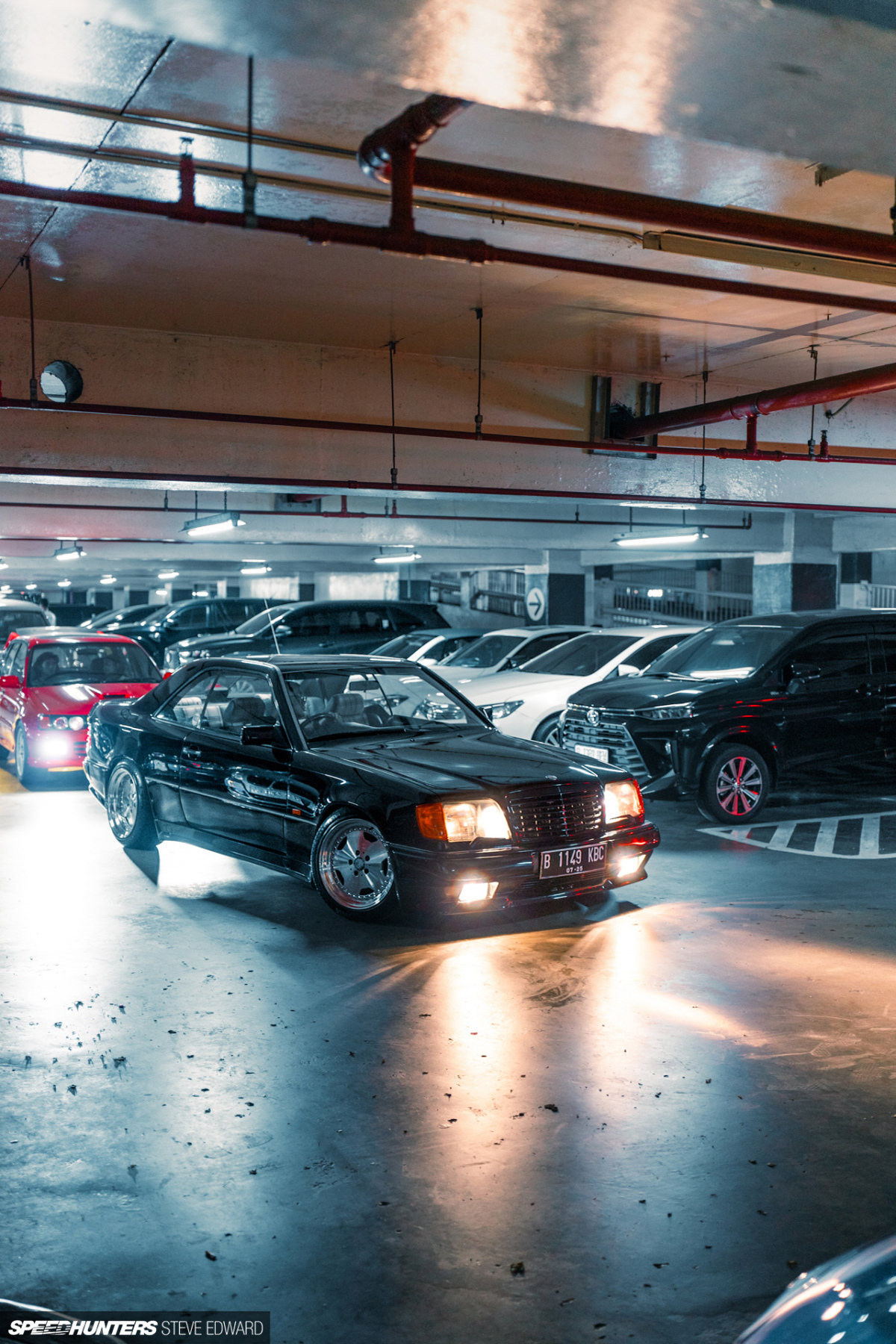
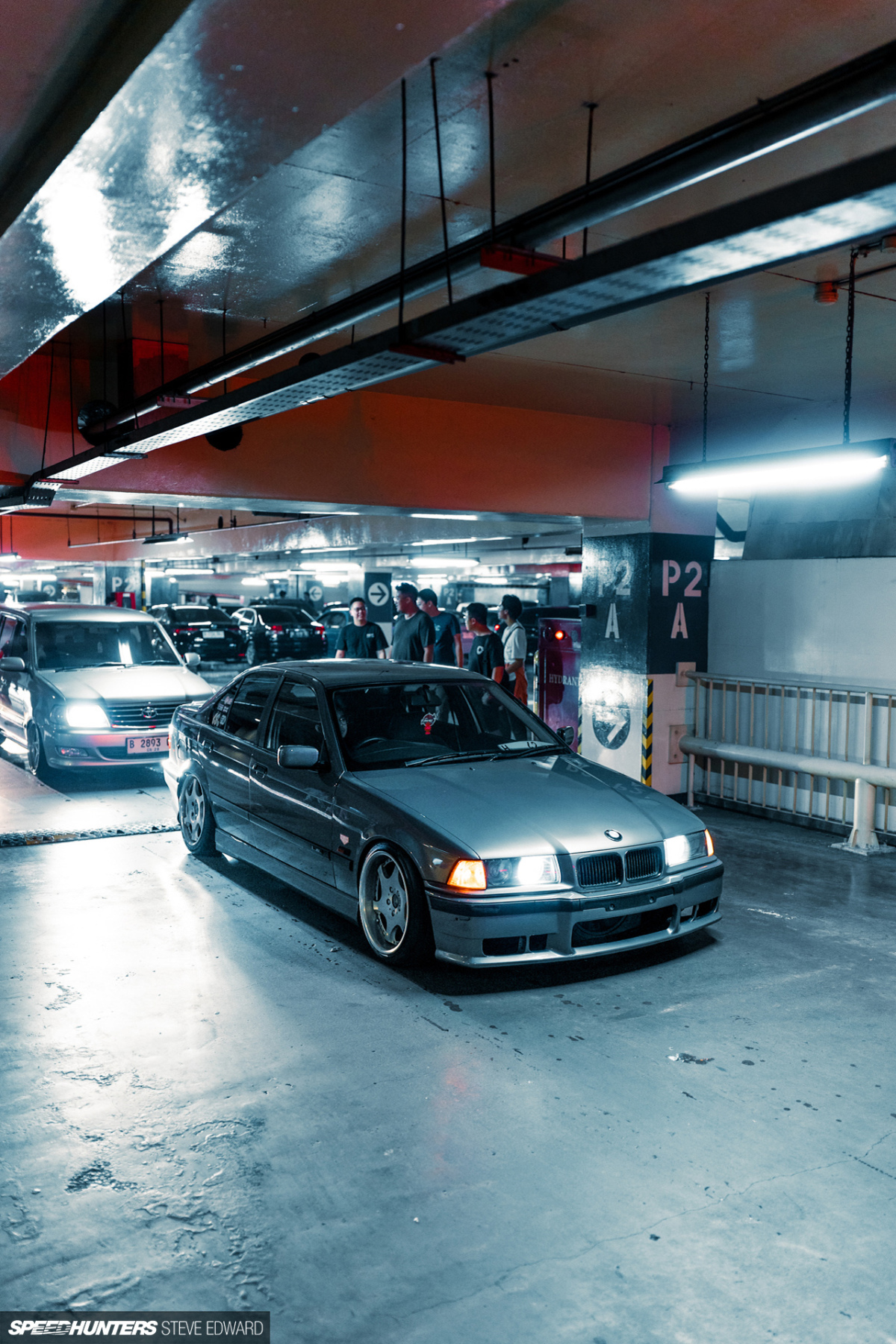
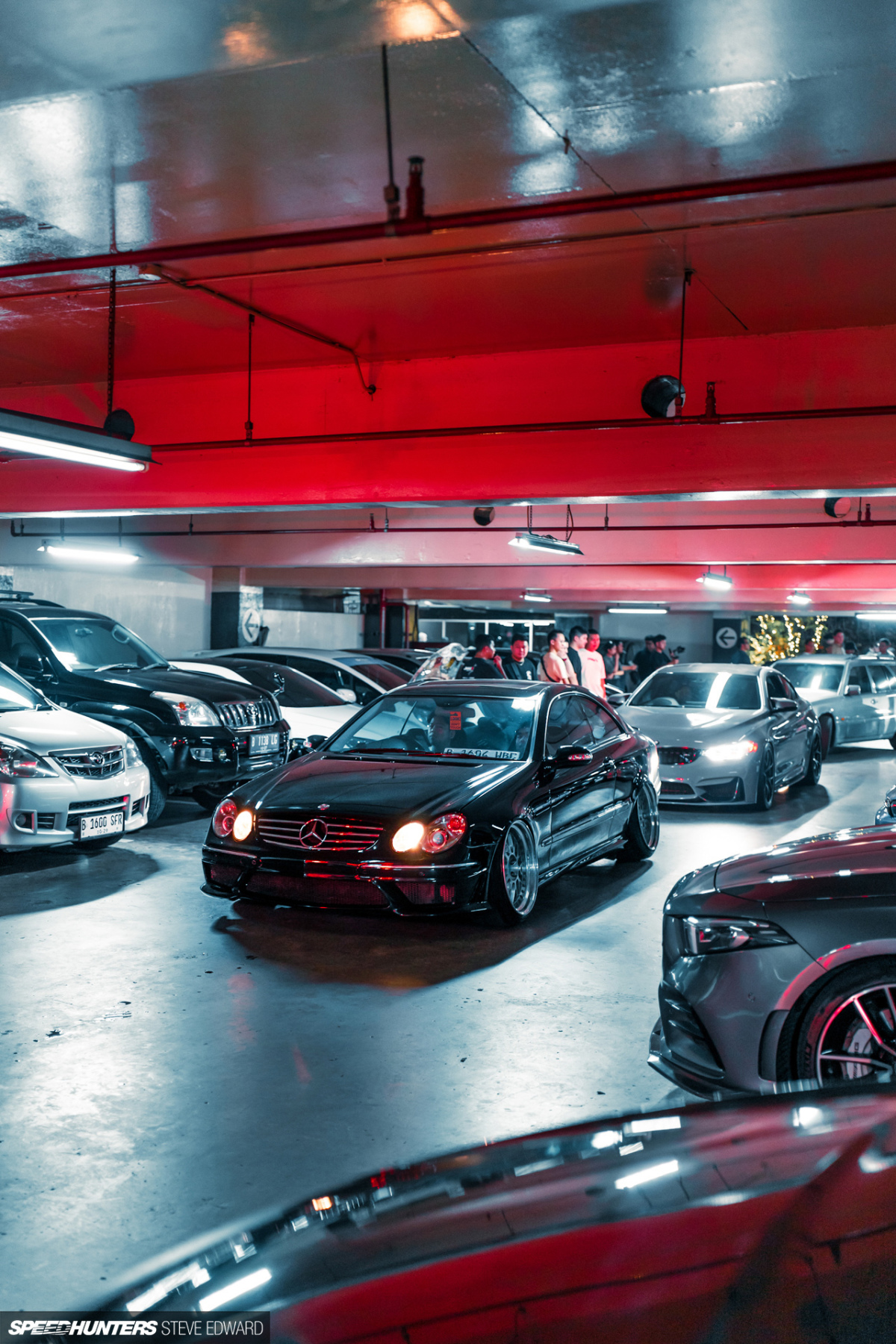
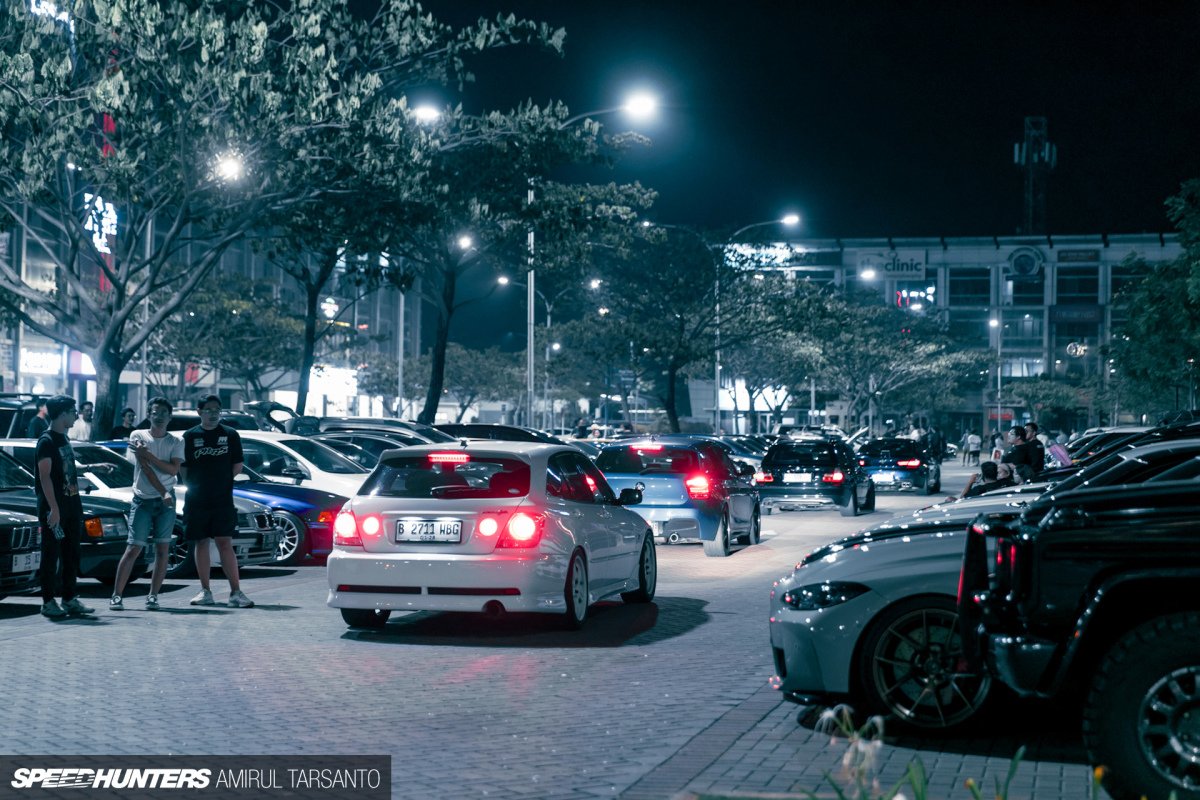
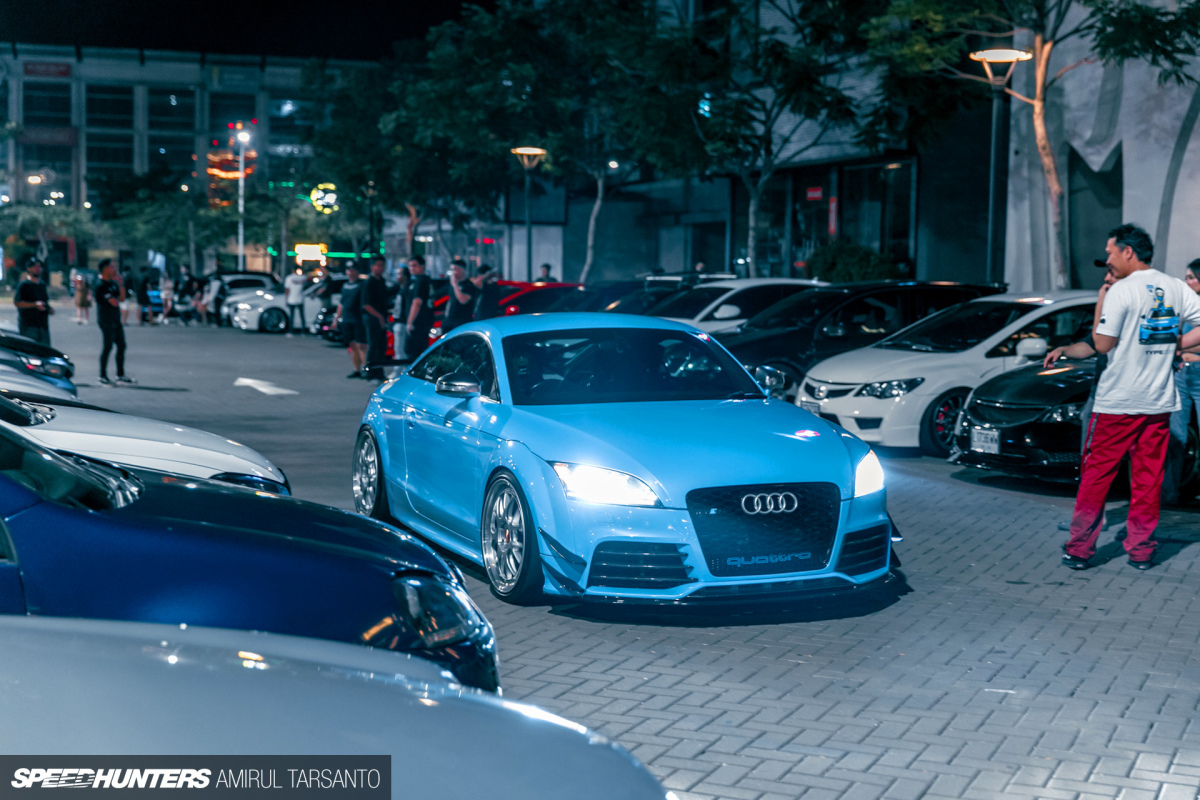
It was 9:00pm at the parking structure of a shopping mall in South Jakarta, Indonesia. The mall was set to close in less than an hour, but the parking lot was filling up, modified street cars rolling in en masse.
During my recent visit back to my home country, I made it a point to fill my weekends with all kinds of car events. While major exhibitions like the Indonesia Modification & Lifestyle Expo (IMX) are a great way to see the latest builds, it’s the smaller, more casual meet-ups that capture the true essence of local car culture.
This late-night meet was on my radar long before my trip to Indonesia. A group of local enthusiasts known simply as ‘The Crew’ have been regularly hosting these open gatherings for a while, and when I heard there was one happening on my final weekend in Jakarta, I was more than ready to check it out.
Upon arrival, I was met with a long line of vehicles waiting to get in – a great sign. All I could think about was getting out of the car and start snapping shots. After a brief wait, I found a parking spot and wasted no time getting busy with my camera.
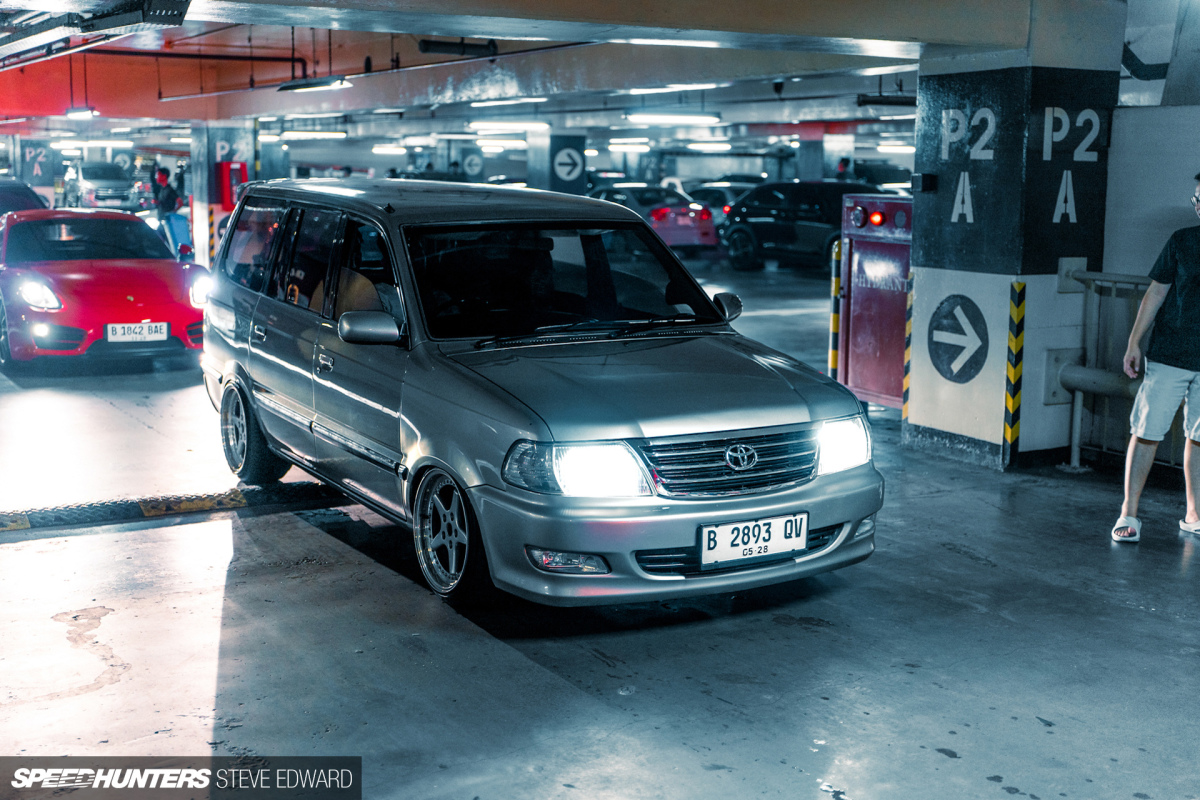
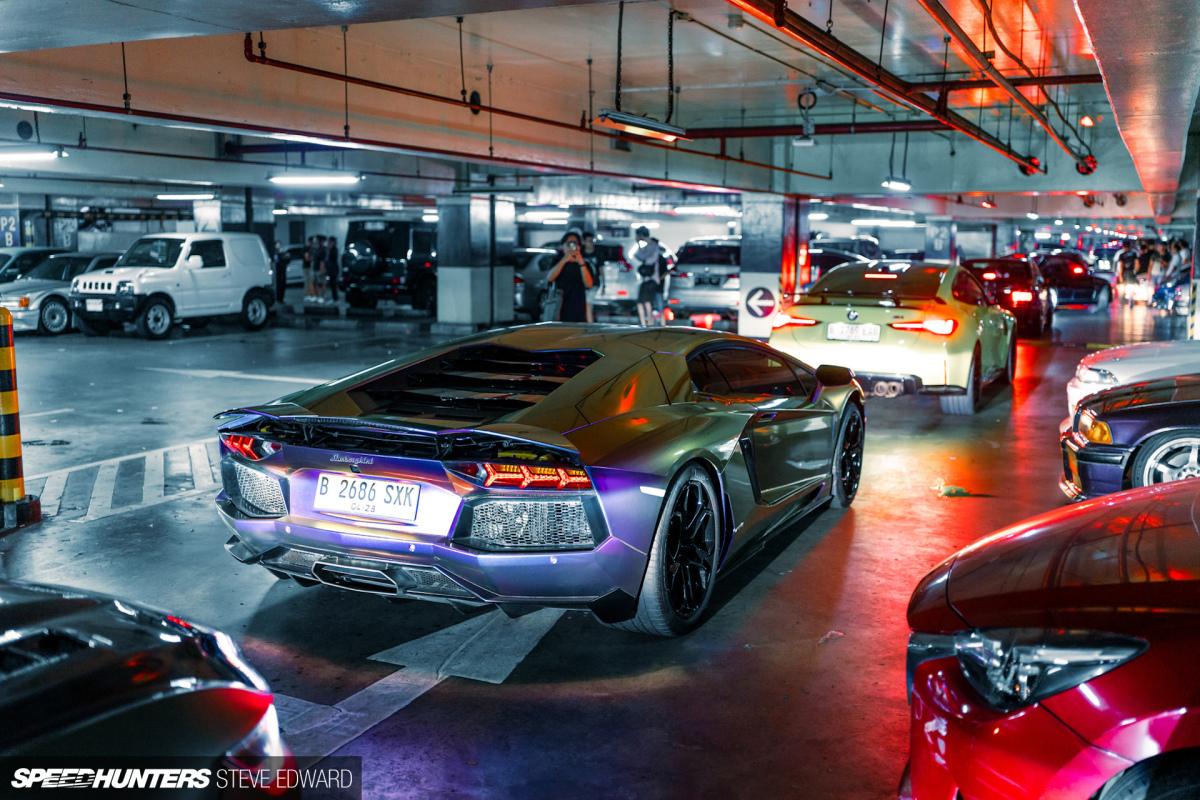
It didn’t take long, though, for me to realize that a tight parking garage filled with idling cars – many of them older models without catalytic converters – was going to produce a lot of exhaust fumes. The sounds of revving engines echoed through the building, amplified by the concrete walls. Still, the atmosphere was electric, with people excited to see everything from humble Toyota Kijangs to the occasional Lamborghini Aventador rolling in.
Honda Civics are a staple at any car meet, but I was surprised by the variety of generations that showed up. There was almost every iteration of the Civic that night, except for the very first and the newest 11th-gen model.
It was cool to see so many enthusiasts keeping the older models like the second-gen Civic alive. In a country where late-model performance cars are out of reach for many, it’s clear that the love for cars – no matter how ordinary they are – runs deep in Indonesia. You have to respect that.
One car that caught my eye was a bright yellow Daihatsu Terios. At first, it seemed a bit much, but after a few passes in front of my lens, the eccentricity grew on me.
As in Malaysia, the A31 Nissan Cefiro is often seen as an alternative to the Nissan Skyline in Indonesia. Unlike the Skyline, the Cefiro was officially sold here and doesn’t carry the same hefty price tag in the used market. This particular Cefiro had been nicely modified with an RB25DET Neo engine from an ER34 Skyline, an Autech body kit, and a BNR32 GT-R Dark Blue Pearl respray. SSR Hasemi wheels completed the car’s clean yet aggressive look.
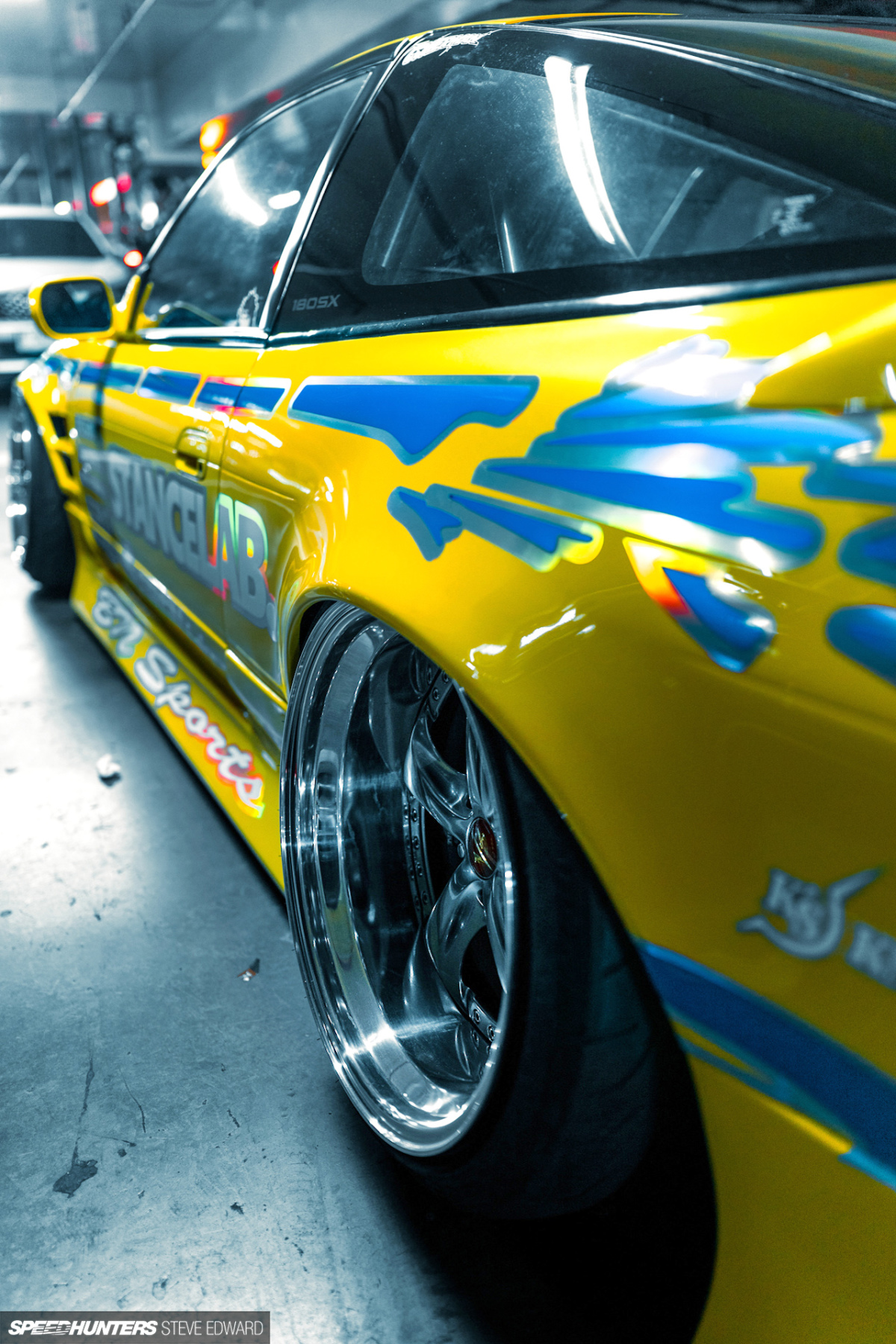
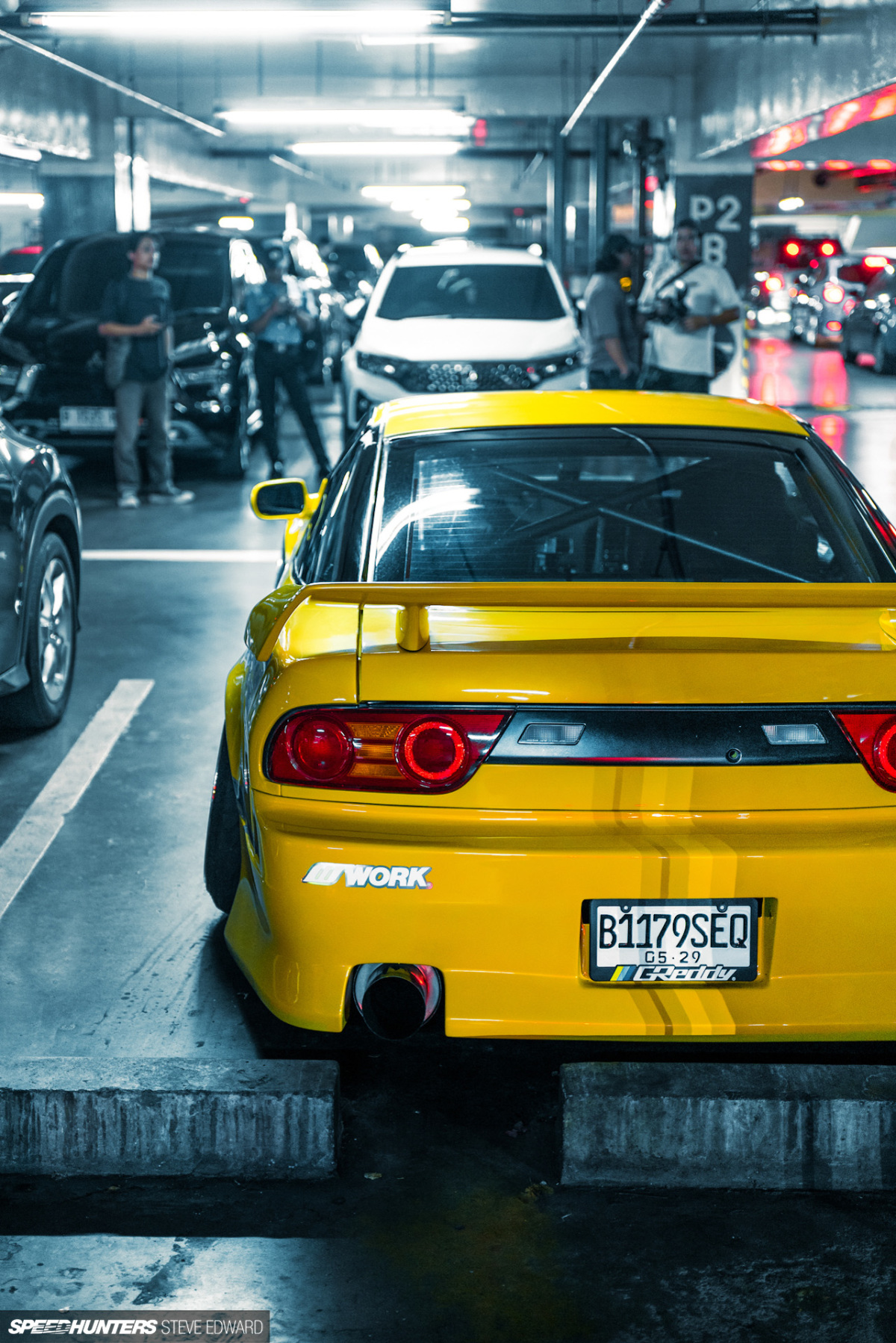
But the true standout of the night had to be Stancelab’s Nissan 180SX. I saw it at IMX 2024 and wasn’t expecting it to show up here, but the BN Sports-kitted RPS13 is no garage queen. Regularly seen out and about, it’s one of the cleanest, most polished S-chassis cars on the streets of Jakarta.
The meet continued well past midnight, after which many attendees cruised along the metro highway to a spot in North Jakarta.
Nights like these serve as a reminder of the ‘culture’ in car culture. No matter where you are in the world, it’s the people that bring it to life. I’m grateful to have experienced that in Jakarta and to have made new friends during my stay.
How To join the IATS program: We have always welcomed readers to contact us with examples of their work and believe that the best Speedhunter is always the person closest to the culture itself, right there on the street or local parking lot. If you think you have what it takes and would like to share your work with us then you should apply to become part of the IAMTHESPEEDHUNTER program. Read how to get involved here.
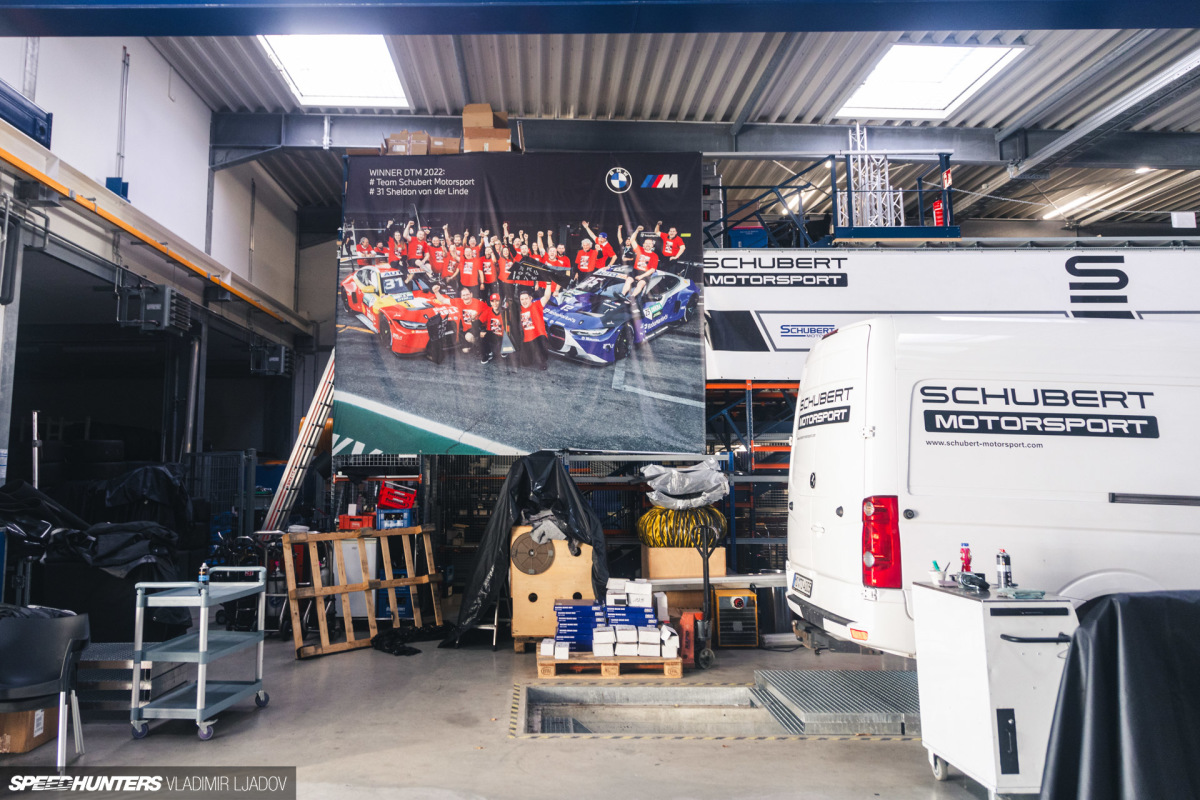
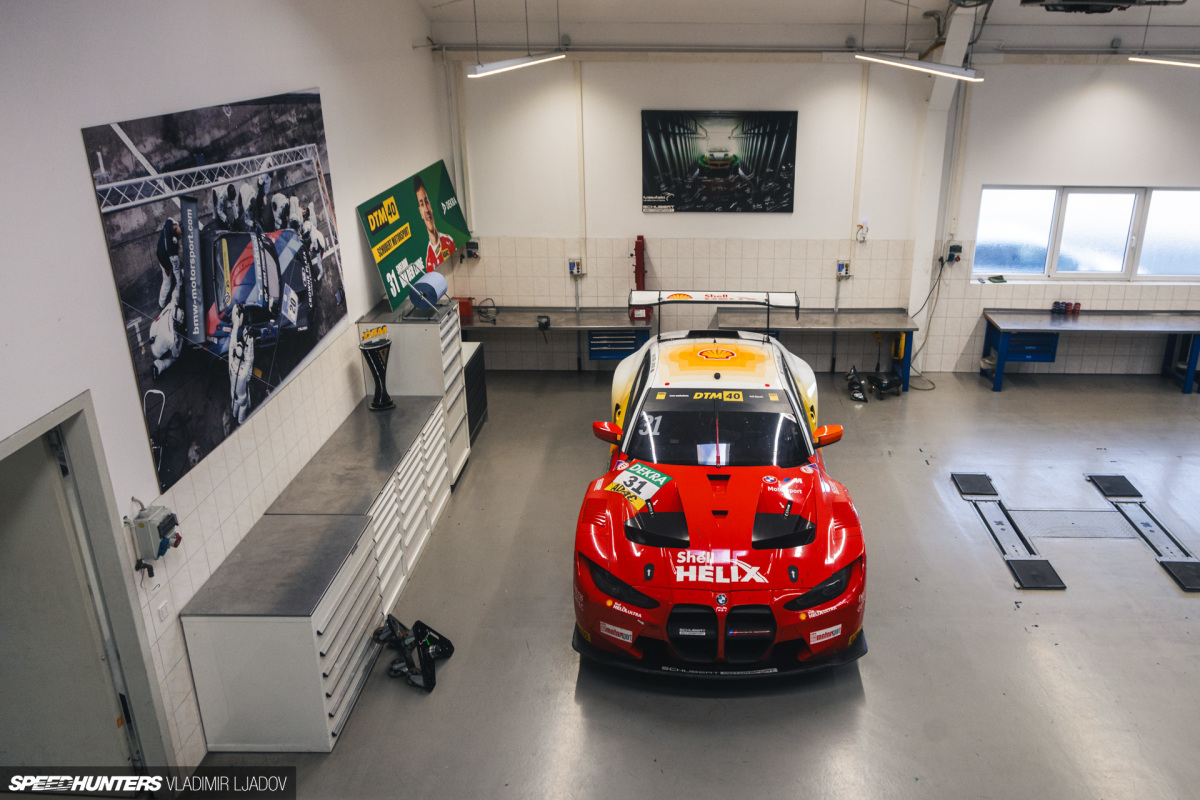
I recently had the privilege of visiting Schubert Motorsport’s headquarters in Oschersleben, Germany, just as the team returned from their victorious 2024 DTM (Deutsche Tourenwagen Masters)season.
Schubert Motorsport had clinched the team title for the second time since 2022, and their 7,500 m² state-of-the-art facility located next to Motorsport Arena Oschersleben serves as the hub of their operation.
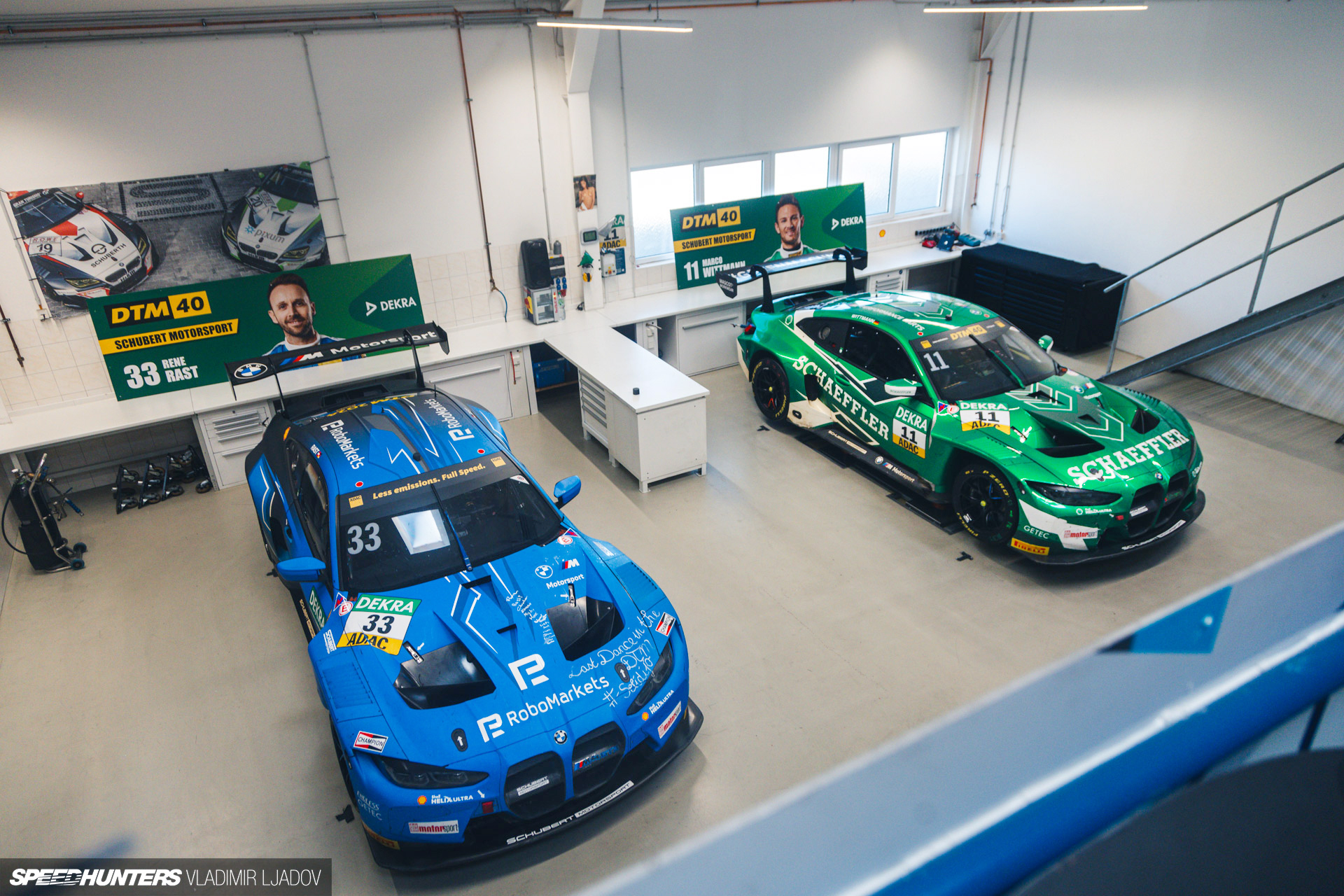
Under the leadership of team principal Torsten Schubert, a former European autocross champion, the team arrived fresh off the season finale at Hockenheimring, where René Rast secured a third-place finish in the #33 BMW M4 GT3. That podium spot sealed the team championship for Schubert Motorsport, capping off an impressive season in which drivers Rast, Sheldon van der Linde, and Marco Wittmann notched four wins and three additional podiums.
Stepping into the facility, I was immediately immersed in Schubert Motorsport’s rich history and achievements. Founded in 1999, the team quickly became a dominant force in German motorsport, first in touring cars and endurance racing. The team has forged a unique partnership with BMW, becoming a factory-supported customer team in 2012.
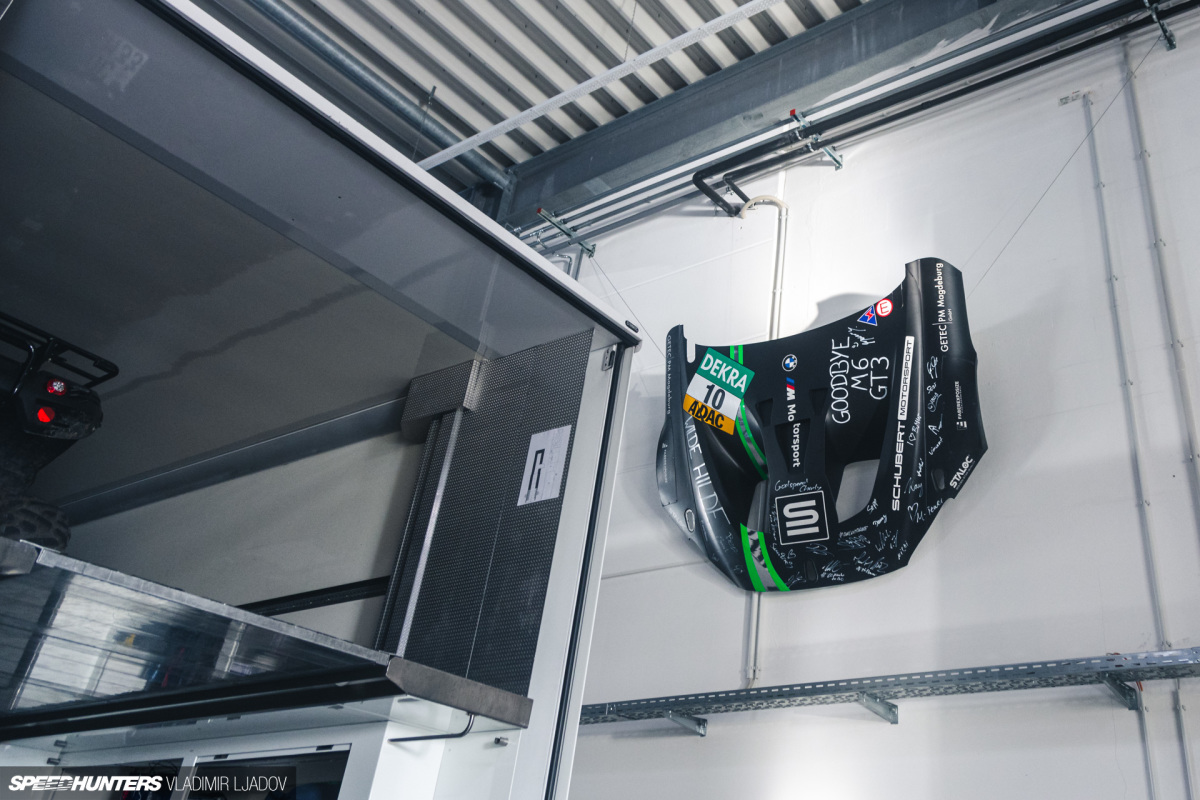
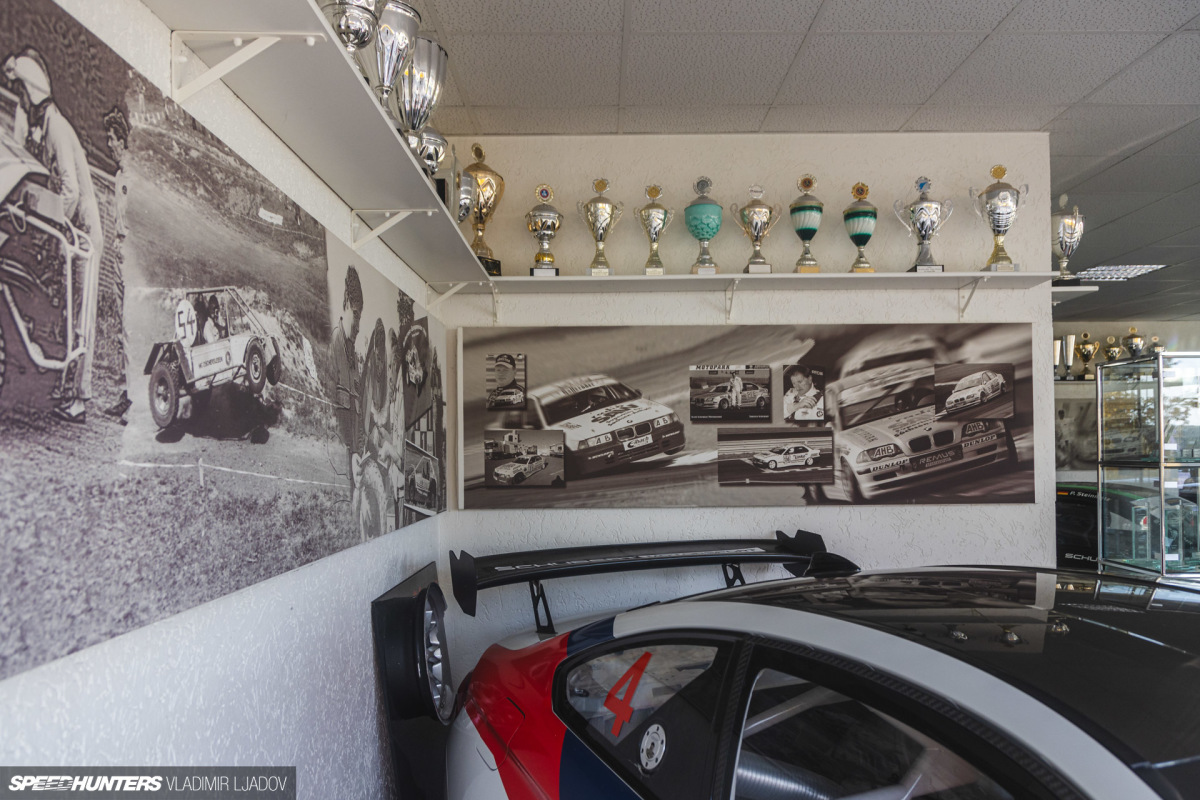
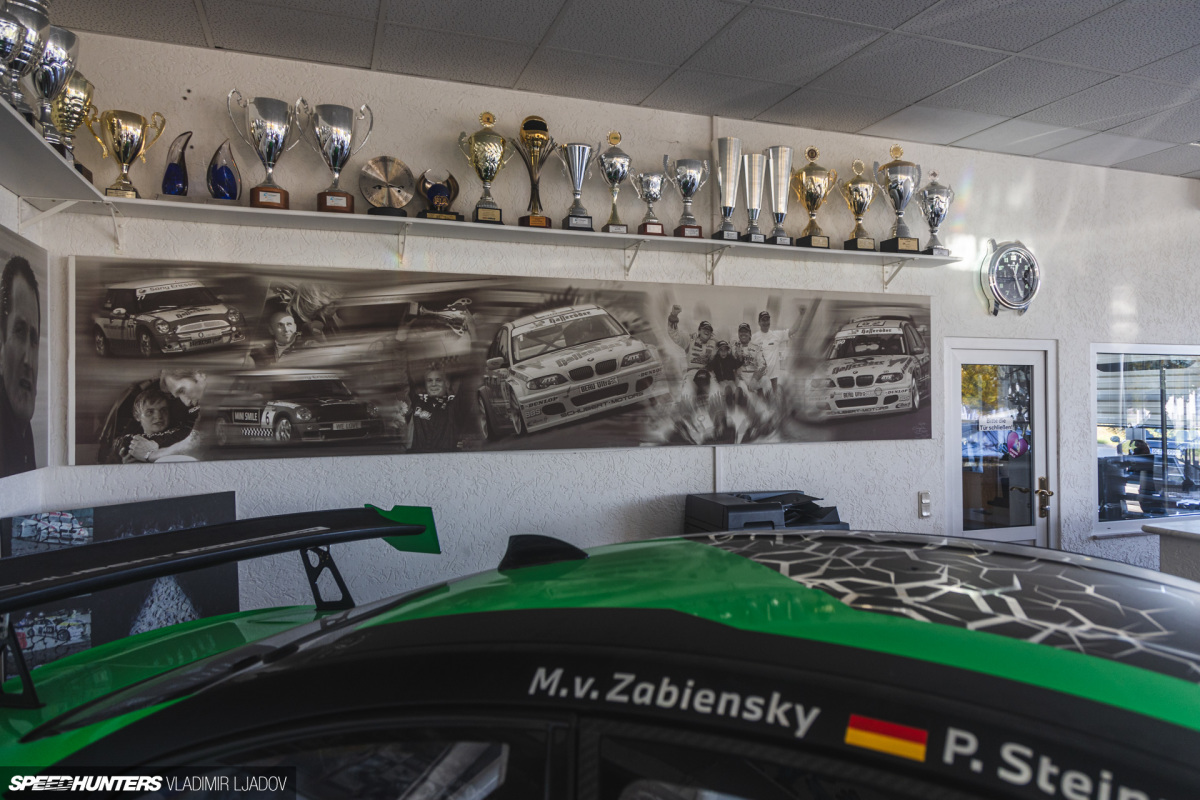
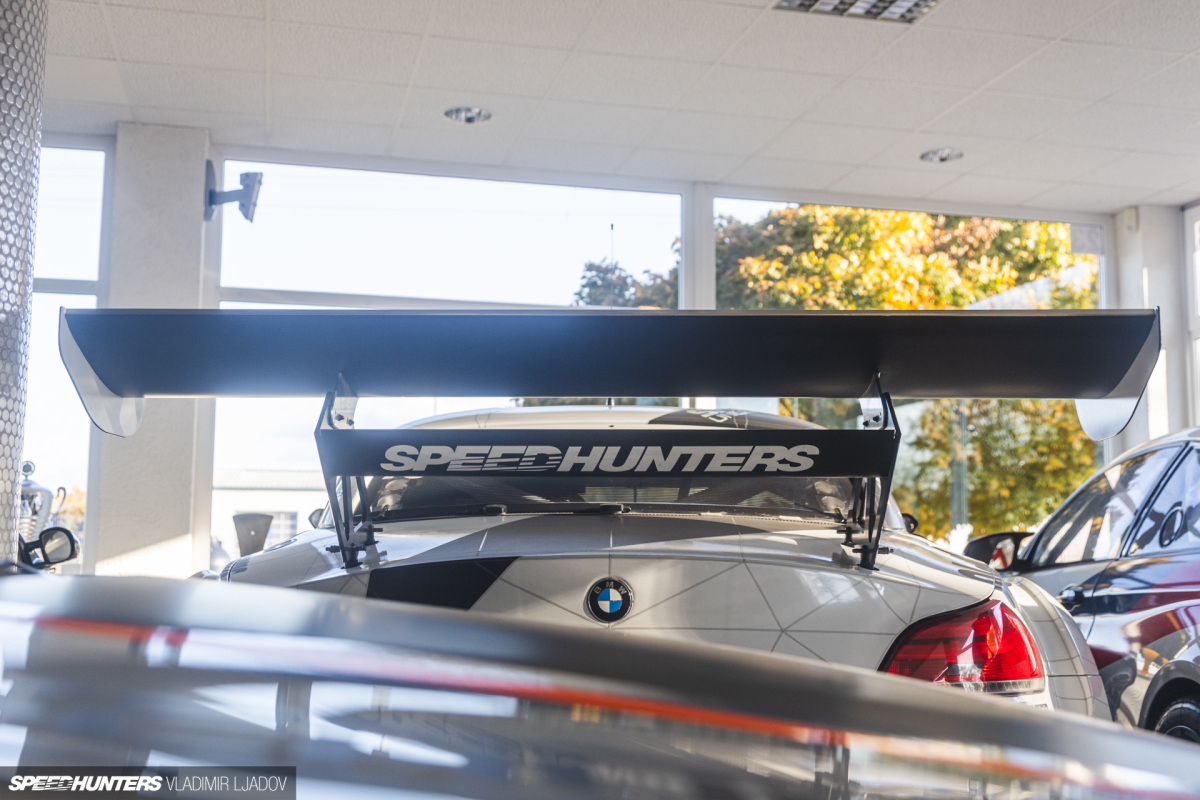
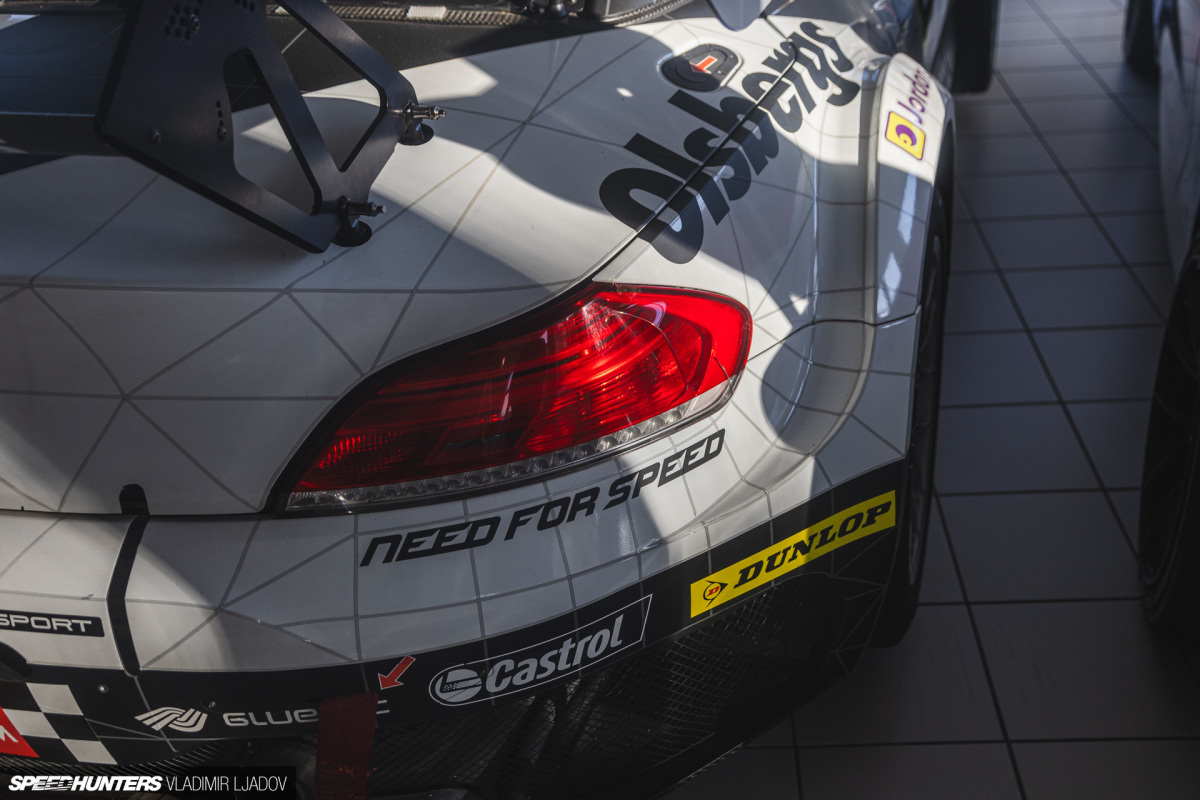
The showroom was a treasure trove of past victories, lined with trophies and racing memorabilia that tell the story of the team’s racing legacy. Among the machines on display was the iconic Need for Speed-sponsored BMW Z4, a fan favorite with special significance in the Speedhunters community, and a car with sentimental and historical importance to Torsten Schubert.
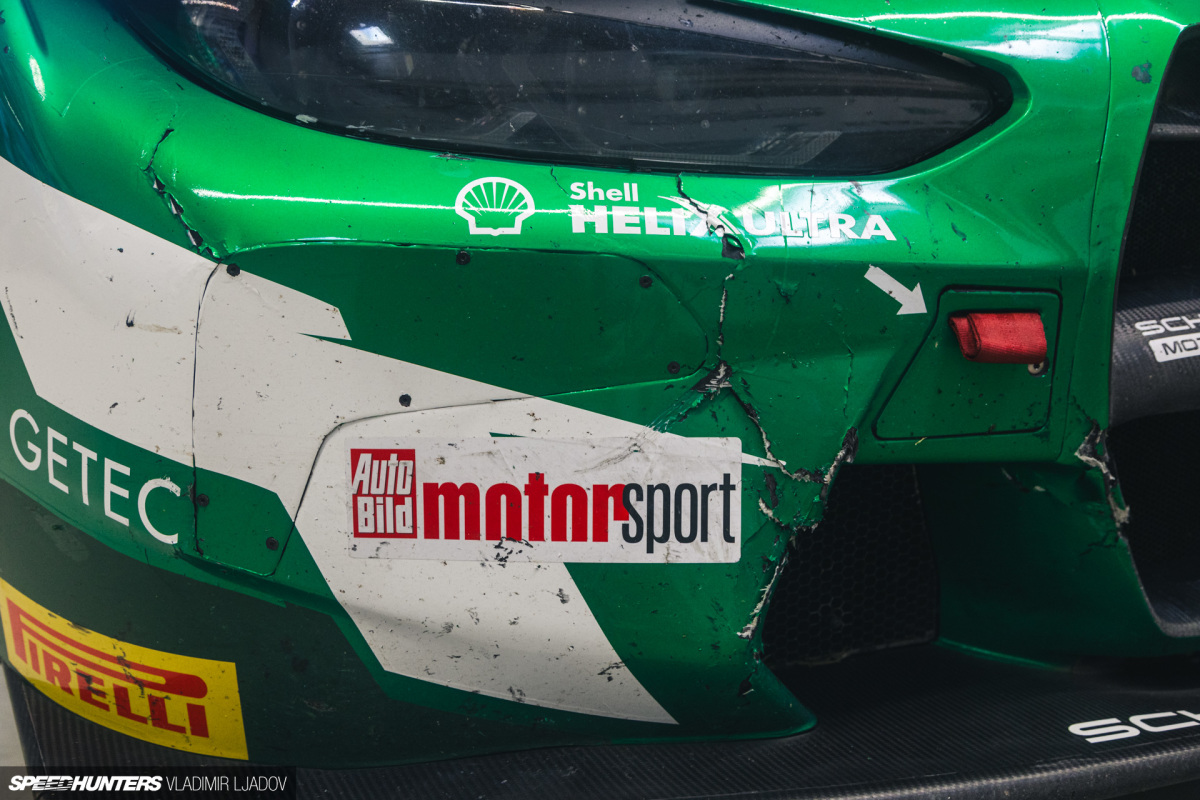
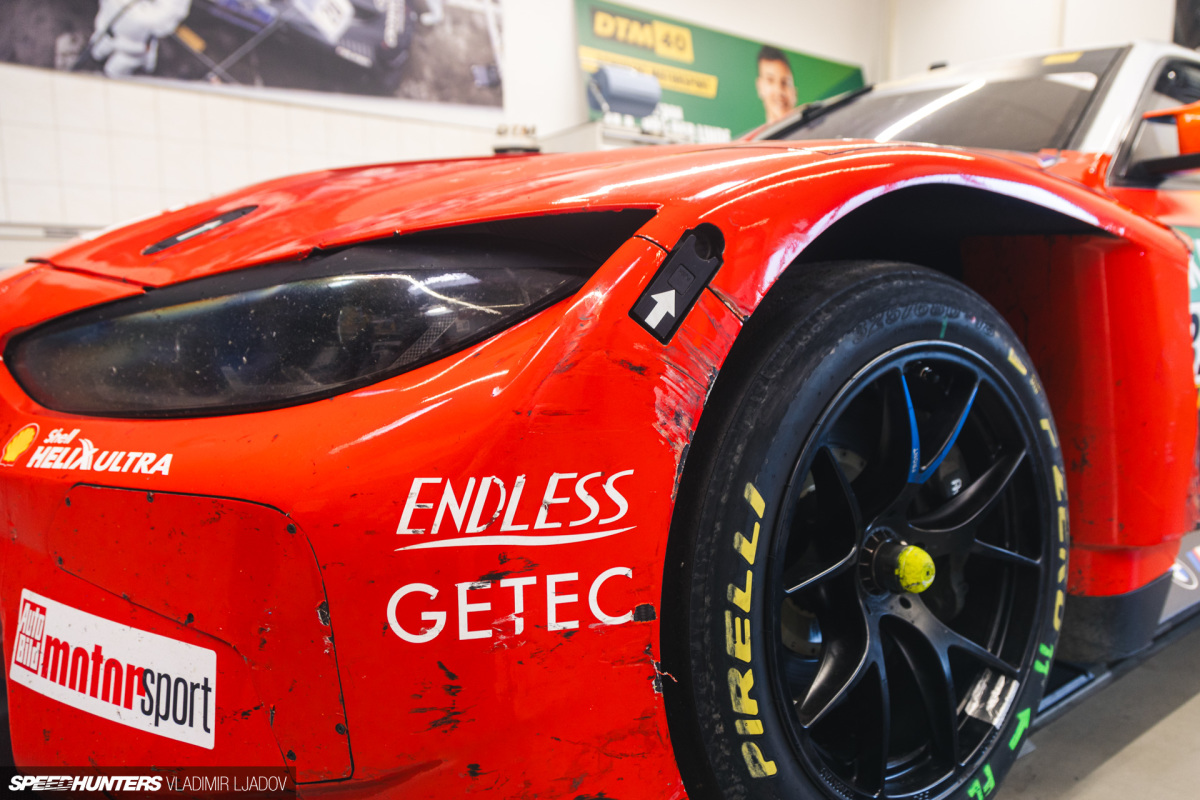
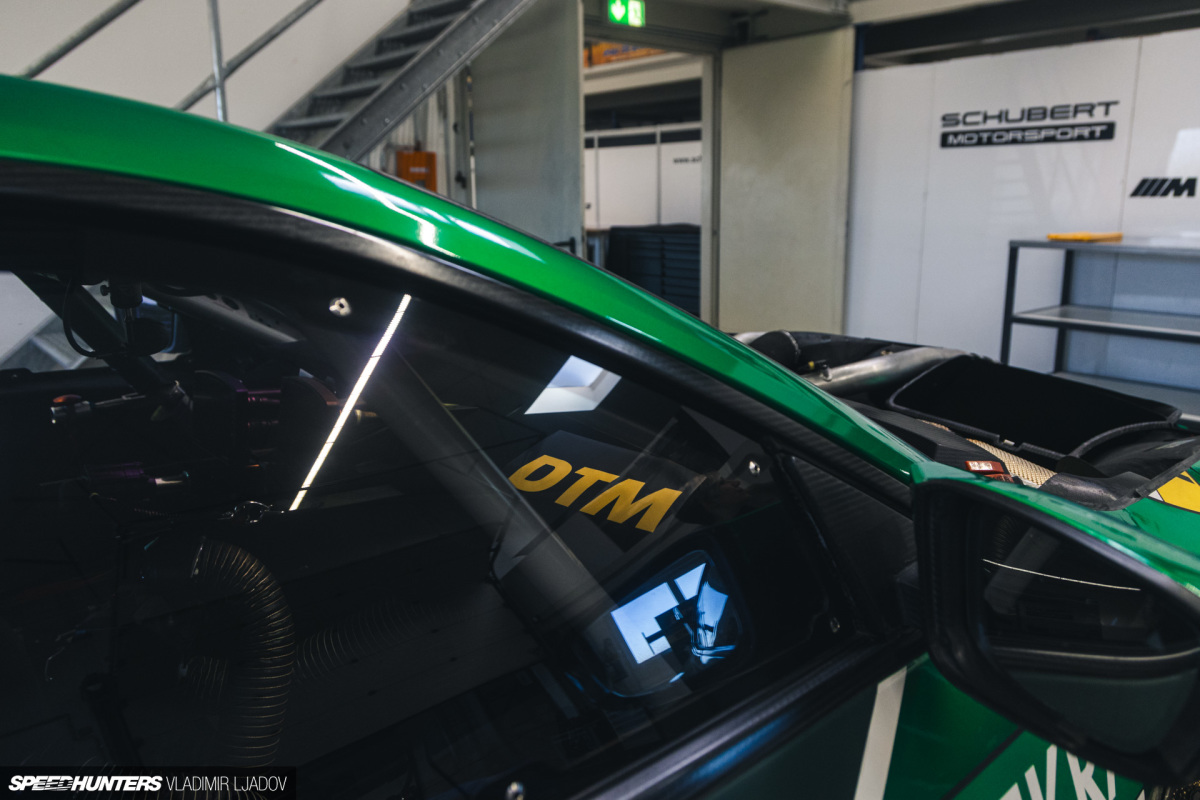
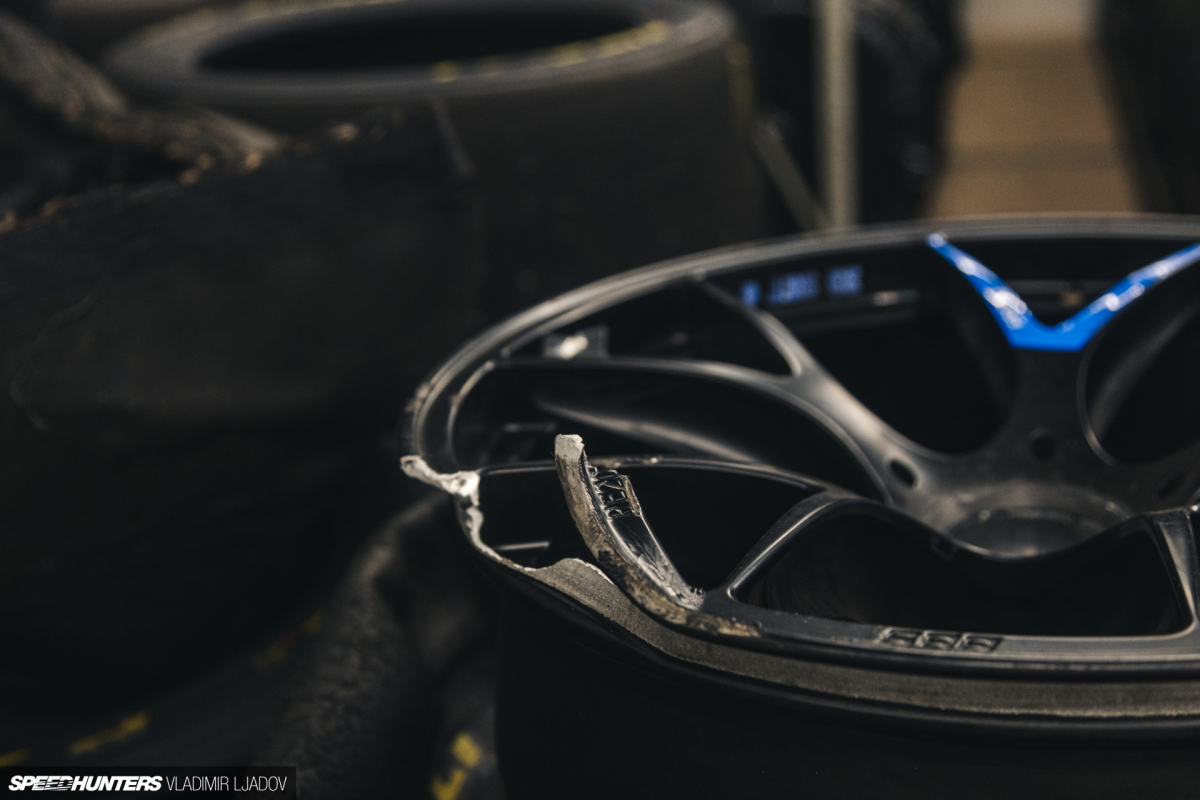
Accompanied by Gints Metra, Schubert Motorsport’s public relations representative, I was taken behind closed doors into restricted areas, where three BMW M4 GT3s were being prepped for the next chapter of their racing life. The cars carried the scars of their last race – dirt, scratches, and dents, all proof of their hard-fought battles on track.
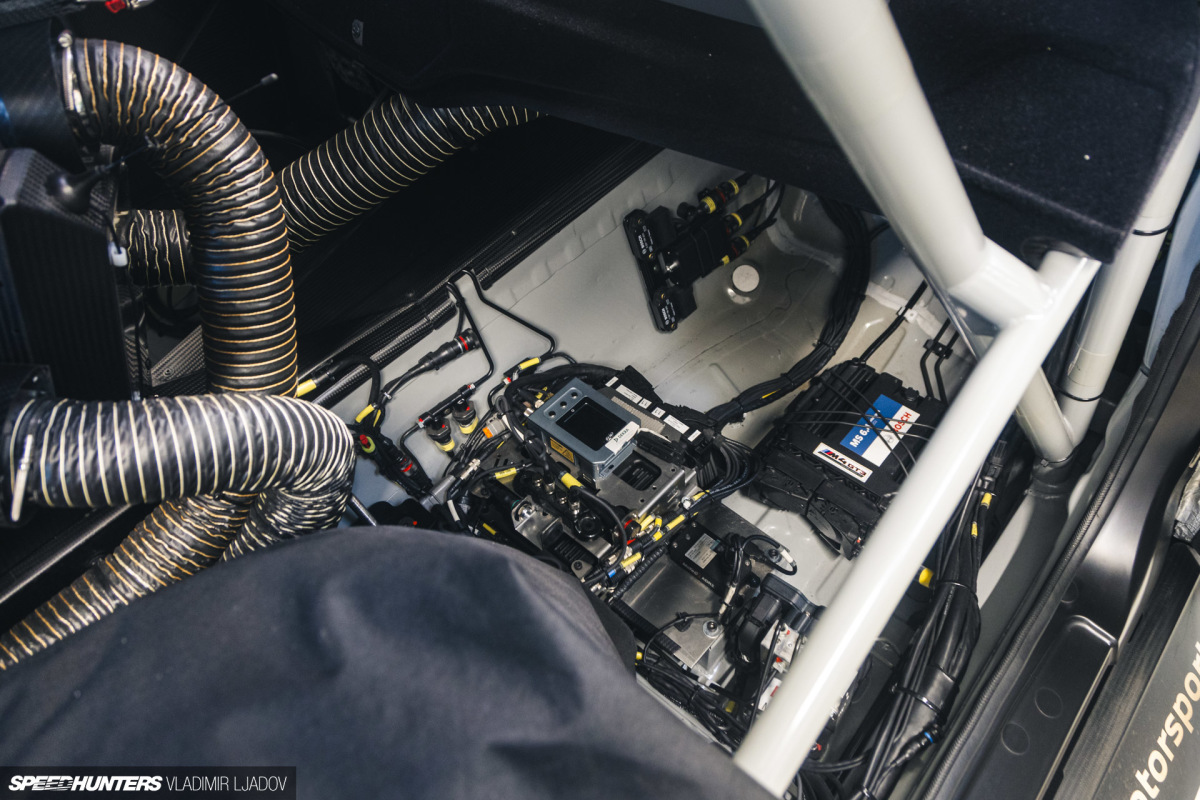
Gints kindly offered a closer look at the cars, even removing some panels to reveal their inner workings. While I couldn’t dive too deeply with my camera to avoid revealing any setup secrets, it was impossible not to admire the impressive P58 inline-six with M TwinPower Turbo technology — an engine capable of producing up to 590hp.
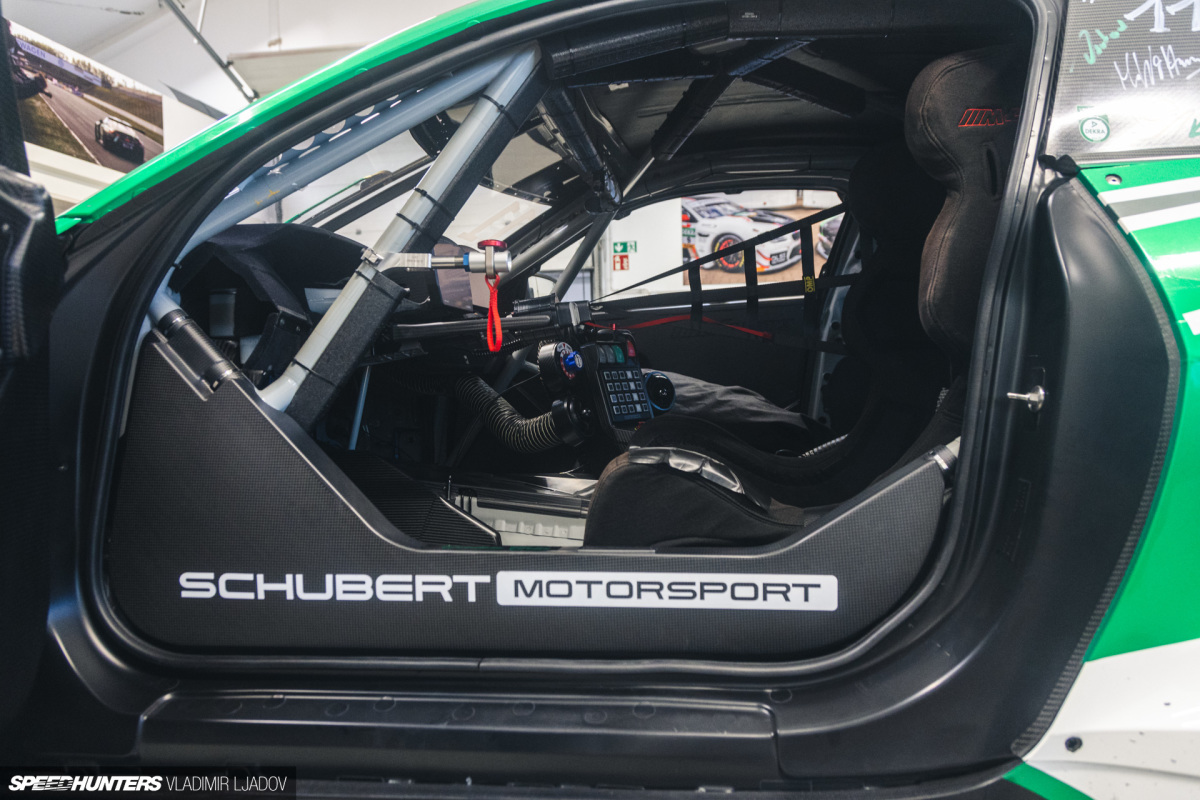
Marco Wittmann’s cockpit left an impression as well. It’s hard to fathom how drivers can operate the complex array of buttons on the steering wheel – or even glance at the tiny track map sticker marked with turn numbers – while keeping their focus on the track. On the passenger side, I noticed equipment used exclusively by DTM race organizers to track the cars and monitor crucial race data.
In the workshop, I also met Daniel Schreiner, a carbon fiber specialist who works on both fabricating new parts and repairing damaged ones. “We try not to waste anything,” he explained. “Most damaged body panels find a second life during track tests or practice sessions.”
Reflecting on the 2024 season, Torsten Schubert shared his thoughts: “It is very nice for the entire team that at the end of this season with highs and lows, we can celebrate a title win.”
After 16 races, Schubert Motorsport accumulated 361 points, securing the team championship with a 35-point margin over their nearest rivals. Rast’s season included two victories and multiple podium finishes. Sheldon van der Linde and Marco Wittmann also proved to be fierce competitors in one of the most demanding fields in motorsport.
Looking ahead, the future is bright for Schubert Motorsport. As they continue to refine their GT3 race cars, their partnership with BMW remains a key to success. “We have a close relationship with BMW since it’s a semi-supported racing cooperation,” explained Florian Rinkes, Schubert Motorsport’s technical manager and Rast’s race engineer. “We’re constantly giving feedback on car performance, and BMW is responding with updates that make our cars even better. They’re preparing an Evo kit for the GT3 and GT4 cars based on input from all the teams, which will boost the car’s drivability and performance.”
In addition to their DTM efforts, Schubert Motorsport plans to compete in the GT Masters series. They could potentially enter the Nürburgring 24 Hours, too, depending on scheduling. “The 2024 Evo update will be exciting,” Rinkes added, hinting at how the advancements could enhance the team’s capabilities across multiple race series.
Visiting Schubert Motorsport was an inspiring glimpse into the inner workings of a championship-winning team. Now that the 2024 title has been secured, the team is already focused on new challenges. With BMW’s ongoing support, Schubert Motorsport is poised for continued success.
Vladimir Ljadov Instagram: wheelsbywovka because@wheelsbywovka.com www.wheelsbywovka.com
There aren’t any new models available under $20,000 in the for American car buyers anymore, but emerging auto markets like India have plenty of cheap cars to go around. One of these budget cars just proved that you don’t have to spend a lot of money to be safe.
I Need A Reasonably Sized Car That Can Fit My Large Frame | WCSYB?
Motor 1 spotted a recent crash test done by Global NCAP, part of a larger UK based charity called the Towards Zero Foundation. Global NCAP does crash testing for vehicles sold in countries that have weak or nonexistent safety regulations for their vehicles. As part of its recent testing, Global NCAP tested a vehicle out of Suzuki’s Indian subsidiary, Maruti Suzuki.
Image : Maruti Suzuki
The model tested is called the Suzuki Dzire. Starting at the equivalent of $8,000, buyers can get a 1.2-liter 80 horsepower engine or go the CNG route and make do with just 69 hp 75 pounds-feet of torque. Despite the cheap price and lower power, the Dzire aced Global NCAP crash tests, receiving five stars for adult impact safety and four stars for child impact safety. As Motor 1 pointed out, Maruti Suzuki had every reason to be confident in the Dzire’s ability to pass the tests.
Maruti Suzuki was confident its diminutive sedan would ace the crash test because it voluntarily gave Global NCAP cars to destroy. Even the standard Dzire has six airbags, ESP, hill hold assist, and pedestrian protection. Sure, these are features many of us take for granted in 2024 but you can imagine sacrifices have to be made for sub-$10,000 cars. America’s cheapest car, the Nissan Versa, starts at $18,330, more than double the price of a base Dzire. Even in its highest trim level, the Dzire costs only about $12,000.
I don’t care what anyone says, six airbags and pedestrian protection at a price point less than $10,000 is impressive. What’s even more impressive is just how much of an improvement this is over the previous generation of the Dzire as Global NCAP detailed.
The Dzire assessment for the previous model was part of a Global NCAP initiated test with a rating of two stars for adult occupant protection and two stars for child occupant protection.The outgoing Dzire offers two frontal airbags and ESC as standard. The structure and footwell area were rated as unstable. The side impact test showed weak protection to the dummy chest and the pole test was not performed as this model does not offer side head protection, even as an option.
Executive President of the Towards Zero Foundation David Ward says he hopes that Maurit Suzuki will equip every vehicle in its model range with the same level of safety. “We are optimistic that going forward Maruti will seek to achieve this high level of safety performance across their model range. If they do, it will be a vehicle safety game changer for Indian consumers.”
The Audi SQ6 boasts an impressive 360 kW / 489 PS, but how does the Audi Q6 e-tron quattro fare with 75 kW / 102 PS less under the bonnet?
To “S” or not to “S,” that is the question. Apologies to the great English playwright Shakespeare for this adaptation of Hamlet’s famous soliloquy, but the context here is all about Audi—specifically, the Q6 e-tron models, rather than the vengeance of a Danish prince. It raises a relevant question: how much power is enough? For petrol engines, the answer is straightforward: those seeking extra power, a sportier chassis, and a significant boost in torque usually opt for the S or even the RS model.
However, the distinctions blur when it comes to electric models like the Q6 e-tron. In the past, achieving high power outputs required serious engineering effort. Now, with electric motors, power delivery and torque are instant, making the difference less noticeable. The advantage of immediate acceleration is present, even with fewer newton metres. Moreover, considering that Audi’s chassis tuning differences are now minimal due to stringent cost considerations, the question of power becomes even more intriguing.
Let’s first examine the price difference. The Audi SQ6 e-tron starts at a minimum of €93,800, which is €19,100 more than the Q6 e-tron quattro we tested, equipped with 140 kW / 190 PS and 275 Nm at the front, plus 280 kW / 381 PS and 580 Nm at the rear, totalling a combined output of 285 kW / 387 PS. So, what do you get for the extra cost? The S version offers 360 kW / 489 PS with identical torque distribution. Audi remains coy about disclosing a combined torque figure, likely because the PSM electric motor at the rear axle takes priority, while the ASM motor at the front only kicks in as needed. We tested both versions on twisty country roads and uphill stretches and were quite impressed with their agility.
The basic suspension setup is the same across all Q6 e-tron variants. The S model, however, features firmer tuning and sits 25 millimetres lower. Yet, it doesn’t feel overly stiff. Conversely, the standard Q6 e-tron quattro isn’t overly soft and doesn’t handle like a wobbly Citroën 2CV (apologies to the 2CV fans). In fact, even the “normal” Q6 handles straight roads and tight bends impressively. There’s no limited-slip differential or the Porsche Macan E’s performance rear axle on offer, regardless of the badge on the back. Our real-world consumption averaged 21.4 kWh/100 km, slightly higher than Audi’s claimed figure of 19.7 kWh/100 km. The 100 kWh battery (with 94.9 kWh usable capacity) offers a maximum range of up to 625 kilometres. Charging performance matches the SQ6, thanks to 800-volt technology. It takes around 21 minutes to charge from 10% to 80% at a rapid charging station, while an AC wall box offers a disappointing maximum of 11 kW, leading to a full charge in around 10 hours.
The Q6 e-tron’s standard features differ slightly from its more powerful sibling. This model comes with standard 18-inch wheels (compared to the SQ6’s 20-inch) and standard seats (sport seats in the SQ6). For all the details, you’ll need to trawl through the 152-page price list. The interior is otherwise nearly identical, with curved screens, including an 11.9-inch digital cockpit and a 14.5-inch central touchscreen. An optional augmented reality head-up display projects a virtual 88-inch screen onto the road ahead. Audi’s decision to keep the automatic gear selector in the centre console may not appeal to everyone. The infotainment runs on the E3 architecture with PPE platform software version 1.2. There’s ample space in the 4.77-metre-long electric SUV, including plenty of legroom in the rear and a boot capacity of 526 litres, expanding to 1,529 litres with the rear seats folded down. Additionally, there’s a front trunk (frunk) offering 64 litres of extra storage.
In conclusion, the Audi Q6 e-tron may not have the power of the SQ6, but for many, it is more than good enough.
Christophe Valtaud — Martell’s esteemed Cellar Master — leads the charge in preserving and evolving the heritage of one of France’s oldest Cognac houses. With a scientific background and a deep commitment to craftsmanship, Valtaud is pushing the boundaries of tradition while ensuring Martell’s future in a competitive luxury market. Raised in the heart of the Cognac region, Valtaud comes from a family with a longstanding legacy of grape growing spanning several generations. Immersed in this environment, Valtaud quickly realised that the luxury and quality of Cognac are rooted in the terroir — the distinctive soil and the unique, limited region where the grapes are cultivated. He soon understood that the deep connection to nature, along with the generations of expertise passed down by those who work the land, is what makes Cognac truly exceptional.
Speaking exclusively to LUXUO, he shares insights into his unique approach to cognac-making, the challenges of modernisation, the debut of the debut of Martell‘s private cask programme – Les Futs Uniques de Martell and his vision for Martell’s legacy. To the right sits Martell Senior Master Blender Christian Guerin and to the right is Pernod Ricard’s Chris Maloney, the Global Head of Prestige Delivery.
Read More: LUXUO’s Picks: Top Ten Whiskies to Invest In
With the role of Martell Cellar Master, clue us in to how you nurtured your expertise in terroir, distillation and blending.
Becoming a Cellar Master is a long journey, often taking around ten years of training. I was born in the heart of the Cognac region, and my family’s legacy spans generations of grape growers. As a Cellar Master, you inherit this wealth of knowledge. From the moment I began my training, I understood the importance of terroir, distillation, and the role each plays in crafting the final product. I am also a distiller myself, having learned the craft at a young age through my own family vineyard. Distillation is where we concentrate all the qualities of the wine, and from there, blending and aging take place.
The Cellar Master is the only role within the company that oversees the process from vine to glass. My job is to ensure quality at every stage, from working with the producers to selecting the best liquid for future creations. I am constantly thinking decades ahead — at least 40 years into the future. When creating special collections or new products, it’s essential to plan long-term because what I create today will be used in products many years from now. My responsibility is not only to preserve this legacy but to prepare for the future by ensuring that the next generation of liquid is ready for crafting exceptional Cognacs.
As the ninth generation of Martell Cellar Masters, what challenges did you encounter while upholding the traditions of cognac-making in a rapidly evolving market?
As the ninth-generation Martell Cellar Master, my focus has always been on preparing for the future — not just for myself, but for the next generation. Early on, I realised that my role wasn’t just about choosing a successor but about creating an environment where multiple individuals could eventually step into that leadership position. My team has grown from just three people when I started to eight today, reflecting our strategy to ensure the preservation of Martell’s traditions while preparing for the future.
One of the challenges has been balancing tradition with the rapidly evolving market. Becoming a master blender or cellar master requires extensive experience — often taking over a decade — and it’s vital to have a long-term vision. I’ve worked to build a collaborative environment, unlike my predecessor who worked alone. I believe in fostering teamwork and sharing knowledge, which is essential to carrying on the legacy of Cognac-making while adapting to modern needs.
What sets me apart is my scientific background — I have a PhD in biochemistry and molecular biology — which gives me a different perspective. I’m not interested in preserving tradition just for tradition’s sake. My approach is to push boundaries and look ahead. I’ve developed products that challenge traditional AOC guidelines for Cognac, and I believe it’s my job as a leader to foresee trends and create new experiences, much like how the iPhone was created before people even realised they needed it. In this way, I try to shape the future rather than simply react to it.
How does Martell differentiate itself in a competitive luxury spirits market?
Martell is the oldest of the major Cognac houses, and we take great pride in being pioneers in the industry. In fact, we essentially created Cognac as it is known today. From the very beginning, we defined our style, and while other houses have had to develop their own unique methods, we were the first. Our style has remained true since day one, and that’s the legacy of Martel, which we continue to uphold.
Technically speaking, Martell is renowned for utilising the full range of terroirs, but our signature Cognac is most notably influenced by one particular area — the Borderies. It’s the smallest and rarest of the growing regions, and it gives our Cognac its signature smoothness. In fact, compared to our competitors, Martell Cognac is known for being exceptionally smooth, and it’s also free from the bitterness that can sometimes be present in other blends.
When it comes to flavour profiles, have you noticed any trends in consumer preferences?
Taste changes and that’s why we change. A key element to our distinctive taste is the oak we use for aging. We exclusively select the finest French oak — specifically the Faucher oak — which is prized for its quality. Why do we choose this? It’s because the best ingredients lead to the best products. Unlike other producers who often use Limousin oak — which requires 100-120 years to mature — our Faucher oak takes at least 180 to 200 years to fully mature. This long-growing period allows the wood to impart a much more refined, delicate influence on the Cognac.
A few years ago, we introduced a new VSOP in Singapore and across Asia. This was in response to evolving consumer trends, as people are increasingly moving away from bitterness. To adapt, we reduced the influence of wood, as the bitterness that comes from the wood is less desirable. It’s a similar shift to what we see in the wine industry as well.
At Martell, time is everything. From the aging process to the selection of barrels, we are responsible for managing the passage of time in every drop of our Cognac. We’ve been perfecting our craft for over 300 years, and it’s this wealth of experience, combined with our exceptional ingredients, that defines Martel as a truly extraordinary brand.
Let’s discuss Martell’s new private cask program — Les Futs Uniques de Martell. How has the introduction of this program impacted Martell’s overall brand strategy?
The idea behind this collection was to reconnect with the origins of cognac. For over 200 years, Martel sold cognac in casks, and this collection brings that tradition back. The unique aspect of the collection is that consumers can purchase cognac in casks that are still aging — something that hasn’t been available for over 100 years. Additionally, this pure, unblended cognac is a return to how Martel originally produced its spirits, contrasting with the modern practice of blending.
Read More: 8 Whiskies to Invest in For Autumn
The collection is a tribute to our history, highlighting the importance of terroir and how different soils create distinctive flavours. It’s a chance to experience the legacy of Martel while embracing a touch of audacity. We aim to offer a truly immersive experience at Château Chantal, where guests can select and customise their own casks. The experience also includes a gastronomic journey with Michelin-starred chefs to elevate the enjoyment of Martel cognac, ensuring the perfect pairing. Ultimately, this collection is about offering something exceptional and deeply personal to our consumers.
Les Fûts Uniques – GC 32 YO 46ABV
How do you see the program catering to contemporary consumer preferences for personalised experiences?
Luxury is often about exclusivity — everyone desires luxury products, but not everyone can afford them. For those who can’t, we offer special editions, which still allow them to experience the brand’s essence. Martel is renowned for its cognac, particularly for its exclusivity, with the oldest and most prestigious stock of eaux-de-vie. We’ve carefully preserved this exceptional stock, hidden away in our cellars for years. This gives us the legitimacy to create such a collection.
While only a select few may be able to purchase these rare products, we also offer a range that lets consumers be part of the legacy, enjoying the same expertise and savoir-faire, albeit in a different form. It may not be the most prestigious option, but it’s still a part of Martel’s rich heritage, ensuring that everyone can experience a piece of this exceptional legacy.
How important is legacy storytelling in conveying the value of Martell and Les Futs Uniques de Martel to consumers?
When creating cognac, I focus on evoking emotion through all the senses. I listen to music while creating — classical for traditional cognac, and rock or rap for younger ones. The key is to engage all senses: sight, sound, and touch. I aim to create a connection through emotion rather than technicality. While we often focus on explaining the technical aspects of cognac, I believe emotions are universal. For example, when I describe cognac, I focus on the feelings it evokes rather than the technical details, since emotions can be understood universally, regardless of culture or language.
Within the whisky industry, how do you balance traditional craftsmanship with modern production techniques?
As a researcher, my role involves managing a team of cellar masters, master blenders, and researchers to create and age cognac. We’re also working on adapting to climate change by developing new distillation methods, creating grape varieties suited to changing climates, and updating our warehouses to withstand these changes. While preserving the unique qualities of our terroir, we must innovate to ensure sustainability. Cognac production is heavily regulated, and changing distillation methods requires convincing others that it won’t affect the product’s quality. I’ve spent years working on alternatives to traditional energy sources, proving they don’t impact taste.
While innovation is crucial, cognac production is tightly regulated, particularly around distillation, which is one of the most controlled processes in the spirits industry. Unlike whisky, where there’s more flexibility, we must work within strict rules. Changing production methods requires convincing colleagues and competitors that these adjustments won’t compromise the quality of the final product. For example, transitioning from gas-based distillation to more sustainable energy sources took five years of effort to demonstrate that it wouldn’t affect the taste. It’s about balancing tradition with the need for sustainability and ensuring that cognac production continues to evolve while maintaining the highest standards.
Les Fûts Uniques – GC 30 YO
You play a key role in overseeing the production and maturation of eau de vie. What role does sustainability play in your production process?
We’ve also changed the way we manage our vineyards, aiming to have a minimal environmental impact. We’ve fully integrated biodiversity initiatives and have stopped using chemical products. This approach is crucial for us because our CEO often says that we’re producing products today that will be enjoyed by future generations. When you taste a cognac like the Cordon Bleu — which is at least 10 years old but often more like 20 or 25 years old — you realise that we must plan decades ahead. The expectations of consumers will only rise, so if we focus solely on the demands of today, we’ll miss what the future requires.
This is why we’ve been prioritising sustainability and environmental responsibility for so long. We are deeply connected to our terroir, and because cognac is a natural product, it’s our responsibility to protect it for the future.
Read More: Indulge in the Spirit of Christmas with Martell’s Cognacs
On a personal note, what has been your proudest achievement at Martell so far?
I’m extremely proud of what I’ve achieved, particularly in building a team that didn’t exist before. Prior to my time, Martel didn’t have a dedicated R&D department, but now we have a group of researchers — not just cognac specialists — who work alongside our traditional experts. When innovation meets tradition, something truly exceptional happens.
I believe this collaborative approach, combining research and legacy, will be my lasting legacy at Martel. I’ve also always wanted to bring an artistic touch to my creations. For me, emotion is key — every drop of cognac should evoke a feeling. I want to go beyond the traditional and inspire dreams through music, colours, painting, and even cuisine. It’s about creating something that stirs the soul.
Maison Martell has restated its commitment to keeping local heritage at the heart of the House. How do your personal values align with Martell’s mission?
For me, cognac is undeniably French, and embodies the French art de vivre. However, it’s important to remember that while we are based in France, our founder was actually British. From the very beginning, Martell has been a fusion of cultures, which is a key element of our identity. The first shipment to Singapore took place in 1868, so our connection with Asia goes back a long way.
Read More: LUXUO x Martell: A Night to Remember
Today, Singapore has become a hub where cultures from around the world converge, and this is truly exceptional for us. It allows us to stay attuned to the desires and trends of various cultures while preparing for the future. In terms of sustainability and responsibility, I believe Singapore is the ideal place to emphasise these values. It’s no coincidence that Singapore is now the centre of our strategy for Asia, as it perfectly embodies the future we envision.
For more on the latest in leader interviews, click here.
Impersonating a cop is a big no no. One man in Florida found this out the hard way after he flashed the fake police lights in his unmarked Dodge Charger at an intersection in order to run a light.
Jonathan Bennett And His Late 1980’s Honda Accord | My First Car
October 15, Frank Michael DeJiulio, Jr. was driving a black Dodge Charger when he approached the intersection of a light that had turned red, reports Carscoops. DeJiulio proceeded to do what I’m sure we’ve all seen cops do when they don’t want to wait for a light to turn: he activated his lights as a way to say “hey lookout, I’m about to run this light,” which he then did.
The problem is that DeJiulio wasn’t a cop but between his Charger and light bar, he seemed to be trying to fool others into thinking he was one.
Unbeknownst to him, DeJiulio stopped directly behind a real cop, Detective William Harsanyi with the Hernando County Sheriffs. Harsanyi witnessed everything and proceeded to stop DeJiulio.
DeJiulio initially denied everything because of course he did:
Unsurprisingly, Harsanyi radioed dispatch to begin a traffic stop on the Charger. According to the report, the driver, Frank Michael DeJiulio, Jr., initially denied having red and blue lights. Of course, Harsanyi interjected to refute that. At that point, Dejiulio Jr. reportedly admitted his crime at that point.
Carscoops says DeJiulio is now facing charges, including “prohibited use of lights and false impersonation.” This is in addition to a ticket for running the red light. The real kicker here is the Charger. It was towed by authorities and is allegedly owned by DeJiulio’s girlfriend. His bond was set at $6,000. Oddly, despite the charge of false impersonation, Hernando County Sheriffs say they don’t actually have evidence that DeJiulio was posing as a police officer in any other instances, such as interactions with the public which is a bit of a relief.
The technical storage or access is strictly necessary for the legitimate purpose of enabling the use of a specific service explicitly requested by the subscriber or user, or for the sole purpose of carrying out the transmission of a communication over an electronic communications network.
Preferences
The technical storage or access is necessary for the legitimate purpose of storing preferences that are not requested by the subscriber or user.
Statistics
The technical storage or access that is used exclusively for statistical purposes.The technical storage or access that is used exclusively for anonymous statistical purposes. Without a subpoena, voluntary compliance on the part of your Internet Service Provider, or additional records from a third party, information stored or retrieved for this purpose alone cannot usually be used to identify you.
Marketing
The technical storage or access is required to create user profiles to send advertising, or to track the user on a website or across several websites for similar marketing purposes.