California-based UP.FIT, a division of Tesla tuner Unplugged Performance, has turned a Tesla Model S Plaid into a police car.
Debuting at the 2024 SEMA show in Las Vegas, the Plaid police cruiser is destined for a community outreach program of the Los Angeles Sheriff’s Department, according to Unplugged Performance. The company’s UP.FIT division has done several Tesla police conversions, including a Cybertruck police cruiser, and made similar modifications to this Model S.
Tesla Model S Plaid police car by Unplugged Performance
A new wiring harness integrates police lights, which are mounted behind the windshield and rear window, as well as along the side skirts, to eliminate the aerodynamic drag created by a conventional light bar, according to Unplugged Performance.
Other police equipment includes a push bar, high- and low-frequency sirens, and a public address system. All of this equipment adds weight, but Unplugged Performance estimates a relatively small drop in range to 345 miles, compared to 359 miles for the standard Plaid.
Tesla Model S Plaid police car by Unplugged Performance
The police car retains the stock Plaid’s tri-motor all-wheel drive powertrain, which generates 1,020 hp and gets the civilian version from 0-60 mph in 1.9 seconds, according to Tesla. But the police conversion included lighter wheels and upgraded brakes.
While Tesla does not offer factory police packages, forcing departments to rely on aftermarket companies like Unplugged Performance, several other automakers do sell electric police cars. General Motors offers a police version of the Chevrolet Blazer EV. Ford does the same with its F-150 Lightning, and has built a limited number of Mustang Mach-E police cars for the New York Police Department. Stellantis looks set to launch a police version of the Dodge Charger Daytona as well.
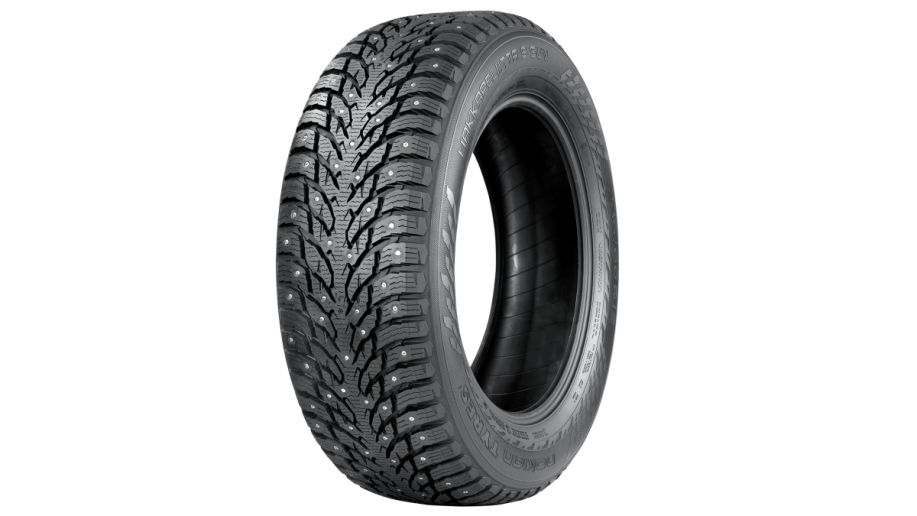
The rubber for snow tires remains flexible in freezing temperatures, enabling them to maintain firm contact with the road.
Snow tires are more common than studded tires today because of tire technology advancements.
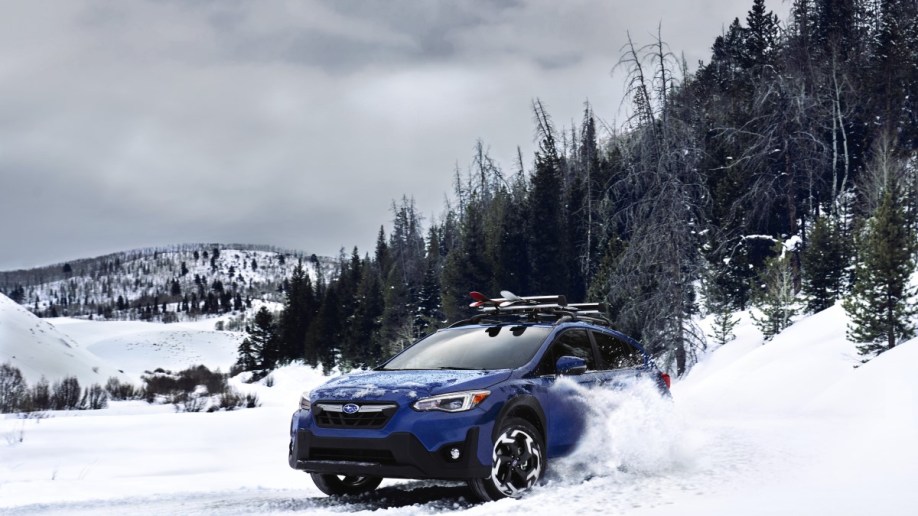
A front-wheel-drive vehicle with snow tires can grip a snowy road better than an all-wheel-drive car with all-season tires.
A typical set of snow tires costs up to $800. Budget for the seasonal installation expense and for putting all-season tires back on for warmer seasons.
The phrase “where the rubber meets the road” describes the moment you put a theory to the test. It’s particularly appropriate when winter driving gets serious and snow tires become necessary.
Your car may be a 3,000-plus-pound combination of steel, aluminum, and complex circuitry. But when driving in snow and ice, the safety of everyone in your vehicle depends on a few square inches of rubber gripping the road or sliding across it.
Automakers have developed technologies to keep us safer on snowy, icy roads. Among them are all-wheel-drive (AWD) systems capable of varying the wheel’s speed to maximize grip and traction control systems limiting the power sent to a slipping wheel.
These technologies can all be effective. But nothing makes your car safer in the wintertime more than making the place where the rubber meets the road — called the “contact patch” — out of a material that stays flexible in the cold.
Snow tires are one of the least expensive and most effective ways to make your car safer in the cold. This guide will teach you how to identify snow tires, whether they’re worth it, guidelines for buying them, and more.
How Do Snow Tires Work?
Modern tires aren’t simple rubber tubes as they appear. They’re constructed of many layers of rubber, polyester, nylon, and steel combined to maximize endurance, absorb bumps, and keep a firm grip.
RELATED: Car Tires Guide: Everything You Need to Know
Tires may look completely round when a car is driving, but they change shape constantly at high speed. They deform to keep a solid contact patch.
At freezing temperatures, the rubber compounds in the outer tread of most tires can become very firm and lose friction.
Imagine a dancer pirouetting on a polished wooden dance floor in smooth-soled shoes. A car with hard tires can slip and slide on the road similarly.
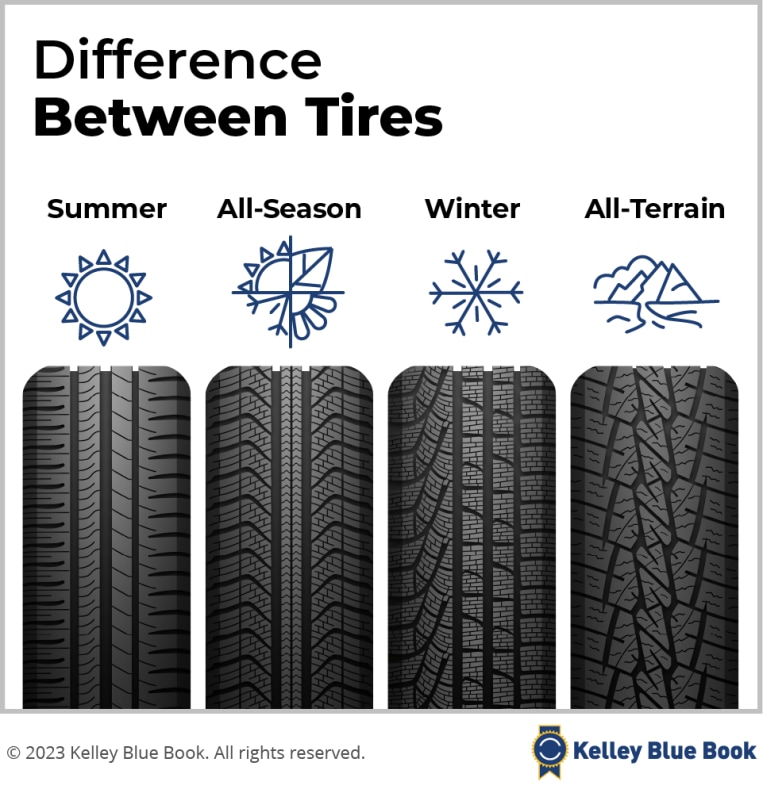
Snow tires use unique rubber compounds that stay pliable in freezing temperatures, enabling them to maintain firm contact with the road.
Now, imagine that same dancer trying to pirouette in rubber-soled hiking boots. In January, you’ll want your car in the automotive equivalent on a North Dakota highway.
The “lug” is another important snow tire feature (a deep channel carved into the outside of the tire). Engineers designed the lug to push water and slush out of the way so your car maintains the needed traction to drive in bad weather.
Are All-Season Tires Good for Snow?
All-season tires are acceptable in areas that see little snow. But you should consider snow tires if you’re going to drive where it snows often.
Can You Drive on Snow Tires Year-Round?
The same factors that make snow tires more effective in the cold also make them perform sluggishly and wear quickly in warmer weather.
If you drive on snow tires in a temperate climate, they will wear quickly, and your car’s handling will feel heavy. You’ll want to take them off as soon as the weather begins to warm up.
When Should I Switch to Snow Tires?
Consult with a trusted mechanic on when to put the snow tires on your car. The answer will depend on the weather and your driving patterns.
How Do You Identify Snow Tires?
A complicated set of performance codes and markings is on every tire’s side.
When snow tire shopping, the tire codes you need to know are simple: Tires may read “M+S” on the sidewall or have an image of a three-peaked mountain with a snowflake inside it.
M+S means mud and snow, but tires with an M+S symbol are not necessarily good snow tires. This symbol is certified by the United States Tire Manufacturers Association, which is awarded based on a visual inspection of the tread. This certification does not require a test. All-season tires can carry the M+S symbol.
The Tire Society applies the three-peaked mountain symbol for Testing and Materials. As the name suggests, this organization tests the tires. They measure acceleration, braking, and cornering grip in the snow. Only winter tires can earn the triple-peaked mountain badge.
Types of Snow Tires
Tire manufacturers make different snow tires for different vehicle types. Cars, trucks, and SUVs have unique considerations that require specialized winter tires.
Ice vs. Snow
Winter tires designed for cars and crossovers have specific features. They use treads of tightly spaced blocks with many small incisions and silica mixed into the compound to maintain flexibility in extremely cold weather. These tires are the best choice for snowy highway driving. They grip well on a plowed road that may have frozen spots.
Winter tires designed for trucks and off-road SUVs are sometimes structured with wide gaps in the tread and slightly harder compounds (though still softer than the formula used in all-season tires). These perform best on snow, like that found on unplowed roads. They may be appropriate for those who live in more rural settings and who may not be able to wait for the plow to come by before setting off to work. But they do not grip quite as well on a plowed road as ice-oriented snow tires.
High-Performance Winter Tires
Snow tires make every car handle a bit less aggressively on dry roads. A few specialized tire manufacturers make high-performance winter tires that sacrifice some grip to keep better dry-road handling. They are more common in Europe and relatively rare in the American market.
We do not recommend high-performance winter tires for those who live in areas prone to severe weather. You’re safer buying a reliable set of snow tires in winter and enjoying your car’s tight handling during the other three seasons.
Studded and Non-Studded Tires
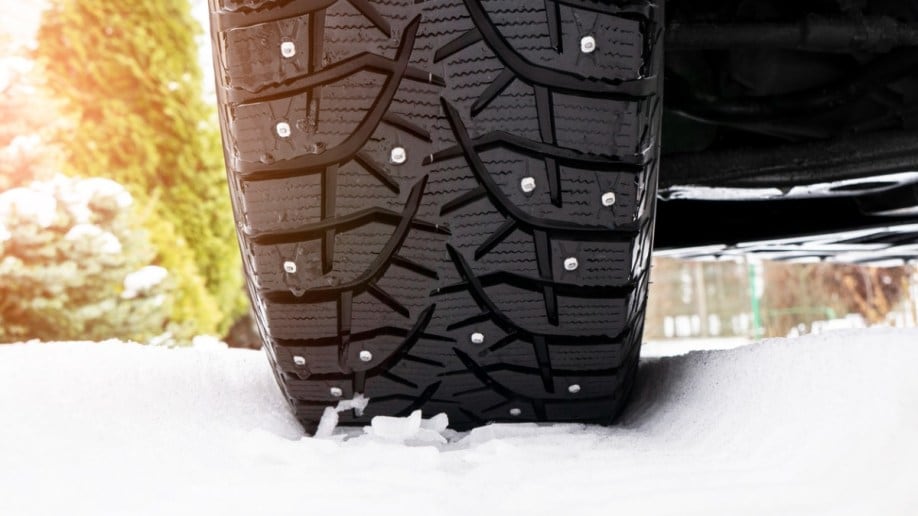
Some snow tires incorporate small studs embedded in the outer tread. The studs are usually made of metal or occasionally from harder rubber. They can break the ice and snowpack, increasing traction.
Once familiar in states with heavy winters, studded tires have grown far less common as tire technology has advanced. Modern snow tires can provide nearly the exact grip without studs on most road surfaces.
Studded tires may make sense in very rural areas with heavy winters, but they have serious drawbacks. Heavier than non-studded tires, studded tires can change a car’s handling. Excessive road noise is also a problem on dry surfaces, and studded tires are much more expensive.
A few states ban studded tires completely, including Michigan. Others allow them only on less-developed roads or limit their use to the year’s coldest months.
You can insert studs manually on studdable winter snow tires when needed. Adding and removing the studs is a time-consuming process. Having a tire shop do it several times per year can be costly.
Are Snow Tires Worth It?
Often, in climates with severe winter weather, snow tires are the most effective safety investment drivers can make. Many experts say that a front-wheel-drive (FWD) vehicle with snow tires grips better than an AWD car with all-season tires. A typical set of snow tires costs less than $800. All-wheel-drive systems can add thousands to the cost of a car for less winter grip than a cheaper set of snow tires.
Whether snow tires make sense for you depends on the weather where you regularly drive. They can be a critical safety enhancement in northern climates and at higher elevations. In southern climates, they may add cost for little benefit.
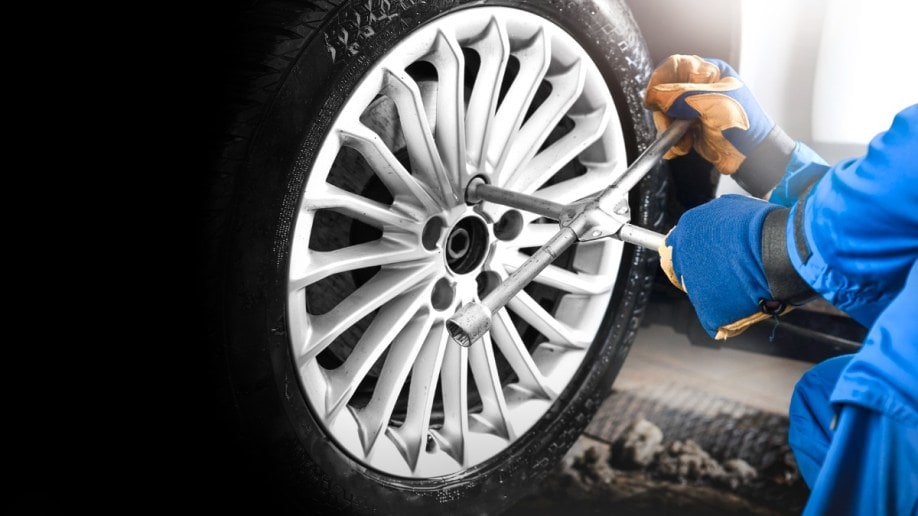
If you invest in snow tires, you will need to change your tires at least twice a year. There is an added cost to having a tire shop install them for you when cold weather begins and put your all-season tires back on in spring.
You can most likely recoup some of this cost from your insurer. Most insurance companies offer discounts to encourage drivers to use snow tires. Your tires will also wear more slowly if you alternate between two sets during the year.
How Much Are Snow Tires?
Snow tires cost slightly more than all-season tires, but insurance discounts for owning them may help defray the cost. They’ll also stretch the life of your regular tires.
MORE: Are Winter Tires Worth the Cost?
Best Way to Store Winter Tires
Owning all-season and snow tires means you’ll need a place to store the set you aren’t using.
If you choose to store your snow tires at home, you should plan to clean and wrap the tires you’re not using. You can use tire bags or covers to keep them protected. Keeping them indoors in a dry place helps preserve the best condition until you need them again. To make replacing your tires more convenient, you’ll find it simpler to keep each set of tires on its own set of rims.
Many tire shops in cold climates offer tire storage for a small fee. This approach adds a bit of cost but can be convenient, as it never requires you to lug heavy tires into the shop.
Guidelines for Buying New Snow Tires
When shopping for snow tires, we recommend that drivers:
Research laws in your state before committing to studded or studdable tires.
Plan to buy a set of four tires. You might think you could save money by placing snow tires on the powered wheels, but the tires will wear unevenly if you do so, requiring earlier replacement.
Factor in the installation cost and look for seasonal coupons at local tire shops.
How to Know When You Need New Snow Tires
Because snow tires require deeper tread than all-season tires to perform properly, you should replace them when the tread reaches 6/32 of an inch. All-season tires should be replaced around 1/8 of an inch.
Top Snow Tires on the Market
Which snow tires are best for your vehicle depends on many factors, including the type and weight of the vehicle you drive, whether you often travel on the highway, suburban side streets, or rural roads, and the weather where you live. A local tire shop or trusted mechanic is your best resource for making that decision.
Some solid choices include:
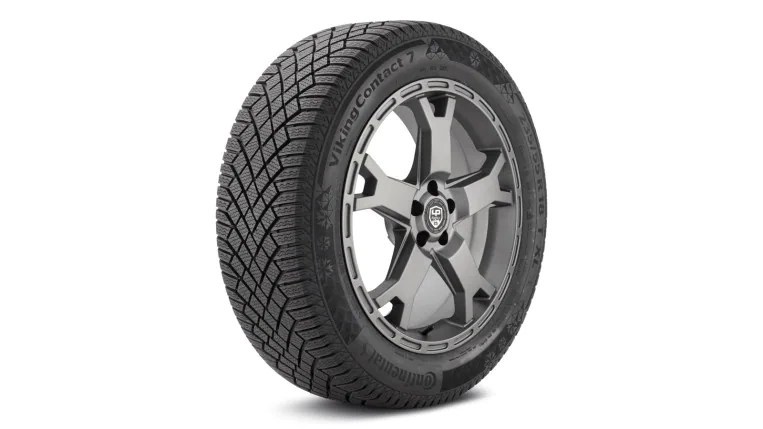
Continental VikingContact 7
A studless winter tire is available in many sizes and uses a new, more environmentally-friendly compound.
Price range: Up to $400 each.
Pros: Low noise and low rolling resistance to save fuel.
Cons: Not built for the most extreme climates.
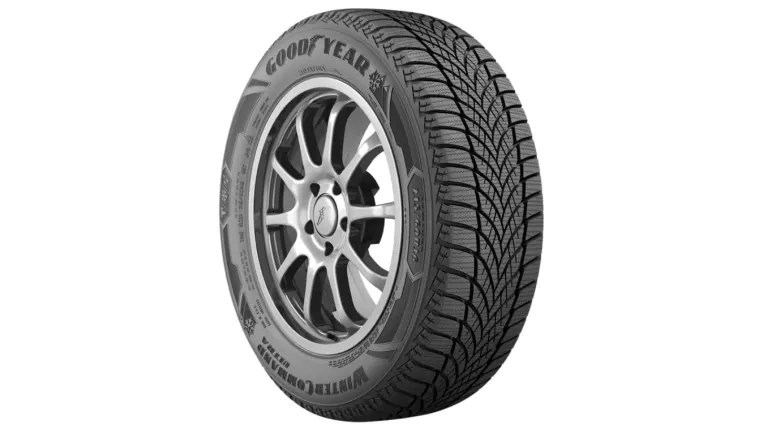
Goodyear WinterCommand Ultra
A studdable snow tire in a wide variety of sizes,
Price range: Up to $300 each.
Pros: Solid balance of dry- and icy-road performance.
Cons: Some owners complain of road noise.
General AltiMAX Arctic12
A studdable winter tire is available in various sizes; this model lasts longer than most studdable tires.
Price range: Up to $225.
Pros: Studdable for varying road conditions but excellent in heavy snow, even without added studs.
Cons: Some users find them slippery in very light snow.
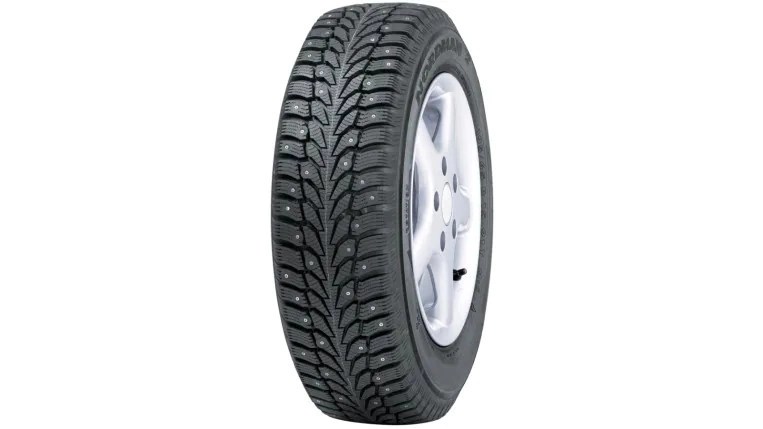
Nokian Nordman
Nordman is a brand of budget tires owned by Nokian. Sold as the Nokian Hakkapeliitta for many years, it is now rebadged as a Nordman product available at a lower price, although it is virtually the exact tire.
Price range: Up to $200.
Pros: Among the most affordable ways to get a leading studded tire for your off-road SUV.
Cons: Because it is a studded tire, this is a specialized product that won’t suit regular highway drivers.
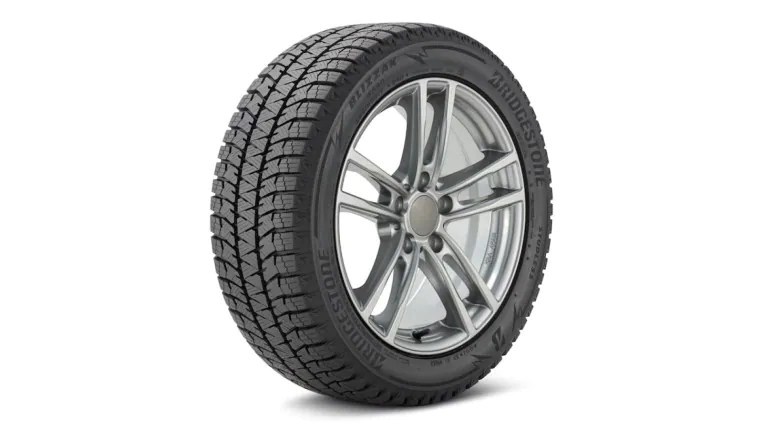
Bridgestone Blizzak
Price range: Up to $450.
Pros: Among the best winter tires aimed at luxury cars, the Blizzak line delivers impressive grip and control.
Cons: Pricey.
Nokian Hakkapeliitta
Nokian developed the first winter tire in 1934 and still makes some of the most well-reviewed snow tires in every category. The Hakkapeliitta (a type of Finnish winter cavalry) offers low rolling resistance by snow-tire standards.
Price range: Up to $475.
Pros: Saves on fuel while still providing excellent grip.
Cons: Less grip in deep snow than some others.
Read Related Articles:
Editor’s Note: This article has been updated since its initial publication.
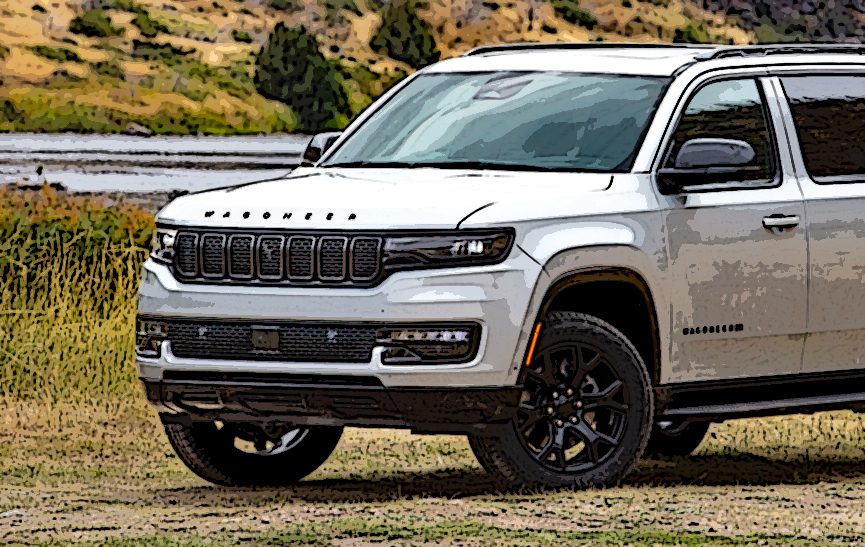
2025 Jeep Grand Wagoneer (left) and 2025 Jeep Grand Wagoneer L
New for the 2022 model year, Jeep’s large Wagoneer SUV and premium-large Grand Wagoneer SUV have disappointed the brand with weak sales. The large SUV segment, known for its high profit margins, seemed the perfect niche for Jeep to expand into, especially as the off-road vehicle maker had been working to “take the brand upmarket.”
Why Jeep Lowered 2025 Wagoneer Prices
But shoppers have been slow to accept Jeep’s newest offering, in part because existing vehicles in the segment are so popular—and enjoy enviable buyer loyalty—and in part because Jeep priced its new SUVs far above consumer expectations.
Anticipating higher volume demand, Jeep didn’t even deliver base models of the Wagoneer in 2022, putting the minimum price of entry for a Wagoneer at almost $72,000. This for a Series II with rear-wheel drive.
Premium Grand Wagoneers were priced accordingly, with bottom lines inline with the Cadillac Escalade and Lincoln Navigator. Though Jeep has adjusted prices nominally since the models’ rollout, sales have not improved dramatically. Through the first nine months of 2024, Jeep’s big rigs trail existing segment players significantly. Check out this chart:
Large SUV Sales (first half of 2024)
Chevrolet Tahoe 48,443
Ford Expedition 43,307
GMC Yukon (and Yukon XL) 39,462
Jeep Wagoneer* 29,865
Chevrolet Suburban 21,463
Toyota Sequoia 12,868
Premium Large SUV Sales
Cadillac Escalade 19,204
Grand Wagoneer* 7,555
Lincoln Navigator 6,550
*Wagoneer and Grand Wagoneer totals include both standard and long-wheelbase L models
To reboot sales, and perhaps to reposition the Wagoneer/Grand Wagoneer slightly downmarket, Jeep has slashed prices across the board. Cuts for the 2025 model year range from just under five percent to almost nine percent, depending on model and trim level.
Additionally, Jeep is already offering brand-conquest rebates (offered to shoppers trading in a competitive-brand model) of $2000, plus cheap financing. Here are the adjusted-for-2025 prices, including the $2000 destination fee.
2025 Jeep Wagoneer and Grand Wagoneer Prices
Jeep Wagoneer 4×2
$61,945
-$3,000
Jeep Wagoneer 4×4
$64,945
-$3,000
Jeep Wagoneer Series II 4×2
$65,945
-$5,185
Jeep Wagoneer Series II 4×4
$68,945
-$5,185
Jeep Wagoneer Series III 4×4
$75,945
-$5,685
Jeep Wagoneer L 4×2
$64,945
-$3,000
Jeep Wagoneer L 4×4
$67,945
-$3,000
Jeep Wagoneer L Series II 4×4
$71,945
-$5,185
Jeep Wagoneer L Series III 4×4
$78,945
-$5,685
Jeep Grand Wagoneer 4×4
$86,945
-$7,000
Jeep Grand Wagoneer Series II Obsidian 4×4
$100,945
-$5,495
Jeep Grand Wagoneer Series III 4×4
$109,945
-$4,650
Jeep Grand Wagoneer L Obsidian 4×4
$103,945
-$5,495
Jeep Grand Wagoneer L Series III 4×4
$112,945
-$4,650
For comparison, here is a list of 2025-model-year competitive products, also including destination charges. Note that the Lincoln Navigator comes only with 4WD.
Large SUV Base Prices (2025)
Chevrolet Tahoe 2WD $60,495
Chevrolet Tahoe 4WD $63,495
Chevrolet Suburban 2WD $61,195
Chevrolet Suburban 4WD $64,195
Ford Expedition 2WD $63,695
Ford Expedition 4WD $66,695
Ford Expedition Max 2WD $66,695
Ford Expedition Max 4WD $69,695
GMC Yukon 2WD $68,895
GMC Yukon 4WD $71,895
GMC Yukon XL 2WD $71,895
GMC Yukon XL 4WD $74,895
Toyota Sequoia 2WD $64,120
Toyota Sequoia 4WD $67,120
Premium Large SUV Prices (2025)
Cadillac Escalade 2WD $89,590
Cadillac Escalade 4WD $92,590
Cadillac Escalade ESV 2WD $92,590
Cadillac Escalade ESV 4WD $95,590
Lincoln Navigator 4WD $101,990
Lincoln Navigator L 4WD $104,980
Reduced in price by $3000, the base 2025 Wagoneer is now priced between the base Chevrolet Tahoe and Ford Expedition, which likely put the vehicle on shoppers radar.
Subsequent to a significant $7000 price cut, the base 2025 Grand Wagoneer is now priced fully $3000 below the entry-model Cadillac Escalade.
Subjectively, the Wagoneer and Grand Wagoneer are fine vehicles, but are only class competitive, offering no real advantages over the also excellent other options in this class. Plus, Jeep will now be pushing back against shoppers looking for a V8 engine, which the Wagoneer and Grand Wagoneer no longer offer. That said, Jeep’s excellent turbocharged “Hurricane” 6-cylinder engines are just as smooth as the V8s offered by General Motors, and possibly smoother than the Expedition/Navigator’s turbo V6 mills.
CG Says:
Jeep roared into the Large/Premium Large SUV segment a little too sure of its success, and priced its trucks accordingly. Price adjustments for 2025 are sure to tweak the interest of consumers who had not otherwise considered Jeeps big rigs. We think Jeep might’ve lowered prices even a bit more, but are confident the new numbers will appeal to class shoppers.
Note that Jeep has already announced similar 2025 price cuts on its midsize Grand Cherokee, and compact Compass.
Robotics developers can greatly accelerate their work on AI-enabled robots, including humanoids, using new AI and simulation tools and workflows that NVIDIA revealed this week at the Conference for Robot Learning (CoRL) in Munich, Germany.
The lineup includes the general availability of the NVIDIA Isaac Lab robot learning framework; six new humanoid robot learning workflows for Project GR00T, an initiative to accelerate humanoid robot development; and new world-model development tools for video data curation and processing, including the NVIDIA Cosmos tokenizer and NVIDIA NeMo Curator for video processing.
The open-source Cosmos tokenizer provides robotics developers superior visual tokenization by breaking down images and videos into high-quality tokens with exceptionally high compression rates. It runs up to 12x faster than current tokenizers, while NeMo Curator provides video processing curation up to 7x faster than unoptimized pipelines.
Also timed with CoRL, NVIDIA presented 23 papers and nine workshops related to robot learning and released training and workflow guides for developers. Further, Hugging Face and NVIDIA announced they’re collaborating to accelerate open-source robotics research with LeRobot, NVIDIA Isaac Lab and NVIDIA Jetson for the developer community.
Accelerating Robot Development With Isaac Lab
NVIDIA Isaac Lab is an open-source, robot learning framework built on NVIDIA Omniverse, a platform for developing OpenUSD applications for industrial digitalization and physical AI simulation.
Developers can use Isaac Lab to train robot policies at scale. This open-source unified robot learning framework applies to any embodiment — from humanoids to quadrupeds to collaborative robots — to handle increasingly complex movements and interactions.
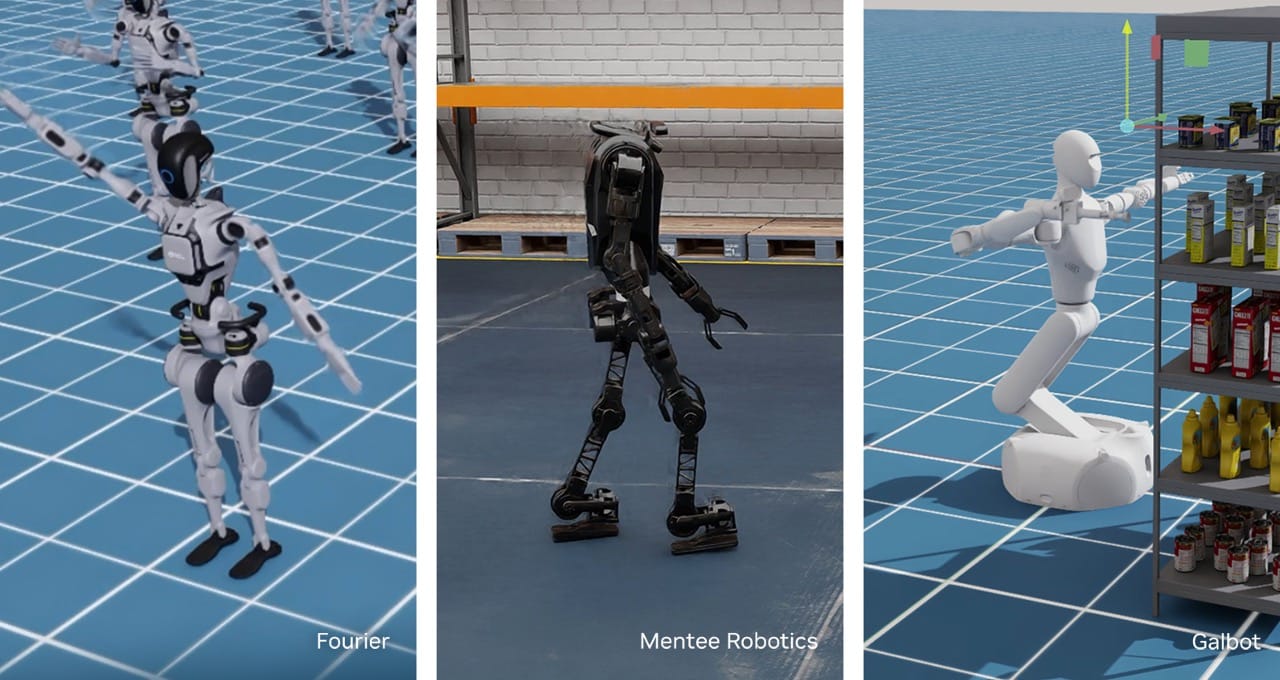
Leading commercial robot makers, robotics application developers and robotics research entities around the world are adopting Isaac Lab, including 1X, Agility Robotics, The AI Institute, Berkeley Humanoid, Boston Dynamics, Field AI, Fourier, Galbot, Mentee Robotics, Skild AI, Swiss-Mile, Unitree Robotics and XPENG Robotics.
Project GR00T: Foundations for General-Purpose Humanoid Robots
Building advanced humanoids is extremely difficult, demanding multilayer technological and interdisciplinary approaches to make the robots perceive, move and learn skills effectively for human-robot and robot-environment interactions.
Project GR00T is an initiative to develop accelerated libraries, foundation models and data pipelines to accelerate the global humanoid robot developer ecosystem.
Six new Project GR00T workflows provide humanoid developers with blueprints to realize the most challenging humanoid robot capabilities. They include:
GR00T-Gen for building generative AI-powered, OpenUSD-based 3D environments
GR00T-Mimic for robot motion and trajectory generation
GR00T-Dexterity for robot dexterous manipulation
GR00T-Control for whole-body control
GR00T-Mobility for robot locomotion and navigation
GR00T-Perception for multimodal sensing
“Humanoid robots are the next wave of embodied AI,” said Jim Fan, senior research manager of embodied AI at NVIDIA. “NVIDIA research and engineering teams are collaborating across the company and our developer ecosystem to build Project GR00T to help advance the progress and development of global humanoid robot developers.”
New Development Tools for World Model Builders
Today, robot developers are building world models — AI representations of the world that can predict how objects and environments respond to a robot’s actions. Building these world models is incredibly compute- and data-intensive, with models requiring thousands of hours of real-world, curated image or video data.
NVIDIA Cosmos tokenizers provide efficient, high-quality encoding and decoding to simplify the development of these world models. They set a new standard of minimal distortion and temporal instability, enabling high-quality video and image reconstructions.
Providing high-quality compression and up to 12x faster visual reconstruction, the Cosmos tokenizer paves the path for scalable, robust and efficient development of generative applications across a broad spectrum of visual domains.
1X, a humanoid robot company, has updated the 1X World Model Challenge dataset to use the Cosmos tokenizer.
“NVIDIA Cosmos tokenizer achieves really high temporal and spatial compression of our data while still retaining visual fidelity,” said Eric Jang, vice president of AI at 1X Technologies. “This allows us to train world models with long horizon video generation in an even more compute-efficient manner.”
Other humanoid and general-purpose robot developers, including XPENG Robotics and Hillbot, are developing with the NVIDIA Cosmos tokenizer to manage high-resolution images and videos.
NeMo Curator now includes a video processing pipeline. This enables robot developers to improve their world-model accuracy by processing large-scale text, image and video data.
Curating video data poses challenges due to its massive size, requiring scalable pipelines and efficient orchestration for load balancing across GPUs. Additionally, models for filtering, captioning and embedding need optimization to maximize throughput.
NeMo Curator overcomes these challenges by streamlining data curation with automatic pipeline orchestration, reducing processing time significantly. It supports linear scaling across multi-node, multi-GPU systems, efficiently handling over 100 petabytes of data. This simplifies AI development, reduces costs and accelerates time to market.
Advancing the Robot Learning Community at CoRL
The nearly two dozen research papers the NVIDIA robotics team released with CoRL cover breakthroughs in integrating vision language models for improved environmental understanding and task execution, temporal robot navigation, developing long-horizon planning strategies for complex multistep tasks and using human demonstrations for skill acquisition.
Groundbreaking papers for humanoid robot control and synthetic data generation include SkillGen, a system based on synthetic data generation for training robots with minimal human demonstrations, and HOVER, a robot foundation model for controlling humanoid robot locomotion and manipulation.
NVIDIA researchers will also be participating in nine workshops at the conference. Learn more about the full schedule of events.
Availability
NVIDIA Isaac Lab 1.2 is available now and is open source on GitHub. NVIDIA Cosmos tokenizer is available now on GitHub and Hugging Face. NeMo Curator for video processing will be available at the end of the month.
The new NVIDIA Project GR00T workflows are coming soon to help robot companies build humanoid robot capabilities with greater ease. Read more about the workflows on the NVIDIA Technical Blog.
Researchers and developers learning to use Isaac Lab can now access developer guides and tutorials, including an Isaac Gym to Isaac Lab migration guide.
Discover the latest in robot learning and simulation in an upcoming OpenUSD insider livestream on robot simulation and learning on Nov. 13, and attend the NVIDIA Isaac Lab office hours for hands-on support and insights.
Developers can apply to join the NVIDIA Humanoid Robot Developer Program.
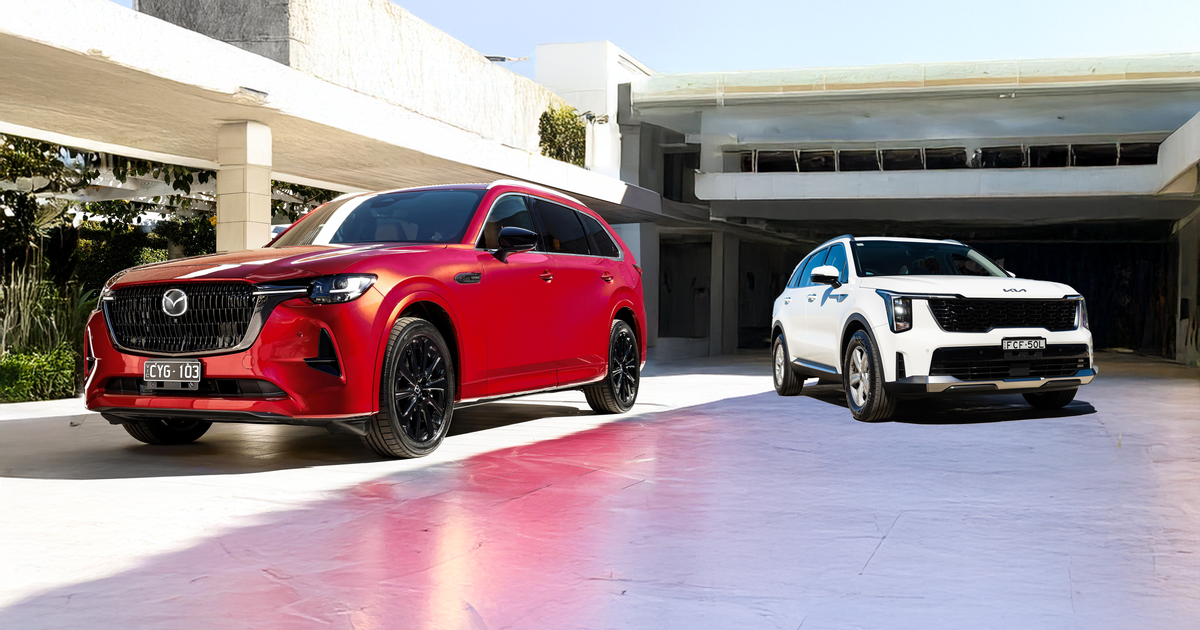
Mazda’s all-new CX-80 is arriving in Australia, launching as part of the brand’s wider range of large SUVs that includes the CX-60, CX-70, and CX-90.
Mazda CX-80
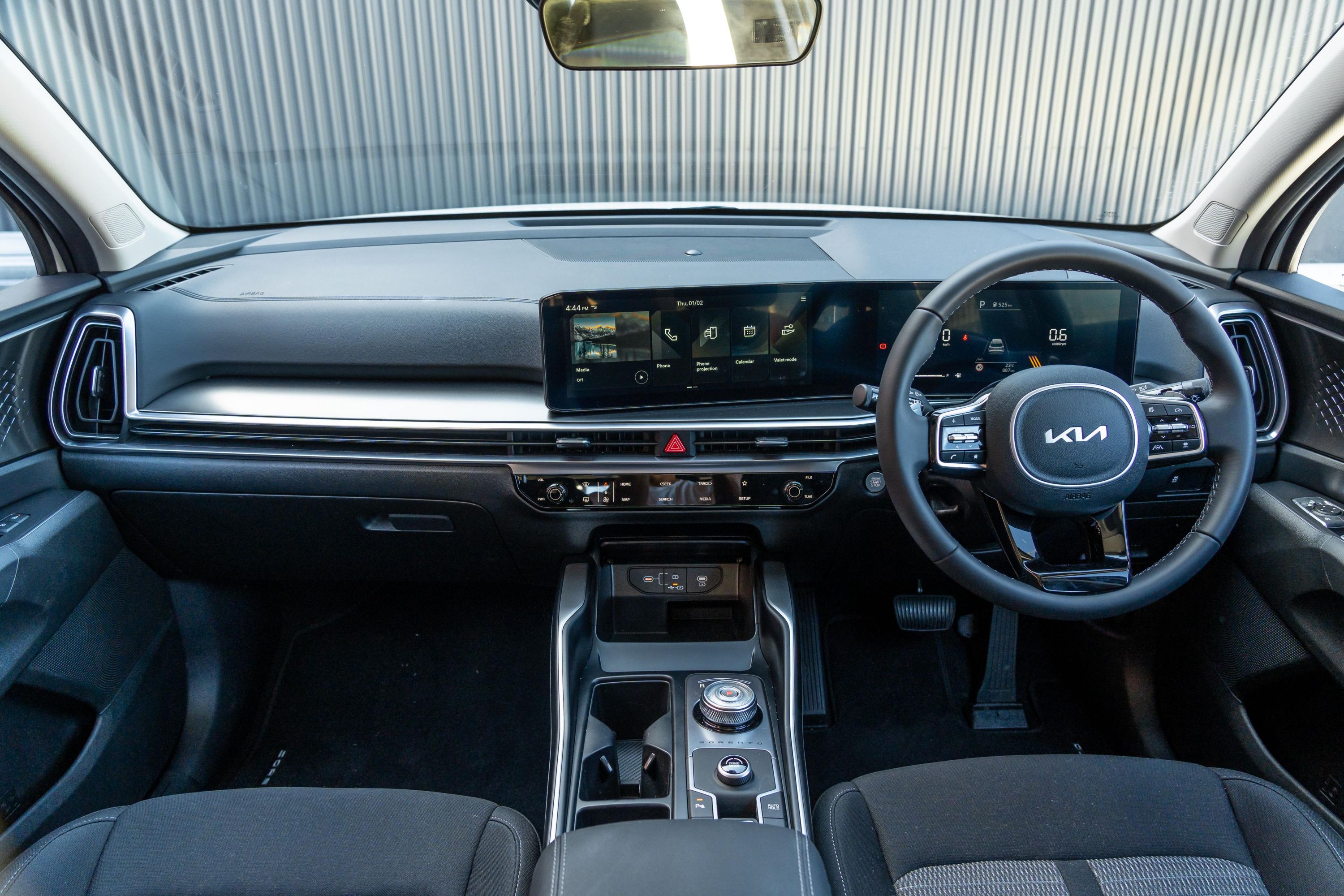
Kia Sorento
It’s coming to rival other established seven-seaters, with the Kia Sorento taking the stand as a key competitor as a result of the shared seven-seat capacity and general model variety.
Both are offered with petrol, diesel, and plug-in hybrid powertrains, and both are sold in four distinct variants.
The differences begin to appear when you get further under the surface of each, which lends itself to a comparison of many of each car’s key specifications.
For comparison, Kia has sold 8379 Sorento units to the end of October this year. For the month of October, 631 Sorentos were sold, while VFACTS has reported 113 CX-80 sales in the same time.
That isn’t entirely representative given the CX-80’s short time on sale so far, so it will be worth checking back on the sales figures as it establishes a foothold in the local market.
Looking for a new large seven-seater? Here’s how each model stacks up on the spec sheet.
Interested in buying a Mazda CX-80 or a Kia Sorento? Get in touch with a dealer by clicking the links.
The cheapest cars in each model range offer petrol engines, and the Kia has a cheaper list price before on-road costs are applied.
CX-80
Sorento
Mazda offers four variants of the CX-80: Pure, Touring, GT, and Azami. All four are offered with both petrol and diesel powertrains, though only the Touring and up are available as plug-in hybrids.
Similarly, the petrol Sorento is also sold in four variants: S, Sport, Sport+, and GT-Line. There are also hybrid and plug-in hybrid versions available, both of which are based on the higher-end GT-Line.
For comparison, the diesel models of the CX-80 and Sorento range start at $63,950 and $53,680 before on-road costs respectively.
Model
Price range before on-roads
Mazda CX-80
$54,950-$87,200
Kia Sorento
$50,680-$68,590
Interested in buying a Mazda CX-80 or a Kia Sorento? Get in touch with a dealer by clicking the links
Both cars offer multiple powertrains, though in the petrol battle it’s the CX-80 that takes the cake on power output and fuel efficiency.
CX-80
Sorento
Each offer six-cylinder engines, though the CX-80 adds a turbocharger to its smaller-capacity straight-six over the Sorento’s naturally aspirated V6.
The CX-80 is also all-wheel drive as standard, whereas the same setup is only available with a diesel engine in the Sorento. Petrol Sorentos have to make do with front-wheel drive only.
All CX-80 petrol and diesel variants are mild-hybrid only, while both cars are also available as plug-in hybrids. Unlike Mazda, Kia also offers a standard hybrid Sorento separately.
It’s worth noting the different weights, which may not be representative. Mazda only quotes kerb weight, while Kia only quotes tare mass.
Specifications
Mazda CX-80 G40e
Kia Sorento 3.5 FWD
Engine
3.3L turbo-petrol i6
3.5L naturally aspirated V6
Electrification
48V mild-hybrid
–
Maximum power
209kW
200kW
Maximum torque
450Nm
332Nm
Transmission
8-speed auto
8-speed auto
Driven wheels
All-wheel drive
Front-wheel drive
Kerb weight
2084-2114kg
–
Tare mass
–
1898kg
Gross Vehicle Mass (GVM)
2663-2693kg
2600kg
Fuel economy (claim)
8.4L/100km
9.7L/100km
CO2 emissions
197g/km
222g/km
Fuel tank size
74L
67L
Fuel requirement
91 RON
91 RON
Braked towing capacity
2500kg
2000kg
Interested in buying a Mazda CX-80 or a Kia Sorento? Get in touch with a dealer by clicking the links
The Mazda CX-80 is larger than the Kia Sorento, headlined by a difference in length of nearly 200mm.
CX-80
Sorento
The wheelbase of the CX-80 is also noticeably longer, though the two cars are similar on width and height.
Both also offer three-row seating capacity, though the CX-80 can either be seven-seat or six-seat (with second-row captain’s chairs) depending on the variant.
Boot space is similar for both cars, though you’ll get more capacity with all three rows in place in the CX-80.
Dimensions
Mazda CX-80
Kia Sorento
Length
4990mm
4815mm
Width
1949mm
1900mm
Height
1710mm
1700mm
Wheelbase
3120mm
2815mm
Boot capacity
258L (all rows up, incl. underfloor storage) 566L (third row folded) 1971L (second and third row folded)
179L (all rows up) 608L (third row folded) 1995L (second and third row folded)
Interested in buying a Mazda CX-80 or a Kia Sorento? Get in touch with a dealer by clicking the links
The Mazda CX-80 is covered by a standard five-year, unlimited-kilometre warranty. It has yet to announce service pricing for the CX-80.
CX-80
Sorento (GT-Line)
The Kia Sorento, meanwhile, is covered by the Korean brand’s seven-year, unlimited-kilometre warranty. Logbook servicing is required every 12 months or 15,000km.
Kia offers capped-price servicing for the first seven visits, which are priced at $370, $582, $446, $765, $417, $732, and $442 respectively. Over five years, that’s an annual average of $516 and a total of $2580.
Interested in buying a Mazda CX-80 or a Kia Sorento? Get in touch with a dealer by clicking the links
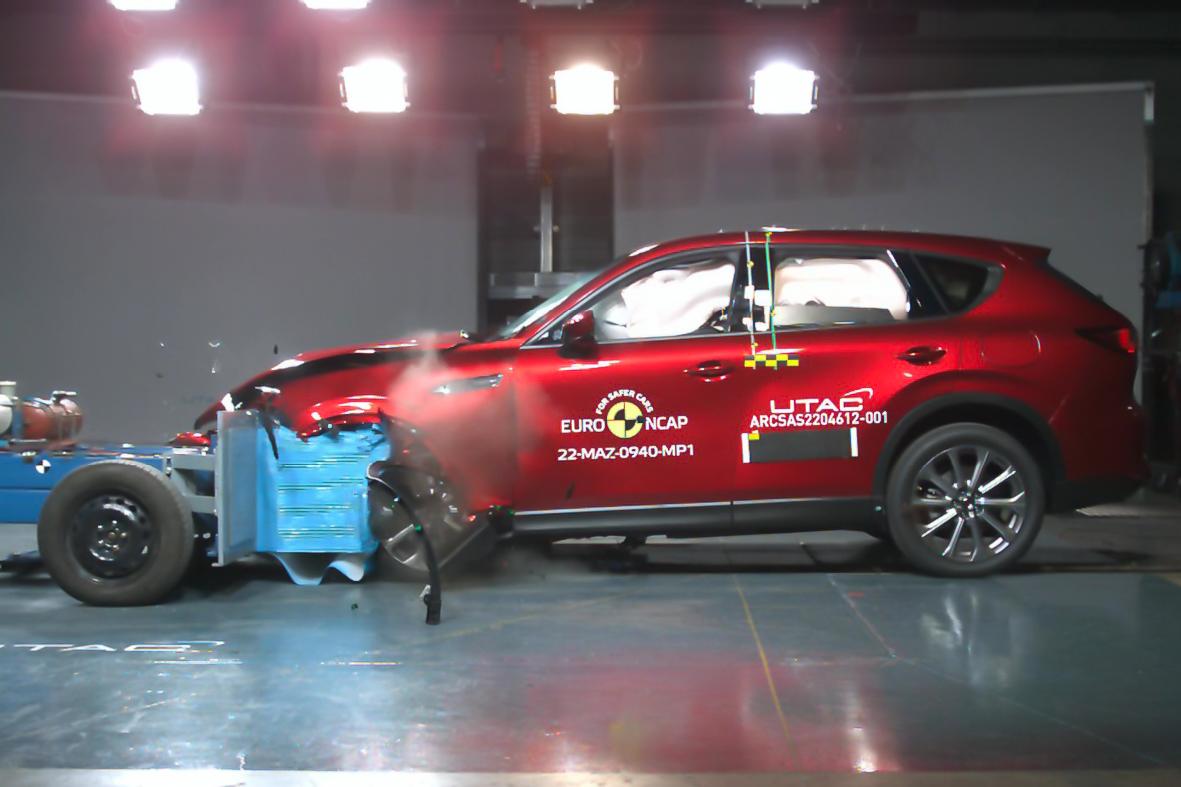
The Mazda CX-80 has yet to be tested by ANCAP or Euro NCAP, though the related CX-60 has a five-star rating from both safety authorities. The CX-60 was tested in 2022, and we’ll reference it for the sake of comparing safety.
CX-60 crash test
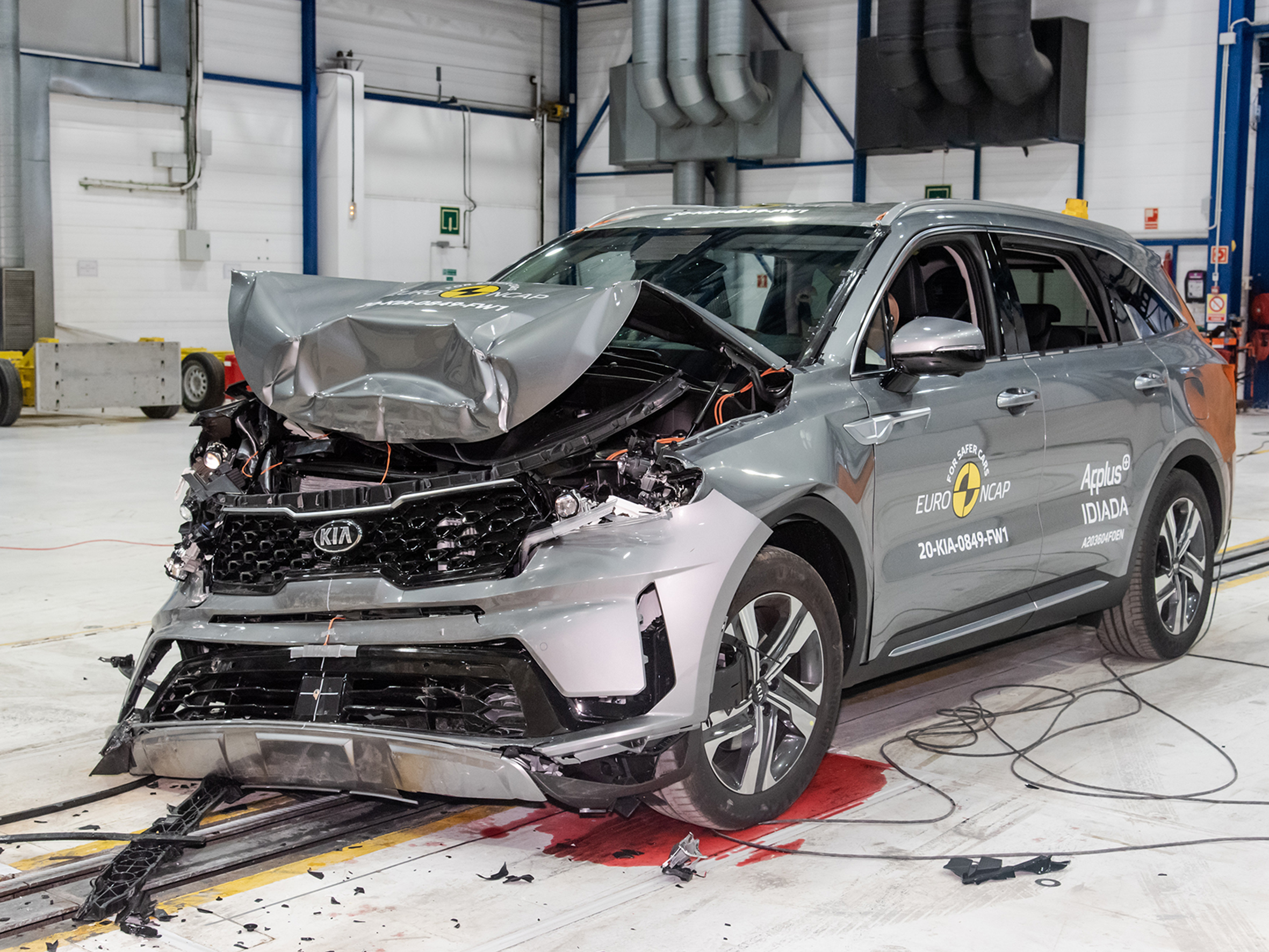
Meanwhile, the Kia Sorento wears a five-star ANCAP safety rating based on tests conducted in 2020.
The CX-60 and Sorento both scored above 80 per cent on both adult and child occupant protection but differ on vulnerable road user protection and safety assist.
Where the CX-60 scored 89 per cent on vulnerable road user protection, the Sorento scored 63 per cent. Conversely, the Sorento’s 89 per cent safety assist score wasn’t matched by the CX-60’s 77 per cent.
Both cars feature adaptive cruise control, autonomous emergency braking, blind-spot monitoring, driver attention monitoring, rear cross-traffic alert, and tyre pressure monitoring as standard.
Sorento
While a surround-view camera is standard on all CX-80s, it’s only available on the Sorento as part of the top-spec GT-Line.
The Sorento also offers Highway Driving Assist on its mid-range Sport variant over the CX-80, which builds on adaptive cruise control with stop-and-go capability, combined with Lane Following Assist to keep the car centred in its lane.
Interested in buying a Mazda CX-80 or a Kia Sorento? Get in touch with a dealer by clicking the links
There are some differences in standard features between the two cars, though it’s largely dependent on variant.
At the bottom of the range the CX-80 rides on 18-inch wheels compared to the Kia’s 17-inch rims, and the Mazda has a 10.25-inch touchscreen infotainment system against the Sorento’s 12.3-inch display. Both benefit from wireless Apple CarPlay and Android Auto.
Both have cloth seats, which is swapped for leather from the CX-80 Touring and Sorento Sport+ trim levels. Powered seat adjustment is available from the CX-80 Touring, while the Sorento adds it from the Sport.
Each of the four Sorento variants increase their wheel sizes by one inch over the previous model, while the two top-spec CX-80s offer 20-inch alloys. One of the top two is the GT, which also adds a larger 12.3-inch infotainment system to match the Sorento.
Both have DAB+ digital radio, satellite navigation, and dual-zone climate control as standard, with features like a wireless phone charger and heated seats offered in specific variants only.
The SP Package featured on the CX-80 throughout this article is available on the top-spec Azami only, which is available as an optional extra.
Max Davies: Both are solid choices on paper. The Sorento is cheaper and well-established, while the CX-80 is the latest and greatest from Mazda and has more space inside.
CX-80
Sorento
The key question to ask yourself is which of that balance you prefer. It’s also important to remember there are plenty of options to suit your needs across each individual model range, each equipped with varying levels of tech and different powertrains.
As a general note, this comparison centres around the cheapest versions of each car as they’re the most accessible to people wanting to get behind the wheel of a large seven-seater. Of course, there are diesels and various hybrids available too depending on how much you want to spend.
Full thoughts on the CX-80 are still a few days away, so this comparison is based entirely on specifications we’ve already published.
Our detailed review of the CX-80 will be going live on November 12, so stay tuned. In the meantime, you can read Jack Quick’s review of the base petrol Sorento here.
Interested in buying a Mazda CX-80 or a Kia Sorento? Get in touch with a dealer by clicking the links
Porsche has issued a recall and a do not drive warning on certain 718 and 911 models because of concerns a wheel could fall off.
The issue has to do with some wheel bolts not being built to the correct specification, and as a result could fracture, something that could result in a loss of steering control or a wheel to become detached.
Porsche said drivers will immediately notice a vibration if there’s a fractured wheel bolt present.
Porsche’s production records show that only a small batch of vehicles are affected. According to the recall notice published by the NHTSA on Oct. 28 (recall campaign number 24V809000), there are 1,851 affected vehicles in the U.S., all of them from the 2024 model year.
The specific models include the 718 Cayman GT4 RS and 718 Spyder RS, and certain 911 models.
Porsche said it first became aware of several incidents related to the issue in September, and that it is still determining the cause.
The remedy involves a dealer checking the center lock wheel bolt and replacing any out of specification parts, if necessary.
Owner notification letters are expected to be mailed out on Dec. 27, but anyone looking for further information can contact Porsche at 1-800-767-7243 or visit Porsche’s recall page.
Cars with manual transmissions haven’t been the mass-market choice for some time now, but that doesn’t mean they’re extinct.
Those in the market for a sports car, for example, may want to opt for a manual transmission for the adjusted driving dynamics they offer. Some such cars still allow you to do that without hassle, including – but not limited to – the Subaru WRX, Toyota Supra, Hyundai i30 N, Mazda MX-5, BMW M2, and the BRZ/86 twins.
But in many cases, manual cars are cheaper than their automatic counterparts, which means they also have a place in lower-end budget vehicles.
100s of new car deals are available through CarExpert right now. Get the experts on your side and score a great deal. Browse now.
Mazda 2
Suzuki Ignis
Mitsubishi ASX
Suzuki Swift Sport
If you simply want to get behind the wheel of a manual car while spending as little as possible, you’re in luck. In fact, Australia’s current cheapest new car comes with a manual transmission.
As such, this list is a compilation of the 10 cheapest new manual cars you can buy in Australia right now.
Some manufacturers list national drive-away prices, while others list prices excluding on-road costs. For consistency, however, this list is ranked based on drive-away prices for Victorian private buyers.
You’ll also notice this list is dominated by Japanese cars, with all but two sold by manufacturers from that country.
Make/model
Victorian drive-away starting price
Kia Picanto
$21,190
Suzuki Ignis
$22,490
Suzuki Swift Hybrid
$24,490
Mitsubishi ASX
$26,240
Mazda 2
$26,674
Hyundai Venue
$26,788.20
Suzuki Vitara
$29,990
Suzuki Swift Sport
$32,990
Toyota HiLux
$33,018
Suzuki Jimny
$34,990
Click on a car’s name above to jump directly to its information on the page, or continue scrolling for the full list.
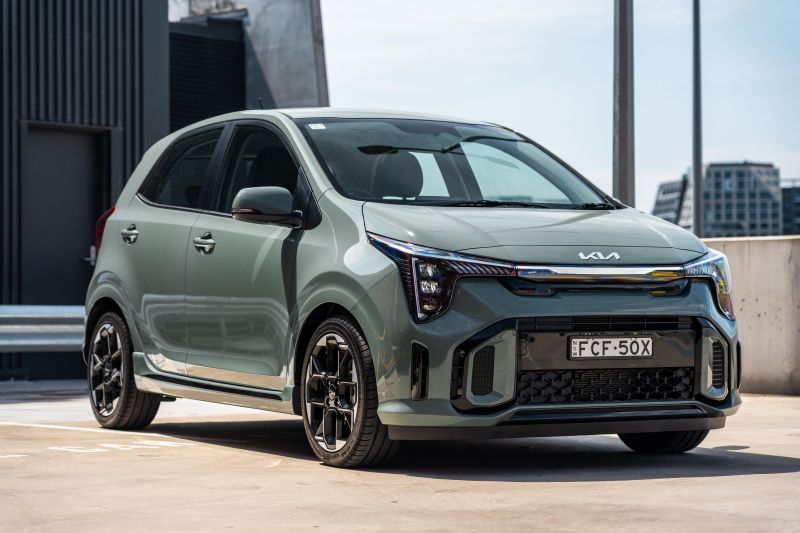
Kia Picanto
The bite-sized Kia Picanto is Australia’s cheapest car, which also means it’s Australia’s cheapest new car with a manual transmission at just $21,190 drive-away.
There are two distinct Sport and GT-Line grades, and both offer the same 1.2-litre naturally aspirated four-cylinder petrol engine which produces 62kW of power and 122Nm of torque.
Each variant also offers the choice of either a five-speed manual or four-speed automatic transmission, with drive sent to the front wheels exclusively.
The Picanto’s four-star safety rating from 2017 has now expired, though standard features include autonomous emergency braking, blind-spot monitoring, an 8.0-inch touchscreen infotainment system, wireless Apple CarPlay and Android Auto, and alloy wheels.
Moving to the GT-Line adds LED headlights instead of halogen, larger alloy wheels, and revised exterior styling. The Picanto is covered by Kia’s seven-year, unlimited-kilometre warranty.
Model
Drive-away price
Kia Picanto Sport manual
$21,190
Kia Picanto Sport auto
$22,190
Kia Picanto GT-Line manual
$22,990
Kia Picanto GT-Line auto
$23,990
Interested in buying a Kia Picanto? Get in touch with one of CarExpert’s trusted dealers here.
MORE: Everything Kia Picanto
Back to top
Suzuki Ignis
The first Suzuki to appear on this list is just over $1000 more expensive than the Picanto. It’s the base Ignis GL, which with the cheaper manual transmission costs $22,490 drive-away.
There are only two distinct Ignis grades, with the top-spec GLX priced at $26,490 drive-away and only available with a continuously variable automatic transmission (CVT).
The range is powered by a 1.2-litre naturally aspirated four-cylinder engine with 66kW and 120Nm, with the sole manual option offering a five-speeder. Drive is sent to the front wheels only across the range.
The Ignis remains untested by ANCAP, though standard features include a brake assist system, reversing camera, 7.0-inch touchscreen infotainment system, cloth upholstery, and either 15-inch or 16-inch alloys depending on the variant.
Suzuki backs its Ignis range with a five-year, unlimited-kilometre warranty.
Model
Drive-away price
Suzuki Ignis GL manual
$22,490
Suzuki Ignis GL auto
$24,490
Suzuki Ignis GLX auto
$26,490
Interested in buying a Suzuki Ignis? Get in touch with one of CarExpert’s trusted dealers here.
MORE: Everything Suzuki Ignis
Back to top
Suzuki Swift Hybrid
The Suzuki Swift Hybrid is the newest model here, having been launched in June this year. Its cheapest variant is available with a manual and is priced at $24,490 drive-away.
Available with either a five-speed manual or CVT, all Swift Hybrids sold in Australia feature a 1.2-litre naturally aspirated three-cylinder engine with 12-volt mild-hybrid assistance. Outputs are quoted at 60kW and 110Nm.
Drive is sent to the front wheels exclusively, with features like a wireless phone charger and paddle shifters available on only the top-spec GLX.
The Plus features heated front seats and blind-spot monitoring, while all variants offer a 9.0-inch touchscreen infotainment system and wireless Apple CarPlay.
The Swift Hybrid is yet to be tested by ANCAP and is therefore unrated, while Suzuki offers a five-year, unlimited-kilometre warranty.
Model
Drive-away price
Suzuki Swift Hybrid manual
$24,490
Suzuki Swift Hybrid auto
$26,990
Suzuki Swift Hybrid Plus auto
$28,490
Suzuki Swift Hybrid GLX auto
$29,490
Interested in buying a Suzuki Swift Hybrid? Get in touch with one of CarExpert’s trusted dealers here.
MORE: Everything Suzuki Swift Hybrid
Back to top
Mitsubishi ASX
The aging Mitsubishi ASX is the largest passenger car on this list, with a manual option available for $26,240 drive-away.
There are a total of seven variants available, with prices extending to $39,640 drive-away. All variants except the GSR and Exceed utilise a 2.0-litre naturally aspirated four-cylinder engine with 110kW and 197Nm, and only the base GS features a five-speed manual transmission.
The GSR and Exceed up the engine displacement to 2.4 litres, boosting power to 123kW and 222Nm. All automatic variants utilise a CVT.
Since its five-star safety rating from 2014 has lapsed, the ASX is currently unrated. Standard features include autonomous emergency braking and a reversing camera, while higher grades add lane departure warning and blind-spot monitoring.
All variants feature an 8.0-inch touchscreen infotainment system, with all but the base GS including 18-inch alloy wheels as standard. Mitsubishi backs the range with a 10-year, 200,000km warranty.
Model
Drive-away price
Mitsubishi ASX GS manual
$26,240
Mitsubishi ASX GS auto
$28,490
Mitsubishi ASX ES auto
$29,740
Mitsubishi ASX MR auto
$31,490
Mitsubishi ASX LS auto
$32,490
Mitsubishi ASX GSR auto
$35,840
Mitsubishi ASX Exceed auto
$39,640
Interested in buying a Mitsubishi ASX? Get in touch with one of CarExpert’s trusted dealers here.
MORE: Everything Mitsubishi ASX
Back to top
Mazda 2
Unlike its similarly numbered siblings, Mazda’s smallest car still offers a manual transmission but only in the base-spec Pure hatch. It’s priced at $26,674 drive-away.
All Mazda 2 variants utilise a 1.5-litre naturally aspirated four-cylinder engine producing 81kW and 142Nm, which is bumped to 82kW and 144Nm in the Pure manual.
That base Pure is also the first car on this list to feature a six-speed manual transmission, while all other variants offer a six-speed automatic. Drive is sent to the front wheels in all Australian models.
Uniquely, there are also two sedan body styles available at the two extremities of the Mazda 2 lineup, which bring no additional costs over the hatches. As seems to be a theme here, the Mazda 2’s safety rating hasn’t been renewed since it lapsed.
It previously held a five-star rating, with features including autonomous emergency braking, blind-spot monitoring, and lane-keep assist. Also included as standard are alloy wheels, a 7.0-inch infotainment system, and LED headlights.
The Mazda 2 is backed by a five-year, unlimited-kilometre warranty.
Model
Drive-away price
Mazda 2 G15 Pure manual hatch
$26,674
Mazda 2 G15 Pure auto hatch
$28,734
Mazda 2 G15 Pure auto sedan
$28,734
Mazda 2 G15 Pure SP auto hatch
$29,558
Mazda 2 G15 Evolve auto hatch
$30,279
Mazda 2 G15 GT auto hatch
$32,030
Mazda 2 G16 GT auto sedan
$32,030
Interested in buying a Mazda 2? Get in touch with one of CarExpert’s trusted dealers here.
MORE: Everything Mazda 2
Back to top
Hyundai Venue
Hyundai’s light SUV still offers a manual transmission, which is found in the base-spec Venue for $26,788.20 drive-away.
The 2024 Hyundai Venue is powered by a naturally aspirated 1.6-litre four-cylinder petrol engine producing 90kW of power and 151Nm of torque, with drive sent to the front wheels through either a six-speed manual in the base Venue or six-speed automatic in all other variants.
It’s the first car on this list with a current safety rating, wearing a four-star score. Standard safety features include autonomous emergency braking and driver attention warning, while the Active adds blind-spot monitoring and rear-cross traffic alert.
Standard equipment on the base grade includes an 8.0-inch touchscreen infotainment system, cloth upholstery, and wireless Apple CarPlay and Android Auto.
Hyundai backs its Venue range with a five-year, unlimited-kilometre warranty.
Model
Drive-away price
Hyundai Venue manual
$26,788.20
Hyundai Venue auto
$28,872.20
Hyundai Venue Active auto
$31,214.60
Hyundai Venue Elite auto
$33,823.80
Interested in buying a Hyundai Venue? Get in touch with one of CarExpert’s trusted dealers here.
MORE: Everything Hyundai Venue
Back to top
Suzuki Vitara
The Suzuki Vitara crossover is getting on in years, but its base spec still offers a five-speed manual transmission for $29,990 drive-away.
The two base models use a 1.6-litre naturally aspirated four-cylinder engine producing 86kW and 156Nm, mated with either the manual or a six-speed automatic transmission, with drive sent to the front wheels only.
Vitara Turbo variants use a 1.4-litre turbocharged four-cylinder engine producing 103kW and 220Nm. It’s mated exclusively to a six-speed automatic transmission, with both front- and all-wheel drive available.
Its five-star safety rating from 2015 has lapsed, with standard tech including a reversing camera, and Vitara Turbo models adding autonomous emergency braking, blind-spot monitoring, and adaptive cruise control.
Standard equipment includes 17-inch alloys, a 7.0-inch touchscreen infotainment system, and cloth upholstery. Suzuki backs its Vitara with a five-year, unlimited-kilometre warranty.
Model
Drive-away price
Suzuki Vitara manual
$29,990
Suzuki Vitara auto
$31,990
Suzuki Vitara Turbo auto
$37,835
Suzuki Vitara Turbo Allgrip auto
$42,835
Interested in buying a Suzuki Vitara? Get in touch with one of CarExpert’s trusted dealers here.
MORE: Everything Suzuki Vitara
Back to top
Suzuki Swift Sport
The second Swift on this list is the hatch’s sporty version, which is yet to be updated alongside the new-generation Swift Hybrid. Its manual variant is available for $32,990 drive-away.
The Swift Sport utilises a 1.4-litre turbocharged four-cylinder engine, which produces 103kW and 230Nm. Drive is sent to the front wheels exclusively, via either a six-speed manual transmission or six-speed automatic.
Like its Swift Hybrid relative, the Sport is currently unrated by ANCAP. Standard safety tech includes autonomous emergency braking, adaptive cruise control, and lane departure warning.
Standard features include a 7.0-inch touchscreen infotainment system, semi-bucket seats, 17-inch alloys, LED headlights, a digital speedometer, and heated side mirrors.
The Swift Sport is backed by Suzuki’s five-year, unlimited-kilometre warranty.
Model
Drive-away price
Suzuki Swift Sport manual
$32,990
Suzuki Swift Sport auto
$34,990
Interested in buying a Suzuki Swift Sport? Get in touch with one of CarExpert’s trusted dealers here.
MORE: Everything Suzuki Swift
Back to top
Toyota HiLux
The Toyota HiLux is the only ute on this list, with several different transmission options available across the range. If you’re after a manual, the cheapest is the base 2.7-litre petrol4×2 single-cab/chassis WorkMate at $33,018 drive-away.
That variant is the only manual HiLux to be offered with a five-speed transmission; the rest of which include a six-speed instead. The cheapest six-speed manual is the 2.4-litre turbo-diesel4×2 single-cab/chassis WorkMate Hi-Rider at $38,402 drive-away.
A handful of SR and SR5 variants are offered with manual transmissions, which are only available with a 2.8-litre four-cylinder turbo-diesel engine. That combination produces 150kW and 420Nm, which is bumped to 500Nm when mated with a six-speed automatic.
The petrol 2.7-litre naturally aspirated four-cylinder petrol engine found in lower-grade WorkMate variants produces 122kW and 245Nm, while the 2.4-litre four-cylinder turbo-diesel produces 110kW and 400Nm. Drive type is dependent on the variant.
The HiLux wears a five-star ANCAP safety rating based on testing conducted in 2019, and is backed by Toyota’s five-year, unlimited-kilometre warranty.
Standard features and specifications vary greatly depending on the variant, so it’s worth checking out our price and specs article for the full details.
4×2 single-cab chassis
Drive-away price
Toyota HiLux WorkMate 2.7 5MT
$33,018
Toyota HiLux WorkMate 2.7 6AT
$35,072
Toyota HiLux WorkMate Hi-Rider 2.4TD 6MT
$38,402
4×2 extra-cab pickup
Drive-away price
Toyota HiLux SR Hi-Rider 2.8TD 6AT
$51,702
4×2 dual-cab pickup
Drive-away price
Toyota HiLux WorkMate 2.7 6AT
$41,703
Toyota HiLux WorkMate Hi-Rider 2.4TD 6AT
$48,982
Toyota HiLux SR Hi-Rider 2.8TD 6AT
$53,160
4×4 single-cab chassis
Drive-away price
Toyota HiLux WorkMate 2.4TD 6MT
$47,901
Toyota HiLux SR 2.8TD 6MT
$51,052
Toyota HiLux SR 2.8TD 6AT
$53,106
4×4 extra-cab chassis
Drive-away price
Toyota HiLux WorkMate 2.4TD 6AT
$54,725
Toyota HiLux SR 2.8TD 6MT
$56,809
Toyota HiLux SR 2.8TD 6AT
$58,863
4×4 extra-cab pickup
Drive-away price
Toyota HiLux SR5 2.8TD 6AT
$64,828
4×4 dual-cab chassis
Drive-away price
Toyota HiLux WorkMate 2.4TD 6AT
$56,718
Toyota HiLux SR 2.8TD 6MT
$58,997
Toyota HiLux SR 2.8TD 6AT with V-Active
$62,259
Toyota HiLux SR5 2.8TD 6AT with V-Active
$68,882
4×4 dual-cab pickup
Drive-away price
Toyota HiLux WorkMate 2.4TD 6AT
$54,733
Toyota HiLux SR 2.8TD 6MT
$57,012
Toyota HiLux SR 2.8TD 6AT
$59,633
Toyota HiLux SR 2.8TD 6AT with V-Active
$60,680
Toyota HiLux SR5 2.8TD 6MT
$65,258
Toyota HiLux SR5 2.8TD 6AT with V-Active
$67,919
Toyota HiLux Rogue 2.8TD 6AT with V-Active
$76,415
Toyota HiLux GR Sport 2.8TD 6AT
$79,271
Interested in buying a Toyota HiLux? Get in touch with one of CarExpert’s trusted dealers here.
MORE: Everything Toyota HiLux
Back to top
Suzuki Jimny
The loveable Jimny is the final car to crack the top 10 cheapest manuals in Australia, making it five Suzukis here in total. Its cheapest Lite variant is manual-only and costs $34,990 drive-away.
All variants use a 1.5-litre naturally aspirated four-cylinder petrol engine, which produces 75kW of power and 130Nm of torque.
The available transmissions are either a five-speed manual or a four-speed automatic. Other than the Picanto, the Jimny is the only car on this list to have the option of a manual in every variant.
The Jimny currently wears a three-star ANCAP safety rating based on testing conducted in 2018. Standard features on all variants include autonomous emergency braking, lane departure warning, and fabric upholstery, while only the non-Lite Jimny and up offer a touchscreen infotainment system.
Like the other Suzukis here, the Jimny is backed by a five-year, unlimited-kilometre warranty.
Model
Drive-away price
Suzuki Jimny Lite manual
$34,990
Suzuki Jimny manual
$36,490
Suzuki Jimny auto
$38,990
Suzuki Jimny XL manual
$39,490
Suzuki Jimny XL auto
$41,990
Interested in buying a Suzuki Jimny? Get in touch with one of CarExpert’s trusted dealers here.
The next Tesla to become a cop car is the Model S Plaid
UP.FIT, a division of Unplugged Performance created the police package for the Model S
UP.FIT has also made a police-spec Cybertruck
Unplugged Performance is displaying a new Tesla police car from its UP.FIT division at the 2024 SEMA show in Las Vegas. This time, it’s the Model S Plaid that’s reporting for duty.
Set to be delivered to a community outreach program of the Los Angeles County Sheriff’s Department, the Plaid received a new wiring harness to integrate police lights, which are mounted behind the windshield and rear window, as well as along the side skirts, to eliminate the aerodynamic drag created by a conventional light bar, according to Unplugged Performance.
Other police equipment includes a push bar, high- and low-frequency sirens, and a public address system. All of this equipment adds weight, but Unplugged Performance estimates a relatively small drop in range to 345 miles, compared to 359 miles for the standard Plaid.
Tesla Model S Plaid police car by Unplugged Performance
The police-spec Plaid retains the stock tri-motor all-wheel drive powertrain, which generates 1,020 hp and allows for 0-60 mph acceleration in 1.9 seconds, according to Tesla. Unplugged Performance upgraded the brakes and installed lighter wheels, though.
Unplugged Performance has also built a police Tesla Cybertruck, which was delivered to the Irvine Police Department in California earlier this year. As with civilian EVs, California leads the way in electric police cars. One California police department already has an all-electric fleet, consisting of 10 Tesla Model 3 sedans and 10 Model Y crossovers.
Tesla Model S Plaid police car by Unplugged Performance
But a recent report found that some California police departments are having trouble with Tesla Model 3 and Model Y police cars—included ones upfitted by Unplugged Performance—citing issues insufficient interior space and difficulty getting maintenance and repair support for the bespoke vehicles. Issues like this stem partly from the fact that Tesla doesn’t offer a factory police package.
That police departments are willing to purchase Tesla police cars modified by aftermarket companies demonstrates the lack of options currently available. Ford—a mainstay of the cop-car business—offers a police version of the F-150 Lightning and has supplied Mustang Mach-E police cars to the New York Police Department. Stellantis has also hinted that it’s preparing the Dodge Charger Daytona for police duty as a replacement for the outgoing-generation gasoline Charger.
XT4 sales down 12% this year despite recent refresh
Plant to be retooled for next-generation Chevy Bolt EV
General Motors will end production of the Cadillac XT4 in January to free up capacity at the compact crossover’s Kansas plant for production of a next-generation Chevrolet Bolt EV, Reuters reported on Thursday, citing comments from the automaker.
A direct successor for the gas-powered XT4 hasn’t been announced and may never come, given the low sales of the current model. XT4 sales are down 12% to 17,807 units so far this year, despite the vehicle receiving a refresh only last year.
Cadillac earlier this year also launched an electric alternative in the form of the Optiq compact crossover. Cadillac also sells a gas-powered compact crossover exclusive to China, called the GT4.
GM as recently as May said it planned to continue building the XT4 alongside the new Bolt EV at the Kansas plant. The plant also builds the Chevrolet Malibu, though production of the sedan ceases this month.
2024 Chevrolet Malibu
The plant, located near Kansas City, will be retooled to build the new Bolt EV next year at an investment of $390 million. The first new Bolt EVs are expected to roll off the line by late 2025.
The current Bolt EV ended production at its plant in Orion Township, Michigan, last December. The Orion plant is being prepared for production of the Chevrolet Silverado EV and GMC Sierra EV. The electric truck twins are already in production at a plant in Detroit, and the extra capacity at the Orion plant is currently expected to be added starting in mid-2026.
The new Chevy Bolt EV, which will likely arrive as a 2026 model, will use GM’s Ultium EV platform and battery technology, enabling much faster charging rates than the current model’s slow 50-55 kw. It will also be offered as a single crossover model, instead of the current practice of having separate hatch and crossover (Bolt EUV) bodies.
The water felt like a warm embrace as I immersed myself in the outdoor hydrotherapy pool on a cool autumn day. I let the water from the jets massage my legs, watching my husband as the water from another jet pounded his shoulders and upper back. Even when it started drizzling, we didn’t want to leave the pool. The mist just made the setting seem even more magical.
Earlier that day, we trudged uphill in Perugia through the pouring rain. We had driven about half an hour to have lunch at a cozy restaurant and explore the city, but even with rain jackets and a big umbrella, we were soaked when we reached the car. Back at Borgo dei Conti Resort, which just emerged from the first phase of a significant renovation, we changed into our swimsuits and headed down to the spa. After all, what could be better than some spa time on a rainy day?
Scenic view of the outdoor pool and property at the Borgo dei Conti Resort.
Dario Garofalo/Courtesy of Borgo dei Conti
We walked through a relaxation room and immersed ourselves in the indoor jacuzzi. The sauna and steam room beckoned, but we headed to the outdoor pool before sunset. As I stared out at the olive trees, I realized it was exactly what we needed. After all, “spa” is an acronym for the Latin phrase “salus per aquam,” which means health by water. The ancient Romans realized it two millennia ago, and they brought their ways of life to Umbria long before it was part of the modern country of Italy.
This particular corner of Italy has a rich and fascinating history that can be felt at every turn. Borgo dei Conti occupies the site of a 13th-century fortress, but it began to take its current form in the 19th century, when Lemmo Rossi Scotti, Count of Montepetriolo, transformed it into a rustic country estate where he and his family could go to escape the city. Rossi Scotti, a painter famous for his panoramas of Perugia and portraits of the city’s high society, added the neo-gothic limonaia and planted the gardens.
In subsequent years, the property changed hands several times, but when the Babini family acquired it in 2002, they set about restoring it to its glory days, inspired by Count Rossi Scotti. After an initial 2010 renovation, they embarked on a bigger and more ambitious project to transform the hotel into one of the best resorts in Umbria. They tapped Milan-based firm Spagnulo & Partners to renovate the property and The Hospitality Experience — the hospitality group behind The Place Firenze (one of the best hotels in Florence) — to run it.
My husband and I seized the opportunity to explore the property more fully the following day when the sun finally came out. After breakfast at Cedri, we roamed the grounds surrounding the villa. In the park behind the hotel, the leaves on the trees were turning yellow, and manicured hedges lined the pathways. Looking up at the turret, I felt like I had entered a fairytale. That’s one of the things I love about visiting Umbria — the region known as Italy’s green heart — history is palpable and instills a sense of wonder in every place you go.
Read on for my full review of the reimagined Borgo dei Conti Resort.
Borgo dei Conti Resort
A complete renovation brought a modern flair to the hotel’s design while preserving historic details like frescoes and wood-beamed ceilings.
Rooms and suites are done up in muted, earthy colors and feature bespoke furniture and textiles.
Two restaurants offer fine dining and casual options that valorize local ingredients and recipes.
The relaxing spa has a spacious wet area and an outdoor heated hydrotherapy pool.
The hotel is located on a 16-acre estate with extensive gardens and woodlands, only 30 minutes from Perugia.
The Rooms
Everything about the rooms and suites at Borgo dei Conti conveys a strong sense of place, from the muted colors — sage green, gray, and shades of brown — to the curtains and headboards featuring designs inspired by medieval Umbrian textiles. Some rooms have original wooden beams on the ceilings, while others are decorated with frescoes, like the ones in the Contessa Suite that depict hunting scenes.
All rooms have comfortable beds, Nespresso machines, and complimentary non-alcoholic drinks in the minibars. The crème de la crème is the Conti Suite, which has a sitting room with a large fireplace, wood-beamed ceilings, and antiques, a separate bedroom with ceiling frescoes, and a copper bathtub in the spacious bathroom.
Food and Drink
The hotel has two restaurants and a bar. Cedri, the gourmet restaurant, serves breakfast and dinner in the villa’s historic limonaia. I loved the homemade plum jam made with fruit grown on the estate. In the evening, Executive Chef Emanuele Mazzetta serves elegant tasting menus and pasta, risotto, meat, and fish, which are available a la carte.
My risotto with goat cheese and 22 Mediterranean herbs was light and delicate, while my husband’s lamb had more robust flavors. The casual Osteria del Borgo serves traditional Umbrian cuisine and Neapolitan pizza on a laid-back terrace overlooking the outdoor pool. Room service is available 24/7.
Activities and Amenities
Scenic pathway through the Italian Gardens at the Borgo dei Conti Resort.
Dario Garofalo/Courtesy of Borgo dei Conti
The estate offers various outdoor activities that immerse you in the Umbrian countryside and traditions. Aside from relaxing by the pool, you can explore the 16-acre park on foot or by bike. Deep within the park is the Casa della Contessa, a charming little cottage where the hotel’s staff can set up romantic candlelit dinners. They can also organize a picnic in the olive grove, truffle hunting experience, wine tastings, cooking classes, and an outdoor cinema for movies under the stars.
The Spa
The indoor jacuzzi and sauna inside the Finnish Spa at Borgo dei Conti.
Dario Garofalo/Courtesy of Borgo dei Conti
The spa is an expansive oasis of calm and wellbeing. You’ll definitely want to set aside some time to relax in the Finnish sauna and steam room, Himalayan salt room, emotional shower, indoor jacuzzi, and outdoor hydrotherapy pool. Treatments include massages, facials, manicures, and pedicures.
Family-friendly Offerings
Kids are welcomed with family-friendly activities like hiking, biking, tennis, picnics, and visiting the apiary and vegetable gardens. Staff-led childcare is available for children over 3 for a few hours daily. While there aren’t technically any connecting rooms, families can book adjacent rooms with a hallway door they can close for privacy.
Accessibility and Sustainability
There are ADA-compliant rooms, and all public areas, including the pool and spa, are fully accessible. The hotel follows Relais & Châteaux’s sustainability guidelines, which establish measures for environmental conservation, sustainable cuisine, and social empowerment. Borgo dei Conti grows its own vegetables and herbs and produces honey on-site. The property aims to reduce single-use plastic using aluminum tubes for bath products in the rooms and cotton bags instead of plastic.
Location
The hotel is located in the countryside, about 30 minutes from Perugia, one of Italy’s best-preserved medieval cities. The concierge can organize visits to the Museo Atelier Giuditta Brozzetti, a historic textile workshop, and the Studio Moretti Caselli, a family-run stained glass studio in Perugia, as well as visits to nearby wineries and olive oil mills. Other points of interest include Lake Trasimeno, Solomeo (Brunello Cucinelli’s cashmere factory), Assisi, and Orvieto. If you want to explore the area, renting a car is a good idea.
How to Get the Most Out of Your Stay
Borgo dei Conti is a member of Virtuoso, Fine Hotels and Resorts, Signature, and Serendipians, and has related benefits.
The technical storage or access is strictly necessary for the legitimate purpose of enabling the use of a specific service explicitly requested by the subscriber or user, or for the sole purpose of carrying out the transmission of a communication over an electronic communications network.
Preferences
The technical storage or access is necessary for the legitimate purpose of storing preferences that are not requested by the subscriber or user.
Statistics
The technical storage or access that is used exclusively for statistical purposes.The technical storage or access that is used exclusively for anonymous statistical purposes. Without a subpoena, voluntary compliance on the part of your Internet Service Provider, or additional records from a third party, information stored or retrieved for this purpose alone cannot usually be used to identify you.
Marketing
The technical storage or access is required to create user profiles to send advertising, or to track the user on a website or across several websites for similar marketing purposes.