Mazda on Thursday provided an update on its powertrain development efforts, which will emphasize bringing more development work on all-electric and hybrid powertrains in-house going forward.
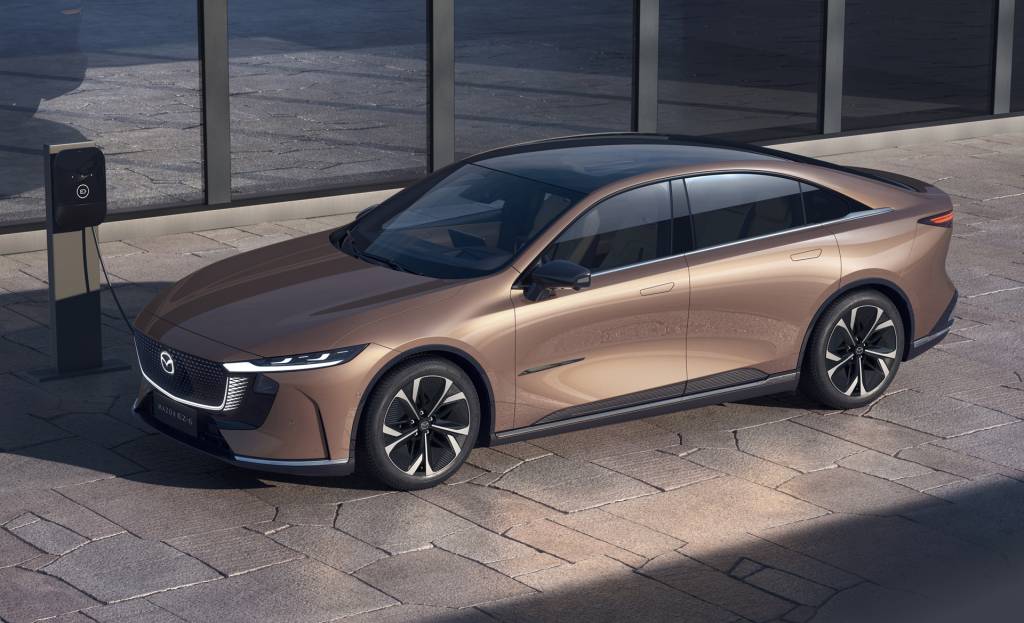
After launching the low-range MX-30 crossover, which has already been discontinued in the U.S., with all-electric and range-extended powertrains, Mazda has leaned on partners for electrification. A hybrid version of the CX-50 crossover SUV arrives for the 2025 model year with a Toyota-sourced hybrid system, while the EZ-6 electric sedan was developed in partnership with China’s Changan Automobile.
Mazda electrification plans for current decade
Now Mazda is trying to stand on its own. In Thursday’s presentation, the automaker said it was developing its own hybrid system to be used in the next-generation CX-5 crossover SUV launching sometime between 2025 and 2027. After the CX-5, the hybrid system could then be applied to larger models, Mazda said.
Closer to the end of that time frame, around 2027, Mazda also plans to launch an electric SUV based on its own dedicated EV platform, with a plug-in hybrid variant also possible. This will be sold alongside an electric SUV co-developed with Changan.
2025 Mazda EZ-6
Mazda also confirmed that it had inked battery supply deals with AESC and Panasonic to secure needed battery volumes up to 2030. A new factory in Japan’s Yamaguchi Prefecture will assemble cells from Panasonic, with which Mazda has been in talks since at least 2023, into modules.
Development of internal-combustion engines will continue as well. In the same presentation, Mazda announced a new Skyactiv-Z family of 4-cylinder engines due to launch in 2027, and said that it reinstated a rotary-engine development team in February. The MX-30 currently uses a small rotary engine as a range extender, but this hints at broader use of the piston-less engines that are a big part of Mazda lore. The automaker in May also allied with Subaru and Toyota to find ways to further reduce emissions from combustion engines.
Tesla may have been late to the electric vehicle party in Malaysia, but that’s nothing compared to the Philippines. The famed EV brand has finally made its way to the archipelago with the Model 3 “Highland” facelift and Model Y, leaving Indonesia and Vietnam as the only other major Southeast Asian markets yet to receive it officially.
But the country does at least have something to celebrate. Just like they are in Malaysia, EVs are tax-free in the Philippines (there until at least 2028), but the advantage of being a left-hand-drive country is that Tesla prices are far lower than they are elsewhere in the region, presumably unencumbered by right-hand-drive conversion costs.
The Model 3 and Model Y are available in the same three variants as Malaysia. The former starts from 2,109,000 pesos (RM158,600) for the rear-wheel-drive model, while opting for the Long Range All-Wheel Drive brings this figure up to 2,489,000 pesos (RM187,100). Even the Performance only tops out at 3,099,000 pesos (RM233,000).
Contrast this to Malaysian prices of RM181,000, RM210,000 and RM242,000 nett respectively. In fact, the car is barely any more expensive than it is in the car’s production base of China, where it retails for between 231,900 yuan (RM142,000) and 335,900 yuan (RM205,600).
Meanwhile, the Model Y costs 2,369,000 pesos (RM178,100) for the RWD model, 2,689,000 pesos (RM202,200) for the Long Range AWD and 3,299,000 pesos (RM248,000) for the Performance. By comparison, the SUV’s Malaysian prices are RM191,000, RM238,000 and RM280,000 respectively.
The Model 3 Rear-Wheel Drive gets from zero to 100 km/h in 6.1 seconds does 513 km on a full charge, while the Model 3 Long Range AWD does 629 km. The Model 3 Performance, with its stronger acceleration (3.1 seconds) and top speed (250 km/h, versus 201 km/h for the others) figures, does 528 km; all range figures are based on the WLTP standard.
As for the Model Y, the Rear-Wheel Drive gets from zero to 100 km/h in 6.9 seconds and does 455 km on a full charge, while the Model Y Long Range AWD attains figures of five seconds and 533 km respectively; the Model Y Performance manages a century sprint of 3.7 seconds and a range of 514 km. As with the Model 3, all range figures are based on the WLTP standard.
GALLERY: 2024 Tesla Model 3 Performance in Malaysia
GALLERY: 2024 Tesla Model Y Performance in Malaysia
Sempena meraikan pencapaian pengeluaran ke-6 juta unik motosikalnya, serta ulang tahun ke-45 Hong Leong Yamaha Motor (HLYM) beroperasi di Malaysia, syarikat itu kini memperkenalkan model edisi terhad Yamaha Y16ZR 6MRO. Ditawarkan hanya dalam 3,000 unit sahaja, motosikal ini menampilkan skim warna berbeza di kedua-dua sisinya dengan menggunakan tema warna yang menyerlah.
Yamaha Y16ZR edisi terhad ini juga didatangkan dengan nombor siri unik bagi setiap satunya dengan lencana khas “6MRO”. Juga tidak ketinggalan, pertama kali ditawarkan oleh Yamaha untuk versi ini ialah lencana “glow in the dark”. Selain itu ada perincian dengan apa yang dipanggil sebagai “chameleon effect” yang menggunakan grafik UV istimewa dengan kesan warna bertukar dengan peralihan cahaya.
Ada juga pakej cenderahati eksklusif yang didatangkan khusus untuk model edisi terhad ini. Ia terdiri daripada satu kotak khusus yang di dalamnya terdiri daripada seutas jam tangan hasil kerjasama dengan Casio Jepun yang menerapkan skim warna yang sama dengan badan motosikal terbabit. Kedua ialah plat sijil logam dengan ukiran timbul dengan nombor siri eksklusif yang sama, dengan bingkai warna emas dan terakhir, model “die cast” Yamaha Y16ZR 6MRO.
Satu lagi aksesori yang disertakan ialah helmet eksklusif daripada Tekhne Helmet, yang juga datang dengan nombor siri dan skim warna yang sedondon dengan imej keseluruhan motosikal.
Harga jualan bagi motosikal edisi terhad ini ialah RM13,668, belum termasuk yuran pendaftaran dan insurans. Tiada perbezaan bagi spesifikasi mekanikal berbanding Y16ZR biasa.
Porsche’s V-10 in the Carrera GT was originally built for a race car
Just one example of the race car, known as the LMP2000, was built
Video footage of the LMP2000 and its loud V-10 has been released by Porsche
Porsche in 2000 launched the Carrera GT with a naturally aspirated 5.5-liter V-10 that was unique to the car. However, the engine wasn’t originally intended for that purpose.
Instead, it was originally developed for a Le Mans sports prototype race car that was canceled before its first competition. The car was known as the LMP2000, or 9R3 as it was referred to internally, and Porsche didn’t even mention the car publicly until years later.
Only the one example was ever built, a year before the Carrera GT made its debut on the world stage at the 2000 Paris auto show. It currently sits in the Porsche Museum in Stuttgart, and Porsche recently marked the car’s 25th anniversary by taking it out on the company-owned Weissach test track.
The automaker even invited one of the car’s original test drivers, Alan McNish, for the occasion.
Porsche in the late 1990s was already successfully competing in top-level endurance racing, including in the 24 Hours of Le Mans, with the 911 GT1 and LMP1-98 race cars. The LMP2000 was developed as the successor to those cars, and was due to make its motorsports debut in 2000.
However, Porsche with its limited budget and staff resources at the time canceled the project to focus on development of the first Cayenne, a money maker that would eventually give Porsche the funds it needed to launch the Carrera GT, using some of the parts developed for the LMP2000, including of course the V-10.
The V-10 was derived from an earlier design displacing just 3.5 liters, which Porsche had designed for Formula 1 in the early 1990s but never used. Porsche was supplying a V-12 to the Footwork Arrows F1 team in 1991, but the automaker pulled out following a disastrous run that season. The V-10 was designed to replace the overweight V-12 but Porsche was already out of F1 before development could be completed.
The V-10 would eventually power the Carrera GT, but it would take more than a decade to do so.
At some point, hopping from place to place feels more like a hassle than an adventure. Relearning the basics in each new country gets tiring, and sometimes, it’s nice to settle in one place without constantly finding a new gym, sim card, or coworking space.
But giving up travel entirely? Not for me.
Having a base camp, like Thailand, offers the perfect balance – an ideal spot to build social ties and still explore the world. Whether it’s the culture, affordability, or expat community, Thailand provides a unique blend of adventure and stability.
Here’s a guide to help you transition from being a traveler to an expat in Thailand.
For starters, it’s a budget-friendly paradise with a lifestyle that balances modern convenience with an exotic charm. From mouth-watering street food to postcard-perfect beaches, Thailand ticks a lot of boxes. And let’s not forget the expat-friendly visa options and a social scene that’s as vibrant as it is diverse.
Whether you’re after a laid-back beach life or the hustle and bustle of the city, Thailand offers a little something for every type of expat.
Living in Thailand means you can unwind by serene beaches like this anytime you like.
Cost of Living as an Expat in Thailand
Living in Thailand is a bargain compared to Western countries. Depending on your lifestyle and location, you can easily live on $1,000 to $2,000 a month.
Here’s an overview of the average cost of living in Thailand:
Rent: ~$300/month — this budget can cover an apartment in a central location.
Food: ~$2 per meal for typical Thai dishes.
Transportation: ~$100/month — enough to rent a motorcycle and explore at your own pace.
Utilities: ~$100/month — includes electricity, water, and internet.
Bangkok or islands might eat into your budget more, while quieter cities will leave you with extra cash for weekend trips and indulgences. Either way, your money stretches far here without sacrificing quality of life.
Thailand Expat Visa Options
There are plenty of visas in Thailand that make it relatively easy for expats to stay long-term. The most popular option right now is the Destination Thailand Visa (DTV visa). It’s considered one of the best digital nomad visas globally, allowing you to stay in Thailand for up to five years.
During this period, you’re free to enter and exit Thailand as often as you like. Thailand’s central location in Southeast Asia provides easy access to direct flights to numerous countries worldwide.
From beaches to mountains, Thailand offers a range of lifestyles, allowing you to live out your dream in stunning surroundings.
There are just two simple requirements:
Financial proof: You need at least THB 500,000 (~$15,000) in your bank account.
Proof of digital nomad work: This can include a client contract, invoice, or a professional portfolio showcasing your work.
If you don’t have proof of digital nomad work, an alternative is to enroll in Muay Thai training. For long-term options beyond five years, there are retirement visas (from age 50 up) and business visas, as well as the premium Privilege Visa for those seeking a VIP experience.
Where to Live as an Expat in Thailand
Not all Thai cities are created equal, so it pays to know where you’ll fit best.
Bangkok is a hub for business and social life but can feel overwhelming. It’s my personal favorite. There just is something special about deciding to go out on a Tuesday night at 11pm and finding a buzzing nightlife scene.
Chiang Mai, on the other hand, offers a slower pace with a thriving digital nomad community. It caters to a crowd that prefers things to be more laid back, who need some nature in their life or are just looking for a more spiritual angle on things.
For island life, Phuket or Koh Samui are popular, but they come with a touristy price tag. For me personally, those are complete no-goes, but I also dislike going to the beach, so I might be biased here. They do offer though a lot of tourist infrastructure without the chaos of Bangkok.
Weigh up the pros and cons: do you want big city buzz or island serenity?
Where to Stay
Finding accommodation in Thailand is as easy as picking up your phone. Whether you’re looking for a studio in Bangkok or a villa by the beach, there are options for every budget.
$300 – $500: You can rent a fully furnished apartment located in a prime area, such as the city center, making it easy to get around. These apartments often come with access to an in-house gym and a swimming pool.
$500 – $1,500: You can rent a larger apartment with a nice view, such as a river, mountain, or sea view, often with beach access.
$1,500+: For a luxurious option, like a villa or high-end condo.
*Price per month
If you’re on a tight budget, you can rent a bare bone room for less than $100 per month. Facebook groups, real estate apps, and even good old-fashioned word of mouth are reliable ways to land a place.
Finding Work in Thailand
If you’re not living off savings or remote work, Thailand has job opportunities, though they might not pay Western salaries. Teaching English is a popular gig for travelers, but I’ve seen people do everything from modelling to becoming a pastry chef.
A good book to pick up on all the weird job opportunities that exist in Thailand is Working in Thailand.
Bangkok never sleeps. In this vibrant capital, you can meet people from all corners of the world at any hour.
The average salary for expats in Thailand is around $1,500 – $2,500 per month. While it may not make you rich, the experience—and the lifestyle—more than make up for it. Plus, with Thailand’s lower cost of living, many expats find they can save more than they would at home. Some expats also earn more than $3,000 per month.
This said, if you can keep your remote job (especially from a higher cost of living country) and can swing the time zone difference, that’s nearly always the better option.
Managing Money
Living abroad means dealing with money transfers, exchange rates, and banking headaches. Thailand’s banking system is solid, with plenty of local and international options. You can easily open a bank account in Thailand if you have a long-term visa.
As Thailand is becoming a cashless society, you can use your app from your Thai bank to pay for most things. You can use services like Wise or Revolut to send money to your bank without losing a chunk to fees. If you can’t open a Thai bank account, you can use a Wise Card to withdraw money from Thailand ATMs and pay for many things in Thailand.
Healthcare in Thailand
The healthcare system in Thailand is another win for expats. Public hospitals are affordable, while private hospitals, especially in Bangkok, offer world-class care at a fraction of the cost back home. A doctor visit in a public hospital generally costs less than $30. For a more comfortable experience at a private hospital, expect to pay around $70 per visit. It’s still worth getting insurance to cover unexpected issues, but day-to-day healthcare expenses are unlikely to break the bank.
This said, it’s probably still a good idea to have some kind of health insurance option. SafetyWing is probably the most well known-brand of coverage for digital nomads in South East Asia.
Adjusting to Thai culture will take a bit of time, but it’s worth the effort. Thai people tend to smile a lot, but they may not speak their minds openly, which can cause a communication barrier at first. However, you’ll adjust to it over time.
Learning a few basic Thai phrases, like greetings and how to say thanks, is an easy way to connect with locals. If you plan to live in Thailand long-term, taking a Thai language course can help you live here much more comfortably.
Respect local customs, especially regarding Buddhism and social etiquette. Always take off your shoes when entering someone’s home, don’t point at people, avoid putting your feet up in public, and dress respectfully.
Don’t hesitate to put yourself out there socially—expat communities in Thailand are welcoming, and you’ll quickly find your tribe.
Lastly, don’t forget to get health insurance. At the very least, consider digital nomad travel insurance from SafetyWing. It costs less than $60 per month and can cover you up to $250,000, which is sufficient for Thailand.
The UEFA Nations League is a fairly new football tournament, introduced only six years ago. However, thus far it has been a relatively big success, attracting fans, as well as bettors, from all over the world. In Germany, particularly, the UEFA Nations League has found a pretty noteworthy audience, with many fans itching to place a wager on their own national team, or even some from outside the country.
However, betting on sports has drastically changed, in part due to the introduction of online sportsbooks. These betting sites allow quick and easy access to one of the most popular hobbies in the world of sports. So, what are betting sites, how do they work, and what are the best options for betting on the UEFA Nations League?
Betting Sites: A Brief Intro
Betting sites are exactly what you might expect; websites that allow fans to place a wager without having to leave their home. With the rise of mobile betting, many have even jumped directly to placing wagers using a smartphone, while on the go, or during a coffee break. A lot of these websites are pretty simple to use, with intuitive features that anyone can figure out relatively quickly.
But, what truly attracts people to online bookies is the large variety of sporting competitions, and sports in general that they cover. Still, football remains the most popular, for obvious reasons; over three billion fans claim that they follow the game passionately and closely. The most popular sport deserves only the best betting sites.
That is why, in this article, we are going to go over many of the best bookies that German betting enthusiasts have access to. Fans can find many, if not all of the best betting sites in Germany at PlainEnglish.io, a repository for all things relating to gambling. So, without further ado, let us take a look at the best German sportsbooks that can be found online.
bwin
First up is bwin, which reviewers and users have exalted as one of the best websites for sports betting in Germany. The first thing you have to know about bwin is that it is more than a sportsbook. The site doubles as a casino, giving users access to a lot of the most popular (and some less popular) gambling games, that they might enjoy.
But, we are here to talk about the UEFA Nations League, and whether it is possible to bet on that competition online. The answer, you’ll be happy to find is a resounding yes. The bwin sportsbook not only allows players to wager on the UEFA Nations League, but also has some pretty great odds for soccer matches, reaching upwards of 90 percent.
But, like any business, bwin is not perfect. One of the downsides of the betting site is the fact that it won’t be available in all German provinces. However, if that were the only issue, then it wouldn’t be much of a problem. Another big issue is that bwin’s wagering requirements are quite high, especially when compared to some of the competition.
Betway
When discussing online gambling and sports betting, it is hard to ignore the massive influence and presence that Betway has in the industry. Though headquartered in Malta, Betway offers its services worldwide, including in Germany. And like bwin, sports betting is not all that you can find at Betway. There are also slots, poker, bingo, and various other casino games, all of which you can access with a simple click.
But, if football is what you are interested in, you have no cause for concern. Betway covers all of the big soccer tournaments. From the English Premier League, where Manchester City is dominating in style, to the German Bundesliga, and of course the UEFA Nations League, which is ongoing right now, you can find fair odds for any game you might be interested to wager on.
If that wasn’t enough, Betway also frequently comes out with promotional offers, usually geared towards betting fans. For sports betting enthusiasts, this is definitely one of the best sites to bet on. However, there are downsides, particularly related to the lackluster live coverage, and the overly-automated customer support.
Bet-At-Home
The aptly-named bet-at-home is another excellent sportsbook, available to Germany fans of wagering and gambling. Like the aforementioned two sites, bet-at-home doubles as a casino, giving fans access to hundreds of both classic and video slots. But, if you are only interested in the soccer matchups, then this is an excellent site to visit.
The homepage is simple to navigate, and easy to use, giving you links to various sports betting categories. On the left-side of the screen, you will find links to odds regarding specific tournaments, such as the UEFA Nations League, or whatever other soccer event you might be interested in. If soccer is perhaps not the sport you wish to wager on, bet-at-home offers odds on many of the other popular sports nowadays.
But, what truly sets BAH apart from the competition is that it allows users to make wagers using PayPal. For those that may be unaware, PayPal is a digital wallet, which makes online transactions simple, easy, and uncomplicated. However, be warned that there are downsides to using digital wallets when gambling. Namely, they can demand some pretty hefty fees.
Honorable Mentions
The three sportsbooks we’ve discussed thus far are all excellent choices for any German fan looking to get into betting on soccer online. If you are interested in wagering on the currently ongoing UEFA Nations League, or maybe you are simply looking for a top-quality bookie, this is where you should start. However, they are far from the only choices.
Another example of a top-quality bookie worth checking out is Neo.Bet. With a 200 percent up to 50 Euro welcome bonus, and generous soccer odds exceeding 90 percent, Neo.Bet is an excellent choice for any betting enthusiast interested in soccer.
However, if soccer is not your only realm of interest, you might be happy to learn that Happy Bet is another great choice. Not only do they offer soccer odds (and pretty positive ones at that), they also have great odds for basketball, which is a sport that many Germans are only now starting to get into.
For more on the latest in business reads, click here.
Kahn Design’s Chelsea Truck Company has made quite the name for itself with its wild takes on the original Defender. How wild? At one point the British outfit was churning out six-wheeled Defender pickups packing 500-hp V-8s.
The original Defender is no longer in production but there’s a company by the name of Ineos offering a very similar vehicle, the Grenadier, and Chelsea Truck has started offering upgrades for it.
Chelsea Truck Company Series II Expedition based on the Ineos Grenadier
Chelsea Truck’s latest take on the Grenadier is an extra-rugged version known as the Series II Expedition. It takes inspiration from the company’s wide-body Defenders, and adds details like 40-millimeter extended wheel arches made from carbon fiber, widened fenders, a 30-mm suspension lift kit, electric side steps, and 20-inch wheels wrapped in 37-inch all-terrain tires.
There are also design details like a textured matte black finish for many of the add-on parts, as well as the hood and roof, plus crosshairs for the lights and exhaust tips. A roof-mounted rear wing complete the list of exterior modifications.
Chelsea Truck Company Series II Expedition based on the Ineos Grenadier
For the interior, Chelsea Truck has replaced the standard trim with red leather.
No change has been made to the powertrain. Depending on the market, the Grenadier can be ordered with gas or diesel turbocharged 3.0-liter inline-6 engines sourced from BMW. Only the gas engine is offered in the U.S., where it is rated at 282 hp.
Chelsea Truck Company Series II Expedition based on the Ineos Grenadier
Chelsea Truck’s Series II Expedition is available for 94,000 British pounds (approximately $121,700). Many of the parts can also be ordered separately.
Ineos itself is preparing a range of upgrades for its vehicles, which the company plans to offer via its recently established Arcane Works personalization department. Arcane Works from time to time will also offer limited-edition models, starting with the Grenadier Detour limited to just 200 units worldwide.
Earlier this week, Mario shared the story of Rywire’s completed EV-powered Honda Civic project, which is currently making its public debut at SEMA 2024 in Las Vegas, at the CSF booth. In that post, Mario talked about the sheer number of Civics featured on Speedhunters since 2008 – over 200 in total – and highlighted the incredible diversity of these builds. Rywire’s twin-electric-engine, all-wheel-drive EK is a perfect example of the innovation we’ve seen.
This got us thinking about other platforms that have shaped our feature car content over the years – like the Nissan Skyline GT-R, the Toyota Corolla AE86, and, of course, the Volkswagen Golf in all its forms. Unsurprisingly, the number of Golf-related stories on Speedhunters is comparable to that of the Civics, with the same diversity being a key factor in many of the builds. For this week’s throwback post, we’re revisiting one of those Golf builds – a wild Gatebil-spec creation from 2014 that still stands out in our memory – for all the right reasons.
2014 Feature
Evolution is a funny thing. I’m referring to the process that means we’re all constantly evolving and modifying ourselves and our environments to better suit us. The unswerving need for everything to be better is what makes us human. It’s what made us walk upright and work out how to harness electricity. But when that spirit is satisfied, comfortable even, it can mutate and run a little wild with some pretty spectacular and unpredictable results at that. Like a 4WD Mk3 Golf with over 550hp at the wheels, Advan wheels, and roof-mounted air intakes… And yes, I did just use the discovery of electricity in relation to a modified ’92 Volkswagen.
The way we discover feature cars has evolved over the years, and there are now so many different methods – at shows, on social media, people email us, or we simply stumble across them in the street (yes, really!). On very rare occasions, it happens like it did when we found Stefan Behrendtz’s Golf. As you will probably know by now, we love Gatebil events for the sheer variety and the ‘what the hell is that?’ creations we come across.
It would have been easy to miss this Mk3 Golf amongst the pits and wild builds. But after a couple of days at Mantorp Park in Sweden earlier in the year, Larry, Rod, and I had all asked each other too many times if we’d seen that Golf. On track, it was fast, really fast, and all the signs were there – from the impressive amount of traction to what appeared to be rear-mounted radiators.
Then, there were the purposeful arches and 17-inch Advan RG wheels. The eclectic feel of the VW meant there was more below the surface that we needed to find out about, too. These mutant builds, put together by creators with little care for the ‘right’ wheels on the ‘right’ car, are the ones I love the most. They’re indulgent and built for reasons of pure purpose.
You’ve got to be pretty committed to the cause, too, because although VW did build an AWD Mk3 Golf (called a Syncro), it was never designed or intended for this sort of abuse. So already you might be thinking, why start here?
I can see a load of reasons. For a start, the Golf platform is massively popular, which means everyone has a memory or an attachment of some sort. Plus, there are loads of them out there, so picking up a base isn’t going to be a problem. Who knows? Not Stefan, because he bought it looking a lot like this in late 2013. In fact, Mantorp Park was its first proper outing after he’d gone through it and made his own modifications.
What led Stefan to own this Golf sounds funny when he explains it. He says that after building a pretty kick-ass, five-cylinder turbo Volvo 740 – complete with a whole bunch of race parts fitted – he decided to stop playing with cars in the summer of 2013 and sell up. That’s not the funny bit, obviously, no, the amusing thing is having ‘given it all up,’ he then bought a BMW E46 M3. Giving it up… Really? That’s never going to last!
But he didn’t get on with the BMW, so he sold that after only four weeks. So we’ve gone boosted, heavily modified RWD four-door saloon, legendary naturally aspirated sports coupe, and then in December 2013, he spotted this Golf for sale. All-wheel drive, turbo hot hatch – it’s like he was completing the set. Stefan remembered that it was all he could talk about when anybody would listen. A viewing was arranged – he had to make it his.
Pocket Explosives
I can’t imagine what it must have been like to take a test drive in Sweden in December in a Golf with a dyno-proven 568whp. Sure, it’s 4WD, but in my book, that just means all four wheels are going to be spinning when you leave the road/track instead of two. Stefan was completely convinced and knew after a 10-minute passenger ride he was sold on it.
So what had he bought? A combination of bastardised and specialised hardware brought together to create a complete weapon of a Golf. There was some work to be done under the skin, with a new fuel system, cooling system, ECU, and other changes made.
VW’s VR6 six-cylinder engine has kind of been eclipsed in recent years by the smaller, four-cylinder turbo lumps from within the Volkswagen Audi Group. But the 2.8L and later 2.9L engines love the boost.
Another change Stefan made was to upgrade to the Precision Turbo 6266, which is mounted at the back of the engine bay, simply because there wouldn’t have been enough space to have it any lower. The intercooler sits at the front, but even with the rest of the cooling system in the rear and the bulkhead having been persuaded to give a little more room, it’s still a tight squeeze.
As I mentioned, one of the things that had caught our eye was the mesh lower half of the tailgate. Here, the license plate recess and surrounding metal have been completely removed to allow airflow to escape the two radiators.
The air comes in through these rooftop vents, which are cunningly hidden away under the roof line profile yet still provide enough air to keep everything cool.
It then travels down into a sealed box through these large-diameter flexi tubes. Rearward vision is largely unnecessary in something as powerful as the Golf, so who needs an interior mirror anyway? The grey tube to the left is for the fuel filler, as the tank is also buried in there. The box serves two purposes – one is to contain all that fresh air and make sure it gets to the right place, and the second is for safety in case the radiator bursts.
There are more air intakes on either side of the body, again recessed with no intake scoops to spoil the slippery lines of the Golf. At first, I wondered how effective they’d be – my limited knowledge of aero questioning whether there would be some sort of vortex in the entrance – but the airflow is obviously enough to keep this thing cool.
Then, at last, the air can be sucked through the massive radiator. I’m guessing having this extra weight over the backend helps with distribution across the platform, as the VR6 engine and turbo are no lightweights up front. However, there’s also the trick 4WD system helping to even things out as well.
Handled
When you look closer at the Golf shell it actually seems to be a pretty good place to start a project like this, as the interior is essentially one large box for you to create a good working environment within. Here you can see how the seating positions have been pushed back to once again help with the weight distribution. You can also see how far the steering column has been extended.
With the whole dashboard and bulkhead area having been stripped back, a floor-mounted pedal box has been installed. This sort of dedicated hardware means you can rely on it to perform when thrashing around a track. Because in the heat of the moment you don’t really want a pedal snapping as you stamp on it.
As you’d expect it’s strictly business in here, and unless you really know your VWs you’d never actually guess this was a Golf. You can see the gear indicator display at the base of the screen, and the clip on the dash pod in front of the driver is designed to hold a tablet, which has a virtual dash display and is fed by the MAXX engine management system. Although, since these pictures were taken Stefan has picked up SYVECS S6 ECU to replace it, as the latter has some cool added functions he wants to try.
An original VW Syncro system wouldn’t be up to handling the power figures the VR6 is capable of producing now. Originally Stefan was running an O2J gearbox modified with parts from SQS Racing in the Czech Replubic, and although it was a 6-speed dogbox it’s got that trick sequential gear shift mounted to it. Unfortunately a week or two after this shoot – again at Mantorp Park – the ‘box went bang. Something about the power being too much for the 02J! So now there’s an 02M transmission being fitted during the winter months.
There are now also Peloquin front and rear differentials all the way from Athens, Georgia, in the US, with a Golf 4MOTION final drive and SQS Racing heavy-duty driveshafts. So it’s a real international line-up which has come together to make it all work. The Haldex ECU has been deleted and replaced with an SQS solenoid which is adjustable.
This means Stefan can choose from anywhere between a perfect 50/50 power delivery split to 70/30 front-to-rear. Although he can’t go more than 50 per cent at the back.
Brembo 4-piston calipers have been adapted to fit at the rear and K-Sport 8-piston calipers do the job at the front. I didn’t get an all-up weight from Stefan, but having seen him in action they do the job of slowing him down just perfectly.
Stefan’s Golf is a direct representation of the components that went in to creating it. If you take them one-by-one they all do their job perfectly well – and we’ve all heard names like Advan, Precision Turbo, Sparco and Brembo before. But then mixed in with them there some not so easily recognised. Put the lot together though and you can see how my theory of evolution works.
So it’s a Frankenstein mix of parts, slightly battle worn and a renegade in the pits. But there’s one element which sums this build up better than any other for me – the attitude it took to build it. See that sticker that says ‘FULL PUNG’? Pung is Swedish slang for ‘balls’. That’s a motto for life right there!
Overseeing a fleet of luxury vehicles requires precision and vigilance. Incorporating GPS tracking systems plays a crucial role in guaranteeing the security and efficiency of these high-value assets. Grasping the importance of GPS technology can transform how you manage your luxury car collection.
The importance of GPS tracking in luxury car management
In high-performance vehicle management, protecting your investments is critical. GPS tracking systems provide an unmatched layer of protection by offering real-time location monitoring and alerts in case of unauthorized movement. With a versatile magnetic GPS tracker, you gain flexibility in placing the device discreetly within your vehicle. This technology not only aids in theft recovery but also helps optimize routes and monitor driver behavior, ensuring that each vehicle in your fleet reaches its full potential for usage. Additionally, these systems can significantly reduce insurance premiums by demonstrating proactive measures for vehicle protection.
Furthermore, GPS tracking systems offer valuable insights into vehicle usage patterns, which can be particularly beneficial for luxury car rentals or high-end chauffeur services. By analyzing data on popular routes, peak usage times, and client preferences, businesses can adjust their offerings to better meet demand. This level of customization enhances the customer experience and contributes to increased revenue and brand loyalty. Additionally, in the event of an accident or dispute, GPS data can provide crucial evidence, potentially saving significant costs in legal proceedings or insurance claims.
Enhancing operational efficiency with GPS technology
GPS tracking is not limited to security; it’s also about improving operational efficiency. By using these systems, fleet managers can monitor and analyze various metrics such as fuel consumption, idle time, and maintenance schedules. This data-driven approach allows for informed decision-making that can lead to cost savings and increased productivity. Furthermore, integrating GPS data with other management software streamlines operations, ensuring that every aspect of your fleet is optimized for performance and longevity.
Another key advantage of GPS technology in luxury fleet management is the ability to implement dynamic pricing models. By analyzing real-time data on vehicle locations, traffic conditions, and demand patterns, fleet managers can adjust pricing strategies to maximize profitability. This approach is particularly effective for luxury car rental services or high-end ride-sharing platforms, where pricing can be customized based on specific events, peak hours, or exclusive locations. Moreover, GPS data can be used to create personalized loyalty programs, rewarding frequent customers with tailored experiences based on their usage history and preferences, thereby fostering long-term customer relationships and brand loyalty.
Appreciating the benefits beyond security
While the primary appeal of GPS tracking may be its security features, there are many other benefits to consider. These systems can help enhance customer service by providing accurate ETAs and ensuring timely deliveries or pickups. Moreover, they offer peace of mind by enabling constant communication with drivers, allowing for quick responses to any issues that may arise on the road. This ability to touch base constantly sets everyone at ease and keeps the process running in a much smoother way. The ability to track maintenance needs proactively ensures that each vehicle remains in prime condition, minimizing downtime and extending the lifespan of your high-end cars.
The evolving landscape of luxury car fleet management
As technology continues to advance, the role of GPS tracking in luxury car fleet management will grow increasingly integral. The emergence of advanced features such as geofencing and remote immobilization capabilities bolsters the protective measures available to fleet managers. Additionally, as more manufacturers incorporate these technologies directly into their vehicles, the ease of implementation and use will improve significantly. Embracing these innovations now not only secures your current investments but also prepares you for future advancements in automotive technology.
They say you can’t come to Cape Town and not take a trip to the Winelands, best known for its, er, wines. It’s basically a tourist rite of passage regardless of whether you like wine or not. It’s easy to see why. You just drive for an hour from the city and suddenly you’re in a vineyard, surrounded by scenic mountains.
But the Cape Winelands isn’t just about the wine. Okay, let’s be honest, wine is a huge part of it, but there’s also a whole lot more to see and enjoy here: from its oak-lined streets, stunning Cape Dutch architecture, and some of the most charming little towns in South Africa.
Whether you’re in it for the wine tastings, cultural attractions, or luxurious pampering — let’s dive into the best experiences that Stellenbosch and the Franschhoek Valley have to offer!
Wine tasting in the Cape Winelands is basically the grownup version of a candy store visit, but classier and with more swirling. Whether you’re a wine snob or just here for the photos, you’ll find even greater appreciation for the vino here. Many estates produce a certain varieties of grapes, but most wine-tasting activities will allow you to try a wide range, from delicate whites to bold reds.
One of these is Anthonij Rupert Wines. Located on the L’Ormarins farm, this estate is just a short drive from Stellenbosch and offers an unforgettable tasting experience. Its roots can be traced back to the 1694 when much of L’Omarins was converted into vineyards. But it was in 1969 that the Rupert family purchased it, transforming it into one of South Africa’s most recognizable wine producers.
Today, it’s known for its premium wines, including their flagship Cape of Good Hope and Protea ranges.
Some wine-tasting sessions include a walk around vineyards and a tour of the facilities. But for most, including the Anthonij Rupert Wines, it’s exclusively a tasting session. At least, that’s what we booked. When we arrived, we were led to a room that we were to explore while waiting and were given a welcome glass of wine. We spent some minutes admiring and inspecting the photographs on the wall, depicting the history of the estate. I particularly like the window at the end of the hallway where I practiced saying, “Mmm, yes, I like the notes of berry in this.” Just kidding.
But seriously, I’m not a sommelier but I’ll try my best to describe each wine as I tasted it
When the session started, we were presented a menu, containing different flights of wines. Oh, for the uninitiated like us, in the wine world, a “flight” refers to a selection of wine, usually presented in a row, for tasting. I had the Cape of Good Hope flight (ZAR 70), a four-piece composed of two reds and two whites:
Altima Sauvignon Blanc (white), supposed to be dry but for some reason smelled and tasted sweet to me. It’s very fruity, dominated by guava.
Serruria Chardonnay (white), full-bodied, acidic, and very citrusy. Made my mouth water with one sip.
Sneeuwkrans Pinot Noir (red), tart with hints of sweetness, earthiness and bitterness that reminded me of coffee.
Basson Pinotage (red), this one’s very dry and had little aroma no matter how much I swirled it in the glass. But it did have a fruity finish. I was told I was supposed to detect plum, but what my uncultured tastebuds and untrained palate got was berries. And yes — wait for it — I like the notes of berries in this. (Yes, I finally got to use what I practiced. Hahaha)
Vins, on the other hand, had the Anthonij Rupert flight (ZAR 120), consisted of three reds from their flagship range. And yes, I got to taste them too because I’m a greedy mother-eff like that.
Anthonij Rupert Melot, full-bodied, 14.5% alcohol content. Vins said it tasted dry to him, but I don’t know what was wrong with me that morning (or in general), but it was sort of sweet to me. Not sweet-sweet, but there is a sweetness to it that reminded me of blackberries. Maybe I’m mistaking fruitiness for sweetness.
Anthonij Rupert Syrah, now this was dry for me. But it had strong hints of spice and oak. We were told this was a special bottle because it was produced in 2019, during the drought, so there were only a limited number of bottles produced that year.
Anthonij Rupert Optima, I didn’t get to taste it. Maybe Vins got tired of sharing his wines with me.
Most of the time, wine tastings here aren’t just about sipping a few glasses inside beautiful tasting rooms. While within the estate, you’ll be surrounded by stunning gardens and vineyards, making it the perfect place to sit back and enjoy the beauty of the Cape Winelands.
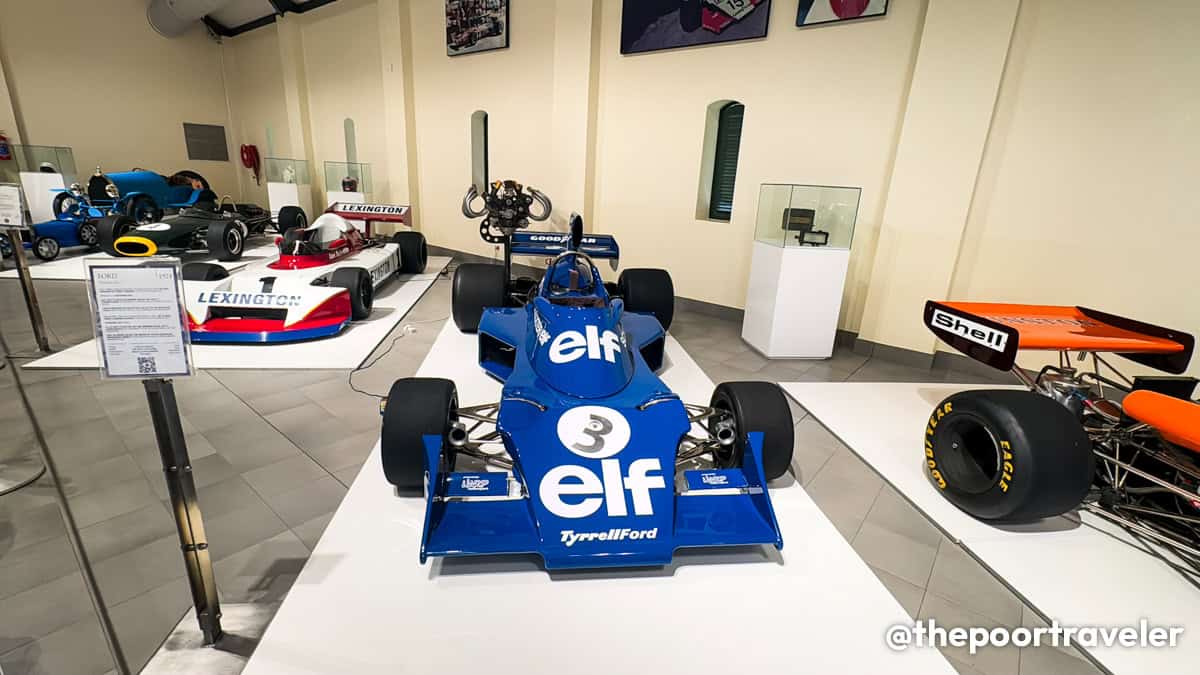
2. Franschhoek Motor Museum
For something a bit different, gearheads and history buffs alike should check out the Franschhoek Motor Museum. I can’t say I care much about cars or know a lot about it, but even with my indifference and ignorance, I still truly and thoroughly enjoyed gawking at these expensive cars.
Dedicated to showcasing over 100 years of automotive history, it has over 220 vehicles ranging from antiques to modern supercars. Whether you’re into old-school Rolls Royces or Ferrari or Volkswagen, this auto museum has it all. But don’t expect to see them all in one visit. The collection on display rotates every season, giving you a different set of cars every visit.
The museum is located on the same L’Ormarins estate as Anthonij Rupert Wines. The fact that it’s tucked away in wine country just adds to its allure.
Entrance Fee: ZAR 90 Advance reservation is required.
3. Boschendal Estate
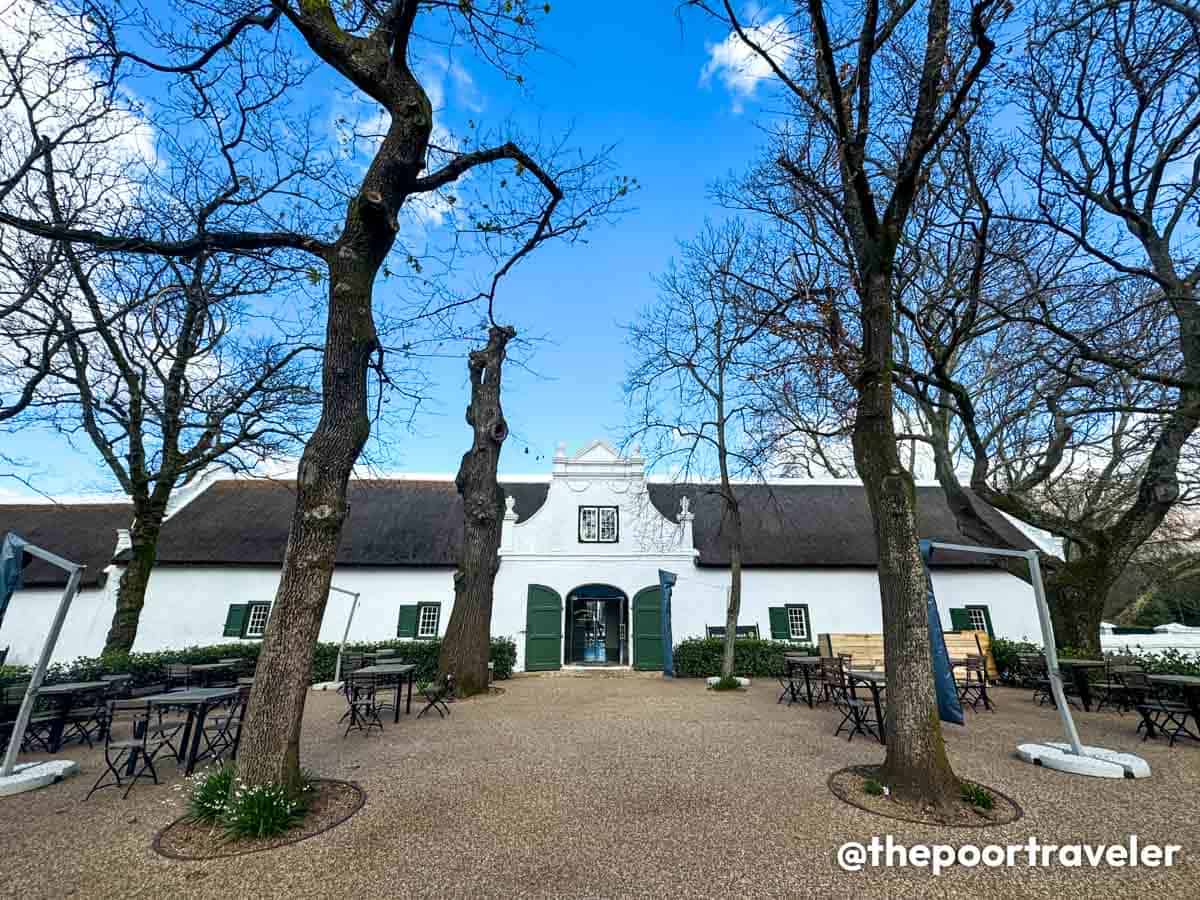
Another essential stop is Boschendal Estate, one of South Africa’s oldest farms, dating back to 1685. This historic estate offers a little bit of everything —- wine, food, outdoor activities, and history.
Boschendal is vast, with vineyards, orchards, and gardens. But one of the biggest draws here is Werf Restaurant, a farm-to-table gem that celebrates premium proteins — including grass-fed black angus beef, pasture-raised lamb, and forest-reared duroc pork — and fresh, seasonal produce grown right on its own food garden. The food is as much of an experience as the wine, with dishes that highlight local ingredients in creative ways.
The first to be served was the complimentary mosbolletjies, a uniquely South African bread. This was our first time stuffing our face with it, and we truly enjoyed it. Traditionally made by the Afrikaner community, these buns are flavored with mos (the Afrikaans word for “must”), which is the fermented grape juice leftover from winemaking. That fermented juice gives the bread its characteristic light, airy texture and a subtle hint of sweetness. These buns were a bit spiced with aniseed and served with a little cup of butter.
The tradition of mosbolletjies dates back to early Cape settlers, who’d bake these during the grape harvest season. So really, you could say they’re like the love child of bread and wine!
For starters, we had shaved smoked Duroc pork salad (ZAR 110). The pork had a good ratio of fat and meat. It was served with grapefruit salsa and local burrata at the center, and then sprinkled with crushed pistachios, rocket (arugula) and garden herbs. It also had sourdough crisps on the side.
Our guide had lentil tabbouleh (ZAR 65), which was lentil salad tossed with red onion, cucumber bits, chopped herbs, local olives, and olive oil.
For mains, Vins had free-range roasted chicken (ZAR 195), sitting atop a fondant potato drenched in a mustard and herb velouté with potato fondant and adorned with thin slices of preserved lemons.
I had sticky beef short rib (ZAR 180), which was slow smoked and crowned with grilled carrots, toasted onions, and orange zest. Some bites were bordering on dry, but it was tender and the flavors were on point.
Sticky Beef Short Rib and Malva Pudding
For dessert, we had malva pudding (ZAR 85), which is another beloved South African creation. It’s a soft, sweet and sticky sponge cake that feels comforting as a warm hug. Werf’s version was really moist and baked to perfection, served with a scoop of vanilla ice cream and a cup of crème anglaise to pour over the cake.
All these while you’re also taking in a relaxing view of the estate.
4. Stellenbosch Town Center
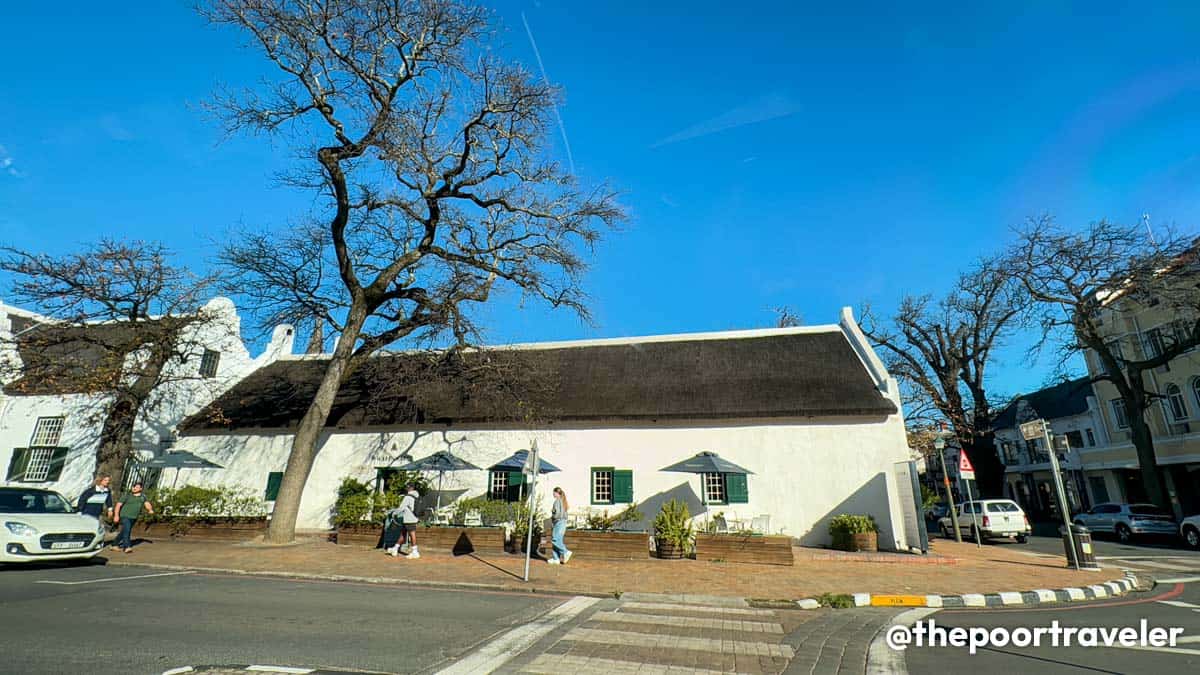
Stellenbosch town itself is a charming blend of history and modernity. Walking through the town center, you’ll find beautifully preserved Cape Dutch architecture, art galleries, and coffee shops that seem to invite you to linger a little longer. The town’s oak-lined avenues are perfect for strolling, and you can easily spend hours wandering in and out of quaint boutiques and cafes. But Stellenbosch is more than just pretty streets—there’s history here too.
Make sure to visit the Stellenbosch Museum, a collection of preserved buildings that showcase life in the town through the centuries. You’ll find restored homes, a village blacksmith, and even a cooperage (a barrel-making workshop), giving you a glimpse into the town’s colonial past.
The Rupert Museum, dedicated to South African art, is another must-see if you’re a fan of fine art.
And if you’re a nature lover, Jan Marais Nature Reserve offers a peaceful escape right in the middle of town, with walking trails that showcase the region’s unique flora.
5. Lanzerac Hotel and Spa
If your idea of a perfect getaway includes a little indulgence, Lanzerac Hotel and Spa has got you covered. This five-star estate is the epitome of luxury, offering guests a chance to unwind in the lap of historical opulence. It is located on one of Stellenbosch’s oldest wine estates, with roots dating back to 1692.
Driving onto the property, I couldn’t help but feel like we’d wandered straight into a movie set. The first thing that greeted us was a cinematic row of towering oak trees, framed by majestic mountains, endless vineyards, and Cape Dutch architecture.
Manor Kitchen
If you’re on a day trip, you could drop by Lanzerac for wines or a meal. It has four on-site dining spots:
Manor Kitchen
Lanzerac Deli
Taphuis
Craven Lounge
We only had the chance to experience the Manor Kitchen. For appetizers, I kicked things off with crispy pork belly and king oyster scallops, accompanied by an apple-celeriac puree and spiced mushroom juice (ZAR 160). I paired it with Lanzerac’s Pinotage Rosé 2023, made entirely from Pinotage grapes. Not sure it was the perfect pairing, but I wanted something aromatic to balance out the savory flavors of my starter.
Meanwhile, Vins went for the crayfish cacio e pepe (ZAR 325) with chive linguine and thermidor sauce, a deliciously rich seafood-and-cheese combo, brightened up by a sprinkle of pink peppercorns. I had a taste and can confirm it was amazing! He paired his dish with a fruity 2023 Lanzerac Sauvignon Blanc, which brought a crisp contrast to the ocean-y flavors.
For mains, I opted for the lamb duo, a belly and cutlet combo (ZAR 310), which was so tender. It came with artichoke, potato gratin, and a lemon onion soubise. A smoky 2021 Pinotage, aged for 16 months in French oak, was the perfect companion, with its spiciness playing nicely with the lamb.
Vins had the smoked fillet mignon (ZAR 290), served with sweetbreads, roasted heirloom carrots, and garlic potato purée. His steak was perfectly medium rare, with the light seasoning complementing the plum and berry notes in his Merlot.
But the real highlight of Lanzerac is its world-class spa. Set amidst the vineyards, the spa offers a range of treatments like wine-themed therapies, steam rooms, saunas, and a heated indoor pool. Sadly, our packed schedule kept us from trying this one out.
Let’s not forget that Lanzerac has a hotel. Although Stellenbosch can be explored on a day tour, if you want to indulge a little, you could spend a night here, too! Lanzerac has a reputation for exceptional service, combining classic elegance with modern amenities, and we saw that during our stay. The room assigned to us was spacious and elegantly styled with antique furniture and plush linens that make you feel like you’ve stepped back in time without sacrificing comfort.
Whether you’re into wine, history, cars, or just looking for a bit of R&R, the Cape Winelands has something for everyone. It’s a destination that offers more than just breathtaking landscapes. It’s a place to immerse yourself in South Africa’s rich culture, delicious cuisine, and world-class wines. And with that, I say: Cheers to that!
Exploring Cape Town and Cape Winelands
Our stay in Cape Town was a mix of DIY and collab with Constellation Travels. This part of our trip was made possible by them.
To be clear, Cape Town can absolutely be explored on your own. If that’s your travel style and/or you have a limited budget, that could be a great option.
But for us Filipinos, South Africa feels like a once-in-a-lifetime trip—and if you’re there to kick back and enjoy without the fuss, then booking a tour package is the way to go. It has some solid perks!
Constellation Travels, one of the Philippines’ most established travel agencies, has been helping Filipinos discover the world since 1970. They offer a range of South Africa packages, from group tours to custom itineraries, so you can skip the hassle of planning and focus on the best part: enjoying your vacation.
Exploring a new country can be a bit daunting, especially if your schedule is tight. If you’d rather relax than sort through logistics, Constellation has you covered. They’ll handle your visas, flights, and accommodations and offer 24/7 support, so you’re always taken care of.
Get in touch with Constellation Travels through these contact numbers and email address, or visit their official website at www.constellationtravels.com.ph.
The technical storage or access is strictly necessary for the legitimate purpose of enabling the use of a specific service explicitly requested by the subscriber or user, or for the sole purpose of carrying out the transmission of a communication over an electronic communications network.
Preferences
The technical storage or access is necessary for the legitimate purpose of storing preferences that are not requested by the subscriber or user.
Statistics
The technical storage or access that is used exclusively for statistical purposes.The technical storage or access that is used exclusively for anonymous statistical purposes. Without a subpoena, voluntary compliance on the part of your Internet Service Provider, or additional records from a third party, information stored or retrieved for this purpose alone cannot usually be used to identify you.
Marketing
The technical storage or access is required to create user profiles to send advertising, or to track the user on a website or across several websites for similar marketing purposes.