Built By Legends presented R34 GT-R restomod at 2024 SEMA show
Pricing starts at $450,000, not including cost of donor car
Early R34 GT-Rs eligible for U.S. import under 25-year rule
The R34-generation of Nissan’s Skyline GT-R is an iconic car that featured on the bedroom walls of many car fans around the turn of the century, including in markets where the car was never sold, due to its popularization in the “Gran Turismo” video game series.
However, it wasn’t only the stock GT-R that was popular. There were also examples built by some of Japan’s top tuning companies at the time, like HKS, Mine’s, and Top Secret, as well as Nissan’s own Nismo division, which reached stardom in automotive circles.
R34 Nissan Skyline GT-R by Built By Legends
A Japanese company by the name of Built By Legends is now offering restomod packages that turn cars like the R34 GT-R into something close to matching the iconic tuner versions, albeit with modern techniques and materials. It used this week’s 2024 SEMA show in Las Vegas to present one of the completed restomod cars, in this case an R34 GT-R built similarly to the original Mine’s R34 GT-R.
According to Built By Legends, it has worked closely with Japan’s tuning firms in the past and is now using that experience for its restomod packages. The process involves a lot more than just bolt-on parts. Cars are stripped back to the bare chassis and fully restored, where necessary. Extra welds—400 in total—are then made across the chassis to help improve strength and rigidity.
In the case of the R34 GT-R, many new parts including Aragosta suspension, AP Racing brakes, and period-correct 18-inch Rays wheels replace their standard counterparts. The twin-turbocharged 2.6-liter inline-6 engine is also replaced with a Mine’s MB7 version, whose output is 650 hp, or roughly double the original output. It’s mated to a Getrag 6-speed manual transmission and spins all four wheels via the R34 GT-R’s all-wheel-drive system.
This particular car is finished in the R34’s iconic Bayside Blue paint color, and inside, almost every surface has been lined in Ultrasuede, including on the door panels, the dash, and the seats. Other touches include a Mine’s steering wheel in leather and Alcantara, as well as extra sound and heat insulation in the roof and floors.
R34 Nissan Skyline GT-R by Built By Legends
Pricing for the restomod package starts at $450,000, and that doesn’t include the cost of the donor car. The company also has packages for the R32 and R33 GT-Rs, and is developing some Spoon-inspired packages for the Honda Civic.
Early examples of the R34 GT-R are now eligible for import into the U.S. under the 25-year rule, as the car was built between 1999 and 2002. Interested customers can supply their own vehicle or Built By Legends can source one. The company can also help with organizing of shipping of vehicles between countries.
A cyclist in Oregon was struck by an ambulance last year and the thoughtful rescue service scooped him and took him to the hospital, charging me $2,000 for the trip, of course.
William Hoesch, a 71-year-old cyclist, was out riding in Rainer, Oregon in October 2022, the Oregonian reports. He happened to be riding in the same direction as an ambulance from Columbia River Fire & Rescue. According to the suit filed on the behalf of Hoesch on October 24, when the ambulance attempted to make a right turn it hit Hoesch and destroyed his bike. The crash just so happened to occur right in front of the ambulance’s station. The driver of the ambulance and Hoesch have differing accounts on how fast the ambulance was going when it hit him:
According to police reports, the driver who struck Hoesch and a passenger in the ambulance estimated the ambulance was going between 2 mph and 10 mph when they heard a thump, stopped and saw Hoesch injured. Hoesch estimated to police that he was going 5 mph to 10 mph and said he didn’t think the ambulance was going to turn in front of him. His bicycle was crushed under the ambulance wheel.
The ambulance picked him and took him to the nearest hospital, but not before hitting him with a $1,862 bill for the ride. This is in addition to $47,000 in medical expenses and another $50,000 Hoesch and his lawyers say are expected in the future from his injuries. Despite the relative low speed of the crash, Hoesch injuries were bad, especially for a man in his seventies; he suffered a fractured nose along with “scrapes and other injuries across his body.”
Hoesch is now suing, seeking $997,000 in pain and suffering; Hoesch says he has long term injuries from the crash, including decreased range of motion and grip strength in his hands. Hoesch lawyers are arguing that his insurance coverage through Allstate for uninsured or underinsured motorists should cover the “damages that Columbia River Fire & Rescue is unable to.” Both Allstate and Columbia River Fire & Rescue declined to comment on the case.
According to the Oregonian, accidents involving ambulances are not unheard of in the Beaver State. In January 2024, 25-year-old Kelsey Seibel was killed by an ambulance after it made a left turn in front of her car. Her family filed a $6 million suit against the ambulance company in October. In July, another ambulance hit a car parked on the side of the road with a flat tire, killing 55-year old Gearldean Marin, though the Oregonian says no suit has been filed over that incident.
The SS United States was once the fastest ocean liner on the planet, crossing the Atlantic Ocean eastbound in three days and ten hours in 1952. The rusting famed vessel will be heading to its final resting place next week, the bottom of the Gulf of Mexico after efforts to save and restore the SS United States ran aground over a $800,000 back rent dispute with its pier’s landlord in Philadelphia.
It’s Time To Discontinue The Model S | Jalopinions
The SS United States Conservatory sold the ship to Okaloosa County in Florida’s Panhandle for $10 million in October, WPVI reported. The ocean liner will be transformed into the world’s largest artificial reef meant to serve as a tourist attraction for divers to visit Destin-Fort Walton Beach. The site will also feature a land-based museum and visitors center to honor the ship’s history. This will also involve the SS United States leaving Philadelphia for the first time in over 30 years. WPVI explained how the departure will be a headache for drivers:
“The process will begin around 11:45 a.m. on Nov. 14, with tugboats maneuvering the vessel to the north side of the slip and securing it to Pier 80. The ship will remain in that position until the next low tide, which is expected to be the following morning.
On Friday, officials said they expect low tide around 7 a.m. At that point, The Walt Whitman Bridge, Commodore Barry Bridge and the Delaware Memorial Bridge will all be shut down as the SSUS is towed down the river into the Delaware Bay.”
It will take two weeks for the ocean liner to be towed all the way to Mobile, Alabama, where the ship will be prepared to be sunk. All types of vehicles have been put out to pasture as artificial reefs. The New York City Subway sent over 1,000 retired Brightliner cars to multiple areas off the Atlantic coast. However, many of the cars began to disintegrate after only a few months. Hopefully, the SS United States will last longer.
Bentley aims to become fully electric brand by 2035
Bentley has scaled back its electrification plans in the face of slower than expected growth in demand for electric vehicles but will still launch a vehicle powered solely by batteries by the previously announced date of 2026, CEO Frank-Steffen Walliser said during a press conference held on Thursday.
Bentley only two years ago was planning to launch its first EV by the middle of the decade and follow it up with a new EV every year for the next four years, in order to become a fully electric brand by 2030.
However, the automaker now plans to launch just the one EV, confirmed by Walliser on Thursday as an SUV, and will add more depending on how the market turns. Walliser said Bentley is open to launching a new EV or plug-in hybrid every year after the first EV, and currently targets a switch to a fully electric lineup by 2035.
During the conference, Matthias Rabe, Bentley’s head of engineering, said Bentley EVs will only use dedicated EV platforms, so there won’t be any models offering the choice of electric or plug-in hybrid powertrains. According to him, the packaging demands are just so different that compromises would need to be made.
Frank-Steffen Walliser
This means Bentley’s debut EV won’t be related to any other Bentley model. It will be a new model line, and is described by Walliser as a “luxury urban SUV.” It will measure less than 197 inches long, which will make it smaller than the Bentayga which measures 202 inches nose to tail, and be more agile than a typical Bentley. According to Walliser, this will make it easier to drive in urban areas and is intended to attract buyers that are new to the brand.
Walliser has previously expressed that the majority of Bentley’s existing customers don’t want EVs, but that there’s also a segment of buyers out there looking for high-end EVs. For these buyers, he said, it’s about the whole experience, not just the drivetrain.
Very few specific details on the first EV were revealed during the conference, but Rabe revealed that there will be distinct sound that the vehicle makes. He said the vehicle won’t have a synthetic sound, like what many other automakers are doing, but instead will have a novel setup that “no one is doing.” He also said the EV will have sufficient range, and that Bentley will focus more on delivering a very fast charging speed.
Few vehicles offer a mix of performance and comfort like compact luxury sedans. They usually feature a sporty exterior that makes them look and feel faster than they are. Yet they’re also the right size for pushing through back-road curves.
Inside, they offer many luxury appointments, such as leather upholstery, a premium audio system, and an array of safety and convenience technology. They still seat five, although the driver’s seat is always the preferred place to be.
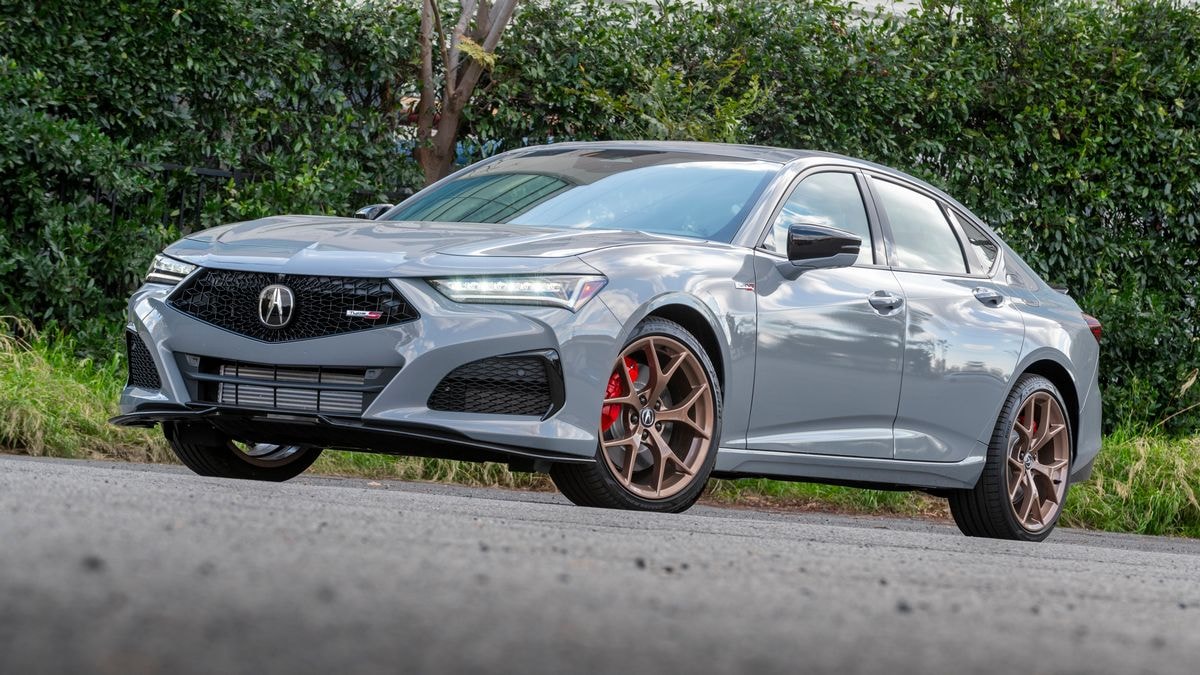
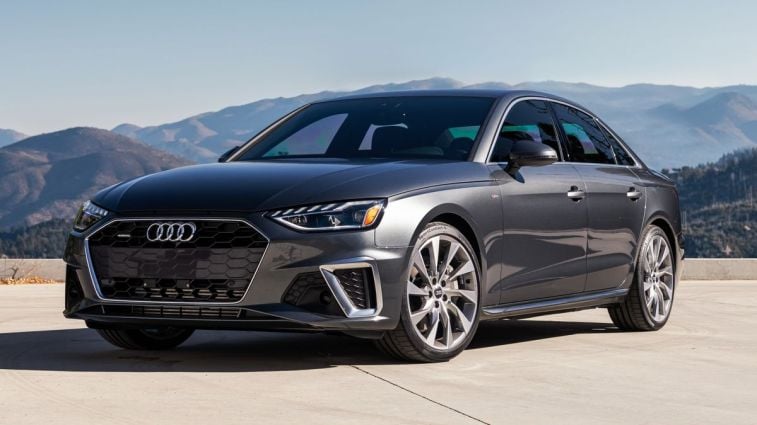
The 2025 Acura TLX and 2025 Audi A4 certainly fit those descriptions, so let’s take a closer look at these two luxury sedans.
2025 Acura TLX
Propelled by a turbocharged 272-horsepower 4-cylinder engine, the 2025 TLX enjoys plenty of push for an engaging drive. The engine is connected to a quick and smooth 10-speed automatic transmission. Moving from its base Technology trim to the A-Spec model adds all-wheel drive (AWD).
If that’s not enough, the TLX Type S — with its 355-hp turbo V6 — races from a standstill to 60 mph in just 4.9 seconds.
Moving inside, the Acura TLX comes standard with wireless Apple CarPlay and Android Auto, plus a wireless charging pad. The 12.3-inch center screen employs a fast processor and accommodates Amazon Alexa Built-In. This fresh technology is matched by impressive safety features, including blind-spot monitoring, adaptive cruise control, lane-keeping assistance, and more. Pricing starts at $46,595, including destination charges.
Acura TLX Highlights
SH-AWD: Also known as Super Handling All-Wheel Drive, it distributes variable amounts of power to individual wheels to maximize grip, stability, and efficiency. Acura’s SH-AWD is standard on the A-Spec and Type S trim levels.
Stopping fast: Brembo specializes in high-performance braking systems, with a client list that includes Ferrari and Porsche. They’re standard equipment on the Type S.
ELS audio: Grammy-winning recording engineer Elliot Scheiner is the golden-eared expert behind this high-end — and standard — sound system for the Acura TLX.
Check this week’s Fair Purchase Price or see the TLX models for sale near you.
2025 Audi A4
For a sedan that’s nimble, quick, and luxurious, check out the 2025 Audi A4. Largely unchanged for seven years, the A4’s exterior styling is the epitome of clean, contemporary design, helping it to keep pace with the competition.
Energized by a 201-hp turbo 4-cylinder engine, the base A4 can keep pace in traffic, but it does the zero-to-60 mph sprint a touch slower than the Acura TLX. However, move up a trim level to the 261-hp 45 TFSI, and that will cross the finish line first. The high-performance Audi S4 with a 349-hp turbocharged V6 is also available. All A4 models come with all-wheel drive standard.
The A4’s interior is plush and neat. Nothing is superfluous, although every trim level gets leather seats, unlike the TLX. It also comes with a set of safety and convenience technologies. Pricing begins at $43,295, including destination charges. One reason for the price difference is that the Acura TLX is a bigger sedan than the Audi A4. That said, the A4 beats the TLX in terms of rear legroom.
Audi A4 Highlights
Bang & Olufsen: The A/V components manufacturer makes some of the finest sound systems on four wheels — including the A4. It becomes standard at the Premium Plus level.
Audi Pre Sense City: Otherwise known as forward collision warning with automatic emergency braking. Working at speeds below 25 mph, it scans more than 325 feet in front of the car, alerting the driver to possible danger, and it’s standard across the A4 range.
Visibility: These matrix-design LED headlights, part of the Prestige trim, feature multiple points of light to maximize illumination for the driver yet minimize glare for other road users.
Check this week’s Fair Purchase Price or see the A4 models for sale near you.
Similarities
Pretty on the outside, loaded with comfort and technology on the inside, the Acura TLX and Audi A4 are among the best options in the small luxury sedan market. There’s one marked difference, though. The Acura TLX is a much younger model, having launched for the 2021 model year, whereas this could be the fonal year f production for the Audi A4 as we know (and possibly love) it.
Conclusion
The A4 starts cheaper, but getting it to apples-to-apples in terms of performance requires moving up a trim level. Although the Audi has a lower starting price, the Acura is arguably the value choice because of its bigger size and stronger standard engine. Despite the A4’s top-notch interior quality and standard quattro all-wheel drive, we must give the nod to the fresher Acura TLX.
If you haven’t been car shopping in a few years, the current market for compact SUVs might surprise you. Many of the best-known models now offer a have-your-cake-and-eat-some-too hybrid model.
Hybrid compact SUVs offer improved fuel economy. But, unlike the hybrids of a few years ago, you don’t have to trade away passing power to get it. Many are more potent than their gas-only counterparts.
The Honda CR-V and the Ford Escape have been battling for compact SUV shoppers’ attention for over two decades. For 2025, each is available in a fuel-efficient, powerful hybrid version.
Let’s look at these two crossover SUVs and find the right one for you.
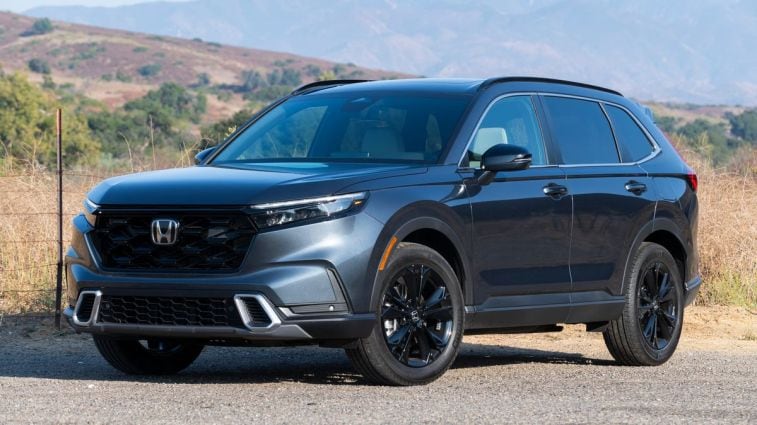
2025 Honda CR-V Hybrid
The Honda CR-V compact SUV has been a perennial best-seller and benchmark among compact SUVs for decades. Simply put, it’s been the right solution for millions of drivers. The CR-V Hybrid is both the most fuel-efficient and the quickest version. It was redesigned entirely just two years ago and is still fresh from that revamp. For California buyers with access to a hydrogen fueling station, Honda introduced a fuel cell CR-V for the Golden State this year. Prices for the 2025 Honda CR-V Hybrid start at $36,000.
Honda CR-V Hybrid Highlights
More nimble: Objectively, the CR-V Hybrid has a tighter turning radius than the Escape Hybrid. That means it’s easier to handle in a parking lot and at low speeds. Subjectively, our expert reviewers say, “There’s a poise and agility to how the CR-V Hybrid drives” that many competitors lack. There’s nothing remarkable about the Escape’s handling. It’s normal for the class. The CR-V is just a little better than normal.
Traffic Jam Assist: Will you use your next car to commute in rush-hour traffic? If so, the CR-V Hybrid might be the better call. Honda’s Traffic Jam Assist system can make steering adjustments, accelerate, and brake to keep up with traffic below 45 mph. It’s not quite self-driving — you have to keep a hand on the wheel because it can’t safely handle unpredictable traffic situations. But it’s a considerable fatigue reliever, and it’s standard at every trim level.
Refined interior: In general, car interiors have come a long way in a few years. Even most base models in this class have many standard creature comforts. However, Honda designers have done a better job packaging them than most of the competition. The CR-V Hybrid has an upscale look that isn’t quite luxury-car elegant, but it hints at it.
The Ford Escape has long been an affordable, pleasant choice in this segment. Our expert reviewer says that, for 2025, “The easiest powertrain for us to recommend is the hybrid 4-cylinder engine with 192 horsepower and a combined fuel economy rating of up to 39 mpg. With more power and better fuel economy at a small price premium over the 3-cylinder, the hybrid is a no-brainer if it fits your budget.”
The Ford Escape recently received a design refresh inside and out that keeps it with the top of its class. It boasts one of the roomiest interiors in its class and comes in two hybrid editions — the other being a plug-in hybrid variant. Pricing for the Ford Escape Hybrid starts at $33,985.
Ford Escape Hybrid Highlights
Greater towing capacity: If you’re buying a small crossover to see over traffic, either one will do. If you’re buying one for the added power, the Escape puts it down more usefully. The CR-V Hybrid’s towing capacity is surprisingly low — just 1,000 pounds. Even small rental trailers can weigh almost that much when empty, so that’s a little like saying it doesn’t tow. The Escape hybrid is good for 1,500.
Sliding second-row seats: The Escape remains the only compact SUV outside the luxury classes with sliding second-row seats. It does a lot to make the cabin more flexible.
B&O audio: The Ford Escape might be music to an audiophile’s ears thanks to its optional 10-speaker system from none other than Bang & Olufsen, a high-end audio brand more often found in luxury cars.
Both offer impressive fuel efficiency, technology, and safety features. They also have the same warranty coverage.
Conclusion
Either the Honda CR-V Hybrid or the Ford Escape Hybrid could meet your needs as a daily driver.
The CR-V Hybrid might win on refinement, and its Traffic Jam Assist makes life easier for those who get stuck in traffic often. However, the Escape Hybrid has more useful towing power, and its sliding second row makes its space more flexible. It’s also less expensive than the Honda.
You might need a test drive to decide between these two.
As the author of the book “150 Spas You Must Visit Before You Die,” I’ve seen a spa or two…or 150. Spa is a broad term, ranging from a hot spring in nature to a luxury sanctuary where you can get a massage to a full-on, multiday wellness retreat. When I booked my stay at Six Senses Vana in northern India, though, I wasn’t sure what to expect. I had been to a Six Senses before and done a wellness retreat, but I knew this one would be different.
Vana was founded in 2014 by Veer Singh, and it underwent renovations to become a Six Senses property in 2023. Singh has always focused on sustainable farming along with Ayurveda and Sowa Rigpa (Tibetan traditional medicine) philosophies, and not much in the wellness realm changed under the Six Senses flag. I was eager to experience Ayurvedic philosophy in the place where Ayurvedic medicine was born, and I was especially intrigued by the Sowa Rigpa program, which was inaugurated by the Dalai Lama himself. In fact, it’s one of the only places outside of Tibet that practices Sowa Rigpa, and all practitioners are sent to train in Tibet for six months.
Core operating tenets, such as no personal electronic use outside your room, diverse menus featuring local and seasonal ingredients (many from the property itself), and community-supportive efforts, have flourished even more.
Packing for my trip was a breeze: All guests are encouraged to wear the provided sandals and white kurta pajamas, so I was thrilled to bring a not-even-full carry-on for five nights. Still, the unavoidable truth for any American going here is that it’s a long journey — the resort does offer a three-night retreat, but from this distance, that would not be enough (seven-, 14-, and 21-night retreats are the other options). One silver lining is that Air India flies directly to New Delhi from New York City, where I live. While Air India’s planes on this route are old, they are scheduled for a redesign and upgrade by the end of the year. I was disappointed that the business class seats weren’t private, but they did lie flat, and that was all I needed to sleep for most of the journey. (And the food was excellent.)
I still needed to travel from New Delhi to the northern state of Uttarakhand, where Vana is located. I took a domestic flight to Uttarakhand’s capital, Dehradun, and was picked up in a luxury SUV filled with homemade, healthy snacks, fresh juices, and fully functioning Wi-Fi for the hour-long drive to the hotel.
I arrived at night, and after a restful night in my large suite, the following day, I was scheduled bright and early for my wellness assessment and consult with Dr. Jayachandran. Dr. Jaya is one of those people with a calming, friendly presence, putting me at ease even as he assessed my dosha (Ayurvedic body balance) by feeling my pulse and informed me after my Western medicine assessments, like measuring my height, weight, and blood pressure, that I had too much stress and a blocked digestive system.
We had a long chat about my lifestyle and diet. Then, he set up various treatments and sessions for the coming days, ranging from reflexology and acupuncture to Ayurvedic and Sowa Rigpa massages to meditation and breathwork. He also recommended I avoid gluten and dairy at dinner and sugar at all costs. (Yes, I have a sweet tooth!).
The Kila Lobby at the Six Senses Vana.
Courtesy of Six Senses Vana
We decided I would also meet with Dr. Sopa, a Tibetan traditional medicine doctor who assesses body imbalances. After feeling my pulse for several minutes, Dr. Sopa informed me that my birth energy pulse was Bedkan (an earth and water combination), but my current energy pulse was Tripa (fire), which controls digestion and metabolism. Mine was sluggish. Essentially, I needed to adjust my diet and lifestyle to kickstart my digestion and clear out my blockages and anxiety.
The next couple of days were a blur. I was still jetlagged, and I kept falling asleep during the incredibly relaxing treatments I was prescribed. I had a two-person, four-handed Ayurvedic Abhyanga massage that left me feeling like jelly (in a good way) and a reflexology session that I snored through, unfortunately. I also had my first of many Sowa Rigpa sessions with Ngawang.
Each Sowa Rigpa session begins with a monotonous-sounding chant that calmed me even without knowing what it meant. My first kunye, or Tibetan medicine massage, transported me in a way I had never felt before. It began with a coconut oil scalp massage (I soon learned to embrace my oily hair), and then several herbal poultices with cumin and nutmeg were placed on various pressure points. Ngawang focused on a knot in my foot that I hadn’t known was there, and her tough yet somehow soothing strokes were penetrating, not painful.
That night, at my first dinner, the menu offered an excellent selection of nourishing but not depriving dishes, both Indian and Western. When I tried to order what I thought was a sugar-free dessert, my waiter gently reminded me that the doctor had suggested no sugar, but if I wanted it, I could still have it. Ultimately, the chef made the rice pudding sugar-free, but that was my last foray with dessert for the rest of my stay. After day two, though, I didn’t miss it. I savored the flavorful soups and entrees and ended my meal with an herbal tea instead.
The following day, I returned to Ngawang for a Tibetan sound healing session. As a spa and wellness writer, I’ve been to more sound baths than I remember. I thought I’d seen — er, heard — it all. But this was an authentic Tibetan sound bath — where the trend originated — and I was in for something special. First, Ngawang led me in a fire ceremony. I wrote down any negative emotions I wanted to eliminate, and then we burned them.
“The mind is like a wild animal,” she told me. “It will go anywhere, anytime. We try to tame it.” Then I lay down and closed my eyes as she played a gong, singing bowls, and bells around me, sometimes placing a vibrating bowl in my palms or my stomach. It ended with what sounded like the waves of an ocean, and I felt my negative thoughts washing away.
I found myself thrilled that I was alone, able to focus on myself and my needs. Per the rules, I left my phone in my room and was glad to eat alone, lost in my thoughts instead of on social media. By the third day, I felt refreshed, my daily stresses melted away, and I was ready to tackle feeling good. The second half of my journey included private meditation and breathing sessions, which would equip me with tools to handle my anxiety and stress when it returned. I also met Dimple, an acupuncturist who managed to be both tender and no-nonsense, quickly getting to the root of my anxiety and performing two exceptional acupuncture sessions that allowed me to feel taken care of and restored in just one hour.
I left the resort only once, to do an early morning hike, although several excursions are available. My hike perfectly balanced natural beauty and exercise — the surrounding Himalayan foothills are steep and striking. When it came time to leave the resort for good, I had a final meeting with Dr. Jaya to review my goals and plan how to maintain my wellness in my own life. Six Senses Vana is, after all, a bubble protected from the stressors of modern daily life. I knew it wasn’t realistic that I’d maintain this feeling of bliss, but if I could manage a glass of green juice and 10 minutes of pranayama, I’d be happy.
Here’s my review of Six Senses Vana.
Six Senses Vana
A comprehensive assessment at the start of any retreat informs each custom itinerary.
The food on offer is delicious and healthy, with many options for every meal.
Staff is carefully-trained, and all are experts in their field or service.
The lack of cell phone use in public areas makes the property tranquil and quiet.
The Rooms
Three residential buildings are on site, plus several casas in a separate part of the resort. These are ideal for families who bring their children. (Yes, they are allowed.)
Spanish architectural company Esteva i Esteva designed the 66 rooms with muted, soothing tones, paper lanterns, wicker lamps and pendants, natural woods, and locally made artwork. All rooms have seating areas, balconies or terraces, and floor-to-ceiling windows with views of the surrounding native Sal forest, the gardens, or the mango orchards. Rooms have a king or twin bed if you’re coming alone and large marble bathrooms with separate showers and bathtubs.
There are also 16 spacious suites, which Esteva i Esteva also designed. I was in a Forest Suite with a massive balcony overlooking the forest, from which I spotted a monkey one morning. My bathtub and bed also overlooked the forest canopy. Suites have spacious living rooms with L-shaped couches and a writing desk, plus a separate kitchenette stocked with handmade snacks and glass bottles of drinking water that are filtered on-site.
The large dressing room/closet has slippers, robes, sandals or crocs, scarves, and the white kurta pajamas guests are encouraged to wear on the property.
I was surprised to find a television in my room (all rooms have one), but I suppose you don’t have to turn it on if you don’t want to use it. Unfortunately, I had to use my phone and computer while there, which was only allowed in my room.
Food and Drink
First, this is not your typical spa food — thank goodness. That said, if you tell your doctor at your assessment that you want to lose weight or deal with other diet-related health issues, they will put you on a prescriptive meal plan, and the kitchen staff will ensure you stick with it.
But even if you’re on a gluten-free, dairy-free, sugar-free diet, you will still eat well here. How? The constantly rotating menu of seasonal local dishes and the wide variety of options will leave no one wanting. Of course, there is a lot of Indian food (note that authentic, regional Indian food is very different than most Indian food you see abroad). Still, there are plenty of other Asian and Western dishes for breakfast, lunch, and dinner at Salana, the main restaurant open for all meals. Salana has a large dining room and a spacious terrace overlooking a tranquil lawn that many guests opt to eat at, myself included.
Breakfast and lunch feature large hot and cold buffets with various vegetarian and non-vegetarian dishes, a rotating special table featuring made-to-order dishes like smoothies or ramen, and a menu for ordering even more. There were Western pastries for breakfast (although they were admittedly tiny), but there was so much else to choose from that I wasn’t tempted.
Instead, I would eat the best gluten-free sourdough bread and hand-churned butter I’ve ever had, tropical fruit with yogurt, and maybe a freshly made dosa or idly. At dinner, which is a la carte, you will never see the same menu twice in 21 days (which also happens to be the length of the longest retreat). Each night, it has a diverse selection of appetizers, entrees, and desserts featuring dishes made from vegetables, fish, poultry, and meat (usually lamb).
Anayu is the other restaurant, which was only open for lunch when I was there due to some maintenance work but is also typically open for dinner. It feels a bit fancier than Salana, with many gold accents. Anayu is the property’s Ayurvedic restaurant, and its daily prix fixe menu comes with three choices, each corresponding to a dosha, and guests are encouraged to select the meal that aligns with the dosha noted during their Ayurvedic assessment. Each meal starts with an amuse bouche of a spoonful of spices and a fruit elixir to cleanse the palate. Then, a thali (a platter with multiple dishes and bowls) is served with rice, dal, and roti, along with the appropriate dishes for your dosha. For my dosha of pitta, my thali had minted paneer, coriander chicken, a mushroom curry, and carrot poriyal, with a vegetarian option also available.
Every day, the Kila (the main gathering building) hosts an afternoon tea with tea and snacks. Upstairs in the library, an apothecary-style drink lab offers a small menu of medicinal and wellness elixirs, teas, other beverages, and snacks.
Activities and Experiences
Aerial view of the outdoor pool at the Six Senses Vana.
Courtesy of Six Senses Vana
While each guest’s custom itinerary will be filled with one-on-one spa, yoga, meditation, and other sessions, there is also a weekly calendar of daily group activities that are mostly complimentary. These include various yoga, breathwork, and meditation sessions that happen multiple times a day, as well as fitness classes ranging from power walking to weight circuit training to water workouts in the pool. There are also sports activities like badminton and tennis, craft workshops like pottery, sustainable upcycling crafts like making paper by hand, cooking classes, and things like “Mindful Tea.”
Each week, the temple typically hosts several puja or prayer sessions. In the evenings, various lectures and discussions on topics like longevity and traditional medicines are held, often with visiting experts. I enjoyed the daily morning yoga sessions and the afternoon raag therapy, which involved a flute player playing traditional Indian instrumentals while participants lay down and let the music wash over them.
Guests can also book off-resort excursions, including several hikes and a trip to Rishikesh to observe the daily aarti or ritual offerings. I did the Gulab Singh hike one morning, which was a highlight of my visit. It was technically a group hike, but I ended up being the only participant, so me and the guide, Deepak, did the beautiful hike alongside a river, through waterfalls, and to the small home of Gulab Singh perched on a ledge overlooking the foothills of the Himalayas. It was rigorous at times, with some steep inclines, and left my muscles a bit sore — in a good way.
The Spa
Six Senses Vana does not have a traditional spa building; instead, treatment rooms are spread between several buildings. The Ayurveda Center, a large stand-alone building with a central courtyard holding a reflecting pond and a statue of the Hindu god Vishnu, offers Ayurvedic treatments. The Sowa Rigpa Center, which has photos of the Dalai Lama’s visit, offers Tibetan treatments. All treatment rooms include private bathrooms with showers, baths, and changing areas and are decorated with soothing color palettes and simple textiles.
Reflexology appointments are given at the Natural Therapies Center, while acupuncture happens inside the Wellness Center connected to the Kila, where any doctor appointments occur. Finally, any watsu treatments take place in the Aqua Fitness center. And if you’re looking for a sauna or whirlpool, it’s next to the rooftop outdoor infinity pool. All this is to say the entire property is a sprawling spa.
In terms of the treatments you’ll receive, you can expect the best from skillfully trained experts in each discipline, whether it be Ayurveda, Sowa Rigpa, or Traditional Chinese Medicine. After your assessment, your doctor will craft your schedule with typically one to two treatments per day, and then you can add on more if you wish.
Some of the treatments I experienced were a four-handed Abhyanga performed by two therapists, which is a traditional Ayurvedic massage using oil and repetitive motions and acupressure points; several Tibetan kunye massages which use herbal pouches on acupressure points; a Tibetan sound healing session; and two acupuncture sessions. I experienced watsu for the first time, which is an aquatic therapy performed in a small, warm pool, where my therapist held me as I floated, helping me with passive stretches and gentle massage that had me so relaxed I briefly fell asleep while floating.
Family-friendly Offerings
Perhaps shockingly for a wellness retreat, the resort is soon debuting an outpost of the Grow with Senses Kids Club, which focuses on wellness. The kids club, which also features its own dining room, is separate from the rest of the property, and families are only allowed to stay in the casas, which are also removed from the main area. When it launches, it will be a novel way for parents to participate in a wellness retreat while not having to find separate childcare.
Accessibility and Sustainability
Six Senses is a brand known for its sustainability efforts, but even before it became a Six Senses, Vana was a leader in eco-initiatives. For example, they used scrap metal to make most of the metal sculptures and artwork around the property, including a beautiful tree in the yoga room. Since becoming Six Senses, they have employed a full-time sustainability director who manages everything from composting to staff sustainability initiatives to the water filtration and bottling plant that provides purified water in glass bottles for the entire property.
Every room has a stuffed elephant handmade by a local women’s co-op (and stuffed with recycled kurta pajamas) on display with a note about using the proceeds from the purchase for Vana’s sustainability fund. The fund sponsors three different projects in the community, including the conservation of the local river, aiding in human-wildlife co-existence with the elephants that reside in the nearby national park, and supporting a locally run cow shelter for abandoned dairy cows.
In January 2024, Six Senses added the Earth Lab, which helps guests learn about the hotel’s sustainability efforts and offers daily craft projects using upcycled materials, such as fallen bamboo turned into a flower sculpture.
Location
Six Senses Vana is in a native Sal forest near Mussoorie in Dehradun, which is the capital of the northern Indian state of Uttarakhand. It is about 1.5 hours northwest of Rishikesh, about an hour from the Jolly Grant Airport in Dehradun, and 30 minutes from the Dehradun Railway Station. You can fly to Dehradun from the Indira Gandhi International Airport in Delhi, or the property is about a five-hour drive from Delhi.
Optima Design co-founders Michele Zignego (far left) and Antonio Luxardo (second left) with colleagues
Based in La Spezia, a port-city hub of luxury yacht design and manufacture in northeast Italy, Optima Design was co-founded in 2004 by Luxardo and Zignego. Employing over 30 people, including architects, designers and engineers, the studio focuses on ‘conception to realisation’, working on 360-degree yachting projects, from naval architecture to exterior and interior designs and engineering.
The firm also undertakes architectural and design projects for buildings, as well as a multitude of product designs. In nautical design, the founders’ mission from the get-go was to push the boundaries of innovative solutions that combine aesthetics, functionality and sustainability.
Today, Optima Design and its principals represent a reference point for shipyards across Italy, having worked on over 400 design projects, and shipbuilding clients have included Azimut and Benetti; Ferretti Group brands Ferretti Yachts, Pershing and Riva; Sanlorenzo; The Italian Sea Group brands Admiral, Tecnomar and Perini Navi; as well as Fincantieri. Luxardo givessome deeper insights into his yacht design philosophy and experience.
You were recently appointed Chief Designer at Cantieri di Pisa shipyard – founded in 1945 and acquired in 2021 by Enrico Gennasio – which hopes to launch three new yacht ranges in the coming months. Exciting times! How do you approach these projects?
I agreed to follow the new projects of Cantieri di Pisa because they are part of the Italian and world nautical history, thanks to iconic yachts like the Akhir [line]. I’ve already designed the three basic lines that contain innovation and classicism, as a sign of respect for the shipyard’s history.
On the Cantieri di Pisa Polaris 48, open spaces account for almost half the main and upper decks
The designs are based on the research of their essence, typical of boats like Akhir, Polaris and Saturno, defining what stylistic elements must be followed. The design lines with models from 30-90m matured almost by themselves. Once the fundamentals of the three projects were created, they evolved spontaneously.
Tell us more about your ongoing collaboration with Amer Yachts, involving three impressive steel and aluminium yacht projects, between 41 and 74m and under construction, as well as a new fibreglass line.
We started the collaboration working on the Amer Steel line in 2021, and it has been a very interesting journey. Their ideas on ecological boating and simplification have been very important. What really made a change in their projects’ development comes from the founder Fernando Amerio, with his family inheriting his respect for the sea and the sailing elegance.
The sleek-lined Amer Steel 499
This is evident in the last project, which involves the construction of the first unit with basalt-fibre – an ecological resin – and recycled PET core. This continuous research over time leads to results that will change the prospects of sailing, as well as the use of the Volvo Penta IPS System, with which we are engineering the 41 and 50m, with new hulls and general arrangement solutions. The fibreglass line will be updated: there will be an evolution of style and function that recalls the past.
Are there any other interesting yacht-related projects you’re currently working on or that are in the pipeline?
Yes, there are some projects which are still in progress. I believe a good project needs to mature in a period that can even last a year. This allows you to work in different steps and consolidate what has been done. You can understand better what features are good and need to stay, and what needs to evolve and become more attractive.
It is essential to have as many options as possible for future development. At the moment, we are focused on Amer and Cantieri di Pisa shipyards, with a series of new designs revealed at the Cannes and Monaco shows in September.
Antonio Luxardo, Architect and Chief Designer, Optima Design
How much of Optima Design’s business today is focused on yacht design, and how did your first such project come about?
Over the years we have worked on many projects in different fields and geographical areas. This has allowed us to be much more open-minded while working on today’s projects. Now, yacht design absorbs our energy, and we do not have time to concentrate on projects in other fields other than working on conceptual phases, and advising on how a team should work to develop our idea.
What is the hallmark of Optima Design?
We believe it is very important to focus on the uniqueness of the project and of the client, as a study of the history of the product to be designed. This is fundamental – especially for a new brand. It is also relevant to consider where the product is to be placed: the geographical area, ethnicity and the age of the end-user.
We often put ourselves in other people’s shoes to try to create a design that is the greatest expression of the brand. This leads us to follow new paths to find new solutions, which leads the way to customise each product for each client.
How do you adapt to your clients’ requests and current technological trends in your designs?
The evolution of the market, recent production from the main shipyards and the new manufacturing tools and materials employed, have led yacht design to some progressive new models. It is possible to bear all this research in mind – with some compromises for a client’s inherent style, and brief – for small boats.
Aft beach club on Cantieri di Pisa’s Saturno 56
It is often important to provide compatibility with the different accessories required by the client or yacht owner, and to offer optional customisation that an owner desires to make his boat unique, or to his taste.
However, for larger yachts up to megayacht size, we need to bear in mind it is a handcrafted object, dreamed up, designed and built by people – from the owner to the shipyard to the designer. Every megayacht is, and must be, approached as a prototype.
To succeed in this in a timely way, it is necessary to have great interdisciplinary skills and to be constantly updated both on new possibilities that technological progress offers, and on the current limits dictated by regulations that guarantee safety and functionality. Only then can construction and design choices be anticipated, even in initial layout phases, in an effective way.
How do you technically achieve this?
This is Michele (Zignego)’s specialty area. First, under his lead, we create a structural and water-tight model. Then we install the yacht’s main machinery, assess the weight of hull, superstructure and fittings and simulate different conditions, running some preliminary computational fluid dynamics (CFD) and seakeeping tests. This helps to define the hull form, which in turn defines other structural shapes, the yacht’s capacity and performance capability.
From here, we estimate the size of all local structures that are needed to accommodate fittings and on-board systems most effectively, according to the characteristics of the yacht and the passengers’ needs, as well as to discover the crew and maintenance needs.
Our research and development department is constantly working on new solutions – on hydrodynamics, on new materials and on putting together new technological solutions that allow immediate, feasible new design solutions to be proposed to potential owners.
We also share the design choices with suppliers and the production department at the early stages. We maximise usable space by optimising everything to the smallest detail. During construction, we deploy part of the initial engineering team to make the production work more effective, monitor its process, anticipate events and minimise reaction times.
As Michele says: the engineering of a yacht determines its quality and longevity; just like a human body, it is what is not seen that determines how healthy it is and how well it works.
Profile ofAmer Steel 499
How do you incorporate sustainable elements into your designs?
With important research on new systems that generate energy and can combine multiple systems to generate energy, and with the equally important aspect of ‘energy saving’. A well-designed project leads to greater efficiency and lower weight, and therefore lower energy demand.
In general, the optimisation of each component leads to consuming less energy, and emitting less pollution. Better electrical balance requires smaller generators, resulting in lower weight and cost; and optimisation of structures translates into lower weight, better performance, lower cost of building and hopefully also of future maintenance.
Please describe some of the most fulfilling moments for you in yacht design, and the most appreciated aspects of your projects to date, by your clients.
During the development of a project, many important moments determine success. Without doubt, the initial phase, where the first sketch is drawn, is the most relevant.
This phase needs to be preceded by a very intimate conversation with the client, even if the idea changes and is shaped differently throughout time. We might return to the first idea with the awareness that it has matured and improved.
When we have to work with serial products, the project arises from a reflection on what that product will mean for the owners. Only afterwards can we check market research to understand if what we have designed is going in the right direction.
Luxardo’s urban development concept boards for Zhangzhou, China
You have a long working experience with Chinese and Asian clients. How has the region inspired you?
I have worked in Asia and with Asian clients since 2000, allowing me to understand the culture. To develop projects, you have to know the culture of clients. The development that Asia, and China in particular, has had has no equivalent in history. Technology has certainly changed people’s lifestyles, but the culture, with its ancient roots, has always remained.
I have fond memories of the different nature of the projects I was involved with from 2001, that ranged from 40-140ft yachts, up to designing tourist areas linked to sailing.
For example, Baia Blu d’Oriente (a luxury city development, three hours by car from Zhoushan, Ningbo and Shanghai) was an important project incorporating high-tech entertainment complexes, a seven-star hotel, a marina, 365 villas, an opera house and many other luxurious attractions.
Design for Baia Blu d’Oriente in Ningbo, Binhai in China
It was the union of Italian style with the reality of China, trying to keep alive a Silk Road connection which has never been interrupted, even if weakened over the years. It symbolised a very strong bond between our cultures.
In China, we also developed projects in Shanghai, Ningbo, Fuzhou, Zhangzhou, Zhujiajian Island in Zhoushan and Xiamen, to name a few. We have been involved in many other projects in the region, not only related to marine and tourism development but also to the automotive sector, which has given us more awareness in knowing how to do the best for our clients.
optimadesign.it
This article was first seen on YachtStyle.co
For more on the latest in luxury yachting news and reads, click here.
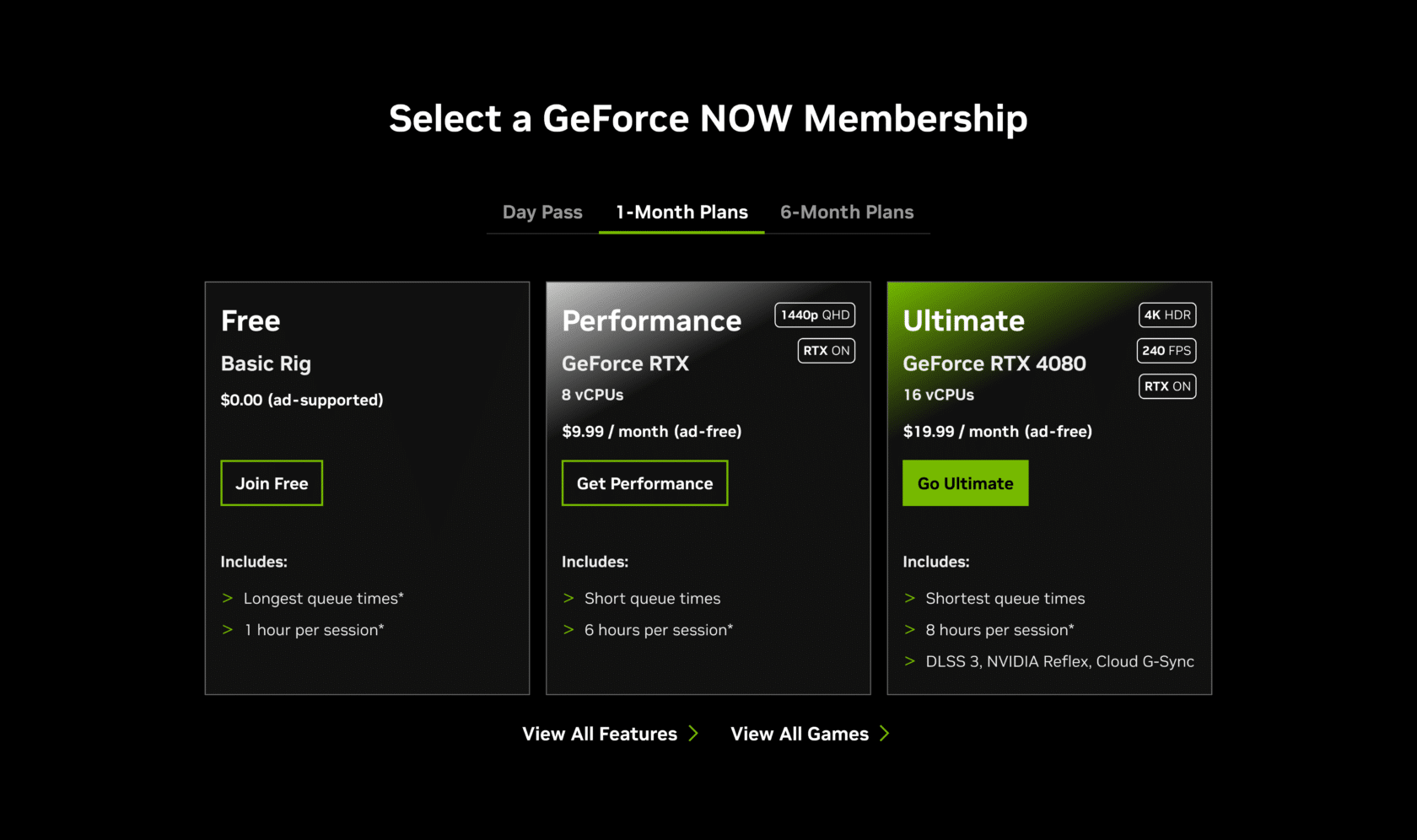
This GFN Thursday, the GeForce NOW Priority membership is getting enhancements and a fresh name to go along with it. The new Performance membership offers more GeForce-powered premium gaming — at no change in the monthly membership cost.
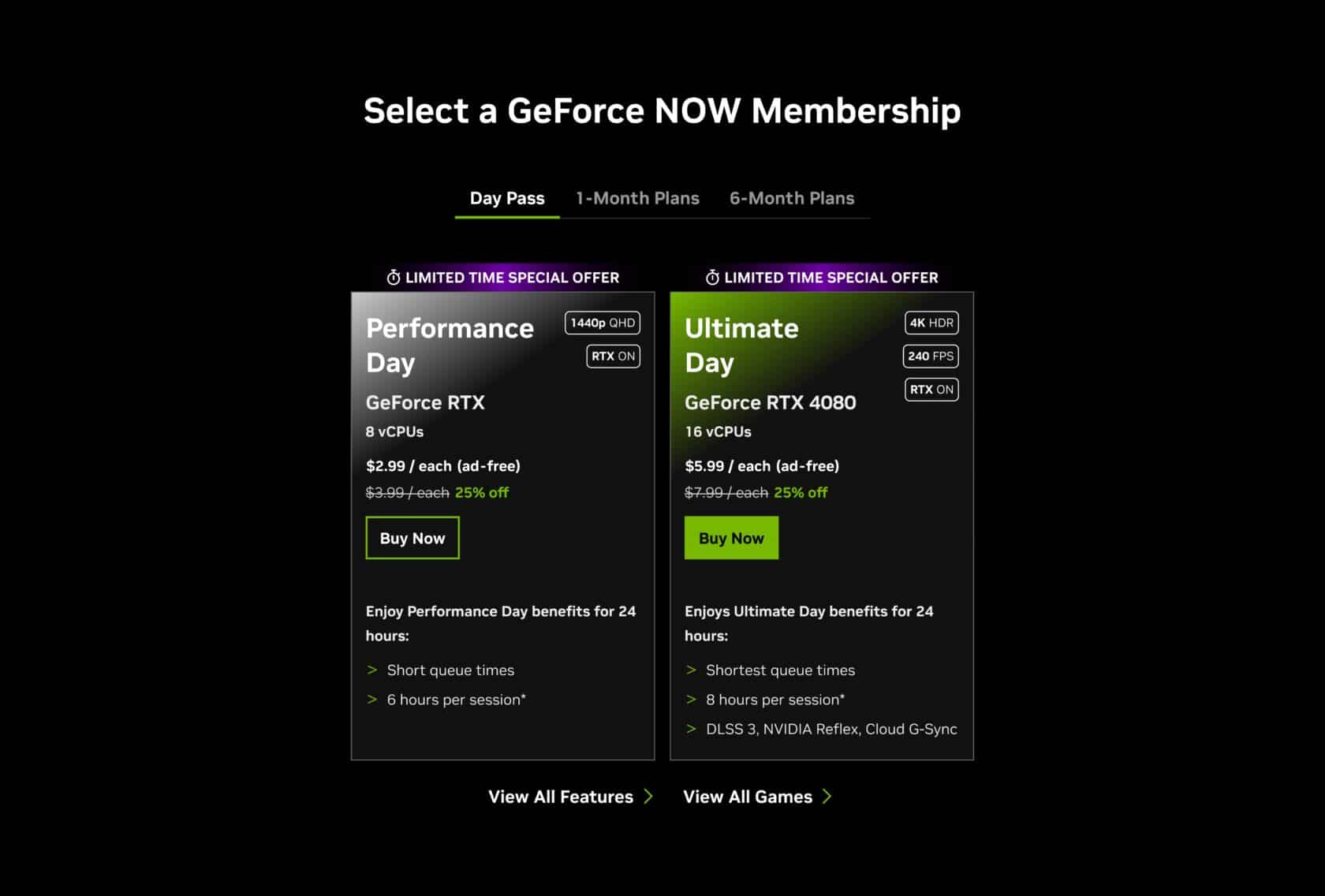
Gamers having a hard time deciding between the Performance and Ultimate memberships can take them both for a spin with a Day Pass, now 25% off for a limited time. Day Passes give access to 24 continuous hours of powerful cloud gaming.
In addition, seven new games are available this week, joining the over 2,000 games in the GeForce NOW library.
Time for a Glow Up
The Performance membership keeps all the same great gaming benefits and now provides members with an enhanced streaming experience at no additional cost.
Say hello to the Performance membership.
Performance members can stream at up to 1440p — an increase from the previous 1080p resolution — and experience games in immersive, ultrawide resolutions. They can also save their in-game graphics settings across streaming sessions, including for NVIDIA RTX features in supported titles.
All current Priority members are automatically upgraded to Performance and can take advantage of the upgraded streaming experience today.
Performance members will connect to GeForce RTX-powered gaming rigs for up to 1440p resolution. Ultimate members continue to receive the top streaming experience: connecting to GeForce RTX 4080-powered gaming rigs with up to 4K resolution and 120 frames per second, or 1080p and 240 fps in Competitive mode for games with support for NVIDIA Reflex technology.
Gamers playing on the free tier will now see they’re streaming from basic rigs, with varying specs that offer entry-level cloud gaming and are optimized for capacity.
Time to play.
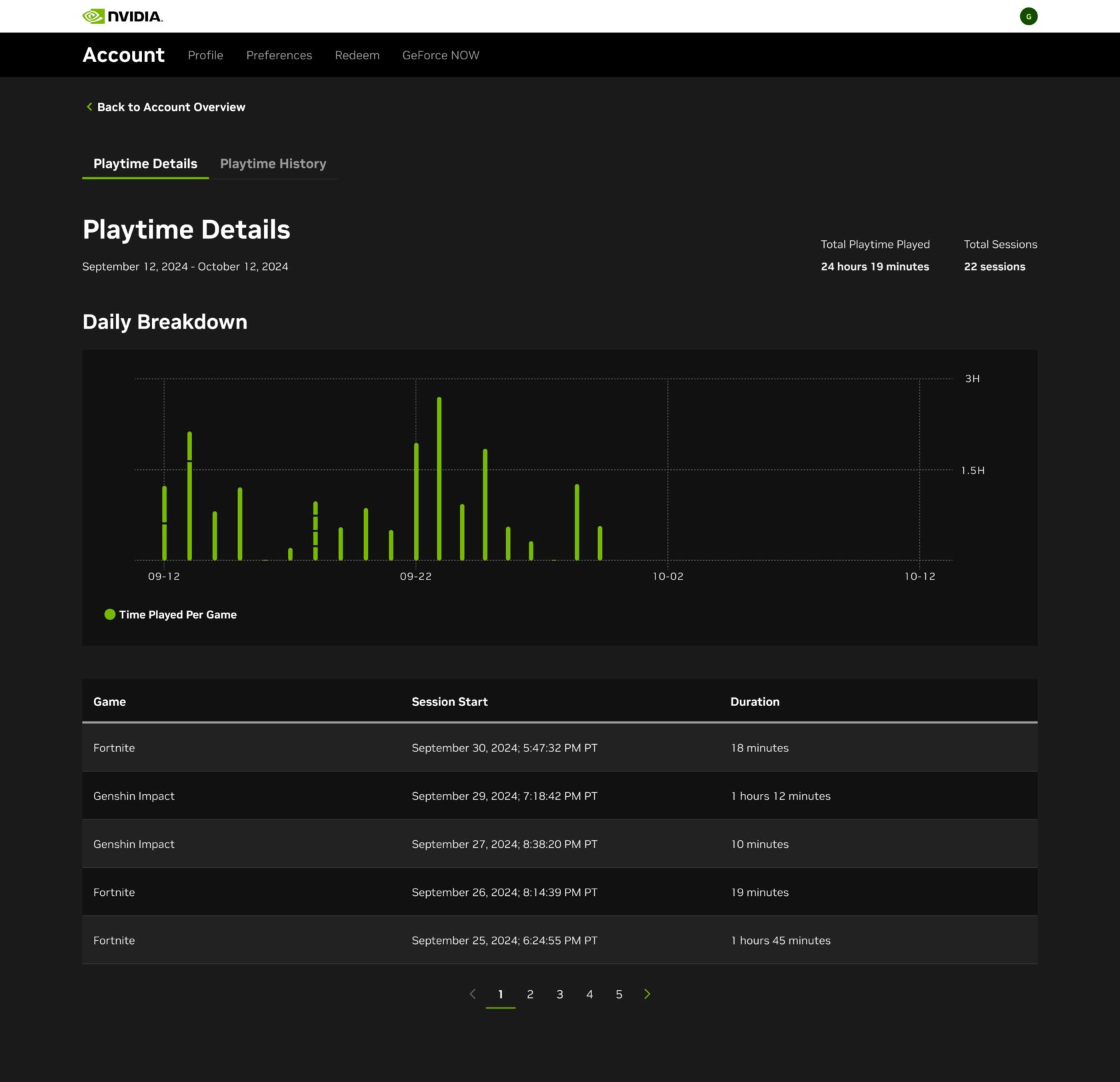
At the start of next year, GeForce NOW will roll out a 100-hour monthly playtime allowance to continue providing exceptional quality and speed — as well as shorter queue times — for Performance and Ultimate members. This ample limit comfortably accommodates 94% of members, who typically enjoy the service well within this timeframe. Members can check out how much time they’ve spent in the cloud through their account portal (see screenshot example above).
Up to 15 hours of unused playtime will automatically roll over to the next month for members, and additional hours can be purchased at $2.99 for 15 additional hours of Performance, or $5.99 for 15 additional Ultimate hours.
Loyal Member Benefit
To thank the GFN community for joining the cloud gaming revolution, GeForce NOW is offering active paid members as of Dec. 31, 2024, the ability to continue with unlimited playtime for a full year until January 2026.
New members can lock in this feature by signing up for GeForce NOW before Dec. 31, 2024. As long as a member’s account remains uninterrupted and in good standing, they’ll continue to receive unlimited playtime for all of 2025.
Don’t Pass This Up
For those looking to try out the new premium benefits and all Performance and Ultimate memberships have to offer, Day Passes are 25% off for a limited time.
Whether with the newly named Performance Day Pass at $2.99 or the Ultimate Day Pass at $5.99, members can unlock 24 hours of uninterrupted access to powerful NVIDIA GeForce RTX-powered cloud gaming servers.
Another new GeForce NOW feature lets users apply the value of their most recently purchased Day Pass toward any monthly membership if they sign up within 48 hours of the completion of their Day Pass.
Quarter the price, full day of fun.
Dive into a vast library of over 2,000 games with enhanced graphics, including NVIDIA RTX features like ray tracing and DLSS. With the Ultimate Day Pass, snag a taste of GeForce NOW’s highest-performing membership tier and enjoy up to 4K resolution 120 fps or 1080p 240 fps across nearly any device. It’s an ideal way to experience elevated GeForce gaming in the cloud.
Thrilling New Games
Members can look for the following games available to stream in the cloud this week:
Planet Coaster 2 (New release on Steam, Nov. 6)
Teenage Mutant Ninja Turtles: Splintered Fate (New release on Steam, Nov. 6)
Empire of the Ants (New release on Steam, Nov. 7)
Unrailed 2: Back on Track (New release on Steam, Nov. 7)
TCG Card Shop Simulator (Steam)
StarCraft II (Xbox, available on PC Game Pass, Nov. 5. Members need to enable access.)
StarCraft Remastered (Xbox, available on PC Game Pass, Nov. 5. Members need to enable access.)
What are you planning to play this weekend? Let us know on X or in the comments below.
NVIDIA founder and CEO Jensen Huang will join SoftBank Group Chairman and CEO Masayoshi Son in a fireside chat at NVIDIA AI Summit Japan to discuss the transformative role of AI and more..
Taking place on November 12-13, the invite-only event at The Prince Park Tower in Tokyo’s Minato district will gather industry leaders to explore advancements in generative AI, robotics and industrial digitalization.
Call to action: Tickets for the event are sold out, but tune in via livestream or watch on-demand sessions.
Over 50 sessions and live demos will showcase innovations from NVIDIA and its partners, covering everything from large language models, known as LLMs, to AI-powered robotics and digital twins.
Son has invested in companies around the world that show potential for AI-driven growth through SoftBank Vision Funds. Huang has steered NVIDIA’s rise to a global leader in AI and accelerated computing.
One major topic: Japan’s AI infrastructure initiative, supported by NVIDIA and local firms. This investment is central to the country’s AI ambitions.
Leaders from METI and experts like Shunsuke Aoki from Turing Inc. will dig into how sovereign AI fosters innovation and strengthens Japan’s technological independence.
On Wednesday, November 13, two key sessions will offer deeper insights into Japan’s AI journey:
The Present and Future of Generative AI in Japan: Professor Yutaka Matsuo of the University of Tokyo will explore the advances of generative AI and its impact on policy and business strategy. Expect discussions on the opportunities and challenges Japan faces as it pushes forward with AI innovations.
Sovereign AI and Its Role in Japan’s Future: A panel of four experts will dive into the concept of sovereign AI. Speakers like Takuya Watanabe of METI and Hironobu Tamba of SoftBank will discuss how sovereign AI can accelerate business strategies and strengthen Japan’s technological independence.
These sessions highlight how Japan is positioning itself at the forefront of AI development. Practical insights into the next wave of AI innovation and policy are on the agenda.
Experts from Sakana AI, Sony, Tokyo Science University and Yaskawa Electric will be among those presenting breakthroughs across sectors like healthcare, robotics and data centers.
The summit will also feature hands-on workshops, including a full-day session on Tuesday, November 12, titled “Building RAG Agents with LLM.”
Led by NVIDIA experts, this workshop will offer practical experience in developing retrieval-augmented generation, or RAG, agents using large-scale language models.
With its mix of forward-looking discussions and real-world applications, the NVIDIA AI Summit Tokyo will highlight Japan’s ongoing advancements in AI and its contributions to the global AI landscape.
Tune in to the fireside chat between Son and Huang via livestream or watch on-demand sessions.
The technical storage or access is strictly necessary for the legitimate purpose of enabling the use of a specific service explicitly requested by the subscriber or user, or for the sole purpose of carrying out the transmission of a communication over an electronic communications network.
Preferences
The technical storage or access is necessary for the legitimate purpose of storing preferences that are not requested by the subscriber or user.
Statistics
The technical storage or access that is used exclusively for statistical purposes.The technical storage or access that is used exclusively for anonymous statistical purposes. Without a subpoena, voluntary compliance on the part of your Internet Service Provider, or additional records from a third party, information stored or retrieved for this purpose alone cannot usually be used to identify you.
Marketing
The technical storage or access is required to create user profiles to send advertising, or to track the user on a website or across several websites for similar marketing purposes.