Aston Martin has launched a new special edition of the 2025 Vantage. The new Vantage AMV24 Edition celebrates the brand’s success at the 24 Hours of Spa race that was held earlier this year.
According to Aston Martin, the Vantage AMV24 pays tribute to the Vantage GT3 that won the 24 Hours of Spa. Production will be limited to just 24 units and will only be available in continental Europe.
So, what makes the Vantage AMV24 special? Well, the coupe has a Podium Green exterior paint finish developed by ‘Q’ and lime green accents on the hood, mirrors, and bumpers. It is fitted with 21-inch Y-spoke wheels finished in Satin Black.
Inside, the Vantage AMV24 Edition gets black leather and Alcantara upholstery with lime green stitching. There’s also a special ‘AMV24’ motif embroidered on the headrests.
The Aston Martin Vantage AMV24 is powered by a 4.0-liter V8 engine that delivers 656 hp and 590 lb-ft of torque. The engine is mated to an 8-speed automatic transmission, which sends power to the rear axle via an electronic limited-slip differential. The new Vantage is said to accelerate from 0-60 mph in 3.4 seconds and has a top speed of 202 mph.
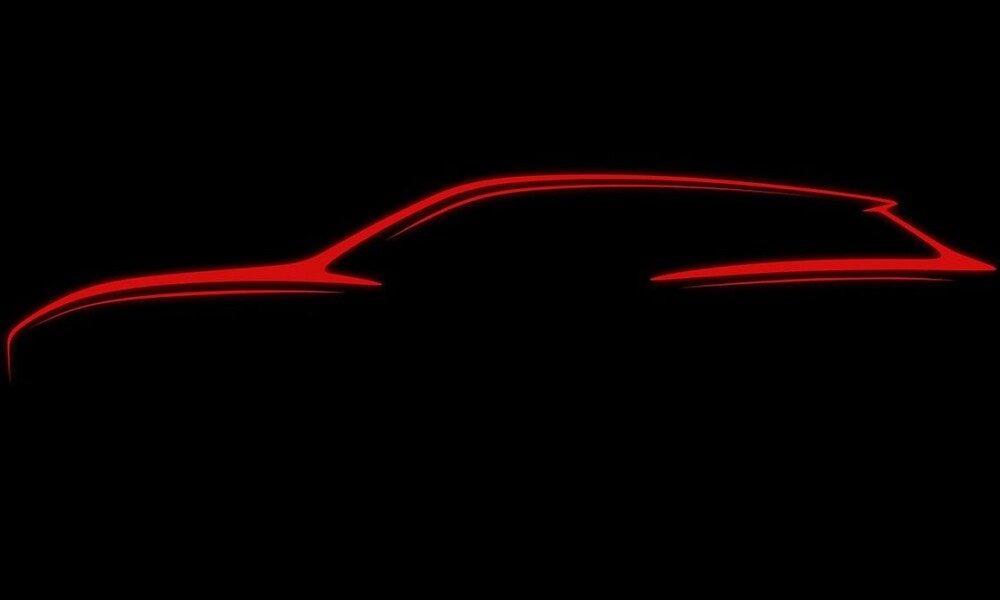
Mercedes-AMG has released the first teaser of its new full-size SUV. The new standalone model is being developed in-house at the brand’s HQ in Affalterbach, Germany.
The new “high-performance SUV” from AMG will be based on the all-electric AMG.EA platform. Mercedes‑AMG is designing the entire vehicle architecture for the first time, but the full-size SUV will be the second model based on the AMG.EA platform. It will also be the sixth vehicle fully developed by AMG, after the GT, SL, and SLS.
The teaser shows no more than a rough silhouette of the new AMG SUV. The lines look very similar to Bentley’s flagship offering, the Bentayga. The first prototypes are set to roll out for testing this winter.
Michael Schiebe, Chairman of the Board of Management of Mercedes‑AMG GmbH and Head of the Mercedes‑Benz G‑Class & Mercedes‑Maybach divisions, said, “SUVs have been among our most popular models for many years. With the ‘Born in Affalterbach’ SUV, we are responding to this trend by offering our customers a truly captivating high-performance off-roader based on the AMG.EA platform. Our new high-performance architecture follows a clear philosophy: ‘AMG First, EV Second’. This means that the vehicles not only excel as electric vehicles but also embody the core AMG qualities of emotion and performance.”
Ford has worked it’s way through dozens of advertising taglines over the decades, settling on “Go Further” in recent years.
Among the oldest carmakers on the planet, Ford demonstrated solid marketing acumen from the get go, making sure that the public knew about the brand’s ever declining prices during the Model T era, and keeping prospective shoppers aware that buying a car was becoming a very common thing to do.
Watch the Fords Go By
One of Ford’s first taglines was the brilliant “Don’t Experiment, Just Buy a Ford.” This line popped up—I think—in 1905, three years ahead of the Model T. Just after WWII, Ford took an optimistic tack, and began using the line, “There’s a Ford in Your Future.
And though there are several short-lived taglines that were used by the Blue Oval folks between “Don’t Experiment,” and “Ford in Your Future,” there was one particular tagline that saw intermittent use over a number of decades.
Watch the Fords Go By
The tagline “Watch the Fords Go By” was introduced in conjunction with the brand’s launch of the its first V8 in 1932. To commemorate the engine’s debut, Ford commissioned a strange bit of artwork from French artist A. M. Cassandre. Distributed as a poster, the image featured an eyeball with Ford’s V8 logo centered in the iris, and the line, “Watch the Fords Go By.”
The tagline worked a couple of ways. First, by 1932, America was teeming with Ford cars, and company marketers wanted the public to take note of popularity. Secondly, Ford’s new V8 models were period hotrods, and surprisingly quick for the price. Driver’s of older models, Ford or otherwise, had no choice but to watch the new V8s hustle past them.
Ford would later use the tagline to call attention to the maker’s modern design, as in the ad featured here:
1940 Ford ad
Ford also used the tagline in some of its wartime ads, such as the example seen below featuring the B-24 Liberator bomber, which the company built.
Watching All the Fords Go By
Post-war, the tagline morphed into something new. Now “Watching All the Fords Go By,” the tagline had the charm of being familiar, while calling attention not to performance or design, but the sheer number models offered by Ford. This three-minute video from 1956 features a group of soldiers on leave talking note of Ford’s vast portfolio of models.
The whole Watch/Watching campaign—to the extent it was intentionally a campaign—seems to have died down after use in the commercial seen above.
It is interesting, though, how long returned to the concept, even as it evolved over the years. I recommend doing a Google searching “classic Ford print ads” and seeing how many ads in the “Watch” series you can pick out.
Also, as for our featured ad, please take note of the fabulous deco art work. It’s ads like this one that make me wish people still read magazines.
Donald Trump has been elected as the 47th president of the United States, returning to the Oval Office four years after he last held the position.
His return to power has been one of controversy, with his opponents putting an emphasis on how the now 78-year-old will handle his second presidency, and what it means for the global partners and enemies of the US.
Australia has long been an ally of the US, but since we no longer manufacture our own vehicles from scratch, the local automotive industry can be influenced by external factors, such as what occurred in American politics overnight.
100s of new car deals are available through CarExpert right now. Get the experts on your side and score a great deal. Browse now.
In the leadup to the election, Mr Trump sought to win the swing state of Michigan – which he achieved – by targeting the region’s automotive industry, home to the ‘Big Three’ carmakers: Ford, General Motors (Chevrolet, Cadillac, GMC) and Stellantis (Jeep, Ram, Dodge, Chrysler).
In July, the president-elect not only hit out at the chief of the United Auto Workers (UAW) union, but also pledged to increase tariffs on vehicles made outside of the US by Chinese carmakers.
“We are going to bring back car manufacturing and we are going to bring it back fast,” said Mr Trump.
“[The Chinese] are building some of the largest auto plants in the world… Those plants are going to be built in the US and our people are going to man those plants.
“And if they don’t agree with us we will put a tariff of approximately 100-200 per cent on each car and they will be unsellable in the US.”
His declaration came months after now-departing president Joe Biden also announced a 100 per cent tariff on Chinese electric vehicles (EVs) in May.
While there’s only a handful of Chinese-built model sold in the US, such as GM’s Buick Envision and Ford’s Lincoln Nautilus, there are a handful of auto brands owned by Chinese conglomerates that sell cars there, including Lotus, Polestar, and Volvo.
The Polestar 2 is currently the only US-market EV that is built in China by a Chinese company, making it subject to the significant potential tariff.
Other brands such as BYD were understood to be interested in opening factories in Mexico to export car to the US, but with Mr Trump also pledging to place tariffs of up to 200 per cent on vehicles made south of the border, this would be a largely unprofitable exercise.
So what does all this mean for Australia?
With Chinese brands less likely to enter the US market, they’ll need to start looking at other regions for exports.
However, Australia not only has a Free Trade Agreement with China, but motorists are already buying vehicles made in the world’s second most populous nation in their droves, with only Japan and Thailand still supplying more vehicles for our market.
Australia still has a relatively small new-vehicle market, but it’s also one of the world’s most competitive, with close to 60 auto brands either currently on sale or due to launch locally.
At a time when so-called ‘legacy’ manufacturers, such as Citroen, have been departing showrooms due to slowing sales, the influx of brands from China is seemingly never-ending.
Last week, Jack Puzin, the CEO of EV Automotive – the Australian distributor for Chinese EV maker Skywell – named tariffs in the US and Europe as a driving force behind the rise of competition here, as brands become shut out of other markets.
“Around the world, the Europeans and Americans are ostracising the Chinese,” Mr Puzin told CarExpert.
“Obviously, their market is spilling into everywhere else they can sell, and Australia’s one of them.
“With such a generous Free Trade Agreement, why wouldn’t they?”
In contrast, there’s likely to be little change for Australia should Mr Trump also impose tariffs on Mexican-made vehicles, as they represent about one per cent of local auto imports, compared to the circa-15 per cent figure for Chinese-made models.
The first example to arrive will be the dual-motor, all-wheel-drive EX30 Twin Motor Performance model, which is priced from $46,195, including a $1,295 destination charge. Volvo said it decided to focus on the 422-hp performance flagship as it was the most requested model among reservation holders.
Buyers looking to snag the base EX30 with a single-motor, front-wheel-drive configuration, which was previously announced with a starting price of $36,245, including destination, will have to wait until 2025, Volvo said. The base EX30 is good for 268 hp.
The EX30 made its debut in mid-2023 and is currently built exclusively in China, though Volvo will add production in Belgium in 2025. Deliveries in the U.S. of Chinese-made EX30s were originally due to start in the first half of 2024, but the 100% tariffs introduced by the Biden administration on Chinese-made EVs led to Volvo delaying the start of deliveries.
2025 Volvo EX30
The automaker in June said it would delay deliveries in the U.S. until 2025, when production is due to start in Belgium. However, in its latest announcement, the automaker said it is speeding up the start of deliveries, likely using Chinese-made EX30s, to satisfy demand as quickly as possible.
“We worked hard to make the Volvo EX30 available sooner than anticipated for our customers,” Mike Cottone, Volvo’s U.S. chief, said in a statement. “The EX30 has already proved exceptionally popular in other markets, and we’re excited to bring it to the U.S. this year.”
Owners of the EX30 Twin Motor Performance can look forward to 0-60 mph acceleration in just 3.4 seconds and a EPA-rated range estimate of 253 miles for the vehicle’s 64-kwh battery. The base EX30 will feature the same battery and is estimated at up to 261 miles. The 0-60 mph time for the base model is 5.1 seconds.
London is a city absolutely brimming with history, with something new to discover down its every street. The Churchill War Rooms is one of the most historically significant of London’s many fascinating landmarks and monuments. Hidden beneath the streets of Westminster, this underground bunker was the nerve center for Britain’s war efforts during World War II.
Today, it stands as part of the Imperial War Museum, offering visitors a remarkable glimpse into the past.
If you’re planning a trip to London, here’s a comprehensive guide to visiting Churchill War Rooms and making the most of your experience.
Here’s an overview:
In a hurry? Book this private tour
LivTours offers a private London WWII Tour, including the Imperial War Museum and Churchills War Rooms. Including:
– Private tour of the Imperial War Museum, showcasing personal WWII stories. – Visit interactive WWII and Holocaust Galleries with rare artifacts. – See 1,500+ items, from D-Day footage to personal letters. – Skip-the-line access to Churchill’s wartime HQ bunker. – Conclude at the Churchill Museum, exploring his life and legacy.
The Churchill War Rooms are part of the larger Imperial War Museum and consist of two main sections:
The Cabinet War Rooms: This underground complex served as the British government’s command center during World War II. It includes conference rooms, map rooms, and private quarters where Winston Churchill and his war cabinet planned military strategies.
The Churchill Museum: Opened in 2005, this museum offers a deeper look into Winston Churchill’s life and legacy. It uses interactive displays, original artefacts, and personal letters to tell its story.
How to Get to the Churchill War Rooms
The Churchill War Rooms are centrally located in Westminster, just a short walk from some of London’s most famous attractions, including Big Ben and the Houses of Parliament.
Address: Clive Steps, King Charles St, London SW1A 2AQ, UK
Arrive By Underground
Westminster Station (Jubilee, Circle, and District Lines) – About a 5-minute walk.
St. James’s Park Station (District and Circle Lines) – About a 10-minute walk.
Arrive by Bus
Several buses stop near the War Rooms, including routes 11, 24, 148, and 211.
How to Visit the Churchill War Rooms in London
Opening Hours and Tickets
The War Rooms are open daily from 9:30 AM to 6:00 PM, with the last entry at 5:00 PM. It’s advisable to check the official website for any seasonal changes or special closures.
Ticket Prices:
Adults: £29
Children (5-15): £14.50
Concessions: £23.20
You can buy tickets online in advance to avoid long lines, especially during peak tourist seasons. Consider purchasing a London Pass if you’re visiting multiple attractions, as it often includes entry to the War Rooms.
What to Expect Inside the Churchill War Rooms
Upon entering the War Rooms, you’ll be transported back to the 1940s. The atmosphere has been carefully preserved, with rooms left exactly as they were at the end of the war. Some highlights include:
The Map Room: Here is where military strategies were crafted, and where you can find original maps used during the war on display.
Churchill’s Bedroom: Though he rarely slept here, you can explore his private quarters.
The Transatlantic Telephone Room: A small, soundproof room where Churchill would speak privately with U.S. President Franklin D. Roosevelt.
The Churchill Museum section offers a deeper, more personal insight into the Prime Minister’s life. Don’t miss the interactive exhibits, where you can hear Churchill’s famous wartime speeches.
Tips for Visiting the Churchill War Rooms
Arrive Early: The War Rooms are one of London’s top attractions, and they can get crowded. Arriving early or late in the day can help avoid the busiest times.
Audio Guide: The admission fee includes an excellent audio guide that narrates the history of the War Rooms and Churchill’s role in the war. It’s available in multiple languages.
Allow Plenty of Time: To truly soak in Churchill’s fascinating history, plan to spend at least 1.5 to 2 hours exploring the War Rooms and the Churchill Museum. History enthusiasts may want to allow even more time.
Accessibility: The War Rooms are wheelchair accessible, with lifts and ramps throughout most of the site.
Get the Inside Scoop with a Private Tour
The Churchill War Rooms are a must-see for anyone interested in British history or World War II. Not only do they offer an extraordinary look at the events that shaped the 20th century, but they also bring to life the legacy of one of Britain’s most iconic leaders, Winston Churchill.
Whether you’re a history enthusiast or a casual visitor, this site is a powerful reminder of the resilience and determination of the British people during one of the darkest times in modern history. Going with a private guide will help you get even more out of your visit: guides share obscure stories and ensure history enthusiasts get answers to all of their burning questions.
LivTours offers a private London WWII Tour, including the Imperial War Museum and Churchills War Rooms.
Start your day with a guided tour of London’s Imperial War Museum, exploring the powerful World War II collection. Here, you’ll see color footage of the D-Day Landings, impactful relics, and heroic stories from the Holocaust and the Blitz. Next, make your way to the Churchill War Rooms—the hidden underground headquarters of the Prime Minister during the war.
If you’re visiting the Churchill War Rooms, there are plenty of other notable landmarks nearby that are worth seeing:
Westminster Abbey – A 5-minute walk.
Buckingham Palace – A 10-minute walk.
The Houses of Parliament and Big Ben – A short stroll along Whitehall.
The Churchill War Rooms offer an unforgettable journey into one of the most pivotal periods in modern history. With its well-preserved wartime atmosphere and insightful exhibits on Churchill’s life, this landmark is a must-visit for the history-obsessed.
Discover the Churchill War Rooms and London’s WWII Legacy
A visit to the Churchill War Rooms is truly a step back in time, offering a rare, immersive glimpse into the tense days of World War II and the life of one of Britain’s most influential leaders.
From preserved war rooms and interactive displays to Churchill’s inspiring legacy, this experience provides both history enthusiasts and casual visitors a memorable look into Britain’s resilient wartime spirit. Pair it with nearby iconic landmarks like Westminster Abbey and Big Ben to make the most of your London adventure.
Audi launches AUDI EV brand in China AUDI EVs developed in partnership with China’s SAIC First AUDI EV due in mid-2025
Audi on Thursday launched the standalone brand AUDI (all caps, and minus the four-ring logo) in China to deliver electric vehicles tailored specifically for that market.
To mark the launch of the AUDI brand and provide a taste of what’s to come, Audi on Thursday rolled out the E concept, a svelte wagon based on a platform developed in partnership with Chinese auto giant SAIC.
AUDI E concept
Audi first entered the Chinese market in 1988 and was one of the most popular brands only a few years ago, selling its range of gas-powered cars. However, Audi has struggled to crack China’s rapidly growing EV segment and in 2023 turned to SAIC for help. Similarly, fellow Volkswagen Group brand Volkswagen is working with China’s Xpeng to develop models tailored to Chinese market.
The AUDI E concept is based on a jointly developed platform called the Advanced Digitized Platform. At least three vehicles are being developed on the platform and the first is due around mid-2025. Audi said vehicles based on the new platform will be exclusive to China.
AUDI E concept
The E concept measures just under 192 inches long, making it a couple of inches shorter than the new Audi A6 E-Tron. Power comes from a dual-motor, all-wheel-drive system rated at a maximum 764 hp, and those motors draw their energy from a 100-kwh battery. An 800-volt electrical system means rapid charging will be possible using a DC fast-charger.
Claimed performance includes a 0-62 mph time of 3.6 seconds and a range of 435 miles on China’s CLTC cycle. A lower figure would likely result using the stricter EPA cycle.
AUDI E concept
According to Audi, the average Audi customer in China is much younger than in the rest of the world and more tech-savvy, particularly when it comes to connectivity and automated driving technology. Exterior and interior design tastes are also different, and this is reflected by the more minimalist styling used on the concept.
Audi said by working with SAIC, it can speed up the development of a new vehicle by 30%. One of the main areas where SAIC has helped is with an established technology ecosystem that future customers of AUDI will be able to interact with via a new brand-specific operating system. This new AUDI OS will be fully integrated with a user’s smartphone and feature its own app store and individualized interaction via facial recognition. It will also have an AI-powered AUDI Assistant that will react to voice controls.
The Mahindra XUV700 has taken a step to the dark side.
This new seven-seat mid-sized SUV is the latest model from the Indian carmaker to gain a blacked-out trim level. In this particular instance it’s a feature-packed new flagship variant designed to garner more attention alongside top-selling rivals like the Mitsubishi Outlander and Nissan X-Trail.
While its most direct competitor is the Chery Tiggo 8 Pro Max, it’s also a cut-price rival for the likes of the Hyundai Santa Fe, Kia Sorento, Skoda Kodiaq, Toyota Kluger, and Volkswagen Tiguan Allspace, among others.
While the Mahindra XUV700 Black Edition may seem like just a black-themed aesthetics package on the surface, there’s also a range of unique features.
These include black faux leather upholstery (the other variants only come with white faux leather), front seat ventilation, wireless Apple CarPlay and Android Auto connectivity, side mirror memory, and Dark Chrome interior highlights.
WATCH: Paul’s video review of the 2023 Mahindra XUV700 AX7L
This new Black Edition variant is the biggest change the XUV700 has received since it launched in Australia early last year. Even the keen pricing for the two regular variants hasn’t changed since then.
With this in mind, how does the Mahindra XUV700 Black Edition stack up? Read along to find out.
How does the Mahindra XUV700 compare?
View a detailed breakdown of the Mahindra XUV700 against similarly sized vehicles.
Mahindra
XUV700
How much does the Mahindra XUV700 cost?
The Black Edition is the new flagship variant of the relatively fresh Mahindra XUV700 lineup, which replaced the much less handsome XUV500, but it’s still one of the cheapest seven-seat SUVs currently on sale in Australia.
Model
Drive-away pricing
2025 Mahindra XUV700 AX7
$36,990
2025 Mahindra XUV700 AX7L
$39,990
2025 Mahindra XUV700 Black Edition
$43,990
To see how the Mahindra XUV700 stacks up against its rivals, check out our comparison tool
What is theMahindra XUV700 like on the inside?
Walking up to the Black Edition, you’re presented with pop-out door handles like those seen on the Hyundai Ioniq 5 and Kia EV6. They pop out when you unlock the car and retract when it’s locked to help create a sleek side profile.
Hopping in, the first thing you’ll likely notice is how high the driver’s seat is. It’s almost too high, but many people who buy this type of vehicle want that ‘command’ driving position to give them the best view of their surrounds possible.
Unlike every other XUV700 variant on sale locally, the Black Edition (as its name suggests), comes with black faux leather upholstery. This is so much nicer and more family-friendly than the white faux leather in the AX7 and AX7L.
Another feature the Black Edition gains over other XUV700 variants is ventilated front seats, which is a Godsend on sweltering days. However, no variant offers seat heating, which is something virtually every top-spec mid-sized SUV offers in Australia.
The driver’s seat is comfortable enough, but it’s a little flat and doesn’t offer a great deal of lateral support in the bends. The seat itself can be electrically adjusted across six ways using Mercedes-Benz-like controls on the door panel.
Ahead of the driver is a rather chunky steering wheel that’s common with the Scorpio. It offers both tilt and reach adjustability, which is good because it allows for people of different heights and statures to get comfy behind the wheel.
All the buttons on the steering wheel are logically placed, but with the piano-black finishes they get smudgy and gross even after a few interactions.
The Mercedes-Benz-like nature of the XUV700’s interior continues with the standard dual 10.25-inch screens for the digital instrument cluster and touchscreen infotainment system.
The digital instrument cluster looks flashy and high-resolution, and there are range of informative pages you can cycle through. One includes a navigation view that shows mapping routes when using smartphone mirroring. It can also be triggered to take up the entire 10.25-inch screen.
One of the few catches with this navigation view is that it only works with Apple Maps for iPhones and with Google Maps for Android phones. It also hides a range of other information like fuel range.
Another feature the digital instrument cluster has is a Blind-Spot View Monitor which, as with a number of high-spec Hyundai and Kia models, shows a live feed from a camera mounted under the side mirror when you switch on an indicator.
This is a great safety feature to have, even if in practice the camera’s frame rate can be a little jumpy and the resolution isn’t the flashiest.
Moving across, the touchscreen infotainment display is just as high-resolution as the digital instrument cluster. It’s a rather simple unit with easy to navigate menus.
In addition to touch inputs, you can also use a BMW-like rotary controller on the centre console to cycle through content or change the volume.
Unlike other XUV700 variants, the Black Edition comes with wireless Apple CarPlay and Android Auto in addition to wired connectivity for both smartphone-mirroring systems. It worked well for the most part during our time with the Mahindra, though it would occasionally have dropouts and glitches.
The wireless charger also cooked my phone a few times, leading me to eventually plug in a USB cable to ensure my phone battery stayed topped up during longer drives.
Some other minor infotainment glitches we experienced included the sound system volume readout getting stuck on 24, and the climate control pop-ups not actually popping up when changing certain settings.
Speaking of the climate controls, I’m very glad Mahindra has stuck with physical dials and buttons for the dual-zone climate control system. One catch, however, is that you need to look at the screen to see what temperature and fan speed it’s set at.
Something else I noticed is the auto climate control setting liked to have the fan blowing flat-out through the face-level vents, while also having the air recirculating, which made for an intoxicating plastic smell after a while.
Looking around the cabin, there’s a bit too much piano-black for our liking. It’s on the centre console, dashboard, and even on the door cards. We wish Mahindra would choose a different finish, because it gets so grimy so quickly, and also gets scratched when wiped clean.
All the black interior finishes are pretty dark, though thankfully there’s a light-coloured headliner to break it up, as well as a standard panoramic glass sunroof that makes the cabin feel airier. The latter can also tilt and slide open for extra air flow.
Moving to the second row, the bench seat doesn’t slide but offers a recline function. And at a leggy 182cm, I have plenty of leg room, toe room, headroom, and shoulder space behind my own driving position. Going three abreast is doable thanks to the virtually flat floor, too.
In terms of second-row amenity, there are air vents mounted on the back of the centre console, as well as a singular USB-C port.
Like a few medium SUVs on sale in Australia, the XUV700 comes standard with a third row of seating. There are two seats back there, but the space on offer makes it more of a kids-only zone, which is in line with rivals.
For the sake of it, however, we checked how well the third row copes with adults. It’s a mission and a half for me to get back there, and there isn’t enough headroom for me to hold my head upright.
Third-row passengers will appreciate the cup holders on each side though, as well as the air vents with dedicated blower control.
Mahindra hasn’t quoted boot capacities for the XUV700, but like the Scorpio there’s virtually no cargo space with all three rows upright. You can fit a grocery bag or two if you’re lucky.
Unlike the Scorpio, however, the XUV700’s third row folds away to create an almost flat boot floor. There’s actually a fair bit of usable space when the third row of seats are folded away too.
Thankfully, the XUV700 comes with a full-sized steel spare wheel, which is a critical feature for many rural and regional buyers, and one that’s lacking even in some SUVs these days.
Dimensions
Mahindra XUV700
Length
4695mm
Width
1890mm
Height
1755mm
Wheelbase
2750mm
To see how the Mahindra XUV700 stacks up against its rivals, check out our comparison tool
What’s under the bonnet?
The entire Mahindra XUV700 range is powered by a 2.0-litre four-cylinder turbo-petrol engine driving the front wheels only. Diesel power and all-wheel drive are available in other markets, along with the option of a manual transmission.
Specifications
Mahindra XUV700
Engine
2.0L 4cyl turbo
Power
149kW @ 5000rpm
Torque
380Nm @ 1750-3000rpm
Transmission
6-speed auto
Driven wheels
FWD
Weight
1835kg
Fuel economy (claimed)
8.3L/100km
Fuel economy (as tested)
7.7L/100km (1840km)
Fuel tank capacity
60L
Fuel requirement
91 RON
Braked tow capacity
1500kg
Our observed 7.7L/100km fuel consumption figure is hardly class-leading, and it included plenty of highway and freeway journeys over the course of a month. Some of this was completed by our video team on their way between Melbourne and Lang Lang for testing.
To see how the Mahindra XUV700 stacks up against its rivals, check out our comparison tool
How does theMahindra XUV700 drive?
Even though I’ve driven a fair few XUV700s now, every time I hop back in and start it up I subconsciously expect to hear a diesel clatter.
XUV700 AX7L shown
What you do hear, however, is a sweet petrol-engine rev flare and then a subdued idle note. Setting off when the engine is cold can tend to see the engine surge a fair bit in first gear, which made me jump for the brake pedal a couple of time. It doesn’t take long for the engine to warm up, however, when this strange surge feeling goes away.
The XUV700’s 2.0-litre four-cylinder turbo-petrol engine provides enough grunt in everyday scenarios. You’re able to get away from the lights with ease, but don’t expect to win the traffic light grand prix in this 1.8-tonne seven-seat SUV.
The engine rev out a little in the two lower gears, but once you get into third gear and beyond the engine revs settle down. Peak torque comes on tap from as low as 1750rpm and the car leans into this as much as possible.
It’s surprising how quickly the car can accelerate without too many revs on board. It’s feels much more like a turbo-diesel rather than a turbo-petrol. This makes for a comfortable, effortless and stress-free driving experience.
But the XUV700 doesn’t respond well to sharp accelerator jabs, taking a second or two for the turbo to spool up and the transmission to drop a gear. It’s much more comfortable being driven with docile throttle inputs.
This car comes with an engine idle stop/start system that activates when you’re stationary. It’s not the most sophisticated system I’ve experienced as it cuts out the air-conditioner when active, and at night time the headlights flicker for a second when the engine restarts.
I can see why many people turn off this function in their cars, as it can sometimes be a little intrusive and annoying, even if it helps to reduce fuel use.
At lower speeds the car feels more agile that you’d initially expect. This is due in part to the incredibly light steering that makes it easy to twirl the wheel and change directions. A downside of this, however, is steering that lacks a bit of feedback.
As standard, the XUV700 Black Edition comes with a surround-view camera that has decent but not outstanding quality, as well as only rear parking sensors.
Despite feeling agile, this car isn’t overly dynamic. It throws around its 1.8-tonne mass a fair bit in corners, and that isn’t helped by being front-wheel drive. But in all fairness, this is a seven-seat SUV and not a hot hatch.
Pimply metropolitan roads is where the XUV700’s suspension shines the most. There’s a MacPherson strut front and multi-link rear setup, along with the company’s so-called Frequency Selective Dampers.
The latter allows the car to remain composed over a singular speed bump with high damping force, but can also delivers a comfortable ride on bumpier roads via low damping force.
For the most part, it feels like the car floats along urban and metropolitan roads, soaking up imperfections well. You can hear what the suspension is doing but it doesn’t translate into the cabin, which is a positive for occupants.
It’s easy to build up speed in the XUV700, the turbo-petrol engine in which makes it well and truly up to the task of highway touring. At around 95km/h, the transmission slots into sixth gear and that keeps the revs below 2000rpm, which is great for cabin ambience.
What isn’t great, however, is that there’s a fair bit of wind noise emanating from the side mirrors. This can be fixed by turning up the volume on the great 12-speaker Sony sound system.
Like I mentioned before, this car doesn’t respond well to sharp throttle inputs. With this in mind, you do need to plan your overtaking manoeuvres as the XUV has to think before dropping a gear. Once this happens though, it has plenty of oomph to get moving.
The suspension setup feels purpose-built for highway and freeway touring, because when the going gets really tough on single-lane country roads it feels like the suspension gets a little overwhelmed and doesn’t know whether to stiffen or soften the dampers.
When travelling along at 100km/h on undulating, pot-holed country roads, you feel every bump and the Mahindra also feels overly soft at the rear. A couple of times on those roads with passengers in the second and third rows, they said they started to get a bit car-sick from all the movement.
Another thing I noticed while travelling at higher speeds for extended periods of time is the fuel range computer changes rather rapidly. At one point the low-fuel warning came on, indicating I could only travel around 50km before the petrol ran out, but when I filled up the tank I still had 13L of fuel left in it.
On the safety front, the XUV700 is pretty fully loaded. It comes with an adaptive cruise control system that reacts in a measured way to cars ahead. But an annoyance at higher speeds is that it struggles to stay at the set speed, stabbing at the throttle or brake to maintain it.
There are three different options to change how quickly the car accelerates up to the set speed, though even in its slowest setting it can jerk around like a taxi driver who stabs at the throttle.
Another strange quirk is that while there are all the requisite buttons for the cruise control, there’s no actual cancel button. This means if you want to cancel the cruise and then resume it at the previously set speed you need to press the brake pedal.
I didn’t want to do that though, so I stuck with turning off cruise control completely and then set the speed again manually each time.
The lane-keep assist is pretty accurate on clearly marked roads, though on tight country highways and single-lane country roads the system can lightly yank at the wheel when it doesn’t need to. I’ve experienced much worse in other cars, however.
There’s also a Smart Pilot function that essentially combines adaptive cruise control and lane centring functions. On highways and freeways it works perfectly at gently steering the car within the marked lines, reducing driver fatigue over long journeys.
Thankfully, if you don’t like how hands-on the steering assistance system is with Smart Pilot turned on, you can switch it off using a menu in the digital instrument cluster.
Lastly, the XUV700 Black Edition comes with bright LED headlights, which are great for dimly lit rural and regional areas. Above 80km/h there’s a boost function for the high-beams, which noticeably makes it easier to see further down the road.
What do you get?
On test here is the new flagship XUV700 Black Edition variant.
2025 Mahindra XUV700 highlights:
18-inch alloy wheels
Panoramic sunroof
Automatic LED headlights
Automatic high-beam
Cornering lights
Fog lights
Rain-sensing wipers
Tyre pressure monitoring
Power-folding exterior mirrors
10.25-inch touchscreen infotainment system
10.25-inch digital instrument cluster
Wired Apple CarPlay, Android Auto
6-speaker sound system
Leather-wrapped steering wheel and shifter
Leatherette upholstery
6-way power driver’s seat with memory
One-touch tumbling 60:40 second-row seats
Dual-zone climate control
Keyless start
XUV700 AX7L adds:
12-speaker sound system
Electronic park brake
Telescopic steering wheel adjustment
Illuminated vanity mirrors
Electric ‘smart’ door handles
Wireless phone charger
Blind-Spot View Monitor
Surround-view camera
Knee airbag
Adaptive cruise control with stop/go
XUV700 Black Edition adds:
Napoli Black exterior paint
Black 18-inch alloy wheels
Side mirror memory function
Wireless Apple CarPlay, Android Auto
Dark chrome interior finishes
Black leatherette upholstery
Ventilated front seats
To see how the Mahindra XUV700 stacks up against its rivals, check out our comparison tool
Is theMahindra XUV700 safe?
The Mahindra XUV700 has yet to be assessed by ANCAP.
Standard safety equipment includes:
Autonomous emergency braking
Adaptive cruise control
Smart Pilot Assist
Lane-keep assist
Traffic sign recognition
Reversing camera
Rear parking sensors
Post-collision braking
Front, front-side and curtain airbags (6)
AX7L adds:
Blind-spot view monitor
Surround-view camera
Knee airbag
Adaptive cruise control with stop/go
How much does theMahindra XUV700 cost to run?
The Mahindra XUV700 is backed by a generous seven-year, 150,000km warranty including seven years of roadside assist. Servicing is required every 12 months or 15,000km.
Running costs
Mahindra XUV700
Warranty
7 years, 150,000km
Roadside assistance
7 years
Service intervals
12 months or 15,000km First service required at 1 month or 1500km Second service required at 12 months or 10,000km
Capped-price servicing
4 years
Total capped-price service cost
$1781
To see how the Mahindra XUV700 stacks up against its rivals, check out our comparison tool
CarExpert’s Take on theMahindra XUV700
The Mahindra XUV700 is oft-forgotten as one of the most affordable seven-seat SUVs available in Australia, but that doesn’t mean it should be overlooked.
In this new top-shelf Black Edition guise, it’s fitted with all the bells and whistles you could hope for, at a price tag that’s very appealing. For $43,990 drive-away, you can’t even get a base Mitsubishi Outlander or Nissan X-Trail seven-seater.
Even compared to other budget-friendly XUV700 variants, the Black Edition is a sweeter package if you can live with the dark Napoli Black exterior paint. That is thanks primarily to the black faux leather upholstery, which is considerably more family-friendly than the white faux leather that’s compulsory in other variants.
It’s also nice that the front seats gain ventilation, especially as we’re leading into a sweltering Australian summer, and that the convenience of wireless Apple CarPlay and Android Auto connectivity is finally available.
While the car has all these high-tech functions, the infotainment glitches and smartphone mirroring dropouts can put a dampener on the overall experience. The relatively high driving position and ultra-light steering also don’t feel overly natural in such a large vehicle.
Another consideration is that the XUV700 range is still only offered locally with turbo-petrol power and front-wheel drive. It would be interesting to see if the availability of turbo-diesel and/or all-wheel drive options attracted more customers to this well-priced, underrated Indian-made seven-seat SUV.
Interested in buying a Mahindra XUV700? Get in touch with one of CarExpert’s trusted dealers here
Kia on Tuesday unveiled an off-road concept version of its EV9 electric SUV at the 2024 SEMA show in Las Vegas.
The Kia EV9 ADVNTR adds typical off-road accoutrements to the three-row SUV, including a 3-inch suspension lift, new wheels and tires, light bars, and a roof rack. Kia isn’t discussing production possibilities, but the concept could serve as inspiration for the aftermarket industry that is SEMA’s primary audience.
Kia EV9 ADVNTR concept
No changes to the powertrain were discussed, but given its off-road mission, the ADVNTR likely features the optional dual-motor setup rated at 379 hp and 443 lb-ft in most grades. The concept’s chunky tires likely degrade EPA range from the 280 miles achieved by most all-wheel drive EV9 models.
The EV9 arrived for the 2024 model year as the second Kia EV based on the E-GMP platform shared with Hyundai and Genesis. We were so impressed that we named it Green Car Reports Best Car To Buy 2024.
Kia EV9 ADVNTR concept
The 2025 Kia EV9 enters its second model year essentially unchanged, with a $700 price increase for the Light Long Range model. That’s the base single-motor trim level with the larger 99.8-kwh battery pack that’s standard on other EV9 models. It also happens to have the most EPA range, at 304 miles. The 2025 models are already subject to a recall to address a software issue that could cause digital gauge cluster to fail.
Kia also debuted an electric van concept called the PV5 WKNDR at the 2024 SEMA show. This is a more rugged version of the PV5 van concept Kia unveiled at CES 2024, designed for weekend adventures. The PV5 is one of several Platform Beyond Vehicles (PBVs) based on a modular design that Kia is expected to start producing in 2025, primarily for commercial use.
A new generation of the Mercedes-Benz CLA-Class compact sedan arrives next year, with an all-electric variant as part of the lineup.
Mercedes first showed a camouflaged prototype of the CLA-Class EV in October, and on Wednesday it released a further tease in the form of a video of CEO Ola Källenius driving one of the prototypes.
Teaser for 2026 Mercedes-Benz CLA-Class
Underneath the camouflage, expect the CLA-Class EV to have styling based on the Concept CLA-Class unveiled at the 2023 Munich auto show. That concept also showed off the engineering of the Mercedes-Benz Modular Architecture (MMA) that will be the basis for the CLA EV and other next-generation compact Mercedes models.
MMA will incorporate an 800-volt electrical architecture, which Mercedes said allowed for DC fast charging that could recover up to 248 miles of range in 15 minutes in the Concept CLA-Class, and is designed around smaller battery packs. Range will be achieved more through efficiency than pack size, incorporating lessons learned from the Vision EQXX concept, which traveled a record 746 miles on a single charge in 2022.
The CLA EV will be unveiled in 2025, meaning it will likely reach the U.S. as a 2026 model. In the teaser, Källenius confirmed that a high-performance AMG version is in development alongside the standard CLA-Class. And a hybrid powertrain option is expected to be offered alongside the all-electric ones.
In addition to the CLA-Class, which is expected to retain the “four-door coupe” shape of the current car and the Concept CLA-Class, Mercedes is expected to introduce a range of small cars based on the MMA underpinnings, including a crossover that could serve as a Tesla Model Y rival.
The technical storage or access is strictly necessary for the legitimate purpose of enabling the use of a specific service explicitly requested by the subscriber or user, or for the sole purpose of carrying out the transmission of a communication over an electronic communications network.
Preferences
The technical storage or access is necessary for the legitimate purpose of storing preferences that are not requested by the subscriber or user.
Statistics
The technical storage or access that is used exclusively for statistical purposes.The technical storage or access that is used exclusively for anonymous statistical purposes. Without a subpoena, voluntary compliance on the part of your Internet Service Provider, or additional records from a third party, information stored or retrieved for this purpose alone cannot usually be used to identify you.
Marketing
The technical storage or access is required to create user profiles to send advertising, or to track the user on a website or across several websites for similar marketing purposes.