Home Blog Page 351

Ringbrothers’ 1970 Plymouth ‘Cuda gets infected with a little pink eye

0


  • Ringbrothers revealed custom 1970 Plymouth ‘Cuda at 2024 SEMA show
  • Build took over 5,600 hours to complete
  • Ringbrothers also presented a custom Chevy K5 Blazer and Buick Grand National

When one thinks of a muscle car, the original Plymouth ‘Cuda of the 1970s often springs to mind. The clean lines and powerful Hemi V-8s is a combination that’s hard to beat, and today makes the car the perfect blank canvas for restomodders.

One of the best restomodders in the business is Wisconsin’s Ringbrothers, which showed up to the 2024 SEMA show currently underway in Las Vegas with a ‘Cuda that’s sure to be polarizing.

Ringbrothers Infected 1970 Plymouth 'Cuda - Photo via Centerscene

Ringbrothers Infected 1970 Plymouth ‘Cuda – Photo via Centerscene

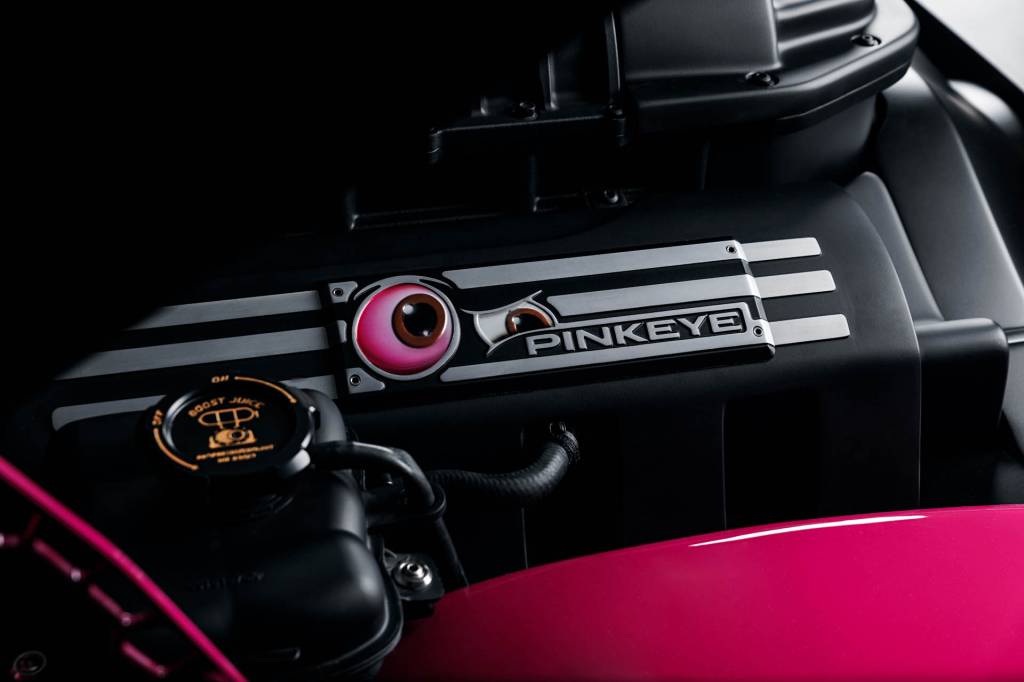
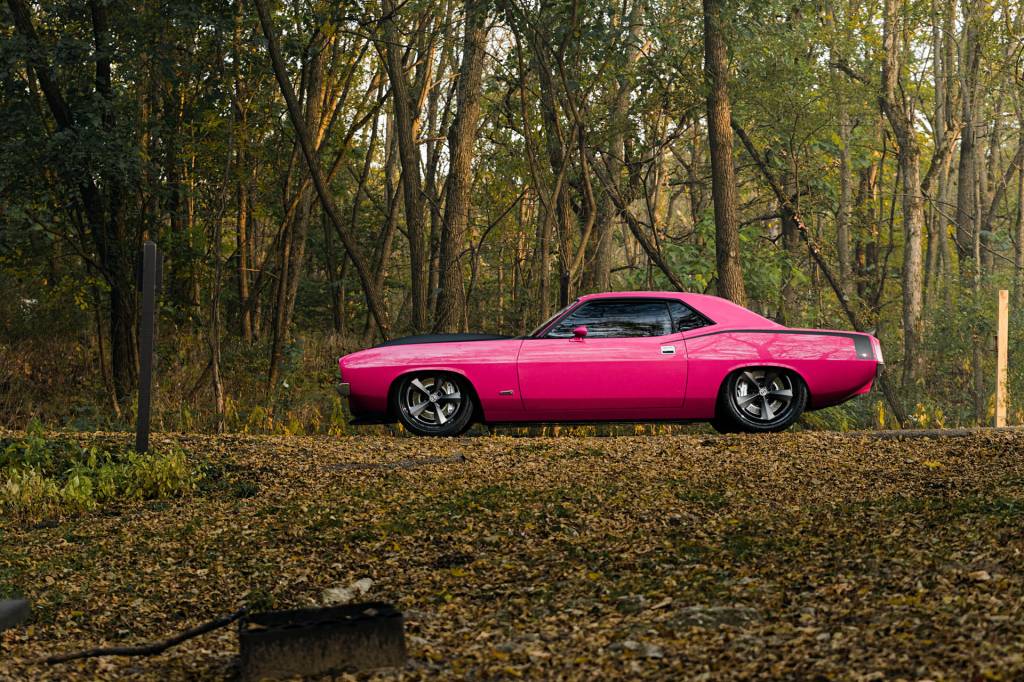
The 1970 example, which Ringbrothers calls Infected, is decked out in bright bubblegum pink. Ringbrothers calls the color Pink Eye, a not so subtle nod to the Hellcat Redeye supercharged 6.2-liter V-8 that powers the car. The engine features a stock 807 hp, and sends all of that thrust to the rear wheels via a 6-speed manual transmission mounted at the rear for better weight distribution.

Ringbrothers spent over 5,600 hours on the build, with most of the time focused on revising the body. This included extending the wheelbase by moving the front wheels forward by about 1.5 inches, widening the lower front fascia, and milling the grille surround and bumper guards from single pirces of billet aluminum. Other custom touches included further tucking in the front and rear fascias, extending and lowering the rocker panels, and adding a custom diffuser and floors.

Ringbrothers Infected 1970 Plymouth 'Cuda - Photo via Centerscene

Ringbrothers Infected 1970 Plymouth ‘Cuda – Photo via Centerscene

For the chassis, Ringbrothers relied on a Roadster Shop Fast Track chassis fitted with independent rear suspension and modified to fit a custom torque tube and Wavetrac differential. The chassis was also fitted with Fox RS SV coilovers and brakes from Baer. The brakes, which include 6-piston calipers up front and 4-piston calipers at the rear, are housed within HRE three-piece wheels wrapped in Michelin Pilot Sport Cup 2 tires.

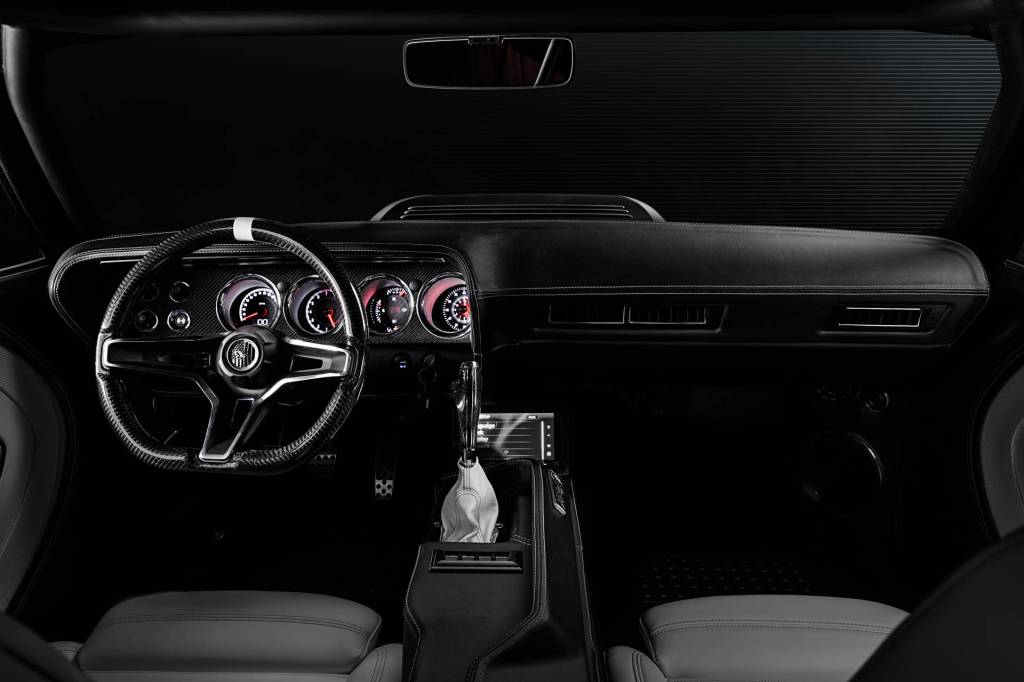
The interior skips the pink of the exterior in favor of white leather trim juxtaposed with carbon fiber for the dash and steering wheel. Modern conveniences include a climate control system, a premium sound system with support for Apple CarPlay, and new gauges from Dakota Digital. Ringbrothers also designed its own pistol grip-style gear lever.

Ringbrothers Infected 1970 Plymouth 'Cuda - Photo via Centerscene

Ringbrothers Infected 1970 Plymouth ‘Cuda – Photo via Centerscene

Ringbrothers’ other builds at this year’s SEMA show include a 1972 Chevrolet K5 Blazer called Tuka, and a 1987 Buick Grand National called Invadr. In the case of Tuka, Ringbrothers touched virtually every element of the Chevy SUV, from swapping in a Toyota Tacoma chassis, adding a modern V-8, and designing a whole new interior.

For the Invadr, Ringbrothers retained the Grand National’s signature 3.8-liter V-6 but called on California’s Duttweiler Performance to take things up to hypercar levels. With a twin-turbocharging system and reinforced internals, the engine pumps out an astounding 1,246 hp.


Source link

Ringbrothers restomods Chevy K5 Blazer from top to bottom

0


  • Ringbrothers revealed custom Chevy K5 Blazer at 2024 SEMA show
  • Custom SUV features LS3 V-8 rated at over 500 hp
  • Ringbrothers also presented a custom Plymouth ‘Cuda and Buick Grand National

Ringbrothers has built up a penchant over the years for its impeccable muscle car restomods, but the Wisconsin company has also dabbled with SUVs since 2018, namely the Chevrolet K5 Blazer.

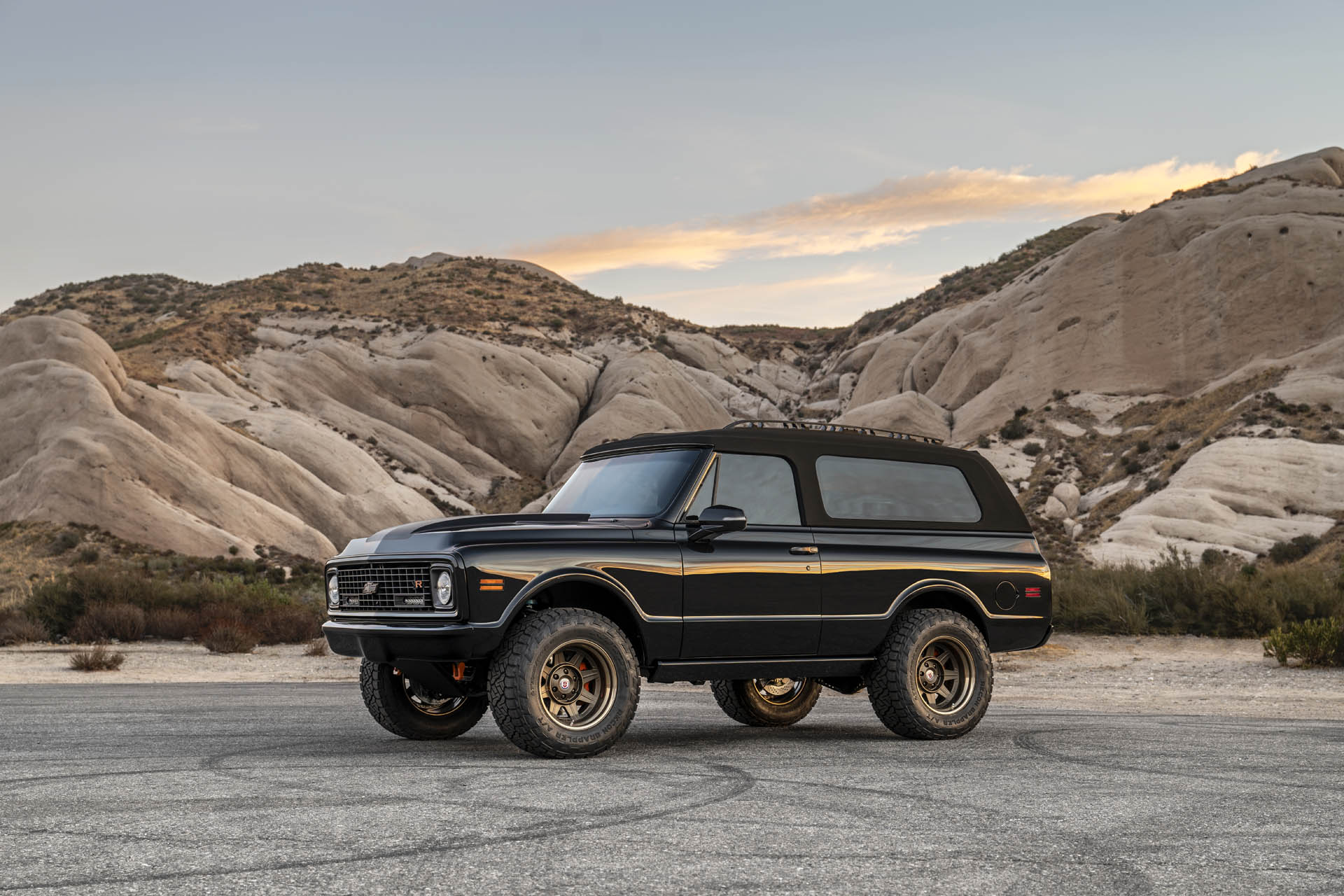
Ringbrothers has used the annual SEMA show in Las Vegas to present a restomodded K5 Blazer nearly every year since, including at this year’s show where the company unveiled a blacked-out 1972 example dubbed Tuka.

While earlier builds have sought to retain a classic look and feel, virtually every part was replaced or customized for the Tuka build. This extends to parts you can’t see, which added up to Ringbrothers spending more than 3,700 hours to complete the build.

K5 Blazer fans will notice the box sides and tailgate have been raised to match the height of the door. A custom fiberglass canopy has also been fitted over the bed. It was hand-built and integrates a panoramic roof from a modern Blazer, while the rear window was borrowed from a Jeep Wrangler.

Ringbrothers Tuka 1972 Chevy K5 Blaze - Photo via Drew Phillips

Ringbrothers Tuka 1972 Chevy K5 Blaze – Photo via Drew Phillips

For the chassis, Ringbrothers turned to a 2016 Toyota Tacoma for parts. There are also some aftermarket items like control arms from Total Chaos, extended-travel leaf springs from Offroad Design, and dampers from King Shocks. The vehicle rides on a set of one-off 18-inch bronze wheels from HRE and features a custom spare tire mount behind the rear seat.

Ringbrothers Tuka 1972 Chevy K5 Blaze - Photo via Drew Phillips

Ringbrothers Tuka 1972 Chevy K5 Blaze – Photo via Drew Phillips

Power comes from a LS3 6.2-liter V-8 sourced from General Motors. Thanks to some custom parts, including the headers and a 3.0-inch stainless steel exhaust with Borla mufflers, the engine manages to deliver approximately 525 hp. Here it’s paired with a Bowler Tru-Street automatic transmission and four-wheel-drive system.

Inside, there’s very little in the way of retro design. Instead, Ringbrothers has gone with modern elements like a custom carbon-fiber dashboard, carbon-fiber steering wheel, a mixture of billet-machined and 3D-printed switchgear, and Dakota Digital gauges. Bronze accents are repeated throughout, like on the steering wheel, dash, gear selector, and seat cushions.

Ringbrothers Tuka 1972 Chevy K5 Blaze - Photo via Drew Phillips

Ringbrothers Tuka 1972 Chevy K5 Blaze – Photo via Drew Phillips

Ringbrothers’ other builds at the SEMA show include a 1970 Plymouth ‘Cuda called Infected, and a 1987 Buick Grand National called Invadr.

In the case of Infected, Ringbrothers picked a vibrant pink paint finish that will likely prove polarizing. The car also features a modern 807-hp supercharged 6.2-liter V-8 Hellcat Redeye engine, and custom body work wrapped around a chassis with an extended wheelbase.

For the Invadr, Ringbrothers retained the Grand National’s signature 3.8-liter V-6 but called on California’s Duttweiler Performance to take things up to hypercar levels. With a twin-turbocharging system and reinforced internals, the engine pumps out an insane 1,246 hp.


Source link

Rekor Taps NVIDIA Metropolis, NVIDIA AI, and Jetson for Roadway Safety, Traffic Relief

0


Austin is drawing people to jobs, music venues, comedy clubs, barbecue and more. But with this boom has come a big city blues: traffic jams.

Rekor, which offers traffic management and public safety analytics, has a front-row seat to the increasing traffic from an influx of new residents migrating to Austin. Rekor works with the Texas Department of Transportation, which has a $7 billion project addressing this, to help mitigate the roadway concerns.

“Texas has been trying to meet that growth and demand on the roadways by investing a lot in infrastructure, and they’re focusing a lot on digital infrastructure,” said Shervin Esfahani, vice president of global marketing and communications at Rekor. “It’s super complex, and they realized their traditional systems were unable to really manage and understand it in real time.”

Rekor, based in Columbia, Maryland, has been harnessing NVIDIA Metropolis for real-time video understanding and NVIDIA Jetson Xavier NX modules for edge AI in Texas, Florida, Philadelphia, Georgia, Nevada, Oklahoma and many more U.S. destinations as well as in Israel and other places internationally.

Metropolis is an application framework for smart infrastructure development with vision AI. It provides developer tools, including the NVIDIA DeepStream SDK, NVIDIA TAO Toolkit, pretrained models on the NVIDIA NGC catalog and NVIDIA TensorRT. NVIDIA Jetson is a compact, powerful and energy-efficient accelerated computing platform used for embedded and robotics applications.

Rekor’s efforts in Texas and Philadelphia to help better manage roads with AI are the latest development in an ongoing story for traffic safety and traffic management.

Reducing Rubbernecking, Pileups, Fatalities and Jams

Rekor offers two main products: Rekor Command and Rekor Discover. Command is an AI-driven platform for traffic management centers, providing rapid identification of traffic events and zones of concern. It offers departments of transportation with real-time situational awareness and alerts that allows them to keep city roadways safer and more congestion-free.

Discover taps into Rekor’s edge system to fully automate the capture of comprehensive traffic and vehicle data and provides robust traffic analytics that turn roadway data into measurable, reliable traffic knowledge. With Rekor Discover, departments of transportation can see a full picture of how vehicles move on roadways and the impact they make, allowing them to better organize and execute their future city-building initiatives.

The company has deployed Command across Austin to help detect issues, analyze incidents and respond to roadway activity with a real-time view.

“For every minute an incident happens and stays on the road, it creates four minutes of traffic, which puts a strain on the road, and the likelihood of a secondary incident like an accident from rubbernecking massively goes up,” said Paul-Mathew Zamsky, vice president of strategic growth and partnerships at Rekor. “Austin deployed Rekor Command and saw a 159% increase in incident detections, and they were able to respond eight and a half minutes faster to those incidents.”

Rekor Command takes in many feeds of data — like traffic camera footage, weather, connected car info and construction updates — and taps into any other data infrastructure, as well as third-party data. It then uses AI to make connections and surface up anomalies, like a roadside incident. That information is presented in workflows to traffic management centers for review, confirmation and response.

“They look at it and respond to it, and they are doing it faster than ever before,” said Esfahani. “It helps save lives on the road, and it also helps people’s quality of life, helps them get home faster and stay out of traffic, and it reduces the strain on the system in the city of Austin.”

In addition to adopting NVIDIA’s full-stack accelerated computing for roadway intelligence, Rekor is going all in on NVIDIA AI and NVIDIA AI Blueprints, which are reference workflows for generative AI use cases, built with NVIDIA NIM microservices as part of the NVIDIA AI Enterprise software platform. NVIDIA NIM is a set of easy-to-use inference microservices for accelerating deployments of foundation models on any cloud or data center while keeping data secure.

Rekor has multiple large language models and vision language models  running on NVIDIA Triton Inference Server in production,” according to Shai Maron, senior vice president of global software and data engineering at Rekor. 

“Internally, we’ll use it for data annotation, and it will help us optimize different aspects of our day to day,” he said. “LLMs externally will help us calibrate our cameras in a much more efficient way and configure them.”

Rekor is using the NVIDIA AI Blueprint for video search and summarization to build AI agents for city services, particularly in areas such as traffic management, public safety and optimization of city infrastructure. NVIDIA recently announced a new AI Blueprint for video search and summarization enabling a range of interactive visual AI agents that extracts complex activities from massive volumes of live or archived video.

Philadelphia Monitors Roads, EV Charger Needs, Pollution

Philadelphia Navy Yard is a tourism hub run by the Philadelphia Industrial Development Corporation (PIDC), which has some challenges in road management and gathering data on new developments for the popular area. The Navy Yard location, occupying 1,200 acres, has more than 150 companies and 15,000 employees, but a $6 billion redevelopment plan there promises to bring in 12,000-plus new jobs and thousands more as residents to the area.

PIDC sought greater visibility into the effects of road closures and construction projects on mobility and how to improve mobility during significant projects and events. PIDC also looked to strengthen the Navy Yard’s ability to understand the volume and traffic flow of car carriers or other large vehicles and quantify the impact of speed-mitigating devices deployed across hazardous stretches of roadway.

Discover provided PIDC insights into additional infrastructure projects that need to be deployed to manage any changes in traffic.

Understanding the number of electric vehicles, and where they’re entering and leaving the Navy Yard, provides PIDC with clear insights on potential sites for electric vehicle (EV) charge station deployment in the future. By pulling insights from Rekor’s edge systems, built with NVIDIA Jetson Xavier NX modules for powerful edge processing and AI, Rekor Discover lets Navy Yard understand the number of EVs and where they’re entering and leaving, allowing PIDC to better plan potential sites for EV charge station deployment in the future.

Rekor Discover enabled PIDC planners to create a hotspot map of EV traffic by looking at data provided by the AI platform. The solution relies on real-time traffic analysis using NVIDIA’s DeepStream data pipeline and Jetson. Additionally, it uses NVIDIA Triton Inference Server to enhance LLM capabilities.

The PIDC wanted to address public safety issues related to speeding and collisions as well as decrease property damage. Using speed insights, it’s deploying traffic calming measures where average speeds are exceeding what’s ideal on certain segments of roadway.

NVIDIA Jetson Xavier NX to Monitor Pollution in Real Time

Traditionally, urban planners can look at satellite imagery to try to understand pollution locations, but Rekor’s vehicle recognition models, running on NVIDIA Jetson Xavier NX modules, were able to track it to the sources, taking it a step further toward mitigation.

“It’s about air quality,” said Shobhit Jain, senior vice president of product management at Rekor. “We’ve built models to be really good at that. They can know how much pollution each vehicle is putting out.”

Looking ahead, Rekor is examining how NVIDIA Omniverse might be used for digital twins development in order to simulate traffic mitigation with different strategies. Omniverse is a platform for developing OpenUSD applications for industrial digitalization and generative physical AI.

Developing digital twins with Omniverse for municipalities has enormous implications for reducing traffic, pollution and road fatalities — all areas Rekor sees as hugely beneficial to its customers.

“Our data models are granular, and we’re definitely exploring Omniverse,” said Jain. “We’d like to see how we can support those digital use cases.”

Learn about the NVIDIA AI Blueprint for building AI agents for video search and summarization.


Source link

Consumer Guide Car Stuff Podcast Episode 245: Ram 1500 RHO, Carvel Ice Cream, Leasing an Electric Car | The Daily Drive

0


Should you lease your next car?

Leasing an Electric car
Porsche Macan – Leasing an Electric car

Whether you drive a car, need a car, or just occasionally bum a ride with friends, you’’ve come to the right place. Join Jill and Tom as they break down everything that’’s going on in the auto world. New-car reviews, shopping tips, driving green, electric cars, classic cars, and plenty of great guests. This is the Consumer Guide Car Stuff Podcast. – Leasing an Electric car.

–

Episode: 245

Broadcast date: November 4, 2024

Guest: John Vincent

–

Ram 1500 RHO, Carvel Ice Cream,

(Show Notes)

–

This Week

Jill and Tom opened the show talking about EV range and Jill’s recent trip from Chicago to Indianapolis in an electric test car with only about 200 miles of promised range. Listen in on her story.

The hosts acknowledged a couple of friends-of-the-podcast birthdays, and discussed how cheap gas has become locally and nationally.

Carvel Ice Cream

Tom shared a tribute to his dad, who died about a week ago. It’s a funny story about pouring a milk shake out the window of his father’s shake-colored 1970 Nova. If you remember an ice cream chain called Carvel, you will especially enjoy Tom’s memory.

Tom went on to complain about Land Rover’s trim-level naming strategy, which is, indeed, rather confusing.

Ram 1500 RHO

Still in the first segment, Jill shared her impressions of the new Ram 1500 RHO, which more-or-less replaces the TRX in the big-truck lineup.

Leasing an Electric Car

In the second segment Jill and Tom welcome John Vincent of U.S. News to the show. John walked the hosts through the pros and cons of leasing, and why it makes sense for EV shoppers especially to consider leasing.

Quiz

In the last segment Jill is subjected to Tom’s “America or Someplace Else” quiz. The quiz includes a question about fake Halloween Hallmark movies. Can you pick the fake?

Discussed this week

Jill’s Ram 1500 RHO review

John’s car-leasing article

How the Federal Tax Credit Works


Follow the crew


The Crew

To advertise on the Car Stuff Podcast call Andy Lieb: 847-291-7414

Consumer Guide Car Stuff Podcast Episode 244: Porsche Macan EV, VW Rolls Out Scout Brand, Serious Car-Care Products

Leasing an Electric Car

Consumer Guide Car Stuff Podcast Episode 243: Buick Envista Surprises, EV Registrations, Best Used Cars


Source link

The Toyota RAV-X is a tough SUV concept

0


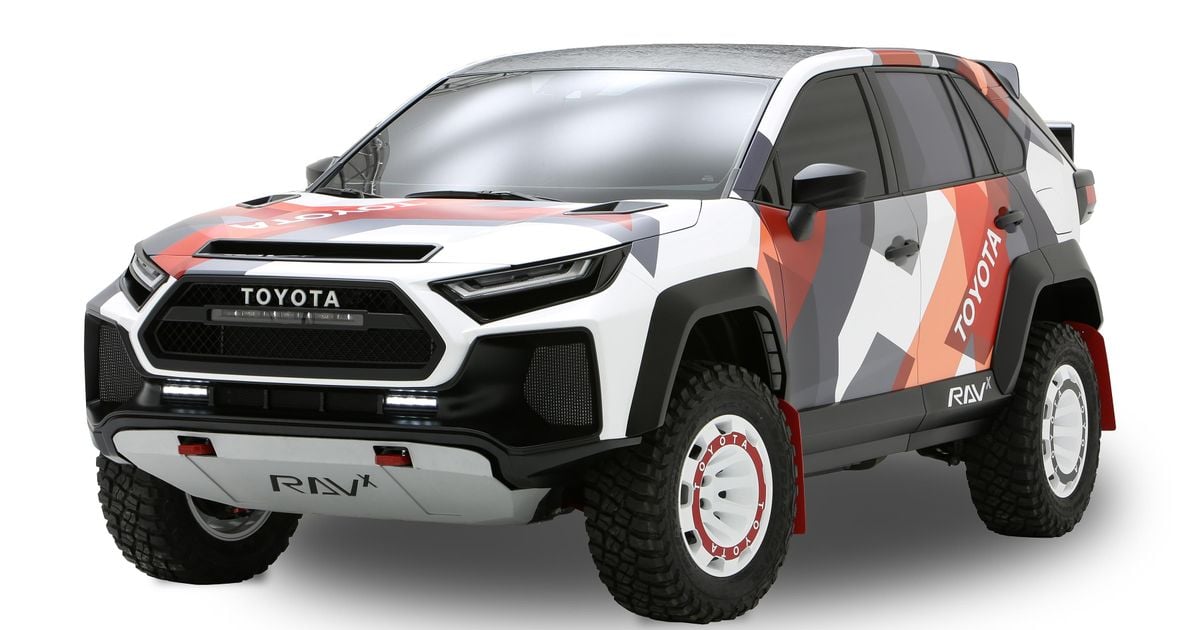
Toyota has revealed a highly modified, Dakar Rally-ready concept vehicle based on its popular RAV4 at the 2024 SEMA Show, one of the world’s biggest automotive aftermarket exhibitions.

The Toyota RAV-X Concept takes Australia’s favourite SUV and adds a series of off-road focussed mods, accessories and performance upgrades to make this the most hardcore RAV4 built by the Japanese brand to date.

The high-performance mid-sized SUV outputs more than 225kW as standard from its plug-in hybrid powertrain – unavailable in Australia – which Toyota says makes it “an ideal platform for off-road performance” thanks to its low centre of gravity due to battery placement, “before being paired with a ram air intake”.

100s of new car deals are available through CarExpert right now. Get the experts on your side and score a great deal. Browse now.

More importantly, a string of bespoke chassis upgrades by the Toyota Service Parts and Accessories Development (SPAD) team dramatically enhances the RAV-X’s off-road capability.

These include a full 2.0-inch (51mm) suspension lift, a massive 160mm increase in track width and custom 2.5-inch internal bypass shocks at all four corners, complete with dual-speed compression damping adjustment and external reservoirs to keep oil temperatures down during extreme off-roading.

Also designed to cope with desert terrain at high speed are unique, SPAD-developed forged aluminium front lower control arms and rear upper supports.

Under-body protection comes courtesy of front and rear skid plates, a Dakar-inspired front bumper with integrated cooling ducts helps improve the approach angle, and a high-clearance dual exhaust is integrated into the rear bumper to increase the departure angle.

Bespoke fender flares with front-wheel ventilation increase air flow and the whole package rides on rally-style white 17×8.5-inch forged aluminium wheels with 265/65R17 off-road tyres, hugged by red mudflaps.

Punctuating all of this is an aggressive rear spoiler and strategic venting throughout the front fascia to relieve engine bay and front wheel-well pressure zones.

Toyota says the result is a vehicle that excels in terms of off-road capability and high-speed performance, “pushing the limits of what a small crossover can achieve”.

“The vision behind the RAV-X was to create a halo vehicle concept for the RAV4 lineup,” said SPAD senior engineering manager, Jakin Wilson.

“By leveraging the knowledge and capability from years of high-performance off-road vehicle development, the engineers created a concept that is true to the off-road enthusiast.”

While Toyota stresses that the RAV-X is a “special project prototype vehicle”, Toyota Motor North America division marketing group vice president Mike Tripp also said it is “more than just a concept”.

“RAV4 is one of our most popular and versatile vehicles; with RAV-X we’re showing an entirely new possibility of just how cool and adventurous a small crossover like this can be,” he said.

The RAV-X is just one of four concept vehicles Toyota is displaying at the 2024 SEMA Show, held over November 5-8 at the Las Vegas Convention Center.

Earlier this week, Toyota uncovered the Calty Land Cruiser Rox, based on what we known in Australia as the LandCruiser Prado, but sans the SUV’s rear roof section to create a ute.

MORE: Everything Toyota RAV4
MORE: Toyota LandCruiser Prado ute revealed, but there’s a catch


Source link

Chery Tiggo 7 Pro undercuts rivals with runout deal

0


Chery Australia has slashed $5000 from the price of all 2024 Tiggo 7 Pro model variants as it looks to clear remaining stock of the already keenly priced mid-sized SUV.

The range now starts at $31,990 drive-away for the base Urban variant, extending up to $40,990 drive-away for the top-spec Ultimate.

In between, the Elite now wears a sticker price of $36,990 drive-away.

The runout offer is active until the end of the year or while stocks last, but fleet, government and rental buyers are excluded from the deal.

Deals on the Chery Tiggo 7 Pro are available now. Contact a dealer via CarExpert for the best deal or call our Concierge team on 1300 587 992.

With the discounts applied, the base Tiggo 7 Pro now undercuts key rivals such as the SsangYong Korando ELX (priced from $32,990 drive-away), Kia Sportage S (from $32,995 before on-road costs), and MG HS Vibe (from $33,990 drive-away). It also sits well below volume sellers including the Toyota RAV4 and Mazda CX-5.

The Tiggo 7 Pro is available with a single powertrain option – a 1.6-litre turbocharged four-cylinder petrol engine developing 137kW and 275Nm, teamed with a seven-speed dual-clutch automatic transmission that drives the front wheels in Urban and Elite versions, or all four wheels in the top-spec Ultimate.

Entry-level Urban examples comes standard with heated front seats, a panoramic sunroof, and dual 12.3-inch screens, while the Elite grade gains a power tailgate, power-folding exterior mirrors, and an optional black roof.

The flagship Ultimate adds 19-inch alloy wheels, six drive modes, ventilated front seats, and power adjustment for the driver’s seat.

All variants have a five-star ANCAP safety rating, and are backed by a seven-year, unlimited-kilometre warranty, plus seven years of capped-price servicing and seven years of roadside assistance.

MORE: Everything Chery Tiggo 7 Pro


Source link

Audi RS5 Second Generation (2017 to 2024) Buyers Guide

0


When the second-generation Audi RS5 was introduced in 2017, it was a new chapter for Audi’s high-performance coupe, departing from the naturally aspirated V8 of its predecessor. This evolution aimed to blend increased efficiency with uncompromising performance, updated design, and updated powertrain.

At the heart of the second-generation RS5 is a 2.9-liter twin-turbo V6 engine, replacing the previous V8. Producing 444 hp and an impressive 600 Nm of torque, this new powerplant offers enhanced responsiveness, especially in mid-range acceleration. Paired with an 8-speed automatic transmission and Audi’s signature Quattro all-wheel-drive system, the RS5 delivers a 0-60 mph time of just 3.7 seconds. 

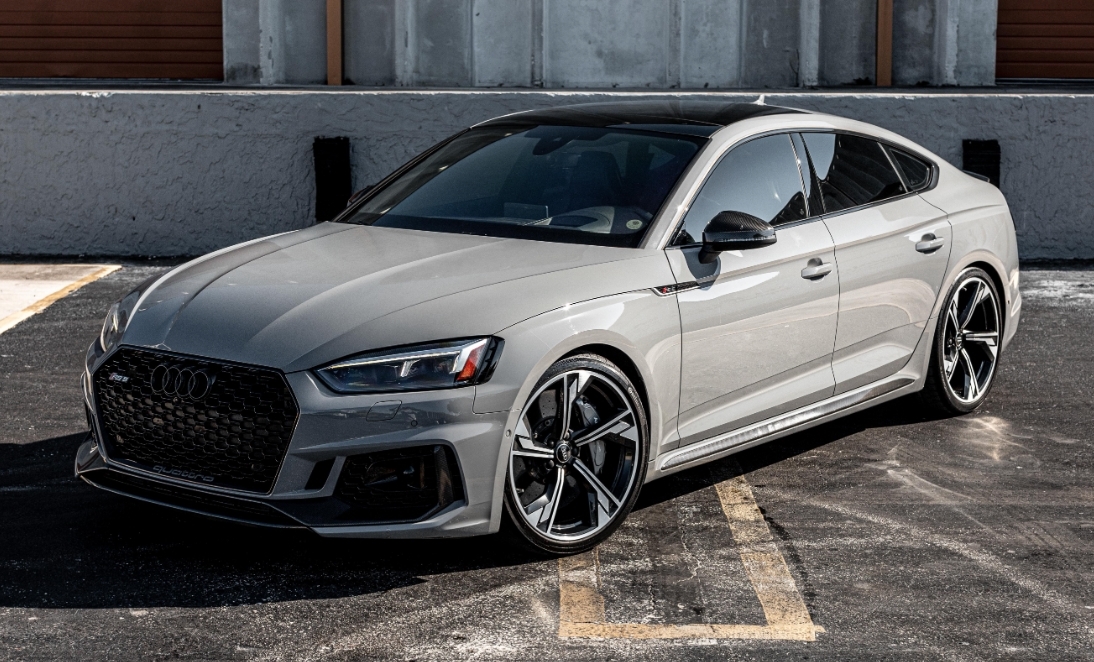
Externally, the RS5 showcases Audi’s sharp and angular design language, with a more aggressive front grille, wider stance, and muscular wheel arches that hint at its performance capabilities.

The front is highlighted by Audi’s signature Singleframe grille, flanked by large air intakes and sleek LED headlights. The car’s athletic side profile is accentuated by 19- or 20-inch wheels, while the rear features a sculpted diffuser and dual oval exhaust tips, emphasizing the car’s sporty nature.

Inside, the RS5 is both luxurious and driver-focused. The cabin features high-quality materials such as Alcantara, leather, and carbon fiber trim, ensuring a premium feel throughout. The RS5 is equipped with Audi’s Virtual Cockpit, offering a fully digital display that provides performance data and navigation at a glance. The seating is supportive, offering both comfort for long drives and bolstering for spirited driving.

Technology and connectivity are at the forefront, with Audi’s MMI infotainment system integrated into a 10.1-inch touchscreen, offering seamless access to media, navigation, and vehicle settings.

Throughout its lifecycle, the second-generation RS5 faces stiff competition from rivals in the luxury sports coupe segment. Notable competitors include the BMW M4, with its sharp handling and performance-focused engineering; the Mercedes-AMG C63 S, known for its powerful V8 engine and aggressive styling; and the Lexus RC F, offering naturally aspirated V8 performance in a refined package.

Despite the strong competition, the RS5 stands out for its balance of all-weather capability, advanced technology, and Audi’s trademark build quality, making it a top choice for enthusiasts seeking a well-rounded performance car.

Model Changes (Breakdown by Year)

2017 Audi RS5

In 2017, Audi introduced a complete overhaul for the RS5 lineup. The most notable change was the transition from the naturally aspirated V8 engine to a smaller, more efficient 2.9-liter twin-turbocharged V6. This new engine generated 444 hp and an impressive 600 Nm of torque, providing a more responsive driving experience while improving efficiency.

Photo by Bring a Trailer

Paired with an 8-speed automatic Tiptronic transmission, the new RS5 offered smoother shifts and better fuel economy. Audi’s renowned Quattro all-wheel-drive system remained standard, but now with optional torque vectoring and a sports differential to enhance handling and traction in various driving conditions. 

The starting price of the 2017 Audi RS5 was approximately $70,000.

2018 Audi RS5

In 2018, Audi expanded the RS5 lineup with the introduction of the RS5 Sportback variant. This new addition offered a more practical 5-door hatchback body style while maintaining the high-performance characteristics of the RS5 Coupé. 

The Sportback provided increased versatility with its spacious rear seating and cargo area, making it a more appealing option for those seeking a balance between everyday usability and performance. 

Despite the change in form, the RS5 Sportback shared the same powerful 2.9-liter twin-turbo V6 engine and performance capabilities as its two-door counterpart, ensuring that practicality didn’t come at the cost of driving excitement.

In 2018, the starting price for the Audi RS5 Coupé was approximately $70,875, while the RS5 Sportback started slightly higher at around $74,200.

2019 Audi RS5

For the 2019 model year, the Audi RS5 saw only minor updates, as it had recently undergone a significant redesign in 2017. Audi focused on refining the details rather than introducing major changes.

The most notable update for 2019 was the addition of new exterior paint colors, including Turbo Blue, Nardo Gray, and Sonoma Green, which gave buyers more personalization options. Additionally, minor interior trim updates were introduced, with new carbon fiber inlays and an Alcantara option for various cabin surfaces.

Audi also improved some of the interior technology features, updating the MMI infotainment system and enhancing the overall user experience with more intuitive controls. Optional driver assistance features and packages were expanded, offering more advanced safety and convenience technologies for both body styles.

Despite these updates, the core performance and design of the 2019 RS5 remained consistent with the previous model year.

In 2019, the starting price for the Audi RS5 Coupé was approximately $74,200, while the RS5 Sportback started slightly higher at around $74,900.

2020 Audi RS5

In 2020, the Audi RS5 received a significant facelift, bringing fresh styling updates to both the Coupé and Sportback variants.

One of the most noticeable changes was the introduction of a new, wider grille design, inspired by the RS6, giving the front end a more aggressive and commanding presence. The headlights were reshaped to be sharper and more angular, while the front and rear bumpers were redesigned to enhance the car’s sporty and aerodynamic profile.

Inside, the RS5 saw updates to its technology, most notably with the addition of a 10.1-inch MMI touchscreen that featured Audi’s latest infotainment system. This update improved user interaction and added more functionality, making the cabin feel even more modern and connected.

On the mechanical side, Audi recalibrated the chassis for improved handling dynamics, ensuring the RS5 remained agile and responsive on the road. However, the powertrain remained unchanged

The starting price for the 2020 Audi RS5 was approximately $75,195 for both the Coupé and the Sportback variant.

2021 Audi RS5

In 2021, Audi introduced the RS5 Panther Edition, a limited edition variant. The exterior was finished in a striking Panther Black Crystal paint, giving the car a sleek and stealthy appearance. Complementing the unique paint job was blacked-out trim, while the interior featured eye-catching red accents that added a touch of sportiness to the cabin.

This edition also came equipped with exclusive 20-inch wheels and carbon fiber interior inlays, reinforcing the RS5 Panther Edition’s premium and performance-oriented nature. Additionally, a sport exhaust system was included, creating a more aggressive sound. Audi limited the production of this special edition to just 100 units in the U.S.

The 2021 Audi RS5 Panther Edition had a starting price of approximately $88,000, while the regular RS5 Coupé started at around $75,100, and the RS5 Sportback began at approximately $76,200.

2022 Audi RS5

For the 2022 model year, the Audi RS5 saw some minor updates and changes. 

One of the most notable additions was the availability of the RS Design Package, which included unique interior accents such as contrasting red or gray stitching, adding more personalization options for the cabin.

Additionally, Audi offered an optional Competition Package for 2022, aimed at improving performance. This package featured a lower and firmer suspension, as well as a revised exhaust system that provided a more aggressive sound. The handling was further enhanced with dynamic steering improvements and updated tuning for the rear differential, giving the car even sharper cornering abilities.

Audi also made some updates to the car’s infotainment system to make it more intuitive, alongside small tweaks to the available driver assistance systems.

The 2022 Audi RS5 Coupé had a starting price of approximately $75,900, while the RS5 Sportback started at around $76,700; with the optional Competition Package, the price increased to about $92,000 for both variants.

2023 Audi RS5

In 2023, Audi introduced the RS5 Competition and Competition Plus packages, both designed to elevate the performance and handling of the RS5 to new heights. These packages aimed to appeal to enthusiasts seeking a sharper, more dynamic driving experience, with enhancements focused on precision and control rather than sheer power.

The RS5 Competition packages featured a lowered suspension, which not only improved the car’s stance but also contributed to better handling and stability at higher speeds. Additionally, the driving modes were made more aggressive, allowing for more responsive throttle inputs and sharper steering, further enhancing the sporty nature of the RS5. A sportier exhaust system was also added to enhance the sound.

The 2023 Audi RS5 Coupé had a starting price of approximately $76,200, while the RS5 Sportback started at around $77,200; with the optional Competition Package, the price rose to about $92,300 for both variants.

2024 Audi RS5

This year, Audi has added several new standard features to the 2024 RS5, including adaptive cruise control, active lane assist, and park assist. 

The Competition model loses its carbon-ceramic brakes due to supply constraints but still features an aggressive setup for dynamic driving. 

Inside, the cabin offers premium materials, such as standard front sport seats with power side bolsters and massage functions, ambient lighting, and Audi’s Virtual Cockpit. Infotainment includes a 10.1-inch touchscreen, with standard Apple CarPlay, Android Auto, and a Bang & Olufsen audio system.

In 2024, the starting price for the Audi RS5 Coupé is $80,695, while the RS5 Sportback begins at $80,995.

Audi RS5 2nd Generation Common Problems

Like many high-performance cars, RS5 2nd generation owners have reported a few recurring issues that can impact reliability and overall driving experience. While these concerns are generally not widespread, being aware of potential problems can help owners address them before they become major issues. Below are some of the most commonly reported problems.

Keep in mind, that it is essential that all cars, even supercars, can have issues and it is crucial to perform a Pre-Purchase Inspection (PPI) from an authorized dealer or experienced independent mechanic to reveal all issues.

Transmission Issues: The RS5’s 8-speed automatic gearbox can sometimes experience hesitant shifts, grinding noises, or jitteriness while accelerating. These problems are often linked to poor maintenance, particularly when it comes to transmission fluid changes, which should be done regularly to avoid issues.

Fuel Injector Problems: Some owners have reported issues with the fuel injectors, which can trigger check engine lights and lead to performance losses. Audi recommends regular maintenance, including cleaning or replacing the injectors, especially after extended use.

Electrical Issues: The RS5 is known to have various minor electrical issues, including problems with the backup camera, door handle lights, and power windows. Some owners have also reported problems with the car’s electronics control unit (ECU), although these are less common.

Cooling System Concerns: Many RS5 owners have noted that the cooling system may not be sufficient for heavy use, particularly during track days or aggressive driving. Overheating issues can affect both the engine and brakes, so it’s advisable to inspect these components before high-performance use.

Brake Wear: The RS5’s brakes and rotors tend to wear out faster than expected, especially with aggressive driving. This is likely due to the vehicle’s high-performance capabilities and the demand placed on the braking system during spirited driving.

Recalls

2023 Audi RS5 Sportback vehicles

Air bags: Sensor: Occupant classification: Front passenger (Recall no. 24V251000)

An electrical connection in the front passenger seat for the occupant detection system (ODS) control module may loosen and deactivate the front passenger air bag. A deactivated front passenger air bag will not deploy during a crash, increasing the risk of injury.

2021 RS5 Sportback and RS5 Coupe vehicles

Back over prevention: Display function (Recall no. 22V742000)

Due to a software issue, a blank or black screen may be displayed instead of the rearview camera image when the vehicle is placed in reverse gear. As such, these vehicles fail to comply with the requirements of Federal Motor Vehicle Safety Standard number 111, “Rear Visibility.” A blank rearview camera display can reduce the driver’s rear visibility, increasing the risk of a crash.

2022 RS5 coupe and RS5 Sportback vehicles

Equipment: Other: Labels (Recall no. 22V102000)

The value for the maximum combined weight of occupants and cargo on the B-pillar Tire and Loading information label is incorrect. As such, these vehicles fail to comply with the requirements of Federal Motor Vehicle Safety Standard number 110, “Tire and Loading Information.” While referencing the B-pillar label, the operator may overload the vehicle, increasing the risk of a crash.

2019-2021 Audi RS5 Coupe and RS5 Sportback vehicles

Suspension: Rear: Axle: Non-powered axle assembly (Recall no. 22V034000)

The rear axle alignment may not have been inspected after the repairs for Recall 21V-295 (42L1) were performed. Rear axle misalignment may cause premature or uneven tire wear, increasing the risk of a crash.

2018-2019 RS5 Coupe and 2019 RS5 Sportback vehicles

Seats (Recall no. 21V874000)

The cable connecting the seat heater to the Passenger Occupant Detection System (PODS) may have a contact fault, causing the software to misdiagnose a malfunction and disable the passenger air bag. A disabled passenger air bag increases the risk of injury in the event of a crash.

2021 RS5 Sportback and RS5 Coupe vehicles

Seat belts (Recall no. 21V606000)

The rear seat belt automatic locking retractors may deactivate early, which can prevent the child restraint system from securing properly. As such, these vehicles fail to comply with the requirements of Federal Motor Vehicle Safety Standard number 208, “Occupant Crash Protection.” An unsecured child restraint system can increase the risk of injury during a crash.

2019-2021 RS5 coupe and RS5 Sportback vehicles

Suspension: Rear: Axle: Non-powered axle assembly (Recall no. 21V295000)

The lock nut on the trailing arm of the rear axle may break due to stress corrosion. A broken lock nut may misalign the rear axle, causing a loss of control and increasing the risk of a crash.

2018-2019 Audi RS5 Coupe vehicles

Electrical system: 12v/24v/48v battery (Recall no. 20V760000)

An incorrect positive battery terminal cover was installed. In the event of a rear crash, the incorrect cover can cause the 12-volt power supply to be compromised, preventing the vehicle doors from being opened from the outside, or the hazard warning lights from functioning, increasing risk of injury.

2021 Audi RS5 Sportback vehicles

Electrical system (Recall no. 20V737000)

The wiring harness for the rear lights could be missing the anti-abrasion protection in the area of the spare wheel well. Without the scuff protection, the wires may become damaged during a rear crash, disabling the doors from being opened from the outside, causing a loss of hazard lights, and increasing the risk of injury.

2018-2019 Audi RS5 Sportback vehicles

Air bags: Sensor: Occupant classification (Recall no. 19V547000)

Oxidation on the Passenger Occupant Detection System (PODS) connecting cable may cause the software to misdiagnose a malfunction and disable the passenger air bag. A disabled passenger air bag increases the risk of injury in the event of a crash.

Maintenance and Ownership Costs

It’s essential to keep in mind that, like most German performance vehicles, maintenance and ownership costs for the Audi RS5 can be higher than for standard cars. Fortunately, the RS5 is considered to be relatively low-maintenance for its class, with regular upkeep and preventive care helping to avoid more costly repairs down the road.

However, it is important to remember that regular maintenance and repairs will still be necessary, and the costs can vary depending on whether you take your car to a dealer or an independent mechanic.

Here is the suggested service schedule and intervals per Audi:

1 YEAR OR 10,000 MILES

  • Replace engine oil and filter at least once a year
  • Comprehensive Inspection of Factory Specifications
  • Complete Factory Diagnostics

2 YEARS OF 20,000 MILES

  • Replace Engine Oil and Filter
  • Replace Gearbox Oil
  • Replace Battery
  • Engine Oil and Filter
  • Inspect and replace V-belt and Tensioner
  • Pollen Filters
  • Brake Fluid

3 YEARS OR 30,000 MILES

  • Replace Engine Oil and Filter
  • Replace Gearbox Oil

Here is a rough estimate of typical service costs associated with the Audi RS5:

  • Oil Change – As low as $300 for independent mechanics and $900 for dealers.
  • Minor Service – Typically includes oil change, cabin filters, and engine filters. The cost from a dealer is around $1,500
  • Major Service – Typically includes all the above plus spark plugs, brake flush, and trans flush, expect about $2,500 from a dealer.
  • Tires – A set of high-performance tires like Michelin PS4 will cost about $2,000.
  • Brakes – Rotors are carbon ceramic which should last forever. Aftermarket brake pads that are OE equivalent will cost about $800 for a full set.
  • Clutch – Automatic transmission should last the lifetime of the car so expect zero additional expenses for clutch or flywheel service.

Options List

When purchasing an  Audi RS5 2nd generation, there are several key factors and options to consider.

For those seeking enhanced performance, the Competition Package is a solid choice. It adds performance-oriented features such as lowered suspension, more aggressive driving modes, and a sport exhaust system. These features are designed to sharpen the RS5’s handling and overall driving dynamics, making it an ideal option for enthusiasts who want to push the car to its limits.

Audi also offers a variety of interior and technology upgrades through the RS Design Package. This package replaces the standard Nappa leather with Alcantara trim and adds unique red or gray stitching accents to the cabin.

It also includes high-end interior touches like carbon fiber inlays and upgraded materials, adding to the RS5’s luxury appeal. Buyers can also opt for advanced technology features such as a Bang & Olufsen 3D sound system and the Virtual Cockpit, which enhances the driving experience with a fully digital, customizable instrument cluster.

In terms of exterior, the RS5 offers several optional wheel designs, paint colors, and carbon fiber exterior trim packages that enhance both aesthetics and performance. The Panther Edition provides exclusive features like special Panther Black Crystal paint, blacked-out trim, and unique interior accents.

When considering the Audi RS5, targeting models with the Competition Package or limited editions like the Panther Edition offers the best balance of performance, exclusivity, and long-term value.

In addition to selecting the right options, it’s important to consider factors like condition and maintenance history when buying an RS5. Well-maintained models with lower mileage are more likely to retain their value over time, making them a strong investment for enthusiasts who want both performance and reliability.

2018 Audi RS5 Options List

Key Options

Price and Values for Audi RS5 2nd Generation

The Best Audi RS5 2nd Generation to Buy

When choosing the best Audi RS5 2nd generation, several key factors can impact your decision.

For those looking to get the best version of the RS5, the 2023 model year equipped with the Competition Package is a strong choice. By this time, Audi had fine-tuned the RS5, adding performance-focused features such as a lower suspension, revised exhaust system, and more aggressive handling.

The 2023 model also benefits from enhanced technology, such as the updated infotainment system and available driver assistance features, providing the latest in both luxury and performance.

However, in regards to market stability, model years 2017 to 2022 is a solid choice that you can’t go wrong. If you find the right one, you shouldn’t lose much money on one. 

In addition to model year and options, it’s essential to consider the condition and mileage of the RS5 when buying. A vehicle with a full-service history, low mileage, and proper maintenance is more likely to retain its value over time. 

Conducting thorough research and comparing prices for well-maintained models is crucial, especially if you are looking to maintain or increase the car’s value.

Conclusion

In summary, with a starting price of around $50,000+ and up, the Audi RS5 2nd generation is a great option for those seeking a high-performance luxury coupe or Sportback. It offers a blend of powerful performance, featuring a twin-turbo V6 engine, coupled with Audi’s advanced Quattro all-wheel drive system, making it a solid choice for both daily driving and spirited performance on the road.

While competitors such as the BMW M4, Lexus RC F and the Mercedes-AMG C63 S offer similar performance in the segment, the RS5 stands out with its balance of practicality, high-quality interior craftsmanship, and all-weather capability. For drivers who value a combination of cutting-edge technology, refined comfort, and exhilarating driving dynamics, you won’t regret the Audi RS5.

Car Hacking Shortcuts

  • Look for the Competition Package

  • 2019+ Audi RS5 models with updated tech features and styling are great value options

  • RS5 Panther Edition is desirable

  • Seek out well-maintained, low-mileage vehicles


Source link

One of three Lamborghini Veneno for sale

0


At the 2013 Geneva Motor Show Lamborghini unveiled something truly special, some say they intended to draw away attention from Ferrari with the LaFerrari, and personally, I can surely agree with that statement, but first, some background information before we come to the 2013 revelation. At the 2011 GIMS Lamborghini finally introduced the long-awaited successor to the Murciélago, the Aventador, a stunning V12 flagship in true Lamborghini form, a dream car that would become the most popular V12 model in history with a total production of 11,465 units before being replaced by the Revuelto in 2024, so for the 2012 edition of the Motor Show in Geneva Lamborghini upped the ante with a one-off, the Aventador J, a completely topless version of the Aventador, ahead of the Aventador Roadster production … and what way to go one step further than by introducing the Lamborghini Veneno in 2013.

Lamborghini Veneno – photo copyright duPont Registry

Things got really interesting when it came to the Lamborghini Veneno … only three units would be built for the world. They came with a special name for each of them, the Veneno Rosso, Veneno Verde, and Veneno Bianca. Despite what you might think, this wasn’t the actual color of the car itself, no, all three Lamborghini Veneno were finished in Metalluro, a custom shade of metallic grey, over a black Alcantara interior. The Rosso, Verde, and Bianca names came from the livery of each car, ie the small line of color on the bottom of the front splitter, the side sills, the rear diffuser fins, the brake calipers, the center locking screw on the wheels, and some piping on the interior … that’s it.

Lamborghini Veneno – photo copyright duPont Registry

Rumor had it the Lamborghini Veneno was offered to a handful of very special, existing Lamborghini customers, but here’s the catch, they had to sign the order form without even having seen the car, and with an MSRP of $4,000,000 before taxes, a downpayment of 10% was required within days of signing the order contract, they would only be able to see the car in person at the 2013 Geneva Motor Show, where Lamborghini would reveal the prototype of the Lamborghini Veneno in the Rosso livery, which was what we call the Car Zero version, a kind of production prototype that wouldn’t be sold … so in the end there are a total of 4 Lamborghini Veneno in the world, one that has been kept by the factory, and three that have been delivered to customers in 2014.

Lamborghini Veneno – photo copyright duPont Registry

The Lamborghini Veneno Verde was acquired by an avid car collector from Miami in the United States, and at the time of writing, ten years later, he still owns it as far as we know, and he actually drives it on the road, the Veneno Bianca was sold to an undisclosed client, who was rumored to have refused taking delivery of it, which forfeit his down payment by the way, and the Bianca has been seen being offered for sale several times over the years, the current whereabouts are unclear, but rumor has it she’s currently somewhere in the Far East, which leaves us with the Lamborghini Veneno Rosso, the one closest to the actual factory press/presentation car because of the red livery, this car, chassis ZHWUA3ZD9ELA02223 was also bought by a client in the United States, where it was on display inside his exotic car showroom for most of its life.

Lamborghini Veneno – photo copyright duPont Registry

At one point that same client managed to obtain one of only nine Lamborghini Veneno Roadster, this one finished in white, and shown next to the Veneno Rosso for a while, before the latter was sold for an undisclosed amount of money, and it is that exact car that is currently being listed for sale by John Scotti Automotive LTEE on duPont Registry … with an asking price of $13,900,000, making it the most expensive Lamborghini currently listed for sale on that site, far ahead of the second most expensive Lamborghini, a Sian Roadster for ‘just’ $5,499,998, with a Sian following at $3,699,900 … some serious money for some of the rarest Raging Bull models ever made.

Lamborghini Veneno – photo copyright duPont Registry

But back to this 2014 Lamborghini Veneno Rosso currently available for sale, one of only three in the world, and chances are you’ll never be able to buy the Verde, and the Bianca most likely being off-market too, so your only chance to become an owner of a Veneno is paying the asking price for this Rosso one with just 127 Miles since new, this means the engine isn’t even properly broken in yet, this car has been a garage queen for her entire life it seems, which is a pity as the Lamborghini Veneno might just look like an Aventador with a body kit to many, but there are a plethora of custom options and a bespoke engine/transmission tuning compared to the standard Aventador LP700-4 back in 2014.

Lamborghini Veneno – photo copyright duPont Registry

For starters the Lamborghini Veneno is a complete redesign based on the Aventador chassis that is lurking beneath, the Veneno is as close as it gets to a LeMans endurance race car that is street-legal and can actually be a daily driver as these customer cars come with the Aventador comfort seats, despite the prototype shown at the Geneva Motor Show came with carbon fiber sport seats, which Lamborghini couldn’t get legalized before delivering the cars to their owners, do note that the Veneno Verde was retrofitted with the carbon fiber seats by her owner after he took delivery, but that’s a story for another time. If you look really close you’ll also note the exterior rearview mirrors were different on the customer cars, more like the Aventador units.

Lamborghini Veneno – photo copyright duPont Registry

The Lamborghini Veneno had 50 more horsepower drawn from the 6.5 liter V12 engine, at 750hp this would be the same number as the later Lamborghini Aventador LP750-4 Superveloce, but another very important reason why the Veneno had a completely different driving experience compared to the Aventador LP700-4 is the weight reduction, according to official numbers the Lamborghini Veneno puts just 3,197 lbs (1,450 kg) on the scale while the Aventador is a lot heavier at 3,472 lbs (1,575 kg), and that additional 125 kg makes a lot of difference on a car like this.

Lamborghini Veneno – photo copyright duPont Registry

The Lamborghini Veneno is considered one of the most important ‘few-off’ models ever to be built in Sant’Agata, a trend that was started with the Lamborghini Reventón and Reventón Roadster, and continued with models like the Lamborghini Centenario, Centenario Roadster, Sián, Sián Roadster, and finally the Lamborghini Countach LPI800-4, but none of those became as valuable as the Veneno, with just three units out in the entire world, it is the rarest of them all, with the Veneno Roadster having a production of nine units being the second-rarest … apart from the one-off models like the Aventador J or SC20 of course.

Lamborghini Veneno – photo copyright duPont Registry

Maintenance on a Lamborghini Veneno isn’t too much different from the Aventador, being based on the latter, but it does come with a few additional challenges being a very limited production model that came with a few ‘special’ touches, like the engine cover, which is a ‘lift-off’ version … there are no hinges on the Veneno’s engine cover, you’ll need two people to lift this lightweight carbon fiber unit upward to reveal the famous V12 engine underneath, which is actually similar to the front cover, it also lifts up as one piece, but don’t expect to find luggage space underneath it, it’s all air ducting under the front cover, just like a real race car would have.

Lamborghini Veneno – photo copyright duPont Registry

I think the Lamborghini Veneno is a stunningly beautiful car, a feeling I know isn’t shared by everyone, some really don’t like the styling, but I think this is what a Lamborghini is all about, being different, extraordinary, and unlike anything else on the open road, a Raging Bull that demands respect wherever you encounter it, on the street driving, and let’s face it, even standing still, a Lamborghini Veneno looks like it’s doing 100 mph … easily, and just take a look at the central console inside a Veneno, there are a trio of switches covered by flip-up protections in the Italian colors, how cool is that … and rumor has it one of these switches is a ‘pitlane speed limiter’ … did I mention race car already?


Source link

How to Plan the Perfect Trip to Kefalonia, Greece

0


The Greek island of Kefalonia is home to a stunning mix of dramatic landscapes, from its pristine beaches to its rolling hillsides — with plenty of those famed white-washed homes sprinkled in between. It’s a slice of island paradise that has somehow remained relatively under the radar (save for a famous appearance in the film “Captain Corelli’s Mandolin”) in comparison to more popular spots like Santorini and Mykonos.

“Kefalonia is a spectacular destination. The island is known for its cliffs, crystal-clear waters, and lush greenery, making it a paradise for nature lovers and photographers alike,” Filippos Venetopoulos, the CEO of Variety Cruises, which operates an Ionian sailing that stops at the island, explains. And of course, Venetopoulos says, you can’t miss those “charming villages” either. 

Damaris Osorio, a relationship manager specializing in Greek travel at Black Tomato, also pointed out one of Kefalonia’s best qualities: Its exclusivity. 

“While many of the Greek Islands are situated on the eastern coast, Kefalonia is located on the western coast in the Ionian Sea. This inevitably creates an air of exclusivity and uniqueness as well as quiet beaches,” Osorio shared. “People can enjoy a multitude of outdoor experiences such as caving, jeep safaris, coasteering, and sea kayaking while escaping the crowds. Far fewer people think of visiting Kefalonia while in Greece and typically opt for the classic spots like Santorini, Mykonos, and Athens, but it’s unfettered and equally beautiful. Perfect for those seeking a combination of adventure and tranquility, it’s Greece’s best-kept secret.”

Ready to plan a trip? Here’s everything you need to plot out the perfect adventure to your new favorite Greek island. 

Courtesy of Eliamos Villas Hotel and Spa


Where to Stay

Eliamos Villas Hotel & Spa

Check into five-star luxury at the Eliamos Villas Hotel & Spa. Located on the southern shore of Kefalonia, the hotel has just 12 villas, each spacious and decorated with soothing neutral decor. The hotel is also dedicated to your well-being, offering a lengthy menu of spa and wellness activities.  

F Zeen Retreat

Located near Lourdas Beach, F Zeen Retreat is an adults-only escape where you can find true peace and quiet. This boutique hotel blends into its lush green surroundings, set off by its sublime views of the Ionian Sea. Swim in its two infinity pools, spend time in the spa, work up a sweat with its in-house wellness programs, or simply relax in the minimalistic rooms that feature natural materials to complete its organic feel. 

Emelisse Nature Resort

Emelisse Nature Resort, tucked along the Fiskardo coastline, is yet another luxurious getaway with nature at its center. The hotel offers oversized rooms and suites that come with terraces and sea views where you can sip coffee in the morning and wine in the evening, sandwiching your day with swims in the sea, lounging by the pool, or spa treatments that will melt away all your worries. Don’t miss the resort’s breakfast, which features tasty pastries and local eggs. 

Meslissani Cave in Kefalonia.

JordeAngjelovik/Getty Images


Things to Do

Visit Melissani Cave.

One of Kefalonia’s most famous natural wonders, Melissani Cave is a must-see for all visitors. The cave is home to a subterranean lake that is perfectly lit throughout the day thanks to a hole in the cave’s ceiling. Book a tour for noon when the light is at its best. 

Lounge on Myrtos Beach.

There are many magnificent beaches on Kefalonia, however, Myrtos Beach may be the most beautiful. The beach is made up of small, white pebbles leading to the turquoise waters, all framed by towering cliffs on either side. It’s large enough that you can find your own little patch to spend the day, and there are loungers for rent and basic beach amenities available. 

Explore Mount Ainos National Park.

Kefalonia offers something spectacular for nature enthusiasts: The only national park on a Greek island. Travelers can explore Mount Ainos National Park, which stretches for nearly 7,500 acres and is home to Megas Soros, its highest peak that reaches more than 5,340 feet in the air. Hike to the top, pass by the Kefalonian fir trees, and even spot some (semi) wild horses along the way. Don’t worry if you’re not in fantastic hiking shape, trails range from easy to moderate, but all offer absolutely dazzling views. 

Taste the wine at local vineyards.

Get a taste of the terroir at one of Kefalonia’s Robola vineyards. In the scenic Omala Valley, the vineyards cultivate the island’s prized Robola grape, known for making mineral-rich wines with citrus and floral notes. Stop into Orealios Gaea to walk the vineyards and get a taste before picking up a few bottles to bring home. 

Assos Village in Kefalonia.

emicristea/Getty Images


Best Places to Visit 

Fiskardo

Make your way to Kefalonia’s northern tip to visit the fishing village of Fiskardo. The community is well known for its Venetian architecture and bustling harbor scene, and while it’s a rather modern destination now, the town still has a ton to offer history lovers, including prehistoric graves that, according to Greeka.com, show that the island has been inhabited for some 40,000 years. And naturally, as a harbor town, it’s home to some seriously fantastic seafood spots, so when you’re ready for a locally caught meal, head this way.

Argostoli

Argostoli, the capital of Kefalonia, is another great stop on your trip to the island. The city feels rather new as it was totally rebuilt following the island’s 1953 earthquake, however, it still has plenty of Greek charm with Venetian touches. Find fishermen hauling in their catch and even a few loggerhead sea turtles along the waterfront, then make your way to Lithostroto Street, the town’s popular shopping and pedestrian strip, where you can also find cafes and pastry shops for a quick snack. 

Assos

Assos is one more must-see spot on the island with cheerful pastel homes built on an isthmus that measures just 164 feet across. Take a walk down the cobblestone paths and check out the Castle of Assos, a 16th-century Venetian fort. Snag a bite at one of the town’s family-run eateries or stop for a quick dip in the water before you continue your island adventures. 

Platis Gialos beach in Kefalonia.

Balate Dorin/Getty Images


Best Time to Visit

According to Osorio, the best time to visit Kefalonia is during the shoulder season: “Late spring, late September, or early October right before the businesses shut down for the winter are the best times to visit Kefalonia.” However, the prime time to visit the island is between May and August, when the weather is hot and sunny, the plants are blooming, and the streets are filled with throngs of travelers all looking to have a great time. August is a fantastic time to see the island during The Robola Wine Festival, with two days of events that offer a glimpse into the island’s viniculture. 

How to Get There

Air: Kefalonia International Airport (EFL) is the primary gateway to the island and offers direct seasonal flights from major European cities. Alternatively, travelers can take a quick one-hour flight from Athens (available year-round).

Ferry: Travelers can also take a ferry from the mainland or other islands to Kefalonia. Ferries operate from Patras (about a three-hour ride) and Kyllini (about a 90-minute ride) on the mainland, and during the high summer season, there are also ferries to and from Zakynthos and Ithaca, making it easy to do a little island hopping. It’s important to note there are no ferries to or from Athens, so make sure to consider travel time between the capital and these ports as you plan. 

People walking around Kefalonia.

Nicolas Economou/NurPhoto via Getty Images


How to Get Around

Car: Renting a car is perhaps the best way to explore Kefalonia, as it allows you to go at your own pace. There are many car rental companies available on the island, including Sixt, Kefalonia Gold Cars, and AutoKefalonia. Rentals are available at the airport and in Argostoli. 

Bus: Kefalonia’s KTEL bus service is another reliable method to get around the major towns and villages. Fares range from €2-€5, depending on the route, and buses run frequently in the summer. However, service can be less regular in the off-season.

Taxi: Alternatively, travelers can always hail a taxi in the island’s main towns and from the airport, with options to book in advance as well. Fares depend on distance, and the cabs are usually best for shorter trips around town. 

Bike Rentals: There are plentiful bike rental companies on the island, including several that offer e-bikes, so you can go a little further without having to pedal the day away. 


Source link

Porsche Panamera Second Generation (Typ 971) Buyers Guide

0


When the Porsche Panamera 2nd Generation (Typ 971) was introduced in 2017, it was building upon the foundation set by the last generation Panamera. With its sleek new design, updated technology, and a lineup of powerful engines, the new Panamera Typ 971 was no slouch.

At the heart of the Panamera 2nd Generation lineup was a range of advanced engine options that catered to both performance enthusiasts and those seeking efficiency. The Panamera 4S featured a 2.9-liter twin-turbocharged V6 producing 440 hp, offering an exhilarating driving experience with a 0-60 mph time of around 4.0 seconds.

For those craving even more power, the Panamera Turbo packed a 4.0-liter twin-turbocharged V8, delivering a potent 550 hp. In addition, Porsche introduced a groundbreaking hybrid model, the Panamera Turbo S E-Hybrid, which combined the V8 engine with an electric motor for a total of 680 hp.

Externally, the Panamera’s design evolved significantly with the Typ 971 generation. The car’s roofline was lowered, giving it a more coupe-like silhouette while maintaining its four-door practicality. The front fascia featured Porsche’s signature quad-LED headlights and a more sculpted, aerodynamic shape.

From the side, the car’s elongated body and flowing lines enhanced its sporty yet elegant profile, while the rear end was modernized with a full-width LED light strip that seamlessly integrated into the taillights.

Inside, the Panamera offered a luxurious cabin. The traditional buttons were replaced with touch-sensitive panels, creating a clean, minimalist layout that centered around Porsche’s advanced Porsche Communication Management (PCM) system, featuring a large 12.3-inch touchscreen.

The driver enjoyed a digital instrument cluster that combined analog charm with modern technology, while high-quality materials such as leather, carbon fiber, and aluminum were used throughout the cabin to ensure a premium feel. Comfort was also a priority, with ample space for passengers and the availability of long-wheelbase Executive models that offered additional legroom for rear-seat occupants.

Throughout its production, the Panamera competed in the luxury performance sedan segment against formidable rivals such as the Mercedes-AMG GT 4-Door, BMW M8 Gran Coupe, and the Audi RS7. Despite the competition, the Panamera set itself apart with its blend of Porsche’s motorsport heritage, hybrid technology, and a balance of luxury and dynamic driving capabilities that few could match.

Model Changes (Breakdown by Year)

2017 Porsche Panamera

The 2017 Porsche Panamera introduced the second generation with a fresh design that addressed the first generation’s divisive styling. It featured a sleeker, coupe-like roofline, slimmer headlights, and an overall more aggressive look. Built on the new MSB platform, shared with the Bentley Continental GT, the Panamera gained improved rigidity and weight distribution.

Engine options included the Panamera 4S with a 2.9-liter twin-turbo V6 and the Panamera Turbo with a 4.0-liter twin-turbo V8. A hybrid variant, the Panamera 4 E-Hybrid, combined a V6 with an electric motor for added efficiency. Inside, the Panamera featured a fully digital cockpit with a 12.3-inch touchscreen and an 8-speed PDK transmission across all models.

The starting prices for the 2017 Porsche Panamera lineup were as follows:

  • Porsche Panamera: Starting around $85,000
  • Porsche Panamera 4S: Starting around $99,000
  • Porsche Panamera 4 E-Hybrid: Starting around $100,000
  • Porsche Panamera Turbo: Starting around $147,000
  • Porsche Panamera Turbo Executive: Starting around $160,000
  • Porsche Panamera 4S Executive: Starting around $106,000
  • Porsche Panamera 4 Executive: Starting around $96,000

2018 Porsche Panamera

In 2018, Porsche expanded the Panamera lineup with new variants that added even more performance and versatility. The standout was the Panamera Turbo S E-Hybrid, which combined a 4.0-liter V8 engine with an electric motor to produce an astounding 680 horsepower. This made it the fastest Panamera at the time, offering incredible speed while maintaining the efficiency of a hybrid system.

Porsche also introduced the Panamera Sport Turismo, a new shooting brake body style that provided more practicality with increased rear-seat headroom and cargo space. Despite its wagon-like design, the Sport Turismo retained the sporty driving characteristics.

Additionally, the Panamera GTS made its debut, featuring a detuned version of the 4.0-liter twin-turbo V8 engine, producing 460 horsepower. The GTS variant also boasted sportier suspension tuning and aggressive styling cues, it was more focused on driving enthusiasts. 

The starting prices for the 2018 Porsche Panamera lineup were as follows:

  • Porsche Panamera: Starting around $86,000
  • Porsche Panamera 4: Starting around $90,000
  • Porsche Panamera 4S: Starting around $104,000
  • Porsche Panamera 4 E-Hybrid: Starting around $100,000
  • Porsche Panamera GTS: Starting around $128,300
  • Porsche Panamera Turbo: Starting around $151,500
  • Porsche Panamera Turbo S E-Hybrid: Starting around $186,200
  • Porsche Panamera Sport Turismo: Starting around $97,000
  • Porsche Panamera Turbo Sport Turismo: Starting around $155,000
  • Porsche Panamera Turbo S E-Hybrid Sport Turismo: Starting around $190,200

2019 Porsche Panamera

In 2019, Porsche introduced minor updates to the Panamera lineup. One of the notable changes was the addition of the Panamera Turbo S E-Hybrid Sport Turismo, which brought the hybrid powertrain to the wagon-style Sport Turismo model.

Alongside this new variant, Porsche continued to refine the Panamera’s technology. Improvements were made to the driver assistance systems, increasing safety and convenience, while connectivity options were expanded as well.

The starting prices for the 2019 Porsche Panamera lineup were as follows:

  • Porsche Panamera: Starting around $87,300
  • Porsche Panamera 4: Starting around $91,950
  • Porsche Panamera 4S: Starting around $104,600
  • Porsche Panamera 4 E-Hybrid: Starting around $103,800
  • Porsche Panamera GTS: Starting around $128,300
  • Porsche Panamera Turbo: Starting around $151,500
  • Porsche Panamera Turbo S E-Hybrid: Starting around $187,700
  • Porsche Panamera Sport Turismo: Starting around $98,000
  • Porsche Panamera 4S Sport Turismo: Starting around $110,200
  • Porsche Panamera Turbo Sport Turismo: Starting around $155,500
  • Porsche Panamera Turbo S E-Hybrid Sport Turismo: Starting around $190,200

2020 Porsche Panamera

In 2020, Porsche gave the Panamera a facelift and introduced several new models to the lineup. The exterior saw subtle tweaks, including a revised front bumper, new headlight and taillight designs, and updated wheel options. Inside, Porsche refined the digital cockpit further, improving connectivity and updating the infotainment system.

Engine upgrades were a highlight of this refresh. The Panamera GTS received a boost in power, with its 4.0-liter V8 now producing 473 hp. The Panamera Turbo S replaced the previous Turbo model and came equipped with a 620-horsepower version of the 4.0-liter twin-turbo V8, making it the fastest non-hybrid Panamera in the range.

Also, Porsche introduced the Panamera 4S E-Hybrid, a new variant positioned between the standard hybrid and the Turbo S E-Hybrid, offering 552 hp. 

The starting prices for the 2020 Porsche Panamera lineup were as follows:

  • Porsche Panamera: Starting around $87,200
  • Porsche Panamera 4: Starting around $91,800
  • Porsche Panamera 4S: Starting around $105,000
  • Porsche Panamera 4 E-Hybrid: Starting around $103,800
  • Porsche Panamera GTS: Starting around $129,300
  • Porsche Panamera Turbo S: Starting around $177,700
  • Porsche Panamera Turbo S E-Hybrid: Starting around $187,700
  • Porsche Panamera Sport Turismo: Starting around $98,000
  • Porsche Panamera 4S Sport Turismo: Starting around $110,200
  • Porsche Panamera Turbo S E-Hybrid Sport Turismo: Starting around $191,700

2021 Porsche Panamera

In 2021, the Porsche Panamera received a series of updates aimed at refining both its performance and design. The most noticeable changes came in the form of exterior tweaks, with a redesigned front and rear bumper, new headlight and taillight designs, and a full-width LED light bar at the rear, which gave the car a more modern and aggressive look.

Porsche also offered new wheel designs, enhancing the car’s sporty appearance.

Performance saw significant upgrades with the introduction of the Panamera Turbo S, which replaced the previous Turbo model. With 620 horsepower, it became the fastest non-hybrid Panamera, offering a marked improvement over its predecessor’s 550 hp.

The Panamera GTS also received a power bump, now delivering 473 hp, making it even more performance-focused, while its suspension was recalibrated to deliver a sportier driving experience. The hybrid models, particularly the Panamera 4S E-Hybrid, also benefited from improved electric range and battery management, enhancing both power and efficiency.

Inside, Porsche made several technology upgrades. The 2021 Panamera featured an updated Porsche Communication Management (PCM) system, which offered improved responsiveness, better connectivity, and seamless integration with services like Apple CarPlay. 

Additionally, the driver assistance systems were enhanced, offering more advanced features such as improved adaptive cruise control, lane-keeping assist, and night vision assist. 

The starting prices for the 2021 Porsche Panamera lineup were as follows:

  • Porsche Panamera: Starting around $88,550
  • Porsche Panamera 4: Starting around $93,350
  • Porsche Panamera 4S: Starting around $106,350
  • Porsche Panamera 4 E-Hybrid: Starting around $105,150
  • Porsche Panamera GTS: Starting around $130,650
  • Porsche Panamera Turbo S: Starting around $179,050
  • Porsche Panamera Turbo S E-Hybrid: Starting around $191,150
  • Porsche Panamera 4S E-Hybrid: Starting around $114,650
  • Porsche Panamera Sport Turismo: Starting around $99,350
  • Porsche Panamera 4S Sport Turismo: Starting around $113,350
  • Porsche Panamera Turbo S E-Hybrid Sport Turismo: Starting around $193,050

2022 Porsche Panamera

For 2022, Porsche introduced a new Platinum Edition package, available on the Panamera, Panamera 4S, and Panamera 4 E-Hybrid models. This appearance package features black exterior trim, distinctive 21-inch wheels with a satin platinum finish, and smoked headlamp lenses for a more striking look. Inside, models equipped with this package boast Platinum Edition badging on the aluminum door sill protectors. 

The 2022 Panamera also benefits from Porsche’s updated infotainment system, PCM 6.0, which now includes standard Android Auto integration, along with wireless Apple CarPlay connectivity and built-in access to Apple Music and Apple Podcasts.

The starting prices for the 2022 Porsche Panamera lineup were as follows:

  • Porsche Panamera: Starting around $92,400
  • Porsche Panamera 4: Starting around $97,000
  • Porsche Panamera 4S: Starting around $106,400
  • Porsche Panamera 4 E-Hybrid: Starting around $108,300
  • Porsche Panamera GTS: Starting around $136,000
  • Porsche Panamera Turbo S: Starting around $182,700
  • Porsche Panamera Turbo S E-Hybrid: Starting around $193,800
  • Porsche Panamera 4S E-Hybrid: Starting around $116,600
  • Porsche Panamera Sport Turismo: Starting around $100,200
  • Porsche Panamera 4S Sport Turismo: Starting around $115,300
  • Porsche Panamera Turbo S E-Hybrid Sport Turismo: Starting around $197,600

2023 Porsche Panamera

Porsche hasn’t introduced any major updates to the Panamera for 2023. Although the model has remained mostly the same since its 2021 refresh, the most notable change for this year is the addition of standard adaptive cruise control across all trim levels.

Following 2023, Porsche introduced the third generation of the Panamera for 2024 wrapping up the 2nd generation of the Panamera.

The starting prices for the 2023 Porsche Panamera lineup were as follows:

  • Porsche Panamera: Starting around $93,850
  • Porsche Panamera 4: Starting around $98,300
  • Porsche Panamera 4S: Starting around $108,400
  • Porsche Panamera 4 E-Hybrid: Starting around $110,200
  • Porsche Panamera GTS: Starting around $137,350
  • Porsche Panamera Turbo S: Starting around $184,200
  • Porsche Panamera Turbo S E-Hybrid: Starting around $197,850
  • Porsche Panamera 4S E-Hybrid: Starting around $118,200
  • Porsche Panamera Sport Turismo: Starting around $101,900
  • Porsche Panamera 4S Sport Turismo: Starting around $117,100
  • Porsche Panamera Turbo S E-Hybrid Sport Turismo: Starting around $199,200

Porsche Panamera 2nd Generation (Typ 971) Common Problems

The Porsche Panamera 2nd generation is known for its Porsche heritage and reliability. However, like many vehicles, it is not without its issues. Some owners have reported recurring problems that can impact both reliability and overall driving experience. These problems, while not universal, are essential for potential buyers to consider and are best mitigated through regular maintenance and prompt attention to warning signs.

Keep in mind, that it is essential that all cars, can have issues and it is crucial to perform a Pre-Purchase Inspection (PPI) from an authorized dealer or experienced independent mechanic to reveal all issues.

Coolant Leaks: Many Panamera owners have reported coolant leaks, especially from the coolant expansion tank and water pump. These leaks can lead to overheating if not addressed promptly, risking significant engine damage if the coolant level drops too low.

Transmission Issues: Some drivers have experienced delayed gear engagement or rough shifting in the PDK transmission. These issues can range from minor annoyances to more significant problems, requiring inspection by a Porsche technician to avoid long-term transmission damage.

Air Suspension Failures: Panamera models equipped with air suspension systems can face issues such as air leaks or faulty air springs, leading to uneven ride height or a rougher ride. Proper maintenance is crucial to avoid costly repairs.

Electrical Glitches: Occasional electrical and software glitches have been reported, including issues with the infotainment system, screen freezing, and random audio system malfunctions. These can often be resolved with software updates or system resets.

Oil Pressure Monitoring Faults: Some Panamera owners have encountered oil pressure warning messages, especially at highway speeds. While it might be an electrical issue related to the oil pressure sensor, it’s essential to investigate to prevent potential engine damage.

Overheating at Idle: The auxiliary coolant pump in some Panameras has been known to fail, especially when the car is idling or stuck in traffic. This can cause the engine to overheat, leading to potential long-term engine problems if not fixed.

Recalls

2017 Panamera Turbo, 2018 and 2020 Panamera 4, 2018 Panamera 4 E-Hybrid, and 2019 Panamera 4 Sport Turismo vehicles

Seat belts: Rear/other: Anchorage (Recall no. 23V443000)

The screw that attaches the lower seat belt anchor to the seat frame on the outboard rear seats may not have been tightened properly. An improperly tightened seat belt anchor can detach during a crash, increasing the risk of injury.

2017 to 2021 Panamera, Panamera 4, Panamera GTS and Panamera Turbo vehicles

Electrical system (Recall no. 23V033000)

Humidity may enter the external coolant pump for the climate control system and cause an electrical short circuit. An electrical short circuit increases the risk of a vehicle fire.

2017 to 2020 Porsche Panamera vehicles

Exterior lighting: Headlights (Recall no. 22V656000)

The caps that cover the low-beam headlight horizontal adjustment screws are missing, which can allow the headlights to be improperly adjusted. As such, these vehicles fail to comply with the requirements of Federal Motor Vehicle Safety Standard number 108, “Lamps, Reflective Devices, and Associated Equipment.” Improperly adjusted headlights may not illuminate the road properly, or cause a glare to oncoming drivers, which can increase the risk of a crash.

2021 Panamera, Panamera 4 E-Hybrid, Panamera 4S, Panamera GTS, Panamera Turbo S vehicles

Seat belts (Recall no. 21V608000)

The seat belt automatic locking retractors may deactivate early, which can prevent the child restraint system from securing properly. As such, these vehicles fail to comply with the requirements of Federal Motor Vehicle Safety Standard number 208, “Occupant Crash Protection.” An unsecured child restraint system can increase the risk of injury during a crash.

2021 Panamera, Panamera Turbo S, Panamera GTS, Panamera 4, Panamera 4 Sport Turismo, Panamera 4 Executive, Panamera 4S Executive, Panamera 4S, Panamera 4S E-Hybrid, and Panamera 4 E-Hybrid vehicles

Suspension: Front (Recall no. 21V362000)

The front lower trailing arms were not forged correctly and may break. A broken front lower trailing arm may cause a loss of vehicle control, increasing the risk of a crash.

2017 Panamera 4, Panamera Turbo, Panamera Turbo Executive, 2017-2018 Panamera, Panamera 4S Executive, Panamera 4S, 2018 Panamera Turbo S Hybrid, Panamera 4 Hybrid Sport Turismo, Panamera 4 Sport Turismo, Panamera Turbo S Hybrid Sport Turismo, Panamera 4 Hybrid, Panamera 4 Executive vehicles

Service brakes (Recall no. 19V735000)

The instrument cluster may not provide a visual warning when the brake pads are worn out. As a result, these vehicles fail to comply with Federal Motor Vehicle Safety Standard (FMVSS) number 135, “Light vehicle brake systems.” If the driver is not alerted when brake pads are worn out, the vehicle may not respond as expected when braking, increasing the risk of a crash.

2017 Panamera vehicles

Air bags: air bag/restraint control module (Recall no. 19V533000)

The air bag Electronic Control Unit (ECU) may have a defective power supply capacitor that can result in air bag deactivation or inadvertent deployment of the air bags. Deactivated air bags increase the risk of injury. Inadvertent deployment of the air bags increase the risk of a crash.

2018 Panamera, Panamera 4, Panamera 4 E-Hybrid, Panamera 4 E-Hybrid Executive, Panamera 4 E- Hybrid Sport Turismo, Panamera 4S, Panamera Turbo, Panamera Turbo Executive, Panamera 4 Sport Turismo, Panamera Turbo S E-Hybrid Sport Turismo vehicles

Electrical system (Recall no. 19V180000)

Incorrect soldering of a control unit may result in the intermittent failure of various systems, possibly affecting vehicle driveability. Impaired vehicle driveability can increase the risk of a crash.

2018 Panamera 4 Executive, Panamera 4S Sport Turismo, Panamera 4 Hybrid, Panamera 4 Hybrid Executive, Panamera 4 Hybrid Sport Turismo, Panamera Turbo Sport Turismo, Panamera Turbo S Hybrid Executive, Panamera Turbo S Hybrid, Panamera 4 Sport Turismo and Panamera Turbo S Hybrid Sport Turismo vehicles

Service brakes (Recall no. 19V115000)

The instrument cluster may not provide a visual warning when the brake pads are worn out. As a result, these vehicles fail to comply with Federal Motor Vehicle Safety Standard (FMVSS) number 135, “Light vehicle brake systems.” If the driver is not alerted when brake pads are worn out, the driver may lose control of the vehicle while attempting to brake, increasing the risk of a crash.

2017 to 2018 Porsche Panamera, Panamera 4, Panamera 4S, Panamera Turbo, Panamera 4S Executive, Panamera Turbo Executive, 2018 Panamera 4 Executive, Panamera 4 E-Hybrid, Panamera Turbo S E-Hybrid, Panamera 4 E-Hybrid Executive, Panamera S E-Hybrid Executive, Panamera 4 Sport Turismo, Panamera 4S Sport Turismo, Panamera 4 E-Hybrid Sport Turismo, Panamera Turbo Sport Turismo, and Panamera Turbo S Sport Turismo vehicles

Steering: Electric power assist system (Recall no. 18V898000)

 A software failure may result in an intermittent loss of electric power steering assist. An intermittent loss of power steering assist can increase the risk of a crash.

2018 Porsche Panamera Turbo S Hybrid Executive, Panamera 4 Hybrid, Panamera Turbo S Hybrid, Panamera 4 Hybrid Executive, Panamera 4 Hybrid Sport Turismo, and Panamera Turbo S Hybrid Sport Turismo vehicles

Service brakes, hydraulic (Recall no. 18V841000)

The brake lines installed on the front axle may corrode over time. Corrosion inside the line may affect the front braking performance. Braking ability that is reduced due to a corroded brake line can increase the risk of a crash.

2017 to 2018 Panamera 4S, Panamera Turbo and Panamera Turbo Executive and 2018 Panamera Turbo S E-Hybrid, Panamera Turbo S E-Hybrid Executive, Panamera 4S Sport Turismo, Panamera Turbo Sport Turismo, Panamera Turbo S E-Hybrid Sport Turismo, and Panamera 4S Executive vehicles

Suspension: Rear (Recall no. 18V388000)

The connecting links may detach from the rear-axle anti-roll bar potentially damaging the surrounding suspension parts and affecting the vehicle’s handling. An unexpected change to the vehicle’s handling can increase the risk of a crash.

Maintenance and Ownership Costs

Owning a Porsche Panamera 2nd generation comes with a higher level of maintenance and ownership costs compared to standard luxury vehicles, but it’s relatively in line with other high-performance cars. Routine maintenance, such as oil changes, brake servicing, and tire replacements, can be more expensive due to the use of premium parts and specialized labor. 

While taking your Panamera to a Porsche dealer for servicing typically results in higher expenses, opting for an independent Porsche specialist can often reduce repair costs while maintaining the same quality of service. 

Here are the suggested service schedule and intervals per Porsche:

OIL CHANGE SERVICE:

  • Oil & Filter Change: Every 10,000 miles (15,000 km) or 1 year (whichever comes first)
  • Uses approximately 9 quarts of oil for the V8 engine.

INTERMEDIATE MAINTENANCE (Every 20,000 miles or 30,000 km):

  • Change engine oil & filter
  • Check operation of wiper/washer system and headlight cleaning system
  • Check tire pressure and tire condition
  • Inspect brake lines, brake pads, and discs for wear
  • Read diagnostic fault codes and reset maintenance interval
  • Inspect battery, coolant levels, wiper blades, and headlight adjustment

REGULAR MAINTENANCE (Every 40,000 miles or 60,000 km):

  • Change engine oil & filter
  • Inspect brake hoses, brake system, and fluid levels
  • Check steering, tie rods, and suspension components for wear
  • Perform visual inspection of exhaust system for leaks and damage
  • Check radiator and air intakes for contamination
  • Replace air filter (if applicable)
  • Test all lights and replace as needed

ADDITIONAL MAINTENANCE (Every 2 Years):

  • Change brake fluid
  • Check tire sealing compound for expiration
  • File condition report for long-life guarantee

SPARK PLUG REPLACEMENT:

  • V6 and GTS Models: Every 40,000 miles (60,000 km) or 4 years
  • V8 S and Turbo Models: Every 30,000 miles (45,000 km) or 4 years
  • V8 S E-Hybrid: Every 40,000 miles (60,000 km) or 4 years

ADDITIONAL MAINTENANCE (Every 80,000 miles or 120,000 km):

  • Replace air cleaner filter element

Change oil in all-wheel and rear final drives (for applicable models)

Here is a rough estimate of typical service costs associated with the Porsche Panamera:

  • Oil Change – The cost of an oil change for the Panamera ranges from $300 to $500, depending on the model and service location. Porsche typically recommends synthetic oil, which adds to the cost but extends the intervals between changes to about 10,000 miles.
  • Minor Service – A minor service, typically performed every 20,000 miles, includes an oil change, filter replacement, and a general inspection. The cost for this service is usually around $500 to $800.
  • Major Service – A major service, which occurs every 40,000 miles, is more comprehensive and includes items such as spark plug replacement, brake fluid change, and transmission servicing. The cost for a major service can range from $1,200 to $2,000, depending on additional repairs and labor involved.
  • Tires – Replacing all four tires on a Panamera, particularly performance tires, can cost between $1,200 and $2,500, depending on the brand and type of tires used.
  • Brakes – For brakes on the Porsche Panamera, the cost of replacement varies significantly based on whether the car is equipped with standard brakes or Porsche Carbon Ceramic Brakes (PCCB).
    • Porsche Carbon Ceramic Brakes (PCCB): If your Panamera is equipped with Porsche’s high-performance carbon-ceramic brakes, the cost can be significantly higher. Replacing PCCB pads and rotors can range from $10,000 to $15,000 for a complete front and rear replacement. Carbon-ceramic brakes are much more expensive due to the specialized materials and manufacturing process but offer superior performance and longevity under high-stress driving conditions.
    • Standard Brakes: For models equipped with standard steel brakes, replacing the brake pads and rotors for both the front and rear typically costs between $1,500 and $3,000. This range depends on whether you’re using OEM parts or aftermarket components, and the labor rates of the service provider.
  • Transmission – The Porsche Panamera’s PDK dual-clutch transmission requires regular maintenance, with fluid changes recommended every 40,000 to 60,000 miles, costing around $800 to $1,500. While major issues are uncommon, repairs can range from $4,000 to $8,000, and full transmission replacements can reach up to $20,000, depending on the extent of the damage.

Options List

When purchasing a Porsche Panamera 2nd generation, there are several key options and packages that you can consider.

The options are divided into a few categories.

For those prioritizing performance, the Sport Chrono Package is a good choice. It adds launch control, dynamic engine mounts, and a driving mode switch on the steering wheel, improving the Panamera’s handling and acceleration.

This package is particularly beneficial for drivers looking to maximize the Panamera’s dynamic capabilities. Models like the Panamera GTS or Turbo S E-Hybrid can further benefit from this package, as it sharpens throttle response and enhances overall performance.

In terms of luxury, the Premium Package Plus is a popular option, offering features such as adaptive LED headlights, 14-way power seats with memory, ventilated seats, and soft-close doors. It elevates the interior comfort and adds a touch of refinement, making the Panamera a more enjoyable daily driver.

For those seeking a more immersive experience, the Burmester 3D High-End Surround Sound System is another highly regarded upgrade.

For technology and driver assistance, the InnoDrive with Adaptive Cruise Control is an advanced system that adjusts speed based on navigation data, making highway driving smoother and safer. The Night Vision Assist is another cutting-edge feature, using thermal imaging to detect pedestrians or animals in low-light conditions.

Personalization is also a strong selling point for the Panamera. Porsche offers a wide array of exterior colors, interior materials, and wheel designs, allowing buyers to personalize their car to reflect their tastes through the Porsche PTS program. 

The Porsche Paint to Sample (PTS) program is one of the most exclusive customization options offered by Porsche, allowing buyers to select from a vast palette of unique and rare colors that are not part of the standard color offerings.

This option is particularly popular with Porsche enthusiasts who want to make their car stand out from the crowd by choosing a color that reflects their personal style or pays homage to classic Porsche hues from past models.

With PTS, buyers can choose from over 100 colors, including iconic shades like Rubystar, Voodoo Blue, and Signal Yellow, many of which have historical significance in the Porsche lineup. The Paint to Sample program ensures that each Panamera is distinct, with a color that is meticulously applied to achieve flawless results.

The PTS process is done at Porsche’s factory, using the same high standards as their regular paint options, ensuring durability and a premium finish. Vehicles with rare PTS colors often hold their value better and can command a premium in the resale market due to their uniqueness.

Additionally, the SportDesign Package adds more aggressive exterior styling cues, including a distinctive front fascia and rear diffuser, enhancing the Panamera’s visual appeal.

When considering market stability, models equipped with performance-oriented options and exclusive packages like Porsche Carbon Ceramic Brakes (PCCB) and all-wheel drive (available on select variants) tend to retain higher resale value. These options not only boost performance but also appeal to enthusiasts, ensuring that the car remains desirable in the long run.

It’s also important to consider the condition, mileage, and service history when purchasing a used Panamera, as well-maintained models with desirable options are likely to hold their value better over time.

2017 Porsche Panamera Options List

2021 Porsche Panamera Options List

Key Options

  • Sport Chrono Package
  • Porsche Carbon Ceramic Brakes (PCCB)
  • Burmester 3D High-End Surround Sound System
  • InnoDrive with Adaptive Cruise Control
  • Rear-Axle Steering
  • Paint to Sample (PTS)

Porsche Panamera 2nd Generation Price and Values

The Best Porsche Panamera 2nd Generation to Buy

When it comes to choosing the best Porsche Panamera 2nd generation, several key factors should be taken into consideration, including engine options, available features, and the vehicle’s overall condition.

For those seeking the best version of the 971 generation Panamera, the 2020 model year is a strong choice. By this year, Porsche had introduced various refinements, including updated technology, enhanced interior materials, and the availability of additional performance packages such as the Sport Chrono Package.

The 2020 Panamera also benefits from a range of engine options, from the efficient V6 to the more powerful V8 and hybrid powertrains, giving buyers flexibility depending on their performance preferences.

In addition to selecting a model year, it’s essential to evaluate the condition and mileage of the Panamera. Well-maintained vehicles with low mileage are likely to retain more value over time, particularly if they come with a complete service history. 

Careful research, comparing prices, and prioritizing well-kept cars will help maximize your investment, especially if you are considering long-term ownership or resale value.

Ultimately, the best Panamera for you will depend on your needs, preferences, and budget. A well-maintained 2020 Porsche Panamera with low mileage and a comprehensive service record is a smart choice for those seeking a usable family friendly Porsche with long-term value in mind.

Conclusion

In summary, with a starting price around $80,000+, the Porsche Panamera 2nd generation offers a lot of car for the money. As a four-door sedan, it stands out with its wide range of engine options, including powerful V8s and efficient hybrid variants, along with extensive customization choices like the Paint to Sample (PTS) program.

While competitors such as the Mercedes-AMG GT 4-Door, BMW M8 Gran Coupe, and Audi RS7 offer strong alternatives in the luxury performance sedan market, the Panamera stands out itself through its refined handling, premium interior, and the combination of Porsche’s racing heritage with grand touring comfort.

For those seeking a high-performance luxury sedan that offers both driving exhilaration and daily usability, the Porsche Panamera 2nd generation is an excellent choice.

Car Hacking Shortcuts

  • Look for models with the Sport Chrono Package for enhanced performance and driving dynamics.

  • Prioritize models with high-demand features such as the Porsche Carbon Ceramic Brakes (PCCB) or the Premium Package Plus to boost resale value.

  • Paint to Sample (PTS) colors for exclusivity and long-term value retention.

  • Seek out CPO (Certified Pre-Owned) vehicles to take advantage of warranty coverage and avoid steep depreciation.

  • Focus on well-maintained, low-mileage Panamera.


Source link