Home Blog Page 371

Rockabilly Freakout: A Hell Bound 1949 Mercury

0


“It was born in hell – a lot of rusty steel slammed to the ground, a wooden steering wheel channeled and chopped – right to the top and running cool, with a bad big block.”

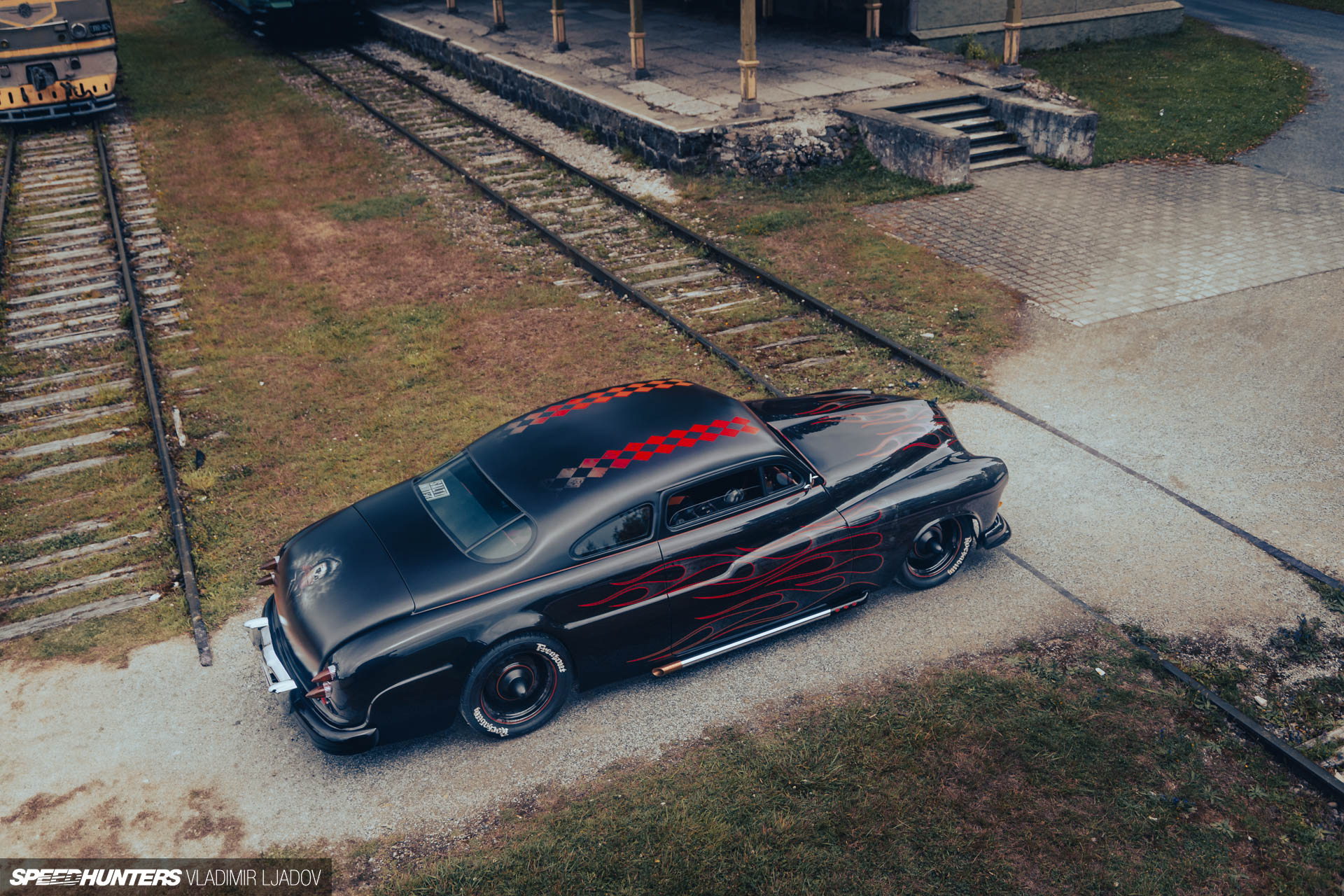
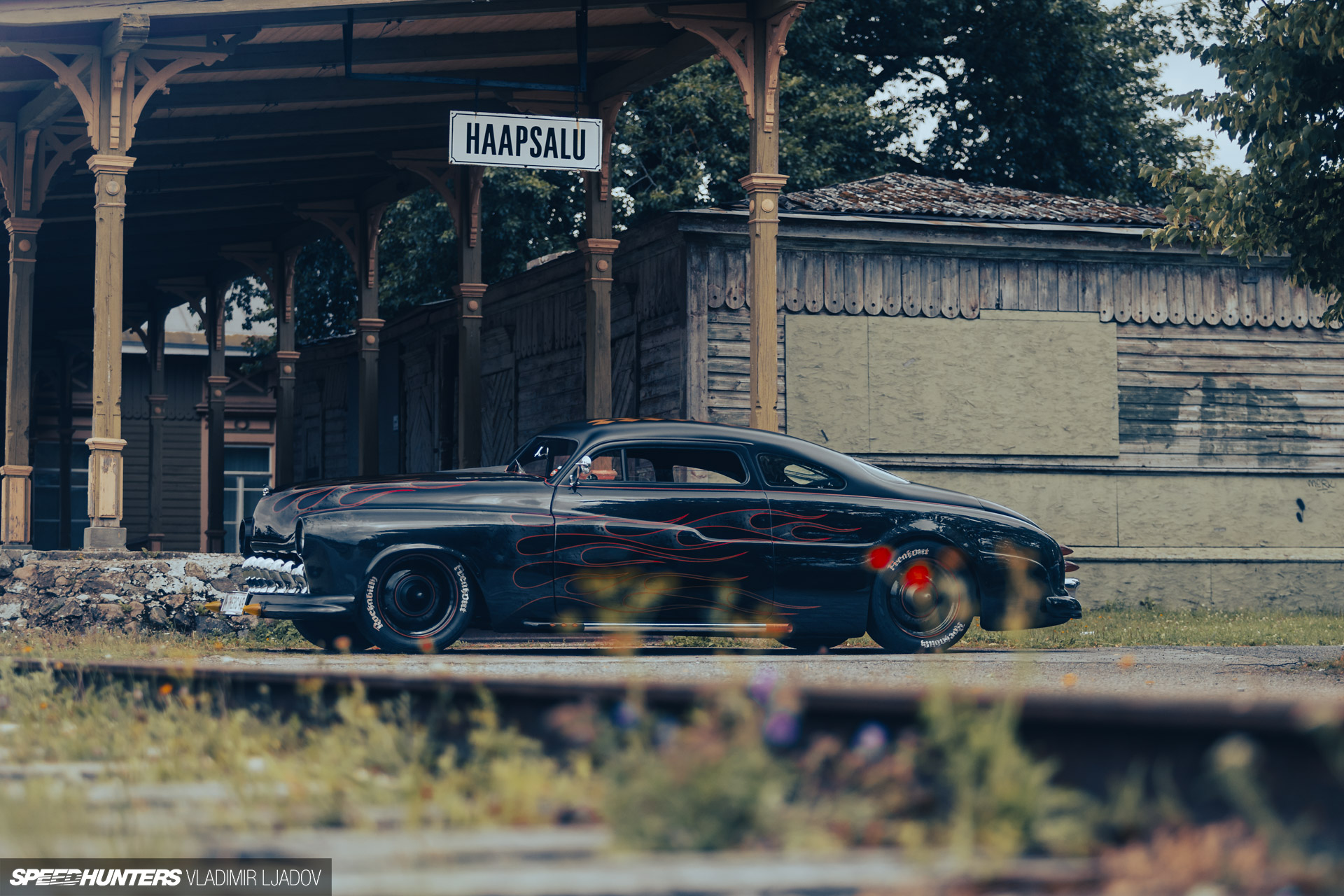
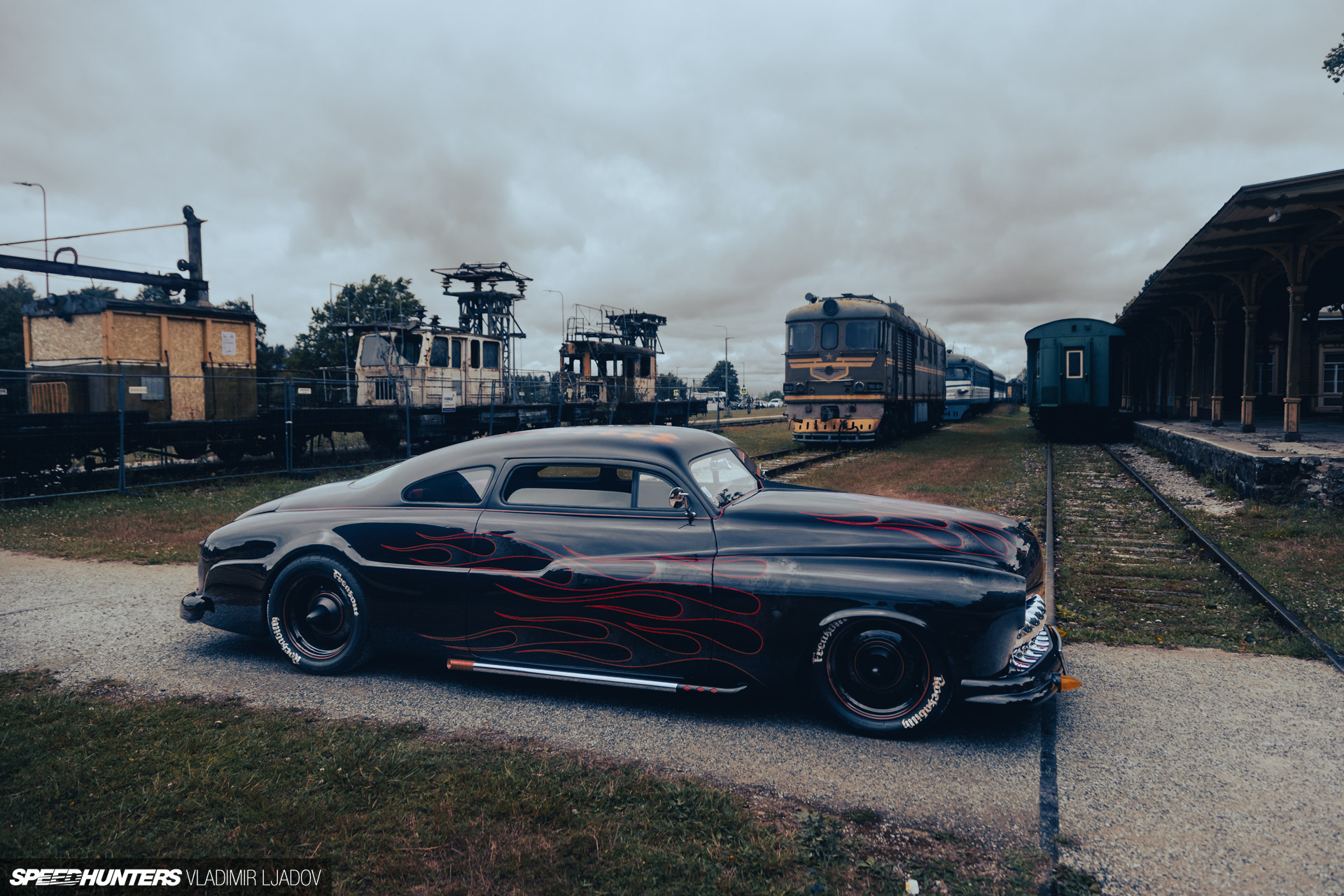
Some cars have attitude. Others, an aura. But few possess the almost supernatural presence of the Rockabilly Freakout – a 1949 Mercury Coupe that could have as easily been conjured up in the fires of hell as it was crafted in an Austrian hot rod shop.

This kustom Merc is an unholy blend of rockabilly culture, hot rod brutality, and Karl Büche‘s dream come to life. At its core, the Rockabilly Freakout embodies raw power and aggressive style – you could easily imagine it tearing down Route 666 on a one-way ticket to hell.
rockabilly-freakout-merc-49-by-wheelsbywovka-45
rockabilly-freakout-merc-49-by-wheelsbywovka-35

It all began when, at 13, Karl was captivated by Bill Haley’s ‘Rock Around the Clock’ blaring from a jukebox during a street party in his small hometown near Linz. That sound, paired with the imagery of 1950s cars, bikes, and fashion, ignited a lifelong love affair with rockabilly.

“I just think it’s the coolest way a man can express himself,” Karl says. “The clothes, the haircuts, the bikes, the cars, the music, the attitude – all of it. It caught my attention, and it never left.”
rockabilly-freakout-merc-49-by-wheelsbywovka-36

Karl’s teenage obsession with rockabilly culture led him to embrace the second wave of ‘Neo-Rockabilly’ and ‘Teddy Boys’ culture and eventually buy his first Harley-Davidson motorcycle at 21. But as much as he loved his stripped-down Harley, the dream of owning a kustom Mercury lingered.

In 2015, after visiting an American car dealer with a friend, Karl decided it was time to build the car of his dreams – a slammed, chopped, menacing Merc.
rockabilly-freakout-merc-49-by-wheelsbywovka-12

In Austria, if you’re building a car as extreme as the Rockabilly Freakout, there’s one builder for the job. Enter Knud Tiroch from Hotrod Hangar.

Knud is renowned for his radical approach to kustom builds, and almost instantly, he and Karl were bouncing ideas off each other, shaping a vision for the Rockabilly Freakout. “We didn’t just talk about specs and design; we talked about the car’s character and attitude. Knud motivated me to write down the [fictional] [back]story of the Rockabilly Freakout,” Karl explains.

rockabilly-freakout-merc-49-by-wheelsbywovka-2

I have summarized Karl’s story as briefly as I could, but I felt that it was an important part of understanding how Knud translated it into the build.

A rebellious schlurf [German for greaser] buys a beat-up ’49 Mercury, dreaming of crafting the ultimate lead sled. After a deadly brawl, he crashes the car and finds himself in a hellish garage. There, the ‘Hot Rodder from Hell’ offers to build him the ultimate custom Mercury in exchange for his soul. The result? The Rockabilly Freakout. The greaser returns as a ghost, seeking someone to take the car and save his soul. Years later, a rockabilly enthusiast with a perfect pompadour accepts the deal, and the Rockabilly Freakout prowls at night – a symbol of rebellion, speed, and the dark side of rock ‘n’ roll.

The base for this masterpiece was a 1949 Mercury Coupe originally from Texas, already chopped but otherwise untouched. It was immediately shipped to Austria, where Knud and his team got to work on the monster transformation.

And when I say ‘monster,’ I mean it.
rockabilly-freakout-merc-49-by-wheelsbywovka-23

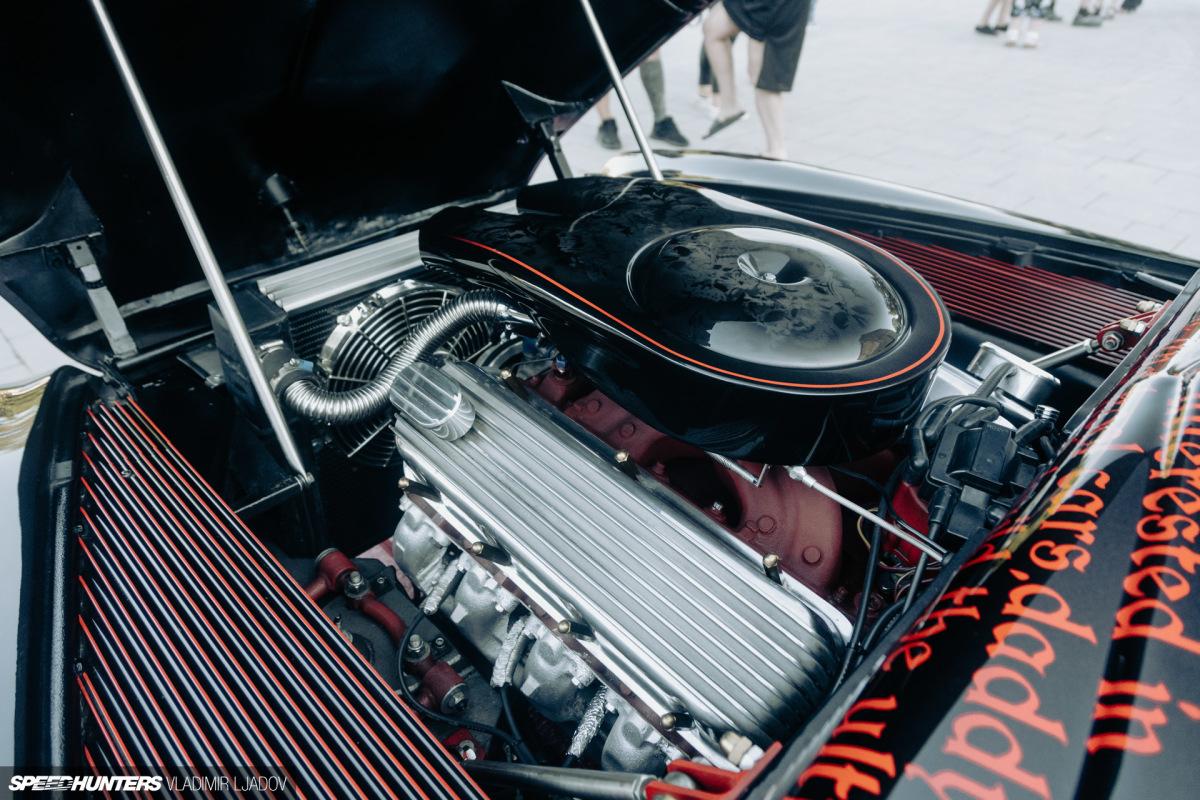
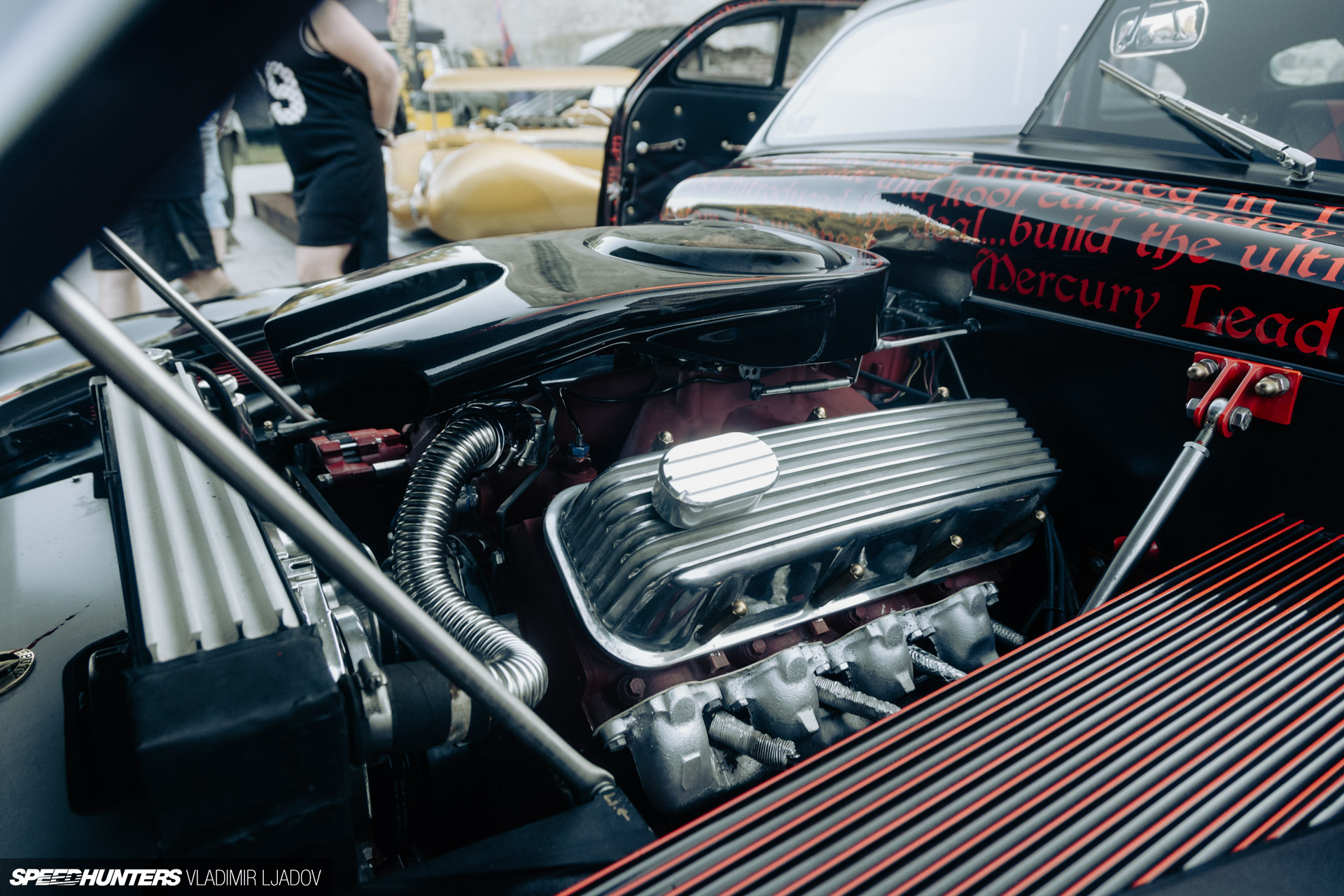
Under the hood, a Chevrolet 572ci big block V8 from Shafiroff Racing delivers 700hp to the back wheels via an ATI TH400 performance transmission and a Ford 9-inch rear end with a Detroit Locker differential.

The Merc rides on a 1970s Cadillac chassis with adjustable coilovers, with an independent front and 4-link rear suspension arrangement for improved handling – because this beast is built to be driven.
rockabilly-freakout-merc-49-by-wheelsbywovka-43

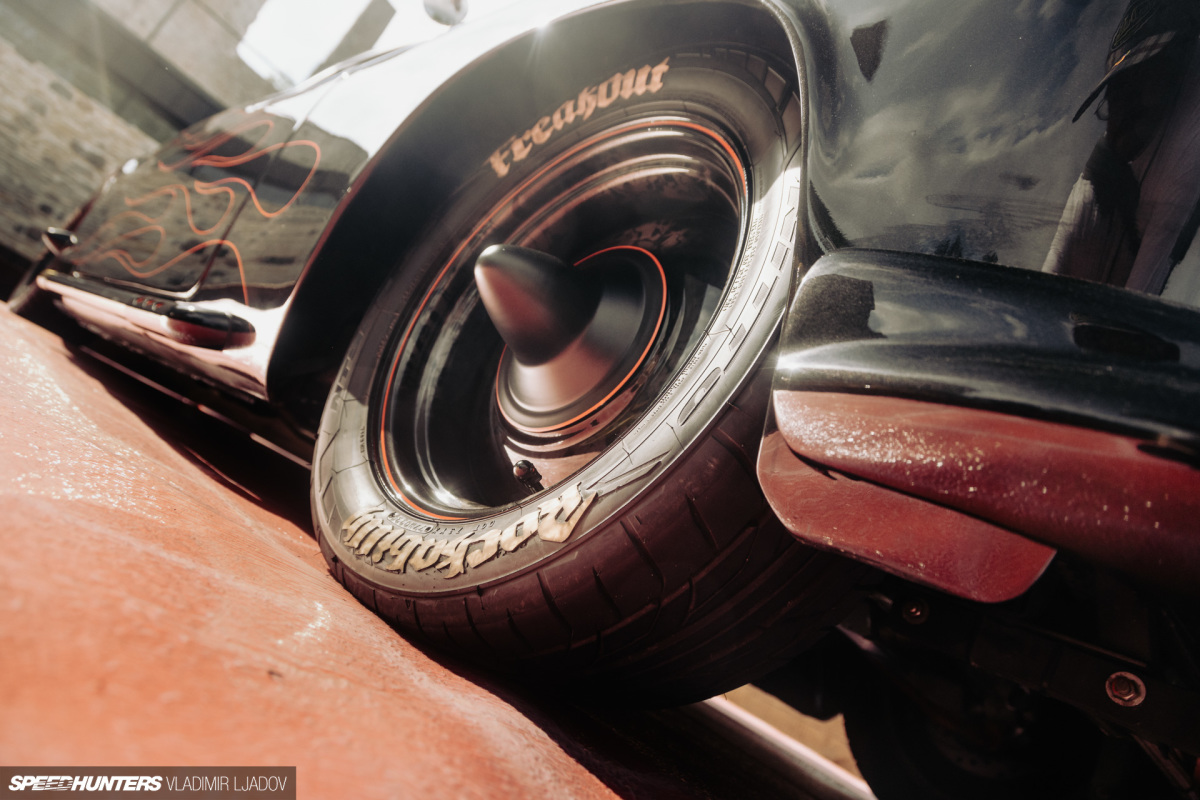
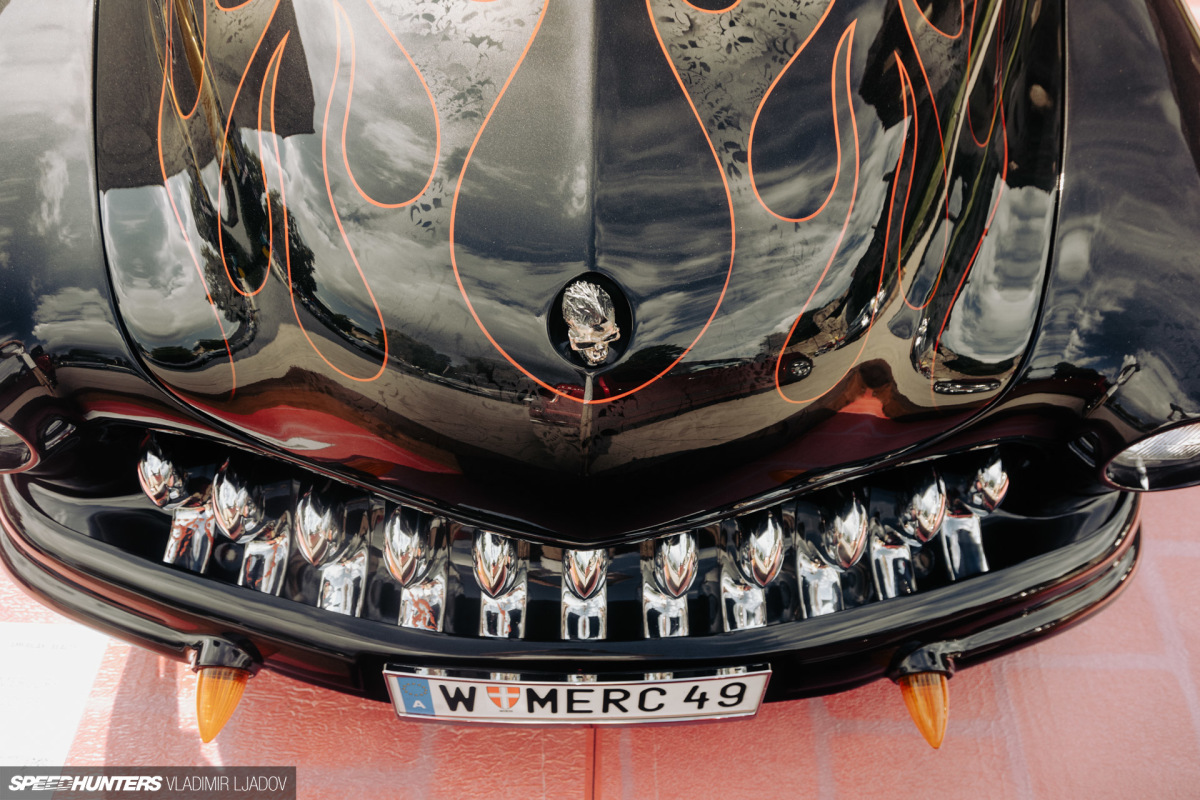
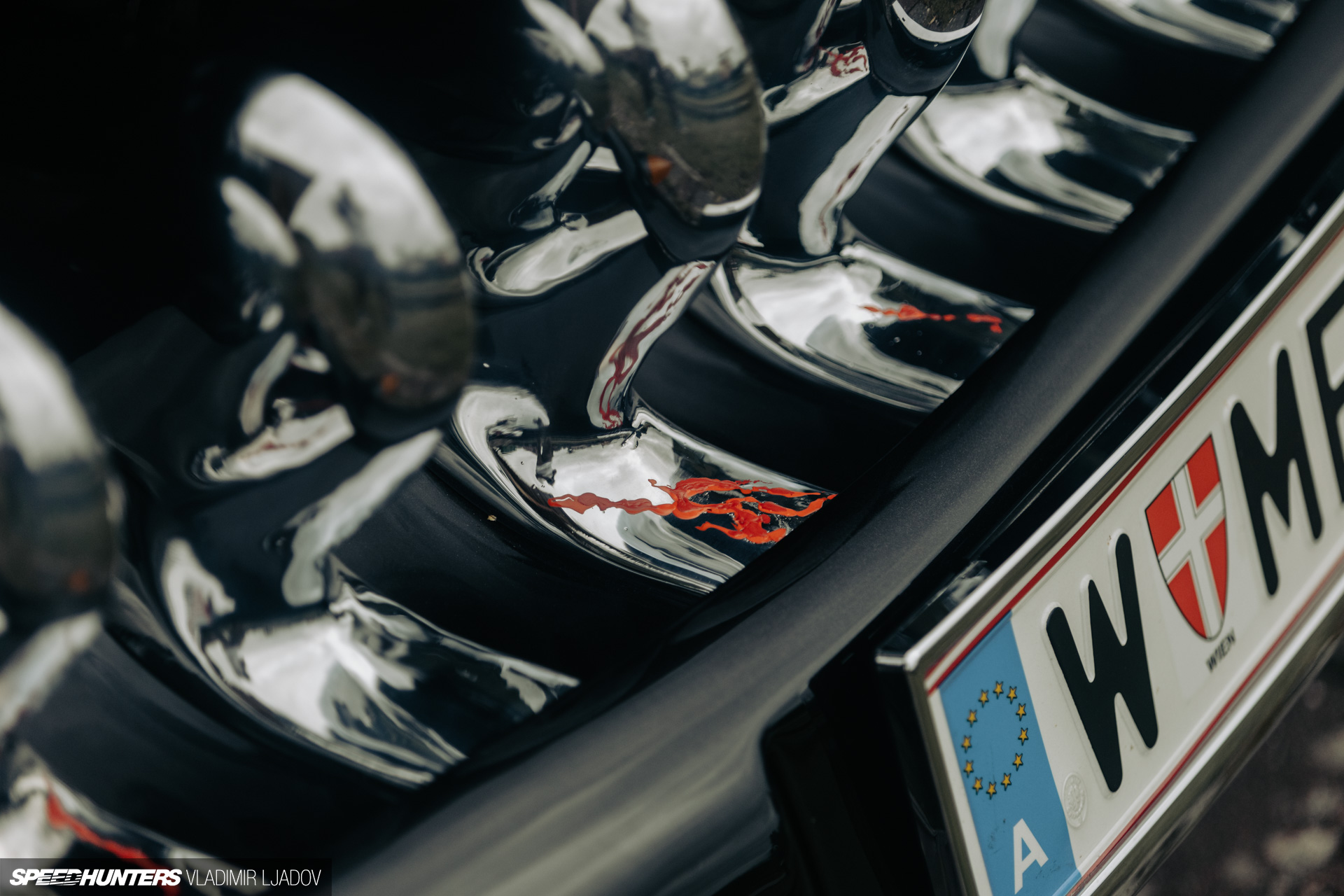
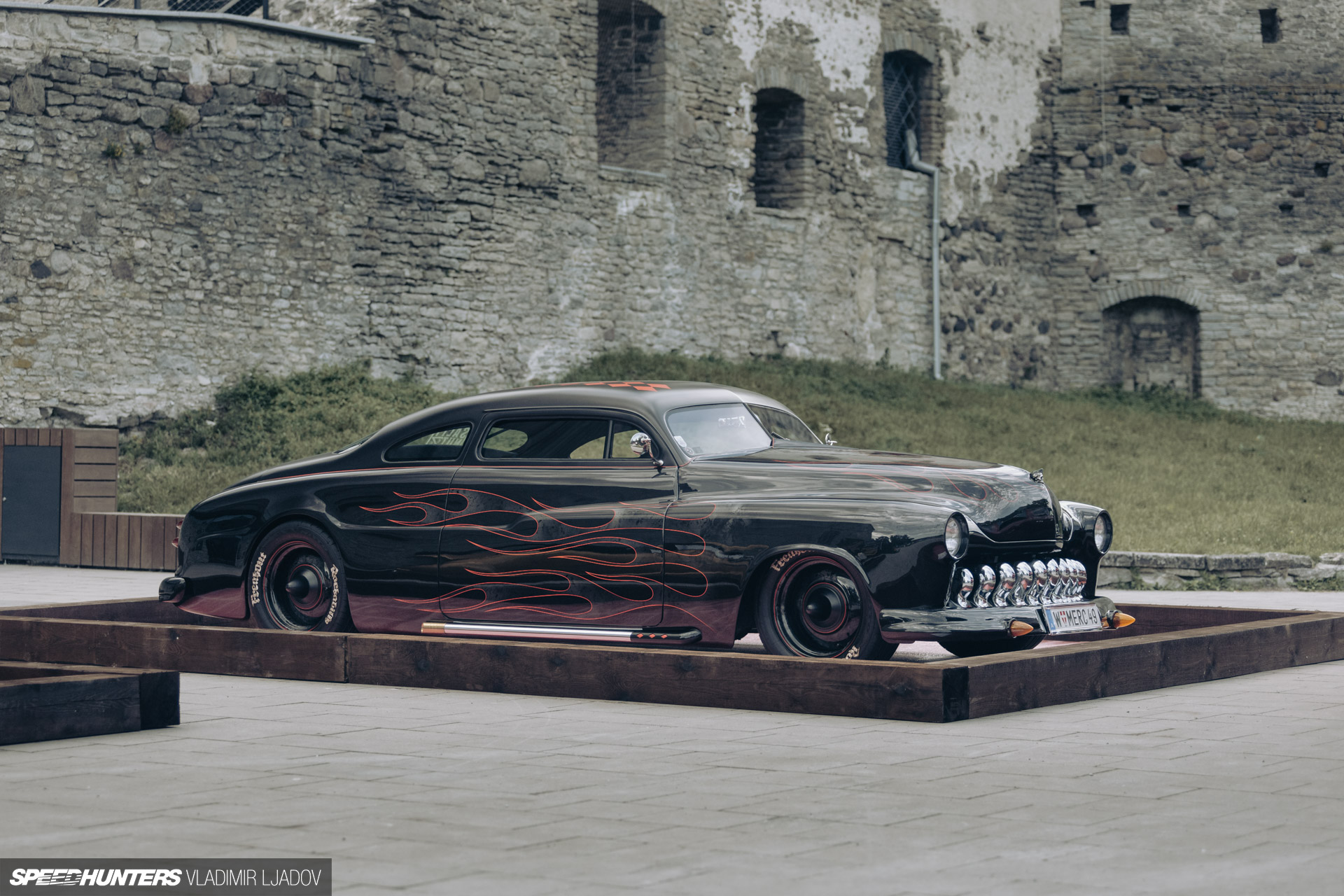
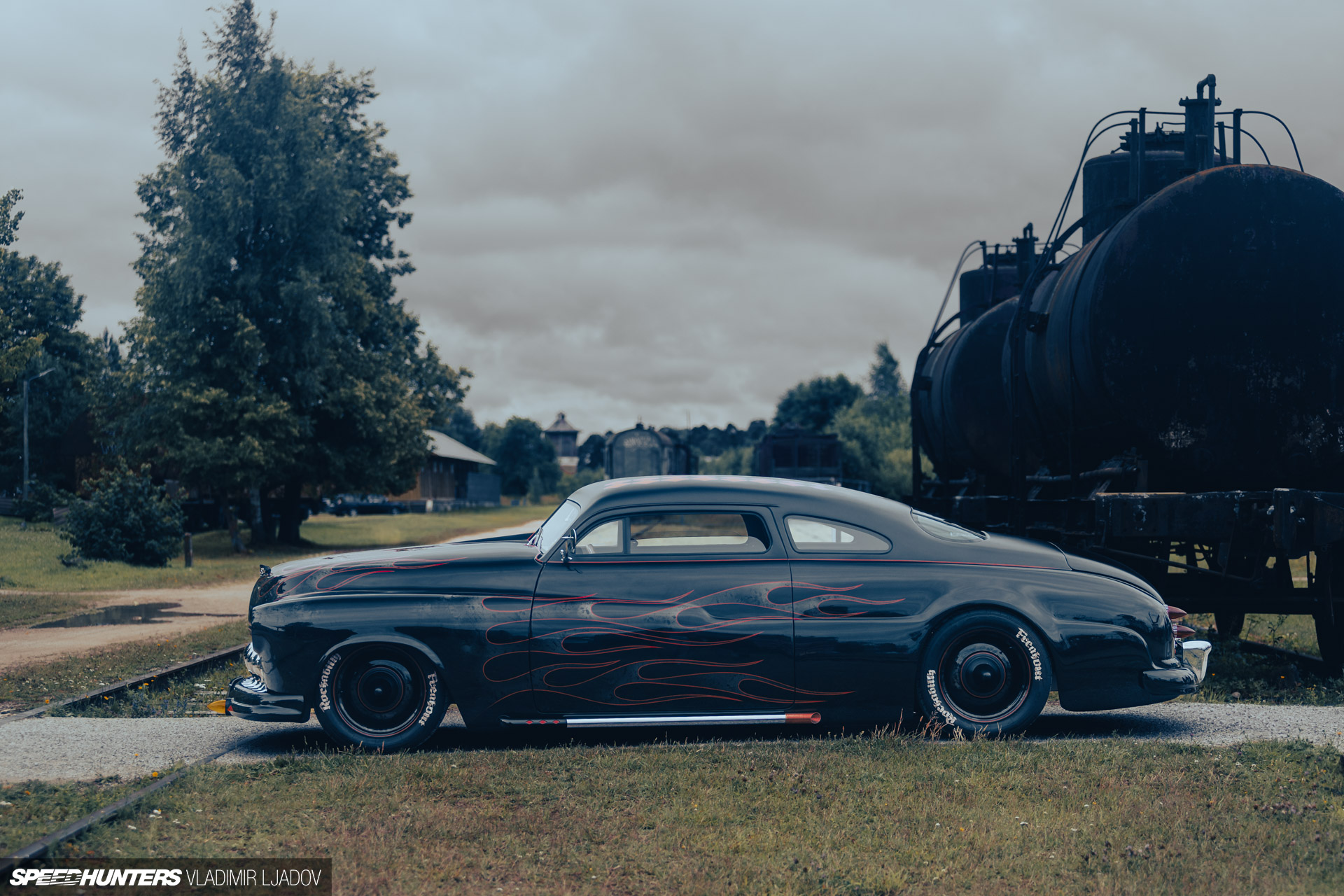
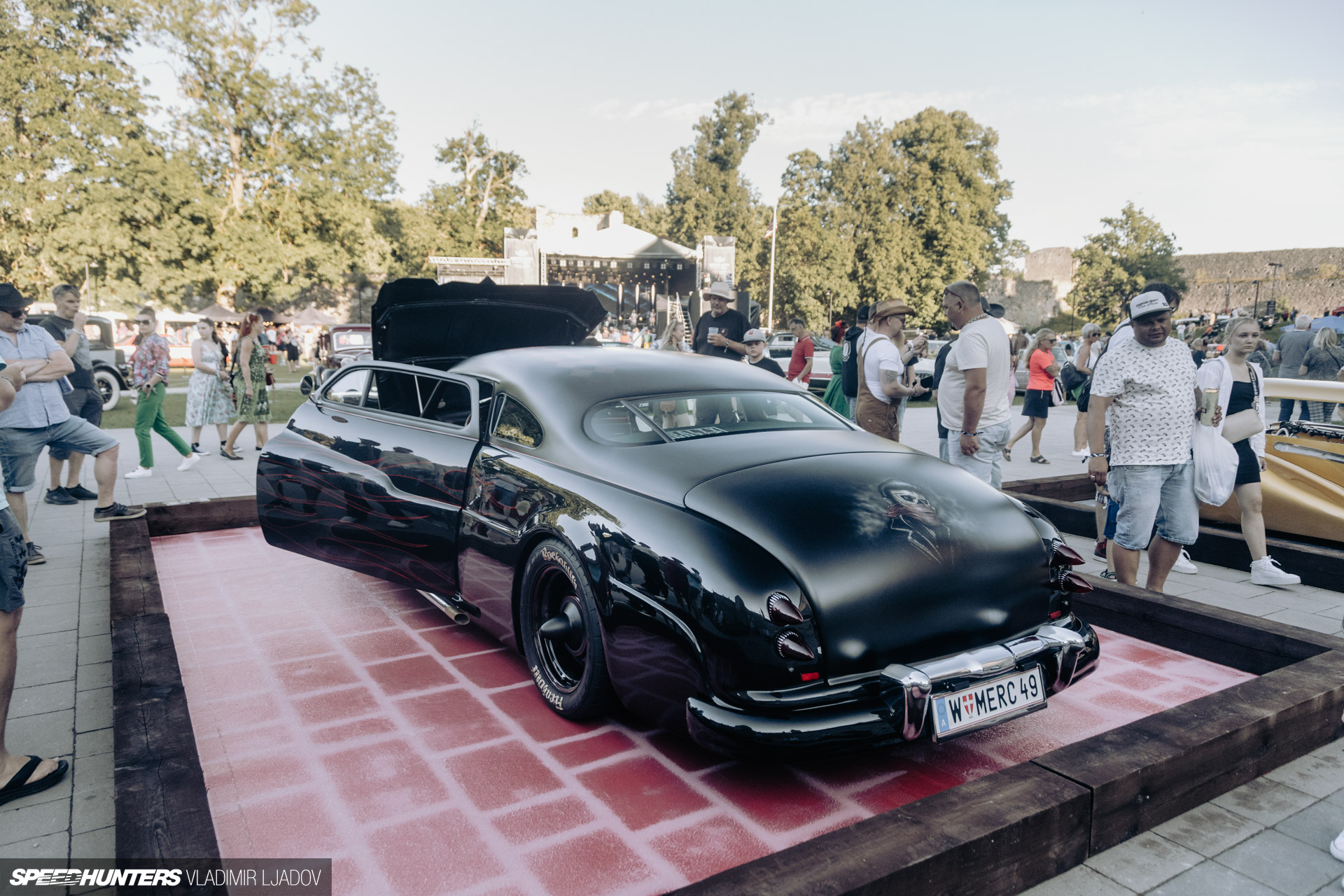
The exterior is a study in kustomization. The roof was chopped by about six inches, the body channeled and stretched, and the rear fenders were radically reshaped to accommodate the 17-inch steel wheels with bullet center caps. Suicide doors, a forward-tilting hood, and custom bumpers featuring elements from DeSoto and Cadillac give the Rockabilly Freakout a stance unlike any other Merc out there. It’s low, long, and mean.

“Knud’s racing background came into play here,” Karl explains. “Everything about this car is functional, from the body and firewall stiffening and modifications. It’s not just about looking good – it’s about going fast and handling all that power.”
rockabilly-freakout-merc-49-by-wheelsbywovka-10

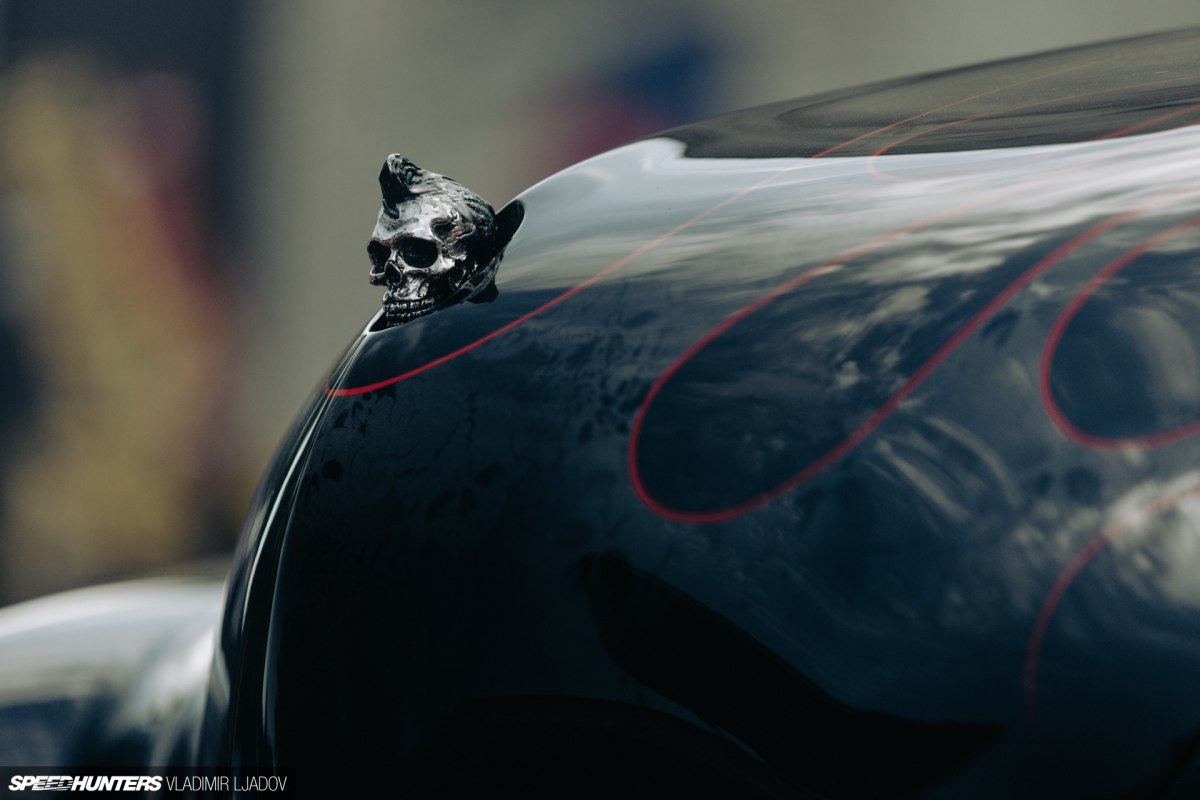
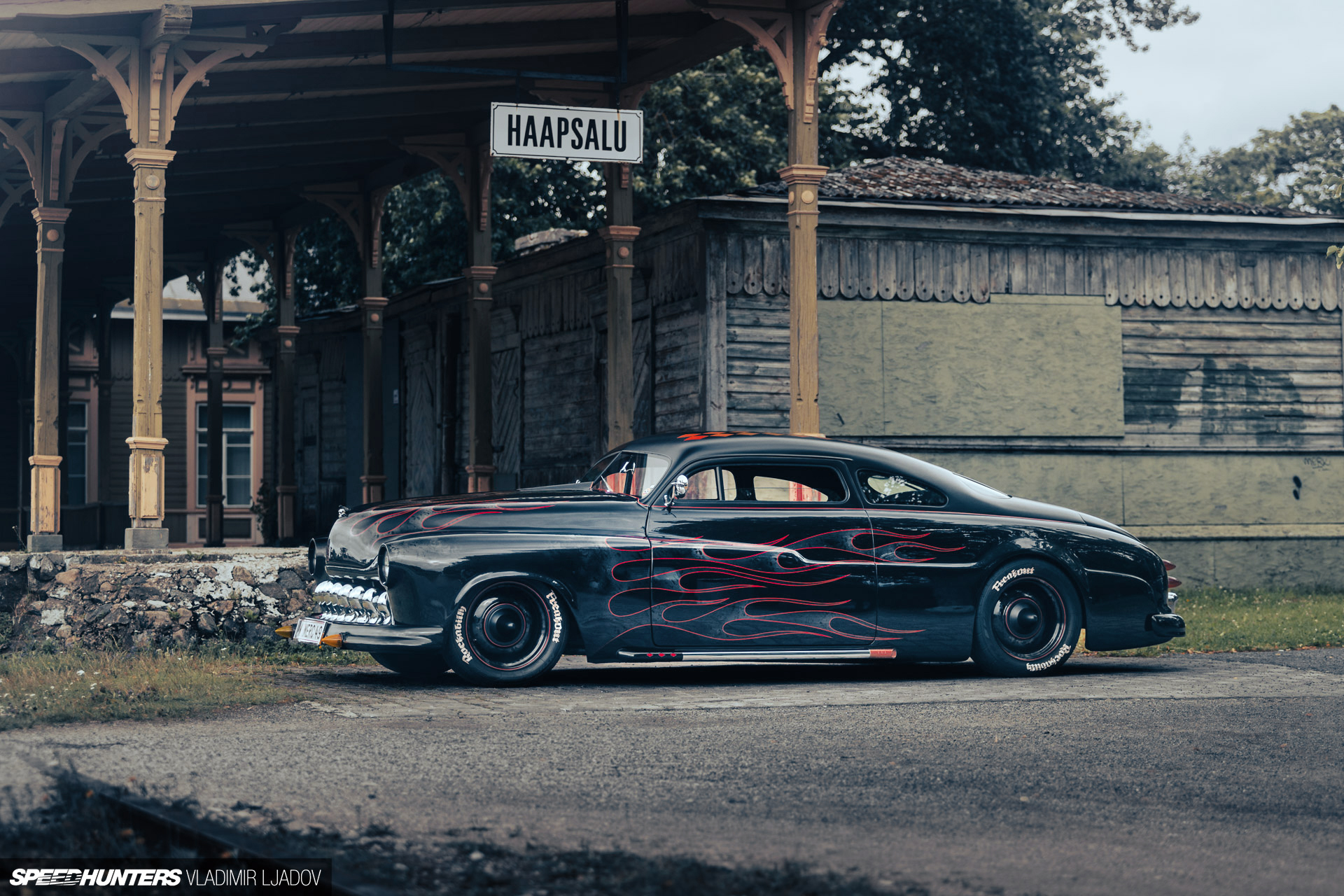
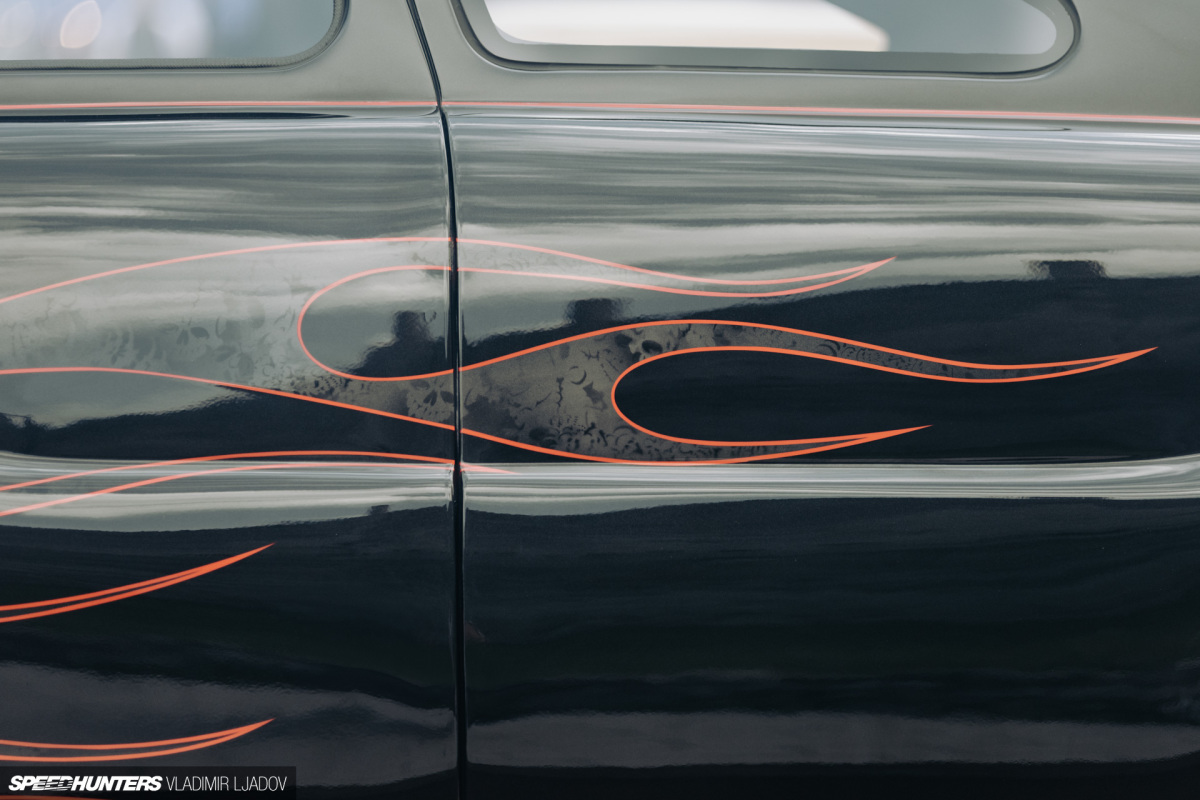
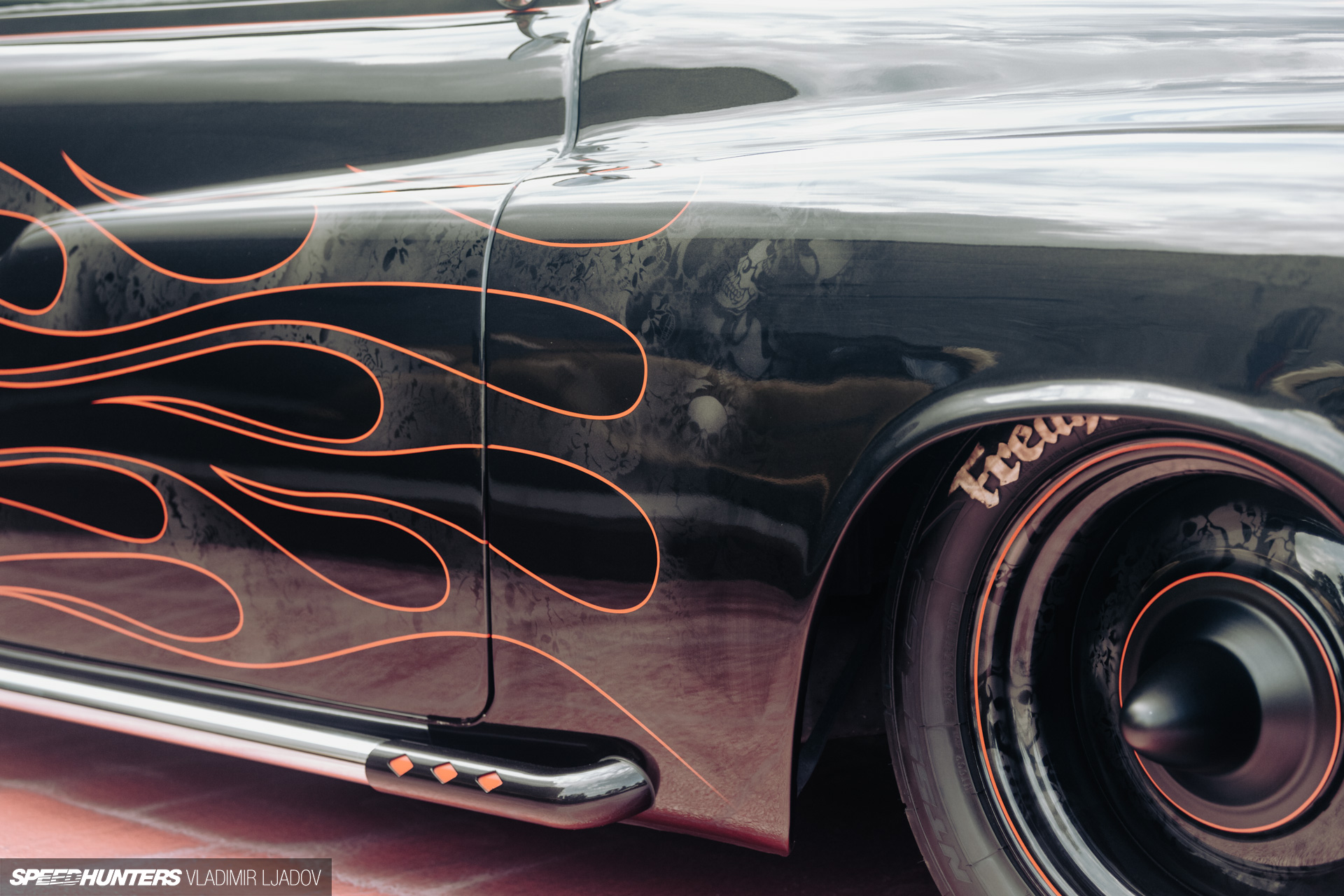
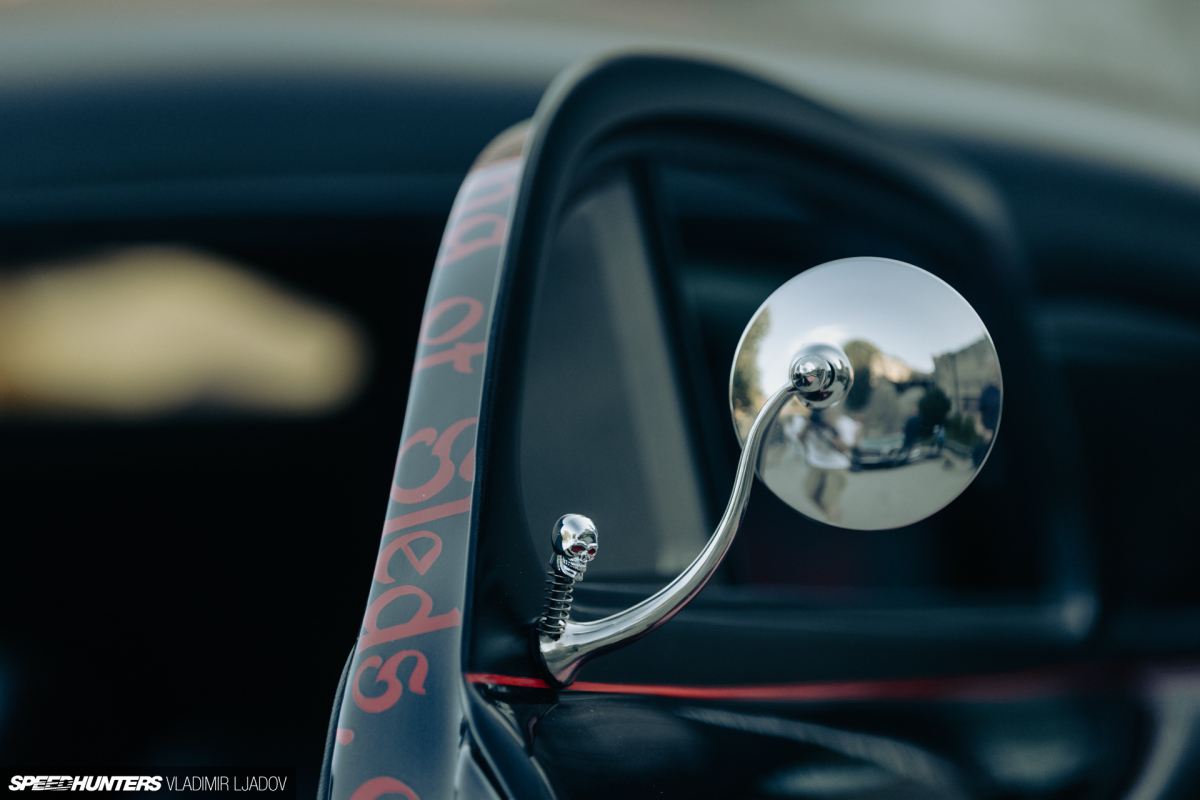
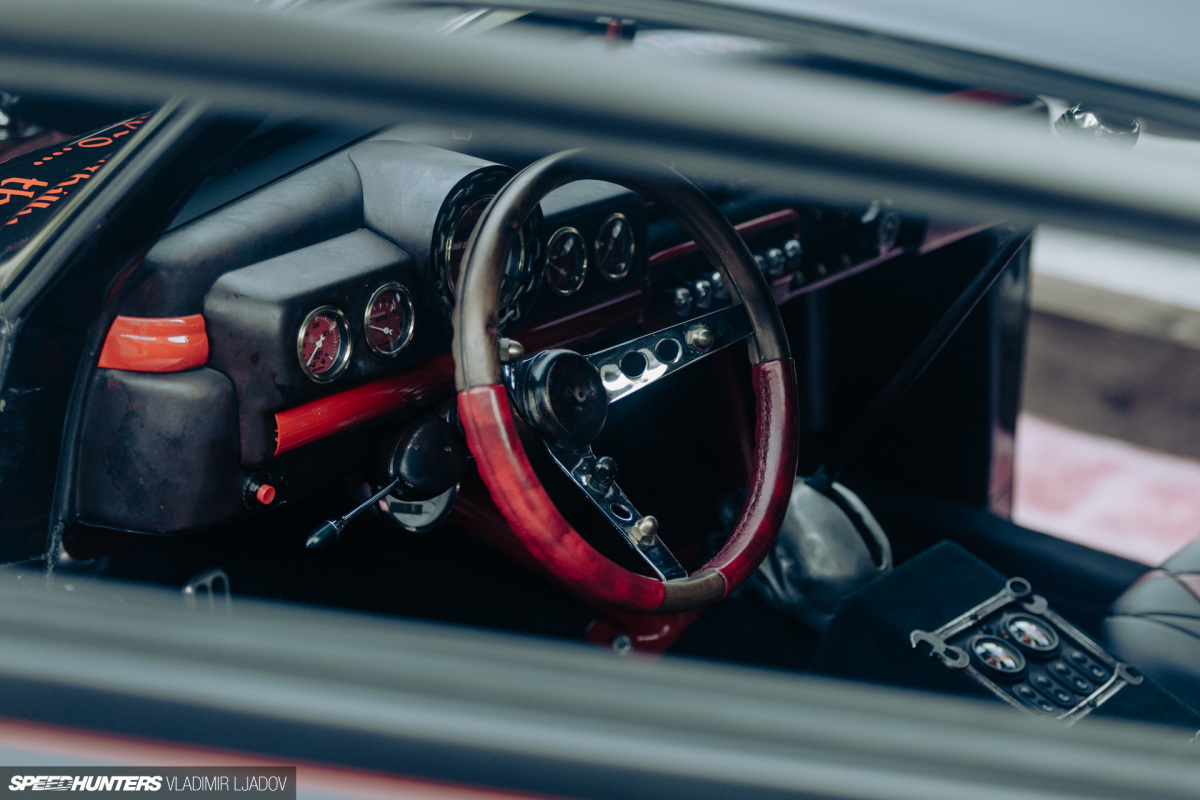
The custom paint job is where the Rockabilly Freakout truly shines. Finished in a rich mocca black with ghostly red flames and airbrushed skull-head holograms, the car looks like it emerged from a twisted dreamscape. Inside the doors and on the firewall, the Rockabilly Freakout story is written in detail, a nod to the creative narrative that inspired the build.
rockabilly-freakout-merc-49-by-wheelsbywovka-16
rockabilly-freakout-merc-49-by-wheelsbywovka-26

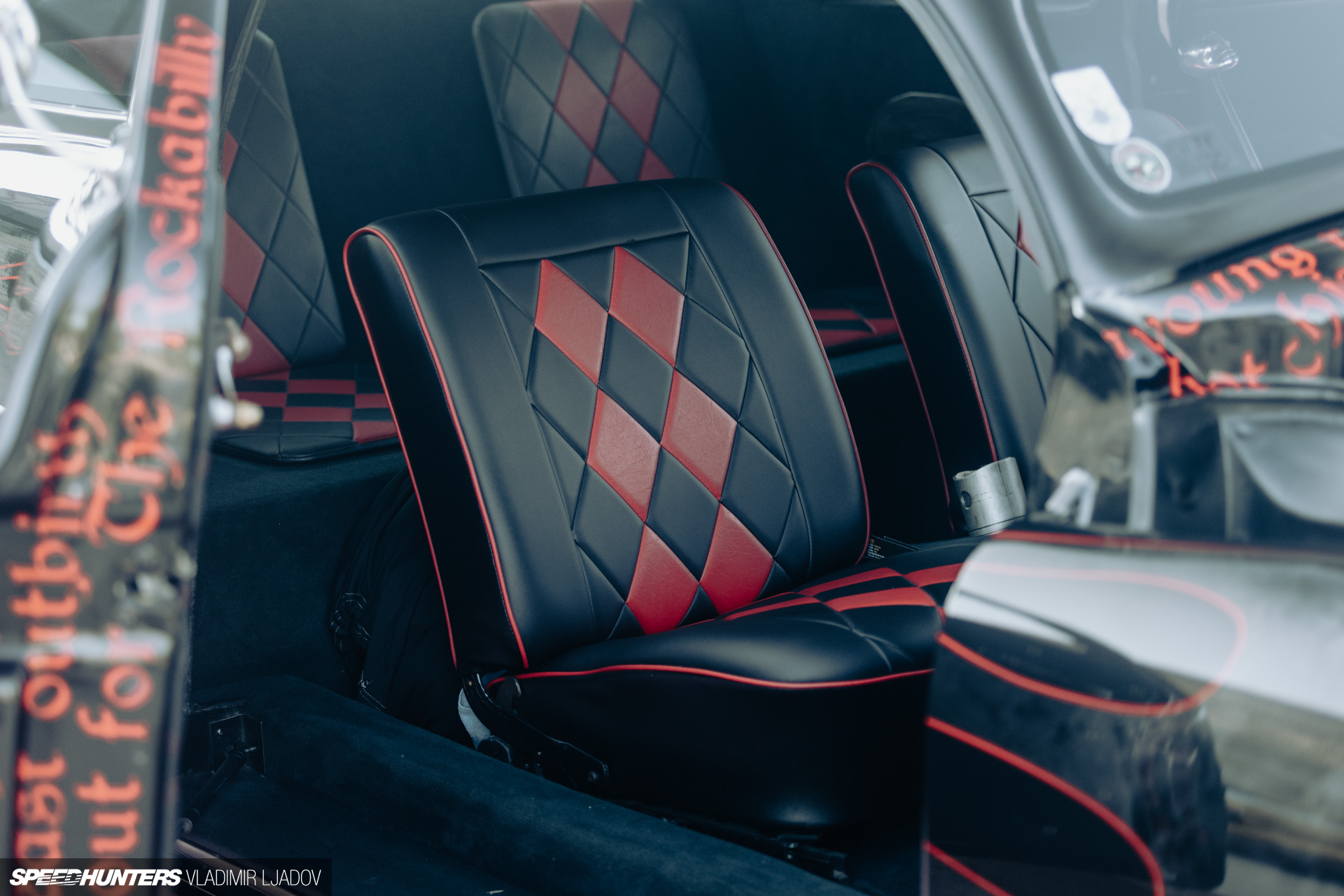
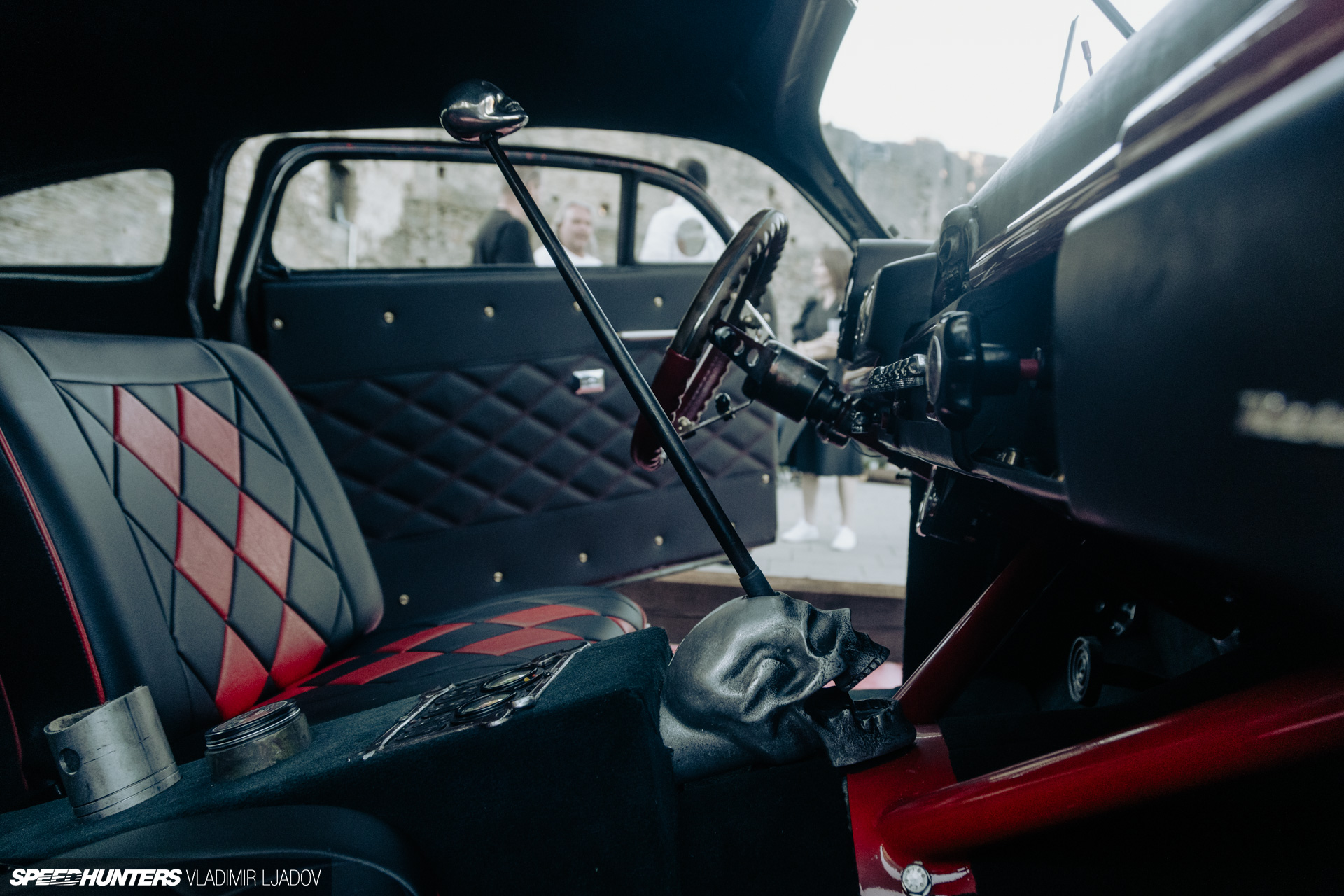
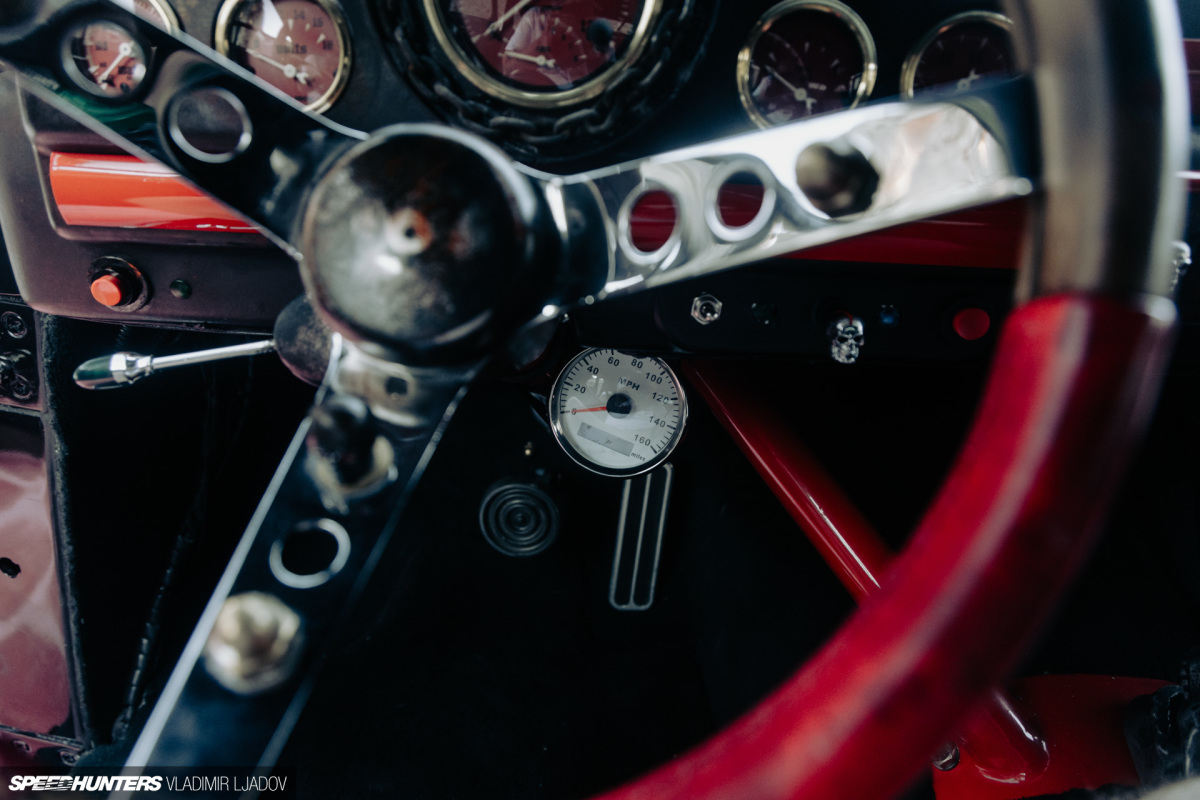
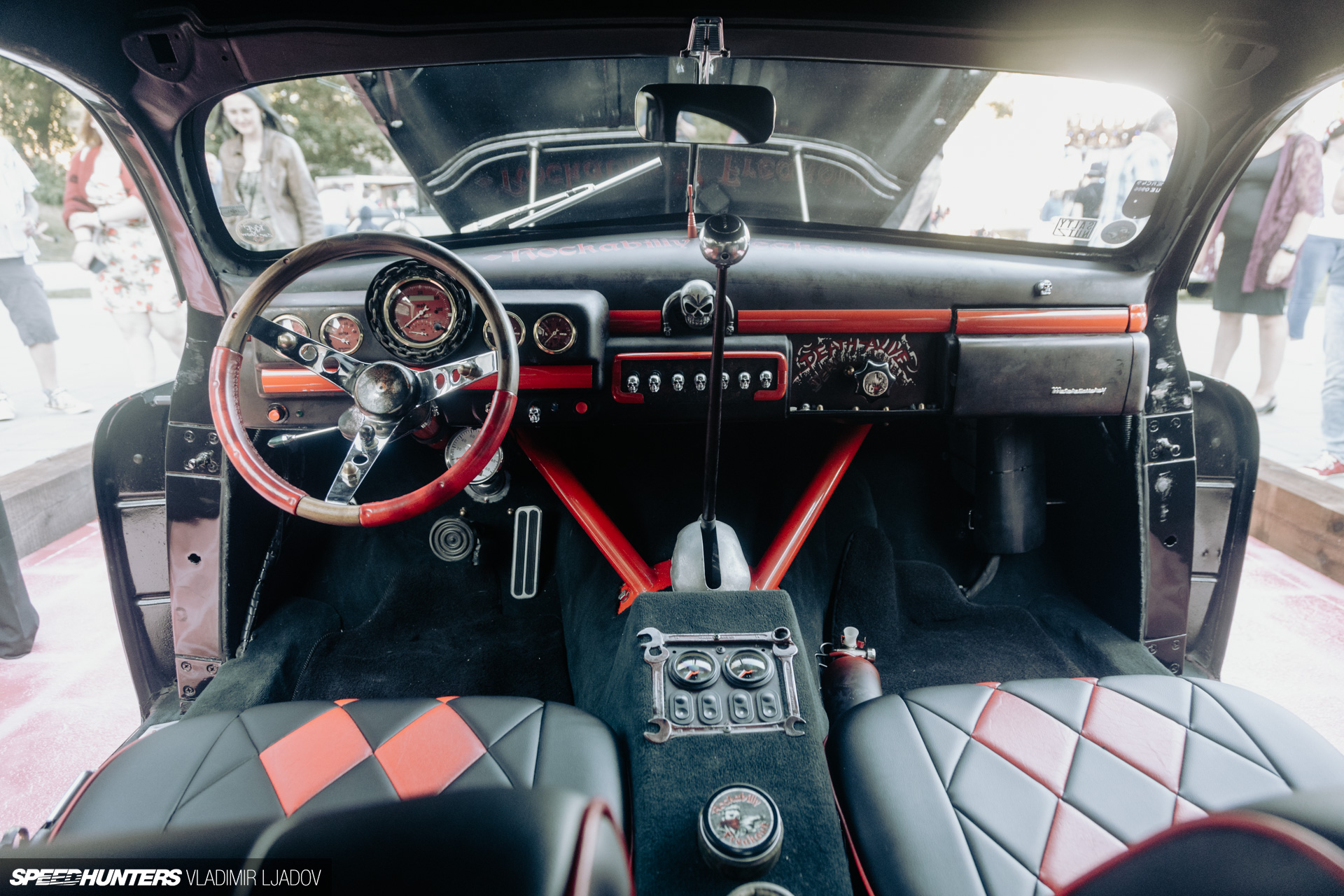
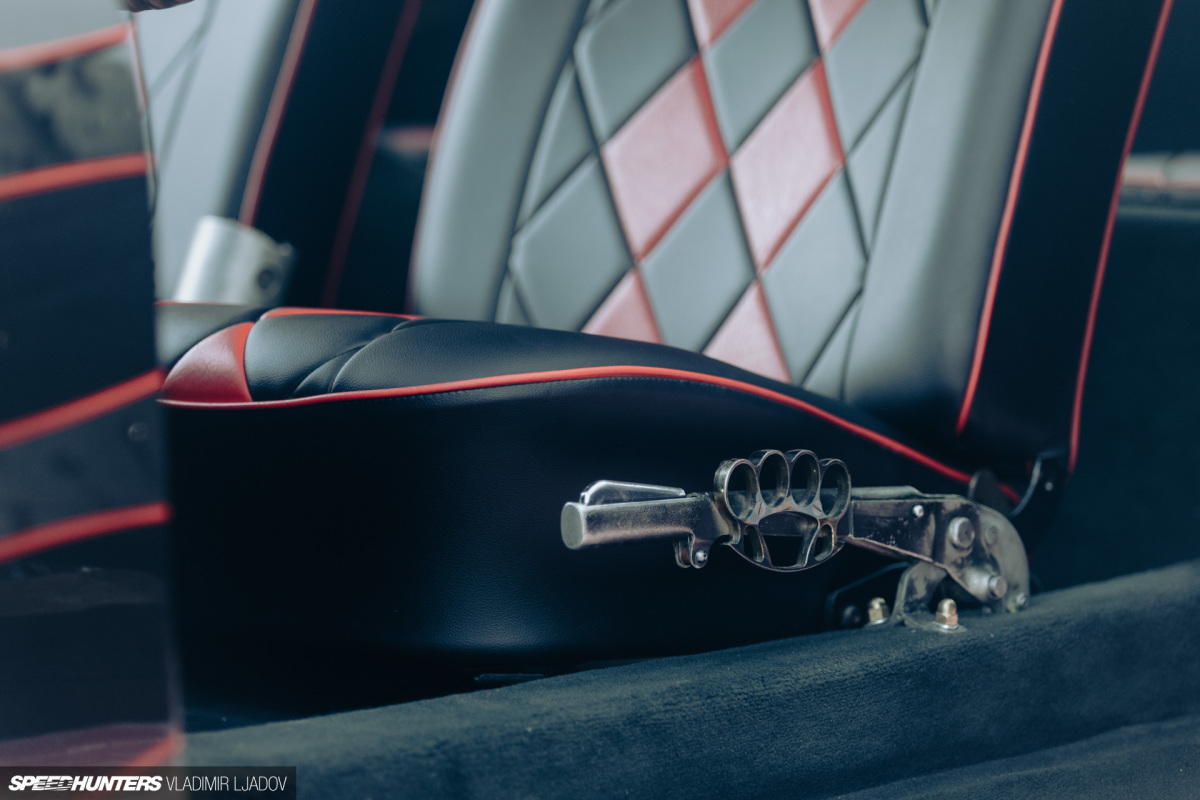
The interior is handcrafted, with a completely restyled original dashboard featuring functional skull knobs. The front seats are from a 1960s Nash, all black leather with striking red diamonds.
rockabilly-freakout-merc-49-by-wheelsbywovka-20

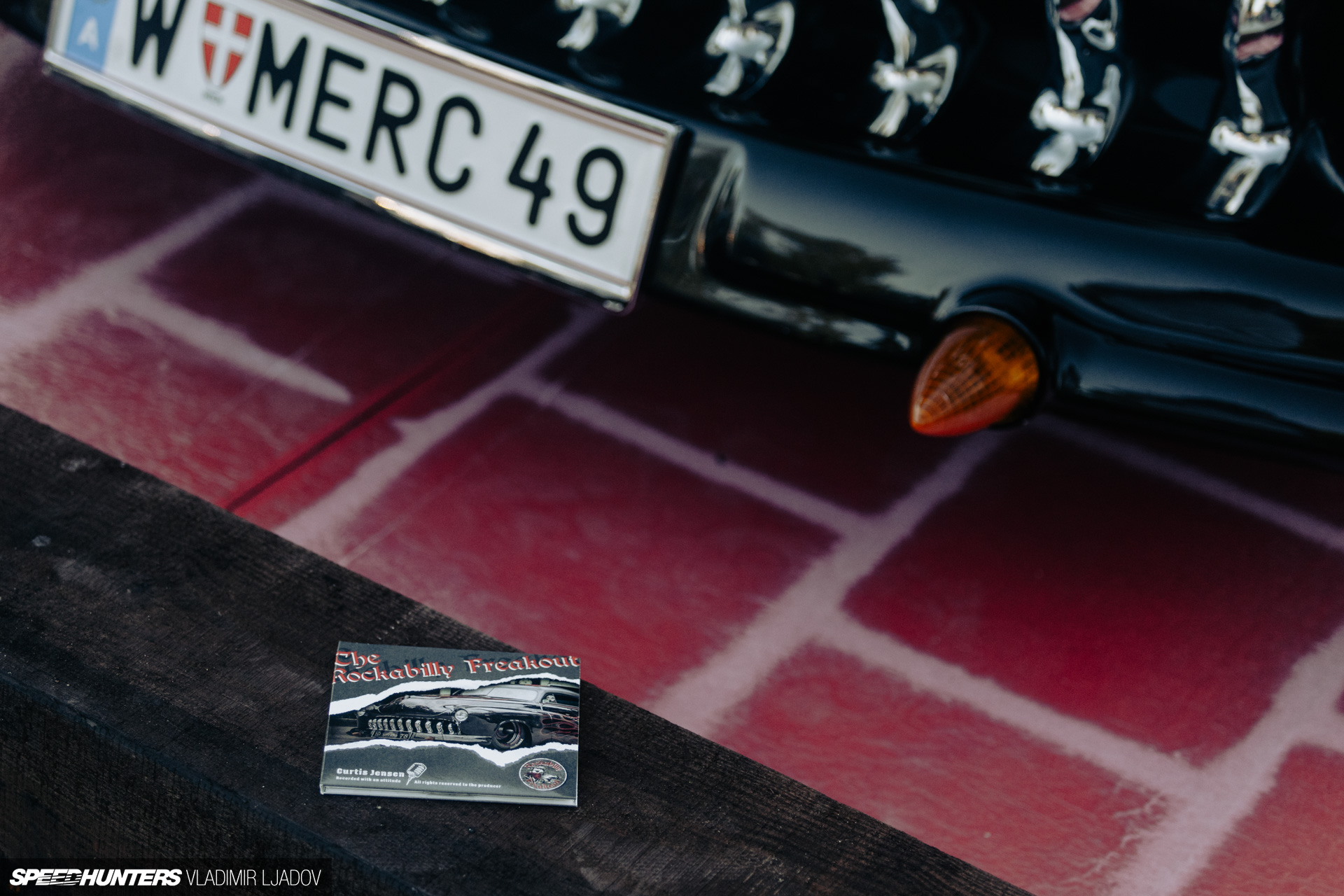
Upon completion, Knud surprised Karl with a rockabilly song he’d written – a distillation of the Rockabilly Freakout’s story, of which I featured a few lines in the opening paragraph. Now, it’s immortalized on a CD they recorded together.
rockabilly-freakout-merc-49-by-wheelsbywovka-33

Calling Knud Tiroch simply a car builder would be a massive understatement. One of Europe’s first airbrush artists and a veteran of Formula One collaborations, his approach to cars melds art with performance.
rockabilly-freakout-merc-49-by-wheelsbywovka-39
rockabilly-freakout-merc-49-by-wheelsbywovka-32

So, what’s it like to drive the Rockabilly Freakout? In short, it’s brutal. “It’s loud, it’s aggressive, and it’s fast – really fast,” says Karl. “It’s not for cruising with your girlfriend. You have to respect this car because it doesn’t take any prisoners. But if you’ve got the guts, it’s a hell of a ride.”
rockabilly-freakout-merc-49-by-wheelsbywovka-46

The Rockabilly Freakout began as a dream, and today, it’s a reality – one that raises hell across Europe’s roads. More than just a car, it reflects its owner’s life and love for rockabilly and kustom culture. Traditional in spirit yet progressive in style, every curve, chop, and rev of the engine tells a story – a story of a vehicle born in hell, here to raise a little more.

Vladimir Ljadov
Instagram: wheelsbywovka
because@wheelsbywovka.com
www.wheelsbywovka.com


Source link

Hyundai’s RN24 Drift Kart Is My Favorite New Car

0


Image for article titled Hyundai's RN24 Drift Kart Is My Favorite New Car

Photo : Hyundai

Drift karts rock. The Hyundai Ioniq 5 N rocks. Hyundai, in its infinite wisdom, decided to combine the two into this: The RN24, a tube shell with the barest bits of body wrapped around it. Oh, and the full 640 horsepower of the Ioniq 5 N.

Despite what you may think from the few body panels this isn’t just a stripped down Ioniq 5 N. Hyundai really seems to have had rallying in mind for the RN24, with some rally-inspired AWD software and a bit of fancy new battery packaging. Battery layouts may sound boring, but Hyundai claims the new layout allowed for a shorter wheelbase than the Ioniq 5 — as short as the i20 rally car.

Image for article titled Hyundai's RN24 Drift Kart Is My Favorite New Car

Photo : Hyundai

Despite the rally mindset in its development, however, the RN24 looks like an absolute drift dream machine. I want to slide this car around a big parking lot for hours, days, possibly weeks without stopping. I’m imagining a system with a charging cable dangling down from a central point above the lot, supplying both power for the car and water for my human body. Like a sort of drift-Matrix situation, where I’m fully plugged in.

Hyundai will likely never sell the RN24, due to the whole “not being street legal” thing, but I would like it if they sold at least one. Preferably to me. Please give me this car so I can whip sick donuts through Brooklyn every day. I don’t care about the difficulties of car ownership in New York, it would be worth it for this.


Source link

Multiple Sports Games And Concerts Will Make LA Traffic A Special Kind Of Hell This Weekend

0


You might have heard Los Angeles traffic is bad, but special events make it so much worse. Multiple events happening at the same time? You’re going nowhere in a hurry in the city of Angels. This weekend, Los Angeles may see some of the worst traffic its seen in a long time thanks to a bunch of events happening at once.

From October 25-26, LA will see a number of events happening either at the same time, or right after each other. Things kick off on the evening of the 26, when the Dodgers face the New York Yankees in game one of the World Series at Dodger Stadium. Later that same night, the Lakers face the Phoenix Suns at the Crypto.com Arena downtown. Over at USC’s Coliseum, the Trojans will be facing off against Rutgers. Mind you, all these events will be happening mere miles from each other; the Coliseum is just six miles from Dodger Stadium for instance. Things don’t stop there.

Over in Inglewood, the SoFi Stadium will host two high school football games and just a half mile from that, Pink Floyd’s David Gilmour is having a concert at the Intuit Dome. Just over a mile from there, the Electric Light Orchestra is having a concert at the Kia Forum.

In anticipation of all these events, LA’s ABC 7 reports city officials announced they’re coordinating to help make things go smoother for everyone. Mayor Karen Bass said she’s coordinating with agencies like the LAPD for help with traffic and safety.

“Ahead of the World Series tomorrow, we’re working to make sure the city is safe, that traffic is minimized, and that visitors and Angelenos alike are able to enjoy the many attractions, culture, food and neighborhoods that make L.A. an iconic international destination,” Bass said Friday during a news conference at City Hall.

Bass is also advising people to take advantage of public transit. As Bass points out, it’s both cheaper and helps to ease up traffic on local freeways. “…there is a fast, easy and affordable way to avoid all the traffic, which is to go LA Metro,” she said.

Seriously though if you live in the area and aren’t going to these events, avoid it at all costs. Speaking as a Southern California native, it will take you hours to get home, especially if you live inland; it can easily be a three or nearly four hour trek.


Source link

Lamborghini Temerario chassis has half the structural components used in Huracán

0


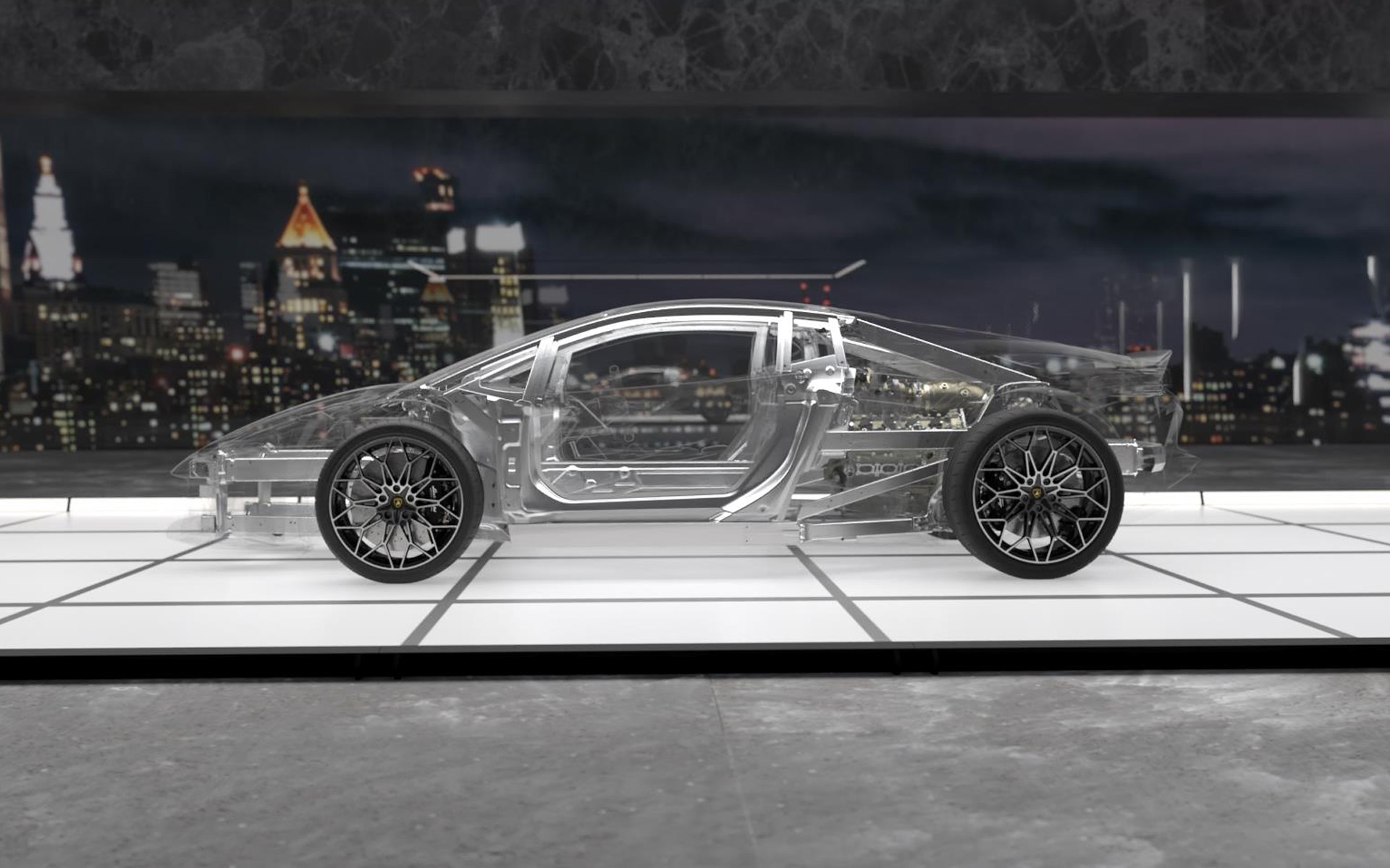
  • Lamborghini Temerario debuts new aluminum spaceframe chassis
  • Chassis is lighter and stiffer than Huracán’s design
  • Temerario starts sales in early 2025 with pricing from about $360,000

Lamborghini unveiled the Temerario in August as the successor to the Huracán, and the new supercar has big shoes to fill considering the Huracán is the bestselling Lamborghini in the marque’s history, with well over 20,000 examples built during the car’s decade-long run.

Lamborghini pulled out all the stops when designing the Temerario, designing the car with a new chassis, new powertrain, and new aerodynamic concepts.

The chassis sticks with an aluminum spaceframe design, like the Huracán, but there are major changes that have resulted in a 25% increase in torsional stiffness—along with the number of structural components being reduced by half compared to the chassis in the Huracán, and the number of heat welds being reduced by 80%.

The chassis is also lighter compared to the one in the Huracán, while offering more space for occupants, Lamborghini said. However, the weight savings are offset by the added weight of the Temerario’s plug-in hybrid system. The total weight of the Temerario is up, with the dry figure coming in at 3,725 pounds, versus about 3,330 for the V-10-powered Huracán.

Peak power of 907 hp is generated in the Temerario by a newly developed twin-turbocharged 4.0-liter V-8 which works with trio of axial-flux electric motors. Like its Revuelto big brother, the Temerario features two electric motors at the front axle, plus a third sandwiched between its engine and transmission, in this case the 8-speed dual-clutch automatic found in the Revuelto and mounted transversely behind the engine.

Performance figures include 0-62 mph acceleration in 2.7 seconds and a top speed of more than 210 mph. An electric range is also possible, thanks to a 3.8-kwh lithium-ion battery located in a central tunnel.

A range estimate hasn’t been provided but designers focused on delivering an aerodynamic shape to help maximize the figure. The automaker said the Temerario’s shape reaches new heights in terms of aerodynamic efficiency, helped in part by various channels designed to direct air flow.

The Temerario starts sales early next year and is expected to be priced from just over $360,000 in the U.S.


Source link

One-off Pagani Huayra Codalunga Hermes spotted in Paris for the first time

0


A super rare Pagani Huayra Codalunga has been spotted in Paris. This is the one-off Hermes edition owned by @the_man_1vvm.

The Huayra Codalunga Hermes has a unique teal exterior with white accents and white wheels and brake calipers. The interior appears to be trimmed in black and white leather.

Pagani Huayra Codalunga Hermes-Paris-2

Only 5 Huayra Codalungas were built, each finished in a unique spec. However, this one is even more special as it was created in collaboration with French luxury brand Hermes. Pagani has been very receptive when it comes to their clients’ requests for partnering with luxury brands. Another famous Pagani created by Hermes is Manny Khoshbin’s Huayra.

The Codalunga or “Longtail” is 360 mm longer than the standard Huayra. Its design was inspired by Le Mans racers from the 1960s. It uses the same 6.0-liter twin-turbo V12 engine as the regular Huayra coupe. It packs 827 hp and 811 lb-ft of torque and is paired with a 7-speed sequential gearbox.

Source: @aaronandcars


Source link

Study: Automatic Emergency Braking Is Getting Better

0


Study: Automatic Emergency Braking Is Getting Better

According to a new round of AAA tests, automatic emergency braking systems are getting better, but they still have room to improve.

That improvement is likely to happen soon.

What Is Automatic Emergency Braking?

AEB systems use sensors to detect possible collisions and brake to avoid them. Sometimes, they slow a car enough to prevent a collision. When they don’t, they can still slow it enough to lessen the severity of a crash.

Related: How Does Automatic Emergency Braking Work?

These systems were once common only to luxury cars, but nearly every vehicle on the market for model years 2024 and 2025 advertises automatic emergency braking.

Even the least expensive new cars, like the under-$18,000 Mitsubishi Mirage and Nissan Versa, have AEB.

Unfortunately, the term has become something like the word “natural” on a food label. No legal requirement governs what it means. AEB can vary widely from one car model to another.

The systems also change yearly as automakers improve the hardware and the software that controls it.

AAA’s Testing

AAA researchers wanted to find out how much AEB systems are improving.

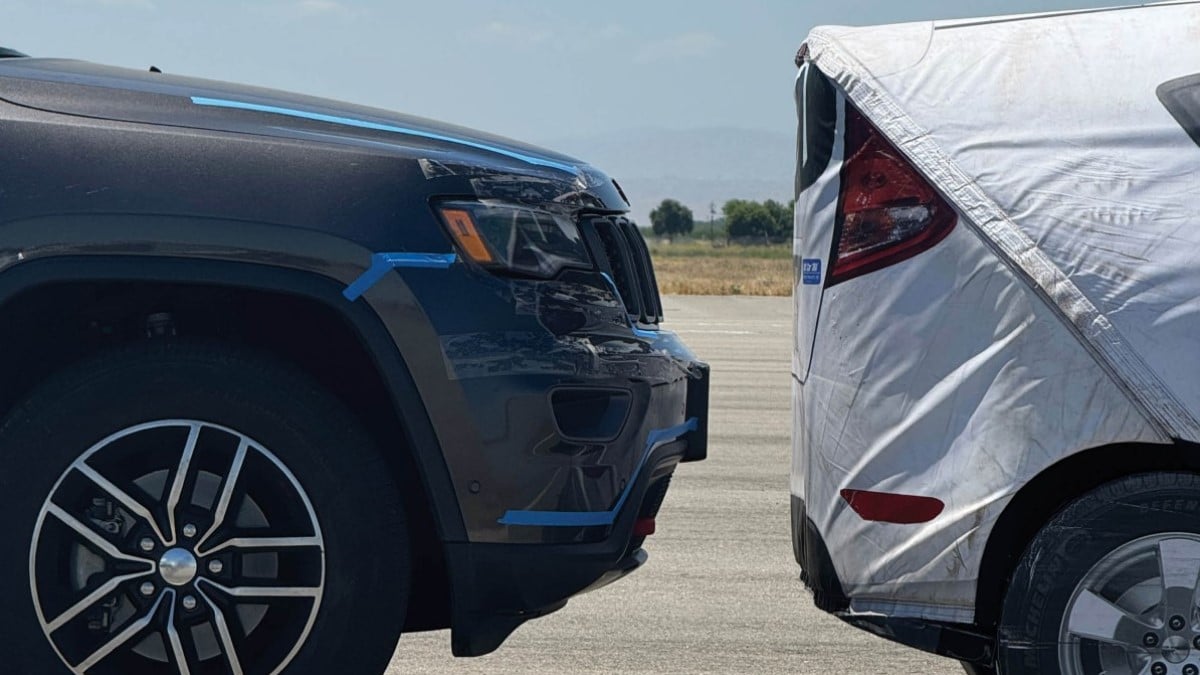
AAA put two groups of cars through a series of AEB tests. Both groups included cars of the same make and model. One group was from model years 2017 and 2018, and the other was from model year 2024.

The new group outperformed the old.

Tested cars included:

• 2017 and 2024 Jeep Cherokee

• 2018 and 2024 Nissan Rogue

• 2018 and 2024 Subaru Outback

They drove each car toward a dummy car designed so that sensors would detect it as if it were a normal car but made soft enough to hit safely, conducting the drives at steady rates of 12, 25, 35, 45, and 55 mph.

The Results

“New model vehicles (2024) were nearly twice as likely to avoid a collision as older model vehicles,” the researchers write.

Every 2024 car avoided a collision at 12, 25, and 35 mph. Older models avoided 73% of collisions at 12 mph, 47% at 25 mph, and 33% at 35 mph.

Above 35 mph, things got more targeted, as researchers only tested vehicles that avoided collisions at lower speeds.

“Three out of four vehicles evaluated were able to avoid a collision at 45 mph. The test speed was increased to 55 mph for those vehicles that avoided a collision at 45 mph. None of these remaining vehicles tested could avoid a collision,” AAA says.

Limitations of AEB Systems

Some automakers now advertise AEB systems capable of detecting bicyclists or pedestrians, but AAA did not test those claims. Researchers tested only forward collision avoidance systems.

However, an insurance industry safety lab, the Insurance Institute for Highway Safety (IIHS), has tested those claims. In testing earlier this year, the IIHS found AEB systems were much less successful at detecting a motorcycle.

Some also advertise reverse AEB systems intended to prevent drivers from hitting a car when backing up. Those systems struggled in AAA testing in February.

They’re Likely to Keep Improving

Until now, AEB has been unregulated. In April, the federal government announced rules that will mandate AEB on all cars sold in the U.S. beginning in 2029.

Mandating something everyone already does sounds redundant, but the National Highway Traffic Safety Administration (NHTSA) has a reason for the move.

The new rule will require cars to pass specific tests.

“The new standard requires all cars be able to stop and avoid contact with a vehicle in front of them up to 62 miles per hour,” NHTSA says. Cars must also “detect pedestrians in both daylight and darkness. In addition, the standard requires that the system apply the brakes automatically up to 90 mph when a collision with a lead vehicle is imminent and up to 45 mph when a pedestrian is detected.”

Though AAA’s tests showed improvement, none of the cars they tested could pass that test.

Automakers have five years to improve their AEB systems enough to pass it.


Source link

2025 Acura Integra vs. 2025 BMW 2 Series Gran Coupe Comparison

0


The market for small luxury cars remains alive and well, thanks to models like the Acura Integra and BMW 2 Series. Each represents the least expensive means of gaining entry into Acura or BMW ownership. They are also sized right for dealing with hectic urban traffic or negotiating tight parking spots.

Having debuted for 2023, the Integra rolls into 2025 virtually unchanged from last year. The BMW 2 Series, meanwhile, launches its second generation of Gran Coupe. The broader 2 Series lineup also includes 2-door coupe models, but we’re focusing on this 4-door variant since it’s more of a direct rival to the Integra. Available with front-wheel drive (FWD) or all-wheel drive (AWD), the Gran Coupe also offers a choice of two turbocharged 4-cylinder engines.

To determine which better fits your budget and driving needs, let’s take a closer look at the 2025 Acura Integra and the 2025 BMW 2 Series Gran Coupe.

2025 Acura Integra

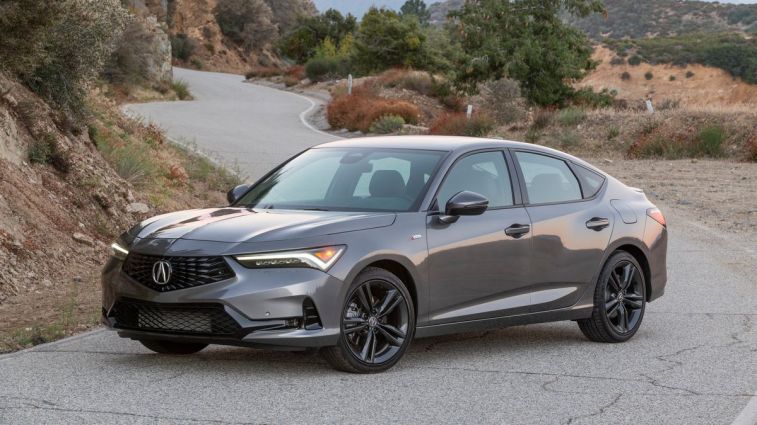
2024 Acura Integra A-Spec on a mountain road.2024 Acura Integra A-Spec on a mountain road.

The 2025 Integra starts at $34,195, and it is available in base, A-Spec, A-Spec w/Technology, and Type S variants. The range-topping Type S comes in at $53,795.

Acura Integra Highlights

Enjoyable to drive: The Integra Type S gets all the glory with its 320-horsepower turbo 4-cylinder engine and manual-transmission driving ethos. But then, it is based on the wildly entertaining Honda Civic Type R. That said, the standard Integra, with its 200-hp turbo 1.5-liter 4-cylinder, is also engaging, if not nearly as rapid when the gas pedal is floored. Light and accurate steering response is complemented by a comfortable ride during long highway drives.

Solid value: Starting at $34,195, the Integra is priced lower than its direct luxury rivals. Acura vehicles also enjoy strong resale values.

Roomy trunk: A small car means a small trunk, right? Not with the Integra. The rear hatch opens to 24.3 cubic feet of space. This expands into a much larger (and level) cargo area when the 60/40-split rear seats are folded flat.

Check this week’s Fair Purchase Price or see the Integra models for sale near you.

2025 BMW 2 Series Gran Coupe

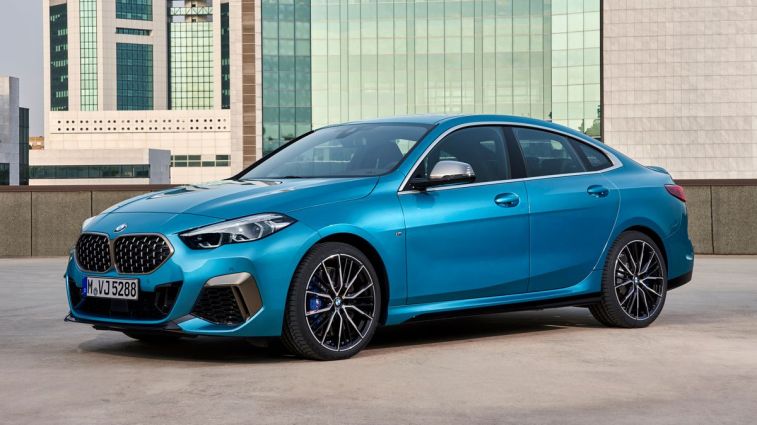
2024 BMW 2 Series Gran Coupe2024 BMW 2 Series Gran Coupe

The 2025 BMW 2 Series Gran Coupe enters a new generation this year. The 2025 lineup starts with the 228i sDrive (enjoying 13 hp more than the previous model), priced from $40,775 — still BMW’s most affordable new vehicle. The 228 xDrive opens at $42,775, and the top M235 xDrive Gran Coupe starts at $50,675.

BMW 2 Series Highlights

Practical yet stylish body: It’s kind of odd how the term “coupe” started being used for sleek 4-door sedans or even high-riding SUVs with tapering rooflines. But there’s no denying the 2 Series Gran Coupe cuts a stylish path through traffic. It looks sporty yet doesn’t rely on over-the-top design details.

Adaptive M Suspension: This is standard equipment for every new 2025 2 Series Gran Coupe, bringing poise and pliancy. We love how BMW cars drive, and having this as part of the package makes the Gran Coupe especially compelling.

All-wheel drive: All-wheel drive (known along the corridors of BMW as xDrive) comes with the 228i xDrive Gran Coupe for $2,000 more. xDrive is fitted as standard on the M235 xDrive Gran Coupe. This alone could seal the deal for many compact luxury sedan shoppers since the Integra is front-wheel-drive only. The M235i also features a 302-hp turbo 4-cylinder. Punch the accelerator, and the car only requires 4.7 seconds to hit 60 mph from a standstill.

Check this week’s Fair Purchase Price or see the 2 Series models for sale near you.

Similarities

The Integra and 2 Series are most similar when comparing lower, less expensive trims. The 228i sDrive Gran Coupe and Integra are both front-wheel drive, and each has seating for five (in theory), although four is far more comfortable in both cases. They also have substantial amounts of standard features, including driver aids like blind-spot monitoring, rear cross-traffic alert, and lane-keeping assistance. 

Conclusion

The Acura Integra strikes first with its lower price, roomier trunk, and relatively generous rear legroom. It’s clear to us that Acura has put a lot of time and energy into creating a small luxury car that combines personality with practicality. The Type S only adds to the Integra’s impressive résumé, particularly since it comes with a 6-speed manual exclusively. That’s pretty hardcore for a luxury marque.

The 2 Series Gran Coupe does an admirable job as BMW’s affordable ambassador, yet it doesn’t feel compromised. Its lithe handling and decent pep from its 241-hp turbo 4-cylinder allow it to scoot from a standstill to 60 mph in a claimed 5.8 seconds (BMW usually understates such figures). The M235i xDrive variant packs more horsepower and added grip thanks to its standard all-wheel-drive system.

Given its substantially lower price, better powertrain warranty, and similarly fun driving manners, the Integra gets the nod in this comparison of two fine entry-level offerings from premium manufacturers.

Specifications 

 2025 Acura Integra 2025 BMW 2 Series
Starting Price$34,195 $40,775
Popular Powertrains  
EngineTurbo 1.5-liter 4-cylinderTurbo 2.0-liter 4-cylinder
Horsepower200 hp @ 6,000 rpm241 hp @ 4,500-6,500 rpm
Torque192 lb-ft @ 1,800-5,000 rpm295 lb-ft @ 1,500-4,000 rpm
TransmissionCVT7-speed automatic
Fuel economy30 mpg city/37 mpg highway/33 mpg combinedNA
Also AvailableTurbo 2.0-liter 4-cylinder, 6-speed manualTurbo 2.0-liter 4-cyl (M235i), AWD
Specs   
Basic Warranty4 years/50,000 miles 4 years/50,000 miles
Powertrain Warranty6 years/70,000 miles 4 years/50,000 miles
NHTSA Overall Safety5 stars NA
Max Seating Capacity5 5
Wheelbase107.7 inches 105.1 inches
Overall Length185.8 inches 179.2 inches
Width72.0 inches 70.9 inches
Height55.5 inches 56.9 inches
Turning Diameter38.1 feet 38.4 feet
Headroom, Front37.6 inches NA
Headroom, 2nd Row36.4 inches NA
Legroom, Front42.3 inches NA
Legroom, 2nd Row37.4 inches NA
Shoulder Room, Front57.0 inches NA
Shoulder Room, 2nd Row56.0 inchesNA
Cargo Volume23.4 cubic feet NA


Source link

J. Crew’s Fall Sale Has 30% Off Travel Clothes

0


Travelers’ ears should perk up at the mention of a J. Crew sale because the brand is known for its wardrobe basics, which define the perfect carry-on capsule wardrobe. Think button-down shirts, soft tees, lightweight sweaters, and slip-on loafers. While you can always head to the sale section, there’s no need to — J. Crew’s entire site is 30 percent off right now. And, if you sign up to be a part of their free loyalty points program, J. Crew Passport, you can take an extra 15 percent off your entire cart with the code “FAMILY.”

As a vintage J. Crew fan, I love how they’re resurfacing their catalog-loved classic styles from the ‘90s, like this slip dress and this barn jacket. I’ll be refreshing my basics with items from this sale while I can get them at a discount. Here are the styles I’m eyeing, starting at $35.

Pima Cotton T-shirt in Stripe

J.Crew


In France, they love a stripe, and this silky-soft cotton tee gives serious Parisian vibes. Style this nautical-looking tee with dark-wash sailor trousers, a leather belt, and a pair of Mary Janes for an effortless French look with signature stripes. Another shopper has even more French fashion tips I’ll be taking:“[It’s] awesome with cropped jeans and sneakers or flats. I pair it with a small bandana around my neck and it makes it look so good.”

Garçon Classic Shirt

J.Crew


This perfectly relaxed button-down is a steal at 32 percent off right now. Made of organic cotton, this shirt is breathable and perfect for fall layering. Style it with jeans and pops of red accessories, and wear it tucked in or out. Reviewers say this has a little stretch for added comfort.

Kate Straight-leg Pant 

J.Crew


J. Crew describes these Kate pants as the pair that “goes with everything,” which is exactly what I look for when packing bottoms for a trip. A straight-leg silhouette is timeless. Plus, the Kate pant is made from a proprietary stretchy material that never loses its shape. Right now, shop these classic pants for under $100.

Gwyneth Slip Dress

J.Crew


I pack a Champagne-colored slip dress on all my travels and wear it styled down with sneakers and a cardigan, or styled up with heels and a blazer — it’s a hard-working chameleon for minimalist travelers. All four neutral colors are now 32 percent off, but the camel and light khaki feel like fall.

Scoop Neck Vest

J.Crew


This vest could be worn as a top, or layered on top of a white tee or button-down shirt. It hits the perfect place on your waist, so you don’t have to tuck in fabric and it still feels polished. I’d pack this in my fall suitcase for its versatility in feeling both casual and elegant. One shopper agrees, writing, “Lovely top that can be dressed down or up for many occasions! Flattering fit, and can be worn as is or with a T-shirt underneath.”

Wren Slim Western Chambray Shirt 

J.Crew


Western wear is trending, but frankly, classic Americana never goes out of style. This fitted shirt has Western cuts and contrast stitching. Instead of packing a thick and rigid denim jacket, try a chambray (a type of cotton fabric) shirt instead — you’ll get the look of denim without the heavy weight. One shopper found the cut and shape of the shirt to be ideal, noting, “It’s a perfect relaxed fit without being too baggy. Many ways to style it.”

Rollneck Sweater 

J.Crew


J. Crew has nailed the perfect amount of slouchiness in this lightweight sweater. You’ll stay warm in this top thanks to a blend of wool and alpaca in the fabric. One shopper who bought several colors called this a “cozy winter staple,” and referenced its perfect length in how to style it: “It’s pretty soft and looks great French tucked.”

Sherpa-lined Chelsea Rain Boots

J.Crew


The sherpa-lining on these classic rain boots means these could be packed for winter travels too. According to reviews, these boots have sold out in the past, so now could be the time to get them for a discounted price before they’re gone.

Maison Ruched Loafers

J.Crew


Loafers are ideal for travelers. They’re easy to slip on, comfortable, and look polished. The brick-red suede and classic black leather styles are on sale right now, and both colors would blend in perfectly with fall wardrobes. I like that J. Crew keeps this loafer classic with a slim sole and upper free of buckles or embellishments, making it lighter and more versatile for travel wardrobes.

Seaboard Soft-knit Shirt

J.Crew


Plaid and autumn just go together. This button-down has the “feel of a sweater but the look of a shirt,” according to the brand. Like a good workwear item, the shirt has a bit of flexibility and stretch thanks to a double-knit fabric. With over 200 reviews and an average 4.8-star rating, it’s clear this shirt is a recurring seasonal favorite. Reviewers and the brand note that the shirt runs slightly large, making it ideal as a roomy layer between a T-shirt and a fall jacket.

Long-sleeve Cotton Mesh-stitch Johnny-collar Sweater-polo

J.Crew


This travel-friendly basic is inspired by the timeless sweater polos of the ‘50s. Made of 100 percent cotton, it will feel soft and natural on the skin, unlike polyester blends. With a relaxed collar, this shirt looks put together with no effort: wear it with chinos or tailored trousers for that trending “Italian Grandpa,” look.

MacAlister Boots

J.Crew


These classic chukka boots are made of Italian suede and get even better with wear as they break in and acquire an aged look. One shopper remarked on their durability: “Purchased my last pair more than 15 years ago and just recently bought another color!” Wear these with a statement sock for a pop of color.

Heritage Brushed Rib-knit Jogger Pant

J.Crew


Travel outfits don’t get more comfortable than a soft pair of joggers and a spacious hoodie. J. Crew’s joggers are made of 100 percent cotton, which results in a super soft feel against the skin, with a shopper noting, “It was hard to find 100% cotton joggers since most are a cotton polyester blend.” More than just your average sweatpants, the joggers are “inspired by the look of vintage military-issue garments,” according to the brand. Wear these on a flight or pack in your carry-on for trips to the hotel gym.

Long-sleeve Sueded Cotton Polo Shirt

J.Crew


A breathable cotton polo shirt is a great foundation for a fall outfit. Layer this with a cardigan and a light jacket, or wear it alone with jeans or chinos. I suggest packing one in each color — navy, black, and ivory — so you have a well-rounded selection of colors that go with any outfit.

Harrington Jacket in Cotton Twill

J.Crew


This fall transition jacket hits at the waist and has large side pockets for keeping your hands warm. Other design features, like durable cotton twill construction and elastic cuffs, nod to the Harrington jacket’s origins as a tough workwear jacket. Even though it’s lightweight for fall, the coat’s lining helps keep you warm. Layer this with a T-shirt on warmer fall days, and a sweater on colder days near the end of the season.

Love a great deal? Sign up for our T+L Recommends newsletter and we’ll send you our favorite travel products each week.


Source link

Ford developing second midgate pass-through design

0


Ford has submitted another patent application for a pickup truck midgate, with more variations on the design of a feature normally associated with rival General Motors.

The first patent application appeared earlier this year, showing a design similar to what GM has used previously. This second patent—published by the United States Patent and Trademark Office (USPTO) September 17 but originally filed in 2020—shows two alternatives that are a bit more elaborate.

Ford midgate patent image (September 2024)

Ford midgate patent image (September 2024)

In one version, the panel separating the bed from the cab flips up, creating a space that allows longer items to extend from the bed into the cab in typical midgate fashion. However, the panel also mounts flush with the bed rails to create a flat work surface complete with power outlets.

Ford also dreamed up a gullwing-like arrangement where both the rear wall of the cab and the rear window flip upwards, forming a canopy over the bed. Or the entire truck could then be encased in a tent for camping, with both the cab and bed serving as enclosed living space, Ford suggests.

Ford midgate patent image (September 2024)

Ford midgate patent image (September 2024)

Either setup would be very different from the midgates offered so far by GM, which introduced the idea in the early 2000s on the Chevrolet Avalanche and Cadillac Escalade EXT—two vehicles that attempted to split the different between pickup and SUV with their midgates. GM brought it back for electric pickups, including the Chevy Silverado EV and GMC Sierra EV, based on its Ultium architecture.

Ford’s own next-generation electric truck has been delayed, ostensibly so the automaker can focus on hybrids and cheaper EVs, but that doesn’t rule out use of a midgate on another model. Exactly what model that might be remains to be seen.


Source link

Physical AI Accelerated by Three NVIDIA Computers for Robot Training, Simulation and Inference

0


ChatGPT marked the big bang moment of generative AI. Answers can be generated in response to nearly any query, helping transform digital work such as content creation, customer service, software development and business operations for knowledge workers.

Physical AI, the embodiment of artificial intelligence in humanoids, factories and other devices within industrial systems, has yet to experience its breakthrough moment.


This has held back industries such as transportation and mobility, manufacturing, logistics and robotics. But that’s about to change thanks to three computers bringing together advanced training, simulation and inference.

The Rise of Multimodal, Physical AI

For 60 years, “Software 1.0” — serial code written by human programmers — ran on general-purpose computers powered by CPUs.

Then, in 2012, Alex Krizhevsky, mentored by Ilya Sutskever and Geoffrey Hinton, won the ImageNet computer image recognition competition with AlexNet, a revolutionary deep learning model for image classification.

This marked the industry’s first contact with AI. The breakthrough of machine learning — neural networks running on GPUs — jump-started the era of Software 2.0.

Today, software writes software. The world’s computing workloads are shifting from general-purpose computing on CPUs to accelerated computing on GPUs, leaving Moore’s law far behind.

With generative AI, multimodal transformer and diffusion models have been trained to generate responses.

Large language models are one-dimensional, able to predict the next token, in modes like letters or words. Image- and video-generation models are two-dimensional, able to predict the next pixel.

None of these models can understand or interpret the three-dimensional world. And that’s where physical AI comes in.

Physical AI models can perceive, understand, interact with and navigate the physical world with generative AI. With accelerated computing, multimodal physical AI breakthroughs and large-scale physically based simulations are allowing the world to realize the value of physical AI through robots.

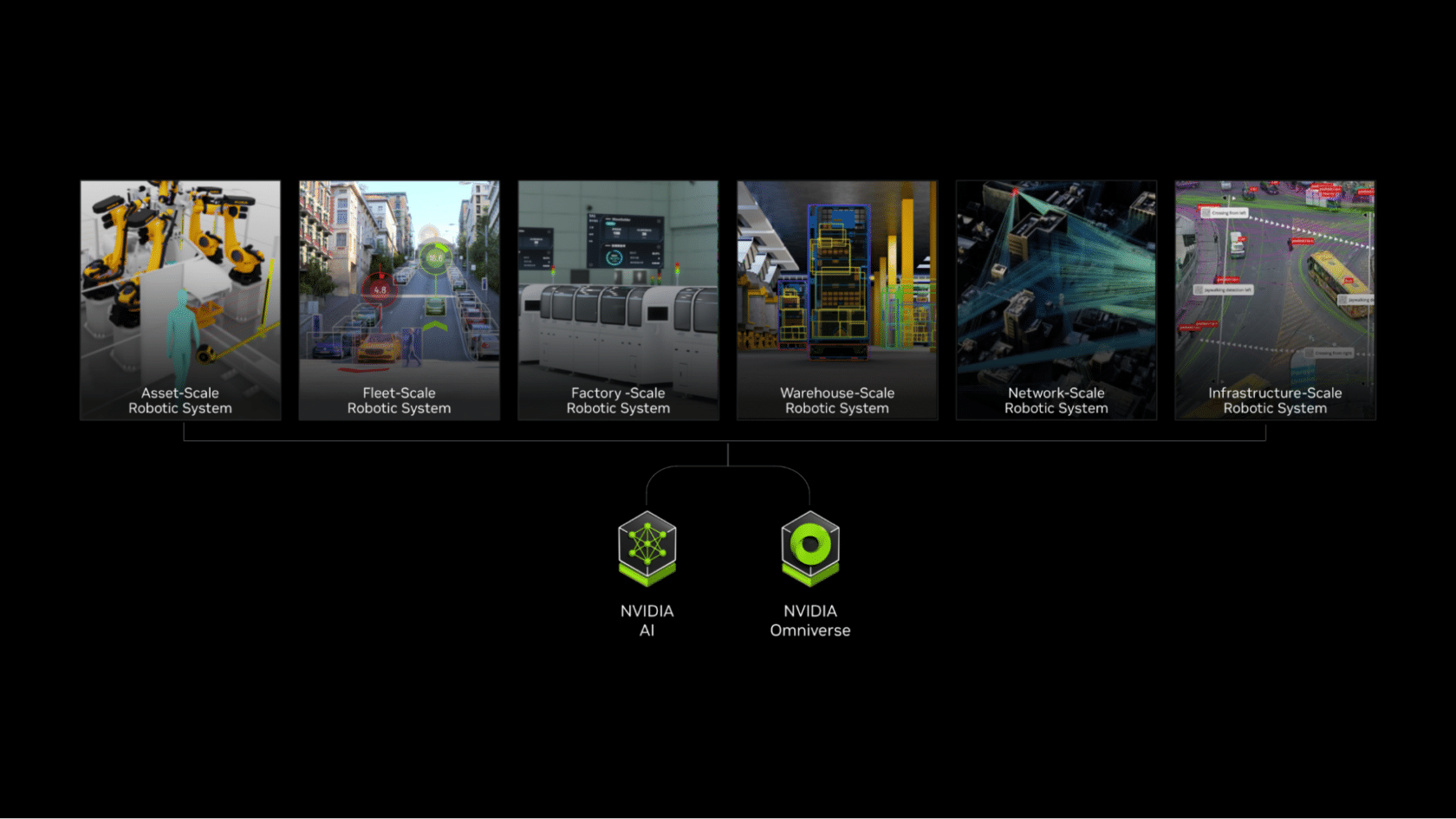
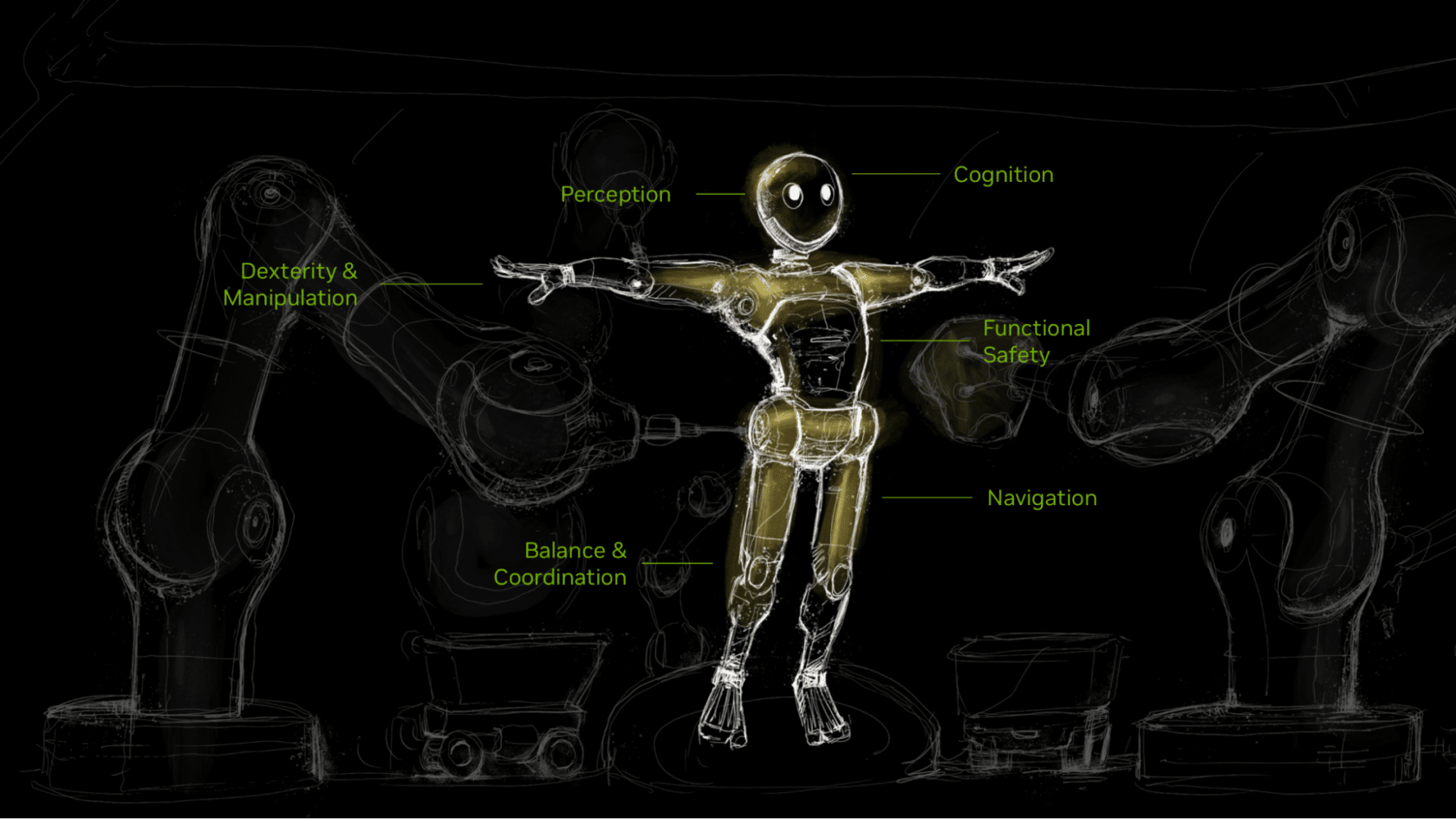
A robot is a system that can perceive, reason, plan, act and learn. Robots are often thought of as autonomous mobile robots (AMRs), manipulator arms or humanoids. But there are many more types of robotic embodiments.

In the near future, everything that moves, or that monitors things that move, will be autonomous robotic systems. These systems will be capable of sensing and responding to their environments.

Everything from surgical rooms to data centers, warehouses to factories, even traffic control systems or entire smart cities will transform from static, manually operated systems to autonomous, interactive systems embodied by physical AI.

The Next Frontier: Humanoids Robots

Humanoid robots are an ideal general-purpose robotic manifestation because they can operate efficiently in environments built for humans, while requiring minimal adjustments for deployment and operation.

The global market for humanoid robots is expected to reach $38 billion by 2035, a more than sixfold increase from the roughly $6 billion for the period forecast nearly two years ago, according to Goldman Sachs.

Researchers and developers around the world are racing to build this next wave of robots.

Three Computers to Develop Physical AI 

To develop humanoid robots, three accelerated computer systems are required to handle physical AI and robot training, simulation and runtime. Two computing advancements are accelerating humanoid robot development: multimodal foundation models and scalable, physically based simulations of robots and their worlds.

Breakthroughs in generative AI are bringing 3D perception, control, skill planning and intelligence to robots. Robot simulation at scale lets developers refine, test and optimize robot skills in a virtual world that mimics the laws of physics — helping reduce real-world data acquisition costs and ensuring they can perform in safe, controlled settings.

NVIDIA has built three computers and accelerated development platforms to enable developers to create physical AI.

First, models are trained on a supercomputer. Developers can use NVIDIA NeMo on the NVIDIA DGX platform to train and fine-tune powerful foundation and generative AI models. They can also tap into NVIDIA Project GR00T, an initiative to develop general-purpose foundation models for humanoid robots to enable them to understand natural language and emulate movements by observing human actions.

Second, NVIDIA Omniverse, running on NVIDIA OVX servers, provides the development platform and simulation environment for testing and optimizing physical AI with application programming interfaces and frameworks like NVIDIA Isaac Sim.

Developers can use Isaac Sim to simulate and validate robot models, or generate massive amounts of physically-based synthetic data to bootstrap robot model training. Researchers and developers can also use NVIDIA Isaac Lab, an open-source robot learning framework that powers robot reinforcement learning and imitation learning, to help accelerate robot policy training and refinement.

Lastly, trained AI models are deployed to a runtime computer. NVIDIA Jetson Thor robotics computers are specifically designed for compact, on-board computing needs. An ensemble of models consisting of control policy, vision and language models composes the robot brain and is deployed on a power-efficient, on-board edge computing system.

Depending on their workflows and challenge areas, robot makers and foundation model developers can use as many of the accelerated computing platforms and systems as needed.

Building the Next Wave of Autonomous Facilities

Robotic facilities result from a culmination of all of these technologies.

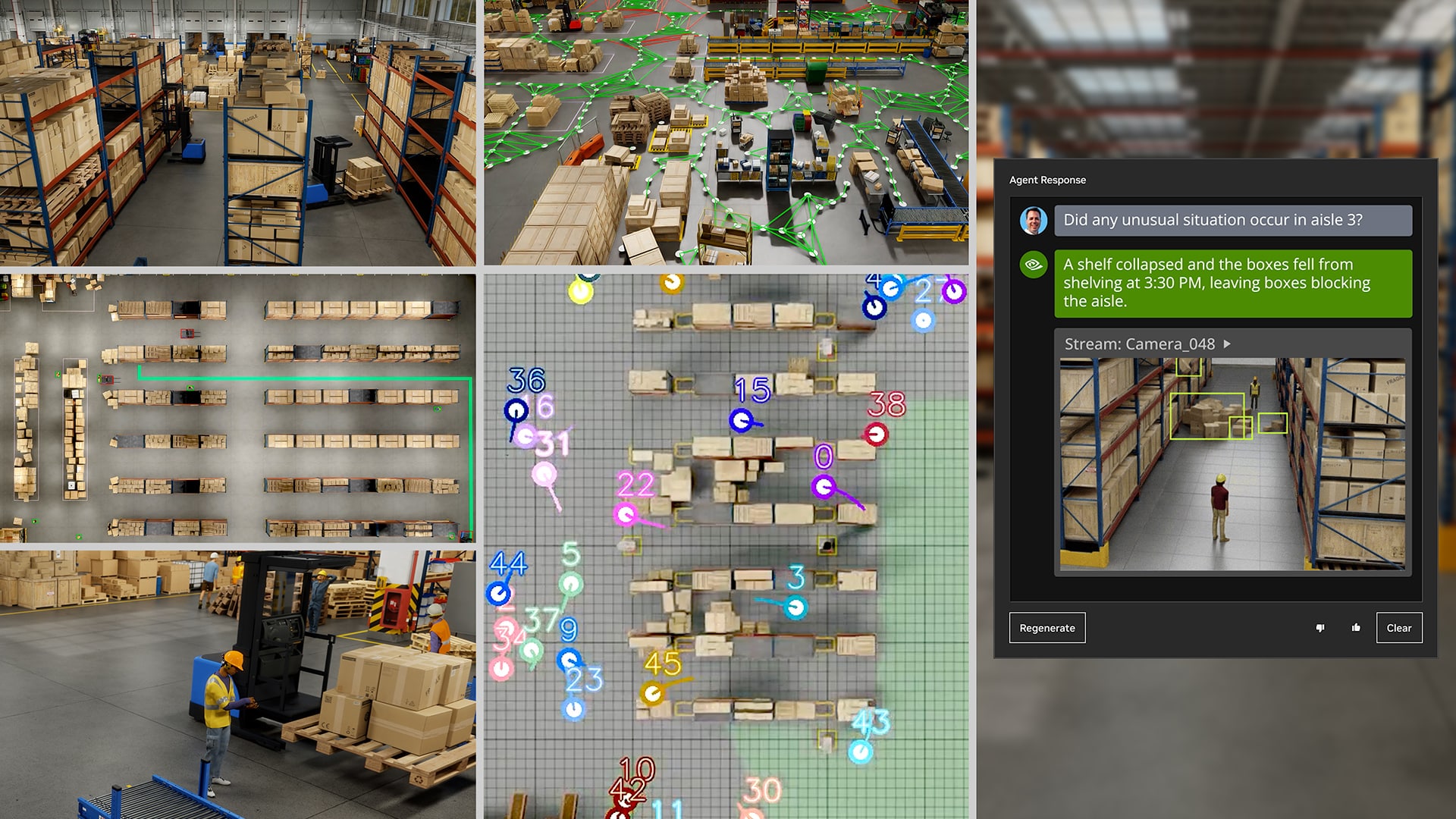
Manufacturers like Foxconn or logistics companies like Amazon Robotics can orchestrate teams of autonomous robots to work alongside human workers and monitor factory operations through hundreds or thousands of sensors.

These autonomous warehouses, plants and factories will have digital twins. The digital twins are used for layout planning and optimization, operations simulation and, most importantly, robot fleet software-in-the-loop testing.

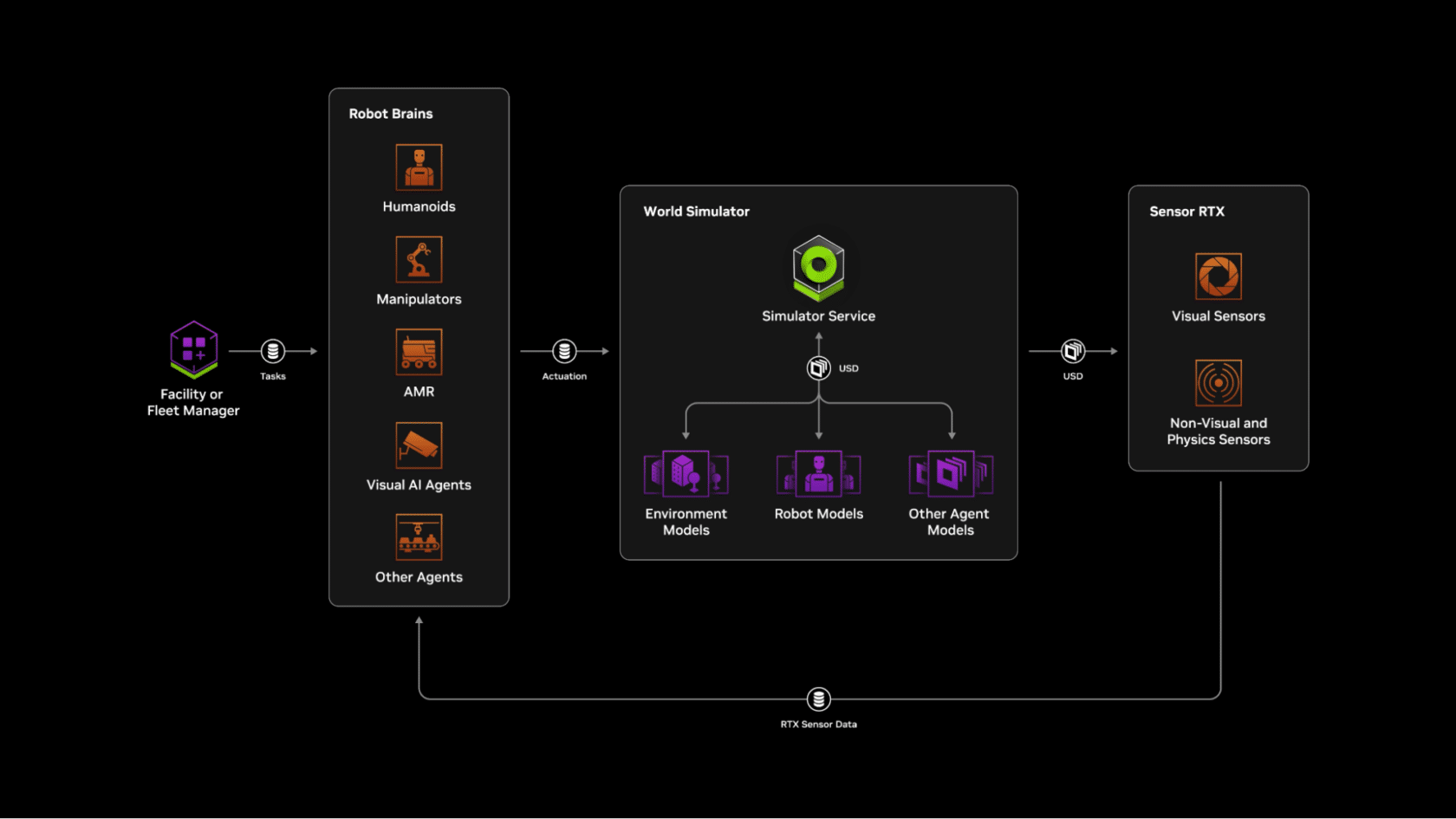
Built on Omniverse, “Mega” is a blueprint for factory digital twins that enables industrial enterprises to test and optimize their robot fleets in simulation before deploying them to physical factories. This helps ensure seamless integration, optimal performance and minimal disruption.

Mega lets developers populate their factory digital twins with virtual robots and their AI models, or the brains of the robots. Robots in the digital twin execute tasks by perceiving their environment, reasoning, planning their next motion and, finally, completing planned actions.

These actions are simulated in the digital environment by the world simulator in Omniverse, and the results are perceived by the robot brains through Omniverse sensor simulation.

With sensor simulations, the robot brains decide the next action, and the loop continues, all while Mega meticulously tracks the state and position of every element within the factory digital twin.

This advanced software-in-the-loop testing methodology enables industrial enterprises to simulate and validate changes within the safe confines of the Omniverse digital twin, helping them anticipate and mitigate potential issues to reduce risk and costs during real-world deployment.

Empowering the Developer Ecosystem With NVIDIA Technology

NVIDIA accelerates the work of the global ecosystem of robotics developers and robot foundation model builders with three computers.

Universal Robots, a Teradyne Robotics company, used NVIDIA Isaac Manipulator, Isaac accelerated libraries and AI models, and NVIDIA Jetson Orin to build UR AI Accelerator, a ready-to-use hardware and software toolkit that enables cobot developers to build applications, accelerate development and reduce the time to market of AI products.

RGo Robotics used NVIDIA Isaac Perceptor to help its wheel.me AMRs work everywhere, all the time, and make intelligent decisions by giving them human-like perception and visual-spatial information.

Humanoid robot makers including 1X Technologies, Agility Robotics, Apptronik, Boston Dynamics, Fourier, Galbot, Mentee, Sanctuary AI, Unitree Robotics and XPENG Robotics are adopting NVIDIA’s robotics development platform.

Boston Dynamics is using Isaac Sim and Isaac Lab to build quadrupeds and humanoid robots to augment human productivity, tackle labor shortages and prioritize safety in warehouses.

Fourier is tapping into Isaac Sim to train humanoid robots to operate in fields that demand high levels of interaction and adaptability, such as scientific research, healthcare and manufacturing.

Using Isaac Lab and Isaac Sim, Galbot advanced the development of a large-scale robotic dexterous grasp dataset called DexGraspNet that can be applied to different dexterous robotic hands, as well as a simulation environment for evaluating dexterous grasping models.

Field AI developed risk-bounded multitask and multipurpose foundation models for robots to safely operate in outdoor field environments, using the Isaac platform and Isaac Lab.

The era of physical AI is here — and it’s transforming the world’s heavy industries and robotics.

Get started with NVIDIA Robotics. 


Source link