Home Blog Page 383

2025 Hyundai Kona Electric review

0


The Hyundai Kona Electric has grown up.


Note: This article is based on our most recent review of the Kona, as a new vehicle isn’t available for us to test and there have been no major changes to specifications since its publication.

Hyundai Australia recently announced MY25 changes for the Kona line-up, with the biggest change being the availability of the N Line Package for Kona Electric models.

We have updated key details such as pricing and specifications with the most up to date information available, and added imagery of the latest model where applicable.

Read the latest price and specs article here for details of the MY25 ICE and Hybrid range, and here for the Electric.


WATCH: Paul’s video review of the 2024 Hyundai Kona Hybrid N Line

The first-generation Hyundai Kona Electric was early to the electric car party in Australia, but it has recently been overtaken by newer rivals offering more refined driving experiences, more modern interior technology, and more space.

That’s where the second-generation car tested here comes in. Like the petrol and hybrid Kona with which it shares its bones, the Electric is designed to offer more space, up-to-date technology, and a more polished drive than its predecessor.

Despite all those steps forward, it hasn’t been smacked with a monster price hike.

The base Kona Electric is actually $500 cheaper than the car it replaces, although the top-end Premium Extended Range on test here is $4000 more expensive than its now-defunct equivalent.

Does the new Kona Electric represent a great leap forward, or is it an incremental upgrade to the old model?

How does the Hyundai Kona compare?

View a detailed breakdown of the Hyundai Kona against similarly sized vehicles.

Hyundai Kona cutout image

Hyundai

Kona

How much does the Hyundai Kona cost?

You pay a healthy premium to get your hands on the Premium Extended Range. It’s $10,000 pricier than the base Extended Range.

MY25 Kona + Kona Hybrid

ModelPrice before on-road costs
2025 Hyundai Kona 2.0 petrol$32,500
2025 Hyundai Kona 1.6 Hybrid$36,500
2025 Hyundai Kona N Line 2.0 petrol$36,500
2025 Hyundai Kona N Line 1.6 Hybrid$40,500
2025 Hyundai Kona N Line 1.6T AWD$40,500
2025 Hyundai Kona Premium 2.0 petrol$39,500
2025 Hyundai Kona Premium 1.6 Hybrid$43,500
2025 Hyundai Kona N Line Premium 2.0 petrol$42,500
2025 Hyundai Kona N Line Premium 1.6 Hybrid$46,500
2025 Hyundai Kona N Line Premium 1.6T AWD$46,500

MY25 Kona Electric

ModelPrice before on-road costs
2025 Hyundai Kona Electric Standard Range$54,000
2025 Hyundai Kona Electric Extended Range$58,000
2025 Hyundai Kona Electric N Line Extended Range$62,000
2025 Hyundai Kona Electric Premium Extended Range$68,000
2025 Hyundai Kona Electric N Line Premium Extended Range$71,000

To see how the Hyundai Kona stacks up against its rivals, check out our comparison tool

What is the Hyundai Kona like on the inside?

Gone is the flight-deck-like transmission tunnel of the old Kona, replaced by a clean and modern design shared with high-end petrol and hybrid models. It makes the cramped previous-generation model feel very dated.

Presentation is impressive across the range, and the fundamentals are solid. The Premium elevates itself with white leather-clad seats (heated and cooled, naturally), ambient lighting, and a posh-looking cloth knit headliner.

The front seats are comfortable on long hauls and offer a broad range of adjustment, allowing tall or short drivers to get comfortable, while the view over the bonnet is more ‘shrunken Tucson‘ than ‘overgrown i30‘ as was previously the case.

Hyundai has also realised that buttons aren’t the enemy, which makes the Kona cabin much easier to navigate.  It’s easy to flick into Sport, for example, or knock the temperature up by one degree without taking your eyes off the road, as should be the case.

The infotainment software (which is now rolling out across the broader range) is easy to use, and touches like having the shortcut buttons in the bottom right-hand corner of the screen instead of the top left make life easier in right-hand drive Australia.

Wireless Apple CarPlay and Android Auto are rolling out on some Hyundai models with built-in navigation. It was missing from the new Kona at launch, and is currently being rolled out with an update to cars locally.

Hyundai’s digital dashboard is clean and functional, but it’s not particularly feature-rich relative to what you get in a Volkswagen Group product – you can’t have maps in your driver’s display, for example.

The flipside? There’s still lots of cheap, hard plastics, from the sides of the dashboard to the tops of the doors.

We called it out in the petrol variant, and it’s more conspicuous here given the Electric Premium is more expensive again. It’s pricier than a base Ioniq 5, which has a more grown-up interior design. Then again, we’d take hard plastics over some of the weirdness in the Kona’s rivals from China.

But rear seat space is miles better in this Kona than the last, starting with the wider-opening doors.

Adults don’t need to contort themselves to squeeze in anymore, which is a step forward, and once back there you get levels of legroom and headroom comparable to a Kia Seltos or BYD Atto 3.

The air vents and USB-C ports are family-friendly touches, and the broader rear bench will keeping warring kids at bay more effectively than before.

You even get a V2L three-pin outlet back there in the rear, allowing passengers to charge a laptop on the move.

The last Kona EV felt very compromised, with a higher floor than the petrol equivalent, forcing passengers into an awkward knees-up position.

The new model has more toe-room under the front seats, and won’t make long-legged passengers feel nearly as cramped.

ISOFIX anchors on the outboard seats and a trio of top-tether points are present, as is a fold-down central armrest.

Claimed boot space is a claimed 407 litres (up 75L on the old car, down 132L on the petrol Kona), expanding to 1241 litres with the rear seats folded. There’s space for charging cables under the bonnet in a 27L storage space.

Rural buyers will also be happy to know there’s a space-saver spare wheel beneath the boot floor, which is rare in electric cars.

DimensionsHyundai Kona
Length4350mm (4385mm N Line
Height1585mm – Kona Hybrid
1590mm – Kona
Width1825mm
Wheelbase2660mm
Boot space (VDA)407L (rear seats up)
1241L (rear seats folded)

To see how the Hyundai Kona stacks up against its rivals, check out our comparison tool

What’s under the bonnet?

Where the last Kona Electric offered 395Nm of torque, the new one delivers just 255Nm. Hyundai says that’s still more than enough, and the change was made to improve driveability.

ModelHyundai Kona Electric Extended Range
DrivetrainSingle-motor electric
Battery64.8kWh lithium-ion
Power150kW
Torque255Nm
Driven WheelsFront-wheel drive
Weight1698kg
Energy efficiency (as tested)N/A
Claimed range444-505km
Max AC charge rate10kW
Max DC charge rate100kW

Having lived with a previous-generation Kona Electric for a while, we can say that’s no bad thing. It was prone to torque steer, and could never really put all that torque down to the road without feeling a bit wild.

To see how the Hyundai Kona stacks up against its rivals, check out our comparison tool

How does the Hyundai Kona drive?

The Kona Electric isn’t targeted at the sort of person who wants their electric car to feel like a spaceship.

It’s remarkably unremarkable, requiring a flat learning curve for anyone hopping out of a petrol or diesel car. It felt that way during our shorter launch drive, and it feels that way with more seat time.

Even in the more powerful Extended Range, the way it performs in the city is in keeping with the more expensive petrol 1.6-litre turbo engine. There’s no wheel spin or torque steer – both of which were real issues in the old Kona Electric. It just gets on with the job, backed by a subtle hum from the motor.

The steering is light, and even the more grown-up body is small enough to easily squeeze into parking spots or through tight laneways. It feels at home in the city, where you can lean on the instant low-down torque to squirt away from the traffic lights faster than most internal-combustion cars.

Hyundai’s regenerative braking has been improved in the transition from the original to the second-generation Kona Electric. It’s smoother to engage when you lift off at speed, and you’re now able to use Hyundai’s i-Pedal to avoid the brake pedal around town.

It’s silly that you still need to activate one-pedal driving every time you start the car though; the highest level it’ll default to still requires the driver puts their foot on the brake pedal to stop.

Will owners bother with the regenerative braking? Given this is meant to be an electric car for people who don’t want to drive a science experiment, maybe they won’t.

Hyundai hasn’t chased a sporty feeling here, instead opting for a relaxed suspension tune. It floats over speed bumps and potholes, although you’re always aware of the car’s weight.

1700kg isn’t morbidly obese by electric car standards, but it still weighs around 180kg more than a fully-loaded Kona N Line Hybrid and that’s hard to ignore.

On smooth highways, the Kona Electric feels quite grown up. There’s minimal wind and road noise, and there’s enough performance from the electric motor to have punch in reserve for overtaking at the legal limit.

But the soft suspension and chunky kerb weight figure conspire to make this quite a bouncy car over big highway crests and dips, taking one, two, sometimes three movements to control its mass. When the road gets interesting you can really throw the Kona Hybrid around; the Electric doesn’t enjoy being pushed hard.

The adaptive cruise control does a good job of maintaining a gap to the car in front, and the lane-keeping assist decisively nudges you back between the white lines if you stray.

Hyundai’s lane-centring system, which more actively controls the car’s position in the lane rather than intervening when you stray towards lines, is a bit too hands-on for our liking, though.

The driver attention monitoring is prone to false positives, flashing when you actually are looking at the road… which makes you look away. More refinement is needed, as is the case with the speed limit warning system.

Yes, it’s a European requirement. It’s also so deeply annoying, I would be rooting around online to try and work out a way to turn it off through the OBD II port.

To see how the Hyundai Kona stacks up against its rivals, check out our comparison tool

What do you get?

The 2024 Hyundai Kona Electric is available in two different trim levels – on test here is the flagship Premium variant.

Kona Electric (Base) highlights:

  • 17-inch alloy wheels
  • Space-saver spare wheel
  • Satin chrome belt line/roof spoiler garnish
  • Body-colour painted cladding
  • Heated exterior mirrors
  • MFR-type automatic LED headlights
  • Automatic high-beam
  • LED daytime running lights
  • LED combination tail lights
  • Rain-sensing window wipers
  • 12.3-inch digital instrument cluster
  • 12.3-inch touchscreen infotainment system
  • Over-the-air software update capability
  • Wired Apple CarPlay and Android Auto
  • Satellite navigation
  • 6-speaker sound system
  • Wireless phone charger
  • Dual-zone climate control
  • Proximity entry and push-button start
  • Remote start
  • Leather-wrapped steering wheel
  • Shift-by-wire column-mounted gear selector
  • LED interior lighting
  • Auto-dimming rear-view mirror
  • Luggage net
  • Heat pump
  • Battery conditioning system
  • Interior V2L port
  • Premium cloth upholstery

Kona Electric Premium adds:

  • AEB in Reverse
  • Blind-Spot View Monitor
  • Surround-view camera
  • Front, side, rear parking sensors
  • Remote Smart Parking Assist
  • 19-inch alloy wheels
  • Acoustic laminated windscreen
  • Solar control front door glass
  • Privacy rear glass
  • Sunrooof
  • Quad projector LED headlights
  • ‘Seamless Horizon’ front parking light
  • LED indicators
  • Handsfree powered tailgate
  • Head-up display
  • Bose 8-speaker premium sound system
  • Ambient interior lighting
  • Heated steering wheel
  • Cloth knit headliner
  • Leather-appointed upholstery
  • 10-way power driver’s seat with memory
  • 8-way power front passenger’s seat
  • Premium relaxation front seats
  • Heated and ventilated front seats
  • Heated rear outboard seats

All Hyundai Kona Electric variants also come standard with a five-year subscription to Bluelink connected car services.

Available functions include:

  • Connected satellite navigation
  • Point of interest send to car (inc. charging station)
  • Voice control system
  • Remote climate control, charging and charging port
  • Charging schedule
  • Scheduled climate control
  • DC/AC charging limits
  • Energy consumption monitoring
  • Charging alarm
  • Distance-to-empty monitor
  • Charging status

To see how the Hyundai Kona stacks up against its rivals, check out our comparison tool

Is the Hyundai Kona safe?

The new Kona recently received a four-star ANCAP safety rating, based on tests conducted by Euro NCAP.

CategoryHyundai Kona
Adult occupant protection80 per cent
Child occupant protection83 per cent
Vulnerable road user protection64 per cent
Safety assist60 per cent

It received 80 per cent for adult occupant protection, 83 per cent for child occupant protection, 64 per cent for vulnerable road user protection, and 60 per cent for safety assist.

To get a five-star rating overall, a car needs to receive scores of above 80 per cent in adult and child occupant protection and above 70 per cent for vulnerable road user protection and safety assist.

Standard safety features include:

  • 7 airbags
  • Autonomous emergency braking (AEB)
    • Pedestrian detection
    • Cyclist detection
    • Motorcycle detection
    • Junction assist
  • Evasive steering assist
  • Blind-spot assist
  • Safe Exit Warning
  • Rear cross-traffic alert
  • Driver attention warning
  • Intelligent Speed Limit Assist
  • Lane keep assist
  • Lane Following Assist
  • Adaptive cruise control with stop and go
  • Rear occupant alert
  • Front, rear parking sensors
  • Tyre pressure monitoring

Kona Electric Premium adds:

  • Rear AEB
  • Blind-Spot View Monitor
  • Surround-view camera
  • Front, side, rear parking sensors
  • Remote Smart Parking Assist

How much does the Hyundai Kona cost to run?

The Hyundai Kona Electric is covered by a five-year, unlimited-kilometre warranty, while its high-voltage battery pack is covered by an eight-year, 160,000km warranty.

Logbook servicing is required every 24 months or 30,000km, whichever comes first. The first three services are also capped at $520.

Running costsHyundai Kona Electric
Warranty5 years, unlimited kilometres – vehicle
8 years, 160,000 kilometres – EV battery
Roadside assistanceLifetime – service activated
Service intervals24 months or 30,000km
Capped-price servicingLifetime
Total capped-price service cost$1040 – 4 years or 60,000km pre-paid

To see how the Hyundai Kona stacks up against its rivals, check out our comparison tool

CarExpert’s Take on the Hyundai Kona

The Kona Electric is a solid stepping stone from petrol to electric power in a small SUV.

Where some of its rivals go out of their way to be different, the Kona is reassuringly conventional in how it goes about its business.

It’s also improved significantly over the first-generation car, which had trouble taming its torque, was tight in the back seats and boot, and expensive alongside its better-rounded rivals.

You can feel a but coming, right? We don’t know that the Electric Premium makes all that much sense, given how well equipped the base Extended Range is for $10,000 less.

It’s nicer inside, and the extra camera hardware and safety kit is unquestionably welcome, but the Extended Range is incredibly well rounded.

There’s no reason not to buy the Premium if you really want the extra kit, but it’s worth looking closely at the bigger Ioniq 5 given it’s actually $3000 cheaper if you do have closer to $70k to spend on an electric Hyundai SUV.

Interested in buying a Hyundai Kona? Get in touch with one of CarExpert’s trusted dealers here

Click the images for the full gallery

MORE: Everything Hyundai Kon


Source link

Ford tells some EV owners to stop using Tesla Supercharger NACS adapter

0


Ford is telling some electric vehicle customers to stop using the North American Charging Standard (NACS) adapters it provided for charging at Tesla Supercharger stations.

Ford led the industry last year in announcing a shift to the Tesla charge port, and in February it announced that it would ship free adapters to customers in late March. But last week the automaker issued a bulletin warning some customers not to use the adapters due to a “potential issue” that could result in reduced charging speeds, or potentially even damage to a vehicle’s charge port.

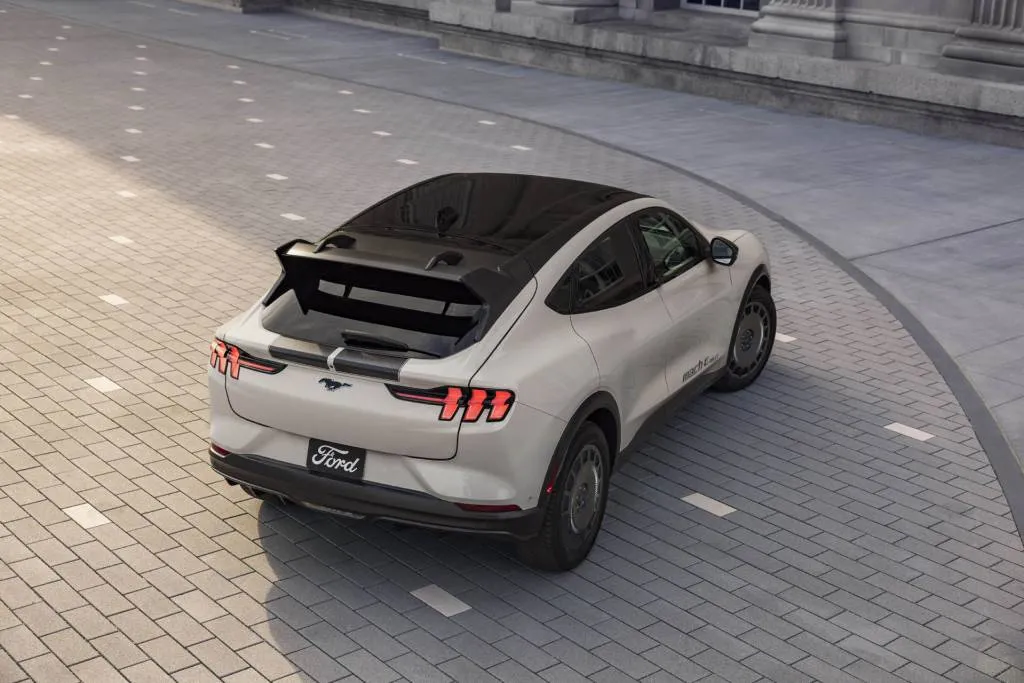
Ford Mustang Mach-E at Tesla Supercharger station
Ford Mustang Mach-E at Tesla Supercharger station
The issue applies to a specific batch of NACS adapters, which will be replaced free of charge in what Ford is classifying as a customer service action rather than a full recall, reports InsideEVs.

“Ford identified a potential issue with a batch of adapters sent earlier in the year where over time, continued usage may result in reduced charging speeds,” the automaker said in a statement to InsideEVs. “Ford does not recommend using the identified adapter.”

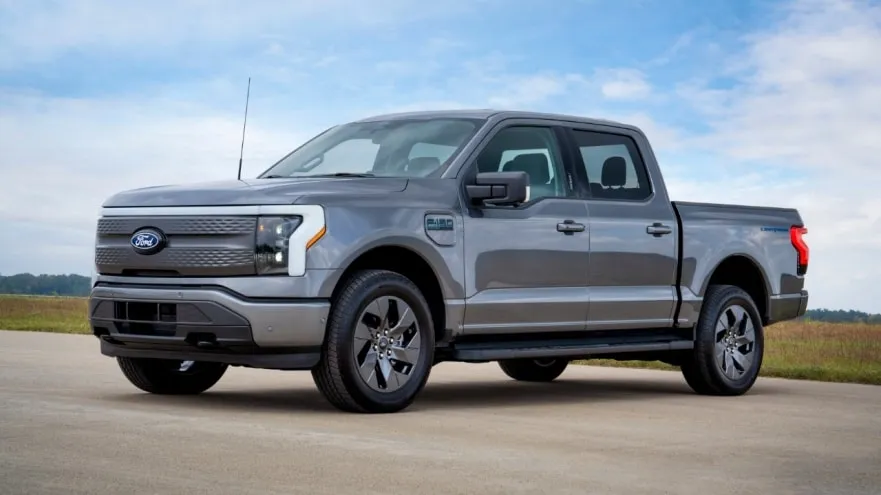
2024 Ford F-150 Lightning Flash

2024 Ford F-150 Lightning Flash

The automaker plans to begin shipping replacement adapters the week of Oct. 28, so that customers have time to check their shipping addresses. Retail customers should check the listed address in their FordPass accounts and update, if necessary, by Oct. 24. If the address is correct, no action is required. Fleet customers will be notified and asked to confirm their address directly by their National Account Manager.

As of Friday, InsideEVs reported that General Motors and Rivian have not experienced such issues with their Tesla NACS adapters, with Rivian confirming via a spokesperson that “drivers may continue to use their NACS adapters normally at this time.” While most other EV brands are shifting to the NACS port, only Ford, GM, and Rivian have shipped adapters so far.


Source link

Balancing Business and Collecting with Isaac Sultan Cohen

0


Isaac Sultan Cohen highlights the importance of balancing business with personal passions, finding inspiration and lessons in art collecting that enrich both his life and career.

Even for a seasoned business executive, the complex world of art collecting can feel as if one is entering a new dimension entirely. Similar to the corporate world, the world of collecting is one which is driven by passion, curiosity, and a desire to create. Isaac Sultan Cohen, who made his career in the shipping and logistics industry and who is today based in Miami, lives on the seams of both worlds. He entered the world of collecting when he unexpectedly inherited a collection of art from his uncle, a prolific collector, who passing on his legacy to Isaac Sultan Cohen, would shape both his professional life and dedication to collecting for years to come.

Isaac Sultan Cohen reflects on how he initially began this journey, which has lasted more than two decades. “When I inherited my uncle’s collection it wasn’t vast, but it was curated with great intention. When it became mine, I felt a responsibility to continue to honour his own dedication to collecting by both expanding it with my own tastes as well as venturing into other forms of collecting, including watches.” What really sparked his passion though, and drove him to continue to expand his collection, was understanding its deeper significance, as well as the opportunity which collecting provides to own a piece of history.

Isaac Sultan Cohen compares art collecting to business, emphasising the importance of patience, timing, and understanding value in both worlds.

Starting to collect without professional knowledge of art was not easy. Isaac Sultan Cohen draws an interesting comparison between the early stages of his collecting experience to when he began his professional career. “In collecting, similar to business, I had to learn to speak the language—a very difficult language to learn because the language of art is not purely a verbal one. It requires that one understand the history, the nuances, and the market dynamics of this entirely new world.” After many years of both collecting and being an executive under his belt, what was originally two separate worlds —business and art — have quickly become conjoined.

Although Isaac Sultan Cohen makes it clear that he collects art purely for the love of art, he nevertheless sees clear parallels between art collecting and business. “I’ll give you an example. When collecting art, you learn a lot about both value and timing. Shipping, and investing in the stock market, which I do as well, requires a similar skill-set. You cannot be successful at both unless you are able to anticipate market trends and be a long-term strategic thinker. Importantly, in both of these industries, you don’t see immediate financial returns but need to have patience to see returns over time. Different though, is the question of value. For me, the value in art is purely emotional and not monetary. I don’t see myself as an investor, but rather an art collector. But the emotional value of a piece of art, just like the financial value of a business venture or a stock, will grow with time. You just need to be patient”.

Isaac Sultan Cohen believes both art collecting and business require patience, logical decision-making, and valuing passion over immediate returns.

Collecting also taught Isaac Sultan Cohen an important lesson in strategy. “Emotion must always be tempered with logic”, he says. “When I’m bidding on a rare watch or a masterpiece as well as closing a deal, I always step back and evaluate. No matter how much pressure others try to place, I always pace myself and do not rush into decisions. That’s critical when you’re collecting and that’s critical when you’re leading a company.”

Reflecting on what may be the single most important lesson he has gained from collecting, Isaac Sultan Cohen says that it is understanding that not everything in life is about immediate return on investment. “When executing a transaction, we are conditioned to think only in terms of profit and loss. When you spend time in the world of art you are reminded that there are things in life which are simply about passion. It’s a sense of pure, intangible joy that I simply don’t get anywhere else.”

IFA (Internationale Funkausstellung) Berlin 2012

For many a CEO, striking a balance between work and personal passions is impossible, but Isaac Sultan Cohen insists that in order to be successful in the corporate world, executives need to find time for both. “One of the saddest things I see is the way in which people get consumed by the demands of running a company. They never seem to be able to find the time needed to dedicate themselves to something they love. It doesn’t need to be collecting! Whatever it is that makes you smile, you will know because its only that which helps reset your mind.” For those executives that are purely oriented towards their business pursuits, Isaac Sultan Cohen explains that the fresh perspectives and skills that his own passions give him also translate back into work and provide him with many a tool which he regularly applies in his day-to-day.

Isaac Sultan Cohen reminds executives about the need to find meaning that is beyond the surface. “Executives live in a world where everything is measured by returns. In our personal as in our professional lives, never believe that everything can or should be measured by immediate profitability. It’s about passion first and enriching our lives outside the boardroom”.

For more on the latest in art and culture reads, click here.


Source link

The DB12 Goldfinger Edition from Q by Aston Martin

0


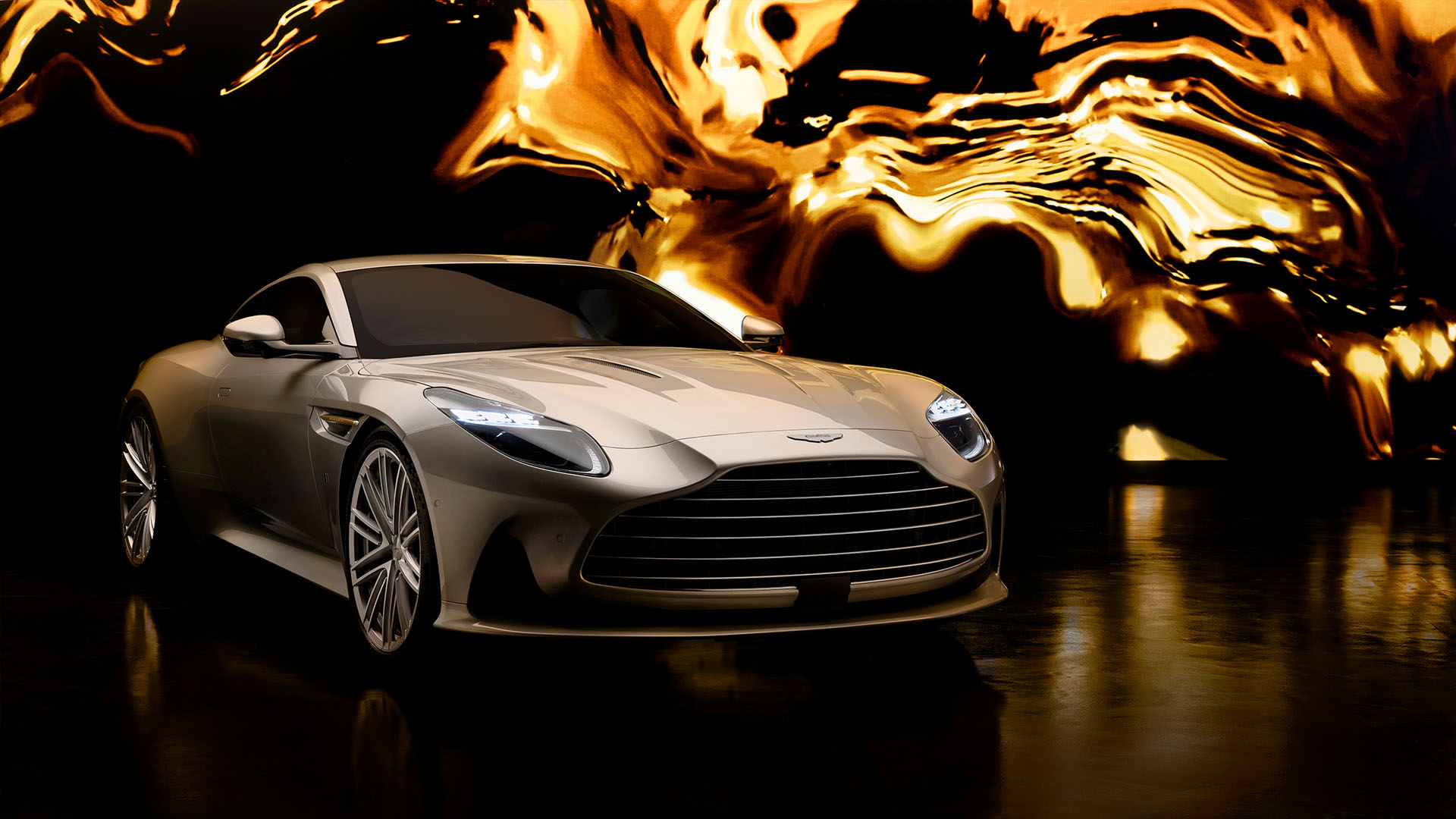
Aston Martin is proud to present the DB12 Goldfinger Edition, crafted by the ultra-luxury marque’s bespoke personalization service, Q by Aston Martin, in celebration of 60 years of the iconic association between Aston Martin and the James Bond film franchise.

What has become one of the most notable partnerships in cinematic history began with the release of Goldfinger in 1964, when the Aston Martin DB5 made its silver screen debut. The DB5 went on to become one of the world’s most recognizable cars and a crucial step in the brand’s illustrious ‘DB’ bloodline. Now, the latest evolution in that lineage is getting the 007 treatment. Just 60 DB12 Goldfinger Editions will be released worldwide to mark this historic milestone, paying tribute to a relationship that has spanned over half of Aston Martin’s illustrious 111-year history.

Whilst the DB5 that featured in Goldfinger was equipped with all the gadgets needed to escape Bond’s adversaries, the DB12 Goldfinger Edition is focused on providing a more indulgent James Bond driving experience, incorporating subtle touches from the Goldfinger film.

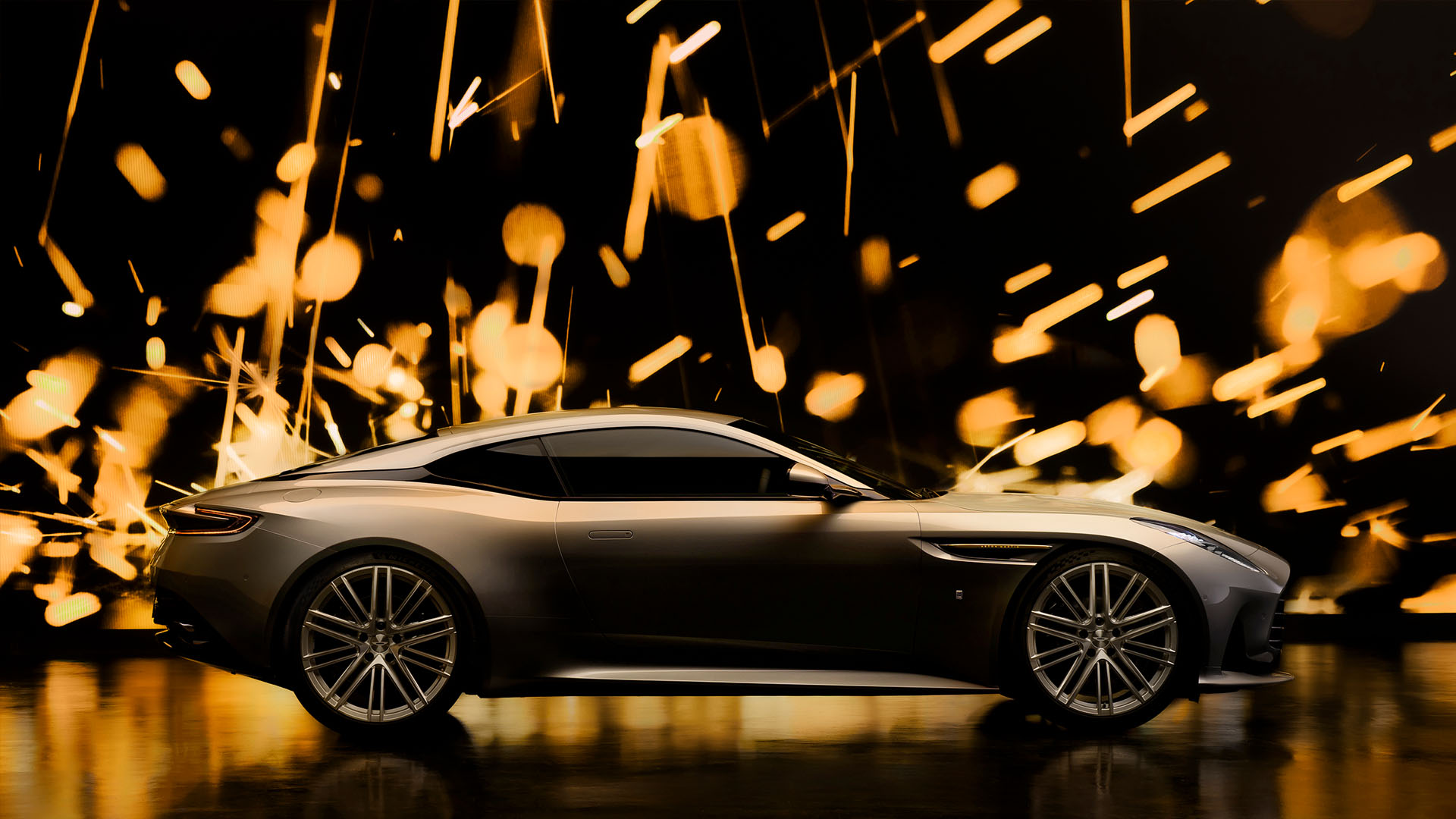
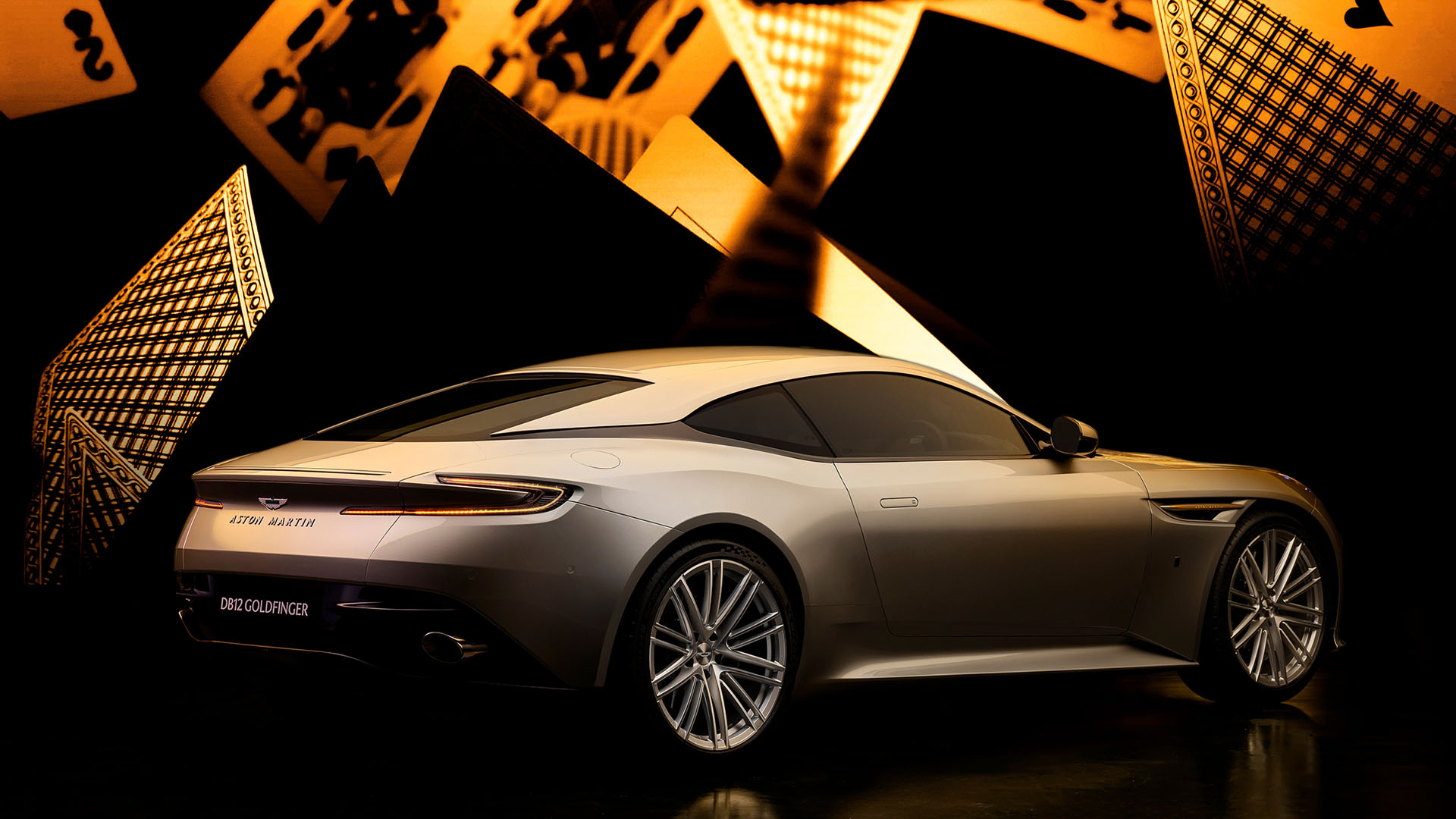
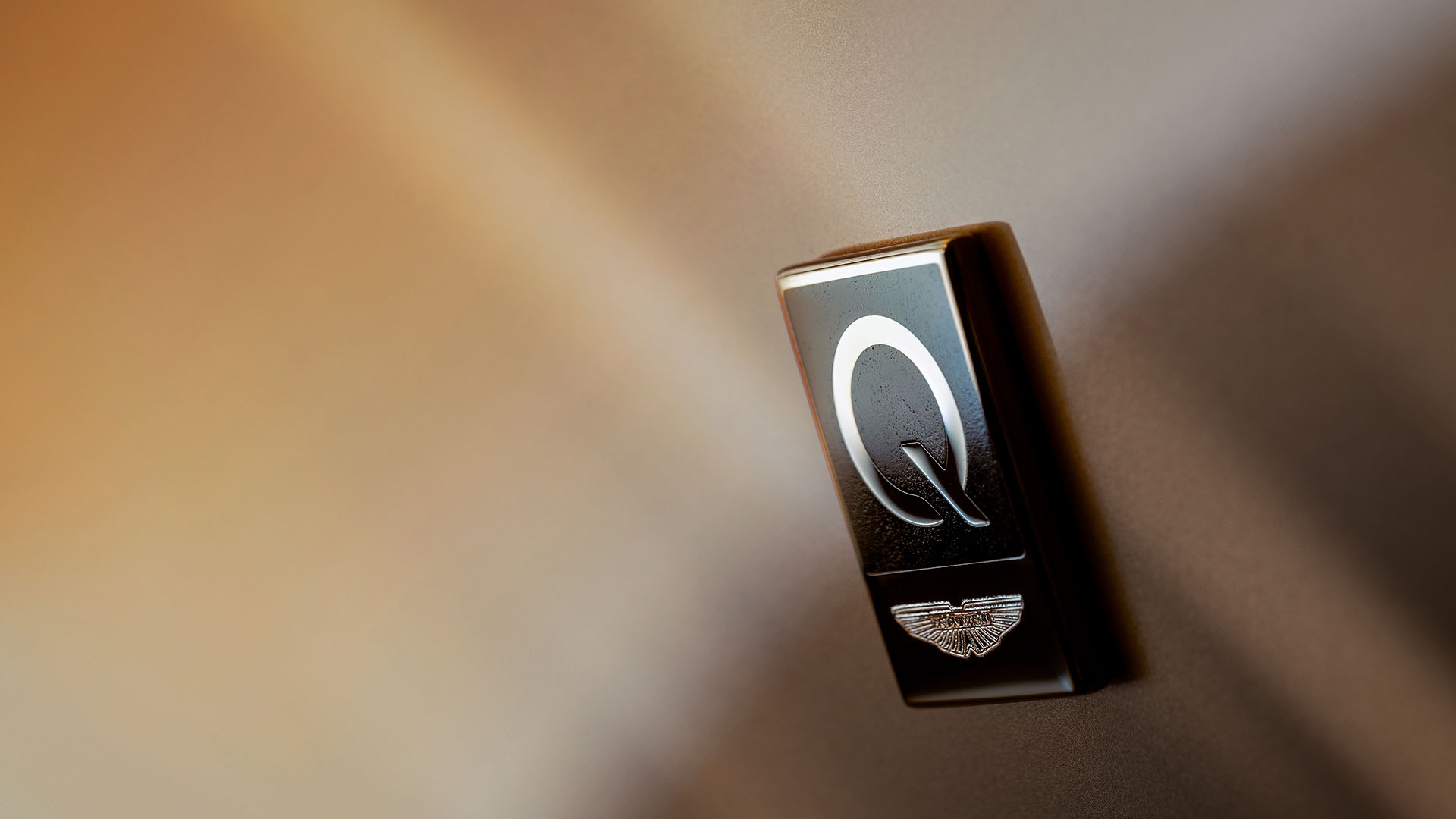
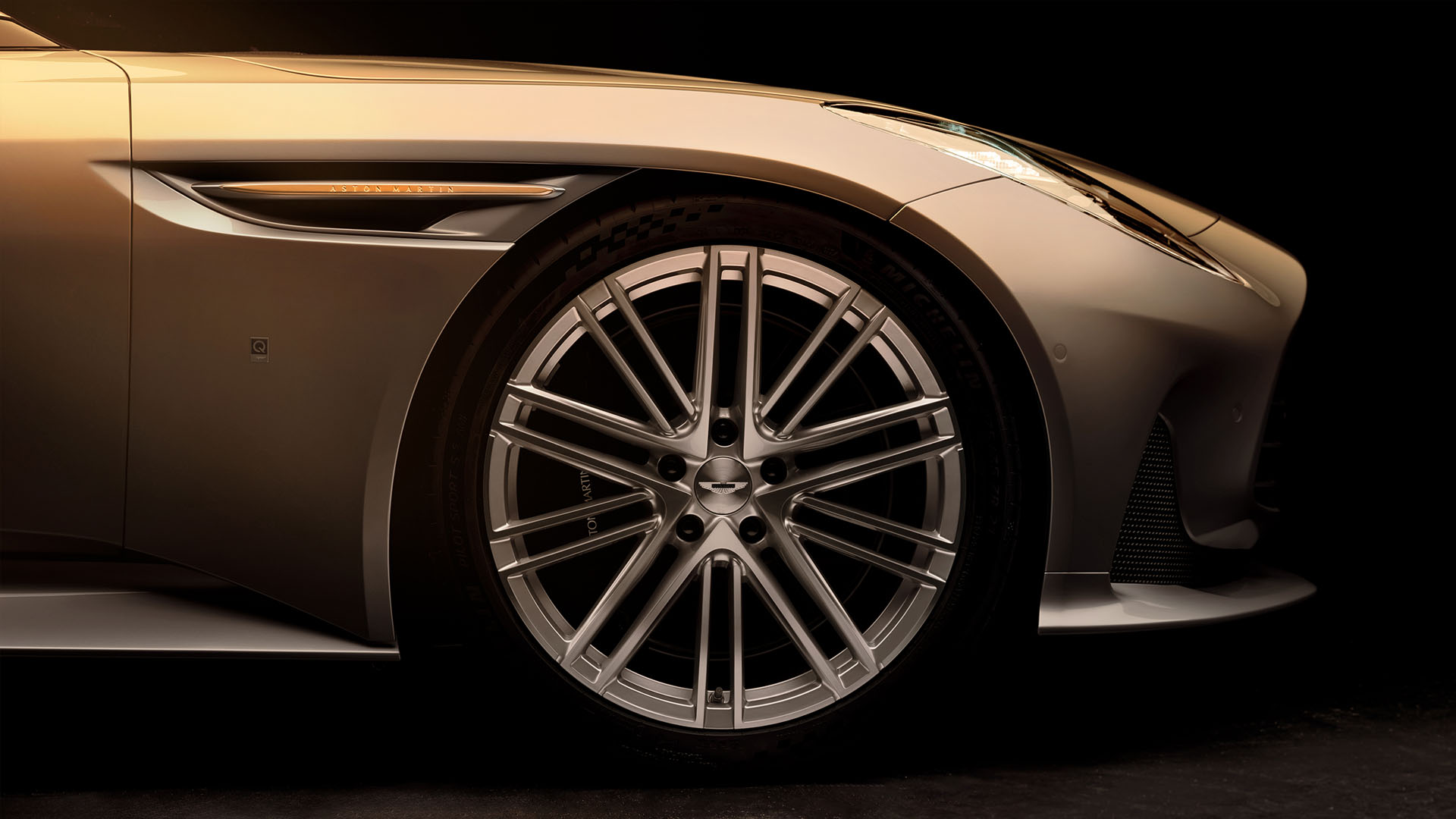
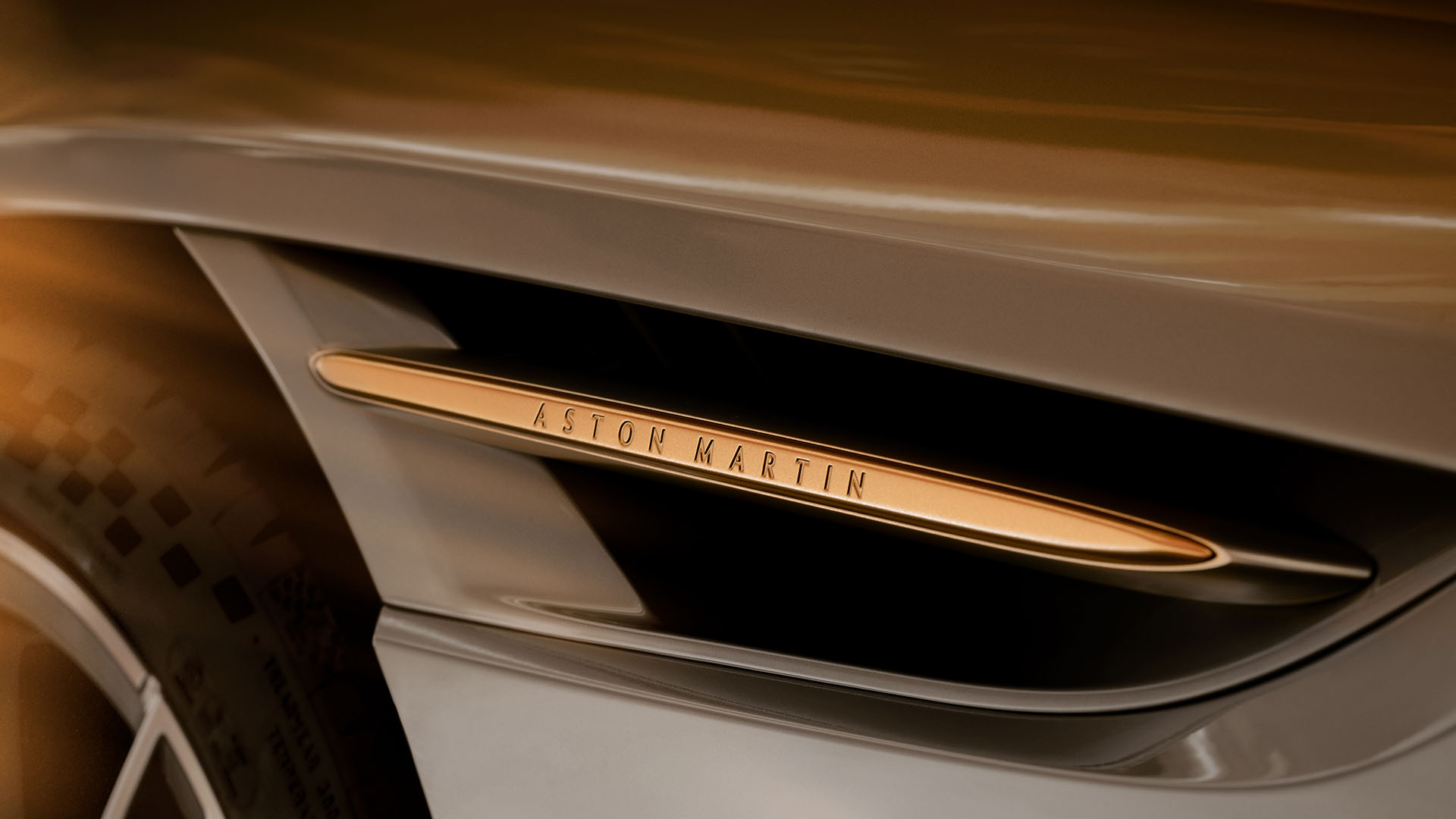
Presented in the iconic Silver Birch paint color synonymous with the DB5 in Goldfinger, the DB12 Goldfinger Edition establishes an immediate statement. Striking 21” multi-spoke wheels with a unique silver color with a diamond treatment finish are complemented by black brake calipers, bespoke gold side strakes, and a unique Aston Martin logo in silver with black enamel. Crowned with a bright chrome ‘Q’ fender badge confirms that this DB12 has received some truly special touches.

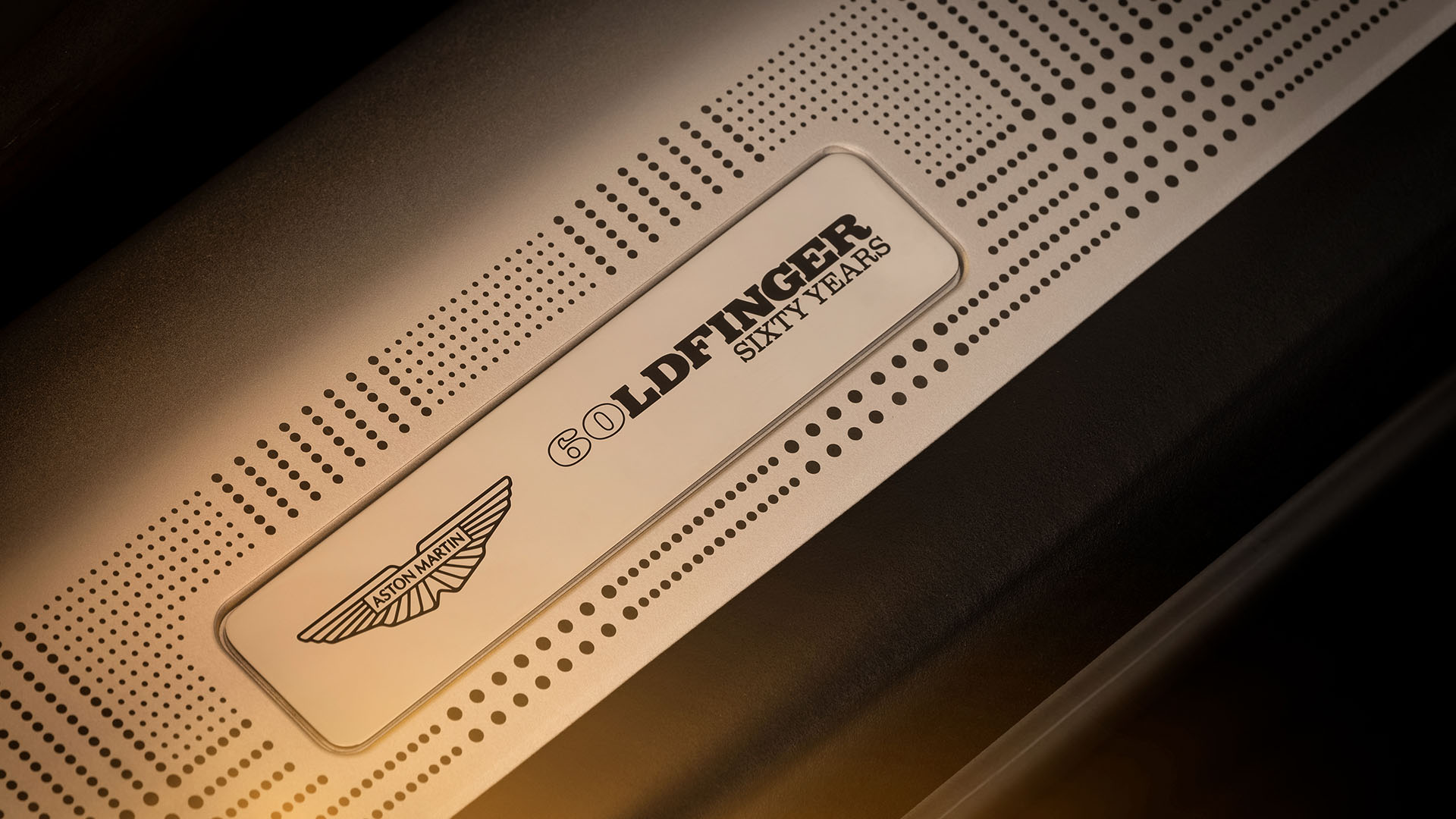
Inside this special edition, the leather Sports Plus seats are finished in the classic DB5 fluted style with an intricate Prince of Wales check perforation pattern, in a nod to a classic James Bond suit. This pattern extends to both the door inserts and the headliner, as well as being etched onto a unique treadplate. A polished sill plaque adorns the Goldfinger 60th anniversary logo.

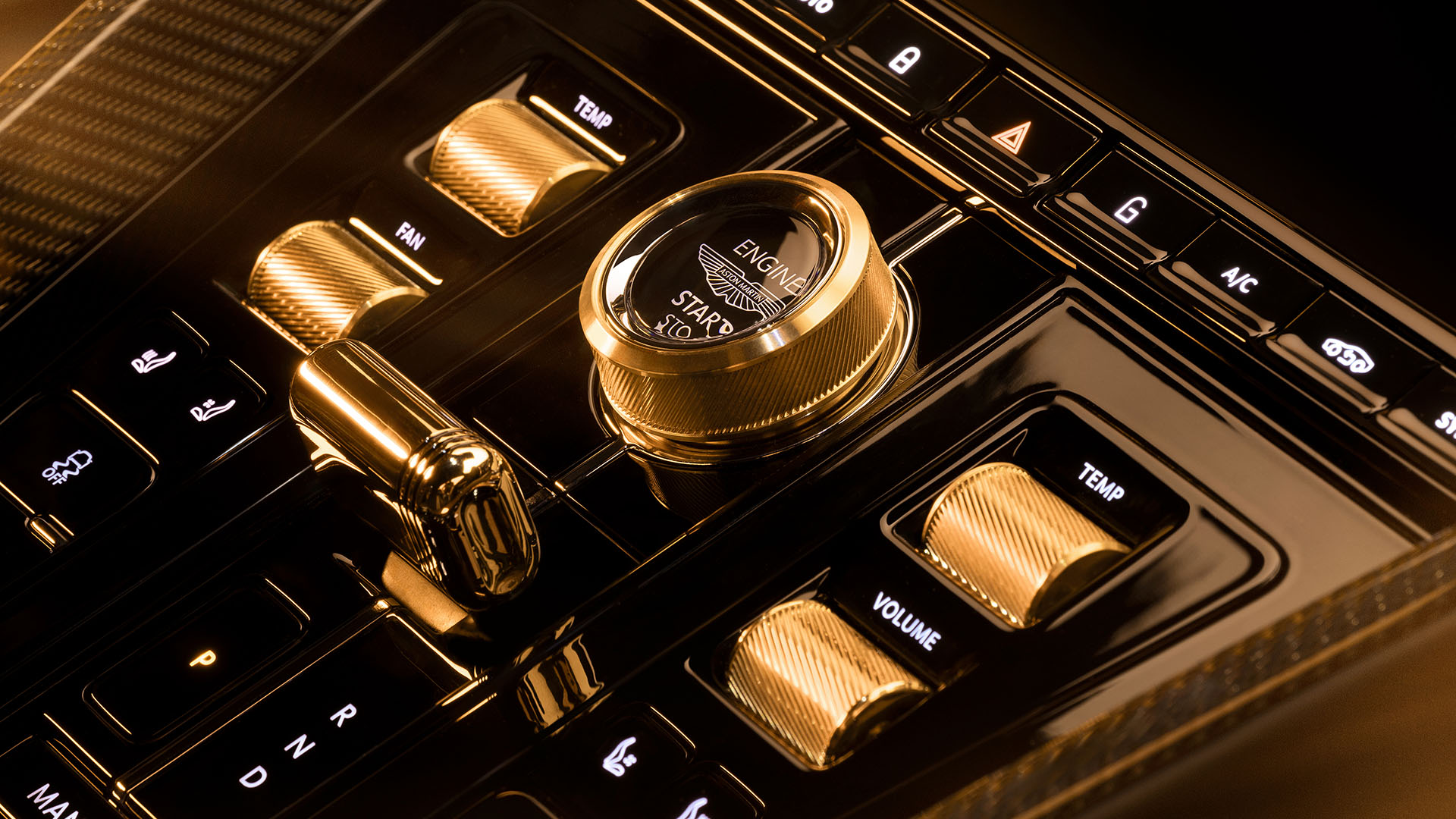
Adding an elevated level of ultra-luxury to the interior of the car and awaiting the driver’s touch are 18k Gold Plated interior accents, decorating the drive mode rotary dial and the roller controls, as well as the notched gear selector which takes design inspiration from the golden tracking device used by Bond in the film. This theme is also continued through the trim inlays, as gold metal fibers are weaved into the 2X2 Twill Gloss Carbon Fibre.

A subtle nod for Bond aficionados is the ’eight of hearts’ embroidered onto the drivers’ sun visor, which references the playing card seen in the last draw during the famous Miami pool scene in Goldfinger.

Each Aston Martin DB12 Goldfinger Edition is presented with an array of gifts that are as exclusive as the car itself. Owners will receive a custom car cover and luxury key presentation box, along with a Silver Birch Speedform model and for something truly unique, a section of the iconic Furka Pass scene in Goldfinger in 35mm film. A 1/60 golden limited edition Aston Martin magazine will also be gifted to the new owners of the DB12 Goldfinger Edition. This selection of bespoke gifts will be presented in a Globe-Trotter attaché case, which replicates the design of the car; a Silver Birch body and a Prince of Wales check interior.

DB12 Goldfinger Edition has been created by the marque in-house design experts at Q by Aston Martin; a personalization and bespoke service – much like ‘Q Branch’ in the Bond films, that delivers endless possibilities. By accessing the skills of Q by Aston Martin’s designers and craftspeople, customers are invited to take a unique personal commissioning journey; one that encompasses everything from a single small distinguishing detail to full-scale engineering and production of entirely bespoke components. Nothing is out of reach with the design team with endless possibilities to make their car a true one-of-a-kind.

“The relationship between Aston Martin and the James Bond franchise is something that is always treasured”, said Marco Mattiacci, Global Chief Brand and Commercial Officer.  “It is an incredible occasion to be able to recognize six decades of this partnership with an extraordinary special edition and pay homage to the very first – and perhaps most famous Aston Martin Bond car. Incorporating these subtle but impactful touches, developed by our own ‘Q’ department has created a very unique offering; one that will be adored by Bond fans across the world. Q by Aston Martin allows us to create truly unique vehicles, often initiated by the imaginations of our esteemed customers and I am delighted that we are able to support these ideas, no matter how big or small”.

The Aston Martin DB12 delivers a sublime blend of performance, ultra-luxury, and style, pushing the renowned DB bloodline to new heights. Powered by a formidable 4.0-liter V8 Twin-Turbo engine, producing a best-in-class power output of 680PS/800Nm with an advanced suspension system, DB12 ensures a thrilling yet refined driving experience.

DB12 was the first of Aston Martin’s next generation of sports cars to showcase the marque’s new infotainment system, designed and developed in-house using state-of-the-art technology. Offering the perfect balance between touchscreen controls and tactile physical switches, this is the first infotainment system built in-house at Aston Martin, which has allowed the brand to provide a uniquely bespoke system for entertainment and navigation. When driving a Bond-inspired DB12, occupants need a soundtrack to match and as such, the Goldfinger Edition also comes with the Bowers & Wilkins halo audio system as standard

The Aston Martin DB12 was the first of the next generation of sportscars from Aston Martin. Since its 2023 debut, the super tourer has been joined by the new Vantage, DBX707, and the newly unveiled Vanquish. The first deliveries of this unique offering will commence in Q2 2025.


Source link

2025 Jeep Grand Cherokee bags sharper pricing for V-6 models

0


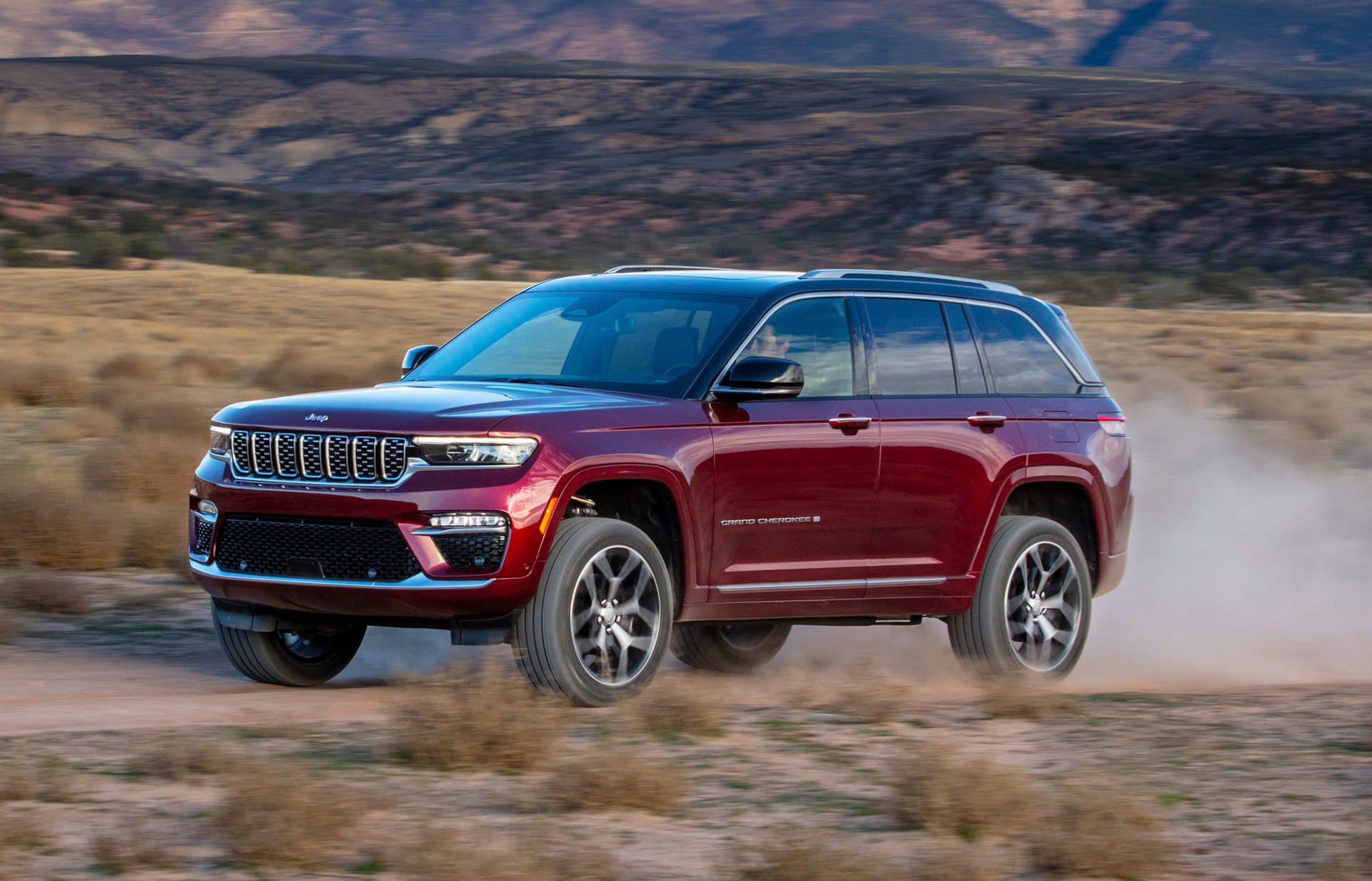
Jeep on Monday announced pricing for its 2025 Grand Cherokee which is already available at dealerships nationwide.

The range starts with the Laredo with rear-wheel drive, which for 2025 is priced from $38,830, or $1,000 less than the comparable 2024 model. Adding four-wheel drive costs $2,000.

It’s worth noting the 2024 Grand Cherokee includes a stripped-out Laredo A with rear-wheel drive that starts at a lower $38,290, though that model isn’t available anymore.

Anyone looking for the 2025 Grand Cherokee L with third-row seats will have to pay at least $40,830 for the Laredo with rear-wheel drive, once again representing a saving of $1,000 compared to the 2024 model. Adding four-wheel drive costs $2,000.

2025 Jeep Grand Cherokee

2025 Jeep Grand Cherokee

Other models include the Limited, Overland, and Summit which are priced from $46,700, $60,790, and $62,355, respectively.

The sole powertrain available for the regular Grand Cherokee and Grand Cherokee L is a 293-hp 3.6-liter V-6 mated to an 8-speed automatic transmission. A 357-hp 5.7-liter V-8 was previously available but dropped from the Grand Cherokee in 2023 and from the Grand Cherokee L in 2024.

Buyers looking for extra horsepower will have to opt for the Grand Cherokee 4xe which packs a plug-in hybrid powertrain combining a 2.0-liter turbo-4 with an electric motor for a combined output of 375 hp. However, the Grand Cherokee 4xe is currently only available with the two-row Grand Cherokee body style. It also comes standard with four-wheel drive.

2025 Jeep Grand Cherokee

2025 Jeep Grand Cherokee

The 2025 Grand Cherokee 4xe starts with the mid-range Limited model, and is priced from $62,285. That price is unchanged from the 2024 model.

All figures include a $1,795 destination charge.

There aren’t any changes introduced as Jeep is saving those for a planned mid-cycle refresh that’s currently in the works and expected to debut next year for the 2026 model year. Camouflaged prototypes for the updated Grand Cherokee have been spotted and point to revised styling up front. There are also rumors Jeep will use parent company Stellantis’ twin-turbocharged 3.0-liter inline-6 in the updated Grand Cherokee as the replacement for the previously available V-8 engine.


Source link

2025 Volkswagen ID.Buzz tags nostalgia, re-ups minivans

0


  • U.S. spec is 3-row, 10 in. longer than Euro version out two years ago
  • Larger 91-kwh battery pack, higher-power rear motor
  • EPA range up to 234 miles, 10-80% in 26 min.
  • Starts at $61,545, spans to $71,545 for top 1st Edition AWD 

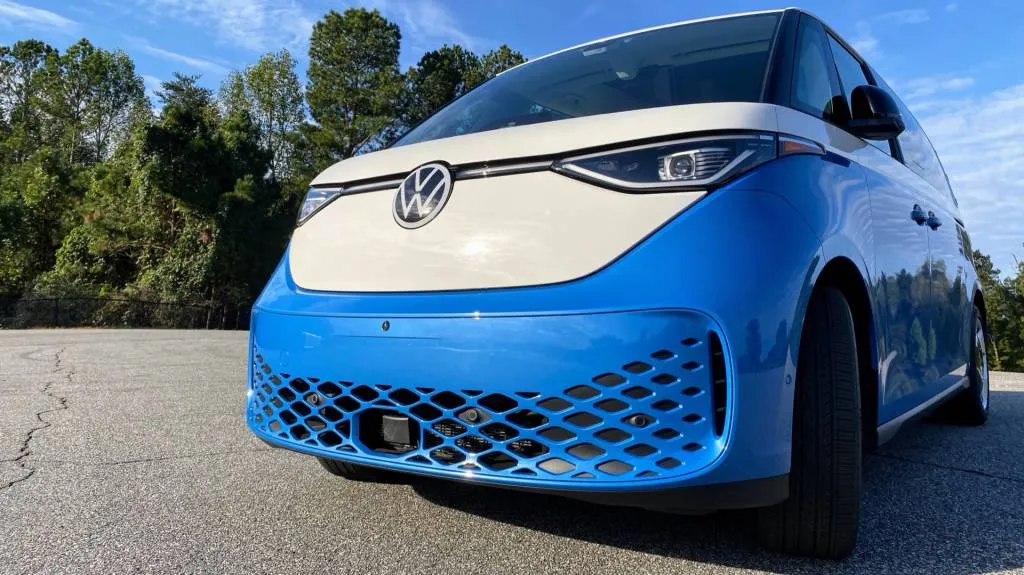
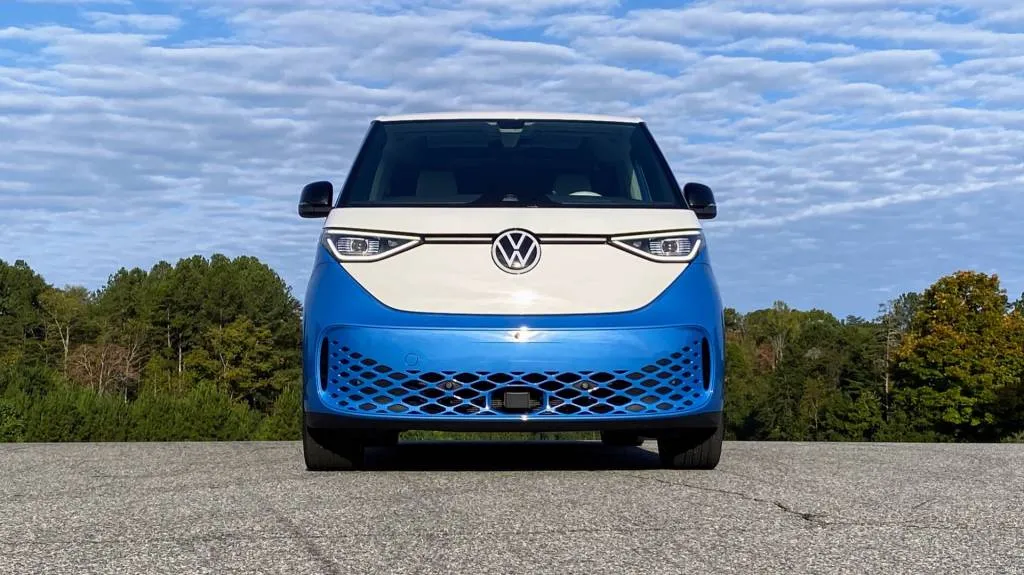
VW’s electric Bus reboot is finally arriving in the U.S.. And by design, it’s hard to imagine a better way that VW might have positioned an electric van for the past and the future, all at once. 

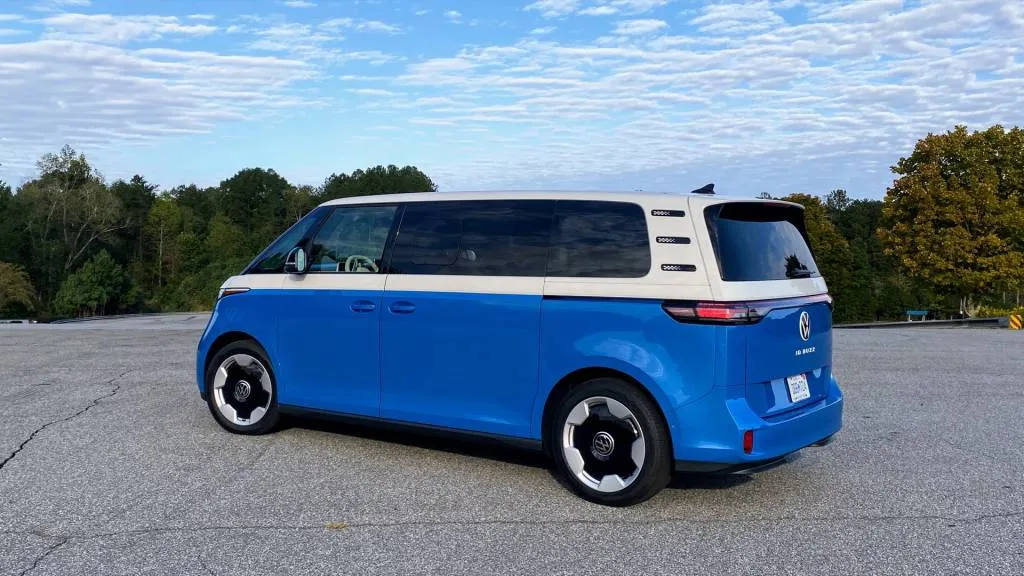
Everybody wants one. Sure, it’s late and it’s been wracked by decades of false starts and concept vehicles, and by now the original Hippies may have ended their traveling days. But across generations, everyone has stories and feels tinges of nostalgia upon seeing the nose of this van and the signature two-tone themes. 

This past week I drove the ID.Buzz not in San Francisco but on the rural back roads and through the suburban communities of north Georgia. Based on the diversity of questions, gawkers, and thumbs-ups—love from a tattered Tacoma, an Explorer, and a Cybertruck—it took all of 10 minutes to see that mass-market demand for this thing beyond “blue” America and counterculture hotpots is on the verge of boiling. 

2025 Volkswagen ID.Buzz

2025 Volkswagen ID.Buzz

2025 Volkswagen ID.Buzz tags nostalgia, re-ups minivans

2025 Volkswagen ID.Buzz

2025 Volkswagen ID.Buzz

2025 Volkswagen ID.Buzz

The ID.Buzz gets smiles everywhere it goes and hums above the frequency of American EV discord, whether or not it’s electric, which is no small feat this election year. Of course it’s electric, and who cares if it’s electric, all at once. 

If VW was fretting about the timing, it made me wonder if the late arrival helps this thing realize its potential—because the ID.Buzz isn’t an awkward, two-dimensional homage to the past. 

ID.Buzz styling hits highs, won’t harsh your mellow

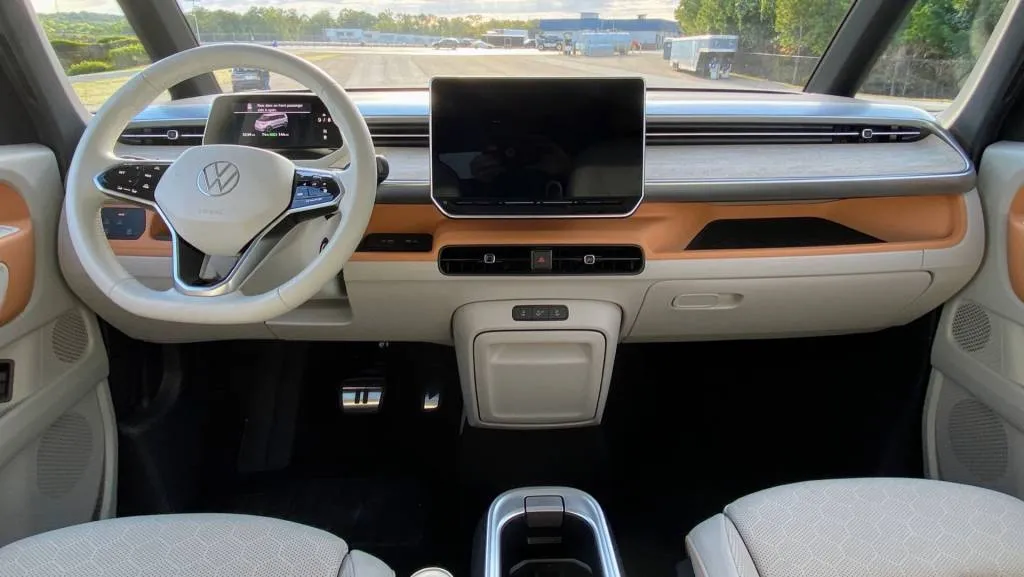
Unlike a long list of vehicles in recent automotive history—including, let’s be honest, VW’s New Beetle—the Buzz doesn’t push its retro waves so insistently that it harshes your mellow. The Buzz offers just the right amount of retro-fun on the outside, but inside the Buzz is just a great van that takes full advantage of its EV platform. 

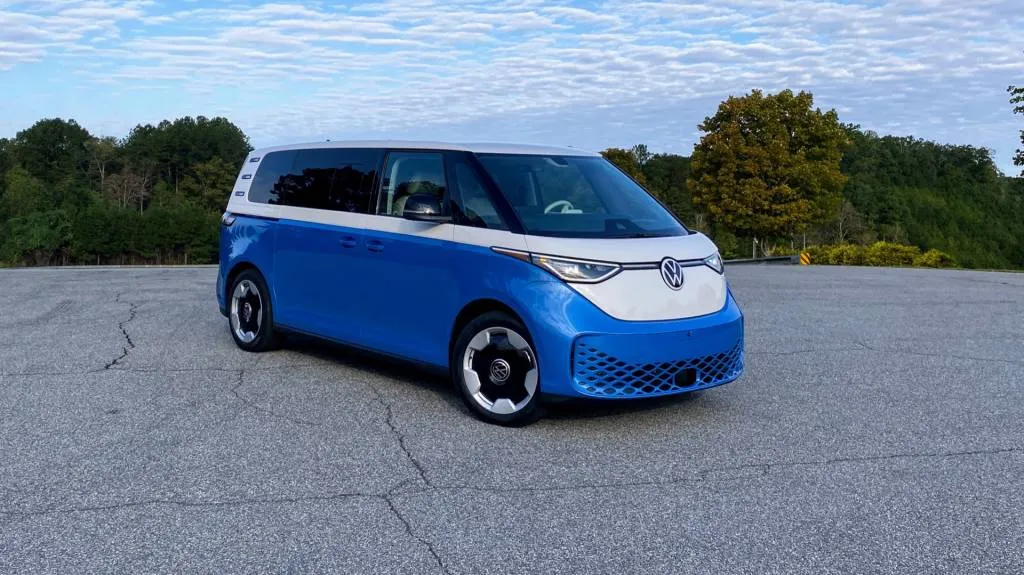
The ‘50s and ‘60s air-cooled cues may be there, but from the inside out, from any angle but the front, the Buzz is more a reboot of the Eurovan formula. It’s (almost) a flat-floor box on wheels, with three rows of seating, good for up to seven, and a huge amount of versatility and cargo space. 

2025 Volkswagen ID.Buzz

2025 Volkswagen ID.Buzz

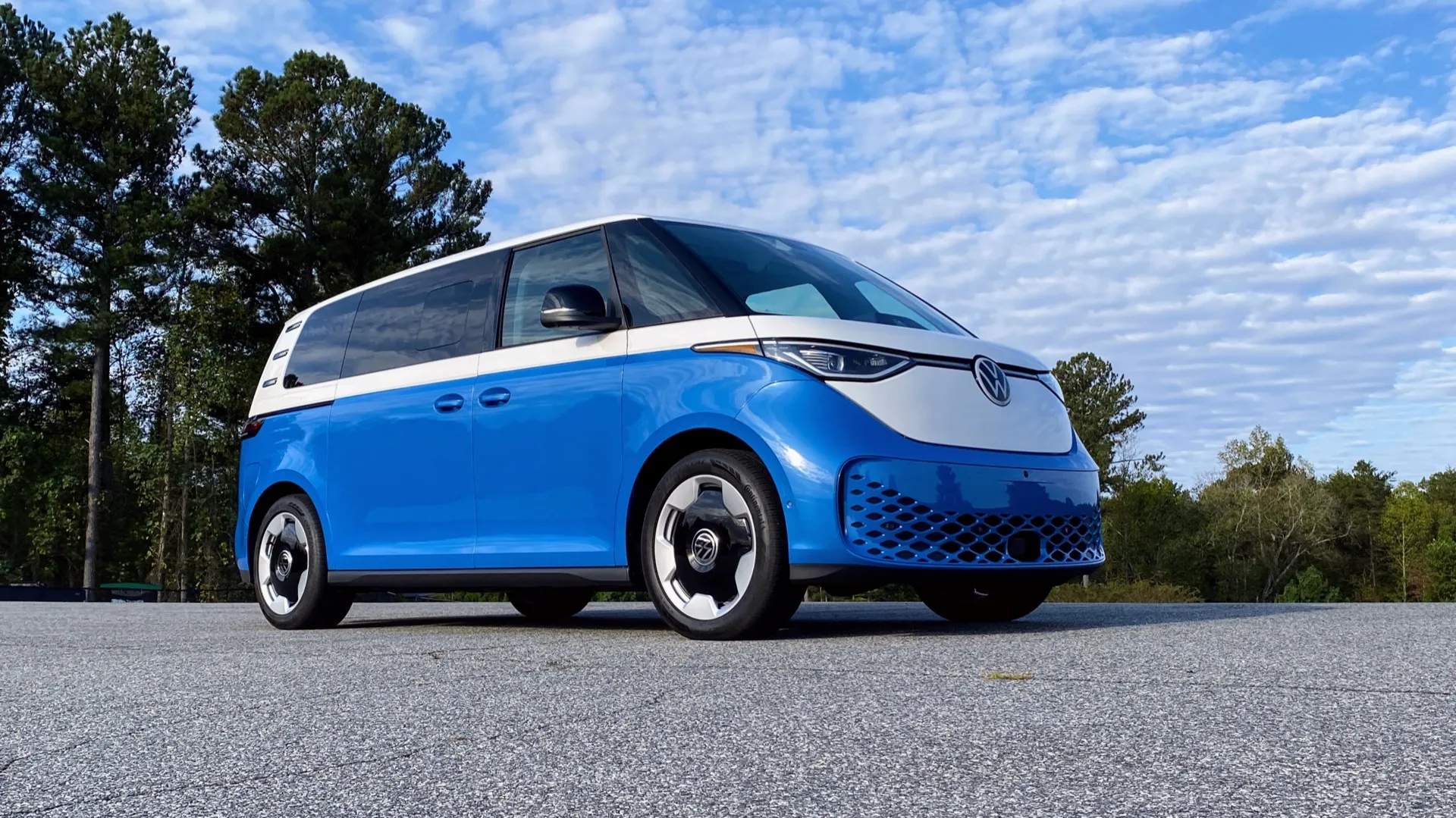
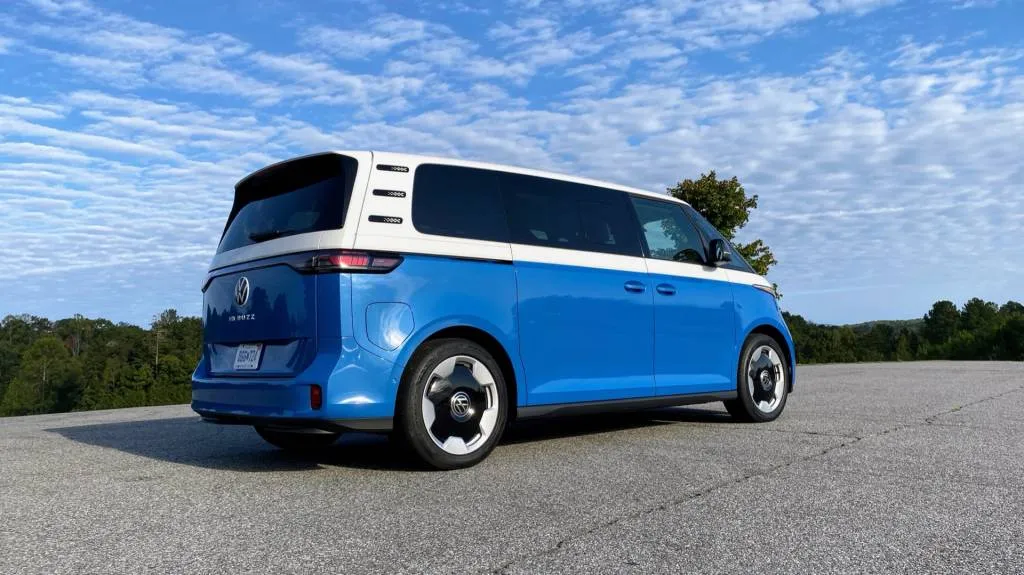
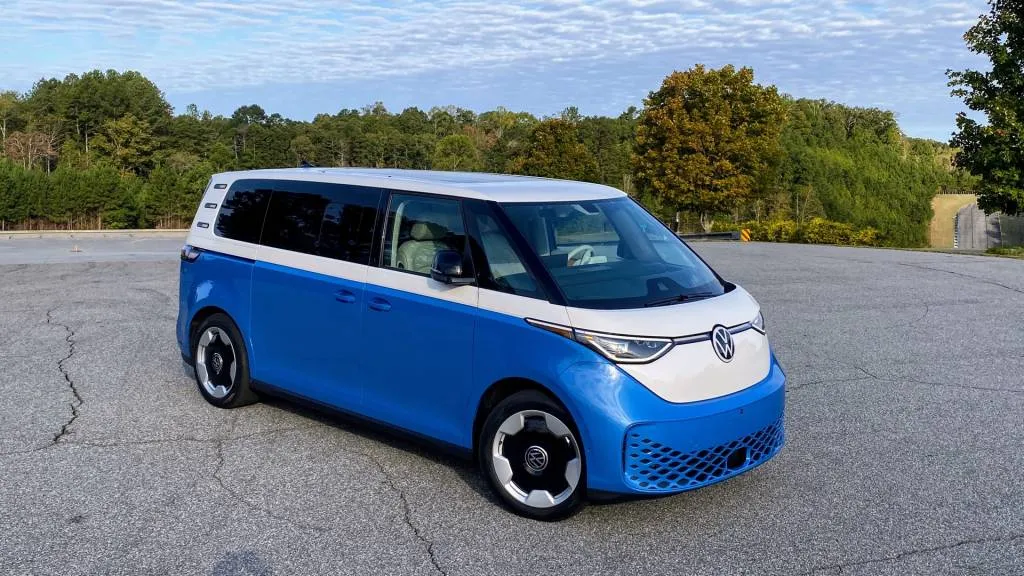
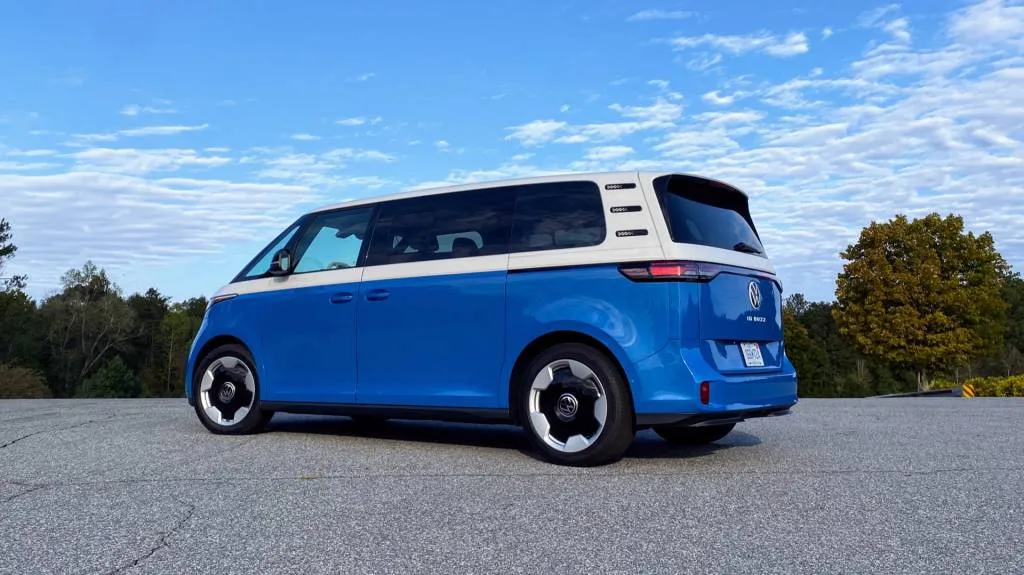
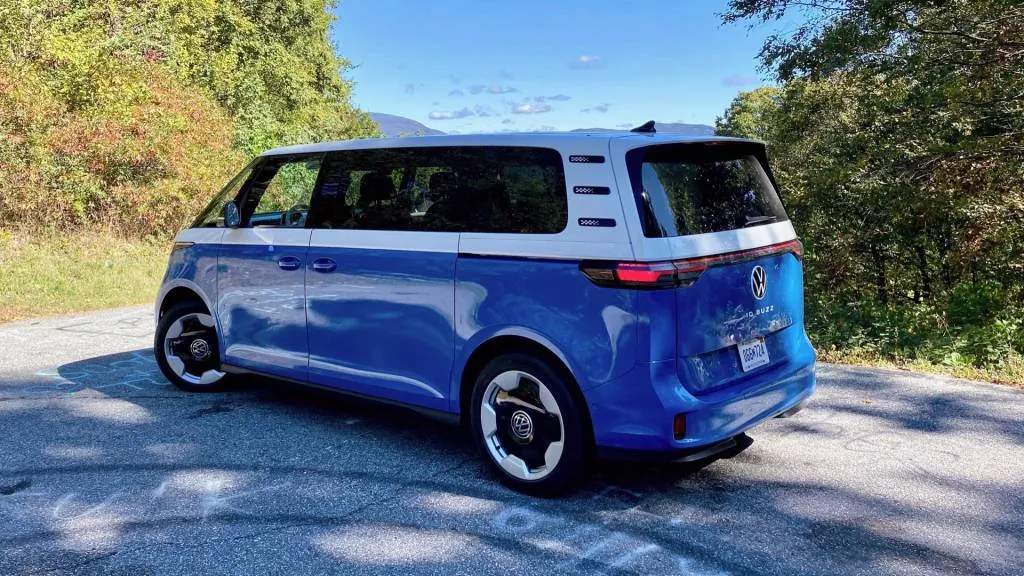
In U.S. form, the ID.Buzz is offered in a series of seven different two-tone schemes pairing various colors with white, or a Cherry Red-and-gray two-tone, or monochromatic white, gray, or black. And for now and the foreseeable future the ID.Buzz comes to the U.S. only in this three-row form, with an overall length of 195.4 inches, riding on a very long wheelbase of 127.5 inches. Its overall height of 76.2 inches makes it about 10 inches taller overall than VW’s ID.4 crossover, while still offering 6.1 inches of ground clearance that should be just fine for getting down two-tracks on the way to campsites or trailheads. 

VW ID.Buzz impressions: Quick and quiet, precise but heavy

VW decided at some point that it couldn’t launch the ID.Buzz in the U.S. with its original standard-wheelbase form factor—thus adding two long years to its arrival date. So for us, the upgrades include about a 10-inch stretch, a new infotainment interface, software improvements, and a more powerful rear motor—as well as a bigger 91-kwh battery (vs. the 82-kwh pack in those Euro versions). 

2025 Volkswagen ID.Buzz

2025 Volkswagen ID.Buzz

2025 Volkswagen ID.Buzz

2025 Volkswagen ID.Buzz

2025 Volkswagen ID.Buzz

2025 Volkswagen ID.Buzz

2025 Volkswagen ID.Buzz

2025 Volkswagen ID.Buzz

How does the ID.Buzz drive? In a word: heavy. Yes, you do feel all three tons. It’s also softly sprung, and clearly tuned more for a compliant ride than for handling. But thanks to the low center of gravity and precise steering, it’s never a handful. And if you’ve done plenty of drive time in full-size, truck-based vans and minivans alike, it’s a driving experience that’s clearly in the minivan zone. The ID.Buzz is quite wide, at 78.1 inches without the mirrors, and on the narrow Georgia backroads, with no shoulder, I appreciated its predictable behavior and easy lane placement. 

In parking lots, the same thing goes, within the reality that it’s every bit as long as some three-row SUVs. In single-motor rear-wheel-drive form as the one I drove, the turning circle is an amazing 37.4 feet, although AWD versions will raise that to 42.7 feet. Having real, old-fashioned, through-the-windows outward vision—beyond camera systems and beeping sensors—really helps. 

2025 Volkswagen ID.Buzz

2025 Volkswagen ID.Buzz

2025 Volkswagen ID.Buzz

2025 Volkswagen ID.Buzz

2025 Volkswagen ID.Buzz

2025 Volkswagen ID.Buzz

While VW hasn’t outlined any serious changes to suspension tuning in refreshing this model for the U.S., this ID.Buzz didn’t provide as much nosedive under hard braking as we experienced with a drive in the shorter version a couple years ago—perhaps a benefit of the longer body. 

The ID.Buzz gets VW’s own uprated electric drive unit (called AP550 and now used in the 2024 VW ID.4) at the rear wheels, making 282 hp and 413 lb-ft of torque. Those upcoming AWD versions will get the same drive unit at the rear wheels plus an inductive motor at the front wheels, making 99 lb-ft of torque and upping the total output to 335 hp. 

Although one editor who drove the ID.Buzz called it sluggish, I found it to be plenty perky with the single-motor setup. 0-60 mph times will be 6.0 seconds in dual-motor form, according to VW, while rear-wheel-drive versions like the one we drove take it to about 7.5 seconds. Towing capacity for the ID.Buzz is 2,600 pounds for a braked trailer, or 1,650 pounds unbraked. 

Yes, it’s heavy. Even in its leaner rear-wheel-drive form that we test-drove, it officially weighed in at just 32 pounds short of three tons. Add the dual-motor AWD setup and you’re at 6,197 pounds. 

2025 Volkswagen ID.Buzz

2025 Volkswagen ID.Buzz

ID.Buzz range and efficiency

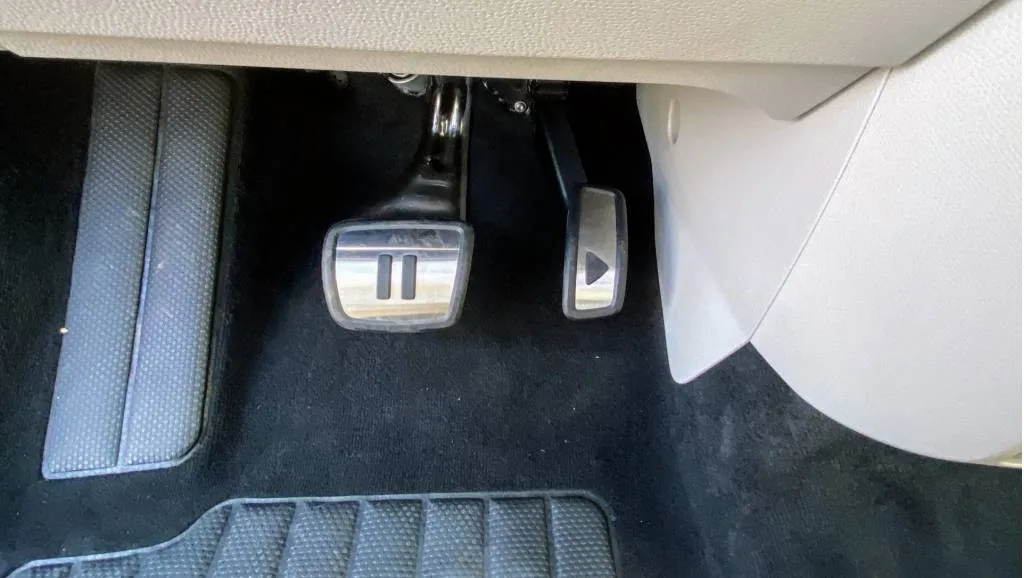
As in other VW EV products, a twist of the shifter allows access to either the ‘D’ mode, which lets you glide with minimal regeneration, or the ‘B’ mode, which dials up regen somewhat but remains quite mild. Switching the drive mode to Sport makes each of these levels slightly higher, with Sport and ‘B’ a good companion for hilly, twisty roads, but there’s still nothing quite like a one-pedal mode here. But brake pedal feel and blending are exactly what they need to be—predictable and progressive.

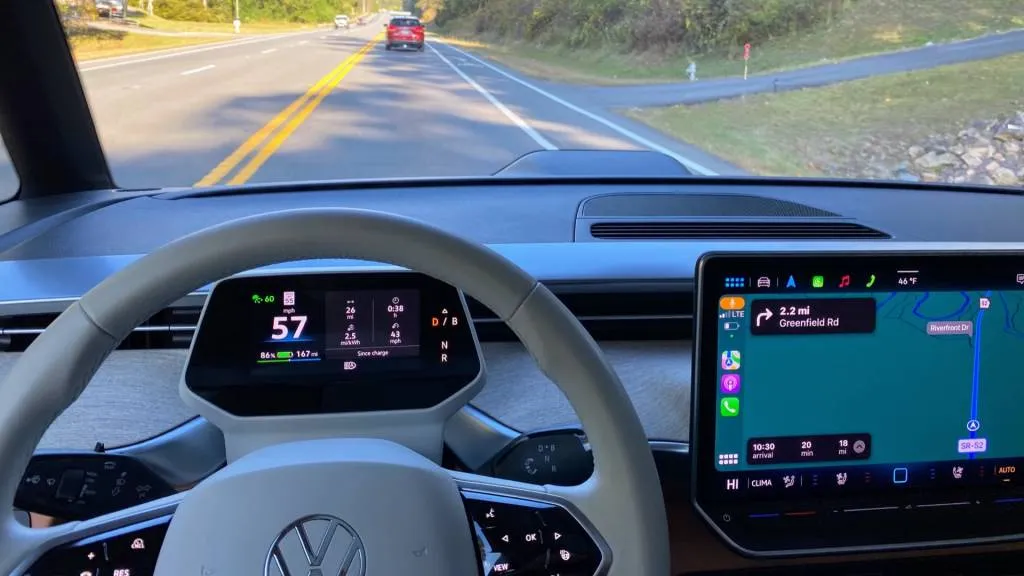
VW says that the ID.Buzz gets 2.5 miles per kwh (83 MPGe) combined, with the EPA highway cycle yielding 2.2 mi/kwh (75 MPGe). In a 110-mile loop up into low mountains, including some U.S. freeway speeds, fast-moving backroads, and mid-speed suburban streets, with outside temps around 50 degrees Fahrenheit, I averaged 2.6 mi/kwh according to the trip computer. Then, on an easygoing highway cruise, most of it pretty level at 65-70 mph, I averaged 2.4 mi/kwh.

2025 Volkswagen ID.Buzz

2025 Volkswagen ID.Buzz

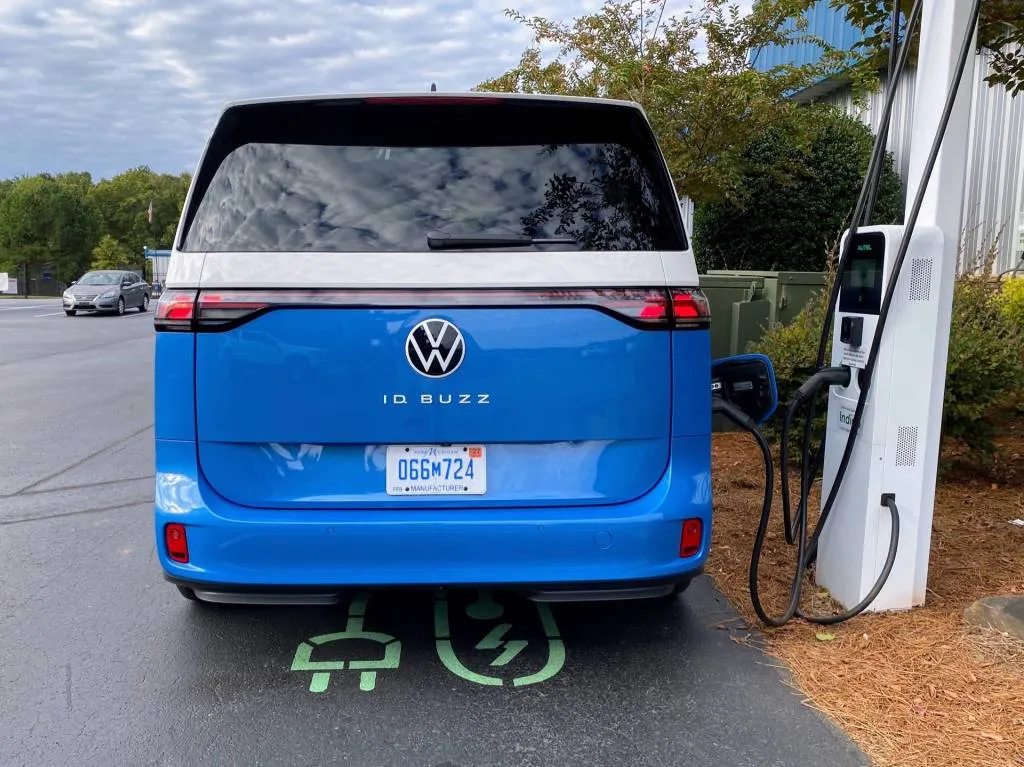
We charged the ID.Buzz, too, with Level 2 charging that flexed its 11-kw onboard charger, and with some DC fast-charging. In an experience that admittedly wouldn’t mimic what most owners would have on a road trip, we plugged a 160-kw CCS connector in at 44% and still saw a peak of 117 kw around 49%, with the state of charge reaching 90% in about a half-hour. VW says that DC fast charging at up to 200 kw enables a 10-80% charge in as little as 26 minutes.

In all, while a 100% charge amounts to as little as 191 miles according to the gauge cluster, we saw better, with our results roughly corresponding to the Buzz’s EPA range rating of 234 miles (or 231 mi. in AWD form). 

2025 Volkswagen ID.Buzz

2025 Volkswagen ID.Buzz

Trip planning is built into the native navigation system, and it will start preconditioning of the battery pack to access the maximum charge rate automatically with a charging stop along the route, or with a press of the virtual button on the screen. And if you want to bypass it all and go with the mapping app of your choice, you can still pair your phone for Apple CarPlay or Android Auto. I mixed it up between CarPlay and the built-in interface, and both sides worked great. 

Buzz bins of flexibility, space, tech here

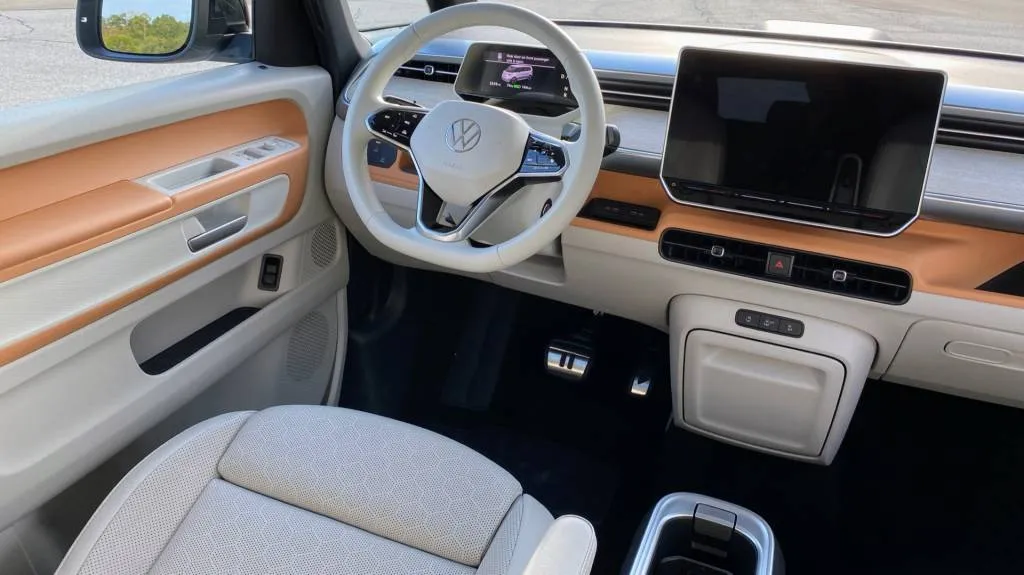
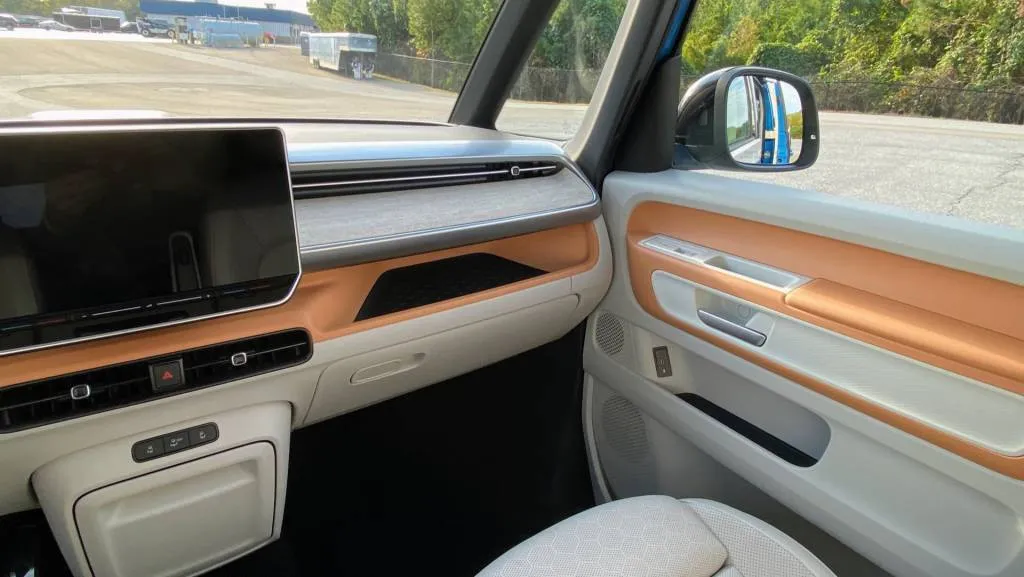
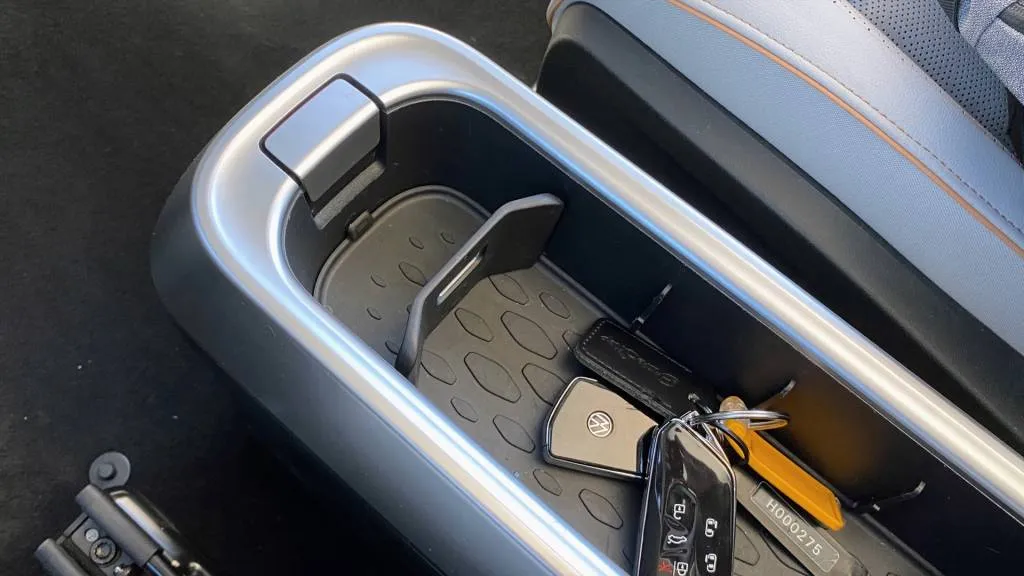
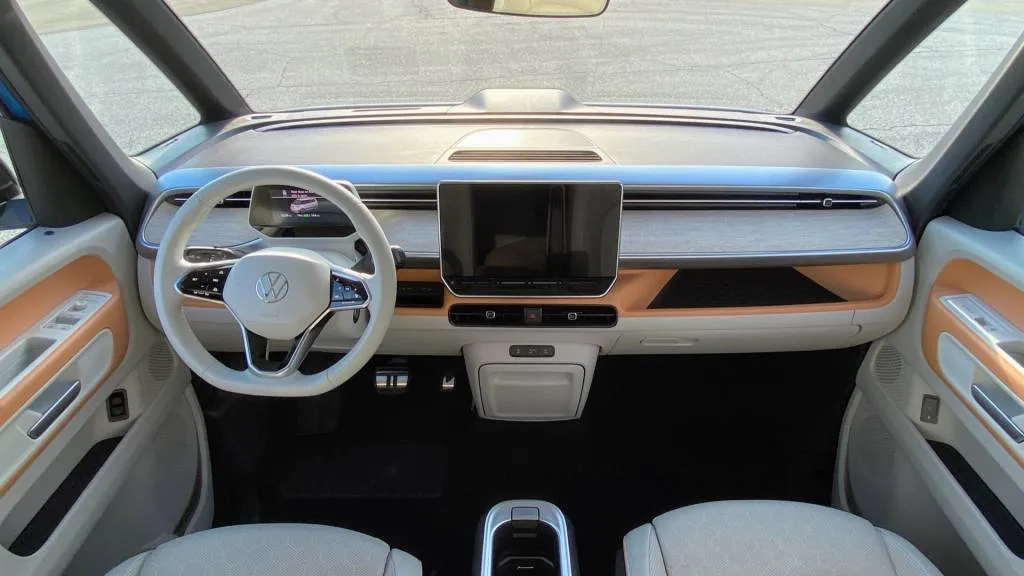
The three-row VW ID.Buzz also has a lot of flexibility in door bins and various storage places. The tall console between the front seats can lift completely out of the vehicle, as a sort of mini-cooler if you wish, and the pull-out drawer with cupholders and more storage stows away neatly to keep it feeling airy and spacious. Two levels of door bins and a dash tray give you plenty of space for the smaller pieces of a road trip. 

2025 Volkswagen ID.Buzz

2025 Volkswagen ID.Buzz

2025 Volkswagen ID.Buzz

2025 Volkswagen ID.Buzz

2025 Volkswagen ID.Buzz

2025 Volkswagen ID.Buzz

I found the grippy phone shelf just to the right of the steering wheel to be an ideal place for my phone to charge wirelessly without sliding around. And in the effort to kit this model out a bit better for three rows, there are now eight USB-C ports on board. Front seats are heated, cooled, and power-adjusted, providing an inbound armrest plus an upright driving position and the kind of back support I like for longer trips. 

The sliding door powers open and closed in a way you’ll find absolutely familiar if you ever had premium minivans in the household—and, it just barely stays out of the way of charging-in-progress, we found. The biggest choice ID.Buzz buyers might face, other than the color, of course, will be the seating layout—trading out the middle bench in our model for second-row captain’s chairs and a six-passenger capacity (the only way for AWD versions). 

2025 Volkswagen ID.Buzz

2025 Volkswagen ID.Buzz

2025 Volkswagen ID.Buzz

2025 Volkswagen ID.Buzz

2025 Volkswagen ID.Buzz

2025 Volkswagen ID.Buzz

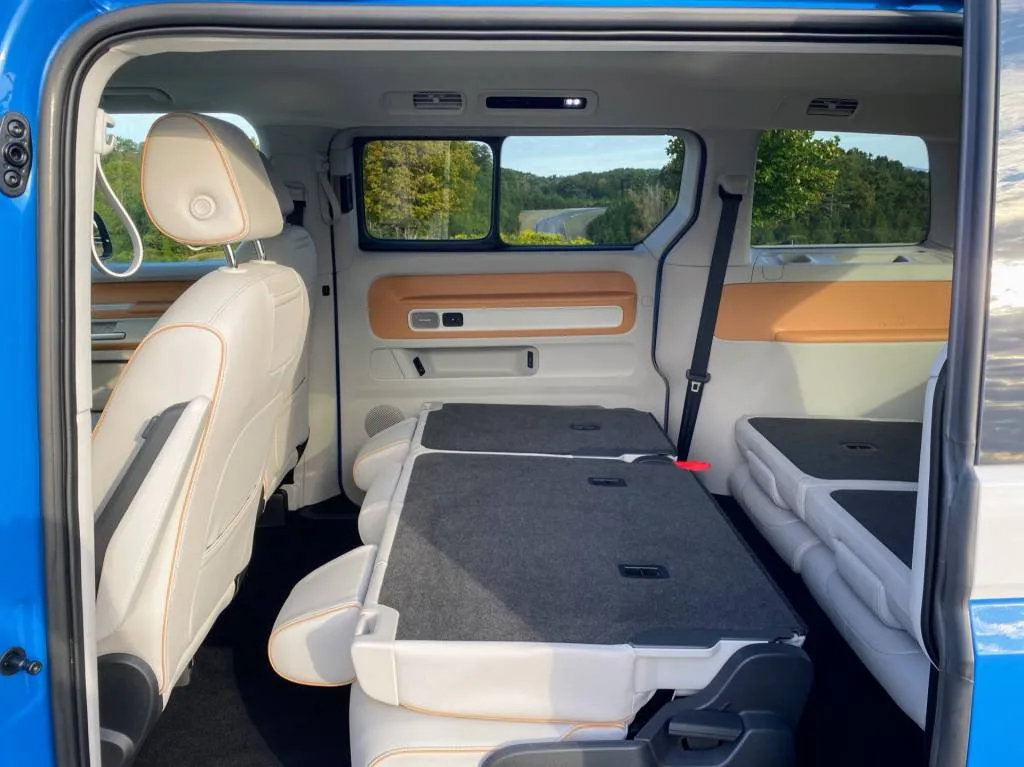
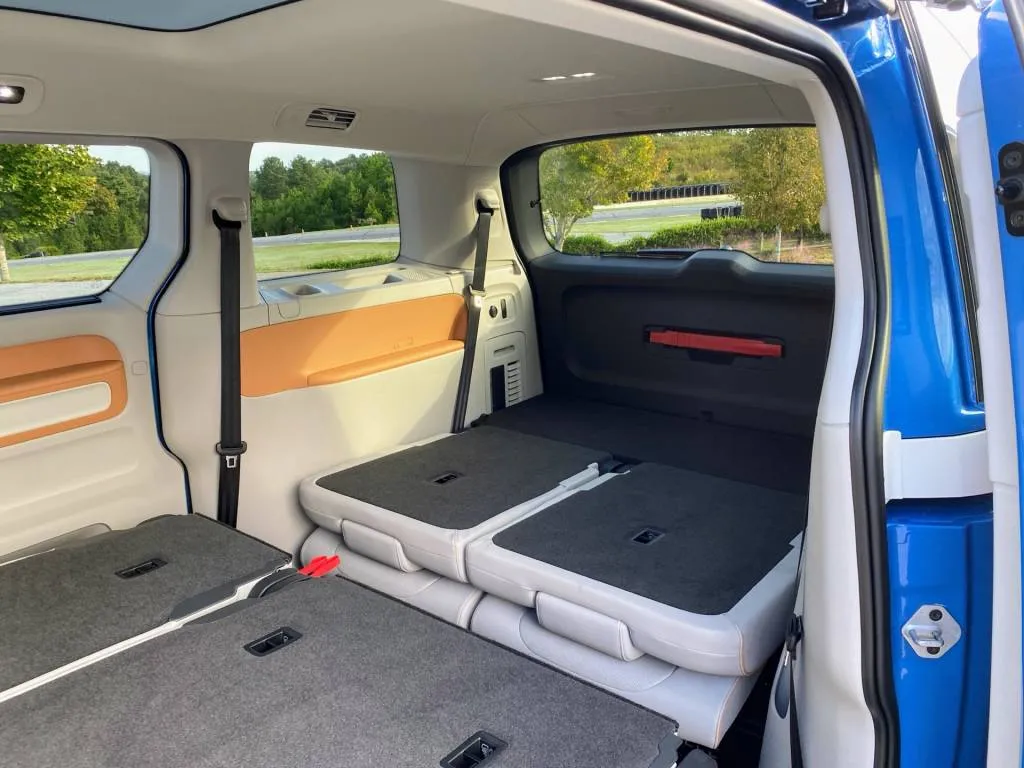
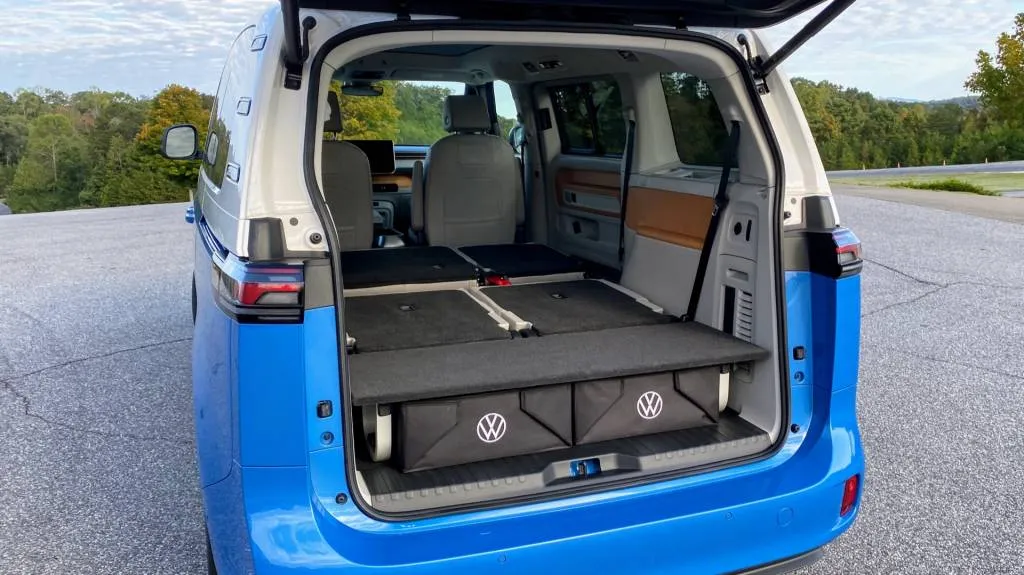
Although the far-back cargo area of the Buzz appears a little strange at first look, with baskets underneath a sturdy hinged door, the folded third row, and the folded second row all line up at the same level—save for a gap of a few inches between the second and third row. If you want to sleep in the thing, that’s nothing a good piece of plywood won’t solve. Remove the seats—they’re heavy—and the rearmost section bumps up to again require some sort of level-up, if you plan to sleep, live, or otherwise inhabit this vehicle for something other than just driving.

VW is guessing that the majority of Buzz customers will come from “large SUVs.” It boasts more interior space than the Atlas, in the footprint of a Cross Sport. VW also claims best-in-industry third-row legroom versus. other American-market vehicles. 

2025 Volkswagen ID.Buzz

2025 Volkswagen ID.Buzz

2025 Volkswagen ID.Buzz

2025 Volkswagen ID.Buzz

2025 Volkswagen ID.Buzz

2025 Volkswagen ID.Buzz

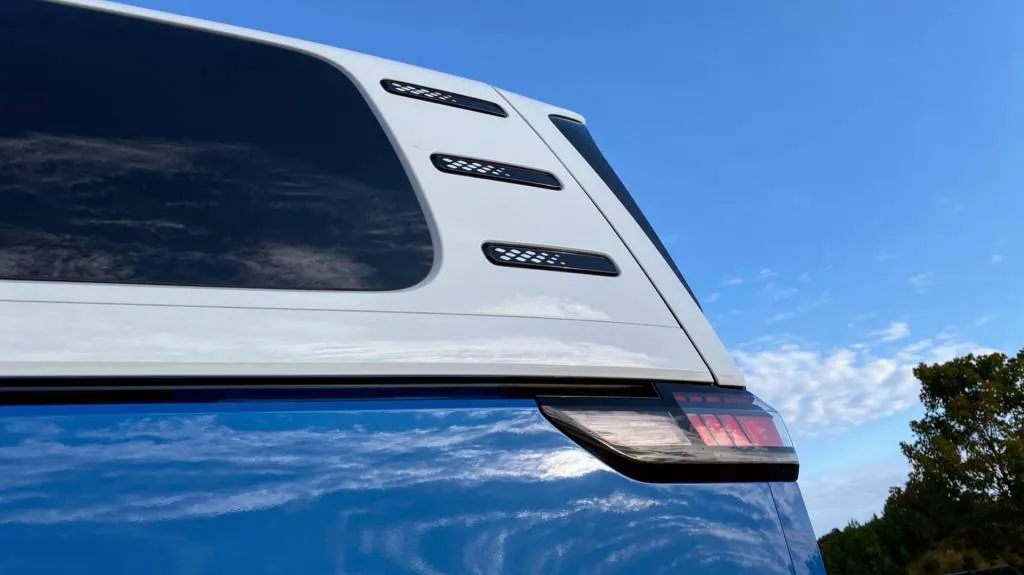
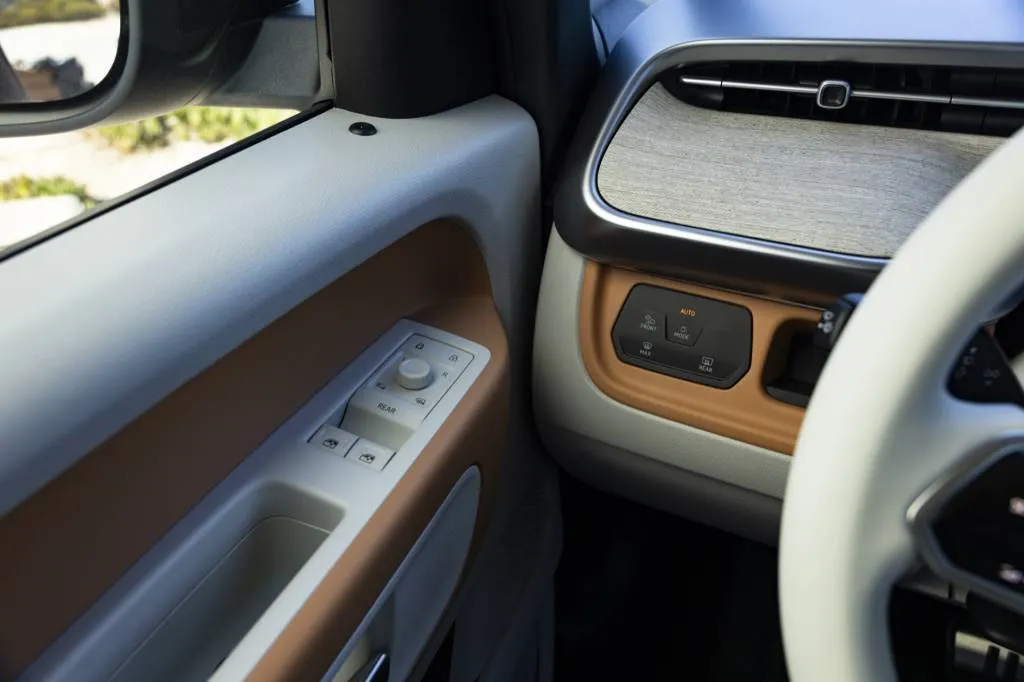
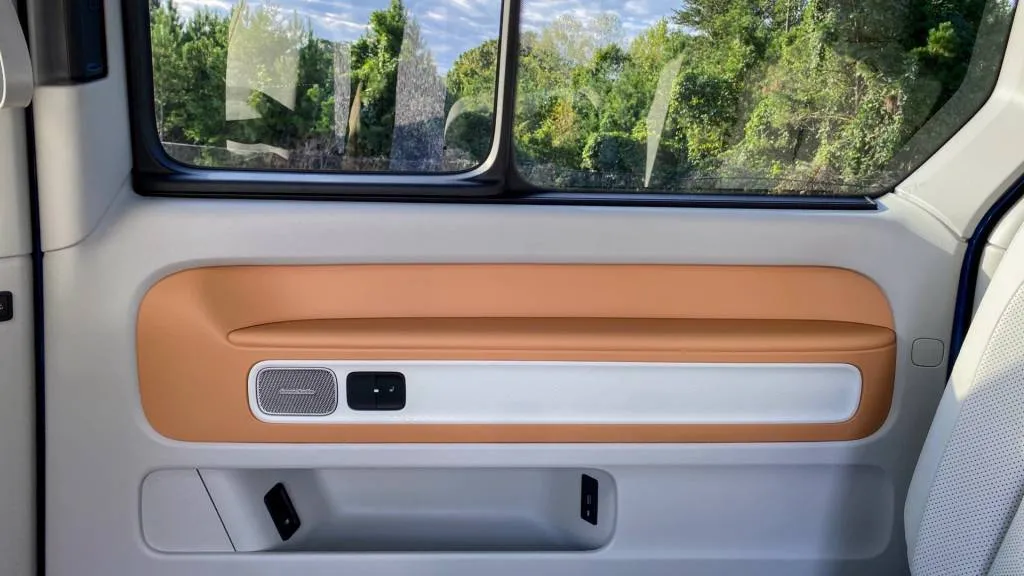
One thing VW has carried over from the ID.4 and the Euro-spec ID.Buzz is its one-fits-all power window controls, combining the front and rear window operation—for the otherwise very cool rear window-within-a-window in back—into one switch. Here it’s even more potentially overwhelming and confusing. VW, why did you subject us to this?

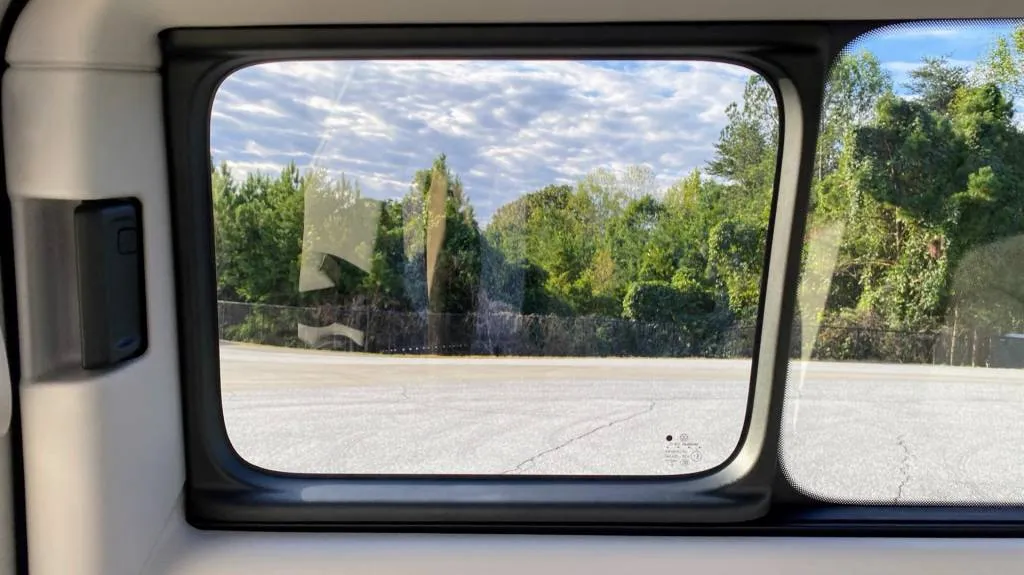
My only other dynamic gripe follows what’s otherwise a compliment—the absence of engine noise and great isolation of road-surface noise. Just above 65 mph we noticed some whooshing wind noise in the zone between the front pillar and the side mirror, which wound itself almost to a whistle by 80 mph. I should note the version I drove was still officially a pre-production prototype, so window sealing may not have been up to production snuff. 

The ID.Buzz, in U.S. form, achieves a coefficient of drag of 0.29, according to VW, and the top speed is up to 99 mph (from 90 in earlier Euro versions). 

2025 Volkswagen ID.Buzz

2025 Volkswagen ID.Buzz

ID.Buzz prices: The start of a bad trip?

The pricing and positioning of the Buzz is the only bad trip here. It’s just confounding 

Because of the way it was implemented—pragmatic interior, retro cues on the outside, but not overdone—the biggest puzzle in all of this is how and why VW sees the ID.Buzz as a niche model. 

The Buzz starts at $61,545, including the $1,550 destination fee, with the Pro S, which includes all the active-safety tech, three-zone climate control, a power tailgate and power sliding doors, heated second-row outboard seats, and the quicker, revamped 12.9-inch infotainment system. Pro S Plus versions add the retractable tow hitch, a head-up display, Harmon Kardon premium sound, and in AWD versions only, the captain’s chairs layout and a heated windshield. The top 1st Edition costs $67,045 in single-motor form or $71,545 with AWD and adds the panoramic roof and two-tone look (optional separately), roof cross bars, and floor mats. 

Our test ID.Buzz, a Pro S Plus in Cabana Blue and Candy White on the outside ($995 extra), with a Dune interior and the optional $1,495 electrochromic panoramic roof—huge, at 67.4 inches long and 40.8 inches wide—adds up to $67,535. That glass became a pearlescent gray as the sun shone on it. VW says that and the retractable trailer hitch are firsts for the brand in America. 

2025 Volkswagen ID.Buzz

2025 Volkswagen ID.Buzz

VW has no plans to build the ID.Buzz in the U.S. anytime soon, so there’s no hope for a $7,500 tax credit (although discount leases are likely via the EV leasing loophole). It didn’t even develop the Buzz through normal passenger-vehicle channels, instead turning to its commercial-vehicles unit to realize this product—which seems like it should have been a Golf-like project at the core of the company’s survival.

In 1965, when Microbus sales started to accelerate and get wrapped into the counterculture, the average cost of a new vehicle was about $2,650, and the admittedly no-frills Microbus lineup topped out around $2,550. According to the federal government’s official consumer price index calculator, VW’s $2,550 then would equate to about $25,400. 

Today, the average price of a new vehicle today stands at around $48,000, and VW’s choice to sell this vehicle at 25% above that clearly underscores that they see it as a premium vehicle, a niche model that may come and go. 

But in this format, the ID.Buzz could command a market of one for years. Remember when minivans made a design statement? The Chevy Astro Van, the Ford Aerostar, the Pontiac Trans Sport and the other “dustbuster” vans from GM, the Toyota Previa: This is just as head-turning, with staying power. 

2025 Volkswagen ID.Buzz

2025 Volkswagen ID.Buzz

The ID.Buzz really needed to be a just-the-basics $40,000 vehicle, sold much like Scion was selling its vehicles some years back, plus a modular interior and an endless lineup of official VW accessories. It would have sold like crazy—to businesses, to younger active types, even to families seeking to have a vehicle they can change the configuration of over the years—and it would have answered dealerships’ trepidation over the sustainability of the retail model in the EV era. 

As it is, the ID.Buzz is a great product that limits the future of the brand in the U.S. within a ridiculously narrow bandwidth. 

Will priced-out ID.Buzz buyers buy a Kia EV9 or base Rivian R1S instead? Will VW dealers behave with their markups? Let the craziness begin. 


Source link

MG5 yang diuji oleh Australasian NCAP berbeza dengan unit pasaran Malaysia – MG Malaysia

0


MG5 yang diuji oleh Australasian NCAP berbeza dengan unit pasaran Malaysia – MG Malaysia

Sedan segmen-B dari MG iaitu MG5 baru sahaja dilancarkan pada pasaran Malaysia pada awal bulan ini. Namun yang menjadi keresahan sebahagian pengguna di Malaysia adalah keputusan sifar bintang yang diperolehi oleh model ini selepas diuji oleh Program Penilaian Kereta Baharu Australasian (ANCAP) pada 2023.

Tampil memberi penjelasan berkenaan isu ini, ketua pemasaran SAIC Motor Malaysia Phang Rick Kee menegaskan bahawa unit yang diuji oleh ANCAP berkenaan adalah berbeza dengan model pasaran Malaysia. Menurutnya ketika sesi pandu uji media MG5 yang berlangsung hari ini, Australia menerima MG5 yang dipasang terus (CBU) dari China, dengan varian asas datang tanpa pre-tensioner pada tali pinggang keledar.

Manakala bagi model pasaran Malaysia, ia diimport dari Thailand dan Rick mengesahkan bahawa ia sudahpun diberikan pre-tensioner untuk kesemua tali pinggang keledar berkenaan.

MG5 yang diuji oleh Australasian NCAP berbeza dengan unit pasaran Malaysia – MG Malaysia

Model pasaran Malaysia ini juga diberikan enam beg udara serta pakej MG Pilot yang menampilkan fungsi pemantau titik buta, amaran lintasan trafik belakang, amaran keluar lorong, bantuan tukar lorong dan amaran pelanggaran belakang. Namun sistem brek kecemasan automatik (AEB) tidak disertakan.

MG5 ditawarkan hanya dalam satu varian di Malaysia, dijual pada harga atas jalan tanpa insuran RM93,900 tidak termasuk insurans. Walaubagaimanapun sebagai pengenalan, ia ditawarkan dengan rebat sebanyak RM7,000, menjadikan harganya cuma RM86,900.

MG5 yang diuji oleh Australasian NCAP berbeza dengan unit pasaran Malaysia – MG Malaysia

Model ini didakwa sebagai sedan segmen-B paling besar dalam kelasnya, menampilkan dimensi panjang 4,675 mm dan lebar 1,842 mm, (3 mm lebih pendek dan 40 mm lebih lebar berbanding Civic), manakala jarak rodanya pula adalah 2,680 mm, hampir dengan jarak roda Toyota Corolla (2,700 mm) dan Civic (2,735 mm).

Sama seperti pasaran Indonesia dan Thailand, MG5 pasaran tempatan ini dijana oleh enjin 1.5 liter empat-silinder DOHC NA berkuasa 114 PS pada takat 6,000 rpm dan tork maksima 150 Nm pada takat 4,500 rpm, digandingkan bersama kotak gear i-CVT automatik menampilkan lapan-kelajuan maya.

Nak jual kereta anda? Jual dengan Carro.


Source link

Stellantis reportedly selling Arizona proving grounds

0


  • Stellantis to close 4,000-acre Arizona proving grounds
  • Company expected to move testing to Toyota-owned proving grounds in Arizona
  • Stellantis in midst of U.S. cost-cutting drive to help turn around major losses

After recently suffering huge losses in the U.S. market, Stellantis is looking to cut costs and one of the items on the chopping block is the automaker’s sprawling proving grounds in Yucca, Arizona.

Citing three sources familiar with the matter, CNBC reported on Oct. 18 that Stellantis has already decided to close the site ahead of a planned sale, and in the future will use a Toyota proving grounds in Arizona which Toyota opened up to other companies in 2021.

Stellantis confirmed to CNBC in a statement that the site will be closed, and said remaining staff, of which there are 41, will be relocated or offered severance packages.

The Yucca site was purchased by Stellantis brand Chrysler in 2007 from Ford, for approximately $35 million. It covers more than 4,000 acres and is where a lot of durability and NVH testing is done.

Stellantis brands

Stellantis brands

Stellantis has been slowly reducing its U.S. staff since the company was formed in 2021 from the merger of Fiat Chrysler Automobiles and France’s PSA Group. According to CNBC’s sources, the reductions have occurred as Stellantis increased outsourcing of jobs to lower-cost countries like Brazil, India, and Mexico. Some factory workers are also getting laid off, including 1,100 that are currently being let go at a plant in Warren, Michigan, where Stellantis had been building the Ram 1500 Classic. The plant will continue to build Jeep’s Wagoneer and Grand Wagoneer.

CEO Carlos Tavares also warned in July that some of Stellantis’ 14 brands could be dropped if they continue to underperform. His warning came after the company reported earlier in the month a decline of 48% in net profits year-over-year.

The decline was mostly due to falling sales in the U.S., where dealers are also angered by some of the strategies Tavares has been executing. Many of their grievances were listed in an open letter to Tavares issued in August by the Stellantis National Dealer Council. The letter included complaints about “reckless short-term decision-making” to secure record profits in 2023, plus the “rapid degradation” of Stellantis’ U.S. brands, which include Chrysler, Dodge, Jeep, and Ram.

Tavares only has a little more than a year to try and turn things around as Stellantis in October announced he will retire in early 2026 after his current contract expires. The company is already looking for a successor, one that will likely be named in late 2025.


Source link

ACE 2024: Experience the all-new Mitsubishi Triton this weekend; priced from RM102k at SCCC, Oct 26-27

0


ACE 2024: Experience the all-new Mitsubishi Triton this weekend; priced from RM102k at SCCC, Oct 26-27

The paultan.org Auto Car Expo (ACE) returns for its 2024 edition co-sponsored by Carro and Time Energy’s Emit Solar this weekend, and the Setia City Convention Centre is the place to be this coming weekend of October 26-27, 2024 as this is where you can take advantage of a variety of year-end deals from the participating brands.

Mitsubishi is where you’ll want to look for some of the latest metal on the market, as you’ll be glad to know the third-generation Triton will be on display at the sales-driven event. In Malaysia, the third-generation Triton – sixth-generation pick-up truck from the brand – is offered in five variants; these are the Triton Single Cab, Triton MT, Triton AT GL, Triton AT Premium and Triton Athlete.

This new model has grown, and as such has become among the larger entrants in the pick-up truck segment, now measuring 5,360 mm long (55 mm longer than its predecessor), 1,930 mm wide (+115 mm) and 1,815 mm tall (+35 mm), while wheelbase is 3,130 mm (+130 mm). Looking for even more lugging room? the Triton Single Cab offers up a cargo tray that is 2,340 mm long and 1,580 mm wide, the largest in its segment.

More than just sheer size, the all-new Triton packs a new Megaframe chassis that is more rigid, along with revised suspension for improved ride comfort. Plump for the top Athlete variant, and you’ll also get electric power steering, along with the range-topping tune of 204 PS and 470 Nm of torque from its Hyperpower 4N16 2.4 litre turbodiesel engine.

A rich offering of equipment features here – infotainment comes courtesy of Apple CarPlay and Android Auto via its touchscreen infotainment unit, joining a redesigned interior via the Mitsubishi Touch approach that espouses both grip comfort and sturdiness. A suite of advanced driver assistance systems also features to aid safety on the move, along with up to seven airbags on the top variants.

ACE 2024: Experience the all-new Mitsubishi Triton this weekend; priced from RM102k at SCCC, Oct 26-27

In addition to Mitsubishi, brands that will also be present at ACE 2024 are BYD, Toyota, Proton, Perodua, Ford, Volkswagen, and MG, together with Pro-Net’s eMas electric sub-brand.

Also joining the roster are BMW/MINI (through Auto Bavaria), Mercedes-Benz (through Hap Seng Star) and Volvo (through Sime Darby Swedish Auto and Sisma Auto). Multi-brand dealership EON will represent smart and Audi while Cycle & Carriage will bring Peugeot and Leapmotor. Two-wheelers are represented by BMW Motorrad, while Trapo will showcase its Exosystem range of products.

ACE 2024 is your best chance at gaining early access to the end-of-year promotions that will be laid out by participating brands. In addition to these brand promos, the first 200 customers to book a new car at ACE 2024 will be offered a RM3,000 combined voucher by paultan.org.

This consists of a RM500 V-Kool auto window film/auto coating voucher, a RM500 DodoMat voucher, a RM500 Blueair air purification solutions voucher, a RM500 DK Schweizer interior leather personalisation and customisation voucher, a RM500 Kuzig Glanz Detailing auto coating and paint protection film voucher and a RM500 The Carage self-healing liquid protection film service voucher.

Indeed, it all adds up to a generous serving of great deals to be had. The Setia City Convention Centre is therefore the place to be this weekend of October 26-27. Admission is free of charge.

Learn more: ACE 2024


Source link

2025 Ford Mustang Mach-E debuts BlueCruise with automatic lane changes

0


  • 2025 Ford Mustang Mach-E brings a price cut
  • 2025 Ford Mustang Mach-E debuts new version of BlueCruise
  • More personalization options added for electric crossover

Ford on Monday announced changes to its Mustang Mach-E lineup for 2025, and among them is a lower starting price.

The 2025 Mustang Mach-E goes on sale early next year with a starting price of $38,490, including a $1,995 destination charge, or $3,400 less than where the 2024 model starts.

In both cases the starting price is for a Select model with rear-wheel drive and a 72-kwh Standard Range battery. Anyone wanting to add all-wheel drive will have to pay an additional $3,000. The Select model can also be upgraded with a 91-kwh Extended Range battery for an additional $8,200, which is steep but also includes all-wheel drive.

Other models include the Premium, GT, and Rally, which are priced from $41,990, $54,490, and $57,990, respectively. All figures include destination. The Rally is a rugged option that arrived for 2024.

2025 Ford Mustang Mach-E Rally

2025 Ford Mustang Mach-E Rally

EPA range estimates haven’t been published, but for the 2024 Mustang with rear-wheel drive and the Standard Range battery, the estimate comes in at 250 miles. Swapping to the Extended Range battery boosts the estimate to 320 miles. Estimates will drop for anyone opting for all-wheel drive, typically by about 20 miles. To help with efficiency, especially in colder weather, Ford has made a heat pump standard on the 2025 Mustang Mach-E.

For performance fans, there are the GT and Rally models which come standard with all-wheel drive and the Extended Range battery. They also pack 480 hp.

New features added for 2025 include the latest version of the BlueCruise supervised driving system for highways, which debuts on the Mustang Mach-E. The new version 1.5 system introduces automatic lane changes, as well as building on the recently announced version 1.4 which increased the time in which BlueCruise can operate before the driver needs to intervene.

2025 Ford Mustang Mach-E (Premium with Sport Appearance Package)

2025 Ford Mustang Mach-E (Premium with Sport Appearance Package)

BlueCruise can already handle lane changes but currently requires the driver to tap the turn signal to prompt the system. With version 1.5, BlueCruise will now initiate the lane change itself in situations where a vehicle in front is traveling slower than the set speed limit, or if a vehicle behind is closing in while in the passing lane.

Ford has also introduced a Sport Appearance Package for the Premium model, which adds some of the sporty design elements normally reserved for the GT, like the unique front fascia and grille treatment, red Brembo brake calipers, red accent stitching, and 19-inch wheels with gloss black paint.

A new Ford Connective Package has also been introduced. This adds a Wi-Fi hotspot along with various built-in apps and a navigation system with features such as EV Trip Planner, Predictive Destinations, and Route Guidance. Also added for 2025 are new color and wheel options.


Source link