A brand new Lamborghini Revuelto has been completely destroyed after it caught fire while driving down a highway in New York. While the exact details of the incident are still unclear, the owner, @ethanduran, has confirmed that no one was injured.
The flagship Lamborghini made its global debut in March 2023. Given that it’s the brand’s first hybrid supercar, there have been reports of technical issues. More recently, an Indian supercar collector took a Revuelto for a test drive. The car broke down, leaving him stranded in the middle of the road.
The Revuelto is powered by a 6.5-liter V12 hybrid powertrain. The ICE alone develops 813 hp @ 9250 rpm and 535 lb-ft of torque. The engine is mated to an 8-speed dual-clutch transmission along with three electric motors – two on the front axle and the third paired with the gearbox. The combined output is 1001 hp.
Being a hybrid, the Revuelto also packs a 3.8 kWh battery pack, which is located between the two seats. It enables the car to run in full EV mode for about 6 miles.
Following its reintroduction to the U.S. for the 2024 model year, the 2025 Toyota Land Cruiser arrives at dealerships in late October essentially unchanged.
Last year’s top-spec First Edition has run its course, leaving only the base Land Cruiser 1958 grade and an unnamed grade above it, priced at $57,900 and $63,900, respectively. Both prices include a mandatory $1,450 destination charge. Prices have increased by $455 over the comparable 2024 models.
2025 Toyota Land Cruiser
Named after the year the Land Cruiser debuted in the U.S., the 1958 grade includes standard features like heated front seats an 8.0-inch touchscreen, 7.0-inch digital instrument cluster, wireless Apple CarPlay/Android Auto, and a 6-speaker audio system. The higher-level Land Cruiser grade has a 12.3-inch touchscreen and instrument cluster, as well as a 10-speaker audio system.
An optional Premium Package for the Land Cruiser grade adds a digital rearview mirror, head-up display, moonroof, cooled center console bin, 14-speaker JBL audio system and leather upholstery—the latter previously available only on the one-year-only First Edition grade.
2025 Toyota Land Cruiser
Every Land Cruiser uses the same hybrid powertrain. A 2.4-liter turbo-4 works with an electric motor to produce 326 hp and 465 lb-ft of torque. That output is routed through an 8-speed automatic transmission and standard full-time four-wheel drive with a 2-speed electronically shifted transfer case. A disconnecting front stabilizer bar is also available.
Known as the 250 series, the U.S.-spec Land Cruiser is smaller than the 300 series sold in other markets, but it’s based on a derivative of the same TNGA-F body-on-frame platform. That platform is also shared with several other U.S.-market models, including the similar-size Lexus GX and Toyota 4Runner. With those two off-road SUVs in the lineup as well, perhaps Toyota doesn’t need an extensive lineup of Land Cruiser trim levels.
You dress the kids up for Halloween. You dress yourself up for Halloween. You even dress the house up for Halloween. But someone. Someone out there. Someone out there has you beat.
They download a Halloween costume for their car.
Many of today’s cars can download software updates over the air and change features on the fly. This is particularly common among electric vehicles (EVs). Sometimes, this fact lets their designers get playful.
Tesla is famous for its December holiday updates, which can feature practical improvements and whimsical seasonal toys. Now, electric-only automaker Rivian is claiming its own holiday – the spooky one.
“For the first time, we’re introducing Car Costumes, which are inspired by iconic and classic vehicles from entertainment and pop culture,” the company explains.
They only work on a parked R1T pickup or R1S SUV. But they modify the vehicles’ screens and lights to mimic famous cars from movies and TV.
Knight Rider
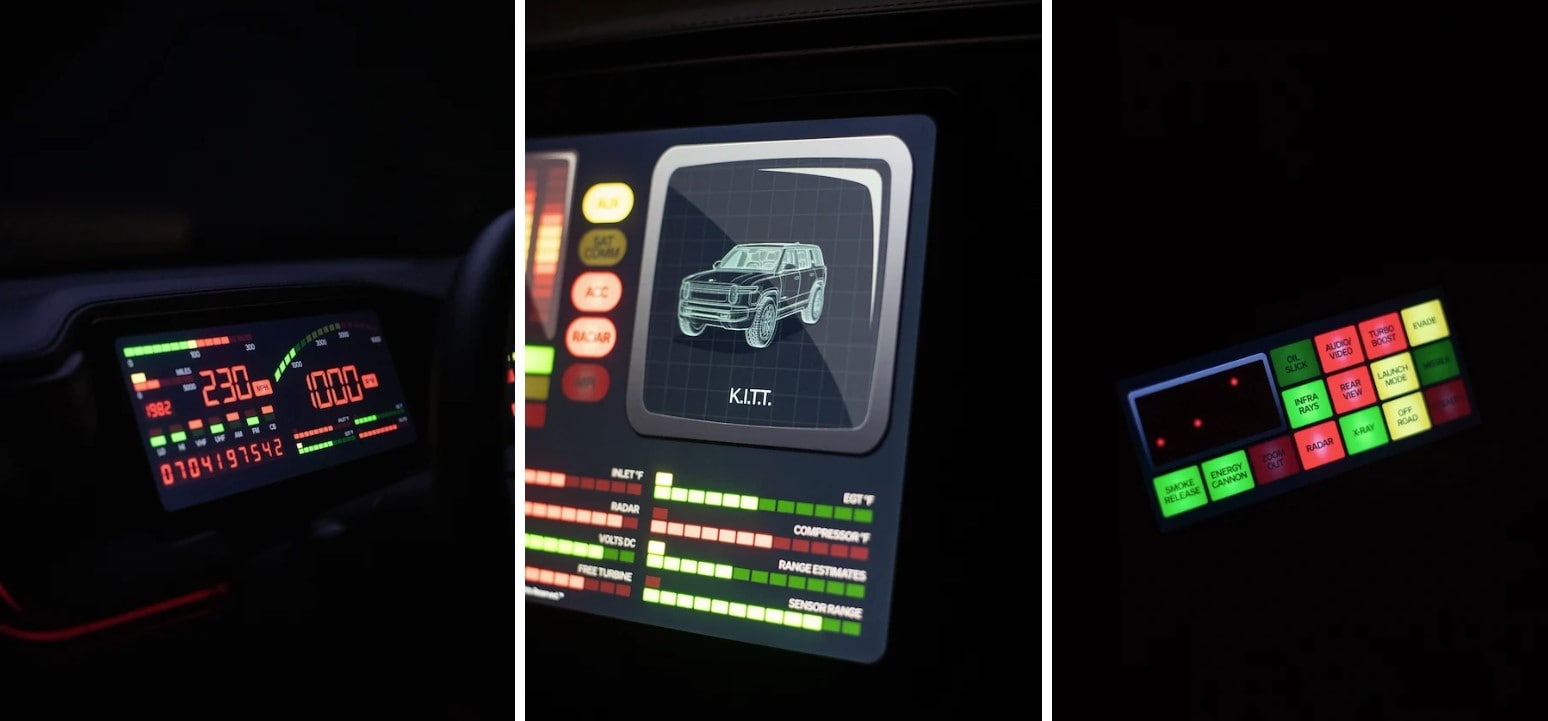
A K.I.T.T. download lets your Rivian dress up as the sentient 1982 Pontiac Firebird Trans Am from the classic 1980s TV show “Knight Rider.” It makes the Rivian’s front light bar pulse red from left to right (if you know, you know), and plays iconic scanning noise and the show’s intro music.
It also switches the car’s touchscreens to display the button-heavy diagnostic screen from the show. Rivian even got “Knight Rider” star David Hasselhoff to play the character in an ad for the feature. Sadly, they did not replicate K.I.T.T.’s voice, and the car won’t call you Michael. We assume voice actor William Daniels, now 97, is enjoying his retirement.
Back To The Future
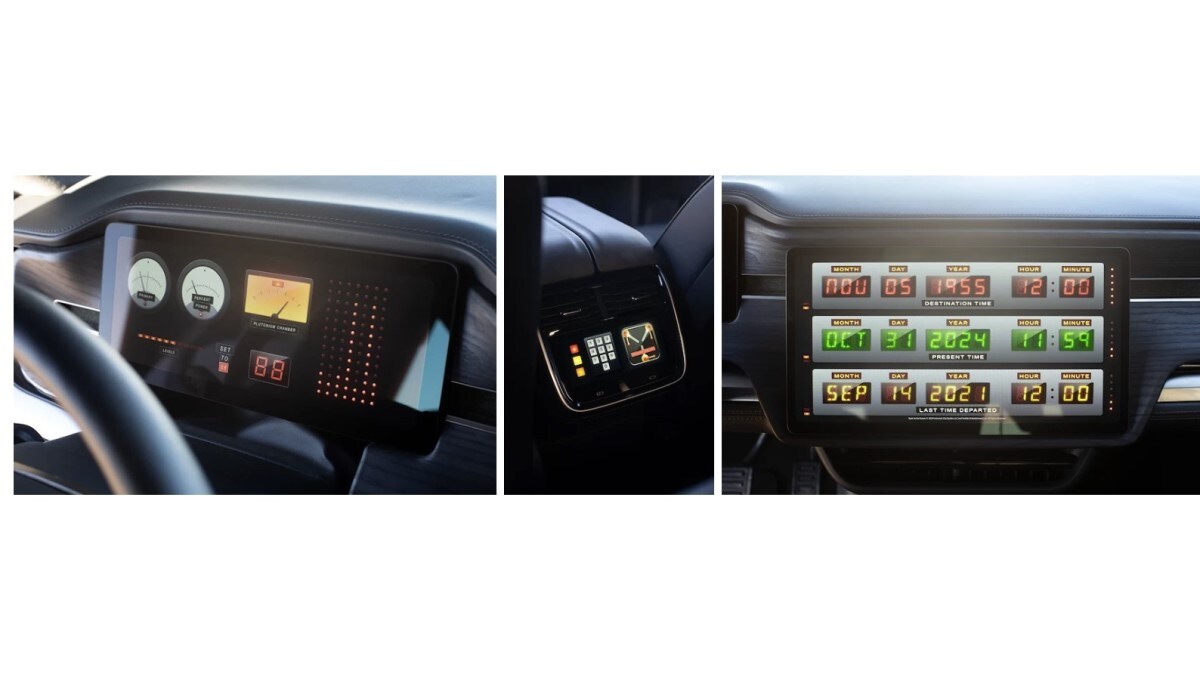
Another costume replicates Doc Brown’s Delorean time machine from the “Back To The Future” movie series. Your car’s screens will show the date you’re in, the date you left, and the next date you’re jumping to. The rear-seat entertainment screen shows a flux capacitor.
A third option uses Halloween-themed sound effects. It includes a few features that work while the car is in motion. Pedestrians will show up on the driver display as zombies, Rivian says, “and bicyclists and motorcyclists are headless horsemen.”
It’s all a little silly. But it uses the inherent connectivity of modern cars to get playful, so we like it. The settings will automatically revert to normal, the company says, Nov. 4. Election day, Nov. 5, will be spooky enough without it.
Cox Automotive, the parent company of Kelley Blue Book and Autotrader, is a minority investor in Rivian.
Honda has recalled just 98 CR-V Hybrid compact SUVs from model year 2023 because a problem with their high-voltage batteries can cause them to lose power and could trigger a fire.
The company tells federal safety regulators, “Due to manufacturing variations, some battery cell negative terminals within the Li-ion battery module were produced with inadequate copper cladding residual thickness.” That can allow aluminum and electrolytes in the battery to touch.
Over time, that can break the terminal or busbar. “If the negative terminal or busbar breaks, users will be unable to drive the vehicle. If the breakage occurs while the battery is energized, a spark may occur, increasing the risk of a fire, crash, and/or injury,” Honda says.
Honda says it hasn’t seen this happen to a customer’s car. But a supplier found the problem during an inspection and flagged that it was possible.
So dealers will replace the battery module to avoid it.
Carmakers try to notify the owners of recalled vehicles, but those efforts aren’t always 100% effective. To check if your car is part of a recall, try our easy VIN check tool in our recall center.
The path to safe, widespread autonomous vehicles is going digital.
MITRE — a government-sponsored nonprofit research organization — today announced its partnership with Mcity at the University of Michigan to develop a virtual and physical autonomous vehicle (AV) validation platform for industry deployment.
As part of this collaboration, announced during the NVIDIA AI Summit in Washington, D.C., MITRE will use Mcity’s simulation tools and a digital twin of its Mcity Test Facility, a real-world AV test environment in its Digital Proving Ground (DPG). The joint platform will deliver physically based sensor simulation enabled by NVIDIA Omniverse Cloud Sensor RTX APIs.
By combining these simulation capabilities with the MITRE DPG reporting framework, developers will be able to perform exhaustive testing in a simulated world to safely validate AVs before real-world deployment.
The current regulatory environment for AVs is highly fragmented, posing significant challenges for widespread deployment. Today, companies navigate regulations at various levels — city, state and the federal government — without a clear path to large-scale deployment. MITRE and Mcity aim to address this ambiguity with comprehensive validation resources open to the entire industry.
Mcity currently operates a 32-acre mock city for automakers and researchers to test their technology. Mcity is also building a digital framework around its physical proving ground to provide developers with AV data and simulation tools.
Raising Safety Standards
One of the largest gaps in the regulatory framework is the absence of universally accepted safety standards that the industry and regulators can rely on.
The lack of common standards leaves regulators with limited tools to verify AV performance and safety in a repeatable manner, while companies struggle to demonstrate the maturity of their AV technology. The ability to do so is crucial in the wake of public road incidents, where AV developers need to demonstrate the reliability of their software in a way that is acceptable to both industry and regulators.
Efforts like the National Highway Traffic Safety Administration’s New Car Assessment Program (NCAP) have been instrumental in setting benchmarks for vehicle safety in traditional automotive development. However, NCAP is insufficient for AV evaluation, where measures of safety go beyond crash tests to the complexity of real-time decision-making in dynamic environments.
Additionally, traditional road testing presents inherent limitations, as it exposes vehicles to real-world conditions but lacks the scalability needed to prove safety across a wide variety of edge cases. It’s particularly difficult to test rare and dangerous scenarios on public roads without significant risk.
By providing both physical and digital resources to validate AVs, MITRE and Mcity will be able to offer a safe, universally accessible solution that addresses the complexity of verifying autonomy.
Physically Based Sensor Simulation
A core piece of this collaboration is sensor simulation, which models the physics and behavior of cameras, lidars, radars and ultrasonic sensors on a physical vehicle, as well as how these sensors interact with their surroundings.
Sensor simulation enables developers to train against and test rare and dangerous scenarios — such as extreme weather conditions, sudden pedestrian crossings or unpredictable driver behavior — safely in virtual settings.
In collaboration with regulators, AV companies can use sensor simulation to recreate a real-world event, analyze their system’s response and evaluate how their vehicle performed — accelerating the validation process.
Moreover, simulation tests are repeatable, meaning developers can track improvements or regressions in the AV stack over time. This means AV companies can provide quantitative evidence to regulators to show that their system is evolving and addressing safety concerns.
Bridging Industry and Regulators
MITRE and its ecosystem are actively developing the Digital Proving Ground platform to facilitate industry-wide standards and regulations.
The platform will be an open and accessible national resource for accelerating safe AV development and deployment, providing a trusted simulation test environment.
Mcity will contribute simulation infrastructure, a digital twin and the ability to seamlessly connect virtual and physical worlds with NVIDIA Omniverse, an open platform enabling system developers to build physical AI and robotic system simulation applications. By integrating this virtual proving ground into DPG, the collaboration will also accelerate the development and use of advanced digital engineering and simulation for AV safety assurance.
Mcity’s simulation tools will connect to Omniverse Cloud Sensor RTX APIs and render a Universal Scene Description (USD) model of Mcity’s physical proving ground. DPG will be able to access this environment, simulate the behavior of vehicles and pedestrians in a realistic test environment and use the DPG reporting framework to explain how the AV performed.
This testing will then be replicated on the physical Mcity proving ground to create a comprehensive feedback loop.
The Road Ahead
As developers, automakers and regulators continue to collaborate, the industry is moving closer to a future where AVs can operate safely and at scale. The establishment of a repeatable testbed for validating safety — across real and simulated environments — will be critical to gaining public trust and regulatory approval, bringing the promise of AVs closer to reality.
Artificial intelligence is transforming cybersecurity with new generative AI tools and capabilities that were once the stuff of science fiction. And like many of the heroes in science fiction, they’re arriving just in time.
AI-enhanced cybersecurity can detect and respond to potential threats in real time — often before human analysts even become aware of them. It can analyze vast amounts of data to identify patterns and anomalies that might indicate a breach. And AI agents can automate routine security tasks, freeing up human experts to focus on more complex challenges.
All of these capabilities start with software, so NVIDIA has introduced an NVIDIA NIM Agent Blueprint for container security that developers can adapt to meet their own application requirements.
The blueprint uses NVIDIA NIM microservices, the NVIDIA Morpheus cybersecurity AI framework, NVIDIA cuVS and NVIDIA RAPIDS accelerated data analytics to help accelerate analysis of common vulnerabilities and exposures (CVEs) at enterprise scale — from days to just seconds.
All of this is included in NVIDIA AI Enterprise, a cloud-native software platform for developing and deploying secure, supported production AI applications.
Deloitte Secures Software With NVIDIA AI
Deloitte is among the first to use the NVIDIA NIM Agent Blueprint for container security in its cybersecurity solutions, which supports agentic analysis of open-source software to help enterprises build secure AI. It can help enterprises enhance and simplify cybersecurity by improving efficiency and reducing the time needed to identify threats and potential adversarial activity.
“Cybersecurity has emerged as a critical pillar in protecting digital infrastructure in the U.S. and around the world,” said Mike Morris, managing director, Deloitte & Touche LLP. “By incorporating NVIDIA’s NIM Agent Blueprint into our cybersecurity solutions, we’re able to offer our clients improved speed and accuracy in identifying and mitigating potential security threats.”
Securing Software With Generative AI
Vulnerability detection and resolution is a top use case for generative AI in software delivery, according to IDC(1).
The NIM Agent Blueprint for container security includes everything an enterprise developer needs to build and deploy customized generative AI applications for rapid vulnerability analysis of software containers.
Software containers incorporate large numbers of packages and releases, some of which may be subject to security vulnerabilities. Traditionally, security analysts would need to review each of these packages to understand potential security exploits across any software deployment.
These manual processes are tedious, time-consuming and error-prone. They’re also difficult to automate effectively because of the complexity of aligning software packages, dependencies, configurations and the operating environment.
With generative AI, cybersecurity applications can rapidly digest and decipher information across a wide range of data sources, including natural language, to better understand the context in which potential vulnerabilities could be exploited.
Enterprises can then create cybersecurity AI agents that take action on this generative AI intelligence. The NIM Agent Blueprint for container security enables quick, automatic and actionable CVE risk analysis using large language models and retrieval-augmented generation for agentic AI applications. It helps developers and security teams protect software with AI to enhance accuracy, efficiency and streamline potential issues for human agents to investigate.
Blueprints for Cybersecurity Success
The new NVIDIA NIM Agent Blueprint for container security includes the NVIDIA Morpheus cybersecurity AI framework to reduce the time and cost associated with identifying, capturing and acting on threats. This brings a new level of security to the data center, cloud and edge.
The GPU-accelerated, end-to-end AI framework enables developers to create optimized applications for filtering, processing and classifying large volumes of streaming cybersecurity data.
Built on NVIDIA RAPIDS software, Morpheus accelerates data processing workloads at enterprise scale. It uses the power of RAPIDS cuDF for fast and efficient data operations, ensuring downstream pipelines harness all available GPU cores for complex agentic AI tasks.
Morpheus also extends human analysts’ capabilities by automating real-time analysis and responses, producing synthetic data to train AI models that identify risks accurately and to run what-if scenarios.
The NVIDIA NIM Agent Blueprint for container security is available now. Learn more in the NVIDIA AI Summit DC special address.
(1) Source: IDC, GenAI Awareness, Readiness, and Commitment: 2024 Outlook — GenAI Plans and Implications for External Services Providers, AI-Ready Infrastructure, AI Platforms, and GenAI Applications US52023824, April 2024
A hotel in South Lake Tahoe is making it easier to plan for an epic mountain stay with an unlimited pass during ski season.
The Station House Inn’s Ski Season Pass offers unlimited room nights from Nov. 1 through April 30, 2025, for $5,000. To take advantage, travelers must purchase the pass by Oct. 31.
“No more scrambling for peak-season stays or feeling FOMO when your friends score the last slopeside room,” the Station House Inn wrote as part of its promotion. “You’ll have your cozy haven locked down, ready to fuel your snowy escapades all season long.”
Once travelers have the pass, they can book their rooms either by calling or emailing the hotel directly. Rooms are based on availability and cancelable up to 24 hours before the scheduled arrival. The passes do not include tax and certain blackout dates do apply.
The pass is available for the hotel’s Cozy King rooms, which are 205 square feet and feature a king-sized bed, a dresser, desk, and a tub/shower combo in the bathroom. For $20 per night, pass holders can upgrade to a Double Queen room, which is larger at 280 square feet and features two queen beds and a walk-in shower.
In addition to the unlimited pass, the hotel is also offering a “green bundle,” which comes with 10 nights for $1,500, and a “blue bundle,” which comes with 20 nights for $2,000.
The Station House Inn is located in South Lake Tahoe, just a few minutes from Heavenly Ski Resort, one of the best ski resorts in Lake Tahoe with 97 trails and 4,800 skiable acres. It’s also about 30 minutes from the Sierra at Tahoe resort, which will join the Ikon Pass for the winter 2024/2025 season.
Beyond access to skiing, the hotel features daily complimentary coffee in the lobby, free movies and popcorn, free snowman and s’mores kits, and is dog-friendly.
More efficient that the standard CX-70, but is it better?
2025 Mazda CX-70 PHEV Premium Plus in Rhodium White
Text and pictures by Amos Kwon
2025 Mazda CX-70 PHEV Premium Plus
Trim Base MSRP: $57,450
As Tested Price: $59,420 (incl. $1,375 delivery, processing, and handling fee)
Review
Mazda is unabashedly moving into premium automotive territory, first with the three-row CX-90 and now with its near-twin CX-70. You can even outfit them with a PHEV powertrain that couples a 2.5-liter inline-4 and an AC motor for a total of 323 horses and, 369 pound-feet of twist. They also have nearly identical all-electric range. The CX-90 PHEV offers 26.1 miles and the CX-70 will go 25.1 before the battery is fully drained.
Look at both of them without glancing at the model nameplate, and you won’t be able to tell them apart… until you look inside. The CX-70 deletes a row in favor of a smidge more cargo space behind row two. Confused? Well, if you remember the 3rd-generation Hyundai Santa Fe and Santa Fe Sport, the former could be outfitted with three rows while the latter had only two. But, at least, they were two different lengths and two different base prices, but that still confused buyers. It seems Mazda likes playing the same shenanigans. The three-row Santa Fe cost more than the Sport, which made sense. Mazda, however, charges more for the CX-70 than the CX-90. Wha??
2025 Mazda CX-70 PHEV Premium Plus
Design
The refined design of the CX-70 (and the CX-90), both inside and out, showcases a more upscale design language. As much as we love the way my own CX-9 looks, the new styling of both the CX-90 and the CX-70 has more presence. The slab doors have taller, contoured sheet metal, and the look is cleaner with virtually no body creases. The taillights are reminiscent of the current BMW X7, and the large mesh grille mates nicely with headlight clusters whose shape matches the taillight housings.
2025 Mazda CX-70 PHEV Premium Plus
The one aspect of the CX-70’s styling that’s not as nice as the old CX-9s is the bulbous tail section that protrudes a bit too far out for our liking. The rest of the car is stunning and fresh. It branches out from the Mazda design language into upscale territory without deviating too much from some of the best-styled mainstream vehicles in the industry. The black door handles, wing mirrors, window trim, and fender well trim lend a sportier look than chrome would. Plus, they match the grille mesh nicely. Mazda gave it a premium look without looking derivative. The result is a crossover that still carries the Mazda ethos while ratcheting up the aesthetic.
2025 Mazda CX-70 PHEV Premium Plus
Power and Performance
PHEVs are hot right now, and it’s smart for Mazda to get in on the game (abandoning its EV plan in the States at the moment, given the demise of the 100-mile-range MX-30). The problem is that the powertrain in the CX-70 PHEV feels half-baked. The electric-to-gas transition isn’t smooth, and it feels pretty unrefined. What makes things worse is that the CX-70 PHEV feels slow and rough unless you switch it to Sport mode, really the only mode you should drive it in if you care about decent acceleration. It will get to 60 mph from a standstill in just under 6 seconds, which is properly quick. Too bad it never feels nicely linear or smooth. It’s also loud and intrusive in an otherwise wonderful cabin.
2025 Mazda CX-70 PHEV Premium Plus
Ride and Handling
The CX-70 errs on the side of firm, but the dampening is very good. That’s where the accolades stop, though. The CX-70 fails to deliver a good handling experience but not because it’s too mushy or ungainly in the curves. There’s some heft to the steering, but the sheer weight of the CX-70, combined with the rather brutal powertrain execution, does not inspire confidence. Cornering body roll is manageable, but going hot into a corner does not result in the kind of handling predictability we expect from Mazda, especially when you compare it to the utterly sublime CX-50, a far less expensive two-row.
2025 Mazda CX-70 PHEV Premium Plus
Connectivity
What Mazda infotainment lacks in terms of fancy graphics and animations it makes up for in ease of use. Granted, the aesthetics could probably use a bit of an upgrade in the tech looks department, similar to what Lexus has done recently, but both of the CX-70’s 12.3” screens for instrumentation and infotainment are nothing short of straightforward. Touchscreen operation is relegated to Apple CarPlay and Android Auto, which can be frustrating when using the Mazda OS because, well, you simply forget and end up hitting the screen to no avail. We actually prefer the physical Commander control knob and corresponding buttons all located on the center console. They’re pretty intuitive and easier to use than a touchscreen when you’re in motion.
2025 Mazda CX-70 PHEV Premium Plus
Room and Comfort
No matter what price point you’re at, it’s hard to argue that Mazda makes some of the best interiors in the business. Our Premium Plus tester was beautifully styled and downright opulent with red Nappa leather seats, red stitching throughout the cabin, and gorgeous brushed metallic surfaces. We love the fact that Mazda ditched the fingerprint- and dust-proned piano black plastic, replace by a mesh-like pattern material that looks and feels great. Switchgear is very good, both on the center stack, console, and steering wheel. The adjustment buttons for climate are a bit confusing, though, because they stick out and look like toggles.
2025 Mazda CX-70 PHEV Premium Plus
Front seat occupants get 41.7 inches of legroom, and rear passengers get 39.4 inches of legroom. That’s more than both the BMW X5 and the Lexus RX. The seats in both rows are supremely comfortable, and even the middle occupant of row two doesn’t have to contend with a dramatic amount of seat bulge. Manual adjustability is very good for the back row, and there’s a slide-and-tilt function for accessing the cargo area, which provides 39.6 cubic feet of cargo space behind the second row and 75.3 cubic feet with the seats folded flat. We especially liked the underfloor cargo area boxes that provide an extra measure of secure storage.
Value
The CX-70 PHEV is, ultimately, a flawed execution of a good idea. Just about everything about the vehicle is top-notch, except for the powertrain, which is impossible to ignore. You can dial the drive mode selector into Sport, which is the best way to enjoy the vehicle and the worst way to fuel efficiency. Point being, go with the gas-only version and call it a day. If you don’t have to have the premium look, extra cargo room, or PHEV capability, then we say go with a fully-loaded CX-50 2.5 Turbo Premium Plus and save yourself around $15k.
Listen to the Car Stuff Podcast
Follow Amos on Twitter
2025 Mazda CX-70 PHEV Premium Plus
Pictures
Click below for enlarged images
2025 Mazda CX-70 3.3 Turbo S Premium Plus: Review, Prices, and Specs
Consumer Guide Car Stuff Podcast Episode 242: Pickup Truck Sales, Thoughts on the Tesla Robo Taxi, Chatting with EV Startup TELO
More than two years on from its debut, the current Ford Ranger is still the dual-cab ute king.
Not only was it the best-selling vehicle bar none in Australia in 2023, it’s sitting atop the VFACTS sales for 2024 ahead of the Toyota HiLux.
Aside from a few adjustments to its equipment list, the introduction of a few special-editions, and the requisite price rises since its debut, very little about the Blue Oval’s best-seller has changed.
But outside of Ford’s four walls, the ute market has evolved fast. At the bottom end, the trickle of affordable Chinese utes coming to cut the base model’s lunch has become a flood.
At the top end, Toyota has rolled out mild-hybrid technology for the HiLux, Isuzu has overhauled the D-Max, and BYD is coming with the plug-in hybrid Shark 6 to really shake things up.
WATCH: Paul’s video review of the 2023 Ford Ranger XLT V6
The Ranger might be the top dog for now, but there are plenty of rivals gunning for its crown. We’ve hopped back into the XLT V6 to see if it’s still got what it takes.
How does the Ford Ranger compare?
View a detailed breakdown of the Ford Ranger against similarly sized vehicles.
Ford
Ranger
How much does the Ford Ranger cost?
We hope you’re sitting somewhere comfortable, because this is a massive lineup thanks to a big mix of drivetrains, body styles, and trim choices.
Ranger XL
Model
Price before on-road costs
Ford Ranger XL 4×2 single cab chassis
$36,880
Ford Ranger XL 4×2 super cab chassis
$39,380
Ford Ranger XL 4×2 double cab pickup
$43,280
Ford Ranger XL 4×4 Bi-Turbo single cab chassis
$47,980
Ford Ranger XL 4×4 double cab chassis
$48,980
Ford Ranger XL 4×4 Bi-Turbo super cab chassis
$50,480
Ford Ranger XL 4×4 double cab pickup
$50,880
Ford Ranger XL 4×4 Bi-Turbo double cab chassis
$52,480
Ford Ranger XL 4×4 Bi-Turbo double cab pickup
$54,380
Ranger Black Edition
Model
Price before on-roads
Ford Ranger Black Edition 4×4 Bi-Turbo double cab pickup
$56,680
Ranger XLS
Model
Price before on-roads
Ford Ranger XLS 4×4 Bi-Turbo double cab pickup
$57,630
Ranger XLT
Model
Price before on-roads
Ford Ranger XLT 4×2 Bi-Turbo double cab pickup
$56,440
Ford Ranger XLT 4×4 Bi-Turbo super cab pickup
$61,640
Ford Ranger XLT 4×4 Bi-Turbo double cab pickup
$63,640
Ford Ranger XLT 4×4 V6 double cab chassis
$66,940
Ford Ranger XLT 4×4 V6 double cab pickup
$68,840
Ranger Sport
Model
Price before on-roads
Ford Ranger Sport 4×4 Bi-Turbo double cab pickup
$66,140
Ford Ranger Sport 4×4 V6 double cab pickup
$71,340
Ranger Tremor
Model
Price before on-roads
Ford Ranger Tremor 4×4 Bi-Turbo double cab pickup
$69,690
Ranger Wildtrak
Model
Price before on-roads
Ford Ranger Wildtrak 4×4 Bi-Turbo double cab pickup
$69,640
Ford Ranger Wildtrak 4×4 V6 double cab pickup
$74,840
Ranger Platinum
Model
Price before on-roads
Ford Ranger Platinum 4×4 V6 double cab pickup
$80,640
Ranger Raptor
Model
Price before on-roads
Ford Ranger Raptor 4×4 3.0TT V6 double cab pickup
$90,440
To see how the Ford Ranger compares to its rivals, check out our comparison tool
What is the Ford Ranger like on the inside?
More than two years after its debut, the Ranger is still the most modern dual-cab ute on the market… at least before you start looking at bigger, significantly more expensive American pickups.
With a tilting and telescoping wheel, well-padded seats that accomodate tall drivers, and plenty of storage up front, it’s still the best ute out there if you’re planning to spend long stints on the highway.
Even without the leather trim, heated seats, and fancy stitching of the Wildtrak, it’s a quality place to spend time.
Although the XLT only gets a 10-inch display instead of the 12-inch touchscreen in the Wildtrak, it’s still bigger and better than what’s on offer in a HiLux or D-Max. Ford has polished the software since launch, with new icons and colours that debuted in the Ranger Platinum.
The menu structure is logical, and the amount of screen real estate means key information isn’t buried. It’s possible to have your mapping, radio preferences, and climate details on display all at once, for example. Unlike earlier examples, there is no awkward lagging or stuttering between screens here.
Wireless Apple CarPlay connected flawlessly for us, but on longer trips we used USB-C to preserve phone battery.
The digital instrument cluster is quite basic; only the Ranger Raptor and Platinum get a fully featured 12-inch setup. It shows your speed, revs, and trip information, but can’t be set up with mapping for example.
FordPass Connect is standard on the Ranger, and allows owners to lock or unlock and remotely start their car, find their car, check their fuel level, activate the exterior lighting, or even check the indicators on your trailer are working.
It feels like Ford has really thought about how to value-add with its app in the Ranger, rather than just translating passenger car technology into a vehicle with a different set of goals.
Storage space around the cabin is plentiful. The central bin is deep, the door pockets have plenty of room, there are two cupholders on the transmission tunnel, and the slot beneath the dashboard is huge. The slot ahead of the gear selector is perfect for a large McDonald’s fries.
You don’t get the neat pop-out cupholders on each end of the dashboard, nor the extra pop-up glovebox atop the dash from the Wildtrak.
Rear seat space is fine, but doesn’t feel like much of a step on from what was previously on offer.
Legroom and headroom are both acceptable, and the bench is broad enough that three tradies will be able to travel on short journeys without wanting to kill each other afterwards.
The inclusion of air vents is good, although the fact Ford has fitted a 12V slot but no USB ports on the rear of the centre console seems like a missed opportunity.
The 12V is versatile when it comes to accessories, but you’ll need to plug in a dongle to charge iPads back there.
Along with the requisite ISOFIX and top-tether child seat points, the Ranger features a fold-down central armrest, damped rear grab handles, and storage bins beneath the seat bases.
Dual-cab Ranger models have a wider tub than before, billed as sufficient to flat-stow a 1200mm x 800mm pallet.
It’s simpler to access, with sturdy box steps fitted just behind the tyres. At 100kg, my weight didn’t make them flex.
The counterbalanced tailgate (with mounting points for vices and even a pre-drawn ruler) can be lifted with a finger, there are six tie-down hoops in the bed, and the box sides have structural attachment points for canopies pre-fitted.
Dimensions
Ford Ranger XLT V6
Length
5370mm
Width
1918mm
Height
1886mm
Wheelbase
3270mm
To see how the Ford Ranger compares to its rivals, check out our comparison tool
What’s under the bonnet?
Although you can have your Ranger with a cheaper, less powerful Bi-Turbo four-cylinder diesel engine, our tester was fitted with the V6. Along with more power, it brings a more sophisticated four-wheel drive system that can be operated on sealed surfaces.
Specifications
Ford Ranger XLT V6
Engine
3.0L V6 turbo-diesel
Power
184kW
Torque
600Nm
Transmission
10-speed auto
Drive type
Full-time 4WD with 4A, 4H, 4L
Fuel economy (claimed)
8.4L/100km
Fuel economy (as tested)
9.0L/100km
CO2 emissions (claimed)
222g/km
Fuel tank
80 litres
Weight
2332kg (kerb)
Payload
948kg
Braked towing capacity
3500kg
Gross vehicle mass (GVM)
3280kg
Gross combination mass (GCM)
6400kg
To see how the Ford Ranger compares to its rivals, check out our comparison tool
How does the Ford Ranger drive?
If you’re driving to and from work in your Ranger without ever really testing its payload or towing capacity, you probably don’t need the V6 engine… but that doesn’t mean you won’t want it.
The engine (dubbed Lion) traces its roots to Land Rover, and a version of it featured in the Ford Territory diesel. It was new to the Ranger at launch, but an iteration has also appeared in the full-sized F-150 pickup sold in the USA.
The extra torque on offer is immediately noticeable, playing out with a satisfying surge of performance from below 2000rpm when you lean on the throttle and strong in-gear response at highway speeds. When you want more punch it’s clear there’s a much higher ceiling on what the V6 can do.
In our drag races, towing tests, and off-roading tests, the extra torque makes a meaningful difference relative to the Bi-Turbo. The effortless feel it offers is luxurious in the context of the dual-cab ute market.
Beyond the extra punch on offer, the V6 sets itself apart with proper full-time four-wheel drive. Rather than the part-time four-wheel drive system in the Bi-Turbo, which shouldn’t be driven in 4×4 on sealed roads, the system in the V6 can be used all the time.
You can set it in 4A and forget it for normal driving, then enjoy all-wheel drive traction in wet conditions without the risk of your differentials binding.
Utes on all-terrain tyres are notoriously skittish on wet tarmac, so the added security of a full-time four-wheel drive system brings benefits in a wide range of conditions.
There are limitations to a ladder-frame vehicle relative to a monocoque when it comes to ride comfort without a load in the tray.
At launch, Ford talked about making the car’s track 50mm wider and moving the dampers outboard to cut down on hopping when the tray is empty. More than two years on from launch, the Ranger remains one of the comfier utes to drive on the road.
You don’t get the sense the tail is wagging when you hit bumps at speed, and occupants aren’t jiggled around relentlessly.
It’s rock-solid over the sort of washboard gravel roads prevalent in remote parts of Australia, and does an excellent job of soaking up the sort of pitted streets common in the less remote bits. On coarse-chip roads it’s impressively hushed in the cabin, too.
The Ranger can’t escape its ladder-frame chassis and payload carrying capability entirely, though. It’s busier than the related Everest 4×4 on the highway, for example, and never settles entirely where SUVs will.
If you need a tray on the back of your car it’s an excellent choice, but utes still aren’t able to match non-commercial vehicles for comfort.
Like its predecessor, the new Ranger features light steering and decent all-round visibility. It’s one of the easiest utes to pilot in town, and the electric power steering system feels more direct than before.
In the old model you needed to twirl, twirl, and then twirl the wheel some more at low speeds; the new model requires smaller inputs.
The smooth idle start/stop system makes a difference in the city, although plenty of owners will no doubt turn it off immediately.
It’s worth noting the reversing camera is a magnet for mud and spray, so it’s worth carrying a cloth in the cabin if you rely on it and frequent mucky roads.
The Isuzu D-Max was the first ute to really put a full suite of driver assists front and centre, but the Ranger’s systems are better calibrated. The lane-keeping assist keeps you between the white lines on the highway and holds the vehicle nicely in its lane in tricky conditions.
Our experience with the Ranger off-road has proven it’s an idiot-proof way to go into the wilderness.
Any inputs to the off-road dials on the transmission tunnel bring clear, bright animations on the instrument cluster or central screen to keep less experienced drivers abreast of what’s happening, and the four-wheel drive system switches modes quickly.
Hill descent control keeps an iron grip on your momentum and doesn’t grind or graunch like older systems, either.
As for towing? The Ranger Wildtrak V6 was effortless with the 2.5-tonne trailer we used in our Mega Test, run in its Tow/Haul driveline mode, which holds lower gears longer.
Despite having 10 speeds, the transmission’s ratios felt well-spaced, and it pulled up the ascent with no hesitation, gaining speed all the way.
The Australian-tuned ride quality over undulations proved to be better than average with only a hint of bounciness, ditto the engine braking from the diesel – although the buttons on the gear shifter for manual changes are annoying. Paddles would be a better option.
Off-road dimensions
Ford Ranger XLT V6
Track front and rear
1620mm
Ground clearance
234mm
Approach angle
30.0 degrees
Departure angle
23.0 degrees
Ramp breakover angle
20.0 degrees
Wading depth
800mm
To see how the Ford Ranger compares to its rivals, check out our comparison tool
What do you get?
Ranger XL standard equipment:
16-inch steel wheels
All-season tyres
16-inch steel spare wheel
Front disc and rear drum brakes
Heavy-duty suspension
Black grille
Halogen headlights
Halogen daytime running lights
LED central high-mounted tail light
LED tail lights (pickup only)
Tailgate with lift assist (pickup only)
Integrated tailgate step (pickup only)
10.1-inch Sync4 portrait touchscreen infotainment system
Asphalt Black 17-inch alloy wheels with all-terrain tyres
Black side steps
Asphalt Black grille with Bolder Grey inserts
Ranger XLS adds:
16-inch Dark Sparkle Silver alloy wheels
Black side steps
Halogen front fog lights
Black grille with silver accents
Carpet flooring
Driver floor mat
Front parking sensors
Drive mode selection
Tow bar
Trailer light check
Integrated trailer brake controller
Extended blind-spot monitoring with trailer coverage
Body-colour door handles
6-speaker sound system
Proximity entry with push-button start
Dual-zone climate control
Rear seat air vents
Satellite navigation
DAB+ digital radio
Ranger XLT adds:
17-inch Dark Sparkle Silver alloy wheels
17-inch steel spare wheel
Rear disc brakes
Electronic handbrake
Leather-wrapped ‘e-Shifter’ gear selector
4×2 locking rear axle
Front grille with chrome central bar
LED headlights
C-shaped LED daytime running lights
Front-mounted tow hook
Black sports bar (pickup only)
Rear tub illumination (pickup only)
Bedliner with 12V socket (pickup only)
Spray-in bedliner with 12V socket (super cab only)
Leather-wrapped steering wheel
Electrochromatic mirror
Rain-sensing windscreen wipers
Adaptive cruise control with lane-centring and stop/go
Is the Ford Ranger safe?
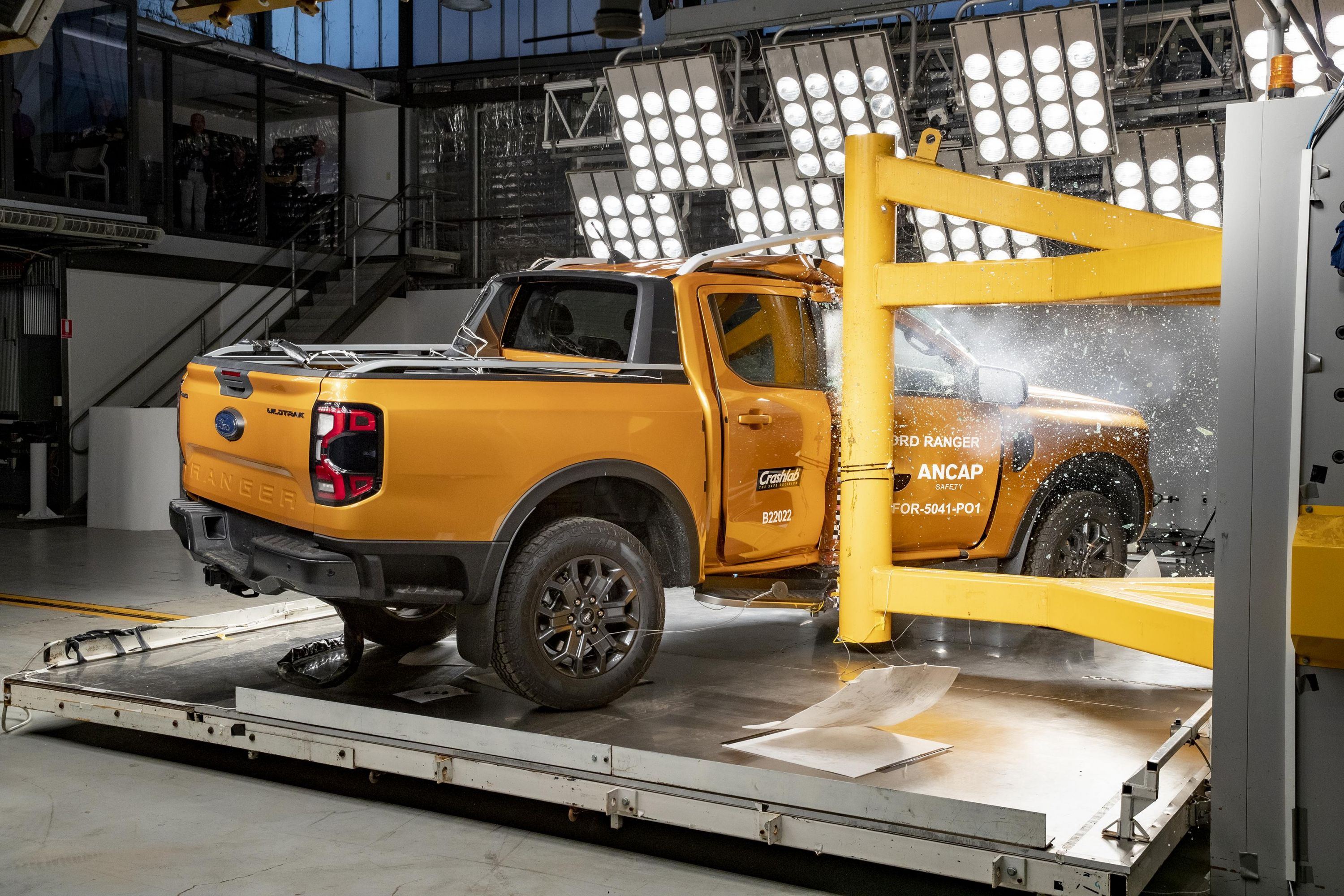
All variants of the Ford Ranger apart from the flagship Raptor have a five-star ANCAP safety rating.
Category
Ford Ranger
Adult occupant protection
32.24 out of 38 (84 per cent)
Child occupant protection
46 out of 49 (93 per cent)
Vulnerable road user protection
39.96 out of 54 (74 per cent)
Safety assist
13.39 out of 16 (83 per cent)
Standard safety equipment across the lineup includes:
9 airbags
incl. driver, passenger knee airbags
incl. front-centre airbag
Autonomous emergency braking (AEB)
Car, Pedestrian, Cyclist detection
Junction assist
Adaptive cruise control
Blind-spot assist
Rear cross-traffic alert (pickup)
Lane departure warning
Lane keep assist
Road edge detection
Reversing camera (pickup)
Rear parking sensors (pickup)
Trailer Coverage (with optional Tow Pack)
Ranger XLT adds:
Adaptive cruise control incl. stop/go
Blind-spot monitoring incl. Trailer Coverage
Lane centring assist
Traffic sign recognition
Tyre pressure monitoring
The optional Touring Pack adds a surround-view camera, while stepping up to the Wildtrak and above adds the Active Park Assist 2.0 system.
How much does the Ford Ranger cost to run?
The 2025 Ford Ranger is covered by a five-year, unlimited-kilometre warranty like the broader Ford range.
Running costs
Ford Ranger
Warranty
5 years, unlimited kilometres
Roadside assistance
Up to 7 years – service activated
Service intervals
12 months or 15,000 kilometres
Capped price servicing
4 years
Total capped price service cost
$1516
To see how the Ford Ranger compares to its rivals, check out our comparison tool
CarExpert’s Take on the Ford Ranger
Yep, the Ranger is still the daddy.
Although its rivals have all moved forward since it launched, the mid-range XLT – which isn’t particularly mid-range in price if we’re being fair – just gets so much right.
It’s nice to drive unladen, tows like a champion, and is capable and approachable off the beaten track. Throw in a modern interior, and Ford is still onto a winner.
Do you need the V6? Our testing has shown it’s worth spending the extra money if you’re planning to push deep into the car’s towing capacity, or the ability to use 4A mode on sealed roads is valuable to you.
As for how the XLT sits in the lineup? It’s all the Ranger you really need, given it packs a full list of active safety features and enough creature comforts inside.
Interested in buying a Ford Ranger? Get in touch with one of CarExpert’s trusted dealers here
Home remodeling projects present an excellent opportunity to elevate your living space with cutting-edge smart home technologies. By seamlessly integrating innovative solutions during the construction phase, you can unlock a world of enhanced comfort, convenience, energy efficiency, and security in your newly remodeled home. Whether you’re redesigning your kitchen, overhauling your bathroom, or undertaking a whole-house renovation, these features can transform your house into a truly modern and tech-savvy haven.
If you’re planning a home remodel and seeking to incorporate smart home technologies, it’s wise to collaborate with an experienced home remodeling company. For instance, Mad City Windows has provided remodeling services since 1998 and continues to help homeowners with their renovation projects. Unsure which technologies to choose and how to plan their installation? In this article, we will explain everything you need to consider if you want to make your house smarter.
One of the most popular and functional smart home upgrades is an integrated lighting and temperature control system. With a few taps on your smartphone or voice commands, you can effortlessly adjust the lighting levels, change the color temperature, and regulate the heating and cooling throughout your home.
Smart thermostats and lighting systems can learn your preferences and automatically adjust settings based on your daily routines, presence in rooms, and even the local weather conditions. This level of automation not only provides unparalleled convenience but can also lead to significant energy savings.
Entertainment and Audio Systems
Transform your living room or media room into a cutting-edge entertainment haven by incorporating smart audio and video systems. Wireless multiroom audio allows you to stream music seamlessly throughout your house, with the ability to control individual speakers or group them together for a synchronised listening experience.
You can also integrate your entertainment system with voice assistants. This allows for hands-free control and access to a vast library of multimedia content.
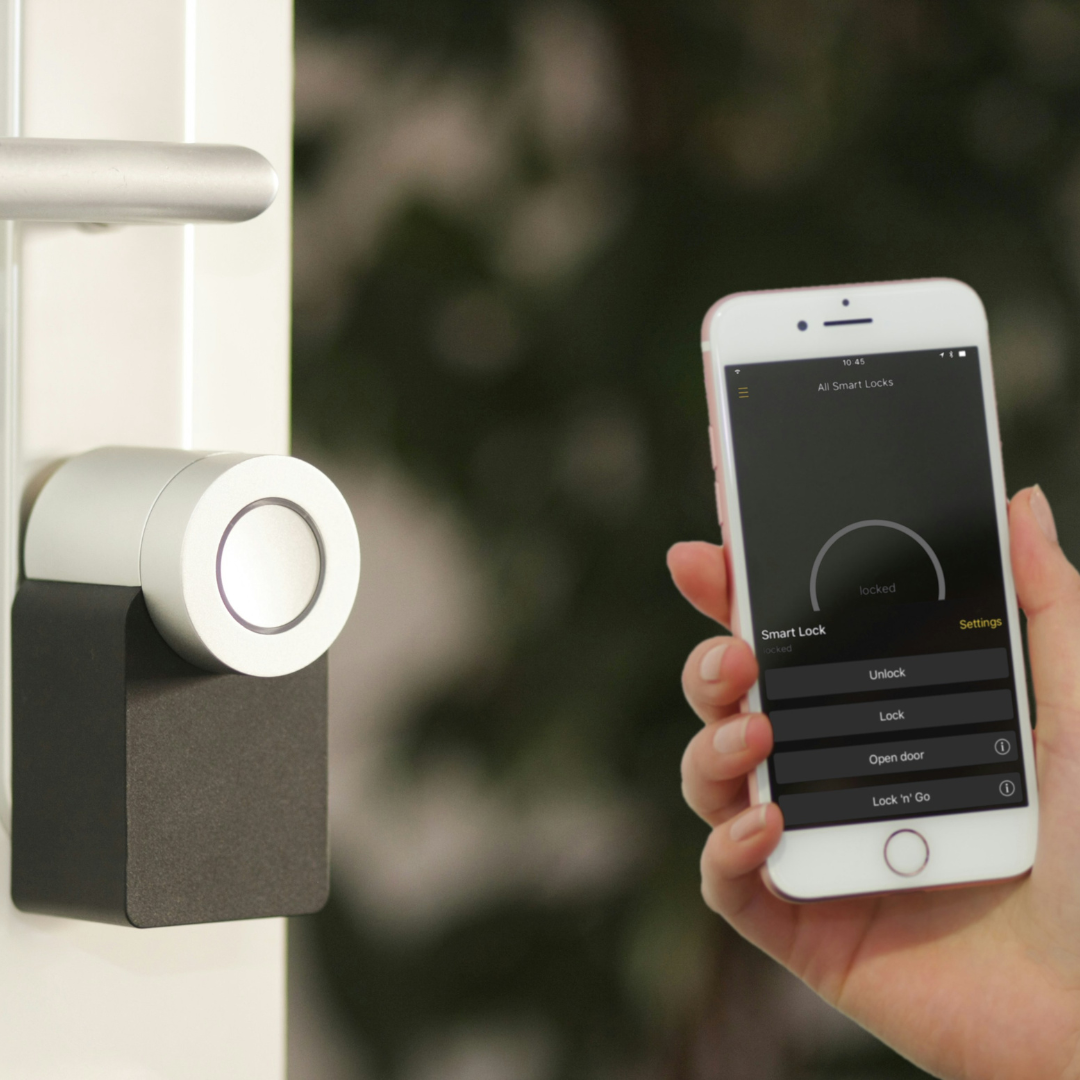
Enhance the safety and security of your remodeled space with innovative security solutions. Install interconnected security cameras, motion sensors, and smart locks that can be monitored and controlled remotely through your smartphone or tablet.
Many smart security systems integrate with other devices, allowing you to receive notifications and take immediate action if any potential threats are detected. Additionally, consider implementing smart smoke and carbon monoxide detectors for added peace of mind.
Kitchen and Appliance Integration
The kitchen is often the heart of the home, and smart appliances can revolutionise your culinary experience. From refrigerators that can create shopping lists and provide expiration date reminders to ovens that can be preheated remotely and follow recipe instructions, smart kitchen appliances offer unparalleled convenience and efficiency. You can even integrate your appliances with voice assistants, allowing you to multitask while cooking hands-free.
When incorporating these technologies during your remodel, careful planning and coordination with your contractor and technology professionals are essential. Here are some key considerations:
Determine your needs and priorities. Assess your lifestyle, daily routines, and specific requirements to identify the smart home features that would benefit you the most. Prioritize the technologies that align with your goals, whether it’s energy efficiency, convenience, security, or a combination of factors.
Choose a reliable and integrated smart home system. Research different smart platforms and choose a system that offers seamless integration between various devices and technologies. Look for systems that allow for future expandability and compatibility with new products as they become available.
Plan for wiring and infrastructure. These technologies often require specific wiring, network infrastructure, and power sources. Work closely with your contractor to ensure that the necessary electrical, network, and low-voltage wiring is properly installed during the remodeling process. This will prevent costly retrofitting or unsightly exposed wiring later on.
Consider professional installation and setup. While some smart home devices are designed for DIY installation, others may require professional assistance, particularly when integrating multiple systems and automating various home functions. Consult with smart home technology experts to ensure proper installation, configuration, and seamless integration of all components.
Prioritise cybersecurity and privacy. As you introduce more connected devices into your home, it’s crucial to prioritise cybersecurity and data privacy. Choose reputable brands with strong security measures, regularly update software and firmware, and implement robust password practices to protect your smart home ecosystem from potential cyber threats.
By carefully planning and incorporating smart home technologies during your remodel, you can create a modern, convenient, and energy-efficient living space that adapts to your needs and lifestyle. Embrace the future of home automation and enjoy the numerous benefits that smart home solutions offer.
For more on the latest in business and decor reads, click here.
The technical storage or access is strictly necessary for the legitimate purpose of enabling the use of a specific service explicitly requested by the subscriber or user, or for the sole purpose of carrying out the transmission of a communication over an electronic communications network.
Preferences
The technical storage or access is necessary for the legitimate purpose of storing preferences that are not requested by the subscriber or user.
Statistics
The technical storage or access that is used exclusively for statistical purposes.The technical storage or access that is used exclusively for anonymous statistical purposes. Without a subpoena, voluntary compliance on the part of your Internet Service Provider, or additional records from a third party, information stored or retrieved for this purpose alone cannot usually be used to identify you.
Marketing
The technical storage or access is required to create user profiles to send advertising, or to track the user on a website or across several websites for similar marketing purposes.