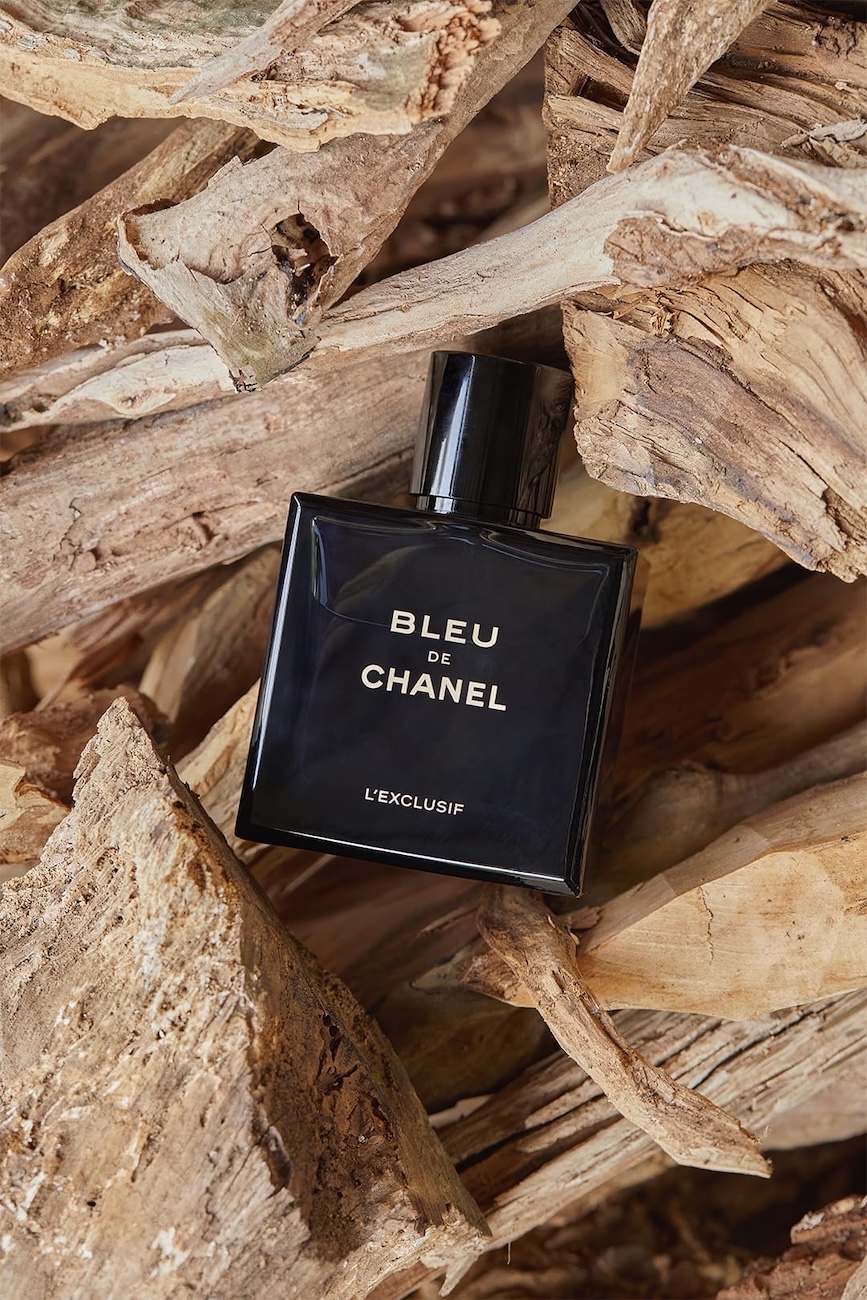
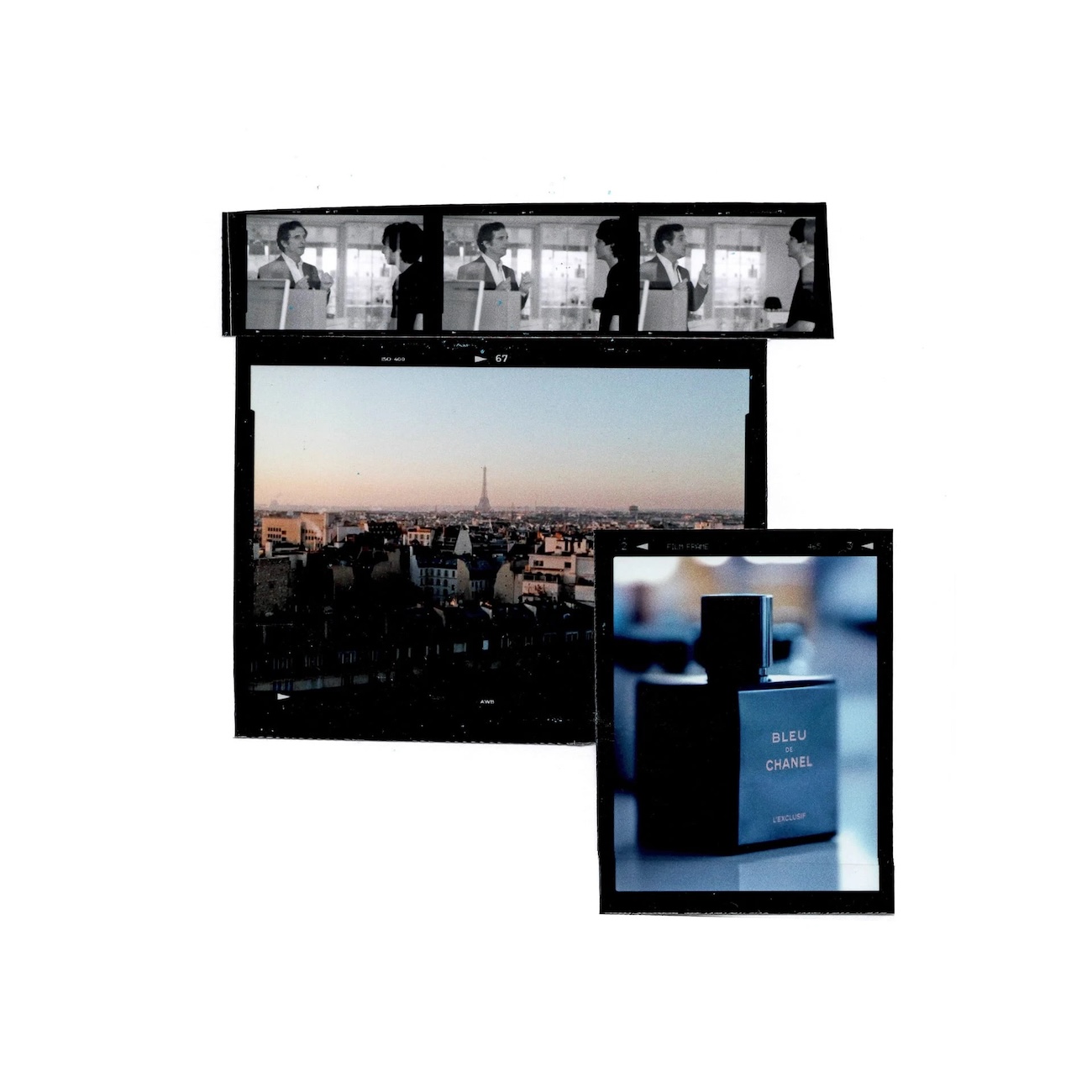
Some shades of blue are immediately familiar and recognisable, while a select few hold infinite mystique. CHANEL’s newest BLEU DE CHANEL L’Exclusif fragrance belongs to the latter, existing beyond boundaries where the horizon line blurs and disappears into a deep, commanding expanse. Conceived by CHANEL Perfumer-Creator Olivier Polge, BLEU DE CHANEL L’Exclusif is the most intense expression of the iconic BLEU DE CHANEL scent and symbolises a step beyond the threshold of the comprehensible.
“It’s a dense, sophisticated, and complex composition, like an extract. A concentrate of exceptional raw materials. The most magnetic and mysterious facet of BLEU DE CHANEL,” Olivier Polge, CHANEL perfumer-creator.
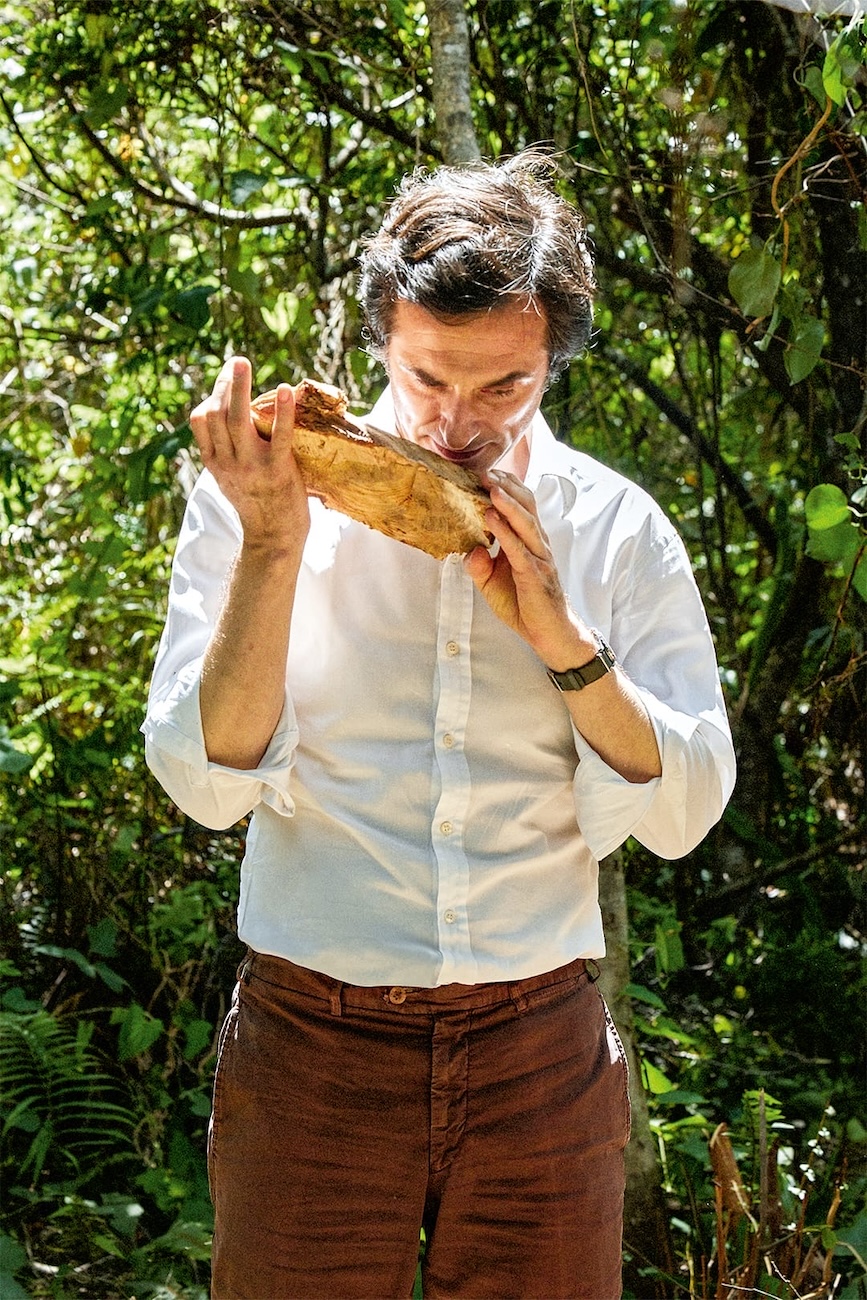
With BLEU DE CHANEL L’Exclusif, Polge reimagines masculinity with unflinching boldness: a rich and complex amber-woody creation steeped in character. Majestic, intense, and sophisticated are some of its superlatives distilled into its flacon. At its heart lies the majestic sandalwood of New Caledonia, sustainably sourced through CHANEL’s integrated supply chain on the island of Maré. Here, only the essential oil-rich precious heartwood is carefully extracted to reveal its full depth. Leathery and resinous notes of cistus labdanum unfurl in layers, revealing an almost hypnotic allure that commands attention, both for its artistry and audacity.
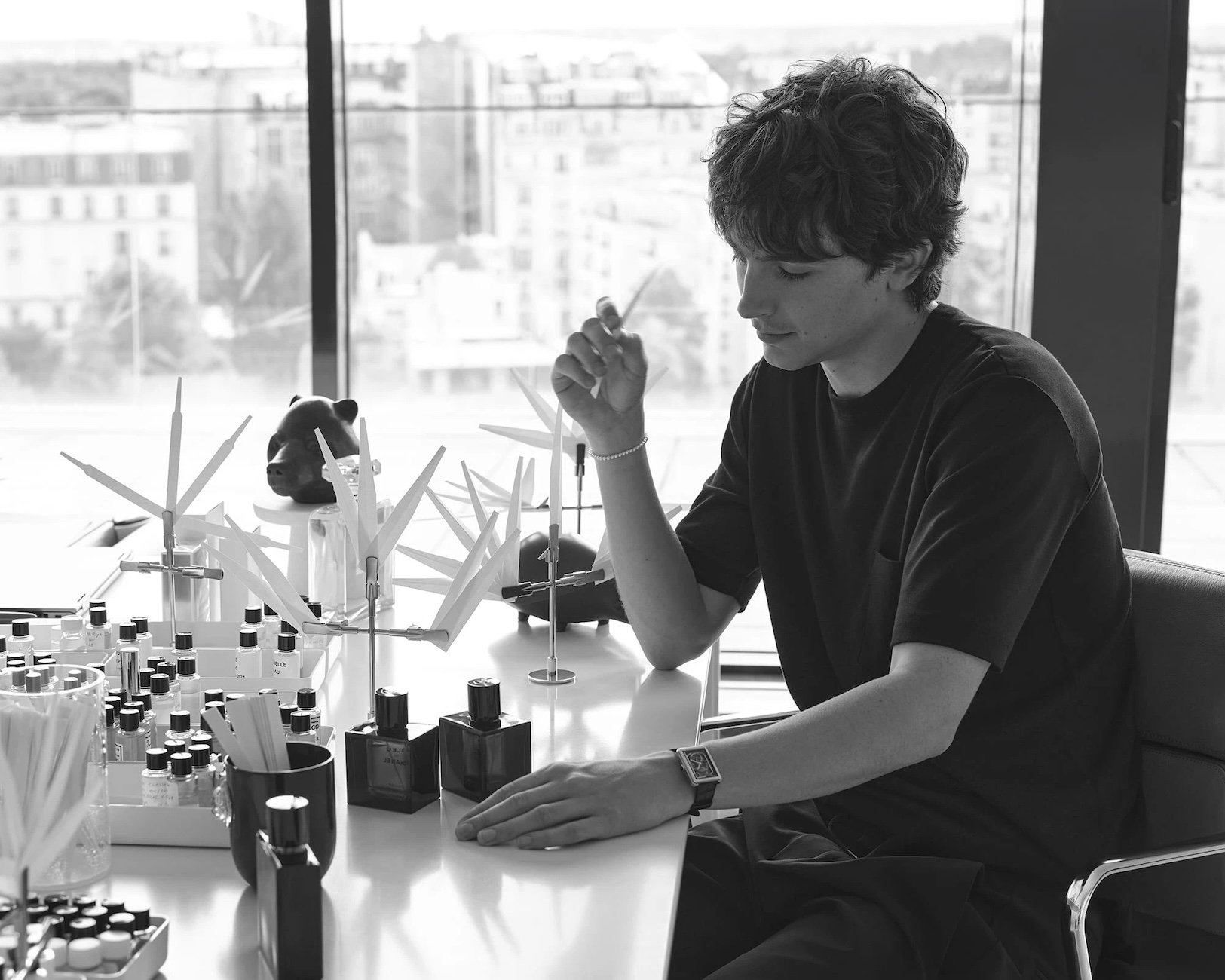
Fronting this creation is Timothée Chalamet, a figure in constant motion towards the unknown. Known for roles that range from the tender emotional depth of Call Me by Your Name and the raw vulnerability of Beautiful Boy, to the epic gravitas of Dune and Dune: Part Two, Chalamet is rightly considered a Hollywood heavyweight despite his age. Beyond those film titles, he has also brought charm to Little Women, whimsy to Wonka, and transformative intensity to A Complete Unknown as Bob Dylan. Elusive yet magnetic, Chalamet embodies the entire spectrum of the BLEU DE CHANEL L’Exclusif — brimming with possibility as he charts his course towards undiscovered frontiers.
To wear the BLEU DE CHANEL L’Exclusif is to carry the horizon on your skin with its boundless shade of blue that reveals new depths at every turn. It does not accompany you; it moves with you, amplifying the quiet force of intense presence, yet leaves a lasting trail of potent sophistication and elegance. Just as it was conceived by Olivier Polge, the BLEU DE CHANEL L’Exclusif is a fragrance not for the moment but for the journey beyond it.
This story was first seen on Men’s-Folio SG.
For more on the latest in wellness and beauty reads, click here.
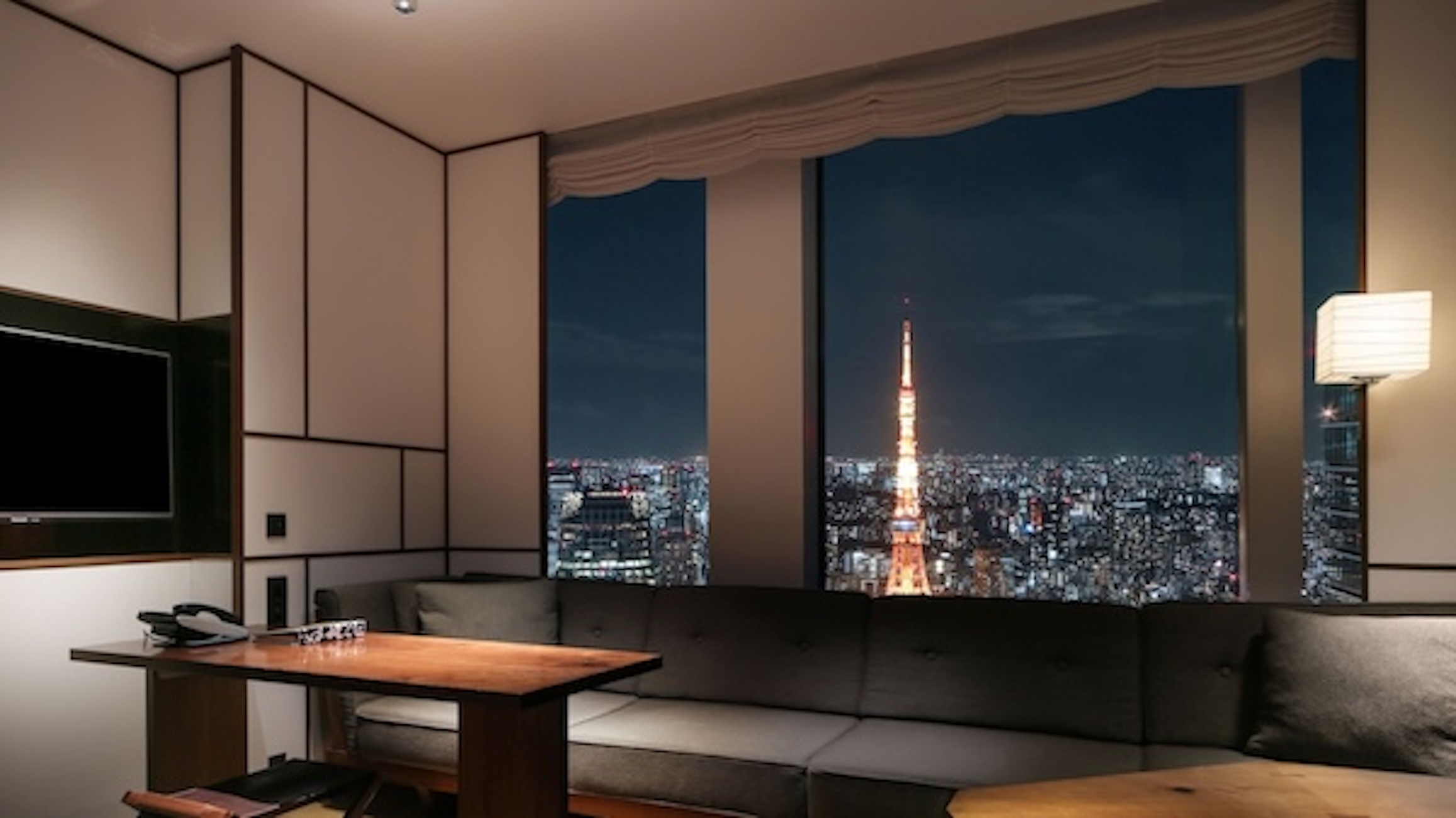
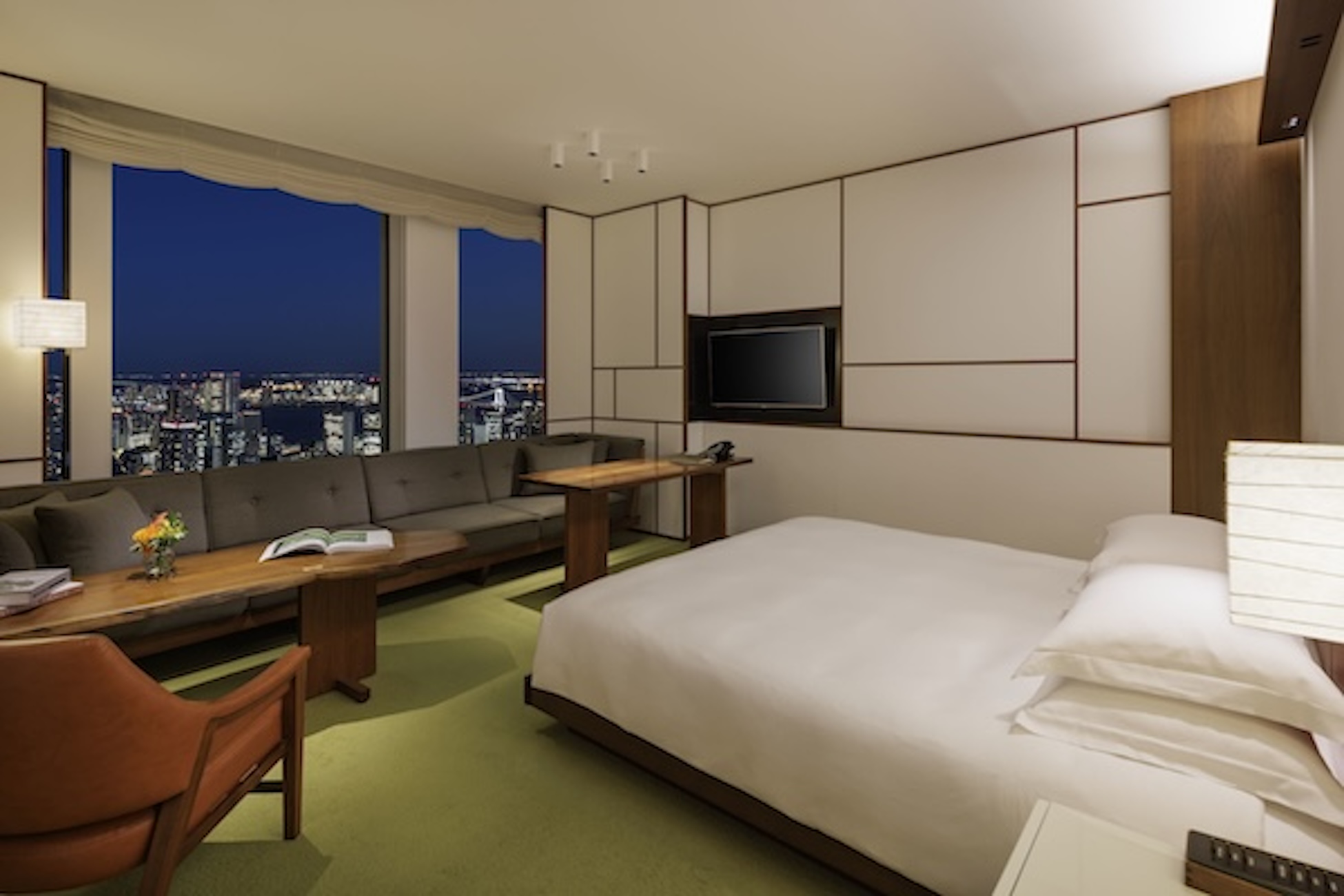
You can hear the hum of the air-conditioning, the soft rustle of the duvet rubbing against human skin. Through a stretched window, you can see the moonlit cubic outlines of buildings. And standing like a colossus at akimbo, the red-hot Tokyo Tower, aglow.
Toranomonis located inthe business district of Minato, Tokyo. This is the beating heart of many headquartered corporations. This area is also a whirlpool of the old and modern, a business community that co-exists with its architectural past. No stranger to redevelopment, with any sort of modernity, the older landmarks are incorporated into it.
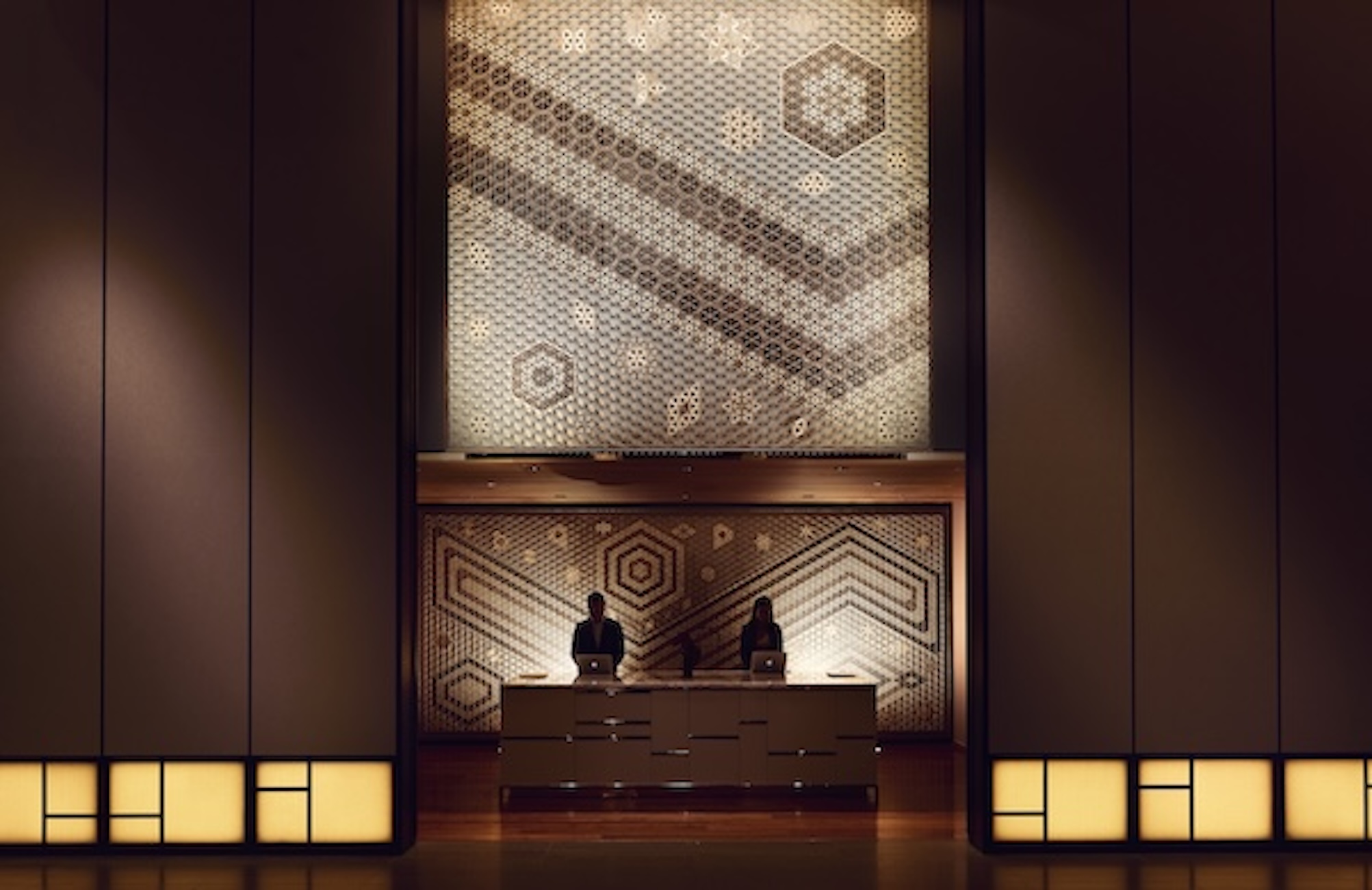
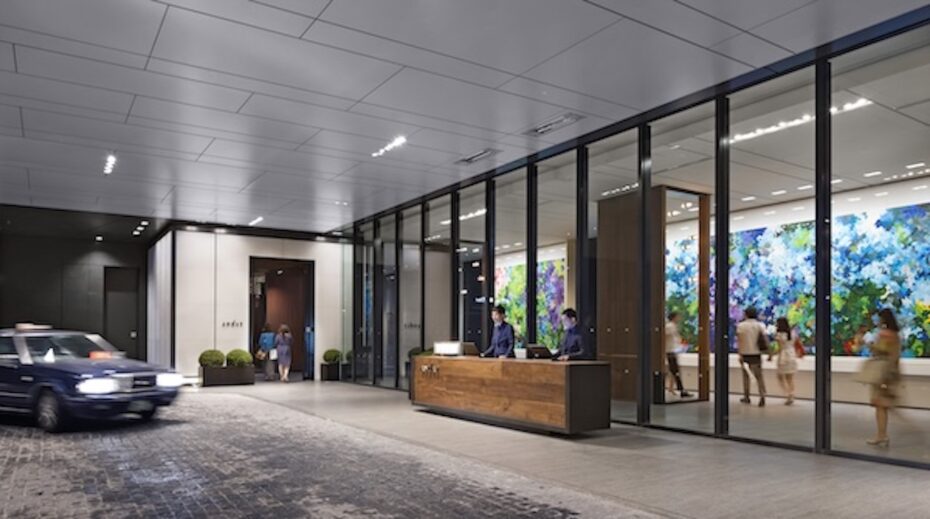
Perched on the top floors of the Toranomon Hills Mori Tower is Andaz Tokyo. After you ascend and as the elevator doors open, you’re greeted with a wide-open space textured with geometric-patterned light oak and washi panels. It’s warm and inviting—already a good sign for the weary traveller. The lobby sits on the 51st floor (which throws out the definition of what a lobby is supposed to be, but what do I know), and instead of the usual fanfare of concierge counters and keycard queues, guests are greeted by hosts who quietly handle check-in with a tablet and a smile.
It’s rather “un-hotel”. As though you’re in a library or somewhere sacrosanct.
Designed by Tony Chi, the interiors are a nod to Japanese sensibility without stumbling into cliché. Stone and copper are part of an earthy palette that feels cordial and considered. Inspired by the spirit of Japan, you’re supposed to feel the intimacy of the country’s history, arts and culture.
The guestrooms follow suit with a minimalist aesthetic that evokes the feel of the woods. You have mossy-green carpeting and timbered accents; floor-to-ceiling windows that remind you that you’re floating somewhere above the world’s biggest city.
Then, there’s the generous bathroom, where one can step under a rain shower, feet pressed against the granite-like flooring. Or soak in the circular tub next to the shower. Aesop bath products heighten the bathing experience. As usual, the bathroom is outfitted with a high-tech toilet with its heated seat that automatically lifts or lowers, hands-free.
Japanese designer Shinichiro Ogata handles the look of the rooftop bar, wedding chapel(!) and the 37th floor, where AO Spa and Club are. The waters of the pool were still when we were there, with nary a soul lounging about. At night, when the moonlight trickles in, it feels almost meditative.
Breakfast is held at The Tavern – Grill & Lounge. Located at the same level as the lobby, the area is a refined atmosphere—again, providing such sights from your table. The spread is a mix of that lean European taste with the occasional Japanese detour.
At Mori Tower, the lower levels are replete with restaurants and cafés. Beneath the building is access to the Toranomon Hills subway station. Venture out from Mori Tower and you visit the Atago Jinja Shrine (at Atago Hill) or the Toranomon Kotohiragu Shrine, which is a 400-year-old shrine that’s further dwarfed by the surrounding skyscrapers.
Because it’s the business district, many places are shuttered in the evening at Toranomon Hills. One could head to Rooftop Bar at Andaz Tokyo Toranomon Hills, where you can survey the city at night, while you nurse a cocktail.
Or one could return to the comfort of the bed, where your waking self is lost to thread counts.
You feel… safe? You’ve regressed into a child, nestled in-between your parents and the assuring ray comes not from the moon or her twinkling subordinates but from the neon red blaze like a night light in the dark.
Andaz Tokyo is located at Toranomon Hills Mori Tower 51st Floor, 1 Chome-23-4 Toranomon, Minato City, Tokyo 105-0001, Japan
English grammar troubles? How to master English language is one of the most important skills for anyone who wants to be a fluent speaker. English is used in airports, hotels, and tourist spots. It opens doors to jobs, friendships, and travel opportunities. For Filipino digital nomads and OFWs, strong English skills mean you can work and connect in any natural setting.
Imagine shopping in South Korea or buying stuff in Japan without stress. You can ask for what you need in clear American English. Even if a native speaker knows another language, English often becomes the bridge that helps you understand each other. It’s made our travels smoother!
If you want to work remotely and travel, “The A-Z on Becoming a Digital Nomad” is your starting point. It covers job hunting, packing tips, and much more.
Why English Matters for Global Travelers
English is the most widely spoken second language in the world. It’s not just useful for when you visit the United States anymore. It helps you read menus, book hotels, and join tours. It can help you make friends faster and avoid misunderstandings.
For remote workers, English fluency can make you stand out in job applications. Employers want someone who can write clear emails, speak well in meetings, and understand instructions. One doesn’t have to be a native English speaker. They just need to be good at written and spoken English.
English Language Learning on the Go!
Contrary to common opinion, English learning is not that difficult. Memorizing grammar rules and English vocabulary isn’t all there is. All you need is much exposure – it’s the most important thing!
1. Practice Every Day
You don’t need to take an online course to study English. Just set aside at least 15 minutes daily. Use a nice journal to write about your day using simple English sentences. This improves grammar and vocabulary.
2. Listen and Repeat
Watch TV shows and short videos. Listen to English podcasts on YouTube channels. Repeat an English word or sentence to improve your English pronunciation. Find English music that you like. Save audio recordings so you can listen offline, too.
You can do this while walking in outdoor sandals or commuting.
3. Learn Key Phrases for Travel
Focus on conversational English phrases you use often. Try ordering food or asking for directions. Keep new vocabulary words and new expressions noted.
I can’t say this enough – Rosetta Stone is perfect for travelers! It works offline, so English learners can study anywhere. Do it on a bus, in a café, or at the airport. It helps you think in English, not just translate.
Expose yourself and leave your comfort zone. Use every chance to practice your English language skills. At the market, coworking space, or with fellow travelers. And don’t be too shy to try because making mistakes is part of it.
You can also find a language exchange partner for English conversation practice. You can tutor each other with small talk or an English learning app. This way, you can also help each other with the proper translation and meaning of words you study.
6. Watch English Movies with Subtitles
When studying a new language, choose activities you think can be fun. Watching Netflix English movies is a great way to begin! Start watching with subtitles. Then watch without them to test your listening.
7. Read Simple Books or Articles
Pick topics you like. Choose ones with simple words if you consider yourself a beginner. I tell you, learning is easier when it’s fun.
8. Join Online English Groups
Got foreign friends? Join chats or video calls to practice speaking in real time. Putting yourself in a situation where you need to communicate in English is a great way to practice. Learn key words and whole phrases.
9. Learn Travel-Related Vocabulary
Write down word lists of new English words you might need. Add individual words and phrases like “boarding pass,” “currency exchange,” and “reservation.”
Having this free list with you is very helpful!
10. Review and Revise
Repeat new words and phrases often. Regular practice can help you remember what you learned better. Check online resources and online communities for guidance.
11. Use English in Daily Life
Label the items in your home with their English names. Read them before you use or as you pass them by. This way, you can memorize faster. And it’s also like your own daily lessons in your own life!
12. Keep an English Wallet Card
Write key phrases for emergencies. Keep it in your wallet. You can also add basic sentences for any common conversation. Note common questions or words for shopping, finding help, or asking for directions.
13. Learn From Mistakes
Take down corrections and practice them. Read them at least once a week. Make sure to have a strong foundation for practical tips on the target language. Every corrected mistake leads you to becoming a better English speaker!
14. Follow English Content Creators
Again, have fun learning English. Watch vloggers or read bloggers you enjoy! Keep yourself updated with good English social media posts. Focus on those who use everyday language and speak clearly. Try to repeat what they say and improve your speaking rhythm.
15. Travel and Practice
Learn English during your travels, too. Remember that every trip is a chance to speak the language in actual situations. Visit an English speaking country.
Book tours, join meetups, and talk to other travelers. These simple ways can boost your confidence faster than studying alone.
Final Thoughts
Mastering the English language is more than just learning words. It’s about confidence, connection, and opportunity. It won’t be easy to get English speaking skills by yourself. But it’s not impossible to study alone either.
We don’t need to go to a fancy school and take an English course to do it. Just engage in English conversation as a speaking practice whenever you can. Be brave enough to try it!
And with Rosetta Stone plus daily practice, you can learn fast anywhere! So start today. Make English your passport to the world!
FAQ
How long does it take to master English?
It depends on your level and practice. With daily effort, you can improve in 6 to 12 months.
Bugatti’s new one-off hypercar, the Brouillard, has just made its first public appearance at The Quail since it was revealed last week.
The Brouillard is the first model created under the new Solitaire program. It is an exclusive new program dedicated to creating truly bespoke, one-of-a-kind vehicles.
The new Bugatti Brouillard is a custom one-off coupe based on the Chiron platform. It borrows design cues from both the Chiron and Mistral.
As you can see, the front and rear ends of the car are heavily inspired by the Mistral. It has a large horseshoe grille and vertically stacked LEDs as well as a more prominent front splitter and aero elements along the sides. The rear features the X-shaped LED taillights and a fixed wing.
The Brouillard has a fixed roof with a glass panel and dual intakes. The quad exhausts at the back are similar to those on the Chiron Super Sport.
The exterior of the car is finished in a metallic green shade, with an exposed carbon fibre lower section and bespoke black wheels. The interior is wrapped in custom-woven fabrics with green-tinted carbon fibre and aluminium trim.
The Bugatti Brouillard uses the same 8.0-liter W16 engine that powers the Mistral. The quad-turbocharged unit delivers 1600 hp to all four wheels.
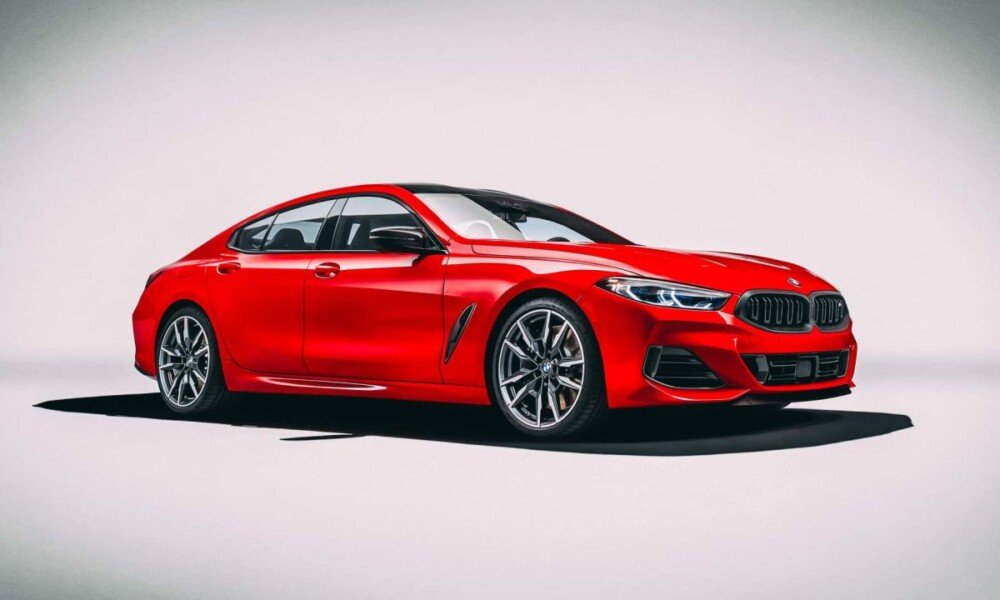
BMW has launched a limited-edition version of the 8 Series called the M850i Edition M Heritage. It’s the last iteration of the four-door coupe before it goes out of production.
The BMW M850i Edition M Heritage pays homage to the E31 8 Series from the 1990s. It will be available in the same five colors that were offered on the original. These include Bright Red, Mauritius Blue, Cosmos Black, Oxford Green, or Daytona Violet.
Besides the special colors, the Edition M Heritage model also features a carbon fibre roof with M tri-color stripes, 20-inch alloy wheels, M Sport seats wrapped in Alcantara and black Merino leather, an Alcantara headliner, dashboard and door panels, and special doorsill plates.
The Edition M Heritage model also comes with the M Sport Professional package as standard. This includes black exterior trim and better brakes paired with black calipers. It also gets the Driving Assistance Professional Package.
The M850i Edition M Heritage is powered by the same 4.4-liter twin-turbo V8 engine as the standard 8 Series Gran Coupe. This unit makes 523 hp and 553 lb-ft of torque, and is paired with an 8-speed automatic transmission and BMW’s xDrive all-wheel drive system. BMW claims a 0-60 time of 3.9 seconds and an electronically limited top speed of 155 mph.
The BMW M850i Edition M Heritage is limited to just 500 units. Prices start at $131,575.
As someone who’s been solo traveling for more than 15 years, I know the importance of staying connected and safe when I’m exploring on my own. However, it takes practice to find the right balance between checking your phone and being tethered to it, because, though smartphones and tech are helpful tools for navigating new cities, they can easily put us in harm’s way if we’re not careful.
“Anything that disrupts our awareness and keeps us distracted can affect our safety,” Nicole Snell, an experienced solo traveler and self-defense expert and educator, told Travel + Leisure. “Learning to stay aware of your surroundings and carefully choose how and when to engage with your devices while traveling is a key skill. Our awareness is fluid and serves us best when we aren’t glued to something.”
Top Gadgets for Solo Travelers
Snell, who is the CEO of Girls Fight Back, a personal safety and empowerment-based self-defense program for women, also stressed that this lack of awareness of your surroundings could send the wrong messages to the wrong people.
“Focusing intently on our devices means we’re not paying as much attention to our surroundings, which a criminal may see as an opportunity,” she explained. “Many studies over the years have shown that insecure body language and/or being distracted are indicators that potential criminals look for in a target. Having confident body language and showing that you are aware of your surroundings are often effective deterrents.”
Whether I’m navigating the canal-lined streets of Amsterdam, hiking through Arizona’s red rocks, or exploring Sri Lankan juggles, I want to know I can reach the outside world if I need to—while still being present where I am. Below are the top gadgets for solo travelers that let me text hands-free, track my belongings, check in with loved ones, and stay charged, without constantly scrolling.
Rorry Portable Charger
Amazon
“We have to be honest with ourselves that we’re never going to be able to ditch our phones,” Snell quipped. “We rely on them, and they are an integral part of our modern society.” That said, you want to make sure that you always have a backup battery or charger handy. This lightweight, fast-charging model fits into the smallest crossbody bags. With 5000mAh of power and a built-in Lightning connector, I’ve recharged my phone mid-flight, mid-hike, and mid-coffee run. Plus, a digital battery readout means no more surprises from a dead battery.
Osoce Anti-theft Crossbody Sling Bag
Amazon
The more secure your bag, the less you have to worry about belongings like your phone getting stolen. Opt for anti-theft bags like the Amazon-loved Osoce Anti-theft Crossbody Sling Bag, which has a durable construction and is designed with discreet zippers that are hard to tamper with. Since it’s a crossbody, it drapes close to your chest and side, keeping your valuables within your reach and away from thieves.
Outxe Phone Lanyard Tether
Amazon
I used to think that the safest place for my phone to be was in my hand, but unfortunately, thieves are getting smarter (some will snatch your phone right from your hands). For extra peace of mind and security, I travel with a phone lanyard to keep my device anchored to me at all times. This particularly genius one from Outxe has a clip that you can use to fasten it to your bag, belt loop, etc., so you can trust that it’s safe when you’re out and about.
She’s Birdie Alarm
Amazon
I’ve said it before, and I’ll say it again: Every solo traveler—especially women—needs a She’s Birdie alarm. This compact device fits on my keychain and offers instant peace of mind. If I ever feel unsafe, pulling the top will trigger a 130-decibel siren and flashing strobe to grab attention. TSA-approved, discreet, and rechargeable, it’s one of those tools I hope I never need but always carry.
Pro tip: Snell admitted that it’s impossible to be aware of your surroundings 100 percent of the time, but there are ways to navigate our safety without looking over our shoulders constantly: “If you have to spend a lot of time on your device, go into a store, hotel lobby, etc. and find a safe, quiet place to handle your digital business. Look up common scams and safety bulletins for the area you’re traveling to and heed the advice of locals.”
Invisawear Personal Safety Smart Bracelet
Amazon
The Invisawear bracelet is a chic, smart safety device designed so you’ll “never walk alone again,” according to the brand. With a double press, it sends your live GPS location to up to five trusted contacts—and can alert 911 if needed (you don’t even need to take your phone out of your pocket). Stylish and discreet, it looks just like any old piece of jewelry, so no one will guess it’s more than a fashion accessory. It also comes in keychain form.
Pro tip: “Your body and your intuition are the best tools you have,” Snell shared. “Listen to your intuition.”
Apple AirTag
Amazon
Apple AirTags are an essential tool for solo travelers. I drop one in my bag and track it via the Find My app—especially when it’s out of sight during shuttles or transfers. On rare checked-bag days (I’m a die-hard carry-on-only traveler), I always know exactly where my things are; no need to frantically check the airline app for updates or waste time on the phone with a representative. The tracker is so precise that you can even easily locate lost items in hotel closets, airport lounges, or Ubers. If you travel with one on your person, your family and friends can track your location when you’re exploring solo, too.
Oura Ring 4
Amazon
I don’t have the latest version (yet), but the Oura Ring has been a game-changer for travel and everyday life. It tracks sleep, recovery, stress, heart rate, and temperature with impressive accuracy, helping me stay in sync through jet lag and time zone shifts. The daily readiness score tells me when to push through or take it slow. No screens, no buzz—just quiet, data-driven wellness on your finger.
Apple AirPods Pro 2 Wireless Earbuds
Courtesy of Amazon
Sure, the playlist you created is a better trip soundtrack than the crying baby on the train or the loud construction taking place on your leisurely stroll, but you don’t want to constantly be fiddling with your phone to adjust the volume, change the song, or pause your music to hear an important update. Smart headphones like the Apple AirPods Pro 2s allow you to handle all that by simply tapping, swiping, or holding the earbud. You can even nod your head to hear a message, answer a call, or manage a notification via Siri.
These are also great for solo travelers because they offer various noise-canceling levels so you can still hear your surroundings, something Snell noted is important want you’re on your own: “Put your phone away when on public transportation or walking through a city and focus on the present. What are you seeing, smelling, hearing, experiencing?” Staying in tune with what’s around you and mindfully taking everything in will keep you alert and safe.
Apple Watch Series 10
Amazon
I don’t always wear a smartwatch, but for adventure-heavy trips, the Apple Watch Series 10 is a must. The cellular and GPS features keep me connected for hands-free texting, walking navigation, and quick Apple Pay purchases. I also love the health tracking features—like heart rate, cycle tracking, and fall detection—which offer extra peace of mind when I’m traveling solo.
According to Snell, a great way to practice safe phone usage during solo travel is to “look up from your device often and scan your surroundings, and avoid focusing intently on your devices when you’re in a public place where being distracted is used by criminals to their advantage.” The Apple Watch’s always-on display makes it easy to check the time or my Maps directions without getting pulled into my phone.
In the pantheon of chronographs, few names carry the gravitas, functionality, and cultural longevity of the TAG Heuer Carrera. Since its inception in 1963, this watch has been a reflection not just of time but of speed, ambition, and clarity. Designed by Jack Heuer with the motor racer in mind, the Carrera has stood as a touchstone of purpose-driven horology. From Sebring to Monaco, from pit lanes to boardrooms, TAG Heuer has timed legends, defined eras, and continues to evolve with technical poise. While the brand has many options for racing enthusiasts, it all began with the chronograph and the Carrera.
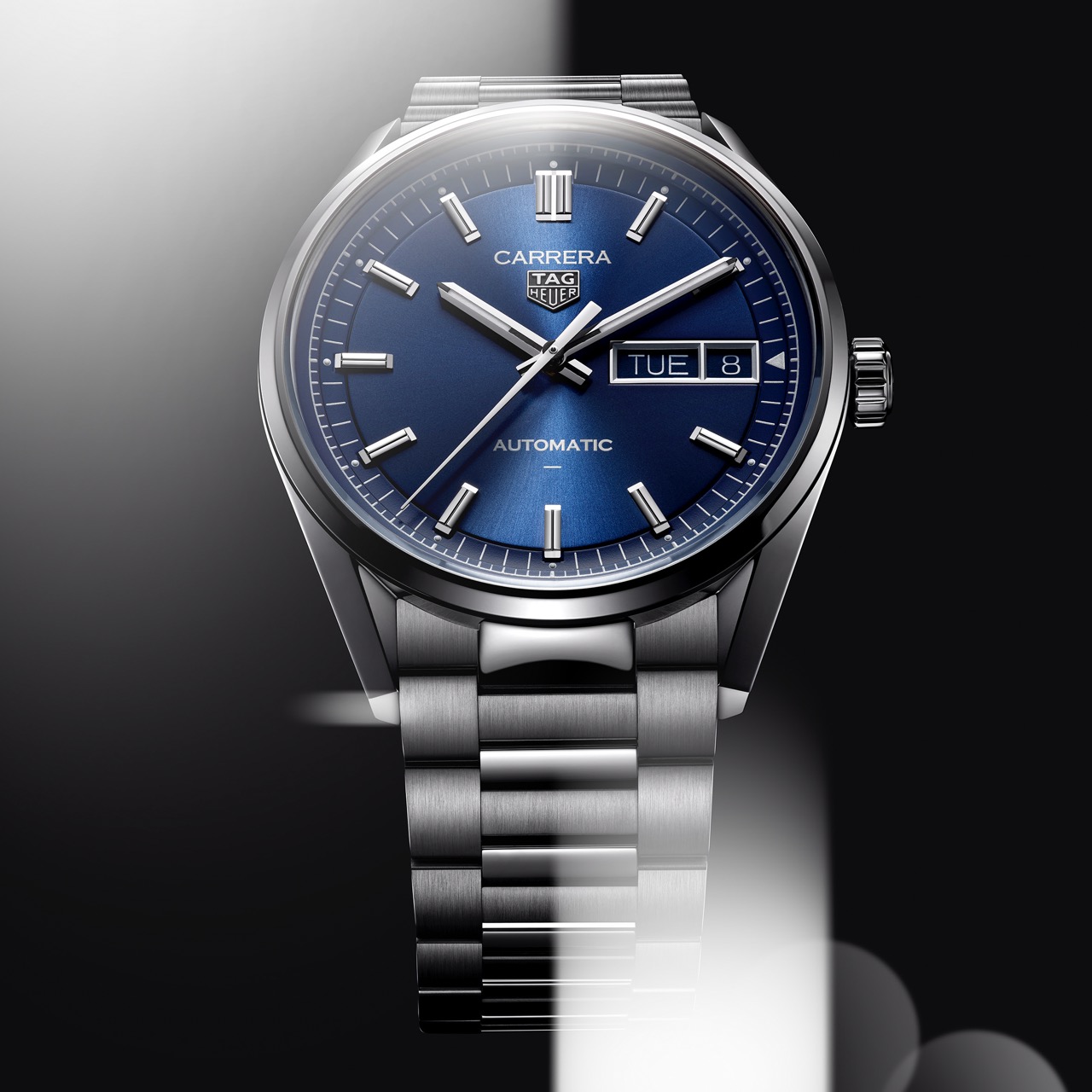
TAG Heuer Carrera Day-Date
In 2025, as TAG Heuer reclaims its role as Official Timekeeper of Formula 1 and unveils a spate of new releases under its new adage, “Designed to Win,” the Carrera has, once again, reaffirmed its relevance. This is not merely a nostalgic watchmaker looking back; this is a storied institution deeply rooted in legacy, accelerating toward the future with one of its most iconic creations leading the charge.
And thus, we also note, from our perspective, that this magazine has been writing up TAG Heuer’s exploits in the world of motor sports for years. Both the writer of this story and the editor have been around this track more than a few times. Indeed, an entire generation has grown up with the idea that TAG Heuer is the timekeeper of record for motorsports. Now, a new generation will share the experience. Familiarity only ups the ante on our passion to learn more about the racing heritage behind everything from the Carrera and the Monaco to the Formula 1 and Link, discover different perspectives on the motorsports-driven models of various types, and perhaps make our mark on the future.
Before we proceed to the start-finish line, we must stay in the pit lane to address a couple of housekeeping matters. First, this story concerns multiple TAG Heuer collections, even though the cover showcases two Carrera Day-Date models. The others are the Carrera Twin Time and the Formula 1 Solargraph and Chronograph. Details on these watches are included in sidebars to the main story. As usual, the cover specifications and details are in the Cover Watch story. Secondly, and finally, this cover story winds its way through TAG Heuer’s racing pedigree across many decades. That means it is Carrera- and chronograph-heavy, and starts from the Heuer era. In fact, it starts even before the Carrera…
Race, Career, Road
To understand the Carrera, we must begin with its creator; in this story, the devil is in the details. Jack Heuer, the great-grandson of Heur founder Édouard Heuer, was born on November 19, 1932, in Bern, Switzerland. A multilinguist, skier, and design enthusiast, Jack would become the visionary leader who brought the family firm into the 21st century <as usual, we refer to Jack Heuer by his first name to avoid confusion with the brand, either as Heuer or TAG Heuer – Ed>. While he was growing up, there were already motoring Grand Prix championships but no such thing as Formula 1. Thus, Jack’s early inspirations came from outside the world of motorsports.
In his autobiography The Times of My Life, Jack recalls how exposure to modernist furniture and architecture, particularly the works of designers such as Le Corbusier and Charles Eames, and architects such as Eero Saarinen and Oscar Niemeyer, shaped his aesthetic sensibilities. Jack writes that as a student, he even saved enough to buy himself an Eames lounge chair, which he admits, looked somewhat out of place in amongst his modest student accommodation.
Jack joined the family company in 1958, bringing with him not only a passion for innovation but also a refined appreciation for what contemporary design could contribute to horology. That spirit would manifest most powerfully in 1962, when Jack attended the 12 Hours of Sebring and first encountered the name “Carrera Panamericana,” an infamously dangerous road race across Mexico.
“For Jack Heuer, Carrera Became a Rosetta Stone For What a New Generation Chronograph Could Be”
In The Times of My Life, Jack recounts that while soaking in the gasoline-laden atmosphere at Sebring, he gravitated toward the Ferrari pits. He spent so much time there that he became well-acquainted with the team’s young drivers, the Rodríguez brothers, and even their parents. During a conversation with them, Jack recalls: “They told me that they were lucky that their boys were so young — Pedro was then 21 and Ricardo 19 — because if they had been born a few years earlier, they would certainly have participated in the dangerous race across Mexico known as the Carrera Panamericana. At the time, it was considered to be the most dangerous sports car race in the world and over a period of five years had claimed over 30 victims. It was called off in 1955 because of safety concerns, a decision no doubt reinforced by the disaster at Le Mans the same year.”
It was in that moment that the word Carrera, Spanish for “race,” “career,” and “road,” struck Jack with uncommon resonance. For him, the word and the meaning it bore became a Rosetta Stone for what a new generation chronograph could be. Upon returning to Switzerland, he wasted no time in registering the name. And the rest, as they say, is history.
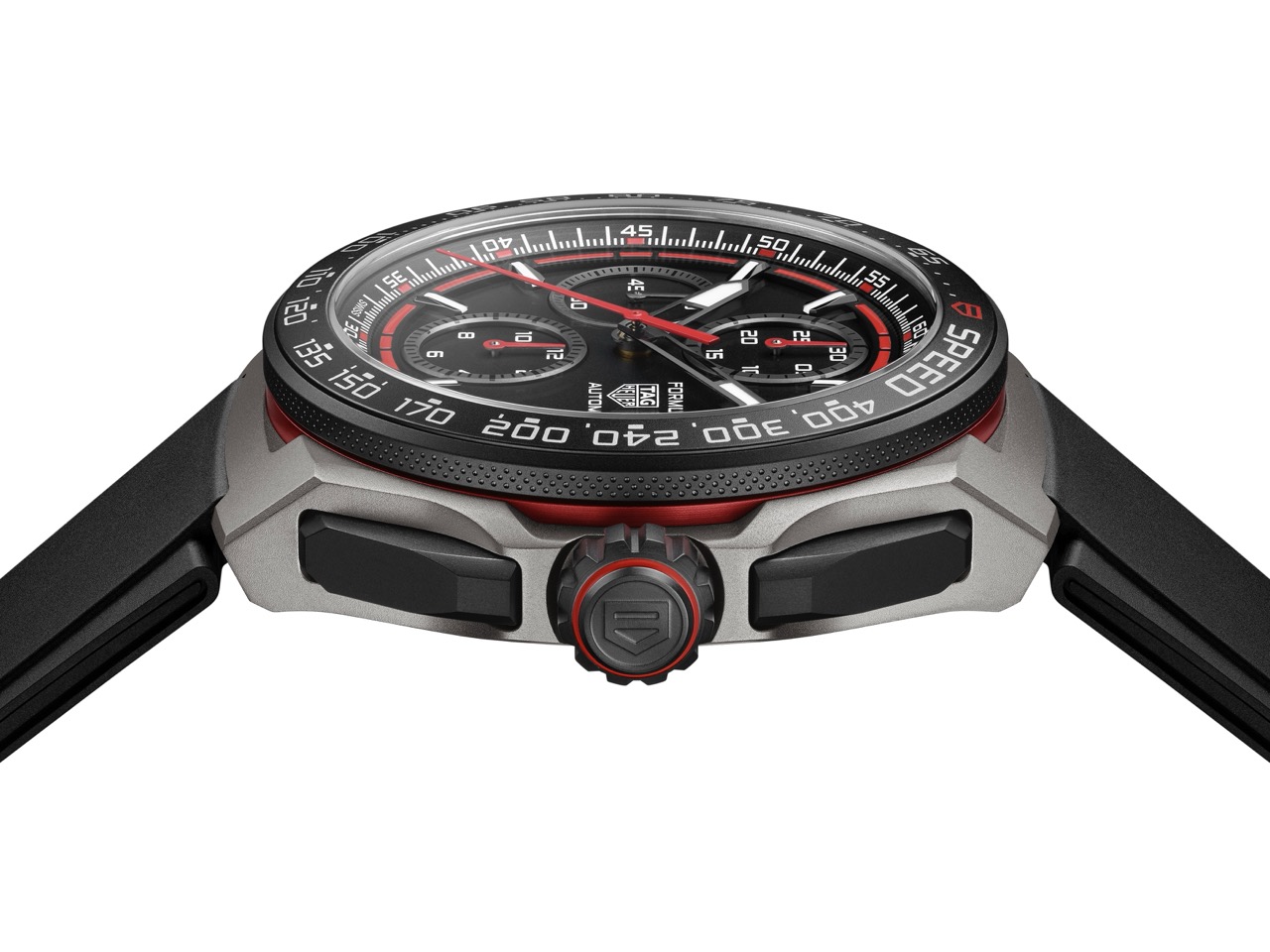
TAG Heuer Formula 1 Chronograph
Design With A Destination
Jack introduced the first Heuer Carrera in 1963, the reference 2447, and it was nothing short of revolutionary. Jack brought his modernist sensibilities to the design process, striving for a chronograph that emphasized clarity, legibility, and mechanical sophistication. The watch’s most important innovation was the use of a steel tension ring inside the crystal, which allowed the minute scale to be placed around the dial’s periphery without cluttering the primary surface. This created an expansive and easily readable layout. The dial was stripped of superfluous text, displaying only the Carrera name and the Heuer shield, while the hands and hour markers were designed with sharp, functional lines. The case, at 36mm, was considered large at the time, and inside ticked the workhorse Valjoux 72 manual-wind chronograph movement.
Heuer had been in Formula 1 proper since 1950, with records showing the brand’s chronographs (manual-winders) in use by the likes of Ferrari, Lotus, Lancia and Maserati <source: Monochrome>. These were apparently a mix of wristwatches and dedicated stopwatches, all operated by the different teams. As you can imagine, there was little in the way of clarity and uniformity in those days.
Jack writes in his autobiography, “I wanted a dial that had a clear, clean design, and a new technical invention came to my aid.” He goes on, “A manufacturer of plastic watch crystals had invented a steel tension ring that fitted inside the crystal and kept it under tension against the surrounding steel case, thereby greatly increasing the degree of water resistance. I decided to use the inside bevel of this tension ring to carry the markings measuring one-fifths of a second. In other words, the flat dial surface no longer had to carry these markings — they had now been shifted off onto the tension ring — and this was the secret behind the fresh, clean, and uncluttered appearance of my first ‘Carrera.’”
TAG Heuer Formula 1 Chronograph
The Carrera was instantly adopted by motorsport professionals who valued its readability during the rigors of racing. It set a benchmark not just for driving watches, but for present chronograph design overall. By 1965, the Carrera line had already begun to evolve. That year saw the launch of the Carrera Date (ref. 3147), nicknamed the “Dato,” which added a date window to the chronograph layout. The initial placement at 12 o’clock was quickly revised in 1967 to a more legible 9 o’clock position. This layout, which removed the running seconds subdial and emphasized symmetry, became a collector favourite and is often referred to as the “Cyclops” for its lone eye-like aperture.
The 1970s brought further experimentation. Barrel-shaped cases, bold dial colours, and a transition to automatic chronograph movements like the Calibre 11, all of which marked a more adventurous era. The Carrera adapted, embracing the aesthetic exuberance of the decade while maintaining its functional core. Yet the Swiss watch industry was entering troubled waters.
As the advent of quartz movements dented the industry badly in the 1970s, many traditional brands struggled to adapt. Heuer faced considerable financial pressure itself. It was not until 1985, when the company merged with Techniques d’Avant Garde (TAG) Group to become TAG Heuer, that the brand really began its next chapter. The merger introduced a renewed emphasis on motorsport alignment and technological reinvention.
“Few Watchmakers Can Lay Claim To Such Deep Roots In Motorsports As TAG Heuer”
Fast forward to the 21st century, and the Carrera’s legacy remains robust. Collectors and aficionados eagerly anticipated a return to the collection’s roots — a Carrera that honoured Jack’s original vision while incorporating present-day advancements. This was realized in multiple limited editions, such as the 2017 Skipper co-created with Hodinkee and the Blue Dreamer with The Rake and Revolution. The 2020 Carrera 160 Years Silver reissue marked a major milestone, bringing the iconic 2447 design to a new generation with state-of-the-art manufacturing and vision. These watches reaffirmed the timeless appeal of the Carrera and TAG Heuer’s respect for its heritage.
The momentum built toward a major celebration in 2023: the 60th anniversary of the Carrera. To mark the occasion, TAG Heuer released the Carrera Chronograph “Glassbox,” a 39mm watch with a box- shaped sapphire crystal, a dramatically sloped flange, and a dial that paid faithful homage to the 2447. The new TH20-00 movement inside was a technical upgrade of the earlier Heuer 02, enhanced under the leadership of TAG Heuer’s Movement Director — and industry legend — Carole Forestier-Kasapi. The TH20-00 introduced a quieter, more efficient bi-directional winding rotor and a five-year warranty, a first for TAG Heuer mechanical chronographs. Says Forestier-Kasapi, “To go from two to five years of warranty, the mechanics behind the watch have to keep up. This is a major challenge for any watchmaker.” She adds, “TH20-00 represents a leap in quality and durability. All TAG Heuer movements will now have to meet this new benchmark of excellence.”
Carrera Day-Date & Twin-Time
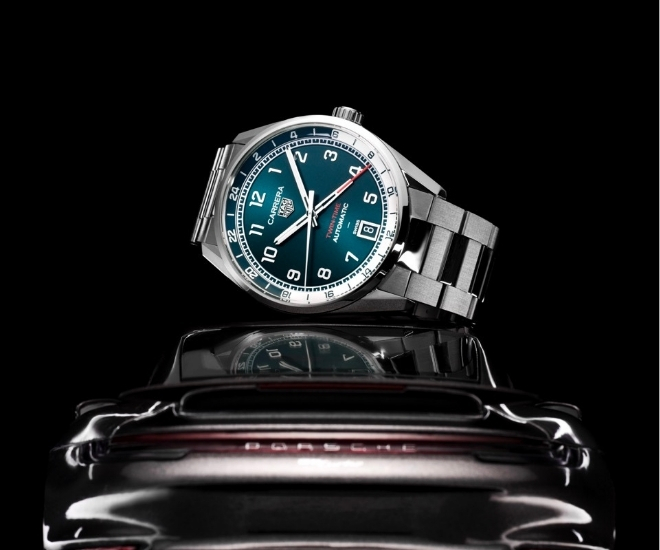
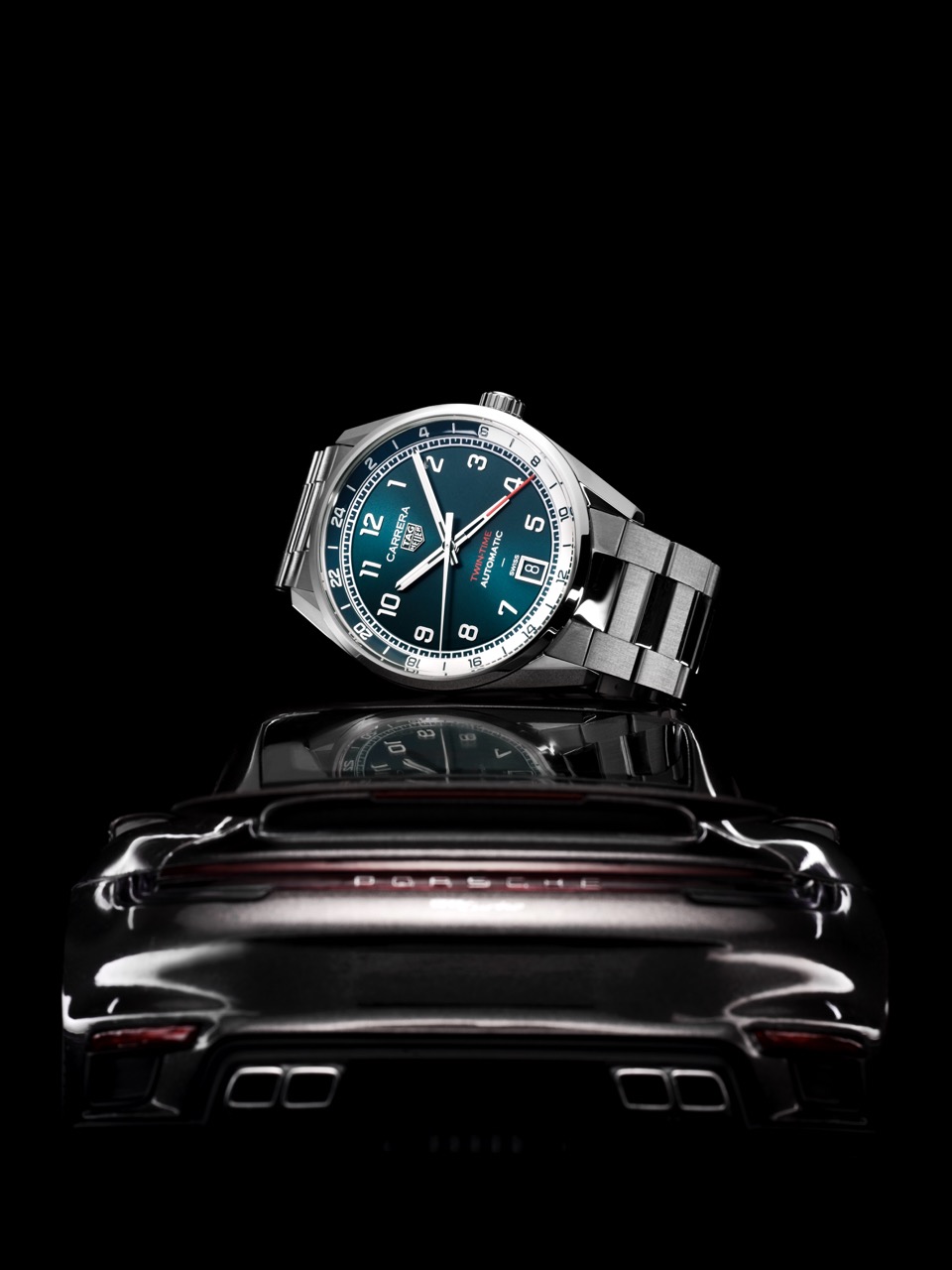
TAG Heuer’s 2025 Carrera lineup celebrates more than its racing pedigree, it also refines everyday utility with two elegant, mechanically driven timepieces: the Carrera Day-Date and the Carrera Date Twin-Time (opposite page).
Both models channel the spirit of the original 1963 Carrera, born from Jack’s vision of a timepiece that offered clarity, resilience, and elegance for professional drivers. Today, that same vision continues with a contemporary twist. The Day-Date and Twin-Time share a design language rooted in the brand’s racing DNA but updated with Glassbox-inspired case geometry, a redesigned bezel for improved ergonomics, and reimagined three-dimensional dials that offer greater depth and legibility. These changes amplify the presence of the dial while preserving the signature Carrera clarity that has defined the collection for over six decades.
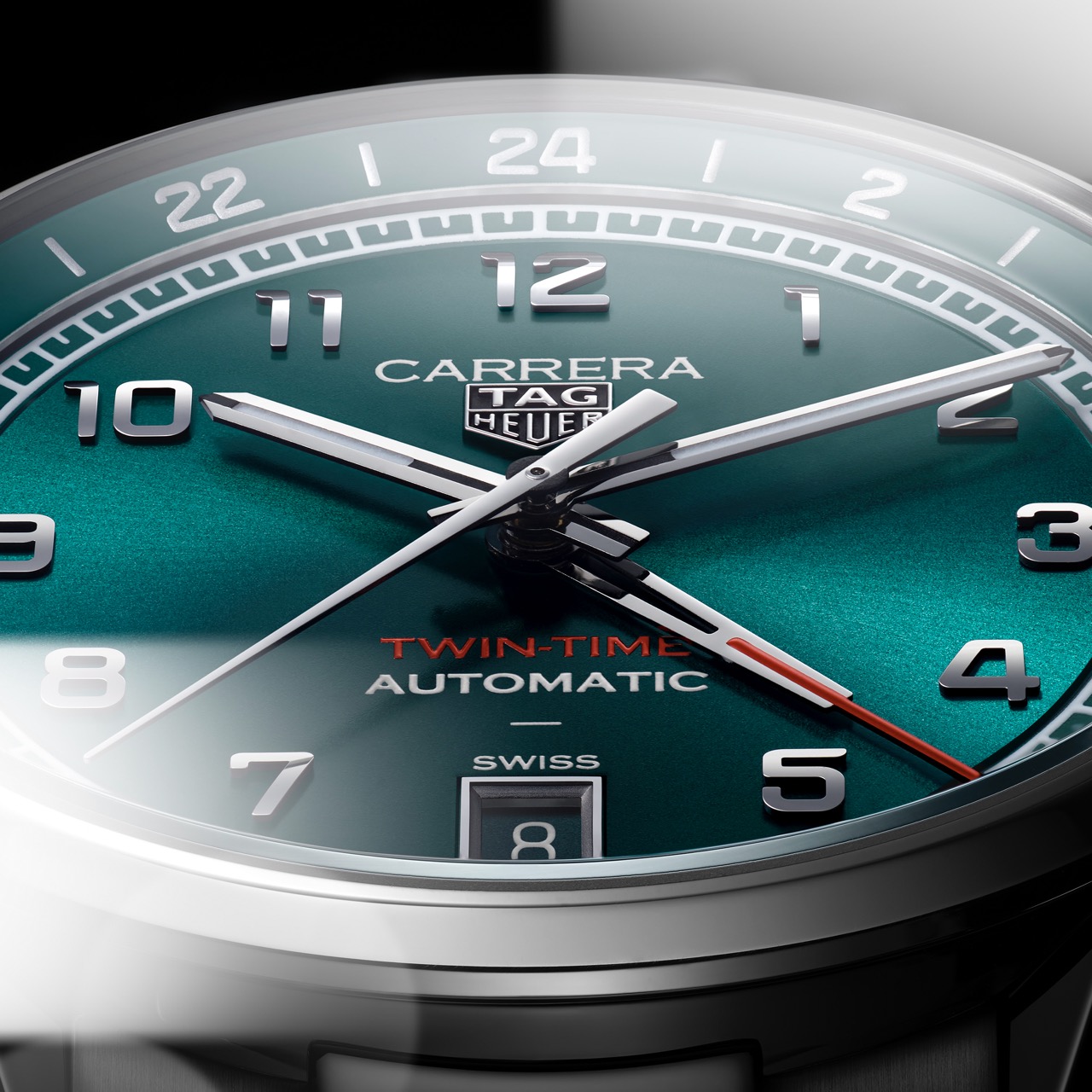
For more on the Carrera Day-Date, see the Cover Watch story, as mentioned earlier. Moving right on then, the Carrera Date Twin Time expands the collection’s utility with a GMT complication that is both practical and stylish. First introduced in 2021, the Twin-Time GMT filled a gap in the collection and reminded everyone that Heuer had a Twin-Time model in the 1950s, before Jack Heuer refocused the brand’s attention on the chronograph. In fact, the Twin-Time precedes the Carrera by eight years. This year, TAG Heuer brings some technical updates to the Twin-Time GMT.
TAG Heuer Carrera Date Twin-Time
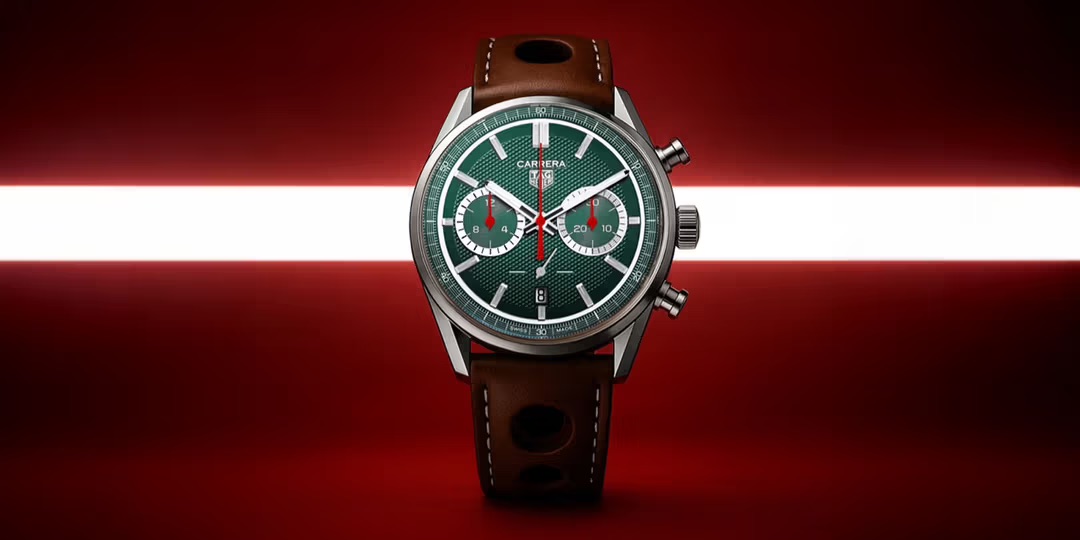
First though, let us look at the winning form of the new watch because that too is new. The teal sunray-brushed dial evokes classic racing livery, framed by a two-tone teal-and-silver 24-hour flange for immediate readability. A red-tipped GMT hand, subtly shaped to echo a watchmaker’s tweezers, sweeps across the dial, pointing to a second time zone, while Arabic numerals mark the hour scale with sharp clarity. It is an excellent expression of understated sophistication for the global traveller, offering functionality that does not compromise on elegance.
Powering the Twin-Time GMT is a proprietary movement developed with Advanced Mechanical Technology (AMT): TH31-03; AMT is the high- end arm of Sellita and you might recognise the movement designation from the Aquaracer Professional GMT. This replaces the Calibre 7 movement that was in use from 2021; Calibre 7 was based on a Sellita movement and thus the new TH31-03 movement can be viewed as an upgrade.
The automatic calibre delivers an impressive 80- hour power reserve and is backed by a five-year warranty, setting a new benchmark for reliability in the Carrera family. The refined finishings here include a shield-shaped oscillating weight, visible through a sapphire crystal caseback that also bears a Victory Wreath engraving. This is a quiet tribute to the Carrera’s motorsport origins and a symbolic charm for its wearer.
TAG Heuer has also reengineered comfort into the design. The steel H-link bracelet now includes a quick-adjust system for tool-free sizing and is paired with double folding clasps for a secure yet elegant fit. Select models are also available with leather straps, enhanced with contrasting linings that add a discreet pop of character. In its 2025 incarnation, the Carrera Twin-Time does not just celebrate the past. The new watch inherits its spirit and recasts it for a new generation. These are watches for milestones, ambition, and the moments that define a life lived with purpose.
TAG Heuer Solargraph
The anniversary novelties also included the Carrera Chronograph Tourbillon powered by the calibre TH20-09: a COSC-certified 4Hz tourbillon movement that combines high horology with everyday practicality. Another standout launch was the 42mm Carrera Chronosprint x Porsche; a tribute to the Porsche 911, both icons having debuted in 1963.
Enabled by the custom TH20-08 calibre, the watch recreates a key moment from the 911’s legacy: its 0 to 100 km/h sprint in 9.1 seconds. As Forestier-Kasapi explains, the chronograph function mirrors this by taking exactly 9.1 seconds to sweep across a prominently marked red zone of the dial, capturing the essence of that first exhilarating launch (the chronograph mechanism then adjusts itself to sweep through the rest of the 60-second chronograph scale at the proper rate).
TAG Heuer also honoured Jack Heuer’s iconic gold Carrera reference 1158CHN with a modern 39mm version crafted in yellow gold and powered by the TH20-00 movement. Rounding out the celebrations, the brand unveiled The TAG Heuer Carrera: The Race Never Stops — a commemorative book chronicling six decades of the Carrera’s enduring legacy.
Building on the momentum of the anniversary year, 2024 introduced even more excitement. A few notable introductions included: a green Carrera Tourbillon alongside a faithful reissue of the “Cyclops” Dato, now powered by the TH20-07 and featuring the Glassbox case. The Carrera Panda Chronograph with red detailing and a polished three-link bracelet, and a new opulent execution of the Carrera Skipper was introduced, in a 39mm rose gold case.
Return To The Grid
Having understood the evolution of the Carrera, it is also important that we take a moment to recall how the manufacturer maintained its relevance in the world of automotive racing, all at the same time. You see, the Carrera was not just a new watch. It was a new way of thinking about timekeeping. Within a few years of its debut, the Carrera had become a staple in the racing world.
Professional drivers, pit crews, and timekeepers praised its readability and durability. By the late 1960s, Heuer was supplying dashboard instruments to teams, and its logo appeared on Rob Walker Lotus 49B in 1969; this was the first appearance of a watch brand on a Formula 1 car, and on driver Jo Siffert’s racing suit following the end of restrictions on sponsorships in 1968. By 1971, a formal sponsorship agreement with Scuderia Ferrari was in place.
Under Jack’s leadership, Heuer’s partnership with Ferrari was more than just symbolic; it was operational. Timekeeping equipment and personnel were deployed to races, solidifying Heuer as a motorsport authority. Drivers like Niki Lauda and Clay Regazzoni wore Carreras off-track, reinforcing its identity as a driver’s tool as much as a style statement. On the tool front, Heuer contributed to Formula 1 overall with the development of the Automatic Car Identification Technology (ACIT) in the 1970s, which saw all racing cars fitted out with tiny transponders. These transponders tracked each car effortlessly and clearly, sending their signals to a receiver at the finish line. The matter of which car finished first, or in what order, could never be in dispute after this. Thus, Heuer became the first official timekeeper for Formula 1 in 1974.
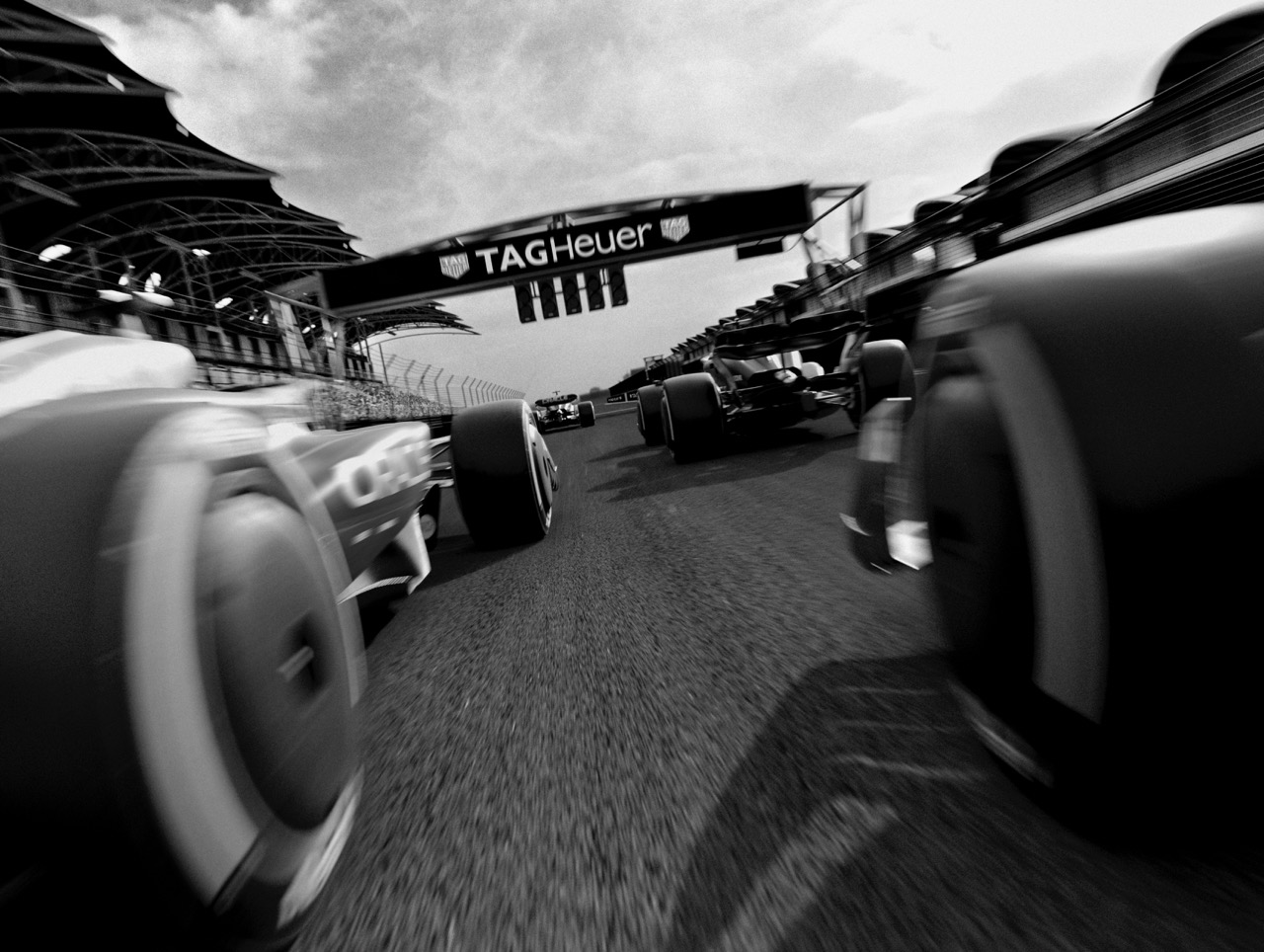
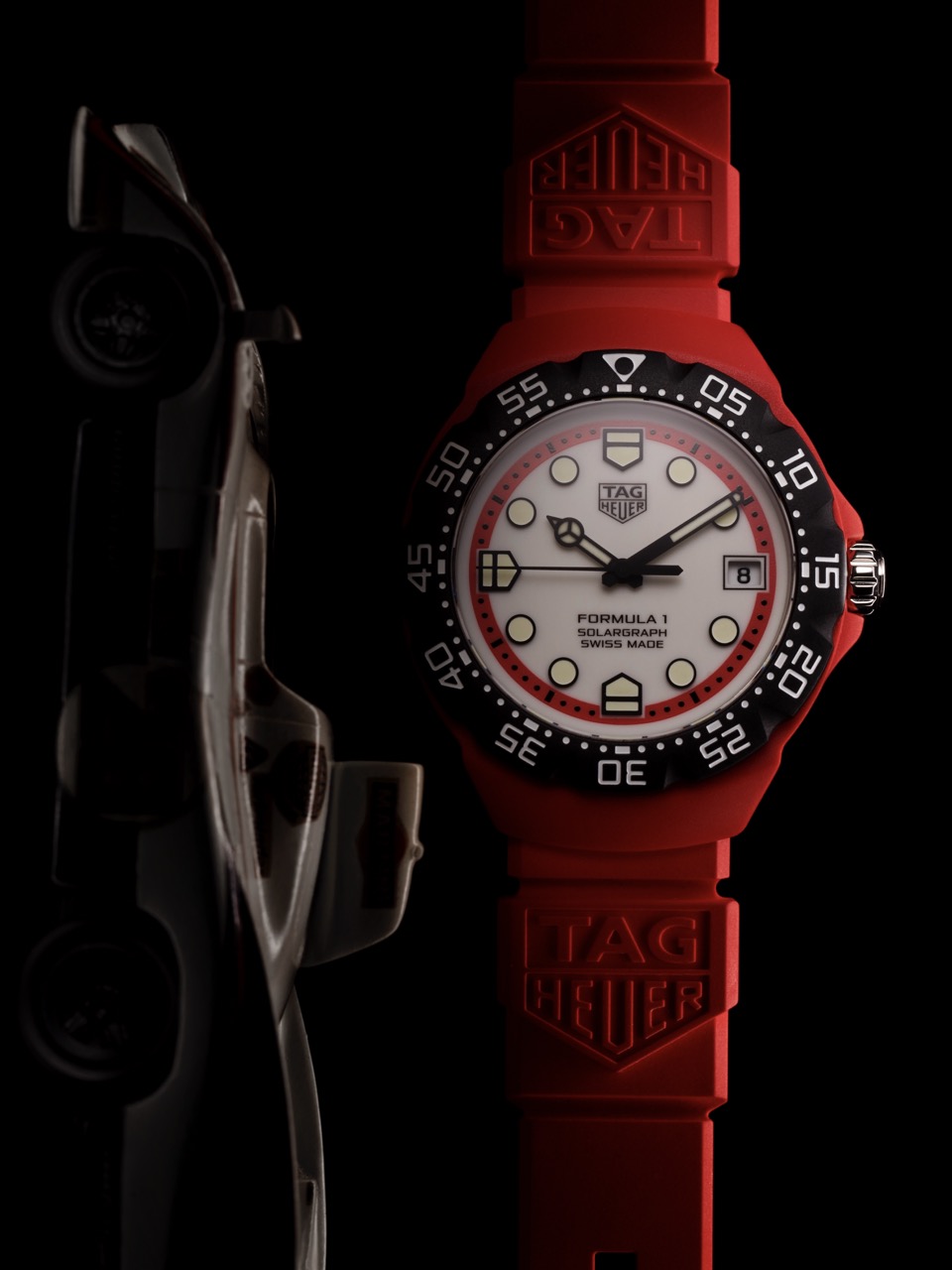
This confluence of design excellence and motorsport validation created something rare: a chronograph with an authentic purpose. When the TAG Group acquired Heuer in 1985, that racing DNA became even more entrenched, and more watch models entered the fray. In 1986, TAG Heuer introduced the Formula 1 model, whose colourful cases, straps and dials shaped an entire generation of racing fans. TAG Heuer would go on to partner with McLaren, timing the likes of Ayrton Senna, and would be named the Official Timekeeper of Formula 1 from 1992 through 2003. In 2025, that title returns, reviving not just a sponsorship but an ethos.
This year marks TAG Heuer’s triumphant return as the Official Timekeeper of Formula 1, reaffirming one of the sport’s most enduring relationships. Few watchmakers can lay claim to such deep roots in motorsport. This renewed role arrives alongside a flurry of launches — not only Carreras, but new Formula 1 models, Monacos, and solar-powered watches, each one engineered for performance with purpose.
TAG Heuer also returns in 2025 as Official Timing Partner of the Goodwood Festival of Speed. Held in West Sussex, the event is a global celebration of automotive culture. This year’s theme, “The Winning Formula – Champions and Challengers,” honours Formula 1’s 75th anniversary, forming an ideal backdrop for TAG Heuer’s return to the spotlight.
To mark the occasion, the brand unveiled the Carrera Chronograph x Festival of Speed, a 42mm limited edition powered by the TH20-00 calibre. Its hobnail-textured dial in British racing green, accented with red, and fitted with a brown rally-style leather strap, pays tribute to the golden era of British motorsport. Limited to just 100 pieces, it reflects TAG Heuer’s continued devotion to racing’s cultural legacy.
The synergy between TAG Heuer’s releases and the brand’s overarching 2025 rally cry is self- evident: “Designed to Win.” Inspired by Ayrton Senna’s famous declaration — “I’m not designed to come second” — the tagline reflects a mentality, not just a message. It anchors a dynamic ambassador lineup: Max Verstappen, Sydney McLaughlin-Levrone, Summer McIntosh, and many more.
The idea is simple but powerful: these watches are not just instruments of time; they are instruments of ambition. Whether worn in a cockpit, on a track, or in a boardroom, a TAG Heuer is a reminder that greatness is always racing forward.
High Octane
In 2025, TAG Heuer fires on all cylinders with a high-octane expansion of its Formula 1 collection, reaffirming its legacy as the watchmaker most closely aligned with motorsports. With nine new references split across bold Formula 1 Chronograph models and refined Solargraph designs, the brand strikes a balance between technical innovation and expressive design. From materials to mechanics, this year’s releases capture the thrill of racing in an array of daring colours.
Formula 1 Chronograph
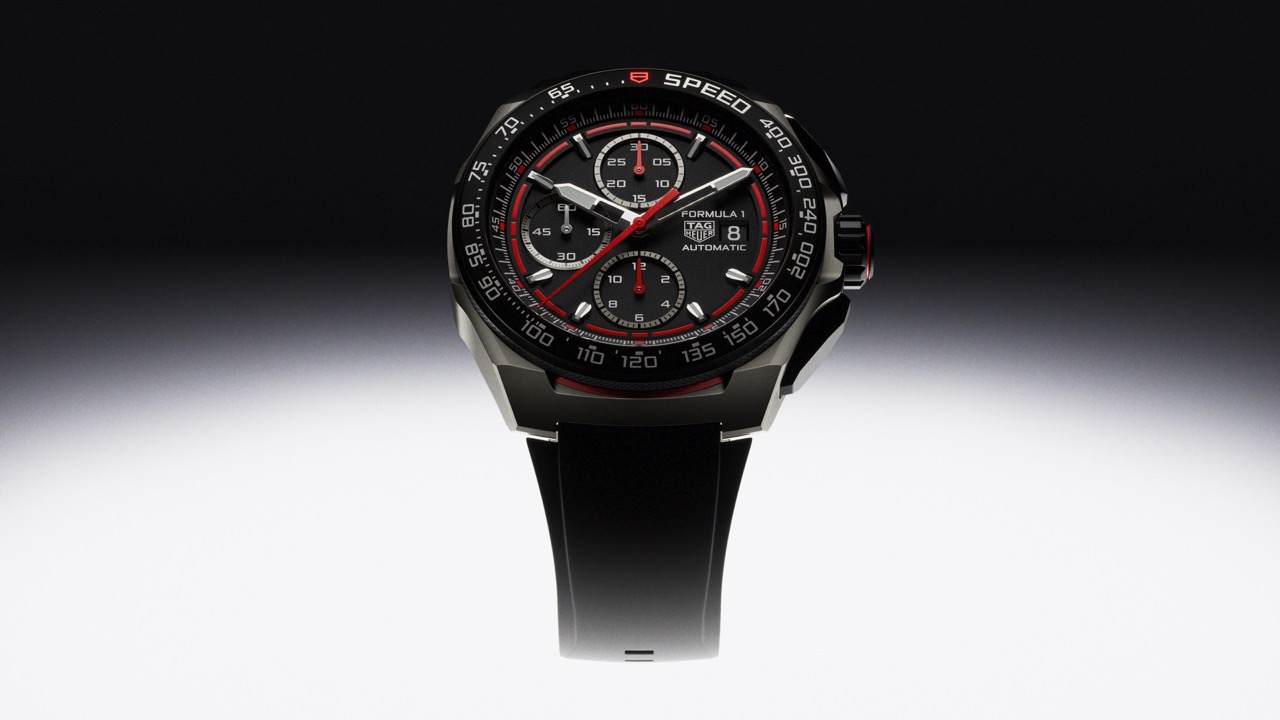
At the heart of the chronograph range are four new references and a special edition Oracle Red Bull Racing Chronograph, each shaped by the aerodynamic aesthetics of Formula 1 cars. The 43mm cases are sharply contoured, with brake-disc inspired bezels, perforated details, and indexes that echo the silhouettes of Formula 1 car noses.
The cases — crafted from Grade 2 titanium, some with DLC coating — are lightweight yet robust, paired with bold rubber straps and aluminium tachymeter bezels. Crown rings in vivid lacquer and skeletonized rhodium-plated hands underscore a modern, mechanical look. Ergonomics play a starring role. TAG Heuer has shortened the lug-to-lug length, reshaped the profile, and introduced a new quick-adjust bracelet system, offering both tactile satisfaction and all-day comfort.
Colour drives the narrative. Each model is dialled into the energy of night racing, with vivid accents set against black opaline backgrounds. There’s a model with a bold red running track and strap, another in blue with a black-and-blue strap, and one more in lime green, designed to mirror the punchy visuals of modern F1 liveries. The Oracle Red Bull Racing edition features a forged carbon bezel, a checkered flag-patterned dial, and coloured Pantone details mirroring the team’s livery, complete with a two-tone blue and red strap and a caseback engraved with the team and TAG Heuer logos.
Formula 1 Solargraph
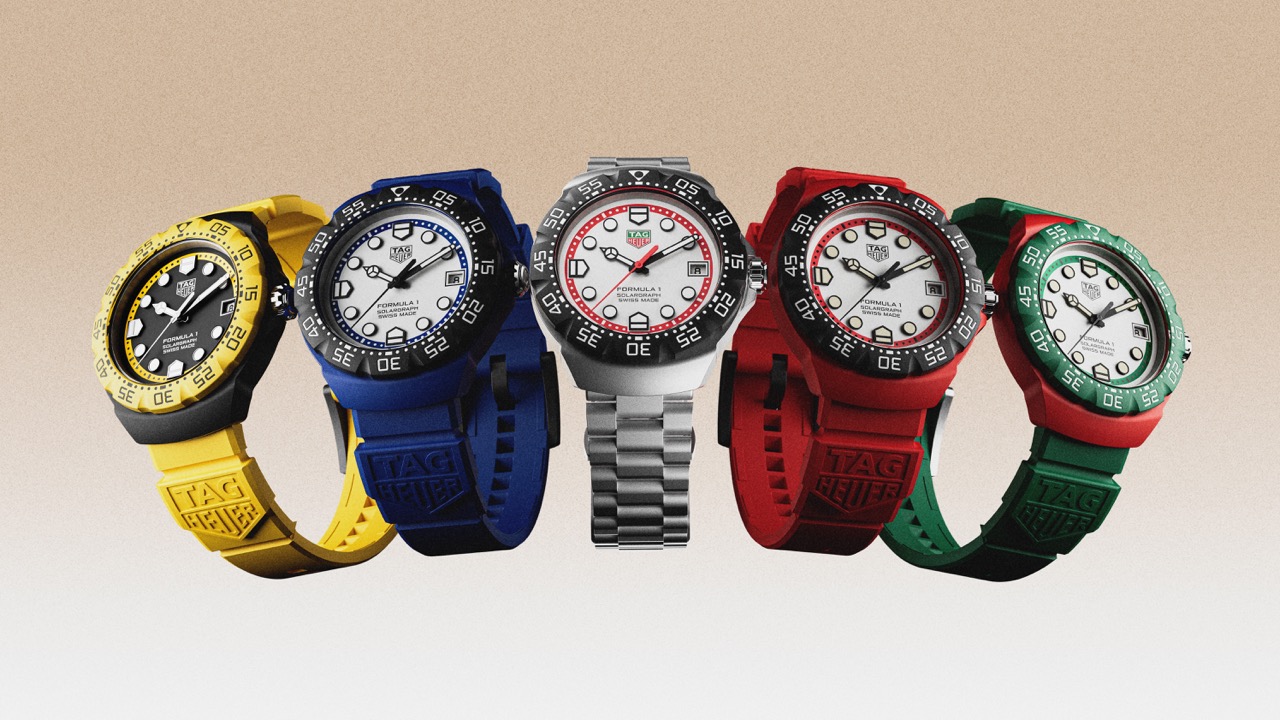
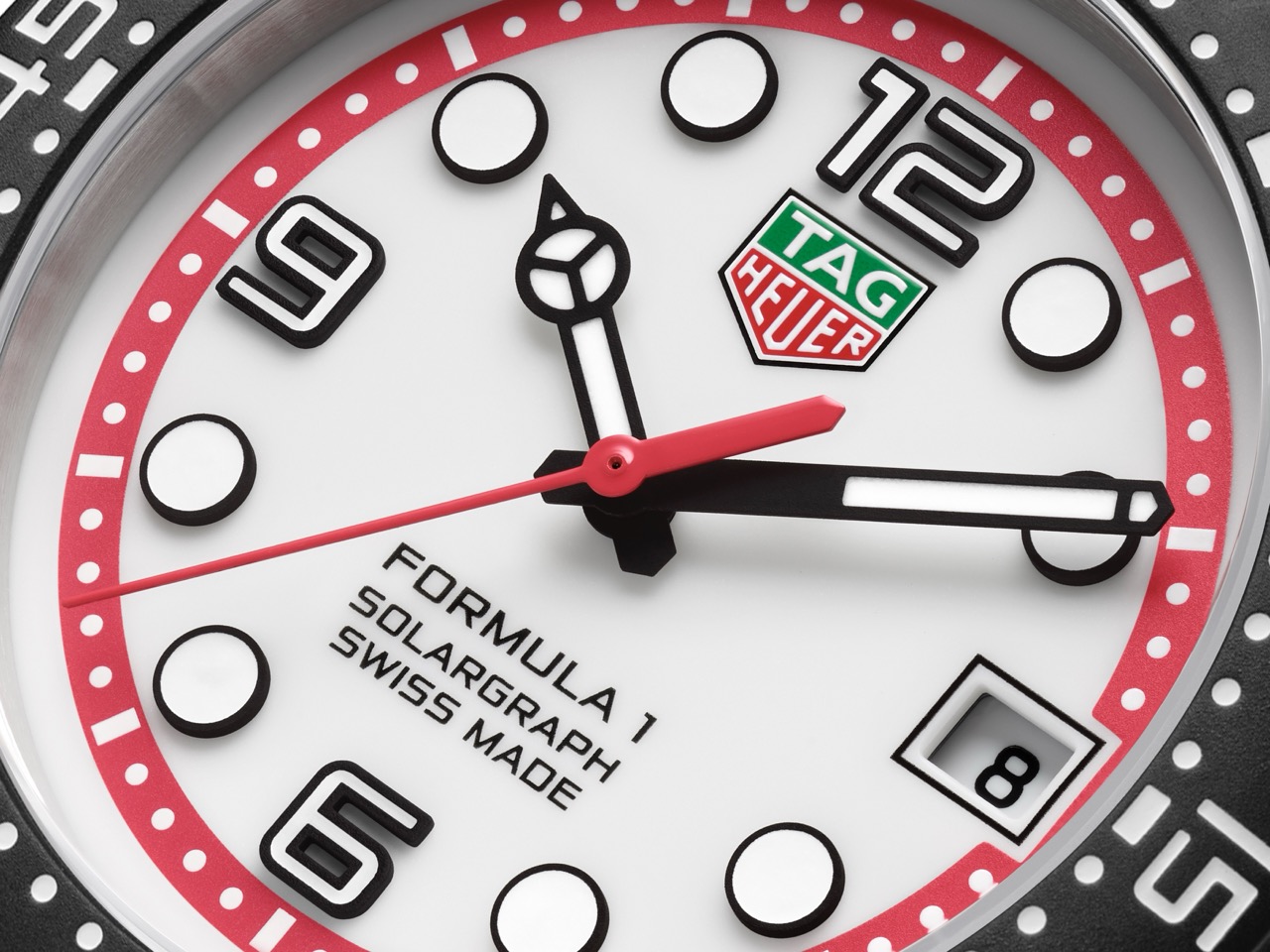
Alongside its mechanical chronographs, TAG Heuer debuts nine new 38mm Solargraph references, bringing sustainable innovation to the fast lane. For the first time in the Formula 1 collection, the Solargraph movement takes centre stage, converting sunlight or artificial light into power. Just two minutes of direct sunlight yields a full day of autonomy. Once fully charged (under 40 hours of light), these watches run up to 10 months in darkness. Restart time is nearly instantaneous; just 10 seconds of light exposure gets it ticking again.
Encasing the Solargraph is a blend of sandblasted steel, DLC coatings, and TH-Polylight, a proprietary lightweight polymer engineered for strength, visual clarity, and limitless colour application. The bidirectional bezels have been redesigned for better grip and produce a refined mechanical sound with each rotation, a tactile callback to fine instrument control.
Design nods to the original 1986 Formula 1 models are also present, from shield-shaped Super-LumiNova® indices to vibrant dial colours and racing-inspired rubber straps. Whether in black and yellow, white and green, or classic red and blue, each piece revives the legacy while pushing it forward.
With these new releases, TAG Heuer does not just echo the past. It accelerates into the future. The 2025 Formula 1 collection captures a dynamic intersection of innovation and identity, proving once again that for TAG Heuer, the race never really ends.
Carrera As Cultue
And yet, it is not quite fair to confine TAG Heuer to the racing pits and podiums. It is important to acknowledge the cultural touchpoint the Carrera and Formula 1 collections have formed for TAG Heuer timepiece of actors, artists, and collectors who appreciate its clarity of form and honesty of function <for more on the Formula 1 models, see the sidebars below – Ed>.
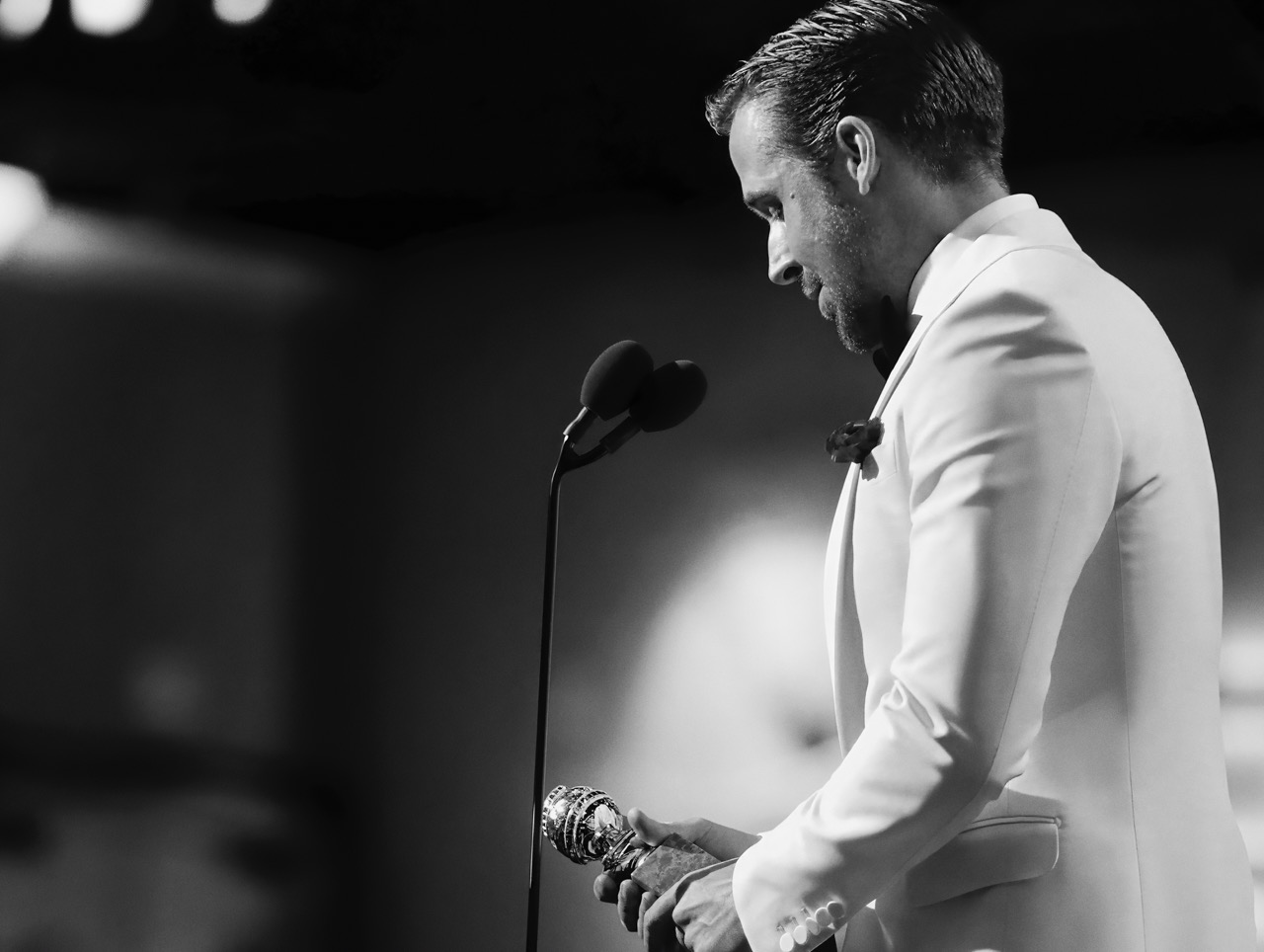
From the 1980s, TAG Heuer watches appeared on the wrists of stars such as Ayrton Senna, Leonardo DiCaprio and Brad Pitt, and some of us might recall those old advertising visuals with some of the same celebrities. Today, TAG Heuer watches grace Ryan Gosling, who serves as a brand ambassador not just because of star power but because of fit.
More importantly, the TAG Heuer Carrera is today a watch for connoisseurs. With releases such as the 2020 Carrera 160 Years Silver; the 2023 Carrera Chronograph “Glassbox;” and 2024’s Gold Skipper and Cyclops, TAG Heuer has shown it understands what its collectors care about. It is not just nostalgia; it is refinement, balance, and mechanical integrity.
From limited editions such as the Skipper to accessible Day-Dates and peak-performance tourbillons, the Carrera now forms a multi-tiered ecosystem. There is something for the new enthusiast and the seasoned collector alike. The strength of the Carrera line today lies not in a single model, but in its range. And its ability to unify that range under a coherent identity.
“It Is Not Quite Fair To Confine TAG Heuer To The Racing Pits And Podiums; It Is Also A Cultural Touchpoint For Generations”
Where The Road Leads
TAG Heuer has always been a brand of tension: between past and future, elegance and sport, accessibility and ambition. In 2025, that tension finds harmony. The Carrera is no longer just a chronograph. It is a phenomenon. It has survived and thrived through the quartz crises, corporate transitions, and seismic shifts in taste. What has kept it afloat and charging ahead is a consistency of vision.
Jack Heuer’s blueprint from 1963 still governs the Carrera’s design language today. Not in a retro sense, but in principle: focus, legibility, performance. And that’s precisely why it remains relevant.
To look at a Carrera is to glimpse at a story still being written. From Jack’s original 2447 to today’s green tourbillons, this is a collection that has evolved not by abandoning its roots, but by growing into them.
More or less in parallel, the Formula 1 collection has also grown into its roots, which is clear if one merely compares the current Solargraph to the 1986 models. Obviously, this is a quartz story but TAG Heuer has never been shy about innovating in this area too. We could easily bring the Connected models into this but that is still to come so we will not jump the gun here.
Whether it is the Carrera or Formula 1, the watches are at once vintage and current, elemental and technical, familiar and surprising. And in 2025, both the Carrera and the Formula 1 collections feel more aligned with their mission than ever: being tools for clarity, symbols of motion, and designs — undeniably— meant to win.
This story was first seen as part of the WOW #79 Summer 2025 Issue
For more on the latest in luxury watch reads, click here.
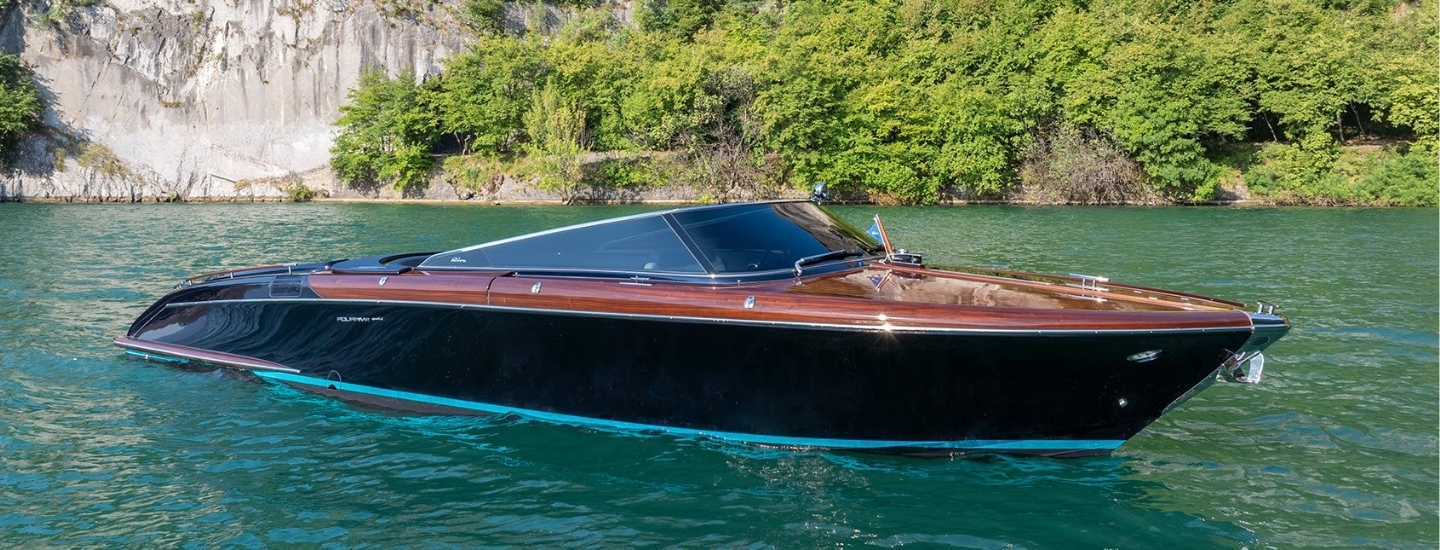
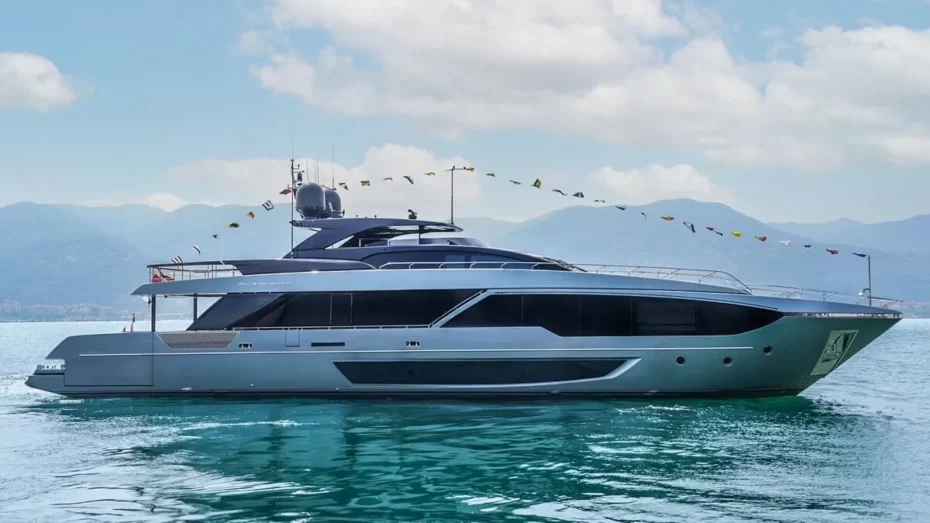
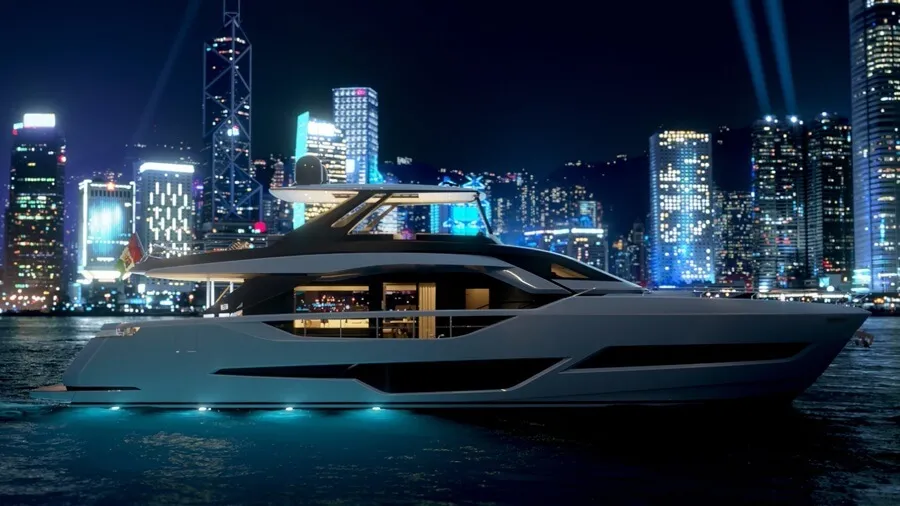
Ferretti Group has announced that it will stage six world premieres at this year’s Cannes Yachting Festival (September 9-14) along with the Ferretti Yachts 940 and Pershing GTX70, which both debuted at this year’s Venice Boat Show (May 29-June 2).
Riva’s 112’ Dolcevita Super – an upgrade of the 110’ Dolcevita – will be the largest of four Riva premieres in Cannes. The superyacht can top 25 knots with two 2,638mhp MTU 16V engines, while highlights include a 59sqm aft cockpit featuring a 35sqm beach club with large fold-down sides. The 60sqm flybridge features a spacious aft area with freestanding furniture, a cocktail bar with stools, and a retractable TV opposite a large central sofa.
The saloon is available with sofas at the entrance leading forward to the dining area, or an aft dining area and lounge midships. In the owner’s suite, enlarged windows bring in more natural light, while a double walk-in wardrobe adds both space and practicality.
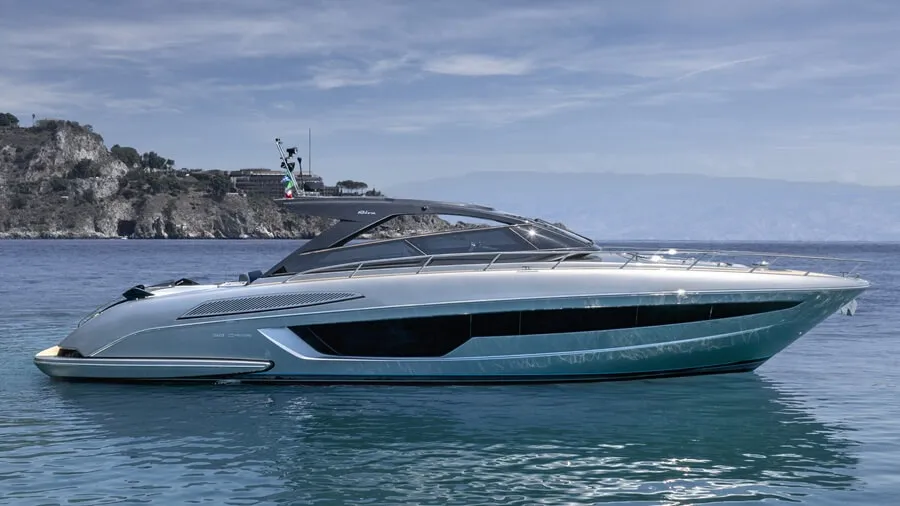
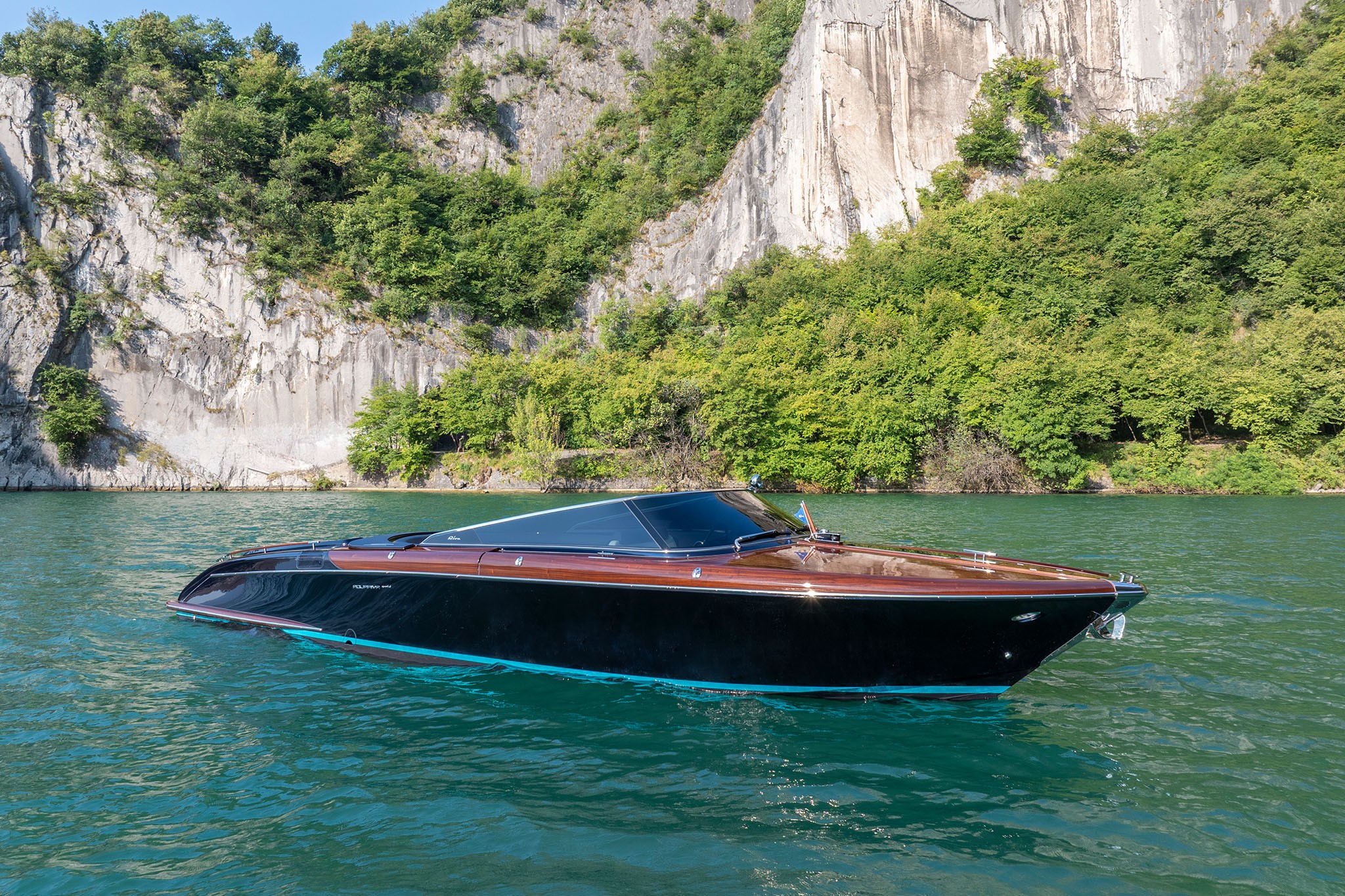
Riva 58’ Capri
The 112’ Dolcevita Super will be complemented by the world premieres of Riva’s 58’ Capri, Cento and Aquariva Special. Earlier this year, the three smaller models were shown to a select crowd at the Riva Private World Premiere, held at the brand’s historic Sarnico shipyard on Lake Iseo in northern Italy.
The 58’ Capri evolves from the 56’ Rivale platform and draws design inspiration from the 68’ Diable, and is available with twin 1,000mhp or 1,200mhp MAN V8 engines, the latter powering the yacht to 37 knots.
A new addition to Riva’s Open series, the 58’ Capri features a streamline hardtop with a retractable electric bimini and a forward-facing air intake that can be opened electrically. Below deck are two double cabins for guests and one for crew, while the aft garage can house either a Williams TurboJet 325 tender or a TurboJet 285 alongside a Seabob.
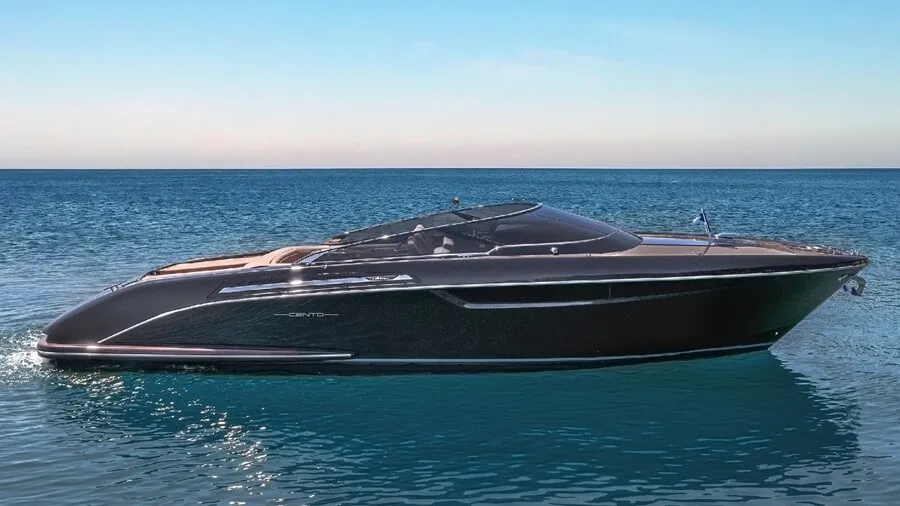
Riva Cento
The 39ft Cento is a limited-edition model produced to celebrate the 100th unit of the Rivamare and can reach 40 knots with twin Volvo Penta Aquamatic Duoprop D6-440 DPI engines. Building on the Rivamare design, the Cento features an updated swim platform with an electro-hydraulic hatch that opens to create a beach area complete with chaise longues, storage for fenders and Seabobs, and a retractable gangway.
The seating area can be converted into a sunbathing space due to a height-adjustable electric table, and can be sheltered by an electro-hydraulic bimini integrated into the C-shaped sofa. Other design additions include an aft handrail fully integrated into the hull profile.
Upgraded soft furnishings include two upholstery colour options: biscuit or a combination of aquamarine and white. Inside, the large convertible dinette follows the contours of the hull and transforms into a double berth. The cabin is bright and airy, due to a redesigned bow skylight and wide side windows.
Riva Aquariva Special
The 33ft Aquariva Special is the first model to be given the ‘Special’ designation since the upgrade of the brand’s iconic Aquarama.
The spiritual successor of the Aquarama, the Aquariva has been in production since 2001, with 300 units produced in 24 years. Fitted with a 370hp Yanmar 8LV, the Aquariva Special can cruise at 36 knots and reach 41.5 knots.
New features include redesigned bow navigation lights, a sleeker, more aerodynamic double-glazed spherical windscreen, an enlarged stern platform for easier access to the sea, and updated cushions with new colours and refined chiaroscuro effects. The bridge instrumentation is analogue in the standard version but available in a digital version.
Ferretti Yachts 800
Along with the four Riva models, the Ferretti Yachts 800 and Itama 54 will also be among the global debuts in Cannes.
The Ferretti Yachts 800 completes the Flybridge range renewal that began in 2018 and is another collaboration between Ferretti Group’s Product Strategy Committee led by Piero Ferrari and its Engineering Department, Filippo Salvetti for exterior design and IdeaeItalia for the interiors.
The yacht has an overall length of 80ft 3in – or under 24m with an optional shorter stern platform – and has a 19ft 5in beam. Highlights include the 40sqm flybridge, while the saloon has the option of a sliding door on the starboard side. The yacht has a top speed of 27 knots with two 1,550hp MAN V12 engines or 31 knots with the optional 1,800hp versions.
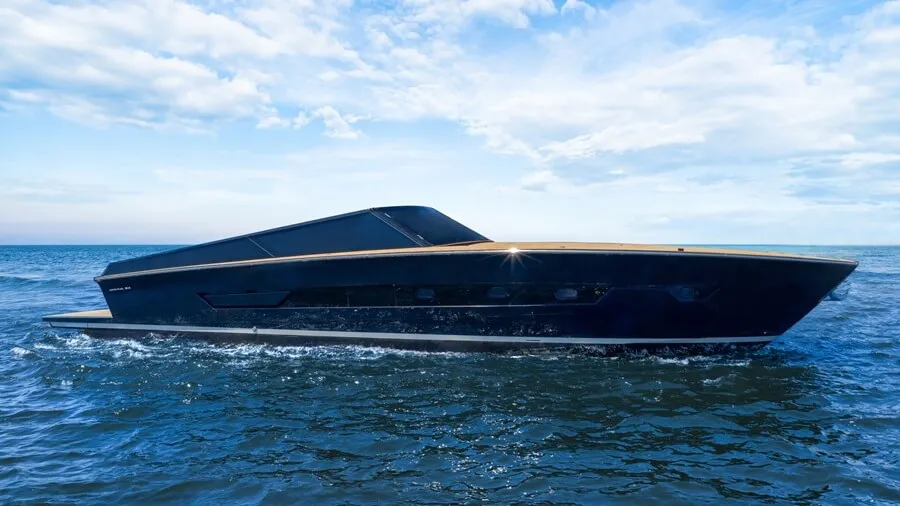
Itama 54
The Itama 54, available with 730hp or 850hp MAN i6 engines, expands the brand’s range by making a return to the 50-59ft open cruiser runabout segment. Tommaso De Luca handled the exterior styling and the interior design in collaboration with Ferretti Group’s Product Strategy Committee and Engineering Department.
The design of the 54-footer with a 15ft 6in beam stays true to the brand’s pared-down style, although innovations include the large forward sunpad built into the deck and an outward-angled transom, which is covered by an aft-facing sunpad.
Firsts include side glazing running the entire length of the hull and an exterior living space featuring two separate seating areas, aft and fore, while a bench-seat helm station to port completes the main deck. The lower deck includes two cabins, two bathrooms, a galley and a dinette.
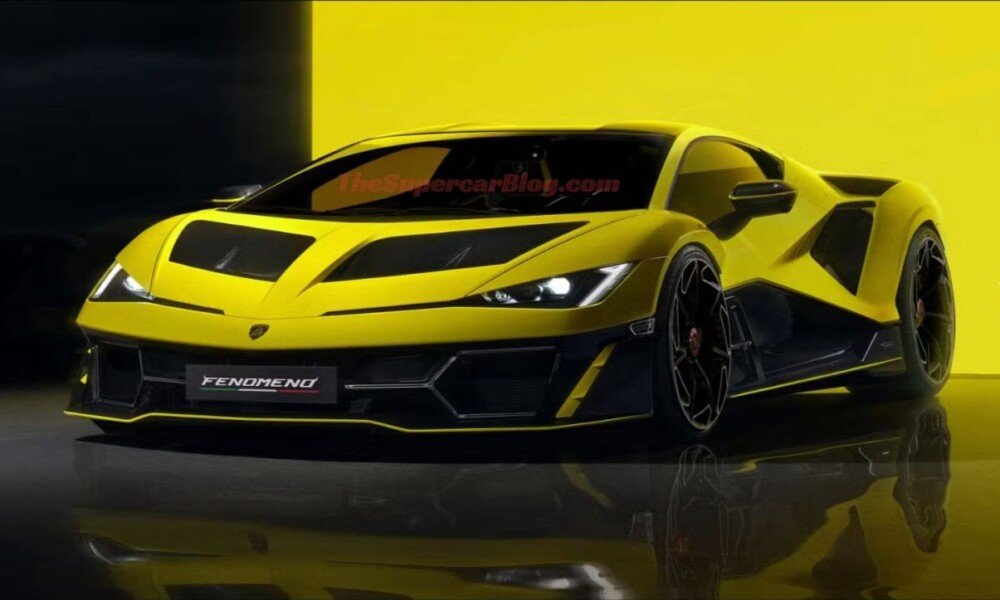
Lamborghini dropped the first teaser of the highly anticipated Fenomeno supercar just a short while ago. The official reveal is scheduled in a few hours from now.
There’s a lot of excitement surrounding this car, and we couldn’t wait to share more about the Fenomeno with you guys. So, here are the first leaked images!
The Fenomeno will go down in history as one of the wildest-looking Lambos ever made. The front fascia looks like a more extreme interpretation of the Centenario. It has massive triangular ducts on the sides and a bespoke rear end with Y-shaped taillights.
The interior, though, is similar to the Revuelto and features a portrait-oriented screen in the centre, the new 3-spoke steering wheel wrapped in Alcantara and a digital dash.
The Fenomeno will be based on the Revuelto. It is said to be powered by the same 6.5-liter V12. However, in the Fenomeno, this hybrid powertrain produces well over 1001 hp. While we don’t know the exact figure yet, rumours suggest that it has 1065 hp and 793 lb-ft of torque. It is said to use a larger 7 kWh lithium-ion battery with “high specific power”.
Production of the Lamborghini Fenomeno is expected to be limited to 29 units worldwide.
Sardinia delivers one of the best Mediterranean road trips in Europe. This two-week itinerary covers each coast of the island, hitting celebrated beaches, historic towns, and authentic inland gems.
The guide follows attractions, routes, and includes local travel practices. Start and end points can be either Olbia (north) or Cagliari (south), both with major airports and ferry connections.
If you’re already on the Italian mainland, a great option is to take the ferry to the island. This often makes more sense than flying, as you can bring your car too, which is what we did. That way, we could bring everything we needed, visit a couple of really beautiful places along the way, and enjoy a cool ferry crossing. Plus, we saved on airfares and car rental costs.
Drive from Olbia to Porto Cervo and the famed Costa Smeralda.
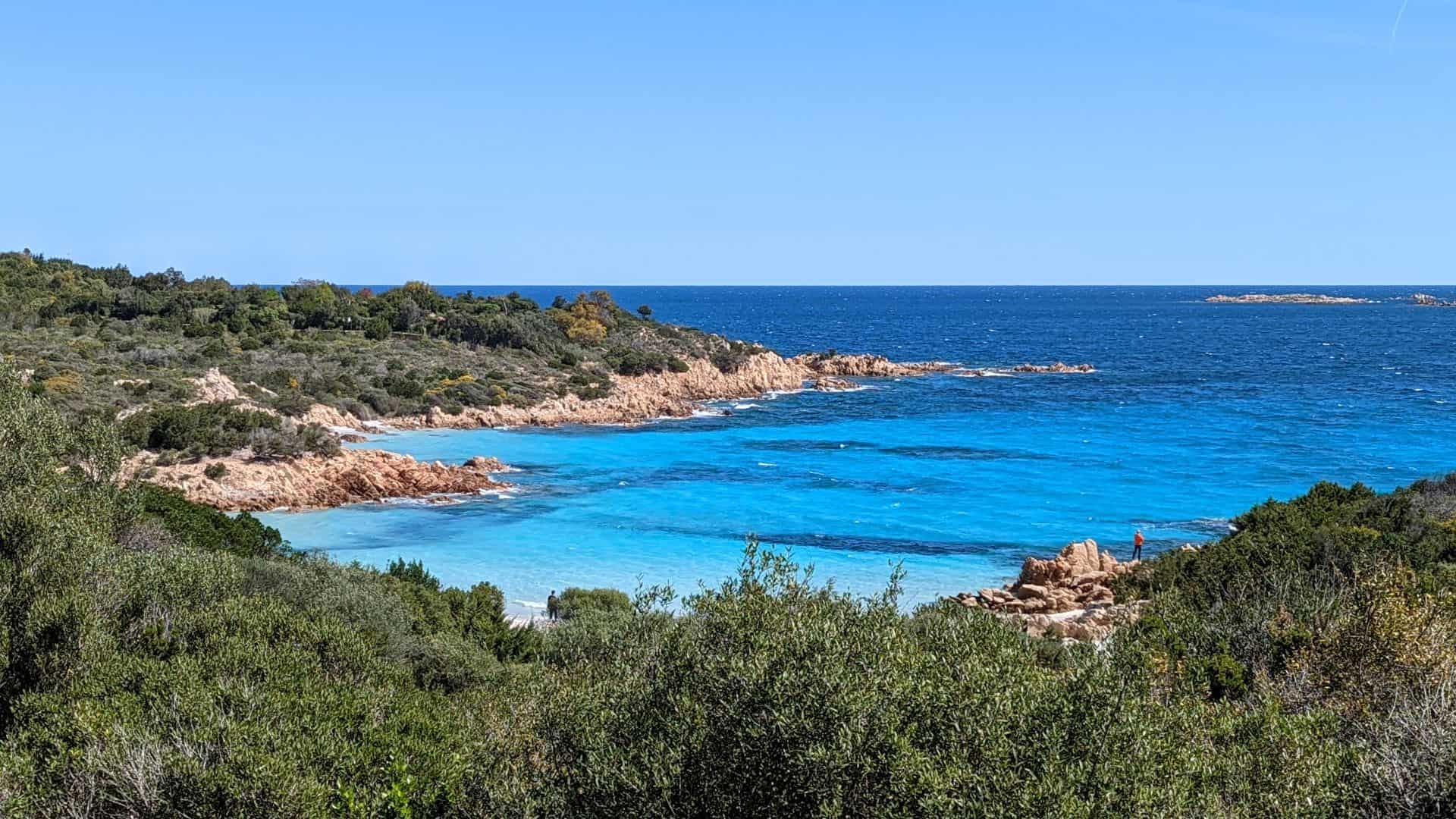
Explore Spiaggia del Principe, Capriccioli Beach, and Liscia Ruja—all verified for turquoise, shallow waters and well-maintained facilities. You will visit some of the most beautiful beaches in the world. The scenery, the color of the water and the rock formations are simply stunning.
Take the Palau ferry (vehicles allowed) to La Maddalena Archipelago National Park, renowned for deserted sandy coves and clear snorkeling. Several licensed boat tours operate daily.
Tip: Porto Cervo is noted for upscale nightlife, but northern Sardinia’s villages like San Pantaleo and Cannigione offer authentic food and lower prices.
Spiaggia del Principe at the Costa Smeralda in Sardinia, Italy.
The beaches all over the island are stunning. The north-eastern ones are the most famous, but we’ve seen many others that were equally inviting and beautiful. That’s why we’ve included a few of them in this article: Best Beaches in Sardinia
Days 5–7: West Coast – Authentic Sardinia
Base: Alghero, Bosa
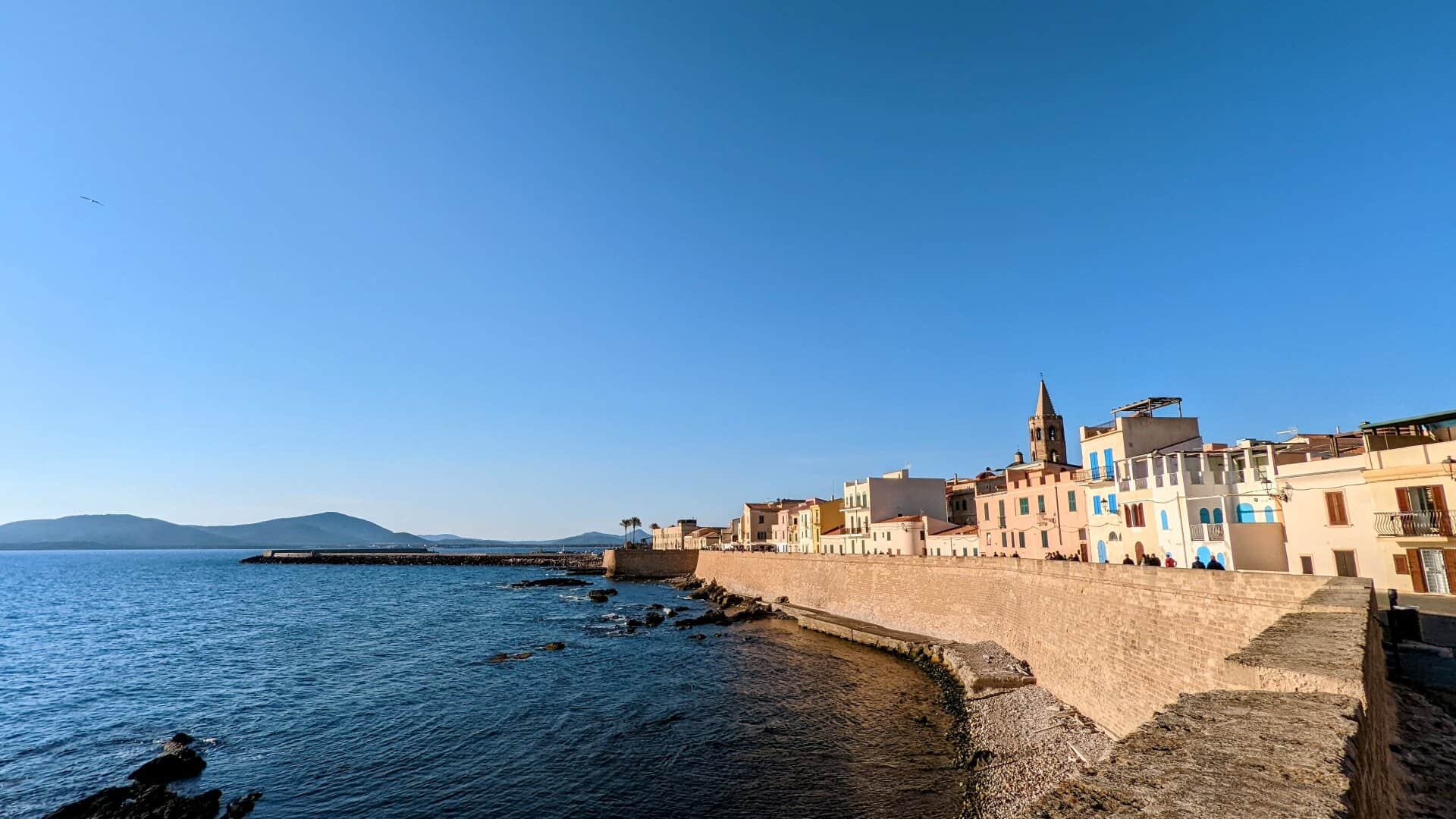
Drive to Alghero, a town with Catalan roots, medieval walls, and bustling seafood markets. Its old town and Neptune’s Grotto cave (guided tours year-round, weather permitting) are visitor highlights.
Follow the scenic SP49 coastal road to Bosa—a riverside village with pastel houses and the Malaspina Castle. Bosa is confirmed for its picturesque center and river views.
South of Bosa, discover the quartz-sand beach at Is Arutas and wild waves of the Costa Verde.
Bastioni Marco Polo in Alghero in Sardinia, Italy.
Days 8–10: South Coast – History & Capital Culture
Base: Cagliari / Villasimius
Head south via Oristano towards Cagliari, the historic Sardinian capital.
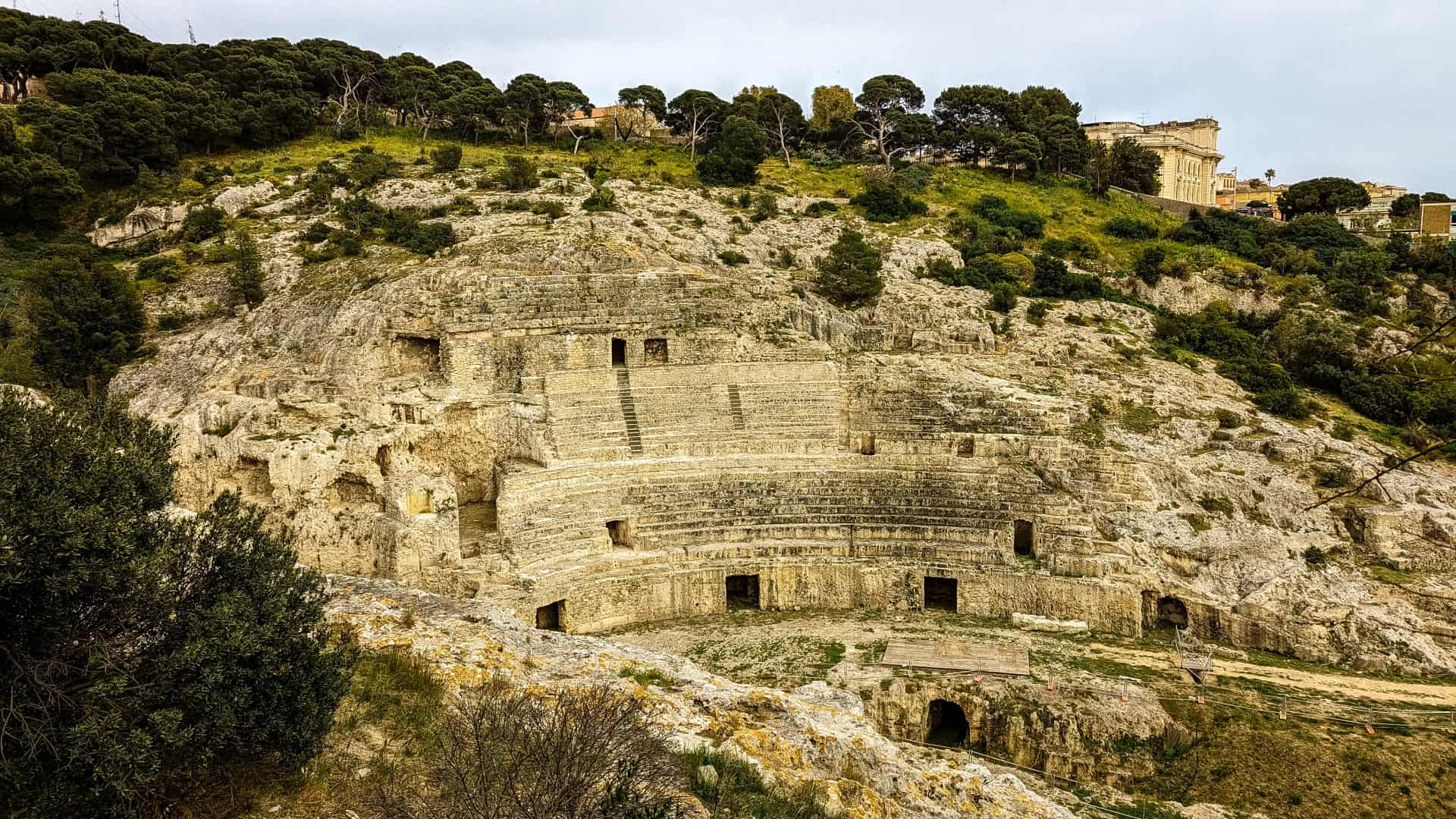
Cagliari’s top sites: the Bastion of Saint Remy, Poetto Beach, the ancient Roman amphitheater, and the old districts of Castello and Marina.
Eat: Cagliari’s restaurants serve signature dishes like culurgiones (Sardinian ravioli) and bottarga (cured mullet roe).
Excursion: Day trips to Villasimius and Costa Rei for unspoiled south-eastern beaches are straightforward via SS125 highway.
Roman amphitheater in Cagliari, Italy.
Days 11–14: East Coast – Wild Landscapes & Adventure
Base: Orosei, Cala Gonone, Baunei
Drive up the SS125 (the “Orientale Sarda,” one of Italy’s top scenic roads) to Orosei. The Gulf of Orosei is famous for limestone cliffs, sea caves, and pristine coves.
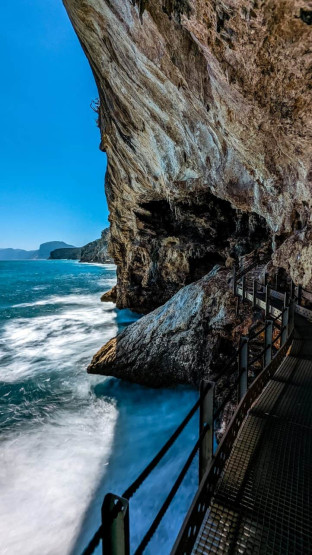
Cala Gonone: Gateway for boat tours to Cala Luna, Cala Mariolu, and the sea cave Grotta del Bue Marino. Trips run daily in summer—confirm availability and weather before booking;
A hike to Cala Goloritzé, a UNESCO-listed beach only accessible on foot, is highly recommended (trail well-signposted and maintained).
Highlights & Activities
Best beaches: Spiaggia del Principe, La Pelosa (Stintino), Cala Goloritzé, Cala Mariolu, Poetto, and Is Arutas.
Historic sites: Su Nuraxi nuraghe (Barumini, UNESCO-verified), Castello di Cagliari, Malaspina Castle (Bosa).
Wildlife: Pink flamingos visible at Cagliari’s salt flats and Molentargius Park in spring and summer.
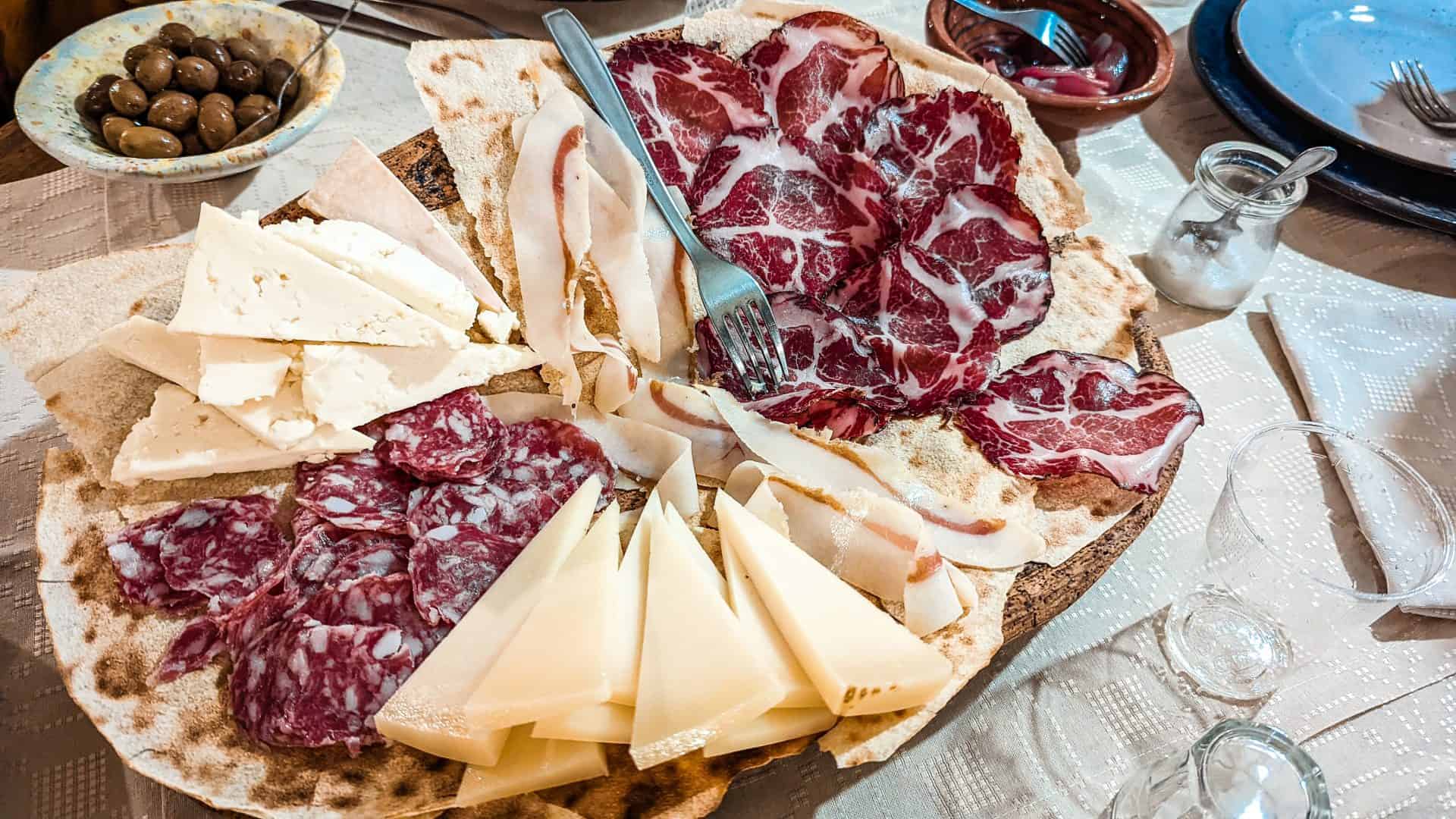
Eating: Try local specialties—porceddu (roast suckling pig), seadas (cheese pastry with honey), and Cannonau wine.
Boat tours: Licensed operators on La Maddalena and the Gulf of Orosei offer daily trips; advance booking recommended for August.
Local specialties of Sardinia, Italy.
Read as well our travel tips about…
Essential travel tips for Sardinian road trips
Sardinia is ideal for road trip explorers, but a successful journey requires up-to-date planning and local know-how. Here are the most important travel tips for anyone self-driving around Sardinia’s coast:
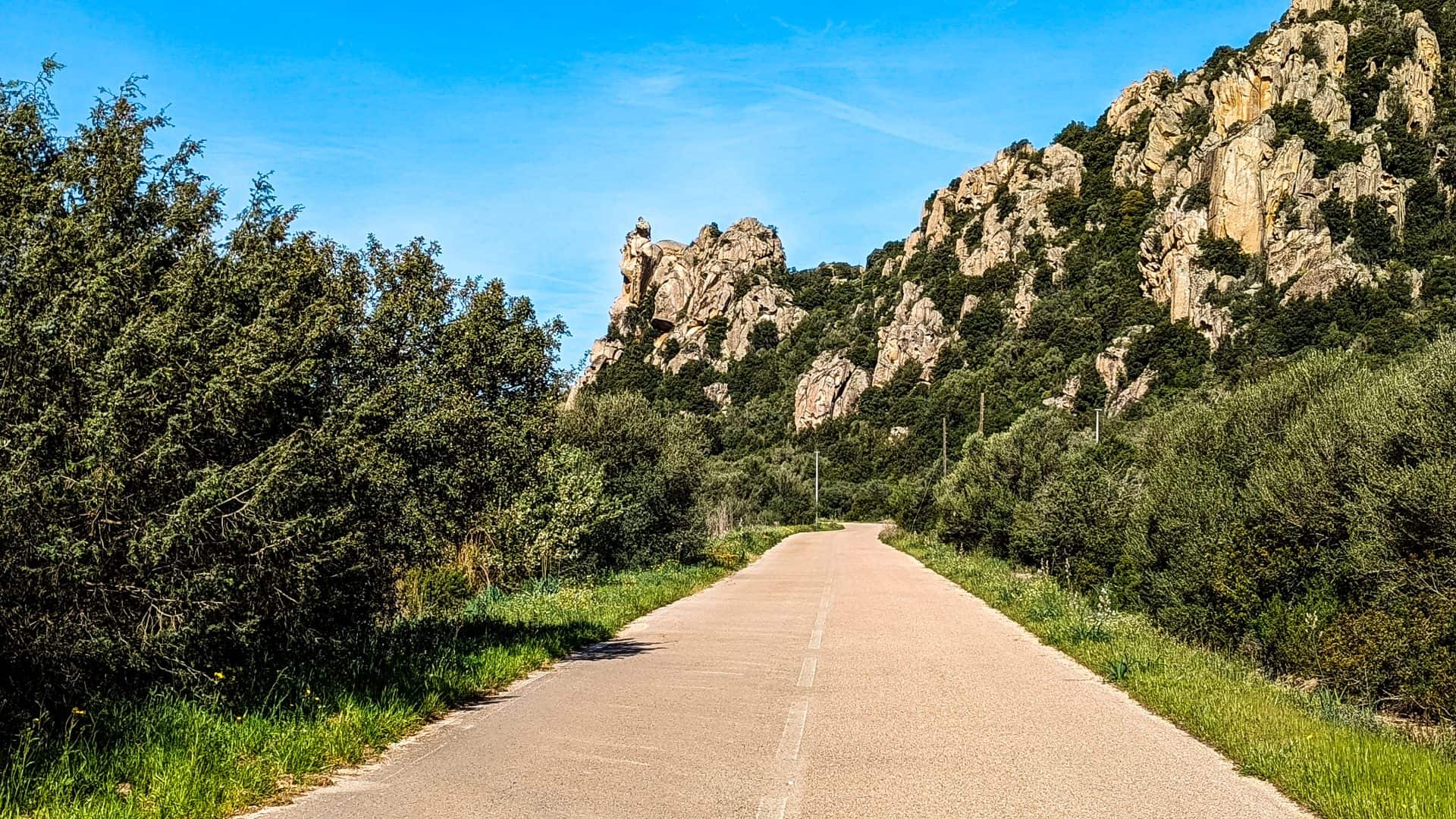
Road in Sardinia, Italy.
1. Car Hire & Booking
Advance reservation required: Especially in July-August, book your car weeks ahead for the best availability and prices.
Rental locations: Major airports at Olbia and Cagliari, plus Alghero and port towns.
Driver requirements: Most rental agencies require a valid EU or international driver’s license, and drivers to be at least 21 (sometimes 25) years old.
We headed to Sardinia with our own car and took the overnight ferry. That saved us the rental car costs, flights and we had a great trip and the kids loved the ferry crossing.
2. Driving & Roads
Road conditions: Highways (SS and SP roads) and main coastal routes are well maintained and paved. Inland routes can be narrow and winding—drive slowly and with caution.
Speed limits: 50km/h (towns), 90km/h (secondary roads), 110km/h (major roads), unless otherwise posted. Many roads have speed cameras (“autovelox”).
Fuel: Most gas stations accept cards and are open daily, though some close for a long lunch (12:30–15:30) outside big towns. Fill up before entering remote coastal stretches.
3. Navigation & Signs
Navigation: GPS or Google Maps works well, but bring a paper map as mobile reception may be weak in the mountains and remote coasts.
Road signs: Signs are clear and typically in Italian, with some locations listed in Sardinian dialect.
4. Parking & ZTL (Restricted Zones)
Beach/town parking: Many beaches and town centers have paid parking zones. Always check signs for time limits and payment methods.
ZTL (Zona Traffico Limitato): Many old town areas (especially Cagliari, Alghero, Bosa, Castelsardo) restrict non-resident car access during parts of the day. Fines are automatic for violations. Pretty nasty, right? So watch out and look for marked signs.
5. Safety & Security
Personal safety: Sardinia is very safe for self-driving travelers. Violent crime is rare; standard precautions apply.
Vehicle safety: Theft from vehicles can occur, particularly at remote beaches. As usual, never leave visible valuables in your car.
6. Ferries and Island Connections
Car ferries: The only car ferry to La Maddalena leaves from Palau (runs year-round).
Advance booking is highly recommended during summer and weekends.
7. Essentials to Pack
Sun protection: Sardinian sun is intense; pack sunscreen, hats, and sunglasses.
Cash: Although cards are widely accepted, many remote beach parking lots or rural restaurants accept only cash.
Water and snacks: Services are sparse along some remote coastlines or mountain stretches.
8. Local Driving Culture
Locals may drive quickly on winding roads; use pull-outs to let faster cars pass.
Roundabouts: Always yield to traffic already inside.
9. Emergency Information
Emergency number: Dial 112 for police, fire, or medical emergencies.
Breakdown services: Most rental agencies provide a toll-free number for assistance. Make sure that you have the contact details of your insurance, if you drive with your own car.
10. Sustainability
Respect beaches and nature reserves: Take all waste with you; never park on sand dunes.
Support local: Use local guides, eat regional cuisine, and shop at markets for authentic experiences.
These travel tips for driving in Sardinia will help ensure both a smooth trip and a responsible travel experience.
Travel Dudes encourages responsible and sustainable exploration. Respect local guidelines, dispose of waste properly, and support authentic Sardinian businesses throughout your journey.
I’m sure you’ve had similar experiences I had whilst traveling. You’re in a certain place and a fellow traveler, or a local, tip you off on a little-known beach, bar or accommodation. Great travel tips from other travelers or locals always add something special to our travels. That was the inspiration for Travel Dudes.
I’m sure you’ve had similar experiences I had whilst traveling. You’re in a certain place and a fellow traveler, or a local, tip you off on a little-known beach, bar or accommodation. Great travel tips from other travelers or locals always add something special to our travels. That was the inspiration for Travel Dudes.
The technical storage or access is strictly necessary for the legitimate purpose of enabling the use of a specific service explicitly requested by the subscriber or user, or for the sole purpose of carrying out the transmission of a communication over an electronic communications network.
Preferences
The technical storage or access is necessary for the legitimate purpose of storing preferences that are not requested by the subscriber or user.
Statistics
The technical storage or access that is used exclusively for statistical purposes.The technical storage or access that is used exclusively for anonymous statistical purposes. Without a subpoena, voluntary compliance on the part of your Internet Service Provider, or additional records from a third party, information stored or retrieved for this purpose alone cannot usually be used to identify you.
Marketing
The technical storage or access is required to create user profiles to send advertising, or to track the user on a website or across several websites for similar marketing purposes.







:max_bytes(150000):strip_icc()/tal-ive-solo-traveled-for-15-years-these-are-the-7-gadgets-that-help-me-stay-safe-and-connected-anywhere-tout-59c449e065dc452db7037db7f8514d4d.jpg "9 Personal Safety Devices for Solo Travel")
:max_bytes(150000):strip_icc():format(jpeg)/tal-ive-solo-traveled-for-15-years-these-are-the-7-gadgets-that-help-me-stay-safe-and-connected-anywhere-tout-59c449e065dc452db7037db7f8514d4d.jpg)