The 1933 Delage, once owned by the grandson of Louis Blériot — the first man to fly across the English Channel in 1909 — will go under the hammer with Haute Marne Auctions in Lille, France, on 19 July, with an estimated price of GBP 150,000. Chassis No. 36144 stands apart from typical pre-war classics, bearing a name tied to the golden age of aviation.
The striking side profile of the 1933 Delage DS Roadster Cabriolet. Image: Interencheres.
Blériot was the first to use the combination of hand-operated joystick and foot-operated rudder control that is still used to the present day. He was also the first to make a working, powered, piloted monoplane and in 1909 he became world-famous for making the first aeroplane flight across the English Channel, winning the prize of GBP 1,000 offered by the Daily Mail newspaper. He was the founder of Bleriot Aeronautique, a successful aircraft manufacturing company. Louis Blériot’s grandson — who shares the name of the legendary French aviator — makes this Delage carry a name synonymous with the family’s pioneering spirit.
One of just 1,070 built, the DS Roadster boasts a 4-speed manual gearbox with reverse, a dry single-plate clutch and right-hand drive — typical of its era. Its chassis — constructed from steel side members and cross members — supports a sheet metal body mounted on a wooden frame. Inside, garnet-red leather upholstery remains in excellent condition, dressing both the front bench and the rear trunk seat. The car’s meticulous restoration is well-documented, with a photographic record tracing its revival.
Interior of the Delage DS Roadster Cabriolet, No. 36144
The younger Blériot — who also shared his grandfather’s passion for flight — sold the Delage in December 2004. It was later passed to its current owner in January 2022. But the Blériot legacy runs deeper than mere ownership. Along with being an aviator, the original Louis Blériot was an innovator — credited with developing early automotive headlamps and pioneering aircraft controls still in use today. His grandson — equally daring — attempted to recreate the historic Channel flight in 1998, though his replica aircraft ended in a crash landing.
Delage: France’s Forgotten Luxury Marque
The intriguing coachbuilding details stand out. Image: Interencheres.
Founded in 1905, Delage carved its reputation crafting exquisite luxury cars, becoming one of France’s most prestigious brands between the wars — achieving commercial success among wealthy customers and earning it recognition at the time. Its 1927 Grand Prix victory with the 15 S8 — engineered by Albert Lory — cemented its racing pedigree. Even at Le Mans in 1939, a Delage led for 22 hours before narrowly losing to Bugatti — proof of its enduring performance.
The Delage DS Roadster Cabriolet, No. 36144
The DS Roadster was part of the D6 line — a six-cylinder evolution of the D4 and D8 models — produced from 1930 until Delage’s financial struggles forced its 1935 acquisition by rival Delahaye. Despite the Great Depression, the D6 remained a coachbuilder’s favourite, with firms like Figoni & Falaschi and Chapron crafting bespoke bodies. Post-war, Delage lingered briefly under Delahaye’s stewardship before fading in 1954.
The marque’s emblem on the nose of the car. Image: Interencheres.
Now, the marque is stirring again. In 2019, Laurent Tapie — son of businessman Bernard Tapie — secured rights to the name, unveiling the radical D12 hypercar. Could this herald a return to Le Mans, echoing Delage’s near-victory in ’39? For now, this 1933 DS Roadster stands as a rolling testament to an era when cars and aviation shared the same daring spirit.
To arrange a viewing of the car on 18 July in Douai, France (near Lille), or to request further information, please contact Michel Floirat at +33 6 80 14 30 77.
Summer used to be part of a seasonal strategy for beauty marketing with bronzers, mists and sunscreens packed into exclusive releases that typically peaked and faded with the season. Today, amid rising temperatures, increased UV awareness and a more functional approach to skincare, global beauty brands are rethinking their strategy. What was once a purchase made in line with tropical holidays and summer vacations is now recast as an everyday essential, particularly with proprietary product development that sees SPF-boosted moisturisers, humidity-resistant setting sprays and hybrid formulations that combine conventional categories of skincare and makeup.
With consumer expectations changing, the summer beauty category is no longer just a seasonal campaign but rather a retention engine shaped by an understanding that heatwaves can become a year-round business opportunity. From tinted sunscreens and cooling mists to sweat-proof setting sprays — this 10-step skincare routine line-up exemplifies how global beauty brands are rethinking seasonal launches to encourage profit retention and long-term consumer loyalty.
Moisturiser:
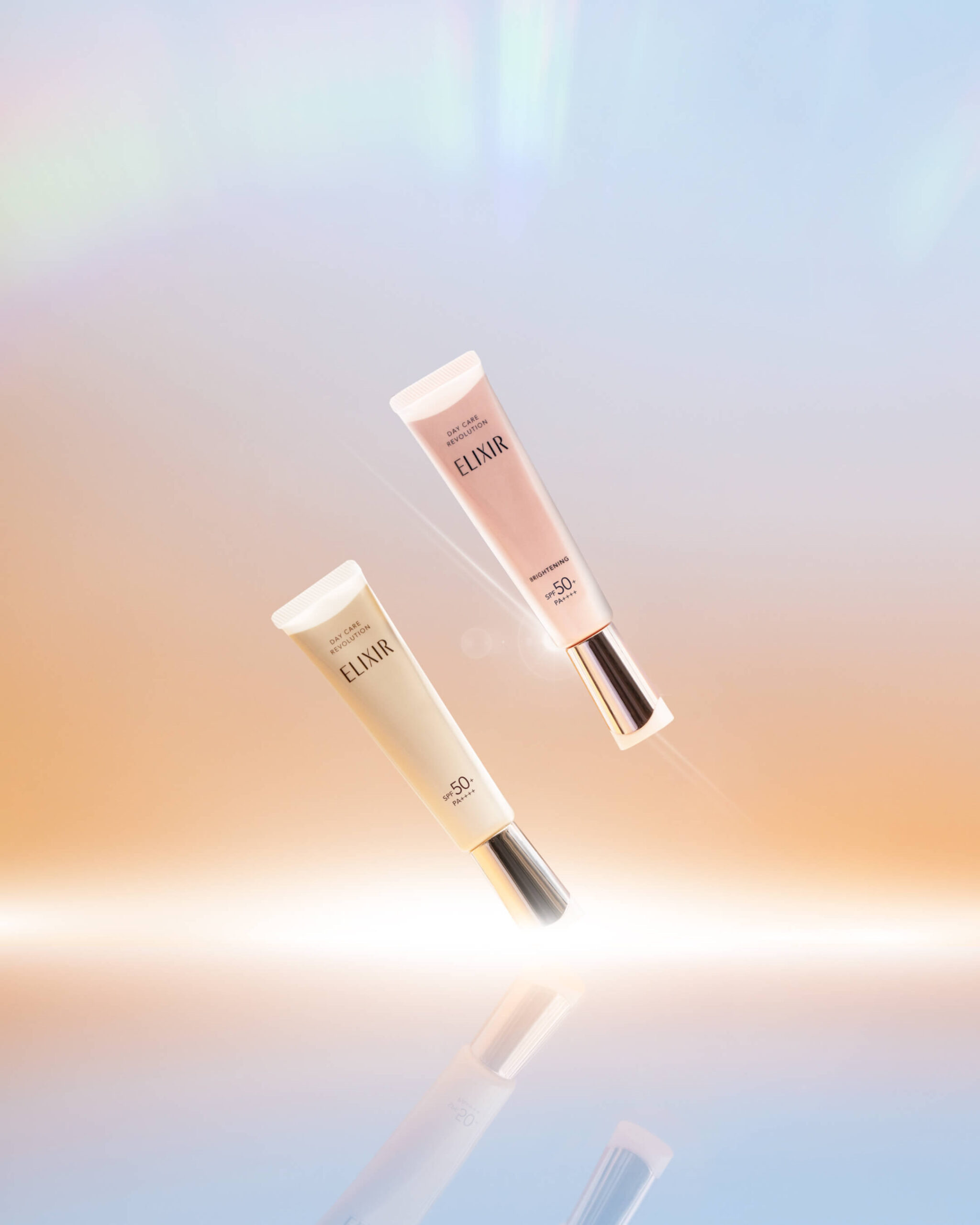
Elixir’s Day Care Revolution
Amid growing demand for functional, multi-use skincare products, ELIXIR — Japan’s number one anti-ageing skincare brand — has updated its Day Care Revolution range to meet evolving consumer expectations. The newly reformulated 3-in-1 product functions as a moisturiser, UV protector and makeup primer, now powered by a proprietary ingredient called “MitoRevitalizer”. Backed by 11 years of joint research and over 700 UV exposure tests, “MitoRevitalizer” is designed to activate the skin’s natural regeneration system, helping to maintain collagen levels and improve resistance to UV-related damage. The product offers broad-spectrum SPF50+ PA++++ protection, while also targeting fine lines, elasticity and barrier strength. In clinical trials, it demonstrated measurable results, including improved skin plumpness and reduced signs of ageing.
To enhance performance, the formula also uses Micro UV Technology to distribute UV filters more evenly, allowing the inclusion of 20 percent more active skincare ingredients without compromising protection. The result is a high-performing, all-in-one daytime product suited for long-term use in high-temperature environments — aligning with the industry’s shift towards all-season SPF and simplified routines with multi-functional value.
SPF:
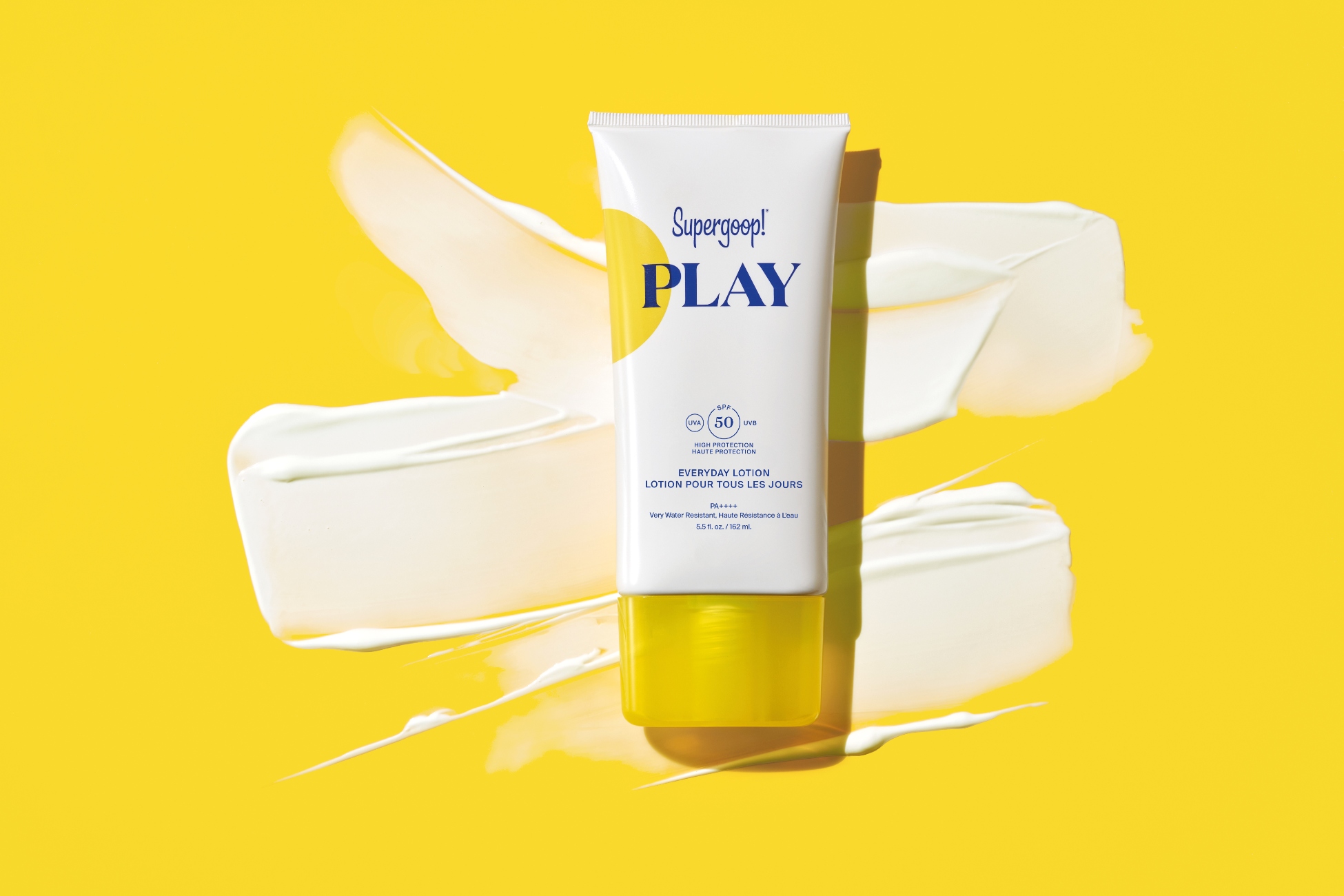
Supergoop! PLAY
Supergoop! continues to build its reputation around broad-spectrum protection that fits into the daily routines of beauty consumer. The brand’s “PLAY Everyday Lotion SPF 50” is a high-performance sunscreen designed for both face and body, offering 80 minutes of water- and sweat-resistant protection, making it an essential feature in hot, humid climates and for consumers with active lifestyles.
Formulated for all skin types, the lotion is fast-absorbing and non-greasy, eliminating common complaints around texture and white cast. Beyond sun protection, it includes a Hydration Complex featuring glycerin, niacinamide and amino acids to condition skin and support moisture levels throughout the day.
Positioned as a family-friendly sunscreen with a fresh, naturally derived scent from basil, eucalyptus, citrus and wild geranium, “PLAY Everyday Lotion SPF 50” bridges the gap between dermatological care and a sunscreen essential. Its ability to function as both a preventative skincare product and a comfort-driven daily lotion aligns with the industry’s wider trend of developing hybrid SPF formulas that move beyond niche, seasonal use into everyday skin essentials.
Foundation:
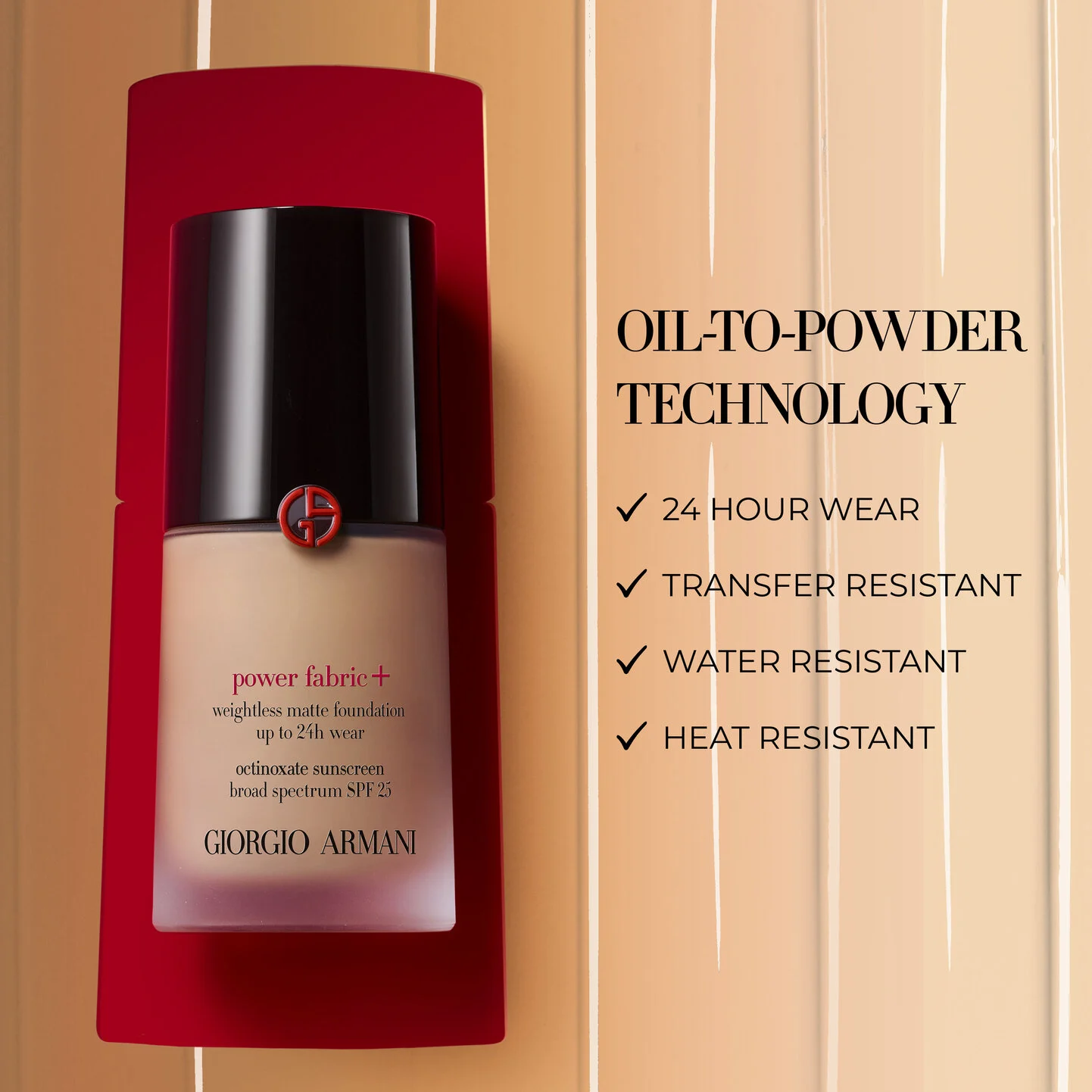
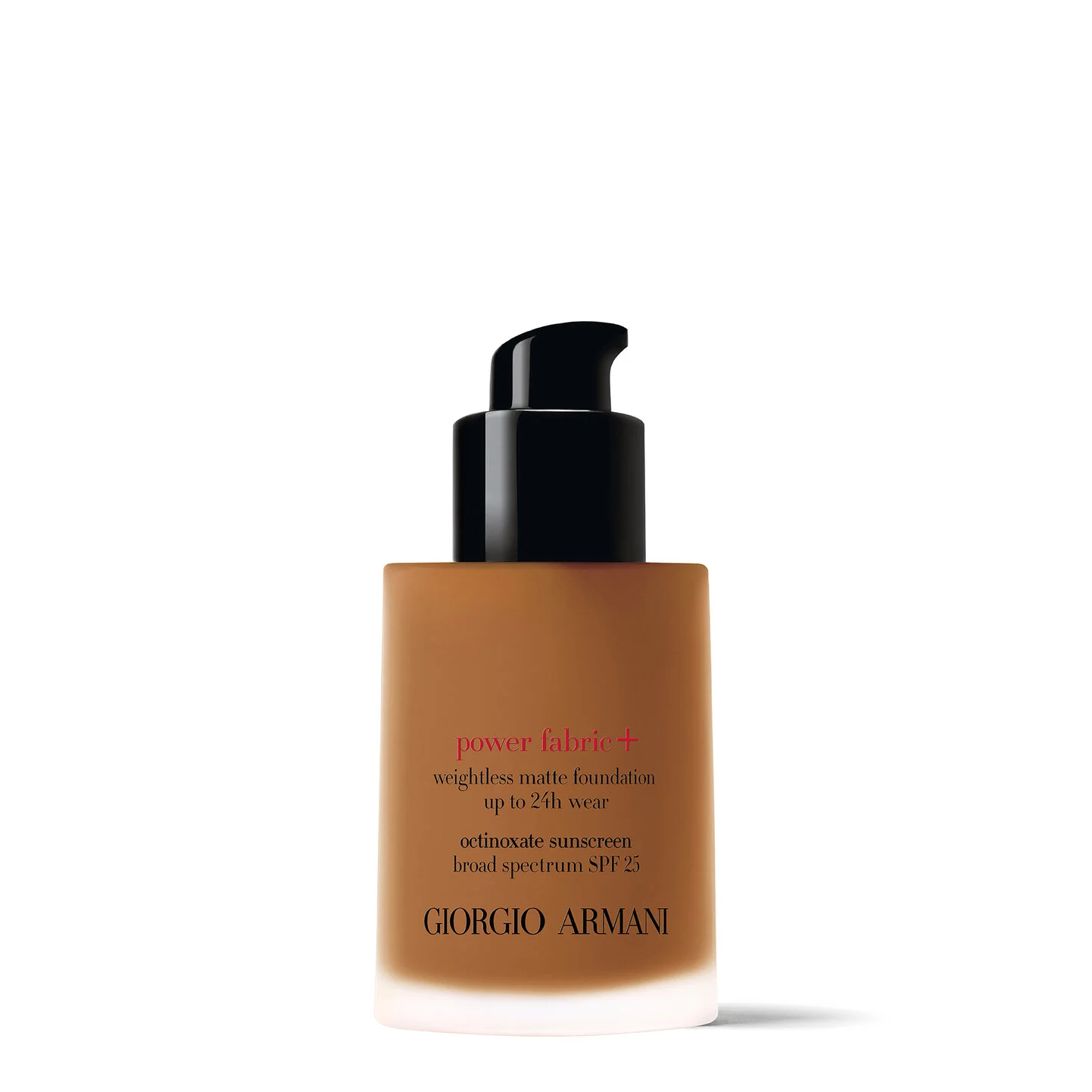
Armani Beauty Power Fabric+ Foundation SPF 25
Armani Beauty’s Power Fabric+ Foundation is built for real-world wear, offering reliable coverage and UV protection that holds up against rising temperatures and urban stressors. The formula delivers medium to full coverage with a matte finish, designed to resist heat, sweat and humidity — key demands in today’s climate-adaptive skincare landscape. Its patented Micro–fil Technology allows pigments to lie flat for seamless blending, resulting in a smooth, weightless texture that feels breathable on the skin. With SPF 25 and a transfer-resistant, liquid-to-powder formulation, it meets rising consumer demand for durability, comfort and protection in one daily-use base product. Available in 30 shades, it reflects the brand’s ongoing investment in inclusive, functional luxury beauty.
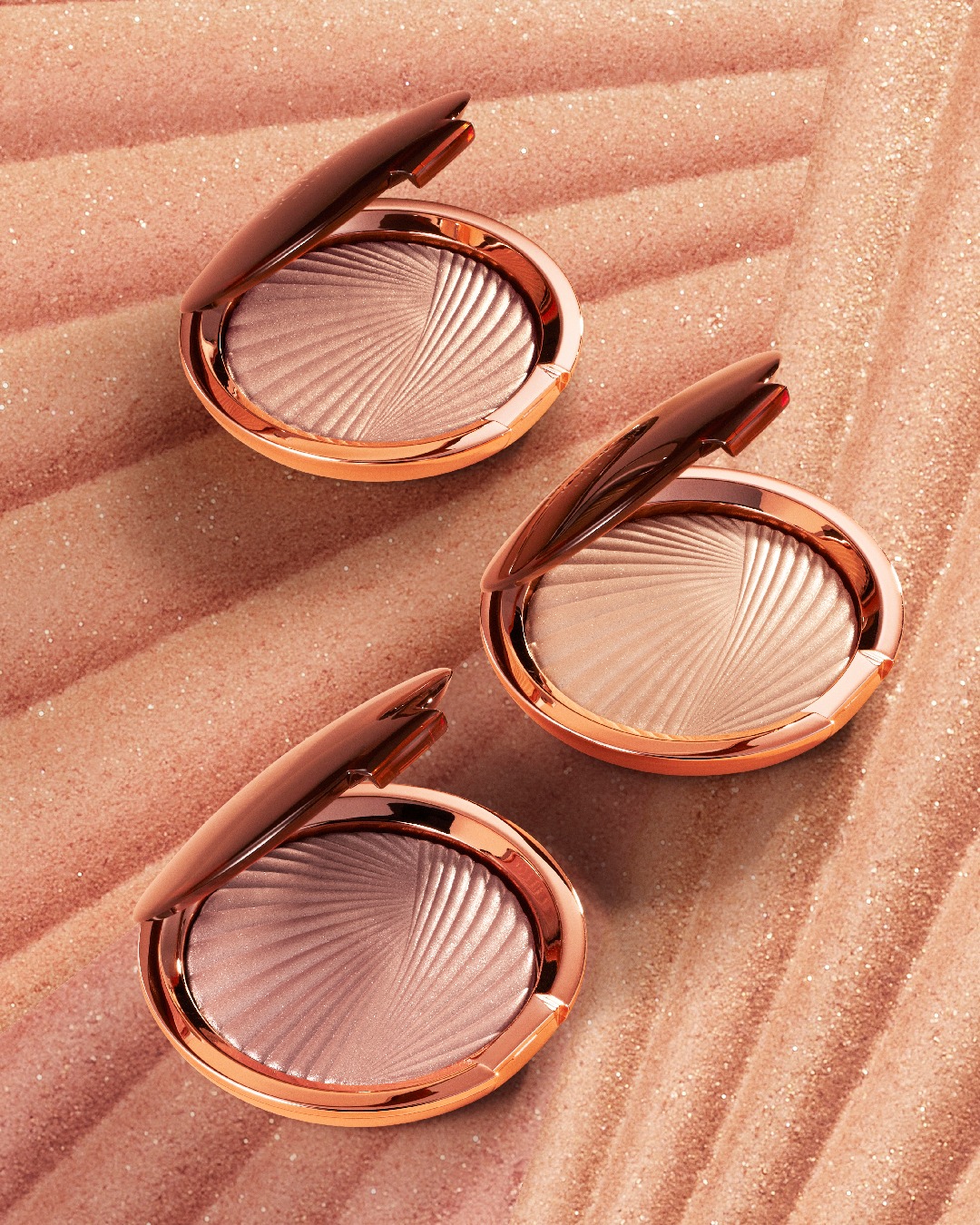
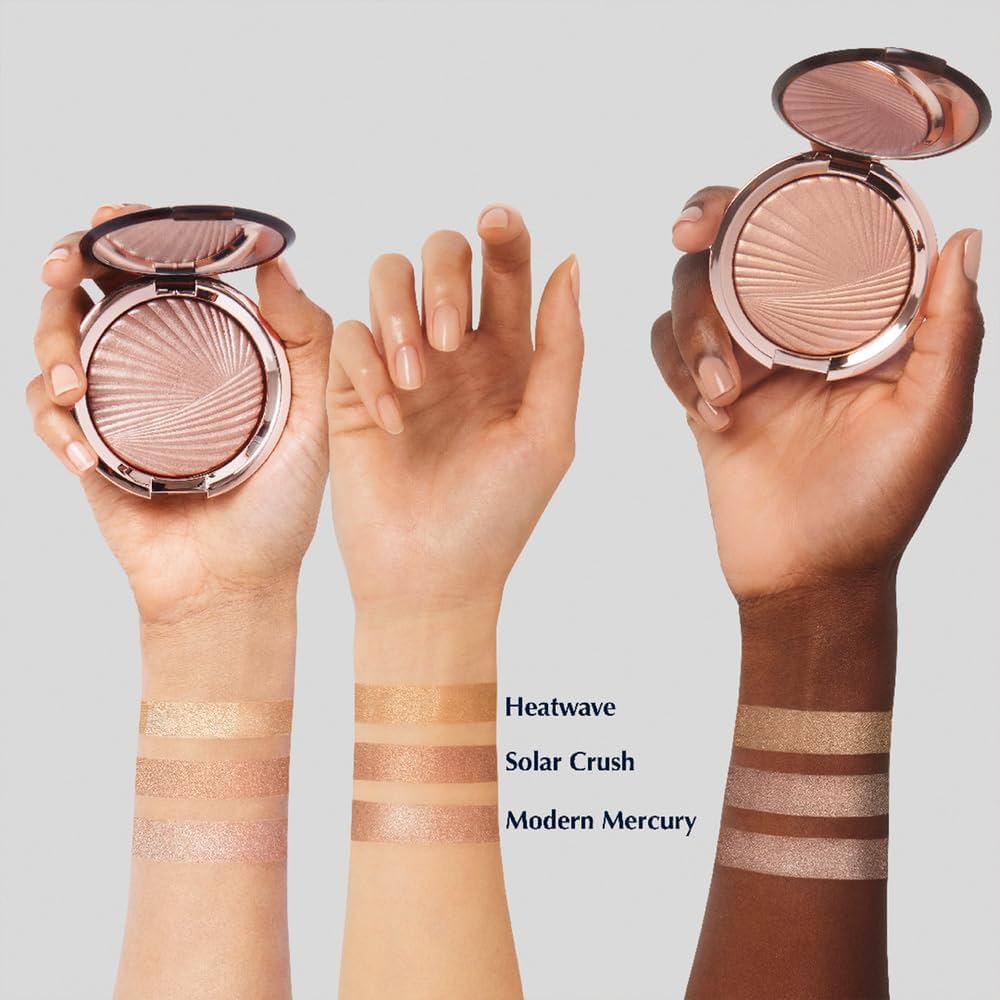
Designed to evoke the look and feel of a never-ending summer, “Estée Lauder’s Bronze Goddess Highlighting Powder Gelée” continues to build on the success of the brand’s best-selling warm-weather collection. The cult-favourite formula merges the payoff of a powder with the silky smoothness of a gel, offering a buildable glow that adapts to varying climates, skin tones and consumer preferences. The Heatwave shade — a champagne-toned luminiser — remains the standout and is consistently praised for its universally flattering undertone and smooth, non-patchy application. Its pearl-infused finish offers light-catching luminosity without settling into fine lines — a practical consideration for heat-exposed or dehydrated summer skin.
Housed in Estée Lauder’s signature rose gold compact, the product is an all-year addition that fits into the hybrid beauty model. Positioned as a makeup enhancer that adapts well to SPF-primed or bare skin, Bronze Goddess taps into the growing consumer appetite for complexion products that are customisable, photogenic and resistant to heat-induced texture issues.
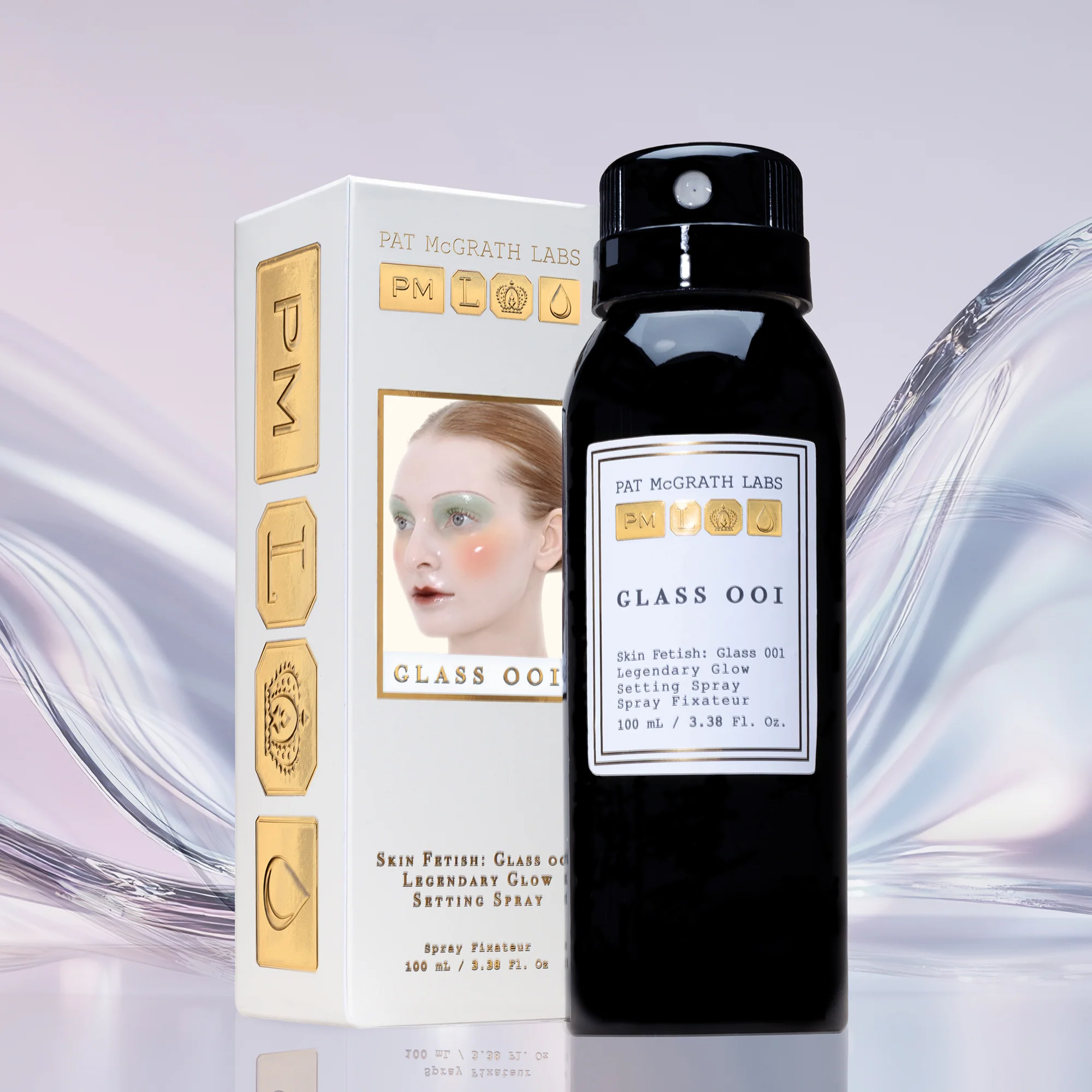
Pat McGrath’s “Skin Fetish: Glass 001 Legendary Glow Setting Spray” is a case study in runway innovation made commercially viable. Originally developed to capture the reflective, high-glamour sheen seen at Maison Margiela’s shows, the formula has since been translated into a consumer-facing product that meets both aesthetic and functional demands by locking in makeup for up to 16 hours while preserving hydration and vibrancy in humid or heat-prone conditions.
Formulated with soothing botanicals including aloe leaf, cucumber and black tulip extract, the spray delivers more than just a glossy finish. It doubles as a barrier-boosting mist that supports the skin’s appearance under long wear, while its ultra-fine delivery system allows users to layer for varying levels of glow — from everyday radiance to editorial glass-skin intensity.
As part of the broader shift towards hybrid beauty, “Legendary Glow” reinforces the growing market for setting sprays that do more than fix makeup. It appeals to the high-performance expectations of luxury consumers who expect skin care benefits embedded into every step of their routine, especially in climates where heat, oil and sweat can compromise longwear formulas.
Hydrating Face Mists:
Dior Forever Perfect Fix
Positioned as Dior’s first-ever triple-action face mist, “Dior Forever Perfect Fix” is designed to solve one of summer beauty’s most persistent challenges — keeping makeup intact under heat and humidity without compromising skin hydration. By merging setting spray and skincare into a single formula, Dior reinforces the market’s demand for multi-functional products that are made for both wear and wellness.
Its micro-diffusion technology delivers an ultra-fine, colourless mist that locks in makeup while offering an instant burst of hydration. The formula is engineered to prevent migration into fine lines and maintain a fresh, crease-free finish — a critical concern for consumers navigating long days in hot climates or air-conditioned environments. Non-greasy and non-sticky, it can be reapplied throughout the day for touch-ups without disrupting base layers. With this launch, Dior extends its complexion authority beyond foundations and powders into longwear maintenance, positioning “Forever Perfect Fix” as a modern-day essential shaped by environmental stressors and high-performance expectations.
Sitting at the intersection of treatment and protection, Bobbi Brown’s Intensive Serum UV Essence represents the evolution of SPF into a category that aims to not only shield but strengthen. Marketed as a lightweight, skincare-first sunscreen with SPF 50+ PA++++, the product responds to demand for UV care that doubles as an anti-ageing solution — a shift that reflects the broader industry trend toward hybridised, high-performance summer products.
Powered by FlexShield Technology, the serum forms a barrier against UVA/UVB rays, blue light and pollution, while skincare actives like Ginger Root Extract, Narcissus Bulb and Argireline Peptides target visible ageing and loss of firmness. It is also infused with traditional Eastern ingredients like Cordyceps, Ginseng and Reishi Mushroom, offering benefits that boost skin energy and soothe irritation.
Unlike traditional SPFs that focus purely on protection, Bobbi Brown positions this as a full-spectrum skincare step — part of a larger regimen that complements its “Intensive Serum Foundation” and “Concealer offerings”. With brightening, hydrating and pore-refining effects layered into its protective role, this UV Essence reflects how SPF is becoming integral to the daily luxury skincare narrative, far beyond the beach.
Lip Treatment
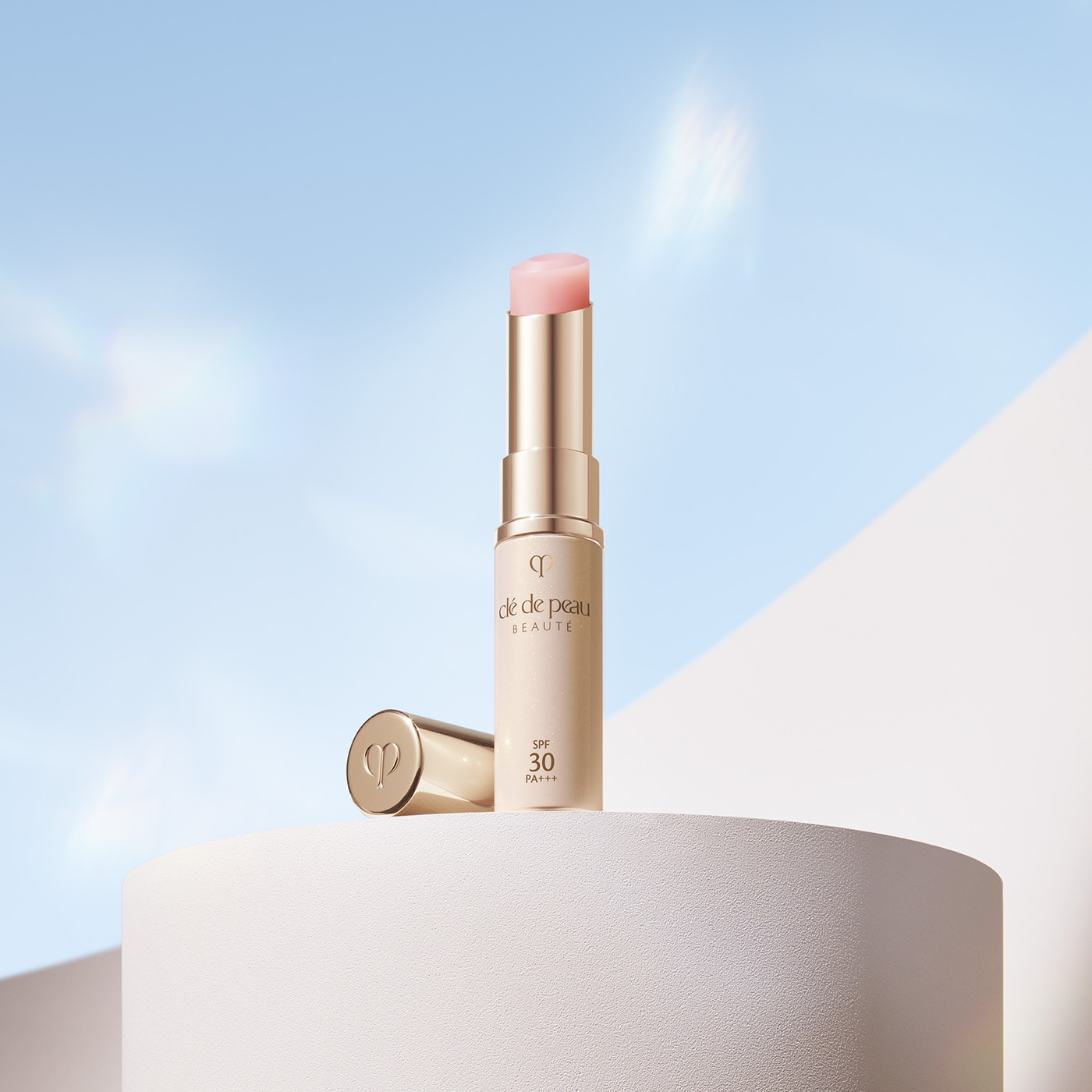
Clé de Peau Beauté’s Protective Lip Treatment
While SPF lip balms have long existed, Clé de Peau Beauté’s “Protective Lip Treatment” applies the brand’s proprietary “Adaptable Innershield Technology”, which not only filters harmful UV rays but also allows beneficial red light to pass through. Formulated with over 70 percent of skincare ingredients, this SPF lip product actively improves the appearance of texture, tone and dullness. The addition of Moroccan thyme extract, multi-botanic infusions and moisture-melt technology delivers 24-hour hydration when reapplied throughout the day, while smoothing fine lines and replenishing softness.
Positioned as a year-round essential rather than a seasonal lip balm, this product demonstrates how lip care is being rethought through the lens of skincare-meets-suncare. Designed to function equally well as a standalone treatment or a primer under lipstick, it addresses the luxury consumer’s expectation for performance without compromising on multifunctionality.
Eye Cream
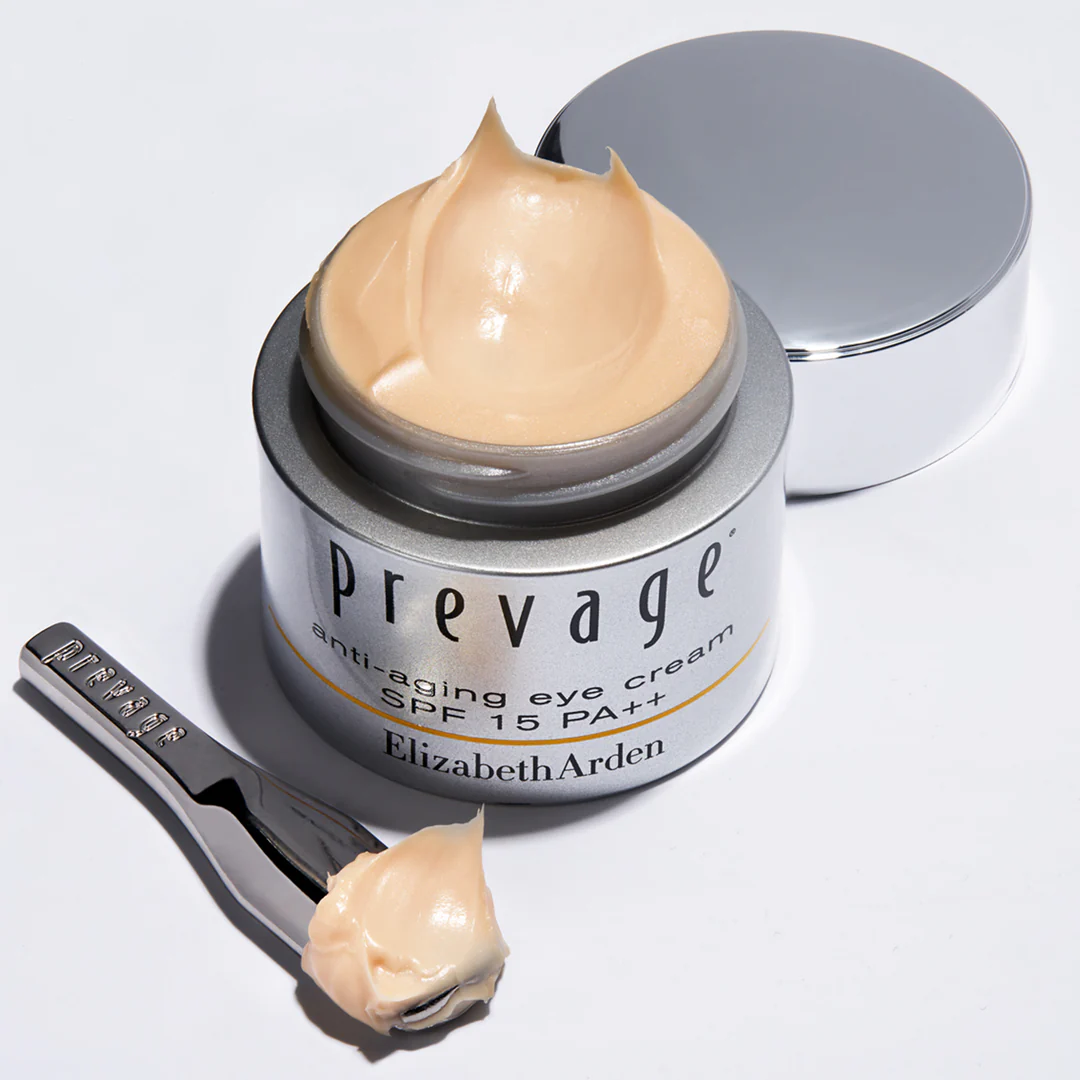
Elizabeth Arden PREVAGE® Anti-Aging Eye Cream SPF 15
Luxury skincare is increasingly addressing overlooked areas like the eye contour, where UV damage can accelerate fine lines and visible ageing. Elizabeth Arden’s PREVAGE® Anti-Aging Eye Cream stands out as one of the few premium solutions offering SPF protection specifically for the eyes. Its formula features Idebenone, a potent antioxidant known for its environmental defence properties, combined with encapsulated broad-spectrum SPF 15 to protect against UVA/UVB without causing irritation. Designed for daily use, it delivers lasting hydration to the delicate under-eye area while targeting signs of fatigue, crow’s feet and crepiness. The addition of sun protection in an ophthalmologist-tested eye cream reflects how legacy brands like Elizabeth Arden are evolving core products to meet the rising demand for full-spectrum, all-area defence in daily skincare routines.
Hair & Scalp UV Protection:
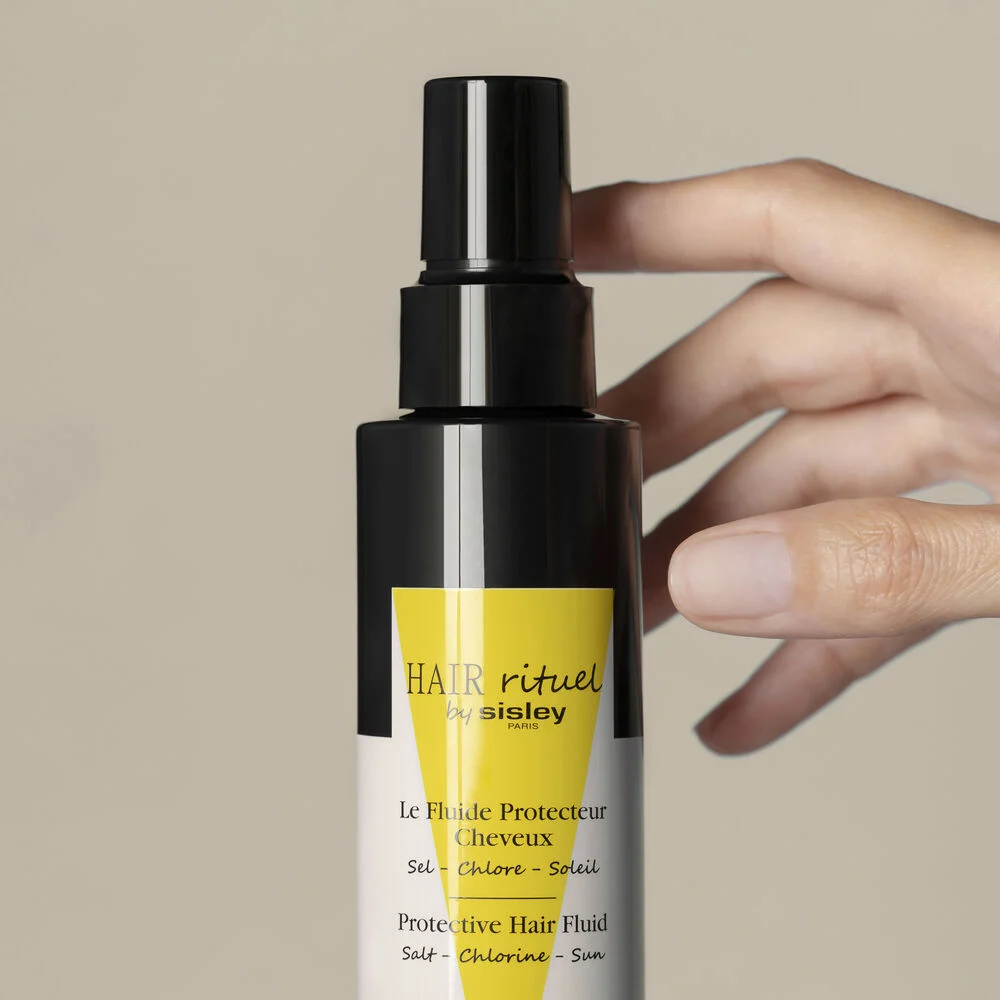
Sisley Hair Rituel Protective Hair Fluid
As the beauty industry recalibrates around the realities of climate exposure, luxury haircare is also undergoing a strategic shift. Hair Rituel by Sisley’s Protective Shield Mist addresses hair protection, a gap in the summer skincare routine that is often overlooked. More than a finishing mist, it functions as an invisible barrier that guards against UV rays, humidity, pollution, chlorine and salt — stressors that have a compounding impact on hair’s long-term strength and shine.
What makes this mist a standout is its dual-action formula. An antioxidant shield neutralises free radicals to prevent fibre degradation, while a physical barrier coats the hair to prevent environmental damage. The result is a measurable difference in hair’s texture and manageability, resulting in less frizz and a visible return of shine.
This is not a styling product but rather a preventive care for hair, formulated with the same level of sophistication typically reserved for facial skincare. With a lightweight, residue-free finish suitable for all hair types, Sisley’s Protective Shield Mist is an essential step in daily grooming as it aligns with the broader luxury shift toward comprehensive, head-to-toe UV defence.
Special Mention:
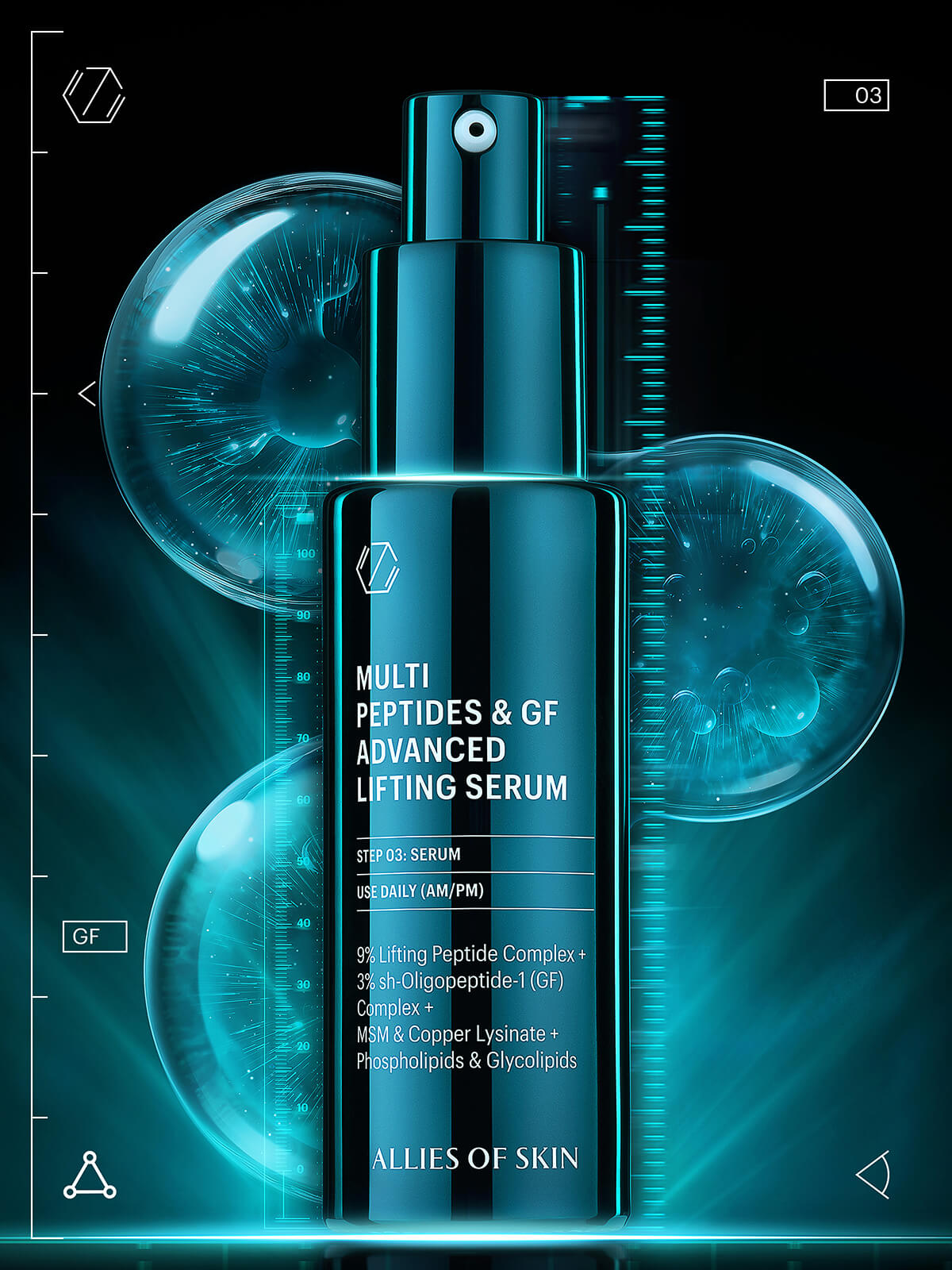
Allies of Skin Multi Peptides & GF Advanced Lifting Serum
Allies of Skin’s Multi Peptides & GF Advanced Lifting Serum is a new-generation treatment focused on firming skin and extending its health span. Powered by a 3 percent Growth Factor Complex and 9 percent Lifting Peptides, the clinically backed formula addresses sagging, texture loss and post-weight fluctuation concerns.
What makes this serum stand out is its ability to stimulate the skin’s own collagen and growth factor production, delivering visible lift in as little as one month. Ophthalmologist-tested and suitable for use around the eyes, it works across the entire face and neck to visibly reduce both static and dynamic wrinkles. Clinical trials report firmer, more lifted skin in as little as one month. With a science-driven formulation and growing celebrity endorsement — including from Kaia Gerber and Henry Golding — the Singapore-founded brand is positioning this product as a results-oriented addition to any high-performance skincare routine.
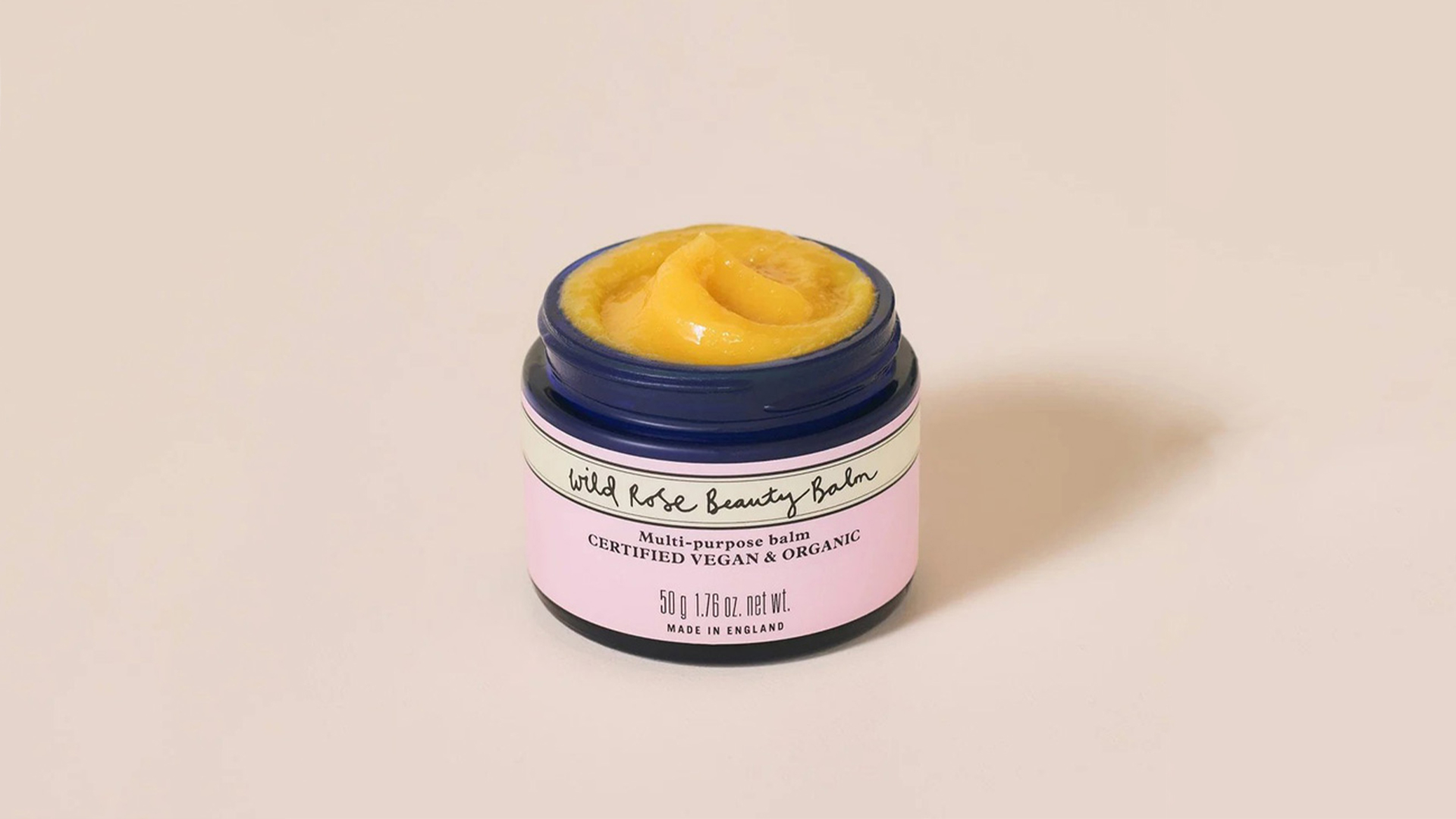
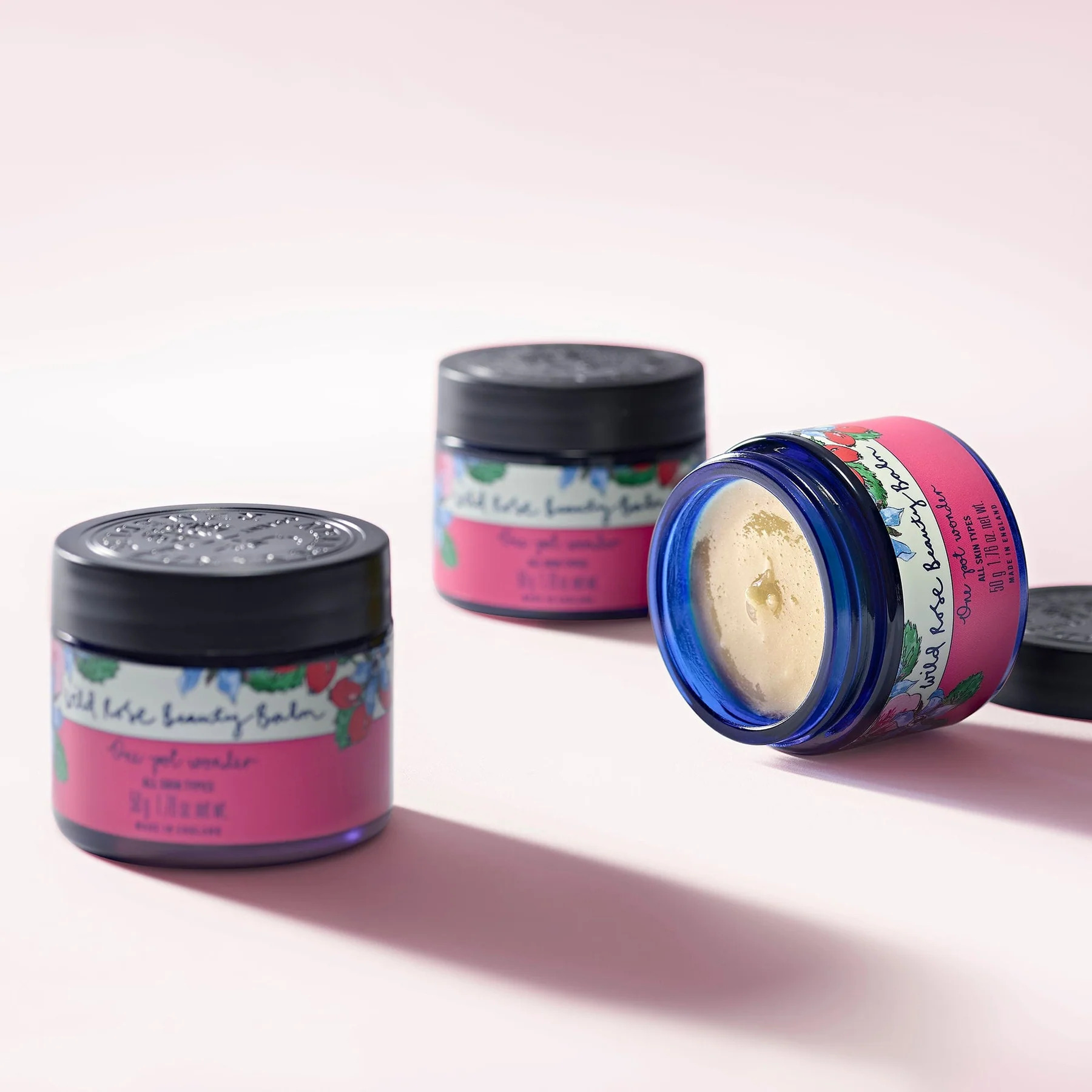
Neal’s Yard Remedies’ New vegan Wild Rose Beauty Balm
A cult favourite with a 20-year legacy, Neal’s Yard Remedies’ Wild Rose Beauty Balm returns with a vegan reformulation and updated sustainable packaging while retaining the beloved multitasking appeal. Now powered by a curated blend of seven certified organic plant oils, butters and waxes, the balm offers intense nourishment while targeting dryness and dullness. It is also clinically proven to improve hydration and radiance and is suitable for all skin types and tones. Relaunched this summer with a certified vegan formula and improved sustainability credentials, the multi-purpose balm remains one of the brand’s most renowned products.
More than just a cleanser, the balm’s versatility makes it a true skincare workhorse. It can be used as an overnight treatment, natural highlighter, brow and hair tamer, or even a cuticle softener — an ideal companion for travel or minimalist routines. With updated sustainability credentials and continued efficacy, the relaunched balm proves that legacy formulas can still set the standard in clean beauty innovation.
For more on the latest in wellness and beauty reads, click here.
The new BMW M3 CS Touring was showcased at the Goodwood Festival of Speed this year. It was merely for a static display, but was driven up the hill multiple times over the course of the event. However, a crash during one of its runs meant it had to pull out of the event early.
The M3 CS Touring scampered off the starting line before braking for the first corner. The tail stepped out in typical BMW fashion just as the driver dropped the anchors and rotated. Unfortunately, the exciting oversteer moment quickly turned into an uncontrolled slide.
The driver tried to countersteer, and as the tyres touched the grass, the car darted off to the other side and into the hay bales. The barriers did a good job of cushioning the impact. As you can see, the car only suffered minor bodywork damage.
Launched in January this year, the M3 CS Touring is a lightweight and sportier version of the already sporty M3 Touring. It features a carbon fibre hood, front splitter, air intakes, mirrors and a carbon diffuser, resulting in a weight reduction of 15 kg.
Powering the M3 CS Touring is a 3.0-liter twin-turbo 6-cylinder engine that produces 543 BHP and 479 lb-ft of torque. The engine is paired with an 8-speed automatic transmission, which sends power to all four wheels. In this case, the car was probably in rear-wheel drive mode and had the DSC turned off.
It was a trip ordained by the heavens. I arrived in Santa Fe—for the umpteenth time since I first saw the Land of Enchantment as a teenager—on the eve of the new moon, one of the darkest nights in the lunar calendar, to join a spring stargazing adventure. Destination: Chaco Culture National Historical Park, a vast Ancestral Puebloan complex located in the state’s northwestern quadrant, a region noted for its dark skies.
Taos-based tour company Heritage Inspirations organized the trip in collaboration with Santa Fe’s storied Inn of the Five Graces. It promised archaeology by day and deluxe tented accommodations and astronomy by night—plus three nights in town to explore what’s new in the country’s oldest capital.
Heritage Inspirations glamping tents in Chaco Culture National Historical Park.
Kevin West
Chaco is mysterious. Chaco is magical. Chaco is a pain to get to. I’d been wanting to see it for years, but the UNESCO World Heritage site is about a three-hour drive from Santa Fe, the last stretch on unpaved roads, and the campsites are DIY. Plus, I never could have arranged the speakers and guides brought in by Heritage Inspirations to instruct—or perhaps I should say enlighten—me and my fellow stargazers on the secrets of Chaco Canyon.
Our group of 13 spent the first night at the Inn of the Five Graces, across the street from the iconic San Miguel Chapel in Barrio de Analco, a neighborhood where the oldest house dates back to 1646. I checked in to my ornately decorated suite and joined other early birds for drinks on a sun-dappled patio. None of us had been to Chaco before, but we all felt its pull. A trio of silver-haired sisters had convened from around the country in remembrance of their late father, while a couple from Massachusetts were well versed in alternative theories about ancient aliens and lost civilizations.
From left: Night skies over Fajada Butte, in New Mexico’s Chaco Canyon; a Heritage Inspirations guest at the telescope.
Kevin West
The remaining trip participants—two sons, one daughter-in-law, and four grandchildren of the hotel’s founders—joined us for dinner in the Pink Adobe, the classic New Mexican restaurant opened in 1944 and now owned by the Inn of the Five Graces. Our Chaco education began with lectures by G. B. Cornucopia, a retired Chaco park ranger, and Isabel Hawkins, a research astronomer and former NASA advisor.
Steeped in a lifetime of scholarship and on-site study, the pair summarized what’s currently known about Chacoan culture. The society inhabited this place from about 850 to 1250 A.D. and left behind structures that are immense, built on the scale of ancient Aztec cities. And yet some things have never added up. Why has Chaco yielded so few cooking hearths, trash heaps, and burial sites—the typical signs of life left by a busy settlement?
Pueblo Bonito, one of Chaco Canyon’s “great houses.”.
Kevin West
The “sun dagger” theory offers one explanation. In 1977, a young American artist named Anna Sofaer found a spiral petroglyph near the top of Fajada Butte, one of the highest points in the park. At high noon during the summer solstice—the middle of the day in the middle of the year, or “the center of time,” as Cornucopia said—a dagger-shaped ray of sunlight crossed the spiral. Further study proved the petroglyph to be an accurate solar calendar, and it unlocked for Sofaer an entirely new way to understand Chaco. Perhaps it was not a city of residents but rather a ceremonial site built to align with both solar and lunar pathways. Seen this way, Chaco is a bit like the remains of a carefully calibrated celestial timepiece. As Cornucopia put it, “The perfect order of the heavens recreated on the imperfect earth.”
The next day, a bluebird sky promised ideal stargazing weather. As we rattled across washboard roads toward Fajada Butte, guide Lewis Bailey offered some advice. “Rather than trying to figure it out,” he said, “just be there and embrace the fact that this place has a special energy.” Archaeology can’t explain why Chaco was created, Bailey said, and the Ancestral Puebloans left no written records to explain their purpose. We know next to nothing about their emotional, intellectual, and religious life—only that their gods, myths, and heroes were unlike ours.
From left: The Dragon Room bar at the Inn of the Five Graces, with its striking light fixture; a crystal at the Inn of the Five Graces’ newly renovated spa.
Kevin West
First we stopped to visit petroglyphs near the park entrance and have a picnic lunch—lamb-pastrami sandwiches and seared-tuna niçoise salads—with postcard views of Fajada Butte. Then we explored Pueblo Bonito, the four-story stone “great house” of around 700 rooms at the heart of the Chaco complex. I tried to imagine the social organization and sheer human energy required to build such a structure, but it was impossible to understand—especially given that they had no metal tools, wheeled carts, or beasts of burden to bring thousands of roof timbers from forests 50 miles away.
Bailey told us that archaeologists had excavated traces of a walkway that once connected Pueblo Bonito to Chetro Ketl, another great house. The discovery brought the everyday world of the Chacoans vividly back to life for him. Imagine, he said, a group of teenagers loafing in its shade nearly a thousand years ago, hanging out and flirting like undergraduates on a modern college campus.
From left: Dinner at the Inn of the Five Graces’ Pink Adobe restaurant; Jonathan Boyd, left, and Zak Pelaccio of Leo’s, a new restaurant in Santa Fe.
Kevin West
The sky had turned overcast by the time we reached camp. Heritage Inspirations founder Angelisa Murray hurried us into a spacious welcome tent for cups of cacao—a nod to one of the products, along with macaw feathers, the ancient Chacoans imported along trade routes from Mesoamerica.
I fretted about the clouds, but Heritage Inspiration’s master sky watcher, astronomer Danielle Adams, brushed my worries aside. “It will burn off,” she said. And sure enough, the sky was again clear by dusk, when we lined up at her telescope to view the celestial bodies. Adams also turned our attention to the eastern horizon, where a band of color known as the Belt of Venus glowed in the “anti-twilight”: the stretch of sky opposite the sunset.
From left: A guest room at the Inn of the Five Graces; the inn’s exterior.
Kevin West
We broke for a dinner of cedar-plank salmon and zingy New Mexican white wines served in the lantern-lit dining tent. Over dessert, Adams explained her specialty, cultural astronomy. Every group of humans in the world, she said, has studied the skies and sought to explain the cosmos. Adams, who wrote her doctoral thesis on ancient Arabic astronomy, quoted lines of classical poetry describing phases of the constellation we call the Pleiades. One rhyming couplet instructs a young man to get an adze, or ax, when the Pleiades are overhead. As Adams explained, the Pleiades reach their apex during January’s midwinter chill, when it’s time to cut firewood.
We stepped back out into the windy night. Adams used a laser pointer to draw lions on the sky, tracing the constellation Leo—which, like other signs of the Western zodiac, comes from Greek astronomy—then the Great Arabian Lion, a vast constellation that seemed to cover half the cosmos. Two traditions, two visions of the night. “In my field we speak of cultural astronomies,” Adams said. “There’s no one astronomy.”
I slipped away to my spacious tent and slid into bed, snug beneath handwoven blankets. At 4 a.m., as the Milky Way peaked overhead, my alarm went off: it was time to join Adams outside. For the next 20 minutes, as my eyes adjusted to the moonless dark, astonishing starlight revealed the landscape. I made out not just the profile of Fajada Butte in the distance, but also the shapes of rock formations around the camp. The Milky Way glowed against the deeper black of the cosmos, and I easily picked out man-made satellites moving in straight-line trajectories. Every few minutes a meteor slashed across the firmament—gone in a flash, like celestial lightning.
From left: Dried-chili décor outside a suite at the Inn of the Five Graces; an adventurous dog in a sidecar outside the Chaco Canyon visitors’ center.
Kevin West
By 5 a.m., dawn began to glow in the east and the stars slipped back into obscurity. Less than an hour later, Adams and Bailey were leading us all across a mesa top to witness the moment that sunlight hit Fajada Butte.
The rest of the day seemed never-ending. Even after hours outside, a leisurely breakfast, and another robust hike to view Pueblo Bonito from above, it was still only noon when we departed for Santa Fe. Unloading the SUVs three hours later, someone joked that we’d been on a 24-hour, 10-day trip.
After glimpses into the ancient world and the eternal cosmos, I woke up the next morning ready to see what was timely and new in New Mexico’s beloved cultural capital. I started right outside my hotel room, because the Inn of the Five Graces is currently in the midst of a generational renewal.
The Relais & Châteaux property was opened in 1996 by Ira and Sylvia Seret, former New Yorkers who moved to Afghanistan in the groovy 1960s, then relocated to Santa Fe in 1978 to open a shop, Seret & Sons, where they still sell antique textiles and décor from around the world. As they step back from day-to-day operations of the hotel, their sons, Ajna, Isaiah, and Sharif, have brought in new managing director Kevin Geanides, formerly of Little Palm Island, in the Florida Keys, to steward the family’s crown jewel through a careful handover.
Ajna Seret led me on an end-to-end property tour and explained the brothers’ focus on continuity. His parents’ distinctive design DNA still shows in the new spa and suites—with their intricate mosaic bathrooms, layered antique textiles, and hand-carved wooden screens—but the vibe is lighter, airier, and more modern.
That afternoon, I peeled away from downtown’s tourist zone. Santa Fe skeptics may dismiss the city as a backdrop for turquoise-bedecked weekenders, but La Mama, an all-day café and natural wine bar on Marcy Street, was started by and for residents who crave big leafy salads and skin-contact wines. In Midtown Santa Fe, the creative conclave along Lena Street is anchored by the Bread Shop, which offers spectacular sourdough loaves and pastries.
But the handsomest new restaurant in the land of green and red chiles comes from chefs and co-owners Jonathan Boyd and Zak Pelaccio (of Corner Office, in Taos, formerly of Fish & Game, in upstate New York). It is set to open this summer in a renovated service station and will serve knockout Thai food, of all things. And after my night among the leonine constellations, its name—Leo’s—was hard to forget.
A version of this story first appeared in the August 2025 issue of Travel + Leisure under the headline “Secrets in the Stars.”
My Summer at METT Marbella: A Review in Flip-Flops
Some people inherit ancestral villas for the summer. Others backpack across continents in pursuit of self-discovery. Me? I landed in a linen-swathed oasis with sushi by the pool and a private cabana just a WhatsApp away. METT Hotel & Beach Resort, Marbella, was supposed to be a getaway. It became a summer-long affair. And not the kind that leaves you crying in baggage claim.
Maresía, Mojitos & Mediterranean Magic
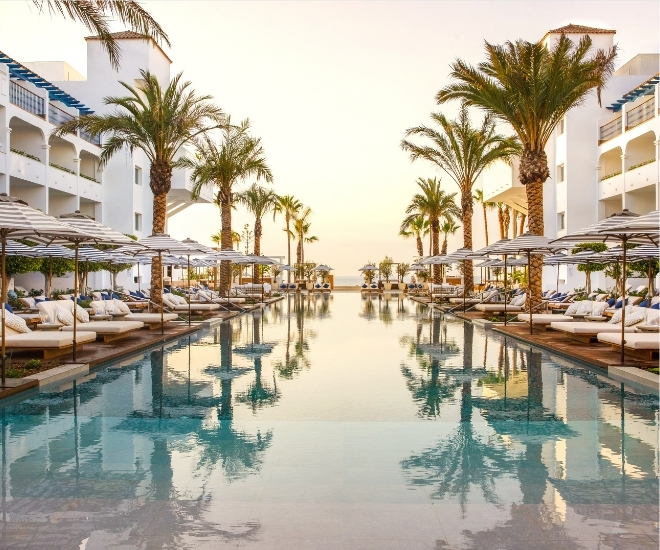
Let’s begin with a word I now use far too often and with smug authority: maresía. That gentle, salty perfume of the sea that hits you the moment you step into METT. You don’t just smell it—you become part of it, like a well-accessorised anchovy. This is a resort designed to make you forget about life beyond the salad fork. The moment I arrived, the breeze mussed my hair in slow motion, a welcome drink materialized without effort, and an olive tree (yes, inside the lobby) nodded knowingly as if to say, “You’ve made the right choice”.
No Counter, No Clocks, No Problem
METT does not bother with reception desks or formality. It’s too busy whispering, relax, sweet summer child. There are no staff bustling about with headsets, no artificial-smile check-in routines. Just an armchair, a cocktail, and a sense that you have walked into a world curated by someone who hates stress. Probably Sergio Tamayo — the general manager, Marbella local and calm luxury evangelist — who clearly instructed his staff to be competent, charming, and never hover.
The Pool Is the Star. The Rooms Just Happen to Sleep Near It.
METT’s pool isn’t so much a swimming facility as it is a religion. At 52 meters long, it practically demands reverence. It shifts hues like a moody supermodel — sometimes green, sometimes blue, occasionally silver — and somehow always Instagram-ready without looking like it’s trying too hard. Loungers? Plush enough to make you cancel afternoon plans. Ceviche? Delivered without drama. Noise levels? Mercifully adult. METT is not for toddlers in water wings or poolside cannonballs. Here, the splash zone is spiritual, not physical.
Sleep With the Sea
My suite faced the sea — because everything at METT faces the sea — and I swear the waves timed themselves to lull me to sleep. The smallest rooms here are bigger than most London flats, and the biggest? A seaside fortress. Some even come with private pools, in case you want to float around existentially without the burden of small talk.
Cuisine, Sweet Cuisine
You could eat every meal at METT for a week and never feel bored — or hungry. There’s Isola, a southern Italian hideaway where the pinsa is pillowy perfection, and the clams are so fresh they might still be sending postcards to Naples. Then there’s Azure Beach Club, where pan-Asian platters flirt with your bathing suit and your calorie count. Lola’s Bar is where aperitivo hour becomes a full-blown personality trait, and breakfast—don’t skip it—feels like the morning after a good decision. But the crown jewel? Ammos. A beachfront Greek restaurant so good I now refer to it as “church.” If there’s a better grilled octopus in Spain, I don’t want to know about it. Let me live in bliss.
Luxury Without the Labels
What sets METT apart isn’t its design (though yes, it’s Mediterranean minimalism at its finest) or its location (front-row seats to the actual beachfront on the so-called “new golden mile”). It’s the vibe. You’ll see Dior sunnies lounging next to Zara swimsuits, and no one’s keeping score. This is luxury without intimidation. “Come as you are” might as well be engraved above the olive tree in the lobby.
Neighborhood Watch: Marbella Edition
METT’s in that magical pocket between Estepona and Marbella, where time slows, the architecture still nods to old Andalusia, and the sun commits to a full schedule. On clear days, you can see Gibraltar, Morocco, and your own rapidly fading desire to return to city life. This is not just Marbella 2.0 — this is Marbella with a sense of humor and good taste.
Book It, Then Ghost Your Other Plans
Some hotels impress you. METT seduces you. It’s not the flashiest, loudest, or most gold-plated on the Costa del Sol — but thank heavens for that. Instead, it is a place where the details are deliberate, the staff are intuitive, and the vibe is just right. If you’re looking for clout-chasing, METT might not be for you. But if you are seeking serenity, sun, and the occasional spontaneous plate of grilled sea bass, this is your summer HQ. Just be warned: you might accidentally stay until October.
As the yachting world prepares for the 34th edition of the Monaco Yacht Show, taking place 24 to 27 September at Port Hercule, momentum is building. Organisers have unveiled an initial list of over 400 exhibitors, representing the vanguard of superyacht design, engineering and lifestyle — with up to 600 expected by the time the show opens. Alongside this, the show introduces Blue Wake, a new sustainability-led initiative spotlighting companies actively advancing environmental responsibility in yachting, developed in collaboration with the Water Revolution Foundation.
Complementing this renewed focus on sustainability is the anticipated world premiere of the Swan 128, Nautor Swan’s new 39-metre flagship, set to debut at the show with Sanlorenzo’s backing. From shipbuilders and tech innovators to luxury brands and yacht designers, the Monaco Yacht Show continues to solidify its position as the global epicentre of superyachting. Here’s a look at what’s already been announced — and what to expect this September.
Monaco Yacht Show 2025 Exhibitors Revealed
Organisers of the Monaco Yacht Show have revealed the exhibitor list for the 34th edition of the world’s leading superyacht spectacle.
The list of exhibitors for this year’s Monaco Yacht Show (September 24-27) has been made available on the official website, with the list continuing to be updated ahead of the show. Organisers say the list “already provides a representative snapshot of the industry’s elite including shipyards, designers, equipment manufacturers, tech companies, luxury brands and bespoke service providers”.
Exhibitors can be searched on the website by company name or by ‘activity’, with the categories comprising equipment, shipyard, yacht broker and charter, service, refit shipyard, luxury products and services, tenders, naval architecture and yacht design, toys, media, and technological provider.
The Monaco Yacht Show is a key annual event for private clients and the wider yachting community, and the list has been publicised to enable visitors to plan their schedule by arranging meetings and boat tours.
Gaëlle Tallarida, Managing Director of the Monaco Yacht Show since 2010 and part of the organising body since 1999, said: “The Monaco Yacht Show remains the ultimate setting to move a project forward or make it a reality, within an exclusive, structured and innovation-driven environment.
“With the exhibitor list, future owners and investors can identify the key players they’ll want to meet, whether they’re exploring custom builds, refits, acquisitions or charters.”
As of the start of July, the online exhibitor list already topped 400 companies, with organisers expecting the show to eventually feature between 500-600 companies.
“Port Hercule will once again become the global epicentre of superyachting, with the Monaco Yacht Show offering an unrivalled showcase to refine a project or fast-track a decision to purchase, charter or build a yacht,” organisers stated.
“For visitors – whether seasoned owners, prospective buyers, repeat clients, industry professionals or curious newcomers – the exhibitor list offers a first glimpse of the must-see brands, innovations and experts to meet on site.”
Recent editions of the event indicate that this year’s Monaco Yacht Show will feature about 120 superyachts – with organisers expecting nearly half to be 2025 premieres – and 60 luxury tenders.
This year, the four-day show will again reinforce its commitment to environmental responsibility. Initiatives include highlighting exhibitors certified by Blue Wake, a new programme developed with the Water Revolution Foundation that spotlights the most impactful eco-responsible solutions in the yachting industry.
In Port Hercule, the show’s thematic zones are designed to provide an immersive dive into the superyacht lifestyle and include the Yacht Design & Innovation Hub, designed to showcase bold, forward-thinking concepts from leading international designers.
The Adventure Area will feature more than 40 luxury vehicles alongside an exclusive selection of water toys and exploration gear to inspire future owners with a taste for adventure.
The Upper Deck Lounge – located at the entrance to the Parvis Piscine tent dedicated to luxury goods and services – provides a window into the refined lifestyle that surrounds the superyachting experience.
Across other exhibition pavilions, visitors can discover the latest advancements in onboard technology, cutting-edge equipment and bespoke services, presented by the industry’s leading experts.
The Monaco Yacht Show was first held in 1991 and is held in Port Hercule each September. Organised under the High Patronage of His Serene Highness Prince Albert II of Monaco, the show is renowned for the exceptional quality and impressive size of its superyachts.
The event attracts private visitors interested in purchasing or chartering superyachts, as well as market experts. The show is also committed to promoting innovative and sustainable solutions for yachting.
Monaco Yacht Show’s first Blue Wake Exhibitors Announced
Show organisers have announced the first exhibitors to be recognised by the new Blue Wake programme, developed with the Water Revolution Foundation.
Organisers of the Monaco Yacht Show have revealed the first 17 exhibitors at this year’s event (September 24-27) to be accredited as part of the event’s new Blue Wake™ programme. Blue Wake is a Monaco Yacht Show programme, developed with the support of the Water Revolution Foundation and sponsored by Siemens Energy.
As of July 8, the Blue Wake exhibitors were AkzoNobel, Ampros, Asea Power Systems, Boero YachtCoatings, Cantieri Rossini, Comilegno, Deasyl, Headhunter, Propulsion House, Rolls-Royce Power Systems, Sanlorenzo, Silverlining Furniture, SKF, Sunreef Yachts, Tai Ping, Termodinamica and Xeamos.
Based on an evaluation framework developed by the Water Revolution Foundation, Blue Wake is designed to spotlight proven, high-performance solutions that actively contribute to the industry’s environmental transition, across both products and process.
Gaëlle Tallarida, Managing Director of the Monaco Yacht Show, said: “With the launch of Blue Wake, our aim is to bring visibility and clarity to the commitment of companies actively contributing to a more sustainable yachting industry.
“The programme helps yacht owners and project developers quickly identify exhibitors capable of meeting their expectations in terms of eco-responsible production and equipment. The enthusiastic response from exhibitors highlights a real need: to shine a light on solutions that are not only visionary but already in place and ready to support the industry’s transformation.”
To be listed as a Blue Wake exhibitor, a company’s products or services must meet strict criteria including emissions reduction, material circularity, eco-design, and/or the protection of marine ecosystems. Additional applications are currently under review, reflecting growing interest and engagement with the programme.
Robert van Tol, Executive Director of Water Revolution Foundation, said: “Our role in the Blue Wake programme is to ensure the vetting process is credible and rigorous. By publishing the first vetted solutions from exhibitors, we’re guaranteeing these solutions meet high standards of environmental performance, specifically for yachting, and can properly proof these credentials. This work supports the industry’s shift towards more sustainable practices but also proper validation of claims.
“There are innovations in every corner of the yachting sector, enhancing both product and process, and they deserve the spotlight. To accelerate on the trajectory of net-zero in 2050, yachting needs to adopt what is already available while continuing to collaborate on further innovations needed, both for new build projects and the existing fleet.”
July 31 is the deadline for Monaco Yacht Show exhibitors to apply to join the Blue Wake programme. Full details – including eligibility criteria, submission guidelines and required documentation – are available on the Blue Wake page of the MYS website.
The new flagship of the Sanlorenzo-owned shipyard, the all-carbon 128 heads a refreshed Swan Maxi family.
Nautor Swan has announced that the first Swan 128 is on course for the model’s global debut at this year’s Monaco Yacht Show from September 24-27. At 39m (128ft) in length with a beam of 8.65m (28ft 5in), the yacht marks a significant milestone for the Finnish shipyard’s Swan Maxi range.
The Finnish shipyard, acquired by Sanlorenzo in 2024, shared recent production updates on the first unit, showing photos of the hull being painted and exiting a shed at the Boatbuilding Technology Centre in Pietarsaari on Finland’s west coast.
“The launch of this highly anticipated sailing yacht will showcase the best of Swan’s cutting-edge design, performance capabilities and customisation potential, wrapped in a commanding 39m form,” stated Nautor Swan, which is represented in Asia-Pacific by Simpson Marine, also acquired by Sanlorenzo last year.
The Swan 128 features naval architecture by veteran Germàn Frers, exterior styling by Lucio Micheletti and interiors by Misa Poggi. Designed for long-range cruising and performance sailing, the superyacht features a multifunctional deck layout, expansive living spaces and the attention to detail Nautor Swan is renowned for.
The three-part deck includes a convivial social cockpit, a purpose-designed helm station, and a spectacular aft beach club that opens directly onto the sea. The transom folds down to reveal a garage capable of housing a 4.5m tender.
The semi-raised saloon includes a flexible lounge and dining for 10, as well as triple-tier natural lighting. The forward master suite occupies the entire foreship and can be personalised, while guest cabins can be configured for single beds, doubles or Pullman berths. Aft, the crew quarters and technical areas have been arranged for optimal service without disrupting the guest experience.
In terms of performance, twin rudders and a powerful sail plan help deliver fingertip control and comfort, even at speed. Due to her advanced hull design, the yacht heels to an optimal angle of just 20 degrees, so offering thrilling sailing experiences with onboard comfort.
While the first hull is nearing completion, construction has already begun on the second Swan 128, “a testament to the strong demand for large sailing yachts that blend performance pedigree with superyacht-level comfort”, according to Nautor Swan.
The Swan Maxi range also includes the Swan 108 that premiered at the 2023 Monaco Yacht Show and the Swan 88, which won the ‘Sailing Yacht Above 20m’ category at this year’s Yacht Style Awards in Singapore in April, having debuted at the 2024 Cannes Yachting Festival.
nautorswan.com simpsonmarine.com
This article was first seen on YachtStyle.com.
For more on the latest in luxury yachting reads, click here.
The production of the Pagani Utopia Roadster has begun. The first customer cars will soon start rolling off the assembly line, and one of the first cars is going to be rather special – a one-off spec called ‘La Nonna’.
The Utopia Roadster ‘La Nonna’ has been commissioned by Saudi supercar enthusiast and collector @dhiaa070. According to the owner, the spec draws inspiration from the black suit worn by Batman. The car features an exposed carbon fibre exterior, a special interior with “art drawings” and unique laser engravings.
Pagani is building 130 examples of the Roadster. While each spec will be unique, there will be a few like the ‘La Nonna’ that go a step further when it comes to customisation.
At the heart of the Utopia Roadster is a 6.0-liter twin-turbo V12 engine, which produces 864 hp @ 6000 rpm and 811 lb-ft of torque @ 2800-5900 rpm. It is paired with either a 7-speed automated manual or a proper stick shift with three pedals.
The Ecuadorian Amazon Rainforest is one of the most biodiverse and awe-inspiring destinations on the planet. Stretching across the eastern part of the country, this lush, verdant jungle is teeming with life, from vibrant wildlife to rich indigenous cultures.
Whether you’re an eco-tourism enthusiast, a nature lover, or someone seeking to immerse yourself in authentic cultural experiences, the Ecuadorian Amazon offers a wealth of hidden gems, eco-lodges, and opportunities to connect with indigenous communities in ways you’ll never forget.
Here’s an overview:
Hidden Gems of the Ecuadorian Amazon Rainforest
While the well-known hotspots like Yasuní National Park and Cuyabeno Wildlife Reserve attract many visitors, there are countless other gems hidden deep within the rainforest that deserve your attention. Explore off-the-beaten-path trails and pristine rivers, where you can experience nature in its most untouched form. Some lesser-known locations such as Llanganates National Park and Sumaco Biosphere Reserve offer the perfect mix of natural beauty, wildlife viewing, and adventure.
The Amazon is also home to some of the world’s most diverse ecosystems, with over 10,000 species of plants, 500 species of mammals, and 600 species of birds. For the avid traveler, the chance to spot rare species like jaguars, monkeys, and countless exotic birds is one of the ultimate rewards.
Eco-Lodges: A Sustainable Way to Experience the Jungle
One of the best ways to experience the Ecuadorian Amazon is by staying at an eco-lodge, which provides a perfect blend of comfort and sustainability. These lodges allow you to live in harmony with nature, offering a truly immersive experience that supports both conservation efforts and the local economy.
For example, Suchipakari Lodge offers a sustainable and eco-friendly stay right in the heart of the Amazon. With practices like water conservation, waste management through biodigestion, and local sourcing of food, Suchipakari is deeply committed to minimizing its environmental footprint. Many lodges like this are run by local communities, ensuring that the benefits of tourism stay within the region, supporting indigenous cultures and livelihoods.
From spacious jungle cabins to treehouses and glamping sites, eco-lodges in the Ecuadorian Amazon are a perfect place to unwind, disconnect, and enjoy nature’s beauty. Many of these lodges also offer guided tours and excursions that take you into the heart of the jungle, where you can discover hidden waterfalls, swim in pristine rivers, or hike through untouched forest.
Discover the Amazon at Suchipakari EcoLodge
Escape to the heart of the Ecuadorian Amazon at Suchipakari EcoLodge, where adventure, culture, and nature converge just 4 hours from Quito International Airport.
➡ Immersive Rainforest Experience: Wake up to the symphony of birdsong, rustling leaves, and distant waterfalls in one of the world’s most biodiverse regions, home to 262 bird species, rare orchids, and vibrant wildlife.
➡ Adventure at Your Doorstep: Explore jungle trails, navigate the Napo River by canoe, or join early-morning excursions led by native Kichwa guides to uncover the Amazon’s hidden wonders.
➡ Authentic Cultural Encounters: Visit local Kichwa communities to engage with ancestral traditions and share stories by the fire pit, fostering a deeper connection to the region’s heritage.
➡ Sustainable Comfort: Relax in eco-friendly Family or Panoramic Staterooms, blending modern comforts with the serene beauty of the rainforest, all while supporting local communities and conservation efforts.
➡ Customizable Adventures: Tailor your stay with flexible tour packages, including jungle expeditions, Huaorani encounters, ancestral ceremonies, or combined Andes and Amazon tours.
Indigenous Cultures: Connecting with the Heart of the Amazon
The Ecuadorian Amazon is home to numerous indigenous communities who have lived in the jungle for centuries. These communities, including the Kichwa, Shuar, Huaorani, and Siona, hold a wealth of traditional knowledge about the rainforest and its ecosystems. Visiting these communities allows you to learn about their ancient customs, survival techniques, and spiritual connections to the land.
Many eco-lodges and tour operators offer cultural immersion experiences, where you can stay with indigenous families, participate in traditional ceremonies, and learn about sustainable practices that have been passed down through generations. Whether it’s tasting traditional Amazonian foods, trying your hand at weaving baskets, or learning how to make natural medicines from jungle plants, these cultural experiences are truly one-of-a-kind.
Tips for Traveling to the Ecuadorian Amazon
Pack for the Rain – The Amazon is a tropical rainforest, and rain is common year-round. Be sure to bring waterproof gear, lightweight clothing, and sturdy hiking shoes.
Respect Local Communities – Indigenous cultures in the Amazon have rich traditions and customs. Approach them with respect and an open mind, and always ask permission before taking photographs.
Support Sustainable Tourism – Opt for eco-friendly accommodations and responsible tour operators that prioritize conservation and community well-being.
Stay Safe – The Amazon can be an unpredictable environment. Always travel with a guide, drink treated water, and take precautions to avoid insect bites and diseases.
Are You Ready for an Amazon Rainforest Adventure?
The Ecuadorian Amazon Rainforest is a treasure trove of hidden gems waiting to be explored. From eco-lodges that blend seamlessly with nature to indigenous cultures that offer deep insights into the region’s history and traditions, the Amazon offers an authentic and transformative experience. Whether you’re looking for adventure, relaxation, or cultural immersion, a trip to this spectacular region will leave you with memories that will last a lifetime.
Ready to embark on an unforgettable journey? The Ecuadorian AmazonRainforest is waiting for you!
Perched around 30 miles off the coast of Cornwall, the Isles of Scilly are a wonderful, picturesque and stunning place to visit. Now, if you’re anything like me, before our first trip, I struggled to find the best places in the Isles of Scilly to visit. Not because they aren’t easy to find, but because there’s so much choice!
Over the years, we’ve spent heaps of time in the Isles of Scilly and it’s a magical set of islands to visit, especially with the Gulf Stream and Atlantic Drift bringing warmer waters and weather to the island’s shores. So, how do you get to the Isles of Scilly?
How to get to the Isles of Scilly
Well, the Isles of Scilly are easy to get to. Now, we’ve always taken the SkyBus flights over to the Isles of Scilly, landing at St Mary’s Island. This is the most convenient way as you can fly from Exeter, Land’s End or New Quay airports. It’s all nice and easy, and you can even bring your dog with you onboard.
Alternatively, head to Penzance and take the Scillonian Ferry over to the Isles of Scilly. The crossing can take around 2.5-3 hours, depending on conditions. The ferry is another great option if you’re already at the tip of Western Cornwall. Though be warned, the sea can get choppy on windy days.
Anyway, enough rambling, take a look at the best places in the Isles of Scilly to visit on your trip. You are going to love the islands – they are as good as you can imagine!
1.) St Agnes (Porth Conger)
St Anges (Google Maps pin) is the southernmost (populated) island in the Isles of Scilly and a charming island to explore for a day. Easily reached by water taxi and scheduled boat stops, it’s the kind of island you can visit from any of the other islands on the Isle of Scilly. Just make sure to check out the boat schedules when you arrive on the island. They can change, depending on tidal differences and seasonality.
Once you’ve docked at Porth Conger Quay, you’ll get to stroll all around St Anges and wander through the stunning beauty that this island has to offer.
Now, if you’re arriving around lunchtime, make sure to pop into the Turk’s Head for a bite to eat. This traditional pub boasts an amazing view from its beer garden and decked area. It’s the most southerly pub in all the British Isles, and you can’t miss it when visiting St Agnes.
Afterwards, take a stroll through the settlement itself. It is only small, but you’ll come across all manner of little places to chill, relax and even post a postcard! The Post Office is so cute, and you can even buy local souvenirs inside.
Oh, and don’t forget to grab a cuppa at Coastguards Lookout, a cute little cafe, and spot St Agnes’s Lighthouse and St Agnes Chruch as you stroll New Lane.
Finally, don’t forget you can take a trip over to the island of Gugh whilst on St Agnes. You see, Gugh and St Anges are attached by a sandy bar, which you can walk across with ease.
It’s almost inevitable that you will visit St Mary’s Island. You see, it’s where the airport, ferry port and biggest commercial centre are within the Isles of Scilly. Though when I say commercial centre, I say that lightly. It feels like a small town. Quaint but small.
That being said, with it being a hive of activity (in Isle of Scilly terms), there is heaps to see and do whilst you’re here. Now, there’s no wrong or right island to stay on in the Isles of Scilly. When we visited, we stayed most of the time on Tresco Island, and spent our last night in the Isles of Scilly on St Mary’s. We did it this way as it gave us much more freedom when looking at flights back to Exeter (where we flew from). Anyway, food for thought when planning your trip.
After arriving on St Mary’s Island, make sure to spend some time in Hugh Town (Google Maps pin). Here, you’ll be able to rent a golf buggy to explore the town and the wider island, and we loved it. We rented ours from Scilly Carts, which was perfect.
As you meander the small country roads, make sure to stop off at St. Mary’s Garrison Walls and learn more about the long history and settlements on the islands here. Visits take around 25 minutes, and it’s so worth doing as you explore the wider island of St Mary’s. Plus, it’s free to enter.
Then, head on over to Porthcressa Beach (Google Maps pin), which is right on the shores of Hugh Town and is great for a little dip. Like most breaches on the Isles of Scilly, it’s a sandy paradise, with shallow waters.
As you meander the roads of St Mary’s, make sure to visit The Chair, Peninnis Head, St. Mary’s, Porth Hellick and the Down Burial Chamber. All easily reached in your buggy and so worth it.
For a bite to eat, head on over to Juliet’s Garden. We had a lovely dinner of scallops here, and the venue is so lovely. Plus, the food is so yummy.
Another stunning island to visit, St Martin’s is one of the best places in the Isles of Scilly to visit, that’s quite lowkey and much less busy than the likes of St Mary’s. Though let’s be honest, St Mary’s isn’t even that busy!
After taking the small ferry boats between the islands (which dock at Higher Town), you’ll be able to ramble across the island and explore at your own pace.
Of course, stop off at Higher Town Bay (Google Maps pin), which is a really accessible beach, and within easy reach of Higher Town. Of course, you have to get some of Adam’s famous fish and chips (Google Maps pin) whilst you’re on St Martin’s. All their fish is freshly fried and it’s so yummy. All doused with lashings of vinegar!
As you head around St Martin’s, make sure to explore St Martin’s Vineyard and Winery. It’s an absolute gem of a place to visit on the islands and so worth a visit for a tipple (or two).
Then, make sure to spend some time at Great Bay Beach (my favourite), rent a Kayak to traverse the shallow shoreline and stop off at The Seven Stones Inn. It’s such a lovely pub and one of our favourites in all of the Isles of Scilly. Not only that, they serve up some local Cornish brews and the best Cornish pasties on the island.
5.) Porthcressa Beach
I know I briefly mentioned Porthcressa Beach (Google Maps link) before, but it deserves a mention in its own right. Now, I’m not saying it’s the absolute best beach in all of the Isles of Scilly, but it’s certainly the most accessible. You see, it’s right off the roads of Hugh Town on St Mary’s Island and so easy to visit.
Now, if you catch a glorious sunny day at Porthcressa Beach, then make the most of it! Go for a dip, lounge around on the white sandy beach and stop off for lunch in places like Dibble and Grub. They make a mean cocktail, and their sandwiches are so good.
6.) Peninnis Lighthouse
After spending the day at Prothcressa Beach on St Mary’s Island, make sure to head on over to nearby Peninnis Lighthouse (Google Maps pin). The whole area around Peninnis Head is perfect for a stroll, especially around sunset.
Not only that, it’s one of the best places in the Isles of Scilly to explore on foot. The whole coastline here is stunning, especially on a lazy day on St Mary’s Island.
7.) Tresco Abbey Garden
So, Tresco Abbey Garden is probably one of the Isle of Scilly’s most famous places to visit – and with good reason! Tresco Abbey Garden is stunning. Remember I mentioned the Isles of Scilly benefiting from the Gulf Stream? Well, Tresco Abbey Garden is proof of this!
Here, you will find vegetation and trees, flowers and more from every geographic region in Europe. It’s incredible and the perfect place to visit for a few hours whilst on Tresco Island.
Yes, there is a small entry fee, but it’s so worth it! The whole garden is so peaceful, and we ended up spending about two hours strolling around the grounds.
Taking of Tresco Island, don’t forget to spend a fair bit of time here. We spent around five nights on Tresco and loved every second of it.
Now, I’m not going to mention Tresco Abbey and Garden again, but, like I said before, make sure you visit. Afterwards, head on over to Cromwell’s Castle (Google Maps pin) and King Charles’ Castle ruins that are on the other side of Tresco.
Although they are both in ruins, you can still spend some time wandering the shoreline and ruins, and it all feels so special.
Oh, and be sure to stop off at the small village of New Grimsby and visit the New Inn. It’s a proper English pub and they make some of the best food on the island. We ended up eating here many times. Plus, it’s not too far from New Grimsby Quay, which is great for a stroll around.
As you head across the island, you might also see a heap of honesty boxes along your route. These are all over the Isles of Scilly and a great way to pick up anything from eggs, local crafts, to art. We loved finding them across the islands.
If you’re heading to the north side of St Mary’s Island, make sure to stop by Innisidgen Lower and Upper Burial Chambers. The whole site is free to enter, and it is so worth seeing as they have been around on the Isles of Scilly for thousands of years.
Some of these burial chambers are said to date back to 2,500 BC and have stood proudly in place ever since. It’s such an important site to see and one of the best places in the Isles of Scilly to visit for its long history. Just make sure to wear some comfy shoes, the pathway can be quite uneven.
Also, relatives nearby, you have Bant’s Carn Burial Chamber that’s, again, free entry and so worth seeing. If it’s human history that intrigues you, these places will be right up your alley. Visits won’t take too long, and it’s so easy to stop by for 15 minutes as you drive around the island.
10.) Bryher Island
Just off the coast of Tresco Island, Bryher is one of my favourite islands we visited on the Isles of Scilly. It’s charming, totally peaceful and small enough to walk around.
Now, most of the small boat transfers arrive at Church Quay (Google Maps pin), and you can easily stroll from here around the island of Bryher itself.
As you wander around, make sure to follow the rugged coastline and stop off at Richard Pearce’s Artist Studio. It’s so worth going in to see the gorgeous paintings of the island.
As you follow the coastline, make sure to visit Fraggle Rock and stop off at Harbour View and Fraggle Rock. It’s a great place to stop for lunch, and they have a glorious beer garden, which we loved in the warm summer weather.
Just shy of St Martin’s Island, Teän Island (Google Maps pin) is an unpopulated gem in the Isles of Scilly. Not only that, it’s one of the best places in the Isles of Scilly to visit if you fancy spending some time away from the towns and visitors. Not that the islands ever get really busy, but Teän is just that bit quieter.
Now, the biggest draw for visiting Teän is its lovely beaches. They are totally untouched and unspoilt. Though if you are planning a trip, make sure to plan accordingly. Take all the water, food and SPF with you. There are no shops or facilities on the island itself.
As you stroll, make sure to ramble up Great Hill and see the views across the wider region.
12.) Gugh Island
Attached to St Agnes Island by a small sandy bar, the Island of Gugh is totally easy to visit as you explore St Agnes. Now, unlike St Agnes, no one lives on the island of Gugh. I lied, there is one farm, but that’s it!
We loved strolling around Gugh, and you can easily walk the whole island in less than an hour. It’s beautiful, serene and calming. Plus, you can find the Old Man of Gugh, which still stands proudly on the shores here. It dates back to the Bronze Age, and you can’t miss it when visiting the Isles of Scilly.
This year, Rolex presents a bold new expression of one of its most enduring icons with the launch of the Oyster Perpetual Datejust 31 in yellow gold, distinguished by a vivid red ombré dial. Regarded by the brand as the archetype of the classic wristwatch, the Datejust has long been defined by its classic aesthetics and reliable performance. When it made its debut in 1945, it was the world’s first self-winding, waterproof chronometer wristwatch to feature a date display at 3 o’clock – a revolutionary innovation that combined all of Rolex’s key technical breakthroughs of the time and laid the foundation for the modern wristwatch.
The Art of Balance
Rolex Oyster Perpetual Datejust 31 Yellow Gold
The most captivating moments in nature often unfold in transition – dawn breaking across the horizon, the shift from summer to autumn, or the precise instant when daylight gives way to night. With the new Datejust 31, Rolex poetically distils this ephemeral quality into a wristwatch that captures the poetry of change. Its dial flaunts an intense red ombré gradient, applied for the first time to the Datejust, injecting a bold new aesthetic for a timepiece historically associated with understated elegance.
The dial presents a nuanced transition from a vibrant, fiery red at its centre to a deep black outer edge. This chiaroscuro effect, where light and dark coalesce, is further intensified by 10 diamond hour markers and a diamond-set bezel that collectively amplify the visual drama. The overall composition is one of striking depth, balance, and aesthetic harmony, made possible by Rolex’s sophisticated manufacturing techniques.
This sophisticated gradient effect is achieved using Rolex’s proprietary Physical Vapour Deposition (PVD) process, a technique reintroduced to the brand’s catalogue in 2019 for select Day-Date models. This new red ombré dial, enhanced with a glossy sunray finish, not only highlights the concentric colour transition but also captures and refracts light in layers, adding a dynamic quality to the watch’s visual presentation.
Datejust 31 marks the first time that this concentric gradient execution has appeared in a red hue – an expansion that reflects Rolex’s nuanced approach to colour and material innovation. Finished with a glossy sunray treatment, the dial captures ambient light in layers, enhancing the radial gradient and the sparkle of the applied gemstones.
Meanwhile, functional clarity remains paramount. The Cyclops lens at 3 o’clock magnifies the date display beneath a sapphire crystal that is both scratch-resistant and treated with a dual-layer anti-reflective coating. Despite the ornate elements, legibility remains uncompromised – a hallmark of Rolex design philosophy.
Engineering Prowess
Rolex Oyster Perpetual Datejust 31 Yellow Gold
The timepiece is encased in a 31mm Oyster case, made from a solid block of 18k yellow gold. Measuring 10.6mm in thickness, the case balances elegance with durability, delivering wrist presence and ergonomic comfort. Incorporating a double waterproofness system, the Rolex Twinlock winding crown works in conjunction with the finely fluted, screw-down caseback to ensure water resistance up to 100 metres. Accentuating the dramatic dial is the bezel, which dazzles with 46 brilliant-cut diamonds weighing a total of about 1.02 carats.
Powering this model is the calibre 2236, a self-winding mechanical movement developed and manufactured entirely by Rolex. Introduced in 2014 and implemented in the Datejust 31 line since 2018, the movement represents Rolex’s highest calibre of engineering in this size category. Its technical highlights include a Syloxi hairspring in silicon, with a patented geometry that offers exceptional resistance to temperature variation and positional deviation.
Complementing this is a paramagnetic nickel-phosphorus escape wheel, which enhances stability in the presence of magnetic fields. The oscillator beats at 28,800 vibrations per hour (4 Hz) and is regulated via a balance wheel with variable inertia, adjusted through gold Microstella nuts. A traversing balance bridge improves shock resistance and structural stability, and is aided further by Rolex’s proprietary Paraflex shock absorbers. The movement is powered via a bidirectional Perpetual rotor and delivers a power reserve of approximately 55 hours.
As with all Rolex timepieces, the Datejust 31 not only meets but exceeds the requirements of the Swiss Official Chronometer Testing Institute (COSC), and each finished watch undergoes Rolex’s in-house Superlative Chronometer certification. Redefined in 2015, this rigorous protocol assesses the precision, waterproofness, power reserve, and automatic winding efficiency to ensure that every unit meets or exceeds expectations in real-world conditions. Rolex allows only −2/+2 seconds of daily deviation, a standard significantly more stringent than COSC’s baseline. The green seal and five-year international guarantee are Rolex’s stamp of assurance on this rigorous quality control.
Hallmark of Prestige
Rolex Oyster Perpetual Datejust 31 Yellow Gold
The precious metal execution on the Datejust 31 is further distinguished by its President bracelet, a signature element initially created for the Day-Date in 1956 and reserved exclusively for Rolex’s most prestigious references. Here, the three-piece link bracelet features polished centre links and satin-finished outer links with polished edges, creating a subtle play of textures that complements the watch’s overall visual complexity.
Beyond its appearance, the President bracelet incorporates Rolex’s patented ceramic inserts within the links, an ingenious feature that enhances comfort on the wrist and long-term durability. The bracelet is secured by a concealed folding Crownclasp, which maintains its seamless visual flow while ensuring a secure closure.
Discipline in Design
Rolex Oyster Perpetual Datejust 31 Yellow Gold
The watch retains Rolex’s key functions: centre hour, minute, and seconds hands; an instantaneous date with rapid setting; and stop-seconds mechanism for precise time setting. These features are designed not only for practicality, but to underscore the brand’s enduring philosophy of creating watches that are as dependable in performance as they are refined in appearance.
The Rolex Datejust 31 is the ultimate study in restrained expression. It balances decorative artistry with mechanical precision, offering a dial that draws the eye and a movement that satisfies the most rigorous expectations of performance. By embracing chiaroscuro in its dial design, Rolex reveals a new facet of the Datejust’s personality, one that is more expressive yet no less timeless. In doing so, the brand reinforces its mastery of balance between heritage and progress, light and shadow, as well as elegance and utility.
This story was first seen in WOW #78 Vision 2025 Issue
For more on the latest in luxury watch reads, click here.
The technical storage or access is strictly necessary for the legitimate purpose of enabling the use of a specific service explicitly requested by the subscriber or user, or for the sole purpose of carrying out the transmission of a communication over an electronic communications network.
Preferences
The technical storage or access is necessary for the legitimate purpose of storing preferences that are not requested by the subscriber or user.
Statistics
The technical storage or access that is used exclusively for statistical purposes.The technical storage or access that is used exclusively for anonymous statistical purposes. Without a subpoena, voluntary compliance on the part of your Internet Service Provider, or additional records from a third party, information stored or retrieved for this purpose alone cannot usually be used to identify you.
Marketing
The technical storage or access is required to create user profiles to send advertising, or to track the user on a website or across several websites for similar marketing purposes.












:max_bytes(150000):strip_icc()/TAL-seret-family-fajada-butte-NEWMEXICOSTARS0825-4de1e9045ec442e3bb335b5cf82f277a.jpg "How a Glamping Adventure Revealed the Secrets of New Mexico’s Chaco Canyon")
:max_bytes(150000):strip_icc():format(jpeg)/TAL-seret-family-fajada-butte-NEWMEXICOSTARS0825-4de1e9045ec442e3bb335b5cf82f277a.jpg)