Home Blog Page 739

How to Trek to Point Lenana on Mount Kenya

0


Mount Kenya is like the ultimate trekking spot in Kenya! Sure, most people think of Kenya for its beaches and safaris, but this mountain is a hidden gem for adventure seekers.

And yes, most folks can name the highest mountain in Africa, but did you know that Mount Kenya is Africa’s second-highest mountain? Standing at 5,199 meters, Batian Peak is just a tad taller than Nelion (5,1888 m) and Point Lenana (4,985 m).

If you’re up for climbing the first two peaks while on a trek on Mount Kenya, you’ll need some rock climbing experience. But if you’re aiming for Point Lenana, all you need is a good pair of hiking boots. You can conquer the third-highest peak of Africa’s second-highest mountain with just a few days of hiking.

This massif is perfect for those who love a good challenge in a breathtaking setting. Even though it’s on the equator, the main peak Batian, is a real showstopper with its snow-capped glaciers. Visitors flock here year-round for the breathtaking views! It’s a fantastic spot for nature lovers and climbers looking for a challenge. With three peaks to conquer, you can tailor your climb to your skill level and make it as tough as you like.

The hike to Point Lenana is achievable for anyone, especially if you take your time. Going at a leisurely pace is the secret to steering clear of altitude sickness and making it to your goal with ease. Once you hit 3000 meters, it’s totally fine to take it easy. And don’t forget to drink lots of water to keep yourself well hydrated.

Related read: Reasons to Visit Kenya

Here’s an overview:

Trekking on Mount Kenya

Different Routes To Trek to Point Lenana on Mount Kenya

Here is a breakdown of the different routes to take on your trek on Mount Kenya.

Naro-Moru Route

This route is the quickest way to reach Point Lenana. It starts from Naro-Moru Gate, passes through Meteorological Station, Mackinder’s Camp, and finally reaches Point Lenana.

This route was one of the most popular choices because it’s short and has convenient huts at Met Station (3050m) and MacKinders (4200m). The forest along this route is still lush, with a dense bamboo zone. Many climbers typically start at the park gate, but driving up to the Met Station (3050 meters) is possible.

The trek along Naro Moru offers a unique experience, leading you through a vertical bog into the expansive Teleki Valley below the Lewis Glacier. In the Teleki Valley, you’ll encounter iconic Tree and Cabbage Groundsels and Lobelia Telekii and Deckenii.

Sirimon Route

The route is usually considered one of the easier ones, as it climbs gradually with just a few steeper sections to reach the top camp. It’s currently the most popular route but not overly crowded.

Begin your adventure from Nanyuki and head to Sirimon Gate, then make your way through Old Moses Camp, Shipton’s Camp, and finally reach Point Lenana.

The forest is sparse along this route, and the bamboo zone isn’t very prominent. Most of the second day is spent in the alpine heath and moorland. When you cross the ridge into the MacKinder Valley, you’ll have a great viewpoint if the weather is clear. The approach to the peaks along the classic U-shaped MacKinder Valley can be stunning in good weather. The MacKinder Valley is home to many giant Lobelia and Groundsel, the classic flora of Mt. Kenya. You will also likely spot Rock Hyrax at Shipton’s cave or hut.

This is also the route that we recommend in more detail below.

Hiking Sirimon Route Mount Kenya

Chogoria Route

For a scenic journey, start at Chogoria and pass through Chogoria Gate, Minto’s Hut, and make your way to Point Lenana.

The Chogoria route on Mount Kenya is often hailed as the most beautiful route to take. While there isn’t a high camp hut along the way, the journey can be made shorter by using 4×4 vehicles to skip the lower section. It’s common practice to drive 4x4s through the forest until you reach the Meru Bandas at 3000m.

Just past the junction near “The Temple” at 4300m, you’ll find an old, somewhat shaky hut where porters usually spend the night, while clients have to set up camp.

What sets this route apart is its stunning physical landscape. Unlike other routes that follow a U-shaped glacial valley, the Chogoria winds around the impressive ‘Temple’ with Hall Tarns above it and Lake Michaelson at the base of the amphitheater. Additional highlights like Lake Ellis, the Giant’s Billiard Table, and the Nithi Falls make this route even more captivating.

Many climbers choose to descend via the Chogoria after ascending other routes.

Burguret Route

Don’t forget about the Burguret Route (known for its ruggedness and less-traveled paths).

The Burguret route may not be as popular due to its challenging navigation and lack of amenities. However, the rugged, undeveloped nature of the trail and the possibility of having it all to yourself can be a draw for some adventurers.

Unlike other routes, Burguret doesn’t have a clearly marked path or any facilities like huts. You’ll need to arrange with the rangers in advance and make payments at a different gate since there’s no Park Gate on this route.

Navigating through the bamboo forest in the lower section might require some guidance from the guides, especially if there haven’t been recent hikers. The route can vary until you reach the first camping spot at Kampi Ya Machengeni (3000m) in the moorlands.

The next stretch is more open and easier to navigate, but you’ll still need to carve out your own path rather than follow a set trail.

Timau Route

The Timau Route, located on the north side, is also rarely traveled.

It used to be a popular route for driving up in a 4×4, as it winds its way through the milder northern slopes before getting steeper at around 4200m.

From there, it descends sharply into and across the Hinde Valley and the Nithi North River before ascending to meet the Chogoria Route at Hall Tarns.

The route’s conditions vary, but vehicles typically don’t exceed around 3400m.

While it’s still technically possible to climb via this route, it’s recommended to consult with the Rangers for current conditions.

Our Recommendation: Sirimon Route

Fit adventure trekkers will find the Sirimon Route on Mount Kenya to be a fun and easily accessible trekking route. There is greater scenery than Naromoru, and some of the best walking is available on the dry side of the mountain.

Ascend through the woodland and onto a broad slope to reach the summit location. The route begins close to Nanyuki on the northwest face of the mountain.

The bunkhouse amenities are the greatest on this side of the mountain, and access is sufficient.

Starting from the bottom and hiking your way up, you’ll be treated to a truly diverse landscape. The trail takes you through a mix of deciduous forest, gallery forests, and the lush Afroalpine rainforest at the base of the massif. As you continue, you’ll pass through mountain cloud forests, bamboo groves and unique plant life like giant heaths and coso trees, bogs, and grasslands.

As you ascend, you’ll encounter impressive senzenzias and lobelias before reaching the top with its stunning rock and ice formations. There are 800 plant species in this area, with 81 found nowhere else – a colorful display of rare and tropical nature that’s truly a sight to behold.

If you hang out on the lower slopes among the lush forests and bamboo thickets, you might catch a glimpse of elephants, bushbucks, giant forest hogs, and even buffalo. On the other hand, the Afroalpine heights are home to massive tree heaths, quirky giant senecias and giant lobelias, with rock hyraxes keeping hikers and climbers company.

How to Trek to Point Lenana on Mount Kenya
Climbing one of the summits of Mount Kenya at sunrise.

4 Days Up and Down Sirimon Route

Here’s a breakdown of the four days of trekking to Point Lenana on Mount Kenya.

Day 1: Nairobi / Nanyuki / Old Moses

Departure from Nairobi at 0700 hrs from your hotel and transfer to Nanyuki, arriving after 3 hours. Later transfer to Sirimon gate and hike to Old Moses camp for overnight (3300m), 3 to 4 hour hike (9kms).
Old Moses camp is where you acclimatize as you also come across different vegetation.

Old Moses Camp is not just a resting spot; it’s where the magic of acclimatization begins.

As you traverse through various vegetation zones, from lush forests to open moorlands, keep an eye out for unique flora and fauna. This initial leg of the journey acquaints trekkers with the diverse ecosystems that characterize Mount Kenya.

Day 2: Old Moses – Shiptons

After a hearty breakfast, you’ll embark on a scenic hike to Shipton’s Camp, situated at an elevation of 4200 meters. The trail meanders through Liki and Makinders valleys, treating trekkers to breathtaking vistas of rugged landscapes and towering peaks. This portion of the journey typically spans 6 to 8 hours, covering a distance that varies based on the pace and stops along the way.

Shipton’s Camp serves as a high-altitude base for trekkers, offering essential amenities amidst the raw beauty of Mount Kenya.

Keep your camera handy to capture glimpses of wildlife, such as rock hyraxes, duikers, and various bird species that inhabit these high-altitude regions.

Day 3: Shipton Camp / Point Lenana / Judmaier Camp (Old Moses Camp)

This is the pinnacle of your Mount Kenya adventure as you set out for the summit bid in the early morning hours. Departing from Shipton’s Camp at 3 am, the ascent begins with a challenging climb up a steep stony quarry, which eventually leads to Lower Hall Tarns.

The trail offers awe-inspiring views as you ascend towards Point Lenana, Mount Kenya’s third-highest peak, standing at approximately 4985 meters above sea level.

Reaching Point Lenana around sunrise rewards trekkers with a spectacular panorama of the surrounding peaks and the vast expanse below. After soaking in the majestic sunrise, the descent back to Shipton’s Camp takes around 2 hours, where a well-deserved breakfast awaits.

The journey continues as you descend further to Old Moses Camp, retracing your steps through familiar terrain for approximately 4 hours.

Day 4: Judamaier Camp (Old Moses) / Sirimon / Nairobi

On the final day of your trek, after a satisfying breakfast, you’ll bid farewell to the mountain and begin the descent through the lush rainforest. The trail winds its way down for about 2 hours, offering trekkers a chance to reflect on their journey amidst the tranquility of the forest.

As you emerge from the dense vegetation, you’ll reunite with your transport vehicle, marking the end of your Mount Kenya adventure.

The return journey to Nairobi is filled with memories of exhilarating challenges, breathtaking landscapes, and the camaraderie forged during the trek.

Contact the Alpine Holidays team through the form below, get more info or book your trekking adventure of a lifetime.
They will usually respond to your message within 24 hours.

When Is the Best Time To Climb Mount Kenya?

Mount Kenya is a fantastic climb any time of the year!

In April and May, you might encounter a longer rainy season, while November brings a shorter one.

If you’re looking for optimal conditions, plan your trip from January to March or June to October. This way, you can avoid the rainy season and enjoy the finest weather and views.

Keep in mind that mountain weather can be unpredictable, so all seasons might make an appearance at any time. But sticking to those prime seasons will give you the most bang for your buck.

Being near the equator, it can get pretty chilly at night and the summit, so make sure to pack warm clothes or a cozy sleeping bag. On the lower and middle slopes, get ready for tropical heat and high humidity.

Dressing for big temperature swings is key for a successful trek!

Weather when climbing Mount Kenya.

Travel Preparations for Mount Kenya

For your adventure, make sure you have comfy shoes, cozy rain-resistant gear, a cool hat, and gloves.

If you’re tackling those peaks, don’t forget your climbing gear! Bring maps, water, snacks, camping gear, and a trusty compass.

And, of course, pack a first aid kit just in case.

Don’t miss out on capturing the views with a camera and binoculars, and protect yourself from the sun with a sun hat, sunscreen, and stylish sunglasses!

Related read: Trekking Essentials to Carry While Hiking

The view from the top looking out over the endless deserts, savannas, and rainforests totally makes all that hard work worth it in the end.

Plus, come on, how many people can say they’ve seen snow at the equator?

Tents when hiking Mount Kenya.

  • Alpine Holidays Kenya

    Alpine Holidays is your number one choice for classic treks such as Mount Kilimanjaro and Mount Meru in Tanzania, Mount Kenya in Kenya, the Rwenzori ranges in Uganda. We have a deserved reputation for innovation, for quality of service and for providing once-in-a-lifetime holidays.


Source link

Time Goes Public: Interview with Nelson Lee of Singapore Watch Fair

0


Singapore Watch Fair co-founder Nelson Lee

In recent years, Singapore has become well-established as one of the world’s top export markets for watches, boasting some of the world’s most engaged enthusiasts and collectors. As interest in horology continues to blossom here, it is inevitable that tastes develop beyond superficial interest in the usual top manufacturers. It is only natural that an appetite for vintage timepieces and independent watchmakers is burgeoning. In recognition of the increasingly diverse tastes in Singapore, Ali Nael and Nelson Lee began the Singapore Watch Fair (SWF), with the goal of helping establish Singapore as a regional hub for watchmaking and collecting. Since founding the Fair in 2017, it has grown, mirroring the island’s growth as a watch export market: from initially being the watch component of the luxury festival Jeweluxe to becoming a standalone event, supported by the Singapore Tourism Board (STB) and Resorts World Sentosa (RWS).

This year’s event, taking place at Resorts World Sentosa from 2-6 October, is set to build on the success of last year’s, with both STB and RWS continuing their support. Focus-wise, SWF will also continue to heavily feature independent watchmakers, whilst featuring more appearances from top manufactures, amongst other displays of watchmaking savoir-faire. Watches will remain the central attractions but this show is not just for collectors; there will be something for everyone as SWF demonstrates how and why beautiful watches are central to Singapore’s cultural landscape.

In our recent chat with festival director Nelson, he reflected on the story of SWF thus far, and the new experiences attendees can expect to look forward to at this year’s edition.

Does the world need another watch fair?

NL: Yes – especially one that is able to bridge the geographical distance between Switzerland and the region – not just in terms of bringing watchmaking expertise to Singapore, but also being able to gather regional interest in one place. There have been stellar examples of such events in the past, but there hasn’t really been one that is consistently held on an annual basis.

Moreover, given how Singapore has cemented itself as a top export market for Swiss watches, there definitely is local demand for such events to be held in Singapore, which last year’s SWF proved. So, it wouldn’t be so much that the world needs another watch fair, but more that the region needs an annual watch fair in Asia to look forward to each year – one that caters to local interests, and that is able to form a point of convergence for the best of horology and devoted aficionados in the region.

A key focus of the SWF is that we’re always looking towards the future – this underlines our commitment to showcasing a variety of independent watchmakers every year, which stems from our belief that these independents represent the future of watchmaking, for instance, Krayon and L’Epee 1839…

Why has it taken so long for there to be a standalone watch fair in Singapore?

Nelson Lee (NL): To begin with, I believe it’s only in the past five or so years that widespread interest in independent watchmakers and vintage collecting has begun to solidify and take off. As with the rest of the world, the value and appeal of watches only really entered the mainstream consciousness during the COVID period of socio-economic volatility. In the years since, tastes have only developed and diversified to include appreciation for the fine work of independent watchmakers. The SWF has always mainly focused on independent watchmakers and vintage collecting – areas where we felt demand was concrete, and a platform on which we could showcase how far watchmaking has come, and how it could develop, through the juxtaposition of timeless vintage pieces with the finest craftmanship and avant-garde innovation that contemporary watchmaking has to offer.

In terms of practicality, it was only in 2023 that we were able to secure the support of a second key partner, Resorts World Sentosa. Even then (and the support of STB since 2017), despite the fact that we are more motivated by passion than by profit, the cost factor is not something that can be easily ignored.

How is the SWF improving upon the success of last year’s event?

NL: In 2022 and 2023, the panel discussions spotlighting women who collect watches – conducted by TickTock Belles’ Stephanie Soh and Deborah Wong, amongst others – proved to be very popular. We see this as a reflection of change within the collectors’ demographic – where women are now keener to create a space for themselves in what is a traditionally male-dominated sphere, so we’re definitely retaining that and bringing more engaging perspectives from our female collectors.

Besides the various watch panels and plenary sessions, we’re also looking to ramp up the interactivity of the event: through new, on-site, immersive audio-visual driven launches and dinners, as well as a new interactive activity driven by watch expert Carson Chan, perhaps better known on social media by his IG handle @watchprofessor.

In terms of a more hands-on experience, there will also be a strap-making workshop conducted by master craftsmen, which we hope will highlight the innovation and intricate craftsmanship of an oft-underrated aspect of watchmaking.

We are also looking to bring in two more established international watch manufacturers, to add a different dimension to the craftsmanship and innovation expertise that the independent watchmakers will bring.

For more on the 2024 edition of Singapore Watch Fair, click here.

For more on the latest in luxury watch reads, click here.


Source link

Junique Design: Turkey’s Masters Of JDM

0


Since its inception, Speedhunters has been exploring car culture all across the planet. After 16 years, finding a ‘new’ country to visit is getting tough.

Turkey was one of the countries on the list, but not anymore – all thanks to Erdem Küskü at Junique Design in Istanbul.

junique_design_dino_dalle_carbonare_022

Erdem is single-handedly introducing local modified car enthusiasts to quality and, most importantly, legitimate aftermarket brands. With his new shop now finished and fully operational, Erdem invited me to fly to Turkey while I was back home in Italy earlier in the year. It was an opportunity I couldn’t pass up.

junique_design_dino_dalle_carbonare_023

I was excited but had no idea what to expect – except good Turkish food. And the local culinary delights were even better than I had imagined.

But back to the cars…

junique_design_dino_dalle_carbonare_002
junique_design_dino_dalle_carbonare_007

My first day in Istanbul was spent learning the ins and outs of the local scene. Cars are very much loved in Turkey, as is modifying them, however, with strict import regulations and heavy duties on anything coming in from abroad, finding and building certain cars is extremely difficult and expensive. Then there are the parts.

junique_design_dino_dalle_carbonare_008

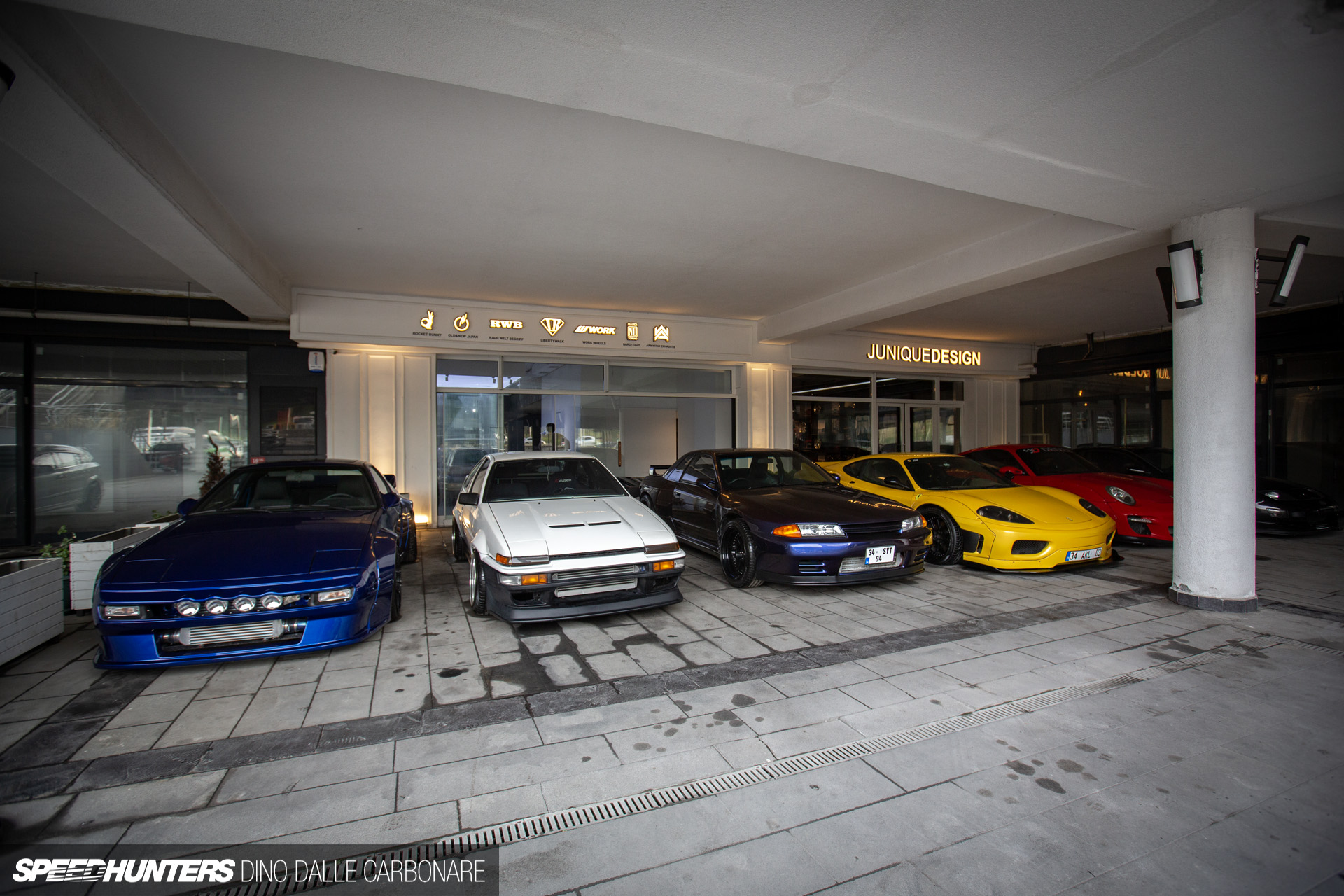
For years, the Turkish market has been flooded with knockoffs and imitations of every big-name brand. Cheaper purchase costs have meant lower import taxes, allowing local car builders to obtain the ‘looks’ they want while spending less. But Erdem has approached it from the other side, teaming up with brands like Work Wheels, Rocket Bunny, Liberty Walk, and Old & New, and becoming their official importers for Turkey.

Using the superior quality of these respected brands, Erdem is persuading the local community that quality and authenticity is worth paying for.

junique_design_dino_dalle_carbonare_009
junique_design_dino_dalle_carbonare_043

The new Junique Design shop is a mix between Nakai-san’s RWB lair in Chiba and Kato-san’s ever-expanding Liberty Walk empire, and it oozes quality and coolness from every corner.

I spent countless hours chatting to Erdem on his comfortable couch, hearing about how his way of building cars is slowly but surely becoming the end goal for many people.

junique_design_dino_dalle_carbonare_011
junique_design_dino_dalle_carbonare_012
junique_design_dino_dalle_carbonare_014

Sure, the entry price of doing things the ‘right’ way is higher, but so is the kudos you get when you show off a car built well with legit parts. As Erdem tells me, once people see, touch and feel the quality, they instantly understand.

It was so cool to see the BMX from the back of the Junique Design Datsun truck when it was featured via IAMTHESPEEDHUNTER in 2021 – the first time I spoke with Erdem.

junique_design_dino_dalle_carbonare_024

Entering the shop, I was met by Erdem’s Old & New Porsche 996 and a recently restored Ford Capri – both stunning cars.

junique_design_dino_dalle_carbonare_020
junique_design_dino_dalle_carbonare_028

Erdem’s idea is to build demo cars of as many models as possible to showcase the variety offered by the brands he imports. There is a problem, though. As soon as a new car is built, it gets sold. That’s not a bad problem to have.

junique_design_dino_dalle_carbonare_066

Liberty Walk is one of Junique Design’s bigger brands and centre stage out front is an LBW-kitted Ferrari 360 Modena. This used to be Erdem’s car, but it’s another one he had to sell off due to customer demand.

junique_design_dino_dalle_carbonare_040

It’s taken years, but the word has definitely gotten out there.

junique_design_dino_dalle_carbonare_049

Take the JZA80 Supra parked in the display room next to the main show area for example.

junique_design_dino_dalle_carbonare_058
junique_design_dino_dalle_carbonare_056

Open the hood and it’s obvious – this is a serious build with all the extras. The complete Ridox kit is another one that Junique Design imports.

junique_design_dino_dalle_carbonare_057

Sitting on Work Meisters and painted in a custom metallic bronze, this is easily one of the wildest Supras in Turkey.

I loved the OEM + feel of the interior with the suede trim across the dash and trim, all topped off with a TRD steering wheel.

junique_design_dino_dalle_carbonare_048

A Veilside rear wing was added for extra visual impact, completing the clean and well-executed build.

junique_design_dino_dalle_carbonare_062

Kato-san and his crew visited Erdem when he first started distributing Liberty Walk products, and next on the list is to have Nakai-san fly out and create Turkey’s first RWB build. Erdem’s dream is to build an RWB 997 for himself, something I’m sure he will achieve very soon.

junique_design_dino_dalle_carbonare_065

The selection of cars outside Junique Design was pretty cool. Half were completed, some were customer cars, and others were new acquisitions set to become shop builds. It blew my mind just how similarly sized an Alfa Romeo 75 is to an AE86. I can’t wait to see what will happen with these two, not to mention Z32 and 928.

junique_design_dino_dalle_carbonare_069

It’s too bad this ‘R32 Nissan Skyline GT-R’ was not completed when I visited. The engine was out of the car getting some work done, but I would like to do a full feature on this build if I return to Istanbul.

I’ve used quotation marks above because this car actually started life as a four-door R32 Skyline sedan. Since no R32 GT-R could be imported into Turkey and there were none in the country to build, Erdem did the next best thing and created his own. To convert it into a two-door coupe, he imported all the stamped sheet metal parts from Nissan in Japan, and then the running gear. When that was done, Erdem fitted the Pandem kit and smoothed it onto the body to create something totally unique.

junique_design_dino_dalle_carbonare_070
junique_design_dino_dalle_carbonare_074

Speaking of Pandem, Erdem’s freshly finished FC3S Mazda RX-7 project is pretty bonkers, too.

junique_design_dino_dalle_carbonare_104
junique_design_dino_dalle_carbonare_107

It’s not just an exterior makeover; under the hood is a Toyota 2JZ that makes 500hp on its low boost setting.

That makes you wonder what might be in store for the FD waiting in the shop display!

junique_design_dino_dalle_carbonare_075

Then there’s Erdem’s newest baby…

junique_design_dino_dalle_carbonare_081
junique_design_dino_dalle_carbonare_082

This AE86 runs a built and turbocharged 4A-G capable of developing over 300hp, which makes it a bit of a manic drift car.

junique_design_dino_dalle_carbonare_083
junique_design_dino_dalle_carbonare_084

The car was completed just days before my arrival and looked clean and purposeful.

junique_design_dino_dalle_carbonare_098

The Work Equip 03s sit so nicely against the D-Max vented FRP fenders.

junique_design_dino_dalle_carbonare_096
junique_design_dino_dalle_carbonare_095

A week after I left Istanbul, Erdem told me the car was sold without him having had the chance to drive and enjoy it. Luckily, he has another Hachiroku in his collection, and that car is now being built as a replacement.

junique_design_dino_dalle_carbonare_073

On the second day of my visit, Erdem handed over the keys to the red 997 Carrera S and said “Follow me.”

junique_design_dino_dalle_carbonare_102

With a BMW E92 also along for the ride, the idea was to grab some shots of the three cars together. The 15-minute drive from Junique Design to the photo spot was my most vivid memory from the trip because the traffic and the way everyone drives in Turkey is nothing short of crazy.

The fact the 997 went sideways on the dusty city roads with even the lightest prod of the throttle made things even more exciting.

junique_design_dino_dalle_carbonare_103

I have to hand it to Erdem and Junique Design for pushing authenticity and quality. So far 100 cars have been completed, and with every new one, Turkey’s car culture is evolving for the better.

Dino Dalle Carbonare
Instagram: dino_dalle_carbonare
dino@speedhunters.com


Source link

Tesla’s Layoff Emails Are Strange, Vague And Heartless

0


Elon Musk, co-founder of Tesla and SpaceX and owner of X Holdings Corp., speaks at the Milken Institute's Global Conference at the Beverly Hilton Hotel,on May 6, 2024 in Beverly Hills, California

Don’t you think he looks tired?
Photo : Apu Gomes ( Getty Images )

Tesla has spent the last month laying off seemingly anyone the company can even sort of spare – and plenty of folks that it likely can’t. When a company does such massive layoffs, it often leads onlookers to wonder: How does it go down for the workers?

Well, thanks to the Verge, we now know exactly how those Tesla workers learned of their imminent joblessness. A freshly laid off worker sent their dismissal email to the outlet, showing both the casual cruelty and the deeply odd wording used to let people know they’d been sacked. The email opens with one long, repetitive sentence:

I am reaching out to let you know that after a careful review of your permanent work restrictions and your role, it was determined that there was no reasonable accommodation that would enable you to perform the essential functions of your position in your role.

The phrase “your role” is repetitious and redundant, but more interesting is the mention of “your permanent work restrictions.” The sender never goes into detail on that front, but it’s not clear whether this is referencing a preexisting accommodation — flexible hours, remote work, something along those lines — or the simple “restriction” of a person working within their job title and not reaching out past it.

The email makes mention of an internal job search, looking to match the recipient with another open position at Tesla before kicking them out to the curb. That section ends with, “Given recent changes in the business, we also do not currently anticipate any such openings in the near term” — not a fantastic outlook on the company’s future, if hiring will be so severely limited for the time being.

Given Tesla’s reluctance to engage with unions, the company may not want to take quite such a harsh and sudden approach to layoffs. When morale is low, and job security feels like a far-off dream, that’s when people often tend to find their solidarity as workers. Just a thought.


Source link

15 Minutes With…Nicolas Bos, CEO of Van Cleef & Arpels

0


Van Cleef & Arpels CEO Nicolas Bos

How does Van Cleef & Arpels’ latest high jewellery collection, Le Grand Tour, fit in with the Maison’s tradition of high jewellery?

Nicolas Bos (NB): It’s a narrative collection in the sense that it follows a journey. You have collections that are more like landscapes, where there is not necessarily a hierarchy or chronology in the pieces, but we try to create a whole universe when you see all the pieces together in a display and exhibition, for instance, a collection like Under the Stars or The Diamond Collection or The Treasure of Rubies. Meanwhile, Le Grand Tour was more of a narrative, and it was a celebration of places and a way to revisit a subject that’s very important in the history of jewellery and decorative arts, which is the celebration of travel and discovery of cultures. The Grand Tour story is interesting because it was the origin, at least for Europeans, of individual travel to experience culture and art and for discovery, as opposed to travel for trade or conquest. We found it was quite a fascinating story to explore, and we worked with historians and experts to expose that whole phenomenon again.

Locales that inspired Le Grand Tour collection range from Italy to London, resulting in pieces such as (from left) the Millefiori high jewellery necklace and the Josiah high jewellery necklace and earrings

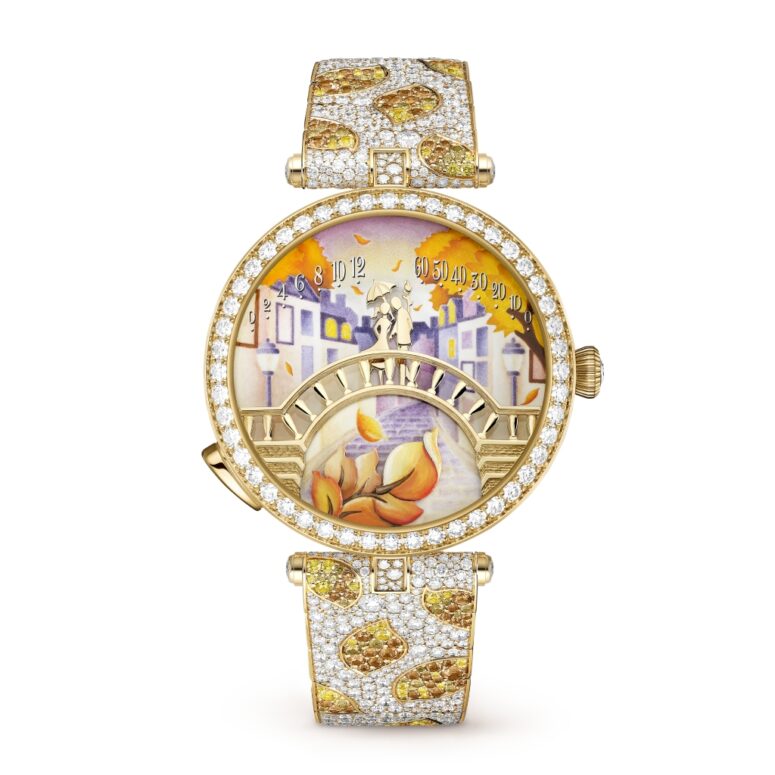
How do all the themes and concepts that Van Cleef & Arpels has explored through its jewellery and watches contribute to the ethos of the Maison?

NB: It’s pretty much the way we try to work: we try to stay true to the brand’s territory of expression, which covers a certain number of sources of inspiration, approaches and ways to design that define the style of the house. And then of course, there are craftsmanship techniques and technical choices and signatures that have been developed along the way. So there is quite a well-defined territory of expression that can be identified. What we hear is that a lot of our pieces can be recognisable but don’t necessarily need a logo—there is a recognisable signature style, but at the same time, you don’t want to repeat yourself and do the same thing over and over. And I believe that this territory of expression is, on the one hand, recognisable enough, but, on the other, rich enough and wide enough so that you can continue to explore and develop it.

Read More: 15 Minutes With… Claire Choisne, Creative Director Of Boucheron

Scenography from the recent Van Cleef & Arpels high jewellery presentation in Singapore, featuring artwork by the illustrator Julie Joseph

I always try to find a starting point that resonates with the maison and with creations from the past, and that is not necessarily already being explored as such and that can, at the same time, ensure continuity and open new doors. For instance, when we do a high jewellery collection based on Romeo and Juliet, you see there are obvious connections throughout history with the celebration of love, abstract or figurative. Then there is the link with dance, because it’s about also about the ballet of Romeo and Juliet, so we can associate that inspiration and the whole story of Van Cleef & Arpels with the world of dance. And at the same time, it’s a timeless and universal story, so for people who love ballet and literature, you can almost have infinite levels of reading.

How does the Maison create jewellery and watches that are fresh and yet immediately identifiable as Van Cleef & Arpels creations, that suit contemporary tastes now and will remain attractive far into the future? How do you balance all those considerations?

NB: By not thinking too much about them? (laughs) Because then it would be too complicated! Though, thank you for saying that, because I think it is really a compliment to the collections. It pretty much goes back to that territory of expression and trying to be good at doing what we do. We have a history and previous sensitivity and expertise for some techniques, representations or inspirations that we try to translate into jewellery or into watches. The results might not be relevant for everyone, but I think that they’re relevant for some people, so even if it’s not to their taste—because it’s often figurative, delicate and ornate—there are always people who appreciate the quality of what we do and the level of detail.

What’s your view on how interest in and appetites for jewellery and watches have evolved over time, and how has the Maison responded to these changes?

NB: What I definitely noticed in the past 25 years or so is that there is much higher interest in this type of activity and craft. And we’ve seen that through print and online media, and in exhibitions, fairs and museums. There are a lot of platforms now that offer access to this culture of jewellery and high watchmaking, which a couple of decades ago was much more secretive and discreet, and restricted to a handful of wealthy collectors and experts. It’s difficult to identify specific trends, but I think there’s a very high diversity of propositions, from the very simple and abstract to the super figurative and ornate, and I think there’s a high diversity of tastes and expectations from clients, collectors and visitors.

A figurative creation from the Signature High Jewellery collection

There are so many components to the Van Cleef & Arpels story: its contemporary and heritage jewellery and watches, its support of dance through Dance Reflections by Van Cleef & Arpels, and its support of jewellery craftsmanship and education through L’ÉCOLE School of Jewelry Arts. How would you describe the throughline among all these varied approaches and efforts?

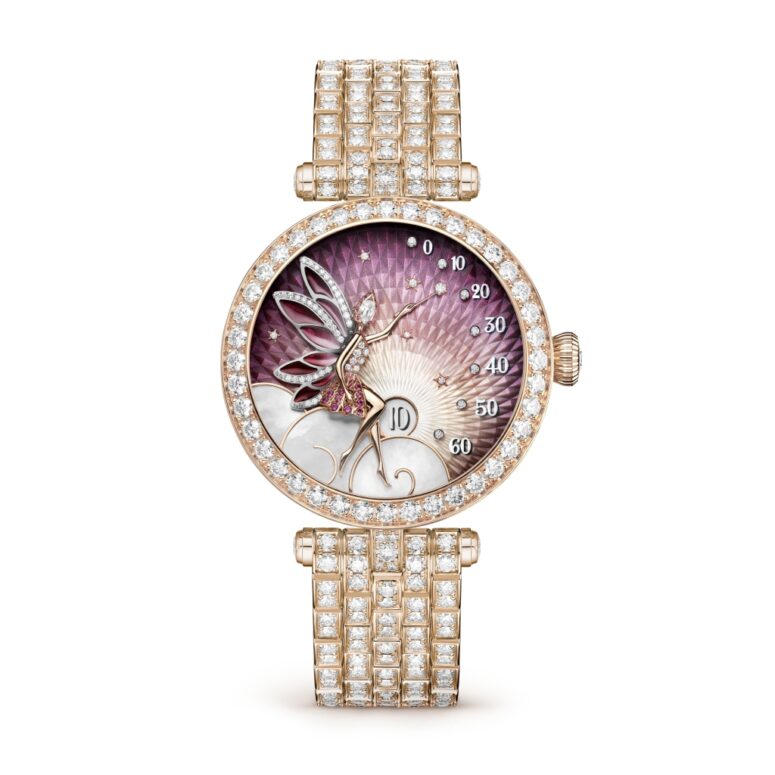
NB: I think they all have to do with the identity of the brand and its territory of expression. Of course we’re quite specialised—we’re not a lifestyle brand—so we stick to this expertise and these product categories. There are some values that have been very important, that are really part of that territory and that have to do with education and access to art, and there are some artistic disciplines like poetry and dance that have been important since the very early days of the Maison. We celebrate these disciplines through our collections because they are still a source of inspiration—such as our ballerina brooches or Poetic Complications watches—but we also love to collaborate with disciplines independently from the jewels. And it’s the same for the school: the transmission of expertise, stories and inspiration has been always central in the workshops, stores and exhibitions.

From the Sous Les Etoiles high jewellery collection, inspired by galaxies, nebulae and constellations

Now that the Maison is synonymous with jewellery and watches, the arts in general and dance in particular, is the process of legacy-building ever complete?

NB: Never, because it would be super depressing if it was complete—we wouldn’t be able to have a job! I think that the great thing with all these stories and disciplines is that they’ve been there forever, and they’ve been permanent sources of renewal and creation. Though sometimes we feel that everything has been done, but no, there are combinations that are being done and inspirations that haven’t been explored. There’s always an evolution, in technical complexity, taste, and inspiration.

This article was first seen on Grazia.sg

For more on the latest leader interviews, click here.


Source link

11 Best Things To Do In Penzance, Cornwall – Hand Luggage Only

0


The gorgeous town of Penzance is one of the top places in Cornwall to visit whilst in the southwest of England. Tucked away on the shores of the south coast, it’s absolutely idyllic to spend a few days visiting. Not only that, there are heaps of the best things to do in Penzance dotted across the town and the wider area. This all makes Penzance a perfect base to explore the westerly fringes of Cornwall; which is beautiful, by the way. 

Over the years, we’ve visited Cornwall’s coastal gems many times. We love the beautiful Cornish beaches, the stunning castles and the Cornish pasties. The latter are so tasty and you honestly have to have them on whilst you’re in Penzance.

So, to give you a running start on the top things to see in Penzance, I’m sharing our very favourite spots which we love. It’s an incredible Cornish town and you’ll have bags of fun! 

1.) Jubilee Pool

Best Things To Do In Penzance, Cornwall Jubilee Pool Swim

The Jubilee Pool is totally easy to spot whilst you’re strolling around Penzance. It’s right on the coastline and is absolutely gorgeous to visit on a warm sunny day.

Now, this art-deco pool is open to all; which means it can get pretty busy at peak times. That being said, it’s well worth heading here if you fancy a saltwater dip, without dealing with any of the surf or riptides in the sea itself. 

Best Things To Do In Penzance, Cornwall Jubilee Pool Visit

On most days, the main pool is able to accommodate walk-ins, in case you’re choosing to visit on a whim.

That being said, You will need to book their geothermal pool if you want access to this one as spaces fill up fast. If you fancy that geothermal heat, then book these tickets at least a few days (or weeks) in advance. 

Read more: Best things to do in Cornwall

2.) Chapel Street

Best Things To Do In Penzance, Cornwall Chapel Street

If you’re fancying a stroll through Penzance, then make sure to head to Chapel Street. You see, Chapel Street has a little bit of everything and is well worth visiting around lunchtime, especially at Admiral Benbow.

Best Things To Do In Penzance, Cornwall Admiral Benbow, public house

You see Admiral Benbow, is a cosy Cornish pub that’s been going since the 1600s, where it once was the frequented watering holes of pirates, smugglers and other people you really wouldn’t have wanted to bump into back in the 17th Century.

Thankfully, today, the clientele is much different! Just make sure to order their Wild Cornish Mussels or. their homemade fish pie. They’re so tasty. 

Afterwards, head further up Chapel Street and spot Egyptian House with its sphinx-like ornaments and colourful design before having a nightcap at The Turks Head. They champion local Cornish brews that are so delicious. 

3.) The Exchange Gallery

Just near Chapel Street is The Exchange Gallery. It’s so easy to visit and easily one of the best things to do in Penzance if you’re interested in contemporary art.

Now, what it lakes in size, it makes up with in collections. Inside, you’ll find heaps of local works and international installations within The Exchange Gallery itself.

Visits will take around 20-30 minutes and is so lovely to see if you’re looking for plans beyond the beach. 

Read more: Best things to do in Cornwall

4.) Minack Theatre

Best Things To Do In Penzance, Cornwall Minack Theatre Visit

The Minack Theatre is easily one of England’s best open-air theatres you have to visit for a show or even a walk around and around a 20-minute drive from Penzance itself. 

This place gives you a perfect view of Porthcurno Bay and its waters which is totally beautiful, especially around sunset. 

Best of all, the Minack Theatre has a Classical architectural style that allows you to take in the beauty of Cornwall all from your seat. It was intentionally built this way, by Rowena Cade in the 1920s and it’s stunning. 

Best Things To Do In Penzance, Cornwall Minack Theatre Book

Now, During the summer season, you can catch heaps of plays that are performed. That being said, you must book in advance, tickets sell out super fast, so make sure you grab these tickets as soon as you know your trip dates. 

Also, don’t forget you can easily visit Porthcurno Beach that’s just shy of the Minack Theatre itself. It’s beautiful and lovely to explore if you’re staying in the area a little longer. 

5.) Penzance’s wider shoreline

Best Things To Do In Penzance, Cornwall Penzance Harbour

If you’re something of a water baby, then you’ve come to the right area when visiting Penzance. The whole coastline around here is stunning and totally beautiful to explore. 

Now, to get a good feel for the area head out on a trip with Atlantic Adventures. These guys have their tours down to a tee! 

We absolutely loved the ‘Blue Shark Snorkel tour’ which was out of this world. You see, Blue sharks love this area of England and are quite easy to spot on this tour.  However, if you are just a beginner in snorkelling, this might not be for you. Lifejackets are provided, but if you’re unfamiliar with choppy water, you should try one of their other tours.

Fancy a go at coasteering? then head over to Kernow Coasteering, they organise one of the best things to do in Penzance if you want to try your hand at coasteering across the Cornish coastline. 

Alternatively, head out into the open seas with Marine Discovery. Their Discovery Voyage, on board their catamaran, is so incredible.

You’ll get to spot the seal colonies near Lands End and even head around 10 miles away from the shoreline itself. From here, you’ll even catch a glimpse of porpoises, minke whales and dolphins. 

Read more: Best things to do in Cornwall

6.) Trengwainton Garden

Best Things To Do In Penzance, Cornwall Trengwainton Garden

Found on the fringes of Penzance, Trengwainton Garden is a stunning area that’s perfect to visit in summer.

You see, it gives you the chance to see a wide range of plants that aren’t normally seen in the UK because of Cornwall’s mild climate, all within the 16th-century grounds of Trengwainton House. 

Visits will take around 90 minutes, and it’s well worth exploring if you’re travelling more slowly in the area. 

7.) Boscawen-un Stone Circle

Best Things To Do In Penzance, Cornwall Boscawen-un Stone Circle

Around a 10-minute drive from the centre of Penzance, The stone circle of Boscawen-un is a must-visit spot whilst in the area.  

You see, the site dates all the way back to the late Neolithic-early Bronze Age. This in itself is so impressive! Like, some of these stones have stood in this very spot for 3-4 thousand years. 

Now, just like Stonehenge, no one is certain of its historic uses. However, it’s assumed that Boscawen-un was a place for local residents’ ceremonies and rituals. 

Visits take around 30 minutes and it’s well worth exploring if you’re interested in ancient history. After all, it’s not often you can see the remains of Neolithic and Bronze-Age peoples sites. 

Read more: Best seaside holidays in the UK

8.) Morrab Gardens

Best Things To Do In Penzance, Cornwall Morrab Gardens Penzance

Morrab Gardens is right in the heart of the town, which makes a visit one of the best things to do in Penzance if you’re looking for a more chilled time.

You see, this lovely garden is three acres of gorgeousness. Best of all, the gardens make the most of the milder climate with heaps of sub-tropical plants. 

Now, a visit here won’t take longer than 10 minutes; but it’s a lovely spot for a stroll (or even a picnic).

Afterwards, take a short stroll over to the Victorian Penlee House. You see, Penlee House Gallery and Museum is a historic and beautiful spot in Penzance filled with artwork from the lines of; Stanhope Forbes, Walter Langley, Norman Garstin and Lamona Birch.

Now, although there is no permanent exhibition in the gallery, Penlee House Gallery and Museum organises exhibits or shows featuring its local art collections that are constantly changing

Oh, and don’t forget to spot the Penlee Cross. It’s tucked away at the front of the house. It was an 11th-century masterpiece that once stood at the Green Market of Penzance and was so worth seeing. 

Read more: Best seaside holidays in the UK

9.) Prussia Cove

If you’re looking to head out for a longer walk or hike, then make sure to follow the Southwest Coastal Path towards Prussia Cove. 

Now, if you’re walking from Penzance itself, it will take around 180 minutes each way. It’s lovely; but make sure to pack a lunch, snacks and plenty of water along the way. 

Altneravielty, join the coastal path after parking at this spot. This way, you can focus on following the cliff walks around Prussia Cove itself. 

Once here, don’t forget to spot the gorgeous cottages and Cudden Point for some views across the region. It’s lovely. 

Read more: Best things to do in Cornwall

10.) Lanyon Quoit

Best Things To Do In Penzance, Cornwall Lanyon Quoit

Dating back to the early Neolithic period (about 4-5 thousand years ago), Lanyon Quoit is a Megalithic tomb that’s totally epic to see. 

Yes, it might be small, and visits might only take 15 minutes, but it’s easily one of the best things to do in Penzance if you’re interested in early history. 

Now, it’s believed this was a site where people were laid to rest and where shamans potentially visited to seek guidance from previous generations. 

Read more: Best seaside holidays in the UK

11.) St. Michael’s Mount

Best Things To Do In Penzance, Cornwall St. Michael's Mount

On the easterly fringes of Marazion Beach, St Michael’s Mount is incredible to visit. You see, it’s a tidal island that’s well worth a visit for an afternoon.

In fact, it’s one of the best things to do in Penzance if you’ve got a few spare hours. You see, you’ll be able to walk across and explore the gardens and experience the beauty of this stunning island. It’s like something from a fairytale. 

Just be sure to book tickets in advance, they do sell out fast at peak times. Oh, and take some layers with you; it can get blustery if there’s a westerly wind. 

Read more: Best things to do in Cornwall

11 Gorgeous Places To Visit On The Coast Of Cornwall, England


Check Out The Very Best Of Great Britain!

Hand Luggage Only Great Britain Travel Book Advert Banner


Pop Over To Our YouTube Channel For Travel Videos!


Source link

Ferrari F1 team tests rain spray guards that look like fenders

0


Ferrari this week tested new spray guards for its Formula 1 cars as the FIA looks to tackle the problem of visibility on wet tracks.

The test, which took place at Ferrari’s own Fiorano circuit, saw Arthur Leclerc (brother of current Ferrari F1 driver Charles) driving last year’s race car with the experimental spray guards while Ferrari F1 reserve driver Oliver Bearman followed in the team’s 2024 F1 car.

The spray guards essentially add fenders to the open-wheel F1 cars. They have two holes at the front but are full open at the back. Photos show that two versions were tested: one with solid sides, and one with spoke-like sides. Even with the spray guards fitted, the photos also show the lead car throwing up a significant amount of spray.

As noted by Motorsport.com, the test was organized by the FIA, which is looking at spray guards as a solution for improving visibility of following cars during rainy on-track sessions. Even when there isn’t enough standing water on the track to cause concerns about hydroplaning, spray can limit drivers’ visibility, causing sessions to be cancelled or leading to crashes.

Formula 1 spray guard testing – Photo by Rudy Carezzevoli/Getty Images

Formula 1 spray guard testing – Photo by Rudy Carezzevoli/Getty Images

An earlier version of the spray guards were tested at a wet Silverstone Circuit last year with Mercedes-Benz AMG reserve driver Mick Schumacher. McLaren driver Oscar Piastri drove behind Schumacher to test visibility. While no photos of that test were released, 3D images released by the FIA showed a design that covered less of the wheel than the spray guards tested at Fiorano, according to Motorsport.com.

F1 cars already got a radical visual overhaul for 2022, but the adoption of these spray guards could change their appearance even further—on rainy days, at least.

Similarly, F1 also adopted the Halo cockpit protection system a few years back to improve crash safety.


Source link

Florida Man Whines About His Ruined Reputation After Pulling Gun On Uber Driver

0


Police in Milton, Florida arrested a man after he pulled a gun on an Uber driver earlier this week who was dropping his daughter off. Sean Hollonbeck forced the driver out of the car and onto the ground and has since been charged with false imprisonment and aggravated assault with a weapon, WEAR News reports. After pulling him out of the car, Hollonbeck reportedly forced the driver to lie down in the roadway, show his driver’s license so he could photograph it, and allow him to photograph his license plate, his Uber account and the address where he picked up Hollonbeck’s daughter.

As it turned out, the 13-year-old snuck out of the house Saturday night and took an Uber to Pensacola, about 30 minutes away. When he discovered she’d snuck out, he reportedly called both the Santa Rosa County and Escambia County sheriff’s offices, but didn’t get much help from either department. So when she got back home, he made the only logical decision and pulled a gun on the completely innocent Uber driver.

It’s not entirely clear what kind of gun Hollonbeck used. WEAR News said it was a .22 rifle, but Fox 35 Orlando reports it was actually an AR-15. Either one could be deadly at close range, and having any gun pointed in your face is going to make for a bad day.

If you assumed Hollonbeck would have seen the error of his ways after his arrest and being fired from his job, though, you couldn’t possibly be more wrong. He is doubling down, insisting that he did everything right.

“That vehicle was completely unmarked. In my mind this was not good, right?” he told WEAR News. “And everybody knows what’s going on in this country with fentanyl and child trafficking and rape. Terrible stuff.”

He also really wants people to know he’s a veteran, saying, “I served 31 years, I was an Army doctor, I trained as a Navy flight surgeon, I served with the 7th Special Forces Group, I served with the 160th. I served six tours.” That, of course, only makes things worse since he’s not some yokel who’s never been taught the rules of firearm safety or when it’s appropriate to pull a gun on someone.

“The vast majority of this story has not been presented to the public whatsoever. And the vast majority of this is related to parental rights,” he said, later adding, “In this country, you’re innocent until proven guilty. If it goes to trial, I look forward to it because I want to get 12 moms and dads on that jury and judge if what I did was fair — because I called for law enforcement, and I didn’t get them.”

Something tells us the jury will probably see things differently, but it is Florida, so you never know. Maybe they’ll decide it actually isn’t illegal to pull a gun on your daughter’s Uber driver. Crazier things have happened in the past.

Florida dad tells his side in Uber driver gun case involving daughter


Source link

2025 Aston Martin Vantage gets serious about performance

0


Circumstance keeps stacking factors against me. I’m in a short-wheelbase, 656-hp, right-hand-drive sports car on the wet surface of an unfamiliar racetrack, and due to a communication breakdown, the stability control is off. My trepidation runs high behind the wheel of the 2025 Aston Martin Vantage.

Track session 1: Aston Martin Vantage Adjustable Traction Control

A well-meaning but momentarily misinformed Aston Martin technician tells me activating the Adjustable Traction Control system with a long press of the stability control button on the center console provides varying levels of not only traction control but also stability control. I’ve chosen level 3 thinking it would add a little more stability intervention than the base level 5. That’s wrong. The system affects the traction control through eight levels but it turns off stability control. 

I’d really rather have active electronic nannies on this slick course at Circuito Monteblanco outside of Seville, Spain.

Otherwise, the car is in the default Sport mode that puts the powertrain, steering, engine sound, and suspension in their mildest settings.

2025 Aston Martin Vantage

2025 Aston Martin Vantage

My apprehension quickly turns prescient. Heading out on the track, I immediately misjudge the grip, brake too late, and overcook the very first turn, putting two wheels off on a paved runoff area. Oops.

Time to exercise better control because this two-seat sports car has taken a massive leap forward in performance.

It starts with the engine, a familiar Mercedes-Benz AMG-sourced twin-turbocharged 4.0-liter V-8. It spun up 503 hp in the outgoing Vantage, but here it rumbles to the tune of 656 hp and 590 lb-ft of torque. Aston Martin engineers have wrought more power out of the Mercedes engine by teaming bigger turbos with a lower compression ratio, new cam profiles, and better cooling. The changes produce 30% more hp and 15% more torque.

The engine sends its power to a ZF 8-speed automatic rear transaxle that’s been updated with shorter shift times, and it all flows through a shorter 3.08:1 final drive ratio to improve throttle response. An electronic limited-slip differential apportions the power between the rear wheels.

Harnessing all that power proves troublesome in the wet, but I manage to keep the car between the lines for the rest of the run. It requires a delicate throttle pedal because the power comes on fairly early, with peak torque arriving at 2,750 rpm. From there, it builds quickly to the 7,000 rpm redline. This car rockets from 0-60 mph in 3.4 seconds, according to Aston Martin, so I can’t get to full throttle anywhere but in the long straight of this roughly 2.1-mile track. Even easing into the throttle in the wet, the engine has enough gusto to get the car up to 156 mph in the 0.6-mile straight.

Between the power and slick traction, I slip and slide through this session. The power creates enough speed to make braking an adventure in finding grip and maintaining stability. Braking resistance comes on quickly in the pedal travel but without a commensurate amount of stopping power. It feels wooden at first, but from that first resistance it’s easy to modulate the bite in small increments. It’s likely why I missed that first corner, but I soon get used to it and I have no further problems.

I not only slide the car through the corners but also fight a tendency for the rear end to come around—just as I suspected. I go easy enough on it to prevent a spin, but a few spins among my fellow journalists show the Vantage wants to oversteer at the limit, and that limit is rather easy to reach in the wet. Aston Martin says the new Vantage has 12% less understeer (as measured on a skidpad) than the last model. Maybe that’s why it wants to oversteer. I’m looking forward to dry conditions to see if it still wants to spin.

2025 Aston Martin Vantage

2025 Aston Martin Vantage

2025 Aston Martin Vantage

2025 Aston Martin Vantage

2025 Aston Martin Vantage

2025 Aston Martin Vantage

Track session 2: Aston Martin Vantage Sport mode

Intermittent cloud bursts have made various areas of the track wet again, so this time I’m going with the relative security of the default Sport mode with full traction and stability control.

Some of areas of the track are dry this time around, and I start to get a feel for the Vantage’s rather adept handling.

The Vantage isn’t new for 2025, but it’s significantly updated from the redesigned 2019 Vantage. Its front-mid-engine layout carries over with a rear transaxle and rear-wheel drive to give the car a perfect 50:50 front-to-rear weight balance.

The bonded aluminum architecture also carries over, but Aston Martin’s engineers have strengthened it both overall and in key areas. They moved the front body crossmember rearward to increase the stiffness for the mounting points of the double-wishbone front suspension. They also added a stiffer and lighter front suspension cross brace and reworked the shear panel beneath the engine. Chief engineer Simon Newton told Motor Authority that the changes improve lateral stiffness by 100% at the front crossmember and suspension mounting points, and overall stiffness is up by about 5%.

Aston Martin also sets the car on much wider wheels and tires. It now rides on 275/35R21 front and 325/30R21 rear tires mounted on 9.5-inch wide front and 11.5-inch wide tires. Aston Martin worked with Michelin to create a bespoke set of Pilot Sport S 5 summer tires. The front tires are 20 mm wider and the rears get 30 mm wider. Aston offsets the extra weight of all that rubber by making the wheels from forged aluminum.

The Vantage feels notably stiffer than the last model, with a ride quality that says sports car more than grand tourer. A stiffer steering column, firmer bushings, faster-acting adaptive dampers with greater performance capability, and a quick 12.8:1 steering ratio contribute to sharp turn-in response. The steering also sports some welcome heft and a stable on-center feel.

Still, this track isn’t dry enough, and Sport mode doesn’t maximize performance enough to allow me to approach the car’s speed and handling limits.

2025 Aston Martin Vantage

2025 Aston Martin Vantage

2025 Aston Martin Vantage

2025 Aston Martin Vantage

2025 Aston Martin Vantage

2025 Aston Martin Vantage

Track session 3: Aston Martin Vantage Individual mode

This time I choose the Individual driving mode and the stability control’s Track setting, which requires a five-second press of the stability control button (holding it longer, or a second long press, activates Adjustable Traction Control). Aston Martin has programmed Individual for what I would consider the ideal driving parameters (well, almost): the powertrain at its most extreme Track setting, the dampers at their softest Sport setting to keep the tires on the track in bumpy areas, the exhaust to its loudest Sport+ setting, and the steering to the lighter Sport setting (I’d actually chose the firmer Sport+ for more mid-corner stability).

The tarmac has dried up for my third run, I’ve learned the track layout, and I’m used to driving on the right-hand side. This time I want to get the most out of the car, and I soon find it has a lot to give.

Aston Martin makes sure the almost excessive amount of rubber stays on the pavement through corners with -1.5 degrees of front camber and -1.7 degrees of rear camber. The bespoke tires boast tremendous grip that raises the speeds the Vantage can manage through turns. The 50:50 weight balance provides generally neutral handling, but I’m still careful to ease into the throttle at corner exit to prevent oversteer.

I go hard, though, and it feels like I would have to try to kick out the tail with sudden inputs or excess throttle. It’s easy enough to manage as the steering provides excellent feedback about what those tires are doing, and the electronic limited-slip differential sorts out the power and traction balance to vault the Vantage from one corner to the next.

Aston doesn’t have to resort to advanced technologies like active anti-roll bars or rear-wheel steering to get the most out of the handling. The low-slung, firm suspension keeps the car’s attitude plenty flat in turns and the short wheelbase doesn’t need to get any shorter for quick reactions and crisp rotation.

More confident putting the power down when exiting the last corner, I get a better run through the front straight and take the top speed up to 161 mph. The Mercedes V-8 really makes this baby cook, and on a longer straight it would be capable of reaching 202 mph, according to Aston Martin.

I do run into one slight problem, though. With 20 journalists running three 20-minute sessions, each car has been on the track all day and seen perhaps 50 laps, more than 100 miles, of hard driving, so the brakes have taken quite a beating. The track cars are outfitted with carbon-ceramic 16.1-inch front rotors with 6-piston calipers and 14.2-inch rear rotors with 4-piston calipers. The front rotors are slightly bigger than the standard 15.7-inch iron brakes, but they still can’t quite handle all that abuse.

Midway through my last session the brake pedal goes soft when braking from 160-plus mph to about 50 mph heading into turn 1. It still slows me down and the pedal soon comes back, but I’m more cautious for the rest of the run and some other drivers are having issues as well. Carbon-ceramics dissipate heat incredibly well, but Aston’s chosen brake fluid simply can’t handle this much track time. Most track days aren’t usually this long with speeds this high, and a better fluid would likely prevent the issue, so it’s not worth worrying about.

2025 Aston Martin Vantage

2025 Aston Martin Vantage

2025 Aston Martin Vantage

2025 Aston Martin Vantage

2025 Aston Martin Vantage

2025 Aston Martin Vantage

Aston Martin Vantage road drive

Under CEO Lance Stoll Aston Martin aims to go even further upmarket, with not only performance on par with Ferrari and McLaren but luxury in the vein of Rolls-Royce and Bentley. A road drive reveals that while the performance is on the mark, luxury isn’t, and I don’t think it should be.

Rolls and Bentley hand-craft the most beautiful automotive interiors on the planet, and the Vantage’s cockpit simply can’t measure up. It comes standard with comfortable and supportive heated sport seats, fantastic haircell leather upholstery (which shows the hair follicles), Alcantara instrument panel trim, and satin chrome interior jewelry. My test car switches out the Alcantara IP trim for carbon-fiber and adds Alcantara seat inserts. It’s all elegantly designed and well assembled, but it doesn’t reach Rolls and Bentley levels.

2025 Aston Martin Vantage

2025 Aston Martin Vantage

2025 Aston Martin Vantage

2025 Aston Martin Vantage

2025 Aston Martin Vantage

2025 Aston Martin Vantage

Neither does the sound deadening. The Vantage lets in lots of road noise from those wide rollers, which also doesn’t scream luxury but is appropriate for a sports car. Besides, I want to hear the deep rumble of the V-8, as well as the pops and crackles on overrun in Sport+ and Track modes.

The cabin also features a new infotainment system developed in-house and teamed with a 10.3-inch touchscreen. Given that my drive consists of track time and twisty roads, I don’t pay much attention to how well the system works, but I do notice that it has small app icons and it seems to take a beat to react to inputs. It’s likely an improvement over the old Mercedes-based system, but it’s not as quick or likely as deep as today’s best systems.

2025 Aston Martin Vantage

2025 Aston Martin Vantage

But the Vantage isn’t about infotainment. It’s about driving entertainment, and it delivers on that in spades. It takes a quantum leap over the last model in power, grip, and track prowess, and it looks better, too. Priced from $191,000 before destination, the 2025 Aston Martin Vantage provides a well-balanced, front-engine alternative to the likes of the rear-engine Porsche 911 Turbo and mid-engine Chevy Corvette Z06, and it does so with a charming British elegance. The new Vantage should be approached with respect, but it’s damn fun building up the confidence to harness its expanded performance envelope, even if you’re driving in the wet on the wrong side of the car.

Aston Martin paid for travel, lodging, and track time for Motor Authority to have a blast sliding around in the new Vantage.


Source link

Car Of The Day: 2002 Lamborghini Murciélago

0


The Lamborghini Murciélago, named after a legendary fighting bull, took the mantle from the Diablo in 2001. It marked Lamborghini’s design comeback after 11 years and was their first offering under Audi’s supervision within the Volkswagen Group. Audi’s influence streamlined production, bringing build times down from 500 hours to a more efficient 300.

Designed by Luc Donckerwolke, the Murciélago sported an angular, ultra-low profile (barely reaching 1.2 meters in height) with its signature scissor doors that sliced upwards and forwards. The chassis and body were a blend of carbon fiber, steel, and aluminum, while the suspension utilized the classic double wishbone setup on all four wheels.

Powering this beast was a 6.2-liter V12 engine, a descendant of the very first Lamborghini from 1964. In the Murciélago, this engine unleashed 572 horsepower, channeled through a six-speed manual gearbox and all-wheel drive. To maintain stability at its near-200mph top speed, the car featured an active rear wing and air intakes that deployed automatically.

Photos by Silas Nowak courtesy of RM Sotheby’s


Source link