Koenigsegg has finally revealed its new hypercar based on the Jesko – the Sadair’s Spear. As expected, it’s a track-focused version, which is lighter and more powerful than the standard model.
The Koenigsegg Sadair’s Spear is named after the horse that Jesko von Koenigsegg rode in his final race in 1976. Production will be limited to just 30 units.
The Sadair’s Spear looks more extreme than the standard Jesko, courtesy of a new aero package that includes an active, top-mounted double-blade rear wing, refined underfloor strakes and wheel arch louvres. The car features larger canards and hood vents, while specially designed rear hood scoops further boost engine performance.
At its heart is a twin-turbo V8 engine, which delivers 1625 hp on E85 fuel, up from 1300 hp. The car weighs 35 kg less than the standard Jesko, which further enhances its power-to-weight ratio beyond 1:1.
Inside, the Sadair’s Spear comes with redesigned carbon fibre seats with optional 6-point harnesses, paddle shifters for the Light Speed Transmission, a steering-mounted SmartCluster display, and more.
Koenigsegg claims that the Sadair’s Spear destroyed the previous lap record at Gotland Ring set by the Jesko Attack by 1.1 seconds.
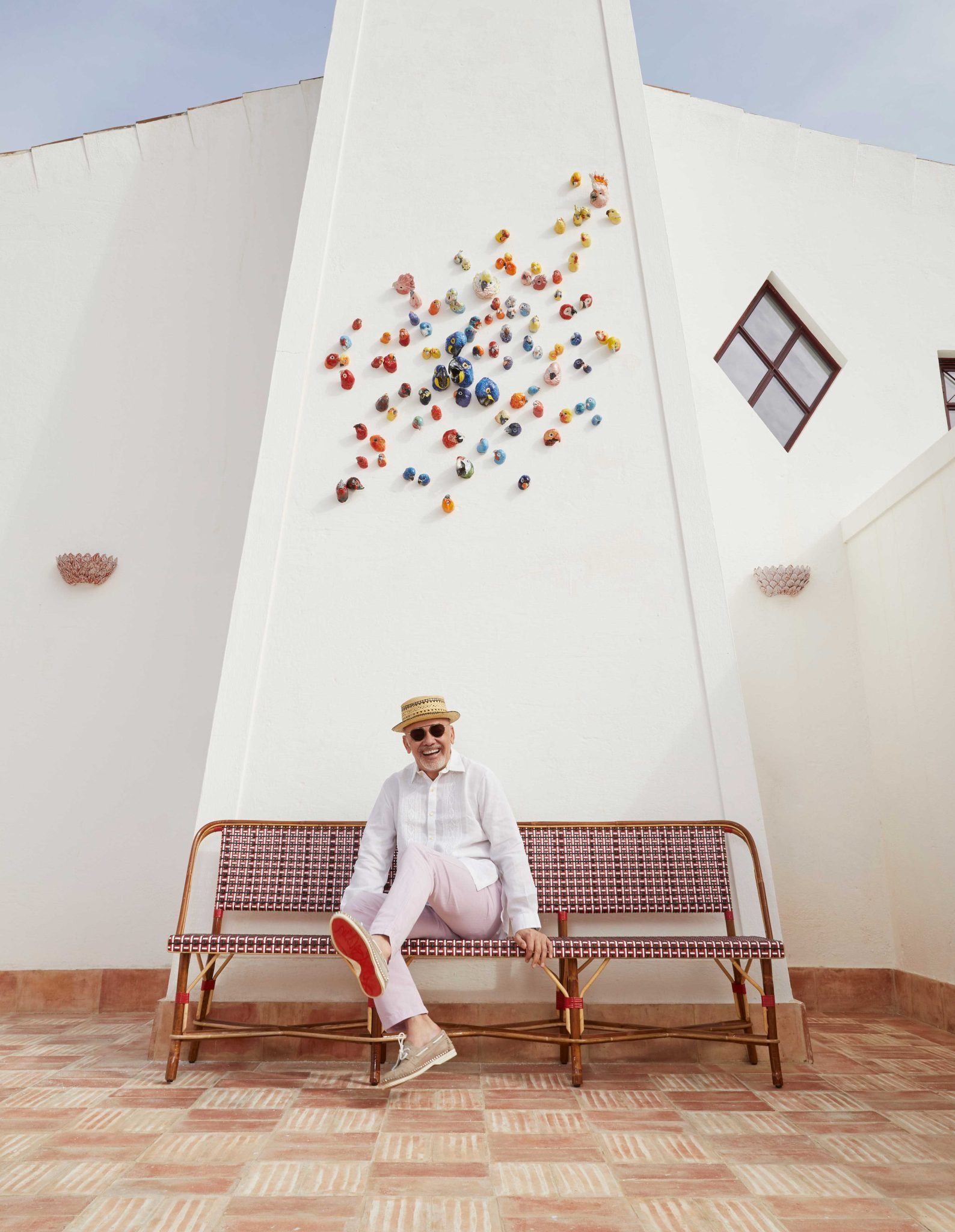
Facade of the Christian Louboutin hotel. Image: Ambroise Tezenas.
There’s no denying the volatility of the luxury industry — particularly in fashion, where leadership reshuffles like Luca de Meo succeeding François-Henri Pinault at Kering signal deeper shifts, while giants like LVMH navigate the turbulence of a softening market. Yet even amid uncertainty, luxury continues to reinvent itself — most recently with Christian Louboutin’s Hotel Vermelho, a bold foray into hospitality on Portugal’s Alentejo coast. While the 13-room 5-star boutique hotel is already making headlines, can the luxury labels’ first hotel deliver beyond the hype?
Known for his signature red soles and unapologetically bold designs, Christian Louboutin has built a global brand synonymous with glamour and eccentricity, becoming a favourite among celebrities and style savants alike. The designer is now placing a calculated wager, moving beyond the appeal of his recognisable crimson soles to the upscale hospitality industry. In 2025, Louboutin saw the opening of its first hotel, Hotel Vermelho, in the quiet seaside town of Melides. Based on first impressions alone, it is clear that the designer is leveraging his strong brand DNA and a keen sense of design to carve out a spot in what some would describe as an already congested sector.
Whimsical details in the bedroom. Image: Ambroise Tezenas.
Attention To Details To Create Character And Charm
The designer’s passion for colour, art and craftsmanship is evident throughout the property. Rich textiles, hand-painted Portuguese tiles, bespoke terracotta floors and a carefully curated assortment of both contemporary and ancient artefacts make each room distinctive. With its inviting spaces layered with personality and detail, Vermelho feels more like an intimate private residence than a conventional hotel. Guests can unwind at the jewel-toned bar, adorned with striking artwork and handblown glass, or savour Alentejo-inspired cuisine at Xtian, the warm and welcoming in-house restaurant. The sense of discovery continues in the lush gardens, dotted with sculptures, a plunge pool, a petite spa and wellness area, and landscape design by Louis Benech. Rather than relying on grandiose amenities, Vermelho’s luxury lies in its craftsmanship, character, and the quiet charm that makes each stay feel deeply personal.
Ornate tile designs decorate the bedroom. Image: Ambroise Tezenas.
As one might anticipate from a man whose name is synonymous with boldness, the hotel itself is full of character. Designed in partnership with longtime collaborator Madalena Caiado alongside architect Carolina Irving and Patricia Medina, the hotel combines Louboutin’s distinctive theatrical sensibility with traditional Alentejan craftsmanship, including immaculate terracotta flooring and artisanal woodwork. The result is a refined composition of contemporary sophistication and historical character, structured like a curated jewel box.
“Louboutin knows how to create desire, and that applies as much to spaces as it does to shoes,” said luxury consultant Amanda Hill. “In a market that craves unique narratives and one-off experiences, Hotel Vermelho has a strong chance of making its mark.”
Hinging On One-Of-A-Kind Luxury Travel Experiences
The debut occurs at a pivotal moment for the global luxury hotel industry. A recent Deloitte survey found that luxury lodging is expanding rapidly as younger, wealthier tourists look for experiences that are memorable and highly customised. The epidemic altered consumer priorities and design, personality and a feeling of place became more critical. Louboutin and Caiado have incorporated these qualities into Vermelho.
The signature red hue from the Louboutin brand is evident in the floor tiles. Image: Ambroise Tezenas.
Questions remain about Hotel Vermelho’s long-term positioning. “It’s a bold move for a fashion brand to pivot into hospitality,” said retail analyst Marco Alvarez. “It can work when the brand has deep resonance and delivers a seamless experience. Louboutin’s challenge will be translating a heritage built in fashion into one that can sustain itself in the highly competitive hospitality space.”
Perfect Timing To Capitalise On Luxury Travel
Industry veteran Claire Dumont, a former GM at Relais & Châteaux, which counts Vermelho among its prestigious portfolio, said, “The Red Sea of competition in luxury hotels means differentiation is critical. Vermelho delivers differentiation in spades — from its handcrafted design details to its intimate scale. Its success will hinge on its ability to evolve beyond its novelty factor and cultivate loyal patrons year after year.”
The inviting pool at the hotel. Image: Ambroise Tezenas.
The thirteen-room property charges high prices that appeal to individuals seeking exclusivity and a sense of belonging, operating in the rarefied realm of ultra-boutique lodging. It capitalises on the trend of wealthy tourists looking for off-the-beaten-path locations thanks to its prime position in Melides, a rising star on Portugal’s Alentejo Coast. Other premium brands have invested in the area, suggesting that it is becoming a more upscale tourist destination.
Defying Market Slowdown By Providing Unforgettable Travel Experiences
Based on early assessments and positive word of mouth, Louboutin has successfully applied his storytelling talent to the hotel industry. Hotel Vermelho, however, will serve as a test case for fashion-driven endeavours in the hospitality industry as the post-pandemic travel boom gives way to more cautious consumer behaviour. Here, heritage and design can support the rate card, and each stay must support its position in the expanding pantheon of lifestyle brands that have become hoteliers.
Enjoy a deep soak in the bath. Image: Ambroise Tezenas.
Branded Hotels Riding On Popularity
Reports indicate that luxury hotels continue to draw wealthy tourists, with travel expenditures rising 5.2 percent in 2025 — a positive indication for the hospitality industry. However, the larger luxury market faces challenges: according to Bain, personal luxury goods are declining, but the travel and hospitality industries are bucking the trend. From Dior to Bulgari, branded hotels are gaining popularity because they offer guests a fashion-meets-stay experience that fosters loyalty. According to Digitalguest.com, “quiet luxury” and health travel are also on the rise, particularly among Gen Z, who value authenticity above extravagance. According to Travelandtourworld.com, “…but pressure is rising; oversupply in cities like London and soaring operating costs could dent margins.” In summary, luxury is everywhere, from wellness-focused getaways to branded lodgings, but success hinges on uniqueness, customisation and budgetary restraint.
Hotel Vermelho reinforces Christian Louboutin’s broader brand strategy. Just as his footwear transformed red soles into a global marker of desirability, the hotel extends that ethos into the realm of experience. By creating an immersive space that reflects the Maison’s values — elegance, artisanal quality and visual drama — Louboutin strengthens emotional engagement with his clientele while entering a new luxury vertical that aims to deepen brand relevance and resilience.
For more on the latest in luxury travel and hotel reads, click here.
Zenith has the blues, but not the Blues. A year of chaos, though it might be, the Swiss watch brand celebrates its 160th anniversary with a series of distinctive blue watches, including a big surprise that we have had to sit on since February. But more on that later because it requires some mise-en-scene, as they say in filmmaking. CEO Benoit de Clerck tells us excitedly about the firm’s deep roots in Le Locle, having had its headquarters and manufacture there since 1865. As he says, this is an unusual matter in watchmaking, with no firm today still occupying its original site and using it for the same functions. A true wonder, this manufacture is as impressive to de Clerck as it was when he described its virtues to us last year, at Watches and Wonders Geneva.
Our meeting this year is not at the fair, for this story, but in Singapore just after the LVMH Watch Week, with both de Clerck and Product Development Director Romain Marietta visiting. This is the reason we do not get into the anniversary watches, with one exception. Chronologically, this is the first interview we did for this issue, which winds its way to you only now because this is our first print issue after Spring, although Vision is hardly a regular issue. Zenith, for its part, is a mainstay of our coverage, as its status as a maker of very highly regarded movements befits. The manufacture’s remarkable story – and survival – also earns it a place in the pages of any watch specialty title. It is no understatement to say that the history of Zenith marks well the overall history of Swiss watchmaking.
As Zenith celebrates its momentous birthday, there is another way in which it is different to its peers, which de Clerck correctly points out is related to the manufacture itself. Because there are hardly any watch firms that have remained in the same place since their foundations, most have lost all manner of untold treasures over many generations. These include everything from archive records to equipment, most of which Zenith has managed to preserve simply by virtue of never having had to move. Of course, de Clerck does not need to mention that even Zenith would have lost its very heart if watchmaker Charles Vermot had not indulged in a bit of heroic insubordination.
It is this heart — the passion for mechanical watchmaking, not necessarily just the know-how behind the El Primero — that consumes de Clerck and indeed many of his famous predecessors at Zenith. He would only hint at what was coming when he met us, at one point even giving us the old ‘wink, wink,’ literally, and that is all we will say about it. But of course, everything is fit to print now, with WWG 2025 firmly in the rear-view mirror. In many ways, we flatter ourselves to think that watch brands pay attention to what we write, but with the G.F.J watch, we are finally seeing different sides to Zenith being brought into the 21st century. This is the watch de Clerck was so confident would appeal to you, dear readers, and to us as well. It comes from the archives, but not directlybecause you will surely realise that Zenith had never had a watch in the collection named after the brand’s founder, Georges Favre-Jacot.
Chiming in here was Product Development Director Romain Marietta, who explained that history and legacy supplied excellent raw materials for the brand. “The key is selecting the right watches that can be successful now,” said Marietta. “I hope the new watch will speak to the audience (of collectors and connoisseurs).” Powered by the legendary calibre 135, the watch might already be famous amongst the very group Marietta and de Clerck referenced, thanks to a special series sold by Phillips in association with Bacs and Russo in 2022.
We get into this calibre and the new G.F.J watch in our brief chat with de Clerck and Marietta, with more-than-usual editorial intrusions. All answers below are from de Clerck, except where noted, for reasons of clarity.
You talked a lot about your first 100 days as CEO, including with us. Give us an update on how things are going?
It’s been a very interesting year, with a lot of discoveries (for me)…a lot of good and enriching things (and experiences) for me (personally and professionally). Overall, it was a good year (for Zenith), although certainly not a walk in the park. We talked before about the first 100 days when I took over as CEO, and – I repeat – how very difficult it was for me, going through it without making any judgments, only listening. It was a very good lesson because it allows you to gain perspective (on how things are done); however, changes have had to happen and you know, things are always evolving, which is normal. It’s part of the job and part of the journey.
And amongst those changes, are there any highlights?
On the product side, we have adjusted and recalibrated; there are no major changes. It has not been a 90° turn or a 180. Again, I’m not here to change and drop the ball (by making changes for the sake of making changes). I won’t change everything that has been done (by my predecessors) because what has been done has been done properly, so that’s very important. Can we improve it? Yes, of course. Can we do things better? Yes, of course. There’s always room to improve and this is the challenge, you know, and this is part of my job and the job of my team.
We discussed the potential of the brand outside the core chronograph area previously, while talking about the 160th anniversary this year. Tell us what we can expect.
The beauty of Zenith is that the brand is very rich in history; there’s a big archive. This heritage is a very strong pillar for Zenith; for us, it’s just a matter of getting into the archives, digging into the heritage and (in some cases) talking to people who were working at the manufacture (in the past). There is always a story to discover. Don’t forget we’re celebrating 160 years of being in the same building so that’s very important.
You know, for example, you have moved few times in your life; you load up the mover’s truck and then you have two or three boxes left that won’t fit because the truck is full. So, now you know what to donate to the Salvation Army! The beauty of Zenith is that we have always been in Le Locle; we have never moved. So, we kept all the archives and therefore we have a plethora of options, of designs. Digging into this is part of the fun that we have with the product team <here indicating to Marieta – Ed>. I can tell you that it is difficult to choose because everything is there (in the history of the brand); it’s just a matter of improving (and updating).
You also asked about the anniversary… you will be flabbergasted by the celebration! Because what we have decided —it’s good news—is not to go into fireworks. We have decided to cement and speak about what our brand values are and what we’re all about. We are definitely not about fireworks! Fireworks last half an hour and then you have a nice finale for five minutes and the next day you wake up and you forget it. We are about authenticity; we are about heritage; and we are about things that are real. This is very important, and that’s why for the celebration of 160 years, we are expressing the brand in a different angle.
And that of course brings us to the G.F.J, which is not a supercomplication, which is as close to fireworks in fine watchmaking, as some would have expected…
We have a talking piece that relates to what we are…what we are renowned for; notorious for, even, but in a good way. It is all about chronometry of course (and the many chronometry prizes earned by Zenith back in the day). The short of it is that we want it (the watch) to remain something that will have a unique message for watch collectors, and for those who know about the brand and for the people who don’t too!
(For those who do not know, the limited edition G.F.J watch is a time-only piece powered by the latest version of Zenith’s calibre 135, which the manufacture is not distinguishing from the 1948 original with a new designation. Back in the post-WWII era, Zenith won a record 235 observatory chronometry prizes with a version of the original calibre 135. As de Clerck and Marietta note, this movement encapsulates all the things enthusiasts know about Zenith — basically, everyone who got excited by the 2022 edition, but it has been updated with many improvements, including a longer power reserve and an incredible rate of +/-2 seconds per day. Note the lapis lazuli dial and mother-of-pearl small seconds subdial, and the in-house developed platinum case is worth a closer look at. We will be getting more in-depth on this piece in a subsequent issue – Ed).
If you see the guilloche decoration on the dial, on the hour-marker chapter ring, this is a reference to the design of the bricks at the manufacture. You will also see it on the movement plates and bridges (and the matching platinum bracelet, in the version so-equipped). This is a beautiful way to pay tribute to our brand; to pay tribute to our savoir-faire (past and present). The watch shows off what we are good at, which is craftsmanship. I would not call it low-key (in reference to my comments, which have been edited out – Ed) but much more authentic (going beyond what is normal for Swiss brands such as Zenith, at its level).
The G.F.J is a brand new watch that has never existed in this form, but we understand that you are in the process of reducing references. Please tell us more.
We are rationalizing the collection for sure; it’s an ongoing process. It’s not going to be done with a sledgehammer or (anything drastic like this); it’s going to be a calculated reduction because I like purity, first of all, and I like when things are simple. Today, I have to make things easier for my partners but also for all the people who buy Zenith watches. This reduction of references is a programme that we have initiated with Romain, and it will be an ongoing process. But we do have a finish line as well.
Would this rationalisation be related to making the brand more approachable or perhaps easier to understand? Especially for younger enthusiasts and collectors?
This is something that we take very seriously because, you know, the younger generation is the generation of tomorrow and the generation of today, actually. And we know for a fact that in our boutiques and our network (of partners), we are seeing a younger crowd. So, that means that today, people who are buying Zenith watches are getting younger, which is good news! This is a dream come true for most brands. It means we are getting more and more newcomers as well; I’m talking numbers here. I cannot share the numbers, but we know that we are getting a younger generation and a larger number of newcomers.
And this is coming naturally, and not only naturally but also organically, because the appeal of the brand is growing. Why? Because today, people, whether young or not, are looking for authenticity and we are very authentic. People are looking for something that really happened; they’re looking for credible history (rather than stories invented by brands). Everyone is welcome to visit the manufacture (which has expanded its public visit days from once a week to twice) and see what we are really about. We have 160 years of history in our buildings.
This story was first seen as part of WOW’s #78 Vision 2025 Issue
For more on the latest in luxury watch reads, click here.
Walking through the Cotswolds feels like stepping into a storybook, with its golden stone cottages and winding country lanes. The gentle hills and quiet villages seem to hold the charm of another time, untouched and peaceful. There’s something truly magical about the way the afternoon light warms the landscape, making everything feel calm and timeless. Three full days here is just enough to fully immerse oneself in the beauty and charm of this part of the English countryside.
TIP: I highly recommend hiring a driver, especially if you’re not accustomed to driving on the left side of the road. Mike at Cotswold Connexions Limited was fantastic and was available to us throughout our entire visit, including airport pickup and drop off. Email: enquiries@cotswoldconnexions.co.uk
After an almost ten-hour flight to Heathrow Airport from San Diego, followed by a 90-minute drive to get to the countryside of England, you’ll be delighted to check in to Thyme.This historic English estate boasts itself as a “village within a village” due to its vast, sprawling property that connects 17th-century houses and cottages along its impeccably maintained flower-kissed paths. This five-star posh property tucked into the Cotswolds has everything you need to unwind and pamper yourself amongst lush gardens. Although you never want to step off the grounds, it is also perfectly situated to explore the many surrounding villages. 1) Drop Off Your Luggage and Your Mental Baggage Immediately feel a world away as soon as you step into Old Walls Cottage, which offers three bedrooms, two bathrooms, a laundry machine, and a private garden, set in a charming cottage that pays exquisite attention to detail. Morning coffee in the backyard, shared with singing birds, will set you off to a great day, while plush bedding, dim lighting, and open windows bringing in cool, fresh country air will guide you through a restful slumber.
2) Pub it Up The Swandates back to the early 1600s and still retains much of its original charm. Its low ceilings and rustic beams create a warm, intimate atmosphere, perfect for enjoying classic pub fare in a lively, welcoming setting. You can’t go wrong with a hearty burger, crispy fries, and an ice-cold pint.
3) Check Out the Neighboring Town
Just beyond the Thyme estate lies the charming village of Southrop, with scenic walking paths that are perfect for stretching your legs after lunch. Wander through the quiet lanes, taking time to admire the beautifully kept gardens, rolling green landscapes, and the historic St. Peter’s Church, its roots tracing back to 1180, along with the peaceful old cemetery beside it. From there, follow the river as it winds through tree-lined tunnels and open fields that seem to go on forever.
4) End Your Day with a Spectacular Meal
Dining at Ox Barn is a true farm-to-fork experience, set in a beautifully restored barn that blends modern design with rustic charm. Every dish bursts with flavor, crafted from seasonal vegetables and herbs harvested just steps away in the kitchen garden. The service is warm and attentive, making the entire meal feel thoughtful, refined, and unforgettable. All plates were returned to the kitchen without a scrap left behind- the seasonal food is that good.
1) Dive into your Day with a Delicious Breakfast Ox Barn wowed us with two unforgettable meals in a row. Their breakfast menu is refreshingly simple but executed to perfection. Poached eggs with chili jam, smoked salmon, sautéed chard, and thick-cut rustic bread come together in a dish so satisfying, you’ll be dreaming about it long after the last bite – truly a breakfast for the books.
2) Live Like the Locals, Check Out the Garden Center
When our hired driver insisted we stop by the Garden Centre in Burford, we went along, though the name doesn’t quite do it justice. This expansive space is filled with far more than garden supplies: think candles, furniture, clothing, lampshades, books, toys, and more. There’s even a cozy restaurant on-site, perfect for refueling after getting pleasantly lost among the endless treasures. Locals spend an entire day here on weekends; there really is no need to leave, everything you need is under one roof.
Flower-filled gardens spill over low stone walls, and every corner feels like a quiet invitation to slow down and savor the charm. Make sure to savor your time here over a perfectly prepared latte at Otis & Belle, check out Cotswold Chocolate Company, and peruse the many unique shops and galleries along the strip to see firsthand why Broadway is called the “Jewel of the Cotswolds”.
4) Make Your Way to Stow-on-the-Wold
Get lost in the village of Stow-on-the-Wold, whose bustling market square, reminiscent of an Italian piazza, is surrounded by historic inns and charming shops. This picturesque town, said to have inspired J.R.R. Tolkien’s “Doors of Durin” with the north door of St. Edward’s Church, is rich with history in every stone and doorway. Here, the timeless beauty of the Cotswolds shines through, inviting visitors to slow down, soak in the lively atmosphere, and enjoy the warmth of its welcoming community.
Fuel up in style at the 17th-century Old Stocks Inn, a must-visit spot while exploring Stow-on-the-Wold. This cozy yet modern pub knows how to deliver bold flavors that’ll recharge you for more Cotswolds adventures. We savored every bite from the chèvre and beet bruschetta to the crispy mushroom arancini and fiery garlic chili olives.
5) Up Your Game with a Visit to Upper Slaughter
Upper Slaughter is a hidden gem in the Cotswolds, untouched by time and steeped in quiet beauty. This peaceful village, one of the rare villages that suffered no casualties in either World War, feels like a step back into a gentler, slower world. With its trickling river, stone footbridges, and honey-colored cottages nestled in rolling green hills, it’s a place that captures the heart with its simple, timeless charm. If I were to pick a place to live in the Cotswolds, this would be it.
6) Linger in Lower Slaughter
One of the most photographed villages in the Cotswolds, Lower Slaughter exudes a timeless beauty that feels almost untouched by the modern world. The River Eye gently winds through the village, hugging stone cottages and leafy paths in a setting that dates back over 1,000 years. With its postcard-perfect charm and peaceful atmosphere, this is a spot you simply can’t miss.
7) Bounce over to Bustling Bourton-on-the-Water
Known as the “Venice of the Cotswolds”, the gentle River Windrush adds serene beauty and a sense of timeless charm to this idyllic Cotswold setting. Quaint shops, inviting cafés, and riverside restaurants line both banks, connected by a series of picturesque stone bridges perfect for leisurely explorations. Whether you’re relaxing beneath a shady tree, sipping coffee on a patio, or strolling the pedestrian path along the water, this enchanting village offers countless moments to savor and enjoy.
In the early 19th century and again in 2023, Bibury was celebrated as the “world’s most beautiful village.” Its iconic Arlington Row, a stunning row of stone cottages dating back to the 1300s, is one of the most photographed scenes in the UK and proudly graces the inside cover of every British passport.
9) Recount your Day with Great Food and Wine
Reservations are highly recommended at The Stump, a beloved country pub known for its outstanding pizzas and authentic Italian appetizers. Even on a crisp evening, the outdoor patio was bustling with diners, but we opted for the warm, inviting ambiance inside. Highlights from our meal included the creamy burrata mushroom pizza, perfectly toasted garlic cheese breads paired with a zesty housemade aioli and their signature spicy “death sauce,” as well as the tender grilled broccoli and smoky charred peppers, all expertly prepared and bursting with flavor.
1) Bright Beginnings with Breakfast
The carrot, apple, and ginger garden juice at Ox Barn cannot be skipped. All ingredients are sourced from the property’s garden, and the fresh harvest is evident in the flavor. You must order the poached eggs with chili jam and smoked salmon. I cannot stress this recommendation enough. Even on the second day, you’ll find it absolutely divine.
2) Wander the Wonders of the Wonderful Hotel Property
You can spend an entire day on Thyme’s luxurious property. Set on one hundred fifty acres, it’s easy to be in a constant state of exploration here. Roam the vast fields as wildlife graze, soak in the 17th-century architectures, stroll through the perfectly manicured gardens, hit the tennis courts, lounge by the secluded pool, get a spa treatment, ride bikes through the many trails, tour the onsite garden where the kitchen sources its ingredients, or simply grab a book to read as you relax in a hammock. Just relax – you’ll find it very easy to do so here.
From left to right: the gift shop, gardens, lounge/bar, outdoor patio, sheep grazing property, more gardens
Grab the complimentary bikes and ride the long paths through the property.
Pool, the kitchen’s garden, tennis courts, apple trees, bar/lounge area, hammocks
3) Explore Oxford’s Old Streets
Okay, so Oxford technically isn’t in the Cotswolds, but it’s only a 45-minute drive and oh so pretty! Check out the gorgeous Oxford University campus and its surrounding neighborhoods to get a feel for yet another lovely British neighborhood.
Start your visit with a slow and relaxing lunch at Brasserie Blancin the historic Jericho area of Oxford. Dive into a crisp glass of Sancerre and nibble on pea, broad beans, and feta croquettes, cheese soufflé, and a grass-fed filet served with frites. Tres magnifique!
Next, start walking along Walton Street and check out all the neat shops and peek into the adorable cafes that dot the street. Make your way over to Oxford University’s expansive campus and wander while soaking in the breathtaking Neoclassical and Gothic architecture. Walking around Oxford University’s campus feels like stepping into a living museum, with centuries-old stone buildings, spires, and cobbled lanes surrounding you at every turn. The atmosphere buzzes with students, professors, and tourists, blending into a landscape rich with academic history and timeless beauty.
The last three days spent exploring the charming villages of the Cotswolds were truly magical. Each village offered its unique blend of picturesque streets, historic cottages, lush gardens, and cozy pubs. Wandering through the rolling hills, vibrant gardens, and quaint market squares felt like stepping back in time. The peaceful atmosphere, stunning natural beauty, and warm local hospitality made it an unforgettable escape. Cheerio, UK!
Fifty years. That’s how long it’s been since Porsche first strapped a turbocharger to the back of a 911 and rewrote the rulebook. In 1974, the first 911 Turbo shocked the world with its outrageous boost, bulbous arches and brutal performance. Half a century on, Porsche is celebrating the milestone with the 911 Turbo 50, a special edition that honours the heritage of one of the most revered badges in sports car history. It’s not just a numbered plaque and a paint job, either. The 2024 992 Porsche 911 Turbo 50 is a proper nod to the past, delivered through carefully considered details and a driving experience that still gives you sweaty palms almost 5 years since the 992 Turbo S debuted.
Only 1,974 examples of the Turbo 50 will be made, and at a glance, it doesn’t shout about its rarity. But look closer and the references to its ancestors start to shine through. This particular example came finished in Aventurine Green, a shade that nods to the original Turbo’s Olive and Oak greens of the 1970s. Most distinctive, though, are the white-painted Turbo wheels – a design that harks directly back to the Fuchs-style wheels of early cars. It’s a classy reinterpretation of the past, and when paired with less subtle Turbo 50 badging and very smart heritage Porsche crests.
Inside, things get wild and a touch Scottish! Porsche says the design aims to “recall the zeitgeist of the 1970s”, and that mission’s accomplished via unapologetically retro Mackenzie blue tartan fabric. The classic pattern appears across the seat centres, door cards, dashboard trim and even inside the glovebox. Turbonite trim, a dark, satin metallic finish developed specifically for this model, adds visual contrast, while Turbo 50 logos appear everywhere from the door sills to rear badge. A final cheeky flourish, every time you open the door, a LED projection of a turbocharger illuminates the pavement.
That being said, it is no museum piece. The cabin tech, infotainment and seats are bang up to date. On the road, the Turbo 50 is every bit the powerhouse it should be, following the 992 Turbo S formula of being outrageously capable and ferociously fast. Powered by the same 3.8-litre twin-turbo flat-six as the standard Turbo S, it produces 641bhp and 800Nm of torque. That’s good for 0–62mph in just 2.7 seconds and a top speed of 205mph (330km/h), making it one of the fastest road-legal 911s ever.
But what really stands out is how approachable it remains. Engage launch control and it’s predictably brutal, but ease off and the car reveals its GT character. It’s composed, refined, and endlessly fast – a car that shrinks distance with an uncanny sense of calm. Yet on tighter roads, there’s enough balance and adjustability to remind you it’s a 911 at heart. It never quite matches the pin-sharp precision of a GT3, but it’s not trying to. The Turbo’s genius has always been in its breadth of ability.
The Turbo 50 is a celebration with substance, a reminder that evolution doesn’t have to mean compromise. In Aventurine Green with white wheels and 641bhp under your right foot, it’s a tribute that does justice to a legend, and a signal that the Turbo bloodline is alive and well. We know the 992.2 Turbo S will follow in GTS T-Hybrid recipe with electric turbocharging and eagerly anticipate experiencing the brute force of the next generation.
Lima’s Maido was named the world’s best restaurant in 2025, followed by Asador Etxebarri in Spain and Quintonil in Mexico City.
North America was represented by Atomix in New York City, which slipped to No. 12, and California’s SingleThread, which dropped from the main list to No. 80.
North America will receive its dedicated ranking, North America’s 50 Best Restaurants, which will debut this September in Las Vegas.
The 2025 edition of The World’s 50 Best Restaurants unfolded in Turin, Italy, on June 19.
Maido, the Lima institution where Peruvian and Japanese traditions meet, claimed this year’s top spot. Asador Etxebarri in Spain, which is all about fire and fermentation, held steady at No. 2. Mexico City’s Quintonil landed at No. 3, further proof that Latin America now sits confidently at the center of the global culinary map.
North America, by contrast, made a quieter statement, but not an insignificant one. Atomix in New York City, the intimate tasting counter helmed by chef Junghyun “JP” Park and his wife, partner and hospitality director Ellia Park, slipped from No. 8 to No. 12. SingleThread, the elegant farm-restaurant-inn in Healdsburg, California, led by husband-wife duo Kyle and Katina Connaughton, dropped from the main list to No. 80 in the extended 51-100 ranking.
I spoke with JP and Ellia Park earlier this week at the James Beard Awards in Chicago, where they had just won for Outstanding Hospitality. “We’re not just plating food,” JP told me before flying to Italy. “We’re trying to offer a place where guests can truly feel present, maybe even feel seen.” Atomix’s rise from No. 33 in 2023 to the top 10 last year marked a turning point for Korean fine dining in America. But its real triumph lies in how it frames hospitality as a cultural act—one where the tasting menu becomes a vessel for storytelling, tradition, and connection.
Out west in Sonoma County, I visited SingleThread’s 70-acre farm in Dry Creek Valley, where Kyle, the chef, and Katina, the head farmer, are building something far larger than a restaurant. “We’re part of an ecosystem,” Katina said as we walked between rows of young greens and flowering herbs. “Our goal is regeneration, not just of the soil, but of the way we think about food.” Their inn, perched above the dining room, serves the most quietly extraordinary breakfast I’ve ever had: house-milled grains, just-laid eggs, persimmons still warm from the tree. While SingleThread is no longer in the top 50, its impact has only deepened, shifting the focus from accolades to ethos.
William Drew, managing director of the 50 Best portfolio, echoed that sentiment. “It’s not just about which countries are ranking,” he told me. “It’s about what values are showing up on the plate—sustainability, indigenous ingredients, and a deep respect for culinary heritage.”
The interior of Quintonil in Mexico City.
Quintonil
With more than 1,100 anonymous voters around the globe, the list is always evolving. This year, that evolution is also geographic.
For the first time, North America will receive its own dedicated ranking. North America’s 50 Best Restaurants will debut this September in Las Vegas. The list, compiled by a new academy of 300 regional experts from the U.S., Canada, and the Caribbean, will reframe the continent’s culinary narrative, spotlighting restaurants well beyond the coastal strongholds of New York and San Francisco. The live countdown will take place inside the Encore Theater at Wynn Las Vegas on September 25.
The Ganjang Gejang from Atomix in NYC.
Evan Sung/Atomix
The launch coincides with Revelry, Wynn Las Vegas’s immersive food and drink festival, which has evolved into a global culinary summit. The programming reads like a love letter to craftsmanship: tastings, talks, hands-on workshops, and a constellation of collaborative dinners. Atomix will team up with Casa Playa, where chef Sarah Thompson was a 2025 James Beard finalist, for a dinner that traces flavors through Korea and Mexico’s Yucatán. SingleThread will unite with chef Jeff Ramsey at Mizumi for an afternoon exploring Japanese gastronomy through a Northern California lens. “It’s not just about a dinner,” JP Park said. “It’s about learning from one another, creating something ephemeral and meaningful.”
Beyond the headline dinners, the week will include: The Feast, a multi-cuisine tasting experience, anchored by chefs from coastal Greece to Texas’s 6666 Ranch; and the All-Star Chefs Dinner, hosted by Christopher Lee and featuring names like Spoon & Stable’s Gavin Kaysen and Le B.’s Angie Mar. For those hungry for more, the Connoisseur Series offers everything from a whiskey tasting with Mahesh Patel to a burger-and-bubbles masterclass with Dominique Crenn.
While Maido and Quintonil may currently dominate the top slots in The World’s 50 Best Restaurants, it’s clear North America is moving in its own direction—one marked less by dominance than by depth.
The luxury sector is in the midst of a reckoning. This year, Bain & Company forecasts a 2 to 5 percent contraction in global luxury spending, citing sluggish performance in leather goods, beauty and watches — long considered a bedrock of the EUR 364 billion industry. As market confidence wavers, even conglomerate giants are in flux. Kering has just confirmed the leadership transition from François-Henri Pinault to automotive veteran Luca de Meo, while rival LVMH grapples with what insiders are calling its most significant downturn in decades. Succession questions and softening sales are now forcing the old guard to reassess what luxury means, and more crucially, what modern consumers actually want. Designed by artist and illustrator Kasing Lung, Labubu is now an unexpected barometer of consumer sentiment, signalling a shift toward emotional spending, accessible indulgence and culturally charged micro-luxuries.
The Monster Business of Labubu
The fuzzy, bunny-eared Labubu figurine has become a fixture in celebrity street style. This mainstream appeal has supercharged the stock performance of its parent company, Pop Mart International Group Ltd., which has surged over 180 percent this year. With a market capitalisation now exceeding HKD 350 billion (approximately USD 46 billion), Pop Mart ranks as the third most valuable IP-driven brand globally, trailing only Disney and Nintendo. Pop Mart, the creator of Labubu, saw an extraordinary surge in revenue in 2024, driven largely by a 1,200 percent jump in sales of its plush toys. The overwhelming popularity of Labubu resulted in supply shortages, leading to long queues and occasional conflicts at retail locations. This prompted Pop Mart to temporarily halt both in-store and blind box machine sales in the UK.
Beyond capturing the attention of both toy collectors and fashion enthusiasts, Labubu tapped into the blind box trend, where buyers are unaware of which specific version of the plush toy they will receive. Pop Mart ensured that Labubu appealed to a broad audience by offering a wide price range, typically between USD 20 and USD 300, with certain special collaborations and limited editions priced even higher.
Unlike many toys on the market, Labubu has gained a strong following among adults, a demographic that is increasingly influential in the toy market. In 2024, adults in the U.S. spent over USD 800 million on toys, according to market research firm Circana. Most adult buyers, primarily women, purchased these toys for themselves. In the first quarter of 2025, toy sales to consumers aged 18 and older grew by 12 percent compared to the same period the previous year, reaching USD 1.8 billion — the highest spending across all age groups during that quarter.
Labubu is now showing up in the orbit of fashion houses and streetwear brands, often photographed on influencer shelves next to Hermès bags or LV trunks. This cultural phenomenon has become a lifestyle flex — like a designer accessory or a rare sneaker release. Collectible toys are no longer countercultural; they are part of the new luxury ecosystem where identity, irony and exclusivity intersect. The #Labubu has sparked over 14 million posts on TikTok and continues to grow, featuring fans unboxing the toys, sharing looks inspired by them, and even creating Labubu-themed cosplay.
Recession Indicator
Labubu’s explosive popularity has, ironically, become a soft signal of economic anxiety. Much like the lipstick index — where consumers indulge in small luxuries during downturns — the surging demand for Labubu figurines and blind boxes reflects a pivot towards affordable comfort purchases. As luxury fashion cools amid market uncertainty, collectibles like Labubu thrive by offering emotional value at a lower cost of entry.
This is the new “lipstick effect” ( or Lipstick Theory 2.0) for a younger generation — instead of a tube of Chanel lipstick, today’s consumers are opting for a limited-edition figurine that sells out in minutes and appears to be appreciating in value. Labubu offers status, community and even investment potential. In an era where financial instability looms large, consumers are channelling their spending into small, joyful indulgences with perceived cultural cachet. There is also something significant about the growing number of adult Labubu collectors. For many, the toy represents more than just a collectible — it taps into a deeper longing for nostalgia and simple joy, offering a playful escape from the pressures of everyday life.
In recent years, the term “quiet luxury” emerged as a discreet barometer of economic caution, a sentiment that was quickly debunked by the rising popularity of Loro Piana and Bottega Veneta. However, the surging popularity of playful collectibles like Labubu points to a shift toward a different kind of “little indulgence” — one that is edging out coveted bag charms from leading maisons, as consumers prioritise emotional value in their purchases.
The rise of Labubu exposes a difficult truth for the traditional luxury sector, which is that consumer desire and preferences are shifting. Legacy houses spend millions on campaigns and collaborations, but a plastic monster with a cult following can sell out faster than a new monogrammed tote. In enforcing heritage, some luxury brands risk fueling consumer fatigue and missing a new wave of emotional, memeable, fandom-fuelled spending — one driven not by aspirational wealth but by authentic emotional payoff.
For more on the latest in opinion and business reads, click here.
New Zealand. Aotearoa. Middle-Earth. Whatever you wanna call it, one thing is the same: it is a spectacular destination. And for many of us, it is a place we have been dreaming of visiting. But how do you start planning a trip to this real-life fantasyland? In this video, we’ll walk you through the essentials —from timing and transportation to must-visit spots. Because yes, it may be an epic destination, but it also takes a bit of strategy.
Size-wise, New Zealand is a bit tricky when seen on the map. It does look like just a couple of droplets in the ocean, especially when the gigantic Australia is in the same frame. But it is not that small. And even if it were, there’s just a lot to see and do. It’s got glaciers, glowworm caves, snow-capped peaks, iconic filming locations, and charming cities. And chances are, you’d want to see them all.
Our first advice is to stay longer. We stayed for 10 days, and it felt really short. Getting to New Zealand is not easy or cheap, so make the most out of it by staying longer and seeing more, especially if you plan on making a stop at multiple cities.
But if you can really allocate a few days, that’s fine, but it’s going to be more challenging unless you’ll be focusing on just one or two destinations.
Step 2: Build your itinerary.
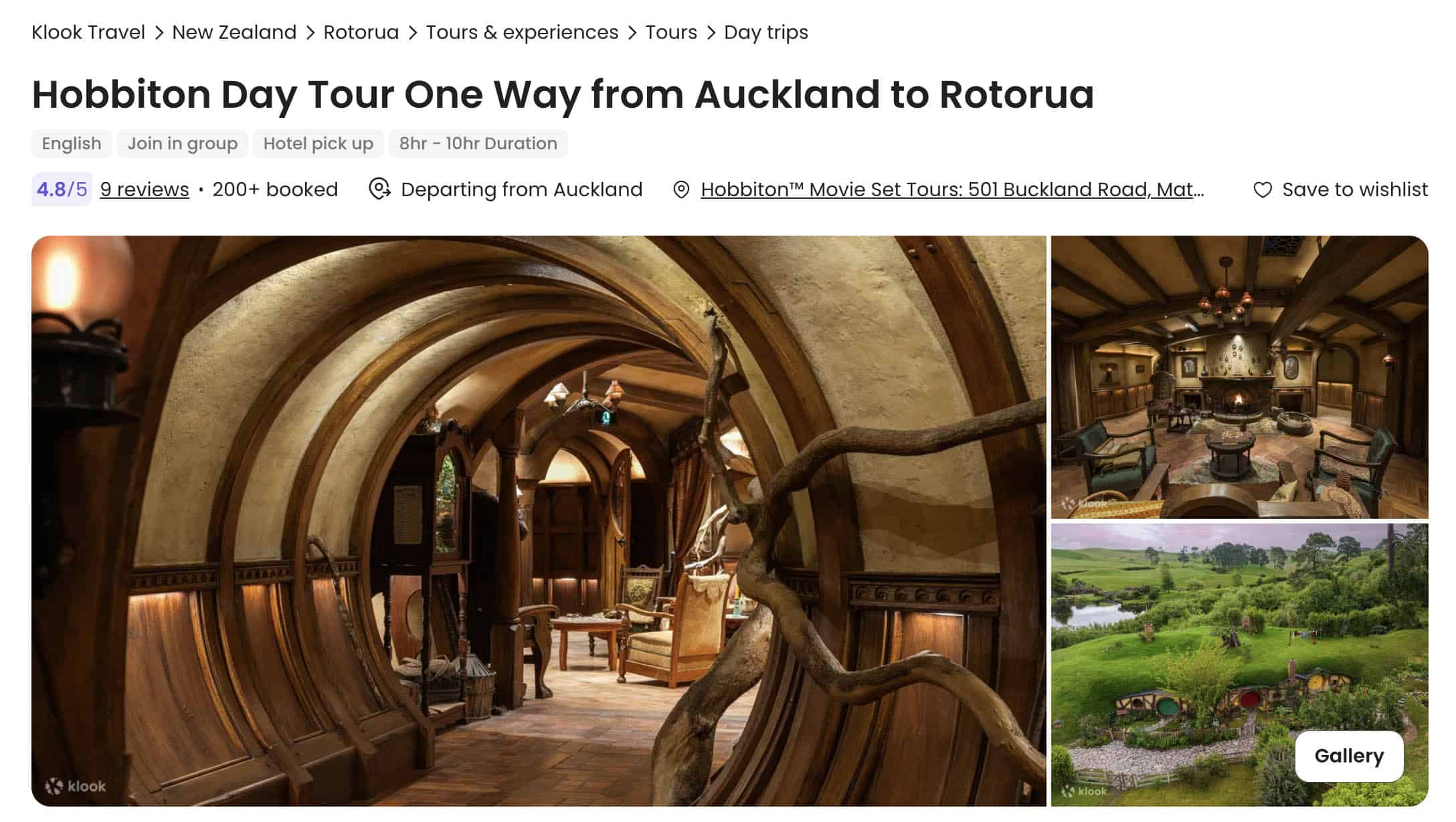
Once you figure out how many days you will be spending in New Zealand, it’s time to start building your itinerary. The first step is to identify what destinations are non-negotiable for you. For example, if you’re a Lord of the Rings fan, I’m sure you will not forgive yourself if you don’t set foot in Hobbiton. Right?
So list them out. In our case, we only had a few: Hobbiton, Christchurch, and Queenstown.
And just by looking at the map, I realized early on that they’re pretty far apart. So from here, we tried to come up with a route that would connect all of these and can realistically be enjoyed in 10 days.
From the get-go, we knew our entry point would be Auckland. As New Zealand’s largest city, it has the country’s biggest airport and is the most usual jumpoff point to Hobbiton. But instead of going back to Auckland, we decided to stay for a couple of days to Rotorua, since it is also a popular tourist destination.
Rotorua has an airport, which serves direct flights to Christchurch, so we opted to fly for this leg. But from Christchurch to Queenstown, we wanted to travel by land so we could admire the landscapes along the way. So we’ll only be booking four hotels, one each in Auckland, Rotorua, Christchurch, and Queenstown.
But as we continued researching, we realized that we could also visit other attractions. For example, from Christchurch to Queenstown, instead of booking a direct bus, we discovered that there are one-way tours on Klook. One-way because it will pick you up in Christchurch, make several extended stops at tourist spots along the way including Lake Tekapo and the areas close to Mt. Cook, and then drop you off in Queenstown. It’s like a bus transfer and group tour in one!
On Klook, they have Christchurch to Queenstown and Queenstown to Christchurch via Lake Tekapo and Mt. Cook, and Auckland to Rotorua via Hobbiton.
One thing that became apparent early on while researching for this trip was that public transportation options between cities in New Zealand were quite limited. This is why, many online publications will tell you that the best way to get around is by renting a car or a campervan.
I agree. By driving, not only do you have total control of your time, you also don’t get restricted by rigid bus or tour schedules. But before you lock it in, make sure you have a valid driver’s license and that you’re confident driving on the left side of the road.
But if you’re traveling alone or a couple, you might end up spending more. It’s more ideal if you’re part of a group so you have companions to split the cost with.
If driving is out of the picture for whatever reason, you can take InterCity Buses. But again, know that departures are few and far between. For example, from Auckland to Rotorua, there are only a handful of journeys available. But you can totally make it work if you plan your trip well.
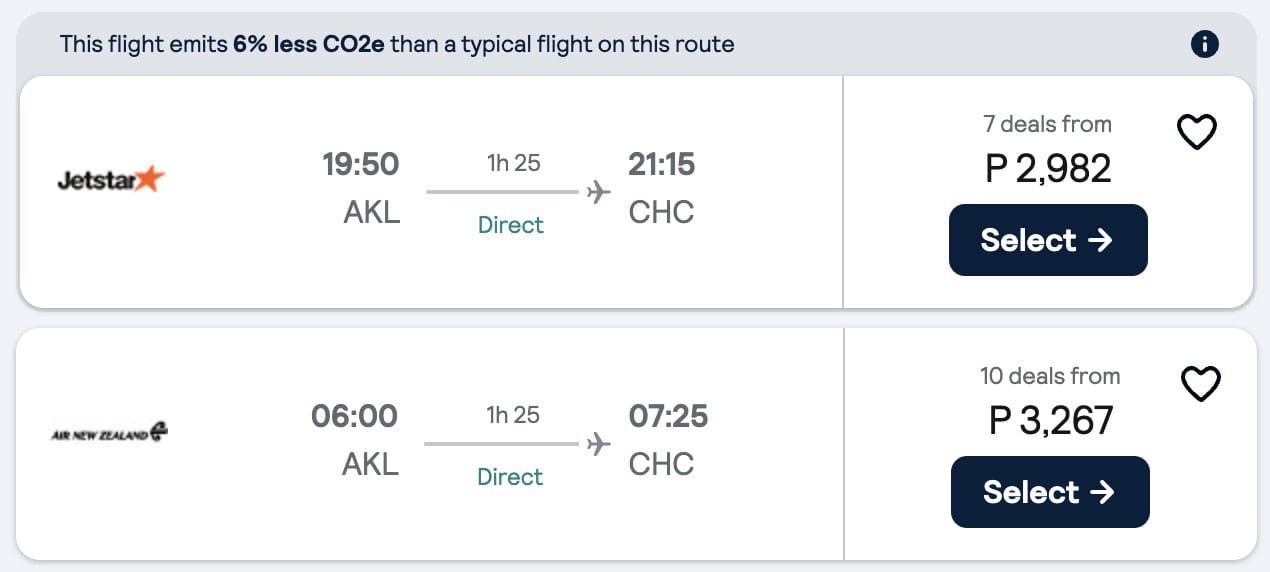
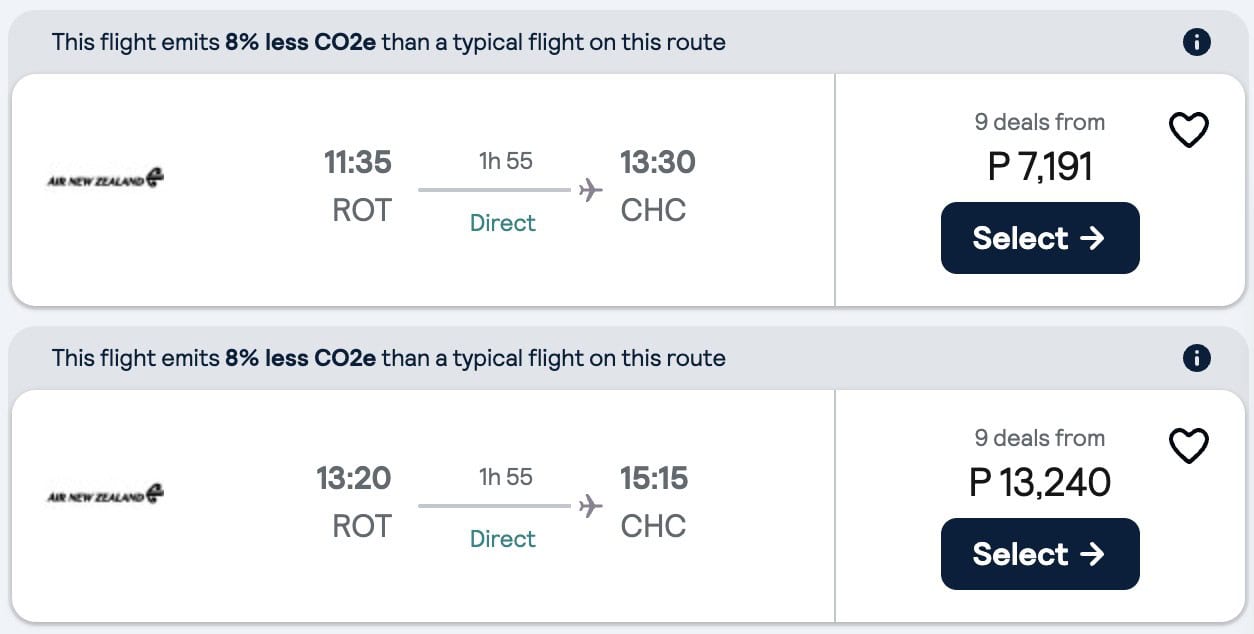
Another option is by joining the one-way tours that I mentioned in the previous section of this video. You can also fly. Domestic flights in New Zealand are delightfully inexpensive, so don’t count them out just yet. For example, when we flew from Auckland to Christchurch, we only paid around 108 NZD (P3640) per person.
Originally we wanted to fly straight from Rotorua Airport to Christchurch, but this route was twice or thrice more expensive so we decided to travel back to Auckland Airport instead.
Speaking of flights…
Step 4: Compare flight prices.
New Zealand is pretty remote, so it’s no surprise that flights going there are expensive. Its national flag carrier is Air New Zealand, which has direct flights to and from Taipei, Singapore, Hong Kong, Tokyo, Shanghai, Vancouver and various cities across Australia, the United States, and the Pacific. Other airlines like Qantas, Jetstar, China Airlines, Cathay Pacific, Singapore Air, Qatar Airways and Emirates fly to New Zealand too. So do a number of American and Chinese carriers.
Via Wikipedia
We’re based in the Philippines and there are no direct flights available. Philippine Airlines used to offer direct Manila to Auckland flights, but that route has been discontinued. So we had to connect elsewhere. But this trip is part of our greater Australia-New Zealand trip so we flew from Melbourne.
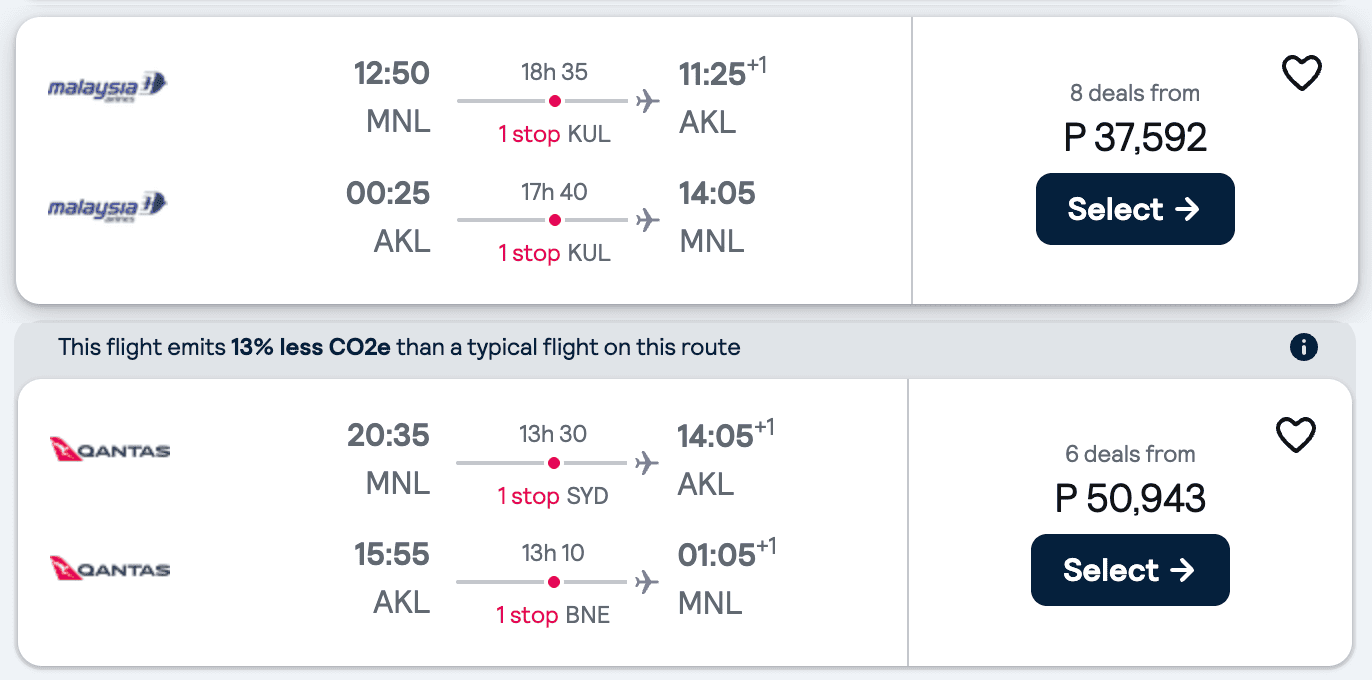
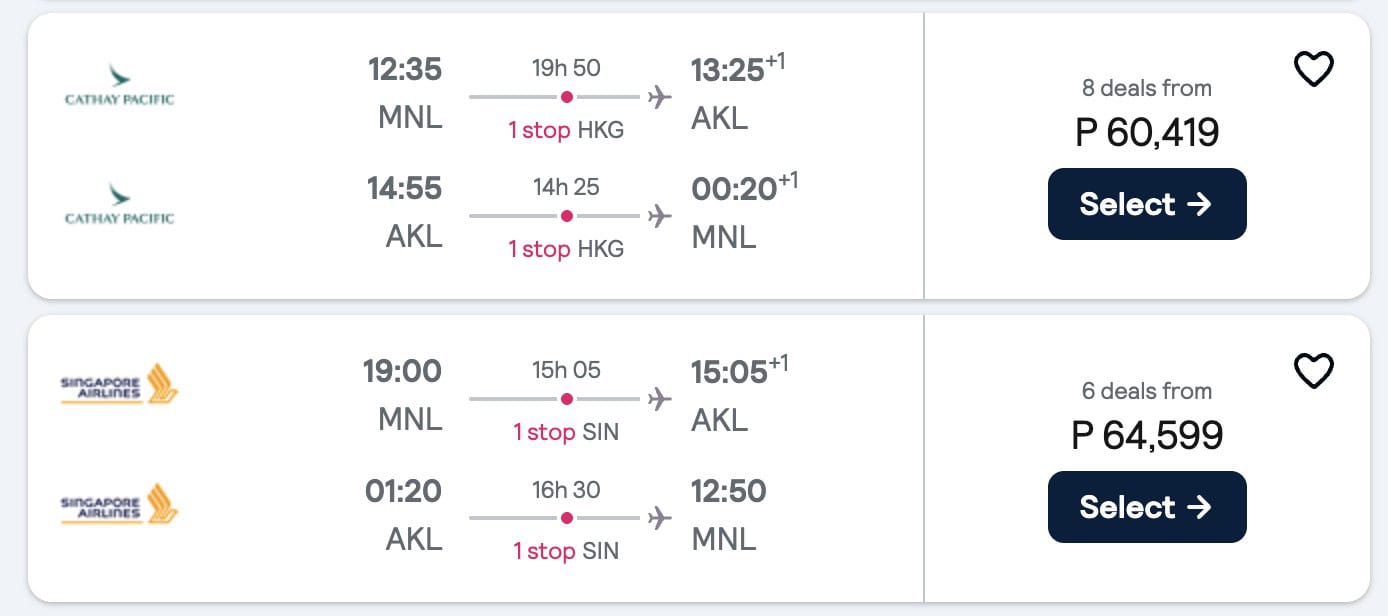
If you book in advance, a roundtrip flight from Manila usually costs PHP 40,000 to 50,000 in off-peak season and around PHP 60,000 in peak season.
Manila-Auckland Flights in OFF-PEAK seasonManila-Auckland Flights in PEAK season
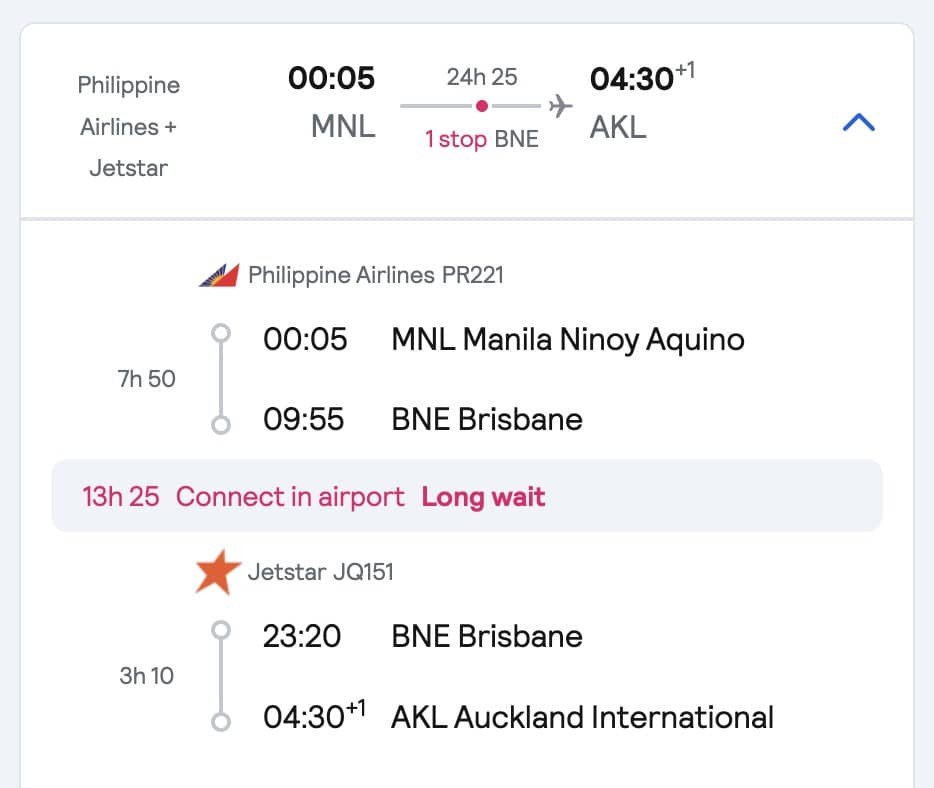
As much as possible, try to book both legs of the journey with the same airline or at least airlines with code-share agreements, so you won’t need to clear immigration at your layover airport and pick up and check in your bags again. Especially if you’re connecting in Australia, which will require you to obtain a Transit Visa first.
In this sample booking, you will need an Australian Transit Visa.
Anyway, if you see fares and arrangements that you like, don’t book just yet. Just compare and canvas. Don’t finalize anything.
Step 5: Check accommodation options.
Another thing you need to consider is accommodations. The good news is, most New Zealand city or town centers are not that big. Even Auckland, which is the country’s largest city, isn’t as bustling and is actually quite chill compared to other big cities in other countries. So in theory, as long as you’re within the city center or town center, you should be fine.
But one thing you need to be prepared for is the cost. While planning our trip, we quickly realized that accommodation rates in New Zealand are quite steep especially in the summer months.
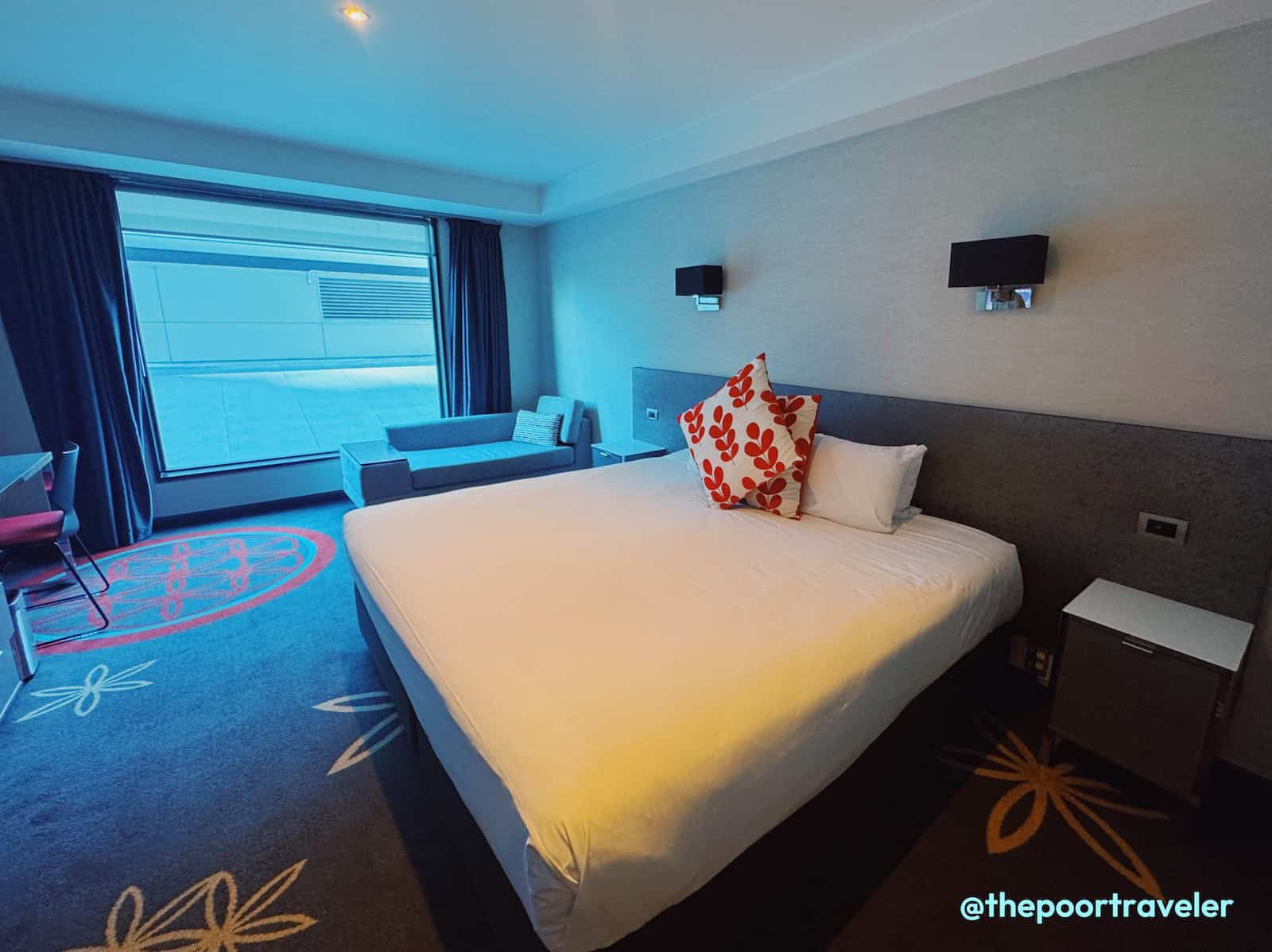
SkyCity Hotel Auckland
In Auckland, we booked a room at SkyCity, which is just next to the Sky Tower, Auckland’s most iconic landmark. We paid around NZD 170 (P5740) per night. Great location, and the Sky Drive, which is the airport bus terminates just around the corner. Check Rates & Availability! ✅
In Rotorua, we stayed at Rock Solid Backpackers, a hostel right in the city center within walking distance of major attractions. It was just a fan room, but New Zealand summers are pretty mild so we didn’t mind. It’s equipped with all the basic amenities, a TV, a table, toiletries, and all. And yes, it has an ensuite toilet and bath. We paid USD 87 (NZD 147, PHP 4950) per night. Yes, for a fan room. That’s how expensive rooms are here. Check Rates & Availability! ✅
In Christchurch, we booked a private room at Haka House, which I think is also classified as a hostel, but it didn’t feel like it at all. It was newly renovated and our room had ensuite toilet and bath and everything was squeaky clean, so it felt like we were staying at a boutique hotel. Awesome location, too, close to most points of interest including the Botanical Garden and Riverside Market. They had no elevator though, so it can be challenging if you have heavy luggage. This room set us back NZD 183 (USD 109, PHP 6145) per night. Check Rates & Availability! ✅
But Queenstown was the priciest of them all. We stayed at another hostel called BLACK SHEEP Backpackers Hostel, in a fan room without its own toilet and shower. The place was neat and nice, and it’s not too far from the center of the action, but we shelled out NZD 215 (USD 128, PHP 7240) per night for this. And this was the cheapest that we found even if we booked this way in advance. Check Rates & Availability! ✅
By the way, you don’t need to memorize all these details. We compiled all the NEW ZEALAND TRAVEL ESSENTIALS including a list of all the hotels and hostels we tried in the TPT Masterlist. Just visit and scroll until you see the section about New Zealand. We also have a compilation for other destinations around the world. Check Rates & Availability! ✅
So yeah, New Zealand lodging is super expensive. Just keep it in mind when budgeting for your trip. That’s probably why some travelers choose to just rent a campervan.
Anyway, just like with flights and transpo, don’t commit to your hotel booking yet. Instead, choose properties that offer FREE CANCELLATION. Both Klook and Agoda have these options.
If you book with Klook, please use our promo code THEPOORTRAVELERKLOOK for up to P300 OFF or TPTKLOOK5 for up to P500 OFF. These codes might change in the future so best to just visit thepoortraveler.net/klook to redeem updated discount codes!
If you prefer AGODA, use our promo code AGODATPT for 10% discount.
Whatever you choose, make sure it’s FREE CANCELLATION because there’s one crucial thing that you need to take care of first before you make any booking final…
Step 6: Apply for a New Zealand visa.
You might be wondering why I’m bringing up the visa just now. Well, 2 reasons:
First, a New Zealand visa isn’t cheap. It costs NZD 100 (PHP 3300), as of this writing. And it’s usually valid for just 1 year. It’s not like the US or Canada visas which can give you up to 10 years. No, just 1 year. So if you’re not yet 100% certain that you’re New Zealand-bound, don’t apply. You’ll just be wasting money if you end up not using it.
Also, before you start the visa application process, it’s best that you have a strong grasp of your travel plans. When applying for a New Zealand visa, you’ll be asked for your travel dates and hotel addresses, and you can even submit a detailed day-to-day itinerary to bolster your case. Having a solid travel plan will greatly increase your chances of approval. You can also upload your hotel bookings as supporting documents, although it’s optional.
I’m not going to delve deeper into the process because we have discussed it in detail in our comprehensive NEW ZEALAND VISA GUIDE! ✅
If you prefer it in Tagalog or Filipino, just watch this video.
According to the official New Zealand Immigration website, visa processing usually takes 4 weeks or 1 month. I got mine after only 2 days but don’t count on it. It’s always best to apply at least 2 months before your target departure date.
Step 7: Finalize all your bookings.
Once you’re granted a visa, finalize all your bookings! Book those flights, tours, transfers, and other stuff that you were eyeing. Or if things change, adjust accordingly.
Again these are all the promo codes that you can use. We have discounts for hotels, tours, and eSIM for internet connection. We even have special rates for travel insurance, exclusive for TPT subscribers.
Make sure to also accomplish and submit the New Zealand Traveller Declaration Form within 24 hours before your departure flight. It has to be in their system by the time you arrive in New Zealand.
That’s all for now. Remember, plan smart, travel safe, and make every trip WORTH IT!
From Dolce & Gabbana’s soft yet sensual loungewear to Tod’s versatile leisurewear and Brunello Cucinelli’s understated elegance, Spring/Summer 2026 men’s collections reveal a shifting language of desire — one where tactile luxury is tailored for today’s dynamic lifestyle.
Dolce & Gabbana
Dolce & Gabbana explores the aspect of desire linked to comfort, ease and personal space as the brand reimagines loungewear. Striped jacquard sets, slouchy cardigans, and airy tailoring suggest a new dawn of relaxed tailoring that values softness over structure. Arguably a nod to the hybrid lives of today’s consumers — moving between city apartments and coastal escapes, the collection reflects a broader shift in men’s fashion toward intentional informality.
Ribbon-tied trousers and slouchy cardigans evoke the intimacy of dressing for no one but oneself. By mixing tactile softness with precise styling, Dolce & Gabbana creates a visual tension that reads as deeply sensual and unmistakably Italian. The appeal lies in its deliberate contrast: silken pyjama sets layered under sharply tailored jackets, cameo brooches pinned onto gauzy knits, oversized Sicily bags in zebra and striped fabrics worn with nonchalance.
Tod’s
At the Spring/Summer 2026 presentation set within Milan’s Villa Necchi Campiglio, Tod’s leans into a version of desirability that is grounded and subtly aspirational. The collection, aptly titled Gommino Club, reframes elegance through the lens of leisure and fluidity — a response to the growing demand for clothes that keep pace with lives lived in motion. Here, desirability is about tactile nuance: ultralight Pashmy leather rendered into supple bomber jackets and softly structured blazers, crêpe linen safari coats that look as suited to a lakeside stroll as to a boardroom in Amalfi.
Even the Gommino itself, Tod’s signature driving loafer, is reworked into slipper-like silhouettes and hybrid sneaker soles — signalling a shift from occasion-based dressing to versatility-first design. There’s a quiet confidence to this approach. In place of flash, Tod’s offers refinement that travels well — unstructured tailoring, travel-friendly wool and accessories like the Di Bag Folio and trekking canvas backpacks that blur the line between city and countryside utility. Desirability here comes not from loud branding or trend-chasing but from craftsmanship that the wearer can feel and comfort that one does not have to compromise on. As the definition of luxury shifts, Tod’s makes a case for tactile value, timeless mobility, and understated Italian ease.
Brunello Cucinelli
At Brunello Cucinelli, the Spring/Summer 2026 collection was less about trends and more about an enduring elegance. In a world where hyper-visibility often defines desirability, the Italian label proposes the opposite — a man whose allure lies in restraint and material integrity. Fluid wool, silk and linen compositions drape the body with precision yet softness, blurring the line between tailoring and movement. Extended blazers, soft-lined trousers and deconstructed coats in whisper-light silk make up a wardrobe that speaks to the emotionally attuned man: cultured, composed, and quietly confident.
Cucinelli’s palette — from sun-warmed apricots to washed Solomeo blues — reinforces a vision of modern desirability rooted not in dominance but grace. There’s a cinematic quality to it all: knitwear that plays with air and light, shirting that revives retro shapes in a contemporary register, and shoes so stripped back they almost disappear into the silhouette. In a market that increasingly rewards authenticity over flash, Cucinelli’s pursuit of lightness — literal and metaphorical — reflects a maturing form of masculine desire: one built not on noise, but on nuance.
Giorgio Armani
Giorgio Armani’s Spring/Summer 2026 collection captures a fresh vision of modern desirability rooted in ease and balance. Here, contrasting influences — city life and holiday retreat, East and West — meet in pieces that feel light and unforced. The silhouettes are intended to move with the wearer. Double-breasted jackets with soft shawl collars, trousers that fall effortlessly over suede shoes and pastel boots, and leather that feels as weightless as a shirt. Colour plays a quiet but sophisticated role, mixing desert-inspired neutrals with deep blues and vibrant Mediterranean shades. Accessories like woven raffia hats and braided belts complete the picture of a man who values refinement without rigidity.
For more on the latest in luxury style reads, click here.
While I spent my childhood at the base of the Blue Ridge Mountains, hours away from any major East Coast city, I didn’t fully appreciate Virginia’s small towns until I left the one I grew up in. It took several years living outside of the state to finally understand the charm of a sleepy main street dotted with locally owned shops, the delight of a community filled with faces you recognize, and the appeal of living somewhere with easy access to the outdoors. After nearly a decade away, though, Virginia reeled me back in, welcoming me home to a world with rolling hills, four distinct seasons, and a passion for music, history, and good old-fashioned comfort food.
I might have an affinity for the mountain towns in the Blue Ridge, but I’ve also traveled across the state to explore the less-populated areas outside of Washington, D.C., the underrated spots along the coast, and the oft-overlooked corners of the Piedmont and Shenandoah Valley regions. And in my experience as a travel writer and a full-fledged Virginian, I can definitively say the Commonwealth is filled with dozens of incredible small towns to add to your travel list; s, however, are better than others.
So without further ado, here are the best small towns in Virginia—from a quaint getaway in the heart of horse country to a remote escape on the Eastern Shore.
Middleburg
Rolling green hills in Middleburg Virginia. Jumping Rocks/Universal Images Group via Getty Images
Middleburg is a powerhouse destination in Virginia, albeit a small one. Known as the “horse and hunt capital of the nation,” the town is filled with history, culture, and architecture you simply can’t walk or drive past without snapping a picture. The main thoroughfare, Washington Street, is lined with stone buildings, brick sidewalks, and businesses that look as if they could star in a Hallmark movie. There are also quite a few first-rate accommodations in Middleburg, making it an extra-charming weekend retreat. The stately Red Fox Inn & Tavern, which has roots dating back to 1728, sits prominently in the middle of town, and both Salamander Middleburg and Goodstone Inn & Restaurant are just a short drive away.
Lexington
Cars driving in downtown Lexington, Virginia.
Andriy Blokhin/Adobe Stock
Lexington might technically be categorized as a city, but as soon as you enter the historic downtown, an area listed on the National Register of Historic Places, it’s difficult to describe this part of Virginia as anything other than a picturesque small town. Home to Washington and Lee University and Virginia Military Institute (VMI) plus a roster of local businesses you can navigate to via antique brick sidewalks—I love Lex Running Shop, Purveyors on Main, and Lexington Mercantile—Lexington is full of energy, charm, and unique experiences. Lime Kiln Theater combines all three of those characteristics, offering an annual summer lineup of live performances from its legendary outdoor venue (an old limestone quarry and kiln).
Meadows of Dan
Guests sit inside the club house at the Virginia International Raceway in Meadows of Dan, Virginia.
Houston Cofield/Bloomberg via Getty Images
Meadows of Dan is more than just a stop on the Blue Ridge Parkway; it’s a small town that deserves a hefty dose of recognition. For starters, this is where you’ll find Primland, a repeat winner in Travel + Leisure‘s World’s Best Awards and a favorite resort among golfers, hikers, and travelers searching for a luxe outdoor experience. Meadows of Dan also lays claim to one of the most photographed spots on the parkway (the historic Mabry Mill), an old-fashioned candy factory, and several endearing places to grab something to eat—including Primitive Coffee Market, Jane’s Country Cafe, and Poor Farmers Market.
Bedford
A view of the Blue Ridge Mountains from the cliffs around a house in Bedford. Ashton Dooley/Getty Images
The town of Bedford has significantly evolved since I last called it home. When I was younger, I couldn’t have imagined there would be an art gallery with an expertly curated selection of local work (Goose Creek Studio), an all-day cafe with a flavorful menu of sandwiches and other lunch staples (Town Kitchen & Provisions), or a boutique hotel (Hotel Fauna is set to open later this year). What hasn’t changed, though, is Bedford’s incredible proximity to the Blue Ridge Parkway, its admiration of history, or its walkability.
Before heading up to hike one of three peaks that make up the Peaks of Otter—Flat Top, Sharp Top, and Harkening Hill—pop into Mountain Fruit & Produce for apple fried pies and local jam. Spend an afternoon learning World War II history at the National D-Day Memorial, then venture back to town to get your steps in around “The Loop,” a three-mile pedestrian sidewalk that provides walkers with a nice stretch of scenic views.
Cape Charles
Wooden walkway along Cape Charles Beach.
nameinfame/Getty Images
There are two small towns on the Eastern Shore that I recommend—the first is Cape Charles. You may initially be drawn to this part of the state for water views and fresh seafood, but Cape Charles will quickly demonstrate its appeal is multifaceted. Spend a day at Cape Charles Beach, explore freshwater wetlands and a maritime dune woodland at Cape Charles Natural Area Preserve, and get some shopping in at Peach Street Books, Gull Hummock Gourmet Market, and Moonrise Jewelry. Of course, it wouldn’t be a true Eastern Shore trip without oysters, so try not to leave without having dinner at The Shanty.
Chincoteague
Wild horses in Chincoteague National Wildlife Reserve. Denise Panyik-Dale/Getty Images
Another Eastern Shore favorite, Chincoteague is the type of small town where you could easily spend a week—if not longer—and never grow bored. If you love to get out on the water and fish, you won’t find a better place to spend your time. If you prefer to read on the beach, take long sandy walks, or go shelling, it’s your dream vacation destination. You can also time your visit for late July, when the annual Pony Penning occurs; 2025 marks year 100 for the tradition. The event brings locals and tourists to the area as Virginia’s herd of wild ponies is moved from Assateague Island to Chincoteague Island. It includes the famous Pony Swim, where the animals swim the six-minute journey across the Assateague Channel.
Floyd
Paul Harris/Getty Images
Creativity plays a defining role in the culture of many small towns in Virginia, and nowhere is this more apparent than in Floyd. The mountain town is located atop the Blue Ridge Plateau, and it’s one of the biggest stops along Virginia’s heritage music trail, also known as The Crooked Road. People come from far and wide to listen to bluegrass music at the weekly Friday Night Jamboree at Floyd Country Store or attend FloydFest, a multiday music festival in July. Other reasons to plan a visit to Floyd include Buffalo Mountain Ziplines, which claims to have Virginia’s highest and longest zip line, and plenty of local bites—follow the Floyd Farm Trail to discover some of the best local farms and farm stores.
Abingdon
Residential street in Abingdon, Virginia.
Melinda Fawver/Adobe Stock
You don’t need to travel to Virginia’s biggest cities to experience a diverse culinary scene; one of the most impressive dining destinations is a small town tucked in the southwest corner of the state. You’ll want to come hungry to Abingdon, where the food offerings extend beyond a couple of local favorites. Inside The Tavern, housed in Abingdon’s oldest building, the team serves up European-inspired entrees, all whipped up with a Southern touch. Dine on cheeseburger egg rolls or fried oyster tacos at Jack’s 128 Pecan, fill up with tonkatsu ramen at Foresta, or get your caffeine fix at The Girl & The Raven.
Wytheville
The Flohr House in Wytheville, Virginia.
Tim Pennington/Getty Images
If you’re road tripping along I-81, schedule in some time to stop in Wytheville, a small town with several claims to fame. Not only does it have one of the smallest churches in the U.S., a water tower painted to resemble a rainbow-striped hot air balloon, and a 100-foot-tall lookout tower with panoramic views (found at Big Walker Lookout), but Wytheville also has a 100-year-old diner with famous hot dogs, Skeeter’s World Famous Hot Dogs, and one of the most well-known motorcycle trails in this part of Virginia, The Claw of the Dragon.
Woodstock
People watching a rodeo in Woodstock, Virginia.
Brendan Smialowski/AFP via Getty Images
Some of Virginia’s best antique stores, breweries, vineyards, restaurants, farmers markets, and scenic views are hidden away in small towns across the state. Case in point: Woodstock, Virginia. This historic town in the Shenandoah Valley is ideal for a long weekend. Poke around Spring Hollow Antiques, sip wine at Muse Vineyards or beer at Woodstock Brewhouse, have a bite to eat at Woodstock Garden Cafe, and peruse the local produce at South Street Barn Market (open year-round on Saturdays). More adventurous travelers should also make a point to explore nearby Seven Bends State Park or hike up to the Woodstock Tower.
The technical storage or access is strictly necessary for the legitimate purpose of enabling the use of a specific service explicitly requested by the subscriber or user, or for the sole purpose of carrying out the transmission of a communication over an electronic communications network.
Preferences
The technical storage or access is necessary for the legitimate purpose of storing preferences that are not requested by the subscriber or user.
Statistics
The technical storage or access that is used exclusively for statistical purposes.The technical storage or access that is used exclusively for anonymous statistical purposes. Without a subpoena, voluntary compliance on the part of your Internet Service Provider, or additional records from a third party, information stored or retrieved for this purpose alone cannot usually be used to identify you.
Marketing
The technical storage or access is required to create user profiles to send advertising, or to track the user on a website or across several websites for similar marketing purposes.






:max_bytes(150000):strip_icc()/TAL-header-turin-italy-BESTRESTINTURIN0625-5f7f99bd288b4dbaa85a91ef685e1ef1.jpg "The World’s 50 Best Restaurants of 2025 Were Just Announced")
:max_bytes(150000):strip_icc():format(jpeg)/TAL-header-turin-italy-BESTRESTINTURIN0625-5f7f99bd288b4dbaa85a91ef685e1ef1.jpg)












:max_bytes(150000):strip_icc()/TAL-woodstock-SMTOWNVA0425-7e3134a264a94feb9bde7a76d680a013.jpg "10 Best Small Towns in Virginia")
:max_bytes(150000):strip_icc():format(jpeg)/TAL-woodstock-SMTOWNVA0425-7e3134a264a94feb9bde7a76d680a013.jpg)