The launch of the Jaguar F-Type in 2013 was a standout moment for Jaguar, showcasing a fresh take on its sports car heritage. The F-Type brought back memories of Jaguar’s iconic sports cars, like the E-Type and the legendary supercar XJ220.
The F-Type quickly became popular, known for its cool design and strong engines. You can choose from several engines, like a lively V6 or a powerful V8. Over time, Jaguar has kept making the F-Type better, both in how it looks and in its technology. This makes it not just a car with a great past but also one that’s really up-to-date.

One of Jaguar’s finest achievements, the F-Type is a great all-round sports car with a huge range of drivetrain options. It’s got engines like a supercharged 3.0-liter V6 and a strong 5.0-liter supercharged V8. These are matched with a smooth 8-speed gearbox, making the drive exciting and comfortable. The F-Type is all about mixing fun driving with the kind of luxury Jaguar is known for.
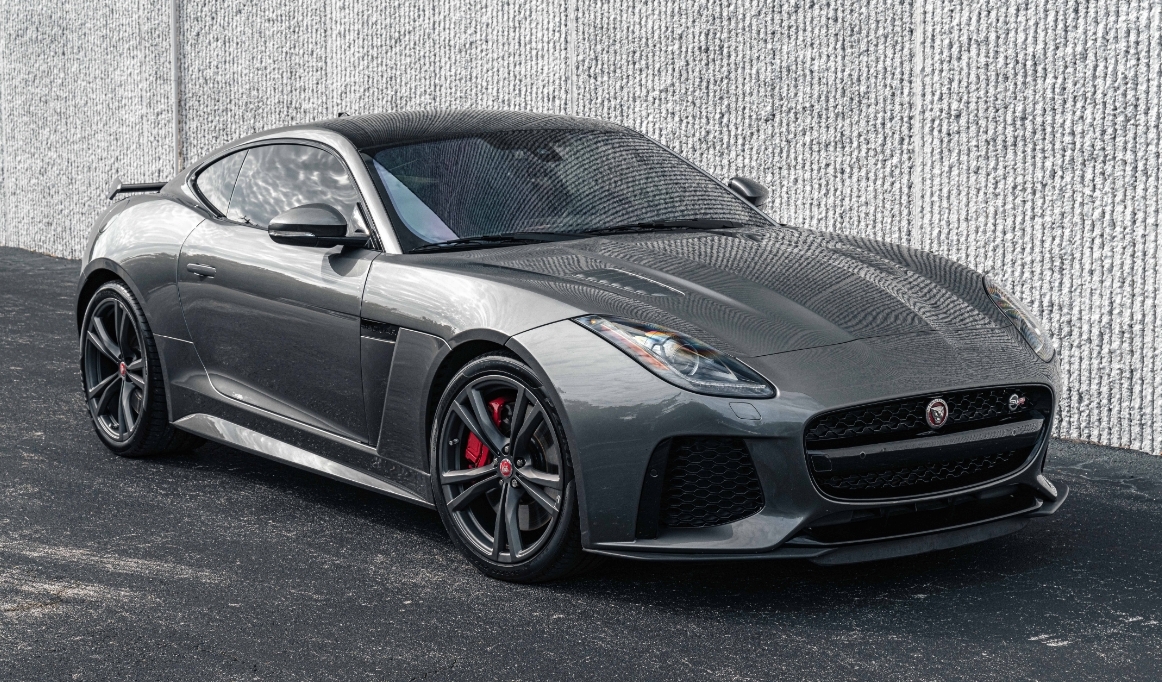
The Jaguar F-Type strikes a perfect balance with its design, which is both elegant and assertive, highlighting Jaguar’s signature style. Its body is artfully designed with smooth, flowing lines and distinctive shapes, clearly marking it as a Jaguar.
Inside the F-Type, you’ll find a cabin that’s both luxurious and tailored for driving. The interior is a harmonious blend of high-end comfort and driver-centric design. The seating, controls, and layout are all carefully thought out to ensure the driver feels fully engaged with the car and the driving experience.
Jaguar has skillfully incorporated cutting-edge technology into the F-Type. By adopting some advanced features from its industry peers, the F-Type excels as a car that’s exhilarating for spirited drives yet practical and manageable for daily use. This combination of innovative technology, comfort, and performance makes the F-Type a truly adaptable sports car, suitable for a wide range of driving situations.
The F-Type stands as a testament to Jaguar’s ability to create a sports car that not only respects its heritage but also embraces the future. It competes admirably in a market filled with notable rivals like the Porsche 911, BMW M4, and Chevrolet Corvette.
Each of these cars brings its own unique strengths to the table, but the F-Type holds its own with its distinctive blend of British charm, driving dynamics, and versatile performance. Whether it’s for a leisurely cruise, a daily commute, or a spirited drive on winding roads, the F-Type offers an experience that appeals to a wide range of car enthusiasts, making it a standout choice in the world of luxury sports cars.
Model Changes (Breakdown by Year)
2013 Jaguar F-Type
The 2013 Jaguar F-Type, introduced as a 2-door soft-top convertible, came with various engine options, including the 3.0L supercharged V6. This engine was available in different tunes, producing either 340 hp in the base model or 380 hp in the higher-spec versions.
The Jaguar F-Type competed well with rivals like the Porsche 911 and Mercedes-Benz SL-Class with a starting price of around $69,000.
2014 Jaguar F-Type
In 2014, the Jaguar F-Type lineup saw significant enhancements, notably with the introduction of the coupe version. This new variant complemented the existing convertible, offering a fresh choice for enthusiasts. The F-Type coupe retained the engine options from the convertible, including the supercharged V6 with 340 hp and 380 hp outputs.
Additionally, the introduction of the F-Type R Coupe brought a more powerful option with a 550 hp supercharged V8 engine. Additionally, the R Coupe came with larger carbon fibre wheels, coupled with upgraded brakes, emphasizing its status as the high-performance variant within the F-Type range. These visual distinctions made the F-Type R Coupe recognizable and highlighted its capabilities.
The base model started at around $65,000, the F-Type S Coupe at about $77,000, and the high-performance F-Type R Coupe at approximately $99,000. These updates showcased Jaguar’s commitment to offering a range of options for different driving preferences, solidifying the F-Type’s position in the luxury sports car market.
2015 Jaguar F-Type
The 2015 Jaguar F-Type continued to evolve, offering more options and updates. The engine choices remained diverse, including the 3.0L supercharged V6 with both 340 hp and 380 hp options, and the 5.0L supercharged V8 offering 495 hp in the convertible V8 S and 550 hp in the R Coupe.
A notable introduction was the availability of All-Wheel Drive, enhancing handling and stability. For the first time, a 6-speed manual transmission was available with the V6 models, appealing to driving purists.
The year also marked the debut of the F-Type R Convertible, equipped with the potent 550 hp V8 engine. The base model was priced around $65,000, with prices increasing for higher-spec models like the R variants, reflecting their additional features and performance capabilities.
In addition, Jaguar also released the super special F-Type Project 7, a limited edition model released in 2015, which was not only a nod to Jaguar’s racing history but also a showcase of what the company is capable of. Limited to 250 units, this model was very exclusive.
Under its hood came the 5.0L supercharged V8 engine, ramping up to 575hp, making it one of the most powerful variants in the F-Type lineup. Its design paid a stylish homage to the legendary D-Type, notably through its distinctive fairing behind the driver’s head, a feature seldom seen in modern sports cars.
The use of carbon fiber for key components was a strategic choice, reducing weight to enhance agility and performance, further underscoring its race-bred DNA.
These meticulously crafted elements transformed Project 7 from just a high-performance sports car into a treasured collectible, bridging the gap between Jaguar’s historic success in motorsports and its contemporary automotive prowess. The base price of the Jaguar F-Type Project 7 at its launch in 2015 was around $165,000.
2016 Jaguar F-Type
In 2016 Jaguar released the F-Type’s SVR edition in both coupe and convertible, it was a significant leap forward in both performance and design. Equipped with a robust 5.0L supercharged V8 engine, the SVR delivered an impressive 575 hp, enabling a top speed of 200 mph. In addition, an All-Wheel Drive (AWD) system also improved handling dramatically, crucial for the power it wielded.
The exterior boasted aggressive aerodynamic enhancements like a revamped front bumper, splitter, and rear spoiler to increase downforce. The interior was equally refined, featuring exclusive seating and trim options that underscored its luxury.
The addition of All-Wheel Drive (AWD) improved handling dramatically, crucial for the power it wielded. Updates such as electric power-assisted steering and state-of-the-art infotainment systems with InControl Touch and InControl Touch Plus further solidified its position in the luxury sports car arena. The base price of F-Type SVR was around $125,000.
2017 Jaguar F-type
The 2017 Jaguar F-Type 400 Sport edition was introduced both in coupe and convertible forms, and was distinguished by its unique styling and performance enhancements. It featured a deeper front splitter and rocker-panel extensions adorned with exclusive “400” script, along with a darkened rear diffuser.
The model was fitted with 20-inch wheels, which complemented its dynamic appearance. Performance-wise, it boasted larger rear brake rotors and black-painted brake calipers. Inside, the 400 Sport was equipped with 12-way power-operated sport seats, and the interior was enhanced with yellow stitching set against an all-black theme.
The starting price for the rear-drive 400 Sport coupe was $90,495, while the convertible began at $93,595, with all-wheel drive available for an additional $3,000 on each version. These features underscored the model’s exclusivity and performance focus.
2018 Jaguar F-Type
In 2018, the Jaguar F-Type lineup was enriched with significant enhancements, broadening its appeal. The introduction of the F-Type P300 marked an important expansion, featuring a 2.0L turbocharged four-cylinder engine that produced 296 hp, making it a more accessible option with a starting price of around $60,000.
Alongside this, the F-Type R-Dynamic was introduced, tailored for those seeking a sportier edge, both in performance and aesthetics. Jaguar also implemented notable technological upgrades, particularly in the infotainment system, which now boasted a larger, more intuitive touchscreen and improved navigation.
Externally, the F-Type’s allure was heightened with redesigned bumpers and the adoption of full LED headlights and updated rear taillights, offering a more modern and sleek appearance.
The starting price for the 2018 Jaguar F-Type R-Dynamic was approximately $82,050.These enhancements across various aspects of design and technology ensured the F-Type’s continued competitiveness in the luxury sports car market.
2019 Jaguar F-Type
The 2019 Jaguar F-Type continued to enhance its appeal with updates that focused on personalization and technology. The introduction of special edition models allowed for greater customization, offering unique color schemes and trim options for a more personalized touch.
Technological upgrades were also significant, with improvements to the infotainment system ensuring the F-Type remained up-to-date in digital connectivity and user interface.
2020 Jaguar F-Type
For 2020, Jaguar F-Type’s substantial updates enhanced both its aesthetics and performance. Alongside design changes like new LED headlights, a reworked grille, and updated rear aesthetics, the model also focused on refining its driving dynamics.
The existing engine lineup, including the turbocharged four-cylinder, supercharged V6, and supercharged V8, received fine-tuning for improved performance. Additionally, the suspension system was tweaked to offer better handling and ride quality, complementing interior upgrades like the new 12.3-inch digital instrument cluster and the more responsive infotainment system.
The base price started around $61,600.
2021 Jaguar F-Type
The 2021 Jaguar F-Type’s extensive facelift brought significant design changes, including a modernized front with aggressive headlights and a reshaped grille, along with updated rear aesthetics echoing the I-Pace.
Inside, the notable addition of a new digital gauge cluster and refreshed color schemes and stitching enhanced the cabin’s luxury feel.
Mechanically, the 2021 model streamlined its engine lineup, offering a 2.0-liter turbocharged four-cylinder as standard and a 380 hp supercharged V6, with the previous 340 hp V6 variant discontinued. T
the F-Type R maintained its performance prowess with a 5.0-liter V8, now standard at 575 hp, aligning with the previous SVR’s output. All-wheel drive became standard for V6 models, leaving rear-wheel drive exclusive to the four-cylinder variant.
In addition, the F-Type R also received upgrades in suspension, tires, and new Quiet Start mode, catering to both performance enthusiasts and those seeking a more subdued experience.
The starting price for the F-Type R was $82,950.
2022 Jaguar F-Type
Jaguar F-Type saw a significant shift in its approach to performance for the year 2022, as Jaguar streamlined the engine offerings to focus exclusively on the 5.0-liter supercharged V8.
This engine was available in two versions: the P450 with 444 hp, offering a blend of performance and refinement, and the more aggressive F-Type R with 575 hp, catering to the high-performance segment.
This strategic move emphasized Jaguar’s commitment to making the F-Type a more performance-oriented sports car, aligning with the market’s evolving preferences for power and agility in luxury sports cars.
The starting price for the 2022 Jaguar F-Type varied between its two main variants. The F-Type P450, equipped with the 444 hp supercharged V8 engine, had a base price of around $69,900. On the other hand, the high-performance F-Type R started at $103,200.
2023 Jaguar F-Type
The 2023 Jaguar F-Type 75th Anniversary Editions were crafted as a special tribute to the iconic F-Type series. These editions showcased unique features like the exclusive Giola green paint, an optional matte Ligurian black finish, and bespoke design elements like black wheel centers and grille badges.
The 20-inch black wheels differed between the P450-grade F-Type 75s and the R 75s, each with a distinctive style. Additionally, the front fenders and sill plates were adorned with a coupe silhouette, symbolizing the F-Type’s legacy.
This final edition, with many standard features that were previously optional, celebrated the F-Type’s heritage while signaling the end of its production run.
The starting price was from $91,175-$116,275.
2024 Jaguar F-Type
In 2024, Jaguar will introduce the F-type ZP Edition as a final salute to its iconic sports car. This special edition, limited to 150 units, draws inspiration from the E-type’s racing heritage. It features unique color combinations reminiscent of historic E-type racers: Oulton Blue with a red and black interior, and Crystal Gray with navy blue and black.
The ZP Edition will also have distinctive design elements like white roundels on the doors and a white grille surround. All models come with the top-tier 575 hp supercharged 5.0-liter V-8, all-wheel drive, and an eight-speed automatic. This edition symbolizes Jaguar’s transition to an electric lineup, marking the end of the F-type’s production.
As of now, there is no official announcement on the price.
Jaguar F-Type’s Common Problems
The F-Type is Jaguar’s modern take on the iconic E-Type and is a high-performance 2-seater sports car. Because of the high-stress nature of this vehicle’s design and the performance it has, it is essential that it is well maintained by a specialist with up-to-date knowledge and the latest tools.
It is essential to keep in mind that all cars, even supercars, can have issues and it is crucial to perform a Pre-Purchase Inspection (PPI) from an authorized dealer or experienced independent mechanic to reveal all issues.
Timing Chain, Tensioners, and Guides: On the 3.0 Supercharged V6 and 5.0 Supercharged V8 a well-known problem with the supercharged V8 and V6 models is the timing chain jumping. This is caused by a design flaw in the tensioners and guides. The piston used on the tensioner which hits the timing chain guide is made of hard steel whereas the back of the guide is made of aluminum, the tensioner butts up against the aluminum button on the guide slowly wearing it away over time.If you’re lucky, symptoms may start with a rattle on cold start or a restricted performance warning on the dashboard, but this is not always the case, sometimes they will spontaneously fail leaving no option other than a replacement engine or a potentially more expensive full rebuild including valves and pistons. Preventative maintenance is basically limited to regular oil changes but if you have a high-mileage model and the chain, tensioners, and guides have not yet been replaced, you might want to have this done sooner rather than later.
Water Pump: On the 3.0 Supercharged V6 and 5.0 Supercharged V8 the water pumps on early Supercharged models are prone to failure, sometimes they last less than 20,000 miles. This is because coolant gets inside the bearing housing corroding the water pump bearing. This stops the impeller shaft from being supported properly causing excessive wear of the mechanical flat face seal of the pump allowing water to escape.
Symptoms of this will likely be a low coolant level warning message and traces of a coolant leak around the water pump pulley. Luckily the water pump on both the V6 and V8 F-Type is fairly easy to access at the front of the engine. We also recommend replacing the small coolant pipe that connects to the pump at the same time as it needs to be removed to replace the pump and has very fragile plastic connections that will likely break upon removal.
Coolant Leaks: On the 3.0 Supercharged V6 & 5.0 Supercharged V8, sadly, the water pump is not the only part of the cooling system that can fail on these engines, many of the hoses and pipes used for coolant delivery are of a plastic design, unfortunately, these can crack and fail. Replacing them one at a time as they fail is not a particularly efficient approach and could result in you being in and out of the garage, and as such we recommend that all plastic coolant hoses are replaced if one has failed.
Rear Differential Oil Seal: All F-Types, can suffer oil leaks on the rear differential that if untreated for too long, can cause wear to the diffpinion due to insufficient lubrication. The cause of these leaks is a failed pinion seal, the sooner it is replaced the better, but if you are also hearing a whining noise from the rear axle, a new differential may be required.
Exhaust Valves Stuck: Models with an active exhaust is an extra fitted to certain F-Type models and contain valves that allow the system to open up and create a more aggressive noise, sometimes, through lack of use these valves can seize either open or shut, causing more or less noise than expected in a certain situation depending on which way the failure occurred. Sometimes these valves can be freed up but it is not uncommon for an expensive new backbox to be required.
Centre Air Vents Stuck: The center vents on the dash fascia of the F-Type are designed to rise out of the dashboard when the HVAC system requires them to maintain the set temperature. Unfortunately, the mechanism on these vents can fail resulting in the vents being stuck up out of the dashboard or more inconveniently, stuck in the dashboard and unable to rise. Replacement requires a partial disassembly of the top of the dashboard.
Recalls
2022 Jaguar F-Type vehicles
Seat belts: Pretensioner (Recall no. 22V524000)
Improperly restrained occupants have an increased risk of injury during a crash. The driver and front passenger seat belt pretensioners may be damaged, which can cause the seat belts to not properly restrain occupants.
2021-2022 Jaguar F-Type vehicles
Seat belts: Front: Retractor (Recall no. 21V667000)
An unsecured child restraint system can increase the risk of injury during a crash. The seat belt automatic locking retractors may deactivate early, which can prevent the child restraint system from securing properly.
2018 F-Type vehicles
Air bags: Frontal (Recall no. 21V500000)
An air bag that tears on deployment can increase the risk of injury during a crash. A portion of the instrument panel may interfere with the front passenger air bag during deployment, possibly tearing the air bag cushion.
2020 Jaguar F-Type vehicles
Service brakes, hydraulic: Antilock/traction control/electronic limited slip: Control unit/module (Recall no. 21V167000)
A disabled ABS or DSC system could increase the risk of a crash. The diagnostic check for the Anti-Lock Brake System (ABS) that runs at vehicle startup may not complete in the time required, which could disable the ABS and the Dynamic Stability Control (DSC) system during that drive cycle.
2019-2020 Jaguar F-Type vehicles
Equipment: Incorrect Tire Placard Label (Recall no. 19V682000)
The tire placard label on the driver’s side door opening states an incorrect size for the rear tires. As such, these vehicles fail to comply with the requirements of Federal Motor Vehicle Safety Standard (FMVSS) number 110, “Tire Selection and Rims for Passenger Cars.”.
2014-2015 Jaguar F-Type vehicles
Electrical system: Wiring (Recall no. 19V326000)
The seatbelt harness connector which connects the Seatbelt Tension Sensor (STS) to the Occupant Classification Sensor Control Module (OCSCM) may not have been correctly wired. As a result, the Restraint Control Module (RCM) may not accurately detect if an adult or child is occupying the seat.
2019 Jaguar F-Type vehicles
Engine and engine cooling: Engine: Gasoline: Belts and associated pulleys (Recall no. 19V039000)
The crankshaft pulley retaining bolt may have been improperly manufactured, possibly causing the crankshaft pulley bolt to fracture, potentially resulting in engine failure.
2018 Jaguar F-Type vehicles
Fuel system, gasoline: Fuel injection system: Fuel rail (Recall no. 18V090000)
A fuel leak in the presence of an ignition source such as hot engine or exhaust components can increase the risk of a fire. The fuel rail end caps may leak, possibly resulting in fuel vapor or liquid fuel leaking into the engine bay.
2018 Jaguar F-Type vehicles
Exterior lighting: Turn signal (Recall no. 17V341000)
Without the change to the flash and chime rate, the driver may not know that a turn signal is not working. If the turn signal is not working, other drivers will not be aware that the vehicle is turning, increasing the risk of a crash. If a front turn signal indicator stops working, the visual and audible turn signal reminders do not flash or chime faster as required. As such, these vehicles fail to comply with the requirements of Federal Motor Vehicle Safety Standard (FMVSS) number 108, “Lamps, reflective devices, and associated equipment.”
Jaguar F-Type vehicles manufactured July 14, 2016, to December 16, 2016
Seat belts: Pretensioner (Recall no. 16V940000)
If the front seat seatbelt pretensioners do not function properly, the seat occupants may not be adequately restrained in the event of a crash, increasing the risk of injury. The affected vehicles have front seat seatbelt pretensioners that may not function properly in the event of a crash.
2017 Jaguar F-Type SVR vehicles built between February 19, 2016 and August 15, 2016
Suspension: Rear (Recall no. 16V789000)
If the lower control arm bolt connecting bolt fails, the rear control arm assembly may separate from the vehicle, resulting in a loss of control and increasing the risk of a crash. Due to assembly corrections during manufacturing, the bolts connecting the rear lower control arms to the knuckle assembly may fail prematurely.
2016 Jaguar F-Type vehicles manufactured February 3, 2015
Steering: Electric power assist system (Recall no. 15V569000)
If the vehicle is in motion when this occurs, the driver may unexpectedly lose the ability to control the vehicle, increasing the risk of a crash. The affected vehicle has the power steering system still set in the supplier’s factory operating mode. In this condition, in the event of a steering system malfunction, the vehicle can experience additional steering inputs from the electric power steering system.
2014-2015 F-Type vehicles manufactured August 31, 2012, to October 22, 2014
Electrical system: Wiring (Recall no. 14V714000)
Should the STS not have been wired correctly, the front passenger air bag may not be suppressed, and may remain activated, even when a child restraint is placed in the front passenger seat or a small statured adult occupies that seat. In the event of a crash necessitating deployment of the front passenger air bag, a child or small stature occupant may be at an increased risk of injury. In the affected vehicles the seatbelt harness connector which connects the Seatbelt Tension Sensor (STS) to the Occupant Classification Sensor Control Module (OCSCM) may not have been correctly wired. The OCSCM senses whether there is an occupant in the front passenger seating position, and the STS senses whether tension on the seatbelt indicates a child restraint is being used in the front passenger seating position. Both sensors provide information to the restraint control module (RCM) which informs whether the front passenger airbag should be activated, depending on whether the sensors detect the seat is occupied and/or that it is occupied by an adult passenger.
2015 F-Type vehicles manufactured from August 25, 2014, to September 12, 2014
Engine and engine cooling: Belts and associated pulleys (Recall no. 14V673000)
If the battery positive cable loosens, an electrical short may result, increasing the risk of a fire. If the FEAD belt looses or detaches, the vehicle may lose power assisted steering, increasing the risk of a crash. In the affected vehicles, the Front End Accessory Drive (FEAD) belt, Power Assisted Steering (PAS) pump pulley and/or battery positive cable at the alternator may detach.
Maintenance and Ownership Costs
The Jaguar F-Type stands as a paragon of automotive excellence, but it’s not without its challenges, so it is important to remember that regular maintenance and repairs will still be necessary, and the costs can vary depending on whether you take your car to a dealer or an independent mechanic.
Here is the suggested service schedule and intervals per Jaguar:
EVERY 5,000 MILES
- Engine Care: Change the engine oil and filter. This is crucial for keeping your engine running smoothly and efficiently.
- Vehicle Body and Accessories: Lubricate door hinges, body fittings, and the power antenna.
- Fluids and Tires: Check and adjust all fluid levels and rotate the tires.
- Safety Checks: Inspect windshield wipers, washer fluid, lights, belts, hoses, and the HVAC system.
- Overall Inspection: Perform a visual inspection underneath the vehicle and conduct a road test to ensure everything is functioning correctly.
EVERY 15,000 MILES
- Spark Plugs: Replace the spark plugs, which are vital for the engine’s performance and fuel efficiency.
- Air Filter: Check and, if necessary, replace the air filter to ensure clean air flows into the engine.
- Throttle and Brakes: Inspect and clean the throttle plate and check the braking system.
- Additional Lubrication: Lubricate the door locks and grease the wheel bearings.
EVERY 30,000 MILES
- Transmission and Steering: Replace the transmission fluid and filter, power steering fluid, and repack front wheel bearings.
- Oxygen Sensor and Drive Belt: Replace the oxygen sensor and adjust or replace the drive belt as needed.
- Exhaust and Fuel Systems: Inspect the exhaust system and fuel system for any issues.
- Battery and Brake Components: Check the battery, brake discs, rotors, fluid levels, and hoses.
Here is a rough estimate of typical service costs associated with the Jaguar F-Type:
- Oil Change – Approximately $150 to $300, varying between independent mechanics and dealerships.
- Minor Service – This usually includes an oil change, cabin filters, and engine filters, costing around $600 to $1,000 at a dealer.
- Major Service – Including all of the above plus spark plugs, brake fluid flush, and possibly transmission fluid flush, you can expect costs to be about $1,500 to $2,000 from a dealer.
- Tires – High-performance tires for the F-Type, like Michelin Pilot Sport 4S, may cost around $1,200 to $1,600 for a set.
- Brakes – Brake pad replacements could be around $400 to $800, depending on the choice of pads. Rotors, if needed, would significantly increase this cost.
- Clutch – The F-Type, with its automatic transmission, generally does not require clutch replacements under normal conditions.
Options List
The Jaguar F-Type has a list of options and packages that customers can choose from.
When selecting options on an F-Type, several key options stand out for enhancing the driving experience. The switchable active exhaust is a must for those who appreciate the car’s auditory feedback, especially with the V8 engines. It allows drivers to enjoy a more aggressive exhaust note at their discretion.
Adaptive dynamics is another critical option, offering an adjustable suspension system that improves handling and ride comfort, adapting to both the road conditions and driving style. This feature is particularly beneficial for those who enjoy a spirited drive on varying road surfaces.
For interior comfort, performance seats are highly recommended. They provide better support and ergonomics, important for longer drives or when enjoying the F-Type’s capabilities to the fullest. Alongside this, the Meridian sound system elevates the in-car audio experience, offering crisp, clear sound quality that music enthusiasts will appreciate.
All-wheel drive is a practical option for the more powerful F-Type models. It enhances the car’s traction and stability, making it more capable in different driving conditions and essential for those living in areas with variable weather.
Additionally, the inclusion of advanced climate control and heated seats ensures comfort in various climates, offering a more pleasant driving experience regardless of the weather. Parking assist and a rear camera are invaluable in urban environments, making parking and maneuvering in tight spaces much easier and safer.
The Jaguar F-Types equipped with these sought-after options generally have a higher resale value. These features, being in demand among buyers, add to the car’s desirability and attractiveness in the market.
Key Options
- Vision Pack 3 – Adaptive front lighting, intelligent high beams, rearview camera, blind spot monitor, and front parking sensors
- Performance Pack V8S – Performance seats, red brake calipers (easy to spot), flat-bottomed steering wheel, active exhaust, interior black pack
- Panoramic Glass Roof
- Carbon Fiber Roof
2016 Jaguar F-Type Options List
2018 Jaguar F-Type Options List

The Best Jaguar F-Type to Buy
When it comes to buying an F-Type, there are a few key factors to consider that can affect the car’s long-term value.
Special Editions:
- Project 7: This edition is a nod to Jaguar’s racing heritage. With only 250 units available, it’s a collector’s dream, featuring a 575 hp V8 engine, distinctive design elements like a D-type inspired fairing, and exclusive livery.
- SVR: The F-Type SVR is the essence of luxury meeting performance. With a 575 hp V8 engine, it offers exhilarating speed combined with a luxurious interior, making it a top choice for those seeking the ultimate sports car experience.
- 75th Anniversary Edition: Marking 75 years of Jaguar’s sports car excellence, this edition offers unique design elements and limited availability, appealing to enthusiasts who value rarity and historical significance.
- ZP Edition: Limited to just 150 units, the ZP Edition, inspired by historic E-type racers, offers unique color combinations and liveries, making it a tribute to Jaguar’s racing successes and a valuable collector’s item.
These ones are a safe choice to purchase, as they will always be the models that people will search for first when it comes to collectability and retaining the most value for an F-Type.
Regular Models:
- V6 Models: These are ideal for those who seek a balance of efficiency and performance. The V6 engine provides ample power for an engaging driving experience while maintaining better fuel efficiency.
- V8 Models (including the R): For those who prioritize performance above all, the V8 and R models are unmatched. They offer the most powerful engines in the lineup, with the R model delivering a top-tier sports car experience.
While both the V6 and V8 models of the Jaguar F-Type offer great driving experiences, the V8 stands out for those looking for the most enjoyment and power. It’s the ideal choice for enthusiasts who prioritize performance and are also considering the car’s value retention over time.
Jaguar F-Type Price and Values (1st gen, 2nd gen, and Project 7)
Conclusion
In conclusion, the Jaguar F-Type, with its starting price around $61,600, stands as an exceptional choice for those seeking a blend of performance, luxury, and style in a sports car.
While alternatives like the Porsche 911, BMW M4, and Chevrolet Corvette offer their own merits, the F-Type distinguishes itself with its unique British charm, range of powerful engine options, and a choice of models catering to different preferences.
Whether it’s the classic appeal of the V6 models or the thrilling performance of the V8, including special editions like the Project 7 and SVR, the F-Type offers something for every sports car enthusiast. In summary, if you’re in the market for a distinctive and exhilarating sports car, the Jaguar F-Type is a choice that promises satisfaction and excitement.
Car Hacking Shortcuts
Special Editions like Project 7, SVR, 75th Anniversary, ZP Edition are future collectibles and are undervalued.
Consider V8 models, especially the R and SVR, for maximum performance and potential long-term value.
Switchable active exhaust and adaptive dynamics for a better driving experience and resale value.
Look for well-maintained, low-mileage F-Type’s.