Kia confirms the EV3 for production. Rivian revamps its Illinois plant for R2 production. EVs are already having a big effect on gasoline demand. And how small of an EV is big enough? This and more, here at Green Car Reports.
Rivian is rejiggering the production capacity of its plant in Normal, Illinois, to accommodate up to 155,000 of its more affordable R2 SUVs annually. That’s more than the cumulative number of EVs the company has delivered since it started rolling its R1 family out to customers about 2.5 years ago.
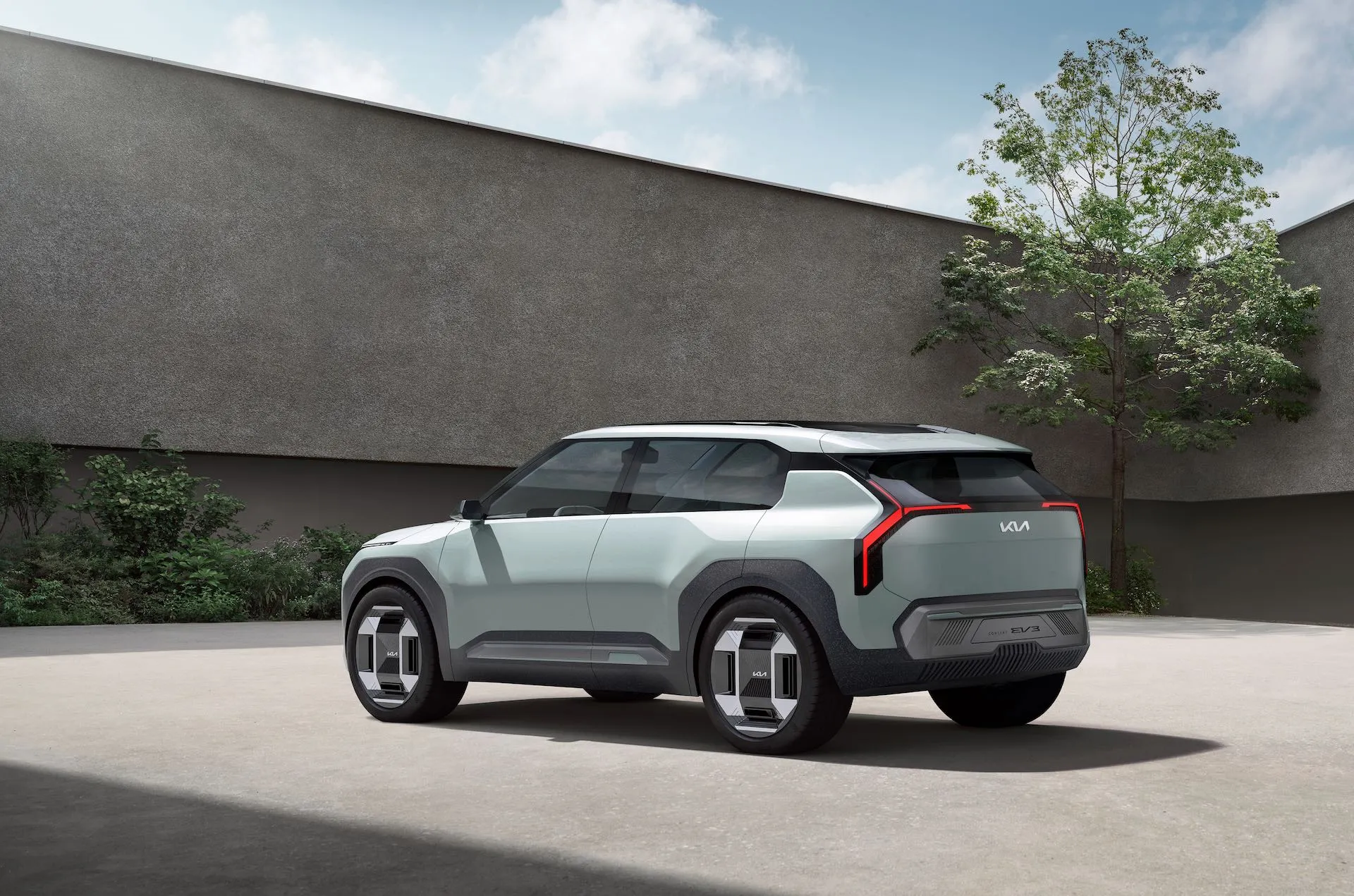
Kia has confirmed that its compact EV3 electric SUV is production-bound and will arrive next year. It hasn’t yet confirmed whether this model is coming to the U.S., although maybe that will be clarified after its May 23 debut. In a small set of close-cropped teaser photos, Kia showed that the production EV3 preserves many of the same bold design traits and so-called Star Map lighting theme as the concept.
According to the consultancy Wood Mackenzie, as quoted in a Reuters report this week, growing EV sales in both the U.S. and China could contribute to a significant cut in gasoline demand in 2024. That’s due not so much to an acceleration in EV growth but to the cumulative effect of all the EVs now in service.
And if you’re fine moving no faster than 25 mph, the tiny $11,990 Eli Zero EV might be just right for urban deliveries. In U.S.-bound form, the two-seat hatchback minicar goes up to 90 miles, and constrained by those speeds it’s unlikely range anxiety is going to be a concern.
While Volkswagen is a major player in the global automotive arena, the brand has a more measured presence in Malaysia, but things may be set to change in the coming future with regards to volume, if what minister of international trade and industry Tengku Datuk Seri Zafrul Abdul Aziz says rings true.
According to the MITI minister, the German automaker has plans to make Malaysia an export centre for the brand. In a post on X, he said that this was revealed by the company during his recent meeting with Volkswagen Passenger Cars Malaysia (VPCM) executives, said in response to a question he posed as to whether the company had plans to make the country an export hub.
In his post, he said that in addition to conventional models, the company also plans to produce EV vehicles in Malaysia, although no details were revealed as to which models are in that pipeline or when producion would begin.
Local assembly is a common thread in the brand’s present line-up in the country, with the Arteon R-Line, Golf GTI, Tiguan Allspace variants and the new Touareg R-Line all built at the Hicom plant in Pekan, Pahang. For the latter, it’s the first time it’s being assembled outside of Europe.
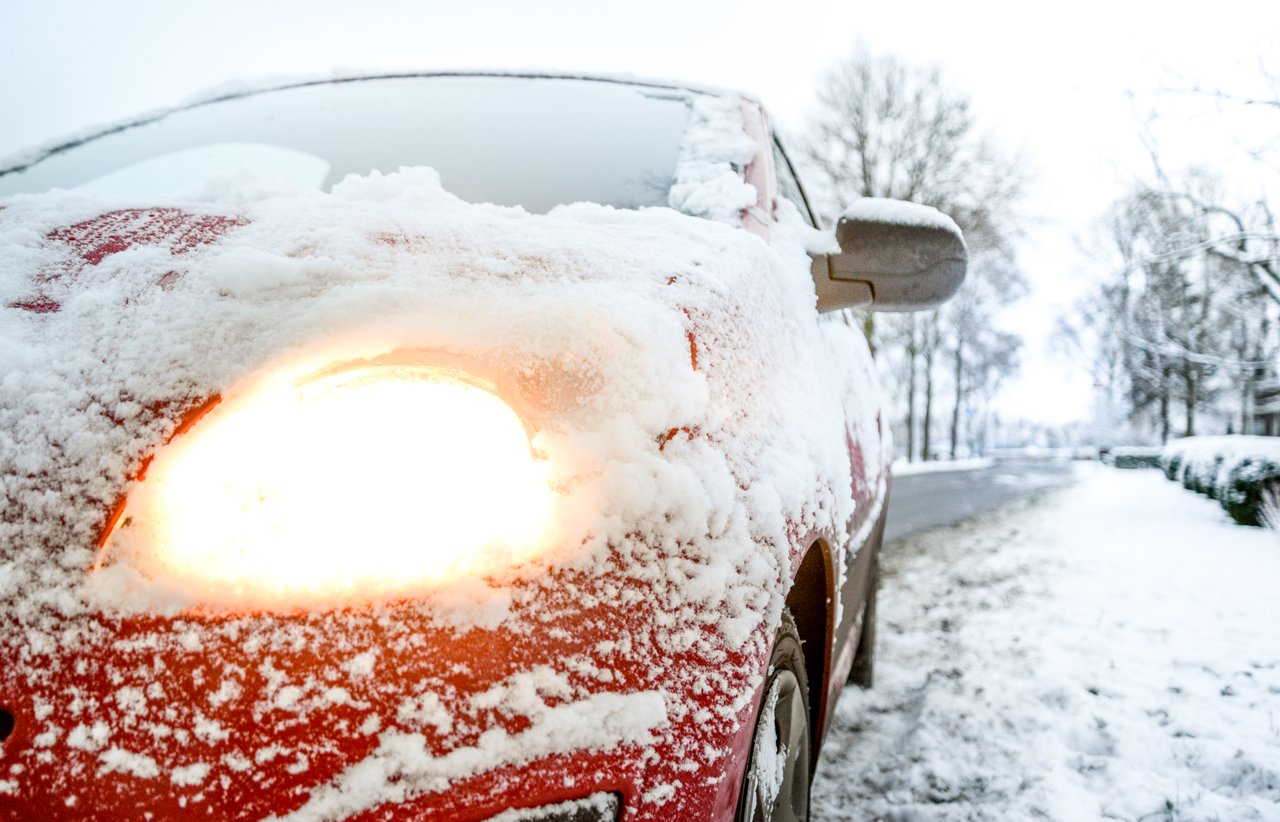
If you learned to drive or bought your first car in the spring or summer, you might not have had any experience driving in winter weather. You might not have spent much time driving in the dark, as most of your journeys can easily be completed inside daylight hours in the summer months. You might have limited experience driving in wet weather, and chances are you’ve never driven in snow and ice. Unfortunately, that’s all about to change. Ice and sleet might still be a while off, but more frequent rain showers and leaves on the roads mean that conditions are already more slippery, and your regular trip home front work might soon be in the dark.
Driving in winter can be scary for new drivers, and even long-time drivers often have more accidents during the winter months. The good news is, with a little preparation and a few helpful tips, driving in even the worst weather can be safe and comfortable.
The last thing that you want in the winter is to break down away from home in bad weather. Winter conditions put express pressures on your tyres, battery and engine. So, go into the season knowing that your car is in great condition with help from kentsmartrepairs.com. It’s also a great time to get a service.
Pack Some Supplies
Keeping your car well-stocked over winter can help you to avoid breakdowns, and mean that if you do get stuck, you’ll be safe—some of the things that you should have in your car include.
· Extra fuel – try to never drive with less than one-quarter of a tank
· An old rug or blanket, to place in front of your tyres if you do get stuck in snow
Give Yourself Extra Time to Make Even Short Journeys
In winter, most people drive more slowly, especially when it’s wet or icy. Make sure you give yourself longer to make trips, as traffic is bound to be worse than usual. You should also allow for ten minutes extra before you leave to de-ice your windows.
Brake and Accelerate More Slowly
Breaking times can be ten times longer in wet or icy conditions, and accelerating quickly can lead to wheel spins. Take your time with both to stay safe.
Give Yourself More Space
You are taking more time, and so are other people on the road. This means that you need to leave more space in front of you on the road.
Dress Comfortably
Drive in warm clothes, and flat, sensible shoes with good grip, to keep your feet stable on the pedals when it’s wet.
Avoid Driving in the Worst Conditions or if You are Ill
If you can, avoid driving completely when the weather is very bad. If you are ill, you are the best judge. You should be fine with a minor cold, but if it’s more severe, or you are taking medication which makes you feel drowsy, your judgement will be impaired, and you should avoid the road.
Driving in winter can be nerve-wracking if you’ve never done it before. But, after the first few weeks, you’ll have adjusted your driving style, got into better habits, and started automatically giving yourself more space and time. Go steady, and don’t worry.
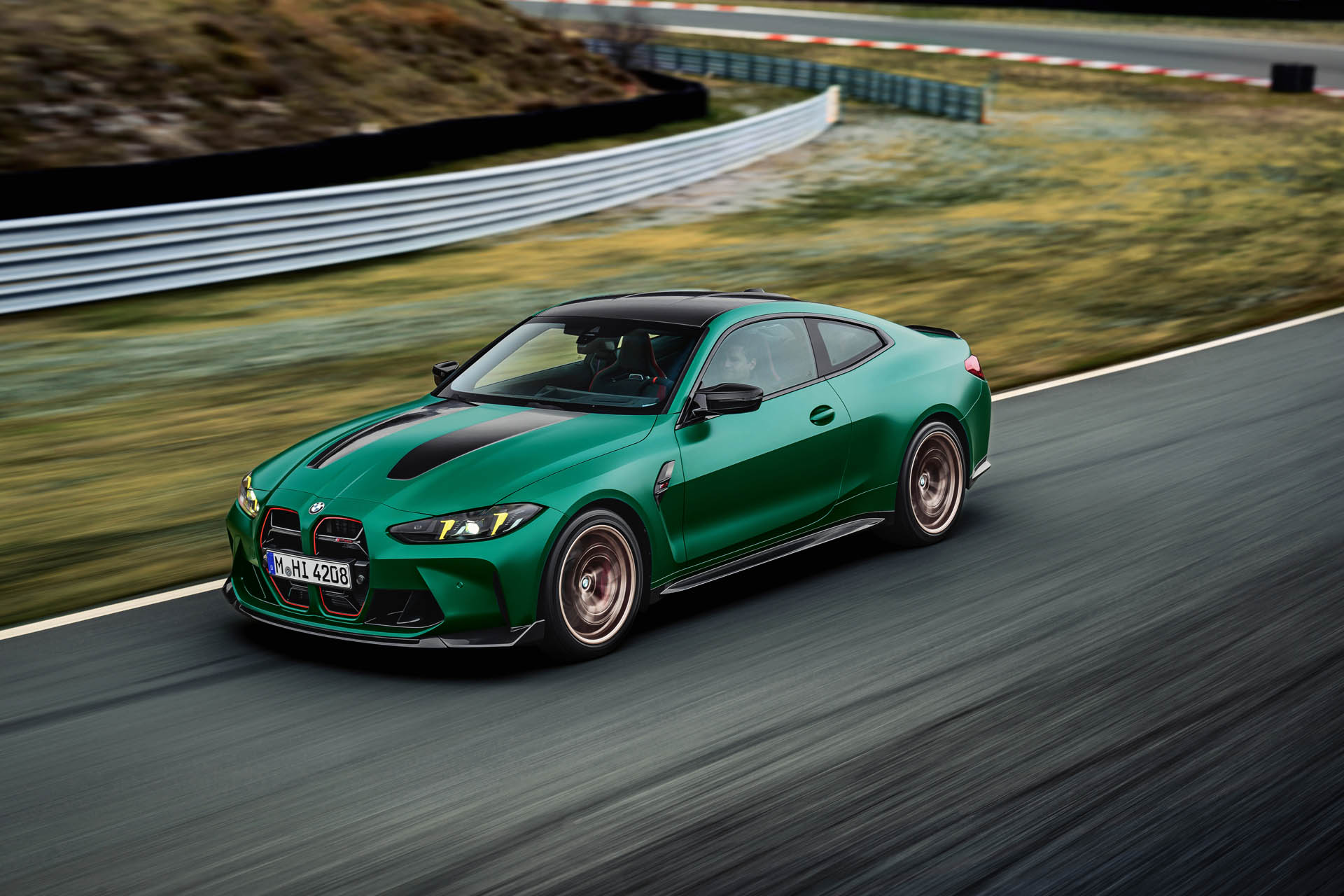
BMW has launched a new generation of its hardcore M4 CS. The car isn’t quite as extreme as the recent M4 CSL, but it comes with the same 543-hp rating, as well as a track-tuned chassis.
Bentley’s venerable 6.0-liter twin-turbocharged W-12 ceases production in the summer, but the automaker has a more powerful powertrain waiting in the wings. The new powertrain will be a V-8 plug-in hybrid setup that will enable a pure electric range of 50 miles.
Volkswagen has revealed the new California camper van based on the latest generation of its T-series of vans. It includes a pop-up roof tent that can fit a mattress, as well as sliding doors on both sides of the vehicle. It also features an available plug-in hybrid powertrain for the first time.
You’ll find these stories and more in today’s car news, right here at Motor Authority.
2025 BMW M4 CS rocks the party with 543 hp
Bentley’s new V-8 hybrid powertrain outguns former W-12
New VW California camper van lands with plug-in hybrid power
Review: 2024 Volkswagen Atlas Cross Sport takes two steps forward, one back
Rimac’s future lies in ground-breaking tech, rather than EVs alone
Tiny Eli Zero urban EV priced at $11,990, goes up to 90 miles—slowly
BMW to ditch lower-case “i” from its gas car model names
2024 Nissan Sentra recalled for potential loss of drive power
Everrati finalizes specs for electric Mercedes SL-Class W113 Pagoda
Rivian aims for 155,000 of its $45,000 R2 electric SUVs in Illinois
Ever walked into your motorhome, camper or RV toilet and been mortified by the horrible smell? It happens to all van users eventually, ESPECIALLY when the weather warms up.
There is a big difference between thinking to yourself ‘I should probably give the motorhome a quick sweep up and tidy’ and wondering with embarrassment ‘WHY does my RV bathroom stink so bad???!!!’
It’s time to talk bathrooms. RV, Motorhome and camper bathrooms, to be exact. And when I say bathroom, we all know I mostly mean the toilet, right? Yep, we’re going there, sewage smells and all. Prepare yourselves…
*We work hard to make this the best motorhome travel blog and road trip website possible, full of helpful content for you. The website is supported by our readers, so if you buy through links on this site we may earn a commission- at no extra cost to you. All opinions remain our own.
If you find this post useful, you can also treat us to a coffee – we promise to enjoy it while creating more useful content like this- we might even indulge in a biscuit (or two!)
Why does my motorhome/ RV toilet smell like a sewer?
Motorhome toilets work differently from ones in a house- and boy, don’t we know it! Everything you put into the toilet is kept in a holding tank, which then needs to be emptied later on.
This is also known as the black water or black waste tank… even if it’s a brownish cartridge which you have to empty yourself!
In ‘normal’ conditions, motorhome bathrooms shouldn’t have a horrible odour- and they DEFINITELY shouldn’t smell like a sewer when flushed.
How to keep a camper toilet from smelling
Camper and caravan bathrooms smell for the following reasons:
Need a good clean
Clog/ blockage
Damage to the black waste tank
Leaking toilet/ faulty seal
The biggest cause of toilet odour in your camper is methane gas build up- which is why it smells SO MUCH WORSE either at altitude or in hot countries. This is also why you don’t want your holding tank to dry out- more on that later!
7 easy ways to make your RV toilet smell amazing!
So, let’s stop your camper loo smelling like sewage and get rid of these toilet smells for you! Here are the 7 best ways we’ve found to minimise or stop motorhome toilet stink!
Use a decent product
It’s amazing how easy this is to solve if you have a good toilet chemical. We now use a product called Solbio organic toilet fluid, which is natural and doesn’t contain harmful chemicals- and it smells delicious (yes, seriously!)
It’s also safe to be disposed of in septic tanks or fosse, meaning we have more options to dispose of our toilet responsibly.
Watch the review of Solbio here:
We hope you found the video useful. If you did, we’d love it if you followed us on Youtube. New videos with tips for motorhoming and campervanning in the UK and Europe are released weekly.
Close the toilet flap securely
The first is fairly self-explanatory: make sure you close the flap between you and your holding tank after each use of the toilet. You’ll really regret it if you don’t!
This is often the biggest cause of RV bathrooms smelling like a sewer- the methane gas leaks out of a hairline crack somewhere and boy do you know it!
CLEAN REGULARLY to avoid RV toilet odors
I hate to say it, because NO-ONE enjoys cleaning a toilet, but it really does help. Give your bathroom a daily wipe down with antiseptic (or sweet smelling cleaner).
We keep ours in a handy spritz bottle and use after a shower to clean the area. We then wipe down the toilet (if you use disposable wipes, do NOT throw them into your toilet after use- put them in with the other rubbish.)
The other thing which can smell in an RV bathroom are the drains. A great product to use down the drains for the waste tank is Zoflora. Poor it neat down the shower drain when you have water in your tank and this will help keep the dreaded waste tank smells at bay. My friend’s favourite smell is the Linen Fresh!
We have a walk-in bathroom/ shower unit, so the drain in our motorhome works hard to get rid of EVERYTHING. Try to avoid putting ‘bits’ down your drains (both in bathrooms and kitchens) and clean the drains regularly.
A cup of baking soda mixed with water helps keep drains clean and smell free. Read more on how to clean your motorhome water tank.
Hair catcher
If you have (or are!) girls with LONG hair, you need to clear out the drain regularly. All that hair gets washed down the drain and collects other bits… which smells disgusting.
If you have this trouble, these are amazing for catching hair!! Seriously- so good. Just make sure they fit your camper drain.
USE ENOUGH LIQUID to get rid of holding tank odours
This is counter-intuitive, I know. ESPECIALLY if your RV toilet uses your fresh drinking water for flushing. But you NEED enough water in your toilet to stop smells- ‘dry’ camper toilets smell MUCH worse.
I could go into a long and technical description about methane gas release from dried out waste yada yada… but frankly, nobody needs to read that, so just trust me that wetter is better. Yes, you can snigger. I doubt many kids are reading this! 😉
Of course, don’t use TOO much water- you’ll fill up your RV waste tank much quicker. It’s a delicate balance.
EMPTY the waste regularly
The best way to stop camper waste smelling like a sewer is to… empty the sewer! The more often you empty, the less it will smell. This also comes back to getting rid of the stuff letting off the gases. Now, I know this is one of the biggest cons of RV life, but it’s a small price to pay for the freedom we love so much!
If you use a portable toilet cassette in your motorhome, always make sure to wash it out properly EVERY TIME (using the tap provided at the emptying station). We fill with water and empty at least a couple of times to make sure everything is out.
If you can’t empty your RV waste like that, this sewer tank rinser fixes onto your waste outlet and allows you to really get the tank clean.
BE CAREFUL WITH TOILET PAPER
We never ever put our toilet paper down the motorhome toilet. We use a bin in the bathroom which is for this purpose, and that bin gets emptied as often as we can, usually once a day.
We’ve lived on boats for 15+ years and this is perfectly normal for us, but I know that many people find this ‘a bit weird’.
However, if you don’t put your paper down the toilet you lessen the risk of blockages in your waste tank caused by wadded, wet paper. Many people use far too much paper- we’ve had to learn to decrease the amount we use.
Another advantage to not putting toilet paper in the cassette or black water tank is that the toilet doesn’t get full so often= more time for wild camping/ boondocking!
If this is too gross for you, use extra water every time you use your camper toilet- it helps soften the paper. Also, use the cheapest toilet paper you can find- NOT the ‘approved RV or motorhome paper’. Seriously, supermarket own brand stuff will dissolve really well!! But again- more water and ‘stuff’ in the toilet will cause it to fill up faster!
Stop camper and RV toilet smells!
Clever tricks to get rid of RV toilet smells
This is a great trick to keep your RV bathroom smelling nice all day long. Hide bathrooms scents or sachets somewhere out of the way, and they will release a delicious smell all day long.
Be careful if you have pets- make sure any sachets are out of range as many are not suitable for pets.
If your RV toilet smells when flushed, try putting a little scent or essential oil in the water flush. (NOTE- do NOT do this if your toilet uses your fresh water!!!!)
Fit a vent or SOG unit
Many RVs already have vents built in (often it’s a crack in these pipes which causes your RV bathroom to smell like a sewer (or rotten eggs; lovely!)
However, many campers and motorhomes don’t have any vent at all in their tiny bathrooms, so it can really help to install one.
A SOG unit is a vent which runs whenever the toilet flap is open. This helps release the gases which build up inside the toilet holding tank, sending them out through the vent instead and keeping your camper smell free.
We installed a SOG in our last motorhome and it was really useful. Here are a couple of tips for fitting it:
Make sure the vent for the SOG isn’t anywhere near the door to your motorhome. Otherwise, all those smells which have come out of the holding tank go straight back into your living area…!!
If your toilet is near the door, consider venting toilet odors up and out on the roof.
Make sure you close the flap SECURELY after using the toilet- or the SOG keeps running, and running.
[irp posts=”8979″ name=”Essential Advice for new Motorhome & Campervan Owners – A step by step guide for your first trip!”]
Can you use the bathroom in an RV while driving?
I would really recommend NOT using the bathroom in your camper while driving. Not only is it against the law (seatbelts!!), but can you IMAGINE what would happen if there should be an accident?!?!
Urgh.
Spare 5 minutes and pull into a service area before you use the bathroom (or get snacks etc!)
What are your favourite tricks to keep your RV bathroom smelling amazing and free of toilet odors? Share your tips below so we can all benefit.
Want more RV living tips?
This was a question from one of our lovely US readers, (hello!) so I’ve chosen to use US spellings. Even though writing odor without a ‘u’ has made my spell check go mental. You’re welcome! 😉
Last update on 2024-05-09 / Affiliate links / Images from Amazon Product Advertising API
Entering the Malaysian electric mobility market are the Ni Hsin EV Tech TC Max electric motorcycle and CPx Pro electric scooter. The TC Max is priced in Malaysia at RM19,900 while the CPx Pro retails at RM25,900.
Manufactured by Nanjing VMoto Manufacturing Co in China, the VMoto electric motorcycle and scooter are assembled in Malaysia by NH EV Tech in Malaysia under licence. A comprehensive sales and marketing network of distributors and dealers around the Peninsular and East Malaysia has been established to serve owners of the TC Max and CPx Pro.
The TC Max comes with the electric equivalent of 6.7 hp, or about the same performance level as a 125 cc motorcycle, with a maximum torque of 160 Nm measured at the motor. The 5 kW electric motor is mid-mounted, and drives the rear wheel via belt.
The large removable lithium polymer battery is rated at 60v 45Ah with a weight of 22 kg. According to the specifications sheet, the TC Max takes between three to four hours to charge with domestic current, giving a range of 95 km and a governed top speed of 95 km/h.
Weight of the TC Max is listed at 79 kg sans battery, with a total weight of 101 kg when charged and ready to go while seat height is set at 770 mm. A combined braking system acts of the front and hydraulic disc brakes, with suspension using upside-down front forks and a preload adjustable monoshock.
Meanwhile, the CPx Pro gets 220 km range from its dual battery packs located under the seat. The batteries power an electric motor producing the equivalent of 10.72 hp, with 258 Nm of torque while maximum speed is limited to 105 km/h.
Speed is limited to 90 km/h, with the CPx Pro tipping the scales at 125 kg including battery. NH EV Tech offers retail sales, rent-to-own and rental schemes covering B2B, B2G and B2C market segments, along with the ability to customise the TC Max and CPx Pro with accessories such as panniers, sirens and radio systems, for police, army and security enforcement unit duties.
An example of one of the most unusual Formula 1 cars in history is up for grabs.
This 1977 Tyrrell P34 six-wheeler will be one of the featured lots at RM Sotheby’s upcoming auction in Monaco. Scheduled to be offered for sale May 11, it’s an artifact of a bygone era where small, modestly funded F1 teams could pull off big technical innovations.
Tyrrell won multiple championships with Jackie Stewart in the early 1970s, but as the decade drew to a close the team was looking for something new to help it remain competitive. Designer Derek Gardner’s answer was a six-wheeled car with four small front wheels that dramatically reduced aerodynamic drag compared to taller, conventionally sized wheels. The effect was thought to be equivalent to extracting an additional 40 hp from the P34’s Cosworth DFV engine.
1977 Tyrrell P34, chassis number 8 (photo via RM Sotheby’s)
With Goodyear developing custom tires for the 10-inch front wheels, the P34 made its competition debut at the 1976 Spanish Grand Prix. Patrick Depailler qualified third—well ahead of teammate Jody Scheckter, who only managed 14th in the four-wheeled Tyrrell 007.
After switching to the P34, Scheckter put the six-wheeler on pole at that year’s Swedish Grand Prix, then led a Tyrrell 1-2 victory, with Depailler finishing second. That was as good as it got for the P34, however. It was raced less successfully in 1977 before Tyrrell switched back to a four-wheeled design for 1978. Scheckter would go on to win the 1979 F1 Drivers’ Championship with Ferrari, while Tyrrell would begin a long decline. The team entered its last race in 1998, although its assets were used to create what is now the Mercedes-AMG team.
The P34 remains the only six-wheeled car to race in F1. March and Williams tested six-wheeled cars, but never raced them. And unlike the P34, those designs used conventionally sized wheels all around, with two powered rear axles and a single unpowered front axle. So the P34 is truly a one-off unicorn design.
1977 Tyrrell P34, chassis number 8 (photo via RM Sotheby’s)
The car up for auction—chassis number 8—comes from Scheckter’s own collection. It isn’t one of the cars he raced, however. It was constructed as a spare tub, assembled into a complete car in the 1990s by Paul Lanzante, and passed through several owners before being purchased by Scheckter.
RM Sotheby’s expects chassis number 8 to sell for between 450,000 and 650,000 euros—approximately $485,000 to $700,000 at current exchange rates. It may not have competition history, but this car’s sheer rarity should justify a high final bid.
Bentley is set to retire its illustrious W12 engine this summer, marking the end of an era with the Batur Convertible as its final tribute. In its place, Bentley introduces a sophisticated “Ultra Performance Hybrid” system centred on a robust V8 engine. This new hybrid configuration aims to surpass the 740 horsepower of the Batur, boasting additional power thanks to its electric motor component, setting a new standard for Bentley’s lineup including the Flying Spur Speed and Continental GT Speed models.
While the exact torque figure remains under wraps, expectations hover around the impressive 1,000 Newton meters mark (approximately 738 pound-feet), promising a broader rpm range for enhanced performance dynamics. The anticipated ‘Ultra Performance Hybrid’ vows to be Bentley’s most exhilarating and responsive setup to date, combining peak dynamics with unparalleled efficiency. Bentley also hints at a significant electric-only range of 50 miles under the WLTP cycle, courtesy of an advanced, yet unspecified, battery pack.
This isn’t Bentley’s inaugural venture into electrification; the brand has previously introduced a 2.9-liter V6 hybrid system featured in the Flying Spur, delivering a combined 536 hp and 553 lb-ft. However, the new V8 hybrid is designed to anchor a fresh series of “daily supercars,” moving away from the traditional W12 that has seen over 105,000 units produced in two decades, enhancing power by nearly 40% and reducing fuel consumption by 25%.
Amid shifting automotive paradigms, Bentley has adjusted its all-electric rollout plans, now targeting 2033 for a fully electric range, with the debut EV model expected to launch in late 2026. This strategic pivot reflects a broader trend within the Volkswagen Group, as seen with Audi’s discontinuation of the R8 and its V10, and Lamborghini’s upcoming plug-in hybrid V8 replacing the Huracan. Meanwhile, other affiliates like Bugatti are developing a new V16 hybrid for future hypercars, underscoring a group-wide transition towards more sustainable, yet equally formidable, performance technologies.
Japan’s railway system, regularly hailed as the best in the world, connects the country’s major cities, islands, landmarks, towns, and villages, and is undoubtedly the most convenient and affordable way to explore this incredible place.
Understanding how to navigate Japan’s railways is, therefore, absolutely essential to making the most of your time in this special country and having the very best travel experience. If you want to see as much of Japan as you can and make every second count, then we can tell you how with our pro tips for navigating the country’s fast, efficient, and clean railway system.
We’ll explain everything you need to know, from train types, seat classes, and buying tickets, to why a Japan Rail Pass is such a smart investment, in our comprehensive train travel guide.
Here’s an overview:
Get Your JR Pass
We highly recommend getting the JR Pass for unlimited train travel in Japan. Here’s why:
✔ Unlimited Travel: Enjoy unlimited access to most JR railways, including high-speed Shinkansen, local trains, and buses.
✔ Cost Savings: Save significantly on travel costs, particularly beneficial for long-distance and multiple journeys.
✔ Simplicity: Avoid the hassle of purchasing individual tickets by using your pass to easily access trains.
✔ Flexibility: Experience the freedom to explore spontaneously without worrying about extra ticket costs.
✔ Additional Benefits: Benefit from extras like free reserved seat bookings and discounts on other JR transport services.
Fast, safe, efficient, and clean, Japan’s trains are everything you’ve heard and more.
They also connect the entire country, from the northernmost island to the southernmost, enabling travelers to reach everywhere they might want to visit in Japan. Of course, a train system this big and complex can seem a little daunting for first-time visitors and that’s where we come in.
How to Navigate Japan’s Railway System: Types, Tickets & Tips
Let’s start by giving you a quick overview of the rail system and a few key facts
Japan’s Railways are operated by the JR (Japan Railways) Group. The JR Group consists of six independent train operators (JR Hokkaido, JR Central, JR East, JR West, JR Shikoku and JR Kyushu). Together, these regional rail companies connect Japan’s six main islands. There are also smaller private companies who run additional services.
Want to see a map of the whole JR network? We’ve put together an interactive map of the network’s 4,800 train stations and 23,000 km of rail lines, which offers a brilliant resource for anyone planning to explore Japan by train.
Train Types
There are a number of different train types in Japan, from the famous and futuristic Shinkansen bullet trains to quaint local services.
Shinkansen The famous ‘bullet trains’ (the nickname comes from the bullet-shaped nose of their original design) connect Japan’s main islands, from the city of Sapporo in the north to Kagoshima in the south. In between those two stops, these incredible high-speed trains visit almost all of Japan’s major cities – Tokyo, Nagoya, Kyoto, Osaka, and many more. The Shinkansen are only operated by the JR Group and have separate ticket gates and platforms. Traveling on a bullet train is an attraction in itself for many visitors to Japan. Check out: The Complete Guide to Experiencing the Shinkansen High-Speed Trains in Japan
Limited Express The fastest non-Shinkansen trains in Japan. Limited Express trains are still very fast and only stop at major stations. There are more than 100 different types.
Express Another fast service. Express trains stop at fewer stations than Rapid or Local trains to reach main destinations faster.
Rapid Essentially a faster version of the local trains below. These trains skip some minor stations to achieve a faster service. No seat reservations are needed on rapid trains.
Local Regular trains that stop at every station. Local trains cost the same as rapid trains above. These trains also don’t have seat reservations.
Special trains These are generally known as ‘joyful’ trains in Japan and are special trains and services often based around characters, special events, or themes, from Mickey Mouse to restaurant trains and resort excursions. These often come with wide view windows, special comfort seats, beverages and food, and may also involve activities such as a mobile art gallery, local dancing, or even sake tasting.
Seat Classes
While traveling on Japan’s trains, there are generally two main types of seat classes, although a third, gran class, is available on some Shinkansen trains.
Ordinary These are standard seats. Japan’s ordinary seats are comfortable, spacious, and clean.
Green Car / Green Class The equivalent of first class with more luxurious seating and extra space. Green cars can be identified with a four-leaf green clover symbol on the carriage. Extras include drinks, oshibori, hand towels and candy.
Gran Class Business-class style luxury seating with perks like eye masks, sake, sashimi, blankets and massage seats. Gran class is only available on certain Shinkansen trains.
Introducing: The Japan Rail Pass
The Japan Rail Pass provides unlimited travel on the entire national JR network, including the high-speed bullet train lines and transport to and from the country’s airports.
Whether you’re planning to explore the whole country or just travel from Tokyo to Kyoto or Osaka and back again (for example), a JR Pass can offer much better value than purchasing individual tickets – and it’s only available for international visitors.
Passes are valid for 7, 14, or 21 days once activated and give you access to all Japan Railways Group (JR) trains, buses, and ferry services across Japan. This includes the famous Shinkansen bullet trains. One of the many benefits of the JR Pass – alongside unlimited travel on JR trains and the Shinkansen – is free reservations and seat selection. Having a pass means you’ll also be able to hop on and off trains as needed without having to buy a ticket, which gives you a huge amount of extra flexibility as a traveler. You can even upgrade your JR Pass to a Green Class JR Pass for unlimited first-class travel.
Japan Rail Passes can be bought up to three months in advance and need to be activated on your arrival in Japan. Regional JR passes are also available if you’re definitely only visiting one area of Japan. Finally, you can also purchase individual tickets for single and return journeys from self-service ticket machines or ticket counters at stations, although it’s worth noting even if you’re only planning on using the train once or twice during your stay, it might still be better value to use a JR Pass.
Alongside the detailed information we’ve already provided, we’ve also put together a list of pro tips for Japan’s railways to help you have the best possible travel experience.
1. Planning makes perfect
The more time you spend planning your train journeys before you arrive in Japan, the less time you’ll waste on the ground. If you do your research in advance to work out the best and most efficient train journeys to reach the places most important to you then you’ll spend more time enjoying the destination and less time travelling.
2. Arrive early, never late
Japan’s trains are incredibly punctual and almost always leave on time so it’s a lot better to be early than late. Arrive at the station in plenty of time and you’ll be fine. In fact, you’ll be amazed at how timely Japan’s trains are compared to the rest of the world!
3. Modern technology is your friend
The likes of Google Maps, Navitime, and Jorudan, can be extremely useful for live updates when you’re out and about. Be sure to invest in a PocketWifi device before you travel however to stay connected to the internet when you need it. PocketWifi rentals offer unlimited Wifi from any location, and on up to five devices, allowing you to navigate and check live timetable updates on the go. Read more about usual apps in our guide to Hyperdia alternatives.
4. Find the right departure platform
One quick tip that can be a lifesaver when in a hurry is learning to find the right departure platform. There can be a lot of information on both your ticket and the departure screens, like train name, stops, type of service and much more. A fast way to find the right platform is to look at the departure times first, then look at everything else. An alternative is to ask what platform your train will depart from when reserving the tickets and ask the staff to write this on your ticket.
How to Navigate Japan’s Railway System: Types, Tickets & Tips
5. Be aware of Japanese train etiquette
Japan is known for valuing good manners and its etiquette rules definitely extend to train journeys. Keep your phone on silent, try to avoid taking calls if possible, listen to music through headphones only, keep your voice down while talking, dispose of your litter, and store your luggage correctly, are all good basic tips if you want to stay in the good graces of Japanese commuters.
Luggage regulations on most of Japan’s trains are fairly relaxed. In general, you may bring any size or number of bags within reason, as long as it does not inconvenience other passengers. The one exception is the Shinkansen bullet trains, which do have more formal baggage regulations.
When boarding the Shinkansen, the following regulations apply: You may bring up to two pieces of baggage on board free of charge. For each bag the total of the length, width and height must not exceed 250 centimetres, the length must not exceed two metres and the weight must be no more than 30 kilograms.
Luggage pieces less than 160 cm (sum of height x length x width) can be brought aboard without prior reservation.
For luggage pieces between 160 cm – 250 centimeters, a prior reservation is required, which can be made for free. In case no reservation is made, then a 1,000 yen fine will be charged, and your luggage may be moved by the train conductor.
Luggage over 250 centimeters may not be brought on the train and will need alternative transportation. Reservations can be made for free through the Eki-Net App, at a ticket machine or in person at a ticket window.
Using the JR Pass, we suggest making your seat reservations and luggage reservations at the same time. JR Pass holders who upgrade to Green Class get an extra luggage allowance of two suitcases per person.
Finally, if you have especially large luggage, you may want to consider utilizing the lockers at stations or luggage forwarding services.
How to Navigate Japan’s Railway System: Types, Tickets & Tips
7. Reserved vs non-reserved
Depending on the type of train you’re traveling on, you’ll come across services with reserved and non-reserved carriages.
The latter simply means you can sit anywhere within these carriages if you have a non-reserved ticket. In reserved carriages, you will need to pre-book your seat reservation in advance. Reservations are free for JR Pass holders and can be made at ticket offices. We have more detailed information on reserving seats further below, so keep reading.
It is a good idea to reserve a seat if you can. Seat reservations without a rail pass can cost anywhere between 200 and 1,000 yen each, but they are free with the JR Pass, which is another good reason to consider buying one for your trip.
Making a reservation not only saves money, it also saves time, as there’s no need to queue for a seat at the station platform. You will also have the assurance that you can sit together with your fellow travelers. All reserved seats are guaranteed.
8. Book ahead (or avoid traveling) during busy periods
On a daily basis, you may want to avoid commuter rush-hour periods, which are similar to those in other countries (8 am-9 am and 5 pm-7 pm). Otherwise, you’ll also want to be aware of holiday periods when trains might be fully booked. These include New Year, Obon, and Golden Week, which are popular holidays in Japan. The famous Cherry Blossom season is another busy time of year in Japan for tourists.
Key dates to watch out for are 28 December to 6 January (New Year), 27 April to 6 May (Golden Week), and 11-20 August (Obon season). The same goes for festivals, like the Gion Matsuri in July, the Takayama Festival from April 14-15 and Tokushima Festival August 12-15.
Generally speaking, booking ahead and making seat reservations is a good way to ensure you have a seat whatever time of year it is.
9. You’ll need a prepaid travel card for Japan’s subways
Alongside a JR Pass for countrywide travel, a prepaid travel card for inner-city journeys is a must! These IC cards – similar to London’s Oyster card system – are the easiest way to get around Japanese cities using excellent public transportation.
As such, you’ll definitely want to invest in a prepaid travel card such as an ICOCA, PASMO or Suica card. IC cards like these can be topped up and refunded as needed and they work by tapping or waving them over the card reader as you pass through the ticket gates.
As a bonus tip (and not just for train travel), be sure to carry cash where you can in Japan as physical cash is still used a lot across the country.
10. Take a moment to enjoy Japan’s trains and train stations
Both Japan’s trains and stations are unique, state-of-the-art, and full of things to see and do. They aren’t just transport hubs or means of transport to get from A to B, they’re an experience in themselves.
Make sure you take a little time to stop, look around, and enjoy both the stations and trains themselves as part of your journey. Some stations are major complexes packed with shops, restaurants, and facilities, for example, while others are picturesque, quaint, and nostalgic.
You’ll also find the world’s best train food at stations – Ekiben. Pronounced ‘air key ben’, the Japanese word ‘Ekiben’ is a portmanteau of the kanji symbols for ‘train station’ and ‘boxed meal’ i.e. ‘station-bento’. Its name perfectly describes what it is – a lunch box sold at train stations for eating during your rail journey. Read our Guide to Ekiben for more.
Similarly, Japanese trains, particularly the Shinkansen, come with features such as onboard drinks and snacks services, power outlets for phone charging and laptop use, seats that can rotate 180 degrees, and more.
Navigating Japan’s Railway System
When it comes to getting around Japan’s train stations, buying tickets, and boarding trains, you may be pleasantly surprised to discover it is a lot easier and less daunting than you may think. You might be surprised to know that Japanese train stations have signs and departure boards in English as well as Japanese. You may also see signs in Chinese and Korean, reflecting the country’s status as a global travel destination.
How to Reserve Seats & Board the Train
Japan’s trains have both non-reserved and reserved seats in separate cars. Certain services are fully reserved, and others may be switched to fully reserved during national holidays like the New Year, Obon, or Golden Week, so be sure to check before you travel.
If you are traveling with a Japan Rail Pass then one of the many advantages of this is that you can make advance seat reservations for free. Seats can be reserved free of charge at Midori no Mado Guchi ticket offices, recognizable by their green sign, or at Travel Service Centres and JR-associated Travel Agencies.
For several years, JR East trains have been the only service that has offered an online English language reservation system, which could be used to make bookings from outside of Japan, with all other lines requiring in-person reservations once in Japan. To reserve a seat, simply take your JR Pass to the Midori no Mado Guchi, specify which train you wish to reserve a seat on, stating smoking or non-smoking. You will then receive your reserved seat ticket and simply need to show your JR Pass at the ticket gate and go to your platform.
Be sure to keep hold of your ticket as you may have to present both your JR Pass and seat reservation to the ticket inspector.
As far as boarding a train goes, it’s relatively simple – after arriving at the station, you will need to go through the regular ticket gates into the paid fare zone and head to the platform. Please note if you’re traveling on a Shinkansen train there will be a second set of ticket gates. Shinkansen also has its own dedicated platforms.
You’ll find your carriage number on your ticket. Carriage numbers can also be found printed on the ground and hanging from signs (non-reserved carriages are usually numbered 1-5). Line up behind the white line and wait for your train. Once the train arrives, enter your carriage and find your seat (seat numbers are indicated above the window). Otherwise, you can sit in any seat if it’s an unreserved carriage.
After that, simply sit back and relax!
Explore Japan with a Japan Rail Pass. Unlimited travel on Japan Rail trains, buses and ferries. With our vibrant online community, dedicated expert support team and class leading price, service and delivery speeds.
A group of friends gets together here at Jellystone every year around the 4th of July holiday, and for once our schedule was free and we were able to tag along in a friends camper to join the group. This park and the staff get an absolute top notch rating from us!
The Cassville Campers, our group of friends from the Cassville section of Jackson NJ, range in age from Toddler to Grandparents. We fall right in the middle. Our son is just about to get his drivers license and be too cool to hang with his parents anymore. Jellystone was the perfect puppy friendly blend of sun and shade, quiet and active, as well as young and old.
Fun For The Grand Kids
There is a great playground area complete with swings, sand, jungle gyms, and bouncy giant air pillow. For the youngest of travelers, the pool area has the best splash parks I’ve seen at a moderately sized campground! There are water slides that empty into ankle deep water for the pint sized pool goers (and us Uncle’s that get pinky sworn into spending the day at the splash park).
If you like a little more excitement in your water slides, there are two side by side twisty turny slides that are great for racing your niece to the bottom. I’m not sure what I was doing wrong, but no matter which one I was on it was always the slow side. I may have to look into a high performance bathing suit for next time.
There are also guest activated splash zones, water cannons and fountains to keep you cool in the shallow water park area if you don’t get called out by a 9 year old on race day.
The Big Kid Pool
Next to the splash park is the big kid pool. There is plenty of room in here for everyone and its got 3 different fun zones with basket ball nets, a volleyball section and the log float section. Interspersed between and around them is plenty of room to hang out with your friends and just escape the summer heat.
For The Older Crowd
If you prefer a slightly less active pool, you can always head up to the upper deck area near the private cabanas that can be rented by the day with a view of the entire pool area (Great place to escape the sun when it isn’t your turn for slide racing).
Adjacent to the upper deck pool is the adults only hot tub. Great place to hang without all the splashing if you haven’t gotten around to making your own little campers yet.
The Park As A Whole
We spent 4 days at Jellystone in Quarryville PA and don’t have a single negative thing to say about the park or the staff. The grounds and maintenance staff is always on the move keeping the resort like cleanliness up to par.
The ranger station and store staff were always friendly and courteous. There were always activities for every age group including us adults, and a bark park for the pups.
The sites were clean and level as well as set up so that you didn’t feel like you were right on top of your neighbor. There are plenty of rest rooms with showers in the camping areas, dish washing stations and laundry amenities.
We would rate this park a 5 out of 5 stars. We liked it so much that we already booked our own site for next year. Now I just need to find that high performance bathing suit…
The technical storage or access is strictly necessary for the legitimate purpose of enabling the use of a specific service explicitly requested by the subscriber or user, or for the sole purpose of carrying out the transmission of a communication over an electronic communications network.
Preferences
The technical storage or access is necessary for the legitimate purpose of storing preferences that are not requested by the subscriber or user.
Statistics
The technical storage or access that is used exclusively for statistical purposes.The technical storage or access that is used exclusively for anonymous statistical purposes. Without a subpoena, voluntary compliance on the part of your Internet Service Provider, or additional records from a third party, information stored or retrieved for this purpose alone cannot usually be used to identify you.
Marketing
The technical storage or access is required to create user profiles to send advertising, or to track the user on a website or across several websites for similar marketing purposes.