In certain circumstances, such as rotting frames or moisture intrusion, replacing windows is better than patching over an issue. Signs it’s time for replacement are foggy appearance, difficulty opening/closing windows, draftiness, etc.
Cost
Image courtesy of Unsplash
Fixing windows that aren’t functioning as they should can be expensive; however, repairs often come out cheaper than replacement and can enhance the security, beauty and energy efficiency of your home.
Common repairs involve lubricating and adjusting hardware that’s sticky or difficult to operate, and adding weather strips as an energy efficiency measure to avoid drafts and keep your home energy efficient. A professional can also add weather strips as additional security.
Cracked glass repairs are another common necessity. A professional can use glass adhesive, similar to that used for auto maintenance, to fill and seal cracks quickly and efficiently. This approach works well on single-pane windows and double-pane windows without inert gas between their panes.
However, if your windows are damaged beyond repair or contributing to poor energy performance, replacing them may be more cost-efficient in the long run. Replacing older windows with energy-efficient ones may reduce drafts, air leaks and thermal bridging in your home; making replacement a better investment over time.
Energy Efficiency
Image courtesy of Unsplash
Fixing broken windows is often beneficial, but considering replacement can also save money over time. Older windows often lack modern energy-saving features that could reduce your energy bills significantly and lead to long-term cost savings.
If you notice drafts, fog, condensation between window panes or rotting frames in your Anne Arundel County home windows, or have an uncomfortable draft coming through them, it may be time for replacements. Not only can these issues look unsightly and pose safety hazards but can damage and devalue your house too!
Image courtesy of Unsplash
Change your windows for comfort and value alike by investing in newer ones that provide better sound insulation, reduced external noise levels and temperature regulation, creating an oasis of quiet throughout the year. In addition, energy-efficient models with Low-E coatings and double or triple-glazing insulation capabilities offer maximum insulation performance; you also get to select from various styles and materials to suit both the aesthetics of your home as well as personal preferences.
Style
Image courtesy of Unsplash
Some homeowners opt to replace their windows when they no longer function correctly or appear unappealing. Repair may be feasible in certain instances; if cracks in your window continue to form or the wood strips that separate panes of glass are peeling or rotting away, replacement might be more sensible than repair.
Older windows may contain lead paint that poses serious health risks to children and pregnant women. While it is possible to remove and replace this paint layer as needed, sometimes replacing an entire window frame is best.
Replacing windows in your home can make it more energy-efficient, lower your utility costs, and increase its value. Consult a professional for advice to determine the optimal course of action.
Security
Image courtesy of Unsplash
Modern windows with features like double-pane windows and tempered glass are more durable, but not indestructible. A broken window can cause moisture damage that increases maintenance needs in the future and even lead to mold, mildew and pest issues in your home. Furthermore, it allows noises from outside to enter more easily while decreasing energy efficiency.
Replacement windows can help increase home security. Tempered glass breaks into small, harmless pieces instead of sharp shards which reduces injury risks; plus some come equipped with enhanced locking systems designed to deter intruders from breaking in to your property – both features that increase home security while increasing value at once – making these features an excellent way to add features that increase value and protect you in case you decide to sell in the near future.
BBB accredited replacement window manufacturers іn Calgary provide high-quality, energy-efficient options tо enhance your home’s security and appearance. Trusting professional manufacturers ensures you get the best products and installation services for your needs.
For more luxury reads and tech gadgets, click here.
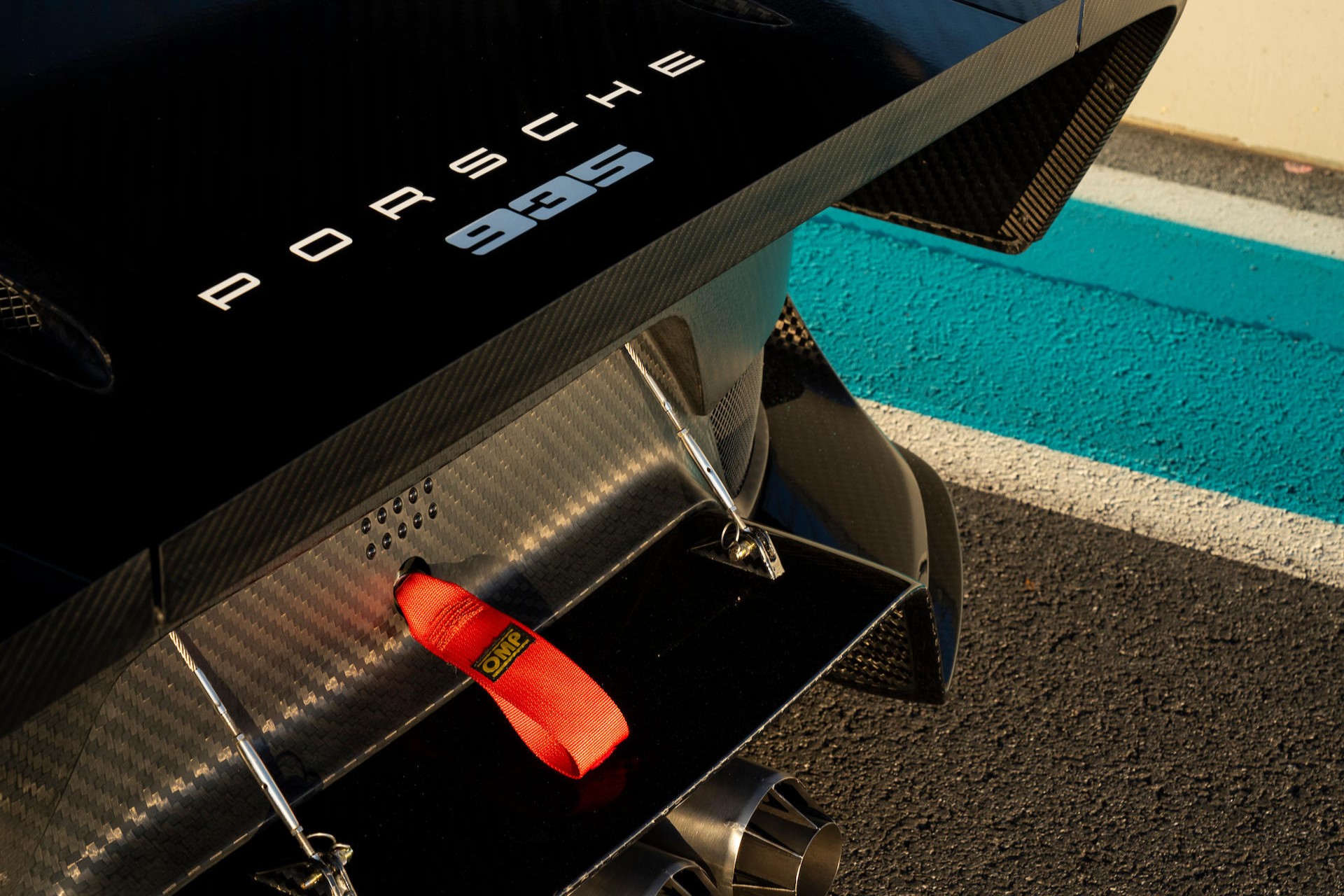
Bonhams Cars will be offering a stunning 2019 Porsche 935 featuring a rare matte carbon finish. With just 44 miles on the odometer, this is the first time that this delivery mileage 935 will be offered in an auction.
Number of 16 of only 77 Porsche 935s made, this particular example with its menacing bare carbon fiber look looks ready for the track, especially with its black center-lock wheels and Michelin rain tires. Upgraded features include a $44,300 factory spares package, a passenger seat for adrenaline-fueled joyrides, and even dual-zone air conditioning for your lucky passenger.
Porsche unveiled the limited edition 935 in 2018, reviving the legendary name and pushing the 911 platform to its limits. Inspired by the dominant 1970s racer, the new 935 boasts an aggressive widebody kit and massive rear wing in lightweight carbon fiber. This track-only special honors the iconic 935 while offering unmatched performance.
The modern 935 uses the 911 GT2 RS Clubsport as a base and features a 700-horsepower engine with lightning-fast PDK gearbox. Inside, a race-inspired cockpit with yoke steering wheel and fire suppression system awaits.
This exclusive Porsche is a true collector’s item, a masterpiece designed for pure track exhilaration. Estimated at a staggering $1.675 million to $2 million, it’s set to be the star attraction at Bonhams Cars’ upcoming auction on May 4th, following F1 qualifying at the Miami Grand Prix.
If you’ve ever looked up at the sky and watched a plane fly by, you’ve probably noticed a long white cloud streaming behind it and wondered what that line is. I spoke with Amanda Martin, the acting warning coordination meteorologist and senior aviation meteorologist at the Aviation Weather Center, to learn precisely what contrails are and how they impact the environment. “Contrails are condensation trails left behind a plane, composed of tiny droplets of water and by-products of jet fuel combustion,” explains Martin. “Contrails are a type of human-made cloud.”
Meet the Expert
Amanda Martin is the acting warning coordination meteorologist and senior aviation meteorologist at the Aviation Weather Center.
How Contrails Are Formed
Sometimes, you look up at the sky near an airport and see dozens of contrails, while other times, you don’t see any at all. That’s because it takes specific atmospheric conditions to create contrails. “Contrails are formed when the hot air from the plane’s exhaust mixes with the cooler temperature and lower pressure environment at flight level,” says Martin. “This mixing occurs directly behind the plane and is visible as a contrail.”
The air needs to be both cool and humid for contrails to form. If humidity is low, the contrail will evaporate quickly. If humidity is high, contrails will persist and grow. The water vapor from aircraft exhaust turns to ice crystals and combines with water already in the air to create these clouds. They can grow several miles long and 600 to 1,300 feet tall when persistent.
There are three main types of contrails: short-lived, persistent non-spreading, and persistent spreading. “The only difference to contrails is in regards to their duration, and this is dependent on the large-scale weather pattern,” elaborates Martin. “When contrails are persistent spreading, they will start to resemble cirrus clouds.”
Short-lived contrails aren’t cause for much concern, as they dissipate quickly, but persistent contrails may be an environmental concern, as they can trap the heat that should be released and ultimately contribute to climate change.
According to the Environmental Protection Agency (EPA) and Federal Aviation Administration (FAA), contrails don’t directly threaten the public, but they may contribute to human-induced climate change. According to a study released in January 2021, contrails make up 57 percent of global aviation’s contribution to climate change. However, most of these contrails are formed by a small percentage of flights. As such, it would be relatively simple to mitigate the impact of contrails by altering the routes of flights that are most likely to produce contrails. They require specific atmospheric conditions that can be avoided when planned for.
According to another study released just a few months later in May 2021, it would cost less than $1 billion per year to prevent most of the damaging impacts of contrails, while the benefit would be worth more than 1,000 times that cost. According to a study released in March 2024, “navigational contrail avoidance will require minimal additional cost (0.08 percent) and fuel (0.11 percent) investments to achieve notable reductions in contrail climate forcing (−73.0 percent).”
Of course, the airline industry is always innovating, and companies are already looking for ways to mitigate the climate impacts of contrails. Airlines like Air France are addressing these environmental concerns by conducting thorough research and tests to identify when and where contrails are most likely to form and developing ways to avoid these areas. Breakthrough Energy partnered with Google Research and American Airlines to develop software that plans flight routes to avoid areas where persistent contrails are likely to form.
Grand Lisboa Palace Resort is a jewel of Macau’s hospitality landscape. With its exquisiterange of elevated amenities including curated health clubs, luxurious spas, spacious and cozy hotel accommodations, a one-of-a-kind lush green landscape, and decadent dining selections (some of which hold a five-star rating). Grand Lisboa Palace Resort Macau offers 1350 guestrooms, each designed with its own take on a modern Chinoiserie-inspired interior. Grand Lisboa Palace Resort goes beyond providing guests with a stunning tribute to Macau’s rich cultural heritage and vibrant traditions but also indulges visitors with a luxury experience they won’t soon forget. LUXUO delves into the details, spaces and experiences that make Macau’s Grand Lisboa Palace Resort stand out from hotels across the globe.
Nature Meets Wonder at Jardim Secreto
Jardim Secreto is the botanical jewel of the Grand Lisboa Palace Resort. Nestled between the resort’s inspiring towers, the verdant Jardim Secreto offers lush greens, landscaped patios and romantic gazebos perfect for an evening stroll or a calming respite. Available exclusivity for guests at the resort, visitors can rediscover serenity as they embrace the tranquillity of a magnificent, European-styled garden centered around an ornate dome that illuminates the area with an ethereal glow after sunset.
Immerse yourself in the splendor of this mesmerising outdoor location, perfect for hosting memorable private and corporate events catering to 80 to 200 esteemed guests. Whether it’s a heartfelt ceremony, lavish feast, sophisticated cocktail affair, or high-profile product unveiling, Jardim Secreto guarantees an unforgettable celebration amidst its stunning panoramic views.
Gastronomical Excellence
A first-of-its-kind in Macau dining concepts, the hotel’s restaurants are curated by a bevy of acclaimed chefs. Alongside being listed under Forbes Travel Guide Five-Star fine dining, “Palace Garden” also received the 100 Top Tables 2024 award from the South China Morning Post (SCMP).
Palace Garden delivers authentic Taishi cuisine including the Premium Partridge Bisque with Bird’s Nest and King Tiger Prawns, prepared by the restaurant’s head chef using the finest ingredients and masterful culinary techniques. The restaurant’s interiors have a regal ambiance that celebrates the splendour of an imperial garden with a 35-metre-long mural of chrysanthemums and an installation of custom-made Suzhou embroidery.
“Don Alfonso 1890” provides Italian Michelin-starred family-run meals alongside boasting exceptional wine lists that have earned the 2023 “3 Glass Award” ratings from China’s Wine List of the Year Awards. Guests can savour culinary creations and exceptional vintages that delight the senses.
While the bespoke furniture and Rosenthal x Versace tableware echo Versace’s Asian Dream motif, it is the authentic Italian cuisine of Southern Italy that is truly worth a visit from guests and food enthusiasts alike. As a pioneer of farm-to-table cuisine, Don Alfonso 1890 sources fresh produce from its own farm, Le Peracciole, in Punta Campanella, resulting in a menu curated by Head Chef Federico Pucci that includes meticulously crafted dishes made from premium seasonal ingredients and vegetables that delivers a gourmet taste of Naples straight to your table. Finally, the handcrafted terrazzo floor with rosette and flower motifs is inspired by the historic Versace Villa on Lake Como, adding to the restaurant’s exceptional culinary experience. Every element of the restaurant’s design and décor is married with the lush glamour complimenting the savoury cuisine for a feast of the body and senses.
For something bold yet relaxed, chic yet contemporary opt for the “Mesa by José Avillez”. Stylishly blending gastronomy and design, Mesa by José Avillez features bold décor combined with an oriental fine dining experience that has earned the restaurant a rank among the South China Morning Post (SCMP)’s 100 Top Tables 2024. Mesa by José Avillez serves signature Portuguese cuisines with a menu that was collaborated on by a Michelin-starred chef alongside a bar with tailor-made signature cocktails crafted based on Macau and Portugal Landmarks.
Then you have The Grand Buffet which boasts a comprehensive menu made of rich flavours and high-quality ingredients from across the Asian continent showcasing the best of China and Southeast Asia’s exquisite dishes. This unrivalled culinary buffet is guaranteed to indulge the tastebuds with extensive live-cooking stations and even a chilled seafood station. In the evening Macau’s only dedicated outdoor BBQ pit La Parilla opens its doors. With sizzling sounds and delicious aromas in the air, guests are welcomed to succulent seafood and meat on the grill.
A Relaxing Oasis
Experience true revitalisation with The Spa at Grand Lisboa Palace which, provides you with a range of signature treatments set in a luxurious interior that reflects Baroque and Chinese influences.
Get energised with a refreshing dip into the temperature-controlled indoor and outdoor swimming pools. Don’t worry about breaking your fitness routine as Grand Lisboa Palace Macau offers top-tier bespoke fitness and wellness programmes located at The Health Club at Grand Lisboa Palace Macau.
For those who prefer books over pools, “The Book Lounge” is decorated with thousands of books that cover a widespread range of pursuits and personal interests. Designed by Karl Lagerfeld and modelled after his own private library, the space also provides artistic French cakes, pastries, and the signature KL éclair collection.
Hospitality Redefined
Comprised of three stunning towers, the resort offers sumptuous accommodation that combines exquisite, Forbes Travel Guide Five-Star comfort and extraordinary aesthetics. Guests can experience an unrivaled landscape of creativity expressed in a unique blend of Chinese and Western aesthetics that redefine the art of luxurious living.
From its modern, Chinoiserie-inspired interiors to bespoke art pieces created by famous local artists, the hotel tower showcases the exotic grandeur of East-meets-West excellence, presented in exquisite detail. The hotel tower’s 1,350 contemporary guestrooms offer opulent relaxation with a breathtaking view of Cotai or the resort’s Jardim Secreto. The spacious rooms and suites range from 60 to 300 square meters, with an attentive service that elevates the Grand Lisboa Palace standard to a new level of hospitality.
Impeccable dining options, including an array of gorgeous gourmet feasts, multiple relaxing oases from pool to spa, a one-of-a-kind garden and luxurious rooms await at the Grand Lisboa Palace Resort Macau.
To book a room, head to the Grand Lisboa Palace Resort Macau’s website here.
For more on the latest in luxury hotel reads, click here.
Driving on the tight mountain roads on the Spanish island of Tenerife, the 2024 Mercedes-Benz AMG CLE 53 coupe chomps at the bit. Too big to feel comfortable on skinny roads with short run-off areas that vary between steep drop-offs and close-set barriers, the coupe could take flight in the worst ways. Yet it’s too powerful to putter behind a spate of Toyota flatbed pickups and Citroen C3s toddling along on island time.
The AMG 53 coupe is the most extreme model so far in the new CLE lineup that combines elements of the outgoing C-Class and E-Class coupe and convertible (Cabriolet) models. It’s the widest, most powerful, and best performing model yet in a range that includes CLE 300 and CLE 450 coupes and droptops. While it has some track capability, it’s still a grand tourer, and the most extreme, most track-capable is likely yet to come in the form of an AMG CLE 63 S E Performance plug-in hybrid.
2024 Mercedes-Benz AMG CLE 53 4Matic+ coupe
2024 Mercedes-Benz AMG CLE 53 4Matic+ coupe
2024 Mercedes-Benz AMG CLE 53 4Matic+ coupe
Mercedes-Benz AMG CLE 53: Quicker, faster, more agile
While it combines elements of compact and midsize cars, the CLE 53 coupe is squarely midsize, and its performance suspension requires it to be wider than the already substantial CLE 450. It’s 0.6 inch longer than the outgoing E-Class coupe on a wheelbase that’s 0.1 inch longer. Its fenders are 2.3 inches wider up front and 3.0 inches wider in the rear versus the CLE 450 coupe to give it a planted, serious stance and make room for a 2.2-inch front and 2.4-inch rear wider track and staggered-size 265/35 front and 295/30 rear tires on 19- or 20-inch wheels.
My tester’s optional Michelin Pilot Sport S5 summer tires provide excellent grip to help me place the car precisely in the moments I can dart past the slowpokes. The latest generation of performance tires from Michelin, these S5s are much stickier and squawk a lot less in fast corners than the Continental EcoContact 6Q summer tires I experienced on the CLE 450 4Matic Cabriolet earlier in the day.
AMG-tuned steering also helps. It’s a weightier, quicker version of the familiar steering in today’s Mercedes models: quick, kind of light but firmer in the Sport modes, and with a decent amount of road feel.
AMG also throws more chassis technology at the AMG 53 than it does at other CLE models. It comes standard with adaptive dampers and rear-wheel steering that are both not available on the CLE 300 and CLE 450. The rear-wheel steering can turn up to 2.5 degrees opposite of the front tires at up to 62 mph, and it turns with the rears above that speed. The chassis is also stiffer thanks to a strut tower brace, a shear plate below the engine, and stiffer suspension mounting points.
I can’t go all out on these tight roads, but the twists and turns show that the CLE 53 turns in quicker, stays flatter in the corners, and responds to my steering, acceleration, and braking inputs more readily than other CLEs as well. A performance screen on the dash shows that the rear-wheel steering shortens the turning radius only slightly, reading 0.2 to 0.3 degrees of rear steering in the 40-mph corners, and maybe up to 0.7 degrees in the sharper 20-25 mph turns. The full 2.5 degrees would be reserved for parking lot speeds. The handling feels balanced through these tight corners, and it’s fun to push it despite the drop-offs and encroaching guardrails.
2024 Mercedes-Benz AMG CLE 53 4Matic+ coupe
2024 Mercedes-Benz AMG CLE 53 4Matic+ coupe
2024 Mercedes-Benz AMG CLE 53 4Matic+ coupe
Stronger brakes come in handy here, too. It gets 14.6-inch ventilated front rotors with 4-piston calipers and 14.2-inch internally ventilated rear discs with single-piston calipers. They handle all I have to throw at it on uphill and more importantly downhill runs without fading or getting hot enough to emit the odor I smelled in the CLE 450.
AMG says the CLE 53 is tuned for the performance and agility of the C-Class with the comfort and elegance of the E-Class. The adjustable adaptive dampers have three settings that change by the chosen driving mode, and Mercedes says they have a wider spread of softness and performance than the last E-Class coupe. I find myself going with the Sport and Sport+ settings in the twisties and dialing back to Comfort mode on the long straights.
I can change the modes with a dial on the right side of the steering wheel. I can also use an Individual mode to personalize the dampers, engine, transmission, sound, and AMG Dynamics settings. A dial on the left side of the steering wheel also lets me adjust various control systems individually. I could see opting for the Sport engine setting with the Comfort damper setting in everyday driving, but for now I’m letting the modes determine the car’s character.
The AMG Dynamics system controls the stability control and all-wheel-drive system. Its settings include Basic, Advanced, Pro, and Master, and they also change with the driving mode. Sport and Sport+ allow for more freedom to spin the tires or kick the tail out, and I detect no stability control intervention when using either of those modes despite brisk driving. The sportier modes also send more power to the rear wheels for the fully variable all-wheel-drive system that AMG calls 4Matic+.
An available Dynamic Plus package adds an additional driving mode called Race, a launch control feature called Race Start, a drift mode, red brake calipers, and active engine mounts that firm up in corners for even more body rigidity.
What’s missing is notable, too. A track car would add a limited-slip rear differential to help the car better hook up when exiting corners and even bigger brakes with a higher caliper count for sustained track performance. Without those elements or high-strung tuning, this car doesn’t chase track times like a CLE 63 might, and that leaves it with enough comfort to drive daily.
2024 Mercedes-Benz AMG CLE 53
Mercedes-Benz AMG CLE 53: Twin turbos but not the usual
The AMG CLE 53 shares its engine with the CLE 450, but here it’s been AMGified. It’s a turbocharged 3.0-liter inline-6 with an electric turbocharger that fills in boost pressure until the exhaust gas turbo spools up. It’s rated at 443 hp and 413 lb-ft of torque that can rise to 443 lb-ft for 10-second bursts with an overboost function. A 48-volt starter-generator located in the transmission can add another 23 hp and 151 lb-ft at lower speeds to aid with take-off. The power flows through a 9-speed automatic transmission with a torque converter (not the wet clutch like in AMG 63 models).
The engine becomes especially talkative in Sport+ mode with snaps and crackles on overrun and subtle burps between gears to accompany its smooth growl. Power comes on quickly and builds strongly, which makes getting by those Toyota pickups a breeze. However, the power lacks the suddenness and unrelenting nature of an AMG V-8, and the 53 isn’t appreciably quicker than the CLE 450, with an equivalent 0-60 mph time of 4.2 seconds. The Race Start mode cuts the time to 4.0 seconds.
The transmission shifts smoothly in its Comfort setting, and it responds quicker in Sport and more so in Sport+. When it’s time to pass the islanders or exit a corner to charge to the next, Sport+ usually picks the right gear to tap into the best power. However, the transmission sometimes gets confused when corners follow quickly after each other, sometimes downshifting abruptly and disrupting the car’s balance.
2024 Mercedes-Benz AMG CLE 53 4Matic+ coupe
2024 Mercedes-Benz AMG CLE 53 4Matic+ coupe
2024 Mercedes-Benz AMG CLE 53 4Matic+ coupe
2024 Mercedes-Benz AMG CLE 53 4Matic+ coupe
Mercedes-Benz AMG CLE 53: Special inside
The AMG CLE 53 also feels a little more special on the inside than the standard-line models. It combines the C-Class’s dashboard with the space of the last E-Class coupe. It’s a luxurious, high-tech cabin with some sporty extras that include standard sport seats, a flat-bottom steering wheel, and some AMG-specific performance displays in the 12.3-inch digital instrument cluster and 11.9-inch center touchscreen.
The digital displays include a Supersport theme for the gauge cluster, and performance displays on the touchscreen that include front and rear steering angle, damper movement, tire temperatures, brake and accelerator percentage, g forces, real-time hp and torque, and an IWC watch timer.
Leather upholstery comes standard, and the sport seats provide great lateral support while leaving enough room for my too-wide backside. Nappa leather is optional, as are more form-fitting AMG Performance seats with suede inserts, a suede steering wheel, carbon-fiber trim, and red seat belts. It’s all high in quality and well assembled, with the options or not.
The 2024 Mercedes-Benz AMG CLE 53 coupe is due to go on sale this summer. Pricing will be announced closer to the launch, but expect at least $10,000 more than the $66,800 CLE 450 4Matic coupe. For that money, buyers will get a powerful, sinister looking, and seriously sporty car that isn’t too high-strung or too track-focused. If you can get into one, look for a twisty road that’s wider than what you find on Tenerife, and be sure to put the slowpokes in your rearview mirror quickly to unleash the fun.
Mercedes-Benz paid for travel and lodging for Motor Authority to bring you this firsthand report.
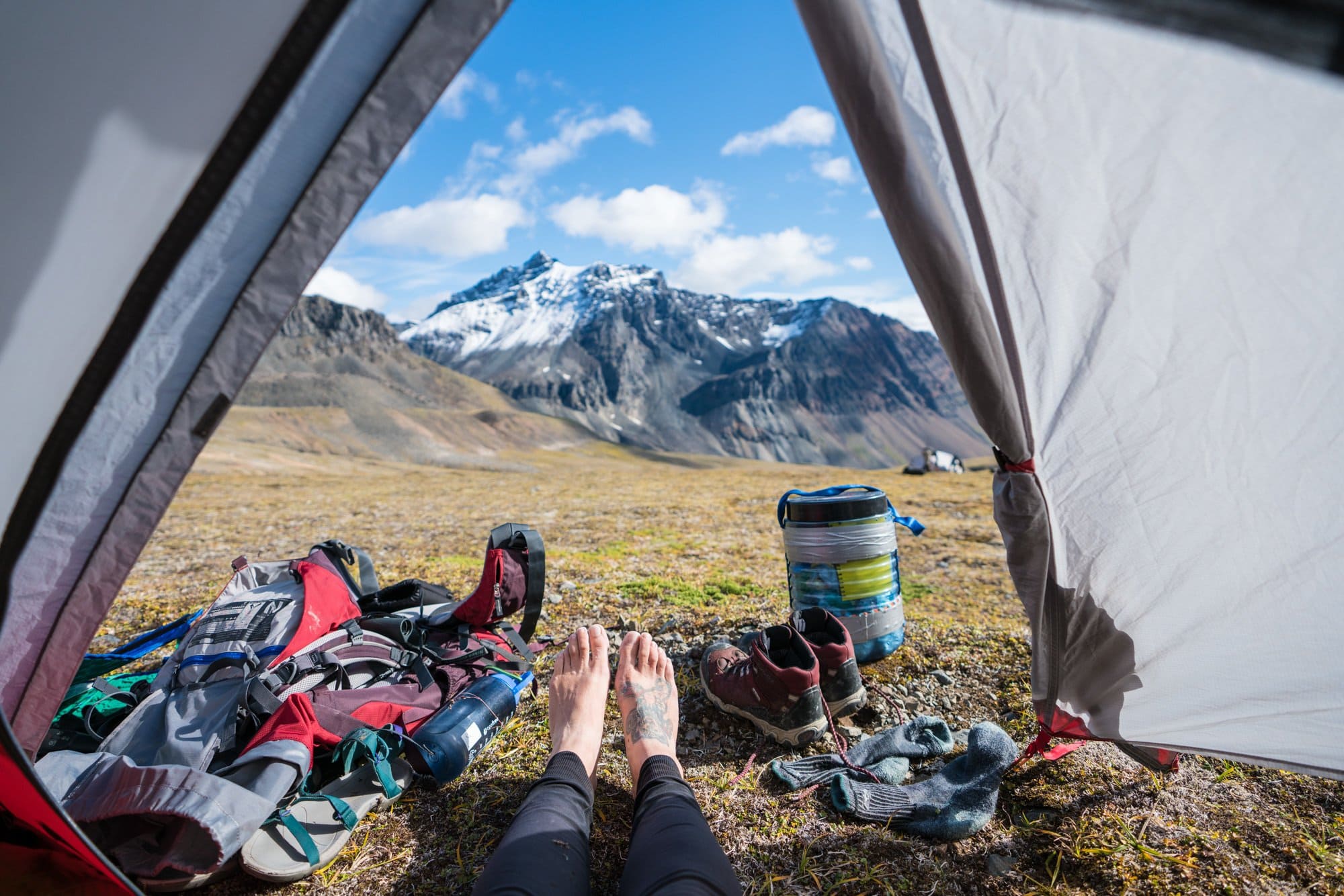
We’ve all had the experience of letting painful blisters ruin an otherwise good hike. When I first started hiking, my hiking boots that were way to loose in the heel pocket, and without fail, I’d come home with some gnarly raw blisters on the back of my feet. It made me question whether I even liked hiking.
When I was preparing for the John Muir Trail, I knew I had to do something to prevent these blisters from forming. Otherwise, I probably wouldn’t make it the 22 days on the trail. I also wanted to make sure I had all of the proper supplies in case I did get any blisters, that way they wouldn’t get worse.
The key to blister prevention is having proper fitting hiking boots – not too big or too small. But beyond that, there are a few other things you need to do to prevent blisters from forming on the trail.
In this post, I share the tips I’ve learned about how to prevent hiking blisters and what to do if you get one while you’re out there.
How do blisters form?
A blister is formed from damaged skin that is a result of rubbing and friction. They can also sometimes be caused by heat, cold, or in rare conditions, exposure to harmful chemicals.
When you are hiking or backpacking, the most common way to get a blister is from your sock or shoe rubbing up against the skin of your feet for an extended period of time. The shoe may either be too loose or too tight and it’s likely that sweaty or wet feet are the main cause of getting blisters on a hike. Whatever the reason, one thing is for sure, these suckers hurt!
Hiking Blister Prevention 101
To keep those feet happy and blister-free on the trail, there are 5 basic foot care tips and tricks to keep in mind before, during, and after a hike.
1. Wear shoes or boots that fitcorrectly
Invest the time and effort needed for finding shoes that fit correctly. Having a comfortable pair of hiking boots or shoes is essential for a fun hike and to reduce the possibility of blisters.
When trying on shoes, make sure to try them on with a pair of wool hiking socks (which tend to be a just slightly thicker than regular socks) so you can see how they truly fit. It’s common for hiking boots to be 1/2 a size larger than everyday shoes since your feet swell when you hike. Your toes should have a little bit of wiggle room and not crammed in the toe box, and your heel should feel secure and not lift up out of the boot or shoe as you walk.
Different brands of shoes fit each person differently based on your foot shape. I have a wide forefront and a narrow heel, and Oboz hiking boots fit me perfectly. If you have a wider foot, you might try Keen or Merrell.
2. Wear Wool Hiking Socks
While hiking, your feet are likely to get sweaty and rub against the inside of your shoes so it’s important to wear wool hiking socks that don’t shift inside your boots. Wool hiking socks allow your feet to breathe and stay dry by wicking away moisture, thereby preventing friction that forms blisters.
Darn Tough is my favorite brand for hiking socks. I find that they breathe and stay in place much better than Smartwool and other brands I’ve tried. I personally suggest going for a light or mid-weight thickness depending on how much room you have in your hiking boots. Thicker socks provide a bit more cushion, but can also be hotter resulting in more sweat.
Whatever you do, don’t wear cotton socks when you are hiking. They don’t allow moisture to escape and will also shift as you walk, which is another major cause of blisters.
3. Break in your Boots Before You Head Out
Breaking in your hiking boots is key to blister prevention, although nowadays a majority of hiking boots (like my go-to Oboz Sypes) don’t require a break in period at all.
On the other hand, stiffer, heavier backpacking boots designed to provide extra support when carrying a heavy load, may require a break in period. These can cause blisters and foot pain at first, so take a few walks and short hikes in them to soften the material before you hit the trail for any longer hikes. You can even wear them around your house or when you’re outside doing yard work.
4. Keep your Feet Dry
Most people’s feet sweat when they are hiking. As I mentioned, a quality pair of wool socks will be more breathable than other materials and will keep your feet feeling relatively dry. If you are an extra sweaty person, you can try foot powder to absorb moisture, and you can take your shoes off during your snack breaks to allow your feet to breathe.
If you have to hike through a river or it’s raining out, whether you have waterproof or non-waterproof boots can make a big difference in how dry your feet stay too. If your boots are waterproof, try to avoid walking through water deeper than the cuff of your boot. If water spills in the top, waterproof boots will not dry out. In this situation, pull over, take off your boots, and pour out any water so it’s not sloshing around.
If you’re wearing non-waterproof boots or shoes, you’ll want to avoid walking through puddles as water will soak in through the sides. The good thing about non-waterproof boots is that they will dry out more quickly, however.
If you’re hiking multiple days in a row, do your best to dry out your boots at night. You can place them near to the campfire. Just don’t put them too close or they might melt (which I know from experience).
Another great tip from long-distance thru-hikers is to change your socks 1-2 times per day on a multi-day hike and attach the damp pair to the outside of your bag to ensure you always have a dry pair.
Giving your feet a little extra attention never hurts. Trim your toenails so they aren’t jamming into the front of your boots, give yourself a foot massage and keep your boots free of rocks and debris. You can also apply an anti-blister balm before putting on your socks and shoes.
Off trail, soak your feet in warm water and Epsom salts to speed up the healing process. Or dip your feet in a creek (& make sure to let your feet thoroughly dry afterwards) to relax and soothe tired toes. The better you take care of your feet, socks and boots, the better time you’ll have outdoors.
How to treat a hiking blister on the trail
Be Prepared With A Blister First Aid Kit
A blister kit will help you treat hiking blisters on the go — while prevention comes first, it’s always a good idea to be prepared in case a blister does happen. Make your own hiking blister-care kit that you can stash in your first aid kit and treat any hot spots as soon as you feel them forming.
Here’s what to put in your hiking blister kit:
Treating hotspots & blisters
A hotspot is the precursor of a blister and a warning sign that things are probably about to get worse. Many of us have felt that twinge of discomfort, heat, and irritation out on the trail and often keep pushing on. However, ignoring the hotspot and pushing through is the fastest way to get a full-blown painful blister so it’s better to stop and address it right away.
As soon as I start to feel a hot spot forming, I stop, take off my socks and shoes and see what’s going on. Generally I’ll treat it the same way I would if a blister was already formed. This can prevent it from getting worse.
My method for treating blisters goes like this:
If the skin is broken, clean it with alcohol wipes
Use Spenco 2nd Skin blister pads (linked above) to cover the hot spot or blister – this creates a protective and durable layer of “skin” in between your foot and shoe.
Cover it with Spenco adhesive knit (also linked above)- this holds the 2nd skin in place
I personally prefer the Spenco products over moleskin. I find moleskin doesn’t always stick and will end up shifting inside my boot.
At night, I remove the bandages and uncover the area to let the blister breathe while I sleep. Remember, the best way to deal with a blister is not to get a blister, so early detection of hotspots is key!
Should you really pop your blisters?
The short answer is no. You should not pop your blister unless necessary. The irritated and damaged skin causes a cushion of fluid to fill the area to protect the more delicate skin beneath it, so popping your blister will expose the layer of raw and red thin skin underneath (ouch!). Not popping your hiking blister is the best way to prevent an even worse injury or infection.
However, sometimes blisters become too big or they will even pop on their own – particularly if you’re on a multi-day backpacking trip. In that case, you might need to pop it to avoid further pain and skin damage. Here is how to properly pop a blister:
Sterilize a safety pin using an alcohol wipe from your first aid kit
Use that to gently pop the blister
Wipe the area with another alcohol wipe
Apply Neosporin
Follow the blister treatment steps above – apply 2nd skin and cover with tape.
Do not peel the skin of the blister off of your foot. That dead skin helps protect the raw skin underneath.
Save this post to Pinterest
Do you have any tried and true methods for how to prevent blisters? Or have you had a blister ruin a hike? Leave your best blister tips in the comments below.
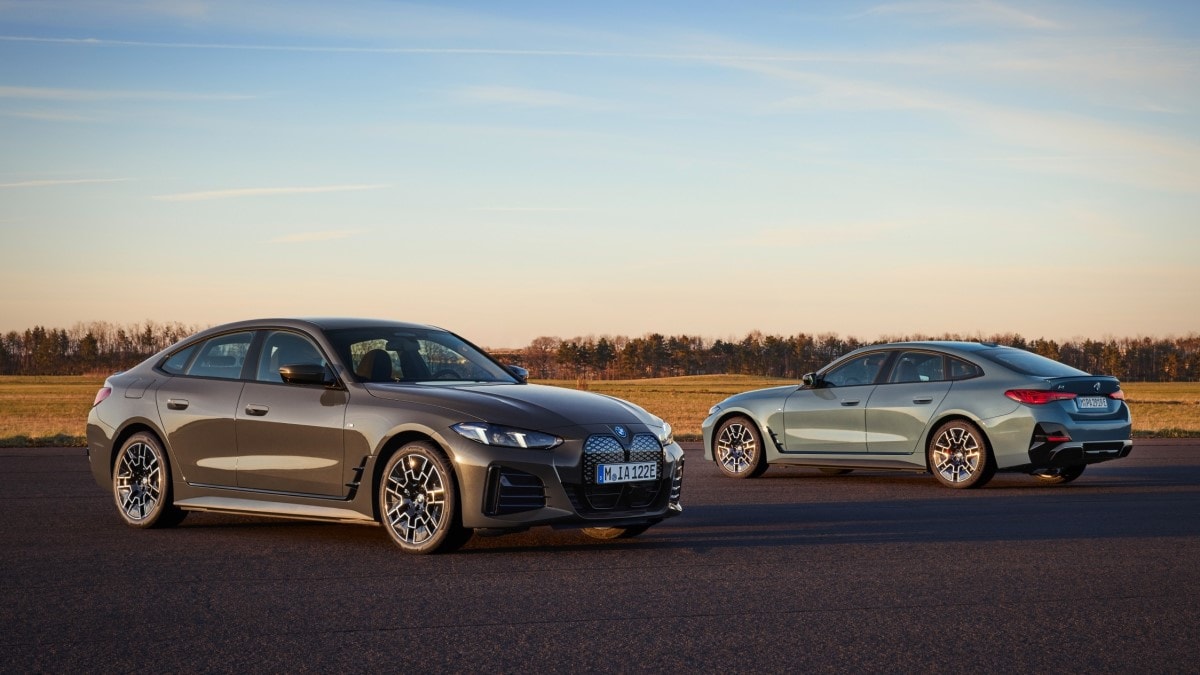
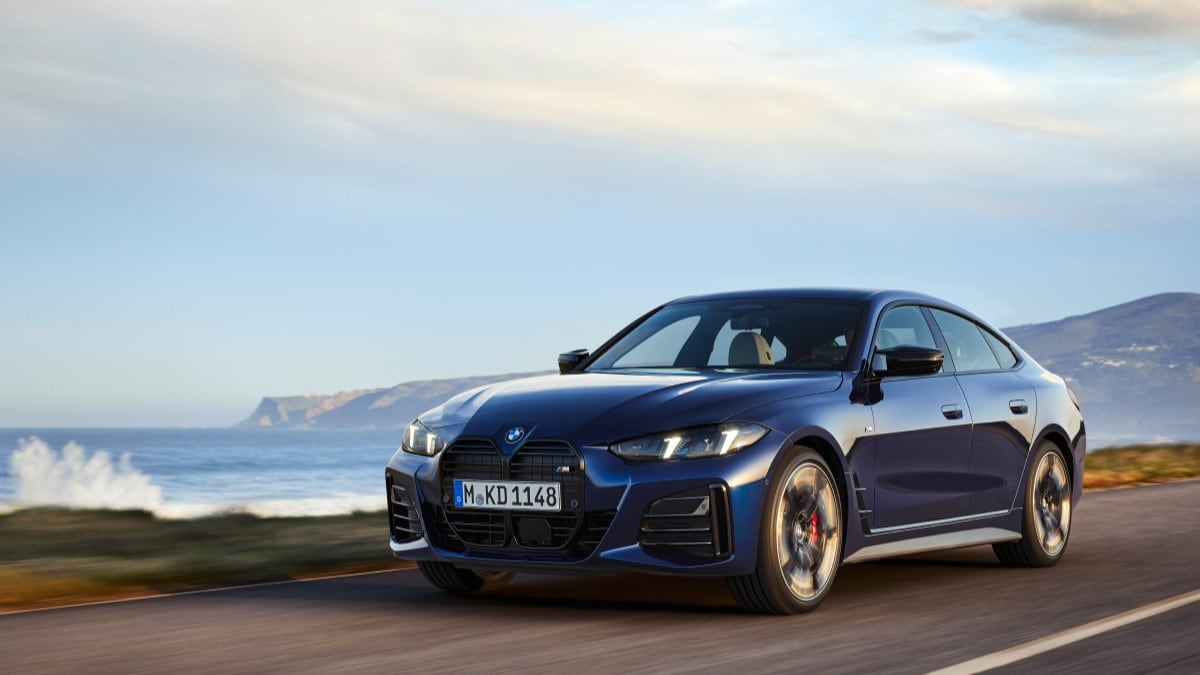
The BMW i4 electric vehicle (EV) and 4 Series Gran Coupe share a body style, and that body is getting an update. BMW this week revealed a refreshed version of the 4-door look that fits both electric and gas-powered compact cars.
Toned-Down Look
For the 2025 model year, the biggest change is small. In recent years, BMW designs have used a controversial huge version of the brand’s iconic two-kidney grille. It’s not shrinking for 2025, but it looks a little less prominent in both models.
The grille will come surrounded in a subdued matte chrome that calls less attention to it. Those who still find it too much can opt for a gloss black surround instead. The headlight housings remain the same, but the lights inside them display a new vertical LED theme. Adaptive headlights, long common in Europe and now legal in the U.S., shape the high beams around oncoming traffic to avoid dazzling other drivers. They’re now standard at higher trims and available on others as part of the Shadowline Package.
For buyers who order the optional Comfort Access package, the headlights will now play a greeting animation.
Fewer Buttons
Inside, both models get BMW’s new iDrive 8.5 user interface. It moves climate control functions and optional seat and steering wheel heating to the touchscreen for what BMW calls “a reduced number of buttons and controls due to consistent digitalization.” However, the company notes drivers can also control those functions with voice commands.
Mild hybrid tech comes to every 4 Series, including the base 4-cylinder engine. Output for that powerplant stays the same, but the upgraded 3.0-liter inline-6-cylinder engine gets 11 more horsepower, now making 386.
Electric i4 models can now store up to five charging networks in the Plug and Charge system, which lets drivers plug into a public charger and skip initiating a payment process.
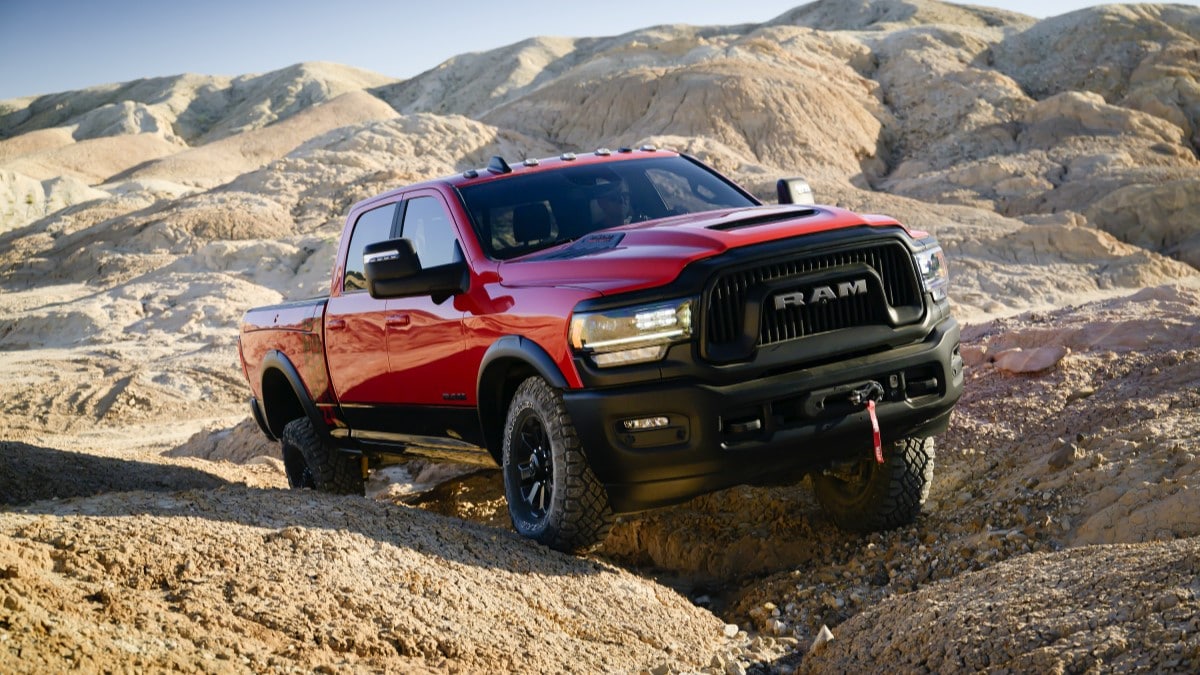
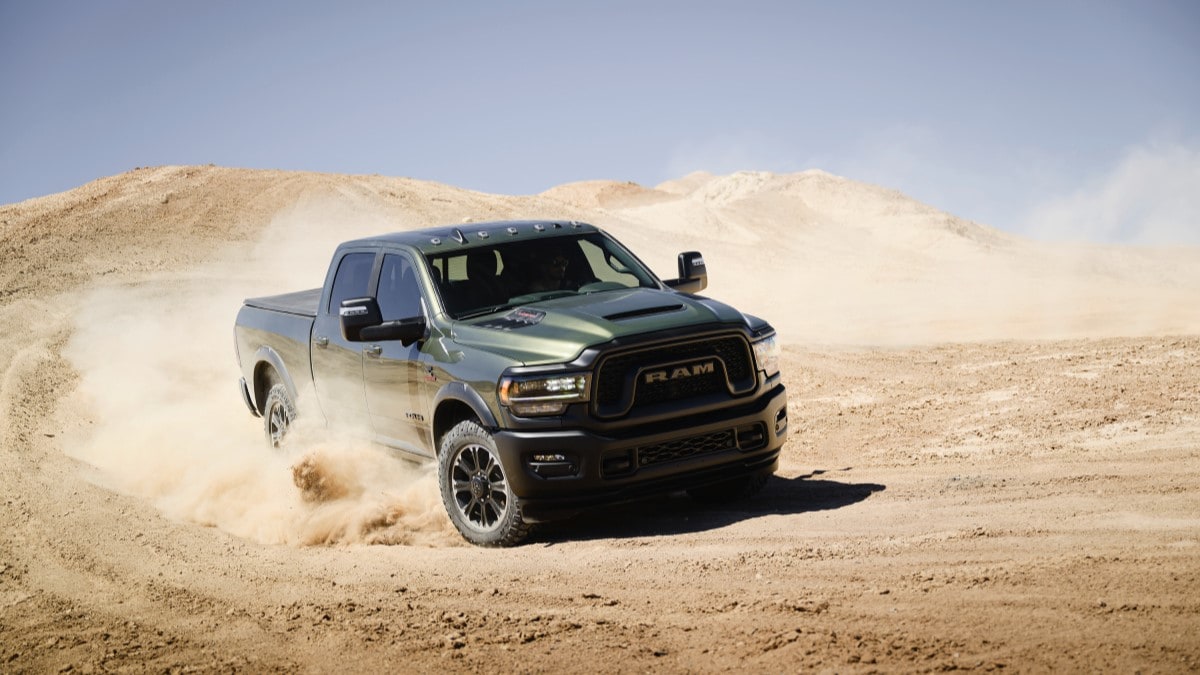
Ram debuted a new off-road truck this week. Actually, Ram showed off a stable full of them. The RHO got all the headlines. It’s all new, and at least temporarily taking the place of the top dog TRX. But not every off-road enthusiast wants the biggest dog or the expense of caring for and feeding it. So Ram has a whole lineup of off-road offerings.
The company didn’t fully redesign the Ram 1500 for the 2025 model year. But they gave it such an extensive update that you might think they did. New variants include a luxury-oriented Ram Tungsten and the plug-in hybrid Ramcharger that works like a diesel-electric train to give you the unmatched torque of electric motors and the unmatched range of gasoline.
Other variants include updates to the Warlock, the Power Wagon, the Rebel, and the Rebel Heavy Duty.
Warlock
Ram’s most affordable dedicated off-road truck starts at $56,255 (including the mandatory $1,995 destination charge).
It “pays homage to the original Warlock pickups of the 1970s,” Ram says, with Warlock details on the hood and bedsides, black exterior badging, black tow hooks, and a dual exhaust with matching black tips. More recently, Ram also had a Warlock version of its 1500 Classic, the prior-gen 1500 — and lower cost — truck that it sold alongside the latest generation.
The latest Warlock rides an inch higher than standard Ram 1500 models and protects itself with skid plates. But it keeps its price down with a respectably old-school interior, including cloth seats, a 7-inch driver’s instrument screen, and an 8.4-inch touchscreen.
Under the hood sits the 3.0-liter Hurricane Standard Output inline-6-cylinder engine with 420 horsepower and 469 pound-feet of torque.
Rebel
The 2025 Ram Rebel starts at $66,190 delivered.
The Rebel also gets an inch of added ride height. But it adds Bilstein front and rear shocks and a softer rear stabilizer bar for more off-road capability.
Inside, it gets a 14.5-inch central touchscreen and a 10.25-inch passenger screen not visible from the driver’s seat.
New for 2025, a Rebel X package marks the Rebel’s tenth anniversary. It adds Rough Road Cruise Control, which “allows the driver to set a cruise speed on a rugged, dirt road.” It also gets premium leather bucket seats with the Rebel X logo, red accent stitching, a panoramic sunroof, a heated steering wheel, and a power tailgate.
Power Wagon
Ram revived the 1940s-era Power Wagon name for a more rugged version of its Ram 2500 in 2005. It continues into 2025, with a starting price of $70,465, including the $1,995 delivery fee.
The Power Wagon headed to dealerships soon will wear a 2024, not 2025, model year designation, as Ram still hasn’t given its heavy-duty trucks an update to match what the 1500 just received.
The Power Wagon gets a lift of more than two inches, Bilstein shocks, and modified control arms and spring rates to make it trail-worthy. A disconnecting sway bar – Ram calls it a class-exclusive among heavy-duty trucks – lets the front axle move independently of the frame when needed.
“Other enhancements include locking differentials and a 12,000-lb. WARN Zeon-12 winch with synthetic line, giving this leviathan a significant advantage over all production pickups,” Ram says.
Though Ram has moved to inline-6-cylinder engines for many applications, the Power Wagon keeps its 6.4-liter Hemi V8 with an 8-speed automatic transmission and connects to a part-time, manual-engagement Borg Warner BW 44-47 transfer case.
Rebel Heavy Duty
Ram will also offer a heavy-duty version of the Rebel for 2025, starting at $70,990, including delivery fee.
It uses the Power Wagon’s V8 as standard equipment, and the WARN winch is an option. But it is also available with a 6.7-liter Cummins Standard-Output turbodiesel 6-cylinder engine that produces 370 horsepower and 850 pound-feet of torque.
The Rebel uses “a unique off-road suspension, a rear limited-slip differential and rear electronic locker, 20-inch wheels (optional 18-inch wheels), 33-inch off-road tires and skid plates that protect the fuel tank and transfer case,” Ram says.
All Ram HD models use a five-link coil suspension design, but Rebel HD buyers can choose a rear air suspension as an option.
The Rebel HD borrows the Power Wagon’s body but adds a sport hood. Inside, buyers can choose from three different seating options, including a cloth bench or bucket seat, a Bristol leather bench or bucket seat, and a full Natura Plus leather bucket seat.
The Mercedes G-Class has always been a robust climber from Graz, one of the brand’s most successful and lucrative models. The subtle refresh of the new model is one thing; however, by mid-year, the long-awaited electric version will finally be available.
Off-road, it’s not just ground clearance and overhangs that determine whether a trail can be conquered, but also the mass involved. The new G-Class with electric drive tips the scales at almost 3.1 tonnes. Visually, compared to the previous combustion engine model, almost nothing has changed. The aerodynamic fine-tuning of the electrified version includes a new A-pillar, a revised front mask, and modified headlights. While the combustion models receive minor drive enhancements and the robust base package of a ladder frame, three mechanical differential locks, and a terrain reduction gear with a rigid rear axle and independent front suspension, the G 580 EQ shines with a battery pack exceeding 100 kWh. This battery is securely housed within the ladder frame to ensure electric ranges of over 400 kilometres.
However, the electric version, dubbed the G 580 EQ, does not feature the roaring 585 PS V8 twin-turbo of the AMG G63, nor the 449 PS inline-six of the G500, or any efficient diesel technology. Instead, it employs an electric motor at each of the four wheels, aimed at ensuring maximum traction, particularly in tough off-road conditions.
The four electric motors produce a combined output of 432 kW / 588 PS, matching the new AMG version’s power levels. The electric drive offers a significant increase in maximum torque, providing the driver of the Mercedes G 580 EQ access to a staggering 1,164 Nm, compared to the already generous 850 Nm. This power propels the vehicle from a standstill to 100 km/h in under five seconds. However, the top speed is disappointingly limited to 180 km/h, whereas the combustion engine top model reaches up to 240 km/h.
Mercedes-Benz G580 with EQ Technology, Exterior: MANUFAKTUR desert sand non-metallic, Interior: Leather black (Energieverbrauch kombiniert: 27,7-30,3 kWh/100 km | CO2-Emissionen kombiniert: 0 g/km | CO2-Klasse: A)
In combustion models, the engine power is transmitted to both axles through a nine-speed automatic transmission, and a transfer case ensures the drive torque is distributed 40 percent to the front and 60 percent to the rear axle. This elaborate and rugged off-road technology is redundant in the electric model. Even without the intelligent multi-disc clutch, the 4.62-meter long electric G-Class remains highly manoeuvrable, as each of the four electric motors is controlled separately, receiving exactly the power needed to grip the surface. Thus, the corresponding differential locks are also unnecessary.
Yet, it can still tackle gradients of up to 100 percent and manage lateral slopes of up to 35 degrees with ease, as well as wade through water up to 85 centimeters deep. “Thanks to the individually controllable electric motors and the lower center of gravity, we view the electric G-Class as even more capable off-road than the combustion models,” says G-Class chief developer Fabian Schossau.
Mercedes-Benz G580 with EQ Technology, Exterior: MANUFAKTUR desert sand non-metallic, Interior: Leather black (Energieverbrauch kombiniert: 27,7-30,3 kWh/100 km | CO2-Emissionen kombiniert: 0 g/km | CO2-Klasse: A)
For relaxation during tough off-road driving, features include a virtually transparent bonnet, terrain reduction gearing, and a special climbing mode. Those who love show effects will likely be intrigued by the so-called G-Turn, which allows the electric G-Class to rotate on the spot because the left and right drive wheels rotate in opposite directions. This reduces the turning circle from 13.6 meters to almost zero. The substantial battery pack in the underbody has its technical price, as the Mercedes G 580 EQ weighs 3,085 kilograms, limiting the payload to a mere 415 kilograms, because the total weight must not climb over the 3.5-tonne mark.
The boot, with its capacity of 555 to 1,990 liters, could handle much more – also because the charging cables can optionally be housed in a box on the rear door, which at first glance appears like a mounted spare wheel. Also new are the first-time available heated armrests, keyless entry, and the overdue MBUX operating system. Mercedes is still holding back on the price; however, it is unlikely to be under 180,000 euros for this earthbound plug-in.
Can machine learning help predict extreme weather events and climate change? Christopher Bretherton, senior director of climate modeling at the Allen Institute for Artificial Intelligence, or AI2, explores the technology’s potential to enhance climate modeling with AI Podcast host Noah Kravitz in an episode recorded live at the NVIDIA GTC global AI conference. Bretherton explains how machine learning helps overcome the limitations of traditional climate models and underscores the role of localized predictions in empowering communities to prepare for climate-related risks. Through ongoing research and collaboration, Bretherton and his team aim to improve climate modeling and enable society to better mitigate and adapt to the impacts of climate change.
Stay tuned for more episodes recorded live from GTC, and watch the replay of Bretherton’s GTC session on using machine learning for climate modeling.
Time Stamps
2:03: What is climate modeling and how can it prepare us for climate change?
5:28: How can machine learning help enhance climate modeling?
7:21: What were the limitations of traditional climate models?
10:24: How does a climate model work?
12:11: What information can you get from a climate model?
13:26: What are the current climate models telling us about the future?
15:56: How does machine learning help enable localized climate modeling?
18:39: What, if anything, can individuals or small communities do to prepare for what climate change has in store for us?
25:59: How do you measure the accuracy or performance of an emulator that’s doing something like climate modeling out into the future?
You Might Also Like…
ITIF’s Daniel Castro on Energy-Efficient AI and Climate Change – Ep. 215
AI-driven change is in the air, as are concerns about the technology’s environmental impact. In this episode of NVIDIA’s AI Podcast, Daniel Castro, vice president of the Information Technology and Innovation Foundation and director of its Center for Data Innovation, speaks with host Noah Kravitz about the motivation behind his AI energy use report, which addresses misconceptions about the technology’s energy consumption.
DigitalPath’s Ethan Higgins on Using AI to Fight Wildfires – Ep. 211
DigitalPath is igniting change in the golden state — using computer vision, generative adversarial networks and a network of thousands of cameras to detect signs of fire in real-time. In the latest episode of NVIDIA’s AI Podcast, host Noah Kravtiz spoke with DigitalPath system architect Ethan Higgins about the company’s role in the ALERTCalifornia initiative, a collaboration between California’s wildfire fighting agency CAL FIRE and the University of California, San Diego.
Anima Anandkumar on Using Generative AI to Tackle Global Challenges – Ep. 203
Generative AI-based models can not only learn and understand natural languages — they can learn the very language of nature itself, presenting new possibilities for scientific research. On the latest episode of NVIDIA’s AI Podcast, host Noah Kravitz spoke with Anandkumar on generative AI’s potential to make splashes in the scientific community.
How Alex Fielding and Privateer Space Are Taking on Space Debris – Ep. 196
In this episode of the NVIDIA AI Podcast, host Noah Kravitz dives into an illuminating conversation with Alex Fielding, co-founder and CEO of Privateer Space. Privateer Space, Fielding’s latest venture, aims to address one of the most daunting challenges facing our world today: space debris.
Subscribe to the AI Podcast
Get the AI Podcast through iTunes, Google Podcasts, Google Play, Amazon Music, Castbox, DoggCatcher, Overcast, PlayerFM, Pocket Casts, Podbay, PodBean, PodCruncher, PodKicker, Soundcloud, Spotify, Stitcher and TuneIn.
Make the AI Podcast better: Have a few minutes to spare? Fill out this listener survey.
The technical storage or access is strictly necessary for the legitimate purpose of enabling the use of a specific service explicitly requested by the subscriber or user, or for the sole purpose of carrying out the transmission of a communication over an electronic communications network.
Preferences
The technical storage or access is necessary for the legitimate purpose of storing preferences that are not requested by the subscriber or user.
Statistics
The technical storage or access that is used exclusively for statistical purposes.The technical storage or access that is used exclusively for anonymous statistical purposes. Without a subpoena, voluntary compliance on the part of your Internet Service Provider, or additional records from a third party, information stored or retrieved for this purpose alone cannot usually be used to identify you.
Marketing
The technical storage or access is required to create user profiles to send advertising, or to track the user on a website or across several websites for similar marketing purposes.