To help customers make more efficient use of their AI computing resources, NVIDIA today announced it has entered into a definitive agreement to acquire Run:ai, a Kubernetes-based workload management and orchestration software provider.
Customer AI deployments are becoming increasingly complex, with workloads distributed across cloud, edge and on-premises data center infrastructure.
Managing and orchestrating generative AI, recommender systems, search engines and other workloads requires sophisticated scheduling to optimize performance at the system level and on the underlying infrastructure.
Run:ai enables enterprise customers to manage and optimize their compute infrastructure, whether on premises, in the cloud or in hybrid environments.
The company has built an open platform on Kubernetes, the orchestration layer for modern AI and cloud infrastructure. It supports all popular Kubernetes variants and integrates with third-party AI tools and frameworks.
Run:ai customers include some of the world’s largest enterprises across multiple industries, which use the Run:ai platform to manage data-center-scale GPU clusters.
“Run:ai has been a close collaborator with NVIDIA since 2020 and we share a passion for helping our customers make the most of their infrastructure,” said Omri Geller, Run:ai cofounder and CEO. “We’re thrilled to join NVIDIA and look forward to continuing our journey together.”
The Run:ai platform provides AI developers and their teams:
A centralized interface to manage shared compute infrastructure, enabling easier and faster access for complex AI workloads.
Functionality to add users, curate them under teams, provide access to cluster resources, control over quotas, priorities and pools, and monitor and report on resource use.
The ability to pool GPUs and share computing power — from fractions of GPUs to multiple GPUs or multiple nodes of GPUs running on different clusters — for separate tasks.
Efficient GPU cluster resource utilization, enabling customers to gain more from their compute investments.
NVIDIA will continue to offer Run:ai’s products under the same business model for the immediate future. And NVIDIA will continue to invest in the Run:ai product roadmap, including enabling on NVIDIA DGX Cloud, an AI platform co-engineered with leading clouds for enterprise developers, offering an integrated, full-stack service optimized for generative AI.
NVIDIA HGX, DGX and DGX Cloud customers will gain access to Run:ai’s capabilities for their AI workloads, particularly for large language model deployments. Run:ai’s solutions are already integrated with NVIDIA DGX, NVIDIA DGX SuperPOD, NVIDIA Base Command, NGC containers, and NVIDIA AI Enterprise software, among other products.
NVIDIA’s accelerated computing platform and Run:ai’s platform will continue to support a broad ecosystem of third-party solutions, giving customers choice and flexibility.
Together with Run:ai, NVIDIA will enable customers to have a single fabric that accesses GPU solutions anywhere. Customers can expect to benefit from better GPU utilization, improved management of GPU infrastructure and greater flexibility from the open architecture.
Welcome to my digital nomad guide to living in Da Nang. Home to everything from stunning beaches and scuba diving to dedicated coworking spaces and an abundance of laptop-friendly cafes.
This epic city is Vietnam’s 5th largest and is ideally located on the central east coast. Often overshadowed by the bigger cities of Hanoi and Ho Chi Minh City, Da Nang is a fantastic location with so much to offer. So, if you’re contemplating becoming a Da Nang digital nomad, read on to see why it should be high on your list of Vietnam destinations.
With a population of just over a million people, Da Nang seamlessly blends natural beauty, rich history, and modern development. Nestled between lush mountains and the clear waters of the East Sea, it has some of the most incredible beaches I have ever seen – and I’ve seen a lot!
In stark contrast to this tranquil beach vibe, the city’s skyline is decorated with huge skyscrapers, fabulous hotels, office buildings, and a vibrant social scene. There are also several striking bridges, notably the iconic Dragon Bridge which breathes fire on weekend evenings!
Da Nang is a city steeped in history, but also one that’s embracing modernization with open arms. The city’s development is evident in its world-class resorts, golf courses, and entertainment complexes that cater to tourists from around the world.
Digital Nomad in Da Nang: Personal Experience
I had initially intended to use Da Nang as a short stopping-off point en route to Hanoi from Ho Chi Minh City, but I quickly realized it deserved a closer look. I was ideally located for other awesome locations like Hoi An and Hue and ended up extending my time in Da Nang to explore and make the most of its great facilities.
The combination of beach life and cosmopolitan amenities is perfect for a digital nomad living in Da Nang. As you find yourself amidst towering skyscrapers and modern infrastructure, the city exudes a metropolitan vibe. However, this metropolis sensation swiftly fades away as the ocean and white sandy beaches come into view.
I found Da Nang to be a place that provided the best of both worlds. Additionally, I encountered a significant number of expats, offering me slices of familiarity and Western culture when I craved it.
Da Nang ticked all the boxes for me with its readily available WiFi, low cost of living, and excellent social scene – I’d recommend it to any remote worker seeking their next home base.
Is Da Nang Safe?
With a high volume of tourists and business visitors each year, Da Nang is considered a very safe place to visit. Crime rates are ranked as low to very low across the board and I felt safe during the entirety of my stay.
As with anywhere, it’s always advisable to be wary of your belongings and surroundings at all times. Vietnam does experience crimes such as pickpocketing, but with common-sense practices, most opportunities for such incidents can be mitigated.
The roads of Da Nang are considerably less chaotic than Hanoi or Ho Chi Minh City. But, I still witnessed many driving practices that would warrant an arrest in the UK or the US! Crossing roads can be one of the most dangerous things for visitors in Vietnam and Da Nang is no exception.
Best Areas to Live in Da Nang
Da Nang offers several vibrant neighborhoods, each with its distinct charm and appeal. These five areas are the city’s best spots for digital nomads to call home:
1. Son Tra Peninsula
Cutting out into the waters of the East Sea and known for its stunning coastal views and lush greenery, Son Tra Peninsula is a tranquil retreat from the busy city. The neighborhood is home to the famous Linh Ung Pagoda, perched atop a hillside overlooking the sea. You’ll also find pristine beaches including Bai But and Bai Rang here.
With its serene ambiance and proximity to nature, Son Tra Peninsula is an ideal neighborhood for anyone seeking relaxation and a break from the busy city whilst maintaining plenty of convenient amenities. It’s also a great spot for those who love outdoor activities.
2. Hai Chau District
As the city’s central business district, Hai Chau is where I stayed during my time in the city. It’s a bustling, modern area teeming with commercial activity but there are also plenty of cultural landmarks and it has easy access to the beach.
Here is where you’ll find the iconic Dragon Bridge as well as the very popular Han Market, which is a warren of street food and market stalls that’s an experience not to be missed. Hai Chau District caters to business and leisure travelers with its vibrant atmosphere and diverse amenities.
3. My An
One of the great things about Da Nang is the surprisingly small distance between the bustling city center and the fabulous beaches. My An is situated along the scenic coastline and is known as a popular residential area. It also has several beautiful beaches, upscale cocktail bars, and a lively waterfront nightlife.
The neighborhood is dotted with luxury resorts and beachfront villas, making it a favorite among affluent travelers. Subsequently, there are many dining options around My An making it a popular hub for residents and visitors alike.
4. An Thuong
Nestled between My An Beach and My Khe Beach, An Thuong is another lively neighborhood known for having a vibrant nightlife and varied dining scene. Moreover, the area is lined with cute cafes, lively bars, and international restaurants, which gives it a very cosmopolitan atmosphere.
In contrast to My An, An Thuong offers a range of accommodation options, from budget hostels to affordable Aribnbs. It’s a popular choice for backpackers and anyone living in Da Nang as a digital nomad wanting to experience the good life without breaking the bank.
5. Hoa Hai
Located to the south of Da Nang, Hoa Hai is a quiet and affluent neighborhood renowned for its high-end resorts and pristine beaches. This area is home to the acclaimed Montgomerie Links golf course, as well as the Marble Mountains, a limestone outcrop adorned with Buddhist shrines.
With its upscale accommodation, Hoa Hai is the location of choice for anyone seeking a more luxurious retreat away from the city center. Despite the escapism it offers, there are plenty of family-run shops and traditional restaurants that provide parts of Hoa Hai with a more down-to-earth vibe.
How to Find Accommodation in Da Nang
As a popular tourist spot, there are plenty of choices when it comes to booking accommodation in Da Nang. Here are a few of my top places to look and tips for ensuring you get the best deal.
1.Booking.com. The ability to cancel at late notice and book without payment is a major advantage of Booking.com. It helps me in a huge way with budgeting and planning months ahead. Level 3 of their Genius Membership offers great discounts and perks with many bookings.
2. Trusted Housesitters. I used house sitting sites on 4 occasions during my time in Vietnam – it’s a fantastic way to save money on accommodation. It also enhances your overall traveling experience as you get a more authentic stay. My site of choice is Trustedhousesitters.com as they have thousands of listings worldwide and regular Vietnam posts available.
3. Local Agents. Numerous local agents such as houserentaldanang.com are available to assist visitors with finding longer-term accommodation options. However, most will require a contracted commitment period, but this can be ideal if you intend to stay for a long time.
4. Airbnb. My go-to option for longer stays is Airbnb, as many hosts will offer large discounts if booking for at least 4-weeks. Da Nang has a host of listings with everything from a room in a shared apartment to entire houses waiting to be booked.
Cost of Living in Da Nang
Like much of Vietnam, many visitors will find the cost of living in Da Nang very affordable. Here’s a break down of some everyday expenditures and what you should expect to pay:
Restaurants and Groceries
Dining out and grocery shopping is one of the areas where visitors to Da Nang will see some of the biggest savings. Traditional street food or a meal in a local restaurant will cost less than $2.
A trip to one of Da Nang’s fancier or international restaurants will set you back on average around $15pp, but that’s not too bad for 3-courses!
A trip to the supermarket in Da Nang can be a fun experience. I found meat, vegetables, fruits, rice, pasta, and eggs all to be around 40-60% cheaper than back home in the UK. Cheese is often more expensive though, and good cheese can be hard to find.
Accommodation Costs
Whether booking via a travel company like Airbnb or officially securing a long-term rental with a local agent, property prices are very affordable in Da Nang.
Based on a long-term/semi-permanent home, the average cost for a city center apartment is under $250/month and utilities, including WiFi, should set you back no more than $60/month.
But even when booking more ‘touristy’ accommodations, prices start incredibly low and go as high as you want to spend. From personal experience in Vietnam, a figure of around $500/month secures a nice apartment in a great location with plenty of modern amenities.
Transportation Costs in Da Nang
Getting around Da Nang is very easy to do. Good buses link all parts of the city and although getting your hands on a correct schedule is a much harder feat, I found I never waited more than 5-10 minutes for a local bus. Google Maps provides some fairly accurate routes and bus tickets cost as little as $0.40.
A couple of reliable taxi companies are on hand as well as Grab, (which is like the South Asian equivalent of Uber). Local rides usually cost around $1-$2 and can be booked and paid for on the app. I suggest getting set up on Grab before you arrive in Vietnam.
SIM Cards and Data
Although WiFi is seemingly available everywhere in Da Nang, I’d recommend picking up a data SIM card. It just makes things a little easier when out and about, and offers a bit of security should your WiFi ever go down.
Viettel, Mobiphone, and Vinaphone are 3 of the big telecommunications companies in Vietnam. All offer hefty data SIMs for visitors that start at around $6/month. Head to an official retail store and they’ll set your phone up there and then with a Vietnam SIM.
Money Saving Tips for Da Nang
Here are a few of my top tips for saving money whilst in Da Nang.
Eat Local. Street food stalls and local restaurants offer delicious meals for under $2.
Stay a while.Airbnb and other platforms offer hefty discounts for anyone staying 4 weeks or more.
Enjoy the free stuff. Much of Da Nang’s natural beauty such as the beaches and fantastic countryside is free to enjoy.
Visit the markets. Da Nang has numerous local markets where great deals on everything from groceries to clothes are to be had.
Haggle. The Vietnamese famously love to haggle, especially in the marketplaces, so don’t fear a little negotiation.
Grab Unlimited. If you’re new to Grab you may be offered a free trial of their Unlimited membership, which has extra savings on trips and food orders and can be canceled for free anytime.
Use local transport. Regular and reliable buses connect most of Da Nang and further afield, tickets start at $0.40.
Coworking Spaces in Da Nang and WiFi Speed
As a major metropolitan city and a business hub, there are plenty of coworking spaces for digital nomads to take advantage of while working remotely in Da Nang. Here are a few of my top choices;
1. Seaview Coworking
Located on the 9th floor of the Waikiki Hotel and as the name suggests offering stunning sea views, Seaview Coworking is open 24/7 and a great spot for digital nomads.
The hosts are super friendly, the space is very modern and comfortable for working in, and free tea and coffee are supplied for all visitors. Expect great WiFi, picturesque views, and a welcoming environment for as little as $3/day.
2. Beans Workspace
A super sleek and modern setting with a motivating and vibrant atmosphere, Beans Workspace is a convenient and ideal choice for digital nomads living in Da Nang. A day pass can be bought for as little as $3.50 and secures the perfect setting for a day of work.
Beans is a popular spot but with ample desks and seating options, it has never felt too busy when I have visited. The adjoining cafe offers a great selection of drink and food options at very affordable prices too.
3. Ace Coworking
With a variety of price options to suit however long you plan to stay in Da Nang, Ace Coworking is an excellent option for anyone seeking a professional and reliable working base. It has ergonomic chairs, tons of natural light, and an excellent coffee shop on the ground floor.
From hourly to monthly rates, and with prices starting at just $2, I recommend securing yourself a hot desk here. Pre-booking your spot is required, and can be done by phone, WhatsApp, or Instagram.
Best Cafes to Work From in Da Nang
Coffee is a big deal in Vietnam and as such there are plenty of great cafes in Da Nang that are laptop-friendly and welcoming to digital nomads. Here are a few of my top recommendations;
The Hideout Cafe. A popular spot for digital nomads living in Da Nang, The Hideout Cafe offers a cool and chilled modern interior with a nice open-plan patio that are both great places to work from. The WiFi is reliable and among many great food options, the breakfast here is excellent.
Craft Cafe: Specializing in gluten-free waffles (which are delicious!) Craft Cafe is a small but very comfortable place to situate for a day of remote work. Friendly staff are welcoming of Da Nang digital nomads and the drinks list has everything from organic smoothies and coffee to protein shakes.
The Cups Coffee. Situated just a block from the beach, The Cups Coffee is a spacious and lively cafe. Selling some seriously good coffee, ample seating choices, decent WiFi, and an array of excellent sweet treats to fuel your day, what’s not to love?
Activities and Things To Do in Da Nang
I don’t know about you but I certainly didn’t set off traveling with my laptop just to sit in front of it all day and work! There are plenty of fantastic activities in Da Nang for visitors to enjoy, here are a few of my favorites;
1. Golden Bridge
Before arriving in Da Nang, my Instagram feed kept showing me an epic bridge held up by huge hands that you can walk across. I’ve since found out, it’s actually called the Golden Bridge and is easily accessed from Da Nang.
To get to it you’ll need to ride one of the world’s longest cable cars. This will take you high up to Ba Na Hills where a resort and theme park await. It’s a great day that mixes sensational scenic beauty with adventure and fun. I took a day trip with pick up and drop off and everything included, click here to see the tour I booked.
It’s possible to do both via taxi and organize it all yourself, but it doesn’t cost too much more to have a guided tour and hotel pick up and drop off. I booked an excellent small tour and I’m glad I did as I certainly would have missed a lot of interesting stuff! Click here to learn more.
3. Visit Hoi An
Lanterns adorning a market stall in Old Town, Hoi An.
One of my favorite places to visit in the whole of Vietnam is Hoi An. The ancient port town which is situated about 40 minutes south along the coast from Da Nang has so much historical provenance and cultural attraction, it’s a must-visit town.
Old Town Hoi An is aUNESCO World Heritage Site, and once you get there you’ll understand why. The cobbled small streets, buzzing night market, and stunning architecture create an endearing environment that attracts visitors from around the world. Taxis and buses will get you to Hoi An, or take a look at this great tour I found.
4. Visit Hue
The wonderful Imperial city of Hue lies within easy reach of Da Nang and is well worth a visit. The 2-hour car journey there has to be one of the most spectacular I’ve ever taken.
The city itself is full of ancient architecture and cultural artifacts, perfect for history geeks like me! The Complex of Hue Monuments is a sprawling architectural feat, renowned for its ornate mix of imperial palaces, temples, and tombs, showcasing the rich history and cultural heritage of the Nguyen Dynasty. Click here to learn more about day trips to Hue.
5. Snorkeling and Island Hopping
Da Nang has pristine waters and a couple of amazing islands just waiting to be explored. Getting to enjoy this side of life is what being a digital nomad in Da Nang is all about. This was one of my all-time favorite day trips so far.
Da Nang receives an average of 2612 hours of sunlight annually and has a pleasant and tropical climate year-round, making it an ideal destination for digital nomads who, like me, enjoy sunshine and warmth.
Located centrally in Vietnam, the city experiences distinct seasons, with the dry season typically spanning from January to August. During this time, there are plenty of clear skies, abundant sunshine, and temperatures ranging from 20°C to 33°C (69°F to 92°F).
Life in Da Nang comes with plenty of positives but, as with anywhere in the the world, there are a few negatives to consider too. Let’s take a look at the top considerations for digital nomads living in Da Nang:
Pros of Living in Da Nang
Pleasant climate. If, like me, you hate the cold, then Da Nang is perfect. Temperatures rarely ever drop below 20°C (69°F) and it also receives 2162 hours of sunlight annually.
Low cost of living. Like much of Vietnam, many visitors to Da Nang will find prices across the board are cheaper than back home, especially for things like dining out and accommodation.
Great coworking spaces. Da Nang has numerous options for digital nomads to situate themselves. Remote workers can find both dedicated coworking locations and cool, laptop-friendly cafes to set up shop.
Beautiful surroundings. Da Nang is blessed with some of the best beaches and most lush countryside I’ve experienced in Vietnam.
Outdoor activities. The previously mentioned beautiful surroundings subsequently means there are plenty of outdoor pursuits to enjoy. Hiking, surfing, snorkeling, and scuba diving are just a few easy possibilities.
Cons of Living in Da Nang
The rainy season. With Da Nang’s tropical climate comes a rainy season that can be torrential at times. Typhoons are not uncommon and can make daily life in Da Nang a struggle.
Traffic congestion: As the city grows, traffic congestion has become a common issue, especially during peak hours.
Tourist Crowds: Da Nang’s popularity as a tourist destination can lead to crowded beaches and attractions, particularly during the high season.
Pollution: Rapid urbanization and industrialization mean there are some pollution concerns, including air and water pollution in some areas.
Cultural adjustment: Ex-pats may experience cultural differences and adjustments, which can be challenging for some, particularly those unfamiliar with Vietnamese customs and traditions.
Language Barrier: While English is increasingly spoken, communication may still be challenging, particularly in rural areas or with older generations.
Digital Nomad Visa for Da Nang
Vietnam doesn’t currently offer a dedicated digital nomad visa. Subsequently, different conditions and varying lengths of stay are permitted depending on where you’re from.
As an example, as a UK Citizen, I was able to stay visa-free in Vietnam for 45 days, but was also able to extend my stay for up to 90 days by applying online before arriving. You can also do this at designated international entry points. This policy applies to citizens of 12 other countries as well.
It’s a little trickier for citizens of the USA and Canada who must obtain a tourist visa. This can be applied for online or at select international entry points. A tourist visa can be obtained for either 1 or 3 months and will cost between $25 and $50, depending on the stay duration you select and the number of times you wish to leave and re-enter Vietnam.
In Conclusion
I hope this digital nomad guide to Da Nang has inspired you to consider this incredible destination for your next remote working location. It’s a fantastic city that offers all the good bits of a metropolis alongside the quaintness and beach vibe that most remote workers crave.
I had an amazing time in Da Nang and I’m certain you will too.
Roundabout laws are some of the most confusing in Australia. These traffic circles tend to confuse anyone who is not used to driving through or around them, and – anecdotally, at least – they are a source of confusion for many motorists.
You can change lanes in a roundabout, but only in certain circumstances
It is illegal to cross a solid line – if the roundabout has them, you’re stuck!
Rules are largely similar across all states and territories
So, what do you do if you’re in a roundabout but need to change lanes because you realise you’ve found yourself in the wrong one? Well, treat it like any other multi-lane situation, but remember to check around your car and be mindful of the line markings.
Here’s a rundown of the info from each state for this exact scenario. Obviously, these mainly apply to multi-lane roundabouts, which typically have lane markings to indicate the correct direction vehicles should travel. At the same time, in a single-lane traffic circle, you could simply go where you need to – at least in theory.
The common denominator across jurisdictions appears to be that, if the roundabout has solid line markings, you shouldn’t cross them – just as you wouldn’t cross a solid line on a standard multi-lane roadway. So, if you enter a roundabout and you’re not in the lane you need to be, and the line-marking is solid, it stands to reason that you’re stuck, and need to proceed in the intended direction of the lane-marking.
NSW: According to NSW Transport, changing lanes is a legal manoeuvre in a roundabout, but the best advice is to “plan ahead when approaching a roundabout to avoid changing lanes when you’re in the roundabout”.
However, as the authority puts it: “If you need to change lanes, you must indicate and give way to any vehicle in the lane you’re moving into. You can only change lanes where there’s a broken white line. You must not change lanes if the line is unbroken. Always remember to check your blindspot when changing lanes.”
Victoria: If you need to change lanes in a roundabout, the same rules apply: let other vehicles know by indicating, and give way to any vehicle that is already in the lane you want to enter.
Queensland: There are some confusing wordings in QLD when it comes to roundabouts.
The state tries to make out that comparing a roundabout to a clock could help people understand how to act in said traffic circle:
Turns that occur at roundabouts can be described by imagining the roundabout to be a clock face.Any turn that exits the roundabout before 12 o’clock can be considered a left turn.
Any turn that exits the roundabout after 12 o’clock can be considered a right turn.
Straight ahead at a roundabout is taken to be at half-way around or at 12 o’clock.
The Queensland Road Rules uses the terms ‘less than half-way round’ and ‘more than half-way around’.
Huh?!
Anyway, Noosa Council – home of the roundabout in that neck of the woods – states it simply when it comes to changing lanes: “In some cases on a multi-lane roundabout, it may be necessary to change lanes before exiting. If you are changing lanes you must give way to vehicles in the lane you are moving to.”
South Australia: SAMove has a few interesting articles concerning roundabouts and states that it is not illegal to change lanes in a roundabout, and often necessary (the big ones in Adelaide – Britannia and Blackwood – are apparently terrifying for some drivers).
Just like the other states, it isn’t illegal to change lanes in a roundabout if you have to, but the following applies:
“The same rules apply when switching lanes on a roundabout as they do with other lane changes. You need to indicate your intentions and give way to traffic already in the lane.”
Tasmania: According to the “Top 10 misunderstood road rules in Tasmania” pamphlet from the state’s Road Safety Advisory Council, roundabouts are number one!
However, the document confirms: “Changing lanes in a roundabout – you may change lanes in a roundabout when it is safe to do so. You must indicate before changing lanes, in addition to indicating when entering and leaving the roundabout.”
Western Australia: The WA RAC states that: “If you do need to change lanes once you’ve entered a multi-lane roundabout, wait until it’s safe, then signal a move into the correct lane. From there, you must indicate your exit as you would on any roundabout.”
ACT: Canberra is known for being a city designed with traffic flow in mind, and roundabouts are a big part of the way the nation’s capital’s roadways have been laid out. As such, there are many and varied rules for correct roundabout use, but the ACT follows a similar logic to other jurisdictions.
The 2019 Road Rules Handbook states: “Giving a change of direction signal when changing marked lanes or lines of traffic in a roundabout; A driver driving in a roundabout must: give a left change of direction signal before the driver changes marked lanes to the left, or enters a line of traffic to the left, in the roundabout; give a right change of direction signal before the driver changes marked lanes to the right, or enters a line of traffic to the right, in the roundabout.”
Northern Territory: No specific rules relating to lane changing in the Road Rules in NT documentation that we could see, but the NT’s guidelines state: “It is important to stay in the correct lane at multi-lane roundabouts – follow signs, lane markings and arrows. Unless traffic lane arrows indicate otherwise, remember these rules:
To turn left, use the left lane and signal left.
To turn right, use the right lane and signal right.
To go straight ahead, use either the left or right lane.
Give way to any vehicle already in the roundabout.
Signal left when exiting the roundabout.
Not intended as legal advice. Check with the relevant roads authority in your state or territory.
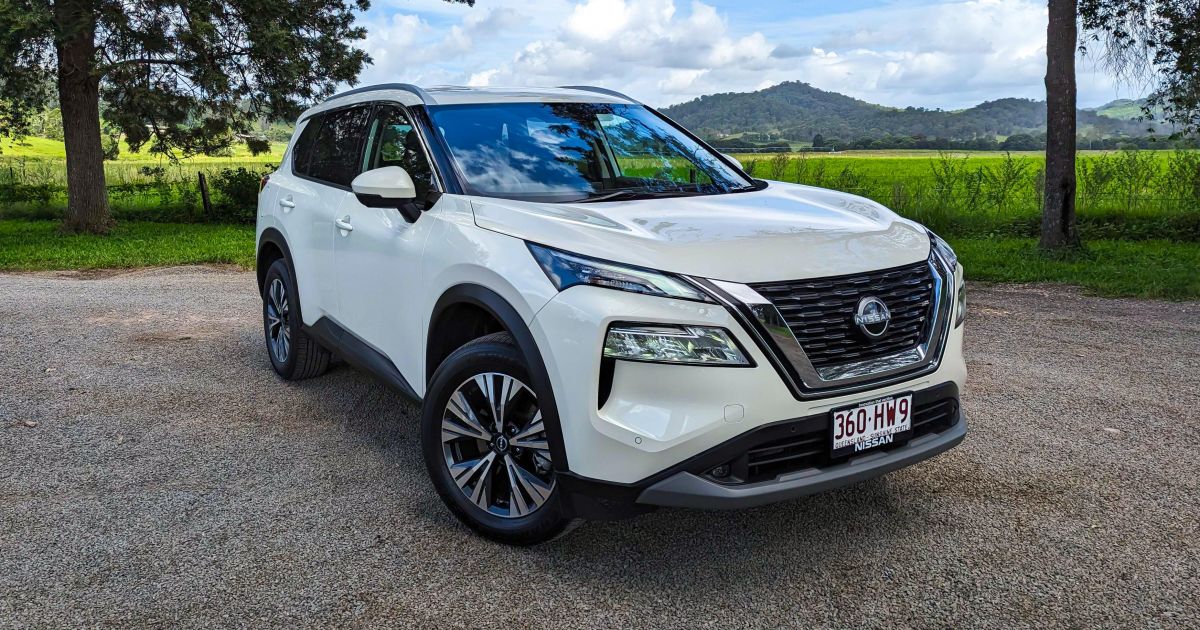
Taking a warm jumper with you on a crisp day. Ordering a side salad. Buying a Nissan X-Trail – what do these three things have in common? They’re all very, very sensible.
Buying a mid-sized SUV is already quite a tame decision, as these vehicles typically offer a combination of value, cabin space, and ease of ingress and egress that hits the sensible sweet spot for so many Australians. Particularly those with families.
Few mid-sized SUVs offer a third row of seating, but the X-Trail – along with the Mitsubishi Outlander and Honda CR-V – has this option.
While the X-Trail’s twin under the skin, the Mitsubishi Outlander, offers seven seats across almost the entire range, the Nissan is a little bit stingier.
WATCH: Paul’s video review of the MY23 X-Trail Ti-L
Want an e-Power hybrid with seven seats? Forget it. That goes for the highest petrol-powered Ti and Ti-L specs as well, which are exclusively offered with five seats.
Nissan also makes its ST, ST-L and N-Trek seven-seaters available only with all-wheel drive.
How does the Nissan X-Trail compare?
View a detailed breakdown of the Nissan X-Trail against similarly sized vehicles.
Nissan
X-Trail
How much does the Nissan X-Trail cost?
Based on a Sydney postcode, the 2024 Nissan X-Trail ST-L AWD has a drive-away price of $50,915. Premium finishes like our tester’s Ivory Pearl add an extra $700.
2024 Nissan X-Trail pricing:
2024 Nissan X-Trail ST
2WD 5 seat: $37,250
AWD 7 seat: $40,290
2024 Nissan X-Trail ST-L
2WD 5 seat: $43,690
4WD 7 seat: $46,790
e-Power with e-4orce 5 seat: $49,990
2024 Nissan X-Trail N-Trek
2WD 5 seat: $47,290
4WD 7 seat: $50,390
2024 Nissan X-Trail Ti
4WD 5 seat: $50,490
e-Power with e-4orce 5 seat: $54,690
2024 Nissan X-Trail Ti-L
4WD 5 seat: $53,490
e-Power with e-4orce 5 seat: $57,690
Prices exclude on-road costs
The X-Trail faces off with a number of SUVs. To see how it shapes up, use our comparison tool.
What is the Nissan X-Trail like on the inside?
The X-Trail’s interior is functional and well assembled with high-quality materials.
The design too, is modern and largely inoffensive. However, the two-tone black-and-brown treatment for the dash and doors was… a choice. The colours clash and, while we appreciate the contrast, we wish there was another colourway available.
You can step up to the Ti and get an attractive black/pale grey two-tone interior, but we wonder how quickly your children would dirty that.
The materials make this one of the nicer cabins in the segment. The sides of the centre console are finished in soft-touch trim, as are the front door tops, while the centre armrest is nicely padded. That leaves hard plastics only for the lower portions of the dash and doors.
There are attractive stitching details on the dash and doors, inserts with the look of grey open-pore wood-look trim (but a glossy texture), and brushed metal-look trim on the doors and centre console.
There’s some gloss black trim, included somewhat frustratingly on the steering wheel, but this smudge-, dust- and scratch-prone material is kept to a minimum.
Also scarce are blank switches that remind you didn’t buy the top-spec model, with only a handful tucked away to the right-hand side of the steering wheel.
Everything feels sturdily put together, apart from the gear shifter which feels cheap.
The centre stack is fairly minimalist, but you still get physical climate controls.
We’ve become so accustomed to increasingly larger touchscreens that the 8.0-inch unit in the ST-L appears almost small.
The resolution of the cameras is better than past Nissans, if not quite up to the level of the likes of GWM, while the infotainment system itself is easy to navigate with legible graphics. You also have both a USB-A and a USB-C port.
Whip out the world’s smallest violin for me, because the absence of rain-sensing wipers proved quite tedious on a wet week in Brisbane – you need to step up to the Ti for these.
Another gripe is related to the instrument cluster. The analogue gauges are attractive, and the digital screen in between is easy to read. But for some reason, even if you change the screen over to the digital speedometer, the vehicle kept defaulting to a maintenance menu upon startup.
Activating cruise control also gets rid of your digital speedometer, and you have to fiddle around to get your speed readout back on the screen. Thankfully you can switch this off but it’s hidden in the settings menu.
It is possible to have your speed readout and cruise control on screen at the same time, but it’s a little irritating you have to fiddle around to get this. The digital instrument cluster in the N-Trek and up is much better.
Storage up front is excellent. There’s a handy storage shelf under the centre console, suitable for some handbags, while the bottle holders in the doors will fit 1.5L bottles.
The centre console bin has a Mercedes-Benz-style double flap opening and a decent amount of room, and it also features a moulded plastic tray inside if you still find yourself with coins.
Step into the second row and there’s ample space in every dimension. There’s a slight driveline hump, but it’s not so large that it impinges on passenger space.
Amenities include two USB-C outlets, map pockets, air vents, and a fold-down armrest with cupholders. There are two ISOFIX and three top-tether anchor points for child seats.
An occupational hazard of this role is having to wedge one’s self into third-row seats to let you, the reader, know if they can fit adults – and “wedge” is the operative word here, as these are truly kid-only seats.
At 180cm tall, I found my head pressed to the ceiling. Even moving the second row as far forward as possible without making it uncomfortable for someone my height to sit there, it was still painful trying to sit in the farthest row. You’ll find your knees pressed against the seatbacks, with little room to move your feet.
Given it’s awkward to clamber back here too, you wouldn’t want to have your kids’ grandparents sit back here if you’ve got child seats set up in the second row.
There are no anchor points for child seats, so that rules out the smallest of children, and your teenagers would sooner have you hang out with them and their friends than sit back here – best to leave it to smallish children, then.
There are no air vents back here either, like in a Honda CR-V. There aren’t many amenities, period, apart from cupholders.
Nissan only quotes a 465-litre capacity for seven-seat models with the first and second rows in place, measured to the roof. There’s no figure with the third row in place, nor with the second row folded.
With all three rows up, you’ll be lucky to fit a duffel bag, or a few grocery bags. You can drop these rearmost seats by pulling the straps.
A space saver spare wheel is located under the luggage area floor.
What’s under the bonnet?
The latest X-Trail sticks with a familiar naturally aspirated 2.5-litre four-cylinder petrol engine in non-hybrid models.
That’s despite Nissan offering a newer turbocharged 1.5-litre three-cylinder engine in markets like China and the US.
Model
Nissan X-Trail ST-L 4WD
Engine
2.5L 4cyl petrol
Power
135kW
Torque
244Nm
Transmission
CVT
Drive type
All-wheel drive
Weight
1666kg (kerb)
Fuel economy (claim)
7.8L/100km
Fuel economy (observed)
8.6L/100km (inner-city, suburban and highway loop) 8.1L/100km (625km mixed driving)
Fuel type
91 RON
Fuel tank size
55L
The X-Trail faces off with a number of SUVs. To see how it shapes up, use our comparison tool.
How does the Nissan X-Trail drive?
The 2.5-litre four mightn’t be as shiny and new as the turbo three-pot in Chinese and North American models, but it’s still a solid mill.
While its outputs are modest, the CVT helps make it feel surprisingly zippy. It also means you don’t need to work the engine that hard, which is good news as should you rev it, you experience the typical CVT rev flare.
Under hard acceleration, the 2.5-litre gets a bit raucous – it doesn’t have the most pleasant engine note.
Fortunately, if you’re not pushing it too hard the X-Trail is quiet. On the highway, for example, road and wind noise are well-contained.
The X-Trail’s ride is comfortable. Body control is good, even on undulating roads, and impacts are well-absorbed.
The steering doesn’t have a lot of feel, but the weighting is well-judged. It’s light enough to make parking easy, but with enough heft that the X-Trail doesn’t feel like an arcade game to pilot.
Activating Sport mode adds some noticeable weight to the steering. You can also use the paddle shifters to shift between simulated gears.
There’s ultimately nothing sporty about the X-Trail, but it’s dynamically competent.
Body roll isn’t excessive, and it’s well-behaved apart from the occasional squeal of the tyres if you take a corner too quickly and slightly late intervention from the ESC on unsealed roads.
Turning on the adaptive cruise activates the X-Trail’s lane centring, though you can in turn disengage this via a button to the right of the steering wheel. You can also adjust the sensitivity of it.
We used it in both low and medium levels of sensitivity. Particularly in its medium setting, it keeps you well-centred in your lane for the most part, but once in a while it will get slightly confused.
The cruise control has a lot of alert sounds, but they won’t make your ears bleed. It boops when it’s activated, boops when it doesn’t detect lane markings, boops when it detects them again….
We appreciate how the X-Trail will remember if you had auto hold activated when you next start it, and the capless fuel filler is a neat touch.
What do you get?
The ST-L sits towards the bottom of the X-Trail lineup.
X-Trail ST highlights:
Automatic LED headlights
Paddle shifters
17-inch alloy wheels
Power-folding, heated mirrors
Roof rails
8.0-inch touchscreen infotainment system
DAB+ radio
6-speaker sound system
4 x USB points (1 x USB-A, 1 x USB-C front, rear)
Apple CarPlay, Android Auto
7.0-inch instrument cluster screen
Fabric upholstery
Space-saver spare wheel
AWD and seven seats optional
X-Trail ST-L adds:
Privacy glass
18-inch alloy wheels
Dual-zone climate control
Synthetic leather-accented seats
Heated front seats
Power driver’s seat
Fog lights
Leather-wrapped steering wheel
Auto-dimming rear mirror
Sliding rear seats, 40:20:40 folding
Divide-N-Hide cargo area system
e-Power with e-4orce optional
AWD and seven seats optional
Is the Nissan X-Trail safe?
The new X-Trail scored a five-star ANCAP safety rating based on crash testing of its smaller Nissan Qashqai sibling in 2021. The rating covers all models, including petrol and hybrid variants.
The X-Trail scored 91 per cent for adult occupant protection, 90 per cent for child occupant protection, 74 per cent for vulnerable road user, and 97 per cent for safety assist.
Standard features on all grades:
Autonomous emergency braking (AEB)
Pedestrian, Cyclist detection
Junction assist
Reverse AEB with Pedestrian detection
Blind-spot assist
Lane departure warning
Lane-keep assist
Traffic sign recognition
Automatic high-beam
Adaptive cruise control
Reversing camera
Rear parking sensors
7 airbags incl. front-centre airbag
ST-L and above add:
ProPILOT with active lane-centring function
Surround-view camera
Front parking sensors
How much does the Nissan X-Trail cost to run?
The Nissan X-Trail range is backed by a five-year, unlimited-kilometre warranty.
Nissan offers six years of capped-price servicing, with the first six services capped at $359, $466, $529, $566, $404 and $693 – or $3017 in total.
You can purchase pre-paid two-, three-, four- and five-year servicing plans, which are priced at $743, $1219, $1728 and $2092, respectively. Notably, Nissan still has servicing intervals of 12 months or 10,000km, while many rivals have 15,000km intervals.
The X-Trail’s service prices aren’t among the cheapest in this segment, and combined with the shorter intervals it makes it costlier to run than an Outlander.
CarExpert’s Take on the Nissan X-Trail
Outside of buyers of performance models like the Volkswagen Tiguan R, we’d wager most mid-sized SUV buyers aren’t going into this segment looking for something exciting.
That’s good news, as the X-Trail is far from exciting, but it doesn’t need to be. What the X-Trail needs to be is a good all-rounder – in this, it delivers.
Ok, so that third row has a very specific use case (small children or large hams). That’s par for the course in this segment, and if you want to fit anybody larger, you’ll need to step up to something like a Hyundai Santa Fe.
The front two rows, however, are extremely spacious and comfortable. The interior is also attractively presented (brown trim aside), logically laid out, and finished in high-quality materials.
The engine mightn’t seem like much on paper, but it proves to be a willing if uninspiring source of motivation on the road, while the X-Trail has a comfortable ride plus steering and handling that should strike the right balance for most mid-sized SUV buyers.
In the cons column are the shorter maintenance intervals and higher service pricing than some rivals. That makes the X-Trail a little less sensible.
It’s also tempting to look elsewhere in the X-Trail lineup. While the pricier N-Trek adds plenty of extra kit, the ST-L e-Power for an extra $3200 brings a much smoother powertrain plus better fuel economy, if at the expense of the third row.
Audi’s conquests of the World Rally Championship (WRC) and 24 Hours of Le Mans rank among the automaker’s most prominent racing achievements, but this Audi race car, set to be auctioned off by RM Sotheby’s, hails from a different corner of the racing world.
One of the featured lots at a Monaco auction scheduled for May 10, this 1991 Audi V8 Quattro was part of the automaker’s assault on the German DTM touring car series in the early 1990s, following the winding down of its IMSA racing program in the U.S.
At the time, DTM was dominated by rival German automakers BMW and Mercedes-Benz. Audi hoped to break in not with a small, nimble car like the E30 BMW M3 or Mercedes-Benz 190E 2.5-16 Evo II being raced by its rivals at the time, but with a rather large V8 sedan—a predecessor to today’s Audi A8.
As the name states, though, the Audi boasted a V-8 engine—in this case a 3.6-liter unit—as well the Quattro all-wheel-drive system that had proven so effective in WRC and IMSA competition. Audi also brought in 24 Hours of Le Mans winner Hans-Joachim Stuck as a driver for its initial single-car effort in 1990—and won the championship that year.
1991 Audi V8 Quattro DTM race car (image via RM Sotheby’s)
The Audi DTM program expanded for 1991 to four cars across two works teams. The V8 Quattro was also updated with a new front splitter and adjustable height rear wing, while output was boosted to around 500 hp. Frank Biela won the championship for Audi that year, but the 1992 season was such a disaster that Audi withdrew partway through.
The car up for auction—chassis number LN000049—debuted in the 1991 season opener at Zolder. It was driven by Stuck and Hubert Haupt that season, and was also used in 1992. It was kept by Audi until 2014, when Haupt bought it and had it restored with a 4.2-liter engine. It’s been used “minimally” since completion of the work, according to RM Sotheby’s, which expects the car to sell for between 750,000 and 1 million euros, equivalent to roughly $800,000 to $1 million at current exchange rates.
The Rivian R1T is aimed more at camp sites than job sites, but a patent filing from the automaker hints at a new feature that could enhance the electric pickup truck’s usefulness as a work vehicle.
In a patent application filed with the United States Patent and Trademark Office (USPTO) in 2022, but only published in April 4, Rivian details a tailgate with an integrated workbench.
The tailgate would essentially serve as a mounting point for different elements, including extendable support arms, clamps, vises, and fasteners. Some of these elements, such as the support arms, could be built into the tailgate and fold out when needed, while others could be attached to the tailgate via tabs.
Drawings accompanying the patent application show a pickup, but Rivian notes that the workbench concept could be applied to other areas besides truck tailgates. Fixtures could also be integrated with the doors for the Gear Tunnel pass-through located behind the cab of the R1T, or on an SUV tailgate, according to the automaker. Recall that the Rivian R1S has a split tailgate, with a lower flat surface similar to a pickup tailgate.
Rivian tailgate workbench patent image
Rivian has been looking for several ways to increase the utility of pickups. Other recent patent filings from the automaker include a bed rack system, drop-down storage tray, and a gooseneck-hinge tailgate that can swing open 180 degrees. Not all patented ideas make it to production, though, and it’s unclear if these ideas would be used for a future update of the R1T or another vehicle.
Rivian unveiled its lower-priced R2 series in the form of the R2S SUV in March, but hasn’t yet confirmed an R2T pickup. But with production of the R2S not scheduled to start until 2026, there’s still time for that announcement to happen.
Entrance to Denali National Park –Photos by Matt Genovese
In my first post on the site I shared some thoughts on escapism. That deviated from the norm a bit, so my second post will be a bit more conventional and I’ll share with you some insights about a specific destination: Denali National Park and Interior Alaska. For most people visiting the Interior this means Fairbanks, Alaska and the surrounding attractions.
Alaska had always been I state that I was interested in visiting but it always seemed like it would be a bucket list destination, more so than an achievable one. But life has ways of surprising you and making impossible things feasible. When my son joined the Army he was stationed at Fort Wainwright in Fairbanks. So my dream destination instantly became a “must do” while he was there. There was no way I could let the opportunity slip away. Plus, I wasn’t going to go three years without visiting my boy. That was an even higher priority than see this amazing swath of country.
So, I was able to accomplish visiting my son and having an experienced tour guide (his Alaskan-born girlfriend) show me all the beauty that Interior Alaska had to offer.
I’m not much of a planner when I travel. I prefer to wing it and see what experiences come about organically while I’m in a location. But I do usually do a cursory google search to see the “must do” destinations. So in talking to my son before arriving I told him I really didn’t have any plans or things that I absolutely wanted to do except that I wanted to get to Denali if that was feasible. The reason I was wondering if it was feasible was because I was traveling to Alaska in April and Denali isn’t fully open year round. But Patrick assured me that what remains open is still worth seeing. But that actually seeing the peak that the park is named for is a crap shoot in the off season.
While I was there one of the first things we did was we took a road trip to Denali National Park seeing the weather was cooperating, we didn’t want to waste the opportunity. The drive from Fairbanks to Denali is about 2 hours. The views the entire way are awe-inspiring and the vast openness of Interior Alaska is mind-boggling. For a guy from the most densely populated state in the union, traveling through true wilderness and not seeing another car on the road for miles on end were disorienting.
The scenery just kept getting more and more breathtaking as we got closer to the park. Seeing the wide open space and real mountains really fed my escapist dreams. I came to realize what I have always seen as mountains on the east coast (the Poconos, the Catskills, even the Adirondacks) were basically hills compared to the mountains of the Alaska Range. I kept seeing what I thought was a TREMENDOUS mountain and asking “is that Denali?” Each time I asked I was answered by a chuckle from my tour guide. “Nope. You’ll know it when you see it. Its MUCH bigger than that.” Unfortunately, the weather didn’t cooperate with us enough to be able to see Denali, but based on the huge mountains I saw only to be told they were dwarfed by Denali, I MUST get back there again to see what has to be a spectacular mountain with my own eyes.
As I said, we visited the park in the off season, so we were literally alone in the wilderness. There probably wasn’t another person within five miles of us as we hiked up one of the scenic lookouts. It was such a unique experience to be in a National Park, a huge tourist attraction, and yet be completely alone.
Being completely alone in Interior Alaska brought to mind Jon Krakauer’s interesting and spell-binding book, “Into the Wild”. The story was made into a movie of the same name. Its the story of a young man from a well-off family that left the world behind and hitch-hiked his way into Interior Alaska to live off the land. Unfortunately he only survived for a few months.
While that isn’t an uplifting story, it does feed, again, into those same escapist motivations that I keep touching on. Alaska is definitely home to more than its fair share of escapists and people who chose to drop out of the rat race.
While in Fairbanks we also checked out Pioneer Park where some of the original buildings from Fairbank’s gold rush beginnings have been moved and preserved. There are shops with local vendors and in the summer an amusement park is there to enjoy. Its only minutes from downtown Fairbanks and well worth the trip if you are there.
Candy cane street lamps in North Pole, Alaska
Southeast of Fairbanks is the town of North Pole, Alaska. They take their name seriously as everything in town is Santa-themed with roads like Kris Kringle Drive and candy cane striped street lamps. There’s also the Christmas-themed Santa Claus house that is open year-round. Its kitschy and tourist-trappy in the world’s largest ball of string kind of way, but isn’t that the kind of stuff that makes you pull off the highway when you are road tripping? If so, North Pole should definitely be on your itinerary.
Another great place to visit is the Chena Hot Springs. About an hour north of Fairbanks is a natural hot spring that hosts a resort that has been taking in visitors for over 100 years. You can visit for a dip in the springs or you can go and stay overnight and enjoy the warm water and try to get lucky and see the Aurora Borealis while you soak.
The closest major lower-48 city to Alaska is Seattle. As such, a lot of Alaskans are fans of the Seattle sports teams and there is a fair amount of Seattle culture that has crept into Fairbanks…or at least that’s the way it seemed to me as an outside observer. One of the first examples of this that I noticed was the Seattle coffee stand culture. If you aren’t familiar, in Seattle and also Fairbanks on most corners you will find small shed-like structures that are converted to small independent coffee stands. They usually have drive-up windows on each side. Some even draw in clientele by having their barista’s wear bikinis. (Its such a thing there is even a Yelp list for Seattle’s best bikini coffee shops!)
My son on a not-so-cold-day in Fairbanks. It was -20 the previous day. Photo courtesy of Mike Genovese
If you visit Fairbanks during the colder months, one of the popular things most visitors and people new to Fairbanks do is to get their picture taken in front of the University of Alaska, Fairbanks sign that shows the current temperature. The college students like to take pictures there during extremely cold days in bathing suits.
For those of us who like to hit the road to travel, the roads in Alaska are a great place to explore. You can go for miles without seeing another vehicle and no matter which way you head the vistas are incredible and the wildlife is abundant. It should be on every road trippers bucket list.
Have you been on an Alaskan road trip? Share your experiences in the comments. We’d love to hear your ideas.
Which automaker priced its hardware set allowing its EVs to back up the home?
Which EV brand has the lowest ownership costs of any automotive brand?
This is our look back at the Week In Reverse—right here at Green Car Reports—for the week ending April 26, 2024.
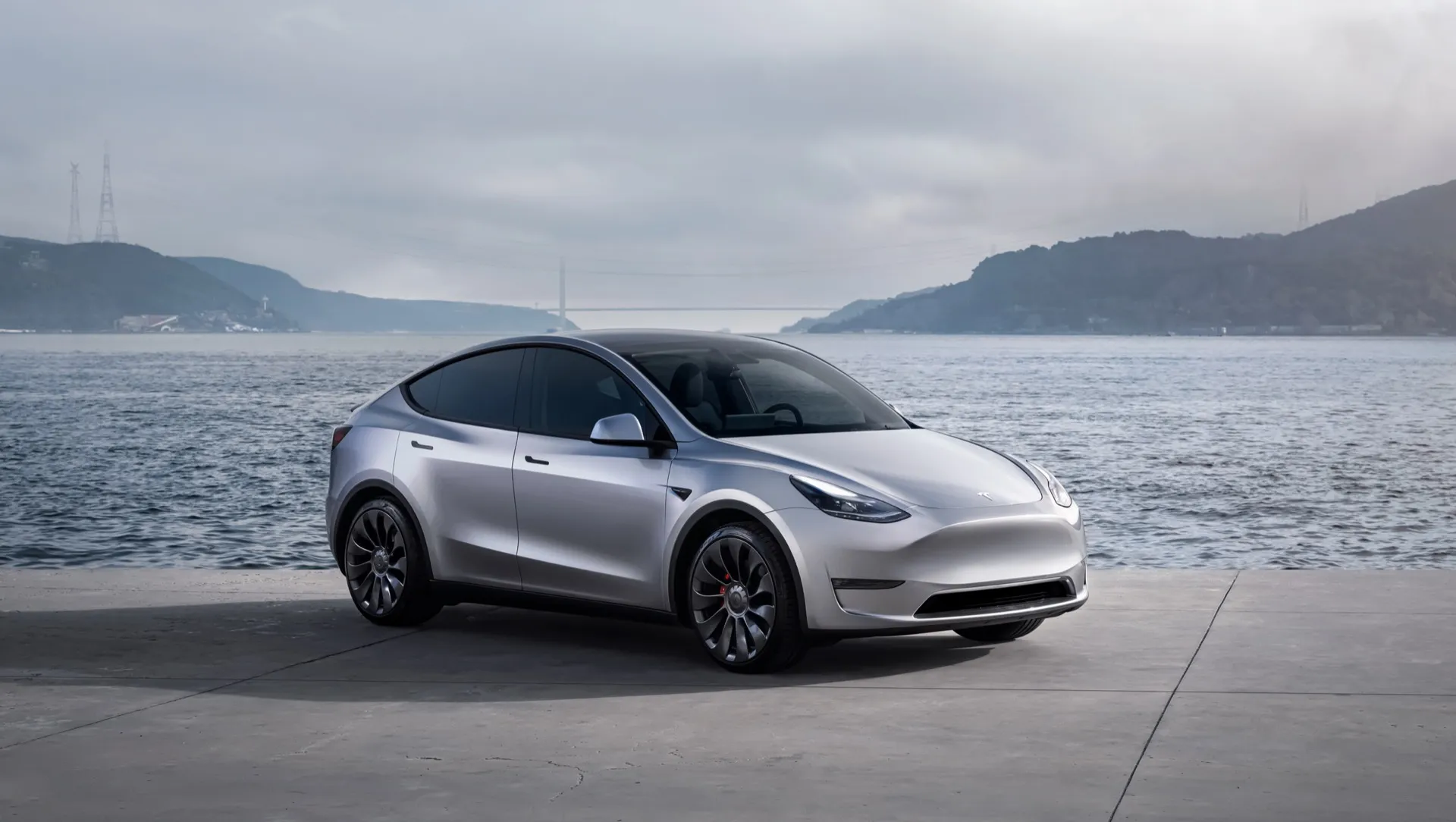
The Tesla Model Y undercuts the Model 3 by $5,000—for those who are EV tax credit eligible—under the latest round of Tesla price cuts made last weekend. With it, the base Model Y rear-wheel drive could cost just $37,130, with other state incentives yet to be deducted. Tesla has also dropped the price of what it calls Full Self Driving to $8,000, but it’s eliminated the popular $6,000 Enhanced Autopilot option.
Toyota confirmed a second 3-row U.S.-made electric SUV—in Princeton, Indiana, starting in 2026. That complements the other Toyota 3-row electric SUV set to be made in Kentucky in 2025. According to reports, the Indiana-built EV could be a Highlander EV, while the Kentucky model might incorporate all the leading-edge manufacturing methods Toyota has suggested in recent years are on the way.
Michelin Uptis airless prototype tires
Michelin believes that airless tires are the future. But with this tech that could be especially well-suited for robotaxis, EVs, and more still under development and at the prototype stage, the company is also focusing on other tech like sustainable materials and retreads.
The 2025 Mercedes-Benz G-Class EV made its debut this week. Although it’s missing the silicon-anode battery chemistry the automaker suggested this model would debut, it’s going to be a serious rival to the Rivian R1S, GMC Hummer EV, and Tesla Cybertruck. Badged the G 580 with EQ Technology, this model will allow a trick G-Turn on low-friction surfaces, and it might return more than 300 miles of EPA range.
2025 Mercedes-Benz G 580 with EQ Technology
The Mini Aceman urban EV also made a bow in production form, and it quite closely follows the 2022 concept car of the same name. If this model arrives in the U.S., it would fit between the Cooper and Countryman in the brand’s lineup.
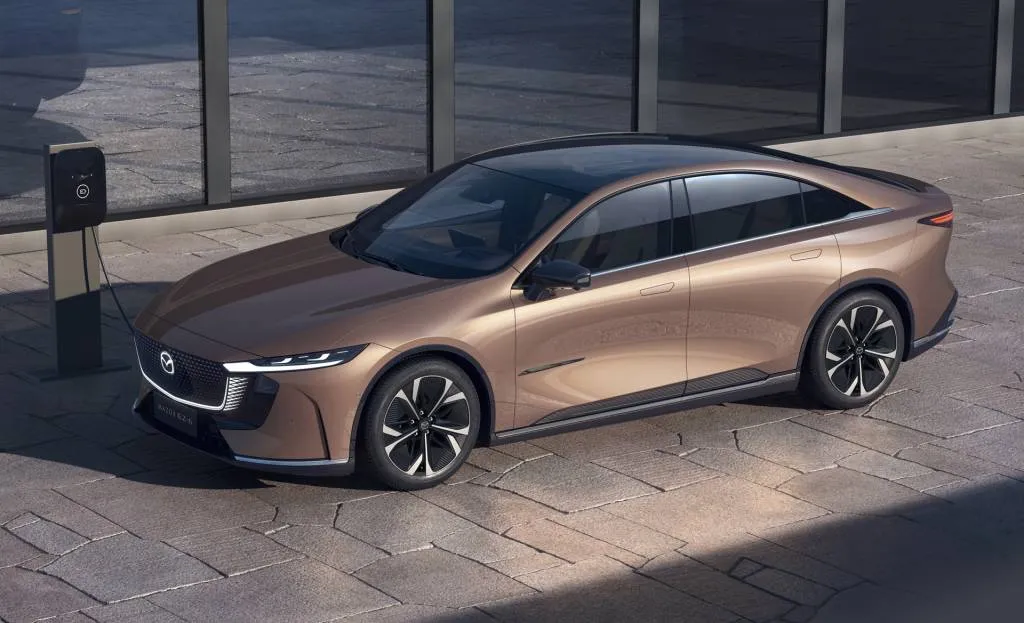
And Mazda has applied its design flair to an EZ-6 electric sedan that incorporates tech from China’s Changan Automobile. Although its range figures far more effectively represent what American buyers might seek in an EV, Mazda hasn’t yet confirmed plans for any markets outside China.
2025 Mazda EZ-6
Honda plans to create an $11 billion EV hub in Canada. Set to ramp up in 2028, the Ontario hub could potentially build up to 240,000 EVs per year, and see that as the demand for Honda EVs builds, they’d be American-made.
Hyundai is testing a window-tinting film that might save energy in EVs and gasoline models alike, by reducing the dependence on air conditioning. It specifically blocks external heat and radiates heat outward by reflecting at near-infrared wavelengths.
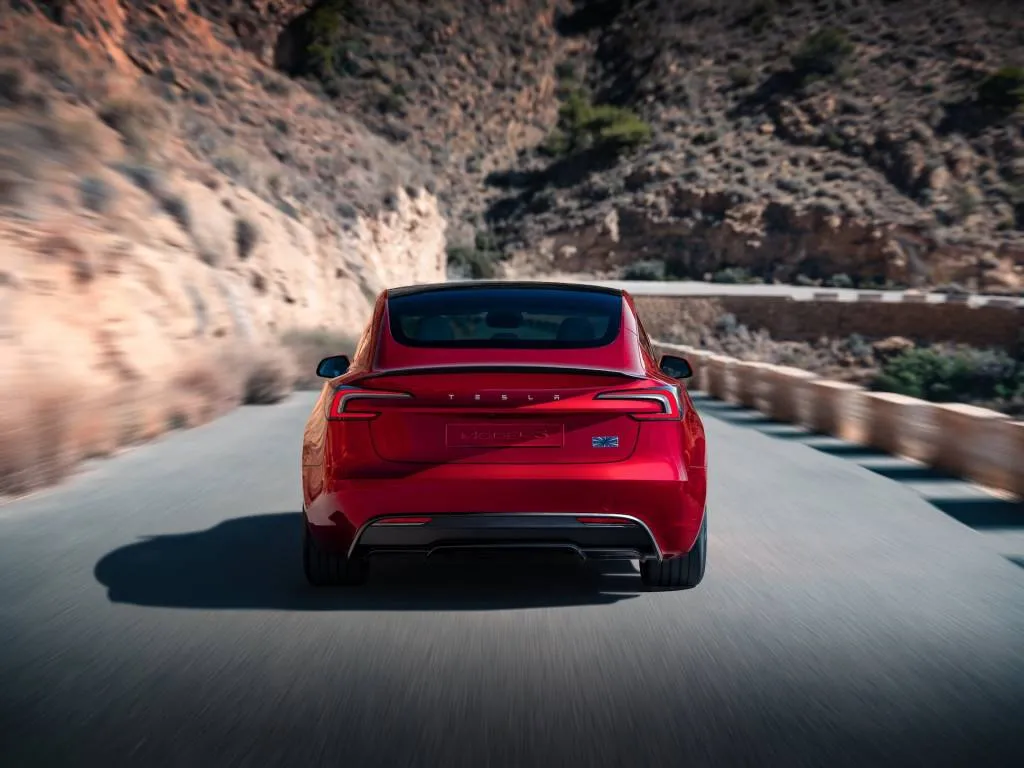
Tesla revealed its Tesla Model 3 Performance on Wednesday. With a dedicated track mode, an adaptive suspension, and various other improvements already gained by the refreshed Model 3 “Highland,” the Model 3 Performance looks a step closer to a luxury car while upping its performance. It might also be EV tax-credit-eligible while other Model 3 versions aren’t.
Tesla Model 3 Performance
Vietnam’s Vinfast announced Tuesday that it has signed a dozen new U.S. dealerships to sell its EVs. With the expansion, it will have 18 franchised dealerships in addition to 15 company-owned stores in California. Cinfast has delivered only a fraction of the 100,000 vehicles it targets globally this year, so the sales push might help simply get them out in front of shoppers.
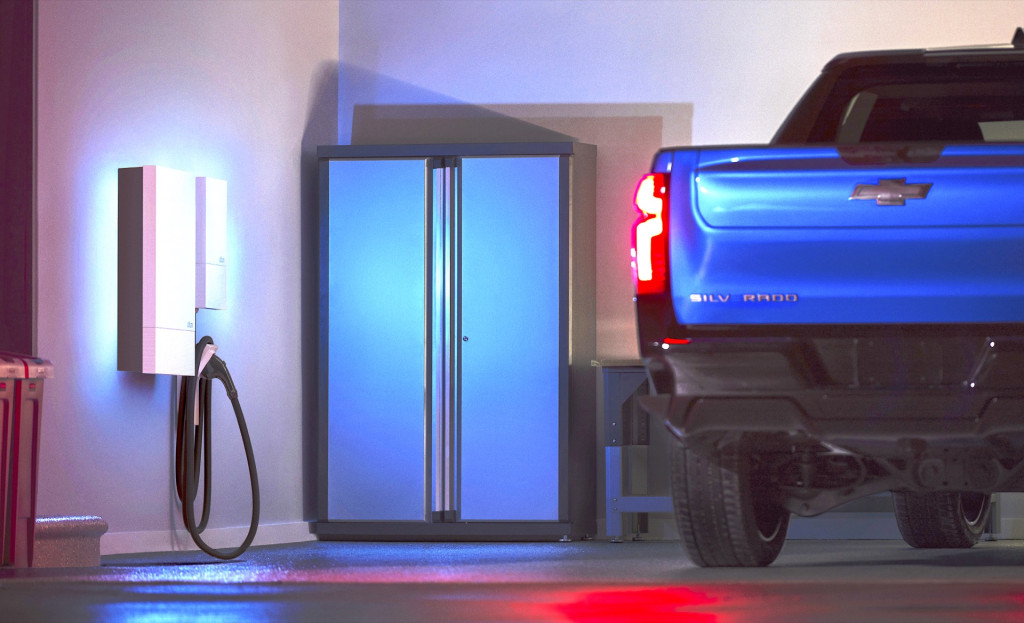
GM this past week released details regarding the home energy backup functionality that’s available for its Chevy Silverado EV RST electric pickup as vehicle-to-home (V2H). Does it make sense versus other EVs claiming this skill set—or home battery systems like the Tesla Powerwall?
GM Energy – Chevy Silverado EV energy management system
According to the International Energy Agency, in an annual report and forecast out this week, EVs are set for 11% of the U.S. vehicle share, and about 20% of all cars sold globally. Because of all the battery investment, automaker commitments, and emissions regulations, half of new vehicles sold globally could be EVs, it says.
More lower-priced Ford EVs are on the way, the automaker said, as it reported a massive loss on its EVs for the first quarter of the year. As executives explained, Ford has managed to cut costs with the Mustang Mach-E EV, but it can’t keep up with the price cuts needed to stay competitive.
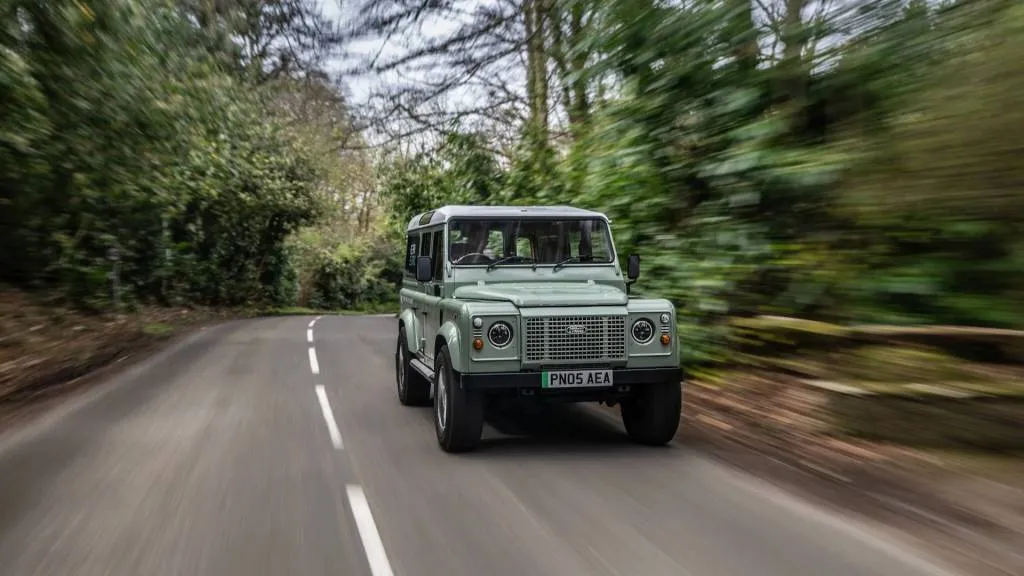
The U.K.-based company that now owns Protean in-wheel motors has showcased a Land Rover Defender EV conversion that doesn’t gain weight in the translation. Although it’s modest in its electric range, the idea acts as a technology proof point and, perhaps, a lot more.
Land Rover Defender EV conversion by Bedeo
According to an assessment by Consumer Reports, Tesla has the lowest ownership costs of any brand. Teslas average just $4,035 in maintenance costs over 10 years, which puts the brand well ahead of other brands—even Toyota.
And Disneyland has now confirmed that its Autopia ride will go fully electric in 2026. The attraction for kids, started with sponsorship by an oil company, has run for decades with internal combustion mini-cars, but it’s supposed to represent the future.
EVs and charging stations have aspired to provide EV drivers with something that rivals the turnaround time of gas stations.
While charge rates are important, reliability and simply being able to get a charge, ultimately, are perhaps more important points that some charging networks seem to have glossed over in the process.
According to a 2023 study, roughly 20% of EV public charging attempts fail. On the other hand, if there’s an issue at a gas pump that appears operational, it might run a little slower, but it typically won’t shut down completely, rendered inoperable.
A group of U.S. Department of Energy Oak Ridge National Laboratory (ORNL) researchers have kept that idea in mind with a project. They seek to get EV charging closer to that gas-station experience—by aiming to add resilience around two typical issues at high-power charging stations. And it appears building a little more flexibility into the station layout and controls might be all it takes.
Electrify America station with 2 of 4 chargers inoperable – April 2024
Experts: EV charger shutdowns often unwarranted
As ORNL pointed out in an update on the efforts earlier this month, either of the two issues focused on by its team of researchers—sudden voltage drops to the station, or power fluctuations within chargers—can be remedied in a way that doesn’t shut out chargers until a maintenance visit or remote restart.
The solution to one of them, a sudden voltage drop, is as easy as a “ride through” algorithm that restores power seconds later when it typically returns. As they point out, that not only helps the end user but also helps assure there isn’t a corresponding voltage surge.
Presently, such a voltage drop can render chargers useless, requiring a maintenance visit to re-activate them when the equipment is fine.
Inside the charging cabinet, a charger may also shut down due to a fault when one of its three power modules has an issue. According to the researchers, looking at algorithms, it would better serve customers who simply need a charge if the control strategy allowed the other two to compensate somewhat and provide reduced overall power until a repair, rather than shutting down.
You’d be more satisfied if you got a charge, with an apology that is was a bit slower than usual, rather than no charge at all, right?
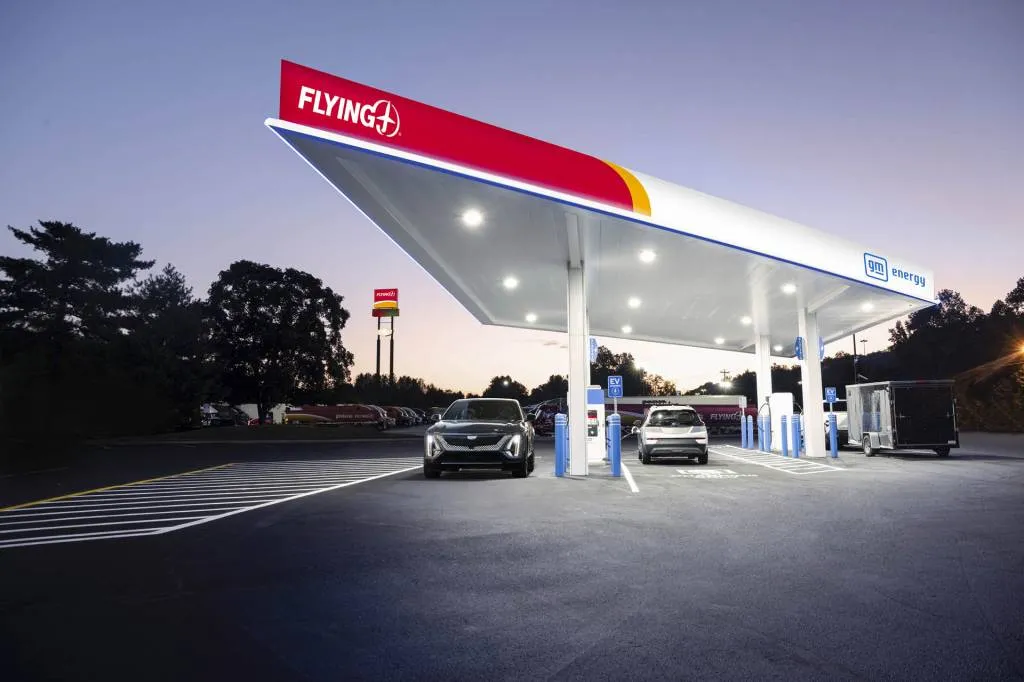
GM and Pilot Company’s EV charging network
EV charging stations need to be more gas-station-like?
For better reliability taking advantage of these ideas, the researchers point to a different kind of layout versus present-day charging stations—with a “multilayered approach for control and communication” across a charging station that “resembles a gas station with many pumps.” At it, a system-wide controller would alter equipment settings based on issues at individual chargers, to maximize performance and uptime.
The federal government is tackling EV charger reliability in the U.S. infrastructure buildout, and through its Charge X consortium it’s already focused in on several aspects that amount to a tangle of technical barriers, including non-standardized error reporting and payment issues.
It’s not surprising that automakers have stepped forward, opting to create their own networks in some cases—like the upcoming Supercharger-rivaling Ionna—rather than ally with existing ones. Rivian has even adopted a grading system for public chargers that will be used for its own dynamic route planning.
Camping is a great way to step out of our day-to-day and be present in our surroundings, whether communing with nature or building memories with loved ones. As an avid camper, I’m more than happy to leave technology at home, but I’m much less willing to forgo the pleasure of eating (and sharing) a home-cooked meal on my outdoor adventures. Sure, there’s an undeniable nostalgia of cooking s’mores or hot dogs over an open fire, but camping gear has come a long way since my childhood camping trips.
When it comes to packing, I’ve managed with just the bare essentials for multi-day backpacking trips when every ounce counts, and I’ve also loaded up a boat full of coolers and provisions to feed seven campers for a long weekend. With any camping trip though, preparation is key. A functional camp kitchen involves a camp stove, cooking equipment, utensils, and storage at a minimum. There’s also ample opportunity to integrate packable, space-saving cooking gear to up your camp culinary experience without overloading your car. Assembling a camp kitchen also means you’ll be ready for impromptu trips without forgetting any essentials.
Wherever your next adventure takes you, these are the 15 camp kitchen essentials this lifelong camper recommends for enjoying gourmet meals al fresco.
Coleman Classic 2-Burner Propane Stove
Amazon
For some, camping is about getting back to the basics. In the same vein, I love the simplicity and classic design of this two-burner camp stove. I can fit a pair of 12- and 10-inch pans (or a sizable griddle) on the cooktop — opening my campsite menu to more elaborate dishes. Equipped with dual 10,000 BTU burners, the Coleman Classic delivers solid heat output, but it’s the precise temperature control that I appreciate most. On simmer, it browned my pan-fried gnocchi to perfection.
The stove is compatible with the standard 16.4-ounce propane cylinders, which is a breeze to set up. In the words of one happy camper, “It is incredibly simple to use; just pop it open, connect the propane port to the stove, connect the propane tank to the port, turn the dial on the stove to start the propane, and fire it up.”
Jetboil Flash Cooking System
REI
When I’m backpacking, I swap my bulkier two-burner for this lightweight, all-in-one cooking system. Comprising an insulated thermos that doubles as the cookpot, plus a burner, bottom cup that’s both a measuring cup and bowl, stabilizer stand, and butane fuel canister, the packed weight is shy of one pound. It’s capable of boiling one liter of water in 1 minute and 40 seconds. Tacking on the Pot Support makes it compatible with Jetboil’s Summit Skillet, expanding your cooking options beyond dehydrated meals and anything that just requires adding boiling water.
Since it’s so packable, I also bring it on car and boat camping trips, as it’s adept at boiling water, freeing up a burner on my Coleman stove for more complex cooking tasks. One adventurer emphasized how it’s revolutionized their coffee. “I’ve done dehydrated meals, noodles, and all the standard fare, but my favorite is how it’s elevated my coffee in the field. If you love coffee like I do get the French Press attachment and thank me later.”
Ignik Gas Growler Deluxe
REI
As an avid camper and nature lover, I try to reduce my environmental footprint whenever possible. For frequent campers, investing in a refillable fuel canister can cut down on a ubiquitous form of waste: single-use fuel canisters. After my first time using it, it quickly dawned on me how many green canisters I’ve gone through in 30+ years of camping. I also love the portable and durable design of the storage case. The four-foot connector hose is easy to attach and long enough for flexible kitchen setup. Any extra length can be wrapped around the canister, so it’s safely tucked out of the way.
As one camper notes, “I just got home from a 5-night beach camping trip. We cooked breakfast and dinner every day, and I still have at least half a tank.” The sustainability perks were noted by many customers. Another camper chimed in: “After going through countless 1-pound canisters, I decided to buy this 5-pound. tank. It cost me $5 to fill it up and has lasted quite a long time.”
Gerber ComplEAT 16-Piece Cookset
Gerber Gear
Having once relied on a Tupperware bin containing mismatching plates, pots, and pans, I’ve found the streamlined design of this camping cookset does wonders for simplifying my packing list and enhancing meal prep. The entire 16-piece set neatly stacks together for compact storage bag (I’m a big fan of the diagram explaining the order to repack the set). Starting from the bottom, there’s a deep sauté pan, hot pad, and stock pot with an integrated strainer lid — adding versatility and practicality. Moving up, the tableware is another standout for me, as the distinct colors help clearly identify whose plate is whose. I also appreciate the versatility of the mixing bowl and the space saved by the detachable pan handle.
In their review, one camper emphasized that “the ‘nesting’ feature to minimize space is simply amazing.” Another raves about the functionality and quality construction: “It’s literally everything I need for a camping trip…and is definitely durable to withstand being outdoors.”
Gerber ComplEAT Griddle
Amazon
From eggs and pancakes to burgers and grilled cheeses, a griddle is a must-have for whipping up campsite comfort food or cooking for a crowd. Measuring 1 foot by 11 inches, this carbon steel griddle is a compatible addition to almost any two-burner stove. Hardly anything sticks to the carbon steel surface, and I love the raised sidewalls, which help keep everything in the pan for less mess and better flavor.
The griddle handle is the same detachable handle used in the ComplEAT 16-piece cookset. As one camper puts it, “What’s better than preparing an entire breakfast with 1 tool?” adding that the removable handle made it incredibly easy to clean and pack away.
MSR Folding Utensils
Backcountry
Whether car camping or backpacking, I make space for essential utensils to upgrade my campsite dining experience. This folding utensil set covers the bases with two forks and two spoons. Made from lightweight, BPA-free nylon, they hardly make a dent in my packed weight and avoid the risk of leaching chemicals into camp meals. They measure just 4.5 inches when folded, and 8 inches when unfolded and locked into place.
With a 4.5-star average rating from over 200 campers, the utensils are a tried-and-true step up from plastic models. As one shopper says: “What I really like best is that they are easy to clean. No grooves or channels to clean and you don’t have to separate the pieces to scrub them.”
Gerber ComplEAT Cutting Board Set
Huckberry
Cooking outside my home requires a bit more focus and planning. While nature is perfect (to me at least), it rarely provides an ideal kitchen setup, so bringing a quality cutting board is essential for safe and effective meal prep. This cutting board set includes a pair of cutting boards — one bamboo and one polypropylene — alongside two knives and two trays (I actually swap out the inner tray for more storage space). Having a dedicated tray for raw meat and veggies helps divide tasks between sous chefs and adds assurance that I won’t put myself or fellow campers at risk of food poisoning.
The whole set stacks together securely for compact storage, though the 4-pound weight means I reserve it for car and boat camping trips. The functionality was praised by many customers. As one adventurer puts it, “I was impressed with the well thought out design and concept behind the whole package,” adding that the rubber feet do a great job of holding the board in place during use.
Radius Outfitters Small Camp Kitchen Organizer
Amazon
Having all my cooking equipment at the ready helps put me at ease when settling into a new camp kitchen setup. This kitchen organizer provides intuitive storage across a series of utensil sleeves, knife sheath, and see-through pockets for whatever campsite dining requires. Besides knives and cutlery, I typically pack in a bottle opener, corkscrew, lighter, scissors, and spatula, with some room to spare. The durable exterior keeps everything clean and protected from the elements.
The ability to hang the organizer just about anywhere is a major plus. When the picnic table gets busy (or there isn’t one), I hang it from a nearby tree, which gives the benefit of having all my cooking equipment at eye level. If cooking for a crowd, the large kitchen organizer may be a better choice.
Sea to Summit Frontier Collapsible Pour Over
Sea to Summit
I do most of my camping these days in New York’s Adirondack Park, and coffee is a must for chilly mornings and an energy boost for my morning paddle. And with no house chores or deadlines to worry about while camping, I have ample time for making a more flavorful cup (or several) of pour-over coffee. This collapsible pour-over system is both convenient and effective at making morning brews. The filter is made with a stainless-steel mesh filter and EU food-grade silicone, ensuring quality and safety.
The pour-over base can fit virtually any mug or thermos. I love how easy it is to clean and that it folds flat for packing. Weighing just 2 ounces, it’s also a feasible backpacking coffee solution. When camping with larger groups though, I pack this insulated French press to keep up with demand.
Yeti Rambler Stackable Mug
Amazon
Since I pack my own reusable water bottle for staying hydrated, any additional drinkware is meant for morning coffee and alcoholic beverages. This insulated mug does the trick for hot and cold drinks alike, helping pare down my packing list. The double-wall vacuum insulation and magnet lid provide excellent temperature retention and leak resistance. In the succinct words of one shopper: “Easy to clean and keeps my drinks hot for a long time.”
I also appreciate that the short and wide design makes it less prone to tipping over. If it does fall, the stainless-steel material holds up well to wear and tear. For storing at home, I love the stackable design. Simply remove the lid and nest each mug on top of the next.
Collapsible Dish Basin
Amazon
Having to do dishes is perhaps my least favorite part of camping — and by way of cooking delicious camp meals, I aim to get out of this chore whenever possible. But when camping with just my husband or a smaller group, it’s an inevitable duty that I’m happier to embrace with this user-friendly basin. While cooking, I typically have it set up nearby to pre-soak anything that’ll take more effort to clean later. The removable drain plug opens with a simple twist but is secure enough that it won’t accidentally release.
Measuring 12 inches by 12 inches by 2.8 inches when collapsed, it neatly tucks in any number of my gear bags. The convenience and space-saving perks have earned it a 4.8-star average rating from over 1,400 shoppers. “Easy to use. Easy to clean. Easy to empty,” said one satisfied camper.
Sea to Summit Wilderness Wash Soap
REI
While toiletries and kitchen cleaning products are distinct categories at home, camping (and backpacking especially) require a more strategic approach. This highly concentrated soap can be used for dishes, laundry, and washing up. I mainly use it for dishes and handwashing — and a couple of drops is about all I need to get the job done, even with cold water. The 100 percent biodegradable formula is essential given the outdoor use.
It comes in a 3.3-ounce bottle, which goes a surprisingly long way while still being TSA-friendly. “We use it for all the things, from cooking to clothes in a pinch,” said one camper, adding that it lasted their family of six on a tour of U.S. National Parks.
Yeti LoadOut GoBox Gear Case
REI
Alongside my insulated, hard-top Yeti cooler, I rely on this durable gear case to keep my camping provisions and equipment safe and sound. The 30-liter gear box comes with me on multi-day boat and car camping trips. I appreciate how the removable divider and caddy trays help keep gear organized and in place, especially during transit. The divider or trays can be taken out to accommodate larger items as well.
It’s yet to go overboard on any of my boat trips, but the dust-proof and fully submersible construction has given me the confidence to leave it out during rainstorms without any leaks. According to one reviewer, it’s “very sturdy, very durable, and seems to me it will last a lifetime.” For greater storage needs, note that the LoadOut GoBox is a stackable design that pairs with Yeti’s 60-liter and 15-liter versions.
Radius Outfitters Gear Box 3000
Amazon
Whereas the LoadOut GoBox holds more durable equipment like my camp stove, this gear box is my go-to for transporting wine, snacks, and more fragile items. It comes with three removable Velcro dividers that can be configured and customized to best suit your storage needs. There’s also Velcro on the bottom to hold the box in place on the floor of your vehicle. I love the convenience of the removable lid for having one-handed access to anything I need while cooking.
The design blends style and durability. Leather handles add character while providing a secure and comfortable grip. The 1680D Cordura exterior covering can stand up to the elements and handle the wear and tear that comes with outdoor adventure. When not in use, I’m a fan of the ability to disassemble and store flat in my closet. Reassembling takes just a few minutes.
Kelty Noah’s Tarp
Amazon
Being prepared can help make light of rain and bad weather. This spacious tarp gives somewhere to congregate outside the tent, plus shelter for the camp chef and dining area, and if the weather takes a turn. For those camping in the desert or open areas, the tarp is also well-suited for sun protection. It’s typically the first thing I set up on arrival, as the 12-foot by 12-foot tarp (there’s a 16-foot by 16-foot version, too) protects all my camping gear while I set up the tent and get the lay of the land.
I’ve always been able to secure the tarp to trees for camp kitchen coverage, thanks in part to the multiple guy-out points. However, it can be set up with poles if needed. As one camper notes, “The 12-foot version easily covers a picnic table [with] room to spare.” Another traveler chimed in that “It’s built to last many seasons of use,” adding that there are tons of options to configure the tarp for camping.
The technical storage or access is strictly necessary for the legitimate purpose of enabling the use of a specific service explicitly requested by the subscriber or user, or for the sole purpose of carrying out the transmission of a communication over an electronic communications network.
Preferences
The technical storage or access is necessary for the legitimate purpose of storing preferences that are not requested by the subscriber or user.
Statistics
The technical storage or access that is used exclusively for statistical purposes.The technical storage or access that is used exclusively for anonymous statistical purposes. Without a subpoena, voluntary compliance on the part of your Internet Service Provider, or additional records from a third party, information stored or retrieved for this purpose alone cannot usually be used to identify you.
Marketing
The technical storage or access is required to create user profiles to send advertising, or to track the user on a website or across several websites for similar marketing purposes.