With Malaysia having the Chery Omoda 5, Omoda E5, Tiggo 7 Pro and Tiggo 8 Pro models, how about a stylish new entry to slot in right in the middle of the range? Meet the Tiggo 6, a C-segment electric SUV with unique and sporty looks.
The Tiggo 6 nameplate is new, to be used in the Russian market and a few neighbouring countries. In China, the car actually wears the eQ7 badge, as part of the Ant family – you may remember the cute eQ1 EV, fondly called the Little Ant.
Now, while the car you see here may look new and fresh, it actually isn’t, being a heavy facelift of the Chery eQ5 that has been around since 2020. By China’s freakily fast standards, the base car is practically ancient.
Not that you can tell, of course. To these eyes, the Chery Tiggo 6 looks brand new, futuristic even. It helps that the front resembles the Lotus Eletre, while the two-tone floating roof design looks bang up to date. The interior looks pretty damn stylish too, especially with the interesting colour choice.
Click to enlarge
Size wise it is 4,675 mm long, 1,910 mm wide and 1,660 mm tall, with a long 2,830 mm wheelbase. That is considerably larger than the Omoda E5 (4,420 mm long, 1,830 mm wide, 1,600 mm tall, with wheelbase of 2,630 mm) in every single way. It also rides on a more advanced rear-wheel drive skateboard EV platform.
In China, it’s claimed to have a range of up to 512 km on the ultra-lenient CLTC test cycle from its 67.1 kWh battery pack. Power is as much as 306 PS and 285 Nm, with a 0-100 km/h time of around eight seconds.
So it may not quite be as sporty as it looks, but does that really matter to you? Most car buyers make their purchasing decision based on looks alone, and this one certainly stands out. They will have to make a right-hand-drive version first, but would you want Chery Malaysia to bring the Tiggo 6 in to sit above the Omoda E5? Comment below!
The Chery Tiggo 4 Pro has been confirmed for the Malaysian market, and the sub-B-segment SUV will slot in below the Omoda 5 in both size and price. Chery Malaysia told paultan.org at the ongoing 2024 Chery International Business Conference event that the Tiggo 4 will arrive in the first half of 2025.
The Tiggo 4 was part of Chery Malaysia’s first ever event – a media preview – back in October 2022, so it’s no surprise that the junior Tiggo will be making its way here. However, time has passed and the car we’re showing you now from Chery’s headquarters in Wuhu looks different from the Tiggo 4 from a couple of years back.
The latest 2024 facelift version of the Tiggo 4 has bolder face that consists of a larger and more angular studded grille, which is visually connected to vertical LED daytime running lights at the edges of the bumper. The headlamps are LEDs and the cluster is slimmer. Overall, the new face gives a wider impression, and it’s also more modern.
Like the fascia, the Tiggo 4’s profile and rear end are also more in-line with its bigger Tiggo siblings. The chrome lower border of the daylight opening now goes all the way to the back; this plus some black paint creates the ‘floating roof’ effect seen on the Tiggo 7 and Proton’s X SUVs. The two-tone five-spoke alloys look pretty small here, but are actually 17-inch items with 215/60 rubber.
For me, it’s the rear end changes that does most to transform the Tiggo 4, which looks so much more contemporary with a full-width bar containing fancy LED signatures and a fully spelled out Chery logo. Vertical reflectors at the bumper edges mirror the front LED DRLs. Check out the pre-facelift to see what we mean.
The pre-facelift Tiggo 4’s interior was a strong point for cars of this size/price, but it has been further modernised and now sports the conjoined screens seen in other Chery SUVs. Further down, the row of piano keys and the piano black AC control panel have been retained, but the vents are now full width. Shift-by-wire allows for a small knob and a big storage area below the centre console. The steering wheel retains the Chery emblem instead of the logotype on the other Tiggos, though.
Latest Tiggo 4 interior on the left, pre-facelift on the right
The Tiggo 4 Pro is powered by a 1.5-litre turbocharged four-cylinder engine making 147 PS and 210 Nm of torque between 1,750 and 4,500 rpm. That’s slightly lower than the Omoda 5’s 1.5T with 156 hp/230 Nm. The junior Tiggo’s entry-level engine has always been a 1.5 litre naturally-aspirated four-pot with, which is also available with a manual gearbox that some markets require.
What do you think of the Chery Tiggo 4 Pro? Its prospects will heavily depend on pricing, as buyers in the sub-RM100k market are more price sensitive than those buying a RM150k SUV. The T4 is sure to be priced below the century mark as the Omoda 5 starts from RM109k. Chery has a knack of surprising everyone with its prices though, so could this car retail between RM80k to RM90k?
For context, the Perodua Ativa – which has a 1.0-litre three-pot turbo engine – is priced from RM62,500 to RM72,600, while the 1.5L NA-powered Honda WR-V retails from RM90k to RM108k. It’s these two compact SUVs that Chery is targeting with the Tiggo 4 Pro.
Road-tripping is my favorite way to travel. With two dogs and now a baby, I’d much prefer to drive somewhere than fly. Also, there is an undeniable magic to a good road trip: the freedom of the open road, the opportunity to get off the beaten path, and the surprises that you stumble upon along the way.
However, packing for a road trip can be super stressful. While I consider myself a packing pro these days, I’ve definitely made the mistake of forgetting something really important, like the time I left my hiking shoes behind. I can’t tell you what a huge bummer it was to have to stop and spend $150 on new hiking shoes when I have so many pairs at home.
So, to help myself (and you!) stay organized, I created a road trip packing checklist that has all of the essentials you need for a successful road trip. I keep a condensed, printable version of this packing checklist on my phone to make sure I don’t forget anything.
Download a PDF version of my road trip packing checklist!
In this post, I’m excited to share all of the details of what I bring on my road trips, including safety gear, clothing, food, and other gear.
Vehicle Road Trip Essentials
This is the basic safety gear that I always pack on all of my road trips.
Driver’s License, Registration, and Proof of Insurance
Car Operation Manual: Your car manual will come in handy if your check engine light comes on or you need to change your tire.
Spare Tire and Tools: If you get a flat, you’ll need a lug wrench, a jack, and a portable compressor that you can use to pump up your tire.
Jumper cables: If your battery dies, you can save yourself a call to roadside assistance by having jumper cables, or even better, a self-starting battery jumper
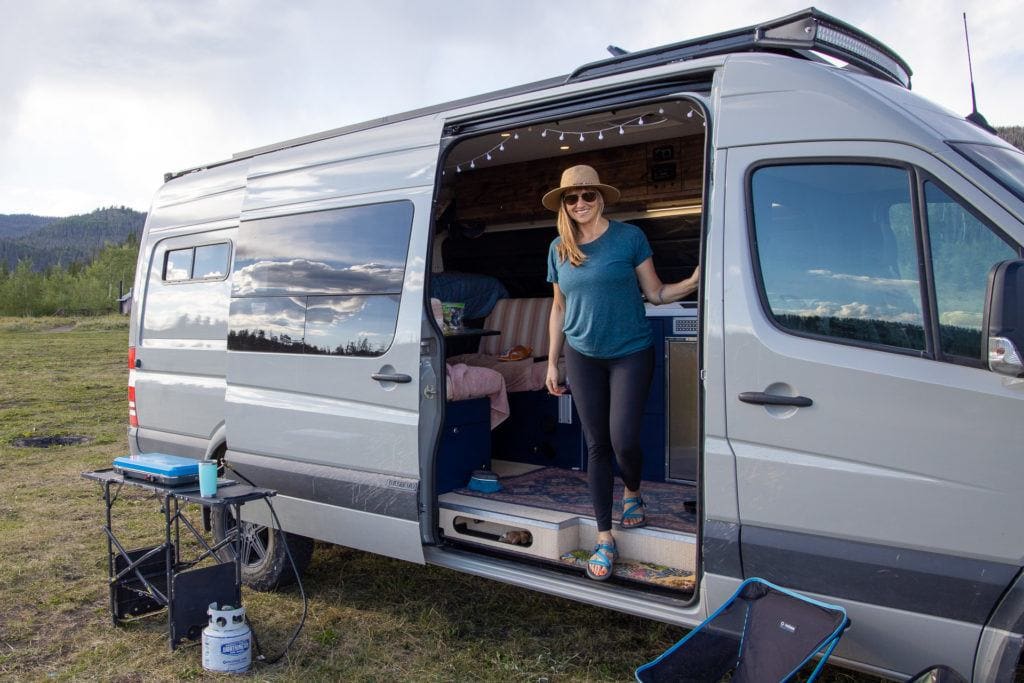
Communication device: I’d argue that the Garmin InReach is a road trip essential if you plan on exploring remote backroads where there is no cell phone service. The Garmin InReach allows you to send custom text messages no matter where you are or to call for medical help if you are in an emergency situation. I once had a dead battery in my Sprinter Van and no cell sevice, and I used the Garmin InReach to text my dad who was then able to call a tow truck.
Road Trip Navigational Tools
While part of the fun of a good road trip might be getting lost and exploring remote back roads, it is crucial to have reliable navigational tools so you don’t end up utterly lost. Here are my recommendations.
Atlas: Although we all know Google Maps is essential for directions, I personally like carrying a paper map too. Plus, hopefully some of your itinerary will take you off the grid and out of cell phone service. Paper maps are also better than phone apps for telling the difference between a well-graded gravel road and a gnarly 4×4 road. My favorite paper maps are the Benchmark Road and Recreation Atlases which also detail public lands, camping areas, National Parks, and more.
GPS: A GPS is handy for navigation when you don’t have cell service. If you don’t want to purchase a GPS, download Google Maps for offline use.
A paper map is always handy for road trips. I’ve found some of my favorite roads and campsites using the Benchmark Road and Recreation Atlas.
Road Trip Apps
Before you hit the road, download these apps. These are the apps I rely on daily when I’m on a road trip for finding camping and other services.
Gas BuddyApp: This is a helpful road trip app that will help you find the cheapest gas prices so you aren’t wasting money when you fill up.
The Dyrt App: The Dyrt is one of my favorite campsite finder apps that has reviews and photos, and you can even use it to make reservations at some campgrounds. Sign up for the Dyrt Pro and try it for free for 30 days.
iOverlander: Another one of my go-to apps for finding free dispersed camping on public land. For details on how to use it, see my iOverlander review.
AllTrails: The most popular trail finder app for hiking trails on your road trip. If you upgrade to AllTrails+ you can download trail maps for offline use which I find to be super handy when I’m are visiting remote areas.
What to Wear on a Road Trip
Packing for a road trip means filling your bags with versatile, well-fitting, and durable clothes that allow you to do a little bit of everything. The key is to not overpack, otherwise, your luggage will be overflowing and your car will get messy quickly.
I like to pack clothing, footwear, and accessories that:
Won’t wrinkle
Retain their shape (think a little bit of stretch)
Wick away moisture
Are comfortable to spend full days in
While crazy patterns can be fun, I prefer to pack solid prints that will go with everything. That way, you don’t have to really think about packing specific outfits. Here is a list of the types of clothes I bring on a road trip. If you click on the links it will take you to my blog posts with female-specific suggestions.
Road Trip Entertainment
Road trips are all about having a good time, right? Right. Make the drive fun with the following entertainment essentials. I also recommend keeping your day hiking essentials in your trunk too so you’re always ready for a spur-of-the-moment hike, should you need them.
Music Playlists: What’s a road trip without music? Load up your phone with plenty of tunes ahead of time in case you’ll be driving through areas with limited service.
Podcasts and Audiobooks: If music isn’t your thing or you need a break from rockin’ out, download a couple of audiobooks or a bunch of episodes of your favorite podcast. For suggestions, check out my favorite outdoor podcasts. The Libby App and Audible are also great resources for downloading audiobooks.
Book: A book or two is always nice to have along on a road trip so you can read in your downtime. I prefer a Kindle since I can load it up with a few different books just in case I get bored with one.
Travel Games: If you’re traveling with kids, games are a great way to keep everyone happy and entertained. But games aren’t just for kids! Bringing along a deck of cards or your favorite road trip games for entertainment in the evenings.
Headphones: A set of headphones or AirPods are nice to bring on a road trip in case you need a little alone time.
Camera: I like to bring a camera to capture the memories on my trip. Of course, you can always use your phone too.
Notebook: If you like to journal or make notes about the places you travel to, pack a small weatherproof notebook.
iPad or Laptop: An iPad or laptop is nice to have along for evenings when you just want to Netflix and chill. Download a few movies ahead of time for easy viewing.
Packing Food on your Road Trip
One of the best parts about a road trip is tasty road trip snacks, wouldn’t you agree? Whether you’re a salty or sweet person, having quick and (mostly) healthy snack options can make or break a long drive.
It’s also a good idea to pack some kitchen and cooking gear even if you’re not camping so you can whip up that impromptu picnic. If you are camping, check out my car camping packing checklist which has additional gear like a stove, cookset, etc. Here is the food and cooking essentials I pack on a road trip.
Cooler: A cooler will keep your fruit, veggies, dips, dand other snacks cold so you can eat fresh on the road.
Reusable Water Bottle: An insulated water bottle will keep your water cold in the hot car and is key for staying hydrated. You can fill it up at gas station soda fountains, which will also save you money on having to buy water.
Water Jug: Having a full 5-gallon water jug makes it easy to fill up your water bottle on the go and is also important in case your car breaks down or you run out of gas.
Coffee Mug: Consider bringing an insulated coffee mug for keeping coffee and tea hot on sunrise drives.
Multi-tool: A multi-tool or versatile knife like this Swiss Army Camper Knife is always good to have along, whether for slicing apples, cutting rope, or opening that nice bottle of wine at the end of the day.
Utensil set: This To-Go Ware Bamboo Utensil Set comes in a handy holder and is perfect for on-the-go meals when you’re road-tripping.
Quick Dry Towels: A set of small quick-dry towels is a great zero-waste alternative for wiping your hands and cleaning up messes and spills. A roll of paper towels works too.
Reusable Bag: A reusable bag will come in handy for those grocery store stops along the way and once you arrive at your destination.
Healthy Snacks
Having healthy snacks easily accessible will stop the hanger from creeping in and help you avoid gas station temptations like chips and candy (no judgment though if you want to indulge)! Some of my favorite road trip snacks are:
Veggies and dip, like carrots and sugar snap peas with hummus or Bitchin’ Sauce (if you’ve never tried it, you gotta find it, it’s sooo good)
Fresh, easy-to-eat fruit, like apples, bananas, and mandarins
Trail mix or roasted nuts
Better for you chip alternatives like baked chips, snap pea crisps, and popcorn
Pre-packaged hiking snacks that are easy to eat while you are driving that you can also throw in your backpack for your outings.
Staying Organized on your Road Trip
Nothing drives me more crazy when I’m road tripping is a trunk full of clutter. I like being able to quickly find things that I need without having to pull everything out of my car. Here are some of the things I use to keep organized.
Luggage: Try to fit all of your clothing in a carry-on sized piece of luggage. That will make it easy to carry it in and out of your hotel (or tent), and it also wont’ take up too much room in your trunk. I love the REI Co-op Roadtripper Duffel.
Packing Cubes: I use packing cubes to keep all of my clothing organized inside my duffel. Underwear in one. Socks in another. Pants. Shirts. Each category of clothing gets it’s own cube. That way it’s easy to pull out a new shirt without unfolding all of my clothes.
Toiletry Bag: Having all your toiletries and smaller essentials in a toiletry bag makes it easy to find them when you need them.
Day pack: I love this comfy 30 liter hiking pack that has lots of pockets and straps that I can adjust for the perfect fit. I keep all of the stuff I need for my hikes and other activities in my pack so it’s ready to go.
Plastic Bins: I always organize the rest of my gear by category in plastic bins that are easy to stack and pull out of my car. I’ll put all of my food and kitchen stuff in one and any camping gear in another.
Personal Items
Getting out of your normal routine can make it a bit more of a challenge to keep up with personal care, but if you can pare it down to the necessities, you won’t have to pack as much.
Sunscreen: UV rays can come through your windows so bring a tube or two of good mineral-based sunscreen, especially if you’re road-tripping in the summer.
Lip Balm: Lip balm is always nice to have along in case your lips get extra dry. I prefer lip balm with SPF for sun protection.
Toothpaste / Toothbrush: Any old toothpaste you have at home will do, but if you want an eco-friendly, travel-size option, Hello toothpaste bites are a great pick.
Other Toiletries: Bring the toiletries you need from home, like soap, shampoo, and conditioner, in these refillable 2.5 oz humangear GoToob+ Medium Squeeze Bottles that help save room in your bag.
Kula Cloth: This is a reusable pee rag that I bring on every hike and road trip. That way if I have to pop a squat, I’m not having to drip dry.
Hair Brush: A small, travel-size hair brush for taming that windswept hair
Body Wipes: Sometimes it’s nice to freshen up with a body wipe after a long drive, or maybe you’re hiking and camping on your road trip as well.
Electrolytes: I like to pack electrolytes that are easy to throw into my water when I need an extra boost.
Hand sanitizer: I keep hand sanitizer in my center console so I can sanitize after filling up my gas tank or using a pit toilet at a trailhead.
First aid kit: This My Medic MyFAK First Aid Kit is equipped with all kinds of expert-picked first aid and trauma supplies. You can strap it to the back of a headrest for easy storage or just toss it in the back so it’s there when you need it.
Other Road Trip Essentials
If you have extra room in your car, these are some additional things I like to pack on my road trips.
Pillow: Ideally I’m bringing my pillow from home since hotel pillows often suck! But if I don’t have room, I bring a lightweight, compressible camping pillow that makes riding in the passenger seat just a bit more comfortable.
Headlamp: I always pack a rechargeable headlamp. It makes rummaging around in your car at night so much easier.
Blanket: A small blanket is a nice item to have along in case you find the perfect picnic spot or if you just need a little extra warmth at any point on your road trip. I love Rumpl’s cozy, packable blankets – they won’t take up much space in your car and they come in all kinds of fun colors and patterns.
Large quick-dry towel: Be ready for those impromptu swimming hole dips or beach hangs with a lightweight, quick-dry towel
Phone charger: You’ll be surprised how quickly your phone battery will drain when using navigation mode and a variety of apps on your phone so it’s good to be able to charge from your vehicle.
Cash: Have a little bit of cash on hand in case you come across a farmers market or a roadside stall, or if you plan on camping at more remote campgrounds, which are typically cash-only.
Camp Chair: It’s nice to have a small, packable camp chair so you can have somewhere to sit when you’re enjoying a snack or a nice view.
I hope this road trip essentials checklist helps simplify packing for your next epic adventure. Now tell us: where are you headed and what’s on your road trip packing list?
Genesis has a new performance sub-brand to rival Mercedes-Benz AMG and BMW M, and its name is Magma.
Magma was launched last month at the 2024 New York auto show with the reveal of the GV60 Magma concept. At this week’s 2024 Beijing auto show, Magma followed up its original concept with a new design based on the Electrified G80.
The high-performance sedan is called the G80 EV Magma, and features upgrades even more extreme than on the previous GV60-based concept. It also introduces the new color Acme Blue, which is exclusive to the Chinese market and was inspired by the blue tinge seen in hot flames.
The G80 EV Magma stands out with its lowered stance and widened chassis. The grille and front fascia are unique to the concept, and are joined by pumped fenders, a new rear fascia, and 21-inch wheels sporting an aerodynamic cover running along the rim.
Genesis G80 EV Magma concept
Genesis also upgraded the chassis with sport-tuned suspension resulting in the wider track, plus a powerful brake package with ventilated rotors front and rear. Genesis also said the wheels are a lightweight design to help reduce unsprung mass.
For the interior, the designers used a mix of Alcantara, quilted leather, and carbon fiber. The carbon fiber features a blue weave to match the exterior.
No powertrain specs have been revealed. The standard Electrified G80 packs an 87.2-kwh battery, and in its most potent configuration has a dual-motor all-wheel-drive powertrain delivering a maximum 365 hp.
Genesis G80 Magma Special
Genesis also didn’t mention production plans for the G80 EV Magma concept, but a gas-powered G80 Magma Special sedan that was shown last month in New York will be launched in West Asia at some future date. No details on the car were revealed at the debut.
Genesis also used the Beijing auto show to present an updated Electrified G80. Full details are being reserved until the market launch later this year, but Genesis confirmed a slightly longer wheelbase that benefits rear-seat passengers, new dish-style 19-inch wheels, an electronically controlled charging port cover, more trim options, and a reduction in noise, vibration, and harshness levels.
The automaker also presented an updated GV70 in Beijing. It boasts a few styling changes and will go on sale in Korea next month. A U.S. launch is likely planned for later this year, which points to the updated crossover arriving as a 2025 model.
The Genesis GV70 is one of the best options in the hotly contested luxury compact crossover segment, and it’s about to get even better.
The automaker on Thursday presented an updated GV70 at the 2024 Beijing auto show. It goes on sale in Genesis’ home market of Korea next month, and a U.S. launch is likely not far behind. An arrival for the 2025 model year here is a strong possibility.
Genesis is reserving full details until closer to the market launch but has confirmed a series of refinements both inside and out.
The exterior changes are hard to spot but consist of a new grille pattern, new internals for the lights, and a revised front fascia with a skid plate. At the rear, the turn signals have been moved from the lower fascia to the taillight. For the GV70 Sport package, there’s a new front fascia with enlarged intakes, a new rear diffuser, and unique 21-inch wheels with a dark metallic finish.
2025 Genesis GV70
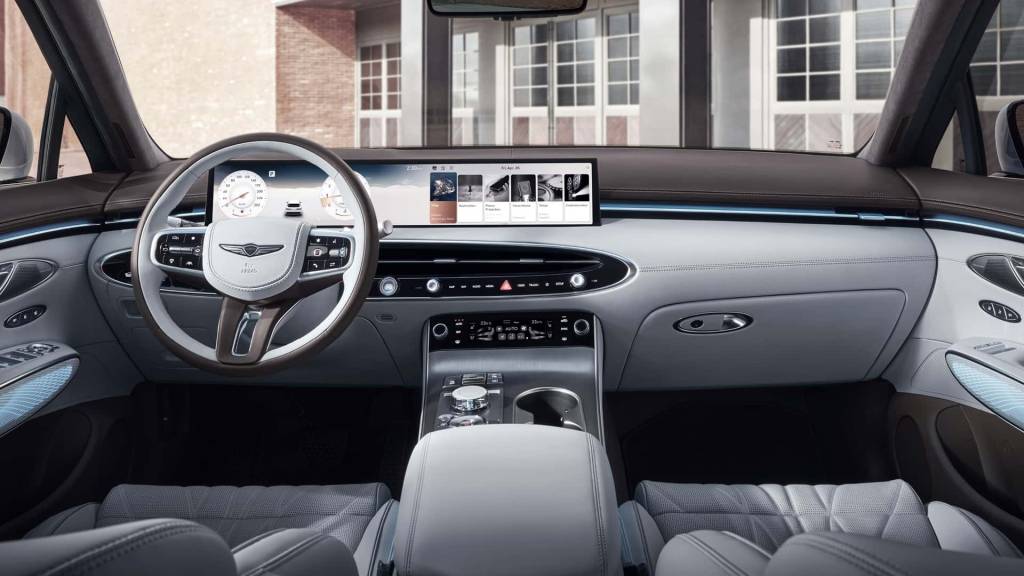
The changes are more substantial inside. The premium design with its unique elliptical theme is still there, though the current separate gauge cluster and infotainment screen have been replaced by a single floating display spanning 27 inches. This is joined by new ambient lighting details and new controls for the climate settings.
No changes have been announced for the powertrains. The GV70 is currently available in the U.S. with the choice between a 2.5-liter turbo-4 and a 3.3-liter twin-turbocharged V-6 for the gas powertrains. They are rated at 300 and 365 hp, respectively. An electric option was introduced with the 2023 model year. It packs a 77.4-kwh battery and a dual-motor all-wheel-drive powertrain rated at 429 hp.
Genesis also used the Beijing auto show to present an updated Electrified G80 sedan as well as preview a high-performance G80 from the brand’s recently established Magma sub-brand. Like the updated GV70, Genesis is holding back on details for the G80 models until closer to the market launch.
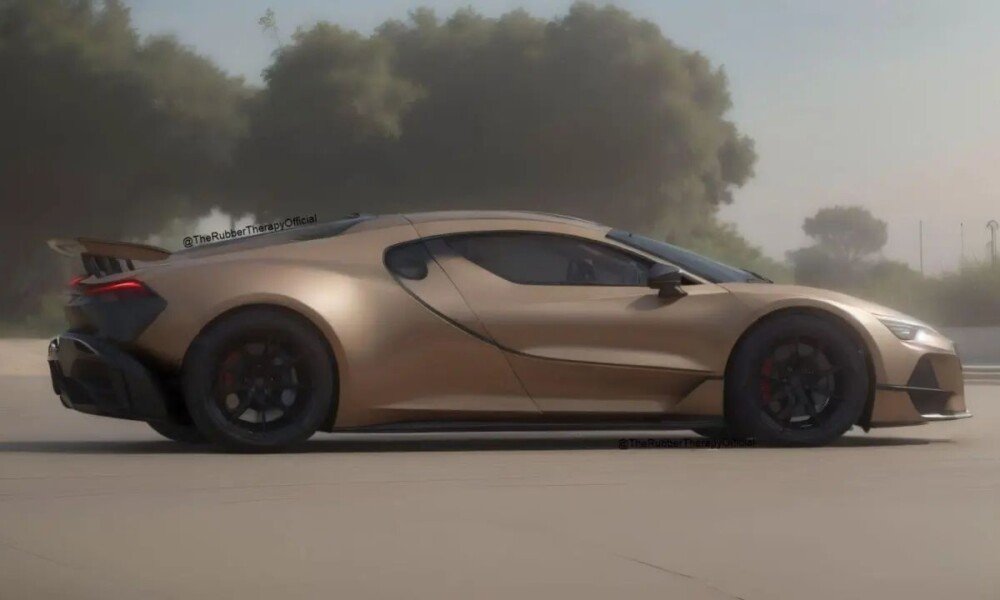
We recently got our first glimpse of the Bugatti Chiron successor, thanks to an image shared on the Germancarforum. A few hours later, another image featuring a camouflaged test mule of the hypercar surfaced online. Now, @therubbertherapyofficial has created a digital rendering based on these images.
The image shows the Chiron successor in the side profile. Starting with the front, the car has a low-slung front fascia with a large vent split horizontally. This line extends onto the sides and forms Bugatti’s signature C-line. As we had reported earlier, the rear fascia is inspired by the McLaren P1. It features a large grille with La Voiture Noire-style LED taillights. The swooping roofline has been carried over, as is the active rear wing.
None of the images we’ve seen so far have revealed any details of the interior. However, high-placed sources have informed us that the cabin will have a retro look inspired by mechanical Swiss watches. Expect to see fewer touchscreens and more analogue gauges.
We’ve learned that Bugatti might produce fewer examples of the Chiron successor. Production could be limited to around 300 or even less than that.
Visiting the Louvre Museum in Paris is a dream for many art lovers and cultural enthusiasts worldwide. As one of the largest and most visited museums globally, the Louvre holds countless treasures, including the Mona Lisa, the Venus de Milo, and the Winged Victory of Samothrace. Planning your visit to this iconic institution can be as daunting as it is exciting.
In this blog post, we’ll explore the best strategies to make the most out of your visit, covering when to go, what to see, and insider tips to avoid the crowds and enhance your experience.
The Louvre is a really huge museum. 72,735 m² of exhibition space and approximately 500,000 art objects await you.
Yes, half a million!
And it is not just the quantity of exhibits but also the quality. The Louvre is packed to the brim with legendary masterpieces of world art, like the Mona Lisa or Venus de Milo. Paintings that would be the main treasure of a provincial museum are on every wall. All this goodness will weigh on you with its density because you wouldn’t want to miss anything important.
It’s not a bad idea to do a little Googling of the Louvre’s collection: it includes Ancient Mesopotamia, Egypt, the Greco-Roman world, medieval and Islamic art, Renaissance masters, modern-day painters and much, much more. Something may hook you more than the rest—a little mental prioritization plan will help make the visit more effective.
If you want to see “Everything,” – that’s okay too, you can work with (and achieve some partial success). We’ll share how below.
Buying a ticket online (with a skip-the-line feature) is imperative for an efficient visit to the Louvre. There’s no way around it.
We are talking about literally THE most visited museum in the world. There are always lines to get in. And sometimes they’re excruciatingly long. Add to that the possibility of a rainy day or hot weather, and there will be a recipe for a very sad wait.
Ultimately, time during the vocation is the most valuable resource. Let’s save it for the fun part: exploring the museum!
Visit the Louvre Museum Early in the Morning During Weekdays
The Louvre is less crowded on weekdays. So, if your trip schedule allows, go then.
Coming early in the morning usually helps a bit, too, but don’t expect to totally outsmart all the crowds anyway. There will still be quite a few people.
The main idea here is a little different. Coming early in the morning, you will be full of energy, and you will have the whole day ahead of you, both chronologically and psychologically. You can generously devote your time to the Louvre and do something else in the evening with a bit of rest. And you’re likely to get tired of the Louvre, especially if you decide to explore it more thoroughly.
Consider Purchasing an Audio Guide
Like we said, there’s so much incredible art in the Louvre that at some point (especially during a first-time visit) you can be visually overloaded. There’s a painting of a naked man, a painting of a bearded man, and now a woman in a hat. This is where you could use some help setting your focus on what’s interesting and providing some context.
One option: take part in a group tour. If your guide is a real professional, that would be great. It’s also a workable way to cover the cream of the collection relatively quickly and efficiently. But there are disadvantages: language issues, the group will follow a certain hard fixed route at a certain speed, depriving you of the opportunity to explore the museum as you would like.
So we would advise you to choose an audio guide.
An audio guide in the Louvre would combine the best of both worlds: You would have a handy (but unobtrusive) assistant to explore highlights of the collection, get an optional route to follow and not miss stuff. At the same time, you’ll be able to walk as you please at your own pace. An audio guide is much cheaper than a good group tour.
TouringBee Louvre Audio Guide
The TouringBee Louvre Audio Guide is a fantastic self-guided tour that allows you to explore the Louvre’s major masterpieces in just 2.5 hours.
With a handy route map to keep you on track, detailed illustrations to help you spot each artwork, and engaging audio commentary that delves into the palace’s rich history and priceless collection, you’re in for an unforgettable experience.
During your tour, you’ll get to marvel at iconic pieces like Da Vinci’s Mona Lisa, the Venus of Milos, Michelangelo’s Slaves, and many more renowned works of art. With 45 points of interest to discover, the route is designed to be efficient, allowing you to skip any exhibits you’re not keen on or take a break for a coffee whenever you please.
Plus, the app provides helpful tips to get you ready for your Louvre visit, and at the end of the tour, it suggests other intriguing sections of the museum to continue your exploration.
Don’t miss out on this convenient and enriching way to experience the wonders of the Louvre! The best works and treasures of the museum in three hours.
Remember to bring your own headphones and make sure your smartphone is fully charged. 😉
Audio guide for the Louvre in Paris, France.
Take Your Time and Enjoy the Art
That’s right, take your time. You’ve prepared everything for this:
you bought your ticket in advance and didn’t waste your energy in line
you came early in the morning, and you have the whole day ahead of you
you have an audio guide who will tell you the most important things and orient you in the museum space.
It’s time to go on an adventure through the art world.
There are also several cafes and restaurants in the Louvre, so if you get tired walking between galleries – take a break and eat. Or just sit on a bench somewhere. And afterwards, continue your explorations.
What Is the Best Way To Visit the Louvre?
Cafes In and Close to the Louvre
The Louvre, being a massive 652,000-square-foot palace, offers plenty of dining options for visitors. You’ll find various places to grab a bite, ranging from quick grab-and-go spots to fancy dining rooms.
Remember: You can’t leave the Louvre for lunch and return on your original ticket. Some big tour groups have been taking advantage of that loophole by passing around used tickets, so now you’ll have to grab a fresh ticket if you want to head back in after your meal. So, choose your lunch spot wisely.
Cafés de la Pyramide
Check out the charming Cafes de la Pyramide beneath the Richelieu Wing pyramid. Three delightful cafeterias—Le Café, La Petite Boutique, and La Cuisine—offer a variety of delicious options like burgers, salads, paninis, pizzas, and pastries. They are perfect for a quick and tasty meal, although I recommend them more for convenience than gourmet dining.
For a speedy bite on the go, swing by the takeaway counters located under the Pyramid on the lower level in the Denon and Richelieu Wings.
Cafe Marly
The Cafe Marly is inside the Louvre Museum. It is a chic brasserie with an amazing view of the Louvre Pyramid. Situated under the arches of the Richelieu wing, it even boasts a terrace for sunny days. Their menu offers many options, from delicious breakfast bagels and homemade granola to savory truffle ravioli and seared salmon tartare.
You can expect to pay around €20 – €35 for a satisfying meal, all while taking in the stunning views of the Pyramid.
Cafe Marly at the Louvre in Paris, France.
Paul
Paul Bakery at The Louvre is awesome for a quick snack under the iconic Pyramid. Get yourself a coffee to kick off your visit, or enjoy a tasty croissant for a boost. For lunch, you can’t go wrong with a traditional ham sandwich. And if you’re craving something sweet, their chocolate éclair is top-notch!
The price range for this item is approximately $11, making it an affordable choice. It is quick and easy, making it ideal also for takeout options. You can locate Paul’s bakery at Level 2, under the Pyramid.
Paul bakery in the Louvre museum in Paris, France.
Café Richelieu Angelina
Check out Café Richelieu Angelina at the Louvre for a truly iconic dining experience. With a charming terrace offering views of Cour Napoleon and the Louvre Pyramid, it’s the perfect spot to enjoy a meal or snack.
Situated in the historic Richelieu Wing, this café was the office of the French Minister of Finance until the ’80s.
Indulge in various savory dishes like croque monsieur, quiche lorraine, and club sandwiches, but don’t miss out on the famous pastries that Angelina is known for. Treat yourself to the decadent Mont-Blanc with meringue, whipped cream, and chestnut cream, or the Eclair Framboise-Passion with raspberry cream and passion fruit ganache.
Fun fact: Angelina’s tea room was founded in 1903 by Austrian confectioner Anton Rumpelmayer and has since become a beloved Parisian institution on Rue de Rivoli. Don’t miss the chance to experience this piece of pastry history during your visit to the Louvre.
Cafe Richelieu Angelina at the Louvre in Paris, France.
Café Mollien
Café Mollien, located on the first floor of the Denon Wing, offers a lovely view of the French painting galleries. Just a short walk from the Mona Lisa, this café was designed by French architect Hector Lefuel (1810-1880).
You can enjoy the terrace overlooking Cour Napoléon and the Jardin du Carrousel during the summer.
The café is beneath Charles-Louis Müller’s stunning ceiling mural, Glory Distributing Palms and Crowns. While the ambiance is elegant, the food is more casual. It’s a great spot if you’re looking for a quick and easy bite or simply want to take a break in the vast museum. The menu features baguette and bagel sandwiches, salads, quiche, pastries, hot drinks, and juices. The food may be average, but the enchanting setting more than makes up for it.
Café Saint Honoré
Café Saint Honoré is such a charming spot near the Louvre! Located on Rue Saint-Honoré, right by Palais-Royal, this café boasts a stunning exterior with lovely pastel hues of pink and green.
The pink-and-white striped awning and gorgeous pink floral decorations really make it stand out.
Inside, you’ll find an array of adorable teddy bears that add to the cozy ambiance. The menu at Café Saint Honoré is a delightful mix of Asian, Italian, and French-inspired dishes. From classic French favorites like onion soup and escargot to mouthwatering pizzas, there’s something for everyone to enjoy!
Tarte tropézienne with cocktail at the Cafe Saint Honore in Paris, France.
In general, as a final thought – go to the Louvre in a good mood but with realistic expectations. You can’t conquer such a huge museum in one go (no matter how hard you try)!
But if you plan everything effectively, you can satisfactorily advance to this goal and leave many memorable impressions.
We wish you a wonderful visit to the Louvre!
With us, you can go at your own pace and no one will try to rush you along as you are admiring the sights. We will show you the city from all the most beautiful locations. We have more than 7 years of experience in writing guides and informative texts for individual and group tours. We have chosen the most interesting places and unique routes that travel through them.
Toyota on Thursday announced plans to invest $1.4 billion in its plant in Princeton, Indiana, to support production of a three-row electric SUV.
The investment also covers production of battery packs at the site using lithium-ion batteries supplied by a Toyota battery plant under construction in Liberty, North Carolina, and slated to start production in 2025.
The latest investment announcement brings Toyota’s total investments for U.S. production to $18.6 billion since 2021.
Toyota didn’t provide any details on the SUV but a spokesman told Automotive News (subscription required) it will be a Toyota-branded model larger than the three-row electric SUV Toyota plans to build at a plant in Georgetown, Kentucky.
Toyota BZ Large SUV
The SUV planned for Georgetown, which was announced in February and has received its own $1.3 billion investment, will also be a Toyota-branded model. It will be a midsize offering to be called the bZ5X. It’s due to start production in 2026 and is thought to have been previewed by one of the dozen of EV concepts Toyota rolled out in late 2021 (shown above).
Production of the SUV in Princeton is also expected to start in 2026, with sales to start late that year, pointing to an arrival as a 2027 model in the U.S.
The Princeton plant currently builds three gas-powered three-row SUVs: the Highlander, Grand Highlander, and related Lexus TX. It also builds the Sienna minivan. The planned electric SUV is rumored to carry the Highlander nameplate.
Lexus is also planning to launch a three-row electric SUV that may be built at the Georgetown or Princeton plants. The vehicle may be called a TZ, judging by recent trademark activity. Such a name would indicate the SUV is an electric alternative to the TX.
When it comes to classic American automobiles, the Chevrolet Corvair – as the United States’ only mass-produced, rear-engined car – is in a class of its own.
As awkward as it is for me to admit, before this Corvair Monza 900 piqued my interest at the 2024 Elmia Custom Motor Show, I had never seen, let alone heard of the model. Its owner and creator, David Gunnars, however, knew exactly what he was looking at when he found the Chevy at a Swedish mink farm a couple of years ago.
David has been playing around with cars since he was 16 (he is now 36), with American classics becoming a bit of a speciality. With an asking price equivalent to US$750, there was no way he could pass up the Corvair. Over the next two years, he well and truly made it his own with many unique modifications.
There is so much to take in with this build, so let’s just start at the front, where David can now forget about storing the family luggage in the Corvair’s frunk.
That’s because it is now home to a 40-litre Nuke Performance fuel cel with surge tank, three Walbro 450 fuel pumps and a Speeding fuel pressure regulator. You’ll see why in a moment.
The front end is also home to a Hurricane Motorsport radiator that’s fed cool air through ducts that replace two of the Corvair’s four original headlights. The two remaining headlights were replaced with Harley-Davidson equivalents.
One of the Corvair’s defining features is its sleek exterior styling, which David has enhanced with some subtle fender widening at the front for extra clearance, and lip rolling at the rear.
What really sets it apart from other Corvairs is the custom carbon fibre work. The front and rear bumpers, rear diffuser and rear spoiler are all in the composite material.
As a final bodywork detail, the Corvair’s original taillights were refreshed with new glass and custom-painted frames.
For wheels and tyres, David has gone with a modern setup. The Kansei Roku wheels were narrowed from 18×9.5-inch to 18×8-inch up front, but are used in their original 18×10.5-inch size out back. Federal 595 RS-Rs, 215/40R18 front and 275/35R18 rear, are the tyres of choice.
You’d expect some big brakes on a build of this nature, but I don’t think anyone could have guessed what David had in store for the Corvair – Aston Martin DB11 6-pot and 4-pot callipers paired with Chevrolet C6 Corvette discs, 355mm and 340mm.
The bright red callipers tie right into one of the car’s defining features – its interior remake. While the cabin might seem a little in your face at first, everything from the custom cup holders to the custom starter button has its place.
Changing gears through the Audi 01E 6-speed transaxle transmission using a Porsche 996 shifter is done in total comfort from the Braum Alpha-X driver’s seat. The passenger gets one of those too.
Blasting music while driving at a walking pace through urban streets is a big part of the American custom car scene in Sweden, and David is covered in this respect with a thumping system that features Cerwin Vega speakers.
However, the real soundtrack comes from the engine.
This Corvair came factory-fitted with a 2.4-litre air-cooled flat-six that made 110hp. Many more ponies are produced from the engine room these days thanks to the Audi 4.2-litre Biturbo V8 conversion. Yep, this Corvair has the heart of a 2003 Audi RS 6 – with a twist.
The Audi engine made 444hp and 580Nm in stock form, but David’s engine is far from that now. It’s also missing its turbochargers.
At its heart, the V8 has been built up with Mahle forged pistons, DBR H-profile forged rods, and a modified crankshaft. In place of the twin turbos is an HPS supercharger, with supporting modifications including a pair of custom-adapted Ferrari F430 headers, Bosch Motorsport fuel injectors, and twin Bosch 82mm electric throttle bodies that draw air through the rear window.
The engine setup hasn’t been dyno-tested yet, but I don’t think it will have any trouble turning the Corvair’s rear tyres to smoke. And you just know it will sound superb.
Sitting under the custom exhaust system with cutout valves is the Audi 01E transaxle. Hidden away is a DLI Teknik billet flywheel, Tenaci Motorsport twin-plate clutch, and a Quaife ATB limited-slip differential. Sellholm Tuning supplied the custom axles.
Finally, the suspension setup, which you already had a peek at in the frunk. Any shortcomings in the Corvair’s original suspension design have been rectified and greatly improved with a custom-designed setup featuring Öhlins Racing TTX coilovers borrowed from a RallyX Supercar Lites car.
I spent a lot of time poring over David’s Corvair; it’s an incredible build from every angle. The judges at Elmia thought so too, awarding the car no less than six accolades, including the coveted ‘Best in Show’ in the hotly-contested Custom category.
Not one to sit idle, though, David is already onto his next project – which has only been revealed a station wagon so far. Whatever the make and model, if the new build is half as good as his Corvair, I know we will all be in for a treat when David is done with it.
Buick is big in China. Buyers there see the brand as aspirational, something akin to Lexus. While the brand sells just four vehicles — each one of them a crossover — here in the U.S, Buick’s Chinese lineup has 12 models. There’s everything ranging from compact sedans to luxurious vans. The brand also has an EV sub-brand called Electra. While it’s just two models now, the brand might be expanding soon as Buick debuted two new Electra concepts, Electra-L and Electra-LT.
My First Car: Ed Burns’s Beater Buick
Image : Buick
The pair of concepts — one sleek sedan and a low slung wagon — were shown at the Beijing Auto Show and both use GM’s Ultium platform. The Electra-L concept has a rear mounted motor with 342 horsepower and 435 miles of range on China’s testing cycle. The front fascia’s design clearly takes inspiration from the Wildcat concept with thin headlights and black trim pieces. Turbine-looking wheels pushed to the corners emphasize its length, even though its 198.3-inch length make it roughly the same size as an Audi A6 or Mercedes E-Class.
Image : Buick
Inside there’s a full panoramic glass roof, great looking, a floating center console, a massive display for the driver and another seven-inch hidden display for the passenger that pops out of the dash. There’s also seats that are described as “adaptive zero-gravity” seats that automatically adjust to the passengers pressure points and adjust accordingly. Rear passengers get treated to a tea table with a built-in hot plate; seriously, the table has a built-in induction cooking surface on it.
Image : Buick
The Electra-LT is the stunner of the two concepts. The sleek looking, low roof wagon gets all wheel drive but there’s no word on power output or range. The front fascia is similar to the Electra-L’s just with more black accents. It wears big, black titanium wheels, bright yellow paint and a thin taillight bar that runs the width of the rear tailgate. And just in case a driver finds themselves wanting to venture over a bit of rough terrain, the Electra-LT has an air suspension that can raise 1.5-inches for extra clearance.
Buyers here in the U.S. likely won’t ever see either of these added to Buick’s current lineup. Buick has a tendency to let us down when it comes to concepts; remember the Alpha-platformed Avista concept? And while Buick has said that its EVs are coming, it’s been pretty quiet about it. Until the brand does more here for it’s U.S. lineup, we’ll just have to watch from the other side of the fence as Buick gives China all the good stuff.
The technical storage or access is strictly necessary for the legitimate purpose of enabling the use of a specific service explicitly requested by the subscriber or user, or for the sole purpose of carrying out the transmission of a communication over an electronic communications network.
Preferences
The technical storage or access is necessary for the legitimate purpose of storing preferences that are not requested by the subscriber or user.
Statistics
The technical storage or access that is used exclusively for statistical purposes.The technical storage or access that is used exclusively for anonymous statistical purposes. Without a subpoena, voluntary compliance on the part of your Internet Service Provider, or additional records from a third party, information stored or retrieved for this purpose alone cannot usually be used to identify you.
Marketing
The technical storage or access is required to create user profiles to send advertising, or to track the user on a website or across several websites for similar marketing purposes.