Home Blog Page 799

Audi teases updated E-Tron GT

0


Audi will update its E-Tron GT, with changes that likely will mirror the changes made to the related Porsche Taycan for the 2025 model year.

Expect improvements in range, performance, and comfort levels, and possibly the arrival of a new flagship grade. Audi hasn’t said when the updated E-Tron GT will arrive, but a launch late this year or early next is a strong possibility.

Audi on Tuesday released some photos of camouflaged prototypes. The photos indicate the styling will change very little. There appears to be a new front fascia that makes the car look wider. Some changes inside are likely as well, perhaps focused on the infotainment system.

For mechanical updates, Audi has only confirmed an improved suspension system with new levels of adjustment. This is likely a reference to the dual-valve dampers that were added to the updated Taycan. The dampers allow for adjustment of both rebound and compression, resulting in a wider performance bandwidth when it comes to comfort and handling control.

Updated Audi E-Tron GT prototype

Updated Audi E-Tron GT prototype

Audi now offers the E-Tron GT in the U.S. in standard and sporty RS grades. Both come with a 93-kwh battery good for 249 miles of range. Peak performance, courtesy of the RS grade, is 637 hp with boost mode (normally 597 hp), or enough for 0-60 mph acceleration in 3.1 seconds and a governed top speed of 155 mph. The standard grade’s output tops out at 522 hp with boost mode (normally 496 hp).

The updated Taycan’s battery has grown to 105 kwh and this will likely be the case for the updated E-Tron GT, meaning more range. Charging speeds should also be faster. Looking again to the updated Taycan, the updated E-Tron GT’s maximum charging rate should come in at 320 kw, up from the current 270 kw.

Horsepower should get a significant boost as well. There are rumors of Audi adding a new RS Performance E-Tron GT flagship, possibly with a peak output approaching the 938 hp of the Taycan Turbo S.

News of the updated E-Tron GT comes hot on the heels of the reveal of the new 2025 Audi Q6 E-Tron compact crossover. Audi is also preparing a new A6 E-Tron for launch later this year, and beyond 2026 the automaker plans to only introduce EVs.


Source link

Lotus Eletre reaches US in late ’24 with $107,000 base price

0


Lotus is expanding beyond the world of lightweight sports cars by launching more mainstream vehicles, starting with an electric SUV known as the Eletre that was first shown in early 2022.

Order books for the U.S. are finally open and the first customers can expect to take delivery in late 2024. Prices for this market start at $107,000 for the standard Eletre, and at $145,000 for the more powerful Eletre R.

The standard Eletre packs a dual-motor all-wheel-drive setup with a single-speed transmission and a peak output of 603 hp. The Eletre R features a 2-speed transmission and a peak of 905 hp. The extra power and gearing help the R sprint to 62 mph from rest in 2.95 seconds and reach a top speed of 165 mph. The standard grade delivers 0-62 mph acceleration in 4.5 seconds and a top speed of 160 mph.

The sole battery offered in the Eletre is a 111.9-kwh unit that Lotus said can be charged from 10-80% in 20 minutes when using a DC fast charger with support for 350-kw charging. Lotus quotes a maximum range of 373 miles for the standard grade and 304 miles for the R, calculated using the WLTP test cycle used overseas. Expect lower figures when measured using the stricter EPA cycle.

Lotus Eletre

Lotus Eletre

Lotus Eletre

Lotus Eletre

Lotus Eletre

Lotus Eletre

The Eletre is based on a modular EV platform called Electric Premium Architecture, and it’s a lot bigger than fans might expect. Measuring in at 200.9 inches, the Eletre is longer than a Range Rover and close in length to some full-size luxury sedans. The curb weight for the lightest version is 5,490 pounds, which is similar to the weight of a Tesla Model X. Lotus minimized weight by taking a multi-material approach to the body construction.

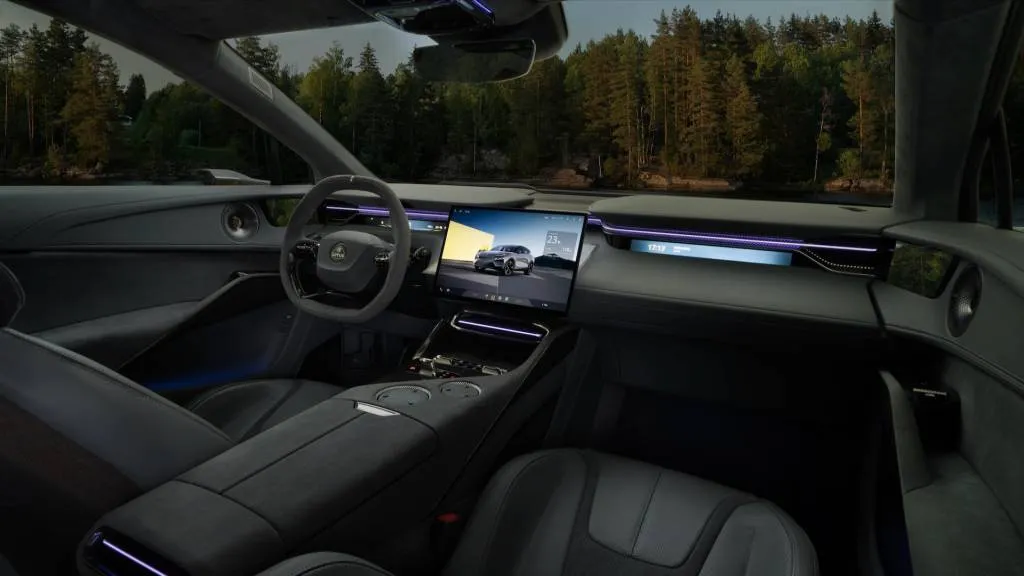
Inside, the Eletre features two rows with a total five seats as standard, but a four-seat option is available. Storage space is a maximum 54.1 cubic feet with the rear seats folded flat. The dash contains a 12.6-inch digital gauge cluster and a 15.1-inch infotainment screen. Premium features, either standard or available, include air suspension, 20-inch wheels (22- and 23-inch wheels available), 12-way power-adjustable front seats, Apple CarPlay and Android Auto, a wireless phone charger, a KEF audio system with support for Dolby Atmos surround sound, and multiple sensors including four lidar units.

Upgrading to the Eletre R doesn’t only add more power. It also adds a Track mode to the existing Tour, Range, Sport, Off-Road, and Individual modes of the standard drive mode selector. Switching to Track mode will reduce the ride height, sharpen the powertrain response, and raise the threshold for the electronic stability control system’s intervention. Buyers of the R can also choose to add carbon-ceramic brake rotors as an alternative to the standard steel rotors.

Production of the Eletre is handled by Lotus’ EV division, Lotus Technology, at a plant in Wuhan, China. The same plant will build additional Lotus lifestyle models, including the upcoming Emeya sedan and a yet-to-be-revealed compact crossover. Lotus hasn’t confirmed these additional models for U.S. sale just yet.


Source link

Car Of The Day: 1991 Lamborghini Diablo

0


In 1985, Automobili Lamborghini was working on Project 132, with the intention of succeeding the Countach at the top of the Lamborghini range. Starting from scratch, designer Marcello Gandini (who was also responsible for drawing Miura and Countach) sketched a very aggressive, sharp body for what was to become the Diablo.

When it was released it became officially the fastest production vehicle in the world, with a top speed of 203.1mph. The car was equipped with the classic Lamborghini 12-cylinder set-up. This included a 5.7-liter engine, four overhead camshafts, and four valves per cylinder. The output of this engine was an incredible 485 HP with 580 NM of torque.

Compared to Countach, the Lamborghini Diablo had a better-equipped interior, even though it may seem a bit spartan by modern standards. Seats were now fully adjustable, as was the steering wheel, and windows were actioned electrically. Hand-sewn fine Italian leather covered the insides of the car, top to bottom.

Lamborghini added power steering into the mix as of 1993, and the supercar also saw the addition of ABS. Even at that time, various luxury perks were available with supercars; Lamborghini offered the possibility to buy a custom-molded seat for the driver, rear spoiler, a factory luggage set, and even a limited edition Breguet clock for your car’s dashboard.

Photo Source: Collecting Cars


Source link

F1 Japan Fever: Drivers, Heroes & Fans At Daikoku PA

0


Contrary to what most F1 team social media accounts suggest, when the drivers aren’t racing, it’s not all just frolicking around tourist spots and signing autographs.

When F1 was in Japan for the Japanese Grand Prix a couple of weekends ago, most teams posted countless pics of their drivers wearing kimonos, drinking green tea or peering through dense clouds of cherry blossoms. But one driver was keen to taste some authentic Japanese car culture.

Toby_Thyer_Photographer-13

I met up with France’s Esteban Ocon and Australia’s Jack Doohan from the BWT Alpine F1 Team at an event hosted by Alpine Cars Japan. The location: City Circuit Tokyo Bay – a new outdoor electric kart track.

Toby_Thyer_Photographer-9

But this wasn’t a karting session. Alpine Japan planned to let the boys loose in a new A110 R, for a friendly time attack battle.

Toby_Thyer_Photographer-8
Toby_Thyer_Photographer-6

With Esteban and Jack taking turns at the wheel, the little French coupé ate up the tight kart track with ease, pulling through corners at a simply frightening pace.

Toby_Thyer_Photographer-21
Toby_Thyer_Photographer-22

Esteban had other press engagements planned for the evening, so Jack and our small crew of drivers and videographers set off to explore the Wangan expressway before curfew. 

“Have the two cars back by 10:00pm; they’re being transported down to Suzuka early tomorrow morning,” Alpine Japan said.

Toby_Thyer_Photographer-24

Jack didn’t seem to be listening. He already had Google Maps loaded and was busy selecting some tunes for the drive, starting with DJ Shadow’s Six Days. The 21-year-old has good taste in music.

A surprising number of fans have followed Jack, even before his time in F1. Jack’s racing success undoubtedly comes in part from his parental pedigree. Those of you into top-tier motorsports of the two-wheel variety will no doubt be familiar with his father, Mick Doohan AM.

Having won five consecutive 500cc Motorcycle Grand Prix world championships from 1994 to 1998, Mick is one of the most celebrated motorcycle racers of our time. In 1996, he was awarded Member of the Order of Australia (AM), a royal honour bestowed on Australian citizens to recognise outstanding achievements. What was Mick’s weapon of choice on track? The legendary Honda NSR500.

Toby_Thyer_Photographer-25

Unlike his dad, Jack started his racing career in karts. His first kart was given to him by the Doohan’s then-neighbour Michael Schumacher.

At 15, Jack entered Formula 4. At 17, he progressed to Formula 3. The next year Formula 2, and in 2022 Jack joined the Alpine Academy, a program run by Renault to foster future F1 talent. Jack spent time as a test driver for the Alpine A521 F1 car until he secured a seat as the reserve driver in 2023.

Toby_Thyer_Photographer-34

Getting behind the wheel of an F1 car must be an incredible experience, something I am sure we all dream we could do. But when it comes to attainable street cars, there is only one in Jack’s crosshairs – the R34 Nissan Skyline GT-R.

What better place to see Godzilla on its home turf than Daikoku Parking Area?

Toby_Thyer_Photographer-54
Toby_Thyer_Photographer-39

There were plenty of examples to look at on this particular night, but Chiro-san’s self-modified monster piqued Jack’s interest.

Toby_Thyer_Photographer-31

It’s not just cars you can spot at Daikoku, though. If you are lucky, you might run across a celebrity.

By some divine coincidence, Hiroshi Tamura – AKA Mr. GTR – had also come to Daikoku PA to see what is new in the tuning world. Tamura-san’s involvement in the culture surely influenced the development of the R35 Nissan GT-R in ways that corporate-minded engineers could not have.

Toby_Thyer_Photographer-33

Jack and Tamura talked about driving dynamics on a level that most people – myself included – couldn’t truly comprehend. I snapped away, eavesdropping as best I could.

Toby_Thyer_Photographer-47

Andy Gray, four-time Formula Drift Japan champion and the owner of Power Vehicles at Ebisu Circuit, was also kicking around.

Daikoku PA really is the living room of Tokyo car culture.

Toby_Thyer_Photographer-67
Toby_Thyer_Photographer-27

What an incredible night with Alpine and Jack Doohan – something I doubt I’ll ever forget. I really hope we can do it again sometime.

Toby Thyer
Instagram _tobinsta_
tobythyer.co.uk

Toby_Thyer_Photographer-14
Toby_Thyer_Photographer-18
Toby_Thyer_Photographer-48
Toby_Thyer_Photographer-51
Toby_Thyer_Photographer-37
Toby_Thyer_Photographer-35


Source link

Same Theory, Different Canvas: Two Lotus Lightweights

0


The 1960s were a significant time for Lotus. Success on the race track trickled down to the road cars, and Colin Chapman’s company rose up the ranks from a specialist to a major British manufacturer.

Chapman was well known and often quoted for his “Simplify, then add lightness” approach to car building. On the track, his cars were thought of as fast but fragile. On the road, they were revered for their delicate handling characteristics. Two cars that were key in supporting Lotus’s success were the Elan and Cortina. They were different cars built for distinct purposes but shared a degree of commonality in parts and technology.

Elan Cortina SH 006

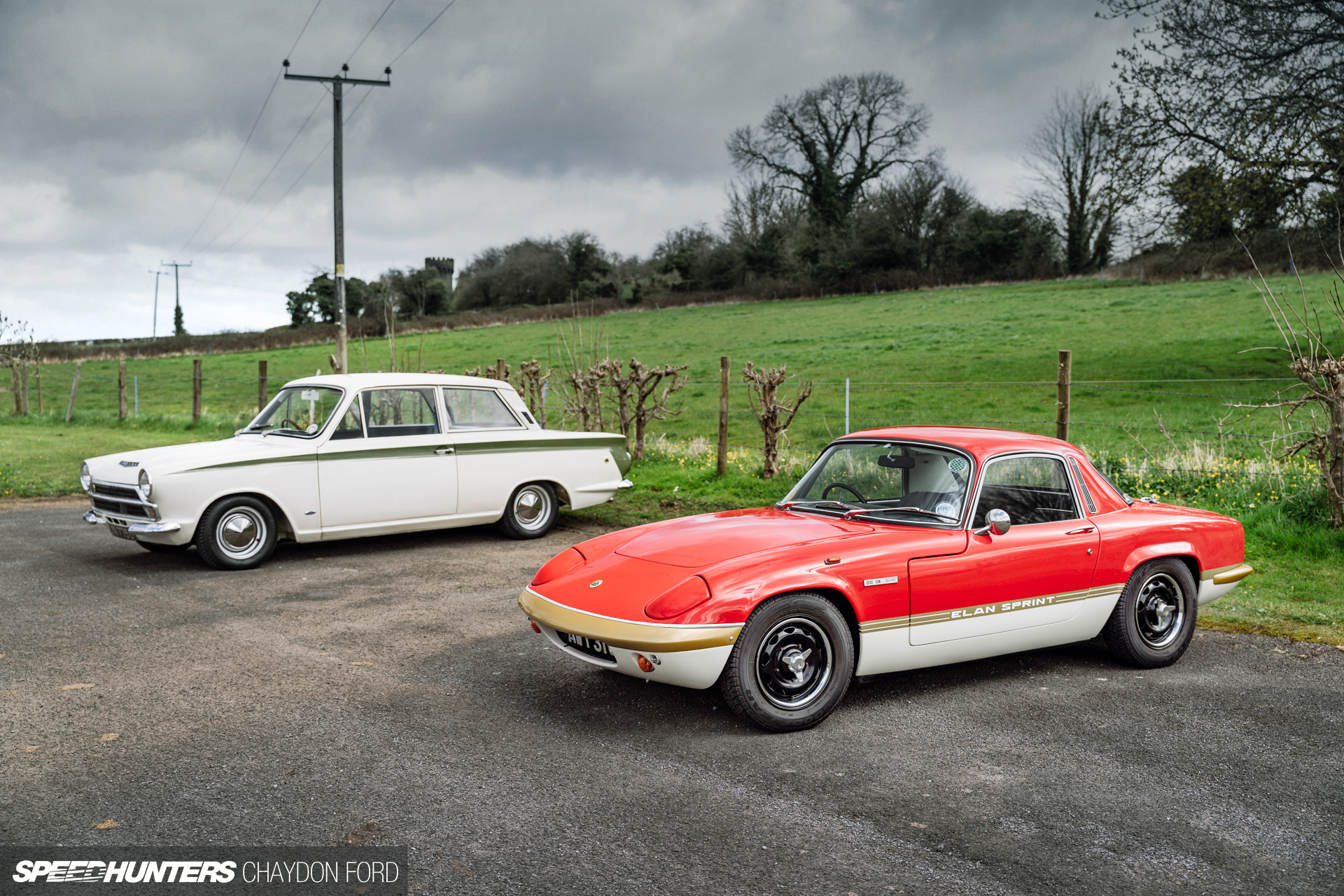
Seeing either of these cars outside of a historic race event is rare nowadays, but both of them together? That is a real treat. The beauty of the British Sunday morning breakfast meet is that you never know what you will see. In this instance, it was two significant cars from the Lotus history books.

Elan Cortina SH 001

The Lotus Cortina

In 1962, Colin Chapman met with Walter Hayes from the Ford Motor Company to discuss elevating Ford’s motorsport presence in Europe. Hayes was impressed with what Chapman was achieving with Ford Kent-based engines.

Elan Cortina SH 017

Cash-strapped, Chapman was keen to help, and an agreement was made to homologate the Type 74 Cortina 2-door saloon (Mk1) for Group 2 racing. Ford and Lotus did it by building a performance-oriented road car.

Elan Cortina SH 010

Graham Arnold, a former Lotus sales director, once said that Lotus spent the same time designing the Elan and putting it into production as Ford did on the Mk1 Cortina’s bumpers alone. No surprise then that Lotus wasted little time converting the new Cortina from a compact saloon into something special. Chapman code-named the Lotus Cortina project ‘Type 28′.

Cortinas destined to become Lotus variants were partially assembled at the Ford plant in Dagenham before being sent to the Lotus factory in Cheshunt, where they were finished off on the second floor directly above the Elan.

Elan Cortina SH 009

Changes made to the Type 74 Cortina 2-door saloon were substantial.

The car received the Lotus-modified version of Ford’s 116E 1,498cc Kent engine, which was stretched to 1,557cc and equipped with a twin-cam cylinder head, twin side-draught Weber carburettors and a free-flowing exhaust system. Furthermore, a Lotus Elan close-ratio gearbox was installed, the suspension was upgraded – significantly at the rear – better brakes were added, and a lightweight aluminium bonnet, boot lid and doors fitted, as were front corner bumpers in place of a complete unit. Bar some cars that Ford raced, all Lotus Cortinas were painted white, with green stripes.

Elan Cortina SH 020

Inside the car, the performance intent was reflected in different seats, a wood-rimmed sports steering wheel and a new gauge cluster.

Elan Cortina SH 025

The 105hp that the Mk1 Lotus Cortina produced may not seem like much today, but that horsepower figure coupled with a sub-900kg weight in race trim saw the car take numerous trophies and championships across the UK, USA, Africa and Europe before the Mk2 Lotus Cortina appeared in 1966.

Elan Cortina SH 018

The Lotus Elan 

First released in 1962, the Elan was the first of many Lotus designs to use a steel backbone and fibreglass body construction, achieving a scant 688kg kerb weight.

Elan Cortina SH 005
Elan Cortina SH 019

The Elan is regarded as one of the most successful sports cars of all time and was the first Lotus to have four-wheel disc brakes, rack and pinion steering, and independent suspension all around. Many of its components were borrowed from the Ford parts bin, of which Chapman had access to.

Elan Cortina SH 008

If the Mk1 Cortina is small by contemporary standards the Elan is tiny. It is so small, in fact, that its 155/80R13 tyres mounted on 13×4.5-inch wheels look big.

The Elan Sprint pictured here was effectively the runout model. It took the Series 4 Elan and further modified it, culminating in 126hp from the Lotus twin-cam engine and a 0-60mph time of under 7 seconds.

Elan Cortina SH 022

Chapman always intended for the Elan to exist solely as a road car, but all the characteristics that made it a great road car meant it had all the makings of great race car, too. An estimated 97 Elans were homologated as the 26R variant. Further upgrades were made, resulting in a car that weighed around 600kg and produced up to 175hp, which saw it competitive against cars one class up.

Modern safety regulations, fleet emissions, and an increasing demand for crossovers and SUVs are all factors that weigh on Lotus today, and this has resulted in some compromises being made in its current product lineup. Despite all this, Lotus still retains its strong brand identity. Even though the current Lotus Emira weighs in at 1,440kg (light compared to its competition), the DNA can still be traced back to cars like the Elan and Lotus Cortina.

While we must accept that time has moved on, and it is unlikely we will ever see cars this light again, it just means we have to appreciate them on the rare occasion they appear on a Sunday morning.

If the keys for both cars were on the table, which one would you be taking for a drive?

Chaydon Ford
Instagram: chaycore


Source link

McLaren 720S Buyers Guide | Exotic Car Hacks

0


The unveiling of the McLaren 720S at the Geneva Autoshow in 2017 marked a significant milestone for the British sports car manufacturer, as it introduced this car as the successor to the successful 650S, setting new standards in the supercar territory. Positioned as a core model in McLaren’s Super Series, the 720S has more than exceeded expectations, reinforcing the brand’s commitment to innovation and performance.

Featuring a 4.0-liter twin-turbocharged V8 engine, the 720S showcases McLaren’s engineering capabilities with its power output and refined aerodynamics. This powerhouse is mated with a 7-speed dual-clutch transmission, ensuring a seamless flow of power to the wheels and a driving experience that’s both exhilarating and precise.

The McLaren 720S has a design philosophy that carries form and function in a manner that’s both breathtaking and scientifically precise. Its sleek silhouette, defined by sharp lines and sweeping curves, is unmistakably McLaren, mixing sophistication and raw power.

The design is not just for show; every curve and angle serves to cut through the air with minimal resistance, enhancing the car’s aerodynamic efficiency and performance.

One of the most visually striking is its iconic dihedral doors. These doors, which open upwards in a graceful, arc-like motion, are not only a hallmark of McLaren’s design language but also a functional masterpiece. This distinctive door mechanism enhances the vehicle’s accessibility, making getting in and out a seamless experience, even in tighter parking spaces.

The upward-opening doors contribute significantly to the 720S’s dramatic presence, turning heads whenever they are deployed.

Stepping inside the 720S, one is greeted by an interior that is adorned with high-quality Nappa leather, carbon fiber, and Alcantara trim finishing.. The cabin is a testament to McLaren’s meticulous attention to detail, offering a perfect mix of comfort and performance-oriented design. 

Advanced technology is at the heart of the 720S’s cabin, featuring an innovative folding driver display that offers both a comprehensive mode for cruising and a streamlined mode for performance driving, ensuring vital information is always at the driver’s glance.

Borrowing from its rich Formula 1 heritage, McLaren incorporates cutting-edge materials and technology, making the 720S not just a supercar for the track but a remarkably usable vehicle for everyday driving. Its integration of advanced infotainment systems and driver assistance features further cements its status as a supercar that does not sacrifice comfort for performance.

The McLaren 720S offers an advanced, adaptive suspension system and a trio of driving modes that together elevate the driving experience. This dynamic combination allows drivers to tailor the car’s performance characteristics to match the driving conditions or their personal preferences, making the 720S as versatile as it is exhilarating to drive.

The Proactive Chassis Control II system is an innovative suspension setup that uses sophisticated algorithms to predict and react to road conditions, driver inputs, and cornering forces in real-time. This system ensures an optimal balance between comfort and performance, providing a smooth ride during leisurely cruises and tightening up for more aggressive driving scenarios.

Complementing the suspension are the three distinct driving modes: Comfort, Sport, and Track. Each mode adjusts the car’s suspension stiffness, throttle response, shift points, and traction control settings to suit different driving environments:

  • Comfort Mode: Engineered for everyday driving, offering a softer suspension setup and a more relaxed throttle response, making the 720S surprisingly comfortable for a supercar, even over longer distances or on less-than-perfect road surfaces.
  • Sport Mode: Tightens the car’s responses and suspension, providing sharper handling and a more dynamic driving experience suitable for spirited road driving or the occasional foray onto the backroads.
  • Track Mode: Unleashes the full potential of the 720S, optimizing every aspect of the car’s performance for the racetrack. In this mode, the suspension is at its firmest, and the car’s systems are tuned to deliver maximum performance, allowing drivers to experience the 720S’s breathtaking capabilities to the fullest.

Some of the competitors to the 720S include the Porsche GT3 RS, Mercedes AMG GTR, Lamborghini Huracan, and Ferrari 488.

Model Changes (Breakdown by Year)

2017 McLaren 720S

The 2017 model is the first full year of production for the 720S, which replaced the McLaren 650S.

Featuring a 4.0-liter twin-turbocharged V8 engine producing 710hp. 

The 720S features a low-lying stance with its silhouette echoing the futuristic styling of a spaceship. The starting price was around $288,000 slotting it right with the Lamborghini Huracan and Ferrari 488.Some of the variants to note for the 720S include:

  • 720S Luxury: Focused on enhancing the car’s luxury features, including upgraded leather interiors and additional comfort options. Price started at $296,000.
  • 720S Performance: A variant with added carbon fiber components and performance-oriented interior finishes. Price started at $296,000. 

2018 McLaren 720S

Mechanically, the 2018 McLaren 720S was basically the same as 2017. 

However, 2018 gave birth to the 720S Spider offering a retractable hardtop that could be opened or closed in just 11 seconds and at speeds of up to 31 mph. 

Even though the 720S Spider gains an additional 108 pounds, this variant maintained the performance levels of the coupe while adding the exhilaration of open-top driving.

The starting price for the 720S Spider was $305,000.

2019 McLaren 720S

In 2019, McLaren introduced the 720S Le Mans Special Edition. This car was meant to commemorate McLaren’s historic 1-2-3 finish at the 1995 24 Hours of Le Mans.

Globally, only 50 units of these vehicles will be available, offered in two colors: McLaren Orange and the deep Sarthe Gray. 

The VIN of each car will commence with 298, reflecting the lap count achieved by the victorious F1 GTR, and they will be adorned with a McLaren 25th-anniversary Le Mans badge on the side lower panel. 

Distinctive features include a black roof scoop, carbon fiber front fenders, brakes finished in gold, and black exterior trim. In line with McLaren’s customary approach, an extensive selection of additional parts from McLaren Special Operations (MSO) is available for customization.

The interiors of the special-edition vehicles, similar to the exterior color options, come in two distinct color schemes: black Alcantara racing seats are standard, accented with either McLaren Orange or Dove Gray.

Embroidered into the headrests and floor mats is the McLaren 25th-anniversary Le Mans logo. Additionally, customers have the option to enhance their car with a titanium harness bar and six-point harnesses, courtesy of MSO.

The starting price for the 720S Le Mans Special Edition was $285,000.

Mechanically, the 720S remained unchanged from its 2018 specifications.

2020 McLaren 720S

There were no changes or updates to the McLaren 720S.

However, the McLaren 765LT (Longtail) variant was unveiled in 2020, pushing the boundaries of performance and driving dynamics further than the 720S. As the name suggests, it follows McLaren’s “Longtail” philosophy, which means it is lighter, more powerful, and features a longer tail for improved aerodynamic efficiency compared to the 720S.

The 4.0-liter twin-turbo V8 engine in the 765LT has been tuned to produce 755 hp (45 hp more than the 720), providing a more intense driving experience with faster acceleration and a higher top speed than the 720S.

The 765LT introduces aerodynamic enhancements that significantly boost its performance beyond the 720S, focusing on airflow optimization and downforce increase for better handling and high-speed stability. The longer front splitter directs airflow to reduce drag and increase front downforce, improving steering response.

The extended rear diffuser accelerates airflow underneath the car, creating a suction effect for greater rear stability during fast turns. Additionally, the larger active rear wing adjusts its angle for optimal downforce or acts as an airbrake during braking, ensuring enhanced grip and control.

The interior of the 765LT is designed with a focus on performance and weight reduction, incorporating lightweight Senna seats, removed carpet, and thinner-gauge glass adopting a minimalist design approach. This setup prioritizes performance at the expense of some comfort and cargo capacity.

In keeping with McLaren’s tradition for its LT models, the 765LT is a limited-production vehicle, with only 765 units planned for global distribution, making it a highly sought-after model among collectors and enthusiasts.

The starting price was $368,000 for the 765LT.

2021 McLaren 720S

In 2021, McLaren introduced no major updates to the 720S range, maintaining its availability in both coupe and convertible variants.

Following the coupe, McLaren introduced the 765LT Spider for 2021 which replaces the previous 765LT coupe, further extending the appeal of the 765LT with a retractable hardtop that allows for open-air exhilaration without compromising the performance and dynamics of the coupe version.

Mechanically, it is the same powerplant as the 765LT, so there are no changes. The interior of the cabin offers customization options that include a combination of soft-grain leather and faux-suede upholstery, along with a wide array of color choices. Nonetheless, the LT model’s interior is designed to prioritize weight reduction and performance enhancement, which may compromise some aspects of its refinement.

The starting price for the 765LT Spider was $382,500.

2022 McLaren 720S

In 2022, the McLaren 720S received a series of enhancements aimed at elevating the driving and passenger experience through the infotainment system. 

The infotainment systems of the 720S were significantly upgraded, featuring a more intuitive user interface, quicker processing capabilities for a smoother user experience, and enhanced touch responsiveness. Integration of smartphone connectivity solutions such as Apple CarPlay and Android Auto was also enhanced, facilitating easier access to apps for navigation, music, and more, directly through the vehicle’s interface.

Connectivity features saw substantial upgrades, with the addition of advanced Bluetooth connectivity, wireless charging for devices, and the capability for a Wi-Fi hotspot, ensuring continuous digital connectivity for all occupants.

Otherwise, McLaren did not make any significant changes or updates to the 2022 720S coupe or convertible.

2023 McLaren 720S

For the 2023 model year, the McLaren 720S saw several updates, including the introduction of two new exterior paint colors, Storm Grey and Volcano Yellow, and the option for a branded armrest. Additionally, McLaren rolled out a three-year service plan for this model. Marking the end of an era, 2023 is the final production year for the 720S, with its manufacture concluding in December 2022.

2024 McLaren 750S

In 2024, McLaren introduced the 750S, a facelifted version of the 720S. It is now lighter by up to 66 pounds and more powerful, with an increase of 30 hp bringing its total to 740 hp. Approximately 30% of its parts are newly developed or enhanced, including a twin-turbo V-8 engine optimized for higher boost pressure and efficiency.

Updates on the exterior you will find larger air intakes for improved cooling, and a center-exit exhaust to differentiate the 750S from the 720S.

Additionally, the car features advanced braking systems inspired by the McLaren Senna, the third generation of McLaren’s Proactive Chassis Control for superior handling, and a cabin equipped with the latest technology including a new touchscreen interface with Apple CarPlay. 

Priced starting at $331,740 for the coupe and $352,740 for the Spider.

McLaren 720S Common Problems

Despite the McLaren 720S being an exceptional supercar, it is not immune to potential faults, it is essential that it is well maintained by a specialist with up-to-date knowledge and the latest tools.

Don’t forget to do a Pre-Purchase Inspection (PPI) from an authorized dealer or experienced independent mechanic to reveal all issues.

Infotainment System Glitches: A number of 720S owners have encountered bugs within the infotainment system. These glitches can manifest as freezing screens, unresponsive touch controls, or unexpected system reboots. While software updates can often address these issues, they can detract from the user experience in a car known for cutting-edge technology.

Suspension Issues: The McLaren 720S features an advanced Proactive Chassis Control II system, designed to offer unparalleled ride comfort and handling prowess. However, some users have reported receiving error messages related to the suspension system, necessitating a visit to the dealership for recalibration or repair. These issues, while not widespread, can affect the vehicle’s performance and driving comfort.

Battery Drainage: As with many modern vehicles equipped with sophisticated electronic systems, the McLaren 720S can suffer from battery drainage if not driven regularly. Owners are advised to use a trickle charger during extended periods of inactivity to maintain battery health and prevent issues related to power loss, such as difficulty starting the vehicle or loss of saved settings.

Door Latch Problems: The 720S’s signature dihedral doors add to its exotic appeal but have been the source of frustration for some due to sensor malfunctions or latch issues. These problems can lead to doors not opening or closing properly, requiring manual override or professional attention to resolve.

Cooling System Concerns: There have been mentions of the cooling system, particularly the air conditioning, not performing up to expectations in extremely hot climates. This issue may impact driver and passenger comfort during the summer months or in regions with consistently high temperatures.

Exterior Trim and Paint Vulnerability: Some owners have reported sensitivity in the paintwork and exterior trim to chips and scratches, particularly on lower body panels and the front splitter. Protective films and regular maintenance are recommended to keep the vehicle looking its best.

Recalls

2019-2020 McLaren 720S vehicles

Service brakes, hydraulic: Foundation Components: Hoses, lines/piping, and fittings (Recall no. 21V561000)

The brake assembly banjo bolt may be missing the holes that supply brake fluid to the caliper, which would cause the brakes to fail on one corner of the vehicle.

2019-2020 McLaren 720S vehicles

Fuel system, gasoline: Storage: Tank assembly (Recall no. 20V231000)

The Noise, Vibration, and Harshness (NVH) foam pad underneath the fuel tank may retain moisture and corrode the fuel tank, potentially causing a fuel leak.

Maintenance and Ownership Costs

Owning a McLaren 720S comes with a unique set of considerations regarding maintenance and overall ownership costs. 

It is important to remember that regular maintenance and repairs will still be necessary, and the costs can vary depending on whether you take your car to a dealer or an independent mechanic.

Here is the suggested service schedule and intervals per McLaren:

10,000 MILES/12 MONTHS

  • Synthetic McLaren oil change and filter replacement 
  • Multipoint inspection of the following: steering components, front and rear suspension joints, radiators, air filters, brake system, fluid levels, electrical connections, tires, wheels, rims, and tire repair kit. 

20,000 MILES/24 MONTHS

  • Synthetic McLaren oil change and filter replacement 
  • Multipoint inspection of the following: steering components, front and rear suspension joints, radiators, air filters, brake system, fluid levels, electrical connections, tires, wheels, rims, and tire repair kit.

30,000 MILES/36,000 MONTHS

  • Synthetic McLaren oil change and filter replacement 
  • Multipoint inspection of the following: steering components, front and rear suspension joints, radiators, air filters, brake system, fluid levels, electrical connections, tires, wheels, rims, and tire repair kit.
  • Gearbox fluid change 
  • Additional inspection of oxygen sensors, EVAP system, oil vapor recirculation system, and injection and ignition systems

Here is a rough estimate of typical service costs associated with the McLaren 720S:

Oil Change: For the McLaren 720S, an oil change can range from as low as $200 when done by independent mechanics to around $400 at dealerships. The cost variation reflects the expertise and specialized oil and filters the 720S requires.

Minor Service: A minor service typically includes an oil change, along with the replacement of cabin and engine air filters. Dealers usually charge around $1,600 for this service package. This service ensures that the vehicle’s basic maintenance needs are met, keeping it running smoothly.

Major Service: For a more comprehensive upkeep, a major service includes all the components of a minor service plus the replacement of spark plugs, a brake fluid flush, and a transmission fluid flush. Dealerships may charge about $2,900 for this extensive service. This maintenance is crucial for ensuring the vehicle’s long-term performance and reliability.

Tires: The McLaren 720S requires high-performance tires to match its exceptional driving dynamics. A set of premium tires, such as the Michelin Pilot Sport 4S, can cost around $2,000. These tires are essential for maintaining the supercar’s grip and handling characteristics.

Brakes: The 720S is equipped with carbon ceramic rotors, which are designed to last the lifetime of the vehicle under normal driving conditions. However, brake pads will need replacement over time, with aftermarket options that meet OE specifications costing about $800 for a complete set. These high-performance pads are crucial for maintaining the vehicle’s braking performance.

Clutch: Thanks to its dual-clutch transmission, the 720S’s clutch system is designed to last the lifetime of the car, eliminating the need for costly replacements of the clutch or flywheel. This is a significant advantage in terms of long-term maintenance costs.

Also note, that every new McLaren already comes with a comprehensive 3-year unlimited mileage warranty. But for pre-owned Extended Service Contract, covers most factory-fitted components for mechanical and electrical failure and includes all parts and labor charges required for repair. Available until your car is 15 years old, with less than 75,000 miles on the clock.

Options List

The McLaren 720S comes with a list of options to choose from. 

Specifically for the 765LT, some options were packages featuring exterior upgrades that include aerodynamic and design enhancements such as stealth pack to carbon fibre exterior which upgrades the front splitter, front air intakes, roof, rear bumper lower, side skirts, and diffuser to carbon fibre.

These options focus more on making the car look more aggressive while improving weight with lightweight carbon fibre components. As for the interior, options include super-lightweight carbon fibre racing seats, double-glazed engine window (rear of cabin), and leather interior with contrasting stitching.

For drivers that will go to the race track, they might want to consider the track brake upgrade option as well for the 765LT. 

As for the 720S, it came with 3 different variations to choose from:

Standard: Exterior came with Dark Palladium finish applied to Front Splitter, Front Air Intakes, Rear Aero Bridge, Rear Bumper Lower, and Diffuser.

Interior trimmed with either black alcantara or black Nappa leather, complemented with machined aluminum switches and a combination of Satin Graphite and Zircon Silver interior brightwork.

Price started at $284,000.

Luxury: Exterior came with Dark Palladium finish applied to Hood Air Intakes and Rear Fender Air Intakes. Zircon Silver window surrounds. By McLaren Luxury interior with leather extended to Dashboard, Rear Luggage Area and Upper Environment. Electric & Heated Seats, with Zircon Silver and Brushed Iridium brightwork. Interior and engine bay ambient lighting.

Price started at $296,000.

Performance: Exterior came with Dark Palladium finish applied to Lower Side Air Intakes. Carbon Fiber Hood Air Intakes, Rear Fender Air Intakes, and Door Mirrors. By McLaren Performance interior combining Nappa leather and alcantara upholstery with contrasting details and accents. Zircon Silver and Brushed Iridium brightwork with Primary Interior Components in Carbon Fiber. Interior and engine bay ambient lighting.

Price started at $296,000.

As for the popular options on the 720S, some of them include carbon fibre exterior upgrade (Front Splitter and Rear Bumper in Carbon Fiber), carbon fibre roof, rear bumper lower/diffuser, upgraded wheels and sports exhaust. Some customers have spec’d their cars with carbon fibre racing seats, and they either can choose regular or large size. These seats are desirable and great looking, which many people like.

On the other hand, the (McLaren Special Operation) MSO Bespoke program takes customization to the highest level, providing an expansive array of personalization choices that stretch the boundaries of what’s possible. This program is akin to having a blank canvas where almost any vision of personal taste can be brought to life.

It offers an extensive selection of paints, fabrics, leathers, and other materials, enabling customers to create a truly bespoke McLaren that reflects their individual style and preferences to the finest detail.

Because of the strict approval requirements, cars that went through the MSO Bespoke program are considered highly desirable. 

These cars usually command a higher premium in the market due to their exclusivity and uniqueness. 

Here are some examples of option changes:

2018 McLaren 720S options list

2021 McLaren 765 LT options list

Key Options

  • Carbon fibre exterior package

  • Luxury or Performance package

  • Carbon fibre racing seats

  • MSO Bespoke exterior or interior

McLaren 720S Price and Values (765LT)

The Best McLaren 720S To Buy

When it comes to buying a 720S, there are a few key factors to consider that can affect the car’s long-term value.

The 720S that would most likely appreciate in value, will be the track-focused 765 LT (coupe and spider) and limited production numbers which were 765 coupes and 765 spiders. At this time, they are currently a good buy, and will most likely be appreciated in the future as a collector car. 

Unique variants such as the 1 of 50 720S Le Mans Special Edition may have a chance to appreciate in value in the future, but these are lesser known models that might not be necessarily as wanted, simply because there was not much difference in terms of performance compared to the standard 720S. 

For regular production 720S, the ones that you should look for are the ones that have the luxury or performance package. They were an upgrade that came with a few more features listed above that make it more desirable to have. 

As hybrid technology becomes more widespread among cars, internal combustion V8s are becoming highly sought after by collectors and enthusiasts in the current market.

In addition, the condition and mileage of the car are also important factors to consider when buying a 720S. There are many that have been driven hard. But the ones that are more likely to retain their value in the long run and will fetch the most money will be a well-maintained car with low mileage.

Therefore, it’s important to do your research, compare prices, and look for well-maintained cars if you are considering purchasing a 720S with the goal of not losing any money.

Conclusion

For around ($215,000+) the McLaren 720S is an exceptional choice for a supercar. It has the styling and performance to back it up. 

While the Porsche GT3 RS, Mercedes Benz AMG GTR, Lamborghini Huracan and Ferrari 488 are options available, the 720S is for those who want a unique blend of cutting-edge technology, exceptional power-to-weight ratio, and distinctive design that sets it apart in the supercar category.

You won’t go wrong with a 720S if you are in the market for a supercar. 

Car Hacking Shortcuts

  • Spec matters: Look for any MSO Bespoke cars or optional colours. Carbon fibre exterior is desirable.

  • Roof scoop is a very desirable MSO Bespoke option on 765LT

  • 765LT is a future collectible

  • Look for a well-maintained, low-mile 720S


Source link

The Nutrition and Exercise Plan Powering Novak Djokovic’s Triumphs

0


Novak Djokovic is one of the greatest tennis players ever, known for his amazing skills and determination. He’s won lots of big tournaments like the Grand Slam titles and has spent a long time as the best player in the world. His success isn’t just because he’s good at tennis; it’s also because he takes really good care of his body and mind. Djokovic follows a special diet and exercises a lot to stay strong and focused.

These things are super important for him to keep playing at such a high level. In this exploration, we’ll look into what exactly Djokovic eats and how he works out to stay so successful in tennis. Understanding these things can teach us all how to take better care of ourselves and be our best, whether we’re athletes or just want to feel good in our everyday lives. Plus, you can even find tennis bets in India on 1xbet, adding another level of excitement to the game.

Djokovic’s Diet

Novak Djokovic’s success in tennis is closely tied to his careful eating habits, which he believes are key to his victories. He mainly eats plants, like fruits, veggies, nuts, seeds, and beans, because they give him energy and help him recover faster. Drinking enough water is also really important to him. Djokovic doesn’t just eat this way because he likes it; he does it because it helps him play better. He changes what he eats based on how much he’s practicing and playing matches. This shows that what athletes eat is just as important as how they train.

Transition to a Plant-Based Diet

Novak Djokovic made a big switch to eating mostly plant-based foods, like fruits, veggies, nuts, and grains, instead of a lot of meat. This change wasn’t just about food; it was about getting better at tennis. Djokovic says it’s helped him feel more energetic, quick, and healthy.

Eating this way has made a real difference for him on the court, helping him play at his best and bounce back faster after tough matches. Djokovic’s experience shows how important food choices can be for athletes to perform well and stay in the game for a long time.

Key Components of Djokovic’s Diet

Novak Djokovic’s diet is like a carefully planned map guiding his tough workouts and matches. He focuses on eating whole, healthy foods like:

Djokovic also avoids foods like gluten, dairy, and sugary treats to help him feel his best and perform better on the court. Drinking enough water is a big part of his routine too.

Djokovic makes sure to drink plenty of water every day, especially before, during, and after matches. This helps him stay in top shape, keeps his muscles working well, and helps him bounce back after tough games. Djokovic’s careful attention to his diet and hydration shows us how important nutrition is for doing well in sports, highlighting the need for a diet plan that fits each person’s needs.

Dietary Adaptations for Performance and Recovery

Novak Djokovic’s diet plan is like his game plan on the court—smart and strategic. He doesn’t just eat to stay in shape; he eats to perform his best and bounce back quickly. Before matches, he eats foods that give him energy that lasts, like whole grains and lean meats. During tournaments, he’s careful to stay hydrated and balanced, so he can keep going strong.

After matches, he focuses on foods that help his muscles recover, like ones with antioxidants and proteins. Djokovic’s diet isn’t one-size-fits-all; it changes depending on what he needs, showing how important food is for athletes to play their best and stay healthy.

Djokovic’s Fitness Regimen

Novak Djokovic keeps his body strong and flexible to stay at the top of his game in tennis. He follows a detailed fitness plan that includes exercises to improve his flexibility, build his muscles, and boost his endurance. Djokovic does yoga and Pilates to help him move better and avoid injuries. In the gym, he works on getting stronger without getting too bulky.

He also does exercises to help him last through long matches without getting tired. Djokovic’s fitness routine shows how careful planning and hard work can lead to success in sports.

Mental Fitness and Well-being

Image courtesy of Valery HACHE /AFP

In top-level sports, being mentally strong is just as important as being physically fit, and Novak Djokovic knows this well. He puts a lot of focus on keeping his mind in good shape, and he does this by regularly practicing meditation and mindfulness. These practices help him stay focused and calm, even when he’s under a lot of pressure during tennis matches.

It’s not just about feeling calm before a game; it’s about building up mental strength so he can stay cool and collected, even in tough situations on the court. Djokovic uses different techniques, like imagining himself playing in tough matches and using special breathing exercises to stay in control of his emotions.

These methods have been a big part of why he’s been able to bounce back from tough situations and why he’s known as one of the toughest mentally in tennis. His focus on mental fitness shows how important it is to have a well-rounded approach to getting ready for big games, one that looks after both the body and the mind.

Impact of Diet and Fitness on Performance

Novak Djokovic’s success in tennis is strongly linked to his diet and fitness routine. He pays close attention to what he eats and how he exercises, and he believes these habits are a big part of why he’s done so well. For instance, when he switched to eating mostly plants, he noticed he had more energy and recovered faster after matches. His workout plan also covers everything from staying flexible to building strength and endurance.

This careful balance not only helps him stay at the top of his game but also helps him bounce back quickly from injuries. Compared to other top athletes, Djokovic’s approach to health and fitness is especially detailed, including things like meditation and mental training. This shows just how important diet and fitness are for reaching and staying at the highest level of sports performance.

Challenges and Criticisms

Switching to a new diet and workout plan was tough for Novak Djokovic. It meant big changes to what he ate and how he trained. At first, going mostly plant-based made people worry about if he’d get enough nutrition and stay strong enough for top-level tennis. Some doubted if this diet could give him the energy and muscle recovery he needed.

People even wondered if it might hurt his game instead of helping. Djokovic faced these doubts and adjusted his diet with the help of nutrition experts to make sure he got all the right nutrients. His success proved that his special plan could handle the demands of pro sports. This journey shows how much work and flexibility it takes to switch to a new healthy routine, and how important it is to stick with it even when others doubt you.

Takeaways for Amateur Athletes and Fans

Image courtesy of TennisMajors.com

In simpler terms, Novak Djokovic’s diet and fitness routine can teach both athletes and fans some valuable lessons. Even though his routine might seem designed for top-level performance, many parts of it can be useful for regular athletes aiming to get healthier and perform better.

For example, he focuses on eating lots of plant-based foods that are full of nutrients, and he does a mix of exercises like stretching, strength training, and cardio workouts to stay fit. Djokovic’s strong commitment and hard work can inspire us all to stick to our goals and keep pushing forward, no matter what challenges we face.

By taking inspiration from Djokovic’s approach and trying out some of his techniques, regular athletes and fans can start their own journeys toward feeling better physically and mentally. It’s all about putting in the effort consistently and staying dedicated to becoming the best version of ourselves.

Conclusion

In simple terms, Novak Djokovic’s focus on eating right and staying fit has played a huge role in his amazing success in tennis. He mostly eats plant-based foods and follows a workout routine that helps him stay flexible, strong, and full of energy. These habits not only keep him physically strong but also mentally tough during matches. Djokovic’s dedication to his diet and fitness has helped him beat his opponents many times over.

It shows how important it is to have a plan that fits your own body and goals. Looking at Djokovic’s journey reminds us that making small changes in what we eat and how we exercise can make a big difference in our own lives, whether we’re athletes or just want to feel better.

For more on the latest in lifestyle and nutrition read click here.


Source link

Spend $2 Million Dollars On The Only Tucker Convertible Ever Made Because You’re Worth It

0


Tucker

Image : ebay

Preston Tucker was a visionary, and his cars are cool as heck. There were so many technologies developed for the Tucker 48 Sedan, like the center headlight that pivoted with your steering wheel and the quick-change drivetrain that could be swapped out in fifteen minutes. Back in 1948 this car’s powerful Franklin engine could push it from 0 to 60 mph in under 7 seconds. Tucker produced 58 frames and bodies, though just 36 sedans were finished before the doors to the factory were closed for good. This car, a convertible prototype, was begun but not finished in-period. And now you can buy it for a cool $2.4 million.

According to the seller, this original Tucker prototype was uncovered and finished in 2010. It is built on an original Tucker 48 Sedan chassis with thicker steel box frame to eliminate chassis sag without a roof. The convertible top was modified by Tucker from a period General Motors convertible top, the doors were lengthened by Tucker engineers, and the windshield frame was shortened. Otherwise, it’s pretty standard Tucker fare, if there is such a thing as standard Tucker fare.

Image for article titled Spend $2 Million Dollars On The Only Tucker Convertible Ever Made Because You're Worth It

Image : ebay

This is an interesting machine, and one that is damn near impossible to put a value on. Tucker automobiles have been selling into the millions for the last couple of decades, largely because of their ahead-of-the-times engineering and extreme rarity. Of the 58 original chassis built, some 52 complete cars exist today, with 16 having been built since the shuttering of the company. This one is alleged to be the last Tucker to be finished, as the parts and pieces just don’t exist to do any more “real” ones.

If the rarity of a Tucker isn’t enough to appeal to you, maybe this one-of-one Tucker convertible will do it. You’ll never see another one like it, because they just don’t exist. Hell, you’ll hardly ever see another Tucker. I think I’ve seen ten of them, and I’ve had to really try to make that happen.

Image for article titled Spend $2 Million Dollars On The Only Tucker Convertible Ever Made Because You're Worth It

Image : ebay

As a point of order, something I feel needs to be called out here, a mini-rant if you will. If you’re trying to sell a car on the internet for $2.4 million, hire a fucking professional photographer to capture the car for your listing. This magnificent car looks like a pile of dogshit because this cheap bastard didn’t feel like having the car trucked out to a gorgeous location for a pro snapper to capture its good side. Pony up, I promise it’s worth it.

Image for article titled Spend $2 Million Dollars On The Only Tucker Convertible Ever Made Because You're Worth It

Image : ebay


Source link

Porsche Will Sell You A $5,000 Midcentury-Inspired Limited Edition Armchair

0


Porsche’s Pepita houndstooth pattern cloth has a long history of cosseting the backsides of P-car drivers, having been used in its interiors since the mid-1960s. The pattern is inextricably linked to Porsche history. Likewise, furniture design owes much of what it is today to Ray and Charles Eames. Back in 1948, the Eames brothers developed a fiberglass chair that has become an icon in its own right. Porsche also began its life in 1948. It’s a tenuous link for a collaboration, but Porsche is making the link anyway, and the resulting chairs are pretty damn cool.

An agreement between Porsche and German furniture makers Vitra has cranked out a trio of chair designs for your home, each more extravagant and visually exciting than the last. They’ll be available in limited production for a whole lot of money. If you want one, you’ll have to grab it quickly, because they’re sure to run out basically immediately.

“The Porsche Pepita Edition by Vitra is a symbiosis of the DNA of our companies: iconic design paired with excellent craftsmanship and compelling function,” says Robert Ader, Chief Marketing Officer at Porsche AG. “The timeless Pepita pattern gives the chairs a very striking appearance, whether in your own living room or in the office.”

Image for article titled Porsche Will Sell You A $5,000 Midcentury-Inspired Limited Edition Armchair

Image : Porsche

First up is the Eames-style “Plastic Side Chair,” which is limited to 1,963 units and priced at €911, the equivalent of $968. This one does not seem to be available to U.S. customers, which is a shame, because I’d almost think about spending that much money to get one. It’s cool.

If you want to prove to everyone in your office that you’re the boss, you can get this gorgeous high-backed desk chair called “ID Trim L Pepita Edition,” designed by Antonio Citterio for Vitra in 2010. This one is limited to 911 pieces, and it’ll run you $2,530.

Image for article titled Porsche Will Sell You A $5,000 Midcentury-Inspired Limited Edition Armchair

Image : Porsche

The final chair in the trio is my favorite, and unfortunately the most expensive. The Petit Repos Pepita Edition armchair was also designed by Antonio Citterio in 2013. With thick Pepita-topped upholstery and an integrated flexible back connection, allowing a deep sit with appropriate relaxed lean angles, this chair is seriously rad. It’ll be produced in a limited run of just 99 units with an outrageous $5,179 price tag. Knowing Porsche dorks (because I am one), this will sell out within minutes.

As luck would have it, I’m in the market for a new desk chair. This collaboration launches on the Porsche online shop on Monday, April 22. If you aren’t in line at 3 AM eastern time when this drop, um, drops, don’t even bother. They’ll be gone by the time you wake up.

Image for article titled Porsche Will Sell You A $5,000 Midcentury-Inspired Limited Edition Armchair

Image : Porsche

Image for article titled Porsche Will Sell You A $5,000 Midcentury-Inspired Limited Edition Armchair

Image : Porsche


Source link

What Sustainability at Watches and Wonders Geneva 2024 Really Looked Like

0


TAG Heuer’s use of synthetic diamonds in the Carrera Plasma Tourbillon Nanograph

Wherefore sustainability. After more than half a dozen stories about all the watchmaking news that is fit to print since Watches and Wonders Geneva opened last week, you might be wondering why we have not spared a single word for sustainability. WOW Singapore and this website did, after all, publish a massive story on this very subject barely a couple of years ago. It is not like the world has magically resolved the challenge facing our planet in that time.

Zenith Defy Extreme Diver

Well, we can report after seeing novelties from a majority of the majors at the Geneva fair, and speaking with numerous brand representatives (including no less than five CEO interviews), that even the word ‘sustainability’ was barely used. So, Zenith has a recycled fishing net fabric strap that comes with two other options for the particularly handsome new Defy Extreme Diver. That is hardly a fitting anchor for the sustainability pitch, even if this watch is the only one we can think of that comes with three straps as a standard.

Panerai Submersible eLAB-ID

Think of the big names in the sustainability game: IWC, Panerai and Cartier, to name just three. Well, Panerai continues to make hay with its recycled materials but there is not even one new watch in this area. IWC has scrapped its annual sustainability report, opting to fold this into the parent group’s ESG initiative. As for Cartier, while no new timepieces are on the sustainability track, the brand has not been quiet. For some context here, all the abovementioned brands are part of the Richemont group and this same group is very active on the DEI front. Sustainability, diversity, equity and inclusiveness all ride together on the ESG front, even if that might seem a little arbitrary.

IWC scraps its annual sustainability report

Watches and Wonders Geneva was the scene for a panel discussion featuring the industry’s most prominent ESG initiative, the Watch & Jewellery Initiative 2030 (WJI 2030). It was a C-Suite panel that included President and CEO of Cartier Cyrille Vigneron and CEO of Chanel Watches and Jewellery Frédéric Grangié, among others. The second annual Stakeholder Report – Report on Progress 2023-2024 revealed that 48 percent of WJI 2030 members and partners meet the minimum “commitment on Climate Resilience to sign and submit the Science Based Targets Initiative commitment letter.” Meanwhile, just 29 percent meet “the minimum commitment on Preserving Resources to set up a roadmap for nature for their company commensurate to their level of ambition and capabilities.”

President and CEO of Cartier Cyrille Vigneron (image courtesy of Getty)

Any reasonable observer might be dismayed by this, but Vigneron sounded a hopeful note, given that WJI 2030 members are doing much better on the gender equality, living wages, and human rights fronts (89 percent, 83 percent and 79 percent, respectively). “No one has the power to change everything alone. Together we have a chance. We must not be discouraged by current setbacks. It just means we need to work harder and keep moving forward,” said Vigneron.

Visitors at World of Watches Geneva

At this point, it is worth considering reality here because watch and jewellery firms are in the business of making and selling watches and jewellery. Deloitte’s Swiss Watch Industry Study notes that just 48 percent of watch buyers reported that sustainability was a leading factor behind the purchase of a luxury watch. Furthermore, the same report notes that sustainability ranked fourth amongst the top reasons for buying a watch, the other three being brand image, design and price. This editor finds this rather optimistic as he has yet to meet anyone who has bought a watch even partly because of its sustainability credentials. We would all prefer that the watches be made without harm coming to anyone, but that is more of a baseline than anything else.

Richemont Group headquarters in Bellevue, Switzerland

The big winners over the last 10 years in watchmaking have made the least amount of noise on the transparency of their operations. By way of contrast, Richemont brands are on the back foot, as are virtually all groups, regardless of their sustainability credentials. This probably means that brands ought to focus on what helps them sell more watches, to at least stay on pace with the market. On the other hand, no brand has abandoned its sustainable practices or ceased production on relevant collections – recycled steel and titanium are still in the picture and so are recycled plastic straps. No doubt the year will reveal more about how brands intend to address the cleanliness of their precious metal and gemstone supply chains because this is a developing trend shaping the sharp end of fine watchmaking. One fascinating story playing out is that of lab-grown diamonds at TAG Heuer, which has implications for the entire watchmaking trade (although probably not jewellery).  

For more on the luxury watch reads and the latest in Watches and Wonders Geneva 2024, click here.


Source link