Find this post helpful? Learn how you can support Bearfoot Theory’s work here. You can also shop for gear through the affiliate links in this blog post where we get a small commission at no cost to you. It helps keep our team running and the lights on. THANK YOU! -Kristen
When I got pregnant in May 2022, I had been doing van life on and off for 6 years. I loved the lifestyle and was determined to continue doing van life with our baby after he was born. I even declared in this Instagram post that “Kids are adaptable, and I have the philosophy that our baby will adapt to our unconventional lifestyle. We certainly don’t have to give up everything we love just because we have a kid in tow.”
Our little guy was born in February 2023 and the day he turned 4 months old in June, we hit the road in our 170″ Sprinter Van that I had designed to accommodate our growing family. Instead of packing our mountain bikes, we packed bins of diapers, baby clothes, and other baby gear that I had read or thought would be useful for doing van life with a newborn.
Our plan was to go all the way up to Tofino, a beach town on the northwestern edge of Vancouver Island. Maybe it was a little ambitious going so far, but the beach (with a mild climate) sounded like the perfect adventure for having a little one in tow.
Things started fairly smoothly, just as they had been at home. In the beginning, our baby was sleeping and traveling ok. But then as soon as we got up to Tofino (over 1,100 miles from home), just like a light switch, things started to change. Constant night wakings, difficulty with naps, hysteria anytime we were driving anywhere.
But I thought babies were adaptable, right? All of the blog posts I read about doing van life with a baby made it seem easy and fun. Was our baby just more difficult than these other van life babies? Were Ryan and I doing it wrong?
After two months on the road with our baby, it started to become clear that we needed a break from the van. Not only was the baby relatively unhappy compared to what he had been prior at home, but I was delirious and nearly sick from lack of sleep. Of course, there were some good times, and we made memories that I’ll cherish forever, but the ever-changing environment and close quarters were not working for any of us.

Now that I’ve had some time to reflect on the experience, I’m realizing that most of what I observed online about van life with a baby was very one-sided. The few blogs and social media posts I read about doing van life with a baby only talked about the good parts and led me to have an unrealistic, incomplete picture of what doing van life with an infant is really like. Also, every baby is different and they are constantly changing so what works one week may not work the next.
The good news is this: because babies are ever-evolving, our experience when he was an infant doesn’t mean that van life won’t be a good fit for us as a family once he’s a bit older. In fact, we’re planning to take everything we learned and try again when he’s in the toddler stage.
If you’re a van lifer (or aspiring van lifer) hoping to introduce your little one to the wonders of van life, this blog post is for you. I share my story not to discourage you, but instead to make sure you have realistic expectations and to share the things I would have done differently if I could do it all over again.
In this comprehensive guide, I’ll explore the essential aspects of van life with a baby younger than 1 year old. I cover tips for your van’s layout and sleeping arrangements, the gear you need, feeding, safety considerations, ways to keep your little one entertained, and other things to expect. By following these tips and advice, you’ll be giving yourself the best chance of having it be an enjoyable experience for your family.

Your Roadmap to Van Life
Start your Van Life Journey Today!
Subscribe to my free van life email series and get immediate access to my Van Life Starter Kit where you’ll find helpful resources to help kickstart your life on the road.
1-on-1 Van Life Coaching
Ready to get over your analysis paralysis and put your van life dreams into action? Let’s make it happen together. Book a 1-on-1 van life coaching call now and take the first step towards a life of adventure, freedom, and unforgettable experiences.
Van Conversion Tips for Traveling with a Baby
One of the first considerations when embarking on van life with a baby is choosing the right van and layout for your family’s needs. Safety, space, and are crucial factors to consider when selecting a van that can accommodate your growing family.
Safe seating for your baby
Forward-facing seats
As your family expands, you’ll need to ensure that your van provides enough space to comfortably and safely seat everyone. The primary consideration is you need a seat installed in your van that can accommodate a rear-facing infant car seat. In most cases, this is going to be a forward-facing captain’s chair or bench seat directly behind the driver and/or passenger.

Because of the rear-facing requirement for your car seat, infant car seats cannot be safely installed on a chair that is facing sideways. For example, if you have a bench seat that faces out towards the van’s slider door, this is not a safe place for a car seat. Unfortunately, I’ve seen a lot of DIY vans with car seats facing sideways, and this is not safe!
Additionally, the seat itself that the infant car seat is placed on must be properly installed in the van, meeting National Highway Traffic Safety Administration (NHTSA) requirements.
If you are retrofitting your van to add additional seating for your baby, you can’t just slap a seat in the van with some bolts and call it good. To truly be a safe place for the baby, the seat must be affixed to the van’s frame in a way that meets NHTSA regulations. This ensures that if you get in an accident, the chair where your infant car seat is installed can withstand the minimum forces and torques that might be expected in a crash.
Safe seat installation
Once you’re sure that the seat itself is safe for a car seat, you need to make sure your car seat is properly installed. If you’re unsure, you can go to a car seat inspection station (just google one near you), and they can help you make sure your car seat is securely installed.
While there are many different types of car seats, I highly recommend an infant car seat with a handle that can easily be removed from its base. That way you can take the baby in the car seat into a restaurant or snap it into your stroller if it’s compatible with your car seat. I personally chose a carseat made by Clek, as they perform crash testing beyond the normal requirements, and since we planned to spend so much time in the van, I wanted the carseat with the highest safety ratings.
Number of seats
One other thing to keep in mind is whether you want to be able to sit in the back of the van with your baby. Our baby had gotten very used to me riding next to him in the backseat of our 4Runner. So once we got in the van and he was in the backseat alone, he didn’t like that very much. A van is also much noisier and bumpier than a car, which I think contributed to his unhappiness.
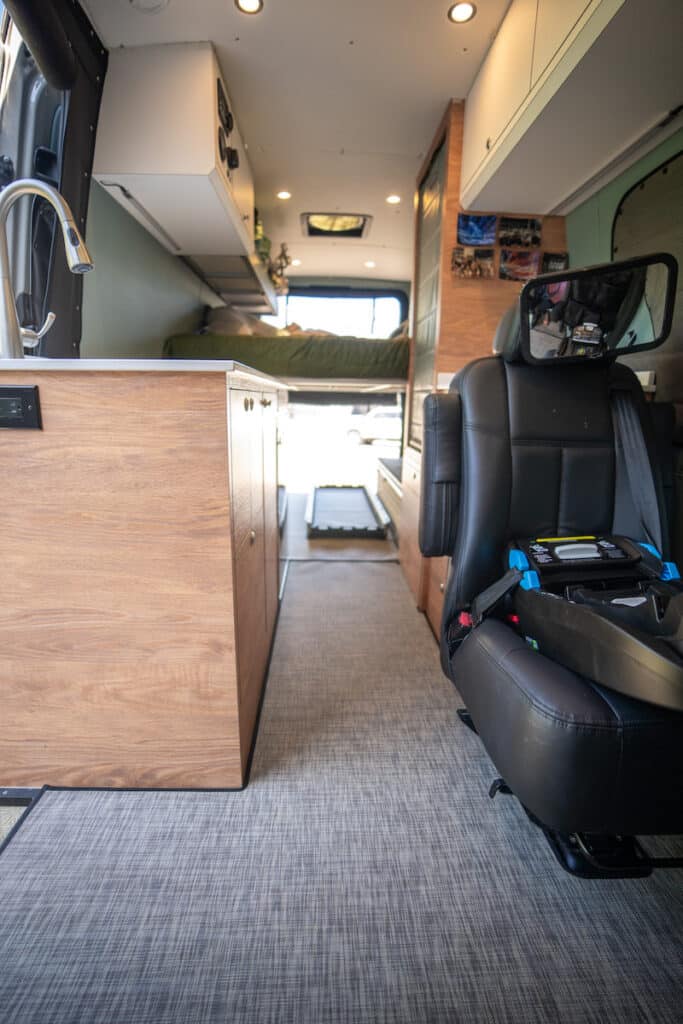
We set up a car seat mirror so he could see us. We also taped photographs of Ryan and I to the back of the headrest. Neither of those worked to keep him content. As a result, I ended up spending a lot of time standing up next to him in the aisle while the van was in motion, which is obviously not a safe way for me to ride in a van.
Of course, this phase will pass and eventually he’ll be comfortable riding back there by himself, but for the infant phase, this posed a serious challenge.
Adding another chair back there for me to ride in is impossible now. If I could start all over with my van conversion, I would at least consider putting two seatbelts in the back, although that further limits your layout options.
Storage for baby items
With a baby on board, you’re going to need storage for all of the small things you need – diapers, wipes, burp cloths, clothes, toys, bottles, pump parts, etc. I designed my van with this in mind, and we have lots of convenient cubbies and cabinets to put all of this baby stuff in. However, the more cabinets you have, the less room you have to move around in your van. And with two dogs, two adults, and a baby, there is a lot of shuffling around.
As you plan your layout, you’ll need to carefully balance your need for storage with having enough space to move comfortably throughout the van.
Baby proofing your van
We got off the road before we needed to consider any serious babyproofing, but babyproofing in a van is going to look different than in a house. You likely already have cabinet locks on all of your drawers and cabinets, so you probably won’t need to worry about that too much.
The biggest things to be concerned about once your baby is crawling is the baby falling off a tall platform bed or crawling right out the slider door when it’s open. If your van isn’t built yet, you can consider ways to address these issues.

Some people opt for a platform bed that is lower to the ground or a dinette that converts to a bed. In these cases, you’ll lose storage space underneath your bed. You can also put some sort of gate in the doorway to prevent the baby from falling out the door. Either way, doing van life with a baby means you have to keep an eye on them at all times.
Sleeping Arrangements
There are a number of van layouts that work for families with multiple kids, but the need for additional seatbelts will limit your layout options. There’s no way around it.
When I was designing my third Sprinter Van, I wasn’t yet pregnant and wasn’t sure if I was going to be successful. So I added a third seat and planned to figure out a sleeping solution later if a baby did come along. That means we don’t have a permanent bed set-up for the baby. Instead, he sleeps in a travel crib that fits between the driver’s seat and the second-row passenger chair where the car seat goes.
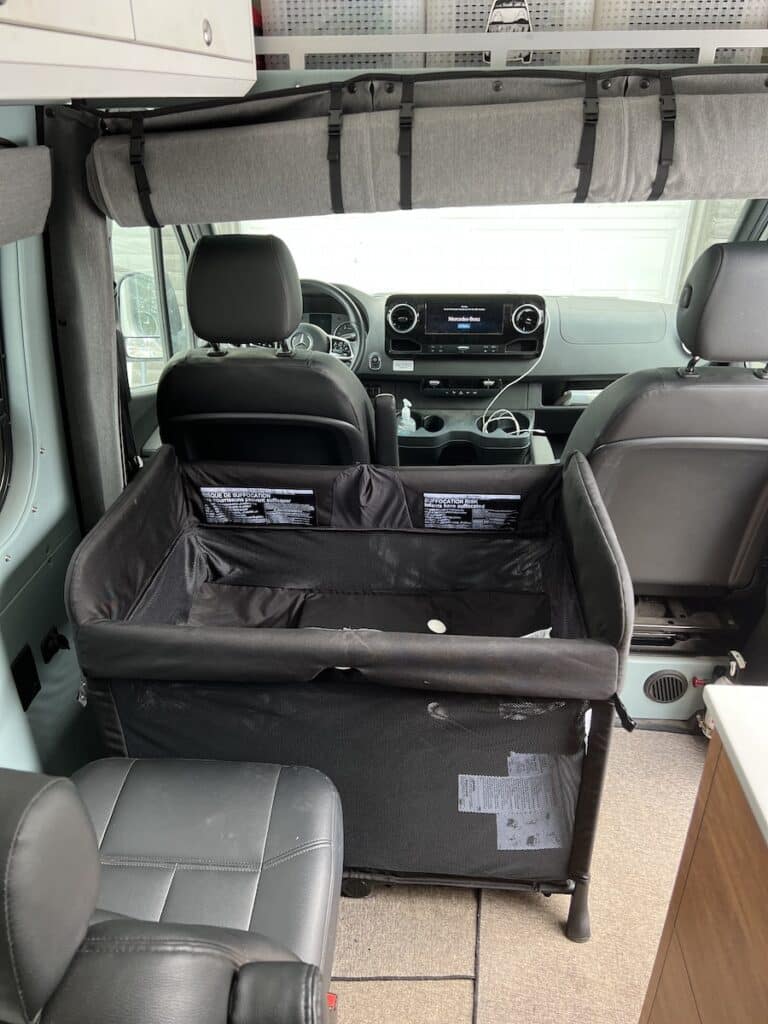
At night, we first have to remove the car seat and stash that up front, and then we set up our Bugaboo Stardust travel crib. I chose this specific crib because it’s one of the more compact travel cribs and also is very slim when packed away. It also has a bassinet conversion so the baby can be higher up in the crib when they are little.
While I like how compact it is and how well it fits in our space, the downside is at one year old, it’s already pretty small for him. He doesn’t have a lot of room to roll over or move around. Once he turns 2, we plan to try the Cabbunk, which is a hammock system that goes across the two front seats.
In hindsight, I might have considered a seat that folds down into a bed, like those found in the Storyteller Vans or the Scopema RIB Bench Seat. This way we could have set our travel crib on top while he was still an infant. Then eventually once he’s transitioned out of a crib, he could sleep directly on that bed.
Either way, our sleeping arrangement worked ok and no matter what you choose for your baby’s sleep, it’s something that is going to consume space in your van that you will have to work around.
Here are some additional things to consider when it comes to your baby’s sleep in your camper van:

Travel crib tips
1. Measure where it will go
Before you choose a travel crib, you’ll want to measure out the space in your van where you plan to set it up to make sure it will fit. As I said, we have the Bugaboo Stardust travel crib.
Apart from how compact it is, I chose this crip because the bottom is elevated off of the ground. Since we set it up over our table mount, if the mattress was flat on the ground, there would be a big bump in the middle. If we didn’t have the table mount to worry about, I’d probably have gone with the Guava Lotus which has a attachable cover you can purchase for making it darker.
2. Think about where you will store it
For storing your travel crib, some travel cribs fold flat, while others collapse-accordion style, and you’ll need to figure out a good place to put it every day when you’re driving. The Bugaboo Stardust stores flat, so we were able to fit it between the captain’s chair and the wall for easy access.
I also recommend bringing an extra set of sheets in case you have a middle-of-the-night blowout and there is no laundromat nearby.
A note about co-sleeping
Prior to us leaving in our van with the baby, I had gotten some advice for other van lifer moms to co-sleep (meaning having the baby sleep in the bed with us). This way we wouldn’t have to take up room in the van with the baby’s crib. While I know co-sleeping is a hot topic and in many cultures, co-sleeping is the norm. But, co-sleeping is not recommended by the American Academy of Pediatrics.
With that said, we did end up resorting to co-sleeping about one month into our road trip. His night wakings became so frequent that the only way I could get him to stop crying and fall back asleep was to bring him into our bed with us.

I will say that I thought I would enjoy co-sleeping, but I was so hyper-aware of the baby’s presence and position, that my quality of sleep was very poor. I also had to sleep without the covers on and with two adults and the baby (and sometimes the dogs who were accustomed to sleeping in our bed), it was very cramped.
Ultimately, I did what I had to do, but co-sleeping in a small van bed was not a sleeping arrangement that worked well for us.
Incorporating nap and bedtime routines
Maintaining consistent nap and bedtime routines is crucial for your baby’s sleep schedule, and this is much harder to do in the van than it is at home. Wake windows are hard to abide by when every day is different.
Since our baby was only 4 months old when we first started van life, we didn’t have him on any sort of a schedule yet. In fact, before we left, besides the times he napped in the car, 100% of his naps were in my lap after breastfeeding (known as contact napping), and he had never napped independently in a crib.
While at 4 months old, he was still too young for any kind of sleeping training, I didn’t have an understanding of proper wake windows or what an ideal nap routine looked like. Most of his naps in the van were either while we were driving (until he decided he hated his car seat) or in the carrier while we were on a hike.

We did the best we could, but looking back, I would have waited to try van life with our baby until he had a more predictable 2-naps-per-day routine (or maybe even 1 nap per day).
The lesson for me was that you need to plan your activities and travel around your baby’s sleep schedule to ensure they get the rest they need. That can be difficult considering babies younger than one year old need anywhere from 2-4 hours of napping per day. If you can plan your drives around their naptime, that is ideal!
Consider incorporating familiar sleep cues, such as reading a bedtime story, turning on white noise, and creating a dark environment to help your baby transition into sleep mode.
Temperature control
It is recommended the temperature be kept at 68-72 degrees Fahrenheit for babies to safely sleep at night. Cooler than that, and your baby could be uncomfortably cold, and hotter is said to increase the risk of SIDs.
Keeping the temperature in such a tight range in your van is more difficult than it is in a home. We do not have a rooftop AC unit in our van, and there were many nights in our van when the temperature inside was above 72 degrees.
On those nights, we had both fans running and windows open, and I made sure that the baby was lightly dressed. However, I still felt pretty paranoid about it being too hot. Then sometimes in the middle of the night, the temperature would drop and it would be too cold. It was a constant game of adjusting fans and opening and closing windows.
If you plan to do van life with a baby in the middle of summer, I suggest you plan your route carefully to avoid unsafe evening temperatures or you’ll need to have a rooftop AC and the power to run it. I’ll talk more about route planning below.
Planning your routes
When doing van life with a baby, you need to put the baby’s needs first. By carefully planning your van life itinerary with your baby’s needs in mind, you can create a well-balanced and enjoyable experience for your family.
Here are some tips for planning your itinerary:
Tips for choosing your destinations
1. Determine what kind of trip you want (and can) do
When I was planning our summer route in our van with our baby, there were a few things I took into account. While normally we spend our summers hiking in the mountains, we would not be able to hike the kind of trails we like while carrying an infant. So instead we wanted to go somewhere mellow where we could chill. That narrowed it down to the beach.
2. Look at the weather
Second, we needed to go somewhere where the temperatures wouldn’t be too extreme. Ryan and I had never been to Vancouver Island and with my newly granted dual Citizenship, I’ve been interested in spending more time in Canada. The climate sounded perfect with dozens of beaches we could explore. So we got our little guy a passport and headed north.

3. Choose someplace closer to home
In hindsight, traveling so far away on our first van adventure with the baby was too ambitious. Technically an infant should only be in a carseat two hours a day. While we definitely pushed the limits of that rule on a couple of days, this meant that we could only cover a short distance most days.
We did enjoy our time on Vancouver Island, but it took forever to get there and it also put us very far away from home in case things went awry….which they did.
On our drive home, our poor little guy had his first two teeth break through and he was so miserable. Once we got down to Seattle and realized that driving back to Salt Lake was going to take a week at the pace we were going, I decided to fly home with the baby while Ryan cruised home with the van.
The big lesson here is to take a test run in your van closer to home before you plan a big trip to somewhere far away. The purpose of van life with a baby isn’t to have some big grand adventure. Instead, it’s an opportunity to slow down and reconnect with nature in a new chapter with your little one, and you don’t need to be super far from home to do that.

Planning for rest and play stops
Make sure your itinerary includes regular rest and play stops. Babies require frequent breaks for feeding, diaper changes, and playtime. Research rest areas, parks, or recreational spots along your route where you can safely stop and allow your baby to stretch, crawl, or play.
I kept my camping chair handy, and we always tried to plan our stops somewhere we had a nice place to sit outside where our dogs could also stretch their legs.
Where to camp with a baby
While we prefer free, dispersed camping, in some ways paid campgrounds made life with a baby a lot easier.
First, with a baby, you have limited time to search for that perfect campsite. If the baby has already been in the car seat for half the day and is starting to get fussy, you are not going to drive down some unknown dirt road in hopes of finding a spot you saw on iOverlander. Knowing you have a guaranteed spot at a paid campground makes this whole process a lot less stressful.
Second, having access to water, laundry and other amenities that you need access to with a baby also makes life easier. Rather than having to find a water fill station every couple of days, you can fill up right at your campground. Same with doing laundry (usually available at private campgrounds), since you’ll be doing that more often with a baby, too. And let’s be honest. Having regular showers is pretty nice as well.

Besides the obvious downsides of paid campgrounds – like closer neighbors, leash requirements for pets, the cost, etc – when staying at a paid campground with a baby, I worried more about bothering my neighbors when my baby was crying, especially in the middle of the night. When that happened, I closed the windows to try to insulate others from our noise, but there were some things I just couldn’t control.
I suggest you mix it up. A few nights at free campsites followed by a night or two at a paid campground will allow you to take advantage of the amenities while still enjoying some solitude.
Slowing down and resetting expectations
When I first started van life back in 2016, I gave up my apartment, sold my car, got rid of my stuff, and moved into the van full-time. It was great back then but not something I’d recommend if you have a baby.
Having somewhere to go if you need a break from van life with your baby is very important. In our case, it was clear that our little guy needed more routine, and I’m so grateful we have a home base that we were able to come back to so we could give him a more stable environment.
If having a home base isn’t possible, then I’d recommend having some money set aside for the occasional week at an Airbnb or planning to crash with family.

Feeding your baby on the road
Breastfeeding
Everyone’s feeding routine will look a bit different. If you have adequate milk supply, breastfeeding is the easiest way to feed your baby on the road. It doesn’t require any dishes or extra time and you can do it anywhere without having to prepare. I highly recommend bringing a nursing pillow. I have the Luna Lullaby (far better than the popular Boppy!) and it made it so much easier to feed him in my camping chair and while sitting in the passenger seat of our van.

If your baby is like mine, they like to breastfeed while in a baby carrier. If so, you should bring along a few button-up shirts. This makes it much easier to feed your baby more discreetly in the carrier. I basically lived in the Outdoor Research Astroman shirt as it was lightweight and moisture-wicking so I didn’t get too hot while carrying the baby.
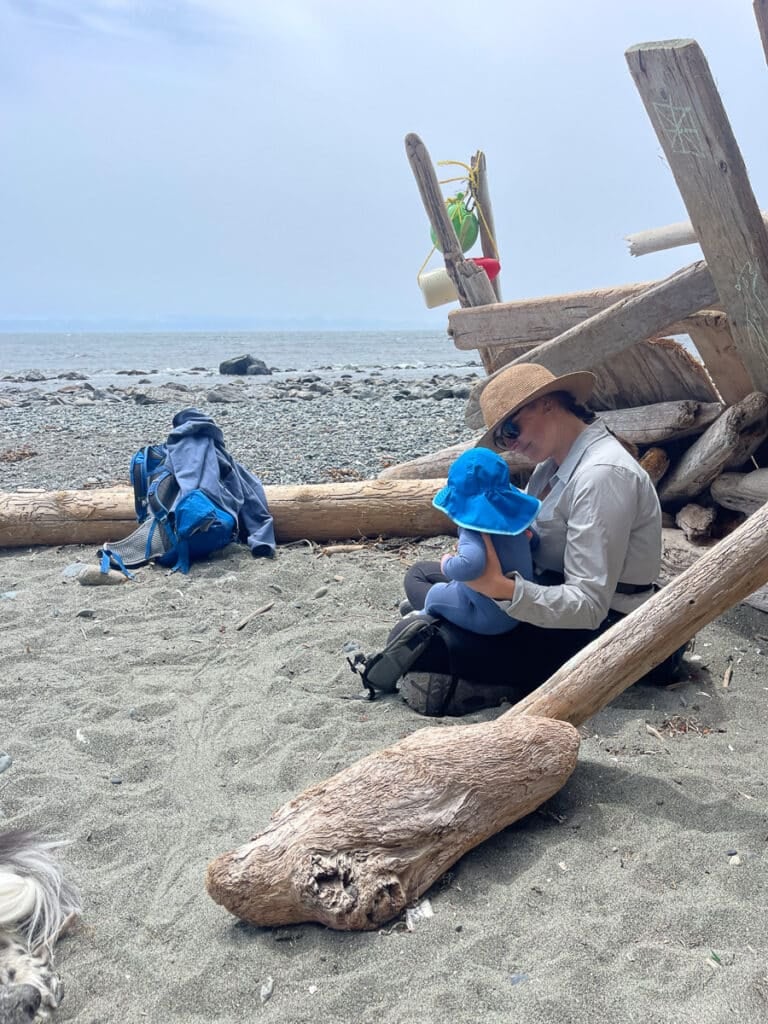
I also packed a nursing cover so I could feel a bit more comfortable (and he could be less distracted) if I needed to nurse in a restaurant or a crowded area.
One final thing I say about breastfeeding is you may experience more clogs than normal when you first take off in your van due to your changing routine. At home, I use the Legendairy Milk Sunflower Lecithin capsules and the Wishgarden Happy Ducts to clear up my clogs, and it works amazingly well. I forgot these and the only thing I found on the road seriously upset my stomach, so make sure you pack whatever you need to deal with these situations.
Pumping
While we were in the van, we did a combination of breastfeeding and bottle-feeding with pumped breast milk. Out of all of the ways you can feed a baby in a camper van, I think pumping breast milk is the most difficult. I used the Pumpable Genie Advanced which is a portable pump and doesn’t need to be plugged into the wall while you are using it. It is compact, very effective, and was perfect for van life.
My breastfeeding journey was very challenging at the beginning, so when we left in the van, I was still pumping 3 times a day to keep up my milk supply. A lot of moms, myself included, produce the most milk in the middle of the night, so I continued to get up for a middle-of-the-night pumping session just like I had been before we left.
Pumping in the middle of the night in a van in the pitch black when you are trying not to disturb your partner or the baby is no fun at all. It’s even more challenging if you don’t have wi-fi to help pass the time. At home, when I got up in the middle of the night to pump, I made a snack, scrolled my phone, and watched TV. In the van, I sat in the dark, just trying to stay upright so the milk wouldn’t spill.
Pumping and bottle feeding also create a lot of dishes to deal with every day between the pump parts and dirty bottles. I used the fridge hack to minimize how many sets of pump parts I had to wash each day. But still, every morning, on top of all of the other things we had to do to get the van and baby ready for the day, I now had to spend 30 minutes washing pump parts and bottles from the day before.
To wash all of this stuff, I filled up a small dish bucket that was only used for bottles and pump parts with warm soapy water. I also had a set of bottle brushes that weren’t used for our food dishes. After I was done washing everything, I left the bucket and leftover water in the sink, and any dirty bottles that accumulated throughout the day could go in there to soak.
I also brought a compact UV Sterilizer since it sterilizes and dries all of the parts without having to let them sit out on the counter all day. You have to sacrifice some storage space, but I thought it was well worth it as long as you have enough battery power to run the thing.

The other thing is if you plan to pump while you are in the van, you will need a safe place to store the milk. I didn’t feel comfortable putting my pumped milk in the same fridge with our food. In our food fridge, everything is crammed in there super tight, and the door is frequently opened and closed throughout the day. I ended up buying a separate National Luna 12V fridge/freezer that we used solely for my milk (and vegan ice cream since when else have we had room for ice cream in the van).

Finally, I suggest bringing some of these small Icepacks to keep bottled milk cold on hikes and outings. They are compact and stay cold for a long time.
Formula feeding
If you plan to use formula, things to think about include:
I recommend bringing however many baby bottles you typically go through in a day so you don’t have to wash each one immediately after using it.
Feeding solids
Our little guy wasn’t on solids yet at the time of our first van trip, but since then we’ve been making all of our own baby food. It’s certainly easier to just buy food as you go, but if you are intent on making your own baby food like we are, you’ll need the ability to steam vegetables and a blender or food processor to blend everything up. You can also bring a baby food maker if you want an all-in-one solution.
You’ll also need silicon bibs that are easy to rinse off, a straw cup, baby spoons, and jars to store the food in.
A portable high chair is also a necessity. We have this lightweight, collapsible high chair that can easily be stored with our camp chairs. There are also portable high chairs that can be attached to picnic tables, but if you plan on dispersed camping (where there are no picnic tables), I wouldn’t recommend this option.
Diapers and Hygiene
Packing enough diaper supplies
If you aren’t picky about the brand of diapers and wipes you use, you can restock as you travel. We use Honest Diapers and Healthy Baby Wipes, which are non-toxic products, and unfortunately, you can really only buy these online. To avoid having to receive lots of packages on the road, we packed a 2 month supply of diapers and wipes.

Changing diapers
You will be changing diapers a lot in your van, so you’ll want to figure out an efficient system. When it was time for us to change our son’s diaper, I set up a portable changing pad right on our bed, and all of my diaper-changing supplies – portable changing pad, diapers, wipes, and diaper balm – were within immediate reach.
Dirty diaper storage
If you plan to camp at dispersed campsites, you won’t always have direct access to a dumpster. That means you’ll have to hold on to those stinky dirty diapers for a bit. I didn’t want to keep them inside of the van, so I got the Overland Gear Guy Spare Tire Trash Bag that hangs off the back of your van. Inside of that, I put a small trash can (for structure) lined with a trash bag, and all of the dirty diapers went in there.

Then when we found a dumpster, I could just toss out the entire trash bag with diapers. This system worked great and prevented our small living space from getting smelly.
Diaper bag
You likely always have a couple of backpacks in your van for hiking and other outdoor activities. If you don’t feel like packing a dedicated diaper bag, you can always just use one of your normal backpacks. If you do bring a diaper bag, I don’t think it’s worth buying anything fancy. This is the diaper backpack I have, and it’s been more than fine.
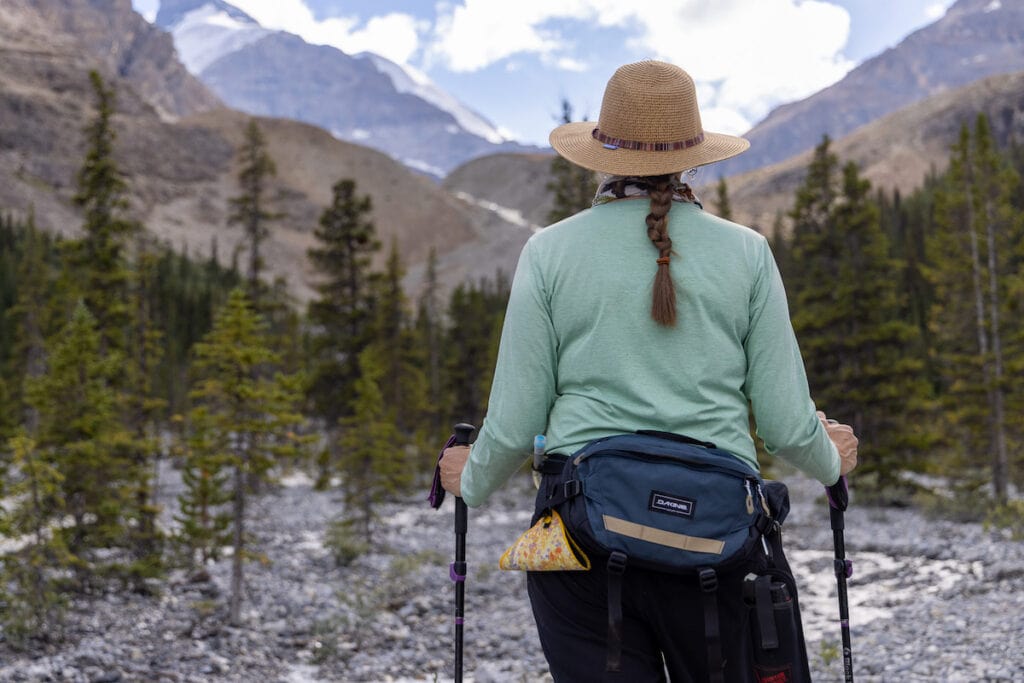
The bag I used most as a diaper bag was the Dakine Hot Laps 2L hip pack. Unlike a backpack, I could comfortably wear a hip pack while carrying the baby in a carrier. This one in particular is plenty big for diapers, a portable changing pad, wipes, snacks for myself, and my wallet.
If we were hiking, Ryan would also bring a backpack with water and other hiking essentials that we needed for the day.
Bathing your baby
We have a portable, collapsible baby bathtub that we brought along. You could probably figure out something that takes up even less room, like a collapsible dish bucket, but I liked how this bathtub propped the baby up since he couldn’t yet sit up on his own. We’d set it up on the counter, and it made it very easy to bathe him.

While you don’t need too much water for a baby bath, the more often you bathe your baby, the quicker you’ll blow through your water supply. If you’re staying at paid sites with hookups or you’re only bathing your baby 1-2 times per week, this isn’t a problem. But if you’re boondocking and doing daily baths, you will need to fill up your water more frequently than you did pre-baby.
You’ll also want to pack plenty of baby soap or shampoo that you like, especially if you use a brand that’s not available in normal grocery stores.
Toys and Entertainment
Keeping your baby entertained and engaged during van life is essential for their overall happiness and well-being. Luckily, you don’t need a lot of toys for an infant, but there are a few things you’ll want to bring to keep them stimulated.
Teething toys are essential for a baby, and you’ll want to bring a variety of things the baby can chew on. I also recommend bringing a few toys the baby can play with in the car seat while you’re driving.
Other than that, a few lightweight, compact toys that are engaging, age-appropriate, and encourage sensory exploration should be enough until your baby is a bit older. Also, focus on things that are ok if they get a bit dirty.

Van life is a great way to introduce your baby to the wonders of the outdoors. Take nature walks, visit parks, and explore easier hiking trails suitable for a baby carrier or stroller.

If driving is difficult for your baby, you can consider putting on some baby-friendly music. We discovered Rockabye Baby and Twinkle Twinkle Little Rock Star on Spotify which are lullaby renditions of everyone from Phish and Tom Petty to Snoop Dog. Our baby seemed to like them, and they were more fun for us to listen to than traditional lullaby music.
Baby Clothing
It was so hot in Utah when we took off in our van that we underestimated the cold-weather clothing we would need for the baby. We packed plenty of lightweight footies that are great for covering up their skin, but we didn’t bring any warm layers for the evenings which we realized we absolutely needed once we got to the beach. MAJOR FAIL!
I ended up finding one fleece footie at Walmart and another at a baby store on Vancouver Island. We learned that in summer, it’s very hard to find warm baby clothes even in colder places. So the key is to leave home with a variety of layers.

Now I’ll preface my recommendations by sharing that we aren’t the kind of people who dress our baby in cute clothes. We are all about practical clothing that is easy to get on and off, and he usually wears the same outfit many days in a row, just like Ryan and I do.
For summer travel, you’re going to want lightweight, breathable clothing that offers protection from the sun since they can’t wear sunscreen yet. This is what I recommend packing:

You may also want to pack a couple of swim diapers and a swim outfit. Remember, though, that oceans and lakes are typically too cold for babies, so unless you plan to go to a heated pool or the coast of Florida, you probably don’t need swimwear.
You also don’t need shoes until your baby is standing up and starting to walk which is typically 9 months at the earliest.
Outdoor Baby Gear to Pack in Your Van
We brought a bunch of gear that we never ended up using and it just took up room in our van. The items below are the gear we used regularly that I consider to be essential for doing van life with a baby.
Stroller
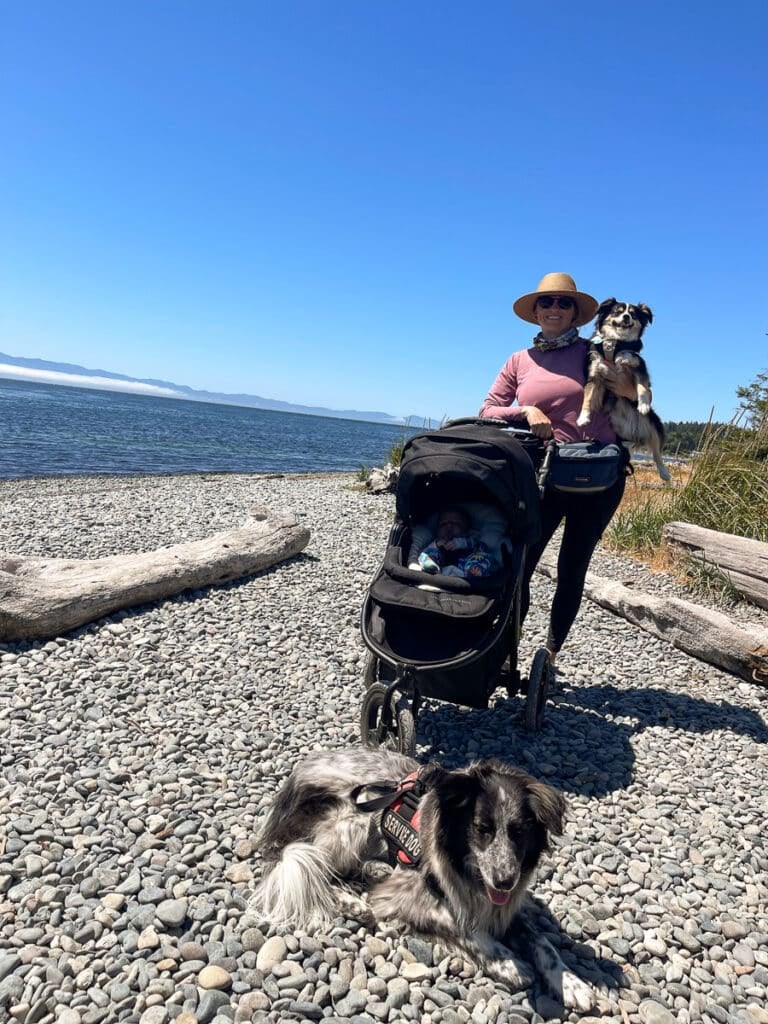
We have a compact travel stroller (the Babyzen Yoyo) and a bulky all-terrain stroller with full suspension (Bumbleride Indie), and we debated which one to bring with us. Ultimately we decided on the all-terrain. It’s so much more comfortable for him, has a bigger canopy for shade, and offers more storage for carrying other baby necessities during our excursions.
It took up a ton of room in our van garage, but we were very happy with our decision. We were able to use our stroller on gravel paths and campground trails which would have been very bumpy with our compact travel stroller.
Baby carrier
A baby carrier is a must if you want to hike and go places that your stroller can’t. I recommend a carrier that has both inward and outward-facing options, so as your baby grows, you can carry them in either position.
I tried a few different carriers. My favorite was the Happy Baby OG in the Tencel fabric. I found it to be a bit cooler than the linen and the carrier itself isn’t bulky. I also like the Happy Baby Revolution which allows the baby to be facing in or out. This is the one we brought since the forward facing option makes it more versatile.
The Happy Baby carriers are pretty streamlined without a lot of padding or extra features. If you want something more structured, I’ve also tried and like the Ergo Baby Breeze and the Kinderpack.

No matter the material, baby carriers do get hot in the summer, so you’ll want to dress your baby in lightweight, breathable clothing so they don’t get too sweaty. Make sure to cover up their legs and feet so they don’t get sunburnt.
Baby backpack
Once your baby is a bit older, you can transition them from a carrier to a backpack. This makes it so much easier to hike and adventure with your baby.


Deuter Kid Comfort Pro
We have the Deuter Kid Comfort Pro (minimum age is 9 months) and our baby loves riding around in it. It’s comfortable with adjustable, supportive straps so both Ryan and I can wear it, and it has plenty of pockets to store water, snacks, and layers.
Bouncer
The Baby Bjorn Bliss bouncer was so handy. Our baby loved bouncing in it, and it gave us somewhere to safely put him if both Ryan and I were occupied. This bouncer in particular is great because it’s mesh, so it breathes well, and it folds completely flat making it easy to store.

Shade tent
Because babies can’t wear sunscreen, you’ll want something you can quickly set up at camp that provides shade for your baby. We used the Veer Basecamp. I chose this one specifically because it zips up completely, so it also protects against mosquitoes and other bugs. It’s so quick to set up or take down, it has a removable UPF 50 sun/rain cover and only weighs 7 pounds.
We used ours at camp and also took it to the beach. I did buy the Airpad to go underneath it to provide some cushion from the ground which made it a lot more comfortable for the baby to lay in. You could also just use a yoga mat or a sleeping pad if you don’t want to buy this.

Portable playmat
We brought this portable playmat, and it fit perfectly inside the Veer Basecamp tent. We hung different toys from it to entertain the baby. It was also good for tummy time. It packs up really small, so it didn’t require too much room in the van.
Conclusion
Van life with a baby is an incredible opportunity to introduce your child to the wonders of the outdoors and create lasting memories as a family. By carefully considering your van choice, implementing safety measures, and packing the right gear, you can ensure a safe and comfortable experience for your baby.
Remember to plan your itinerary with family-friendly destinations, incorporate nap and bedtime routines, and manage daily routines and chores effectively. By staying connected with the outdoor community and seeking support when needed, you can navigate the challenges and embrace the joys of van life with a baby.
So, pack your bags, hit the road, and embark on an unforgettable adventure with your little one!
Save this post to Pinterest
Have you done van life with your baby or child? What has your experience been? What tips can you add? What questions do you still have? Leave a comment below!